US9876794B2 - Systems and methods for authentication of printer supply items - Google Patents
Systems and methods for authentication of printer supply items Download PDFInfo
- Publication number
- US9876794B2 US9876794B2 US14/961,416 US201514961416A US9876794B2 US 9876794 B2 US9876794 B2 US 9876794B2 US 201514961416 A US201514961416 A US 201514961416A US 9876794 B2 US9876794 B2 US 9876794B2
- Authority
- US
- United States
- Prior art keywords
- printer
- psi
- volatile memory
- serial number
- domain name
- Prior art date
- Legal status (The legal status is an assumption and is not a legal conclusion. Google has not performed a legal analysis and makes no representation as to the accuracy of the status listed.)
- Active, expires
Links
Images



Classifications
-
- H—ELECTRICITY
- H04—ELECTRIC COMMUNICATION TECHNIQUE
- H04L—TRANSMISSION OF DIGITAL INFORMATION, e.g. TELEGRAPHIC COMMUNICATION
- H04L63/00—Network architectures or network communication protocols for network security
- H04L63/08—Network architectures or network communication protocols for network security for authentication of entities
- H04L63/0876—Network architectures or network communication protocols for network security for authentication of entities based on the identity of the terminal or configuration, e.g. MAC address, hardware or software configuration or device fingerprint
-
- H—ELECTRICITY
- H04—ELECTRIC COMMUNICATION TECHNIQUE
- H04L—TRANSMISSION OF DIGITAL INFORMATION, e.g. TELEGRAPHIC COMMUNICATION
- H04L63/00—Network architectures or network communication protocols for network security
- H04L63/12—Applying verification of the received information
- H04L63/123—Applying verification of the received information received data contents, e.g. message integrity
-
- H—ELECTRICITY
- H04—ELECTRIC COMMUNICATION TECHNIQUE
- H04L—TRANSMISSION OF DIGITAL INFORMATION, e.g. TELEGRAPHIC COMMUNICATION
- H04L63/00—Network architectures or network communication protocols for network security
- H04L63/12—Applying verification of the received information
- H04L63/126—Applying verification of the received information the source of the received data
Definitions
- the present disclosure relates generally to authentication of printer supply items and more particularly to updating a revocation list using an Internet name server.
- Printers use consumables such as toner cartridges, fusers, etc. These consumables are often counterfeited and sold to unsuspecting consumers. Counterfeit supplies do not conform to the printer manufacturer's requirements and may damage the customer's printers. To deter counterfeiters, printer manufacturers incorporate authentication modules into the consumables. Printers verify the authenticity of consumables by communicating with the authentication modules. Thus, to counterfeit a consumable a counterfeiter must also counterfeit the associated authentication module. Authentication modules contain, for example, authentication ASICs that are difficult to counterfeit.
- a determined counterfeiter may duplicate authentication ASICs.
- the duplicates are identical and thus have the same internal serial number.
- Printers may be fooled by the duplicated authentication ASICs enabling counterfeiters to sell counterfeit printer supply items.
- the printer manufacturer discovers the counterfeit printer supply items, analyzes the duplicated authentication ASICs, and adds the duplicated serial number to a revocation list of revoked serial numbers.
- This revocation list is used by printers to detect duplicated authentication ASICs and to alert users that their printer supply item is a counterfeit.
- the counterfeiters are free to duplicate another authentication ASIC which will work in the printers until the new serial number is also added to the revocation list.
- the revocation list may be updated by updating the printer firmware. This is difficult to do in the field because firmware files are large and sending firmware updates places a burden on customer networks. Also, many customers have network firewalls that prevent a printer from connecting to an update server located outside the firewall using network file transfer protocols such as FTP. Thus, once a printer is installed it may never receive updated firmware. An updated revocation list may be written to a printer supply item's authentication module during manufacturing and the updated revocation list may be transferred to a printer when the printer supply item is installed into the printer. In this way, the printer's revocation list may be updated while the printer is in the field.
- the invention in one form thereof, is directed to a method of operating an authentication module for a printer supply item to manage a revocation list.
- the authentication module includes a non-volatile memory.
- the method includes retrieving a first serial number from the non-volatile memory; transmitting a domain name from the authentication module to a printer, the domain name includes the first serial number; receiving a first Internet Protocol address (first IP address); determining whether the first IP address matches a predetermined target IP address and if the determination is affirmative then adding the first serial number to a first revocation list in the non-volatile memory; and transmitting the first revocation list from the authentication module to the printer.
- first IP address Internet Protocol address
- the invention in another form thereof, is directed to a method of operating an authentication module for a printer supply item.
- the authentication module includes a non-volatile memory.
- the method includes retrieving a first serial number from the non-volatile memory, receiving a message digest from a printer, retrieving an encryption code from the non-volatile memory; generating a message authentication code from the message digest using the encryption code; and transmitting a domain name from the authentication module to the printer, the domain name includes the first serial number, the message digest, and the message authentication code.
- the invention in yet another form thereof, is directed to a method of authenticating a printer supply item (PSI) via an Internet connection including establishing a chain of trust from an Internet root name server to a rights management name server (RM name server) using Domain Name System Security Extensions (DNSSEC) including receiving a first public key from the RM name server, retrieving a PSI serial number from the PSI; transmitting a domain name to the RM name server, the domain name includes the PSI serial number; receiving a first IP address from the RM name server cryptographically signed with a first signature; determining whether the first signature is valid using the first public key and if the determination is affirmative then determining whether the first IP address matches a predetermined target IP address and if the determination is affirmative then adding the PSI serial number to a revocation list; and determine whether the PSI serial number is on the revocation list and if the determination is affirmative then displaying an alert on a display.
- PSI printer supply item
- DNSSEC Domain Name System Security Extensions
- FIG. 1 is a block diagram of an imaging system including a printer according to one example embodiment.
- FIG. 2 is a block diagram of a communication system according to one example embodiment.
- FIG. 3 is a schematic diagram of an authentication module according to one example embodiment.
- FIG. 4 shows an example domain name according to one example embodiment.
- FIG. 5 is a flowchart of a method of operating an authentication module according to one example embodiment.
- FIGS. 6A and 6B are a flowchart of a method of authenticating a printer supply item according to one example embodiment.
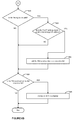
- FIG. 7 is a flowchart of a method of operating an authentication module according to one example embodiment.
- Imaging system 50 includes a printer 100 and a computer 60 .
- Printer 100 communicates with computer 60 via a communications link 70 .
- communications link generally refers to any structure that facilitates electronic communication between multiple components and may operate using wired or wireless technology e.g. I2C, USB, Ethernet, Wi-Fi, 4G, etc.
- printer 100 is a multifunction device (sometimes referred to as an all-in-one (AIO) device) that includes a controller 102 , a user interface 104 , a print engine 110 , a laser scan unit (LSU) 112 , one or more toner bottles or cartridges 200 , one or more imaging units 300 , a fuser 120 , a media feed system 130 and media input tray 140 , and a scanner system 150 .
- Printer 100 may communicate with computer 60 via a standard communication protocol, such as, for example, universal serial bus (USB), Ethernet or IEEE 802.xx.
- Printer 100 may be, for example, an electrophotographic printer/copier including an integrated scanner system 150 or a standalone electrophotographic printer.
- Controller 102 includes a processor unit and associated memory 103 and may be formed as one or more Application Specific Integrated Circuits (ASICs).
- Memory 103 may be any volatile or non-volatile memory or combination thereof such as, for example, random access memory (RAM), read only memory (ROM), flash memory and/or non-volatile memory (NVRAM).
- RAM random access memory
- ROM read only memory
- NVRAM non-volatile memory
- memory 103 may be in the form of a separate electronic memory (e.g., RAM, ROM, and/or NVRAM), a hard drive, a CD or DVD drive, or any memory device convenient for use with controller 102 .
- Controller 102 may be, for example, a combined printer and scanner controller.
- controller 102 communicates with print engine 110 via a communications link 160 .
- Controller 102 communicates with imaging unit(s) 300 and processing circuitry 301 on each imaging unit 300 via communications link(s) 161 .
- Controller 102 communicates with toner cartridge(s) 200 and processing circuitry 201 on each toner cartridge 200 via communications link(s) 162 .
- Controller 102 communicates with fuser 120 and processing circuitry 121 thereon via a communications link 163 .
- Controller 102 communicates with media feed system 130 via a communications link 164 .
- Controller 102 communicates with scanner system 150 via a communications link 165 .
- User interface 104 is communicatively coupled to controller 102 via a communications link 166 .
- Processing circuitry 121 , 201 , 301 may include a processor and associated memory such as RAM, ROM, and/or NVRAM and may provide authentication functions, safety and operational interlocks, operating parameters and usage information related to fuser 120 , toner cartridge(s) 200 and imaging unit(s) 300 , respectively.
- Controller 102 processes print and scan data and operates print engine 110 during printing and scanner system 150 during scanning.
- Computer 60 may be, for example, a personal computer, including memory 62 , such as RAM, ROM, and/or NVRAM, an input device 64 , such as a keyboard and/or a mouse, and a display monitor 66 .
- Computer 60 also includes a processor, input/output (I/O) interfaces, and may include at least one mass data storage device, such as a hard drive, a CD-ROM and/or a DVD unit (not shown).
- Computer 60 may also be a device capable of communicating with printer 100 other than a personal computer such as, for example, a tablet computer, a smartphone, or other electronic device.
- computer 60 includes in its memory a software program including program instructions that function as an imaging driver 68 , e.g., printer/scanner driver software, for printer 100 .
- Imaging driver 68 is in communication with controller 102 of printer 100 via communications link 70 .
- Imaging driver 68 facilitates communication between printer 100 and computer 60 .
- One aspect of imaging driver 68 may be, for example, to provide formatted print data to printer 100 , and more particularly to print engine 110 , to print an image.
- Another aspect of imaging driver 68 may be, for example, to facilitate the collection of scanned data from scanner system 150 .
- printer 100 it may be desirable to operate printer 100 in a standalone mode.
- printer 100 In the standalone mode, printer 100 is capable of functioning without computer 60 . Accordingly, all or a portion of imaging driver 68 , or a similar driver, may be located in controller 102 of printer 100 so as to accommodate printing and/or scanning functionality when operating in the standalone mode.
- FIG. 2 shows a communication system 200 .
- the printer 100 is connected to the Internet 202 through a firewall 204 using a local area network (LAN) 206 . Alternate embodiments may omit the firewall 204 , or have a trusted external name server outside the firewall.
- Communications links 208 , 210 , 212 , 214 connect components of the communication system 200 .
- the printer 100 has a network interface 216 that connects the printer 100 to the LAN 206 via communications link 212 .
- the printer 100 is connected to a printer supply item (PSI) 218 through a communications link 220 through a PSI interface 222 .
- the PSI 218 is a toner bottle containing an authentication module 224
- the PSI interface 222 is an I2C interface
- the communications link 220 contains an I2C clock wire and an I2C data wire.
- the controller 102 When the controller 102 detects a new PSI 218 the controller 102 reads a PSI serial number from the authentication module 224 and checks for it on a revocation list located in the controller's memory 103 .
- the revocation list may be located in non-volatile memory. If the PSI serial number is on the revocation list the printer displays an alert on a display 226 .
- Display 226 may be part of user interface 104 .
- the alert may contain text alerting a user that the PSI 218 is counterfeit if, for example, the display 226 is capable of displaying text e.g. if the display is a graphic display.
- the alert may include lighting one or more LEDs if the display 226 lacks the capacity to display text.
- the printer may enter an error state and prohibit printing until the counterfeit PSI 218 is replaced with a genuine PSI. In this way, a customer is saved from the risk of damage due to the counterfeit PSI.
- the controller 102 updates the revocation list and then checks for the PSI serial number on the updated revocation list.
- the controller 102 first establishes a chain of trust from an Internet root name server 228 to a rights management name server (RM name server) 230 using Domain Name System Security Extensions (DNSSEC). DNSSEC is described in Network Working Group RFC4033 (March 2005).
- RM name server rights management name server
- DNSSEC Domain Name System Security Extensions
- the controller 102 asks an enterprise name server 232 for the root name server 228 DNS keys and for the root name server's secure delegation to com. name server 234 .
- the enterprise name server 232 may need to communicate to other name servers if the answer is not cached.
- Root's keys and delegation data are returned, and the controller 102 verifies the delegation data using root's keys.
- the controller 102 asks the enterprise name server 232 for com. name server 234 DNS keys and secure delegation to RM name server 230 for RMList.com.
- Com.'s keys and delegation data are returned and verified by the controller 102 .
- the controller 102 asks the enterprise name server 232 for RMList.com's DNS keys.
- a public key is returned from the RM name server 230 .
- the controller 102 verifies the public key. If all answers cryptographically verify, the controller 102 now has a trusted public key for RMList.com.
- the controller 102 asks enterprise name server 232 for the IP address of a domain name containing the PSI serial number, as described below with reference to FIG. 4 , cryptographically signed with a signature.
- the requested information is unlikely to be cached by the enterprise name server 232 so the request is eventually passed to RM name server 230 .
- RM name server 230 parses the domain name and extracts the PSI serial number. If the PSI serial number is on a revocation list located on the RM name server 230 the returned IP address is, for example, 1.1.1.1. Note that the returned IP address does not correspond to an actual website for the domain name and instead is a token that represents that the PSI serial number is on the revocation list.
- the returned IP address is, for example, 0.0.0.0. In this way, the returned IP address signifies whether or not the PSI serial number is on the revocation list.
- the controller 102 determines if the signature is valid using the public key for RMList.com. If it is valid, the controller 102 determines if the returned IP address matches a predetermined target e.g. 1.1.1.1. If so, the controller 102 adds the PSI serial number to its revocation list forming an updated revocation list. If the PSI serial number is on the updated revocation list the printer displays an alert on the display 226 .
- the IP address may be, for example, a 32-bit number e.g. IPv4. Alternatively, the IP address may be, for example, a 128-bit number e.g. IPv6.
- the controller 102 may treat the PSI as genuine. Thus, if there is a problem with a network connection the printer will still operate.
- the controller 102 may periodically retry the failed query until it is successful. Each retry may occur after a random delay to make it more difficult for a counterfeiter to disrupt the query.
- This process for managing the printer's revocation list has many advantages. It uses the DNSSEC protocol which is not blocked by most firewalls. Thus, it may work in installations that block FTP or HTTPS. The process is very fast and may take as little as one second to complete. This is important since it is preferable to alert the user that the PSI is counterfeit while the user is still standing at the printer so they know to replace the PSI with a genuine PSI. The process is secure since it relies on the DNSSEC chain of trust and thus is resistant to a man-in-the-middle attack. Only small data packets are sent which will not burden a customer's network. The data packets are simple and easy for a customer to understand which makes the process transparent.
- FIG. 4 shows an example domain name 400 that contains a PSI serial number that is a cartridge serial number 402 , a message digest 404 created from a printer serial number 406 using a SHA-1 cryptographic hash function, and a message authentication code 408 generated from the message digest 404 using the encryption code “Lexmark” according to the process described in RFC2104 (February 1997).
- domain name refers to a Domain Name System (DNS) domain name as defined in Network Working Group RFC1034 (November 1987) and RFC1035 (November 1987).
- DNS Domain Name System
- the serial number of the printer reporting the cartridge serial number is hashed to anonymously identify the printer 100 to the RM name server 230 . This is to protect the privacy of the owner of the printer 100 .
- the message authentication code 408 uses an encryption code that is not known to counterfeiters to prevent a counterfeiter from flooding the RM name server 230 with bogus requests which may cause the RM name server 230 to add valid PSI serial numbers to the revocation list. If the message authentication code 408 is invalid, the RM name server 230 may ignore the request. The RM name server could supply a challenge value to which a specific response is expected, and if this expected response is not included in the domain name the RM name server may ignore the request.
- FIG. 3 shows the authentication module 224 having an authentication ASIC 302 mounted to a printed circuit board (PCB) 304 .
- the authentication module 224 is configured to facilitate authentication of a PSI.
- the authentication ASIC 302 may perform cryptographic functions in response to requests by the printer 100 using cryptographic keys located in the authentication ASIC 302 .
- the authentication ASIC 302 has a controller 306 configured to execute program instructions located in program memory 308 .
- the program memory 308 is part of the controller 306 and may contain volatile memory, non-volatile memory, or a combination of volatile memory and non-volatile memory.
- the controller 306 may contain a central processing unit (CPU) for executing program instructions. Alternatively, the controller 306 may contain application specific circuits that do not execute program instructions.
- CPU central processing unit
- the authentication ASIC 302 also has non-volatile memory 310 that contains one or more non-volatile storage technologies e.g. EEPROM, ROM, FLASH, etc.
- Non-volatile memory 310 may be located contiguously within the authentication ASIC 302 .
- non-volatile memory 310 may be segmented into discrete segments.
- Non-volatile memory 310 may be located in a separate IC package mounted to the printed circuit board 304 .
- the PCB 304 has a power connection 310 , a ground connection 312 , an I2C clock connection 314 , and an I2C data connection 316 for interfacing to the printer 100 .
- the authentication ASIC 302 may manage a revocation list located in the non-volatile memory 310 .
- the controller 306 may retrieve a PSI serial number from the non-volatile memory 310 and use it to generate a domain name 400 as shown in FIG. 4 .
- the controller 306 may also receive a printer serial number 406 from the printer 100 over the communication link 220 , generate a message digest 404 from the printer serial number 406 using a cryptographic hash function, and add the message digest 404 to the domain name 400 .
- the controller 306 may retrieve an encryption code from the non-volatile memory 310 , generate a message authentication code 408 from the message digest using a cryptographic hash function with the encryption code, and add the message authentication code to the domain name 400 .
- the controller 306 in the authentication ASIC 302 may be more resistant to reverse engineering than the controller 102 in the printer 100 because the authentication ASIC 302 has a narrower function and may be optimized to resist reverse engineering.
- the gates of the authentication ASIC 302 may be hidden under a top-layer metal shield, internal buses may be encrypted, etc.
- the controller 306 may retrieve a domain suffix 410 from the non-volatile memory 310 to use as the suffix of the domain name 400 . It is preferable to locate the domain suffix 410 in the authentication module 224 so the manufacturer may change the domain suffix from time to time to, for example, reroute requests to a different name server should an earlier name server become compromised. Also, changing the domain suffix makes it more difficult to block network traffic to specific domain names to disrupt the updating of revocation lists. To prevent counterfeit PSIs from changing the domain suffix to a false one, the domain suffix name in the PSI should be cryptographically signed during manufacturing.
- the controller 306 transmits the domain name 400 to the printer 100 for the printer 100 to send to the RM name server 230 .
- the printer 100 receives an IP address from the RM name server 230 and transmits it to the authentication module 224 .
- the controller 306 determines whether the IP address matches a predetermined target IP address such as, for example, 1.1.1.1. If they match, the controller 306 adds the PSI serial number to a revocation list located in the non-volatile memory 310 .
- the controller 306 transmits the revocation list and the PSI serial number to the printer 100 .
- the printer 100 checks if the PSI serial number is on the revocation list and if so the printer 100 alerts a user.
- FIG. 5 shows an example embodiment of a method of operating an authentication module for a printer supply item to manage a revocation list according to one embodiment.
- Method 500 deters counterfeiters from manufacturing counterfeit printer supply items by making it more difficult to counterfeit authentication modules.
- the method starts.
- the authentication module retrieves a first serial number from a non-volatile memory.
- the AM receives a printer serial number from a printer.
- the AM generates a message digest from the printer serial number using a cryptographic hash function e.g. MD5, SHA-1, etc.
- the AM retrieves an encryption code from the non-volatile memory.
- the AM generates a message authentication code from the message digest using a cryptographic hash function with the encryption code.
- the AM transmits a domain name from the authentication module to the printer, the domain name includes the first serial number, the message digest, and the message authentication code.
- the AM receives an IP address from the printer.
- the AM determines whether the IP address matches a predetermined target IP address. If yes, at block 520 the AM adds the first serial number to a revocation list in the non-volatile memory.
- the AM transmits the revocation list to the printer.
- FIGS. 6A and 6B together form FIG. 6 .
- FIG. 6 shows an example embodiment of a method of authenticating a printer supply item via an Internet connection according to one embodiment.
- Method 600 deters counterfeiters from manufacturing counterfeit printer supply items by making it more difficult to counterfeit authentication modules.
- a chain of trust is established from an Internet root name server to a rights management name server using DNSSEC including receiving a first public key from the RM name server.
- a PSI serial number is received from a printer supply item.
- a printer serial number is retrieved from a first non-volatile memory.
- a message digest is generated from the printer serial number using a cryptographic hash function.
- an encryption code is retrieved from a second non-volatile memory located on the PSI.
- a message authentication code is generated from the message digest using the encryption code.
- a domain name is transmitted to the RM server.
- the domain name includes the PSI serial number, the message digest, and the message authentication code.
- a first IP address is received from the RM name server cryptographically signed with a first signature.
- FIG. 7 shows an example embodiment of a method of operating an authentication module for a printer supply item according to one embodiment.
- Method 700 deters counterfeiters from manufacturing counterfeit printer supply items by making it more difficult to counterfeit authentication modules.
- a first serial number is received from a non-volatile memory.
- a message digest is received from a printer.
- an encryption code is retrieved from a non-volatile memory.
- a message authentication code is generated from the message digest using the encryption code.
- a domain name is transmitted from an authentication module to the printer. The domain name includes the first serial number, the message digest, and the message authentication code. The printer may use the domain name to update a revocation list as described previously.
- An authentication module may be a PCB containing one or more authentication circuits, an authentication ASIC, etc. All modifications and variations are contemplated within the scope of the present disclosure as determined by the appended claims. Relatively apparent modifications include combining one or more features of various embodiments with features of other embodiments.
Landscapes
- Engineering & Computer Science (AREA)
- Computer Security & Cryptography (AREA)
- Computer Hardware Design (AREA)
- Computing Systems (AREA)
- General Engineering & Computer Science (AREA)
- Computer Networks & Wireless Communication (AREA)
- Signal Processing (AREA)
- Power Engineering (AREA)
- Accessory Devices And Overall Control Thereof (AREA)
Abstract
Description
Claims (16)
Priority Applications (2)
| Application Number | Priority Date | Filing Date | Title |
|---|---|---|---|
| US14/961,416 US9876794B2 (en) | 2015-12-07 | 2015-12-07 | Systems and methods for authentication of printer supply items |
| US15/064,393 US9959493B2 (en) | 2015-12-07 | 2016-03-08 | Systems and methods for authentication of printer supply items |
Applications Claiming Priority (1)
| Application Number | Priority Date | Filing Date | Title |
|---|---|---|---|
| US14/961,416 US9876794B2 (en) | 2015-12-07 | 2015-12-07 | Systems and methods for authentication of printer supply items |
Related Child Applications (1)
| Application Number | Title | Priority Date | Filing Date |
|---|---|---|---|
| US15/064,393 Continuation-In-Part US9959493B2 (en) | 2015-12-07 | 2016-03-08 | Systems and methods for authentication of printer supply items |
Publications (2)
| Publication Number | Publication Date |
|---|---|
| US20170163640A1 US20170163640A1 (en) | 2017-06-08 |
| US9876794B2 true US9876794B2 (en) | 2018-01-23 |
Family
ID=58799261
Family Applications (1)
| Application Number | Title | Priority Date | Filing Date |
|---|---|---|---|
| US14/961,416 Active 2036-07-14 US9876794B2 (en) | 2015-12-07 | 2015-12-07 | Systems and methods for authentication of printer supply items |
Country Status (1)
| Country | Link |
|---|---|
| US (1) | US9876794B2 (en) |
Cited By (14)
| Publication number | Priority date | Publication date | Assignee | Title |
|---|---|---|---|---|
| US10875318B1 (en) | 2018-12-03 | 2020-12-29 | Hewlett-Packard Development Company, L.P. | Logic circuitry |
| US10894423B2 (en) | 2018-12-03 | 2021-01-19 | Hewlett-Packard Development Company, L.P. | Logic circuitry |
| US11250146B2 (en) | 2018-12-03 | 2022-02-15 | Hewlett-Packard Development Company, L.P. | Logic circuitry |
| US11292261B2 (en) | 2018-12-03 | 2022-04-05 | Hewlett-Packard Development Company, L.P. | Logic circuitry package |
| US11312146B2 (en) | 2018-12-03 | 2022-04-26 | Hewlett-Packard Development Company, L.P. | Logic circuitry package |
| US11338586B2 (en) | 2018-12-03 | 2022-05-24 | Hewlett-Packard Development Company, L.P. | Logic circuitry |
| US11364716B2 (en) | 2018-12-03 | 2022-06-21 | Hewlett-Packard Development Company, L.P. | Logic circuitry |
| US11366913B2 (en) | 2018-12-03 | 2022-06-21 | Hewlett-Packard Development Company, L.P. | Logic circuitry |
| US11407229B2 (en) | 2019-10-25 | 2022-08-09 | Hewlett-Packard Development Company, L.P. | Logic circuitry package |
| US11429554B2 (en) | 2018-12-03 | 2022-08-30 | Hewlett-Packard Development Company, L.P. | Logic circuitry package accessible for a time period duration while disregarding inter-integrated circuitry traffic |
| US11479047B2 (en) | 2018-12-03 | 2022-10-25 | Hewlett-Packard Development Company, L.P. | Print liquid supply units |
| US20230093184A1 (en) * | 2021-09-18 | 2023-03-23 | Zhuhai Pantum Electronics Co., Ltd. | Security verification method, consumable chip, and consumable |
| US20230179589A1 (en) * | 2020-04-17 | 2023-06-08 | Trusona, Inc. | Systems and methods for cryptographic authentication |
| US12406077B2 (en) | 2020-04-30 | 2025-09-02 | Hewlett-Packard Development Company, L.P. | Logic circuitry package for print apparatus |
Families Citing this family (2)
| Publication number | Priority date | Publication date | Assignee | Title |
|---|---|---|---|---|
| CN112653699B (en) * | 2020-12-22 | 2022-08-12 | 迈普通信技术股份有限公司 | BFD authentication method and device and electronic equipment |
| WO2023063923A1 (en) * | 2021-10-11 | 2023-04-20 | Lexmark International, Inc | Methods and systems for determining the authenticity of a component using elliptic-curve cryptography |
Citations (1)
| Publication number | Priority date | Publication date | Assignee | Title |
|---|---|---|---|---|
| US20120187185A1 (en) * | 2011-01-20 | 2012-07-26 | Eugene Sayan | System and method for detecting counterfeit products and documents, and tracking and authenticating documents |
-
2015
- 2015-12-07 US US14/961,416 patent/US9876794B2/en active Active
Patent Citations (1)
| Publication number | Priority date | Publication date | Assignee | Title |
|---|---|---|---|---|
| US20120187185A1 (en) * | 2011-01-20 | 2012-07-26 | Eugene Sayan | System and method for detecting counterfeit products and documents, and tracking and authenticating documents |
Non-Patent Citations (9)
| Title |
|---|
| Arends, "DNS Security Introduction and Requirements", RFC4033, 2005, Internet Society (ISOC). |
| Author Unknown, "The Internet of things runs on .CA", Internet blog, 2015, .CA Labs, Canada. |
| Gieben, "Chain of Trust", master thesis, 2001, Stichting NLnet Labs. |
| Krawczyk, "HMAC: Keyed-Hashing for Message Authentication", RFC2104,1997, Internet Society (ISOC). |
| Levine, "DNS Blacklists and Whitelists", RFC5782, 2010, Internet Society (ISOC). |
| Mockapetris, "Domain Names-Concepts and Facilities", RFC1034, 1987, Internet Society (ISOC). |
| Mockapetris, "Domain Names-Implementation and Specification", RFC1035, 1987, Internet Society (ISOC). |
| Mockapetris, "Domain Names—Concepts and Facilities", RFC1034, 1987, Internet Society (ISOC). |
| Mockapetris, "Domain Names—Implementation and Specification", RFC1035, 1987, Internet Society (ISOC). |
Cited By (36)
| Publication number | Priority date | Publication date | Assignee | Title |
|---|---|---|---|---|
| US11364716B2 (en) | 2018-12-03 | 2022-06-21 | Hewlett-Packard Development Company, L.P. | Logic circuitry |
| US10894423B2 (en) | 2018-12-03 | 2021-01-19 | Hewlett-Packard Development Company, L.P. | Logic circuitry |
| US10940693B1 (en) | 2018-12-03 | 2021-03-09 | Hewlett-Packard Development Company, L.P. | Logic circuitry |
| US11250146B2 (en) | 2018-12-03 | 2022-02-15 | Hewlett-Packard Development Company, L.P. | Logic circuitry |
| US11292261B2 (en) | 2018-12-03 | 2022-04-05 | Hewlett-Packard Development Company, L.P. | Logic circuitry package |
| US11298950B2 (en) | 2018-12-03 | 2022-04-12 | Hewlett-Packard Development Company, L.P. | Print liquid supply units |
| US11312146B2 (en) | 2018-12-03 | 2022-04-26 | Hewlett-Packard Development Company, L.P. | Logic circuitry package |
| US11312145B2 (en) | 2018-12-03 | 2022-04-26 | Hewlett-Packard Development Company, L.P. | Logic circuitry package |
| US11318751B2 (en) | 2018-12-03 | 2022-05-03 | Hewlett-Packard Development Company, L.P. | Sensor circuitry |
| US11331925B2 (en) | 2018-12-03 | 2022-05-17 | Hewlett-Packard Development Company, L.P. | Logic circuitry |
| US11331924B2 (en) | 2018-12-03 | 2022-05-17 | Hewlett-Packard Development Company, L.P. | Logic circuitry package |
| US11338586B2 (en) | 2018-12-03 | 2022-05-24 | Hewlett-Packard Development Company, L.P. | Logic circuitry |
| US11345159B2 (en) | 2018-12-03 | 2022-05-31 | Hewlett-Packard Development Company, L.P. | Replaceable print apparatus component |
| US11345157B2 (en) | 2018-12-03 | 2022-05-31 | Hewlett-Packard Development Company, L.P. | Logic circuitry package |
| US11345158B2 (en) | 2018-12-03 | 2022-05-31 | Hewlett-Packard Development Company, L.P. | Logic circuitry package |
| US11345156B2 (en) | 2018-12-03 | 2022-05-31 | Hewlett-Packard Development Company, L.P. | Logic circuitry package |
| US11364724B2 (en) | 2018-12-03 | 2022-06-21 | Hewlett-Packard Development Company, L.P. | Logic circuitry package |
| US11351791B2 (en) | 2018-12-03 | 2022-06-07 | Hewlett-Packard Development Company, L.P. | Logic circuitry package |
| US11625493B2 (en) | 2018-12-03 | 2023-04-11 | Hewlett-Packard Development Company, L.P. | Logic circuitry |
| US11366913B2 (en) | 2018-12-03 | 2022-06-21 | Hewlett-Packard Development Company, L.P. | Logic circuitry |
| US11407228B2 (en) | 2018-12-03 | 2022-08-09 | Hewlett-Packard Development Company, L.P. | Logic circuitry package |
| US12240245B2 (en) | 2018-12-03 | 2025-03-04 | Hewlett-Packard Development Company, L.P. | Logic circuitry |
| US11427010B2 (en) | 2018-12-03 | 2022-08-30 | Hewlett-Packard Development Company, L.P. | Logic circuitry |
| US11429554B2 (en) | 2018-12-03 | 2022-08-30 | Hewlett-Packard Development Company, L.P. | Logic circuitry package accessible for a time period duration while disregarding inter-integrated circuitry traffic |
| US11479047B2 (en) | 2018-12-03 | 2022-10-25 | Hewlett-Packard Development Company, L.P. | Print liquid supply units |
| US11479046B2 (en) | 2018-12-03 | 2022-10-25 | Hewlett-Packard Development Company, L.P. | Logic circuitry for sensor data communications |
| US11511546B2 (en) | 2018-12-03 | 2022-11-29 | Hewlett-Packard Development Company, L.P. | Logic circuitry package |
| US11787194B2 (en) | 2018-12-03 | 2023-10-17 | Hewlett-Packard Development Company, L.P. | Sealed interconnects |
| US10875318B1 (en) | 2018-12-03 | 2020-12-29 | Hewlett-Packard Development Company, L.P. | Logic circuitry |
| US11738562B2 (en) | 2018-12-03 | 2023-08-29 | Hewlett-Packard Development Company, L.P. | Logic circuitry |
| US11407229B2 (en) | 2019-10-25 | 2022-08-09 | Hewlett-Packard Development Company, L.P. | Logic circuitry package |
| US20230179589A1 (en) * | 2020-04-17 | 2023-06-08 | Trusona, Inc. | Systems and methods for cryptographic authentication |
| US12363097B2 (en) * | 2020-04-17 | 2025-07-15 | Trusona, Inc. | Systems and methods for cryptographic authentication |
| US12406077B2 (en) | 2020-04-30 | 2025-09-02 | Hewlett-Packard Development Company, L.P. | Logic circuitry package for print apparatus |
| US20230093184A1 (en) * | 2021-09-18 | 2023-03-23 | Zhuhai Pantum Electronics Co., Ltd. | Security verification method, consumable chip, and consumable |
| US12535768B2 (en) * | 2021-09-18 | 2026-01-27 | Zhuhai Pantum Electronics Co., Ltd. | Security verification method, consumable chip, and consumable |
Also Published As
| Publication number | Publication date |
|---|---|
| US20170163640A1 (en) | 2017-06-08 |
Similar Documents
| Publication | Publication Date | Title |
|---|---|---|
| US20170163640A1 (en) | Systems and Methods for Authentication of Printer Supply Items | |
| US9959493B2 (en) | Systems and methods for authentication of printer supply items | |
| US20200285457A1 (en) | Asset update service | |
| US7770003B2 (en) | Updating firmware securely over a network | |
| US8171085B1 (en) | Methods and apparatuses for authenticating electronic messages | |
| JP5949572B2 (en) | Vehicle improper state detection method, control method in vehicle system, and system | |
| RU2469492C2 (en) | Delegation of ip address | |
| US20080109653A1 (en) | Information-processing apparatus, information-processing method, and communication control program recording medium | |
| KR20130031660A (en) | Network apparatus based contents name and method for generate and authenticate contents name | |
| JP2006195752A (en) | Network device with time correcting function | |
| US10419278B2 (en) | Device management system, information processing apparatus, and information processing method | |
| US20210303236A1 (en) | Document security and integrity verification based on blockchain in image forming device | |
| US20190386835A1 (en) | Information processing apparatus, method for controlling the same, and program therefor | |
| JP2023516204A (en) | Manufacturer's Instructions for Obtaining MUD Files and Devices | |
| CN1897524B (en) | Communication device and communication system | |
| US20230328061A1 (en) | Device and storage medium storing computer program | |
| JP4572324B2 (en) | Device identification information management system and device identification information management method | |
| US8355508B2 (en) | Information processing apparatus, information processing method, and computer readable recording medium | |
| US20220116206A1 (en) | Systems and methods for device authentication in supply chain | |
| US20060288206A1 (en) | Monitoring apparatus, method of controlling the monitoring apparatus, and program therefor | |
| US12506750B2 (en) | Communication device, non-transitory computer-readable recording medium storing computer-readable instructions for communication device, and method executed by communication device | |
| EP3791289A1 (en) | Blockchain based management of information on imaging consumbale usage | |
| JP5120144B2 (en) | Confidential information management system, confidential information management method, and program | |
| US11301185B2 (en) | Method for managing log generated in image forming apparatus | |
| US7536115B2 (en) | Securely adjusting setting of an image forming device |
Legal Events
| Date | Code | Title | Description |
|---|---|---|---|
| AS | Assignment |
Owner name: LEXMARK INTERNATIONAL, INC., KENTUCKY Free format text: ASSIGNMENT OF ASSIGNORS INTEREST;ASSIGNORS:ADKINS, CHRISTOPHER ALAN;BOOTH, JAMES RONALD;CLARKE, MATTHEW DAVID;AND OTHERS;SIGNING DATES FROM 20151209 TO 20160105;REEL/FRAME:037411/0810 |
|
| STCF | Information on status: patent grant |
Free format text: PATENTED CASE |
|
| AS | Assignment |
Owner name: CHINA CITIC BANK CORPORATION LIMITED, GUANGZHOU BR Free format text: PATENT SECURITY AGREEMENT;ASSIGNOR:LEXMARK INTERNATIONAL, INC.;REEL/FRAME:046989/0396 Effective date: 20180402 |
|
| AS | Assignment |
Owner name: CHINA CITIC BANK CORPORATION LIMITED, GUANGZHOU BR Free format text: CORRECTIVE ASSIGNMENT TO CORRECT THE INCORRECT U.S. PATENT NUMBER PREVIOUSLY RECORDED AT REEL: 046989 FRAME: 0396. ASSIGNOR(S) HEREBY CONFIRMS THE PATENT SECURITY AGREEMENT;ASSIGNOR:LEXMARK INTERNATIONAL, INC.;REEL/FRAME:047760/0795 Effective date: 20180402 |
|
| MAFP | Maintenance fee payment |
Free format text: PAYMENT OF MAINTENANCE FEE, 4TH YEAR, LARGE ENTITY (ORIGINAL EVENT CODE: M1551); ENTITY STATUS OF PATENT OWNER: LARGE ENTITY Year of fee payment: 4 |
|
| AS | Assignment |
Owner name: LEXMARK INTERNATIONAL, INC., KENTUCKY Free format text: RELEASE BY SECURED PARTY;ASSIGNOR:CHINA CITIC BANK CORPORATION LIMITED, GUANGZHOU BRANCH, AS COLLATERAL AGENT;REEL/FRAME:066345/0026 Effective date: 20220713 Owner name: LEXMARK INTERNATIONAL, INC., KENTUCKY Free format text: RELEASE OF SECURITY INTEREST;ASSIGNOR:CHINA CITIC BANK CORPORATION LIMITED, GUANGZHOU BRANCH, AS COLLATERAL AGENT;REEL/FRAME:066345/0026 Effective date: 20220713 |
|
| MAFP | Maintenance fee payment |
Free format text: PAYMENT OF MAINTENANCE FEE, 8TH YEAR, LARGE ENTITY (ORIGINAL EVENT CODE: M1552); ENTITY STATUS OF PATENT OWNER: LARGE ENTITY Year of fee payment: 8 |
|
| AS | Assignment |
Owner name: CITIBANK, N.A., NEW YORK Free format text: SECURITY INTEREST;ASSIGNOR:LEXMARK INTERNATIONAL, INC.;REEL/FRAME:073007/0118 Effective date: 20250922 Owner name: JEFFERIES FINANCE LLC, NEW YORK Free format text: SECURITY INTEREST;ASSIGNOR:LEXMARK INTERNATIONAL, INC.;REEL/FRAME:073007/0346 Effective date: 20250922 |
|
| AS | Assignment |
Owner name: BANK TRUST COMPANY, NATIONAL ASSOCIATION, CONNECTICUT Free format text: SECURITY INTEREST;ASSIGNOR:LEXMARK INTERNATIONAL, INC.;REEL/FRAME:074202/0192 Effective date: 20250922 Owner name: BANK TRUST COMPANY, NATIONAL ASSOCIATION, CONNECTICUT Free format text: SECURITY INTEREST;ASSIGNOR:LEXMARK INTERNATIONAL, INC.;REEL/FRAME:074202/0293 Effective date: 20250922 |