US9860196B2 - Increased fabric scalability by location based zoning - Google Patents
Increased fabric scalability by location based zoning Download PDFInfo
- Publication number
- US9860196B2 US9860196B2 US14/835,313 US201514835313A US9860196B2 US 9860196 B2 US9860196 B2 US 9860196B2 US 201514835313 A US201514835313 A US 201514835313A US 9860196 B2 US9860196 B2 US 9860196B2
- Authority
- US
- United States
- Prior art keywords
- lsan
- edge fabric
- fabric
- router
- entries
- Prior art date
- Legal status (The legal status is an assumption and is not a legal conclusion. Google has not performed a legal analysis and makes no representation as to the accuracy of the status listed.)
- Active, expires
Links
Images



Classifications
-
- H—ELECTRICITY
- H04—ELECTRIC COMMUNICATION TECHNIQUE
- H04L—TRANSMISSION OF DIGITAL INFORMATION, e.g. TELEGRAPHIC COMMUNICATION
- H04L49/00—Packet switching elements
- H04L49/35—Switches specially adapted for specific applications
- H04L49/356—Switches specially adapted for specific applications for storage area networks
- H04L49/357—Fibre channel switches
-
- G—PHYSICS
- G06—COMPUTING OR CALCULATING; COUNTING
- G06F—ELECTRIC DIGITAL DATA PROCESSING
- G06F16/00—Information retrieval; Database structures therefor; File system structures therefor
- G06F16/20—Information retrieval; Database structures therefor; File system structures therefor of structured data, e.g. relational data
- G06F16/25—Integrating or interfacing systems involving database management systems
-
- G—PHYSICS
- G06—COMPUTING OR CALCULATING; COUNTING
- G06F—ELECTRIC DIGITAL DATA PROCESSING
- G06F16/00—Information retrieval; Database structures therefor; File system structures therefor
- G06F16/20—Information retrieval; Database structures therefor; File system structures therefor of structured data, e.g. relational data
- G06F16/25—Integrating or interfacing systems involving database management systems
- G06F16/252—Integrating or interfacing systems involving database management systems between a Database Management System and a front-end application
-
- G—PHYSICS
- G06—COMPUTING OR CALCULATING; COUNTING
- G06F—ELECTRIC DIGITAL DATA PROCESSING
- G06F16/00—Information retrieval; Database structures therefor; File system structures therefor
- G06F16/20—Information retrieval; Database structures therefor; File system structures therefor of structured data, e.g. relational data
- G06F16/25—Integrating or interfacing systems involving database management systems
- G06F16/254—Extract, transform and load [ETL] procedures, e.g. ETL data flows in data warehouses
-
- G06F17/30557—
-
- G06F17/3056—
-
- G06F17/30563—
-
- G—PHYSICS
- G06—COMPUTING OR CALCULATING; COUNTING
- G06F—ELECTRIC DIGITAL DATA PROCESSING
- G06F3/00—Input arrangements for transferring data to be processed into a form capable of being handled by the computer; Output arrangements for transferring data from processing unit to output unit, e.g. interface arrangements
- G06F3/06—Digital input from, or digital output to, record carriers, e.g. RAID, emulated record carriers or networked record carriers
- G06F3/0601—Interfaces specially adapted for storage systems
- G06F3/0602—Interfaces specially adapted for storage systems specifically adapted to achieve a particular effect
- G06F3/0604—Improving or facilitating administration, e.g. storage management
- G06F3/0607—Improving or facilitating administration, e.g. storage management by facilitating the process of upgrading existing storage systems, e.g. for improving compatibility between host and storage device
-
- G—PHYSICS
- G06—COMPUTING OR CALCULATING; COUNTING
- G06F—ELECTRIC DIGITAL DATA PROCESSING
- G06F3/00—Input arrangements for transferring data to be processed into a form capable of being handled by the computer; Output arrangements for transferring data from processing unit to output unit, e.g. interface arrangements
- G06F3/06—Digital input from, or digital output to, record carriers, e.g. RAID, emulated record carriers or networked record carriers
- G06F3/0601—Interfaces specially adapted for storage systems
- G06F3/0628—Interfaces specially adapted for storage systems making use of a particular technique
- G06F3/0629—Configuration or reconfiguration of storage systems
- G06F3/0637—Permissions
-
- G—PHYSICS
- G06—COMPUTING OR CALCULATING; COUNTING
- G06F—ELECTRIC DIGITAL DATA PROCESSING
- G06F3/00—Input arrangements for transferring data to be processed into a form capable of being handled by the computer; Output arrangements for transferring data from processing unit to output unit, e.g. interface arrangements
- G06F3/06—Digital input from, or digital output to, record carriers, e.g. RAID, emulated record carriers or networked record carriers
- G06F3/0601—Interfaces specially adapted for storage systems
- G06F3/0668—Interfaces specially adapted for storage systems adopting a particular infrastructure
- G06F3/067—Distributed or networked storage systems, e.g. storage area networks [SAN], network attached storage [NAS]
-
- H—ELECTRICITY
- H04—ELECTRIC COMMUNICATION TECHNIQUE
- H04L—TRANSMISSION OF DIGITAL INFORMATION, e.g. TELEGRAPHIC COMMUNICATION
- H04L45/00—Routing or path finding of packets in data switching networks
- H04L45/02—Topology update or discovery
- H04L45/021—Ensuring consistency of routing table updates, e.g. by using epoch numbers
-
- H—ELECTRICITY
- H04—ELECTRIC COMMUNICATION TECHNIQUE
- H04L—TRANSMISSION OF DIGITAL INFORMATION, e.g. TELEGRAPHIC COMMUNICATION
- H04L67/00—Network arrangements or protocols for supporting network services or applications
- H04L67/01—Protocols
- H04L67/10—Protocols in which an application is distributed across nodes in the network
- H04L67/1097—Protocols in which an application is distributed across nodes in the network for distributed storage of data in networks, e.g. transport arrangements for network file system [NFS], storage area networks [SAN] or network attached storage [NAS]
-
- H—ELECTRICITY
- H04—ELECTRIC COMMUNICATION TECHNIQUE
- H04L—TRANSMISSION OF DIGITAL INFORMATION, e.g. TELEGRAPHIC COMMUNICATION
- H04L69/00—Network arrangements, protocols or services independent of the application payload and not provided for in the other groups of this subclass
- H04L69/22—Parsing or analysis of headers
Definitions
- the present invention relates generally to storage area networks.
- SANs Storage area networks
- VMs virtualized machines
- Fibre Channel fabrics are limited in the number of domains, usually synonymous with switches, that can exist in the fabric, due to both addressing issues and stability issues.
- Fibre Channel routers were developed as a way to allow the overall SAN to grow larger without having to reach scale limits of any individual fabric.
- Fiber Channel routers The operation of the Fiber Channel routers is generally defined in various Fibre Channel specifications, such as FC-IFR, Rev. 1.06, dated May 12, 2010; FC-FS-3, Rev. 1.11, dated Oct. 22, 2010; FC-SW-5, Rev. 8.0, dated Nov. 22, 2006 and FC-LS-2, Rev. 2.00, dated Jun. 26, 2008, all from T11 and all incorporated herein by reference.
- a portion of the operations includes determining the various proxy devices for each fabric. This has been done through the use of a special logical storage area network (LSAN) tag present in zone names.
- LSAN logical storage area network
- the zone has a name starting with “LSAN” and includes the identifiers, preferably worldwide names (WWNs) of the devices in the zone. These zones are defined in the fabric where each device is attached.
- LSAN logical storage area network
- the LSAN zone entries for all of the edge fabrics in the SAN are obtained and reviewed for matching device entries. When a match is found, the device from the other fabric is imported and presented as a proxy device.
- the device from the other fabric is imported and presented as a proxy device.
- each router contains only the LSAN zones that contain devices attached to edge fabrics which are connected to the router.
- LSAN zone entries include the fabric ID (FID) of each device in addition to the WWN.
- FID fabric ID
- the router scans the LSAN zone entries for fabric IDs matching a fabric connected to the router and stores those entries. All other LSAN zone entries are not stored. In this manner the size of the relevant tables are reduced, which allows for greater expansion of the SAN as a whole.
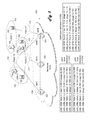
- FIG. 1 illustrates an exemplary network according to the prior art.
- FIG. 2 is a flow chart of operations of the routers of FIG. 1 according to the prior art.
- FIG. 3 illustrates the exemplary network of FIG. 1 as changed according to the present invention.
- FIG. 4 is a flow chart of operations of routers of FIG. 3 according to the present invention.
- FIG. 5 illustrates a block diagram of an exemplary router according to the present invention.
- FIG. 1 an exemplary network wo is illustrated.
- This network wo is used to illustrate both the prior art and an embodiment according to the present invention.
- Three Fibre Channel routers (FCRs) 102 , 104 , 106 are illustrated as being in a backbone fabric 108 .
- FCR 1 102 is connected to FCR 2 104 and an edge fabric 12 110 .
- FCR 2 104 is connected to an edge fabric 3 112 and FCR 3 106 .
- FCR 3 106 is connected to an edge fabric 4 114 and to edge fabric 12 110 .
- Two hosts 116 and 118 are connected to edge fabric 12 110 .
- a storage device 120 is connected to edge fabric 3 112 and a storage device 122 is connected to edge fabric 4 114 .
- a host 128 is connected to edge fabric 3 112 .
- a storage device 130 is connected to edge fabric 4 114 .
- Host 118 and storage device 122 are in LSAN 1 124
- host 116 and storage device 120 are in LSAN 2 126 .
- Host 128 and storage device 130 are in LSAN 3 132 .
- FIG. 2 is the flowchart of LSAN zone entry development according to the prior art.
- a router is connected to an edge fabric or the edge fabric zone database is update.
- all of the LSAN zone entries in the edge fabric zone database are imported into the router.
- the LSAN zone entries are scanned and when a match is found with another LSAN zone entry, the indicated remote devices are imported into the newly connected fabric.
- the router is connected to a backbone fabric containing other routers.
- the LSAN entries from all of the other routers are imported into the router, these LSAN entries being from remote fabrics. Step 204 is then performed to import devices.
- the resulting LSAN zone table in each of the FCRs in FIG. 1 is:
- FCR 1 102 is not connected to fabric 3 112 or fabric 4 114 and therefore only LSAN zone entries relating to fabric 12 110 are relevant to FCR 1 102 .
- FCR 1 102 contains the fourth and fifth entries above but has no use for them.
- FCR 2 104 has no use for the first and sixth entries but they still exist in the FCR 2 104 LSAN zone entry table.
- FCR 3 106 needs all six LSAN zone entries as it is connected to both fabric 12 110 and fabric 4 114 and so needs all three LSANs.
- FIG. 3 is the network wo of FIG. 1 except that embodiments according to the present invention are utilized.
- the LSAN zone entries are modified from the prior art to include a fabric ID (FID) with each node device in the entry.
- FID fabric ID
- the commands at the command line interface (CLI) are:
- each node device such as a host or storage device, has its identification followed by an FID value.
- each FCR of the preferred embodiment Operation of each FCR of the preferred embodiment is illustrated in FIG. 4 .
- a router is connected to an edge fabric or the edge fabric zone database is update.
- all of the LSAN zone entries in the edge fabric zone database are imported into the router if the LSAN zone entry includes an FID that matches the FID of a fabric the router is connected to.
- the LSAN zone entries are scanned and when a match is found with another LSAN zone entry, the indicated remote devices are imported into the newly connected fabric.
- the router is connected to a backbone fabric containing other routers.
- the LSAN entries from all of the other routers are imported into the router if the LSAN zone entry includes an FID that matches the FID of a fabric the router is connected to.
- Step 404 is then performed to import devices.
- LSAN zone entries are filtered at import time to import only those having devices connected to a fabric connected to the router.
- LSAN zone entries discussed above as not needed for FCR 1 102 and FCR 2 104 are not present.
- the resulting LSAN zone tables in the FCRs in FIG. 3 are:
- FCR 1 102 imports storage unit 120 and storage unit 122 into fabric 12 110 , those storage units 120 and 122 appearing as proxy storage units in fabric 12 110 .
- FCR 2 104 imports host 116 and storage unit 130 into fabric 3 112 while FCR 3 106 imports hosts 118 and 128 into fabric 4 114 .
- FCR 3 106 would negotiate with FCR 1 102 and import storage unit 122 into fabric 12 110 rather than having FCR 1 102 do the import mentioned above as the path from fabric 12 110 to storage unit 122 is shorter using FCR 3 106 as compared to using FCR 1 102 as the backbone fabric 108 hops are not required.
- each FCR includes only the LSAN zone entries where a node is connected to one of the fabrics connected to the FCR.
- an increased number of devices can be added to the SAN.
- FIG. 5 is a block diagram of an exemplary switch 598 .
- a control processor 590 is connected to a switch ASIC 595 .
- the switch ASIC 595 is connected to media interfaces 580 which are connected to ports 582 .
- the control processor 590 configures the switch ASIC 595 and handles higher level switch 507 operations, such as the name server, routing table setup, and the like.
- the switch ASIC 595 handles general high speed inline or in-band operations, such as switching, routing and frame translation.
- the control processor 590 is connected to flash memory 565 or the like to hold the software and programs for the higher level switch operations and initialization such as performed in FIGS. 2 and 4 ; to random access memory (RAM) 570 for working memory, such as the name server and route tables; and to an Ethernet PHY 585 and serial interface 575 for out-of-band management.
- RAM random access memory
- the switch ASIC 595 has four basic modules, port groups 535 , a frame data storage system 530 , a control subsystem 525 and a system interface 540 .
- the port groups 535 perform the lowest level of packet transmission and reception. Generally, frames are received from a media interface 580 and provided to the frame data storage system 530 . Further, frames are received from the frame data storage system 530 and provided to the media interface 580 for transmission out of port 582 .
- the frame data storage system 530 includes a set of transmit/receive FIFOs 532 , which interface with the port groups 535 , and a frame memory 534 , which stores the received frames and frames to be transmitted.
- the frame data storage system 530 provides initial portions of each frame, typically the frame header and a payload header for FCP frames, to the control subsystem 525 .
- the control subsystem 525 has the translate 526 , router 527 , filter 528 and queuing 529 blocks.
- the translate block 526 examines the frame header and performs any necessary address translations, such as those that happen when a frame is redirected as described herein.
- There can be various embodiments of the translation block 526 with examples of translation operation provided in U.S. Pat. No. 7,752,361 and U.S. Pat. No. 7,120,728, both of which are incorporated herein by reference in their entirety. Those examples also provide examples of the control/data path splitting of operations.
- the router block 527 examines the frame header and selects the desired output port for the frame.
- the filter block 528 examines the frame header, and the payload header in some cases, to determine if the frame should be transmitted. In the preferred embodiment of the present invention, hard zoning is accomplished using the filter block 528 .
- the queuing block 529 schedules the frames for transmission based on various factors including quality of service, priority and the like.
- each router includes or has access to a database containing all of the nodes connected to the all fabrics the router is connected to, the database including device WWN and FID.
- the router can then check the device WWN and FID against the database to cross check the values. If a mismatch is detected, the router can provide an error indication to the administrator and not import that LSAN zone entry. If the error is not in the local device but the device connected to the remote fabric, the router connected to the remote fabric will detect the mismatch and provide the error indication.
- the router includes or has access to a database containing all of the nodes connected to the all fabrics the router is connected to, the database including device WWN and FID.
- the LSAN zone entries do not include FID values for each device but rather the router compares device WWN values in the LSAN zone entries against the directly connected device database and confirms connection to a directly connected edge fabric by use of the FID value in the database. If the database FID indicates a match to a connected edge fabric, the LSAN zone entry is imported with an indication of the proper edge fabric FID to allow proper device importation.
- This alternative allows use of current LSAN zone entries but requires the development and maintenance of the device database.
- administrative management software such as Brocade Network Advisor
- the management software can maintain this database of all connected devices, and often does.
- the management software can then periodically request the LSAN zone entries from the various routers and switches in each fabric and compare all of the LSAN entries against the database to determine either WWN or FID errors.
- the management software could then provide the error indication and also provide any corrected entries to the various switches and routers.
- the management software could be the primary repository of the entire LSAN zone entry table, all entries, and then could provide that to the router on request, rather than the router obtaining the entries from the connected fabrics and other routers.
- each router can scan the LSAN zone entries and import only those that have devices in a fabric connected to the router. Extraneous LSAN zone entries are not present, allowing additional devices to be added to the SAN.
Landscapes
- Engineering & Computer Science (AREA)
- Theoretical Computer Science (AREA)
- Databases & Information Systems (AREA)
- Physics & Mathematics (AREA)
- General Engineering & Computer Science (AREA)
- General Physics & Mathematics (AREA)
- Human Computer Interaction (AREA)
- Data Mining & Analysis (AREA)
- Computer Networks & Wireless Communication (AREA)
- Signal Processing (AREA)
- Data Exchanges In Wide-Area Networks (AREA)
Abstract
Description
-
- zonecreate “lsan_zone_fabric3 _12”, “10:00:00:00:c9:2b:c9:oc; 50:05:07:61:00:5b:62:ed; 50:05:07:61:00:49:20:b4”
- where 10:00:00:00:c9:2b:c9:oc is the WWN of FCR 2 104
- 50:05:07:61:00:5b:62:ed is the WWN of
host 116 - 50:05:07:61:00:49:20:b4 is the WWN of
storage device 120 - for LSAN 2 124
- 50:05:07:61:00:5b:62:ed is the WWN of
- zonecreate “lsan_zone_fabric3_4”, “10:00:00:00:c9:2b:c9:oc; 50:05:07:61:00:5b:62:ai; 50:05:07:61:00:49:20:cc”
- where 10:00:00:00:c9:2b:c9:oc is the WWN of FCR 2 104
- 50:05:07:61:00:5b:62:a1 is the WWN of
host 128 - 50:05:07:61:00:49:20:cc is the WWN of
storage device 130 - for LSAN 3 130
- 50:05:07:61:00:5b:62:a1 is the WWN of
-
- zonecreate “lsan_zone_fabric12_3”, “10:00:00:00:c9:2b:c9:11; 50:05:07:61:00:5b:62:ed; 50:05:07:61:00:49:20:b4”
- where 10:00:00:00:c9:2b:c9:11 is the WWN of FCR 1 102
- 50:05:07:61:00:5b:62:ed is the WWN of
host 116 - 50:05:07:61:00:49:20:b4 is the WWN of
storage device 120 - for
LSAN 2 124
- 50:05:07:61:00:5b:62:ed is the WWN of
- zonecreate “lsan_zone_fabric12_4”, “10:00:00:00:c9:2b:c9:11; 50:05:07:61:00:5b:62:77; 50:05:07:61:00:49:20:88”
- where 10:00:00:00:c9:2b:c9:11 is the WWN of
FCR 1 102- 50:05:07:61:00:5b:62:77 is the WWN of
host 118 - 50:05:07:61:00:49:20:88 is the WWN of
storage device 122 - for
LSAN 1 126
- 50:05:07:61:00:5b:62:77 is the WWN of
-
- zonecreate “lsan_zone_fabric4_3”, “10:00:00:00:c9:2b:c9:22; 50:05:07:61:00:5b:62:a1; 50:05:07:61:00:49:20:cc ”
- where 10:00:00:00:c9:2b:c9:22 is the WWN of
FCR 3 106- 50:05:07:61:00:5b:62:a1 is the WWN of
host 128 - 50:05:07:61:00:49:20:cc is the WWN of
storage device 130 - for
LSAN 3 132
- 50:05:07:61:00:5b:62:a1 is the WWN of
- zonecreate “lsan_zone_fabric4_12”, “10:00:00:00:c9:2b:c9:22; 50:05:07:61:00:5b:62:77; 50:05:07:61:00:49:20:88”
- where 10:00:00:00:c9:2b:c9:22 is the WWN of
FCR 3 106- 50:05:07:61:00:5b:62:77 is the WWN of
host 118 - 50:05:07:61:00:49:20:88 is the WWN of
storage device 122 - for
LSAN 1 126
- 50:05:07:61:00:5b:62:77 is the WWN of
| LSAN_ZONE_Fabric12_4, |
|
| LSAN_ZONE_Fabric12_3, |
|
| LSAN_ZONE_Fabric3_12, |
|
| LSAN_ZONE_Fabric3_4, |
|
| LSAN_ZONE_Fabric4_3, |
|
| LSAN_ZONE_Fabric4_12, |
|
-
- zonecreate “lsan_zone_fabric3_12”, “
FCR 2 104;host 116; 12;storage device 120; 3”- for
LSAN 2 124
- for
- zonecreate “lsan_zone_fabric3_4”, “
FCR 2 104;host 118; 3;storage device 130; 4”- for
LSAN 3 130
- for
- zonecreate “lsan_zone_fabric3_12”, “
-
- zonecreate “lsan_zone_fabric12_3”, “
FCR 1 102;host 116; 12;storage device 120; 3”- for
LSAN 2 124
- for
- zonecreate “lsan_zone_fabric12 _4”, “
FCR 1 102;host 118; 12;storage device 120; 4”- for
LSAN 1 126
- for
- zonecreate “lsan_zone_fabric12_3”, “
-
- zonecreate “lsan_zone_fabric4_3”, “
FCR 3 106;host 118; 3;storage device 130; 4”- for
LSAN 3 132
- for
- zonecreate “lsan_zone_fabric4_12”, “
FCR 3 106;host 118; 12;storage device 120; 4”- for
LSAN 1 126
- for
- zonecreate “lsan_zone_fabric4_3”, “
| LSAN_ZONE_Fabric12_4, |
|
| LSAN_ZONE_Fabric12_3, |
|
| LSAN_ZONE_Fabric3_12, |
|
| LSAN_ZONE_Fabric4_12, |
|
| LSAN_ZONE_Fabric12_3, |
|
| LSAN_ZONE_Fabric3_12, |
|
| LSAN_ZONE_Fabric3_4, |
|
| LSAN_ZONE_Fabric4_3, |
|
| LSAN_ZONE_Fabric12_4, |
|
| LSAN_ZONE_Fabric12_3, |
|
| LSAN_ZONE_Fabric3_12, |
|
| LSAN_ZONE_Fabric3_4, |
|
| LSAN_ZONE_Fabric4_3, |
|
| LSAN_ZONE_Fabric4_12, |
|
Claims (18)
Priority Applications (1)
| Application Number | Priority Date | Filing Date | Title |
|---|---|---|---|
| US14/835,313 US9860196B2 (en) | 2015-08-25 | 2015-08-25 | Increased fabric scalability by location based zoning |
Applications Claiming Priority (1)
| Application Number | Priority Date | Filing Date | Title |
|---|---|---|---|
| US14/835,313 US9860196B2 (en) | 2015-08-25 | 2015-08-25 | Increased fabric scalability by location based zoning |
Publications (2)
| Publication Number | Publication Date |
|---|---|
| US20170063728A1 US20170063728A1 (en) | 2017-03-02 |
| US9860196B2 true US9860196B2 (en) | 2018-01-02 |
Family
ID=58096213
Family Applications (1)
| Application Number | Title | Priority Date | Filing Date |
|---|---|---|---|
| US14/835,313 Active 2035-10-06 US9860196B2 (en) | 2015-08-25 | 2015-08-25 | Increased fabric scalability by location based zoning |
Country Status (1)
| Country | Link |
|---|---|
| US (1) | US9860196B2 (en) |
Families Citing this family (1)
| Publication number | Priority date | Publication date | Assignee | Title |
|---|---|---|---|---|
| US9860196B2 (en) * | 2015-08-25 | 2018-01-02 | Brocade Communications Systems, Inc. | Increased fabric scalability by location based zoning |
Citations (4)
| Publication number | Priority date | Publication date | Assignee | Title |
|---|---|---|---|---|
| US20090073992A1 (en) * | 2004-07-30 | 2009-03-19 | Brocade Communications Systems, Inc. | System and method for providing proxy and translation domains in a fibre channel router |
| US7936769B2 (en) * | 2004-07-30 | 2011-05-03 | Brocade Communications System, Inc. | Multifabric zone device import and export |
| US20110103258A1 (en) * | 2009-10-30 | 2011-05-05 | Brocade Communications Systems, Inc. | Selective network merging |
| US20170063728A1 (en) * | 2015-08-25 | 2017-03-02 | Brocade Communications Systems, Inc. | Increased Fabric Scalability by Location Based Zoning |
-
2015
- 2015-08-25 US US14/835,313 patent/US9860196B2/en active Active
Patent Citations (4)
| Publication number | Priority date | Publication date | Assignee | Title |
|---|---|---|---|---|
| US20090073992A1 (en) * | 2004-07-30 | 2009-03-19 | Brocade Communications Systems, Inc. | System and method for providing proxy and translation domains in a fibre channel router |
| US7936769B2 (en) * | 2004-07-30 | 2011-05-03 | Brocade Communications System, Inc. | Multifabric zone device import and export |
| US20110103258A1 (en) * | 2009-10-30 | 2011-05-05 | Brocade Communications Systems, Inc. | Selective network merging |
| US20170063728A1 (en) * | 2015-08-25 | 2017-03-02 | Brocade Communications Systems, Inc. | Increased Fabric Scalability by Location Based Zoning |
Also Published As
| Publication number | Publication date |
|---|---|
| US20170063728A1 (en) | 2017-03-02 |
Similar Documents
| Publication | Publication Date | Title |
|---|---|---|
| KR101886291B1 (en) | Flow entry configuration method, apparatus, and system | |
| US8036229B2 (en) | Switch with virtual network identifier re-write capability | |
| US8855116B2 (en) | Virtual local area network state processing in a layer 2 ethernet switch | |
| US7889748B1 (en) | Mapping a port on a packet switch appliance | |
| US9559897B2 (en) | Device ID assignment in a system of devices | |
| US9385949B2 (en) | Routing controlled by subnet managers | |
| US8248928B1 (en) | Monitoring server load balancing | |
| US8996720B2 (en) | Method and apparatus for mirroring frames to a remote diagnostic system | |
| US8214528B2 (en) | Address identifier scaling in converged networks | |
| US9397934B2 (en) | Methods for packet forwarding though a communication link of a distributed link aggregation group using mesh tagging | |
| US20100306391A1 (en) | Single-interface dynamic mtu control | |
| EP2668751A1 (en) | Communication system, forwarding node, control device, communication control method, and program | |
| CN102594668A (en) | Message forwarding method, device and exchange equipment | |
| US9984036B2 (en) | Communication system, control apparatus, communication method, and program | |
| US8886913B2 (en) | Apparatus and method for identifier management | |
| US20150372909A1 (en) | Method, Apparatus and System for Determining Transmission Path of Packet | |
| US20150263990A1 (en) | Network device, control method, and program | |
| US20160112347A1 (en) | Increased Fabric Scalability by Designating Switch Types | |
| KR20160003762A (en) | Communication node, communication system, packet processing method and program | |
| US20170063728A1 (en) | Increased Fabric Scalability by Location Based Zoning | |
| KR100889753B1 (en) | Method of protection switching for link aggregation group and Apparatus thereof | |
| US20090158300A1 (en) | Network redundancy check application program management method | |
| CN104917623A (en) | Method and device for realizing SDN network communication management | |
| US11552906B2 (en) | Hard zoning of virtual local area networks in a fibre channel fabric | |
| CN106209634B (en) | Method and device for learning address mapping relationship |
Legal Events
| Date | Code | Title | Description |
|---|---|---|---|
| AS | Assignment |
Owner name: BROCADE COMMUNICATIONS SYSTEMS, INC., CALIFORNIA Free format text: ASSIGNMENT OF ASSIGNORS INTEREST;ASSIGNORS:CHUNG, DANIEL;RAJU, MOHAN BABU;WANG, ANNIE;SIGNING DATES FROM 20161213 TO 20171109;REEL/FRAME:044113/0599 |
|
| AS | Assignment |
Owner name: BROCADE COMMUNICATIONS SYSTEMS LLC, CALIFORNIA Free format text: CHANGE OF NAME;ASSIGNOR:BROCADE COMMUNICATIONS SYSTEMS, INC.;REEL/FRAME:044891/0536 Effective date: 20171128 |
|
| STCF | Information on status: patent grant |
Free format text: PATENTED CASE |
|
| CC | Certificate of correction | ||
| AS | Assignment |
Owner name: AVAGO TECHNOLOGIES INTERNATIONAL SALES PTE. LIMITED, SINGAPORE Free format text: ASSIGNMENT OF ASSIGNORS INTEREST;ASSIGNOR:BROCADE COMMUNICATIONS SYSTEMS LLC;REEL/FRAME:047270/0247 Effective date: 20180905 Owner name: AVAGO TECHNOLOGIES INTERNATIONAL SALES PTE. LIMITE Free format text: ASSIGNMENT OF ASSIGNORS INTEREST;ASSIGNOR:BROCADE COMMUNICATIONS SYSTEMS LLC;REEL/FRAME:047270/0247 Effective date: 20180905 |
|
| MAFP | Maintenance fee payment |
Free format text: PAYMENT OF MAINTENANCE FEE, 4TH YEAR, LARGE ENTITY (ORIGINAL EVENT CODE: M1551); ENTITY STATUS OF PATENT OWNER: LARGE ENTITY Year of fee payment: 4 |
|
| MAFP | Maintenance fee payment |
Free format text: PAYMENT OF MAINTENANCE FEE, 8TH YEAR, LARGE ENTITY (ORIGINAL EVENT CODE: M1552); ENTITY STATUS OF PATENT OWNER: LARGE ENTITY Year of fee payment: 8 |