US9856483B2 - Expression system for producing protein having a N-terminal pyroglutamate residue - Google Patents
Expression system for producing protein having a N-terminal pyroglutamate residue Download PDFInfo
- Publication number
- US9856483B2 US9856483B2 US14/661,052 US201514661052A US9856483B2 US 9856483 B2 US9856483 B2 US 9856483B2 US 201514661052 A US201514661052 A US 201514661052A US 9856483 B2 US9856483 B2 US 9856483B2
- Authority
- US
- United States
- Prior art keywords
- protein
- expression system
- host cell
- target protein
- residue
- Prior art date
- Legal status (The legal status is an assumption and is not a legal conclusion. Google has not performed a legal analysis and makes no representation as to the accuracy of the status listed.)
- Expired - Fee Related, expires
Links
Images





Classifications
-
- C—CHEMISTRY; METALLURGY
- C12—BIOCHEMISTRY; BEER; SPIRITS; WINE; VINEGAR; MICROBIOLOGY; ENZYMOLOGY; MUTATION OR GENETIC ENGINEERING
- C12N—MICROORGANISMS OR ENZYMES; COMPOSITIONS THEREOF; PROPAGATING, PRESERVING, OR MAINTAINING MICROORGANISMS; MUTATION OR GENETIC ENGINEERING; CULTURE MEDIA
- C12N15/00—Mutation or genetic engineering; DNA or RNA concerning genetic engineering, vectors, e.g. plasmids, or their isolation, preparation or purification; Use of hosts therefor
- C12N15/09—Recombinant DNA-technology
- C12N15/63—Introduction of foreign genetic material using vectors; Vectors; Use of hosts therefor; Regulation of expression
- C12N15/70—Vectors or expression systems specially adapted for E. coli
-
- C—CHEMISTRY; METALLURGY
- C07—ORGANIC CHEMISTRY
- C07K—PEPTIDES
- C07K14/00—Peptides having more than 20 amino acids; Gastrins; Somatostatins; Melanotropins; Derivatives thereof
- C07K14/435—Peptides having more than 20 amino acids; Gastrins; Somatostatins; Melanotropins; Derivatives thereof from animals; from humans
- C07K14/52—Cytokines; Lymphokines; Interferons
-
- C—CHEMISTRY; METALLURGY
- C12—BIOCHEMISTRY; BEER; SPIRITS; WINE; VINEGAR; MICROBIOLOGY; ENZYMOLOGY; MUTATION OR GENETIC ENGINEERING
- C12N—MICROORGANISMS OR ENZYMES; COMPOSITIONS THEREOF; PROPAGATING, PRESERVING, OR MAINTAINING MICROORGANISMS; MUTATION OR GENETIC ENGINEERING; CULTURE MEDIA
- C12N9/00—Enzymes; Proenzymes; Compositions thereof; Processes for preparing, activating, inhibiting, separating or purifying enzymes
- C12N9/10—Transferases (2.)
- C12N9/1025—Acyltransferases (2.3)
- C12N9/104—Aminoacyltransferases (2.3.2)
-
- C—CHEMISTRY; METALLURGY
- C12—BIOCHEMISTRY; BEER; SPIRITS; WINE; VINEGAR; MICROBIOLOGY; ENZYMOLOGY; MUTATION OR GENETIC ENGINEERING
- C12P—FERMENTATION OR ENZYME-USING PROCESSES TO SYNTHESISE A DESIRED CHEMICAL COMPOUND OR COMPOSITION OR TO SEPARATE OPTICAL ISOMERS FROM A RACEMIC MIXTURE
- C12P21/00—Preparation of peptides or proteins
- C12P21/02—Preparation of peptides or proteins having a known sequence of two or more amino acids, e.g. glutathione
-
- C—CHEMISTRY; METALLURGY
- C12—BIOCHEMISTRY; BEER; SPIRITS; WINE; VINEGAR; MICROBIOLOGY; ENZYMOLOGY; MUTATION OR GENETIC ENGINEERING
- C12Y—ENZYMES
- C12Y203/00—Acyltransferases (2.3)
- C12Y203/02—Aminoacyltransferases (2.3.2)
- C12Y203/02005—Glutaminyl-peptide cyclotransferase (2.3.2.5)
-
- C—CHEMISTRY; METALLURGY
- C07—ORGANIC CHEMISTRY
- C07K—PEPTIDES
- C07K2319/00—Fusion polypeptide
- C07K2319/20—Fusion polypeptide containing a tag with affinity for a non-protein ligand
- C07K2319/21—Fusion polypeptide containing a tag with affinity for a non-protein ligand containing a His-tag
-
- C—CHEMISTRY; METALLURGY
- C07—ORGANIC CHEMISTRY
- C07K—PEPTIDES
- C07K2319/00—Fusion polypeptide
- C07K2319/20—Fusion polypeptide containing a tag with affinity for a non-protein ligand
- C07K2319/24—Fusion polypeptide containing a tag with affinity for a non-protein ligand containing a MBP (maltose binding protein)-tag
-
- C—CHEMISTRY; METALLURGY
- C07—ORGANIC CHEMISTRY
- C07K—PEPTIDES
- C07K2319/00—Fusion polypeptide
- C07K2319/50—Fusion polypeptide containing protease site
Definitions
- the present invention disclosure includes a sequence listing incorporated herein by reference in its entirety.
- the present disclosure in general relates to an expression system. More particularly, the present disclosure relates to an expression system for the production of a protein that has a N-terminal pyroglutamate (pGlu) residue.
- pGlu N-terminal pyroglutamate
- Cyclization of a glutaminyl or glutamyl residue to form a pyroglutamate (5-oxoproline, pGlu) residue occurs at the N-terminus of numerous secretory proteins and peptides.
- the N-terminal pGlu modification is known to protect the proteins and peptides from exopeptidase degradation, and endow them with a proper conformation for binding to their receptors.
- TRH thyrotropin-releasing hormone
- GnRH gonadotropin-releasing hormone
- MCP monocyte chemoattractant protein
- immunoglobulin ribonuclease
- Type I QCs display a five-bladed ⁇ -propeller fold and are mainly identified in plants, pathogenic bacteria, and human parasites; and type II QCs adopt an ⁇ / ⁇ topology and are abundant in the neuroendocrine tissues and peripheral blood lymphocytes of mammals. Within the mammalian cells, QCs are mainly identified in the secretory granules and Golgi apparatus, where majorities of secreted hormones and chemokines are present.
- TEVP Tobacco etch virus protease
- a cysteine protease recognizes and exhibits high cleavage efficacy toward the sequence EXLY ⁇ Q ⁇ , in which X is any residue, ⁇ is any large or medium hydrophobic residue, and ⁇ is any small hydrophobic residue.
- TEVP is usually used as a biological tool to remove the tag protein that is linked with a target protein by the TEVP recognition sequence.
- TEVP is insoluble in water; thus, a carrier protein that exhibits the ability to prevent protein aggregation, such as the maltose-binding protein (MBP) and the N-utilizing substance A (NusA), is generally needed to be co-expressed with TEVP so as to increase its solubility.
- MBP maltose-binding protein
- NusA N-utilizing substance A
- N-terminal pGlu-modified proteins by either Escherichia coli ( E. coli ) or eukaryotic cells is a challenging work, due to the fact that the fusion protein cannot be recovered without the following two-step reaction: (1) the removal of tag protein by protease to expose the N-terminal glutaminyl or glutamyl residue, and (2) converting the exposed glutaminyl or glutamyl residue into a pGlu residue, a cyclization reaction catalyzed by QC.
- the two-step reaction not only limits the production efficiency, but also substantially reduces the product yield.
- one aspect of the present disclosure pertains to an expression system for producing a target protein having a N-terminal pGlu residue in a host cell.
- the expression system comprises:
- a first vector comprising a first nucleotide sequence that encodes a first fusion protein, from the N-terminus to C-terminus, a maltose binding protein (MBP) and a tobacco etch virus protease (TEVP); and
- the second nucleotide sequence is characterized in having two restriction endonuclease cleavage sites respectively located within the linker, and between the target protein and the (His) 6 -tag;
- the N-terminal pGlu residue of the target protein is autonomously formed in the host cell.
- the two restriction endonuclease cleavage sites in the second nucleotide sequence are respectively SnaB I, which is located within the linker, and Xho I, which is located between the target protein and the (His) 6 -tag.
- the first nucleotide sequence is at least 90% identical to SEQ ID NO: 1, and the first fusion protein encoded thereof has an amino acid sequence at least 90% identical to SEQ ID NO: 5; the second nucleotide sequence is at least 90% identical to SEQ ID NO: 2 or 3, and the second fusion protein encoded thereof has an amino acid sequence at least 90% identical to SEQ ID NO: 6 or 7; the third nucleotide sequence is at least 90% identical to SEQ ID NO: 4, and the QC with a E45Q mutation (i.e., QC(E45Q)) encoded thereof has an amino acid sequence at least 90% identical to SEQ ID NO: 8.
- the first, second, and third nucleotide sequences are respectively driven by a first, a second, and a third promoters, in which each of the first, second, and third promoter is selected from the group consisting of T5, T7, tac, trc, lac, lacUV5, araBAD, and rhaBAD. According to one specific embodiment, all the first, second, and third promoters are T7 promoters.
- the target protein is any of a hormone, a cytokine, a chemokine, an immunoglobulin, or a ribonuclease.
- the chemokine is monocyte chemoattractant protein 1 (MCP1) or MCP2;
- the hormone is any of thyrotropin-releasing hormone, gonadotropin-releasing hormone, neurotensin, gastrin, or glucagon;
- the cytokine is antineoplastic urinary protein (ANUP) or interferon- ⁇ (IFN- ⁇ );
- the immunoglobulin is an antibody with a glutaminyl residue or a glutamyl residue on the N-terminus of light chain or heavy chain.
- the ribonuclease is a frog ribonuclease, in which the frog is selected from the group consisting of Rana pepeins, Rana japonica , and Rana catesbeana.
- the host cell is an Escherichia coli ( E. coli ) cell.
- Another aspect of the present disclosure is directed to a method of producing a target protein having a N-terminal pGlu residue in a host cell.
- the method comprises:
- step (b) cultivating the transduced host cell of step (a) in a culture medium
- step (c) lysing the cultivated host cell of step (b);
- step (d) purifying the target protein from the supernatant of the lysed product of step (c) by affinity chromatography.
- the target protein can be any of a hormone, a cytokine, a chemokine, an immunoglobulin, or a ribonuclease.
- the chemokine is MCP1 or MCP2;
- the hormone is any of thyrotropin-releasing hormone, gonadotropin-releasing hormone, neurotensin, gastrin, or glucagon;
- the cytokine is ANUP or IFN- ⁇ ;
- the immunoglobulin is an antibody with a glutaminyl residue or a glutamyl residue on the N-terminus of light chain or heavy chain.
- the ribonuclease is a frog ribonuclease, wherein the frog is selected from the group consisting of Rana pepeins, Rana japonica , and Rana catesbeana.
- the host cell used to produce the target protein is an E. coli cell.
- the affinity chromatography employed to purify the target protein is an immobilized metal ion affinity chromatography (MIAC).
- MIAC immobilized metal ion affinity chromatography
- FIG. 1 are schematic diagrams that depict (A) pMBP-TEVP, (B) pTrx-rsTEV- QFA EGFP-(His) 6 -QC, and (C) pTrx-rsTEV-MCP1-(His) 6 -QC, according to one example of the present disclosure;
- FIG. 2A is a photograph of sodium dodecyl sulfate polyacrylamide gel electrophoresis (SDS-PAGE) that depicts the proteins extracted from E. coli co-transfected with pMBP-TEVP and pTrx-rsTEV- QFA EGFP-(His) 6 -QC, in which lane M presents the protein marker, lane I presents the proteins of E. coli induced with Isopropyl ⁇ -D-1-thiogalactopyranoside (IPTG), land N presents the proteins of E. coli without IPTG induction, land 1 presents the soluble fraction of proteins extracted from E.
- SDS-PAGE sodium dodecyl sulfate polyacrylamide gel electrophoresis
- lane 2 presents the fusion proteins Trx-rsTEV-EGFP-(His) 6 and EGFP-(His) 6 that are extracted from E. coli induced with IPTG followed by purification via Ni-NTA column
- lane 3 presents the fusion protein EGFP-(His) 6 that is extracted from E.
- arrow head (A) indicates the fusion protein MBP-TEVP (about 73 kDa)
- arrow head (B) indicates the fusion protein Trx-rsTEV-EGFP-(His) 6 (about 45 kDa)
- arrow head (C) indicates QC and/or the fusion protein EGFP-(His) 6 (about 28-30 kDa)
- arrow head (D) indicates the cleavage product Trx-rsTEV (about 15 kDa), according to one example of the present disclosure
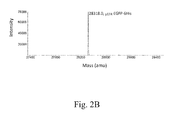
- FIG. 2B is a result of NanoESI-Q/TOF MS analysis that depicts the fusion protein EGFP-(His) 6 extracted from E. coli co-transfected with pMBP-TEVP and pTrx-rsTEV- QFA EGFP-(His) 6 -QC, according to one example of the present disclosure;
- FIG. 2C is a result of NanoLC-MS/MS analysis that depicts the fusion protein EGFP-(His) 6 extracted from E. coli co-transfected with pMBP-TEVP and Trx-rsTEV- QFA EGFP-(His) 6 -QC, according to one example of the present disclosure;
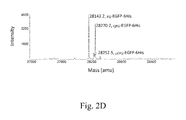
- FIG. 2D is a result of NanoESI-Q/TOF MS analysis that depicts the fusion protein EGFP-(His) 6 extracted from E. coli co-transfected with pMBP-TEVP and pTrx-rsTEV- QFA EGFP-(His) 6 -QC, in which QC is a loss-of-function mutant QC(E89A), according to one example of the present disclosure;
- FIG. 3A is a photograph of SDS-PAGE that depicts the proteins extracted from E. coli co-transfected with pMBP-TEVP and pTrx-rsTEV-MCP1-(His) 6 -QC, in which lane M presents the protein marker, lane I presents the proteins of E. coli induced with IPTG, land N presents the proteins of E. coli without IPTG induction, land 1 presents the soluble fraction of proteins extracted from E. coli induced with IPTG, lane 2 presents the fusion proteins Trx-rsTEV-MCP1-(His) 6 and MCP1-(His) 6 that are extracted from E.
- lane 3 presents the fusion protein MCP1-(His) 6 that is extracted from E. coli induced with IPTG followed by purification via Ni-NTA column and Superdex-75 column, in which arrow head (A) indicates the fusion protein MBP-TEVP (about 73 kDa), arrow head (B) indicates QC (about 30 kDa), arrow head (C) indicates the fusion protein Trx-rsTEV-MCP1-(His) 6 (about 26.4 kDa), arrow head (D) indicates the cleavage product Trx-rsTEV (about 15 kDa), and arrow head (E) indicates the fusion protein MCP1-(His) 6 (about 9.7 kDa), according to the another example of the present disclosure;
- FIG. 3B is a result of NanoESI-Q/TOF MS analysis that depicts the fusion protein MCP1-(His) 6 extracted from E. coli co-transfected with pMBP-TEVP and pTrx-rsTEV-MCP1-(His) 6 -QC, according to another example of the present disclosure;
- FIG. 3C is a result of NanoLC-MS/MS analysis that depicts the fusion protein MCP1-(His) 6 extracted from E. coli co-transfected with pMBP-TEVP and pTrx-rsTEV-MCP1-(His) 6 -QC, according to another example of the present disclosure.
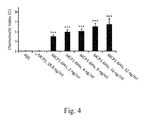
- FIG. 4 is a histogram that depicts the activity of U937 cells respectively treated with specified concentrations of fusion protein MCP1-(His) 6 , and Q -MCP1, which serves as a negative control, according to one example of the present disclosure.
- Nucleotide sequence can be used interchangeably and are understood to mean, according to the present disclosure, either a double-stranded DNA, a single-stranded DNA or products of transcription of said DNAs (e.g., RNA molecules). It should also be understood that the present disclosure does not relate to genomic polynucleotide sequences in their natural environment or natural state.
- nucleic acid, polynucleotide, or nucleotide sequences of the invention can be isolated, purified (or partially purified), by separation methods including, but not limited to, ion-exchange chromatography, molecular size exclusion chromatography, or by genetic engineering methods such as amplification, subtractive hybridization, cloning, sub-cloning or chemical synthesis, or combinations of these genetic engineering methods.
- polypeptide refers to a polymer of amino acids and does not refer to a specific length of the product; thus, peptides, oligopeptides, and proteins are included within the definition of polypeptide. This term also does not refer to or exclude post-translational modifications of the polypeptide, for example, glycosylation, acetylation, phosphorylation, sumoylation, cyclization, and the like.
- polypeptide includes fusion proteins, including, but not limited to, fusion proteins with a heterologous amino acid sequence, fusion proteins with heterologous and homologous leader sequences, and fusion proteins with or without a N-terminal or C-terminal modification.
- fusion protein refers to a combination of two proteins or peptides joined in any manner or by any type of linkage, covalent, electrostatic, hydrophobic-interaction, affinity-type, or otherwise, that maintains the linkage between the partners, prevents cleavage of the linkage during the procedural steps that are followed in the practice of this invention, and leaves the binding characteristics of the protein substantially unchanged.
- a preferred kind of fusion protein for the purpose of this invention is a polypeptide made from a recombinant gene that contains portions of two or more different genes, the genes being joined so that their coding sequences are in the same reading frame, so that the genetic apparatus reads the gene fusion as a single gene. This type of fusion protein is also known as a hybrid protein or a chimeric protein.
- sequence identity refers to the sequence relationships between two or more nucleic acids or amino acid sequences when aligned for maximum correspondence over a specified comparison window. The percentage of “identity” is determined by comparing two optimally aligned sequences over the comparison window. For “optimal alignment” of the two sequences, it will be appreciated that the portion of the sequence in the comparison window may include gaps (e.g., deletions or additions) as compared to the reference sequence, which does not contain additions or deletions. After alignment, the number of matched positions (i.e., positions where the identical nucleic acid base or amino acid residue occurs in both sequences) is determined and then divided by the total number of positions in the comparison window.
- aligned sequences can be analyzed by any method familiar with one skilled artisan, including GAP, BESTFIT, BLAST, FASTA, and TFASTA.
- affinity chromatography matrix refers to a solid phase medium, typically a gel or resin, that allows for separation of biochemical mixtures based on a highly specific binding interaction between a protein of interest and the AC matrix, such as between a receptor and a ligand, an enzyme and a substrate, a metal ion and a tag protein, and an antigen and an antibody.
- the solid phase medium comprises a target to which the protein of interest is capable of reversibly affixing, depending upon the buffer conditions.
- immobilized or solid phase media comprise the gel matrix, such as agarose beads, and the glass matrix, such as porous glass beads.
- the conventional method for producing the N-terminal pGlu-modified proteins requires a two-step reaction that is not only labor intensive, time-consuming, but also poor product yield. Accordingly, the present disclosure aims to provide an improved expression system and/or method, in which a target protein having a N-terminal pGlu modification is produced without the two-step reaction generally required in the conventional method, and accordingly a substantial increase in product yield.
- the first aspect of the present invention is therefore directed to an expression system characterized in having two vectors for producing a target protein having a N-terminal pyroglutamate (pGlu) residue.
- the first vector is constructed to express a protein that may carry out intracellular self-cleavage of a fusion protein in the host, whereas the second vector is constructed to express the target protein, in which N-terminal cyclization is autonomously formed in the host.
- the present expression system comprises:
- a first vector comprising a first nucleotide sequence that encodes a first fusion protein, from the N-terminus to C-terminus, a maltose binding protein (MBP) and a tobacco etch virus protease (TEVP); and
- (b-1) a second nucleotide sequence that encodes a second fusion protein, from the N-terminus to C-terminus, a thioredoxin (Trx), a S-tag, a linker having a TEVP recognition site (rsTEV) therein, the target protein, and a (His) 6 -tag; and
- (b-2) a third nucleotide sequence that encodes a glutaminyl cyclase (QC) having a E45Q mutation;
- the second nucleotide sequence is characterized in having two restriction endonuclease cleavage sites respectively located within the linker, and between the target protein and the (His) 6 -tag;
- the N-terminal pGlu residue of the target protein is autonomously formed in the host cell.
- the first vector comprises a first nucleotide sequence encoding a first fusion protein
- the second vector comprises a second nucleotide sequence encoding a second fusion protein that comprises the desired target protein
- a third nucleotide sequences that encodes a glutaminyl cyclase (QC).
- the first fusion protein encoded by the first nucleotide sequence contained in the first vector comprises the MBP and the TEVP, in which MBP acts as a carrier protein for enhancing the solubility of TEVP in the host.
- the first nucleotide sequence is at least 90% identical to SEQ ID NO: 1
- the first fusion protein encoded thereof has an amino acid sequence at least 90% identical to SEQ ID NO: 5.
- the TEVP in the present disclosure has a S219V mutation (i.e., TEVP (S219V)) that exhibits higher stability and cleavage efficiency, compared with wild-type TEVP.
- the second fusion protein encoded by the second nucleotide sequence in the second vector comprises in sequence, i.e., from N-terminus to C-terminus, the Trx, the S-tag, the linker having a rsTEV therein, the target protein, and the (His) 6 -tag.
- the second nucleotide sequence is designed to include two restriction endonuclease cleavage sites, so that any desired target sequence, such as the sequence that encodes the target protein, may be incorporated therein.
- two restriction endonuclease cleavage sites are respectively SnaB I, located within the sequence encoding the linker; and Xho I, located between the sequences encoding the target protein and the (His) 6 -tag, respectively.
- a restriction site for TEVP (i.e., rsTEV) is also embedded in the second nucleotide sequence, so that the second fusion protein thus produced may subsequently be recognized and specifically cleaved by the 1EVP of the first fusion protein encoded by the first nucleotide sequence.
- the rsTEV has a sequence of ENLYVQQFA (SEQ ID NO: 29), and the cleavage site of TEVP is located between Gln-Gln.
- the rsTEV has a sequence of ENLYVQQPG (SEQ ID NO: 30), and the cleavage site of TEVP is located between Gln-Gln.
- the rsTEV has a sequence of ENLYVQQ (SEQ ID NO: 31), and the cleavage site of TEVP is between Gln-Gln.
- Target proteins that may be expressed by the present expression system are hormones, cytokines, chemokines, immunoglobulins, or ribonucleases.
- chemokine include, but are not limited to, MCP1 and MCP2.
- hormones include, but are not limited to, thyrotropin-releasing hormone (TRH), gonadotropin-releasing hormone (GRH), neurotensin, gastrin, and glucagon.
- TRH thyrotropin-releasing hormone
- GSH gonadotropin-releasing hormone
- neurotensin gastrin
- glucagon Non-limiting examples of cytokines include, ANUP and IFN- ⁇ .
- immunoglobulins include, but are not limited to, antibodies with a glutaminyl residue or a glutamyl residue on the N-terminus of light chain or heavy chain.
- ribonucleases examples include, but are not limited to, frog ribonucleases, in which the frog is selected from the group consisting of Rana pepeins, Rana japonica , and Rana catesbeana.
- the target protein is EGFP, in which the second nucleotide sequence is at least 90% identical to SEQ ID NO: 2, and the second fusion protein encoded thereof comprising in sequence, the Trx, the S-tag, the linker having a rsTEV therein, the EGFP, and the (His) 6 -tag, has an amino acid sequence at least 90% identical to SEQ ID NO: 6.
- the target protein is MCP1, in which the second nucleotide sequence is at least 90% identical to SEQ ID NO: 3, and the second fusion protein encoded thereof comprising in sequence, the Trx, the S-tag, the linker with a rsTEV therein, the MCP1, and the (His) 6 -tag, has an amino acid sequence at least 90% identical to SEQ ID NO: 7.
- the third nucleotide sequence comprised in the second vector encodes the QC that catalyzes the cyclization of glutaminyl or glutamyl residue to form pGlu residue at the N-terminus of the target protein.
- Suitable example of QC that may be used in the present disclosure includes, but is not limited to, a QC derived from Xanthomonas campestris .
- the QC has a gain-of-function mutation at E45Q, which increases the protein activity.
- the third nucleotide sequence is at least 90% identical to SEQ ID NO: 4, and the QC with a E45Q mutation (i.e., QC(E45Q)) encoded thereof has an amino acid sequence at least 90% identical to SEQ ID NO: 8.
- the first and second vectors are co-transduced into the host cell; so that the first fusion protein, the second fusion protein, and the QC are simultaneously expressed in the host cell.
- the TEVP of the first fusion protein would exhibit cleavage specificity toward the rsTEV sequence within the second fusion protein; accordingly two cleavage products are produced: one comprises the Trx and the S-tag fused to each other, while the other one comprises the target protein and the (His) 6 -tag fused to each other.
- the glutaminyl or glutamyl residue at the N-terminus of the target protein is thus exposed, and can be further converted into the pGlu residue in a cyclization reaction catalyzed by QC.
- the pGlu-modified proteins usually contain intra- and/or inter-molecular disulfide bridge that help maintaining the protein structure and function; Trx in the cleaved product acts as a redox protein to facilitate the correct formation of disulfide bond of the target protein. Accordingly, the thus produced target protein will not only have the desired N-terminal pGlu structure, but also the proper intra- and/or inter-molecular disulfide bonds.
- the (His) 6 -tag it is designed to endow the target protein with easy purification purpose.
- the (His) 6 -tag at the end of the target protein exhibits binding specificity to various metal ions (e.g., nickel ion, cobalt ion, and copper ion) under specific conditions, and accordingly, the produced target protein with the (His) 6 -tag at its C-terminus may be purified by affinity chromatography.
- metal ions e.g., nickel ion, cobalt ion, and copper ion
- any promoter commonly used in the field of molecular cloning may be employed to drive the expressions of the first and second fusion proteins, and the QC respectively encoded by the first, second and third nucleotide sequences in the first and second vectors.
- the promoter can be any of T5, T7, tac, trc, lac, lacUV5, araBAD, or rhaBAD.
- T7 promoter is employed in each of the first and second vector to drive the expressions of the first and second fusion proteins, as well as the QC.
- additional regulatory mechanism is provided in the first and second vectors, so as to enhance and/or control the production of the first fusion protein, the second fusion protein, and QC.
- Suitable regulatory mechanism includes, but is not limited to, lac operon (lactose operon), ara operon (L-arabinose operon, also known as araBAD operon) and trp operon (tryptophan operon).
- lac operon lactose operon
- ara operon L-arabinose operon, also known as araBAD operon
- trp operon tryptophan operon
- three lac operators are respectively placed down-stream of the first, second, and third promoters, and accordingly, the expressions of the first and second fusion proteins, and the QC can be regulated by Isopropyl ⁇ -D-1-thiogalactopyranoside (IPTG).
- IPTG Isopropyl ⁇ -D-1-thiogalactopyranoside
- suitable host cell for use with the present expression system include, but are not limited to, Escherichia coli ( E. coli ) cell, Corynebacterium glutamicum ( C. glutamicum ) cell, and Pseudomonas fluorescens ( P. fluorescens ) cell.
- the host cell is an E. coli cell.
- the host cell is E. coli strain BL21 cell; while in another example, the host cell is E. coli strain Origami B cell.
- the first fusion protein, the second fusion protein, and the QC(E45Q) are simultaneously expressed in the E. coli cell; and the target protein (e.g., EGFP or MCP1), which comprises a pGlu at the N-terminus and a (His) 6 -tag at the C-terminus, is autonomously formed therein.
- the target protein e.g., EGFP or MCP1
- a further aspect of the present disclosure is directed to a method for producing a target protein having a N-terminal pGlu residue in a host cell by use of the expression system described above.
- the method comprises:
- step (b) cultivating the transduced host cell of step (a) in a culture medium
- step (c) lysing the cultivated host cell of step (b);
- step (d) purifying the target protein from the supernatant of the lysed product of step (c) by affinity chromatography.
- step (a) the present expression system as described above is transduced into the host cell by any method familiar by any skilled artisan in the related art, which includes, but is not limited to, viral infection (e.g., bacteriophage), electroporation, liposome-mediated transformation, heat-shock treatment, and exposure to chemicals such as calcium ions, and polyethylene glycol. Either method is aimed to render the host cell competent to foreign DNA(s). According to one specific embodiment, the present expression system is transduced into the host cell by the heat-shock treatment.
- the host cell is first cultured in a calcium-rich environment to counteract the electrostatic repulsion between the vector DNA(s) and the membrane of host cell, then a sudden increase in temperature is introduced so as to create pores in the membrane that allow the entry of vector DNA(s) into the host cell.
- Non-limiting examples of the host cell suitable used with the present expression system include, Escherichia coli ( E. coli ) cell, Corynebacterium glutamicum ( C. glutamicum ) cell, and Pseudomonas fluorescens ( P. fluorescens ) cell.
- the host cell is an E. coli cell.
- the host is E. coli strain BL21 cell; while in another example, the host is E. coli strain Origami B cell.
- step (b) the transduced host cell of step (a) is cultured in a suitable culture medium so as to allow the multiplication and/or growth of the transduced host cell.
- a suitable culture medium in the case when E. coli is used as the host, a lysogeny broth (LB, also known as luria broth, lennox broth, or luria-bertani medium) is employed as the culture medium.
- LB lysogeny broth
- each of the first, second, and third promoters in the first and second vectors is controlled by a lac operator, and thus, the expressions of the first and second fusion proteins, and the QC can be induced by the addition of IPTG in the cultured medium.
- the host cell is lysed to allow subsequent purification of the target protein.
- the host cells may by lysed by physical disruption, which includes, but is not limited to, liquid homogenization, sonication, freeze and thaw, and manually grinding; and/or chemical disruption, such as treatment with the hypotonic buffer supplemented with lysozyme, DNase, and/or nuclease.
- the host cell is lysed by physical disruption, which is exerted by a cell disrupter.
- target protein i.e., EGFP or MCP1
- the target protein i.e., EGFP or MCP1
- the target protein is expressed in the soluble fraction of the host cell; accordingly, there is no need to perform additional steps commonly required for extracting an insoluble protein (e.g., protein denaturation and folding), thus may substantially increase the production efficiency and product yield.
- the target protein is purified by affinity chromatography based on the binding affinity between the (His) 6 -tag and metal ions.
- the metal ions e.g., nickel ion, cobalt ion, and copper ion
- a solid support e.g., resin beads of a column
- the (His) 6 -tag-comprised protein is first immobilized on a solid support (e.g., resin beads of a column); then, allow the (His) 6 -tag-comprised protein to flow pass the support in a proper buffer condition and flow rate, so that the (His) 6 -tag can bind to the immobilized metal ions.
- the column is then eluted with imidazole, known as a competitive agent, to disrupt the binding between (His) 6 -tag and metal ions, and thus, the separation of the target protein and the immobilized metal ions.
- the target protein is purified by a column immobilized thereon with nickel ions.
- both the second fusion protein (comprising in sequence, the Trx, the S-tag, the linker with the rsTEV therein, the target protein and the (His) 6 -tag), and the cleavage product thereof (comprising the target protein and the (His) 6 -tag), might be simultaneously eluted. Accordingly, the eluted products are further selected by a size-exclusion chromatography (SEC), based on the size differences between the second fusion protein and the cleavage product thereof. In one preferred embodiment, SEC is exerted by a Superdex-75 column.
- SEC size-exclusion chromatography
- the present method is useful for the expression of a target protein having pGlu modification at its N-terminus.
- Suitable examples of the target protein include, but are not limited to, hormone, cytokine, chemokine, immunoglobulin, and ribonuclease.
- the chemokine is MCP1 or MCP2; the hormone is thyrotropin-releasing hormone, gonadotropin-releasing hormone, neurotensin, gastrin, or glucagon; the cytokine is ANUP or IFN- ⁇ ; the immunoglobulin is an antibody with a glutaminyl residue or a glutamyl residue on the N-terminus of light chain or heavy chain; the ribonuclease is a frog ribonuclease, in which the frog may be selected from the group consisting of Rana pepeins, Rana japonica , and Rana catesbeana .
- the present method is used to express and produce the active target protein MCP1.
- the host cell E. coli strains BL21-CondonPlus(DE3)-RIL (Stratagene) and Origami B (Novagen) were respectively used to express EGFP and monocyte chemoattractant proteins (MCPs).
- MCPs monocyte chemoattractant proteins
- Origami B cells To culture Origami B cells, the LB medium containing ampicillin (70 mg/ml) and kanamycin (30 mg/ml) was used, while the LB medium containing antibiotic chloramphenicol (34 mg/ml) was employed for culturing BL21-CondonPlus(DE3)-RIL. The cultures were grown overnight at 37° C. until OD 600 reached about 0.6, and then induced with 1 mM IPTG at 18-20° C. for 24 h.
- the cells were harvested by centrifugation at 6,000 g and the cell pellets were suspended in 100 ml buffer A (250 mM NaCl in 50 mM Tris-HCl, pH 7.5). The cell suspension was lysed by using a cell disrupter (Constant Systems), and the cell lysate was clarified by centrifugation at 90,000 g for 40 min. Subsequently, the supernatant was loaded onto a column packed with Ni-NTA resin (GE Healthcare) pre-equilibrated with buffer A.
- buffer A 250 mM NaCl in 50 mM Tris-HCl, pH 7.5
- the cell suspension was lysed by using a cell disrupter (Constant Systems), and the cell lysate was clarified by centrifugation at 90,000 g for 40 min. Subsequently, the supernatant was loaded onto a column packed with Ni-NTA resin (GE Healthcare) pre-equilibrated with buffer A.
- the column was washed with 40-column volume of buffer A and eluted with a linear gradient of 10-100% buffer B (500 mM imidazole and 250 mM NaCl in 50 mM Tris-HCl, pH 7.5).
- the fractions containing (His) 6 -tag fusion proteins were pooled and then dialyzed against buffer C (150 mM NaCl in 20 mM Tris-HCl, pH 8.0) to remove imidazole.
- the produced (His) 6 -tag-comprised fusion proteins were further purified by using a Superdex-75 column so as to isolate the fusion protein with molecular weight between 3,000 and 70,000. The purity of the fusion proteins was judged by SDS-PAGE analysis stained with coomassie blue.
- the QFA -EGFP, MCPs, and trypsin solutions were prepared in aqueous ammonium bicarbonate buffer (25 mM, pH 8.5).
- the solutions of QFA -EGFP and MCPs (approximately 1 mg) were reduced with DTT at 37° C. for 1 h first, and then alkylated with iodoacetamide at 37° C. for another 1 h.
- the in-solution digestion was carried out by adding trypsin at an enzyme-to-substrate molar ratio of 1:50 at 37° C. for 16 h.
- the digested products were diluted with 0.1% formic acid to a concentration of 0.1 pmol/ml, and the peptide mixtures were desalted using a C18 Ziptip (Millipore). The resulting peptides were evaporated to dryness using a SpeedVac.
- the intact masses of modified and unmodified QFA -EGFP and MCP1 were determined by direct infusion on the QSTAR-XL hybrid quadrupole time-of-flight mass spectrometer (Applied Biosystems/MDS Sciex, Toronto, Canada) equipped with a home-made nanosprayer applied with 23.5 kV. After incubation, samples (5 ml) were mixed with 100 ml of 50% acetonitrile/0.1% formic acid and infused into the mass spectrometer at a flow rate of 300 nl/min. Each sample was analyzed in full scan mode using a m/z 400-2,000 mass range, and the raw mass spectra were de-convoluted using Analyst QS 1.1 protein deconvolution software. The instrument was calibrated using the fragment ions resulting from the collision-induced dissociation (CID) of Glu-fibrinopeptide B (Sigma). The mass accuracy of full mass range was better than 50 ppm.
- CID collision-induced dissociation
- Dried peptides were dissolved in 5% acetonitrile and 0.1% formic acid, and 5 ml of the solution was loaded onto a 75- ⁇ m ⁇ 250-mm nanoACQUITY UPLC BEH130 column packed with C18 resin (Waters, Milford USA).
- the peptides mixtures were separated by online nanoflow liquid chromatography using nanoAcquity system (Waters, Milford, Mass.) with a linear gradient of 5 to 50% acetonitrile (in 0.1% formic acid) in 95 min, followed by a sharp increase to 85% acetonitrile in 1 min and held for another 13 min at a constant flow rate of 300 nl/min.
- the resulting fragment ions were scanned out in the low-pressure ion trap at the normal scan rate and recorded with the secondary electron multipliers.
- Ion selection threshold was 500 counts for MS/MS, and the selected ions were excluded from further analysis for 90 s.
- Standard mass spectrometric conditions for all experiments were: spray voltage, 1.9 kV; no sheath and auxiliary gas flow; heated capillary temperature, 200° C.; predictive automatic gain control (AGC) enabled, and an S-lens RF level of 60%.
- U937 cells were purchased from the American Type Cell Collection. The cells at 2-3 ⁇ 10 6 cells/ml were grown in RPMI 1640 medium (GIBCO) supplemented with 10% heat-inactivated fetal bovine serum (GIBCO). Fresh U937 cells were then incubated with 10 mM Calcein AM (BD Biosciences) at 37° C. for 1 h with 5% humidified CO 2 . Subsequently, an aliquot of U937 cells (about 1 ⁇ 10 6 cells/ml) suspended in serum-free RPMI 1640 medium was added to the upper compartment of the 24-well BD Falcon HTS FluoroBlok Inserts (BD Biosciences).
- This apparatus has a polyethylene terephthalate (PET) membrane (8 mm pore size) that blocks the transmission of light from 490 to 700 nm. This allows detection of cells present in the lower compartment only.
- the cells were allowed to migrate into the lower compartment at 37° C. for 2 h in the presence of pE -MCL1-(His) 6 , with the recombinant Q-MCP1 (PeproTech) as a negative control. Once cells migrate through the pores of the PET membrane, they are no longer shielded from the light and can be detected by a fluorescence plate reader (Bio-Tek-Synergy HT Microplate Reader, Bio-Tek Instruments). Chemotactic index (CI) was calculated from the cell migration activity towards chemoattractant divided by the migration activity in the absence of chemoattractant. The CI values, shown as mean ⁇ SEM, were calculated from five independent experiments.
- the efficacy of the present expression system in producing a pGlu-modified protein was tested in the present example, in which EGFP was employed as a target protein.
- two expression vectors were respectively constructed, so that a first fusion protein MBP-TEVP, a second fusion protein Trx-rsTEV-EGFP-(His) 6 , and QC(E45Q) were produced.
- the first expression vector pMBP-TEVP was constructed by amplifying the DNA segments encoding MBP-TEVP (S219V) from the plasmid pMBP-TEVP (Yan-Ping Shin et al, Self-cleavage of fusion protein in vivo using TEV protease to yield native protein, Protein Science 2005, p 936-941) by PCR with a forward primer of SEQ ID NO: 9 or 10, and a reverse primer of SEQ ID NO: 11 or 12.
- the amplified product was then constructed into the plasmid pRSF-1b (Novagen) by restriction enzymes Nco I and Sal I so as to produce the expression vector pMBP-TEVP ( FIG. 1A ); in which the promoter is a T7 promoter with one lac operator located down-stream thereof, and thus, the expression of the first fusion protein MBP-TEVP can be regulated by IPTG.
- the produced expression vector pMBP-TEVP comprised a nucleotide sequence of SEQ ID NO: 1, and the fusion protein MBP-TEVP encoded thereof had an amino acid sequence of SEQ ID NO: 5.
- DNA segment encoding EGFP was amplified from the plasmid pMBP-rsTEV-EGFP (Yan-Ping Shin et al, Self-cleavage of fusion protein in vivo using TEV protease to yield native protein, Protein Science 2005, p 936-941) by PCR using primers of SEQ ID NOs: 13 and 14, and DNA segment encoding QC(E45Q) was amplified from the expression vector that comprised the gene encoding QC(E45Q) (Wei-Lin Huang et al, Crystal structure and functional analysis of the glutaminyl cyclase from Xanthomonas campestris , Journal of molecular biology 2010, p 374-388) by PCR using primers of SEQ ID NOs: 15 and 16, in which QC(E45Q) is a gain-of-
- the amplified DNA segments were then annealed with the LIC Duet Minimal Adaptor (Novagen) by a post-PCR processing step, in which the adaptor comprised a T7 promoter, a lac operon, a ribosome binding sequence (rbs), and a start codon.
- the adaptor was designed to possess asymmetric, GC-rich 12-based overhangs on each end, in which the 5′-end overhang sequence was complementary to the 3′-end of the amplified DNA segment encoding EGFP, while the 3′-end overhang sequence was complementary to the 5′-end of the amplified DNA segment encoding QC(E45Q).
- the EGFP-encoding DNA segment, the adaptor, and the QC(E45Q)-encoding DNA segment could be annealed based on those complementary sequences.
- the annealed EGFP-adaptor-QC(E45Q) was then constructed into the plasmid pET-32Ek-LIC (Novagen) so as to produce the vector pTrx-rsTEV-EGFP-(His) 6 -QC(E45Q), which comprised in sequence: a first T7 promoter, a first lac operon, a first nucleotide sequence that encoded Trx, rsTEV, and EGFP, a second T7 promoter, a second lac operon, and a second nucleotide sequence that encoded QC(E45Q).
- the expressions of fusion protein Trx-rsTEV-EGFP and QC(E45Q) were respectively driven by a T7 promoter and could be regulated by IPTG.
- 1B comprised a first nucleotide sequence of SEQ ID NO: 2, which encoded the fusion protein Trx-rsTEV- QFA EGFP-(His) 6 having an amino acid sequence of SEQ ID NO: 6, and a second nucleotide sequence of SEQ ID NO: 4, which encoded the protein QC(E45Q) having an amino acid sequence of SEQ ID NO: 8.
- the expression vector pTrx-rsTEV- QPG EGFP-(His) 6 -QC(E89A) was constructed by the similar method as described in example 1.1.2. Briefly, the DNA segment encoding EGFP was amplified by the method illustrated in example 1.1.2, and the DNA segment encoding QC(E89A) was amplified from the expression vector that comprised the gene encoding QC(E89A) (see Wei-Lin Huang et al, Crystal structure and functional analysis of the glutaminyl cyclase from Xanthomonas campestris , Journal of molecular biology 2010, p 374-388) by PCR using primers of SEQ ID NOs: 15 and 16, in which QC(E89A) is a loss-of-function mutant.
- the amplified DNA segments were then annealed with the LIC Duet Minimal Adaptor (Novagen) and constructed into the plasmid pET-32Ek-LIC (Novagen) so as to produce the vector pTrx-rsTEV-EGFP-(His) 6 -QC(E89A).
- pTrx-rsTEV- QPG EGFP-(His) 6 -QC(E89A) comprised a first nucleotide sequence of SEQ ID NO: 21, which encoded the fusion protein Trx-rsTEV- QPG EGFP-(His) 6 having an amino acid sequence of SEQ ID NO: 22, and a second nucleotide sequence of SEQ ID NO: 26, which encoded the protein QC(E89A) having an amino acid sequence of SEQ ID NO: 27.
- the expression vectors pMBP-TEVP of example of 1.1.1 and pTrx-rsTEV- QFA EGFP-(His) 6 -QC(E45Q) of example 1.1.2 were co-transfected into E. coli BL21-CondonPlus(DE3)-RIL, followed by the addition of 1 mM of IPTG in the culture medium; the entire culture were then cultivated at 18-20° C. for 1 h.
- the E. coli cells were lysed and the supernatant was collected therefrom by centrifugation at 90,000 g that was then analyzed by western blot.
- the protein bands appeared to contain proteins with various molecular weights, including the induced QC(E45Q) (SEQ ID NO: 8, molecular weight of about 30 kDa), and the cleaved product EGFP-(His) 6 (about 28 kDa). Further analysis on the expressed proteins by affinity column revealed that more than 50% of Trx-rsTEV- QFA EGFP-(His) 6 was successfully cleaved by TEVP to yield EGFP-(His) 6 (lane 2); and the fusion protein EGFP-(His) 6 was eventually separated from Trx-rsTEV- QFA EGFP-(His) 6 by a Superdex-75 column (lane 3).
- the isolated protein EGFP-(His) 6 was then subjected to nanoESI-Q/TOF MS so as to evaluate the cyclization efficiency.
- the data indicated that all the Gln residues at the N-terminus of EGFP had been cyclized into the pGlu residue.
- the purified EGFP-(His) 6 was further digested with trypsin and then subjected to nanoLC-MS/MS analysis to identify the N-terminal residues. As depicted in FIG. 2C , only one species of N-terminal fragment with pGlu formation was identified.
- the vector pMBP-TEVP of example 1.1.1 and the vector pTrx-rsTEV- QPG EGFP-(His) 6 -QC(E89A) of example 1.1.3 were co-transfected into E. coli BL21-CondonPlus(DE3)-RIL, and the fusion protein EGFP-(His) 6 was isolated by similar procedures as described above. As illustrated in FIG.
- pEPG -EGFP-(His) 6 remained in their un-cyclized forms.
- the pTrx-rsTEV-MCP1-(His) 6 -QC(E45Q) was constructed in a similar manner according to procedures described in example 1.1.2, except MCP1 was employed as the target protein. Specifically, DNA segment encoding MCP1 was amplified from the nucleotide sequence of SEQ ID NO: 28 by PCR using a forward primer of SEQ ID NO: 23 and a reverse primer of SEQ ID NO: 24 or 25; the amplified DNA segment comprised an 3′-end nucleotide sequence that was complementary to the 5′-end overhang sequence of the LIC Duet Minimal Adaptor (Novagen).
- the DNA segment encoding QC(E45Q) amplified by primers of SEQ ID NOs: 15 and 16 comprised a 5′-end nucleotide sequence that was complementary to the 3′-end overhang sequence of the LIC Duet Minimal Adaptor (Novagen). Accordingly, the DNA segment encoding MCP1, the adaptor, and the DNA segment encoding QC(E45Q) could be annealed together followed by constructing into the plasmid pET-32Ek-LIC (Novagen) so as to produce the vector pTrx-rsTEV-MCP1-(His) 6 -QC(E45Q) ( FIG. 1C ).
- the produced vector comprised two nucleotide sequences that were respectively driven by a T7 promoter and regulated by IPTG; one of which had the sequence of SEQ ID NO: 3, and the fusion protein Trs-rsTEV-MCP1 encoded thereof had an amino acid sequence of SEQ ID NO: 7; another nucleotide sequence had the sequence of SEQ ID NO: 4, and the protein QC(E45Q) encoded thereof had an amino acid sequence of SEQ ID NO: 8.
- the expression vectors pMBP-TEVP of example 1.1.1 and pTrx-rsTEV-MCP1-(His) 6 -QC(E45Q) of example 2.1 were co-transfected into E. coli Origami B followed by the addition of 1 mM of IPTG in the culture medium so as to induce the protein expression; the expressed protein was collected from the supernatant of cell lysate and analyzed by western blot.
- the fusion protein Trx-rsTEV-MCP1-(His) 6 (SEQ ID NO: 7, molecular weight of 26 kDa) could be induced by IPTG in E. coli (lane I). Notably, it was mainly detected in the soluble fraction of E. coli (lane 1) so that the protein could be easily and efficiently purified from the supernatant of the cell lysate followed by purification via the affinity column.
- Trx-rsTEV-MCP1-(His) 6 -QC(E45Q) was cleaved by TEVP to produce MCP1-(His) 6 (molecular weight of 9.7 Da, lane 2).
- the cleaved fusion protein MCP1-(His) 6 could be specifically purified by a Superdex-75 column (lane 3).
- the present expression system can be used to produce a physiological protein (such as MCP1) having a pGlu-modification at its N-terminus.
- fusion protein MCP1-(His) 6 The cellular activity of fusion protein MCP1-(His) 6 produced in example 2.2 was evaluated by U937 cells. As depicted in FIG. 4 , the fusion protein MCP1-(His) 6 can enhance cell migration in a dose-dependent manner, in contrast to PBS or Q -MCP1 control, which did not exhibit detectable activity. The functional results suggested that the MCP1 produced by the present expression system exhibited both the N-terminal pGlu structure and the correctly formed disulfide bonds, and thus, functionally enhanced the cell migration.
- the present expression system can be used to precisely and efficiently cyclizing the N-terminal glutaminyl or glutamyl residue of different target proteins to form the pGlu structure.
- the target protein produced by the present expression system can be autonomously formed in the host cell, and accordingly, increasing the production efficiency and product yield.
- the present expression provided a useful means to efficiently produce different N-terminal pGlu-modified proteins.
Landscapes
- Health & Medical Sciences (AREA)
- Life Sciences & Earth Sciences (AREA)
- Chemical & Material Sciences (AREA)
- Organic Chemistry (AREA)
- Genetics & Genomics (AREA)
- Engineering & Computer Science (AREA)
- Zoology (AREA)
- Wood Science & Technology (AREA)
- Bioinformatics & Cheminformatics (AREA)
- Biochemistry (AREA)
- General Engineering & Computer Science (AREA)
- General Health & Medical Sciences (AREA)
- Biotechnology (AREA)
- Molecular Biology (AREA)
- Microbiology (AREA)
- Biomedical Technology (AREA)
- Biophysics (AREA)
- Proteomics, Peptides & Aminoacids (AREA)
- Medicinal Chemistry (AREA)
- Chemical Kinetics & Catalysis (AREA)
- Gastroenterology & Hepatology (AREA)
- Toxicology (AREA)
- Physics & Mathematics (AREA)
- General Chemical & Material Sciences (AREA)
- Plant Pathology (AREA)
- Peptides Or Proteins (AREA)
- Preparation Of Compounds By Using Micro-Organisms (AREA)
Abstract
Description
-
- (b-1) a second nucleotide sequence that encodes a second fusion protein, from the N-terminus to C-terminus, a thioredoxin (Trx), a S-tag, a linker having a TEVP recognition site (rsTEV) therein, the target protein, and a (His)6-tag; and
- (b-2) a third nucleotide sequence that encodes a glutaminyl cyclase (QC) having a E45Q mutation;
Claims (20)
Priority Applications (1)
| Application Number | Priority Date | Filing Date | Title |
|---|---|---|---|
| US14/661,052 US9856483B2 (en) | 2015-03-18 | 2015-03-18 | Expression system for producing protein having a N-terminal pyroglutamate residue |
Applications Claiming Priority (1)
| Application Number | Priority Date | Filing Date | Title |
|---|---|---|---|
| US14/661,052 US9856483B2 (en) | 2015-03-18 | 2015-03-18 | Expression system for producing protein having a N-terminal pyroglutamate residue |
Publications (2)
| Publication Number | Publication Date |
|---|---|
| US20160273015A1 US20160273015A1 (en) | 2016-09-22 |
| US9856483B2 true US9856483B2 (en) | 2018-01-02 |
Family
ID=56924689
Family Applications (1)
| Application Number | Title | Priority Date | Filing Date |
|---|---|---|---|
| US14/661,052 Expired - Fee Related US9856483B2 (en) | 2015-03-18 | 2015-03-18 | Expression system for producing protein having a N-terminal pyroglutamate residue |
Country Status (1)
| Country | Link |
|---|---|
| US (1) | US9856483B2 (en) |
-
2015
- 2015-03-18 US US14/661,052 patent/US9856483B2/en not_active Expired - Fee Related
Non-Patent Citations (3)
| Title |
|---|
| Chelius et al., "Formation of Pyroglutamic Acid from N-Terminal Glutamic Acid in Immunoglobulin Gamma Antibodies", Anal. Chem. 2006, 78, 2370-2376. * |
| Pan et al., "Structural Characterization of Human Interferon-gamma: Heterogeneity of the carboxyl terminus", Eur. J. Biochem., 1987, 166:145-149. * |
| Shih et al., "Linked Production of Pyroglutamate-Modified Proteins via Self-Cleavage of Fusion Tags with TEV Protease and Autonomous N-Terminal Cyclization with Glutaminyl Cyclase In Vivo", PLOS One, Apr. 2014, 9(4):e94812. * |
Also Published As
| Publication number | Publication date |
|---|---|
| US20160273015A1 (en) | 2016-09-22 |
Similar Documents
| Publication | Publication Date | Title |
|---|---|---|
| CN103952425B (en) | Screening of abundantly secreted proteins and their use as fusion partners for the production of recombinant proteins | |
| JP2022502039A (en) | Protein purification method | |
| WO2020125707A1 (en) | Mtu δi-cm intein variant and the use thereof | |
| WO2016204198A1 (en) | Protein expression method | |
| Wu et al. | Secretory production and purification of functional full-length streptavidin from Bacillus subtilis | |
| KR102014826B1 (en) | Novel peptide for enhancing expression efficiency and fusion protein including the same | |
| KR101659732B1 (en) | Protein Expression System Induced by Heavy Metals And Biosensor for Detecting Heavy Metals | |
| CN105950593A (en) | Prokaryotic recombinant expression and preparation method of lysyl endopeptidase | |
| US9856483B2 (en) | Expression system for producing protein having a N-terminal pyroglutamate residue | |
| US8003348B2 (en) | Method for the mass expression of an antimicrobial peptide by co-expression of a basic antimicrobial peptide and an acidic peptide using a translational coupling system | |
| KR102836309B1 (en) | Extracellular secretion system of recombinant protein using monomeric DsRed and intein variant | |
| US20140377801A1 (en) | Artificial signal peptide for expressing an insoluble protein as a soluble active form | |
| US20090239262A1 (en) | Affinity Polypeptide for Purification of Recombinant Proteins | |
| US20220119792A1 (en) | Gene expression cassette for expressing n-terminal methionine-truncated protein of interest and method for producing n-terminal methionine-truncated protein of interest by using same | |
| TWI532837B (en) | Expression system for producing protein having a n-terminal pyroglutamate | |
| KR101364864B1 (en) | Expression Vector for Human Erythropoietin and Process for Production of Erythropoietin Using Thereof | |
| US20250034205A1 (en) | Method for purifying a protein of interest and means for its implementation | |
| US9951108B2 (en) | Protein isolation | |
| KR100890183B1 (en) | Method for producing recombinant protein using malic dehydrogenase as fusion partner | |
| JPWO2004031243A1 (en) | Protein polymer and method for producing the same | |
| WO2009005973A2 (en) | Synthetic gene for enhanced expression in e.coli | |
| US10604778B2 (en) | BRCA2 mediated protein purification recombinase | |
| KR20150098040A (en) | Method for preparation, purification and analysis of stable isotope labeled protein | |
| Kim et al. | Recombinant Protein Disulfide Isomerase A3 with an Elongated Peptide Tag Production Process Using Escherichia coli | |
| WO2025037535A1 (en) | Secretion signal peptide gene derived from bacterium of genus hydrogenophilus |
Legal Events
| Date | Code | Title | Description |
|---|---|---|---|
| AS | Assignment |
Owner name: ACADEMIA SINICA, TAIWAN Free format text: ASSIGNMENT OF ASSIGNORS INTEREST;ASSIGNORS:WANG, ANDREW H. -J.;SHIH, YAN-PING;HUANG, KAI-FA;REEL/FRAME:035396/0329 Effective date: 20150204 |
|
| STCF | Information on status: patent grant |
Free format text: PATENTED CASE |
|
| MAFP | Maintenance fee payment |
Free format text: PAYMENT OF MAINTENANCE FEE, 4TH YEAR, LARGE ENTITY (ORIGINAL EVENT CODE: M1551); ENTITY STATUS OF PATENT OWNER: LARGE ENTITY Year of fee payment: 4 |
|
| FEPP | Fee payment procedure |
Free format text: MAINTENANCE FEE REMINDER MAILED (ORIGINAL EVENT CODE: REM.); ENTITY STATUS OF PATENT OWNER: LARGE ENTITY |
|
| LAPS | Lapse for failure to pay maintenance fees |
Free format text: PATENT EXPIRED FOR FAILURE TO PAY MAINTENANCE FEES (ORIGINAL EVENT CODE: EXP.); ENTITY STATUS OF PATENT OWNER: LARGE ENTITY |
|
| STCH | Information on status: patent discontinuation |
Free format text: PATENT EXPIRED DUE TO NONPAYMENT OF MAINTENANCE FEES UNDER 37 CFR 1.362 |