US9850253B2 - Condensed cyclic compound and organic light emitting device including the same - Google Patents
Condensed cyclic compound and organic light emitting device including the same Download PDFInfo
- Publication number
- US9850253B2 US9850253B2 US14/665,371 US201514665371A US9850253B2 US 9850253 B2 US9850253 B2 US 9850253B2 US 201514665371 A US201514665371 A US 201514665371A US 9850253 B2 US9850253 B2 US 9850253B2
- Authority
- US
- United States
- Prior art keywords
- group
- substituted
- salt
- unsubstituted
- cyclic compound
- Prior art date
- Legal status (The legal status is an assumption and is not a legal conclusion. Google has not performed a legal analysis and makes no representation as to the accuracy of the status listed.)
- Active, expires
Links
- 0 *CC.*CC.C.C.C.C.CC.CC.CC.CC.CC.CC.CC.CC.CC1=C(C)C(C)=C(C)C1.CCN1C2=C(C=CC=C2)C[C@@H](C)[C@H]1C.CCN1C2=C(C=CC=C2)C[C@H](C)[C@@H]1C Chemical compound *CC.*CC.C.C.C.C.CC.CC.CC.CC.CC.CC.CC.CC.CC1=C(C)C(C)=C(C)C1.CCN1C2=C(C=CC=C2)C[C@@H](C)[C@H]1C.CCN1C2=C(C=CC=C2)C[C@H](C)[C@@H]1C 0.000 description 23
- SXKHIGKRNOEFPB-UHFFFAOYSA-N C.C.CC.CC.CC.CC.CC1=C(C)C(C)=C(C)C1 Chemical compound C.C.CC.CC.CC.CC.CC1=C(C)C(C)=C(C)C1 SXKHIGKRNOEFPB-UHFFFAOYSA-N 0.000 description 3
- LQOMEAMLUPFXBI-UHFFFAOYSA-N C1=CC=C(C2=CC=CC(N3C4=C(C=CC=C4)C4=C\C(C5=NC6=C(C=C5)CC5=C6/N=C(C6=C/C7=C(\C=C/6)C6=C(C=CC=C6)N7C6=CC=CC=C6)\C=C/5)=C/C=C\43)=C2)C=C1.C1=CC=C(C2=CC=CC(N3C4=C(C=CC=C4)C4=C\C(C5=NC6=C(C=C5)OC5=C6/N=C(C6=C/C7=C(\C=C/6)C6=C(C=CC=C6)N7C6=CC=CC=C6)\C=C/5)=C/C=C\43)=C2)C=C1.C1=CC=C(C2=CC=CC(N3C4=C(C=CC=C4)C4=C\C(C5=NC6=C(C=C5)SC5=C6/N=C(C6=C/C7=C(\C=C/6)C6=C(C=CC=C6)N7C6=CC=CC=C6)\C=C/5)=C/C=C\43)=C2)C=C1.C1=CC=C(C2=CC=CC(N3C4=C(C=CC=C4)C4=C\C(C5=NC6=C(C=C5)[Se]C5=C6/N=C(C6=C/C7=C(\C=C/6)C6=C(C=CC=C6)N7C6=CC=CC=C6)\C=C/5)=C/C=C\43)=C2)C=C1 Chemical compound C1=CC=C(C2=CC=CC(N3C4=C(C=CC=C4)C4=C\C(C5=NC6=C(C=C5)CC5=C6/N=C(C6=C/C7=C(\C=C/6)C6=C(C=CC=C6)N7C6=CC=CC=C6)\C=C/5)=C/C=C\43)=C2)C=C1.C1=CC=C(C2=CC=CC(N3C4=C(C=CC=C4)C4=C\C(C5=NC6=C(C=C5)OC5=C6/N=C(C6=C/C7=C(\C=C/6)C6=C(C=CC=C6)N7C6=CC=CC=C6)\C=C/5)=C/C=C\43)=C2)C=C1.C1=CC=C(C2=CC=CC(N3C4=C(C=CC=C4)C4=C\C(C5=NC6=C(C=C5)SC5=C6/N=C(C6=C/C7=C(\C=C/6)C6=C(C=CC=C6)N7C6=CC=CC=C6)\C=C/5)=C/C=C\43)=C2)C=C1.C1=CC=C(C2=CC=CC(N3C4=C(C=CC=C4)C4=C\C(C5=NC6=C(C=C5)[Se]C5=C6/N=C(C6=C/C7=C(\C=C/6)C6=C(C=CC=C6)N7C6=CC=CC=C6)\C=C/5)=C/C=C\43)=C2)C=C1 LQOMEAMLUPFXBI-UHFFFAOYSA-N 0.000 description 2
- MNLRDQZHEBMUGV-UHFFFAOYSA-N C1=CC=C(C2=CC=CC(N3C4=CC=C(C5=NC6=C(C=C5)OC5=C6/N=C(C6=C/C7=C(\C=C/6)C6=C(C=CC=C6)N7C6=CC=CC=C6)\C=C/5)C=C4OC4=C3C=CC=C4)=C2)C=C1.C1=CC=C(C2=CC=CC(N3C4=CC=C(C5=NC6=C(C=C5)SC5=C6/N=C(C6=C/C7=C(\C=C/6)C6=C(C=CC=C6)N7C6=CC=CC=C6)\C=C/5)C=C4OC4=C3C=CC=C4)=C2)C=C1.C1=CC=C(N2C3=C(C=CC=C3)C3=C2/C=C(C2=N/C4=C(\C=C/2)OC2=C4N=C(C4=C/C=C5C(=C/4)/C4=C(C=CC=C4)N/5C4=CC=CC=C4)C=C2)\C=C/3)C=C1.C1=CC=C(N2C3=C(C=CC=C3)C3=C2/C=C(C2=N/C4=C(\C=C/2)SC2=C4N=C(C4=C/C=C5C(=C/4)/C4=C(C=CC=C4)N/5C4=CC=CC=C4)C=C2)\C=C/3)C=C1 Chemical compound C1=CC=C(C2=CC=CC(N3C4=CC=C(C5=NC6=C(C=C5)OC5=C6/N=C(C6=C/C7=C(\C=C/6)C6=C(C=CC=C6)N7C6=CC=CC=C6)\C=C/5)C=C4OC4=C3C=CC=C4)=C2)C=C1.C1=CC=C(C2=CC=CC(N3C4=CC=C(C5=NC6=C(C=C5)SC5=C6/N=C(C6=C/C7=C(\C=C/6)C6=C(C=CC=C6)N7C6=CC=CC=C6)\C=C/5)C=C4OC4=C3C=CC=C4)=C2)C=C1.C1=CC=C(N2C3=C(C=CC=C3)C3=C2/C=C(C2=N/C4=C(\C=C/2)OC2=C4N=C(C4=C/C=C5C(=C/4)/C4=C(C=CC=C4)N/5C4=CC=CC=C4)C=C2)\C=C/3)C=C1.C1=CC=C(N2C3=C(C=CC=C3)C3=C2/C=C(C2=N/C4=C(\C=C/2)SC2=C4N=C(C4=C/C=C5C(=C/4)/C4=C(C=CC=C4)N/5C4=CC=CC=C4)C=C2)\C=C/3)C=C1 MNLRDQZHEBMUGV-UHFFFAOYSA-N 0.000 description 2
- WLYLKUNECIHHNA-UHFFFAOYSA-N C1=CC=C(N2C3=C(C=CC=C3)C3=C2/C=C(C2=N/C4=C(\C=C/2)CC2=C4N=C(C4=C/C=C5/C6=C(C=CC=C6)N(C6=CC=CC=C6)/C5=C\4)C=N2)\C=C/3)C=C1.C1=CC=C(N2C3=C(C=CC=C3)C3=C2/C=C(C2=N/C4=C(\C=C/2)OC2=C4N=C(C4=C/C=C5/C6=C(C=CC=C6)N(C6=CC=CC=C6)/C5=C\4)C=N2)\C=C/3)C=C1.C1=CC=C(N2C3=C(C=CC=C3)C3=C2/C=C(C2=N/C4=C(\C=C/2)SC2=C4N=C(C4=C/C=C5/C6=C(C=CC=C6)N(C6=CC=CC=C6)/C5=C\4)C=N2)\C=C/3)C=C1.C1=CC=C(N2C3=C(C=CC=C3)C3=C2/C=C(C2=N/C4=C(\C=C/2)[Se]C2=C4N=C(C4=C/C=C5/C6=C(C=CC=C6)N(C6=CC=CC=C6)/C5=C\4)C=N2)\C=C/3)C=C1 Chemical compound C1=CC=C(N2C3=C(C=CC=C3)C3=C2/C=C(C2=N/C4=C(\C=C/2)CC2=C4N=C(C4=C/C=C5/C6=C(C=CC=C6)N(C6=CC=CC=C6)/C5=C\4)C=N2)\C=C/3)C=C1.C1=CC=C(N2C3=C(C=CC=C3)C3=C2/C=C(C2=N/C4=C(\C=C/2)OC2=C4N=C(C4=C/C=C5/C6=C(C=CC=C6)N(C6=CC=CC=C6)/C5=C\4)C=N2)\C=C/3)C=C1.C1=CC=C(N2C3=C(C=CC=C3)C3=C2/C=C(C2=N/C4=C(\C=C/2)SC2=C4N=C(C4=C/C=C5/C6=C(C=CC=C6)N(C6=CC=CC=C6)/C5=C\4)C=N2)\C=C/3)C=C1.C1=CC=C(N2C3=C(C=CC=C3)C3=C2/C=C(C2=N/C4=C(\C=C/2)[Se]C2=C4N=C(C4=C/C=C5/C6=C(C=CC=C6)N(C6=CC=CC=C6)/C5=C\4)C=N2)\C=C/3)C=C1 WLYLKUNECIHHNA-UHFFFAOYSA-N 0.000 description 2
- UGJNGXRSAFKDQC-UHFFFAOYSA-N C1=CC=C(N2C3=C(C=CC=C3)C3=C2/C=C(C2=N/C4=C(\C=C/2)CC2=C4N=C(C4=C/C=C5/C6=C(C=CC=C6)N(C6=CC=CC=C6)/C5=C\4)N=N2)\C=C/3)C=C1.C1=CC=C(N2C3=C(C=CC=C3)C3=C2/C=C(C2=N/C4=C(\C=C/2)OC2=C4N=C(C4=C/C=C5/C6=C(C=CC=C6)N(C6=CC=CC=C6)/C5=C\4)N=N2)\C=C/3)C=C1.C1=CC=C(N2C3=C(C=CC=C3)C3=C2/C=C(C2=N/C4=C(\C=C/2)SC2=C4N=C(C4=C/C=C5/C6=C(C=CC=C6)N(C6=CC=CC=C6)/C5=C\4)N=N2)\C=C/3)C=C1.C1=CC=C(N2C3=C(C=CC=C3)C3=C2/C=C(C2=N/C4=C(\C=C/2)[Se]C2=C4N=C(C4=C/C=C5/C6=C(C=CC=C6)N(C6=CC=CC=C6)/C5=C\4)N=N2)\C=C/3)C=C1 Chemical compound C1=CC=C(N2C3=C(C=CC=C3)C3=C2/C=C(C2=N/C4=C(\C=C/2)CC2=C4N=C(C4=C/C=C5/C6=C(C=CC=C6)N(C6=CC=CC=C6)/C5=C\4)N=N2)\C=C/3)C=C1.C1=CC=C(N2C3=C(C=CC=C3)C3=C2/C=C(C2=N/C4=C(\C=C/2)OC2=C4N=C(C4=C/C=C5/C6=C(C=CC=C6)N(C6=CC=CC=C6)/C5=C\4)N=N2)\C=C/3)C=C1.C1=CC=C(N2C3=C(C=CC=C3)C3=C2/C=C(C2=N/C4=C(\C=C/2)SC2=C4N=C(C4=C/C=C5/C6=C(C=CC=C6)N(C6=CC=CC=C6)/C5=C\4)N=N2)\C=C/3)C=C1.C1=CC=C(N2C3=C(C=CC=C3)C3=C2/C=C(C2=N/C4=C(\C=C/2)[Se]C2=C4N=C(C4=C/C=C5/C6=C(C=CC=C6)N(C6=CC=CC=C6)/C5=C\4)N=N2)\C=C/3)C=C1 UGJNGXRSAFKDQC-UHFFFAOYSA-N 0.000 description 2
- AKDJYUUTCBNTCF-UHFFFAOYSA-N C1=CC=C(N2C3=CC=C(/C4=C/N=C\C5=C4C4=C(C5)N=NC=C4C4=CC5=C(C=C4)N(C4=CC=CC=C4)C4=C5C=CC=C4)C=C3C3=C2C=CC=C3)C=C1.C1=CC=C(N2C3=CC=C(/C4=C/N=C\C5=C4C4=C(N=NC=C4C4=CC6=C(C=C4)N(C4=CC=CC=C4)C4=C6C=CC=C4)O5)C=C3C3=C2C=CC=C3)C=C1.C1=CC=C(N2C3=CC=C(/C4=C/N=C\C5=C4C4=C(N=NC=C4C4=CC6=C(C=C4)N(C4=CC=CC=C4)C4=C6C=CC=C4)S5)C=C3C3=C2C=CC=C3)C=C1.C1=CC=C(N2C3=CC=C(/C4=C/N=C\C5=C4C4=C(N=NC=C4C4=CC6=C(C=C4)N(C4=CC=CC=C4)C4=C6C=CC=C4)[Se]5)C=C3C3=C2C=CC=C3)C=C1 Chemical compound C1=CC=C(N2C3=CC=C(/C4=C/N=C\C5=C4C4=C(C5)N=NC=C4C4=CC5=C(C=C4)N(C4=CC=CC=C4)C4=C5C=CC=C4)C=C3C3=C2C=CC=C3)C=C1.C1=CC=C(N2C3=CC=C(/C4=C/N=C\C5=C4C4=C(N=NC=C4C4=CC6=C(C=C4)N(C4=CC=CC=C4)C4=C6C=CC=C4)O5)C=C3C3=C2C=CC=C3)C=C1.C1=CC=C(N2C3=CC=C(/C4=C/N=C\C5=C4C4=C(N=NC=C4C4=CC6=C(C=C4)N(C4=CC=CC=C4)C4=C6C=CC=C4)S5)C=C3C3=C2C=CC=C3)C=C1.C1=CC=C(N2C3=CC=C(/C4=C/N=C\C5=C4C4=C(N=NC=C4C4=CC6=C(C=C4)N(C4=CC=CC=C4)C4=C6C=CC=C4)[Se]5)C=C3C3=C2C=CC=C3)C=C1 AKDJYUUTCBNTCF-UHFFFAOYSA-N 0.000 description 2
- TVLPHJAPKQJQRC-UHFFFAOYSA-N C1=CC=C(N2C3=CC=C(/C4=C/N=C\C5=C4CC4=C5N=NC=C4C4=CC5=C(C=C4)N(C4=CC=CC=C4)C4=C5C=CC=C4)C=C3C3=C2C=CC=C3)C=C1.C1=CC=C(N2C3=CC=C(/C4=C/N=C\C5=C4OC4=C5N=NC=C4C4=CC5=C(C=C4)N(C4=CC=CC=C4)C4=C5C=CC=C4)C=C3C3=C2C=CC=C3)C=C1.C1=CC=C(N2C3=CC=C(/C4=C/N=C\C5=C4SC4=C5N=NC=C4C4=CC5=C(C=C4)N(C4=CC=CC=C4)C4=C5C=CC=C4)C=C3C3=C2C=CC=C3)C=C1.C1=CC=C(N2C3=CC=C(/C4=C/N=C\C5=C4[Se]C4=C5N=NC=C4C4=CC5=C(C=C4)N(C4=CC=CC=C4)C4=C5C=CC=C4)C=C3C3=C2C=CC=C3)C=C1 Chemical compound C1=CC=C(N2C3=CC=C(/C4=C/N=C\C5=C4CC4=C5N=NC=C4C4=CC5=C(C=C4)N(C4=CC=CC=C4)C4=C5C=CC=C4)C=C3C3=C2C=CC=C3)C=C1.C1=CC=C(N2C3=CC=C(/C4=C/N=C\C5=C4OC4=C5N=NC=C4C4=CC5=C(C=C4)N(C4=CC=CC=C4)C4=C5C=CC=C4)C=C3C3=C2C=CC=C3)C=C1.C1=CC=C(N2C3=CC=C(/C4=C/N=C\C5=C4SC4=C5N=NC=C4C4=CC5=C(C=C4)N(C4=CC=CC=C4)C4=C5C=CC=C4)C=C3C3=C2C=CC=C3)C=C1.C1=CC=C(N2C3=CC=C(/C4=C/N=C\C5=C4[Se]C4=C5N=NC=C4C4=CC5=C(C=C4)N(C4=CC=CC=C4)C4=C5C=CC=C4)C=C3C3=C2C=CC=C3)C=C1 TVLPHJAPKQJQRC-UHFFFAOYSA-N 0.000 description 2
- CIKVGCPBLHDKAI-UHFFFAOYSA-N C1=CC=C(N2C3=CC=C(C4=C/C5=C(CC6=C5C=C(C5=CC7=C(C=C5)N(C5=CC=CC=C5)C5=C7C=CC=C5)N=N6)/N=C\4)C=C3C3=C2C=CC=C3)C=C1.C1=CC=C(N2C3=CC=C(C4=C/C5=C(\N=C/4)OC4=C5C=C(C5=CC6=C(C=C5)N(C5=CC=CC=C5)C5=C6C=CC=C5)N=N4)C=C3C3=C2C=CC=C3)C=C1.C1=CC=C(N2C3=CC=C(C4=C/C5=C(\N=C/4)SC4=C5C=C(C5=CC6=C(C=C5)N(C5=CC=CC=C5)C5=C6C=CC=C5)N=N4)C=C3C3=C2C=CC=C3)C=C1.C1=CC=C(N2C3=CC=C(C4=C/C5=C(\N=C/4)[Se]C4=C5C=C(C5=CC6=C(C=C5)N(C5=CC=CC=C5)C5=C6C=CC=C5)N=N4)C=C3C3=C2C=CC=C3)C=C1 Chemical compound C1=CC=C(N2C3=CC=C(C4=C/C5=C(CC6=C5C=C(C5=CC7=C(C=C5)N(C5=CC=CC=C5)C5=C7C=CC=C5)N=N6)/N=C\4)C=C3C3=C2C=CC=C3)C=C1.C1=CC=C(N2C3=CC=C(C4=C/C5=C(\N=C/4)OC4=C5C=C(C5=CC6=C(C=C5)N(C5=CC=CC=C5)C5=C6C=CC=C5)N=N4)C=C3C3=C2C=CC=C3)C=C1.C1=CC=C(N2C3=CC=C(C4=C/C5=C(\N=C/4)SC4=C5C=C(C5=CC6=C(C=C5)N(C5=CC=CC=C5)C5=C6C=CC=C5)N=N4)C=C3C3=C2C=CC=C3)C=C1.C1=CC=C(N2C3=CC=C(C4=C/C5=C(\N=C/4)[Se]C4=C5C=C(C5=CC6=C(C=C5)N(C5=CC=CC=C5)C5=C6C=CC=C5)N=N4)C=C3C3=C2C=CC=C3)C=C1 CIKVGCPBLHDKAI-UHFFFAOYSA-N 0.000 description 2
- OBVIYLXSXVXCSG-UHFFFAOYSA-N C1=CC=C(N2C3=CC=C(C4=C/C5=C(CC6=C5N=C(C5=CC7=C(C=C5)N(C5=CC=CC=C5)C5=C7C=CC=C5)N=N6)/N=C\4)C=C3C3=C2C=CC=C3)C=C1.C1=CC=C(N2C3=CC=C(C4=C/C5=C(\N=C/4)OC4=C5N=C(C5=CC6=C(C=C5)N(C5=CC=CC=C5)C5=C6C=CC=C5)N=N4)C=C3C3=C2C=CC=C3)C=C1.C1=CC=C(N2C3=CC=C(C4=C/C5=C(\N=C/4)SC4=C5N=C(C5=CC6=C(C=C5)N(C5=CC=CC=C5)C5=C6C=CC=C5)N=N4)C=C3C3=C2C=CC=C3)C=C1.C1=CC=C(N2C3=CC=C(C4=C/C5=C(\N=C/4)[Se]C4=C5N=C(C5=CC6=C(C=C5)N(C5=CC=CC=C5)C5=C6C=CC=C5)N=N4)C=C3C3=C2C=CC=C3)C=C1 Chemical compound C1=CC=C(N2C3=CC=C(C4=C/C5=C(CC6=C5N=C(C5=CC7=C(C=C5)N(C5=CC=CC=C5)C5=C7C=CC=C5)N=N6)/N=C\4)C=C3C3=C2C=CC=C3)C=C1.C1=CC=C(N2C3=CC=C(C4=C/C5=C(\N=C/4)OC4=C5N=C(C5=CC6=C(C=C5)N(C5=CC=CC=C5)C5=C6C=CC=C5)N=N4)C=C3C3=C2C=CC=C3)C=C1.C1=CC=C(N2C3=CC=C(C4=C/C5=C(\N=C/4)SC4=C5N=C(C5=CC6=C(C=C5)N(C5=CC=CC=C5)C5=C6C=CC=C5)N=N4)C=C3C3=C2C=CC=C3)C=C1.C1=CC=C(N2C3=CC=C(C4=C/C5=C(\N=C/4)[Se]C4=C5N=C(C5=CC6=C(C=C5)N(C5=CC=CC=C5)C5=C6C=CC=C5)N=N4)C=C3C3=C2C=CC=C3)C=C1 OBVIYLXSXVXCSG-UHFFFAOYSA-N 0.000 description 2
- AINBMFLIGRYRFE-UHFFFAOYSA-N C1=CC=C(N2C3=CC=C(C4=C/C5=C(\C=N/4)CC4=C5N=C(C5=CC6=C(C=C5)N(C5=CC=CC=C5)C5=C6C=CC=C5)N=N4)C=C3C3=C2C=CC=C3)C=C1.C1=CC=C(N2C3=CC=C(C4=C/C5=C(\C=N/4)OC4=C5N=C(C5=CC6=C(C=C5)N(C5=CC=CC=C5)C5=C6C=CC=C5)N=N4)C=C3C3=C2C=CC=C3)C=C1.C1=CC=C(N2C3=CC=C(C4=C/C5=C(\C=N/4)SC4=C5N=C(C5=CC6=C(C=C5)N(C5=CC=CC=C5)C5=C6C=CC=C5)N=N4)C=C3C3=C2C=CC=C3)C=C1.C1=CC=C(N2C3=CC=C(C4=C/C5=C(\C=N/4)[Se]C4=C5N=C(C5=CC6=C(C=C5)N(C5=CC=CC=C5)C5=C6C=CC=C5)N=N4)C=C3C3=C2C=CC=C3)C=C1 Chemical compound C1=CC=C(N2C3=CC=C(C4=C/C5=C(\C=N/4)CC4=C5N=C(C5=CC6=C(C=C5)N(C5=CC=CC=C5)C5=C6C=CC=C5)N=N4)C=C3C3=C2C=CC=C3)C=C1.C1=CC=C(N2C3=CC=C(C4=C/C5=C(\C=N/4)OC4=C5N=C(C5=CC6=C(C=C5)N(C5=CC=CC=C5)C5=C6C=CC=C5)N=N4)C=C3C3=C2C=CC=C3)C=C1.C1=CC=C(N2C3=CC=C(C4=C/C5=C(\C=N/4)SC4=C5N=C(C5=CC6=C(C=C5)N(C5=CC=CC=C5)C5=C6C=CC=C5)N=N4)C=C3C3=C2C=CC=C3)C=C1.C1=CC=C(N2C3=CC=C(C4=C/C5=C(\C=N/4)[Se]C4=C5N=C(C5=CC6=C(C=C5)N(C5=CC=CC=C5)C5=C6C=CC=C5)N=N4)C=C3C3=C2C=CC=C3)C=C1 AINBMFLIGRYRFE-UHFFFAOYSA-N 0.000 description 2
- XIKJBBCTLZSHNU-UHFFFAOYSA-N C1=CC=C(N2C3=CC=C(C4=C/C5=C(\N=C/4)C4=C(C=C(C6=CC7=C(C=C6)N(C6=CC=CC=C6)C6=C7C=CC=C6)N=N4)C5)C=C3C3=C2C=CC=C3)C=C1.C1=CC=C(N2C3=CC=C(C4=C/C5=C(\N=C/4)C4=C(C=C(C6=CC7=C(C=C6)N(C6=CC=CC=C6)C6=C7C=CC=C6)N=N4)O5)C=C3C3=C2C=CC=C3)C=C1.C1=CC=C(N2C3=CC=C(C4=C/C5=C(\N=C/4)C4=C(C=C(C6=CC7=C(C=C6)N(C6=CC=CC=C6)C6=C7C=CC=C6)N=N4)S5)C=C3C3=C2C=CC=C3)C=C1.C1=CC=C(N2C3=CC=C(C4=C/C5=C(\N=C/4)C4=C(C=C(C6=CC7=C(C=C6)N(C6=CC=CC=C6)C6=C7C=CC=C6)N=N4)[Se]5)C=C3C3=C2C=CC=C3)C=C1 Chemical compound C1=CC=C(N2C3=CC=C(C4=C/C5=C(\N=C/4)C4=C(C=C(C6=CC7=C(C=C6)N(C6=CC=CC=C6)C6=C7C=CC=C6)N=N4)C5)C=C3C3=C2C=CC=C3)C=C1.C1=CC=C(N2C3=CC=C(C4=C/C5=C(\N=C/4)C4=C(C=C(C6=CC7=C(C=C6)N(C6=CC=CC=C6)C6=C7C=CC=C6)N=N4)O5)C=C3C3=C2C=CC=C3)C=C1.C1=CC=C(N2C3=CC=C(C4=C/C5=C(\N=C/4)C4=C(C=C(C6=CC7=C(C=C6)N(C6=CC=CC=C6)C6=C7C=CC=C6)N=N4)S5)C=C3C3=C2C=CC=C3)C=C1.C1=CC=C(N2C3=CC=C(C4=C/C5=C(\N=C/4)C4=C(C=C(C6=CC7=C(C=C6)N(C6=CC=CC=C6)C6=C7C=CC=C6)N=N4)[Se]5)C=C3C3=C2C=CC=C3)C=C1 XIKJBBCTLZSHNU-UHFFFAOYSA-N 0.000 description 2
- ZORDAYDTRBLGEZ-UHFFFAOYSA-N C1=CC=C(N2C3=CC=C(C4=N/C5=C(\C=C/4)CC4=C5N=C(C5=CC6=C(C=C5)N(C5=CC=CC=C5)C5=C6C=CC=C5)C=N4)C=C3C3=C2C=CC=C3)C=C1.C1=CC=C(N2C3=CC=C(C4=N/C5=C(\C=C/4)OC4=C5N=C(C5=CC6=C(C=C5)N(C5=CC=CC=C5)C5=C6C=CC=C5)C=N4)C=C3C3=C2C=CC=C3)C=C1.C1=CC=C(N2C3=CC=C(C4=N/C5=C(\C=C/4)SC4=C5N=C(C5=CC6=C(C=C5)N(C5=CC=CC=C5)C5=C6C=CC=C5)C=N4)C=C3C3=C2C=CC=C3)C=C1.C1=CC=C(N2C3=CC=C(C4=N/C5=C(\C=C/4)[Se]C4=C5N=C(C5=CC6=C(C=C5)N(C5=CC=CC=C5)C5=C6C=CC=C5)C=N4)C=C3C3=C2C=CC=C3)C=C1 Chemical compound C1=CC=C(N2C3=CC=C(C4=N/C5=C(\C=C/4)CC4=C5N=C(C5=CC6=C(C=C5)N(C5=CC=CC=C5)C5=C6C=CC=C5)C=N4)C=C3C3=C2C=CC=C3)C=C1.C1=CC=C(N2C3=CC=C(C4=N/C5=C(\C=C/4)OC4=C5N=C(C5=CC6=C(C=C5)N(C5=CC=CC=C5)C5=C6C=CC=C5)C=N4)C=C3C3=C2C=CC=C3)C=C1.C1=CC=C(N2C3=CC=C(C4=N/C5=C(\C=C/4)SC4=C5N=C(C5=CC6=C(C=C5)N(C5=CC=CC=C5)C5=C6C=CC=C5)C=N4)C=C3C3=C2C=CC=C3)C=C1.C1=CC=C(N2C3=CC=C(C4=N/C5=C(\C=C/4)[Se]C4=C5N=C(C5=CC6=C(C=C5)N(C5=CC=CC=C5)C5=C6C=CC=C5)C=N4)C=C3C3=C2C=CC=C3)C=C1 ZORDAYDTRBLGEZ-UHFFFAOYSA-N 0.000 description 2
- ZVBGIEUSBSVZFX-UHFFFAOYSA-N c(cc1)ccc1-[n]1c2cc(-c(cc3)nc4c3[s]c3c4ncc(-c4cccc(c5ccccc55)c4[n]5-c4ccccc4)c3)ccc2c2ccccc12 Chemical compound c(cc1)ccc1-[n]1c2cc(-c(cc3)nc4c3[s]c3c4ncc(-c4cccc(c5ccccc55)c4[n]5-c4ccccc4)c3)ccc2c2ccccc12 ZVBGIEUSBSVZFX-UHFFFAOYSA-N 0.000 description 2
- XFMBZOSSLCCXQW-UHFFFAOYSA-N c(cc1)ccc1-[n]1c2cccc(-c3cc([s]c(cc4)c5nc4-c(cc4)cc6c4c(cccc4)c4[n]6-c4ccccc4)c5nc3)c2c2ccccc12 Chemical compound c(cc1)ccc1-[n]1c2cccc(-c3cc([s]c(cc4)c5nc4-c(cc4)cc6c4c(cccc4)c4[n]6-c4ccccc4)c5nc3)c2c2ccccc12 XFMBZOSSLCCXQW-UHFFFAOYSA-N 0.000 description 2
- SRUUPZQTLVCALE-DXLKATCSSA-N BN=P.C.C1=CC=C(N(C2=CC3=C(C=C2)C2=C(/C=C(N(C4=CC=CC=C4)C4=C5C=CC=CC5=CC=C4)\C=C/2)C32C3=CC=CC=C3C3=C2C=CC=C3)C2=C3C=CC=CC3=CC=C2)C=C1.C1=CC=C(N(C2=CC=C(C3=CC=C(N(C4=CC=CC=C4)C4=C5C=CC=CC5=CC=C4)C=C3)C=C2)C2=CC=CC3=C2C=CC=C3)C=C1.C1=CC=C(N(C2=CC=C(C3=CC=C(N(C4=CC=CC=C4)C4=CC5=C(C=CC=C5)C=C4)C=C3)C=C2)C2=CC3=C(C=CC=C3)C=C2)C=C1.CC1=CC(N(C2=CC=CC=C2)C2=CC3=C(C=C2)C2=C(/C=C(N(C4=CC=CC=C4)C4=CC=CC(C)=C4)\C=C/2)C32C3=CC=CC=C3C3=C2C=CC=C3)=CC=C1.CC1=CC=CC(N(C2=CC=CC=C2)C2=CC=C(C3=CC=C(N(C4=CC=CC=C4)C4=CC=CC(C)=C4)C=C3)C=C2)=C1.[2H]P[3H] Chemical compound BN=P.C.C1=CC=C(N(C2=CC3=C(C=C2)C2=C(/C=C(N(C4=CC=CC=C4)C4=C5C=CC=CC5=CC=C4)\C=C/2)C32C3=CC=CC=C3C3=C2C=CC=C3)C2=C3C=CC=CC3=CC=C2)C=C1.C1=CC=C(N(C2=CC=C(C3=CC=C(N(C4=CC=CC=C4)C4=C5C=CC=CC5=CC=C4)C=C3)C=C2)C2=CC=CC3=C2C=CC=C3)C=C1.C1=CC=C(N(C2=CC=C(C3=CC=C(N(C4=CC=CC=C4)C4=CC5=C(C=CC=C5)C=C4)C=C3)C=C2)C2=CC3=C(C=CC=C3)C=C2)C=C1.CC1=CC(N(C2=CC=CC=C2)C2=CC3=C(C=C2)C2=C(/C=C(N(C4=CC=CC=C4)C4=CC=CC(C)=C4)\C=C/2)C32C3=CC=CC=C3C3=C2C=CC=C3)=CC=C1.CC1=CC=CC(N(C2=CC=CC=C2)C2=CC=C(C3=CC=C(N(C4=CC=CC=C4)C4=CC=CC(C)=C4)C=C3)C=C2)=C1.[2H]P[3H] SRUUPZQTLVCALE-DXLKATCSSA-N 0.000 description 1
- CACXKEKVGYGCMK-UHFFFAOYSA-M BrC1=C/C2=C(\C=C/1)N(C1=CC=CC=C1)C1=C2C=CC=C1.BrC1=CC2=C(N=C1)C1=C(/C=C(Br)\C=N/1)O2.C1=CC=C(N2C3=C(C=CC=C3)C3=C2C=CC(C2=C/C4=C(\N=C/2)C2=C(C=C(C5=C/C6=C(\C=C/5)N(C5=CC=CC=C5)C5=C6C=CC=C5)C=N2)O4)=C3)C=C1.CC(C)OB1OC(C)(C)C(C)(C)O1.CC1(C)OB(C2=C/C3=C(\C=C/2)N(C2=CC=CC=C2)C2=C3C=CC=C2)OC1(C)C.NC1=CC(Br)=CN=C1C1=C(N)C=C(Br)C=N1.O=NO[Na].[Li]CCCC Chemical compound BrC1=C/C2=C(\C=C/1)N(C1=CC=CC=C1)C1=C2C=CC=C1.BrC1=CC2=C(N=C1)C1=C(/C=C(Br)\C=N/1)O2.C1=CC=C(N2C3=C(C=CC=C3)C3=C2C=CC(C2=C/C4=C(\N=C/2)C2=C(C=C(C5=C/C6=C(\C=C/5)N(C5=CC=CC=C5)C5=C6C=CC=C5)C=N2)O4)=C3)C=C1.CC(C)OB1OC(C)(C)C(C)(C)O1.CC1(C)OB(C2=C/C3=C(\C=C/2)N(C2=CC=CC=C2)C2=C3C=CC=C2)OC1(C)C.NC1=CC(Br)=CN=C1C1=C(N)C=C(Br)C=N1.O=NO[Na].[Li]CCCC CACXKEKVGYGCMK-UHFFFAOYSA-M 0.000 description 1
- XMPHQOLZBSIMGK-UHFFFAOYSA-N C.C.C.C.C.C.C.C.C.C1=CC=C(N2C3=C(C=CC=C3)C3=C2/C=C(C2=C/C4=C(\N=C/2)C2=C(C=CC(C5=C/C=C6\C7=C(C=CC=C7)N(C7=CC=CC=C7)\C6=C\5)=N2)C4)\C=C/3)C=C1.C1=CC=C(N2C3=C(C=CC=C3)C3=C2/C=C\C(C2=C\C4=C(/N=C\2)C2=C(C=CC(C5=C/C=C6\C7=C(C=CC=C7)N(C7=CC=CC=C7)\C6=C\5)=N2)C4)=C/3)C=C1.C1=CC=C(N2C3=C(C=CC=C3)C3=C2/C=C\C(C2=C\C4=C(/N=C\2)C2=C(C=CC(C5=C/C=C6\C7=C(C=CC=C7)N(C7=CC=CC=C7)\C6=C\5)=N2)O4)=C/3)C=C1.C1=CC=C(N2C3=C(C=CC=C3)C3=C2/C=C\C(C2=C\C4=C(/N=C\2)C2=C(C=CC(C5=C/C=C6\C7=C(C=CC=C7)N(C7=CC=CC=C7)\C6=C\5)=N2)S4)=C/3)C=C1.C1=CC=C(N2C3=C(C=CC=C3)C3=C2/C=C\C(C2=C\C4=C(/N=C\2)C2=C(C=CC(C5=C/C=C6\C7=C(C=CC=C7)N(C7=CC=CC=C7)\C6=C\5)=N2)[Se]4)=C/3)C=C1 Chemical compound C.C.C.C.C.C.C.C.C.C1=CC=C(N2C3=C(C=CC=C3)C3=C2/C=C(C2=C/C4=C(\N=C/2)C2=C(C=CC(C5=C/C=C6\C7=C(C=CC=C7)N(C7=CC=CC=C7)\C6=C\5)=N2)C4)\C=C/3)C=C1.C1=CC=C(N2C3=C(C=CC=C3)C3=C2/C=C\C(C2=C\C4=C(/N=C\2)C2=C(C=CC(C5=C/C=C6\C7=C(C=CC=C7)N(C7=CC=CC=C7)\C6=C\5)=N2)C4)=C/3)C=C1.C1=CC=C(N2C3=C(C=CC=C3)C3=C2/C=C\C(C2=C\C4=C(/N=C\2)C2=C(C=CC(C5=C/C=C6\C7=C(C=CC=C7)N(C7=CC=CC=C7)\C6=C\5)=N2)O4)=C/3)C=C1.C1=CC=C(N2C3=C(C=CC=C3)C3=C2/C=C\C(C2=C\C4=C(/N=C\2)C2=C(C=CC(C5=C/C=C6\C7=C(C=CC=C7)N(C7=CC=CC=C7)\C6=C\5)=N2)S4)=C/3)C=C1.C1=CC=C(N2C3=C(C=CC=C3)C3=C2/C=C\C(C2=C\C4=C(/N=C\2)C2=C(C=CC(C5=C/C=C6\C7=C(C=CC=C7)N(C7=CC=CC=C7)\C6=C\5)=N2)[Se]4)=C/3)C=C1 XMPHQOLZBSIMGK-UHFFFAOYSA-N 0.000 description 1
- VJLOCHVWRNVNIX-UHFFFAOYSA-N C.C.C.C.C.C.C1=CC=C(N2C3=C(C=CC=C3)C3=C2/C=C\C(C2=C\C4=C(/C=N\2)C2=C(C=CC(C5=C/C=C6\C7=C(C=CC=C7)N(C7=CC=CC=C7)\C6=C\5)=N2)S4)=C/3)C=C1.C1=CC=C(N2C3=C(C=CC=C3)C3=C2/C=C\C(C2=N\C4=C(/C=C\2)C2=C(C=CC(C5=C/C=C6\C7=C(C=CC=C7)N(C7=CC=CC=C7)\C6=C\5)=N2)O4)=C/3)C=C1.C1=CC=C(N2C3=C(C=CC=C3)C3=C2/C=C\C(C2=N\C4=C(/C=C\2)C2=C(C=CC(C5=C/C=C6\C7=C(C=CC=C7)N(C7=CC=CC=C7)\C6=C\5)=N2)S4)=C/3)C=C1.C1=CC=C(N2C3=C(C=CC=C3)C3=C2/C=C\C=C3\C2=C\C3=C(/C=N\2)C2=C(C=CC(C4=C/C=C5\C6=C(C=CC=C6)N(C6=CC=CC=C6)\C5=C\4)=N2)O3)C=C1.C1=CC=C(N2C3=C(C=CC=C3)C3=C2/C=C\C=C3\C2=C\C3=C(/C=N\2)C2=C(C=CC(C4=C/C=C5\C6=C(C=CC=C6)N(C6=CC=CC=C6)\C5=C\4)=N2)S3)C=C1.C1=CC=C(N2C3=C(C=CC=C3)C3=C2/C=C\C=C3\C2=N\C3=C(/C=C\2)C2=C(C=CC(C4=C/C=C5\C6=C(C=CC=C6)N(C6=CC=CC=C6)\C5=C\4)=N2)O3)C=C1 Chemical compound C.C.C.C.C.C.C1=CC=C(N2C3=C(C=CC=C3)C3=C2/C=C\C(C2=C\C4=C(/C=N\2)C2=C(C=CC(C5=C/C=C6\C7=C(C=CC=C7)N(C7=CC=CC=C7)\C6=C\5)=N2)S4)=C/3)C=C1.C1=CC=C(N2C3=C(C=CC=C3)C3=C2/C=C\C(C2=N\C4=C(/C=C\2)C2=C(C=CC(C5=C/C=C6\C7=C(C=CC=C7)N(C7=CC=CC=C7)\C6=C\5)=N2)O4)=C/3)C=C1.C1=CC=C(N2C3=C(C=CC=C3)C3=C2/C=C\C(C2=N\C4=C(/C=C\2)C2=C(C=CC(C5=C/C=C6\C7=C(C=CC=C7)N(C7=CC=CC=C7)\C6=C\5)=N2)S4)=C/3)C=C1.C1=CC=C(N2C3=C(C=CC=C3)C3=C2/C=C\C=C3\C2=C\C3=C(/C=N\2)C2=C(C=CC(C4=C/C=C5\C6=C(C=CC=C6)N(C6=CC=CC=C6)\C5=C\4)=N2)O3)C=C1.C1=CC=C(N2C3=C(C=CC=C3)C3=C2/C=C\C=C3\C2=C\C3=C(/C=N\2)C2=C(C=CC(C4=C/C=C5\C6=C(C=CC=C6)N(C6=CC=CC=C6)\C5=C\4)=N2)S3)C=C1.C1=CC=C(N2C3=C(C=CC=C3)C3=C2/C=C\C=C3\C2=N\C3=C(/C=C\2)C2=C(C=CC(C4=C/C=C5\C6=C(C=CC=C6)N(C6=CC=CC=C6)\C5=C\4)=N2)O3)C=C1 VJLOCHVWRNVNIX-UHFFFAOYSA-N 0.000 description 1
- FLQCZCAHTXSPLE-UHFFFAOYSA-N C.C.C.C.C.C1=CC=C(N2C3=C(C=CC=C3)C3=C2/C=C(C2=C/C4=C(\N=C/2)C2=C(C=CC(C5=C/C=C6\C7=C(C=CC=C7)N(C7=CC=CC=C7)\C6=C\5)=N2)O4)\C=C/3)C=C1.C1=CC=C(N2C3=C(C=CC=C3)C3=C2/C=C(C2=C/C4=C(\N=C/2)C2=C(C=CC(C5=C/C=C6\C7=C(C=CC=C7)N(C7=CC=CC=C7)\C6=C\5)=N2)S4)\C=C/3)C=C1.C1=CC=C(N2C3=C(C=CC=C3)C3=C2/C=C(C2=C/C4=C(\N=C/2)C2=C(C=CC(C5=C/C=C6\C7=C(C=CC=C7)N(C7=CC=CC=C7)\C6=C\5)=N2)[Se]4)\C=C/3)C=C1.C1=CC=C(N2C3=C(C=CC=C3)C3=C2/C=C\C=C3\C2=N\C3=C(/C=C\2)OC2=C3N=C(C3=C4\C5=C(C=CC=C5)N(C5=CC=CC=C5)\C4=C\C=C\3)C=C2)C=C1.C1=CC=C(N2C3=C(C=CC=C3)C3=C2/C=C\C=C3\C2=N\C3=C(/C=C\2)SC2=C3N=C(C3=C4\C5=C(C=CC=C5)N(C5=CC=CC=C5)\C4=C\C=C\3)C=C2)C=C1 Chemical compound C.C.C.C.C.C1=CC=C(N2C3=C(C=CC=C3)C3=C2/C=C(C2=C/C4=C(\N=C/2)C2=C(C=CC(C5=C/C=C6\C7=C(C=CC=C7)N(C7=CC=CC=C7)\C6=C\5)=N2)O4)\C=C/3)C=C1.C1=CC=C(N2C3=C(C=CC=C3)C3=C2/C=C(C2=C/C4=C(\N=C/2)C2=C(C=CC(C5=C/C=C6\C7=C(C=CC=C7)N(C7=CC=CC=C7)\C6=C\5)=N2)S4)\C=C/3)C=C1.C1=CC=C(N2C3=C(C=CC=C3)C3=C2/C=C(C2=C/C4=C(\N=C/2)C2=C(C=CC(C5=C/C=C6\C7=C(C=CC=C7)N(C7=CC=CC=C7)\C6=C\5)=N2)[Se]4)\C=C/3)C=C1.C1=CC=C(N2C3=C(C=CC=C3)C3=C2/C=C\C=C3\C2=N\C3=C(/C=C\2)OC2=C3N=C(C3=C4\C5=C(C=CC=C5)N(C5=CC=CC=C5)\C4=C\C=C\3)C=C2)C=C1.C1=CC=C(N2C3=C(C=CC=C3)C3=C2/C=C\C=C3\C2=N\C3=C(/C=C\2)SC2=C3N=C(C3=C4\C5=C(C=CC=C5)N(C5=CC=CC=C5)\C4=C\C=C\3)C=C2)C=C1 FLQCZCAHTXSPLE-UHFFFAOYSA-N 0.000 description 1
- GCYGNYBAUVJWSG-UHFFFAOYSA-N C.C.C.C.C.C1=CC=C(N2C3=C(C=CC=C3)C3=C2/C=C\C=C3\C2=C\C3=C(/N=C\2)C2=C(C=CC(C4=C/C=C5\C6=C(C=CC=C6)N(C6=CC=CC=C6)\C5=C\4)=N2)C3)C=C1.C1=CC=C(N2C3=C(C=CC=C3)C3=C2/C=C\C=C3\C2=C\C3=C(/N=C\2)C2=C(C=CC(C4=C/C=C5\C6=C(C=CC=C6)N(C6=CC=CC=C6)\C5=C\4)=N2)O3)C=C1.C1=CC=C(N2C3=C(C=CC=C3)C3=C2/C=C\C=C3\C2=C\C3=C(/N=C\2)C2=C(C=CC(C4=C/C=C5\C6=C(C=CC=C6)N(C6=CC=CC=C6)\C5=C\4)=N2)S3)C=C1.C1=CC=C(N2C3=C(C=CC=C3)C3=C2/C=C\C=C3\C2=C\C3=C(/N=C\2)C2=C(C=CC(C4=C/C=C5\C6=C(C=CC=C6)N(C6=CC=CC=C6)\C5=C\4)=N2)[Se]3)C=C1.C1=CC=C(N2C3=C(C=CC=C3)C3=C2C(C2=C/C4=C(\N=C/2)C2=C(C=CC(C5=C/C=C6\C7=C(C=CC=C7)N(C7=CC=CC=C7)\C6=C\5)=N2)O4)=C\C=C/3)C=C1 Chemical compound C.C.C.C.C.C1=CC=C(N2C3=C(C=CC=C3)C3=C2/C=C\C=C3\C2=C\C3=C(/N=C\2)C2=C(C=CC(C4=C/C=C5\C6=C(C=CC=C6)N(C6=CC=CC=C6)\C5=C\4)=N2)C3)C=C1.C1=CC=C(N2C3=C(C=CC=C3)C3=C2/C=C\C=C3\C2=C\C3=C(/N=C\2)C2=C(C=CC(C4=C/C=C5\C6=C(C=CC=C6)N(C6=CC=CC=C6)\C5=C\4)=N2)O3)C=C1.C1=CC=C(N2C3=C(C=CC=C3)C3=C2/C=C\C=C3\C2=C\C3=C(/N=C\2)C2=C(C=CC(C4=C/C=C5\C6=C(C=CC=C6)N(C6=CC=CC=C6)\C5=C\4)=N2)S3)C=C1.C1=CC=C(N2C3=C(C=CC=C3)C3=C2/C=C\C=C3\C2=C\C3=C(/N=C\2)C2=C(C=CC(C4=C/C=C5\C6=C(C=CC=C6)N(C6=CC=CC=C6)\C5=C\4)=N2)[Se]3)C=C1.C1=CC=C(N2C3=C(C=CC=C3)C3=C2C(C2=C/C4=C(\N=C/2)C2=C(C=CC(C5=C/C=C6\C7=C(C=CC=C7)N(C7=CC=CC=C7)\C6=C\5)=N2)O4)=C\C=C/3)C=C1 GCYGNYBAUVJWSG-UHFFFAOYSA-N 0.000 description 1
- GRXOJWAUKDPWKJ-UHFFFAOYSA-N C.C.C.C.C.C1=CC=C(N2C3=C(C=CC=C3)C3=C2/C=C\C=C3\C2=N\C3=C(/C=C\2)C2=C(C=CC(C4=C/C=C5\C6=C(C=CC=C6)N(C6=CC=CC=C6)\C5=C\4)=N2)S3)C=C1.C1=CC=C(N2C3=C(C=CC=C3)C3=C2C(C2=C/C4=C(\C=N/2)C2=C(C=CC(C5=C/C=C6\C7=C(C=CC=C7)N(C7=CC=CC=C7)\C6=C\5)=N2)O4)=C\C=C/3)C=C1.C1=CC=C(N2C3=C(C=CC=C3)C3=C2C(C2=C/C4=C(\C=N/2)C2=C(C=CC(C5=C/C=C6\C7=C(C=CC=C7)N(C7=CC=CC=C7)\C6=C\5)=N2)S4)=C\C=C/3)C=C1.C1=CC=C(N2C3=C(C=CC=C3)C3=C2C(C2=N/C4=C(\C=C/2)C2=C(C=CC(C5=C/C=C6\C7=C(C=CC=C7)N(C7=CC=CC=C7)\C6=C\5)=N2)O4)=C\C=C/3)C=C1.C1=CC=C(N2C3=C(C=CC=C3)C3=C2C(C2=N/C4=C(\C=C/2)C2=C(C=CC(C5=C/C=C6\C7=C(C=CC=C7)N(C7=CC=CC=C7)\C6=C\5)=N2)S4)=C\C=C/3)C=C1 Chemical compound C.C.C.C.C.C1=CC=C(N2C3=C(C=CC=C3)C3=C2/C=C\C=C3\C2=N\C3=C(/C=C\2)C2=C(C=CC(C4=C/C=C5\C6=C(C=CC=C6)N(C6=CC=CC=C6)\C5=C\4)=N2)S3)C=C1.C1=CC=C(N2C3=C(C=CC=C3)C3=C2C(C2=C/C4=C(\C=N/2)C2=C(C=CC(C5=C/C=C6\C7=C(C=CC=C7)N(C7=CC=CC=C7)\C6=C\5)=N2)O4)=C\C=C/3)C=C1.C1=CC=C(N2C3=C(C=CC=C3)C3=C2C(C2=C/C4=C(\C=N/2)C2=C(C=CC(C5=C/C=C6\C7=C(C=CC=C7)N(C7=CC=CC=C7)\C6=C\5)=N2)S4)=C\C=C/3)C=C1.C1=CC=C(N2C3=C(C=CC=C3)C3=C2C(C2=N/C4=C(\C=C/2)C2=C(C=CC(C5=C/C=C6\C7=C(C=CC=C7)N(C7=CC=CC=C7)\C6=C\5)=N2)O4)=C\C=C/3)C=C1.C1=CC=C(N2C3=C(C=CC=C3)C3=C2C(C2=N/C4=C(\C=C/2)C2=C(C=CC(C5=C/C=C6\C7=C(C=CC=C7)N(C7=CC=CC=C7)\C6=C\5)=N2)S4)=C\C=C/3)C=C1 GRXOJWAUKDPWKJ-UHFFFAOYSA-N 0.000 description 1
- QYQJUMXEZPDRLU-UHFFFAOYSA-N C.C.C.C.C1=CC=C(N2C3=C(C=CC=C3)C3=C2/C=C(C2=C/C4=C(/N=C\2)C2=C(C=CC(C5=C/C=C6\C7=C(C=CC=C7)N(C7=CC=CC=C7)\C6=C\5)=N2)S4)\C=C/3)C=C1.C1=CC=C(N2C3=C(C=CC=C3)C3=C2/C=C(C2=N/C4=C(/C=C\2)C2=C(C=CC(C5=C/C=C6\C7=C(C=CC=C7)N(C7=CC=CC=C7)\C6=C\5)=N2)O4)\C=C/3)C=C1.C1=CC=C(N2C3=C(C=CC=C3)C3=C2/C=C(C2=N/C4=C(/C=C\2)C2=C(C=CC(C5=C/C=C6\C7=C(C=CC=C7)N(C7=CC=CC=C7)\C6=C\5)=N2)S4)\C=C/3)C=C1.C1=CC=C(N2C3=C(C=CC=C3)C3=C2/C=C\C(C2=C\C4=C(/C=N\2)C2=C(C=CC(C5=C/C=C6\C7=C(C=CC=C7)N(C7=CC=CC=C7)\C6=C\5)=N2)O4)=C/3)C=C1 Chemical compound C.C.C.C.C1=CC=C(N2C3=C(C=CC=C3)C3=C2/C=C(C2=C/C4=C(/N=C\2)C2=C(C=CC(C5=C/C=C6\C7=C(C=CC=C7)N(C7=CC=CC=C7)\C6=C\5)=N2)S4)\C=C/3)C=C1.C1=CC=C(N2C3=C(C=CC=C3)C3=C2/C=C(C2=N/C4=C(/C=C\2)C2=C(C=CC(C5=C/C=C6\C7=C(C=CC=C7)N(C7=CC=CC=C7)\C6=C\5)=N2)O4)\C=C/3)C=C1.C1=CC=C(N2C3=C(C=CC=C3)C3=C2/C=C(C2=N/C4=C(/C=C\2)C2=C(C=CC(C5=C/C=C6\C7=C(C=CC=C7)N(C7=CC=CC=C7)\C6=C\5)=N2)S4)\C=C/3)C=C1.C1=CC=C(N2C3=C(C=CC=C3)C3=C2/C=C\C(C2=C\C4=C(/C=N\2)C2=C(C=CC(C5=C/C=C6\C7=C(C=CC=C7)N(C7=CC=CC=C7)\C6=C\5)=N2)O4)=C/3)C=C1 QYQJUMXEZPDRLU-UHFFFAOYSA-N 0.000 description 1
- DCLWUTZXIOXJFC-UHFFFAOYSA-N C.C.C.C1=CC=C(N2C3=C(C=CC=C3)C3=C2C(/C2=C/C=N\C4=C2OC2=C4N=C(C4=C/C=C5\C6=C(C=CC=C6)N(C6=CC=CC=C6)\C5=C\4)C=C2)=C\C=C/3)C=C1.C1=CC=C(N2C3=C(C=CC=C3)C3=C2C(C2=C/C4=C(\N=C/2)C2=C(C=CC(C5=C/C=C6\C7=C(C=CC=C7)N(C7=CC=CC=C7)\C6=C\5)=N2)C4)=C\C=C/3)C=C1.C1=CC=C(N2C3=C(C=CC=C3)C3=C2C(C2=C/C4=C(\N=C/2)C2=C(C=CC(C5=C/C=C6\C7=C(C=CC=C7)N(C7=CC=CC=C7)\C6=C\5)=N2)S4)=C\C=C/3)C=C1.C1=CC=C(N2C3=C(C=CC=C3)C3=C2C(C2=C/C4=C(\N=C/2)C2=C(C=CC(C5=C/C=C6\C7=C(C=CC=C7)N(C7=CC=CC=C7)\C6=C\5)=N2)[Se]4)=C\C=C/3)C=C1 Chemical compound C.C.C.C1=CC=C(N2C3=C(C=CC=C3)C3=C2C(/C2=C/C=N\C4=C2OC2=C4N=C(C4=C/C=C5\C6=C(C=CC=C6)N(C6=CC=CC=C6)\C5=C\4)C=C2)=C\C=C/3)C=C1.C1=CC=C(N2C3=C(C=CC=C3)C3=C2C(C2=C/C4=C(\N=C/2)C2=C(C=CC(C5=C/C=C6\C7=C(C=CC=C7)N(C7=CC=CC=C7)\C6=C\5)=N2)C4)=C\C=C/3)C=C1.C1=CC=C(N2C3=C(C=CC=C3)C3=C2C(C2=C/C4=C(\N=C/2)C2=C(C=CC(C5=C/C=C6\C7=C(C=CC=C7)N(C7=CC=CC=C7)\C6=C\5)=N2)S4)=C\C=C/3)C=C1.C1=CC=C(N2C3=C(C=CC=C3)C3=C2C(C2=C/C4=C(\N=C/2)C2=C(C=CC(C5=C/C=C6\C7=C(C=CC=C7)N(C7=CC=CC=C7)\C6=C\5)=N2)[Se]4)=C\C=C/3)C=C1 DCLWUTZXIOXJFC-UHFFFAOYSA-N 0.000 description 1
- DOYSNJWSBIBRQM-UHFFFAOYSA-N C.C1=CC=C(C2=CC=CC(N3C4=CC=C(C5=NC6=C(C=C5)OC5=C6/N=C(C6=C/C7=C(\C=C/6)C6=C(C=CC=C6)N7C6=CC=CC=C6)\C=C/5)C=C4SC4=C3C=CC=C4)=C2)C=C1.C1=CC=C(C2=CC=CC(N3C4=CC=C(C5=NC6=C(C=C5)SC5=C6/N=C(C6=C/C7=C(\C=C/6)C6=C(C=CC=C6)N7C6=CC=CC=C6)\C=C/5)C=C4SC4=C3C=CC=C4)=C2)C=C1.C1=CC=C(N2C3=CC=C(C4=NC5=C(C=C4)OC4=C5/N=C(C5=C/C6=C(\C=C/5)C5=C(C=CC=C5)N6C5=CC=CC=C5)\C=C/4)C=C3SC3=C2C=CC=C3)C=C1.C1=CC=C(N2C3=CC=C(C4=NC5=C(C=C4)SC4=C5/N=C(C5=C/C6=C(\C=C/5)C5=C(C=CC=C5)N6C5=CC=CC=C5)\C=C/4)C=C3SC3=C2C=CC=C3)C=C1.C1=CC=C(N2C3=CC=CC(C4=NC5=C(C=C4)OC4=C5/N=C(C5=CC6=C(C=C5)C5=C(C=CC=C5)N6C5=CC=CC=C5)/C=C\4)=C3SC3=C2C=CC=C3)C=C1 Chemical compound C.C1=CC=C(C2=CC=CC(N3C4=CC=C(C5=NC6=C(C=C5)OC5=C6/N=C(C6=C/C7=C(\C=C/6)C6=C(C=CC=C6)N7C6=CC=CC=C6)\C=C/5)C=C4SC4=C3C=CC=C4)=C2)C=C1.C1=CC=C(C2=CC=CC(N3C4=CC=C(C5=NC6=C(C=C5)SC5=C6/N=C(C6=C/C7=C(\C=C/6)C6=C(C=CC=C6)N7C6=CC=CC=C6)\C=C/5)C=C4SC4=C3C=CC=C4)=C2)C=C1.C1=CC=C(N2C3=CC=C(C4=NC5=C(C=C4)OC4=C5/N=C(C5=C/C6=C(\C=C/5)C5=C(C=CC=C5)N6C5=CC=CC=C5)\C=C/4)C=C3SC3=C2C=CC=C3)C=C1.C1=CC=C(N2C3=CC=C(C4=NC5=C(C=C4)SC4=C5/N=C(C5=C/C6=C(\C=C/5)C5=C(C=CC=C5)N6C5=CC=CC=C5)\C=C/4)C=C3SC3=C2C=CC=C3)C=C1.C1=CC=C(N2C3=CC=CC(C4=NC5=C(C=C4)OC4=C5/N=C(C5=CC6=C(C=C5)C5=C(C=CC=C5)N6C5=CC=CC=C5)/C=C\4)=C3SC3=C2C=CC=C3)C=C1 DOYSNJWSBIBRQM-UHFFFAOYSA-N 0.000 description 1
- FZCNADSPUCNPCI-UHFFFAOYSA-N C.C1=CC=C(N2C3=C(/C=C\C(C4=N\C5=C(/C=C\4)OC4=C5N=C(C5=C/C=C6\C7=C(C=CC=C7)N(C7=CC=CC=C7)\C6=C\5)C=C4)=C/3)C3=C2NNC=C3)C=C1.C1=CC=C(N2C3=C(C=CC=C3)C3=C2C(/C2=C/N=C\C4=C2OC2=C4N=C(C4=C/C=C5\C6=C(C=CC=C6)N(C6=CC=CC=C6)\C5=C\4)C=C2)=C\C=C/3)C=C1.C1=CC=C(N2C3=C(C=CC=C3)C3=C2C(/C2=C/N=C\C4=C2SC2=C4N=C(C4=C/C=C5\C6=C(C=CC=C6)N(C6=CC=CC=C6)\C5=C\4)C=C2)=C\C=C/3)C=C1.C1=CC=C(N2C3=C(C=CC=C3)C3=C2C(/C2=N/C=C\C4=C2OC2=C4N=C(C4=C/C=C5\C6=C(C=CC=C6)N(C6=CC=CC=C6)\C5=C\4)C=C2)=C\C=C/3)C=C1.C1=CC=C(N2C3=C(C=CC=C3)C3=C2C(/C2=N/C=C\C4=C2SC2=C4N=C(C4=C/C=C5\C6=C(C=CC=C6)N(C6=CC=CC=C6)\C5=C\4)C=C2)=C\C=C/3)C=C1 Chemical compound C.C1=CC=C(N2C3=C(/C=C\C(C4=N\C5=C(/C=C\4)OC4=C5N=C(C5=C/C=C6\C7=C(C=CC=C7)N(C7=CC=CC=C7)\C6=C\5)C=C4)=C/3)C3=C2NNC=C3)C=C1.C1=CC=C(N2C3=C(C=CC=C3)C3=C2C(/C2=C/N=C\C4=C2OC2=C4N=C(C4=C/C=C5\C6=C(C=CC=C6)N(C6=CC=CC=C6)\C5=C\4)C=C2)=C\C=C/3)C=C1.C1=CC=C(N2C3=C(C=CC=C3)C3=C2C(/C2=C/N=C\C4=C2SC2=C4N=C(C4=C/C=C5\C6=C(C=CC=C6)N(C6=CC=CC=C6)\C5=C\4)C=C2)=C\C=C/3)C=C1.C1=CC=C(N2C3=C(C=CC=C3)C3=C2C(/C2=N/C=C\C4=C2OC2=C4N=C(C4=C/C=C5\C6=C(C=CC=C6)N(C6=CC=CC=C6)\C5=C\4)C=C2)=C\C=C/3)C=C1.C1=CC=C(N2C3=C(C=CC=C3)C3=C2C(/C2=N/C=C\C4=C2SC2=C4N=C(C4=C/C=C5\C6=C(C=CC=C6)N(C6=CC=CC=C6)\C5=C\4)C=C2)=C\C=C/3)C=C1 FZCNADSPUCNPCI-UHFFFAOYSA-N 0.000 description 1
- LJNQZXBUQXTMLU-UHFFFAOYSA-N C.C1=CC=C(N2C3=C(C=CC=C3)C3=C2/C=C(C2=C/C4=C(/N=C\2)C2=C(C=CC(C5=C/C=C6\C7=C(C=CC=C7)N(C7=CC=CC=C7)\C6=C\5)=N2)O4)\C=C/3)C=C1.C1=CC=C(N2C3=C(C=CC=C3)C3=C2C(/C2=C/C=N\C4=C2CC2=C4N=C(C4=C/C=C5\C6=C(C=CC=C6)N(C6=CC=CC=C6)\C5=C\4)C=C2)=C\C=C/3)C=C1.C1=CC=C(N2C3=C(C=CC=C3)C3=C2C(/C2=C/C=N\C4=C2SC2=C4N=C(C4=C/C=C5\C6=C(C=CC=C6)N(C6=CC=CC=C6)\C5=C\4)C=C2)=C\C=C/3)C=C1.C1=CC=C(N2C3=C(C=CC=C3)C3=C2C(/C2=C/C=N\C4=C2[Se]C2=C4N=C(C4=C/C=C5\C6=C(C=CC=C6)N(C6=CC=CC=C6)\C5=C\4)C=C2)=C\C=C/3)C=C1 Chemical compound C.C1=CC=C(N2C3=C(C=CC=C3)C3=C2/C=C(C2=C/C4=C(/N=C\2)C2=C(C=CC(C5=C/C=C6\C7=C(C=CC=C7)N(C7=CC=CC=C7)\C6=C\5)=N2)O4)\C=C/3)C=C1.C1=CC=C(N2C3=C(C=CC=C3)C3=C2C(/C2=C/C=N\C4=C2CC2=C4N=C(C4=C/C=C5\C6=C(C=CC=C6)N(C6=CC=CC=C6)\C5=C\4)C=C2)=C\C=C/3)C=C1.C1=CC=C(N2C3=C(C=CC=C3)C3=C2C(/C2=C/C=N\C4=C2SC2=C4N=C(C4=C/C=C5\C6=C(C=CC=C6)N(C6=CC=CC=C6)\C5=C\4)C=C2)=C\C=C/3)C=C1.C1=CC=C(N2C3=C(C=CC=C3)C3=C2C(/C2=C/C=N\C4=C2[Se]C2=C4N=C(C4=C/C=C5\C6=C(C=CC=C6)N(C6=CC=CC=C6)\C5=C\4)C=C2)=C\C=C/3)C=C1 LJNQZXBUQXTMLU-UHFFFAOYSA-N 0.000 description 1
- UEIXVOSICCNRFM-UHFFFAOYSA-N C.C1=CC=C(N2C3=C(C=CC=C3)C3=C2/C=C(C2=NC4=C(C=C2)OC2=C4/N=C(C4=C5C(=CC=C4)SC4=C(C=CC=C4)N5C4=CC=CC=C4)\C=C/2)\C=C/3)C=C1.C1=CC=C(N2C3=CC(C4=NC5=C(C=C4)OC4=C5N=C(C5=C/C6=C(\C=C/5)C5=C(C=CC=C5)N6C5=CC=CC=C5)C=C4)=CC=C3SC3=C2C=CC=C3)C=C1.C1=CC=C(N2C3=CC(C4=NC5=C(C=C4)SC4=C5N=C(C5=C/C6=C(\C=C/5)C5=C(C=CC=C5)N6C5=CC=CC=C5)C=C4)=CC=C3SC3=C2C=CC=C3)C=C1.C1=CC=C(N2C3=CC=CC(C4=NC5=C(C=C4)SC4=C5/N=C(C5=CC6=C(C=C5)C5=C(C=CC=C5)N6C5=CC=CC=C5)/C=C\4)=C3SC3=C2C=CC=C3)C=C1 Chemical compound C.C1=CC=C(N2C3=C(C=CC=C3)C3=C2/C=C(C2=NC4=C(C=C2)OC2=C4/N=C(C4=C5C(=CC=C4)SC4=C(C=CC=C4)N5C4=CC=CC=C4)\C=C/2)\C=C/3)C=C1.C1=CC=C(N2C3=CC(C4=NC5=C(C=C4)OC4=C5N=C(C5=C/C6=C(\C=C/5)C5=C(C=CC=C5)N6C5=CC=CC=C5)C=C4)=CC=C3SC3=C2C=CC=C3)C=C1.C1=CC=C(N2C3=CC(C4=NC5=C(C=C4)SC4=C5N=C(C5=C/C6=C(\C=C/5)C5=C(C=CC=C5)N6C5=CC=CC=C5)C=C4)=CC=C3SC3=C2C=CC=C3)C=C1.C1=CC=C(N2C3=CC=CC(C4=NC5=C(C=C4)SC4=C5/N=C(C5=CC6=C(C=C5)C5=C(C=CC=C5)N6C5=CC=CC=C5)/C=C\4)=C3SC3=C2C=CC=C3)C=C1 UEIXVOSICCNRFM-UHFFFAOYSA-N 0.000 description 1
- MAJBNBJWDBFBRV-UHFFFAOYSA-N C.CC1=CC(N(C2=CC=CC=C2)C2=C3C=CC=CC3=CC=C2)=CC=C1C1=C(C)C=C(N(C2=CC=CC=C2)C2=C3C=CC=CC3=CC=C2)C=C1 Chemical compound C.CC1=CC(N(C2=CC=CC=C2)C2=C3C=CC=CC3=CC=C2)=CC=C1C1=C(C)C=C(N(C2=CC=CC=C2)C2=C3C=CC=CC3=CC=C2)C=C1 MAJBNBJWDBFBRV-UHFFFAOYSA-N 0.000 description 1
- FSFKDLZWUYUZQY-UHFFFAOYSA-N C1=CC2=C(C=N1)C1=C(/C=C\C=N/1)C2.C1=CC2=C(C=N1)C1=C(/C=C\N=C/1)C2.C1=CC2=C(C=N1)CC1=C2/C=C\N=C/1.C1=CC2=C(C=N1)CC1=C2/C=N\C=C/1.C1=CC2=C(C=N1)CC1=C2/N=C\C=C/1.C1=CC2=C(CC3=C2/C=C\C=N/3)N=C1.C1=CC2=C(CC3=C2/C=C\N=C/3)N=C1.C1=CC2=C(CC3=C2/C=N\C=C/3)N=C1.C1=CC2=C(CC3=C2/N=C\C=C/3)N=C1.C1=CC2=C(N=C1)C1=C(/C=C\C=N/1)C2.C1=NC2=C(N=C1)C1=C(/C=N\C=C/1)C2.C1=NC=NC2=C1CC1=C2/C=C\N=C/1.C1=NC=NC2=C1CC1=C2/N=C\C=C/1.CC.CC.CC.CC.CC.CC.CC.CC.CC.CC.CC.CC.CC.CC.CC.CC.CC.CC.CC.CC.CC.CC.CC.CC.CC.CC.CC.CC.CC.CC.CC.CC.CC.CC.CC.CC.CC.CC.CC.CC.CC.CC.CC.CC.CC.CC.CC.CC.CC.CC.CC.CC Chemical compound C1=CC2=C(C=N1)C1=C(/C=C\C=N/1)C2.C1=CC2=C(C=N1)C1=C(/C=C\N=C/1)C2.C1=CC2=C(C=N1)CC1=C2/C=C\N=C/1.C1=CC2=C(C=N1)CC1=C2/C=N\C=C/1.C1=CC2=C(C=N1)CC1=C2/N=C\C=C/1.C1=CC2=C(CC3=C2/C=C\C=N/3)N=C1.C1=CC2=C(CC3=C2/C=C\N=C/3)N=C1.C1=CC2=C(CC3=C2/C=N\C=C/3)N=C1.C1=CC2=C(CC3=C2/N=C\C=C/3)N=C1.C1=CC2=C(N=C1)C1=C(/C=C\C=N/1)C2.C1=NC2=C(N=C1)C1=C(/C=N\C=C/1)C2.C1=NC=NC2=C1CC1=C2/C=C\N=C/1.C1=NC=NC2=C1CC1=C2/N=C\C=C/1.CC.CC.CC.CC.CC.CC.CC.CC.CC.CC.CC.CC.CC.CC.CC.CC.CC.CC.CC.CC.CC.CC.CC.CC.CC.CC.CC.CC.CC.CC.CC.CC.CC.CC.CC.CC.CC.CC.CC.CC.CC.CC.CC.CC.CC.CC.CC.CC.CC.CC.CC.CC FSFKDLZWUYUZQY-UHFFFAOYSA-N 0.000 description 1
- HVOWSVDVFJEVRP-UHFFFAOYSA-N C1=CC2=C(C=N1)C1=C(/C=C\C=N/1)C2.C1=CC2=C(C=N1)C1=C(/C=C\N=C/1)C2.C1=CC2=C(C=N1)CC1=C2/C=C\N=C/1.C1=CC2=C(C=N1)CC1=C2/C=N\C=C/1.C1=CC2=C(C=N1)CC1=C2/N=C\C=C/1.C1=CC2=C(CC3=C2/C=C\C=N/3)N=C1.C1=CC2=C(CC3=C2/N=C\C=C/3)N=C1.C1=CC2=C(N=C1)C1=C(/C=C\C=N/1)C2.CC.CC.CC.CC.CC.CC.CC.CC.CC.CC.CC.CC.CC.CC.CC.CC.CC.CC.CC.CC.CC.CC.CC.CC.CC.CC.CC.CC.CC.CC.CC.CC Chemical compound C1=CC2=C(C=N1)C1=C(/C=C\C=N/1)C2.C1=CC2=C(C=N1)C1=C(/C=C\N=C/1)C2.C1=CC2=C(C=N1)CC1=C2/C=C\N=C/1.C1=CC2=C(C=N1)CC1=C2/C=N\C=C/1.C1=CC2=C(C=N1)CC1=C2/N=C\C=C/1.C1=CC2=C(CC3=C2/C=C\C=N/3)N=C1.C1=CC2=C(CC3=C2/N=C\C=C/3)N=C1.C1=CC2=C(N=C1)C1=C(/C=C\C=N/1)C2.CC.CC.CC.CC.CC.CC.CC.CC.CC.CC.CC.CC.CC.CC.CC.CC.CC.CC.CC.CC.CC.CC.CC.CC.CC.CC.CC.CC.CC.CC.CC.CC HVOWSVDVFJEVRP-UHFFFAOYSA-N 0.000 description 1
- FTFOPLKQHUASRF-UHFFFAOYSA-N C1=CC2=C(CC3=C2/C=C\C=N/3)N=N1.C1=CC2=C(N=C1)C1=C(/C=C\N=C/1)C2.C1=CC2=C(N=N1)C1=C(/C=C\C=N/1)C2.C1=CC2=C(N=N1)C1=C(/C=C\N=C/1)C2.CC.CC.CC.CC.CC.CC.CC.CC.CC.CC.CC.CC.CC.CC.CC.CC Chemical compound C1=CC2=C(CC3=C2/C=C\C=N/3)N=N1.C1=CC2=C(N=C1)C1=C(/C=C\N=C/1)C2.C1=CC2=C(N=N1)C1=C(/C=C\C=N/1)C2.C1=CC2=C(N=N1)C1=C(/C=C\N=C/1)C2.CC.CC.CC.CC.CC.CC.CC.CC.CC.CC.CC.CC.CC.CC.CC.CC FTFOPLKQHUASRF-UHFFFAOYSA-N 0.000 description 1
- SOEWFWSSFZPEFU-UHFFFAOYSA-N C1=CC2=C(CC3=C2/C=C\C=N/3)N=N1.C1=CC2=C(N=C1)C1=C(/C=C\N=C/1)C2.C1=CC2=C(N=N1)C1=C(/C=C\N=C/1)C2.CC.CC.CC.CC.CC.CC.CC.CC.CC.CC.CC.CC Chemical compound C1=CC2=C(CC3=C2/C=C\C=N/3)N=N1.C1=CC2=C(N=C1)C1=C(/C=C\N=C/1)C2.C1=CC2=C(N=N1)C1=C(/C=C\N=C/1)C2.CC.CC.CC.CC.CC.CC.CC.CC.CC.CC.CC.CC SOEWFWSSFZPEFU-UHFFFAOYSA-N 0.000 description 1
- DUAYCLWJFHRULB-UHFFFAOYSA-N C1=CC2=C(CC3=C2/C=C\N=C/3)N=C1.C1=CC2=C(CC3=C2/C=N\C=C/3)N=C1.C1=NC2=C(N=C1)C1=C(/C=N\C=C/1)C2.C1=NC2=C(N=C1)C1=C(C2)/N=C\C=C/1.C1=NC=NC2=C1CC1=C2/C=C\N=C/1.C1=NC=NC2=C1CC1=C2/N=C\C=C/1.C1=NN=CC2=C1CC1=C2/C=C\N=C/1.C1=NN=CC2=C1CC1=C2/C=N\C=C/1.CC.CC.CC.CC.CC.CC.CC.CC.CC.CC.CC.CC.CC.CC.CC.CC.CC.CC.CC.CC.CC.CC.CC.CC.CC.CC.CC.CC.CC.CC.CC.CC Chemical compound C1=CC2=C(CC3=C2/C=C\N=C/3)N=C1.C1=CC2=C(CC3=C2/C=N\C=C/3)N=C1.C1=NC2=C(N=C1)C1=C(/C=N\C=C/1)C2.C1=NC2=C(N=C1)C1=C(C2)/N=C\C=C/1.C1=NC=NC2=C1CC1=C2/C=C\N=C/1.C1=NC=NC2=C1CC1=C2/N=C\C=C/1.C1=NN=CC2=C1CC1=C2/C=C\N=C/1.C1=NN=CC2=C1CC1=C2/C=N\C=C/1.CC.CC.CC.CC.CC.CC.CC.CC.CC.CC.CC.CC.CC.CC.CC.CC.CC.CC.CC.CC.CC.CC.CC.CC.CC.CC.CC.CC.CC.CC.CC.CC DUAYCLWJFHRULB-UHFFFAOYSA-N 0.000 description 1
- SCDHVSMBWMCAQH-UHFFFAOYSA-N C1=CC2=C(CC3=C2/C=C\N=C/3)N=N1.C1=CC2=C(N=N1)C1=C(/C=C\C=N/1)C2.C1=NC2=C(N=C1)C1=C(C2)/N=C\C=C/1.C1=NN=CC2=C1CC1=C2/C=C\N=C/1.C1=NN=CC2=C1CC1=C2/C=N\C=C/1.CC.CC.CC.CC.CC.CC.CC.CC.CC.CC.CC.CC.CC.CC.CC.CC.CC.CC.CC.CC.CC.CC.CC.CC.CC.CC.CC.CC.CC.CC.CC.CC.CC.CC.[Y]CC1=NC2=C(CC3=C2/C=C\C=N/3)N=N1.[Y]CC1=NC2=C(CC3=C2/C=C\N=C/3)N=N1.[Y]CC1=NC2=C(CC3=C2/C=N\C=C/3)N=N1.[Y]CC1=NC2=C(CC3=C2/N=C\C=C/3)N=N1.[Y]CC1=NC2=C(N=N1)C1=C(/C=C\C=N/1)C2.[Y]CC1=NN=NC2=C1C1=C(/C=N\C=C/1)C2.[Y]CC1=NN=NC2=C1CC1=C2/C=N\C=C/1 Chemical compound C1=CC2=C(CC3=C2/C=C\N=C/3)N=N1.C1=CC2=C(N=N1)C1=C(/C=C\C=N/1)C2.C1=NC2=C(N=C1)C1=C(C2)/N=C\C=C/1.C1=NN=CC2=C1CC1=C2/C=C\N=C/1.C1=NN=CC2=C1CC1=C2/C=N\C=C/1.CC.CC.CC.CC.CC.CC.CC.CC.CC.CC.CC.CC.CC.CC.CC.CC.CC.CC.CC.CC.CC.CC.CC.CC.CC.CC.CC.CC.CC.CC.CC.CC.CC.CC.[Y]CC1=NC2=C(CC3=C2/C=C\C=N/3)N=N1.[Y]CC1=NC2=C(CC3=C2/C=C\N=C/3)N=N1.[Y]CC1=NC2=C(CC3=C2/C=N\C=C/3)N=N1.[Y]CC1=NC2=C(CC3=C2/N=C\C=C/3)N=N1.[Y]CC1=NC2=C(N=N1)C1=C(/C=C\C=N/1)C2.[Y]CC1=NN=NC2=C1C1=C(/C=N\C=C/1)C2.[Y]CC1=NN=NC2=C1CC1=C2/C=N\C=C/1 SCDHVSMBWMCAQH-UHFFFAOYSA-N 0.000 description 1
- TTWDOYSTKJMMBR-UHFFFAOYSA-N C1=CC2=C3C(=C1)OC1=N4C(=CC=C1)/C1=C/C=C\C5=N1[Pt@@]34C1=C2C=CC=C1O5.C1=CC=C(N(C2=CC=CC=C2)C2=CC=C(N3C4=CC=CC5=C4[Pt@@]4(C6=C3/C=C\C=C/6C3=CC=CC=N34)N3=C5C=CC=C3)C=C2)C=C1.C1=CC=C(N2C3=CC=CC4=C3[Pt@]3(C5=C2/C=C\C=C/5C2=CC=CC=N23)N2=C4C=CC=C2)C=C1.C1=CC=C2C(=C1)/C1=C/C=C\C3=N1[Pt@@]21C2=C(C=CC=C2)C2=N1C(=CC=C2)O3.C1=CC=N2C(=C1)/C1=C/C=C\C3=C1[Pt@@]21C2=C(C=CC=C2N3C2=CC=C(N3C4=C(C=CC=C4)C4=C3C=CC=C4)C=C2)C2=N1C=CC=C2.CC(C)(C)C1=CC(N2C3=CC=CC4=C3[Pt@]3(C5=C2/C=C\C=C/5C2=CC=CC=N23)N2=C4C=CC=C2)=CC(C(C)(C)C)=C1.CC1=CC(C)=C(N2C3=CC=CC4=C3[Pt@]3(C5=C2/C=C\C=C/5C2=CC=CC=N23)N2=C4C=CC=C2)C(C)=C1 Chemical compound C1=CC2=C3C(=C1)OC1=N4C(=CC=C1)/C1=C/C=C\C5=N1[Pt@@]34C1=C2C=CC=C1O5.C1=CC=C(N(C2=CC=CC=C2)C2=CC=C(N3C4=CC=CC5=C4[Pt@@]4(C6=C3/C=C\C=C/6C3=CC=CC=N34)N3=C5C=CC=C3)C=C2)C=C1.C1=CC=C(N2C3=CC=CC4=C3[Pt@]3(C5=C2/C=C\C=C/5C2=CC=CC=N23)N2=C4C=CC=C2)C=C1.C1=CC=C2C(=C1)/C1=C/C=C\C3=N1[Pt@@]21C2=C(C=CC=C2)C2=N1C(=CC=C2)O3.C1=CC=N2C(=C1)/C1=C/C=C\C3=C1[Pt@@]21C2=C(C=CC=C2N3C2=CC=C(N3C4=C(C=CC=C4)C4=C3C=CC=C4)C=C2)C2=N1C=CC=C2.CC(C)(C)C1=CC(N2C3=CC=CC4=C3[Pt@]3(C5=C2/C=C\C=C/5C2=CC=CC=N23)N2=C4C=CC=C2)=CC(C(C)(C)C)=C1.CC1=CC(C)=C(N2C3=CC=CC4=C3[Pt@]3(C5=C2/C=C\C=C/5C2=CC=CC=N23)N2=C4C=CC=C2)C(C)=C1 TTWDOYSTKJMMBR-UHFFFAOYSA-N 0.000 description 1
- FRGPQKXWSHJYFK-UHFFFAOYSA-H C1=CC2=C3C(=C1)O[Al]14(OC5=CC=CC6=C5N1=CC=C6)(OC1=CC=CC5=C1N4=CC=C5)N3=CC=C2.C1=CC=C(C2=NN=C(C3=CC=CC=C3)N2C2=C3C=CC=CC3=CC=C2)C=C1.CC(C)(C)C1=CC=C(C2=NN=C(C3=CC=C(C4=CC=CC=C4)C=C3)N2C2=CC=CC=C2)C=C1.CC1=N2C3=C(C=CC=C3C=C1)O[AlH]21(OC2=CC=C(C3=CC=CC=C3)C=C2)OC2=C3C(=CC=C2)C=CC(C)=N31 Chemical compound C1=CC2=C3C(=C1)O[Al]14(OC5=CC=CC6=C5N1=CC=C6)(OC1=CC=CC5=C1N4=CC=C5)N3=CC=C2.C1=CC=C(C2=NN=C(C3=CC=CC=C3)N2C2=C3C=CC=CC3=CC=C2)C=C1.CC(C)(C)C1=CC=C(C2=NN=C(C3=CC=C(C4=CC=CC=C4)C=C3)N2C2=CC=CC=C2)C=C1.CC1=N2C3=C(C=CC=C3C=C1)O[AlH]21(OC2=CC=C(C3=CC=CC=C3)C=C2)OC2=C3C(=CC=C2)C=CC(C)=N31 FRGPQKXWSHJYFK-UHFFFAOYSA-H 0.000 description 1
- MYYHSOVYUHEHSA-CVKLSVSBSA-L C1=CC2=CC=N3C(=C2C=C1)OC1=CC=CC2=C1[Pt]31C3=C2C=CC=C3OC2=C3C=CC=CC3=CC=N21.C1=CC=C(N2C3=C(C=CC=C3)N3/C2=C\C2=CC=CC4=N2[Pt]32N3C5=C(C=CC=C5)N(C5=CC=CC=C5)/C3=C/C3=CC=CC4=N32)C=C1.C1=CC=C2C(=C1)O[Pt@]13OC4=C(C=CC=C4)C4=C5C(=CC=C4)OC(=N51)C1=N3C3=C2C=CC=C3O1.C1=CC=N2C(=C1)CC1=CC=CC3=C1[Pt]21C2=C3C=CC=C2CC2=CC=CC=N21.CC1(C)C2=CC=CC3=C2[Pt]2(C4=C3C=CC=C4C(C)(C)C3=CC=CC=N32)N2=CC=CC=C21.O=C1C2=CC=C3/C=C\C4=CC=C5C(=O)C6=CC=CC=N6[Pt]6(C2=C3C4=C56)N2=CC=CC=C12 Chemical compound C1=CC2=CC=N3C(=C2C=C1)OC1=CC=CC2=C1[Pt]31C3=C2C=CC=C3OC2=C3C=CC=CC3=CC=N21.C1=CC=C(N2C3=C(C=CC=C3)N3/C2=C\C2=CC=CC4=N2[Pt]32N3C5=C(C=CC=C5)N(C5=CC=CC=C5)/C3=C/C3=CC=CC4=N32)C=C1.C1=CC=C2C(=C1)O[Pt@]13OC4=C(C=CC=C4)C4=C5C(=CC=C4)OC(=N51)C1=N3C3=C2C=CC=C3O1.C1=CC=N2C(=C1)CC1=CC=CC3=C1[Pt]21C2=C3C=CC=C2CC2=CC=CC=N21.CC1(C)C2=CC=CC3=C2[Pt]2(C4=C3C=CC=C4C(C)(C)C3=CC=CC=N32)N2=CC=CC=C21.O=C1C2=CC=C3/C=C\C4=CC=C5C(=O)C6=CC=CC=N6[Pt]6(C2=C3C4=C56)N2=CC=CC=C12 MYYHSOVYUHEHSA-CVKLSVSBSA-L 0.000 description 1
- GTOLVAGYSUGSIR-UHFFFAOYSA-M C1=CC=C(C2=C(N3C4=CC=CC5=C4[Pt@]4(C6=C3/C=C\C=C/6C3=CC=CC=N34)N3=C5C=CC=C3)C=CC=C2)C=C1.C1=CC=C(C2=CC3=C4C(=C2)N(C2=CC=CC=C2)C2=C5/C(=C\C(C6=CC=CC=C6)=C/2)C2=CC=CC=N2[Pt@@]45N2=C3C=CC=C2)C=C1.C1=CC=C(N2C3=C4C(=CC=C3)C3=N(C=CS3)[Pt]43C4=C(/C=C\C=C/42)C2=N3C=CS2)C=C1.C1=CC=C2C(=C1)C1=CC=CC3=N1[Pt@]21OC2=C(SC=C2)C2=CC=CC3=N21.CCCCCCCCC1=CC=C(N2C3=CC=CC4=C3[Pt@]3(C5=C2/C=C\C=C/5C2=CC=CC=N23)N2=C4C=CC=C2)C=C1.O=C1C2=CC=CC3=C2[Pt@]2(C4=C1/C=C\C=C/4C1=CC=CC=N12)N1=C3C=CC=C1 Chemical compound C1=CC=C(C2=C(N3C4=CC=CC5=C4[Pt@]4(C6=C3/C=C\C=C/6C3=CC=CC=N34)N3=C5C=CC=C3)C=CC=C2)C=C1.C1=CC=C(C2=CC3=C4C(=C2)N(C2=CC=CC=C2)C2=C5/C(=C\C(C6=CC=CC=C6)=C/2)C2=CC=CC=N2[Pt@@]45N2=C3C=CC=C2)C=C1.C1=CC=C(N2C3=C4C(=CC=C3)C3=N(C=CS3)[Pt]43C4=C(/C=C\C=C/42)C2=N3C=CS2)C=C1.C1=CC=C2C(=C1)C1=CC=CC3=N1[Pt@]21OC2=C(SC=C2)C2=CC=CC3=N21.CCCCCCCCC1=CC=C(N2C3=CC=CC4=C3[Pt@]3(C5=C2/C=C\C=C/5C2=CC=CC=N23)N2=C4C=CC=C2)C=C1.O=C1C2=CC=CC3=C2[Pt@]2(C4=C1/C=C\C=C/4C1=CC=CC=N12)N1=C3C=CC=C1 GTOLVAGYSUGSIR-UHFFFAOYSA-M 0.000 description 1
- IWWYDWKVDWUBFK-UHFFFAOYSA-N C1=CC=C(C2=CC=C(N(C3=CC=C(C4=CC5=C(C=C4)N(C4=CC=CC=C4)C4=C5/C=C\C=C/4)C=C3)C3=C/C=C4/C5=C(C=CC=C5)C(C5=CC=CC=C5)(C5=CC=CC=C5)/C4=C\3)C=C2)C=C1.C1=CC=C(C2=CC=C(N(C3=CC=C(C4=CC5=C(C=C4)N(C4=CC=CC=C4)C4=C5/C=C\C=C/4)C=C3)C3=C/C=C4/C5=C(C=CC=C5)C5(C6=C(C=CC=C6)C6=C5C=CC=C6)/C4=C\3)C=C2)C=C1.CC1(C)C2=C(C=CC=C2)C2=C/C=C(N(C3=CC=CC=C3)C3=CC=C(C4=CC5=C(C=C4)N(C4=CC=C(C6=CC=CC=C6)C=C4)C4=C5/C=C\C=C/4)C=C3)\C=C\21 Chemical compound C1=CC=C(C2=CC=C(N(C3=CC=C(C4=CC5=C(C=C4)N(C4=CC=CC=C4)C4=C5/C=C\C=C/4)C=C3)C3=C/C=C4/C5=C(C=CC=C5)C(C5=CC=CC=C5)(C5=CC=CC=C5)/C4=C\3)C=C2)C=C1.C1=CC=C(C2=CC=C(N(C3=CC=C(C4=CC5=C(C=C4)N(C4=CC=CC=C4)C4=C5/C=C\C=C/4)C=C3)C3=C/C=C4/C5=C(C=CC=C5)C5(C6=C(C=CC=C6)C6=C5C=CC=C6)/C4=C\3)C=C2)C=C1.CC1(C)C2=C(C=CC=C2)C2=C/C=C(N(C3=CC=CC=C3)C3=CC=C(C4=CC5=C(C=C4)N(C4=CC=C(C6=CC=CC=C6)C=C4)C4=C5/C=C\C=C/4)C=C3)\C=C\21 IWWYDWKVDWUBFK-UHFFFAOYSA-N 0.000 description 1
- GWAQMFGWUPNACP-UHFFFAOYSA-N C1=CC=C(C2=CC=C(N(C3=CC=C(C4=CC=C(N(C5=CC=C(C6=CC=CC=C6)C=C5)C5=CC6=C(C=C5)N(C5=CC=CC=C5)C5=C6C=CC=C5)C=C4)C=C3)C3=CC=C4C(=C3)C3=C(C=CC=C3)N4C3=CC=CC=C3)C=C2)C=C1.C1=CC=C(C2=CC=CC(N(C3=CC=C(C4=CC=C(N(C5=CC=CC(C6=CC=CC=C6)=C5)C5=CC6=C(C=C5)N(C5=CC=CC=C5)C5=C6C=CC=C5)C=C4)C=C3)C3=CC=C4C(=C3)C3=C(C=CC=C3)N4C3=CC=CC=C3)=C2)C=C1.C1=CC=C(N2C3=CC=C(N(C4=CC=C(C5=CC=C(N(C6=CC7=C(C=C6)N(C6=CC=CC=C6)C6=C7C=CC=C6)C6=CC=CC7=C6C=CC=C7)C=C5)C=C4)C4=C5C=CC=CC5=CC=C4)C=C3C3=C2C=CC=C3)C=C1.FC1=CC=C(N2C3=CC=C(N(C4=CC=CC=C4)C4=CC=C(C5=CC=C(N(C6=CC=CC=C6)C6=CC7=C(C=C6)N(C6=CC=C(F)C=C6)C6=C7C=CC=C6)C=C5)C=C4)C=C3C3=C2C=CC=C3)C=C1 Chemical compound C1=CC=C(C2=CC=C(N(C3=CC=C(C4=CC=C(N(C5=CC=C(C6=CC=CC=C6)C=C5)C5=CC6=C(C=C5)N(C5=CC=CC=C5)C5=C6C=CC=C5)C=C4)C=C3)C3=CC=C4C(=C3)C3=C(C=CC=C3)N4C3=CC=CC=C3)C=C2)C=C1.C1=CC=C(C2=CC=CC(N(C3=CC=C(C4=CC=C(N(C5=CC=CC(C6=CC=CC=C6)=C5)C5=CC6=C(C=C5)N(C5=CC=CC=C5)C5=C6C=CC=C5)C=C4)C=C3)C3=CC=C4C(=C3)C3=C(C=CC=C3)N4C3=CC=CC=C3)=C2)C=C1.C1=CC=C(N2C3=CC=C(N(C4=CC=C(C5=CC=C(N(C6=CC7=C(C=C6)N(C6=CC=CC=C6)C6=C7C=CC=C6)C6=CC=CC7=C6C=CC=C7)C=C5)C=C4)C4=C5C=CC=CC5=CC=C4)C=C3C3=C2C=CC=C3)C=C1.FC1=CC=C(N2C3=CC=C(N(C4=CC=CC=C4)C4=CC=C(C5=CC=C(N(C6=CC=CC=C6)C6=CC7=C(C=C6)N(C6=CC=C(F)C=C6)C6=C7C=CC=C6)C=C5)C=C4)C=C3C3=C2C=CC=C3)C=C1 GWAQMFGWUPNACP-UHFFFAOYSA-N 0.000 description 1
- IZEBPVSTKZHOHB-UHFFFAOYSA-N C1=CC=C(C2=CC=CC(N3C4=C(/C=C\C(C5=N\C6=C(/C=C\5)OC5=C6N=C(C6=C/C=C7\C8=C(N=CC=C8)N(C8=CC=CC(C9=CC=CC=C9)=C8)\C7=C\6)C=C5)=C/4)C4=C3N=CC=C4)=C2)C=C1.C1=CC=C(C2=CC=CC(N3C4=C(C=CN=C4)C4=C3/C=C(C3=N/C5=C(\C=C/3)OC3=C5N=C(C5=C/C=C6\C7=C(C=NC=C7)N(C7=CC=CC(C8=CC=CC=C8)=C7)\C6=C\5)C=C3)\C=C/4)=C2)C=C1.C1=CC=C(N2C3=C(C=CC=C3)C3=C2/C=C(C2=N/C4=C(\C=C/2)OC2=C4N=C(C4=C5\C6=C(C=CC=C6)N(C6=CC=CC=C6)\C5=C/C=C\4)C=C2)\C=C/3)C=C1.C1=CC=C(N2C3=C(C=NC=C3)C3=C2/C=C(C2=N/C4=C(\C=C/2)SC2=C4N=C(C4=C/C=C5\C6=C(C=CN=C6)N(C6=CC=CC=C6)\C5=C\4)C=C2)\C=C/3)C=C1.C1=CC=C(N2C3=C(N=CC=C3)C3=C2/C=C(C2=N/C4=C(\C=C/2)SC2=C4N=C(C4=C/C=C5\C6=C(C=CC=N6)N(C6=CC=CC=C6)\C5=C\4)C=C2)\C=C/3)C=C1 Chemical compound C1=CC=C(C2=CC=CC(N3C4=C(/C=C\C(C5=N\C6=C(/C=C\5)OC5=C6N=C(C6=C/C=C7\C8=C(N=CC=C8)N(C8=CC=CC(C9=CC=CC=C9)=C8)\C7=C\6)C=C5)=C/4)C4=C3N=CC=C4)=C2)C=C1.C1=CC=C(C2=CC=CC(N3C4=C(C=CN=C4)C4=C3/C=C(C3=N/C5=C(\C=C/3)OC3=C5N=C(C5=C/C=C6\C7=C(C=NC=C7)N(C7=CC=CC(C8=CC=CC=C8)=C7)\C6=C\5)C=C3)\C=C/4)=C2)C=C1.C1=CC=C(N2C3=C(C=CC=C3)C3=C2/C=C(C2=N/C4=C(\C=C/2)OC2=C4N=C(C4=C5\C6=C(C=CC=C6)N(C6=CC=CC=C6)\C5=C/C=C\4)C=C2)\C=C/3)C=C1.C1=CC=C(N2C3=C(C=NC=C3)C3=C2/C=C(C2=N/C4=C(\C=C/2)SC2=C4N=C(C4=C/C=C5\C6=C(C=CN=C6)N(C6=CC=CC=C6)\C5=C\4)C=C2)\C=C/3)C=C1.C1=CC=C(N2C3=C(N=CC=C3)C3=C2/C=C(C2=N/C4=C(\C=C/2)SC2=C4N=C(C4=C/C=C5\C6=C(C=CC=N6)N(C6=CC=CC=C6)\C5=C\4)C=C2)\C=C/3)C=C1 IZEBPVSTKZHOHB-UHFFFAOYSA-N 0.000 description 1
- LSQBVYROPGUAHN-UHFFFAOYSA-N C1=CC=C(C2=CC=CC(N3C4=C(/C=C\C(C5=N\C6=C(/C=C\5)OC5=C6N=C(C6=C/C=C7\C8=C(N=CC=C8)N(C8=CC=CC(C9=CC=CC=C9)=C8)\C7=C\6)C=C5)=C/4)C4=C3N=CC=C4)=C2)C=C1.C1=CC=C(C2=CC=CC(N3C4=C(C=CN=C4)C4=C3/C=C(C3=N/C5=C(\C=C/3)OC3=C5N=C(C5=C/C=C6\C7=C(C=NC=C7)N(C7=CC=CC(C8=CC=CC=C8)=C7)\C6=C\5)C=C3)\C=C/4)=C2)C=C1.C1=CC=C(N2C3=C(C=NC=C3)C3=C2/C=C(C2=N/C4=C(\C=C/2)SC2=C4N=C(C4=C/C=C5\C6=C(C=CN=C6)N(C6=CC=CC=C6)\C5=C\4)C=C2)\C=C/3)C=C1.C1=CC=C(N2C3=C(N=CC=C3)C3=C2/C=C(C2=N/C4=C(\C=C/2)SC2=C4N=C(C4=C/C=C5\C6=C(C=CC=N6)N(C6=CC=CC=C6)\C5=C\4)C=C2)\C=C/3)C=C1 Chemical compound C1=CC=C(C2=CC=CC(N3C4=C(/C=C\C(C5=N\C6=C(/C=C\5)OC5=C6N=C(C6=C/C=C7\C8=C(N=CC=C8)N(C8=CC=CC(C9=CC=CC=C9)=C8)\C7=C\6)C=C5)=C/4)C4=C3N=CC=C4)=C2)C=C1.C1=CC=C(C2=CC=CC(N3C4=C(C=CN=C4)C4=C3/C=C(C3=N/C5=C(\C=C/3)OC3=C5N=C(C5=C/C=C6\C7=C(C=NC=C7)N(C7=CC=CC(C8=CC=CC=C8)=C7)\C6=C\5)C=C3)\C=C/4)=C2)C=C1.C1=CC=C(N2C3=C(C=NC=C3)C3=C2/C=C(C2=N/C4=C(\C=C/2)SC2=C4N=C(C4=C/C=C5\C6=C(C=CN=C6)N(C6=CC=CC=C6)\C5=C\4)C=C2)\C=C/3)C=C1.C1=CC=C(N2C3=C(N=CC=C3)C3=C2/C=C(C2=N/C4=C(\C=C/2)SC2=C4N=C(C4=C/C=C5\C6=C(C=CC=N6)N(C6=CC=CC=C6)\C5=C\4)C=C2)\C=C/3)C=C1 LSQBVYROPGUAHN-UHFFFAOYSA-N 0.000 description 1
- UVHOHNHRWGEKKN-UHFFFAOYSA-N C1=CC=C(C2=CC=CC(N3C4=CC=C(C5=NC6=C(C=C5)OC5=C6/N=C(C6=CC7=C(C=C6)C6=C(C=CC=C6)N7C6=CC=CC=C6)\C=C/5)C=C4SC4=C3C=CC=C4)=C2)C=C1.C1=CC=C(C2=CC=CC(N3C4=CC=C(C5=NC6=C(C=C5)SC5=C6/N=C(C6=CC7=C(C=C6)C6=C(C=CC=C6)N7C6=CC=CC=C6)\C=C/5)C=C4SC4=C3C=CC=C4)=C2)C=C1.C1=CC=C(N2C3=CC=C(C4=NC5=C(C=C4)OC4=C5/N=C(C5=CC6=C(C=C5)C5=C(C=CC=C5)N6C5=CC=CC=C5)\C=C/4)C=C3SC3=C2C=CC=C3)C=C1.C1=CC=C(N2C3=CC=C(C4=NC5=C(C=C4)SC4=C5/N=C(C5=CC6=C(C=C5)C5=C(C=CC=C5)N6C5=CC=CC=C5)\C=C/4)C=C3SC3=C2C=CC=C3)C=C1 Chemical compound C1=CC=C(C2=CC=CC(N3C4=CC=C(C5=NC6=C(C=C5)OC5=C6/N=C(C6=CC7=C(C=C6)C6=C(C=CC=C6)N7C6=CC=CC=C6)\C=C/5)C=C4SC4=C3C=CC=C4)=C2)C=C1.C1=CC=C(C2=CC=CC(N3C4=CC=C(C5=NC6=C(C=C5)SC5=C6/N=C(C6=CC7=C(C=C6)C6=C(C=CC=C6)N7C6=CC=CC=C6)\C=C/5)C=C4SC4=C3C=CC=C4)=C2)C=C1.C1=CC=C(N2C3=CC=C(C4=NC5=C(C=C4)OC4=C5/N=C(C5=CC6=C(C=C5)C5=C(C=CC=C5)N6C5=CC=CC=C5)\C=C/4)C=C3SC3=C2C=CC=C3)C=C1.C1=CC=C(N2C3=CC=C(C4=NC5=C(C=C4)SC4=C5/N=C(C5=CC6=C(C=C5)C5=C(C=CC=C5)N6C5=CC=CC=C5)\C=C/4)C=C3SC3=C2C=CC=C3)C=C1 UVHOHNHRWGEKKN-UHFFFAOYSA-N 0.000 description 1
- ONGOSIDKNFBUJN-UHFFFAOYSA-N C1=CC=C(C2=CC=NC3=C2C=C(C2=CC=CC=C2)C2=C3N=CC=C2)C=C1.CC1=NC2=C(C=C1)C(C1=CC=CC=C1)=CC1=C2N=C(C)C=C1C1=CC=CC=C1 Chemical compound C1=CC=C(C2=CC=NC3=C2C=C(C2=CC=CC=C2)C2=C3N=CC=C2)C=C1.CC1=NC2=C(C=C1)C(C1=CC=CC=C1)=CC1=C2N=C(C)C=C1C1=CC=CC=C1 ONGOSIDKNFBUJN-UHFFFAOYSA-N 0.000 description 1
- NHMBXANELBNDHI-UHFFFAOYSA-N C1=CC=C(C2=NC(C3=C/C4=C(\C=C/3)N(C3=CC=CC=C3)C3=C4C=CC=C3)=NC3=C2SC2=C3/N=C(C3=CC4=C(C=C3)N(C3=CC=CC=C3)C3=C4/C=C\C=C/3)\N=C/2C2=CC=CC=C2)C=C1.C1=CC=C(C2=NC=CC=C2)C(C2=CC3=C(C=N2)SC2=C3C=C(C3=CC=CC=C3C3=NC=CC=C3)N=C2C2=CC=C3C(=C2)C2=C(C=CC=C2)N3C2=NC=CC=C2)=C1.C1=CC=C(N2C3=C(C=C(C4=C/C5=C(\C=C/4)SC4=C5N=CC=C4C4=C/C=C5C(=C/4)\C4=C(C=CC(C6=CC=CC=C6C6=CC=CC=N6)=C4)N\5C4=CC=CC=C4)C=C3)C3=C2/C=C\C(C2=CC=CC=C2C2=CC=CC=N2)=C/3)C=C1 Chemical compound C1=CC=C(C2=NC(C3=C/C4=C(\C=C/3)N(C3=CC=CC=C3)C3=C4C=CC=C3)=NC3=C2SC2=C3/N=C(C3=CC4=C(C=C3)N(C3=CC=CC=C3)C3=C4/C=C\C=C/3)\N=C/2C2=CC=CC=C2)C=C1.C1=CC=C(C2=NC=CC=C2)C(C2=CC3=C(C=N2)SC2=C3C=C(C3=CC=CC=C3C3=NC=CC=C3)N=C2C2=CC=C3C(=C2)C2=C(C=CC=C2)N3C2=NC=CC=C2)=C1.C1=CC=C(N2C3=C(C=C(C4=C/C5=C(\C=C/4)SC4=C5N=CC=C4C4=C/C=C5C(=C/4)\C4=C(C=CC(C6=CC=CC=C6C6=CC=CC=N6)=C4)N\5C4=CC=CC=C4)C=C3)C3=C2/C=C\C(C2=CC=CC=C2C2=CC=CC=N2)=C/3)C=C1 NHMBXANELBNDHI-UHFFFAOYSA-N 0.000 description 1
- ZKTUYRIYOICJCT-UHFFFAOYSA-N C1=CC=C(N(C2=CC=C(C3=CC=C(N(C4=CC=CC=C4)C4=CC5=C(C=C4)N(C4=CC=CC=C4)C4=C5C=CC=C4)C=C3)C=C2)C2=CC=C3C(=C2)C2=C(C=CC=C2)N3C2=CC=CC=C2)C=C1.CC1=CC=C(N(C2=CC=C(C3=CC=C(N(C4=CC=C(C)C=C4)C4=CC5=C(C=C4)N(C4=CC=CC=C4)C4=C5C=CC=C4)C=C3)C=C2)C2=CC=C3C(=C2)C2=C(C=CC=C2)N3C2=CC=CC=C2)C=C1.FC1=CC=C(N(C2=CC=C(C3=CC=C(N(C4=CC=C(F)C=C4)C4=CC5=C(C=C4)N(C4=CC=CC=C4)C4=C5C=CC=C4)C=C3)C=C2)C2=CC=C3C(=C2)C2=C(C=CC=C2)N3C2=CC=CC=C2)C=C1.[C-]#[N+]C1=CC=C(N(C2=CC=C(C3=CC=C(N(C4=CC=C(C#N)C=C4)C4=CC5=C(C=C4)N(C4=CC=CC=C4)C4=C5C=CC=C4)C=C3)C=C2)C2=CC=C3C(=C2)C2=C(C=CC=C2)N3C2=CC=CC=C2)C=C1 Chemical compound C1=CC=C(N(C2=CC=C(C3=CC=C(N(C4=CC=CC=C4)C4=CC5=C(C=C4)N(C4=CC=CC=C4)C4=C5C=CC=C4)C=C3)C=C2)C2=CC=C3C(=C2)C2=C(C=CC=C2)N3C2=CC=CC=C2)C=C1.CC1=CC=C(N(C2=CC=C(C3=CC=C(N(C4=CC=C(C)C=C4)C4=CC5=C(C=C4)N(C4=CC=CC=C4)C4=C5C=CC=C4)C=C3)C=C2)C2=CC=C3C(=C2)C2=C(C=CC=C2)N3C2=CC=CC=C2)C=C1.FC1=CC=C(N(C2=CC=C(C3=CC=C(N(C4=CC=C(F)C=C4)C4=CC5=C(C=C4)N(C4=CC=CC=C4)C4=C5C=CC=C4)C=C3)C=C2)C2=CC=C3C(=C2)C2=C(C=CC=C2)N3C2=CC=CC=C2)C=C1.[C-]#[N+]C1=CC=C(N(C2=CC=C(C3=CC=C(N(C4=CC=C(C#N)C=C4)C4=CC5=C(C=C4)N(C4=CC=CC=C4)C4=C5C=CC=C4)C=C3)C=C2)C2=CC=C3C(=C2)C2=C(C=CC=C2)N3C2=CC=CC=C2)C=C1 ZKTUYRIYOICJCT-UHFFFAOYSA-N 0.000 description 1
- PZDVENOGJJHSHE-UHFFFAOYSA-N C1=CC=C(N2C3=C(/C=C\C(C4=C\C5=C(/C=N\4)OC4=C5C=C(C5=C/C=C6\C7=C(C=CC=C7)N(C7=CC=CC=C7)\C6=C\5)N=C4)=C/3)C3=C2N=CC=N3)C=C1.C1=CC=C(N2C3=C(/C=C\C(C4=C\C5=C(/C=N\4)OC4=C5C=C(C5=C/C=C6\C7=C(N=CC=N7)N(C7=CC=CC=C7)\C6=C\5)N=C4)=C/3)C3=C2N=CC=N3)C=C1.C1=CC=C(N2C3=C(/C=C\C(C4=N\C5=C(/C=C\4)OC4=C5N=C(C5=C/C=C6\C7=C(N=CC=N7)N(C7=CC=CC=C7)\C6=C\5)C=C4)=C/3)C3=C2N=CC=N3)C=C1.C1=CC=C(N2C3=C(C=NN=C3)C3=C2/C=C(C2=C/C4=C(\C=N/2)OC2=C4C=C(C4=C/C=C5\C6=C(C=CC=C6)N(C6=CC=CC=C6)\C5=C\4)N=C2)\C=C/3)C=C1.C1=CC=C(N2C3=C(C=NN=C3)C3=C2/C=C(C2=N/C4=C(\C=C/2)OC2=C4N=C(C4=C/C=C5\C6=C(C=CC=C6)N(C6=CC=CC=C6)\C5=C\4)C=C2)\C=C/3)C=C1.C1=CC=C(N2C3=C(C=NN=C3)C3=C2/C=C(C2=N/C4=C(\C=C/2)OC2=C4N=C(C4=C/C=C5\C6=C(C=NN=C6)N(C6=CC=CC=C6)\C5=C\4)C=C2)\C=C/3)C=C1 Chemical compound C1=CC=C(N2C3=C(/C=C\C(C4=C\C5=C(/C=N\4)OC4=C5C=C(C5=C/C=C6\C7=C(C=CC=C7)N(C7=CC=CC=C7)\C6=C\5)N=C4)=C/3)C3=C2N=CC=N3)C=C1.C1=CC=C(N2C3=C(/C=C\C(C4=C\C5=C(/C=N\4)OC4=C5C=C(C5=C/C=C6\C7=C(N=CC=N7)N(C7=CC=CC=C7)\C6=C\5)N=C4)=C/3)C3=C2N=CC=N3)C=C1.C1=CC=C(N2C3=C(/C=C\C(C4=N\C5=C(/C=C\4)OC4=C5N=C(C5=C/C=C6\C7=C(N=CC=N7)N(C7=CC=CC=C7)\C6=C\5)C=C4)=C/3)C3=C2N=CC=N3)C=C1.C1=CC=C(N2C3=C(C=NN=C3)C3=C2/C=C(C2=C/C4=C(\C=N/2)OC2=C4C=C(C4=C/C=C5\C6=C(C=CC=C6)N(C6=CC=CC=C6)\C5=C\4)N=C2)\C=C/3)C=C1.C1=CC=C(N2C3=C(C=NN=C3)C3=C2/C=C(C2=N/C4=C(\C=C/2)OC2=C4N=C(C4=C/C=C5\C6=C(C=CC=C6)N(C6=CC=CC=C6)\C5=C\4)C=C2)\C=C/3)C=C1.C1=CC=C(N2C3=C(C=NN=C3)C3=C2/C=C(C2=N/C4=C(\C=C/2)OC2=C4N=C(C4=C/C=C5\C6=C(C=NN=C6)N(C6=CC=CC=C6)\C5=C\4)C=C2)\C=C/3)C=C1 PZDVENOGJJHSHE-UHFFFAOYSA-N 0.000 description 1
- GOPLDTDYZJVZDH-UHFFFAOYSA-N C1=CC=C(N2C3=C(/C=C\C(C4=C\C5=C(/C=N\4)OC4=C5C=C(C5=C/C=C6\C7=C(C=CC=C7)N(C7=CC=CC=C7)\C6=C\5)N=C4)=C/3)C3=C2N=CN=C3)C=C1.C1=CC=C(N2C3=C(/C=C\C(C4=C\C5=C(/C=N\4)OC4=C5C=C(C5=C/C=C6\C7=C(C=CC=C7)N(C7=CC=CC=C7)\C6=C\5)N=C4)=C/3)C3=C2NNC=C3)C=C1.C1=CC=C(N2C3=C(/C=C\C(C4=C\C5=C(/C=N\4)OC4=C5C=C(C5=C/C=C6\C7=C(NNC=C7)N(C7=CC=CC=C7)\C6=C\5)N=C4)=C/3)C3=C2NNC=C3)C=C1.C1=CC=C(N2C3=C(/C=C\C(C4=N\C5=C(/C=C\4)OC4=C5N=C(C5=C/C=C6\C7=C(C=CC=C7)N(C7=CC=CC=C7)\C6=C\5)C=C4)=C/3)C3=C2N=CN=C3)C=C1.C1=CC=C(N2C3=C(/C=C\C(C4=N\C5=C(/C=C\4)OC4=C5N=C(C5=C/C=C6\C7=C(N=CN=C7)N(C7=CC=CC=C7)\C6=C\5)C=C4)=C/3)C3=C2N=CN=C3)C=C1.C1=CC=C(N2C3=C(/C=C\C(C4=N\C5=C(/C=C\4)OC4=C5N=C(C5=C/C=C6\C7=C(NNC=C7)N(C7=CC=CC=C7)\C6=C\5)C=C4)=C/3)C3=C2NNC=C3)C=C1 Chemical compound C1=CC=C(N2C3=C(/C=C\C(C4=C\C5=C(/C=N\4)OC4=C5C=C(C5=C/C=C6\C7=C(C=CC=C7)N(C7=CC=CC=C7)\C6=C\5)N=C4)=C/3)C3=C2N=CN=C3)C=C1.C1=CC=C(N2C3=C(/C=C\C(C4=C\C5=C(/C=N\4)OC4=C5C=C(C5=C/C=C6\C7=C(C=CC=C7)N(C7=CC=CC=C7)\C6=C\5)N=C4)=C/3)C3=C2NNC=C3)C=C1.C1=CC=C(N2C3=C(/C=C\C(C4=C\C5=C(/C=N\4)OC4=C5C=C(C5=C/C=C6\C7=C(NNC=C7)N(C7=CC=CC=C7)\C6=C\5)N=C4)=C/3)C3=C2NNC=C3)C=C1.C1=CC=C(N2C3=C(/C=C\C(C4=N\C5=C(/C=C\4)OC4=C5N=C(C5=C/C=C6\C7=C(C=CC=C7)N(C7=CC=CC=C7)\C6=C\5)C=C4)=C/3)C3=C2N=CN=C3)C=C1.C1=CC=C(N2C3=C(/C=C\C(C4=N\C5=C(/C=C\4)OC4=C5N=C(C5=C/C=C6\C7=C(N=CN=C7)N(C7=CC=CC=C7)\C6=C\5)C=C4)=C/3)C3=C2N=CN=C3)C=C1.C1=CC=C(N2C3=C(/C=C\C(C4=N\C5=C(/C=C\4)OC4=C5N=C(C5=C/C=C6\C7=C(NNC=C7)N(C7=CC=CC=C7)\C6=C\5)C=C4)=C/3)C3=C2NNC=C3)C=C1 GOPLDTDYZJVZDH-UHFFFAOYSA-N 0.000 description 1
- WUYWLAGQLHAZSJ-UHFFFAOYSA-N C1=CC=C(N2C3=C(/C=C\C(C4=C\C5=C(/C=N\4)OC4=C5C=C(C5=C/C=C6\C7=C(C=CC=C7)N(C7=CC=CC=C7)\C6=C\5)N=C4)=C/3)C3=C2N=CN=N3)C=C1.C1=CC=C(N2C3=C(/C=C\C(C4=C\C5=C(/C=N\4)OC4=C5C=C(C5=C/C=C6\C7=C(C=CC=C7)N(C7=CC=CC=C7)\C6=C\5)N=C4)=C/3)C3=C2N=NN=C3)C=C1.C1=CC=C(N2C3=C(/C=C\C(C4=C\C5=C(/C=N\4)OC4=C5C=C(C5=C/C=C6\C7=C(C=CC=C7)N(C7=CC=CC=C7)\C6=C\5)N=C4)=C/3)C3=C2NNC=N3)C=C1.C1=CC=C(N2C3=C(/C=C\C(C4=C\C5=C(/C=N\4)OC4=C5C=C(C5=C/C=C6\C7=C(NNN=C7)N(C7=CC=CC=C7)\C6=C\5)N=C4)=C/3)C3=C2NNN=C3)C=C1.C1=CC=C(N2C3=C(N=NN=C3)C3=C2/C=C(C2=C/C4=C(\C=N/2)OC2=C4C=C(C4=C/C=C5\C6=C(C=CC=C6)N(C6=CC=CC=C6)\C5=C\4)N=C2)\C=C/3)C=C1.C1=CC=C(N2C3=C(N=NN=C3)C3=C2/C=C(C2=N/C4=C(\C=C/2)OC2=C4N=C(C4=C/C=C5\C6=C(C=NN=N6)N(C6=CC=CC=C6)\C5=C\4)C=C2)\C=C/3)C=C1 Chemical compound C1=CC=C(N2C3=C(/C=C\C(C4=C\C5=C(/C=N\4)OC4=C5C=C(C5=C/C=C6\C7=C(C=CC=C7)N(C7=CC=CC=C7)\C6=C\5)N=C4)=C/3)C3=C2N=CN=N3)C=C1.C1=CC=C(N2C3=C(/C=C\C(C4=C\C5=C(/C=N\4)OC4=C5C=C(C5=C/C=C6\C7=C(C=CC=C7)N(C7=CC=CC=C7)\C6=C\5)N=C4)=C/3)C3=C2N=NN=C3)C=C1.C1=CC=C(N2C3=C(/C=C\C(C4=C\C5=C(/C=N\4)OC4=C5C=C(C5=C/C=C6\C7=C(C=CC=C7)N(C7=CC=CC=C7)\C6=C\5)N=C4)=C/3)C3=C2NNC=N3)C=C1.C1=CC=C(N2C3=C(/C=C\C(C4=C\C5=C(/C=N\4)OC4=C5C=C(C5=C/C=C6\C7=C(NNN=C7)N(C7=CC=CC=C7)\C6=C\5)N=C4)=C/3)C3=C2NNN=C3)C=C1.C1=CC=C(N2C3=C(N=NN=C3)C3=C2/C=C(C2=C/C4=C(\C=N/2)OC2=C4C=C(C4=C/C=C5\C6=C(C=CC=C6)N(C6=CC=CC=C6)\C5=C\4)N=C2)\C=C/3)C=C1.C1=CC=C(N2C3=C(N=NN=C3)C3=C2/C=C(C2=N/C4=C(\C=C/2)OC2=C4N=C(C4=C/C=C5\C6=C(C=NN=N6)N(C6=CC=CC=C6)\C5=C\4)C=C2)\C=C/3)C=C1 WUYWLAGQLHAZSJ-UHFFFAOYSA-N 0.000 description 1
- CBXSIIXDXLMBAB-UHFFFAOYSA-N C1=CC=C(N2C3=C(/C=C\C(C4=C\C5=C(/C=N\4)OC4=C5C=C(C5=C/C=C6\C7=C(N=CN=C7)N(C7=CC=CC=C7)\C6=C\5)N=C4)=C/3)C3=C2N=CN=C3)C=C1.C1=CC=C(N2C3=C(/C=C\C(C4=C\C5=C(/N=C\4)OC4=C5C=C(C5=C/C=C6\C7=C(C=CC=C7)N(C7=CC=CC=C7)\C6=C\5)C=N4)=C/3)C3=C2N=CN=C3)C=C1.C1=CC=C(N2C3=C(/C=C\C(C4=C\C5=C(/N=C\4)OC4=C5C=C(C5=C/C=C6\C7=C(C=CC=C7)N(C7=CC=CC=C7)\C6=C\5)C=N4)=C/3)C3=C2NNC=C3)C=C1.C1=CC=C(N2C3=C(/C=C\C(C4=C\C5=C(/N=C\4)OC4=C5C=C(C5=C/C=C6\C7=C(N=CN=C7)N(C7=CC=CC=C7)\C6=C\5)C=N4)=C/3)C3=C2N=CN=C3)C=C1.C1=CC=C(N2C3=C(/C=C\C(C4=C\C5=C(/N=C\4)OC4=C5C=C(C5=C/C=C6\C7=C(NNC=C7)N(C7=CC=CC=C7)\C6=C\5)C=N4)=C/3)C3=C2NNC=C3)C=C1.C1=CC=C(N2C3=C(/C=C\C(C4=N\C5=C(/C=C\4)OC4=C5N=C(C5=C/C=C6\C7=C(C=CC=C7)N(C7=CC=CC=C7)\C6=C\5)C=C4)=C/3)C3=C2N=CC=N3)C=C1 Chemical compound C1=CC=C(N2C3=C(/C=C\C(C4=C\C5=C(/C=N\4)OC4=C5C=C(C5=C/C=C6\C7=C(N=CN=C7)N(C7=CC=CC=C7)\C6=C\5)N=C4)=C/3)C3=C2N=CN=C3)C=C1.C1=CC=C(N2C3=C(/C=C\C(C4=C\C5=C(/N=C\4)OC4=C5C=C(C5=C/C=C6\C7=C(C=CC=C7)N(C7=CC=CC=C7)\C6=C\5)C=N4)=C/3)C3=C2N=CN=C3)C=C1.C1=CC=C(N2C3=C(/C=C\C(C4=C\C5=C(/N=C\4)OC4=C5C=C(C5=C/C=C6\C7=C(C=CC=C7)N(C7=CC=CC=C7)\C6=C\5)C=N4)=C/3)C3=C2NNC=C3)C=C1.C1=CC=C(N2C3=C(/C=C\C(C4=C\C5=C(/N=C\4)OC4=C5C=C(C5=C/C=C6\C7=C(N=CN=C7)N(C7=CC=CC=C7)\C6=C\5)C=N4)=C/3)C3=C2N=CN=C3)C=C1.C1=CC=C(N2C3=C(/C=C\C(C4=C\C5=C(/N=C\4)OC4=C5C=C(C5=C/C=C6\C7=C(NNC=C7)N(C7=CC=CC=C7)\C6=C\5)C=N4)=C/3)C3=C2NNC=C3)C=C1.C1=CC=C(N2C3=C(/C=C\C(C4=N\C5=C(/C=C\4)OC4=C5N=C(C5=C/C=C6\C7=C(C=CC=C7)N(C7=CC=CC=C7)\C6=C\5)C=C4)=C/3)C3=C2N=CC=N3)C=C1 CBXSIIXDXLMBAB-UHFFFAOYSA-N 0.000 description 1
- AVIBDVHEHYYEJC-UHFFFAOYSA-N C1=CC=C(N2C3=C(/C=C\C(C4=C\C5=C(/C=N\4)OC4=C5C=C(C5=C/C=C6\C7=C(N=CN=N7)N(C7=CC=CC=C7)\C6=C\5)N=C4)=C/3)C3=C2N=CN=N3)C=C1.C1=CC=C(N2C3=C(/C=C\C(C4=C\C5=C(/C=N\4)OC4=C5C=C(C5=C/C=C6\C7=C(NNC=N7)N(C7=CC=CC=C7)\C6=C\5)N=C4)=C/3)C3=C2NNC=N3)C=C1.C1=CC=C(N2C3=C(/C=C\C(C4=C\C5=C(/N=C\4)OC4=C5C=C(C5=C/C=C6\C7=C(C=CC=C7)N(C7=CC=CC=C7)\C6=C\5)C=N4)=C/3)C3=C2N=CN=N3)C=C1.C1=CC=C(N2C3=C(/C=C\C(C4=C\C5=C(/N=C\4)OC4=C5C=C(C5=C/C=C6\C7=C(C=CC=C7)N(C7=CC=CC=C7)\C6=C\5)C=N4)=C/3)C3=C2N=NC=N3)C=C1.C1=CC=C(N2C3=C(/C=C\C(C4=C\C5=C(/N=C\4)OC4=C5C=C(C5=C/C=C6\C7=C(C=CC=C7)N(C7=CC=CC=C7)\C6=C\5)C=N4)=C/3)C3=C2NNN=C3)C=C1.C1=CC=C(N2C3=C(N=NN=C3)C3=C2/C=C(C2=C/C4=C(\C=N/2)OC2=C4C=C(C4=C/C=C5\C6=C(C=NN=N6)N(C6=CC=CC=C6)\C5=C\4)N=C2)\C=C/3)C=C1 Chemical compound C1=CC=C(N2C3=C(/C=C\C(C4=C\C5=C(/C=N\4)OC4=C5C=C(C5=C/C=C6\C7=C(N=CN=N7)N(C7=CC=CC=C7)\C6=C\5)N=C4)=C/3)C3=C2N=CN=N3)C=C1.C1=CC=C(N2C3=C(/C=C\C(C4=C\C5=C(/C=N\4)OC4=C5C=C(C5=C/C=C6\C7=C(NNC=N7)N(C7=CC=CC=C7)\C6=C\5)N=C4)=C/3)C3=C2NNC=N3)C=C1.C1=CC=C(N2C3=C(/C=C\C(C4=C\C5=C(/N=C\4)OC4=C5C=C(C5=C/C=C6\C7=C(C=CC=C7)N(C7=CC=CC=C7)\C6=C\5)C=N4)=C/3)C3=C2N=CN=N3)C=C1.C1=CC=C(N2C3=C(/C=C\C(C4=C\C5=C(/N=C\4)OC4=C5C=C(C5=C/C=C6\C7=C(C=CC=C7)N(C7=CC=CC=C7)\C6=C\5)C=N4)=C/3)C3=C2N=NC=N3)C=C1.C1=CC=C(N2C3=C(/C=C\C(C4=C\C5=C(/N=C\4)OC4=C5C=C(C5=C/C=C6\C7=C(C=CC=C7)N(C7=CC=CC=C7)\C6=C\5)C=N4)=C/3)C3=C2NNN=C3)C=C1.C1=CC=C(N2C3=C(N=NN=C3)C3=C2/C=C(C2=C/C4=C(\C=N/2)OC2=C4C=C(C4=C/C=C5\C6=C(C=NN=N6)N(C6=CC=CC=C6)\C5=C\4)N=C2)\C=C/3)C=C1 AVIBDVHEHYYEJC-UHFFFAOYSA-N 0.000 description 1
- BKKBNKOHHAJZLF-UHFFFAOYSA-N C1=CC=C(N2C3=C(/C=C\C(C4=C\C5=C(/N=C\4)OC4=C5C=C(C5=C/C=C6\C7=C(C=CC=C7)N(C7=CC=CC=C7)\C6=C\5)C=N4)=C/3)C3=C2N=CC=N3)C=C1.C1=CC=C(N2C3=C(/C=C\C(C4=C\C5=C(/N=C\4)OC4=C5C=C(C5=C/C=C6\C7=C(C=NN=C7)N(C7=CC=CC=C7)\C6=C\5)C=N4)=C/3)C3=C2N=CN=C3)C=C1.C1=CC=C(N2C3=C(/C=C\C(C4=C\C5=C(/N=C\4)OC4=C5C=C(C5=C/C=C6\C7=C(N=CC=N7)N(C7=CC=CC=C7)\C6=C\5)C=N4)=C/3)C3=C2N=CC=N3)C=C1.C1=CC=C(N2C3=C(C=NN=C3)C3=C2/C=C(C2=C/C4=C(\C=N/2)OC2=C4C=C(C4=C/C=C5\C6=C(C=NN=C6)N(C6=CC=CC=C6)\C5=C\4)N=C2)\C=C/3)C=C1.C1=CC=C(N2C3=C(C=NN=C3)C3=C2/C=C(C2=C/C4=C(\N=C/2)OC2=C4C=C(C4=C/C=C5\C6=C(C=CC=C6)N(C6=CC=CC=C6)\C5=C\4)C=N2)\C=C/3)C=C1.C1=CC=C(N2C3=C(N=CN=C3)C3=C2/C=C(C2=N/C4=C(\C=C/2)OC2=C4N=C(C4=C/C=C5\C6=C(C=CC=C6)N(C6=CC=CC=C6)\C5=C\4)C=C2)\C=C/3)C=C1 Chemical compound C1=CC=C(N2C3=C(/C=C\C(C4=C\C5=C(/N=C\4)OC4=C5C=C(C5=C/C=C6\C7=C(C=CC=C7)N(C7=CC=CC=C7)\C6=C\5)C=N4)=C/3)C3=C2N=CC=N3)C=C1.C1=CC=C(N2C3=C(/C=C\C(C4=C\C5=C(/N=C\4)OC4=C5C=C(C5=C/C=C6\C7=C(C=NN=C7)N(C7=CC=CC=C7)\C6=C\5)C=N4)=C/3)C3=C2N=CN=C3)C=C1.C1=CC=C(N2C3=C(/C=C\C(C4=C\C5=C(/N=C\4)OC4=C5C=C(C5=C/C=C6\C7=C(N=CC=N7)N(C7=CC=CC=C7)\C6=C\5)C=N4)=C/3)C3=C2N=CC=N3)C=C1.C1=CC=C(N2C3=C(C=NN=C3)C3=C2/C=C(C2=C/C4=C(\C=N/2)OC2=C4C=C(C4=C/C=C5\C6=C(C=NN=C6)N(C6=CC=CC=C6)\C5=C\4)N=C2)\C=C/3)C=C1.C1=CC=C(N2C3=C(C=NN=C3)C3=C2/C=C(C2=C/C4=C(\N=C/2)OC2=C4C=C(C4=C/C=C5\C6=C(C=CC=C6)N(C6=CC=CC=C6)\C5=C\4)C=N2)\C=C/3)C=C1.C1=CC=C(N2C3=C(N=CN=C3)C3=C2/C=C(C2=N/C4=C(\C=C/2)OC2=C4N=C(C4=C/C=C5\C6=C(C=CC=C6)N(C6=CC=CC=C6)\C5=C\4)C=C2)\C=C/3)C=C1 BKKBNKOHHAJZLF-UHFFFAOYSA-N 0.000 description 1
- HRLNHBRJVOKZEY-UHFFFAOYSA-N C1=CC=C(N2C3=C(/C=C\C(C4=C\C5=C(/N=C\4)OC4=C5C=C(C5=C/C=C6\C7=C(C=NN=N7)N(C7=CC=CC=C7)\C6=C\5)C=N4)=C/3)C3=C2N=NN=C3)C=C1.C1=CC=C(N2C3=C(/C=C\C(C4=C\C5=C(/N=C\4)OC4=C5C=C(C5=C/C=C6\C7=C(N=CN=N7)N(C7=CC=CC=C7)\C6=C\5)C=N4)=C/3)C3=C2N=CN=N3)C=C1.C1=CC=C(N2C3=C(/C=C\C(C4=C\C5=C(/N=C\4)OC4=C5C=C(C5=C/C=C6\C7=C(N=NN=C7)N(C7=CC=CC=C7)\C6=C\5)C=N4)=C/3)C3=C2NNN=C3)C=C1.C1=CC=C(N2C3=C(/C=C\C(C4=C\C5=C(/N=C\4)OC4=C5C=C(C5=C/C=C6\C7=C(NNC=N7)N(C7=CC=CC=C7)\C6=C\5)C=N4)=C/3)C3=C2NNC=N3)C=C1.C1=CC=C(N2C3=C(N=NN=C3)C3=C2/C=C(C2=C/C4=C(\N=C/2)OC2=C4C=C(C4=C/C=C5\C6=C(C=CC=C6)N(C6=CC=CC=C6)\C5=C\4)C=N2)\C=C/3)C=C1 Chemical compound C1=CC=C(N2C3=C(/C=C\C(C4=C\C5=C(/N=C\4)OC4=C5C=C(C5=C/C=C6\C7=C(C=NN=N7)N(C7=CC=CC=C7)\C6=C\5)C=N4)=C/3)C3=C2N=NN=C3)C=C1.C1=CC=C(N2C3=C(/C=C\C(C4=C\C5=C(/N=C\4)OC4=C5C=C(C5=C/C=C6\C7=C(N=CN=N7)N(C7=CC=CC=C7)\C6=C\5)C=N4)=C/3)C3=C2N=CN=N3)C=C1.C1=CC=C(N2C3=C(/C=C\C(C4=C\C5=C(/N=C\4)OC4=C5C=C(C5=C/C=C6\C7=C(N=NN=C7)N(C7=CC=CC=C7)\C6=C\5)C=N4)=C/3)C3=C2NNN=C3)C=C1.C1=CC=C(N2C3=C(/C=C\C(C4=C\C5=C(/N=C\4)OC4=C5C=C(C5=C/C=C6\C7=C(NNC=N7)N(C7=CC=CC=C7)\C6=C\5)C=N4)=C/3)C3=C2NNC=N3)C=C1.C1=CC=C(N2C3=C(N=NN=C3)C3=C2/C=C(C2=C/C4=C(\N=C/2)OC2=C4C=C(C4=C/C=C5\C6=C(C=CC=C6)N(C6=CC=CC=C6)\C5=C\4)C=N2)\C=C/3)C=C1 HRLNHBRJVOKZEY-UHFFFAOYSA-N 0.000 description 1
- CQLNXJWKUPJTJA-UHFFFAOYSA-N C1=CC=C(N2C3=C(/C=C\C(C4=N\C5=C(/C=C\4)OC4=C5N=C(C5=C/C=C6\C7=C(C=CC=C7)N(C7=CC=CC=C7)\C6=C\5)C=C4)=C/3)C3=C2N=CC=C3)C=C1.C1=CC=C(N2C3=C(/C=C\C(C4=N\C5=C(/C=C\4)OC4=C5N=C(C5=C/C=C6\C7=C(C=CC=N7)N(C7=CC=CC=C7)\C6=C\5)C=C4)=C/3)C3=C2N=CC=C3)C=C1.C1=CC=C(N2C3=C(/C=C\C(C4=N\C5=C(/C=C\4)OC4=C5N=C(C5=C/C=C6\C7=C(C=NC=C7)N(C7=CC=CC=C7)\C6=C\5)C=C4)=C/3)C3=C2N=CC=C3)C=C1.C1=CC=C(N2C3=C(C=CN=C3)C3=C2/C=C(C2=N/C4=C(\C=C/2)OC2=C4N=C(C4=C/C=C5\C6=C(C=NC=C6)N(C6=CC=CC=C6)\C5=C\4)C=C2)\C=C/3)C=C1 Chemical compound C1=CC=C(N2C3=C(/C=C\C(C4=N\C5=C(/C=C\4)OC4=C5N=C(C5=C/C=C6\C7=C(C=CC=C7)N(C7=CC=CC=C7)\C6=C\5)C=C4)=C/3)C3=C2N=CC=C3)C=C1.C1=CC=C(N2C3=C(/C=C\C(C4=N\C5=C(/C=C\4)OC4=C5N=C(C5=C/C=C6\C7=C(C=CC=N7)N(C7=CC=CC=C7)\C6=C\5)C=C4)=C/3)C3=C2N=CC=C3)C=C1.C1=CC=C(N2C3=C(/C=C\C(C4=N\C5=C(/C=C\4)OC4=C5N=C(C5=C/C=C6\C7=C(C=NC=C7)N(C7=CC=CC=C7)\C6=C\5)C=C4)=C/3)C3=C2N=CC=C3)C=C1.C1=CC=C(N2C3=C(C=CN=C3)C3=C2/C=C(C2=N/C4=C(\C=C/2)OC2=C4N=C(C4=C/C=C5\C6=C(C=NC=C6)N(C6=CC=CC=C6)\C5=C\4)C=C2)\C=C/3)C=C1 CQLNXJWKUPJTJA-UHFFFAOYSA-N 0.000 description 1
- ARANOUAUQHOCDQ-UHFFFAOYSA-N C1=CC=C(N2C3=C(/C=C\C(C4=N\C5=C(/C=C\4)OC4=C5N=C(C5=C/C=C6\C7=C(C=CC=C7)N(C7=CC=CC=C7)\C6=C\5)C=C4)=C/3)C3=C2N=CC=C3)C=C1.C1=CC=C(N2C3=C(/C=C\C(C4=N\C5=C(/C=C\4)OC4=C5N=C(C5=C/C=C6\C7=C(C=CC=N7)N(C7=CC=CC=C7)\C6=C\5)C=C4)=C/3)C3=C2N=CC=C3)C=C1.C1=CC=C(N2C3=C(/C=C\C(C4=N\C5=C(/C=C\4)OC4=C5N=C(C5=C/C=C6\C7=C(N=CC=C7)N(C7=CC=CC=C7)\C6=C\5)C=C4)=C/3)C3=C2N=CC=C3)C=C1.C1=CC=C(N2C3=C(/C=C\C(C4=N\C5=C(/C=C\4)SC4=C5N=C(C5=C/C=C6\C7=C(C=CN=C7)N(C7=CC=CC=C7)\C6=C\5)C=C4)=C/3)C3=C2N=CC=C3)C=C1.C1=CC=C(N2C3=C(C=CC=C3)C3=C2/C=C(C2=NC4=C(C=C2)SC2=C4/N=C(C4=C5C(=CC=C4)OC4=C(C=CC=C4)N5C4=CC=CC=C4)\C=C/2)\C=C/3)C=C1 Chemical compound C1=CC=C(N2C3=C(/C=C\C(C4=N\C5=C(/C=C\4)OC4=C5N=C(C5=C/C=C6\C7=C(C=CC=C7)N(C7=CC=CC=C7)\C6=C\5)C=C4)=C/3)C3=C2N=CC=C3)C=C1.C1=CC=C(N2C3=C(/C=C\C(C4=N\C5=C(/C=C\4)OC4=C5N=C(C5=C/C=C6\C7=C(C=CC=N7)N(C7=CC=CC=C7)\C6=C\5)C=C4)=C/3)C3=C2N=CC=C3)C=C1.C1=CC=C(N2C3=C(/C=C\C(C4=N\C5=C(/C=C\4)OC4=C5N=C(C5=C/C=C6\C7=C(N=CC=C7)N(C7=CC=CC=C7)\C6=C\5)C=C4)=C/3)C3=C2N=CC=C3)C=C1.C1=CC=C(N2C3=C(/C=C\C(C4=N\C5=C(/C=C\4)SC4=C5N=C(C5=C/C=C6\C7=C(C=CN=C7)N(C7=CC=CC=C7)\C6=C\5)C=C4)=C/3)C3=C2N=CC=C3)C=C1.C1=CC=C(N2C3=C(C=CC=C3)C3=C2/C=C(C2=NC4=C(C=C2)SC2=C4/N=C(C4=C5C(=CC=C4)OC4=C(C=CC=C4)N5C4=CC=CC=C4)\C=C/2)\C=C/3)C=C1 ARANOUAUQHOCDQ-UHFFFAOYSA-N 0.000 description 1
- FIZIXHRBMDRIRS-UHFFFAOYSA-N C1=CC=C(N2C3=C(/C=C\C(C4=N\C5=C(/C=C\4)OC4=C5N=C(C5=C/C=C6\C7=C(C=CC=C7)N(C7=CC=CC=C7)\C6=C\5)C=C4)=C/3)C3=C2N=CN=N3)C=C1.C1=CC=C(N2C3=C(/C=C\C(C4=N\C5=C(/C=C\4)OC4=C5N=C(C5=C/C=C6\C7=C(C=CC=C7)N(C7=CC=CC=C7)\C6=C\5)C=C4)=C/3)C3=C2NNC=N3)C=C1.C1=CC=C(N2C3=C(/C=C\C(C4=N\C5=C(/C=C\4)OC4=C5N=C(C5=C/C=C6\C7=C(N=CN=N7)N(C7=CC=CC=C7)\C6=C\5)C=C4)=C/3)C3=C2N=CN=N3)C=C1.C1=CC=C(N2C3=C(/C=C\C(C4=N\C5=C(/C=C\4)OC4=C5N=C(C5=C/C=C6\C7=C(NNC=N7)N(C7=CC=CC=C7)\C6=C\5)C=C4)=C/3)C3=C2NNC=N3)C=C1.C1=CC=C(N2C3=C(/C=C\C(C4=N\C5=C(/C=C\4)OC4=C5N=C(C5=C/C=C6\C7=C(NNC=N7)N(C7=CC=CC=C7)\C6=C\5)C=C4)=C/3)C3=C2NNC=N3)C=C1.C1=CC=C(N2C3=C(N=NN=C3)C3=C2/C=C(C2=N/C4=C(\C=C/2)OC2=C4N=C(C4=C/C=C5\C6=C(C=CC=C6)N(C6=CC=CC=C6)\C5=C\4)C=C2)\C=C/3)C=C1 Chemical compound C1=CC=C(N2C3=C(/C=C\C(C4=N\C5=C(/C=C\4)OC4=C5N=C(C5=C/C=C6\C7=C(C=CC=C7)N(C7=CC=CC=C7)\C6=C\5)C=C4)=C/3)C3=C2N=CN=N3)C=C1.C1=CC=C(N2C3=C(/C=C\C(C4=N\C5=C(/C=C\4)OC4=C5N=C(C5=C/C=C6\C7=C(C=CC=C7)N(C7=CC=CC=C7)\C6=C\5)C=C4)=C/3)C3=C2NNC=N3)C=C1.C1=CC=C(N2C3=C(/C=C\C(C4=N\C5=C(/C=C\4)OC4=C5N=C(C5=C/C=C6\C7=C(N=CN=N7)N(C7=CC=CC=C7)\C6=C\5)C=C4)=C/3)C3=C2N=CN=N3)C=C1.C1=CC=C(N2C3=C(/C=C\C(C4=N\C5=C(/C=C\4)OC4=C5N=C(C5=C/C=C6\C7=C(NNC=N7)N(C7=CC=CC=C7)\C6=C\5)C=C4)=C/3)C3=C2NNC=N3)C=C1.C1=CC=C(N2C3=C(/C=C\C(C4=N\C5=C(/C=C\4)OC4=C5N=C(C5=C/C=C6\C7=C(NNC=N7)N(C7=CC=CC=C7)\C6=C\5)C=C4)=C/3)C3=C2NNC=N3)C=C1.C1=CC=C(N2C3=C(N=NN=C3)C3=C2/C=C(C2=N/C4=C(\C=C/2)OC2=C4N=C(C4=C/C=C5\C6=C(C=CC=C6)N(C6=CC=CC=C6)\C5=C\4)C=C2)\C=C/3)C=C1 FIZIXHRBMDRIRS-UHFFFAOYSA-N 0.000 description 1
- IEPXRNNOALZVGM-UHFFFAOYSA-N C1=CC=C(N2C3=C(/C=C\C(C4=N\C5=C(/C=C\4)OC4=C5N=C(C5=C/C=C6\C7=C(C=CC=C7)N(C7=CC=CC=C7)\C6=C\5)C=C4)=C/3)C3=C2NNN=C3)C=C1.C1=CC=C(N2C3=C(N=CN=C3)C3=C2/C=C(C2=C/C4=C(\N=C/2)OC2=C4C=C(C4=C/C=C5\C6=C(C=CC=C6)N(C6=CC=CC=C6)\C5=C\4)C=N2)\C=C/3)C=C1.C1=CC=C(N2C3=C(N=CN=C3)C3=C2/C=C(C2=C/C4=C(\N=C/2)OC2=C4C=C(C4=C/C=C5\C6=C(C=NC=N6)N(C6=CC=CC=C6)\C5=C\4)C=N2)\C=C/3)C=C1.C1=CC=C(N2C3=C(N=NC=C3)C3=C2/C=C(C2=C/C4=C(\C=N/2)OC2=C4C=C(C4=C/C=C5\C6=C(C=CN=N6)N(C6=CC=CC=C6)\C5=C\4)N=C2)\C=C/3)C=C1.C1=CC=C(N2C3=C(N=NC=C3)C3=C2/C=C(C2=C/C4=C(\N=C/2)OC2=C4C=C(C4=C/C=C5\C6=C(C=CC=C6)N(C6=CC=CC=C6)\C5=C\4)C=N2)\C=C/3)C=C1.C1=CC=C(N2C3=C(N=NC=C3)C3=C2/C=C(C2=C/C4=C(\N=C/2)OC2=C4C=C(C4=C/C=C5\C6=C(C=CN=N6)N(C6=CC=CC=C6)\C5=C\4)C=N2)\C=C/3)C=C1 Chemical compound C1=CC=C(N2C3=C(/C=C\C(C4=N\C5=C(/C=C\4)OC4=C5N=C(C5=C/C=C6\C7=C(C=CC=C7)N(C7=CC=CC=C7)\C6=C\5)C=C4)=C/3)C3=C2NNN=C3)C=C1.C1=CC=C(N2C3=C(N=CN=C3)C3=C2/C=C(C2=C/C4=C(\N=C/2)OC2=C4C=C(C4=C/C=C5\C6=C(C=CC=C6)N(C6=CC=CC=C6)\C5=C\4)C=N2)\C=C/3)C=C1.C1=CC=C(N2C3=C(N=CN=C3)C3=C2/C=C(C2=C/C4=C(\N=C/2)OC2=C4C=C(C4=C/C=C5\C6=C(C=NC=N6)N(C6=CC=CC=C6)\C5=C\4)C=N2)\C=C/3)C=C1.C1=CC=C(N2C3=C(N=NC=C3)C3=C2/C=C(C2=C/C4=C(\C=N/2)OC2=C4C=C(C4=C/C=C5\C6=C(C=CN=N6)N(C6=CC=CC=C6)\C5=C\4)N=C2)\C=C/3)C=C1.C1=CC=C(N2C3=C(N=NC=C3)C3=C2/C=C(C2=C/C4=C(\N=C/2)OC2=C4C=C(C4=C/C=C5\C6=C(C=CC=C6)N(C6=CC=CC=C6)\C5=C\4)C=N2)\C=C/3)C=C1.C1=CC=C(N2C3=C(N=NC=C3)C3=C2/C=C(C2=C/C4=C(\N=C/2)OC2=C4C=C(C4=C/C=C5\C6=C(C=CN=N6)N(C6=CC=CC=C6)\C5=C\4)C=N2)\C=C/3)C=C1 IEPXRNNOALZVGM-UHFFFAOYSA-N 0.000 description 1
- QJMBOALVANXHOH-UHFFFAOYSA-N C1=CC=C(N2C3=C(/C=C\C(C4=N\C5=C(/C=C\4)OC4=C5N=C(C5=C/C=C6\C7=C(C=CN=C7)N(C7=CC=CC=C7)\C6=C\5)C=C4)=C/3)C3=C2N=CC=C3)C=C1.C1=CC=C(N2C3=C(/C=C\C(C4=N\C5=C(/C=C\4)OC4=C5N=C(C5=C/C=C6\C7=C(N=CC=C7)N(C7=CC=CC=C7)\C6=C\5)C=C4)=C/3)C3=C2N=CC=C3)C=C1.C1=CC=C(N2C3=C(C=CC=C3)C3=C2C=C(C2=NC4=C(C=C2)OC2=C4/N=C(C4=C5C(=CC=C4)OC4=C(C=CC=C4)N5C4=CC=CC=C4)\C=C/2)C=C3)C=C1.C1=CC=C(N2C3=C(C=CC=C3)C3=C2C=C(C2=NC4=C(C=C2)SC2=C4/N=C(C4=C5C(=CC=C4)OC4=C(C=CC=C4)N5C4=CC=CC=C4)\C=C/2)C=C3)C=C1 Chemical compound C1=CC=C(N2C3=C(/C=C\C(C4=N\C5=C(/C=C\4)OC4=C5N=C(C5=C/C=C6\C7=C(C=CN=C7)N(C7=CC=CC=C7)\C6=C\5)C=C4)=C/3)C3=C2N=CC=C3)C=C1.C1=CC=C(N2C3=C(/C=C\C(C4=N\C5=C(/C=C\4)OC4=C5N=C(C5=C/C=C6\C7=C(N=CC=C7)N(C7=CC=CC=C7)\C6=C\5)C=C4)=C/3)C3=C2N=CC=C3)C=C1.C1=CC=C(N2C3=C(C=CC=C3)C3=C2C=C(C2=NC4=C(C=C2)OC2=C4/N=C(C4=C5C(=CC=C4)OC4=C(C=CC=C4)N5C4=CC=CC=C4)\C=C/2)C=C3)C=C1.C1=CC=C(N2C3=C(C=CC=C3)C3=C2C=C(C2=NC4=C(C=C2)SC2=C4/N=C(C4=C5C(=CC=C4)OC4=C(C=CC=C4)N5C4=CC=CC=C4)\C=C/2)C=C3)C=C1 QJMBOALVANXHOH-UHFFFAOYSA-N 0.000 description 1
- AIVILJUNPXFJTQ-UHFFFAOYSA-N C1=CC=C(N2C3=C(/C=C\C(C4=N\C5=C(/C=C\4)OC4=C5N=C(C5=C/C=C6\C7=C(C=NC=C7)N(C7=CC=CC=C7)\C6=C\5)C=C4)=C/3)C3=C2N=CC=C3)C=C1.C1=CC=C(N2C3=C(/C=C\C(C4=N\C5=C(/C=C\4)SC4=C5N=C(C5=C/C=C6\C7=C(N=CC=C7)N(C7=CC=CC=C7)\C6=C\5)C=C4)=C/3)C3=C2N=CC=C3)C=C1.C1=CC=C(N2C3=C(C=CN=C3)C3=C2/C=C(C2=N/C4=C(\C=C/2)OC2=C4N=C(C4=C/C=C5\C6=C(C=NC=C6)N(C6=CC=CC=C6)\C5=C\4)C=C2)\C=C/3)C=C1.C1=CC=C(N2C3=C(C=CN=C3)C3=C2/C=C(C2=N/C4=C(\C=C/2)SC2=C4N=C(C4=C/C=C5\C6=C(C=NC=C6)N(C6=CC=CC=C6)\C5=C\4)C=C2)\C=C/3)C=C1.C1=CC=C(N2C3=C(C=NC=C3)C3=C2/C=C(C2=N/C4=C(\C=C/2)OC2=C4N=C(C4=C/C=C5\C6=C(C=CN=C6)N(C6=CC=CC=C6)\C5=C\4)C=C2)\C=C/3)C=C1.C1=CC=C(N2C3=C(N=CC=C3)C3=C2/C=C(C2=N/C4=C(\C=C/2)OC2=C4N=C(C4=C/C=C5\C6=C(C=CC=N6)N(C6=CC=CC=C6)\C5=C\4)C=C2)\C=C/3)C=C1 Chemical compound C1=CC=C(N2C3=C(/C=C\C(C4=N\C5=C(/C=C\4)OC4=C5N=C(C5=C/C=C6\C7=C(C=NC=C7)N(C7=CC=CC=C7)\C6=C\5)C=C4)=C/3)C3=C2N=CC=C3)C=C1.C1=CC=C(N2C3=C(/C=C\C(C4=N\C5=C(/C=C\4)SC4=C5N=C(C5=C/C=C6\C7=C(N=CC=C7)N(C7=CC=CC=C7)\C6=C\5)C=C4)=C/3)C3=C2N=CC=C3)C=C1.C1=CC=C(N2C3=C(C=CN=C3)C3=C2/C=C(C2=N/C4=C(\C=C/2)OC2=C4N=C(C4=C/C=C5\C6=C(C=NC=C6)N(C6=CC=CC=C6)\C5=C\4)C=C2)\C=C/3)C=C1.C1=CC=C(N2C3=C(C=CN=C3)C3=C2/C=C(C2=N/C4=C(\C=C/2)SC2=C4N=C(C4=C/C=C5\C6=C(C=NC=C6)N(C6=CC=CC=C6)\C5=C\4)C=C2)\C=C/3)C=C1.C1=CC=C(N2C3=C(C=NC=C3)C3=C2/C=C(C2=N/C4=C(\C=C/2)OC2=C4N=C(C4=C/C=C5\C6=C(C=CN=C6)N(C6=CC=CC=C6)\C5=C\4)C=C2)\C=C/3)C=C1.C1=CC=C(N2C3=C(N=CC=C3)C3=C2/C=C(C2=N/C4=C(\C=C/2)OC2=C4N=C(C4=C/C=C5\C6=C(C=CC=N6)N(C6=CC=CC=C6)\C5=C\4)C=C2)\C=C/3)C=C1 AIVILJUNPXFJTQ-UHFFFAOYSA-N 0.000 description 1
- JFKJFKZXAWWKMN-UHFFFAOYSA-N C1=CC=C(N2C3=C(/C=C\C(C4=N\C5=C(/C=C\4)SC4=C5N=C(C5=C/C=C6\C7=C(N=CC=C7)N(C7=CC=CC=C7)\C6=C\5)C=C4)=C/3)C3=C2N=CC=C3)C=C1.C1=CC=C(N2C3=C(C=CN=C3)C3=C2/C=C(C2=N/C4=C(\C=C/2)SC2=C4N=C(C4=C/C=C5\C6=C(C=NC=C6)N(C6=CC=CC=C6)\C5=C\4)C=C2)\C=C/3)C=C1.C1=CC=C(N2C3=C(C=NC=C3)C3=C2/C=C(C2=N/C4=C(\C=C/2)OC2=C4N=C(C4=C/C=C5\C6=C(C=CN=C6)N(C6=CC=CC=C6)\C5=C\4)C=C2)\C=C/3)C=C1.C1=CC=C(N2C3=C(N=CC=C3)C3=C2/C=C(C2=N/C4=C(\C=C/2)OC2=C4N=C(C4=C/C=C5\C6=C(C=CC=N6)N(C6=CC=CC=C6)\C5=C\4)C=C2)\C=C/3)C=C1 Chemical compound C1=CC=C(N2C3=C(/C=C\C(C4=N\C5=C(/C=C\4)SC4=C5N=C(C5=C/C=C6\C7=C(N=CC=C7)N(C7=CC=CC=C7)\C6=C\5)C=C4)=C/3)C3=C2N=CC=C3)C=C1.C1=CC=C(N2C3=C(C=CN=C3)C3=C2/C=C(C2=N/C4=C(\C=C/2)SC2=C4N=C(C4=C/C=C5\C6=C(C=NC=C6)N(C6=CC=CC=C6)\C5=C\4)C=C2)\C=C/3)C=C1.C1=CC=C(N2C3=C(C=NC=C3)C3=C2/C=C(C2=N/C4=C(\C=C/2)OC2=C4N=C(C4=C/C=C5\C6=C(C=CN=C6)N(C6=CC=CC=C6)\C5=C\4)C=C2)\C=C/3)C=C1.C1=CC=C(N2C3=C(N=CC=C3)C3=C2/C=C(C2=N/C4=C(\C=C/2)OC2=C4N=C(C4=C/C=C5\C6=C(C=CC=N6)N(C6=CC=CC=C6)\C5=C\4)C=C2)\C=C/3)C=C1 JFKJFKZXAWWKMN-UHFFFAOYSA-N 0.000 description 1
- GZNFOHORXBOFHX-UHFFFAOYSA-N C1=CC=C(N2C3=C(C=CC=C3)/N=C\2C2=CC=C(C3=CC4=C(C5=CC6=C(C=CC=C6)C=C5)C5=CC=CC=C5C(C5=CC6=C(C=CC=C6)C=C5)=C4C=C3)C=C2)C=C1.C1=CC=C2C(=C1)C(C1=CC=C3C=CC=CC3=C1)=C1C=CC(C3=CC=C(C4=CC5=C(C=CC=C5)N=C4)N=C3)=CC1=C2C1=CC=C2C=CC=CC2=C1 Chemical compound C1=CC=C(N2C3=C(C=CC=C3)/N=C\2C2=CC=C(C3=CC4=C(C5=CC6=C(C=CC=C6)C=C5)C5=CC=CC=C5C(C5=CC6=C(C=CC=C6)C=C5)=C4C=C3)C=C2)C=C1.C1=CC=C2C(=C1)C(C1=CC=C3C=CC=CC3=C1)=C1C=CC(C3=CC=C(C4=CC5=C(C=CC=C5)N=C4)N=C3)=CC1=C2C1=CC=C2C=CC=CC2=C1 GZNFOHORXBOFHX-UHFFFAOYSA-N 0.000 description 1
- WBNXKWFFJUMAFQ-UHFFFAOYSA-N C1=CC=C(N2C3=C(C=CC=C3)C3=C/C(/C4=C/N=C\C5=C4OC4=C5C=NC=C4C4=C/C5=C(/C=C/4)N(C4=CC=CC=C4)C4=C5C=CC=C4)=C\C=C\32)C=C1 Chemical compound C1=CC=C(N2C3=C(C=CC=C3)C3=C/C(/C4=C/N=C\C5=C4OC4=C5C=NC=C4C4=C/C5=C(/C=C/4)N(C4=CC=CC=C4)C4=C5C=CC=C4)=C\C=C\32)C=C1 WBNXKWFFJUMAFQ-UHFFFAOYSA-N 0.000 description 1
- NZCIDRFYLDXMDO-UHFFFAOYSA-N C1=CC=C(N2C3=C(C=CC=C3)C3=C/C(/C4=C/N=C\C5=C4SC4=C5C=NC=C4C4=C/C5=C(/C=C/4)N(C4=CC=CC=C4)C4=C5C=CC=C4)=C\C=C\32)C=C1 Chemical compound C1=CC=C(N2C3=C(C=CC=C3)C3=C/C(/C4=C/N=C\C5=C4SC4=C5C=NC=C4C4=C/C5=C(/C=C/4)N(C4=CC=CC=C4)C4=C5C=CC=C4)=C\C=C\32)C=C1 NZCIDRFYLDXMDO-UHFFFAOYSA-N 0.000 description 1
- OTRPXRBUKBNZEU-UHFFFAOYSA-N C1=CC=C(N2C3=C(C=CC=C3)C3=C/C(C4=CC5=C(N=C4)C4=C(/C=C(C6=C/C=C7C(=C/6)\C6=C(C=CC=C6)N\7C6=CC=CC=C6)\C=N/4)S5)=C\C=C\32)C=C1 Chemical compound C1=CC=C(N2C3=C(C=CC=C3)C3=C/C(C4=CC5=C(N=C4)C4=C(/C=C(C6=C/C=C7C(=C/6)\C6=C(C=CC=C6)N\7C6=CC=CC=C6)\C=N/4)S5)=C\C=C\32)C=C1 OTRPXRBUKBNZEU-UHFFFAOYSA-N 0.000 description 1
- UTMLIXOCULMXAW-UHFFFAOYSA-N C1=CC=C(N2C3=C(C=CC=C3)C3=C2/C=C(C2=C/C4=C(\C=N/2)CC2=C4C=C(C4=C/C=C5/C6=C(C=CC=C6)N(C6=CC=CC=C6)/C5=C\4)N=N2)\C=C/3)C=C1.C1=CC=C(N2C3=C(C=CC=C3)C3=C2/C=C(C2=C/C4=C(\C=N/2)OC2=C4C=C(C4=C/C=C5/C6=C(C=CC=C6)N(C6=CC=CC=C6)/C5=C\4)N=N2)\C=C/3)C=C1.C1=CC=C(N2C3=C(C=CC=C3)C3=C2/C=C(C2=C/C4=C(\C=N/2)SC2=C4C=C(C4=C/C=C5/C6=C(C=CC=C6)N(C6=CC=CC=C6)/C5=C\4)N=C2)\C=C/3)C=C1.C1=CC=C(N2C3=C(C=CC=C3)C3=C2/C=C(C2=C/C4=C(\C=N/2)[Se]C2=C4C=C(C4=C/C=C5/C6=C(C=CC=C6)N(C6=CC=CC=C6)/C5=C\4)N=N2)\C=C/3)C=C1 Chemical compound C1=CC=C(N2C3=C(C=CC=C3)C3=C2/C=C(C2=C/C4=C(\C=N/2)CC2=C4C=C(C4=C/C=C5/C6=C(C=CC=C6)N(C6=CC=CC=C6)/C5=C\4)N=N2)\C=C/3)C=C1.C1=CC=C(N2C3=C(C=CC=C3)C3=C2/C=C(C2=C/C4=C(\C=N/2)OC2=C4C=C(C4=C/C=C5/C6=C(C=CC=C6)N(C6=CC=CC=C6)/C5=C\4)N=N2)\C=C/3)C=C1.C1=CC=C(N2C3=C(C=CC=C3)C3=C2/C=C(C2=C/C4=C(\C=N/2)SC2=C4C=C(C4=C/C=C5/C6=C(C=CC=C6)N(C6=CC=CC=C6)/C5=C\4)N=C2)\C=C/3)C=C1.C1=CC=C(N2C3=C(C=CC=C3)C3=C2/C=C(C2=C/C4=C(\C=N/2)[Se]C2=C4C=C(C4=C/C=C5/C6=C(C=CC=C6)N(C6=CC=CC=C6)/C5=C\4)N=N2)\C=C/3)C=C1 UTMLIXOCULMXAW-UHFFFAOYSA-N 0.000 description 1
- AMWVONCLGYHCSI-UHFFFAOYSA-N C1=CC=C(N2C3=C(C=CC=C3)C3=C2/C=C(C2=C/C4=C(\C=N/2)CC2=C4C=C(C4=C/C=C5\C6=C(C=CC=C6)N(C6=CC=CC=C6)\C5=C\4)N=N2)\C=C/3)C=C1.C1=CC=C(N2C3=C(C=CC=C3)C3=C2/C=C(C2=C/C4=C(\C=N/2)OC2=C4C=C(C4=C/C=C5\C6=C(C=CC=C6)N(C6=CC=CC=C6)\C5=C\4)N=N2)\C=C/3)C=C1.C1=CC=C(N2C3=C(C=CC=C3)C3=C2/C=C(C2=C/C4=C(\C=N/2)SC2=C4C=C(C4=C/C=C5\C6=C(C=CC=C6)N(C6=CC=CC=C6)\C5=C\4)N=N2)\C=C/3)C=C1.C1=CC=C(N2C3=C(C=CC=C3)C3=C2/C=C(C2=C/C4=C(\C=N/2)[Se]C2=C4C=C(C4=C/C=C5\C6=C(C=CC=C6)N(C6=CC=CC=C6)\C5=C\4)N=N2)\C=C/3)C=C1 Chemical compound C1=CC=C(N2C3=C(C=CC=C3)C3=C2/C=C(C2=C/C4=C(\C=N/2)CC2=C4C=C(C4=C/C=C5\C6=C(C=CC=C6)N(C6=CC=CC=C6)\C5=C\4)N=N2)\C=C/3)C=C1.C1=CC=C(N2C3=C(C=CC=C3)C3=C2/C=C(C2=C/C4=C(\C=N/2)OC2=C4C=C(C4=C/C=C5\C6=C(C=CC=C6)N(C6=CC=CC=C6)\C5=C\4)N=N2)\C=C/3)C=C1.C1=CC=C(N2C3=C(C=CC=C3)C3=C2/C=C(C2=C/C4=C(\C=N/2)SC2=C4C=C(C4=C/C=C5\C6=C(C=CC=C6)N(C6=CC=CC=C6)\C5=C\4)N=N2)\C=C/3)C=C1.C1=CC=C(N2C3=C(C=CC=C3)C3=C2/C=C(C2=C/C4=C(\C=N/2)[Se]C2=C4C=C(C4=C/C=C5\C6=C(C=CC=C6)N(C6=CC=CC=C6)\C5=C\4)N=N2)\C=C/3)C=C1 AMWVONCLGYHCSI-UHFFFAOYSA-N 0.000 description 1
- ZQPRRCBCOZRUMD-UHFFFAOYSA-N C1=CC=C(N2C3=C(C=CC=C3)C3=C2/C=C(C2=C/C4=C(\C=N/2)CC2=C4N=C(C4=C/C=C5/C6=C(C=CC=C6)N(C6=CC=CC=C6)/C5=C\4)N=N2)\C=C/3)C=C1.C1=CC=C(N2C3=C(C=CC=C3)C3=C2/C=C(C2=C/C4=C(\C=N/2)OC2=C4N=C(C4=C/C=C5/C6=C(C=CC=C6)N(C6=CC=CC=C6)/C5=C\4)N=N2)\C=C/3)C=C1.C1=CC=C(N2C3=C(C=CC=C3)C3=C2/C=C(C2=C/C4=C(\C=N/2)SC2=C4N=C(C4=C/C=C5/C6=C(C=CC=C6)N(C6=CC=CC=C6)/C5=C\4)N=N2)\C=C/3)C=C1.C1=CC=C(N2C3=C(C=CC=C3)C3=C2/C=C(C2=C/C4=C(\C=N/2)[Se]C2=C4N=C(C4=C/C=C5/C6=C(C=CC=C6)N(C6=CC=CC=C6)/C5=C\4)N=N2)\C=C/3)C=C1 Chemical compound C1=CC=C(N2C3=C(C=CC=C3)C3=C2/C=C(C2=C/C4=C(\C=N/2)CC2=C4N=C(C4=C/C=C5/C6=C(C=CC=C6)N(C6=CC=CC=C6)/C5=C\4)N=N2)\C=C/3)C=C1.C1=CC=C(N2C3=C(C=CC=C3)C3=C2/C=C(C2=C/C4=C(\C=N/2)OC2=C4N=C(C4=C/C=C5/C6=C(C=CC=C6)N(C6=CC=CC=C6)/C5=C\4)N=N2)\C=C/3)C=C1.C1=CC=C(N2C3=C(C=CC=C3)C3=C2/C=C(C2=C/C4=C(\C=N/2)SC2=C4N=C(C4=C/C=C5/C6=C(C=CC=C6)N(C6=CC=CC=C6)/C5=C\4)N=N2)\C=C/3)C=C1.C1=CC=C(N2C3=C(C=CC=C3)C3=C2/C=C(C2=C/C4=C(\C=N/2)[Se]C2=C4N=C(C4=C/C=C5/C6=C(C=CC=C6)N(C6=CC=CC=C6)/C5=C\4)N=N2)\C=C/3)C=C1 ZQPRRCBCOZRUMD-UHFFFAOYSA-N 0.000 description 1
- XQKYTWFGKLDRRN-UHFFFAOYSA-N C1=CC=C(N2C3=C(C=CC=C3)C3=C2/C=C(C2=C/C4=C(\C=N/2)CC2=C4N=C(C4=C/C=C5\C6=C(C=CC=C6)N(C6=CC=CC=C6)\C5=C\4)N=C2)\C=C/3)C=C1.C1=CC=C(N2C3=C(C=CC=C3)C3=C2/C=C\C(C2=NC4=C(C=N2)CC2=C4/N=C(C4=C/C=C5C(=C/4)\C4=C(C=CC=C4)N\5C4=CC=CC=C4)\C=C/2)=C/3)C=C1.C1=CC=C(N2C3=C(C=CC=C3)C3=C2/C=C\C(C2=NC4=C(C=N2)OC2=C4/N=C(C4=C/C=C5C(=C/4)\C4=C(C=CC=C4)N\5C4=CC=CC=C4)\C=C/2)=C/3)C=C1.C1=CC=C(N2C3=C(C=CC=C3)C3=C2/C=C\C(C2=NC4=C(C=N2)SC2=C4/N=C(C4=C/C=C5C(=C/4)\C4=C(C=CC=C4)N\5C4=CC=CC=C4)\C=C/2)=C/3)C=C1.C1=CC=C(N2C3=C(C=CC=C3)C3=C2/C=C\C(C2=NC4=C(C=N2)[Se]C2=C4/N=C(C4=C/C=C5C(=C/4)\C4=C(C=CC=C4)N\5C4=CC=CC=C4)\C=C/2)=C/3)C=C1 Chemical compound C1=CC=C(N2C3=C(C=CC=C3)C3=C2/C=C(C2=C/C4=C(\C=N/2)CC2=C4N=C(C4=C/C=C5\C6=C(C=CC=C6)N(C6=CC=CC=C6)\C5=C\4)N=C2)\C=C/3)C=C1.C1=CC=C(N2C3=C(C=CC=C3)C3=C2/C=C\C(C2=NC4=C(C=N2)CC2=C4/N=C(C4=C/C=C5C(=C/4)\C4=C(C=CC=C4)N\5C4=CC=CC=C4)\C=C/2)=C/3)C=C1.C1=CC=C(N2C3=C(C=CC=C3)C3=C2/C=C\C(C2=NC4=C(C=N2)OC2=C4/N=C(C4=C/C=C5C(=C/4)\C4=C(C=CC=C4)N\5C4=CC=CC=C4)\C=C/2)=C/3)C=C1.C1=CC=C(N2C3=C(C=CC=C3)C3=C2/C=C\C(C2=NC4=C(C=N2)SC2=C4/N=C(C4=C/C=C5C(=C/4)\C4=C(C=CC=C4)N\5C4=CC=CC=C4)\C=C/2)=C/3)C=C1.C1=CC=C(N2C3=C(C=CC=C3)C3=C2/C=C\C(C2=NC4=C(C=N2)[Se]C2=C4/N=C(C4=C/C=C5C(=C/4)\C4=C(C=CC=C4)N\5C4=CC=CC=C4)\C=C/2)=C/3)C=C1 XQKYTWFGKLDRRN-UHFFFAOYSA-N 0.000 description 1
- HICSTVDSIOHFBJ-UHFFFAOYSA-N C1=CC=C(N2C3=C(C=CC=C3)C3=C2/C=C(C2=C/C4=C(\C=N/2)CC2=C4N=C(C4=C/C=C5\C6=C(C=CC=C6)N(C6=CC=CC=C6)\C5=C\4)N=N2)\C=C/3)C=C1.C1=CC=C(N2C3=C(C=CC=C3)C3=C2/C=C(C2=C/C4=C(\C=N/2)OC2=C4N=C(C4=C/C=C5\C6=C(C=CC=C6)N(C6=CC=CC=C6)\C5=C\4)N=N2)\C=C/3)C=C1.C1=CC=C(N2C3=C(C=CC=C3)C3=C2/C=C(C2=C/C4=C(\C=N/2)SC2=C4N=C(C4=C/C=C5\C6=C(C=CC=C6)N(C6=CC=CC=C6)\C5=C\4)N=N2)\C=C/3)C=C1.C1=CC=C(N2C3=C(C=CC=C3)C3=C2/C=C(C2=C/C4=C(\C=N/2)[Se]C2=C4N=C(C4=C/C=C5\C6=C(C=CC=C6)N(C6=CC=CC=C6)\C5=C\4)N=N2)\C=C/3)C=C1.C1=CC=C(N2C3=C(C=CC=C3)C3=C2/C=C\C(C2=NC4=C(N=N2)OC2=C4/N=C(C4=C/C=C5C(=C/4)\C4=C(C=CC=C4)N\5C4=CC=CC=C4)\C=C/2)=C/3)C=C1.C1=CC=C(N2C3=C(C=CC=C3)C3=C2/C=C\C(C2=NC4=C(N=N2)SC2=C4/N=C(C4=C/C=C5C(=C/4)\C4=C(C=CC=C4)N\5C4=CC=CC=C4)\C=C/2)=C/3)C=C1 Chemical compound C1=CC=C(N2C3=C(C=CC=C3)C3=C2/C=C(C2=C/C4=C(\C=N/2)CC2=C4N=C(C4=C/C=C5\C6=C(C=CC=C6)N(C6=CC=CC=C6)\C5=C\4)N=N2)\C=C/3)C=C1.C1=CC=C(N2C3=C(C=CC=C3)C3=C2/C=C(C2=C/C4=C(\C=N/2)OC2=C4N=C(C4=C/C=C5\C6=C(C=CC=C6)N(C6=CC=CC=C6)\C5=C\4)N=N2)\C=C/3)C=C1.C1=CC=C(N2C3=C(C=CC=C3)C3=C2/C=C(C2=C/C4=C(\C=N/2)SC2=C4N=C(C4=C/C=C5\C6=C(C=CC=C6)N(C6=CC=CC=C6)\C5=C\4)N=N2)\C=C/3)C=C1.C1=CC=C(N2C3=C(C=CC=C3)C3=C2/C=C(C2=C/C4=C(\C=N/2)[Se]C2=C4N=C(C4=C/C=C5\C6=C(C=CC=C6)N(C6=CC=CC=C6)\C5=C\4)N=N2)\C=C/3)C=C1.C1=CC=C(N2C3=C(C=CC=C3)C3=C2/C=C\C(C2=NC4=C(N=N2)OC2=C4/N=C(C4=C/C=C5C(=C/4)\C4=C(C=CC=C4)N\5C4=CC=CC=C4)\C=C/2)=C/3)C=C1.C1=CC=C(N2C3=C(C=CC=C3)C3=C2/C=C\C(C2=NC4=C(N=N2)SC2=C4/N=C(C4=C/C=C5C(=C/4)\C4=C(C=CC=C4)N\5C4=CC=CC=C4)\C=C/2)=C/3)C=C1 HICSTVDSIOHFBJ-UHFFFAOYSA-N 0.000 description 1
- QZTSTQCADJZVTN-UHFFFAOYSA-N C1=CC=C(N2C3=C(C=CC=C3)C3=C2/C=C(C2=C/C4=C(\C=N/2)OC2=C4N=C(C4=C/C=C5\C6=C(C=CC=C6)N(C6=CC=CC=C6)\C5=C\4)N=C2)\C=C/3)C=C1.C1=CC=C(N2C3=C(C=CC=C3)C3=C2/C=C(C2=C/C4=C(\C=N/2)SC2=C4N=C(C4=C/C=C5\C6=C(C=CC=C6)N(C6=CC=CC=C6)\C5=C\4)N=C2)\C=C/3)C=C1.C1=CC=C(N2C3=C(C=CC=C3)C3=C2/C=C(C2=C/C4=C(\C=N/2)[Se]C2=C4N=C(C4=C/C=C5\C6=C(C=CC=C6)N(C6=CC=CC=C6)\C5=C\4)N=C2)\C=C/3)C=C1.C1=CC=C(N2C3=C(C=CC=C3)C3=C2/C=C(C2=N/C4=C(\C=C/2)CC2=C4N=C(C4=C/C=C5\C6=C(C=CC=C6)N(C6=CC=CC=C6)\C5=C\4)N=C2)\C=C/3)C=C1.C1=CC=C(N2C3=C(C=CC=C3)C3=C2/C=C(C2=N/C4=C(\C=C/2)SC2=C4N=C(C4=C/C=C5\C6=C(C=CC=C6)N(C6=CC=CC=C6)\C5=C\4)N=C2)\C=C/3)C=C1.C1=CC=C(N2C3=C(C=CC=C3)C3=C2/C=C(C2=N/C4=C(\C=C/2)[Se]C2=C4N=C(C4=C/C=C5\C6=C(C=CC=C6)N(C6=CC=CC=C6)\C5=C\4)N=C2)\C=C/3)C=C1 Chemical compound C1=CC=C(N2C3=C(C=CC=C3)C3=C2/C=C(C2=C/C4=C(\C=N/2)OC2=C4N=C(C4=C/C=C5\C6=C(C=CC=C6)N(C6=CC=CC=C6)\C5=C\4)N=C2)\C=C/3)C=C1.C1=CC=C(N2C3=C(C=CC=C3)C3=C2/C=C(C2=C/C4=C(\C=N/2)SC2=C4N=C(C4=C/C=C5\C6=C(C=CC=C6)N(C6=CC=CC=C6)\C5=C\4)N=C2)\C=C/3)C=C1.C1=CC=C(N2C3=C(C=CC=C3)C3=C2/C=C(C2=C/C4=C(\C=N/2)[Se]C2=C4N=C(C4=C/C=C5\C6=C(C=CC=C6)N(C6=CC=CC=C6)\C5=C\4)N=C2)\C=C/3)C=C1.C1=CC=C(N2C3=C(C=CC=C3)C3=C2/C=C(C2=N/C4=C(\C=C/2)CC2=C4N=C(C4=C/C=C5\C6=C(C=CC=C6)N(C6=CC=CC=C6)\C5=C\4)N=C2)\C=C/3)C=C1.C1=CC=C(N2C3=C(C=CC=C3)C3=C2/C=C(C2=N/C4=C(\C=C/2)SC2=C4N=C(C4=C/C=C5\C6=C(C=CC=C6)N(C6=CC=CC=C6)\C5=C\4)N=C2)\C=C/3)C=C1.C1=CC=C(N2C3=C(C=CC=C3)C3=C2/C=C(C2=N/C4=C(\C=C/2)[Se]C2=C4N=C(C4=C/C=C5\C6=C(C=CC=C6)N(C6=CC=CC=C6)\C5=C\4)N=C2)\C=C/3)C=C1 QZTSTQCADJZVTN-UHFFFAOYSA-N 0.000 description 1
- JBXCQEFURWCFCT-UHFFFAOYSA-N C1=CC=C(N2C3=C(C=CC=C3)C3=C2/C=C(C2=CC4=C(C=N2)CC2=C4/C=C(C4=C/C=C5/C6=C(C=CC=C6)N(C6=CC=CC=C6)/C5=C\4)\N=C/2)\C=C/3)C=C1.C1=CC=C(N2C3=C(C=CC=C3)C3=C2/C=C\C(C2=NC4=C(C=C2)CC2=C4/N=C(C4=C/C5=C(\C=C/4)N(C4=CC=CC=C4)C4=C5C=CC=C4)\C=C/2)=C/3)C=C1.C1=CC=C(N2C3=C(C=CC=C3)C3=C2/C=C\C(C2=NC4=C(C=C2)OC2=C4/N=C(C4=C/C5=C(\C=C/4)N(C4=CC=CC=C4)C4=C5C=CC=C4)\C=C/2)=C/3)C=C1.C1=CC=C(N2C3=C(C=CC=C3)C3=C2/C=C\C(C2=NC4=C(C=C2)SC2=C4/N=C(C4=C/C5=C(\C=C/4)N(C4=CC=CC=C4)C4=C5C=CC=C4)\C=C/2)=C/3)C=C1.C1=CC=C(N2C3=C(C=CC=C3)C3=C2/C=C\C(C2=NC4=C(C=C2)[Se]C2=C4/N=C(C4=C/C5=C(\C=C/4)N(C4=CC=CC=C4)C4=C5C=CC=C4)\C=C/2)=C/3)C=C1 Chemical compound C1=CC=C(N2C3=C(C=CC=C3)C3=C2/C=C(C2=CC4=C(C=N2)CC2=C4/C=C(C4=C/C=C5/C6=C(C=CC=C6)N(C6=CC=CC=C6)/C5=C\4)\N=C/2)\C=C/3)C=C1.C1=CC=C(N2C3=C(C=CC=C3)C3=C2/C=C\C(C2=NC4=C(C=C2)CC2=C4/N=C(C4=C/C5=C(\C=C/4)N(C4=CC=CC=C4)C4=C5C=CC=C4)\C=C/2)=C/3)C=C1.C1=CC=C(N2C3=C(C=CC=C3)C3=C2/C=C\C(C2=NC4=C(C=C2)OC2=C4/N=C(C4=C/C5=C(\C=C/4)N(C4=CC=CC=C4)C4=C5C=CC=C4)\C=C/2)=C/3)C=C1.C1=CC=C(N2C3=C(C=CC=C3)C3=C2/C=C\C(C2=NC4=C(C=C2)SC2=C4/N=C(C4=C/C5=C(\C=C/4)N(C4=CC=CC=C4)C4=C5C=CC=C4)\C=C/2)=C/3)C=C1.C1=CC=C(N2C3=C(C=CC=C3)C3=C2/C=C\C(C2=NC4=C(C=C2)[Se]C2=C4/N=C(C4=C/C5=C(\C=C/4)N(C4=CC=CC=C4)C4=C5C=CC=C4)\C=C/2)=C/3)C=C1 JBXCQEFURWCFCT-UHFFFAOYSA-N 0.000 description 1
- BRSCHCFOTVSXOA-UHFFFAOYSA-N C1=CC=C(N2C3=C(C=CC=C3)C3=C2/C=C(C2=CC4=C(C=N2)OC2=C4/C=C(C4=C/C=C5/C6=C(C=CC=C6)N(C6=CC=CC=C6)/C5=C\4)\N=C/2)\C=C/3)C=C1.C1=CC=C(N2C3=C(C=CC=C3)C3=C2/C=C(C2=CC4=C(C=N2)SC2=C4/C=C(C4=C/C=C5/C6=C(C=CC=C6)N(C6=CC=CC=C6)/C5=C\4)\N=C/2)\C=C/3)C=C1.C1=CC=C(N2C3=C(C=CC=C3)C3=C2/C=C(C2=CC4=C(C=N2)[Se]C2=C4/C=C(C4=C/C=C5/C6=C(C=CC=C6)N(C6=CC=CC=C6)/C5=C\4)\N=C/2)\C=C/3)C=C1.C1=CC=C(N2C3=C(C=CC=C3)C3=C2/C=C\C(C2=CC4=C(N=C2)C2=C(/C=C(C5=C/C=C6C(=C/5)\C5=C(C=CC=C5)N\6C5=CC=CC=C5)\C=N/2)C4)=C/3)C=C1.C1=CC=C(N2C3=C(C=CC=C3)C3=C2/C=C\C(C2=CC4=C(N=C2)C2=C(/C=C(C5=C/C=C6C(=C/5)\C5=C(C=CC=C5)N\6C5=CC=CC=C5)\C=N/2)O4)=C/3)C=C1.C1=CC=C(N2C3=C(C=CC=C3)C3=C2/C=C\C(C2=CC4=C(N=C2)C2=C(/C=C(C5=C/C=C6C(=C/5)\C5=C(C=CC=C5)N\6C5=CC=CC=C5)\C=N/2)S4)=C/3)C=C1.C1=CC=C(N2C3=C(C=CC=C3)C3=C2/C=C\C(C2=CC4=C(N=C2)C2=C(/C=C(C5=C/C=C6C(=C/5)\C5=C(C=CC=C5)N\6C5=CC=CC=C5)\C=N/2)[Se]4)=C/3)C=C1 Chemical compound C1=CC=C(N2C3=C(C=CC=C3)C3=C2/C=C(C2=CC4=C(C=N2)OC2=C4/C=C(C4=C/C=C5/C6=C(C=CC=C6)N(C6=CC=CC=C6)/C5=C\4)\N=C/2)\C=C/3)C=C1.C1=CC=C(N2C3=C(C=CC=C3)C3=C2/C=C(C2=CC4=C(C=N2)SC2=C4/C=C(C4=C/C=C5/C6=C(C=CC=C6)N(C6=CC=CC=C6)/C5=C\4)\N=C/2)\C=C/3)C=C1.C1=CC=C(N2C3=C(C=CC=C3)C3=C2/C=C(C2=CC4=C(C=N2)[Se]C2=C4/C=C(C4=C/C=C5/C6=C(C=CC=C6)N(C6=CC=CC=C6)/C5=C\4)\N=C/2)\C=C/3)C=C1.C1=CC=C(N2C3=C(C=CC=C3)C3=C2/C=C\C(C2=CC4=C(N=C2)C2=C(/C=C(C5=C/C=C6C(=C/5)\C5=C(C=CC=C5)N\6C5=CC=CC=C5)\C=N/2)C4)=C/3)C=C1.C1=CC=C(N2C3=C(C=CC=C3)C3=C2/C=C\C(C2=CC4=C(N=C2)C2=C(/C=C(C5=C/C=C6C(=C/5)\C5=C(C=CC=C5)N\6C5=CC=CC=C5)\C=N/2)O4)=C/3)C=C1.C1=CC=C(N2C3=C(C=CC=C3)C3=C2/C=C\C(C2=CC4=C(N=C2)C2=C(/C=C(C5=C/C=C6C(=C/5)\C5=C(C=CC=C5)N\6C5=CC=CC=C5)\C=N/2)S4)=C/3)C=C1.C1=CC=C(N2C3=C(C=CC=C3)C3=C2/C=C\C(C2=CC4=C(N=C2)C2=C(/C=C(C5=C/C=C6C(=C/5)\C5=C(C=CC=C5)N\6C5=CC=CC=C5)\C=N/2)[Se]4)=C/3)C=C1 BRSCHCFOTVSXOA-UHFFFAOYSA-N 0.000 description 1
- QLBLIXWSELFNFV-UHFFFAOYSA-N C1=CC=C(N2C3=C(C=CC=C3)C3=C2/C=C(C2=N/C4=C(\C=C/2)CC2=C4N=C(C4=C\C=C5\C6=C(C=CC=C6)N(C6=CC=CC=C6)\C5=C\4)C=C2)\C=C/3)C=C1.C1=CC=C(N2C3=C(C=CC=C3)C3=C2/C=C(C2=N/C4=C(\C=C/2)SC2=C4N=C(C4=C\C=C5\C6=C(C=CC=C6)N(C6=CC=CC=C6)\C5=C\4)C=C2)\C=C/3)C=C1.C1=CC=C(N2C3=C(C=CC=C3)C3=C2/C=C(C2=N/C4=C(\C=C/2)[Se]C2=C4N=C(C4=C\C=C5\C6=C(C=CC=C6)N(C6=CC=CC=C6)\C5=C\4)C=C2)\C=C/3)C=C1.C1=CC=C(N2C3=C(C=CC=C3)C3=C2/C=C\C(C2=CN=CC4=C2OC2=C4/C=N\C=C2\C2=C\C=C4C(=C\2)/C2=C(C=CC=C2)N/4C2=CC=CC=C2)=C/3)C=C1.C1=CC=C(N2C3=C(C=CC=C3)C3=C2/C=C\C(C2=CN=CC4=C2SC2=C4/C=N\C=C2\C2=C\C=C4C(=C\2)/C2=C(C=CC=C2)N/4C2=CC=CC=C2)=C/3)C=C1 Chemical compound C1=CC=C(N2C3=C(C=CC=C3)C3=C2/C=C(C2=N/C4=C(\C=C/2)CC2=C4N=C(C4=C\C=C5\C6=C(C=CC=C6)N(C6=CC=CC=C6)\C5=C\4)C=C2)\C=C/3)C=C1.C1=CC=C(N2C3=C(C=CC=C3)C3=C2/C=C(C2=N/C4=C(\C=C/2)SC2=C4N=C(C4=C\C=C5\C6=C(C=CC=C6)N(C6=CC=CC=C6)\C5=C\4)C=C2)\C=C/3)C=C1.C1=CC=C(N2C3=C(C=CC=C3)C3=C2/C=C(C2=N/C4=C(\C=C/2)[Se]C2=C4N=C(C4=C\C=C5\C6=C(C=CC=C6)N(C6=CC=CC=C6)\C5=C\4)C=C2)\C=C/3)C=C1.C1=CC=C(N2C3=C(C=CC=C3)C3=C2/C=C\C(C2=CN=CC4=C2OC2=C4/C=N\C=C2\C2=C\C=C4C(=C\2)/C2=C(C=CC=C2)N/4C2=CC=CC=C2)=C/3)C=C1.C1=CC=C(N2C3=C(C=CC=C3)C3=C2/C=C\C(C2=CN=CC4=C2SC2=C4/C=N\C=C2\C2=C\C=C4C(=C\2)/C2=C(C=CC=C2)N/4C2=CC=CC=C2)=C/3)C=C1 QLBLIXWSELFNFV-UHFFFAOYSA-N 0.000 description 1
- YXDBVAQJJQPFNF-UHFFFAOYSA-N C1=CC=C(N2C3=C(C=CC=C3)C3=C2/C=C(C2=N/C4=C(\C=C/2)OC2=C4N=C(C4=C/C=C5/C6=C(C=CC=C6)N(C6=CC=CC=C6)/C5=C\4)C=C2)\C=C/3)C=C1 Chemical compound C1=CC=C(N2C3=C(C=CC=C3)C3=C2/C=C(C2=N/C4=C(\C=C/2)OC2=C4N=C(C4=C/C=C5/C6=C(C=CC=C6)N(C6=CC=CC=C6)/C5=C\4)C=C2)\C=C/3)C=C1 YXDBVAQJJQPFNF-UHFFFAOYSA-N 0.000 description 1
- IXCPZDLFASSNDF-UHFFFAOYSA-N C1=CC=C(N2C3=C(C=CC=C3)C3=C2/C=C(C2=N/C4=C(\C=C/2)OC2=C4N=C(C4=C/C=C5\C6=C(C=CC=C6)N(C6=CC=CC=C6)\C5=C\4)N=C2)\C=C/3)C=C1.C1=CC=C(N2C3=C(C=CC=C3)C3=C2/C=C\C(C2=CC4=C(CC5=C4C(C4=C/C=C6C(=C/4)\C4=C(C=CC=C4)N\6C4=CC=CC=C4)=C\N=C/5)N=C2)=C/3)C=C1.C1=CC=C(N2C3=C(C=CC=C3)C3=C2/C=C\C(C2=CC4=C(N=C2)OC2=C4C(C4=C/C=C5C(=C/4)\C4=C(C=CC=C4)N\5C4=CC=CC=C4)=C\N=C/2)=C/3)C=C1.C1=CC=C(N2C3=C(C=CC=C3)C3=C2/C=C\C(C2=CC4=C(N=C2)SC2=C4C(C4=C/C=C5C(=C/4)\C4=C(C=CC=C4)N\5C4=CC=CC=C4)=C\N=C/2)=C/3)C=C1.C1=CC=C(N2C3=C(C=CC=C3)C3=C2/C=C\C(C2=CC4=C(N=C2)[Se]C2=C4C(C4=C/C=C5C(=C/4)\C4=C(C=CC=C4)N\5C4=CC=CC=C4)=C\N=C/2)=C/3)C=C1 Chemical compound C1=CC=C(N2C3=C(C=CC=C3)C3=C2/C=C(C2=N/C4=C(\C=C/2)OC2=C4N=C(C4=C/C=C5\C6=C(C=CC=C6)N(C6=CC=CC=C6)\C5=C\4)N=C2)\C=C/3)C=C1.C1=CC=C(N2C3=C(C=CC=C3)C3=C2/C=C\C(C2=CC4=C(CC5=C4C(C4=C/C=C6C(=C/4)\C4=C(C=CC=C4)N\6C4=CC=CC=C4)=C\N=C/5)N=C2)=C/3)C=C1.C1=CC=C(N2C3=C(C=CC=C3)C3=C2/C=C\C(C2=CC4=C(N=C2)OC2=C4C(C4=C/C=C5C(=C/4)\C4=C(C=CC=C4)N\5C4=CC=CC=C4)=C\N=C/2)=C/3)C=C1.C1=CC=C(N2C3=C(C=CC=C3)C3=C2/C=C\C(C2=CC4=C(N=C2)SC2=C4C(C4=C/C=C5C(=C/4)\C4=C(C=CC=C4)N\5C4=CC=CC=C4)=C\N=C/2)=C/3)C=C1.C1=CC=C(N2C3=C(C=CC=C3)C3=C2/C=C\C(C2=CC4=C(N=C2)[Se]C2=C4C(C4=C/C=C5C(=C/4)\C4=C(C=CC=C4)N\5C4=CC=CC=C4)=C\N=C/2)=C/3)C=C1 IXCPZDLFASSNDF-UHFFFAOYSA-N 0.000 description 1
- AVMAODKSSQFHPL-UHFFFAOYSA-N C1=CC=C(N2C3=C(C=CC=C3)C3=C2/C=C(C2=N/C4=C(\C=C/2)OC2=C4N=C(C4=C5C(=C/C=C/4)/C4=C(C=CC=C4)N/5C4=CC=CC=C4)C=C2)\C=C/3)C=C1.C1=CC=C(N2C3=C(C=CC=C3)C3=C2/C=C(C2=N/C4=C(\C=C/2)SC2=C4N=C(C4=C5C(=C/C=C/4)/C4=C(C=CC=C4)N/5C4=CC=CC=C4)C=C2)\C=C/3)C=C1.C1=CC=C(N2C3=CC=C(C4=NC5=C(C=C4)OC4=C5/N=C(C5=C/C6=C(\C=C/5)C5=C(C=CC=C5)N6C5=CC=CC=C5)\C=C/4)C=C3OC3=C2C=CC=C3)C=C1.C1=CC=C(N2C3=CC=C(C4=NC5=C(C=C4)SC4=C5/N=C(C5=C/C6=C(\C=C/5)C5=C(C=CC=C5)N6C5=CC=CC=C5)\C=C/4)C=C3OC3=C2C=CC=C3)C=C1.C1=CC=C(N2C3=CC=CC(C4=NC5=C(C=C4)OC4=C5N=C(C5=CC6=C(C=C5)C5=C(C=CC=C5)N6C5=CC=CC=C5)C=C4)=C3OC3=C2C=CC=C3)C=C1 Chemical compound C1=CC=C(N2C3=C(C=CC=C3)C3=C2/C=C(C2=N/C4=C(\C=C/2)OC2=C4N=C(C4=C5C(=C/C=C/4)/C4=C(C=CC=C4)N/5C4=CC=CC=C4)C=C2)\C=C/3)C=C1.C1=CC=C(N2C3=C(C=CC=C3)C3=C2/C=C(C2=N/C4=C(\C=C/2)SC2=C4N=C(C4=C5C(=C/C=C/4)/C4=C(C=CC=C4)N/5C4=CC=CC=C4)C=C2)\C=C/3)C=C1.C1=CC=C(N2C3=CC=C(C4=NC5=C(C=C4)OC4=C5/N=C(C5=C/C6=C(\C=C/5)C5=C(C=CC=C5)N6C5=CC=CC=C5)\C=C/4)C=C3OC3=C2C=CC=C3)C=C1.C1=CC=C(N2C3=CC=C(C4=NC5=C(C=C4)SC4=C5/N=C(C5=C/C6=C(\C=C/5)C5=C(C=CC=C5)N6C5=CC=CC=C5)\C=C/4)C=C3OC3=C2C=CC=C3)C=C1.C1=CC=C(N2C3=CC=CC(C4=NC5=C(C=C4)OC4=C5N=C(C5=CC6=C(C=C5)C5=C(C=CC=C5)N6C5=CC=CC=C5)C=C4)=C3OC3=C2C=CC=C3)C=C1 AVMAODKSSQFHPL-UHFFFAOYSA-N 0.000 description 1
- GUFVLJSWFLLTQK-UHFFFAOYSA-N C1=CC=C(N2C3=C(C=CC=C3)C3=C2/C=C(C2=N/C4=C(\C=C/2)OC2=C4N=C(C4=C5C(=CC=C4)C4=C(C=CC=C4)N5C4=CC=CC=C4)C=C2)\C=C/3)C=C1.C1=CC=C(N2C3=C(C=CC=C3)C3=C2/C=C(C2=N/C4=C(\C=C/2)SC2=C4N=C(C4=C5C(=CC=C4)C4=C(C=CC=C4)N5C4=CC=CC=C4)C=C2)\C=C/3)C=C1.C1=CC=C(N2C3=CC=C(C4=NC5=C(C=C4)OC4=C5/N=C(C5=C/C6=C(\C=C/5)C5=C(C=CC=C5)N6C5=CC=CC=C5)\C=C/4)C=C3OC3=C2C=CC=C3)C=C1.C1=CC=C(N2C3=CC=C(C4=NC5=C(C=C4)SC4=C5/N=C(C5=C/C6=C(\C=C/5)C5=C(C=CC=C5)N6C5=CC=CC=C5)\C=C/4)C=C3OC3=C2C=CC=C3)C=C1 Chemical compound C1=CC=C(N2C3=C(C=CC=C3)C3=C2/C=C(C2=N/C4=C(\C=C/2)OC2=C4N=C(C4=C5C(=CC=C4)C4=C(C=CC=C4)N5C4=CC=CC=C4)C=C2)\C=C/3)C=C1.C1=CC=C(N2C3=C(C=CC=C3)C3=C2/C=C(C2=N/C4=C(\C=C/2)SC2=C4N=C(C4=C5C(=CC=C4)C4=C(C=CC=C4)N5C4=CC=CC=C4)C=C2)\C=C/3)C=C1.C1=CC=C(N2C3=CC=C(C4=NC5=C(C=C4)OC4=C5/N=C(C5=C/C6=C(\C=C/5)C5=C(C=CC=C5)N6C5=CC=CC=C5)\C=C/4)C=C3OC3=C2C=CC=C3)C=C1.C1=CC=C(N2C3=CC=C(C4=NC5=C(C=C4)SC4=C5/N=C(C5=C/C6=C(\C=C/5)C5=C(C=CC=C5)N6C5=CC=CC=C5)\C=C/4)C=C3OC3=C2C=CC=C3)C=C1 GUFVLJSWFLLTQK-UHFFFAOYSA-N 0.000 description 1
- BKHYDNFRLZSBKV-UHFFFAOYSA-N C1=CC=C(N2C3=C(C=CC=C3)C3=C2/C=C(C2=N/C4=C(\C=C/2)OC2=C4N=C(C4=C\C=C5\C6=C(C=CC=C6)N(C6=CC=CC=C6)\C5=C\4)C=C2)\C=C/3)C=C1.C1=CC=C(N2C3=C(C=CC=C3)C3=C2/C=C\C(C2=CC4=C(C=N2)CC2=C4/C=C(C4=C/C5=C(\C=C/4)N(C4=CC=CC=C4)C4=C5C=CC=C4)\N=C/2)=C/3)C=C1.C1=CC=C(N2C3=C(C=CC=C3)C3=C2/C=C\C(C2=CC4=C(C=N2)OC2=C4/C=C(C4=C/C5=C(\C=C/4)N(C4=CC=CC=C4)C4=C5C=CC=C4)\N=C/2)=C/3)C=C1.C1=CC=C(N2C3=C(C=CC=C3)C3=C2/C=C\C(C2=CC4=C(C=N2)SC2=C4/C=C(C4=C/C5=C(\C=C/4)N(C4=CC=CC=C4)C4=C5C=CC=C4)\N=C/2)=C/3)C=C1.C1=CC=C(N2C3=C(C=CC=C3)C3=C2/C=C\C(C2=CC4=C(C=N2)[Se]C2=C4/C=C(C4=C/C5=C(\C=C/4)N(C4=CC=CC=C4)C4=C5C=CC=C4)\N=C/2)=C/3)C=C1 Chemical compound C1=CC=C(N2C3=C(C=CC=C3)C3=C2/C=C(C2=N/C4=C(\C=C/2)OC2=C4N=C(C4=C\C=C5\C6=C(C=CC=C6)N(C6=CC=CC=C6)\C5=C\4)C=C2)\C=C/3)C=C1.C1=CC=C(N2C3=C(C=CC=C3)C3=C2/C=C\C(C2=CC4=C(C=N2)CC2=C4/C=C(C4=C/C5=C(\C=C/4)N(C4=CC=CC=C4)C4=C5C=CC=C4)\N=C/2)=C/3)C=C1.C1=CC=C(N2C3=C(C=CC=C3)C3=C2/C=C\C(C2=CC4=C(C=N2)OC2=C4/C=C(C4=C/C5=C(\C=C/4)N(C4=CC=CC=C4)C4=C5C=CC=C4)\N=C/2)=C/3)C=C1.C1=CC=C(N2C3=C(C=CC=C3)C3=C2/C=C\C(C2=CC4=C(C=N2)SC2=C4/C=C(C4=C/C5=C(\C=C/4)N(C4=CC=CC=C4)C4=C5C=CC=C4)\N=C/2)=C/3)C=C1.C1=CC=C(N2C3=C(C=CC=C3)C3=C2/C=C\C(C2=CC4=C(C=N2)[Se]C2=C4/C=C(C4=C/C5=C(\C=C/4)N(C4=CC=CC=C4)C4=C5C=CC=C4)\N=C/2)=C/3)C=C1 BKHYDNFRLZSBKV-UHFFFAOYSA-N 0.000 description 1
- YURASTYXQAHZQR-UHFFFAOYSA-N C1=CC=C(N2C3=C(C=CC=C3)C3=C2/C=C(C2=N/C4=C(\C=C/2)SC2=C4N=C(C4=C5\C6=C(C=CC=C6)N(C6=CC=CC=C6)\C5=C/C=C\4)C=C2)\C=C/3)C=C1.C1=CC=C(N2C3=C(C=CC=C3)C3=C2/C=C\C(C2=N\C4=C(/C=C\2)OC2=C4N=C(C4=C5\C6=C(C=CC=C6)N(C6=CC=CC=C6)\C5=C/C=C\4)C=C2)=C/3)C=C1.C1=CC=C(N2C3=C(C=CC=C3)C3=C2C(C2=N/C4=C(\C=C/2)OC2=C4N=C(C4=C5\C6=C(C=CC=C6)N(C6=CC=CC=C6)\C5=C/C=C\4)C=C2)=C\C=C/3)C=C1.C1=CC=C(N2C3=C(C=CC=C3)C3=C2C(C2=N/C4=C(\C=C/2)SC2=C4N=C(C4=C5\C6=C(C=CC=C6)N(C6=CC=CC=C6)\C5=C/C=C\4)C=C2)=C\C=C/3)C=C1 Chemical compound C1=CC=C(N2C3=C(C=CC=C3)C3=C2/C=C(C2=N/C4=C(\C=C/2)SC2=C4N=C(C4=C5\C6=C(C=CC=C6)N(C6=CC=CC=C6)\C5=C/C=C\4)C=C2)\C=C/3)C=C1.C1=CC=C(N2C3=C(C=CC=C3)C3=C2/C=C\C(C2=N\C4=C(/C=C\2)OC2=C4N=C(C4=C5\C6=C(C=CC=C6)N(C6=CC=CC=C6)\C5=C/C=C\4)C=C2)=C/3)C=C1.C1=CC=C(N2C3=C(C=CC=C3)C3=C2C(C2=N/C4=C(\C=C/2)OC2=C4N=C(C4=C5\C6=C(C=CC=C6)N(C6=CC=CC=C6)\C5=C/C=C\4)C=C2)=C\C=C/3)C=C1.C1=CC=C(N2C3=C(C=CC=C3)C3=C2C(C2=N/C4=C(\C=C/2)SC2=C4N=C(C4=C5\C6=C(C=CC=C6)N(C6=CC=CC=C6)\C5=C/C=C\4)C=C2)=C\C=C/3)C=C1 YURASTYXQAHZQR-UHFFFAOYSA-N 0.000 description 1
- QTOATZRYLIJXSP-UHFFFAOYSA-N C1=CC=C(N2C3=C(C=CC=C3)C3=C2/C=C(C2=NC4=C(C=C2)OC2=C4/N=C(C4=C5C(=CC=C4)OC4=C(C=CC=C4)N5C4=CC=CC=C4)\C=C/2)\C=C/3)C=C1.C1=CC=C(N2C3=CC(C4=NC5=C(C=C4)OC4=C5N=C(C5=C/C6=C(\C=C/5)C5=C(C=CC=C5)N6C5=CC=CC=C5)C=C4)=CC=C3OC3=C2C=CC=C3)C=C1.C1=CC=C(N2C3=CC(C4=NC5=C(C=C4)SC4=C5N=C(C5=C/C6=C(\C=C/5)C5=C(C=CC=C5)N6C5=CC=CC=C5)C=C4)=CC=C3OC3=C2C=CC=C3)C=C1.C1=CC=C(N2C3=CC=CC(C4=NC5=C(C=C4)SC4=C5N=C(C5=CC6=C(C=C5)C5=C(C=CC=C5)N6C5=CC=CC=C5)C=C4)=C3OC3=C2C=CC=C3)C=C1 Chemical compound C1=CC=C(N2C3=C(C=CC=C3)C3=C2/C=C(C2=NC4=C(C=C2)OC2=C4/N=C(C4=C5C(=CC=C4)OC4=C(C=CC=C4)N5C4=CC=CC=C4)\C=C/2)\C=C/3)C=C1.C1=CC=C(N2C3=CC(C4=NC5=C(C=C4)OC4=C5N=C(C5=C/C6=C(\C=C/5)C5=C(C=CC=C5)N6C5=CC=CC=C5)C=C4)=CC=C3OC3=C2C=CC=C3)C=C1.C1=CC=C(N2C3=CC(C4=NC5=C(C=C4)SC4=C5N=C(C5=C/C6=C(\C=C/5)C5=C(C=CC=C5)N6C5=CC=CC=C5)C=C4)=CC=C3OC3=C2C=CC=C3)C=C1.C1=CC=C(N2C3=CC=CC(C4=NC5=C(C=C4)SC4=C5N=C(C5=CC6=C(C=C5)C5=C(C=CC=C5)N6C5=CC=CC=C5)C=C4)=C3OC3=C2C=CC=C3)C=C1 QTOATZRYLIJXSP-UHFFFAOYSA-N 0.000 description 1
- LLFQPAXFTNRPHP-UHFFFAOYSA-N C1=CC=C(N2C3=C(C=CC=C3)C3=C2/C=C(C2=NC4=C(C=C2)OC2=C4/N=C(C4=C5C(=CC=C4)SC4=C(C=CC=C4)N5C4=CC=CC=C4)\C=C/2)\C=C/3)C=C1.C1=CC=C(N2C3=C(C=CC=C3)C3=C2/C=C(C2=NC4=C(C=C2)SC2=C4/N=C(C4=C5C(=CC=C4)SC4=C(C=CC=C4)N5C4=CC=CC=C4)\C=C/2)\C=C/3)C=C1.C1=CC=C(N2C3=CC=C(C4=NC5=C(C=C4)OC4=C5N=C(C5=CC6=C(C=C5)N(C5=CC=CC=C5)C5=CC=CC=C5S6)C=C4)C=C3SC3=C2C=CC=C3)C=C1.C1=CC=C(N2C3=CC=CC=C3OC3=C2C=CC(C2=NC4=C(C=C2)OC2=C4N=C(C4=CC=C5C(=C4)SC4=C(C=CC=C4)N5C4=CC=CC=C4)C=C2)=C3)C=C1 Chemical compound C1=CC=C(N2C3=C(C=CC=C3)C3=C2/C=C(C2=NC4=C(C=C2)OC2=C4/N=C(C4=C5C(=CC=C4)SC4=C(C=CC=C4)N5C4=CC=CC=C4)\C=C/2)\C=C/3)C=C1.C1=CC=C(N2C3=C(C=CC=C3)C3=C2/C=C(C2=NC4=C(C=C2)SC2=C4/N=C(C4=C5C(=CC=C4)SC4=C(C=CC=C4)N5C4=CC=CC=C4)\C=C/2)\C=C/3)C=C1.C1=CC=C(N2C3=CC=C(C4=NC5=C(C=C4)OC4=C5N=C(C5=CC6=C(C=C5)N(C5=CC=CC=C5)C5=CC=CC=C5S6)C=C4)C=C3SC3=C2C=CC=C3)C=C1.C1=CC=C(N2C3=CC=CC=C3OC3=C2C=CC(C2=NC4=C(C=C2)OC2=C4N=C(C4=CC=C5C(=C4)SC4=C(C=CC=C4)N5C4=CC=CC=C4)C=C2)=C3)C=C1 LLFQPAXFTNRPHP-UHFFFAOYSA-N 0.000 description 1
- JEQJIJLZPGGFCE-UHFFFAOYSA-N C1=CC=C(N2C3=C(C=CC=C3)C3=C2/C=C(C2=NC4=C(C=C2)SC2=C4/N=C(C4=C5C(=CC=C4)SC4=C(C=CC=C4)N5C4=CC=CC=C4)\C=C/2)\C=C/3)C=C1.C1=CC=C(N2C3=CC=C(C4=NC5=C(C=C4)OC4=C5/N=C(C5=CC6=C(C=C5)N(C5=CC=CC=C5)C5=CC=CC=C5O6)/C=C\4)C=C3OC3=C2C=CC=C3)C=C1.C1=CC=C(N2C3=CC=C(C4=NC5=C(C=C4)OC4=C5/N=C(C5=CC6=C(C=C5)N(C5=CC=CC=C5)C5=CC=CC=C5S6)/C=C\4)C=C3SC3=C2C=CC=C3)C=C1.C1=CC=C(N2C3=CC=CC(C4=NC5=C(C=C4)OC4=C5N=C(C5=CC=CC6=C5OC5=CC=CC=C5N6C5=CC=CC=C5)C=C4)=C3OC3=C2C=CC=C3)C=C1 Chemical compound C1=CC=C(N2C3=C(C=CC=C3)C3=C2/C=C(C2=NC4=C(C=C2)SC2=C4/N=C(C4=C5C(=CC=C4)SC4=C(C=CC=C4)N5C4=CC=CC=C4)\C=C/2)\C=C/3)C=C1.C1=CC=C(N2C3=CC=C(C4=NC5=C(C=C4)OC4=C5/N=C(C5=CC6=C(C=C5)N(C5=CC=CC=C5)C5=CC=CC=C5O6)/C=C\4)C=C3OC3=C2C=CC=C3)C=C1.C1=CC=C(N2C3=CC=C(C4=NC5=C(C=C4)OC4=C5/N=C(C5=CC6=C(C=C5)N(C5=CC=CC=C5)C5=CC=CC=C5S6)/C=C\4)C=C3SC3=C2C=CC=C3)C=C1.C1=CC=C(N2C3=CC=CC(C4=NC5=C(C=C4)OC4=C5N=C(C5=CC=CC6=C5OC5=CC=CC=C5N6C5=CC=CC=C5)C=C4)=C3OC3=C2C=CC=C3)C=C1 JEQJIJLZPGGFCE-UHFFFAOYSA-N 0.000 description 1
- NLTNGPAANWVWFF-UHFFFAOYSA-N C1=CC=C(N2C3=C(C=CC=C3)C3=C2/C=C\C(C2=CC4=C(CC5=C4/C=C(C4=C/C=C6C(=C/4)\C4=C(C=CC=C4)N\6C4=CC=CC=C4)\C=N/5)N=C2)=C/3)C=C1.C1=CC=C(N2C3=C(C=CC=C3)C3=C2/C=C\C(C2=CC4=C(N=C2)[Se]C2=C4/C=C(C4=C/C=C5C(=C/4)\C4=C(C=CC=C4)N\5C4=CC=CC=C4)\C=N/2)=C/3)C=C1.C1=CC=C(N2C3=C(C=CC=C3)C3=C2/C=C\C(C2=CN=CC4=C2OC2=C4/N=C\C(C4=C\C=C5C(=C\4)/C4=C(C=CC=C4)N/5C4=CC=CC=C4)=C/2)=C/3)C=C1.C1=CC=C(N2C3=C(C=CC=C3)C3=C2/C=C\C(C2=CN=CC4=C2SC2=C4/N=C\C(C4=C\C=C5C(=C\4)/C4=C(C=CC=C4)N/5C4=CC=CC=C4)=C/2)=C/3)C=C1 Chemical compound C1=CC=C(N2C3=C(C=CC=C3)C3=C2/C=C\C(C2=CC4=C(CC5=C4/C=C(C4=C/C=C6C(=C/4)\C4=C(C=CC=C4)N\6C4=CC=CC=C4)\C=N/5)N=C2)=C/3)C=C1.C1=CC=C(N2C3=C(C=CC=C3)C3=C2/C=C\C(C2=CC4=C(N=C2)[Se]C2=C4/C=C(C4=C/C=C5C(=C/4)\C4=C(C=CC=C4)N\5C4=CC=CC=C4)\C=N/2)=C/3)C=C1.C1=CC=C(N2C3=C(C=CC=C3)C3=C2/C=C\C(C2=CN=CC4=C2OC2=C4/N=C\C(C4=C\C=C5C(=C\4)/C4=C(C=CC=C4)N/5C4=CC=CC=C4)=C/2)=C/3)C=C1.C1=CC=C(N2C3=C(C=CC=C3)C3=C2/C=C\C(C2=CN=CC4=C2SC2=C4/N=C\C(C4=C\C=C5C(=C\4)/C4=C(C=CC=C4)N/5C4=CC=CC=C4)=C/2)=C/3)C=C1 NLTNGPAANWVWFF-UHFFFAOYSA-N 0.000 description 1
- MSFMCJRMQAPTGV-UHFFFAOYSA-N C1=CC=C(N2C3=C(C=CC=C3)C3=C2/C=C\C(C2=CC4=C(CC5=C4/N=C\C(C4=C\C=C6C(=C\4)/C4=C(C=CC=C4)N/6C4=CC=CC=C4)=C/5)N=C2)=C/3)C=C1.C1=CC=C(N2C3=C(C=CC=C3)C3=C2/C=C\C(C2=CC4=C(N=C2)[Se]C2=C4/N=C\C(C4=C\C=C5C(=C\4)/C4=C(C=CC=C4)N/5C4=CC=CC=C4)=C/2)=C/3)C=C1.C1=CC=C(N2C3=CC=C(C4=C/N=C/C5=C\4OC4=C5C(C5=CC6=C(C=C5)N(C5=CC=CC=C5)C5=C6C=CC=C5)=CN=C4)C=C3C3=C2C=CC=C3)C=C1.C1=CC=C(N2C3=CC=C(C4=C/N=C/C5=C\4SC4=C5C(C5=CC6=C(C=C5)N(C5=CC=CC=C5)C5=C6C=CC=C5)=CN=C4)C=C3C3=C2C=CC=C3)C=C1.C1=CC=C(N2C3=CC=C(C4=C/N=C/C5=C\4[Se]C4=C5C(C5=CC6=C(C=C5)N(C5=CC=CC=C5)C5=C6C=CC=C5)=CN=C4)C=C3C3=C2C=CC=C3)C=C1 Chemical compound C1=CC=C(N2C3=C(C=CC=C3)C3=C2/C=C\C(C2=CC4=C(CC5=C4/N=C\C(C4=C\C=C6C(=C\4)/C4=C(C=CC=C4)N/6C4=CC=CC=C4)=C/5)N=C2)=C/3)C=C1.C1=CC=C(N2C3=C(C=CC=C3)C3=C2/C=C\C(C2=CC4=C(N=C2)[Se]C2=C4/N=C\C(C4=C\C=C5C(=C\4)/C4=C(C=CC=C4)N/5C4=CC=CC=C4)=C/2)=C/3)C=C1.C1=CC=C(N2C3=CC=C(C4=C/N=C/C5=C\4OC4=C5C(C5=CC6=C(C=C5)N(C5=CC=CC=C5)C5=C6C=CC=C5)=CN=C4)C=C3C3=C2C=CC=C3)C=C1.C1=CC=C(N2C3=CC=C(C4=C/N=C/C5=C\4SC4=C5C(C5=CC6=C(C=C5)N(C5=CC=CC=C5)C5=C6C=CC=C5)=CN=C4)C=C3C3=C2C=CC=C3)C=C1.C1=CC=C(N2C3=CC=C(C4=C/N=C/C5=C\4[Se]C4=C5C(C5=CC6=C(C=C5)N(C5=CC=CC=C5)C5=C6C=CC=C5)=CN=C4)C=C3C3=C2C=CC=C3)C=C1 MSFMCJRMQAPTGV-UHFFFAOYSA-N 0.000 description 1
- YQUSDCJTZKVJOQ-UHFFFAOYSA-N C1=CC=C(N2C3=C(C=CC=C3)C3=C2/C=C\C(C2=CC4=C(N=C2)OC2=C4/C=C(C4=C/C=C5C(=C/4)/C4=C(C=CC=C4)N/5C4=CC=CC=C4)\C=N/2)=C/3)C=C1 Chemical compound C1=CC=C(N2C3=C(C=CC=C3)C3=C2/C=C\C(C2=CC4=C(N=C2)OC2=C4/C=C(C4=C/C=C5C(=C/4)/C4=C(C=CC=C4)N/5C4=CC=CC=C4)\C=N/2)=C/3)C=C1 YQUSDCJTZKVJOQ-UHFFFAOYSA-N 0.000 description 1
- PCEPMRNDMPWCSX-UHFFFAOYSA-N C1=CC=C(N2C3=C(C=CC=C3)C3=C2/C=C\C(C2=CC4=C(N=C2)OC2=C4/C=C(C4=C/C=C5C(=C/4)\C4=C(C=CC=C4)N\5C4=CC=CC=C4)\C=N/2)=C/3)C=C1.C1=CC=C(N2C3=C(C=CC=C3)C3=C2/C=C\C(C2=CC4=C(N=C2)SC2=C4/C=C(C4=C/C=C5C(=C/4)\C4=C(C=CC=C4)N\5C4=CC=CC=C4)\C=N/2)=C/3)C=C1.C1=CC=C(N2C3=C(C=CC=C3)C3=C2/C=C\C(C2=CN=CC4=C2C2=C(/C=N\C=C2\C2=C\C=C5C(=C\2)/C2=C(C=CC=C2)N/5C2=CC=CC=C2)C4)=C/3)C=C1.C1=CC=C(N2C3=C(C=CC=C3)C3=C2/C=C\C(C2=CN=CC4=C2C2=C(/C=N\C=C2\C2=C\C=C5C(=C\2)/C2=C(C=CC=C2)N/5C2=CC=CC=C2)[Se]4)=C/3)C=C1 Chemical compound C1=CC=C(N2C3=C(C=CC=C3)C3=C2/C=C\C(C2=CC4=C(N=C2)OC2=C4/C=C(C4=C/C=C5C(=C/4)\C4=C(C=CC=C4)N\5C4=CC=CC=C4)\C=N/2)=C/3)C=C1.C1=CC=C(N2C3=C(C=CC=C3)C3=C2/C=C\C(C2=CC4=C(N=C2)SC2=C4/C=C(C4=C/C=C5C(=C/4)\C4=C(C=CC=C4)N\5C4=CC=CC=C4)\C=N/2)=C/3)C=C1.C1=CC=C(N2C3=C(C=CC=C3)C3=C2/C=C\C(C2=CN=CC4=C2C2=C(/C=N\C=C2\C2=C\C=C5C(=C\2)/C2=C(C=CC=C2)N/5C2=CC=CC=C2)C4)=C/3)C=C1.C1=CC=C(N2C3=C(C=CC=C3)C3=C2/C=C\C(C2=CN=CC4=C2C2=C(/C=N\C=C2\C2=C\C=C5C(=C\2)/C2=C(C=CC=C2)N/5C2=CC=CC=C2)[Se]4)=C/3)C=C1 PCEPMRNDMPWCSX-UHFFFAOYSA-N 0.000 description 1
- QEZLYWKYRASSPP-UHFFFAOYSA-N C1=CC=C(N2C3=C(C=CC=C3)C3=C2/C=C\C(C2=CC4=C(N=C2)OC2=C4/N=C\C(C4=C\C=C5C(=C\4)/C4=C(C=CC=C4)N/5C4=CC=CC=C4)=C/2)=C/3)C=C1.C1=CC=C(N2C3=C(C=CC=C3)C3=C2/C=C\C(C2=CC4=C(N=C2)SC2=C4/N=C\C(C4=C\C=C5C(=C\4)/C4=C(C=CC=C4)N/5C4=CC=CC=C4)=C/2)=C/3)C=C1.C1=CC=C(N2C3=C(C=CC=C3)C3=C2/C=C\C(C2=CN=CC4=C2C2=C(/C=C(C5=C\C=C6C(=C/5)/C5=C(C=CC=C5)N/6C5=CC=CC=C5)\C=N/2)C4)=C/3)C=C1.C1=CC=C(N2C3=C(C=CC=C3)C3=C2/C=C\C(C2=CN=CC4=C2C2=C(/C=C(C5=C\C=C6C(=C/5)/C5=C(C=CC=C5)N/6C5=CC=CC=C5)\C=N/2)[Se]4)=C/3)C=C1 Chemical compound C1=CC=C(N2C3=C(C=CC=C3)C3=C2/C=C\C(C2=CC4=C(N=C2)OC2=C4/N=C\C(C4=C\C=C5C(=C\4)/C4=C(C=CC=C4)N/5C4=CC=CC=C4)=C/2)=C/3)C=C1.C1=CC=C(N2C3=C(C=CC=C3)C3=C2/C=C\C(C2=CC4=C(N=C2)SC2=C4/N=C\C(C4=C\C=C5C(=C\4)/C4=C(C=CC=C4)N/5C4=CC=CC=C4)=C/2)=C/3)C=C1.C1=CC=C(N2C3=C(C=CC=C3)C3=C2/C=C\C(C2=CN=CC4=C2C2=C(/C=C(C5=C\C=C6C(=C/5)/C5=C(C=CC=C5)N/6C5=CC=CC=C5)\C=N/2)C4)=C/3)C=C1.C1=CC=C(N2C3=C(C=CC=C3)C3=C2/C=C\C(C2=CN=CC4=C2C2=C(/C=C(C5=C\C=C6C(=C/5)/C5=C(C=CC=C5)N/6C5=CC=CC=C5)\C=N/2)[Se]4)=C/3)C=C1 QEZLYWKYRASSPP-UHFFFAOYSA-N 0.000 description 1
- PLMNUWMKOUFGPA-UHFFFAOYSA-N C1=CC=C(N2C3=C(C=CC=C3)C3=C2/C=C\C(C2=CC4=C(N=C2)SC2=C4/C=C(C4=C/C=C5C(=C/4)/C4=C(C=CC=C4)N/5C4=CC=CC=C4)\C=N/2)=C/3)C=C1 Chemical compound C1=CC=C(N2C3=C(C=CC=C3)C3=C2/C=C\C(C2=CC4=C(N=C2)SC2=C4/C=C(C4=C/C=C5C(=C/4)/C4=C(C=CC=C4)N/5C4=CC=CC=C4)\C=N/2)=C/3)C=C1 PLMNUWMKOUFGPA-UHFFFAOYSA-N 0.000 description 1
- RIAOXQJLNDQRJA-UHFFFAOYSA-N C1=CC=C(N2C3=C(C=CC=C3)C3=C2/C=C\C(C2=CC4=C(N=C2)SC2=C4C(C4=C/C=C5C(=C/4)\C4=C(C=CC=C4)N\5C4=CC=CC=C4)=C\C=N/2)=C/3)C=C1 Chemical compound C1=CC=C(N2C3=C(C=CC=C3)C3=C2/C=C\C(C2=CC4=C(N=C2)SC2=C4C(C4=C/C=C5C(=C/4)\C4=C(C=CC=C4)N\5C4=CC=CC=C4)=C\C=N/2)=C/3)C=C1 RIAOXQJLNDQRJA-UHFFFAOYSA-N 0.000 description 1
- FEUDLSQFHVXYAL-UHFFFAOYSA-N C1=CC=C(N2C3=C(C=CC=C3)C3=C2/C=C\C(C2=CN=CC4=C2C2=C(/C=C(C5=C/C=C6C(=C/5)\C5=C(C=CC=C5)N\6C5=CC=CC=C5)\C=N/2)O4)=C/3)C=C1.C1=CC=C(N2C3=C(C=CC=C3)C3=C2/C=C\C(C2=CN=CC4=C2C2=C(/C=C(C5=C/C=C6C(=C/5)\C5=C(C=CC=C5)N\6C5=CC=CC=C5)\C=N/2)S4)=C/3)C=C1.C1=CC=C(N2C3=C(C=CC=C3)C3=C2/C=C\C(C2=CN=CC4=C2CC2=C4/N=C\C(C4=C\C=C5C(=C\4)/C4=C(C=CC=C4)N/5C4=CC=CC=C4)=C/2)=C/3)C=C1.C1=CC=C(N2C3=C(C=CC=C3)C3=C2/C=C\C(C2=CN=CC4=C2[Se]C2=C4/N=C\C(C4=C\C=C5C(=C\4)/C4=C(C=CC=C4)N/5C4=CC=CC=C4)=C/2)=C/3)C=C1 Chemical compound C1=CC=C(N2C3=C(C=CC=C3)C3=C2/C=C\C(C2=CN=CC4=C2C2=C(/C=C(C5=C/C=C6C(=C/5)\C5=C(C=CC=C5)N\6C5=CC=CC=C5)\C=N/2)O4)=C/3)C=C1.C1=CC=C(N2C3=C(C=CC=C3)C3=C2/C=C\C(C2=CN=CC4=C2C2=C(/C=C(C5=C/C=C6C(=C/5)\C5=C(C=CC=C5)N\6C5=CC=CC=C5)\C=N/2)S4)=C/3)C=C1.C1=CC=C(N2C3=C(C=CC=C3)C3=C2/C=C\C(C2=CN=CC4=C2CC2=C4/N=C\C(C4=C\C=C5C(=C\4)/C4=C(C=CC=C4)N/5C4=CC=CC=C4)=C/2)=C/3)C=C1.C1=CC=C(N2C3=C(C=CC=C3)C3=C2/C=C\C(C2=CN=CC4=C2[Se]C2=C4/N=C\C(C4=C\C=C5C(=C\4)/C4=C(C=CC=C4)N/5C4=CC=CC=C4)=C/2)=C/3)C=C1 FEUDLSQFHVXYAL-UHFFFAOYSA-N 0.000 description 1
- SFJQSERBYVDUNB-UHFFFAOYSA-N C1=CC=C(N2C3=C(C=CC=C3)C3=C2/C=C\C(C2=CN=CC4=C2C2=C(/C=N\C=C2\C2=C\C=C5C(=C\2)/C2=C(C=CC=C2)N/5C2=CC=CC=C2)O4)=C/3)C=C1.C1=CC=C(N2C3=C(C=CC=C3)C3=C2/C=C\C(C2=CN=CC4=C2C2=C(/C=N\C=C2\C2=C\C=C5C(=C\2)/C2=C(C=CC=C2)N/5C2=CC=CC=C2)S4)=C/3)C=C1.C1=CC=C(N2C3=C(C=CC=C3)C3=C2/C=C\C(C2=CN=CC4=C2CC2=C4/C=N\C=C2\C2=C\C=C4C(=C\2)/C2=C(C=CC=C2)N/4C2=CC=CC=C2)=C/3)C=C1.[SeH]C1=C(C2=CC(C3=C/C4=C(\C=C/3)N(C3=CC=CC=C3)C3=C4C=CC=C3)=CN=C2)C=NC=C1C1=C/C=C2C(=C/1)/C1=C(C=CC=C1)N/2C1=CC=CC=C1 Chemical compound C1=CC=C(N2C3=C(C=CC=C3)C3=C2/C=C\C(C2=CN=CC4=C2C2=C(/C=N\C=C2\C2=C\C=C5C(=C\2)/C2=C(C=CC=C2)N/5C2=CC=CC=C2)O4)=C/3)C=C1.C1=CC=C(N2C3=C(C=CC=C3)C3=C2/C=C\C(C2=CN=CC4=C2C2=C(/C=N\C=C2\C2=C\C=C5C(=C\2)/C2=C(C=CC=C2)N/5C2=CC=CC=C2)S4)=C/3)C=C1.C1=CC=C(N2C3=C(C=CC=C3)C3=C2/C=C\C(C2=CN=CC4=C2CC2=C4/C=N\C=C2\C2=C\C=C4C(=C\2)/C2=C(C=CC=C2)N/4C2=CC=CC=C2)=C/3)C=C1.[SeH]C1=C(C2=CC(C3=C/C4=C(\C=C/3)N(C3=CC=CC=C3)C3=C4C=CC=C3)=CN=C2)C=NC=C1C1=C/C=C2C(=C/1)/C1=C(C=CC=C1)N/2C1=CC=CC=C1 SFJQSERBYVDUNB-UHFFFAOYSA-N 0.000 description 1
- DLMMHHBKXFQHKE-UHFFFAOYSA-N C1=CC=C(N2C3=C(C=CC=C3)C3=C2/C=C\C(C2=C\C4=C(/C=N\2)C2=C(C=CC(C5=C/C=C6\C7=C(C=CC=C7)N(C7=CC=CC=C7)\C6=C\5)=N2)O4)=C/3)C=C1.C1=CC=C(N2C3=C(C=CC=C3)C3=C2/C=C\C(C2=C\C4=C(/C=N\2)C2=C(C=CC(C5=C/C=C6\C7=C(C=CC=C7)N(C7=CC=CC=C7)\C6=C\5)=N2)S4)=C/3)C=C1.C1=CC=C(N2C3=C(C=CC=C3)C3=C2/C=C\C(C2=N\C4=C(/C=C\2)C2=C(C=CC(C5=C/C=C6\C7=C(C=CC=C7)N(C7=CC=CC=C7)\C6=C\5)=N2)O4)=C/3)C=C1.C1=CC=C(N2C3=C(C=CC=C3)C3=C2/C=C\C(C2=N\C4=C(/C=C\2)C2=C(C=CC(C5=C/C=C6\C7=C(C=CC=C7)N(C7=CC=CC=C7)\C6=C\5)=N2)S4)=C/3)C=C1 Chemical compound C1=CC=C(N2C3=C(C=CC=C3)C3=C2/C=C\C(C2=C\C4=C(/C=N\2)C2=C(C=CC(C5=C/C=C6\C7=C(C=CC=C7)N(C7=CC=CC=C7)\C6=C\5)=N2)O4)=C/3)C=C1.C1=CC=C(N2C3=C(C=CC=C3)C3=C2/C=C\C(C2=C\C4=C(/C=N\2)C2=C(C=CC(C5=C/C=C6\C7=C(C=CC=C7)N(C7=CC=CC=C7)\C6=C\5)=N2)S4)=C/3)C=C1.C1=CC=C(N2C3=C(C=CC=C3)C3=C2/C=C\C(C2=N\C4=C(/C=C\2)C2=C(C=CC(C5=C/C=C6\C7=C(C=CC=C7)N(C7=CC=CC=C7)\C6=C\5)=N2)O4)=C/3)C=C1.C1=CC=C(N2C3=C(C=CC=C3)C3=C2/C=C\C(C2=N\C4=C(/C=C\2)C2=C(C=CC(C5=C/C=C6\C7=C(C=CC=C7)N(C7=CC=CC=C7)\C6=C\5)=N2)S4)=C/3)C=C1 DLMMHHBKXFQHKE-UHFFFAOYSA-N 0.000 description 1
- NFAQTPCGOAAAHR-UHFFFAOYSA-N C1=CC=C(N2C3=C(C=CC=C3)C3=C2/C=C\C(C2=C\C4=C(/N=C\2)C2=C(C=CC(C5=C/C=C6\C7=C(C=CC=C7)N(C7=CC=CC=C7)\C6=C\5)=N2)C4)=C/3)C=C1.C1=CC=C(N2C3=C(C=CC=C3)C3=C2/C=C\C(C2=C\C4=C(/N=C\2)C2=C(C=CC(C5=C/C=C6\C7=C(C=CC=C7)N(C7=CC=CC=C7)\C6=C\5)=N2)O4)=C/3)C=C1.C1=CC=C(N2C3=C(C=CC=C3)C3=C2/C=C\C(C2=C\C4=C(/N=C\2)C2=C(C=CC(C5=C/C=C6\C7=C(C=CC=C7)N(C7=CC=CC=C7)\C6=C\5)=N2)S4)=C/3)C=C1.C1=CC=C(N2C3=C(C=CC=C3)C3=C2/C=C\C(C2=C\C4=C(/N=C\2)C2=C(C=CC(C5=C/C=C6\C7=C(C=CC=C7)N(C7=CC=CC=C7)\C6=C\5)=N2)[Se]4)=C/3)C=C1 Chemical compound C1=CC=C(N2C3=C(C=CC=C3)C3=C2/C=C\C(C2=C\C4=C(/N=C\2)C2=C(C=CC(C5=C/C=C6\C7=C(C=CC=C7)N(C7=CC=CC=C7)\C6=C\5)=N2)C4)=C/3)C=C1.C1=CC=C(N2C3=C(C=CC=C3)C3=C2/C=C\C(C2=C\C4=C(/N=C\2)C2=C(C=CC(C5=C/C=C6\C7=C(C=CC=C7)N(C7=CC=CC=C7)\C6=C\5)=N2)O4)=C/3)C=C1.C1=CC=C(N2C3=C(C=CC=C3)C3=C2/C=C\C(C2=C\C4=C(/N=C\2)C2=C(C=CC(C5=C/C=C6\C7=C(C=CC=C7)N(C7=CC=CC=C7)\C6=C\5)=N2)S4)=C/3)C=C1.C1=CC=C(N2C3=C(C=CC=C3)C3=C2/C=C\C(C2=C\C4=C(/N=C\2)C2=C(C=CC(C5=C/C=C6\C7=C(C=CC=C7)N(C7=CC=CC=C7)\C6=C\5)=N2)[Se]4)=C/3)C=C1 NFAQTPCGOAAAHR-UHFFFAOYSA-N 0.000 description 1
- BZKFAQFDBDEZNF-UHFFFAOYSA-N C1=CC=C(N2C3=C(C=CC=C3)C3=C2/C=C\C(C2=NC4=C(C=N2)CC2=C4/C=C(C4=C/C=C5C(=C/4)\C4=C(C=CC=C4)N\5C4=CC=CC=C4)\N=C/2)=C/3)C=C1.C1=CC=C(N2C3=C(C=CC=C3)C3=C2/C=C\C(C2=NC4=C(C=N2)OC2=C4/C=C(C4=C/C=C5C(=C/4)\C4=C(C=CC=C4)N\5C4=CC=CC=C4)\N=C/2)=C/3)C=C1.C1=CC=C(N2C3=C(C=CC=C3)C3=C2/C=C\C(C2=NC4=C(C=N2)SC2=C4/C=C(C4=C/C=C5C(=C/4)\C4=C(C=CC=C4)N\5C4=CC=CC=C4)\N=C/2)=C/3)C=C1.C1=CC=C(N2C3=C(C=CC=C3)C3=C2/C=C\C(C2=NC4=C(C=N2)[Se]C2=C4/C=C(C4=C/C=C5C(=C/4)\C4=C(C=CC=C4)N\5C4=CC=CC=C4)\N=C/2)=C/3)C=C1.C1=CC=C(N2C3=C(C=CC=C3)C3=C2/C=C\C(C2=NC4=C(N=C2)C2=C(/C=C(C5=C\C=C6C(=C/5)/C5=C(C=CC=C5)N/6C5=CC=CC=C5)\C=N/2)O4)=C/3)C=C1.C1=CC=C(N2C3=C(C=CC=C3)C3=C2/C=C\C(C2=NC4=C(N=C2)C2=C(/C=C(C5=C\C=C6C(=C/5)/C5=C(C=CC=C5)N/6C5=CC=CC=C5)\C=N/2)S4)=C/3)C=C1 Chemical compound C1=CC=C(N2C3=C(C=CC=C3)C3=C2/C=C\C(C2=NC4=C(C=N2)CC2=C4/C=C(C4=C/C=C5C(=C/4)\C4=C(C=CC=C4)N\5C4=CC=CC=C4)\N=C/2)=C/3)C=C1.C1=CC=C(N2C3=C(C=CC=C3)C3=C2/C=C\C(C2=NC4=C(C=N2)OC2=C4/C=C(C4=C/C=C5C(=C/4)\C4=C(C=CC=C4)N\5C4=CC=CC=C4)\N=C/2)=C/3)C=C1.C1=CC=C(N2C3=C(C=CC=C3)C3=C2/C=C\C(C2=NC4=C(C=N2)SC2=C4/C=C(C4=C/C=C5C(=C/4)\C4=C(C=CC=C4)N\5C4=CC=CC=C4)\N=C/2)=C/3)C=C1.C1=CC=C(N2C3=C(C=CC=C3)C3=C2/C=C\C(C2=NC4=C(C=N2)[Se]C2=C4/C=C(C4=C/C=C5C(=C/4)\C4=C(C=CC=C4)N\5C4=CC=CC=C4)\N=C/2)=C/3)C=C1.C1=CC=C(N2C3=C(C=CC=C3)C3=C2/C=C\C(C2=NC4=C(N=C2)C2=C(/C=C(C5=C\C=C6C(=C/5)/C5=C(C=CC=C5)N/6C5=CC=CC=C5)\C=N/2)O4)=C/3)C=C1.C1=CC=C(N2C3=C(C=CC=C3)C3=C2/C=C\C(C2=NC4=C(N=C2)C2=C(/C=C(C5=C\C=C6C(=C/5)/C5=C(C=CC=C5)N/6C5=CC=CC=C5)\C=N/2)S4)=C/3)C=C1 BZKFAQFDBDEZNF-UHFFFAOYSA-N 0.000 description 1
- KJMOGWUMZYQPGM-UHFFFAOYSA-N C1=CC=C(N2C3=C(C=CC=C3)C3=C2/C=C\C(C2=NC4=C(CC5=C4/C=C(C4=C/C=C6C(=C/4)\C4=C(C=CC=C4)N\6C4=CC=CC=C4)\N=C/5)N=C2)=C/3)C=C1.C1=CC=C(N2C3=C(C=CC=C3)C3=C2/C=C\C(C2=NC4=C(N=C2)OC2=C4/C=C(C4=C/C=C5C(=C/4)\C4=C(C=CC=C4)N\5C4=CC=CC=C4)\N=C/2)=C/3)C=C1.C1=CC=C(N2C3=C(C=CC=C3)C3=C2/C=C\C(C2=NC4=C(N=C2)SC2=C4/C=C(C4=C/C=C5C(=C/4)\C4=C(C=CC=C4)N\5C4=CC=CC=C4)\N=C/2)=C/3)C=C1.C1=CC=C(N2C3=C(C=CC=C3)C3=C2/C=C\C(C2=NC4=C(N=C2)[Se]C2=C4/C=C(C4=C/C=C5C(=C/4)\C4=C(C=CC=C4)N\5C4=CC=CC=C4)\N=C/2)=C/3)C=C1.C1=CC=C(N2C3=C(C=CC=C3)C3=C2/C=C\C(C2=NN=CC4=C2C2=C(/C=N\C=C2\C2=C\C=C5C(=C\2)/C2=C(C=CC=C2)N/5C2=CC=CC=C2)C4)=C/3)C=C1 Chemical compound C1=CC=C(N2C3=C(C=CC=C3)C3=C2/C=C\C(C2=NC4=C(CC5=C4/C=C(C4=C/C=C6C(=C/4)\C4=C(C=CC=C4)N\6C4=CC=CC=C4)\N=C/5)N=C2)=C/3)C=C1.C1=CC=C(N2C3=C(C=CC=C3)C3=C2/C=C\C(C2=NC4=C(N=C2)OC2=C4/C=C(C4=C/C=C5C(=C/4)\C4=C(C=CC=C4)N\5C4=CC=CC=C4)\N=C/2)=C/3)C=C1.C1=CC=C(N2C3=C(C=CC=C3)C3=C2/C=C\C(C2=NC4=C(N=C2)SC2=C4/C=C(C4=C/C=C5C(=C/4)\C4=C(C=CC=C4)N\5C4=CC=CC=C4)\N=C/2)=C/3)C=C1.C1=CC=C(N2C3=C(C=CC=C3)C3=C2/C=C\C(C2=NC4=C(N=C2)[Se]C2=C4/C=C(C4=C/C=C5C(=C/4)\C4=C(C=CC=C4)N\5C4=CC=CC=C4)\N=C/2)=C/3)C=C1.C1=CC=C(N2C3=C(C=CC=C3)C3=C2/C=C\C(C2=NN=CC4=C2C2=C(/C=N\C=C2\C2=C\C=C5C(=C\2)/C2=C(C=CC=C2)N/5C2=CC=CC=C2)C4)=C/3)C=C1 KJMOGWUMZYQPGM-UHFFFAOYSA-N 0.000 description 1
- UNKHSIADBCERRC-UHFFFAOYSA-N C1=CC=C(N2C3=C(C=CC=C3)C3=C2/C=C\C(C2=NC4=C(CC5=C4/C=C(C4=C/C=C6C(=C/4)\C4=C(C=CC=C4)N\6C4=CC=CC=C4)\N=C/5)N=N2)=C/3)C=C1.C1=CC=C(N2C3=C(C=CC=C3)C3=C2/C=C\C(C2=NC4=C(N=N2)C2=C(/C=C(C5=C/C=C6C(=C/5)\C5=C(C=CC=C5)N\6C5=CC=CC=C5)\C=N/2)C4)=C/3)C=C1.C1=CC=C(N2C3=C(C=CC=C3)C3=C2/C=C\C(C2=NC4=C(N=N2)C2=C(/C=C(C5=C/C=C6C(=C/5)\C5=C(C=CC=C5)N\6C5=CC=CC=C5)\C=N/2)S4)=C/3)C=C1.C1=CC=C(N2C3=C(C=CC=C3)C3=C2/C=C\C(C2=NC4=C(N=N2)C2=C(/C=C(C5=C/C=C6C(=C/5)\C5=C(C=CC=C5)N\6C5=CC=CC=C5)\C=N/2)[Se]4)=C/3)C=C1.C1=CC=C(N2C3=C(C=CC=C3)C3=C2/C=C\C(C2=NC4=C(N=N2)C2=C(/C=C(C5=C\C=C6C(=C/5)/C5=C(C=CC=C5)N/6C5=CC=CC=C5)\C=N/2)O4)=C/3)C=C1.C1=CC=C(N2C3=C(C=CC=C3)C3=C2/C=C\C(C2=NN=NC4=C2OC2=C4/C=N\C=C2\C2=C\C4=C(/C=C\2)N(C2=CC=CC=C2)C2=C4C=CC=C2)=C/3)C=C1 Chemical compound C1=CC=C(N2C3=C(C=CC=C3)C3=C2/C=C\C(C2=NC4=C(CC5=C4/C=C(C4=C/C=C6C(=C/4)\C4=C(C=CC=C4)N\6C4=CC=CC=C4)\N=C/5)N=N2)=C/3)C=C1.C1=CC=C(N2C3=C(C=CC=C3)C3=C2/C=C\C(C2=NC4=C(N=N2)C2=C(/C=C(C5=C/C=C6C(=C/5)\C5=C(C=CC=C5)N\6C5=CC=CC=C5)\C=N/2)C4)=C/3)C=C1.C1=CC=C(N2C3=C(C=CC=C3)C3=C2/C=C\C(C2=NC4=C(N=N2)C2=C(/C=C(C5=C/C=C6C(=C/5)\C5=C(C=CC=C5)N\6C5=CC=CC=C5)\C=N/2)S4)=C/3)C=C1.C1=CC=C(N2C3=C(C=CC=C3)C3=C2/C=C\C(C2=NC4=C(N=N2)C2=C(/C=C(C5=C/C=C6C(=C/5)\C5=C(C=CC=C5)N\6C5=CC=CC=C5)\C=N/2)[Se]4)=C/3)C=C1.C1=CC=C(N2C3=C(C=CC=C3)C3=C2/C=C\C(C2=NC4=C(N=N2)C2=C(/C=C(C5=C\C=C6C(=C/5)/C5=C(C=CC=C5)N/6C5=CC=CC=C5)\C=N/2)O4)=C/3)C=C1.C1=CC=C(N2C3=C(C=CC=C3)C3=C2/C=C\C(C2=NN=NC4=C2OC2=C4/C=N\C=C2\C2=C\C4=C(/C=C\2)N(C2=CC=CC=C2)C2=C4C=CC=C2)=C/3)C=C1 UNKHSIADBCERRC-UHFFFAOYSA-N 0.000 description 1
- IQFCOLACBLRKBG-UHFFFAOYSA-N C1=CC=C(N2C3=C(C=CC=C3)C3=C2/C=C\C(C2=NC4=C(CC5=C4/N=C(C4=C/C=C6C(=C/4)\C4=C(C=CC=C4)N\6C4=CC=CC=C4)\C=C/5)N=N2)=C/3)C=C1.C1=CC=C(N2C3=C(C=CC=C3)C3=C2/C=C\C(C2=NC4=C(N=N2)OC2=C4/C=C(C4=C/C=C5C(=C/4)\C4=C(C=CC=C4)N\5C4=CC=CC=C4)\N=C/2)=C/3)C=C1.C1=CC=C(N2C3=C(C=CC=C3)C3=C2/C=C\C(C2=NC4=C(N=N2)SC2=C4/C=C(C4=C/C=C5C(=C/4)\C4=C(C=CC=C4)N\5C4=CC=CC=C4)\N=C/2)=C/3)C=C1.C1=CC=C(N2C3=C(C=CC=C3)C3=C2/C=C\C(C2=NC4=C(N=N2)[Se]C2=C4/C=C(C4=C/C=C5C(=C/4)\C4=C(C=CC=C4)N\5C4=CC=CC=C4)\N=C/2)=C/3)C=C1.C1=CC=C(N2C3=C(C=CC=C3)C3=C2/C=C\C(C2=NC4=C(N=N2)[Se]C2=C4/N=C(C4=C/C=C5C(=C/4)\C4=C(C=CC=C4)N\5C4=CC=CC=C4)\C=C/2)=C/3)C=C1 Chemical compound C1=CC=C(N2C3=C(C=CC=C3)C3=C2/C=C\C(C2=NC4=C(CC5=C4/N=C(C4=C/C=C6C(=C/4)\C4=C(C=CC=C4)N\6C4=CC=CC=C4)\C=C/5)N=N2)=C/3)C=C1.C1=CC=C(N2C3=C(C=CC=C3)C3=C2/C=C\C(C2=NC4=C(N=N2)OC2=C4/C=C(C4=C/C=C5C(=C/4)\C4=C(C=CC=C4)N\5C4=CC=CC=C4)\N=C/2)=C/3)C=C1.C1=CC=C(N2C3=C(C=CC=C3)C3=C2/C=C\C(C2=NC4=C(N=N2)SC2=C4/C=C(C4=C/C=C5C(=C/4)\C4=C(C=CC=C4)N\5C4=CC=CC=C4)\N=C/2)=C/3)C=C1.C1=CC=C(N2C3=C(C=CC=C3)C3=C2/C=C\C(C2=NC4=C(N=N2)[Se]C2=C4/C=C(C4=C/C=C5C(=C/4)\C4=C(C=CC=C4)N\5C4=CC=CC=C4)\N=C/2)=C/3)C=C1.C1=CC=C(N2C3=C(C=CC=C3)C3=C2/C=C\C(C2=NC4=C(N=N2)[Se]C2=C4/N=C(C4=C/C=C5C(=C/4)\C4=C(C=CC=C4)N\5C4=CC=CC=C4)\C=C/2)=C/3)C=C1 IQFCOLACBLRKBG-UHFFFAOYSA-N 0.000 description 1
- VHBVAGCMQKJVNM-UHFFFAOYSA-N C1=CC=C(N2C3=C(C=CC=C3)C3=C2/C=C\C(C2=NC4=C(N=C2)C2=C(/C=C(C5=C/C=C6C(=C/5)\C5=C(C=CC=C5)N\6C5=CC=CC=C5)\C=N/2)O4)=C/3)C=C1 Chemical compound C1=CC=C(N2C3=C(C=CC=C3)C3=C2/C=C\C(C2=NC4=C(N=C2)C2=C(/C=C(C5=C/C=C6C(=C/5)\C5=C(C=CC=C5)N\6C5=CC=CC=C5)\C=N/2)O4)=C/3)C=C1 VHBVAGCMQKJVNM-UHFFFAOYSA-N 0.000 description 1
- MEFHADNAHPVYEC-UHFFFAOYSA-N C1=CC=C(N2C3=C(C=CC=C3)C3=C2/C=C\C(C2=NC4=C(N=C2)C2=C(/C=C(C5=C\C=C6C(=C/5)/C5=C(C=CC=C5)N/6C5=CC=CC=C5)\C=N/2)C4)=C/3)C=C1.C1=CC=C(N2C3=C(C=CC=C3)C3=C2/C=C\C(C2=NC4=C(N=C2)C2=C(/C=C(C5=C\C=C6C(=C/5)/C5=C(C=CC=C5)N/6C5=CC=CC=C5)\C=N/2)[Se]4)=C/3)C=C1.C1=CC=C(N2C3=C(C=CC=C3)C3=C2/C=C\C(C2=NN=CC4=C2OC2=C4/C=N\C=C2\C2=C\C4=C(/C=C\2)N(C2=CC=CC=C2)C2=C4C=CC=C2)=C/3)C=C1.C1=CC=C(N2C3=C(C=CC=C3)C3=C2/C=C\C(C2=NN=CC4=C2SC2=C4/C=N\C=C2\C2=C\C4=C(/C=C\2)N(C2=CC=CC=C2)C2=C4C=CC=C2)=C/3)C=C1.C1=CC=C(N2C3=C(C=CC=C3)C3=C2/C=C\C(C2=NN=CC4=C2[Se]C2=C4/C=N\C=C2\C2=C\C4=C(/C=C\2)N(C2=CC=CC=C2)C2=C4C=CC=C2)=C/3)C=C1 Chemical compound C1=CC=C(N2C3=C(C=CC=C3)C3=C2/C=C\C(C2=NC4=C(N=C2)C2=C(/C=C(C5=C\C=C6C(=C/5)/C5=C(C=CC=C5)N/6C5=CC=CC=C5)\C=N/2)C4)=C/3)C=C1.C1=CC=C(N2C3=C(C=CC=C3)C3=C2/C=C\C(C2=NC4=C(N=C2)C2=C(/C=C(C5=C\C=C6C(=C/5)/C5=C(C=CC=C5)N/6C5=CC=CC=C5)\C=N/2)[Se]4)=C/3)C=C1.C1=CC=C(N2C3=C(C=CC=C3)C3=C2/C=C\C(C2=NN=CC4=C2OC2=C4/C=N\C=C2\C2=C\C4=C(/C=C\2)N(C2=CC=CC=C2)C2=C4C=CC=C2)=C/3)C=C1.C1=CC=C(N2C3=C(C=CC=C3)C3=C2/C=C\C(C2=NN=CC4=C2SC2=C4/C=N\C=C2\C2=C\C4=C(/C=C\2)N(C2=CC=CC=C2)C2=C4C=CC=C2)=C/3)C=C1.C1=CC=C(N2C3=C(C=CC=C3)C3=C2/C=C\C(C2=NN=CC4=C2[Se]C2=C4/C=N\C=C2\C2=C\C4=C(/C=C\2)N(C2=CC=CC=C2)C2=C4C=CC=C2)=C/3)C=C1 MEFHADNAHPVYEC-UHFFFAOYSA-N 0.000 description 1
- VPJLMLBBUGQABU-UHFFFAOYSA-N C1=CC=C(N2C3=C(C=CC=C3)C3=C2/C=C\C(C2=NN=CC4=C2C2=C(/C=N\C=C2\C2=C\C=C5C(=C\2)/C2=C(C=CC=C2)N/5C2=CC=CC=C2)O4)=C/3)C=C1.C1=CC=C(N2C3=C(C=CC=C3)C3=C2/C=C\C(C2=NN=CC4=C2C2=C(/C=N\C=C2\C2=C\C=C5C(=C\2)/C2=C(C=CC=C2)N/5C2=CC=CC=C2)S4)=C/3)C=C1.C1=CC=C(N2C3=C(C=CC=C3)C3=C2/C=C\C(C2=NN=CC4=C2C2=C(/C=N\C=C2\C2=C\C=C5C(=C\2)/C2=C(C=CC=C2)N/5C2=CC=CC=C2)[Se]4)=C/3)C=C1.C1=CC=C(N2C3=C(C=CC=C3)C3=C2/C=C\C(C2=NN=CC4=C2CC2=C4/C=N\C=C2\C2=C\C4=C(/C=C\2)N(C2=CC=CC=C2)C2=C4C=CC=C2)=C/3)C=C1 Chemical compound C1=CC=C(N2C3=C(C=CC=C3)C3=C2/C=C\C(C2=NN=CC4=C2C2=C(/C=N\C=C2\C2=C\C=C5C(=C\2)/C2=C(C=CC=C2)N/5C2=CC=CC=C2)O4)=C/3)C=C1.C1=CC=C(N2C3=C(C=CC=C3)C3=C2/C=C\C(C2=NN=CC4=C2C2=C(/C=N\C=C2\C2=C\C=C5C(=C\2)/C2=C(C=CC=C2)N/5C2=CC=CC=C2)S4)=C/3)C=C1.C1=CC=C(N2C3=C(C=CC=C3)C3=C2/C=C\C(C2=NN=CC4=C2C2=C(/C=N\C=C2\C2=C\C=C5C(=C\2)/C2=C(C=CC=C2)N/5C2=CC=CC=C2)[Se]4)=C/3)C=C1.C1=CC=C(N2C3=C(C=CC=C3)C3=C2/C=C\C(C2=NN=CC4=C2CC2=C4/C=N\C=C2\C2=C\C4=C(/C=C\2)N(C2=CC=CC=C2)C2=C4C=CC=C2)=C/3)C=C1 VPJLMLBBUGQABU-UHFFFAOYSA-N 0.000 description 1
- XBOHRUGGMCMJQE-UHFFFAOYSA-N C1=CC=C(N2C3=C(C=CC=C3)C3=C2/C=C\C(C2=NN=NC4=C2C2=C(/C=N\C=C2\C2=C\C=C5C(=C\2)/C2=C(C=CC=C2)N/5C2=CC=CC=C2)C4)=C/3)C=C1.C1=CC=C(N2C3=C(C=CC=C3)C3=C2/C=C\C(C2=NN=NC4=C2C2=C(/C=N\C=C2\C2=C\C=C5C(=C\2)/C2=C(C=CC=C2)N/5C2=CC=CC=C2)S4)=C/3)C=C1.C1=CC=C(N2C3=C(C=CC=C3)C3=C2/C=C\C(C2=NN=NC4=C2C2=C(/C=N\C=C2\C2=C\C=C5C(=C\2)/C2=C(C=CC=C2)N/5C2=CC=CC=C2)[Se]4)=C/3)C=C1 Chemical compound C1=CC=C(N2C3=C(C=CC=C3)C3=C2/C=C\C(C2=NN=NC4=C2C2=C(/C=N\C=C2\C2=C\C=C5C(=C\2)/C2=C(C=CC=C2)N/5C2=CC=CC=C2)C4)=C/3)C=C1.C1=CC=C(N2C3=C(C=CC=C3)C3=C2/C=C\C(C2=NN=NC4=C2C2=C(/C=N\C=C2\C2=C\C=C5C(=C\2)/C2=C(C=CC=C2)N/5C2=CC=CC=C2)S4)=C/3)C=C1.C1=CC=C(N2C3=C(C=CC=C3)C3=C2/C=C\C(C2=NN=NC4=C2C2=C(/C=N\C=C2\C2=C\C=C5C(=C\2)/C2=C(C=CC=C2)N/5C2=CC=CC=C2)[Se]4)=C/3)C=C1 XBOHRUGGMCMJQE-UHFFFAOYSA-N 0.000 description 1
- JFOYYIYLXWPNKK-UHFFFAOYSA-N C1=CC=C(N2C3=C(C=CC=C3)C3=C2/C=C\C(C2=NN=NC4=C2C2=C(/C=N\C=C2\C2=C\C=C5C(=C\2)/C2=C(C=CC=C2)N/5C2=CC=CC=C2)O4)=C/3)C=C1.C1=CC=C(N2C3=C(C=CC=C3)C3=C2/C=C\C(C2=NN=NC4=C2CC2=C4/C=N\C=C2\C2=C\C4=C(/C=C\2)N(C2=CC=CC=C2)C2=C4C=CC=C2)=C/3)C=C1.C1=CC=C(N2C3=C(C=CC=C3)C3=C2/C=C\C(C2=NN=NC4=C2SC2=C4/C=N\C=C2\C2=C\C4=C(/C=C\2)N(C2=CC=CC=C2)C2=C4C=CC=C2)=C/3)C=C1.C1=CC=C(N2C3=C(C=CC=C3)C3=C2/C=C\C(C2=NN=NC4=C2[Se]C2=C4/C=N\C=C2\C2=C\C4=C(/C=C\2)N(C2=CC=CC=C2)C2=C4C=CC=C2)=C/3)C=C1 Chemical compound C1=CC=C(N2C3=C(C=CC=C3)C3=C2/C=C\C(C2=NN=NC4=C2C2=C(/C=N\C=C2\C2=C\C=C5C(=C\2)/C2=C(C=CC=C2)N/5C2=CC=CC=C2)O4)=C/3)C=C1.C1=CC=C(N2C3=C(C=CC=C3)C3=C2/C=C\C(C2=NN=NC4=C2CC2=C4/C=N\C=C2\C2=C\C4=C(/C=C\2)N(C2=CC=CC=C2)C2=C4C=CC=C2)=C/3)C=C1.C1=CC=C(N2C3=C(C=CC=C3)C3=C2/C=C\C(C2=NN=NC4=C2SC2=C4/C=N\C=C2\C2=C\C4=C(/C=C\2)N(C2=CC=CC=C2)C2=C4C=CC=C2)=C/3)C=C1.C1=CC=C(N2C3=C(C=CC=C3)C3=C2/C=C\C(C2=NN=NC4=C2[Se]C2=C4/C=N\C=C2\C2=C\C4=C(/C=C\2)N(C2=CC=CC=C2)C2=C4C=CC=C2)=C/3)C=C1 JFOYYIYLXWPNKK-UHFFFAOYSA-N 0.000 description 1
- BFMCXXVZDZHEBW-UHFFFAOYSA-N C1=CC=C(N2C3=C(C=CC=C3)C3=C2/C=C\C(C2=N\C4=C(/C=C\2)OC2=C4N=C(C4=C5\C6=C(C=CC=C6)N(C6=CC=CC=C6)\C5=C/C=C\4)C=C2)=C/3)C=C1.C1=CC=C(N2C3=C(C=CC=C3)C3=C2/C=C\C(C2=N\C4=C(/C=C\2)SC2=C4N=C(C4=C5\C6=C(C=CC=C6)N(C6=CC=CC=C6)\C5=C/C=C\4)C=C2)=C/3)C=C1.C1=CC=C(N2C3=C(C=CC=C3)C3=C2/C=C\C(C2=N\C4=C(/C=C\2)SC2=C4N=C(C4=C5\C6=C(C=CC=C6)N(C6=CC=CC=C6)\C5=C/C=C\4)C=C2)=C/3)C=C1.C1=CC=C(N2C3=C(C=CC=C3)C3=C2/C=C\C=C3\C2=N\C3=C(/C=C\2)OC2=C3N=C(C3=C4\C5=C(C=CC=C5)N(C5=CC=CC=C5)\C4=C\C=C\3)C=C2)C=C1.C1=CC=C(N2C3=C(C=CC=C3)C3=C2/C=C\C=C3\C2=N\C3=C(/C=C\2)SC2=C3N=C(C3=C4\C5=C(C=CC=C5)N(C5=CC=CC=C5)\C4=C\C=C\3)C=C2)C=C1 Chemical compound C1=CC=C(N2C3=C(C=CC=C3)C3=C2/C=C\C(C2=N\C4=C(/C=C\2)OC2=C4N=C(C4=C5\C6=C(C=CC=C6)N(C6=CC=CC=C6)\C5=C/C=C\4)C=C2)=C/3)C=C1.C1=CC=C(N2C3=C(C=CC=C3)C3=C2/C=C\C(C2=N\C4=C(/C=C\2)SC2=C4N=C(C4=C5\C6=C(C=CC=C6)N(C6=CC=CC=C6)\C5=C/C=C\4)C=C2)=C/3)C=C1.C1=CC=C(N2C3=C(C=CC=C3)C3=C2/C=C\C(C2=N\C4=C(/C=C\2)SC2=C4N=C(C4=C5\C6=C(C=CC=C6)N(C6=CC=CC=C6)\C5=C/C=C\4)C=C2)=C/3)C=C1.C1=CC=C(N2C3=C(C=CC=C3)C3=C2/C=C\C=C3\C2=N\C3=C(/C=C\2)OC2=C3N=C(C3=C4\C5=C(C=CC=C5)N(C5=CC=CC=C5)\C4=C\C=C\3)C=C2)C=C1.C1=CC=C(N2C3=C(C=CC=C3)C3=C2/C=C\C=C3\C2=N\C3=C(/C=C\2)SC2=C3N=C(C3=C4\C5=C(C=CC=C5)N(C5=CC=CC=C5)\C4=C\C=C\3)C=C2)C=C1 BFMCXXVZDZHEBW-UHFFFAOYSA-N 0.000 description 1
- HXNBHWUIOCBFJG-UHFFFAOYSA-N C1=CC=C(N2C3=C(C=CC=C3)C3=C2C(/C2=C/C=N\C4=C2CC2=C4N=C(C4=C/C=C5\C6=C(C=CC=C6)N(C6=CC=CC=C6)\C5=C\4)C=C2)=C\C=C/3)C=C1.C1=CC=C(N2C3=C(C=CC=C3)C3=C2C(/C2=C/C=N\C4=C2OC2=C4N=C(C4=C/C=C5\C6=C(C=CC=C6)N(C6=CC=CC=C6)\C5=C\4)C=C2)=C\C=C/3)C=C1.C1=CC=C(N2C3=C(C=CC=C3)C3=C2C(/C2=C/C=N\C4=C2SC2=C4N=C(C4=C/C=C5\C6=C(C=CC=C6)N(C6=CC=CC=C6)\C5=C\4)C=C2)=C\C=C/3)C=C1.C1=CC=C(N2C3=C(C=CC=C3)C3=C2C(/C2=C/C=N\C4=C2[Se]C2=C4N=C(C4=C/C=C5\C6=C(C=CC=C6)N(C6=CC=CC=C6)\C5=C\4)C=C2)=C\C=C/3)C=C1 Chemical compound C1=CC=C(N2C3=C(C=CC=C3)C3=C2C(/C2=C/C=N\C4=C2CC2=C4N=C(C4=C/C=C5\C6=C(C=CC=C6)N(C6=CC=CC=C6)\C5=C\4)C=C2)=C\C=C/3)C=C1.C1=CC=C(N2C3=C(C=CC=C3)C3=C2C(/C2=C/C=N\C4=C2OC2=C4N=C(C4=C/C=C5\C6=C(C=CC=C6)N(C6=CC=CC=C6)\C5=C\4)C=C2)=C\C=C/3)C=C1.C1=CC=C(N2C3=C(C=CC=C3)C3=C2C(/C2=C/C=N\C4=C2SC2=C4N=C(C4=C/C=C5\C6=C(C=CC=C6)N(C6=CC=CC=C6)\C5=C\4)C=C2)=C\C=C/3)C=C1.C1=CC=C(N2C3=C(C=CC=C3)C3=C2C(/C2=C/C=N\C4=C2[Se]C2=C4N=C(C4=C/C=C5\C6=C(C=CC=C6)N(C6=CC=CC=C6)\C5=C\4)C=C2)=C\C=C/3)C=C1 HXNBHWUIOCBFJG-UHFFFAOYSA-N 0.000 description 1
- RCROFMNQLMQWAG-UHFFFAOYSA-N C1=CC=C(N2C3=C(C=CC=C3)C3=C2C(/C2=C/N=C\C4=C2OC2=C4N=C(C4=C/C=C5\C6=C(C=CC=C6)N(C6=CC=CC=C6)\C5=C\4)C=C2)=C\C=C/3)C=C1.C1=CC=C(N2C3=C(C=CC=C3)C3=C2C(/C2=C/N=C\C4=C2SC2=C4N=C(C4=C/C=C5\C6=C(C=CC=C6)N(C6=CC=CC=C6)\C5=C\4)C=C2)=C\C=C/3)C=C1.C1=CC=C(N2C3=C(C=CC=C3)C3=C2C(/C2=N/C=C\C4=C2OC2=C4N=C(C4=C/C=C5\C6=C(C=CC=C6)N(C6=CC=CC=C6)\C5=C\4)C=C2)=C\C=C/3)C=C1.C1=CC=C(N2C3=C(C=CC=C3)C3=C2C(/C2=N/C=C\C4=C2SC2=C4N=C(C4=C/C=C5\C6=C(C=CC=C6)N(C6=CC=CC=C6)\C5=C\4)C=C2)=C\C=C/3)C=C1 Chemical compound C1=CC=C(N2C3=C(C=CC=C3)C3=C2C(/C2=C/N=C\C4=C2OC2=C4N=C(C4=C/C=C5\C6=C(C=CC=C6)N(C6=CC=CC=C6)\C5=C\4)C=C2)=C\C=C/3)C=C1.C1=CC=C(N2C3=C(C=CC=C3)C3=C2C(/C2=C/N=C\C4=C2SC2=C4N=C(C4=C/C=C5\C6=C(C=CC=C6)N(C6=CC=CC=C6)\C5=C\4)C=C2)=C\C=C/3)C=C1.C1=CC=C(N2C3=C(C=CC=C3)C3=C2C(/C2=N/C=C\C4=C2OC2=C4N=C(C4=C/C=C5\C6=C(C=CC=C6)N(C6=CC=CC=C6)\C5=C\4)C=C2)=C\C=C/3)C=C1.C1=CC=C(N2C3=C(C=CC=C3)C3=C2C(/C2=N/C=C\C4=C2SC2=C4N=C(C4=C/C=C5\C6=C(C=CC=C6)N(C6=CC=CC=C6)\C5=C\4)C=C2)=C\C=C/3)C=C1 RCROFMNQLMQWAG-UHFFFAOYSA-N 0.000 description 1
- BTDYFAUNRQJGDO-UHFFFAOYSA-N C1=CC=C(N2C3=C(C=CC=C3)C3=C2C(C2=C/C4=C(\N=C/2)C2=C(C=CC(C5=C/C=C6\C7=C(C=CC=C7)N(C7=CC=CC=C7)\C6=C\5)=N2)C4)=CC=C3)C=C1.C1=CC=C(N2C3=C(C=CC=C3)C3=C2C(C2=C/C4=C(\N=C/2)C2=C(C=CC(C5=C/C=C6\C7=C(C=CC=C7)N(C7=CC=CC=C7)\C6=C\5)=N2)O4)=CC=C3)C=C1.C1=CC=C(N2C3=C(C=CC=C3)C3=C2C(C2=C/C4=C(\N=C/2)C2=C(C=CC(C5=C/C=C6\C7=C(C=CC=C7)N(C7=CC=CC=C7)\C6=C\5)=N2)S4)=CC=C3)C=C1.C1=CC=C(N2C3=C(C=CC=C3)C3=C2C(C2=C/C4=C(\N=C/2)C2=C(C=CC(C5=C/C=C6\C7=C(C=CC=C7)N(C7=CC=CC=C7)\C6=C\5)=N2)[Se]4)=CC=C3)C=C1 Chemical compound C1=CC=C(N2C3=C(C=CC=C3)C3=C2C(C2=C/C4=C(\N=C/2)C2=C(C=CC(C5=C/C=C6\C7=C(C=CC=C7)N(C7=CC=CC=C7)\C6=C\5)=N2)C4)=CC=C3)C=C1.C1=CC=C(N2C3=C(C=CC=C3)C3=C2C(C2=C/C4=C(\N=C/2)C2=C(C=CC(C5=C/C=C6\C7=C(C=CC=C7)N(C7=CC=CC=C7)\C6=C\5)=N2)O4)=CC=C3)C=C1.C1=CC=C(N2C3=C(C=CC=C3)C3=C2C(C2=C/C4=C(\N=C/2)C2=C(C=CC(C5=C/C=C6\C7=C(C=CC=C7)N(C7=CC=CC=C7)\C6=C\5)=N2)S4)=CC=C3)C=C1.C1=CC=C(N2C3=C(C=CC=C3)C3=C2C(C2=C/C4=C(\N=C/2)C2=C(C=CC(C5=C/C=C6\C7=C(C=CC=C7)N(C7=CC=CC=C7)\C6=C\5)=N2)[Se]4)=CC=C3)C=C1 BTDYFAUNRQJGDO-UHFFFAOYSA-N 0.000 description 1
- QWCGITLXAKMSSF-UHFFFAOYSA-N C1=CC=C(N2C3=C(C=CC=C3)C3=C2C=C(C2=C/C4=C(\C=N/2)C2=C(C=CC(C5=C/C=C6\C7=C(C=CC=C7)N(C7=CC=CC=C7)\C6=C\5)=N2)O4)C=C3)C=C1.C1=CC=C(N2C3=C(C=CC=C3)C3=C2C=C(C2=C/C4=C(\C=N/2)C2=C(C=CC(C5=C/C=C6\C7=C(C=CC=C7)N(C7=CC=CC=C7)\C6=C\5)=N2)S4)C=C3)C=C1.C1=CC=C(N2C3=C(C=CC=C3)C3=C2C=C(C2=N/C4=C(\C=C/2)C2=C(C=CC(C5=C/C=C6\C7=C(C=CC=C7)N(C7=CC=CC=C7)\C6=C\5)=N2)O4)C=C3)C=C1.C1=CC=C(N2C3=C(C=CC=C3)C3=C2C=C(C2=N/C4=C(\C=C/2)C2=C(C=CC(C5=C/C=C6\C7=C(C=CC=C7)N(C7=CC=CC=C7)\C6=C\5)=N2)S4)C=C3)C=C1 Chemical compound C1=CC=C(N2C3=C(C=CC=C3)C3=C2C=C(C2=C/C4=C(\C=N/2)C2=C(C=CC(C5=C/C=C6\C7=C(C=CC=C7)N(C7=CC=CC=C7)\C6=C\5)=N2)O4)C=C3)C=C1.C1=CC=C(N2C3=C(C=CC=C3)C3=C2C=C(C2=C/C4=C(\C=N/2)C2=C(C=CC(C5=C/C=C6\C7=C(C=CC=C7)N(C7=CC=CC=C7)\C6=C\5)=N2)S4)C=C3)C=C1.C1=CC=C(N2C3=C(C=CC=C3)C3=C2C=C(C2=N/C4=C(\C=C/2)C2=C(C=CC(C5=C/C=C6\C7=C(C=CC=C7)N(C7=CC=CC=C7)\C6=C\5)=N2)O4)C=C3)C=C1.C1=CC=C(N2C3=C(C=CC=C3)C3=C2C=C(C2=N/C4=C(\C=C/2)C2=C(C=CC(C5=C/C=C6\C7=C(C=CC=C7)N(C7=CC=CC=C7)\C6=C\5)=N2)S4)C=C3)C=C1 QWCGITLXAKMSSF-UHFFFAOYSA-N 0.000 description 1
- MRQFJRPSOAZAFN-UHFFFAOYSA-N C1=CC=C(N2C3=C(C=CC=C3)C3=C2C=C(C2=C/C4=C(\N=C/2)C2=C(C=CC(C5=C/C=C6\C7=C(C=CC=C7)N(C7=CC=CC=C7)\C6=C\5)=N2)C4)C=C3)C=C1.C1=CC=C(N2C3=C(C=CC=C3)C3=C2C=C(C2=C/C4=C(\N=C/2)C2=C(C=CC(C5=C/C=C6\C7=C(C=CC=C7)N(C7=CC=CC=C7)\C6=C\5)=N2)O4)C=C3)C=C1.C1=CC=C(N2C3=C(C=CC=C3)C3=C2C=C(C2=C/C4=C(\N=C/2)C2=C(C=CC(C5=C/C=C6\C7=C(C=CC=C7)N(C7=CC=CC=C7)\C6=C\5)=N2)S4)C=C3)C=C1.C1=CC=C(N2C3=C(C=CC=C3)C3=C2C=C(C2=C/C4=C(\N=C/2)C2=C(C=CC(C5=C/C=C6\C7=C(C=CC=C7)N(C7=CC=CC=C7)\C6=C\5)=N2)[Se]4)C=C3)C=C1 Chemical compound C1=CC=C(N2C3=C(C=CC=C3)C3=C2C=C(C2=C/C4=C(\N=C/2)C2=C(C=CC(C5=C/C=C6\C7=C(C=CC=C7)N(C7=CC=CC=C7)\C6=C\5)=N2)C4)C=C3)C=C1.C1=CC=C(N2C3=C(C=CC=C3)C3=C2C=C(C2=C/C4=C(\N=C/2)C2=C(C=CC(C5=C/C=C6\C7=C(C=CC=C7)N(C7=CC=CC=C7)\C6=C\5)=N2)O4)C=C3)C=C1.C1=CC=C(N2C3=C(C=CC=C3)C3=C2C=C(C2=C/C4=C(\N=C/2)C2=C(C=CC(C5=C/C=C6\C7=C(C=CC=C7)N(C7=CC=CC=C7)\C6=C\5)=N2)S4)C=C3)C=C1.C1=CC=C(N2C3=C(C=CC=C3)C3=C2C=C(C2=C/C4=C(\N=C/2)C2=C(C=CC(C5=C/C=C6\C7=C(C=CC=C7)N(C7=CC=CC=C7)\C6=C\5)=N2)[Se]4)C=C3)C=C1 MRQFJRPSOAZAFN-UHFFFAOYSA-N 0.000 description 1
- SAYQUIUTTSPCEF-UHFFFAOYSA-N C1=CC=C(N2C3=C(C=CC=C3)C3=C2C=C(C2=NC4=C(C=C2)OC2=C4N=C(C4=C/C=C5/SC6=C(C=CC=C6)N(C6=CC=CC=C6)/C5=C\4)C=C2)C=C3)C=C1.C1=CC=C(N2C3=C(C=CC=C3)C3=C2C=C(C2=NC4=C(C=C2)SC2=C4N=C(C4=C/C=C5/SC6=C(C=CC=C6)N(C6=CC=CC=C6)/C5=C\4)C=C2)C=C3)C=C1.C1=CC=C(N2C3=CC=CC(C4=NC5=C(C=C4)OC4=C5N=C(C5=CC6=C(C=C5)C5=C(C=CC=C5)N6C5=CC=CC=C5)C=C4)=C3SC3=C2C=CC=C3)C=C1.C1=CC=C(N2C3=CC=CC(C4=NC5=C(C=C4)SC4=C5N=C(C5=CC6=C(C=C5)C5=C(C=CC=C5)N6C5=CC=CC=C5)C=C4)=C3SC3=C2C=CC=C3)C=C1 Chemical compound C1=CC=C(N2C3=C(C=CC=C3)C3=C2C=C(C2=NC4=C(C=C2)OC2=C4N=C(C4=C/C=C5/SC6=C(C=CC=C6)N(C6=CC=CC=C6)/C5=C\4)C=C2)C=C3)C=C1.C1=CC=C(N2C3=C(C=CC=C3)C3=C2C=C(C2=NC4=C(C=C2)SC2=C4N=C(C4=C/C=C5/SC6=C(C=CC=C6)N(C6=CC=CC=C6)/C5=C\4)C=C2)C=C3)C=C1.C1=CC=C(N2C3=CC=CC(C4=NC5=C(C=C4)OC4=C5N=C(C5=CC6=C(C=C5)C5=C(C=CC=C5)N6C5=CC=CC=C5)C=C4)=C3SC3=C2C=CC=C3)C=C1.C1=CC=C(N2C3=CC=CC(C4=NC5=C(C=C4)SC4=C5N=C(C5=CC6=C(C=C5)C5=C(C=CC=C5)N6C5=CC=CC=C5)C=C4)=C3SC3=C2C=CC=C3)C=C1 SAYQUIUTTSPCEF-UHFFFAOYSA-N 0.000 description 1
- RJMYJGNSTSHREZ-UHFFFAOYSA-N C1=CC=C(N2C3=C(C=CC=C3)C3=C2C=CC(C2=CC4=C(CC5=C4/N=C\C(C4=C\C=C6C(=C\4)\C4=C(C=CC=C4)N\6C4=CC=CC=C4)=C/5)N=C2)=C3)C=C1.C1=CC=C(N2C3=C(C=CC=C3)C3=C2C=CC(C2=CC4=C(N=C2)OC2=C4/N=C\C(C4=C\C=C5C(=C\4)\C4=C(C=CC=C4)N\5C4=CC=CC=C4)=C/2)=C3)C=C1.C1=CC=C(N2C3=C(C=CC=C3)C3=C2C=CC(C2=CC4=C(N=C2)SC2=C4/N=C\C(C4=C\C=C5C(=C\4)\C4=C(C=CC=C4)N\5C4=CC=CC=C4)=C/2)=C3)C=C1.C1=CC=C(N2C3=C(C=CC=C3)C3=C2C=CC(C2=CC4=C(N=C2)[Se]C2=C4/N=C\C(C4=C\C=C5C(=C\4)\C4=C(C=CC=C4)N\5C4=CC=CC=C4)=C/2)=C3)C=C1 Chemical compound C1=CC=C(N2C3=C(C=CC=C3)C3=C2C=CC(C2=CC4=C(CC5=C4/N=C\C(C4=C\C=C6C(=C\4)\C4=C(C=CC=C4)N\6C4=CC=CC=C4)=C/5)N=C2)=C3)C=C1.C1=CC=C(N2C3=C(C=CC=C3)C3=C2C=CC(C2=CC4=C(N=C2)OC2=C4/N=C\C(C4=C\C=C5C(=C\4)\C4=C(C=CC=C4)N\5C4=CC=CC=C4)=C/2)=C3)C=C1.C1=CC=C(N2C3=C(C=CC=C3)C3=C2C=CC(C2=CC4=C(N=C2)SC2=C4/N=C\C(C4=C\C=C5C(=C\4)\C4=C(C=CC=C4)N\5C4=CC=CC=C4)=C/2)=C3)C=C1.C1=CC=C(N2C3=C(C=CC=C3)C3=C2C=CC(C2=CC4=C(N=C2)[Se]C2=C4/N=C\C(C4=C\C=C5C(=C\4)\C4=C(C=CC=C4)N\5C4=CC=CC=C4)=C/2)=C3)C=C1 RJMYJGNSTSHREZ-UHFFFAOYSA-N 0.000 description 1
- LBDJYLQPXRUIAO-UHFFFAOYSA-N C1=CC=C(N2C3=C(C=CC=C3)C3=C2C=CC(C2=CN=CC4=C2C2=C(/C=C(C5=C/C=C6C(=C/5)/C5=C(C=CC=C5)N/6C5=CC=CC=C5)\C=N/2)C4)=C3)C=C1 Chemical compound C1=CC=C(N2C3=C(C=CC=C3)C3=C2C=CC(C2=CN=CC4=C2C2=C(/C=C(C5=C/C=C6C(=C/5)/C5=C(C=CC=C5)N/6C5=CC=CC=C5)\C=N/2)C4)=C3)C=C1 LBDJYLQPXRUIAO-UHFFFAOYSA-N 0.000 description 1
- YWMGZKQQMRBFNG-UHFFFAOYSA-N C1=CC=C(N2C3=C(C=CC=C3)C3=C2C=CC(C2=CN=CC4=C2C2=C(/C=C(C5=C/C=C6C(=C/5)/C5=C(C=CC=C5)N/6C5=CC=CC=C5)\C=N/2)O4)=C3)C=C1.C1=CC=C(N2C3=C(C=CC=C3)C3=C2C=CC(C2=CN=CC4=C2C2=C(/C=C(C5=C/C=C6C(=C/5)/C5=C(C=CC=C5)N/6C5=CC=CC=C5)\C=N/2)S4)=C3)C=C1.C1=CC=C(N2C3=C(C=CC=C3)C3=C2C=CC(C2=CN=CC4=C2C2=C(/C=C(C5=C/C=C6C(=C/5)/C5=C(C=CC=C5)N/6C5=CC=CC=C5)\C=N/2)[Se]4)=C3)C=C1 Chemical compound C1=CC=C(N2C3=C(C=CC=C3)C3=C2C=CC(C2=CN=CC4=C2C2=C(/C=C(C5=C/C=C6C(=C/5)/C5=C(C=CC=C5)N/6C5=CC=CC=C5)\C=N/2)O4)=C3)C=C1.C1=CC=C(N2C3=C(C=CC=C3)C3=C2C=CC(C2=CN=CC4=C2C2=C(/C=C(C5=C/C=C6C(=C/5)/C5=C(C=CC=C5)N/6C5=CC=CC=C5)\C=N/2)S4)=C3)C=C1.C1=CC=C(N2C3=C(C=CC=C3)C3=C2C=CC(C2=CN=CC4=C2C2=C(/C=C(C5=C/C=C6C(=C/5)/C5=C(C=CC=C5)N/6C5=CC=CC=C5)\C=N/2)[Se]4)=C3)C=C1 YWMGZKQQMRBFNG-UHFFFAOYSA-N 0.000 description 1
- ZFHSFXQPBOQQDX-UHFFFAOYSA-N C1=CC=C(N2C3=C(C=CC=C3)C3=C2C=CC(C2=CN=CC4=C2CC2=C4/N=C\C(C4=C\C=C5C(=C\4)\C4=C(C=CC=C4)N\5C4=CC=CC=C4)=C/2)=C3)C=C1.C1=CC=C(N2C3=C(C=CC=C3)C3=C2C=CC(C2=CN=CC4=C2OC2=C4/N=C\C(C4=C\C=C5C(=C\4)\C4=C(C=CC=C4)N\5C4=CC=CC=C4)=C/2)=C3)C=C1.C1=CC=C(N2C3=C(C=CC=C3)C3=C2C=CC(C2=CN=CC4=C2SC2=C4/N=C\C(C4=C\C=C5C(=C\4)\C4=C(C=CC=C4)N\5C4=CC=CC=C4)=C/2)=C3)C=C1.C1=CC=C(N2C3=C(C=CC=C3)C3=C2C=CC(C2=CN=CC4=C2[Se]C2=C4/N=C\C(C4=C\C=C5C(=C\4)\C4=C(C=CC=C4)N\5C4=CC=CC=C4)=C/2)=C3)C=C1 Chemical compound C1=CC=C(N2C3=C(C=CC=C3)C3=C2C=CC(C2=CN=CC4=C2CC2=C4/N=C\C(C4=C\C=C5C(=C\4)\C4=C(C=CC=C4)N\5C4=CC=CC=C4)=C/2)=C3)C=C1.C1=CC=C(N2C3=C(C=CC=C3)C3=C2C=CC(C2=CN=CC4=C2OC2=C4/N=C\C(C4=C\C=C5C(=C\4)\C4=C(C=CC=C4)N\5C4=CC=CC=C4)=C/2)=C3)C=C1.C1=CC=C(N2C3=C(C=CC=C3)C3=C2C=CC(C2=CN=CC4=C2SC2=C4/N=C\C(C4=C\C=C5C(=C\4)\C4=C(C=CC=C4)N\5C4=CC=CC=C4)=C/2)=C3)C=C1.C1=CC=C(N2C3=C(C=CC=C3)C3=C2C=CC(C2=CN=CC4=C2[Se]C2=C4/N=C\C(C4=C\C=C5C(=C\4)\C4=C(C=CC=C4)N\5C4=CC=CC=C4)=C/2)=C3)C=C1 ZFHSFXQPBOQQDX-UHFFFAOYSA-N 0.000 description 1
- ODDOTHHVXFWQFO-UHFFFAOYSA-N C1=CC=C(N2C3=C(C=CC=C3)C3=C2C=CC=C3C2=C/C3=C(\C=N/2)C2=C(C=CC(C4=C/C=C5\C6=C(C=CC=C6)N(C6=CC=CC=C6)\C5=C\4)=N2)O3)C=C1.C1=CC=C(N2C3=C(C=CC=C3)C3=C2C=CC=C3C2=C/C3=C(\C=N/2)C2=C(C=CC(C4=C/C=C5\C6=C(C=CC=C6)N(C6=CC=CC=C6)\C5=C\4)=N2)S3)C=C1.C1=CC=C(N2C3=C(C=CC=C3)C3=C2C=CC=C3C2=N/C3=C(\C=C/2)C2=C(C=CC(C4=C/C=C5\C6=C(C=CC=C6)N(C6=CC=CC=C6)\C5=C\4)=N2)O3)C=C1.C1=CC=C(N2C3=C(C=CC=C3)C3=C2C=CC=C3C2=N/C3=C(\C=C/2)C2=C(C=CC(C4=C/C=C5\C6=C(C=CC=C6)N(C6=CC=CC=C6)\C5=C\4)=N2)S3)C=C1 Chemical compound C1=CC=C(N2C3=C(C=CC=C3)C3=C2C=CC=C3C2=C/C3=C(\C=N/2)C2=C(C=CC(C4=C/C=C5\C6=C(C=CC=C6)N(C6=CC=CC=C6)\C5=C\4)=N2)O3)C=C1.C1=CC=C(N2C3=C(C=CC=C3)C3=C2C=CC=C3C2=C/C3=C(\C=N/2)C2=C(C=CC(C4=C/C=C5\C6=C(C=CC=C6)N(C6=CC=CC=C6)\C5=C\4)=N2)S3)C=C1.C1=CC=C(N2C3=C(C=CC=C3)C3=C2C=CC=C3C2=N/C3=C(\C=C/2)C2=C(C=CC(C4=C/C=C5\C6=C(C=CC=C6)N(C6=CC=CC=C6)\C5=C\4)=N2)O3)C=C1.C1=CC=C(N2C3=C(C=CC=C3)C3=C2C=CC=C3C2=N/C3=C(\C=C/2)C2=C(C=CC(C4=C/C=C5\C6=C(C=CC=C6)N(C6=CC=CC=C6)\C5=C\4)=N2)S3)C=C1 ODDOTHHVXFWQFO-UHFFFAOYSA-N 0.000 description 1
- XCPDRVGVBUBECP-UHFFFAOYSA-N C1=CC=C(N2C3=C(C=CC=C3)C3=C2C=CC=C3C2=C/C3=C(\N=C/2)C2=C(C=CC(C4=C/C=C5\C6=C(C=CC=C6)N(C6=CC=CC=C6)\C5=C\4)=N2)C3)C=C1.C1=CC=C(N2C3=C(C=CC=C3)C3=C2C=CC=C3C2=C/C3=C(\N=C/2)C2=C(C=CC(C4=C/C=C5\C6=C(C=CC=C6)N(C6=CC=CC=C6)\C5=C\4)=N2)O3)C=C1.C1=CC=C(N2C3=C(C=CC=C3)C3=C2C=CC=C3C2=C/C3=C(\N=C/2)C2=C(C=CC(C4=C/C=C5\C6=C(C=CC=C6)N(C6=CC=CC=C6)\C5=C\4)=N2)S3)C=C1.C1=CC=C(N2C3=C(C=CC=C3)C3=C2C=CC=C3C2=C/C3=C(\N=C/2)C2=C(C=CC(C4=C/C=C5\C6=C(C=CC=C6)N(C6=CC=CC=C6)\C5=C\4)=N2)[Se]3)C=C1 Chemical compound C1=CC=C(N2C3=C(C=CC=C3)C3=C2C=CC=C3C2=C/C3=C(\N=C/2)C2=C(C=CC(C4=C/C=C5\C6=C(C=CC=C6)N(C6=CC=CC=C6)\C5=C\4)=N2)C3)C=C1.C1=CC=C(N2C3=C(C=CC=C3)C3=C2C=CC=C3C2=C/C3=C(\N=C/2)C2=C(C=CC(C4=C/C=C5\C6=C(C=CC=C6)N(C6=CC=CC=C6)\C5=C\4)=N2)O3)C=C1.C1=CC=C(N2C3=C(C=CC=C3)C3=C2C=CC=C3C2=C/C3=C(\N=C/2)C2=C(C=CC(C4=C/C=C5\C6=C(C=CC=C6)N(C6=CC=CC=C6)\C5=C\4)=N2)S3)C=C1.C1=CC=C(N2C3=C(C=CC=C3)C3=C2C=CC=C3C2=C/C3=C(\N=C/2)C2=C(C=CC(C4=C/C=C5\C6=C(C=CC=C6)N(C6=CC=CC=C6)\C5=C\4)=N2)[Se]3)C=C1 XCPDRVGVBUBECP-UHFFFAOYSA-N 0.000 description 1
- VCJUVJNUBFYGQY-UHFFFAOYSA-N C1=CC=C(N2C3=C(C=CC=C3)C3=C2C=CC=C3C2=N/C3=C(\C=C/2)OC2=C3N=C(C3=C4\C5=C(C=CC=C5)N(C5=CC=CC=C5)\C4=C\C=C\3)C=C2)C=C1.C1=CC=C(N2C3=C(C=CC=C3)C3=C2C=CC=C3C2=N/C3=C(\C=C/2)OC2=C3N=C(C3=C4\C5=C(C=CC=C5)N(C5=CC=CC=C5)\C4=C\C=C\3)C=C2)C=C1.C1=CC=C(N2C3=C(C=CC=C3)C3=C2C=CC=C3C2=N/C3=C(\C=C/2)SC2=C3N=C(C3=C4\C5=C(C=CC=C5)N(C5=CC=CC=C5)\C4=C\C=C\3)C=C2)C=C1.C1=CC=C(N2C3=C(C=CC=C3)C3=C2C=CC=C3C2=N/C3=C(\C=C/2)SC2=C3N=C(C3=C4\C5=C(C=CC=C5)N(C5=CC=CC=C5)\C4=C\C=C\3)C=C2)C=C1 Chemical compound C1=CC=C(N2C3=C(C=CC=C3)C3=C2C=CC=C3C2=N/C3=C(\C=C/2)OC2=C3N=C(C3=C4\C5=C(C=CC=C5)N(C5=CC=CC=C5)\C4=C\C=C\3)C=C2)C=C1.C1=CC=C(N2C3=C(C=CC=C3)C3=C2C=CC=C3C2=N/C3=C(\C=C/2)OC2=C3N=C(C3=C4\C5=C(C=CC=C5)N(C5=CC=CC=C5)\C4=C\C=C\3)C=C2)C=C1.C1=CC=C(N2C3=C(C=CC=C3)C3=C2C=CC=C3C2=N/C3=C(\C=C/2)SC2=C3N=C(C3=C4\C5=C(C=CC=C5)N(C5=CC=CC=C5)\C4=C\C=C\3)C=C2)C=C1.C1=CC=C(N2C3=C(C=CC=C3)C3=C2C=CC=C3C2=N/C3=C(\C=C/2)SC2=C3N=C(C3=C4\C5=C(C=CC=C5)N(C5=CC=CC=C5)\C4=C\C=C\3)C=C2)C=C1 VCJUVJNUBFYGQY-UHFFFAOYSA-N 0.000 description 1
- SQBBEFWHXSBZRH-UHFFFAOYSA-N C1=CC=C(N2C3=C(C=CC=C3)C3=CC=CC(C4=C/C5=C(\C=N/4)C4=C(C=CC(C6=C/C=C7\C8=C(C=CC=C8)N(C8=CC=CC=C8)\C7=C\6)=N4)O5)=C32)C=C1.C1=CC=C(N2C3=C(C=CC=C3)C3=CC=CC(C4=C/C5=C(\C=N/4)C4=C(C=CC(C6=C/C=C7\C8=C(C=CC=C8)N(C8=CC=CC=C8)\C7=C\6)=N4)S5)=C32)C=C1.C1=CC=C(N2C3=C(C=CC=C3)C3=CC=CC(C4=N/C5=C(\C=C/4)C4=C(C=CC(C6=C/C=C7\C8=C(C=CC=C8)N(C8=CC=CC=C8)\C7=C\6)=N4)O5)=C32)C=C1.C1=CC=C(N2C3=C(C=CC=C3)C3=CC=CC(C4=N/C5=C(\C=C/4)C4=C(C=CC(C6=C/C=C7\C8=C(C=CC=C8)N(C8=CC=CC=C8)\C7=C\6)=N4)S5)=C32)C=C1 Chemical compound C1=CC=C(N2C3=C(C=CC=C3)C3=CC=CC(C4=C/C5=C(\C=N/4)C4=C(C=CC(C6=C/C=C7\C8=C(C=CC=C8)N(C8=CC=CC=C8)\C7=C\6)=N4)O5)=C32)C=C1.C1=CC=C(N2C3=C(C=CC=C3)C3=CC=CC(C4=C/C5=C(\C=N/4)C4=C(C=CC(C6=C/C=C7\C8=C(C=CC=C8)N(C8=CC=CC=C8)\C7=C\6)=N4)S5)=C32)C=C1.C1=CC=C(N2C3=C(C=CC=C3)C3=CC=CC(C4=N/C5=C(\C=C/4)C4=C(C=CC(C6=C/C=C7\C8=C(C=CC=C8)N(C8=CC=CC=C8)\C7=C\6)=N4)O5)=C32)C=C1.C1=CC=C(N2C3=C(C=CC=C3)C3=CC=CC(C4=N/C5=C(\C=C/4)C4=C(C=CC(C6=C/C=C7\C8=C(C=CC=C8)N(C8=CC=CC=C8)\C7=C\6)=N4)S5)=C32)C=C1 SQBBEFWHXSBZRH-UHFFFAOYSA-N 0.000 description 1
- LBQAJKAJZWSKOO-UHFFFAOYSA-N C1=CC=C(N2C3=C(C=CC=C3)OC3=C2C(C2=NC4=C(C=C2)OC2=C4/N=C(C4=C5C(=CC=C4)OC4=C(C=CC=C4)N5C4=CC=CC=C4)\C=C/2)=CC=C3)C=C1.C1=CC=C(N2C3=CC(C4=NC5=C(C=C4)OC4=C5N=C(C5=CC6=C(C=C5)OC5=CC=CC=C5N6C5=CC=CC=C5)C=C4)=CC=C3OC3=C2C=CC=C3)C=C1.C1=CC=C(N2C3=CC(C4=NC5=C(C=C4)OC4=C5N=C(C5=CC6=C(C=C5)SC5=CC=CC=C5N6C5=CC=CC=C5)C=C4)=CC=C3SC3=C2C=CC=C3)C=C1 Chemical compound C1=CC=C(N2C3=C(C=CC=C3)OC3=C2C(C2=NC4=C(C=C2)OC2=C4/N=C(C4=C5C(=CC=C4)OC4=C(C=CC=C4)N5C4=CC=CC=C4)\C=C/2)=CC=C3)C=C1.C1=CC=C(N2C3=CC(C4=NC5=C(C=C4)OC4=C5N=C(C5=CC6=C(C=C5)OC5=CC=CC=C5N6C5=CC=CC=C5)C=C4)=CC=C3OC3=C2C=CC=C3)C=C1.C1=CC=C(N2C3=CC(C4=NC5=C(C=C4)OC4=C5N=C(C5=CC6=C(C=C5)SC5=CC=CC=C5N6C5=CC=CC=C5)C=C4)=CC=C3SC3=C2C=CC=C3)C=C1 LBQAJKAJZWSKOO-UHFFFAOYSA-N 0.000 description 1
- FHASLJDPNPUZOC-UHFFFAOYSA-N C1=CC=C(N2C3=C(N=CC=C3)C3=C/C=C(C4=NC5=C(C=C4)OC4=C5/N=C(C5=C/C=C6/C7=C(C=CC=N7)N(C7=CC=CC=C7)\C6=C/5)\C=C/4)\C=C\32)C=C1 Chemical compound C1=CC=C(N2C3=C(N=CC=C3)C3=C/C=C(C4=NC5=C(C=C4)OC4=C5/N=C(C5=C/C=C6/C7=C(C=CC=N7)N(C7=CC=CC=C7)\C6=C/5)\C=C/4)\C=C\32)C=C1 FHASLJDPNPUZOC-UHFFFAOYSA-N 0.000 description 1
- XHJVJCZSSFCMBD-UHFFFAOYSA-N C1=CC=C(N2C3=C(N=CN=C3)C3=C2/C=C(C2=C/C4=C(\C=N/2)OC2=C4C=C(C4=C/C=C5\C6=C(C=CC=C6)N(C6=CC=CC=C6)\C5=C\4)N=C2)\C=C/3)C=C1.C1=CC=C(N2C3=C(N=CN=C3)C3=C2/C=C(C2=C/C4=C(\C=N/2)OC2=C4C=C(C4=C/C=C5\C6=C(C=NC=N6)N(C6=CC=CC=C6)\C5=C\4)N=C2)\C=C/3)C=C1.C1=CC=C(N2C3=C(N=CN=C3)C3=C2/C=C(C2=N/C4=C(\C=C/2)OC2=C4N=C(C4=C/C=C5\C6=C(C=NC=N6)N(C6=CC=CC=C6)\C5=C\4)C=C2)\C=C/3)C=C1.C1=CC=C(N2C3=C(N=NC=C3)C3=C2/C=C(C2=C/C4=C(\C=N/2)OC2=C4C=C(C4=C/C=C5\C6=C(C=CC=C6)N(C6=CC=CC=C6)\C5=C\4)N=C2)\C=C/3)C=C1.C1=CC=C(N2C3=C(N=NC=C3)C3=C2/C=C(C2=N/C4=C(\C=C/2)OC2=C4N=C(C4=C/C=C5\C6=C(C=CC=C6)N(C6=CC=CC=C6)\C5=C\4)C=C2)\C=C/3)C=C1.C1=CC=C(N2C3=C(N=NC=C3)C3=C2/C=C(C2=N/C4=C(\C=C/2)OC2=C4N=C(C4=C/C=C5\C6=C(C=CN=N6)N(C6=CC=CC=C6)\C5=C\4)C=C2)\C=C/3)C=C1 Chemical compound C1=CC=C(N2C3=C(N=CN=C3)C3=C2/C=C(C2=C/C4=C(\C=N/2)OC2=C4C=C(C4=C/C=C5\C6=C(C=CC=C6)N(C6=CC=CC=C6)\C5=C\4)N=C2)\C=C/3)C=C1.C1=CC=C(N2C3=C(N=CN=C3)C3=C2/C=C(C2=C/C4=C(\C=N/2)OC2=C4C=C(C4=C/C=C5\C6=C(C=NC=N6)N(C6=CC=CC=C6)\C5=C\4)N=C2)\C=C/3)C=C1.C1=CC=C(N2C3=C(N=CN=C3)C3=C2/C=C(C2=N/C4=C(\C=C/2)OC2=C4N=C(C4=C/C=C5\C6=C(C=NC=N6)N(C6=CC=CC=C6)\C5=C\4)C=C2)\C=C/3)C=C1.C1=CC=C(N2C3=C(N=NC=C3)C3=C2/C=C(C2=C/C4=C(\C=N/2)OC2=C4C=C(C4=C/C=C5\C6=C(C=CC=C6)N(C6=CC=CC=C6)\C5=C\4)N=C2)\C=C/3)C=C1.C1=CC=C(N2C3=C(N=NC=C3)C3=C2/C=C(C2=N/C4=C(\C=C/2)OC2=C4N=C(C4=C/C=C5\C6=C(C=CC=C6)N(C6=CC=CC=C6)\C5=C\4)C=C2)\C=C/3)C=C1.C1=CC=C(N2C3=C(N=NC=C3)C3=C2/C=C(C2=N/C4=C(\C=C/2)OC2=C4N=C(C4=C/C=C5\C6=C(C=CN=N6)N(C6=CC=CC=C6)\C5=C\4)C=C2)\C=C/3)C=C1 XHJVJCZSSFCMBD-UHFFFAOYSA-N 0.000 description 1
- SJFUQSSTGWOLTJ-UHFFFAOYSA-N C1=CC=C(N2C3=CC(C4=CC5=C(C=N4)CC4=C5/C=C(C5=CC6=C(C=C5)C5=C(C=CC=C5)N6C5=CC=CC=C5)\N=C/4)=CC=C3C3=C2C=CC=C3)C=C1.C1=CC=C(N2C3=CC(C4=CC5=C(C=N4)OC4=C5/C=C(C5=CC6=C(C=C5)C5=C(C=CC=C5)N6C5=CC=CC=C5)\N=C/4)=CC=C3C3=C2C=CC=C3)C=C1.C1=CC=C(N2C3=CC(C4=CC5=C(C=N4)SC4=C5/C=C(C5=CC6=C(C=C5)C5=C(C=CC=C5)N6C5=CC=CC=C5)\N=C/4)=CC=C3C3=C2C=CC=C3)C=C1.C1=CC=C(N2C3=CC(C4=CC5=C(C=N4)[Se]C4=C5/C=C(C5=CC6=C(C=C5)C5=C(C=CC=C5)N6C5=CC=CC=C5)\N=C/4)=CC=C3C3=C2C=CC=C3)C=C1 Chemical compound C1=CC=C(N2C3=CC(C4=CC5=C(C=N4)CC4=C5/C=C(C5=CC6=C(C=C5)C5=C(C=CC=C5)N6C5=CC=CC=C5)\N=C/4)=CC=C3C3=C2C=CC=C3)C=C1.C1=CC=C(N2C3=CC(C4=CC5=C(C=N4)OC4=C5/C=C(C5=CC6=C(C=C5)C5=C(C=CC=C5)N6C5=CC=CC=C5)\N=C/4)=CC=C3C3=C2C=CC=C3)C=C1.C1=CC=C(N2C3=CC(C4=CC5=C(C=N4)SC4=C5/C=C(C5=CC6=C(C=C5)C5=C(C=CC=C5)N6C5=CC=CC=C5)\N=C/4)=CC=C3C3=C2C=CC=C3)C=C1.C1=CC=C(N2C3=CC(C4=CC5=C(C=N4)[Se]C4=C5/C=C(C5=CC6=C(C=C5)C5=C(C=CC=C5)N6C5=CC=CC=C5)\N=C/4)=CC=C3C3=C2C=CC=C3)C=C1 SJFUQSSTGWOLTJ-UHFFFAOYSA-N 0.000 description 1
- ASZPTTHXZCQHPY-UHFFFAOYSA-N C1=CC=C(N2C3=CC(C4=CC5=C(C=N4)OC4=C5/C=C(C5=CC6=C(C=C5)C5=C(C=CN=N5)N6C5=CC=CC=C5)\N=C/4)=CC=C3C3=C2C=CC=C3)C=C1.C1=CC=C(N2C3=CC(C4=CC5=C(C=N4)OC4=C5/C=C(C5=CC6=C(C=C5)C5=C(C=CN=N5)N6C5=CC=CC=C5)\N=C/4)=CC=C3C3=C2C=CN=N3)C=C1.C1=CC=C(N2C3=CC(C4=CC5=C(C=N4)OC4=C5/C=C(C5=CC6=C(C=C5)C5=C(C=NC=N5)N6C5=CC=CC=C5)\N=C/4)=CC=C3C3=C2C=CC=C3)C=C1.C1=CC=C(N2C3=CC(C4=CC5=C(C=N4)OC4=C5/C=C(C5=CC6=C(C=C5)C5=C(C=NC=N5)N6C5=CC=CC=C5)\N=C/4)=CC=C3C3=C2C=NC=N3)C=C1 Chemical compound C1=CC=C(N2C3=CC(C4=CC5=C(C=N4)OC4=C5/C=C(C5=CC6=C(C=C5)C5=C(C=CN=N5)N6C5=CC=CC=C5)\N=C/4)=CC=C3C3=C2C=CC=C3)C=C1.C1=CC=C(N2C3=CC(C4=CC5=C(C=N4)OC4=C5/C=C(C5=CC6=C(C=C5)C5=C(C=CN=N5)N6C5=CC=CC=C5)\N=C/4)=CC=C3C3=C2C=CN=N3)C=C1.C1=CC=C(N2C3=CC(C4=CC5=C(C=N4)OC4=C5/C=C(C5=CC6=C(C=C5)C5=C(C=NC=N5)N6C5=CC=CC=C5)\N=C/4)=CC=C3C3=C2C=CC=C3)C=C1.C1=CC=C(N2C3=CC(C4=CC5=C(C=N4)OC4=C5/C=C(C5=CC6=C(C=C5)C5=C(C=NC=N5)N6C5=CC=CC=C5)\N=C/4)=CC=C3C3=C2C=NC=N3)C=C1 ASZPTTHXZCQHPY-UHFFFAOYSA-N 0.000 description 1
- DCUQIGYUNIEGSH-UHFFFAOYSA-N C1=CC=C(N2C3=CC(C4=CC5=C(C=N4)OC4=C5/C=C(C5=CC6=C(C=C5)C5=C(C=NN=C5)N6C5=CC=CC=C5)\N=C/4)=CC=C3C3=C2C=CC=C3)C=C1.C1=CC=C(N2C3=CC(C4=CC5=C(C=N4)OC4=C5/C=C(C5=CC6=C(C=C5)C5=C(C=NN=C5)N6C5=CC=CC=C5)\N=C/4)=CC=C3C3=C2C=NN=C3)C=C1.C1=CC=C(N2C3=CC(C4=CC5=C(C=N4)OC4=C5/C=C(C5=CC6=C(C=C5)C5=C(N=CC=N5)N6C5=CC=CC=C5)\N=C/4)=CC=C3C3=C2C=CC=C3)C=C1.C1=CC=C(N2C3=CC(C4=CC5=C(C=N4)OC4=C5/C=C(C5=CC6=C(C=C5)C5=C(N=CC=N5)N6C5=CC=CC=C5)\N=C/4)=CC=C3C3=C2N=CC=N3)C=C1 Chemical compound C1=CC=C(N2C3=CC(C4=CC5=C(C=N4)OC4=C5/C=C(C5=CC6=C(C=C5)C5=C(C=NN=C5)N6C5=CC=CC=C5)\N=C/4)=CC=C3C3=C2C=CC=C3)C=C1.C1=CC=C(N2C3=CC(C4=CC5=C(C=N4)OC4=C5/C=C(C5=CC6=C(C=C5)C5=C(C=NN=C5)N6C5=CC=CC=C5)\N=C/4)=CC=C3C3=C2C=NN=C3)C=C1.C1=CC=C(N2C3=CC(C4=CC5=C(C=N4)OC4=C5/C=C(C5=CC6=C(C=C5)C5=C(N=CC=N5)N6C5=CC=CC=C5)\N=C/4)=CC=C3C3=C2C=CC=C3)C=C1.C1=CC=C(N2C3=CC(C4=CC5=C(C=N4)OC4=C5/C=C(C5=CC6=C(C=C5)C5=C(N=CC=N5)N6C5=CC=CC=C5)\N=C/4)=CC=C3C3=C2N=CC=N3)C=C1 DCUQIGYUNIEGSH-UHFFFAOYSA-N 0.000 description 1
- WEKRJMRJWYLWHH-UHFFFAOYSA-N C1=CC=C(N2C3=CC(C4=CC5=C(C=N4)OC4=C5/C=C(C5=CC6=C(C=C5)C5=C(C=NN=N5)N6C5=CC=CC=C5)\N=C/4)=CC=C3C3=C2C=CC=C3)C=C1.C1=CC=C(N2C3=CC(C4=CC5=C(C=N4)OC4=C5/C=C(C5=CC6=C(C=C5)C5=C(N=CN=N5)N6C5=CC=CC=C5)\N=C/4)=CC=C3C3=C2C=CC=C3)C=C1.C1=CC=C(N2C3=CC(C4=CC5=C(C=N4)OC4=C5/C=C(C5=CC6=C(C=C5)C5=C(N=NC=N5)N6C5=CC=CC=C5)\N=C/4)=CC=C3C3=C2C=CC=C3)C=C1.C1=CC=C(N2C3=CC(C4=CC5=C(C=N4)OC4=C5/C=C(C5=CC6=C(C=C5)C5=C(N=NN=C5)N6C5=CC=CC=C5)\N=C/4)=CC=C3C3=C2C=CC=C3)C=C1 Chemical compound C1=CC=C(N2C3=CC(C4=CC5=C(C=N4)OC4=C5/C=C(C5=CC6=C(C=C5)C5=C(C=NN=N5)N6C5=CC=CC=C5)\N=C/4)=CC=C3C3=C2C=CC=C3)C=C1.C1=CC=C(N2C3=CC(C4=CC5=C(C=N4)OC4=C5/C=C(C5=CC6=C(C=C5)C5=C(N=CN=N5)N6C5=CC=CC=C5)\N=C/4)=CC=C3C3=C2C=CC=C3)C=C1.C1=CC=C(N2C3=CC(C4=CC5=C(C=N4)OC4=C5/C=C(C5=CC6=C(C=C5)C5=C(N=NC=N5)N6C5=CC=CC=C5)\N=C/4)=CC=C3C3=C2C=CC=C3)C=C1.C1=CC=C(N2C3=CC(C4=CC5=C(C=N4)OC4=C5/C=C(C5=CC6=C(C=C5)C5=C(N=NN=C5)N6C5=CC=CC=C5)\N=C/4)=CC=C3C3=C2C=CC=C3)C=C1 WEKRJMRJWYLWHH-UHFFFAOYSA-N 0.000 description 1
- OPBUMNKDCPQOQO-UHFFFAOYSA-N C1=CC=C(N2C3=CC(C4=CC5=C(C=N4)OC4=C5/C=C(C5=CC6=C(C=C5)C5=C(C=NN=N5)N6C5=CC=CC=C5)\N=C/4)=CC=C3C3=C2C=NN=N3)C=C1.C1=CC=C(N2C3=CC(C4=CC5=C(C=N4)OC4=C5/C=C(C5=CC6=C(C=C5)C5=C(N=CN=N5)N6C5=CC=CC=C5)\N=C/4)=CC=C3C3=C2N=CN=N3)C=C1.C1=CC=C(N2C3=CC(C4=CC5=C(C=N4)OC4=C5/C=C(C5=CC6=C(C=C5)C5=C(N=NC=N5)N6C5=CC=CC=C5)\N=C/4)=CC=C3C3=C2N=NC=N3)C=C1.C1=CC=C(N2C3=CC(C4=CC5=C(C=N4)OC4=C5/C=C(C5=CC6=C(C=C5)C5=C(N=NN=C5)N6C5=CC=CC=C5)\N=C/4)=CC=C3C3=C2N=NN=C3)C=C1 Chemical compound C1=CC=C(N2C3=CC(C4=CC5=C(C=N4)OC4=C5/C=C(C5=CC6=C(C=C5)C5=C(C=NN=N5)N6C5=CC=CC=C5)\N=C/4)=CC=C3C3=C2C=NN=N3)C=C1.C1=CC=C(N2C3=CC(C4=CC5=C(C=N4)OC4=C5/C=C(C5=CC6=C(C=C5)C5=C(N=CN=N5)N6C5=CC=CC=C5)\N=C/4)=CC=C3C3=C2N=CN=N3)C=C1.C1=CC=C(N2C3=CC(C4=CC5=C(C=N4)OC4=C5/C=C(C5=CC6=C(C=C5)C5=C(N=NC=N5)N6C5=CC=CC=C5)\N=C/4)=CC=C3C3=C2N=NC=N3)C=C1.C1=CC=C(N2C3=CC(C4=CC5=C(C=N4)OC4=C5/C=C(C5=CC6=C(C=C5)C5=C(N=NN=C5)N6C5=CC=CC=C5)\N=C/4)=CC=C3C3=C2N=NN=C3)C=C1 OPBUMNKDCPQOQO-UHFFFAOYSA-N 0.000 description 1
- HSVNFISYILIYNE-UHFFFAOYSA-N C1=CC=C(N2C3=CC(C4=CC5=C(C=N4)OC4=C5/C=C(C5=CC6=C(C=C5)C5=C(N=CN=C5)N6C5=CC=CC=C5)\N=C/4)=CC=C3C3=C2C=CC=C3)C=C1.C1=CC=C(N2C3=CC(C4=CC5=C(C=N4)OC4=C5/C=C(C5=CC6=C(C=C5)C5=C(N=CN=C5)N6C5=CC=CC=C5)\N=C/4)=CC=C3C3=C2N=CN=C3)C=C1.C1=CC=C(N2C3=CC(C4=CC5=C(C=N4)OC4=C5/C=C(C5=CC6=C(C=C5)C5=C(N=NC=C5)N6C5=CC=CC=C5)\N=C/4)=CC=C3C3=C2C=CC=C3)C=C1.C1=CC=C(N2C3=CC(C4=CC5=C(C=N4)OC4=C5/C=C(C5=CC6=C(C=C5)C5=C(N=NC=C5)N6C5=CC=CC=C5)\N=C/4)=CC=C3C3=C2N=NC=C3)C=C1 Chemical compound C1=CC=C(N2C3=CC(C4=CC5=C(C=N4)OC4=C5/C=C(C5=CC6=C(C=C5)C5=C(N=CN=C5)N6C5=CC=CC=C5)\N=C/4)=CC=C3C3=C2C=CC=C3)C=C1.C1=CC=C(N2C3=CC(C4=CC5=C(C=N4)OC4=C5/C=C(C5=CC6=C(C=C5)C5=C(N=CN=C5)N6C5=CC=CC=C5)\N=C/4)=CC=C3C3=C2N=CN=C3)C=C1.C1=CC=C(N2C3=CC(C4=CC5=C(C=N4)OC4=C5/C=C(C5=CC6=C(C=C5)C5=C(N=NC=C5)N6C5=CC=CC=C5)\N=C/4)=CC=C3C3=C2C=CC=C3)C=C1.C1=CC=C(N2C3=CC(C4=CC5=C(C=N4)OC4=C5/C=C(C5=CC6=C(C=C5)C5=C(N=NC=C5)N6C5=CC=CC=C5)\N=C/4)=CC=C3C3=C2N=NC=C3)C=C1 HSVNFISYILIYNE-UHFFFAOYSA-N 0.000 description 1
- ITDQTXCMYJTFSX-UHFFFAOYSA-N C1=CC=C(N2C3=CC(C4=CC5=C(N=C4)OC4=C5/C=C(C5=CC6=C(C=C5)C5=C(C=CN=N5)N6C5=CC=CC=C5)\C=N/4)=CC=C3C3=C2C=CC=C3)C=C1.C1=CC=C(N2C3=CC(C4=CC5=C(N=C4)OC4=C5/C=C(C5=CC6=C(C=C5)C5=C(C=CN=N5)N6C5=CC=CC=C5)\C=N/4)=CC=C3C3=C2C=CN=N3)C=C1.C1=CC=C(N2C3=CC(C4=CC5=C(N=C4)OC4=C5/C=C(C5=CC6=C(C=C5)C5=C(C=NC=N5)N6C5=CC=CC=C5)\C=N/4)=CC=C3C3=C2C=CC=C3)C=C1.C1=CC=C(N2C3=CC(C4=CC5=C(N=C4)OC4=C5/C=C(C5=CC6=C(C=C5)C5=C(C=NC=N5)N6C5=CC=CC=C5)\C=N/4)=CC=C3C3=C2C=NC=N3)C=C1 Chemical compound C1=CC=C(N2C3=CC(C4=CC5=C(N=C4)OC4=C5/C=C(C5=CC6=C(C=C5)C5=C(C=CN=N5)N6C5=CC=CC=C5)\C=N/4)=CC=C3C3=C2C=CC=C3)C=C1.C1=CC=C(N2C3=CC(C4=CC5=C(N=C4)OC4=C5/C=C(C5=CC6=C(C=C5)C5=C(C=CN=N5)N6C5=CC=CC=C5)\C=N/4)=CC=C3C3=C2C=CN=N3)C=C1.C1=CC=C(N2C3=CC(C4=CC5=C(N=C4)OC4=C5/C=C(C5=CC6=C(C=C5)C5=C(C=NC=N5)N6C5=CC=CC=C5)\C=N/4)=CC=C3C3=C2C=CC=C3)C=C1.C1=CC=C(N2C3=CC(C4=CC5=C(N=C4)OC4=C5/C=C(C5=CC6=C(C=C5)C5=C(C=NC=N5)N6C5=CC=CC=C5)\C=N/4)=CC=C3C3=C2C=NC=N3)C=C1 ITDQTXCMYJTFSX-UHFFFAOYSA-N 0.000 description 1
- SYKNCSTWPITJGV-UHFFFAOYSA-N C1=CC=C(N2C3=CC(C4=CC5=C(N=C4)OC4=C5/C=C(C5=CC6=C(C=C5)C5=C(C=NN=C5)N6C5=CC=CC=C5)\C=N/4)=CC=C3C3=C2C=CC=C3)C=C1.C1=CC=C(N2C3=CC(C4=CC5=C(N=C4)OC4=C5/C=C(C5=CC6=C(C=C5)C5=C(C=NN=C5)N6C5=CC=CC=C5)\C=N/4)=CC=C3C3=C2C=NN=C3)C=C1.C1=CC=C(N2C3=CC(C4=CC5=C(N=C4)OC4=C5/C=C(C5=CC6=C(C=C5)C5=C(N=CC=N5)N6C5=CC=CC=C5)\C=N/4)=CC=C3C3=C2C=CC=C3)C=C1.C1=CC=C(N2C3=CC(C4=CC5=C(N=C4)OC4=C5/C=C(C5=CC6=C(C=C5)C5=C(N=CC=N5)N6C5=CC=CC=C5)\C=N/4)=CC=C3C3=C2N=CC=N3)C=C1 Chemical compound C1=CC=C(N2C3=CC(C4=CC5=C(N=C4)OC4=C5/C=C(C5=CC6=C(C=C5)C5=C(C=NN=C5)N6C5=CC=CC=C5)\C=N/4)=CC=C3C3=C2C=CC=C3)C=C1.C1=CC=C(N2C3=CC(C4=CC5=C(N=C4)OC4=C5/C=C(C5=CC6=C(C=C5)C5=C(C=NN=C5)N6C5=CC=CC=C5)\C=N/4)=CC=C3C3=C2C=NN=C3)C=C1.C1=CC=C(N2C3=CC(C4=CC5=C(N=C4)OC4=C5/C=C(C5=CC6=C(C=C5)C5=C(N=CC=N5)N6C5=CC=CC=C5)\C=N/4)=CC=C3C3=C2C=CC=C3)C=C1.C1=CC=C(N2C3=CC(C4=CC5=C(N=C4)OC4=C5/C=C(C5=CC6=C(C=C5)C5=C(N=CC=N5)N6C5=CC=CC=C5)\C=N/4)=CC=C3C3=C2N=CC=N3)C=C1 SYKNCSTWPITJGV-UHFFFAOYSA-N 0.000 description 1
- GJRFTFMBFVVERK-UHFFFAOYSA-N C1=CC=C(N2C3=CC(C4=CC5=C(N=C4)OC4=C5/C=C(C5=CC6=C(C=C5)C5=C(C=NN=N5)N6C5=CC=CC=C5)\C=N/4)=CC=C3C3=C2C=CC=C3)C=C1.C1=CC=C(N2C3=CC(C4=CC5=C(N=C4)OC4=C5/C=C(C5=CC6=C(C=C5)C5=C(N=CN=N5)N6C5=CC=CC=C5)\C=N/4)=CC=C3C3=C2C=CC=C3)C=C1.C1=CC=C(N2C3=CC(C4=CC5=C(N=C4)OC4=C5/C=C(C5=CC6=C(C=C5)C5=C(N=NC=N5)N6C5=CC=CC=C5)\C=N/4)=CC=C3C3=C2C=CC=C3)C=C1.C1=CC=C(N2C3=CC(C4=CC5=C(N=C4)OC4=C5/C=C(C5=CC6=C(C=C5)C5=C(N=NN=C5)N6C5=CC=CC=C5)\C=N/4)=CC=C3C3=C2C=CC=C3)C=C1 Chemical compound C1=CC=C(N2C3=CC(C4=CC5=C(N=C4)OC4=C5/C=C(C5=CC6=C(C=C5)C5=C(C=NN=N5)N6C5=CC=CC=C5)\C=N/4)=CC=C3C3=C2C=CC=C3)C=C1.C1=CC=C(N2C3=CC(C4=CC5=C(N=C4)OC4=C5/C=C(C5=CC6=C(C=C5)C5=C(N=CN=N5)N6C5=CC=CC=C5)\C=N/4)=CC=C3C3=C2C=CC=C3)C=C1.C1=CC=C(N2C3=CC(C4=CC5=C(N=C4)OC4=C5/C=C(C5=CC6=C(C=C5)C5=C(N=NC=N5)N6C5=CC=CC=C5)\C=N/4)=CC=C3C3=C2C=CC=C3)C=C1.C1=CC=C(N2C3=CC(C4=CC5=C(N=C4)OC4=C5/C=C(C5=CC6=C(C=C5)C5=C(N=NN=C5)N6C5=CC=CC=C5)\C=N/4)=CC=C3C3=C2C=CC=C3)C=C1 GJRFTFMBFVVERK-UHFFFAOYSA-N 0.000 description 1
- SCHAKYHRGLXRPT-UHFFFAOYSA-N C1=CC=C(N2C3=CC(C4=CC5=C(N=C4)OC4=C5/C=C(C5=CC6=C(C=C5)C5=C(C=NN=N5)N6C5=CC=CC=C5)\C=N/4)=CC=C3C3=C2C=NN=N3)C=C1.C1=CC=C(N2C3=CC(C4=CC5=C(N=C4)OC4=C5/C=C(C5=CC6=C(C=C5)C5=C(N=CN=N5)N6C5=CC=CC=C5)\C=N/4)=CC=C3C3=C2N=CN=N3)C=C1.C1=CC=C(N2C3=CC(C4=CC5=C(N=C4)OC4=C5/C=C(C5=CC6=C(C=C5)C5=C(N=NC=N5)N6C5=CC=CC=C5)\C=N/4)=CC=C3C3=C2N=NC=N3)C=C1.C1=CC=C(N2C3=CC(C4=CC5=C(N=C4)OC4=C5/C=C(C5=CC6=C(C=C5)C5=C(N=NN=C5)N6C5=CC=CC=C5)\C=N/4)=CC=C3C3=C2N=NN=C3)C=C1 Chemical compound C1=CC=C(N2C3=CC(C4=CC5=C(N=C4)OC4=C5/C=C(C5=CC6=C(C=C5)C5=C(C=NN=N5)N6C5=CC=CC=C5)\C=N/4)=CC=C3C3=C2C=NN=N3)C=C1.C1=CC=C(N2C3=CC(C4=CC5=C(N=C4)OC4=C5/C=C(C5=CC6=C(C=C5)C5=C(N=CN=N5)N6C5=CC=CC=C5)\C=N/4)=CC=C3C3=C2N=CN=N3)C=C1.C1=CC=C(N2C3=CC(C4=CC5=C(N=C4)OC4=C5/C=C(C5=CC6=C(C=C5)C5=C(N=NC=N5)N6C5=CC=CC=C5)\C=N/4)=CC=C3C3=C2N=NC=N3)C=C1.C1=CC=C(N2C3=CC(C4=CC5=C(N=C4)OC4=C5/C=C(C5=CC6=C(C=C5)C5=C(N=NN=C5)N6C5=CC=CC=C5)\C=N/4)=CC=C3C3=C2N=NN=C3)C=C1 SCHAKYHRGLXRPT-UHFFFAOYSA-N 0.000 description 1
- ONSOENRJIMQPED-UHFFFAOYSA-N C1=CC=C(N2C3=CC(C4=CC5=C(N=C4)OC4=C5/C=C(C5=CC6=C(C=C5)C5=C(N=CN=C5)N6C5=CC=CC=C5)\C=N/4)=CC=C3C3=C2C=CC=C3)C=C1.C1=CC=C(N2C3=CC(C4=CC5=C(N=C4)OC4=C5/C=C(C5=CC6=C(C=C5)C5=C(N=CN=C5)N6C5=CC=CC=C5)\C=N/4)=CC=C3C3=C2N=CN=C3)C=C1.C1=CC=C(N2C3=CC(C4=CC5=C(N=C4)OC4=C5/C=C(C5=CC6=C(C=C5)C5=C(N=NC=C5)N6C5=CC=CC=C5)\C=N/4)=CC=C3C3=C2C=CC=C3)C=C1.C1=CC=C(N2C3=CC(C4=CC5=C(N=C4)OC4=C5/C=C(C5=CC6=C(C=C5)C5=C(N=NC=C5)N6C5=CC=CC=C5)\C=N/4)=CC=C3C3=C2N=NC=C3)C=C1 Chemical compound C1=CC=C(N2C3=CC(C4=CC5=C(N=C4)OC4=C5/C=C(C5=CC6=C(C=C5)C5=C(N=CN=C5)N6C5=CC=CC=C5)\C=N/4)=CC=C3C3=C2C=CC=C3)C=C1.C1=CC=C(N2C3=CC(C4=CC5=C(N=C4)OC4=C5/C=C(C5=CC6=C(C=C5)C5=C(N=CN=C5)N6C5=CC=CC=C5)\C=N/4)=CC=C3C3=C2N=CN=C3)C=C1.C1=CC=C(N2C3=CC(C4=CC5=C(N=C4)OC4=C5/C=C(C5=CC6=C(C=C5)C5=C(N=NC=C5)N6C5=CC=CC=C5)\C=N/4)=CC=C3C3=C2C=CC=C3)C=C1.C1=CC=C(N2C3=CC(C4=CC5=C(N=C4)OC4=C5/C=C(C5=CC6=C(C=C5)C5=C(N=NC=C5)N6C5=CC=CC=C5)\C=N/4)=CC=C3C3=C2N=NC=C3)C=C1 ONSOENRJIMQPED-UHFFFAOYSA-N 0.000 description 1
- DJVZAGBSELJTBQ-UHFFFAOYSA-N C1=CC=C(N2C3=CC(C4=NC5=C(C=C4)CC4=C5/N=C(C5=CC6=C(C=C5)C5=C(C=CC=C5)N6C5=CC=CC=C5)\C=C/4)=CC=C3C3=C2C=CC=C3)C=C1.C1=CC=C(N2C3=CC(C4=NC5=C(C=C4)OC4=C5/N=C(C5=CC6=C(C=C5)C5=C(C=CC=C5)N6C5=CC=CC=C5)\C=C/4)=CC=C3C3=C2C=CC=C3)C=C1.C1=CC=C(N2C3=CC(C4=NC5=C(C=C4)SC4=C5/N=C(C5=CC6=C(C=C5)C5=C(C=CC=C5)N6C5=CC=CC=C5)\C=C/4)=CC=C3C3=C2C=CC=C3)C=C1.C1=CC=C(N2C3=CC(C4=NC5=C(C=C4)[Se]C4=C5/N=C(C5=CC6=C(C=C5)C5=C(C=CC=C5)N6C5=CC=CC=C5)\C=C/4)=CC=C3C3=C2C=CC=C3)C=C1 Chemical compound C1=CC=C(N2C3=CC(C4=NC5=C(C=C4)CC4=C5/N=C(C5=CC6=C(C=C5)C5=C(C=CC=C5)N6C5=CC=CC=C5)\C=C/4)=CC=C3C3=C2C=CC=C3)C=C1.C1=CC=C(N2C3=CC(C4=NC5=C(C=C4)OC4=C5/N=C(C5=CC6=C(C=C5)C5=C(C=CC=C5)N6C5=CC=CC=C5)\C=C/4)=CC=C3C3=C2C=CC=C3)C=C1.C1=CC=C(N2C3=CC(C4=NC5=C(C=C4)SC4=C5/N=C(C5=CC6=C(C=C5)C5=C(C=CC=C5)N6C5=CC=CC=C5)\C=C/4)=CC=C3C3=C2C=CC=C3)C=C1.C1=CC=C(N2C3=CC(C4=NC5=C(C=C4)[Se]C4=C5/N=C(C5=CC6=C(C=C5)C5=C(C=CC=C5)N6C5=CC=CC=C5)\C=C/4)=CC=C3C3=C2C=CC=C3)C=C1 DJVZAGBSELJTBQ-UHFFFAOYSA-N 0.000 description 1
- RZSHGKYTJFVYON-UHFFFAOYSA-N C1=CC=C(N2C3=CC(C4=NC5=C(C=C4)OC4=C5/N=C(C5=CC6=C(C=C5)C5=C(C=CN=N5)N6C5=CC=CC=C5)\C=C/4)=CC=C3C3=C2C=CC=C3)C=C1.C1=CC=C(N2C3=CC(C4=NC5=C(C=C4)OC4=C5/N=C(C5=CC6=C(C=C5)C5=C(C=CN=N5)N6C5=CC=CC=C5)\C=C/4)=CC=C3C3=C2C=CN=N3)C=C1.C1=CC=C(N2C3=CC(C4=NC5=C(C=C4)OC4=C5/N=C(C5=CC6=C(C=C5)C5=C(C=NC=N5)N6C5=CC=CC=C5)\C=C/4)=CC=C3C3=C2C=CC=C3)C=C1.C1=CC=C(N2C3=CC(C4=NC5=C(C=C4)OC4=C5/N=C(C5=CC6=C(C=C5)C5=C(C=NC=N5)N6C5=CC=CC=C5)\C=C/4)=CC=C3C3=C2C=NC=N3)C=C1 Chemical compound C1=CC=C(N2C3=CC(C4=NC5=C(C=C4)OC4=C5/N=C(C5=CC6=C(C=C5)C5=C(C=CN=N5)N6C5=CC=CC=C5)\C=C/4)=CC=C3C3=C2C=CC=C3)C=C1.C1=CC=C(N2C3=CC(C4=NC5=C(C=C4)OC4=C5/N=C(C5=CC6=C(C=C5)C5=C(C=CN=N5)N6C5=CC=CC=C5)\C=C/4)=CC=C3C3=C2C=CN=N3)C=C1.C1=CC=C(N2C3=CC(C4=NC5=C(C=C4)OC4=C5/N=C(C5=CC6=C(C=C5)C5=C(C=NC=N5)N6C5=CC=CC=C5)\C=C/4)=CC=C3C3=C2C=CC=C3)C=C1.C1=CC=C(N2C3=CC(C4=NC5=C(C=C4)OC4=C5/N=C(C5=CC6=C(C=C5)C5=C(C=NC=N5)N6C5=CC=CC=C5)\C=C/4)=CC=C3C3=C2C=NC=N3)C=C1 RZSHGKYTJFVYON-UHFFFAOYSA-N 0.000 description 1
- SDHXQIYIMWBAFR-UHFFFAOYSA-N C1=CC=C(N2C3=CC(C4=NC5=C(C=C4)OC4=C5/N=C(C5=CC6=C(C=C5)C5=C(C=NN=C5)N6C5=CC=CC=C5)\C=C/4)=CC=C3C3=C2C=CC=C3)C=C1.C1=CC=C(N2C3=CC(C4=NC5=C(C=C4)OC4=C5/N=C(C5=CC6=C(C=C5)C5=C(C=NN=C5)N6C5=CC=CC=C5)\C=C/4)=CC=C3C3=C2C=NN=C3)C=C1.C1=CC=C(N2C3=CC(C4=NC5=C(C=C4)OC4=C5/N=C(C5=CC6=C(C=C5)C5=C(N=CC=N5)N6C5=CC=CC=C5)\C=C/4)=CC=C3C3=C2C=CC=C3)C=C1.C1=CC=C(N2C3=CC(C4=NC5=C(C=C4)OC4=C5/N=C(C5=CC6=C(C=C5)C5=C(N=CC=N5)N6C5=CC=CC=C5)\C=C/4)=CC=C3C3=C2N=CC=N3)C=C1 Chemical compound C1=CC=C(N2C3=CC(C4=NC5=C(C=C4)OC4=C5/N=C(C5=CC6=C(C=C5)C5=C(C=NN=C5)N6C5=CC=CC=C5)\C=C/4)=CC=C3C3=C2C=CC=C3)C=C1.C1=CC=C(N2C3=CC(C4=NC5=C(C=C4)OC4=C5/N=C(C5=CC6=C(C=C5)C5=C(C=NN=C5)N6C5=CC=CC=C5)\C=C/4)=CC=C3C3=C2C=NN=C3)C=C1.C1=CC=C(N2C3=CC(C4=NC5=C(C=C4)OC4=C5/N=C(C5=CC6=C(C=C5)C5=C(N=CC=N5)N6C5=CC=CC=C5)\C=C/4)=CC=C3C3=C2C=CC=C3)C=C1.C1=CC=C(N2C3=CC(C4=NC5=C(C=C4)OC4=C5/N=C(C5=CC6=C(C=C5)C5=C(N=CC=N5)N6C5=CC=CC=C5)\C=C/4)=CC=C3C3=C2N=CC=N3)C=C1 SDHXQIYIMWBAFR-UHFFFAOYSA-N 0.000 description 1
- KIZZAHVKPMTDCT-UHFFFAOYSA-N C1=CC=C(N2C3=CC(C4=NC5=C(C=C4)OC4=C5/N=C(C5=CC6=C(C=C5)C5=C(C=NN=N5)N6C5=CC=CC=C5)\C=C/4)=CC=C3C3=C2C=CC=C3)C=C1.C1=CC=C(N2C3=CC(C4=NC5=C(C=C4)OC4=C5/N=C(C5=CC6=C(C=C5)C5=C(N=CN=N5)N6C5=CC=CC=C5)\C=C/4)=CC=C3C3=C2C=CC=C3)C=C1.C1=CC=C(N2C3=CC(C4=NC5=C(C=C4)OC4=C5/N=C(C5=CC6=C(C=C5)C5=C(N=NC=N5)N6C5=CC=CC=C5)\C=C/4)=CC=C3C3=C2C=NC=N3)C=C1.C1=CC=C(N2C3=CC(C4=NC5=C(C=C4)OC4=C5/N=C(C5=CC6=C(C=C5)C5=C(N=NN=C5)N6C5=CC=CC=C5)\C=C/4)=CC=C3C3=C2C=CC=C3)C=C1 Chemical compound C1=CC=C(N2C3=CC(C4=NC5=C(C=C4)OC4=C5/N=C(C5=CC6=C(C=C5)C5=C(C=NN=N5)N6C5=CC=CC=C5)\C=C/4)=CC=C3C3=C2C=CC=C3)C=C1.C1=CC=C(N2C3=CC(C4=NC5=C(C=C4)OC4=C5/N=C(C5=CC6=C(C=C5)C5=C(N=CN=N5)N6C5=CC=CC=C5)\C=C/4)=CC=C3C3=C2C=CC=C3)C=C1.C1=CC=C(N2C3=CC(C4=NC5=C(C=C4)OC4=C5/N=C(C5=CC6=C(C=C5)C5=C(N=NC=N5)N6C5=CC=CC=C5)\C=C/4)=CC=C3C3=C2C=NC=N3)C=C1.C1=CC=C(N2C3=CC(C4=NC5=C(C=C4)OC4=C5/N=C(C5=CC6=C(C=C5)C5=C(N=NN=C5)N6C5=CC=CC=C5)\C=C/4)=CC=C3C3=C2C=CC=C3)C=C1 KIZZAHVKPMTDCT-UHFFFAOYSA-N 0.000 description 1
- CCMNQIPNFHHAJT-UHFFFAOYSA-N C1=CC=C(N2C3=CC(C4=NC5=C(C=C4)OC4=C5/N=C(C5=CC6=C(C=C5)C5=C(C=NN=N5)N6C5=CC=CC=C5)\C=C/4)=CC=C3C3=C2C=NN=N3)C=C1.C1=CC=C(N2C3=CC(C4=NC5=C(C=C4)OC4=C5/N=C(C5=CC6=C(C=C5)C5=C(N=CN=N5)N6C5=CC=CC=C5)\C=C/4)=CC=C3C3=C2N=CN=N3)C=C1.C1=CC=C(N2C3=CC(C4=NC5=C(C=C4)OC4=C5/N=C(C5=CC6=C(C=C5)C5=C(N=NC=N5)N6C5=CC=CC=C5)\C=C/4)=CC=C3C3=C2N=NC=N3)C=C1.C1=CC=C(N2C3=CC(C4=NC5=C(C=C4)OC4=C5/N=C(C5=CC6=C(C=C5)C5=C(N=NN=C5)N6C5=CC=CC=C5)\C=C/4)=CC=C3C3=C2N=NN=C3)C=C1 Chemical compound C1=CC=C(N2C3=CC(C4=NC5=C(C=C4)OC4=C5/N=C(C5=CC6=C(C=C5)C5=C(C=NN=N5)N6C5=CC=CC=C5)\C=C/4)=CC=C3C3=C2C=NN=N3)C=C1.C1=CC=C(N2C3=CC(C4=NC5=C(C=C4)OC4=C5/N=C(C5=CC6=C(C=C5)C5=C(N=CN=N5)N6C5=CC=CC=C5)\C=C/4)=CC=C3C3=C2N=CN=N3)C=C1.C1=CC=C(N2C3=CC(C4=NC5=C(C=C4)OC4=C5/N=C(C5=CC6=C(C=C5)C5=C(N=NC=N5)N6C5=CC=CC=C5)\C=C/4)=CC=C3C3=C2N=NC=N3)C=C1.C1=CC=C(N2C3=CC(C4=NC5=C(C=C4)OC4=C5/N=C(C5=CC6=C(C=C5)C5=C(N=NN=C5)N6C5=CC=CC=C5)\C=C/4)=CC=C3C3=C2N=NN=C3)C=C1 CCMNQIPNFHHAJT-UHFFFAOYSA-N 0.000 description 1
- OUTLUGIVIJAGPX-UHFFFAOYSA-N C1=CC=C(N2C3=CC(C4=NC5=C(C=C4)OC4=C5/N=C(C5=CC6=C(C=C5)C5=C(N=CN=C5)N6C5=CC=CC=C5)\C=C/4)=CC=C3C3=C2C=CC=C3)C=C1.C1=CC=C(N2C3=CC(C4=NC5=C(C=C4)OC4=C5/N=C(C5=CC6=C(C=C5)C5=C(N=CN=C5)N6C5=CC=CC=C5)\C=C/4)=CC=C3C3=C2N=CN=C3)C=C1.C1=CC=C(N2C3=CC(C4=NC5=C(C=C4)OC4=C5/N=C(C5=CC6=C(C=C5)C5=C(N=NC=C5)N6C5=CC=CC=C5)\C=C/4)=CC=C3C3=C2C=CC=C3)C=C1.C1=CC=C(N2C3=CC(C4=NC5=C(C=C4)OC4=C5/N=C(C5=CC6=C(C=C5)C5=C(N=NC=C5)N6C5=CC=CC=C5)\C=C/4)=CC=C3C3=C2N=NC=C3)C=C1 Chemical compound C1=CC=C(N2C3=CC(C4=NC5=C(C=C4)OC4=C5/N=C(C5=CC6=C(C=C5)C5=C(N=CN=C5)N6C5=CC=CC=C5)\C=C/4)=CC=C3C3=C2C=CC=C3)C=C1.C1=CC=C(N2C3=CC(C4=NC5=C(C=C4)OC4=C5/N=C(C5=CC6=C(C=C5)C5=C(N=CN=C5)N6C5=CC=CC=C5)\C=C/4)=CC=C3C3=C2N=CN=C3)C=C1.C1=CC=C(N2C3=CC(C4=NC5=C(C=C4)OC4=C5/N=C(C5=CC6=C(C=C5)C5=C(N=NC=C5)N6C5=CC=CC=C5)\C=C/4)=CC=C3C3=C2C=CC=C3)C=C1.C1=CC=C(N2C3=CC(C4=NC5=C(C=C4)OC4=C5/N=C(C5=CC6=C(C=C5)C5=C(N=NC=C5)N6C5=CC=CC=C5)\C=C/4)=CC=C3C3=C2N=NC=C3)C=C1 OUTLUGIVIJAGPX-UHFFFAOYSA-N 0.000 description 1
- QIZGYVROEVIHBW-UHFFFAOYSA-N C1=CC=C(N2C3=CC(C4=NC5=C(C=C4)OC4=C5N=C(C5=C/C6=C(\C=C/5)C5=C(C=CC=C5)N6C5=CC=CC=C5)C=C4)=CC=C3OC3=C2C=CC=C3)C=C1.C1=CC=C(N2C3=CC(C4=NC5=C(C=C4)SC4=C5N=C(C5=C/C6=C(\C=C/5)C5=C(C=CC=C5)N6C5=CC=CC=C5)C=C4)=CC=C3OC3=C2C=CC=C3)C=C1.C1=CC=C(N2C3=CC=CC(C4=NC5=C(C=C4)OC4=C5N=C(C5=CC6=C(C=C5)C5=C(C=CC=C5)N6C5=CC=CC=C5)C=C4)=C3OC3=C2C=CC=C3)C=C1.C1=CC=C(N2C3=CC=CC(C4=NC5=C(C=C4)SC4=C5N=C(C5=CC6=C(C=C5)C5=C(C=CC=C5)N6C5=CC=CC=C5)C=C4)=C3OC3=C2C=CC=C3)C=C1 Chemical compound C1=CC=C(N2C3=CC(C4=NC5=C(C=C4)OC4=C5N=C(C5=C/C6=C(\C=C/5)C5=C(C=CC=C5)N6C5=CC=CC=C5)C=C4)=CC=C3OC3=C2C=CC=C3)C=C1.C1=CC=C(N2C3=CC(C4=NC5=C(C=C4)SC4=C5N=C(C5=C/C6=C(\C=C/5)C5=C(C=CC=C5)N6C5=CC=CC=C5)C=C4)=CC=C3OC3=C2C=CC=C3)C=C1.C1=CC=C(N2C3=CC=CC(C4=NC5=C(C=C4)OC4=C5N=C(C5=CC6=C(C=C5)C5=C(C=CC=C5)N6C5=CC=CC=C5)C=C4)=C3OC3=C2C=CC=C3)C=C1.C1=CC=C(N2C3=CC=CC(C4=NC5=C(C=C4)SC4=C5N=C(C5=CC6=C(C=C5)C5=C(C=CC=C5)N6C5=CC=CC=C5)C=C4)=C3OC3=C2C=CC=C3)C=C1 QIZGYVROEVIHBW-UHFFFAOYSA-N 0.000 description 1
- PCSBJNXPPCLLCK-UHFFFAOYSA-N C1=CC=C(N2C3=CC(C4=NC5=C(C=C4)OC4=C5N=C(C5=CC6=C(C=C5)OC5=CC=CC=C5N6C5=CC=CC=C5)C=C4)=CC=C3OC3=C2C=CC=C3)C=C1.C1=CC=C(N2C3=CC(C4=NC5=C(C=C4)OC4=C5N=C(C5=CC6=C(C=C5)SC5=CC=CC=C5N6C5=CC=CC=C5)C=C4)=CC=C3SC3=C2C=CC=C3)C=C1.C1=CC=C(N2C3=CC=CC(C4=NC5=C(C=C4)OC4=C5N=C(C5=CC=CC6=C5OC5=CC=CC=C5N6C5=CC=CC=C5)C=C4)=C3OC3=C2C=CC=C3)C=C1 Chemical compound C1=CC=C(N2C3=CC(C4=NC5=C(C=C4)OC4=C5N=C(C5=CC6=C(C=C5)OC5=CC=CC=C5N6C5=CC=CC=C5)C=C4)=CC=C3OC3=C2C=CC=C3)C=C1.C1=CC=C(N2C3=CC(C4=NC5=C(C=C4)OC4=C5N=C(C5=CC6=C(C=C5)SC5=CC=CC=C5N6C5=CC=CC=C5)C=C4)=CC=C3SC3=C2C=CC=C3)C=C1.C1=CC=C(N2C3=CC=CC(C4=NC5=C(C=C4)OC4=C5N=C(C5=CC=CC6=C5OC5=CC=CC=C5N6C5=CC=CC=C5)C=C4)=C3OC3=C2C=CC=C3)C=C1 PCSBJNXPPCLLCK-UHFFFAOYSA-N 0.000 description 1
- IUDMLWGZJYPNKS-UHFFFAOYSA-N C1=CC=C(N2C3=CC(C4=NC5=C(C=N4)CC4=C5/C=C(C5=CC6=C(C=C5)C5=C(C=CC=C5)N6C5=CC=CC=C5)\N=C/4)=CC=C3C3=C2C=CC=C3)C=C1.C1=CC=C(N2C3=CC(C4=NC5=C(C=N4)OC4=C5/C=C(C5=CC6=C(C=C5)C5=C(C=CC=C5)N6C5=CC=CC=C5)\N=C/4)=CC=C3C3=C2C=CC=C3)C=C1.C1=CC=C(N2C3=CC(C4=NC5=C(C=N4)SC4=C5/C=C(C5=CC6=C(C=C5)C5=C(C=CC=C5)N6C5=CC=CC=C5)\N=C/4)=CC=C3C3=C2C=CC=C3)C=C1.C1=CC=C(N2C3=CC(C4=NC5=C(C=N4)[Se]C4=C5/C=C(C5=CC6=C(C=C5)C5=C(C=CC=C5)N6C5=CC=CC=C5)\N=C/4)=CC=C3C3=C2C=CC=C3)C=C1 Chemical compound C1=CC=C(N2C3=CC(C4=NC5=C(C=N4)CC4=C5/C=C(C5=CC6=C(C=C5)C5=C(C=CC=C5)N6C5=CC=CC=C5)\N=C/4)=CC=C3C3=C2C=CC=C3)C=C1.C1=CC=C(N2C3=CC(C4=NC5=C(C=N4)OC4=C5/C=C(C5=CC6=C(C=C5)C5=C(C=CC=C5)N6C5=CC=CC=C5)\N=C/4)=CC=C3C3=C2C=CC=C3)C=C1.C1=CC=C(N2C3=CC(C4=NC5=C(C=N4)SC4=C5/C=C(C5=CC6=C(C=C5)C5=C(C=CC=C5)N6C5=CC=CC=C5)\N=C/4)=CC=C3C3=C2C=CC=C3)C=C1.C1=CC=C(N2C3=CC(C4=NC5=C(C=N4)[Se]C4=C5/C=C(C5=CC6=C(C=C5)C5=C(C=CC=C5)N6C5=CC=CC=C5)\N=C/4)=CC=C3C3=C2C=CC=C3)C=C1 IUDMLWGZJYPNKS-UHFFFAOYSA-N 0.000 description 1
- MIRJXYVOFBATMX-UHFFFAOYSA-N C1=CC=C(N2C3=CC(C4=NC5=C(C=N4)CC4=C5/N=C(C5=CC6=C(C=C5)C5=C(C=CC=C5)N6C5=CC=CC=C5)\C=C/4)=CC=C3C3=C2C=CC=C3)C=C1.C1=CC=C(N2C3=CC(C4=NC5=C(C=N4)OC4=C5/N=C(C5=CC6=C(C=C5)C5=C(C=CC=C5)N6C5=CC=CC=C5)\C=C/4)=CC=C3C3=C2C=CC=C3)C=C1.C1=CC=C(N2C3=CC(C4=NC5=C(C=N4)SC4=C5/N=C(C5=CC6=C(C=C5)C5=C(C=CC=C5)N6C5=CC=CC=C5)\C=C/4)=CC=C3C3=C2C=CC=C3)C=C1.C1=CC=C(N2C3=CC(C4=NC5=C(C=N4)[Se]C4=C5/N=C(C5=CC6=C(C=C5)C5=C(C=CC=C5)N6C5=CC=CC=C5)\C=C/4)=CC=C3C3=C2C=CC=C3)C=C1 Chemical compound C1=CC=C(N2C3=CC(C4=NC5=C(C=N4)CC4=C5/N=C(C5=CC6=C(C=C5)C5=C(C=CC=C5)N6C5=CC=CC=C5)\C=C/4)=CC=C3C3=C2C=CC=C3)C=C1.C1=CC=C(N2C3=CC(C4=NC5=C(C=N4)OC4=C5/N=C(C5=CC6=C(C=C5)C5=C(C=CC=C5)N6C5=CC=CC=C5)\C=C/4)=CC=C3C3=C2C=CC=C3)C=C1.C1=CC=C(N2C3=CC(C4=NC5=C(C=N4)SC4=C5/N=C(C5=CC6=C(C=C5)C5=C(C=CC=C5)N6C5=CC=CC=C5)\C=C/4)=CC=C3C3=C2C=CC=C3)C=C1.C1=CC=C(N2C3=CC(C4=NC5=C(C=N4)[Se]C4=C5/N=C(C5=CC6=C(C=C5)C5=C(C=CC=C5)N6C5=CC=CC=C5)\C=C/4)=CC=C3C3=C2C=CC=C3)C=C1 MIRJXYVOFBATMX-UHFFFAOYSA-N 0.000 description 1
- CRVILDFJHDOKAO-UHFFFAOYSA-N C1=CC=C(N2C3=CC=C(/C4=C/N=C\C5=C4C4=C(C5)N=CC(C5=CC6=C(C=C5)N(C5=CC=CC=C5)C5=C6C=CC=C5)=C4)C=C3C3=C2C=CC=C3)C=C1.C1=CC=C(N2C3=CC=C(/C4=C/N=C\C5=C4C4=C(N=CC(C6=CC7=C(C=C6)N(C6=CC=CC=C6)C6=C7C=CC=C6)=C4)O5)C=C3C3=C2C=CC=C3)C=C1.C1=CC=C(N2C3=CC=C(/C4=C/N=C\C5=C4C4=C(N=CC(C6=CC7=C(C=C6)N(C6=CC=CC=C6)C6=C7C=CC=C6)=C4)S5)C=C3C3=C2C=CC=C3)C=C1.C1=CC=C(N2C3=CC=C(/C4=C/N=C\C5=C4C4=C(N=CC(C6=CC7=C(C=C6)N(C6=CC=CC=C6)C6=C7C=CC=C6)=C4)[Se]5)C=C3C3=C2C=CC=C3)C=C1 Chemical compound C1=CC=C(N2C3=CC=C(/C4=C/N=C\C5=C4C4=C(C5)N=CC(C5=CC6=C(C=C5)N(C5=CC=CC=C5)C5=C6C=CC=C5)=C4)C=C3C3=C2C=CC=C3)C=C1.C1=CC=C(N2C3=CC=C(/C4=C/N=C\C5=C4C4=C(N=CC(C6=CC7=C(C=C6)N(C6=CC=CC=C6)C6=C7C=CC=C6)=C4)O5)C=C3C3=C2C=CC=C3)C=C1.C1=CC=C(N2C3=CC=C(/C4=C/N=C\C5=C4C4=C(N=CC(C6=CC7=C(C=C6)N(C6=CC=CC=C6)C6=C7C=CC=C6)=C4)S5)C=C3C3=C2C=CC=C3)C=C1.C1=CC=C(N2C3=CC=C(/C4=C/N=C\C5=C4C4=C(N=CC(C6=CC7=C(C=C6)N(C6=CC=CC=C6)C6=C7C=CC=C6)=C4)[Se]5)C=C3C3=C2C=CC=C3)C=C1 CRVILDFJHDOKAO-UHFFFAOYSA-N 0.000 description 1
- ORJGWMBGCKHIIK-UHFFFAOYSA-N C1=CC=C(N2C3=CC=C(/C4=C/N=C\C5=C4C4=C(C5)N=NN=C4C4=CC5=C(C=C4)N(C4=CC=CC=C4)C4=C5C=CC=C4)C=C3C3=C2C=CC=C3)C=C1.C1=CC=C(N2C3=CC=C(/C4=C/N=C\C5=C4C4=C(N=NN=C4C4=CC6=C(C=C4)N(C4=CC=CC=C4)C4=C6C=CC=C4)O5)C=C3C3=C2C=CC=C3)C=C1.C1=CC=C(N2C3=CC=C(/C4=C/N=C\C5=C4C4=C(N=NN=C4C4=CC6=C(C=C4)N(C4=CC=CC=C4)C4=C6C=CC=C4)S5)C=C3C3=C2C=CC=C3)C=C1.C1=CC=C(N2C3=CC=C(/C4=C/N=C\C5=C4C4=C(N=NN=C4C4=CC6=C(C=C4)N(C4=CC=CC=C4)C4=C6C=CC=C4)[Se]5)C=C3C3=C2C=CC=C3)C=C1 Chemical compound C1=CC=C(N2C3=CC=C(/C4=C/N=C\C5=C4C4=C(C5)N=NN=C4C4=CC5=C(C=C4)N(C4=CC=CC=C4)C4=C5C=CC=C4)C=C3C3=C2C=CC=C3)C=C1.C1=CC=C(N2C3=CC=C(/C4=C/N=C\C5=C4C4=C(N=NN=C4C4=CC6=C(C=C4)N(C4=CC=CC=C4)C4=C6C=CC=C4)O5)C=C3C3=C2C=CC=C3)C=C1.C1=CC=C(N2C3=CC=C(/C4=C/N=C\C5=C4C4=C(N=NN=C4C4=CC6=C(C=C4)N(C4=CC=CC=C4)C4=C6C=CC=C4)S5)C=C3C3=C2C=CC=C3)C=C1.C1=CC=C(N2C3=CC=C(/C4=C/N=C\C5=C4C4=C(N=NN=C4C4=CC6=C(C=C4)N(C4=CC=CC=C4)C4=C6C=CC=C4)[Se]5)C=C3C3=C2C=CC=C3)C=C1 ORJGWMBGCKHIIK-UHFFFAOYSA-N 0.000 description 1
- UJSFQORHRNNASU-UHFFFAOYSA-N C1=CC=C(N2C3=CC=C(/C4=C/N=C\C5=C4C4=C(C=NC=C4C4=CC6=C(C=C4)N(C4=CC=CC=C4)C4=C6C=CC=C4)C5)C=C3C3=C2C=CC=C3)C=C1.C1=CC=C(N2C3=CC=C(/C4=C/N=C\C5=C4C4=C(C=NC=C4C4=CC6=C(C=C4)N(C4=CC=CC=C4)C4=C6C=CC=C4)O5)C=C3C3=C2C=CC=C3)C=C1.C1=CC=C(N2C3=CC=C(/C4=C/N=C\C5=C4C4=C(C=NC=C4C4=CC6=C(C=C4)N(C4=CC=CC=C4)C4=C6C=CC=C4)S5)C=C3C3=C2C=CC=C3)C=C1.C1=CC=C(N2C3=CC=C(/C4=C/N=C\C5=C4C4=C(C=NC=C4C4=CC6=C(C=C4)N(C4=CC=CC=C4)C4=C6C=CC=C4)[Se]5)C=C3C3=C2C=CC=C3)C=C1 Chemical compound C1=CC=C(N2C3=CC=C(/C4=C/N=C\C5=C4C4=C(C=NC=C4C4=CC6=C(C=C4)N(C4=CC=CC=C4)C4=C6C=CC=C4)C5)C=C3C3=C2C=CC=C3)C=C1.C1=CC=C(N2C3=CC=C(/C4=C/N=C\C5=C4C4=C(C=NC=C4C4=CC6=C(C=C4)N(C4=CC=CC=C4)C4=C6C=CC=C4)O5)C=C3C3=C2C=CC=C3)C=C1.C1=CC=C(N2C3=CC=C(/C4=C/N=C\C5=C4C4=C(C=NC=C4C4=CC6=C(C=C4)N(C4=CC=CC=C4)C4=C6C=CC=C4)S5)C=C3C3=C2C=CC=C3)C=C1.C1=CC=C(N2C3=CC=C(/C4=C/N=C\C5=C4C4=C(C=NC=C4C4=CC6=C(C=C4)N(C4=CC=CC=C4)C4=C6C=CC=C4)[Se]5)C=C3C3=C2C=CC=C3)C=C1 UJSFQORHRNNASU-UHFFFAOYSA-N 0.000 description 1
- MZYNWJLSSSNMOW-UHFFFAOYSA-N C1=CC=C(N2C3=CC=C(/C4=C/N=C\C5=C4C4=C(C=NN=C4C4=CC6=C(C=C4)N(C4=CC=CC=C4)C4=C6C=CC=C4)C5)C=C3C3=C2C=CC=C3)C=C1.C1=CC=C(N2C3=CC=C(/C4=C/N=C\C5=C4C4=C(C=NN=C4C4=CC6=C(C=C4)N(C4=CC=CC=C4)C4=C6C=CC=C4)O5)C=C3C3=C2C=CC=C3)C=C1.C1=CC=C(N2C3=CC=C(/C4=C/N=C\C5=C4C4=C(C=NN=C4C4=CC6=C(C=C4)N(C4=CC=CC=C4)C4=C6C=CC=C4)S5)C=C3C3=C2C=CC=C3)C=C1.C1=CC=C(N2C3=CC=C(/C4=C/N=C\C5=C4C4=C(C=NN=C4C4=CC6=C(C=C4)N(C4=CC=CC=C4)C4=C6C=CC=C4)[Se]5)C=C3C3=C2C=CC=C3)C=C1 Chemical compound C1=CC=C(N2C3=CC=C(/C4=C/N=C\C5=C4C4=C(C=NN=C4C4=CC6=C(C=C4)N(C4=CC=CC=C4)C4=C6C=CC=C4)C5)C=C3C3=C2C=CC=C3)C=C1.C1=CC=C(N2C3=CC=C(/C4=C/N=C\C5=C4C4=C(C=NN=C4C4=CC6=C(C=C4)N(C4=CC=CC=C4)C4=C6C=CC=C4)O5)C=C3C3=C2C=CC=C3)C=C1.C1=CC=C(N2C3=CC=C(/C4=C/N=C\C5=C4C4=C(C=NN=C4C4=CC6=C(C=C4)N(C4=CC=CC=C4)C4=C6C=CC=C4)S5)C=C3C3=C2C=CC=C3)C=C1.C1=CC=C(N2C3=CC=C(/C4=C/N=C\C5=C4C4=C(C=NN=C4C4=CC6=C(C=C4)N(C4=CC=CC=C4)C4=C6C=CC=C4)[Se]5)C=C3C3=C2C=CC=C3)C=C1 MZYNWJLSSSNMOW-UHFFFAOYSA-N 0.000 description 1
- ANBHEICIEVMIAD-UHFFFAOYSA-N C1=CC=C(N2C3=CC=C(/C4=C/N=C\C5=C4CC4=C5C=NC=C4C4=CC5=C(C=C4)N(C4=CC=CC=C4)C4=C5C=CC=C4)C=C3C3=C2C=CC=C3)C=C1.C1=CC=C(N2C3=CC=C(/C4=C/N=C\C5=C4OC4=C5C=NC=C4C4=CC5=C(C=C4)N(C4=CC=CC=C4)C4=C5C=CC=C4)C=C3C3=C2C=CC=C3)C=C1.C1=CC=C(N2C3=CC=C(/C4=C/N=C\C5=C4SC4=C5C=NC=C4C4=CC5=C(C=C4)N(C4=CC=CC=C4)C4=C5C=CC=C4)C=C3C3=C2C=CC=C3)C=C1.C1=CC=C(N2C3=CC=C(/C4=C/N=C\C5=C4[Se]C4=C5C=NC=C4C4=CC5=C(C=C4)N(C4=CC=CC=C4)C4=C5C=CC=C4)C=C3C3=C2C=CC=C3)C=C1 Chemical compound C1=CC=C(N2C3=CC=C(/C4=C/N=C\C5=C4CC4=C5C=NC=C4C4=CC5=C(C=C4)N(C4=CC=CC=C4)C4=C5C=CC=C4)C=C3C3=C2C=CC=C3)C=C1.C1=CC=C(N2C3=CC=C(/C4=C/N=C\C5=C4OC4=C5C=NC=C4C4=CC5=C(C=C4)N(C4=CC=CC=C4)C4=C5C=CC=C4)C=C3C3=C2C=CC=C3)C=C1.C1=CC=C(N2C3=CC=C(/C4=C/N=C\C5=C4SC4=C5C=NC=C4C4=CC5=C(C=C4)N(C4=CC=CC=C4)C4=C5C=CC=C4)C=C3C3=C2C=CC=C3)C=C1.C1=CC=C(N2C3=CC=C(/C4=C/N=C\C5=C4[Se]C4=C5C=NC=C4C4=CC5=C(C=C4)N(C4=CC=CC=C4)C4=C5C=CC=C4)C=C3C3=C2C=CC=C3)C=C1 ANBHEICIEVMIAD-UHFFFAOYSA-N 0.000 description 1
- UVPKBHJESSHZPY-UHFFFAOYSA-N C1=CC=C(N2C3=CC=C(/C4=C/N=C\C5=C4CC4=C5C=NN=C4C4=CC5=C(C=C4)N(C4=CC=CC=C4)C4=C5C=CC=C4)C=C3C3=C2C=CC=C3)C=C1.C1=CC=C(N2C3=CC=C(/C4=C/N=C\C5=C4OC4=C5C=NN=C4C4=CC5=C(C=C4)N(C4=CC=CC=C4)C4=C5C=CC=C4)C=C3C3=C2C=CC=C3)C=C1.C1=CC=C(N2C3=CC=C(/C4=C/N=C\C5=C4SC4=C5C=NN=C4C4=CC5=C(C=C4)N(C4=CC=CC=C4)C4=C5C=CC=C4)C=C3C3=C2C=CC=C3)C=C1.C1=CC=C(N2C3=CC=C(/C4=C/N=C\C5=C4[Se]C4=C5C=NN=C4C4=CC5=C(C=C4)N(C4=CC=CC=C4)C4=C5C=CC=C4)C=C3C3=C2C=CC=C3)C=C1 Chemical compound C1=CC=C(N2C3=CC=C(/C4=C/N=C\C5=C4CC4=C5C=NN=C4C4=CC5=C(C=C4)N(C4=CC=CC=C4)C4=C5C=CC=C4)C=C3C3=C2C=CC=C3)C=C1.C1=CC=C(N2C3=CC=C(/C4=C/N=C\C5=C4OC4=C5C=NN=C4C4=CC5=C(C=C4)N(C4=CC=CC=C4)C4=C5C=CC=C4)C=C3C3=C2C=CC=C3)C=C1.C1=CC=C(N2C3=CC=C(/C4=C/N=C\C5=C4SC4=C5C=NN=C4C4=CC5=C(C=C4)N(C4=CC=CC=C4)C4=C5C=CC=C4)C=C3C3=C2C=CC=C3)C=C1.C1=CC=C(N2C3=CC=C(/C4=C/N=C\C5=C4[Se]C4=C5C=NN=C4C4=CC5=C(C=C4)N(C4=CC=CC=C4)C4=C5C=CC=C4)C=C3C3=C2C=CC=C3)C=C1 UVPKBHJESSHZPY-UHFFFAOYSA-N 0.000 description 1
- IMFCEJWORKVFNB-UHFFFAOYSA-N C1=CC=C(N2C3=CC=C(/C4=C/N=C\C5=C4CC4=C5N=NN=C4C4=CC5=C(C=C4)N(C4=CC=CC=C4)C4=C5C=CC=C4)C=C3C3=C2C=CC=C3)C=C1.C1=CC=C(N2C3=CC=C(/C4=C/N=C\C5=C4OC4=C5N=NN=C4C4=CC5=C(C=C4)N(C4=CC=CC=C4)C4=C5C=CC=C4)C=C3C3=C2C=CC=C3)C=C1.C1=CC=C(N2C3=CC=C(/C4=C/N=C\C5=C4SC4=C5N=NN=C4C4=CC5=C(C=C4)N(C4=CC=CC=C4)C4=C5C=CC=C4)C=C3C3=C2C=CC=C3)C=C1.C1=CC=C(N2C3=CC=C(/C4=C/N=C\C5=C4[Se]C4=C5N=NN=C4C4=CC5=C(C=C4)N(C4=CC=CC=C4)C4=C5C=CC=C4)C=C3C3=C2C=CC=C3)C=C1 Chemical compound C1=CC=C(N2C3=CC=C(/C4=C/N=C\C5=C4CC4=C5N=NN=C4C4=CC5=C(C=C4)N(C4=CC=CC=C4)C4=C5C=CC=C4)C=C3C3=C2C=CC=C3)C=C1.C1=CC=C(N2C3=CC=C(/C4=C/N=C\C5=C4OC4=C5N=NN=C4C4=CC5=C(C=C4)N(C4=CC=CC=C4)C4=C5C=CC=C4)C=C3C3=C2C=CC=C3)C=C1.C1=CC=C(N2C3=CC=C(/C4=C/N=C\C5=C4SC4=C5N=NN=C4C4=CC5=C(C=C4)N(C4=CC=CC=C4)C4=C5C=CC=C4)C=C3C3=C2C=CC=C3)C=C1.C1=CC=C(N2C3=CC=C(/C4=C/N=C\C5=C4[Se]C4=C5N=NN=C4C4=CC5=C(C=C4)N(C4=CC=CC=C4)C4=C5C=CC=C4)C=C3C3=C2C=CC=C3)C=C1 IMFCEJWORKVFNB-UHFFFAOYSA-N 0.000 description 1
- AQCLTAHLRSRVFT-UHFFFAOYSA-N C1=CC=C(N2C3=CC=C(/C4=C/N=C\C5=C4OC4=C5C(C5=CC6=C(C=C5)N(C5=CC=CC=C5)C5=C6C=CC=C5)=CN=C4)C=C3C3=C2C=CC=C3)C=C1.C1=CC=C(N2C3=CC=C(/C4=C/N=C\C5=C4SC4=C5C(C5=CC6=C(C=C5)N(C5=CC=CC=C5)C5=C6C=CC=C5)=CN=C4)C=C3C3=C2C=CC=C3)C=C1.C1=CC=C(N2C3=CC=C(/C4=C/N=C\C5=C4[Se]C4=C5C(C5=CC6=C(C=C5)N(C5=CC=CC=C5)C5=C6C=CC=C5)=CN=C4)C=C3C3=C2C=CC=C3)C=C1.C1=CC=C(N2C3=CC=C(/C4=C/N=C\C5=C4[SiH2]C4=C5C(C5=CC6=C(C=C5)N(C5=CC=CC=C5)C5=C6C=CC=C5)=CN=C4)C=C3C3=C2C=CC=C3)C=C1 Chemical compound C1=CC=C(N2C3=CC=C(/C4=C/N=C\C5=C4OC4=C5C(C5=CC6=C(C=C5)N(C5=CC=CC=C5)C5=C6C=CC=C5)=CN=C4)C=C3C3=C2C=CC=C3)C=C1.C1=CC=C(N2C3=CC=C(/C4=C/N=C\C5=C4SC4=C5C(C5=CC6=C(C=C5)N(C5=CC=CC=C5)C5=C6C=CC=C5)=CN=C4)C=C3C3=C2C=CC=C3)C=C1.C1=CC=C(N2C3=CC=C(/C4=C/N=C\C5=C4[Se]C4=C5C(C5=CC6=C(C=C5)N(C5=CC=CC=C5)C5=C6C=CC=C5)=CN=C4)C=C3C3=C2C=CC=C3)C=C1.C1=CC=C(N2C3=CC=C(/C4=C/N=C\C5=C4[SiH2]C4=C5C(C5=CC6=C(C=C5)N(C5=CC=CC=C5)C5=C6C=CC=C5)=CN=C4)C=C3C3=C2C=CC=C3)C=C1 AQCLTAHLRSRVFT-UHFFFAOYSA-N 0.000 description 1
- XWCQSVLEDCVPMJ-UHFFFAOYSA-N C1=CC=C(N2C3=CC=C(/C4=C/N=C\C5=C4OC4=C5C=C(C5=C/C6=C(\C=C/5)N(C5=CC=CC=C5)C5=C6C=CC=C5)C=N4)C=C3C3=C2C=CC=C3)C=C1.C1=CC=C(N2C3=CC=C(/C4=C/N=C\C5=C4SC4=C5C=C(C5=C/C6=C(\C=C/5)N(C5=CC=CC=C5)C5=C6C=CC=C5)C=N4)C=C3C3=C2C=CC=C3)C=C1.C1=CC=C(N2C3=CC=C(/C4=C/N=C\C5=C4[Se]C4=C5C=C(C5=C/C6=C(\C=C/5)N(C5=CC=CC=C5)C5=C6C=CC=C5)C=N4)C=C3C3=C2C=CC=C3)C=C1.C1=CC=C(N2C3=CC=C(/C4=C/N=C\C5=C4[SiH2]C4=C5C=C(C5=C/C6=C(\C=C/5)N(C5=CC=CC=C5)C5=C6C=CC=C5)C=N4)C=C3C3=C2C=CC=C3)C=C1.C1=CC=C(N2C3=CC=C(C4=C/N=C/C5=C\4[SiH2]C4=C5C(C5=CC6=C(C=C5)N(C5=CC=CC=C5)C5=C6C=CC=C5)=CN=C4)C=C3C3=C2C=CC=C3)C=C1 Chemical compound C1=CC=C(N2C3=CC=C(/C4=C/N=C\C5=C4OC4=C5C=C(C5=C/C6=C(\C=C/5)N(C5=CC=CC=C5)C5=C6C=CC=C5)C=N4)C=C3C3=C2C=CC=C3)C=C1.C1=CC=C(N2C3=CC=C(/C4=C/N=C\C5=C4SC4=C5C=C(C5=C/C6=C(\C=C/5)N(C5=CC=CC=C5)C5=C6C=CC=C5)C=N4)C=C3C3=C2C=CC=C3)C=C1.C1=CC=C(N2C3=CC=C(/C4=C/N=C\C5=C4[Se]C4=C5C=C(C5=C/C6=C(\C=C/5)N(C5=CC=CC=C5)C5=C6C=CC=C5)C=N4)C=C3C3=C2C=CC=C3)C=C1.C1=CC=C(N2C3=CC=C(/C4=C/N=C\C5=C4[SiH2]C4=C5C=C(C5=C/C6=C(\C=C/5)N(C5=CC=CC=C5)C5=C6C=CC=C5)C=N4)C=C3C3=C2C=CC=C3)C=C1.C1=CC=C(N2C3=CC=C(C4=C/N=C/C5=C\4[SiH2]C4=C5C(C5=CC6=C(C=C5)N(C5=CC=CC=C5)C5=C6C=CC=C5)=CN=C4)C=C3C3=C2C=CC=C3)C=C1 XWCQSVLEDCVPMJ-UHFFFAOYSA-N 0.000 description 1
- DALLPPXXYJSIEJ-UHFFFAOYSA-N C1=CC=C(N2C3=CC=C(/C4=C/N=C\C5=C4OC4=C5C=C(C5=CC6=C(C=C5)N(C5=CC=CC=C5)C5=C6C=CC=C5)C=N4)C=C3C3=C2C=CC=C3)C=C1.C1=CC=C(N2C3=CC=C(/C4=C/N=C\C5=C4SC4=C5C=C(C5=CC6=C(C=C5)N(C5=CC=CC=C5)C5=C6C=CC=C5)C=N4)C=C3C3=C2C=CC=C3)C=C1.C1=CC=C(N2C3=CC=C(/C4=C/N=C\C5=C4[Se]C4=C5C=C(C5=CC6=C(C=C5)N(C5=CC=CC=C5)C5=C6C=CC=C5)C=N4)C=C3C3=C2C=CC=C3)C=C1.C1=CC=C(N2C3=CC=C(/C4=C/N=C\C5=C4[SiH2]C4=C5C=C(C5=CC6=C(C=C5)N(C5=CC=CC=C5)C5=C6C=CC=C5)C=N4)C=C3C3=C2C=CC=C3)C=C1 Chemical compound C1=CC=C(N2C3=CC=C(/C4=C/N=C\C5=C4OC4=C5C=C(C5=CC6=C(C=C5)N(C5=CC=CC=C5)C5=C6C=CC=C5)C=N4)C=C3C3=C2C=CC=C3)C=C1.C1=CC=C(N2C3=CC=C(/C4=C/N=C\C5=C4SC4=C5C=C(C5=CC6=C(C=C5)N(C5=CC=CC=C5)C5=C6C=CC=C5)C=N4)C=C3C3=C2C=CC=C3)C=C1.C1=CC=C(N2C3=CC=C(/C4=C/N=C\C5=C4[Se]C4=C5C=C(C5=CC6=C(C=C5)N(C5=CC=CC=C5)C5=C6C=CC=C5)C=N4)C=C3C3=C2C=CC=C3)C=C1.C1=CC=C(N2C3=CC=C(/C4=C/N=C\C5=C4[SiH2]C4=C5C=C(C5=CC6=C(C=C5)N(C5=CC=CC=C5)C5=C6C=CC=C5)C=N4)C=C3C3=C2C=CC=C3)C=C1 DALLPPXXYJSIEJ-UHFFFAOYSA-N 0.000 description 1
- OCPVQBWQQQANNO-UHFFFAOYSA-N C1=CC=C(N2C3=CC=C(C4=C/C5=C(CC6=C5C=C(C5=CC7=C(C=C5)N(C5=CC=CC=C5)C5=C7C=CC=C5)C=N6)/N=C\4)C=C3C3=C2C=CC=C3)C=C1.C1=CC=C(N2C3=CC=C(C4=C/C5=C(\N=C/4)OC4=C5C=C(C5=CC6=C(C=C5)N(C5=CC=CC=C5)C5=C6C=CC=C5)C=N4)C=C3C3=C2C=CC=C3)C=C1.C1=CC=C(N2C3=CC=C(C4=C/C5=C(\N=C/4)SC4=C5C=C(C5=CC6=C(C=C5)N(C5=CC=CC=C5)C5=C6C=CC=C5)C=N4)C=C3C3=C2C=CC=C3)C=C1.C1=CC=C(N2C3=CC=C(C4=C/C5=C(\N=C/4)[Se]C4=C5C=C(C5=CC6=C(C=C5)N(C5=CC=CC=C5)C5=C6C=CC=C5)C=N4)C=C3C3=C2C=CC=C3)C=C1 Chemical compound C1=CC=C(N2C3=CC=C(C4=C/C5=C(CC6=C5C=C(C5=CC7=C(C=C5)N(C5=CC=CC=C5)C5=C7C=CC=C5)C=N6)/N=C\4)C=C3C3=C2C=CC=C3)C=C1.C1=CC=C(N2C3=CC=C(C4=C/C5=C(\N=C/4)OC4=C5C=C(C5=CC6=C(C=C5)N(C5=CC=CC=C5)C5=C6C=CC=C5)C=N4)C=C3C3=C2C=CC=C3)C=C1.C1=CC=C(N2C3=CC=C(C4=C/C5=C(\N=C/4)SC4=C5C=C(C5=CC6=C(C=C5)N(C5=CC=CC=C5)C5=C6C=CC=C5)C=N4)C=C3C3=C2C=CC=C3)C=C1.C1=CC=C(N2C3=CC=C(C4=C/C5=C(\N=C/4)[Se]C4=C5C=C(C5=CC6=C(C=C5)N(C5=CC=CC=C5)C5=C6C=CC=C5)C=N4)C=C3C3=C2C=CC=C3)C=C1 OCPVQBWQQQANNO-UHFFFAOYSA-N 0.000 description 1
- SLEDKKSIWGHSGS-UHFFFAOYSA-N C1=CC=C(N2C3=CC=C(C4=C/C5=C(CC6=C5N=C(C5=CC7=C(C=C5)N(C5=CC=CC=C5)C5=C7C=CC=C5)C=N6)/N=C\4)C=C3C3=C2C=CC=C3)C=C1.C1=CC=C(N2C3=CC=C(C4=C/C5=C(\N=C/4)OC4=C5N=C(C5=CC6=C(C=C5)N(C5=CC=CC=C5)C5=C6C=CC=C5)C=N4)C=C3C3=C2C=CC=C3)C=C1.C1=CC=C(N2C3=CC=C(C4=C/C5=C(\N=C/4)SC4=C5N=C(C5=CC6=C(C=C5)N(C5=CC=CC=C5)C5=C6C=CC=C5)C=N4)C=C3C3=C2C=CC=C3)C=C1.C1=CC=C(N2C3=CC=C(C4=C/C5=C(\N=C/4)[Se]C4=C5N=C(C5=CC6=C(C=C5)N(C5=CC=CC=C5)C5=C6C=CC=C5)C=N4)C=C3C3=C2C=CC=C3)C=C1 Chemical compound C1=CC=C(N2C3=CC=C(C4=C/C5=C(CC6=C5N=C(C5=CC7=C(C=C5)N(C5=CC=CC=C5)C5=C7C=CC=C5)C=N6)/N=C\4)C=C3C3=C2C=CC=C3)C=C1.C1=CC=C(N2C3=CC=C(C4=C/C5=C(\N=C/4)OC4=C5N=C(C5=CC6=C(C=C5)N(C5=CC=CC=C5)C5=C6C=CC=C5)C=N4)C=C3C3=C2C=CC=C3)C=C1.C1=CC=C(N2C3=CC=C(C4=C/C5=C(\N=C/4)SC4=C5N=C(C5=CC6=C(C=C5)N(C5=CC=CC=C5)C5=C6C=CC=C5)C=N4)C=C3C3=C2C=CC=C3)C=C1.C1=CC=C(N2C3=CC=C(C4=C/C5=C(\N=C/4)[Se]C4=C5N=C(C5=CC6=C(C=C5)N(C5=CC=CC=C5)C5=C6C=CC=C5)C=N4)C=C3C3=C2C=CC=C3)C=C1 SLEDKKSIWGHSGS-UHFFFAOYSA-N 0.000 description 1
- OPYYNFZRECFVHZ-UHFFFAOYSA-N C1=CC=C(N2C3=CC=C(C4=C/C5=C(\C=N/4)CC4=C5C=C(C5=CC6=C(C=C5)N(C5=CC=CC=C5)C5=C6C=CC=C5)N=C4)C=C3C3=C2C=CC=C3)C=C1.C1=CC=C(N2C3=CC=C(C4=C/C5=C(\C=N/4)OC4=C5C=C(C5=CC6=C(C=C5)N(C5=CC=CC=C5)C5=C6C=CC=C5)N=C4)C=C3C3=C2C=CC=C3)C=C1.C1=CC=C(N2C3=CC=C(C4=C/C5=C(\C=N/4)SC4=C5C=C(C5=CC6=C(C=C5)N(C5=CC=CC=C5)C5=C6C=CC=C5)N=C4)C=C3C3=C2C=CC=C3)C=C1.C1=CC=C(N2C3=CC=C(C4=C/C5=C(\C=N/4)[Se]C4=C5C=C(C5=CC6=C(C=C5)N(C5=CC=CC=C5)C5=C6C=CC=C5)N=C4)C=C3C3=C2C=CC=C3)C=C1 Chemical compound C1=CC=C(N2C3=CC=C(C4=C/C5=C(\C=N/4)CC4=C5C=C(C5=CC6=C(C=C5)N(C5=CC=CC=C5)C5=C6C=CC=C5)N=C4)C=C3C3=C2C=CC=C3)C=C1.C1=CC=C(N2C3=CC=C(C4=C/C5=C(\C=N/4)OC4=C5C=C(C5=CC6=C(C=C5)N(C5=CC=CC=C5)C5=C6C=CC=C5)N=C4)C=C3C3=C2C=CC=C3)C=C1.C1=CC=C(N2C3=CC=C(C4=C/C5=C(\C=N/4)SC4=C5C=C(C5=CC6=C(C=C5)N(C5=CC=CC=C5)C5=C6C=CC=C5)N=C4)C=C3C3=C2C=CC=C3)C=C1.C1=CC=C(N2C3=CC=C(C4=C/C5=C(\C=N/4)[Se]C4=C5C=C(C5=CC6=C(C=C5)N(C5=CC=CC=C5)C5=C6C=CC=C5)N=C4)C=C3C3=C2C=CC=C3)C=C1 OPYYNFZRECFVHZ-UHFFFAOYSA-N 0.000 description 1
- FXSNRFSICUKSJG-UHFFFAOYSA-N C1=CC=C(N2C3=CC=C(C4=C/C5=C(\C=N/4)CC4=C5C=C(C5=CC6=C(C=C5)N(C5=CC=CC=C5)C5=C6C=CC=C5)N=N4)C=C3C3=C2C=CC=C3)C=C1.C1=CC=C(N2C3=CC=C(C4=C/C5=C(\C=N/4)OC4=C5C=C(C5=CC6=C(C=C5)N(C5=CC=CC=C5)C5=C6C=CC=C5)N=N4)C=C3C3=C2C=CC=C3)C=C1.C1=CC=C(N2C3=CC=C(C4=C/C5=C(\C=N/4)SC4=C5C=C(C5=CC6=C(C=C5)N(C5=CC=CC=C5)C5=C6C=CC=C5)N=N4)C=C3C3=C2C=CC=C3)C=C1.C1=CC=C(N2C3=CC=C(C4=C/C5=C(\C=N/4)[Se]C4=C5C=C(C5=CC6=C(C=C5)N(C5=CC=CC=C5)C5=C6C=CC=C5)N=N4)C=C3C3=C2C=CC=C3)C=C1 Chemical compound C1=CC=C(N2C3=CC=C(C4=C/C5=C(\C=N/4)CC4=C5C=C(C5=CC6=C(C=C5)N(C5=CC=CC=C5)C5=C6C=CC=C5)N=N4)C=C3C3=C2C=CC=C3)C=C1.C1=CC=C(N2C3=CC=C(C4=C/C5=C(\C=N/4)OC4=C5C=C(C5=CC6=C(C=C5)N(C5=CC=CC=C5)C5=C6C=CC=C5)N=N4)C=C3C3=C2C=CC=C3)C=C1.C1=CC=C(N2C3=CC=C(C4=C/C5=C(\C=N/4)SC4=C5C=C(C5=CC6=C(C=C5)N(C5=CC=CC=C5)C5=C6C=CC=C5)N=N4)C=C3C3=C2C=CC=C3)C=C1.C1=CC=C(N2C3=CC=C(C4=C/C5=C(\C=N/4)[Se]C4=C5C=C(C5=CC6=C(C=C5)N(C5=CC=CC=C5)C5=C6C=CC=C5)N=N4)C=C3C3=C2C=CC=C3)C=C1 FXSNRFSICUKSJG-UHFFFAOYSA-N 0.000 description 1
- APDNHEQPAXFKPR-UHFFFAOYSA-N C1=CC=C(N2C3=CC=C(C4=C/C5=C(\C=N/4)CC4=C5N=C(C5=CC6=C(C=C5)N(C5=CC=CC=C5)C5=C6C=CC=C5)N=C4)C=C3C3=C2C=CC=C3)C=C1.C1=CC=C(N2C3=CC=C(C4=C/C5=C(\C=N/4)OC4=C5N=C(C5=CC6=C(C=C5)N(C5=CC=CC=C5)C5=C6C=CC=C5)N=C4)C=C3C3=C2C=CC=C3)C=C1.C1=CC=C(N2C3=CC=C(C4=C/C5=C(\C=N/4)SC4=C5N=C(C5=CC6=C(C=C5)N(C5=CC=CC=C5)C5=C6C=CC=C5)N=C4)C=C3C3=C2C=CC=C3)C=C1.C1=CC=C(N2C3=CC=C(C4=C/C5=C(\C=N/4)[Se]C4=C5N=C(C5=CC6=C(C=C5)N(C5=CC=CC=C5)C5=C6C=CC=C5)N=C4)C=C3C3=C2C=CC=C3)C=C1 Chemical compound C1=CC=C(N2C3=CC=C(C4=C/C5=C(\C=N/4)CC4=C5N=C(C5=CC6=C(C=C5)N(C5=CC=CC=C5)C5=C6C=CC=C5)N=C4)C=C3C3=C2C=CC=C3)C=C1.C1=CC=C(N2C3=CC=C(C4=C/C5=C(\C=N/4)OC4=C5N=C(C5=CC6=C(C=C5)N(C5=CC=CC=C5)C5=C6C=CC=C5)N=C4)C=C3C3=C2C=CC=C3)C=C1.C1=CC=C(N2C3=CC=C(C4=C/C5=C(\C=N/4)SC4=C5N=C(C5=CC6=C(C=C5)N(C5=CC=CC=C5)C5=C6C=CC=C5)N=C4)C=C3C3=C2C=CC=C3)C=C1.C1=CC=C(N2C3=CC=C(C4=C/C5=C(\C=N/4)[Se]C4=C5N=C(C5=CC6=C(C=C5)N(C5=CC=CC=C5)C5=C6C=CC=C5)N=C4)C=C3C3=C2C=CC=C3)C=C1 APDNHEQPAXFKPR-UHFFFAOYSA-N 0.000 description 1
- ITHDOMIMAUVGST-UHFFFAOYSA-N C1=CC=C(N2C3=CC=C(C4=C/C5=C(\N=C/4)C4=C(C5)N=C(C5=CC6=C(C=C5)N(C5=CC=CC=C5)C5=C6C=CC=C5)C=N4)C=C3C3=C2C=CC=C3)C=C1.C1=CC=C(N2C3=CC=C(C4=C/C5=C(\N=C/4)C4=C(N=C(C6=CC7=C(C=C6)N(C6=CC=CC=C6)C6=C7C=CC=C6)C=N4)O5)C=C3C3=C2C=CC=C3)C=C1.C1=CC=C(N2C3=CC=C(C4=C/C5=C(\N=C/4)C4=C(N=C(C6=CC7=C(C=C6)N(C6=CC=CC=C6)C6=C7C=CC=C6)C=N4)S5)C=C3C3=C2C=CC=C3)C=C1.C1=CC=C(N2C3=CC=C(C4=C/C5=C(\N=C/4)C4=C(N=C(C6=CC7=C(C=C6)N(C6=CC=CC=C6)C6=C7C=CC=C6)C=N4)[Se]5)C=C3C3=C2C=CC=C3)C=C1 Chemical compound C1=CC=C(N2C3=CC=C(C4=C/C5=C(\N=C/4)C4=C(C5)N=C(C5=CC6=C(C=C5)N(C5=CC=CC=C5)C5=C6C=CC=C5)C=N4)C=C3C3=C2C=CC=C3)C=C1.C1=CC=C(N2C3=CC=C(C4=C/C5=C(\N=C/4)C4=C(N=C(C6=CC7=C(C=C6)N(C6=CC=CC=C6)C6=C7C=CC=C6)C=N4)O5)C=C3C3=C2C=CC=C3)C=C1.C1=CC=C(N2C3=CC=C(C4=C/C5=C(\N=C/4)C4=C(N=C(C6=CC7=C(C=C6)N(C6=CC=CC=C6)C6=C7C=CC=C6)C=N4)S5)C=C3C3=C2C=CC=C3)C=C1.C1=CC=C(N2C3=CC=C(C4=C/C5=C(\N=C/4)C4=C(N=C(C6=CC7=C(C=C6)N(C6=CC=CC=C6)C6=C7C=CC=C6)C=N4)[Se]5)C=C3C3=C2C=CC=C3)C=C1 ITHDOMIMAUVGST-UHFFFAOYSA-N 0.000 description 1
- KOLWCHWEOXVFEB-UHFFFAOYSA-N C1=CC=C(N2C3=CC=C(C4=C/C5=C(\N=C/4)C4=C(C5)N=C(C5=CC6=C(C=C5)N(C5=CC=CC=C5)C5=C6C=CC=C5)N=N4)C=C3C3=C2C=CC=C3)C=C1.C1=CC=C(N2C3=CC=C(C4=C/C5=C(\N=C/4)C4=C(N=C(C6=CC7=C(C=C6)N(C6=CC=CC=C6)C6=C7C=CC=C6)N=N4)O5)C=C3C3=C2C=CC=C3)C=C1.C1=CC=C(N2C3=CC=C(C4=C/C5=C(\N=C/4)C4=C(N=C(C6=CC7=C(C=C6)N(C6=CC=CC=C6)C6=C7C=CC=C6)N=N4)S5)C=C3C3=C2C=CC=C3)C=C1.C1=CC=C(N2C3=CC=C(C4=C/C5=C(\N=C/4)C4=C(N=C(C6=CC7=C(C=C6)N(C6=CC=CC=C6)C6=C7C=CC=C6)N=N4)[Se]5)C=C3C3=C2C=CC=C3)C=C1 Chemical compound C1=CC=C(N2C3=CC=C(C4=C/C5=C(\N=C/4)C4=C(C5)N=C(C5=CC6=C(C=C5)N(C5=CC=CC=C5)C5=C6C=CC=C5)N=N4)C=C3C3=C2C=CC=C3)C=C1.C1=CC=C(N2C3=CC=C(C4=C/C5=C(\N=C/4)C4=C(N=C(C6=CC7=C(C=C6)N(C6=CC=CC=C6)C6=C7C=CC=C6)N=N4)O5)C=C3C3=C2C=CC=C3)C=C1.C1=CC=C(N2C3=CC=C(C4=C/C5=C(\N=C/4)C4=C(N=C(C6=CC7=C(C=C6)N(C6=CC=CC=C6)C6=C7C=CC=C6)N=N4)S5)C=C3C3=C2C=CC=C3)C=C1.C1=CC=C(N2C3=CC=C(C4=C/C5=C(\N=C/4)C4=C(N=C(C6=CC7=C(C=C6)N(C6=CC=CC=C6)C6=C7C=CC=C6)N=N4)[Se]5)C=C3C3=C2C=CC=C3)C=C1 KOLWCHWEOXVFEB-UHFFFAOYSA-N 0.000 description 1
- OTPKIVBFIDWQOV-UHFFFAOYSA-N C1=CC=C(N2C3=CC=C(C4=C/C5=C(\N=C/4)C4=C(C=C(C6=CC7=C(C=C6)N(C6=CC=CC=C6)C6=C7C=CC=C6)C=N4)C5)C=C3C3=C2C=CC=C3)C=C1.C1=CC=C(N2C3=CC=C(C4=C/C5=C(\N=C/4)C4=C(C=C(C6=CC7=C(C=C6)N(C6=CC=CC=C6)C6=C7C=CC=C6)C=N4)O5)C=C3C3=C2C=CC=C3)C=C1.C1=CC=C(N2C3=CC=C(C4=C/C5=C(\N=C/4)C4=C(C=C(C6=CC7=C(C=C6)N(C6=CC=CC=C6)C6=C7C=CC=C6)C=N4)S5)C=C3C3=C2C=CC=C3)C=C1.C1=CC=C(N2C3=CC=C(C4=C/C5=C(\N=C/4)C4=C(C=C(C6=CC7=C(C=C6)N(C6=CC=CC=C6)C6=C7C=CC=C6)C=N4)[Se]5)C=C3C3=C2C=CC=C3)C=C1 Chemical compound C1=CC=C(N2C3=CC=C(C4=C/C5=C(\N=C/4)C4=C(C=C(C6=CC7=C(C=C6)N(C6=CC=CC=C6)C6=C7C=CC=C6)C=N4)C5)C=C3C3=C2C=CC=C3)C=C1.C1=CC=C(N2C3=CC=C(C4=C/C5=C(\N=C/4)C4=C(C=C(C6=CC7=C(C=C6)N(C6=CC=CC=C6)C6=C7C=CC=C6)C=N4)O5)C=C3C3=C2C=CC=C3)C=C1.C1=CC=C(N2C3=CC=C(C4=C/C5=C(\N=C/4)C4=C(C=C(C6=CC7=C(C=C6)N(C6=CC=CC=C6)C6=C7C=CC=C6)C=N4)S5)C=C3C3=C2C=CC=C3)C=C1.C1=CC=C(N2C3=CC=C(C4=C/C5=C(\N=C/4)C4=C(C=C(C6=CC7=C(C=C6)N(C6=CC=CC=C6)C6=C7C=CC=C6)C=N4)[Se]5)C=C3C3=C2C=CC=C3)C=C1 OTPKIVBFIDWQOV-UHFFFAOYSA-N 0.000 description 1
- ICSAJXSWUMFPEG-UHFFFAOYSA-N C1=CC=C(N2C3=CC=C(C4=N/C5=C(\C=C/4)CC4=C5N=C(C5=CC6=C(C=C5)N(C5=CC=CC=C5)C5=C6C=CC=C5)C=C4)C=C3C3=C2C=CC=C3)C=C1.C1=CC=C(N2C3=CC=C(C4=N/C5=C(\C=C/4)OC4=C5N=C(C5=CC6=C(C=C5)N(C5=CC=CC=C5)C5=C6C=CC=C5)C=C4)C=C3C3=C2C=CC=C3)C=C1.C1=CC=C(N2C3=CC=C(C4=N/C5=C(\C=C/4)SC4=C5N=C(C5=CC6=C(C=C5)N(C5=CC=CC=C5)C5=C6C=CC=C5)C=C4)C=C3C3=C2C=CC=C3)C=C1.C1=CC=C(N2C3=CC=C(C4=N/C5=C(\C=C/4)[Se]C4=C5N=C(C5=CC6=C(C=C5)N(C5=CC=CC=C5)C5=C6C=CC=C5)C=C4)C=C3C3=C2C=CC=C3)C=C1 Chemical compound C1=CC=C(N2C3=CC=C(C4=N/C5=C(\C=C/4)CC4=C5N=C(C5=CC6=C(C=C5)N(C5=CC=CC=C5)C5=C6C=CC=C5)C=C4)C=C3C3=C2C=CC=C3)C=C1.C1=CC=C(N2C3=CC=C(C4=N/C5=C(\C=C/4)OC4=C5N=C(C5=CC6=C(C=C5)N(C5=CC=CC=C5)C5=C6C=CC=C5)C=C4)C=C3C3=C2C=CC=C3)C=C1.C1=CC=C(N2C3=CC=C(C4=N/C5=C(\C=C/4)SC4=C5N=C(C5=CC6=C(C=C5)N(C5=CC=CC=C5)C5=C6C=CC=C5)C=C4)C=C3C3=C2C=CC=C3)C=C1.C1=CC=C(N2C3=CC=C(C4=N/C5=C(\C=C/4)[Se]C4=C5N=C(C5=CC6=C(C=C5)N(C5=CC=CC=C5)C5=C6C=CC=C5)C=C4)C=C3C3=C2C=CC=C3)C=C1 ICSAJXSWUMFPEG-UHFFFAOYSA-N 0.000 description 1
- IUHPFIPJDDERIJ-UHFFFAOYSA-N C1=CC=C(N2C3=CC=C(C4=N/C5=C(\C=C/4)CC4=C5N=C(C5=CC6=C(C=C5)N(C5=CC=CC=C5)C5=C6C=CC=C5)N=C4)C=C3C3=C2C=CC=C3)C=C1.C1=CC=C(N2C3=CC=C(C4=N/C5=C(\C=C/4)OC4=C5N=C(C5=CC6=C(C=C5)N(C5=CC=CC=C5)C5=C6C=CC=C5)N=C4)C=C3C3=C2C=CC=C3)C=C1.C1=CC=C(N2C3=CC=C(C4=N/C5=C(\C=C/4)SC4=C5N=C(C5=CC6=C(C=C5)N(C5=CC=CC=C5)C5=C6C=CC=C5)N=C4)C=C3C3=C2C=CC=C3)C=C1.C1=CC=C(N2C3=CC=C(C4=N/C5=C(\C=C/4)[Se]C4=C5N=C(C5=CC6=C(C=C5)N(C5=CC=CC=C5)C5=C6C=CC=C5)N=C4)C=C3C3=C2C=CC=C3)C=C1 Chemical compound C1=CC=C(N2C3=CC=C(C4=N/C5=C(\C=C/4)CC4=C5N=C(C5=CC6=C(C=C5)N(C5=CC=CC=C5)C5=C6C=CC=C5)N=C4)C=C3C3=C2C=CC=C3)C=C1.C1=CC=C(N2C3=CC=C(C4=N/C5=C(\C=C/4)OC4=C5N=C(C5=CC6=C(C=C5)N(C5=CC=CC=C5)C5=C6C=CC=C5)N=C4)C=C3C3=C2C=CC=C3)C=C1.C1=CC=C(N2C3=CC=C(C4=N/C5=C(\C=C/4)SC4=C5N=C(C5=CC6=C(C=C5)N(C5=CC=CC=C5)C5=C6C=CC=C5)N=C4)C=C3C3=C2C=CC=C3)C=C1.C1=CC=C(N2C3=CC=C(C4=N/C5=C(\C=C/4)[Se]C4=C5N=C(C5=CC6=C(C=C5)N(C5=CC=CC=C5)C5=C6C=CC=C5)N=C4)C=C3C3=C2C=CC=C3)C=C1 IUHPFIPJDDERIJ-UHFFFAOYSA-N 0.000 description 1
- YONLLMKNGSRZAG-UHFFFAOYSA-N C1=CC=C(N2C3=CC=C(C4=N/C5=C(\C=C/4)CC4=C5N=C(C5=CC6=C(C=C5)N(C5=CC=CC=C5)C5=C6C=CC=C5)N=N4)C=C3C3=C2C=CC=C3)C=C1.C1=CC=C(N2C3=CC=C(C4=N/C5=C(\C=C/4)OC4=C5N=C(C5=CC6=C(C=C5)N(C5=CC=CC=C5)C5=C6C=CC=C5)N=N4)C=C3C3=C2C=CC=C3)C=C1.C1=CC=C(N2C3=CC=C(C4=N/C5=C(\C=C/4)SC4=C5N=C(C5=CC6=C(C=C5)N(C5=CC=CC=C5)C5=C6C=CC=C5)N=N4)C=C3C3=C2C=CC=C3)C=C1.C1=CC=C(N2C3=CC=C(C4=N/C5=C(\C=C/4)[Se]C4=C5N=C(C5=CC6=C(C=C5)N(C5=CC=CC=C5)C5=C6C=CC=C5)N=N4)C=C3C3=C2C=CC=C3)C=C1 Chemical compound C1=CC=C(N2C3=CC=C(C4=N/C5=C(\C=C/4)CC4=C5N=C(C5=CC6=C(C=C5)N(C5=CC=CC=C5)C5=C6C=CC=C5)N=N4)C=C3C3=C2C=CC=C3)C=C1.C1=CC=C(N2C3=CC=C(C4=N/C5=C(\C=C/4)OC4=C5N=C(C5=CC6=C(C=C5)N(C5=CC=CC=C5)C5=C6C=CC=C5)N=N4)C=C3C3=C2C=CC=C3)C=C1.C1=CC=C(N2C3=CC=C(C4=N/C5=C(\C=C/4)SC4=C5N=C(C5=CC6=C(C=C5)N(C5=CC=CC=C5)C5=C6C=CC=C5)N=N4)C=C3C3=C2C=CC=C3)C=C1.C1=CC=C(N2C3=CC=C(C4=N/C5=C(\C=C/4)[Se]C4=C5N=C(C5=CC6=C(C=C5)N(C5=CC=CC=C5)C5=C6C=CC=C5)N=N4)C=C3C3=C2C=CC=C3)C=C1 YONLLMKNGSRZAG-UHFFFAOYSA-N 0.000 description 1
- IZPFPMBDVXWQGG-UHFFFAOYSA-N C1=CC=C(N2C3=CC=C(C4=NC5=C(C=C4)OC4=C5N=C(C5=CC6=C(C=C5)N(C5=CC=CC=C5)C5=CC=CC=C5O6)C=C4)C=C3OC3=C2C=CC=C3)C=C1 Chemical compound C1=CC=C(N2C3=CC=C(C4=NC5=C(C=C4)OC4=C5N=C(C5=CC6=C(C=C5)N(C5=CC=CC=C5)C5=CC=CC=C5O6)C=C4)C=C3OC3=C2C=CC=C3)C=C1 IZPFPMBDVXWQGG-UHFFFAOYSA-N 0.000 description 1
- RGASPHVJFBZPHY-UHFFFAOYSA-N C1=CC=C(N2C3=CC=CC(C4=NC5=C(C=C4)OC4=C5/N=C(C5=C/C6=C(\C=C/5)C5=C(C=CC=C5)N6C5=CC=CC=C5)\C=C/4)=C3C3=C2C=CC=C3)C=C1.C1=CC=C(N2C3=CC=CC(C4=NC5=C(C=C4)OC4=C5/N=C(C5=CC=CC6=C5N(C5=CC=CC=C5)C5=C6C=CC=C5)\C=C/4)=C3C3=C2C=CC=C3)C=C1.C1=CC=C(N2C3=CC=CC(C4=NC5=C(C=C4)SC4=C5/N=C(C5=C/C6=C(\C=C/5)C5=C(C=CC=C5)N6C5=CC=CC=C5)\C=C/4)=C3C3=C2C=CC=C3)C=C1.C1=CC=C(N2C3=CC=CC(C4=NC5=C(C=C4)SC4=C5/N=C(C5=CC=CC6=C5N(C5=CC=CC=C5)C5=C6C=CC=C5)\C=C/4)=C3C3=C2C=CC=C3)C=C1 Chemical compound C1=CC=C(N2C3=CC=CC(C4=NC5=C(C=C4)OC4=C5/N=C(C5=C/C6=C(\C=C/5)C5=C(C=CC=C5)N6C5=CC=CC=C5)\C=C/4)=C3C3=C2C=CC=C3)C=C1.C1=CC=C(N2C3=CC=CC(C4=NC5=C(C=C4)OC4=C5/N=C(C5=CC=CC6=C5N(C5=CC=CC=C5)C5=C6C=CC=C5)\C=C/4)=C3C3=C2C=CC=C3)C=C1.C1=CC=C(N2C3=CC=CC(C4=NC5=C(C=C4)SC4=C5/N=C(C5=C/C6=C(\C=C/5)C5=C(C=CC=C5)N6C5=CC=CC=C5)\C=C/4)=C3C3=C2C=CC=C3)C=C1.C1=CC=C(N2C3=CC=CC(C4=NC5=C(C=C4)SC4=C5/N=C(C5=CC=CC6=C5N(C5=CC=CC=C5)C5=C6C=CC=C5)\C=C/4)=C3C3=C2C=CC=C3)C=C1 RGASPHVJFBZPHY-UHFFFAOYSA-N 0.000 description 1
- RTHXGJNNNMWMJA-UHFFFAOYSA-N C1=CC=C(N2C3=CC=CC(C4=NC5=C(C=C4)OC4=C5/N=C(C5=CC6=C(C=C5)N(C5=CC=CC=C5)C5=C6C=CC=C5)\C=C/4)=C3C3=C2C=CC=C3)C=C1.C1=CC=C(N2C3=CC=CC(C4=NC5=C(C=C4)OC4=C5/N=C(C5=CC6=C(C=C5)N(C5=CC=CC=C5)C5=C6C=CC=C5)\C=C/4)=C3C3=C2C=CC=C3)C=C1.C1=CC=C(N2C3=CC=CC(C4=NC5=C(C=C4)SC4=C5/N=C(C5=CC6=C(C=C5)N(C5=CC=CC=C5)C5=C6C=CC=C5)\C=C/4)=C3C3=C2C=CC=C3)C=C1.C1=CC=C(N2C3=CC=CC(C4=NC5=C(C=C4)SC4=C5/N=C(C5=CC6=C(C=C5)N(C5=CC=CC=C5)C5=C6C=CC=C5)\C=C/4)=C3C3=C2C=CC=C3)C=C1 Chemical compound C1=CC=C(N2C3=CC=CC(C4=NC5=C(C=C4)OC4=C5/N=C(C5=CC6=C(C=C5)N(C5=CC=CC=C5)C5=C6C=CC=C5)\C=C/4)=C3C3=C2C=CC=C3)C=C1.C1=CC=C(N2C3=CC=CC(C4=NC5=C(C=C4)OC4=C5/N=C(C5=CC6=C(C=C5)N(C5=CC=CC=C5)C5=C6C=CC=C5)\C=C/4)=C3C3=C2C=CC=C3)C=C1.C1=CC=C(N2C3=CC=CC(C4=NC5=C(C=C4)SC4=C5/N=C(C5=CC6=C(C=C5)N(C5=CC=CC=C5)C5=C6C=CC=C5)\C=C/4)=C3C3=C2C=CC=C3)C=C1.C1=CC=C(N2C3=CC=CC(C4=NC5=C(C=C4)SC4=C5/N=C(C5=CC6=C(C=C5)N(C5=CC=CC=C5)C5=C6C=CC=C5)\C=C/4)=C3C3=C2C=CC=C3)C=C1 RTHXGJNNNMWMJA-UHFFFAOYSA-N 0.000 description 1
- CMMAIINDNSNMNY-UHFFFAOYSA-D C1=CC=C(N2C3=CC=CC4=N3[Pt@@]3(OC5=CC=CC=C54)OC4=C(C=CC=C4)C4=N3C2=CC=C4)C=C1.C1=CC=C(N2C=C3C4=CC=CC=C4O[Pt@@]45OC6=C(C=CC=C6)C6=CN(C7=CC=CC=C7)C(=N64)C2=N35)C=C1.C1=CC=C2C(=C1)S[Pt@]13SC4=C(C=CC=C4)C4=CC=NC(=N41)C1=N3C2=CC=N1.CC1(C)C2=CC=CC3=N2[Pt@@]2(OC4=CC=CC=C43)OC3=C(C=CC=C3)C3=N2C1=CC=C3.CN1C2=C3C(=CC=C2)C(=O)O[Pt]24OC(=O)C5=CC=CC6=C5/N2=C(/C1=N34)N6C.CN1C2=CC=CC=C2C2=N3C4=C(C=CC5=C4N4=C(C=C5C5=CC=CC=C5)C5=CC=CC=C5N(C)[Pt]134)C(C1=CC=CC=C1)=C2 Chemical compound C1=CC=C(N2C3=CC=CC4=N3[Pt@@]3(OC5=CC=CC=C54)OC4=C(C=CC=C4)C4=N3C2=CC=C4)C=C1.C1=CC=C(N2C=C3C4=CC=CC=C4O[Pt@@]45OC6=C(C=CC=C6)C6=CN(C7=CC=CC=C7)C(=N64)C2=N35)C=C1.C1=CC=C2C(=C1)S[Pt@]13SC4=C(C=CC=C4)C4=CC=NC(=N41)C1=N3C2=CC=N1.CC1(C)C2=CC=CC3=N2[Pt@@]2(OC4=CC=CC=C43)OC3=C(C=CC=C3)C3=N2C1=CC=C3.CN1C2=C3C(=CC=C2)C(=O)O[Pt]24OC(=O)C5=CC=CC6=C5/N2=C(/C1=N34)N6C.CN1C2=CC=CC=C2C2=N3C4=C(C=CC5=C4N4=C(C=C5C5=CC=CC=C5)C5=CC=CC=C5N(C)[Pt]134)C(C1=CC=CC=C1)=C2 CMMAIINDNSNMNY-UHFFFAOYSA-D 0.000 description 1
- NQGRUKPLNRTTBN-UHFFFAOYSA-L C1=CC=C(N2C3=CC=CC4=N3[Pt]3(C5=CC=CC=C54)C4=C(C=CC=C4)C4=N3C2=CC=C4)C=C1.CC(C)(C)C1=CC(N2C3=CC=CC4=N3[Pt@@]3(C5=CC=CC=C5/C5=C/C=C\C2=N53)C2=C4C=CC=C2)=CC(C(C)(C)C)=C1.CC1(C)C2=CC=CC3=N2[Pt]2(C4=CC(F)=CC(F)=C43)C3=C(C(F)=CC(F)=C3)C3=N2C1=CC=C3.CC1(C)C2=CC=CC3=N2[Pt]2(C4=NC=CC=C43)C3=C(C=CC=N3)C3=N2C1=CC=C3.CC1=O[Pt@]23/O=C(/C)C4=CC=CC=C4N2C2=CC=CC=C2N3C2=CC=CC=C21.FC1=CC(F)=C2C(=C1)[Pt]13C4=C(C(F)=CC(F)=C4)C4=N1C(=CC=C4)N(C1=CC=CC=C1)C1=CC=CC2=N13 Chemical compound C1=CC=C(N2C3=CC=CC4=N3[Pt]3(C5=CC=CC=C54)C4=C(C=CC=C4)C4=N3C2=CC=C4)C=C1.CC(C)(C)C1=CC(N2C3=CC=CC4=N3[Pt@@]3(C5=CC=CC=C5/C5=C/C=C\C2=N53)C2=C4C=CC=C2)=CC(C(C)(C)C)=C1.CC1(C)C2=CC=CC3=N2[Pt]2(C4=CC(F)=CC(F)=C43)C3=C(C(F)=CC(F)=C3)C3=N2C1=CC=C3.CC1(C)C2=CC=CC3=N2[Pt]2(C4=NC=CC=C43)C3=C(C=CC=N3)C3=N2C1=CC=C3.CC1=O[Pt@]23/O=C(/C)C4=CC=CC=C4N2C2=CC=CC=C2N3C2=CC=CC=C21.FC1=CC(F)=C2C(=C1)[Pt]13C4=C(C(F)=CC(F)=C4)C4=N1C(=CC=C4)N(C1=CC=CC=C1)C1=CC=CC2=N13 NQGRUKPLNRTTBN-UHFFFAOYSA-L 0.000 description 1
- RVMRDHJOAQLUBF-UHFFFAOYSA-N C1=CC=C(N2C3=CC=CC=C3OC3=C2C(C2=NC4=C(C=C2)OC2=C4/N=C(C4=C5C(=CC=C4)OC4=C(C=CC=C4)N5C4=CC=CC=C4)\C=C/2)=CC=C3)C=C1 Chemical compound C1=CC=C(N2C3=CC=CC=C3OC3=C2C(C2=NC4=C(C=C2)OC2=C4/N=C(C4=C5C(=CC=C4)OC4=C(C=CC=C4)N5C4=CC=CC=C4)\C=C/2)=CC=C3)C=C1 RVMRDHJOAQLUBF-UHFFFAOYSA-N 0.000 description 1
- OBSKGKBUFAOFEQ-XCXAHRAVSA-G C1=CC=C2C(=C1)O[Pd]13OC4=C(C=CC=C4)C4=CC=CC(=N41)C1=N3C2=CC=C1.CC(C)(C)C1=CC2=N3C(=C1)C1=CC=CC=C1O[Pt]31OC3=C(C=CC=C3)C3=CC(C(C)(C)C)=CC2=N31.CC1=CC(C)=O[Ir]2(O1)C1=C(SC3=C1C=CC=C3)C1=CC=CC=N12.CC1=CC(C)=O[Ir]2(O1)C1=CC3=C(C=C1C1=N2C2=C(C=CC=C2)C=C1)C(C)(C)C1=C3C=CC=C1.CC1=CC(C)=O[Ir]2(O1)C1=CC3=C(C=C1C1=N2C=CC2=C1C=CC=C2)C(C)(C)C1=C3C=CC=C1 Chemical compound C1=CC=C2C(=C1)O[Pd]13OC4=C(C=CC=C4)C4=CC=CC(=N41)C1=N3C2=CC=C1.CC(C)(C)C1=CC2=N3C(=C1)C1=CC=CC=C1O[Pt]31OC3=C(C=CC=C3)C3=CC(C(C)(C)C)=CC2=N31.CC1=CC(C)=O[Ir]2(O1)C1=C(SC3=C1C=CC=C3)C1=CC=CC=N12.CC1=CC(C)=O[Ir]2(O1)C1=CC3=C(C=C1C1=N2C2=C(C=CC=C2)C=C1)C(C)(C)C1=C3C=CC=C1.CC1=CC(C)=O[Ir]2(O1)C1=CC3=C(C=C1C1=N2C=CC2=C1C=CC=C2)C(C)(C)C1=C3C=CC=C1 OBSKGKBUFAOFEQ-XCXAHRAVSA-G 0.000 description 1
- LKHNAPNFDOKFBL-VKAMKDGRSA-J C1=CC=C2C(=C1)[Ir]N1=C2C2=C(C=CC=C2)C=C1.C1=CC=C2C(=C1)[Ir]N1=C2C=CC2=C1C=CC=C2.CC1=CC(C)=O[Ir@]2(O1)C1=C(SC3=C1C=CC=C3)C1=CC=CC=N12.CC1=CC(C)=O[Ir@]2(O1)C1=CC=CC=C1C1=N2C=CC2=C1C=CC=C2.CC1=CC(C)=O[Ir]2(O1)C1=CC=CC=C1C1=N2C2=C(C=CC=C2)C=C1.CC1=CC2=N(N1C)[Ir]1(OC2=O)C2=CC(F)=CC(F)=C2C2=N1C=CC=C2 Chemical compound C1=CC=C2C(=C1)[Ir]N1=C2C2=C(C=CC=C2)C=C1.C1=CC=C2C(=C1)[Ir]N1=C2C=CC2=C1C=CC=C2.CC1=CC(C)=O[Ir@]2(O1)C1=C(SC3=C1C=CC=C3)C1=CC=CC=N12.CC1=CC(C)=O[Ir@]2(O1)C1=CC=CC=C1C1=N2C=CC2=C1C=CC=C2.CC1=CC(C)=O[Ir]2(O1)C1=CC=CC=C1C1=N2C2=C(C=CC=C2)C=C1.CC1=CC2=N(N1C)[Ir]1(OC2=O)C2=CC(F)=CC(F)=C2C2=N1C=CC=C2 LKHNAPNFDOKFBL-VKAMKDGRSA-J 0.000 description 1
- MCKFDPPSLORVOS-BXPXCZKQSA-L C1=CC=C2C(=C1)[Ir]N1=C2C=CC=C1.CC(C)(C)C1=CC(C(C)(C)C)=O[Ir@]2(O1)C1=CC(F)=CC(F)=C1C1=N2C=CC(CO)=C1.CC1=CC2=N(C=C1)[Ir]C1=CC(F)=NC(F)=C12.CN(C)C1=CC2=N(C=C1)[Ir]C1=CC(F)=NC(F)=C12.FC1=CC(F)=C2C(=C1)[Ir]N1=CC=CN21.O=C1O[Ir@]2(C3=CC(F)=CC(F)=C3C3=N2C=CC=C3)N2=C1C=CC=C2 Chemical compound C1=CC=C2C(=C1)[Ir]N1=C2C=CC=C1.CC(C)(C)C1=CC(C(C)(C)C)=O[Ir@]2(O1)C1=CC(F)=CC(F)=C1C1=N2C=CC(CO)=C1.CC1=CC2=N(C=C1)[Ir]C1=CC(F)=NC(F)=C12.CN(C)C1=CC2=N(C=C1)[Ir]C1=CC(F)=NC(F)=C12.FC1=CC(F)=C2C(=C1)[Ir]N1=CC=CN21.O=C1O[Ir@]2(C3=CC(F)=CC(F)=C3C3=N2C=CC=C3)N2=C1C=CC=C2 MCKFDPPSLORVOS-BXPXCZKQSA-L 0.000 description 1
- XFRVGVFRKGAKIM-UHFFFAOYSA-N CC.CC.CC1[Y][Y]([Y])[Y]([Y][Y])[Y]1[Y][Y][Y].C[Y].[Y]C[Y] Chemical compound CC.CC.CC1[Y][Y]([Y])[Y]([Y][Y])[Y]1[Y][Y][Y].C[Y].[Y]C[Y] XFRVGVFRKGAKIM-UHFFFAOYSA-N 0.000 description 1
- NZMJFPYDFCNDBY-UHFFFAOYSA-N CC1(C)C2=C(C=CC=C2)C2=C/C=C(N(C3=CC4=C(C=C3)N(C3=CC=CC=C3)C3=C4/C=C\C=C/3)C3=C/C=C4/C5=C(C=CC=C5)C(C)(C)/C4=C\3)/C=C\21.CC1(C)C2=C(C=CC=C2)C2=C/C=C(N(C3=CC=C(C4=CC5=C(C=C4)N(C4=CC=CC=C4)C4=C5/C=C\C=C/4)C=C3)C3=C/C=C4/C5=C(C=CC=C5)C(C)(C)/C4=C\3)/C=C\21.CC1(C)C2=C(C=CC=C2)C2=C/C=C(N(C3=CC=CC=C3)C3=CC=C(C4=CC5=C(C=C4)N(C4=CC=CC=C4)C4=C5/C=C\C=C/4)C4=C3C=CC=C4)\C=C\21 Chemical compound CC1(C)C2=C(C=CC=C2)C2=C/C=C(N(C3=CC4=C(C=C3)N(C3=CC=CC=C3)C3=C4/C=C\C=C/3)C3=C/C=C4/C5=C(C=CC=C5)C(C)(C)/C4=C\3)/C=C\21.CC1(C)C2=C(C=CC=C2)C2=C/C=C(N(C3=CC=C(C4=CC5=C(C=C4)N(C4=CC=CC=C4)C4=C5/C=C\C=C/4)C=C3)C3=C/C=C4/C5=C(C=CC=C5)C(C)(C)/C4=C\3)/C=C\21.CC1(C)C2=C(C=CC=C2)C2=C/C=C(N(C3=CC=CC=C3)C3=CC=C(C4=CC5=C(C=C4)N(C4=CC=CC=C4)C4=C5/C=C\C=C/4)C4=C3C=CC=C4)\C=C\21 NZMJFPYDFCNDBY-UHFFFAOYSA-N 0.000 description 1
- AWTZLCWHVLPJCP-UHFFFAOYSA-N CC1(C)C2=C(C=CC=C2)C2=C/C=C(N(C3=CC=C(C4=CC5=C(C=C4)N(C4=CC=CC=C4)C4=C5/C=C\C=C/4)C=C3)C3=CC=CC(C4=CC=CC=C4)=C3)\C=C\21.CC1(C)C2=C(C=CC=C2)C2=C/C=C(N(C3=CC=C(C4=CC=CC=C4)C=C3)C3=CC=C(C4=CC5=C(C=C4)N(C4=CC=CC=C4)C4=C5/C=C\C=C/4)C=C3)\C=C\21.CC1(C)C2=C(C=CC=C2)C2=C/C=C(N(C3=CC=CC=C3)C3=CC=C(C4=CC5=C(C=C4)N(C4=CC=CC=C4)C4=C5/C=C\C=C/4)C=C3)\C=C\21 Chemical compound CC1(C)C2=C(C=CC=C2)C2=C/C=C(N(C3=CC=C(C4=CC5=C(C=C4)N(C4=CC=CC=C4)C4=C5/C=C\C=C/4)C=C3)C3=CC=CC(C4=CC=CC=C4)=C3)\C=C\21.CC1(C)C2=C(C=CC=C2)C2=C/C=C(N(C3=CC=C(C4=CC=CC=C4)C=C3)C3=CC=C(C4=CC5=C(C=C4)N(C4=CC=CC=C4)C4=C5/C=C\C=C/4)C=C3)\C=C\21.CC1(C)C2=C(C=CC=C2)C2=C/C=C(N(C3=CC=CC=C3)C3=CC=C(C4=CC5=C(C=C4)N(C4=CC=CC=C4)C4=C5/C=C\C=C/4)C=C3)\C=C\21 AWTZLCWHVLPJCP-UHFFFAOYSA-N 0.000 description 1
- PXRGZACZEWWSGG-UHFFFAOYSA-N CC1(C)C2=C(C=CC=C2)C2=C/C=C(N(C3=CC=C(C4=CC5=C(C=C4)N(C4=CC=CC=C4)C4=C5/C=C\C=C/4)C=C3)C3=CC=CC(C4=CC=CN=C4)=C3)\C=C\21.CC1(C)C2=C(C=CC=C2)C2=C/C=C(N(C3=CC=C(C4=CC5=C(C=C4)N(C4=CC=CC=C4)C4=C5/C=C\C=C/4)C=C3)C3=CC=CC=N3)\C=C\21.CC1(C)C2=C(C=CC=C2)C2=C/C=C(N(C3=CC=C(C4=CN=CC=C4)C=C3)C3=CC=C(C4=CC5=C(C=C4)N(C4=CC=CC=C4)C4=C5/C=C\C=C/4)C=C3)\C=C\21 Chemical compound CC1(C)C2=C(C=CC=C2)C2=C/C=C(N(C3=CC=C(C4=CC5=C(C=C4)N(C4=CC=CC=C4)C4=C5/C=C\C=C/4)C=C3)C3=CC=CC(C4=CC=CN=C4)=C3)\C=C\21.CC1(C)C2=C(C=CC=C2)C2=C/C=C(N(C3=CC=C(C4=CC5=C(C=C4)N(C4=CC=CC=C4)C4=C5/C=C\C=C/4)C=C3)C3=CC=CC=N3)\C=C\21.CC1(C)C2=C(C=CC=C2)C2=C/C=C(N(C3=CC=C(C4=CN=CC=C4)C=C3)C3=CC=C(C4=CC5=C(C=C4)N(C4=CC=CC=C4)C4=C5/C=C\C=C/4)C=C3)\C=C\21 PXRGZACZEWWSGG-UHFFFAOYSA-N 0.000 description 1
- NYCZGNVYOBIKGZ-UHFFFAOYSA-N CC12CCC(C3=C4\C5=N(C=C6C=CC=CC6=C5)[Pt]5(N4\N=C/31)N1/N=C3C(=C/1C1=N5C=C4C=CC=CC4=C1)\C1CCC\3(C)C1(C)C)C2(C)C.CC12CCC(C3=C4\C5=N(C=CC6=CC=CC=C65)[Pt]5(N4\N=C/31)N1/N=C3C(=C/1C1=N5/C=C\C4=CC=CC=C41)\C1CCC\3(C)C1(C)C)C2(C)C.CC12CCC(C3=C4\C5=N(C=CC=C5)[Pt]5(N4\N=C/31)N1/N=C3C(=C/1C1=N5C=CC=C1)\C1CCC\3(C)C1(C)C)C2(C)C.CC1=NN2C(=C1)C1=N(C=CC=C1)[Pt]21N2N=C(C(F)(F)F)C=C2C2=N1C=CC=C2.CC1=NN2C(=C1)C1=N(C=CC=C1)[Pt]21N2N=C(C)C=C2C2=N1C=CC=C2.CC1=NN2C(=C1)C1=N(C=CN=C1)[Pt]21N2N=C(C)C=C2C2=N1C=CN=C2 Chemical compound CC12CCC(C3=C4\C5=N(C=C6C=CC=CC6=C5)[Pt]5(N4\N=C/31)N1/N=C3C(=C/1C1=N5C=C4C=CC=CC4=C1)\C1CCC\3(C)C1(C)C)C2(C)C.CC12CCC(C3=C4\C5=N(C=CC6=CC=CC=C65)[Pt]5(N4\N=C/31)N1/N=C3C(=C/1C1=N5/C=C\C4=CC=CC=C41)\C1CCC\3(C)C1(C)C)C2(C)C.CC12CCC(C3=C4\C5=N(C=CC=C5)[Pt]5(N4\N=C/31)N1/N=C3C(=C/1C1=N5C=CC=C1)\C1CCC\3(C)C1(C)C)C2(C)C.CC1=NN2C(=C1)C1=N(C=CC=C1)[Pt]21N2N=C(C(F)(F)F)C=C2C2=N1C=CC=C2.CC1=NN2C(=C1)C1=N(C=CC=C1)[Pt]21N2N=C(C)C=C2C2=N1C=CC=C2.CC1=NN2C(=C1)C1=N(C=CN=C1)[Pt]21N2N=C(C)C=C2C2=N1C=CN=C2 NYCZGNVYOBIKGZ-UHFFFAOYSA-N 0.000 description 1
- VHXAKNUNTDLVJB-UHFFFAOYSA-O CC12CCC(C3=C4\C5=N(C=CC6=CC=CC=C65)[Pt]5(OC(=O)C6=N5C=CC=C6)N4/N=C\31)C2(C)C.CC1=NN2C(=C1)C1=N(C=CC=C1)[Os]21(C=O)(C=O)N2/N=C(C)\C=C/2C2=N1C=CC=C2.CC1=NN2C(=C1)C1=N(C=CC=C1)[Os]21([PH](C)(C2=CC=CC=C2)C2=CC=CC=C2)([PH](C)(C2=CC=CC=C2)C2=CC=CC=C2)N2N=C(C(F)(F)F)C=C2C2=N1C=CC=C2.CC1=NN2C(=C1)C1=N(C=CC=C1)[Os]21([PH](C2=CC=CC=C2)(C2=CC=CC=C2)C2=CC=CC=C2)([PH](C2=CC=CC=C2)(C2=CC=CC=C2)C2=CC=CC=C2)N2N=C(C)C=C2C2=N1C=CC=C2.CC1=NN2C(=C1)C1=N(C=CC=C1)[Pt]2(Cl)Cl.CC1=NN2C(=N1)C1=N(C=CC=C1)[Pt]21N2N=C(C)N=C2C2=N1C=CC=C2 Chemical compound CC12CCC(C3=C4\C5=N(C=CC6=CC=CC=C65)[Pt]5(OC(=O)C6=N5C=CC=C6)N4/N=C\31)C2(C)C.CC1=NN2C(=C1)C1=N(C=CC=C1)[Os]21(C=O)(C=O)N2/N=C(C)\C=C/2C2=N1C=CC=C2.CC1=NN2C(=C1)C1=N(C=CC=C1)[Os]21([PH](C)(C2=CC=CC=C2)C2=CC=CC=C2)([PH](C)(C2=CC=CC=C2)C2=CC=CC=C2)N2N=C(C(F)(F)F)C=C2C2=N1C=CC=C2.CC1=NN2C(=C1)C1=N(C=CC=C1)[Os]21([PH](C2=CC=CC=C2)(C2=CC=CC=C2)C2=CC=CC=C2)([PH](C2=CC=CC=C2)(C2=CC=CC=C2)C2=CC=CC=C2)N2N=C(C)C=C2C2=N1C=CC=C2.CC1=NN2C(=C1)C1=N(C=CC=C1)[Pt]2(Cl)Cl.CC1=NN2C(=N1)C1=N(C=CC=C1)[Pt]21N2N=C(C)N=C2C2=N1C=CC=C2 VHXAKNUNTDLVJB-UHFFFAOYSA-O 0.000 description 1
- WFWIBCJFZLJDJD-SBYLDBAISA-N CC1=C2C3=C(C=CC=C3)[Ir]N2=CC=C1.CCC1=C(CC)/C2=C/C3=C(CC)C(CC)=C4/C=C5/C(CC)=C(CC)/C6=C/C7=C(CC)C(CC)=C8C=C1N2[Pt](N87)(N34)N65 Chemical compound CC1=C2C3=C(C=CC=C3)[Ir]N2=CC=C1.CCC1=C(CC)/C2=C/C3=C(CC)C(CC)=C4/C=C5/C(CC)=C(CC)/C6=C/C7=C(CC)C(CC)=C8C=C1N2[Pt](N87)(N34)N65 WFWIBCJFZLJDJD-SBYLDBAISA-N 0.000 description 1
- VNDYQAIWVXQFDV-UHFFFAOYSA-J CC1=CC2=N(C=C1)[Ir]1(OC(=O)C3=N1C=CC=C3)C1=CC(F)=NC(F)=C12.CC1=CC2=N(C=C1)[Ir]1(OC(=O)C3=N1N(C)C(C)=C3)C1=CC(F)=CC(F)=C12.CC1=CC2=N(C=C1)[Ir]1(OC(=O)C3=N1N(C)C(C)=C3)C1=CC(F)=NC(F)=C12.CNCC1=CC2=N(C=C1)[Ir]1(OC(=O)C3=N1N(C)C(C)=C3)C1=CC(F)=CC(F)=C12.FC1=NC(F)=C2C(=C1)[Ir]N1=C2C=CC=C1.[C-]#[N+]C1=C(F)C=C2[Ir]N3=C(C=C(C)C=C3)C2=C1F Chemical compound CC1=CC2=N(C=C1)[Ir]1(OC(=O)C3=N1C=CC=C3)C1=CC(F)=NC(F)=C12.CC1=CC2=N(C=C1)[Ir]1(OC(=O)C3=N1N(C)C(C)=C3)C1=CC(F)=CC(F)=C12.CC1=CC2=N(C=C1)[Ir]1(OC(=O)C3=N1N(C)C(C)=C3)C1=CC(F)=NC(F)=C12.CNCC1=CC2=N(C=C1)[Ir]1(OC(=O)C3=N1N(C)C(C)=C3)C1=CC(F)=CC(F)=C12.FC1=NC(F)=C2C(=C1)[Ir]N1=C2C=CC=C1.[C-]#[N+]C1=C(F)C=C2[Ir]N3=C(C=C(C)C=C3)C2=C1F VNDYQAIWVXQFDV-UHFFFAOYSA-J 0.000 description 1
- CSMKAWHHUNJXPX-UHFFFAOYSA-R CC1=NN2C(=C1)C1=N(C=CC=C1)[Os]21([PH](C)(C)C2=CC=CC=C2)([PH](C)(C)C2=CC=CC=C2)N2N=C(C#CC(F)(F)(F)(F)(F)(F)F)C=C2C2=N1C=CC=C2.CC1=NN2C(=N1)C1=N(C=CC=C1)[Os]21([PH](C)(C2=CC=CC=C2)C2=CC=CC=C2)([PH](C)(C2=CC=CC=C2)C2=CC=CC=C2)N2N=C(C(F)(F)F)N=C2C2=N1C=CC=C2 Chemical compound CC1=NN2C(=C1)C1=N(C=CC=C1)[Os]21([PH](C)(C)C2=CC=CC=C2)([PH](C)(C)C2=CC=CC=C2)N2N=C(C#CC(F)(F)(F)(F)(F)(F)F)C=C2C2=N1C=CC=C2.CC1=NN2C(=N1)C1=N(C=CC=C1)[Os]21([PH](C)(C2=CC=CC=C2)C2=CC=CC=C2)([PH](C)(C2=CC=CC=C2)C2=CC=CC=C2)N2N=C(C(F)(F)F)N=C2C2=N1C=CC=C2 CSMKAWHHUNJXPX-UHFFFAOYSA-R 0.000 description 1
- YIZAAKIYVUEWNM-MCKXHVGFSA-N CC1C2=C(C=CC=C2)N2=C1C1=N3C(=CC=C1)CC1=CC=CC4=N1[Pt]32N1=C4C(C)C2=C1C=CC=C2.CCC1=C(CC)/C2=C/C3=C(CC)C(CC)=C4/C=C5/C(C)=C(C)C(C)=N5[Pt@]5(N34)N2C1=CC1=N5C=CC=C1.CN1C2=C(C=CC=C2)C2=C1C1=N3C(=CC=C1)CC1=CC=CC4=N1[Pt]23C1=C4N(C)C2=C1C=CC=C2.FC1=CC(F)=C2C(=C1)[Pt@@]13C4=C(C(F)=CC(F)=C4)C4=N1/C(=C\C=C/4)CC1=CC=CC2=N13.FC1=CC(F)=C2C/C3=C(F)/C=C(/F)C4=C3[Pt]3(C2=C1C1=CC=CC=N13)N1=C4C=CC=C1.O=C1C2=CC=CC3=C2[Pt]2(C4=C(/C=C\C=C\14)C1=N2C=CC2=C1C=CC=C2)N1=CC=C2C=CC=CC2=C31 Chemical compound CC1C2=C(C=CC=C2)N2=C1C1=N3C(=CC=C1)CC1=CC=CC4=N1[Pt]32N1=C4C(C)C2=C1C=CC=C2.CCC1=C(CC)/C2=C/C3=C(CC)C(CC)=C4/C=C5/C(C)=C(C)C(C)=N5[Pt@]5(N34)N2C1=CC1=N5C=CC=C1.CN1C2=C(C=CC=C2)C2=C1C1=N3C(=CC=C1)CC1=CC=CC4=N1[Pt]23C1=C4N(C)C2=C1C=CC=C2.FC1=CC(F)=C2C(=C1)[Pt@@]13C4=C(C(F)=CC(F)=C4)C4=N1/C(=C\C=C/4)CC1=CC=CC2=N13.FC1=CC(F)=C2C/C3=C(F)/C=C(/F)C4=C3[Pt]3(C2=C1C1=CC=CC=N13)N1=C4C=CC=C1.O=C1C2=CC=CC3=C2[Pt]2(C4=C(/C=C\C=C\14)C1=N2C=CC2=C1C=CC=C2)N1=CC=C2C=CC=CC2=C31 YIZAAKIYVUEWNM-MCKXHVGFSA-N 0.000 description 1
- YNRBSJRZFSBLCJ-UHFFFAOYSA-N C[Y]([Y][Y][Y][Y][Y][Y][Y][Y][Y][Y])/C1=C/C=C\C2=C1CC1=C2C=C(C[Y])C=C1.C[Y]([Y][Y][Y][Y][Y][Y][Y][Y][Y][Y])/C1=C/C=C\C2=C1CC1=C2C=CC=C1C[Y].C[Y]C1=CC=CC2=C1C1=C(/C=C(C[Y][Y][Y][Y][Y][Y][Y][Y][Y][Y][Y])\C=C/1)C2.C[Y]C1=CC=CC2=C1C1=C(/C=C\C=C/1C[Y][Y][Y][Y][Y][Y][Y][Y][Y][Y][Y])C2.C[Y]C1=CC=CC2=C1C1=C(C2)/C([Y](C)[Y][Y][Y][Y][Y][Y][Y][Y][Y][Y])=C\C=C/1.[Y]CC1=CC2=C(C=C1)C1=C(/C=C(C[Y][Y][Y][Y][Y][Y][Y][Y][Y][Y][Y])\C=C/1)C2.[Y]CC1=CC2=C(C=C1)CC1=C2/C(C[Y][Y][Y][Y][Y][Y][Y][Y][Y][Y][Y])=C\C=C/1.[Y]CC1=CC2=C(C=C1)CC1=C2/C=C(C[Y][Y][Y][Y][Y][Y][Y][Y][Y][Y][Y])\C=C/1.[Y]CC1=CC2=C(C=C1)CC1=C2/C=C\C(C[Y][Y][Y][Y][Y][Y][Y][Y][Y][Y][Y])=C/1.[Y]CC1=CC=CC2=C1CC1=C2/C=C\C(C[Y][Y][Y][Y][Y][Y][Y][Y][Y][Y][Y])=C/1 Chemical compound C[Y]([Y][Y][Y][Y][Y][Y][Y][Y][Y][Y])/C1=C/C=C\C2=C1CC1=C2C=C(C[Y])C=C1.C[Y]([Y][Y][Y][Y][Y][Y][Y][Y][Y][Y])/C1=C/C=C\C2=C1CC1=C2C=CC=C1C[Y].C[Y]C1=CC=CC2=C1C1=C(/C=C(C[Y][Y][Y][Y][Y][Y][Y][Y][Y][Y][Y])\C=C/1)C2.C[Y]C1=CC=CC2=C1C1=C(/C=C\C=C/1C[Y][Y][Y][Y][Y][Y][Y][Y][Y][Y][Y])C2.C[Y]C1=CC=CC2=C1C1=C(C2)/C([Y](C)[Y][Y][Y][Y][Y][Y][Y][Y][Y][Y])=C\C=C/1.[Y]CC1=CC2=C(C=C1)C1=C(/C=C(C[Y][Y][Y][Y][Y][Y][Y][Y][Y][Y][Y])\C=C/1)C2.[Y]CC1=CC2=C(C=C1)CC1=C2/C(C[Y][Y][Y][Y][Y][Y][Y][Y][Y][Y][Y])=C\C=C/1.[Y]CC1=CC2=C(C=C1)CC1=C2/C=C(C[Y][Y][Y][Y][Y][Y][Y][Y][Y][Y][Y])\C=C/1.[Y]CC1=CC2=C(C=C1)CC1=C2/C=C\C(C[Y][Y][Y][Y][Y][Y][Y][Y][Y][Y][Y])=C/1.[Y]CC1=CC=CC2=C1CC1=C2/C=C\C(C[Y][Y][Y][Y][Y][Y][Y][Y][Y][Y][Y])=C/1 YNRBSJRZFSBLCJ-UHFFFAOYSA-N 0.000 description 1
- YHBMLJBQKGYTSL-UHFFFAOYSA-N N#CC(C#N)=C1C(F)=C(F)C(=C(C#N)C#N)C(F)=C1F.[C-]#[N+]C1=NC2=C(N=C1C#N)C1=C(N=C(C#N)C(C#N)=N1)C1=C2N=C([N+]#[C-])C(C#N)=N1 Chemical compound N#CC(C#N)=C1C(F)=C(F)C(=C(C#N)C#N)C(F)=C1F.[C-]#[N+]C1=NC2=C(N=C1C#N)C1=C(N=C(C#N)C(C#N)=N1)C1=C2N=C([N+]#[C-])C(C#N)=N1 YHBMLJBQKGYTSL-UHFFFAOYSA-N 0.000 description 1
- UAEVUFVDJUQWEM-UHFFFAOYSA-L [Li]1OC2=C(C=CC=C2)C2=N1C1=C(C=CC=C1)S2.[Li]1OC2=CC=CC3=C2N1=CC=C3 Chemical compound [Li]1OC2=C(C=CC=C2)C2=N1C1=C(C=CC=C1)S2.[Li]1OC2=CC=CC3=C2N1=CC=C3 UAEVUFVDJUQWEM-UHFFFAOYSA-L 0.000 description 1
- AMZWCTVIXCXNOE-UHFFFAOYSA-N [Y]CC1=CC2=C(C=C1)C1=C(/C=C(C[Y][Y][Y][Y][Y][Y][Y][Y][Y][Y][Y])\C=C/1)C2.[Y]CC1=CC=CC2=C1C1=C(/C=C(C[Y][Y][Y][Y][Y][Y][Y][Y][Y][Y][Y])\C=C/1)C2.[Y]CC1=CC=CC2=C1C1=C(/C=C\C=C/1C[Y][Y][Y][Y][Y][Y][Y][Y][Y][Y][Y])C2.[Y]CC1=CC=CC2=C1CC1=C2/C=C\C(C[Y][Y][Y][Y][Y][Y][Y][Y][Y][Y][Y])=C/1.[Y]CC1=CC=CC2=C1CC1=C2/C=C\C=C/1C[Y][Y][Y][Y][Y][Y][Y][Y][Y][Y][Y].[Y][Y][Y][Y][Y][Y][Y][Y][Y][Y][Y]CC1=CC2=C(C=C1)CC1=C2/C=C(C[Y][Y][Y][Y][Y][Y][Y][Y][Y][Y][Y])\C=C/1 Chemical compound [Y]CC1=CC2=C(C=C1)C1=C(/C=C(C[Y][Y][Y][Y][Y][Y][Y][Y][Y][Y][Y])\C=C/1)C2.[Y]CC1=CC=CC2=C1C1=C(/C=C(C[Y][Y][Y][Y][Y][Y][Y][Y][Y][Y][Y])\C=C/1)C2.[Y]CC1=CC=CC2=C1C1=C(/C=C\C=C/1C[Y][Y][Y][Y][Y][Y][Y][Y][Y][Y][Y])C2.[Y]CC1=CC=CC2=C1CC1=C2/C=C\C(C[Y][Y][Y][Y][Y][Y][Y][Y][Y][Y][Y])=C/1.[Y]CC1=CC=CC2=C1CC1=C2/C=C\C=C/1C[Y][Y][Y][Y][Y][Y][Y][Y][Y][Y][Y].[Y][Y][Y][Y][Y][Y][Y][Y][Y][Y][Y]CC1=CC2=C(C=C1)CC1=C2/C=C(C[Y][Y][Y][Y][Y][Y][Y][Y][Y][Y][Y])\C=C/1 AMZWCTVIXCXNOE-UHFFFAOYSA-N 0.000 description 1
- KTENPLNEARYOOI-UHFFFAOYSA-N [Y]CC1=CC2=C(C=C1)CC1=C2/C(C[Y][Y][Y][Y][Y][Y][Y][Y][Y][Y][Y])=C\C=C/1.[Y]CC1=CC2=C(C=C1)CC1=C2/C=C\C(C[Y][Y][Y][Y][Y][Y][Y][Y][Y][Y][Y])=C/1.[Y]CC1=CC2=C(C=C1)CC1=C2/C=C\C=C/1C[Y][Y][Y][Y][Y][Y][Y][Y][Y][Y][Y].[Y]CC1=CC=CC2=C1C1=C(C2)/C(C[Y][Y][Y][Y][Y][Y][Y][Y][Y][Y][Y])=C\C=C/1 Chemical compound [Y]CC1=CC2=C(C=C1)CC1=C2/C(C[Y][Y][Y][Y][Y][Y][Y][Y][Y][Y][Y])=C\C=C/1.[Y]CC1=CC2=C(C=C1)CC1=C2/C=C\C(C[Y][Y][Y][Y][Y][Y][Y][Y][Y][Y][Y])=C/1.[Y]CC1=CC2=C(C=C1)CC1=C2/C=C\C=C/1C[Y][Y][Y][Y][Y][Y][Y][Y][Y][Y][Y].[Y]CC1=CC=CC2=C1C1=C(C2)/C(C[Y][Y][Y][Y][Y][Y][Y][Y][Y][Y][Y])=C\C=C/1 KTENPLNEARYOOI-UHFFFAOYSA-N 0.000 description 1
- YCLRNILWNSLWMD-UHFFFAOYSA-N c(cc1)ccc1-[n](c1c2ccc(-c(cc3c4c5)cnc3[o]c4ncc5-c(cc3)cc4c3c(ncnc3)c3[n]4-c3ccccc3)c1)c1c2ncnc1 Chemical compound c(cc1)ccc1-[n](c1c2ccc(-c(cc3c4c5)cnc3[o]c4ncc5-c(cc3)cc4c3c(ncnc3)c3[n]4-c3ccccc3)c1)c1c2ncnc1 YCLRNILWNSLWMD-UHFFFAOYSA-N 0.000 description 1
- VXCIFGGAIJMPQG-UHFFFAOYSA-N c(cc1)ccc1-[n]1c(cc(cc2)-c(cc3)nc4c3[o]c(cc3)c4nc3-c(cc34)ccc3c3nncnc3[n]4-c3ccccc3)c2c2c1cccc2 Chemical compound c(cc1)ccc1-[n]1c(cc(cc2)-c(cc3)nc4c3[o]c(cc3)c4nc3-c(cc34)ccc3c3nncnc3[n]4-c3ccccc3)c2c2c1cccc2 VXCIFGGAIJMPQG-UHFFFAOYSA-N 0.000 description 1
- IWWKZQMAGRRTHK-UHFFFAOYSA-N c(cc1)ccc1-[n]1c(cc(cc2)-c(cc3)nc4c3[o]c(cc3)c4nc3-c(cc34)ccc3c3nnncc3[n]4-c3ccccc3)c2c2c1cccc2 Chemical compound c(cc1)ccc1-[n]1c(cc(cc2)-c(cc3)nc4c3[o]c(cc3)c4nc3-c(cc34)ccc3c3nnncc3[n]4-c3ccccc3)c2c2c1cccc2 IWWKZQMAGRRTHK-UHFFFAOYSA-N 0.000 description 1
- UAXSEEHHAIZDBY-UHFFFAOYSA-N c(cc1)ccc1-[n]1c(cc(cc2)-c(cc3)nc4c3[o]c(cc3)c4nc3-c3ccc(c(C=NNN4)c4[n]4-c5ccccc5)c4c3)c2c2ccccc12 Chemical compound c(cc1)ccc1-[n]1c(cc(cc2)-c(cc3)nc4c3[o]c(cc3)c4nc3-c3ccc(c(C=NNN4)c4[n]4-c5ccccc5)c4c3)c2c2ccccc12 UAXSEEHHAIZDBY-UHFFFAOYSA-N 0.000 description 1
- IYBZJZIKPIIRTE-UHFFFAOYSA-N c(cc1)ccc1-[n]1c(cc(cc2)-c(cn3)cc(c4c5)c3[o]c4ncc5-c(cc34)ccc3c3nnccc3[n]4-c3ccccc3)c2c2ccccc12 Chemical compound c(cc1)ccc1-[n]1c(cc(cc2)-c(cn3)cc(c4c5)c3[o]c4ncc5-c(cc34)ccc3c3nnccc3[n]4-c3ccccc3)c2c2ccccc12 IYBZJZIKPIIRTE-UHFFFAOYSA-N 0.000 description 1
- OVNNZUCLNCPTJC-UHFFFAOYSA-N c(cc1)ccc1-[n]1c(cc(cc2)-c(nc3)cc(c4c5)c3[o]c4cnc5-c(cc34)ccc3c3nnccc3[n]4-c3ccccc3)c2c2ccccc12 Chemical compound c(cc1)ccc1-[n]1c(cc(cc2)-c(nc3)cc(c4c5)c3[o]c4cnc5-c(cc34)ccc3c3nnccc3[n]4-c3ccccc3)c2c2ccccc12 OVNNZUCLNCPTJC-UHFFFAOYSA-N 0.000 description 1
- CQMFNYZVHLBLBR-UHFFFAOYSA-N c(cc1)ccc1-[n]1c(cc(cc2)-c3cnc4[o]c(ncc(-c(cc5)cc6c5c(nncc5)c5[n]6-c5ccccc5)c5)c5c4c3)c2c2c1ccnn2 Chemical compound c(cc1)ccc1-[n]1c(cc(cc2)-c3cnc4[o]c(ncc(-c(cc5)cc6c5c(nncc5)c5[n]6-c5ccccc5)c5)c5c4c3)c2c2c1ccnn2 CQMFNYZVHLBLBR-UHFFFAOYSA-N 0.000 description 1
- MNBGRVQOBDTQAR-UHFFFAOYSA-N c(cc1)ccc1-[n]1c(cc(cc2)-c3ncc4[o]c(cnc(-c(cc5)cc6c5c(nncc5)c5[n]6-c5ccccc5)c5)c5c4c3)c2c2c1ccnn2 Chemical compound c(cc1)ccc1-[n]1c(cc(cc2)-c3ncc4[o]c(cnc(-c(cc5)cc6c5c(nncc5)c5[n]6-c5ccccc5)c5)c5c4c3)c2c2c1ccnn2 MNBGRVQOBDTQAR-UHFFFAOYSA-N 0.000 description 1
- BYIRTUTXCMLVJL-UHFFFAOYSA-N c(cc1)ccc1-[n]1c(ccc(-c2cc([s]c(cc3)c4nc3-c(cc3)cc5c3c3ccccc3[n]5-c3ccccc3)c4nc2)c2)c2c2c1cccc2 Chemical compound c(cc1)ccc1-[n]1c(ccc(-c2cc([s]c(cc3)c4nc3-c(cc3)cc5c3c3ccccc3[n]5-c3ccccc3)c4nc2)c2)c2c2c1cccc2 BYIRTUTXCMLVJL-UHFFFAOYSA-N 0.000 description 1
- YWAAOVIASIOFLP-UHFFFAOYSA-N c(cc1)ccc1-[n]1c(ccc(-c2cnc3-c(nc(cc4)-c5ccc(c6ccccc6[n]6-c7ccccc7)c6c5)c4[SiH2]c3c2)c2)c2c2ccccc12 Chemical compound c(cc1)ccc1-[n]1c(ccc(-c2cnc3-c(nc(cc4)-c5ccc(c6ccccc6[n]6-c7ccccc7)c6c5)c4[SiH2]c3c2)c2)c2c2ccccc12 YWAAOVIASIOFLP-UHFFFAOYSA-N 0.000 description 1
- SZQVCUQAGKUIIP-UHFFFAOYSA-N c(cc1)ccc1-[n]1c2cc(-c(cc3)nc4c3[o]c3c4ncc(-c4cccc(c5ccccc55)c4[n]5-c4ccccc4)c3)ccc2c2ccccc12 Chemical compound c(cc1)ccc1-[n]1c2cc(-c(cc3)nc4c3[o]c3c4ncc(-c4cccc(c5ccccc55)c4[n]5-c4ccccc4)c3)ccc2c2ccccc12 SZQVCUQAGKUIIP-UHFFFAOYSA-N 0.000 description 1
- KTPCXPGLOUFYOX-UHFFFAOYSA-N c(cc1)ccc1-[n]1c2cc(-c(nc34)ccc3[o]c(cc3)c4nc3-c(cc3)cc4c3c(N=CNN3)c3[n]4-c3ccccc3)ccc2c2ccccc12 Chemical compound c(cc1)ccc1-[n]1c2cc(-c(nc34)ccc3[o]c(cc3)c4nc3-c(cc3)cc4c3c(N=CNN3)c3[n]4-c3ccccc3)ccc2c2ccccc12 KTPCXPGLOUFYOX-UHFFFAOYSA-N 0.000 description 1
- PAYSJHHYEHBAFG-UHFFFAOYSA-N c(cc1)ccc1-[n]1c2cc(-c3cnc4[o]c(ncc(-c(cc56)ccc5c5ncncc5[n]6-c5ccccc5)c5)c5c4c3)ccc2c2c1cccc2 Chemical compound c(cc1)ccc1-[n]1c2cc(-c3cnc4[o]c(ncc(-c(cc56)ccc5c5ncncc5[n]6-c5ccccc5)c5)c5c4c3)ccc2c2c1cccc2 PAYSJHHYEHBAFG-UHFFFAOYSA-N 0.000 description 1
- VJFQRHCXSRFATA-UHFFFAOYSA-N c(cc1)ccc1-[n]1c2cccc(-c3cnc4-c(nc(cc5)-c6ccc(c(cccc7)c7[n]7-c8ccccc8)c7c6)c5[SiH2]c4c3)c2c2c1cccc2 Chemical compound c(cc1)ccc1-[n]1c2cccc(-c3cnc4-c(nc(cc5)-c6ccc(c(cccc7)c7[n]7-c8ccccc8)c7c6)c5[SiH2]c4c3)c2c2c1cccc2 VJFQRHCXSRFATA-UHFFFAOYSA-N 0.000 description 1
- JINKGWSMJMIJPD-UHFFFAOYSA-N c(cc1)ccc1-[n]1c2cccc(-c3cnc4c(nc(cc5)-c(cc6)cc7c6c(cccc6)c6[n]7-c6ccccc6)c5[o]c4c3)c2c2c1cccc2 Chemical compound c(cc1)ccc1-[n]1c2cccc(-c3cnc4c(nc(cc5)-c(cc6)cc7c6c(cccc6)c6[n]7-c6ccccc6)c5[o]c4c3)c2c2c1cccc2 JINKGWSMJMIJPD-UHFFFAOYSA-N 0.000 description 1
- NDOAZIFVIDWKFV-UHFFFAOYSA-N c(cc1)ccc1-c1ccnc2c1cc(-c1ccccc1)c1cccnc21 Chemical compound c(cc1)ccc1-c1ccnc2c1cc(-c1ccccc1)c1cccnc21 NDOAZIFVIDWKFV-UHFFFAOYSA-N 0.000 description 1
Images


Classifications
-
- C—CHEMISTRY; METALLURGY
- C07—ORGANIC CHEMISTRY
- C07D—HETEROCYCLIC COMPOUNDS
- C07D491/00—Heterocyclic compounds containing in the condensed ring system both one or more rings having oxygen atoms as the only ring hetero atoms and one or more rings having nitrogen atoms as the only ring hetero atoms, not provided for by groups C07D451/00 - C07D459/00, C07D463/00, C07D477/00 or C07D489/00
- C07D491/12—Heterocyclic compounds containing in the condensed ring system both one or more rings having oxygen atoms as the only ring hetero atoms and one or more rings having nitrogen atoms as the only ring hetero atoms, not provided for by groups C07D451/00 - C07D459/00, C07D463/00, C07D477/00 or C07D489/00 in which the condensed system contains three hetero rings
- C07D491/14—Ortho-condensed systems
- C07D491/147—Ortho-condensed systems the condensed system containing one ring with oxygen as ring hetero atom and two rings with nitrogen as ring hetero atom
-
- C—CHEMISTRY; METALLURGY
- C07—ORGANIC CHEMISTRY
- C07D—HETEROCYCLIC COMPOUNDS
- C07D491/00—Heterocyclic compounds containing in the condensed ring system both one or more rings having oxygen atoms as the only ring hetero atoms and one or more rings having nitrogen atoms as the only ring hetero atoms, not provided for by groups C07D451/00 - C07D459/00, C07D463/00, C07D477/00 or C07D489/00
- C07D491/12—Heterocyclic compounds containing in the condensed ring system both one or more rings having oxygen atoms as the only ring hetero atoms and one or more rings having nitrogen atoms as the only ring hetero atoms, not provided for by groups C07D451/00 - C07D459/00, C07D463/00, C07D477/00 or C07D489/00 in which the condensed system contains three hetero rings
-
- C—CHEMISTRY; METALLURGY
- C07—ORGANIC CHEMISTRY
- C07D—HETEROCYCLIC COMPOUNDS
- C07D209/00—Heterocyclic compounds containing five-membered rings, condensed with other rings, with one nitrogen atom as the only ring hetero atom
- C07D209/56—Ring systems containing three or more rings
- C07D209/80—[b, c]- or [b, d]-condensed
- C07D209/82—Carbazoles; Hydrogenated carbazoles
-
- C—CHEMISTRY; METALLURGY
- C07—ORGANIC CHEMISTRY
- C07D—HETEROCYCLIC COMPOUNDS
- C07D401/00—Heterocyclic compounds containing two or more hetero rings, having nitrogen atoms as the only ring hetero atoms, at least one ring being a six-membered ring with only one nitrogen atom
- C07D401/14—Heterocyclic compounds containing two or more hetero rings, having nitrogen atoms as the only ring hetero atoms, at least one ring being a six-membered ring with only one nitrogen atom containing three or more hetero rings
-
- C—CHEMISTRY; METALLURGY
- C07—ORGANIC CHEMISTRY
- C07D—HETEROCYCLIC COMPOUNDS
- C07D403/00—Heterocyclic compounds containing two or more hetero rings, having nitrogen atoms as the only ring hetero atoms, not provided for by group C07D401/00
- C07D403/14—Heterocyclic compounds containing two or more hetero rings, having nitrogen atoms as the only ring hetero atoms, not provided for by group C07D401/00 containing three or more hetero rings
-
- C—CHEMISTRY; METALLURGY
- C07—ORGANIC CHEMISTRY
- C07D—HETEROCYCLIC COMPOUNDS
- C07D491/00—Heterocyclic compounds containing in the condensed ring system both one or more rings having oxygen atoms as the only ring hetero atoms and one or more rings having nitrogen atoms as the only ring hetero atoms, not provided for by groups C07D451/00 - C07D459/00, C07D463/00, C07D477/00 or C07D489/00
- C07D491/12—Heterocyclic compounds containing in the condensed ring system both one or more rings having oxygen atoms as the only ring hetero atoms and one or more rings having nitrogen atoms as the only ring hetero atoms, not provided for by groups C07D451/00 - C07D459/00, C07D463/00, C07D477/00 or C07D489/00 in which the condensed system contains three hetero rings
- C07D491/14—Ortho-condensed systems
-
- C—CHEMISTRY; METALLURGY
- C07—ORGANIC CHEMISTRY
- C07D—HETEROCYCLIC COMPOUNDS
- C07D495/00—Heterocyclic compounds containing in the condensed system at least one hetero ring having sulfur atoms as the only ring hetero atoms
- C07D495/02—Heterocyclic compounds containing in the condensed system at least one hetero ring having sulfur atoms as the only ring hetero atoms in which the condensed system contains two hetero rings
- C07D495/04—Ortho-condensed systems
-
- C—CHEMISTRY; METALLURGY
- C07—ORGANIC CHEMISTRY
- C07D—HETEROCYCLIC COMPOUNDS
- C07D495/00—Heterocyclic compounds containing in the condensed system at least one hetero ring having sulfur atoms as the only ring hetero atoms
- C07D495/12—Heterocyclic compounds containing in the condensed system at least one hetero ring having sulfur atoms as the only ring hetero atoms in which the condensed system contains three hetero rings
-
- C—CHEMISTRY; METALLURGY
- C07—ORGANIC CHEMISTRY
- C07D—HETEROCYCLIC COMPOUNDS
- C07D495/00—Heterocyclic compounds containing in the condensed system at least one hetero ring having sulfur atoms as the only ring hetero atoms
- C07D495/12—Heterocyclic compounds containing in the condensed system at least one hetero ring having sulfur atoms as the only ring hetero atoms in which the condensed system contains three hetero rings
- C07D495/14—Ortho-condensed systems
-
- C—CHEMISTRY; METALLURGY
- C07—ORGANIC CHEMISTRY
- C07D—HETEROCYCLIC COMPOUNDS
- C07D519/00—Heterocyclic compounds containing more than one system of two or more relevant hetero rings condensed among themselves or condensed with a common carbocyclic ring system not provided for in groups C07D453/00 or C07D455/00
-
- C—CHEMISTRY; METALLURGY
- C07—ORGANIC CHEMISTRY
- C07F—ACYCLIC, CARBOCYCLIC OR HETEROCYCLIC COMPOUNDS CONTAINING ELEMENTS OTHER THAN CARBON, HYDROGEN, HALOGEN, OXYGEN, NITROGEN, SULFUR, SELENIUM OR TELLURIUM
- C07F7/00—Compounds containing elements of Groups 4 or 14 of the Periodic Table
- C07F7/02—Silicon compounds
- C07F7/08—Compounds having one or more C—Si linkages
- C07F7/0896—Compounds with a Si-H linkage
-
- C—CHEMISTRY; METALLURGY
- C09—DYES; PAINTS; POLISHES; NATURAL RESINS; ADHESIVES; COMPOSITIONS NOT OTHERWISE PROVIDED FOR; APPLICATIONS OF MATERIALS NOT OTHERWISE PROVIDED FOR
- C09K—MATERIALS FOR MISCELLANEOUS APPLICATIONS, NOT PROVIDED FOR ELSEWHERE
- C09K11/00—Luminescent materials, e.g. electroluminescent or chemiluminescent
- C09K11/06—Luminescent materials, e.g. electroluminescent or chemiluminescent containing organic luminescent materials
-
- H01L51/0071—
-
- H01L51/0072—
-
- H01L51/5012—
-
- H—ELECTRICITY
- H10—SEMICONDUCTOR DEVICES; ELECTRIC SOLID-STATE DEVICES NOT OTHERWISE PROVIDED FOR
- H10K—ORGANIC ELECTRIC SOLID-STATE DEVICES
- H10K50/00—Organic light-emitting devices
-
- H—ELECTRICITY
- H10—SEMICONDUCTOR DEVICES; ELECTRIC SOLID-STATE DEVICES NOT OTHERWISE PROVIDED FOR
- H10K—ORGANIC ELECTRIC SOLID-STATE DEVICES
- H10K85/00—Organic materials used in the body or electrodes of devices covered by this subclass
- H10K85/60—Organic compounds having low molecular weight
- H10K85/649—Aromatic compounds comprising a hetero atom
- H10K85/657—Polycyclic condensed heteroaromatic hydrocarbons
-
- H—ELECTRICITY
- H10—SEMICONDUCTOR DEVICES; ELECTRIC SOLID-STATE DEVICES NOT OTHERWISE PROVIDED FOR
- H10K—ORGANIC ELECTRIC SOLID-STATE DEVICES
- H10K85/00—Organic materials used in the body or electrodes of devices covered by this subclass
- H10K85/60—Organic compounds having low molecular weight
- H10K85/649—Aromatic compounds comprising a hetero atom
- H10K85/657—Polycyclic condensed heteroaromatic hydrocarbons
- H10K85/6572—Polycyclic condensed heteroaromatic hydrocarbons comprising only nitrogen in the heteroaromatic polycondensed ring system, e.g. phenanthroline or carbazole
-
- H01L2251/552—
-
- H01L51/0081—
-
- H01L51/0085—
-
- H01L51/5016—
-
- H01L51/5056—
-
- H01L51/5072—
-
- H01L51/5088—
-
- H01L51/5092—
-
- H01L51/5096—
-
- H—ELECTRICITY
- H10—SEMICONDUCTOR DEVICES; ELECTRIC SOLID-STATE DEVICES NOT OTHERWISE PROVIDED FOR
- H10K—ORGANIC ELECTRIC SOLID-STATE DEVICES
- H10K2101/00—Properties of the organic materials covered by group H10K85/00
- H10K2101/10—Triplet emission
-
- H—ELECTRICITY
- H10—SEMICONDUCTOR DEVICES; ELECTRIC SOLID-STATE DEVICES NOT OTHERWISE PROVIDED FOR
- H10K—ORGANIC ELECTRIC SOLID-STATE DEVICES
- H10K2101/00—Properties of the organic materials covered by group H10K85/00
- H10K2101/20—Delayed fluorescence emission
-
- H—ELECTRICITY
- H10—SEMICONDUCTOR DEVICES; ELECTRIC SOLID-STATE DEVICES NOT OTHERWISE PROVIDED FOR
- H10K—ORGANIC ELECTRIC SOLID-STATE DEVICES
- H10K2101/00—Properties of the organic materials covered by group H10K85/00
- H10K2101/30—Highest occupied molecular orbital [HOMO], lowest unoccupied molecular orbital [LUMO] or Fermi energy values
-
- H—ELECTRICITY
- H10—SEMICONDUCTOR DEVICES; ELECTRIC SOLID-STATE DEVICES NOT OTHERWISE PROVIDED FOR
- H10K—ORGANIC ELECTRIC SOLID-STATE DEVICES
- H10K50/00—Organic light-emitting devices
- H10K50/10—OLEDs or polymer light-emitting diodes [PLED]
- H10K50/11—OLEDs or polymer light-emitting diodes [PLED] characterised by the electroluminescent [EL] layers
-
- H—ELECTRICITY
- H10—SEMICONDUCTOR DEVICES; ELECTRIC SOLID-STATE DEVICES NOT OTHERWISE PROVIDED FOR
- H10K—ORGANIC ELECTRIC SOLID-STATE DEVICES
- H10K50/00—Organic light-emitting devices
- H10K50/10—OLEDs or polymer light-emitting diodes [PLED]
- H10K50/14—Carrier transporting layers
- H10K50/15—Hole transporting layers
-
- H—ELECTRICITY
- H10—SEMICONDUCTOR DEVICES; ELECTRIC SOLID-STATE DEVICES NOT OTHERWISE PROVIDED FOR
- H10K—ORGANIC ELECTRIC SOLID-STATE DEVICES
- H10K50/00—Organic light-emitting devices
- H10K50/10—OLEDs or polymer light-emitting diodes [PLED]
- H10K50/14—Carrier transporting layers
- H10K50/16—Electron transporting layers
-
- H—ELECTRICITY
- H10—SEMICONDUCTOR DEVICES; ELECTRIC SOLID-STATE DEVICES NOT OTHERWISE PROVIDED FOR
- H10K—ORGANIC ELECTRIC SOLID-STATE DEVICES
- H10K50/00—Organic light-emitting devices
- H10K50/10—OLEDs or polymer light-emitting diodes [PLED]
- H10K50/17—Carrier injection layers
-
- H—ELECTRICITY
- H10—SEMICONDUCTOR DEVICES; ELECTRIC SOLID-STATE DEVICES NOT OTHERWISE PROVIDED FOR
- H10K—ORGANIC ELECTRIC SOLID-STATE DEVICES
- H10K50/00—Organic light-emitting devices
- H10K50/10—OLEDs or polymer light-emitting diodes [PLED]
- H10K50/17—Carrier injection layers
- H10K50/171—Electron injection layers
-
- H—ELECTRICITY
- H10—SEMICONDUCTOR DEVICES; ELECTRIC SOLID-STATE DEVICES NOT OTHERWISE PROVIDED FOR
- H10K—ORGANIC ELECTRIC SOLID-STATE DEVICES
- H10K50/00—Organic light-emitting devices
- H10K50/10—OLEDs or polymer light-emitting diodes [PLED]
- H10K50/18—Carrier blocking layers
-
- H—ELECTRICITY
- H10—SEMICONDUCTOR DEVICES; ELECTRIC SOLID-STATE DEVICES NOT OTHERWISE PROVIDED FOR
- H10K—ORGANIC ELECTRIC SOLID-STATE DEVICES
- H10K85/00—Organic materials used in the body or electrodes of devices covered by this subclass
- H10K85/30—Coordination compounds
- H10K85/321—Metal complexes comprising a group IIIA element, e.g. Tris (8-hydroxyquinoline) gallium [Gaq3]
- H10K85/324—Metal complexes comprising a group IIIA element, e.g. Tris (8-hydroxyquinoline) gallium [Gaq3] comprising aluminium, e.g. Alq3
-
- H—ELECTRICITY
- H10—SEMICONDUCTOR DEVICES; ELECTRIC SOLID-STATE DEVICES NOT OTHERWISE PROVIDED FOR
- H10K—ORGANIC ELECTRIC SOLID-STATE DEVICES
- H10K85/00—Organic materials used in the body or electrodes of devices covered by this subclass
- H10K85/30—Coordination compounds
- H10K85/341—Transition metal complexes, e.g. Ru(II)polypyridine complexes
- H10K85/342—Transition metal complexes, e.g. Ru(II)polypyridine complexes comprising iridium
Definitions
- the present disclosure relates to condensed cyclic compounds, and organic light-emitting devices including the same.
- OLEDs organic light-emitting devices
- OLEDs which are self-emitting devices, have advantages such as wide viewing angles, excellent contrast, quick response, high brightness, excellent driving voltage characteristics, and can provide multicolored images.
- a typical organic light-emitting device may include an anode, a cathode, and an emission layer disposed between the anode and the cathode.
- the organic light-emitting device may include a hole transport region between the anode and the emission layer, and an electron transport region between the emission layer and the cathode. Holes injected from the anode move to the emission layer via the hole transport region, while electrons injected from the cathode move to the emission layer via the electron transport region. Carriers such as the holes and electrons recombine in the emission layer to generate excitons. When the excitons drop from an excited state to a ground state, light is emitted.
- novel condensed cyclic compounds and organic light-emitting device including the same.
- X 21 is selected from O, S, Se, and Si(R 21 )(R 22 );
- XY 1 is a group represented by Formula 2-1;
- XY 11 is a group represented by Formula 2-2;
- c1 and c11 are each independently an integer from 1 to 3;
- a 1 is a 6-membered ring including at least one N as a ring-member atom
- a 11 is pyridine
- a 2 and A 12 are each independently selected from a benzene, a naphthalene, a pyridine, a pyrimidine, a pyrazine, a pyridazine, and a triazine;
- L 1 and L 11 are each independently selected from
- a phenylene group a naphthylene group, a pyridinylene group, a pyrimidinylene group, a pyrazinylene group, a pyridazinylene group, and a triazinylene group;
- L 2 and L 12 are each independently selected from a substituted or unsubstituted C 3 -C 10 cycloalkylene group, a substituted or unsubstituted C 2 -C 10 heterocycloalkylene group, a substituted or unsubstituted C 3 -C 10 cycloalkenylene group, a substituted or unsubstituted C 2 -C 10 heterocycloalkenylene group, a substituted or unsubstituted C 6 -C 60 arylene group, a substituted or unsubstituted C 2 -C 60 heteroarylene group, a substituted or unsubstituted divalent non-aromatic condensed polycyclic group, and a substituted or unsubstituted divalent non-aromatic condensed heteropolycyclic group;
- L 3 and L 13 are each independently selected from O, S, a substituted or unsubstituted C 1 -C 5 alkylene group, and a substituted or unsubstituted C 2 -C 5 alkenylene group;
- a1 to a3, and a11 to a13 are each independently an integer selected from 0 to 3;
- R 1 to R 4 , R 11 to R 14 , R 21 , and R 22 are each independently selected from a hydrogen, a deuterium, —F, —Cl, —Br, —I, a hydroxyl group, a cyano group, a nitro group, an amino group, an amid ino group, a hydrazine group, a hydrazone group, a carboxylic acid group or a salt thereof, a sulfonic acid group or a salt thereof, a phosphoric acid group or a salt thereof, a substituted or unsubstituted C 1 -C 60 alkyl group, a substituted or unsubstituted C 2 -C 60 alkenyl group, a substituted or unsubstituted C 2 -C 60 alkynyl group, a substituted or unsubstituted C 1 -C 60 alkoxy group, a substituted or unsubstituted C 3 -C 10 cycloal
- b1, b2, b11, and b12 are each independently 1, 2, or 3;
- b3 and b13 are each independently an integer selected from 1 to 6;
- b4 is 1 or 2;
- b14 is 0, 1, or 2
- a deuterium —F, —Cl, —Br, —I, a hydroxyl group, a cyano group, a nitro group, an amino group, an amidino group, a hydrazine group, a hydrazone group, a carboxylic acid group or a salt thereof, a sulfonic acid group or a salt thereof, a phosphoric acid group or a salt thereof, a C 1 -C 60 alkyl group, a C 2 -C 60 alkenyl group, a C 2 -C 60 alkynyl group, and a C 1 -C 60 alkoxy group;
- Q 1 to Q 7 , Q 11 to Q 17 , Q 21 to Q 27 , and Q 31 to Q 37 are each independently selected from a hydrogen, a C 1 -C 60 alkyl group, a C 2 -C 60 alkenyl group, a C 2 -C 60 alkynyl group, a C 1 -C 60 alkoxy group, a C 3 -C 10 cycloalkyl group, a C 2 -C 10 heterocycloalkyl group, a C 3 -C 10 cycloalkenyl group, a C 2 -C 10 heterocycloalkenyl group, a C 6 -C 60 aryl group, a C 2 -C 60 heteroaryl group, a monovalent non-aromatic condensed polycyclic group, and a monovalent non-aromatic condensed heteropolycyclic group.
- an organic light-emitting device includes:
- organic layer disposed between the first electrode and the second electrode, wherein the organic layer includes an emission layer and at least one condensed cyclic compounds represented by Formula 1.
- the at least one condensed cyclic compounds represented by Formula 1 may be included in the emission layer.
- FIG. 1 is a schematic view of an organic light-emitting device according to an embodiment of the present disclosure
- FIG. 2 is a graph of weight (percent, %) and derivative weight (percent per degree Centigrade, %/° C.) versus temperature (degrees Centigrade, ° C.) illustrating thermogravimetric analysis (TGA) data of Compound 1;
- FIG. 3 is a graph of weight (percent, %) and derivative weight (percent per degree Centigrade, %/° C.) versus temperature (degrees Centigrade, ° C.) illustrating TGA data of Compound 178;
- FIG. 4 is a graph of weight (percent, %) and derivative weight (percent per degree Centigrade, %/° C.) versus temperature (degrees Centigrade, ° C.) illustrating TGA data of Compound D.
- first, second, third etc. may be used herein to describe various elements, components, regions, layers, and/or sections, these elements, components, regions, layers, and/or sections should not be limited by these terms. These terms are only used to distinguish one element, component, region, layer, or section from another element, component, region, layer, or section. Thus, a first element, component, region, layer, or section discussed below could be termed a second element, component, region, layer, or section without departing from the teachings of the present embodiments.
- spatially relative terms such as “beneath,” “below,” “lower,” “above,” “upper” and the like, may be used herein for ease of description to describe one element or feature's relationship to another element(s) or feature(s) as illustrated in the figures. It will be understood that the spatially relative terms are intended to encompass different orientations of the device in use or operation in addition to the orientation depicted in the figures. For example, if the device in the figures is turned over, elements described as “below” or “beneath” other elements or features would then be oriented “above” the other elements or features. Thus, the exemplary term “below” can encompass both an orientation of above and below. The device may be otherwise oriented (rotated 90 degrees or at other orientations) and the spatially relative descriptors used herein interpreted accordingly.
- “About” or “approximately” as used herein is inclusive of the stated value and means within an acceptable range of deviation for the particular value as determined by one of ordinary skill in the art, considering the measurement in question and the error associated with measurement of the particular quantity (i.e., the limitations of the measurement system). For example, “about” can mean within one or more standard deviations, or within ⁇ 30%, 20%, 10%, 5% of the stated value.
- Exemplary embodiments are described herein with reference to cross section illustrations that are schematic illustrations of idealized embodiments. As such, variations from the shapes of the illustrations as a result, for example, of manufacturing techniques and/or tolerances, are to be expected. Thus, embodiments described herein should not be construed as limited to the particular shapes of regions as illustrated herein but are to include deviations in shapes that result, for example, from manufacturing. For example, a region illustrated or described as flat may, typically, have rough and/or nonlinear features. Moreover, sharp angles that are illustrated may be rounded. Thus, the regions illustrated in the figures are schematic in nature and their shapes are not intended to illustrate the precise shape of a region and are not intended to limit the scope of the present claims.
- X 21 may be selected from O, S, Se, and Si(R 21 )(R 22 ), wherein R 21 and R 22 may be the same as those defined herein.
- XY 1 may be a group represented by Formula 2-1;
- XY 11 may be a group represented by Formula 2-2;
- c1 and c11 may be each independently an integer from 1 to 3.
- a 1 , A 11 , A 2 , and A 12 are rings condensed to adjacent rings sharing carbon with the adjacent ring.
- a 1 may be a 6-membered ring including at least one nitrogen (N) as a ring-member atom;
- a 11 may be a pyridine
- a 2 and A 12 may be each independently selected from a benzene, a naphthalene,
- a pyridine a pyrimidine, a pyrazine, a pyridazine, and a triazine.
- a 1 may be selected from a pyridine, a pyrimidine, a pyrazine, a pyridazine, and a triazine.
- a 1 in Formula 1 may be a pyridine.
- embodiments of the present disclosure are not limited thereto.
- a 2 and A 12 may be each independently a benzene, a naphthalene, or a pyridine. In some other embodiments, A 2 and A 12 in Formula 1 may be both a benzene.
- the condensed cyclic compound of Formula 1 may be represented by one of Formulae 1(1) to 1(28):
- X 21 , XY 1 , XY 11 , L 1 to L 3 , L 11 to L 13 , a1 to a3, a11 to a13, R 1 to R 4 , R 11 to R 14 , b1 to b4, and b11 to b14 are the same as defined herein below.
- the condensed cyclic compound of Formula 1 may be represented by one of Formulae 1-1 to 1-10:
- X 21 , XY 1 , and XY 11 may be the same as defined herein;
- X 1 may be N or C(R 14a );
- X 2 may be N or C(R 14b );
- X 3 may be N or C(R 14c );
- X 4 may be N or C(R 4a );
- X 5 may be N or C(R 4b );
- X 6 may be N or C(R 4c );
- one of X 1 to X 3 may be N;
- At least one of X 4 to X 6 may be N;
- R 14a to R 14c may be the same as defined for R 14 herein;
- R 4a to R 4c may be the same as defined for R 4 herein.
- L 1 and L 11 may be each independently selected from
- a phenylene group a naphthylene group, a pyridinylene group, a pyrimidinylene group, a pyrazinylene group, a pyridazinylene group, and a triazinylene group;
- L 1 and L 11 may be each independently selected from
- a phenylene group and a naphthylene group each substituted with at least one of a hydrogen, a deuterium, —F, —Cl, —Br, —I, a hydroxyl group, a cyano group, a nitro group, an amino group, an amidino group, a hydrazine group, a hydrazine group, a carboxylic acid group or a salt thereof, a sulfonic acid group or a salt thereof, a phosphoric acid group or a salt thereof, a C 1 -C 20 alkyl group, a C 1 -C 20 alkoxy group, a phenyl group, and a naphthyl group.
- embodiments of the present disclosure are not limited thereto.
- a1 which indicates the number of groups L 1 , may be an integer selected from 0 to 3.
- a1 may be 0 or 1.
- -(L 1 ) a1 - may be a single bond.
- a1 number of groups L 1 may be identical or different.
- a11 may be understood based on the description of a1 and the structure of Formula 1.
- a1 and a11 may be 0. That is, -(L 1 ) a1 - and -(L 11 ) a11 - may be single bonds.
- L 2 and L 12 may be each independently selected from a substituted or unsubstituted C 3 -C 10 cycloalkylene group, a substituted or unsubstituted C 2 -C 10 heterocycloalkylene group, a substituted or unsubstituted C 3 -C 10 cycloalkenylene group, a substituted or unsubstituted C 2 -C 10 heterocycloalkenylene group, a substituted or unsubstituted C 6 -C 60 arylene group, a substituted or unsubstituted C 2 -C 60 heteroarylene group, a substituted or unsubstituted divalent non-aromatic condensed polycyclic group, and a substituted or unsubstituted divalent non-aromatic condensed heteropolycyclic group.
- L 2 and L 12 may be each independently selected from
- L 2 and L 12 may be each independently selected from
- a phenylene group a naphthylene group, a phenalenylene group, a phenanthrylene group, an anthracenylene group, a pyrrolylene group, a pyridinylene group, a pyrazinylene group, a pyrimidinylene group, a pyridazinylene group, an isoindolylene group, an indolylene group, a furanylene group, a benzofuranylene group, a thiophenylene group, a benzothiophenylene group, and a triazinylene group; and
- a phenylene group a naphthylene group, a phenalenylene group, a phenanthrylene group, an anthracenylene group, a pyrrolylene group, a pyridinylene group, a pyrazinylene group, a pyrimidinylene group, a pyridazinylene group, an isoindolylene group, an indolylene group, a furanylene group, a benzofuranylene group, a thiophenylene group, a benzothiophenylene group, and a triazinylene group, each substituted with at least one of a deuterium, —F, —Cl, —Br, —I, a hydroxyl group, a cyano group, a nitro group, an amino group, an amidino group, a hydrazine group, a hydrazone group, a carboxylic acid group or a salt thereof,
- a2 which indicates the number of groups L 2 , may be an integer selected from 0 to 3.
- a2 may be 0, 1, or 2.
- a2 When a2 is 0, -(L 2 ) a2 - may be a single bond.
- a2 number of groups L 2 When a2 is 2 or more, a2 number of groups L 2 may be identical or different.
- a12 may be understood based on the description of a2 and the structure of Formula 1.
- a2 and a12 may be each independently 0 or 1.
- L 3 and L 13 may be each independently selected from O, S, a substituted or unsubstituted C 1 -C 5 alkylene group, and a substituted or unsubstituted C 2 -C 5 alkenylene group.
- L 3 and L 13 may be each independently selected from
- a C 1 -C 5 alkylene group and a C 2 -C 5 alkenylene group each substituted with at least one of a deuterium, —F, —Cl, —Br, —I, a hydroxyl group, a cyano group, a nitro group, an amino group, an amidino group, a hydrazine group, a hydrazone group, a carboxylic acid group or a salt thereof, a sulfonic acid group or a salt thereof, a phosphoric acid group or a salt thereof, a C 1 -C 20 alkyl group, a C 1 -C 20 alkoxy group, a phenyl group, a naphthyl group, an anthracenyl group, a pyrenyl group, a phenanthrenyl group, a fluorenyl group, a carbazolyl group, a benzocarbazolyl group, a dibenzocarbazoly
- a3, which indicates the number of groups L 3 may be an integer selected from 0 to 3.
- a3 When a3 is 0, -(L 3 ) a3 - may be a single bond.
- a3 number of groups L 3 When a3 is 2 or more, a3 number of groups L 3 may be identical or different.
- a13 may be understood based on the description of a3 and the structure of Formula 1.
- a3 and a13 may be each independently 0 or 1.
- -(L 3 ) a3 - and -(L 13 ) a13 - may be each independently selected from
- a C 1 -C 2 alkylene group and a C 2 -C 3 alkenylene group each substituted with at least one of a deuterium, —F, —Cl, —Br, —I, a hydroxyl group, a cyano group, a nitro group, an amino group, an amidino group, a hydrazine group, a hydrazone group, a carboxylic acid group or a salt thereof, a sulfonic acid group or a salt thereof, a phosphoric acid group or a salt thereof, and a C 1 -C 20 alkyl group.
- embodiments of the present disclosure are not limited thereto.
- R 1 to R 4 , R 11 to R 14 , R 21 , and R 22 may be each independently selected from a hydrogen, a deuterium, —F, —Cl, —Br, —I, a hydroxyl group, a cyano group, a nitro group, an amino group, an amidino group, a hydrazine group, a hydrazone group, a carboxylic acid group or a salt thereof, a sulfonic acid group or a salt thereof, a phosphoric acid group or a salt thereof, a substituted or unsubstituted C 1 -C 60 alkyl group, a substituted or unsubstituted C 2 -C 60 alkenyl group, a substituted or unsubstituted C 2 -C 60 alkynyl group, a substituted or unsubstituted C 1 -C 60 alkoxy group, a substituted or unsubstituted C 3 -C 10
- R 2 and R 12 may be each independently selected from a substituted or unsubstituted C 3 -C 10 cycloalkyl group, a substituted or unsubstituted C 2 -C 10 heterocycloalkyl group, a substituted or unsubstituted C 3 -C 10 cycloalkenyl group, a substituted or unsubstituted C 2 -C 10 heterocycloalkenyl group, a substituted or unsubstituted C 6 -C 20 aryl group, a substituted or unsubstituted C 2 -C 20 heteroaryl group, a substituted or unsubstituted monovalent non-aromatic condensed polycyclic group, and a substituted or unsubstituted monovalent non-aromatic condensed heteropolycyclic group.
- R 1 to R 4 , R 11 to R 14 , and R 21 to R 22 may be each independently selected from
- Q 3 to Q 5 , and Q 33 to Q 35 are each independently a hydrogen, a C 1 -C 20 alkyl group, a C 1 -C 20 alkoxy group, a phenyl group, a naphthyl group, an anthracenyl group, a pyrenyl group, a phenanthrenyl group, a fluorenyl group, a carbazolyl group, a benzocarbazolyl group, a dibenzocarbazolyl group, a pyridinyl group, a pyrimidinyl group, a pyrazinyl group, a pyridazinyl group, a triazinyl group, a quinolinyl group, an isoquinolinyl group, a phthalazinyl group, a quinoxalinyl group, a cinnolinyl group, and a quinazolinyl group.
- embodiments of the present disclosure are each
- R 2 and R 12 may be each independently selected from groups represented by Formulae 5-1 to 5-36; and R 1 , R 3 , R 4 , R 11 , R 13 , R 14 , R 21 , and R 22 may be each independently a hydrogen, a deuterium, —F, —Cl, —Br, —I, a hydroxyl group, a cyano group, a nitro group, an amino group, an amidino group, a hydrazine group, a hydrazone group, a carboxylic acid group or a salt thereof, a sulfonic acid group or a salt thereof, a phosphoric acid group or a salt thereof, a C 1 -C 20 alkyl group, a C 1 -C 20 alkoxy group, and the groups represented by Formulae 5-1 to 5-36.
- R 1 , R 3 , R 4 , R 11 , R 13 , R 14 , R 21 , and R 22 may be each independently a hydrogen,
- Z 1 to Z 3 may be each independently selected from a hydrogen, a deuterium, —F, —Cl, —Br, —I, a hydroxyl group, a cyano group, a nitro group, an amino group, an amidino group, a hydrazine group, a hydrazone group, a carboxylic acid group or a salt thereof, a sulfonic acid group or a salt thereof, a phosphoric acid group or a salt thereof, a C 1 -C 20 alkyl group, a C 2 -C 20 alkenyl group, a C 2 -C 20 alkynyl group, a C 1 -C 20 alkoxy group, a phenyl group, a naphthyl group, an anthracenyl group, a pyrenyl group, a phenanthrenyl group, a fluorenyl group, a carbazolyl group, a benzocarbazolyl group
- d1 may be 1 or 2;
- d2 may be an integer selected from 1 to 3;
- d3 may be an integer selected from 1 to 4.
- d4 may be an integer selected from 1 to 8;
- d5 may be an integer selected from 1 to 6;
- d6 may be an integer selected from 1 to 4.
- d7 may be an integer selected from 1 to 8;
- d8 may be an integer selected from 1 to 9;
- * indicates a binding site to an adjacent atom.
- R 2 and R 12 may be each independently selected from
- a phenyl group a naphthyl group, an anthracenyl group, a pyrenyl group, a phenanthrenyl group, and a triphenylenyl group, and
- a phenyl group, a naphthyl group, an anthracenyl group, a pyrenyl group, a phenanthrenyl group, and a triphenylenyl group each substituted with at least one of a deuterium, —F, —Cl, —Br, —I, a hydroxyl group, a cyano group, a nitro group, an amino group, an amidino group, a hydrazine group, a hydrazone group, a carboxylic acid group or a salt thereof, a sulfonic acid group or a salt thereof, a phosphoric acid group or a salt thereof, a C 1 -C 20 alkyl group, a C 1 -C 20 alkoxy group, a phenyl group, a naphthyl group, an anthracenyl group, a pyrenyl group, a phenanthrenyl group, and a triphenyl
- R 1 , R 3 , R 4 , R 11 , R 13 , R 14 , R 21 , and R 22 may be each independently selected from a hydrogen, a deuterium, —F, —Cl, —Br, —I, a hydroxyl group, a cyano group, a nitro group, an amino group, an amidino group, a hydrazine group, a hydrazone group, a carboxylic acid group or a salt thereof, a sulfonic acid group or a salt thereof, a phosphoric acid group or a salt thereof, a C 1 -C 20 alkyl group, a C 1 -C 20 alkoxy group, a phenyl group, a naphthyl group, an anthracenyl group, a pyrenyl group, a phenanthrenyl group, and a triphenylenyl group.
- embodiments of the present disclosure are not limited thereto.
- R 1 , R 3 , R 4 , R 11 , R 13 , and R 14 may be hydrogen.
- b1, b2, b11, and b12 which indicate the number of groups R 1 , the number of groups R 2 , the number of groups R 11 , and the number of groups R 12 , respectively, may be each independently 1, 2, or 3.
- b3 and b13 which indicate the number of groups R 3 , and the number of groups R 13 , respectively, may be each independently an integer selected from 1 to 6.
- b4, which indicates the number of groups R 4 may be 1 or 2
- b14, which indicates the number of groups R 14 may be 0, 1, or 2.
- b1 number of groups R 1 may be identical or different, which may also apply to b2 to b4, and b11 to b14.
- XY 1 may be represented by one of Formulae 2-1(1) to 2-1(6), and XY 11 may be represented by one of Formulae 2-2(1) to 2-2(6).
- embodiments of the present disclosure are not limited thereto.
- L 1 , L 2 , L 11 , L 12 , a1, a2, a11, a12, R 1 , R 2 , R 11 , R 12 , b1, b2, b11, and b12 may be the same as defined herein,
- X 11 may be N or C(R 3a ),
- X 12 may be N or C(R 3b ),
- X 13 may be N or C(R 3c ),
- X 14 may be N or C(R 3d ),
- X 15 may be N or C(R 13a ),
- X 16 may be N or C(R 13b ),
- X 17 may be N or C(R 13c ), and
- X 18 may be N or C(R 13d ),
- R 3a to R 3d may be the same as defined for R 3 herein, and
- R 13a to R1 3d may be the same as defined for R 13 herein.
- L 2 and L 12 may be each independently selected from
- a phenylene group a naphthylene group, a phenalenylene group, a phenanthrylene group, an anthracenylene group, a pyrrolylene group, a pyridinylene group, a pyrazinylene group, a pyrimidinylene group, a pyridazinylene group, an isoindolylene group, an indolylene group, a furanylene group, a benzofuranylene group, a thiophenylene group, a benzothiophenylene group, and a triazinylene group, and
- a phenylene group a naphthylene group, a phenalenylene group, a phenanthrylene group, an anthracenylene group, a pyrrolylene group, a pyridinylene group, a pyrazinylene group, a pyrimidinylene group, a pyridazinylene group, an isoindolylene group, an indolylene group, a furanylene group, a benzofuranylene group, a thiophenylene group, a benzothiophenylene group, and a triazinylene group, each substituted with at least one of a deuterium, —F, —Cl, —Br, —I, a hydroxyl group, a cyano group, a nitro group, an amino group, an amidino group, a hydrazine group, a hydrazone group, a carboxylic acid group or a salt thereof,
- a2 and a12 may be each independently 0 or 1;
- R 2 and R 12 may be each independently selected from
- a phenyl group a naphthyl group, an anthracenyl group, a pyrenyl group, a phenanthrenyl group, and a triphenylenyl group, and
- a phenyl group, a naphthyl group, an anthracenyl group, a pyrenyl group, a phenanthrenyl group, and a triphenylenyl group each substituted with at least one of a deuterium, —F, —Cl, —Br, —I, a hydroxyl group, a cyano group, a nitro group, an amino group, an amidino group, a hydrazine group, a hydrazone group, a carboxylic acid group or a salt thereof, a sulfonic acid group or a salt thereof, a phosphoric acid group or a salt thereof, a C 1 -C 20 alkyl group, a C 1 -C 20 alkoxy group, a phenyl group, a naphthyl group, an anthracenyl group, a pyrenyl group, a phenanthrenyl group, and a triphenyl
- R 1 , R 3 , to R 3d , R 11 , and R 13a to R 13d may be each independently selected from a hydrogen, a deuterium, —F, —Cl, —Br, —I, a hydroxyl group, a cyano group, a nitro group, an amino group, an amidino group, a hydrazine group, a hydrazine group, a carboxylic acid group or a salt thereof, a sulfonic acid group or a salt thereof, a phosphoric acid group or a salt thereof, a C 1 -C 20 alkyl group, a C 1 -C 20 alkoxy group, a phenyl group, a naphthyl group, an anthracenyl group, a pyrenyl group, a phenanthrenyl group, and a triphenylenyl group.
- the condensed cyclic compound of Formula 1 may be represented by one of Formulae 1(1) to 1(18),
- XY 1 may be represented by one of Formulae 2-1(1) to 2-1(6) and XY 11 may be represented by one of Formulae 2-2(1) to 2-2(6),
- R 1 , R 3a to R 3d , R 4 , R 11 , R 13a to R 13d , R 14 , R 21 , and R 22 may be each independently selected from a hydrogen, a deuterium, —F, —Cl, —Br, —I, a hydroxyl group, a cyano group, a nitro group, an amino group, an amidino group, a hydrazine group, a hydrazine group, a carboxylic acid group or a salt thereof, a sulfonic acid group or a salt thereof, a phosphoric acid group or a salt thereof, a C 1 -C 20 alkyl group, a C 1 -C 20 alkoxy group, a phenyl group, a naphthyl group, an anthracenyl group, a pyrenyl group, a phenanthrenyl group, and a triphenylenyl group;
- b4 and b14 may be each independently 0, 1, or 2;
- the condensed cyclic compound of Formula 1 may be represented by one of Formulae 1-1 to 1-10,
- XY 1 may be represented by one of Formulae 2-1(1) to 2-1(6) and XY 11 may be represented by one of Formulae 2-2(1) to 2-2(6),
- R 1 , R 3a to R 3d , R 4a to R 4c , R 11 , R 13a to R 13d , R 14a to R 14c , R 21 , and R 22 may be each independently selected from a hydrogen, a deuterium, —F, —Cl, —Br, —I, a hydroxyl group, a cyano group, a nitro group, an amino group, an amidino group, a hydrazine group, a hydrazine group, a carboxylic acid group or a salt thereof, a sulfonic acid group or a salt thereof, a phosphoric acid group or a salt thereof, a C 1 -C 20 alkyl group, a C 1 -C 20 alkoxy group, a phenyl group, a naphthyl group, an anthracenyl group, a pyrenyl group, a phenanthrenyl group, and a triphenyleny
- a1, a11, a2, and a12 may be each independently 0 or 1;
- b1 and b11 may be each independently, 0, 1, or 2;
- b2 and b12 may be 1.
- the condensed cyclic compound of Formula 1 may be one of Compounds 1 to 312. However, embodiments of the present disclosure are not limited thereto.
- a 1 may be a 6-membered ring including at least one nitrogen (N) as a ring-member atom
- a 11 may be a pyridine. That is, in Formula 1, A 1 may be a 6-membered ring including “at least one” nitrogen (N) as a ring-member atom, and A 11 may be a 6-membered ring including “one” nitrogen atom as a ring-member atom. Accordingly, the condensed cyclic compound of Formula 1 may have an improved electron transport ability, and thus form a bipolar structure which enables the whole molecule to transport both holes and electrons. Therefore, the condensed cyclic compound of Formula 1 may have improved electrical characteristics.
- XY 1 and XY 11 may serve as hole transport units to enable the entire molecule to have a bipolar structure, and to improve thermal stability of the condensed cyclic compound.
- XY 1 may be linked to A 1 via a “benzo ring” of the XY 1 , and
- XY 11 may be linked to A 11 via a “benzo ring” of the XY 11 . Accordingly, the condensed cyclic compound of Formula 1 may have a high thermal decomposition temperature, and thus may have improved thermal stability.
- the condensed cyclic compound of Formula 1 may have a decomposition temperature higher than a sublimation temperature thereof at a vacuum level of about 10 ⁇ 8 torr to 10 ⁇ 3 torr.
- the condensed cyclic compound of Formula 1 may have a decomposition temperature higher about 30° C. or greater than a sublimation temperature thereof at a vacuum level of about 10 ⁇ 8 torr to 10 ⁇ 3 torr.
- the condensed cyclic compound of Formula 1 may have improved process stability and improved film formation characteristics. Therefore, an organic light-emitting device including the condensed cyclic compound of Formula 1 may have improved stability during operation, and thus have a long lifetime.
- a gap between singlet (S 1 ) and triplet (T 1 ) energy levels may be about 0.3 electron volts (eV) or less. Therefore, the condensed cyclic compound of Formula 1 may be used as a thermally activated delayed fluorescence emitter, as described later.
- the condensed cyclic compound of Formula 1 may be suitable for use as a material for an organic layer (for example, an emission layer) of an organic light-emitting device.
- an organic light-emitting device includes:
- an organic layer disposed between the first electrode and the second electrode, wherein the organic layer includes an emission layer and at least one of the condensed cyclic compounds of Formula 1.
- the organic light-emitting device may have a low driving voltage, a high efficiency, a high luminance, and a long lifetime.
- At least one of the condensed cyclic compounds of Formula 1 may be disposed between a pair of electrodes of an organic light-emitting device.
- the at least one of the condensed cyclic compounds of Formula 1 may be situated in one of the emission layer, a hole transport region disposed between the first electrode and the emission layer (for example, the hole transport region including at least one of a hole injection layer, a hole transport layer, and an electron blocking layer), and an electron transport region disposed between the emission layer and the second electrode (for example, the electron transport region including at least one of a hole blocking layer, an electron transport layer, and an electron injection layer).
- the at least one of the condensed cyclic compounds of Formula 1 may be present in the emission layer.
- the emission layer may include the at least one of the condensed cyclic compounds of Formula 1, and may further include an organometallic compound.
- An amount of the at least one of the condensed cyclic compounds is greater than an amount of the organometallic compound.
- the at least one of the condensed cyclic compounds of Formula 1 may serve as a host, and the organometallic compound may serve as a dopant.
- the at least one of the condensed cyclic compounds of Formula 1 present in the emission layer may serve as a thermally activated delayed fluorescence (TADF) emitter.
- TADF thermally activated delayed fluorescence
- Excitons are generated upon recombination of electrons injected from the cathode and holes injected from the anode. This recombination of injected electrons and holes is called an excited state.
- Two spins of the excitons may be oriented in the opposite directions (spin 0, or singlet (S 1 )) or may be oriented in the same direction (spin 1, or triplet (T 1 )).
- Intersystem crossing (ISO) from S 1 to a triplet manifold (T 1 or a higher level than T 1 ) may be followed by second ISO from T 1 to S 1 , resulting in fluorescence. This process is known as TADF mechanism.
- a TADF emitter refers to a material able to emit fluorescence through several times of repetition of the cycle S 1 ⁇ T 1 ⁇ S 1 .
- the TADF emitter is a material able to emit fluorescent light via triplet state with an emission efficiency equivalent to the efficiency of a phosphorescent emitting material.
- the condensed cyclic compound of Formula 1 may have a small gap of about 0.3 electron volt (eV) or less between S 1 (singlet) energy and T 1 (triplet) energy levels, and thus may emit fluorescence based on the TADF mechanism as described above.
- the at least one of the condensed cyclic compounds of Formula 1 in the emission layer may serve as a TADF emitter.
- the emission layer may include the at least one of the condensed cyclic compounds of Formula 1 only, or may further include a host, in addition to the at least one of the condensed cyclic compounds of Formula 1.
- the host may be any host that may be used in an emission layer of an organic light-emitting device.
- the organic layer including at least one condensed cyclic compound means that “(the organic layer) including one of the condensed cyclic compounds of Formula 1 above, or at least two different condensed cyclic compounds of Formula 1 above”.
- the organic layer of the organic light-emitting device may include only Compound 1 as the condensed cyclic compound.
- Compound 1 may be included in the EML of the organic light-emitting device.
- the organic layer of the organic light-emitting device may include Compounds 1 and 2 as the condensed cyclic compound.
- Compounds 1 and 2 may be included in the same layer (for example, in the EML) or in different layers.
- the first electrode may be an anode as a hole injection electrode, and the second electrode may be a cathode as an electron injection electrode.
- the first electrode may be a cathode as an electron injection electrode, and the second electrode may be a cathode as a hole injection electrode.
- the first electrode may be an anode
- the second electrode may be a cathode
- the organic layer may include:
- a hole transport region disposed between the first electrode and the emission layer, wherein the hole transport region includes at least one of a hole injection layer, a hole transport layer, and an electron blocking layer;
- an electron transport region disposed between the emission layer and the second electrode, wherein the electron transport region includes at least one of a hole blocking layer, an electron transport layer, and an electron injection layer.
- organic layer refers to a single layer and/or a plurality of layers disposed between the first and second electrodes of the organic light-emitting device.
- the “organic layer” may include, for example, an organic compound or an organometallic complex including a metal.
- FIG. 1 is a schematic view of an organic light-emitting device 10 according to an embodiment of the present disclosure.
- the organic light-emitting device 10 has a structure in which a first electrode 11 , an organic layer 15 , and a second electrode 19 are sequentially stacked in this order.
- a substrate may be disposed under the first electrode 11 or on the second electrode 19 in FIG. 1 .
- the substrate may be any substrate that is used in conventional organic light emitting devices.
- the substrate may be a glass substrate or a transparent plastic substrate with strong mechanical strength, thermal stability, transparency, surface smoothness, ease of handling, and water resistance.
- the first electrode 11 may be formed by depositing or sputtering a first electrode-forming material on the substrate 11 .
- the first electrode 11 may be an anode.
- a material having a high work function may be selected as a material for the first electrode to facilitate hole injection.
- the first electrode 11 may be a reflective electrode, a semi-transmissive electrode, or a transmissive electrode.
- the material for the first electrode 11 may be indium tin oxide (ITO), indium zinc oxide (IZO), tin oxide (SnO 2 ), or zinc oxide (ZnO).
- the material for the first electrode 13 may be a metal, for example, magnesium (Mg), aluminum (Al), aluminum-lithium (Al—Li), calcium (Ca), magnesium-indium (Mg—In), magnesium-silver (Mg—Ag), or the like.
- Mg magnesium
- Al aluminum
- Al—Li aluminum-lithium
- Ca calcium
- Mg—In magnesium-indium
- Mg—Ag magnesium-silver
- the first electrode 11 may have a single-layer structure or a multi-layer structure including at least two layers.
- the organic layer 15 may be disposed on the first electrode 11 .
- the organic layer 15 may include at least one a hole transport region; an EML, and an electron transport region.
- the hole transport region may be disposed between the first electrode 11 and the EML.
- the hole transport region may include at least one of a hole injection layer (HIL), a hole transport layer (HTL), an electron blocking layer (EBL), and a buffer layer.
- HIL hole injection layer
- HTL hole transport layer
- EBL electron blocking layer
- buffer layer a buffer layer
- the hole transport region may include exclusively the HIL or the HTL.
- the hole transport region may have a structure including a HIL/HTL or a HIL/HTL/EBL, wherein the layers forming the structure of the hole transport region may be sequentially stacked on the first electrode 11 in the stated order.
- the HIL may be formed on the first electrode 11 by any of a variety of methods, for example, vacuum deposition, spin coating, casting, Langmuir-Blodgett (LB) deposition, or the like.
- vacuum deposition conditions may vary depending on the material that is used to form the HIL, and the desired structure and thermal properties of the HIL to be formed.
- vacuum deposition may be performed at a temperature of about 100° C. to about 500° C., a pressure of about 10 ⁇ 8 torr to about 10 ⁇ 3 torr, and a deposition rate of about 0.01 to about 100 Angstroms per second (A/sec).
- the deposition conditions are not limited thereto.
- the coating conditions may vary depending on the material that is used to form the HIL, and the desired structure and thermal properties of the HIL to be formed.
- the coating rate may be in the range of about 2,000 revolutions per minute (rpm) to about 5,000 rpm, and a temperature at which heat treatment is performed to remove a solvent after coating may be in a range of about 80° C. to about 200° C.
- the coating conditions are not limited thereto.
- Conditions for forming the HTL and the EBL may be the same as those for the HIL described above.
- the hole transport region may include at least one of m-MTDATA, TDATA, 2-TNATA, NPB, 8-NPB, TPD, Spiro-TPD, Spiro-NPB, methylated NPB, TAPC, HMTPD, 4,4′,4′′-tris(N-carbazolyl)triphenylamine (TCTA), polyaniline/dodecylbenzene sulfonic acid (Pani/DBSA), poly(3,4-ethylenedioxythiophene)/poly(4-styrenesulfonate) (PEDOT/PSS), polyaniline/camphor sulfonic acid (Pani/CSA), polyaniline/poly(4-styrenesulfonate) (PANI/PSS), a compound represented by Formula 201 below, and a compound represented by Formula 202 below.
- TCTA 4,4′,4′′-tris(N-carbazolyl)triphenylamine
- TCTA 4,4′,
- Ar 101 and Ar 102 may be each independently selected from
- xa and xb may be each independently an integer from 0 to 5, for example, may be 0, 1, or 2.
- xa may be 1, and xb may be 0, but are not limited thereto.
- R 101 to R 108 , R 111 to R 119 , and R 121 to R 124 may be each independently selected from a hydrogen, a deuterium, —F, —Cl, —Br, —I, a hydroxyl group, a cyano group, a nitro group, an amino group, an amidino group, a hydrazine group, a hydrazone group, a carboxylic acid group or a salt thereof, a sulfonic acid group or a salt thereof, a phosphoric acid group or a salt thereof, a C 1 -C 10 alkyl group (for example, a methyl group, an ethyl group, a propyl group, a butyl group, a pentyl group, a hexyl group, or the like), and a C 1 -C 10 alkoxy group (for example, a methoxy group, an ethoxy group, a prop
- a C 1 -C 10 alkyl group and a C 1 -C 10 alkoxy group each substituted with at least one of a deuterium, —F, —Cl, —Br, —I, a hydroxyl group, a cyano group, a nitro group, an amino group, an amidino group, a hydrazine group, a hydrazone group, a carboxylic acid group or a salt thereof, a sulfonic acid group or a salt thereof, and a phosphoric acid group or a salt thereof,
- a phenyl group a naphthyl group, an anthracenyl group, a fluorenyl group, and a pyrenyl group, and
- a phenyl group, a naphthyl group, an anthracenyl group, a fluorenyl group, and a pyrenyl group each substituted with at least one of a deuterium, —F, —Cl, —Br, —I, a hydroxyl group, a cyano group, a nitro group, an amino group, an amidino group, a hydrazine group, a hydrazone group, a carboxylic acid group or a salt thereof, a sulfonic acid group or a salt thereof, a phosphoric acid group or a salt thereof, a C 1 -C 10 alkyl group, and a C 1 -C 10 alkoxy group.
- embodiments of the present disclosure are not limited thereto.
- R 109 may be selected from
- a phenyl group a naphthyl group, an anthracenyl group, and a pyridinyl group
- a phenyl group, a naphthyl group, an anthracenyl group, and a pyridinyl group each substituted with at least one of a deuterium, —F, —Cl, —Br, —I, a hydroxyl group, a cyano group, a nitro group, an amino group, an amidino group, a hydrazine group, a hydrazone group, a carboxylic acid group or a salt thereof, a sulfonic acid group or a salt thereof, a phosphoric acid group or a salt thereof, a C 1 -C 20 alkyl group, and a C 1 -C 20 alkoxy group.
- the compound of Formula 201 may be a compound represented by Formula 201A, but is not limited thereto:
- R 101 , R 111 , R 112 , and R 109 may be the same as those defined above.
- the compound of Formula 201 and the compound of Formula 202 may be Compounds HT1 to HT20 below, but are not limited thereto:
- a thickness of the hole transport region may be from about 100 Angstrom ( ⁇ ) to about 10,000 ⁇ , and in some embodiments, from about 100 ⁇ to about 1,000 ⁇ .
- a thickness of the HIL may be from about 100 ⁇ to about 10,000 ⁇ , and in some embodiments, from about 100 ⁇ to about 1,000 ⁇
- a thickness of the HTL may be from about 50 ⁇ to about 2,000 ⁇ , and in some embodiments, from about 100 ⁇ to about 1,500 ⁇ .
- the hole transport region may further include a charge-generating material to improve conductivity, in addition to the materials as described above.
- the charge-generating material may be homogeneously or non-homogeneously dispersed in the hole transport region.
- the charge-generating material may be, for example, a p-dopant.
- the p-dopant may be one of a quinone derivative, a metal oxide, and a cyano group-containing compound, but is not limited thereto.
- Non-limiting examples of the p-dopant are quinone derivatives such as tetracyanoquinonedimethane (TCNQ), 2,3,5,6-tetrafluoro-tetracyano-1,4-benzoquinonedimethane (F4-TCNQ), and the like; metal oxides such as tungsten oxide, molybdenum oxide, and the like; and cyano-containing compounds Compound HT-D1.
- the hole transport region may further include a buffer layer.
- the buffer layer may compensate for an optical resonance distance of light depending on a wavelength of the light emitted from the EML, and thus may increase efficiency.
- the EML may be formed on the hole transport region by using vacuum deposition, spin coating, casting, LB deposition, or the like.
- the conditions for deposition and coating may be similar to those for the formation of the HIL, though the conditions for the deposition and coating may vary depending on the material that is used to form the EML.
- the emission layer may be patterned into a red emission layer, a green emission layer, and a blue emission layer.
- the EML may have a stack structure including a red emission layer, a green emission layer, and/or a blue emission layer that are stacked upon one another to emit white light, but is not limited thereto.
- the EML may include at least one of the condensed cyclic compounds of Formula 1 only.
- the at least one of the condensed cyclic compounds of Formula 1 may serve as a TADF emitter.
- the emission layer may include a host and a dopant.
- the host may include at least one of the condensed cyclic compounds of Formula 1, and the dopant may be any suitable dopant that may be used in an EML of an organic light-emitting device.
- the dopant may include an organometallic compound including a transition metal, for example, iridium (Ir), platinum (Pt), osmium (Os), or rhodium (Rh).
- the dopant may be an organometallic compound represented by Formula 81:
- M may be selected from iridium (Ir), platinum (Pt), osmium (Os), titanium (Ti), zirconium (Zr), hafnium (Hf), europium (Eu), terbium (Tb), and thulium (Tm);
- Y 1 to Y 4 may be each independently a carbon (C) or a nitrogen (N);
- CY 1 and CY 2 may be each independently selected from benzene, naphthalene, fluorene, spiro-fluorene, indene, pyrrole, thiophene, furan, imidazole, pyrazole, thiazole, isothiazole, oxazole, isooxazole, pyridine, pyrazine, pyrimidine, pyridazine, quinoline, isoquinoline, benzoquinoline, quinoxaline, quinazoline, carbazole, benzoimidazole, benzofuran, benzothiophene, isobenzothiophene, benzooxazole, isobenzooxazole, triazole, tetrazole, oxadiazole, triazine, dibenzofuran, and dibenzothiophene, wherein CY 1 and CY 2 may be optionally linked to each other via a single bond or an organic linking group;
- R 81 and R 82 may be each independently selected from a hydrogen, a deuterium, —F, —Cl, —Br, —I, a hydroxyl group, a cyano group, a nitro group, an amino group, an amidino group, a hydrazine group, a hydrazone group, a carboxylic acid group or a salt thereof, a sulfonic acid group or a salt thereof, a phosphoric acid group or a salt thereof, —SF 5 , a substituted or unsubstituted C 1 -C 60 alkyl group, a substituted or unsubstituted C 2 -C 60 alkenyl group, a substituted or unsubstituted C 2 -C 60 alkynyl group, a substituted or unsubstituted C 1 -C 60 alkoxy group, a substituted or unsubstituted C 3 -C 10 cycloalkyl group, a substitute
- a81 and a82 may be each independently an integer selected from 1 to 5;
- n81 may be an integer selected from 0 to 4.
- n82 may be 1, 2, or 3;
- L 81 may be selected from a monovalent organic ligand, a divalent organic ligand, and a trivalent organic ligand;
- a bond between Y 1 and Y 2 , and a bond between Y 3 and Y 4 may be each independently a single bond or a double bond.
- the phosphorescent dopant may include at least one of Compounds PD1 to PD74, but is not limited thereto.
- Compound PD1 is Ir(ppy) 3 .
- the phosphorescent dopant may include PtOEP or PhGD:
- the EML may include a host and a dopant.
- the dopant may be the at least one of the condensed cyclic compound of Formula 1, and the host may be any suitable host that may be used in an emission layer of an organic light-emitting device.
- the condensed cyclic compound of Formula 1 may serve as a TADF emitter.
- the host may be selected from an anthracene host, a carbazole host, an indolocarbazole host, and a pyrene host.
- embodiments of the present disclosure are not limited thereto.
- the amount of the dopant may be from about 0.01 to about 15 parts by weight based on 100 parts by weight of the host. However, the amount of the dopant is not limited to this range.
- the thickness of the EML may be about 100 ⁇ to about 1,000 ⁇ , and in some embodiments, may be from about 200 ⁇ to about 600 ⁇ . When the thickness of the EML is within these ranges, the EML may have improved light emitting ability without a substantial increase in driving voltage.
- the electron transport region may be disposed on the EML.
- the electron transport region may include at least one of a HBL, an ETL, and an EIL.
- the electron transport region may have a structure including a HBL/ETL/EIL, or an ETL/EIL, wherein the layers forming the structure of the electron transport region may be sequentially stacked on the EML in the stated order.
- the ETL may have a single-layer structure or a multi-layer structure including at least two different materials.
- Conditions for forming the HBL, ETL, and EIL of the electron transport region may be defined based on the above-described formation conditions for the HIL.
- the HBL may include at least one of BCP, Bphen, and BAlq.
- BCP BCP
- Bphen Bphen
- BAlq BAlq
- the thickness of the HBL may be from about 20 ⁇ to about 1,000 ⁇ , and in some embodiments, from about 30 ⁇ to about 300 ⁇ . When the thickness of the HBL is within these ranges, the HBL may have improved hole blocking ability without a substantial increase in driving voltage.
- the ETL may further include at least one of Alq 3 , Balq, TAZ, NTAZ, BCP, and Bphen.
- the ETL may include at least one of Compounds ET1 and ET2 represented below, but is not limited thereto.
- a thickness of the ETL may be from about 100 ⁇ to about 1,000 ⁇ , and in some embodiments, from about 150 ⁇ to about 500 ⁇ . When the thickness of the ETL is within these ranges, the ETL may have satisfactory electron transporting ability without a substantial increase in driving voltage.
- the ETL may further include a metal-containing material, in addition to the above-described materials.
- the metal-containing material may include a lithium (Li) complex.
- Li complex Non-limiting examples of the Li complex are compound ET-D1 (lithium quinolate (LiQ)), or compound ET-D2.
- the electron transport region may include an EIL that may facilitate injection of electrons from the second electrode 19 .
- the EIL may include at least one selected from LiF, NaCl, CsF, Li 2 O, and BaO.
- the thickness of the EIL may be from about 1 ⁇ to about 100 ⁇ , and in some embodiments, from about 3 ⁇ to about 90 ⁇ . When the thickness of the EIL is within these ranges, the EIL may have satisfactory electron injection ability without a substantial increase in driving voltage.
- the second electrode 19 is disposed on the organic layer 15 .
- the second electrode 19 may be a cathode.
- a material for the second electrode 19 may be a metal, an alloy, or an electrically conductive compound that have a low work function, or a combination thereof.
- Non-limiting examples of the material for the second electrode 19 are lithium (Li), magnesium (Mg), aluminum (Al), aluminum (AD-lithium (Li), calcium (Ca), magnesium (Mg)-indium (In), and magnesium (Mg)-silver (Ag), or the like.
- the second electrode 19 may be formed as a transmissive electrode from, for example, indium tin oxide (ITO) or indium zinc oxide (IZO).
- a C 1 -C 60 alkyl group refers to a linear or branched aliphatic hydrocarbon monovalent group having 1 to 60 carbon atoms.
- Non-limiting examples of the C 1 -C 60 alkyl group a methyl group, an ethyl group, a propyl group, an isobutyl group, a sec-butyl group, a tert-butyl group, a pentyl group, an iso-amyl group, and a hexyl group.
- a C 1 -C 60 alkylene group refers to a divalent group having the same structure as the C 1 -C 60 alkyl.
- a C 1 -C 60 alkoxy group refers to a monovalent group represented by —OA 101 (where A 101 is a C 1 -C 60 alkyl group as described above.
- a 101 is a C 1 -C 60 alkyl group as described above.
- Non-limiting examples of the C 1 -C 60 alkoxy group are a methoxy group, an ethoxy group, and an isopropyloxy group.
- a C 2 -C 60 alkenyl group refers to a structure including at least one carbon double bond in the middle or at the terminal of the C 2 -C 60 alkyl group.
- Non-limiting examples of the C 2 -C 60 alkenyl group are an ethenyl group, a propenyl group, and a butenyl group.
- a C 2 -C 60 alkylene group refers to a divalent group having the same structure as the C 2 -C 60 alkenyl group.
- a C 2 -C 60 alkynyl group refers to a structure including at least one carbon triple bond in the middle or at the terminal of the C 2 -C 60 alkyl group.
- Non-limiting examples of the C 2 -C 60 alkynyl group are an ethynyl group and a propynyl group.
- a C 2 -C 60 alkynylene group used herein refers to a divalent group having the same structure as the C 2 -C 60 alkynyl group.
- a C 3 -C 10 cycloalkyl group refers to a monovalent, monocyclic hydrocarbon group having 3 to 10 carbon atoms.
- Non-limiting examples of the C 3 -C 10 cycloalkyl group are a cyclopropyl group, a cyclobutyl group, a cyclopentyl group, a cyclohexyl group, and a cycloheptyl group.
- a C 3 -C 10 cycloalkylene group refers to a divalent group having the same structure as the C 3 -C 10 cycloalkyl group.
- a C 2 -C 10 heterocycloalkyl group refers to a monovalent monocyclic group having 2 to 10 carbon atoms in which at least one hetero atom selected from N, O, P, and S is included as a ring-forming atom.
- Non-limiting examples of the C 2 -C 10 heterocycloalkyl group are a tetrahydrofuranyl group and a tetrahydrothiophenyl group.
- a C 2 -C 10 heterocycloalkylene group refers to a divalent group having the same structure as the C 2 -C 10 heterocycloalkyl group.
- a C 3 -C 10 cycloalkenyl group refers to a monovalent monocyclic group having 3 to 10 carbon atoms that includes at least one double bond in the ring but does not have aromaticity.
- Non-limiting examples of the C 3 -C 10 cycloalkenyl group are a cyclopentenyl group, a cyclohexenyl group, and a cycloheptenyl group.
- a C 3 -C 10 cycloalkenylene group refers to a divalent group having the same structure as the C 3 -C 10 cycloalkenyl group.
- a C 2 -C 10 heterocycloalkenyl group used herein refers to a monovalent monocyclic group having 2 to 10 carbon atoms that includes at least one double bond in the ring and in which at least one hetero atom selected from N, O, P, and S is included as a ring-forming atom.
- Non-limiting examples of the C 2 -C 10 heterocycloalkenyl group are a 2,3-dihydrofuranyl group and a 2,3-dihydrothiophenyl group.
- a C 2 -C 10 heterocycloalkenylene group used herein refers to a divalent group having the same structure as the C 3 -C 10 heterocycloalkenyl group.
- a C 6 -C 60 aryl group refers to a monovalent, aromatic carbocyclic aromatic group having 6 to 60 carbon atoms
- a C 6 -C 60 arylene group refers to a divalent, aromatic carbocyclic group having 6 to 60 carbon atoms.
- Non-limiting examples of the C 6 -C 60 aryl group are a phenyl group, a naphthyl group, an anthracenyl group, a phenanthrenyl group, a pyrenyl group, and a chrysenyl group.
- the C 6 -C 60 aryl group and the C 6 -C 60 arylene group include at least two rings, the rings may be fused to each other.
- a C 2 -C 60 heteroaryl group refers to a monovalent, aromatic carbocyclic aromatic group having 2 to 60 carbon atoms in which at least one hetero atom selected from N, O, P, and S is included as a ring-forming atom, and 2 to 60 carbon atoms.
- a C 2 -C 60 heteroarylene group refers to a divalent, aromatic carbocyclic group having 2 to 60 carbon atoms in which at least one hetero atom selected from N, O, P, and S is included as a ring-forming atom.
- Non-limiting examples of the C 2 -C 60 heteroaryl group are a pyridinyl group, a pyrimidinyl group, a pyrazinyl group, a pyridazinyl group, a triazinyl group, a quinolinyl group, and an isoquinolinyl group.
- the C 2 -C 60 heteroaryl and the C 2 -C 60 heteroarylene include at least two rings, the rings may be fused to each other.
- a C 6 -C 60 aryloxy group indicates —OA 102 (where A 102 is a C 6 -C 60 aryl group as described above), and a C 6 -C 60 arylthio group indicates —SA 103 (where A 103 is a C 6 -C 60 aryl group as described above).
- a monovalent non-aromatic condensed polycyclic group refers to a monovalent group having at least two rings condensed to each other, in which only carbon atoms (for example, 8 to 60 carbon atoms) are exclusively included as ring-forming atoms, wherein the entire molecule is non-aromatic.
- a non-limiting example of the monovalent non-aromatic condensed polycyclic group is a fluorenyl group.
- a divalent non-aromatic condensed polycyclic group refers to a divalent group having the same structure as the monovalent non-aromatic condensed polycyclic group.
- a deuterium —F, —Cl, —Br, —I, a hydroxyl group, a cyano group, a nitro group, an amino group, an amidino group, a hydrazine group, a hydrazone group, a carboxylic acid group or a salt thereof, a sulfonic acid group or a salt thereof, a phosphoric acid group or a salt thereof, a C 1 -C 60 alkyl group, a C 2 -C 60 alkenyl group, a C 2 -C 60 alkynyl group and a C 1 -C 60 alkoxy group;
- Q 1 to Q 7 , Q 11 to Q 17 , Q 21 to Q 27 , and Q 31 to Q 37 may be each independently selected from a hydrogen, a C 1 -C 60 alkyl group, a C 2 -C 60 alkenyl group, a C 2 -C 60 alkynyl group, a C 1 -C 60 alkoxy group, a C 3 -C 10 cycloalkyl group, a C 2 -C 10 heterocycloalkyl group, a C 3 -C 10 cycloalkenyl group, a C 2 -C 10 heterocycloalkenyl group, a C 6 -C 60 aryl group, a C 2 -C 60 heteroaryl group, a monovalent non-aromatic condensed polycyclic group, and a monovalent non-aromatic condensed heteropolycyclic group.
- a deuterium —F, —Cl, —Br, —I, a hydroxyl group, a cyano group, a nitro group, an amino group, an amidino group, a hydrazine group, a hydrazone group, a carboxylic acid group or a salt thereof, a sulfonic acid group or a salt thereof, a phosphoric acid group or a salt thereof, a C 1 -C 60 alkyl group, a C 2 -C 60 alkenyl group, a C 2 -C 60 alkynyl group, and a C 1 -C 60 alkoxy group;
- a C 1 -C 60 alkyl group, a C 2 -C 60 alkenyl group, a C 2 -C 60 alkynyl group, and a C 1 -C 60 alkoxy group each substituted with at least one of a phenyl group, a pentalenyl group, an indenyl group, a naphthyl group, an azulenyl group, a heptalenyl group, an indacenyl group, an acenaphthyl group, a fluorenyl group, a spiro-fluorenyl group, a phenalenyl group, a phenanthrenyl group, an anthracenyl group, a fluoranthenyl group, a triphenylenyl group, a pyrenyl group, a chrysenyl group, a naphthacenyl group, a picenyl group, a peryl
- a cyclopentyl group a cyclohexyl group, a cycloheptyl group, a cyclooctyl group, a cyclopentenyl group a cyclohexenyl group, a cycloheptenyl group, a phenyl group, a pentalenyl group, an indenyl group, a naphthyl group, an azulenyl group, a heptalenyl group, an indacenyl group, an acenaphthyl group, a fluorenyl group, a spiro-fluorenyl group, a phenalenyl group, a phenanthrenyl group, an anthracenyl group, a fluoranthenyl group, a triphenylenyl group, a pyrenyl group, a chrysenyl group, a naphthacenyl group
- a cyclopentyl group a cyclohexyl group, a cycloheptyl group, a cyclooctyl group, a cyclopentenyl group a cyclohexenyl group, a cycloheptenyl group, a phenyl group, a pentalenyl group, an indenyl group, a naphthyl group, an azulenyl group, a heptalenyl group, an indacenyl group, an acenaphthyl group, a fluorenyl group, a spiro-fluorenyl group, a phenalenyl group, a phenanthrenyl group, an anthracenyl group, a fluoranthenyl group, a triphenylenyl group, a pyrenyl group, a chrysenyl group, a naphthacenyl group
- Q 1 to Q 7 , Q 11 to Q 17 , Q 21 to Q 27 , and Q 31 to Q 37 may be each independently selected from a hydrogen, a C 1 -C 60 alkyl group, a C 2 -C 60 alkenyl group, a C 2 -C 60 alkynyl group, a C 1 -C 60 alkoxy group, a cyclopentyl group, a cyclohexyl group, a cycloheptyl group, a cyclooctyl group, a cyclopentenyl group a cyclohexenyl group, a cycloheptenyl group, a phenyl group, a pentalenyl group, an indenyl group, a naphthyl group, an azulenyl group, a heptalenyl group, an indacenyl group, an acenaphthyl group, a fluorenyl group,
- Compound 17 (2.2 g, Yield 39%) was obtained in the same manner as in Example 1, except that in synthesizing Intermediate (1) 2-(3-amino-6-bromopyridin-2-yl)-6-bromopyridin-3-amine, instead of 3,3′-diamino-5,5′-dibromo-2,2′-bipyridyl was used, and in synthesizing Intermediate (2) 2-bromo-9-phenyl-9H-carbazole, instead of 3-bromo-9-phenyl-9H-carbazole was used.
- HOMO energy Each of the compounds was diluted in toluene to a level evaluation concentration of 1 ⁇ 10 ⁇ 5 M, and then UV absorption method spectra thereof were measured at room temperature using a UV-Vis-NIR spectrophotometer (Varian Cary 5000). A HOMO energy level of the compound was calculated based on the optical band gap (Eg) of the absorption spectrum edge.
- LUMO energy A potential (V)-current (A) plot of each of the level evaluation compounds was obtained using cyclic voltammetry method (CV) (Electrolyte: 0.1M Bu 4 NClO 4 /Solvent: THF/ Electrode: 3-electrode system (working electrode: GC, reference electrode: Ag/AgCl, auxiliary electrode: Pt)), and a LUMO energy level of the compound was calculated based on the reduction onset potential in the potential-current plot.
- CV cyclic voltammetry method
- T1 energy level A mixture of each of the compounds and 2-MeTHF evaluation (prepared by dissolving 1 mg of the compound in 3 method cubic centimeters (cc) of toluene) was put in a quartz cell, which was then placed in liquid nitrogen (77K) for photoluminescence spectroscopy. Photoluminescence spectra of the compounds were measured using a photoluminescence spectrometer and then compared with those at room temperature to analyze only peaks appearing at low temperature. A T1 energy level of each of the compounds was calculated based on the low- temperature peaks.
- Compounds 1 to 2, 17, 21, 22, 29, 30, 54, 73, 178, and 308 were found to have higher triplet energy levels and wider band gaps compared to those of Compound A, B, or C, and thus to have electrical characteristics suitable for use as materials for organic light-emitting devices, indicating that Compounds 1 to 2, 17, 21, 22, 29, 30, 54, 73, 178, and 308 may be used as TADF emitters due to having a small gap of about 0.3 eV or less between T1 and S1 energy levels.
- Thermal analysis was performed on Compounds 1 and 178, and Compound D by thermo gravimetric analysis (TGA) and differential scanning calorimetry (DSC) (N 2 atmosphere, Temperature ranges: from room temperature to 700° C. or 800° C. (10° C./min) (for TGA), and from room temperature to 400° C. (for DSC), Pan Type: Pt Pan in disposable Al Pan (for TGA), disposable Al pan (for DSC)).
- TGA thermo gravimetric analysis
- DSC differential scanning calorimetry
- An ITO glass substrate (having an ITO layer as an anode) having a sheet resistance of about 15 ohms per square centimeter ( ⁇ /cm 2 ) was cut to a size of 50 mm ⁇ 50 mm ⁇ 0.7 mm, washed by sonication in acetone, isopropyl alcohol and then in pure water each for 15 minutes, and washed with UV ozone for 30 minutes.
- N,N′-di(1-naphthyl)-N,N′-diphenylbenzidine was deposited on the ITO layer anode at a vacuum level of about 650 ⁇ 10 ⁇ 7 Pascals (Pa) and a deposition rate of about 0.1 to 0.3 nanometers per second (nm/s) to form an HIL having a thickness of about 70 nanometers (nm), followed by depositing 4,4′,4′′-tri(N-carbazolyl)triphenylamine (TCTA) on the HIL to form an HTL having a thickness of about 10 nm, thereby forming a hole transport region having a total thickness of about 80 nm.
- Pa vacuum level
- TCTA 4,4′,4′′-tri(N-carbazolyl)triphenylamine
- Compound 1 (host) and Ir(ppy) 3 (dopant) were co-deposited in a weight ratio of about 90:10 on the HTL to form an EML having a thickness of about 300 ⁇ , and bis(8-hydroxy-2-methylquinolinato)-aluminum biphenoxide (BAlq) was then deposited on the EML to form a HBL layer having a thickness of about 50 ⁇ .
- BAlq bis(8-hydroxy-2-methylquinolinato)-aluminum biphenoxide
- Alq 3 was deposited on the HBL to form an ETL having a thickness of about 200 ⁇
- LiF was deposited on the ETL to form an EIL having a thickness of about 1 nm
- an Al layer having a thickness of about 100 nm on the EIL to form a cathode thereby completing the manufacture of an organic light-emitting device having a structure including ITO/NPB(70 nm)/TCTA(10 nm)/EML(Compound 1(90 wt %):Ir(PPy) 3 (10 wt %), 30 nm)/Balq (5 nm)/Alq 3 (20 nm)/LiF (1 nm)/Al(100 nm).
- An organic light-emitting device was manufactured in the same manner as in Example 1, except that Compound 2, instead of Compound 1, was used as a host to form the EML.
- An organic light-emitting device was manufactured in the same manner as in Example 1, except that Compound 17, instead of Compound 1, was used as a host to form the EML.
- An organic light-emitting device was manufactured in the same manner as in Example 1, except that Compound 21, instead of Compound 1, was used as a host to form the EML.
- An organic light-emitting device was manufactured in the same manner as in Example 1, except that Compound 22, instead of Compound 1, was used as a host to form the EML.
- An organic light-emitting device was manufactured in the same manner as in Example 1, except that Compound 29, instead of Compound 1, was used as a host to form the EML.
- An organic light-emitting device was manufactured in the same manner as in Example 1, except that Compound 30, instead of Compound 1, was used as a host to form the EML.
- An organic light-emitting device was manufactured in the same manner as in Example 1, except that Compound 54, instead of Compound 1, was used as a host to form the EML.
- An organic light-emitting device was manufactured in the same manner as in Example 1, except that Compound 73, instead of Compound 1, was used as a host to form the EML.
- An organic light-emitting device was manufactured in the same manner as in Example 1, except that Compound 178, instead of Compound 1, was used as a host to form the EML.
- An organic light-emitting device was manufactured in the same manner as in Example 1, except that Compound 308, instead of Compound 1, was used as a host to form the EML.
- An organic light-emitting device was manufactured in the same manner as in Example 1, except that Compound A, instead of Compound 1, was used as a host to form the EML.
- An organic light-emitting device was manufactured in the same manner as in Example 1, except that Compound B, instead of Compound 1, was used as a host to form the EML.
- An organic light-emitting device was manufactured in the same manner as in Example 1, except that Compound C, instead of Compound 1, was used as a host to form the EML.
- An organic light-emitting device was manufactured in the same manner as in Example 1, except that Compound D, instead of Compound 1, was used as a host to form the EML.
- a current value flowing through each of the organic light-emitting devices was measured while increasing a voltage from 0 volts (V) to about 10 V by using a current-voltage source meter (Keithley 2400), and then was divided by the area of the corresponding light-emitting device to obtain a current density.
- the luminance values of the organic light-emitting devices were measured while increasing a voltage from about 0 V to about 10 V by using a Minolta CS-1000A spectroradiometer.
- the organic light-emitting devices of Examples 1 to 11 were found to have improved emission efficiencies and improved driving voltage characteristics, compared to those of the organic light-emitting devices of Comparative Examples 1 to 4.
- a condensed cyclic compound represented by Formula 1 may have improved electrical and thermally stable characteristics.
- an organic light-emitting device including the condensed cyclic compound of Formula 1 may have a low driving voltage, a high efficiency, a high luminance, and long lifetime characteristics.
Landscapes
- Chemical & Material Sciences (AREA)
- Organic Chemistry (AREA)
- Physics & Mathematics (AREA)
- Engineering & Computer Science (AREA)
- Materials Engineering (AREA)
- Spectroscopy & Molecular Physics (AREA)
- Optics & Photonics (AREA)
- Electroluminescent Light Sources (AREA)
Abstract

-
- wherein in Formula 1, A1, A11, X21, XY1, XY11, R4, R14, b4, b14, c1, and c11 are as described in the specification.
Description


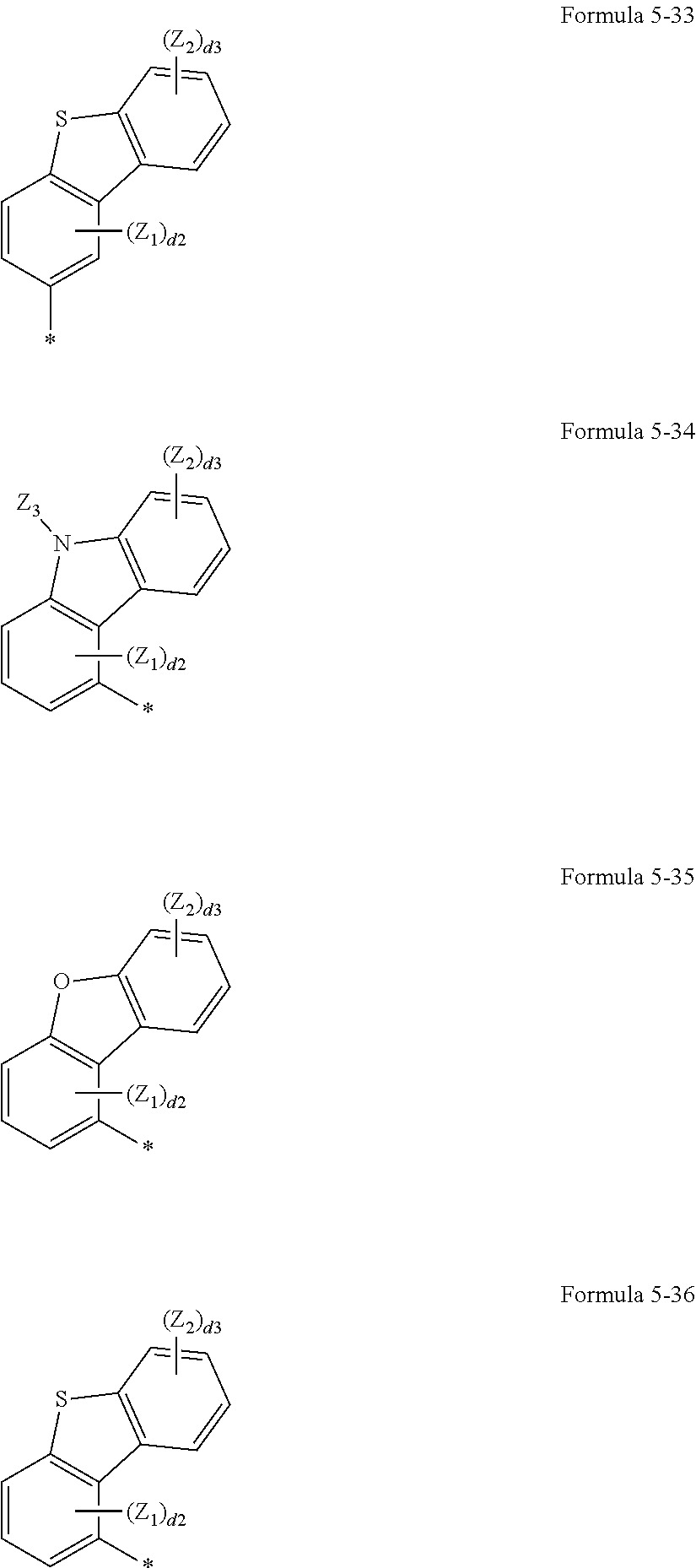


-
- c1 and c11 may be each independently 1 or 2, for example, may be 1;
- a1, a11, a2, and a12 may be each independently 0 or 1;
- b1 and b11 may be each independently, 0, 1, or 2; and b2 and b12 may be 1.


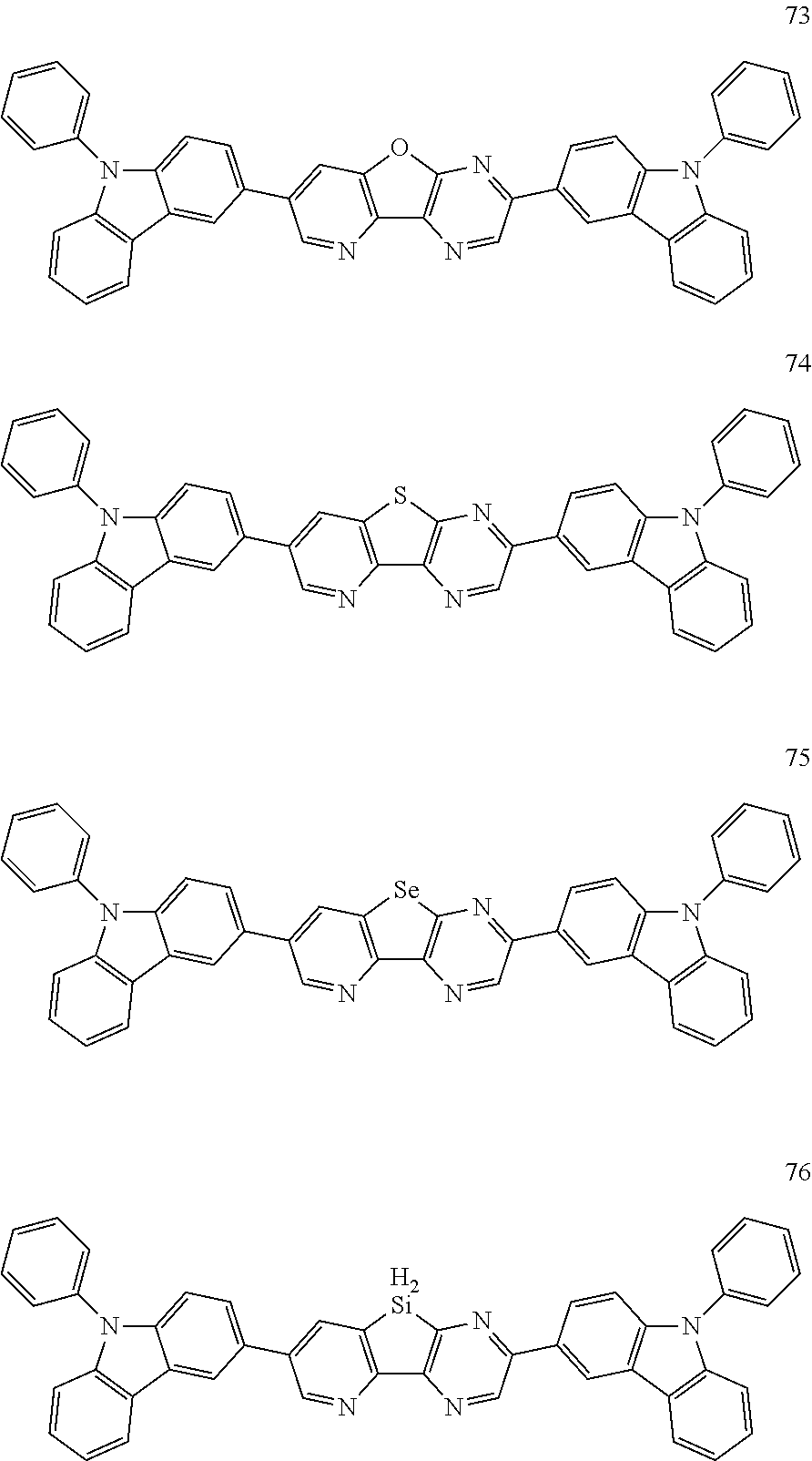


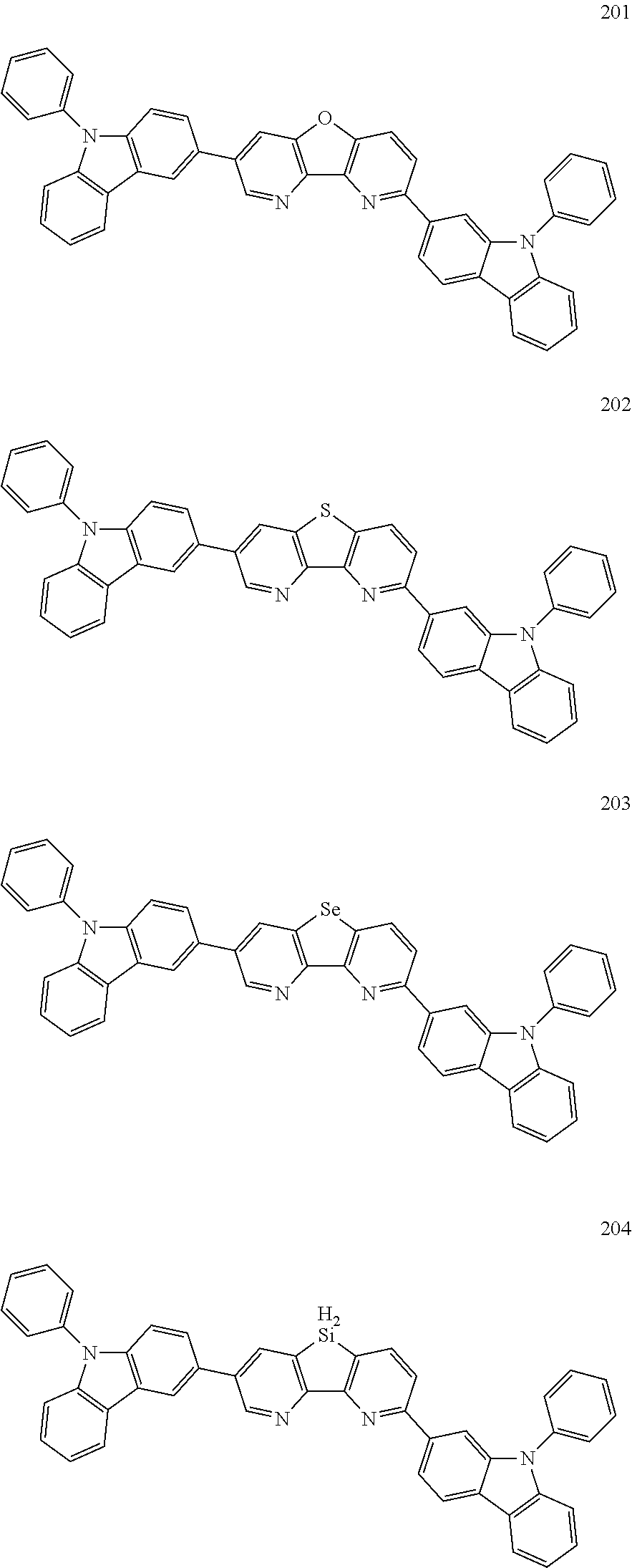


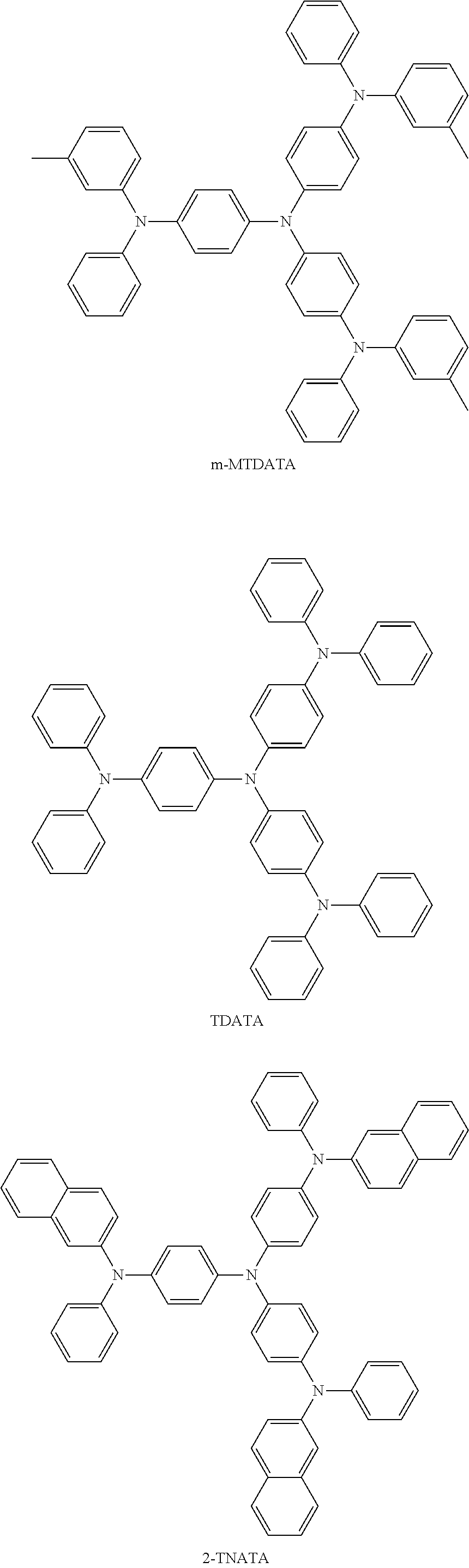


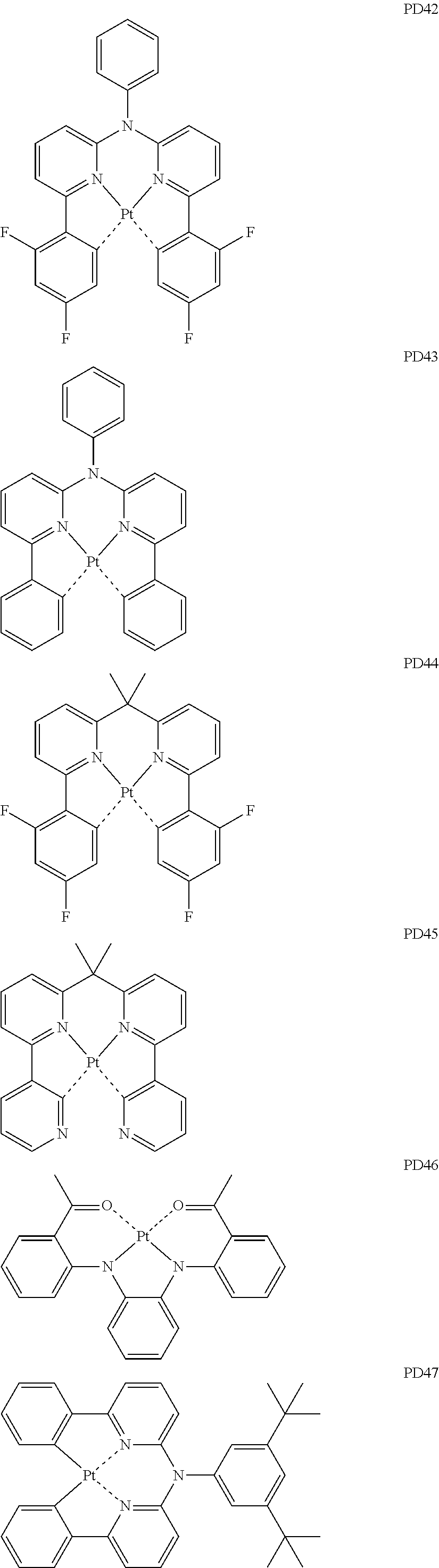


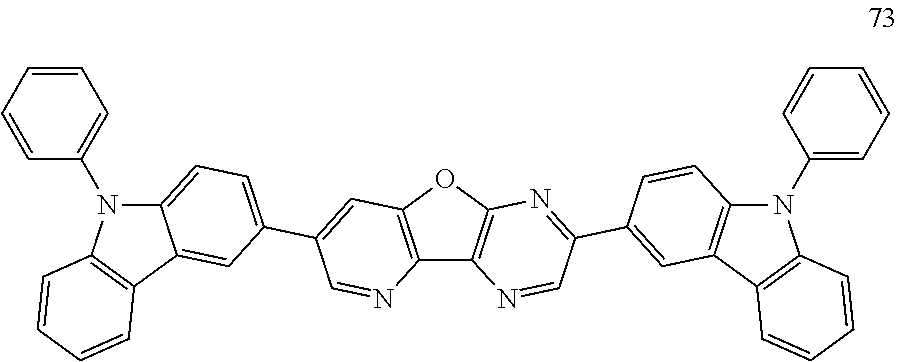


| TABLE 1 | |
| HOMO energy | Each of the compounds was diluted in toluene to a |
| level evaluation | concentration of 1 × 10⁻⁵M, and then UV absorption |
| method | spectra thereof were measured at room temperature |
| using a UV-Vis-NIR spectrophotometer (Varian Cary | |
| 5000). A HOMO energy level of the compound was | |
| calculated based on the optical band gap (Eg) of the | |
| absorption spectrum edge. | |
| LUMO energy | A potential (V)-current (A) plot of each of the |
| level evaluation | compounds was obtained using cyclic voltammetry |
| method | (CV) (Electrolyte: 0.1M Bu4NClO4/Solvent: THF/ |
| Electrode: 3-electrode system (working electrode: GC, | |
| reference electrode: Ag/AgCl, auxiliary electrode: Pt)), | |
| and a LUMO energy level of the compound was | |
| calculated based on the reduction onset potential in the | |
| potential-current plot. | |
| T1 energy level | A mixture of each of the compounds and 2-MeTHF |
| evaluation | (prepared by dissolving 1 mg of the compound in 3 |
| method | cubic centimeters (cc) of toluene) was put in a quartz |
| cell, which was then placed in liquid nitrogen (77K) | |
| for photoluminescence spectroscopy. Photoluminescence | |
| spectra of the compounds were measured using a | |
| photoluminescence spectrometer and then compared | |
| with those at room temperature to analyze only peaks | |
| appearing at low temperature. A T1 energy level of each | |
| of the compounds was calculated based on the low- | |
| temperature peaks. | |
| S1 energy level | A mixture of each of the compounds and 2-MeTHF |
| evaluation | (prepared by dissolving 1 mg of the compound in 3 cc |
| method | of toluene) was put in a quartz cell, which was then |
| placed in a photoluminescence spectrometer at room | |
| temperature to obtain photoluminescence spectra of the | |
| compound. Only main peaks appearing in the | |
| photoluminescent spectra were analyzed to calculate | |
| singlet energy levels of the compounds. | |
| TABLE 2 | ||||
| HOMO (eV) | LUMO (eV) | T1 energy | S1 energy | |
| Compound No. | (absolute value) | (absolute value) | level (eV) | level (eV) |
| Compound 1 | 5.41 | 2.41 | 2.68 | 2.88 |
| |
5.57 | 2.19 | 2.87 | 2.88 |
| Compound 17 | 5.50 | 2.39 | 2.68 | 2.81 |
| Compound 21 | 5.42 | 2.37 | 2.65 | 2.87 |
| Compound 22 | 5.60 | 2.10 | 2.81 | 2.89 |
| Compound 29 | 5.54 | 2.34 | 2.86 | 2.99 |
| |
5.51 | 2.27 | 2.85 | 3.00 |
| Compound 54 | 5.57 | 2.36 | 2.86 | 3.04 |
| Compound 73 | 5.45 | 2.83 | 2.63 | 2.82 |
| Compound 178 | 5.69 | 2.46 | 2.70 | 2.88 |
| Compound 308 | 5.26 | 2.21 | 2.71 | 2.86 |
| Compound A | 5.35 | 2.93 | 2.28 | 2.42 |
| Compound B | 5.28 | 2.02 | 2.65 | 2.98 |
| Compound C | 5.48 | 2.33 | 2.64 | 2.97 |

| TABLE 3 | |||
| Compound 1 | Compound 178 | Compound D | |
| Decomposition onset | 430° C. | 445° C. | 270° C. |
| temperature | |||
| TABLE 4 | |||||
| Driving | Current | Power | |||
| voltage | efficiency | efficiency | Emission | ||
| Example | Host | (V) | (cd/A) | (Im/W) | color |
| Example 1 | Compound 1 | 4.0 | 40.0 | 31.3 | Green |
| Example 2 | |
4.1 | 35.2 | 27.3 | Green |
| Example 3 | Compound 17 | 4.3 | 23.6 | 17.3 | Green |
| Example 4 | Compound 21 | 4.2 | 33.2 | 24.7 | Green |
| Example 5 | Compound 22 | 4.2 | 29.4 | 22.0 | Green |
| Example 6 | Compound 29 | 4.1 | 34.6 | 26.8 | Green |
| Example 7 | |
4.1 | 32.7 | 24.8 | Green |
| Example 8 | Compound 54 | 4.2 | 23.9 | 18.0 | Green |
| Example 9 | Compound 73 | 4.3 | 28.6 | 21.0 | Green |
| Example 10 | Compound | 4.2 | 36.9 | 27.4 | Green |
| 178 | |||||
| Example 11 | Compound | 4.5 | 31.5 | 21.2 | Green |
| 308 | |||||
| Comparative | Compound A | 5.4 | 22.8 | 13.3 | Green |
| Example A | |||||
| Comparative | Compound B | 5.9 | 15.8 | 8.4 | Green |
| Example B | |||||
| Comparative | Compound C | 5.4 | 15.0 | 8.8 | Green |
| Example C | |||||
| Comparative | Compound D | 4.7 | 21.5 | 14.3 | Green |
| Example D | |||||
Claims (25)


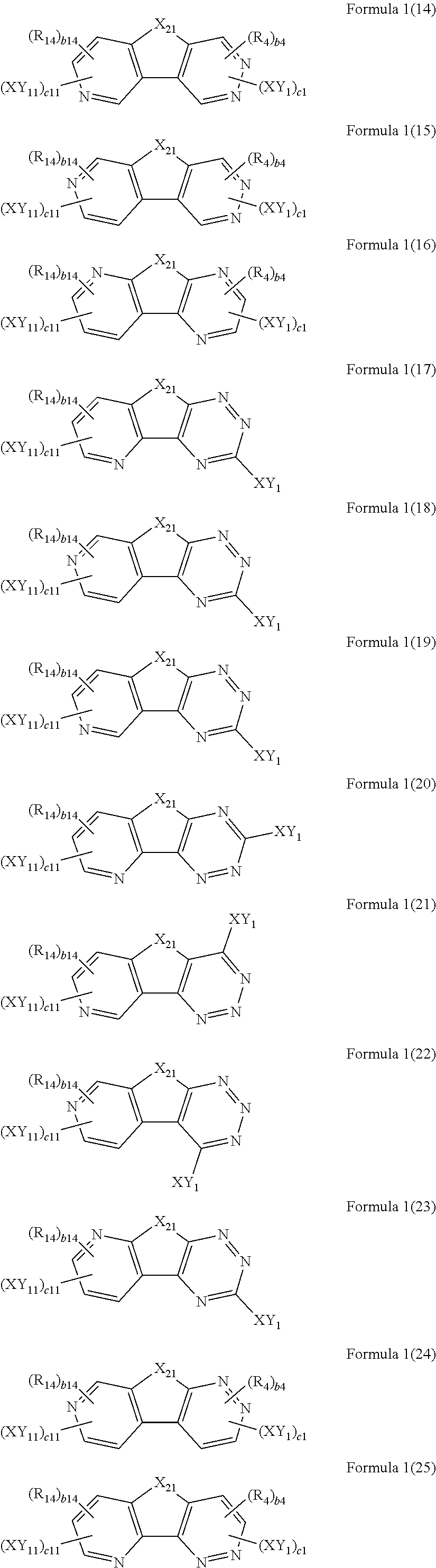


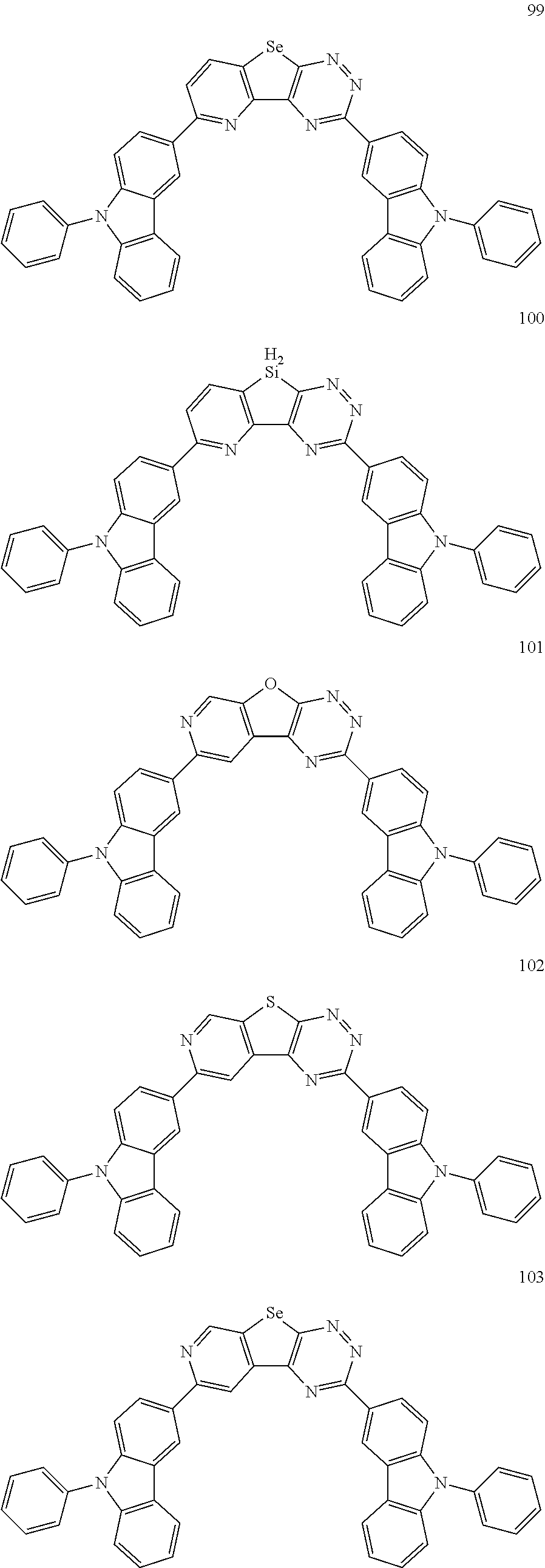


Applications Claiming Priority (2)
| Application Number | Priority Date | Filing Date | Title |
|---|---|---|---|
| KR10-2014-0059967 | 2014-05-19 | ||
| KR1020140059967A KR102250186B1 (en) | 2014-05-19 | 2014-05-19 | Condensed cyclic compound and organic light emitting device including the same |
Publications (2)
| Publication Number | Publication Date |
|---|---|
| US20150333271A1 US20150333271A1 (en) | 2015-11-19 |
| US9850253B2 true US9850253B2 (en) | 2017-12-26 |
Family
ID=54539228
Family Applications (1)
| Application Number | Title | Priority Date | Filing Date |
|---|---|---|---|
| US14/665,371 Active 2036-03-01 US9850253B2 (en) | 2014-05-19 | 2015-03-23 | Condensed cyclic compound and organic light emitting device including the same |
Country Status (2)
| Country | Link |
|---|---|
| US (1) | US9850253B2 (en) |
| KR (1) | KR102250186B1 (en) |
Families Citing this family (18)
| Publication number | Priority date | Publication date | Assignee | Title |
|---|---|---|---|---|
| JP6833863B2 (en) * | 2015-11-02 | 2021-02-24 | メルク パテント ゲーエムベーハー | Materials for OLED devices |
| KR101926022B1 (en) * | 2016-01-29 | 2019-02-26 | 삼성에스디아이 주식회사 | Organic compound and organic optoelectronic device and display device |
| EP3448866B1 (en) * | 2016-04-29 | 2020-06-17 | Merck Patent GmbH | Materials for organic electroluminescent devices |
| KR102447668B1 (en) * | 2016-06-22 | 2022-09-26 | 이데미쓰 고산 가부시키가이샤 | Specifically Substituted Benzofuro- and Benzothienoquinolines for Organic Light Emitting Diodes |
| JP7214633B2 (en) * | 2016-11-09 | 2023-01-30 | メルク パテント ゲーエムベーハー | Materials for organic electroluminescent devices |
| US20190031673A1 (en) * | 2017-07-27 | 2019-01-31 | Semiconductor Energy Laboratory Co., Ltd. | Organic Compound, Light-Emitting Element, Light-Emitting Device, Electronic Device, and Lighting Device |
| KR102630642B1 (en) * | 2018-02-09 | 2024-01-30 | 삼성디스플레이 주식회사 | Heterocyclic compound and organic light emitting device comprising the same |
| JP7475281B2 (en) | 2018-10-19 | 2024-04-26 | 株式会社半導体エネルギー研究所 | Organic compounds, host materials for light-emitting devices, light-emitting devices, light-emitting apparatuses, light-emitting modules, electronic devices, |
| CN109320525B (en) * | 2018-11-19 | 2021-07-06 | 广东工业大学 | A dual-donor hole transport material containing a phenoxazine structure, a preparation method thereof, and a perovskite solar cell |
| CN110746442B (en) * | 2018-12-10 | 2022-11-25 | 广州华睿光电材料有限公司 | Compound containing imidazole spiro ring and application thereof |
| CN113227728B (en) | 2018-12-21 | 2024-10-29 | 株式会社半导体能源研究所 | Light-emitting device, light-emitting apparatus, light-emitting module, lighting device, display device, display module and electronic equipment |
| TW202541675A (en) | 2018-12-28 | 2025-10-16 | 日商半導體能源研究所股份有限公司 | Light-emitting device, lighting device, display device, module and electronic machine |
| CN110016040A (en) * | 2019-04-19 | 2019-07-16 | 武汉华星光电半导体显示技术有限公司 | Thermal activation delayed fluorescence material and organic light-emitting diode (OLED) display apparatus |
| US12048244B2 (en) | 2019-10-11 | 2024-07-23 | Semiconductor Energy Laboratory Co., Ltd. | Organic compound, light-emitting device, light-emitting apparatus, electronic device, and lighting device |
| US12577202B2 (en) | 2021-02-26 | 2026-03-17 | Universal Display Corporation | Organic electroluminescent materials and devices |
| US12545690B2 (en) * | 2019-10-25 | 2026-02-10 | Universal Display Corporation | Organic electroluminescent materials and devices |
| CN114276360B (en) * | 2020-09-28 | 2024-09-06 | 江苏绿人半导体有限公司 | Organic compound and organic electroluminescent device |
| CN114315845B (en) * | 2020-09-28 | 2024-09-10 | 江苏绿人半导体有限公司 | An organic compound and its application in organic electroluminescent device |
Citations (7)
| Publication number | Priority date | Publication date | Assignee | Title |
|---|---|---|---|---|
| JP2010135467A (en) | 2008-12-03 | 2010-06-17 | Konica Minolta Holdings Inc | Organic electroluminescent element, lighting system equipped with the element, and display device |
| WO2012090967A1 (en) | 2010-12-28 | 2012-07-05 | 出光興産株式会社 | Material for organic electroluminescent elements, and organic electroluminescent element using same |
| KR20120092908A (en) | 2011-02-14 | 2012-08-22 | 에스에프씨 주식회사 | Pyridine derivative compound and organic electroluminescent device comprising the same |
| JP2012191031A (en) | 2011-03-11 | 2012-10-04 | Konica Minolta Holdings Inc | Organic electroluminescent element, display device, and lighting device |
| WO2012153780A1 (en) | 2011-05-11 | 2012-11-15 | 出光興産株式会社 | Novel compound, material for organic electroluminescence device, and organic electroluminescence device |
| JP5604848B2 (en) | 2009-10-19 | 2014-10-15 | コニカミノルタ株式会社 | ORGANIC ELECTROLUMINESCENT ELEMENT MATERIAL, ORGANIC ELECTROLUMINESCENT ELEMENT, LIGHTING DEVICE AND DISPLAY DEVICE |
| US9564601B2 (en) * | 2013-08-13 | 2017-02-07 | Samsung Display Co., Ltd. | Condensed-cyclic compound and organic light-emitting device including the same |
-
2014
- 2014-05-19 KR KR1020140059967A patent/KR102250186B1/en active Active
-
2015
- 2015-03-23 US US14/665,371 patent/US9850253B2/en active Active
Patent Citations (7)
| Publication number | Priority date | Publication date | Assignee | Title |
|---|---|---|---|---|
| JP2010135467A (en) | 2008-12-03 | 2010-06-17 | Konica Minolta Holdings Inc | Organic electroluminescent element, lighting system equipped with the element, and display device |
| JP5604848B2 (en) | 2009-10-19 | 2014-10-15 | コニカミノルタ株式会社 | ORGANIC ELECTROLUMINESCENT ELEMENT MATERIAL, ORGANIC ELECTROLUMINESCENT ELEMENT, LIGHTING DEVICE AND DISPLAY DEVICE |
| WO2012090967A1 (en) | 2010-12-28 | 2012-07-05 | 出光興産株式会社 | Material for organic electroluminescent elements, and organic electroluminescent element using same |
| KR20120092908A (en) | 2011-02-14 | 2012-08-22 | 에스에프씨 주식회사 | Pyridine derivative compound and organic electroluminescent device comprising the same |
| JP2012191031A (en) | 2011-03-11 | 2012-10-04 | Konica Minolta Holdings Inc | Organic electroluminescent element, display device, and lighting device |
| WO2012153780A1 (en) | 2011-05-11 | 2012-11-15 | 出光興産株式会社 | Novel compound, material for organic electroluminescence device, and organic electroluminescence device |
| US9564601B2 (en) * | 2013-08-13 | 2017-02-07 | Samsung Display Co., Ltd. | Condensed-cyclic compound and organic light-emitting device including the same |
Also Published As
| Publication number | Publication date |
|---|---|
| KR20150133089A (en) | 2015-11-27 |
| US20150333271A1 (en) | 2015-11-19 |
| KR102250186B1 (en) | 2021-05-10 |
Similar Documents
| Publication | Publication Date | Title |
|---|---|---|
| US9850253B2 (en) | Condensed cyclic compound and organic light emitting device including the same | |
| US9732069B2 (en) | Carbazole compound and organic light emitting device including the same | |
| US12384766B2 (en) | Condensed cyclic compound and organic light-emitting device including the same | |
| US10158085B2 (en) | Condensed cyclic compound and organic light-emitting device including the same | |
| US9911925B2 (en) | Carbazole-based compound and organic light-emitting device including the same | |
| US9812653B2 (en) | Carbazole compound and organic light-emitting device including the same | |
| US9771373B2 (en) | Condensed cyclic compound and organic light-emitting device including the same | |
| US9865820B2 (en) | Condensed cyclic compound and organic light-emitting device including the same | |
| US10903429B2 (en) | Condensed cyclic compound and organic light-emitting device including the same | |
| US10622568B2 (en) | Condensed cyclic compound and organic light-emitting device including the same | |
| US9780312B2 (en) | Carbazole-based compound and organic light emitting device including the same | |
| US10040794B2 (en) | Condensed cyclic compound and organic light-emitting device including the same | |
| US9711736B2 (en) | Condensed cyclic compound and organic light-emitting device comprising the same | |
| US11050027B2 (en) | Condensed cyclic compound and organic light-emitting device including the same | |
| US9768393B2 (en) | Condensed-cyclic compound and organic light-emitting device including the same | |
| US10686142B2 (en) | Condensed cyclic compound and organic light emitting device including the same | |
| US9209407B2 (en) | Amine-based compound and organic light-emitting device including the same | |
| US10446763B2 (en) | Organic light-emitting device | |
| US10032985B2 (en) | Condensed cyclic compound and organic light-emitting device including the same | |
| US10581000B2 (en) | Condensed cyclic compound and organic light-emitting device including the same | |
| US9818960B2 (en) | Condensed cyclic compound and organic light-emitting device including the same | |
| US20260013390A1 (en) | Organometallic compound, organic light-emitting device including the same, and electronic apparatus including the organic light-emitting device |
Legal Events
| Date | Code | Title | Description |
|---|---|---|---|
| AS | Assignment |
Owner name: SAMSUNG SDI CO., LTD., KOREA, REPUBLIC OF Free format text: ASSIGNMENT OF ASSIGNORS INTEREST;ASSIGNORS:CHUNG, YEONSOOK;SON, JHUNMO;JUNG, YONGSIK;AND OTHERS;REEL/FRAME:035230/0886 Effective date: 20150313 Owner name: SAMSUNG ELECTRONICS CO., LTD., KOREA, REPUBLIC OF Free format text: ASSIGNMENT OF ASSIGNORS INTEREST;ASSIGNORS:CHUNG, YEONSOOK;SON, JHUNMO;JUNG, YONGSIK;AND OTHERS;REEL/FRAME:035230/0886 Effective date: 20150313 |
|
| STCF | Information on status: patent grant |
Free format text: PATENTED CASE |
|
| MAFP | Maintenance fee payment |
Free format text: PAYMENT OF MAINTENANCE FEE, 4TH YEAR, LARGE ENTITY (ORIGINAL EVENT CODE: M1551); ENTITY STATUS OF PATENT OWNER: LARGE ENTITY Year of fee payment: 4 |
|
| MAFP | Maintenance fee payment |
Free format text: PAYMENT OF MAINTENANCE FEE, 8TH YEAR, LARGE ENTITY (ORIGINAL EVENT CODE: M1552); ENTITY STATUS OF PATENT OWNER: LARGE ENTITY Year of fee payment: 8 |