US9843645B2 - System and method for pushing smart alerts - Google Patents

System and method for pushing smart alerts Download PDF

Info

Publication number
US9843645B2
US9843645B2 US14/069,825 US201314069825A US9843645B2 US 9843645 B2 US9843645 B2 US 9843645B2 US 201314069825 A US201314069825 A US 201314069825A US 9843645 B2 US9843645 B2 US 9843645B2
Authority
US
United States
Prior art keywords
alert
notification
subscriber
action
notifications
Prior art date
Legal status (The legal status is an assumption and is not a legal conclusion. Google has not performed a legal analysis and makes no representation as to the accuracy of the status listed.)
Active, expires
Application number
US14/069,825
Other versions
US20150127750A1 (en
Inventor
Naresh Kumar
Current Assignee (The listed assignees may be inaccurate. Google has not performed a legal analysis and makes no representation or warranty as to the accuracy of the list.)
Time Warner Cable Enterprises LLC
Original Assignee
Time Warner Cable Enterprises LLC
Priority date (The priority date is an assumption and is not a legal conclusion. Google has not performed a legal analysis and makes no representation as to the accuracy of the date listed.)
Filing date
Publication date
Assigned to TIME WARNER CABLE ENTERPRISES LLC reassignment TIME WARNER CABLE ENTERPRISES LLC ASSIGNMENT OF ASSIGNORS INTEREST (SEE DOCUMENT FOR DETAILS). Assignors: KUMAR, NARESH
Priority to US14/069,825 priority Critical patent/US9843645B2/en
Application filed by Time Warner Cable Enterprises LLC filed Critical Time Warner Cable Enterprises LLC
Publication of US20150127750A1 publication Critical patent/US20150127750A1/en
Assigned to BANK OF AMERICA, N.A., AS ADMINISTRATIVE AGENT reassignment BANK OF AMERICA, N.A., AS ADMINISTRATIVE AGENT SECURITY INTEREST Assignors: BRIGHT HOUSE NETWORKS, LLC, CHARTER COMMUNICATIONS OPERATING, LLC, TIME WARNER CABLE ENTERPRISES LLC
Assigned to TIME WARNER CABLE ENTERPRISES LLC reassignment TIME WARNER CABLE ENTERPRISES LLC CHANGE OF APPLICANT'S ADDRESS Assignors: TIME WARNER CABLE ENTERPRISES LLC
Priority to US15/786,781 priority patent/US10686904B2/en
Publication of US9843645B2 publication Critical patent/US9843645B2/en
Application granted granted Critical
Assigned to THE BANK OF NEW YORK MELLON TRUST COMPANY, N.A. reassignment THE BANK OF NEW YORK MELLON TRUST COMPANY, N.A. SECURITY INTEREST Assignors: TIME WARNER CABLE INFORMATION SERVICES (NORTH CAROLINA), LLC, ADCAST NORTH CAROLINA CABLE ADVERTISING, LLC, ALABANZA LLC, AMERICAN CABLE ENTERTAINMENT COMPANY, LLC, AMERICA'S JOB EXCHANGE LLC, ATHENS CABLEVISION, LLC, AUSABLE CABLE TV, LLC, BHN HOME SECURITY SERVICES, LLC, BHN SPECTRUM INVESTMENTS, LLC, BRESNAN BROADBAND HOLDINGS, LLC, BRESNAN BROADBAND OF COLORADO, LLC, BRESNAN BROADBAND OF MONTANA, LLC, BRESNAN BROADBAND OF UTAH, LLC, BRESNAN BROADBAND OF WYOMING, LLC, BRESNAN COMMUNICATIONS, LLC, BRESNAN DIGITAL SERVICES, LLC, BRESNAN MICROWAVE OF MONTANA, LLC, BRIGHT HOUSE NETWORKS INFORMATION SERVICES (ALABAMA), LLC, BRIGHT HOUSE NETWORKS INFORMATION SERVICES (CALIFORNIA), LLC, BRIGHT HOUSE NETWORKS INFORMATION SERVICES (FLORIDA), LLC, BRIGHT HOUSE NETWORKS INFORMATION SERVICES (INDIANA), LLC, BRIGHT HOUSE NETWORKS INFORMATION SERVICES (MICHIGAN), LLC, BRIGHT HOUSE NETWORKS, LLC, CABLE EQUITIES COLORADO, LLC, CABLE EQUITIES OF COLORADO MANAGEMENT LLC CC 10, LLC, CC FIBERLINK, LLC, CC MICHIGAN, LLC, CC SYSTEMS, LLC, CC V HOLDINGS, LLC, CC VI FIBERLINK, LLC, CC VI OPERATING COMPANY, LLC, CC VII FIBERLINK, LLC, CC VIII FIBERLINK, LLC, CC VIII HOLDINGS, LLC, CC VIII OPERATING, LLC, CC VIII, LLC, CCO FIBERLINK, LLC, CCO HOLDCO TRANSFERS VII, LLC, CCO LP, LLC, CCO NR HOLDINGS, LLC, CCO PURCHASING, LLC, CCO SOCAL I, LLC, CCO SOCAL II, LLC, CCO SOCAL VEHICLES, LLC, CCO TRANSFERS, LLC, CHARTER ADVANCED SERVICES (AL), LLC, CHARTER ADVANCED SERVICES (CA), LLC, CHARTER ADVANCED SERVICES (CO), LLC, CHARTER ADVANCED SERVICES (CT), LLC, CHARTER ADVANCED SERVICES (GA), LLC, CHARTER ADVANCED SERVICES (IL), LLC, CHARTER ADVANCED SERVICES (IN), LLC, CHARTER ADVANCED SERVICES (KY), LLC, CHARTER ADVANCED SERVICES (LA), LLC, CHARTER ADVANCED SERVICES (MA), LLC, CHARTER ADVANCED SERVICES (MD), LLC, CHARTER ADVANCED SERVICES (MI), LLC, CHARTER ADVANCED SERVICES (MN), LLC, CHARTER ADVANCED SERVICES (MO), LLC, CHARTER ADVANCED SERVICES (MS), LLC, CHARTER ADVANCED SERVICES (MT), LLC, CHARTER ADVANCED SERVICES (NC), LLC, CHARTER ADVANCED SERVICES (NE), LLC, CHARTER ADVANCED SERVICES (NH), LLC, CHARTER ADVANCED SERVICES (NV), LLC, CHARTER ADVANCED SERVICES (NY), LLC, CHARTER ADVANCED SERVICES (OH), LLC, CHARTER ADVANCED SERVICES (OR), LLC, CHARTER ADVANCED SERVICES (PA), LLC, CHARTER ADVANCED SERVICES (SC), LLC, CHARTER ADVANCED SERVICES (TN), LLC, CHARTER ADVANCED SERVICES (TX), LLC, CHARTER ADVANCED SERVICES (UT), LLC, CHARTER ADVANCED SERVICES (VA), LLC, CHARTER ADVANCED SERVICES (VT), LLC, CHARTER ADVANCED SERVICES (WA), LLC, CHARTER ADVANCED SERVICES (WI), LLC, CHARTER ADVANCED SERVICES (WV), LLC, CHARTER ADVANCED SERVICES (WY), LLC, CHARTER ADVANCED SERVICES VIII (MI), LLC, CHARTER ADVANCED SERVICES VIII (MN), LLC, CHARTER ADVANCED SERVICES VIII (WI), LLC, CHARTER ADVERTISING OF SAINT LOUIS, LLC, CHARTER CABLE OPERATING COMPANY, LLC, CHARTER CABLE PARTNERS, LLC, CHARTER COMMUNICATIONS ENTERTAINMENT I, LLC, CHARTER COMMUNICATIONS ENTERTAINMENT II, LLC, CHARTER COMMUNICATIONS ENTERTAINMENT, LLC, CHARTER COMMUNICATIONS OF CALIFORNIA, LLC, CHARTER COMMUNICATIONS OPERATING CAPITAL CORP., CHARTER COMMUNICATIONS OPERATING, LLC, CHARTER COMMUNICATIONS PROPERTIES LLC, CHARTER COMMUNICATIONS V, LLC, CHARTER COMMUNICATIONS VENTURES, LLC, CHARTER COMMUNICATIONS VI, L.L.C., CHARTER COMMUNICATIONS VII, LLC, CHARTER COMMUNICATIONS, LLC, CHARTER DISTRIBUTION, LLC, CHARTER FIBERLINK - ALABAMA, LLC, CHARTER FIBERLINK - GEORGIA, LLC, CHARTER FIBERLINK - ILLINOIS, LLC, CHARTER FIBERLINK - MARYLAND II, LLC, CHARTER FIBERLINK - MICHIGAN, LLC, CHARTER FIBERLINK - MISSOURI, LLC, CHARTER FIBERLINK - NEBRASKA, LLC, CHARTER FIBERLINK - PENNSYLVANIA, LLC, CHARTER FIBERLINK - TENNESSEE, LLC, CHARTER FIBERLINK AR-CCVII, LLC, CHARTER FIBERLINK CA-CCO, LLC, CHARTER FIBERLINK CC VIII, LLC, CHARTER FIBERLINK CCO, LLC, CHARTER FIBERLINK CT-CCO, LLC, CHARTER FIBERLINK LA-CCO, LLC, CHARTER FIBERLINK MA-CCO, LLC, CHARTER FIBERLINK MS-CCVI, LLC, CHARTER FIBERLINK NC-CCO, LLC, CHARTER FIBERLINK NH-CCO, LLC, CHARTER FIBERLINK NV-CCVII, LLC, CHARTER FIBERLINK NY-CCO, LLC, CHARTER FIBERLINK OH-CCO, LLC, CHARTER FIBERLINK OR-CCVII, LLC, CHARTER FIBERLINK SC-CCO, LLC, CHARTER FIBERLINK TX-CCO, LLC, CHARTER FIBERLINK VA-CCO, LLC, CHARTER FIBERLINK VT-CCO, LLC, CHARTER FIBERLINK WA-CCVII, LLC, CHARTER HELICON, LLC, CHARTER HOME SECURITY, LLC, CHARTER LEASING HOLDING COMPANY, LLC, CHARTER LEASING OF WISCONSIN, LLC, CHARTER RMG, LLC, CHARTER STORES FCN, LLC, CHARTER VIDEO ELECTRONICS, LLC, COAXIAL COMMUNICATIONS OF CENTRAL OHIO LLC, DUKENET COMMUNICATIONS HOLDINGS, LLC, DUKENET COMMUNICATIONS, LLC, FALCON CABLE COMMUNICATIONS, LLC, FALCON CABLE MEDIA, A CALIFORNIA LIMITED PARTNERSHIP, FALCON CABLE SYSTEMS COMPANY II, L.P., FALCON CABLEVISION, A CALIFORNIA LIMITED PARTNERSHIP, FALCON COMMUNITY CABLE, L.P., FALCON COMMUNITY VENTURES I LIMITED PARTNERSHIP, FALCON FIRST CABLE OF THE SOUTHEAST, LLC, FALCON FIRST, LLC, FALCON TELECABLE, A CALIFORNIA LIMITED PARTNERSHIP, FALCON VIDEO COMMUNICATIONS, L.P., HELICON PARTNERS I, L.P., HOMETOWN T.V., LLC, HPI ACQUISITION CO. LLC, ICI HOLDINGS, LLC, INSIGHT BLOCKER LLC, INSIGHT CAPITAL LLC, INSIGHT COMMUNICATIONS COMPANY LLC, INSIGHT COMMUNICATIONS COMPANY, L.P, INSIGHT COMMUNICATIONS MIDWEST, LLC, INSIGHT COMMUNICATIONS OF CENTRAL OHIO, LLC, INSIGHT COMMUNICATIONS OF KENTUCKY, L.P., INSIGHT INTERACTIVE, LLC, INSIGHT KENTUCKY CAPITAL, LLC, INSIGHT KENTUCKY PARTNERS I, L.P., INSIGHT KENTUCKY PARTNERS II, L.P., INSIGHT MIDWEST HOLDINGS, LLC, INSIGHT MIDWEST, L.P., INSIGHT PHONE OF INDIANA, LLC, INSIGHT PHONE OF KENTUCKY, LLC, INSIGHT PHONE OF OHIO, LLC, INTERACTIVE CABLE SERVICES, LLC, INTERLINK COMMUNICATIONS PARTNERS, LLC, INTREPID ACQUISITION LLC, LONG BEACH, LLC, MARCUS CABLE ASSOCIATES, L.L.C., MARCUS CABLE OF ALABAMA, L.L.C., MARCUS CABLE, LLC, MIDWEST CABLE COMMUNICATIONS, LLC, NAVISITE LLC, NEW WISCONSIN PROCUREMENT LLC, OCEANIC TIME WARNER CABLE LLC, PARITY ASSETS, LLC, PEACHTREE CABLE TV, L.P., PEACHTREE CABLE TV, LLC, PHONE TRANSFERS (AL), LLC, PHONE TRANSFERS (CA), LLC, PHONE TRANSFERS (GA), LLC, PHONE TRANSFERS (NC), LLC, PHONE TRANSFERS (TN), LLC, PHONE TRANSFERS (VA), LLC, PLATTSBURGH CABLEVISION, LLC, RENAISSANCE MEDIA LLC, RIFKIN ACQUISITION PARTNERS, LLC, ROBIN MEDIA GROUP, LLC, SCOTTSBORO TV CABLE, LLC TENNESSEE, LLC, THE HELICON GROUP, L.P., TIME WARNER CABLE BUSINESS LLC, TIME WARNER CABLE ENTERPRISES LLC, TIME WARNER CABLE INFORMATION SERVICES (ALABAMA), LLC, TIME WARNER CABLE INFORMATION SERVICES (ARIZONA), LLC, TIME WARNER CABLE INFORMATION SERVICES (CALIFORNIA), LLC, TIME WARNER CABLE INFORMATION SERVICES (COLORADO), LLC, TIME WARNER CABLE INFORMATION SERVICES (HAWAII), LLC, TIME WARNER CABLE INFORMATION SERVICES (IDAHO), LLC, TIME WARNER CABLE INFORMATION SERVICES (ILLINOIS), LLC, TIME WARNER CABLE INFORMATION SERVICES (INDIANA), LLC, TIME WARNER CABLE INFORMATION SERVICES (KANSAS), LLC, TIME WARNER CABLE INFORMATION SERVICES (KENTUCKY), LLC, TIME WARNER CABLE INFORMATION SERVICES (MAINE), LLC, TIME WARNER CABLE INFORMATION SERVICES (MASSACHUSETTS), LLC, TIME WARNER CABLE INFORMATION SERVICES (MICHIGAN), LLC, TIME WARNER CABLE INFORMATION SERVICES (MISSOURI), LLC, TIME WARNER CABLE INFORMATION SERVICES (NEBRASKA), LLC, TIME WARNER CABLE INFORMATION SERVICES (NEW HAMPSHIRE), LLC, TIME WARNER CABLE INFORMATION SERVICES (NEW JERSEY), LLC, TIME WARNER CABLE INFORMATION SERVICES (NEW MEXICO) LLC, TIME WARNER CABLE INFORMATION SERVICES (NEW YORK), LLC, TIME WARNER CABLE INFORMATION SERVICES (OHIO), LLC, TIME WARNER CABLE INFORMATION SERVICES (PENNSYLVANIA), LLC, TIME WARNER CABLE INFORMATION SERVICES (SOUTH CAROLINA), LLC, TIME WARNER CABLE INFORMATION SERVICES (TENNESSEE), LLC, TIME WARNER CABLE INFORMATION SERVICES (TEXAS), LLC, TIME WARNER CABLE INFORMATION SERVICES (VIRGINIA), LLC, TIME WARNER CABLE INFORMATION SERVICES (WASHINGTON), LLC, TIME WARNER CABLE INFORMATION SERVICES (WEST VIRGINIA), LLC, TIME WARNER CABLE INFORMATION SERVICES (WISCONSIN), LLC, TIME WARNER CABLE INTERNATIONAL LLC, TIME WARNER CABLE INTERNET HOLDINGS III LLC, TIME WARNER CABLE INTERNET HOLDINGS LLC, TIME WARNER CABLE INTERNET LLC, TIME WARNER CABLE MEDIA LLC, TIME WARNER CABLE MIDWEST LLC, TIME WARNER CABLE NEW YORK CITY LLC, TIME WARNER CABLE NORTHEAST LLC, TIME WARNER CABLE PACIFIC WEST LLC, TIME WARNER CABLE SERVICES LLC, TIME WARNER CABLE SOUTHEAST LLC, TIME WARNER CABLE SPORTS LLC, TIME WARNER CABLE TEXAS LLC, TWC ADMINISTRATION LLC, TWC COMMUNICATIONS, LLC, TWC DIGITAL PHONE LLC, TWC MEDIA BLOCKER LLC, TWC NEWCO LLC, TWC NEWS AND LOCAL PROGRAMMING HOLDCO LLC, TWC NEWS AND LOCAL PROGRAMMING LLC, TWC REGIONAL SPORTS NETWORK I LLC, TWC SECURITY LLC, TWC SEE HOLDCO LLC, TWC WIRELESS LLC, TWC/CHARTER DALLAS CABLE ADVERTISING, LLC, TWCIS HOLDCO LLC, VISTA BROADBAND COMMUNICATIONS, LLC, VOIP TRANSFERS (AL), LLC, VOIP TRANSFERS (CA) LLC, VOIP TRANSFERS (GA), LLC, VOIP TRANSFERS (NC), LLC, VOIP TRANSFERS (TN), LLC, VOIP TRANSFERS (VA), LLC, WISCONSIN PROCUREMENT HOLDCO LLC
Assigned to WELLS FARGO TRUST COMPANY, N.A. reassignment WELLS FARGO TRUST COMPANY, N.A. SECURITY INTEREST Assignors: BRIGHT HOUSE NETWORKS, LLC, CHARTER COMMUNICATIONS OPERATING, LLC, TIME WARNER CABLE ENTERPRISES LLC, TIME WARNER CABLE INTERNET LLC
Active legal-status Critical Current
Adjusted expiration legal-status Critical

Links

Images

Classifications

    • H04L67/26
    • HELECTRICITY
    • H04ELECTRIC COMMUNICATION TECHNIQUE
    • H04LTRANSMISSION OF DIGITAL INFORMATION, e.g. TELEGRAPHIC COMMUNICATION
    • H04L63/00Network architectures or network communication protocols for network security
    • H04L63/08Network architectures or network communication protocols for network security for authentication of entities
    • H04L63/0815Network architectures or network communication protocols for network security for authentication of entities providing single-sign-on or federations
    • HELECTRICITY
    • H04ELECTRIC COMMUNICATION TECHNIQUE
    • H04LTRANSMISSION OF DIGITAL INFORMATION, e.g. TELEGRAPHIC COMMUNICATION
    • H04L67/00Network arrangements or protocols for supporting network services or applications
    • H04L67/50Network services
    • H04L67/55Push-based network services
    • HELECTRICITY
    • H04ELECTRIC COMMUNICATION TECHNIQUE
    • H04WWIRELESS COMMUNICATION NETWORKS
    • H04W12/00Security arrangements; Authentication; Protecting privacy or anonymity
    • H04W12/06Authentication

Definitions

  • PCD portable computing devices
  • Apps have been written to play audio and video material, provide news and information, facilitate purchases, and control and/or monitor other devices, among other tasks.
  • only one application may be active in the foreground at a time.
  • Many applications operate in a time-based or interconnected environment where events of interest to users can occur when the application is not in the foreground. Notifications allow these applications to notify their users when these events occur.
  • the information provided in a notification may be a message, an impending calendar event, or new data on a remote server.
  • the notification is displayed as an alert message or an application icon.
  • a notification may also include a sound that accompanies the displayed graphic.
  • a notification may be local or “pushed” from a remote source.
  • a local notification is local to an application.
  • push notifications arrive from outside a device.
  • a push notification may originate on a remote server operated by the application provider and sent by a notification service provider.
  • the notification service provider may be the manufacturer of PCD or a third party who provides the service on behalf of that manufacturer. When presented by the operating system, local and push notifications look and sound the same.
  • Some providers of PCDs have established stores for selling apps that may be downloaded and operated on their respective branded devices. Apple also provides a notification service to its developers.
  • a user of PCDs from different vendors may only receive the notifications of a particular vendor's device that are offered by that vendor. That is, a user running two versions on a particular app on PCDs supplied by different vendors must configure each device individually to receive a particular notification. If only one version of the app is capable of supplying a notification, then the user will receive the notification on only one device.
  • Notifications are typically designed to alert a user of an app that an event associated with an app has taken place.
  • the notification allows the user to activate the app and to interact with the app in light of the event.
  • Embodiments herein are directed to systems and methods for using alerts sent to personal computing device as triggering events for selected actions.
  • a smart alert couples a triggering event notification with respect to an app with one or more action options.
  • An action option is a user selected action or a set of actions that a user may authorize in response to a triggering event.
  • the action option may involve only the app that is the subject of the triggering event notification or it may involve multiple apps.
  • the selection and execution of an action option may require authorization by the user each time a triggering event notification is delivered or the action option may be pre-selected and authorized by the user such that action is taken when the triggering event is reported.
  • the action may be directed to a device that detected the triggering event, or the action may be directed devices other than the device that detected the triggering event.
  • an alert notification is received and evaluated by a processor.
  • An identifier of a subscriber who is registered to receive the first alert notification is identified.
  • the subscriber identifier is used to select first assessment rules corresponding to the first alert notification.
  • the first assessment rules are applied to the alert notification to determine whether the receipt of the first alert notification satisfies a condition for taking one or more actions. If the condition is met, one or more commands are issued to effectuate the one or more actions.
  • a second alert notification is received and evaluated by the processor.
  • the subscriber identifier is used to select second assessment rules corresponding to the second alert notification.
  • the first and second assessment rules are applied to the first and second alert notifications to determine whether the receipt of the first and second alert notifications satisfies a condition for taking one or more actions. If the condition is met, one or more commands are issued to effectuate the one or more actions.
  • a provider of communication services for example, a broadband service provider, provides smart alerts to its subscribers.
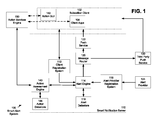
  • FIG. 1 is a block diagram illustrating an architecture of a smart alert system according to an embodiment.
  • FIG. 2 is a flow diagram illustrating an process by which a subscriber subscribes to smart alerts provided by a service provider according to an embodiment.
  • FIG. 3 is a flow diagram of an interaction between an alert engine, a push service and a plurality of subscriber clients according to an embodiment.
  • FIG. 4 is a flow diagram illustrating a process by which an alert is evaluated to determine if it qualifies as a triggering event according to an embodiment.
  • FIG. 5 is a block diagram of a computing device suitable for use with any of the embodiments.
  • FIG. 6 is a block diagram of a server device suitable for use with any of the embodiments.
  • a smart alert couples a triggering event notification with respect to an app with one or more action options.
  • An action option is a user selected action or a set of actions that a user may authorize in response to a triggering event.
  • the action option may involve only the app that is the subject of the triggering event notification or it may involve multiple apps.
  • the selection and execution of an action option may require authorization by the user each time a triggering event notification is delivered or the action option may be pre-selected by the user such that action is taken when the triggering event is reported.
  • the interaction between the participating entities may be provided using one of a number of protocols.
  • interactions may be governed by a long-poll protocol and a websocket protocol.
  • Embodiments may be described and illustrated using a single protocol. However, the reference to a single protocol and the message flows that are used to implement that protocol are not meant to be limiting but are merely illustrative.
  • FIG. 1 is a block diagram illustrating an architecture of a smart alert system 100 according to an embodiment.
  • a smart alert system 100 includes a smart notification server 110 .
  • the smart notification server 110 is implemented on a server device such as the server device illustrated in FIG. 5 .
  • the smart notification server 110 includes an alert engine 114 and an action engine 140 .
  • a client registration system 112 provides an interface between a subscriber client 102 and the alert engine 114 .
  • the subscriber client 102 may be a PC, a tablet, a smart phone, a television or other device that is web-enabled.
  • the client registration system 112 receives requests for smart alert services from the subscriber client 102 .
  • the client registration system 112 uses a REST API to provide an interface to the subscriber client 102 .
  • the client registration system 112 supports a process by which a client, such as subscriber client 102 , may register with the alert engine 114 to subscribe to one or more smart alerts.
  • the subscriptions of the subscriber client 102 are saved in an alert datastore 116 .
  • the alert datastore 116 may also include information provided by the subscriber client 102 that may used to determine whether the subscriber client 102 is eligible to receive a particular alert.
  • the client registration system 112 may also interact with the subscriber client 102 and the alert engine 114 to unsubscribe to an alert.
  • a service provider for example, a broadband service provider, provides smart alerts to its subscribers.
  • FIG. 2 is a flow diagram illustrating an process by which a subscriber subscribes to smart alerts provided by a service provider according to an embodiment.
  • a subscriber of the service provider who desires to receive smart notifications is authenticated 202 . If the authorization is not successful, that is, if the result of Block 204 is “NO,” the subscriber may be asked to resubmit the subscriber's authentication credentials (Block 206 ).
  • the authorization credentials represent the subscriber's digital identity, such as for example a user ID and password.
  • the user is permitted to resubmit the authorization credentials a preset number of times.
  • the authentication process utilizes a single sign-on (SSO) process by which a subscriber is authenticated by an identity provider.
  • SSO single sign-on
  • the SSO process may utilize a Security Assertion Markup Language (SAML) protocol.
  • SAML Security Assertion Markup Language
  • the SAML protocol was selected for illustrative purposes only and is not intended to be limiting.
  • the subscriber submits his or her authentication credentials to an identity provider.
  • the identity provider confirms that the authentication credentials are valid and issues a response to the subscriber that includes a identifier, such as a cookie, that can be verified by the service provider.
  • the identity provider is a service operated by the service provider that allows a subscriber to authenticate with the service provider once in order to access all of the services offered by the service provider, including the smart alert service.
  • Block 222 the subscriber may attempt to register for smart alert services.
  • the subscriber submits a registration request that includes the user name or user id, an identifier associated with the subscriber client 102 , such as the subscriber client MAC address, the cookie that is provided to the subscriber client 102 when authentication is successful and a registration id selected by the subscriber, such as an email address.
  • Conditions may be established for registration with the smart alert system 100 .
  • the subscriber may be required to operate at least one app ( FIG. 1 , Block 104 ) that is associated with a smart alert action.
  • the subscriber may be required to subscribe to other services provided by the service provider.
  • the client registration system ( FIG. 1 , Block 112 ) may access subscriber records to determine whether the subscriber meets the conditions established for registration with the smart alert system 100 .
  • the subscriber may be sent a message explaining the reasons for denying registration and steps that may be taken to qualify for registration with the smart alert system 100 .
  • the subscriber may subscribe for one or more smart alerts.
  • the subscriber client may also provide filter data that may be used by the alert engine 114 to direct smart alerts to particular subscriber clients, including subscriber client 102 .
  • an alert provider registration system 118 provides an interface between an alert provider 124 and the alert engine 114 .
  • the alert provider 124 registers with the alert engine 114 to provide alerts to one or more client apps 104 operated by the subscriber client 102 .
  • an alert provide 124 may only register to provide alerts to apps 104 owned or controlled by the alert provider 124 .
  • an alert provider 124 may establish rules to determine whether the subscriber client 102 is eligible to receive an alert to which the subscriber client 102 has subscribed.
  • the rules that govern the eligibility of the subscriber client to receive an alert may be stored in an alert datastore 116 and implemented by the alert engine 114 .
  • An alert that is issued without eligibility rules will be broadcast to all subscriber clients that have registered to receive the particular alert.
  • An alert that is issued with eligibility rules is sent only to subscriber clients that meet the requirements established by the rules.
  • alerts that are issued by the alert provider 124 are validated by the alert engine 114 using the alert provider information stored in the alert datastore 116 .
  • a validated alert may be further processed by applying the eligibility rules, if any, in the alert datastore 116 for the particular alert to the subscriber data stored in alert datastore 116 . If the alert is a broadcast alert, or if the subscriber client 102 is eligible to receive the alert, an alert message is passed to a message router 120 .
  • the message router 120 may use a push service 122 to convey the alert message to the subscriber client when the subscriber client 102 is a generic device such as personal computer or laptop.
  • push services 122 may utilize a long-poll push service interface and a web-socket push service interface.
  • the smart alert system 100 may be configured to filter messages, so services can direct messages to the target clients. Subscriber clients may join with a set of filter parameters. The criteria and parameters together instruct how the filtering operates.
  • Subscriber clients may have multiple joins. Joins are additive and can contain multiple filter parameters. In an embodiment, there are three defined filter parameters: clientID, ID, and notification type. All other filter parameters are based on the notification type and are dynamic. Clients can dynamically join and unjoin, without changing their subscriptions.
  • the smart alert system 100 provides two types of notifications: point-to-point notifications and broadcast notifications.
  • Point-to-point notifications are messages intended for one user identified by the client Id filter parameter.
  • Broadcast notifications are intended for a larger audience.
  • the broadcast message type may be subject to additional filter parameters that identify a select group of subscribers who are targeted to receive the alert.
  • a service provider may also create “system alerts” that are provided to all subscribers including those who have not voluntarily subscribed to receive alerts.
  • a system alert may be issued by the service provider in the form of a point-to-point notification or a broadcast notification to provide information to subscribers or groups of subscribers.
  • the system notification may constitute a triggering event (described below) that triggers an action by one or more client apps 104 operating on the subscriber client 102 (see, FIG. 1 ).
  • the system alert may initiate an action without the subscriber being aware that an action has occurred.
  • ZIP codes and FIPS (Federal Information Processing Series) codes are used to indicate a geographic location.
  • Other geographic location codes such as a Geographic Names Information System (GNIS) Identifiers, may be also be used.
  • GNIS Geographic Names Information System
  • join command with a wild card zip code and a FIPS as filter parameters:
  • the message filter criteria may be specified with “and” and “or” logic. Multiple filter criteria specified together in the same block (delimited by the “&”) must match the filter parameters of the client. Criteria specified in different blocks are evaluated as “or” conditions. In this embodiment, only one block needs to match to have the message delivered.
  • FIG. 3 is a flow diagram of an interaction between an alert engine 114 , a push service 122 , and a plurality of subscriber clients (clients 1, 2, and 3) according to an embodiment.
  • Any service in the network will publish the notification to the alert engine.
  • the alert engine will publish the notification to the push service ( FIG. 3 , Circle 302 ).
  • clients 1, 2 and 3 check the push service 122 for messages ( FIG. 3 , Circle 304 ).
  • Client 1 is identified as eligible for a smart alert message ( FIG. 3 , Circle 306 ).
  • the filters associated with the smart alert and the filter parameters included in the join message ( FIG. 3 , Circle 304 ) are compared to determine whether client 1 meets the requirements for receiving the message ( FIG. 3 , Circle 308 ).
  • the client 1 meets the requirements for receiving the message, the message is pushed to client 1 ( FIG. 3 , Circle 310 ).
  • neither client 2 nor client 3 is entitled to receive a message.
  • the thread may be cleaned up by sending a time out message to clients 2 and 3, which message has no payload ( FIG. 3 , Circle 312 ).
  • the message router 120 may send alert messages to a third party push service 130 , which service is entitled to communicate alerts to the subscriber client 102 .
  • FIG. 4 is a flow diagram illustrating a process by which an alert is evaluated to determine if it qualifies as a triggering event according to an embodiment.
  • alerts for which the client subscriber 102 has subscribed and, if applicable, eligible to receive are communicated by the alert engine 114 and communicated to an action assessment engine 140 ( FIG. 4 , Block 402 ).
  • the action assessment engine 140 evaluates the alert to determine if the alert message is associated with action rules that are stored in an action datastore 144 ( FIG. 4 , Block 404 ).
  • An alert that is associated with action rules may sometimes be referred to herein as a “triggering event.” If the alert does not qualify as a “triggering event,” that is, if the result of Block 404 is “NO,” the eligible alert is published to the subscriber client 102 . If the alert qualifies as a “triggering event,” that is, if the result of Block 404 is “YES,” the eligible alert is published to the subscriber client 102 ( FIG. 4 , Block 408 ), and the action assessment engine 140 applies the action rules to the action data to determine what action or actions should be taken in response to the particular event ( FIG. 4 , Block 410 ). The action assessment engine 140 conveys the results of the action rules to an action service engine 150 which executes the results from the action assessment engine 140 ( FIG. 4 , Block 412 ).
  • the action assessment engine 140 issues commands that are recognized by devices or applications that are to be controlled.
  • a controlled device may include a thermostat, a door, a window, a shutter, a pump, a lighting device, a communication device, a signaling device, a cooking device, a vehicle, a security device.
  • the action datastore 144 also includes action data provided by the subscriber client 102 during registration with the alert engine 114 .
  • a triggering event may include any observable or detectable occurrence.
  • a triggering event may be the arrival of a point in time or a date, a weather condition, a change in state of a sensor, the presence of a person or thing at a location, the movement of a person or thing, the absence of a person or thing from a location, a news worthy occurrence, a result of a contest and a change in value of a property.
  • the reporting of the triggering event may trigger any response that may be implemented by the subscriber client 102 , either via one or more apps operating on the subscriber client or via an Action GUI 152 that provides the subscriber client 102 access to action services.
  • a response may include actions such as, for example, the one or more actions are selected from the group consisting of actuating a controller, dialing a phone number, consummating a financial transaction, arming or disarming a security system, moving a camera, controlling a light or lighting system, and turning on or off a device.
  • a presence detector such as, for example, a camera detects the presence of person at a location proximate to a dwelling, such as, for example a front door.
  • the alert provider 124 receives a signal or message indicative of the presence of the individual and generates an alert that is sent to the alert engine 114 .
  • the alert engine 114 provides the alert to the action assessment engine 140 .
  • the action assessment engine 140 refers to the action database 144 to determine whether the alert constitutes an “event” associated with at least one action. If the alert constitutes a triggering event associated with at least one action, then the action or actions are sent to the action services engine 150 for processing.
  • the presence of the individual is a triggering event that may be associated with at least one action including:
  • Triggering events may be cumulative. For example, in the embodiment described above, the presence of a person is detected in proximity to a dwelling, and a weather condition is detected for the area in which the dwelling is located.
  • the action taken with respect to the presence of the individual may be affected by the issuance of a weather alert. For example, if an alert is issued for stormy weather, the action may include opening the door if the person is known, securing the door if the person is not known, turning on the lights, instructing the person to remain in an area proximate to the door inside the dwelling and disengaging a security system for that area. If an alert regarding the weather has not been issued, then the action may include instructing the individual to remain outside the dwelling.
  • a subscriber may relate actions and triggering events according the subscriber's needs and preferences. For example, a subscriber may relate a weather event and a product announcement to a financial action:
  • the smart alert system 100 purchases corn futures for the subscriber.
  • the action services engine 150 may provide commands to a client app 104 to implement an action without involvement of the subscriber or it may send provide optional actions to an action graphical user interface (GUI) 152 displayed on the subscriber client 102 , which options may be selected by the user of the subscriber client 102 .
  • GUI graphical user interface
  • FIG. 5 is a block diagram of a computing device suitable for use with any of the embodiments.
  • a computing device 1000 typically includes a processor 1001 coupled to volatile memory 1002 and a large capacity nonvolatile memory, such as a disk or solid-state flash drive 1003 .
  • a processor 1001 coupled to volatile memory 1002 and a large capacity nonvolatile memory, such as a disk or solid-state flash drive 1003 .
  • software applications may be stored in the internal memory 1002 before they are accessed and loaded into the processor 1001 .
  • the processor 1001 may include internal memory sufficient to store the application software instructions.
  • the computing device 1000 may also include a flash drive 1004 and a compact disc (CD) drive 1005 coupled to the processor 1001 .
  • the computing device 1000 will also include a pointing device such as a mouse 1007 , a user input device such as a keyboard 1008 and a display 1009 .
  • the computing device 1000 may also include a number of connector ports 1006 coupled to the processor 1001 for establishing data connections or network connections (wired or wireless) or for receiving external memory devices, such as USB or FireWire® connector sockets.
  • the computer housing includes the pointing device 1007 , keyboard 1008 and the display 1009 as is well known in the computer arts.
  • computing device 1000 is illustrated as using a desktop form factor, the illustrated form is not meant to be limiting.
  • some or all of the components of computing device 1000 may be implemented as a desktop computer, a laptop computer, a mini-computer, a tablet, a smart phone or a personal data assistant.
  • the smart notification server 110 including the alert engine 114 , the action assessment engine 140 and the action services engine 150 may also be implemented on any of a variety of commercially available server devices, such as the server 1100 illustrated in FIG. 6 .
  • a server 1100 typically includes a processor 1101 coupled to volatile memory 1102 and a large capacity nonvolatile memory, such as a disk drive 1103 .
  • the server 1100 may also include an external drive, compact disc (CD) or DVD disc drive 1104 coupled to the processor 1101 .
  • the server 1100 may also include network access ports 1106 coupled to the processor 1101 for establishing data connections with a network 1112 (wired or wireless), such as a local area network coupled to other broadcast system computers and servers.
  • Servers 1100 may also include operator interfaces, such as a keyboard 1108 , pointer device (e.g., a computer mouse 1110 ), and a display 1109 .
  • the processors 1001 and 1101 may be any programmable microprocessor, microcomputer or multiple processor chip or chips that can be configured by software instructions (applications) to perform a variety of functions, including the functions of the various embodiments described below. In some mobile receiver devices, multiple processors may be provided, such as one processor dedicated to wireless communication functions and one processor dedicated to running other applications. Typically, software applications may be stored in the internal memory 1002 , 1102 , and or 1103 before they are accessed and loaded into the processors 1001 and 1101 .
  • the processors 1001 and 1101 may include internal memory sufficient to store the application software instructions.
  • DSP digital signal processor
  • ASIC application specific integrated circuit
  • FPGA field programmable gate array
  • a general-purpose processor may be a microprocessor, but, in the alternative, the processor may be any conventional processor, controller, microcontroller, or state machine.
  • a processor may also be implemented as a combination of computing devices, e.g., a combination of a DSP and a microprocessor, a plurality of microprocessors, one or more microprocessors in conjunction with a DSP core, or any other such configuration. Alternatively, some blocks or methods may be performed by circuitry that is specific to a given function.

Landscapes

  • Engineering & Computer Science (AREA)
  • Computer Networks & Wireless Communication (AREA)
  • Signal Processing (AREA)
  • Computer Security & Cryptography (AREA)
  • Computer Hardware Design (AREA)
  • Computing Systems (AREA)
  • General Engineering & Computer Science (AREA)
  • Telephonic Communication Services (AREA)
  • Information Transfer Between Computers (AREA)

Abstract

An alert notification is received and evaluated by a processor. An identifier of a subscriber who is registered to receive the first alert notification is identified. The subscriber identifier is used to select assessment rules corresponding to the first alert notification. The assessment rules are applied to the alert notification to determine whether the receipt of the alert notification satisfies a condition for taking one or more actions. If the condition is met, one or more commands are issued to effectuate the one or more actions.

Description

BACKGROUND
The introduction of portable computing devices (PCD) such as smartphones, tablets, laptops and similar devices has given rise to the development of applications or “apps” that run on these devices. Apps have been written to play audio and video material, provide news and information, facilitate purchases, and control and/or monitor other devices, among other tasks.
On certain devices, only one application may be active in the foreground at a time. Many applications operate in a time-based or interconnected environment where events of interest to users can occur when the application is not in the foreground. Notifications allow these applications to notify their users when these events occur.
The information provided in a notification may be a message, an impending calendar event, or new data on a remote server. Typically, the notification is displayed as an alert message or an application icon. A notification may also include a sound that accompanies the displayed graphic.
A notification may be local or “pushed” from a remote source. A local notification is local to an application. In a typical architecture, push notifications arrive from outside a device. For example, a push notification may originate on a remote server operated by the application provider and sent by a notification service provider. The notification service provider may be the manufacturer of PCD or a third party who provides the service on behalf of that manufacturer. When presented by the operating system, local and push notifications look and sound the same.
Some providers of PCDs have established stores for selling apps that may be downloaded and operated on their respective branded devices. Apple also provides a notification service to its developers.
A user of PCDs from different vendors may only receive the notifications of a particular vendor's device that are offered by that vendor. That is, a user running two versions on a particular app on PCDs supplied by different vendors must configure each device individually to receive a particular notification. If only one version of the app is capable of supplying a notification, then the user will receive the notification on only one device.
Notifications are typically designed to alert a user of an app that an event associated with an app has taken place. The notification allows the user to activate the app and to interact with the app in light of the event.
SUMMARY
Embodiments herein are directed to systems and methods for using alerts sent to personal computing device as triggering events for selected actions.
In an embodiment, a smart alert couples a triggering event notification with respect to an app with one or more action options. An action option is a user selected action or a set of actions that a user may authorize in response to a triggering event. The action option may involve only the app that is the subject of the triggering event notification or it may involve multiple apps. The selection and execution of an action option may require authorization by the user each time a triggering event notification is delivered or the action option may be pre-selected and authorized by the user such that action is taken when the triggering event is reported.
In an embodiment, the action may be directed to a device that detected the triggering event, or the action may be directed devices other than the device that detected the triggering event.
In an embodiment, an alert notification is received and evaluated by a processor. An identifier of a subscriber who is registered to receive the first alert notification is identified. The subscriber identifier is used to select first assessment rules corresponding to the first alert notification. The first assessment rules are applied to the alert notification to determine whether the receipt of the first alert notification satisfies a condition for taking one or more actions. If the condition is met, one or more commands are issued to effectuate the one or more actions.
In another embodiment, a second alert notification is received and evaluated by the processor. The subscriber identifier is used to select second assessment rules corresponding to the second alert notification. The first and second assessment rules are applied to the first and second alert notifications to determine whether the receipt of the first and second alert notifications satisfies a condition for taking one or more actions. If the condition is met, one or more commands are issued to effectuate the one or more actions.
In an embodiment, a provider of communication services, for example, a broadband service provider, provides smart alerts to its subscribers.
DESCRIPTION OF THE DRAWINGS
The accompanying drawings, which are incorporated herein and constitute part of this specification, illustrate exemplary embodiments of the invention, and together with the general description given above and the detailed description given below, serve to explain the features of the invention.
FIG. 1 is a block diagram illustrating an architecture of a smart alert system according to an embodiment.
FIG. 2 is a flow diagram illustrating an process by which a subscriber subscribes to smart alerts provided by a service provider according to an embodiment.
FIG. 3 is a flow diagram of an interaction between an alert engine, a push service and a plurality of subscriber clients according to an embodiment.
FIG. 4 is a flow diagram illustrating a process by which an alert is evaluated to determine if it qualifies as a triggering event according to an embodiment.
FIG. 5 is a block diagram of a computing device suitable for use with any of the embodiments.
FIG. 6 is a block diagram of a server device suitable for use with any of the embodiments.
DETAILED DESCRIPTION
The various embodiments are described in detail with reference to the accompanying drawings. Wherever possible, the same reference numbers are used throughout the drawings to refer to the same or like parts. References made to particular examples and implementations are for illustrative purposes, and are not intended to limit the scope of the invention or the claims.
In an embodiment, a smart alert couples a triggering event notification with respect to an app with one or more action options. An action option is a user selected action or a set of actions that a user may authorize in response to a triggering event. The action option may involve only the app that is the subject of the triggering event notification or it may involve multiple apps. The selection and execution of an action option may require authorization by the user each time a triggering event notification is delivered or the action option may be pre-selected by the user such that action is taken when the triggering event is reported.
The interaction between the participating entities may be provided using one of a number of protocols. By way of illustration and not by way of limitation, interactions may be governed by a long-poll protocol and a websocket protocol. Embodiments may be described and illustrated using a single protocol. However, the reference to a single protocol and the message flows that are used to implement that protocol are not meant to be limiting but are merely illustrative.
FIG. 1 is a block diagram illustrating an architecture of a smart alert system 100 according to an embodiment.
In an embodiment, a smart alert system 100 includes a smart notification server 110. In an embodiment, the smart notification server 110 is implemented on a server device such as the server device illustrated in FIG. 5.
The smart notification server 110 includes an alert engine 114 and an action engine 140. A client registration system 112 provides an interface between a subscriber client 102 and the alert engine 114. By way of illustration and not by way of limitation, the subscriber client 102 may be a PC, a tablet, a smart phone, a television or other device that is web-enabled.
The client registration system 112 receives requests for smart alert services from the subscriber client 102. In an embodiment, the client registration system 112 uses a REST API to provide an interface to the subscriber client 102. The client registration system 112 supports a process by which a client, such as subscriber client 102, may register with the alert engine 114 to subscribe to one or more smart alerts. The subscriptions of the subscriber client 102 are saved in an alert datastore 116. As will be described below, the alert datastore 116 may also include information provided by the subscriber client 102 that may used to determine whether the subscriber client 102 is eligible to receive a particular alert. The client registration system 112 may also interact with the subscriber client 102 and the alert engine 114 to unsubscribe to an alert.
In an embodiment, a service provider, for example, a broadband service provider, provides smart alerts to its subscribers. FIG. 2 is a flow diagram illustrating an process by which a subscriber subscribes to smart alerts provided by a service provider according to an embodiment.
A subscriber of the service provider who desires to receive smart notifications is authenticated 202. If the authorization is not successful, that is, if the result of Block 204 is “NO,” the subscriber may be asked to resubmit the subscriber's authentication credentials (Block 206). In an embodiment, the authorization credentials represent the subscriber's digital identity, such as for example a user ID and password. In another embodiment, the user is permitted to resubmit the authorization credentials a preset number of times.
In an embodiment, the authentication process utilizes a single sign-on (SSO) process by which a subscriber is authenticated by an identity provider. By way of illustration and not by way of limitation, the SSO process may utilize a Security Assertion Markup Language (SAML) protocol. The SAML protocol was selected for illustrative purposes only and is not intended to be limiting. In this embodiment, the subscriber submits his or her authentication credentials to an identity provider. The identity provider confirms that the authentication credentials are valid and issues a response to the subscriber that includes a identifier, such as a cookie, that can be verified by the service provider. In an embodiment, the identity provider is a service operated by the service provider that allows a subscriber to authenticate with the service provider once in order to access all of the services offered by the service provider, including the smart alert service.
Referring again to FIG. 2, if the subscriber is successfully authenticated, that is, if the result of Block 204 is “YES,” the subscriber may attempt to register for smart alert services (Block 222). The subscriber submits a registration request that includes the user name or user id, an identifier associated with the subscriber client 102, such as the subscriber client MAC address, the cookie that is provided to the subscriber client 102 when authentication is successful and a registration id selected by the subscriber, such as an email address.
Conditions may be established for registration with the smart alert system 100. For example, the subscriber may be required to operate at least one app (FIG. 1, Block 104) that is associated with a smart alert action. In addition or alternatively, the subscriber may be required to subscribe to other services provided by the service provider. The client registration system (FIG. 1, Block 112) may access subscriber records to determine whether the subscriber meets the conditions established for registration with the smart alert system 100.
If the conditions for registration are not met by the subscriber, that is, if the result of Block 222 is “NO,” the subscriber may be sent a message explaining the reasons for denying registration and steps that may be taken to qualify for registration with the smart alert system 100.
If the conditions for registration are met by the subscriber, that is, if the result of Block 222 is “YES,” the subscriber may subscribe for one or more smart alerts. During the registration process, the subscriber client may also provide filter data that may be used by the alert engine 114 to direct smart alerts to particular subscriber clients, including subscriber client 102.
Referring again to FIG. 1, an alert provider registration system 118 provides an interface between an alert provider 124 and the alert engine 114. The alert provider 124 registers with the alert engine 114 to provide alerts to one or more client apps 104 operated by the subscriber client 102. In an embodiment, an alert provide 124 may only register to provide alerts to apps 104 owned or controlled by the alert provider 124.
In an embodiment, an alert provider 124 may establish rules to determine whether the subscriber client 102 is eligible to receive an alert to which the subscriber client 102 has subscribed. The rules that govern the eligibility of the subscriber client to receive an alert may be stored in an alert datastore 116 and implemented by the alert engine 114. An alert that is issued without eligibility rules will be broadcast to all subscriber clients that have registered to receive the particular alert. An alert that is issued with eligibility rules is sent only to subscriber clients that meet the requirements established by the rules.
In an embodiment, alerts that are issued by the alert provider 124 are validated by the alert engine 114 using the alert provider information stored in the alert datastore 116. A validated alert may be further processed by applying the eligibility rules, if any, in the alert datastore 116 for the particular alert to the subscriber data stored in alert datastore 116. If the alert is a broadcast alert, or if the subscriber client 102 is eligible to receive the alert, an alert message is passed to a message router 120.
In an embodiment, the message router 120 may use a push service 122 to convey the alert message to the subscriber client when the subscriber client 102 is a generic device such as personal computer or laptop. By way of illustration and not by way of limitation, push services 122 may utilize a long-poll push service interface and a web-socket push service interface.
The as noted previously, the smart alert system 100 may be configured to filter messages, so services can direct messages to the target clients. Subscriber clients may join with a set of filter parameters. The criteria and parameters together instruct how the filtering operates.
Subscriber clients may have multiple joins. Joins are additive and can contain multiple filter parameters. In an embodiment, there are three defined filter parameters: clientID, ID, and notification type. All other filter parameters are based on the notification type and are dynamic. Clients can dynamically join and unjoin, without changing their subscriptions.
In an embodiment, the smart alert system 100 provides two types of notifications: point-to-point notifications and broadcast notifications. Point-to-point notifications are messages intended for one user identified by the client Id filter parameter. Broadcast notifications are intended for a larger audience. In an embodiment, the broadcast message type may be subject to additional filter parameters that identify a select group of subscribers who are targeted to receive the alert.
In an embodiment, a service provider may also create “system alerts” that are provided to all subscribers including those who have not voluntarily subscribed to receive alerts. A system alert may be issued by the service provider in the form of a point-to-point notification or a broadcast notification to provide information to subscribers or groups of subscribers. The system notification may constitute a triggering event (described below) that triggers an action by one or more client apps 104 operating on the subscriber client 102 (see, FIG. 1). The system alert may initiate an action without the subscriber being aware that an action has occurred.
In the following examples, ZIP codes and FIPS (Federal Information Processing Series) codes are used to indicate a geographic location. Other geographic location codes, such a Geographic Names Information System (GNIS) Identifiers, may be also be used.
By way of illustration and not by way of limitation, the following is a join command for weather alerts with a single zip code as a filter parameter:
https://smart_notification.server/join?clientId=2c93f073370&notificationType=Weather Alert&zip=66111
By way of illustration and not by way of limitation, the following is a join command for weather alerts with two zip codes as a filter parameters:
https://smart_notification.server/join?clientId=2c93f073370&notificationType=Weather Alert&zip=66111 &zip=66223
By way of illustration and not by way of limitation, the following is a join command with a wild card zip code:
https://smart_notification.server/join?clientId=2c93f073370&notificationType=Weather Alert&zip=*
By way of illustration and not by way of limitation, the following is a join command for weather alerts with a zip code and a FIPS as filter parameters:
https://smart_notification.server/join?clientId=2c93f073370&notificationType=Weather Alert&zip=66223&FIPS=223344
By way of illustration and not by way of limitation, the following is a join command with a wild card zip code and a FIPS as filter parameters:
https://smart_notification.server/join?clientId=2c93f073370&notificationType=Weather Alert&zip=*&FIPS=223344
By way of illustration and not by way of limitation, the following is a join command with different zip codes and a FIPS as filter parameters:
https://smart_notification.server/join?clientId=2c93f073370&notificationType=Weather Alert&zip=66223&FIPS=223344
https://smart_notification.server/join?clientId=2c93f073370&notificationType=Weather Alert&zip=66111&FIPS=556677
In an embodiment, the message filter criteria may be specified with “and” and “or” logic. Multiple filter criteria specified together in the same block (delimited by the “&”) must match the filter parameters of the client. Criteria specified in different blocks are evaluated as “or” conditions. In this embodiment, only one block needs to match to have the message delivered.
By way of illustration and not by way of limitation, the following message contains two filter criteria blocks and will be sent to all clients having a filter parameter of “zip=66111” and all the clients having a filter parameter of “FIPS=223344”:
<SmartAlertMessage>
  <Header>
    ...
    <Publish mode=“ALL”>
      <Filter value=“FIPS=223344”/>
      <Filter value=“ZIP=66111”/>
    </Publish>
  </Header>
  <Body>
    ...
  </Body>
</SmartAlertMessage>
By way of illustration and not by way of limitation, the following message contains a single criteria block and will be sent to all client with the both filter parameters “zip=66111” and “FIPS=223344” in the same join:
<SmartAlertMessage>
  <Header>
    ...
    <Publish mode=“ALL”>
      <Filter value=“FIPS=223344&ZIP=66111”/>
    </Publish>
  </Header>
  <Body>
    ...
  </Body>
</SmartAlertMessage>
FIG. 3 is a flow diagram of an interaction between an alert engine 114, a push service 122, and a plurality of subscriber clients ( clients 1, 2, and 3) according to an embodiment.
Any service in the network will publish the notification to the alert engine. The alert engine will publish the notification to the push service (FIG. 3, Circle 302).
In an embodiment, clients 1, 2 and 3 check the push service 122 for messages (FIG. 3, Circle 304). Client 1 is identified as eligible for a smart alert message (FIG. 3, Circle 306). The filters associated with the smart alert and the filter parameters included in the join message (FIG. 3, Circle 304) are compared to determine whether client 1 meets the requirements for receiving the message (FIG. 3, Circle 308). The client 1 meets the requirements for receiving the message, the message is pushed to client 1 (FIG. 3, Circle 310).
As illustrated in FIG. 3, neither client 2 nor client 3 is entitled to receive a message. The thread may be cleaned up by sending a time out message to clients 2 and 3, which message has no payload (FIG. 3, Circle 312).
Alternatively, when the subscriber client is subject to restrictions by the client manufacturer or distributor, the message router 120 may send alert messages to a third party push service 130, which service is entitled to communicate alerts to the subscriber client 102.
FIG. 4 is a flow diagram illustrating a process by which an alert is evaluated to determine if it qualifies as a triggering event according to an embodiment. Referring to FIG. 1 and to FIG. 4, in an embodiment, alerts for which the client subscriber 102 has subscribed and, if applicable, eligible to receive are communicated by the alert engine 114 and communicated to an action assessment engine 140 (FIG. 4, Block 402). The action assessment engine 140 evaluates the alert to determine if the alert message is associated with action rules that are stored in an action datastore 144 (FIG. 4, Block 404). An alert that is associated with action rules may sometimes be referred to herein as a “triggering event.” If the alert does not qualify as a “triggering event,” that is, if the result of Block 404 is “NO,” the eligible alert is published to the subscriber client 102. If the alert qualifies as a “triggering event,” that is, if the result of Block 404 is “YES,” the eligible alert is published to the subscriber client 102 (FIG. 4, Block 408), and the action assessment engine 140 applies the action rules to the action data to determine what action or actions should be taken in response to the particular event (FIG. 4, Block 410). The action assessment engine 140 conveys the results of the action rules to an action service engine 150 which executes the results from the action assessment engine 140 (FIG. 4, Block 412).
In an embodiment the action assessment engine 140 issues commands that are recognized by devices or applications that are to be controlled. By way of illustration and not by way of limitation, a controlled device may include a thermostat, a door, a window, a shutter, a pump, a lighting device, a communication device, a signaling device, a cooking device, a vehicle, a security device.
The action datastore 144 also includes action data provided by the subscriber client 102 during registration with the alert engine 114.
In an embodiment, a triggering event may include any observable or detectable occurrence. Without limiting the foregoing, a triggering event may be the arrival of a point in time or a date, a weather condition, a change in state of a sensor, the presence of a person or thing at a location, the movement of a person or thing, the absence of a person or thing from a location, a news worthy occurrence, a result of a contest and a change in value of a property. The reporting of the triggering event may trigger any response that may be implemented by the subscriber client 102, either via one or more apps operating on the subscriber client or via an Action GUI 152 that provides the subscriber client 102 access to action services.
By way of illustration and not by way of limitation, a response may include actions such as, for example, the one or more actions are selected from the group consisting of actuating a controller, dialing a phone number, consummating a financial transaction, arming or disarming a security system, moving a camera, controlling a light or lighting system, and turning on or off a device.
To further illustrate the operation of the smart alert system 100, a embodiment in which an alert provider 124 monitors a presence detection device at a dwelling will be described.
A presence detector, such as, for example, a camera, detects the presence of person at a location proximate to a dwelling, such as, for example a front door. The alert provider 124 receives a signal or message indicative of the presence of the individual and generates an alert that is sent to the alert engine 114. In addition to processing the alert for delivery to the subscriber client 102, the alert engine 114 provides the alert to the action assessment engine 140. The action assessment engine 140 refers to the action database 144 to determine whether the alert constitutes an “event” associated with at least one action. If the alert constitutes a triggering event associated with at least one action, then the action or actions are sent to the action services engine 150 for processing.
By way of illustration and not by way of limitation, the presence of the individual is a triggering event that may be associated with at least one action including:
    • playing a message audible to the individual instructing the individual to identify himself or herself to a security system;
    • identifying the individual using facial recognition software;
    • opening a door to the dwelling when the individual is known; and
    • calling a security service or the police when the individual is not known.
Triggering events may be cumulative. For example, in the embodiment described above, the presence of a person is detected in proximity to a dwelling, and a weather condition is detected for the area in which the dwelling is located. The action taken with respect to the presence of the individual may be affected by the issuance of a weather alert. For example, if an alert is issued for stormy weather, the action may include opening the door if the person is known, securing the door if the person is not known, turning on the lights, instructing the person to remain in an area proximate to the door inside the dwelling and disengaging a security system for that area. If an alert regarding the weather has not been issued, then the action may include instructing the individual to remain outside the dwelling.
A subscriber may relate actions and triggering events according the subscriber's needs and preferences. For example, a subscriber may relate a weather event and a product announcement to a financial action:
the government issues a negative corn crop outlook;
a fast food chain announces a new product that uses corn; and
the smart alert system 100 purchases corn futures for the subscriber.
As describe above, the action services engine 150 may provide commands to a client app 104 to implement an action without involvement of the subscriber or it may send provide optional actions to an action graphical user interface (GUI) 152 displayed on the subscriber client 102, which options may be selected by the user of the subscriber client 102.
FIG. 5 is a block diagram of a computing device suitable for use with any of the embodiments. Such a computing device 1000 typically includes a processor 1001 coupled to volatile memory 1002 and a large capacity nonvolatile memory, such as a disk or solid-state flash drive 1003. Typically, software applications may be stored in the internal memory 1002 before they are accessed and loaded into the processor 1001. The processor 1001 may include internal memory sufficient to store the application software instructions.
The computing device 1000 may also include a flash drive 1004 and a compact disc (CD) drive 1005 coupled to the processor 1001. Typically, the computing device 1000 will also include a pointing device such as a mouse 1007, a user input device such as a keyboard 1008 and a display 1009. The computing device 1000 may also include a number of connector ports 1006 coupled to the processor 1001 for establishing data connections or network connections (wired or wireless) or for receiving external memory devices, such as USB or FireWire® connector sockets. In a notebook or tablet configuration, the computer housing includes the pointing device 1007, keyboard 1008 and the display 1009 as is well known in the computer arts.
While the computing device 1000 is illustrated as using a desktop form factor, the illustrated form is not meant to be limiting. For example, some or all of the components of computing device 1000 may be implemented as a desktop computer, a laptop computer, a mini-computer, a tablet, a smart phone or a personal data assistant.
The smart notification server 110, including the alert engine 114, the action assessment engine 140 and the action services engine 150 may also be implemented on any of a variety of commercially available server devices, such as the server 1100 illustrated in FIG. 6. Such a server 1100 typically includes a processor 1101 coupled to volatile memory 1102 and a large capacity nonvolatile memory, such as a disk drive 1103. The server 1100 may also include an external drive, compact disc (CD) or DVD disc drive 1104 coupled to the processor 1101. The server 1100 may also include network access ports 1106 coupled to the processor 1101 for establishing data connections with a network 1112 (wired or wireless), such as a local area network coupled to other broadcast system computers and servers. Servers 1100 may also include operator interfaces, such as a keyboard 1108, pointer device (e.g., a computer mouse 1110), and a display 1109.
The processors 1001 and 1101 may be any programmable microprocessor, microcomputer or multiple processor chip or chips that can be configured by software instructions (applications) to perform a variety of functions, including the functions of the various embodiments described below. In some mobile receiver devices, multiple processors may be provided, such as one processor dedicated to wireless communication functions and one processor dedicated to running other applications. Typically, software applications may be stored in the internal memory 1002, 1102, and or 1103 before they are accessed and loaded into the processors 1001 and 1101. The processors 1001 and 1101 may include internal memory sufficient to store the application software instructions.
The various illustrative logical blocks, modules, circuits, and algorithm steps described in connection with the embodiments disclosed herein may be implemented as electronic hardware, computer software, or combinations of both. To clearly illustrate this interchangeability of hardware and software, various illustrative components, blocks, modules, circuits, and steps have been described above generally in terms of their functionality. Whether such functionality is implemented as hardware or software depends upon the particular application and design constraints imposed on the overall system. Skilled artisans may implement the described functionality in varying ways for each particular application, but such implementation decisions should not be interpreted as causing a departure from the scope of the present invention.
The hardware used to implement the various illustrative logics, logical blocks, modules, and circuits described in connection with the aspects disclosed herein may be implemented or performed with a general purpose processor, a digital signal processor (DSP), an application specific integrated circuit (ASIC), a field programmable gate array (FPGA) or other programmable logic device, discrete gate or transistor logic, discrete hardware components, or any combination thereof designed to perform the functions described herein. A general-purpose processor may be a microprocessor, but, in the alternative, the processor may be any conventional processor, controller, microcontroller, or state machine. A processor may also be implemented as a combination of computing devices, e.g., a combination of a DSP and a microprocessor, a plurality of microprocessors, one or more microprocessors in conjunction with a DSP core, or any other such configuration. Alternatively, some blocks or methods may be performed by circuitry that is specific to a given function.
The preceding description of the disclosed embodiments is provided to enable any person skilled in the art to make or use the described embodiment. Various modifications to these embodiments will be readily apparent to those skilled in the art, and the generic principles defined herein may be applied to other embodiments without departing from the scope of the disclosure. Thus, the present invention is not intended to be limited to the embodiments shown herein but is to be accorded the widest scope consistent with the following claims and the principles and novel features disclosed herein.

Claims (15)

What is claimed is:
1. An apparatus comprising:
an interface for receiving a plurality of alert notifications; and
at least one processor configured with processor-executable instructions to perform operations comprising:
receiving the plurality of alert notifications from a plurality of alert providers, wherein each of the plurality of alert notifications is associated with a respective action, and wherein the plurality of alert providers are registered with the apparatus;
determining whether each of the plurality of alert notifications includes a subscriber eligibility rule;
identifying one or more subscribers registered to receive each of the plurality of alert notifications based on provider rules when an alert notification omits a subscriber eligibility rule;
identifying one or more subscribers registered to receive each of the plurality of alert notifications based on the provider rules and the subscriber eligibility rule included in the alert notification;
selecting alert assessment rules associated with each of the plurality of alert notifications;
determining whether receipt of each of the plurality of alert notifications by the one or more subscribers satisfies the selected alert assessment rules to establish a respective triggering event;
providing the plurality of alert notifications to each of the one or more identified subscribers through a notification service interface using one of a push service or a pull service; and
issuing a command to effectuate the respective action by a controlled device belonging to each of the one or more subscribers associated with the selected alert assessment rules, wherein issuing the command to effectuate the respective action is issued based on establishment of the respective triggering event.
2. The apparatus claim 1, wherein at least one of the plurality of alert notifications is selected from a group consisting of a weather condition at a location, an arrival of a point in time, a current or future data, a change in state of a sensor, a presence of a person or thing at a location, a movement of a person or thing, an absence of a person or thing from a location, a news worthy occurrence, a result of a contest and a change in value of a property.
3. The apparatus of claim 1, wherein the respective action is selected from a group consisting of actuating a controller, dialing a phone number, consummating a financial transaction, arming or disarming a security system, moving a camera, controlling a light or lighting system, and turning on or off a device.
4. The apparatus of claim 1, wherein the controlled device is selected from a group consisting of a thermostat, a door, a window, a shutter, a pump, a lighting device, a communication device, a signaling device, a cooking device, a vehicle, a security device.
5. The apparatus of claim 1, wherein the issuing of the command comprises issuing the command to an application operating on a computing device.
6. The apparatus of claim 1, wherein issuing the command comprises issuing the command to the controlled device.
7. A method for managing a plurality of alert notifications, the method comprising:
receiving, by a notification processing device, the plurality of alert notifications from a plurality of alert providers, wherein each of the plurality of alert notifications is associated a respective action, and wherein the plurality of alert providers are registered with the notification processing device;
determining, by the notification processing device whether each of the plurality of alert notifications includes a subscriber eligibility rule;
identifying, by the notification processing device, one or more subscribers registered to receive each of the plurality of alert notifications based on provider rules when an alert notification omits a subscriber eligibility rule;
identifying, by the notification processing device, one or more subscribers registered to receive each of the plurality of alert notifications based on the provider rules and the subscriber eligibility rule included in the alert notification;
selecting, by the notification processing device, alert assessment rules associated with each of the plurality of alert notifications;
determining whether receipt of each of the plurality of alert notifications by the one or more subscribers satisfies the selected alert assessment rules to establish a respective triggering event;
providing, by the notification processing device, the plurality of alert notifications to each of the one or more identified subscribers through a notification service interface using one of a push service or a pull service; and
issuing, by the notification processing device, a command to effectuate the respective action by a controlled device belonging to each of the one or more subscribers associated with the selected alert assessment rules, wherein issuing the command to effectuate the respective action is issued based on establishment of the respective triggering event.
8. The method of claim 7, wherein at least one of the plurality of alert notifications is selected from a group consisting of a weather condition at a location, an arrival of a point in time, a current or future data, a change in state of a sensor, a presence of a person or thing at a location, a movement of a person or thing, an absence of a person or thing from a location, a news worthy occurrence, a result of a contest and a change in value of a property.
9. The method of claim 7, wherein the respective action is selected from a group consisting of actuating a controller, dialing a phone number, consummating a financial transaction, arming or disarming a security system, moving a camera, controlling a light or lighting system, and turning on or off a device.
10. The method of claim 7, wherein the controlled device is selected from a group consisting of a thermostat, a door, a window, a shutter, a pump, a lighting device, a communication device, a signaling device, a cooking device, a vehicle, a security device.
11. The method of claim 7, wherein the issuing of the command comprises issuing the command to an application operating on a computing device.
12. The method of claim 7, wherein issuing the command comprises issuing the command to the controlled device.
13. A method of communicating an alert notification, the method comprising:
receiving, by a notification server, an alert notification from an alert provider;
determining, by the notification server, whether the alert notification includes a subscriber eligibility rule;
identifying, by the notification server, a target subscriber corresponding to the alert notification based on information associated with the target subscriber stored at the notification server and alert provider information stored at the notification server in response to determining that the alert notification omits a subscriber eligibility rule;
identifying, by the notification server, the target subscriber corresponding to the alert notification based on the subscriber eligibility rule, the information associated with the target subscriber stored at the notification server, and the alert provider information stored at the notification server including one or more provider rules; and
publishing the alert notification to the identified target subscriber.
14. The method of claim 13, further comprising:
forwarding the alert notification to an action assessment engine of the notification server after the target subscriber is identified;
determining, by the action assessment engine, whether the alert notification is a triggering event based on an action rule stored at the notification server;
determining, by the action assessment engine, an action command to transmit to the target subscriber when the alert notification is determined to be the triggering event; and
transmitting the action command to a device associated with the identified target subscriber when the alert notification is determined to be the triggering event.
15. The method of claim 14, wherein the determining of whether the alert notification is the triggering event is further based on the information associated with the target subscriber stored at the notification server.
US14/069,825 2013-11-01 2013-11-01 System and method for pushing smart alerts Active 2034-06-30 US9843645B2 (en)

Priority Applications (2)

Application Number Priority Date Filing Date Title
US14/069,825 US9843645B2 (en) 2013-11-01 2013-11-01 System and method for pushing smart alerts
US15/786,781 US10686904B2 (en) 2013-11-01 2017-10-18 System and method for pushing smart alerts

Applications Claiming Priority (1)

Application Number Priority Date Filing Date Title
US14/069,825 US9843645B2 (en) 2013-11-01 2013-11-01 System and method for pushing smart alerts

Related Child Applications (1)

Application Number Title Priority Date Filing Date
US15/786,781 Continuation US10686904B2 (en) 2013-11-01 2017-10-18 System and method for pushing smart alerts

Publications (2)

Publication Number Publication Date
US20150127750A1 US20150127750A1 (en) 2015-05-07
US9843645B2 true US9843645B2 (en) 2017-12-12

Family

ID=53007882

Family Applications (2)

Application Number Title Priority Date Filing Date
US14/069,825 Active 2034-06-30 US9843645B2 (en) 2013-11-01 2013-11-01 System and method for pushing smart alerts
US15/786,781 Active 2033-11-18 US10686904B2 (en) 2013-11-01 2017-10-18 System and method for pushing smart alerts

Family Applications After (1)

Application Number Title Priority Date Filing Date
US15/786,781 Active 2033-11-18 US10686904B2 (en) 2013-11-01 2017-10-18 System and method for pushing smart alerts

Country Status (1)

Country Link
US (2) US9843645B2 (en)

Cited By (1)

* Cited by examiner, † Cited by third party
Publication number Priority date Publication date Assignee Title
US20210248265A1 (en) * 2016-12-29 2021-08-12 T-Mobile Usa, Inc. Privacy breach detection

Families Citing this family (4)

* Cited by examiner, † Cited by third party
Publication number Priority date Publication date Assignee Title
US10743140B2 (en) 2018-05-16 2020-08-11 International Business Machines Corporation Smart location alert system
CN110636088A (en) * 2018-06-21 2019-12-31 视联动力信息技术股份有限公司 Data monitoring method, data transmission method, device and equipment based on video link
US10944841B2 (en) 2018-08-29 2021-03-09 Red Hat, Inc. Server-driven notifications to mobile applications
CA3115326C (en) * 2020-04-14 2022-01-25 Citrix Systems, Inc. Triggering event notifications based on messages to application users

Citations (1)

* Cited by examiner, † Cited by third party
Publication number Priority date Publication date Assignee Title
US20130346511A1 (en) * 2012-06-20 2013-12-26 Comcast Cable Communications, Llc Life management services

Family Cites Families (1)

* Cited by examiner, † Cited by third party
Publication number Priority date Publication date Assignee Title
US20040193617A1 (en) * 2003-03-28 2004-09-30 Adler Robert M. Geographically specific advisory alert broadcasting system

Patent Citations (1)

* Cited by examiner, † Cited by third party
Publication number Priority date Publication date Assignee Title
US20130346511A1 (en) * 2012-06-20 2013-12-26 Comcast Cable Communications, Llc Life management services

Non-Patent Citations (1)

* Cited by examiner, † Cited by third party
Title
Apple, Inc., "Local and Push Notification Programming Guide", Apple Developer, pp. 1-58, (Apr. 23, 2013).

Cited By (2)

* Cited by examiner, † Cited by third party
Publication number Priority date Publication date Assignee Title
US20210248265A1 (en) * 2016-12-29 2021-08-12 T-Mobile Usa, Inc. Privacy breach detection
US11836270B2 (en) * 2016-12-29 2023-12-05 T-Mobile Usa, Inc. Privacy breach detection

Also Published As

Publication number Publication date
US20150127750A1 (en) 2015-05-07
US20180041597A1 (en) 2018-02-08
US10686904B2 (en) 2020-06-16

Similar Documents

Publication Publication Date Title
US10686904B2 (en) System and method for pushing smart alerts
US11720652B2 (en) Monitoring a computing device to automatically obtain data in response to detecting background activity
US10425392B2 (en) Managing a device cloud
AU2016301400B2 (en) Managing a device cloud
US9665709B2 (en) Methods and systems for determining a compliance level of an application with respect to a privacy profile associated with a user
US10375572B2 (en) User interface for security protection and remote management of network endpoints
US8799365B2 (en) Broker-based management of mobile devices
US10701559B2 (en) Communication and action approval system and method
US20170163580A1 (en) Interactive method and device for playback of multimedia
US20170223128A1 (en) Intermediary for multiple-transport client-device communications
CN109644154B (en) Location-based access control for human conversational entities
WO2014144601A1 (en) Networked security system
WO2013141764A1 (en) Methods, device and social network manager for enabling interaction with another device
US10504042B2 (en) Methods for prompting a user to use enhanced automation system features, and systems and devices related thereto
US11487866B2 (en) Remote permissions monitoring and control
JP2010518737A (en) Method and system for reducing the spread of electronic messages
WO2015027907A1 (en) Methods and systems for visiting user groups
US10498716B2 (en) Management system, communication control method, and communication system
US10657245B2 (en) Dynamically controlling access to devices
US20160127633A1 (en) Configuring a device in a network
KR101236500B1 (en) Apparatus for social network service relay service for small embedded apparatus and method thereof
CN120185834A (en) Inter-application authorization method and device, storage medium and electronic device
CN113158713A (en) Valley management system

Legal Events

Date Code Title Description
AS Assignment

Owner name: TIME WARNER CABLE ENTERPRISES LLC, NEW YORK

Free format text: ASSIGNMENT OF ASSIGNORS INTEREST;ASSIGNOR:KUMAR, NARESH;REEL/FRAME:031529/0958

Effective date: 20131031

AS Assignment

Owner name: BANK OF AMERICA, N.A., AS ADMINISTRATIVE AGENT, NEW YORK

Free format text: SECURITY INTEREST;ASSIGNORS:BRIGHT HOUSE NETWORKS, LLC;CHARTER COMMUNICATIONS OPERATING, LLC;TIME WARNER CABLE ENTERPRISES LLC;REEL/FRAME:038747/0507

Effective date: 20160518

Owner name: BANK OF AMERICA, N.A., AS ADMINISTRATIVE AGENT, NE

Free format text: SECURITY INTEREST;ASSIGNORS:BRIGHT HOUSE NETWORKS, LLC;CHARTER COMMUNICATIONS OPERATING, LLC;TIME WARNER CABLE ENTERPRISES LLC;REEL/FRAME:038747/0507

Effective date: 20160518

AS Assignment

Owner name: TIME WARNER CABLE ENTERPRISES LLC, MISSOURI

Free format text: CHANGE OF APPLICANT'S ADDRESS;ASSIGNOR:TIME WARNER CABLE ENTERPRISES LLC;REEL/FRAME:043360/0992

Effective date: 20160601

STCF Information on status: patent grant

Free format text: PATENTED CASE

AS Assignment

Owner name: THE BANK OF NEW YORK MELLON TRUST COMPANY, N.A., ILLINOIS

Free format text: SECURITY INTEREST;ASSIGNORS:ADCAST NORTH CAROLINA CABLE ADVERTISING, LLC;ALABANZA LLC;AMERICA'S JOB EXCHANGE LLC;AND OTHERS;SIGNING DATES FROM 20160518 TO 20180518;REEL/FRAME:046567/0090

Owner name: THE BANK OF NEW YORK MELLON TRUST COMPANY, N.A., I

Free format text: SECURITY INTEREST;ASSIGNORS:ADCAST NORTH CAROLINA CABLE ADVERTISING, LLC;ALABANZA LLC;AMERICA'S JOB EXCHANGE LLC;AND OTHERS;SIGNING DATES FROM 20160518 TO 20180518;REEL/FRAME:046567/0090

AS Assignment

Owner name: WELLS FARGO TRUST COMPANY, N.A., UTAH

Free format text: SECURITY INTEREST;ASSIGNORS:BRIGHT HOUSE NETWORKS, LLC;CHARTER COMMUNICATIONS OPERATING, LLC;TIME WARNER CABLE ENTERPRISES LLC;AND OTHERS;REEL/FRAME:046630/0193

Effective date: 20180716

MAFP Maintenance fee payment

Free format text: PAYMENT OF MAINTENANCE FEE, 4TH YEAR, LARGE ENTITY (ORIGINAL EVENT CODE: M1551); ENTITY STATUS OF PATENT OWNER: LARGE ENTITY

Year of fee payment: 4

MAFP Maintenance fee payment

Free format text: PAYMENT OF MAINTENANCE FEE, 8TH YEAR, LARGE ENTITY (ORIGINAL EVENT CODE: M1552); ENTITY STATUS OF PATENT OWNER: LARGE ENTITY

Year of fee payment: 8