US9842382B2 - Method and device for removing haze in single image - Google Patents
Method and device for removing haze in single image Download PDFInfo
- Publication number
- US9842382B2 US9842382B2 US14/888,852 US201414888852A US9842382B2 US 9842382 B2 US9842382 B2 US 9842382B2 US 201414888852 A US201414888852 A US 201414888852A US 9842382 B2 US9842382 B2 US 9842382B2
- Authority
- US
- United States
- Prior art keywords
- image
- transmission
- denotes
- hazy
- morphologically
- Prior art date
- Legal status (The legal status is an assumption and is not a legal conclusion. Google has not performed a legal analysis and makes no representation as to the accuracy of the status listed.)
- Active
Links
Images




Classifications
-
- G06T5/001—
-
- G—PHYSICS
- G06—COMPUTING OR CALCULATING; COUNTING
- G06T—IMAGE DATA PROCESSING OR GENERATION, IN GENERAL
- G06T5/00—Image enhancement or restoration
- G06T5/73—Deblurring; Sharpening
-
- H—ELECTRICITY
- H04—ELECTRIC COMMUNICATION TECHNIQUE
- H04N—PICTORIAL COMMUNICATION, e.g. TELEVISION
- H04N23/00—Cameras or camera modules comprising electronic image sensors; Control thereof
- H04N23/80—Camera processing pipelines; Components thereof
- H04N23/81—Camera processing pipelines; Components thereof for suppressing or minimising disturbance in the image signal generation
-
- G06T5/003—
-
- G—PHYSICS
- G06—COMPUTING OR CALCULATING; COUNTING
- G06T—IMAGE DATA PROCESSING OR GENERATION, IN GENERAL
- G06T5/00—Image enhancement or restoration
- G06T5/70—Denoising; Smoothing
-
- H—ELECTRICITY
- H04—ELECTRIC COMMUNICATION TECHNIQUE
- H04N—PICTORIAL COMMUNICATION, e.g. TELEVISION
- H04N25/00—Circuitry of solid-state image sensors [SSIS]; Control thereof
- H04N25/60—Noise processing, e.g. detecting, correcting, reducing or removing noise
- H04N25/67—Noise processing, e.g. detecting, correcting, reducing or removing noise applied to fixed-pattern noise, e.g. non-uniformity of response
- H04N25/671—Noise processing, e.g. detecting, correcting, reducing or removing noise applied to fixed-pattern noise, e.g. non-uniformity of response for non-uniformity detection or correction
-
- H04N5/361—
-
- H04N5/3651—
-
- G—PHYSICS
- G06—COMPUTING OR CALCULATING; COUNTING
- G06T—IMAGE DATA PROCESSING OR GENERATION, IN GENERAL
- G06T2207/00—Indexing scheme for image analysis or image enhancement
- G06T2207/10—Image acquisition modality
- G06T2207/10016—Video; Image sequence
-
- G—PHYSICS
- G06—COMPUTING OR CALCULATING; COUNTING
- G06T—IMAGE DATA PROCESSING OR GENERATION, IN GENERAL
- G06T2207/00—Indexing scheme for image analysis or image enhancement
- G06T2207/20—Special algorithmic details
- G06T2207/20172—Image enhancement details
- G06T2207/20192—Edge enhancement; Edge preservation
Definitions
- the present invention relates to processing an image with a video quality degraded due to a haze included therein, and improving a video quality thereof.
- the quality of an image captured outdoors is degraded by a turbid medium such as atmospheric particles and trickles.
- the video quality of an image is influenced by weather, which influences the identification of the original color and shape of an object included in the image.
- Hazy image improving methods are classified into a model-based method using an atmospheric physical model and a nonmodel-based method without using an atmospheric physical model.
- the nonmodel-based method does not estimate an atmospheric parameter and may be simply implemented.
- the nonmodel-based method has a problem of distorting a color fidelity and a haze removing effect. Therefore, recently, it is common to improve a hazy image by using the model-based method using a piece of image.
- the model-based method since the model-based method uses an atmospheric physical model, the model-based method may effectively improve a color tone and a contrast degraded by scattered light.
- the model-based method has difficulty in accurately estimating a parameter and has a drawback of taking a long operation time.
- An exemplary embodiment of the present invention improves the problem of the DCP method and restores/improves haze-induced image color damage and contrast degradation by using a single image. Also, the present invention provides a method for improving an image texture and solving a brightness degradation problem occurring in the conventional hazy image improving process.
- the present invention provides a method for removing a haze in a single image.
- a transmission is estimated by using a dark channel prior obtained from a hazy input image.
- the estimated transmission includes a block artifact.
- a refined transmission value is obtained by performing weighted least square (WLS) filtering by using an estimated transmission value and a morphologically-processed input image, the image is restored based on the refined transmission value, and then multi-scale tone manipulation image processing is performed.
- WLS weighted least square
- the present invention has an advantageous effect of solving a problem occurring in a hazy image processing process by using a dark channel prior (DCP) in a hazy image.
- DCP dark channel prior
- the present invention has an advantageous effect of solving a block artifact problem occurring in an image restored through a transmission obtained by estimating the color information feature of an RGB image on a patch basis.
- the present invention has an advantageous effect of improving the texture and brightness of a restored image by performing image texture information compensation and brightness correction due to the subtraction of scattered light in a hazy image improving process.
- FIG. 1 illustrates an example of a hazy image restoring method.
- FIG. 2 illustrates a single image haze removing device according to an exemplary embodiment of the present invention.
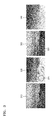
- FIG. 3 illustrates an estimated transmission image 320 obtained from a hazy input image 310 , a morphologically-processed input image 330 , and a refined transmission image 340 obtained by using the estimated transmission image 320 and the morphologically-processed input image 330 , according to an exemplary embodiment of the present invention.
- FIG. 4 illustrates a restored image when various smoothing control constant values ⁇ are applied to an input image 410 including a haze, according to an exemplary embodiment of the present invention.
- FIG. 5 illustrates a restored image according to a change in an edge control constant ⁇ of a morphologically-processed hazy image, according to an exemplary embodiment of the present invention.
- FIG. 6 illustrates a restored image of a hazy image and an image-processed final image of the restored image according to an exemplary embodiment of the present invention.
- FIG. 7 illustrates a flow diagram of a method for removing a haze in a single image according to an exemplary embodiment of the present invention.
- a device for removing a haze in a single image includes: an image analyzing unit configured to generate a dark channel prior representing a distance-dependent haze density in an input image including a haze component; a transmission estimating unit configured to calculate an estimated transmission by estimating an amount of light reaching a photographing device based on the dark channel prior; a transmission refining unit configured to calculate a refined transmission by applying weighted least square (WLS) filtering based on the estimated transmission and morphologically-processed input image information, wherein the refined transmission represents information obtained by preserving edge information and removing a block artifact in the estimated transmission; and an image restoring unit configured to generate a restored image by removing the haze component in the input image based on the refined transmission.
- WLS weighted least square
- the device may further include an image processing unit configured to perform image processing for improvement of a local contrast of the restored image by dividing the restored image into a base layer, a medium layer, and a fine layer.
- an image processing unit configured to perform image processing for improvement of a local contrast of the restored image by dividing the restored image into a base layer, a medium layer, and a fine layer.
- a device for removing a haze in a single image includes: a transmission estimating unit configured to calculate a first transmission by estimating a transmission value based on a dark channel prior generated from a hazy input image; a transmission refining unit configured to calculate a second transmission for minimizing a block artifact generated in an image restoration process based on the first transmission by applying WLS filtering based on the first transmission and morphologically-processed input image information; an image restoring unit configured to generate a restored image by removing a haze component in the hazy input image based on the second transmission; and an image processing unit configured to perform multi-scale tone manipulation image processing on the restored image.
- a method for removing a haze in a single image includes: generating, by an image analyzing unit, a dark channel prior representing a distance-dependent haze density in an input image including a haze component; calculating, by a transmission estimating unit, an estimated transmission by estimating an amount of light reaching a photographing device based on the dark channel prior; calculating, by a transmission refining unit, a refined transmission by applying WLS filtering based on the estimated transmission and morphologically-processed input image information, wherein the refined transmission represents information obtained by preserving edge information and removing a block artifact in the estimated transmission; and generating, by an image restoring unit, a restored image by removing the haze component in the input image based on the refined transmission.
- a method for removing a haze in a single image includes: calculating, by a transmission estimating unit, a first transmission by estimating a transmission value based on a dark channel prior generated from a hazy input image; calculating, by a transmission refining unit, a second transmission for minimizing a block artifact generated in an image restoration process based on the first transmission by applying WLS filtering based on the first transmission and morphologically-processed input image information; generating, by an image restoring unit, a restored image by removing a haze component in the hazy input image based on the second transmission; and performing, by an image processing unit, multi-scale tone manipulation image processing on the restored image.
- FIG. 1 illustrates a phenomenon in which an artifact occurs in a conventional hazy image restoring process.
- the conventional hazy image restoring process since a transmission is estimated on a block-by-block basis, an artifact phenomenon occurs in a final haze-free image.
- Equation 1 a Koschmider model such as Equation 1 is widely used to represent an image including a haze.
- I ( p ) J ( p ) r ( p )+ A (1 ⁇ r ( p )) [Equation 1]
- I(p) denotes an input image including a haze
- J(p) denotes a scene radiance representing a haze-free state
- A denotes a global atmospheric light source
- r(p) denotes a transmission estimated corresponding to each pixel of the input image.
- the transmission refers to the amount of light reaching a photographing device without dispersion.
- the Koschmider model such as Equation 1 is represented for each of the R, G, and B color channels of the image.
- the global atmospheric light source A and the transmission r(p) are calculated from the input image I(p) including a haze, and then the scene radiance J(p) is acquired.
- the input image I(p) becomes a hazier image. Also, as the transmission r(p) increases, a distance to a subject decreases or a haze-induced distortion decreases.
- a dark channel prior is used to estimate the transmission r(p) in Equation 1.
- DCP dark channel prior
- a DCP is used to obtain an estimated transmission ( 120 in FIG. 1 ), and weighted least square (WLS) filtering is additionally applied to the estimated transmission value to obtain a refined transmission, thereby solving the problem of artifact occurrence.
- WLS weighted least square
- the DCP as a method for removing a haze in an image, some pixels in a block of a predetermined size around each pixel of a haze-free clean image are implemented such that at least one color channel has a very small near-zero value. This is represented as Equations 2 and 3.
- J dark ⁇ ( p ) min q ⁇ ⁇ ⁇ ( p ) ⁇ ( min c ⁇ ⁇ r , g , b ⁇ ⁇ J c ⁇ ( q ) ) [ Equation ⁇ ⁇ 2 ] J dark ⁇ 0 [ Equation ⁇ ⁇ 3 ]
- Equation 2 J dark denotes a DCP, J c denotes an input image of each color channel, and ⁇ denotes a block (or patch) around a P pixel.
- Equation 3 the transmission r(p) in Equation 1 may be modified as Equation 4.
- Equation 4 ⁇ is a constant value of about 0.95.
- a transmission ⁇ tilde over (r) ⁇ (p) in Equation 4 is estimated on a block-by-block basis ( 121 , 122 , 123 ) ( 120 in FIG. 1 ).
- an artifact 131 , 132 ) such as a jaggy phenomenon occurs in a block boundary line when a haze-free image J(p) ( 130 in FIG. 1 ) is restored.
- a soft matting algorithm or the like is used.
- the soft matting algorithm is complex and has a large operation amount, the soft matting algorithm has another problem of the impossibility of processing due to the lack of memory capacity when the image resolution is high.
- An exemplary embodiment of the present invention provides a scheme for solving the problems of a complex operation and an artifact phenomenon occurring in the hazy image processing process.
- a block artifact may be removed by applying WLS filtering to the transmission ⁇ tilde over (r) ⁇ (p) obtained in Equation 4, and then brightness control image processing may be performed in a base layer image and image processing for improving a local texture may be performed in a medium layer image and a fine layer image.
- ⁇ tilde over (r) ⁇ (p) denotes an estimated transmission (see 320 in FIG. 3 ) obtained through Equation 4
- r(p) denotes a refined transmission (see 340 in FIG. 3 ) obtained finally by WLS filtering.
- FIG. 2 illustrates a single image haze removing device according to an exemplary embodiment of the present invention.
- a single image haze removing device 200 includes an image analyzing unit 210 , a transmission estimating unit 220 , a transmission refining unit 230 , and an image processing unit 250 .
- the image analyzing unit 210 generates a DCP representing a distance-dependent haze density in an input image including a haze component.
- a method of generating the DCP refers to Equations 2 and 3.
- the transmission estimating unit 220 calculates an estimated transmission ⁇ tilde over (r) ⁇ (p) by applying the DCP generated by the image analyzing unit 210 .
- a method of calculating the estimated transmission refers to Equation 4.
- a block artifact see 121 , 122 , and 123 in FIG. 1 .
- the transmission refining unit 230 calculates a refined transmission r(p) by using a morphologically-processed input image ( 330 in FIG. 3 ) and an estimated transmission value ⁇ tilde over (r) ⁇ (P) ( 320 in FIG. 3 ) calculated by the transmission estimating unit 220 .
- the transmission refining unit 230 calculates the refined transmission r(p) by removing the block artifact included in the estimated transmission by applying WLS filtering to the estimated transmission value ⁇ tilde over (r) ⁇ (p) calculated by the transmission estimating unit 220 .
- the transmission refining unit 230 sets an edge value of the morphologically-processed input image ( 330 in FIG. 3 ) as a weight in the process of applying the WLS filtering. This refers to Equations 5 to 7.
- the transmission refining unit 230 calculates a refined transmission r(p) by preserving an edge value of an input image ( 310 in FIG. 3 ) and removing (smoothing) a block artifact (e.g., 321 in FIG. 3 ) generated in the estimated transmission ⁇ tilde over (r) ⁇ (p), in order to minimize the block artifacts that may be generated when the image is restored by using the estimated transmission ⁇ tilde over (r) ⁇ (p).
- a block artifact e.g., 321 in FIG. 3
- the edge value of a region corresponding to the edge value (e.g., 331 in FIG. 3 ) of the morphologically-processed input image is preserved, and the block artifact of the other region is smooth-processed.
- this process is referred to as a WLS filtering process, which uses Equations 5 to 7.
- the image restoring unit 240 generates a restored image J(p) by removing the haze component in the input image based on the refined transmission value r(p), as represented in Equation 8.
- the image processing unit 250 performs multi-scale tone manipulation image processing on the restored image J(p). As represented in Equation 10, a multi-scale image is generated by the difference between the images smoothed through a WLS filter.
- image processing is performed by dividing the restored image J(p) into a base layer, a medium layer, and a fine layer.
- the image processing unit 250 is implemented to perform brightness control image processing in the base layer image and perform image processing for improvement of a local texture in the medium layer image and the fine layer image.
- the image restoring unit 240 and the image processing unit 250 will be described later in detail with reference to FIG. 6 .
- FIG. 3 illustrates an estimated transmission image 320 obtained from a hazy input image 310 , a morphologically-processed input image 330 , and a refined transmission image 340 obtained by using the estimated transmission image 320 and the morphologically-processed input image 330 , according to an exemplary embodiment of the present invention.
- Equation 5 p denotes a position of each pixel, r p denotes a refined transmission ( 340 in FIG. 3 ), ⁇ tilde over (r) ⁇ (p) denotes an estimated transmission ( 320 in FIG. 3 ) calculated in Equation 4, and ⁇ denotes a smoothing control constant.
- An output image r p ( 340 in FIG. 3 ) is further smoothed as a ⁇ value increases. Referring to FIG. 4 , it may be seen that the output image r p is further smoothed as the ⁇ value increases.
- w x,p (h), w y,p (h) denotes a smoothing weight value of the morphologically-processed hazy image ( 330 in FIG. 3 ), which is represented as Equation 6.
- the smoothing weight value w x,p (h), w y,p (h) is used to control the smoothing degree of the artifact of the estimated transmission including a block artifact.
- the smoothing weight value is applied to an estimated transmission image 320 of FIG. 3 to preserve a region corresponding to an edge region 331 of a morphologically-processed hazy image 330 and smooth the other region thereof in the estimated transmission image 320 .
- a refined transmission value for minimizing an object function of Equation 5 is obtained.
- a pixel value difference between the input image (the estimated transmission, ⁇ tilde over (r) ⁇ (p), and 320 in FIG. 3 ) and the output image (the refined transmission, r p , and 340 in FIG. 3 ) is minimized ((r p ⁇ tilde over (r) ⁇ p ) 2 ), and the block artifacts generated in an image restoration process is minimized by the estimated transmission by using the edge of the morphologically-processed input image
- Equation 6 h denotes a morphologically-processed hazy image ( 330 in FIG. 3 ), and ⁇ denotes an edge control constant of the morphologically-processed hazy image h.
- ⁇ increases, the other region other than the region corresponding to the edge region 331 of the morphologically-processed hazy image 330 is further smoothed. This refers to FIG. 5 .
- ⁇ denotes a constant value for preventing a denominator from being divided by 0, and may have a value of about 10 ⁇ 4 . Also,
- Equation 7 ( I + ⁇ ( D x T A x D+D y T A y D y )) ⁇ 1 ⁇ tilde over (r) ⁇ [Equation 7]
- Equation 7 Ax, Ay denotes a matrix of the smoothing weight values w x,p (h), w y,p (h); and Dx, Dy denotes a matrix of
- A may be implemented to use a value of the pixel having the greatest pixel value among the upper 0.1% in the DCP value obtained through Equation 2.
- Equation 8 a haze-free restored image J(p) may be obtained as Equation 8 according to an exemplary embodiment of the present invention.
- A may be implemented to use a value of the pixel having the greatest pixel value among the upper 0.1% in the DCP value obtained through Equation 2. This will be described later with reference to FIG. 6 .
- FIG. 4 illustrates a restored image when various smoothing control constant values ⁇ are applied to an input image 410 including a haze, according to an exemplary embodiment of the present invention.
- Equation 5 the output image r p ( 340 in FIG. 3 ) is further smoothed.
- An exemplary case of restoring an image by applying Equations 5 to 7 to an input image 410 including a haze is illustrated as an example.
- FIG. 5 illustrates a restored image according to a change in an edge control constant ⁇ of a morphologically-processed hazy image, according to an exemplary embodiment of the present invention.
- ⁇ is the edge control constant of the morphologically-processed hazy image.
- ⁇ increases, the other region other than the region corresponding to the edge region 331 of the morphologically-processed hazy image 330 is further smoothed.
- the other region other than the region corresponding to the edge region of the morphologically-processed hazy image is further smoothed.
- FIG. 6 illustrates a restored image of a hazy image and an image-processed final image of the restored image according to an exemplary embodiment of the present invention.
- J ⁇ ( p ) I ⁇ ( p ) - A max ⁇ ( r ⁇ ( p ) , r 0 ) + A [ Equation ⁇ ⁇ 8 ]
- Equation 8 r 0 denotes a constant value for preventing a denominator from being divided by 0, which may be implemented to use a value of about 0.1.
- the image processing unit ( 250 in FIG. 2 ) obtains an output image V 630 by performing image processing as Equation 9 by dividing the restored image J(p) into a base layer, a medium layer, and a fine layer.
- Vp B+S ( ⁇ , d p 1 )+ S ( ⁇ , d p 2 ) [Equation 9]
- V p denotes an output image
- B denotes a base layer image
- S( ⁇ ,d p 1 ) and S( ⁇ ,d p 2 ) denote a medium layer image and a fine layer image respectively.
- S( ) denotes a sigmoid function
- ⁇ denotes a boosting factor and represents a reverse transmission.
- the reverse transmission may be implemented to use a value modified from 0 to 10. As the boosting factor increases, the texture information survives strongly in the corresponding layer.
- Equation 9 d i denotes an image generated in an i-th step, which is obtained as Equation 10.
- d i u i-1 ⁇ u i ,i ⁇ 1,2, . . . , k ( K : Number of Layers) [Equation 10]
- Brightness control image processing such as gamma correction is performed in the base layer image, and texture improvement is performed in the medium layer image and the fine layer image.
- a difference value between the images smoothed through a WLS filter is used as represented in Equation 10.
- image processing is performed to enhance a band-pass signal component in the medium layer and enhance a high-pass signal component in the fine layer.
- FIG. 7 illustrates a flow diagram of a method for removing a haze in a single image according to an exemplary embodiment of the present invention.
- the image analyzing unit 210 generates a DCP representing a distance-dependent haze density in an input image including a haze component (S 710 ).
- a method of generating the DCP refers to Equations 2 and 3.
- the transmission estimating unit 220 calculates an estimated transmission based on the DCP (S 720 ).
- a method of calculating the estimated transmission refers to Equation 4.
- the transmission represents the amount of light reaching a photographing device.
- the estimated transmission calculated by the transmission estimating unit 220 includes a block artifact because it is estimated on a block-by-block basis in Equation 4.
- the transmission refining unit 230 calculates a refined transmission by applying WLS filtering based on the estimated transmission and morphologically-processed input image information (S 730 ).
- the refined transmission represents information obtained by preserving edge information and removing a block artifact in the estimated transmission.
- the transmission refining unit 230 performs WLS filtering.
- the image restoring unit 240 generates a restored image by removing the haze component in the input image based on the refined transmission (S 740 ).
- the restored image may be generated by using Equation 1 or 8.
- the image processing unit 250 generates a final image by performing multi-scale image manipulation image processing on the restored image (S 750 and S 760 ). This refers to Equations 9 and 10.
- the present invention may also be embodied as computer-readable codes on a computer-readable recording medium.
- the computer-readable recording medium may be any data storage device that may store data which may be thereafter read by a computer system. Examples of the computer-readable recording medium may include ROMs, RAMs, CD-ROMs, magnetic tapes, floppy disks, and optical data storages.
- the computer-readable recording medium may also be distributed over network-coupled computer systems so that the computer-readable codes may be stored and executed in a distributed fashion.
Landscapes
- Engineering & Computer Science (AREA)
- Multimedia (AREA)
- Signal Processing (AREA)
- Physics & Mathematics (AREA)
- General Physics & Mathematics (AREA)
- Theoretical Computer Science (AREA)
- Image Processing (AREA)
- Facsimile Image Signal Circuits (AREA)
Abstract
Description
I(p)=J(p)r(p)+A(1−r(p)) [Equation 1]
denotes a horizontal-axis and vertical-axis first-order differential operator of the output image rp (340 in
denotes the horizontal-axis and vertical-axis first-order differential absolute value of the morphologically-processed hazy image (330 in
r=(I+λ(D x T A x D+D y T A y D y))−1 {tilde over (r)} [Equation 7]
In this case, A may be implemented to use a value of the pixel having the greatest pixel value among the upper 0.1% in the DCP value obtained through Equation 2.
Vp=B+S(δ,d p 1)+S(δ,d p 2) [Equation 9]
d i =u i-1 −u i ,i−1,2, . . . ,k (K: Number of Layers) [Equation 10]
Claims (8)
Applications Claiming Priority (3)
| Application Number | Priority Date | Filing Date | Title |
|---|---|---|---|
| KR1020130060600A KR102104403B1 (en) | 2013-05-28 | 2013-05-28 | Method and Apparatus for removing haze in a single image |
| KR10-2013-0060600 | 2013-05-28 | ||
| PCT/KR2014/003144 WO2014193080A1 (en) | 2013-05-28 | 2014-04-11 | Method and device for removing haze in single image |
Publications (2)
| Publication Number | Publication Date |
|---|---|
| US20160063684A1 US20160063684A1 (en) | 2016-03-03 |
| US9842382B2 true US9842382B2 (en) | 2017-12-12 |
Family
ID=51989064
Family Applications (1)
| Application Number | Title | Priority Date | Filing Date |
|---|---|---|---|
| US14/888,852 Active US9842382B2 (en) | 2013-05-28 | 2014-04-11 | Method and device for removing haze in single image |
Country Status (4)
| Country | Link |
|---|---|
| US (1) | US9842382B2 (en) |
| KR (1) | KR102104403B1 (en) |
| CN (1) | CN105474259A (en) |
| WO (1) | WO2014193080A1 (en) |
Cited By (1)
| Publication number | Priority date | Publication date | Assignee | Title |
|---|---|---|---|---|
| US11741576B2 (en) | 2020-03-30 | 2023-08-29 | Samsung Electronics Co., Ltd. | Image system including image signal processor and operation method of image signal processor |
Families Citing this family (22)
| Publication number | Priority date | Publication date | Assignee | Title |
|---|---|---|---|---|
| CN104318528A (en) * | 2014-10-21 | 2015-01-28 | 北京工业大学 | Foggy weather image restoration method based on multi-scale WLS filtering |
| CN104574407B (en) * | 2015-01-15 | 2018-04-27 | 华南理工大学 | Insulator Icing Monitoring Method Based on Dark Channel Priority and Solving Triangle Method |
| US9508126B2 (en) * | 2015-02-17 | 2016-11-29 | Adobe Systems Incorporated | Image haze removal using fast constrained transmission estimation |
| US20180122051A1 (en) * | 2015-03-30 | 2018-05-03 | Agency For Science, Technology And Research | Method and device for image haze removal |
| KR101582779B1 (en) * | 2015-07-17 | 2016-01-06 | 중앙대학교 산학협력단 | Wavelength-adaptive dehazing device and method for image |
| KR102461144B1 (en) | 2015-10-16 | 2022-10-31 | 삼성전자주식회사 | Image haze removing device |
| KR102268970B1 (en) | 2017-04-03 | 2021-06-24 | 한화테크윈 주식회사 | Method for defoging and Defog system |
| CN108765337B (en) * | 2018-05-28 | 2021-06-15 | 青岛大学 | A single color image dehazing method based on dark primary color prior and non-local MTV model |
| CN109064419A (en) * | 2018-07-12 | 2018-12-21 | 四川大学 | A kind of removing rain based on single image method based on WLS filtering and multiple dimensioned sparse expression |
| CN111091500B (en) * | 2018-10-24 | 2024-03-12 | 天津工业大学 | Point light source multi-scattering model image restoration method |
| KR101973726B1 (en) * | 2018-12-27 | 2019-04-30 | 한국건설기술연구원 | Apparatus and method for generating a DEM from a DAM of a target area using morphlogical filter |
| KR102151750B1 (en) | 2019-08-08 | 2020-09-03 | 동아대학교 산학협력단 | Apparatus for Removing Fog and Improving Visibility in Unit Frame Image and Driving Method Thereof |
| KR102149974B1 (en) | 2019-08-26 | 2020-08-31 | 동아대학교 산학협력단 | Apparatus for Estimating Airlight of Reducing Computational Burden of Dehazing in Unit Image and Driving Method Thereof |
| KR102832563B1 (en) * | 2019-11-26 | 2025-07-10 | 한국전자통신연구원 | Method and apparatus for removing fog in image |
| KR102268027B1 (en) | 2019-11-29 | 2021-06-23 | 고려대학교 산학협력단 | Method for single image dehazing based on deep learning, recording medium and device for performing the method |
| CN111325688B (en) * | 2020-02-18 | 2023-05-05 | 西安汇智信息科技有限公司 | Unmanned aerial vehicle image defogging method for optimizing atmosphere light by fusion morphology clustering |
| CN111598814B (en) * | 2020-05-26 | 2024-04-26 | 北京理工大学 | Single image dehazing method based on extreme scattering channel |
| KR102770798B1 (en) * | 2020-08-07 | 2025-02-21 | 삼성전자주식회사 | Method and apparatus of image processing for haze removal |
| CN112561819A (en) * | 2020-12-17 | 2021-03-26 | 温州大学 | Self-filtering image defogging algorithm based on self-supporting model |
| CN112927157B (en) * | 2021-03-08 | 2023-08-15 | 电子科技大学 | Improved dark channel defogging method adopting weighted least square filtering |
| CN113112429B (en) * | 2021-04-27 | 2024-04-16 | 大连海事大学 | A general enhancement framework for foggy images under complex lighting conditions |
| KR20230144838A (en) | 2022-04-08 | 2023-10-17 | 한화오션 주식회사 | A method of removing haze from a single image using a white channel prior |
Citations (17)
| Publication number | Priority date | Publication date | Assignee | Title |
|---|---|---|---|---|
| US20030202713A1 (en) * | 2002-04-26 | 2003-10-30 | Artur Sowa | Method of enhancement of the visual display of images and other visual data records |
| US20100040300A1 (en) | 2008-08-18 | 2010-02-18 | Samsung Techwin Co., Ltd. | Image processing method and apparatus for correcting distortion caused by air particles as in fog |
| US20100067574A1 (en) * | 2007-10-15 | 2010-03-18 | Florian Knicker | Video decoding method and video encoding method |
| US20100322478A1 (en) | 2009-06-15 | 2010-12-23 | Denso Corporation | Restoration apparatus for weather-degraded image and driver assistance system |
| KR20110050775A (en) | 2009-11-09 | 2011-05-17 | 리누딕스 주식회사 | CCTV image quality improvement device |
| US20110188775A1 (en) * | 2010-02-01 | 2011-08-04 | Microsoft Corporation | Single Image Haze Removal Using Dark Channel Priors |
| US20110211758A1 (en) * | 2010-03-01 | 2011-09-01 | Microsoft Corporation | Multi-image sharpening and denoising using lucky imaging |
| KR20120079564A (en) | 2011-01-05 | 2012-07-13 | 중앙대학교 산학협력단 | Apparatus and method for image defogging based on edge information and tone mapping |
| US20120200669A1 (en) * | 2009-10-14 | 2012-08-09 | Wang Lin Lai | Filtering and edge encoding |
| US20120236020A1 (en) * | 2010-01-27 | 2012-09-20 | Sylvain Paris | Methods and Apparatus for Performing Tone Mapping on High Dynamic Range Images |
| CN102750674A (en) | 2012-04-26 | 2012-10-24 | 长春理工大学 | Video image defogging method based on self-adapting allowance |
| WO2013018101A1 (en) | 2011-08-03 | 2013-02-07 | Indian Institute Of Technology, Kharagpur | Method and system for removal of fog, mist or haze from images and videos |
| KR20130015906A (en) | 2011-08-05 | 2013-02-14 | 경희대학교 산학협력단 | Method for improving foggy image by unit image block |
| US20130071043A1 (en) * | 2011-09-08 | 2013-03-21 | Fujitsu Limited | Image defogging method and system |
| US20130089247A1 (en) * | 2011-10-07 | 2013-04-11 | Zakrytoe akcionemoe obshchestvo "Impul's" | Method of Noise Reduction in Digital X-Ray Frames Series |
| US20140003528A1 (en) * | 2008-08-08 | 2014-01-02 | Dolby Laboratories Licensing Corporation | Pre-Processing for Bitdepth and Color Format Scalable Video Coding |
| US20140321540A1 (en) * | 2011-12-17 | 2014-10-30 | Dolby Laboratories Licensing Corporation | Multi-layer interlace frame-compatible enhanced resolution video delivery |
Family Cites Families (2)
| Publication number | Priority date | Publication date | Assignee | Title |
|---|---|---|---|---|
| KR100987786B1 (en) | 2008-07-23 | 2010-10-13 | (주)에이치엠씨 | Fire Detection System Using Smoke Detection |
| KR20110005077A (en) * | 2009-07-09 | 2011-01-17 | 임경원 | 2-axis hinge device and portable terminal with same |
-
2013
- 2013-05-28 KR KR1020130060600A patent/KR102104403B1/en active Active
-
2014
- 2014-04-11 US US14/888,852 patent/US9842382B2/en active Active
- 2014-04-11 WO PCT/KR2014/003144 patent/WO2014193080A1/en not_active Ceased
- 2014-04-11 CN CN201480030119.1A patent/CN105474259A/en active Pending
Patent Citations (17)
| Publication number | Priority date | Publication date | Assignee | Title |
|---|---|---|---|---|
| US20030202713A1 (en) * | 2002-04-26 | 2003-10-30 | Artur Sowa | Method of enhancement of the visual display of images and other visual data records |
| US20100067574A1 (en) * | 2007-10-15 | 2010-03-18 | Florian Knicker | Video decoding method and video encoding method |
| US20140003528A1 (en) * | 2008-08-08 | 2014-01-02 | Dolby Laboratories Licensing Corporation | Pre-Processing for Bitdepth and Color Format Scalable Video Coding |
| US20100040300A1 (en) | 2008-08-18 | 2010-02-18 | Samsung Techwin Co., Ltd. | Image processing method and apparatus for correcting distortion caused by air particles as in fog |
| US20100322478A1 (en) | 2009-06-15 | 2010-12-23 | Denso Corporation | Restoration apparatus for weather-degraded image and driver assistance system |
| US20120200669A1 (en) * | 2009-10-14 | 2012-08-09 | Wang Lin Lai | Filtering and edge encoding |
| KR20110050775A (en) | 2009-11-09 | 2011-05-17 | 리누딕스 주식회사 | CCTV image quality improvement device |
| US20120236020A1 (en) * | 2010-01-27 | 2012-09-20 | Sylvain Paris | Methods and Apparatus for Performing Tone Mapping on High Dynamic Range Images |
| US20110188775A1 (en) * | 2010-02-01 | 2011-08-04 | Microsoft Corporation | Single Image Haze Removal Using Dark Channel Priors |
| US20110211758A1 (en) * | 2010-03-01 | 2011-09-01 | Microsoft Corporation | Multi-image sharpening and denoising using lucky imaging |
| KR20120079564A (en) | 2011-01-05 | 2012-07-13 | 중앙대학교 산학협력단 | Apparatus and method for image defogging based on edge information and tone mapping |
| WO2013018101A1 (en) | 2011-08-03 | 2013-02-07 | Indian Institute Of Technology, Kharagpur | Method and system for removal of fog, mist or haze from images and videos |
| KR20130015906A (en) | 2011-08-05 | 2013-02-14 | 경희대학교 산학협력단 | Method for improving foggy image by unit image block |
| US20130071043A1 (en) * | 2011-09-08 | 2013-03-21 | Fujitsu Limited | Image defogging method and system |
| US20130089247A1 (en) * | 2011-10-07 | 2013-04-11 | Zakrytoe akcionemoe obshchestvo "Impul's" | Method of Noise Reduction in Digital X-Ray Frames Series |
| US20140321540A1 (en) * | 2011-12-17 | 2014-10-30 | Dolby Laboratories Licensing Corporation | Multi-layer interlace frame-compatible enhanced resolution video delivery |
| CN102750674A (en) | 2012-04-26 | 2012-10-24 | 长春理工大学 | Video image defogging method based on self-adapting allowance |
Non-Patent Citations (10)
| Title |
|---|
| Communication dated Jul. 19, 2017, issued by the State Intellectual Property Office of P.R. China in counterpart Chinese Application No. 201480030119.1. |
| Farbman et al:" Edge-Preserving Decompositions for Multi-Scale Tone and Detail Manipulation", ACM Transactions on Graphics, vol. 27, No. 3, Article 67, Aug. 2008, pp. 1-10, (10 pages total). |
| Gibson, Kristofor, Dũng Võ, and Truong Nguyen. "An investigation in dehazing compressed images and video." OCEANS 2010. IEEE, 2010. * |
| He, Kaiming et al.; "Single Image Haze Removal Using Dark Channel Prior"; IEEE Transactions on Pattern Analysis and Machine Intelligence; vol. 33; No. 12; Dec. 2011; 14 pages total. |
| Luc Vincent: "Morphological Grayscale Reconstruction in Image Analysis: Applications and Efficient Algorithms" IEEE Transactions on Image Processing, vol. 2, No. 2, Apr. 1993, pp. 176201, (26 pages total). |
| Park et al: "Single Image Haze Removal With Wls-Based Edge-Preserving Smoothing Filter", ICASSP 2013, pp. 2469-2473, (8 pages total). |
| Search Report dated Jul. 17, 2014 issued by the International Searching Authority in counterpart International Patent Application No. PCT/KR2014/003144 (PCT/ISA/210). |
| Written Opinion dated Jul. 17, 2014 issued by the International Searching Authority in counterpart International Patent Application No. PCT/KR2014/003144 (PCT/ISA/237). |
| Yu, Jing et al.; "Fast Single Image Fog Removal Using Edge-Preserving Smoothing"; ICASSP; 2011; pp. 1245-1248. |
| Yu, Jing, and Qingmin Liao. "Fast single image fog removal using edge-preserving smoothing." Acoustics, Speech and Signal Processing (ICASSP), 2011 IEEE International Conference on. IEEE, 2011. * |
Cited By (1)
| Publication number | Priority date | Publication date | Assignee | Title |
|---|---|---|---|---|
| US11741576B2 (en) | 2020-03-30 | 2023-08-29 | Samsung Electronics Co., Ltd. | Image system including image signal processor and operation method of image signal processor |
Also Published As
| Publication number | Publication date |
|---|---|
| KR20140142381A (en) | 2014-12-12 |
| US20160063684A1 (en) | 2016-03-03 |
| KR102104403B1 (en) | 2020-04-28 |
| WO2014193080A1 (en) | 2014-12-04 |
| CN105474259A (en) | 2016-04-06 |
Similar Documents
| Publication | Publication Date | Title |
|---|---|---|
| US20160063684A1 (en) | Method and device for removing haze in single image | |
| CN110175964B (en) | Retinex image enhancement method based on Laplacian pyramid | |
| US10424054B2 (en) | Low-illumination image processing method and device | |
| US10672112B2 (en) | Method and system for real-time noise removal and image enhancement of high-dynamic range images | |
| Park et al. | Single image dehazing with image entropy and information fidelity | |
| US9754356B2 (en) | Method and system for processing an input image based on a guidance image and weights determined thereform | |
| US9197789B2 (en) | Method and system for removal of fog, mist, or haze from images and videos | |
| US8934711B2 (en) | Apparatus and method of processing image | |
| KR102567860B1 (en) | Improved inverse tone mapping method and corresponding device | |
| US20080118179A1 (en) | Method of and apparatus for eliminating image noise | |
| US9478016B2 (en) | Image restoration method and image processing apparatus using the same | |
| US8238687B1 (en) | Local contrast enhancement of images | |
| US20140079319A1 (en) | Methods for enhancing images and apparatuses using the same | |
| US11645734B2 (en) | Circuitry for image demosaicing and contrast enhancement and image-processing method | |
| CN103606132A (en) | Multiframe digital image denoising method based on space domain and time domain combination filtering | |
| CN103440630A (en) | Large-dynamic-range infrared image display and detail enhancement method based on guiding filter | |
| Hou et al. | Underwater image dehazing and denoising via curvature variation regularization | |
| KR101456445B1 (en) | Apparatus and method for image defogging in HSV color space and recording medium storing program for executing method of the same in computer | |
| CN109767408A (en) | Image processing method, device, storage medium and computer equipment | |
| CN107292830A (en) | Low-light (level) image enhaucament and evaluation method | |
| CN115035009B (en) | A two-exposure image fusion method based on guided filtering multi-level decomposition | |
| CN114119433B (en) | A dark image processing method based on Bezier curve | |
| Zhang et al. | Single image dehazing based on fast wavelet transform with weighted image fusion | |
| US9672447B2 (en) | Segmentation based image transform | |
| Han et al. | Automatic illumination and color compensation using mean shift and sigma filter |
Legal Events
| Date | Code | Title | Description |
|---|---|---|---|
| AS | Assignment |
Owner name: KOREA UNIVERSITY RESEARCH AND BUSINESS FOUNDATION, Free format text: ASSIGNMENT OF ASSIGNORS INTEREST;ASSIGNORS:PARK, DUBOK;KO, HANSEOK;REEL/FRAME:036949/0778 Effective date: 20151027 Owner name: HANWHA TECHWIN CO., LTD., KOREA, REPUBLIC OF Free format text: ASSIGNMENT OF ASSIGNORS INTEREST;ASSIGNORS:PARK, DUBOK;KO, HANSEOK;REEL/FRAME:036949/0778 Effective date: 20151027 |
|
| STCF | Information on status: patent grant |
Free format text: PATENTED CASE |
|
| AS | Assignment |
Owner name: HANWHA AEROSPACE CO., LTD., KOREA, REPUBLIC OF Free format text: CHANGE OF NAME;ASSIGNOR:HANWHA TECHWIN CO., LTD;REEL/FRAME:046927/0019 Effective date: 20180401 |
|
| AS | Assignment |
Owner name: HANWHA AEROSPACE CO., LTD., KOREA, REPUBLIC OF Free format text: CORRECTIVE ASSIGNMENT TO CORRECT THE APPLICATION NUMBER 10/853,669. IN ADDITION PLEASE SEE EXHIBIT A PREVIOUSLY RECORDED ON REEL 046927 FRAME 0019. ASSIGNOR(S) HEREBY CONFIRMS THE CHANGE OF NAME;ASSIGNOR:HANWHA TECHWIN CO., LTD.;REEL/FRAME:048496/0596 Effective date: 20180401 |
|
| AS | Assignment |
Owner name: HANWHA TECHWIN CO., LTD., KOREA, REPUBLIC OF Free format text: ASSIGNMENT OF ASSIGNORS INTEREST;ASSIGNOR:HANWHA AEROSPACE CO., LTD.;REEL/FRAME:049013/0723 Effective date: 20190417 |
|
| MAFP | Maintenance fee payment |
Free format text: PAYMENT OF MAINTENANCE FEE, 4TH YEAR, LARGE ENTITY (ORIGINAL EVENT CODE: M1551); ENTITY STATUS OF PATENT OWNER: LARGE ENTITY Year of fee payment: 4 |
|
| AS | Assignment |
Owner name: HANWHA VISION CO., LTD., KOREA, REPUBLIC OF Free format text: CHANGE OF NAME;ASSIGNOR:HANWHA TECHWIN CO., LTD.;REEL/FRAME:064549/0075 Effective date: 20230228 |
|
| MAFP | Maintenance fee payment |
Free format text: PAYMENT OF MAINTENANCE FEE, 8TH YEAR, LARGE ENTITY (ORIGINAL EVENT CODE: M1552); ENTITY STATUS OF PATENT OWNER: LARGE ENTITY Year of fee payment: 8 |