US9836272B2 - Audio signal processing apparatus, method, and program - Google Patents
Audio signal processing apparatus, method, and program Download PDFInfo
- Publication number
- US9836272B2 US9836272B2 US14/466,737 US201414466737A US9836272B2 US 9836272 B2 US9836272 B2 US 9836272B2 US 201414466737 A US201414466737 A US 201414466737A US 9836272 B2 US9836272 B2 US 9836272B2
- Authority
- US
- United States
- Prior art keywords
- resonance
- gain adjustment
- band
- signal
- section
- Prior art date
- Legal status (The legal status is an assumption and is not a legal conclusion. Google has not performed a legal analysis and makes no representation as to the accuracy of the status listed.)
- Expired - Fee Related, expires
Links
Images




Classifications
-
- G—PHYSICS
- G06—COMPUTING OR CALCULATING; COUNTING
- G06F—ELECTRIC DIGITAL DATA PROCESSING
- G06F3/00—Input arrangements for transferring data to be processed into a form capable of being handled by the computer; Output arrangements for transferring data from processing unit to output unit, e.g. interface arrangements
- G06F3/16—Sound input; Sound output
- G06F3/165—Management of the audio stream, e.g. setting of volume, audio stream path
-
- H—ELECTRICITY
- H03—ELECTRONIC CIRCUITRY
- H03G—CONTROL OF AMPLIFICATION
- H03G9/00—Combinations of two or more types of control, e.g. gain control and tone control
- H03G9/005—Combinations of two or more types of control, e.g. gain control and tone control of digital or coded signals
-
- H—ELECTRICITY
- H03—ELECTRONIC CIRCUITRY
- H03G—CONTROL OF AMPLIFICATION
- H03G9/00—Combinations of two or more types of control, e.g. gain control and tone control
- H03G9/02—Combinations of two or more types of control, e.g. gain control and tone control in untuned amplifiers
- H03G9/025—Combinations of two or more types of control, e.g. gain control and tone control in untuned amplifiers frequency-dependent volume compression or expansion, e.g. multiple-band systems
Definitions
- the present disclosure relates to audio signal processing apparatuses, methods, and programs, and more specifically, to an audio signal processing apparatus, method, and program that obtain higher quality sound.
- PCs notebook personal computers
- the sound volume may be reduced as a whole not to cause resonance. If this is the case, however, sound from some sources may be reduced too much and become inaudible, or the resulting sound may not be of satisfactory quality.
- there is a technology proposed to reduce resonance by reducing a gain in a resonance frequency band using a notch filter or others.
- the sound volume is known to be low as a whole.
- the quality of the resulting sound is not high enough. This is because, in resonance phenomena, even if the signal level is uniform in the resonance frequency band, the degree of resonance may be affected by the signal level in the remaining frequency band, for example.
- the reproduction level is enhanced by a notebook PC or others, this may increase the above-mentioned resonance, thereby further adversely affecting the sound quality. Also with this technology, the reproduction level is not allowed to be sufficiently enhanced to reduce resonance. The quality of the resulting sound is thus not high enough. It is thus desirable to provide higher quality sound.
- an audio signal processing apparatus including a band division section configured to generate a resonance in-band signal by band division on an audio input signal, an analysis section configured to extract an amount of features from each of the resonance in-band signal and the input signal, a gain adjustment amount calculation section configured to calculate a gain adjustment amount for a resonance frequency band in the input signal, the gain adjustment amount being calculated based on the amount of features of the resonance in-band signal and the amount of features of the input signal, and a gain adjustment section configured to perform a gain adjustment on the resonance frequency band in the input signal based on the gain adjustment amount.
- the gain adjustment amount calculation section may calculate the gain adjustment amount based on the amount of features using a statistical analysis model generated by learning.
- the gain adjustment amount calculation section may calculate the gain adjustment amount for each of the resonance frequency bands, and the gain adjustment section may perform the gain adjustment on each of the resonance frequency bands.
- the audio signal processing apparatus may further include a mapping control information determination section, and a mapping processing section.
- the mapping control information determination section is configured to determine mapping control information based on an amount of reproduction level enhancement features and information, the amount of reproduction level enhancement features being extracted from the input signal, and the information being generated by learning for obtaining the mapping control information from the amount of reproduction level enhancement features.
- the mapping processing section is configured to perform amplitude modulation on the gain-adjusted input signal based on a linear or nonlinear mapping function defined by the mapping control information.
- the gain adjustment amount calculation section may calculate the gain adjustment amount based on the mapping control information and the amount of features extracted by the analysis section.
- the gain adjustment amount may be increased with the greater proportion of the resonance in-band signal included in the input signal.
- the band division section may divide the input signal into the resonance in-band signal and a resonance out-of-band signal, the gain adjustment section performs the gain adjustment on the resonance in-band signal, and the audio signal processing apparatus further includes an addition section configured to add the gain-adjusted resonance in-band signal and the resonance out-of-band signal.
- an audio signal processing method or program including generating a resonance in-band signal by band division on an audio input signal, extracting an amount of features from each of the resonance in-band signal and the input signal, calculating a gain adjustment amount for a resonance frequency band in the input signal, the gain adjustment amount being calculated based on the amount of features of the resonance in-band signal and the amount of features of the input signal, and performing a gain adjustment on the resonance frequency band in the input signal based on the gain adjustment amount.
- a resonance in-band signal is generated by band division on an audio input signal, an amount of features is extracted from each of the resonance in-band signal and the input signal, and based on the amount of features of the resonance in-band signal and the amount of features of the input signal, a gain adjustment amount is calculated for a resonance frequency band in the input signal, and based on the gain adjustment amount, a gain adjustment is performed on the resonance frequency band in the input signal. According to an embodiment of the present disclosure, higher quality sound is obtained.
- FIG. 1 is a diagram showing an exemplary configuration of an audio signal processing apparatus
- FIG. 2 is a flowchart of a resonance-frequency band component reduction process by the audio signal processing apparatus of FIG. 1 ;
- FIG. 3 is a diagram illustrating occurrence of resonance
- FIG. 4 is a diagram showing an exemplary gain adjustment model
- FIG. 5 is a diagram showing another exemplary configuration of the audio signal processing apparatus of FIG. 1 ;
- FIG. 6 is a flowchart of a resonance-frequency band component reduction process by the audio signal processing apparatus of FIG. 5 ;
- FIG. 7 is a diagram showing still another exemplary configuration of the audio signal processing apparatus of FIG. 1 ;
- FIG. 8 is a flowchart of a resonance-frequency band component reduction process by the audio signal processing apparatus of FIG. 7 ;
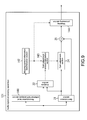
- FIG. 9 is a diagram showing still another exemplary configuration of the audio signal processing apparatus of FIG. 1 ;
- FIG. 10 is a flowchart of a resonance-frequency band component reduction process by the audio signal processing apparatus of FIG. 9 ;
- FIG. 11 is a diagram illustrating a mapping control model
- FIG. 12 is a diagram illustrating a mapping function
- FIG. 13 is a diagram showing an exemplary configuration of a computer.
- FIG. 1 is a diagram showing an exemplary configuration of an audio signal processing apparatus with the application of the present disclosure.
- the audio signal processing apparatus is exemplified by a notebook PC.
- An audio signal processing apparatus 11 includes a band division section 21 , an analysis section 22 , a gain adjustment amount calculation section 23 , a gain adjustment section 24 , and an addition section 25 .
- an input signal being an audio signal of sound is supplied to both the band division section 21 and the analysis section 22 .
- the band division section 21 is exemplified by a band-pass filter, and performs band division on the input signal to generate signals therefrom, i.e., a resonance in-band signal, and a resonance out-of-band signal. That is, by band division performed on the input signal, the input signal is divided into a resonance in-band signal and a resonance out-of-band signal.
- the band division section 21 supplies the resonance in-band signal to both the analysis section 22 and the gain adjustment section 24 , and the resonance out-of-band signal to the addition section 25 .
- the resonance in-band signal is at a predetermined resonance frequency in the input signal, i.e., includes a resonance-frequency band component. That is, the resonance in-band signal is a signal of a resonance-frequency band component that is expected to be reduced in the input signal.
- the resonance out-of-band signal includes a component remaining in the input signal after the removal of the resonance-frequency band component therefrom. That is, the resonance out-of-band signal is a signal not including the resonance-frequency band component but a remaining frequency-band component in the input signal, which is not expected to be reduced.
- the analysis section 22 extracts an amount of features for resonance analysis from the provided signals, i.e., the input signal, and the resonance in-band signal from the band division section 21 .
- the obtained amount of resonance analysis features is supplied to the gain adjustment amount calculation section 23 .
- the gain adjustment amount calculation section 23 calculates a gain adjustment amount optimum for reducing the resonance-frequency band component in the input signal.
- the obtained gain adjustment amount is supplied to the gain adjustment section 24 .
- the gain adjustment section 24 Based on the gain adjustment amount provided by the gain adjustment amount calculation section 23 , the gain adjustment section 24 modulates the amplitude of the resonance in-band signal provided by the band division section 21 so that the resonance in-band signal is adjusted in gain. The resulting resonance in-band signal is supplied to the addition section 25 .
- the addition section 25 adds together the signals, i.e., the resonance in-band signal from the gain adjustment section 24 and the resonance out-of-band signal from the band division section 21 , to generate an output signal for output where the resonance-frequency band component in the input signal is reduced.
- the audio signal processing apparatus 11 Upon reception of an input signal, the audio signal processing apparatus 11 starts a process of reducing a resonance-frequency band component to generate an output signal.
- the audio signal processing apparatus 11 Upon referring to a flowchart of FIG. 2 , described below is the resonance-frequency band component reduction process by the audio signal processing apparatus 11 .
- step S 11 the band division section 21 divides the input signal into a resonance in-band signal and a resonance out-of-band signal.
- the resonance in-band signal is supplied to both the analysis section 22 and the gain adjustment section 24 , and the resonance out-of-band signal is supplied to the addition section 25 .
- the input signal is subjected to filter processing using a band-pass filter, for example.
- step S 12 the analysis section 22 extracts an amount of features for resonance analysis from the provided signals, i.e., the input signal, and the resonance in-band signal from the band division section 21 .
- the obtained amount of resonance analysis features is supplied to the gain adjustment amount calculation section 23 .
- the analysis section 22 calculates a root mean square RMS_ab(n) of the input signal for the interval thereof including N pieces of samples with the n-th sample being the center, which is a processing target in the input signal, for example.
- the resulting root mean square is used as the amount of resonance analysis features.
- Equation 1 x(m) denotes the m-th sample in the input signal, and the input signal is assumed to be so normalized that the value of each sample x(m) satisfies ⁇ 1.0 ⁇ x(m) ⁇ 1.0.
- the analysis section 22 calculates a root mean square RMS_rb(n) of the resonance in-band signal for the interval thereof including N pieces of samples with the n-th sample being the center, which is a processing target in the resonance in-band signal.
- the resulting root mean square is also used as the amount of resonance analysis features.
- x_rb(m) denotes the m-th sample in the resonance in-band signal
- the resonance in-band signal is assumed to be so normalized that the value of each sample x_rb(m) satisfies ⁇ 1.0 ⁇ x_rb(m) ⁇ 1.0.
- the amount of resonance analysis features obtained as above i.e., the root mean square RMS_ab(n) of the input signal, and the root mean square RMS_rb(n) of the resonance in-band signal, is supplied to the gain adjustment amount calculation section 23 .
- the amount of resonance analysis features for use may be the t-th power of the root mean square (where t ⁇ 2), a tone level, or a true peak level obtained by further dividing the resonance frequency band, or an arbitrary combination thereof.
- the amount of resonance analysis features for use may be the logarithm of the value of the root mean square, the logarithm of the t-th power of the root mean square, the logarithm of the value of a tone level, the logarithm of the value of a true peak level, or others.
- a band-pass filter for analysis of an input signal and a resonance in-band signal is used.
- any other filters may be used therefor, or the frequency domain may be used to divide the input signal or to extract and analyze features.
- step S 13 based on the amount of resonance analysis features provided by the analysis section 22 , the gain adjustment amount calculation section 23 calculates a gain adjustment amount optimum for reducing the resonance-frequency band component in the input signal. The obtained gain adjustment amount is supplied to the gain adjustment section 24 .
- the degree of resonance is known to vary with the level of an input signal, i.e., the value of a root mean square RMS_ab(n), even when a resonance in-band signal remains in the same level, i.e., even when a root mean square RMS_rb(n) thereof shows no change.
- FIG. 3 shows an exemplary simple signal.
- the vertical and horizontal axes respectively indicate amplitude and a frequency
- F on the frequency axis indicates a resonance frequency.
- line graphs C11 and C12 show frequency responses of two different signals.
- the line graph C11 shows the frequency response of an input signal with which resonance easily occurs
- the line graph C12 shows the frequency response of an input signal with which resonance hardly occurs, for example.
- the two signals both have the signal level (amplitude) of LV11 in the resonance frequency band, i.e., at the resonance frequency F.
- the signal of the line graph C11 has a tendency to cause resonance easily because the component at the resonance frequency F is dominant therein. That is, in the signal of the line graph C11, the component at the resonance frequency F is conspicuously high in level compared with other frequency components.
- the signal of the line graph C12 has a tendency not to cause resonance easily because the component at the resonance frequency F is not dominant therein, or with the signal, resonance is negligible even if it occurs.
- a gain adjustment amount for a resonance in-band signal in the signal may often be smaller than that for a resonance in-band signal in the signal of the line graph C11. Therefore, if the signals of the line graphs C11 and C12 share the same gain adjustment amount for their resonance in-band signals, this causes too much reduction of gain in the resonance in-band signal in the signal of the line graph C12, thereby adversely affecting the sound volume and sound pressure.
- the audio signal processing apparatus 11 prevents too much reduction of gain by considering not only the level of a resonance in-band signal but also the level of an input signal, i.e., considering the balance with the entire frequency band in the input signal when calculating a gain adjustment amount for the resonance in-band signal.
- the gain adjustment amount calculation section 23 calculates a gain adjustment amount using a gain adjustment model, which is learned in advance based on statistical analysis.
- a dependent variable is a gain adjustment amount F(X, Y)
- independent variables are root mean squares RMS_ab(n) and RMS_rb(n) extracted from an audio signal for learning, the square of these root mean squares, and an offset term irrelevant to the root mean squares and the square thereof.
- the gain adjustment model recorded on the gain adjustment amount calculation section 23 is a statistical analysis model of Equation 3 below, which is learned in advance based on these dependent and independent variables.
- a, b, c, d, and e are each a model parameter.
- FIG. 4 shows an exemplary learning result of the gain adjustment model when X in Equation 3 is the root mean square RMS_ab(n), and Y therein is the root mean square RMS_rb(n).
- an X axis being a horizontal axis indicates the root mean square RMS_ab(n)
- a Y axis being a vertical axis indicates the root mean square RMS_rb(n).
- the shaded portion indicates a gain adjustment amount F(X, Y), and the darker portion means the higher absolute value of the gain adjustment amount, i.e., in the portion, the resonance frequency band is further reduced.
- a gain adjustment amount shows an increase so that a resonance-frequency band component is reduced to a further degree.
- the root mean square RMS_ab(n) takes a fixed value
- the absolute value of a gain adjustment amount is increased with the larger power of a resonance in-band signal, i.e., the larger root mean square RMS_rb(n).
- the relationship between an input signal and a resonance in-band signal is used as a basis to determine an appropriate gain adjustment amount. This accordingly prevents too much reduction of a resonance-frequency band component so that the gain adjustment is performed more appropriately.
- learning data for use includes an audio signal causing resonance, and an audio signal not causing resonance.
- an appropriate gain adjustment amount is manually determined in advance for reproduction of the learning data.
- An independent variable for use is an amount of resonance analysis features extracted from the learning data. Therefore, the gain adjustment amount actually regarded as optimum by people, i.e., the actual human perception, may affect the learning so that the resulting gain adjustment model may be optimum.
- the gain adjustment amount calculation section 23 calculates a gain adjustment amount based on the amount of resonance analysis features provided by the analysis section 22 , i.e., the root mean squares RMS_ab(n) and RMS_rb(n). To be specific, the root mean squares RMS_ab(n) and RMS_rb(n) are substituted into Equation 3 above, and the resulting value of F(X, Y) is used as the gain adjustment amount.
- the gain adjustment amount may be calculated using a simple linear or nonlinear function or table.
- step S 13 After the gain adjustment amount is calculated in step S 13 , the procedure goes to step S 14 .
- step S 14 based on the gain adjustment amount from the gain adjustment amount calculation section 23 , the gain adjustment section 24 modulates the amplitude of the resonance in-band signal from the band division section 21 . With such amplitude modulation, the gain adjustment section 24 performs a gain adjustment on the resonance in-band signal, and supplies the resulting resonance in-band signal to the addition section 25 . In the resulting input signal, the resonance frequency band is done with the gain adjustment.
- step S 15 the addition section 25 adds together the provided signals, i.e., the resonance in-band signal from the gain adjustment section 24 , and the resonance out-of-band signal from the band division section 21 , to generate an output signal for output.
- the resonance-frequency band component reduction process is ended.
- the audio signal processing apparatus 11 extracts an amount of features for resonance analysis from an input signal and a resonance in-band signal, and by using a gain adjustment amount obtained based on the amount of resonance analysis features, performs a gain adjustment on the resonance in-band signal.
- a resonance-frequency band component is reduced more appropriately in the input signal so that the resulting audio is improved in quality.
- the gain therein is further reduced.
- the level of the resonance out-of-band signal is not lower than that of the resonance in-band signal, i.e., when the input signal hardly causes resonance or causes negligible resonance, the gain therein is not reduced.
- Described in the first embodiment is the case of dividing an input signal for extracting a resonance in-band signal therefrom.
- a resonance frequency other frequencies being integer multiples thereof are generally regarded also as resonance frequencies.
- a gain adjustment may be performed on a plurality of resonance in-band signals to more effectively reduce resonance therein.
- the audio signal processing apparatus is configured as shown in FIG. 5 , for example.
- any component corresponding to that in FIG. 1 is provided with the same reference numeral, and is not described again if appropriate.
- An audio signal processing apparatus 51 of FIG. 5 includes a band division section 61 , the analysis section 22 , the gain adjustment amount calculation section 23 , gain adjustment sections 62 - 1 to 62 -K, and the addition section 25 .
- the band division section 61 divides an input signal into K resonance in-band signals, and a resonance out-of-band signal.
- the K resonance in-band signals each include a different resonance-frequency band component in the input signal, and their resonance frequency bands all cause resonance.
- the K resonance frequency bands are integer multiples of a predetermined resonance frequency band.
- the band division section 61 supplies the K resonance in-band signals to the analysis section 22 and the gain adjustment sections 62 - 1 to 62 -K, and the resonance out-of-band signal to the addition section 25 .
- the analysis section 22 extracts an amount of features for resonance analysis from each of the provided signals, i.e., the input signal, and the K resonance in-band signals from the band division section 61 .
- the obtained amount of resonance analysis features is supplied to the gain adjustment amount calculation section 23 .
- the gain adjustment amount calculation section 23 calculates a gain adjustment amount optimum for reducing the resonance-frequency band component in each of the K resonance frequency bands in the input signal.
- the obtained gain adjustment amount is supplied to the gain adjustment sections 62 - 1 to 62 -K.
- the gain adjustment sections 62 - 1 to 62 -K respectively modulate the amplitude of the resonance in-band signals provided by the band division section 61 so that the resonance in-band signals are adjusted in gain.
- the resulting resonance in-band signals are all supplied to the addition section 25 .
- gain adjustment sections 62 - 1 to 62 -K may be sometimes simply referred to as gain adjustment sections 62 when no distinction is expected there among.
- the addition section 25 adds together the provided signals, i.e., the resonance in-band signals from the gain adjustment sections 62 - 1 to 62 -K, and the resonance out-of-band signal from the band division section 61 , to generate an output signal for output.
- step S 41 the band division section 61 divides an input signal into resonance in-band signals of K resonance frequency bands, and a resonance out-of-band signal.
- the resonance in-band signals are supplied to the analysis section 22 and the gain adjustment sections 62 , and the resonance out-of-band signal is supplied to the addition section 25 .
- the K resonance in-band signals are all supplied to the analysis section 22 , and the resonance in-band signals of the first to K-th resonance frequency bands are respectively supplied to the gain adjustment sections 62 - 1 to 62 -K.
- step S 42 the analysis section 22 extracts an amount of features for resonance analysis from the provided signals, i.e., the input signal, and the K resonance in-band signals from the band division section 61 .
- the obtained amount of resonance analysis features is supplied to the gain adjustment amount calculation section 23 .
- the analysis section 22 calculates a root mean square RMS_ab(n) of the input signal for use as the amount of resonance analysis features, for example.
- the analysis section 22 calculates a root mean square RMS_rbi(n) of each of the resonance in-band signals for use as the amount of resonance analysis features.
- RMS_rbi(n) is a root mean square of one of the resonance in-band signals being the i-th resonance-frequency band component.
- step S 43 based on the amount of resonance analysis features provided by the analysis section 22 , the gain adjustment amount calculation section 23 calculates a gain adjustment amount optimum for reducing the resonance-frequency band components in the input signal on the basis of each of the K resonance frequency bands.
- the obtained gain adjustment amount is supplied to the gain adjustment sections 62 .
- the gain adjustment amount calculation section 23 is recorded with a gain adjustment model, more specifically model parameters, of Equation 3 above for each of the K resonance frequency bands.
- a gain adjustment model more specifically model parameters, of Equation 3 above for each of the K resonance frequency bands.
- an independent variable Y and a dependent variable in use are respectively the root mean square RMS_rbi(n) and the gain adjustment amount for the i-th resonance frequency band.
- the gain adjustment amount calculation section 23 substitutes the root mean square RMS_ab(n) and the root mean square RMS_rbi(n) of the i-th resonance frequency band into Equation 3 above, which is represented using the model parameters for the i-th resonance frequency band.
- the resulting value of F(X, Y) is used as a gain adjustment amount for the i-th resonance frequency band.
- the gain adjustment amount calculation section 23 then supplies the gain adjustment amount obtained for the i-th resonance frequency band to the gain adjustment section 62 - i (where 1 ⁇ i ⁇ K).
- the gain adjustment model for the i-th resonance frequency band is a statistical analysis model of Equation 4 below, for example.
- Equation 4 X denotes a root mean square RMS_ab(n), and Y 1 to Y K respectively denote root mean squares RMS_rb1(n) to RMS_rbK(n).
- independent variables in use include the root mean square RMS_ab(n) and the root mean squares RMS_rb1(n) to RMS_rbK(n) of the K resonance frequency bands, and a dependent variable in use is the gain adjustment amount for the i-th resonance frequency band.
- a, b, c 1 to c K , d 1 to d K , and e are each a model parameter.
- the gain adjustment amount calculation section 23 substitutes the root mean square RMS_ab(n) and the K root mean squares RMS_rbi(n) into Equation 4 above.
- the resulting value of F(X, Y 1 , . . . , Y K ) is used as the gain adjustment amount for the i-th resonance frequency band.
- the root mean square RMS_ab(n) and the K root mean squares RMS_rbi(n) may be used, and the resulting gain adjustment model may be shared among the K resonance frequency bands, for example.
- step S 44 based on the gain adjustment amount from the gain adjustment amount calculation section 23 , the gain adjustment sections 62 respectively modulate the amplitude of the resonance in-band signals from the band division section 61 . With such amplitude modulation, the gain adjustment sections 62 respectively perform a gain adjustment on the resonance in-band signals, and supply the resulting resonance in-band signals to the addition section 25 .
- the gain adjustment section 62 - i performs a gain adjustment on the resonance in-band signal of the i-th resonance frequency band.
- step S 45 the addition section 25 adds together the provided signals, i.e., the K resonance in-band signals from the K gain adjustment sections 62 , and the resonance out-of-band signal from the band division section 61 , to generate an output signal for output.
- the resonance-frequency band component reduction process is ended.
- the audio signal processing apparatus 51 extracts an amount of features for resonance analysis from an input signal and a plurality of resonance in-band signals. By using a gain adjustment amount obtained based on the obtained amount of resonance analysis features, the audio signal processing apparatus 51 then performs a gain adjustment on the resonance in-band signals on the resonance frequency band basis. This leads to appropriate reduction of the resonance-frequency band component in the input signal on the resonance frequency band basis so that the resulting audio is improved in quality.
- the gain in a resonance frequency band described above is the case of modulating the amplitude of a resonance in-band signal by calculating a gain adjustment amount directly from an amount of resonance analysis features.
- the gain in the resonance frequency band may be reduced by using a notch filter or others to an input signal.
- the audio signal processing apparatus is configured as shown in FIG. 7 , for example.
- any component corresponding to that in FIG. 1 is provided with the same reference numeral, and is not described again if appropriate.
- An audio signal processing apparatus 91 of FIG. 7 includes the band division section 21 , the analysis section 22 , a resonance control information calculation section 101 , and a resonance control section 102 .
- the resonance control information calculation section 101 calculates resonance control information for use to reduce a resonance-frequency band component.
- the resulting resonance control information is supplied to the resonance control section 102 .
- the resonance control section 102 Based on the resonance control information provided by the resonance control information calculation section 101 , the resonance control section 102 reduces a resonance-frequency band component in an input signal, and outputs the resulting signal as an output signal.
- notch filter coefficients are calculated for use as the resonance control information.
- the resonance control section 102 is described to perform the notch filter processing.
- a flowchart of FIG. 8 described below is a process of reducing a resonance-frequency band component by the audio signal processing apparatus 91 .
- step S 71 the band division section 21 divides an input signal into a resonance in-band signal and a resonance out-of-band signal.
- the resonance in-band signal is supplied to the analysis section 22 .
- step S 72 the analysis section 22 extracts an amount of features for resonance analysis from the provided signals, i.e., the input signal, and the resonance in-band signal provided by the band division section 21 .
- the extracted amount of resonance analysis features is supplied to the resonance control information calculation section 101 .
- the amount of resonance analysis features for use is exemplified by a root mean square RMS_ab(n) of the input signal, and a root mean square RMS_rb(n) of the resonance in-band signal.
- step S 73 based on the amount of resonance analysis features provided by the analysis section 22 , the resonance control information calculation section 101 calculates resonance control information.
- the obtained resonance control information is supplied to the resonance control section 102 .
- notch filter coefficients are calculated for use as the resonance control information.
- step S 74 based on the resonance control information provided by the resonance control information calculation section 101 , the resonance control section 102 reduces a resonance-frequency band component in the input signal, and outputs an output signal obtained thereby.
- the input signal is subjected to notch filter processing using the notch filter coefficients being the resonance control information, thereby reducing a resonance-frequency band component in the input signal. That is, the resonance frequency band is adjusted in gain by the notch filter processing performed directly on the input signal.
- the resonance-frequency band component reduction process is ended.
- the audio signal processing apparatus 91 extracts an amount of features for resonance analysis from an input signal and a resonance in-band signal. By using resonance control information obtained based on the obtained amount of resonance analysis features, the audio signal processing apparatus 91 performs a gain adjustment on the resonance in-band signal of the input signal. This allows more appropriate reduction of the resonance-frequency band component in the input signal because consideration is given not only to the resonance frequency band but also to the entire frequency band in the input signal. The resulting audio is thus further improved in quality.
- Described above is the case of performing a gain adjustment on a resonance-frequency band component in an input signal.
- a reproduction level enhancement may be performed on an input signal in addition to the gain adjustment on the resonance-frequency band component therein.
- the audio signal processing apparatus is configured as shown in FIG. 9 , for example.
- any component corresponding to that in FIG. 1 is provided with the same reference numeral, and is not described again if appropriate.
- An audio signal processing apparatus 131 of FIG. 9 includes the band division section 21 , the analysis section 22 , the gain adjustment section 24 , the addition section 25 , a reproduction level enhancement analysis section 141 , a mapping control information determination section 142 , a gain adjustment amount calculation section 143 , and a mapping processing section 144 .
- the reproduction level enhancement analysis section 141 extracts an amount of features for reproduction level enhancement analysis from an input signal.
- the obtained amount of reproduction level enhancement analysis features is supplied to the mapping control information determination section 142 .
- the mapping control information determination section 142 calculates mapping control information from the amount of reproduction level enhancement analysis features from the reproduction level enhancement analysis section 141 .
- the resulting mapping control information is supplied to both the gain adjustment amount calculation section 143 , and the mapping processing section 144 .
- the mapping control information indicates the degree of enhancement for the reproduction level of the input signal.
- the gain adjustment amount calculation section 143 determines a gain adjustment amount based both on an amount of resonance analysis features provided by the analysis section 22 , and the mapping control information provided by the mapping control information determination section 142 .
- the obtained gain adjustment amount is supplied to the gain adjustment section 24 .
- the mapping processing section 144 Based on the mapping control information provided by the mapping control information determination section 142 , the mapping processing section 144 performs mapping processing on a signal provided by the addition section 25 , thereby enhancing the reproduction level of the input signal. The mapping processing section 144 outputs the resulting input signal with the enhanced reproduction level as a final output signal.
- the mapping processing uses a linear or nonlinear mapping function defined by the mapping control information so that the input signal is subjected to linear or nonlinear amplitude modulation.
- a flowchart of FIG. 10 described below is a process of reducing a resonance-frequency band component by the audio signal processing apparatus 131 .
- Processes in steps S 101 and S 102 are similar to those in steps S 11 and S 12 of FIG. 2 , and thus are not described again.
- step S 103 the reproduction level enhancement analysis section 141 extracts an amount of features for reproduction level enhancement analysis from an input signal.
- the obtained amount of reproduction level enhancement analysis features is supplied to the mapping control information determination section 142 .
- the reproduction level enhancement analysis section 141 calculates a root mean square RMS(n) of the input signal for use as the amount of reproduction level enhancement analysis features.
- the input signal is analyzed with no preprocessing. That is, the input signal is subjected to extraction of an amount of features with no preprocessing. Therefore, the root mean square RMS(n) obtained for use as the amount of reproduction level enhancement analysis features is of equal value to a root mean square RMS_ab(n) obtained for use as an amount of resonance analysis features.
- the amount of reproduction level enhancement analysis features may be calculated after preprocessing of DC (Direct Current) cutting if appropriate.
- the amount of reproduction level enhancement analysis features for use may also be the t-th power of the root mean square RMS(n) (where t ⁇ 2), a zero crossing count, the shape of a wave envelope, or others, or an arbitrary combination thereof.
- step S 104 by using a mapping control model, the mapping control information determination section 142 calculates mapping control information from the amount of reproduction level enhancement analysis features provided by the reproduction level enhancement analysis section 141 .
- the obtained mapping control information is then supplied to both the gain adjustment amount calculation section 143 , and the mapping processing section 144 .
- the mapping control information determination section 142 is recorded in advance with a mapping control model, which is generated by learning a linear regression model by the method of least squares with dependent variables being a plurality of pieces of mapping control information provided in advance for the learning, and with an independent variable being the amount of reproduction level enhancement analysis features also provided in advance for the learning.
- the mapping control model is exemplified by coefficients of a quadratic function represented by a curve C21 of FIG. 11 , for example.
- the vertical axis indicates mapping control information
- the horizontal axis indicates a root mean square RMS(n) being an amount of reproduction level enhancement analysis features.
- the curve C21 indicates the value of mapping control information, which is defined by each amount of reproduction level enhancement analysis features.
- the mapping control information is smaller in value with the lower sound volume of the input signal, and with the smaller amount of reproduction level enhancement analysis features.
- the mapping control information determination section 142 obtains mapping control information by substituting the amount of reproduction level enhancement analysis features into a function defined by model parameters recorded thereon as the mapping control model.
- step S 104 After the mapping control information is obtained in step S 104 , the procedure goes to step S 105 for processing.
- step S 105 the gain adjustment amount calculation section 143 calculates a gain adjustment amount based on the amount of resonance analysis features provided by the analysis section 22 , and the mapping control information provided by the mapping control information determination section 142 .
- the obtained gain adjustment amount is supplied to the gain adjustment section 24 .
- the gain adjustment amount calculation section 143 is recorded in advance with a gain adjustment model, which is generated by learning with a dependent variable being a gain adjustment amount F(X, Y), and with independent variables being the mapping control information in addition to the root mean squares RMS_ab(n) and RMS_rb(n) calculated for use as the amount of resonance analysis features.
- the gain adjustment model obtained by learning in this embodiment is expressed also by Equation 3 above but where X denotes the sum of a root mean square RMS_ab(n) and a predetermined value ⁇ obtained from the mapping control information, and Y denotes the sum of a root mean square RMS_rb(n) and the predetermined value ⁇ .
- mapping processing is so performed that the input signal is more enhanced in reproduction level with the smaller value of the mapping control information. Therefore, with the gain adjustment model, a gain adjustment is increased with the smaller value of the mapping control information. That is, the degree of reproduction level enhancement during the mapping processing is used as a basis to reduce in advance a resonance-frequency band component.
- Equation 5 a gain adjustment model of Equation 5 below may be used, for example.
- X denotes a root mean square RMS_ab(n)
- Y denotes a root mean square RMS_rb(n)
- Z denotes mapping control information.
- a, b, c, d, e, f, and g are each a model parameter.
- F ( X,Y,Z ) aX 2 +bX+cY 2 +dY+eZ 2 +fZ+g (5)
- the gain adjustment amount calculation section 143 calculates a gain adjustment amount using a function (equation) of a gain adjustment model recorded in advance.
- the gain adjustment amount calculation section 143 substitutes, into the function, the amount of resonance analysis features, i.e., the root mean squares RMS_ab(n) and RMS_rb(n), and the mapping control information or a value ⁇ defined thereby.
- step S 106 the gain adjustment section 24 modulates the amplitude of a resonance in-band signal from the band division section 21 based on the gain adjustment amount provided by the gain adjustment amount calculation section 143 , thereby performing a gain adjustment on the resonance in-band signal.
- the resulting resonance in-band signal is supplied to the addition section 25 .
- step S 107 the addition section 25 adds together a resonance in-band signal from the gain adjustment section 24 and a resonance out-of-band signal from the band division section 21 , and supplies the addition result to the mapping processing section 144 .
- the signal from the addition section 25 i.e., the signal being the result of addition between the resonance in-band signal and the resonance out-of-band signal, is hereinafter referred sometimes as addition signal.
- step S 108 the mapping processing section 144 uses the mapping control information provided by the mapping control information determination section 142 to perform mapping processing on the addition signal provided by the addition section 25 .
- the mapping processing section 144 performs amplitude modulation on the addition signal by substituting a sample value x into a nonlinear mapping function f(x) of Equation 6 below.
- the sample value x is a value of the n-th sample being a processing target in the addition signal. That is, the value obtained by substitution of the sample value x into the mapping function f(x) is the value of the n-th sample in the final output signal.
- the sample value x of the addition signal is assumed to be normalized to take a value of ⁇ 1.0 to 1.0.
- ⁇ denotes a value of the mapping control information.
- mapping function f(x) shows an abrupt change with the smaller value of the mapping control information.
- the horizontal axis indicates a sample value x of an addition signal
- the vertical axis indicates a value of the mapping function f(x).
- curves f11 to f13 respectively indicate the mapping function f(x) when the mapping control information ⁇ takes values of “3”, “5”, and “50”.
- mapping function f(x) for use shows a large change of f(x) as a whole to a change of the sample value x. Varying the value of the mapping control information as above changes the degree of amplification for the addition signal (input signal).
- the amount of reproduction level enhancement analysis features is reduced with the smaller sound volume of the input signal. This thus reduces the value of the mapping control information. Moreover, the smaller value of the mapping control information, the steeper the mapping function f(x) becomes.
- mapping function f(x) for use shows an adequately abrupt change against any signal with a small sample value x therein.
- mapping control information is used to vary a nonlinear mapping function f(x)
- the amplitude modulation is performed with a higher flexibility. That is, by giving consideration to the features of the entire specific interval of the input signal, a nonlinear function regarded as having the most effective features is selected as a mapping function. This accordingly realizes amplitude modulation considering not only the features of an interval including a processing-target sample but also the value size of the sample.
- mapping function f(x) for use during the mapping processing is not restrictive to a nonlinear function.
- any function is applicable as long as the function satisfies ⁇ 1 ⁇ f(x) ⁇ 1 with a sample value x satisfying ⁇ 1 ⁇ x ⁇ 1, e.g., linear function or exponential function.
- the mapping function for use may be the one that is highly evaluated in terms of the effect of mapping processing, or is suitable for auditory perception, for example.
- the mapping processing section 144 After performing the mapping processing to modulate the amplitude of the addition signal, the mapping processing section 144 outputs the resulting output signal. This is the end of the resonance-frequency band component reduction process.
- the audio signal processing apparatus 131 extracts an amount of features for resonance analysis from both an input signal and a resonance in-band signal, and extracts an amount of features for reproduction level enhancement analysis from the input signal to obtain mapping control information.
- the audio signal processing apparatus 131 then adjusts the gain in the resonance in-band signal using a gain adjustment amount obtained based both on the amount of resonance analysis features and the mapping control information.
- the audio signal processing apparatus 131 then adds together the resonance in-band signal and a resonance out-of-band signal to modulate the amplitude of an addition signal obtained thereby.
- the series of processes described above may be performed by hardware or software.
- a program in the software is installed on a computer.
- the computer includes a computer in a hardware specifically designed therefor, or a general-purpose personal computer that may perform various functions by installation of various programs, for example.
- FIG. 13 is a block diagram showing an exemplary hardware configuration of a computer that performs the series of processes described above by running a program.
- a bus 504 connects together a CPU (Central Processing Unit) 501 , a ROM (Read Only Memory) 502 , and a RAM (Random Access Memory) 503 .
- CPU Central Processing Unit
- ROM Read Only Memory
- RAM Random Access Memory
- the bus 504 is also connected with an input/output interface 505 .
- the input/output interface 505 is connected with an input section 506 , an output section 507 , a storage section 508 , a communication unit 509 , and a drive 510 .
- the input section 506 includes a keyboard, a mouse, a microphone, an imaging element, or others
- the output section 507 includes a display, a speaker, or others.
- the storage section 508 is a hard disk, or a nonvolatile memory, for example.
- the communication unit 509 is a network interface, for example.
- the drive 510 drives a removable medium 511 exemplified by a magnetic disk, an optical disk, a magneto-optical disk, a semiconductor memory, or others.
- the program to be run by the computer may be recorded on the removable medium 511 as a package medium or others for distribution.
- the program may be provided via a wired or wireless transmission medium including a local area network, the Internet, digital satellite broadcasting, or others.
- the program may be installed on the storage section 508 via the input/output interface 505 by mounting the removable medium 511 on the drive 510 .
- the program may be installed on the storage section 508 by being received by the communication unit 509 via a wired or wireless transmission medium.
- the program may be also installed in advance on the ROM 502 or the storage section 508 .
- processes may be performed in a time series manner in the described order, or in a parallel manner or anytime in response to a call.
- the present disclosure is applicable to cloud computing with which a plurality of apparatuses are connected through a network for processing by sharing and collaboration of a function.
- the steps in the flowcharts described above may be performed by one apparatus or by a plurality of apparatuses by sharing.
- one step includes various types of processing
- the various types of processing in the step may be performed by one apparatus or by a plurality of apparatuses by sharing.
- the present disclosure may be also in the following structures:
- An audio signal processing apparatus including:
Landscapes
- Engineering & Computer Science (AREA)
- Theoretical Computer Science (AREA)
- Multimedia (AREA)
- Health & Medical Sciences (AREA)
- Audiology, Speech & Language Pathology (AREA)
- General Health & Medical Sciences (AREA)
- Human Computer Interaction (AREA)
- Physics & Mathematics (AREA)
- General Engineering & Computer Science (AREA)
- General Physics & Mathematics (AREA)
- Tone Control, Compression And Expansion, Limiting Amplitude (AREA)
- Circuit For Audible Band Transducer (AREA)
Abstract
Description
In
[Equation 3]
F(X,Y)=aX 2 +bX+cY 2 +dY+e(−1.0≦X,Y≦1.0) (3)
In Equation 3 above, a, b, c, d, and e are each a model parameter.
[Equation 4]
F(X,Y 1 , . . . ,Y K)=aX 2 +bX+c 1 Y 1 2 +d 1 Y 1 +c 2 Y 2 2 +d 2 Y 2 + . . . +c K Y K 2 +d K Y K +e (4)
In Equation 4, X denotes a root mean square RMS_ab(n), and Y1 to YK respectively denote root mean squares RMS_rb1(n) to RMS_rbK(n). In this embodiment, for the learning of the gain adjustment model, independent variables in use include the root mean square RMS_ab(n) and the root mean squares RMS_rb1(n) to RMS_rbK(n) of the K resonance frequency bands, and a dependent variable in use is the gain adjustment amount for the i-th resonance frequency band. Herein, a, b, c1 to cK, d1 to dK, and e are each a model parameter.
[Equation 5]
F(X,Y,Z)=aX 2 +bX+cY 2 +dY+eZ 2 +fZ+g (5)
The gain adjustment
As shown in
-
- a band division section configured to generate a resonance in-band signal by band division on an audio input signal;
- an analysis section configured to extract an amount of features from each of the resonance in-band signal and the input signal;
- a gain adjustment amount calculation section configured to calculate a gain adjustment amount for a resonance frequency band in the input signal, the gain adjustment amount being calculated based on the amount of features of the resonance in-band signal and the amount of features of the input signal; and
- a gain adjustment section configured to perform a gain adjustment on the resonance frequency band in the input signal based on the gain adjustment amount.
(2) The audio signal processing apparatus according to (1), in which - the gain adjustment amount calculation section calculates the gain adjustment amount based on the amount of features using a statistical analysis model generated by learning.
(3) The audio signal processing apparatus according to (1) or (2), in which - the gain adjustment amount calculation section calculates the gain adjustment amount for each of the resonance frequency bands, and
- the gain adjustment section performs the gain adjustment on each of the resonance frequency bands.
(4) The audio signal processing apparatus according to any one of (1) to (3), further including: - a mapping control information determination section configured to determine mapping control information based on an amount of reproduction level enhancement features and information, the amount of reproduction level enhancement features being extracted from the input signal, and the information being generated by leaning for obtaining the mapping control information from the amount of reproduction level enhancement features; and
- a mapping processing section configured to perform amplitude modulation on the gain-adjusted input signal based on a linear or nonlinear mapping function, the mapping function being defined by the mapping control information, in which
- the gain adjustment amount calculation section calculates the gain adjustment amount based on the mapping control information, and the amount of features extracted by the analysis section.
(5) The audio signal processing apparatus according to any one of (1) to (4), in which - the gain adjustment amount is increased with the greater proportion of the resonance in-band signal included in the input signal.
(6) The audio signal processing apparatus according to any one of (1) to (3), in which - the band division section divides the input signal into the resonance in-band signal and a resonance out-of-band signal,
- the gain adjustment section performs the gain adjustment on the resonance in-band signal, and
- further including an addition section configured to add the gain-adjusted resonance in-band signal and the resonance out-of-band signal.
(7) An audio signal processing method, including: - generating a resonance in-band signal by band division on an audio input signal;
- extracting an amount of features from each of the resonance in-band signal and the input signal;
- calculating a gain adjustment amount for a resonance frequency band in the input signal, the gain adjustment amount being calculated based on the amount of features of the resonance in-band signal and the amount of features of the input signal; and
- performing a gain adjustment on the resonance frequency band in the input signal based on the gain adjustment amount.
(8) A program causing a computer - to generate a resonance in-band signal by band division on an audio input signal,
- to extract an amount of features from each of the resonance in-band signal and the input signal,
- to calculate a gain adjustment amount for a resonance frequency band in the input signal, the gain adjustment amount being calculated based on the amount of features of the resonance in-band signal and the amount of features of the input signal, and
- to perform a gain adjustment on the resonance frequency band in the input signal based on the gain adjustment amount.
Claims (12)
Applications Claiming Priority (2)
| Application Number | Priority Date | Filing Date | Title |
|---|---|---|---|
| JP2013-182022 | 2013-09-03 | ||
| JP2013182022A JP2015050685A (en) | 2013-09-03 | 2013-09-03 | Audio signal processing apparatus and method, and program |
Publications (2)
| Publication Number | Publication Date |
|---|---|
| US20150063600A1 US20150063600A1 (en) | 2015-03-05 |
| US9836272B2 true US9836272B2 (en) | 2017-12-05 |
Family
ID=52583315
Family Applications (1)
| Application Number | Title | Priority Date | Filing Date |
|---|---|---|---|
| US14/466,737 Expired - Fee Related US9836272B2 (en) | 2013-09-03 | 2014-08-22 | Audio signal processing apparatus, method, and program |
Country Status (3)
| Country | Link |
|---|---|
| US (1) | US9836272B2 (en) |
| JP (1) | JP2015050685A (en) |
| CN (1) | CN104426495A (en) |
Cited By (15)
| Publication number | Priority date | Publication date | Assignee | Title |
|---|---|---|---|---|
| US10070243B2 (en) | 2013-09-12 | 2018-09-04 | Dolby Laboratories Licensing Corporation | Loudness adjustment for downmixed audio content |
| US10074379B2 (en) | 2012-05-18 | 2018-09-11 | Dolby Laboratories Licensing Corporation | System for maintaining reversible dynamic range control information associated with parametric audio coders |
| US10095468B2 (en) | 2013-09-12 | 2018-10-09 | Dolby Laboratories Licensing Corporation | Dynamic range control for a wide variety of playback environments |
| US10311891B2 (en) | 2012-03-23 | 2019-06-04 | Dolby Laboratories Licensing Corporation | Post-processing gains for signal enhancement |
| US10340869B2 (en) | 2004-10-26 | 2019-07-02 | Dolby Laboratories Licensing Corporation | Adjusting dynamic range of an audio signal based on one or more dynamic equalization and/or dynamic range control parameters |
| US10349125B2 (en) | 2013-04-05 | 2019-07-09 | Dolby Laboratories Licensing Corporation | Method and apparatus for enabling a loudness controller to adjust a loudness level of a secondary media data portion in a media content to a different loudness level |
| US10360919B2 (en) | 2013-02-21 | 2019-07-23 | Dolby International Ab | Methods for parametric multi-channel encoding |
| US10411669B2 (en) | 2013-03-26 | 2019-09-10 | Dolby Laboratories Licensing Corporation | Volume leveler controller and controlling method |
| US10418045B2 (en) | 2010-02-11 | 2019-09-17 | Dolby Laboratories Licensing Corporation | System and method for non-destructively normalizing loudness of audio signals within portable devices |
| US10453467B2 (en) | 2014-10-10 | 2019-10-22 | Dolby Laboratories Licensing Corporation | Transmission-agnostic presentation-based program loudness |
| US10594283B2 (en) | 2014-05-26 | 2020-03-17 | Dolby Laboratories Licensing Corporation | Audio signal loudness control |
| US10672413B2 (en) | 2013-01-21 | 2020-06-02 | Dolby Laboratories Licensing Corporation | Decoding of encoded audio bitstream with metadata container located in reserved data space |
| US10671339B2 (en) | 2013-01-21 | 2020-06-02 | Dolby Laboratories Licensing Corporation | System and method for optimizing loudness and dynamic range across different playback devices |
| US11404071B2 (en) | 2013-06-19 | 2022-08-02 | Dolby Laboratories Licensing Corporation | Audio encoder and decoder with dynamic range compression metadata |
| US11708741B2 (en) | 2012-05-18 | 2023-07-25 | Dolby Laboratories Licensing Corporation | System for maintaining reversible dynamic range control information associated with parametric audio coders |
Families Citing this family (3)
| Publication number | Priority date | Publication date | Assignee | Title |
|---|---|---|---|---|
| CN107071634B (en) * | 2017-03-03 | 2023-11-10 | Gn听力公司 | Signal processing device, method and loudspeaker |
| US11689169B1 (en) * | 2021-02-26 | 2023-06-27 | Apple Inc. | Linking audio amplification gain reduction per channel and across frequency ranges |
| JP2024048957A (en) * | 2022-09-28 | 2024-04-09 | パナソニックオートモーティブシステムズ株式会社 | Signal processing device, signal processing method and program |
Citations (6)
| Publication number | Priority date | Publication date | Assignee | Title |
|---|---|---|---|---|
| US6236848B1 (en) * | 1996-03-29 | 2001-05-22 | Alps Electric Co., Ltd. | Receiver integrated circuit for mobile telephone |
| US20050117754A1 (en) * | 2003-12-02 | 2005-06-02 | Atsushi Sakawaki | Active noise cancellation helmet, motor vehicle system including the active noise cancellation helmet, and method of canceling noise in helmet |
| US20060089522A1 (en) * | 2002-10-09 | 2006-04-27 | Rastatter Michael P | Methods and devices for treating non-stuttering pathologies using frequency altered feedback |
| US20080247587A1 (en) * | 2007-04-05 | 2008-10-09 | Yamaha Corporation | Condenser microphone, S/N ratio improvement therefor, and electronic device therefor |
| JP2012060379A (en) * | 2010-09-08 | 2012-03-22 | Sony Corp | Signal processing apparatus and method, program, and data recording media |
| JP2012235310A (en) | 2011-04-28 | 2012-11-29 | Sony Corp | Signal processing apparatus and method, program, and data recording medium |
Family Cites Families (3)
| Publication number | Priority date | Publication date | Assignee | Title |
|---|---|---|---|---|
| JP3972267B2 (en) * | 1997-02-25 | 2007-09-05 | 日本ビクター株式会社 | Digital audio signal processing recording medium, program communication method and reception method, digital audio signal communication method and reception method, and digital audio recording medium |
| JP2005175674A (en) * | 2003-12-09 | 2005-06-30 | Nec Corp | Signal compression/decompression device and portable communication terminal |
| JP5754899B2 (en) * | 2009-10-07 | 2015-07-29 | ソニー株式会社 | Decoding apparatus and method, and program |
-
2013
- 2013-09-03 JP JP2013182022A patent/JP2015050685A/en active Pending
-
2014
- 2014-08-22 US US14/466,737 patent/US9836272B2/en not_active Expired - Fee Related
- 2014-08-27 CN CN201410429238.6A patent/CN104426495A/en active Pending
Patent Citations (6)
| Publication number | Priority date | Publication date | Assignee | Title |
|---|---|---|---|---|
| US6236848B1 (en) * | 1996-03-29 | 2001-05-22 | Alps Electric Co., Ltd. | Receiver integrated circuit for mobile telephone |
| US20060089522A1 (en) * | 2002-10-09 | 2006-04-27 | Rastatter Michael P | Methods and devices for treating non-stuttering pathologies using frequency altered feedback |
| US20050117754A1 (en) * | 2003-12-02 | 2005-06-02 | Atsushi Sakawaki | Active noise cancellation helmet, motor vehicle system including the active noise cancellation helmet, and method of canceling noise in helmet |
| US20080247587A1 (en) * | 2007-04-05 | 2008-10-09 | Yamaha Corporation | Condenser microphone, S/N ratio improvement therefor, and electronic device therefor |
| JP2012060379A (en) * | 2010-09-08 | 2012-03-22 | Sony Corp | Signal processing apparatus and method, program, and data recording media |
| JP2012235310A (en) | 2011-04-28 | 2012-11-29 | Sony Corp | Signal processing apparatus and method, program, and data recording medium |
Cited By (53)
| Publication number | Priority date | Publication date | Assignee | Title |
|---|---|---|---|---|
| US10340869B2 (en) | 2004-10-26 | 2019-07-02 | Dolby Laboratories Licensing Corporation | Adjusting dynamic range of an audio signal based on one or more dynamic equalization and/or dynamic range control parameters |
| US11341982B2 (en) | 2010-02-11 | 2022-05-24 | Dolby Laboratories Licensing Corporation | System and method for non-destructively normalizing loudness of audio signals within portable devices |
| US10418045B2 (en) | 2010-02-11 | 2019-09-17 | Dolby Laboratories Licensing Corporation | System and method for non-destructively normalizing loudness of audio signals within portable devices |
| US11948592B2 (en) | 2010-02-11 | 2024-04-02 | Dolby Laboratories Licensing Corporation | System and method for non-destructively normalizing loudness of audio signals within portable devices |
| US12183355B2 (en) | 2010-02-11 | 2024-12-31 | Dolby Laboratories Licensing Corporation | System and method for non-destructively normalizing loudness of audio signals within portable devices |
| US11670315B2 (en) | 2010-02-11 | 2023-06-06 | Dolby Laboratories Licensing Corporation | System and method for non-destructively normalizing loudness of audio signals within portable devices |
| US10566006B2 (en) | 2010-02-11 | 2020-02-18 | Dolby Laboratories Licensing Corporation | System and method for non-destructively normalizing loudness of audio signals within portable devices |
| US10902865B2 (en) | 2012-03-23 | 2021-01-26 | Dolby Laboratories Licensing Corporation | Post-processing gains for signal enhancement |
| US10311891B2 (en) | 2012-03-23 | 2019-06-04 | Dolby Laboratories Licensing Corporation | Post-processing gains for signal enhancement |
| US11694711B2 (en) | 2012-03-23 | 2023-07-04 | Dolby Laboratories Licensing Corporation | Post-processing gains for signal enhancement |
| US12112768B2 (en) | 2012-03-23 | 2024-10-08 | Dolby Laboratories Licensing Corporation | Post-processing gains for signal enhancement |
| US11308976B2 (en) | 2012-03-23 | 2022-04-19 | Dolby Laboratories Licensing Corporation | Post-processing gains for signal enhancement |
| US12175992B2 (en) | 2012-05-18 | 2024-12-24 | Dolby Laboratories Licensing Corporation | System for maintaining reversible dynamic range control information associated with parametric audio coders |
| US10522163B2 (en) | 2012-05-18 | 2019-12-31 | Dolby Laboratories Licensing Corporation | System for maintaining reversible dynamic range control information associated with parametric audio coders |
| US10950252B2 (en) | 2012-05-18 | 2021-03-16 | Dolby Laboratories Licensing Corporation | System for maintaining reversible dynamic range control information associated with parametric audio coders |
| US10388296B2 (en) | 2012-05-18 | 2019-08-20 | Dolby Laboratories Licensing Corporation | System for maintaining reversible dynamic range control information associated with parametric audio coders |
| US11708741B2 (en) | 2012-05-18 | 2023-07-25 | Dolby Laboratories Licensing Corporation | System for maintaining reversible dynamic range control information associated with parametric audio coders |
| US10074379B2 (en) | 2012-05-18 | 2018-09-11 | Dolby Laboratories Licensing Corporation | System for maintaining reversible dynamic range control information associated with parametric audio coders |
| US10217474B2 (en) | 2012-05-18 | 2019-02-26 | Dolby Laboratories Licensing Corporation | System for maintaining reversible dynamic range control information associated with parametric audio coders |
| US12333214B2 (en) | 2013-01-21 | 2025-06-17 | Dolby Laboratories Licensing Corporation | System and method for optimizing loudness and dynamic range across different playback devices |
| US10672413B2 (en) | 2013-01-21 | 2020-06-02 | Dolby Laboratories Licensing Corporation | Decoding of encoded audio bitstream with metadata container located in reserved data space |
| US10671339B2 (en) | 2013-01-21 | 2020-06-02 | Dolby Laboratories Licensing Corporation | System and method for optimizing loudness and dynamic range across different playback devices |
| US10643626B2 (en) | 2013-02-21 | 2020-05-05 | Dolby International Ab | Methods for parametric multi-channel encoding |
| US10930291B2 (en) | 2013-02-21 | 2021-02-23 | Dolby International Ab | Methods for parametric multi-channel encoding |
| US12100404B2 (en) | 2013-02-21 | 2024-09-24 | Dolby International Ab | Methods for parametric multi-channel encoding |
| US11817108B2 (en) | 2013-02-21 | 2023-11-14 | Dolby International Ab | Methods for parametric multi-channel encoding |
| US10360919B2 (en) | 2013-02-21 | 2019-07-23 | Dolby International Ab | Methods for parametric multi-channel encoding |
| US11488611B2 (en) | 2013-02-21 | 2022-11-01 | Dolby International Ab | Methods for parametric multi-channel encoding |
| US10707824B2 (en) | 2013-03-26 | 2020-07-07 | Dolby Laboratories Licensing Corporation | Volume leveler controller and controlling method |
| US11218126B2 (en) | 2013-03-26 | 2022-01-04 | Dolby Laboratories Licensing Corporation | Volume leveler controller and controlling method |
| US12166460B2 (en) | 2013-03-26 | 2024-12-10 | Dolby Laboratories Licensing Corporation | Volume leveler controller and controlling method |
| US10411669B2 (en) | 2013-03-26 | 2019-09-10 | Dolby Laboratories Licensing Corporation | Volume leveler controller and controlling method |
| US11711062B2 (en) | 2013-03-26 | 2023-07-25 | Dolby Laboratories Licensing Corporation | Volume leveler controller and controlling method |
| US10349125B2 (en) | 2013-04-05 | 2019-07-09 | Dolby Laboratories Licensing Corporation | Method and apparatus for enabling a loudness controller to adjust a loudness level of a secondary media data portion in a media content to a different loudness level |
| US11823693B2 (en) | 2013-06-19 | 2023-11-21 | Dolby Laboratories Licensing Corporation | Audio encoder and decoder with dynamic range compression metadata |
| US11404071B2 (en) | 2013-06-19 | 2022-08-02 | Dolby Laboratories Licensing Corporation | Audio encoder and decoder with dynamic range compression metadata |
| US12183354B2 (en) | 2013-06-19 | 2024-12-31 | Dolby Laboratories Licensing Corporation | Audio encoder and decoder with dynamic range compression metadata |
| US10956121B2 (en) | 2013-09-12 | 2021-03-23 | Dolby Laboratories Licensing Corporation | Dynamic range control for a wide variety of playback environments |
| US10674302B2 (en) | 2013-09-12 | 2020-06-02 | Dolby Laboratories Licensing Corporation | Loudness adjustment for downmixed audio content |
| US10070243B2 (en) | 2013-09-12 | 2018-09-04 | Dolby Laboratories Licensing Corporation | Loudness adjustment for downmixed audio content |
| US11842122B2 (en) | 2013-09-12 | 2023-12-12 | Dolby Laboratories Licensing Corporation | Dynamic range control for a wide variety of playback environments |
| US10993062B2 (en) | 2013-09-12 | 2021-04-27 | Dolby Laboratories Licensing Corporation | Loudness adjustment for downmixed audio content |
| US10095468B2 (en) | 2013-09-12 | 2018-10-09 | Dolby Laboratories Licensing Corporation | Dynamic range control for a wide variety of playback environments |
| US11533575B2 (en) | 2013-09-12 | 2022-12-20 | Dolby Laboratories Licensing Corporation | Loudness adjustment for downmixed audio content |
| US12279104B1 (en) | 2013-09-12 | 2025-04-15 | Dolby Laboratories Licensing Corporation | Loudness adjustment for downmixed audio content |
| US12210799B2 (en) | 2013-09-12 | 2025-01-28 | Dolby Laboratories Licensing Corporation | Dynamic range control for a wide variety of playback environments |
| US12185077B2 (en) | 2013-09-12 | 2024-12-31 | Dolby Laboratories Licensing Corporation | Loudness adjustment for downmixed audio content |
| US10368181B2 (en) | 2013-09-12 | 2019-07-30 | Dolby Laboratories Licensing Corporation | Loudness adjustment for downmixed audio content |
| US11429341B2 (en) | 2013-09-12 | 2022-08-30 | Dolby International Ab | Dynamic range control for a wide variety of playback environments |
| US10594283B2 (en) | 2014-05-26 | 2020-03-17 | Dolby Laboratories Licensing Corporation | Audio signal loudness control |
| US10453467B2 (en) | 2014-10-10 | 2019-10-22 | Dolby Laboratories Licensing Corporation | Transmission-agnostic presentation-based program loudness |
| US11062721B2 (en) | 2014-10-10 | 2021-07-13 | Dolby Laboratories Licensing Corporation | Transmission-agnostic presentation-based program loudness |
| US12080308B2 (en) | 2014-10-10 | 2024-09-03 | Dolby Laboratories Licensing Corporation | Transmission-agnostic presentation-based program loudness |
Also Published As
| Publication number | Publication date |
|---|---|
| CN104426495A (en) | 2015-03-18 |
| JP2015050685A (en) | 2015-03-16 |
| US20150063600A1 (en) | 2015-03-05 |
Similar Documents
| Publication | Publication Date | Title |
|---|---|---|
| US9836272B2 (en) | Audio signal processing apparatus, method, and program | |
| CN102149034B (en) | Sound enhancement apparatus and method | |
| US10924849B2 (en) | Sound source separation device and method | |
| US10142763B2 (en) | Audio signal processing | |
| US10966033B2 (en) | Systems and methods for modifying an audio signal using custom psychoacoustic models | |
| US9344822B2 (en) | Estimating nonlinear distortion and parameter tuning for boosting sound | |
| EP3598442B1 (en) | Systems and methods for modifying an audio signal using custom psychoacoustic models | |
| US9225310B1 (en) | Audio limiter system and method | |
| US10382857B1 (en) | Automatic level control for psychoacoustic bass enhancement | |
| KR20120093934A (en) | Adaptive dynamic range enhancement of audio recordings | |
| WO2020016440A1 (en) | Systems and methods for modifying an audio signal using custom psychoacoustic models | |
| US20180322885A1 (en) | Encoding device and method, decoding device and method, and program | |
| RU2662693C2 (en) | Decoding device, encoding device, decoding method and encoding method | |
| EP3896998B1 (en) | Systems and methods for providing content-specific, personalized audio replay on customer devices | |
| CN115696176A (en) | Audio object-based sound reproduction method, device, equipment and storage medium | |
| US8532309B2 (en) | Signal correction apparatus and signal correction method | |
| JP4738213B2 (en) | Gain adjusting method and gain adjusting apparatus | |
| US9398387B2 (en) | Sound processing device, sound processing method, and program | |
| US20240163529A1 (en) | Dolby atmos master compressor/limiter | |
| Hoffmann et al. | Smart Virtual Bass Synthesis algorithm based on music genre classification | |
| CN115866482A (en) | Audio processing method and device | |
| CN119652428B (en) | Signal processing method, signal processing device and storage medium | |
| CN115866486A (en) | Sound box tuning simulation method, device, equipment and storage medium | |
| HK1173274B (en) | Adaptive dynamic range enhancement of audio recordings |
Legal Events
| Date | Code | Title | Description |
|---|---|---|---|
| AS | Assignment |
Owner name: SONY CORPORATION, JAPAN Free format text: ASSIGNMENT OF ASSIGNORS INTEREST;ASSIGNORS:KONO, AKIFUMI;CHINEN, TORU;TSUJI, MINORU;SIGNING DATES FROM 20140804 TO 20140818;REEL/FRAME:033596/0008 |
|
| STCF | Information on status: patent grant |
Free format text: PATENTED CASE |
|
| MAFP | Maintenance fee payment |
Free format text: PAYMENT OF MAINTENANCE FEE, 4TH YEAR, LARGE ENTITY (ORIGINAL EVENT CODE: M1551); ENTITY STATUS OF PATENT OWNER: LARGE ENTITY Year of fee payment: 4 |
|
| FEPP | Fee payment procedure |
Free format text: MAINTENANCE FEE REMINDER MAILED (ORIGINAL EVENT CODE: REM.); ENTITY STATUS OF PATENT OWNER: LARGE ENTITY |
|
| LAPS | Lapse for failure to pay maintenance fees |
Free format text: PATENT EXPIRED FOR FAILURE TO PAY MAINTENANCE FEES (ORIGINAL EVENT CODE: EXP.); ENTITY STATUS OF PATENT OWNER: LARGE ENTITY |
|
| STCH | Information on status: patent discontinuation |
Free format text: PATENT EXPIRED DUE TO NONPAYMENT OF MAINTENANCE FEES UNDER 37 CFR 1.362 |
|
| FP | Lapsed due to failure to pay maintenance fee |
Effective date: 20251205 |