US9832695B2 - Method, device, network element and system for switching a network - Google Patents
Method, device, network element and system for switching a network Download PDFInfo
- Publication number
- US9832695B2 US9832695B2 US14/415,388 US201314415388A US9832695B2 US 9832695 B2 US9832695 B2 US 9832695B2 US 201314415388 A US201314415388 A US 201314415388A US 9832695 B2 US9832695 B2 US 9832695B2
- Authority
- US
- United States
- Prior art keywords
- network
- preparation process
- connection channel
- terminal
- switching preparation
- Prior art date
- Legal status (The legal status is an assumption and is not a legal conclusion. Google has not performed a legal analysis and makes no representation as to the accuracy of the status listed.)
- Active, expires
Links
- 238000000034 method Methods 0.000 title claims abstract description 47
- 238000002360 preparation method Methods 0.000 claims abstract description 98
- 230000008569 process Effects 0.000 claims description 17
- 238000012790 confirmation Methods 0.000 claims description 12
- 230000004913 activation Effects 0.000 claims description 8
- 238000004891 communication Methods 0.000 claims description 2
- 230000001413 cellular effect Effects 0.000 description 4
- 238000012545 processing Methods 0.000 description 4
- 230000004075 alteration Effects 0.000 description 2
- 230000005540 biological transmission Effects 0.000 description 2
- 238000010586 diagram Methods 0.000 description 2
- 230000000694 effects Effects 0.000 description 2
- 238000005516 engineering process Methods 0.000 description 2
- 238000010295 mobile communication Methods 0.000 description 2
- 238000012986 modification Methods 0.000 description 2
- 230000004048 modification Effects 0.000 description 2
- 230000009977 dual effect Effects 0.000 description 1
- 230000010354 integration Effects 0.000 description 1
- 238000006317 isomerization reaction Methods 0.000 description 1
- 230000007774 longterm Effects 0.000 description 1
- 230000007246 mechanism Effects 0.000 description 1
Images



Classifications
-
- H—ELECTRICITY
- H04—ELECTRIC COMMUNICATION TECHNIQUE
- H04W—WIRELESS COMMUNICATION NETWORKS
- H04W36/00—Hand-off or reselection arrangements
- H04W36/14—Reselecting a network or an air interface
-
- H—ELECTRICITY
- H04—ELECTRIC COMMUNICATION TECHNIQUE
- H04W—WIRELESS COMMUNICATION NETWORKS
- H04W36/00—Hand-off or reselection arrangements
- H04W36/0005—Control or signalling for completing the hand-off
- H04W36/0011—Control or signalling for completing the hand-off for data sessions of end-to-end connection
-
- H—ELECTRICITY
- H04—ELECTRIC COMMUNICATION TECHNIQUE
- H04W—WIRELESS COMMUNICATION NETWORKS
- H04W36/00—Hand-off or reselection arrangements
- H04W36/14—Reselecting a network or an air interface
- H04W36/144—Reselecting a network or an air interface over a different radio air interface technology
-
- H—ELECTRICITY
- H04—ELECTRIC COMMUNICATION TECHNIQUE
- H04W—WIRELESS COMMUNICATION NETWORKS
- H04W36/00—Hand-off or reselection arrangements
- H04W36/34—Reselection control
- H04W36/36—Reselection control by user or terminal equipment
-
- H04W76/022—
-
- H—ELECTRICITY
- H04—ELECTRIC COMMUNICATION TECHNIQUE
- H04W—WIRELESS COMMUNICATION NETWORKS
- H04W76/00—Connection management
- H04W76/10—Connection setup
- H04W76/12—Setup of transport tunnels
-
- H—ELECTRICITY
- H04—ELECTRIC COMMUNICATION TECHNIQUE
- H04W—WIRELESS COMMUNICATION NETWORKS
- H04W84/00—Network topologies
- H04W84/02—Hierarchically pre-organised networks, e.g. paging networks, cellular networks, WLAN [Wireless Local Area Network] or WLL [Wireless Local Loop]
- H04W84/10—Small scale networks; Flat hierarchical networks
- H04W84/12—WLAN [Wireless Local Area Networks]
Definitions
- the present disclosure relates to the field of mobile communication technology, in particularly to a method, a device, a network element and a system used for network switching.
- Switching and mobility management is one of the basic problems of the mobile communication system.
- 3GPP Third (3 rd ) Generation Partnership Project
- IP Internet Protocol
- GTP GPRS Tunnelling Protocol
- IPv4 Mobile IPv4
- MIPv6 Mobile IPv6
- DSMIPv6 Dual Stack Mobile IPv6
- WLAN Wireless Local Area Networks
- 3GPP 3rd Generation Partnership Project
- a switching between WLAN and cellular networks uses a method so called “make before break”, which firstly establishes a link to a target network, and then disconnects a link to the source network after completing the switching.
- wireless interfaces of the WLAN and the cellular networks are required to be opened simultaneously, which will cause wireless interference problems, especially in a case of switching between Long Term Evolution (LTE) networks and WLAN.
- LTE Long Term Evolution
- Technical problem to be solved by the present disclosure is to provide a method, a device, a network element and a system used for network switching to avoid interference problems generated during switching between two networks.
- an embodiment of the present disclosure provides a method for network switching, including:
- the method may further include:
- IP Internet Protocol
- the first network may be a 3rd Generation Partnership Project (3GPP) network
- the second network may be a Wireless Local Area Networks (WLAN) network
- the step of obtaining the message required by the switching preparation process before the terminal is switched to the second network via the first network accessed by the terminal currently may include:
- the switching preparation process before the terminal is switched may include:
- the first connection channel connected to the first network may be connected to a gateway network element in the first network; and the message required by the switching preparation process before the terminal is switched may include an association message and a connection authentication message on an 802.11 layer2.
- the first network may be a WLAN network and the second network may be a 3GPP network;
- the step of obtaining the message required by the switching preparation process before the terminal is switched to the second network via the first network accessed by the terminal currently may include:
- the switching preparation process before the terminal is switched may include:
- PDP Packet Data Protocol
- Another embodiment of the present disclosure further provides a device for network switching, including:
- a first obtaining module configured to obtain a message required for a switching preparation process before a terminal is switched to a second network via a first network accessed by the terminal currently;
- a processing module configured to interact with the second network based on the message, and releasing a first connection channel after completing the switching preparation process, so as to enable the terminal to establish a connection to the second network immediately after releasing the first connection channel.
- the device may further include:
- a second obtaining module configured to obtain an Internet Protocol (IP) address of the second network accessed by the terminal before releasing the first connection channel;
- IP Internet Protocol
- a transmitting module configured to transmit the IP address to the terminal via the first connection channel.
- Another embodiment of the present disclosure further provides a network element, including the above device.
- Another embodiment of the present disclosure further provides a network system, including a first network, and a second network, wherein the network system further includes the above network element.
- Another embodiment of the present disclosure further provides a method for a network switching, including:
- the preparation process which is required when the terminal is switched to the second network is completed in the first network accessed by the terminal currently, so that when the terminal is decided to be switched to the second network, the preparation process for accessing the second network is not necessary to be performed any more. Therefore, when the terminal is switched to the second network, the terminal can firstly turn off a connection interface to the first network and then turn on a connection interface to the second network. The terminal just needs to re-associate to the second network to complete the switching to the second network, thereby avoids interference problem. In addition, since the major switching preparation work has been completed before the switching, the performance of the switching can be improved.
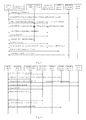
- FIG. 1 is a flowchart showing a method for network switching according to a first embodiment of the present disclosure
- FIG. 2 is a flowchart showing a method for network switching according to a second embodiment of the present disclosure
- FIG. 3 is a flowchart showing a first specific application of a method for network switching according to the present disclosure
- FIG. 4 is a flowchart showing a second specific application of a method for network switching according to the present disclosure.
- FIG. 5 is a structure diagram showing a network system in which a first network is a 3GPP network and a second network is a WLAN network.
- an embodiment of the present disclosure provides a method for network switching, including:
- Step 11 obtaining a message required for a switching preparation process before a terminal is switched to a second network via a first network accessed by the terminal currently;
- Step 12 interacting with the second network based on the message, and releasing a first connection channel after completing the switching preparation process, so as to enable the terminal to establish a connection to the second network immediately after releasing the first connection channel.
- the preparation process which is required when the terminal is switched to the second network is completed in the first network accessed by the terminal currently, so that when the terminal is decided to be switched to the second network, the preparation process for accessing the second network is not necessary to be performed any more. Therefore, when the terminal is switched to the second network, the terminal can firstly turn off a connection interface to the first network and then turn on a connection interface to the second network. The terminal just needs to re-associate to the second network to complete the switching to the second network, which thereby avoids interference problems. In addition, since the major switching preparation work has been completed before the switching, the performance of the switching can be improved.
- FIG. 2 is a flowchart showing a method for network switching according to a second embodiment of the present disclosure. As shown in FIG. 2 , the method includes:
- Step 21 obtaining a message required for a switching preparation process before a terminal is switched to a second network via a first network accessed by the terminal currently;
- Step 22 interacting with the second network based on the message, and completing the switching preparation process before the terminal is switched;
- Step 23 obtaining an Internet Protocol (IP) address/Dynamic Host Configuration Protocol (DHCP, which is a protocol to configure IP address dynamically) of the second network accessed by the terminal;
- IP Internet Protocol
- DHCP Dynamic Host Configuration Protocol
- Step 24 transmitting the IP address to the terminal via the first connection channel
- Step 25 releasing the first connection channel, so as to enable the terminal to establish a connection to the second network immediately after releasing the first connection channel.
- the terminal is assigned with an IP address before switching to the second network, so that the terminal does not need to obtain the IP address when the terminal is switched to the second network. Therefore, the connection to the second network can be established by re-associating the layer2 data to the second network. Therefore, during the process of switching from the first network to the second network, there is no need to turn on the connection interface to the first network and the connection interface to the second network simultaneously, thereby avoiding the interference problem between the two networks during the process of switching. In addition, since the major switching preparation work has been completed before the switching, the performance of the switching can be improved.
- Step 21 may include:
- Step 211 establishing the first connection channel which is connected to the first network accessed by the terminal currently and is a layer3 tunnelling based on an IP protocol, wherein the first connection channel connected to the first network is connected to a gateway network element in the first network;
- the gateway network element in the first network may be, for example, a Serving Gateway (S-GW) and/or a Packet Data Gateway (P-GW);
- Step 212 obtaining the message which is encapsulated by the first connection channel and required by the switching preparation process before the terminal is switched to the second network via the first connection channel, wherein the message required by the switching preparation process before the terminal is switched may include an association message and a connection authentication message on an 802.11 layer2.
- the switching preparation process before the terminal is switched may include:
- Step 213 decapsulating the message which is encapsulated by the first connection channel and required by the switching preparation process before the terminal is switched to the second network, and obtaining the message which is required by the switching preparation process before the terminal is switched;
- Step 214 establishing a second connection channel which is connected to the second network and is a layer3 tunnelling based on the Control And Provisioning of Wireless Access Points (CAPWAP) protocol;
- CAPWAP Control And Provisioning of Wireless Access Points
- Step 215 transmitting the message which is required by the switching preparation process before the terminal is switched to an authentication network element of the second network via the second connection channel;
- Step 216 obtaining an authentication confirmation message feedbacked after an authentication by the authentication network element is successful.
- the process may include:
- the terminal STA is connected to a 3GPP network
- the terminal discovers a WLAN network, in which a network discovery method can be found in the related art, such as an Access Network Discovery and Selection Function (ANDSF) based network discovery; the terminal establish a layer3 tunnelling (i.e., the above-described first connection channel) to a WiFi MGW (switching device) via a 3GPP access network; preferably, the layer3 tunnelling is based on the IP protocol;
- a network discovery method can be found in the related art, such as an Access Network Discovery and Selection Function (ANDSF) based network discovery
- the terminal establish a layer3 tunnelling (i.e., the above-described first connection channel) to a WiFi MGW (switching device) via a 3GPP access network; preferably, the layer3 tunnelling is based on the IP protocol;
- the terminal encapsulates the association message connected to an 802.11 layer2 of the WLAN network by the layer3 tunnelling, and transmits it to the WiFi MGW network element;
- the second connection channel between the WiFi MGW network element and the second network is established, and the second connection channel is also a layer3 tunnelling (e.g. a layer3 tunnelling based on the Control And Provisioning of Wireless Access Points (CAPWAP) protocol);
- the received 802.11 layer2 data is encapsulated by the CAPWAP tunnelling and forwarded to a network element WLAN Authenticator which is responsible for authentication in the WLAN network (in an actual implementation, the WLAN Authenticator is usually an Authentication Center (AC)); and
- the terminal encapsulates the authentication message connected to the WLAN network by the layer3 tunnelling, and transmits it to the WiFi MGW network element;
- the WiFi MGW network element transmits the encapsulated authentication message to the network element WLAN Authenticator in the WLAN network via the second connection channel; the WLAN Authenticator interacts with an AAA server which is responsible for authentication in the network;
- the WiFi MGW assigns an IP address via the tunnelling for the terminal, the terminal can receive the IP address assigned by the network via a virtual interface;
- the terminal releases the layer3 tunnelling to the WiFi MGW (i.e., the above first connection channel);
- the 3GPP interface is turned off and then the WiFi interface is turned on; since the terminal has completed the authentication and the switching preparation, the terminal just needs to re-associate to the WLAN network to complete the switching to layer2; and
- the terminal after establishing a WiFi link, the terminal transmits a binding registration and binding update messages of DSMIPv6 protocol to the PGW to complete the registration process; after the registration process is completed, the data transmission is switched from the 3GPP to the WLAN network.
- Step 21 may include:
- Step 221 establishing the first connection channel which is connected to the first network accessed by the terminal currently and is a layer3 tunnelling based on a layer3 tunnelling protocol;
- Step 222 obtaining the message which is encapsulated by the first connection channel and required by the switching preparation process before the terminal is switched to the second network via the first connection channel.
- the switching preparation process before the terminal is switched may include:
- Step 223 decapsulating the message which is encapsulated by the first connection channel and required by the switching preparation process before the terminal is switched to the second network, and obtaining the message which is required by the switching preparation process before the terminal is switched;
- Step 224 establishing a Packet Data Protocol (PDP) link connected to the second network;
- PDP Packet Data Protocol
- Step 225 transmitting a message required by the PDP link to an authentication network element in the second network via the PDP link;
- Step 226 obtaining a confirmation message which reflects that the PDP link has been successfully activated feedbacked by the authentication network element after an activation of the PDP link is successful.
- the process includes:
- the terminal STA is initialized to access to a WLAN network
- the terminal establishes the first connection channel to a switching device (i.e., 3GPP MGW gateway) via a gateway of the WLAN network, and the first connection channel is a layer3 tunnelling based on a layer3 tunnelling protocol;
- a switching device i.e., 3GPP MGW gateway
- the switching device obtains the message which is required by the activation of the Packet Data Protocol (PDP) link, which is also required by the terminal that switches to the 3GPP network via the first connection channel;
- PDP Packet Data Protocol
- the switching device establishes the second connection channel to the 3GPPP network, transmits the message required by the activation of the PDP link to the gateway S-GW of 3GPP, and further forwards the message to an AAA server to authenticate the message;
- the switching device obtains an IP address or DHCP of the terminal when switching to the 3GPP network, and transmits it to the terminal via the first connection channel. Afterwards, the terminal can receive it via a virtual interface;
- the terminal is decided to be switched to the 3GPP network and establishes a connection to the 3GPP network;
- a communication channel is established between the terminal and the 3GPP network, and then the data transmission is switched to the 3GPP network.
- the main characteristics of the above embodiments of the present disclosure is not to use the method of “establishing a link to the target network firstly and disconnecting the link to the source network after completing the switching” in the switching process, but to use the method of completing the switching preparation in advance.
- the switching preparation includes processes such as the authentication of the target network, the assignment of an IP address and so forth. Therefore, when the terminal is switched to the second network, the terminal can firstly turn off a connection interface to the first network and then turn on a connection interface to the second network. The terminal just needs to re-associate to the second network to complete the switching to the second network, and thereby avoids interference problems. In addition, since the major switching preparation work has been completed before the switching, the performance of the switching can be improved.
- An embodiment of the present disclosure further provides a device for network switching, including:
- a first obtaining module configured to obtain a message required for a switching preparation process before a terminal is switched to a second network via a first network accessed by the terminal currently;
- a processing module configured to interact with the second network based on the message, and releasing a first connection channel after completing the switching preparation process, so as to enable the terminal to establish a connection to the second network immediately after releasing the first connection channel.
- the device may further include:
- a second obtaining module configured to obtain an Internet Protocol (IP) address of the second network accessed by the terminal before releasing the first connection channel;
- IP Internet Protocol
- a first transmitting module configured to transmit the IP address to the terminal via the first connection channel.
- the first obtaining module may include:
- a first establishing module configured to establish the first connection channel which is connected to the first network accessed by the terminal currently and is a layer3 tunnelling based on an IP protocol
- a first sub-obtaining module configured to obtain the message which is encapsulated by the first connection channel and required by the switching preparation process before the terminal is switched to the second network via the first connection channel.
- the processing module may include:
- a first decapsulating module configured to decapsulate the message which is encapsulated by the first connection channel and required by the switching preparation process before the terminal is switched to the second network, and obtain the message which is required by the switching preparation process before the terminal is switched;
- a second establishing module configured to establish a second connection channel which is connected to the second network and is a layer3 tunnelling based on the CAPWAP protocol;
- a second transmitting module configured to transmit the message which is required by the switching preparation process before the terminal is switched to an authentication network element of the second network via the second connection channel;
- a second sub-obtaining module configured to obtain an authentication confirmation message feedbacked after an authentication by the authentication network element is successful.
- the first network is a WLAN network and the second network is a 3GPP network;
- the first obtaining module may include:
- a third establishing module configured to establish the first connection channel which is connected to the first network accessed by the terminal currently and is a layer3 tunnelling based on a layer3 tunnelling protocol;
- a third sub-obtaining module configured to obtain the message which is encapsulated by the first connection channel and required by the switching preparation process before the terminal is switched to the second network via the first connection channel.
- the processing module may include:
- a second decapsulating module configured to decapsulate the message which is encapsulated by the first connection channel and required by the switching preparation process before the terminal is switched to the second network, and obtain the message which is required by the switching preparation process before the terminal is switched;
- a fourth establishing module configured to establish a PDP link connected to the second network
- a third transmitting module configured to transmit a message required by the PDP link to an authentication network element in the second network via the PDP link;
- a fourth sub-obtaining module configured to obtain a confirmation message which reflects that the PDP link has been successfully activated feedbacked by the authentication network element after an activation of the PDP link is successful.
- the device embodiments correspond to the above method embodiments, all the methods mentioned in the above method embodiments are suitable for the device embodiments and can achieve the same technical effects.
- the network element is a gateway provided in a WiFi MGW of a WLAN network, and it may also be a gateway provided in a 3GPP MGW of a 3GPP network.
- Another embodiment of the present disclosure further provides a network system, including a first network, and a second network, wherein the network system further includes the above network element.
- FIG. 5 is a structure diagram showing the network system in which the first network is a 3GPP network and the second network is a WLAN network.
- the WiFi MGW has interfaces to the WLAN access network and the P-GW, respectively: CAPWAP defined by IETF is used between the WiFi MGW and the WLAN access network as an interface protocol, and IP tunnelling is used between the WiFi MGW and the P-GW as an interface protocol.
Landscapes
- Engineering & Computer Science (AREA)
- Computer Networks & Wireless Communication (AREA)
- Signal Processing (AREA)
- Mobile Radio Communication Systems (AREA)
Abstract
Description
Claims (11)
Applications Claiming Priority (4)
| Application Number | Priority Date | Filing Date | Title |
|---|---|---|---|
| CN201210248398 | 2012-07-17 | ||
| CN201210248398.1 | 2012-07-17 | ||
| CN201210248398.1A CN103546932B (en) | 2012-07-17 | 2012-07-17 | Method, device, network element and the system of a kind of network switching |
| PCT/CN2013/077451 WO2014012408A1 (en) | 2012-07-17 | 2013-06-19 | Method, device, network element and system for switching a network |
Publications (2)
| Publication Number | Publication Date |
|---|---|
| US20150223128A1 US20150223128A1 (en) | 2015-08-06 |
| US9832695B2 true US9832695B2 (en) | 2017-11-28 |
Family
ID=49948248
Family Applications (1)
| Application Number | Title | Priority Date | Filing Date |
|---|---|---|---|
| US14/415,388 Active 2034-01-23 US9832695B2 (en) | 2012-07-17 | 2013-06-19 | Method, device, network element and system for switching a network |
Country Status (3)
| Country | Link |
|---|---|
| US (1) | US9832695B2 (en) |
| CN (1) | CN103546932B (en) |
| WO (1) | WO2014012408A1 (en) |
Families Citing this family (9)
| Publication number | Priority date | Publication date | Assignee | Title |
|---|---|---|---|---|
| CN105981432B (en) * | 2014-02-09 | 2019-06-28 | Lg 电子株式会社 | Method and apparatus for directing traffic in a wireless communication system |
| CN104980972B (en) * | 2014-04-03 | 2018-08-07 | 上海宽带技术及应用工程研究中心 | A kind of heterogeneous wireless network convergence system and method |
| CN105848168B (en) * | 2015-01-16 | 2019-08-02 | 新华三技术有限公司 | A kind of method and device managing wireless access point AP |
| US10278068B2 (en) * | 2015-07-17 | 2019-04-30 | Htc Corporation | Device and method of handling cellular-wireless local area network aggregation |
| CN106470170B (en) * | 2015-08-21 | 2020-07-14 | 中兴通讯股份有限公司 | Network switching method and device |
| WO2018107463A1 (en) * | 2016-12-16 | 2018-06-21 | 华为技术有限公司 | Communication method and device |
| CN107635261B (en) * | 2017-09-18 | 2020-04-21 | 维沃移动通信有限公司 | A kind of network handover control method and mobile terminal |
| JP7243211B2 (en) * | 2019-01-22 | 2023-03-22 | 日本電気株式会社 | Communication management system, management server, VPN server, communication management method, and program |
| US12483942B2 (en) * | 2022-07-22 | 2025-11-25 | Qualcomm Incorporated | Connected call recovery |
Citations (7)
| Publication number | Priority date | Publication date | Assignee | Title |
|---|---|---|---|---|
| US20050271013A1 (en) * | 2004-06-02 | 2005-12-08 | Interdigital Technology Corporation | Configuring an interworking wireless local area network user equipment to access a 3GPP system |
| US20060002355A1 (en) * | 2004-07-05 | 2006-01-05 | Samsung Electronics Co., Ltd. | Method and system for providing handoff between mobile communication network and wireless local area network, and switching device therefor |
| US20060029084A1 (en) * | 2004-08-09 | 2006-02-09 | Cisco Technology, Inc. | System and method for signaling information in order to enable and disable distributed billing in a network environment |
| US20070021119A1 (en) * | 2005-06-23 | 2007-01-25 | Samsung Electronics Co., Ltd. | Apparatus and method for implementing handoff between heterogeneous networks in a wireless communication system |
| CN101453766A (en) | 2007-12-06 | 2009-06-10 | 中兴通讯股份有限公司 | Method for switching from UMB system to DO system |
| CN101562853A (en) | 2008-04-17 | 2009-10-21 | 中兴通讯股份有限公司 | Method for switching from microwave access worldwide interoperability system to high-speed packet data system |
| WO2011118196A1 (en) | 2010-03-26 | 2011-09-29 | パナソニック株式会社 | Mobile wireless system, access point device, and handover processing method |
-
2012
- 2012-07-17 CN CN201210248398.1A patent/CN103546932B/en active Active
-
2013
- 2013-06-19 US US14/415,388 patent/US9832695B2/en active Active
- 2013-06-19 WO PCT/CN2013/077451 patent/WO2014012408A1/en not_active Ceased
Patent Citations (9)
| Publication number | Priority date | Publication date | Assignee | Title |
|---|---|---|---|---|
| US20050271013A1 (en) * | 2004-06-02 | 2005-12-08 | Interdigital Technology Corporation | Configuring an interworking wireless local area network user equipment to access a 3GPP system |
| US20060002355A1 (en) * | 2004-07-05 | 2006-01-05 | Samsung Electronics Co., Ltd. | Method and system for providing handoff between mobile communication network and wireless local area network, and switching device therefor |
| US20060029084A1 (en) * | 2004-08-09 | 2006-02-09 | Cisco Technology, Inc. | System and method for signaling information in order to enable and disable distributed billing in a network environment |
| US20070021119A1 (en) * | 2005-06-23 | 2007-01-25 | Samsung Electronics Co., Ltd. | Apparatus and method for implementing handoff between heterogeneous networks in a wireless communication system |
| CN101453766A (en) | 2007-12-06 | 2009-06-10 | 中兴通讯股份有限公司 | Method for switching from UMB system to DO system |
| CN101562853A (en) | 2008-04-17 | 2009-10-21 | 中兴通讯股份有限公司 | Method for switching from microwave access worldwide interoperability system to high-speed packet data system |
| WO2011118196A1 (en) | 2010-03-26 | 2011-09-29 | パナソニック株式会社 | Mobile wireless system, access point device, and handover processing method |
| US20130039343A1 (en) | 2010-03-26 | 2013-02-14 | Panasonic Corporation | Mobile wireless system, access point device, and handover processing method |
| US8830961B2 (en) | 2010-03-26 | 2014-09-09 | Panasonic Intellectual Property Corporation Of America | Mobile wireless system, access point device, and handover processing method |
Non-Patent Citations (3)
| Title |
|---|
| State Intellectual Property Office of the People's Republic of China, First Office Action in Chinese Patent Application No. 201210248398.1 (dated Nov. 30, 2015). |
| State Intellectual Property Office of the People's Republic of China, International Search Report in International Application No. PCT/CN2013/077451 (dated Sep. 26, 2013). |
| State Intellectual Property Office of the People's Republic of China, Second Office Action in Chinese Patent Application No. 201210248398.1 (dated May 5, 2016). |
Also Published As
| Publication number | Publication date |
|---|---|
| US20150223128A1 (en) | 2015-08-06 |
| CN103546932A (en) | 2014-01-29 |
| CN103546932B (en) | 2016-12-21 |
| WO2014012408A1 (en) | 2014-01-23 |
Similar Documents
| Publication | Publication Date | Title |
|---|---|---|
| US9832695B2 (en) | Method, device, network element and system for switching a network | |
| US10993112B2 (en) | Systems and methods for accessing a network | |
| EP2245883B1 (en) | Method and apparatus for inter-technology handoff of a multi-mode mobile station | |
| EP2681876B1 (en) | Architecture for wlan offload in a wireless device | |
| US20130343304A1 (en) | System and Method for Configuring Multiple IP Connections | |
| JP4945530B2 (en) | Home agent, communication system, and communication method | |
| TW201737733A (en) | Interact with traditional radio access technology to connect to next-generation core networks | |
| KR20040075962A (en) | Internet protocol based wireless communication arrangements | |
| EP3043596A1 (en) | Ip mobility method and system, access point device, and wireless access controller | |
| EP3573360B1 (en) | Local breakout service data transmission method | |
| US9480093B2 (en) | Method and system for mobile user to access fixed network | |
| KR101480703B1 (en) | NETWORK SYSTEM FOR PROVIDING TERMINAL WITH IPSec MOBILITY BETWEEN LET NETWORK AND WLAN AND PACKET TRANSMITTING METHOD FOR PROVIDING TERMINAL WITH IPSec MOBILITY | |
| WO2012106984A1 (en) | Method and system for accessing mobile core network through trustworthy fixed network | |
| US12301536B2 (en) | Wi-Fi roaming support for cloud integrated remote WLAN deployment | |
| WO2014101181A1 (en) | User equipment and method for heterogeneous network switch | |
| Kang et al. | The design of Non-AS signaling for multi-RATs traffic steering | |
| US20150215780A1 (en) | Method and device for transmitting data |
Legal Events
| Date | Code | Title | Description |
|---|---|---|---|
| AS | Assignment |
Owner name: CHINA MOBILE COMMUNICATIONS CORPORATION, CHINA Free format text: ASSIGNMENT OF ASSIGNORS INTEREST;ASSIGNOR:LIU, DAPENG;REEL/FRAME:034910/0613 Effective date: 20150105 Owner name: CHINA MOBILE COMMUNICATIONS CORPORATION, CHINA Free format text: ASSIGNMENT OF ASSIGNORS INTEREST;ASSIGNOR:DENG, HUI;REEL/FRAME:034910/0887 Effective date: 20150116 |
|
| STCF | Information on status: patent grant |
Free format text: PATENTED CASE |
|
| MAFP | Maintenance fee payment |
Free format text: PAYMENT OF MAINTENANCE FEE, 4TH YEAR, LARGE ENTITY (ORIGINAL EVENT CODE: M1551); ENTITY STATUS OF PATENT OWNER: LARGE ENTITY Year of fee payment: 4 |
|
| MAFP | Maintenance fee payment |
Free format text: PAYMENT OF MAINTENANCE FEE, 8TH YEAR, LARGE ENTITY (ORIGINAL EVENT CODE: M1552); ENTITY STATUS OF PATENT OWNER: LARGE ENTITY Year of fee payment: 8 |