US9832050B1 - Shock sensor resonance detection for notch filter tuning - Google Patents

Shock sensor resonance detection for notch filter tuning Download PDF

Info

Publication number
US9832050B1
US9832050B1 US15/354,867 US201615354867A US9832050B1 US 9832050 B1 US9832050 B1 US 9832050B1 US 201615354867 A US201615354867 A US 201615354867A US 9832050 B1 US9832050 B1 US 9832050B1
Authority
US
United States
Prior art keywords
frequency
notch filter
detection system
shock detection
output signal
Prior art date
Legal status (The legal status is an assumption and is not a legal conclusion. Google has not performed a legal analysis and makes no representation as to the accuracy of the status listed.)
Active
Application number
US15/354,867
Inventor
Erik J. Eklund
Timothy A. Ferris
Current Assignee (The listed assignees may be inaccurate. Google has not performed a legal analysis and makes no representation or warranty as to the accuracy of the list.)
Western Digital Technologies Inc
Original Assignee
Western Digital Technologies Inc
Priority date (The priority date is an assumption and is not a legal conclusion. Google has not performed a legal analysis and makes no representation as to the accuracy of the date listed.)
Filing date
Publication date
Application filed by Western Digital Technologies Inc filed Critical Western Digital Technologies Inc
Priority to US15/354,867 priority Critical patent/US9832050B1/en
Assigned to WESTERN DIGITAL TECHNOLOGIES, INC. reassignment WESTERN DIGITAL TECHNOLOGIES, INC. ASSIGNMENT OF ASSIGNORS INTEREST (SEE DOCUMENT FOR DETAILS). Assignors: FERRIS, TIMOTHY A., EKLUND, ERIK J.
Application granted granted Critical
Publication of US9832050B1 publication Critical patent/US9832050B1/en
Assigned to JPMORGAN CHASE BANK, N.A., AS AGENT reassignment JPMORGAN CHASE BANK, N.A., AS AGENT SECURITY INTEREST Assignors: WESTERN DIGITAL TECHNOLOGIES, INC.
Assigned to WESTERN DIGITAL TECHNOLOGIES, INC. reassignment WESTERN DIGITAL TECHNOLOGIES, INC. RELEASE OF SECURITY INTEREST AT REEL 052915 FRAME 0566 Assignors: JPMORGAN CHASE BANK, N.A.
Assigned to JPMORGAN CHASE BANK, N.A. reassignment JPMORGAN CHASE BANK, N.A. PATENT COLLATERAL AGREEMENT - DDTL LOAN AGREEMENT Assignors: WESTERN DIGITAL TECHNOLOGIES, INC.
Assigned to JPMORGAN CHASE BANK, N.A. reassignment JPMORGAN CHASE BANK, N.A. PATENT COLLATERAL AGREEMENT - A&R LOAN AGREEMENT Assignors: WESTERN DIGITAL TECHNOLOGIES, INC.
Active legal-status Critical Current
Anticipated expiration legal-status Critical

Links

Images

Classifications

    • HELECTRICITY
    • H04ELECTRIC COMMUNICATION TECHNIQUE
    • H04LTRANSMISSION OF DIGITAL INFORMATION, e.g. TELEGRAPHIC COMMUNICATION
    • H04L25/00Baseband systems
    • H04L25/38Synchronous or start-stop systems, e.g. for Baudot code
    • H04L25/40Transmitting circuits; Receiving circuits
    • H04L25/49Transmitting circuits; Receiving circuits using code conversion at the transmitter; using predistortion; using insertion of idle bits for obtaining a desired frequency spectrum; using three or more amplitude levels ; Baseband coding techniques specific to data transmission systems
    • H04L25/4902Pulse width modulation; Pulse position modulation
    • GPHYSICS
    • G01MEASURING; TESTING
    • G01PMEASURING LINEAR OR ANGULAR SPEED, ACCELERATION, DECELERATION, OR SHOCK; INDICATING PRESENCE, ABSENCE, OR DIRECTION, OF MOVEMENT
    • G01P15/00Measuring acceleration; Measuring deceleration; Measuring shock, i.e. sudden change of acceleration
    • G01P15/02Measuring acceleration; Measuring deceleration; Measuring shock, i.e. sudden change of acceleration by making use of inertia forces using solid seismic masses
    • G01P15/08Measuring acceleration; Measuring deceleration; Measuring shock, i.e. sudden change of acceleration by making use of inertia forces using solid seismic masses with conversion into electric or magnetic values
    • G01P15/0802Details
    • GPHYSICS
    • G01MEASURING; TESTING
    • G01PMEASURING LINEAR OR ANGULAR SPEED, ACCELERATION, DECELERATION, OR SHOCK; INDICATING PRESENCE, ABSENCE, OR DIRECTION, OF MOVEMENT
    • G01P15/00Measuring acceleration; Measuring deceleration; Measuring shock, i.e. sudden change of acceleration
    • G01P15/02Measuring acceleration; Measuring deceleration; Measuring shock, i.e. sudden change of acceleration by making use of inertia forces using solid seismic masses
    • G01P15/08Measuring acceleration; Measuring deceleration; Measuring shock, i.e. sudden change of acceleration by making use of inertia forces using solid seismic masses with conversion into electric or magnetic values
    • G01P15/0891Measuring acceleration; Measuring deceleration; Measuring shock, i.e. sudden change of acceleration by making use of inertia forces using solid seismic masses with conversion into electric or magnetic values with indication of predetermined acceleration values
    • GPHYSICS
    • G11INFORMATION STORAGE
    • G11BINFORMATION STORAGE BASED ON RELATIVE MOVEMENT BETWEEN RECORD CARRIER AND TRANSDUCER
    • G11B19/00Driving, starting, stopping record carriers not specifically of filamentary or web form, or of supports therefor; Control thereof; Control of operating function ; Driving both disc and head
    • G11B19/02Control of operating function, e.g. switching from recording to reproducing
    • G11B19/04Arrangements for preventing, inhibiting, or warning against double recording on the same blank or against other recording or reproducing malfunctions
    • G11B19/041Detection or prevention of read or write errors
    • G11B19/042Detection or prevention of read or write errors due to external shock or vibration
    • GPHYSICS
    • G11INFORMATION STORAGE
    • G11BINFORMATION STORAGE BASED ON RELATIVE MOVEMENT BETWEEN RECORD CARRIER AND TRANSDUCER
    • G11B19/00Driving, starting, stopping record carriers not specifically of filamentary or web form, or of supports therefor; Control thereof; Control of operating function ; Driving both disc and head
    • G11B19/20Driving; Starting; Stopping; Control thereof
    • GPHYSICS
    • G11INFORMATION STORAGE
    • G11BINFORMATION STORAGE BASED ON RELATIVE MOVEMENT BETWEEN RECORD CARRIER AND TRANSDUCER
    • G11B19/00Driving, starting, stopping record carriers not specifically of filamentary or web form, or of supports therefor; Control thereof; Control of operating function ; Driving both disc and head
    • G11B19/20Driving; Starting; Stopping; Control thereof
    • G11B19/28Speed controlling, regulating, or indicating
    • GPHYSICS
    • G11INFORMATION STORAGE
    • G11BINFORMATION STORAGE BASED ON RELATIVE MOVEMENT BETWEEN RECORD CARRIER AND TRANSDUCER
    • G11B5/00Recording by magnetisation or demagnetisation of a record carrier; Reproducing by magnetic means; Record carriers therefor
    • G11B5/48Disposition or mounting of heads or head supports relative to record carriers ; arrangements of heads, e.g. for scanning the record carrier to increase the relative speed
    • G11B5/54Disposition or mounting of heads or head supports relative to record carriers ; arrangements of heads, e.g. for scanning the record carrier to increase the relative speed with provision for moving the head into or out of its operative position or across tracks
    • G11B5/55Track change, selection or acquisition by displacement of the head
    • G11B5/5521Track change, selection or acquisition by displacement of the head across disk tracks
    • G11B5/5582Track change, selection or acquisition by displacement of the head across disk tracks system adaptation for working during or after external perturbation, e.g. in the presence of a mechanical oscillation caused by a shock

Definitions

  • a conventional shock sensor used in a data storage device for example a hard disk drive (HDD), to detect mechanical shocks and prevent off-track writes (OTWs) may be designed as a cantilever beam structure with piezoelectric properties.
  • a shock event causes the beam to deflect producing a small electric charge.
  • the small electric charge produced by the shock sensor is amplified and filtered by a shock detection system and the output of the shock detection system is compared to a predetermined voltage threshold to determine whether the detected shock is large enough to require suspension of write operations.
  • an interrupt signal is issued to the system-on-a-chip (SoC), which immediately suspends write operations to prevent overwriting data on adjoining tracks.
  • SoC system-on-a-chip
  • FIG. 1 is a diagram illustrating a DSD 100 including a conventional shock detection system.
  • the DSD 100 may include a disk 110 rotated by a spindle 115 coupled to a spindle motor 120 and a head 125 connected to an end of an actuator arm 130 which is rotated about a pivot by a voice coil motor (VCM) 135 to position the head 125 radially over the disk 110 .
  • the VCM 135 may controlled by a VCM drive signal 157 from a VCM control circuit 155 .
  • the disk may include a number of concentric data tracks each partitioned into a number of data sectors.
  • the spindle motor 120 may be driven by a spindle drive signal 142 generated by a pulse width modulator (PWM) 140 .
  • a control unit 150 may control the PWM 140 and the VCM control circuit 155 and may receive input from a shock detection system 160 .
  • FIG. 2A is a simplified block diagram of a shock detection system in accordance with various aspects of the present disclosure.
  • the shock detection system 160 may include a shock sensor 165 , a first gain stage (e.g., a charge amplifier) 170 , a notch filter 175 , additional circuitry including filters 180 , for example, but not limited to, firmware tunable filters, and gain stages 185 , and one or more window comparators 190 .
  • the shock detection system 160 may be configured to generate an interrupt signal to the control unit 150 upon detection of a mechanical shock exceeding a threshold.
  • the mechanical response of the shock sensor 165 may be that of a second-order mechanical system with a pronounced resonance, usually with a Q-factor on the order of 50.
  • a notch filter 175 may be used as part of the shock detection system 160 to suppress the resonance of the shock sensor 165 while minimizing the phase delay of the shock detection system 160 at lower frequencies to provide rapid detection of shock events.
  • FIG. 3 is a graph 300 illustrating example gain and phase plots of the shock detection system before and after application of a conventional fixed notch filter for a shock detection system output signal 162 .
  • the example gain 310 and phase 320 plots of the shock detection system without a notch filter and the example gain 330 and phase 340 plots of the shock detection system output signal 162 after application of a conventional notch filter with a Q-factor of 1.0 when frequency of the notch filter (f notch ) is equal to the resonance frequency of the shock sensor (f sensor ) are shown.
  • maximum gain and minimal phase delay is required up to about 20 kHz.
  • a notch filter Q-factor of 1.0 sufficiently suppresses the resonance frequency of the sensor while maintaining a flat output magnitude and minimizing the phase loss.
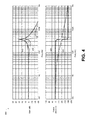
  • FIG. 4 is a graph 400 illustrating example gain and phase plots before and after application of a conventional fixed notch filter for a shock detection system output signal 162 .
  • example gain 410 and phase 420 plots of the shock detection system output signal 162 without a notch filter
  • example gain 430 and phase 440 plots of the shock detection system output after a conventional notch filter with a Q-factor of 0.25 when frequency of the notch filter (f notch ) is not equal to the resonance frequency of the shock sensor (f sensor ) are shown.
  • the specified resonance frequency range of a typical shock sensor may be 44 ⁇ 8 kHz. With this wide range of part-to-part variation in resonance frequency (and without resonance detection), the Q-factor would need to be set to 0.25 to achieve sufficient resonance suppression (20 dB), leading to a large phase loss.
  • FIG. 1 is a diagram illustrating a DSD including a shock detection system in accordance with various aspects of the present disclosure
  • FIG. 2A is a simplified block diagram of a shock detection system in accordance with various aspects of the present disclosure
  • FIG. 2B is a block diagram illustrating a capacitor drive circuit and a multi-layer ceramic capacitor (MLCC) in accordance with certain aspects of the present disclosure.
  • MLCC multi-layer ceramic capacitor
  • FIG. 3 is a graph illustrating example gain and phase plots before and after application of a conventional fixed notch filter for a shock detection system output signal
  • FIG. 4 is a graph illustrating example gain and phase plots before and after application of a conventional fixed notch filter for a shock detection system output signal
  • FIG. 5 is a graph illustrating example measurements of shock noise versus output frequency of the PWM generating the spindle drive signal for a DSD in accordance with various aspects of the present disclosure
  • FIG. 6 is a graph illustrating example gain and phase plots before and after application of a notch filter for a shock detection system output signal in accordance with various aspects of the present disclosure
  • FIG. 7 is a flowchart illustrating a method for detecting shock sensor resonance in a DSD and tuning a notch filter in accordance with various aspects of the present disclosure
  • FIG. 8 is a flowchart illustrating a method for verifying that the optimum notch filter frequency was selected in accordance with various aspects of the present disclosure
  • FIG. 9 is a flowchart illustrating a method for detecting shock sensor resonance in a DSD and tuning a notch filter in accordance with various aspects of the present disclosure
  • FIG. 10 is a flowchart illustrating a method for verifying that the optimum notch filter frequency was selected in accordance with various aspects of the present disclosure
  • FIG. 11 is a flowchart illustrating a method for detecting shock sensor resonance in a DSD and tuning a notch filter in accordance with various aspects of the present disclosure.
  • FIG. 12 is a flowchart illustrating a method for verifying that the optimum notch filter frequency was selected in accordance with various aspects of the present disclosure.
  • Various aspects of the present disclosure provide methods for detecting the actual resonance frequency for a shock sensor in a DSD.
  • the methods may enable a higher Q-factor of the notch filter and hence less propagation delay.
  • control unit 150 may control the output frequency of the PWM 140 generating a spindle drive signal 142 .
  • the PWM output frequency, and hence the spindle drive signal 142 may be swept within a range of possible shock sensor resonance frequencies, for example, about 44 ⁇ 10 kHz, in order to cause a small vibration signal.
  • the noise level of the output signal 162 of the shock detection system 160 may be monitored and may reach a maximum when the output frequency of the PWM 140 (and hence spindle vibration) overlaps with and excites the resonance frequency of the shock sensor 165 . Based on the detected resonance frequency of the shock sensor 165 , a suitable frequency setting may be selected for the notch filter 175 .
  • control unit 150 may sample the output signal 162 of the shock detection system 160 and calculate maximum noise, for example as root-mean-square (RMS) noise while controlling the PWM 140 to step through the frequency settings.
  • control unit 150 may calculate maximum peak-to-peak (P-P) noise while controlling the output frequency settings of the PWM 140 .
  • the notch filter frequency may be selected based on the frequency at which the RMS or P-P noise of the output signal 162 of the shock detection system 160 reaches a maximum.
  • FIG. 5 is a graph 500 illustrating example measurements of shock noise versus output frequency of the PWM 140 generating the spindle drive signal 142 for a DSD 100 in accordance with various aspects of the present disclosure.
  • P-P noise 530 and RMS noise 540 are plotted with respect to spindle frequency.
  • the RMS shock noise varies substantially when the output frequency of the PWM 140 generating the spindle drive signal 142 is adjusted around the frequency at which the peak output signal 162 RMS shock noise is obtained. Shock sensor resonance frequency detection to within ⁇ 1 kHz may be achieved exceeding the current ⁇ 2 kHz requirement.
  • multiple voltage settings for window comparators 190 of the shock detection system 160 may be utilized to detect the P-P noise value while adjusting the output frequency settings of the PWM 140 .
  • the notch filter frequency may be selected within a predetermined range, for example within ⁇ 2 kHz or another range, of the resonance frequency of the shock sensor 165 .
  • the worst-case PWM output frequency (i.e., the output frequency of the PWM 140 generating the spindle drive signal 142 producing the maximum noise level for the output signal 162 of the shock detection system 160 ) may be maintained while adjusting the output frequency settings of the PWM 140 to the nearest available frequency settings to the selected frequency for the notch filter 175 , for example, within a range of about ⁇ 10 kHz or another range, of the selected notch filter frequency.
  • the notch filter frequency may be selected within a predetermined range, for example within ⁇ 2 kHz or another range, of the resonance frequency of the shock sensor 165 .
  • the notch filter frequency adjustment may eliminate the effect of variations of the actual notch frequency, as compared to the specified value, due to circuit tolerances. If an available frequency setting for the notch filter 175 within the predetermined PWM output frequency range provides increased noise suppression of the output signal 162 of the shock detection system 160 , the available frequency setting for the notch filter 175 may be selected and applied as a new notch filter frequency.
  • firmware-tunable filters 180 in the shock detection system 160 are set in a manner that ensures maximum amplification of signals near the resonance frequency of the shock sensor 165 while suppressing other frequencies.
  • FIG. 6 is a graph 600 illustrating example gain and phase plots before and after application of a notch filter for a shock detection system output signal 162 in accordance with various aspects of the present disclosure.
  • example gain 610 and phase 620 plots of a shock detection system output signal 162
  • example gain 630 and phase 640 plots of the shock detection system output signal 162 after a notch filter with a Q-factor of 1.0 when mismatch between the frequency of the notch filter (f notch ) and the resonance frequency of the shock sensor (f sensor ) is reduced in accordance with various aspects of the present disclosure are shown.
  • FIG. 7 is a flowchart illustrating a method 700 for detecting shock sensor resonance in a DSD 100 and tuning a notch filter in accordance with various aspects of the present disclosure.
  • tunable filters e.g., the firmware-tunable filters 180
  • the output frequency of the PWM 140 generating the spindle drive signal 142 may be adjusted up or down in increments of about 200 Hz, or any other increment, within a range of possible shock sensor resonance frequencies, for example about 44 ⁇ 10 kHz or another range, in order to cause a small vibration signal.
  • the control unit 150 may control the PWM 140 to repeatedly adjust the output frequency generating the spindle drive signal 142 to the spindle motor 120 up or down in increments of about 200 Hz or another increment.
  • the noise level of the output signal 162 of the shock detection system 160 may be monitored as the output frequency of the PWM 140 is adjusted and the noise level may reach a maximum.
  • the control unit 150 may sample the output signal 162 of the shock detection system 160 and calculate maximum root-mean-square (RMS) noise while controlling the PWM 140 to step through the output frequency settings.
  • the control unit 150 may calculate maximum peak-to-peak (P-P) noise, or any other noise figure of merit, while controlling the PWM 140 to step through the output frequency settings.
  • the control unit 150 may determine that the RMS or P-P noise level of the output signal 162 is decreasing from a higher value.
  • the control unit 150 may determine that the previous output signal 162 noise level is the maximum noise level. The previous higher value may be determined as the maximum noise level.
  • output signal 162 noise levels may be calculated for each PWM frequency setting in a predetermined range of PWM frequency settings, for example about 44 ⁇ 10 kHz or another range, and the maximum output signal 162 noise level selected from the calculated noise levels.
  • the output signal 162 noise level may reach a maximum when the output frequency of the PWM 140 overlaps with and excites the resonance frequency of the shock sensor 165 .
  • the output frequency of the PWM 140 may continue to be adjusted.
  • a notch filter frequency may be selected based on the PWM frequency at the maximum noise level. For example, the notch filter frequency may be selected based on the frequency at which the RMS or P-P noise reaches a maximum. The notch filter frequency may be selected within a predetermined range, for example within ⁇ 2 kHz or another range, of the resonance frequency of the shock sensor 165 .
  • the control unit 150 may apply the notch filter 175 having the selected notch filter frequency.
  • the worst-case PWM frequency i.e., the output frequency of the PWM 140 generating the spindle drive signal 142 producing the maximum output signal 162 noise level of the shock detection system 160
  • the worst-case PWM frequency may be maintained while adjusting the notch filter through the nearest available frequency settings to the selected frequency for the notch filter 175 , for example, within a range of about ⁇ 10 kHz of the selected notch filter frequency.
  • the notch filter frequency may be selected within a predetermined range, for example within ⁇ 2 kHz or another range, of the resonance frequency of the shock sensor 165 .
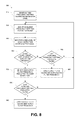
  • FIG. 8 is a flowchart illustrating a method 800 for verifying that the optimum notch filter frequency was selected in accordance with various aspects of the present disclosure.
  • the control unit 150 may control the PWM 140 to maintain the frequency setting causing the maximum noise level of the shock detection system output signal 162 .
  • the notch filter frequency may be adjusted up or down in increments of about 100 Hz or another increment within a range of available notch filter frequency settings around the selected notch filter frequency.
  • the control unit 150 may control the notch filter 175 to repeatedly adjust the notch filter frequency setting up or down in increments of about 100 Hz or another increment.
  • the noise level of the output signal 162 of the shock detection system 160 may be monitored as the notch filter frequency setting is adjusted.
  • the control unit 150 may determine that the noise level of the output signal 162 is decreasing from a higher value.
  • the control unit 150 may determine that the current notch filter frequency is a candidate for a new notch filter frequency.
  • output signal 162 noise levels may be calculated for each notch filter frequency in a predetermined range of notch filter frequencies around the selected notch filter frequency, for example about 44 ⁇ 10 kHz or another range, and the minimum noise level may be determined.
  • the control unit 150 may determine whether the last available frequency setting for the notch filter 175 has been tested. In response to determining that the last available frequency setting for the notch filter 175 has been tested ( 850 —Y), at block 860 the control unit 150 may apply the notch filter 175 having the selected notch filter frequency.
  • the method may continue at operation 820 with the next available frequency setting for the notch filter 175 .
  • the control unit 150 may select the current notch filter frequency as a new notch filter frequency.
  • control unit 150 may determine whether the last available frequency setting for the notch filter 175 has been tested. In response to determining that the last available frequency setting for the notch filter 175 has been tested ( 880 —Y), at block 890 , the control unit 150 may apply the notch filter 175 having the new notch filter frequency.
  • the method may continue at operation 820 with the next available frequency setting for the notch filter 175 .
  • FIG. 2B is a block diagram illustrating a capacitor drive circuit 210 and an MLCC 220 in accordance with certain aspects of the present disclosure.
  • a dedicated MLCC 220 may be positioned near the shock sensor 165 on the printed circuit board (PCB) and may be driven with a capacitor drive circuit 210 incorporated into the DSD 100 , for example as part of the circuitry of a large scale integrated (LSI) circuit (not shown).
  • the capacitor drive circuit 210 may be configured to generate an alternating current (AC) voltage signal 212 , for example, but not limited to, a sine wave, a square wave, or a triangle wave, of known frequency near the resonance frequency of the shock sensor 165 to drive the MLCC 220 .
  • AC alternating current
  • the frequency of the AC voltage signal 212 may be adjusted up or down in increments of about 200 Hz or another increment within a range of possible shock sensor resonance frequencies, for example about 44 ⁇ 10 kHz or another range, in order to cause a small vibration of the MLCC 220 .
  • the noise level for the output signal 162 of the shock detection system 160 may reach a maximum value when the MLCC 220 is driven at the resonance frequency of the shock sensor 165 .
  • a resonance frequency detection and notch filter selection scheme similar to the scheme described with respect to the spindle drive signal 142 generated by the PWM 140 may be implemented.
  • FIG. 9 is a flowchart illustrating a method 900 for detecting shock sensor resonance in a DSD 100 and tuning a notch filter in accordance with various aspects of the present disclosure.
  • tunable filters e.g., the firmware-tunable filters 180
  • the shock detection system 160 may be set to provide maximum amplification of signal frequencies near a resonance frequency of the shock sensor 165 while suppressing other frequencies.
  • the frequency of the AC voltage signal generated by the capacitor drive circuit 210 to drive the MLCC 220 may be adjusted up or down in increments of about 200 Hz or another increment within a range of possible shock sensor resonance frequencies, for example about 44 ⁇ 10 kHz or another range, in order to cause a small vibration in the MLCC 220 .
  • the control unit 150 may control the capacitor drive circuit 210 to repeatedly adjust the frequency of the AC voltage signal 212 up or down in increments of about 200 Hz or another increment.
  • the noise level of the output signal 162 of the shock detection system 160 may be monitored as the frequency of the AC voltage signal 212 is adjusted and the noise level of the output signal 162 may reach a maximum.
  • the control unit 150 may sample the output signal 162 of the shock detection system 160 and calculate maximum root-mean-square (RMS) noise while controlling the capacitor drive circuit 210 to adjust the frequency of the AC voltage signal 212 driving the MLCC 220 .
  • the control unit 150 may calculate maximum peak-to-peak (P-P) noise, or any other noise figure of merit, while controlling the capacitor drive circuit 210 to adjust the frequency of the AC voltage signal 212 through the range of frequency settings.
  • the control unit 150 may determine that the RMS or P-P noise level of the output signal 162 is decreasing from a higher value.
  • the control unit 150 may determine that the previous output signal 162 noise level is the maximum noise level. The previous higher value may be determined as the maximum noise level.
  • output signal 162 noise levels may be calculated for each AC voltage signal 212 frequency setting in a predetermined range of frequency settings, for example about 44 ⁇ 10 kHz or another range, and the maximum output signal 162 noise level selected from the calculated noise levels.
  • the output signal 162 noise level may reach a maximum when the frequency of the AC voltage signal 212 driving the MLCC 220 overlaps with and excites the resonance frequency of the shock sensor 165 .
  • the frequency of the AC voltage signal 212 driving the MLCC 220 may continue to be adjusted.
  • a notch filter frequency may be selected based on the frequency of the AC voltage signal 212 at the maximum noise level. For example, the notch filter frequency may be selected based on the frequency at which the RMS or P-P noise reaches a maximum. The notch filter frequency may be selected within a predetermined range, for example within ⁇ 2 kHz or another range, of the resonance frequency of the shock sensor 165 .
  • the control unit 150 may apply the notch filter 175 having the selected notch filter frequency.
  • the worst-case frequency of the AC voltage signal 212 driving the MLCC 220 i.e., the output of the capacitor drive circuit 210 generating the AC voltage signal 212 producing the maximum output signal 162 noise level of the shock detection system 160
  • the worst-case frequency of the AC voltage signal 212 driving the MLCC 220 may be maintained while adjusting the notch filter through the nearest available frequency settings to the selected frequency for the notch filter 175 , for example, within a range of about ⁇ 10 kHz of the selected notch filter frequency.
  • the notch filter frequency may be selected within a predetermined range, for example within ⁇ 2 kHz or another range, of the resonance frequency of the shock sensor 165 .
  • FIG. 10 is a flowchart illustrating a method 1000 for verifying that the optimum notch filter frequency was selected in accordance with various aspects of the present disclosure.
  • the control unit 150 may control the capacitor drive circuit 210 to maintain the frequency setting of the AC voltage signal 212 causing the maximum noise level of the shock detection system output signal 162 .
  • the notch filter frequency may be adjusted up or down in increments of about 100 Hz or another increment within a range of available notch filter frequency settings around the selected notch filter frequency.
  • the control unit 150 may control the notch filter 175 to repeatedly adjust the notch filter frequency setting up or down in increments of about 100 Hz or another increment.
  • the noise level of the output signal 162 of the shock detection system 160 may be monitored as the notch filter frequency setting is adjusted.
  • the control unit 150 may determine that the noise level of the output signal 162 is decreasing from a higher value.
  • the control unit 150 may determine that the current notch filter frequency is a candidate for a new notch filter frequency
  • output signal 162 noise levels may be calculated for each notch filter frequency in a predetermined range of notch filter frequencies around the selected notch filter frequency, for example about 44 ⁇ 10 kHz or another range, and the minimum noise level may be determined.
  • the control unit 150 may determine whether the last available frequency setting for the notch filter 175 has been tested. In response to determining that the last available frequency setting for the notch filter 175 has been tested ( 1050 —Y), at block 1060 the control unit 150 may apply the notch filter 175 having the selected notch filter frequency.
  • the method may continue at operation 1020 with the next available frequency setting for the notch filter 175 .
  • control unit 150 may select the current notch filter frequency as a new notch filter frequency.
  • control unit 150 may determine whether the last available frequency setting for the notch filter 175 has been tested. In response to determining that the last available frequency setting for the notch filter 175 has been tested ( 1080 —Y), at block 1090 , the control unit 150 may apply the notch filter 175 having the new notch filter frequency.
  • the method may continue at operation 1020 with the next available frequency setting for the notch filter 175 .
  • the VCM 135 may be utilized to induce a vibration signal within a range of possible resonance frequencies, for example about 44 ⁇ 10 kHz or another range, of the resonance frequency of the shock sensor 165 .
  • the VCM 135 may be driven by a VCM drive signal 157 generated by a VCM control circuit 155 .
  • the VCM control circuit 155 may include a current control loop (CCL) and the VCM drive signal 157 may be generated by the CCL.
  • CCL current control loop
  • the frequency of the VCM drive signal 157 may be adjusted around the resonance frequency of the shock sensor 165 while monitoring the output signal 162 of the shock detection system 160 for a maximum noise level (e.g., maximum RMS noise level or maximum P-P noise level).
  • a maximum noise level e.g., maximum RMS noise level or maximum P-P noise level.
  • the VCM drive signal 157 may be implemented in firmware and may be, for example, but not limited to, a sine wave, a triangle wave, or a square wave.
  • a VCM drive signal 157 having a frequency near or below half of the resonant frequency of the shock sensor 165 may produce harmonics that could excite the resonance causing erroneous results.
  • VCM voltage mode excitation of the VCM 135 may be used and the frequency of the VCM voltage drive signal adjusted in small frequency adjustment bands around the resonance frequency of the shock sensor 165 , but for large frequency adjustment bands around the resonance frequency of the shock sensor 165 the VCM voltage drive signal amplitude vs. frequency may be controlled.
  • FIG. 11 is a flowchart illustrating a method 1100 for detecting shock sensor resonance in a DSD 100 and tuning a notch filter in accordance with various aspects of the present disclosure.
  • tunable filters e.g., the firmware-tunable filters 180
  • the shock detection system 160 may be set to provide maximum amplification of signal frequencies near a resonance frequency of the shock sensor 165 while suppressing other frequencies.
  • the frequency of the VCM drive signal 157 may be adjusted up or down in increments of about 200 Hz or another increment within a range of possible shock sensor resonance frequencies, for example about 44 ⁇ 10 kHz or another range, in order to cause a small vibration in the VCM 135 .
  • the control unit 150 may control the VCM control circuit 155 to repeatedly adjust the frequency of the VCM drive signal 157 up or down in increments of about 200 Hz or another increment.
  • the noise level of the output signal 162 of the shock detection system 160 may be monitored as the frequency of the VCM drive signal 157 is adjusted and the noise level of the output signal 162 may reach a maximum.
  • the control unit 150 may sample the output signal 162 of the shock detection system 160 and calculate maximum root-mean-square (RMS) noise while controlling the VCM control circuit 155 to adjust the frequency of the VCM drive signal 157 .
  • the control unit 150 may calculate maximum peak-to-peak (P-P) noise, or any other noise figure of merit, while controlling the VCM control circuit 155 to adjust the frequency of the VCM drive signal 157 through the range of frequency settings.
  • the control unit 150 may determine that the RMS or P-P noise level of the output signal 162 is decreasing from a higher value.
  • the control unit 150 may determine that the previous output signal 162 noise level is the maximum noise level. The previous higher value may be determined as the maximum noise level.
  • output signal 162 noise levels may be calculated for each VCM drive signal 157 frequency setting in a predetermined range of frequency settings, for example about 44 ⁇ 10 kHz or another range, and the maximum output signal 162 noise level selected from the calculated noise levels.
  • the output signal 162 noise level may reach a maximum when the frequency of the VCM drive signal 157 overlaps with and excites the resonance frequency of the shock sensor 165 .
  • the frequency of the VCM drive signal 157 may continue to be adjusted.
  • a notch filter frequency may be selected based on the frequency of the VCM drive signal 157 at the maximum noise level. For example, the notch filter frequency may be selected based on the frequency at which the RMS or P-P noise reaches a maximum. The notch filter frequency may be selected within a predetermined range, for example within ⁇ 2 kHz or another range, of the resonance frequency of the shock sensor 165 .
  • the control unit 150 may apply the notch filter 175 having the selected notch filter frequency
  • the worst-case frequency of the VCM drive signal 157 (i.e., the output of the VCM control circuit 155 generating the VCM drive signal 157 producing the maximum output signal 162 noise level of the shock detection system 160 ) may be maintained while adjusting the notch filter through the nearest available frequency settings to the selected frequency for the notch filter 175 , for example, within a range of about ⁇ 10 kHz of the selected notch filter frequency.
  • the notch filter frequency may be selected within a predetermined range, for example within ⁇ 2 kHz or another range, of the resonance frequency of the shock sensor 165 .
  • FIG. 12 is a flowchart illustrating a method 1200 for verifying that the optimum notch filter frequency was selected in accordance with various aspects of the present disclosure.
  • the control unit 150 may control the VCM control circuit 155 to maintain the frequency setting of the VCM drive signal 157 causing the maximum noise level of the shock detection system output signal 162 .
  • the notch filter frequency may be adjusted up or down in increments of about 100 Hz or another increment within a range of available notch filter frequency settings around the selected notch filter frequency.
  • the control unit 150 may control the notch filter 175 to repeatedly adjust the notch filter frequency setting up or down in increments of about 100 Hz or another increment.
  • the noise level of the output signal 162 of the shock detection system 160 may be monitored as the notch filter frequency setting is adjusted.
  • the control unit 150 may determine that the noise level of the output signal 162 is decreasing from a higher value.
  • the control unit 150 may determine that the current notch filter frequency is a candidate for a new notch filter frequency
  • output signal 162 noise levels may be calculated for each notch filter frequency in a predetermined range of notch filter frequencies around the selected notch filter frequency, for example about 44 ⁇ 10 kHz or another range, and the minimum noise level may be determined.
  • the control unit 150 may determine whether the last available frequency setting for the notch filter 175 has been tested. In response to determining that the last available frequency setting for the notch filter 175 has been tested ( 1250 —Y), at block 1260 the control unit 150 may apply the notch filter 175 having the selected notch filter frequency.
  • the method may continue at operation 1020 with the next available frequency setting for the notch filter 175 .
  • the control unit 150 may select the current notch filter frequency as a new notch filter frequency.
  • control unit 150 may determine whether the last available frequency setting for the notch filter 175 has been tested. In response to determining that the last available frequency setting for the notch filter 175 has been tested ( 1280 —Y), at block 1290 , the control unit 150 may apply the notch filter 175 having the new notch filter frequency.
  • the method may continue at operation 1220 with the next available frequency setting for the notch filter 175 .
  • the methods 700 , 900 , and 1100 for detecting shock sensor resonance in a DSD 100 and the method 800 , 1000 , and 1200 for verifying that the optimum notch filter. frequency was selected may be performed as part of factory calibration of the DSD 100 or may be performed as part of DSD 100 calibration in the field

Landscapes

  • Physics & Mathematics (AREA)
  • General Physics & Mathematics (AREA)
  • Spectroscopy & Molecular Physics (AREA)
  • Engineering & Computer Science (AREA)
  • Computer Networks & Wireless Communication (AREA)
  • Signal Processing (AREA)
  • Transmission And Conversion Of Sensor Element Output (AREA)
  • Measurement Of Mechanical Vibrations Or Ultrasonic Waves (AREA)

Abstract

A method of tuning a notch filter in a data storage device (DSD) including the notch filter and a shock detection system includes: adjusting pulse width modulator (PWM) frequency settings of a spindle drive signal; detecting a maximum noise level of an output signal of the shock detection system while adjusting the PWM frequency settings; and selecting a notch filter frequency corresponding to a PWM frequency setting at which the maximum noise level of the output signal of the shock detection system is detected.

Description

CROSS-REFERENCE TO RELATED APPLICATION(S)
This application claims the benefit of U.S. Provisional Application No. 62/362,853, filed Jul. 15, 2016, the disclosure of which is incorporated herein in its entirety by reference.
BACKGROUND
A conventional shock sensor used in a data storage device (DSD), for example a hard disk drive (HDD), to detect mechanical shocks and prevent off-track writes (OTWs) may be designed as a cantilever beam structure with piezoelectric properties. A shock event causes the beam to deflect producing a small electric charge. The small electric charge produced by the shock sensor is amplified and filtered by a shock detection system and the output of the shock detection system is compared to a predetermined voltage threshold to determine whether the detected shock is large enough to require suspension of write operations. When the output of the shock detection system exceeds the predetermined voltage threshold, an interrupt signal is issued to the system-on-a-chip (SoC), which immediately suspends write operations to prevent overwriting data on adjoining tracks.
FIG. 1 is a diagram illustrating a DSD 100 including a conventional shock detection system. Referring to FIG. 1, the DSD 100 may include a disk 110 rotated by a spindle 115 coupled to a spindle motor 120 and a head 125 connected to an end of an actuator arm 130 which is rotated about a pivot by a voice coil motor (VCM) 135 to position the head 125 radially over the disk 110. The VCM 135 may controlled by a VCM drive signal 157 from a VCM control circuit 155. The disk may include a number of concentric data tracks each partitioned into a number of data sectors. The spindle motor 120 may be driven by a spindle drive signal 142 generated by a pulse width modulator (PWM) 140. A control unit 150 may control the PWM 140 and the VCM control circuit 155 and may receive input from a shock detection system 160.
FIG. 2A is a simplified block diagram of a shock detection system in accordance with various aspects of the present disclosure. The shock detection system 160 may include a shock sensor 165, a first gain stage (e.g., a charge amplifier) 170, a notch filter 175, additional circuitry including filters 180, for example, but not limited to, firmware tunable filters, and gain stages 185, and one or more window comparators 190. The shock detection system 160 may be configured to generate an interrupt signal to the control unit 150 upon detection of a mechanical shock exceeding a threshold.
Since the shock sensor 165 is typically designed as an under-damped cantilever beam structure (although other configurations can also be used), the mechanical response of the shock sensor 165 may be that of a second-order mechanical system with a pronounced resonance, usually with a Q-factor on the order of 50. As a result, any electrical noise, mechanical vibration, or other disturbances near the resonance frequency of the shock sensor 165 will be amplified and may cause the output signal 162 of the shock detection system 160 to exceed the predetermined voltage threshold. Therefore, a notch filter 175 may be used as part of the shock detection system 160 to suppress the resonance of the shock sensor 165 while minimizing the phase delay of the shock detection system 160 at lower frequencies to provide rapid detection of shock events.
FIG. 3 is a graph 300 illustrating example gain and phase plots of the shock detection system before and after application of a conventional fixed notch filter for a shock detection system output signal 162. Referring to FIG. 3, the example gain 310 and phase 320 plots of the shock detection system without a notch filter and the example gain 330 and phase 340 plots of the shock detection system output signal 162 after application of a conventional notch filter with a Q-factor of 1.0 when frequency of the notch filter (fnotch) is equal to the resonance frequency of the shock sensor (fsensor) are shown.
To prevent OTWs due to external shocks and thermal pops (i.e., small, high-frequency shock events caused by mismatch of the thermal coefficients of expansion of the materials inside the DSD 100), maximum gain and minimal phase delay is required up to about 20 kHz. As illustrated by the gain 330 and phase 340 plots in FIG. 3, a notch filter Q-factor of 1.0 sufficiently suppresses the resonance frequency of the sensor while maintaining a flat output magnitude and minimizing the phase loss.
However, low-cost shock sensors typically used in DSDs have a wide part-to-part variation (approximately +/−20%) in actual resonance frequency. Therefore, if a fixed notch filter frequency is used, the Q-factor of the filter would have to be low which may result in a significant phase loss and large delay in responding to shocks.
FIG. 4 is a graph 400 illustrating example gain and phase plots before and after application of a conventional fixed notch filter for a shock detection system output signal 162. In FIG. 4, example gain 410 and phase 420 plots of the shock detection system output signal 162 without a notch filter and example gain 430 and phase 440 plots of the shock detection system output after a conventional notch filter with a Q-factor of 0.25 when frequency of the notch filter (fnotch) is not equal to the resonance frequency of the shock sensor (fsensor) are shown. Referring to FIG. 4, the specified resonance frequency range of a typical shock sensor may be 44±8 kHz. With this wide range of part-to-part variation in resonance frequency (and without resonance detection), the Q-factor would need to be set to 0.25 to achieve sufficient resonance suppression (20 dB), leading to a large phase loss.
BRIEF DESCRIPTION OF THE DRAWINGS
Aspects and features of the present inventive concept will be more apparent by describing example embodiments with reference to the accompanying drawings, in which:
FIG. 1 is a diagram illustrating a DSD including a shock detection system in accordance with various aspects of the present disclosure;
FIG. 2A is a simplified block diagram of a shock detection system in accordance with various aspects of the present disclosure;
FIG. 2B is a block diagram illustrating a capacitor drive circuit and a multi-layer ceramic capacitor (MLCC) in accordance with certain aspects of the present disclosure.
FIG. 3 is a graph illustrating example gain and phase plots before and after application of a conventional fixed notch filter for a shock detection system output signal;
FIG. 4 is a graph illustrating example gain and phase plots before and after application of a conventional fixed notch filter for a shock detection system output signal;
FIG. 5 is a graph illustrating example measurements of shock noise versus output frequency of the PWM generating the spindle drive signal for a DSD in accordance with various aspects of the present disclosure;
FIG. 6 is a graph illustrating example gain and phase plots before and after application of a notch filter for a shock detection system output signal in accordance with various aspects of the present disclosure;
FIG. 7 is a flowchart illustrating a method for detecting shock sensor resonance in a DSD and tuning a notch filter in accordance with various aspects of the present disclosure;
FIG. 8 is a flowchart illustrating a method for verifying that the optimum notch filter frequency was selected in accordance with various aspects of the present disclosure;
FIG. 9 is a flowchart illustrating a method for detecting shock sensor resonance in a DSD and tuning a notch filter in accordance with various aspects of the present disclosure;
FIG. 10 is a flowchart illustrating a method for verifying that the optimum notch filter frequency was selected in accordance with various aspects of the present disclosure;
FIG. 11 is a flowchart illustrating a method for detecting shock sensor resonance in a DSD and tuning a notch filter in accordance with various aspects of the present disclosure; and
FIG. 12 is a flowchart illustrating a method for verifying that the optimum notch filter frequency was selected in accordance with various aspects of the present disclosure.
DETAILED DESCRIPTION
While certain embodiments are described, these embodiments are presented by way of example only, and are not intended to limit the scope of protection. The methods and systems described herein may be embodied in a variety of other forms. Furthermore, various omissions, substitutions, and changes in the form of the example methods and systems described herein may be made without departing from the scope of protection.
Various aspects of the present disclosure provide methods for detecting the actual resonance frequency for a shock sensor in a DSD. The methods may enable a higher Q-factor of the notch filter and hence less propagation delay.
In various aspects, the control unit 150 may control the output frequency of the PWM 140 generating a spindle drive signal 142. The PWM output frequency, and hence the spindle drive signal 142, may be swept within a range of possible shock sensor resonance frequencies, for example, about 44±10 kHz, in order to cause a small vibration signal.
The noise level of the output signal 162 of the shock detection system 160 may be monitored and may reach a maximum when the output frequency of the PWM 140 (and hence spindle vibration) overlaps with and excites the resonance frequency of the shock sensor 165. Based on the detected resonance frequency of the shock sensor 165, a suitable frequency setting may be selected for the notch filter 175.
To monitor the noise level of the output signal 162 of the shock detection system 160 the control unit 150 may sample the output signal 162 of the shock detection system 160 and calculate maximum noise, for example as root-mean-square (RMS) noise while controlling the PWM 140 to step through the frequency settings. Alternatively, the control unit 150 may calculate maximum peak-to-peak (P-P) noise while controlling the output frequency settings of the PWM 140. The notch filter frequency may be selected based on the frequency at which the RMS or P-P noise of the output signal 162 of the shock detection system 160 reaches a maximum.
FIG. 5 is a graph 500 illustrating example measurements of shock noise versus output frequency of the PWM 140 generating the spindle drive signal 142 for a DSD 100 in accordance with various aspects of the present disclosure. Referring to the graph 500, P-P noise 530 and RMS noise 540 are plotted with respect to spindle frequency. Note that in the FIG. 5, the RMS shock noise varies substantially when the output frequency of the PWM 140 generating the spindle drive signal 142 is adjusted around the frequency at which the peak output signal 162 RMS shock noise is obtained. Shock sensor resonance frequency detection to within ±1 kHz may be achieved exceeding the current ±2 kHz requirement. Alternatively, multiple voltage settings for window comparators 190 of the shock detection system 160 may be utilized to detect the P-P noise value while adjusting the output frequency settings of the PWM 140. The notch filter frequency may be selected within a predetermined range, for example within ±2 kHz or another range, of the resonance frequency of the shock sensor 165.
To verify that the optimum notch filter frequency was selected, the worst-case PWM output frequency (i.e., the output frequency of the PWM 140 generating the spindle drive signal 142 producing the maximum noise level for the output signal 162 of the shock detection system 160) may be maintained while adjusting the output frequency settings of the PWM 140 to the nearest available frequency settings to the selected frequency for the notch filter 175, for example, within a range of about ±10 kHz or another range, of the selected notch filter frequency. The notch filter frequency may be selected within a predetermined range, for example within ±2 kHz or another range, of the resonance frequency of the shock sensor 165.
The notch filter frequency adjustment may eliminate the effect of variations of the actual notch frequency, as compared to the specified value, due to circuit tolerances. If an available frequency setting for the notch filter 175 within the predetermined PWM output frequency range provides increased noise suppression of the output signal 162 of the shock detection system 160, the available frequency setting for the notch filter 175 may be selected and applied as a new notch filter frequency.
Regardless of the method used to induce vibration in the shock sensor 165, before generating the signal to induce the vibration, firmware-tunable filters 180 in the shock detection system 160 are set in a manner that ensures maximum amplification of signals near the resonance frequency of the shock sensor 165 while suppressing other frequencies.
FIG. 6 is a graph 600 illustrating example gain and phase plots before and after application of a notch filter for a shock detection system output signal 162 in accordance with various aspects of the present disclosure. Referring to FIG. 6 example gain 610 and phase 620 plots of a shock detection system output signal 162, and example gain 630 and phase 640 plots of the shock detection system output signal 162 after a notch filter with a Q-factor of 1.0 when mismatch between the frequency of the notch filter (fnotch) and the resonance frequency of the shock sensor (fsensor) is reduced in accordance with various aspects of the present disclosure are shown. As illustrated in FIG. 6, when the resonance frequency of the shock sensor 165 is detected to within ±2 kHz, the currently required minimum 20 dB suppression may be achieved with Q-factor=1.0 and the phase delay may be minimized.
FIG. 7 is a flowchart illustrating a method 700 for detecting shock sensor resonance in a DSD 100 and tuning a notch filter in accordance with various aspects of the present disclosure. Referring to FIG. 7, at block 710 tunable filters (e.g., the firmware-tunable filters 180) in the shock detection system 160 may be set to provide maximum amplification of signal frequencies near a resonance frequency of the shock sensor 165 while suppressing other frequencies. At block 720 the output frequency of the PWM 140 generating the spindle drive signal 142 may be adjusted up or down in increments of about 200 Hz, or any other increment, within a range of possible shock sensor resonance frequencies, for example about 44±10 kHz or another range, in order to cause a small vibration signal. For example, the control unit 150 may control the PWM 140 to repeatedly adjust the output frequency generating the spindle drive signal 142 to the spindle motor 120 up or down in increments of about 200 Hz or another increment.
At block 730, the noise level of the output signal 162 of the shock detection system 160 may be monitored as the output frequency of the PWM 140 is adjusted and the noise level may reach a maximum. For example, the control unit 150 may sample the output signal 162 of the shock detection system 160 and calculate maximum root-mean-square (RMS) noise while controlling the PWM 140 to step through the output frequency settings. Alternatively, the control unit 150 may calculate maximum peak-to-peak (P-P) noise, or any other noise figure of merit, while controlling the PWM 140 to step through the output frequency settings.
At block 740, it may be determined whether the noise level of the output signal 162 of the shock detection system 160 has reached a maximum. For example, the control unit 150 may determine that the RMS or P-P noise level of the output signal 162 is decreasing from a higher value. When a current noise level calculation at a current PWM frequency setting results in a lower output signal 162 noise level than a noise level calculated at an immediately preceding PWM frequency setting, the control unit 150 may determine that the previous output signal 162 noise level is the maximum noise level. The previous higher value may be determined as the maximum noise level.
Alternatively, output signal 162 noise levels may be calculated for each PWM frequency setting in a predetermined range of PWM frequency settings, for example about 44±10 kHz or another range, and the maximum output signal 162 noise level selected from the calculated noise levels.
The output signal 162 noise level may reach a maximum when the output frequency of the PWM 140 overlaps with and excites the resonance frequency of the shock sensor 165. In response to determining that the output signal 162 of the shock detection system 160 has not reached a maximum (740—N), at block 720 the output frequency of the PWM 140 may continue to be adjusted.
In response to determining that the output signal 162 of the shock detection system 160 has reached a maximum (740—Y), at block 750 a notch filter frequency may be selected based on the PWM frequency at the maximum noise level. For example, the notch filter frequency may be selected based on the frequency at which the RMS or P-P noise reaches a maximum. The notch filter frequency may be selected within a predetermined range, for example within ±2 kHz or another range, of the resonance frequency of the shock sensor 165. At block 760, the control unit 150 may apply the notch filter 175 having the selected notch filter frequency.
To verify that the optimum notch filter frequency was selected, the worst-case PWM frequency (i.e., the output frequency of the PWM 140 generating the spindle drive signal 142 producing the maximum output signal 162 noise level of the shock detection system 160) may be maintained while adjusting the notch filter through the nearest available frequency settings to the selected frequency for the notch filter 175, for example, within a range of about ±10 kHz of the selected notch filter frequency. The notch filter frequency may be selected within a predetermined range, for example within ±2 kHz or another range, of the resonance frequency of the shock sensor 165.
FIG. 8 is a flowchart illustrating a method 800 for verifying that the optimum notch filter frequency was selected in accordance with various aspects of the present disclosure. Referring to FIG. 8, at block 810 and the control unit 150 may control the PWM 140 to maintain the frequency setting causing the maximum noise level of the shock detection system output signal 162. At block 820 the notch filter frequency may be adjusted up or down in increments of about 100 Hz or another increment within a range of available notch filter frequency settings around the selected notch filter frequency. For example, the control unit 150 may control the notch filter 175 to repeatedly adjust the notch filter frequency setting up or down in increments of about 100 Hz or another increment.
At block 830, the noise level of the output signal 162 of the shock detection system 160 may be monitored as the notch filter frequency setting is adjusted. At block 840, it may be determined whether the noise level of the output signal 162 of the shock detection system 160 decreases from the noise level at the selected notch filter frequency. For example, the control unit 150 may determine that the noise level of the output signal 162 is decreasing from a higher value. When a current noise level calculation at a current notch filter frequency setting results in a lower output signal 162 noise level than a noise level calculated at the selected notch filter frequency, the control unit 150 may determine that the current notch filter frequency is a candidate for a new notch filter frequency.
Alternatively, output signal 162 noise levels may be calculated for each notch filter frequency in a predetermined range of notch filter frequencies around the selected notch filter frequency, for example about 44±10 kHz or another range, and the minimum noise level may be determined.
In response to determining that the current noise level of the shock detection system output signal 162 at the current notch filter frequency is not less than the noise level at the selected notch filter frequency (840—N), at block 850 the control unit 150 may determine whether the last available frequency setting for the notch filter 175 has been tested. In response to determining that the last available frequency setting for the notch filter 175 has been tested (850—Y), at block 860 the control unit 150 may apply the notch filter 175 having the selected notch filter frequency.
In response to determining that the last available frequency setting for the notch filter 175 has not been tested (850—N), the method may continue at operation 820 with the next available frequency setting for the notch filter 175.
In response to determining that the noise level of the shock detection system output signal 162 at the current notch filter frequency is less than the noise level at the selected notch filter frequency (840—Y), at block 870 the control unit 150 may select the current notch filter frequency as a new notch filter frequency.
At block 880 the control unit 150 may determine whether the last available frequency setting for the notch filter 175 has been tested. In response to determining that the last available frequency setting for the notch filter 175 has been tested (880—Y), at block 890, the control unit 150 may apply the notch filter 175 having the new notch filter frequency.
In response to determining that the last available frequency setting for the notch filter 175 has not been tested (880—N), the method may continue at operation 820 with the next available frequency setting for the notch filter 175.
In accordance with certain aspects of the present disclosure, other methods for inducing a vibration signal near the resonance frequency of the shock sensor 165 may be used. Large value multi-layer ceramic capacitors (MLCCs) having a capacitance of 10 μF or any other value may have a high dielectric constant material that expands and contracts when a varying bias voltage is applied. FIG. 2B is a block diagram illustrating a capacitor drive circuit 210 and an MLCC 220 in accordance with certain aspects of the present disclosure.
Referring to FIG. 2B, a dedicated MLCC 220 may be positioned near the shock sensor 165 on the printed circuit board (PCB) and may be driven with a capacitor drive circuit 210 incorporated into the DSD 100, for example as part of the circuitry of a large scale integrated (LSI) circuit (not shown). The capacitor drive circuit 210 may be configured to generate an alternating current (AC) voltage signal 212, for example, but not limited to, a sine wave, a square wave, or a triangle wave, of known frequency near the resonance frequency of the shock sensor 165 to drive the MLCC 220. For example, the frequency of the AC voltage signal 212 may be adjusted up or down in increments of about 200 Hz or another increment within a range of possible shock sensor resonance frequencies, for example about 44±10 kHz or another range, in order to cause a small vibration of the MLCC 220.
The noise level for the output signal 162 of the shock detection system 160 may reach a maximum value when the MLCC 220 is driven at the resonance frequency of the shock sensor 165. A resonance frequency detection and notch filter selection scheme similar to the scheme described with respect to the spindle drive signal 142 generated by the PWM 140 may be implemented.
FIG. 9 is a flowchart illustrating a method 900 for detecting shock sensor resonance in a DSD 100 and tuning a notch filter in accordance with various aspects of the present disclosure. Referring to FIG. 9, at block 910 tunable filters (e.g., the firmware-tunable filters 180) in the shock detection system 160 may be set to provide maximum amplification of signal frequencies near a resonance frequency of the shock sensor 165 while suppressing other frequencies.
At block 920 the frequency of the AC voltage signal generated by the capacitor drive circuit 210 to drive the MLCC 220 may be adjusted up or down in increments of about 200 Hz or another increment within a range of possible shock sensor resonance frequencies, for example about 44±10 kHz or another range, in order to cause a small vibration in the MLCC 220. For example, the control unit 150 may control the capacitor drive circuit 210 to repeatedly adjust the frequency of the AC voltage signal 212 up or down in increments of about 200 Hz or another increment.
At block 930, the noise level of the output signal 162 of the shock detection system 160 may be monitored as the frequency of the AC voltage signal 212 is adjusted and the noise level of the output signal 162 may reach a maximum. For example, the control unit 150 may sample the output signal 162 of the shock detection system 160 and calculate maximum root-mean-square (RMS) noise while controlling the capacitor drive circuit 210 to adjust the frequency of the AC voltage signal 212 driving the MLCC 220. Alternatively, the control unit 150 may calculate maximum peak-to-peak (P-P) noise, or any other noise figure of merit, while controlling the capacitor drive circuit 210 to adjust the frequency of the AC voltage signal 212 through the range of frequency settings.
At block 940, it may be determined whether the noise level of the output signal 162 of the shock detection system 160 has reached a maximum. For example, the control unit 150 may determine that the RMS or P-P noise level of the output signal 162 is decreasing from a higher value. When a current noise level calculation at a current AC voltage signal 212 frequency setting results in a lower output signal 162 noise level than a noise level calculated at an immediately preceding AC voltage signal 212 frequency setting, the control unit 150 may determine that the previous output signal 162 noise level is the maximum noise level. The previous higher value may be determined as the maximum noise level.
Alternatively, output signal 162 noise levels may be calculated for each AC voltage signal 212 frequency setting in a predetermined range of frequency settings, for example about 44±10 kHz or another range, and the maximum output signal 162 noise level selected from the calculated noise levels.
The output signal 162 noise level may reach a maximum when the frequency of the AC voltage signal 212 driving the MLCC 220 overlaps with and excites the resonance frequency of the shock sensor 165. In response to determining that the output signal 162 of the shock detection system 160 has not reached a maximum (940—N), at block 920 the frequency of the AC voltage signal 212 driving the MLCC 220 may continue to be adjusted.
In response to determining that the output signal 162 of the shock detection system 160 has reached a maximum (940—Y), at block 950 a notch filter frequency may be selected based on the frequency of the AC voltage signal 212 at the maximum noise level. For example, the notch filter frequency may be selected based on the frequency at which the RMS or P-P noise reaches a maximum. The notch filter frequency may be selected within a predetermined range, for example within ±2 kHz or another range, of the resonance frequency of the shock sensor 165. At block 960, the control unit 150 may apply the notch filter 175 having the selected notch filter frequency.
To verify that the optimum notch filter frequency was selected, the worst-case frequency of the AC voltage signal 212 driving the MLCC 220 (i.e., the output of the capacitor drive circuit 210 generating the AC voltage signal 212 producing the maximum output signal 162 noise level of the shock detection system 160) may be maintained while adjusting the notch filter through the nearest available frequency settings to the selected frequency for the notch filter 175, for example, within a range of about ±10 kHz of the selected notch filter frequency. The notch filter frequency may be selected within a predetermined range, for example within ±2 kHz or another range, of the resonance frequency of the shock sensor 165.
FIG. 10 is a flowchart illustrating a method 1000 for verifying that the optimum notch filter frequency was selected in accordance with various aspects of the present disclosure. Referring to FIG. 10, at block 1010 and the control unit 150 may control the capacitor drive circuit 210 to maintain the frequency setting of the AC voltage signal 212 causing the maximum noise level of the shock detection system output signal 162. At block 1020 the notch filter frequency may be adjusted up or down in increments of about 100 Hz or another increment within a range of available notch filter frequency settings around the selected notch filter frequency. For example, the control unit 150 may control the notch filter 175 to repeatedly adjust the notch filter frequency setting up or down in increments of about 100 Hz or another increment.
At block 1030, the noise level of the output signal 162 of the shock detection system 160 may be monitored as the notch filter frequency setting is adjusted. At block 1040, it may be determined whether the noise level of the output signal 162 of the shock detection system 160 decreases from the noise level at the selected notch filter frequency. For example, the control unit 150 may determine that the noise level of the output signal 162 is decreasing from a higher value. When a current noise level calculation at a current notch filter frequency setting results in a lower output signal 162 noise level than a noise level calculated at the selected notch filter frequency, the control unit 150 may determine that the current notch filter frequency is a candidate for a new notch filter frequency
Alternatively, output signal 162 noise levels may be calculated for each notch filter frequency in a predetermined range of notch filter frequencies around the selected notch filter frequency, for example about 44±10 kHz or another range, and the minimum noise level may be determined.
In response to determining that the current noise level of the output signal 162 of the shock detection system 160 at the current notch filter frequency is not less than the noise level at the selected notch filter frequency (1040—N), at block 1050 the control unit 150 may determine whether the last available frequency setting for the notch filter 175 has been tested. In response to determining that the last available frequency setting for the notch filter 175 has been tested (1050—Y), at block 1060 the control unit 150 may apply the notch filter 175 having the selected notch filter frequency.
In response to determining that the last available frequency setting for the notch filter 175 has not been tested (1050—N), the method may continue at operation 1020 with the next available frequency setting for the notch filter 175.
In response to determining that the noise level of the output signal 162 of the shock detection system 160 at the current notch filter frequency is less than the noise level at the selected notch filter frequency (1040—Y), at block 1070 the control unit 150 may select the current notch filter frequency as a new notch filter frequency.
At block 1080 the control unit 150 may determine whether the last available frequency setting for the notch filter 175 has been tested. In response to determining that the last available frequency setting for the notch filter 175 has been tested (1080—Y), at block 1090, the control unit 150 may apply the notch filter 175 having the new notch filter frequency.
In response to determining that the last available frequency setting for the notch filter 175 has not been tested (1080—N), the method may continue at operation 1020 with the next available frequency setting for the notch filter 175.
In accordance with certain aspects of the present disclosure, the VCM 135 may be utilized to induce a vibration signal within a range of possible resonance frequencies, for example about 44±10 kHz or another range, of the resonance frequency of the shock sensor 165. The VCM 135 may be driven by a VCM drive signal 157 generated by a VCM control circuit 155. The VCM control circuit 155 may include a current control loop (CCL) and the VCM drive signal 157 may be generated by the CCL. If the bandwidth of the CCL is greater than the resonance frequency of the shock sensor 165, the frequency of the VCM drive signal 157 may be adjusted around the resonance frequency of the shock sensor 165 while monitoring the output signal 162 of the shock detection system 160 for a maximum noise level (e.g., maximum RMS noise level or maximum P-P noise level). A resonance frequency detection and notch filter selection scheme similar to the scheme described with respect to the spindle drive signal 142 generated by the PWM 140 may be implemented.
The VCM drive signal 157 may be implemented in firmware and may be, for example, but not limited to, a sine wave, a triangle wave, or a square wave. A VCM drive signal 157 having a frequency near or below half of the resonant frequency of the shock sensor 165 may produce harmonics that could excite the resonance causing erroneous results.
If the bandwidth of the CCL is lower than the resonance frequency of the shock sensor 165, voltage mode excitation of the VCM 135 may be used and the frequency of the VCM voltage drive signal adjusted in small frequency adjustment bands around the resonance frequency of the shock sensor 165, but for large frequency adjustment bands around the resonance frequency of the shock sensor 165 the VCM voltage drive signal amplitude vs. frequency may be controlled.
FIG. 11 is a flowchart illustrating a method 1100 for detecting shock sensor resonance in a DSD 100 and tuning a notch filter in accordance with various aspects of the present disclosure. Referring to FIG. 11, at block 1110 tunable filters (e.g., the firmware-tunable filters 180) in the shock detection system 160 may be set to provide maximum amplification of signal frequencies near a resonance frequency of the shock sensor 165 while suppressing other frequencies.
At block 1120, the frequency of the VCM drive signal 157 may be adjusted up or down in increments of about 200 Hz or another increment within a range of possible shock sensor resonance frequencies, for example about 44±10 kHz or another range, in order to cause a small vibration in the VCM 135. For example, the control unit 150 may control the VCM control circuit 155 to repeatedly adjust the frequency of the VCM drive signal 157 up or down in increments of about 200 Hz or another increment.
At block 1130, the noise level of the output signal 162 of the shock detection system 160 may be monitored as the frequency of the VCM drive signal 157 is adjusted and the noise level of the output signal 162 may reach a maximum. For example, the control unit 150 may sample the output signal 162 of the shock detection system 160 and calculate maximum root-mean-square (RMS) noise while controlling the VCM control circuit 155 to adjust the frequency of the VCM drive signal 157. Alternatively, the control unit 150 may calculate maximum peak-to-peak (P-P) noise, or any other noise figure of merit, while controlling the VCM control circuit 155 to adjust the frequency of the VCM drive signal 157 through the range of frequency settings.
At block 1140, it may be determined whether the noise level of the output signal 162 of the shock detection system 160 has reached a maximum. For example, the control unit 150 may determine that the RMS or P-P noise level of the output signal 162 is decreasing from a higher value. When a current noise level calculation at a current VCM drive signal 157 frequency setting results in a lower output signal 162 noise level than a noise level calculated at an immediately preceding VCM drive signal 157 frequency setting, the control unit 150 may determine that the previous output signal 162 noise level is the maximum noise level. The previous higher value may be determined as the maximum noise level.
Alternatively, output signal 162 noise levels may be calculated for each VCM drive signal 157 frequency setting in a predetermined range of frequency settings, for example about 44±10 kHz or another range, and the maximum output signal 162 noise level selected from the calculated noise levels.
The output signal 162 noise level may reach a maximum when the frequency of the VCM drive signal 157 overlaps with and excites the resonance frequency of the shock sensor 165. In response to determining that the output signal 162 of the shock detection system 160 has not reached a maximum (1140—N), at block 1120 the frequency of the VCM drive signal 157 may continue to be adjusted.
In response to determining that the output signal 162 of the shock detection system 160 has reached a maximum (1140—Y), at block 1150 a notch filter frequency may be selected based on the frequency of the VCM drive signal 157 at the maximum noise level. For example, the notch filter frequency may be selected based on the frequency at which the RMS or P-P noise reaches a maximum. The notch filter frequency may be selected within a predetermined range, for example within ±2 kHz or another range, of the resonance frequency of the shock sensor 165. At block 1160, the control unit 150 may apply the notch filter 175 having the selected notch filter frequency
To verify that the optimum notch filter frequency was selected, the worst-case frequency of the VCM drive signal 157 (i.e., the output of the VCM control circuit 155 generating the VCM drive signal 157 producing the maximum output signal 162 noise level of the shock detection system 160) may be maintained while adjusting the notch filter through the nearest available frequency settings to the selected frequency for the notch filter 175, for example, within a range of about ±10 kHz of the selected notch filter frequency. The notch filter frequency may be selected within a predetermined range, for example within ±2 kHz or another range, of the resonance frequency of the shock sensor 165.
FIG. 12 is a flowchart illustrating a method 1200 for verifying that the optimum notch filter frequency was selected in accordance with various aspects of the present disclosure. Referring to FIG. 12, at block 1210 and the control unit 150 may control the VCM control circuit 155 to maintain the frequency setting of the VCM drive signal 157 causing the maximum noise level of the shock detection system output signal 162. At block 1220 the notch filter frequency may be adjusted up or down in increments of about 100 Hz or another increment within a range of available notch filter frequency settings around the selected notch filter frequency. For example, the control unit 150 may control the notch filter 175 to repeatedly adjust the notch filter frequency setting up or down in increments of about 100 Hz or another increment.
At block 1230, the noise level of the output signal 162 of the shock detection system 160 may be monitored as the notch filter frequency setting is adjusted. At block 1240, it may be determined whether the noise level of the output signal 162 of the shock detection system 160 decreases from the noise level at the selected notch filter frequency. For example, the control unit 150 may determine that the noise level of the output signal 162 is decreasing from a higher value. When a current noise level calculation at a current notch filter frequency setting results in a lower output signal 162 noise level than a noise level calculated at the selected notch filter frequency, the control unit 150 may determine that the current notch filter frequency is a candidate for a new notch filter frequency
Alternatively, output signal 162 noise levels may be calculated for each notch filter frequency in a predetermined range of notch filter frequencies around the selected notch filter frequency, for example about 44±10 kHz or another range, and the minimum noise level may be determined.
In response to determining that the current noise level of the output signal 162 of the shock detection system 160 at the current notch filter frequency is not less than the noise level at the selected notch filter frequency (1240—N), at block 1250 the control unit 150 may determine whether the last available frequency setting for the notch filter 175 has been tested. In response to determining that the last available frequency setting for the notch filter 175 has been tested (1250—Y), at block 1260 the control unit 150 may apply the notch filter 175 having the selected notch filter frequency.
In response to determining that the last available frequency setting for the notch filter 175 has not been tested (1250—N), the method may continue at operation 1020 with the next available frequency setting for the notch filter 175.
In response to determining that the noise level of the output signal 162 of the shock detection system 160 at the current notch filter frequency is less than the noise level at the selected notch filter frequency (1240—Y), at block 1270 the control unit 150 may select the current notch filter frequency as a new notch filter frequency.
At block 1280 the control unit 150 may determine whether the last available frequency setting for the notch filter 175 has been tested. In response to determining that the last available frequency setting for the notch filter 175 has been tested (1280—Y), at block 1290, the control unit 150 may apply the notch filter 175 having the new notch filter frequency.
In response to determining that the last available frequency setting for the notch filter 175 has not been tested (1280—N), the method may continue at operation 1220 with the next available frequency setting for the notch filter 175.
In accordance with various aspects of the present disclosure, the methods 700, 900, and 1100 for detecting shock sensor resonance in a DSD 100 and the method 800, 1000, and 1200 for verifying that the optimum notch filter. frequency was selected may be performed as part of factory calibration of the DSD 100 or may be performed as part of DSD 100 calibration in the field
While certain embodiments have been described, these embodiments have been presented by way of example only, and are not intended to limit the scope of the protection. The methods and systems described herein may be embodied in a variety of other forms. Various omissions, substitutions, and/or changes in the form of the example methods and systems described herein may be made without departing from the spirit of the protection.
The accompanying claims and their equivalents are intended to cover such forms or modifications as would fall within the scope and spirit of the protection. For example, the example systems and methods disclosed herein can be applied to hard disk drives, hybrid hard drives, and the like. In addition, other forms of storage, for example, but not limited to, DRAM or SRAM, battery backed-up volatile DRAM or SRAM devices, EPROM, EEPROM memory, etc., may additionally or alternatively be used. As another example, the various components illustrated in the figures may be implemented as software and/or firmware on a processor, ASIC/FPGA, or dedicated hardware. Also, the features and attributes of the specific example embodiments disclosed above may be combined in different ways to form additional embodiments, all of which fall within the scope of the present disclosure.
Although the present disclosure provides certain example embodiments and applications, other embodiments that are apparent to those of ordinary skill in the art, including embodiments which do not provide all of the features and advantages set forth herein, are also within the scope of this disclosure. Accordingly, the scope of the present disclosure is intended to be defined only by reference to the appended claims.

Claims (30)

What is claimed is:
1. A method of tuning a notch filter in a data storage device (DSD) including the notch filter and a shock detection system, the method comprising:
adjusting pulse width modulator (PWM) frequency settings of a spindle drive signal;
detecting a maximum noise level of an output signal of the shock detection system while adjusting the PWM frequency settings; and
selecting a notch filter frequency corresponding to a PWM frequency setting at which the maximum noise level of the output signal of the shock detection system is detected.
2. The method of claim 1, further comprising applying the notch filter having a selected notch filter frequency,
wherein the selected notch filter frequency is within a predetermined range of a resonance frequency of a shock sensor included in the shock detection system.
3. The method of claim 1, further comprising:
before adjusting the PWM frequency settings of the spindle drive signal, setting tunable filters in the shock detection system to provide maximum amplification of signal frequencies near a resonance frequency of a shock sensor while suppressing other frequencies.
4. The method of claim 1, further comprising:
maintaining the PWM frequency setting at which the maximum noise level of the output signal of the shock detection system is detected; and
adjusting frequency settings for the notch filter within a predetermined frequency range around a selected notch filter frequency.
5. The method of claim 4, further comprising:
determining that a frequency setting for the notch filter within the predetermined frequency range provides increased noise suppression of the output signal of the shock detection system over the selected notch filter frequency;
in response to determining that a frequency setting for the notch filter within the predetermined frequency range provides increased noise suppression of the output signal of the shock detection system, selecting the frequency setting for the notch filter as a new notch filter frequency; and
applying the notch filter having a selected new notch filter frequency.
6. A data storage device (DSD), comprising:
a shock detection system configured to provide an output signal corresponding to physical shock to the DSD;
a notch filter configured to filter the output signal of the shock detection system;
a pulse width modulator (PWM) configured to provide a spindle drive signal to a spindle motor; and
a control unit operatively coupled to the shock detection system, the PWM, and the notch filter, the control unit configured to:
control the PWM to adjust frequency settings of the spindle drive signal;
detect a maximum noise level of the output signal of the shock detection system while controlling the PWM to adjust the frequency settings; and
select a notch filter frequency corresponding to a PWM frequency setting at which the maximum noise level of the output signal of the shock detection system is detected.
7. The DSD of claim 6, wherein the control unit is further configured to control the notch filter to apply a selected notch filter frequency,
wherein the selected notch filter frequency is within a predetermined range of a resonance frequency of a shock sensor included in the shock detection system.
8. The DSD of claim 6, wherein the control unit is further configured to:
before adjusting the PWM frequency settings of the spindle drive signal, set tunable filters in the shock detection system to provide maximum amplification of signal frequencies near a resonance frequency of a shock sensor while suppressing other frequencies.
9. The DSD of claim 6, wherein the control unit is further configured to:
maintain the PWM frequency setting at which the maximum noise level of the output signal of the shock detection system is detected; and
adjust frequency settings for the notch filter within a predetermined frequency range around a selected notch filter frequency.
10. The DSD of claim 9, wherein the control unit is further configured to:
determine whether a frequency setting for the notch filter within the predetermined frequency range provides increased noise suppression of the output signal of the shock detection system over the selected notch filter frequency;
in response to determining that a frequency setting for the notch filter within the predetermined frequency range provides increased noise suppression of the output signal of the shock detection system, select the frequency setting for the notch filter as a new notch filter frequency; and
apply the notch filter having a selected new notch filter frequency.
11. A method of tuning a notch filter in a data storage device (DSD) including the notch filter and a shock detection system, the method comprising:
inducing a vibration in a shock sensor of the shock detection system by supplying an alternating current (AC) voltage signal to a ceramic capacitor disposed near the shock sensor;
adjusting a frequency of the AC voltage signal in a range around a resonance frequency of the shock sensor;
detecting a maximum noise level of an output signal of the shock detection system while adjusting the frequency of the AC voltage signal; and
selecting a notch filter frequency corresponding to the frequency of the AC voltage signal at which the maximum noise level of the output signal of the shock detection system is detected.
12. The method of claim 11, further comprising applying the notch filter having a selected notch filter frequency,
wherein the selected notch filter frequency is within a predetermined range of the resonance frequency of the shock sensor.
13. The method of claim 11, further comprising:
before adjusting the frequency of the AC voltage signal, setting tunable filters in the shock detection system to provide maximum amplification of signal frequencies near the resonance frequency of the shock sensor while suppressing other frequencies.
14. The method of claim 11, further comprising:
maintaining the frequency of the AC voltage signal at which the maximum noise level of the output signal of the shock detection system is detected; and
adjusting frequency settings for the notch filter within a predetermined frequency range around a selected notch filter frequency.
15. The method of claim 14, further comprising:
determining that a frequency setting for the notch filter within the predetermined frequency range provides increased noise suppression of the output signal of the shock detection system over the selected notch filter frequency;
in response to determining that a frequency setting for the notch filter within the predetermined frequency range provides increased noise suppression of the output signal of the shock detection system, selecting the frequency setting for the notch filter as a new notch filter frequency; and
applying the notch filter having a selected new notch filter frequency.
16. A data storage device (DSD), comprising:
a shock detection system configured to provide an output signal corresponding to physical shock to the DSD;
a notch filter configured to filter the output signal of the shock detection system;
a capacitor drive circuit configured to supply an alternating current (AC) voltage signal to a ceramic capacitor disposed near a shock sensor of the shock detection system; and
a control unit operatively coupled to the shock detection system, the capacitor drive circuit, and the notch filter, the control unit configured to:
control the capacitor drive circuit to adjust frequency settings of the AC voltage signal;
detect a maximum noise level of the output signal of the shock detection system while controlling the capacitor drive circuit to adjust the frequency settings; and
select a notch filter frequency corresponding to an AC voltage signal frequency setting at which the maximum noise level of the output signal of the shock detection system is detected.
17. The DSD of claim 16, wherein the control unit is further configured to control the notch filter to apply a selected notch filter frequency,
wherein the selected notch filter frequency is within a predetermined range of a resonance frequency of the shock sensor included in the shock detection system.
18. The DSD of claim 16, wherein the control unit is further configured to:
before controlling the capacitor drive circuit to adjust the frequency settings of the AC voltage signal, set tunable filters in the shock detection system to provide maximum amplification of signal frequencies near a resonance frequency of the shock sensor while suppressing other frequencies.
19. The DSD of claim 16, wherein the control unit is further configured to:
control the capacitor drive circuit to maintain the AC voltage signal frequency setting at which the maximum noise level of the output signal of the shock detection system is detected; and
adjust frequency settings for the notch filter within a predetermined frequency range around a selected notch filter frequency.
20. The DSD of claim 19, wherein the control unit is further configured to:
determine whether a frequency setting for the notch filter within the predetermined frequency range provides increased noise suppression of the output signal of the shock detection system over the selected notch filter frequency;
in response to determining that a frequency setting for the notch filter within the predetermined frequency range provides increased noise suppression of the output signal of the shock detection system, select the frequency setting for the notch filter as a new notch filter frequency; and
apply the notch filter having a selected new notch filter frequency.
21. A method of tuning a notch filter in a data storage device (DSD) including the notch filter and a shock detection system, the method comprising:
inducing a vibration in a shock sensor of the shock detection system by supplying a voice control motor (VCM) drive signal to a VCM;
adjusting a frequency of the VCM drive signal in a range around a resonance frequency of the shock sensor;
detecting a maximum noise level of an output signal of the shock detection system while adjusting the frequency of the VCM drive signal; and
selecting a notch filter frequency corresponding to the frequency of the VCM drive signal at which the maximum noise level of the output signal of the shock detection system is detected.
22. The method of claim 21, further comprising applying the notch filter having a selected notch filter frequency,
wherein the selected notch filter frequency is within a predetermined range of the resonance frequency of the shock sensor.
23. The method of claim 21, further comprising:
before adjusting the frequency of the VCM drive signal, setting tunable filters in the shock detection system to provide maximum amplification of signal frequencies near the resonance frequency of the shock sensor while suppressing other frequencies.
24. The method of claim 21, further comprising:
maintaining the frequency of the VCM drive signal at which the maximum noise level of the output signal of the shock detection system is detected; and
adjusting frequency settings for the notch filter within a predetermined frequency range around a selected notch filter frequency.
25. The method of claim 24, further comprising:
determining that a frequency setting for the notch filter within the predetermined frequency range provides increased noise suppression of the output signal of the shock detection system over the selected notch filter frequency;
in response to determining that a frequency setting for the notch filter within the predetermined frequency range provides increased noise suppression of the output signal of the shock detection system, selecting the frequency setting for the notch filter as a new notch filter frequency; and
applying the notch filter having a selected new notch filter frequency.
26. A data storage device (DSD), comprising:
a shock detection system configured to provide an output signal corresponding to physical shock to the DSD;
a notch filter configured to filter the output signal of the shock detection system;
a voice coil motor (VCM) control circuit configured to supply a VCM drive signal to the VCM; and
a control unit operatively coupled to the shock detection system, the VCM control circuit, and the notch filter, the control unit configured to:
control the VCM control circuit to adjust frequency settings of the VCM drive signal;
detect a maximum noise level of the output signal of the shock detection system while controlling the VCM control circuit to adjust the frequency settings; and
select a notch filter frequency corresponding to a VCM drive signal frequency setting at which the maximum noise level of the output signal of the shock detection system is detected.
27. The DSD of claim 26, wherein the control unit is further configured to control the notch filter to apply a selected notch filter frequency,
wherein the selected notch filter frequency is within a predetermined range of a resonance frequency of a shock sensor included in the shock detection system.
28. The DSD of claim 26, wherein the control unit is further configured to:
before controlling the VCM control circuit to adjust the frequency settings of the VCM drive signal, set tunable filters in the shock detection system to provide maximum amplification of signal frequencies near a resonance frequency of a shock sensor while suppressing other frequencies.
29. The DSD of claim 26, wherein the control unit is further configured to:
control the VCM control circuit maintain the VCM drive signal frequency setting at which the maximum noise level of the output signal of the shock detection system is detected; and
adjust frequency settings for the notch filter within a predetermined frequency range around a selected notch filter frequency.
30. The DSD of claim 29, wherein the control unit is further configured to:
determine whether a frequency setting for the notch filter within the predetermined frequency range provides increased noise suppression of the output signal of the shock detection system over the selected notch filter frequency;
in response to determining that a frequency setting for the notch filter within the predetermined frequency range provides increased noise suppression of the output signal of the shock detection system, select the frequency setting for the notch filter as a new notch filter frequency; and
apply the notch filter having a selected new notch filter frequency.
US15/354,867 2016-07-15 2016-11-17 Shock sensor resonance detection for notch filter tuning Active US9832050B1 (en)

Priority Applications (1)

Application Number Priority Date Filing Date Title
US15/354,867 US9832050B1 (en) 2016-07-15 2016-11-17 Shock sensor resonance detection for notch filter tuning

Applications Claiming Priority (2)

Application Number Priority Date Filing Date Title
US201662362853P 2016-07-15 2016-07-15
US15/354,867 US9832050B1 (en) 2016-07-15 2016-11-17 Shock sensor resonance detection for notch filter tuning

Publications (1)

Publication Number Publication Date
US9832050B1 true US9832050B1 (en) 2017-11-28

Family

ID=60408662

Family Applications (1)

Application Number Title Priority Date Filing Date
US15/354,867 Active US9832050B1 (en) 2016-07-15 2016-11-17 Shock sensor resonance detection for notch filter tuning

Country Status (1)

Country Link
US (1) US9832050B1 (en)

Cited By (1)

* Cited by examiner, † Cited by third party
Publication number Priority date Publication date Assignee Title
CN110266241A (en) * 2019-06-20 2019-09-20 哈尔滨工业大学 Method and device for resonance suppression of servo drive system, and servo drive system

Citations (4)

* Cited by examiner, † Cited by third party
Publication number Priority date Publication date Assignee Title
US20110085260A1 (en) 2008-12-16 2011-04-14 Toshiaki Wada Disk drive and servo control method for the disk drive that is responsive to vibration
US20110303011A1 (en) 2010-06-15 2011-12-15 Kai-Mei Camilla Fu Sensor apparatus, system and method providing coupling characterization
US8184389B2 (en) 2006-04-14 2012-05-22 Seagate Technology Llc Sensor resonant frequency identification and filter tuning
US9099101B1 (en) * 2014-05-13 2015-08-04 HGST Netherlands B.V. Acoustic noise control for hard disk drive

Patent Citations (4)

* Cited by examiner, † Cited by third party
Publication number Priority date Publication date Assignee Title
US8184389B2 (en) 2006-04-14 2012-05-22 Seagate Technology Llc Sensor resonant frequency identification and filter tuning
US20110085260A1 (en) 2008-12-16 2011-04-14 Toshiaki Wada Disk drive and servo control method for the disk drive that is responsive to vibration
US20110303011A1 (en) 2010-06-15 2011-12-15 Kai-Mei Camilla Fu Sensor apparatus, system and method providing coupling characterization
US9099101B1 (en) * 2014-05-13 2015-08-04 HGST Netherlands B.V. Acoustic noise control for hard disk drive

Cited By (2)

* Cited by examiner, † Cited by third party
Publication number Priority date Publication date Assignee Title
CN110266241A (en) * 2019-06-20 2019-09-20 哈尔滨工业大学 Method and device for resonance suppression of servo drive system, and servo drive system
CN110266241B (en) * 2019-06-20 2021-02-19 哈尔滨工业大学 Method and device for resonance suppression of servo drive system and servo drive system

Similar Documents

Publication Publication Date Title
US20110068657A1 (en) Piezoelectric actuator driver circuit
US8508104B2 (en) Piezoelectric actuator driver circuit
US7199960B1 (en) Disk drive with AC exciter for head/disk interface
KR100518553B1 (en) Apparatus and method for suppressing mechanical resonance using an adaptive notch filter
US20020093754A1 (en) Real-time automatic loop-shaping for a disc drive servo control system
US20190078643A1 (en) User-tuned, active vibration-isolation system
US8786977B2 (en) Induced transducer head vibration
JP2001358534A (en) Amplitude control oscillator and conversion circuit
IE87096B1 (en) Implementing noise based detection of spin torque oscillator power-on in microwave-assisted magnetic recording (MAMR) hard disk drive
US8804265B2 (en) Calibration of a resonance frequency filter
HK1214398A1 (en) Electronic system with vibration management mechanism and method of operation thereof
US7602572B2 (en) Stability margins and error recovery in servo control systems
US20110085260A1 (en) Disk drive and servo control method for the disk drive that is responsive to vibration
US9832050B1 (en) Shock sensor resonance detection for notch filter tuning
WO2000016043A1 (en) Angle speed sensor
KR100761852B1 (en) Adaptive System Resonance Compensation Method and Apparatus and Disk Drive Using the Same
WO2022106804A1 (en) Driver circuitry
US8976483B1 (en) Rotational vibration compensation using microactuator
US10566014B2 (en) Data storage device detecting resistance delta of a spin torque oscillator
US12255595B2 (en) Calibration method, corresponding circuit and apparatus
JP2016194467A (en) Method for inspecting physical quantity sensor and method for manufacturing physical quantity sensor
JPH01321876A (en) Ultrasonic motor drive device
US7830765B2 (en) Methods and apparatus to monitor and control hard-disk head position
JP2007213653A (en) Interval control device
SE514499C2 (en) Method and apparatus for compensating electrical interference

Legal Events

Date Code Title Description
AS Assignment

Owner name: WESTERN DIGITAL TECHNOLOGIES, INC., CALIFORNIA

Free format text: ASSIGNMENT OF ASSIGNORS INTEREST;ASSIGNORS:EKLUND, ERIK J.;FERRIS, TIMOTHY A.;SIGNING DATES FROM 20161111 TO 20161114;REEL/FRAME:040364/0228

STCF Information on status: patent grant

Free format text: PATENTED CASE

AS Assignment

Owner name: JPMORGAN CHASE BANK, N.A., AS AGENT, ILLINOIS

Free format text: SECURITY INTEREST;ASSIGNOR:WESTERN DIGITAL TECHNOLOGIES, INC.;REEL/FRAME:052915/0566

Effective date: 20200113

MAFP Maintenance fee payment

Free format text: PAYMENT OF MAINTENANCE FEE, 4TH YEAR, LARGE ENTITY (ORIGINAL EVENT CODE: M1551); ENTITY STATUS OF PATENT OWNER: LARGE ENTITY

Year of fee payment: 4

AS Assignment

Owner name: WESTERN DIGITAL TECHNOLOGIES, INC., CALIFORNIA

Free format text: RELEASE OF SECURITY INTEREST AT REEL 052915 FRAME 0566;ASSIGNOR:JPMORGAN CHASE BANK, N.A.;REEL/FRAME:059127/0001

Effective date: 20220203

AS Assignment

Owner name: JPMORGAN CHASE BANK, N.A., ILLINOIS

Free format text: PATENT COLLATERAL AGREEMENT - A&R LOAN AGREEMENT;ASSIGNOR:WESTERN DIGITAL TECHNOLOGIES, INC.;REEL/FRAME:064715/0001

Effective date: 20230818

Owner name: JPMORGAN CHASE BANK, N.A., ILLINOIS

Free format text: PATENT COLLATERAL AGREEMENT - DDTL LOAN AGREEMENT;ASSIGNOR:WESTERN DIGITAL TECHNOLOGIES, INC.;REEL/FRAME:067045/0156

Effective date: 20230818

MAFP Maintenance fee payment

Free format text: PAYMENT OF MAINTENANCE FEE, 8TH YEAR, LARGE ENTITY (ORIGINAL EVENT CODE: M1552); ENTITY STATUS OF PATENT OWNER: LARGE ENTITY

Year of fee payment: 8