US9831784B2 - Electronic resonant and insulated half-bridge zeta converter - Google Patents

Electronic resonant and insulated half-bridge zeta converter Download PDF

Info

Publication number
US9831784B2
US9831784B2 US15/024,360 US201415024360A US9831784B2 US 9831784 B2 US9831784 B2 US 9831784B2 US 201415024360 A US201415024360 A US 201415024360A US 9831784 B2 US9831784 B2 US 9831784B2
Authority
US
United States
Prior art keywords
switch
time interval
transformer
inductance
electronic
Prior art date
Legal status (The legal status is an assumption and is not a legal conclusion. Google has not performed a legal analysis and makes no representation as to the accuracy of the status listed.)
Active
Application number
US15/024,360
Other versions
US20160211759A1 (en
Inventor
Daniele Luccato
Current Assignee (The listed assignees may be inaccurate. Google has not performed a legal analysis and makes no representation or warranty as to the accuracy of the list.)
ABL IP Holding LLC
Original Assignee
Osram GmbH
Priority date (The priority date is an assumption and is not a legal conclusion. Google has not performed a legal analysis and makes no representation as to the accuracy of the date listed.)
Filing date
Publication date
Application filed by Osram GmbH filed Critical Osram GmbH
Assigned to OSRAM GMBH reassignment OSRAM GMBH ASSIGNMENT OF ASSIGNORS INTEREST (SEE DOCUMENT FOR DETAILS). Assignors: Luccato, Daniele
Publication of US20160211759A1 publication Critical patent/US20160211759A1/en
Application granted granted Critical
Publication of US9831784B2 publication Critical patent/US9831784B2/en
Assigned to ACUITY BRANDS LIGHTING, INC. reassignment ACUITY BRANDS LIGHTING, INC. ASSIGNMENT OF ASSIGNORS INTEREST (SEE DOCUMENT FOR DETAILS). Assignors: OSRAM GMBH
Assigned to ABL IP HOLDING LLC reassignment ABL IP HOLDING LLC ASSIGNMENT OF ASSIGNORS INTEREST (SEE DOCUMENT FOR DETAILS). Assignors: ACUITY BRANDS LIGHTING, INC.
Active legal-status Critical Current
Anticipated expiration legal-status Critical

Links

Images

Classifications

    • HELECTRICITY
    • H05ELECTRIC TECHNIQUES NOT OTHERWISE PROVIDED FOR
    • H05BELECTRIC HEATING; ELECTRIC LIGHT SOURCES NOT OTHERWISE PROVIDED FOR; CIRCUIT ARRANGEMENTS FOR ELECTRIC LIGHT SOURCES, IN GENERAL
    • H05B45/00Circuit arrangements for operating light-emitting diodes [LED]
    • H05B45/30Driver circuits
    • H05B45/37Converter circuits
    • H05B45/3725Switched mode power supply [SMPS]
    • H05B45/39Circuits containing inverter bridges
    • HELECTRICITY
    • H02GENERATION; CONVERSION OR DISTRIBUTION OF ELECTRIC POWER
    • H02MAPPARATUS FOR CONVERSION BETWEEN AC AND AC, BETWEEN AC AND DC, OR BETWEEN DC AND DC, AND FOR USE WITH MAINS OR SIMILAR POWER SUPPLY SYSTEMS; CONVERSION OF DC OR AC INPUT POWER INTO SURGE OUTPUT POWER; CONTROL OR REGULATION THEREOF
    • H02M3/00Conversion of DC power input into DC power output
    • H02M3/22Conversion of DC power input into DC power output with intermediate conversion into AC
    • H02M3/24Conversion of DC power input into DC power output with intermediate conversion into AC by static converters
    • H02M3/28Conversion of DC power input into DC power output with intermediate conversion into AC by static converters using discharge tubes with control electrode or semiconductor devices with control electrode to produce the intermediate AC
    • H02M3/325Conversion of DC power input into DC power output with intermediate conversion into AC by static converters using discharge tubes with control electrode or semiconductor devices with control electrode to produce the intermediate AC using devices of a triode or a transistor type requiring continuous application of a control signal
    • H02M3/335Conversion of DC power input into DC power output with intermediate conversion into AC by static converters using discharge tubes with control electrode or semiconductor devices with control electrode to produce the intermediate AC using devices of a triode or a transistor type requiring continuous application of a control signal using semiconductor devices only
    • H02M3/33538Conversion of DC power input into DC power output with intermediate conversion into AC by static converters using discharge tubes with control electrode or semiconductor devices with control electrode to produce the intermediate AC using devices of a triode or a transistor type requiring continuous application of a control signal using semiconductor devices only of the forward type
    • H02M3/33546Conversion of DC power input into DC power output with intermediate conversion into AC by static converters using discharge tubes with control electrode or semiconductor devices with control electrode to produce the intermediate AC using devices of a triode or a transistor type requiring continuous application of a control signal using semiconductor devices only of the forward type with automatic control of the output voltage or current
    • HELECTRICITY
    • H02GENERATION; CONVERSION OR DISTRIBUTION OF ELECTRIC POWER
    • H02MAPPARATUS FOR CONVERSION BETWEEN AC AND AC, BETWEEN AC AND DC, OR BETWEEN DC AND DC, AND FOR USE WITH MAINS OR SIMILAR POWER SUPPLY SYSTEMS; CONVERSION OF DC OR AC INPUT POWER INTO SURGE OUTPUT POWER; CONTROL OR REGULATION THEREOF
    • H02M1/00Details of apparatus for conversion
    • H02M1/08Circuits specially adapted for the generation of control voltages for semiconductor devices incorporated in static converters
    • HELECTRICITY
    • H02GENERATION; CONVERSION OR DISTRIBUTION OF ELECTRIC POWER
    • H02MAPPARATUS FOR CONVERSION BETWEEN AC AND AC, BETWEEN AC AND DC, OR BETWEEN DC AND DC, AND FOR USE WITH MAINS OR SIMILAR POWER SUPPLY SYSTEMS; CONVERSION OF DC OR AC INPUT POWER INTO SURGE OUTPUT POWER; CONTROL OR REGULATION THEREOF
    • H02M1/00Details of apparatus for conversion
    • H02M1/42Circuits or arrangements for compensating for or adjusting power factor in converters or inverters
    • H02M1/4208Arrangements for improving power factor of AC input
    • H02M1/4241Arrangements for improving power factor of AC input using a resonant converter
    • HELECTRICITY
    • H02GENERATION; CONVERSION OR DISTRIBUTION OF ELECTRIC POWER
    • H02MAPPARATUS FOR CONVERSION BETWEEN AC AND AC, BETWEEN AC AND DC, OR BETWEEN DC AND DC, AND FOR USE WITH MAINS OR SIMILAR POWER SUPPLY SYSTEMS; CONVERSION OF DC OR AC INPUT POWER INTO SURGE OUTPUT POWER; CONTROL OR REGULATION THEREOF
    • H02M3/00Conversion of DC power input into DC power output
    • H02M3/22Conversion of DC power input into DC power output with intermediate conversion into AC
    • H02M3/24Conversion of DC power input into DC power output with intermediate conversion into AC by static converters
    • H02M3/28Conversion of DC power input into DC power output with intermediate conversion into AC by static converters using discharge tubes with control electrode or semiconductor devices with control electrode to produce the intermediate AC
    • H02M3/325Conversion of DC power input into DC power output with intermediate conversion into AC by static converters using discharge tubes with control electrode or semiconductor devices with control electrode to produce the intermediate AC using devices of a triode or a transistor type requiring continuous application of a control signal
    • H02M3/335Conversion of DC power input into DC power output with intermediate conversion into AC by static converters using discharge tubes with control electrode or semiconductor devices with control electrode to produce the intermediate AC using devices of a triode or a transistor type requiring continuous application of a control signal using semiconductor devices only
    • H02M3/337Conversion of DC power input into DC power output with intermediate conversion into AC by static converters using discharge tubes with control electrode or semiconductor devices with control electrode to produce the intermediate AC using devices of a triode or a transistor type requiring continuous application of a control signal using semiconductor devices only in push-pull configuration
    • H02M3/3376Conversion of DC power input into DC power output with intermediate conversion into AC by static converters using discharge tubes with control electrode or semiconductor devices with control electrode to produce the intermediate AC using devices of a triode or a transistor type requiring continuous application of a control signal using semiconductor devices only in push-pull configuration with automatic control of output voltage or current
    • H05B33/0815
    • HELECTRICITY
    • H05ELECTRIC TECHNIQUES NOT OTHERWISE PROVIDED FOR
    • H05BELECTRIC HEATING; ELECTRIC LIGHT SOURCES NOT OTHERWISE PROVIDED FOR; CIRCUIT ARRANGEMENTS FOR ELECTRIC LIGHT SOURCES, IN GENERAL
    • H05B45/00Circuit arrangements for operating light-emitting diodes [LED]
    • H05B45/30Driver circuits
    • H05B45/37Converter circuits
    • H05B45/3725Switched mode power supply [SMPS]
    • H05B45/382Switched mode power supply [SMPS] with galvanic isolation between input and output
    • HELECTRICITY
    • H02GENERATION; CONVERSION OR DISTRIBUTION OF ELECTRIC POWER
    • H02MAPPARATUS FOR CONVERSION BETWEEN AC AND AC, BETWEEN AC AND DC, OR BETWEEN DC AND DC, AND FOR USE WITH MAINS OR SIMILAR POWER SUPPLY SYSTEMS; CONVERSION OF DC OR AC INPUT POWER INTO SURGE OUTPUT POWER; CONTROL OR REGULATION THEREOF
    • H02M1/00Details of apparatus for conversion
    • H02M1/0003Details of control, feedback or regulation circuits
    • H02M1/0009Devices or circuits for detecting current in a converter
    • HELECTRICITY
    • H02GENERATION; CONVERSION OR DISTRIBUTION OF ELECTRIC POWER
    • H02MAPPARATUS FOR CONVERSION BETWEEN AC AND AC, BETWEEN AC AND DC, OR BETWEEN DC AND DC, AND FOR USE WITH MAINS OR SIMILAR POWER SUPPLY SYSTEMS; CONVERSION OF DC OR AC INPUT POWER INTO SURGE OUTPUT POWER; CONTROL OR REGULATION THEREOF
    • H02M1/00Details of apparatus for conversion
    • H02M1/0048Circuits or arrangements for reducing losses
    • H02M1/0054Transistor switching losses
    • H02M1/0058Transistor switching losses by employing soft switching techniques, i.e. commutation of transistors when applied voltage is zero or when current flow is zero
    • H02M2001/0009
    • H02M2001/0058
    • YGENERAL TAGGING OF NEW TECHNOLOGICAL DEVELOPMENTS; GENERAL TAGGING OF CROSS-SECTIONAL TECHNOLOGIES SPANNING OVER SEVERAL SECTIONS OF THE IPC; TECHNICAL SUBJECTS COVERED BY FORMER USPC CROSS-REFERENCE ART COLLECTIONS [XRACs] AND DIGESTS
    • Y02TECHNOLOGIES OR APPLICATIONS FOR MITIGATION OR ADAPTATION AGAINST CLIMATE CHANGE
    • Y02BCLIMATE CHANGE MITIGATION TECHNOLOGIES RELATED TO BUILDINGS, e.g. HOUSING, HOUSE APPLIANCES OR RELATED END-USER APPLICATIONS
    • Y02B20/00Energy efficient lighting technologies, e.g. halogen lamps or gas discharge lamps
    • Y02B20/30Semiconductor lamps, e.g. solid state lamps [SSL] light emitting diodes [LED] or organic LED [OLED]
    • Y02B20/346
    • Y02B20/348
    • YGENERAL TAGGING OF NEW TECHNOLOGICAL DEVELOPMENTS; GENERAL TAGGING OF CROSS-SECTIONAL TECHNOLOGIES SPANNING OVER SEVERAL SECTIONS OF THE IPC; TECHNICAL SUBJECTS COVERED BY FORMER USPC CROSS-REFERENCE ART COLLECTIONS [XRACs] AND DIGESTS
    • Y02TECHNOLOGIES OR APPLICATIONS FOR MITIGATION OR ADAPTATION AGAINST CLIMATE CHANGE
    • Y02BCLIMATE CHANGE MITIGATION TECHNOLOGIES RELATED TO BUILDINGS, e.g. HOUSING, HOUSE APPLIANCES OR RELATED END-USER APPLICATIONS
    • Y02B70/00Technologies for an efficient end-user side electric power management and consumption
    • Y02B70/10Technologies improving the efficiency by using switched-mode power supplies [SMPS], i.e. efficient power electronics conversion e.g. power factor correction or reduction of losses in power supplies or efficient standby modes
    • Y02B70/1433
    • Y02B70/1491

Definitions

  • Various embodiments relate to electronic converters.
  • Various embodiments provide the driving of a half bridge ZETA converter.
  • Electronic converters for light sources including, for example, at least one LED (Light Emitting Diode) or other solid-state lighting devices, may supply a direct current output. Such a current may be steady or else may vary in time, for example, in order to set the brightness of the light emitted by the light source (so-called dimming function).
  • LED Light Emitting Diode
  • dimming function the brightness of the light emitted by the light source
  • FIG. 1 shows a possible lighting system, including an electronic converter 10 and a lighting module 20 including, for example, at least one LED L.
  • FIG. 2 shows an example of a lighting module 20 including, for example, a LED chain, i.e. a plurality of LEDs connected in series.
  • a lighting module 20 including, for example, a LED chain, i.e. a plurality of LEDs connected in series.
  • four LEDs L 1 , L 2 , L 3 and L 4 are shown.
  • Electronic converter 10 usually includes a control circuit 102 and a power circuit 12 (for example a switching supply AC/DC or DC/DC), which receives as input a supply signal (for example from the mains) and supplies as output, through a power output 106 , a direct current. Such current may be steady or may vary in time.
  • control circuit 102 may set, via a reference channel I ref of power circuit 12 , the current required by LED module 20 .
  • such a reference channel I ref may be used to regulate the intensity of the light emitted by lighting module 20 .
  • a regulation of the light intensity emitted by LED module 20 may be achieved by regulating the average current flowing through the lighting module, for example by setting a lower reference current I ref or by switching off power circuit 12 through a Pulse Width Modulation (PWM) signal.
  • PWM Pulse Width Modulation
  • module 20 is supplied with a regulated voltage, i.e. if converter 12 is a voltage generator, it is typically necessary to arrange a current regulator connected in series with light sources L, in order to limit the current.
  • the dimming function may also be implemented via such a current regulator, for example:
  • non-isolated converters are “buck”, “boost”, “buck-boost”, “Cuk”, “SEPIC” and “ZETA” converters
  • isolated converters are “flyback”, “forward”, “Half-bridge” and “Full-bridge” converters.
  • Such converter types are well known to the skilled in the art.
  • FIG. 3 shows a circuit diagram of a ZETA converter which operates as a DC/DC converter.
  • a ZETA converter which operates as a DC/DC converter.
  • an input AC current may be converted into a direct current via a rectifier, for example a diode-bridge rectifier, and possibly a filtering capacitor.
  • a ZETA converter includes an electronic switch S, a diode D, two inductors L 0 and L 1 and two capacitors C 0 and C 1 , and therefore represents a fourth-grade converter.
  • converter 12 receives as input, via two input terminals 110 , a voltage V in and supplies as output, via two output terminals 106 , a regulated voltage V o or a regulated current i o .
  • the first terminal of input 110 is connected through switch S to a first terminal of inductor L 1 and the second terminal of input 110 is connected directly to the second terminal of inductor L 1 and represents ground GND.
  • the first terminal of inductor L 1 is connected through capacitor C 1 to the cathode of diode D, and the second terminal of inductor L 1 is connected directly to the anode of diode D.
  • the anode of diode D i.e. the second terminal of inductor L 1 , is also directly connected to output 106 , specifically to the second terminal of output 106 .
  • diode D The cathode of diode D is connected via the second inductor L 0 to the first terminal of output 106 .
  • capacitor C 0 is connected in parallel with output 106 , i.e. directly to the terminals of output 106 .
  • a load R L is connected to such an output 106 , which for example may be the previously described lighting module 20 .
  • control may take place in current or in voltage.
  • a control unit 112 is typically used which drives switch S so that the output voltage V o or the output current i o is set to a desired value, such as for example the reference current I ref .
  • a sensor adapted to detect current i o or voltage V o it is possible to use, in a manner known per se, a sensor adapted to detect current i o or voltage V o .
  • switch S is closed and diode D is OFF, i.e. diode D is inversely biased.
  • inductor L 1 saves the energy received from the input and capacitor C 1 supplies energy, through output switch L 0 and capacitor C 0 , to load R L .
  • the currents flowing through inductances L 1 and L 0 increase in a substantially linear way, while no current flows through diode D.
  • switch S is open and diode D is ON.
  • diode D is directly biased, because the bias of the voltage across inductance L 1 is inverted.
  • the currents flowing through inductors L 1 and L 0 decrease in a substantially linear way.
  • FIG. 5 shows an alternative embodiment of a ZETA converter, wherein the arrangement of capacitor C 1 and of inductor L 0 is different.
  • the first terminal of inductor L 1 is connected directly to output 106 , specifically to the first terminal of output 106 .
  • the second terminal of inductor L 1 is connected, through capacitor C 1 , to the anode of diode D, wherein the cathode of diode D is connected directly to the first terminal of output 106 , i.e. to the first terminal of inductor L 1 .
  • the anode of diode D is connected through inductor L 0 to the second terminal of output 106 .
  • capacitor C 0 is connected in parallel to output 106 , i.e. directly to the terminals of output 106 .
  • capacitor C 1 and of inductor L 1 have changed: in FIG. 3 they were connected in series between the first terminal of inductor L 1 and the first output terminal, while capacitor C 1 and inductor L 0 are connected in series between the second terminal of inductor L 1 and the second output terminal in FIG. 5 .
  • both operating intervals are repeated periodically with a fixed frequency, wherein the energy transfer is controlled via a PWM signal, i.e. the duration of the first and of the second interval are variable, while the sum of the durations is constant.
  • a ZETA converter may be transformed into an isolated ZETA converter by replacing inductor L 1 with a transformer T including a primary winding T 1 and a secondary winding T 2 .
  • transformer T may be modelled as an ideal transformer with a given turn ratio 1:n, an inductance Lm connected in parallel with primary winding T 1 , representing the magnetization inductance of transformer T, and an inductance Lr connected in series with primary winding T 1 , modelling the leakage inductance.
  • switch S may also be arranged between the primary winding of the transformer and ground, which enables the use of an N-MOS transistor.
  • an “active clamp” including an electronic switch (S 2 in the paper) and a capacitor (capacitor Cc) is added to said isolated ZETA converter.
  • switches S 1 and S 2 are then driven with 4 driving modes, which are shown in FIGS. 3 and 4A-4B of said paper.
  • the paper by WU TSAI-FU describes that such a converter is adapted to switch the switches S 1 and S 2 at zero voltage and the diode at zero current.
  • section “ F. Selection of Resonant Inductor and Clamping Capacitor ” there is stated that the zero voltage switching may be obtained if leakage inductor Lr of the transformer has a stored energy which is sufficient to discharge the capacitance of switches and other capacitances (see equation (35) of the paper).
  • the paper indicates two relations (equations (37) and (39) of the paper) which enable to determine the minimum value for the leakage inductance of the transformer, as a function of the current flowing through switches S 1 and S 2 , the input voltage, the duty cycle and the value of capacitance Cr.
  • the paper proposes to dimension the clamping capacitor (Cc in the paper) as a function (see equation (41) of the paper) of the leakage inductance, of the duty cycle and of the switching frequency, so that a half-period of the resonance frequency of the leakage inductance Lr and of the clamping capacitor is higher than the maximum time during which switch S 1 is open.
  • a leakage inductance is used which equals 20 ⁇ H and a clamping capacitor with 0.22 ⁇ F.
  • the inventor has observed that this kind of dimensioning of components has a number of drawbacks.
  • the dimensioning of capacitor Cc causes the resonance current of leakage inductance Lr and of clamping capacitor Cc to be different from zero when switch S 1 is opened or when switch S 2 is closed. Therefore, in this case, the diode of the ZETA converter does not switch at zero current, which is visible for example in FIG. 14 of the paper.
  • switches must have a low capacitance, because otherwise the zero voltage switching of switches might be lost, or the leakage inductance of the transformer should be very high. Therefore, a typical value for the capacitance of switches is 42 pF.
  • an electronic half-bridge ZETA converter is provided.
  • Various embodiments also concern a related method for operating an electronic half-bridge ZETA converter, and a corresponding method for designing an electronic half-bridge ZETA converter.
  • the present description concerns an electronic half-bridge ZETA converter supplying a power signal through an output.
  • the electronic half-bridge ZETA converter includes a transformer with a primary winding and a secondary winding, wherein each winding includes at least a first and a second terminal.
  • the converter includes moreover a half-bridge, i.e. a first and a second electronic switch, which is configured to selectively connect the first terminal of the primary winding to a supply signal or to ground, wherein a respective capacitance and a respective diode are associated to each switch of the half-bridge.
  • the converter also includes, on the primary side, at least one capacitor which is connected between the second terminal of the primary winding and the supply signal and/or ground.
  • the converter includes, on the secondary side of the transformer, a ZETA converter.
  • a ZETA converter includes three branches which are connected in parallel, wherein:
  • the first branch includes a first capacitor, which is connected in series with the secondary winding of the transformer, and therefore the first branch includes the magnetization inductance of the transformer (and possible further inductors connected in parallel with the primary and/or the secondary winding of the transformer) and the first capacitor,
  • a third branch including a second capacitor, connected in series with a second inductance, wherein the output is connected in parallel with the second capacitor.
  • the switching of the half-bridge switches is driven by a control unit.
  • the control unit drives the first and the second electronic switches with four time intervals which are repeated periodically:
  • the capacitance associated to the first switch is charged and the capacitance associated to the second switch is discharged during the second interval, and vice versa the capacitance associated to the first switch is discharged and the capacitance associated to the second switch is charged during the fourth interval, which allows a switching of the switches at zero voltage.
  • the equivalent capacitance at the intermediate point of the half-bridge including the capacitances associated to the switches of the half-bridge may also range between 200 pF and 1.5 nF.
  • inductances may be dimensioned as a function of the input voltage, of the duty cycle of the converter, i.e. the duration of the first time interval with respect to the duration of the switching period, of the output current supplied through the output, and the equivalent capacitance of the intermediate point of the half bridge.
  • an oscillation of a resonant circuit occurs which includes the capacitor(s) connected to the second terminal of the primary winding, the capacitor connected in series with the secondary winding of the transformer and the leakage inductance of the transformer.
  • a resonant circuit is dimensioned so that:
  • the diode of the ZETA converter may be switched at zero current.
  • FIGS. 1-3, 4A-4B and 5 have already been described in the foregoing,
  • FIG. 6 shows an electronic half-bridge ZETA converter according to the present description
  • FIGS. 7A-7F, 8A-8G, 9A -E, 10 , 11 A- 11 C and 12 show details of embodiments of a driving of the converter of FIG. 6 .
  • the electronic ZETA converter of the present description is driven via a half bridge, and therefore this topology is typically called a half-bridge ZETA converter.
  • the converter includes a transformer T comprising a primary winding T 1 and a secondary winding T 2 .
  • transformer T may be modelled as an ideal transformer with a given turn ratio 1:n, an inductor L M which represents the magnetization inductance of transformer T and an inductor L R which represents the leakage inductance of transformer T.
  • connection on the secondary side of the transformer corresponds to a typical ZETA converter, i.e. a diode, two capacitors and an inductor, because the second inductor may be represented by the magnetization inductance of the transformer.
  • a first terminal of the primary winding of the transformer is connected to a half bridge, i.e. at the intermediate point between two switches, and therefore such a half bridge is configured to selectively connect such first terminal of the primary winding of transformer to the input voltage or to ground.
  • the second terminal of the primary winding of the transformer is connected through at least a capacitor to the input voltage and/or to ground.
  • FIG. 6 shows a possible embodiment of an electronic half-bridge ZETA converter.
  • converter 12 receives as an input, via two input terminals 110 , a supply signal, such as for instance a DC voltage V in , and supplies as an output, via two output terminals 106 , a regulated voltage V o or a regulated current i o .
  • converter 12 includes a half bridge, i.e. two electronic switches S 1 and S 2 which are connected in series between the two input terminals 110 , wherein the switching of electronic switches S 1 and S 2 is driven via a control unit 112 .
  • the control unit 112 may be an analogue and/or digital circuit, such as for example a micro-processor which is programmed via a software code.
  • such electronic switches S 1 e S 2 are N-MOS transistors or n-channel MOSFETs (Metal-Oxide-Semiconductor Field-Effect Transistors).
  • switches S 1 and S 2 have respective capacitances C A1 , C A2 and respective diodes D A1 , D A2 connected in parallel.
  • capacitances C A1 and C A2 may represent the intrinsic capacitances of a MOSFET and/or may be implemented with additional capacitors, which are connected in parallel with switches S 1 e S 2 .
  • the capacitance of switches S 1 e S 2 may even be remarkably higher than the value 42 pF mentioned in the paper by WU TSAI-FU.
  • the sum of capacitances C A1 and C A2 of switches S 1 and S 2 can even reach 1.5 nF.
  • the capacitances of switches S 1 and S 2 may reach 100-200 pF, but normally it is necessary to add parallel capacitances, in order to slow down the switching leading edges and to reduce EMIs, and therefore the total capacitance of the node between both switches S 1 e S 2 may reach 1.5 nF, preferably between 200 pF and 1 nF.
  • diodes D A1 and D A2 may represent the body diodes of a MOSFET and/or may be implemented through additional diodes.
  • a first terminal of primary winding T 1 of transformer T is connected directly to the intermediate point between both electronic switches S 1 and S 2 .
  • the second terminal of primary winding T 1 of transformer T is connected via a capacitor C RP to the second input terminal, which represents a first ground GND 1 . Therefore, switches S 1 e S 2 may be used to selectively connect the first terminal of primary winding T 1 of transformer T to voltage V in or to ground GND 1 .
  • the ZETA converter includes three branches which are connected in parallel:
  • connection on the secondary side of transformer T substantially corresponds to what is shown in FIG. 5 .
  • the diagram in FIG. 3 might be used as well.
  • the first terminal of secondary winding T 2 of transformer T is connected directly to output 106 , specifically to the first terminal of output 106 .
  • the second terminal of secondary winding T 2 is connected through a capacitor C RS (corresponding to capacitor C 1 in FIG. 5 ) to the anode of diode D, wherein the cathode of diode D is connected directly to the first terminal of output 106 .
  • the anode of diode D is connected via output inductor L 0 to the second output terminal 106 , which represents a second ground GND 2 , which due to the isolating effect of transformer T is preferably different from ground GND 1 and therefore is denoted with a different ground symbol.
  • capacitor C 0 is connected in parallel to output 106 , i.e. directly to the terminals of output 106 .
  • the leakage inductance L R of transformer T is shown on the secondary side of transformer T, and the magnetization inductance L M is shown on the primary side of transformer T.
  • such inductances L M and L R may also include additional inductors, such as for example an inductor connected in parallel with the primary and/or the secondary winding of transformer T, and/or an inductor connected in series with the primary and/or secondary winding of transformer T.
  • the circuit shown in FIG. 6 may be compared with the circuit shown in the paper by WU TSAI-FU.
  • switch S 1 instead performs the function of controlling the energy flow from supply V in through the primary side of transformer T.
  • the serial connection of capacitors C RS and C RP performs the function of the clamping capacitor Cc described in the paper by WU TSAI-FU.
  • FIGS. 7A-7F shows in this respect the wave forms of some signals during these driving modes. Specifically, FIGS. 7A-7F respectively show:
  • switch S 1 is closed and switch S 2 remains open.
  • diodes D A1 , D A2 and D are open during this operating mode (M 1 ).
  • the corresponding equivalent circuit of this driving mode is shown in FIG. 8A .
  • switch S 1 is closed at zero voltage (ZVS).
  • V T1 V in ⁇ V CRP
  • inductance L R is much smaller than inductance L 0 , i.e. L R ⁇ L 0 , and therefore the voltage across inductance L R may be neglected. Therefore, the current I Lo flowing through inductor L 0 corresponds during this mode substantially to:
  • I LO ⁇ ( t ) I LO ⁇ ( t ⁇ ⁇ 0 ) + ( V T ⁇ ⁇ 2 + V CRS - V o ) L 0 ⁇ ( t - t ⁇ ⁇ 0 ) ( 4 ) i. e., during this operating mode current I Lo which flows through inductance L 0 increases in a substantially linear way, starting from the value of current I Lo (t 0 ) at time t 0 , which is also visible in FIG. 7D , showing current I DS1 flowing through switch S 1 .
  • I LO ⁇ ( t ⁇ ⁇ 1 ) I LO ⁇ ( t ⁇ ⁇ 0 ) + ( V T ⁇ ⁇ 2 + V CRS - V o ) L 0 ⁇ ( t ⁇ ⁇ 1 - t ⁇ ⁇ 0 ) ( 5 )
  • diodes D A1 , D A2 and D are still open during this operating mode (M 2 ).
  • the corresponding equivalent circuit diagram of this driving mode is shown in FIG. 8B .
  • capacitor C A2 is discharged, and voltage V DS2 across switch S 2 falls to zero thanks to that current.
  • voltage V DS2 across switch S 2 (and therefore also across capacitance C A2 ) decreases.
  • FIG. 8C The corresponding equivalent circuit diagram of this driving mode is shown in FIG. 8C .
  • driving signal V G2 closes switch S 2 and, thanks to the fact that voltage V DS2 has been set to zero through diode D A2 , switching is performed at zero voltage.
  • the resonant frequency of the current flowing through diode D substantially corresponds to:
  • capacitor C RS is charged again during this mode, which is shown in FIG. 7F , and the magnetization current in the magnetization inductance L M increases.
  • diode D opens when the current flowing through inductor L 0 equals the resonance current of the resonant circuit, including inductance L R and capacitors C RS and C RP .
  • FIGS. 9A-9E which respectively show:
  • FIGS. 11A-11C which respectively show:
  • switch S 2 is opened, while switch S 1 remains open.
  • diodes D A1 , D A2 and D are open in this operating mode (M 6 ).
  • the corresponding equivalent circuit diagram of this driving mode is shown in FIG. 8F .
  • the dimensioning of components and the switching period should ensure that at time t 5 there is no more orcillation, as shown in FIGS. 9A-9E, 10 and 11A-11C , and current I P through the primary winding has become positive.
  • diode D A1 is closed and voltage V DS2 corresponds to input voltage V in , which generates the condition for a zero voltage switching for switch S 1 .
  • Diodes D A2 and D stay open during this operation mode (M 7 ).
  • the corresponding equivalent circuit diagram of this operating mode is shown in FIG. 8G .
  • control unit drives the half-bridge switches with the following steps, which are periodically repeated:
  • the duration of the first time interval ⁇ t 1 in which switch S 1 is closed may be controlled so that output voltage V o reaches a desired value, as shown for example in equation (5).
  • the duration of the first time interval ⁇ t 1 in which switch S 1 is closed may be controlled so that output voltage V o reaches a desired value, as shown for example in equation (5).
  • the output voltage V o which increases or decreases such durations until the supply signal reaches a desired value.
  • FIG. 12 shows in this respect a simplified circuit diagram for the operating mode M 6 .
  • a capacitor C eq is connected in parallel to switch S 2 .
  • a circuit LC including an inductance L P and a capacitance C RP is connected in parallel to switch S 2 .
  • the inductor L P represents the magnetization inductance connected in parallel with inductor L 0 (also in this instance neglecting leakage inductance L R );
  • the capacitance C eq represents capacitances C A1 e C A2 , and possible other capacitances, wherein capacitance C eq is typically much smaller than capacitance C RP (C eq ⁇ C RP ).
  • the missing energy is supplied via inductor L P , which must store at least the following energy:
  • I p V in ⁇ D min ⁇ [ ( 1 - D mi ⁇ n ) ⁇ T s ] / 2 L P - ( I o - ⁇ ⁇ ⁇ I L ⁇ ⁇ 0 2 ) ( 13 )
  • current I p may also be zero, i.e.
  • inductance L 0 is typically sized according to the current ripple ⁇ I L0 which is desired at the output, as if it was a Buck converter.
  • duration Tr the current peak in diode D increases.
  • duration Tr a reasonable value for duration Tr is:
  • Tr 1 4 ⁇ T s ( 18 ) wherein T s is the switching period of the converter, i.e. the duration between two subsequent times t 0 in which switch S 1 is switched on.
  • the value of capacitance C R may be calculated as:
  • the components may have the following values:
  • MOSFETs with a capacity of about 100 pF, wherein an additional capacitor with a capacity up to 400 pF may be connected in parallel with each switch.
  • the equivalent capacity C eq in the switching node may therefore be seen as a capacity of about 1000 pF.
  • the previously described driving method may therefore operate switches S 1 and S 2 of the half bridge at zero voltage.
  • Such a zero voltage switching may also be obtained for a wide interval of possible duty cycles/output voltages.
  • the diode of the ZETA converter is switched at zero current.
  • the switches of the half bridge may have a reduced size, and also the electromagnetic interferences are reduced.
  • the converter may be operated with a fixed switching frequency, wherein the output inductance L 0 may be operated both in the CCM mode and in the DCM mode.

Landscapes

  • Engineering & Computer Science (AREA)
  • Power Engineering (AREA)
  • Dc-Dc Converters (AREA)

Abstract

An electronic half-bridge ZETA converter may include a transformer, wherein a half-bridge is connected to the primary winding of transformer, and wherein a respective capacitance and a respective diode are associated with the half-bridge switches. Moreover, the converter includes a ZETA converter which is connected to secondary winding of transformer, so that the ZETA converter includes a first inductance, which includes the magnetization inductance of transformer, and a second inductance. Finally, the converter includes a control unit which drives the half-bridge switches with four time intervals that are repeated periodically. Specifically, during the fourth time interval the first and the second switch are opened, so that the capacitance associated with said second switch is charged and the capacitance associated with said first switch is discharged, enabling a zero voltage switching.

Description

RELATED APPLICATIONS
The present application is a national stage entry according to 35 U.S.C. §371 of PCT application No.: PCT/IB2014/064657 filed on Sep. 19, 2014, which claims priority from Italian application No.: TO2013A000771 filed on Sep. 25, 2013, and is incorporated herein by reference in its entirety.
TECHNICAL FIELD
Various embodiments relate to electronic converters.
Various embodiments provide the driving of a half bridge ZETA converter.
BACKGROUND
Electronic converters for light sources including, for example, at least one LED (Light Emitting Diode) or other solid-state lighting devices, may supply a direct current output. Such a current may be steady or else may vary in time, for example, in order to set the brightness of the light emitted by the light source (so-called dimming function).
FIG. 1 shows a possible lighting system, including an electronic converter 10 and a lighting module 20 including, for example, at least one LED L.
For example, FIG. 2 shows an example of a lighting module 20 including, for example, a LED chain, i.e. a plurality of LEDs connected in series. For example, in FIG. 2 four LEDs L1, L2, L3 and L4 are shown.
Electronic converter 10 usually includes a control circuit 102 and a power circuit 12 (for example a switching supply AC/DC or DC/DC), which receives as input a supply signal (for example from the mains) and supplies as output, through a power output 106, a direct current. Such current may be steady or may vary in time. For example, control circuit 102 may set, via a reference channel Iref of power circuit 12, the current required by LED module 20.
For example, such a reference channel Iref may be used to regulate the intensity of the light emitted by lighting module 20. In fact, generally, a regulation of the light intensity emitted by LED module 20 may be achieved by regulating the average current flowing through the lighting module, for example by setting a lower reference current Iref or by switching off power circuit 12 through a Pulse Width Modulation (PWM) signal.
However, if module 20 is supplied with a regulated voltage, i.e. if converter 12 is a voltage generator, it is typically necessary to arrange a current regulator connected in series with light sources L, in order to limit the current. In this case, the dimming function may also be implemented via such a current regulator, for example:
a) either by selectively activating or deactivating such a current regulator through a driving signal, e.g. a PWM signal,
b) if an adjustable current regulator is used, by setting the reference current of such a current regulator.
Generally speaking, there are many types of electronic converters, which are divided mainly into isolated and non-isolated converters. For example, non-isolated converters are “buck”, “boost”, “buck-boost”, “Cuk”, “SEPIC” and “ZETA” converters, while isolated converters are “flyback”, “forward”, “Half-bridge” and “Full-bridge” converters. Such converter types are well known to the skilled in the art.
For example, FIG. 3 shows a circuit diagram of a ZETA converter which operates as a DC/DC converter. The person skilled in the art will appreciate that an input AC current may be converted into a direct current via a rectifier, for example a diode-bridge rectifier, and possibly a filtering capacitor.
Substantially, a ZETA converter includes an electronic switch S, a diode D, two inductors L0 and L1 and two capacitors C0 and C1, and therefore represents a fourth-grade converter.
In the presently considered example, converter 12 receives as input, via two input terminals 110, a voltage Vin and supplies as output, via two output terminals 106, a regulated voltage Vo or a regulated current io.
Specifically, the first terminal of input 110 is connected through switch S to a first terminal of inductor L1 and the second terminal of input 110 is connected directly to the second terminal of inductor L1 and represents ground GND.
In the considered example, the first terminal of inductor L1 is connected through capacitor C1 to the cathode of diode D, and the second terminal of inductor L1 is connected directly to the anode of diode D. The anode of diode D, i.e. the second terminal of inductor L1, is also directly connected to output 106, specifically to the second terminal of output 106.
The cathode of diode D is connected via the second inductor L0 to the first terminal of output 106. Finally, capacitor C0 is connected in parallel with output 106, i.e. directly to the terminals of output 106.
In the considered example, a load RL is connected to such an output 106, which for example may be the previously described lighting module 20.
As previously mentioned, the control may take place in current or in voltage. To this purpose a control unit 112 is typically used which drives switch S so that the output voltage Vo or the output current io is set to a desired value, such as for example the reference current Iref. To this purpose it is possible to use, in a manner known per se, a sensor adapted to detect current io or voltage Vo.
Referring to FIGS. 4A and 4B, a possible driving of such a ZETA converter will be described.
Specifically, as shown in FIG. 4A, during a first operation interval switch S is closed and diode D is OFF, i.e. diode D is inversely biased. In this case, inductor L1 saves the energy received from the input and capacitor C1 supplies energy, through output switch L0 and capacitor C0, to load RL. In this condition, the currents flowing through inductances L1 and L0 increase in a substantially linear way, while no current flows through diode D.
On the contrary, as shown in FIG. 4B, during a second operating interval switch S is open and diode D is ON. In fact, diode D is directly biased, because the bias of the voltage across inductance L1 is inverted. In this condition, the currents flowing through inductors L1 and L0 decrease in a substantially linear way. Specifically, the energy saved in inductance L1 is mainly transferred to capacitor C1 and the load receives energy mainly from inductor L0. Therefore, the current flowing through diode D is:
i D =i C1 +i Lo  (1)
Details about the operation of such a ZETA converter are described for example in the paper by Huai W E I, et al., “Comparison of basic converter topologies for power factor correction”, IEEE Proceedings Southeastcon '98, p. 348-353, 24-26th Apr. 1998, Orlando, Fla., the content whereof is incorporated herein as a reference.
FIG. 5 shows an alternative embodiment of a ZETA converter, wherein the arrangement of capacitor C1 and of inductor L0 is different.
In the presently considered embodiment, the first terminal of inductor L1 is connected directly to output 106, specifically to the first terminal of output 106. On the contrary, the second terminal of inductor L1 is connected, through capacitor C1, to the anode of diode D, wherein the cathode of diode D is connected directly to the first terminal of output 106, i.e. to the first terminal of inductor L1.
In the considered embodiment, the anode of diode D is connected through inductor L0 to the second terminal of output 106.
Finally, in this case, too, capacitor C0 is connected in parallel to output 106, i.e. directly to the terminals of output 106.
Therefore, in the presently considered embodiment, the positions of capacitor C1 and of inductor L1 have changed: in FIG. 3 they were connected in series between the first terminal of inductor L1 and the first output terminal, while capacitor C1 and inductor L0 are connected in series between the second terminal of inductor L1 and the second output terminal in FIG. 5.
However, the general operating principle is substantially unaltered.
Typically, both operating intervals are repeated periodically with a fixed frequency, wherein the energy transfer is controlled via a PWM signal, i.e. the duration of the first and of the second interval are variable, while the sum of the durations is constant.
The skilled in the art will appreciate that such a PWM driving and the control of the durations of the operating intervals are well known and can be implemented, for example, through a feedback of the output voltage or current through an error amplifier. For example, in the case of a control by current, the duration of the first interval is increased until the (average) output current reaches a predetermined threshold.
In the known state of the art it has been moreover proposed to drive such a ZETA converter with a sort of driving called “soft switching”, wherein switch S is switched when the voltage across switch S is zero (zero voltage switching, ZVS). As a matter of fact, this sort of driving may reduce the switching losses and the electromagnetic interference (EMI).
For example, the paper by TSAI-FU, et al., “Design optimization for asymmetrical ZVS-PWM zeta converter”, IEEE Transactions on Aerospace and Electronic Systems, Vol. 39, Iss. 2, p. 521-532, April 2003, the content of which is incorporated herein as a reference, describes the use of an active clamp to such a purpose.
Specifically, as shown in FIG. 2 of said paper, a ZETA converter may be transformed into an isolated ZETA converter by replacing inductor L1 with a transformer T including a primary winding T1 and a secondary winding T2. Specifically, transformer T may be modelled as an ideal transformer with a given turn ratio 1:n, an inductance Lm connected in parallel with primary winding T1, representing the magnetization inductance of transformer T, and an inductance Lr connected in series with primary winding T1, modelling the leakage inductance. Moreover, switch S may also be arranged between the primary winding of the transformer and ground, which enables the use of an N-MOS transistor. Subsequently, an “active clamp” including an electronic switch (S2 in the paper) and a capacitor (capacitor Cc) is added to said isolated ZETA converter. According to the teaching of the above-mentioned paper, switches S1 and S2 are then driven with 4 driving modes, which are shown in FIGS. 3 and 4A-4B of said paper.
Essentially, the paper by WU TSAI-FU describes that such a converter is adapted to switch the switches S1 and S2 at zero voltage and the diode at zero current. Specifically, in section “F. Selection of Resonant Inductor and Clamping Capacitor” there is stated that the zero voltage switching may be obtained if leakage inductor Lr of the transformer has a stored energy which is sufficient to discharge the capacitance of switches and other capacitances (see equation (35) of the paper).
On the basis of such considerations, the paper indicates two relations (equations (37) and (39) of the paper) which enable to determine the minimum value for the leakage inductance of the transformer, as a function of the current flowing through switches S1 and S2, the input voltage, the duty cycle and the value of capacitance Cr.
Moreover, the paper proposes to dimension the clamping capacitor (Cc in the paper) as a function (see equation (41) of the paper) of the leakage inductance, of the duty cycle and of the switching frequency, so that a half-period of the resonance frequency of the leakage inductance Lr and of the clamping capacitor is higher than the maximum time during which switch S1 is open.
For example, in the article a leakage inductance is used which equals 20 μH and a clamping capacitor with 0.22 μF.
However, the inventor has observed that this kind of dimensioning of components has a number of drawbacks. In fact, the dimensioning of capacitor Cc causes the resonance current of leakage inductance Lr and of clamping capacitor Cc to be different from zero when switch S1 is opened or when switch S2 is closed. Therefore, in this case, the diode of the ZETA converter does not switch at zero current, which is visible for example in FIG. 14 of the paper. Moreover, as described at “C. Selection of power switches and diode”, switches must have a low capacitance, because otherwise the zero voltage switching of switches might be lost, or the leakage inductance of the transformer should be very high. Therefore, a typical value for the capacitance of switches is 42 pF.
Summary
According to various embodiments, an electronic half-bridge ZETA converter is provided. Various embodiments also concern a related method for operating an electronic half-bridge ZETA converter, and a corresponding method for designing an electronic half-bridge ZETA converter.
As previously mentioned, the present description concerns an electronic half-bridge ZETA converter supplying a power signal through an output.
In various embodiments, the electronic half-bridge ZETA converter includes a transformer with a primary winding and a secondary winding, wherein each winding includes at least a first and a second terminal. The converter includes moreover a half-bridge, i.e. a first and a second electronic switch, which is configured to selectively connect the first terminal of the primary winding to a supply signal or to ground, wherein a respective capacitance and a respective diode are associated to each switch of the half-bridge. Finally, the converter also includes, on the primary side, at least one capacitor which is connected between the second terminal of the primary winding and the supply signal and/or ground.
In various embodiments the converter includes, on the secondary side of the transformer, a ZETA converter. Specifically, in various embodiments, such a ZETA converter includes three branches which are connected in parallel, wherein:
a) the first branch includes a first capacitor, which is connected in series with the secondary winding of the transformer, and therefore the first branch includes the magnetization inductance of the transformer (and possible further inductors connected in parallel with the primary and/or the secondary winding of the transformer) and the first capacitor,
b) a second branch including a diode, and
c) a third branch including a second capacitor, connected in series with a second inductance, wherein the output is connected in parallel with the second capacitor.
In various embodiments, the switching of the half-bridge switches is driven by a control unit. For example, in various embodiments, the control unit drives the first and the second electronic switches with four time intervals which are repeated periodically:
a) a first time interval, wherein the first switch is closed and the second switch is open, so that a current flow from the supply signal flows through the primary winding of the transformer and such a current flow increases;
b) a subsequent second time interval, wherein the first switch is open and the second switch is open;
c) a subsequent third time interval, wherein the first switch is open and the second switch is closed; and
d) a subsequent fourth time interval, wherein the first switch is open and the second switch is open.
Specifically, in various embodiments, the capacitance associated to the first switch is charged and the capacitance associated to the second switch is discharged during the second interval, and vice versa the capacitance associated to the first switch is discharged and the capacitance associated to the second switch is charged during the fourth interval, which allows a switching of the switches at zero voltage.
Specifically, while in the paper by WU TSAI-FU the leakage inductance contributed to the discharging the capacitance associated to the first switch and to the charging the capacitance associated to the second switch during the fourth time interval, according to the present disclosure such a function is now performed via the inductances of the ZETA converter, i.e. the magnetization inductance of the transformer (and possible other inductances connected in parallel with the primary and/or the secondary windings of the transformer), and the inductance of the third branch of the ZETA converter are dimensioned in such a way that such inductances supply, during the fourth time interval, a current which charges the capacitance associated with the second switch and discharges the capacitance associated to the first switch.
Thanks to such a sizing, the equivalent capacitance at the intermediate point of the half-bridge including the capacitances associated to the switches of the half-bridge may also range between 200 pF and 1.5 nF.
As a matter of fact, by knowing such an equivalent capacitance, inductances may be dimensioned as a function of the input voltage, of the duty cycle of the converter, i.e. the duration of the first time interval with respect to the duration of the switching period, of the output current supplied through the output, and the equivalent capacitance of the intermediate point of the half bridge.
In various embodiments, during the third time interval an oscillation of a resonant circuit occurs which includes the capacitor(s) connected to the second terminal of the primary winding, the capacitor connected in series with the secondary winding of the transformer and the leakage inductance of the transformer. In various embodiments, such a resonant circuit is dimensioned so that:
a) during the third time interval there are present one or various complete half periods of the resonance of such a resonant circuit, and
b) the current flowing through the diode is zero at the end of the third time interval.
Therefore, thanks to such a sizing, also the diode of the ZETA converter may be switched at zero current.
BRIEF DESCRIPTION OF THE DRAWINGS
In the drawings, like reference characters generally refer to the same parts throughout the different views. The drawings are not necessarily to scale, emphasis instead generally being placed upon illustrating the principles of the disclosed embodiments. In the following description, various embodiments described with reference to the following drawings, in which:
FIGS. 1-3, 4A-4B and 5 have already been described in the foregoing,
FIG. 6 shows an electronic half-bridge ZETA converter according to the present description; and
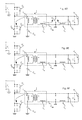
FIGS. 7A-7F, 8A-8G, 9A-E, 10, 11A-11C and 12 show details of embodiments of a driving of the converter of FIG. 6.
DETAILED DESCRIPTION
In the following description numerous specific details are given to provide a thorough understanding of embodiments. The embodiments can be practiced without one or more of the specific details, or with other methods, components, materials, etc. In other instances, well-known structures, materials or operations are not shown or described in detail to avoid obscuring aspects of the embodiments.
Reference throughout this specification to “one embodiment” or “an embodiment” means that a particular feature, structure or characteristic described in connection with the embodiment is included in at least one embodiment. Thus, the appearances of the phrases “in one embodiment” or “in an embodiment” in various places throughout this specification are not necessarily all referring to the same embodiment. Furthermore, the particular features, structures or characteristics may be combined in any suitable manner in one or more embodiments.
The headings provided herein are for convenience only and do not interpret the scope or meaning of the embodiments.
Substantially, also the electronic ZETA converter of the present description is driven via a half bridge, and therefore this topology is typically called a half-bridge ZETA converter.
In this topology, the converter includes a transformer T comprising a primary winding T1 and a secondary winding T2. Specifically, transformer T may be modelled as an ideal transformer with a given turn ratio 1:n, an inductor LM which represents the magnetization inductance of transformer T and an inductor LR which represents the leakage inductance of transformer T.
The connection on the secondary side of the transformer corresponds to a typical ZETA converter, i.e. a diode, two capacitors and an inductor, because the second inductor may be represented by the magnetization inductance of the transformer.
On the contrary, on the primary side of the transformer no single switch is used, but a first terminal of the primary winding of the transformer is connected to a half bridge, i.e. at the intermediate point between two switches, and therefore such a half bridge is configured to selectively connect such first terminal of the primary winding of transformer to the input voltage or to ground. Moreover, the second terminal of the primary winding of the transformer is connected through at least a capacitor to the input voltage and/or to ground.
For example, FIG. 6 shows a possible embodiment of an electronic half-bridge ZETA converter.
Also in this case, converter 12 receives as an input, via two input terminals 110, a supply signal, such as for instance a DC voltage Vin, and supplies as an output, via two output terminals 106, a regulated voltage Vo or a regulated current io.
In the presently considered embodiment, converter 12 includes a half bridge, i.e. two electronic switches S1 and S2 which are connected in series between the two input terminals 110, wherein the switching of electronic switches S1 and S2 is driven via a control unit 112. For example, the control unit 112 may be an analogue and/or digital circuit, such as for example a micro-processor which is programmed via a software code.
For example, in the embodiment such electronic switches S1 e S2 are N-MOS transistors or n-channel MOSFETs (Metal-Oxide-Semiconductor Field-Effect Transistors).
In the presently considered embodiment, such switches S1 and S2 have respective capacitances CA1, CA2 and respective diodes DA1, DA2 connected in parallel. For example, capacitances CA1 and CA2 may represent the intrinsic capacitances of a MOSFET and/or may be implemented with additional capacitors, which are connected in parallel with switches S1 e S2.
Specifically, according to the present disclosure, the capacitance of switches S1 e S2 may even be remarkably higher than the value 42 pF mentioned in the paper by WU TSAI-FU. For example, the sum of capacitances CA1 and CA2 of switches S1 and S2 can even reach 1.5 nF. For example, in the case MOSFETs are used, the capacitances of switches S1 and S2 may reach 100-200 pF, but normally it is necessary to add parallel capacitances, in order to slow down the switching leading edges and to reduce EMIs, and therefore the total capacitance of the node between both switches S1 e S2 may reach 1.5 nF, preferably between 200 pF and 1 nF.
On the contrary, diodes DA1 and DA2 may represent the body diodes of a MOSFET and/or may be implemented through additional diodes.
For example, in the considered embodiment, a first terminal of primary winding T1 of transformer T is connected directly to the intermediate point between both electronic switches S1 and S2. On the contrary, the second terminal of primary winding T1 of transformer T is connected via a capacitor CRP to the second input terminal, which represents a first ground GND1. Therefore, switches S1 e S2 may be used to selectively connect the first terminal of primary winding T1 of transformer T to voltage Vin or to ground GND1.
Generally, on the secondary side of the transformer, the ZETA converter includes three branches which are connected in parallel:
    • the first branch includes the secondary winding of transformer T2 (and therefore magnetization inductance LM) and a capacitor CRS;
    • the second branch includes diode D; and
    • the third branch includes inductor L0 and a capacitor C0, wherein load RL, i.e. output 106, is connected in parallel with capacitor C0.
In the presently considered embodiment, the connection on the secondary side of transformer T substantially corresponds to what is shown in FIG. 5. However, the diagram in FIG. 3 might be used as well.
Specifically, in the presently considered embodiment, the first terminal of secondary winding T2 of transformer T is connected directly to output 106, specifically to the first terminal of output 106. On the contrary, the second terminal of secondary winding T2 is connected through a capacitor CRS (corresponding to capacitor C1 in FIG. 5) to the anode of diode D, wherein the cathode of diode D is connected directly to the first terminal of output 106.
In the presently considered embodiment, the anode of diode D is connected via output inductor L0 to the second output terminal 106, which represents a second ground GND2, which due to the isolating effect of transformer T is preferably different from ground GND1 and therefore is denoted with a different ground symbol.
Finally, also in this case, capacitor C0 is connected in parallel to output 106, i.e. directly to the terminals of output 106.
In the presently considered embodiment, the leakage inductance LR of transformer T is shown on the secondary side of transformer T, and the magnetization inductance LM is shown on the primary side of transformer T. Generally speaking, such inductances LM and LR may also include additional inductors, such as for example an inductor connected in parallel with the primary and/or the secondary winding of transformer T, and/or an inductor connected in series with the primary and/or secondary winding of transformer T.
Therefore, from the point of view of the circuits, the circuit shown in FIG. 6 may be compared with the circuit shown in the paper by WU TSAI-FU. In fact, according to the connection of the second terminal of primary winding T1 to ground and not to voltage Vin, switch S1 anyway performs the function of controlling the energy flow from supply Vin through the primary side of transformer T. Moreover, the serial connection of capacitors CRS and CRP performs the function of the clamping capacitor Cc described in the paper by WU TSAI-FU.
However, while the zero voltage switching of half-bridge switches was obtained, in the paper by WU TSAI-FU, thanks to the dimensioning of clamping capacitance Cc and of the leakage inductance Lr, the inventor has observed that the zero voltage switching of half-bridge switches may be obtained thanks to an energy flow coming from the magnetization inductance LM and the output inductance L0.
A possible embodiment of the driving of switches S1 and S2 of FIG. 6 will be described in the following.
In the presently considered embodiment, it is assumed that the turn ratio of primary winding T1 is the same as the turn ratio of secondary winding T2, i.e. n=1, which makes the mathematical processing simpler. However, the person skilled in the art will appreciate that the exemplary case may also be applied to the general case wherein the turn ratio differs from each other.
FIGS. 7A-7F shows in this respect the wave forms of some signals during these driving modes. Specifically, FIGS. 7A-7F respectively show:
a) the driving signal VG1 for switch S1 and the driving signal VG2 for switch S2,
b) the voltage VDS2 across switch S2,
c) the current IDS2 which corresponds to the sum of the currents flowing through switch S2, capacitance CA2 and diode DA2,
d) the current IDS1 corresponding to the sum of the currents flowing through switch S1, capacitance CA1 and diode DA1,
e) the current ID flowing through diode D, and
f) the voltage VCRS across capacitance CRS.
Specifically, at a time t0, switch S1 is closed and switch S2 remains open. Moreover, diodes DA1, DA2 and D are open during this operating mode (M1). The corresponding equivalent circuit of this driving mode is shown in FIG. 8A.
Specifically, as it will become clear in the following, in the presently considered embodiment switch S1 is closed at zero voltage (ZVS).
Substantially, during this driving mode, a voltage corresponding to Vin−VCRP, i.e. the voltage across capacitor CRP, is applied to primary winding T1 of transformer T, i.e.
V T1 =V in −V CRP  (2)
Therefore, the same voltage is also applied to secondary switching T2 of transformer T, because n=1:
V T2 =V T1  (3)
This voltage across secondary winding T2 and voltage VCRS across capacitor CRS are applied to inductor L0 and to output 106, i.e. C0 and RL. Typically, inductance LR is much smaller than inductance L0, i.e. LR<<L0, and therefore the voltage across inductance LR may be neglected. Therefore, the current ILo flowing through inductor L0 corresponds during this mode substantially to:
I LO ( t ) = I LO ( t 0 ) + ( V T 2 + V CRS - V o ) L 0 ( t - t 0 ) ( 4 )
i. e., during this operating mode current ILo which flows through inductance L0 increases in a substantially linear way, starting from the value of current ILo(t0) at time t0, which is also visible in FIG. 7D, showing current IDS1 flowing through switch S1.
At a time t1, switch S1 is opened and switch S2 still remains open. Therefore, at time t1, current ILo flowing through inductor L0 has reached the following value:
I LO ( t 1 ) = I LO ( t 0 ) + ( V T 2 + V CRS - V o ) L 0 ( t 1 - t 0 ) ( 5 )
Moreover, diodes DA1, DA2 and D are still open during this operating mode (M2). The corresponding equivalent circuit diagram of this driving mode is shown in FIG. 8B.
In the presently considered embodiment, current IP flowing through the primary side of transformer T, i.e. current IIM flowing through magnetization inductance and the current flowing through the ideal primary winding T1 (i.e., for example, the current across inductor L0), also flows through capacitances CA1 and CA2:
I P =I LM +I L0  (6)
Therefore, during this operating mode, capacitor CA2 is discharged, and voltage VDS2 across switch S2 falls to zero thanks to that current. For example, as shown in FIG. 7B, voltage VDS2 across switch S2 (and therefore also across capacitance CA2) decreases.
At time t2 voltage VDS2 across switch S2 reaches zero. Therefore, in this operating mode (M3), at this point current IP flowing through the primary side of transformer T only flows through diode DA2 and the voltage VDS2 across switch S2 stays set to zero, which creates the condition for a zero voltage switching of switch S2. Moreover, during this operating mode diode D is closed and the current of the resonant circuit including inductance LR and capacitors CRS and CRP connected in series, and also the current flowing through inductor L0 start flowing through diode D (see for example FIG. 7E):
I D =I CRS +I Lo  (7)
The corresponding equivalent circuit diagram of this driving mode is shown in FIG. 8C.
At time t3 switch S2 is closed and switch S1 stays open. Therefore, in this operating mode (M4) diodes DA1, DA2 are open and diode D stays active. The corresponding equivalent circuit diagram of this driving mode is shown in FIG. 8D.
Substantially, in this operating mode, driving signal VG2 closes switch S2 and, thanks to the fact that voltage VDS2 has been set to zero through diode DA2, switching is performed at zero voltage.
Moreover, the resonant frequency of the current flowing through diode D substantially corresponds to:
fr = 1 2 π L R C R ( 8 )
wherein CR corresponds to capacitance CRP connected in series with capacitance CRS.
Substantially, capacitor CRS is charged again during this mode, which is shown in FIG. 7F, and the magnetization current in the magnetization inductance LM increases.
Therefore, at time t4 the current flowing through diode D reaches zero and diode D is switched off, while switch S2 stays closed, switch S1 stays open, and in this operating mode (M5), too, diodes DA1, DA2 are open. The corresponding equivalent circuit of this driving mode is shown in FIG. 8E.
Specifically, the inventor has observed that diode D opens when the current flowing through inductor L0 equals the resonance current of the resonant circuit, including inductance LR and capacitors CRS and CRP.
Nevertheless, there may exist situations, typically at a low duty cycle, wherein the magnetizing current on the primary may still be negative when the resonance has ended.
This is shown for example in FIGS. 9A-9E, which respectively show:
a) the driving signal VG1 for switch S1 and the driving signal VG2 for switch S2,
b) the voltage VDS2 across switch S2,
c) the current IDS1 which corresponds to the sum of the currents which flow through switch S1, capacitance CA1 and diode DA1,
d) the current IDS2 which corresponds to the sum of the currents flowing through switch S2, capacitance CA2 and diode DA2, and
e) the current ID flowing through diode D.
Therefore, in this situation, current IL0 which flows through inductor L0 will no longer flow through diode D, but it will start flowing through capacitor CRS, which is shown in FIG. 10. However, such a current will also impose a current on leakage inductance LR, bringing its voltage from negative to zero.
This is shown for example in FIGS. 11A-11C, which respectively show:
a) the voltage VLR across inductance LR,
a) the voltage VCRS across capacitor CRS, and voltage VCRP across capacitor CRP, and
c) the current ID which flows through diode D, the current IL0 which flows through inductor L0, and the current ILR which flows across inductance LR.
Specifically, at time t4 currents ILO and ILR are equal and opposed, and therefore current ID flowing through diode D is zero (see FIG. 11C) and current ILO takes voltage VLR across inductance LR to zero (see FIG. 11A), i.e.:
V T1 =V CRP =V T2 <V CRS
and, neglecting the voltage across leakage inductance LR, voltage VD across the diode is:
V D =V CRS −V T2<0
As a consequence, the current will no longer flow through diode D, but it will charge capacitor CRP and discharge capacitor CRS. However, at a time t4′ the voltages across both capacitors are the same, i.e. voltage VT1 across primary winding T1 is equal to the voltage across secondary winding T2, to the voltage across capacitor CRP, and to the voltage across capacitor CRS:
V T1 =V CRP =V T2 =V CRS
and therefore the voltage across diode D is zero:
V D=0
As a consequence, from time t4′, current ILO may flow again across diode D, but now the circuit is the same as at time t3 and inductance LR with capacitors CRP and CRS may start oscillating again, and therefore a new oscillation will start; i.e., during the third time interval there may be present one or several half periods of the resonance of such an oscillation.
At time t5, switch S2 is opened, while switch S1 remains open. Moreover, diodes DA1, DA2 and D are open in this operating mode (M6). The corresponding equivalent circuit diagram of this driving mode is shown in FIG. 8F. In this context, the dimensioning of components and the switching period should ensure that at time t5 there is no more orcillation, as shown in FIGS. 9A-9E, 10 and 11A-11C, and current IP through the primary winding has become positive.
Therefore, during this first operating mode, current IP on the primary side of transformer T discharges capacitance CA1 and charges capacitance CA2 until the voltage across switch S2 reaches the input voltage Vin at a time t6, which is shown in FIGS. 7B-7D.
In fact, at time t6, diode DA1 is closed and voltage VDS2 corresponds to input voltage Vin, which generates the condition for a zero voltage switching for switch S1. Diodes DA2 and D stay open during this operation mode (M7). The corresponding equivalent circuit diagram of this operating mode is shown in FIG. 8G.
Therefore, in various embodiments, the control unit drives the half-bridge switches with the following steps, which are periodically repeated:
    • during a first time interval Δt1 switch S1 is closed and switch S2 is open (times t0-t1);
    • during a second time interval Δt2 switch S1 is open and switch S2 is open (times t1-t3); wherein,
    • during said second time interval Δt2, capacitance CA1 associated to switch S2 is charged and capacitance CA2 associated to switch S2 is discharged, creating the condition for a zero voltage switching of switch S2;
    • during a third time interval Δt3 switch S1 is open and switch S2 is closed (times t3-t5); wherein, during said third time interval Δt3, the magnetization current of the magnetization inductance increases and diode D of the ZETA converter is switched off at zero current; and
    • during a fourth time interval Δt4 switch S1 is open and switch S2 is open (times t5-t0); wherein, during such a time interval Δt4, capacitance CA2 associated to switch S2 is charged and capacitance CA1 associated to switch S1 is discharged, creating the condition for a switching at zero voltage of switch S1.
Therefore, the duration of the first time interval Δt1 in which switch S1 is closed may be controlled so that output voltage Vo reaches a desired value, as shown for example in equation (5). For example, to the purpose it is possible to use a feedback of the output voltage Vo which increases or decreases such durations until the supply signal reaches a desired value.
In various embodiments, intervals Δt2 and Δt4 may be constant, and the duration of interval Δt3 may be varied to have a fixed switching frequency, i.e.
Δt3=Ts−Δt1−Δt2−Δt4  (9)
wherein Ts is the duration of a switching period which is constant.
Some general considerations about the dimensioning of the various components enabling a zero voltage switching of switches S1 and S2 will be explained in the following.
Specifically, the inventor has observed that, thanks to the previously described driving arrangement, the switching of switch S1 at time t1 and the switching of switch S2 at time t3 are not very critical. However, there may occur situations wherein:
a) the switching of switch S1 at time t0 does not take place at zero voltage, because voltage VDS2 across switch S2 has not reached the value of input current Vin, and/or
b) the switching of switch S2 at time t5 switches off diode D at non-zero current.
FIG. 12 shows in this respect a simplified circuit diagram for the operating mode M6.
Specifically, in the considered embodiment, a capacitor Ceq is connected in parallel to switch S2. Moreover, a circuit LC including an inductance LP and a capacitance CRP is connected in parallel to switch S2.
In the presently considered embodiment:
a) the voltage VCRP across capacitor CRP is considered substantially constant;
b) the inductor LP represents the magnetization inductance connected in parallel with inductor L0 (also in this instance neglecting leakage inductance LR);
c) the capacitance Ceq represents capacitances CA1 e CA2, and possible other capacitances, wherein capacitance Ceq is typically much smaller than capacitance CRP (Ceq<<CRP).
As previously explained, when switch S2 is opened at time t5, voltage VDS2 increases starting from 0 V.
If current IP flowing through the primary side of transformer T equals zero at time t5, voltage VDS2 starts oscillating with a frequency of:
fr = 1 2 π L P C eq ( 10 )
The maximum value that voltage VDS2 may reach in the operating mode M6 substantially corresponds to the peak-to-peak value of the oscillation, and the minimum value VDS2,min corresponds to
V DS2,min=2·V in ·D min  (11)
wherein Dmin represents the minimum duty cycle, i.e. the duty cycle for the smallest ratio between output voltage Vo and input voltage Vin.
However, as such a duty cycle is typically lower than 0.5, voltage VDS2 cannot reach voltage Vin at time t6, which is essential to enable a zero voltage switching of switch S1.
Therefore, according to the present description, the missing energy is supplied via inductor LP, which must store at least the following energy:
1 2 L P I p 2 1 2 C eq [ V in 2 - ( 2 · V in · D min ) 2 ] ( 12 )
wherein current Ip corresponds to:
I p = V in · D min [ ( 1 - D mi n ) T s ] / 2 L P - ( I o - Δ I L 0 2 ) ( 13 )
For example, if the minimum duty cycle Dmin is higher than 0.5 (Dmin>0.5), current Ip may also be zero, i.e.
V in · D min [ ( 1 - D mi n ) T s ] / 2 L P - ( I o - Δ I L 0 2 ) = 0 ( 14 )
and, as a consequence, the value of inductance LP may be calculated as:
L P V in · D min [ ( 1 - D mi n ) T s ] / 2 ( I o - Δ I L 0 2 ) ( 15 )
On the contrary, if the minimum duty cycle Dmin is lower than 0.5 (Dmin<0.5), current IP must supply the missing energy. For example, this may be obtained by dimensioning LP in the following way:
L P ( 2 BC + A ) - ( 2 BC + A ) 2 - 4 B 2 C 2 2 C 2 ( 16 )
wherein:
- A = C eq V in 2 - ( 2 · V in D min ) 2 - B = V in · D min [ ( 1 - D mi n ) T s ] / 2 - C = ( I o - Δ I L 0 2 )
Therefore, by knowing the value of inductance Lp, it is possible to dimension inductances LM and L0.
For example, inductance L0 is typically sized according to the current ripple ΔIL0 which is desired at the output, as if it was a Buck converter.
Therefore, by knowing Lp and L0, it is possible to solve the following equation in order to calculate the value of LM:
L P = ( L M * n 2 * L 0 ) ( L M + n 2 * L 0 )
Finally, the resonance time Tr=π√{square root over (LRCR)} limits the maximum duty cycle. Therefore, by reducing time Tr a higher duty cycle can be obtained, and the output voltage may vary more. For this reason, with the previously described sizing, such a time should be lower than the minimum time during which switch S1 is off, i.e.:
Tr=π√{square root over (L R C R)}≦(1−D max)T s  (17)
wherein Dmax is the maximum duty cycle.
However, by reducing duration Tr, the current peak in diode D increases. In this context, the inventor has observed that a reasonable value for duration Tr is:
Tr = 1 4 T s ( 18 )
wherein Ts is the switching period of the converter, i.e. the duration between two subsequent times t0 in which switch S1 is switched on.
Finally, in order to enable a switching of switch S2 at time t5 by switching off diode D at zero current, the value of capacitance CR may be calculated as:
C R Tr 2 π 2 L R ( 19 )
For example, if input voltage Vin is 400 VDC, the output current is between 0 and 2 A, and the switching frequency fs is between 20 and 100 kHz, the components may have the following values:
    • a capacitance Ceq up to 1.5 nF;
    • an inductance Lp between 200 pH and 3 mH.
Therefore, with the previously described dimensioning and considering a supply of 60 W, it is possible to use MOSFETs with a capacity of about 100 pF, wherein an additional capacitor with a capacity up to 400 pF may be connected in parallel with each switch. In fact, in this case, the equivalent capacity Ceq in the switching node may therefore be seen as a capacity of about 1000 pF.
Accordingly, by sizing the various components in a suitable way, the previously described driving method may therefore operate switches S1 and S2 of the half bridge at zero voltage. Such a zero voltage switching may also be obtained for a wide interval of possible duty cycles/output voltages. Moreover, also the diode of the ZETA converter is switched at zero current. As a consequence, the switches of the half bridge may have a reduced size, and also the electromagnetic interferences are reduced.
Generally, in this way, the converter may be operated with a fixed switching frequency, wherein the output inductance L0 may be operated both in the CCM mode and in the DCM mode.
While the disclosed embodiments have been particularly shown and described with reference to specific embodiments, it should be understood by those skilled in the art that various changes in form and detail may be made therein without departing from the spirit and scope of the disclosed embodiments as defined by the appended claims. The scope of the disclosed embodiments is thus indicated by the appended claims and all changes which come within the meaning and range of equivalency of the claims are therefore intended to be embraced.

Claims (10)

The invention claimed is:
1. An electronic half-bridge ZETA converter for providing a power signal through an output, said electronic half-bridge ZETA converter comprising:
a transformer with a primary winding and a secondary winding, wherein each winding comprises at least a first and a second terminal,
a half-bridge comprising a first and a second electronic switch for selectively connecting said first terminal of said primary winding to a supply signal or a ground, wherein a respective capacitance and a respective diode are associated with said first and said second electronic switch,
at least one capacitor connected between said second terminal of said primary winding and said supply signal or said ground,
an electronic ZETA converter connected to said secondary winding, wherein said ZETA converter comprises three branches which are connected in parallel, wherein:
a) the first branch comprises a first capacitor connected in series with the secondary winding of said transformer, so that said first branch comprises a first inductance which includes the magnetization inductance of said transformer,
b) the second branch comprises a diode, and
c) the third branch comprises a second capacitor connected in series with a second, wherein said output is connected in parallel with said second capacitor; and
a control unit configured for driving said first and said second electronic switch with the following time intervals which are repeated periodically:
a) a first time interval, wherein said first switch is closed and said second switch is opened, so that a current flow from said supply signal through said primary winding of said transformer increases;
b) a subsequent second time interval, wherein said first switch is opened and said second switch is opened;
c) a subsequent third time interval, wherein said first switch is opened and said second switch is closed; and
d) a subsequent fourth time interval, wherein said first switch is opened and said second switch is opened, so that the capacitance associated with said second switch is charged and the capacitance associated with said first switch is discharged,
wherein said first and said second inductance are dimensioned such that said first and said second inductance provide during said fourth time interval a current which charges the capacitance associated with said second switch and discharges the capacitance associated with said first switch.
2. The electronic converter according to claim 1, wherein during said third time interval occurs an oscillation of a resonant circuit comprising said at least one capacitor connected between said second terminal of said first winding and said supply signal or said ground, said first capacitor connected in series with the secondary winding of said transformer and the leakage inductance of said transformer, wherein said at least one capacitor, said first capacitor and said leakage inductance are dimensioned such that:
a) during said third time interval occur one or more half-periods of the oscillation of said resonant circuit, and
b) the current which flows through the diode is zero at the end of said third time interval.
3. The electronic converter according to claim 2, wherein the capacitance of said at least one capacitor and the capacitance of said first capacitor are dimensioned such that:
C R Tr 2 π 2 L R
where CR is the capacitance of said at least one capacitor connected in series with said first capacitor; Tr is the minimum duration of said third time interval, and LR is the leakage inductance of said transformer.
4. The electronic converter according to claim 1, wherein an equivalent capacitance at the intermediate point of said half-bridge which comprises said capacitances associated with said first and said second electronic switch is between 200 pF and 1.5 nF.
5. The electronic converter according to claim 1, wherein the sum of the durations of said first time interval, said second time interval, said third time interval and said fourth time interval is substantially constant.
6. The electronic converter according to claim 1, wherein the durations of said second time interval and the duration of said fourth time interval are substantially constant.
7. The electronic converter according to claim 1, wherein the values of said first and said second inductance are dimensioned as a function of:
a) the voltage of said supply signal,
b) the duration of said first time interval with respect to the duration of a switching period, c) the output current provided through said output, and
d) an equivalent capacitance at the intermediate point of said half-bridge which comprises said capacitances associated with said first and said second electronic switch.
8. A method for operating an electronic converter, the method comprising
providing a transformer with a primary winding and a secondary winding,
wherein each winding comprises at least a first and a second terminal,
selectively connecting said first terminal of said primary winding to a supply signal or a ground by a half-bridge comprising a first and a second electronic switch, wherein a respective capacitance and a respective diode are associated with said first and said second electronic switch,
providing at least one capacitor connected between said second terminal of said primary winding and said supply signal or said ground,
providing an electronic ZETA converter connected to said secondary winding, wherein said ZETA converter comprises three branches which are connected in parallel, wherein:
a) the first branch comprises a first capacitor connected in series with the secondary winding of said transformer, so that said first branch comprises a first inductance which includes the magnetization inductance of said transformer,
b) the second branch comprises a diode, and
c) the third branch comprises a second capacitor connected in series with a second, wherein said output is connected in parallel with said second capacitor; and
for driving said first and said second electronic switch by a control unit with the following time intervals which are repeated periodically:
a) a first time interval, wherein said first switch is closed and said second switch is opened, so that a current flow from said supply signal through said primary winding of said transformer increases;
b) a subsequent second time interval, wherein said first switch is opened and said second switch is opened;
c) a subsequent third time interval, wherein said first switch is opened and said second switch is closed; and
d) a subsequent fourth time interval, wherein said first switch is opened and said second switch is opened, so that the capacitance associated with said second switch is charged and the capacitance associated with said first switch is discharged,
wherein said first and said second inductance are dimensioned such that said first and said second inductance provide during said fourth time interval a current which charges the capacitance associated with said second switch and discharges the capacitance associated with said first switch.
9. A method for designing an electronic converter,
the electronic converter comprising:
a transformer with a primary winding and a secondary winding, wherein
each winding comprises at least a first and a second terminal,
a half-bridge comprising a first and a second electronic switch for selectively connecting said first terminal of said primary winding to a supply signal or a ground, wherein a respective capacitance and a respective diode are associated with said first and said second electronic switch,
at least one capacitor connected between said second terminal of said primary winding and said supply signal or said ground,
an electronic ZETA converter connected to said secondary winding,
wherein said ZETA converter comprises three branches which are connected in parallel, wherein:
a) the first branch comprises a first capacitor connected in series with the secondary winding of said transformer, so that said first branch comprises a first inductance which includes the magnetization inductance of said transformer,
b) the second branch comprises a diode, and
c) the third branch comprises a second capacitor connected in series with a second, wherein said output is connected in parallel with said second capacitor; and
a control unit configured for driving said first and said second electronic switch with the following time intervals which are repeated periodically:
a) a first time interval, wherein said first switch is closed and said second switch is opened, so that a current flow from said supply signal through said primary winding of said transformer increases;
b) a subsequent second time interval, wherein said first switch is opened and said second switch is opened;
c) a subsequent third time interval, wherein said first switch is opened and said second switch is closed; and
d) a subsequent fourth time interval, wherein said first switch is opened and said second switch is opened, so that the capacitance associated with said second switch is charged and the capacitance associated with said first switch is discharged,
wherein said first and said second inductance are dimensioned such that said first and said second inductance provide during said fourth time interval a current which charges the capacitance associated with said second switch and discharges the capacitance associated with said first switch,
the method comprising:
dimensioning said first and said second inductance such that said first and said second inductance provide during said fourth time interval a current which charges the capacitance associated with said second switch and discharges the capacitance associated with said first switch.
10. The method according to claim 9, wherein during said third time interval occurs an oscillation of a resonant circuit comprising said at least one capacitor connected between said second terminal of said first winding and said supply signal or said ground, said first capacitor connected in series with the secondary winding of said transformer and the leakage inductance of said transformer, and wherein the method comprises:
dimensioning said at least one capacitor, said first capacitor and said leakage inductance are dimensioned such that:
a) during said third time interval occur one or more half-periods of the oscillation of said resonant circuit, and
b) the current which flows through the diode is zero at the end of said third time interval.
US15/024,360 2013-09-25 2014-09-19 Electronic resonant and insulated half-bridge zeta converter Active US9831784B2 (en)

Applications Claiming Priority (4)

Application Number Priority Date Filing Date Title
ITTO2013A0771 2013-09-25
ITTO2013A000771 2013-09-25
ITTO20130771 2013-09-25
PCT/IB2014/064657 WO2015044846A2 (en) 2013-09-25 2014-09-19 Electronic half-bridge zeta converter and related method for operating an electronic half-bridge zeta converter and method for designing an electronic half- bridge zeta converter

Publications (2)

Publication Number Publication Date
US20160211759A1 US20160211759A1 (en) 2016-07-21
US9831784B2 true US9831784B2 (en) 2017-11-28

Family

ID=49640072

Family Applications (1)

Application Number Title Priority Date Filing Date
US15/024,360 Active US9831784B2 (en) 2013-09-25 2014-09-19 Electronic resonant and insulated half-bridge zeta converter

Country Status (4)

Country Link
US (1) US9831784B2 (en)
EP (1) EP3050400B1 (en)
CN (1) CN105580497B (en)
WO (1) WO2015044846A2 (en)

Families Citing this family (17)

* Cited by examiner, † Cited by third party
Publication number Priority date Publication date Assignee Title
US9627979B2 (en) * 2014-10-03 2017-04-18 Bombardier Transportation Gmbh Dual mode DC-DC converter
EP3160028B1 (en) * 2015-09-28 2021-08-04 OSRAM GmbH Electronic converter and related method of operating an electronic converter
WO2017060813A1 (en) * 2015-10-06 2017-04-13 Osram Gmbh Electronic converter and related method of operating an electronic converter
EP3365967B1 (en) 2015-10-23 2019-08-21 OSRAM GmbH Electronic converter and related method of operating an electronic converter
DE102017204907A1 (en) 2017-03-23 2018-09-27 Osram Gmbh Method and clocked converter for operating an input power quickly following light sources
EP3402060B1 (en) * 2017-05-09 2019-10-02 OSRAM GmbH Electronic converter and related method of operating an electronic converter
WO2019211286A1 (en) * 2018-05-01 2019-11-07 Danmarks Tekniske Universitet Resonant type power factor correction ac-dc converter and method for operating a resonant type power factor correction ac-dc converter
CN110118903B (en) * 2019-04-19 2021-07-23 清华大学 Equivalent full power test circuit and control method of DC port of power electronic transformer
CN112117905B (en) * 2019-06-20 2021-12-21 东南大学 Control system and method of active clamp flyback converter
WO2021212322A1 (en) * 2020-04-21 2021-10-28 Telefonaktiebolaget Lm Ericsson (Publ) A dc-to-dc convertor
CN111556616B (en) * 2020-06-02 2021-06-22 福州大学 A single-stage bridgeless boost Cuk resonant LED drive circuit
CN111969877B (en) * 2020-06-23 2021-07-02 湖南大学 A control method and device for a half-bridge inverter
IT202000015232A1 (en) 2020-06-24 2021-12-24 St Microelectronics Srl SWITCHING CONVERTER
TWI771882B (en) * 2021-01-27 2022-07-21 群光電能科技股份有限公司 Power converter device and driving method
US12009753B2 (en) * 2021-02-25 2024-06-11 Richtek Technology Corporation Half-bridge flyback power converter and control method thereof
CN113346743B (en) * 2021-06-24 2022-05-20 江苏大学 Non-isolated high-gain direct current converter
EP4418518A1 (en) * 2023-02-14 2024-08-21 Hamilton Sundstrand Corporation Three-level zeta asymmetrical half-bridge

Citations (10)

* Cited by examiner, † Cited by third party
Publication number Priority date Publication date Assignee Title
US5325283A (en) * 1992-06-08 1994-06-28 Center For Innovative Technology Novel zero-voltage-switching family of isolated converters
US5684688A (en) * 1996-06-24 1997-11-04 Reliance Electric Industrial Company Soft switching three-level inverter
US5757626A (en) * 1996-06-21 1998-05-26 Delta Electronics Inc. Single-stage, single-switch, islolated power-supply technique with input-current shaping and fast output-voltage regulation
US5790389A (en) * 1996-05-31 1998-08-04 Virginia Power Technologies, Inc. Consolidated soft-switching AC/DC converters
US6272027B1 (en) * 2000-07-28 2001-08-07 Simon Fraidlin AC active clamp for isolated power factor corrector and method of operating the same
US20070230228A1 (en) * 2006-03-31 2007-10-04 Hong Mao Zero-voltage-switching DC-DC converters with synchronous rectifiers
US20100165669A1 (en) * 2008-12-31 2010-07-01 Macroblock, Inc. Single-stage isolated high power factor ac/dc converter with leakage inductor energy recovery function
US20100208499A1 (en) 2007-07-04 2010-08-19 Nxp B.V. Standby operation of a resonant power converter
US20120230059A1 (en) 2011-03-11 2012-09-13 Stmicroelectronics S.R.L. Device for avoiding hard switching in resonant converter and related method
US20140092643A1 (en) * 2012-09-28 2014-04-03 Osram Gmbh Electronic converter, and related lighting system and method of operating an electronic converter

Patent Citations (10)

* Cited by examiner, † Cited by third party
Publication number Priority date Publication date Assignee Title
US5325283A (en) * 1992-06-08 1994-06-28 Center For Innovative Technology Novel zero-voltage-switching family of isolated converters
US5790389A (en) * 1996-05-31 1998-08-04 Virginia Power Technologies, Inc. Consolidated soft-switching AC/DC converters
US5757626A (en) * 1996-06-21 1998-05-26 Delta Electronics Inc. Single-stage, single-switch, islolated power-supply technique with input-current shaping and fast output-voltage regulation
US5684688A (en) * 1996-06-24 1997-11-04 Reliance Electric Industrial Company Soft switching three-level inverter
US6272027B1 (en) * 2000-07-28 2001-08-07 Simon Fraidlin AC active clamp for isolated power factor corrector and method of operating the same
US20070230228A1 (en) * 2006-03-31 2007-10-04 Hong Mao Zero-voltage-switching DC-DC converters with synchronous rectifiers
US20100208499A1 (en) 2007-07-04 2010-08-19 Nxp B.V. Standby operation of a resonant power converter
US20100165669A1 (en) * 2008-12-31 2010-07-01 Macroblock, Inc. Single-stage isolated high power factor ac/dc converter with leakage inductor energy recovery function
US20120230059A1 (en) 2011-03-11 2012-09-13 Stmicroelectronics S.R.L. Device for avoiding hard switching in resonant converter and related method
US20140092643A1 (en) * 2012-09-28 2014-04-03 Osram Gmbh Electronic converter, and related lighting system and method of operating an electronic converter

Non-Patent Citations (4)

* Cited by examiner, † Cited by third party
Title
Bor-Ren Lin and Fang-Yu Hsieh, IEEE vol. 54 No. 5 Oct. 2007, Soft-Switching Zeta-Flyback Converter with a Buck-Boost Type of Active Clamp. *
Huai Wei et al: "Comparison of basic converter topologies for power factor correction" SOUTHEASTCON '98; Apr. 24, 1998; pp. 348-353.
International Search Report based on application No. PCT/IB2014/064657 (6 pages) dated Mar. 20, 2015 (for reference purpose only).
Tsai-Fu et al.: "Design optimization for asymmetrical ZVS-PWM zeta converter"; IEEE Transactions on Aerospace and Electronic Systems; Apr. 1, 2003; pp. 521-532.

Also Published As

Publication number Publication date
US20160211759A1 (en) 2016-07-21
EP3050400B1 (en) 2019-01-02
WO2015044846A3 (en) 2015-06-11
EP3050400A2 (en) 2016-08-03
CN105580497A (en) 2016-05-11
WO2015044846A2 (en) 2015-04-02
CN105580497B (en) 2018-03-16

Similar Documents

Publication Publication Date Title
US9831784B2 (en) Electronic resonant and insulated half-bridge zeta converter
EP2713488B1 (en) Electronic converter, and related lighting system and method of operating an electronic converter
US8233292B2 (en) Controllers, systems and methods for controlling power of light sources
EP2536013B1 (en) A cascade boost and inverting buck converter
US8837174B2 (en) Switching power-supply apparatus including switching elements having a low threshold voltage
US9210749B2 (en) Single switch driver device having LC filter for driving an LED unit
US6834002B2 (en) Power factor correction circuit
US8188617B2 (en) Current balancing apparatus, current balancing method, and power supply apparatus
US20210194374A1 (en) Switching power supply circuit
US9544956B2 (en) Two-stage multichannel LED driver with CLL resonant circuit
EP3365967B1 (en) Electronic converter and related method of operating an electronic converter
US10770980B2 (en) Electronic converter and related method of operating an electronic converter
US11582843B1 (en) Average current control circuit and method
Reddy et al. A cost-effective zero-voltage switching dual-output led driver
JP5547849B2 (en) DC power supply circuit
US11622429B1 (en) QR-operated switching converter current driver
EP3160028B1 (en) Electronic converter and related method of operating an electronic converter
US10243474B2 (en) Electronic converter and related method of operating an electronic converter
JP6791486B2 (en) Light emitting element drive device and its drive method
Ongaro et al. ZVS isolated active clamp sepic converter for high power LED applications
JP5644089B2 (en) Multi-output switching power supply
JP2013051860A (en) Power-supply circuit

Legal Events

Date Code Title Description
AS Assignment

Owner name: OSRAM GMBH, GERMANY

Free format text: ASSIGNMENT OF ASSIGNORS INTEREST;ASSIGNOR:LUCCATO, DANIELE;REEL/FRAME:038087/0739

Effective date: 20160202

STCF Information on status: patent grant

Free format text: PATENTED CASE

CC Certificate of correction
MAFP Maintenance fee payment

Free format text: PAYMENT OF MAINTENANCE FEE, 4TH YEAR, LARGE ENTITY (ORIGINAL EVENT CODE: M1551); ENTITY STATUS OF PATENT OWNER: LARGE ENTITY

Year of fee payment: 4

AS Assignment

Owner name: ACUITY BRANDS LIGHTING, INC., GEORGIA

Free format text: ASSIGNMENT OF ASSIGNORS INTEREST;ASSIGNOR:OSRAM GMBH;REEL/FRAME:058689/0898

Effective date: 20210701

AS Assignment

Owner name: ABL IP HOLDING LLC, GEORGIA

Free format text: ASSIGNMENT OF ASSIGNORS INTEREST;ASSIGNOR:ACUITY BRANDS LIGHTING, INC.;REEL/FRAME:059220/0139

Effective date: 20220214

MAFP Maintenance fee payment

Free format text: PAYMENT OF MAINTENANCE FEE, 8TH YEAR, LARGE ENTITY (ORIGINAL EVENT CODE: M1552); ENTITY STATUS OF PATENT OWNER: LARGE ENTITY

Year of fee payment: 8