US9820216B1 - Wireless traffic channel release prevention before update process completion - Google Patents
Wireless traffic channel release prevention before update process completion Download PDFInfo
- Publication number
- US9820216B1 US9820216B1 US14/275,054 US201414275054A US9820216B1 US 9820216 B1 US9820216 B1 US 9820216B1 US 201414275054 A US201414275054 A US 201414275054A US 9820216 B1 US9820216 B1 US 9820216B1
- Authority
- US
- United States
- Prior art keywords
- wireless
- traffic channel
- update process
- wireless communication
- completion
- Prior art date
- Legal status (The legal status is an assumption and is not a legal conclusion. Google has not performed a legal analysis and makes no representation as to the accuracy of the status listed.)
- Expired - Fee Related, expires
Links
Images


Classifications
-
- H—ELECTRICITY
- H04—ELECTRIC COMMUNICATION TECHNIQUE
- H04W—WIRELESS COMMUNICATION NETWORKS
- H04W48/00—Access restriction; Network selection; Access point selection
- H04W48/08—Access restriction or access information delivery, e.g. discovery data delivery
-
- H—ELECTRICITY
- H04—ELECTRIC COMMUNICATION TECHNIQUE
- H04W—WIRELESS COMMUNICATION NETWORKS
- H04W12/00—Security arrangements; Authentication; Protecting privacy or anonymity
- H04W12/08—Access security
-
- G—PHYSICS
- G06—COMPUTING OR CALCULATING; COUNTING
- G06F—ELECTRIC DIGITAL DATA PROCESSING
- G06F8/00—Arrangements for software engineering
- G06F8/60—Software deployment
- G06F8/65—Updates
-
- H—ELECTRICITY
- H04—ELECTRIC COMMUNICATION TECHNIQUE
- H04W—WIRELESS COMMUNICATION NETWORKS
- H04W12/00—Security arrangements; Authentication; Protecting privacy or anonymity
- H04W12/06—Authentication
-
- H—ELECTRICITY
- H04—ELECTRIC COMMUNICATION TECHNIQUE
- H04W—WIRELESS COMMUNICATION NETWORKS
- H04W72/00—Local resource management
- H04W72/02—Selection of wireless resources by user or terminal
-
- H04W76/02—
-
- H04W76/06—
-
- H—ELECTRICITY
- H04—ELECTRIC COMMUNICATION TECHNIQUE
- H04W—WIRELESS COMMUNICATION NETWORKS
- H04W76/00—Connection management
- H04W76/30—Connection release
Definitions
- Wireless communication devices exchange communications with wireless network access nodes of a wireless communication network over wireless traffic channels.
- a single wireless traffic channel can be assigned to multiple wireless devices, though not at the same time.
- a device will release the traffic channel and the traffic channel can be used by another device. This arrangement allows for more efficient use of wireless signal spectrum among multiple wireless devices.
- a wireless device exchanges authorization information with a wireless network before the wireless network allows the wireless device to exchange communications over a traffic channel.
- the wireless network requires that the wireless device's authorization information be updated.
- a process used to update the wireless information may use a traffic channel assigned to the wireless device using previous authorization information. If the traffic channel is released before the update process completes, then the wireless device may not be authorized to access the wireless network when requesting access in the future.
- Embodiments described herein provide systems and methods for preventing release of a wireless traffic channel before update process completion.
- a method provides establishing a wireless traffic channel between the wireless communication device and a wireless access point of a wireless communication network. The method further provides identifying an event that triggers release of the wireless traffic channel by the wireless communication device and, upon identifying the event, preventing the release of the wireless traffic channel until a background update process that uses the wireless traffic channel is completed. Upon completion of the background update process, the method provides allowing the release of the wireless traffic channel.
- a wireless communication device in another embodiment, includes a communication interface configured to establish a wireless traffic channel between the wireless communication device and a wireless access point of a wireless communication network.
- the wireless communication device further includes a processing system configured to identify an event that triggers release of the wireless traffic channel by the wireless communication device and, upon identifying the event, prevent the release of the wireless traffic channel until a background update process that uses the wireless traffic channel is completed.
- the processing system is further configured to, upon completion of the background update process, allow the release of the wireless traffic channel.
- FIG. 1 illustrates a wireless communication system for preventing release of a wireless traffic channel before update process completion.
- FIG. 2 illustrates an operation of the wireless communication system to prevent release of a wireless traffic channel before update process completion.
- FIG. 3 illustrates a wireless communication system for preventing release of a wireless traffic channel before update process completion.
- FIG. 4 illustrates an operation of the wireless communication system to prevent release of a wireless traffic channel before update process completion.
- FIG. 5 illustrates an operation of the wireless communication system to prevent release of a wireless traffic channel before update process completion.
- FIG. 6 illustrates an update process during which release of a wireless traffic channel is prevented.
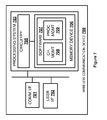
- FIG. 7 illustrates a wireless communication device for preventing release of a wireless traffic channel before update process completion.
- FIG. 1 illustrates wireless communication system 100 .
- Wireless communication system 100 includes wireless communication device 101 , wireless access node 102 , and wireless communication network 103 .
- Wireless communication device 101 and wireless access node 102 communicate over wireless link 111 .
- Wireless access node 102 and wireless communication network 103 communicate over communication link 112 .
- wireless network 103 provides wireless communication services to wireless device 101 via wireless access node 102 . These services may include voice, text, data, or some other type of service—including combinations thereof.
- a wireless traffic channel is needed on wireless link 111 between wireless device 101 and access node 102 .
- a traffic channel carries the bulk of communications traffic exchanged with a wireless device while a relatively low bandwidth control channel typically exchanges underlying control communications, including at least a portion of the communications necessary to establish a traffic channel.
- a communication exchange over the traffic channel causes the traffic channel to remain open until the communication exchange is complete.
- some processes that use the traffic channel may be processes that do not cause the traffic channel to remain open until completion.
- a process to update authentication credentials for a wireless device in a wireless Code Division Multiple Access (CDMA) network may exchange communications over a traffic channel established to make a voice call.
- This update process may not be recognized as a process for which the traffic channel should remain open, such a non-recognized process is referred to herein as a background process. Therefore, if the voice call were to end before the update process completes, the traffic channel may be released and cause the failure of the update process.
- CDMA Code Division Multiple Access
- FIG. 2 illustrates an operation 200 of wireless communication system 100 to prevent release of a wireless traffic channel before update process completion.
- Operation 200 provides establishing a wireless traffic channel between wireless communication device 101 and wireless access point 102 of wireless communication network 103 (step 201 ).
- Operation 200 further provides identifying an event that triggers release of the wireless traffic channel by wireless communication device 101 (step 202 ) and, upon identifying the event, preventing the release of the wireless traffic channel until a background update process that uses the wireless traffic channel is completed (step 203 ).
- step 203 Upon completion of the background update process, operation 200 provides allowing the release of the wireless traffic channel (step 204 ).
- operation 200 prevents the traffic channel from being released until after the background update process has been completed.
- wireless communication device 101 comprises Radio Frequency (RF) communication circuitry and an antenna.
- the RF communication circuitry typically includes an amplifier, filter, modulator, and signal processing circuitry.
- Wireless communication device 101 may also include a user interface, memory device, software, processing circuitry, or some other communication components.
- Wireless communication device 101 may be a telephone, tablet, computer, e-book, mobile Internet appliance, wireless network interface card, media player, game console, or some other wireless communication apparatus—including combinations thereof.
- Wireless access node 102 comprises RF communication circuitry and an antenna.
- the RF communication circuitry typically includes an amplifier, filter, RF modulator, and signal processing circuitry.
- Wireless access node 102 may also comprise a router, server, memory device, software, processing circuitry, cabling, power supply, network communication interface, structural support, or some other communication apparatus. While shown externally to wireless communication network 103 , wireless access node 102 is considered part of wireless communication network 103 .
- Wireless access node 102 could be a base station, eNodeB, Internet access node, telephony service node, wireless data access point, or some other wireless communication system—including combinations thereof.
- Wireless communication network 103 comprises network elements that provide communications services to wireless device 101 through wireless access node 102 .
- Wireless communication network 103 may comprise switches, other wireless access nodes, Internet routers, network gateways, application servers, computer systems, communication links, or some other type of communication equipment—including combinations thereof.
- Wireless link 111 uses the air or space as the transport media. Wireless link 111 may use various protocols, such as Code Division Multiple Access (CDMA), Evolution Data Only (EVDO), Worldwide Interoperability for Microwave Access (WIMAX), Global System for Mobile Communication (GSM), Long Term Evolution (LTE), Wireless Fidelity (WIFI), High Speed Packet Access (HSPA), or some other wireless communication format.
- Communication link 112 uses metal, glass, air, space, or some other material as the transport media. Communication link 112 could use various communication protocols, such as Time Division Multiplex (TDM), Internet Protocol (IP), Ethernet, communication signaling, CDMA, EVDO, WIMAX, GSM, LTE, WIFI, HSPA, or some other communication format—including combinations thereof. Communication link 112 could be a direct link or may include intermediate networks, systems, or devices.
- CDMA Code Division Multiple Access
- EVDO Evolution Data Only
- WIMAX Worldwide Interoperability for Microwave Access
- GSM Global System for Mobile Communication
- LTE Long Term Evolution
- FIG. 3 illustrates wireless communication system 300 .
- Wireless communication system 300 includes wireless communication device 301 and wireless communication network 302 .
- Wireless communication network 302 includes base station 303 and authorization system 304 .
- Wireless communication device 301 and wireless communication network 302 communicate over wireless link 311 .
- Authorization system 304 comprises a computer system and a communication interface. Authorization system 304 authorizes/authenticates wireless devices for access to wireless network 302 . In some examples, the functionality of authorization system 304 may be incorporated into base station 303 . Authorization system 304 may be an authentication center (AC), which may be incorporated into a home location register (HLR) as an HLR/AC.
- AC authentication center
- HLR home location register
- FIG. 4 illustrates an operation 400 of wireless communication system 300 to prevent release of a wireless traffic channel before update process completion.
- call module 331 directs wireless device 301 to establish a voice call with another device over a wireless traffic channel with base station 302 .
- the call may be initiated by wireless device 301 as an outgoing call or by the other device as an incoming call. While this example describes a voice call using the traffic channel, the traffic channel could be in use for other services, such as data exchanges for applications executing on wireless device 301 .
- background update process 332 begins that uses the wireless traffic channel to exchange communications for the update while the wireless traffic channel established.
- Update process 332 may update information on wireless device 301 .
- the information may include authentication information used by wireless device 301 when requesting access to wireless network 302 , without which wireless device 301 is not allowed to access wireless network 302 . Additionally, the information may include other network access information, such as a preferred roaming list, device settings, software, or any other type of information that may be transferred over a wireless network—including combinations thereof.
- update process 332 may exchange communications with authorization system 304 via the wireless traffic channel, with other systems in wireless network 302 , or with other systems accessible via wireless network 302 , such as the Internet.
- the voice call is ended.
- the voice call may be ended by wireless device 301 or the other device receiving a user instruction to end the call, by a system on the call path between the two devices ending the call, or for some other reason a call may be ended.
- the wireless traffic channel used to carry the call would be released if background update process 332 was not occurring.
- wireless device 301 is prevented from releasing the wireless traffic channel until update process 332 completes.
- an event that would normally allow the release of the wireless traffic channel may be completion of an email fetch or transfer, the completion of a website receipt, the completion of a data exchange for an application executing on wireless device 301 , or some other reason that a traffic channel would no longer be needed—including combinations thereof.
- wireless device 301 upon the voice call ending, notifies its user that the call has ended. For instance, a display screen of wireless device 301 may indicate that the call has ended in a display view of a phone call application. Thus, as far as the user is concerned, the wireless traffic channel for the voice call has been released. However, since background update process 332 is still executing, the wireless traffic channel is still active despite the notification to the user that it has been released.
- wireless device 301 Upon completion of background update process 332 , wireless device 301 is allowed to release the wireless traffic channel because update process 332 no longer needs the wireless traffic channel. As shown in operation 400 , the wireless traffic channel is released after the completion of update process 332 . However, in some situations, wireless device 301 may execute another operation, such as another phone call, at or before the completion of the update process 332 . In those situations, while wireless device 301 is allowed to release the wireless traffic channel upon completion of update process 332 , wireless device 301 does not release the wireless traffic channel due to the new operation's need of the wireless traffic channel.
- another operation such as another phone call
- wireless device 301 may recognize when instructions for update process 332 are no longer executing or there may exist some other trigger either within the instructions or elsewhere in wireless device 301 that indicates to wireless device 301 when update process 332 is completed.
- authorization system 304 notifies wireless device 301 of update process 332 's completion.
- wireless device 301 maintains a predetermined period of time within which update process 332 should be able to complete (e.g. ten seconds). Upon the time period elapsing since update process 332 began, wireless device 301 is allowed to release the wireless traffic channel.
- FIG. 5 illustrates an operation 500 of wireless communication system 300 to prevent release of a wireless traffic channel before update process completion.
- call module 331 directs wireless device 301 to establish a voice call with another device over a wireless traffic channel with base station 302 .
- the call may be initiated by wireless device 301 as an outgoing call or by the other device as an incoming call. While this example describes a voice call using the traffic channel, the traffic channel could be in use for other services, such as data exchanges for applications executing on wireless device 301 .
- authorization system 304 notifies wireless device 301 that an update is needed to authentication information that wireless device 301 uses to access wireless network 302 .
- Wireless device 301 may have used previous authorization information (i.e. information from before the update) to request the current wireless traffic channel.
- wireless device 301 sets a flag therein, which indicates that a wireless traffic channel should not be released.
- the flag may be a bit in a memory of wireless device 301 that is considered to be set when having the value of 1 or 0 depending on the convention used. Alternatively, other types of flags may also be used that may require more memory and may include additional information, such as a reason for the flag being set.
- the notification may be a dedicated message from authorization system 304 , which may also indicate that background update process 322 should start, or may be a communication exchanged as an initial communication in background update process.
- the voice call is ended.
- the voice call may be ended by wireless device 301 or the other device receiving a user instruction to end the call, by a system on the call path between the two devices ending the call, or for some other reason a call may be ended.
- the wireless traffic channel used to carry the call would be released if background update process 332 was not occurring. However, since the flag is set in wireless device 301 , wireless device 301 is prevented from releasing the wireless traffic channel until update process 332 completes.
- authorization system 304 transfers a completion notification message to wireless device 301 , which indicates that the flag can be cleared. Once the flag is cleared, wireless device 301 is allowed to release the wireless traffic channel if no other operation of wireless device 301 , such as another phone call, is using the wireless traffic channel. In some embodiments, rather than having to receive the completion notification message from authorization system 304 , wireless device 301 itself recognizes that update process 332 has completed and removes the flag at that time. In other embodiments, the flag is cleared after a predetermined period of time elapses since the flag was set. Moreover, such a time period may also be used in combination with other completion determination means to ensure the wireless traffic channel can be released if update process 332 is prevented from completing for some reason (e.g. an error occurs during update process 332 that prevents it from completing).
- update process 332 is prevented from completing for some reason (e.g. an error occurs during update process 332 that prevents it from completing).
- FIG. 6 illustrates an update process 600 during which release of a wireless traffic channel is prevented.
- Update process 600 may be an example of background update process 332 , although, update process 332 may perform other operations.
- Update process 600 is a process to update shared secret data (SSD) credentials that wireless device 301 uses when authenticating itself with wireless network 302 .
- SSD shared secret data
- wireless device 301 receives a random number (RANDSSD) generated by authorization system 304 by and transferred from authorization system 304 .
- Wireless device 301 uses RANDSSD, an A-key already stored in wireless device 301 , and the electronic serial number (ESN) of wireless device 301 as inputs to the Cellular Authentication and Voice Encryption (CAVE) algorithm.
- the outputs of CAVE are two keys, SSD_A and SSD_B.
- Wireless device 301 receives another random number (RANDBS) generated by and transferred from authorization system 304 .
- SSD_A, SSD_B, and RANDBS are then used as inputs into CAVE by wireless device 301 .
- An output, AUTHBS is transferred to authorization system 304 .
- authorization system 304 transfers a notification of such to wireless device 301 .
- This notification message may also serve as a message to clear the flag in operation 500 .
- the above SSD update process must complete within a given number of attempts (e.g. 3). If the process does not complete within three attempts, wireless device 301 may not be allowed access to wireless network 302 until further action on behalf of a user is performed. For example, without the traffic channel release prevention described herein, such a situation might arise if wireless device 301 participates in three sequential calls that are ended quickly, which causes the release of the wireless traffic channel before update process 600 can complete. In contrast, using the traffic channel release prevention described herein, when one of those calls is ended before update process 600 completes, the wireless traffic channel is prevented from being released until update process 600 completes.
- FIG. 7 illustrates wireless communication device 700 .
- Wireless communication device 700 is an example of wireless communication device 101 , although device 101 could use alternative configurations.
- Wireless communication device 700 comprises wireless communication interface 701 , user interface 702 , and processing system 703 .
- Processing system 703 is linked to wireless communication interface 701 and user interface 702 .
- Processing system 703 includes processing circuitry 705 and memory device 706 that stores operating software 707 .
- Wireless communication device 700 may include other well-known components such as a battery and enclosure that are not shown for clarity.
- Wireless communication device 700 may be a telephone, computer, e-book, mobile Internet appliance, media player, game console, wireless network interface card, or some other wireless communication apparatus—including combinations thereof.
- Wireless communication interface 701 comprises RF communication circuitry and an antenna.
- the RF communication circuitry typically includes an amplifier, filter, RF modulator, and signal processing circuitry.
- Wireless communication interface 701 may also include a memory device, software, processing circuitry, or some other communication device.
- Wireless communication interface 701 may use various protocols, such as CDMA, EVDO, WIMAX, GSM, LTE, WIFI, HSPA, or some other wireless communication format.
- User interface 702 comprises components that interact with a user to receive user inputs and to present media and/or information.
- User interface 702 may include a speaker, microphone, buttons, lights, display screen, touch screen, touch pad, scroll wheel, communication port, or some other user input/output apparatus—including combinations thereof.
- User interface 702 may be omitted in some examples.
- Processing circuitry 705 comprises microprocessor and other circuitry that retrieves and executes operating software 707 from memory device 706 .
- Memory device 706 comprises a non-transitory storage medium, such as a disk drive, flash drive, data storage circuitry, or some other memory apparatus.
- Processing circuitry 705 is typically mounted on a circuit board that may also hold memory device 706 and portions of communication interface 701 and user interface 702 .
- Operating software 707 comprises computer programs, firmware, or some other form of machine-readable processing instructions. Operating software 707 includes traffic channel management module 708 and process management module 709 . Operating software 707 may further include an operating system, utilities, drivers, network interfaces, applications, or some other type of software. When executed by processing circuitry 705 , operating software 707 directs processing system 703 to operate wireless communication device 700 as described herein.
- traffic channel management module 708 directs processing system 703 to establish a wireless traffic channel between the wireless communication device via communication interface 701 and a wireless access point of a wireless communication network.
- Process management module 709 directs processing system 703 to identify an event that triggers release of the wireless traffic channel by the wireless communication device and, upon identifying the event, prevent the release of the wireless traffic channel until a background update process that uses the wireless traffic channel is completed.
- Process management module 709 further directs processing system 703 to, upon completion of the background update process, allow the release of the wireless traffic channel.
Landscapes
- Engineering & Computer Science (AREA)
- Computer Security & Cryptography (AREA)
- Computer Networks & Wireless Communication (AREA)
- Signal Processing (AREA)
- Software Systems (AREA)
- General Engineering & Computer Science (AREA)
- Theoretical Computer Science (AREA)
- Physics & Mathematics (AREA)
- General Physics & Mathematics (AREA)
- Mobile Radio Communication Systems (AREA)
Abstract
Description
Claims (16)
Priority Applications (1)
| Application Number | Priority Date | Filing Date | Title |
|---|---|---|---|
| US14/275,054 US9820216B1 (en) | 2014-05-12 | 2014-05-12 | Wireless traffic channel release prevention before update process completion |
Applications Claiming Priority (1)
| Application Number | Priority Date | Filing Date | Title |
|---|---|---|---|
| US14/275,054 US9820216B1 (en) | 2014-05-12 | 2014-05-12 | Wireless traffic channel release prevention before update process completion |
Publications (1)
| Publication Number | Publication Date |
|---|---|
| US9820216B1 true US9820216B1 (en) | 2017-11-14 |
Family
ID=60255731
Family Applications (1)
| Application Number | Title | Priority Date | Filing Date |
|---|---|---|---|
| US14/275,054 Expired - Fee Related US9820216B1 (en) | 2014-05-12 | 2014-05-12 | Wireless traffic channel release prevention before update process completion |
Country Status (1)
| Country | Link |
|---|---|
| US (1) | US9820216B1 (en) |
Cited By (1)
| Publication number | Priority date | Publication date | Assignee | Title |
|---|---|---|---|---|
| US20180176778A1 (en) * | 2015-06-25 | 2018-06-21 | Gemalto Sa | Method of replacing at least one authentication parameter for authenticating a security element and corresponding security element |
Citations (23)
| Publication number | Priority date | Publication date | Assignee | Title |
|---|---|---|---|---|
| US5710805A (en) * | 1995-11-03 | 1998-01-20 | Motorola, Inc. | Combined registration and call continuation method and apparatus for a mobile communication system |
| WO1998031162A2 (en) | 1997-01-11 | 1998-07-16 | Tandem Computers, Incorporated | Method and apparatus for limiting authentication directive initiation in a mobile telephone system |
| US6173174B1 (en) | 1997-01-11 | 2001-01-09 | Compaq Computer Corporation | Method and apparatus for automated SSD updates on an a-key entry in a mobile telephone system |
| US6195546B1 (en) | 1997-03-14 | 2001-02-27 | Nortel Networks Limited | Method and apparatus for network initiated parameter updating |
| US6226511B1 (en) * | 1997-01-11 | 2001-05-01 | Campaq Computer Corporation | Method and apparatus for configuration of authentication center operations in a mobile telephone system |
| US6243811B1 (en) | 1998-07-31 | 2001-06-05 | Lucent Technologies Inc. | Method for updating secret shared data in a wireless communication system |
| US6507567B1 (en) * | 1999-04-09 | 2003-01-14 | Telefonaktiebolaget Lm Ericsson (Publ) | Efficient handling of connections in a mobile communications network |
| US6625443B1 (en) * | 1997-09-02 | 2003-09-23 | Siemens Aktiengesellschaft | Method for the user-controlled release of wireless telecommunications connections in wireless telecommunications systems, especially DECT systems |
| US20030214928A1 (en) * | 1997-10-14 | 2003-11-20 | Chuah Mooi Choo | Method for paging a device in a wireless network |
| US6728529B2 (en) | 2001-08-16 | 2004-04-27 | Asustek Computer Inc. | Preventing excessive use of security keys in a wireless communications security system |
| US20040235487A1 (en) * | 2002-08-21 | 2004-11-25 | Sprigg Stephen A. | System and method for piggybacking data across an open data channel of a wireless device |
| US20050119008A1 (en) * | 2002-01-22 | 2005-06-02 | Serge Haumont | Method, device and system for adjusting mobility management |
| US20050213530A1 (en) * | 2004-03-25 | 2005-09-29 | Pekka Kuure | Communication method, mobile terminal, and computer program |
| US6965778B1 (en) | 1999-04-08 | 2005-11-15 | Ipr Licensing, Inc. | Maintenance of channel usage in a wireless communication system |
| US6968191B2 (en) | 2001-11-26 | 2005-11-22 | Qualcomm Inc | System and method for traffic channel dormancy in wireless communication socket mode |
| US20070005795A1 (en) * | 1999-10-22 | 2007-01-04 | Activesky, Inc. | Object oriented video system |
| US7418601B2 (en) * | 2002-06-18 | 2008-08-26 | Sanyo Electric Co., Ltd. | Data transfer control system |
| US7630345B2 (en) | 2003-09-26 | 2009-12-08 | Samsung Electronics Co., Ltd | HRPD network access authentication method based on CAVE algorithm |
| US20120202502A1 (en) * | 2009-10-16 | 2012-08-09 | Qiang Wu | Method for information notification and method and access node for forwarding data message during handover procedure |
| US20120315882A1 (en) * | 2011-06-07 | 2012-12-13 | Lg Electronics Inc. | Mobile communication terminal and operation method thereof |
| US20130003697A1 (en) * | 2011-07-01 | 2013-01-03 | Interdigital Patent Holdings, Inc. | Method and apparatus for supporting local ip access and selected ip traffic offload |
| US8532599B2 (en) | 2008-02-01 | 2013-09-10 | Interdigital Patent Holdings, Inc. | Method and apparatus for enabling cell reselection for WTRU operating in discontinuous reception |
| US20140071806A1 (en) * | 2012-09-10 | 2014-03-13 | Research In Motion Limited | Methods and apparatus for mobile device recovery following radio link failure |
-
2014
- 2014-05-12 US US14/275,054 patent/US9820216B1/en not_active Expired - Fee Related
Patent Citations (23)
| Publication number | Priority date | Publication date | Assignee | Title |
|---|---|---|---|---|
| US5710805A (en) * | 1995-11-03 | 1998-01-20 | Motorola, Inc. | Combined registration and call continuation method and apparatus for a mobile communication system |
| WO1998031162A2 (en) | 1997-01-11 | 1998-07-16 | Tandem Computers, Incorporated | Method and apparatus for limiting authentication directive initiation in a mobile telephone system |
| US6173174B1 (en) | 1997-01-11 | 2001-01-09 | Compaq Computer Corporation | Method and apparatus for automated SSD updates on an a-key entry in a mobile telephone system |
| US6226511B1 (en) * | 1997-01-11 | 2001-05-01 | Campaq Computer Corporation | Method and apparatus for configuration of authentication center operations in a mobile telephone system |
| US6195546B1 (en) | 1997-03-14 | 2001-02-27 | Nortel Networks Limited | Method and apparatus for network initiated parameter updating |
| US6625443B1 (en) * | 1997-09-02 | 2003-09-23 | Siemens Aktiengesellschaft | Method for the user-controlled release of wireless telecommunications connections in wireless telecommunications systems, especially DECT systems |
| US20030214928A1 (en) * | 1997-10-14 | 2003-11-20 | Chuah Mooi Choo | Method for paging a device in a wireless network |
| US6243811B1 (en) | 1998-07-31 | 2001-06-05 | Lucent Technologies Inc. | Method for updating secret shared data in a wireless communication system |
| US6965778B1 (en) | 1999-04-08 | 2005-11-15 | Ipr Licensing, Inc. | Maintenance of channel usage in a wireless communication system |
| US6507567B1 (en) * | 1999-04-09 | 2003-01-14 | Telefonaktiebolaget Lm Ericsson (Publ) | Efficient handling of connections in a mobile communications network |
| US20070005795A1 (en) * | 1999-10-22 | 2007-01-04 | Activesky, Inc. | Object oriented video system |
| US6728529B2 (en) | 2001-08-16 | 2004-04-27 | Asustek Computer Inc. | Preventing excessive use of security keys in a wireless communications security system |
| US6968191B2 (en) | 2001-11-26 | 2005-11-22 | Qualcomm Inc | System and method for traffic channel dormancy in wireless communication socket mode |
| US20050119008A1 (en) * | 2002-01-22 | 2005-06-02 | Serge Haumont | Method, device and system for adjusting mobility management |
| US7418601B2 (en) * | 2002-06-18 | 2008-08-26 | Sanyo Electric Co., Ltd. | Data transfer control system |
| US20040235487A1 (en) * | 2002-08-21 | 2004-11-25 | Sprigg Stephen A. | System and method for piggybacking data across an open data channel of a wireless device |
| US7630345B2 (en) | 2003-09-26 | 2009-12-08 | Samsung Electronics Co., Ltd | HRPD network access authentication method based on CAVE algorithm |
| US20050213530A1 (en) * | 2004-03-25 | 2005-09-29 | Pekka Kuure | Communication method, mobile terminal, and computer program |
| US8532599B2 (en) | 2008-02-01 | 2013-09-10 | Interdigital Patent Holdings, Inc. | Method and apparatus for enabling cell reselection for WTRU operating in discontinuous reception |
| US20120202502A1 (en) * | 2009-10-16 | 2012-08-09 | Qiang Wu | Method for information notification and method and access node for forwarding data message during handover procedure |
| US20120315882A1 (en) * | 2011-06-07 | 2012-12-13 | Lg Electronics Inc. | Mobile communication terminal and operation method thereof |
| US20130003697A1 (en) * | 2011-07-01 | 2013-01-03 | Interdigital Patent Holdings, Inc. | Method and apparatus for supporting local ip access and selected ip traffic offload |
| US20140071806A1 (en) * | 2012-09-10 | 2014-03-13 | Research In Motion Limited | Methods and apparatus for mobile device recovery following radio link failure |
Cited By (2)
| Publication number | Priority date | Publication date | Assignee | Title |
|---|---|---|---|---|
| US20180176778A1 (en) * | 2015-06-25 | 2018-06-21 | Gemalto Sa | Method of replacing at least one authentication parameter for authenticating a security element and corresponding security element |
| US10959094B2 (en) * | 2015-06-25 | 2021-03-23 | Thales Dis France Sa | Method of replacing at least one authentication parameter for authenticating a security element and corresponding security element |
Similar Documents
| Publication | Publication Date | Title |
|---|---|---|
| CN114051745B (en) | System and method for dual SIM UE operation in 5G network | |
| US10394674B2 (en) | Local recovery of electronic subscriber identity module (eSIM) installation flow | |
| JP7101775B2 (en) | Security protection methods and equipment | |
| US11012852B2 (en) | Cellular service account transfer error recovery mechanisms | |
| US10798082B2 (en) | Network authentication triggering method and related device | |
| EP2773077B1 (en) | Notification mechanism | |
| US8819447B2 (en) | Secure storage of protected data in a wireless communication device | |
| US20190306758A1 (en) | Session Activation Method, Apparatus, And System | |
| JP2013524556A (en) | Communications system | |
| CN107438981B (en) | Wireless client traffic continuity across controller failover and load balancing | |
| US20140200000A1 (en) | System and Method for Network Selection | |
| US9363090B1 (en) | Authorization of communication links between end user devices using intermediary nodes | |
| WO2017024671A1 (en) | Network switching method and terminal | |
| EP4561126A2 (en) | Sim toolkit scheduling for multiple enabled esim profiles | |
| JP2022523421A (en) | Establishing a protocol data unit session | |
| US11881961B2 (en) | Communication method and related apparatus | |
| KR20200054282A (en) | Methods, devices, storage media and systems for managing access links | |
| US11381973B2 (en) | Data transmission method, related device, and related system | |
| CN113453222B (en) | Communication method and device | |
| US9747432B1 (en) | Remotely enabling a disabled user interface of a wireless communication device | |
| AU2019224247B2 (en) | Radio communication system, security proxy device, and relay device | |
| US9560524B1 (en) | Wireless network application access by a wireless communication device via an untrusted access node | |
| US9820216B1 (en) | Wireless traffic channel release prevention before update process completion | |
| US8768374B1 (en) | Application management for a wireless communication device | |
| EP3493570A1 (en) | Data transmission method, first device, and second device |
Legal Events
| Date | Code | Title | Description |
|---|---|---|---|
| AS | Assignment |
Owner name: SPRINT COMMUNICATIONS COMPANY L.P., KANSAS Free format text: ASSIGNMENT OF ASSIGNORS INTEREST;ASSIGNORS:REEVES, RAYMOND EMILIO;KOLLER, GARY DUANE;RAI, DEVESHKUMAR NARENDRAPRATAP;SIGNING DATES FROM 20140508 TO 20140510;REEL/FRAME:032874/0682 |
|
| AS | Assignment |
Owner name: DEUTSCHE BANK TRUST COMPANY AMERICAS, NEW YORK Free format text: GRANT OF FIRST PRIORITY AND JUNIOR PRIORITY SECURITY INTEREST IN PATENT RIGHTS;ASSIGNOR:SPRINT COMMUNICATIONS COMPANY L.P.;REEL/FRAME:041895/0210 Effective date: 20170203 |
|
| STCF | Information on status: patent grant |
Free format text: PATENTED CASE |
|
| AS | Assignment |
Owner name: SPRINT COMMUNICATIONS COMPANY L.P., KANSAS Free format text: TERMINATION AND RELEASE OF FIRST PRIORITY AND JUNIOR PRIORITY SECURITY INTEREST IN PATENT RIGHTS;ASSIGNOR:DEUTSCHE BANK TRUST COMPANY AMERICAS;REEL/FRAME:052969/0475 Effective date: 20200401 Owner name: DEUTSCHE BANK TRUST COMPANY AMERICAS, NEW YORK Free format text: SECURITY AGREEMENT;ASSIGNORS:T-MOBILE USA, INC.;ISBV LLC;T-MOBILE CENTRAL LLC;AND OTHERS;REEL/FRAME:053182/0001 Effective date: 20200401 |
|
| AS | Assignment |
Owner name: T-MOBILE INNOVATIONS LLC, KANSAS Free format text: ASSIGNMENT OF ASSIGNORS INTEREST;ASSIGNOR:SPRINT COMMUNICATIONS COMPANY L.P.;REEL/FRAME:055604/0001 Effective date: 20210303 |
|
| FEPP | Fee payment procedure |
Free format text: MAINTENANCE FEE REMINDER MAILED (ORIGINAL EVENT CODE: REM.); ENTITY STATUS OF PATENT OWNER: LARGE ENTITY |
|
| LAPS | Lapse for failure to pay maintenance fees |
Free format text: PATENT EXPIRED FOR FAILURE TO PAY MAINTENANCE FEES (ORIGINAL EVENT CODE: EXP.); ENTITY STATUS OF PATENT OWNER: LARGE ENTITY |
|
| STCH | Information on status: patent discontinuation |
Free format text: PATENT EXPIRED DUE TO NONPAYMENT OF MAINTENANCE FEES UNDER 37 CFR 1.362 |
|
| FP | Lapsed due to failure to pay maintenance fee |
Effective date: 20211114 |
|
| AS | Assignment |
Owner name: SPRINT SPECTRUM LLC, KANSAS Free format text: RELEASE BY SECURED PARTY;ASSIGNOR:DEUTSCHE BANK TRUST COMPANY AMERICAS;REEL/FRAME:062595/0001 Effective date: 20220822 Owner name: SPRINT INTERNATIONAL INCORPORATED, KANSAS Free format text: RELEASE BY SECURED PARTY;ASSIGNOR:DEUTSCHE BANK TRUST COMPANY AMERICAS;REEL/FRAME:062595/0001 Effective date: 20220822 Owner name: SPRINT COMMUNICATIONS COMPANY L.P., KANSAS Free format text: RELEASE BY SECURED PARTY;ASSIGNOR:DEUTSCHE BANK TRUST COMPANY AMERICAS;REEL/FRAME:062595/0001 Effective date: 20220822 Owner name: SPRINTCOM LLC, KANSAS Free format text: RELEASE BY SECURED PARTY;ASSIGNOR:DEUTSCHE BANK TRUST COMPANY AMERICAS;REEL/FRAME:062595/0001 Effective date: 20220822 Owner name: CLEARWIRE IP HOLDINGS LLC, KANSAS Free format text: RELEASE BY SECURED PARTY;ASSIGNOR:DEUTSCHE BANK TRUST COMPANY AMERICAS;REEL/FRAME:062595/0001 Effective date: 20220822 Owner name: CLEARWIRE COMMUNICATIONS LLC, KANSAS Free format text: RELEASE BY SECURED PARTY;ASSIGNOR:DEUTSCHE BANK TRUST COMPANY AMERICAS;REEL/FRAME:062595/0001 Effective date: 20220822 Owner name: BOOST WORLDWIDE, LLC, KANSAS Free format text: RELEASE BY SECURED PARTY;ASSIGNOR:DEUTSCHE BANK TRUST COMPANY AMERICAS;REEL/FRAME:062595/0001 Effective date: 20220822 Owner name: ASSURANCE WIRELESS USA, L.P., KANSAS Free format text: RELEASE BY SECURED PARTY;ASSIGNOR:DEUTSCHE BANK TRUST COMPANY AMERICAS;REEL/FRAME:062595/0001 Effective date: 20220822 Owner name: T-MOBILE USA, INC., WASHINGTON Free format text: RELEASE BY SECURED PARTY;ASSIGNOR:DEUTSCHE BANK TRUST COMPANY AMERICAS;REEL/FRAME:062595/0001 Effective date: 20220822 Owner name: T-MOBILE CENTRAL LLC, WASHINGTON Free format text: RELEASE BY SECURED PARTY;ASSIGNOR:DEUTSCHE BANK TRUST COMPANY AMERICAS;REEL/FRAME:062595/0001 Effective date: 20220822 Owner name: PUSHSPRING, LLC, WASHINGTON Free format text: RELEASE BY SECURED PARTY;ASSIGNOR:DEUTSCHE BANK TRUST COMPANY AMERICAS;REEL/FRAME:062595/0001 Effective date: 20220822 Owner name: LAYER3 TV, LLC, WASHINGTON Free format text: RELEASE BY SECURED PARTY;ASSIGNOR:DEUTSCHE BANK TRUST COMPANY AMERICAS;REEL/FRAME:062595/0001 Effective date: 20220822 Owner name: IBSV LLC, WASHINGTON Free format text: RELEASE BY SECURED PARTY;ASSIGNOR:DEUTSCHE BANK TRUST COMPANY AMERICAS;REEL/FRAME:062595/0001 Effective date: 20220822 Owner name: IBSV LLC, WASHINGTON Free format text: RELEASE OF SECURITY INTEREST;ASSIGNOR:DEUTSCHE BANK TRUST COMPANY AMERICAS;REEL/FRAME:062595/0001 Effective date: 20220822 Owner name: LAYER3 TV, LLC, WASHINGTON Free format text: RELEASE OF SECURITY INTEREST;ASSIGNOR:DEUTSCHE BANK TRUST COMPANY AMERICAS;REEL/FRAME:062595/0001 Effective date: 20220822 Owner name: PUSHSPRING, LLC, WASHINGTON Free format text: RELEASE OF SECURITY INTEREST;ASSIGNOR:DEUTSCHE BANK TRUST COMPANY AMERICAS;REEL/FRAME:062595/0001 Effective date: 20220822 Owner name: T-MOBILE CENTRAL LLC, WASHINGTON Free format text: RELEASE OF SECURITY INTEREST;ASSIGNOR:DEUTSCHE BANK TRUST COMPANY AMERICAS;REEL/FRAME:062595/0001 Effective date: 20220822 Owner name: T-MOBILE USA, INC., WASHINGTON Free format text: RELEASE OF SECURITY INTEREST;ASSIGNOR:DEUTSCHE BANK TRUST COMPANY AMERICAS;REEL/FRAME:062595/0001 Effective date: 20220822 Owner name: ASSURANCE WIRELESS USA, L.P., KANSAS Free format text: RELEASE OF SECURITY INTEREST;ASSIGNOR:DEUTSCHE BANK TRUST COMPANY AMERICAS;REEL/FRAME:062595/0001 Effective date: 20220822 Owner name: BOOST WORLDWIDE, LLC, KANSAS Free format text: RELEASE OF SECURITY INTEREST;ASSIGNOR:DEUTSCHE BANK TRUST COMPANY AMERICAS;REEL/FRAME:062595/0001 Effective date: 20220822 Owner name: CLEARWIRE COMMUNICATIONS LLC, KANSAS Free format text: RELEASE OF SECURITY INTEREST;ASSIGNOR:DEUTSCHE BANK TRUST COMPANY AMERICAS;REEL/FRAME:062595/0001 Effective date: 20220822 Owner name: CLEARWIRE IP HOLDINGS LLC, KANSAS Free format text: RELEASE OF SECURITY INTEREST;ASSIGNOR:DEUTSCHE BANK TRUST COMPANY AMERICAS;REEL/FRAME:062595/0001 Effective date: 20220822 Owner name: SPRINTCOM LLC, KANSAS Free format text: RELEASE OF SECURITY INTEREST;ASSIGNOR:DEUTSCHE BANK TRUST COMPANY AMERICAS;REEL/FRAME:062595/0001 Effective date: 20220822 Owner name: SPRINT COMMUNICATIONS COMPANY L.P., KANSAS Free format text: RELEASE OF SECURITY INTEREST;ASSIGNOR:DEUTSCHE BANK TRUST COMPANY AMERICAS;REEL/FRAME:062595/0001 Effective date: 20220822 Owner name: SPRINT INTERNATIONAL INCORPORATED, KANSAS Free format text: RELEASE OF SECURITY INTEREST;ASSIGNOR:DEUTSCHE BANK TRUST COMPANY AMERICAS;REEL/FRAME:062595/0001 Effective date: 20220822 Owner name: SPRINT SPECTRUM LLC, KANSAS Free format text: RELEASE OF SECURITY INTEREST;ASSIGNOR:DEUTSCHE BANK TRUST COMPANY AMERICAS;REEL/FRAME:062595/0001 Effective date: 20220822 |