US9814789B2 - Radiopharmaceutical products for diagnosis and therapy of adrenal carcinoma - Google Patents
Radiopharmaceutical products for diagnosis and therapy of adrenal carcinoma Download PDFInfo
- Publication number
- US9814789B2 US9814789B2 US14/649,516 US201314649516A US9814789B2 US 9814789 B2 US9814789 B2 US 9814789B2 US 201314649516 A US201314649516 A US 201314649516A US 9814789 B2 US9814789 B2 US 9814789B2
- Authority
- US
- United States
- Prior art keywords
- group
- independently selected
- adrenal
- formula
- optionally substituted
- Prior art date
- Legal status (The legal status is an assumption and is not a legal conclusion. Google has not performed a legal analysis and makes no representation as to the accuracy of the status listed.)
- Expired - Fee Related
Links
- 0 *.*C1=CC=C([C@@H](C)N2C=NC=C2C)C=C1 Chemical compound *.*C1=CC=C([C@@H](C)N2C=NC=C2C)C=C1 0.000 description 27
- WWYVZTLIFYLZFM-UHFFFAOYSA-N CN1CCC1 Chemical compound CN1CCC1 WWYVZTLIFYLZFM-UHFFFAOYSA-N 0.000 description 5
- DAZXVJBJRMWXJP-UHFFFAOYSA-N CCN(C)C Chemical compound CCN(C)C DAZXVJBJRMWXJP-UHFFFAOYSA-N 0.000 description 3
- VSSAPYAPPBKUNM-UHFFFAOYSA-N CC(C)(F)F.CC1CCC1.CC1CCCC1.CC1CCCCC1.CCC(C)CC Chemical compound CC(C)(F)F.CC1CCC1.CC1CCCC1.CC1CCCCC1.CCC(C)CC VSSAPYAPPBKUNM-UHFFFAOYSA-N 0.000 description 2
- ZTOOXOOKVPMWQY-XUOOWMEXSA-N *.*.C1=CC=C(P(C2=CC=CC=C2)C2=CC=CC=C2)C=C1.C1=CC=C(P(C2=CC=CC=C2)C2=CC=CC=C2)C=C1.C1=CC=C(P(C2=CC=CC=C2)C2=CC=CC=C2)C=C1.C1=CC=C(P(C2=CC=CC=C2)C2=CC=CC=C2)C=C1.CCN(C)C(=O)C1=CN=CN1[C@H](C)C1=CC=C(I)C=C1.CCN(C)C(=O)C1=CN=CN1[C@H](C)C1=CC=C([Sn](C)(C)C)C=C1.[Pd] Chemical compound *.*.C1=CC=C(P(C2=CC=CC=C2)C2=CC=CC=C2)C=C1.C1=CC=C(P(C2=CC=CC=C2)C2=CC=CC=C2)C=C1.C1=CC=C(P(C2=CC=CC=C2)C2=CC=CC=C2)C=C1.C1=CC=C(P(C2=CC=CC=C2)C2=CC=CC=C2)C=C1.CCN(C)C(=O)C1=CN=CN1[C@H](C)C1=CC=C(I)C=C1.CCN(C)C(=O)C1=CN=CN1[C@H](C)C1=CC=C([Sn](C)(C)C)C=C1.[Pd] ZTOOXOOKVPMWQY-XUOOWMEXSA-N 0.000 description 1
- JDYOTCQKJOUTAO-XUOOWMEXSA-N *.*.C1=CC=C(P(C2=CC=CC=C2)C2=CC=CC=C2)C=C1.C1=CC=C(P(C2=CC=CC=C2)C2=CC=CC=C2)C=C1.C1=CC=C(P(C2=CC=CC=C2)C2=CC=CC=C2)C=C1.C1=CC=C(P(C2=CC=CC=C2)C2=CC=CC=C2)C=C1.C[C@H](C1=CC=C(I)C=C1)N1C=NC=C1C(=O)N1CCC1.C[C@H](C1=CC=C([Sn](C)(C)C)C=C1)N1C=NC=C1C(=O)N1CCC1.[Pd] Chemical compound *.*.C1=CC=C(P(C2=CC=CC=C2)C2=CC=CC=C2)C=C1.C1=CC=C(P(C2=CC=CC=C2)C2=CC=CC=C2)C=C1.C1=CC=C(P(C2=CC=CC=C2)C2=CC=CC=C2)C=C1.C1=CC=C(P(C2=CC=CC=C2)C2=CC=CC=C2)C=C1.C[C@H](C1=CC=C(I)C=C1)N1C=NC=C1C(=O)N1CCC1.C[C@H](C1=CC=C([Sn](C)(C)C)C=C1)N1C=NC=C1C(=O)N1CCC1.[Pd] JDYOTCQKJOUTAO-XUOOWMEXSA-N 0.000 description 1
- LYPCTLKHWPJAEJ-WLDKPRGESA-N *.*.C1CNC1.COP(OC)OC.C[C@H](C1=CC=C(I)C=C1)N1C=NC=C1C(=O)N1CCC1.C[C@H](C1=CC=C(I)C=C1)N1C=NC=C1C(=O)O Chemical compound *.*.C1CNC1.COP(OC)OC.C[C@H](C1=CC=C(I)C=C1)N1C=NC=C1C(=O)N1CCC1.C[C@H](C1=CC=C(I)C=C1)N1C=NC=C1C(=O)O LYPCTLKHWPJAEJ-WLDKPRGESA-N 0.000 description 1
- IOEXVHZCCCNPIM-BWXFFKPYSA-N *.*.CCN(C)C(=O)C1=CN=CN1[C@H](C)C1=CC=C([131I])C=C1.CCN(C)C(=O)C1=CN=CN1[C@H](C)C1=CC=C([Sn](C)(C)C)C=C1 Chemical compound *.*.CCN(C)C(=O)C1=CN=CN1[C@H](C)C1=CC=C([131I])C=C1.CCN(C)C(=O)C1=CN=CN1[C@H](C)C1=CC=C([Sn](C)(C)C)C=C1 IOEXVHZCCCNPIM-BWXFFKPYSA-N 0.000 description 1
- RXCACAODAUIAHM-OIUIIWSSSA-M *.*.COC(=O)C(C=O)N(C=O)[C@H](C)C1=CC=C(I)C=C1.COC(=O)C1=CN=C(S)N1[C@H](C)C1=CC=C(I)C=C1.N#CS[K] Chemical compound *.*.COC(=O)C(C=O)N(C=O)[C@H](C)C1=CC=C(I)C=C1.COC(=O)C1=CN=C(S)N1[C@H](C)C1=CC=C(I)C=C1.N#CS[K] RXCACAODAUIAHM-OIUIIWSSSA-M 0.000 description 1
- GXLPMKXLZSJGPY-QBNOSRRKSA-N *.*.COC(=O)C(C=O)N(C=O)[C@H](C)C1=CC=C(I)C=C1.COC(=O)CN(C=O)[C@H](C)C1=CC=C(I)C=C1 Chemical compound *.*.COC(=O)C(C=O)N(C=O)[C@H](C)C1=CC=C(I)C=C1.COC(=O)CN(C=O)[C@H](C)C1=CC=C(I)C=C1 GXLPMKXLZSJGPY-QBNOSRRKSA-N 0.000 description 1
- OGMKLPQRAGQSSG-RYYSEYKXSA-N *.*.COC(=O)C1=CN=C(S)N1[C@H](C)C1=CC=C(I)C=C1.COC(=O)C1=CN=CN1[C@H](C)C1=CC=C(I)C=C1.O=[N+]([O-])O Chemical compound *.*.COC(=O)C1=CN=C(S)N1[C@H](C)C1=CC=C(I)C=C1.COC(=O)C1=CN=CN1[C@H](C)C1=CC=C(I)C=C1.O=[N+]([O-])O OGMKLPQRAGQSSG-RYYSEYKXSA-N 0.000 description 1
- FHLPLHNNOVVFTD-LZAOINMNSA-M *.*.COC(=O)C1=CN=CN1[C@H](C)C1=CC=C(I)C=C1.C[C@H](C1=CC=C(I)C=C1)N1C=NC=C1C(=O)O.O[Na] Chemical compound *.*.COC(=O)C1=CN=CN1[C@H](C)C1=CC=C(I)C=C1.C[C@H](C1=CC=C(I)C=C1)N1C=NC=C1C(=O)O.O[Na] FHLPLHNNOVVFTD-LZAOINMNSA-M 0.000 description 1
- CDGZJQPYXFNBPS-LSNJKTGPSA-N *.*.COC(=O)CC[C@H](C)C1=CC=C(I)C=C1.COC(=O)CN(C=O)[C@H](C)C1=CC=C(I)C=C1.O=CO Chemical compound *.*.COC(=O)CC[C@H](C)C1=CC=C(I)C=C1.COC(=O)CN(C=O)[C@H](C)C1=CC=C(I)C=C1.O=CO CDGZJQPYXFNBPS-LSNJKTGPSA-N 0.000 description 1
- BBZMRODUJIBZFG-BQHMKIBNSA-M *.*.C[C@H](C1=CC=C([131I])C=C1)N1C=NC=C1C(=O)N1CCC1.C[C@H](C1=CC=C([Sn](C)(C)C)C=C1)N1C=NC=C1C(=O)N1CCC1.I.[Na][131I] Chemical compound *.*.C[C@H](C1=CC=C([131I])C=C1)N1C=NC=C1C(=O)N1CCC1.C[C@H](C1=CC=C([Sn](C)(C)C)C=C1)N1C=NC=C1C(=O)N1CCC1.I.[Na][131I] BBZMRODUJIBZFG-BQHMKIBNSA-M 0.000 description 1
- MALZSIKWKDPFFH-QLNDPBOTSA-N *.CC(C)N(C)C.CC(C)N(C)C(C)C.CC1CN(C)C1.CCCN(C)C.CCCN(C)CC.CCCN(C)CCC.CCCNC.CCN(C)C.CCN(C)CC.CN(C)C.CN1CC(F)(F)C1.CN1CCC(F)(F)C1.CN1CCC1.CN1CCCCC1.CN1CCCCC1.C[C@@H]1CCN(C)C1.C[C@H]1CCN(C)C1.S Chemical compound *.CC(C)N(C)C.CC(C)N(C)C(C)C.CC1CN(C)C1.CCCN(C)C.CCCN(C)CC.CCCN(C)CCC.CCCNC.CCN(C)C.CCN(C)CC.CN(C)C.CN1CC(F)(F)C1.CN1CCC(F)(F)C1.CN1CCC1.CN1CCCCC1.CN1CCCCC1.C[C@@H]1CCN(C)C1.C[C@H]1CCN(C)C1.S MALZSIKWKDPFFH-QLNDPBOTSA-N 0.000 description 1
- HTWZDULZHYJXDB-UHFFFAOYSA-N C.CC1CN(C)C1.FC1(F)CNC1 Chemical compound C.CC1CN(C)C1.FC1(F)CNC1 HTWZDULZHYJXDB-UHFFFAOYSA-N 0.000 description 1
- VMOWKUTXPNPTEN-UHFFFAOYSA-N CC(C)N(C)C Chemical compound CC(C)N(C)C VMOWKUTXPNPTEN-UHFFFAOYSA-N 0.000 description 1
- KMCTYPZAZQQIFP-UHFFFAOYSA-N CC1=NN(C)C(C)=N1 Chemical compound CC1=NN(C)C(C)=N1 KMCTYPZAZQQIFP-UHFFFAOYSA-N 0.000 description 1
- YVDWFZIVIIKYBQ-UHFFFAOYSA-N CC1=NN=C(C)O1 Chemical compound CC1=NN=C(C)O1 YVDWFZIVIIKYBQ-UHFFFAOYSA-N 0.000 description 1
- MRDWJXLGJGKRPJ-UHFFFAOYSA-N CC1CN(C)C1.CN1CC(F)(F)C1.CN1CCC1 Chemical compound CC1CN(C)C1.CN1CC(F)(F)C1.CN1CCC1 MRDWJXLGJGKRPJ-UHFFFAOYSA-N 0.000 description 1
- ZUHZZVMEUAUWHY-UHFFFAOYSA-N CCCN(C)C Chemical compound CCCN(C)C ZUHZZVMEUAUWHY-UHFFFAOYSA-N 0.000 description 1
- SMBYUOXUISCLCF-UHFFFAOYSA-N CCCN(C)CC Chemical compound CCCN(C)CC SMBYUOXUISCLCF-UHFFFAOYSA-N 0.000 description 1
- GNVRJGIVDSQCOP-UHFFFAOYSA-N CCN(C)CC Chemical compound CCN(C)CC GNVRJGIVDSQCOP-UHFFFAOYSA-N 0.000 description 1
- GETQZCLCWQTVFV-UHFFFAOYSA-N CN(C)C Chemical compound CN(C)C GETQZCLCWQTVFV-UHFFFAOYSA-N 0.000 description 1
- VEFVQGBSEQCQLD-UHFFFAOYSA-N CN1CC(CN(C2)CC2(F)F)C1 Chemical compound CN1CC(CN(C2)CC2(F)F)C1 VEFVQGBSEQCQLD-UHFFFAOYSA-N 0.000 description 1
- PAMIQIKDUOTOBW-UHFFFAOYSA-N CN1CCCCC1 Chemical compound CN1CCCCC1 PAMIQIKDUOTOBW-UHFFFAOYSA-N 0.000 description 1
- SJRJJKPEHAURKC-UHFFFAOYSA-N CN1CCOCC1 Chemical compound CN1CCOCC1 SJRJJKPEHAURKC-UHFFFAOYSA-N 0.000 description 1
- OPKOKAMJFNKNAS-UHFFFAOYSA-N CNCCO Chemical compound CNCCO OPKOKAMJFNKNAS-UHFFFAOYSA-N 0.000 description 1
- HFPLOJKMTNAYBB-ZCFIWIBFSA-N C[C@H](c(cc1)ccc1I)NC(C(F)(F)F)=O Chemical compound C[C@H](c(cc1)ccc1I)NC(C(F)(F)F)=O HFPLOJKMTNAYBB-ZCFIWIBFSA-N 0.000 description 1
- MDCCSVNXLGDCJC-LLVKDONJSA-N C[C@H](c(cc1)ccc1I)[n]1c(C(N2CCC2)=O)cnc1 Chemical compound C[C@H](c(cc1)ccc1I)[n]1c(C(N2CCC2)=O)cnc1 MDCCSVNXLGDCJC-LLVKDONJSA-N 0.000 description 1
- CDWNOELMLUFILS-HHUWXINPSA-N C[C@H](c(cc1)ccc1[Sn](C)(C)C)[n]1c(C(N2CCC2)=O)cnc1 Chemical compound C[C@H](c(cc1)ccc1[Sn](C)(C)C)[n]1c(C(N2CCC2)=O)cnc1 CDWNOELMLUFILS-HHUWXINPSA-N 0.000 description 1
Images


Classifications
-
- A—HUMAN NECESSITIES
- A61—MEDICAL OR VETERINARY SCIENCE; HYGIENE
- A61K—PREPARATIONS FOR MEDICAL, DENTAL OR TOILETRY PURPOSES
- A61K49/00—Preparations for testing in vivo
- A61K49/001—Preparation for luminescence or biological staining
- A61K49/0013—Luminescence
- A61K49/0017—Fluorescence in vivo
- A61K49/005—Fluorescence in vivo characterised by the carrier molecule carrying the fluorescent agent
- A61K49/0052—Small organic molecules
-
- A—HUMAN NECESSITIES
- A61—MEDICAL OR VETERINARY SCIENCE; HYGIENE
- A61K—PREPARATIONS FOR MEDICAL, DENTAL OR TOILETRY PURPOSES
- A61K51/00—Preparations containing radioactive substances for use in therapy or testing in vivo
- A61K51/02—Preparations containing radioactive substances for use in therapy or testing in vivo characterised by the carrier, i.e. characterised by the agent or material covalently linked or complexing the radioactive nucleus
- A61K51/04—Organic compounds
- A61K51/041—Heterocyclic compounds
- A61K51/044—Heterocyclic compounds having nitrogen as a ring hetero atom, e.g. guanethidine, rifamycins
- A61K51/0453—Heterocyclic compounds having nitrogen as a ring hetero atom, e.g. guanethidine, rifamycins having five-membered rings with two or more ring hetero atoms, at least one of which being nitrogen, e.g. tetrazole
-
- A—HUMAN NECESSITIES
- A61—MEDICAL OR VETERINARY SCIENCE; HYGIENE
- A61P—SPECIFIC THERAPEUTIC ACTIVITY OF CHEMICAL COMPOUNDS OR MEDICINAL PREPARATIONS
- A61P35/00—Antineoplastic agents
Definitions
- Adrenal masses represent a wide range of different pathological entities, e.g. adrenal adenomas as prevalent form, adrenocortical carcinomas, hyperplasias, pheochromocytomas, ganglioneuromas, renal angiomyolipomas, lipomas, lymphangiomas, metastases as well as misinterpreted retroperitoneal neoplasias such as sarcomas or renal cell carcinomas.
- the different lesions require highly variable therapies ranging from immediate surgery to observational follow-up. Having a finding in the adrenal gland on diagnostic imaging, the clinician faces the challenge to decide whether the lesion is harmful and what therapy has to be chosen.
- Adrenocortical carcinoma is a rare and highly malignant tumor associated with a bad prognosis for the patient.
- the 5-year overall survival rate for patients with ACC is about 40% and the median survival in patients with advanced disease (stage IV) is ⁇ 1 year.
- stage IV the median survival in patients with advanced disease
- CT computerized tomography
- MRI magnetic resonance imaging
- a tumor biopsy may be needed to definitely characterize the origin of the tumor.
- this invasive procedure has been associated with a variety of adverse events.
- the risk for dissemination of tumor cells is very high leading to metastasis along the puncture channel.
- noninvasive tools to characterize the tissue specificity of an adrenal lesion in particular imaging tools for the diagnosis of adrenal masses, are of considerable interest. Furthermore, there is a need for an imaging method for monitoring and assessment of a cytotoxic therapy of adrenocortical carcinomas.
- [ 11 C]MTO metomidate
- PET positron emission tomography
- 11 C the short half-life of 11 C of about 20 min
- use of [ 11 C]MTO-PET is restricted to PET centers with an on-site cyclotron.
- the short half-life also limits its use to the early uptake of the tracer potentially missing the optimal target to background ratio. Therefore, more long-lived radionuclides and a better general availability of radiotracers for adrenocortical imaging are prerequisites for their successful use.
- iodometomidate binds to adrenal membranes with high affinity in vitro. Further, they have developed an in vivo detection system of adrenal enzymes 11 ⁇ hydroxylase (Cyp11B1) and aldosterone synthase (CYP11B2) by [ 123 I]IMTO scintigraphy both in animals and humans. Since these enzymes are located exclusively in adrenocortical tissue, the findings of Hahner et al. suggest that [ 123 I]iodometomidate is a highly specific radiotracer for imaging of adrenocortical tissue.
- [ 131 I]iodometomidate not only binds to Cyp11B1 and CYP11B2 with high specificity and affinity, but also high tracer uptake was observed in both primary tumor and metastases in patients with ACC.
- the therapeutic activity of [ 131 I]IMTO radionuclide therapy has recently been assessed in patients with advanced ACC (Hahner et al, J. Clin. Endocrinol. Metab. March 2012, 97(3):914-922).
- FIG. 1 shows the kinetics of metabolization of IMTO.
- iodometomidate acid has little or no affinity to the adrenal enzymes Cyp11B1 and CYP11B2, and it is released via the renal system.
- radiopharmaceutical composition comprising radioactively labeled iodometomidate derivatives having the formula (I):
- the pharmaceutical composition is suitable for a diagnostic method, e.g. for diagnosis of adrenal tumors.
- A represents preferably 123 I.
- the pharmaceutical composition of the invention is suitable for the treatment of cancer, e.g. adrenocortical carcinoma, by means of internal radiotherapy.
- cancer e.g. adrenocortical carcinoma
- A represents preferably 131 I.
- the present invention also provides a compound of formula (I) as defined above.
- the present invention includes a method for the preparation of a pharmaceutical composition comprising a compound of formula (I).
- the present invention relates to a radiopharmaceutical composition
- a radiopharmaceutical composition comprising a compound having formula (I):
- the compound having formula (I) comprises as residue A radioactive halogen.
- the radioactive halogen is preferably an iodine isotope, particularly 123 I, 124 I, 125 I or 131 I. More preferably, the iodine isotope is 123 I (iodine-123) or 131 I (iodine-131).
- A represents 123 I.
- the compounds of the invention are preferably suitable for use in a diagnostic method.
- A represents 131 I.
- the compounds of the invention are preferably suitable for use in a treatment method.
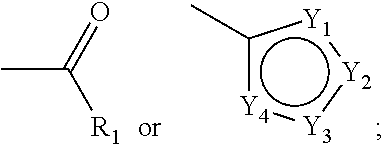
- residue R in formula (I) represents
- R 1 represents
- R 1 is selected from the group consisting of NH2,
- R 1 represents
- R 1 represents
- each of Y 1 , Y 2 , Y 3 and Y 4 is independently selected from C, N, O and S, wherein Y 2 , and Y 4 are optionally substituted with a residue R 4 independently selected from the group consisting of hydrogen and a linear or branched C 1 -C 4 alkyl, optionally substituted with one or more substituents independently selected from OH, F, Cl, I and Br.
- Y 2 , and/or Y 4 is substituted by a residue R 4 independently selected from the group consisting of methyl, ethyl, isopropyl, tert-butyl,
- R is selected from the group consisting of
- R 4 is independently selected from the group consisting of methyl, ethyl, isopropyl, tert-butyl,
- the radiolabeled compounds may be administered to mammals, preferably humans, in a pharmaceutical composition, either alone or, preferably, in combination with one or more pharmaceutically acceptable adjuvants, excipients, carriers and diluents, according to standard pharmaceutical practice.
- excipients should not unduly interfere with the biological activities of compound (I) of the radiopharmaceutical composition.
- a person skilled in the art will generally be able to determine and select suitable pharmaceutically acceptable excipients. Examples of pharmaceutically acceptable excipients are described in Remington's Pharmaceutical Sciences, 15 th Ed., Mack Publishing Co., New Jersey (1991).
- a preferred carrier is biocompatible and in a form suitable for mammalian, especially human, administration.
- the carrier is a fluid, especially a liquid, in which the radiopharmaceutical can be dissolved, such that the composition is physiologically tolerable.
- the carrier is an injectable liquid, e.g. sterile, pyrogen-free water for injection or an aqueous solution such as saline or PBS and ethanol as an adjuvant.
- the radiopharmaceutical compositions of the invention are administered via intravenous injection within less than one hour of their synthesis in case of in-house-production; or may be distributed to external customers, preferably within 24 h.
- the radiopharmaceutical composition is administered preferably in an activity of about 150 to about 200 MBq, preferably about 185 MBq.
- the radiopharmaceutical composition is administered preferably in an individually calculated dose of up to about 40 GBq, preferably up to about 30 GBq, more preferably up to 25 GBq in case of therapy.
- the calculation of the maximum tolerable activity is within the knowledge of the skilled person and is performed after a dosimetry of the individual patient with about 40 MBq [ 131 I]-labelled radiopharmaceutical.
- a particular focus lies on the bone marrow which has to be as a critical organ. Postulating that the bone marrow dose does not exceed a tolerable dose of 2 Gy, high maximum tolerable activities of up to 25 GBq were calculated with the help of the computer program OLINDA.
- the compounds according to the invention are highly specific radiotracers for adrenal imaging. Further, it has been demonstrated that the compounds according to the invention bind as specifically as the compounds of the state of the art to Cyp11B enzymes which are expressed in high amounts in tissues of adrenocortical origin. Additionally, the compounds of the invention show very low background activity. Due to the improved metabolic stability the compounds of the invention offer novel diagnostic and treatment options for adrenal masses.
- the invention provides the radiopharmaceutical composition of the invention for use in a diagnostic method for adrenal masses.
- the radiopharmaceutical compound is employed in a diagnostic imaging method.
- the radiopharmaceutical composition is employed in single photon emission computed tomography (SPECT).
- SPECT single photon emission computed tomography
- radiopharmaceutical composition of the invention in single-photon emission CT (SPECT) provides a valuable alternative to PET imaging. Furthermore, compared with PET technology the SPECT technology is more widespread in hospitals and clinics and, thus, more accessible for patients.
- SPECT single-photon emission CT
- the radiopharmaceutical composition is employed in a method for differential diagnosis of adrenal masses.
- the compounds and the radiopharmaceutical composition of the invention are particularly suitable in a method for the diagnosis of adrenocortical carcinoma.
- the radiopharmaceutical composition is employed in a method for the diagnosis or diagnostic imaging of a disease or disorder selected from adrenocortical carcinoma, adrenal adenoma (either endocrine active or inactive), Conn adenoma and adrenal hyperplasia in a human comprising administering to the human in need of such diagnostic imaging an effective amount of the radiopharmaceutical composition, and obtaining an image of the human.
- the image of the human is obtained using SPECT.
- a method of generating enhanced images of a human or animal body is provided, being previously administered with a radiopharmaceutical composition according to the invention, wherein the method comprises generating an image of at least part of said body, preferably of the adrenal area.
- the radiopharmaceutical composition is particularly suitable in a method for the treatment of adrenocortical carcinoma in a patient by means of radionuclide therapy.
- the radiopharmaceutical composition of the invention is intended for use in a method for the treatment of adrenocortical carcinoma.
- the inventive compounds are especially suitable for a targeted radionuclide therapy of advanced adrenocortical carcinoma.
- the high specificity of the compounds for tissues of adrenocortical origin and the improved metabolic stability of the compounds of the invention over the compounds of the state of the art allow a therapy with a higher uptake of the compound leading to extremely high levels of radioactivity in the target tissue, while the surrounding healthy tissue is largely spared. This results in good tolerability of the radiotherapy. Further, an improved therapeutic effect is provided.
- the compounds or the radiopharmaceutical composition of the invention can be administered once or repeatedly, preferably within few months, e.g. from 1 to 12 months, preferably from 1 to 6 months, as appropriate for a certain patient.
- radioiodide uptake into the thyroid gland is blocked by administering a blocking agent, e.g. sodium perchlorate in an amount of about 1.15 mg orally.
- Thyroid blockage is generally continued for about 2 to 5 days, preferably about 3 days with an amount of about 300 to 600 mg, preferably about 400 to 500 mg, more preferably about 460 mg of sodium perchlorate 2 to 4 times, preferably 3 times daily.
- antiemetic drugs dimenhydrinate or ondansetrone
- a further aspect of the invention relates to a compound having formula (I):
- R 1 represents
- R 1 represents
- the compounds of formula (I) are radioactive labeled iodometomidate derivatives. These compounds exhibit a high specificity for tissues of adrenocortical origin and show improved metabolic stability. Therefore, the compounds of formula (I) provide for a higher uptake of the compound in the target tissue. This leads on the one hand to an improved therapeutic effect due to a higher level of radioactivity in the target tissue, while the surrounding healthy tissue is largely spared.
- the compounds of formula (I) are highly specific radiotracers for adrenal imaging exhibiting a very low background activity.
- the present invention provides for an improved image quality in diagnostic methods, e.g. in diagnostic imaging of adrenal masses.
- a method for the preparation of the radiopharmaceutical composition of the invention comprising a compound of formula (I).
- the method is designed to give sterile radiopharmaceutical products suitable for human administration, e.g. via direct injection into the bloodstream.
- the precursor compound is reacted with radioiodide in the presence of an oxidation agent.
- an oxidation agent Any suitable oxidation agent can be used and the selection of a suitable oxidation agent lies within the knowledge of a person skilled in the art.
- Suitable oxidation agents are chloramine-T, iodogen and peracetic acid.
- a preferred oxidation agent is chloramine-T.
- the precursor is reacted with the oxidation agent for about 1 to about 10 minutes, preferably for about 3 to about 5 minutes.
- the precursor is preferably reacted with the oxidation agent at room temperature in an acidic mixture of water and ethanol having a pH of about 1.
- the reaction is quenched with a suitable agent, e.g. NaOH, a water-soluble base such as KOH or ammonium hydroxide.
- a suitable agent e.g. NaOH, a water-soluble base such as KOH or ammonium hydroxide.
- the reaction is quenched by addition of 1 N NaOH.
- the crude reaction mixture is purified by any suitable method known to a skilled person.
- a purification by chromatography is preferred, particularly suitable is a purification by HPLC chromatography.
- a suitable HPLC-system may comprise a pump, an injection system and a RP18-column and is equipped with an UV- and radioactivity detector.
- the HPLC-eluant is preferable a mixture of ethanol and sterile water with a pH of about 7-9.
- FIG. 1 shows the kinetics of IMTO metabolization.
- FIG. 2 shows the uptake of IMTO and (R)-1-[1-(4-iodophenyl)ethyl]-1H-imidazol-5-carboxylic acid ethyl-methyl amide (compound 2a) in adrenal glands in mice in ex vivo experiments.
- FIG. 3 shows the uptake of (R)-1-[1-(4-iodophenyl)ethyl]-1H-imidazol-5-carboxylic acid azetinylamide (compound 2e) in adrenal glands in mice in ex vivo experiments.
- FIG. 4 shows the in vitro uptake of IMTO in cell experiments.
- FIG. 5 shows the in vitro uptake of (R)-1-[1-(4-iodophenyl)ethyl]-1H-imidazol-5-carboxylic acid azetinylamide (compound 2e) in cell experiments.
- FIG. 6 shows the biodistribution of IMTO in mice.
- FIG. 7 shows the biodistribution of (R)-1-[1-(4-iodophenyl)ethyl]-1H-imidazol-5-carboxylic acid ethyl-methyl amide (compound 2a) in mice.
- FIG. 8 shows the biodistribution of (R)-1-[1-(4-iodophenyl)ethyl]-1H-imidazol-5-carboxylic acid azetinylamide (compound 2e) in mice.
- FIG. 9 shows the biodistribution of IMTO, (R)-1-[1-(4-iodophenyl)ethyl]-1H-imidazol-5-carboxylic acid azetinylamide (compound 2e), (R)-1-[1-(4-iodophenyl)ethyl]-1H-imidazol-5-carboxylic acid pyrrolidinylamid and (R)-1-[1-(4-iodophenyl)ethyl]-1H-imidazol-5-carboxylic acid ethyl-methyl amide (compound 2a) in adrenals of mice.
- the solution was stirred overnight and quenched by 1050 mL of a 10% sodium thiosulfate-solution. After extraction with 1000 mL methylene chloride the organic phase was washed with a saturated solution of sodium bicarbonate and dried over sodium sulfate. The solvent was stripped under reduced pressure and the crude product redissolved in 410 mL of warm diethyl ether and 113 mL hexanes. After cooling in a refrigerator, the product precipitated.
- the intermediate was dissolved in 2100 mL of methanol and 1200 mL 1 N sodium hydroxide and stirred overnight. The solution was concentrated to half of the volume under vacuum and the remaining aqueous solution was extracted with methylene chloride (4 ⁇ 250 mL). After drying over sodium sulfate the solvent was stripped and the product was obtained as a white solid.
- Step 2 Synthesis of N-( ⁇ -Methyl-4-iodobenzyl)-glycine methylester
- Step 3 Synthesis of N-( ⁇ -Methyl-4-iodobenzyl)-N-formylglycine methylester
- Step 4 Synthesis of N-( ⁇ -Methyl-4-iodobenzyl)-N-formyl-C-formyl-glycine methylester
- Step 5 Synthesis of N-( ⁇ -Methyl-4-iodobenzyl)-2-mercaptoimidazole-5-carboxylic acid methylester
- the aqueous phase obtained above was diluted with 40 mL methanol and 48 mL conc. HCl.
- a solution of 18.2 g (188 mmol) potassium thiocyanate in 21 mL water was added and stirring performed for 2 h at 60° C. After cooling to rt the product was extracted two times each with 82 ml tetrachloromethane and directly used in the next step.
- Step 8 Synthesis of (R)-1-[1-(4-Iodophenyl)ethyl]-1H-imidazole-5-carboxylic acid ethylmethylamide (2a)
- the solution was diluted with 50 mL chloroform, washed once with 50 mL of a saturated sodium thiosulfate-solution and three times with each 50 mL water and dried over sodium sulfate. After stripping the solvent, the crude product was purified by column chromatography (CH 2 Cl 2 /CH 3 OH 95/5/).
- the HPLC-product fraction with a retention time of 7-8 min was collected in a flask and the solvent stripped under reduced pressure.
- the flask was transferred into a laminar airflow cabinet, the dry tracer dissolved in 3-4 mL PBS/20% ethanol and drawn into a sterile syringe.
- the solution was passed through a sterile filter (0.22 ⁇ m) into a sterile vial.
- the tracer was obtained in a radiochemical yield of 90% and a radiochemical purity>98%.
- the solution was diluted with 100 mL chloroform, washed once with 100 mL of a saturated sodium thiosulfate-solution and three times with each 50 mL water and dried over sodium sulfate. After stripping the solvent, the crude product was purified by column chromatography (CH 2 Cl 2 /CH 3 OH 95/5).
- Step 3b Radiosynthesis of [ 131 I](R)-1-[1-(4-Iodophenyl)ethyl]-1H-imidazole-5-carboxylic acid azetidinylamide ([ 131 I]2e)
- the HPLC-product fraction with a retention time of 8-9 min was collected in a flask and the solvent stripped under reduced pressure.
- the flask was transferred into a laminar airflow cabinet, the dry tracer dissolved in 3-4 mL PBS/20% ethanol and drawn into a sterile syringe.
- the solution was passed through a sterile filter (0.22 ⁇ m) into a sterile vial.
- the tracer was obtained in a radiochemical yield of 90% and a radiochemical purity>98%.
- Plasmid constructs and transfection To induce expression of human cytochrome P450 family 11B1 (Cyp11B1) and Cyp11B2 enzymes in Y1 cells, the full-length cDNAs for the proteins were subcloned into the multicloning site of pcDNA3.1 (zeo) (Invitrogen, Eggenstein, Germany). The cDNA fragments were isolated by PCR and digested by EcoRI. The individual fragments were ligated into the linearized vectors digested by EcoRI. Human Cyp11B1 and Cyp11B2 enzymes were expressed in Y1 cells using liposome/lipid-mediated DNA transfection.
- plasmid DNA was mixed with Lipofectamine (Invitrogen) transfection reagents according to the manufacturer's protocol.
- Lipofectamine Invitrogen
- Y1 cells were transfected with the pcDNA3.1 (zeo)-Cyp11B1 and pcDNA3.1 (zeo)-Cyp11B2 vector, respectively.
- Transfected cells were selected with 1000 ⁇ g/ml zeocin (Invitrogen). To screen colonies, Western blotting and real-time PCR were used to determine the level of Cyp11B1 and Cyp11B2 expression. Colonies with the highest Cyp11B expression were further tested for their ability to synthesize cortisol or aldosterone from deoxycortisol (RSS) and 11-deoxycorticosterone (DOC), respectively. Experimental protocols were standardized regarding substrate concentrations and incubation periods.
- Y1-Cyp11B1 and Y1-Cyp11B2 cells were subcultured on six-well plates (0.5 ⁇ 106 cells per well) in 2 ml culture medium.
- the enzyme reaction was started after 24 hours by the addition of 1 ml culture medium containing either 11-deoxycortisol (RSS) or 11-deoxycorticosterone (DOC) as substrate and the corresponding inhibitor.
- RSS and DOC were dissolved in ethanol to a final test concentration of 1 ⁇ M.
- the inhibitors were added to the culture medium at concentrations between 0.6 nM and 60 ⁇ M and incubated for 48 h.
- Y1-Cyp11B1 and Y1-Cyp11B2 cells which were treated in the same way but without inhibitors, served as controls.
- untransfected Y1 cells were also incubated with RSS and DOC, respectively. Both RSS and DOC were obtained from Sigma (Deisenhofen, Germany).
- the inventive compounds described herein bind selectively to 11 ⁇ -hydroxylase and aldosterone synthase.
- corresponding radiopharmaceutical compositions are suitable for diagnostic and treatment purposes within the living body of a mammal having adrenal glands.
- mice were killed (n ⁇ 6 per time point) and adrenals were excised and weighed. Radioactivity was measured using a gamma-counter.
- NCI-H295 cells were incubated with 0.1 MBq of IMTO or (R)-1-[1-(4-iodophenyl)ethyl]-1H-imidazole-5-carboxylic acid azetidinylamide (compound 2e) at 37° C. in a humidified atmosphere (5% CO 2 ).
- the cells were co-incubated with non-radioactive (0, 0.1 ⁇ M, 10 ⁇ M, 100 ⁇ M) etomidate to monitor the specific uptake of the substances.
- mice Male CD-1 mice were injected iv with 1 ⁇ Ci (37 kBq) (R)-1-[1-(4-[ 125 I]iodophenyl)ethyl]-1H-imidazole-5-carboxylic acid ethyl-methyl amide. At predefined time points (15 min, 30 min, 2 h, and 4 h), mice were killed (n 6 per time point). Blood was collected, and heart, lung, liver, intestine, stomach, spleen, kidneys, adrenals, testes, brain and other organs were excised and weighed. Radioactivity was measured using a gamma-counter.
- FIGS. 6-8 show the biodistribution of IMTO, (R)-1-[1-(4-iodophenyl)ethyl]-1H-imidazol-5-carboxylic acid ethyl-methyl amide (compound 2a) and (R)-1-[1-(4-iodophenyl)ethyl]-1H-imidazole-5-carboxylic acid azetidinylamide (compound 2e), respectively, in different organs and at different time points in mice. It can be seen that the uptake both of compound 2a and compound 2e is predominately in adrenal gland, i.e. that the compounds of the invention show a highly selective and specific binding.
Landscapes
- Health & Medical Sciences (AREA)
- Life Sciences & Earth Sciences (AREA)
- General Health & Medical Sciences (AREA)
- Veterinary Medicine (AREA)
- Public Health (AREA)
- Animal Behavior & Ethology (AREA)
- Epidemiology (AREA)
- Chemical & Material Sciences (AREA)
- Medicinal Chemistry (AREA)
- Pharmacology & Pharmacy (AREA)
- Optics & Photonics (AREA)
- Proteomics, Peptides & Aminoacids (AREA)
- Physics & Mathematics (AREA)
- Engineering & Computer Science (AREA)
- Biomedical Technology (AREA)
- Organic Chemistry (AREA)
- Nuclear Medicine, Radiotherapy & Molecular Imaging (AREA)
- General Chemical & Material Sciences (AREA)
- Chemical Kinetics & Catalysis (AREA)
- Medicines Containing Antibodies Or Antigens For Use As Internal Diagnostic Agents (AREA)
- Pharmaceuticals Containing Other Organic And Inorganic Compounds (AREA)
- Medicines That Contain Protein Lipid Enzymes And Other Medicines (AREA)
Abstract
Description

-
- wherein A is a radioactive halogen selected from the group consisting of 123I, 124I, 125I and 131I;
- R represents

-
- wherein R1 represents

-
- wherein each of R2 and R3 is independently selected from the group consisting of hydrogen and a linear or branched C1-C4 alkyl, optionally substituted with one or more substituents independently selected from OH, F, Cl, I and Br;
- or R2 and R3 together form a 4-6-membered ring, optionally containing from 1 to 4 heteroatoms, selected from the group consisting of O, S, and N, optionally substituted with one or more substituents independently selected from OH, F, Cl, I and Br, a linear or branched C1-C4 alkyl, optionally substituted with one or more substituents independently selected from OH, F, Cl, I and Br;
- each of Y1, Y2, Y3 and Y4 is independently selected from C, N, O and S;
- and Y2, and Y4 are optionally substituted with a residue R4 independently selected from the group consisting of hydrogen and a linear or branched C1-C4 alkyl, optionally substituted one or more substituents independently selected from OH, F, Cl, I and Br;
- with the proviso that R1 is not pyrrolidine;
- or a pharmaceutically acceptable salt thereof, or solvate thereof.

wherein
-
- A is a radioactive halogen selected from the group consisting of 123I, 124I, 125I and 131I;
- R represents

-
- wherein R1 represents

-
- wherein each of R2 and R3 is independently selected from the group consisting of hydrogen and a linear or branched C1-C4 alkyl, optionally substituted with one or more substituents independently selected from OH, F, Cl, I and Br;
- or R2 and R3 together form a 4-6-membered ring, optionally containing from 1 to 4 heteroatoms, selected from the group consisting of O, S, and N, optionally substituted with one or more substituents independently selected from OH, F, Cl, I and Br, a linear or branched C1-C4 alkyl, optionally substituted with one or more substituents independently selected from OH, F, Cl, I and Br;
- each of Y1, Y2, Y3 and Y4 is independently selected from C, N, O and S,
- and Y2, and Y4 are optionally substituted with a residue R4 independently selected from the group consisting of hydrogen and a linear or branched C1-C4 alkyl, optionally substituted with one or more substituents independently selected from OH, F, Cl, I and Br;
- with the proviso that R1 is not pyrrolidine;
- or a pharmaceutically acceptable salt thereof, or solvate thereof.

wherein R1 represents

-
- wherein each of R2 and R3 is independently selected from the group consisting of hydrogen and a linear or branched C1-C4 alkyl, optionally substituted with one or more substituents independently selected from OH, F, Cl, I and Br, preferably F; or
- R2 and R3 together form a 4-6-membered ring, optionally containing from 1 to 4 heteroatoms, selected from the group consisting of O, S, and N, optionally substituted with one or more substituents independently selected from OH, F, Cl, I and Br, a linear or branched C1-C4 alkyl, optionally substituted with one or more substituents independently selected from OH, F, Cl, I and Br;
with the proviso that R1 is not pyrrolidine.


wherein each of Y1, Y2, Y3 and Y4 is independently selected from C, N, O and S, wherein Y2, and Y4 are optionally substituted with a residue R4 independently selected from the group consisting of hydrogen and a linear or branched C1-C4 alkyl, optionally substituted with one or more substituents independently selected from OH, F, Cl, I and Br.


wherein R4 is independently selected from the group consisting of methyl, ethyl, isopropyl, tert-butyl,


-
- wherein A is selected from the group consisting of 123I, 124I, 125I and 131I;
- R represents
-
- wherein R1 represents

-
- wherein each of R2 and R3 is independently selected from the group consisting of hydrogen and a linear or branched C1-C4 alkyl, optionally substituted with one or more substituents independently selected from OH, F, Cl, I and Br;
- or R2 and R3 together form a 4-6-membered ring, optionally containing from 1 to 4 heteroatoms, selected from the group consisting of O, S, and N, optionally substituted with one or more substituents independently selected from OH, F, Cl, I and Br, a linear or branched C1-C4 alkyl, optionally substituted with one or more substituents independently selected from OH, F, Cl, I and Br;
- each of Y1, Y2, Y3 and Y4 is independently selected from C, N, O and S,
- and Y2, and/or Y4 is optionally substituted with a residue R4 independently selected from the group consisting of hydrogen and a linear or branched C1-C4 alkyl, optionally substituted with one or more substituents independently selected from OH, F, Cl, I and Br;
- with the proviso that R1 is not pyrrolidine.


-
- An Eppendorf-vial containing 40 μg (R)-1-(1-(4-trimethylstannyl-phenylethyl))-1H-imidazole-5-carboxylic acid ethylmethylamide was taken from the refrigerator (−20° C.) and 30 μL ethanol were pipetted into the vial.
- Oxidation agent: 15 mg Chloramin-T Trihydrate were dissolved in 10 mL water.
- HPLC-eluent: methanol, water and ammonia (25%) were mixed 70/30/0.1 (v/v/v) and degassed in the ultrasonic bath.
- 1 N HCl
- 1 N NaOH


-
- An Eppendorf-vial containing 40 μg (R)-1-(1-(4-trimethylstannyl-phenylethyl))-1H-imidazole-5-carboxylic acid azetidinylamide was taken from the refrigerator (−20° C.) and 30 μL ethanol were pipetted into the vial.
- Oxidation agent: 15 mg Chloramin-T Trihydrate were dissolved in 10 mL water.
- HPLC-eluent: methanol, water and ammonia (25%) were mixed 70/30/0.1 (v/v/v) and degassed in the ultrasonic bath.
- 1 N HCl
- 1 N NaOH
| TABLE 1 | |||
 |
R1 | IC50 11β-hydroxylase [nM] | IC50 aldosterone synthase [nM] |
| iodometomidate (IMTO) | OCH3 | 2.6 ± 1.1 | 2.0 ± 2.3 |
| 2a |
 |
3.9 ± 0.6 | 4.2 ± 0.37 |
| 2b |
 |
36.6 | 10.9 ± 2.02 |
| 2e |
 |
3.16 ± 0.14 | 1.22 ± 0.08 |
| 2g |
 |
11.7 | 5.5 ± 2.2 |
| 2h |
 |
805 | 182 |
| 2i |
 |
>1000 | 15.7 |
| 2j | —NH2 | 329 ± 310 | 1410 ± 2070 |
| 2k |
 |
336 ± 398 | 221 ± 168 |
| 2l |
 |
74.7 | 3.5 ± 7.5 |
| 2m |
 |
78.2 | 147 ± 61.9 |
| 2n |
 |
1322 | 390 ± 170 |
| TABLE 2 | |||
 |
R | IC50 11β- hydroxylase [nM] | IC50 aldosterone synthase [nM] |
| 4a |
 |
72.6 | 1750 |
| 6a |
 |
10.6 ± 9.2 | 90.1 |
Claims (14)


Applications Claiming Priority (4)
| Application Number | Priority Date | Filing Date | Title |
|---|---|---|---|
| EP12006734.3A EP2712631A1 (en) | 2012-09-27 | 2012-09-27 | Radiopharmaceutical products for diagnosis and therapy of renal carcinoma |
| EP12006734.3 | 2012-09-27 | ||
| EP12006734 | 2012-09-27 | ||
| PCT/EP2013/002887 WO2014048568A1 (en) | 2012-09-27 | 2013-09-26 | Radiopharmaceutical products for diagnosis and therapy of adrenal carcinoma |
Publications (2)
| Publication Number | Publication Date |
|---|---|
| US20150328341A1 US20150328341A1 (en) | 2015-11-19 |
| US9814789B2 true US9814789B2 (en) | 2017-11-14 |
Family
ID=47022446
Family Applications (1)
| Application Number | Title | Priority Date | Filing Date |
|---|---|---|---|
| US14/649,516 Expired - Fee Related US9814789B2 (en) | 2012-09-27 | 2013-09-26 | Radiopharmaceutical products for diagnosis and therapy of adrenal carcinoma |
Country Status (6)
| Country | Link |
|---|---|
| US (1) | US9814789B2 (en) |
| EP (2) | EP2712631A1 (en) |
| AU (1) | AU2013324636B2 (en) |
| CA (1) | CA2898246C (en) |
| NZ (1) | NZ708849A (en) |
| WO (1) | WO2014048568A1 (en) |
Families Citing this family (3)
| Publication number | Priority date | Publication date | Assignee | Title |
|---|---|---|---|---|
| US11098017B2 (en) | 2017-09-28 | 2021-08-24 | The General Hospital Corporation | Compounds for treating disorders associated with abnormal steroidogenesis |
| US12570612B2 (en) * | 2019-10-11 | 2026-03-10 | Chengdu Mfs Pharma. Co., Ltd. | Substituted nitrogen heterocyclic compound and anesthetic effect thereof |
| CN112375039B (en) * | 2020-11-20 | 2022-03-08 | 燃点(南京)生物医药科技有限公司 | Novel crystal form A of (R) - (+) -1- (1-phenethyl) -2-mercaptoimidazole-5-carboxylic acid ethyl ester and preparation method thereof |
Citations (1)
| Publication number | Priority date | Publication date | Assignee | Title |
|---|---|---|---|---|
| US20050033060A1 (en) | 2003-08-06 | 2005-02-10 | Ilse Zolle | Radiolabelled phenylethyl imidazole caboxylic acid ester derivatives |
-
2012
- 2012-09-27 EP EP12006734.3A patent/EP2712631A1/en not_active Withdrawn
-
2013
- 2013-09-26 US US14/649,516 patent/US9814789B2/en not_active Expired - Fee Related
- 2013-09-26 WO PCT/EP2013/002887 patent/WO2014048568A1/en not_active Ceased
- 2013-09-26 NZ NZ708849A patent/NZ708849A/en not_active IP Right Cessation
- 2013-09-26 CA CA2898246A patent/CA2898246C/en not_active Expired - Fee Related
- 2013-09-26 AU AU2013324636A patent/AU2013324636B2/en not_active Ceased
- 2013-09-26 EP EP13766903.2A patent/EP2900278B1/en active Active
Patent Citations (1)
| Publication number | Priority date | Publication date | Assignee | Title |
|---|---|---|---|---|
| US20050033060A1 (en) | 2003-08-06 | 2005-02-10 | Ilse Zolle | Radiolabelled phenylethyl imidazole caboxylic acid ester derivatives |
Non-Patent Citations (5)
| Title |
|---|
| Atucha et et al., "Structure-activity relationship of etomidate derivatives at the GABAA receptor: Comparison with binding to 11β-hydroxylase" Bioorganic & Medicinal Chemistry Letters (2009) 19(15):4284-4287. |
| Hahner et al., "[123I]Iodometomidate for Molecular Imaging of Adrenocortical Cytochrome P450 Family 11B Enzymes" Journal of Clinical Endocrinology & Metabolism (2008) 93(6):2358-2365. |
| Hahner S et al., "[131I]Iodometomidate for Targeted Radionuclide Therapy of Advanced Adrenocortical Carcinoma" Journal of Clinical Endocrinology and Metabolism (2012) 97(3):914-922. |
| International Search Report dated Feb. 11, 2014 for PCT Application No. PCT/EP2013/002887, filed Sep. 26, 2013. |
| Zolle et al., "New Selective Inhibitors of Steroid 11β-Hydroxylation in the Adrenal Cortex, Synthesis and Structure-Activity Relationship of Potent Etomidate Analogues" Journal of Medical Chemistry (2008) 54(7): 2244-2253. |
Also Published As
| Publication number | Publication date |
|---|---|
| CA2898246C (en) | 2021-11-09 |
| AU2013324636A1 (en) | 2015-08-20 |
| AU2013324636B2 (en) | 2018-03-08 |
| CA2898246A1 (en) | 2014-04-03 |
| EP2712631A1 (en) | 2014-04-02 |
| EP2900278A1 (en) | 2015-08-05 |
| NZ708849A (en) | 2018-09-28 |
| WO2014048568A1 (en) | 2014-04-03 |
| EP2900278B1 (en) | 2020-05-20 |
| US20150328341A1 (en) | 2015-11-19 |
Similar Documents
| Publication | Publication Date | Title |
|---|---|---|
| US20250177578A1 (en) | Psma-binding agents and uses thereof | |
| Ganguly et al. | A high-affinity [18 F]-labeled phosphoramidate peptidomimetic PSMA-targeted inhibitor for PET imaging of prostate cancer | |
| Chen et al. | 2-(3-{1-Carboxy-5-[(6-[18F] fluoro-pyridine-3-carbonyl)-amino]-pentyl}-ureido)-pentanedioic acid,[18F] DCFPyL, a PSMA-based PET imaging agent for prostate cancer | |
| US7893266B2 (en) | Detection of cancer cells in vitro using sigma-2 receptor ligands as radiotracers | |
| Zhang et al. | Design, synthesis and evaluation of 18F-labeled cationic carbonic anhydrase IX inhibitors for PET imaging | |
| Lesche et al. | Preclinical evaluation of BAY 1075553, a novel 18F-labelled inhibitor of prostate-specific membrane antigen for PET imaging of prostate cancer | |
| Kwon et al. | Novel multifunctional 18F-labelled PET tracer with prostate-specific membrane antigen-targeting and hypoxia-sensitive moieties | |
| US9814789B2 (en) | Radiopharmaceutical products for diagnosis and therapy of adrenal carcinoma | |
| Yang et al. | Synthesis and bioevaluation of radioiodinated nitroimidazole hypoxia imaging agents by one-pot click reaction | |
| Wu et al. | Synthesis and preclinical characterization of [18F] FPBZA: a novel PET probe for melanoma | |
| Zhang et al. | In vivo ester hydrolysis as a new approach in development of positron emission tomography tracers for imaging hypoxia | |
| Chang et al. | Synthesis and evaluation of 123/131I-Iochlonicotinamide as a novel SPECT probe for malignant melanoma | |
| Ruan et al. | Preparation of two 99mTc (CO) 3 labelled complexes with a 4-nitroimidazole isocyanide at different temperatures for molecular imaging of tumor hypoxia | |
| Baguet et al. | Radiosynthesis, in vitro and preliminary in vivo evaluation of the novel glutamine derived PET tracers [18F] fluorophenylglutamine and [18F] fluorobiphenylglutamine | |
| Xia et al. | Halogen Replacement on the Lysine Side Chain of Lys-Urea-Glu-Based PSMA Inhibitors Leads to Significant Changes in Targeting Properties | |
| US12138320B2 (en) | Composition and methods for tumor imaging and treatment | |
| CN112638919A (en) | Radioactive imidazothiadiazole derivative compound | |
| Kong et al. | Development of Tyrosine‐Based Radiotracer 99mTc‐N4‐Tyrosine for Breast Cancer Imaging | |
| US20180064742A1 (en) | Pet imaging tracer for imaging prostate cancer | |
| Tachatumvitoon | Development of technetium-99m labeled PSMA for SPECT prostate cancer imaging | |
| CN120271658A (en) | Double-poly PSMA diagnosis and treatment integrated probe modified by protein binding group | |
| Yang et al. | Radiopharmaceuticals | |
| HK40042293A (en) | Radioactive imidazothiadiazole derivative compound | |
| Ali et al. | Research Article Development of 99m Tc-N4-NIM for Molecular Imaging of Tumor Hypoxia | |
| Chen et al. | Amino]-Pentyl}-Ureido)-Pentanedioic Acid,[18 F] DCFPyL, a PSMA-Based PET Imaging Agent for Prostate Cancer |
Legal Events
| Date | Code | Title | Description |
|---|---|---|---|
| AS | Assignment |
Owner name: JULIUS-MAXIMILIANS-UNIVERSITAET WUERZBURG, GERMANY Free format text: ASSIGNMENT OF ASSIGNORS INTEREST;ASSIGNORS:SCHIRBEL, ANDREAS;HAHNER, STEFANIE;SIGNING DATES FROM 20150611 TO 20150619;REEL/FRAME:042935/0781 |
|
| STCF | Information on status: patent grant |
Free format text: PATENTED CASE |
|
| CC | Certificate of correction | ||
| FEPP | Fee payment procedure |
Free format text: ENTITY STATUS SET TO UNDISCOUNTED (ORIGINAL EVENT CODE: BIG.); ENTITY STATUS OF PATENT OWNER: LARGE ENTITY |
|
| MAFP | Maintenance fee payment |
Free format text: PAYMENT OF MAINTENANCE FEE, 4TH YEAR, LARGE ENTITY (ORIGINAL EVENT CODE: M1551); ENTITY STATUS OF PATENT OWNER: LARGE ENTITY Year of fee payment: 4 |
|
| FEPP | Fee payment procedure |
Free format text: MAINTENANCE FEE REMINDER MAILED (ORIGINAL EVENT CODE: REM.); ENTITY STATUS OF PATENT OWNER: LARGE ENTITY |
|
| LAPS | Lapse for failure to pay maintenance fees |
Free format text: PATENT EXPIRED FOR FAILURE TO PAY MAINTENANCE FEES (ORIGINAL EVENT CODE: EXP.); ENTITY STATUS OF PATENT OWNER: LARGE ENTITY |
|
| STCH | Information on status: patent discontinuation |
Free format text: PATENT EXPIRED DUE TO NONPAYMENT OF MAINTENANCE FEES UNDER 37 CFR 1.362 |
|
| FP | Lapsed due to failure to pay maintenance fee |
Effective date: 20251114 |