US9801887B2 - Method of treatment of aggression - Google Patents
Method of treatment of aggression Download PDFInfo
- Publication number
- US9801887B2 US9801887B2 US13/951,642 US201313951642A US9801887B2 US 9801887 B2 US9801887 B2 US 9801887B2 US 201313951642 A US201313951642 A US 201313951642A US 9801887 B2 US9801887 B2 US 9801887B2
- Authority
- US
- United States
- Prior art keywords
- molindone
- day
- treatment
- dose
- adhd
- Prior art date
- Legal status (The legal status is an assumption and is not a legal conclusion. Google has not performed a legal analysis and makes no representation as to the accuracy of the status listed.)
- Active
Links
Images




Classifications
-
- A—HUMAN NECESSITIES
- A61—MEDICAL OR VETERINARY SCIENCE; HYGIENE
- A61K—PREPARATIONS FOR MEDICAL, DENTAL OR TOILETRY PURPOSES
- A61K31/00—Medicinal preparations containing organic active ingredients
- A61K31/33—Heterocyclic compounds
- A61K31/395—Heterocyclic compounds having nitrogen as a ring hetero atom, e.g. guanethidine or rifamycins
- A61K31/535—Heterocyclic compounds having nitrogen as a ring hetero atom, e.g. guanethidine or rifamycins having six-membered rings with at least one nitrogen and one oxygen as the ring hetero atoms, e.g. 1,2-oxazines
- A61K31/5375—1,4-Oxazines, e.g. morpholine
- A61K31/5377—1,4-Oxazines, e.g. morpholine not condensed and containing further heterocyclic rings, e.g. timolol
-
- A—HUMAN NECESSITIES
- A61—MEDICAL OR VETERINARY SCIENCE; HYGIENE
- A61K—PREPARATIONS FOR MEDICAL, DENTAL OR TOILETRY PURPOSES
- A61K31/00—Medicinal preparations containing organic active ingredients
-
- A—HUMAN NECESSITIES
- A61—MEDICAL OR VETERINARY SCIENCE; HYGIENE
- A61P—SPECIFIC THERAPEUTIC ACTIVITY OF CHEMICAL COMPOUNDS OR MEDICINAL PREPARATIONS
- A61P25/00—Drugs for disorders of the nervous system
-
- A—HUMAN NECESSITIES
- A61—MEDICAL OR VETERINARY SCIENCE; HYGIENE
- A61P—SPECIFIC THERAPEUTIC ACTIVITY OF CHEMICAL COMPOUNDS OR MEDICINAL PREPARATIONS
- A61P25/00—Drugs for disorders of the nervous system
- A61P25/18—Antipsychotics, i.e. neuroleptics; Drugs for mania or schizophrenia
-
- A—HUMAN NECESSITIES
- A61—MEDICAL OR VETERINARY SCIENCE; HYGIENE
- A61P—SPECIFIC THERAPEUTIC ACTIVITY OF CHEMICAL COMPOUNDS OR MEDICINAL PREPARATIONS
- A61P25/00—Drugs for disorders of the nervous system
- A61P25/20—Hypnotics; Sedatives
-
- A—HUMAN NECESSITIES
- A61—MEDICAL OR VETERINARY SCIENCE; HYGIENE
- A61P—SPECIFIC THERAPEUTIC ACTIVITY OF CHEMICAL COMPOUNDS OR MEDICINAL PREPARATIONS
- A61P43/00—Drugs for specific purposes, not provided for in groups A61P1/00-A61P41/00
Definitions
- Aggression and similar syndromes represent a broad category of behaviors that complicate the management of several disease states, such as attention deficit hyperactivity disorder (ADHD), bipolar disorder, autism, and post traumatic stress disorder.
- ADHD attention deficit hyperactivity disorder
- bipolar disorder bipolar disorder
- autism post traumatic stress disorder.
- post traumatic stress disorder 25-50% of patients optimally treated for the underlying disorder continue to manifest these syndromes.
- Dopaminergic therapies are among the most prescribed for these behavioral syndromes, and include such molecules as haloperidol and other antipsychotics.
- the dopamine receptors for these molecules are grouped into 2 families: the D1, which includes the D1 and D5 receptor, and the D2, which includes the D2, D3 and D4 receptors.
- the two families differ by the manner in which the receptor protein is incorporated into the cell membrane, and by the pharmacology of the molecules that have an affinity for each type.
- Each receptor type is a distinct entity with its unique gene, anatomy in the brain and affinity for different molecules.
- Some dopamine receptor subtypes, such as the D2 receptor have further modifications in the protein structure, giving rise to further subclassification, e.g., D2 short and D2 long .
- D5 receptor activity would be beneficial in the treatment of aggression and similar behavioral syndromes.
- the D5 receptor has very specific localization in the brain, and is found in such areas as the Parafascicular Nucleus of the Thalamus, as well as the prefrontal cortex, hippocampus, ventral tegmental area, Substantia Nigra and Raphe nucleus (Hartman D S, Civelli O. Molecular attributes of dopamine receptors: new potential for antipsychotic drug development. Ann Med 1996; 28(3):211-9).
- the Parafascicular nucleus is involved in the behavioral process of attention to critical sensory input and activation of the subject toward that stimulus.
- One of the important paradigms in which the Parafascicular nucleus participates is the activation of the fight or flight response.
- DRD5 The gene for the D5, DRD5, is associated with impulsiveness and with symptomology associated with disruptive behavioral disorders, such as antisocial personality disorder (Vanyukov M M, Moss H B, Kaplan B B, Kirillova G P, Tarter R E. Antisociality, substance dependence, and the DRD5 gene: a preliminary study. Am J Med Genet 2000; 96(5):654-8). DRD5 is also associated with genetic transmission of a number of disorders associated with aggression, irritability and impulsivity, including schizophrenia, Tourette's and ADHD (Maher B S, Marazita M L, Ferrell R E, Vanyukov M M. Dopamine system genes and attention deficit hyperactivity disorder: a meta-analysis.
- disruptive behavioral disorders such as antisocial personality disorder (Vanyukov M M, Moss H B, Kaplan B B, Kirillova G P, Tarter R E. Antisociality, substance dependence, and the DRD5 gene: a preliminary study. Am J Med Genet 2000; 96(5):654-8
- Blockade of the D5 receptor in a knockout model is associated with decreased motor activity, which may be akin to decreased aggression (Holmes A, Hollon T R, Gleason T C, et al. Behavioral characterization of dopamine D5 receptor null mutant mice. Behav Neurosci 2001; 115(5):1129-44).
- Molindone is a typical antipsychotic drug that has high affinity for D2 family of dopamine receptors. where it is thought to exert its therapeutic action. Molindone was previously suggested for the treatment of aggression in both adult and pediatric patients (Greenhill L L, Barmack J E, Spalten D, Anderson M, Halpern F. Molindone Hydrochloride in the treatment of aggressive, hospitalized children [proceedings]. Psychopharmacol Bull 1981; 17(1):125-7; Itil T M, Wadud A. Treatment of human aggression with major tranquilizers, antidepressants, and newer psychotropic drugs. J Nery Ment Dis 1975; 160(2-1):83-99). Molindone was also evaluated for children with the early-onset schizophrenia spectrum disorders (J Am Acad Child Adolesc Psychiatry, 2007, August, 46:8, p. 969-978 and Am J Psychiatry, 165:11, November 2008).
- the dose of molindone may range from 100 to 225 mg per day (Bagnall A, Fenton M, Kleijnen J, Lewis R. Molindone for schizophrenia and severe mental illness. Cochrane Database Syst Rev 2007(1):CD002083).
- the dose of other antipsychotics used for the treatment of aggressive behavior are about 50% relative to those used for the treatment of psychosis in schizophrenia (J Am Acad Child Adolesc Psychiatry. 2006 July; 45(7):792-800).
- the current invention offers a method of treatment of aggression and/or similar behavioral syndromes, including irritability and impulsivity that comprises the steps of: 1. selecting several active agents with known activity (e.g., agonist or antagonist) on at least one dopaminergic, serotonergic or gabaergic receptor where the opposite activity is associated with aggressive behavior; 2. conducting a receptor screening assay on these same receptor families with each of the active agents to identify activity for at least one additional receptor having a known association with undesired (i.e., aggressive) behavior; 3. determining if said activity is agonistic or antagonistic in nature; 4. by the results of steps 2 and 3, choosing among the screened active agents at least one that targets the most diverse types of aggression-associated receptors; 5. optimizing the total dose of the active agent(s), taking into account results of steps 2 through 4; and 6. administering the dose of step (5) to a mammalian subject.
- active agents with known activity e.g., agonist or antagonist
- the mammalian subject is a human child. In another embodiment of the invention, the mammalian subject is an adult human.
- Identification of agonist/antagonist activity in the active agents that exhibit the potential as therapeutics for aggression and similar behavioral syndromes is important, since it allows for selection of drugs that have more than one therapeutic target (e.g., both D2 and D5 receptors). This is superior to taking a combination of therapies to achieve multiple targets because of the enhanced patient compliance with the reduced pill load. It also can lead to a lower dose, since different receptor activities may be additive, or even synergistic, in their effect.
- the invention comprises a method of treatment of aggression and similar behavioral syndromes, such as impulsivity and irritability in a mammalian subject, by a pharmaceutical agent exhibiting combined D2 and D5 antagonistic activity.
- the invention discloses a method of treatment of aggression and similar behavioral syndromes by a pharmaceutical agent exhibiting combined D2 and D5 antagonistic activity, wherein the total dosage of the pharmaceutical agent is smaller than the dosage anticipated on the premise of D2 activity only.
- the pharmaceutical agent is molindone.
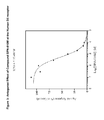
- FIG. 1 shows a competition curve obtained with compound SPN-810M (molindone) at the human D5 receptor.
- FIG. 2 shows the agonist effect of compound SPN-810M at the Human D5 Receptor.
- FIG. 3 shows the antagonist effect of compound SPN-810M at the Human D5 receptor.
- FIG. 4 shows a reduction in Conduct Problem Subscale Score achieved through administration of molindone in a randomized, multicenter, parallel group dose-ranging study in children with ADHD and persistent serious conduct problems.
- FIG. 5 shows an adverse effect profile of molindone in a randomized, multicenter, parallel group dose-ranging study in children with ADHD and persistent serious conduct problems
- molindone has specific antagonist activity at the D5 dopaminergic receptor.
- lation counting *Sch 23390 is a highly potent and selective dopamine D1-like receptor antagonist with a K(i) of 0.2 and 0.3 nM for the D1 and D5 dopamine receptor subtypes, respectively.
- the affinity of molindone for the D5 receptor was further characterized by determining the IC50, or concentration that inhibits 50% of control specific binding. For this experiment, a range of molindone concentrations was selected for the ligand blocking assay. The IC50 was determined using non-linear regression analysis of the competition curves using Hill equation curve fitting. The inhibition constants Ki, wherein Ki is defined as the concentration of the competing ligand (molindone) that will bind to half the binding sites at equilibrium in the absence of radioligand or other competitors, were calculated using Cheng Prusoff equation. The results of the affinity assay are summarized in Tables 3 and 4, and in FIG. 1 .
- the final step of the assay was to characterize whether the binding is of an agonist or antagonist nature.
- this was accomplished through an assay that examined the agonist effect on the D5 receptor, i.e., the generation of cAMP or the blockade of this effect when stimulated by a D5 agonist, dopamine. This was also done with a range of concentrations to determine the relative agonist vs antagonist binding Ki.
- the EC 50 values concentration producing a half-maximal specific response
- IC 50 values a concentration causing a half-maximal inhibition of the control-specific agonist response
- the apparent dissociation constants for antagonists K b were calculated using the modified Cheng Prusoff equation.
- molindone may be effective for the treatment of aggression in humans, in particular, in children with ADHD, in smaller doses than is currently customary.
- a lower daily dose of the drug results in a diminishing frequency and severity of the adverse effects of the treatment to a level of tolerability, thus resulting in improvement in patient compliance.
- the invention is directed to a method of treatment of aggression in humans, in particular children, diagnosed with ADHD, bipolar disorder, autism, and post traumatic stress disorder by administering molindone in a total daily dose that is at least 10% lower than the current dose for its use as an antipsychotic agent. In other embodiments, the dose is 15% lower, 25% lower, 35% lower, and 50% lower than the current dose.
- molindone is administered in a dose range of from 10 mg/day to 200 mg/day. In other embodiments, molindone is administered in dose ranges of from 3 mg/day to 200 mg/day; 15 mg/day to 120 mg/day; 15 mg/day to 90 mg/day; 30 mg/day to 90 mg/day; or 36 mg/day to 72 mg/day.
- the invention encompasses a method of treatment of aggression in children with ADHD with molindone that is characterized by an improved adverse effect profile.
- the adverse effects that are diminished by the method of the present invention may be, but are not limited to, drowsiness, depression, hyperactivity and euphoria, extrapyramidal reactions, akathisia, akinesia, dystonic syndrome, tardive dyskinesia, tachycardia, nausea, dry mouth, urinary retention, and constipation.
Landscapes
- Health & Medical Sciences (AREA)
- General Health & Medical Sciences (AREA)
- Pharmacology & Pharmacy (AREA)
- Chemical & Material Sciences (AREA)
- Public Health (AREA)
- Veterinary Medicine (AREA)
- Medicinal Chemistry (AREA)
- Animal Behavior & Ethology (AREA)
- Life Sciences & Earth Sciences (AREA)
- Engineering & Computer Science (AREA)
- Bioinformatics & Cheminformatics (AREA)
- Epidemiology (AREA)
- Organic Chemistry (AREA)
- Nuclear Medicine, Radiotherapy & Molecular Imaging (AREA)
- General Chemical & Material Sciences (AREA)
- Chemical Kinetics & Catalysis (AREA)
- Biomedical Technology (AREA)
- Neurosurgery (AREA)
- Neurology (AREA)
- Anesthesiology (AREA)
- Psychiatry (AREA)
- Pharmaceuticals Containing Other Organic And Inorganic Compounds (AREA)
- Medicines That Contain Protein Lipid Enzymes And Other Medicines (AREA)
- Investigating Or Analysing Biological Materials (AREA)
- Indole Compounds (AREA)
Abstract
Description
| TABLE 1 |
| Conditions of the displacement assay for molindone |
| Non- | Incuba- | Method of | |||
| Assay | Ligand | Conc. | specific | tion | detection |
| D1(h) | [3H]SCH | 0.3 nM | SCH 23390* | 60 min./ | Scintil- |
| 23390 | (1 μM) | 22° C. | lation | ||
| counting | |||||
| D2S(h) | [3H]spiperone | 0.3 nM | (+)butaclamol | 60 min./ | Scintil- |
| (10 μM) | 22° C. | lation | |||
| counting | |||||
| D3(h) | [3H]spiperone | 0.3 nM | (+)butaclamol | 60 min./ | Scintil- |
| (10 μM) | 22° C. | lation | |||
| counting | |||||
| D5(h) | [3H]SCH | 0.3 nM | SCH 23390* | 60 min./ | Scintil- |
| 23390 | (1 μM) | 22° C. | lation | ||
| counting | |||||
| *Sch 23390 is a highly potent and selective dopamine D1-like receptor antagonist with a K(i) of 0.2 and 0.3 nM for the D1 and D5 dopamine receptor subtypes, respectively. | |||||
| TABLE 2 |
| Results of the displacement assay for |
| molindone (concentration 1.0E−05 M) |
| Assay | % Inhibition of control specific binding | ||
| D1 | 55 | ||
| D2s | 98 | ||
| |
100 | ||
| D4.4 | 38 | ||
| D5 | 59 | ||
| TABLE 3 |
| IC50 Determination: Individual Data |
| Test | % of Control Specific Binding |
| Receptor | Concentration(M) | 1st | 2nd | Mean |
| D1(h) | 3.0E−08 | 105.5 | 95.5 | 102.0 |
| 1.0E−07 | 95.6 | 96.5 | 96.0 | |
| 3.0E−07 | 93.4 | 92.6 | 93.0 | |
| 1.0E−06 | 90.9 | 70.3 | 80.6 | |
| 3.0E−06 | 52.2 | 56.8 | 54.5 | |
| 1.0E−05 | 31.6 | 30.7 | 31.1 | |
| 3.0E−05 | 18.4 | 12.6 | 15.5 | |
| 1.0E−04 | 2.8 | 3.7 | 3.2 | |
| D2S(h) | 3.0E−10 | 99.1 | 95.6 | 97.3 |
| 3.0E−09 | 95.8 | 104.6 | 100.2 | |
| 1.oE−08 | 91.0 | 94.7 | 92.8 | |
| 3.0E−08 | 68.0 | 71.9 | 69.9 | |
| 1.0E−07 | 22.0 | 28.1 | 25.1 | |
| 3.0E−07 | 4.4 | 1.9 | 3.1 | |
| 1.0E−06 | 0.1 | −0.7 | −0.3 | |
| 1.0E−05 | −1.7 | −3.0 | −2.4 | |
| D3(h) | 3.0E−10 | 98.4 | 100.0 | 99.2 |
| 3.0E−09 | 103.7 | 102.6 | 103.2 | |
| 1.0E−08 | 101.9 | 107.3 | 104.6 | |
| 3.0E−08 | 99.3 | 90.6 | 94.9 | |
| 1.0E−07 | 71.4 | 63.4 | 67.4 | |
| 3.0E−07 | 31.4 | 32.3 | 31.9 | |
| 1.0E−06 | 8.1 | 9.1 | 8.6 | |
| 1.0E−05 | −1.0 | 0.9 | −0.1 | |
| D5(h) | 3.0E−08 | 123.6 | 115.3 | |
| 1.0E−07 | 106.9 | 130.3 | 120.8 | |
| 3.0E−07 | 111.2 | 132.3 | 120.9 | |
| 1.0E−06 | 109.6 | 118.9 | 104.7 | |
| 3.0E−06 | 90.5 | 78.1 | 80.2 | |
| 1.0E−05 | 82.2 | 43.4 | 34.9 | |
| 3.0E−05 | 26.3 | 18.3 | 18.5 | |
| 1.0E−04 | 18.6 | 8.3 | 6.8 | |
| TABLE 4 |
| IC50 Determination for Molindone: Summary Results |
| Reference | ||||||
| Assay | compound | IC50 (M) | K1 (M) | n(H) | ||
| D1 | SCH 23390 | 3.9E−06 | 1.5E−06 | 0.9 | ||
| D2s | (+) butaclamol | 5.1E−08 | 1.7E−08 | 1.7 | ||
| D3 | (+) butaclamol | 1.6E−07 | 3.6E−08 | 1.4 | ||
| D5 | SCH 23390 | 5.2E−06 | 2.4E−06 | 1.2 | ||
| TABLE 5 |
| Agonist/Antagonist screening Assay: Conditions |
| Reaction | Method of | |||
| Assay | Stimulus | Incubation | Product | Detection |
| D1(h) | None (10 μM | 30 min./ | cAMP | HTRF |
| (agonist | dopamine for | 22° C. | (Homogeneous | |
| effect) | control) | Time Resolved | ||
| Fluorescence) | ||||
| D1(h) | Dopamine | 30 min./ | cAMP | HTRF |
| (antagonist | (1000 nM) | 22° C. | ||
| effect) | ||||
| D2S(h) | None (100 |
20 min./ | cAMP | HTRF |
| (agonist | dopamine for | 37° C. | ||
| effect) | control) | |||
| D2s(h) | |
20 min./ | cAMP | HTRF |
| (antagonist | (30 nM | 37° C. | ||
| effect) | dopamine for | |||
| control) | ||||
| D3(h) | None (30 |
10 min./ | cAMP | HTRF |
| (agonist | dopamine for | 37° C. | ||
| effect) | control) | |||
| D3(h) | |
10 min./ | cAMP | HTRF |
| (antagonist | (10 nM) | 37° C. | ||
| effect) | ||||
| D5(h) | None (10 μM | 30 min./ | cAMP | HTRF |
| (agonist | dopamine for | 22° C. | ||
| effect) | control) | |||
| D5(h) | Dopamine | 30 min./ | cAMP | HTRF |
| (antagonist | (100 nM) | 22° C. | ||
| effect) | ||||
| TABLE 6 |
| IC50 Determination for D5 (h): Individual Data (Antagonist Effect) |
| Agonist Response |
| Test | % of Control, | % of Control, | % of Control, |
| Concentration (M) | 1st | 2nd | Mean |
| 1.0E−07 | 107 | 115 | 111.0 |
| 3.0E−07 | 90 | 95 | 92.9 |
| 1.0E−06 | 98 | 95 | 96.4 |
| 3.0E−06 | 67 | 66 | 66.7 |
| 1.0E−05 | 40 | 36 | 38.4 |
| 2.0E−05 | 19 | 20 | 19.6 |
| 5.0E−05 | 4 | 11 | 7.3 |
| 1.0E−04 | 7 | 4 | 5.6 |
| TABLE 7 |
| IC50 Determination: Summary Results (Antagonist Effect) |
| Receptor | IC50 (M) | KB (M) | ||
| D1(h) | 3.1E−05 | 2.0E−06 | ||
| D2S(h) | 6.8E−08 | 4.7E−09 | ||
| D3(h) | 1.1E−06 | 7.1E−08 | ||
| D5(h) | 5.3E−06 | 9.2E−07 | ||
| TABLE 8 |
| EC50 Determination for D5 (h): Individual Data (Agonist Effect) |
| Agonist Response |
| Test | % of Control, | % of Control, | % of Control, |
| Concentration (M) | 1st | 2nd | Mean |
| 1.0E−07 | 2 | 2 | 2.1 |
| 3.0E−07 | 4 | −1 | 1.8 |
| 1.0E−06 | 0 | 0 | 0.1 |
| 3.0E−06 | 3 | 4 | 3.3 |
| 1.0E−05 | −1 | 2 | 0.6 |
| 2.0E−05 | −2 | 2 | 0.2 |
| 5.0E−05 | 1 | −2 | −0.7 |
| 1.0E−04 | 1 | 4 | 2.1 |
| TABLE 9 |
| Total daily dose by treatment group |
| Treatment | Treatment | | Treatment | ||
| group | |||||
| 1 | |
|
|
||
| <30 | |
5 mg/ |
10 mg/day | 15 mg/ |
20 mg/day |
| ≧30 | |
10 mg/ |
20 mg/day | 30 mg/day | 40 mg/day |
| TABLE 10 |
| Mean Reduction from Baseline in NCBRF- |
| TIQ: Conduct Problem Subscale Score |
| Treatment | | Treatment | Treatment | ||
| 1 | 2 | 3 | 4 | ||
| Baseline Mean | 20.35 | 25.74 | 26.00 | 25.95 |
| |
13.40 | 17.00 | 17.79 | 11.65 |
| Mean Reduction | 6.95 | 8.74 | 8.21 | 14.30 |
Claims (7)
Priority Applications (4)
| Application Number | Priority Date | Filing Date | Title |
|---|---|---|---|
| US13/951,642 US9801887B2 (en) | 2008-12-19 | 2013-07-26 | Method of treatment of aggression |
| US15/782,334 US10058556B2 (en) | 2008-12-19 | 2017-10-12 | Method of treatment of aggression |
| US16/046,858 US10201547B2 (en) | 2008-12-19 | 2018-07-26 | Method of treatment of aggression |
| US16/240,389 US11638708B2 (en) | 2008-12-19 | 2019-01-04 | Method of treatment of aggression |
Applications Claiming Priority (3)
| Application Number | Priority Date | Filing Date | Title |
|---|---|---|---|
| US19373508P | 2008-12-19 | 2008-12-19 | |
| US12/654,455 US20100173907A1 (en) | 2008-12-19 | 2009-12-18 | Method of treatment of aggression |
| US13/951,642 US9801887B2 (en) | 2008-12-19 | 2013-07-26 | Method of treatment of aggression |
Related Parent Applications (1)
| Application Number | Title | Priority Date | Filing Date |
|---|---|---|---|
| US12/654,455 Continuation US20100173907A1 (en) | 2008-12-19 | 2009-12-18 | Method of treatment of aggression |
Related Child Applications (1)
| Application Number | Title | Priority Date | Filing Date |
|---|---|---|---|
| US15/782,334 Continuation US10058556B2 (en) | 2008-12-19 | 2017-10-12 | Method of treatment of aggression |
Publications (2)
| Publication Number | Publication Date |
|---|---|
| US20140187552A1 US20140187552A1 (en) | 2014-07-03 |
| US9801887B2 true US9801887B2 (en) | 2017-10-31 |
Family
ID=42312104
Family Applications (5)
| Application Number | Title | Priority Date | Filing Date |
|---|---|---|---|
| US12/654,455 Abandoned US20100173907A1 (en) | 2008-12-19 | 2009-12-18 | Method of treatment of aggression |
| US13/951,642 Active US9801887B2 (en) | 2008-12-19 | 2013-07-26 | Method of treatment of aggression |
| US15/782,334 Active US10058556B2 (en) | 2008-12-19 | 2017-10-12 | Method of treatment of aggression |
| US16/046,858 Active US10201547B2 (en) | 2008-12-19 | 2018-07-26 | Method of treatment of aggression |
| US16/240,389 Active US11638708B2 (en) | 2008-12-19 | 2019-01-04 | Method of treatment of aggression |
Family Applications Before (1)
| Application Number | Title | Priority Date | Filing Date |
|---|---|---|---|
| US12/654,455 Abandoned US20100173907A1 (en) | 2008-12-19 | 2009-12-18 | Method of treatment of aggression |
Family Applications After (3)
| Application Number | Title | Priority Date | Filing Date |
|---|---|---|---|
| US15/782,334 Active US10058556B2 (en) | 2008-12-19 | 2017-10-12 | Method of treatment of aggression |
| US16/046,858 Active US10201547B2 (en) | 2008-12-19 | 2018-07-26 | Method of treatment of aggression |
| US16/240,389 Active US11638708B2 (en) | 2008-12-19 | 2019-01-04 | Method of treatment of aggression |
Country Status (7)
| Country | Link |
|---|---|
| US (5) | US20100173907A1 (en) |
| EP (1) | EP2367544A4 (en) |
| JP (3) | JP5783908B2 (en) |
| AU (3) | AU2009335709A1 (en) |
| CA (2) | CA2746509C (en) |
| MX (4) | MX2011006463A (en) |
| WO (1) | WO2010080603A2 (en) |
Cited By (1)
| Publication number | Priority date | Publication date | Assignee | Title |
|---|---|---|---|---|
| US20220016128A1 (en) * | 2016-04-29 | 2022-01-20 | Supernus Pharmaceuticals, Inc. | Methods, system, and kit for monitoring, diagnosing, and treating impulsive aggression |
Families Citing this family (4)
| Publication number | Priority date | Publication date | Assignee | Title |
|---|---|---|---|---|
| DE10310415A1 (en) * | 2003-03-11 | 2004-09-30 | Bayer Ag | Process for registration and deregistration of products and their colored settings |
| MX2011006463A (en) | 2008-12-19 | 2011-07-20 | Supernus Pharmaceuticals Inc | Method of treatment of aggression. |
| WO2011123497A1 (en) | 2010-03-31 | 2011-10-06 | Supernus Pharmaceuticals Inc. | Stabilized formulations of cns compounds |
| EP2919787A1 (en) | 2012-11-13 | 2015-09-23 | Supernus Pharmaceuticals, Inc. | Method of treatment of aggression |
Citations (21)
| Publication number | Priority date | Publication date | Assignee | Title |
|---|---|---|---|---|
| US4148896A (en) | 1978-02-22 | 1979-04-10 | E. I. Du Pont De Nemours And Company | Antidepressant combination |
| US5202128A (en) | 1989-01-06 | 1993-04-13 | F. H. Faulding & Co. Limited | Sustained release pharmaceutical composition |
| US20020028761A1 (en) | 1999-08-16 | 2002-03-07 | Koppel Gary A. | Neurotherapeutic use of carboxypeptidase inhibitors |
| US20020156078A1 (en) | 2001-04-20 | 2002-10-24 | Comings David E. | Use of molindone to treat oppositional defiant disorder and conduct disorder |
| JP2003113086A (en) | 2001-10-05 | 2003-04-18 | Degussa Bioactives Deutschland Gmbh & Co Kg | Method for curing attention deficit hyperkinetic syndrome with phosphatidylserine |
| US20040180088A1 (en) | 2001-07-04 | 2004-09-16 | Dudhara Kamlesh Mohanlal | Gastric retention controlled drug delivery system |
| WO2004106298A1 (en) | 2003-05-30 | 2004-12-09 | Janssen Pharmaceutica N.V. | Indole derivatives with an improved antipsychotic activity |
| US20050004105A1 (en) | 2003-01-29 | 2005-01-06 | Emer Leahy | Treatment for a attention-deficit hyperactivity disorder |
| WO2005121113A1 (en) | 2004-06-14 | 2005-12-22 | Janssen Pharmaceutica N.V. | Novel tetracyclic tetrahydrofuran derivatives |
| WO2006070781A1 (en) | 2004-12-27 | 2006-07-06 | Eisai R & D Management Co., Ltd. | Matrix-type controlled release preparation comprising basic substance or salt thereof, and process for production of the same |
| US20070219201A1 (en) | 2004-05-27 | 2007-09-20 | Warner-Lambert Company Llc | Combination of atomoxetine and a 5ht1a receptor agonist for treating adhd and other disorders |
| JP2007529829A (en) | 2004-03-18 | 2007-10-25 | ユニヴァースティ オブ ヴァージニア パテント ファウンデイション | Method, apparatus and computer program product for probabilistic psychophysiological assessment of attention dysfunction |
| US20080038346A1 (en) | 2006-08-14 | 2008-02-14 | Wolfram Eisenreich | Extended release tablet formulations of flibanserin and method for manufacturing the same |
| US20080069878A1 (en) | 2006-08-31 | 2008-03-20 | Gopi Venkatesh | Drug Delivery Systems Comprising Solid Solutions of Weakly Basic Drugs |
| JP2008189616A (en) | 2007-02-07 | 2008-08-21 | Mitsubishi Tanabe Pharma Corp | Drugs for attention deficit hyperactivity disorder |
| GB2447949A (en) | 2007-03-29 | 2008-10-01 | Renasci Developments Ltd | A method for identifying a compound for treating a disorder or condition associated with dysfunction of monoamine neurotransmission |
| US20090004229A1 (en) | 2007-06-28 | 2009-01-01 | Osmotica Costa Rica Sociedad Anonima | rupturing controlled release device comprising a subcoat |
| JP2009510036A (en) | 2005-09-30 | 2009-03-12 | フラメル・テクノロジー | Microparticles having modified release of at least one active ingredient and oral pharmaceutical forms containing the same |
| US20100173907A1 (en) | 2008-12-19 | 2010-07-08 | Supernus Pharmaceuticals, Inc. | Method of treatment of aggression |
| US20110144042A1 (en) | 2000-09-22 | 2011-06-16 | Sanofi-Aventis | Novel Polysaccharides with Antithrombotic Activity Comprising at Least One Covalent Bond with Biotin or a Biotin Derivative |
| US8748472B2 (en) | 2010-03-31 | 2014-06-10 | Supernus Pharmaceuticals, Inc. | Stabilized formulations of CNS compounds |
Family Cites Families (7)
| Publication number | Priority date | Publication date | Assignee | Title |
|---|---|---|---|---|
| CN1228043C (en) | 1999-09-30 | 2005-11-23 | 爱德华·孟岱尔股份有限公司 | Extended-release matrices for highly soluble drugs |
| US6344215B1 (en) | 2000-10-27 | 2002-02-05 | Eurand America, Inc. | Methylphenidate modified release formulations |
| WO2004050068A1 (en) | 2002-11-29 | 2004-06-17 | Janssen Pharmaceutica N.V. | Pharmaceutical compositions comprising a basic respectively acidic drug compound, a surfactant and a physiologically tolerable water-soluble acid respectively base |
| PL377351A1 (en) | 2002-12-13 | 2006-01-23 | Cilag Ag | Controlled release preparations comprising tramadol and topiramate |
| US7737133B2 (en) | 2003-09-03 | 2010-06-15 | Agi Therapeutics Ltd. | Formulations and methods of treating inflammatory bowel disease |
| SE536078C2 (en) | 2010-10-09 | 2013-04-30 | Core Link Ab | Device for machining sleeves |
| EP2919787A1 (en) | 2012-11-13 | 2015-09-23 | Supernus Pharmaceuticals, Inc. | Method of treatment of aggression |
-
2009
- 2009-12-18 MX MX2011006463A patent/MX2011006463A/en active IP Right Grant
- 2009-12-18 JP JP2011542480A patent/JP5783908B2/en not_active Expired - Fee Related
- 2009-12-18 MX MX2014010480A patent/MX362853B/en unknown
- 2009-12-18 WO PCT/US2009/068707 patent/WO2010080603A2/en not_active Ceased
- 2009-12-18 CA CA2746509A patent/CA2746509C/en active Active
- 2009-12-18 AU AU2009335709A patent/AU2009335709A1/en not_active Abandoned
- 2009-12-18 MX MX2019001413A patent/MX388038B/en unknown
- 2009-12-18 US US12/654,455 patent/US20100173907A1/en not_active Abandoned
- 2009-12-18 CA CA3014688A patent/CA3014688A1/en not_active Abandoned
- 2009-12-18 EP EP09837980.3A patent/EP2367544A4/en not_active Withdrawn
-
2011
- 2011-06-16 MX MX2021013281A patent/MX2021013281A/en unknown
-
2013
- 2013-07-26 US US13/951,642 patent/US9801887B2/en active Active
-
2015
- 2015-05-07 JP JP2015094975A patent/JP6133354B2/en not_active Expired - Fee Related
- 2015-08-31 AU AU2015221441A patent/AU2015221441C1/en not_active Ceased
-
2017
- 2017-04-18 JP JP2017081899A patent/JP6316480B2/en not_active Expired - Fee Related
- 2017-06-22 AU AU2017204229A patent/AU2017204229B2/en not_active Ceased
- 2017-10-12 US US15/782,334 patent/US10058556B2/en active Active
-
2018
- 2018-07-26 US US16/046,858 patent/US10201547B2/en active Active
-
2019
- 2019-01-04 US US16/240,389 patent/US11638708B2/en active Active
Patent Citations (30)
| Publication number | Priority date | Publication date | Assignee | Title |
|---|---|---|---|---|
| US4148896A (en) | 1978-02-22 | 1979-04-10 | E. I. Du Pont De Nemours And Company | Antidepressant combination |
| JPS54143526A (en) | 1978-02-22 | 1979-11-08 | Du Pont | Antiidepressant agent composition |
| US5202128A (en) | 1989-01-06 | 1993-04-13 | F. H. Faulding & Co. Limited | Sustained release pharmaceutical composition |
| US20020028761A1 (en) | 1999-08-16 | 2002-03-07 | Koppel Gary A. | Neurotherapeutic use of carboxypeptidase inhibitors |
| US20110144042A1 (en) | 2000-09-22 | 2011-06-16 | Sanofi-Aventis | Novel Polysaccharides with Antithrombotic Activity Comprising at Least One Covalent Bond with Biotin or a Biotin Derivative |
| US6613763B2 (en) | 2001-04-20 | 2003-09-02 | Mgi Applied Genomics | Use of molindone to treat oppositional defiant disorder and conduct disorder |
| US20020156078A1 (en) | 2001-04-20 | 2002-10-24 | Comings David E. | Use of molindone to treat oppositional defiant disorder and conduct disorder |
| US20040180088A1 (en) | 2001-07-04 | 2004-09-16 | Dudhara Kamlesh Mohanlal | Gastric retention controlled drug delivery system |
| JP2003113086A (en) | 2001-10-05 | 2003-04-18 | Degussa Bioactives Deutschland Gmbh & Co Kg | Method for curing attention deficit hyperkinetic syndrome with phosphatidylserine |
| US8129360B2 (en) | 2001-10-05 | 2012-03-06 | Cargill Texturizing Solutions Deutschland GmbH & Co., KG | Utilization of phosphatidylserine in the treatment of attention deficit syndrome (ADHS) |
| US20050004105A1 (en) | 2003-01-29 | 2005-01-06 | Emer Leahy | Treatment for a attention-deficit hyperactivity disorder |
| WO2004106298A1 (en) | 2003-05-30 | 2004-12-09 | Janssen Pharmaceutica N.V. | Indole derivatives with an improved antipsychotic activity |
| US7761144B2 (en) | 2004-03-18 | 2010-07-20 | University Of Virginia Patent Foundation | Method, apparatus, and computer program product for stochastic psycho-physiological assessment of attentional impairments |
| JP2007529829A (en) | 2004-03-18 | 2007-10-25 | ユニヴァースティ オブ ヴァージニア パテント ファウンデイション | Method, apparatus and computer program product for probabilistic psychophysiological assessment of attention dysfunction |
| JP2008500325A (en) | 2004-05-27 | 2008-01-10 | ワーナー−ランバート カンパニー リミテッド ライアビリティー カンパニー | Combinations for the treatment of attention deficit hyperactivity disorder |
| US20070219201A1 (en) | 2004-05-27 | 2007-09-20 | Warner-Lambert Company Llc | Combination of atomoxetine and a 5ht1a receptor agonist for treating adhd and other disorders |
| WO2005121113A1 (en) | 2004-06-14 | 2005-12-22 | Janssen Pharmaceutica N.V. | Novel tetracyclic tetrahydrofuran derivatives |
| WO2006070781A1 (en) | 2004-12-27 | 2006-07-06 | Eisai R & D Management Co., Ltd. | Matrix-type controlled release preparation comprising basic substance or salt thereof, and process for production of the same |
| JP2009510036A (en) | 2005-09-30 | 2009-03-12 | フラメル・テクノロジー | Microparticles having modified release of at least one active ingredient and oral pharmaceutical forms containing the same |
| US20090220611A1 (en) | 2005-09-30 | 2009-09-03 | Frederic Dargelas | Microparticles With Modified Release of At Least One Active Principle and Oral Pharmaceutical Form Comprising Same |
| US20080038346A1 (en) | 2006-08-14 | 2008-02-14 | Wolfram Eisenreich | Extended release tablet formulations of flibanserin and method for manufacturing the same |
| US20080069878A1 (en) | 2006-08-31 | 2008-03-20 | Gopi Venkatesh | Drug Delivery Systems Comprising Solid Solutions of Weakly Basic Drugs |
| US20140050797A1 (en) | 2006-08-31 | 2014-02-20 | Aptalis Pharmatech, Inc. | Drug delivery systems comprising solid solutions of wealkly basic drugs |
| JP2010502645A (en) | 2006-08-31 | 2010-01-28 | ユーランド,インコーポレイテッド | Drug delivery system comprising a solid solution of a weakly basic drug |
| JP2008189616A (en) | 2007-02-07 | 2008-08-21 | Mitsubishi Tanabe Pharma Corp | Drugs for attention deficit hyperactivity disorder |
| GB2447949A (en) | 2007-03-29 | 2008-10-01 | Renasci Developments Ltd | A method for identifying a compound for treating a disorder or condition associated with dysfunction of monoamine neurotransmission |
| US20090004229A1 (en) | 2007-06-28 | 2009-01-01 | Osmotica Costa Rica Sociedad Anonima | rupturing controlled release device comprising a subcoat |
| WO2010080603A2 (en) | 2008-12-19 | 2010-07-15 | Supernus Pharmaceuticals, Inc. | Method of treatment of aggression |
| US20100173907A1 (en) | 2008-12-19 | 2010-07-08 | Supernus Pharmaceuticals, Inc. | Method of treatment of aggression |
| US8748472B2 (en) | 2010-03-31 | 2014-06-10 | Supernus Pharmaceuticals, Inc. | Stabilized formulations of CNS compounds |
Non-Patent Citations (39)
| Title |
|---|
| Andersen et al., "Comparison of the pharmacological characteristics of [3H]raclopride and [3H]SCH 23390 binding to dopamine receptors in vivo in mouse brain", European Journal of Pharmacology, 1988, vol. 146, pp. 113-120. |
| Bagnall et al,. "Molindone for schizophremia and severe mental illness (Review)," Cochrane Database Syst. Rev., 2007(1):CD002083, 62 pages. |
| Bassarath et al., "Medication Strategies in Childhood Aggression: A Review," Can. J. Psychiatry, Jul. 2003, 48(6):367-373. |
| Claustre et al., SSR181507, A Dopamine D2 Receptor Antagonist and 5-HT1A Receptor Agonist. I: Neurochemical and Electrophysiological Profile, 2003, Neuropsychopharmacology, 2003, 28:2064-2076. |
| De Coninck et al., "The use of flupenthixol ('Fluanxol') in the management of behavioural disorders in disturbed and psychotic children", Pharmatherapeutica, 1982, vol. 3, No. 3, pp. 209-214. |
| De Coninck et al., "The use of flupenthixol (‘Fluanxol’) in the management of behavioural disorders in disturbed and psychotic children", Pharmatherapeutica, 1982, vol. 3, No. 3, pp. 209-214. |
| English translation of Office Action issued in co-pending Japanese Application No. 2015-542030, dated Mar. 28, 2017. |
| Findling et al., "Effectiveness, Safety, and Pharmacokinetics of Quetiapine in Aggressive Children with Conduct Disorder," J. Am. Acad. Child Adolesc. Psychiatry, Jul. 2006, 45(7):792-800. |
| Findling, Robert L., M.D., "Treatment of Aggression in Children," Primary Care Companion J. Clin. Psychiatry, 2003, 5(Supp6):5-9. |
| Frye et al., "Clozapine in bipolar disorder: treatment implications for other atypical antipsychotics", Journal of Affective Disorders, 1998, vol. 48, pp. 91-104. |
| Greenhill et al., "Molindone Hydrochloride in the Treatment of Aggressive, Hospitalized Children," Psychopharmacol. Bull., Jan. 1981, 17(1):125-127. |
| Greenhill et al., "Molindone Hydrochloride Treatment of Hospitalized Children with Conduct Disorder," J. Clin. Psychiatry, Aug. 1985, 46(8:Sec.2):20-25. |
| Hartman et al., "Molecular Attributes of Dopamine Receptors: New Potential for Antipsychotic Drug Development," Ann. Med., 1996, 28:211-219. |
| Hoefgen et al., "Dopamine/Serotonin receptor ligands. 10:1 SAR studies on Azecine-type Dopamine Receptor ligands by functional screening at human cloned D1, D2L, and D5 receptors with a microplate reader based calcium assay lead to a novel potent D1/D5 selective antagonist", Journal of Medicinal Chemistry, 2006, vol. 49, pp. 760-769. |
| Holmes et al., "Behavioral Characterization of Dopamine D5 Receptor Null Mutant Mice," Behavioral Neuroscience, 2001, 115(5):1129-1144. |
| Itil et al., "Treatment of Human Aggression with Major Tranquilizers, Antidepressants, and Newer Psychotropic Drugs," The Journal of Nervous and Mental Disease, 1975, 160(2):83-99. |
| Jasovic-Gasic et al., "Efficacy of clozapine therapy in aggression", European Psychiatry, Editions Scientifiques et Medicales Elsevier, 1998, vol. 13, p. 314s. |
| Jensen et al., "Consensus Report on Impulsive Aggression as a Sympton Across Diagnostic Categories in Child Psychiatry: Implications for Medication Studies," J. Am. Acad. Child Adolesc. Psychiatry, Mar. 2007, 46(3):309-321. |
| Jordan et al., "The Antipsychotic Aripiprazole is a Potent, Partial Agonist at the Human 5-HT1A Receptor," European Journal of Pharmacology, 2002, 441:137-140. |
| Maher et al. "Dopamine system genes and attention deficit hyperactivity disorder: a meta-analysis," Psychiatric Genetics, 2002, 12(4):207-215. |
| Malone et al., "Aggression Classification and Treatment Response," Psychopharmacology Bulletin, 1998, 34(1):41-45. |
| Matsumoto et al,. "Neurons in the Thalamic CM-Pf Complex Supply Striatal Neurons with Information About Behaviorally Significant Sensory Events," J. Neurophysiol., 2001, 85(2):960-976. |
| McClellan et al., "Treatment of Early-Onset Schizophremia Spectrum Disorders (TEOSS): Rationale, Design, and Methods," J. Am. Acad. Child Adolesc. Psychiatry, Aug. 2007, 46(8):969-978. |
| Monkhouse, "Stability aspects of preformulation and formulation of solid pharmaceuticals", Drug Development and Industrial Pharmacy, 1984, vol. 10, pp. 1373-1412. |
| Nikulina et al., "Strain differences in clonidine-induced aggressiveness in mice and its interaction with the dopamine system", Pharmacology Biochemistry and Behavior, 1993, vol. 44, pp. 821-825. |
| Office Action issued in co-pending Japanese Application No. 2015-204851, dated Sep. 13, 2016. |
| Office Action issued in counterpart Japanese Patent Application No. 2013-502785 dated Dec. 15, 2015. |
| Shima, "Technology of Controlled Release", Japan, 2003, pp. 11-20, and 112-121. |
| Shioji, "Manufacture Technology of Solid Tablets", Japan, 2003, pp. 15-32, 39-46, 73, and 84-88. |
| Sikich et al., "Double-Blind Comparison of First- and Second-Generation Antipsychotics in Early-Onset Schizophrenia and Schizo-affective Disorder: Findings From the Treatment of Early-Onset Schizophremia Spectrum Disorders (TEOSS) Study," Am. J. Psychiatry, Nov. 2008, 165(11):1420-1431. |
| Stocks et al., "A phase 2a randomized, parallel group, dose-ranging study of molindone in children with Attention-Deficit/Hyperactivity Disorder and persistent, serious conduct problems", Journal of Child and Adolescent Psychopharmacology, 2012, vol. 22, No. 2, pp. 102-111. |
| Supplementary European Search Report issued in co-pending European Patent Application No. 09 83 7980, dated May 9, 2016. |
| U.S. Appl. No. 13/075,607, filed Mar. 30, 2011, Chang et al. |
| U.S. Appl. No. 14/079,039, filed Nov. 13, 2013, Hamm. |
| U.S. Appl. No. 14/261,709, filed Apr. 25, 2014, Chang et al. |
| Vanyukov et al., "Antisociality, Substance Dependence, and the DRD5 Gene: A Preliminary Study," American Journal of Medical Genetics (Neuropsychiatric Genetics), 2000, 96(5):654-658. |
| Wetzel et al., "Amisulpride versus flupentixol in schizophrenia with predominantly positive symptomology-a double-blind controlled study comparing a selective D2-like antagonist to a mixed D1-/D2-like antagonist", Psychopharmacology, Jun. 1998, vol. 137, No. 3, pp. 223-232. |
| Wetzel et al., "Amisulpride versus flupentixol in schizophrenia with predominantly positive symptomology—a double-blind controlled study comparing a selective D2-like antagonist to a mixed D1-/D2-like antagonist", Psychopharmacology, Jun. 1998, vol. 137, No. 3, pp. 223-232. |
| Yoshioka, Sumie, "Effect of Moisture on Stability of Solid Dosage Forms," Pharm. Tech. Japan, 1990, 6(8):891-905. |
Cited By (1)
| Publication number | Priority date | Publication date | Assignee | Title |
|---|---|---|---|---|
| US20220016128A1 (en) * | 2016-04-29 | 2022-01-20 | Supernus Pharmaceuticals, Inc. | Methods, system, and kit for monitoring, diagnosing, and treating impulsive aggression |
Also Published As
| Publication number | Publication date |
|---|---|
| EP2367544A2 (en) | 2011-09-28 |
| AU2015221441B2 (en) | 2017-06-15 |
| US20180325912A1 (en) | 2018-11-15 |
| AU2015221441A1 (en) | 2015-09-17 |
| CA2746509C (en) | 2018-11-20 |
| CA3014688A1 (en) | 2010-07-15 |
| MX2021013281A (en) | 2022-06-02 |
| JP2017149757A (en) | 2017-08-31 |
| US11638708B2 (en) | 2023-05-02 |
| WO2010080603A9 (en) | 2010-11-18 |
| EP2367544A4 (en) | 2016-06-08 |
| MX362853B (en) | 2019-02-20 |
| MX2011006463A (en) | 2011-07-20 |
| JP2015164942A (en) | 2015-09-17 |
| AU2017204229A1 (en) | 2017-07-13 |
| AU2017204229B2 (en) | 2018-05-31 |
| MX2019001413A (en) | 2019-08-12 |
| US20140187552A1 (en) | 2014-07-03 |
| JP5783908B2 (en) | 2015-09-24 |
| US20200022986A1 (en) | 2020-01-23 |
| US20100173907A1 (en) | 2010-07-08 |
| JP6133354B2 (en) | 2017-05-24 |
| JP2012512897A (en) | 2012-06-07 |
| MX388038B (en) | 2025-03-19 |
| JP6316480B2 (en) | 2018-04-25 |
| CA2746509A1 (en) | 2010-07-15 |
| AU2009335709A1 (en) | 2011-07-14 |
| AU2015221441C1 (en) | 2017-09-21 |
| US10201547B2 (en) | 2019-02-12 |
| WO2010080603A2 (en) | 2010-07-15 |
| US10058556B2 (en) | 2018-08-28 |
| US20180055853A1 (en) | 2018-03-01 |
Similar Documents
| Publication | Publication Date | Title |
|---|---|---|
| US11638708B2 (en) | Method of treatment of aggression | |
| Serafini et al. | The role of ketamine in treatment-resistant depression: a systematic review | |
| VanderZwaag et al. | The missing piece? A case for microglia’s prominent role in the therapeutic action of anesthetics, ketamine, and psychedelics | |
| Krivoy et al. | Addition of memantine to antipsychotic treatment in schizophrenia inpatients with residual symptoms: a preliminary study | |
| AU2018383098B2 (en) | Cyclobenzaprine treatment for agitation, psychosis and cognitive decline in dementia and neurodegenerative conditions | |
| Tender et al. | Melittin, a honeybee venom derived peptide for the treatment of chemotherapy-induced peripheral neuropathy | |
| Yoo et al. | An open-label study of the efficacy and tolerability of aripiprazole for children and adolescents with tic disorders | |
| Chen et al. | Minocycline affects cocaine sensitization in mice | |
| AU2018202636A1 (en) | Method of treatment of aggression | |
| Rosenhagen et al. | New frontiers in ketamine research: from mechanisms of action to novel psychiatric treatment approaches | |
| Zarrindast et al. | Possible involvement of μ-opioid receptors in effect of lithium on inhibitory avoidance response in mice | |
| Nuss et al. | Fifty years of experience with loxapine for the rapid non-coercive tranquilization of acute behavioral disturbances in schizophrenia patients, and beyond | |
| Leweke et al. | Cannabidiol as a potential antipsychotic | |
| EP2327703A1 (en) | Ligand with a broad spectrum of pharmacological activity, a pharmaceutical composition, a medicinal agent and a method of treatment | |
| Liester et al. | Ketamine: Review and Hypothesis for Potential Use in Spinal Cord Injury | |
| de Oliveira et al. | Lifestyle triggers of migraine: Sleep restriction and caffeine lower the threshold for migraine‐like responses in rats in a sex‐specific manner | |
| Van Ree | The biology of placebo; implication of endogenous opioids | |
| Shytle et al. | 12 Nicotinic Medications |
Legal Events
| Date | Code | Title | Description |
|---|---|---|---|
| STCF | Information on status: patent grant |
Free format text: PATENTED CASE |
|
| AS | Assignment |
Owner name: SUPERNUS PHARMACEUTICALS, INC., MARYLAND Free format text: RELEASE BY SECURED PARTY;ASSIGNOR:U.S. BANK NATIONAL ASSOCIATION;REEL/FRAME:044552/0694 Effective date: 20171120 |
|
| MAFP | Maintenance fee payment |
Free format text: PAYMENT OF MAINTENANCE FEE, 4TH YEAR, LARGE ENTITY (ORIGINAL EVENT CODE: M1551); ENTITY STATUS OF PATENT OWNER: LARGE ENTITY Year of fee payment: 4 |
|
| MAFP | Maintenance fee payment |
Free format text: PAYMENT OF MAINTENANCE FEE, 8TH YEAR, LARGE ENTITY (ORIGINAL EVENT CODE: M1552); ENTITY STATUS OF PATENT OWNER: LARGE ENTITY Year of fee payment: 8 |