US9756450B1 - Automated setup of a station on a wireless home network - Google Patents
Automated setup of a station on a wireless home network Download PDFInfo
- Publication number
- US9756450B1 US9756450B1 US15/247,905 US201615247905A US9756450B1 US 9756450 B1 US9756450 B1 US 9756450B1 US 201615247905 A US201615247905 A US 201615247905A US 9756450 B1 US9756450 B1 US 9756450B1
- Authority
- US
- United States
- Prior art keywords
- station
- wap
- credentials
- subscriber
- circuit
- Prior art date
- Legal status (The legal status is an assumption and is not a legal conclusion. Google has not performed a legal analysis and makes no representation as to the accuracy of the status listed.)
- Active
Links
Images




Classifications
-
- H—ELECTRICITY
- H04—ELECTRIC COMMUNICATION TECHNIQUE
- H04W—WIRELESS COMMUNICATION NETWORKS
- H04W4/00—Services specially adapted for wireless communication networks; Facilities therefor
- H04W4/50—Service provisioning or reconfiguring
-
- H04W4/001—
-
- H—ELECTRICITY
- H04—ELECTRIC COMMUNICATION TECHNIQUE
- H04L—TRANSMISSION OF DIGITAL INFORMATION, e.g. TELEGRAPHIC COMMUNICATION
- H04L63/00—Network architectures or network communication protocols for network security
- H04L63/08—Network architectures or network communication protocols for network security for authentication of entities
-
- G—PHYSICS
- G06—COMPUTING OR CALCULATING; COUNTING
- G06K—GRAPHICAL DATA READING; PRESENTATION OF DATA; RECORD CARRIERS; HANDLING RECORD CARRIERS
- G06K7/00—Methods or arrangements for sensing record carriers, e.g. for reading patterns
- G06K7/10—Methods or arrangements for sensing record carriers, e.g. for reading patterns by electromagnetic radiation, e.g. optical sensing; by corpuscular radiation
- G06K7/10544—Methods or arrangements for sensing record carriers, e.g. for reading patterns by electromagnetic radiation, e.g. optical sensing; by corpuscular radiation by scanning of the records by radiation in the optical part of the electromagnetic spectrum
- G06K7/10821—Methods or arrangements for sensing record carriers, e.g. for reading patterns by electromagnetic radiation, e.g. optical sensing; by corpuscular radiation by scanning of the records by radiation in the optical part of the electromagnetic spectrum further details of bar or optical code scanning devices
- G06K7/10861—Methods or arrangements for sensing record carriers, e.g. for reading patterns by electromagnetic radiation, e.g. optical sensing; by corpuscular radiation by scanning of the records by radiation in the optical part of the electromagnetic spectrum further details of bar or optical code scanning devices sensing of data fields affixed to objects or articles, e.g. coded labels
-
- H—ELECTRICITY
- H04—ELECTRIC COMMUNICATION TECHNIQUE
- H04L—TRANSMISSION OF DIGITAL INFORMATION, e.g. TELEGRAPHIC COMMUNICATION
- H04L43/00—Arrangements for monitoring or testing data switching networks
- H04L43/12—Network monitoring probes
-
- H—ELECTRICITY
- H04—ELECTRIC COMMUNICATION TECHNIQUE
- H04W—WIRELESS COMMUNICATION NETWORKS
- H04W12/00—Security arrangements; Authentication; Protecting privacy or anonymity
- H04W12/04—Key management, e.g. using generic bootstrapping architecture [GBA]
- H04W12/041—Key generation or derivation
-
- H—ELECTRICITY
- H04—ELECTRIC COMMUNICATION TECHNIQUE
- H04W—WIRELESS COMMUNICATION NETWORKS
- H04W12/00—Security arrangements; Authentication; Protecting privacy or anonymity
- H04W12/50—Secure pairing of devices
- H04W12/55—Secure pairing of devices involving three or more devices, e.g. group pairing
-
- H—ELECTRICITY
- H04—ELECTRIC COMMUNICATION TECHNIQUE
- H04W—WIRELESS COMMUNICATION NETWORKS
- H04W24/00—Supervisory, monitoring or testing arrangements
- H04W24/02—Arrangements for optimising operational condition
-
- H—ELECTRICITY
- H04—ELECTRIC COMMUNICATION TECHNIQUE
- H04W—WIRELESS COMMUNICATION NETWORKS
- H04W48/00—Access restriction; Network selection; Access point selection
- H04W48/18—Selecting a network or a communication service
-
- H—ELECTRICITY
- H04—ELECTRIC COMMUNICATION TECHNIQUE
- H04W—WIRELESS COMMUNICATION NETWORKS
- H04W48/00—Access restriction; Network selection; Access point selection
- H04W48/20—Selecting an access point
-
- H—ELECTRICITY
- H04—ELECTRIC COMMUNICATION TECHNIQUE
- H04W—WIRELESS COMMUNICATION NETWORKS
- H04W8/00—Network data management
-
- H—ELECTRICITY
- H04—ELECTRIC COMMUNICATION TECHNIQUE
- H04W—WIRELESS COMMUNICATION NETWORKS
- H04W8/00—Network data management
- H04W8/26—Network addressing or numbering for mobility support
- H04W8/265—Network addressing or numbering for mobility support for initial activation of new user
-
- H—ELECTRICITY
- H04—ELECTRIC COMMUNICATION TECHNIQUE
- H04W—WIRELESS COMMUNICATION NETWORKS
- H04W12/00—Security arrangements; Authentication; Protecting privacy or anonymity
- H04W12/04—Key management, e.g. using generic bootstrapping architecture [GBA]
- H04W12/047—Key management, e.g. using generic bootstrapping architecture [GBA] without using a trusted network node as an anchor
- H04W12/0471—Key exchange
-
- H—ELECTRICITY
- H04—ELECTRIC COMMUNICATION TECHNIQUE
- H04W—WIRELESS COMMUNICATION NETWORKS
- H04W12/00—Security arrangements; Authentication; Protecting privacy or anonymity
- H04W12/60—Context-dependent security
- H04W12/69—Identity-dependent
- H04W12/77—Graphical identity
-
- H04W76/022—
-
- H—ELECTRICITY
- H04—ELECTRIC COMMUNICATION TECHNIQUE
- H04W—WIRELESS COMMUNICATION NETWORKS
- H04W8/00—Network data management
- H04W8/18—Processing of user or subscriber data, e.g. subscribed services, user preferences or user profiles; Transfer of user or subscriber data
- H04W8/20—Transfer of user or subscriber data
- H04W8/205—Transfer to or from user equipment or user record carrier
-
- H—ELECTRICITY
- H04—ELECTRIC COMMUNICATION TECHNIQUE
- H04W—WIRELESS COMMUNICATION NETWORKS
- H04W84/00—Network topologies
- H04W84/02—Hierarchically pre-organised networks, e.g. paging networks, cellular networks, WLAN [Wireless Local Area Network] or WLL [Wireless Local Loop]
- H04W84/10—Small scale networks; Flat hierarchical networks
- H04W84/12—WLAN [Wireless Local Area Networks]
Definitions
- the field of the present invention relates in general to wireless local area networks including wireless access points (WAP) and wireless stations and methods multi-user concurrent communications with same.
- WAP wireless access points
- WLAN wireless local area networks
- the WAP may include a router.
- the WAP wirelessly couples all the devices of the home network, e.g. wireless stations such as: computers, printers, televisions, digital video (DVD) players, security cameras and smoke detectors to one another and to the Cable or Subscriber Line through which Internet, video, and television is delivered to the home.
- Most WAPs implement the IEEE 802.11 standard which is a contention based standard for handling communications among multiple competing devices for a shared wireless communication medium on a selected one of a plurality of communication channels. The frequency range of each communication channel is specified in the corresponding one of the IEEE 802.11 protocols being implemented, e.g.
- Adding a new station to an existing home network involves various forms of user involvement with both the WAP and the new station.
- the most prevalent standard setting forth the steps by which a user can initially pair and eventually associate a new station with the home network is set forth by the Wi-Fi Alliance in the Wi-Fi Simple Configuration (WSC/WPS) specifications. Pairing is the process that allows a specific Wi-Fi AP to provide valid credentials to a given Wi-Fi STA.
- WSC specifies three different methods for user pairing of a new station with their existing WAP: Push button; personal identification number (PIN) and near field communication (NFC).
- WSC-Push Button requires the homeowner to press a physical or victual button on both WAP and station In a short time interval, e.g. two minutes. If both WAP and station see only one other device performing active WSC pairing the WAP will provide valid credentials to the STA, otherwise they abort the process. This method however trades security for simplicity, and it is considered by many Telco and device vendors not secure enough to be deployed on sensitive devices.
- the push button method can also lead to pairing to a neighbor's WAP by accident.
- WSC-PIN requires that a device identifier known as a PIN typically found on a label on the exterior of the new station be read by the homeowner and manually entered into the WAP by the user. If the subsequent wireless pairing attempt by the station includes a PIN matching that entered by the user into the WAP then the WAP will provide valid credentials to the station, otherwise they abort the process.
- the PIN is so short, e.g. 8 characters, as to be susceptible to simple cryptographic hacks. Additionally, the PIN entry can be frustrating if as is typically the case the WAP does not include its own input and display. A wired connection to the homeowner's computer is required, and further the entry into the browser on that computer of the WAPs local IP address to access the WAP's administrative page.
- WSC-NFC requires that both the new station and WAP be plugged in and physically brought by the homeowner into temporary contact, e.g. “bumped”, with one another at which time an extremely short range near field communication is used by the AP to provide valid credentials to the station.
- the invention provides a system for automating setup of a station on one among a plurality of wireless home networks each associated with a distinct subscriber and each including a wireless access point (WAP) node supporting wireless communications with an associated set of station nodes on a selected one of a plurality of communication channels.
- WAP wireless access point
- the system comprises a station provisioner circuit and a secure link management circuit.
- the station provisioner circuit couples to the WAP nodes and is configured to acquire credentials for a new station prior to delivery to an identified one of the subscribers; and to inject the acquired credentials into a corresponding one of the WAP nodes which services the wireless home network of the identified one of the subscribers.
- the secure link management circuit on the corresponding one of the WAP nodes is configured to utilize the acquired credentials from the station provisioner circuit for identification of the new station shipped to the identified one of the subscribers; and for setup of a secure wireless communication link between the new station and the corresponding one of the WAP nodes which services the subscriber's wireless home network, thereby avoiding subscriber involvement in setting up the new station.
- the Invention may be implemented in hardware, firmware or software.
- FIG. 1 is a combined system and interaction sequence view of a prior art approach requiring user involvement to set-up stations on a wireless local area network in a home;
- FIGS. 2A-8 are combined system and interaction sequence views of alternate embodiments of the current invention for automated setup of a station on a wireless local area network in a home;
- FIG. 3 is a detailed hardware block diagram of the system for automated setup of a station on a wireless local area network in a home;
- FIG. 4 is a detailed circuit diagram of the circuits for automated setup of a station on a wireless local area network in a home.
- FIG. 5 is a process flow diagram of processes associated with automated setup of a station on a-wireless local area network in a home.
- FIG. 1 is a combined system and interaction sequence view of a prior art approach requiring user involvement to set-up stations on a wireless local area network in a home 100 .
- the home includes a WAP 106 , two stations 102 and 104 and a computer 108 coupled over a wired connection to the WAP which supports one or more of the IEEE 602.11 wireless protocols, e.g. “a”, “b”, “g”. “n”, “ac”, “ad”, “ax”.
- Station 102 is a TV with wireless capability.
- Station 104 is a notebook computer with wireless capability. Two prior art methods of connecting a station to the WAP to form a wireless local area network (WLAN) in the home are shown.
- WLAN wireless local area network
- each station is set forth in a corresponding portion of the Wi-Fi Simple Configuration (WSC/WPS) technical specifications promulgated by the Wi-Fi Alliance.
- WSC/WPS Wi-Fi Simple Configuration
- the WSC-Push Button interaction between the station 102 and the WAP 106 is shown on the sequence on the lower left side of the figure.
- the WSC-PIN interaction between the station 104 and the WAP 106 is shown on the sequence on the lower right side of the figure.
- each station is an ‘Enrollee’ and the WAP is the ‘Registrar’.
- WSC-Push Button configuration requires the homeowner to press a physical or virtual button on both WAP and station in short time interval, e.g. two minutes.
- the HDTV 102 has a physical button 102 A and the WAP 106 has a virtual button 108 A.
- the WAPs virtual button 108 A is only visible when the user has performed the following steps: a) opened a browser on computer 108 which has a wired connection to the WAP; b) entered the IP address of the WAP on the home WLAN, e.g.
- the sequence of steps performed by WAP and station 102 for a PBC pairing includes the periodic transmission by the WAP of a beacon which indicates the WAPs capabilities, including in this example the capability to support WSC protocol.
- a beacon which indicates the WAPs capabilities, including in this example the capability to support WSC protocol.
- One of those WAP beacons 120 A is shown, in which the WSC information element (IE) indicates that the selected registrar (SR) attribute is FALSE.
- the WSC-Push Button configuration may be initiated by either the station enrollee or the WAP registrar. In FIG. 1 , the user at location 110 A is shown initiating the WSC-Push Button configuration processes by pushing the WSC-Push button 102 A on the enrollee station.
- the station's next transmitted probe request 118 B includes a WSC information element (WSC-IE) in which the PBC flag is set.
- WSC-IE WSC information element
- the WAP as registrar obtains device information from the enrollee station in the probe request including the trigger for push button pairing, a two-minute countdown timer is set. If, during that interval, the user moves to location 110 B, and performs steps a-e listed above culminating in pressing the WAP's virtual push button 108 A then the press button event 120 B on the WAP triggers the WAPs active pairing with the selected enrollee station.
- the subsequent beacon 120 C from the WAP confirms this activation by setting the SR attribute to TRUE and the WSC mode to PBC.
- the WAP may also include the station's MAC address in the authorized MAC sub elements in its beacon and probe response frames.
- the station Upon receipt of beacon 120 C the station detects the WAP is in active PBC mode and both it and the WAP proceed through subsequent sequence of: authentication In which authentication frames are set to open, association in which encryption type is determined, and extensible authentication protocol (EAP) in which a cryptographic key is exchanged.
- EAP extensible authentication protocol
- the link is setup 120 D using the shared secret, i.e. the cryptographic key, for corresponding reauthentication and reassociation steps.
- the communication link 120 E established between the station and WAP the communication of user data via uplinks and downlinks between the station 102 and the WAP can commence.
- the WSC-PBC method trades security for simplicity, and it is considered by many Telco and device vendors not secure enough to be deployed on sensitive devices.
- the push button method can also lead to pairing to a neighbor's WAP by accident. In dense environments such as apartments where a station will have more than one WAP in range, and where the multiple WAPs are on different channels, the station will have to scan all channels to find the beacon of the WAP on which the button has been pushed, and if the scan is not quick enough the pairing will fail. Thus repeated pairing attempts may need to be made, which in turn may result in a temporary or permanent lockout, if either the station or WAP includes that feature.
- WSC-PIN requires that a homeowner read a device identifier known as a PIN typically found on a label on the exterior of the new station be manually entered by the homeowner into the WAP.
- the notebook computer 104 has a PIN label 104 A and the WAP 106 has an administrative page accessible via the computer 108 for entering the station's PIN.
- the WAPs administrative page including PIN input field 108 B and submit button 108 C is only visible when the user has performed the following, steps: a) opened a browser on computer 108 which has a wired connection to the WAP; b) entered the IP 1.5 address of the WAP on the home WLAN, e.g.
- the sequence of steps performed by WAP and station 102 for a PIN pairing includes the periodic transmission by the WAP of a beacon which indicates the WAPs capabilities, including in this example the capability to support WSC protocol.
- a beacon which indicates the WAPs capabilities, including in this example the capability to support WSC protocol.
- One of those WAP beacons 130 A is shown, in which the WSC information element (IE) indicates that the selected registrar (SR) attribute is FALSE.
- the WSC-PIN configuration may be initiated by either the station enrollee or the WAP registrar.
- the user at location 110 D is shown initiating the WSC-PIN configuration processes by submitting the WSC-PIN for the station on the registrar WAP 106 .
- the WAP's next transmitted beacon 130 C confirms this activation by setting the SR attribute to TRUE and the WSC mode to PIN.
- the WAP may also include the station's MAC address in the authorized MAC sub elements in its beacon and probe response frames.
- the station Upon receipt of beacon 130 C the station detects the WAP is in active PIN mode and both it and the WAP proceed through subsequent sequence of: authentication in which authentication frames are set to open, association in which encryption type is determined, and extensible authentication protocol (EAP) in which a cryptographic key is exchanged.
- EAP extensible authentication protocol
- the Enrollee station disassociates and reconnects, using its new WLAN authentication Credential.
- the link is setup 130 D using the shared secret, i.e. the cryptographic key, for corresponding reauthentication and reassociation steps.
- the communication link (not shown) established between the station and WAP the communication of user data via uplinks and downlinks between the station 104 and the WAP can commence.
- the WSC-PIN method also trades security for simplicity, and it is considered by many Telco and device vendors not secure enough to be deployed on sensitive devices.
- the PIN is so short, e.g. 8 characters, as to be susceptible to simple cryptographic hacks, which then expose the longer cryptographic key exchanged during the final EAP sequence of the WSC. Additionally, PIN entry can be frustrating if as is typically the case the WAP does not include its own input and display. A wired connection to the homeowner's computer is required, and further the entry into the browser on that computer of the WAPs local IP address to access the WAP's administrative page.
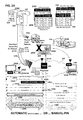
- FIGS. 2A-B are combined system and interaction sequence views of alternate embodiments of the current invention for automated setup of a station on a wireless local area network 207 in the home 100 .
- the home includes a WAP 206 coupled to computer 208 , and two stations, i.e. a set top box 202 A and a notebook computer 104 .
- the set top box couples to the TV 202 B.
- One of the stations, i.e. the set top box 202 A is delivered to the homeowner/subscriber from the ISP/Telco or trusted partner and is automatically paired with the WAP.
- this automatic pairing occurs with WSC enabled
- FIG. 2B the automatic pairing occurs with WSC disabled.
- FIG. 2A-B i.e. notebook computer 104 is paired using Prior Art manual pairing, e.g. WSC-PIN as discussed above in connection with FIG. 1 .
- the automated interaction between the WAP and the set top box 202 A is shown in the sequence on the lower left side of FIG. 2A and FIG. 2B .
- the user assisted interaction between the WAP and the notebook computer 104 is shown in the sequence on the lower right side of FIG. 2A and FIG. 2B .
- FIGS. 2A-2B a Telco 224 coupled to a cellular network 224 A and an ISP coupled to the Internet 222 are shown. These may be the same entity, as is the case with AT&T or separate entities as is the case with AT&T and Comcast.
- the ISP has an administrative/diagnostic connection 2208 with the WAPs in the homes of each of its subscribers.
- ISP 220 has an administrative connection with WAP 206 .
- Subscriber's on a premium HDTV content delivery plan are provided with a set top box provided by the ISP, or one of its trusted vendors, or trusted partners. The subject invention exploits that relationship to provide for automated pairing of the set top box delivered to a subscriber.
- the ISP maintains subscriber information records 232 which list the address of the home associated with each subscriber's account.
- the ISP also has asset records 230 A-B for each WAP and any stations, e.g. set top box, that have been or will be delivered to a subscriber.
- the station asset records 230 B contain the credentials for each station including for example, one or more of the serial number, medium access control (MAC) address, PIN, username, password, universally unique ID (UUID), cryptographic certificates, keys or other ‘secrets’.
- the ISP also correlates these assets with each corresponding subscriber in subscriber-asset records 234 .
- the credentials for the new station are acquired by an optical character recognition (OCR) scan of the label on the new station or by electronic access (Read/Write) to the station's firmware.
- OCR optical character recognition
- the credentials for the new station may be obtained directly by the ISP or one of the vendors in the ISP's supply chain. Alternately, the credentials for the new station may be obtained by a 3 rd party, such as an electronics store, which at time of purchase inputs the asset and customer information into the ISP's asset and subscriber databases via an API provided by the ISP.
- the ISP uses these records to correlate the home to which a set top box is to be delivered, with the WAP which services that home.
- the ISP injects a pairing record 220 C with the corresponding station credentials into the WAP that will service that station over its administrative connection 220 B.
- that WAP is WAP 206 .
- the injection/download of the pairing record may be proactive, e.g. timed to coincide with the delivery of the station to the home, or reactive to a request from the WAP after receiving a pairing request from a new station.
- the pairing record may include an “Install by date/time” to time limit the validity of the pairing record.
- the pairing record is used by the WAP to automate the pairing of the corresponding station, thereby avoiding user involvement in the setup of the station as well as any associated frustration.
- both the ISP 220 and the Telco 224 integrate asset records and subscriber records to provide automated station setup capability for the subscriber's smartphone(s) within the subscriber's home WLAN.
- the Telco has asset records for each smartphone with its MAC and other acquired credentials and subscriber records for the associated individual owner of the smartphone.
- the ISP integrates these records with its own asset and subscriber records correlating Telco and ISP subscribers to each other, and adding the smartphone asset records to the existing ISP asset records 230 B.
- a corresponding pairing record for each of the ISP subscriber's smartphones is then downloaded/injected into the corresponding WAP which services the subscriber's home WLAN, so that the smartphones are paired automatically onto the home WLAN.
- FIG. 2A the automated interaction between the WAP and the set top box 202 A is shown in the sequence on the lower left side of FIG. 2A and FIG. 2B .
- WSC is enabled.
- the automated sequence of steps performed by WAP 206 and station 202 A for an automated PIN pairing includes the periodic transmission by the WAP of a beacon which indicates the WAPs capabilities, including in this example the capability to support WSC protocol.
- a beacon which indicates the WAPs capabilities, including in this example the capability to support WSC protocol.
- One of those WAP beacons 220 A is shown, in which the WSC information element (IE) indicates that the selected registrar (SR) attribute is FALSE.
- the new station e.g.
- the WAP automatically correlates the station credentials in the probe request, e.g. the MAC address, with the injected pairing record 220 C. Additionally, the WAP automatically triggers a change in its beacon's WSC IE SR attribute to TRUE and the WSC mode to PIN. No station PIN entry by the user into the WAP is required, as represented by the “X” 208 A.
- the station 202 A Upon receipt of beacon 220 C the station 202 A detects the WAP is in active PIN mode and both it and the WAP proceed through subsequent sequence of: authentication in which authentication frames are set to open, association in which encryption type is determined, and extensible authentication protocol (EAP) in which a cryptographic key is exchanged.
- EAP extensible authentication protocol
- the Enrollee station 202 A disassociates and reconnects, using its new WLAN authentication Credential.
- the link is setup 220 D using the shared secret, i.e. the cryptographic key, for corresponding reauthentication and reassociation steps.
- the communication link 220 E established between the station and WAP the communication of user data via uplinks and downlinks between the station 202 A and the WAP can commence.
- the set top box 202 A may, prior to delivery, be injected with the SSID and password of the WAP with which it is to be associated, as well as with any required firmware update required to limit the station's probe requests to the WAP which includes the matching SSID in its beacons.
- the ISP obtains this information from the WAP after correlating the purchaser of the set top box, with a corresponding subscriber account, and further with the WAP which services the WLAN associated with that account.
- This embodiment of the invention is practicable on new stations regardless of whether WSC is enabled or disabled.
- a station with these capabilities is identified as ‘selective’ as to the WLAN's with which it will attempt to associate.
- a station without these capabilities is identified as ‘promiscuous’ since it may attempt to associate with any WLAN, regardless of the SSID associated therewith.
- FIG. 2A the user assisted interaction between the WAP and the notebook computer 104 is shown in the sequence on the lower right side of FIG. 2A and FIG. 2B .
- WSC is enabled.
- the WSC-PIN interaction between the enrollee station 104 and the registrar WAP 106 is identical to that discussed above in the manual WSC-PIN interaction shown in FIG. 1 .
- User interaction requires the entry of station PIN 104 A into a form field 208 B on an administrative page of the WAP as displayed on computer 208 , which has a wired connection directly to the WAP.
- FIG. 2B the automated interaction between the WAP and the set top box 202 A is shown in the sequence on the lower left side of FIG. 2A and FIG. 2B .
- WSC is disabled on the set top box. This improves the cryptographic security of the resultant link, by allowing a longer and hence more cryptographically secure pairing password than is provided by WSC, e.g. 34 bytes as opposed to the 8 byte WSC PIN.
- the station is setup for selective association, i.e. with a WAP whose beacons include the matching SSID.
- the automated sequence of steps performed by WAP 206 and station 202 A for an automated pairing includes the periodic transmission by the WAP of a beacon Which indicates the WAPs capabilities and SSID.
- One of those WAP beacons 240 A is shown which indicates the SSID of the WLAN.
- the new station e.g. set top box, delivered by the ISP to the subscriber, receives the beacon and if the beacon's SSID matches 238 A the SSID pre-programmed into the station by the ISP prior to shipment, then the station 202 A transmits a probe request 2388 A and in step 240 B the WAP automatically correlates the station credentials in the probe request, e.g. the MAC address, with the injected pairing record 2200 .
- the station and the WAP proceed through subsequent sequence of: authentication in which authentication frames are set to open, association in which encryption type is determined, and extensible authentication protocol (AP) in which a cryptographic key is exchanged.
- AP extensible authentication protocol
- the WAP uses any other relevant station credentials in the pairing record, such as cryptographic keys, password, pairwise master or transient key (PMK/PTK), group wise master or transient key (GMK/GTK), to perform the authentication and association and 4-way handshake 238 C, 240 C.
- the link setup is complete, the communication link 240 D established between the station 202 A and WAP supports uplinks and downlinks of user data.
- FIG. 2B the user assisted WSC-PIN interaction between the WAP and the notebook computer 104 is shown in the sequence on the lower right side of FIG. 2A and FIG. 2B .
- the Interaction between the enrollee station 104 and the registrar WAP 106 is shown.
- a WAP beacon 130 A is shown.
- the user enters the WAP's password 128 B into the station 104 .
- the initial shared secret is the WAP's password read by the user from the WAP's label and entered into the station's wireless administration page. Once the user has manually shared this secret by entering it in the station, the WAP and station may proceed securely through subsequent steps of authentication, association, and 4 way handshake using WPA2 or other cryptographic security protocol.
- the Enrollee station disassociates and reconnects, using its new WLAN authentication Credential for link setup 130 D. Once the link is setup is complete, uplink and downlink communications between the station 104 and the WAP 206 can commence securely.
- FIG. 3 is a detailed hardware block diagram of the system for automated setup of a station on a wireless local area network in a home.
- the ISP 220 includes a server 220 A coupled to the Internet 222 .
- the server includes an integrated circuit 300 and non-volatile storage 312 ; a bus 314 , an input/output (I/O) module 316 for interfacing with an administrator, a network module 322 for coupling to a network, a main memory 318 A for storing and executing program code 314 and data, a read only memory (ROM) 3188 for storing boot up program code.
- the server also includes an asset interface for acquiring credentials from a station before shipment to a subscriber and a diagnostic interface 320 for monitoring the WAPs in the subscriber residences serviced by the ISP.
- the integrated circuit 300 includes registers, clock, logic, and transistor gates for enabling the station provisioner 302 including executing associated program code 314 stored in non-volatile storage 312 .
- the non-volatile storage also includes asset records 316 A, subscriber records 316 B and correlated subscriber-asset records 316 C maintained by the station provisioner.
- the station provisioner includes: a subscriber-asset correlator 304 , an asset credential acquisition module 306 and a vendor API.
- the subscriber-asset correlator 304 correlates the purchaser of the new station with an existing Telco or ISP subscriber and the WAP which services their wireless home network, and injects a pairing record 220 C including acquired credentials for the new station, into the WAP.
- the asset Credential acquisition module acquires credentials for a new station prior to shipment to the identified one of the subscribers.
- the acquisition of station security credentials may be performed by the Telco/ISP directly, or by a member of their vendor supply chain, or by the trusted partner responsible for the sale of the new station, e.g. set top box.
- Station security credentials may be acquired by reading them from a label on the exterior packaging or housing of the new station using a scanner with optical character recognition (OCR) capability.
- Station credentials may also be read from the station's internal firmware using a temporary electronic coupling to the station's external ports/interfaces.
- the security credentials are acquired concurrently with writing them electronically into the non-volatile firmware, e.g. the BIOS, of the station before shipment to the purchaser.
- the vendor API manages access to the station provisioner by the ISP's trusted partners.
- FIG. 3 also shows one WAP 206 of the plurality of WAPs serviced by the ISP 220 .
- WAP 206 provides wireless connectivity to the Internet via WLAN 207 within the corresponding subscriber's home.
- WAP 206 supports communications with each associated station, e.g. set top box 202 A.
- the WAP in this embodiment of the invention is identified as a 2 ⁇ 2 WAP supporting as many as 2 discrete communication streams “a”, “b” over two antennas 356 .
- the WAP in this embodiment of the invention supports multiple-input multiple output (MIMO) communications. In alternate embodiments of the invention the WAP may not support MIMO, and may have a single antenna.
- the WAP in this embodiment of the invention supports orthogonal frequency division multiplexed (OFDM) communications. In alternate embodiments of the invention the WAP may not support OFDM, and may communicate on a single communication channel.
- OFDM orthogonal frequency division multiplexed
- the subject 2 ⁇ 2 WAP includes: integrated circuit 330 and non-volatile storage 340 ; a bus 348 , a WLAN stage 350 including a base band stage 352 , a radio frequency (RF) stage 354 and antennas 356 .
- the WAP RF stage supports one or more IEEE 802.11 wireless local area network (WLAN) protocols.
- the WAP also includes a cable or DSL modem 346 for coupling via fiber or copper to the Internet Service Provider (ISP) 220 .
- the integrated circuit 330 includes registers, clock, logic, and transistor gates for enabling the secure link manager 332 including executing associated program code 342 stored in non-volatile storage 340 .
- Each outgoing packet is encoded and scrambled in encoder scrambler module 360 and may be de-multiplexed into more than one stream.
- the outgoing communication is demultiplexed into two streams in demultiplexer 361 .
- Each stream “a”, “b” is subject to interleaving and constellation mapping in an associated interleaver mapper 362 and passed to the spatial mapper 364 .
- the spatial mapper uses a beamsteering matrix 364 A determined from a sounding of the link with station 1202 A to steer subsequent communications thereto.
- the beamsteering matrix specifies specific phase and amplitude adjustments for the communications on each antenna designed to steering the outgoing communications toward the recipient station.
- the combined streams “ab” are injected into each of the OFDM tones or sub-channels 366 A-B of the inverse discrete Fourier Transform (IDFT) modules 368 A-B respectively.
- Each IDFT module is coupled via associated upconversion circuitry in the RF stage 354 to an associated one of the pair of antenna 356 .
- Reception of communication packets from a station, e.g. set top box 202 A begins in the RF stage 354 .
- received communications “ab” on each of the two antenna 356 from station 202 A are downconverted and supplied as input to the baseband stage 352 .
- the received communications are then transformed from the time to the frequency domain in the discrete Fourier Transform (DFT) modules 370 A-B from which they are output as discrete orthogonal frequency division multiplexed (OFDM) tones/sub-carriers/sub-channels 372 A-B. All received streams are then subject to equalization in equalizer 374 .
- DFT discrete Fourier Transform
- Received steam(s) “ab” are subject to de-interleaving and constellation demapping in associated deinterleaver demapper modules 376 , followed by multiplexing in multiplexer 377 .
- the received, data “ab” is decoded and descrambled in decoder descrambler 378 .
- the integrated circuit 330 includes registers, clock, logic, and transistor gates for enabling the secure link manager 332 including executing associated program code 342 stored in non-volatile storage 340 .
- the non-volatile storage also includes one or more pairing records 220 C injected by the ISP 220 .
- the secure link manager includes: an ISP API 334 , a station pairing module 336 with automatic and manual pairing submodules 336 A, 336 B respectively, and a secure link setup module 338 .
- the ISP API -couples the WAP to the diagnostic interface 320 of the ISP 220 .
- the station pairing module 336 handles both: a) the automatic secure pairing of a station for which there is a corresponding pairing record 220 C injected by the station provisioner of the ISP 220 via auto pairing sub-module 336 A, as well as b) the manual secure pairing of a station for which there is not a pairing record via manual pairing sub-module 336 B.
- Manual pairing capability includes support for pairing protocols such as: WiFi WSC: PIN, PBC, NFC; as well as manual pairings with WSC disabled.
- the station pairing module 336 supports both automatic pairing without any homeowner involvement of a station for which there is a pairing record together with manual pairing of another station which manual pairing requires homeowner involvement in the pairing, e.g. WiFi WSC PIN/PBC/NFC.
- the secure link setup module supports the protocols associated with secure setup of each link accepted by the station pairing module for pairing, regardless of the type of pairing, i.e. automatic or manual. Representative ones of those protocols are shown on the lower left and lower right sides of FIGS. 2A-2B as discussed above.
- the new wireless station itself e.g. set top box
- the new wireless station may be configured with its own integrated circuit including: registers, clock, logic, and transistor gates for enabling a selective association module including executing associated program code which makes station probe requests to an active WLAN conditional on a match between an SSID injected into the station before shipment with the SSID broadcast by a WAP in each WAP beacon.
- FIG. 4 is a detailed circuit diagram of the circuits for automated setup of a station on a wireless local area network in a home.
- the station provisioning circuits on the ISP and or one or more of its trusted partners include: the asset credential acquisition circuit 400 , and the subscriber-asset correlator circuit 430 .
- the asset credential acquisition circuit 400 includes one or more of: a label scanner 404 , a credential reader 406 , and a credential injector 408 . These sub-circuits acquire security credentials from each new set top box or other station type, before delivery to a subscriber's home and pass the acquired credentials via API 402 to the subscriber-asset correlator circuit 430 .
- a purchase order 432 A is received for a new set top box 420 A from the ISP or trusted partner's order processing unit 432 .
- the purchase order includes the SSID of the WLAN of the subscriber to whose home the set top box will be shipped.
- the SSID may be listed in a field in a corresponding one of either the subscriber or WAP asset records in tables 438 A-B respectively.
- the set top box 420 A is shown being boxed at the end of a production line 422 after which it will be picked up 424 A and delivered 424 B at the home 100 of a targeted subscriber.
- the label scanner 404 includes built in optical character recognition (OCR) capability to acquire security credentials from a label 420 B on the exterior housing or packaging of the set top box prior to shipment.
- OCR optical character recognition
- the credential reader 406 includes a cable for connecting to one of the set top box ports and reading the credentials from the internal firmware on the STB.
- the credential injector 408 generates credentials and injects them into the firmware on the STB, via a cable connection to one of the set top box ports.
- the acquired station credentials include, in an embodiment of the invention: the serial number, medium access control (MAC) address, PIN, username, password, or a universally unique ID (UUID).
- Station credentials may also include: cryptographic certificates, keys or other ‘secrets’ to be shared with the WAP.
- the acquired station credentials may include the unique SSID of the WAP which services an identified subscriber's wireless home network, as determined by the subscriber-asset correlator circuit and as passed back to the asset credential acquisition circuit for injection into the station via the credential injector 408 .
- the subscriber-asset correlator circuit 430 accepts the electronic delivery of the bill of lading (B/L) 428 from the asset credential acquisition circuit.
- the bill of lading identifies the purchaser, the delivery address, the station, and the acquired station credentials.
- the bill of lading is parsed by the order processing unit 432 into customer 434 A and new asset 434 B portions.
- the customer to whom the set box is to be delivered is identified as one of the ISP's subscribers.
- Corresponding updates or additions are made to the ISP's existing subscriber and asset tables 438 A-B respectively.
- a combined 440 subscriber record and asset record 442 is then generated and passed to the WAP credential injector 444 .
- the WAP credential injector identifies which among the millions of distinct WLANs 450 under management is servicing the subscriber listed in the combined subscriber asset record 442 . Once that WLAN and its associated WAP is identified the WAP credential Injector injects a pairing record 220 C into the WAP through its existing diagnostic link to that WAP.
- the pairing record contains the acquired credentials for the new station 420 B being delivered to the subscriber.
- the identified WLAN is WLAN 207 and the corresponding WAP servicing that WLAN is WAP 206 .
- the secure link management circuit 460 on WAP 206 receives the injected pairing record 220 C via the ISP's existing diagnostic API 461 .
- the WAP receives a probe request from a station, e.g. probe request 462 , it demodulates the received probe packet in its receive path RF and baseband circuits described above in FIG. 3 . Then a packet disassembler 464 passes the probe packet to the station pairing circuit 466 .
- the automatic pairing sub-circuit 466 A thereof determines whether the station credentials in the probe request match those of an existing pairing record, e.g. pairing record 220 C. If they do, then control passes 468 B to the secure link setup circuit 470 .
- the manual pairing sub-circuit includes support for pairing protocols such as: WiFi WSC as well as manual pairings with WSC disabled. If the manual pairing of the station making the probe request succeeds, then control is again passed 468 B to the secure link setup circuit 470 . Alternately, if either auto or manual pairing fails at any initial probe or subsequent phase of the related protocol then the pairing is rejected 468 A.
- the secure link setup circuit 470 supports cryptographic setup of the link with the paired station, in a number of protocols including WPS, WPA/WPA2 for example.
- the packet assembler 472 packetizes the probe response, authentication, association, and EAP or 4-way handshake packets associated with the relevant protocol.
- the packets are then modulated in the baseband and RF transmit path components described above in FIG. 3 , and transmitted to the corresponding station, e.g. set top box 420 B.
- a WAP probe response packet 476 is shown being transmitted by the WAP to station 420 B.
- FIG. 4 also shows an embodiment of the invention where the station includes a selective association circuit.
- This embodiment of the invention improves security by making the station selective rather than promiscuous in terms of the WAPs with which it can associate.
- the circuit requires for its operation the injection into the new station prior to shipment by the asset credential acquisition circuit 400 of station credentials which include the SSID of the identified subscriber's WLAN on which the station will be installed.
- the selective association circuit includes on its receive path a packet disassembler 484 which disassembles a received WAP beacon packet 482 and passes it to the WAP identifier 486 .
- the WAP identifier compares an injected station credential SSID with the SSID in the received beacon packet 482 . If there is a match between the injected SSID and the beacon SSID then the packet assembler 488 transmits a probe request, e.g. probe request 462 to the WAP to initiate the secure pairing process.
- FIG. 5 is a process flow diagram of processes associated with automated setup of a station on a wireless local area network in a home.
- a station provisioning block 500 of processes performed in the “cloud” is shown.
- a secure link management block 540 of processes performed on the WAP are shown.
- An optional selective association block 520 of processes performed on a new station are shown.
- the Station provisioning block of processes 500 commences with the acceptance of an order from a purchaser of a new station, e.g. a set top box, in process 502 .
- the purchaser of the new station is correlated with an existing Telco or ISP subscriber and their corresponding WLAN account.
- a scenario in which this correlation can take is the purchase of a set top box by a Telco/ISP subscriber from the Telco/ISP itself. For example, a Comcast/AT&T subscriber orders a set top box from Comcast/AT&T directly.
- Another scenario in which this correlation can take is the purchase of a set top box from a trusted partner of a Telco/ISP by a customer who is also a Telco/ISP subscriber.
- Point of purchase information on the customer and set top box is provided by the trusted partner to the Telco/ISP which then allows the Telco/ISP to perform the correlation.
- the Telco/ISP identifies the WAP associated with the subscriber's WLAN account is identified. Identification includes in an embodiment or the invention the service set identifier (SSID) associated with the WAP.
- SSID service set identifier
- station credentials may include for example: the serial number, medium access control (MAC) address, PIN, username, password, or a universally unique ID (UUID).
- Station credentials may also include cryptographic certificates, keys or Other ‘secret’ to be shared with the WAP.
- the acquisition of station security credentials may be performed by the Telco/ISP directly, or by a member of their vendor supply chain, or by the trusted partner responsible for the sale of the new station, e.g. set top box.
- the security credentials are acquired by reading them from the new station.
- Station security credentials may be read from a label on the exterior packaging or housing of the new station.
- Reading of these credentials may be accomplished with an optical character reader (OCR) from the label on the exterior packaging or housing of the new station.
- Station credentials may also be read from the station's internal firmware using a temporary electronic coupling to the station's external ports/interfaces.
- the security credentials are acquired concurrently with writing them electronically into the non volatile firmware, e.g. the BIOS, of the station before shipment to the purchaser.
- the credentials injected into the station may include the SSID of the WAP and WLAN with which the new station is expected to selectively associate, if that SSID was previously determined in process 506 .
- a pairing record including the acquired security credentials for the new station, e.g.
- the pairing record may also include a start and or expiry date and or time.
- Next control is either passed to the optional selective association block 520 of processes which may be performed on the new station or directly to the secure link management block 540 of processes performed on the WAP.
- the optional selective association block 520 of processes which may be performed on a new station begin with process 522 .
- the station scans the plurality of WiFi channels for a transmitted WAP beacon which includes an SSID which matches any SSID injected into the station in process 508 .
- the station transmits probe requests only to a WAP whose transmitted beacons include the matching SSID.
- Next control is passed to the secure link management block 540 of processes.
- the secure link management block 540 of processes are performed on the subscriber's WAP.
- the pairing record(s) containing the acquired security credentials for the prospective new station from the ISP or Telco are received.
- any probe requests that are received by the WAP from a station are comp red with any existing pairing record(s) to determine whether station identifiers in the probe request match the received security credentials in the injected pairing record(s).
- decision process a determination is made as to whether station identifiers in the probe request match the credentials in any injected pairing record. If not, then control is passed to traditional manual pairing processes 540 such as the WSC processes shown in FIG. 1 , and further automatic paring is aborted.
- any other injected security credentials of the subject pairing record which are relevant to further sets in link setup, including link setup packet decryption are utilized for decryption/encryption the link setup packet(s) between the new station and the WAP.
- decision process 554 a determination is made as to whether the link setup is secure. If it is not, as evidenced for example by a failure of encryption or decryption due to non-matching cryptographic keys, then link setup is aborted in process 556 . Alternately, if a secure link is established between the new station and the WAP then control is passed to process 558 . In process 558 secure uplink and downlink communications between the station and the WAP are established.
- the components and processes disclosed herein may be implemented a software, hardware, firmware, or a combination thereof including program code software, a memory element for storing the program code software and a hardware processor including registers, logic, and transistor gates for executing the program code software, without departing from the scope of the Claimed Invention.
Landscapes
- Engineering & Computer Science (AREA)
- Computer Networks & Wireless Communication (AREA)
- Signal Processing (AREA)
- Computer Security & Cryptography (AREA)
- Physics & Mathematics (AREA)
- Electromagnetism (AREA)
- General Engineering & Computer Science (AREA)
- Computing Systems (AREA)
- Computer Hardware Design (AREA)
- Databases & Information Systems (AREA)
- Health & Medical Sciences (AREA)
- General Health & Medical Sciences (AREA)
- Toxicology (AREA)
- Artificial Intelligence (AREA)
- Computer Vision & Pattern Recognition (AREA)
- General Physics & Mathematics (AREA)
- Theoretical Computer Science (AREA)
- Mobile Radio Communication Systems (AREA)
Abstract
Description
Claims (20)
Priority Applications (1)
| Application Number | Priority Date | Filing Date | Title |
|---|---|---|---|
| US15/247,905 US9756450B1 (en) | 2015-08-26 | 2016-08-25 | Automated setup of a station on a wireless home network |
Applications Claiming Priority (2)
| Application Number | Priority Date | Filing Date | Title |
|---|---|---|---|
| US201562210383P | 2015-08-26 | 2015-08-26 | |
| US15/247,905 US9756450B1 (en) | 2015-08-26 | 2016-08-25 | Automated setup of a station on a wireless home network |
Publications (1)
| Publication Number | Publication Date |
|---|---|
| US9756450B1 true US9756450B1 (en) | 2017-09-05 |
Family
ID=59701305
Family Applications (1)
| Application Number | Title | Priority Date | Filing Date |
|---|---|---|---|
| US15/247,905 Active US9756450B1 (en) | 2015-08-26 | 2016-08-25 | Automated setup of a station on a wireless home network |
Country Status (1)
| Country | Link |
|---|---|
| US (1) | US9756450B1 (en) |
Cited By (7)
| Publication number | Priority date | Publication date | Assignee | Title |
|---|---|---|---|---|
| CN107959933A (en) * | 2017-11-14 | 2018-04-24 | 深圳市共进电子股份有限公司 | PLC device to code method, apparatus, equipment and storage medium in WiFi wireless networks |
| CN108012250A (en) * | 2017-11-23 | 2018-05-08 | 北京洪泰同创信息技术有限公司 | Data transmission method and data transmission device |
| US10206083B2 (en) * | 2016-12-30 | 2019-02-12 | Intel Corporation | Using wireless display docking technology over infrastructure networks |
| US20190246440A1 (en) * | 2018-02-07 | 2019-08-08 | Samsung Electronics Co., Ltd. | Electronic device for connecting with external devices based on connection information and operating method thereof |
| CN110891272A (en) * | 2018-09-10 | 2020-03-17 | 奇点新源国际技术开发(北京)有限公司 | Wireless network access authentication method and device |
| US20220217603A1 (en) * | 2017-12-22 | 2022-07-07 | Arris Enterprises Llc | Method for providing steering in a wi-fi network |
| US20220286577A1 (en) * | 2021-03-04 | 2022-09-08 | Seiko Epson Corporation | Image reader and method of setting wireless setup information for image reader |
Citations (22)
| Publication number | Priority date | Publication date | Assignee | Title |
|---|---|---|---|---|
| US20040210450A1 (en) * | 2002-11-19 | 2004-10-21 | Michael Atencio | System architecture for self-provisoning services and method of use |
| US20060236376A1 (en) | 2005-04-01 | 2006-10-19 | Liu Calvin Y | Wireless security using media access control address filtering with user interface |
| US7218930B2 (en) | 2003-07-31 | 2007-05-15 | Acer Incorporated | Automatic recognition system for use in a wireless local area network (LAN) |
| US20080252419A1 (en) | 2007-04-11 | 2008-10-16 | Batchelor Michael D | Wireless access control system and method |
| US20100008259A1 (en) * | 2008-07-14 | 2010-01-14 | Qualcomm Incorporated | Systems, methods and apparatus to facilitate identification and acquisition of access points |
| US20100287582A1 (en) | 2009-05-07 | 2010-11-11 | Barnett Jr Thomas C | Auto discovery and auto provisioning of set top boxes |
| US7860485B2 (en) | 2004-07-07 | 2010-12-28 | Thomson Licensing | Device and process for wireless local area network association and corresponding products |
| US7941122B2 (en) | 2004-07-07 | 2011-05-10 | Thomson Licensing | Device and process for wireless local area network association |
| US20110252439A1 (en) | 2010-04-08 | 2011-10-13 | Chung-Chiu Lai | Method for providing multimedia streaming service and related wireless packet relay apparatus and wireless set-top box |
| US20110306294A1 (en) * | 2010-06-11 | 2011-12-15 | Nintendo Co., Ltd. | Portable information terminal, portable information system, and computer-readable storage medium having stored thereon portable information terminal control program |
| US20120017088A1 (en) | 2009-04-08 | 2012-01-19 | Zte Corporation | Wireless local area network terminal pre-authentication method and wireless local area network system |
| US8122130B2 (en) | 2006-10-03 | 2012-02-21 | Research In Motion Limited | Access control system and method for wireless application provisioning |
| US20130031225A1 (en) * | 2011-07-27 | 2013-01-31 | Amazon Technologies, Inc. | Remotely preconfiguring a computing device |
| US8495686B2 (en) | 2010-12-27 | 2013-07-23 | Verizon Patent And Licensing Inc. | Method and apparatus for controlling a set top box over a wireless adhoc connection |
| US20140057598A1 (en) | 2011-05-13 | 2014-02-27 | Research In Motion Limited | Automatic access to network nodes |
| US20140115718A1 (en) | 2012-10-18 | 2014-04-24 | Broadcom Corporation | Set Top Box Architecture With Application Based Security Definitions |
| US20140115624A1 (en) | 2012-10-18 | 2014-04-24 | Broadcom Corporation | Security and Certification in a Set Top Box Device Having a Mixed Operating System or Framework Environment |
| US8713589B2 (en) | 2010-12-23 | 2014-04-29 | Microsoft Corporation | Registration and network access control |
| US20140137149A1 (en) | 2011-08-12 | 2014-05-15 | Huawei Device Co., Ltd. | Set-Top Box Authentication Method and Apparatus |
| US20140259103A1 (en) | 2013-03-11 | 2014-09-11 | Don Gunasekara | Access control, establishing trust in a wireless network |
| WO2015012822A1 (en) | 2013-07-24 | 2015-01-29 | Thomson Licensing | Method and apparatus for secure access to access devices |
| US9071972B1 (en) | 2013-02-25 | 2015-06-30 | Quantenna Communications Inc. | Asynchronous tiered access control to a wireless home network |
-
2016
- 2016-08-25 US US15/247,905 patent/US9756450B1/en active Active
Patent Citations (23)
| Publication number | Priority date | Publication date | Assignee | Title |
|---|---|---|---|---|
| US20040210450A1 (en) * | 2002-11-19 | 2004-10-21 | Michael Atencio | System architecture for self-provisoning services and method of use |
| US7218930B2 (en) | 2003-07-31 | 2007-05-15 | Acer Incorporated | Automatic recognition system for use in a wireless local area network (LAN) |
| US7860485B2 (en) | 2004-07-07 | 2010-12-28 | Thomson Licensing | Device and process for wireless local area network association and corresponding products |
| US7941122B2 (en) | 2004-07-07 | 2011-05-10 | Thomson Licensing | Device and process for wireless local area network association |
| US20060236376A1 (en) | 2005-04-01 | 2006-10-19 | Liu Calvin Y | Wireless security using media access control address filtering with user interface |
| US8122130B2 (en) | 2006-10-03 | 2012-02-21 | Research In Motion Limited | Access control system and method for wireless application provisioning |
| US20080252419A1 (en) | 2007-04-11 | 2008-10-16 | Batchelor Michael D | Wireless access control system and method |
| US20100008259A1 (en) * | 2008-07-14 | 2010-01-14 | Qualcomm Incorporated | Systems, methods and apparatus to facilitate identification and acquisition of access points |
| US20120017088A1 (en) | 2009-04-08 | 2012-01-19 | Zte Corporation | Wireless local area network terminal pre-authentication method and wireless local area network system |
| US8533461B2 (en) | 2009-04-08 | 2013-09-10 | Zte Corporation | Wireless local area network terminal pre-authentication method and wireless local area network system |
| US20100287582A1 (en) | 2009-05-07 | 2010-11-11 | Barnett Jr Thomas C | Auto discovery and auto provisioning of set top boxes |
| US20110252439A1 (en) | 2010-04-08 | 2011-10-13 | Chung-Chiu Lai | Method for providing multimedia streaming service and related wireless packet relay apparatus and wireless set-top box |
| US20110306294A1 (en) * | 2010-06-11 | 2011-12-15 | Nintendo Co., Ltd. | Portable information terminal, portable information system, and computer-readable storage medium having stored thereon portable information terminal control program |
| US8713589B2 (en) | 2010-12-23 | 2014-04-29 | Microsoft Corporation | Registration and network access control |
| US8495686B2 (en) | 2010-12-27 | 2013-07-23 | Verizon Patent And Licensing Inc. | Method and apparatus for controlling a set top box over a wireless adhoc connection |
| US20140057598A1 (en) | 2011-05-13 | 2014-02-27 | Research In Motion Limited | Automatic access to network nodes |
| US20130031225A1 (en) * | 2011-07-27 | 2013-01-31 | Amazon Technologies, Inc. | Remotely preconfiguring a computing device |
| US20140137149A1 (en) | 2011-08-12 | 2014-05-15 | Huawei Device Co., Ltd. | Set-Top Box Authentication Method and Apparatus |
| US20140115718A1 (en) | 2012-10-18 | 2014-04-24 | Broadcom Corporation | Set Top Box Architecture With Application Based Security Definitions |
| US20140115624A1 (en) | 2012-10-18 | 2014-04-24 | Broadcom Corporation | Security and Certification in a Set Top Box Device Having a Mixed Operating System or Framework Environment |
| US9071972B1 (en) | 2013-02-25 | 2015-06-30 | Quantenna Communications Inc. | Asynchronous tiered access control to a wireless home network |
| US20140259103A1 (en) | 2013-03-11 | 2014-09-11 | Don Gunasekara | Access control, establishing trust in a wireless network |
| WO2015012822A1 (en) | 2013-07-24 | 2015-01-29 | Thomson Licensing | Method and apparatus for secure access to access devices |
Non-Patent Citations (3)
| Title |
|---|
| "Authentication Types for Wireless Devices ", 2009, Cisco Systems Inc. |
| "Wi-Fi Simple Configuration Technical Specification", Version 2.0.5, Wi-Fi Alliance, 2014. |
| Jie Luo, " QUALCOMM: Simple & Secure Wi-Fi Configuration for Internet of Things" Dec. 1, 2013; Electrical and Computer Sciences University of California Berkeley. |
Cited By (12)
| Publication number | Priority date | Publication date | Assignee | Title |
|---|---|---|---|---|
| US10206083B2 (en) * | 2016-12-30 | 2019-02-12 | Intel Corporation | Using wireless display docking technology over infrastructure networks |
| CN107959933A (en) * | 2017-11-14 | 2018-04-24 | 深圳市共进电子股份有限公司 | PLC device to code method, apparatus, equipment and storage medium in WiFi wireless networks |
| CN107959933B (en) * | 2017-11-14 | 2021-08-06 | 深圳市共进电子股份有限公司 | Code matching method, device, device and storage medium for PLC equipment in WiFi wireless network |
| CN108012250A (en) * | 2017-11-23 | 2018-05-08 | 北京洪泰同创信息技术有限公司 | Data transmission method and data transmission device |
| US20220217603A1 (en) * | 2017-12-22 | 2022-07-07 | Arris Enterprises Llc | Method for providing steering in a wi-fi network |
| US11601857B2 (en) * | 2017-12-22 | 2023-03-07 | Arris Enterprises Llc | Method for providing steering in a Wi-Fi network |
| US20190246440A1 (en) * | 2018-02-07 | 2019-08-08 | Samsung Electronics Co., Ltd. | Electronic device for connecting with external devices based on connection information and operating method thereof |
| US10743359B2 (en) * | 2018-02-07 | 2020-08-11 | Samsung Electronics Co., Ltd. | Electronic device for connecting with external devices based on connection information and operating method thereof |
| CN110891272A (en) * | 2018-09-10 | 2020-03-17 | 奇点新源国际技术开发(北京)有限公司 | Wireless network access authentication method and device |
| CN110891272B (en) * | 2018-09-10 | 2022-12-09 | 奇点新源国际技术开发(北京)有限公司 | A wireless network access authentication method and device |
| US20220286577A1 (en) * | 2021-03-04 | 2022-09-08 | Seiko Epson Corporation | Image reader and method of setting wireless setup information for image reader |
| US12273796B2 (en) * | 2021-03-04 | 2025-04-08 | Seiko Epson Corporation | Image reader and method of setting wireless setup information for image reader |
Similar Documents
| Publication | Publication Date | Title |
|---|---|---|
| EP3750342B1 (en) | Mobile identity for single sign-on (sso) in enterprise networks | |
| CN105554747B (en) | Wireless network connecting method, apparatus and system | |
| US8261078B2 (en) | Access to services in a telecommunications network | |
| US8543814B2 (en) | Method and apparatus for using generic authentication architecture procedures in personal computers | |
| US8392712B1 (en) | System and method for provisioning a unique device credential | |
| US8266681B2 (en) | System and method for automatic network logon over a wireless network | |
| DK1348280T3 (en) | Approval data communications | |
| EP3298813B1 (en) | A communications system, a station, a controller of a light source, and methods therein for authenticating the station to access a network. | |
| US20050114680A1 (en) | Method and system for providing SIM-based roaming over existing WLAN public access infrastructure | |
| CN109041205A (en) | Client registers method, apparatus and system | |
| US20060045267A1 (en) | Device and process for wireless local area network association and corresponding products | |
| CN107040922A (en) | Wireless network connecting method, apparatus and system | |
| US7941122B2 (en) | Device and process for wireless local area network association | |
| US8353011B2 (en) | Apparatus, method and computer program product providing mobile node identities in conjunction with authentication preferences in generic bootstrapping architecture (GBA) | |
| US11924192B2 (en) | Systems and methods for secure automated network attachment | |
| JP2023162296A (en) | Non-3GPP device access to core network | |
| US8442527B1 (en) | Cellular authentication for authentication to a service | |
| US20070098176A1 (en) | Wireless LAN security system and method | |
| Matos et al. | Secure hotspot authentication through a near field communication side-channel | |
| CN113194476B (en) | Equipment activation and authentication binding method | |
| US20250056233A1 (en) | Methods and devices facilitating secure wi-fi pairing | |
| US20200162909A1 (en) | Improvements in and relating to network communications | |
| US20250211987A1 (en) | Secure access point authentication credential generation in a mobile device | |
| CN109981420B (en) | Intelligent device network distribution method and intelligent device | |
| CN102685742A (en) | WLAN (Wireless Local Area Network ) access authentication method and device |
Legal Events
| Date | Code | Title | Description |
|---|---|---|---|
| AS | Assignment |
Owner name: QUANTENNA COMMUNICATIONS, INC., CALIFORNIA Free format text: ASSIGNMENT OF ASSIGNORS INTEREST;ASSIGNORS:CARRERA, MARIANNA;DASH, DEBASHIS;AMIRI, BAHADOR;REEL/FRAME:039810/0463 Effective date: 20160831 |
|
| STCF | Information on status: patent grant |
Free format text: PATENTED CASE |
|
| AS | Assignment |
Owner name: DEUTSCHE BANK AG NEW YORK BRANCH, AS COLLATERAL AG Free format text: PATENT SECURITY AGREEMENT;ASSIGNOR:ON SEMICONDUCTOR CONNECTIVITY SOLUTIONS, INC.;REEL/FRAME:051426/0410 Effective date: 20191220 Owner name: DEUTSCHE BANK AG NEW YORK BRANCH, AS COLLATERAL AGENT, NEW YORK Free format text: PATENT SECURITY AGREEMENT;ASSIGNOR:ON SEMICONDUCTOR CONNECTIVITY SOLUTIONS, INC.;REEL/FRAME:051426/0410 Effective date: 20191220 |
|
| MAFP | Maintenance fee payment |
Free format text: PAYMENT OF MAINTENANCE FEE, 4TH YEAR, LARGE ENTITY (ORIGINAL EVENT CODE: M1551); ENTITY STATUS OF PATENT OWNER: LARGE ENTITY Year of fee payment: 4 |
|
| AS | Assignment |
Owner name: ON SEMICONDUCTOR CONNECTIVITY SOLUTIONS, INC., CALIFORNIA Free format text: MERGER AND CHANGE OF NAME;ASSIGNORS:RAPTOR OPERATIONS SUB, INC.;QUANTENNA COMMUNICATIONS, INC.;REEL/FRAME:063271/0657 Effective date: 20190619 Owner name: SEMICONDUCTOR COMPONENTS INDUSTRIES, LLC, ARIZONA Free format text: ASSIGNMENT OF ASSIGNORS INTEREST;ASSIGNOR:ON SEMICONDUCTOR CONNECTIVITY SOLUTIONS, INC.;REEL/FRAME:063280/0591 Effective date: 20230406 |
|
| AS | Assignment |
Owner name: ON SEMICONDUCTOR CONNECTIVITY SOLUTIONS, INC., ARIZONA Free format text: RELEASE BY SECURED PARTY;ASSIGNOR:DEUTSCHE BANK AG NEW YORK BRANCH;REEL/FRAME:063516/0736 Effective date: 20230501 Owner name: ON SEMICONDUCTOR CONNECTIVITY SOLUTIONS, INC., ARIZONA Free format text: RELEASE OF SECURITY INTEREST;ASSIGNOR:DEUTSCHE BANK AG NEW YORK BRANCH;REEL/FRAME:063516/0736 Effective date: 20230501 |
|
| AS | Assignment |
Owner name: MAXLINEAR, INC., CALIFORNIA Free format text: ASSIGNMENT OF ASSIGNORS INTEREST;ASSIGNOR:SEMICONDUCTOR COMPONENTS INDUSTRIES, LLC;REEL/FRAME:063572/0701 Effective date: 20230502 |
|
| AS | Assignment |
Owner name: ON SEMICONDUCTOR CONNECTIVITY SOLUTIONS, INC., AS GRANTOR, ARIZONA Free format text: RELEASE OF SECURITY INTEREST IN PATENTS, RECORDED AT REEL 051426, FRAME 0410;ASSIGNOR:DEUTSCHE BANK AG NEW YORK BRANCH, AS COLLATERAL AGENT;REEL/FRAME:064067/0340 Effective date: 20230622 |
|
| MAFP | Maintenance fee payment |
Free format text: PAYMENT OF MAINTENANCE FEE, 8TH YEAR, LARGE ENTITY (ORIGINAL EVENT CODE: M1552); ENTITY STATUS OF PATENT OWNER: LARGE ENTITY Year of fee payment: 8 |