US9743910B2 - Ultrasonic diagnostic apparatus, ultrasonic image processing apparatus, medical image diagnostic apparatus, and medical image processing apparatus - Google Patents
Ultrasonic diagnostic apparatus, ultrasonic image processing apparatus, medical image diagnostic apparatus, and medical image processing apparatus Download PDFInfo
- Publication number
- US9743910B2 US9743910B2 US13/871,463 US201313871463A US9743910B2 US 9743910 B2 US9743910 B2 US 9743910B2 US 201313871463 A US201313871463 A US 201313871463A US 9743910 B2 US9743910 B2 US 9743910B2
- Authority
- US
- United States
- Prior art keywords
- tone correction
- processing circuitry
- histogram
- ultrasonic
- calculates
- Prior art date
- Legal status (The legal status is an assumption and is not a legal conclusion. Google has not performed a legal analysis and makes no representation as to the accuracy of the status listed.)
- Active, expires
Links
Images




Classifications
-
- A—HUMAN NECESSITIES
- A61—MEDICAL OR VETERINARY SCIENCE; HYGIENE
- A61B—DIAGNOSIS; SURGERY; IDENTIFICATION
- A61B8/00—Diagnosis using ultrasonic, sonic or infrasonic waves
- A61B8/52—Devices using data or image processing specially adapted for diagnosis using ultrasonic, sonic or infrasonic waves
- A61B8/5269—Devices using data or image processing specially adapted for diagnosis using ultrasonic, sonic or infrasonic waves involving detection or reduction of artifacts
-
- A—HUMAN NECESSITIES
- A61—MEDICAL OR VETERINARY SCIENCE; HYGIENE
- A61B—DIAGNOSIS; SURGERY; IDENTIFICATION
- A61B8/00—Diagnosis using ultrasonic, sonic or infrasonic waves
- A61B8/08—Clinical applications
- A61B8/0883—Clinical applications for diagnosis of the heart
-
- A—HUMAN NECESSITIES
- A61—MEDICAL OR VETERINARY SCIENCE; HYGIENE
- A61B—DIAGNOSIS; SURGERY; IDENTIFICATION
- A61B8/00—Diagnosis using ultrasonic, sonic or infrasonic waves
- A61B8/13—Tomography
- A61B8/14—Echo-tomography
-
- G06T5/009—
-
- G—PHYSICS
- G06—COMPUTING OR CALCULATING; COUNTING
- G06T—IMAGE DATA PROCESSING OR GENERATION, IN GENERAL
- G06T5/00—Image enhancement or restoration
- G06T5/40—Image enhancement or restoration using histogram techniques
-
- G—PHYSICS
- G06—COMPUTING OR CALCULATING; COUNTING
- G06T—IMAGE DATA PROCESSING OR GENERATION, IN GENERAL
- G06T5/00—Image enhancement or restoration
- G06T5/90—Dynamic range modification of images or parts thereof
- G06T5/92—Dynamic range modification of images or parts thereof based on global image properties
-
- A—HUMAN NECESSITIES
- A61—MEDICAL OR VETERINARY SCIENCE; HYGIENE
- A61B—DIAGNOSIS; SURGERY; IDENTIFICATION
- A61B8/00—Diagnosis using ultrasonic, sonic or infrasonic waves
- A61B8/06—Measuring blood flow
-
- A—HUMAN NECESSITIES
- A61—MEDICAL OR VETERINARY SCIENCE; HYGIENE
- A61B—DIAGNOSIS; SURGERY; IDENTIFICATION
- A61B8/00—Diagnosis using ultrasonic, sonic or infrasonic waves
- A61B8/46—Ultrasonic, sonic or infrasonic diagnostic devices with special arrangements for interfacing with the operator or the patient
- A61B8/461—Displaying means of special interest
- A61B8/466—Displaying means of special interest adapted to display 3D data
-
- A—HUMAN NECESSITIES
- A61—MEDICAL OR VETERINARY SCIENCE; HYGIENE
- A61B—DIAGNOSIS; SURGERY; IDENTIFICATION
- A61B8/00—Diagnosis using ultrasonic, sonic or infrasonic waves
- A61B8/48—Diagnostic techniques
- A61B8/483—Diagnostic techniques involving the acquisition of a 3D volume of data
-
- G—PHYSICS
- G06—COMPUTING OR CALCULATING; COUNTING
- G06T—IMAGE DATA PROCESSING OR GENERATION, IN GENERAL
- G06T2207/00—Indexing scheme for image analysis or image enhancement
- G06T2207/10—Image acquisition modality
- G06T2207/10132—Ultrasound image
-
- G—PHYSICS
- G06—COMPUTING OR CALCULATING; COUNTING
- G06T—IMAGE DATA PROCESSING OR GENERATION, IN GENERAL
- G06T2207/00—Indexing scheme for image analysis or image enhancement
- G06T2207/20—Special algorithmic details
- G06T2207/20004—Adaptive image processing
- G06T2207/20008—Globally adaptive
-
- G—PHYSICS
- G06—COMPUTING OR CALCULATING; COUNTING
- G06T—IMAGE DATA PROCESSING OR GENERATION, IN GENERAL
- G06T2207/00—Indexing scheme for image analysis or image enhancement
- G06T2207/30—Subject of image; Context of image processing
- G06T2207/30004—Biomedical image processing
- G06T2207/30044—Fetus; Embryo
Definitions
- Embodiments described herein relate generally to ultrasonic diagnostic apparatus, an ultrasonic image processing apparatus, a medical image diagnostic apparatus, and a medical image processing apparatus to be used for the purpose of performing appropriate tone correction when generating an image from a signal obtained by ultrasonic scanning using an ultrasonic probe and displaying the image.
- An ultrasonic diagnostic apparatus is designed to apply ultrasonic pulses generated from vibration elements provided on an ultrasonic probe into an object and acquire biological information by receiving reflected ultrasonic waves caused by acoustic impedance differences in the tissue of the object through the vibration elements.
- This apparatus can display image data in real time by simple operation of bringing the ultrasonic probe into contact with the body surface.
- the apparatus allows to observe a moving object such as a heart and is therefore widely used for morphological diagnosis and functional diagnosis of the circulatory region and various kinds of organs.
- it is necessary to appropriately set and adjust the intensity (tone) of brightness and the like in accordance with the object.
- FIG. 1 is a block diagram showing the arrangement of an ultrasonic diagnostic apparatus 1 according to an embodiment.
- FIG. 2 is a flowchart showing the procedure of each processing executed in processing according to the tone optimization function.
- FIG. 3 is a flowchart showing the procedure of each processing executed in processing according to the tone optimization function.
- FIG. 4 is a graph showing an example of a histogram and the cumulative sum of histograms acquired in tone optimization processing.
- FIG. 5 is a graph showing an example of the differential of the histogram acquired in tone optimization processing.
- FIG. 6 is a graph showing an example of the second order differential of the histogram acquired in tone optimization processing.
- FIG. 7 illustrates graphs for explaining brightness distribution range setting processing using feature points.
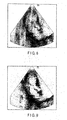
- FIG. 8 is a view showing an example of an ultrasonic image that has not undergone tone optimization processing.
- FIG. 9 is a view showing an example of an ultrasonic image obtained by performing tone optimization processing for the image in FIG. 8 .
- FIG. 10 illustrates graphs showing a modification that adopts the slope of A 2 calculated by normalizing the slope of the smoothed cumulative value at a second zero point P 2 .
- FIG. 11 illustrates graphs for explaining the second modification of the embodiment.
- FIG. 12 is a graph for explaining the third modification of the embodiment.
- FIG. 13 is a graph for explaining the third modification of the embodiment.
- FIG. 14 illustrates graphs for explaining the third modification of the embodiment.
- FIG. 15 is a flowchart showing the procedure when the tone optimization processing is applied to moving image display (the case of the fifth modification).
- FIG. 16 is a graph showing an example of a histogram associated with the brightness value of a predetermined ultrasonic image before gain adjustment.
- FIG. 17 is a graph showing the first order differential equation of the histogram shown in FIG. 16 .
- FIG. 18 is a graph showing the second order differential equation of the histogram shown in FIG. 16 .
- FIG. 19 is a graph showing the third order differential equation of the histogram shown in FIG. 16 .
- FIG. 20 is a graph showing an example of a histogram associated with the brightness value of the ultrasonic image after gain raising.
- FIG. 21 is a graph showing the first order differential equation of the histogram shown in FIG. 20 .
- FIG. 22 is a graph showing the second order differential equation of the histogram shown in FIG. 20 .
- FIG. 23 is a graph showing the third order differential equation of the histogram shown in FIG. 20 .
- FIG. 24 is a graph showing an example of a histogram associated with the brightness value of the ultrasonic image after gain lowering.
- FIG. 25 is a graph showing the first order differential equation of the histogram shown in FIG. 24 .
- FIG. 26 is a graph showing the second order differential equation of the histogram shown in FIG. 24 .
- FIG. 27 is a graph showing the third order differential equation of the histogram shown in FIG. 24 .
- the amount of noise and the like unwanted for diagnosis increases depending on a structure or a region (organ) in a living body. This may make it difficult to do adjustment to optimize the contrast of an ultrasonic image or perform appropriate adjustment within the range adjustable by the user himself/herself.
- the conventional ultrasonic diagnostic apparatus has poor operability and, for example, in the above-described cases, cannot appropriately assist in setting/adjusting the tone of an image.
- the present invention has been made in consideration of the above-described situations, and has as its object to provide an ultrasonic diagnostic apparatus, an ultrasonic image processing apparatus, a medical image diagnostic apparatus, and a medical image processing apparatus that can appropriately set/adjust the tone of an image as compared to the conventional ultrasonic diagnostic apparatus.
- an ultrasonic diagnostic apparatus comprising: an image data acquisition unit configured to transmit an ultrasonic wave into a predetermined region including a diagnosis target of an object, receive a reflected wave from the predetermined region, and acquire ultrasonic image data based on the reflected wave; and a correction unit configured to execute tone correction of the ultrasonic image data, wherein in the tone correction, the correction unit calculates a histogram associated with brightness of the image data, and calculates a brightness distribution range corresponding to the diagnosis target and a tone correction function using the histogram.
- an ultrasonic diagnostic apparatus an ultrasonic image processing apparatus, a medical image diagnostic apparatus, and a medical image processing apparatus that can appropriately set/adjust the tone of an image as compared to the conventional ultrasonic diagnostic apparatus.
- FIG. 1 is block diagram showing the arrangement of an ultrasonic diagnostic apparatus 1 according to this embodiment.
- the ultrasonic diagnostic apparatus 1 includes an ultrasonic probe 12 , an input device 13 , a monitor 14 , an ultrasonic transmission unit 21 , an ultrasonic reception unit 22 , a B-mode processing unit 23 , a blood flow detection unit 24 , a RAW data memory 25 , an image processing unit 26 , a display processing unit 28 including a tone optimization unit 280 , a control processor (CPU) 29 , a storage unit 30 , and an interface unit 31 .
- the function of each constituent element will be described below.
- the ultrasonic probe 12 is a device (probe) which transmits ultrasonic waves to an object and receives reflected waves from the object based on the transmitted ultrasonic waves.
- the ultrasonic probe 12 has, on its distal end, an array of a plurality of piezoelectric transducers, a matching layer, a backing member, and the like.
- each of the piezoelectric transducers transmits an ultrasonic wave in a desired direction in a scan region based on a driving signal from the ultrasonic transmission unit 21 and converts a reflected wave from the object into an electrical signal.
- the matching layer is an intermediate layer which is provided for the piezoelectric transducers to make ultrasonic energy efficiently propagate.
- the backing member prevents ultrasonic waves from propagating backward from the piezoelectric transducers.
- the ultrasonic probe 12 transmits an ultrasonic wave to an object P
- the transmitted ultrasonic wave is sequentially reflected by a discontinuity surface of acoustic impedance of internal body tissue, and is received as an echo signal by the ultrasonic probe 12 .
- the amplitude of this echo signal depends on an acoustic impedance difference on the discontinuity surface by which the echo signal is reflected.
- the echo produced when a transmitted ultrasonic pulse is reflected by the surface of a moving blood flow is subjected to a frequency shift depending on the velocity component of the moving body in the ultrasonic transmission/reception direction due to the Doppler effect.
- a two-dimensional array probe (a probe having a plurality of ultrasonic transducers arrayed in a two-dimensional matrix) or a mechanical 4D probe (a probe which can execute ultrasonic scanning while mechanically swinging a piezoelectric transducer array in a direction perpendicular to the array direction) may be adopted as the ultrasonic probe 12 .
- the ultrasonic probe to be used is not limited to these examples.
- the input device 13 is connected to an apparatus body 11 and includes various types of switches, buttons, a trackball, a mouse, and a keyboard which are used to input, to the apparatus body 11 , various types of instructions, conditions, an instruction to set a region of interest (ROI), various types of image quality condition setting instructions, and the like from an operator.
- the input device 13 also has a start instruction, an instruction to select a target ultrasonic image, and the like for the tone optimization function (to be described later).
- the monitor 14 displays morphological information and blood flow information in a living body as images based on video signals from the image processing unit 28 .
- the ultrasonic transmission unit 21 includes a trigger generation circuit, a delay circuit, and a pulser circuit (none of which are shown).
- the trigger generation circuit repetitively generates trigger pulses for the formation of transmission ultrasonic waves at a predetermined rate frequency fr Hz (period: 1/fr sec).
- the delay circuit gives each trigger pulse a delay time necessary to focus an ultrasonic wave into a beam and determine transmission directivity for each channel.
- the pulser circuit applies a driving pulse to the probe 12 at the timing based on this trigger pulse.
- the ultrasonic transmission unit 21 has a function of instantly changing a transmission frequency, a transmission driving voltage, or the like to execute a predetermined scan sequence in accordance with an instruction from the control processor 28 .
- the function of changing a transmission driving voltage is implemented by a linear amplifier type transmission circuit capable of instantly switching its value or a mechanism of electrically switching a plurality of power supply units.
- the ultrasonic reception unit 22 includes an amplifier circuit, an A/D converter, and an adder (none of which are shown).
- the amplifier circuit amplifies an echo signal received via the probe 12 for each channel.
- the A/D converter gives each amplified echo signal the delay time required to determine reception directivity and perform reception dynamic focusing.
- the adder then performs addition processing. This addition processing will enhance a reflection component from a direction corresponding to the reception directivity of the echo signal to form a composite beam for ultrasonic transmission/reception in accordance with the reception directivity and transmission directivity.
- the B-mode processing unit 23 receives an echo signal from the ultrasonic reception unit 22 , and performs logarithmic amplification, envelope detection processing, and the like for the signal to generate data whose signal intensity is expressed by a brightness level.
- the blood flow detection unit 24 extracts a blood flow signal from the echo signal received from the reception unit 22 , and generates blood flow data.
- CFM Color Flow Mapping
- the blood flow detection unit 24 analyzes a blood flow signal to obtain an average velocity, variance, power, and the like as blood flow data at multiple points.
- the RAW data memory 25 generates B-mode RAW data and blood flow RAW data for each frame using B-mode data received from the B-mode processing unit 23 and blood flow data received from the blood flow detection unit 24 , respectively.
- the RAW data memory 25 also generates volume data from the RAW data by executing RAW/voxel conversion, as needed.
- the image processing unit 28 executes scan conversion processing for the RAW data received from the RAW data memory 25 .
- the image processing unit 28 also performs predetermined image processing such as volume rendering, multi planar reconstruction (MPR), and maximum intensity projection (MIP) for the volume data received from the RAW data memory 25 .
- predetermined image processing such as volume rendering, multi planar reconstruction (MPR), and maximum intensity projection (MIP) for the volume data received from the RAW data memory 25 . Note that for the purpose of reducing noise and improving image concatenation, it is possible to perform spatial smoothing by inserting a two-dimensional filter after the image processing unit 28 .
- the display processing unit 28 executes various kinds of processes associated with a dynamic range, brightness, contrast, ⁇ curve correction, RGB conversion, and the like for various kinds of image data generated/processed by the image processing unit 28 .
- the tone optimization unit 280 included in the display processing unit 28 executes processing corresponding to the tone optimization function (to be described later) under the control of the control processor 29 .
- the control processor 29 has a function as an information processing apparatus (computer), and controls the operation of this ultrasonic diagnostic apparatus.
- the control processor 29 reads out a dedicated program for implementing the tone optimization function (to be described later) from the storage unit 30 , expands the program on the memory of its own, and executes computation/control and the like associated with various kinds of processes.
- the storage unit 30 stores a dedicated program for implementing the tone optimization function (to be described later), diagnosis information (patient ID, findings by doctors, and the like), a diagnostic protocol, transmission/reception conditions, a program for implementing a speckle removal function, a body mark generation program, and other data.
- the storage unit is also used to store images in the RAW data memory, as needed. It is possible to transfer data in the storage unit 30 to an external peripheral device via the interface unit 31 .
- the interface unit 31 is an interface associated with the input device 13 , a network, and a new external storage device (not shown).
- the interface unit 31 can transfer data such as ultrasonic images, analysis results, and the like obtained by this apparatus to another apparatus via a network.
- the tone optimization function of the ultrasonic diagnostic apparatus 1 calculates feature points from a histogram generated using individual acquired ultrasonic image data and the first and second deviations of the histogram, and sets a brightness distribution range corresponding to a diagnosis target.
- the function also sets control conditions using the calculated feature points, and calculates a tone correction function for each image using the set control conditions.
- FIGS. 2 and 3 are flowcharts showing the procedure of each processing executed in processing (tone optimization processing) according to the tone optimization function. The contents of processing in each step will be described below.
- tone optimization processing is assumed to be executed for an ultrasonic image acquired by ultrasonic scanning of a two-dimensional region including a cardiac muscle in the B mode.
- the ultrasonic image processing apparatus implements the tone optimization processing, for example, ultrasonic image data generated in step S 2 is stored in advance, and processing from step S 3 is executed.
- the ultrasonic image processing apparatus comprises the arrangement indicated by the broken line in FIG. 1 .
- the operator inputs patient information and selects transmission/reception conditions (the size of a region to be scanned, a focal position, a transmission voltage, and the like), an imaging mode for ultrasonic scanning on a predetermined region of an object, a scan sequence, and the like via the input device 13 (step S 1 ).
- the apparatus automatically stores the input and selected various kinds of information and conditions in the storage unit 30 .
- the ultrasonic probe 12 is brought into contact with a desired position on an object surface.
- Ultrasonic scanning in the B mode is executed for a two-dimensional region including a diagnosis region (the heart, in this case) set as a region to be scanned (step S 2 ).
- Echo signals acquired by the ultrasonic scanning in the B mode are sequentially sent to the B-mode processing unit 23 via the ultrasonic reception unit 22 .
- the B-mode processing unit 23 executes logarithmic amplification, envelope detection processing, and the like to generate a plurality of B-mode data.
- the RAW data memory 25 generates B-mode RAW data using the plurality of B-mode data received from the B-mode processing unit 23 .
- the image processing unit 26 executes scan conversion for the generated B-mode RAW data, thereby generating an ultrasonic image for each frame (step S 3 ).
- the tone optimization unit 280 executes tone optimization processing as shown in FIG. 3 for each ultrasonic image generated by the image processing unit 26 . That is, the tone optimization unit 280 first generates a histogram associated with the brightness of the ultrasonic image received from the image processing unit 26 , and executes smoothing processing for the obtained histogram (step S 41 ). After that, the tone optimization unit 280 calculates the cumulative sum of histograms, as shown in FIG. 4 , and executes smoothing processing (step S 42 ).
- the tone optimization unit 280 calculates the differential (or difference) of the histogram and then executes smoothing processing, thereby obtaining a result as shown in FIG. 5 (step S 43 ).
- the tone optimization unit 280 also calculates the second order differential (or second order difference) of the histogram and then executes smoothing processing, thereby obtaining a result as shown in FIG. 6 (step S 44 ).
- the tone optimization unit 280 calculates the feature points of the histogram using the calculated second order differential of the histogram (step S 45 ).
- the feature points of the histogram four points are employed, that is, the negative minimum (maximal) value of the second order differential of the histogram (corresponding to the positive peak position (maximum value or maximal value) of the histogram), the second zero point of the second order differential of the histogram (the inflection point in the tail region of the histogram: corresponding to the negative peak position of the differential of the histogram), the inflection point in the tail region of the histogram, and the third zero point of the second order differential of the histogram (for example, corresponding to the branch point between the signal from the cardiac muscle region and the signal from another region).
- the tone optimization unit 280 sets a brightness distribution range using the calculated feature points (step S 46 ). For example, the tone optimization unit 280 sets a brightness distribution range L by setting a negative minimum value (maximal value) P 1 of the second order differential of the histogram as the lower limit and a third zero point P 4 of the second order differential of the histogram as the upper limit, as shown in FIG. 7 .
- the tone optimization unit 280 calculates a tone characteristic function using the calculated feature points, set control conditions, and the brightness distribution range L (step S 47 ). For example, the tone optimization unit 280 calculates the tone characteristic function by following control conditions (1) to (5).
- the input minimum value is associated with the output minimum value (a point B 1 in the lower graph of FIG. 7 ).
- the upper limit of the noise level is set at the inflection point (the second zero point of the second order differential) and associated with a desired output value (a point B 2 in the lower graph of FIG. 7 ).
- the object region (the cardiac muscle region, in this case) is set to the third zero point from the noise level condition (inflection point), and the output value at the third zero point is associated with a value obtained by a desired slope (a point B 3 in the lower graph of FIG. 7 ).
- the input maximum value is associated with the output maximum value (a point B 4 in the lower graph of FIG. 7 ).
- the tone optimization unit 280 calculates, for example, a tone correction function C 1 in the lower graph of FIG. 7 by interpolating (for example, spline interpolation) the tone characteristic function obtained in step S 47 (step S 48 ). Tone optimization processing is executed for the ultrasonic image using the calculated tone correction function C 1 (step S 49 ).
- the monitor 14 displays, in a desired format, the ultrasonic image that has undergone the tone optimization processing (step S 5 ).
- FIG. 8 is a view showing an example of an ultrasonic image that has not undergone the tone optimization processing.
- FIG. 9 is a view showing an example of an ultrasonic image obtained by performing the tone optimization processing for the image in FIG. 8 .
- the ultrasonic image whose tone has been adjusted by the tone optimization processing has a clearer contrast and is easy to see.
- tone optimization processing is not limited to those described above. Modifications of the tone optimization processing will be explained below.
- a tone correction function C 2 can be calculated by adopting the slope of A 2 calculated by normalizing the slope of the smoothed cumulative value at a second zero point P 2 .
- a slope calculated by averaging the slopes within the range (for example, the brightness distribution range P 2 -P 3 ) corresponding to the object region may be adopted.
- the tone characteristic function may be calculated by adding another control condition to the above-described conditions (1) to (5). For example, it is possible to add the following condition aiming at suppressing the slope of the high brightness region.
- An input value that exists from the third zero point to the input maximum value (for example, a tone of 256) is selected and associated with a desired output value (for example, a point B 5 in the lower graph of FIG. 11 ).
- control condition (6) may parallelly be added to the control conditions (1) to (5) when calculating the tone characteristic function.
- the tone characteristic function may newly be calculated by adding the control condition (6) as needed in consideration of the result of the tone characteristic function calculated using the control conditions (1) to (5). If the tone characteristic at the position corresponding to the added control condition is less than, for example, 255, correction is preferably done to make the tone characteristic function monotonically increase so as to suppress the fluctuations in the characteristic.
- Tone expansion processing may be performed as needed. Whether to do tone expansion processing is determined in, for example, the following way. If the cumulative sum of histograms of the input image reaches a predetermined amount before the end processing region of smoothing, it is determined that the dynamic range (DR) or tone characteristic at the time of image acquisition is not appropriate. Hence, the tone characteristic is expanded, as shown in FIGS. 12 and 13 , in, for example, calculation of step S 47 .
- the brightness distribution range can arbitrarily be changed.
- the above-described brightness distribution range L (lower limit: the negative minimum value of the second order differential of the histogram, upper limit: third zero point) in FIG. 7 can be changed to a brightness distribution range L 1 (lower limit: second zero point, upper limit: third zero point) shown in FIG. 14 at an arbitrary timing. This may enable to more suitably extract the object.
- the tone optimization processing is also applicable to a case in which a moving image is acquired and displayed.
- FIG. 15 is an example of a flowchart when the tone optimization processing is applied to moving image display. As compared to the flowchart shown in FIG. 3 , “histogram analysis image selection processing” of step S 40 is added.
- step S 40 one of a plurality of acquired ultrasonic images (for example, ultrasonic images of a heart for one or a plurality of heartbeats) is selected, and the tone optimization processing from step S 41 is then executed.
- the histogram analysis image for example, an image corresponding to a preset phase or timing, an image corresponding to the start, middle, or end phase of a predetermined period, an image having a maximum average brightness, an image whose average brightness is average in a plurality of images, or the like can be selected.
- Which image is to be selected as the histogram analysis image can freely be set. If the diagnosis target is the heart, selecting a totally dark image or an image that has not appropriately visualized the object should be prohibited because the cumulative sum of histograms periodically varies in accordance with the dilatation/contraction.
- the tone optimization processing can be executed, for example, every time ultrasonic image data is acquired. If the processing need not always be executed for all images, it may be executed at an arbitrary timing in response to, for example, an instruction input by the user via the input device 13 .
- the tone optimization function is not limited to this example.
- the ith extreme value and the jth zero point of the nth order differential equation may be calculated as feature points, and the brightness distribution range and the tone correction curve may be calculated using the obtained feature points.
- feature points are calculated from a histogram generated using acquired ultrasonic image data and the first order differential, the second order differential, and the like of the histogram, and the brightness distribution range corresponding to the diagnosis target is set.
- Control conditions are set using the calculated feature points, and the tone correction function is calculated using the set control conditions. This allows to define appropriate brightness distribution range and tone correction function corresponding to the tone characteristic of an individual image. It is consequently possible to quickly and easily optimize tone correction in accordance with the diagnosis target, individual differences, and imaging situation.
- FIGS. 20, 21, 22, and 23 When processing of raising the gain is performed for the current ultrasonic image (the ultrasonic image corresponding to the histogram in FIG. 16 ), the histogram associated with the brightness value and the first order differential equation, the second order differential equation, and the third order differential equation of the histogram after gain raising are obtained as shown in FIGS. 20, 21, 22, and 23 , respectively.
- FIG. 16 with FIG. 20 reveals that the peak position of the histogram has moved (shifted to right) upon gain raising.
- FIG. 17 with FIG. 21 , FIG. 18 with FIG. 22 , and FIG. 19 with FIG. 23 reveals that the position of each extreme value and that of each zero point have also moved (shifted to right) in each order differential equation upon gain raising.
- FIGS. 20 When processing of raising the gain is performed for the current ultrasonic image (the ultrasonic image corresponding to the histogram in FIG. 16 ), the histogram associated with the brightness value and the first order differential equation, the second order differential equation, and the third order differential equation
- the polarity of the extreme value that appears for the first time in FIG. 19 is negative, whereas the polarity of the extreme value that appears for the first time in FIG. 23 is positive.
- the condition “the first and second extreme values of the third order differential equation shown in FIG. 19 are adopted as feature points” corresponds to the condition “the second and third extreme values of the third order differential equation before gain adjustment shown in FIG. 23 are adopted as feature points”.
- the histogram associated with the brightness value and the first order differential equation, the second order differential equation, and the third order differential equation of the histogram after gain lowering are obtained as shown in FIGS. 24, 25, 26, and 27 , respectively.
- FIGS. 24, 25, 26, and 27 respectively.
- FIG. 16 with FIG. 24 reveals that the peak position of the histogram has shifted to left upon gain lowering.
- FIG. 17 with FIG. 25 , FIG. 18 with FIG. 26 , and FIG. 19 with FIG. 27 reveals that the position of each extreme value and that of each zero point have also shifted to left in each order differential equation upon gain lowering.
- the condition “the second and third zero points of the second order differential equation shown in FIG. 18 are adopted as feature points” corresponds to the condition “the first and second extreme values of the second order differential equation before gain adjustment shown in FIG. 26 are adopted as feature points”.
- the peak position of a histogram, and the polarity of each extreme value and the position of each zero point in the nth order differential equation of the histogram change upon gain adjustment.
- the ith extreme value and the jth zero point (i and j are natural numbers) to be used to calculate feature points in tone optimization processing are preferably appropriately selected individually in accordance with the positions and shapes of the histogram and the nth order differential equation after gain correction.
- Each function associated with each embodiment can also be implemented by installing programs for executing the corresponding processing in a computer such as a workstation and expanding them on a memory.
- the programs which can cause the computer to execute the corresponding techniques can be distributed by being stored in recording media such as magnetic disks ((floppy®) disks, hard disks, and the like), optical disks (CD-ROMs, DVDs, and the like), and semiconductor memories.
- tone optimization processing is performed for an ultrasonic image acquired by ultrasonic scanning of a two-dimensional region including a cardiac muscle in the B mode.
- the tone optimization function is not limited to this example.
- the function is also applicable to, for example, a case in which a part other than the heart is the diagnosis target, a case in which imaging is performed not in the B mode but in a blood flow detection mode (CFM mode or the like), a case in which ultrasonic scanning of a three-dimensional region is performed, and the like.
- CFM mode blood flow detection mode
- suitable ultrasonic images can be acquired by applying the tone optimization processing to the two-dimensional images and MPR images included in volume data.
- the tone optimization processing is executed for ultrasonic image data acquired by the ultrasonic diagnostic apparatus.
- the tone optimization processing is applicable not only to ultrasonic image data but also to a medical image acquired by a medical image diagnostic apparatus such as an X-ray diagnostic apparatus, an X-ray computed tomography apparatus, or a magnetic resonance imaging apparatus.
- the tone optimization processing may be performed ex post facto using a medical image processing apparatus for images acquired by various kinds of medical image diagnostic apparatuses.
- Various inventions can be formed by proper combinations of a plurality of constituent elements disclosed in the above embodiments. For example, several constituent elements may be omitted from all the constituent elements in each embodiment. In addition, constituent elements of the different embodiments may be combined as needed.
Landscapes
- Health & Medical Sciences (AREA)
- Life Sciences & Earth Sciences (AREA)
- Engineering & Computer Science (AREA)
- Physics & Mathematics (AREA)
- Heart & Thoracic Surgery (AREA)
- Surgery (AREA)
- Pathology (AREA)
- Radiology & Medical Imaging (AREA)
- Biophysics (AREA)
- Biomedical Technology (AREA)
- Veterinary Medicine (AREA)
- Medical Informatics (AREA)
- Molecular Biology (AREA)
- Nuclear Medicine, Radiotherapy & Molecular Imaging (AREA)
- Animal Behavior & Ethology (AREA)
- General Health & Medical Sciences (AREA)
- Public Health (AREA)
- General Physics & Mathematics (AREA)
- Theoretical Computer Science (AREA)
- Cardiology (AREA)
- Computer Vision & Pattern Recognition (AREA)
- Ultra Sonic Daignosis Equipment (AREA)
Abstract
Description
Claims (28)
Applications Claiming Priority (3)
| Application Number | Priority Date | Filing Date | Title |
|---|---|---|---|
| JP2010-240112 | 2010-10-26 | ||
| JP2010240112 | 2010-10-26 | ||
| PCT/JP2011/074684 WO2012057211A1 (en) | 2010-10-26 | 2011-10-26 | Ultrasonographic device, ultrasonic image processing device, medical image diagnostic device, and medical image processing device |
Related Parent Applications (1)
| Application Number | Title | Priority Date | Filing Date |
|---|---|---|---|
| PCT/JP2011/074684 Continuation WO2012057211A1 (en) | 2010-10-26 | 2011-10-26 | Ultrasonographic device, ultrasonic image processing device, medical image diagnostic device, and medical image processing device |
Publications (2)
| Publication Number | Publication Date |
|---|---|
| US20130237825A1 US20130237825A1 (en) | 2013-09-12 |
| US9743910B2 true US9743910B2 (en) | 2017-08-29 |
Family
ID=45993917
Family Applications (1)
| Application Number | Title | Priority Date | Filing Date |
|---|---|---|---|
| US13/871,463 Active 2032-07-12 US9743910B2 (en) | 2010-10-26 | 2013-04-26 | Ultrasonic diagnostic apparatus, ultrasonic image processing apparatus, medical image diagnostic apparatus, and medical image processing apparatus |
Country Status (5)
| Country | Link |
|---|---|
| US (1) | US9743910B2 (en) |
| EP (1) | EP2633818B1 (en) |
| JP (1) | JP5943373B2 (en) |
| CN (1) | CN102596048B (en) |
| WO (1) | WO2012057211A1 (en) |
Families Citing this family (14)
| Publication number | Priority date | Publication date | Assignee | Title |
|---|---|---|---|---|
| EP2633818B1 (en) * | 2010-10-26 | 2020-01-15 | Toshiba Medical Systems Corporation | Ultrasonic diagnostic apparatus |
| EP3023058B1 (en) * | 2013-07-18 | 2023-07-12 | Olympus Corporation | Ultrasound observation apparatus, method for operating ultrasound observation apparatus, and program for operating ultrasound observation apparatus |
| JP6274495B2 (en) | 2013-10-25 | 2018-02-07 | キヤノンメディカルシステムズ株式会社 | Image processing apparatus and ultrasonic diagnostic apparatus |
| CN104918029A (en) * | 2014-03-11 | 2015-09-16 | 南京巨鲨显示科技有限公司 | Method for enhancing depth of field of image of display |
| US9460499B2 (en) * | 2014-05-30 | 2016-10-04 | Shenzhen Mindray Bio-Medical Electronics Co., Ltd. | Systems and methods for selective enhancement of a region of interest in an image |
| EP2989986B1 (en) * | 2014-09-01 | 2019-12-18 | Samsung Medison Co., Ltd. | Ultrasound diagnosis apparatus and method of operating the same |
| CN104490418A (en) * | 2014-09-25 | 2015-04-08 | 深圳市恩普电子技术有限公司 | Automatic ultrasonic-image optimization method based on signal statistic analysis |
| CN107894204B (en) * | 2016-10-04 | 2020-02-21 | 财团法人工业技术研究院 | Interferometer and its imaging method |
| WO2018144698A1 (en) * | 2017-02-01 | 2018-08-09 | Intuitive Surgical Operations, Inc. | Systems and methods of registration for image-guided procedures |
| DE102017107151A1 (en) * | 2017-04-03 | 2018-10-04 | Herrmann Ultraschalltechnik Gmbh & Co. Kg | Ultrasonic processing machine with two sonotrodes and method for operating such |
| CN107582099B (en) * | 2017-09-22 | 2019-12-27 | 杭州创影健康管理有限公司 | Echo intensity processing method and device and electronic equipment |
| CN110200640B (en) * | 2019-05-14 | 2022-02-18 | 南京理工大学 | Non-contact emotion recognition method based on dual-mode sensor |
| EP3804628A1 (en) * | 2019-10-07 | 2021-04-14 | Koninklijke Philips N.V. | Ultrasound interface unit and method |
| KR102355438B1 (en) * | 2019-11-28 | 2022-01-26 | 주식회사 씨자인 | Object recognition system using ultrasonic sensor and recognition method therefor |
Citations (20)
| Publication number | Priority date | Publication date | Assignee | Title |
|---|---|---|---|---|
| US4662380A (en) * | 1985-10-31 | 1987-05-05 | General Electric Company | Adaptive time gain compensation system for ultrasound imaging |
| US4868651A (en) * | 1988-05-17 | 1989-09-19 | S&S Inficon, Inc. | Digital radiography with image brightness and contrast normalization |
| EP0544328A2 (en) | 1991-11-28 | 1993-06-02 | Aloka Co., Ltd. | Ultrasonic diagnostic apparatus |
| US5469850A (en) | 1994-05-27 | 1995-11-28 | Fujitsu Limited | Ultrasonic diagnostic system |
| US5579768A (en) * | 1995-03-21 | 1996-12-03 | Acuson Corporation | Automatic gain compensation in an ultrasound imaging system |
| JP2002209891A (en) | 2001-01-18 | 2002-07-30 | Matsushita Electric Ind Co Ltd | Ultrasonic device, ultrasonic signal conversion method, and program |
| US20030144592A1 (en) * | 2002-01-31 | 2003-07-31 | Jeong Ji-Wook | Method of quantitatively measuring fat content in target organ from ultrasound visual image |
| JP2005103007A (en) | 2003-09-30 | 2005-04-21 | Konica Minolta Medical & Graphic Inc | Device, method and program for image processing |
| JP2005169155A (en) | 1994-05-27 | 2005-06-30 | Fukuda Denshi Co Ltd | Ultrasonic diagnostic equipment |
| US20060079777A1 (en) * | 2004-09-29 | 2006-04-13 | Fuji Photo Film Co., Ltd. | Ultrasonic image boundary extracting method, ultrasonic image boundary extracting apparatus, and ultrasonic imaging apparatus |
| US20060078182A1 (en) * | 2004-01-07 | 2006-04-13 | Gil Zwirn | Methods and apparatus for analyzing ultrasound images |
| JP2007014525A (en) | 2005-07-07 | 2007-01-25 | Hitachi Medical Corp | Medical diagnostic imaging system |
| JP2007117351A (en) | 2005-10-27 | 2007-05-17 | Konica Minolta Medical & Graphic Inc | Small-scale diagnosis support system |
| US20080130964A1 (en) * | 2004-01-07 | 2008-06-05 | Gil Zwirn | Methods and Apparatus for Analysing Ultrasound Images |
| EP2031873A2 (en) | 2007-08-31 | 2009-03-04 | Casio Computer Co., Ltd. | Tone correcting apparatus providing improved tone correction on image |
| US7586653B2 (en) * | 2005-04-22 | 2009-09-08 | Lexmark International, Inc. | Method and system for enhancing an image using luminance scaling |
| US20090279764A1 (en) | 2005-10-27 | 2009-11-12 | Konica Minolta Medical & Graphic, Inc. | Small-scale diagnosis system |
| US20100157161A1 (en) | 2008-12-24 | 2010-06-24 | Kenichi Tanahashi | Gamma Correction Apparatus and Method |
| US8526729B2 (en) * | 2010-03-10 | 2013-09-03 | Sony Corporation | Image processing apparatus and method, and program |
| US9390485B2 (en) * | 2014-03-07 | 2016-07-12 | Ricoh Company, Ltd. | Image processing device, image processing method, and recording medium |
Family Cites Families (3)
| Publication number | Priority date | Publication date | Assignee | Title |
|---|---|---|---|---|
| JP4054454B2 (en) * | 1998-09-25 | 2008-02-27 | キヤノン株式会社 | Image processing apparatus, image processing method, and computer-readable storage medium |
| JP5106091B2 (en) * | 2007-12-26 | 2012-12-26 | 株式会社東芝 | Ultrasonic diagnostic apparatus, ultrasonic image processing apparatus, and ultrasonic image processing program |
| EP2633818B1 (en) * | 2010-10-26 | 2020-01-15 | Toshiba Medical Systems Corporation | Ultrasonic diagnostic apparatus |
-
2011
- 2011-10-26 EP EP11836344.9A patent/EP2633818B1/en active Active
- 2011-10-26 CN CN201180002843.XA patent/CN102596048B/en active Active
- 2011-10-26 WO PCT/JP2011/074684 patent/WO2012057211A1/en not_active Ceased
- 2011-10-26 JP JP2011235252A patent/JP5943373B2/en active Active
-
2013
- 2013-04-26 US US13/871,463 patent/US9743910B2/en active Active
Patent Citations (22)
| Publication number | Priority date | Publication date | Assignee | Title |
|---|---|---|---|---|
| US4662380A (en) * | 1985-10-31 | 1987-05-05 | General Electric Company | Adaptive time gain compensation system for ultrasound imaging |
| EP0220631A1 (en) | 1985-10-31 | 1987-05-06 | General Electric Company | Adaptive time gain compensation system for ultrasound imaging |
| US4868651A (en) * | 1988-05-17 | 1989-09-19 | S&S Inficon, Inc. | Digital radiography with image brightness and contrast normalization |
| EP0544328A2 (en) | 1991-11-28 | 1993-06-02 | Aloka Co., Ltd. | Ultrasonic diagnostic apparatus |
| JP2005169155A (en) | 1994-05-27 | 2005-06-30 | Fukuda Denshi Co Ltd | Ultrasonic diagnostic equipment |
| US5469850A (en) | 1994-05-27 | 1995-11-28 | Fujitsu Limited | Ultrasonic diagnostic system |
| US5579768A (en) * | 1995-03-21 | 1996-12-03 | Acuson Corporation | Automatic gain compensation in an ultrasound imaging system |
| JP2002209891A (en) | 2001-01-18 | 2002-07-30 | Matsushita Electric Ind Co Ltd | Ultrasonic device, ultrasonic signal conversion method, and program |
| US20030144592A1 (en) * | 2002-01-31 | 2003-07-31 | Jeong Ji-Wook | Method of quantitatively measuring fat content in target organ from ultrasound visual image |
| JP2005103007A (en) | 2003-09-30 | 2005-04-21 | Konica Minolta Medical & Graphic Inc | Device, method and program for image processing |
| US20080130964A1 (en) * | 2004-01-07 | 2008-06-05 | Gil Zwirn | Methods and Apparatus for Analysing Ultrasound Images |
| US20060078182A1 (en) * | 2004-01-07 | 2006-04-13 | Gil Zwirn | Methods and apparatus for analyzing ultrasound images |
| US7676091B2 (en) * | 2004-01-07 | 2010-03-09 | Ramot At Tel Aviv University Ltd. | Method and apparatus for analysing ultrasound images |
| US20060079777A1 (en) * | 2004-09-29 | 2006-04-13 | Fuji Photo Film Co., Ltd. | Ultrasonic image boundary extracting method, ultrasonic image boundary extracting apparatus, and ultrasonic imaging apparatus |
| US7586653B2 (en) * | 2005-04-22 | 2009-09-08 | Lexmark International, Inc. | Method and system for enhancing an image using luminance scaling |
| JP2007014525A (en) | 2005-07-07 | 2007-01-25 | Hitachi Medical Corp | Medical diagnostic imaging system |
| JP2007117351A (en) | 2005-10-27 | 2007-05-17 | Konica Minolta Medical & Graphic Inc | Small-scale diagnosis support system |
| US20090279764A1 (en) | 2005-10-27 | 2009-11-12 | Konica Minolta Medical & Graphic, Inc. | Small-scale diagnosis system |
| EP2031873A2 (en) | 2007-08-31 | 2009-03-04 | Casio Computer Co., Ltd. | Tone correcting apparatus providing improved tone correction on image |
| US20100157161A1 (en) | 2008-12-24 | 2010-06-24 | Kenichi Tanahashi | Gamma Correction Apparatus and Method |
| US8526729B2 (en) * | 2010-03-10 | 2013-09-03 | Sony Corporation | Image processing apparatus and method, and program |
| US9390485B2 (en) * | 2014-03-07 | 2016-07-12 | Ricoh Company, Ltd. | Image processing device, image processing method, and recording medium |
Non-Patent Citations (8)
| Title |
|---|
| Extended European Search Report issued Jul. 30, 2015 in Patent Application No. 11836344.9. |
| G Zwirn et al. "A histogram-based technique for echocardiographic image enhancement." Computers in Cardiology 2004; 31: 81-84. * |
| Hazewinkel, Michiel, ed. (2001), "Point of inflection", Encyclopedia of Mathematics, Springer, ISBN 978-1-55608-010-4, http://www.encyclopediaofmath.org/index.php?title=Point-of-inflection&oldid=14389. * |
| Hazewinkel, Michiel, ed. (2001), "Point of inflection", Encyclopedia of Mathematics, Springer, ISBN 978-1-55608-010-4, http://www.encyclopediaofmath.org/index.php?title=Point—of—inflection&oldid=14389. * |
| International Preliminary Report on Patentability issued May 16, 2013 in PCT/JP2011/074684 filed Oct. 26, 2011. |
| International Search Report mailed Dec. 20, 2011, in PCT/JP2011/074684 filed Oct. 26, 2011 (with English Translation). |
| International Written Opinion mailed Dec. 20, 2011, in PCT/JP2011/074684 filed Oct. 26, 2011. |
| Written Opinion issued Dec. 20, 2010 in PCT/JP2011/074684 filed Oct. 26, 2011 submitting English language translation only. |
Also Published As
| Publication number | Publication date |
|---|---|
| US20130237825A1 (en) | 2013-09-12 |
| JP2012105973A (en) | 2012-06-07 |
| JP5943373B2 (en) | 2016-07-05 |
| EP2633818A4 (en) | 2015-09-02 |
| EP2633818A1 (en) | 2013-09-04 |
| EP2633818B1 (en) | 2020-01-15 |
| CN102596048B (en) | 2014-12-10 |
| WO2012057211A1 (en) | 2012-05-03 |
| CN102596048A (en) | 2012-07-18 |
Similar Documents
| Publication | Publication Date | Title |
|---|---|---|
| US9743910B2 (en) | Ultrasonic diagnostic apparatus, ultrasonic image processing apparatus, medical image diagnostic apparatus, and medical image processing apparatus | |
| US12419606B2 (en) | Ultrasound diagnosis apparatus and controlling method | |
| CN106037797B (en) | Three-dimensional volumes of interest in ultrasound imaging | |
| US10335118B2 (en) | Ultrasonic diagnostic apparatus, medical image processing apparatus, and medical image parallel display method | |
| JP7605268B2 (en) | Identifying fat layers using ultrasound images | |
| JP7370903B2 (en) | Ultrasonic diagnostic equipment, learning equipment, image processing methods and programs | |
| JP2017093913A (en) | Ultrasonic diagnostic device, signal processing device and analysis program | |
| JP2013132390A (en) | Ultrasonic diagnostic apparatus, ultrasonic image processing apparatus, medical imaging diagnostic apparatus, and ultrasonic image processing program | |
| JP2011078625A (en) | Ultrasonic diagnosis apparatus, ultrasonic image processing apparatus, and ultrasonic image processing program | |
| US9186124B2 (en) | Ultrasonic diagnostic apparatus, ultrasonic image processing apparatus, and ultrasonic image processing method | |
| JP6109498B2 (en) | Ultrasonic diagnostic apparatus and ultrasonic diagnostic apparatus control program | |
| JP6640444B2 (en) | Ultrasonic diagnostic apparatus, ultrasonic image processing apparatus, and ultrasonic image processing program | |
| US20090171207A1 (en) | Ultrasonic diagonstic apparatus, ultrasonic image processing apparatus, and ultrasonic image processing method | |
| US11039777B2 (en) | Ultrasonic diagnostic apparatus and control method | |
| CN113301854A (en) | Image analysis device | |
| US20150342565A1 (en) | Ultrasonic diagnostic apparatus | |
| JP2019154654A (en) | Ultrasonic imaging device and ultrasonic image processing system | |
| JP6727363B2 (en) | Medical diagnostic apparatus, medical image processing apparatus, and medical image processing method | |
| JP5242092B2 (en) | Ultrasonic diagnostic equipment | |
| JP2013244138A (en) | Ultrasonic diagnostic apparatus and sound velocity display method | |
| JP5944761B2 (en) | Ultrasonic diagnostic apparatus, image processing apparatus, and image processing program | |
| JP2023104734A (en) | Ultrasound diagnostic device and image processing device | |
| JP2007044354A (en) | Ultrasonic diagnostic apparatus and ultrasonic diagnostic apparatus control program |
Legal Events
| Date | Code | Title | Description |
|---|---|---|---|
| AS | Assignment |
Owner name: TOSHIBA MEDICAL SYSTEMS CORPORATION, JAPAN Free format text: ASSIGNMENT OF ASSIGNORS INTEREST;ASSIGNOR:SASAKI, TAKUYA;REEL/FRAME:030298/0060 Effective date: 20130417 Owner name: KABUSHIKI KAISHA TOSHIBA, JAPAN Free format text: ASSIGNMENT OF ASSIGNORS INTEREST;ASSIGNOR:SASAKI, TAKUYA;REEL/FRAME:030298/0060 Effective date: 20130417 |
|
| AS | Assignment |
Owner name: TOSHIBA MEDICAL SYSTEMS CORPORATION, JAPAN Free format text: ASSIGNMENT OF ASSIGNORS INTEREST;ASSIGNOR:KABUSHIKI KAISHA TOSHIBA;REEL/FRAME:039127/0669 Effective date: 20160608 |
|
| STCF | Information on status: patent grant |
Free format text: PATENTED CASE |
|
| MAFP | Maintenance fee payment |
Free format text: PAYMENT OF MAINTENANCE FEE, 4TH YEAR, LARGE ENTITY (ORIGINAL EVENT CODE: M1551); ENTITY STATUS OF PATENT OWNER: LARGE ENTITY Year of fee payment: 4 |
|
| MAFP | Maintenance fee payment |
Free format text: PAYMENT OF MAINTENANCE FEE, 8TH YEAR, LARGE ENTITY (ORIGINAL EVENT CODE: M1552); ENTITY STATUS OF PATENT OWNER: LARGE ENTITY Year of fee payment: 8 |