US9738736B2 - Combined internal donor system for Ziegler-Natta polyolefin catalysts and methods of making and using same - Google Patents
Combined internal donor system for Ziegler-Natta polyolefin catalysts and methods of making and using same Download PDFInfo
- Publication number
- US9738736B2 US9738736B2 US14/457,571 US201414457571A US9738736B2 US 9738736 B2 US9738736 B2 US 9738736B2 US 201414457571 A US201414457571 A US 201414457571A US 9738736 B2 US9738736 B2 US 9738736B2
- Authority
- US
- United States
- Prior art keywords
- group
- naphthoate
- methyl
- methoxy
- methanone
- Prior art date
- Legal status (The legal status is an assumption and is not a legal conclusion. Google has not performed a legal analysis and makes no representation as to the accuracy of the status listed.)
- Active, expires
Links
- 0 *C(=O)OC1=C([3*])C([4*])=C([5*])C2=C([6*])C([7*])=C([8*])C(OC([1*])=O)=C12 Chemical compound *C(=O)OC1=C([3*])C([4*])=C([5*])C2=C([6*])C([7*])=C([8*])C(OC([1*])=O)=C12 0.000 description 11
- DFCIKCMSXYOIQD-UHFFFAOYSA-N O=C(OC1=CC=CC2=CC=CC(OC(=O)C3=CC=CC=C3)=C21)C1=CC=CC=C1 Chemical compound O=C(OC1=CC=CC2=CC=CC(OC(=O)C3=CC=CC=C3)=C21)C1=CC=CC=C1 DFCIKCMSXYOIQD-UHFFFAOYSA-N 0.000 description 2
- CXKJETVVVGGSCG-NGRIDVMYSA-N CCCC(C)CCCCOC(=O)C1CCCCC1C(=O)OCCCCC(C)CCC.[2H]/I=N/C Chemical compound CCCC(C)CCCCOC(=O)C1CCCCC1C(=O)OCCCCC(C)CCC.[2H]/I=N/C CXKJETVVVGGSCG-NGRIDVMYSA-N 0.000 description 1
- NCPYLTWCPJLQBG-UHFFFAOYSA-N CCCCOC(=O)C1=C(OC)C=CC2=CC=CC=C21 Chemical compound CCCCOC(=O)C1=C(OC)C=CC2=CC=CC=C21 NCPYLTWCPJLQBG-UHFFFAOYSA-N 0.000 description 1
- ISLAUYQUOGCEOU-UHFFFAOYSA-N CCCCOC(=O)C1=C(OC)C=CC=C1OC Chemical compound CCCCOC(=O)C1=C(OC)C=CC=C1OC ISLAUYQUOGCEOU-UHFFFAOYSA-N 0.000 description 1
- PEPUAWXAGBAMGU-UHFFFAOYSA-N CCCCOC(=O)C1=CC=CC=C1OC Chemical compound CCCCOC(=O)C1=CC=CC=C1OC PEPUAWXAGBAMGU-UHFFFAOYSA-N 0.000 description 1
- UXARCVQXPRNVJL-UHFFFAOYSA-N COC1=C(C(=O)OCCCCCCC(C)C)C2=CC=CC=C2C=C1 Chemical compound COC1=C(C(=O)OCCCCCCC(C)C)C2=CC=CC=C2C=C1 UXARCVQXPRNVJL-UHFFFAOYSA-N 0.000 description 1
- HISKHGJGCGUKQL-UHFFFAOYSA-N COC1=CC=CC(OC)=C1C(=O)OCCCCCCC(C)C Chemical compound COC1=CC=CC(OC)=C1C(=O)OCCCCCCC(C)C HISKHGJGCGUKQL-UHFFFAOYSA-N 0.000 description 1
- JFARUGAXFNCLRU-UHFFFAOYSA-N COC1=CC=CC=C1C(=O)N1CCCC1 Chemical compound COC1=CC=CC=C1C(=O)N1CCCC1 JFARUGAXFNCLRU-UHFFFAOYSA-N 0.000 description 1
- MSIRDLOIKYAGDP-UHFFFAOYSA-N Cc(c(N)c1c(C(ON)=O)c2ON)c(C)c(N)c1c(N)c2N Chemical compound Cc(c(N)c1c(C(ON)=O)c2ON)c(C)c(N)c1c(N)c2N MSIRDLOIKYAGDP-UHFFFAOYSA-N 0.000 description 1
Images



Classifications
-
- C—CHEMISTRY; METALLURGY
- C08—ORGANIC MACROMOLECULAR COMPOUNDS; THEIR PREPARATION OR CHEMICAL WORKING-UP; COMPOSITIONS BASED THEREON
- C08F—MACROMOLECULAR COMPOUNDS OBTAINED BY REACTIONS ONLY INVOLVING CARBON-TO-CARBON UNSATURATED BONDS
- C08F110/00—Homopolymers of unsaturated aliphatic hydrocarbons having only one carbon-to-carbon double bond
- C08F110/04—Monomers containing three or four carbon atoms
- C08F110/06—Propene
-
- C—CHEMISTRY; METALLURGY
- C08—ORGANIC MACROMOLECULAR COMPOUNDS; THEIR PREPARATION OR CHEMICAL WORKING-UP; COMPOSITIONS BASED THEREON
- C08F—MACROMOLECULAR COMPOUNDS OBTAINED BY REACTIONS ONLY INVOLVING CARBON-TO-CARBON UNSATURATED BONDS
- C08F4/00—Polymerisation catalysts
- C08F4/42—Metals; Metal hydrides; Metallo-organic compounds; Use thereof as catalyst precursors
- C08F4/44—Metals; Metal hydrides; Metallo-organic compounds; Use thereof as catalyst precursors selected from light metals, zinc, cadmium, mercury, copper, silver, gold, boron, gallium, indium, thallium, rare earths or actinides
- C08F4/60—Metals; Metal hydrides; Metallo-organic compounds; Use thereof as catalyst precursors selected from light metals, zinc, cadmium, mercury, copper, silver, gold, boron, gallium, indium, thallium, rare earths or actinides together with refractory metals, iron group metals, platinum group metals, manganese, rhenium technetium or compounds thereof
- C08F4/62—Refractory metals or compounds thereof
- C08F4/64—Titanium, zirconium, hafnium or compounds thereof
- C08F4/65—Pretreating the metal or compound covered by group C08F4/64 before the final contacting with the metal or compound covered by group C08F4/44
- C08F4/651—Pretreating with non-metals or metal-free compounds
-
- C—CHEMISTRY; METALLURGY
- C08—ORGANIC MACROMOLECULAR COMPOUNDS; THEIR PREPARATION OR CHEMICAL WORKING-UP; COMPOSITIONS BASED THEREON
- C08F—MACROMOLECULAR COMPOUNDS OBTAINED BY REACTIONS ONLY INVOLVING CARBON-TO-CARBON UNSATURATED BONDS
- C08F2500/00—Characteristics or properties of obtained polyolefins; Use thereof
- C08F2500/12—Melt flow index or melt flow ratio
-
- C—CHEMISTRY; METALLURGY
- C08—ORGANIC MACROMOLECULAR COMPOUNDS; THEIR PREPARATION OR CHEMICAL WORKING-UP; COMPOSITIONS BASED THEREON
- C08F—MACROMOLECULAR COMPOUNDS OBTAINED BY REACTIONS ONLY INVOLVING CARBON-TO-CARBON UNSATURATED BONDS
- C08F2500/00—Characteristics or properties of obtained polyolefins; Use thereof
- C08F2500/15—Isotactic
Definitions
- the present disclosure relates generally to solid catalyst components for olefin polymerization.
- the solid catalyst components comprise titanium, magnesium, halogen and a combination of internal electron donor compounds, wherein said combination of internal electron donor compounds comprises at least one 1,8-naphthyl diester compound represented by general formula (I) and at least one secondary internal donor compound selected from the group consisting of a compound represented by general formula (II), (III), (IV), (V), (VI), (VII), and (VIII).
- the present disclosure further relates to catalyst systems containing the solid catalyst components, methods of making the solid catalyst components and the catalyst systems, and methods of polymerizing or copolymerizing alpha-olefins using the catalyst systems.
- Polyolefins are a class of polymers derived from simple olefins.
- Known methods of making polyolefins involve the use of Ziegler-Natta polymerization catalysts. These catalysts polymerize vinyl monomers using a transition metal halide to provide a polymer with an isotactic stereochemical configuration.
- the first in its broadest definition, comprises TiCl 3 based catalysts components obtained, for example, by the reduction of TiCl 4 with Al-alkyls, used in combination with Al-compounds such as diethylaluminum chloride (DEAC).
- DEC diethylaluminum chloride
- the catalysts are characterized by a very low activity which results in the presence of large amounts of catalytic residues in the polymers.
- the second type of catalyst system comprises a solid catalyst component, constituted by magnesium dihalide on which are supported a titanium compound and an internal electron donor compound.
- a variety of internal electron donor compounds must be added during the catalyst synthesis.
- an external donor compound is also added during the polymerization reaction. Both the internal and external electron donor compounds become indispensable compositions of catalyst components.
- the present disclosure provides a solid catalyst component for use in olefin polymerization, an olefin polymerization catalyst system containing the solid catalyst component, methods of making the solid catalyst component and the catalyst system, and methods of polymerizing and/or copolymerizing olefins involving the use of the catalyst system.
- the solid catalyst component comprises titanium, magnesium, halogen, and a combination of internal electron donor compounds, wherein said combination of internal electron donor compounds comprises at least one 1,8-naphthyl diester compound represented by general formula (I):
- R 1 -R 44 are each independently selected from the group consisting of H; a halogen; and a linear or branched C 1 -C 20 alkyl group
- hydrocarbyl refers to any moiety comprising only hydrogen and carbon atoms, unless otherwise explicitly stated.
- a hydrocarbyl can also form a non-aromatic, such as cyclohexane, or an aromatic ring, such as a substituted or unsubstituted (C 6 -C 10 )aryl group.
- hydrocarbyl groups are (C 1 -C 20 )hydrocarbyl, including (C 1 -C 10 )hydrocarbyl, and including benzyl and cyclohexyl.
- the solid catalyst system can include a titanium compound having at least one titanium-halogen bond and the combination of internal electron donor compounds supported on a magnesium halide crystal lattice. In an embodiment, the solid catalyst system can include a titanium compound having at least one titanium-halogen bond and the combination of internal electron donor compounds supported on a magnesium dichloride crystal lattice. In an embodiment, the solid catalyst system the titanium compound is TiCl 4 or TiCl 3 .
- the presently disclosure provides a solid catalyst component for use in olefinic polymerization including:
- a combination of internal electron donor compounds wherein said combination of internal electron donor compounds comprises at least one 1,8-naphthyl diester compound represented by general formula (I):
- R 1 —R 44 are each independently selected from the group consisting of H; a halogen; and a linear or branched C 1 -C 20 alkyl group
- the 1,8-naphthyl diester compound of the general formula (I) is selected from the group consisting of naphthalene-1,8-diyl dibenzoate, 8-(benzoyloxy)naphthalen-1-yl 2-methylbenzoate, 8-(benzoyloxy)naphthalen-1-yl 3-methylbenzoate, 8-(benzoyloxy)naphthalen-1-yl 4-methylbenzoate, 8-(benzoyloxy)naphthalen-1-yl 2,4,6-trimethylbenzoate, 8-(benzoyloxy)naphthalen-1-yl isonicotinate, 8-(benzoyloxy)naphthalen-1-yl nicotinate, 8-(benzoyloxy)naphthalen-1-yl picolinate, 8-((cyclohexanecarbonyl)oxy)naphthalen-1-yl benzoate, 8-((cyclohexanecarbonyl)oxy
- the at least one secondary internal donor compound includes a compound represented by general formula (II) as selected from the group consisting of 2-methoxy-1-naphthoic acid, methyl 2-methoxy-1-naphthoate, ethyl 2-methoxy-1-naphthoate, propyl 2-methoxy-1-naphthoate, butyl 2-methoxy-1-naphthoate, pentyl 2-methoxy-1-naphthoate, hexyl 2-methoxy-1-naphthoate, heptyl 2-methoxy-1-naphthoate, octyl 2-methoxy-1-naphthoate, nonyl 2-methoxy-1-naphthoate, undecyl 2-methoxy-1-naphthoate, dodecyl 2-methoxy-1-naphthoate, tridecyl 2-methoxy-1-n
- the at least one secondary internal donor compound includes a compound represented by general formula (III) as selected from the group consisting of butyl 2-methoxybenzoate, methyl 2-methoxybenzoate, ethyl 2-methoxybenzoate, propyl 2-methoxybenzoate, pentyl 2-methoxybenzoate, hexyl 2-methoxybenzoate, isopentyl 2-methoxybenzoate, isopropyl 2-methoxybenzoate, isobutyl 2-methoxybenzoate, 4-methylpentyl 2-methoxybenzoate, 5-methylhexyl 2-methoxybenzoate, undecyl 2-methoxybenzoate, tridecyl 2-methoxybenzoate, henicosyl 2-methoxybenzoate, 2-methoxybenzoic acid, butyl 2-hydroxybenzoate, butyl 2-ethoxybenzoate, butyl 2-propoxybenzoate, butyl 2-but
- the at least one secondary internal donor compound includes a compound represented by general formula (IV) as selected from the group consisting of methyl 2,6-dimethoxybenzoate, ethyl 2,6-dimethoxybenzoate, propyl 2,6-dimethoxybenzoate, butyl 2,6-dimethoxybenzoate, pentyl 2,6-dimethoxybenzoate, hexyl 2,6-dimethoxybenzoate, heptyl 2,6-dimethoxybenzoate, octyl 2,6-dimethoxybenzoate, nonyl 2,6-dimethoxybenzoate, decyl 2,6-dimethoxybenzoate, dodecyl 2,6-dimethoxybenzoate, octadecyl 2,6-dimethoxybenzoate, phenyl 2,6-dimethoxybenzoate, cyclohexyl 2,6-dimethoxybenzoate,
- IV general formula (IV)
- the at least one secondary internal donor compound includes a compound represented by general formula (V) as selected from the group consisting of (2-methoxyphenyl)(pyrrolidin-1-yl)methanone, (2-ethoxyphenyl)(pyrrolidin-1-yl)methanone, (2-propoxyphenyl)(pyrrolidin-1-yl)methanone, (2-butoxyphenyl)(pyrrolidin-1-yl)methanone, (2-(pentyloxy)phenyl)(pyrrolidin-1-yl)methanone, (2-(hexyloxy)phenyl)(pyrrolidin-1-yl)methanone, (2-(dodecyloxy)phenyl)(pyrrolidin-1-yl)methanone, (2-(icosyloxy)phenyl)(pyrrolidin-1-yl)methanone, (2-isopropoxyphenyl)(pyrrolidin-1-yl)
- the at least one secondary internal donor compound includes a compound represented by general formula (VI) as selected from the group consisting of dibutyl phthalate (DnBP), diisobutyl phthalate (DIBP), dioctyl phthalate (DOP), bis(2-ethylhexyl) phthalate (DEHP), bis(6-methylheptyl) phthalate (DiOP, a.k.a. diisooctylphthalate), bis(7-methyloctyl) phthalate (DINP), and bis(2-propylheptyl) phthalate (DPHP).
- DnBP dibutyl phthalate
- DIBP diisobutyl phthalate
- DOP dioctyl phthalate
- DEHP bis(2-ethylhexyl) phthalate
- DIHP diooctyl phthalate
- DIHP dioctyl phthalate
- DIBP dioctyl
- the at least one secondary internal donor compound includes a compound represented by general formula (VII) as selected from the group consisting of methyl acetate, ethyl acetate, propyl acetate, butyl acetate, pentyl acetate, hexyl acetate, heptyl acetate, octyl acetate, phenyl acetate, cyclohexyl acetate, isobutyl acetate, isopentyl acetate, 4-methylpentyl acetate, 5-methylhexyl acetate, 6-methylheptyl acetate, 7-methyloctyl acetate, methyl propionate, methyl butyrate, methyl pentanoate, methyl hexanoate, methyl heptanoate, methyl octanoate, methyl decanoate, methyl dodecanoate, methyl stearate, methyl benzo
- the at least one secondary internal donor compound includes a compound represented by general formula (VIII) as selected from the group consisting of dibutyl cyclohexane-1,2-dicarboxylate, diisobutyl cyclohexane-1,2-dicarboxylate, dioctyl cyclohexane-1,2-dicarboxylate, bis(2-ethylhexyl)cyclohexane-1,2-dicarboxylate, bis(6-methylheptyl)cyclohexane-1,2-dicarboxylate, bis(7-methyloctyl)cyclohexane-1,2-dicarboxylate, and bis(2-propylheptyl)cyclohexane-1,2-dicarboxylate.
- VIII general formula (VIII) as selected from the group consisting of dibutyl cyclohexane-1,2-dicarboxylate, diisobutyl cyclohexane-1,2-dicarbox
- At least one of R 1 and R 2 is phenyl, and at least one of R 9 , R 10 , R 17 , R 18 , R 23 , R 24 , R 25 R 26 , R 39 , R 40 R 41 , R 42 , R 43 , and R 44 is a C 1 -C 20 linear or branched alkyl group.
- the solid catalyst component In an embodiment of the solid catalyst component, at least one of R 3 , R 4 , R 5 , R 6 , R 7 , R 8 , R 11 , R 12 , R 13 , R 14 , R 15 , R 16 , R 19 , R 20 , R 21 , R 22 , R 27 , R 28 , R 29 , R 30 , R 31 , R 32 , R 33 , R 34 , R 35 , R 36 , R 37 , and R 38 is H.
- the solid catalyst component has a surface area (by B.E.T. method) between about 10 and about 1,000 m 2 /g.
- the present disclosure provides a catalyst system for use in olefinic polymerization, comprising: (i) said solid catalyst component as described herein; (ii) an organoaluminum compound; and (iii) optionally an organosilicon compound.
- the organoaluminum compound is an alkyl-aluminum compound.
- the alkyl-aluminum compound is a trialkyl aluminum compound.
- the trialkyl aluminum compound is selected from the group consisting of triethylaluminum, triisobutylaluminum, and tri-n-octylaluminum.
- the present disclosure provides a method of making a solid catalyst component for a catalyst system, including
- said combination of internal electron donor compounds comprises at least one 1,8-naphthyl diester compound represented by general formula (I):
- R 1 -R 44 are each independently selected from the group consisting of H; a halogen; and a linear or branched C 1 -C 20 alkyl group
- the compound of the general formula (I) is selected from the group consisting of naphthalene-1,8-diyl dibenzoate, 8-(benzoyloxy)naphthalen-1-yl 2-methylbenzoate, 8-(benzoyloxy)naphthalen-1-yl 3-methylbenzoate, 8-(benzoyloxy)naphthalen-1-yl 4-methylbenzoate, 8-(benzoyloxy)naphthalen-1-yl 2,4,6-trimethylbenzoate, 8-(benzoyloxy)naphthalen-1-yl isonicotinate, 8-(benzoyloxy)naphthalen-1-yl nicotinate, 8-(benzoyloxy)naphthalen-1-yl picolinate, 8-((cyclohexanecarbonyl)oxy)naphthalen-1-yl benzoate, 8-((cyclohexanecarbonyl)oxy)naphthalen-1-yl benzoate
- the present disclosure provides a process for polymerizing or copolymerizing an olefin monomer, comprising the steps of: (i) providing the catalyst system, as provided herein; (ii) polymerizing or copolymerizing the olefin monomer in the presence of the catalyst system to form a polymer or a copolymer; and (iii) recovering the polymer or copolymer.
- FIG. 1 is a schematic diagram of an olefin polymerization system in accordance with an aspect of the presently disclosed and claimed inventive concept(s).
- FIG. 2 is a schematic diagram of an olefin polymerization reactor in accordance with an aspect of the presently disclosed and claimed inventive concept(s).
- FIG. 3 is a schematic diagram of a system for making impact copolymer in accordance with an aspect of the presently disclosed and claimed inventive concept(s).
- FIG. 4 is an optical microscope picture of polypropylene produced with a dibutyl phthalate-naphthalene-1,8-diyl dibenzoate (“THANE”) catalyst.
- TAANE dibutyl phthalate-naphthalene-1,8-diyl dibenzoate
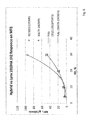
- FIG. 5 is a graph of catalyst activity (CE) over H 2 response for a diisooctyl phthalate-THANE donor catalyst.
- FIG. 6 is a graph of melt flow index (MFI) over H 2 response for a diisooctyl phthalate-THANE donor catalyst.
- FIG. 7 is a graph of xylene soluble (XS) over a ratio of Si/Ti for a diisooctyl phthalate-THANE donor catalyst.
- the presently disclosed and claimed inventive concept(s) relates to solid catalyst components containing titanium, magnesium, halogen and a combination of internal electron donor compounds comprising at least one 1,8-naphthyl diester compound represented by general formula (I) and at least one secondary internal donor compound selected from the group consisting of mono- or poly-carboxylic esters, ethers, ketones, organic compounds containing carboxylic and ether groups, organic compounds containing carboxylic groups and carbonyl groups, and organic compounds containing carboxylic groups, ether groups, and carbonyl groups.
- internal electron donor compounds comprising at least one 1,8-naphthyl diester compound represented by general formula (I) and at least one secondary internal donor compound selected from the group consisting of mono- or poly-carboxylic esters, ethers, ketones, organic compounds containing carboxylic and ether groups, organic compounds containing carboxylic groups and carbonyl groups, and organic compounds containing carboxylic groups, ether groups, and carbonyl groups.
- the at least one secondary internal donor compound is selected from the group consisting of a compound represented by general formula (II), (III), (IV), (V), (VI), (VII), and/or (VIII) in olefinic polymerization; olefin polymerization catalyst systems containing the solid catalyst components, organoaluminums, and organosilicons; methods of making the solid catalyst components and the catalyst systems; and methods of polymerizing and/or copolymerizing olefins using the catalyst systems.
- a compound represented by general formula (II), (III), (IV), (V), (VI), (VII), and/or (VIII) in olefinic polymerization olefin polymerization catalyst systems containing the solid catalyst components, organoaluminums, and organosilicons
- methods of making the solid catalyst components and the catalyst systems and methods of polymerizing and/or copolymerizing olefins using the catalyst systems.
- the at least one secondary internal donor compound is selected from the group consisting of a compound represented by general formula (II), (III), (IV), (V), (VI), (VII), and (VIII) in olefinic polymerization, including alkyl 2-alkoxy-1-naphthoates, alkyl 2-alkoxybenzoates, alkyl 2,6-dialkoxybenzoates, (2-alkoxyphenyl)(pyrrolidin-1-yl)alkanones, dialkyl phthalates, alkyl alkionates, or dialkyl cyclohexane-1,2-dicarboxylates, respectively.
- a compound represented by general formula (II), (III), (IV), (V), (VI), (VII), and (VIII) in olefinic polymerization including alkyl 2-alkoxy-1-naphthoates, alkyl 2-alkoxybenzoates, alkyl 2,6-dialkoxybenzoates, (2-alkoxyphen
- An aspect of the presently disclosed and claimed inventive concept(s) is a solid catalyst component comprising titanium, magnesium, halogen and a combination of internal electron donor compounds comprising at least one 1,8-naphthyl diester compound represented by general formula (I) and at least one secondary internal donor compound selected from the group consisting of a compound represented by general formula (II), (III), (IV), (V), (VI), (VII), and (VIII).
- the solid catalyst component comprises a titanium compound having at least one titanium-halogen bond and a combination of internal electron donor compounds comprising at least one 1,8-naphthyl diester compound represented by general formula (I) and at least one secondary internal donor compound selected from the group consisting of a compound represented by general formula (II), (III), (IV), (V), (VI), (VII), and (VIII) supported on a magnesium halide crystal lattice.
- the titanium compound is TiCl 4 or TiCl 3 .
- the magnesium halide crystal lattice is a magnesium dichloride crystal lattice, which is widely known by one of ordinary skill in the art as a support for Ziegler-Natta catalysts.
- the solid catalyst component of the present disclosure is an active catalyst component comprising a reaction product of a titanium compound, a magnesium compound, and a combination of internal electron donor compounds comprising at least one 1,8-naphthyl diester compound represented by general formula (I) and at least one secondary internal donor compound selected from the group consisting of a compound represented by general formula (II), (III), (IV), (V), (VI), (VII), and (VIII).
- the titanium compounds used in the preparation of the solid catalyst component can include, for example, a tetravalent titanium compound represented by chemical formula (1): Ti(OR) g X 4-g (1) wherein R represents a hydrocarbon group, including an alkyl group having 1 to about 20 carbon atoms, X represents a halogen atom, and 0 ⁇ g ⁇ 4.
- titanium compound examples include, but are not limited to, titanium tetrahalides such as TiCl 4 , TiBr 4 , and TiI 4 ; alkoxytitanium trihalides such as Ti(OCH 3 )Cl 3 , Ti(OC 2 H 5 )Cl 3 , Ti(O-n-C 4 H 9 )Cl 3 , Ti(OC 2 H 5 )Br 3 and Ti(O-i-C 4 H 9 )Br 3 ; dialkoxytitanium dihalides such as Ti(OCH 3 ) 2 Cl 2 , Ti(OC 2 H 5 ) 2 Cl 2 , Ti(O-n-C 4 H 9 ) 2 Cl 2 and Ti(OC 2 H 5 ) 2 Br 2 ; trialkoxytitanium monohalides such as Ti(OCH 3 ) 3 Cl, Ti(OC 2 H 5 ) 3 Cl, Ti(O-n-C 4 H 9 ) 3 Cl and Ti(OC 2 H 5 ) 3 Br; and tetraal
- the magnesium compounds used in the preparation of the solid catalyst component include halogen containing magnesium compounds.
- the magnesium compounds include, but are not limited to, magnesium halides such as magnesium chloride, magnesium bromide, magnesium iodide and magnesium fluoride; alkoxy magnesium halides such as methoxy magnesium chloride, ethoxy magnesium chloride, isopropoxy magnesium chloride, butoxy magnesium chloride and octoxy magnesium chloride; aryloxy magnesium halides such as phenoxy magnesium chloride and methylphenoxy magnesium chloride; alkoxy magnesiums such as ethoxy magnesium, isopropoxy magnesium, butoxy magnesium, n-octoxy magnesium and 2-ethylhexoxy magnesium; aryloxy magnesiums such as phenoxy magnesium and dimethylphenoxy magnesium; and carboxylic acid salts of magnesium such as magnesium laurate and magnesium stearate. These magnesium compounds may be in the liquid or solid state.
- the halogen containing magnesium compounds such as magnesium chloride, alkoxy magnesium chlorides and aryloxy magnesium chlorides, are employed.
- an internal electron donor or a combination of internal electron donors can be added to the preparation and/or may form the solid catalyst component itself and/or other constituents.
- the solid titanium catalyst component can be made by contacting a magnesium compound and a titanium compound with an internal electron donor compound. In one embodiment, the solid titanium catalyst component is made by contacting a magnesium compound and a titanium compound in the presence of at least one internal electron donor compound. In another embodiment, the solid titanium catalyst component is made by forming a magnesium based support optionally with the titanium compound and optionally with at least one internal electron donor compound, and contacting the magnesium based support with the titanium compound and the at least one internal electron donor compound.
- the catalyst prepared with two or several internal donors are different in comparison with the catalyst when the internal donors are used separately. In many cases the activities of catalysts with the two or several donors are higher in comparison with the catalyst having a single internal donor.
- the catalyst composition using at least two different donors provides a synergetic effect resulting in variable catalyst and polymer properties such as activities, isotactisity, molecular weight, and molecular weight distribution. It also results in reduction of the cost of producing the catalyst.
- the internal electron donor compound comprises a combination of internal electron donor compounds comprising at least one 1,8-naphthyl diester compound represented by general formula (I) and at least one secondary internal donor compound selected from the group consisting of a compound represented by general formula (II), (III), (IV), (V), (VI), (VII), and (VIII):
- cyclic refers to a series of atoms connected to form a loop or ring.
- cyclic is meant to include monocyclic, bicyclic or polycyclic, alicyclic or aromatic, and/or homocyclic or heterocyclic compounds.
- 1,8-naphthyl diester compound of the general formula (I) include, but are not limited to, naphthalene-1,8-diyl dibenzoate, 8-(benzoyloxy)naphthalen-1-yl 2-methylbenzoate, 8-(benzoyloxy)naphthalen-1-yl 3-methylbenzoate, 8-(benzoyloxy)naphthalen-1-yl 4-methylbenzoate, 8-(benzoyloxy)naphthalen-1-yl 2,4,6-trimethylbenzoate, 8-(benzoyloxy)naphthalen-1-yl isonicotinate, 8-(benzoyloxy)naphthalen-1-yl nicotinate, 8-(benzoyloxy)naphthalen-1-yl picolinate, 8-((cyclohexanecarbonyl)oxy)naphthalen-1-yl benzoate, 8-((cyclohexanecarbonyl)oxy)
- the secondary internal donor compound includes a compound represented by general formula (II):
- Examples of a compound represented by general formula (II) include, but are not limited to, 2-methoxy-1-naphthoic acid, methyl 2-methoxy-1-naphthoate, ethyl 2-methoxy-1-naphthoate, propyl 2-methoxy-1-naphthoate, butyl 2-methoxy-1-naphthoate, pentyl 2-methoxy-1-naphthoate, hexyl 2-methoxy-1-naphthoate, heptyl 2-methoxy-1-naphthoate, octyl 2-methoxy-1-naphthoate, nonyl 2-methoxy-1-naphthoate, undecyl 2-methoxy-1-naphthoate, dodecyl 2-methoxy-1-naphthoate, tridecyl 2-methoxy-1-naphthoate,
- the secondary internal donor compound includes a compound represented by general formula (III):
- Examples of a compound represented by general formula (III) include, but are not limited to, butyl 2-methoxybenzoate, methyl 2-methoxybenzoate, ethyl 2-methoxybenzoate, propyl 2-methoxybenzoate, pentyl 2-methoxybenzoate, hexyl 2-methoxybenzoate, isopentyl 2-methoxybenzoate, isopropyl 2-methoxybenzoate, isobutyl 2-methoxybenzoate, 4-methylpentyl 2-methoxybenzoate, 5-methylhexyl 2-methoxybenzoate, undecyl 2-methoxybenzoate, tridecyl 2-methoxybenzoate, henicosyl 2-methoxybenzoate, 2-methoxybenzoic acid, butyl 2-hydroxybenzoate, butyl 2-ethoxybenzoate, butyl 2-propoxybenzoate, butyl 2-butoxybenzoate, butyl 2-methoxy-3-methyl
- the secondary internal donor compound includes a compound represented by general formula (IV):
- Examples of a compound represented by general formula (IV) include, but are not limited to, methyl 2,6-dimethoxybenzoate, ethyl 2,6-dimethoxybenzoate, propyl 2,6-dimethoxybenzoate, butyl 2,6-dimethoxybenzoate, pentyl 2,6-dimethoxybenzoate, hexyl 2,6-dimethoxybenzoate, heptyl 2,6-dimethoxybenzoate, octyl 2,6-dimethoxybenzoate, nonyl 2,6-dimethoxybenzoate, decyl 2,6-dimethoxybenzoate, dodecyl 2,6-dimethoxybenzoate, octadecyl 2,6-dimethoxybenzoate, phenyl 2,6-dimethoxybenzoate, cyclohexyl 2,6-dimethoxybenzoate, pyridin-4-yl 2,6-dimethoxy
- the secondary internal donor compound includes a compound represented by general formula (V):
- Examples of a compound represented by general formula (V) include, but are not limited to, (2-methoxyphenyl)(pyrrolidin-1-yl)methanone, (2-ethoxyphenyl)(pyrrolidin-1-yl)methanone, (2-propoxyphenyl)(pyrrolidin-1-yl)methanone, (2-butoxyphenyl)(pyrrolidin-1-yl)methanone, (2-(pentyloxy)phenyl)(pyrrolidin-1-yl)methanone, (2-(hexyloxy)phenyl)(pyrrolidin-1-yl)methanone, (2-(dodecyloxy)phenyl)(pyrrolidin-1-yl)methanone, (2-(icosyloxy)phenyl)(pyrrolidin-1-yl)methanone, (2-isopropoxyphenyl)(pyrrolidin-1-yl)methanone, (2-isobutoxyphenyl)(
- the secondary internal donor compound includes a compound represented by general formula (VI):
- Examples of a compound represented by general formula (VI) include, but are not limited to, dibutyl phthalate (DnBP), diisobutyl phthalate (DIBP), dioctyl phthalate (DOP), bis(2-ethylhexyl) phthalate (DEHP), bis(6-methylheptyl) phthalate (DiOP, aka diisooctyl phthalate), bis(7-methyloctyl) phthalate (DINP), and bis(2-propylheptyl) phthalate (DPHP).
- DnBP dibutyl phthalate
- DIBP diisobutyl phthalate
- DOP dioctyl phthalate
- DEHP bis(2-ethylhexyl) phthalate
- DIHP bis(6-methylheptyl) phthalate
- DIHP bis(6-methylheptyl) phthalate
- DPHP bis(2-propylheptyl
- the secondary internal donor compound includes a compound represented by general formula (VII):
- Examples of a compound represented by general formula (VII) include, but are not limited to, methyl acetate, ethyl acetate, propyl acetate, butyl acetate, pentyl acetate, hexyl acetate, heptyl acetate, octyl acetate, phenyl acetate, cyclohexyl acetate, isobutyl acetate, isopentyl acetate, 4-methylpentyl acetate, 5-methylhexyl acetate, 6-methylheptyl acetate, 7-methyloctyl acetate, methyl propionate, methyl butyrate, methyl pentanoate, methyl hexanoate, methyl heptanoate, methyl octanoate, methyl decanoate, methyl dodecanoate, methyl stearate, methyl benzoate, methyl cyclohexanecarboxylate
- the secondary internal donor compound includes a compound represented by general formula (VIII):
- Examples of a compound represented by general formula (VIII) include, but are not limited to, dibutyl cyclohexane-1,2-dicarboxylate, diisobutyl cyclohexane-1,2-dicarboxylate, dioctyl cyclohexane-1,2-dicarboxylate, bis(2-ethylhexyl)cyclohexane-1,2-dicarboxylate, bis(6-methylheptyl)cyclohexane-1,2-dicarboxylate, bis(7-methyloctyl)cyclohexane-1,2-dicarboxylate, and bis(2-propylheptyl)cyclohexane-1,2-dicarboxylate.
- the solid catalyst component comprises an internal electron donor compound containing a combination of internal electron donor compounds comprising at least one 1,8-naphthyl diester compound represented by general formula (I) and at least one secondary internal donor compound selected from the group consisting of a compound represented by general formula (II), (III), (IV), (V), (VI), (VII), and (VIII), but does not include additional internal electron donors.
- the solid catalyst component includes other internal electron donors in addition to the internal electron donor compound containing a combination of internal electron donor compounds comprising at least one 1,8-naphthyl diester compound represented by general formula (I) and at least one secondary internal donor compound selected from the group consisting of a compound represented by general formula (II), (III), (IV), (V), (VI), (VII), and (VIII).
- other internal electron donors can be added to the preparation and/or may form the solid catalyst itself and/or other constituents in addition to the internal electron donor containing a combination of internal electron donor compounds comprising at least one 1,8-naphthyl diester compound represented by general formula (I) and at least one secondary internal donor compound selected from the group consisting of a compound represented by general formula (II), (III), (IV), (V), (VI), (VII), and (VIII).
- Examples of other internal electron donors include oxygen-containing electron donors such as organic acid esters.
- oxygen-containing electron donors such as organic acid esters.
- Specific examples include, but are not limited to, diethyl ethylmalonate, diethyl propylmalonate, diethyl isopropylmalonate, diethyl butylmalonate, diethyl 1,2-cyclohexanedicarboxylate, di-2-ethylhexyl 1,2-cyclohexanedicarboxylate, di-2-isononyl 1,2-cyclohexanedicarboxylate, methyl benzoate, ethyl benzoate, propyl benzoate, butyl benzoate, octyl benzoate, cyclohexyl benzoate, phenyl benzoate, benzyl benzoate, methyl 4-methylbenzoate, ethyl 4-methylbenzoate, amyl 4-methylbenzoate, e
- the internal electron donor compounds may be added individually or together. In employing the internal electron donor compounds, they do not have to be used directly as starting materials, but compounds convertible to the electron donors in the course of preparing the solid catalyst components may also be used as the starting materials.
- the solid catalyst component can be made by contacting a magnesium compound and a titanium compound with an internal electron donor compound containing a combination of internal electron donor compounds comprising at least one 1,8-naphthyl diester compound represented by general formula (I) and at least one secondary internal donor compound selected from the group consisting of a compound represented by general formula (II), (III), (IV), (V), (VI), (VII), and (VIII).
- the solid catalyst component is made by contacting a magnesium compound and a titanium compound in the presence of an internal electron donor compound containing a combination of internal electron donor compounds comprising at least one 1,8-naphthyl diester compound represented by general formula (I) and at least one secondary internal donor compound selected from the group consisting of a compound represented by general formula (II), (III), (IV), (V), (VI), (VII), and (VIII).
- the solid catalyst component is made by forming a magnesium based support optionally with a titanium compound and optionally with an internal electron donor compound containing a combination of internal electron donor compounds comprising at least one 1,8-naphthyl diester compound represented by general formula (I) and at least one secondary internal donor compound selected from the group consisting of a compound represented by general formula (II), (III), (IV), (V), (VI), (VII), and (VIII), and contacting the magnesium based support with the titanium compound and the internal electron donor compound containing a combination of internal electron donor compounds comprising at least one 1,8-naphthyl diester compound represented by general formula (I) and at least one secondary internal donor compound selected from the group consisting of a compound represented by general formula (II), (III), (IV), (V), (VI), (VII), and (VIII).
- the solid catalyst component is made by contacting a magnesium based support with a titanium compound to form a mixture, then contacting the mixture with an internal electron donor compound containing a combination of internal electron donor compounds comprising at least one 1,8-naphthyl diester compound represented by general formula (I) and at least one secondary internal donor compound selected from the group consisting of a compound represented by general formula (II), (III), (IV), (V), (VI), (VII), and (VIII).
- the solid catalyst component is made by contacting a magnesium based support with a titanium compound to form a mixture, then contacting the mixture with an internal electron compound containing a combination of internal electron donor compounds comprising at least one 1,8-naphthyl diester compound represented by general formula (I) and at least one secondary internal donor compound selected from the group consisting of a compound represented by general formula (II), (III), (IV), (V), (VI), (VII), and (VIII), then contacting the mixture again with the internal electron donor compound containing a combination of internal electron donor compounds comprising at least one 1,8-naphthyl diester compound represented by general formula (I) and at least one secondary internal donor compound selected from the group consisting of a compound represented by general formula (II), (III), (IV), (V), (VI), (VII), and (VIII).
- Such repeated contact with the internal electron donor compound containing a combination of internal electron donor compounds comprising at least one 1,8-naphthyl diester compound represented by general formula (I) and at least one secondary internal donor compound selected from the group consisting of a compound represented by general formula (II), (III), (IV), (V), (VI), (VII), and (VIII), can occur once, twice, or three times successively or with other acts performed between contacts with additional doses of the internal electron donor compounds containing a combination of internal electron donor compounds comprising at least one 1,8-naphthyl diester compound represented by general formula (I) and at least one secondary internal donor compound selected from the group consisting of a compound represented by general formula (II), (III), (IV), (V), (VI), (VII), and (VIII).
- the magnesium based support is made by dissolving a magnesium compound in a solvent mixture comprising an organic epoxy compound, an organic phosphorus compound and an optional inert diluent to form a homogenous solution.
- the organic epoxy compounds used can include compounds having at least one epoxy group in the forms of monomers, dimmers, oligomers and polymers.
- epoxy compounds include, but are not limited to, aliphatic epoxy compounds, alicyclic epoxy compounds, aromatic epoxy compounds, or the like.
- aliphatic epoxy compounds include, but are not limited to, halogenated aliphatic epoxy compounds, aliphatic epoxy compounds having a keto group, aliphatic epoxy compounds having an ether bond, aliphatic epoxy compounds having an ester bond, aliphatic epoxy compounds having a tertiary amino group, aliphatic epoxy compounds having a cyano group, or the like.
- alicyclic epoxy compounds include, but are not limited to halogenated alicyclic epoxy compounds, alicyclic epoxy compounds having a keto group, alicyclic epoxy compounds having an ether bond, alicyclic epoxy compounds having an ester bond, alicyclic epoxy compounds having a tertiary amino group, alicyclic epoxy compounds having a cyano group, or the like.
- aromatic epoxy compounds include, but are not limited to, halogenated aromatic epoxy compounds, aromatic epoxy compounds having a keto group, aromatic epoxy compounds having an ether bond, aromatic epoxy compounds having an ester bond, aromatic epoxy compounds having a tertiary amino group, aromatic epoxy compounds having a cyano group, or the like.
- epoxy compounds include, but are not limited to, epifluorohydrin, epichlorohydrin, epibromohydrin, hexafluoropropylene oxide, 1,2-epoxy-4-fluorobutane, 1-(2,3-epoxypropyl)-4-fluorobenzene, 1-(3,5-epoxybutyl)-2-fluorobenzene, 1-(2,3-epoxypropyl)-4-chlorobenzene, 1-(3,5-epoxybutyl)-3-chlorobenzene, or the like.
- halogenated alicyclic epoxy compounds include 4-fluoro-1,2-cyclohexene oxide, 6-chloro-2,3 epoxybicyclo[2,2,1]heptane, or the like.
- halogenated aromatic epoxy compounds include 4-fluorostyrene oxide, 1-(1,2-epoxypropyl)-3-trifluorobenzene, or the like.
- the organic phosphorus compounds can include, but are not limited, to hydrocarbyl esters and halohydrocarbyl esters of ortho-phosphoric acid and phosphorous acid. Specific examples include, but are not limited to trimethyl phosphate, triethyl phosphate, tributyl phosphate, triphenyl phosphate, trimethyl phosphite, triethyl phosphite, tributyl phosphite and triphenyl phosphite.
- an inert diluent may be optionally added to the solvent mixture.
- the inert diluent can typically be aromatic hydrocarbons or alkanes, as long as it is capable of facilitating the dissolution of the magnesium compound.
- aromatic hydrocarbons include, but are not limited to benzene, toluene, xylene, chlorobenzene, dichlorobenzene, trichlorobenzene, chlorotoluene, and derivatives thereof.
- alkanes include linear, branched, or cyclic alkanes having about 3 to about 30 carbons, such as butane, pentane, hexane, cyclohexane, heptanes, and the like. These inert diluents may be used alone or in combination.
- the magnesium based support is mixed with a titanium compound such as liquid titanium tetrahalide to form a solid precipitate in the optional presence of an auxiliary precipitant.
- the auxiliary precipitant may be added before, during or after the precipitation of the solids and loaded on the solids.
- the auxiliary precipitants used can include carboxylic acids, carboxylic acid anhydrides, ethers, ketones, or mixture thereof. Specific examples include, but are not limited to, acetic anhydride, phthalic anhydride, succinic anhydride, maleic anhydride, 1,2,4,5-benzene tetracarboxylic dianhydride, acetic acid, propionic acid, butyric acid, acrylic acid, methacrylic acid, acetone, methyl ethyl ketone, benzophenone, dimethyl ether, diethyl ether, dipropyl ether, dibutyl ether, and dipentyl ether.
- Solid precipitation can be carried out by one or more processes selected from the following.
- One method involves mixing a titanium compound such as liquid titanium tetrahalide with a magnesium based support at a temperature in the range of about ⁇ 40 degrees Celsius to about 0 degrees Celsius, and precipitating the solids while the temperature is raised slowly to a range from about 30 degrees Celsius to about 120 degrees Celsius, for example from about 60 degrees Celsius to about 100 degrees Celsius, but not by way of limitation.
- the second method involves adding a titanium compound dropwise into a magnesium based support to precipitate out solids immediately.
- the third method involves adding a first titanium compound dropwise into a magnesium based support and mixing a second titanium compound with the magnesium based support.
- an internal electron donor compound containing a combination of internal electron donor compounds comprising at least one 1,8-naphthyl diester compound represented by general formula (I) and at least one secondary internal donor compound selected from the group consisting of a compound represented by general formula (II), (III), (IV), (V), (VI), (VII), and (VIII) can be present in the reaction system.
- the internal electron donor compound containing a combination of internal electron donor compounds comprising at least one 1,8-naphthyl diester compound represented by general formula (I) and at least one secondary internal donor compound selected from the group consisting of a compound represented by general formula (II), (III), (IV), (V), (VI), (VII), and (VIII) can be added either after the magnesium based support is obtained or after the solid precipitate is formed.
- a surfactant when the solid catalyst component is formed, can be used so as to produce a relatively large size and substantially spherical shape of the magnesium based support, thereby contributing to many of the beneficial properties of the solid catalyst component and catalyst system.
- surfactants include polymer surfactants, such as polyacrylates, polymethacrylates, polyalkyl methacrylates, and the like.
- a polyalkyl methacrylate is a polymer that may contain one or more methacrylate monomers, such as at least two different methacrylate monomers, at least three different methacrylate monomers, etc.
- the acrylate and methacrylate polymers may contain monomers other than acrylate and methacrylate monomers, so long as the polymer surfactant contains at least about 40% by weight acrylate and methacrylate monomers.
- non-ionic surfactants and/or anionic surfactants can be used.
- non-ionic surfactants and/or anionic surfactants include, but are not limited to, phosphate esters, alkyl sulfonates, aryl sulfonates, alkylaryl sulfonates, linear alkyl benzene sulfonates, alkylphenols, ethoxylated alcohols, carboxylic esters, fatty alcohols, fatty esters, fatty aldehydes, fatty ketones, fatty acid nitriles, benzene, naphthalene, anthracene, succinic anhydride, phthalic anhydrides, rosin, terpene, phenol, or the like.
- a number of anhydride surfactants are effective.
- the absence of an anhydride surfactant causes the formation of very small catalyst support particles while the over-use creates straw shaped material sometimes referred to
- the solid catalyst precursor can be formed in one embodiment as follows.
- a magnesium and titanium containing solution is seen following the addition of a halogenating agent such as TiCl 4 into a magnesium based solution at relatively cooler temperatures, such as ⁇ 25 degrees Celsius until about 0 degrees Celsius.
- An oil phase is then formed, which can be dispersed into the hydrocarbon phase that is stable until about 40 degrees Celsius.
- the resultant magnesium material becomes a semi-solid at this point and the particle morphology is thereafter determined.
- the semi-solid product converts into a solid between about 40 degrees Celsius and about 80 degrees Celsius.
- the process of precipitation can be carried out slowly.
- the process may take place over a period from about 1 hour to about 6 hours.
- the rate of temperature increase can range from about 4 degrees Celsius to about 125 degrees Celsius per hour.
- the solid precipitate is first separated from the mixture. Entrained in the solid precipitate may be a variety of complexes and byproducts, so that further treatment may in some instances be necessary as would be well appreciated and understood by one of ordinary skill in the art.
- the solid precipitate is treated with a titanium compound in order to substantially remove the byproducts from the solid precipitate.
- the solid precipitate can be washed with an inert diluent and then treated with a titanium compound or a mixture of a titanium compound and an inert diluent.
- the titanium compound used in this treatment can be identical to or different than the titanium compound used for forming the solid precipitate.
- the amount of titanium compound used is from about 1 to about 20 moles, such as from about 2 to about 15 moles, per mole of magnesium compound in the support.
- the treatment temperature ranges from about 50 degrees Celsius to about 150 degrees Celsius, such as from about 60 degrees Celsius to about 100 degrees Celsius.
- the volume % of titanium tetrahalide in the treating solution is from about 10% to about 100%, the rest being the inert diluent.
- the treated solids can be further washed with an inert diluent to remove ineffective titanium compounds and other byproducts.
- the inert diluent herein used can be hexane, heptanes, octane, 1,2-dichloroethane, benzene, toluene, ethylbenzene, xylene, and other hydrocarbons.
- the byproducts in the solid precipitate can be removed from the solid precipitate.
- the solid precipitate is treated with the titanium compound and optionally an inert diluent about two times or more and five times or less.
- the solid precipitate is treated repeatedly with an inert diluent until the filtrate contains about 100 ppm or less of titanium.
- the solid precipitate is treated repeatedly with an inert diluent until the filtrate contains about 50 ppm or less of titanium.
- the solid precipitate is treated with an inert diluent until the filtrate contains about 10 ppm or less of titanium.
- the solid precipitate is treated with an inert diluent about three times or more and seven times or less. In all cases, one of ordinary skill in the art, given the present disclosure, would be able to vary these parameters and steps in order to tailor to specific conditions and/or properties as described.
- the solid catalyst component contains from about 0.5 to about 6.0 wt % titanium; from about 10 to about 25 wt % magnesium; from about 40 to about 70 wt % halogen; from about 1 to about 50 wt % the internal electron donor compound containing a combination of internal electron donor compounds comprising at least one 1,8-naphthyl diester compound represented by general formula (I) and at least one secondary internal donor compound selected from the group consisting of a compound represented by general formula (II), (III), (IV), (V), (VI), (VII), and (VIII); and optionally inert diluent from about 0 to about 15 wt %.
- the solid catalyst component contains from about 2 to about 25 wt % of one or more of the internal electron donors containing a combination of internal electron donor compounds comprising at least one 1,8-naphthyl diester compound represented by general formula (I) and at least one secondary internal donor compound selected from the group consisting of a compound represented by general formula (II), (III), (IV), (V), (VI), (VII), and (VIII).
- the solid catalyst component contains from about 5 to about 20 wt % of one or more of the internal electron donors containing a combination of internal electron donor compounds comprising at least one 1,8-naphthyl diester compound represented by general formula (I) and at least one secondary internal donor compound selected from the group consisting of a compound represented by general formula (II), (III), (IV), (V), (VI), (VII), and (VIII).
- the amounts of the ingredients used in preparing the solid catalyst component may vary depending upon the method of preparation. In one embodiment, from about 0.01 to about 5 moles of the internal electron donor compounds containing a combination of internal electron donor compounds comprising at least one 1,8-naphthyl diester compound represented by general formula (I) and at least one secondary internal donor compound selected from the group consisting of a compound represented by general formula (II), (III), (IV), (V), (VI), (VII), and (VIII) and from about 0.01 to about 500 moles of the titanium compounds are used per mole of the magnesium compound used to make the solid catalyst component.
- a combination of internal electron donor compounds comprising at least one 1,8-naphthyl diester compound represented by general formula (I) and at least one secondary internal donor compound selected from the group consisting of a compound represented by general formula (II), (III), (IV), (V), (VI), (VII), and (VIII) and from about 0.01 to about 500 moles of the titanium compounds are used per mo
- the internal electron donor compounds containing a combination of internal electron donor compounds comprising at least one 1,8-naphthyl diester compound represented by general formula (I) and at least one secondary internal donor compound selected from the group consisting of a compound represented by general formula (II), (III), (IV), (V), (VI), (VII), and (VIII) and from about 0.05 to about 300 moles of the titanium compounds are used per mole of the magnesium compound used to make the solid catalyst component.
- the atomic ratio of halogen/titanium is from about 4 to about 200; the internal electron donor/titanium mole ratio is from about 0.01 to about 10; and the magnesium/titanium atomic ratio is from about 1 to about 100.
- the atomic ratio of halogen/titanium is from about 5 to about 100; the internal electron donor/titanium mole ratio is from about 0.2 to about 6; and the magnesium/titanium atomic ratio is from about 2 to about 50.
- the resulting solid catalyst component generally contains a magnesium halide of a smaller crystal size than traditional and/or commercially available magnesium halides and usually has a specific surface area of at least about 5 m 2 /g, such as from about 10 to about 1,000 m 2 /g or from about 100 to about 800 m 2 /g. Since the above ingredients are unified to form an integral structure of the solid catalyst component, the composition of the solid catalyst component does not substantially change by washing with, for example, hexane.
- the solid catalyst component may be used after being diluted with an inorganic or organic compound such as a silicon compound, an aluminum compound, or the like.
- an inorganic or organic compound such as a silicon compound, an aluminum compound, or the like.
- the catalyst system may contain at least one organoaluminum compound in addition to the solid catalyst component.
- organoaluminum compounds include compounds of the following chemical formula (2): AlR n X 3-n (2)
- R independently represents a hydrocarbon group usually having 1 to about 20 carbon atoms
- X represents a halogen atom(s)
- organoaluminum compounds represented by chemical formula (3) include, but are not limited to, trialkyl aluminums such as triethyl aluminum, tributyl aluminum and trihexyl aluminum; trialkenyl aluminums such as triisoprenyl aluminum; dialkyl aluminum halides such as diethyl aluminum chloride, dibutyl aluminum chloride and diethyl aluminum bromide; alkyl aluminum sesquihalides such as ethyl aluminum sesquichloride, butyl aluminum sesquichloride and ethyl aluminum sesquibromide; alkyl aluminum dihalides such as ethyl aluminum dichloride, propyl aluminum dichloride and butyl aluminum dibromide; dialkyl aluminum hydrides such as diethyl aluminum hydride and dibutyl aluminum hydride; and other partially hydrogenated alkyl aluminum such as ethyl aluminum dihydride and propyl aluminum dihydride.
- trialkyl aluminums such as triethyl aluminum, tribut
- the organoaluminum compound can be used in the catalyst system in an amount that the mole ratio of aluminum to titanium (from the solid catalyst component) is from about 5 to about 1,000. In another embodiment, the mole ratio of aluminum to titanium in the catalyst system is from about 10 to about 700. In yet another embodiment, the mole ratio of aluminum to titanium in the catalyst system is from about 25 to about 400.
- the catalyst system may contain at least one organosilicon compound in addition to the solid catalyst component.
- This organosilicon compound may, although not always, be referred as an external electron donor.
- the organosilicon compound contains silicon having at least one hydrogen ligand (hydrocarbon group).
- hydrocarbon groups include alkyl groups, cycloalkyl groups, (cycloalkyl)methylene groups, alkene groups, aromatic groups, and the like.
- the organosilicon compound when used as an external electron donor serving as one component of a Ziegler-Natta catalyst system for olefin polymerization, improves the ability of the catalyst system to produce a polymer (at least a portion of which is polyolefin) having a controllable crystallinity while retaining high performance with respect to catalytic activity.
- the organosilicon compound is used in the catalyst system in an amount that the mole ratio of the organoaluminum compound to the organosilicon compound is from about 2 to about 90. In another embodiment, the mole ratio of the organoaluminum compound to the organosilicon compound is from about 5 to about 70. In yet another embodiment, the mole ratio of the organoaluminum compound to the organosilicon compound is from about 7 to about 35.
- the organosilicon compound is represented by chemical formula (4): R n Si(OR′) 4-n (4) wherein each R and R′ independently represent a hydrocarbon group, and n is 0 ⁇ n ⁇ 4.
- organosilicon compound of chemical formula (4) include, but are not limited to, trimethylmethoxysilane, trimethylethoxysilane, dimethyldimethoxysilane, dimethyldiethoxysilane, diisopropyldimethoxysilane, diisobutyldimethoxysilane, t-butylmethyldimethoxysilane, t-butylmethyldiethoxysilane, t-amylmethyldiethoxysilane, dicyclopentyldimethoxysilane, diphenyldimethoxysilane, phenylmethyldimethoxysilane, diphenyldiethoxysilane, bis-o-tolydimethoxysilane, bis-m-tolydimethoxysilane, bis-p-tolydimethoxysilane, bis-p-tolydiethoxysilane, bisethylphenyldimethoxysilane, dicyclohe
- the organosilicon compound is represented by chemical formula (5): SiRR′ m (OR′′) 3-m (5)
- R independently represents a cyclic hydrocarbon or substituted cyclic hydrocarbon group.
- R include, but are not limited to, cyclopropyl; cyclobutyl; cyclopentyl; 2-methylcyclopentyl; 3-methylcyclopentyl; 2-ethylcyclopentyl; 3-propylcyclopentyl; 3-isopropylcyclopentyl; 3-butylcyclopentyl; 3-tertiary butyl cyclopentyl; 2,2-dimethylcyclopentyl; 2,3-dimethylcyclopentyl; 2,5-dimethylcyclopentyl; 2,2,5-trimethylcyclopentyl; 2,3,4,5-tetramethylcyclopentyl; 2,2,5,5-tetramethylcyclopentyl; 1-cyclopentylpropyl; 1-methyl-1-cyclopentylethyl; cyclopentenyl; 2-cyclopentyl; 2-methylcyclopentyl; 3-methylcyclopentyl
- R′ and R′′ are identical or different and each represents a hydrocarbon.
- R′ and R′′ are alkyl, cycloalkyl, aryl and aralkyl groups having 3 or more carbon atoms.
- R and R′ may be bridged by an alkyl group, etc.
- organosilicon compounds are those of chemical formula (5) in which R is cyclopentyl group, R′ is an alkyl group such as methyl or cyclopentyl group, and R′′ is an alkyl group, particularly a methyl or ethyl group.
- organosilicon compound of chemical formula (5) include, but are not limited to, trialkoxysilanes such as cyclopropyltrimethoxysilane, cyclobutyltrimethoxysilane, cyclopentyltrimethoxysilane, 2-methylcyclopentyltrimethoxysane, 2,3-dimethylcyclopentyltrimethoxysilane, 2,5-dimethylcyclopentyltrimethoxysilane, cyclopentyltriethoxysilane, cyclopentenyltrimethoxysilane, 3-cyclopentenyltrimethoxysilane, 2,4-cyclopentadienyltrimethoxysilane, indenyltrimethoxysilane and fluorenyltrimethoxysilane; dialkoxysilanes such as dicyclopentyldimethoxysilane, bis(2-methylcyclopentyl)dimethoxysilane, bis(3
- Polymerization of olefins is carried out in the presence of the catalyst system described above. Generally, olefins are contacted with the catalyst system described above under suitable conditions to form desired polymer products. In one embodiment, preliminary polymerization described below is carried out before main polymerization. In another embodiment, polymerization is carried out without preliminary polymerization. In yet another embodiment, the formation of copolymer is carried out using at least two polymerization zones.
- the solid catalyst component is usually employed in combination with at least a portion of the organoaluminum compound. This process may be carried our partially or completely in the presence of the organosilicon compound (i.e. the external electron donor compound).
- the concentration of the catalyst system used in the preliminary polymerization reactor may be much higher than that in the reaction system of the main polymerization.
- the concentration of the solid catalyst component in the preliminary polymerization reactor is usually from about 0.01 to about 200 millimoles, including from about 0.05 to about 100 millimoles, calculated as titanium atoms per liter of an inert hydrocarbon medium described below.
- the preliminary polymerization is carried out by adding an olefin and the above catalyst system ingredients to an inert hydrocarbon medium and polymerizing the olefin under controllable conditions.
- the inert hydrocarbon medium include, but are not limited to, aliphatic hydrocarbons such as propane, butane, pentane, hexane, heptanes, octane, decane, dodecane and kerosene; alicyclic hydrocarbons such as cyclopentane, cyclohexane and methylcyclopentane; and aromatic hydrocarbons such as benzene, toluene and xylene; and mixtures thereof.
- a liquid olefin may be used partially or completely as the inert hydrocarbon medium.
- the reaction temperature for the preliminary polymerization is sufficient for the resulting preliminary polymer to be substantially insoluble in the inert hydrocarbon medium.
- the temperature is from about ⁇ 20 degrees Celsius to about 100 degrees Celsius.
- the temperature is from about ⁇ 10 degrees Celsius to about 80 degrees Celsius.
- the temperature is from about 0 degrees Celsius to about 40 degrees Celsius.
- a molecular-weight controlling agent such as hydrogen
- the molecular weight controlling agent is used in such an amount that the polymer obtained by the preliminary polymerization has an intrinsic viscosity, measured in decalin at 135 degrees Celsius, of at least about 0.2 dl/g, and including from about 0.5 to 10 dl/g.
- the preliminary polymerization is desirably carried out so that from about 0.1 g to about 1,000 g of a polymer is formed per gram of the solid catalyst component of the catalyst system. In another embodiment, the preliminary polymerization is desirably carried out so that from about 0.3 g to about 500 g of a polymer is formed per gram of the solid catalyst component. If the amount of the polymer formed by the preliminary polymerization is too large, the efficiency of producing the olefin polymer in the main polymerization may sometimes decrease, and when the resulting olefin polymer is molded into a film or another article, “fish eyes” (i.e. granular dots or small circles in a molded article of otherwise uniform and constant transparency) tend to occur in the molded article.
- the preliminary polymerization may be carried out batchwise or continuously.
- the main polymerization of an olefin feedstock is carried out in the presence of the above-described olefin polymerization catalyst system, i.e. the catalyst system is formed from the solid catalyst component, the organoaluminum compound and the organosilicon compound (the external electron donor compound).
- alpha-olefins having 2 to 20 carbon atoms such as ethylene, propylene, 1-butene, 4-methyl-1-pentene, 1-pentene, 1-octene, 1-hexene, 1-methyl-1-pentene, 3-methyl-1-pentene, 3-methyl-1-butene, 1-decene, 1-tetradecene, 1-eicosene, and vinylcyclohexane.
- these alpha-olefins may be used individually or in any combinations as will be apparent to one of ordinary skill in the art given the present disclosure.
- propylene or 1-butene is homopolymerized, or, alternatively, a mixed olefin containing propylene or 1-butene as a main component is copolymerized.
- a mixed olefin is selected or used, the proportion of propylene or 1-butene as the main component is usually at least about 50 mole %, including at least about 70 mole %.
- the catalyst system thereafter utilized in the main polymerization can be adjusted to select different degrees of activity. This adjustment tends to result in a powdery polymer having a high bulk density. Furthermore, when the preliminary polymerization is carried out, the particle shape of the resulting polymer becomes spherical. In the case of slurry polymerization, the slurry attains excellent characteristics, while in the case of gas phase polymerization, the polymer seed bed attains excellent characteristics.
- Each type of polymerization is preceded by the preliminary polymerization as described herein.
- a polymer having a high stereoregularity index can be produced with a high catalytic efficiency by polymerizing an alpha-olefin having at least 3 carbon atoms. Accordingly, when producing the propylene copolymer, the resulting copolymer powder or the copolymer becomes easy to process.
- a polyunsaturated compound such as conjugated diene or non-conjugated diene may be used as a comonomer.
- co-monomers include styrene, butadiene, acrylonitrile, acrylamide, alpha-methyl styrene, chlorostyrene, vinyl toluene, divinyl benzene, dially phthalate, alkyl methacrylates and alkyl acrylates.
- the co-monomers include thermoplastic and elastomeric monomers.
- the main polymerization of an olefin is typically carried out in the gaseous or liquid phase.
- the main polymerization employs a catalyst system containing the solid catalyst component in an amount from about 0.001 to about 0.75 millimoles calculated as Ti atom per liter of the volume of the polymerization zone, the organoaluminum compound in an amount from about 1 to about 2,000 moles per mole of titanium atoms in the solid catalyst component, and the organosilicon compound in an amount from about 0.001 to about 10 moles calculated as Si atoms in the organosilicon compound per mole of the metal atoms in the organoaluminum compound.
- the main polymerization employs a catalyst system containing the solid catalyst component in an amount of from about 0.005 to about 0.5 millimoles calculated as Ti atom per liter of the volume of the polymerization zone, the organoaluminum compound in an amount from about 5 to about 500 moles per mole of titanium atoms in the solid catalyst component, and the organosilicon compound in an amount from about 0.01 to about 2 moles calculated as Si atoms in the organosilicon compound per mole of the metal atoms in the organoaluminum compound.
- the main polymerization employs a catalyst system containing the alkyl benzoate derivative in an amount from about 0.005 to about 1 mole calculated as Si atoms in the organosilicon compound per mole of the metal atoms in the organoaluminum compound.
- the catalyst system subjected to the preliminary polymerization is used together with the remainder of the catalyst system components.
- the catalyst system subjected to the preliminary polymerization may contain the product of the preliminary polymerization.
- the use of hydrogen at the time of polymerization promotes and contributes to control of the molecular weight of the resulting polymer, and the polymer obtained may have a desirable melt flow rate.
- the stereoregularity index of the resulting polymer and the activity of the catalyst system are thereby increased when the methods and systems of embodiments of the presently disclosed and claimed inventive concept(s) are utilized.
- the polymerization temperature in the main polymerization is from about 20 degrees Celsius to about 200 degrees Celsius. In another embodiment, the polymerization temperature in the main polymerization is from about 50 degrees Celsius to about 180 degrees Celsius. In one embodiment, the polymerization pressure in the main polymerization is typically from atmospheric pressure to about 100 kg/cm 2 . In another embodiment, the polymerization pressure in the main polymerization is typically from about 2 kg/cm 2 to about 50 kg/cm 2 .
- the main polymerization may be carried out batchwise, semi-continuously or continuously. The main polymerization may also be carried out in two or more stages under different reaction conditions.
- the olefin polymer so obtained may be a homopolymer, a random copolymer, a block copolymer or an impact copolymer.
- the impact copolymer contains an intimate mixture of a polyolefin homopolymer and a polyolefin rubber.
- polyolefin rubbers include ethylene propylene rubber (EPR) such as ethylene propylene methylene copolymer rubber (EPM) and ethylene propylene diene methylene terpolymer rubber (EPDM).
- the olefin polymer obtained by using the catalyst system has a very small amount of an amorphous polymer component and therefore a small amount of a hydrocarbon-soluble component. Accordingly, a film molded from the resultant polymer has low surface tackiness.
- the polyolefin obtained by the polymerization process is excellent in particle size distribution, particle diameter and bulk density, and the copolyolefin obtained has a narrow composition distribution.
- excellent fluidity, low temperature resistance, and a desired balance between stiffness and elasticity can be obtained.
- propylene and an alpha-olefin having 2 or from about 4 to about 20 carbon atoms are copolymerized in the presence of the catalyst system described above.
- the catalyst system may be one subjected to the preliminary polymerization described above.
- propylene and an ethylene rubber are formed in two reactors coupled in series to form an impact polymer.
- the alpha-olefin having 2 carbon atoms is ethylene, and examples of the alpha-olefin having about 4 to about 20 carbon atoms are 1-butene, 1-pentene, 4-methyl-1-pentene, 1-octene, 1-hexene, 1-methyl-1-pentene, 3-methyl-1-pentene, 3-methyl-1-butene, 1-decene, vinylcyclohexane, 1-tetradecene, and the like.
- propylene may be copolymerized with two or more such alpha-olefins.
- propylene is copolymerized with ethylene, 1-butene or ethylene and 1-butene.
- Block copolymerization of propylene and another alpha-olefin may be carried out in two stages.
- the polymerization in a first stage may be the homopolymerization of propylene or the copolymerization of propylene with the other alpha-olefin.
- the amount of the monomers polymerized in the first stage is from about 50 to about 95% by weight. In another embodiment, the amount of the monomers polymerized in the first stage is from about 60 to about 90% by weight.
- This first stage polymerization may, as required, be carried out in two or more stages under the same or different polymerization conditions.
- the polymerization in a second stage is desirably carried out such that the mole ratio of propylene to the other alpha-olefin(s) is from about 10/90 to about 90/10.
- the polymerization in a second stage is desirably carried out such that the mole ratio of propylene to the other alpha-olefin(s) is from about 20/80 to about 80/20.
- the polymerization in a second stage is desirably carried out such that the mole ratio of propylene to the other alpha-olefin(s) is from about 30/70 to about 70/30.
- Producing a crystalline polymer or copolymer of another alpha-olefin may be provided in the second polymerization stage.
- the propylene copolymer so obtained may be a random copolymer or the above-described block copolymer.
- This propylene copolymer typically contains from about 7 to about 50 mole % of units derived from the alpha-olefin having 2 or from about 4 to about 20 carbon atoms.
- a propylene random copolymer contains from about 7 to about 20 mole % of units derived from the alpha-olefin having 2 or from about 4 to about 20 carbon atoms.
- the propylene block copolymer contains from about 10 to about 50 mole % of units derived from the alpha-olefin having 2 or 4-20 carbon atoms.
- copolymers made with the catalyst system contain from about 50% to about 99% by weight poly-alpha-olefins and from about 1% to about 50% by weight co-monomers (such as thermoplastic or elastomeric monomers). In another embodiment, copolymers made with the catalyst system contain from about 75% to about 98% by weight poly-alpha-olefins and from about 2% to about 25% by weight co-monomers.
- the catalysts/methods can, in some embodiments, produce poly-alpha-olefins having xylene soluble (XS) from about 0.5% to about 10%. In another embodiment, poly-alpha-olefins having xylene soluble (XS) from about 1.5% to about 8% are produced.
- XS refers to the percent of solid polymer that dissolves into xylene. A low XS % value generally corresponds to a highly isotactic polymer (i.e. higher crystallinity), whereas a high XS % value generally corresponds to a low isotactic polymer.
- the catalyst efficiency (measured as kilogram of polymer produced per gram of catalyst) of the catalyst system is at least about 20. In another embodiment, the catalyst efficiency of the catalyst system is at least about 40.
- the catalysts/methods can in some instances lead to the production of poly-alpha-olefins having melt flow indexes (MFI) from about 0.1 to about 100.
- MFI melt flow indexes
- poly-alpha-olefins having an MFI from about 5 to about 30 are produced.
- an impact polypropylene-ethylenepropylene rubber product has an MFI from about 4 to about 10.
- an impact polypropylene-ethylenepropylene rubber product has an MFI from about 5 to about 9. In some instances a relatively high MFI indicates relatively high catalyst efficiency is obtainable.
- the catalysts/methods can in some instances lead to the production of poly-alpha-olefins have bulk densities (BD) of at least about 0.3 cc/g. In another embodiment, poly-alpha-olefins having a BD of at least about 0.4 cc/g.
- an impact polypropylene-ethylenepropylene rubber product having a BD of at least about 0.3 cc/g is produced.
- an impact polypropylene-ethylenepropylene rubber product having a BD of at least about 0.4 cc/g is produced.
- the catalysts/methods of the presently disclosed and claimed inventive concept(s) lead to the production of poly-alpha-olefins having from a relatively narrow to a broad molecular weight distribution depending on the catalyst composition.
- the PI of a polypropylene polymer made with the catalyst system is from about 2 to about 8. In another embodiment, the PI of a polypropylene polymer made with the catalyst system is from about 4 to about 7.
- the disclosed methods can lead to the production of a propylene block copolymer and impact copolymers including polypropylene based impact copolymer having one or more excellent melt-flowability, moldability desirable balance between rigidity and elasticity, good stereospecific control, good control over polymer particle size, shape, size distribution, and molecular weight distribution, and impact strength with a high catalytic efficiency and/or good operability.
- Employing the catalyst systems containing the solid catalyst component yields catalysts simultaneously having high catalytic efficiency, and one or more of excellent melt-flowability, extrudability, moldability, rigidity-elasticity and impact strength.
- FIG. 1 a high level schematic diagram of a system 10 for polymerizing olefins is shown.
- Inlet 12 is used to introduce into a reactor 14 catalyst system components, olefins, optional co-monomers, hydrogen gas, fluid media, pH adjusters, surfactants, and any other additives. Although only one inlet is shown, many often are employed.
- Reactor 14 is any suitable vehicle that can polymerize olefins. Examples of reactor 14 include a single reactor, a series of two or more reactors, slurry reactors, fixed bed reactors, gas phase reactors, fluidized gas reactors, loop reactors, multizone circulating reactors, and the like.
- collector 18 may include downstream processing, such as heating, extrusion, molding, and the like.
- FIG. 2 a schematic diagram of a multizone circulating reactor 20 that can be employed as the reactor 14 in FIG. 1 or the reactor 44 in FIG. 3 for making polyolefins is shown.
- the multizone circulating reactor 20 substitutes a series of separate reactors with a single reactor loop that permits different gas phase polymerization conditions in two sides due to use of a liquid barrier.
- a first zone starts out rich in olefin monomers, and optionally one or more co-monomers.
- a second zone is rich in hydrogen gas, and a high velocity gas flow divides the growing resin particles out loosely.
- the two zones produce resins of different molecular weights and/or monomer compositions. Polymer granules grow as they circulate around the loop, building up alternating layers of each polymer fraction in an onion like fashion. Each polymer particle constitutes an intimate combination of both polymer fractions.
- the polymer particles pass up through the fluidizing gas in an ascending side 24 of the loop and come down through the liquid monomer on a descending side 26 .
- the same or different monomers can be added in the two reactor legs.
- the reactor uses the catalyst system described above.
- FIG. 3 a high level schematic diagram of another system 40 for polymerizing olefins is shown.
- This system is ideally suited to make impact polymers.
- a reactor 44 such as a single reactor, a series of reactors, or a multizone circulating reactor is paired with a second reactor 48 , such as a gas phase or a fluidized bed reactor, downstream containing the catalyst systems described above to make impact copolymers with desirable impact to stiffness balance or greater softness than made with conventional catalyst systems.
- Inlet 42 is used to introduce into the reactor 44 catalyst system components, olefins, optional co-monomers, hydrogen gas, fluid media, pH adjusters, surfactants, and any other additives. Although only one inlet is shown, many often are employed.
- the polyolefin made in the first reactor 44 is sent to a second reactor 48 .
- Feed 50 is used to introduce catalyst system components, olefins, optional co-monomers, fluid media, and any other additives.
- the second reactor 48 may or may not contain catalyst system components. Again, although only one inlet is shown, many often are employed.
- the polymer product is removed from the second reactor 48 via outlet 52 which leads to a collector 54 .
- Collector 54 may include downstream processing, such as heating, extrusion, molding, and the like.
- At least one of the first reactor 44 and the second reactor 48 contains catalyst systems in accordance with an embodiment of the invention.
- polypropylene can be formed in the first reactor while an ethylene propylene rubber can be formed in the second reactor.
- the ethylene propylene rubber in the second reactor is formed with the matrix (and particularly within the pores) of the polypropylene formed in the first reactor. Consequently, an intimate mixture of an impact copolymer is formed, wherein the polymer product appears as a single polymer product.
- Such an intimate mixture cannot be made by simply mixing a polypropylene product with an ethylene propylene rubber product.
- the systems and reactors can be controlled, optionally with feedback based on continuous or intermittent testing, using a processor equipped with an optional memory and controllers.
- a processor may be connected to one or more of the reactors, inlets, outlets, testing/measuring systems coupled with the reactors, and the like to monitor and/or control the polymerization process, based on preset data concerning the reactions, and/or based on testing/measuring data generated during a reaction.
- the controller may control valves, flow rates, the amounts of materials entering the systems, the conditions (temperature, reaction time, pH, etc.) of the reactions, and the like, as instructed by the processor.
- the processor may contain or be coupled to a memory that contains data concerning various aspects of the polymerization process.
- a figure or a parameter from one range may be combined with another figure or a parameter from a different range for the same characteristic to generate a numerical range.
- Triethyl aluminum (1.5 cc at 25 wt %), cyclohexylmethyldimethoxysilane (76.8 mmol) and 10 mg of the solid catalyst component dispersed into 1 ml of mineral oil was introduced into a 3.4-liter stainless steel autoclave, which was thoroughly purged with nitrogen.
- the autoclave was pressurized to 10 psi with nitrogen and 32 mmol of hydrogen.
- the autoclave was then filled with 1500 ml of liquid propylene and the temperature was raised to 70° C. The temperature was maintained at 70 degrees. Propylene was polymerized for 1 hour. At the end of polymerization, the reactor was cooled down to 35° C. and the polymer was removed.
- CE refers to catalytic efficiency to produce polypropylene (PP)
- XS refers to xylene solubles
- MFI melt flow index.
- the catalyst synthesis was conducted in a 1 L Buchi reactor.
- the reactor was charged with 13.2 g of MgCl 2 , 204 g of toluene, 25.6 g of Epichlorohydrin (ECH), and 26.8 g of tributyl phosphate (TBP).
- ECH Epichlorohydrin
- TBP tributyl phosphate
- the contents of the reactor were heated and agitated at 60° C. for 5 h.
- 3.2 g of phthalic anhydride (PA) was added.
- the reactor was cooled down to ⁇ 25° C. and TiCl 4 (261 g) was added.
- the reactor was heated up to 85° C. and 2.6 g of diisooctyl phthalate (DIOP) was added (Step 1).
- DIOP diisooctyl phthalate
- Melt flow index or MFI is a measure of the ease of flow of the melt of a thermoplastic polymer. It is defined as the mass of polymer, in grams, flowing in ten minutes through a capillary of a specific diameter and length by a pressure applied via prescribed alternative gravimetric weights for alternative prescribed temperatures. Melt flow rate is an indirect measure of molecular weight, with high melt flow rate corresponding to low molecular weight. At the same time, melt flow rate is a measure of the ability of the material's melt to flow under pressure.
- Example 2 The experiment was conducted as described in Example 1, except for Steps 1-3.
- Step 1 of Example 2 the reactor was heated up to 85° C. and 2.4 g of THANE was added.
- Step 2 of Example 2 130 ml of toluene was added with 1.0 g of THANE.
- Step 3 of Example 2 after filtering off the liquid, the solid was washed with toluene and activated with 10% vol TiCl 4 /toluene at 105° C. for 1 h in presence of 3.6 g of THANE. Tested activity: 62.7 kg/g, XS: 2.44%, MFI: 0.2 g/10 min.
- Example 3 The experiment was conducted as described in Example 1, except for Steps 1-3.
- Step 1 of Example 3 the reactor was heated up to 85° C. and 2.6 g of DIOP was added.
- Step 2 of Example 3 130 ml of toluene was added with 6.5 g of DIOP.
- Step 3 of Example 3 after filtering off the liquid, the solid was washed with toluene and activated with 10% vol TiCl 4 /toluene at 95° C. for 1 h in presence of 3.2 g of DIOP.
- Examples 4-8 and Table 1 were prepared according to Example 1, unless otherwise noted.
- the internal electron donors were added separately in three different places: Step 1, Step 2, and Step 3.
- Examples 9-15 and Table 2 were prepared the same way as those for Examples 4-8, except diisononyl phthalate (DINP) was used instead of diisooctyl phthalate (DIOP).
- DIOP diisononyl phthalate
- Example 16 The experiment was conducted as described in Example 1, except for Steps 1-3.
- Step 1 of Example 16 the reactor was heated up to 85° C. and 2.7 g of DINP was added.
- Step 2 of Example 16 130 ml of toluene was added with 5.0 g of DINP.
- Step 3 of Example 16 after filtering off the liquid, the solid was washed with toluene and activated with 10% vol TiCl 4 /toluene at 95° C. for 1 h in presence of 3.2 g of DINP.
- Examples 17-18 and Table 3 were prepared the same way as Examples 4-8, except dioctyl phthalate (DOP) was used instead of diisooctyl phthalate (DIOP).
- DOP dioctyl phthalate
- DIOP diisooctyl phthalate
- Example 19 The experiment was conducted as described in Example 1, except for Steps 1-3.
- Step 1 of Example 19 the reactor was heated up to 85° C. and 2.5 g of DOP was added.
- Step 2 of Example 19 130 ml of toluene was added with 5.5 g of DOP.
- Step 3 of Example 19 after filtering off the liquid, the solid was washed with toluene and activated with 10% vol TiCl 4 /toluene at 95° C. for 1 h in presence of 3.2 g of DOP.
- Examples 20-21 and Table 4 were prepared in the same manner as Examples 4-8, except bis(2-propylheptyl) phthalate (DPHP) was used instead of diisooctyl phthalate (DIOP).
- DPHP bis(2-propylheptyl) phthalate
- DIOP diisooctyl phthalate
- Example 22 The experiment was conducted as described in Example 1, except for Steps 1-3.
- Step 1 of Example 22 the reactor was heated up to 85° C. and 2.8 g of DPHP was added.
- Step 2 of Example 22 130 ml of toluene was added with 5.8 g of DPHP.
- Step 3 of Example 22 after filtering off the liquid, the solid was washed with toluene and activated with 10% vol TiCl 4 /toluene at 95° C. for 1 h in presence of 4.0 g of DPHP. Tested activity: 43.1 kg/g, XS: 3.47%, MFI: 8.2 g/10 min.
- Example 23 and Table 5 were prepared in the same manner as Examples 4-8, except dibutyl phthalate (DNBP) was used instead of diisooctyl phthalate (DIOP).
- DNBP dibutyl phthalate
- DIOP diisooctyl phthalate
- Examples 24-31 and Table 6 were prepared according to Example 1, unless otherwise noted.
- the internal electron donors were added separately in three different places: step 1, step 2 and step 3.
- the examples demonstrate that the combination of two internal donors: DINCH and THANE results in variable catalyst properties and has a synergistic affect. It is interesting to note that variations in the donor placements affect the isotacticity and molecular weight (MFI) of polymer produced.
- Example 32 The experiment was conducted as described in Example 1, except for Steps 1-3.
- Step 1 of Example 32 the reactor was heated up to 85° C. and 0.7 g of THANE was added.
- Step 2 of Example 32 130 ml of toluene was added with 7.0 g of ethyl benzoate.
- Step 3 of Example 32 after filtering off the liquid, the solid was washed with toluene and activated with 10% vol TiCl 4 /toluene at 95° C. for 1 h in presence of 6.0 g of ethyl benzoate. Tested activity: 31.9 kg/g, XS: 6.02%, MFI: 6.0 g/10 min.
- Examples 33-35 and Table 7 were prepared in the same manner as Examples 4-8, except tridecyl methacrylate (TDMA) was used instead of diisooctyl phthalate (DIOP).
- TDMA tridecyl methacrylate
- DIOP diisooctyl phthalate
- Example 35 is a comparative example.
- the catalysts of Examples 33 and 34 demonstrate higher isotacticity and higher MFI in comparison with Example 35, which used only a single donor.
- the toluene was removed by filtering, and 66.25 ml of 10% wt TiCl 4 -toluene were added and the mixture was heated to 95° C. at 400 rpm for one hour and filtered. The previous step was repeated 3 times at 110° C., 400 rpm, and 30 minute each. The final catalyst was washed 4 times with 65 ml of hexane and collected as a hexane slurry.
- TSANE naphthalene-1,8-diyl dibenzoate
- Examples 36-48 are provided in Table 8, which compares a combination of the internal electron donors to control examples of internal electron donors used individually.
- Examples 36-48 demonstrate that a catalyst prepared with two different internal donors are different in comparison with the catalyst when the internal donors are used individually.
- the activities of catalysts with the two internal donors are higher in comparison with the catalyst having a single internal donor.
- the catalyst composition using at least two different donors provide a synergistic affect resulting in variable catalyst and polymer properties.
- the dispersity index (PI) measurement The dispersity index (PI) measurement.
- the stabilized polymer sample is pressed on a hot press to make a plate.
- the polymer plate is then analyzed on a Rheometer at certain temperatures. From the data plot, P I is calculated using built in molecular weight distribution (MWD) software.
- PI is obtained from the rheological curve and is proportional to the polydispersity of the polymer MWD.
- Examples 49-58 demonstrate that polydispersity of polymers produced with the hybride catalysts is variable based on the internal donors used and the catalyst composition.
- the combination of THANE with DINCH or EB on the catalyst allows production of polypylene with high polydispersity index.
Landscapes
- Chemical & Material Sciences (AREA)
- Health & Medical Sciences (AREA)
- Chemical Kinetics & Catalysis (AREA)
- Medicinal Chemistry (AREA)
- Polymers & Plastics (AREA)
- Organic Chemistry (AREA)
- Transition And Organic Metals Composition Catalysts For Addition Polymerization (AREA)
- Engineering & Computer Science (AREA)
- Materials Engineering (AREA)
Abstract
Description


- R1 and R2 are each independently selected from the group consisting of a hydrogen; a halogen; and a linear or branched, cyclic or acyclic, saturated or non-saturated C1 to C22 hydrocarbyl group, wherein the hydrocarbyl group optionally contains a —O—, —NH—, or —S— group in place of a —CH2— group or a —N═ group in place of a —C═ group, and wherein the hydrocarbyl group is optionally substituted by one or more halogens;
- R3, R4, R5, R6, R7, and R8 are each independently selected from the group consisting of a hydrogen; a halogen; and a linear or branched, cyclic or acyclic, saturated or non-saturated C1 to C22 hydrocarbyl group, wherein the hydrocarbyl group optionally contains a —O—, —NH—, or —S— group in place of a —CH2— group or a —N═ group in place of a —C═ group, and wherein the hydrocarbyl group is optionally substituted by one or more halogens;
- R9 is selected from the group consisting of a hydrogen; a halogen; and a linear or branched, cyclic or acyclic, saturated or non-saturated C1 to C22 hydrocarbyl group, wherein the hydrocarbyl group optionally contains a —O—, —NH—, or —S— group in place of a —CH2— group or a —N═ group in place of a —C═ group, and wherein the hydrocarbyl group is optionally substituted by one or more halogens;
- R10 is selected from the group consisting of a hydrogen; a halogen; and a linear or branched, cyclic or acyclic, saturated or non-saturated C1 to C22 hydrocarbyl group, wherein the hydrocarbyl group optionally contains a —O—, —NH—, or —S— group in place of a —CH2— group or a —N═ group in place of a —C═ group, and wherein the hydrocarbyl group is optionally substituted by one or more halogens;
- R11, R12, R13, R14, R15, and R16 are each independently selected from the group consisting of a hydrogen; a halogen; and a linear or branched, cyclic or acyclic, saturated or non-saturated C1 to C22 hydrocarbyl group, wherein the hydrocarbyl group optionally contains a —O—, —NH—, or —S— group in place of a —CH2— group or a —N═ group in place of a —C═ group, and wherein the hydrocarbyl group is optionally substituted by one or more halogens;
- R17 is selected from the group consisting of a hydrogen; a halogen; and a linear or branched, cyclic or acyclic, saturated or non-saturated C1 to C22 hydrocarbyl group, wherein the hydrocarbyl group optionally contains a —O—, —NH—, or —S— group in place of a —CH2— group or a —N═ group in place of a —C═ group, and wherein the hydrocarbyl group is optionally substituted by one or more halogens;
- R18 is selected from the group consisting of a hydrogen; a halogen; and a linear or branched, cyclic or acyclic, saturated or non-saturated C1 to C22 hydrocarbyl group, wherein the hydrocarbyl group optionally contains a —O—, —NH—, or —S— group in place of a —CH2— group or a —N═ group in place of a —C═ group, and wherein the hydrocarbyl group is optionally substituted by one or more halogens;
- R19, R20, R21, and R22 are each independently selected from the group consisting of a hydrogen; a halogen; and a linear or branched, cyclic or acyclic, saturated or non-saturated C1 to C22 hydrocarbyl group, wherein the hydrocarbyl group optionally contains a —O—, —NH—, or —S— group in place of a —CH2— group or a —N═ group in place of a —C═ group, and wherein the hydrocarbyl group is optionally substituted by one or more halogens;
- R23, R24, and R25 are each independently selected from the group consisting of a hydrogen; a halogen; and a linear or branched, cyclic or acyclic, saturated or non-saturated C1 to C22 hydrocarbyl group, wherein the hydrocarbyl group optionally contains a —O—, —NH—, or —S— group in place of a —CH2— group or a —N═ group in place of a —C═ group, and wherein the hydrocarbyl group is optionally substituted by one or more halogens;
- R26 is selected from the group consisting of a hydrogen; a halogen; and a linear or branched, cyclic or acyclic, saturated or non-saturated C1 to C22 hydrocarbyl group, wherein the hydrocarbyl group optionally contains a —O—, —NH—, or —S— group in place of a —CH2— group or a —N═ group in place of a —C═ group, and wherein the hydrocarbyl group is optionally substituted by one or more halogens;
- R27, R28, R29, and R30 are each independently selected from the group consisting of a hydrogen; a halogen; and a linear or branched, cyclic or acyclic, saturated or non-saturated C1 to C22 hydrocarbyl group, wherein the hydrocarbyl group optionally contains a —O—, —NH—, or —S— group in place of a —CH2— group or a —N═ group in place of a —C═ group, and wherein the hydrocarbyl group is optionally substituted by one or more halogens;
- R31, R32, R33, R34, R35, R36, R37, and R38 are each independently selected from the group consisting of a hydrogen; a halogen; and a linear or branched, cyclic or acyclic, saturated or non-saturated C1 to C22 hydrocarbyl group, wherein the hydrocarbyl group optionally contains a —O—, —NH—, or —S— group in place of a —CH2— group or a —N═ group in place of a —C═ group, and wherein the hydrocarbyl group is optionally substituted by one or more halogens;
- R39 and R40 are each independently selected from the group consisting of a hydrogen; a halogen; and a linear or branched, cyclic or acyclic, saturated or non-saturated C1 to C22 hydrocarbyl group, wherein the hydrocarbyl group optionally contains a —O—, —NH—, or —S— group in place of a —CH2— group or a —N═ group in place of a —C═ group, and wherein the hydrocarbyl group is optionally substituted by one or more halogens;
- R41 is selected from the group consisting of a hydrogen; a halogen; and a linear or branched, cyclic or acyclic, saturated or non-saturated C1 to C22 hydrocarbyl group, wherein the hydrocarbyl group optionally contains a —O—, —NH—, or —S— group in place of a —CH2— group or a —N═ group in place of a —C═ group, and wherein the hydrocarbyl group is optionally substituted by one or more halogens;
- R42 is selected from the group consisting of a hydrogen; a halogen; and a linear or branched, cyclic or acyclic, saturated or non-saturated C1 to C22 hydrocarbyl group, wherein the hydrocarbyl group optionally contains a —O—, —NH—, or —S— group in place of a —CH2— group or a —N═ group in place of a —C═ group, and wherein the hydrocarbyl group is optionally substituted by one or more halogens; and
- R43 and R44 are each independently selected from the group consisting of a hydrogen; a halogen; and a linear or branched, cyclic or acyclic, saturated or non-saturated C1 to C22 hydrocarbyl group, wherein the hydrocarbyl group optionally contains a —O—, —NH—, or —S— group in place of a —CH2— group or a —N═ group in place of a —C═ group, and wherein the hydrocarbyl group is optionally substituted by one or more halogens.


- R1 and R2 are each independently selected from the group consisting of a hydrogen; a halogen; and a linear or branched, cyclic or acyclic, saturated or non-saturated C1 to C22 hydrocarbyl group, wherein the hydrocarbyl group optionally contains a —O—, —NH—, or —S— group in place of a —CH2— group or a —N═ group in place of a —C═ group, and wherein the hydrocarbyl group is optionally substituted by one or more halogens;
- R3, R4, R5, R6, R7, and R8 are each independently selected from the group consisting of a hydrogen; a halogen; and a linear or branched, cyclic or acyclic, saturated or non-saturated C1 to C22 hydrocarbyl group, wherein the hydrocarbyl group optionally contains a —O—, —NH—, or —S— group in place of a —CH2— group or a —N═ group in place of a —C═ group, and wherein the hydrocarbyl group is optionally substituted by one or more halogens;
- R9 is selected from the group consisting of a hydrogen; a halogen; and a linear or branched, cyclic or acyclic, saturated or non-saturated C1 to C22 hydrocarbyl group, wherein the hydrocarbyl group optionally contains a —O—, —NH—, or —S— group in place of a —CH2— group or a —N═ group in place of a —C═ group, and wherein the hydrocarbyl group is optionally substituted by one or more halogens;
- R10 is selected from the group consisting of a hydrogen; a halogen; and a linear or branched, cyclic or acyclic, saturated or non-saturated C1 to C22 hydrocarbyl group, wherein the hydrocarbyl group optionally contains a —O—, —NH—, or —S— group in place of a —CH2— group or a —N═ group in place of a —C═ group, and wherein the hydrocarbyl group is optionally substituted by one or more halogens;
- R11, R12, R13, R14, R15, and R16 are each independently selected from the group consisting of a hydrogen; a halogen; and a linear or branched, cyclic or acyclic, saturated or non-saturated C1 to C22 hydrocarbyl group, wherein the hydrocarbyl group optionally contains a —O—, —NH—, or —S— group in place of a —CH2— group or a —N═ group in place of a —C═ group, and wherein the hydrocarbyl group is optionally substituted by one or more halogens;
- R17 is selected from the group consisting of a hydrogen; a halogen; and a linear or branched, cyclic or acyclic, saturated or non-saturated C1 to C22 hydrocarbyl group, wherein the hydrocarbyl group optionally contains a —O—, —NH—, or —S— group in place of a —CH2— group or a —N═ group in place of a —C═ group, and wherein the hydrocarbyl group is optionally substituted by one or more halogens;
- R18 is selected from the group consisting of a hydrogen; a halogen; and a linear or branched, cyclic or acyclic, saturated or non-saturated C1 to C22 hydrocarbyl group, wherein the hydrocarbyl group optionally contains a —O—, —NH—, or —S— group in place of a —CH2— group or a —N═ group in place of a —C═ group, and wherein the hydrocarbyl group is optionally substituted by one or more halogens;
- R19, R20, R21, and R22 are each independently selected from the group consisting of a hydrogen; a halogen; and a linear or branched, cyclic or acyclic, saturated or non-saturated C1 to C22 hydrocarbyl group, wherein the hydrocarbyl group optionally contains a —O—, —NH—, or —S— group in place of a —CH2— group or a —N═ group in place of a —C═ group, and wherein the hydrocarbyl group is optionally substituted by one or more halogens;
- R23, R24, and R25 are each independently selected from the group consisting of a hydrogen; a halogen; and a linear or branched, cyclic or acyclic, saturated or non-saturated C1 to C22 hydrocarbyl group, wherein the hydrocarbyl group optionally contains a —O—, —NH—, or —S— group in place of a —CH2— group or a —N═ group in place of a —C═ group, and wherein the hydrocarbyl group is optionally substituted by one or more halogens;
- R26 is selected from the group consisting of a hydrogen; a halogen; and a linear or branched, cyclic or acyclic, saturated or non-saturated C1 to C22 hydrocarbyl group, wherein the hydrocarbyl group optionally contains a —O—, —NH—, or —S— group in place of a —CH2— group or a —N═ group in place of a —C═ group, and wherein the hydrocarbyl group is optionally substituted by one or more halogens;
- R27, R28, R29, and R30 are each independently selected from the group consisting of a hydrogen; a halogen; and a linear or branched, cyclic or acyclic, saturated or non-saturated C1 to C22 hydrocarbyl group, wherein the hydrocarbyl group optionally contains a —O—, —NH—, or —S— group in place of a —CH2— group or a —N═ group in place of a —C═ group, and wherein the hydrocarbyl group is optionally substituted by one or more halogens;
- R31, R32, R33, R34, R35, R36, R37, and R38 are each independently selected from the group consisting of a hydrogen; a halogen; and a linear or branched, cyclic or acyclic, saturated or non-saturated C1 to C22 hydrocarbyl group, wherein the hydrocarbyl group optionally contains a —O—, —NH—, or —S— group in place of a —CH2— group or a —N═ group in place of a —C═ group, and wherein the hydrocarbyl group is optionally substituted by one or more halogens;
- R39 and R40 are each independently selected from the group consisting of a hydrogen; a halogen; and a linear or branched, cyclic or acyclic, saturated or non-saturated C1 to C22 hydrocarbyl group, wherein the hydrocarbyl group optionally contains a —O—, —NH—, or —S— group in place of a —CH2— group or a —N═ group in place of a —C═ group, and wherein the hydrocarbyl group is optionally substituted by one or more halogens;
- R41 is selected from the group consisting of a hydrogen; a halogen; and a linear or branched, cyclic or acyclic, saturated or non-saturated C1 to C22 hydrocarbyl group, wherein the hydrocarbyl group optionally contains a —O—, —NH—, or —S— group in place of a —CH2— group or a —N═ group in place of a —C═ group, and wherein the hydrocarbyl group is optionally substituted by one or more halogens;
- R42 is selected from the group consisting of a hydrogen; a halogen; and a linear or branched, cyclic or acyclic, saturated or non-saturated C1 to C22 hydrocarbyl group, wherein the hydrocarbyl group optionally contains a —O—, —NH—, or —S— group in place of a —CH2— group or a —N═ group in place of a —C═ group, and wherein the hydrocarbyl group is optionally substituted by one or more halogens; and
- R43 and R44 are each independently selected from the group consisting of a hydrogen; a halogen; and a linear or branched, cyclic or acyclic, saturated or non-saturated C1 to C22 hydrocarbyl group, wherein the hydrocarbyl group optionally contains a —O—, —NH—, or —S— group in place of a —CH2— group or a —N═ group in place of a —C═ group, and wherein the hydrocarbyl group is optionally substituted by one or more halogens.


- R1 and R2 are each independently selected from the group consisting of a hydrogen; a halogen; and a linear or branched, cyclic or acyclic, saturated or non-saturated C1 to C22 hydrocarbyl group, wherein the hydrocarbyl group optionally contains a —O—, —NH—, or —S— group in place of a —CH2— group or a —N═ group in place of a —C═ group, and wherein the hydrocarbyl group is optionally substituted by one or more halogens;
- R3, R4, R5, R6, R7, and R8 are each independently selected from the group consisting of a hydrogen; a halogen; and a linear or branched, cyclic or acyclic, saturated or non-saturated C1 to C22 hydrocarbyl group, wherein the hydrocarbyl group optionally contains a —O—, —NH—, or —S— group in place of a —CH2— group or a —N═ group in place of a —C═ group, and wherein the hydrocarbyl group is optionally substituted by one or more halogens;
- R9 is selected from the group consisting of a hydrogen; a halogen; and a linear or branched, cyclic or acyclic, saturated or non-saturated C1 to C22 hydrocarbyl group, wherein the hydrocarbyl group optionally contains a —O—, —NH—, or —S— group in place of a —CH2— group or a —N═ group in place of a —C═ group, and wherein the hydrocarbyl group is optionally substituted by one or more halogens;
- R10 is selected from the group consisting of a hydrogen; a halogen; and a linear or branched, cyclic or acyclic, saturated or non-saturated C1 to C22 hydrocarbyl group, wherein the hydrocarbyl group optionally contains a —O—, —NH—, or —S— group in place of a —CH2— group or a —N═ group in place of a —C═ group, and wherein the hydrocarbyl group is optionally substituted by one or more halogens;
- R11, R12, R13, R14, R15, and R16 are each independently selected from the group consisting of a hydrogen; a halogen; and a linear or branched, cyclic or acyclic, saturated or non-saturated C1 to C22 hydrocarbyl group, wherein the hydrocarbyl group optionally contains a —O—, —NH—, or —S— group in place of a —CH2— group or a —N═ group in place of a —C═ group, and wherein the hydrocarbyl group is optionally substituted by one or more halogens;
- R17 is selected from the group consisting of a hydrogen; a halogen; and a linear or branched, cyclic or acyclic, saturated or non-saturated C1 to C22 hydrocarbyl group, wherein the hydrocarbyl group optionally contains a —O—, —NH—, or —S— group in place of a —CH2— group or a —N═ group in place of a —C═ group, and wherein the hydrocarbyl group is optionally substituted by one or more halogens;
- R18 is selected from the group consisting of a hydrogen; a halogen; and a linear or branched, cyclic or acyclic, saturated or non-saturated C1 to C22 hydrocarbyl group, wherein the hydrocarbyl group optionally contains a —O—, —NH—, or —S— group in place of a —CH2— group or a —N═ group in place of a —C═ group, and wherein the hydrocarbyl group is optionally substituted by one or more halogens;
- R19, R20, R21, and R22 are each independently selected from the group consisting of a hydrogen; a halogen; and a linear or branched, cyclic or acyclic, saturated or non-saturated C1 to C22 hydrocarbyl group, wherein the hydrocarbyl group optionally contains a —O—, —NH—, or —S— group in place of a —CH2— group or a —N═ group in place of a —C═ group, and wherein the hydrocarbyl group is optionally substituted by one or more halogens;
- R23, R24, and R25 are each independently selected from the group consisting of a hydrogen; a halogen; and a linear or branched, cyclic or acyclic, saturated or non-saturated C1 to C22 hydrocarbyl group, wherein the hydrocarbyl group optionally contains a —O—, —NH—, or —S— group in place of a —CH2— group or a —N═ group in place of a —C═ group, and wherein the hydrocarbyl group is optionally substituted by one or more halogens;
- R26 is selected from the group consisting of a hydrogen; a halogen; and a linear or branched, cyclic or acyclic, saturated or non-saturated C1 to C22 hydrocarbyl group, wherein the hydrocarbyl group optionally contains a —O—, —NH—, or —S— group in place of a —CH2— group or a —N═ group in place of a —C═ group, and wherein the hydrocarbyl group is optionally substituted by one or more halogens;
- R27, R28, R29, and R30 are each independently selected from the group consisting of a hydrogen; a halogen; and a linear or branched, cyclic or acyclic, saturated or non-saturated C1 to C22 hydrocarbyl group, wherein the hydrocarbyl group optionally contains a —O—, —NH—, or —S— group in place of a —CH2— group or a —N═ group in place of a —C═ group, and wherein the hydrocarbyl group is optionally substituted by one or more halogens;
- R31, R32, R33, R34, R35, R36, R37, and R38 are each independently selected from the group consisting of a hydrogen; a halogen; and a linear or branched, cyclic or acyclic, saturated or non-saturated C1 to C22 hydrocarbyl group, wherein the hydrocarbyl group optionally contains a —O—, —NH—, or —S— group in place of a —CH2— group or a —N═ group in place of a —C═ group, and wherein the hydrocarbyl group is optionally substituted by one or more halogens;
- R39 and R40 are each independently selected from the group consisting of a hydrogen; a halogen; and a linear or branched, cyclic or acyclic, saturated or non-saturated C to C22 hydrocarbyl group, wherein the hydrocarbyl group optionally contains a —O—, —NH—, or —S— group in place of a —CH2— group or a —N═ group in place of a —C═ group, and wherein the hydrocarbyl group is optionally substituted by one or more halogens;
- R41 is selected from the group consisting of a hydrogen; a halogen; and a linear or branched, cyclic or acyclic, saturated or non-saturated C1 to C22 hydrocarbyl group, wherein the hydrocarbyl group optionally contains a —O—, —NH—, or —S— group in place of a —CH2— group or a —N═ group in place of a —C═ group, and wherein the hydrocarbyl group is optionally substituted by one or more halogens;
- R42 is selected from the group consisting of a hydrogen; a halogen; and a linear or branched, cyclic or acyclic, saturated or non-saturated C1 to C22 hydrocarbyl group, wherein the hydrocarbyl group optionally contains a —O—, —NH—, or —S— group in place of a —CH2— group or a —N═ group in place of a —C═ group, and wherein the hydrocarbyl group is optionally substituted by one or more halogens; and
- R43 and R44 are each independently selected from the group consisting of a hydrogen; a halogen; and a linear or branched, cyclic or acyclic, saturated or non-saturated C1 to C22 hydrocarbyl group, wherein the hydrocarbyl group optionally contains a —O—, —NH—, or —S— group in place of a —CH2— group or a —N═ group in place of a —C═ group, and wherein the hydrocarbyl group is optionally substituted by one or more halogens.
Ti(OR)gX4-g (1)
wherein R represents a hydrocarbon group, including an alkyl group having 1 to about 20 carbon atoms, X represents a halogen atom, and 0≦g≦4. Specific examples of the titanium compound include, but are not limited to, titanium tetrahalides such as TiCl4, TiBr4, and TiI4; alkoxytitanium trihalides such as Ti(OCH3)Cl3, Ti(OC2H5)Cl3, Ti(O-n-C4H9)Cl3, Ti(OC2H5)Br3 and Ti(O-i-C4H9)Br3; dialkoxytitanium dihalides such as Ti(OCH3)2Cl2, Ti(OC2H5)2Cl2, Ti(O-n-C4H9)2Cl2 and Ti(OC2H5)2Br2; trialkoxytitanium monohalides such as Ti(OCH3)3Cl, Ti(OC2H5)3Cl, Ti(O-n-C4H9)3Cl and Ti(OC2H5)3Br; and tetraalkoxytitaniums such as Ti(OCH3)4, Ti(OC2H5)4 and Ti(O-n-C4H9)4. Among these, the halogen containing titanium compounds, including titanium tetrahalides, have been found to be useful for at least one embodiment. These titanium compounds may be used individually or in solutions of hydrocarbon compounds or halogenated hydrocarbons.

wherein
- R1 and R2 are each independently selected from the group consisting of a hydrogen; a halogen; and a linear or branched, cyclic or acyclic, saturated or non-saturated C1 to C22 hydrocarbyl group, wherein the hydrocarbyl group optionally contains a —O—, —NH—, or —S— group in place of a —CH2— group or a —N═ group in place of a —C═ group, and wherein the hydrocarbyl group is optionally substituted by one or more halogens; and
- R3, R4, R5, R6, R7, and R8 are each independently selected from the group consisting of a hydrogen; a halogen; and a linear or branched, cyclic or acyclic, saturated or non-saturated C1 to C22 hydrocarbyl group, wherein the hydrocarbyl group optionally contains a —O—, —NH—, or —S— group in place of a —CH2— group or a —N═ group in place of a —C═ group, and wherein the hydrocarbyl group is optionally substituted by one or more halogens.

wherein
- R9 is selected from the group consisting of a hydrogen; a halogen; and a linear or branched, cyclic or acyclic, saturated or non-saturated C1 to C22 hydrocarbyl group, wherein the hydrocarbyl group optionally contains a —O—, —NH—, or —S— group in place of a —CH2— group or a —N═ group in place of a —C═ group, and wherein the hydrocarbyl group is optionally substituted by one or more halogens;
- R10 is selected from the group consisting of a hydrogen; a halogen; and a linear or branched, cyclic or acyclic, saturated or non-saturated C1 to C22 hydrocarbyl group, wherein the hydrocarbyl group optionally contains a —O—, —NH—, or —S— group in place of a —CH2— group or a —N═ group in place of a —C═ group, and wherein the hydrocarbyl group is optionally substituted by one or more halogens; and
- R11, R12, R13, R14, R15, and R16 are each independently selected from the group consisting of a hydrogen; a halogen; and a linear or branched, cyclic or acyclic, saturated or non-saturated C1 to C22 hydrocarbyl group, wherein the hydrocarbyl group optionally contains a —O—, —NH—, or —S— group in place of a —CH2— group or a —N═ group in place of a —C═ group, and wherein the hydrocarbyl group is optionally substituted by one or more halogens.

wherein
- R17 is selected from the group consisting of a hydrogen; a halogen; and a linear or branched, cyclic or acyclic, saturated or non-saturated C1 to C22 hydrocarbyl group, wherein the hydrocarbyl group optionally contains a —O—, —NH—, or —S— group in place of a —CH2— group or a —N═ group in place of a —C═ group, and wherein the hydrocarbyl group is optionally substituted by one or more halogens;
- R18 is selected from the group consisting of a hydrogen; a halogen; and a linear or branched, cyclic or acyclic, saturated or non-saturated C1 to C22 hydrocarbyl group, wherein the hydrocarbyl group optionally contains a —O—, —NH—, or —S— group in place of a —CH2— group or a —N═ group in place of a —C═ group, and wherein the hydrocarbyl group is optionally substituted by one or more halogens; and
- R19, R20, R21, and R22 are each independently selected from the group consisting of a hydrogen; a halogen; and a linear or branched, cyclic or acyclic, saturated or non-saturated C1 to C22 hydrocarbyl group, wherein the hydrocarbyl group optionally contains a —O—, —NH—, or —S— group in place of a —CH2— group or a —N═ group in place of a —C═ group, and wherein the hydrocarbyl group is optionally substituted by one or more halogens.

wherein
- R23, R24, and R25 are each independently selected from the group consisting of a hydrogen; a halogen; and a linear or branched, cyclic or acyclic, saturated or non-saturated C1 to C22 hydrocarbyl group, wherein the hydrocarbyl group optionally contains a —O—, —NH—, or —S— group in place of a —CH2— group or a —N═ group in place of a —C═ group, and wherein the hydrocarbyl group is optionally substituted by one or more halogens.

wherein
- R26 is selected from the group consisting of a hydrogen; a halogen; and a linear or branched, cyclic or acyclic, saturated or non-saturated C1 to C22 hydrocarbyl group, wherein the hydrocarbyl group optionally contains a —O—, —NH—, or —S— group in place of a —CH2— group or a —N═ group in place of a —C═ group, and wherein the hydrocarbyl group is optionally substituted by one or more halogens;
- R27, R28, R29, and R30 are each independently selected from the group consisting of a hydrogen; a halogen; and a linear or branched, cyclic or acyclic, saturated or non-saturated C1 to C22 hydrocarbyl group, wherein the hydrocarbyl group optionally contains a —O—, —NH—, or —S— group in place of a —CH2— group or a —N═ group in place of a —C═ group, and wherein the hydrocarbyl group is optionally substituted by one or more halogens; and
- R31, R32, R33, R34, R35, R36, R37, and R38 are each independently selected from the group consisting of a hydrogen; a halogen; and a linear or branched, cyclic or acyclic, saturated or non-saturated C1 to C22 hydrocarbyl group, wherein the hydrocarbyl group optionally contains a —O—, —NH—, or —S— group in place of a —CH2— group or a —N═ group in place of a —C═ group, and wherein the hydrocarbyl group is optionally substituted by one or more halogens.

wherein
- R39 and R40 are each independently selected from the group consisting of a hydrogen; a halogen; and a linear or branched, cyclic or acyclic, saturated or non-saturated C1 to C22 hydrocarbyl group, wherein the hydrocarbyl group optionally contains a —O—, —NH—, or —S— group in place of a —CH2— group or a —N═ group in place of a —C═ group, and wherein the hydrocarbyl group is optionally substituted by one or more halogens.

wherein
- R41 is selected from the group consisting of a hydrogen; a halogen; and a linear or branched, cyclic or acyclic, saturated or non-saturated C1 to C22 hydrocarbyl group, wherein the hydrocarbyl group optionally contains a —O—, —NH—, or —S— group in place of a —CH2— group or a —N═ group in place of a —C═ group, and wherein the hydrocarbyl group is optionally substituted by one or more halogens; and
- R42 is selected from the group consisting of a hydrogen; a halogen; and a linear or branched, cyclic or acyclic, saturated or non-saturated C1 to C22 hydrocarbyl group, wherein the hydrocarbyl group optionally contains a —O—, —NH—, or —S— group in place of a —CH2— group or a —N═ group in place of a —C═ group, and wherein the hydrocarbyl group is optionally substituted by one or more halogens.

wherein
- R43 and R44 are each independently selected from the group consisting of a hydrogen; a halogen; and a linear or branched, cyclic or acyclic, saturated or non-saturated C1 to C22 hydrocarbyl group, wherein the hydrocarbyl group optionally contains a —O—, —NH—, or —S— group in place of a —CH2— group or a —N═ group in place of a —C═ group, and wherein the hydrocarbyl group is optionally substituted by one or more halogens.
AlRnX3-n (2)
In chemical formula (3), R independently represents a hydrocarbon group usually having 1 to about 20 carbon atoms, X represents a halogen atom(s), and 0<n≦3.
RnSi(OR′)4-n (4)
wherein each R and R′ independently represent a hydrocarbon group, and n is 0≦n<4.
SiRR′m(OR″)3-m (5)

| TABLE 1 |
| Hybrid Catalyst with DIOP and THANE |
| MFI | ||||||||||
| D (Step 1) | D (Step 2) | D (Step 3) | CE | XS | g/10 | |||||
| Ex | g | g | g | Ti % | DIOP % | THANE % | kg/ | % | min | |
| 4 | 1.0 | 8.0 | 7.0 | 1.43 | 12.04 | 7.17 | 61.9 | 1.54 | 1.1 |
| (THANE) | (DIOP) | (DIOP) | |||||||
| 5 | 2.6 | 6.5 | 0.6 | 2.28 | 12.53 | 2.68 | 57.9 | 2.55 | 3.2 |
| (DIOP) | (DIOP) | (THANE) | |||||||
| 6 | 2.0 | 0.6 | 7.0 | 1.80 | 8.41 | 11.74 | 67.6 | 1.63 | 1.0 |
| (THANE) | (THANE) | (DIOP) | |||||||
| 7 | 2.6 | 0.6 | 3.6 | 1.89 | 11.74 | 2.84 | 56.3 | 2.28 | 2.5 |
| (DIOP) | (THANE) | (DIOP) | |||||||
| 8 | 0.6 | 6.5 | 3.6 | 1.82 | 13.03 | 2.71 | 58.0 | 2.29 | 4.2 |
| (THANE) | (DIOP) | (DIOP) | |||||||
| TABLE 2 |
| Hybrid Catalyst with DINP and THANE |
| MFI | |||||||||
| D (Step 1) | D (Step 2) | D (Step 3) | CE | XS | g/10 | ||||
| Ex | g | g | g | Ti % | DINP % | THANE % | kg/g | % | min |
| 9 | 0.7 | 6.5 | 3.6 | 1.69 | 15.14 | 3.20 | 61.6 | 2.31 | 1.6 |
| (THANE) | (DINP) | (DINP) | |||||||
| 10 | 2.7 | 6.5 | 3.2 | 1.72 | 14.42 | 3.20 | 55.9 | 2.31 | 1.8 |
| (DINP) | (DINP) | (DINP), + | |||||||
| 0.6 | |||||||||
| (THANE) | |||||||||
| 11 | 2.7 | 6.5 | 0.8 | 1.93 | 12.44 | 4.00 | 56.9 | 2.72 | 2.9 |
| (DINP) | (DINP) | (THANE) | |||||||
| 12 | 2.7 | 6.5 | 0.8 | 1.90 | 11.13 | 5.68 | 58.8 | 2.53 | 1.3 |
| (DINP) | (DINP) | (THANE) | |||||||
| 13 | 2.7 | 0.8 | 6.0 | 1.47 | 14.15 | 3.53 | 53.4 | 2.52 | 3.0 |
| (DINP) | (THANE) | (DINP) | |||||||
| 14 | 0.6 | 6.0 | 4.0 | 1.69 | 14.80 | 3.29 | 56.7 | 2.18 | 1.9 |
| (THANE) | (DINP) | (DINP) | |||||||
| 15 | 2.7 | 6.0 | 0.6 | 2.06 | 13.21 | 3.05 | 59.8 | 2.68 | 2.5 |
| (DINP) | (DINP) | (THANE) | |||||||
| TABLE 3 |
| Hybrid Catalyst with DOP and THANE |
| MFI | |||||||||
| D (Step 1) | D (Step 2) | D (Step 3) | CE | XS | g/10 | ||||
| Ex | g | g | g | Ti % | DOP % | THANE % | kg/g | % | min |
| 17 | 2.7 | 6.5 | 0.7 | 2.09 | 11.93 | 4.2 | 55.9 | 2.85 | 2.9 |
| (DOP) | (DOP) | (THANE) | |||||||
| 18 | 2.7 | 0.8 | 3.6 | 1.87 | 11.10 | 4.1 | 57.3 | 3.37 | 5.8 |
| (DOP) | (THANE) | (DOP) | |||||||
| TABLE 4 |
| Hybrid Catalyst with DPHP and THANE |
| MFI | ||||||||||
| D (Step 1) | D (Step 2) | D (Step 3) | CE | XS | g/10 | |||||
| Ex | g | g | g | Ti % | DPHP % | THANE % | kg/ | % | min | |
| 20 | 2.7 | 6.5 | 0.7 | 2.15 | n/a | 3.72 | 57.9 | 3.21 | 2.4 | |
| (DPHP) | (DPHP) | (THANE) | ||||||||
| 21 | 0.7 | 6.5 | 4.0 | 1.80 | n/a | 3.52 | 57.0 | 2.78 | 3.5 | |
| (THANE) | (DPHP) | (DPHP) | ||||||||
| TABLE 5 |
| Hybrid Donor Catalyst with DNBP and THANE |
| MFI | |||||||||
| D (Step 1) | D (Step 2) | D (Step 3) | CE | XS | g/10 | ||||
| Ex | g | g | g | Ti % | DNBP % | THANE % | kg/g | % | min |
| 23 | 5.0 | 3.0 | 0.8 | 1.64 | 11.92 | 3.84 | 49.0 | 2.21 | 3.9 |

| TABLE 6 |
| Catalysts with DINCH and THANE |
| MFI | ||||||||||
| D (Step 1) | D (Step 2) | D (Step 3) | CE | XS | g/10 | |||||
| Ex | g | g | g | Ti % | DINCH % | THANE % | kg/ | % | min | |
| 24 | 0.8 | 10.0 | 0.4 | 2.00 | n/a | 6.26 | 56.4 | 2.82 | 1.6 | |
| (THANE) | (DINCH) | (THANE) | ||||||||
| 25 | 0.7 | 6.0 | 6.0 | 2.09 | n/a | 3.70 | 56.9 | 2.30 | 2.2 | |
| (THANE) | (DINCH) | (DINCH) | ||||||||
| 26 | 0.7 | 12.0 | 1.75 | 4.76 | 3.88 | 47.4 | 3.00 | 4.0 | ||
| (THANE) | (DINCH) | |||||||||
| 27 | 0.8 | 12.0 | 1.73 | 3.60 | 4.30 | 49.3 | 3.13 | 2.7 | ||
| (THANE) | ( | |||||||||
| 28 | 0.4 | 0.4 | 10.0 | 2.01 | 4.20 | 3.80 | 46.3 | 3.54 | 3.6 | |
| (THANE) | (THANE) | (DINCH | ||||||||
| 29 | 0.6 | 12.0 | 1.78 | 4.86 | 3.42 | 39.1 | 3.05 | 4.1 | ||
| (THANE) | (DINCH) | |||||||||
| 30 | 8.9 | 2.22 | 3.74 | no | 19.1 | 7.57 | 7.7 | |||
| (DINCH) | ||||||||||
| 31 | 12.6 | 1.95 | 4.77 | no | 13.7 | 6.92 | 4.1 | |||
| (DINCH) | ||||||||||
Note that Examples 30 and 31 are comparative examples.
| TABLE 7 |
| Catalysts with TDMA and THANE |
| MFI | ||||||||
| D (Step 2) | D (Step 3) | CE | XS | g/10 | ||||
| Ex | g | g | Ti % | TDMA % | THANE % | kg/g | % | min |
| 33 | 2.0 | 2.0 | 3.16 | 11.8 | 11.8 | 51.3 | 2.08 | 1.9 |
| (TDMA) | (THANE) | |||||||
| 34 | 6.0 | no | 2.65 | 11.2 | 11.2 | 51.9 | 1.8 | 1.5 |
| (TDMA), + | ||||||||
| 2.0 | ||||||||
| (THANE) | ||||||||
| 35 | 2.0 | no | 3.37 | no | 8.9 | 53.1 | 2.67 | 1.1 |
| (THANE) | ||||||||


| TABLE 8 |
| Combination of Internal Electron Donor vs. Individual Electron Donors |
| Xylene | |||||
| naphthalene-1,8-diyl | Secondary Internal | Activity | soluble | PP MFI | |
| Ex | dibenzoate | Electron Donor(s) | (Kg/g · h) | (% XS) | (g/10 min) |
| 36 | naphthalene-1,8-diyl | none | 48.9 | 2.64 | 0.3 |
| dibenzoate (P-1) | |||||
| 37 | none | butyl 2-methoxy-1- | 33.6 | 6.56 | 14.7 |
| naphthoate (S-IIa) | |||||
| 38 | naphthalene-1,8-diyl | butyl 2-methoxy-1- | 61.3 | 3.45 | 0.4 |
| dibenzoate (P-1) | naphthoate (S-IIa) | ||||
| 39 | none | 7-methyloctyl 2-methoxy- | 36.9 | 7.4 | 9 |
| 1-naphthoate (S-IIb) | |||||
| 40 | naphthalene-1,8-diyl | 7-methyloctyl 2-methoxy- | 65.6 | 2.81 | 0.4 |
| dibenzoate (P-1) | 1-naphthoate (S-IIb) | ||||
| 41 | none | butyl 2-methoxybenzoate | 30.5 | high | high |
| (S-III) | |||||
| 42 | naphthalene-1,8-diyl | butyl 2-methoxybenzoate | 55.4 | 2.95 | 0.3 |
| dibenzoate (P-1) | (S-III) | ||||
| 43 | none | butyl 2,6-dimethoxy | 28.9 | 7.4 | 8.3 |
| benzoate (S-IVa) | |||||
| 44 | naphthalene-1,8-diyl | butyl 2,6-dimethoxy | 55.4 | 2.95 | 0.3 |
| dibenzoate (P-1) | benzoate (S-IVa) | ||||
| 45 | none | 7-methyloctyl 2,6-dimethoxy | 27.5 | high | high |
| benzoate (S-IVb) | |||||
| 46 | naphthalene-1,8-diyl | 7-methyloctyl 2,6-dimethoxy | 53.8 | 2.51 | 0.2 |
| dibenzoate (P-1) | benzoate (S-IVb) | ||||
| 47 | none | (2-methoxyphenyl) | 25.1 | 6.21 | high |
| (pyrrolidin-1- | |||||
| yl)methanone (S-V) | |||||
| 48 | naphthalene-1,8-diyl | (2-methoxyphenyl) | 58.9 | 2.12 | 0.4 |
| dibenzoate (P-1) | (pyrrolidin-1- | ||||
| yl)methanone (S-V) | |||||
| TABLE 9 |
| Examples of Rheological properties of homo polypropylene |
| Polypropylene | |||
| Example | from example | Donors in catalyst | PI, |
| 49 (comparison) | 2 | THANE | 4.410 |
| 50 | 20 | DPHP/THANE | 4.6998 |
| 51 | 4 | DIOP/THANE | 4.5942 |
| 52 | 25 | DINCH/THANE | 4.6053 |
| 53 | 24 | DINCH/THANE | 4.9194 |
| 54 | 28 | DINCH/THANE | 5.0620 |
| 55 | 27 | DINCH/THANE | 5.1012 |
| 56 | 29 | DINCH/THANE | 5.2285 |
| 57 | 32 | EB/THANE | 5.5720 |
| 58 | 33 | TDMA/THANE | 5.0742 |
Claims (16)


RnSi(OR′)4-n (IX)
SiRR′m(OR″)3-m (X)
Priority Applications (2)
| Application Number | Priority Date | Filing Date | Title |
|---|---|---|---|
| US14/457,571 US9738736B2 (en) | 2014-08-12 | 2014-08-12 | Combined internal donor system for Ziegler-Natta polyolefin catalysts and methods of making and using same |
| PCT/US2015/043190 WO2016025194A1 (en) | 2014-08-12 | 2015-07-31 | Combined internal donor system for ziegler-natta polyolefin catalysts and methods of making and using same |
Applications Claiming Priority (1)
| Application Number | Priority Date | Filing Date | Title |
|---|---|---|---|
| US14/457,571 US9738736B2 (en) | 2014-08-12 | 2014-08-12 | Combined internal donor system for Ziegler-Natta polyolefin catalysts and methods of making and using same |
Publications (2)
| Publication Number | Publication Date |
|---|---|
| US20160046740A1 US20160046740A1 (en) | 2016-02-18 |
| US9738736B2 true US9738736B2 (en) | 2017-08-22 |
Family
ID=55301671
Family Applications (1)
| Application Number | Title | Priority Date | Filing Date |
|---|---|---|---|
| US14/457,571 Active 2034-11-12 US9738736B2 (en) | 2014-08-12 | 2014-08-12 | Combined internal donor system for Ziegler-Natta polyolefin catalysts and methods of making and using same |
Country Status (2)
| Country | Link |
|---|---|
| US (1) | US9738736B2 (en) |
| WO (1) | WO2016025194A1 (en) |
Cited By (1)
| Publication number | Priority date | Publication date | Assignee | Title |
|---|---|---|---|---|
| US11421056B2 (en) | 2017-11-13 | 2022-08-23 | W.R. Grace & Co.-Conn. | Polyolefin polymer composition |
Families Citing this family (8)
| Publication number | Priority date | Publication date | Assignee | Title |
|---|---|---|---|---|
| EP3464391B1 (en) * | 2016-05-23 | 2024-01-03 | Braskem America, Inc. | Non-phthalate donor for polyolefin catalysts |
| CN107840915B (en) * | 2016-09-21 | 2020-11-10 | 中国石油化工股份有限公司 | Solid catalyst component for olefin polymerization, catalyst system and prepolymerization catalyst |
| CN107840909B (en) * | 2016-09-21 | 2021-04-13 | 中国石油化工股份有限公司 | Solid catalyst component for olefin polymerization, catalyst system and prepolymerization catalyst |
| CN107840907B (en) * | 2016-09-21 | 2020-11-10 | 中国石油化工股份有限公司 | Solid catalyst component for olefin polymerization, catalyst system and prepolymerization catalyst |
| CN107840917B (en) * | 2016-09-21 | 2021-02-05 | 中国石油化工股份有限公司 | Solid catalyst component for olefin polymerization, catalyst system and prepolymerization catalyst |
| CN107840908B (en) * | 2016-09-21 | 2020-11-10 | 中国石油化工股份有限公司 | Solid catalyst component for olefin polymerization, catalyst system and prepolymerization catalyst |
| CN107840916B (en) * | 2016-09-21 | 2020-11-10 | 中国石油化工股份有限公司 | Solid catalyst component for olefin polymerization, catalyst system and prepolymerization catalyst |
| CN116023554A (en) * | 2021-10-27 | 2023-04-28 | 中国石油化工股份有限公司 | Catalyst active component, solid catalyst and catalyst system for olefin polymerization reaction |
Citations (33)
| Publication number | Priority date | Publication date | Assignee | Title |
|---|---|---|---|---|
| US4410451A (en) | 1981-12-09 | 1983-10-18 | Phillips Petroleum Company | Catalyst and process |
| US4771023A (en) | 1985-06-25 | 1988-09-13 | Sumitomo Chemical Company, Limited | Process for producing olefin polymers and catalyst used therein |
| US4784983A (en) | 1985-04-01 | 1988-11-15 | Beijing Research Institute Of Chemical Industry | Catalyst system for use in olefinic polymerization |
| US4829038A (en) | 1986-06-17 | 1989-05-09 | Amoco Corporation | Alpha-olefin polymerization catalyst system including an advantageous modifier component |
| US4948770A (en) | 1987-06-29 | 1990-08-14 | Shell Oil Company | Method for crystallizing magnesium chloride and method for using in a catalyst composition |
| US4990479A (en) | 1988-06-17 | 1991-02-05 | Mitsui Petrochemical Industries, Ltd. | Process for polymerizing olefins and polymerization catalyst therefor |
| US5177043A (en) | 1989-08-18 | 1993-01-05 | Tonen Chemical Corporation | α-olefin polymerization catalyst component |
| US5194531A (en) | 1990-04-20 | 1993-03-16 | Idemitsu Petrochemical Co., Ltd. | Process for producing polyolefins |
| US5244989A (en) | 1991-03-22 | 1993-09-14 | Tosoh Corporation | Method for producing a stereospecific polyolefin |
| US5438110A (en) | 1988-06-17 | 1995-08-01 | Mitsui Petrochemical Industries, Ltd. | Process for polymerizing olefins and polymerization catalyst therefor |
| US5489634A (en) | 1991-09-05 | 1996-02-06 | Tosoh Corporation | Method for producing a stereospecific polyolefin |
| US5576259A (en) | 1993-10-14 | 1996-11-19 | Tosoh Corporation | Process for producing α-olefin polymer |
| US5767215A (en) | 1991-05-09 | 1998-06-16 | Borealis Holding A/S | Coarse-grained polyolefin, its production method and a catalyst used in the method |
| US5773537A (en) | 1992-05-19 | 1998-06-30 | Basf Aktiengesellschaft | Ziegler-natta catalyst systems containing specific organosilicon compounds |
| US5905050A (en) | 1991-05-31 | 1999-05-18 | Borealis Holding A/S | Method for preparing active carrier particles of equal size for a polymerization catalyst |
| US6034189A (en) | 1994-05-19 | 2000-03-07 | Mitsui Petrochemical Industries, Ltd. | Solid titanium catalyst component for olefin polymerization, process for preparation of the same, olefin polymerization catalyst and process for olefin polymerization |
| US6194342B1 (en) | 1980-08-13 | 2001-02-27 | Montell Technology Company Bv | Components and catalysts for the polymerization of olefins |
| US6271321B1 (en) * | 1998-02-18 | 2001-08-07 | Eastman Chemical Company | Process for producing polyethylene |
| US6323152B1 (en) | 1998-03-30 | 2001-11-27 | Basell Technology Company Bv | Magnesium dichloride-alcohol adducts process for their preparation and catalyst components obtained therefrom |
| US6376417B1 (en) | 2000-06-29 | 2002-04-23 | China Petro Chemical Corp. | Catalyst for the polymerization of propylene and its use |
| US6437061B1 (en) | 1997-03-29 | 2002-08-20 | Basell Technology Company Bv | Magnesium dichloride-alcohol adducts, process for their preparation and catalyst components obtained therefrom |
| US6469112B2 (en) | 2000-08-22 | 2002-10-22 | Engelhard Corporation | (Cycloalkyl)methyl silanes as external donors for polyolefin catalysts |
| US6703339B2 (en) | 1999-12-06 | 2004-03-09 | China Petro-Chemical Corporation | Components and catalysts for the (co)polymerization of olefins |
| US20040242407A1 (en) | 2001-06-20 | 2004-12-02 | Peter Denifl | Olefin polymerisation catalyst and methods for preparing the same |
| US6962889B2 (en) | 2004-01-28 | 2005-11-08 | Engelhard Corporation | Spherical catalyst for olefin polymerization |
| US7135531B2 (en) | 2004-01-28 | 2006-11-14 | Basf Catalysts Llc | Spherical catalyst for olefin polymerization |
| US7153803B2 (en) | 2004-06-28 | 2006-12-26 | Engelhard Corporation | High activity and good hydrogen response Ziegler-Natta polyethylene catalyst |
| US20070021573A1 (en) | 2005-07-20 | 2007-01-25 | Engelhard Corporation | Supported catalyst for olefin polymerization |
| US7851578B2 (en) | 2006-12-29 | 2010-12-14 | Fina Technology, Inc. | Succinate-containing polymerization catalyst system using n-butylmethyldimethoxysilane for preparation of polypropylene film grade resins |
| US8003558B2 (en) | 2008-07-29 | 2011-08-23 | Basf Corporation | Internal donor for olefin polymerization catalysts |
| US20110213106A1 (en) * | 2010-03-01 | 2011-09-01 | Basf Catalysts Llc | Internal and External Donor Compounds for Olefin Polymerization Catalysts III |
| US8227370B2 (en) | 2010-11-10 | 2012-07-24 | Basf Corporation | High activity catalyst component for olefin polymerization and method of using the same |
| US20120277090A1 (en) * | 2011-04-29 | 2012-11-01 | Basf Corporation | Emulsion process for improved large spherical polypropylene catalysts |
Family Cites Families (4)
| Publication number | Priority date | Publication date | Assignee | Title |
|---|---|---|---|---|
| US6051524A (en) * | 1991-12-16 | 2000-04-18 | Bp Amoco Corporation | Olefin polymerization and copolymerization catalyst |
| US8809563B2 (en) * | 2009-11-09 | 2014-08-19 | Exxonmobil Chemical Patents Inc. | Metathesis catalyst and process for use thereof |
| US8236908B2 (en) * | 2010-04-28 | 2012-08-07 | Sumitomo Chemical Company, Limited | Components and catalysts for the polymerization of olefins |
| EP2671894A1 (en) * | 2012-06-08 | 2013-12-11 | Basell Poliolefine Italia S.r.l. | Catalyst components for the polymerization of butene-1 |
-
2014
- 2014-08-12 US US14/457,571 patent/US9738736B2/en active Active
-
2015
- 2015-07-31 WO PCT/US2015/043190 patent/WO2016025194A1/en not_active Ceased
Patent Citations (37)
| Publication number | Priority date | Publication date | Assignee | Title |
|---|---|---|---|---|
| US6194342B1 (en) | 1980-08-13 | 2001-02-27 | Montell Technology Company Bv | Components and catalysts for the polymerization of olefins |
| US4410451A (en) | 1981-12-09 | 1983-10-18 | Phillips Petroleum Company | Catalyst and process |
| US4784983A (en) | 1985-04-01 | 1988-11-15 | Beijing Research Institute Of Chemical Industry | Catalyst system for use in olefinic polymerization |
| US4861847A (en) | 1985-04-01 | 1989-08-29 | Beijing Research Institute Of Chemical Industry | Catalyst system for use in olefinic polymerization |
| US4771023A (en) | 1985-06-25 | 1988-09-13 | Sumitomo Chemical Company, Limited | Process for producing olefin polymers and catalyst used therein |
| US4829038A (en) | 1986-06-17 | 1989-05-09 | Amoco Corporation | Alpha-olefin polymerization catalyst system including an advantageous modifier component |
| US4948770A (en) | 1987-06-29 | 1990-08-14 | Shell Oil Company | Method for crystallizing magnesium chloride and method for using in a catalyst composition |
| US5438110A (en) | 1988-06-17 | 1995-08-01 | Mitsui Petrochemical Industries, Ltd. | Process for polymerizing olefins and polymerization catalyst therefor |
| US4990479A (en) | 1988-06-17 | 1991-02-05 | Mitsui Petrochemical Industries, Ltd. | Process for polymerizing olefins and polymerization catalyst therefor |
| US5177043A (en) | 1989-08-18 | 1993-01-05 | Tonen Chemical Corporation | α-olefin polymerization catalyst component |
| US5194531A (en) | 1990-04-20 | 1993-03-16 | Idemitsu Petrochemical Co., Ltd. | Process for producing polyolefins |
| US5244989A (en) | 1991-03-22 | 1993-09-14 | Tosoh Corporation | Method for producing a stereospecific polyolefin |
| US5767215A (en) | 1991-05-09 | 1998-06-16 | Borealis Holding A/S | Coarse-grained polyolefin, its production method and a catalyst used in the method |
| US5905050A (en) | 1991-05-31 | 1999-05-18 | Borealis Holding A/S | Method for preparing active carrier particles of equal size for a polymerization catalyst |
| US5489634A (en) | 1991-09-05 | 1996-02-06 | Tosoh Corporation | Method for producing a stereospecific polyolefin |
| US5773537A (en) | 1992-05-19 | 1998-06-30 | Basf Aktiengesellschaft | Ziegler-natta catalyst systems containing specific organosilicon compounds |
| US5576259A (en) | 1993-10-14 | 1996-11-19 | Tosoh Corporation | Process for producing α-olefin polymer |
| US6034189A (en) | 1994-05-19 | 2000-03-07 | Mitsui Petrochemical Industries, Ltd. | Solid titanium catalyst component for olefin polymerization, process for preparation of the same, olefin polymerization catalyst and process for olefin polymerization |
| US6437061B1 (en) | 1997-03-29 | 2002-08-20 | Basell Technology Company Bv | Magnesium dichloride-alcohol adducts, process for their preparation and catalyst components obtained therefrom |
| US6271321B1 (en) * | 1998-02-18 | 2001-08-07 | Eastman Chemical Company | Process for producing polyethylene |
| US6323152B1 (en) | 1998-03-30 | 2001-11-27 | Basell Technology Company Bv | Magnesium dichloride-alcohol adducts process for their preparation and catalyst components obtained therefrom |
| US6703339B2 (en) | 1999-12-06 | 2004-03-09 | China Petro-Chemical Corporation | Components and catalysts for the (co)polymerization of olefins |
| US6376417B1 (en) | 2000-06-29 | 2002-04-23 | China Petro Chemical Corp. | Catalyst for the polymerization of propylene and its use |
| US6469112B2 (en) | 2000-08-22 | 2002-10-22 | Engelhard Corporation | (Cycloalkyl)methyl silanes as external donors for polyolefin catalysts |
| US7271119B2 (en) | 2001-06-20 | 2007-09-18 | Borealis Technology Oy | Process for preparing an olefin polymerization catalyst component |
| US20040242407A1 (en) | 2001-06-20 | 2004-12-02 | Peter Denifl | Olefin polymerisation catalyst and methods for preparing the same |
| US20040242406A1 (en) | 2001-06-20 | 2004-12-02 | Peter Denifl | Preparation of olefin polymerisation catalyst component |
| US6962889B2 (en) | 2004-01-28 | 2005-11-08 | Engelhard Corporation | Spherical catalyst for olefin polymerization |
| US7135531B2 (en) | 2004-01-28 | 2006-11-14 | Basf Catalysts Llc | Spherical catalyst for olefin polymerization |
| US7153803B2 (en) | 2004-06-28 | 2006-12-26 | Engelhard Corporation | High activity and good hydrogen response Ziegler-Natta polyethylene catalyst |
| US20070021573A1 (en) | 2005-07-20 | 2007-01-25 | Engelhard Corporation | Supported catalyst for olefin polymerization |
| US7851578B2 (en) | 2006-12-29 | 2010-12-14 | Fina Technology, Inc. | Succinate-containing polymerization catalyst system using n-butylmethyldimethoxysilane for preparation of polypropylene film grade resins |
| US8003558B2 (en) | 2008-07-29 | 2011-08-23 | Basf Corporation | Internal donor for olefin polymerization catalysts |
| US20110213106A1 (en) * | 2010-03-01 | 2011-09-01 | Basf Catalysts Llc | Internal and External Donor Compounds for Olefin Polymerization Catalysts III |
| US8318626B2 (en) | 2010-03-01 | 2012-11-27 | Basf Corporation | Internal and external donor compounds for olefin polymerization catalysts III |
| US8227370B2 (en) | 2010-11-10 | 2012-07-24 | Basf Corporation | High activity catalyst component for olefin polymerization and method of using the same |
| US20120277090A1 (en) * | 2011-04-29 | 2012-11-01 | Basf Corporation | Emulsion process for improved large spherical polypropylene catalysts |
Cited By (3)
| Publication number | Priority date | Publication date | Assignee | Title |
|---|---|---|---|---|
| US11421056B2 (en) | 2017-11-13 | 2022-08-23 | W.R. Grace & Co.-Conn. | Polyolefin polymer composition |
| US11634520B2 (en) * | 2017-11-13 | 2023-04-25 | W.R. Grace & Co.-Conn. | Catalyst components for propylene polymerization |
| US12240925B2 (en) | 2017-11-13 | 2025-03-04 | W. R. Grace & Co.- Conn. | Process for preparing solid catalyst components for olefin polymerization |
Also Published As
| Publication number | Publication date |
|---|---|
| US20160046740A1 (en) | 2016-02-18 |
| WO2016025194A1 (en) | 2016-02-18 |
Similar Documents
| Publication | Publication Date | Title |
|---|---|---|
| US8318626B2 (en) | Internal and external donor compounds for olefin polymerization catalysts III | |
| US8211819B2 (en) | Internal and external donor compounds for olefin polymerization catalysts | |
| US8227370B2 (en) | High activity catalyst component for olefin polymerization and method of using the same | |
| US8003559B2 (en) | Internal donor for olefin polymerization catalysts | |
| US20160046740A1 (en) | Combined internal donor system for ziegler-natta polyolefin catalysts and methods of making and using same | |
| US8569195B2 (en) | Internal and external donor compounds for olefin polymerization catalysts II | |
| US10144790B2 (en) | Internal donor structure for olefin polymerization catalysts and methods of making and using same | |
| US9284392B2 (en) | Mixed internal donor structures for 1-olefin polymerization catalysts | |
| US20190270831A1 (en) | Non-phthalate donor for polyolefin catalysts | |
| EP2782938B1 (en) | High activity catalyst for olefin polymerization | |
| US8933180B2 (en) | Internal and external donor compounds for olefin polymerization catalysts IV | |
| USRE48346E1 (en) | Catalyst systems, olefin polymerization catalyst components comprising at least an internal electron donor compound, and methods of making and using the same | |
| US9663595B2 (en) | Solid catalyst components for olefin polymerization and methods of making and using the same | |
| US20130231447A1 (en) | New internal donors for ethylene polymerization catalysts and methods of making and using same ii | |
| WO2012118510A1 (en) | Internal and external donor compounds for olefin polymerization catalysts iii |
Legal Events
| Date | Code | Title | Description |
|---|---|---|---|
| AS | Assignment |
Owner name: BASF CORPORATION, NEW JERSEY Free format text: ASSIGNMENT OF ASSIGNORS INTEREST;ASSIGNORS:MARIN, VLADIMIR P.;HINTOLAY, AHMED;CHANG, MAIN;AND OTHERS;SIGNING DATES FROM 20140807 TO 20140811;REEL/FRAME:033516/0518 |
|
| AS | Assignment |
Owner name: W. R. GRACE & CO. - CONN., MARYLAND Free format text: ASSIGNMENT OF ASSIGNORS INTEREST;ASSIGNOR:BASF CORPORATION;REEL/FRAME:040255/0136 Effective date: 20160422 |
|
| STCF | Information on status: patent grant |
Free format text: PATENTED CASE |
|
| AS | Assignment |
Owner name: GOLDMAN SACHS BANK USA, AS COLLATERAL AGENT, NEW Y Free format text: SECURITY INTEREST;ASSIGNOR:W. R. GRACE CO.-CONN.;REEL/FRAME:045828/0683 Effective date: 20180403 Owner name: GOLDMAN SACHS BANK USA, AS COLLATERAL AGENT, NEW YORK Free format text: SECURITY INTEREST;ASSIGNOR:W. R. GRACE & CO.-CONN.;REEL/FRAME:045828/0683 Effective date: 20180403 Owner name: GOLDMAN SACHS BANK USA, AS COLLATERAL AGENT, NEW Y Free format text: SECURITY INTEREST;ASSIGNOR:W. R. GRACE & CO.-CONN.;REEL/FRAME:045828/0683 Effective date: 20180403 |
|
| AS | Assignment |
Owner name: BRASKEM AMERICA, INC., PENNSYLVANIA Free format text: ASSIGNMENT OF ASSIGNORS INTEREST;ASSIGNOR:BRASKEM EUROPE GMBH;REEL/FRAME:050295/0665 Effective date: 20190329 Owner name: BRASKEM AMERICA, INC., PENNSYLVANIA Free format text: ASSIGNMENT OF ASSIGNORS INTEREST;ASSIGNOR:W. R. GRACE & CO.-CONN.-;REEL/FRAME:050294/0690 Effective date: 20190228 Owner name: BRASKEM EUROPE GMBH, GERMANY Free format text: ASSIGNMENT OF ASSIGNORS INTEREST;ASSIGNOR:W. R. GRACE & CO.-CONN.-;REEL/FRAME:050294/0690 Effective date: 20190228 Owner name: BRASKEM AMERICA, INC., PENNSYLVANIA Free format text: ASSIGNMENT OF ASSIGNORS INTEREST;ASSIGNOR:BRASKEM SA;REEL/FRAME:050295/0009 Effective date: 20190305 Owner name: BRASKEM SA, BRAZIL Free format text: ASSIGNMENT OF ASSIGNORS INTEREST;ASSIGNOR:W. R. GRACE & CO.-CONN.-;REEL/FRAME:050294/0690 Effective date: 20190228 |
|
| FEPP | Fee payment procedure |
Free format text: MAINTENANCE FEE REMINDER MAILED (ORIGINAL EVENT CODE: REM.); ENTITY STATUS OF PATENT OWNER: LARGE ENTITY |
|
| FEPP | Fee payment procedure |
Free format text: SURCHARGE FOR LATE PAYMENT, LARGE ENTITY (ORIGINAL EVENT CODE: M1554); ENTITY STATUS OF PATENT OWNER: LARGE ENTITY |
|
| MAFP | Maintenance fee payment |
Free format text: PAYMENT OF MAINTENANCE FEE, 4TH YEAR, LARGE ENTITY (ORIGINAL EVENT CODE: M1551); ENTITY STATUS OF PATENT OWNER: LARGE ENTITY Year of fee payment: 4 |
|
| AS | Assignment |
Owner name: WILMINGTON TRUST, NATIONAL ASSOCIATION, MINNESOTA Free format text: NOTES SECURITY AGREEMENT;ASSIGNOR:W. R. GRACE & CO.-CONN.;REEL/FRAME:057594/0156 Effective date: 20210922 Owner name: JPMORGAN CHASE BANK, N.A., ILLINOIS Free format text: TERM LOAN SECURITY AGREEMENT;ASSIGNOR:W. R. GRACE & CO.-CONN.;REEL/FRAME:057594/0104 Effective date: 20210922 Owner name: W. R. GRACE & CO.-CONN., MARYLAND Free format text: RELEASE BY SECURED PARTY;ASSIGNOR:GOLDMAN SACHS BANK USA;REEL/FRAME:057594/0026 Effective date: 20210922 |
|
| MAFP | Maintenance fee payment |
Free format text: PAYMENT OF MAINTENANCE FEE, 8TH YEAR, LARGE ENTITY (ORIGINAL EVENT CODE: M1552); ENTITY STATUS OF PATENT OWNER: LARGE ENTITY Year of fee payment: 8 |
|
| AS | Assignment |
Owner name: W. R. GRACE & CO.-CONN., MARYLAND Free format text: RELEASE OF SECURITY INTEREST RECORDED AT REEL/FRAME 057594/0156;ASSIGNOR:WILMINGTON TRUST, NATIONAL ASSOCIATION;REEL/FRAME:074612/0972 Effective date: 20260202 |