US9736222B1 - System, method, and computer program for automatically exposing application programming interfaces (APIS) associated with an application server to one or more client devices - Google Patents
System, method, and computer program for automatically exposing application programming interfaces (APIS) associated with an application server to one or more client devices Download PDFInfo
- Publication number
- US9736222B1 US9736222B1 US14/180,291 US201414180291A US9736222B1 US 9736222 B1 US9736222 B1 US 9736222B1 US 201414180291 A US201414180291 A US 201414180291A US 9736222 B1 US9736222 B1 US 9736222B1
- Authority
- US
- United States
- Prior art keywords
- apis
- application server
- api
- client device
- retrieved
- Prior art date
- Legal status (The legal status is an assumption and is not a legal conclusion. Google has not performed a legal analysis and makes no representation as to the accuracy of the status listed.)
- Active, expires
Links
Images




Classifications
-
- G—PHYSICS
- G06—COMPUTING OR CALCULATING; COUNTING
- G06F—ELECTRIC DIGITAL DATA PROCESSING
- G06F21/00—Security arrangements for protecting computers, components thereof, programs or data against unauthorised activity
- G06F21/60—Protecting data
- G06F21/62—Protecting access to data via a platform, e.g. using keys or access control rules
- G06F21/629—Protecting access to data via a platform, e.g. using keys or access control rules to features or functions of an application
-
- H—ELECTRICITY
- H04—ELECTRIC COMMUNICATION TECHNIQUE
- H04L—TRANSMISSION OF DIGITAL INFORMATION, e.g. TELEGRAPHIC COMMUNICATION
- H04L67/00—Network arrangements or protocols for supporting network services or applications
- H04L67/01—Protocols
- H04L67/10—Protocols in which an application is distributed across nodes in the network
-
- H04L67/42—
Definitions
- the invention relates generally to the ability to call software interfaces (e.g. Enterprise JavaBeans, Web Services, etc.) with minimal configuration and implementation.
- software interfaces e.g. Enterprise JavaBeans, Web Services, etc.
- a system, method, and computer program product are provided for automatically exposing application programming interfaces (APIs) associated with an application server to one or more client devices.
- APIs application programming interfaces
- at least one API signature corresponding to at least one API is retrieved from at least one application server.
- first information associated with one or more parameters corresponding to each of the at least one API signatures is retrieved from the at least one application server.
- second information associated with one or more response parameters corresponding to each of the at least one API signatures is retrieved from the at least one application server.
- at least one Simple Object Access Protocol (SOAP) Extensible Markup Language (XML) message is automatically generated, including the at least one API signature, the first information associated with the one or more parameters, and the second information associated with the one or more response parameters.
- SOAP XML message is provided to a client device.
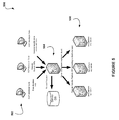
- FIG. 1 illustrates a network architecture, in accordance with one possible embodiment.
- FIG. 2 illustrates an exemplary system, in accordance with one embodiment.
- FIG. 3 illustrates a method for automatically exposing application programming interfaces (APIs) associated with an application server to one or more client devices, in accordance with one embodiment.
- APIs application programming interfaces
- FIG. 4 illustrates a method for automatically exposing APIs associated with an application server to one or more client devices, in accordance with one embodiment.
- FIG. 5 illustrates a system for automatically exposing APIs associated with an application server to one or more client devices, in accordance with one embodiment.
- FIG. 6 illustrates a user interface for automatically exposing APIs associated with an application server to one or more client devices, in accordance with one embodiment.
- FIG. 7 illustrates a user interface for automatically exposing APIs associated with an application server to one or more client devices, in accordance with one embodiment.
- FIG. 8 illustrates a user interface for automatically exposing APIs associated with an application server to one or more client devices, in accordance with one embodiment.
- FIG. 1 illustrates a network architecture 100 , in accordance with one possible embodiment.
- the network 102 may take any form including, but not limited to a telecommunications network, a local area network (LAN), a wireless network, a wide area network (WAN) such as the Internet, peer-to-peer network, cable network, etc. While only one network is shown, it should be understood that two or more similar or different networks 102 may be provided.
- LAN local area network
- WAN wide area network
- peer-to-peer network such as the Internet
- cable network etc. While only one network is shown, it should be understood that two or more similar or different networks 102 may be provided.
- Coupled to the network 102 is a plurality of devices.
- a server computer 104 and an end user computer 106 may be coupled to the network 102 for communication purposes.
- Such end user computer 106 may include a desktop computer, lap-top computer, and/or any other type of logic.
- various other devices may be coupled to the network 102 including a personal digital assistant (PDA) device 108 , a mobile phone device 110 , a television 112 , etc.
- PDA personal digital assistant
- FIG. 2 illustrates an exemplary system 200 , in accordance with one embodiment.
- the system 200 may be implemented in the context of any of the devices of the network architecture 100 of FIG. 1 .
- the system 200 may be implemented in any desired environment.
- a system 200 including at least one central processor 201 which is connected to a communication bus 202 .
- the system 200 also includes main memory 204 [e.g. random access memory (RAM), etc.].
- main memory 204 e.g. random access memory (RAM), etc.
- graphics processor 206 e.g. graphics processing unit (GPU)
- display 208 e.g. graphics processing unit (GPU)
- the system 200 may also include a secondary storage 210 .
- the secondary storage 210 includes, for example, a hard disk drive and/or a removable storage drive, representing a floppy disk drive, a magnetic tape drive, a compact disk drive, etc.
- the removable storage drive reads from and/or writes to a removable storage unit in a well known manner.
- Computer programs, or computer control logic algorithms may be stored in the main memory 204 , the secondary storage 210 , and/or any other memory, for that matter. Such computer programs, when executed, enable the system 200 to perform various functions (to be set forth below, for example).
- Memory 204 , storage 210 and/or any other storage are possible examples of tangible computer-readable media.
- FIG. 3 illustrates a method 300 for automatically exposing application programming interfaces (APIs) associated with an application server to one or more client devices, in accordance with one embodiment.
- APIs application programming interfaces
- the method 300 may be carried out in the context of the details of FIGS. 1 and/or 2 .
- the method 300 may be carried out in any desired environment.
- the aforementioned definitions may equally apply to the description below.
- the application server may include any type of server that is associated with one or more APIs.
- the application server may include a plurality of APIs and signatures associated therewith.
- the application server may include a server in communication with a plurality of application servers.
- the API signature may include any information associated with a particular API, which may be capable of being used as a signature.
- the API signature may include identification information associated with a particular API.
- the API may include any type of API.
- the API may include an API associated with a business.
- the API may be associated with a desktop application.
- the API may be associated with a server application.
- first information associated with one or more parameters corresponding to each of the at least one API signatures is retrieved from the at least one application server. See operation 304 .
- the information may include any information associated with the parameters.
- the information may include parameter fields.
- the information may include parameter values.
- the parameters may include any parameter associated with an API.
- the parameters may include input parameters.
- second information associated with one or more response parameters corresponding to each of the at least one API signatures is retrieved from the at least one application server. See operation 306 .
- the second information may include any information associated with the response parameters.
- the information may include response parameter fields.
- the information may include response parameter values.
- At least one Simple Object Access Protocol (SOAP) Extensible Markup Language (XML) message is automatically generated.
- SOAP XML message includes the at least one API signature, the first information associated with the one or more parameters, and the second information associated with the one or more response parameters. See operation 308 .
- the at least one API signature, the first information associated with the one or more parameters, and the second information associated with the one or more response parameters may be formatted according to SOAP XML message protocol.
- the SOAP XML message is provided to a client device. See operation 310 .
- the client device may include any type of device.
- the client device may include a computer.
- the client device may be associated with a rich client platform (RCP) developer suite.
- RCP rich client platform
- FIG. 4 illustrates a method 400 for automatically exposing APIs associated with an application server to one or more client devices, in accordance with one embodiment.
- the method 400 may be implemented in the context of the details of FIGS. 1-3 .
- the method 400 may be implemented in the context of any desired environment. Further, the aforementioned definitions may equally apply to the description below.
- an SOAP XML message is retrieved by a client device. See operation 402 .
- the SOAP XML message may include the at least one API signature, the first information associated with the one or more parameters, and the second information associated with the one or more response parameters, as described in the context of FIG. 3 .
- a first signature of a first API to be invoked is provided to at least one application server by the client device. See operation 404 .
- the first signature of the first API is one of the at least one API signatures included in the SOAP XML message.
- first parameters associated with the first API to be invoked are provided. See operation 406 .
- the first parameters associated with the first API to be invoked correspond to the first information associated with the one or more parameters included in the SOAP XML message.
- the first parameters may include one or more parameters included in the SOAP XML message corresponding to the API that is to be invoked.
- the first API is invoked utilizing the first parameters of the first API. See operation 408 .
- the first API is invoked on the at least one application server.
- the first API may be invoked on the at least one application server in response to receiving the first API and the first parameters.
- a response is retrieved from the first API, in response to invoking the first API. See operation 410 .
- the response is retrieved from the application server.
- the response is provided to the client device. See operation 412 .
- the response may be provided to the client device by the at least one application server, in response to invoking the first API.
- the method 400 may further include displaying at least one interface for selecting the first API to be invoked. Further, in one embodiment, at least one interface may be displayed for selecting the first parameters of the first API to be invoked. Still yet, at least one interface may be displayed for receiving interface field values associated with the first interface to be invoked. Moreover, in one embodiment, a configuration associated with the first API and the first parameters may be saved for future use (e.g. utilizing one of the interfaces, etc.).
- the method 300 and/or the method 400 may be implemented by a system to test new and existing software interfaces during black box testing.
- a webservice may be implemented that provides the ability to retrieve any deployed API signature from any platform (e.g. application server, desktop application, etc.) by connecting to the application server host and port. Furthermore, such webservice may provide the ability to run any deployed interface with a generic webservice protocol containing the public API signature.
- platform e.g. application server, desktop application, etc.
- FIG. 5 illustrates a system 500 for automatically exposing APIs associated with an application server to one or more client devices, in accordance with one embodiment.
- the system 500 may be implemented in the context of the details of FIGS. 1-4 .
- the system 500 may be implemented in the context of any desired environment. Further, the aforementioned definitions may equally apply to the description below.
- the system 500 has a client side including a plurality of clients 502 and a server side including at least one server 504 and a plurality of specific application platform servers 506 .
- the server 504 includes a server layer, which is a framework that is deployed on the application server, in the init process.
- the server 504 may scan all public APIs exposed on the application servers 506 and translate them into one or more metadata structures (e.g. SOAP webservice).
- the server layer may retrieve all public business API signatures. For each signature, the server layer may retrieve the parameters of the API signature. Additionally, for each signature, the server layer may retrieve the response parameter of the API signature. Moreover, the server layer may describe all of the retrieved information in a SOAP XML message.
- One of the clients 502 may then call the server 504 to retrieve the list of public APIs.
- the client 502 may call the server 504 with the required server site metadata structure.
- the server 504 may analyze the data and invoke the relevant API with the data received from the client 502 .
- the server 504 may read the API signature and its parameters. The server 504 may then build a run time request according to the API signature and its parameters. Further, the server 504 may execute the run time API. Still yet, the server 504 may retrieve the response object from the API and send it back to the caller client 502 .
- the server 504 may send back the API response object to the client 502 .
- the server 504 may send back the API response object to the client 502 .
- this process is automatic (e.g. with exception of entering the data on the client side by the end user, etc.).
- the system 500 may function to develop a specific protocol over SOAP that defines the API metadata for client display and server invocation (as described regarding the content of the metadata structure, API signature, parameters of APIs and the response object of the API, etc.). Therefore, the end user needs to focus only on the business data aspects to be tested rather than on constructing simulators.
- system 500 may implement an SOA based application that may be invoked, for example, as a testing tool or as a customer POC engine.
- SOA based application may be invoked, for example, as a testing tool or as a customer POC engine.
- an agent .war file may be deployed on an application server, and a rich client platform that helps the user to locate an interface (e.g. as shown in FIG. 6 ), to enter values associated with interface fields (e.g. as shown in FIG. 7 ), and to save the simulated test for future reuse (e.g. as shown in FIG. 8 ).
- FIG. 6 illustrates a user interface 600 for automatically exposing APIs associated with an application server to one or more client devices, in accordance with one embodiment.
- the user interface 600 may be implemented in the context of the details of FIGS. 1-5 .
- the user interface 600 may be implemented in the context of any desired environment. Further, the aforementioned definitions may equally apply to the description below.
- the user interface 600 illustrates an example of a list of interfaces and operations deployed on an application server, as found by the techniques described herein.
- a user may use the user interface 600 to explore APIs associated with an application server and explore available agents. Further, a user may use the interface 600 to select an API for invocation.
- FIG. 7 illustrates a user interface 700 for automatically exposing APIs associated with an application server to one or more client devices, in accordance with one embodiment.
- the user interface 700 may be implemented in the context of the details of FIGS. 1-6 .
- the user interface 700 may be implemented in the context of any desired environment. Further, the aforementioned definitions may equally apply to the description below.
- the user interface 700 illustrates an example interface for entering values to interface fields associated with a selected API for invocation.
- highlighted fields may indicate required fields for API invocation.
- FIG. 8 illustrates a user interface 800 for automatically exposing APIs associated with an application server to one or more client devices, in accordance with one embodiment.
- the user interface 800 may be implemented in the context of the details of FIGS. 1-7 .
- the user interface 800 may be implemented in the context of any desired environment. Further, the aforementioned definitions may equally apply to the description below.
- the user interface 800 may be utilized to invoke a selected API.
- a user may have the ability to open an API, load an API, sync an API, and/or save an API, etc.
Landscapes
- Engineering & Computer Science (AREA)
- Theoretical Computer Science (AREA)
- Computer Hardware Design (AREA)
- Health & Medical Sciences (AREA)
- Bioethics (AREA)
- General Health & Medical Sciences (AREA)
- Computer Security & Cryptography (AREA)
- Software Systems (AREA)
- Physics & Mathematics (AREA)
- General Engineering & Computer Science (AREA)
- General Physics & Mathematics (AREA)
- Signal Processing (AREA)
- Computer Networks & Wireless Communication (AREA)
- Stored Programmes (AREA)
Abstract
Description
Claims (9)
Priority Applications (1)
| Application Number | Priority Date | Filing Date | Title |
|---|---|---|---|
| US14/180,291 US9736222B1 (en) | 2013-04-28 | 2014-02-13 | System, method, and computer program for automatically exposing application programming interfaces (APIS) associated with an application server to one or more client devices |
Applications Claiming Priority (2)
| Application Number | Priority Date | Filing Date | Title |
|---|---|---|---|
| US201361816749P | 2013-04-28 | 2013-04-28 | |
| US14/180,291 US9736222B1 (en) | 2013-04-28 | 2014-02-13 | System, method, and computer program for automatically exposing application programming interfaces (APIS) associated with an application server to one or more client devices |
Publications (1)
| Publication Number | Publication Date |
|---|---|
| US9736222B1 true US9736222B1 (en) | 2017-08-15 |
Family
ID=59562521
Family Applications (1)
| Application Number | Title | Priority Date | Filing Date |
|---|---|---|---|
| US14/180,291 Active 2035-04-24 US9736222B1 (en) | 2013-04-28 | 2014-02-13 | System, method, and computer program for automatically exposing application programming interfaces (APIS) associated with an application server to one or more client devices |
Country Status (1)
| Country | Link |
|---|---|
| US (1) | US9736222B1 (en) |
Cited By (8)
| Publication number | Priority date | Publication date | Assignee | Title |
|---|---|---|---|---|
| US11231972B1 (en) * | 2020-12-03 | 2022-01-25 | International Business Machines Corporation | Dialog-style application programming interface for a machine learning solution |
| CN114374517A (en) * | 2021-12-08 | 2022-04-19 | 天翼物联科技有限公司 | API calling method, system, device and storage medium based on dynamic timestamp |
| US11687675B1 (en) * | 2022-09-08 | 2023-06-27 | Pezo Tech Llc | Method and system for improving coupling and cohesion of at least one educational program |
| US11902437B2 (en) | 2021-07-30 | 2024-02-13 | Pezo Tech Llc | Method and system for improving coupling and cohesion of at least one educational program |
| US11922239B1 (en) * | 2022-11-11 | 2024-03-05 | Ekahaa Solutions India Pvt Ltd | System and method for abstraction of application programming interface creation without code |
| US12418544B2 (en) | 2022-09-08 | 2025-09-16 | Pezo Tech Llc | Method and system for improving enriching experiences |
| US12438714B2 (en) | 2021-07-30 | 2025-10-07 | Pezo Tech Llc | Method and system for improving coupling and cohesion of at least one educational program |
| WO2025236802A1 (en) * | 2024-05-16 | 2025-11-20 | 深圳Tcl数字技术有限公司 | Program switching method and apparatus, terminal device, and computer readable storage medium |
Citations (10)
| Publication number | Priority date | Publication date | Assignee | Title |
|---|---|---|---|---|
| US20020078259A1 (en) * | 2000-04-04 | 2002-06-20 | Wendorf Roli Garg | Accessing an in home network through the internet |
| US20030009588A1 (en) * | 2000-08-14 | 2003-01-09 | Bodlaender Maarten Peter | Resource request forwarding in havi and other internetworking devices |
| US20030200272A1 (en) * | 2002-04-18 | 2003-10-23 | Leon Campise | System and method for data collection and update utilizing surrogate e-mail addresses using a server |
| US20080208972A1 (en) * | 2007-02-23 | 2008-08-28 | Wu Chou | Apparatus and method for stateful web services enablement |
| US20080222238A1 (en) * | 2007-03-08 | 2008-09-11 | Microsoft Corporation | Extending functionality of web-based applications |
| US20090157627A1 (en) * | 2007-09-28 | 2009-06-18 | Xcerion Ab | Network operating system |
| US20090172101A1 (en) * | 2007-10-22 | 2009-07-02 | Xcerion Ab | Gesture-based collaboration |
| US20100077083A1 (en) * | 2008-09-25 | 2010-03-25 | Microsoft Corporation | Coordinating data delivery using time suggestions |
| US20120221620A1 (en) * | 2008-02-13 | 2012-08-30 | Robert Kocyan | Apparatus, system, and method for facilitating data flow between a first application programming interface and a second application programming interface |
| US20130074151A1 (en) * | 2010-06-10 | 2013-03-21 | Alibaba Group Holding Limited | Online Business Method, System and Apparatus Based on Open Application Programming Interface |
-
2014
- 2014-02-13 US US14/180,291 patent/US9736222B1/en active Active
Patent Citations (10)
| Publication number | Priority date | Publication date | Assignee | Title |
|---|---|---|---|---|
| US20020078259A1 (en) * | 2000-04-04 | 2002-06-20 | Wendorf Roli Garg | Accessing an in home network through the internet |
| US20030009588A1 (en) * | 2000-08-14 | 2003-01-09 | Bodlaender Maarten Peter | Resource request forwarding in havi and other internetworking devices |
| US20030200272A1 (en) * | 2002-04-18 | 2003-10-23 | Leon Campise | System and method for data collection and update utilizing surrogate e-mail addresses using a server |
| US20080208972A1 (en) * | 2007-02-23 | 2008-08-28 | Wu Chou | Apparatus and method for stateful web services enablement |
| US20080222238A1 (en) * | 2007-03-08 | 2008-09-11 | Microsoft Corporation | Extending functionality of web-based applications |
| US20090157627A1 (en) * | 2007-09-28 | 2009-06-18 | Xcerion Ab | Network operating system |
| US20090172101A1 (en) * | 2007-10-22 | 2009-07-02 | Xcerion Ab | Gesture-based collaboration |
| US20120221620A1 (en) * | 2008-02-13 | 2012-08-30 | Robert Kocyan | Apparatus, system, and method for facilitating data flow between a first application programming interface and a second application programming interface |
| US20100077083A1 (en) * | 2008-09-25 | 2010-03-25 | Microsoft Corporation | Coordinating data delivery using time suggestions |
| US20130074151A1 (en) * | 2010-06-10 | 2013-03-21 | Alibaba Group Holding Limited | Online Business Method, System and Apparatus Based on Open Application Programming Interface |
Cited By (9)
| Publication number | Priority date | Publication date | Assignee | Title |
|---|---|---|---|---|
| US11231972B1 (en) * | 2020-12-03 | 2022-01-25 | International Business Machines Corporation | Dialog-style application programming interface for a machine learning solution |
| US11902437B2 (en) | 2021-07-30 | 2024-02-13 | Pezo Tech Llc | Method and system for improving coupling and cohesion of at least one educational program |
| US12438714B2 (en) | 2021-07-30 | 2025-10-07 | Pezo Tech Llc | Method and system for improving coupling and cohesion of at least one educational program |
| CN114374517A (en) * | 2021-12-08 | 2022-04-19 | 天翼物联科技有限公司 | API calling method, system, device and storage medium based on dynamic timestamp |
| US11687675B1 (en) * | 2022-09-08 | 2023-06-27 | Pezo Tech Llc | Method and system for improving coupling and cohesion of at least one educational program |
| US12293005B2 (en) | 2022-09-08 | 2025-05-06 | Pezo Tech Llc | Method and system for improving coupling and cohesion of at least one educational program |
| US12418544B2 (en) | 2022-09-08 | 2025-09-16 | Pezo Tech Llc | Method and system for improving enriching experiences |
| US11922239B1 (en) * | 2022-11-11 | 2024-03-05 | Ekahaa Solutions India Pvt Ltd | System and method for abstraction of application programming interface creation without code |
| WO2025236802A1 (en) * | 2024-05-16 | 2025-11-20 | 深圳Tcl数字技术有限公司 | Program switching method and apparatus, terminal device, and computer readable storage medium |
Similar Documents
| Publication | Publication Date | Title |
|---|---|---|
| US9736222B1 (en) | System, method, and computer program for automatically exposing application programming interfaces (APIS) associated with an application server to one or more client devices | |
| US9459862B2 (en) | Automated porting of application to mobile infrastructures | |
| US11030164B2 (en) | Artifact deployment for application managed service instances | |
| CN110659206B (en) | Simulation architecture establishment method and device based on micro-service, medium and electronic equipment | |
| US10810362B2 (en) | Page-based incident correlation for network applications | |
| US9639516B2 (en) | System and method for express spreadsheet visualization for building information modeling | |
| CN107967143B (en) | Method, device and system for acquiring update indication information of source code of client application program | |
| US20120233589A1 (en) | Software development kit for blended services | |
| US20120233588A1 (en) | Blended service creation, test, and deployment environment for multiple service endpoints | |
| US9460407B2 (en) | Generating graphical representations of data | |
| CN110119294A (en) | The generation method of menu page, apparatus and system | |
| CN110019835A (en) | Resource method of combination, device and electronic equipment | |
| CN109684188B (en) | Test method and device | |
| US10951486B2 (en) | Terminal device, UI expansion method, and UI expansion program | |
| CN110955600A (en) | Interface test method and device | |
| CN107391119B (en) | Method and device for realizing horizontal and vertical screens | |
| CN107368407B (en) | Information processing method and device | |
| US20170220396A1 (en) | Fast and accurate identification of message-based api calls in application binaries | |
| CN115113898B (en) | Micro-application dynamic update method, device, computer equipment and storage medium | |
| CN109814778B (en) | Method and device for realizing small program tab, electronic equipment and medium | |
| CN112631590B (en) | Component library generation method, device, electronic equipment and computer readable medium | |
| CN113656326B (en) | Program testing method, device, computer system and storage medium | |
| CN112379967B (en) | Simulator detection method, device, equipment and medium | |
| CN116860304A (en) | Cloud service updating method, cloud service updating device, computer equipment and storage medium | |
| US20140304690A1 (en) | Systems and Methods for Outputting an Application to Another Environment |
Legal Events
| Date | Code | Title | Description |
|---|---|---|---|
| AS | Assignment |
Owner name: AMDOCS SOFTWARE SYSTEMS LIMITED, IRELAND Free format text: ASSIGNMENT OF ASSIGNORS INTEREST;ASSIGNOR:DAHAN, ELIAD;REEL/FRAME:036050/0154 Effective date: 20140210 |
|
| AS | Assignment |
Owner name: AMDOCS SOFTWARE SYSTEMS LIMITED, IRELAND Free format text: ASSIGNMENT OF ASSIGNORS INTEREST;ASSIGNOR:AMDOCS SOFTWARE SYSTEMS LIMITED;REEL/FRAME:039695/0965 Effective date: 20160718 Owner name: AMDOCS DEVELOPMENT LIMITED, CYPRUS Free format text: ASSIGNMENT OF ASSIGNORS INTEREST;ASSIGNOR:AMDOCS SOFTWARE SYSTEMS LIMITED;REEL/FRAME:039695/0965 Effective date: 20160718 |
|
| STCF | Information on status: patent grant |
Free format text: PATENTED CASE |
|
| MAFP | Maintenance fee payment |
Free format text: PAYMENT OF MAINTENANCE FEE, 4TH YEAR, LARGE ENTITY (ORIGINAL EVENT CODE: M1551); ENTITY STATUS OF PATENT OWNER: LARGE ENTITY Year of fee payment: 4 |
|
| MAFP | Maintenance fee payment |
Free format text: PAYMENT OF MAINTENANCE FEE, 8TH YEAR, LARGE ENTITY (ORIGINAL EVENT CODE: M1552); ENTITY STATUS OF PATENT OWNER: LARGE ENTITY Year of fee payment: 8 |