US9732120B2 - Self-assembled peptide nanostructures by exploiting conformational change, biosensor using the same and detection method of biomolecules using the same - Google Patents

Self-assembled peptide nanostructures by exploiting conformational change, biosensor using the same and detection method of biomolecules using the same Download PDF

Info

Publication number
US9732120B2
US9732120B2 US14/712,184 US201514712184A US9732120B2 US 9732120 B2 US9732120 B2 US 9732120B2 US 201514712184 A US201514712184 A US 201514712184A US 9732120 B2 US9732120 B2 US 9732120B2
Authority
US
United States
Prior art keywords
self
peptide
nanostructure
biosensor
assembled
Prior art date
Legal status (The legal status is an assumption and is not a legal conclusion. Google has not performed a legal analysis and makes no representation as to the accuracy of the status listed.)
Expired - Fee Related
Application number
US14/712,184
Other versions
US20160084829A1 (en
Inventor
Yong-Beom Lim
So-Hee HAN
Current Assignee (The listed assignees may be inaccurate. Google has not performed a legal analysis and makes no representation or warranty as to the accuracy of the list.)
Industry Academic Cooperation Foundation of Yonsei University
Original Assignee
Industry Academic Cooperation Foundation of Yonsei University
Priority date (The priority date is an assumption and is not a legal conclusion. Google has not performed a legal analysis and makes no representation as to the accuracy of the date listed.)
Filing date
Publication date
Application filed by Industry Academic Cooperation Foundation of Yonsei University filed Critical Industry Academic Cooperation Foundation of Yonsei University
Assigned to INDUSTRY-ACADEMIC COOPERATION FOUNDATION, YONSEI UNIVERSITY reassignment INDUSTRY-ACADEMIC COOPERATION FOUNDATION, YONSEI UNIVERSITY ASSIGNMENT OF ASSIGNORS INTEREST (SEE DOCUMENT FOR DETAILS). Assignors: HAN, SO-HEE, LIM, YONG-BEOM
Publication of US20160084829A1 publication Critical patent/US20160084829A1/en
Application granted granted Critical
Publication of US9732120B2 publication Critical patent/US9732120B2/en
Expired - Fee Related legal-status Critical Current
Anticipated expiration legal-status Critical

Links

Images

Classifications

    • CCHEMISTRY; METALLURGY
    • C07ORGANIC CHEMISTRY
    • C07KPEPTIDES
    • C07K14/00Peptides having more than 20 amino acids; Gastrins; Somatostatins; Melanotropins; Derivatives thereof
    • C07K14/001Peptides having more than 20 amino acids; Gastrins; Somatostatins; Melanotropins; Derivatives thereof by chemical synthesis
    • AHUMAN NECESSITIES
    • A61MEDICAL OR VETERINARY SCIENCE; HYGIENE
    • A61BDIAGNOSIS; SURGERY; IDENTIFICATION
    • A61B5/00Measuring for diagnostic purposes; Identification of persons
    • A61B5/0059Measuring for diagnostic purposes; Identification of persons using light, e.g. diagnosis by transillumination, diascopy, fluorescence
    • A61B5/0071Measuring for diagnostic purposes; Identification of persons using light, e.g. diagnosis by transillumination, diascopy, fluorescence by measuring fluorescence emission
    • CCHEMISTRY; METALLURGY
    • C07ORGANIC CHEMISTRY
    • C07KPEPTIDES
    • C07K7/00Peptides having 5 to 20 amino acids in a fully defined sequence; Derivatives thereof
    • C07K7/04Linear peptides containing only normal peptide links
    • C07K7/06Linear peptides containing only normal peptide links having 5 to 11 amino acids
    • CCHEMISTRY; METALLURGY
    • C07ORGANIC CHEMISTRY
    • C07KPEPTIDES
    • C07K7/00Peptides having 5 to 20 amino acids in a fully defined sequence; Derivatives thereof
    • C07K7/04Linear peptides containing only normal peptide links
    • C07K7/08Linear peptides containing only normal peptide links having 12 to 20 amino acids
    • GPHYSICS
    • G01MEASURING; TESTING
    • G01NINVESTIGATING OR ANALYSING MATERIALS BY DETERMINING THEIR CHEMICAL OR PHYSICAL PROPERTIES
    • G01N33/00Investigating or analysing materials by specific methods not covered by groups G01N1/00 - G01N31/00
    • G01N33/48Biological material, e.g. blood, urine; Haemocytometers
    • G01N33/50Chemical analysis of biological material, e.g. blood, urine; Testing involving biospecific ligand binding methods; Immunological testing
    • G01N33/52Use of compounds or compositions for colorimetric, spectrophotometric or fluorometric investigation, e.g. use of reagent paper and including single- and multilayer analytical elements
    • GPHYSICS
    • G01MEASURING; TESTING
    • G01NINVESTIGATING OR ANALYSING MATERIALS BY DETERMINING THEIR CHEMICAL OR PHYSICAL PROPERTIES
    • G01N33/00Investigating or analysing materials by specific methods not covered by groups G01N1/00 - G01N31/00
    • G01N33/48Biological material, e.g. blood, urine; Haemocytometers
    • G01N33/50Chemical analysis of biological material, e.g. blood, urine; Testing involving biospecific ligand binding methods; Immunological testing
    • G01N33/53Immunoassay; Biospecific binding assay; Materials therefor
    • G01N33/536Immunoassay; Biospecific binding assay; Materials therefor with immune complex formed in liquid phase
    • G01N33/542Immunoassay; Biospecific binding assay; Materials therefor with immune complex formed in liquid phase with steric inhibition or signal modification, e.g. fluorescent quenching
    • BPERFORMING OPERATIONS; TRANSPORTING
    • B01PHYSICAL OR CHEMICAL PROCESSES OR APPARATUS IN GENERAL
    • B01LCHEMICAL OR PHYSICAL LABORATORY APPARATUS FOR GENERAL USE
    • B01L2300/00Additional constructional details
    • B01L2300/06Auxiliary integrated devices, integrated components
    • B01L2300/0627Sensor or part of a sensor is integrated
    • B01L2300/0636Integrated biosensor, microarrays
    • CCHEMISTRY; METALLURGY
    • C09DYES; PAINTS; POLISHES; NATURAL RESINS; ADHESIVES; COMPOSITIONS NOT OTHERWISE PROVIDED FOR; APPLICATIONS OF MATERIALS NOT OTHERWISE PROVIDED FOR
    • C09BORGANIC DYES OR CLOSELY-RELATED COMPOUNDS FOR PRODUCING DYES, e.g. PIGMENTS; MORDANTS; LAKES
    • C09B62/00Reactive dyes, i.e. dyes which form covalent bonds with the substrates or which polymerise with themselves
    • H01L51/0054
    • HELECTRICITY
    • H10SEMICONDUCTOR DEVICES; ELECTRIC SOLID-STATE DEVICES NOT OTHERWISE PROVIDED FOR
    • H10KORGANIC ELECTRIC SOLID-STATE DEVICES
    • H10K85/00Organic materials used in the body or electrodes of devices covered by this subclass
    • H10K85/60Organic compounds having low molecular weight
    • H10K85/615Polycyclic condensed aromatic hydrocarbons, e.g. anthracene
    • H10K85/622Polycyclic condensed aromatic hydrocarbons, e.g. anthracene containing four rings, e.g. pyrene

Definitions

  • the present disclosure relates to a self-assembled peptide nanostructure, more particularly to a peptide nanostructure which undergoes conformational change and emits fluorescence when a target substance is bound to a recognition site of the peptide nanostructure, a biosensor which is capable of detecting the target substance by exploiting the same and a detection method using the same.
  • a biosensor refers to a system which transforms the information of a target substance to a recognizable, useful signal. It is a device which consists of a bioreceptor and a signal transducer and selectively detects the substance to be analyzed by transforming the information of the target substance to a recognizable signal. It is very important not only in medical applications for diagnostic purposes but also in basic medical studies of the mechanisms of various biological responses.
  • biosensor Since high selectivity and sensitivity for a specific target substance are required for the biosensor, an effective mechanism should be ensured between the bioreceptor and the signal transducer. For instance, although a biosensor using an enzyme and an antibody has excellent substrate specificity and binding affinity, it is unsatisfactory in terms of stability and cost.
  • fluorescence sensors for detecting cationic, anionic and neutral organic molecules. These are interesting techniques providing high detection limit and simple operation by detecting fluorescence signals based on changes induced by anionic compounds.
  • a fluorescence sensor exhibiting selectivity for pyrophosphate (PPi), which plays an important role in signaling and energy storage in biological systems, is advantageous in that it emits fluorescence by the chelate enhanced fluorescence (CHEF) effect upon reaction with a specific anionic compound in the presence of copper ion (patent documents 1 and 2).
  • PPi pyrophosphate
  • CHEF chelate enhanced fluorescence
  • Patent document 1 Korean Patent Publication No. 10-2009-0093684
  • Patent document 2 Korean Patent Publication No. 10-2008-0093674
  • the present disclosure is directed to providing a self-assembled peptide nanostructure which selectively binds to a target substance.
  • the present disclosure is also directed to providing a biosensor which effectively detects a target substance and a detection method using the same.
  • the present disclosure provides a self-assembled peptide nanostructure including at least one amphiphilic peptide, wherein the amphiphilic peptide includes a first hydrophobic oligomerization domain, a hydrophilic ⁇ -helix domain and a second hydrophobic oligomerization domain sequentially from the N-terminal to the C-terminal, and the N-terminal of the first hydrophobic oligomerization domain is a pyrene group.
  • the amphiphilic peptide may be a hairpin-shaped amphiphilic peptide wherein the first and second hydrophobic oligomerization domains are faced to each other.
  • the peptide nanostructure may be formed as a globular peptide nanostructure from self-assembly of the hairpin-shaped amphiphilic peptide.
  • the peptide nanostructure may have an average particle diameter of 20-70 nm.
  • the hydrophilic ⁇ -helix domain may include an arginine-rich motif (ARM) and a proline-rich loop forming an ⁇ -helical structure.
  • ARM arginine-rich motif
  • the arginine-rich motif may be derived from the 34th through 50th amino acid sequence of the HIV-1 rev protein.
  • the arginine-rich motif may include an amino acid sequence of [SEQ ID NO 1].
  • the proline-rich loop may include an amino acid sequence of [SEQ ID NO 2].
  • the first and second hydrophobic oligomerization domains may be derived respectively from the 9th through 26th or 51st through 65th amino acid sequence of the HIV-1 rev protein.
  • the first and second hydrophobic oligomerization domains may respectively include an amino acid sequence of [SEQ ID NO 3] or [SEQ ID NO 4].
  • the peptide nanostructure may maintain the shape of the peptide nanostructure from self-assembly of the amphiphilic peptide when the ionic strength is 0.1-0.3 M.
  • the present disclosure provides a biosensor using the peptide nanostructure.
  • the peptide nanostructure may have a stabilized (folded) ⁇ -helical structure by binding with a target substance and fluorescence emission may be changed depending on the distance between pyrene groups in the stabilized peptide nanostructure.
  • the biosensor may detect a target substance under an ionic strength of 0.1-0.3 M.
  • the target substance may be selected from a group consisting of an amino acid, a protein, an RNA and a DNA to which the hydrophilic ⁇ -helix domain of the peptide nanostructure binds selectively.
  • the target substance may be HIV-1 RRE RNA. More specifically, the hydrophilic domain of the peptide nanostructure may recognize and bind to the stem-loop II of the HIV-1 RRE RNA.
  • the present disclosure provides a detection method using a biosensor, including:
  • the self-assembled peptide nanostructure according to the present disclosure is derived from an RNA, DNA or amino acid sequence capable of recognizing the target substance, it does not recognize other substances but exhibits high selectivity for the target substance. Specifically, since the self-assembled peptide nanostructure has an excimer fluorescence peak at 480 nm through binding with the target substance, it can be usefully used in medical applications such as diagnosis of diseases.
  • FIG. 1 is a schematic diagram for explaining the structure (a) and function (b) of an amphiphilic peptide constituting a self-assembled peptide nanostructure according to the present disclosure.
  • FIG. 2 schematically shows the domain structure of the HIV-1 rev protein consisting of 116 amino acid residues.
  • the amino acid residues 9 to 26 and 51 to 65 indicate hydrophobic oligomerization domains and amino acid residues 34 to 50 indicate an arginine-rich motif (ARM) including an ⁇ -helical structure.
  • ARM arginine-rich motif
  • FIG. 3 a schematically shows the chemical structure and sequence of an amphiphilic peptide (SEQ ID NO: 8) constituting a self-assembled peptide nanostructure according to the present disclosure.
  • FIG. 3 b shows the X-ray crystallographic structure of a pyrene-bound amphiphilic peptide constituting a self-assembled peptide nanostructure according to the present disclosure.
  • FIG. 3 c shows the amphiphilic peptide constituting a self-assembled peptide nanostructure according to the present disclosure in FIG. 3 b rotated by 90°.
  • FIG. 4 is a schematic diagram for explaining a method for detecting a target substance using a self-assembled peptide nanostructure according to the present disclosure.
  • FIG. 5 a shows the structure of HIV-1 RRE RNA (SEQ ID NO: 5) according to the present disclosure
  • FIG. 5 b shows the structure of an HIV-1 RRE RNA (SEQ ID NO: 6) mutant according to the present disclosure.
  • FIG. 6 shows an HPLC analysis result of an amphiphilic peptide prepared in Preparation Example.
  • FIG. 7 shows a MALDI-TOF mass spectrum of an amphiphilic peptide prepared in Preparation Example.
  • FIG. 8 shows a circular dichroism (CD) spectroscopic analysis result obtained after dissolving an amphiphilic peptide prepared in Preparation Example in water or a 150 mM KF solution to investigate the dependence of the conformation of an amphiphilic peptide of the present disclosure on ionic strength.
  • CD circular dichroism
  • FIG. 9 shows a circular dichroism (CD) spectroscopic analysis result of an amphiphilic peptide prepared in Preparation Example depending on ionic strength. Samples were prepared by dissolving 1 ⁇ M of the amphiphilic peptide in HEPES buffer with different KCl concentrations.
  • FIG. 10 a , FIG. 10 b and FIG. 10 c respectively show a circular dichroism (CD) spectroscopic analysis result of an amphiphilic peptide prepared in Preparation Example in 0, 75 and 150 mM KCl solutions at various temperatures.
  • CD circular dichroism
  • FIG. 11 a , FIG. 11 b and FIG. 11 c show molar ellipticity at 222 nm ([ ⁇ ] 222 ) of FIG. 10 a , FIG. 10 b and FIG. 10 c at various temperatures.
  • FIG. 12 shows a circular dichroism (CD) spectroscopic analysis result showing the effect of pH on the structure of an amphiphilic peptide according to the present disclosure prepared in Preparation Example.
  • CD circular dichroism
  • FIG. 13 shows fluorescence emission spectra of an amphiphilic peptide prepared in Preparation Example obtained after dissolving in water and a 150 mM KF solution, respectively.
  • FIG. 14 shows fluorescence emission spectra of 0.25-20 ⁇ M of an amphiphilic peptide prepared in Preparation Example obtained after dissolving in water and a 150 mM KF solution, respectively.
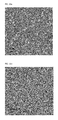
  • FIGS. 15 a and 15 b show atomic force microscopic (AFM) images of 2.5 ⁇ M of an amphiphilic peptide dissolved in water.
  • FIG. 15 a is a height image and
  • FIG. 15 b is a phase image.
  • FIGS. 16 a and 16 b show atomic force microscopic (AFM) images of 1 ⁇ M of an amphiphilic peptide dissolved in a 150 mM KF solution.
  • FIG. 16 a is a height image and
  • FIG. 16 b is a phase image.
  • FIG. 17 shows a wide-angle X-ray scattering (WAXS) analysis result of an amphiphilic peptide prepared in Preparation Example to investigate the conformational change of the amphiphilic peptide depending on ionic strength.
  • WAXS wide-angle X-ray scattering
  • FIG. 18 shows a circular dichroism (CD) spectroscopic analysis result of a self-assembled peptide nanostructure prepared in Example before and after mixing with IIB RNA.
  • CD circular dichroism
  • FIGS. 19 a and 19 b show atomic force microscopic (AFM) images of a self-assembled peptide nanostructure prepared in Example before mixing with IIB RNA.
  • FIG. 19 a is a height image and
  • FIG. 19 b is a phase image.
  • FIGS. 20 a and 20 b show atomic force microscopic (AFM) images of a self-assembled peptide nanostructure prepared in Example after mixing with IIB RNA.
  • FIG. 20 a is a height image and
  • FIG. 20 b is a phase image.
  • FIG. 21 shows a fluorescence spectroscopic analysis result of a self-assembled peptide nanostructure prepared in Example (1 ⁇ M) before and after mixing with IIB RNA (0.5 ⁇ M) to investigate whether the self-assembled peptide nanostructure of the present disclosure can detect a target substance.
  • FIG. 22 shows a fluorescence spectroscopic analysis result of a self-assembled peptide nanostructure prepared in Example after mixing with various biomolecules.
  • FIGS. 23 a -23 c shows a fluorescence spectroscopic analysis result of a self-assembled peptide nanostructure prepared in Example under different ionic strengths after mixing with various biomolecules.
  • self-assembly includes assembly induced by non-covalent bondings (hydrogen bonding, ionic bonding, van der Waals bonding, hydrophobic bonding, electrostatic bonding, etc.).
  • a peptide is used as a substance capable of self-assembly.
  • the term ‘excimer’ refers to a dimer formed from two molecular species, one in the ground state and the other in the excited state, spatially adjacent to each other. It can exist stably only in the excited state because the total system is stabilized as excitation energy and charge are transferred from one to the other. Although its absorption spectrum cannot be observed because it is dissociated in the ground state, it can exhibit a specific fluorescence intensity.
  • the present disclosure provides a self-assembled peptide nanostructure including at least one amphiphilic peptide, wherein the amphiphilic peptide includes a first hydrophobic oligomerization domain, a hydrophilic ⁇ -helix domain and a second hydrophobic oligomerization domain sequentially from the N-terminal to the C-terminal, and the N-terminal of the first hydrophobic oligomerization domain is a pyrene group, the structure and function of which are shown in FIG. 1 and FIG. 2 .
  • FIG. 1 is a schematic diagram for explaining the structure (a) and function (b) of the amphiphilic peptide constituting the self-assembled peptide nanostructure according to the present disclosure.
  • FIG. 2 schematically shows the domain structure of the HIV-1 rev protein consisting of 116 amino acid residues, wherein the amino acid residues 9 to 26 and 51 to 65 indicate hydrophobic oligomerization domains, amino acid residues 34 to 50 an arginine-rich motif (ARM) including an ⁇ -helical structure and the bar marked Rev 12-64 indicates the amphiphilic peptide used in the self-assembled peptide nanostructure according to the present disclosure.
  • FIG. 1 is a schematic diagram for explaining the structure (a) and function (b) of the amphiphilic peptide constituting the self-assembled peptide nanostructure according to the present disclosure.
  • FIG. 2 schematically shows the domain structure of the HIV-1 rev protein consisting of 116 amino acid residues, wherein the amino acid residues 9 to 26 and 51 to 65 indicate hydrophobic
  • FIG. 3 a schematically shows the chemical structure and sequence of the amphiphilic peptide constituting the self-assembled peptide nanostructure according to the present disclosure.
  • FIG. 3 b shows the X-ray crystallographic structure of the amphiphilic peptide constituting the self-assembled peptide nanostructure according to the present disclosure.
  • FIG. 3 c shows the amphiphilic peptide constituting the self-assembled peptide nanostructure according to the present disclosure in FIG. 3 b rotated by 90°.
  • the amphiphilic peptide of the self-assembled peptide nanostructure of the present disclosure which can be used to detect a target substance, includes the first hydrophobic oligomerization domain, the hydrophilic ⁇ -helix domain and the second hydrophobic oligomerization domain sequentially from the N-terminal to the C-terminal, and the N-terminal of the first hydrophobic oligomerization domain is a pyrene group.
  • the amphiphilic peptide has a hairpin-shaped structure.
  • the hydrophilic ⁇ -helix domain may include the whole or part of a target substance recognition site that can specifically bind to or recognize the target substance. For example, it may include part of an amino acid sequence corresponding to the target substance.
  • the hydrophilic ⁇ -helix domain is described in more detail.
  • the hydrophilic ⁇ -helix domain may contain an arginine-rich motif (ARM) and a proline-rich loop forming an ⁇ -helical structure.
  • ARM arginine-rich motif
  • the arginine-rich motif may be derived from the 34th through 50th amino acid sequence of the HIV-1 rev protein. More specifically, the arginine-rich motif may include an amino acid sequence of [SEQ ID NO 1] and the proline-rich loop may include an amino acid sequence of [SEQ ID NO 2].
  • the first and second hydrophobic oligomerization domains are connected to both ends of the hydrophilic ⁇ -helix domain of the amphiphilic peptide and allow for the formation of a hairpin structure through hydrophobic interactions between amino acid molecules. Particularly in the present disclosure, they may consist of or include oligomerization domains.
  • first and second hydrophobic oligomerization domains may be derived respectively from the 9th through 26th or 51st through 65th amino acid sequence of the HIV-1 rev protein. More specifically, the first and second hydrophobic oligomerization domains may respectively include an amino acid sequence of [SEQ ID NO 3] or [SEQ ID NO 4].
  • the amphiphilic peptide having the structure described above forms a V-shaped dimer through interaction of tail to tail surface present on the first and second hydrophobic oligomerization domains of the amphiphilic peptide, i.e. head-to-head, tail-to-tail non-covalent bonding, as seen from FIG. 3 c .
  • a peptide nanostructure is formed through self-assembly.
  • amphiphilic peptide that has formed the V-shaped dimer may exhibit affinity for another stem-loop through protein-protein or protein-RNA interaction, the involved fluorescence intensity is very low and, thus, it is distinguishable from the binding with the target substance. This is demonstrated in Test Examples.
  • the self-assembled peptide nanostructure has a globular shape as a result of binding between the dimers. This process is depicted in FIG. 4 .
  • the ionic strength may be specifically 0.1 or higher, more specifically 0.1-0.3. If the ionic strength is lower than 0.1, a peptide nanostructure with a desired shape cannot be obtained because self-assembly of the amphiphilic peptide does not occur. And, if the ionic strength is higher than 0.3, the target substance cannot be detected as desired because the shape of the peptide nanostructure is changed.
  • the self-assembled peptide nanostructure has a globular shape as a result of aggregation.
  • the secondary structure, i.e., the ⁇ -helical structure, in the self-assembled peptide nanostructure is not completely stabilized (folded) but remains partially unfolded.
  • the degree of stabilization of the ⁇ -helical structure of the amphiphilic peptide in the peptide nanostructure can be expressed by the ratio of molar ellipticities at 222 nm and 208 nm ([ ⁇ ] 222 /[ ⁇ ] 208 ) measured by circular dichroism (CD) spectroscopy.
  • the peptide nanostructure not bound to the target substance has a [ ⁇ ] 222 /[ ⁇ ] 208 of 0.45-0.7, indicating that the ⁇ -helical structure in the peptide nanostructure is in an unstabilized (unfolded) state.
  • amphiphilic peptide in the self-assembled peptide nanostructure does not form an excimer because of the long distance between the pyrene groups and, thus, only emits monomer fluorescence at 373 nm.
  • the ⁇ -helical structure in the self-assembled peptide nanostructure is significantly stabilized through conformational change and an excimer is formed by the pyrene groups of the amphiphilic peptides which are spatially adjacent to each other, which fluoresces at about 480 nm.
  • the target substance can be detected based on the principle, as illustrated in FIG. 4 .
  • the self-assembled peptide nanostructure of the present disclosure may selectively form an excimer and allow for detection at about 480 nm.
  • the existing general sensor can detect a target substance based on the change in fluorescence intensity, the detection is significantly affected by the surrounding environment.
  • the present disclosure provides a biosensor using the self-assembled peptide nanostructure, which emits fluorescence as a result of conformational change induced by binding with the target substance.
  • the biosensor can detect the target substance by measuring the ratio of fluorescence intensities at two different wavelengths without being affected by environmental factors and can also estimate the concentration of the target substance.
  • the biosensor allows for effective detection of the target substance fast and easily because the detection of the target substance exploiting the conformational change of the peptide through self-assembly does not require complicated operation.
  • the target substance may be a biomolecule selected from a group consisting of a protein, an RNA and a DNA and may be different depending on the peptide included in the biosensor. Specifically, it may be HIV-1 RRE RNA, T7 DNA, an HIV-1 RRE RNA variant or HIV-1 tRNA, more specifically an HIV-1 RRE RNA.
  • the structure and sequence of the HIV-1 RRE RNA, the HIV-1 RRE RNA variant and the T7 DNA are shown in FIGS. 5 a and 5 b and Table 1.
  • the amphiphilic peptide of the self-assembled peptide nanostructure includes the amino acid sequence derived from the HIV-1 rev protein, it recognizes HIV-1 RRE RNA as a target substance and binds thereto. Under an ionic strength of 0.1-0.3, no significant change in fluorescence emission is observed for the addition of other biomolecules, in particular the HIV-1 RRE RNA variant (mutated IIB RNA), whereas a significant selective increase in fluorescence is observed at 480 nm for the addition of HIV-1 RRE RNA due to excimer formation. Accordingly, the self-assembled peptide nanostructure according to the present disclosure may be usefully used as a fluorescence biosensor for selectively detecting the human immunodeficiency virus (HIV) in vivo.
  • HIV human immunodeficiency virus
  • the present disclosure also provides a detection method using a biosensor, including:
  • the presence of a particular substance may be detected using the biosensor by monitoring the excimer-induced fluorescence increase at 480 nm.
  • the peptide of to the present disclosure was synthesized as follows. First, the first amino acid Fmoc-Ser-OH of the peptide sequence of the present disclosure was synthesized on solid 2-chlorotrityl resin. The amino acids following the Fmoc-Ser-OH were synthesized through peptide bonding using the Tribute peptide synthesizer (Protein Technologies, Inc.). During the synthetic procedure, standard amino acid protecting groups were used.
  • a pyrene group In order to bind a pyrene group to the N-terminal of the prepared resin-bound amphiphilic peptide, after deprotecting the Fmoc group at the N-terminal of the amphiphilic peptide with 20% piperidine and then treating with O-(benzotriazol-1-yl)-N,N,N′,N′-tetramethyluronium hexafluorophosphate (HBTU) and N,N-diisopropylethylamine (DIPEA), the pyrene group was bound to the N-terminal ⁇ -amine of the amphiphilic peptide using pyrenebutyric acid.
  • HBTU O-(benzotriazol-1-yl)-N,N,N′,N′-tetramethyluronium hexafluorophosphate
  • DIPEA N,N-diisopropylethylamine
  • TFA trifluoroacetic acid
  • TIS triisopropylsilane
  • the obtained amphiphilic peptide was purified by reversed-phase HPLC (water-acetonitrile, 0.1% TFA) as shown in FIG. 6 .
  • the molecular weight of the purified amphiphilic peptide was measured by MALDI-TOF mass spectrometry. The result is shown in FIG. 7 .
  • the concentration of the synthesized peptide was determined spectroscopically at 341 nm by measuring the molar extinction coefficient of pyrene (38459 M ⁇ 1 ⁇ cm ⁇ 1 ).
  • amphiphilic peptide prepared in Preparation Example was dissolved in a 150 mM KF solution.
  • a peptide nanostructure was prepared through self-assembly.
  • Circular dichroism (CD) spectroscopic analysis was performed as follows in order to investigate the dependence of the conformation of the amphiphilic peptide prepared in Preparation Example on ionic strength.
  • CD spectra were recorded using the Chirascan circular dichroism spectrometer equipped with a Peltier thermostat. The spectra were recorded between 260 nm and 190 nm using a 2-mm path cuvette. 10 scans were averaged. Also, molar ellipticity per amino acid residue was calculated. The peptide concentration was 1 ⁇ M unless specified otherwise and the sample solution incubated at least for a day before the measurement.
  • FIG. 8 shows the circular dichroism (CD) spectroscopic analysis result obtained after dissolving the amphiphilic peptide prepared in Preparation Example in water or a 150 mM KF solution to investigate the dependence of the conformation of the amphiphilic peptide of the present disclosure on ionic strength.
  • indicates the peptide dissolved in water
  • indicates the peptide dissolved in 150 mM KF.
  • Test Example 1 the measurement of the samples was measured at 4° C.
  • the ratio of the ellipticity at 208 nm and the ellipticity at 222 nm, [ ⁇ ] 222 /[ ⁇ ] 208 was calculated.
  • the [ ⁇ ] 222 /[ ⁇ ] 208 is sensitive to the backbone dihedral angle and can be used as a measure of the degree of ⁇ -helix stabilization.
  • the [ ⁇ ] 222 /[ ⁇ ] 208 was measured to be higher when the ionic strength was increased (0.71) as compared to in water (0.31).
  • FIG. 9 shows the circular dichroism (CD) spectroscopic analysis result of the amphiphilic peptide prepared in Preparation Example depending on ionic strength.
  • the samples were prepared by dissolving 1 ⁇ M of the amphiphilic peptide in HEPES buffer with different KCl concentrations.
  • the [ ⁇ ] 222 /[ ⁇ ] 208 which is a measure of the degree of ⁇ -helix stabilization, increased as the ionic strength was increased gradually.
  • FIG. 10 a , FIG. 10 b and FIG. 10 c respectively show the circular dichroism (CD) spectroscopic analysis result of the amphiphilic peptide prepared in Preparation Example in 0, 75 and 150 mM KCl solutions at various temperatures.
  • CD circular dichroism
  • FIG. 11 a , FIG. 11 b and FIG. 11 c show the molar ellipticity at 222 nm ([ ⁇ ] 222 ) of FIG. 10 a , FIG. 10 b and FIG. 10 c at various temperatures.
  • amphiphilic peptide according to the present disclosure is affected by temperature change at each ionic strength.
  • FIG. 12 shows the circular dichroism (CD) spectroscopic analysis result showing the effect of pH on the structure of the amphiphilic peptide according to the present disclosure prepared in Preparation Example.
  • solubility decreases gradually as the pH increases. This is because the amino acid residues constituting the amphiphilic peptide such as lysine and arginine are deprotonated.
  • amphiphilic peptide prepared in Preparation Example was subjected to fluorescence spectroscopic measurement after dissolving in water or a 150 mM KF solution. Details are as follows.
  • emission spectra were measured after dissolving 0.25-20 ⁇ M of the amphiphilic peptide prepared in Preparation Example in water (a) or a KF solution (b). The result is shown in FIG. 14 .
  • the amphiphilic peptide prepared in Preparation Example was subjected to atomic force microscopic (AFM) measurement. Atomic force microscopic scanning was made at 1.2-1.5 V with 0.5 Hz. The result is shown in FIGS. 15 a -15 b and FIGS. 16 a - 16 b.
  • AFM atomic force microscopic
  • FIGS. 15 a and 15 b show atomic force microscopic (AFM) images of 2.5 ⁇ M of the amphiphilic peptide dissolved in water.
  • FIG. 15 a is a height image and
  • FIG. 15 b is a phase image.
  • FIGS. 16 a and 16 b show atomic force microscopic (AFM) images of 1 ⁇ M of the amphiphilic peptide dissolved in a 150 mM KF solution.
  • FIG. 16 a is a height image and
  • FIG. 16 b is a phase image.
  • FIGS. 15 a and 15 b It can be seen from FIGS. 15 a and 15 b that the amphiphilic peptide dissolved in water exists mostly in monomer form. And, it can be seen from FIGS. 16 a and 16 b that globular nanostructures having a particle diameter of 20-50 nm are formed under high ionic strength. This suggests that the self-assembled peptide nanostructure according to the present disclosure exists only under a high ionic strength condition.
  • FIG. 17 shows a wide-angle X-ray scattering (WAXS) analysis result of the amphiphilic peptide prepared in Preparation Example to investigate the conformational change of the amphiphilic peptide depending on ionic strength.
  • the blue curve indicates the amphiphilic peptide prepared in Preparation Example dissolved in a 150 mM KF solution, and the green curve indicates that dissolved in water (distilled water).
  • amphiphilic peptide prepared in Preparation Example forms the peptide nanostructure through self-assembly under high ionic strength. That is to say, the increased ionic strength leads to conformational change through the self-assembly of the amphiphilic peptide prepared in Preparation Example and the stabilization of the secondary structure (helical structure).
  • the self-assembled peptide nanostructure prepared in Example includes the amino acid sequence derived from the HIV-1 rev protein. It recognizes and binds to HIV-1 RRE RNA.
  • the stem-loop II in RRE RNA (hereinafter, also referred to as IIB RNA) is essential for the recognition of HIV-1 RRE RNA by the rev protein.
  • the self-assembled peptide nanostructure prepared in Example showed moderate stabilization degree of the secondary structure ( ⁇ -helical structure) with the [ ⁇ ] 222 /[ ⁇ ] 208 value of 0.65.
  • the secondary structure ( ⁇ -helical structure) of the self-assembled peptide nanostructure prepared in Example was significantly stabilized with the [ ⁇ ] 222 /[ ⁇ ] 208 value of 1.15.
  • the result for IIB RNA was excluded from the result for the self-assembled peptide nanostructure prepared in Example after mixing with IIB RNA.
  • the binding between IIB RNA and the self-assembled peptide nanostructure leads to the conformational change of the secondary structure (helical structure) according to the induced fit model. This explains why the overall size of the self-assembled peptide nanostructure is increased after binding with IIB RNA while maintaining the globular shape.
  • FIGS. 19 a and 19 b show atomic force microscopic (AFM) images of the self-assembled peptide nanostructure prepared in Example before mixing with IIB RNA.
  • FIG. 19 a is a height image and
  • FIG. 19 b is a phase image.
  • FIGS. 20 a and 20 b show atomic force microscopic (AFM) images of the self-assembled peptide nanostructure prepared in Example after mixing with IIB RNA.
  • FIG. 20 a is a height image and
  • FIG. 20 b is a phase image.
  • the self-assembled peptide nanostructure according to the present disclosure maintains the globular shape after binding with IIB RNA although the overall size was increased.
  • the self-assembled peptide nanostructure prepared in Example showed increased fluorescence intensity after mixing with IIB RNA. This suggests that the recognition of and binding to IIB RNA by the self-assembled peptide nanostructure prepared in Example led to conformational change and, as a result, an excimer was formed due to the decreased distance between the pyrene groups of adjacent amphiphilic peptides in the self-assembled peptide nanostructure.
  • the fluorescence emission was observed under an increased ionic strength condition.
  • I m indicates the fluorescence intensity of the pyrene monomer at 373 nm and I e indicates the fluorescence intensity of the pyrene dimer (in excimer form) at 480 nm.
  • the selectivity for a specific target substance which is the essential factor required for the self-assembled peptide nanostructure prepared in Example to be used as a biosensor, was investigated.
  • single-stranded DNA ssDNA; T7 DNA
  • wild-type IIB RNA RRE WT; HIV-1 RRE RNA
  • mutated IIB RNA modification from G46-C74 to C46-G74; RRE MT; HIV-1 RRE RNA variant
  • tRNA tRNA
  • RRE RNA WT wild-type IIB RNA
  • RRE MT mutated IIB RNA
  • single-stranded DNA ssDNA; T7 DNA
  • wild-type IIB RNA RRE WT; HIV-1 RRE RNA
  • mutated IIB RNA modification from G46-C74 to C46-G74; RRE MT; HIV-1 RRE RNA variant
  • tRNA tRNA
  • FIG. 23 a shows the selectivity of the self-assembled peptide nanostructure prepared in Example for different biomolecules at 0 mM KCl
  • FIG. 23 b shows the selectivity of the self-assembled peptide nanostructure prepared in Example for different biomolecules at 30 mM KCl
  • FIG. 23 c shows the selectivity of the self-assembled peptide nanostructure prepared in Example for different biomolecules at 150 mM KCl.
  • ionic strength affects the selectivity of the biosensor according to the present disclosure and that the biosensor has excellent detection sensitivity and selectivity for target substances under the ionic strength of 0.1-0.3 M.

Landscapes

  • Health & Medical Sciences (AREA)
  • Chemical & Material Sciences (AREA)
  • Life Sciences & Earth Sciences (AREA)
  • Molecular Biology (AREA)
  • Immunology (AREA)
  • Engineering & Computer Science (AREA)
  • Organic Chemistry (AREA)
  • General Health & Medical Sciences (AREA)
  • Hematology (AREA)
  • Medicinal Chemistry (AREA)
  • Biomedical Technology (AREA)
  • Biochemistry (AREA)
  • Urology & Nephrology (AREA)
  • Biophysics (AREA)
  • Genetics & Genomics (AREA)
  • Proteomics, Peptides & Aminoacids (AREA)
  • Physics & Mathematics (AREA)
  • Pathology (AREA)
  • Cell Biology (AREA)
  • General Physics & Mathematics (AREA)
  • Analytical Chemistry (AREA)
  • Food Science & Technology (AREA)
  • Microbiology (AREA)
  • Biotechnology (AREA)
  • Chemical Kinetics & Catalysis (AREA)
  • General Chemical & Material Sciences (AREA)
  • Gastroenterology & Hepatology (AREA)
  • Animal Behavior & Ethology (AREA)
  • Heart & Thoracic Surgery (AREA)
  • Medical Informatics (AREA)
  • Surgery (AREA)
  • Public Health (AREA)
  • Veterinary Medicine (AREA)
  • Peptides Or Proteins (AREA)
  • Tropical Medicine & Parasitology (AREA)

Abstract

The present disclosure relates to a self-assembled peptide nanostructure including at least one amphiphilic peptide and a biosensor using the same. The amphiphilic peptide is a hairpin-shaped amphiphilic peptide including a hydrophilic domain having an α-helical structure and a hydrophobic domain. The N-terminal of the hydrophobic domain is a pyrene group. Since the self-assembled peptide nanostructure is derived from an RNA, DNA or amino acid sequence capable of recognizing a specific target substance, it does not recognize other substances but exhibits high selectivity for the target substance. Specifically, since the self-assembled peptide nanostructure has an excimer fluorescence peak at 480 nm through binding with the target substance, it can be usefully used in medical applications such as diagnosis of diseases.

Description

CROSS-REFERENCE TO RELATED APPLICATIONS
This application claims priority under 35 U.S.C. §119 to Korean Patent Application No. 10-2014-0057852 filed on May 14, 2014 in the Korean Intellectual Property Office, the disclosure of which is incorporated herein by reference in its entirety.
SEQUENCE LISTING
The instant application contains a Sequence Listing which has been submitted electronically in ASCII format and is hereby incorporated by reference in its entirety. Said ASCII copy, created on Nov. 23, 2015, is named G1035-05401_SL.txt and is 2,277 bytes in size.
TECHNICAL FIELD
The present disclosure relates to a self-assembled peptide nanostructure, more particularly to a peptide nanostructure which undergoes conformational change and emits fluorescence when a target substance is bound to a recognition site of the peptide nanostructure, a biosensor which is capable of detecting the target substance by exploiting the same and a detection method using the same.
BACKGROUND
A biosensor refers to a system which transforms the information of a target substance to a recognizable, useful signal. It is a device which consists of a bioreceptor and a signal transducer and selectively detects the substance to be analyzed by transforming the information of the target substance to a recognizable signal. It is very important not only in medical applications for diagnostic purposes but also in basic medical studies of the mechanisms of various biological responses.
Since high selectivity and sensitivity for a specific target substance are required for the biosensor, an effective mechanism should be ensured between the bioreceptor and the signal transducer. For instance, although a biosensor using an enzyme and an antibody has excellent substrate specificity and binding affinity, it is unsatisfactory in terms of stability and cost.
Recently, development of a high-sensitivity fluorescence biosensor using a supramolecular compound and a fluorescent material, which allows for detection of selective binding to a target substance based on change in fluorescence, is drawing a lot of attentions.
In this regard, a variety of fluorescence sensors for detecting cationic, anionic and neutral organic molecules have been developed. These are interesting techniques providing high detection limit and simple operation by detecting fluorescence signals based on changes induced by anionic compounds. In particular, a fluorescence sensor exhibiting selectivity for pyrophosphate (PPi), which plays an important role in signaling and energy storage in biological systems, is advantageous in that it emits fluorescence by the chelate enhanced fluorescence (CHEF) effect upon reaction with a specific anionic compound in the presence of copper ion (patent documents 1 and 2). However, these methods require numerous trials and errors and are time-consuming.
To solve these problems, development of a biosensor which can detect a specific target substance faster and more effectively with high sensitivity is urgently needed.
REFERENCES OF THE RELATED ART Patent Documents
Patent document 1. Korean Patent Publication No. 10-2009-0093684
Patent document 2. Korean Patent Publication No. 10-2008-0093674
SUMMARY
The present disclosure is directed to providing a self-assembled peptide nanostructure which selectively binds to a target substance.
The present disclosure is also directed to providing a biosensor which effectively detects a target substance and a detection method using the same.
In an aspect, the present disclosure provides a self-assembled peptide nanostructure including at least one amphiphilic peptide, wherein the amphiphilic peptide includes a first hydrophobic oligomerization domain, a hydrophilic α-helix domain and a second hydrophobic oligomerization domain sequentially from the N-terminal to the C-terminal, and the N-terminal of the first hydrophobic oligomerization domain is a pyrene group.
The amphiphilic peptide may be a hairpin-shaped amphiphilic peptide wherein the first and second hydrophobic oligomerization domains are faced to each other.
The peptide nanostructure may be formed as a globular peptide nanostructure from self-assembly of the hairpin-shaped amphiphilic peptide.
The peptide nanostructure may have an average particle diameter of 20-70 nm.
The hydrophilic α-helix domain may include an arginine-rich motif (ARM) and a proline-rich loop forming an α-helical structure.
The arginine-rich motif may be derived from the 34th through 50th amino acid sequence of the HIV-1 rev protein.
The arginine-rich motif may include an amino acid sequence of [SEQ ID NO 1].
[SEQ ID NO 1]
TRQARRNRRRRWERQR
The proline-rich loop may include an amino acid sequence of [SEQ ID NO 2].
[SEQ ID NO 2]
GEPNPPP
The first and second hydrophobic oligomerization domains may be derived respectively from the 9th through 26th or 51st through 65th amino acid sequence of the HIV-1 rev protein.
The first and second hydrophobic oligomerization domains may respectively include an amino acid sequence of [SEQ ID NO 3] or [SEQ ID NO 4].
[SEQ ID NO 3]
QIHSISERILSTYLK
[SEQ ID NO 4]
NSQYLFKILRVAKLL
The peptide nanostructure may maintain the shape of the peptide nanostructure from self-assembly of the amphiphilic peptide when the ionic strength is 0.1-0.3 M.
In another aspect, the present disclosure provides a biosensor using the peptide nanostructure.
The peptide nanostructure may have a stabilized (folded) α-helical structure by binding with a target substance and fluorescence emission may be changed depending on the distance between pyrene groups in the stabilized peptide nanostructure.
The biosensor may detect a target substance under an ionic strength of 0.1-0.3 M.
The target substance may be selected from a group consisting of an amino acid, a protein, an RNA and a DNA to which the hydrophilic α-helix domain of the peptide nanostructure binds selectively.
The target substance may be HIV-1 RRE RNA. More specifically, the hydrophilic domain of the peptide nanostructure may recognize and bind to the stem-loop II of the HIV-1 RRE RNA.
In another aspect, the present disclosure provides a detection method using a biosensor, including:
I) contacting a sample containing a target substance with the biosensor; and
II) detecting the target substance by measuring the fluorescence intensity of the biosensor.
Since the self-assembled peptide nanostructure according to the present disclosure is derived from an RNA, DNA or amino acid sequence capable of recognizing the target substance, it does not recognize other substances but exhibits high selectivity for the target substance. Specifically, since the self-assembled peptide nanostructure has an excimer fluorescence peak at 480 nm through binding with the target substance, it can be usefully used in medical applications such as diagnosis of diseases.
BRIEF DESCRIPTION OF DRAWINGS
FIG. 1 is a schematic diagram for explaining the structure (a) and function (b) of an amphiphilic peptide constituting a self-assembled peptide nanostructure according to the present disclosure.
FIG. 2 schematically shows the domain structure of the HIV-1 rev protein consisting of 116 amino acid residues. The amino acid residues 9 to 26 and 51 to 65 indicate hydrophobic oligomerization domains and amino acid residues 34 to 50 indicate an arginine-rich motif (ARM) including an α-helical structure.
FIG. 3a schematically shows the chemical structure and sequence of an amphiphilic peptide (SEQ ID NO: 8) constituting a self-assembled peptide nanostructure according to the present disclosure.
FIG. 3b shows the X-ray crystallographic structure of a pyrene-bound amphiphilic peptide constituting a self-assembled peptide nanostructure according to the present disclosure.
FIG. 3c shows the amphiphilic peptide constituting a self-assembled peptide nanostructure according to the present disclosure in FIG. 3b rotated by 90°.
FIG. 4 is a schematic diagram for explaining a method for detecting a target substance using a self-assembled peptide nanostructure according to the present disclosure.
FIG. 5a shows the structure of HIV-1 RRE RNA (SEQ ID NO: 5) according to the present disclosure, and FIG. 5b shows the structure of an HIV-1 RRE RNA (SEQ ID NO: 6) mutant according to the present disclosure.
FIG. 6 shows an HPLC analysis result of an amphiphilic peptide prepared in Preparation Example.
FIG. 7 shows a MALDI-TOF mass spectrum of an amphiphilic peptide prepared in Preparation Example.
FIG. 8 shows a circular dichroism (CD) spectroscopic analysis result obtained after dissolving an amphiphilic peptide prepared in Preparation Example in water or a 150 mM KF solution to investigate the dependence of the conformation of an amphiphilic peptide of the present disclosure on ionic strength.
FIG. 9 shows a circular dichroism (CD) spectroscopic analysis result of an amphiphilic peptide prepared in Preparation Example depending on ionic strength. Samples were prepared by dissolving 1 μM of the amphiphilic peptide in HEPES buffer with different KCl concentrations.
FIG. 10a , FIG. 10b and FIG. 10c respectively show a circular dichroism (CD) spectroscopic analysis result of an amphiphilic peptide prepared in Preparation Example in 0, 75 and 150 mM KCl solutions at various temperatures.
FIG. 11a , FIG. 11b and FIG. 11c show molar ellipticity at 222 nm ([θ]222) of FIG. 10a , FIG. 10b and FIG. 10c at various temperatures.
FIG. 12 shows a circular dichroism (CD) spectroscopic analysis result showing the effect of pH on the structure of an amphiphilic peptide according to the present disclosure prepared in Preparation Example.
FIG. 13 shows fluorescence emission spectra of an amphiphilic peptide prepared in Preparation Example obtained after dissolving in water and a 150 mM KF solution, respectively.
FIG. 14 shows fluorescence emission spectra of 0.25-20 μM of an amphiphilic peptide prepared in Preparation Example obtained after dissolving in water and a 150 mM KF solution, respectively.
FIGS. 15a and 15b show atomic force microscopic (AFM) images of 2.5 μM of an amphiphilic peptide dissolved in water. FIG. 15a is a height image and FIG. 15b is a phase image.
FIGS. 16a and 16b show atomic force microscopic (AFM) images of 1 μM of an amphiphilic peptide dissolved in a 150 mM KF solution. FIG. 16a is a height image and FIG. 16b is a phase image.
FIG. 17 shows a wide-angle X-ray scattering (WAXS) analysis result of an amphiphilic peptide prepared in Preparation Example to investigate the conformational change of the amphiphilic peptide depending on ionic strength.
FIG. 18 shows a circular dichroism (CD) spectroscopic analysis result of a self-assembled peptide nanostructure prepared in Example before and after mixing with IIB RNA.
FIGS. 19a and 19b show atomic force microscopic (AFM) images of a self-assembled peptide nanostructure prepared in Example before mixing with IIB RNA. FIG. 19a is a height image and FIG. 19b is a phase image.
FIGS. 20a and 20b show atomic force microscopic (AFM) images of a self-assembled peptide nanostructure prepared in Example after mixing with IIB RNA. FIG. 20a is a height image and FIG. 20b is a phase image.
FIG. 21 shows a fluorescence spectroscopic analysis result of a self-assembled peptide nanostructure prepared in Example (1 μM) before and after mixing with IIB RNA (0.5 μM) to investigate whether the self-assembled peptide nanostructure of the present disclosure can detect a target substance.
FIG. 22 shows a fluorescence spectroscopic analysis result of a self-assembled peptide nanostructure prepared in Example after mixing with various biomolecules.
FIGS. 23a-23c shows a fluorescence spectroscopic analysis result of a self-assembled peptide nanostructure prepared in Example under different ionic strengths after mixing with various biomolecules.
DETAILED DESCRIPTION OF EMBODIMENTS
Hereinafter, various aspects and exemplary embodiments of the present disclosure will be described in further detail.
In the present disclosure, the term ‘self-assembly’ includes assembly induced by non-covalent bondings (hydrogen bonding, ionic bonding, van der Waals bonding, hydrophobic bonding, electrostatic bonding, etc.). In the present disclosure, a peptide is used as a substance capable of self-assembly.
In the present disclosure, the term ‘excimer’ refers to a dimer formed from two molecular species, one in the ground state and the other in the excited state, spatially adjacent to each other. It can exist stably only in the excited state because the total system is stabilized as excitation energy and charge are transferred from one to the other. Although its absorption spectrum cannot be observed because it is dissociated in the ground state, it can exhibit a specific fluorescence intensity.
In an aspect, the present disclosure provides a self-assembled peptide nanostructure including at least one amphiphilic peptide, wherein the amphiphilic peptide includes a first hydrophobic oligomerization domain, a hydrophilic α-helix domain and a second hydrophobic oligomerization domain sequentially from the N-terminal to the C-terminal, and the N-terminal of the first hydrophobic oligomerization domain is a pyrene group, the structure and function of which are shown in FIG. 1 and FIG. 2.
FIG. 1 is a schematic diagram for explaining the structure (a) and function (b) of the amphiphilic peptide constituting the self-assembled peptide nanostructure according to the present disclosure. FIG. 2 schematically shows the domain structure of the HIV-1 rev protein consisting of 116 amino acid residues, wherein the amino acid residues 9 to 26 and 51 to 65 indicate hydrophobic oligomerization domains, amino acid residues 34 to 50 an arginine-rich motif (ARM) including an α-helical structure and the bar marked Rev12-64 indicates the amphiphilic peptide used in the self-assembled peptide nanostructure according to the present disclosure. FIG. 3a schematically shows the chemical structure and sequence of the amphiphilic peptide constituting the self-assembled peptide nanostructure according to the present disclosure. FIG. 3b shows the X-ray crystallographic structure of the amphiphilic peptide constituting the self-assembled peptide nanostructure according to the present disclosure. FIG. 3c shows the amphiphilic peptide constituting the self-assembled peptide nanostructure according to the present disclosure in FIG. 3b rotated by 90°.
As shown in the figures, the amphiphilic peptide of the self-assembled peptide nanostructure of the present disclosure, which can be used to detect a target substance, includes the first hydrophobic oligomerization domain, the hydrophilic α-helix domain and the second hydrophobic oligomerization domain sequentially from the N-terminal to the C-terminal, and the N-terminal of the first hydrophobic oligomerization domain is a pyrene group. The amphiphilic peptide has a hairpin-shaped structure.
The hydrophilic α-helix domain may include the whole or part of a target substance recognition site that can specifically bind to or recognize the target substance. For example, it may include part of an amino acid sequence corresponding to the target substance. Hereinafter, the hydrophilic α-helix domain is described in more detail.
The hydrophilic α-helix domain may contain an arginine-rich motif (ARM) and a proline-rich loop forming an α-helical structure. Specifically, the arginine-rich motif may be derived from the 34th through 50th amino acid sequence of the HIV-1 rev protein. More specifically, the arginine-rich motif may include an amino acid sequence of [SEQ ID NO 1] and the proline-rich loop may include an amino acid sequence of [SEQ ID NO 2].
[SEQ ID NO 1]
TRQARRNRRRRWERQR
[SEQ ID NO 2]
GEPNPPP
The first and second hydrophobic oligomerization domains are connected to both ends of the hydrophilic α-helix domain of the amphiphilic peptide and allow for the formation of a hairpin structure through hydrophobic interactions between amino acid molecules. Particularly in the present disclosure, they may consist of or include oligomerization domains.
More specifically, the first and second hydrophobic oligomerization domains may be derived respectively from the 9th through 26th or 51st through 65th amino acid sequence of the HIV-1 rev protein. More specifically, the first and second hydrophobic oligomerization domains may respectively include an amino acid sequence of [SEQ ID NO 3] or [SEQ ID NO 4].
[SEQ ID NO 3]
QIHSISERILSTYLK
[SEQ ID NO 4]
NSQYLFKILRVAKLL
Above a specific ionic strength, the amphiphilic peptide having the structure described above forms a V-shaped dimer through interaction of tail to tail surface present on the first and second hydrophobic oligomerization domains of the amphiphilic peptide, i.e. head-to-head, tail-to-tail non-covalent bonding, as seen from FIG. 3c . As a result of binding between the hydrophobic higher order oligomerization domains of the dimers, a peptide nanostructure is formed through self-assembly.
Although the amphiphilic peptide that has formed the V-shaped dimer may exhibit affinity for another stem-loop through protein-protein or protein-RNA interaction, the involved fluorescence intensity is very low and, thus, it is distinguishable from the binding with the target substance. This is demonstrated in Test Examples.
More specifically, the self-assembled peptide nanostructure has a globular shape as a result of binding between the dimers. This process is depicted in FIG. 4.
The ionic strength may be specifically 0.1 or higher, more specifically 0.1-0.3. If the ionic strength is lower than 0.1, a peptide nanostructure with a desired shape cannot be obtained because self-assembly of the amphiphilic peptide does not occur. And, if the ionic strength is higher than 0.3, the target substance cannot be detected as desired because the shape of the peptide nanostructure is changed.
Under a specific ionic strength condition, the self-assembled peptide nanostructure has a globular shape as a result of aggregation. However, the secondary structure, i.e., the α-helical structure, in the self-assembled peptide nanostructure is not completely stabilized (folded) but remains partially unfolded.
The degree of stabilization of the α-helical structure of the amphiphilic peptide in the peptide nanostructure can be expressed by the ratio of molar ellipticities at 222 nm and 208 nm ([θ]222/[θ]208) measured by circular dichroism (CD) spectroscopy. The peptide nanostructure not bound to the target substance has a [θ]222/[θ]208 of 0.45-0.7, indicating that the α-helical structure in the peptide nanostructure is in an unstabilized (unfolded) state.
In this state, the amphiphilic peptide in the self-assembled peptide nanostructure does not form an excimer because of the long distance between the pyrene groups and, thus, only emits monomer fluorescence at 373 nm.
However, if the self-assembled peptide nanostructure binds to the target substance, the α-helical structure in the self-assembled peptide nanostructure is significantly stabilized through conformational change and an excimer is formed by the pyrene groups of the amphiphilic peptides which are spatially adjacent to each other, which fluoresces at about 480 nm.
In this state where the α-helical structure of the self-assembled peptide nanostructure is stabilized, the [θ]222/[θ]208 is 1.1-2.0.
The target substance can be detected based on the principle, as illustrated in FIG. 4.
More specifically, the self-assembled peptide nanostructure of the present disclosure may selectively form an excimer and allow for detection at about 480 nm. Although the existing general sensor can detect a target substance based on the change in fluorescence intensity, the detection is significantly affected by the surrounding environment.
Accordingly, the present disclosure provides a biosensor using the self-assembled peptide nanostructure, which emits fluorescence as a result of conformational change induced by binding with the target substance.
The biosensor can detect the target substance by measuring the ratio of fluorescence intensities at two different wavelengths without being affected by environmental factors and can also estimate the concentration of the target substance.
In addition, the biosensor allows for effective detection of the target substance fast and easily because the detection of the target substance exploiting the conformational change of the peptide through self-assembly does not require complicated operation.
The target substance may be a biomolecule selected from a group consisting of a protein, an RNA and a DNA and may be different depending on the peptide included in the biosensor. Specifically, it may be HIV-1 RRE RNA, T7 DNA, an HIV-1 RRE RNA variant or HIV-1 tRNA, more specifically an HIV-1 RRE RNA. The structure and sequence of the HIV-1 RRE RNA, the HIV-1 RRE RNA variant and the T7 DNA are shown in FIGS. 5a and 5b and Table 1.
TABLE 1
Sequence
HIV-1 RRE 5′-GACCUGGUAUGGGCGCAGCGCAAGCUGACG
RNA GUACAGGCCAGGUC-3′ (SEQ ID NO: 5)
HIV-1 RRE 5′-GACCUGGUAUCGGCGCAGCGCAAGCUGACG
RNA variant GUAGAGGCCAGGUC-3′ (SEQ ID NO: 6)
T7 DNA 5′-TAATACGACTCACTATAGGACCTGG-3′
(SEQ ID NO: 7)
For example, if the amphiphilic peptide of the self-assembled peptide nanostructure includes the amino acid sequence derived from the HIV-1 rev protein, it recognizes HIV-1 RRE RNA as a target substance and binds thereto. Under an ionic strength of 0.1-0.3, no significant change in fluorescence emission is observed for the addition of other biomolecules, in particular the HIV-1 RRE RNA variant (mutated IIB RNA), whereas a significant selective increase in fluorescence is observed at 480 nm for the addition of HIV-1 RRE RNA due to excimer formation. Accordingly, the self-assembled peptide nanostructure according to the present disclosure may be usefully used as a fluorescence biosensor for selectively detecting the human immunodeficiency virus (HIV) in vivo.
The present disclosure also provides a detection method using a biosensor, including:
I) contacting a sample containing a target substance with the biosensor; and
II) detecting the target substance by measuring the fluorescence intensity of the biosensor.
The presence of a particular substance may be detected using the biosensor by monitoring the excimer-induced fluorescence increase at 480 nm.
Hereinafter, the present disclosure will be described in more detail through examples. However, the following examples are for illustrative purposes only and the scope and teaching of the present disclosure should not be construed as being limited by the examples. In addition, it will be obvious that those of ordinary skill can easily carry out the present disclosure based on the teaching of the present disclosure including the examples, even when specific experimental results are not provided, and such changes and modifications are within the scope of the appended claims.
In particular, although only diphenylalanine or Fmoc-diphenylalanine were used in the examples as precursors for the synthesis of a peptide nanostructure, it will be obvious to those of ordinary skill in the related art from the present disclosure that any peptide capable of self-assembly can be applied to a method according to the present disclosure.
Preparation Example
The peptide of to the present disclosure was synthesized as follows. First, the first amino acid Fmoc-Ser-OH of the peptide sequence of the present disclosure was synthesized on solid 2-chlorotrityl resin. The amino acids following the Fmoc-Ser-OH were synthesized through peptide bonding using the Tribute peptide synthesizer (Protein Technologies, Inc.). During the synthetic procedure, standard amino acid protecting groups were used.
In order to bind a pyrene group to the N-terminal of the prepared resin-bound amphiphilic peptide, after deprotecting the Fmoc group at the N-terminal of the amphiphilic peptide with 20% piperidine and then treating with O-(benzotriazol-1-yl)-N,N,N′,N′-tetramethyluronium hexafluorophosphate (HBTU) and N,N-diisopropylethylamine (DIPEA), the pyrene group was bound to the N-terminal α-amine of the amphiphilic peptide using pyrenebutyric acid.
Finally, in order to cleave the amphiphilic peptide from the resin, the resin-bound peptide was treated for 3 hours with a cleavage solution (trifluoroacetic acid (TFA)/triisopropylsilane (TIS)/water=95:2.5:2.5) and then prepared into powder using tert-butyl methyl ether. The obtained amphiphilic peptide was purified by reversed-phase HPLC (water-acetonitrile, 0.1% TFA) as shown in FIG. 6.
The molecular weight of the purified amphiphilic peptide was measured by MALDI-TOF mass spectrometry. The result is shown in FIG. 7. In water/acetonitrile (1:1), the concentration of the synthesized peptide was determined spectroscopically at 341 nm by measuring the molar extinction coefficient of pyrene (38459 M−1·cm−1).
EXAMPLE
The amphiphilic peptide prepared in Preparation Example was dissolved in a 150 mM KF solution. A peptide nanostructure was prepared through self-assembly.
Test Example 1
Circular dichroism (CD) spectroscopic analysis was performed as follows in order to investigate the dependence of the conformation of the amphiphilic peptide prepared in Preparation Example on ionic strength.
CD spectra were recorded using the Chirascan circular dichroism spectrometer equipped with a Peltier thermostat. The spectra were recorded between 260 nm and 190 nm using a 2-mm path cuvette. 10 scans were averaged. Also, molar ellipticity per amino acid residue was calculated. The peptide concentration was 1 μM unless specified otherwise and the sample solution incubated at least for a day before the measurement.
FIG. 8 shows the circular dichroism (CD) spectroscopic analysis result obtained after dissolving the amphiphilic peptide prepared in Preparation Example in water or a 150 mM KF solution to investigate the dependence of the conformation of the amphiphilic peptide of the present disclosure on ionic strength. In the graph, ∘ indicates the peptide dissolved in water, and • indicates the peptide dissolved in 150 mM KF. In Test Example 1, the measurement of the samples was measured at 4° C.
As seen from FIG. 8, it was found that the molar ellipticity at 208 nm and 222 nm increased as the ionic strength was increased to 150 mM. For comparison of the CD analysis result, the ratio of the ellipticity at 208 nm and the ellipticity at 222 nm, [θ]222/[θ]208, was calculated. The [θ]222/[θ]208 is sensitive to the backbone dihedral angle and can be used as a measure of the degree of α-helix stabilization. The [θ]222/[θ]208 was measured to be higher when the ionic strength was increased (0.71) as compared to in water (0.31).
FIG. 9 shows the circular dichroism (CD) spectroscopic analysis result of the amphiphilic peptide prepared in Preparation Example depending on ionic strength. The samples were prepared by dissolving 1 μM of the amphiphilic peptide in HEPES buffer with different KCl concentrations.
As seen from FIG. 9, the [θ]222/[θ]208, which is a measure of the degree of α-helix stabilization, increased as the ionic strength was increased gradually.
From FIG. 8 and FIG. 9, it was found out that the amphiphilic peptide prepared in Preparation Example could not form a self-assembled peptide nanostructure when dissolved in water. In contrast, as the ionic strength was increased, the self-assembled peptide nanostructure was formed due to increased hydrophobic interaction and increased helicity of the α-helical secondary structure as a result thereof.
To conclude, it was confirmed that, under a high ionic strength condition, enhanced hydrophobic interaction inside and outside the V-shaped hairpin dimer affects the conformation of the self-assembled peptide nanostructure and the binding of the self-assembled peptide nanostructure to the target substance under such an ionic strength can provide a more dynamic structure.
FIG. 10a , FIG. 10b and FIG. 10c respectively show the circular dichroism (CD) spectroscopic analysis result of the amphiphilic peptide prepared in Preparation Example in 0, 75 and 150 mM KCl solutions at various temperatures.
FIG. 11a , FIG. 11b and FIG. 11c show the molar ellipticity at 222 nm ([θ]222) of FIG. 10a , FIG. 10b and FIG. 10c at various temperatures.
From FIGS. 10a-10c and FIGS. 11a-11c , it can be seen that the amphiphilic peptide according to the present disclosure is affected by temperature change at each ionic strength.
FIG. 12 shows the circular dichroism (CD) spectroscopic analysis result showing the effect of pH on the structure of the amphiphilic peptide according to the present disclosure prepared in Preparation Example.
From FIG. 12, it can be seen that solubility decreases gradually as the pH increases. This is because the amino acid residues constituting the amphiphilic peptide such as lysine and arginine are deprotonated.
From FIGS. 10a-10c , FIGS. 11a-11c and FIG. 12, it can be seen that the structural stabilization of the amphiphilic peptide according to the present disclosure is affected not only by the ionic strength but also by the temperature and pH.
Test Example 2
The amphiphilic peptide prepared in Preparation Example was subjected to fluorescence spectroscopic measurement after dissolving in water or a 150 mM KF solution. Details are as follows.
Fluorescence spectra were measured using the LS55 fluorescence spectrometer (PerkinElmer). Pyrene was excited at 341 nm and the emission spectra were recorded in the range of 360-550 nm. The result is shown in FIG. 13. The solid (-) curve indicates the amphiphilic peptide dissolved in 150 mM KF and the dotted ( . . . ) curve indicates the amphiphilic peptide dissolved in water.
Also, emission spectra were measured after dissolving 0.25-20 μM of the amphiphilic peptide prepared in Preparation Example in water (a) or a KF solution (b). The result is shown in FIG. 14.
As seen from FIG. 13 and FIG. 14, the peaks with fluorescence intensity characteristic of an excimer were observed under a high ionic strength condition. This indicates that the amphiphilic peptide prepared in Preparation Example was self-assembled to form a peptide nanostructure and, as a result thereof, an excimer was formed due to the decreased spatial distance between the pyrene groups of adjacent amphiphilic peptides.
That is to say, when the amphiphilic peptide prepared in Preparation Example was dissolved in pure water (FIG. 14a ), no excimer peak of pyrene was observed because the peptide nanostructure was not formed by self-assembly even at the high peptide concentration. In contrast, when the ionic strength was increased to 150 mM (FIG. 14b ), the excimer peak of pyrene was observed because the peptide nanostructure was formed from self-assembly of the amphiphilic peptide.
In addition, it was confirmed from FIG. 14b that the fluorescence intensity of the self-assembled peptide nanostructure increases with the concentration of the amphiphilic peptide.
Test Example 3
The amphiphilic peptide prepared in Preparation Example was subjected to atomic force microscopic (AFM) measurement. Atomic force microscopic scanning was made at 1.2-1.5 V with 0.5 Hz. The result is shown in FIGS. 15a-15b and FIGS. 16a -16 b.
FIGS. 15a and 15b show atomic force microscopic (AFM) images of 2.5 μM of the amphiphilic peptide dissolved in water. FIG. 15a is a height image and FIG. 15b is a phase image.
FIGS. 16a and 16b show atomic force microscopic (AFM) images of 1 μM of the amphiphilic peptide dissolved in a 150 mM KF solution. FIG. 16a is a height image and FIG. 16b is a phase image.
It can be seen from FIGS. 15a and 15b that the amphiphilic peptide dissolved in water exists mostly in monomer form. And, it can be seen from FIGS. 16a and 16 b that globular nanostructures having a particle diameter of 20-50 nm are formed under high ionic strength. This suggests that the self-assembled peptide nanostructure according to the present disclosure exists only under a high ionic strength condition.
Test Example 4
FIG. 17 shows a wide-angle X-ray scattering (WAXS) analysis result of the amphiphilic peptide prepared in Preparation Example to investigate the conformational change of the amphiphilic peptide depending on ionic strength. The blue curve indicates the amphiphilic peptide prepared in Preparation Example dissolved in a 150 mM KF solution, and the green curve indicates that dissolved in water (distilled water).
From FIG. 17, it can be clearly seen that the amphiphilic peptide prepared in Preparation Example forms the peptide nanostructure through self-assembly under high ionic strength. That is to say, the increased ionic strength leads to conformational change through the self-assembly of the amphiphilic peptide prepared in Preparation Example and the stabilization of the secondary structure (helical structure).
Test Example 5
The self-assembled peptide nanostructure prepared in Example includes the amino acid sequence derived from the HIV-1 rev protein. It recognizes and binds to HIV-1 RRE RNA. In particular, the stem-loop II in RRE RNA (hereinafter, also referred to as IIB RNA) is essential for the recognition of HIV-1 RRE RNA by the rev protein.
In order to investigate the structure of the self-assembled peptide nanostructure prepared in Example before and after mixing with IIB RNA, circular dichroism (CD) spectroscopic analysis was conducted under the same condition as in Test Example 1. The result is shown in FIG. 18, wherein ● indicates after mixing with IIB RNA and ∘ indicates before mixing with IIB RNA.
As seen from FIG. 18, before mixing with IIB RNA, the self-assembled peptide nanostructure prepared in Example showed moderate stabilization degree of the secondary structure (α-helical structure) with the [θ]222/[θ]208 value of 0.65. In contrast, after mixing with IIB RNA, the secondary structure (α-helical structure) of the self-assembled peptide nanostructure prepared in Example was significantly stabilized with the [θ]222/[θ]208 value of 1.15.
For more accurate comparison, the result for IIB RNA was excluded from the result for the self-assembled peptide nanostructure prepared in Example after mixing with IIB RNA. As a result, it was confirmed that the binding between IIB RNA and the self-assembled peptide nanostructure leads to the conformational change of the secondary structure (helical structure) according to the induced fit model. This explains why the overall size of the self-assembled peptide nanostructure is increased after binding with IIB RNA while maintaining the globular shape.
Test Example 6
In order to investigate the structure of the self-assembled peptide nanostructure prepared in Example before and after mixing with IIB RNA, atomic force microscopic (AFM) measurement was made under the same condition as in Test Example 3. The result is shown in FIGS. 19a-19b and FIGS. 20a -20 b.
FIGS. 19a and 19b show atomic force microscopic (AFM) images of the self-assembled peptide nanostructure prepared in Example before mixing with IIB RNA. FIG. 19a is a height image and FIG. 19b is a phase image.
FIGS. 20a and 20b show atomic force microscopic (AFM) images of the self-assembled peptide nanostructure prepared in Example after mixing with IIB RNA. FIG. 20a is a height image and FIG. 20b is a phase image.
As seen from FIGS. 19a-19b and FIGS. 20a-20b , the self-assembled peptide nanostructure according to the present disclosure maintains the globular shape after binding with IIB RNA although the overall size was increased.
Test Example 7
In order to investigate whether the self-assembled peptide nanostructure of the present disclosure can detect a target substance, fluorescence spectroscopic analysis was conducted under the same condition as in Test Example 2 before and after mixing the self-assembled peptide nanostructure prepared in Example (1 μM) with IIB RNA (0.5 μM). The result is shown in FIG. 21, wherein the lighter colored curve indicates after mixing with IIB RNA and the darker colored curve indicates before mixing with IIB RNA.
As seen from FIG. 21, the self-assembled peptide nanostructure prepared in Example showed increased fluorescence intensity after mixing with IIB RNA. This suggests that the recognition of and binding to IIB RNA by the self-assembled peptide nanostructure prepared in Example led to conformational change and, as a result, an excimer was formed due to the decreased distance between the pyrene groups of adjacent amphiphilic peptides in the self-assembled peptide nanostructure.
The fluorescence emission was observed under an increased ionic strength condition.
To quantify the result of FIG. 21, the ratio of fluorescence intensities at different wavelengths was calculated and the result is shown in the insert of FIG. 21. Im indicates the fluorescence intensity of the pyrene monomer at 373 nm and Ie indicates the fluorescence intensity of the pyrene dimer (in excimer form) at 480 nm.
Test Example 8
The selectivity for a specific target substance, which is the essential factor required for the self-assembled peptide nanostructure prepared in Example to be used as a biosensor, was investigated.
For this, single-stranded DNA (ssDNA; T7 DNA), wild-type IIB RNA (RRE WT; HIV-1 RRE RNA), mutated IIB RNA (modification from G46-C74 to C46-G74; RRE MT; HIV-1 RRE RNA variant) and tRNA were respectively mixed with the self-assembled peptide nanostructure prepared in Example and fluorescence spectroscopic analysis was conducted under the same condition as in Test Example 2. The result is shown in FIG. 22a . FIG. 22b shows the ratiometric fluorescence determined from FIG. 22 a.
As seen from FIG. 22, the lowest fluorescence intensity was observed when there was the self-assembled peptide nanostructure prepared in Example only, and the highest fluorescence intensity was observed when it was mixed with wild-type IIB RNA.
In addition, fluorescence intensities were different for the different polynucleotides (ssDNA, tRNA, RRE MT and RRE WT). This suggests that the self-assembled peptide nanostructure according to the present disclosure can be used to detect specific target substances.
In particular, it is to be noted that it can distinguish wild-type IIB RNA (RRE RNA WT) from mutated IIB RNA (RRE MT).
Test Example 9
In order to investigate the importance of ionic strength in the use of the self-assembled peptide nanostructure prepared in Example as a biosensor, selectivity for specific target substances was investigated under different ionic strength conditions.
For this, single-stranded DNA (ssDNA; T7 DNA), wild-type IIB RNA (RRE WT; HIV-1 RRE RNA), mutated IIB RNA (modification from G46-C74 to C46-G74; RRE MT; HIV-1 RRE RNA variant) and tRNA were respectively mixed with the self-assembled peptide nanostructure prepared in Example and fluorescence spectroscopic analysis was conducted under the same condition as in Test Example 8. The result is shown in FIGS. 23a -23 c.
FIG. 23a shows the selectivity of the self-assembled peptide nanostructure prepared in Example for different biomolecules at 0 mM KCl, FIG. 23b shows the selectivity of the self-assembled peptide nanostructure prepared in Example for different biomolecules at 30 mM KCl, and FIG. 23c shows the selectivity of the self-assembled peptide nanostructure prepared in Example for different biomolecules at 150 mM KCl.
From FIGS. 23a-23c , it can be seen that the self-assembled peptide nanostructure prepared in Example exhibits superior selectivity as a biosensor under a high ionic strength condition (FIG. 23c ).
This suggests that ionic strength affects the selectivity of the biosensor according to the present disclosure and that the biosensor has excellent detection sensitivity and selectivity for target substances under the ionic strength of 0.1-0.3 M.

Claims (14)

What is claimed is:
1. A self-assembled peptide nanostructure comprising at least one amphiphilic peptide, wherein the amphiphilic peptide comprises a first hydrophobic oligomerization domain, a hydrophilic α-helix domain and a second hydrophobic oligomerization domain sequentially from the N-terminal to the C-terminal, and
the N-terminal of the first hydrophobic oligomerization domain is a pyrene group,
wherein the hydrophilic α-helix domain comprises an arginine-rich motif (ARM) and a proline-rich loop forming an α-helical structure,
wherein the arginine-rich motif comprises an amino acid sequence of [SEQ ID NO 1]:
[SEQ ID NO 1] TRQARRNRRRRWERQR
wherein the proline-rich loop comprises an amino acid sequence of [SEQ ID NO 2]:
[SEQ ID NO 2] GEPNPPP; and  
wherein the first and second hydrophobic oligomerization domains respectively comprise an amino acid sequence of [SEQ ID NO 3] and [SEQ ID NO 4]:
[SEQ ID NO 3] QIHSISERILSTYLK [SEQ ID NO 4] NSQYLFKILRVAKLL.
2. The self-assembled peptide nanostructure according to claim 1, wherein the amphiphilic peptide is a hairpin-shaped amphiphilic peptide wherein the first and second hydrophobic oligomerization domains are bound to each other.
3. The self-assembled peptide nanostructure according to claim 2, wherein the peptide nanostructure is formed as a globular peptide nanostructure from self-assembly of the hairpin-shaped amphiphilic peptide.
4. The self-assembled peptide nanostructure according to claim 1, wherein the peptide nanostructure has an average particle diameter of 20-70 nm.
5. The self-assembled peptide nanostructure according to claim 1, wherein the arginine-rich motif is derived from the 34th through 50th amino acid sequence of the HIV-1 rev protein.
6. The self-assembled peptide nanostructure according to claim 1, wherein the first and second hydrophobic oligomerization domains are derived respectively from the 9th through 26th or 51st through 65th amino acid sequence of the HIV-1 rev protein.
7. The self-assembled peptide nanostructure according to claim 1, wherein the peptide nanostructure maintains the shape of the peptide nanostructure from self-assembly of the amphiphilic peptide when the ionic strength is 0.1-0.3 M.
8. The self-assembled peptide nanostructure of claim 1, wherein the amphiphilic peptide comprises an amino acid sequence of [SEQ ID NO: 8].
9. A biosensor comprising the self-assembled peptide nanostructure according to claim 8.
10. The biosensor according to claim 9, wherein the self-assembled peptide nanostructure has a stabilized (folded) α-helical structure after binding with a target substance and a light-emitting characteristic of the biosensor is changed depending on the distance between pyrene groups of each amphiphilic peptide in the stabilized self-assembled peptide nanostructure.
11. The biosensor according to claim 9, wherein the biosensor detects a target substance under an ionic strength of 0.1-0.3 M.
12. The biosensor according to claim 11, wherein the target substance is selected from a group consisting of an amino acid, a protein, an RNA and a DNA.
13. The biosensor according to claim 11, wherein the target substance is HIV-1 RRE RNA.
14. A detection method using a biosensor, comprising:
I) contacting a sample comprising a target substance with the biosensor according to claim 9; and
II) detecting the target substance by measuring the fluorescence intensity of the biosensor.
US14/712,184 2014-05-14 2015-05-14 Self-assembled peptide nanostructures by exploiting conformational change, biosensor using the same and detection method of biomolecules using the same Expired - Fee Related US9732120B2 (en)

Applications Claiming Priority (2)

Application Number Priority Date Filing Date Title
KR1020140057852A KR101586277B1 (en) 2014-05-14 2014-05-14 self-assembled peptide nanostructures by exploiting conformational change, biosensor using the same and detection method of biomolecules using the same
KR10-2014-0057852 2014-05-14

Publications (2)

Publication Number Publication Date
US20160084829A1 US20160084829A1 (en) 2016-03-24
US9732120B2 true US9732120B2 (en) 2017-08-15

Family

ID=54845034

Family Applications (1)

Application Number Title Priority Date Filing Date
US14/712,184 Expired - Fee Related US9732120B2 (en) 2014-05-14 2015-05-14 Self-assembled peptide nanostructures by exploiting conformational change, biosensor using the same and detection method of biomolecules using the same

Country Status (2)

Country Link
US (1) US9732120B2 (en)
KR (1) KR101586277B1 (en)

Cited By (1)

* Cited by examiner, † Cited by third party
Publication number Priority date Publication date Assignee Title
US11174288B2 (en) 2016-12-06 2021-11-16 Northeastern University Heparin-binding cationic peptide self-assembling peptide amphiphiles useful against drug-resistant bacteria

Families Citing this family (1)

* Cited by examiner, † Cited by third party
Publication number Priority date Publication date Assignee Title
KR102249071B1 (en) * 2019-10-04 2021-05-11 한국세라믹기술원 Polymer-based fluorescent nanoparticle, method for preparing the same, and highly sensitive bio-sensor using the same

Citations (2)

* Cited by examiner, † Cited by third party
Publication number Priority date Publication date Assignee Title
KR20090093684A (en) 2008-02-29 2009-09-02 인하대학교 산학협력단 New fluorescent peptide sensor and detecting method of anion compositions
KR20090093674A (en) 2008-02-29 2009-09-02 부산대학교 산학협력단 Light emitting polymer and light emitting device using the same

Patent Citations (2)

* Cited by examiner, † Cited by third party
Publication number Priority date Publication date Assignee Title
KR20090093684A (en) 2008-02-29 2009-09-02 인하대학교 산학협력단 New fluorescent peptide sensor and detecting method of anion compositions
KR20090093674A (en) 2008-02-29 2009-09-02 부산대학교 산학협력단 Light emitting polymer and light emitting device using the same

Non-Patent Citations (5)

* Cited by examiner, † Cited by third party
Title
Christen et al. Prion Protein mPrP[F175A](121-231): Structure and Stability in Solution. J. Mol. Biol. (2012) 423, 496-502. *
Han et al. Bioinspired Self-Assembled Peptide Nanofibers with Thermostable Multivalent α Helices. Biomacromolecules 2013, 14, 1594-1599. *
Nongonierma et al. Inhibition of dipeptidyl peptidase IV (DPP-IV) by tryptophan containing dipeptides. Food Funct., 2013, 4, 1843. *
Sambasivan et al. Determination of orientational isomerism in rhodium(II) metallopeptides by pyrene fluorescence. Org. Biomol. Chem., 2012, 10, 8203-8206. *
Thirunavukkuarasu et al. Multiparametric Fluorescence Detection of Early Stages in the Amyloid Protein Aggregation of Pyrene-labeled α-Synuclein. J. Mol. Biol. (2008) 378, 1064-1073. *

Cited By (2)

* Cited by examiner, † Cited by third party
Publication number Priority date Publication date Assignee Title
US11174288B2 (en) 2016-12-06 2021-11-16 Northeastern University Heparin-binding cationic peptide self-assembling peptide amphiphiles useful against drug-resistant bacteria
US12319752B2 (en) 2016-12-06 2025-06-03 Northeastern University Heparin-binding cationic peptide self-assembling peptide amphiphiles useful against drug-resistant bacteria

Also Published As

Publication number Publication date
US20160084829A1 (en) 2016-03-24
KR20150130798A (en) 2015-11-24
KR101586277B1 (en) 2016-02-02

Similar Documents

Publication Publication Date Title
Needham et al. ThX–a next-generation probe for the early detection of amyloid aggregates
Klymchenko et al. Fluorescent environment-sensitive dyes as reporters of biomolecular interactions
KR20150129721A (en) Activation of bioluminescence by structural complementation
White et al. A ‘turn-on’FRET peptide sensor based on the mercury binding protein MerP
Matsumura et al. Construction of α‐helix peptides with β‐cyclodextrin and dansyl units and their conformational and molecular sensing properties
Wang et al. Study on the interaction characteristics of cefamandole with bovine serum albumin by spectroscopic technique
Minard et al. A short peptide that preferentially binds c-MYC G-quadruplex DNA
JP2010500580A (en) Dual-substrate fluorescent probes that bind to protein kinases
US9732120B2 (en) Self-assembled peptide nanostructures by exploiting conformational change, biosensor using the same and detection method of biomolecules using the same
US20140051109A1 (en) Novel compounds with photoluminescence properties and applications thereof
US20240272170A1 (en) Compositions and methods for polypeptide analysis
Liskova et al. Probing the Ca 2+-assisted π–π interaction during Ca 2+-dependent protein folding
KR101178231B1 (en) Flourescent Peptide probe for selective detection copper or zinc ion, and preparation method thereof
Distefano et al. Carbon dots surface chemistry drives fluorescent properties: new tools to distinguish isobaric peptides
US10768111B2 (en) Fluorescent supramolecular biosensor and preparation method thereof
JP2007511226A (en) Resonant energy transfer assay system for multiple component detection
US9075070B2 (en) HTS fluorescence polarization assay for inhibitors of Keap1-Nrf2 interaction
JP2017007990A (en) Versatile quantum dot nano probe for evaluating amyloid cohesiveness
JP2006342299A (en) Fluorescent amino acid derivatives
Haque et al. Methods for Single-Molecule Sensing and Detection Using Bacteriophage Phi29 DNA Packaging Motor
Pahlke Synthesis, characterisation and sensor-functionalisation of transmembrane β-peptides
Drew Jr Investigating the Structure and Dynamic Properties of Bacteriophage S21 Pinholin Using Solid-State Nuclear Magnetic Resonance and Electron Paramagnetic Resonance Spectroscopy
US20140328762A1 (en) Fluorogenic Peptide Probes and Assays
US8110404B2 (en) Luminescent lanthanide binding chelates
Kashiwada et al. Fluorescence resonance energy transfer by α-helical coiled coil polypeptides in response to metal ions

Legal Events

Date Code Title Description
AS Assignment

Owner name: INDUSTRY-ACADEMIC COOPERATION FOUNDATION, YONSEI U

Free format text: ASSIGNMENT OF ASSIGNORS INTEREST;ASSIGNORS:LIM, YONG-BEOM;HAN, SO-HEE;REEL/FRAME:035691/0798

Effective date: 20150518

STCF Information on status: patent grant

Free format text: PATENTED CASE

MAFP Maintenance fee payment

Free format text: PAYMENT OF MAINTENANCE FEE, 4TH YR, SMALL ENTITY (ORIGINAL EVENT CODE: M2551); ENTITY STATUS OF PATENT OWNER: SMALL ENTITY

Year of fee payment: 4

FEPP Fee payment procedure

Free format text: MAINTENANCE FEE REMINDER MAILED (ORIGINAL EVENT CODE: REM.); ENTITY STATUS OF PATENT OWNER: SMALL ENTITY

LAPS Lapse for failure to pay maintenance fees

Free format text: PATENT EXPIRED FOR FAILURE TO PAY MAINTENANCE FEES (ORIGINAL EVENT CODE: EXP.); ENTITY STATUS OF PATENT OWNER: SMALL ENTITY

STCH Information on status: patent discontinuation

Free format text: PATENT EXPIRED DUE TO NONPAYMENT OF MAINTENANCE FEES UNDER 37 CFR 1.362

FP Lapsed due to failure to pay maintenance fee

Effective date: 20250815