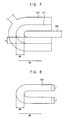
US9690204B2 - Maskless exposure device, maskless exposure method and display substrate manufactured by the maskless exposure device and the maskless exposure method - Google Patents

Maskless exposure device, maskless exposure method and display substrate manufactured by the maskless exposure device and the maskless exposure method Download PDF

Info

Publication number
US9690204B2
US9690204B2 US14/664,770 US201514664770A US9690204B2 US 9690204 B2 US9690204 B2 US 9690204B2 US 201514664770 A US201514664770 A US 201514664770A US 9690204 B2 US9690204 B2 US 9690204B2
Authority
US
United States
Prior art keywords
exposure
width
channel portion
drain electrode
pattern
Prior art date
Legal status (The legal status is an assumption and is not a legal conclusion. Google has not performed a legal analysis and makes no representation as to the accuracy of the status listed.)
Expired - Fee Related, expires
Application number
US14/664,770
Other versions
US20160054660A1 (en
Inventor
Sang-hyun Lee
Hyun-seok Kim
Jung-Chul Heo
Hi-Kuk Lee
Sang-Hyun Yun
Ki-Beom Lee
Chang-Hoon Kim
Jung-In Park
Kab-Jong SEO
Jun-Ho Sim
Jae-hyuk Chang
Current Assignee (The listed assignees may be inaccurate. Google has not performed a legal analysis and makes no representation or warranty as to the accuracy of the list.)
Samsung Display Co Ltd
Original Assignee
Samsung Display Co Ltd
Priority date (The priority date is an assumption and is not a legal conclusion. Google has not performed a legal analysis and makes no representation as to the accuracy of the date listed.)
Filing date
Publication date
Application filed by Samsung Display Co Ltd filed Critical Samsung Display Co Ltd
Assigned to SAMSUNG DISPLAY CO., LTD. reassignment SAMSUNG DISPLAY CO., LTD. ASSIGNMENT OF ASSIGNORS INTEREST (SEE DOCUMENT FOR DETAILS). Assignors: CHANG, JAE-HYUK, HEO, JUNG-CHUL, KIM, CHANG-HOON, KIM, HYUN-SEOK, LEE, HI-KUK, LEE, KI-BEOM, LEE, SANG-HYUN, PARK, JUNG-IN, SEO, KAB-JONG, SIM, JUN-HO, YUN, SANG-HYUN
Publication of US20160054660A1 publication Critical patent/US20160054660A1/en
Application granted granted Critical
Publication of US9690204B2 publication Critical patent/US9690204B2/en
Expired - Fee Related legal-status Critical Current
Adjusted expiration legal-status Critical

Links

Images

Classifications

    • GPHYSICS
    • G03PHOTOGRAPHY; CINEMATOGRAPHY; ANALOGOUS TECHNIQUES USING WAVES OTHER THAN OPTICAL WAVES; ELECTROGRAPHY; HOLOGRAPHY
    • G03FPHOTOMECHANICAL PRODUCTION OF TEXTURED OR PATTERNED SURFACES, e.g. FOR PRINTING, FOR PROCESSING OF SEMICONDUCTOR DEVICES; MATERIALS THEREFOR; ORIGINALS THEREFOR; APPARATUS SPECIALLY ADAPTED THEREFOR
    • G03F7/00Photomechanical, e.g. photolithographic, production of textured or patterned surfaces, e.g. printing surfaces; Materials therefor, e.g. comprising photoresists; Apparatus specially adapted therefor
    • G03F7/70Microphotolithographic exposure; Apparatus therefor
    • G03F7/70216Mask projection systems
    • G03F7/70283Mask effects on the imaging process
    • G03F7/70291Addressable masks, e.g. spatial light modulators [SLMs], digital micro-mirror devices [DMDs] or liquid crystal display [LCD] patterning devices
    • GPHYSICS
    • G03PHOTOGRAPHY; CINEMATOGRAPHY; ANALOGOUS TECHNIQUES USING WAVES OTHER THAN OPTICAL WAVES; ELECTROGRAPHY; HOLOGRAPHY
    • G03FPHOTOMECHANICAL PRODUCTION OF TEXTURED OR PATTERNED SURFACES, e.g. FOR PRINTING, FOR PROCESSING OF SEMICONDUCTOR DEVICES; MATERIALS THEREFOR; ORIGINALS THEREFOR; APPARATUS SPECIALLY ADAPTED THEREFOR
    • G03F7/00Photomechanical, e.g. photolithographic, production of textured or patterned surfaces, e.g. printing surfaces; Materials therefor, e.g. comprising photoresists; Apparatus specially adapted therefor
    • G03F7/70Microphotolithographic exposure; Apparatus therefor
    • G03F7/70483Information management; Active and passive control; Testing; Wafer monitoring, e.g. pattern monitoring
    • G03F7/70491Information management, e.g. software; Active and passive control, e.g. details of controlling exposure processes or exposure tool monitoring processes
    • G03F7/70508Data handling in all parts of the microlithographic apparatus, e.g. handling pattern data for addressable masks or data transfer to or from different components within the exposure apparatus
    • H01L27/124
    • H01L27/1285
    • H01L29/41733
    • H01L29/78696
    • HELECTRICITY
    • H10SEMICONDUCTOR DEVICES; ELECTRIC SOLID-STATE DEVICES NOT OTHERWISE PROVIDED FOR
    • H10DINORGANIC ELECTRIC SEMICONDUCTOR DEVICES
    • H10D30/00Field-effect transistors [FET]
    • H10D30/60Insulated-gate field-effect transistors [IGFET]
    • H10D30/67Thin-film transistors [TFT]
    • H10D30/6729Thin-film transistors [TFT] characterised by the electrodes
    • HELECTRICITY
    • H10SEMICONDUCTOR DEVICES; ELECTRIC SOLID-STATE DEVICES NOT OTHERWISE PROVIDED FOR
    • H10DINORGANIC ELECTRIC SEMICONDUCTOR DEVICES
    • H10D30/00Field-effect transistors [FET]
    • H10D30/60Insulated-gate field-effect transistors [IGFET]
    • H10D30/67Thin-film transistors [TFT]
    • H10D30/674Thin-film transistors [TFT] characterised by the active materials
    • HELECTRICITY
    • H10SEMICONDUCTOR DEVICES; ELECTRIC SOLID-STATE DEVICES NOT OTHERWISE PROVIDED FOR
    • H10DINORGANIC ELECTRIC SEMICONDUCTOR DEVICES
    • H10D30/00Field-effect transistors [FET]
    • H10D30/60Insulated-gate field-effect transistors [IGFET]
    • H10D30/67Thin-film transistors [TFT]
    • H10D30/6757Thin-film transistors [TFT] characterised by the structure of the channel, e.g. transverse or longitudinal shape or doping profile
    • HELECTRICITY
    • H10SEMICONDUCTOR DEVICES; ELECTRIC SOLID-STATE DEVICES NOT OTHERWISE PROVIDED FOR
    • H10DINORGANIC ELECTRIC SEMICONDUCTOR DEVICES
    • H10D86/00Integrated devices formed in or on insulating or conducting substrates, e.g. formed in silicon-on-insulator [SOI] substrates or on stainless steel or glass substrates
    • H10D86/01Manufacture or treatment
    • H10D86/021Manufacture or treatment of multiple TFTs
    • H10D86/0221Manufacture or treatment of multiple TFTs comprising manufacture, treatment or patterning of TFT semiconductor bodies
    • H10D86/0223Manufacture or treatment of multiple TFTs comprising manufacture, treatment or patterning of TFT semiconductor bodies comprising crystallisation of amorphous, microcrystalline or polycrystalline semiconductor materials
    • H10D86/0229Manufacture or treatment of multiple TFTs comprising manufacture, treatment or patterning of TFT semiconductor bodies comprising crystallisation of amorphous, microcrystalline or polycrystalline semiconductor materials characterised by control of the annealing or irradiation parameters
    • HELECTRICITY
    • H10SEMICONDUCTOR DEVICES; ELECTRIC SOLID-STATE DEVICES NOT OTHERWISE PROVIDED FOR
    • H10DINORGANIC ELECTRIC SEMICONDUCTOR DEVICES
    • H10D86/00Integrated devices formed in or on insulating or conducting substrates, e.g. formed in silicon-on-insulator [SOI] substrates or on stainless steel or glass substrates
    • H10D86/40Integrated devices formed in or on insulating or conducting substrates, e.g. formed in silicon-on-insulator [SOI] substrates or on stainless steel or glass substrates characterised by multiple TFTs
    • H10D86/441Interconnections, e.g. scanning lines
    • HELECTRICITY
    • H10SEMICONDUCTOR DEVICES; ELECTRIC SOLID-STATE DEVICES NOT OTHERWISE PROVIDED FOR
    • H10DINORGANIC ELECTRIC SEMICONDUCTOR DEVICES
    • H10D86/00Integrated devices formed in or on insulating or conducting substrates, e.g. formed in silicon-on-insulator [SOI] substrates or on stainless steel or glass substrates
    • H10D86/40Integrated devices formed in or on insulating or conducting substrates, e.g. formed in silicon-on-insulator [SOI] substrates or on stainless steel or glass substrates characterised by multiple TFTs
    • H10D86/60Integrated devices formed in or on insulating or conducting substrates, e.g. formed in silicon-on-insulator [SOI] substrates or on stainless steel or glass substrates characterised by multiple TFTs wherein the TFTs are in active matrices

Definitions

  • Exemplary embodiments of the present inventive concept relate to a maskless exposure device, a maskless exposure method and a display substrate manufactured by the maskless exposure device and/or the maskless exposure method.
  • a metal pattern including a thin film transistor (“TFT”), which is a switching element of a display substrate and signal lines
  • TFT thin film transistor
  • a metal layer and a photoresist layer are sequentially formed, and a mask corresponding to the metal pattern is disposed on the photoresist layer.
  • a light is irradiated to an upper surface of the mask so that the photoresist layer is exposed and developed.
  • a photoresist pattern corresponding to the mask is formed.
  • the metal layer is etched to form a metal pattern.
  • the photoresist pattern functions as an etch stopping layer.
  • a display substrate having a plurality of metal patterns having different shapes or patterns from each other is formed using a plurality of masks such that a number of the plurality of masks corresponds to a number of the metal patterns.
  • the shape of the mask is changed correspondingly and a new mask is fabricated.
  • a fabricating cost of the mask is relatively high, and therefore, a manufacturing cost of the display substrate may increase.
  • a maskless exposure device providing a plurality of beams to a substrate without a mask.
  • the beams are independently turned on or off so that the beams are selectively provided to the substrate.
  • a desired photoresist pattern may be formed on the substrate.
  • each beam has a different optical character, such as a size of the beam, a position of the beam and/or an intensity of the beam.
  • a wiring e.g., the metal pattern
  • a wiring may be formed to have a non-uniform shape. Accordingly, defects, such as staining of a display panel including the wiring may occur.
  • aspects of exemplary embodiments of the present inventive concept are directed toward a maskless exposure device capable of decreasing a likelihood or amount of defects on a display panel.
  • aspects of exemplary embodiments of the present inventive concept are directed toward a maskless exposure method capable of decreasing a likelihood or amount of defects on a display panel.
  • aspects of exemplary embodiments of the present inventive concept are directed toward a display substrate manufactured by the maskless exposure device and/or the maskless exposure method.
  • An exemplary embodiment of a maskless exposure device includes an exposure head including a digital micro-mirror device, the digital micro-mirror device being configured to scan an exposure beam to a substrate by reflecting a source beam from an exposure source; and a system control part configured to control the digital micro-mirror device by utilizing a graphic data system file.
  • the graphic data system file includes data for a source electrode, a drain electrode, and a channel portion between the source electrode and the drain electrode in a plan view.
  • the channel portion includes a first portion extending in a direction crossing a scan direction of the exposure head. A first width of the first portion of the channel portion is defined to be a multiple of a pulse event generation of the exposure beam.
  • the channel portion may have a U shape in a plan view.
  • the channel portion may further include a second portion extending in a direction parallel with a scan direction of the exposure head.
  • the second portion may have a second width different from the first width.
  • the first width may be greater than the second width.
  • the pulse event generation of the exposure beam may be about 1.25 ⁇ m.
  • the channel portion may have an I shape in a plan view.
  • the pulse event generation of the exposure beam may be about 1.25 ⁇ m.
  • the system control part may include a file producing part configured to produce the graphic data system file respectively corresponding to each of a plurality of patterns to be formed on the substrate, a data outputting part configured to generate digital micro-mirror device on/off data from the graphic data system file to control on/off timing of the digital micro-mirror device and a transfer control part configured to output a transfer signal to move a stage relative to the digital micro-mirror device, the substrate being on the stage.
  • the transfer control part may be configured to control on/off timing of the exposure beam according to the digital micro-mirror device on/off data supplied from the data outputting part and to transfer the stage.
  • An exemplary embodiment of a method of maskless exposure includes producing a graphic data system file corresponding to a pattern to be formed on a substrate, generating digital micro-mirror device on/off data from the graphic data system file and exposing the substrate according to the digital micro-mirror device on/off data.
  • the graphic data system file includes data for a source electrode, a drain electrode and a channel portion between the source electrode and the drain electrode in a plan view.
  • the channel portion includes a first portion extending in a direction crossing a scan direction of an exposure head.
  • a first width of the first portion of the channel portion is defined to be a multiple of a pulse event generation of an exposure beam.
  • the channel portion may have a U shape in a plan view.
  • the channel portion may further include a second portion extending in a direction parallel with a scan direction of the exposure head.
  • the second portion may have a second width different from the first width.
  • the first width may be greater than the second width.
  • the pulse event generation of the exposure beam may be about 1.25 ⁇ m.
  • the channel portion may have an I shape in a plan view.
  • the pulse event generation of the exposure beam may be about 1.25 ⁇ m.
  • An exemplary embodiment of a display substrate includes a gate line extending in a first direction, a data line extending in a second direction crossing the first direction and a switching element including a gate electrode electrically coupled to the gate line, a source electrode electrically coupled to the data line, and a drain electrode spaced apart from the source electrode.
  • the source electrode is spaced apart from the drain electrode by a first distance in the first direction.
  • the source electrode is spaced apart from the drain electrode in the second direction by a second distance different from the first distance.
  • the first distance may be greater than the second distance.
  • the display substrate may further include a channel portion, and the channel portion may have a U shape in a plan view.
  • the display substrate may further include a channel portion, and the channel portion may have an I shape in a plan view.
  • a source electrode pattern is spaced apart from a drain electrode pattern by a first width in a direction parallel or substantially parallel to the scan direction of the exposure head.
  • the first width may be defined to be a multiple of a pulse event generation of the exposure beam.
  • a pattern extended in a direction perpendicular or substantially perpendicular to the scan direction SD of the exposure head may be formed uniformly such that defects on the pattern due to a mismatch between the pulse event generation (PEG) and the designed width of the pattern may be decreased.
  • PEG pulse event generation
  • FIG. 1 is a plan view illustrating a maskless exposure device according to an exemplary embodiment of the present inventive concept
  • FIG. 2 is a perspective view illustrating an exposure head according to an exemplary embodiment of the exposure device of FIG. 1 ;
  • FIG. 3 is a plan view illustrating an embodiment of an exposure step using the exposure head of FIG. 1 ;
  • FIG. 4 is a block diagram of a system control part according to an exemplary embodiment of the maskless exposure device of FIG. 1 ;
  • FIG. 5 is a plan view illustrating a source electrode, a drain electrode and a channel portion of a graphic data system file used for a digital micro-mirror device of an exposure head according to an exemplary embodiment of the present inventive concept;
  • FIG. 6 is a plan view illustrating the channel portion of FIG. 5 ;
  • FIG. 7 is a plan view illustrating a source electrode, a drain electrode and a channel portion of a graphic data system file used for a digital micro-mirror device of an exposure head according to an exemplary embodiment of the present inventive concept;
  • FIG. 8 is a plan view illustrating the channel portion of FIG. 7 ;
  • FIG. 9 is a plan view illustrating a source electrode, a drain electrode and a channel portion of a graphic data system file used for a digital micro-mirror device of an exposure head according to an exemplary embodiment of the present inventive concept;
  • FIG. 10 is a plan view illustrating the channel portion of FIG. 9 ;
  • FIG. 11 is a plan view illustrating a display substrate manufactured by a maskless exposure device according to an exemplary embodiment of the present inventive concept
  • FIG. 12 is a plan view illustrating a switching element of a display substrate manufactured by a maskless exposure device according to an exemplary embodiment of the present inventive concept.
  • FIG. 13 is a plan view illustrating a switching element of a display substrate manufactured by a maskless exposure device according to an exemplary embodiment of the present inventive concept.
  • first element when, a first element is referred to as being “coupled or connected to” a second element, it can be directly coupled or connected to the second element or be indirectly coupled or connected to the second element with one or more intervening elements interposed therebetween.
  • first element when, a first element is referred to as being “coupled or connected to” a second element, it can be directly coupled or connected to the second element or be indirectly coupled or connected to the second element with one or more intervening elements interposed therebetween.
  • first element when, a first element is referred to as being “coupled or connected to” a second element, it can be directly coupled or connected to the second element or be indirectly coupled or connected to the second element with one or more intervening elements interposed therebetween.
  • second element when, a first element is referred to as being “coupled or connected to” a second element, it can be directly coupled or connected to the second element or be indirectly coupled or connected to the second element with one or more intervening elements interposed therebetween.
  • Like reference numerals designate like elements throughout
  • FIG. 1 is a plan view illustrating a maskless exposure device according to an exemplary embodiment of the present inventive concept.
  • a substrate 100 is a main substrate for forming a display panel.
  • the substrate 100 includes a plurality of first areas 10 and a plurality of second areas 50 excluding (or outside of) the first areas 10 .
  • a plurality of display panels S 11 , . . . , S 1 n, S 21 , . . . , S 2 n, . . . , Sm 1 , . . . , Smn are arranged in a matrix shape with one display panel formed in each first area 10 .
  • ‘m’ and ‘n’ are natural numbers.
  • the second areas 50 include a glass ID area 51 , where an identification number of the substrate 100 is formed or located, and cell ID areas 52 , where identification numbers of the display panels are respectively formed or located.
  • the second areas 50 include an edge exposure area 53 that is an edge portion of the substrate 100 .
  • the substrate 100 is transferred below an exposure part 30 along a first direction D 11 to be exposed.
  • the substrate 100 is moved relative to the exposure part 30 along the first direction D 11 .
  • the substrate 100 is transferred to the exposure part 30 by a stage disposed below the substrate 100 .
  • a step exposing method or a scan exposing method may be employed.
  • the substrate is transferred (e.g., moved relative to the exposure part) and stopped repeatedly during exposure.
  • a scan exposing method the substrate is continuously transferred (e.g., continuously moved relative to the exposure part) during exposure.
  • an island pattern may be formed through a step exposing method, and a strip pattern may be formed through a scan exposing method.
  • the exposure part 30 includes a plurality of exposure heads E 1 , E 2 , E 3 , . . . , Ek- 2 , Ek- 1 and Ek.
  • the exposure heads E 1 , E 2 , E 3 , . . . , Ek- 2 , Ek- 1 and Ek are arranged in a second direction D 12 perpendicular or substantially perpendicular to the first direction D 11 .
  • ‘k’ is a natural number.
  • the exposure heads E 1 , E 2 , E 3 , . . . , Ek- 2 , Ek- 1 and Ek are disposed in two rows.
  • the exposure heads of a first row and the exposure heads of a second row may be alternately disposed in the second direction D 12 .
  • the exposure heads E 1 , E 2 , E 3 , . . . , Ek- 2 , Ek- 1 and Ek are not limited thereto and may have various suitable arrangements in the second direction D 12 .
  • the exposure part 30 exposes the substrate 100 being transferred (e.g., moved relative to the exposure part 30 ) in the first direction D 11 , so that an exposure pattern is formed in a direction reverse to that of the first direction D 11 .
  • the exposure heads E 1 , E 2 , E 3 , . . . , Ek- 2 , Ek- 1 and Ek each include a digital micro-mirror device (“DMD”).
  • the DMD may irradiate an exposure beam in response to or according to an on/off data signal.
  • a source beam from a digital mirror of a cell of the DMD is reflected to generate the exposure beam, and the exposure beam may exit from one of the exposure heads E 1 , E 2 , E 3 , . . . , Ek- 2 , Ek- 1 and Ek.
  • FIG. 2 is a perspective view illustrating an exposure head according to an exemplary embodiment of the exposure device of FIG. 1 .
  • an exposure head 31 includes a DMD 36 .
  • the DMD 36 receives a source beam from an exposure source 40 through a beam shaping element 41 .
  • the source beam may be an ultraviolet (UV) ray for exposing a photoresist film 11 .
  • the photoresist film 11 is on or formed on a target substrate 12 corresponding to an object to be exposed.
  • the photoresist film 11 is used to form a mask of the pattern.
  • the photoresist film 11 may be formed by coating a photosensitive resin such as an epoxy resin on a surface of, for example, a glass substrate.
  • the DMD 36 includes a mirror 42 that selectively reflects the source beam for each pixel based on image data transferred or mapped onto the target substrate 12 .
  • the exposure head 31 includes a projection optical device 38 .
  • the projection optical device 38 includes a plurality of lenses, and converts light selectively reflected from the DMD 36 into the exposure beam.
  • FIG. 3 is a plan view illustrating an exposure step using an exposure head in FIG. 1 .
  • a maskless exposure device is fixed or oriented to be inclined by a first angle ⁇ 1 with respect to a side of the substrate SUB extending in a first direction +D 1 and ⁇ D 1 .
  • a second direction +D 2 and ⁇ D 2 defines a direction perpendicular or substantially perpendicular to the first direction +D 1 and ⁇ D 1
  • an inclined direction of the maskless exposure device is between the first direction +D 1 and ⁇ D 1 and the second direction +D 2 and ⁇ D 2 .
  • first direction +D 1 and ⁇ D 1 is divided into a positive first direction +D 1 and a negative first direction ⁇ D 1
  • second direction +D 2 and ⁇ D 2 is divided into a positive second direction +D 2 and a negative second direction ⁇ D 2 .
  • the inclined direction of the maskless exposure device may be a third direction D 3 between the positive first direction +D 1 and the positive second direction +D 2 .
  • the first angle ⁇ 1 is defined as an acute angle rotated in a clockwise direction with respect to a reference line extending in the first direction +D 1 and ⁇ D 1 .
  • the first angle ⁇ 1 may be between about 0.1° and about 0.5° (relative to the positive first direction +D 1 ).
  • the maskless exposure device inclined with respect to the third direction D 3 provides the spot beams 240 onto the substrate SUB along a scanning direction SD.
  • the scanning direction SD is substantially the same as the first positive direction +D 1 (e.g., the scanning direction SD is parallel or substantially parallel with the first positive direction +D 1 ).
  • the first angle ⁇ 1 of the maskless exposure device is about 0° and the maskless exposure device exposes the substrate SUB along the positive first direction +D 1 , a region between the spot beams 240 adjacent to each other of the substrate SUB is not exposed. Therefore, in order to entirely or substantially entirely expose a set or predetermined region, the maskless exposure device inclined with respect to the substrate SUB by the first angle ⁇ 1 provides the light onto the substrate SUB.
  • the spot beams 240 are spaced apart from each other in the third direction D 3 by a set or predetermined distance “x.”
  • the spot beams 240 are spaced apart from each other in a direction perpendicular or substantially perpendicular to the third direction D 3 by the same set or predetermined distance “x.”
  • the spot beams 240 are selectively irradiated in the pattern-formed region L.
  • the pattern-formed region L is defined as a region extending along a fourth direction D 4 inclined in a clockwise direction with respect to a side of the substrate SUB by a second angle ⁇ 2 .
  • the pattern-formed region L is designed by an operator to have a rectangular shape extending in the fourth direction D 4 .
  • the spot beams 240 of a circular shape having a diameter “2r” overlap with each other by a set or predetermined distance “ ⁇ k” in the pattern-formed region L so that the substrate SUB of the pattern-formed region L is entirely or substantially entirely exposed.
  • FIG. 4 is a block diagram of a system control part according to an exemplary embodiment of the maskless exposure device of FIG. 1 .
  • the system control part 500 may include a file producing part 200 , a data outputting part 300 and a transfer control part 400 .
  • the file producing part 200 produces a graphic data system (“GDS”) file.
  • the GDS file is an inverse of a multilayered computer-aided design (CAD) file.
  • CAD computer-aided design
  • the GDS file includes data for each layer such as a gate pattern, an active pattern, source drain patterns, and the like.
  • the data outputting part 300 generates the digital micro-mirror device on/off data from the graphic data system GDS file.
  • the data outputting part 300 outputs the digital micro-mirror device on/off data to the digital micro-mirror device (DMD) 36 .
  • the transfer control part 400 outputs a transfer signal which transfers the stage (e.g., moves the stage relative to the DMD 36 ).
  • the transfer control part 400 controls on/off timing of the exposure beam in response to or according to the DMD on/off data supplied from the data outputting part 300 , and transfers the stage (e.g., moves the stage relative to the DMD 36 ).
  • the maskless exposure device may manufacture a display substrate by using a manufacturing method including producing a graphic data system file respectively corresponding to each of a plurality of patterns to be formed on the substrate 100 , generating digital micro-mirror device (DMD) on/off data from the graphic data system file to control on/off timing of the digital micro-mirror device (DMD) and exposing the substrate 100 according to the digital micro-mirror device (DMD) on/off data.
  • a manufacturing method including producing a graphic data system file respectively corresponding to each of a plurality of patterns to be formed on the substrate 100 , generating digital micro-mirror device (DMD) on/off data from the graphic data system file to control on/off timing of the digital micro-mirror device (DMD) and exposing the substrate 100 according to the digital micro-mirror device (DMD) on/off data.
  • DMD digital micro-mirror device
  • the DMD on/off data is generated from the GDS file in the data outputting part 300 .
  • An on/off file for generating the DMD on/off data may be configured or represented by ‘1’s and ‘0’s in a binary file.
  • the on/off data when the on/off data is ‘1’, the DMD is turned on so that light is delivered to the substrate.
  • the on/off data when the on/off data is ‘0’, the DMD is turned off so that the light is not delivered to the substrate.
  • the DMD selectively reflects the light based on the DMD on/off data to expose the substrate 100 according to the data of the patterns stored in the GDS file. Therefore, a substrate having selected patterns may be formed.
  • FIG. 5 is a plan view illustrating a source electrode, a drain electrode and a channel portion of a graphic data system file used for a digital micro-mirror device of an exposure head according to an exemplary embodiment of the present inventive concept.
  • FIG. 6 is a plan view illustrating the channel portion of FIG. 5 .
  • a source electrode pattern SEP, a drain electrode pattern DEP and a channel portion pattern CHP of a graphic data system file used for a digital micro-mirror device of an exposure head are illustrated.
  • the source electrode pattern SEP may have a “U” shape in a plan view.
  • the drain electrode pattern DEP may be disposed between the source electrode pattern SEP in a plan view (e.g., the drain electrode pattern DEP may be between two sides of the “U” shape of the source electrode pattern SEP in the plan view).
  • the drain electrode pattern DEP may extend in a direction perpendicular or substantially perpendicular to a scan direction of the exposure head.
  • the channel portion pattern CHP may have or be formed as a shape corresponding to a shape of the source electrode pattern SEP.
  • the channel portion pattern CHP may have a “U” shape in a plan view.
  • the source electrode pattern SEP may be spaced apart from the drain electrode pattern DEP.
  • a space between the source electrode pattern SEP and the drain electrode pattern DEP may be defined to be the channel portion pattern CHP.
  • the source electrode pattern SEP may be spaced apart from the drain electrode pattern DEP by a first width d 1 in a direction parallel or substantially parallel with a scan direction SD of the exposure head.
  • the source electrode pattern SEP may be spaced apart from the drain electrode pattern DEP by a second width d 2 different from the first width d 1 , the second width d 2 being in a direction perpendicular or substantially perpendicular to the scan direction SD of the exposure head.
  • the first width d 1 may be greater than or more than the second width d 2 .
  • the first width d 1 may be 2.5 ⁇ m and the second width d 2 may be 2.25 ⁇ m.
  • a substrate on a stage moves at a constant speed (e.g., moves at a constant speed relative to an exposure part), and the substrate on the stage is exposed by one digital micro-mirror device (or a plurality of digital micro-mirror devices).
  • a moving speed of the stage is constant
  • an interval from first exposure to second exposure may be constant.
  • the interval from first exposure to second exposure may be defined as a pulse event generation (PEG).
  • a shape of patterns formed by the maskless exposure device may be affected by various factors, such as a size of a beam, a pulse event generation (PEG), and the like.
  • a shape of patterns formed in a direction perpendicular or substantially perpendicular to the scan direction SD of the exposure head may be affected by any of the foregoing factors.
  • the number of beams irradiated to form a pattern extended in a direction perpendicular or substantially perpendicular to the scan direction SD of the exposure head may be varied according to the pulse event generation (PEG).
  • the pulse event generation of the exposure beam may be 1.25 ⁇ m.
  • a shape of patterns extended in a direction parallel or substantially parallel with the scan direction SD of the exposure head may be unaffected by the pulse event generation (PEG).
  • the shape of patterns extended in the direction perpendicular or substantially perpendicular to the scan direction SD of the exposure head may be affected by the pulse event generation (PEG).
  • the pulse event generation (PEG) is 1.25 ⁇ m and a width of the pattern extended in a direction perpendicular or substantially perpendicular to the scan direction SD of the exposure head is 1.25 ⁇ m
  • the number of beams irradiated to form the pattern extended in the direction perpendicular or substantially perpendicular to the scan direction SD of the exposure head may be one.
  • the pulse event generation (PEG) is 1.25 ⁇ m and a width of the pattern extended in the direction perpendicular or substantially perpendicular to the scan direction SD of the exposure head is 2.5 ⁇ m
  • the number of beams irradiated to form the pattern extended in the direction perpendicular or substantially perpendicular to the scan direction SD of the exposure head may be two.
  • the pulse event generation (PEG) is 1.25 ⁇ m and a width of the pattern extended in the direction perpendicular or substantially perpendicular to the scan direction SD of the exposure head is 2.25 ⁇ m
  • the number of beams irradiated to form the pattern extended in the direction perpendicular or substantially perpendicular to the scan direction SD of the exposure head may be two.
  • defects on the pattern extended in the direction perpendicular or substantially perpendicular to the scan direction SD of the exposure head may occur.
  • a defect may include a space between a source electrode and a drain electrode being formed non-uniformly or irregularly such that the source electrode and the drain electrode may be shorted.
  • the pattern extended in the direction parallel or substantially parallel with the scan direction SD of the exposure head may be formed uniformly.
  • the pattern extended in the direction perpendicular or substantially perpendicular to the scan direction SD of the exposure head may be formed non-uniformly or irregularly.
  • the source electrode pattern SEP is spaced apart from the drain electrode pattern DEP by the first width.
  • the first width may be defined to be a multiple of the pulse event generation of the exposure beam.
  • the pulse event generation (PEG) may be 1.25 ⁇ m
  • the width of the pattern extended in the direction parallel or substantially parallel with the scan direction SD of the exposure head may be 2.25 ⁇ m (e.g., the width in the direction perpendicular or substantially perpendicular to the scan direction SD of the exposure head may be 2.25 ⁇ m)
  • the width of the pattern extended in the direction perpendicular or substantially perpendicular to the scan direction SD of the exposure head may be 2.5 ⁇ m (e.g., two times the PEG).
  • the pattern extended in the direction perpendicular or substantially perpendicular to the scan direction SD of the exposure head may be formed uniformly such that defects on the pattern due to a mismatch between the pulse event generation (PEG) and the designed width of the pattern may be decreased.
  • PEG pulse event generation
  • FIG. 7 is a plan view illustrating a source electrode, a drain electrode and a channel portion of a graphic data system file used for a digital micro-mirror device of an exposure head according to an exemplary embodiment of the present inventive concept.
  • FIG. 8 is a plan view illustrating the channel portion of FIG. 7 .
  • FIGS. 7 and 8 another embodiment of a source electrode pattern SEP, a drain electrode pattern DEP and a channel portion pattern CHP of a graphic data system file used for a digital micro-mirror device of an exposure head are illustrated.
  • the source electrode pattern SEP may have a “U” shape in a plan view.
  • the drain electrode pattern DEP may be disposed between the electrode pattern SEP in a plan view (e.g., the drain electrode pattern DEP may be between two sides of the “U” shape of the source electrode pattern SEP in the plan view).
  • the drain electrode pattern DEP may extend in a direction parallel or substantially parallel with a scan direction of the exposure head.
  • the channel portion pattern CHP may have or be formed as a shape corresponding to a shape of the source electrode pattern SEP.
  • the channel portion pattern CHP may have a “U” shape in a plan view.
  • the source electrode pattern SEP may be spaced apart from the drain electrode pattern DEP.
  • a space between the source electrode pattern SEP and the drain electrode pattern DEP may be defined to be the channel portion pattern CHP.
  • the source electrode pattern SEP may be spaced apart from the drain electrode pattern DEP by a first width d 1 in a direction perpendicular or substantially perpendicular to a scan direction SD of the exposure head.
  • the source electrode pattern SEP may be spaced apart from the drain electrode pattern DEP by a second width d 2 different from the first width d 1 , the second width d 2 being in a direction parallel or substantially parallel with the scan direction SD of the exposure head.
  • the second width d 2 may be greater than or more than the first width d 1 .
  • the first width d 1 may be 2.25 ⁇ m and the second width d 2 may be 2.5 ⁇ m.
  • a substrate on a stage moves at a constant speed (e.g., moves at a constant speed relative to an exposure part), and the substrate on the stage is exposed by one digital micro-mirror device (or a plurality of digital micro-mirror devices).
  • a moving speed of the stage is constant
  • an interval from first exposure to second exposure may be constant.
  • the interval from first exposure to second exposure may be defined as a pulse event generation (PEG).
  • a shape of patterns formed by the maskless exposure device may be affected by various factors, such as a size of a beam, a pulse event generation (PEG), and the like.
  • a shape of patterns formed in a direction perpendicular or substantially perpendicular to the scan direction SD of the exposure head may be affected by any of the foregoing factors.
  • the number of beams irradiated to form a pattern extended in a direction perpendicular or substantially perpendicular to the scan direction SD of the exposure head may be varied according to the pulse event generation (PEG).
  • the pulse event generation of the exposure beam may be 1.25 ⁇ m.
  • a shape of patterns extended in a direction parallel or substantially parallel with the scan direction SD of the exposure head may be unaffected by the pulse event generation (PEG).
  • the shape of patterns extended in the direction perpendicular or substantially perpendicular to the scan direction SD of the exposure head may be affected by the pulse event generation (PEG).
  • the pulse event generation (PEG) is 1.25 ⁇ m and a width of the pattern extended in a direction perpendicular or substantially perpendicular to the scan direction SD of the exposure head is 1.25 ⁇ m
  • the number of beams irradiated to form the pattern extended in the direction perpendicular or substantially perpendicular to the scan direction SD of the exposure head may be one.
  • the pulse event generation (PEG) is 1.25 ⁇ m and a width of the pattern extended in the direction perpendicular or substantially perpendicular to the scan direction SD of the exposure head is 2.5 ⁇ m
  • the number of beams irradiated to form the pattern extended in the direction perpendicular or substantially perpendicular to the scan direction SD of the exposure head may be two.
  • the pulse event generation (PEG) is 1.25 ⁇ m and a width of the pattern extended in the direction perpendicular or substantially perpendicular to the scan direction SD of the exposure head is 2.25 ⁇ m
  • the number of beams irradiated to form the pattern extended in the direction perpendicular or substantially perpendicular to the scan direction SD of the exposure head may be two.
  • defects on the pattern extended in the direction perpendicular or substantially perpendicular to the scan direction SD of the exposure head may occur.
  • a defect may include a space between a source electrode and a drain electrode being formed non-uniformly or irregularly such that the source electrode and the drain electrode may be shorted.
  • the pattern extended in the direction parallel or substantially parallel with the scan direction SD of the exposure head may be formed uniformly.
  • the pattern extended in the direction perpendicular or substantially perpendicular to the scan direction SD of the exposure head may be formed non-uniformly or irregularly.
  • the source electrode pattern SEP is spaced apart from the drain electrode pattern DEP by the first width.
  • the first width may be defined to be a multiple of the pulse event generation of the exposure beam.
  • the pulse event generation (PEG) may be 1.25 ⁇ m
  • the width of the pattern extended in the direction parallel or substantially parallel with the scan direction SD of the exposure head may be 2.25 ⁇ m (e.g., the width in the direction perpendicular or substantially perpendicular to the scan direction SD of the exposure head may be 2.25 ⁇ m)
  • the width of the pattern extended in the direction perpendicular or substantially perpendicular to the scan direction SD of the exposure head may be 2.5 ⁇ m (e.g., two times the PEG).
  • the pattern extended in the direction perpendicular or substantially perpendicular to the scan direction SD of the exposure head may be formed uniformly such that defects on the pattern due to a mismatch between the pulse event generation (PEG) and the designed width of the pattern may be decreased.
  • PEG pulse event generation
  • FIG. 9 is a plan view illustrating a source electrode, a drain electrode and a channel portion of a graphic data system file used for a digital micro-mirror device of an exposure head according to an exemplary embodiment of the present inventive concept.
  • FIG. 10 is a plan view illustrating the channel portion of FIG. 9 .
  • FIGS. 9 and 10 another embodiment of a source electrode pattern SEP, a drain electrode pattern DEP and a channel portion pattern CHP of a graphic data system file used for a digital micro-mirror device of an exposure head are illustrated.
  • the source electrode pattern SEP and the drain electrode pattern DEP may have an “I” shape in a plan view.
  • the source electrode pattern SEP and the drain electrode pattern DEP may be disposed alternately.
  • the source electrode pattern SEP and the drain electrode pattern DEP may have the same or substantially the same shape.
  • the source electrode pattern SEP and the drain electrode pattern DEP may extend in a direction perpendicular or substantially perpendicular to a scan direction of the exposure head.
  • the channel portion pattern CHP may be disposed between the source electrode pattern SEP and the drain electrode pattern DEP.
  • the channel portion pattern CHP may have an “I” shape in a plan view.
  • the source electrode pattern SEP may be spaced apart from the drain electrode pattern DEP.
  • a space between the source electrode pattern SEP and the drain electrode pattern DEP may be defined to be the channel portion pattern CHP.
  • the source electrode pattern SEP may be spaced apart from the drain electrode pattern DEP by a first width d 1 in the direction parallel or substantially parallel to the scan direction SD of the exposure head.
  • the first width d 1 may be 2.5 ⁇ m.
  • a substrate on a stage moves at a constant speed (e.g., moves at a constant speed relative to an exposure part), and the substrate on the stage is exposed by one digital micro-mirror device (or a plurality of digital micro-mirror devices).
  • a moving speed of the stage is constant
  • an interval from first exposure to second exposure may be constant.
  • the interval from first exposure to second exposure may be defined as a pulse event generation (PEG).
  • a shape of patterns formed by the maskless exposure device may be affected by various factors, such as a size of a beam, a pulse event generation (PEG), and the like.
  • a shape of patterns formed in a direction perpendicular or substantially perpendicular to the scan direction SD of the exposure head may be affected by any of the foregoing factors.
  • the number of beams irradiated to form a pattern extended in a direction perpendicular or substantially perpendicular to the scan direction SD of the exposure head may be varied according to the pulse event generation (PEG).
  • the pulse event generation of the exposure beam may be 1.25 ⁇ m.
  • a shape of patterns extended in a direction parallel or substantially parallel with the scan direction SD of the exposure head may be unaffected by the pulse event generation (PEG).
  • the shape of patterns extended in the direction perpendicular or substantially perpendicular to the scan direction SD of the exposure head may be affected by the pulse event generation (PEG).
  • the pulse event generation (PEG) is 1.25 ⁇ m and a width of the pattern extended in a direction perpendicular or substantially perpendicular to the scan direction SD of the exposure head is 1.25 ⁇ m
  • the number of beams irradiated to form the pattern extended in the direction perpendicular or substantially perpendicular to the scan direction SD of the exposure head may be one.
  • the pulse event generation (PEG) is 1.25 ⁇ m and a width of the pattern extended in the direction perpendicular or substantially perpendicular to the scan direction SD of the exposure head is 2.5 ⁇ m
  • the number of beams irradiated to form the pattern extended in the direction perpendicular or substantially perpendicular to the scan direction SD of the exposure head may be two.
  • the pulse event generation (PEG) is 1.25 ⁇ m and a width of the pattern extended in a direction perpendicular or substantially perpendicular to the scan direction SD of the exposure head is 2.25 ⁇ m
  • the number of beams irradiated to form the pattern extended in the direction perpendicular or substantially perpendicular to the scan direction SD of the exposure head may be two.
  • defects on the pattern extended in the direction perpendicular or substantially perpendicular to the scan direction SD of the exposure head may occur.
  • a defect may include a space between a source electrode and a drain electrode being formed non-uniformly or irregularly such that the source electrode and the drain electrode may be shorted.
  • the pattern extended in the direction parallel or substantially parallel with the scan direction SD of the exposure head may be formed uniformly.
  • the pattern extended in the direction perpendicular or substantially perpendicular to the scan direction SD of the exposure head may be formed non-uniformly or irregularly.
  • the source electrode pattern SEP is spaced apart from the drain electrode pattern DEP by the first width.
  • the first width may be defined to be a multiple of the pulse event generation of the exposure beam.
  • the pulse event generation (PEG) may be 1.25 ⁇ m
  • the width of the pattern extended in the direction perpendicular or substantially perpendicular to the scan direction SD of the exposure head may be 2.5 ⁇ m (e.g., two times the PEG).
  • the pattern extended in the direction perpendicular or substantially perpendicular to the scan direction SD of the exposure head may be formed uniformly such that defects on the pattern due to a mismatch between the pulse event generation (PEG) and the designed width of the pattern may be decreased.
  • PEG pulse event generation
  • FIG. 11 is a plan view illustrating a display substrate manufactured by a maskless exposure device according to an exemplary embodiment of the present inventive concept.
  • a display substrate includes a gate line GL, a data line DL, a first storage line Cst 1 , a second storage line Cst 2 , a first switching element SW 1 , a second switching element SW 2 , a third switching element SW 3 , a shielding electrode SC, a high-pixel electrode PE 1 and a low-pixel electrode PE 2 .
  • the gate line GL extends in a first direction D 1 .
  • the gate line GL may have a single layer structure including copper (Cu), silver (Ag), chrome (Cr), molybdenum (Mo), aluminum (Al), titanium (Ti), manganese (Mn) or a mixture thereof.
  • the gate line GL may have a multi layer structure having a plurality of layers including materials different from each other.
  • the gate line GL may include a copper layer and a titanium layer disposed on and/or under the copper layer.
  • the gate line GL is electrically coupled or connected to a first gate electrode GE 1 of the first switching element SW 1 , a second gate electrode GE 2 of the second switching element SW 2 , and a third gate electrode GE 3 of the third switching element SW 3 . Portions of the gate line GL may form the first gate electrode GE 1 , the second gate electrode GE 2 , and the third gate electrode GE 3 .
  • the data line DL extends in a second direction D 2 perpendicular or substantially perpendicular to the first direction D 1 .
  • the data line DL may have a single layer structure including copper (Cu), silver (Ag), chrome (Cr), molybdenum (Mo), aluminum (Al), titanium (Ti), manganese (Mn) or a mixture thereof.
  • the data line DL may have a multi layer structure having a plurality of layers including materials different from each other.
  • the data line DL may include a copper layer and a titanium layer disposed on and/or under the copper layer.
  • the data line DL is electrically coupled or connected to a first source electrode SE 1 of the first switching element SW 1 , and a second source electrode SE 2 of the second switching element SW 2 .
  • the high-pixel electrode PE 1 is disposed adjacent to the gate line GL in the second direction D 2 , and between the first data line DL 1 and the second data line DL 2 .
  • the high-pixel electrode PE 1 is electrically coupled or connected to a first drain electrode DE 1 of the first switching element SW 1 through a first contact hole CNT 1 .
  • the low-pixel electrode PE 2 is disposed opposite to the high-pixel electrode PE 1 with reference to the gate line GL, and between the first data line DL 1 and the second data line DL 2 .
  • the low-pixel electrode PE 2 is electrically coupled or connected to the second drain electrode DE 2 of the second switching element SW 2 and the third drain electrode DE 3 of the third switching element SW 3 through a second contact hole CNT 2 .
  • a first voltage may be applied to the high-pixel electrode PE 1 .
  • a second voltage different from the first voltage may be applied to the low-pixel electrode PE 2 .
  • the first voltage may be higher than the second voltage.
  • a portion of the pixel corresponding to the high-pixel electrode PE 1 may be driven as a high pixel, and another portion of the pixel corresponding to the low-pixel electrode PE 2 may be driven as a low pixel.
  • the first storage line Cst 1 extends in the first direction D 1 .
  • the first storage line Cst 1 overlaps with the high-pixel electrode PE 1 .
  • the first storage line Cst 1 may be formed from a same layer as the gate line GL.
  • the first storage line Cst 1 may be disposed on the same layer as the gate line GL.
  • the first storage line Cst 1 may have a single layer structure including copper (Cu), silver (Ag), chrome (Cr), molybdenum (Mo), aluminum (Al), titanium (Ti), manganese (Mn) or a mixture thereof.
  • the first storage line Cst 1 may have a multi layer structure having a plurality of layers including materials different from each other.
  • the first storage line Cst 1 may include a copper layer and a titanium layer disposed on and/or under the copper layer.
  • the second storage line Cst 2 may be formed from a same layer as the data line DL. Thus, the second storage line Cst 2 may be disposed on the same layer as the data line DL.
  • the second storage line Cst 2 may have a single layer structure including copper (Cu), silver (Ag), chrome (Cr), molybdenum (Mo), aluminum (Al), titanium (Ti), manganese (Mn) or a mixture thereof.
  • the second storage line Cst 2 may have a multi layer structure having a plurality of layers including materials different from each other.
  • the second storage line Cst 2 may include a copper layer and a titanium layer disposed on and/or under the copper layer.
  • the second storage line Cst 2 is electrically coupled or connected to a third source electrode SE 3 of the third switching element SW 3 .
  • the insulation layer is on or formed on the data line and the second storage line Cst 2 .
  • the insulation layer may include an inorganic material such as silicon oxide (SiOx, where 0 ⁇ x ⁇ 2) and/or silicon nitride (SiNx, where 0 ⁇ x ⁇ 4/3).
  • the insulation layer may include silicon oxide (SiOx), and may have thickness of about 500 ⁇ .
  • the insulation layer may include a plurality of layers including materials different from each other.
  • the organic layer is on or formed on the insulation layer.
  • the organic insulating layer may planarize an upper surface of the display substrate 100 , so that problems due to a step (or a defect) such as disconnection of a signal line may be prevented or reduced.
  • the organic layer may be an insulation layer including an organic material.
  • the organic layer may be a color filter layer.
  • the shielding electrode SC is on or formed on the organic layer.
  • the shielding electrode SC may include a first portion SC 1 overlapping with the data line DL and a second portion SC 2 overlapping with the gate line GL.
  • the shielding electrode SC may include a transparent conductive material, such as indium tin oxide (ITO), indium zinc oxide (IZO), and/or the like.
  • the shielding electrode SC may include titanium (Ti) and/or molybdenum titanium (MoTi).
  • the first portion SC 1 of the shielding electrode SC may overlap with the data line DL.
  • the first portion SC 1 may extend in the second direction D 2 .
  • a width of the first portion SC 1 may be wider than a width of the second portion SC 2 .
  • the first portion SC 1 of the shielding electrode SC may overlap with an edge of the pixel electrode PE.
  • the second portion SC 2 of the shielding electrode SC may overlap with the gate line GL.
  • the second portion SC 2 may entirely overlap with a region between pixel electrodes adjacent to each other in the second direction D 2 .
  • the second direction D 2 may overlap with an edge of the pixel electrode PE.
  • a passivation layer is on or formed on the shielding electrode SC.
  • the passivation layer may include an inorganic material such as silicon oxide (SiOx, where 0 ⁇ x ⁇ 2) and/or silicon nitride (SiNx, where 0 ⁇ x ⁇ 4/3).
  • the passivation layer may include silicon oxide (SiOx), and may have thickness of about 500 ⁇ .
  • the passivation layer may include a plurality of layers including materials different from each other.
  • a pixel electrode is on or formed on the passivation layer.
  • the pixel electrode may include the high-pixel electrode PE 1 and the low-pixel electrode PE 2 .
  • the first switching element SW 1 includes the first gate electrode GE 1 , the first source electrode SE 1 , the first drain electrode DE 1 and a first channel portion CH 1 coupling or connecting the first source electrode SE 1 to the first drain electrode DE 1 .
  • the first channel portion CH 1 may include a semiconductor layer including or consisting of amorphous silicon (a ⁇ Si:H) and an ohmic contact layer including or consisting of n+ amorphous silicon (n+a ⁇ Si:H).
  • the first channel portion CH 1 may include an oxide semiconductor.
  • the oxide semiconductor may include an amorphous oxide including at least one selected from the group consisting of indium (In), zinc (Zn), gallium (Ga), tin (Sn) and hafnium (Hf).
  • the second switching element SW 2 includes the second gate electrode GE 2 , the second source electrode SE 2 , the second drain electrode DE 2 and a second channel portion CH 2 coupling or connecting the second source electrode SE 2 to the second drain electrode DE 2 .
  • the second channel portion CH 2 may include a semiconductor layer including or consisting of amorphous silicon (a ⁇ Si:H) and an ohmic contact layer including or consisting of n+ amorphous silicon (n+a ⁇ Si:H).
  • the second channel portion CH 2 may include an oxide semiconductor.
  • the oxide semiconductor may include an amorphous oxide including at least one selected from the group consisting of indium (In), zinc (Zn), gallium (Ga), tin (Sn) and hafnium (Hf).
  • the third switching element SW 3 includes the third gate electrode GE 3 , the third source electrode SE 3 , the third drain electrode DE 3 and a third channel portion CH 3 coupling or connecting the third source electrode SE 3 to the third drain electrode DE 3 .
  • the third channel portion CH 3 may include a semiconductor layer including or consisting of amorphous silicon (a ⁇ Si:H) and an ohmic contact layer including or consisting of n+ amorphous silicon (n+a ⁇ Si:H).
  • the third channel portion CH 3 may include an oxide semiconductor.
  • the oxide semiconductor may include an amorphous oxide including at least one selected from the group consisting of indium (In), zinc (Zn), gallium (Ga), tin (Sn) and hafnium (Hf).
  • the gate line GL extends in a direction parallel or substantially parallel with the scan direction of the exposure head.
  • the first drain electrode DE 1 , the second drain electrode DE 2 and the third drain electrode DE 3 extend in a direction perpendicular or substantially perpendicular to the scan direction SD of the exposure head.
  • a switching element according to the present exemplary embodiment may be formed as a shape corresponding to that of a graphic data system file.
  • the second source electrode SE 2 is spaced apart from the second drain electrode DE 2 by a first distance W 1 in a direction parallel or substantially parallel with the scan direction of the exposure head.
  • the second source electrode SE 2 is spaced apart from the second drain electrode DE 2 by a second distance W 2 different from the first distance W 1 , the second distance W 2 being in a direction perpendicular or substantially perpendicular to the scan direction of the exposure head.
  • the first distance W 1 may be greater than or more than the second distance W 2 .
  • the third source electrode SE 3 is spaced apart from the third drain electrode DE 3 by a third distance W 3 in a direction parallel or substantially parallel with the scan direction of the exposure head.
  • the third distance W 3 may be greater than or more than the second distance W 2 .
  • the first distance W 1 and the third distance W 3 may be substantially the same.
  • FIG. 12 is a plan view illustrating a switching element of a display substrate manufactured by a maskless exposure device according to an exemplary embodiment of the present inventive concept.
  • a display substrate includes a gate line GL, a data line DL, a first storage line Cst 1 , a second storage line Cst 2 , a first switching element SW 1 , a second switching element SW 2 , a third switching element SW 3 and a shielding electrode SC.
  • the first switching element SW 1 includes a first gate electrode GE 1 , a first source electrode SE 1 , a first drain electrode DE 1 and a first channel portion CH 1 coupling or connecting the first source electrode SE 1 to the first drain electrode DE 1 .
  • the first source electrode SE 1 of the first switching element SW 1 is electrically coupled or connected to the data line DL.
  • the first gate electrode GE 1 of the first switching element SW 1 electrically coupled or connected to the gate line GL.
  • the first drain electrode DE 1 of the first switching element SW 1 is electrically coupled or connected to a high-pixel electrode PE 1 .
  • the first channel portion CH 1 may include a semiconductor layer including or consisting of amorphous silicon (a ⁇ Si:H) and an ohmic contact layer including or consisting of n+ amorphous silicon (n+a ⁇ Si:H).
  • the first channel portion CH 1 may include an oxide semiconductor.
  • the oxide semiconductor may include an amorphous oxide including at least one selected from the group consisting of indium (In), zinc (Zn), gallium (Ga), tin (Sn) and hafnium (Hf).
  • the second switching element SW 2 includes a second gate electrode GE 2 , a second source electrode SE 2 , a second drain electrode DE 2 and a second channel portion CH 2 coupling or connecting the second source electrode SE 2 to the second drain electrode DE 2 .
  • the second source electrode SE 2 of the second switching element SW 2 is electrically coupled or connected to the data line DL.
  • the second gate electrode GE 2 of the second switching element SW 2 is electrically coupled or connected to the gate line GL.
  • the second drain electrode DE 2 of the second switching element SW 2 is electrically coupled or connected to a low-pixel electrode PE 2 .
  • the second channel portion CH 2 may include a semiconductor layer including or consisting of amorphous silicon (a ⁇ Si:H) and an ohmic contact layer including or consisting of n+ amorphous silicon (n+a ⁇ Si:H).
  • the second channel portion CH 2 may include an oxide semiconductor.
  • the oxide semiconductor may include an amorphous oxide including at least one selected from the group consisting of indium (In), zinc (Zn), gallium (Ga), tin (Sn) and hafnium (Hf).
  • the third switching element SW 3 includes a third gate electrode GE 3 , a third source electrode SE 3 , a third drain electrode DE 3 and a third channel portion CH 3 coupling or connecting the third source electrode SE 3 to the third drain electrode DE 3 .
  • the third source electrode SE 3 of the third switching element SW 3 is electrically coupled or connected to the second storage line Cst 2 .
  • a storage voltage may be applied to the third source electrode SE 3 of the third switching element SW 3 .
  • the third gate electrode GE 3 of the third switching element SW 3 is electrically coupled or connected to the gate line GL.
  • the third drain electrode DE 3 of the third switching element SW 3 is electrically coupled or connected to the low-pixel electrode PE 2 .
  • the third channel portion CH 3 may include a semiconductor layer including or consisting of amorphous silicon (a ⁇ Si:H) and an ohmic contact layer including or consisting of n+ amorphous silicon (n+a ⁇ Si:H).
  • the third channel portion CH 3 may include an oxide semiconductor.
  • the oxide semiconductor may include an amorphous oxide including at least one selected from the group consisting of indium (In), zinc (Zn), gallium (Ga), tin (Sn) and hafnium (Hf).
  • the gate line DL extends in a direction parallel or substantially parallel with the scan direction of the exposure head.
  • the first drain electrode DE 1 extends in a direction perpendicular or substantially perpendicular to the scan direction SD of the exposure head.
  • the second drain electrode DE 2 and the third drain electrode DE 3 each extend in a direction parallel or substantially parallel with the scan direction SD of the exposure head.
  • a switching element according to the present exemplary embodiment may be formed as a shape corresponding to that of a graphic data system file.
  • the second source electrode SE 2 is spaced apart from the second drain electrode DE 2 by a first distance W 1 in a direction parallel or substantially parallel with the scan direction of the exposure head.
  • the second source electrode SE 2 is spaced apart from the second drain electrode DE 2 by a second distance W 2 different from the first distance W 1 , the second distance W 2 being in a direction perpendicular or substantially perpendicular to the scan direction of the exposure head.
  • the first distance W 1 may be greater than or more than the second distance W 2 .
  • FIG. 13 is a plan view illustrating a switching element of a display substrate manufactured by a maskless exposure device according to an exemplary embodiment of the present inventive concept.
  • a display substrate includes a gate line GL, a data line DL, a first storage line Cst 1 , a second storage line Cst 2 , a first switching element SW 1 , a second switching element SW 2 , a third switching element SW 3 and a shielding electrode SC.
  • the first switching element SW 1 includes a first gate electrode GE 1 , a first source electrode SE 1 , a first drain electrode DE 1 and a first channel portion CH 1 coupling or connecting first source electrode SE 1 to the first drain electrode DE 1 .
  • the first source electrode SE 1 of the first switching element SW 1 is electrically coupled or connected to the data line DL.
  • the first gate electrode GE 1 of the first switching element SW 1 is electrically coupled or connected to the gate line GL.
  • the first drain electrode DE 1 of the first switching element SW 1 is electrically coupled or connected to a high-pixel electrode PE 1 .
  • the first channel portion CH 1 may include a semiconductor layer including or consisting of amorphous silicon (a ⁇ Si:H) and an ohmic contact layer including or consisting of n+ amorphous silicon (n+a ⁇ Si:H).
  • the first channel portion CH 1 may include an oxide semiconductor.
  • the oxide semiconductor may include an amorphous oxide including at least one selected from the group consisting of indium (In), zinc (Zn), gallium (Ga), tin (Sn) and hafnium (Hf).
  • the second switching element SW 2 includes a second gate electrode GE 2 , a second source electrode SE 2 , a second drain electrode DE 2 and a second channel portion CH 2 coupling or connecting the second source electrode SE 2 to the second drain electrode DE 2 .
  • the second source electrode SE 2 of the second switching element SW 2 is electrically coupled or connected to the data line DL.
  • the second gate electrode GE 2 of the second switching element SW 2 is electrically coupled or connected to the gate line GL.
  • the second drain electrode DE 2 of the second switching element SW 2 is electrically coupled or connected to a low-pixel electrode PE 2 .
  • the second channel portion CH 2 may include a semiconductor layer including or consisting of amorphous silicon (a ⁇ Si:H) and an ohmic contact layer including or consisting of n+ amorphous silicon (n+a ⁇ Si:H).
  • the second channel portion CH 2 may include an oxide semiconductor.
  • the oxide semiconductor may include an amorphous oxide including at least one selected from the group consisting of indium (In), zinc (Zn), gallium (Ga), tin (Sn) and hafnium (Hf).
  • the third switching element SW 3 includes a third gate electrode GE 3 , a third source electrode SE 3 , a third drain electrode DE 3 and a third channel portion CH 3 coupling or connecting the third source electrode SE 3 to the third drain electrode DE 3 .
  • the third source electrode SE 3 of the third switching element SW 3 is electrically coupled or connected to the second storage line Cst 2 .
  • a storage voltage may be applied to the third source electrode SE 3 of the third switching element SW 3 .
  • the third gate electrode GE 3 of the third switching element SW 3 is electrically coupled or connected to the gate line GL.
  • the third drain electrode DE 3 of the third switching element SW 3 is electrically coupled or connected to the low-pixel electrode PE 2 .
  • the third channel portion CH 3 may include a semiconductor layer including or consisting of amorphous silicon (a ⁇ Si:H) and an ohmic contact layer including or consisting of n+ amorphous silicon (n+a ⁇ Si:H).
  • the third channel portion CH 3 may include an oxide semiconductor.
  • the oxide semiconductor may include an amorphous oxide including at least one selected from the group consisting of indium (In), zinc (Zn), gallium (Ga), tin (Sn) and hafnium (Hf).
  • the gate line DL extends in a direction parallel or substantially parallel with the scan direction of the exposure head.
  • the first drain electrode DE 1 extends in a direction perpendicular or substantially perpendicular to the scan direction SD of the exposure head.
  • the second drain electrode DE 2 and the third drain electrode DE 3 each extend in a direction parallel or substantially parallel with the scan direction SD of the exposure head.
  • a switching element according to the present exemplary embodiment may be formed as a shape corresponding to that of a graphic data system file.
  • the second source electrode SE 2 is spaced apart from the second drain electrode DE 2 by a first distance W 1 in a direction parallel or substantially parallel with the scan direction of the exposure head.
  • the second source electrode SE 2 is spaced apart from the second drain electrode DE 2 by a second distance W 2 different from the first distance W 1 , the second distance W 2 being in a direction perpendicular or substantially perpendicular to the scan direction of the exposure head.
  • the first distance W 1 may be greater than or more than the second distance W 2 .
  • the third source electrode SE 3 is spaced apart from the third drain electrode DE 3 by a third distance W 3 in a direction perpendicular or substantially perpendicular to the scan direction of the exposure head.
  • the second distance W 2 and the third distance W 3 may be substantially the same.
  • a source electrode pattern is spaced apart from a drain electrode pattern by a first width in a direction parallel or substantially parallel with the scan direction of the exposure head.
  • the first width may be defined as a multiple of a pulse event generation of the exposure beam.
  • the pattern extended in a direction perpendicular or substantially perpendicular to the scan direction SD of the exposure head e.g., a pattern having a first width in a direction parallel or substantially parallel with the scan direction of the exposure head
  • PEG pulse event generation

Landscapes

  • Physics & Mathematics (AREA)
  • General Physics & Mathematics (AREA)
  • Exposure And Positioning Against Photoresist Photosensitive Materials (AREA)
  • Chemical & Material Sciences (AREA)
  • Crystallography & Structural Chemistry (AREA)

Abstract

A maskless exposure device includes an exposure head including a digital micro-mirror device, the digital micro-mirror device being configured to scan an exposure beam to a substrate by reflecting a source beam from an exposure source; and a system control part configured to control the digital micro-mirror device by utilizing a graphic data system file. The graphic data system file includes data for a source electrode, a drain electrode and a channel portion between the source electrode and the drain electrode in a plan view. The channel portion includes a first portion extending in a direction perpendicular to a scan direction of the exposure head. A width of the first portion of the channel portion is defined to be a multiple of a pulse event generation of the exposure beam.

Description

CROSS-REFERENCE TO RELATED APPLICATION
This application claims priority to and the benefit of Korean Patent Application No. 10-2014-0110922, filed on Aug. 25, 2014 in the Korean Intellectual Property Office (KIPO), the entire content of which is incorporated herein by reference.
BACKGROUND
1. Field
Exemplary embodiments of the present inventive concept relate to a maskless exposure device, a maskless exposure method and a display substrate manufactured by the maskless exposure device and/or the maskless exposure method.
2. Description of the Related Art
Generally, to form a metal pattern including a thin film transistor (“TFT”), which is a switching element of a display substrate and signal lines, a metal layer and a photoresist layer are sequentially formed, and a mask corresponding to the metal pattern is disposed on the photoresist layer.
Then, a light is irradiated to an upper surface of the mask so that the photoresist layer is exposed and developed. Thus, a photoresist pattern corresponding to the mask is formed. The metal layer is etched to form a metal pattern. When the metal layer is etched, the photoresist pattern functions as an etch stopping layer.
A display substrate having a plurality of metal patterns having different shapes or patterns from each other is formed using a plurality of masks such that a number of the plurality of masks corresponds to a number of the metal patterns. In addition, when a shape of the metal pattern is to be changed, the shape of the mask is changed correspondingly and a new mask is fabricated. A fabricating cost of the mask is relatively high, and therefore, a manufacturing cost of the display substrate may increase.
In response to the above mentioned problems, a maskless exposure device providing a plurality of beams to a substrate without a mask has been used. In the maskless exposure device, the beams are independently turned on or off so that the beams are selectively provided to the substrate. Thus, a desired photoresist pattern may be formed on the substrate.
However, each beam has a different optical character, such as a size of the beam, a position of the beam and/or an intensity of the beam. Thus, a wiring (e.g., the metal pattern) may be formed to have a non-uniform shape. Accordingly, defects, such as staining of a display panel including the wiring may occur.
SUMMARY
Aspects of exemplary embodiments of the present inventive concept are directed toward a maskless exposure device capable of decreasing a likelihood or amount of defects on a display panel.
Aspects of exemplary embodiments of the present inventive concept are directed toward a maskless exposure method capable of decreasing a likelihood or amount of defects on a display panel.
Aspects of exemplary embodiments of the present inventive concept are directed toward a display substrate manufactured by the maskless exposure device and/or the maskless exposure method.
An exemplary embodiment of a maskless exposure device includes an exposure head including a digital micro-mirror device, the digital micro-mirror device being configured to scan an exposure beam to a substrate by reflecting a source beam from an exposure source; and a system control part configured to control the digital micro-mirror device by utilizing a graphic data system file. The graphic data system file includes data for a source electrode, a drain electrode, and a channel portion between the source electrode and the drain electrode in a plan view. The channel portion includes a first portion extending in a direction crossing a scan direction of the exposure head. A first width of the first portion of the channel portion is defined to be a multiple of a pulse event generation of the exposure beam.
In an exemplary embodiment, the channel portion may have a U shape in a plan view.
In an exemplary embodiment, the channel portion may further include a second portion extending in a direction parallel with a scan direction of the exposure head. The second portion may have a second width different from the first width.
In an exemplary embodiment, the first width may be greater than the second width.
In an exemplary embodiment, the pulse event generation of the exposure beam may be about 1.25 μm.
In an exemplary embodiment, the channel portion may have an I shape in a plan view.
In an exemplary embodiment, the pulse event generation of the exposure beam may be about 1.25 μm.
In an exemplary embodiment, the system control part may include a file producing part configured to produce the graphic data system file respectively corresponding to each of a plurality of patterns to be formed on the substrate, a data outputting part configured to generate digital micro-mirror device on/off data from the graphic data system file to control on/off timing of the digital micro-mirror device and a transfer control part configured to output a transfer signal to move a stage relative to the digital micro-mirror device, the substrate being on the stage.
In an exemplary embodiment, the transfer control part may be configured to control on/off timing of the exposure beam according to the digital micro-mirror device on/off data supplied from the data outputting part and to transfer the stage.
An exemplary embodiment of a method of maskless exposure includes producing a graphic data system file corresponding to a pattern to be formed on a substrate, generating digital micro-mirror device on/off data from the graphic data system file and exposing the substrate according to the digital micro-mirror device on/off data. The graphic data system file includes data for a source electrode, a drain electrode and a channel portion between the source electrode and the drain electrode in a plan view. The channel portion includes a first portion extending in a direction crossing a scan direction of an exposure head. A first width of the first portion of the channel portion is defined to be a multiple of a pulse event generation of an exposure beam.
In an exemplary embodiment, the channel portion may have a U shape in a plan view.
In an exemplary embodiment, the channel portion may further include a second portion extending in a direction parallel with a scan direction of the exposure head. The second portion may have a second width different from the first width.
In an exemplary embodiment, the first width may be greater than the second width.
In an exemplary embodiment, the pulse event generation of the exposure beam may be about 1.25 μm.
In an exemplary embodiment, the channel portion may have an I shape in a plan view.
In an exemplary embodiment, the pulse event generation of the exposure beam may be about 1.25 μm.
An exemplary embodiment of a display substrate includes a gate line extending in a first direction, a data line extending in a second direction crossing the first direction and a switching element including a gate electrode electrically coupled to the gate line, a source electrode electrically coupled to the data line, and a drain electrode spaced apart from the source electrode. The source electrode is spaced apart from the drain electrode by a first distance in the first direction. The source electrode is spaced apart from the drain electrode in the second direction by a second distance different from the first distance.
In an exemplary embodiment, the first distance may be greater than the second distance.
In an exemplary embodiment, the display substrate may further include a channel portion, and the channel portion may have a U shape in a plan view.
In an exemplary embodiment, the display substrate may further include a channel portion, and the channel portion may have an I shape in a plan view.
According to an exemplary embodiment, a source electrode pattern is spaced apart from a drain electrode pattern by a first width in a direction parallel or substantially parallel to the scan direction of the exposure head. The first width may be defined to be a multiple of a pulse event generation of the exposure beam. Thus, a pattern extended in a direction perpendicular or substantially perpendicular to the scan direction SD of the exposure head may be formed uniformly such that defects on the pattern due to a mismatch between the pulse event generation (PEG) and the designed width of the pattern may be decreased.
BRIEF DESCRIPTION OF THE DRAWINGS
The above and other features and advantages of the present inventive concept will become more apparent from the following detailed description when considered together with the accompanying drawings, in which:
FIG. 1 is a plan view illustrating a maskless exposure device according to an exemplary embodiment of the present inventive concept;
FIG. 2 is a perspective view illustrating an exposure head according to an exemplary embodiment of the exposure device of FIG. 1;
FIG. 3 is a plan view illustrating an embodiment of an exposure step using the exposure head of FIG. 1;
FIG. 4 is a block diagram of a system control part according to an exemplary embodiment of the maskless exposure device of FIG. 1;
FIG. 5 is a plan view illustrating a source electrode, a drain electrode and a channel portion of a graphic data system file used for a digital micro-mirror device of an exposure head according to an exemplary embodiment of the present inventive concept;
FIG. 6 is a plan view illustrating the channel portion of FIG. 5;
FIG. 7 is a plan view illustrating a source electrode, a drain electrode and a channel portion of a graphic data system file used for a digital micro-mirror device of an exposure head according to an exemplary embodiment of the present inventive concept;
FIG. 8 is a plan view illustrating the channel portion of FIG. 7;
FIG. 9 is a plan view illustrating a source electrode, a drain electrode and a channel portion of a graphic data system file used for a digital micro-mirror device of an exposure head according to an exemplary embodiment of the present inventive concept;
FIG. 10 is a plan view illustrating the channel portion of FIG. 9;
FIG. 11 is a plan view illustrating a display substrate manufactured by a maskless exposure device according to an exemplary embodiment of the present inventive concept;
FIG. 12 is a plan view illustrating a switching element of a display substrate manufactured by a maskless exposure device according to an exemplary embodiment of the present inventive concept; and
FIG. 13 is a plan view illustrating a switching element of a display substrate manufactured by a maskless exposure device according to an exemplary embodiment of the present inventive concept.
DETAILED DESCRIPTION
Hereinafter, the present invention will be explained in detail with reference to the accompanying drawings. In the following detailed description, only certain embodiments of the present invention are shown and described, by way of illustration. As those skilled in the art would recognize, the invention may be embodied in many different forms and should not be construed as being limited to the embodiments set forth herein. Also, in the context of the present application, when a first element is referred to as being “on” a second element, it can be directly on the second element or be indirectly on the second element with one or more intervening elements interposed therebetween. Further, in the context of the present application, when, a first element is referred to as being “coupled or connected to” a second element, it can be directly coupled or connected to the second element or be indirectly coupled or connected to the second element with one or more intervening elements interposed therebetween. Like reference numerals designate like elements throughout the specification.
FIG. 1 is a plan view illustrating a maskless exposure device according to an exemplary embodiment of the present inventive concept.
Referring to FIG. 1, a substrate 100 is a main substrate for forming a display panel. The substrate 100 includes a plurality of first areas 10 and a plurality of second areas 50 excluding (or outside of) the first areas 10. A plurality of display panels S11, . . . , S1n, S21, . . . , S2n, . . . , Sm1, . . . , Smn are arranged in a matrix shape with one display panel formed in each first area 10. In this case, ‘m’ and ‘n’ are natural numbers. The second areas 50 include a glass ID area 51, where an identification number of the substrate 100 is formed or located, and cell ID areas 52, where identification numbers of the display panels are respectively formed or located. In addition, the second areas 50 include an edge exposure area 53 that is an edge portion of the substrate 100.
The substrate 100 is transferred below an exposure part 30 along a first direction D11 to be exposed. For example, the substrate 100 is moved relative to the exposure part 30 along the first direction D11. The substrate 100 is transferred to the exposure part 30 by a stage disposed below the substrate 100.
To expose the substrate 100, a step exposing method or a scan exposing method may be employed. In a step exposing method, the substrate is transferred (e.g., moved relative to the exposure part) and stopped repeatedly during exposure. In a scan exposing method, the substrate is continuously transferred (e.g., continuously moved relative to the exposure part) during exposure. For example, an island pattern may be formed through a step exposing method, and a strip pattern may be formed through a scan exposing method.
The exposure part 30 includes a plurality of exposure heads E1, E2, E3, . . . , Ek-2, Ek-1 and Ek. The exposure heads E1, E2, E3, . . . , Ek-2, Ek-1 and Ek are arranged in a second direction D12 perpendicular or substantially perpendicular to the first direction D11. In this case, ‘k’ is a natural number.
For example, the exposure heads E1, E2, E3, . . . , Ek-2, Ek-1 and Ek are disposed in two rows. The exposure heads of a first row and the exposure heads of a second row may be alternately disposed in the second direction D12. The exposure heads E1, E2, E3, . . . , Ek-2, Ek-1 and Ek, however, are not limited thereto and may have various suitable arrangements in the second direction D12.
The exposure part 30 exposes the substrate 100 being transferred (e.g., moved relative to the exposure part 30) in the first direction D11, so that an exposure pattern is formed in a direction reverse to that of the first direction D11.
The exposure heads E1, E2, E3, . . . , Ek-2, Ek-1 and Ek each include a digital micro-mirror device (“DMD”). The DMD may irradiate an exposure beam in response to or according to an on/off data signal. A source beam from a digital mirror of a cell of the DMD is reflected to generate the exposure beam, and the exposure beam may exit from one of the exposure heads E1, E2, E3, . . . , Ek-2, Ek-1 and Ek.
FIG. 2 is a perspective view illustrating an exposure head according to an exemplary embodiment of the exposure device of FIG. 1.
Referring to FIGS. 1 and 2, an exposure head 31 includes a DMD 36. The DMD 36 receives a source beam from an exposure source 40 through a beam shaping element 41. The source beam may be an ultraviolet (UV) ray for exposing a photoresist film 11. The photoresist film 11 is on or formed on a target substrate 12 corresponding to an object to be exposed. When a pattern is to be formed on a substrate, the photoresist film 11 is used to form a mask of the pattern. The photoresist film 11 may be formed by coating a photosensitive resin such as an epoxy resin on a surface of, for example, a glass substrate. The DMD 36 includes a mirror 42 that selectively reflects the source beam for each pixel based on image data transferred or mapped onto the target substrate 12.
The exposure head 31 includes a projection optical device 38. The projection optical device 38 includes a plurality of lenses, and converts light selectively reflected from the DMD 36 into the exposure beam.
FIG. 3 is a plan view illustrating an exposure step using an exposure head in FIG. 1.
Referring to FIG. 3, a maskless exposure device according to an exemplary embodiment of the present inventive concept is fixed or oriented to be inclined by a first angle θ1 with respect to a side of the substrate SUB extending in a first direction +D1 and −D1. When a second direction +D2 and −D2 defines a direction perpendicular or substantially perpendicular to the first direction +D1 and −D1, an inclined direction of the maskless exposure device is between the first direction +D1 and −D1 and the second direction +D2 and −D2. Hereinafter, the first direction +D1 and −D1 is divided into a positive first direction +D1 and a negative first direction −D1, and the second direction +D2 and −D2 is divided into a positive second direction +D2 and a negative second direction −D2.
The inclined direction of the maskless exposure device may be a third direction D3 between the positive first direction +D1 and the positive second direction +D2. The first angle θ1 is defined as an acute angle rotated in a clockwise direction with respect to a reference line extending in the first direction +D1 and −D1. For example, the first angle θ1 may be between about 0.1° and about 0.5° (relative to the positive first direction +D1).
The maskless exposure device inclined with respect to the third direction D3 provides the spot beams 240 onto the substrate SUB along a scanning direction SD. The scanning direction SD is substantially the same as the first positive direction +D1 (e.g., the scanning direction SD is parallel or substantially parallel with the first positive direction +D1). When the first angle θ1 of the maskless exposure device is about 0° and the maskless exposure device exposes the substrate SUB along the positive first direction +D1, a region between the spot beams 240 adjacent to each other of the substrate SUB is not exposed. Therefore, in order to entirely or substantially entirely expose a set or predetermined region, the maskless exposure device inclined with respect to the substrate SUB by the first angle θ1 provides the light onto the substrate SUB.
When micro-mirrors receive the activated data and the spot beams 240 are irradiated onto the substrate SUB which is stopped, the spot beams 240 are spaced apart from each other in the third direction D3 by a set or predetermined distance “x.” In addition, the spot beams 240 are spaced apart from each other in a direction perpendicular or substantially perpendicular to the third direction D3 by the same set or predetermined distance “x.”
In order to selectively expose a set or predetermined region of the substrate SUB, for example, a pattern-formed region L, the spot beams 240 are selectively irradiated in the pattern-formed region L. In the present example embodiment, the pattern-formed region L is defined as a region extending along a fourth direction D4 inclined in a clockwise direction with respect to a side of the substrate SUB by a second angle θ2. The pattern-formed region L is designed by an operator to have a rectangular shape extending in the fourth direction D4. When the maskless exposure device entirely or substantially entirely exposes the pattern-formed region L, the spot beams 240 of a circular shape having a diameter “2r” overlap with each other by a set or predetermined distance “Δk” in the pattern-formed region L so that the substrate SUB of the pattern-formed region L is entirely or substantially entirely exposed.
FIG. 4 is a block diagram of a system control part according to an exemplary embodiment of the maskless exposure device of FIG. 1.
Referring to FIGS. 1 and 4, the system control part 500 may include a file producing part 200, a data outputting part 300 and a transfer control part 400.
The file producing part 200 produces a graphic data system (“GDS”) file. The GDS file is an inverse of a multilayered computer-aided design (CAD) file. For example, the GDS file includes data for each layer such as a gate pattern, an active pattern, source drain patterns, and the like.
The data outputting part 300 generates the digital micro-mirror device on/off data from the graphic data system GDS file.
The data outputting part 300 outputs the digital micro-mirror device on/off data to the digital micro-mirror device (DMD) 36.
The transfer control part 400 outputs a transfer signal which transfers the stage (e.g., moves the stage relative to the DMD 36). The transfer control part 400 controls on/off timing of the exposure beam in response to or according to the DMD on/off data supplied from the data outputting part 300, and transfers the stage (e.g., moves the stage relative to the DMD 36).
The maskless exposure device according to an exemplary embodiment of the present inventive concept may manufacture a display substrate by using a manufacturing method including producing a graphic data system file respectively corresponding to each of a plurality of patterns to be formed on the substrate 100, generating digital micro-mirror device (DMD) on/off data from the graphic data system file to control on/off timing of the digital micro-mirror device (DMD) and exposing the substrate 100 according to the digital micro-mirror device (DMD) on/off data.
The DMD on/off data is generated from the GDS file in the data outputting part 300. An on/off file for generating the DMD on/off data may be configured or represented by ‘1’s and ‘0’s in a binary file. In this embodiment, when the on/off data is ‘1’, the DMD is turned on so that light is delivered to the substrate. Alternatively, when the on/off data is ‘0’, the DMD is turned off so that the light is not delivered to the substrate.
The DMD selectively reflects the light based on the DMD on/off data to expose the substrate 100 according to the data of the patterns stored in the GDS file. Therefore, a substrate having selected patterns may be formed.
FIG. 5 is a plan view illustrating a source electrode, a drain electrode and a channel portion of a graphic data system file used for a digital micro-mirror device of an exposure head according to an exemplary embodiment of the present inventive concept. FIG. 6 is a plan view illustrating the channel portion of FIG. 5.
Referring to FIGS. 5 and 6, a source electrode pattern SEP, a drain electrode pattern DEP and a channel portion pattern CHP of a graphic data system file used for a digital micro-mirror device of an exposure head are illustrated.
The source electrode pattern SEP may have a “U” shape in a plan view. The drain electrode pattern DEP may be disposed between the source electrode pattern SEP in a plan view (e.g., the drain electrode pattern DEP may be between two sides of the “U” shape of the source electrode pattern SEP in the plan view). The drain electrode pattern DEP may extend in a direction perpendicular or substantially perpendicular to a scan direction of the exposure head. The channel portion pattern CHP may have or be formed as a shape corresponding to a shape of the source electrode pattern SEP. For example, the channel portion pattern CHP may have a “U” shape in a plan view.
The source electrode pattern SEP may be spaced apart from the drain electrode pattern DEP. A space between the source electrode pattern SEP and the drain electrode pattern DEP may be defined to be the channel portion pattern CHP.
The source electrode pattern SEP may be spaced apart from the drain electrode pattern DEP by a first width d1 in a direction parallel or substantially parallel with a scan direction SD of the exposure head. The source electrode pattern SEP may be spaced apart from the drain electrode pattern DEP by a second width d2 different from the first width d1, the second width d2 being in a direction perpendicular or substantially perpendicular to the scan direction SD of the exposure head. For example, the first width d1 may be greater than or more than the second width d2. In some embodiments, the first width d1 may be 2.5 μm and the second width d2 may be 2.25 μm.
In the maskless exposure device, a substrate on a stage moves at a constant speed (e.g., moves at a constant speed relative to an exposure part), and the substrate on the stage is exposed by one digital micro-mirror device (or a plurality of digital micro-mirror devices). For example, when a moving speed of the stage is constant, an interval from first exposure to second exposure may be constant. Herein, when the moving speed of the stage is constant, the interval from first exposure to second exposure may be defined as a pulse event generation (PEG).
A shape of patterns formed by the maskless exposure device may be affected by various factors, such as a size of a beam, a pulse event generation (PEG), and the like. For example, a shape of patterns formed in a direction perpendicular or substantially perpendicular to the scan direction SD of the exposure head may be affected by any of the foregoing factors. Since an embodiment of a maskless exposure device has a constant pulse event generation, the number of beams irradiated to form a pattern extended in a direction perpendicular or substantially perpendicular to the scan direction SD of the exposure head may be varied according to the pulse event generation (PEG). For example, according to an exemplary embodiment of the present inventive concept, the pulse event generation of the exposure beam may be 1.25 μm.
A shape of patterns extended in a direction parallel or substantially parallel with the scan direction SD of the exposure head may be unaffected by the pulse event generation (PEG). However, the shape of patterns extended in the direction perpendicular or substantially perpendicular to the scan direction SD of the exposure head may be affected by the pulse event generation (PEG). For example, when the pulse event generation (PEG) is 1.25 μm and a width of the pattern extended in a direction perpendicular or substantially perpendicular to the scan direction SD of the exposure head is 1.25 μm, the number of beams irradiated to form the pattern extended in the direction perpendicular or substantially perpendicular to the scan direction SD of the exposure head may be one. In addition, when the pulse event generation (PEG) is 1.25 μm and a width of the pattern extended in the direction perpendicular or substantially perpendicular to the scan direction SD of the exposure head is 2.5 μm, the number of beams irradiated to form the pattern extended in the direction perpendicular or substantially perpendicular to the scan direction SD of the exposure head may be two. However, when the pulse event generation (PEG) is 1.25 μm and a width of the pattern extended in the direction perpendicular or substantially perpendicular to the scan direction SD of the exposure head is 2.25 μm, the number of beams irradiated to form the pattern extended in the direction perpendicular or substantially perpendicular to the scan direction SD of the exposure head may be two.
Since the shape of patterns extended in the direction perpendicular or substantially perpendicular to the scan direction SD of the exposure head may be affected by the pulse event generation (PEG), when the pulse event generation (PEG) is improperly corresponded to or correlated with the width of the pattern extended in the direction perpendicular or substantially perpendicular to the scan direction SD of the exposure head, defects on the pattern extended in the direction perpendicular or substantially perpendicular to the scan direction SD of the exposure head may occur. For example, such a defect may include a space between a source electrode and a drain electrode being formed non-uniformly or irregularly such that the source electrode and the drain electrode may be shorted. When a width of the pattern extended in the direction perpendicular or substantially perpendicular to the scan direction SD of the exposure head and a width of the pattern extended in the direction parallel or substantially parallel with the scan direction SD of the exposure head is designed or formed to be 2.25 μm, the pattern extended in the direction parallel or substantially parallel with the scan direction SD of the exposure head may be formed uniformly. However, since the number of beams irradiated to form the pattern extended in the direction perpendicular or substantially perpendicular to the scan direction SD of the exposure head is two, the pattern extended in the direction perpendicular or substantially perpendicular to the scan direction SD of the exposure head may be formed non-uniformly or irregularly.
However, in the present exemplary embodiment, the source electrode pattern SEP is spaced apart from the drain electrode pattern DEP by the first width. The first width may be defined to be a multiple of the pulse event generation of the exposure beam. For example, the pulse event generation (PEG) may be 1.25 μm, and the width of the pattern extended in the direction parallel or substantially parallel with the scan direction SD of the exposure head may be 2.25 μm (e.g., the width in the direction perpendicular or substantially perpendicular to the scan direction SD of the exposure head may be 2.25 μm), and the width of the pattern extended in the direction perpendicular or substantially perpendicular to the scan direction SD of the exposure head may be 2.5 μm (e.g., two times the PEG). Thus, the pattern extended in the direction perpendicular or substantially perpendicular to the scan direction SD of the exposure head (e.g., the width in the direction parallel or substantially parallel to the scan direction SD of the exposure head) may be formed uniformly such that defects on the pattern due to a mismatch between the pulse event generation (PEG) and the designed width of the pattern may be decreased.
FIG. 7 is a plan view illustrating a source electrode, a drain electrode and a channel portion of a graphic data system file used for a digital micro-mirror device of an exposure head according to an exemplary embodiment of the present inventive concept. FIG. 8 is a plan view illustrating the channel portion of FIG. 7.
Referring to FIGS. 7 and 8, another embodiment of a source electrode pattern SEP, a drain electrode pattern DEP and a channel portion pattern CHP of a graphic data system file used for a digital micro-mirror device of an exposure head are illustrated.
The source electrode pattern SEP may have a “U” shape in a plan view. The drain electrode pattern DEP may be disposed between the electrode pattern SEP in a plan view (e.g., the drain electrode pattern DEP may be between two sides of the “U” shape of the source electrode pattern SEP in the plan view). The drain electrode pattern DEP may extend in a direction parallel or substantially parallel with a scan direction of the exposure head. The channel portion pattern CHP may have or be formed as a shape corresponding to a shape of the source electrode pattern SEP. For example, the channel portion pattern CHP may have a “U” shape in a plan view.
The source electrode pattern SEP may be spaced apart from the drain electrode pattern DEP. A space between the source electrode pattern SEP and the drain electrode pattern DEP may be defined to be the channel portion pattern CHP.
The source electrode pattern SEP may be spaced apart from the drain electrode pattern DEP by a first width d1 in a direction perpendicular or substantially perpendicular to a scan direction SD of the exposure head. The source electrode pattern SEP may be spaced apart from the drain electrode pattern DEP by a second width d2 different from the first width d1, the second width d2 being in a direction parallel or substantially parallel with the scan direction SD of the exposure head. For example, the second width d2 may be greater than or more than the first width d1. In some embodiments, the first width d1 may be 2.25 μm and the second width d2 may be 2.5 μm.
In the maskless exposure device, a substrate on a stage moves at a constant speed (e.g., moves at a constant speed relative to an exposure part), and the substrate on the stage is exposed by one digital micro-mirror device (or a plurality of digital micro-mirror devices). For example, when a moving speed of the stage is constant, an interval from first exposure to second exposure may be constant. Herein, when the moving speed of the stage is constant, the interval from first exposure to second exposure may be defined as a pulse event generation (PEG).
A shape of patterns formed by the maskless exposure device may be affected by various factors, such as a size of a beam, a pulse event generation (PEG), and the like. For example, a shape of patterns formed in a direction perpendicular or substantially perpendicular to the scan direction SD of the exposure head may be affected by any of the foregoing factors. Since an embodiment of a maskless exposure device has a constant pulse event generation, the number of beams irradiated to form a pattern extended in a direction perpendicular or substantially perpendicular to the scan direction SD of the exposure head may be varied according to the pulse event generation (PEG). For example, according to an exemplary embodiment of the present inventive concept, the pulse event generation of the exposure beam may be 1.25 μm.
A shape of patterns extended in a direction parallel or substantially parallel with the scan direction SD of the exposure head may be unaffected by the pulse event generation (PEG). However, the shape of patterns extended in the direction perpendicular or substantially perpendicular to the scan direction SD of the exposure head may be affected by the pulse event generation (PEG). For example, when the pulse event generation (PEG) is 1.25 μm and a width of the pattern extended in a direction perpendicular or substantially perpendicular to the scan direction SD of the exposure head is 1.25 μm, the number of beams irradiated to form the pattern extended in the direction perpendicular or substantially perpendicular to the scan direction SD of the exposure head may be one. In addition, when the pulse event generation (PEG) is 1.25 μm and a width of the pattern extended in the direction perpendicular or substantially perpendicular to the scan direction SD of the exposure head is 2.5 μm, the number of beams irradiated to form the pattern extended in the direction perpendicular or substantially perpendicular to the scan direction SD of the exposure head may be two. However, when the pulse event generation (PEG) is 1.25 μm and a width of the pattern extended in the direction perpendicular or substantially perpendicular to the scan direction SD of the exposure head is 2.25 μm, the number of beams irradiated to form the pattern extended in the direction perpendicular or substantially perpendicular to the scan direction SD of the exposure head may be two.
Since the shape of patterns extended in the direction perpendicular or substantially perpendicular to the scan direction SD of the exposure head may be affected by the pulse event generation (PEG), when the pulse event generation (PEG) is improperly corresponded to or correlated with the width of the pattern extended in the direction perpendicular or substantially perpendicular to the scan direction SD of the exposure head, defects on the pattern extended in the direction perpendicular or substantially perpendicular to the scan direction SD of the exposure head may occur. For example, such a defect may include a space between a source electrode and a drain electrode being formed non-uniformly or irregularly such that the source electrode and the drain electrode may be shorted. When a width of the pattern extended in the direction perpendicular or substantially perpendicular to the scan direction SD of the exposure head and a width of the pattern extended in the direction parallel or substantially parallel with the scan direction SD of the exposure head is designed or formed to be 2.25 μm, the pattern extended in the direction parallel or substantially parallel with the scan direction SD of the exposure head may be formed uniformly. However, since the number of beams irradiated to form the pattern extended in the direction perpendicular or substantially perpendicular to the scan direction SD of the exposure head is two, the pattern extended in the direction perpendicular or substantially perpendicular to the scan direction SD of the exposure head may be formed non-uniformly or irregularly.
However, in the present exemplary embodiment, the source electrode pattern SEP is spaced apart from the drain electrode pattern DEP by the first width. The first width may be defined to be a multiple of the pulse event generation of the exposure beam. For example, the pulse event generation (PEG) may be 1.25 μm, and the width of the pattern extended in the direction parallel or substantially parallel with the scan direction SD of the exposure head may be 2.25 μm (e.g., the width in the direction perpendicular or substantially perpendicular to the scan direction SD of the exposure head may be 2.25 μm), and the width of the pattern extended in the direction perpendicular or substantially perpendicular to the scan direction SD of the exposure head may be 2.5 μm (e.g., two times the PEG). Thus, the pattern extended in the direction perpendicular or substantially perpendicular to the scan direction SD of the exposure head (e.g., the width in the direction parallel or substantially parallel to the scan direction SD of the exposure head) may be formed uniformly such that defects on the pattern due to a mismatch between the pulse event generation (PEG) and the designed width of the pattern may be decreased.
FIG. 9 is a plan view illustrating a source electrode, a drain electrode and a channel portion of a graphic data system file used for a digital micro-mirror device of an exposure head according to an exemplary embodiment of the present inventive concept. FIG. 10 is a plan view illustrating the channel portion of FIG. 9.
Referring to FIGS. 9 and 10, another embodiment of a source electrode pattern SEP, a drain electrode pattern DEP and a channel portion pattern CHP of a graphic data system file used for a digital micro-mirror device of an exposure head are illustrated.
The source electrode pattern SEP and the drain electrode pattern DEP may have an “I” shape in a plan view. The source electrode pattern SEP and the drain electrode pattern DEP may be disposed alternately. The source electrode pattern SEP and the drain electrode pattern DEP may have the same or substantially the same shape. The source electrode pattern SEP and the drain electrode pattern DEP may extend in a direction perpendicular or substantially perpendicular to a scan direction of the exposure head. The channel portion pattern CHP may be disposed between the source electrode pattern SEP and the drain electrode pattern DEP. For example, the channel portion pattern CHP may have an “I” shape in a plan view.
The source electrode pattern SEP may be spaced apart from the drain electrode pattern DEP. A space between the source electrode pattern SEP and the drain electrode pattern DEP may be defined to be the channel portion pattern CHP.
The source electrode pattern SEP may be spaced apart from the drain electrode pattern DEP by a first width d1 in the direction parallel or substantially parallel to the scan direction SD of the exposure head. For example, the first width d1 may be 2.5 μm.
In the maskless exposure device, a substrate on a stage moves at a constant speed (e.g., moves at a constant speed relative to an exposure part), and the substrate on the stage is exposed by one digital micro-mirror device (or a plurality of digital micro-mirror devices). For example, when a moving speed of the stage is constant, an interval from first exposure to second exposure may be constant. Herein, when the moving speed of the stage is constant, the interval from first exposure to second exposure may be defined as a pulse event generation (PEG).
A shape of patterns formed by the maskless exposure device may be affected by various factors, such as a size of a beam, a pulse event generation (PEG), and the like. For example, a shape of patterns formed in a direction perpendicular or substantially perpendicular to the scan direction SD of the exposure head may be affected by any of the foregoing factors. Since an embodiment of a maskless exposure device has a constant pulse event generation, the number of beams irradiated to form a pattern extended in a direction perpendicular or substantially perpendicular to the scan direction SD of the exposure head may be varied according to the pulse event generation (PEG). For example, according to an exemplary embodiment of the present inventive concept, the pulse event generation of the exposure beam may be 1.25 μm.
A shape of patterns extended in a direction parallel or substantially parallel with the scan direction SD of the exposure head may be unaffected by the pulse event generation (PEG). However, the shape of patterns extended in the direction perpendicular or substantially perpendicular to the scan direction SD of the exposure head may be affected by the pulse event generation (PEG). For example, when the pulse event generation (PEG) is 1.25 μm and a width of the pattern extended in a direction perpendicular or substantially perpendicular to the scan direction SD of the exposure head is 1.25 μm, the number of beams irradiated to form the pattern extended in the direction perpendicular or substantially perpendicular to the scan direction SD of the exposure head may be one. In addition, when the pulse event generation (PEG) is 1.25 μm and a width of the pattern extended in the direction perpendicular or substantially perpendicular to the scan direction SD of the exposure head is 2.5 μm, the number of beams irradiated to form the pattern extended in the direction perpendicular or substantially perpendicular to the scan direction SD of the exposure head may be two. However, when the pulse event generation (PEG) is 1.25 μm and a width of the pattern extended in a direction perpendicular or substantially perpendicular to the scan direction SD of the exposure head is 2.25 μm, the number of beams irradiated to form the pattern extended in the direction perpendicular or substantially perpendicular to the scan direction SD of the exposure head may be two.
Since the shape of patterns extended in the direction perpendicular or substantially perpendicular to the scan direction SD of the exposure head may be affected by the pulse event generation (PEG), when the pulse event generation (PEG) is improperly corresponded to or correlated with the width of the pattern extended in the direction perpendicular or substantially perpendicular to the scan direction SD of the exposure head, defects on the pattern extended in the direction perpendicular or substantially perpendicular to the scan direction SD of the exposure head may occur. For example, such a defect may include a space between a source electrode and a drain electrode being formed non-uniformly or irregularly such that the source electrode and the drain electrode may be shorted. When a width of the pattern extended in the direction perpendicular or substantially perpendicular to the scan direction SD of the exposure head and a width of the pattern extended in the direction parallel or substantially parallel with the scan direction SD of the exposure head is designed or formed to be 2.25 μm, the pattern extended in the direction parallel or substantially parallel with the scan direction SD of the exposure head may be formed uniformly. However, since the number of beams irradiated to form the pattern extended in the direction perpendicular or substantially perpendicular to the scan direction SD of the exposure head is two, the pattern extended in the direction perpendicular or substantially perpendicular to the scan direction SD of the exposure head may be formed non-uniformly or irregularly.
However, in the present exemplary embodiment, the source electrode pattern SEP is spaced apart from the drain electrode pattern DEP by the first width. The first width may be defined to be a multiple of the pulse event generation of the exposure beam. For example, the pulse event generation (PEG) may be 1.25 μm, and the width of the pattern extended in the direction perpendicular or substantially perpendicular to the scan direction SD of the exposure head may be 2.5 μm (e.g., two times the PEG). Thus, the pattern extended in the direction perpendicular or substantially perpendicular to the scan direction SD of the exposure head (e.g., the width in the direction parallel or substantially parallel to the scan direction SD of the exposure head) may be formed uniformly such that defects on the pattern due to a mismatch between the pulse event generation (PEG) and the designed width of the pattern may be decreased.
FIG. 11 is a plan view illustrating a display substrate manufactured by a maskless exposure device according to an exemplary embodiment of the present inventive concept.
Referring to FIG. 11, a display substrate includes a gate line GL, a data line DL, a first storage line Cst1, a second storage line Cst2, a first switching element SW1, a second switching element SW2, a third switching element SW3, a shielding electrode SC, a high-pixel electrode PE1 and a low-pixel electrode PE2.
The gate line GL extends in a first direction D1. The gate line GL may have a single layer structure including copper (Cu), silver (Ag), chrome (Cr), molybdenum (Mo), aluminum (Al), titanium (Ti), manganese (Mn) or a mixture thereof. In addition, the gate line GL may have a multi layer structure having a plurality of layers including materials different from each other. For example, the gate line GL may include a copper layer and a titanium layer disposed on and/or under the copper layer. The gate line GL is electrically coupled or connected to a first gate electrode GE1 of the first switching element SW1, a second gate electrode GE2 of the second switching element SW2, and a third gate electrode GE3 of the third switching element SW3. Portions of the gate line GL may form the first gate electrode GE1, the second gate electrode GE2, and the third gate electrode GE3.
The data line DL extends in a second direction D2 perpendicular or substantially perpendicular to the first direction D1. The data line DL may have a single layer structure including copper (Cu), silver (Ag), chrome (Cr), molybdenum (Mo), aluminum (Al), titanium (Ti), manganese (Mn) or a mixture thereof. In addition, the data line DL may have a multi layer structure having a plurality of layers including materials different from each other. For example, the data line DL may include a copper layer and a titanium layer disposed on and/or under the copper layer. The data line DL is electrically coupled or connected to a first source electrode SE1 of the first switching element SW1, and a second source electrode SE2 of the second switching element SW2.
The high-pixel electrode PE1 is disposed adjacent to the gate line GL in the second direction D2, and between the first data line DL1 and the second data line DL2. The high-pixel electrode PE1 is electrically coupled or connected to a first drain electrode DE1 of the first switching element SW1 through a first contact hole CNT1.
The low-pixel electrode PE2 is disposed opposite to the high-pixel electrode PE1 with reference to the gate line GL, and between the first data line DL1 and the second data line DL2. The low-pixel electrode PE2 is electrically coupled or connected to the second drain electrode DE2 of the second switching element SW2 and the third drain electrode DE3 of the third switching element SW3 through a second contact hole CNT2.
A first voltage may be applied to the high-pixel electrode PE1. A second voltage different from the first voltage may be applied to the low-pixel electrode PE2. For example, the first voltage may be higher than the second voltage. A portion of the pixel corresponding to the high-pixel electrode PE1 may be driven as a high pixel, and another portion of the pixel corresponding to the low-pixel electrode PE2 may be driven as a low pixel.
The first storage line Cst1 extends in the first direction D1. The first storage line Cst1 overlaps with the high-pixel electrode PE1. The first storage line Cst1 may be formed from a same layer as the gate line GL. Thus, the first storage line Cst1 may be disposed on the same layer as the gate line GL. The first storage line Cst1 may have a single layer structure including copper (Cu), silver (Ag), chrome (Cr), molybdenum (Mo), aluminum (Al), titanium (Ti), manganese (Mn) or a mixture thereof. In addition, the first storage line Cst1 may have a multi layer structure having a plurality of layers including materials different from each other. For example, the first storage line Cst1 may include a copper layer and a titanium layer disposed on and/or under the copper layer.
The second storage line Cst2 may be formed from a same layer as the data line DL. Thus, the second storage line Cst2 may be disposed on the same layer as the data line DL. The second storage line Cst2 may have a single layer structure including copper (Cu), silver (Ag), chrome (Cr), molybdenum (Mo), aluminum (Al), titanium (Ti), manganese (Mn) or a mixture thereof. In addition, the second storage line Cst2 may have a multi layer structure having a plurality of layers including materials different from each other. For example, the second storage line Cst2 may include a copper layer and a titanium layer disposed on and/or under the copper layer. The second storage line Cst2 is electrically coupled or connected to a third source electrode SE3 of the third switching element SW3.
An insulation layer is on or formed on the data line and the second storage line Cst2. The insulation layer may include an inorganic material such as silicon oxide (SiOx, where 0<x<2) and/or silicon nitride (SiNx, where 0<x<4/3). For example, the insulation layer may include silicon oxide (SiOx), and may have thickness of about 500 Å. The insulation layer may include a plurality of layers including materials different from each other.
An organic layer is on or formed on the insulation layer. The organic insulating layer may planarize an upper surface of the display substrate 100, so that problems due to a step (or a defect) such as disconnection of a signal line may be prevented or reduced. The organic layer may be an insulation layer including an organic material. For example, the organic layer may be a color filter layer.
The shielding electrode SC is on or formed on the organic layer. The shielding electrode SC may include a first portion SC1 overlapping with the data line DL and a second portion SC2 overlapping with the gate line GL.
The shielding electrode SC may include a transparent conductive material, such as indium tin oxide (ITO), indium zinc oxide (IZO), and/or the like. In addition, the shielding electrode SC may include titanium (Ti) and/or molybdenum titanium (MoTi).
The first portion SC1 of the shielding electrode SC may overlap with the data line DL. The first portion SC1 may extend in the second direction D2. A width of the first portion SC1 may be wider than a width of the second portion SC2. In addition, the first portion SC1 of the shielding electrode SC may overlap with an edge of the pixel electrode PE.
The second portion SC2 of the shielding electrode SC may overlap with the gate line GL. In addition, the second portion SC2 may entirely overlap with a region between pixel electrodes adjacent to each other in the second direction D2. The second direction D2 may overlap with an edge of the pixel electrode PE.
A passivation layer is on or formed on the shielding electrode SC. The passivation layer may include an inorganic material such as silicon oxide (SiOx, where 0<x<2) and/or silicon nitride (SiNx, where 0<x<4/3). For example, the passivation layer may include silicon oxide (SiOx), and may have thickness of about 500 Å. The passivation layer may include a plurality of layers including materials different from each other.
A pixel electrode is on or formed on the passivation layer. The pixel electrode may include the high-pixel electrode PE1 and the low-pixel electrode PE2.
The first switching element SW1 includes the first gate electrode GE1, the first source electrode SE1, the first drain electrode DE1 and a first channel portion CH1 coupling or connecting the first source electrode SE1 to the first drain electrode DE1.
The first channel portion CH1 may include a semiconductor layer including or consisting of amorphous silicon (a−Si:H) and an ohmic contact layer including or consisting of n+ amorphous silicon (n+a−Si:H). In addition, the first channel portion CH1 may include an oxide semiconductor. The oxide semiconductor may include an amorphous oxide including at least one selected from the group consisting of indium (In), zinc (Zn), gallium (Ga), tin (Sn) and hafnium (Hf).
The second switching element SW2 includes the second gate electrode GE2, the second source electrode SE2, the second drain electrode DE2 and a second channel portion CH2 coupling or connecting the second source electrode SE2 to the second drain electrode DE2.
The second channel portion CH2 may include a semiconductor layer including or consisting of amorphous silicon (a−Si:H) and an ohmic contact layer including or consisting of n+ amorphous silicon (n+a−Si:H). In addition, the second channel portion CH2 may include an oxide semiconductor. The oxide semiconductor may include an amorphous oxide including at least one selected from the group consisting of indium (In), zinc (Zn), gallium (Ga), tin (Sn) and hafnium (Hf).
The third switching element SW3 includes the third gate electrode GE3, the third source electrode SE3, the third drain electrode DE3 and a third channel portion CH3 coupling or connecting the third source electrode SE3 to the third drain electrode DE3.
The third channel portion CH3 may include a semiconductor layer including or consisting of amorphous silicon (a−Si:H) and an ohmic contact layer including or consisting of n+ amorphous silicon (n+a−Si:H). In addition, the third channel portion CH3 may include an oxide semiconductor. The oxide semiconductor may include an amorphous oxide including at least one selected from the group consisting of indium (In), zinc (Zn), gallium (Ga), tin (Sn) and hafnium (Hf).
In the present exemplary embodiment, the gate line GL extends in a direction parallel or substantially parallel with the scan direction of the exposure head. Thus, the first drain electrode DE1, the second drain electrode DE2 and the third drain electrode DE3 extend in a direction perpendicular or substantially perpendicular to the scan direction SD of the exposure head.
A switching element according to the present exemplary embodiment may be formed as a shape corresponding to that of a graphic data system file. For example, in FIG. 11, the second source electrode SE2 is spaced apart from the second drain electrode DE2 by a first distance W1 in a direction parallel or substantially parallel with the scan direction of the exposure head. In addition, the second source electrode SE2 is spaced apart from the second drain electrode DE2 by a second distance W2 different from the first distance W1, the second distance W2 being in a direction perpendicular or substantially perpendicular to the scan direction of the exposure head. The first distance W1 may be greater than or more than the second distance W2.
In addition, in FIG. 11, the third source electrode SE3 is spaced apart from the third drain electrode DE3 by a third distance W3 in a direction parallel or substantially parallel with the scan direction of the exposure head. The third distance W3 may be greater than or more than the second distance W2. The first distance W1 and the third distance W3 may be substantially the same.
FIG. 12 is a plan view illustrating a switching element of a display substrate manufactured by a maskless exposure device according to an exemplary embodiment of the present inventive concept.
Referring to FIG. 12, a display substrate includes a gate line GL, a data line DL, a first storage line Cst1, a second storage line Cst2, a first switching element SW1, a second switching element SW2, a third switching element SW3 and a shielding electrode SC.
The first switching element SW1 includes a first gate electrode GE1, a first source electrode SE1, a first drain electrode DE1 and a first channel portion CH1 coupling or connecting the first source electrode SE1 to the first drain electrode DE1.
The first source electrode SE1 of the first switching element SW1 is electrically coupled or connected to the data line DL. The first gate electrode GE1 of the first switching element SW1 electrically coupled or connected to the gate line GL. The first drain electrode DE1 of the first switching element SW1 is electrically coupled or connected to a high-pixel electrode PE1.
The first channel portion CH1 may include a semiconductor layer including or consisting of amorphous silicon (a−Si:H) and an ohmic contact layer including or consisting of n+ amorphous silicon (n+a−Si:H). In addition, the first channel portion CH1 may include an oxide semiconductor. The oxide semiconductor may include an amorphous oxide including at least one selected from the group consisting of indium (In), zinc (Zn), gallium (Ga), tin (Sn) and hafnium (Hf).
The second switching element SW2 includes a second gate electrode GE2, a second source electrode SE2, a second drain electrode DE2 and a second channel portion CH2 coupling or connecting the second source electrode SE2 to the second drain electrode DE2.
The second source electrode SE2 of the second switching element SW2 is electrically coupled or connected to the data line DL. The second gate electrode GE2 of the second switching element SW2 is electrically coupled or connected to the gate line GL. The second drain electrode DE2 of the second switching element SW2 is electrically coupled or connected to a low-pixel electrode PE2.
The second channel portion CH2 may include a semiconductor layer including or consisting of amorphous silicon (a−Si:H) and an ohmic contact layer including or consisting of n+ amorphous silicon (n+a−Si:H). In addition, the second channel portion CH2 may include an oxide semiconductor. The oxide semiconductor may include an amorphous oxide including at least one selected from the group consisting of indium (In), zinc (Zn), gallium (Ga), tin (Sn) and hafnium (Hf).
The third switching element SW3 includes a third gate electrode GE3, a third source electrode SE3, a third drain electrode DE3 and a third channel portion CH3 coupling or connecting the third source electrode SE3 to the third drain electrode DE3.
The third source electrode SE3 of the third switching element SW3 is electrically coupled or connected to the second storage line Cst2. A storage voltage may be applied to the third source electrode SE3 of the third switching element SW3. The third gate electrode GE3 of the third switching element SW3 is electrically coupled or connected to the gate line GL. The third drain electrode DE3 of the third switching element SW3 is electrically coupled or connected to the low-pixel electrode PE2.
The third channel portion CH3 may include a semiconductor layer including or consisting of amorphous silicon (a−Si:H) and an ohmic contact layer including or consisting of n+ amorphous silicon (n+a−Si:H). In addition, the third channel portion CH3 may include an oxide semiconductor. The oxide semiconductor may include an amorphous oxide including at least one selected from the group consisting of indium (In), zinc (Zn), gallium (Ga), tin (Sn) and hafnium (Hf).
In the present exemplary embodiment, the gate line DL extends in a direction parallel or substantially parallel with the scan direction of the exposure head. Thus, the first drain electrode DE1 extends in a direction perpendicular or substantially perpendicular to the scan direction SD of the exposure head. The second drain electrode DE2 and the third drain electrode DE3 each extend in a direction parallel or substantially parallel with the scan direction SD of the exposure head.
A switching element according to the present exemplary embodiment may be formed as a shape corresponding to that of a graphic data system file. For example, in FIG. 12, the second source electrode SE2 is spaced apart from the second drain electrode DE2 by a first distance W1 in a direction parallel or substantially parallel with the scan direction of the exposure head. In addition, the second source electrode SE2 is spaced apart from the second drain electrode DE2 by a second distance W2 different from the first distance W1, the second distance W2 being in a direction perpendicular or substantially perpendicular to the scan direction of the exposure head. The first distance W1 may be greater than or more than the second distance W2.
FIG. 13 is a plan view illustrating a switching element of a display substrate manufactured by a maskless exposure device according to an exemplary embodiment of the present inventive concept.
Referring to FIG. 13, a display substrate includes a gate line GL, a data line DL, a first storage line Cst1, a second storage line Cst2, a first switching element SW1, a second switching element SW2, a third switching element SW3 and a shielding electrode SC.
The first switching element SW1 includes a first gate electrode GE1, a first source electrode SE1, a first drain electrode DE1 and a first channel portion CH1 coupling or connecting first source electrode SE1 to the first drain electrode DE1.
The first source electrode SE1 of the first switching element SW1 is electrically coupled or connected to the data line DL. The first gate electrode GE1 of the first switching element SW1 is electrically coupled or connected to the gate line GL. The first drain electrode DE1 of the first switching element SW1 is electrically coupled or connected to a high-pixel electrode PE1.
The first channel portion CH1 may include a semiconductor layer including or consisting of amorphous silicon (a−Si:H) and an ohmic contact layer including or consisting of n+ amorphous silicon (n+a−Si:H). In addition, the first channel portion CH1 may include an oxide semiconductor. The oxide semiconductor may include an amorphous oxide including at least one selected from the group consisting of indium (In), zinc (Zn), gallium (Ga), tin (Sn) and hafnium (Hf).
The second switching element SW2 includes a second gate electrode GE2, a second source electrode SE2, a second drain electrode DE2 and a second channel portion CH2 coupling or connecting the second source electrode SE2 to the second drain electrode DE2.
The second source electrode SE2 of the second switching element SW2 is electrically coupled or connected to the data line DL. The second gate electrode GE2 of the second switching element SW2 is electrically coupled or connected to the gate line GL. The second drain electrode DE2 of the second switching element SW2 is electrically coupled or connected to a low-pixel electrode PE2.
The second channel portion CH2 may include a semiconductor layer including or consisting of amorphous silicon (a−Si:H) and an ohmic contact layer including or consisting of n+ amorphous silicon (n+a−Si:H). In addition, the second channel portion CH2 may include an oxide semiconductor. The oxide semiconductor may include an amorphous oxide including at least one selected from the group consisting of indium (In), zinc (Zn), gallium (Ga), tin (Sn) and hafnium (Hf).
The third switching element SW3 includes a third gate electrode GE3, a third source electrode SE3, a third drain electrode DE3 and a third channel portion CH3 coupling or connecting the third source electrode SE3 to the third drain electrode DE3.
The third source electrode SE3 of the third switching element SW3 is electrically coupled or connected to the second storage line Cst2. A storage voltage may be applied to the third source electrode SE3 of the third switching element SW3. The third gate electrode GE3 of the third switching element SW3 is electrically coupled or connected to the gate line GL. The third drain electrode DE3 of the third switching element SW3 is electrically coupled or connected to the low-pixel electrode PE2.
The third channel portion CH3 may include a semiconductor layer including or consisting of amorphous silicon (a−Si:H) and an ohmic contact layer including or consisting of n+ amorphous silicon (n+a−Si:H). In addition, the third channel portion CH3 may include an oxide semiconductor. The oxide semiconductor may include an amorphous oxide including at least one selected from the group consisting of indium (In), zinc (Zn), gallium (Ga), tin (Sn) and hafnium (Hf).
In the present exemplary embodiment, the gate line DL extends in a direction parallel or substantially parallel with the scan direction of the exposure head. Thus, the first drain electrode DE1 extends in a direction perpendicular or substantially perpendicular to the scan direction SD of the exposure head. The second drain electrode DE2 and the third drain electrode DE3 each extend in a direction parallel or substantially parallel with the scan direction SD of the exposure head.
A switching element according to the present exemplary embodiment may be formed as a shape corresponding to that of a graphic data system file. For example, in FIG. 13, the second source electrode SE2 is spaced apart from the second drain electrode DE2 by a first distance W1 in a direction parallel or substantially parallel with the scan direction of the exposure head. In addition, the second source electrode SE2 is spaced apart from the second drain electrode DE2 by a second distance W2 different from the first distance W1, the second distance W2 being in a direction perpendicular or substantially perpendicular to the scan direction of the exposure head. The first distance W1 may be greater than or more than the second distance W2.
In addition, in FIG. 13, the third source electrode SE3 is spaced apart from the third drain electrode DE3 by a third distance W3 in a direction perpendicular or substantially perpendicular to the scan direction of the exposure head. The second distance W2 and the third distance W3 may be substantially the same.
According to the present exemplary embodiment, a source electrode pattern is spaced apart from a drain electrode pattern by a first width in a direction parallel or substantially parallel with the scan direction of the exposure head. The first width may be defined as a multiple of a pulse event generation of the exposure beam. Thus, the pattern extended in a direction perpendicular or substantially perpendicular to the scan direction SD of the exposure head (e.g., a pattern having a first width in a direction parallel or substantially parallel with the scan direction of the exposure head) may be formed uniformly such that defects on the pattern due to a mismatch between the pulse event generation (PEG) and the designed width of the pattern may be decreased.
The foregoing is illustrative of the present invention and is not to be construed as limiting thereof. Although certain exemplary embodiments of the present invention have been described, those skilled in the art will readily appreciate that many modifications are possible in the exemplary embodiments without materially departing from the spirit and scope of the present invention. Accordingly, all such modifications are intended to be included within the scope of the present invention as defined in the claims, and equivalents thereof. In the claims, means-plus-function clauses are intended to cover the structures described herein as performing the recited function and not only structural equivalents but also equivalent structures. Therefore, it is to be understood that the foregoing is illustrative of the present invention and the present disclosure is not to be construed as limited to the specific exemplary embodiments disclosed herein, and that modifications to the disclosed exemplary embodiments, as well as other exemplary embodiments, are intended to be included within the scope of the appended claims, and equivalents thereof. The present inventive concept is defined by the following claims, with equivalents of the claims to be included therein.

Claims (20)

What is claimed is:
1. A maskless exposure device comprising:
an exposure head comprising a digital micro-mirror device, the digital micro-mirror device being configured to scan an exposure beam to a substrate by reflecting a source beam from an exposure source; and
a system control-part configured to control the digital micro-mirror device by utilizing a graphic data system file,
wherein the graphic data system file comprises data for a source electrode, a drain electrode, and a channel portion between the source electrode and the drain electrode in a plan view, and
the channel portion comprises a first portion extending in a direction crossing a scan direction of the exposure head, and a first width of the first portion of the channel portion is defined to be a multiple of a pulse event generation of the exposure beam.
2. The maskless exposure device of claim 1, wherein the channel portion has a U shape in a plan view.
3. The maskless exposure device of claim 2, wherein the channel portion further comprises:
a second portion extending in a direction parallel with the scan direction of the exposure head, and
the second portion has a second width different from the first width.
4. The maskless exposure device of claim 3, wherein the first width is greater than the second width.
5. The maskless exposure device of claim 4, wherein the pulse event generation of the exposure beam is about 1.25 μm.
6. The maskless exposure device of claim 1, wherein the channel portion has an I shape in a plan view.
7. The maskless exposure device of claim 6, wherein the pulse event generation of the exposure beam is about 1.25 μm.
8. The maskless exposure device of claim 1, wherein the system control part comprises:
a file producing part configured to produce the graphic data system file respectively corresponding to each of a plurality of patterns to be formed on the substrate;
a data outputting part configured to generate digital micro-mirror device on/off data from the graphic data system file to control on/off timing of the digital micro-mirror device; and
a transfer control part configured to output a transfer signal to move a stage relative to the digital micro-mirror device, the substrate being on the stage.
9. The maskless exposure device of claim 8, wherein the transfer control part is configured to control on/off timing of the exposure beam according to the digital micro-mirror device on/off data supplied from the data outputting part, and to transfer the stage.
10. A method of maskless exposure, the method comprising:
producing a graphic data system file corresponding to a pattern to be formed on a substrate;
generating digital micro-mirror device on/off data from the graphic data system file; and
exposing the substrate according to the digital micro-mirror device on/off data,
wherein the graphic data system file comprises data for a source electrode, a drain electrode and a channel portion between the source electrode and the drain electrode in a plan view, and
the channel portion comprises a first portion extending in a direction crossing a scan direction of an exposure head, and a first width of the first portion of the channel portion is defined to be a multiple of a pulse event generation of an exposure beam.
11. The method of claim 10, wherein the channel portion has a U shape in a plan view.
12. The method of claim 11, wherein the channel portion further comprises:
a second portion extending in a direction parallel with a scan direction of the exposure head, and
the second portion has a second width different from the first width.
13. The method of claim 12, wherein the first width is greater than the second width.
14. The method of claim 13, wherein the pulse event generation of the exposure beam is about 1.25 μm.
15. The method of claim 10, wherein the channel portion has an I shape in a plan view.
16. The method of claim 15, wherein the pulse event generation of the exposure beam is about 1.25 μm.
17. The method of claim 10, wherein the first width is defined to be a natural number multiple of the pulse event generation of the exposure beam.
18. The method of claim 17, wherein the first width is defined to be two times the pulse event generation of the exposure beam.
19. A maskless exposure device comprising:
an exposure head comprising a digital micro-mirror device, the digital micro-mirror device being configured to scan an exposure beam to a substrate by reflecting a source beam from an exposure source; and
a system control part configured to control the digital micro-mirror device by utilizing a graphic data system file,
wherein the graphic data system file comprises data for a source electrode, a drain electrode, and a channel portion between the source electrode and the drain electrode in a plan view, and
the channel portion comprises a first portion extending in a direction crossing a scan direction of the exposure head, and a first width of the first portion of the channel portion is defined to be a natural number multiple of a pulse event generation of the exposure beam.
20. The maskless exposure device of claim 19, wherein the first width is defined to be two times the pulse event generation of the exposure beam.
US14/664,770 2014-08-25 2015-03-20 Maskless exposure device, maskless exposure method and display substrate manufactured by the maskless exposure device and the maskless exposure method Expired - Fee Related US9690204B2 (en)

Applications Claiming Priority (2)

Application Number Priority Date Filing Date Title
KR10-2014-0110922 2014-08-25
KR1020140110922A KR20160024285A (en) 2014-08-25 2014-08-25 Maskless exposure device, maskless exposure method and display substrate manufactured by the maskless exposure device and maskless exposure method

Publications (2)

Publication Number Publication Date
US20160054660A1 US20160054660A1 (en) 2016-02-25
US9690204B2 true US9690204B2 (en) 2017-06-27

Family

ID=55348236

Family Applications (1)

Application Number Title Priority Date Filing Date
US14/664,770 Expired - Fee Related US9690204B2 (en) 2014-08-25 2015-03-20 Maskless exposure device, maskless exposure method and display substrate manufactured by the maskless exposure device and the maskless exposure method

Country Status (2)

Country Link
US (1) US9690204B2 (en)
KR (1) KR20160024285A (en)

Families Citing this family (1)

* Cited by examiner, † Cited by third party
Publication number Priority date Publication date Assignee Title
CN106653611B (en) * 2016-12-27 2020-04-03 武汉华星光电技术有限公司 Method for making and using a test sample for measuring the length of a lightly doped drain region

Citations (13)

* Cited by examiner, † Cited by third party
Publication number Priority date Publication date Assignee Title
US5691541A (en) * 1996-05-14 1997-11-25 The Regents Of The University Of California Maskless, reticle-free, lithography
US6717650B2 (en) * 2002-05-01 2004-04-06 Anvik Corporation Maskless lithography with sub-pixel resolution
US20050161742A1 (en) * 2001-12-28 2005-07-28 Semiconductor Energy Laboratory Co., Ltd. Semiconductor device and semiconductor device production system
US20050206866A1 (en) * 2003-12-26 2005-09-22 Fuji Photo Film Co., Ltd. Exposure method and exposure system
KR20080032290A (en) 2006-10-09 2008-04-15 엘지.필립스 엘시디 주식회사 Exposure mask
US20090098479A1 (en) * 2005-01-28 2009-04-16 Exitech Limited Exposure method and tool
US20100081072A1 (en) * 2008-09-26 2010-04-01 Asml Netherlands B.V. Lithographic apparatus and method
US20100099049A1 (en) * 2007-07-13 2010-04-22 Nikon Corporation Pattern forming method and apparatus, exposure method and apparatus, and device manufacturing method and device
US20110205508A1 (en) * 2010-02-19 2011-08-25 Sang-Hyun Yun Digital Exposure Method and Digital Exposure Device for Performing the Method
KR20110106081A (en) 2010-03-22 2011-09-28 삼성전자주식회사 Method of manufacturing thin film transistor and method of manufacturing display substrate using same
KR20120078014A (en) 2010-12-31 2012-07-10 엘지디스플레이 주식회사 Maskless exposure apparatus
US20120241740A1 (en) * 2011-03-22 2012-09-27 Jung-In Park Method of forming a photosensitive pattern, method of manufacturing a display substrate, and display substrate
US20150049316A1 (en) * 2013-08-19 2015-02-19 Samsung Display Co., Ltd. Exposure apparatus and method thereof

Patent Citations (14)

* Cited by examiner, † Cited by third party
Publication number Priority date Publication date Assignee Title
US5691541A (en) * 1996-05-14 1997-11-25 The Regents Of The University Of California Maskless, reticle-free, lithography
US20050161742A1 (en) * 2001-12-28 2005-07-28 Semiconductor Energy Laboratory Co., Ltd. Semiconductor device and semiconductor device production system
US6717650B2 (en) * 2002-05-01 2004-04-06 Anvik Corporation Maskless lithography with sub-pixel resolution
US20050206866A1 (en) * 2003-12-26 2005-09-22 Fuji Photo Film Co., Ltd. Exposure method and exposure system
US20090098479A1 (en) * 2005-01-28 2009-04-16 Exitech Limited Exposure method and tool
KR20080032290A (en) 2006-10-09 2008-04-15 엘지.필립스 엘시디 주식회사 Exposure mask
US20100099049A1 (en) * 2007-07-13 2010-04-22 Nikon Corporation Pattern forming method and apparatus, exposure method and apparatus, and device manufacturing method and device
US20100081072A1 (en) * 2008-09-26 2010-04-01 Asml Netherlands B.V. Lithographic apparatus and method
US20110205508A1 (en) * 2010-02-19 2011-08-25 Sang-Hyun Yun Digital Exposure Method and Digital Exposure Device for Performing the Method
KR20110106081A (en) 2010-03-22 2011-09-28 삼성전자주식회사 Method of manufacturing thin film transistor and method of manufacturing display substrate using same
US8574971B2 (en) 2010-03-22 2013-11-05 Samsung Display Co., Ltd. Method of manufacturing a thin-film transistor and method of manufacturing a display substrate using the same
KR20120078014A (en) 2010-12-31 2012-07-10 엘지디스플레이 주식회사 Maskless exposure apparatus
US20120241740A1 (en) * 2011-03-22 2012-09-27 Jung-In Park Method of forming a photosensitive pattern, method of manufacturing a display substrate, and display substrate
US20150049316A1 (en) * 2013-08-19 2015-02-19 Samsung Display Co., Ltd. Exposure apparatus and method thereof

Also Published As

Publication number Publication date
US20160054660A1 (en) 2016-02-25
KR20160024285A (en) 2016-03-04

Similar Documents

Publication Publication Date Title
CN104134671B (en) Thin film transistor array substrate and manufacturing method thereof
US9123598B2 (en) Method of fabricating array substrate of liquid crystal display device
KR102531137B1 (en) Maskless exposure device, maskless exposure method and display substrate manufactured by the maskless exposure device and maskless exposure method
US8847223B2 (en) Method of forming a photosensitive pattern, method of manufacturing a display substrate, and display substrate
US20180211982A1 (en) Display substrate, manufacturing method thereof, and display panel
US8574971B2 (en) Method of manufacturing a thin-film transistor and method of manufacturing a display substrate using the same
JP2025083384A (en) Mask assembly, method of manufacturing the mask assembly, apparatus for manufacturing display device, and method of manufacturing the display device
US10018906B2 (en) Display device and method of manufacturing the same
CN104460156B (en) Display panel and method for manufacturing the same
US9436098B2 (en) Maskless exposure device, maskless exposure method and display substrate manufactured by the maskless exposure device and the maskless exposure method
US9690204B2 (en) Maskless exposure device, maskless exposure method and display substrate manufactured by the maskless exposure device and the maskless exposure method
US10845714B2 (en) Exposure method, exposure device for performing the method and manufacturing method of display substrate using the method
US8477288B2 (en) Digital exposure method and digital exposure device for performing the method
US9746780B2 (en) Maskless exposure device, maskless exposure method and display substrate manufactured by the maskless exposure device and the maskless exposure method
US11063069B2 (en) Method for manufacturing display substrate
US9733569B2 (en) Mask, method of manufacturing the same, and method of manufacturing a display panel using the same
KR20200079390A (en) Method of manufacturing display apparatus
CN101207092B (en) Liquid crystal display device and manufacturing method thereof
KR20160022442A (en) Maskless exposure device and display substrate manufactured by the maskless exposure device
US8007987B2 (en) Manufacturing methods of asymmetric bumps and pixel structure
KR101856209B1 (en) Tft of liquid crystal display device and method of fabricating the same
US20140160454A1 (en) Mask plate, exposure system and exposing method
US9535333B2 (en) Maskless exposure device and maskless exposure method using the same
JP2017015859A (en) Wiring pattern manufacturing method

Legal Events

Date Code Title Description
AS Assignment

Owner name: SAMSUNG DISPLAY CO., LTD., KOREA, REPUBLIC OF

Free format text: ASSIGNMENT OF ASSIGNORS INTEREST;ASSIGNORS:LEE, SANG-HYUN;KIM, HYUN-SEOK;HEO, JUNG-CHUL;AND OTHERS;REEL/FRAME:035269/0244

Effective date: 20150127

STCF Information on status: patent grant

Free format text: PATENTED CASE

FEPP Fee payment procedure

Free format text: PAYOR NUMBER ASSIGNED (ORIGINAL EVENT CODE: ASPN)

FEPP Fee payment procedure

Free format text: MAINTENANCE FEE REMINDER MAILED (ORIGINAL EVENT CODE: REM.); ENTITY STATUS OF PATENT OWNER: LARGE ENTITY

LAPS Lapse for failure to pay maintenance fees

Free format text: PATENT EXPIRED FOR FAILURE TO PAY MAINTENANCE FEES (ORIGINAL EVENT CODE: EXP.); ENTITY STATUS OF PATENT OWNER: LARGE ENTITY

STCH Information on status: patent discontinuation

Free format text: PATENT EXPIRED DUE TO NONPAYMENT OF MAINTENANCE FEES UNDER 37 CFR 1.362

FP Lapsed due to failure to pay maintenance fee

Effective date: 20210627