US9688858B1 - Bacteriochlorin-based organic dye - Google Patents
Bacteriochlorin-based organic dye Download PDFInfo
- Publication number
- US9688858B1 US9688858B1 US15/390,266 US201615390266A US9688858B1 US 9688858 B1 US9688858 B1 US 9688858B1 US 201615390266 A US201615390266 A US 201615390266A US 9688858 B1 US9688858 B1 US 9688858B1
- Authority
- US
- United States
- Prior art keywords
- group
- bacteriochlorin
- compound
- alkyl group
- organic dye
- Prior art date
- Legal status (The legal status is an assumption and is not a legal conclusion. Google has not performed a legal analysis and makes no representation as to the accuracy of the status listed.)
- Expired - Fee Related
Links
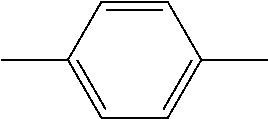
- URLKBWYHVLBVBO-UHFFFAOYSA-N CC1=CC=C(C)C=C1 Chemical compound CC1=CC=C(C)C=C1 URLKBWYHVLBVBO-UHFFFAOYSA-N 0.000 description 40
- JTGMTYWYUZDRBK-UHFFFAOYSA-N CC1=C2C=CC=CC2=C(C)C2=C1C=CC=C2 Chemical compound CC1=C2C=CC=CC2=C(C)C2=C1C=CC=C2 JTGMTYWYUZDRBK-UHFFFAOYSA-N 0.000 description 31
- LNNRNKDPAUIXBU-UHFFFAOYSA-N CC1=CC=C(C2=CC=C(C)C3=NSN=C23)C=C1 Chemical compound CC1=CC=C(C2=CC=C(C)C3=NSN=C23)C=C1 LNNRNKDPAUIXBU-UHFFFAOYSA-N 0.000 description 21
- MXXOWAVGWFQJHQ-UHFFFAOYSA-N CC1=CC2=C(C=C1)C=C(C)C1=C2C=CC=C1 Chemical compound CC1=CC2=C(C=C1)C=C(C)C1=C2C=CC=C1 MXXOWAVGWFQJHQ-UHFFFAOYSA-N 0.000 description 16
- 0 C.C.[1*]C1=C([2*])C([3*])=C([4*])C([5*])=C1/C1=C2/N=C(CC2(C)C)/C(C#CCC)=C2\N/C(=C(/C3=C([10*])C([9*])=C([8*])C([7*])=C3[6*])C3=N/C(=C(/C)C4=C(C)C(C)=C1N4)CC3(C)C)C(C)=C2C Chemical compound C.C.[1*]C1=C([2*])C([3*])=C([4*])C([5*])=C1/C1=C2/N=C(CC2(C)C)/C(C#CCC)=C2\N/C(=C(/C3=C([10*])C([9*])=C([8*])C([7*])=C3[6*])C3=N/C(=C(/C)C4=C(C)C(C)=C1N4)CC3(C)C)C(C)=C2C 0.000 description 13
- RRUDCFGSUDOHDG-UHFFFAOYSA-N CC(=O)NO Chemical compound CC(=O)NO RRUDCFGSUDOHDG-UHFFFAOYSA-N 0.000 description 13
- CVTWBOGILYVHIO-UHFFFAOYSA-N CCCCCCCCC1=CC=C(C)C=C1 Chemical compound CCCCCCCCC1=CC=C(C)C=C1 CVTWBOGILYVHIO-UHFFFAOYSA-N 0.000 description 13
- GWQOOADXMVQEFT-UHFFFAOYSA-N CC1=CC=C(C)S1 Chemical compound CC1=CC=C(C)S1 GWQOOADXMVQEFT-UHFFFAOYSA-N 0.000 description 12
- VVLZEQKZPNOPNS-UHFFFAOYSA-N CC1=C2C=CC=NC2=C(C)C=C1 Chemical compound CC1=C2C=CC=NC2=C(C)C=C1 VVLZEQKZPNOPNS-UHFFFAOYSA-N 0.000 description 10
- AUHZEENZYGFFBQ-UHFFFAOYSA-N CC1=CC(C)=CC(C)=C1 Chemical compound CC1=CC(C)=CC(C)=C1 AUHZEENZYGFFBQ-UHFFFAOYSA-N 0.000 description 9
- ZRMDNMCLOTYRPK-UHFFFAOYSA-N CC1=C2C=C/C3=C/C=C(C)\C4=C\C=C(\C=C1)C2=C34 Chemical compound CC1=C2C=C/C3=C/C=C(C)\C4=C\C=C(\C=C1)C2=C34 ZRMDNMCLOTYRPK-UHFFFAOYSA-N 0.000 description 7
- YGMHLFYDTNXBNY-UHFFFAOYSA-N CC1=CC(C)=CC(C2=CC=C(C)C3=NSN=C23)=C1 Chemical compound CC1=CC(C)=CC(C2=CC=C(C)C3=NSN=C23)=C1 YGMHLFYDTNXBNY-UHFFFAOYSA-N 0.000 description 7
- VFHCPNLOWVCHGV-UHFFFAOYSA-N CC1=CC2=C(C=C1)C1=C\C=C(C)/C=C\1C2(C)C Chemical compound CC1=CC2=C(C=C1)C1=C\C=C(C)/C=C\1C2(C)C VFHCPNLOWVCHGV-UHFFFAOYSA-N 0.000 description 6
- UGUBPPXUUAYBOO-UHFFFAOYSA-N CCCCCCCCC1(CCCCCCCC)C2=C(C=CC(C)=C2)C2=C\C=C(C)/C=C\21 Chemical compound CCCCCCCCC1(CCCCCCCC)C2=C(C=CC(C)=C2)C2=C\C=C(C)/C=C\21 UGUBPPXUUAYBOO-UHFFFAOYSA-N 0.000 description 6
- SLVYXKHWXHDEHH-UHFFFAOYSA-N C.C.CC#CCC Chemical compound C.C.CC#CCC SLVYXKHWXHDEHH-UHFFFAOYSA-N 0.000 description 5
- FKXLVJONQORHRG-UHFFFAOYSA-N C#CC1=CC=C(N(CCCCCCCC)CCCCCCCC)C=C1 Chemical compound C#CC1=CC=C(N(CCCCCCCC)CCCCCCCC)C=C1 FKXLVJONQORHRG-UHFFFAOYSA-N 0.000 description 3
- FMIFGOKEBFQCGG-UHFFFAOYSA-N CC1=C2C=CC=CC2=C([N+](=O)[O-])C2=C1C=CC=C2 Chemical compound CC1=C2C=CC=CC2=C([N+](=O)[O-])C2=C1C=CC=C2 FMIFGOKEBFQCGG-UHFFFAOYSA-N 0.000 description 2
- VCZNNAKNUVJVGX-UHFFFAOYSA-N CC1=CC=C(C#N)C=C1 Chemical compound CC1=CC=C(C#N)C=C1 VCZNNAKNUVJVGX-UHFFFAOYSA-N 0.000 description 2
- ZPTVNYMJQHSSEA-UHFFFAOYSA-N CC1=CC=C([N+](=O)[O-])C=C1 Chemical compound CC1=CC=C([N+](=O)[O-])C=C1 ZPTVNYMJQHSSEA-UHFFFAOYSA-N 0.000 description 2
- DSLGCAWLUGOMPH-LADSXNHDSA-N B=NS.C1CCOC1.CC(C)[Si](C#C/C1=C2\C=C/C(=C(\C3=CC=CC=C3)C3=N/C(=C(/Br)C4=CC=C(N4)/C(C4=CC=CC=C4)=C4\N=C1CC4(C)C)CC3(C)C)N2)(C(C)C)C(C)C.CC(C)[Si](C#C/C1=C2\C=C/C(=C(\C3=CC=CC=C3)C3=N/C(=C\C4=CC=C(N4)/C(C4=CC=CC=C4)=C4\N=C1CC4(C)C)CC3(C)C)N2)(C(C)C)C(C)C.CC(C)[Si](C#C/C1=C2\C=C/C(=C(\C3=CC=CC=C3)C3=N/C(=C\C4=CC=C(N4)/C(C4=CC=CC=C4)=C4\N=C1CC4(C)C)CC3(C)C)N2)(C(C)C)C(C)C.CC1(C)C/C2=C/C3=CC=C(N3)/C(C3=CC=CC=C3)=C3\N=C(CC3(C)C)/C(Br)=C3/C=C/C(=C(\C4=CC=CC=C4)C1=N2)N3.[H]C#C[Si](C(C)C)(C(C)C)C(C)C Chemical compound B=NS.C1CCOC1.CC(C)[Si](C#C/C1=C2\C=C/C(=C(\C3=CC=CC=C3)C3=N/C(=C(/Br)C4=CC=C(N4)/C(C4=CC=CC=C4)=C4\N=C1CC4(C)C)CC3(C)C)N2)(C(C)C)C(C)C.CC(C)[Si](C#C/C1=C2\C=C/C(=C(\C3=CC=CC=C3)C3=N/C(=C\C4=CC=C(N4)/C(C4=CC=CC=C4)=C4\N=C1CC4(C)C)CC3(C)C)N2)(C(C)C)C(C)C.CC(C)[Si](C#C/C1=C2\C=C/C(=C(\C3=CC=CC=C3)C3=N/C(=C\C4=CC=C(N4)/C(C4=CC=CC=C4)=C4\N=C1CC4(C)C)CC3(C)C)N2)(C(C)C)C(C)C.CC1(C)C/C2=C/C3=CC=C(N3)/C(C3=CC=CC=C3)=C3\N=C(CC3(C)C)/C(Br)=C3/C=C/C(=C(\C4=CC=CC=C4)C1=N2)N3.[H]C#C[Si](C(C)C)(C(C)C)C(C)C DSLGCAWLUGOMPH-LADSXNHDSA-N 0.000 description 1
- AHNKRRUBFVUYLL-WRDPVUSDSA-N C1=CCC=C1.CC(=O)C=C(C)C.CC(=O)O.COC(OC)C(=O)C=C(C)C.COC(OC)C(=O)C=C(C)C.COC(OC)C(=O)CC(C)(C)C(C(C1=CC=CC=C1)C1=CC=CN1)[N+](=O)[O-].COC(OC)C(=O)CC(C)(C)C(C(C1=CC=CC=C1)C1=CC=CN1)[N+](=O)[O-].COC(OC)C1=N/C(=C(/C2=CC=CC=C2)C2=CC=CN2)C(C)(C)C1.N.O=[N+]([O-])/C=C/C1=CC=CC=C1.O=[N+]([O-])CC(C1=CC=CC=C1)C1=CC=CC1.O=[N+]([O-])CC(C1=CC=CC=C1)C1=CC=CC1.[2H]B[U].[H]C(=O)C1=CC=CC=C1 Chemical compound C1=CCC=C1.CC(=O)C=C(C)C.CC(=O)O.COC(OC)C(=O)C=C(C)C.COC(OC)C(=O)C=C(C)C.COC(OC)C(=O)CC(C)(C)C(C(C1=CC=CC=C1)C1=CC=CN1)[N+](=O)[O-].COC(OC)C(=O)CC(C)(C)C(C(C1=CC=CC=C1)C1=CC=CN1)[N+](=O)[O-].COC(OC)C1=N/C(=C(/C2=CC=CC=C2)C2=CC=CN2)C(C)(C)C1.N.O=[N+]([O-])/C=C/C1=CC=CC=C1.O=[N+]([O-])CC(C1=CC=CC=C1)C1=CC=CC1.O=[N+]([O-])CC(C1=CC=CC=C1)C1=CC=CC1.[2H]B[U].[H]C(=O)C1=CC=CC=C1 AHNKRRUBFVUYLL-WRDPVUSDSA-N 0.000 description 1
- OLGUJTREVPYYLJ-WOKFBPGMSA-M C1CCOC1.CC1(C)C/C2=C/C3=CC=C(N3)/C(C3=CC=CC=C3)=C3\N=C(/C=C4/C=C/C(=C(\C5=CC=CC=C5)C1=N2)N4)CC3(C)C.CC1(C)C/C2=C/C3=CC=C(N3)/C(C3=CC=CC=C3)=C3\N=C(CC3(C)C)/C(Br)=C3/C=C/C(=C(\C4=CC=CC=C4)C1=N2)N3.COC(=O)C1=CC=C(C#CC[SiH](C)C)C=C1.COC(=O)C1=CC=C(C#CC[SiH](C)C)C=C1.COC(=O)C1=CC=C(I)C=C1.O=COO[K].[H]C#CC1=CC=C(C(=O)OC)C=C1.[H]C#C[Si](C)(C)C.[KH] Chemical compound C1CCOC1.CC1(C)C/C2=C/C3=CC=C(N3)/C(C3=CC=CC=C3)=C3\N=C(/C=C4/C=C/C(=C(\C5=CC=CC=C5)C1=N2)N4)CC3(C)C.CC1(C)C/C2=C/C3=CC=C(N3)/C(C3=CC=CC=C3)=C3\N=C(CC3(C)C)/C(Br)=C3/C=C/C(=C(\C4=CC=CC=C4)C1=N2)N3.COC(=O)C1=CC=C(C#CC[SiH](C)C)C=C1.COC(=O)C1=CC=C(C#CC[SiH](C)C)C=C1.COC(=O)C1=CC=C(I)C=C1.O=COO[K].[H]C#CC1=CC=C(C(=O)OC)C=C1.[H]C#C[Si](C)(C)C.[KH] OLGUJTREVPYYLJ-WOKFBPGMSA-M 0.000 description 1
- MJWXMNHHTSJCFY-GEARVVOSSA-N C1CCOC1.CCCCCCCCN(CCCCCCCC)C1=CC=C(C#C/C2=C3\CC(C)(C)C(=N3)/C(C3=CC=CC=C3)=C3/C=C/C(=C(\C#CC4=CC=C(C(=O)OC)C=C4)C4=N/C(=C(/C5=CC=CC=C5)C5=CC=C2N5)C(C)(C)C4)N3)C=C1.CCCCCCCCN(CCCCCCCC)C1=CC=C(C#C/C2=C3\CC(C)(C)C(=N3)/C(C3=CC=CC=C3)=C3/C=C/C(=C(\C#CC4=CC=C(C(=O)OC)C=C4)C4=N/C(=C(/C5=CC=CC=C5)C5=CC=C2N5)C(C)(C)C4)N3)C=C1.COC(=O)C1=CC=C(I)C=C1.[H]C#C/C1=C2\C=C/C(=C(\C3=CC=CC=C3)C3=N/C(=C(/C#CC4=CC=C(N(CCCCCCCC)CCCCCCCC)C=C4)C4=CC=C(N4)/C(C4=CC=CC=C4)=C4\N=C1CC4(C)C)CC3(C)C)N2 Chemical compound C1CCOC1.CCCCCCCCN(CCCCCCCC)C1=CC=C(C#C/C2=C3\CC(C)(C)C(=N3)/C(C3=CC=CC=C3)=C3/C=C/C(=C(\C#CC4=CC=C(C(=O)OC)C=C4)C4=N/C(=C(/C5=CC=CC=C5)C5=CC=C2N5)C(C)(C)C4)N3)C=C1.CCCCCCCCN(CCCCCCCC)C1=CC=C(C#C/C2=C3\CC(C)(C)C(=N3)/C(C3=CC=CC=C3)=C3/C=C/C(=C(\C#CC4=CC=C(C(=O)OC)C=C4)C4=N/C(=C(/C5=CC=CC=C5)C5=CC=C2N5)C(C)(C)C4)N3)C=C1.COC(=O)C1=CC=C(I)C=C1.[H]C#C/C1=C2\C=C/C(=C(\C3=CC=CC=C3)C3=N/C(=C(/C#CC4=CC=C(N(CCCCCCCC)CCCCCCCC)C=C4)C4=CC=C(N4)/C(C4=CC=CC=C4)=C4\N=C1CC4(C)C)CC3(C)C)N2 MJWXMNHHTSJCFY-GEARVVOSSA-N 0.000 description 1
- YCRGTMRUQZZGGG-NQVOZGIVSA-N CC#N.CC1(C)C/C2=C/C3=CC=C(N3)/C(C3=CC=CC=C3)=C3\N=C(/C=C4/C=C/C(=C(\C5=CC=CC=C5)C1=N2)N4)CC3(C)C.CCOCC.COC(OC)C1=N/C(=C(/C2=CC=CC=C2)C2=CC=CN2)C(C)(C)C1.FB(F)F Chemical compound CC#N.CC1(C)C/C2=C/C3=CC=C(N3)/C(C3=CC=CC=C3)=C3\N=C(/C=C4/C=C/C(=C(\C5=CC=CC=C5)C1=N2)N4)CC3(C)C.CCOCC.COC(OC)C1=N/C(=C(/C2=CC=CC=C2)C2=CC=CN2)C(C)(C)C1.FB(F)F YCRGTMRUQZZGGG-NQVOZGIVSA-N 0.000 description 1
- XMAZHYFAMAUBKA-MXGAGEALSA-N CC(C)[Si](C#C/C1=C2\C=C/C(=C(\C3=CC=CC=C3)C3=N/C(=C(/Br)C4=CC=C(N4)/C(C4=CC=CC=C4)=C4\N=C1CC4(C)C)CC3(C)C)N2)(C(C)C)C(C)C.[H]C#CC1=CC=C(N(CCCCCCCC)CCCCCCCC)C=C1 Chemical compound CC(C)[Si](C#C/C1=C2\C=C/C(=C(\C3=CC=CC=C3)C3=N/C(=C(/Br)C4=CC=C(N4)/C(C4=CC=CC=C4)=C4\N=C1CC4(C)C)CC3(C)C)N2)(C(C)C)C(C)C.[H]C#CC1=CC=C(N(CCCCCCCC)CCCCCCCC)C=C1 XMAZHYFAMAUBKA-MXGAGEALSA-N 0.000 description 1
- SUSLMJOQAOYSFN-RNJDOOBTSA-N CC1(C)C/C2=C/C3=CC=C(N3)/C(C3=CC=CC=C3)=C3\N=C(CC3(C)C)/C(Br)=C3/C=C/C(=C(\C4=CC=CC=C4)C1=N2)N3.CC1(C)C/C2=C/C3=CC=C(N3)/C(C3=CC=CC=C3)=C3\N=C(CC3(C)C)/C(C#CC3=CC=C(N)C=C3)=C3/C=C/C(=C(\C4=CC=CC=C4)C1=N2)N3.[H]C#CC1=CC=C(N)C=C1 Chemical compound CC1(C)C/C2=C/C3=CC=C(N3)/C(C3=CC=CC=C3)=C3\N=C(CC3(C)C)/C(Br)=C3/C=C/C(=C(\C4=CC=CC=C4)C1=N2)N3.CC1(C)C/C2=C/C3=CC=C(N3)/C(C3=CC=CC=C3)=C3\N=C(CC3(C)C)/C(C#CC3=CC=C(N)C=C3)=C3/C=C/C(=C(\C4=CC=CC=C4)C1=N2)N3.[H]C#CC1=CC=C(N)C=C1 SUSLMJOQAOYSFN-RNJDOOBTSA-N 0.000 description 1
- SZLOENYFFDZTKI-FBQOJNLOSA-N CC1(C)C/C2=C/C3=CC=C(N3)/C(C3=CC=CC=C3)=C3\N=C(CC3(C)C)/C(Br)=C3/C=C/C(=C(\C4=CC=CC=C4)C1=N2)N3.COC(=O)C1=CC=C(C#C/C2=C3\C=C/C(=C(\C4=CC=CC=C4)C4=N/C(=C\C5=CC=C(N5)/C(C5=CC=CC=C5)=C5\N=C2CC5(C)C)CC4(C)C)N3)C=C1.[H]C#CC1=CC=C(C(=O)OC)C=C1 Chemical compound CC1(C)C/C2=C/C3=CC=C(N3)/C(C3=CC=CC=C3)=C3\N=C(CC3(C)C)/C(Br)=C3/C=C/C(=C(\C4=CC=CC=C4)C1=N2)N3.COC(=O)C1=CC=C(C#C/C2=C3\C=C/C(=C(\C4=CC=CC=C4)C4=N/C(=C\C5=CC=C(N5)/C(C5=CC=CC=C5)=C5\N=C2CC5(C)C)CC4(C)C)N3)C=C1.[H]C#CC1=CC=C(C(=O)OC)C=C1 SZLOENYFFDZTKI-FBQOJNLOSA-N 0.000 description 1
- SUMDTHVULFLNJW-XSTPRTSESA-M CC1(C)C/C2=C/C3=CC=C(N3)/C(C3=CC=CC=C3)=C3\N=C(CC3(C)C)/C(C#CC3=CC=C(C(=O)O)C=C3)=C3/C=C/C(=C(\C4=CC=CC=C4)C1=N2)N3.COC(=O)C1=CC=C(C#C/C2=C3\C=C/C(=C(\C4=CC=CC=C4)C4=N/C(=C\C5=CC=C(N5)/C(C5=CC=CC=C5)=C5\N=C2CC5(C)C)CC4(C)C)N3)C=C1.O[Na] Chemical compound CC1(C)C/C2=C/C3=CC=C(N3)/C(C3=CC=CC=C3)=C3\N=C(CC3(C)C)/C(C#CC3=CC=C(C(=O)O)C=C3)=C3/C=C/C(=C(\C4=CC=CC=C4)C1=N2)N3.COC(=O)C1=CC=C(C#C/C2=C3\C=C/C(=C(\C4=CC=CC=C4)C4=N/C(=C\C5=CC=C(N5)/C(C5=CC=CC=C5)=C5\N=C2CC5(C)C)CC4(C)C)N3)C=C1.O[Na] SUMDTHVULFLNJW-XSTPRTSESA-M 0.000 description 1
- LHWHFBJRUOPUCE-DIFHZWRMSA-N CC1=C(C)C(C)=C(/C2=C3\C=C/C(=C/C4=N/C(=C(/C5=C(C)C(C)=C(C)C(C)=C5C)C5=CC=C(/C=C6\N=C2C(C)C6C)N5)C(C)C4C)N3)C(C)=C1C Chemical compound CC1=C(C)C(C)=C(/C2=C3\C=C/C(=C/C4=N/C(=C(/C5=C(C)C(C)=C(C)C(C)=C5C)C5=CC=C(/C=C6\N=C2C(C)C6C)N5)C(C)C4C)N3)C(C)=C1C LHWHFBJRUOPUCE-DIFHZWRMSA-N 0.000 description 1
- VFAMTQSYTAXDRM-DGVVDJPOSA-N CCCCCCCCN(CCCCCCCC)C1=CC=C(C#C/C2=C3\CC(C)(C)C(=N3)/C(C3=CC=CC=C3)=C3/C=C/C(=C(\C#CC4=CC=C(C(=O)O)C=C4)C4=N/C(=C(/C5=CC=CC=C5)C5=CC=C2N5)C(C)(C)C4)N3)C=C1 Chemical compound CCCCCCCCN(CCCCCCCC)C1=CC=C(C#C/C2=C3\CC(C)(C)C(=N3)/C(C3=CC=CC=C3)=C3/C=C/C(=C(\C#CC4=CC=C(C(=O)O)C=C4)C4=N/C(=C(/C5=CC=CC=C5)C5=CC=C2N5)C(C)(C)C4)N3)C=C1 VFAMTQSYTAXDRM-DGVVDJPOSA-N 0.000 description 1
Images


Classifications
-
- C—CHEMISTRY; METALLURGY
- C09—DYES; PAINTS; POLISHES; NATURAL RESINS; ADHESIVES; COMPOSITIONS NOT OTHERWISE PROVIDED FOR; APPLICATIONS OF MATERIALS NOT OTHERWISE PROVIDED FOR
- C09B—ORGANIC DYES OR CLOSELY-RELATED COMPOUNDS FOR PRODUCING DYES, e.g. PIGMENTS; MORDANTS; LAKES
- C09B47/00—Porphines; Azaporphines
-
- H—ELECTRICITY
- H01—ELECTRIC ELEMENTS
- H01G—CAPACITORS; CAPACITORS, RECTIFIERS, DETECTORS, SWITCHING DEVICES, LIGHT-SENSITIVE OR TEMPERATURE-SENSITIVE DEVICES OF THE ELECTROLYTIC TYPE
- H01G9/00—Electrolytic capacitors, rectifiers, detectors, switching devices, light-sensitive or temperature-sensitive devices; Processes of their manufacture
- H01G9/20—Light-sensitive devices
- H01G9/2059—Light-sensitive devices comprising an organic dye as the active light absorbing material, e.g. adsorbed on an electrode or dissolved in solution
-
- H01L51/0077—
-
- H—ELECTRICITY
- H10—SEMICONDUCTOR DEVICES; ELECTRIC SOLID-STATE DEVICES NOT OTHERWISE PROVIDED FOR
- H10K—ORGANIC ELECTRIC SOLID-STATE DEVICES
- H10K85/00—Organic materials used in the body or electrodes of devices covered by this subclass
- H10K85/30—Coordination compounds
-
- H—ELECTRICITY
- H10—SEMICONDUCTOR DEVICES; ELECTRIC SOLID-STATE DEVICES NOT OTHERWISE PROVIDED FOR
- H10K—ORGANIC ELECTRIC SOLID-STATE DEVICES
- H10K85/00—Organic materials used in the body or electrodes of devices covered by this subclass
- H10K85/761—Biomolecules or bio-macromolecules, e.g. proteins, chlorophyl, lipids or enzymes
-
- H—ELECTRICITY
- H01—ELECTRIC ELEMENTS
- H01G—CAPACITORS; CAPACITORS, RECTIFIERS, DETECTORS, SWITCHING DEVICES, LIGHT-SENSITIVE OR TEMPERATURE-SENSITIVE DEVICES OF THE ELECTROLYTIC TYPE
- H01G9/00—Electrolytic capacitors, rectifiers, detectors, switching devices, light-sensitive or temperature-sensitive devices; Processes of their manufacture
- H01G9/20—Light-sensitive devices
- H01G9/2027—Light-sensitive devices comprising an oxide semiconductor electrode
- H01G9/2031—Light-sensitive devices comprising an oxide semiconductor electrode comprising titanium oxide, e.g. TiO2
-
- Y—GENERAL TAGGING OF NEW TECHNOLOGICAL DEVELOPMENTS; GENERAL TAGGING OF CROSS-SECTIONAL TECHNOLOGIES SPANNING OVER SEVERAL SECTIONS OF THE IPC; TECHNICAL SUBJECTS COVERED BY FORMER USPC CROSS-REFERENCE ART COLLECTIONS [XRACs] AND DIGESTS
- Y02—TECHNOLOGIES OR APPLICATIONS FOR MITIGATION OR ADAPTATION AGAINST CLIMATE CHANGE
- Y02E—REDUCTION OF GREENHOUSE GAS [GHG] EMISSIONS, RELATED TO ENERGY GENERATION, TRANSMISSION OR DISTRIBUTION
- Y02E10/00—Energy generation through renewable energy sources
- Y02E10/50—Photovoltaic [PV] energy
- Y02E10/542—Dye sensitized solar cells
-
- Y—GENERAL TAGGING OF NEW TECHNOLOGICAL DEVELOPMENTS; GENERAL TAGGING OF CROSS-SECTIONAL TECHNOLOGIES SPANNING OVER SEVERAL SECTIONS OF THE IPC; TECHNICAL SUBJECTS COVERED BY FORMER USPC CROSS-REFERENCE ART COLLECTIONS [XRACs] AND DIGESTS
- Y02—TECHNOLOGIES OR APPLICATIONS FOR MITIGATION OR ADAPTATION AGAINST CLIMATE CHANGE
- Y02E—REDUCTION OF GREENHOUSE GAS [GHG] EMISSIONS, RELATED TO ENERGY GENERATION, TRANSMISSION OR DISTRIBUTION
- Y02E10/00—Energy generation through renewable energy sources
- Y02E10/50—Photovoltaic [PV] energy
- Y02E10/549—Organic PV cells
Definitions
- the disclosure relates to an organic dye, and more particularly to a bacteriochlorin-based organic dye.
- DSSCs dye-sensitized solar cells
- a photosensitizer contained in DSSCs absorbs visible light and ultraviolet light in sunlight, and electrons contained in the photosensitizer are thus excited and effectively introduced to a conduction band of a semiconductor electrode so as to produce a photocurrent. Therefore, the quality of the photosensitizer may affect the photoelectric conversion efficiency of DSSCs.
- the photosensitizer commonly used in DSSC includes ruthenium complexes, porphyrin derivatives, and small molecular organic photosensitizers having electron-donating and electron-withdrawing structures.
- X 1 , X 2 , X 3 , and X 4 are independently selected from the group consisting of H, OH, halo, a C 1 -C 4 alkyl group, and a C 1 -C 3 alkoxy group;
- P 1 , P 2 , P 3 , P 4 , P 5 , Q 1 , Q 2 , Q 3 , Q 4 , and Q 5 are independently selected from the group consisting of H, OH, CN, NO 2 , halo, a C 1 -C 15 alkyl, and a C 1 -C 15 alkoxy group.
- the bacteriochlorin compound prepared from the porphyrin compound via reduction is found to be air sensitive.
- the bacteriochlorin compound thus prepared is liable to be oxidized to the porphyrin compound or the chlorin compound, and may not be used for subsequent applications over a long period of time.
- the bacteriochlorin compound prepared from the porphyrin compound using oxmium tetraoxide as a catalyst, as disclosed in US 2003/0203888 A1, may similarly have the air sensitive problem.
- U.S. Pat. No. 7,534,807 discloses a method of making a bacteriochlorin, which is carried out by condensing a pair of compounds of Formula II defined therein in an organic solvent and preferably in the presence of an acid.
- An object of the disclosure is to provide a bacteriochlorin-based organic dye which is stable in air.
- R 1 , R 2 , R 3 , R 4 , R 5 , R 6 , R 7 , R 8 , R 9 , and R 10 are independently selected from the group consisting of hydrogen, an alkyl group, and an alkoxy group;
- Y 1 , Y 2 , Y 3 , and Y 4 independently represent an alkyl group
- T 1 , T 2 , T 3 , and T 4 are independently selected from the group consisting of hydrogen, an alkyl group, and an alkoxy group;
- Q 2 is selected from the group consisting of a single bond
- P 2 represents an amino group or an anchoring group
- n 0 or 1
- P 1 represents hydrogen, an electron-donating group, or an electron-withdrawing group
- n 0 or 1
- R 14 and R 15 are independently selected from the group consisting of hydrogen, a C 1 -C 12 alkyl group, and
- R 16 represents a C 1 -C 12 alkyl group or a C 1 -C 12 alkoxy group
- Q 1 is selected from the group consisting of a single bond
- a 1 and A 2 independently represent a C 1 -C 12 alkyl group, and b represents an integer ranging from 1 to 4.
- FIG. 1 is a graph showing current density-voltage (J-V) curves of Compounds A2 and A4 obtained using a a solar simulator (AM 1.5G, SS50 AAAEM, PET, irradiance: 100 mW/cm 2 ); and
- FIG. 2 is a graph showing incident photon-to-current conversion efficiency (IPCE) spectra of solar cells sensitized with Compounds A2 and A4.
- IPCE incident photon-to-current conversion efficiency
- a bacteriochlorin-based organic dye of the disclosure is represented by Formula (II):
- R 1 , R 2 , R 3 , R 4 , R 5 , R 6 , R 7 , R 8 , R 9 , and R 10 are independently selected from the group consisting of hydrogen, an alkyl group, and an alkoxy group;
- Y 1 , Y 2 , Y 3 , and Y 4 independently represent an alkyl group
- T 1 , T 2 , T 3 , and T 4 are independently selected from the group consisting of hydrogen, an alkyl group, and an alkoxy group;
- Q 2 is selected from the group consisting of a single bond
- P 2 represents an amino group or an anchoring group
- n 0 or 1
- P 1 represents hydrogen, an electron-donating group, or an electron-withdrawing group
- n 0 or 1
- R 14 and R 15 are independently selected from the group consisting of hydrogen, a C 1 -C 12 alkyl group, and
- R 16 represents a C 1 -C 12 alkyl group or a C 1 -C 12 alkoxy group
- Q 1 is selected from the group consisting of a single bond
- a 1 and A 2 independently represent a C 1 -C 12 alkyl group, and b represents an integer ranging from 1 to 4.
- the bacteriochlorin-based organic dye of the disclosure there are two substituents on each of the carbon atoms at positions 7 and 17 of the bacteriochlorin core.
- the bacteriochlorin-based organic dye of the disclosure is stable in air, and thus may be used as a photosensitizer in a dye-sensitized solar cell.
- Z represents
- P 1 is selected from the group consisting of hydrogen, NR 11 R 12 , and a hydroxyl group, wherein R 11 and R 12 are independently selected from the group consisting of hydrogen, a C 1 -C 12 alkyl group, and
- R 13 represents a C 1 -C 12 alkyl group or a C 1 -C 12 alkoxy group.
- P 2 is selected from the group consisting of —NH 2 , a carboxyl group, and a nitro group.
- Q 1 is selected from the group consisting of a single bond
- a 1 and A 2 independently represent a C 1 -C 12 alkyl group.
- Q 2 is selected from the group consisting of
- b represents an integer ranging from 1 to 4.
- m is 0.
- Q 1 represents a single bond.
- P 1 represents hydrogen or NR 11 R 12 , wherein R 11 and R 12 independently represent
- R 13 represents a C 1 -C 12 alkyl group or a C 1 -C 12 alkoxy group.
- the alkyl group for R 1 , R 2 , R 3 , R 4 , R 5 , R 6 , R 7 , R 8 , R 9 , R 10 , Y 1 , Y 2 , Y 3 , Y 4 , T 1 , T 2 , T 3 , and T 4 is a C 6 -C 12 alkyl group.
- the alkoxy group for R 1 , R 2 , R 3 , R 4 , R 5 , R 6 , R 7 , R 8 , R 9 , R 10 , T 1 , T 2 , T 3 , and T 4 is a C 6 -C 12 alkoxy group.
- each of R 1 , R 2 , R 3 , R 4 , R 5 , R 6 , R 7 , R 8 , R 9 , R 10 represents hydrogen.
- R 1 , R 5 , R 6 , and R 10 independently represent an alkyl group or an alkoxy group.
- Each of R 2 , R 3 , R 4 , R 7 , R 8 , and R 9 represents hydrogen.
- each of T 1 , T 2 , T 3 , and T 4 represents hydrogen.
- T 1 , T 2 , T 3 , and T 4 independently represent an alkyl group or an alkoxy group.
- Z represents NR 14 R 15 .
- each of R 14 and R 15 represents
- R 16 represents a C 1 -C 12 alkyl group or a C 1 -C 12 alkoxy group.
- Q 2 is
- P 2 represents the anchoring group which is bonded to Q2 at a para position and which is selected from the group consisting of a carboxylic group and a hydroxamic group.
- Q 2 is
- P 2 represents a carboxylic group bonded to Q 2 at each of positions 3 and 5 of Q 2 .
- the electron-withdrawing group is selected from the group consisting of
- Formula (II) of the disclosure When the bacteriochlorin-based organic dye represented by Formula (II) of the disclosure is used as a photosensitizer for a dye-sensitized solar cell, Q 1 and Q 2 contained in Formula (II) may enhance the photoelectric conversion efficiency of the dye-sensitized solar cell.
- the bacteriochlorin-based organic dye represented by Formula (II) of the disclosure may be formed into a film via polymerization or electro-polymerization.
- the film may be used, for example, for modifying an electrode surface.
- the wavelength range of sunlight which may be absorbed by the photosensitizer may be increased. Therefore, the photoelectric conversion efficiency of the dye-sensitized solar cell may be increased.
- an enhanced anchoring group is formed on the photosensitizer such that the photosensitizer may be firmly and stably anchored onto a semiconductor. Therefore, the photoelectric conversion efficiency of the dye-sensitized solar cell may be enhanced in long-term use.
- the photoelectric conversion efficiency of the dye-sensitized solar cell may be increased.
- the life cycle of the photosensitizer may be extended, the probability of introduction of electrons from the photosensitized to the semiconductor may be increased, and the photoelectric conversion efficiency of the dye-sensitized solar cell may be increased.
- the bacteriochlorin-based organic dye of the disclosure may be used as a photosensitizer for an n-type dye-sensitized solar cell.
- the bacteriochlorin-based organic dye of the disclosure may be used as an electropolymerization dye.
- the bacteriochlorin-based organic dye represented by Formula (II) is derived from a bacteriochlorin-based compound represented by Formula (I):
- R 1 , R 2 , R 3 , R 4 , R 5 , R 6 , R 7 , R 8 , R 9 , and R 10 are independently selected from the group consisting of hydrogen, an alkyl group, and an alkoxy group;
- Y 1 , Y 2 , Y 3 , and Y 4 independently represent an alkyl group
- T 1 , T 2 , T 3 , and T 4 are independently selected from the group consisting of hydrogen, an alkyl group, and an alkoxy group.
- the bacteriochlorin-based compound represented by Formula (I) may be prepared by subjecting a compound represented by Formula (I-1) below and a compound represented by Formula (I-2) below to a reaction in the presence of a solvent and a catalyst.
- a non-limiting example of the solvent is acetonitrile (CH 3 CN).
- Anon-limiting example of the catalyst is boron trifluoride etherate (BF 3 .O(Et) 2 ).
- Benzaldehyde (10 g, 94.33 mmol), nitro methane (250 mL), and ammonium acetate (2.179 g, 28.27 mmol) were added into a round bottom bottle to obtain a reaction mixture.
- the reaction mixture was heated under reflux for 3 hours to obtain a reaction product.
- the reaction product was cooled to 25° C., and was then dissolved in a proper volume amount of methylene chloride (CH 2 Cl 2 ).
- the reaction product was then extracted by adding water in a volume amount equal to that of methylene chloride to obtain an organic phase.
- the organic phase was washed with an aqueous sodium chloride solution (NaCl (aq) ), and was then dried using anhydrous sodium sulfate, followed by evacuation to obtain a coarse product.
- the organic phase was washed using an aqueous sodium chloride solution, and was then dried using anhydrous sodium sulfate, followed by evacuation to obtain a coarse product.
- Compound A1-4 (730 mg, 1.95 mmol) was dissolved in anhydrous tetrahydrofuran (THF, 3.00 mL) in a flask, followed by addition of sodium methoxide (CH 3 ONa, 316 mg, 5.85 mmol) to obtain a first reaction mixture.
- the first reaction mixture was subjected to a reaction at 25° C. in a nitrogen atmosphere for 1 hour to obtain a first reaction product.
- the TiCl 3 solution was prepared by dissolving a 12 wt % solution of TiCl 3 in a 10 wt % solution of HCl.
- the buffer solution was added with anhydrous THF (5 mL), followed by addition of the first reaction product to obtain a second reaction mixture.
- the second reaction mixture was subjected to a reaction at 25° C.
- the mixture was degassed using a freeze/thaw cycle (three times), and was then added with Pd(PPh 3 ) 2 Cl 2 (133.94 mg, 5 mol %) and copper (I) iodide (CuI, 36.34 mg, 5 mol %) within a water-free and oxygen-free glove box to obtain a reaction mixture, which was subjected to a reaction in an oil bath at 50° C. for 20 hours to obtain a reaction product.
- the reaction product was concentrated under reduced pressure to remove THF and triethylamine, and was dissolved in a proper volume amount of methylene chloride, followed by extraction using NH 4 Cl (aq) in a volume amount equal to that of methylene chloride to obtain an organic phase.
- the organic phase was dried using anhydrous sodium sulfate, followed by evacuation to obtain a coarse product.
- reaction product was concentrated under reduced pressure to remove THF and triethylamine, and was then dissolved in a proper volume amount of methylene chloride, followed by extraction using NH 4 Cl (aq) in a volume amount equal to that of methylene chloride to obtain an organic phase.
- the organic phase was dried using anhydrous sodium sulfate, followed by evacuation to obtain a coarse product.
- the mixture was degassed using a freeze/thaw cycle (three times), and was then added with Pd(PPh 3 ) 2 Cl 2 (14.74 mg, 30 mol %) and AsPh 3 (51.43 mg, 2.4 equiv.) within a water-free and oxygen-free glove box to obtain a reaction mixture, which was subjected to a reaction in an oil bath at 50° C. for 17 hours to obtain a reaction product.
- the reaction product was concentrated under reduced pressure to remove THF and triethylamine, and was then dissolved in a proper volume amount of methylene chloride, followed by extraction using NH 4 Cl (aq) in a volume amount equal to that of methylene chloride to obtain an organic phase.
- the organic phase was dried using anhydrous sodium sulfate, followed by evacuation to obtain a coarse product.
- reaction product was concentrated under reduced pressure to remove THF and triethylamine, and was dissolved in a proper volume amount of methylene chloride, followed by extraction using NH 4 Cl (aq) in a volume amount equal to that of methylene chloride to obtain an organic phase.
- the organic phase was dried using anhydrous sodium sulfate, followed by evacuation to obtain a coarse product.
- a reaction product produced thereby was added with acetone (10 mL), and was then evacuated to obtain a coarse product.
- the mixture was degassed using a freeze/thaw cycle (three times), and was then added with Pd(PPh 3 ) 2 Cl 2 (13.46 mg, 19.18 ⁇ mol, 30 mol %) and AsPh 3 (46.99 mg, 153.46 ⁇ mol, 2.4 equiv) within a water-free and oxygen-free glove box to obtain a reaction solution, which was subjected to a reaction in an oil bath at 50° C. for 48 hours to obtain a reaction product.
- the reaction product was concentrated under reduced pressure to remove THF and triethylamine, and was dissolved in a proper volume amount of methylene chloride, followed by extraction using NH 4 Cl (aq) in a volume amount equal to that of methylene chloride to obtain an organic phase.
- the organic phase was dried using anhydrous sodium sulfate, followed by evacuation to obtain a coarse product.
- the organic phase was dried using anhydrous sodium sulfate, followed by evacuation to obtain a coarse product.
- the reaction product was concentrated under reduced pressure to remove THF and triethylamine, and was dissolved in a proper volume amount of methylene chloride, followed by extraction using NH 4 Cl (aq) in a volume amount equal to that of methylene chloride to obtain an organic phase.
- the organic phase was dried using anhydrous sodium sulfate followed by evacuation to obtain a coarse product.
- the organic phase was dried using anhydrous sodium sulfate, followed by evacuation to obtain a coarse product.
- the maximum absorption wavelength ( ⁇ max , nm) and molar extinction coefficient ( ⁇ , 10 ⁇ 3 M ⁇ 1 cm ⁇ 1 ) of a compound were determined using an Agilent 8453 UV-Vis spectrophotometer. Each of samples obtained from Compound A1 (Example 1), Compound A2 (Example 2), and Compound A4 (Example 4) was dissolved in THF, and was determined at 298 K in a concentration range from 10 ⁇ 5 M to 10 ⁇ 6 M and in a wavelength range from 300 nm to 1100 nm.
- the maximum emission wavelength ( ⁇ max , nm) of a compound was determined using an Agilent Eclipse fluorescence spectrophotometer.
- a sample obtained from Compound A1 (Example 1) was dissolved in THF, and was determined at 298 K at an excitation wavelength of 370 nm.
- a sample obtained from Compound A2 (Example 2) was dissolved in THF, and was determined at 298 K at an excitation wavelength of 372 nm.
- a sample obtained from Compound A4 (Example 4) was dissolved in THF, and was determined at 298 K at an excitation wavelength of 388 nm. These determinations were performed at a concentration of 2 ⁇ 10 ⁇ 6 M in a wavelength range from 390 nm to 900 nm at a scan speed of 600 nm/min.
- a dye-sensitized solar cell includes an electrolyte, an anode, and a cathode.
- the electrolyte is composed of a 1 M solution of 1-methyl 3-propyl imidazolium iodide (PMII), a 0.05 M solution of I 2 , a 0.2 M solution of lithium iodide (LiI), and a 0.5 M solution of tert-butyl pyridine (TBP).
- the cathode is made from platinum.
- the anode is composed of four transparent active layers of TiO 2 (manufactured by Eternal Chemical, particle size distribution: 20 nm to 40 nm), two scattering layers of TiO 2 (manufactured by Eternal Chemical, particle size distribution: 300 nm to 400 nm), and the bacteriochlorin-based organic dye of the disclosure used as a photosensitizer.
- the anode was made by immersing a laminate formed from the four transparent active layers and the two scattering layers in a 0.1 mM solution of the bacteriochlorin-based organic dye of the disclosure in THF for 6 hours.
- the open-circuit voltage, short-circuit current, fill factor, and photoelectric conversion efficiency of the dye-sensitized solar cell were determined using a solar simulator (AM 1.5G, SS50 AAAEM, PET) and a source meter (Keithley 2400).
- the dye-sensitized solar cell having a size of 0.4 cm ⁇ 0.4 cm was placed at a measurement position where the dye-sensitized solar cell could be irradiated by the solar simulator, and was scanned at a scan range from ⁇ 0.1 V to 0.8 V with a scan pitch of 0.02 V.
- a photocurrent versus voltage (I-V) curve measurement software (Forter, FIVMAS) was used to determine the open-circuit voltage, the short-circuit current, the fill factor, and the photoelectric conversion efficiency of the dye-sensitized solar cell.
- IPCE Incident Photon-to-Electron Conversion Efficiency
- IPCE incident photon-to-current conversion efficiency
- the dye-sensitized solar cell was placed at a measurement position where the dye-sensitized solar cell may be irradiated by the lamps, was scanned at a scan range from 300 nm to 900 nm with a scan pitch of 10 nm to obtain a spectrum of IPCE, which was integrated to obtain a theoretical short-circuit current density.
- FIG. 1 Current density-voltage (J-V) curves of Compounds A2 and A4 obtained under irradiance of 100 mW/cm 2 are shown in FIG. 1 .
- IPCE spectra of solar cells sensitized with Compounds A2 and A4 are shown in FIG. 2
- Compound A1 prepared in Example 1 has two methyl gropus on each of the carbon atoms at positions 7 and 17 of the bacteriochlorin core, and is thus stable in air. Therefore, Compound A1 may be used to prepare Compounds A2 and A4 in Examples 2 and 4, i.e., the bacteriochlorin-based organic dyes. As shown in Table 4, the bacteriochlorin-based organic dyes prepared in Examples 2 and 4 have satisfactory photoelectric conversion performances.
- the bacteriochlorin-based organic dye of the disclosure may be stably prepared from a bacteriochlorin-based compound which has two substituents on each of the carbon atoms at positions 7 and 17 of the bacteriochlorin core. Therefore, the bacteriochlorin-based organic dye of the disclosure is stable in air, and may be used as a photosensitizer in dye-sensitized solar cell.
Landscapes
- Chemical & Material Sciences (AREA)
- Engineering & Computer Science (AREA)
- Materials Engineering (AREA)
- Power Engineering (AREA)
- Microelectronics & Electronic Packaging (AREA)
- Organic Chemistry (AREA)
- Health & Medical Sciences (AREA)
- Physics & Mathematics (AREA)
- Life Sciences & Earth Sciences (AREA)
- Biochemistry (AREA)
- Biophysics (AREA)
- General Health & Medical Sciences (AREA)
- Molecular Biology (AREA)
- Spectroscopy & Molecular Physics (AREA)
- Inorganic Chemistry (AREA)
- Pharmaceuticals Containing Other Organic And Inorganic Compounds (AREA)
- Heterocyclic Carbon Compounds Containing A Hetero Ring Having Oxygen Or Sulfur (AREA)
Abstract

Description


and


or NR14R15,

wherein R16 represents a C1-C12 alkyl group or a C1-C12 alkoxy group, and


and


and


or NR14R15,

wherein R16 represents a C1-C12 alkyl group or a C1-C12 alkoxy group, and


and


wherein P1, Q1, and m are defined as above.

wherein R13 represents a C1-C12 alkyl group or a C1-C12 alkoxy group. P2 is selected from the group consisting of —NH2, a carboxyl group, and a nitro group.


and

wherein A1 and A2 independently represent a C1-C12 alkyl group.


and

wherein b represents an integer ranging from 1 to 4.

wherein R13 represents a C1-C12 alkyl group or a C1-C12 alkoxy group.

wherein R16 represents a C1-C12 alkyl group or a C1-C12 alkoxy group.

P2 represents the anchoring group which is bonded to Q2 at a para position and which is selected from the group consisting of a carboxylic group and a hydroxamic group.

and P2 represents a carboxylic group bonded to Q2 at each of


and


is a chromophore. When a photosensitizer contains

the wavelength range of sunlight which may be absorbed by the photosensitizer may be increased. Therefore, the photoelectric conversion efficiency of the dye-sensitized solar cell may be increased.

or

and P1 is a hydroxyl group, an enhanced anchoring group is formed on the photosensitizer such that the photosensitizer may be firmly and stably anchored onto a semiconductor. Therefore, the photoelectric conversion efficiency of the dye-sensitized solar cell may be enhanced in long-term use.

is an electron-withdrawing group, and may be used in combination with a proper electron-donating group to enhance an “electron push-pull effect” so as to enhance an effect of introduction of electrons from the photosensitizer to a semiconductor. Therefore, the photoelectric conversion efficiency of the dye-sensitized solar cell may be increased.


and

are rigid so as to enhance the chemical structure of the photosensitizer and have a high fluorescent quantum yield. Therefore, the life cycle of the photosensitizer may be extended, the probability of introduction of electrons from the photosensitized to the semiconductor may be increased, and the photoelectric conversion efficiency of the dye-sensitized solar cell may be increased.

is a conductive polymeric unit, and the excellent conductivity thereof may increase the photoelectric conversion efficiency of the dye-sensitized solar cell.
| TABLE 1 | ||||||
| P1 | Q1 | m | n | Q2 | P2 | |
| — | Single bond | 0 | 1 |
 |
—COOH | |
| — | Single bond | 0 | 1 |
 |
 |
|
| — | Single bond | 0 | 1 |
 |
—COOH | |
| — | Single bond | 0 | 1 |
 |
—COOH | |
| — | Single bond | 0 | 1 |
 |
 |
|
| — | Single bond | 0 | 1 |
 |
—COOH | |
| —N(C8H17)2 |
 |
1 | 1 |
 |
—COOH | |
| —N(C8H17)2 |
 |
1 | 1 |
 |
—COOH | |
| —N(C8H17)2 |
 |
1 | 1 |
 |
 |
|
| —N(C8H17)2 |
 |
1 | 1 |
 |
—COOH | |
| —N(C8H17)2 |
 |
1 | 1 |
 |
—COOH | |
| —N(C8H17)2 |
 |
1 | 1 |
 |
 |
|
| —N(C8H17)2 |
 |
1 | 1 |
 |
—COOH | |
 |
 |
1 | 1 |
 |
—COOH | |
 |
 |
1 | 1 |
 |
 |
|
 |
 |
1 | 1 |
 |
—COOH | |
—R11R12, wherein R11 and R12 represent  |
 |
1 | 1 |
 |
—COOH | |
—R11R12, wherein R11 and R12 represent  |
 |
1 | 1 |
 |
 |
|
—R11R12, wherein R11 and R12 represent  |
 |
1 | 1 |
 |
—COOH | |
| —N(C8H17)2 |
 |
1 | 1 |
 |
—COOH | |
| —N(C8H17)2 |
 |
1 | 1 |
 |
 |
|
| —N(C8H17)2 |
 |
1 | 1 |
 |
—COOH | |
| —H |
 |
1 | 1 |
 |
—COOH | |
| —H |
 |
1 | 1 |
 |
 |
|
| —H |
 |
1 | 1 |
 |
—COOH | |
| —H |
 |
1 | 1 |
 |
—COOH | |
| —H |
 |
1 | 1 |
 |
 |
|
| —H |
 |
1 | 1 |
 |
—COOH | |
—R11R12, wherein R11 and R12 represent  |
|
0 | 1 |
 |
—COOH | |
—R11R12, wherein R11 and R12 represent  |
|
0 | 1 |
 |
 |
|
—R11R12, wherein R11 and R12 represent  |
|
0 | 1 |
 |
—COOH | |
—R11R12, wherein R11 and R12 represent  |
|
0 | 1 |
 |
—COOH | |
—R11R12, wherein R11 and R12 represent  |
|
0 | 1 |
 |
 |
|
—R11R12, wherein R11 and R12 represent  |
|
0 | 1 |
 |
—COOH | |
| —OH |
 |
1 | 1 |
 |
—NO2 | |
| —OH |
 |
1 | 1 |
 |
—NO2 | |
| —N(C8H17)2 |
 |
1 | 0 |  |
—COOH | |
| —N(C8H17)2 |
 |
1 | 0 |  |
 |
|
—R11R12, wherein R11 and R12 represent  |
|
0 | 0 |  |
—COOH | |
—R11R12, wherein R11 and R12 represent  |
|
0 | 0 |  |
 |
|
| TABLE 2 | ||||||
| P1 | Q1 | m | n | Q2 | P2 | |
| — | Single bond | 0 | 1 |
 |
—NH2 | |
| —N(C8H17)2 |
 |
1 | 1 |
 |
—NH2 | |
| —N(C8H17)2 |
 |
1 | 1 |
 |
—NH2 | |
| —H |
 |
1 | 1 |
 |
—NH2 | |
—R11R12, wherein R11 and R12 represent  |
|
0 | 1 |
 |
—NH2 | |
| —NH2 |
 |
1 | 1 |
 |
—NO2 | |
| —NH2 |
 |
1 | 1 |
 |
—NO2 | |


(wherein R1, R2, R3, R4, R5, Y1, Y2, T3, and T4 are as defined above)


| TABLE 3 | ||||
| Emission | ||||
| UV absorption spectrum | spectrum | |||
| wavelength/Log ε | λmax | |||
| (nm/M−1cm−1) | (nm) | |||
| Ex. 1 | 348/5.57 | 724 | ||
| (Compound A1) | 370/5.70 | |||
| 503/5.15 | ||||
| 718/5.52 | ||||
| Ex. 2 | 372/5.38 | 749 | ||
| (Compound A2) | 551/5.01 | |||
| 745/5.36 | ||||
| Ex. 4 | 388/5.22 | 774 | ||
| (Compound A4) | 576/4.65 | |||
| 615/4.69 | ||||
| 701/4.21 | ||||
| 769/5.19 | ||||
| TABLE 4 | ||
| IPCE | Photoelectric conversion performances | |
| integrated | short-circuit | Open- | photoelectric | ||
| current | current | circuit | conversion | ||
| Dye- | density from | density | voltage | Fill | efficiency |
| sensitized | the spectrum | (Jsc) | (Voc) | factor | (η) |
| solar cell | (mA cm−2) | (mA cm−2) | (V) | (FF) | (%) |
| Ex. 2 | 10.29 | 12.58 | 0.53 | 0.70 | 4.67 |
| (Compound | |||||
| A2) | |||||
| Ex. 4 | 14.99 | 16.13 | 0.52 | 0.64 | 5.36 |
| (Compound | |||||
| A4) | |||||
Claims (16)


Applications Claiming Priority (2)
| Application Number | Priority Date | Filing Date | Title |
|---|---|---|---|
| TW105111516A TWI589578B (en) | 2016-04-13 | 2016-04-13 | A compound with a bacterial chlorophyll backbone, with bacterial chlorophyll bones Frame of organic dyes |
| TW105111516A | 2016-04-13 |
Publications (1)
| Publication Number | Publication Date |
|---|---|
| US9688858B1 true US9688858B1 (en) | 2017-06-27 |
Family
ID=59070141
Family Applications (1)
| Application Number | Title | Priority Date | Filing Date |
|---|---|---|---|
| US15/390,266 Expired - Fee Related US9688858B1 (en) | 2016-04-13 | 2016-12-23 | Bacteriochlorin-based organic dye |
Country Status (2)
| Country | Link |
|---|---|
| US (1) | US9688858B1 (en) |
| TW (1) | TWI589578B (en) |
Citations (3)
| Publication number | Priority date | Publication date | Assignee | Title |
|---|---|---|---|---|
| US20030203888A1 (en) | 2001-06-06 | 2003-10-30 | Boyle Ross William | Chromophores |
| US7534807B2 (en) | 2005-02-18 | 2009-05-19 | North Carolina State University | De novo synthesis of bacteriochlorins |
| TW201440288A (en) | 2014-07-01 | 2014-10-16 | Nat Univ Chung Hsing | Photosensitive porphyrin dyes for dye-sensitized solar cells |
-
2016
- 2016-04-13 TW TW105111516A patent/TWI589578B/en not_active IP Right Cessation
- 2016-12-23 US US15/390,266 patent/US9688858B1/en not_active Expired - Fee Related
Patent Citations (3)
| Publication number | Priority date | Publication date | Assignee | Title |
|---|---|---|---|---|
| US20030203888A1 (en) | 2001-06-06 | 2003-10-30 | Boyle Ross William | Chromophores |
| US7534807B2 (en) | 2005-02-18 | 2009-05-19 | North Carolina State University | De novo synthesis of bacteriochlorins |
| TW201440288A (en) | 2014-07-01 | 2014-10-16 | Nat Univ Chung Hsing | Photosensitive porphyrin dyes for dye-sensitized solar cells |
Non-Patent Citations (2)
| Title |
|---|
| Chernook et al. "Complexation and Interchromophoric Interactions in Self-Organized Porphyrin and Chlorin Triads" J. Phys. Chem., 1996, vol. 100, No. 5, pp. 1918-1926. * |
| Pandey, R.K., "Synthetic Strategies in Designing Porphyrin-Based Photosensitizers for Photodynamic Therapy," in W. Horspool and F. Lenci (eds.), CRC Handbook of Organic Photochemistry and Photobiology, 2nd ed., CRC Press LLC, Boca Raton, Fla., 2003, pp. 144-3-144-4 (boxed sections). |
Also Published As
| Publication number | Publication date |
|---|---|
| TWI589578B (en) | 2017-07-01 |
| TW201736377A (en) | 2017-10-16 |
Similar Documents
| Publication | Publication Date | Title |
|---|---|---|
| Privado et al. | A non-fullerene all small molecule solar cell constructed with a diketopyrrolopyrrole-based acceptor having a power conversion efficiency higher than 9% and an energy loss of 0.54 eV | |
| US8785624B2 (en) | Organic photosensitive optoelectronic devices with nonplanar porphyrins | |
| Chen et al. | Quinacridone-based molecular donors for solution processed bulk-heterojunction organic solar cells | |
| Wang et al. | Influence of the terminal electron donor in D–D–π–A phenothiazine dyes for dye-sensitized solar cells | |
| Yang et al. | Carbazole-based green and blue-BODIPY dyads and triads as donors for bulk heterojunction organic solar cells | |
| Mao et al. | 2, 6-Conjugated Bodipy sensitizers for high-performance dye-sensitized solar cells | |
| Mishra et al. | Unprecedented low energy losses in organic solar cells with high external quantum efficiencies by employing non-fullerene electron acceptors | |
| Guo et al. | A novel asymmetric phthalocyanine-based hole transporting material for perovskite solar cells with an open-circuit voltage above 1.0 V | |
| Guo et al. | Novel dopant-free metallophthalocyanines based hole transporting materials for perovskite solar cells: The effect of core metal on photovoltaic performance | |
| ES2444616T3 (en) | Copolymers for solar cells based on acridonic units | |
| JP5206092B2 (en) | Photoelectric conversion element and solar cell | |
| Çakmak et al. | Synthesis and dye sensitized solar cell applications of Bodipy derivatives with bis-dimethylfluorenyl amine donor groups | |
| Luponosov et al. | Branched triphenylamine-based oligomers for organic electronics | |
| Lee et al. | Facile synthesis of spiro-core-based hole-transporting material for high-performance and stable perovskite solar cells | |
| Wang et al. | Star-shaped magnesium tetraethynylporphyrin bearing four peripheral electron-accepting diketopyrrolopyrrole functionalities for organic solar cells | |
| Zhang et al. | Star-shaped carbazole-based BODIPY derivatives with improved hole transportation and near-infrared absorption for small-molecule organic solar cells with high open-circuit voltages | |
| Thumuganti et al. | New dithienosilole-and dithienogermole-based BODIPY for solar cell applications | |
| US8395041B2 (en) | Photoelectric conversion element and solor cell | |
| Huang et al. | Molecularly engineered thienyl-triphenylamine substituted zinc phthalocyanine as dopant free hole transporting materials in perovskite solar cells | |
| Akhtaruzzaman et al. | Donor–acceptor dyes incorporating a stable dibenzosilole π-conjugated spacer for dye-sensitized solar cells | |
| Paek et al. | A new unsymmetrical near-IR small molecule with squaraine chromophore for solution processed bulk heterojunction solar cells | |
| Mane et al. | Synthesis of carboxylate functionalized A 3 B and A 2 B 2 thiaporphyrins and their application in dye-sensitized solar cells | |
| Kumar et al. | Influence of thermal and solvent annealing on the morphology and photovoltaic performance of solution processed, D–A–D type small molecule-based bulk heterojunction solar cells | |
| US9688858B1 (en) | Bacteriochlorin-based organic dye | |
| Zhan et al. | Synthesis and photophysical properties of phosphorus (v) porphyrins functionalized with axial carbazolylvinylnaphthalimides |
Legal Events
| Date | Code | Title | Description |
|---|---|---|---|
| AS | Assignment |
Owner name: NATIONAL CHI NAN UNIVERSITY, TAIWAN Free format text: ASSIGNMENT OF ASSIGNORS INTEREST;ASSIGNORS:LIN, CHING-YAO;CHAKRABORTY, SUBRATA;WANG, CHIN-LI;REEL/FRAME:040866/0983 Effective date: 20161214 |
|
| STCF | Information on status: patent grant |
Free format text: PATENTED CASE |
|
| MAFP | Maintenance fee payment |
Free format text: PAYMENT OF MAINTENANCE FEE, 4TH YR, SMALL ENTITY (ORIGINAL EVENT CODE: M2551); ENTITY STATUS OF PATENT OWNER: SMALL ENTITY Year of fee payment: 4 |
|
| FEPP | Fee payment procedure |
Free format text: MAINTENANCE FEE REMINDER MAILED (ORIGINAL EVENT CODE: REM.); ENTITY STATUS OF PATENT OWNER: SMALL ENTITY |
|
| LAPS | Lapse for failure to pay maintenance fees |
Free format text: PATENT EXPIRED FOR FAILURE TO PAY MAINTENANCE FEES (ORIGINAL EVENT CODE: EXP.); ENTITY STATUS OF PATENT OWNER: SMALL ENTITY |
|
| STCH | Information on status: patent discontinuation |
Free format text: PATENT EXPIRED DUE TO NONPAYMENT OF MAINTENANCE FEES UNDER 37 CFR 1.362 |
|
| FP | Lapsed due to failure to pay maintenance fee |
Effective date: 20250627 |