US9686328B2 - Online address book with multi-use input bar and profile bookmarking - Google Patents
Online address book with multi-use input bar and profile bookmarking Download PDFInfo
- Publication number
- US9686328B2 US9686328B2 US14/658,970 US201514658970A US9686328B2 US 9686328 B2 US9686328 B2 US 9686328B2 US 201514658970 A US201514658970 A US 201514658970A US 9686328 B2 US9686328 B2 US 9686328B2
- Authority
- US
- United States
- Prior art keywords
- contact
- indication
- receiving
- user device
- indicator
- Prior art date
- Legal status (The legal status is an assumption and is not a legal conclusion. Google has not performed a legal analysis and makes no representation as to the accuracy of the status listed.)
- Expired - Fee Related, expires
Links
Images



Classifications
-
- H—ELECTRICITY
- H04—ELECTRIC COMMUNICATION TECHNIQUE
- H04L—TRANSMISSION OF DIGITAL INFORMATION, e.g. TELEGRAPHIC COMMUNICATION
- H04L51/00—User-to-user messaging in packet-switching networks, transmitted according to store-and-forward or real-time protocols, e.g. e-mail
- H04L51/52—User-to-user messaging in packet-switching networks, transmitted according to store-and-forward or real-time protocols, e.g. e-mail for supporting social networking services
-
- H—ELECTRICITY
- H04—ELECTRIC COMMUNICATION TECHNIQUE
- H04L—TRANSMISSION OF DIGITAL INFORMATION, e.g. TELEGRAPHIC COMMUNICATION
- H04L65/00—Network arrangements, protocols or services for supporting real-time applications in data packet communication
- H04L65/40—Support for services or applications
- H04L65/403—Arrangements for multi-party communication, e.g. for conferences
-
- G—PHYSICS
- G06—COMPUTING OR CALCULATING; COUNTING
- G06F—ELECTRIC DIGITAL DATA PROCESSING
- G06F16/00—Information retrieval; Database structures therefor; File system structures therefor
- G06F16/80—Information retrieval; Database structures therefor; File system structures therefor of semi-structured data, e.g. markup language structured data such as SGML, XML or HTML
- G06F16/84—Mapping; Conversion
-
- G06F17/30914—
-
- G—PHYSICS
- G06—COMPUTING OR CALCULATING; COUNTING
- G06Q—INFORMATION AND COMMUNICATION TECHNOLOGY [ICT] SPECIALLY ADAPTED FOR ADMINISTRATIVE, COMMERCIAL, FINANCIAL, MANAGERIAL OR SUPERVISORY PURPOSES; SYSTEMS OR METHODS SPECIALLY ADAPTED FOR ADMINISTRATIVE, COMMERCIAL, FINANCIAL, MANAGERIAL OR SUPERVISORY PURPOSES, NOT OTHERWISE PROVIDED FOR
- G06Q10/00—Administration; Management
- G06Q10/40—Business processes related to social networking or social networking services
-
- H—ELECTRICITY
- H04—ELECTRIC COMMUNICATION TECHNIQUE
- H04L—TRANSMISSION OF DIGITAL INFORMATION, e.g. TELEGRAPHIC COMMUNICATION
- H04L51/00—User-to-user messaging in packet-switching networks, transmitted according to store-and-forward or real-time protocols, e.g. e-mail
- H04L51/48—Message addressing, e.g. address format or anonymous messages, aliases
-
- H—ELECTRICITY
- H04—ELECTRIC COMMUNICATION TECHNIQUE
- H04L—TRANSMISSION OF DIGITAL INFORMATION, e.g. TELEGRAPHIC COMMUNICATION
- H04L67/00—Network arrangements or protocols for supporting network services or applications
- H04L67/2866—Architectures; Arrangements
- H04L67/30—Profiles
- H04L67/306—User profiles
-
- H—ELECTRICITY
- H04—ELECTRIC COMMUNICATION TECHNIQUE
- H04L—TRANSMISSION OF DIGITAL INFORMATION, e.g. TELEGRAPHIC COMMUNICATION
- H04L61/00—Network arrangements, protocols or services for addressing or naming
- H04L61/45—Network directories; Name-to-address mapping
- H04L61/4594—Address books, i.e. directories containing contact information about correspondents
Definitions
- This patent document pertains generally to data processing, and more particularly, but not by way of limitation, to an online address book with multi-use input bar and profile bookmarking.
- the widespread connectivity provided by the Internet makes it the ideal source of connections for a user desiring to develop networking contacts.
- Networking is highly desirable by persons wanting to develop more extensive connections with contacts for career advancement, pursuit of job possibilities, and simply, to have persons to share common interests with.
- a user may take advantage of the broad spectrum of communication possibilities over the Internet to search for connections with networking sites hosting news, information, blogs, job possibilities and professional networking possibilities, to name just a few of the likely connections possible through the Internet.
- the user may encounter a wide range and large number of contacts. Because of the wide variety of connections available on the Internet, the user may often find that a candidate contact encountered during pursuit of their communication connections is not a member of their network. Consequently, the user may not have immediate ways to connect with a prospective contact, let alone have enough background information on the candidate contact to determine whether they would make a good addition to their network.
- a contact may have posted an interesting blog comment at a professional networking site, and when encountered by the user, they may wonder if this person would make a good candidate contact for including him communications with other contacts in their personal network. Without further profile information being available for the contact the user may not be able to ascertain any corroborating interests or general information that would help in determining the user's interest in considering them a candidate contact and perhaps inviting the person to further communication within their network.
- FIG. 1 is a block diagram illustrating a communication environment of networking contacts according to an example embodiment
- FIG. 2 is a diagrammatic representation of an online address book including a multi-use input bar, as may be used in an example embodiment
- FIG. 3 is a diagrammatic representation of a multi-use input bar search result, according to an example embodiment
- FIG. 4 is a diagrammatic representation of a profile bookmarking selection, as may be used in an example embodiment
- FIG. 5 is a diagrammatic representation of a further profile bookmarking selection, according to an example embodiment
- FIG. 6 is a diagrammatic representation of a profile bookmarking selection by a bookmarklet, as may be used in an example embodiment
- FIG. 7 is a block diagram illustrating profile bookmarking modules, according to an example embodiment
- FIG. 8 is a flow chart illustrating a method to bookmark a contact profile to a contact list, according to an example embodiment
- FIG. 9 is a flow chart illustrating a method to track a marked contact as to a status update, as may be used in an example embodiment
- FIG. 10 is a flow chart illustrating a method to conduct profile bookmarking according to a multi-use input bar, according to an example embodiment
- FIG. 11 is a flow chart illustrating a method to extend profile bookmarking to further contacts, as may be used in an example embodiment
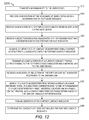
- FIG. 12 is a flow chart illustrating a method to conduct profile bookmarking according to a bookmarklet, as may be used in an example embodiment
- FIG. 13 is a block diagram of machine in the example form of a computer system within which a set instructions, for causing the machine to perform any one or more of the methodologies discussed herein, may be executed.
- FIG. 1 is a block diagram illustrating a communication environment of networking contacts 100 , according to an example embodiment.
- a large number of Internet users 105 may use a variety of electronic communications devices 110 to connect to the Internet 115 and maintain communication with other Internet users 105 .
- Internet users 105 may in the course of their utilization of the Internet 115 end up connecting with, communicating with, or simply encountering a large number of contacts across a number of contact information sites on the Internet 115 .
- Some of the contact information sites may include an address book provider 120 , an e-mail provider 125 , a networking site 130 , a contacts aggregator (not shown), and a calendar provider 135 .
- the user of an online address book with profile bookmarking capabilities may be able to bookmark the social profiles of communication connections with Internet users 105 not already in the contact list of their online address book and add a selected social profile corresponding to a newly encountered contact to their address book.
- the user may also gain further profile information about the candidate contact from further networking sites and have the option of including the associated further social profile information available from these sites.
- an online address book user may be interested in reviewing further information about the candidate contact.
- the user may generally sense that further information from the candidate contact's profile, alluded to in part by the encountered snippet, would be of further interest to them in deciding whether to pursue including the candidate contact in their network and contact list.
- a user may desire having further profile information available from further networking sites that the candidate contact may be affiliated with.
- FIG. 2 is a diagrammatic representation of an online address book 200 including a multi-use input bar 205 , as may be used in an example embodiment.
- the online address book 200 may include the multi-use input bar 205 in which characters may be entered to build up search terms and trigger contact searches.
- the multi-use input bar 205 may be available from anywhere within the online address book 200 .
- the multi-use input bar 205 may be positioned in an upper portion of an online address book webpage.
- Use of the multi-use input bar 205 to enter search terms may be known as a “smart search” or “unified search” of contacts available in an online address book 200 or available generally at networking sites linked-to by the user. Search terms entered in the multi-use input bar 205 may be used to navigate to contacts already existing in the user's contact list within the online address book environment as well as trigger further searching over the Internet to networking sites the user has linked-to.
- Initial search entries may reveal matches to existing contacts in the user's contact list within the online address book 200 .
- the initial search terms entered reveal the broadest match to the user's existing contacts. Each successive character added further refines the match of existing contacts.
- existing contacts in the user's contact list that match the search term are displayed in a drop-down menu 210 .
- entering the letter J may present a snippet of the profile of existing contacts whose name begins with the letter J.
- Each existing contact determined to match the search term is presented in the drop-down menu 210 with a snippet of profile information.
- the snippet of profile information may include each respective contact's profile portrait.
- Each existing contact matched is displayed with a snippet of their existing profile portrait along with a user-selectable link to navigate directly to their existing profile entry within the online address book 200 .
- Contacts matching the search term up to a given point of characters entered may be displayed in a drop down menu format beneath the multi-use input bar 205 . As further characters are added to the search term being entered in the multi-use input bar 205 fewer existing contacts may match and the number of entries of existing contacts in the drop-down menu 210 will correspondingly become fewer.
- FIG. 3 is a further diagrammatic representation of the online address book 200 including the instance of the multi-use input bar 205 , as may be used in an example embodiment.
- Further refinement of the search term entered in the multi-use input bar 205 may develop a contact search term that does not match any of the user's existing contacts. Instead the search term may match further contacts within the user's linked-to networking sites. These further contacts are outside their network and contact list. This type of search may be used, for example, in a situation where the user knows that the contact exists in general but does not have that contact as an existing contact within their online address book 200 .
- These further contacts or candidate contacts may be presented with display information available from their social profiles.
- a contact's social profile may correspond to that portion of their profile at a networking site that they have selected to share publicly.
- candidate contacts may be presented and organized according to the networking sites they are found on during the search. For example, candidate contacts may be presented according to a professional networking site 305 , a social networking site 310 , and a short messaging site 315 .
- the candidate contacts may be presented with a user-selectable link to their social profile 320 as well as a create link 325 , 330 .
- the create link 325 , 330 creates a new public profile within the contact list of the user's online address book 200 .
- This type of new profile creation may be referred to as “bookmarking social profiles” or “profile bookmarking.” Either term refers to the building of a contact record based on public profile information.
- FIG. 4 is a diagrammatic representation of a profile bookmarking selection 400 , as may be used in an example embodiment.
- a new public profile 405 is created corresponding to the selected contact which includes associated social profile information 410 available from the networking site corresponding to the selected create link 325 .
- Further candidate contacts may be presented according to any remaining one of the presentations of candidate contacts at the professional networking site 305 , the social networking site 310 , and the short messaging site 315 .
- the short messaging site 315 and the professional networking site 305 may be remaining further candidate contact presentations.
- a snippet of their social profile 425 from the social networking site is presented.
- a social network connection link 435 is also presented. The social network connection link 435 initiates a connection to the contact at the social networking site 310 .
- the user may recognize that a further candidate contact 440 may correspond with the candidate contact from the social networking site chosen by selection of the selected create link 325 .
- the user may continue the profile bookmarking process by selection of a profile bookmarking link 445 corresponding with the further candidate contact 440 .
- FIG. 5 is a further diagrammatic representation of a profile bookmarking selection 500 , according to an example embodiment.
- the profile bookmarking process may continue by the user's selection of the profile bookmarking link 445 ( FIG. 4 ). This causes the contact information associated with the social profile data at the short messaging site 350 to be merged into the new public profile 405 .
- a merged set of associated social profile information 510 available from the social networking site 310 , and the short messaging site 315 networking site is presented in the new public profile 405 . Further candidate contacts may be presented according to the search of the remaining professional networking site 305 ( FIG. 3 ). Along with the snippet of the social profile 425 and the social network connection link 435 , a snippet of a short message social profile 525 and a short message network connection link 535 are presented as well. In addition to literally providing selection links, these social profile snippets and network connection links provide an indication of the social profiles that have been merged into the new public profile 405 being displayed.
- FIG. 6 is a diagrammatic representation of a profile bookmarking selection by a bookmarklet 600 , as may be used in an example embodiment.
- a bookmarklet 605 is available to provide further profile bookmarking capabilities.
- the bookmarklet is useful from within a web page corresponding to a candidate contact appearing at any one of the professional networking site 305 , the social networking site 310 , and the short messaging site 315 .
- the bookmarklet 600 provides a profile bookmarking pop-up window 610 to provide profile bookmarking options to create a new contact 615 , add the present candidate contact to an existing contact 620 , and add the present candidate contact to a recently viewed contact 625 .
- the new contact produced by the profile bookmarking pop-up window 610 may be annotated with contact tags 645 .
- the bookmarklet 605 determines the identity of the present candidate contact by either parsing a remainder of a user identifier path name, locating a universal locator link in a public contact profile (and acquiring the identity by using an application programming interface [API]), or determining a contact identifier contained within a body of the markup language representation.
- the identity location technique may be determined according to the representation of the candidate contact at the networking site.
- the bookmarklet 605 may be installed in the bookmark bar 635 of the browser 640 by the user's first selecting an applications tab 630 . From amongst a listing of possible applications (not shown) a bookmarklet installation webpage may be presented which includes a bookmarklet installation link. By click-dragging the bookmarklet installation link to the bookmark bar 635 of the browser 640 the bookmarklet may be completely installed. In so doing, the bookmarklet 605 is immediately available for profile bookmarking of any candidate contact navigated to as in the networking sites described above, for example.
- Profile bookmarking may typically have available the name, company name, and work history of a candidate contact from public profile information. Profile bookmarking can be applied in successive iterations to several different public profiles at various networking sites. In this way, profile bookmarking may build a public profile with social networking data without being connected (e.g., being “friends” or “following”) with the candidate contact. In fact, after selection, the candidate contact may become a “public contact” within the contact list presented in the online address book 200 of the user. A public contact may be presented within a contact list presented in the online address book 200 along with the users existing contact records. The new public contact may have a contact record including a grayed-out graphical icon or symbolic logo corresponding to networking sites that the public profile information has been acquired from.
- FIG. 7 is a block diagram illustrating profile bookmarking modules 700 , according to an example embodiment.
- the profile bookmarking modules 700 include a server (not shown) that includes at least one processing device configured to implement at least the respective profile bookmarking modules listed herein.
- the profile bookmarking modules 700 include a computer memory storing a profile bookmarking database 705 .
- a marking module 710 configured to mark a contact indicator associated with a contact and a corresponding contact profile at a networking site according to a bookmarking indication from the user.
- the marking module 710 accepts the user's input from the selected create link 325 , for example, and may produce the new public profile 405 .
- FIG. 8 is a flow chart illustrating a method to bookmark a contact profile to a contact list 800 , according to an example embodiment.
- the method to bookmark a contact profile to a contact list 800 may be performed by any of the modules, logic, or components described herein.
- the method commences with receiving 810 a selection indication corresponding to a networking site from a user device and continues with linking 820 to the networking site according to the selection indication.
- the method involves receiving 830 an indication from a user device of a marker being assigned to a contact indicator associated with a contact and a corresponding contact profile at a networking site and goes on with acquiring 840 , from the contact profile, a set of contact descriptors corresponding to the marked contact indicator.
- mapping 850 the set of contact descriptors corresponding to the marked contact indicator into a contact record to be associated with the contact and responsive to the mapping the set of contact descriptors, the method concludes with transmitting 860 a contact list including the contact record and a set of existing contact records to the user device.
- FIG. 9 is a flow chart illustrating a method to track a marked contact as to a status update 900 , as may be used in an example embodiment.
- the method to track a marked contact as to a status update 900 may be performed by any of the modules, logic, or components described herein.
- the method commences with receiving 910 an indication from the user device to track a further marked contact and responsive to the receiving an indication from the user device, the method continues with monitoring 920 the further marked contact for an update of an associated status indication. Subsequent to the monitoring the further marked contact, the method continues with receiving 930 the update of the associated status indication and responsive to the receiving the update of the associated status indication, the method concludes with transmitting 940 the update of the associated status indication to the user device.
- FIG. 10 is a flow chart illustrating a method to conduct profile bookmarking according to a multi-use input bar 1000 , according to an example embodiment.
- the method to conduct profile bookmarking according to a multi-use input bar 1000 may be performed by any of the modules, logic, or components described herein.
- the method commences with transmitting 1010 to a user device a multi-use input bar to be ubiquitously available on the user device and continues with receiving 1020 , according to the multi-use input bar, a further contact descriptor corresponding to a candidate contact.
- the method next involves initiating 1030 a search conducted according to the further contact descriptor to locate an existing contact record corresponding to the candidate contact and continues with initiating 1040 a further search of the networking site conducted according to the further contact descriptor to locate a further contact indicator corresponding to the candidate contact when no result is returned from the search to locate an existing contact record.
- the method continues with acquiring 1050 a further set of contact descriptors from a further contact profile associated with the further contact indicator and corresponding to the candidate contact and concludes with transmitting 1060 , to the user device, one of the existing contact record and the further contact indicator corresponding to the candidate contact.
- FIG. 11 is a flow chart illustrating a method to extend profile bookmarking to further contacts 1100 , as may be used in an example embodiment.
- the method to extend profile bookmarking to further contacts 1100 may be performed by any of the modules, logic, or components described herein.
- the method commences with receiving 1110 a indication of selection of the further contact indicator from the user device and continues with receiving 1120 an indication from the user device to track the further contact indicator. Responsive to the receiving an indication from the user device, the method continues with monitoring 1130 the further contact indicator for an update of an associated status indication and subsequent to the monitoring the further contact indicator, the method involves receiving 1140 the update of the associated status indication.
- the method continues with transmitting 1150 the update of the status indication to the user device and the method next involves receiving 1160 an indication of a contact profile search being produced on a display of the user device. Responsive to the receiving an indication of a contact profile search, the method concludes with transmitting 1170 a further contact profile including a marking link to the user device.
- FIG. 12 is a flow chart illustrating a method to conduct profile bookmarking according to a bookmarklet 1200 , as may be used in an example embodiment.
- the method to conduct profile bookmarking according to a bookmarklet 1200 one may be performed by any of the modules, logic, or components described herein.
- the method commences by transmitting 1210 a bookmarklet to the user device and continues with receiving 1220 an indication of the bookmarklet being installed in a bookmark bar of a network browser. Subsequent to receiving the indication of the bookmarklet being installed, the method continues with receiving 1230 an indication of a further contact indicator being displayed on the user device and subsequent to the receiving an indication of a further contact indicator being displayed, the method further involves receiving 1240 a selection indication associated with the bookmarklet and corresponding to the further contact indicator.
- the method continues with acquiring 1250 a further set of contact descriptors from a further contact profile associated with the further contact indicator and responsive to the acquiring a further set of contact descriptors, the method continues with transmitting 1260 at least a portion of a further contact profile corresponding to the further contact indicator and a marking link to the user device.
- the method continues with finding 1290 an identifier of the further contact indicator and prior to the transmitting at least a portion of a contact profile including a marking link, the method concludes with determining 1295 the contact list does not include the further contact indicator.
- Modules may constitute either software modules (e.g., code embodied (1) on a non-transitory machine-readable medium or (2) in a transmission signal) or hardware-implemented modules.
- a hardware-implemented module is tangible unit capable of performing certain operations and may be configured or arranged in a certain manner.
- one or more computer systems e.g., a standalone, client or server computer system
- one or more processors may be configured by software (e.g., an application or application portion) as a hardware-implemented module that operates to perform certain operations as described herein.
- a hardware-implemented module may be implemented mechanically or electronically.
- a hardware-implemented module may comprise dedicated circuitry or logic that is permanently configured (e.g., as a special-purpose processor, such as a field programmable gate array (FPGA) or an application-specific integrated circuit (ASIC)) to perform certain operations.
- a hardware-implemented module may also comprise programmable logic or circuitry (e.g., as encompassed within a general-purpose processor or other programmable processor) that is temporarily configured by software to perform certain operations. It will be appreciated that the decision to implement a hardware-implemented module mechanically, in dedicated and permanently configured circuitry, or in temporarily configured circuitry (e.g., configured by software) may be driven by cost and time considerations.
- the term “hardware-implemented module” should be understood to encompass a tangible entity, be that an entity that is physically constructed, permanently configured (e.g., hardwired) or temporarily or transitorily configured (e.g., programmed) to operate in a certain manner and/or to perform certain operations described herein.
- hardware-implemented modules are temporarily configured (e.g., programmed)
- each of the hardware-implemented modules need not be configured or instantiated at any one instance in time.
- the hardware-implemented modules comprise a general-purpose processor configured using software
- the general-purpose processor may be configured as respective different hardware-implemented modules at different times.
- Software may accordingly configure a processor, for example, to constitute a particular hardware-implemented module at one instance of time and to constitute a different hardware-implemented module at a different instance of time.
- Hardware-implemented modules can provide information to, and receive information from, other hardware-implemented modules. Accordingly, the described hardware-implemented modules may be regarded as being communicatively coupled. Where multiple of such hardware-implemented modules exist contemporaneously, communications may be achieved through signal transmission (e.g., over appropriate circuits and buses) that connect the hardware-implemented modules. In embodiments in which multiple hardware-implemented modules are configured or instantiated at different times, communications between such hardware-implemented modules may be achieved, for example, through the storage and retrieval of information in memory structures to which the multiple hardware-implemented modules have access. For example, one hardware-implemented module may perform an operation, and store the output of that operation in a memory device to which it is communicatively coupled.
- a further hardware-implemented module may then, at a later time, access the memory device to retrieve and process the stored output.
- Hardware-implemented modules may also initiate communications with input or output devices, and can operate on a resource (e.g., a collection of information).
- processors may be temporarily configured (e.g., by software) or permanently configured to perform the relevant operations. Whether temporarily or permanently configured, such processors may constitute processor-implemented modules that operate to perform one or more operations or functions.
- the modules referred to herein may, in some example embodiments, comprise processor-implemented modules.
- the methods described herein may be at least partially processor-implemented. For example, at least some of the operations of a method may be performed by one or processors or processor-implemented modules. The performance of certain of the operations may be distributed among the one or more processors, not only residing within a single machine, but deployed across a number of machines. In some example embodiments, the processor or processors may be located in a single location (e.g., within a home environment, an office environment or as a server farm), while in other embodiments the processors may be distributed across a number of locations.
- the one or more processors may also operate to support performance of the relevant operations in a “cloud computing” environment or as a “software as a service” (SaaS). For example, at least some of the operations may be performed by a group of computers (as examples of machines including processors), these operations being accessible via a network (e.g., the Internet) and via one or more appropriate interfaces (e.g., Application Program Interfaces (APIs).)
- SaaS software as a service
- a computer program can be written in any form of programming language, including compiled or interpreted languages, and it can be deployed in any form, including as a stand-alone program or as a module, subroutine, or other unit suitable for use in a computing environment.
- a computer program can be deployed to be executed on one computer or on multiple computers at one site or distributed across multiple sites and interconnected by a communication network.
- the computing system can include clients and servers.
- a client and server are generally remote from each other and typically interact through a communication network. The relationship of client and server arises by virtue of computer programs running on the respective computers and having a client-server relationship to each other.
- both hardware and software architectures require consideration.
- the choice of whether to implement certain functionality in permanently configured hardware e.g., an ASIC
- temporarily configured hardware e.g., a combination of software and a programmable processor
- a combination of permanently and temporarily configured hardware may be a design choice.
- hardware e.g., machine
- software architectures that may be deployed, in various example embodiments.
- FIG. 13 is a block diagram of machine in the example form of a computer system 1300 within which instructions, for causing the machine to perform any one or more of the methodologies discussed herein, may be executed.
- the machine operates as a standalone device or may be connected (e.g., networked) to other machines.
- the machine may operate in the capacity of a server or a client machine in server-client network environment, or as a peer machine in a peer-to-peer (or distributed) network environment.
- the machine may be a personal computer (PC), a tablet PC, a set-top box (STB), a Personal Digital Assistant (PDA), a cellular telephone, a web appliance, a network router, switch or bridge, or any machine capable of executing instructions (sequential or otherwise) that specify actions to be taken by that machine.
- PC personal computer
- PDA Personal Digital Assistant
- STB set-top box
- WPA Personal Digital Assistant
- a cellular telephone a web appliance
- network router switch or bridge
- machine any machine capable of executing instructions (sequential or otherwise) that specify actions to be taken by that machine.
- machine shall also be taken to include any collection of machines that individually or jointly execute a set (or multiple sets) of instructions to perform any one or more of the methodologies discussed herein.
- the computer system 1300 also includes an alphanumeric input device 1312 (e.g., a keyboard), a user interface (UI) navigation device 1314 (e.g., a mouse), a disk drive unit 1316 , a signal generation device 1318 (e.g., a speaker) and a network interface device 1320 .
- an alphanumeric input device 1312 e.g., a keyboard
- UI user interface
- disk drive unit 1316 e.g., a disk drive unit
- signal generation device 1318 e.g., a speaker
- the disk drive unit 1316 includes a machine-readable medium 1322 on which is stored one or more sets of instructions and data structures (e.g., software) 1324 embodying or utilized by any one or more of the methodologies or functions described herein.
- the instructions 1324 may also reside, completely or at least partially, within the main memory 1304 and/or within the processor 1302 during execution thereof by the computer system 1300 , the main memory 1304 and the processor 1302 also constituting machine-readable media.
- machine-readable medium 1322 is shown in an example embodiment to be a single medium, the term “machine-readable medium” may include a single medium or multiple media (e.g., a centralized or distributed database, and/or associated caches and servers) that store the one or more instructions or data structures.
- the term “machine-readable medium” shall also be taken to include any tangible medium that is capable of storing, encoding or carrying instructions for execution by the machine and that cause the machine to perform any one or more of the methodologies of the present invention, or that is capable of storing, encoding or carrying data structures utilized by or associated with such instructions.
- the term “machine-readable medium” shall accordingly be taken to include, but not be limited to, solid-state memories, and optical and magnetic media.
- machine-readable media include non-volatile memory, including by way of example semiconductor memory devices, e.g., Erasable Programmable Read-Only Memory (EPROM), Electrically Erasable Programmable Read-Only Memory (EEPROM), and flash memory devices; magnetic disks such as internal hard disks and removable disks; magneto-optical disks; and CD-ROM and DVD-ROM disks.
- semiconductor memory devices e.g., Erasable Programmable Read-Only Memory (EPROM), Electrically Erasable Programmable Read-Only Memory (EEPROM), and flash memory devices
- EPROM Erasable Programmable Read-Only Memory
- EEPROM Electrically Erasable Programmable Read-Only Memory
- flash memory devices e.g., electrically Erasable Programmable Read-Only Memory (EEPROM), and flash memory devices
- magnetic disks such as internal hard disks and removable disks
- magneto-optical disks e.g., magneto-optical disks
- the instructions 1324 may further be transmitted or received over a communications network 1326 using a transmission medium.
- the instructions 1324 may be transmitted using the network interface device 1320 and any one of a number of well-known transfer protocols (e.g., HTTP).
- Examples of communication networks include a local area network (“LAN”), a wide area network (“WAN”), the Internet, mobile telephone networks, Plain Old Telephone (POTS) networks, and wireless data networks (e.g., WiFi and WiMax networks).
- POTS Plain Old Telephone
- the term “transmission medium” shall be taken to include any intangible medium that is capable of encoding or carrying instructions for execution by the machine, and includes digital or analog communications signals or other intangible media to facilitate communication of such software.
- inventive subject matter may be referred to herein, individually and/or collectively, by the term “invention” merely for convenience and without intending to voluntarily limit the scope of this application to any single invention or inventive concept if more than one is in fact disclosed.
- inventive concept merely for convenience and without intending to voluntarily limit the scope of this application to any single invention or inventive concept if more than one is in fact disclosed.
Landscapes
- Engineering & Computer Science (AREA)
- Signal Processing (AREA)
- Computer Networks & Wireless Communication (AREA)
- Theoretical Computer Science (AREA)
- Physics & Mathematics (AREA)
- Business, Economics & Management (AREA)
- General Physics & Mathematics (AREA)
- Human Resources & Organizations (AREA)
- Computing Systems (AREA)
- Tourism & Hospitality (AREA)
- Quality & Reliability (AREA)
- General Business, Economics & Management (AREA)
- Operations Research (AREA)
- Marketing (AREA)
- Strategic Management (AREA)
- Entrepreneurship & Innovation (AREA)
- Economics (AREA)
- General Engineering & Computer Science (AREA)
- Data Mining & Analysis (AREA)
- Databases & Information Systems (AREA)
- Multimedia (AREA)
- Information Transfer Between Computers (AREA)
Abstract
Description
Claims (15)
Priority Applications (1)
| Application Number | Priority Date | Filing Date | Title |
|---|---|---|---|
| US14/658,970 US9686328B2 (en) | 2012-02-01 | 2015-03-16 | Online address book with multi-use input bar and profile bookmarking |
Applications Claiming Priority (2)
| Application Number | Priority Date | Filing Date | Title |
|---|---|---|---|
| US13/363,739 US8984049B1 (en) | 2012-02-01 | 2012-02-01 | Online address book with multi-use input bar and profile bookmarking |
| US14/658,970 US9686328B2 (en) | 2012-02-01 | 2015-03-16 | Online address book with multi-use input bar and profile bookmarking |
Related Parent Applications (1)
| Application Number | Title | Priority Date | Filing Date |
|---|---|---|---|
| US13/363,739 Continuation US8984049B1 (en) | 2012-02-01 | 2012-02-01 | Online address book with multi-use input bar and profile bookmarking |
Publications (2)
| Publication Number | Publication Date |
|---|---|
| US20150237087A1 US20150237087A1 (en) | 2015-08-20 |
| US9686328B2 true US9686328B2 (en) | 2017-06-20 |
Family
ID=52632376
Family Applications (2)
| Application Number | Title | Priority Date | Filing Date |
|---|---|---|---|
| US13/363,739 Active 2032-04-30 US8984049B1 (en) | 2012-02-01 | 2012-02-01 | Online address book with multi-use input bar and profile bookmarking |
| US14/658,970 Expired - Fee Related US9686328B2 (en) | 2012-02-01 | 2015-03-16 | Online address book with multi-use input bar and profile bookmarking |
Family Applications Before (1)
| Application Number | Title | Priority Date | Filing Date |
|---|---|---|---|
| US13/363,739 Active 2032-04-30 US8984049B1 (en) | 2012-02-01 | 2012-02-01 | Online address book with multi-use input bar and profile bookmarking |
Country Status (1)
| Country | Link |
|---|---|
| US (2) | US8984049B1 (en) |
Families Citing this family (11)
| Publication number | Priority date | Publication date | Assignee | Title |
|---|---|---|---|---|
| US8984049B1 (en) | 2012-02-01 | 2015-03-17 | Linkedin Corporation | Online address book with multi-use input bar and profile bookmarking |
| CN102622180B (en) * | 2012-03-09 | 2015-08-19 | 腾讯科技(深圳)有限公司 | The displaying control method of interactive interface and device |
| EP2921967B1 (en) * | 2012-11-19 | 2017-11-22 | NEC Corporation | Data sharing system |
| KR20140070937A (en) * | 2012-11-30 | 2014-06-11 | 삼성전자주식회사 | Apparatus and method for providing interworking functions with sns application |
| US10191939B2 (en) * | 2013-08-23 | 2019-01-29 | Salesforce.Com, Inc. | Systems and methods for social append |
| US20160308999A1 (en) * | 2015-04-20 | 2016-10-20 | Gild, Inc. | Capturing candidate profiles |
| US10725618B2 (en) * | 2015-12-11 | 2020-07-28 | Blackberry Limited | Populating contact information |
| US10846347B2 (en) * | 2016-12-08 | 2020-11-24 | Tipevo, LLC | Youth sports program cataloging and rating system |
| US10560413B2 (en) | 2017-01-25 | 2020-02-11 | The Fin Exploration Company | Systems and methods associated with collective contact information |
| US10212105B2 (en) * | 2017-01-25 | 2019-02-19 | The Fin Exploration Company | Collective address book system |
| US11086884B2 (en) * | 2017-12-20 | 2021-08-10 | Microsoft Technology Licensing, Llc | Automatically updating a remote database using a client-side word processor |
Citations (20)
| Publication number | Priority date | Publication date | Assignee | Title |
|---|---|---|---|---|
| US6360205B1 (en) * | 1998-10-30 | 2002-03-19 | Trip.Com, Inc. | Obtaining and utilizing commercial information |
| US20020049751A1 (en) | 2000-09-01 | 2002-04-25 | Mei-Na Chen | Managing contact information through a communication network |
| US20060042483A1 (en) | 2004-09-02 | 2006-03-02 | Work James D | Method and system for reputation evaluation of online users in a social networking scheme |
| US20060085517A1 (en) | 2004-10-04 | 2006-04-20 | Markku Kaurila | Download user agent plug-in for facilitating over-the-air downloading of media objects |
| US20080019353A1 (en) | 2006-07-18 | 2008-01-24 | David Foote | System and method for peer-to-peer Internet communication |
| US20090157732A1 (en) * | 2007-12-13 | 2009-06-18 | Verizon Data Services Llc | Networked address book |
| US20090328142A1 (en) | 2008-06-30 | 2009-12-31 | Industrial Technology Research Institute | Systems and Methods for Webpage Verification Using Data-Hiding Technology |
| US20100280904A1 (en) | 2009-05-01 | 2010-11-04 | Sumit Pradeep Ahuja | Social marketing and networking tool with user matching and content broadcasting / receiving capabilities |
| US20100306185A1 (en) * | 2009-06-02 | 2010-12-02 | Xobni, Inc. | Self Populating Address Book |
| US20110072496A1 (en) | 2008-05-27 | 2011-03-24 | France Telecom | Method and system for user access to at least one service offered by at least one other user |
| US20110145270A1 (en) * | 2009-12-14 | 2011-06-16 | Telefonaktiebolaget Lm Ericsson (Publ) | Service personas for address books |
| US20110153669A1 (en) | 2009-06-24 | 2011-06-23 | True Union, LLC | Online dating with private support groups |
| US20110167114A1 (en) * | 2010-01-05 | 2011-07-07 | International Business Machines Corporation | Automatically synchronizing new contacts across multiple social networking sites |
| US20110264684A1 (en) | 2010-04-21 | 2011-10-27 | Eytan Shafigi | Method and system for updating contact information |
| US20120150971A1 (en) * | 2010-12-13 | 2012-06-14 | Microsoft Corporation | Presenting notifications of content items shared by social network contacts |
| US20120158720A1 (en) | 2008-04-29 | 2012-06-21 | Microsoft Corporation | Social network powered search enhancements |
| US20120158751A1 (en) | 2010-12-17 | 2012-06-21 | Facebook, Inc. | Ranking of Address Book Contacts Based on Social Proximity |
| US20120203821A1 (en) | 2011-02-04 | 2012-08-09 | Czajka Ronald J | Contact builder |
| US20130125005A1 (en) * | 2011-11-14 | 2013-05-16 | Microsoft Corporation | Contextual data displayed via browser toolbar |
| US8984049B1 (en) | 2012-02-01 | 2015-03-17 | Linkedin Corporation | Online address book with multi-use input bar and profile bookmarking |
-
2012
- 2012-02-01 US US13/363,739 patent/US8984049B1/en active Active
-
2015
- 2015-03-16 US US14/658,970 patent/US9686328B2/en not_active Expired - Fee Related
Patent Citations (20)
| Publication number | Priority date | Publication date | Assignee | Title |
|---|---|---|---|---|
| US6360205B1 (en) * | 1998-10-30 | 2002-03-19 | Trip.Com, Inc. | Obtaining and utilizing commercial information |
| US20020049751A1 (en) | 2000-09-01 | 2002-04-25 | Mei-Na Chen | Managing contact information through a communication network |
| US20060042483A1 (en) | 2004-09-02 | 2006-03-02 | Work James D | Method and system for reputation evaluation of online users in a social networking scheme |
| US20060085517A1 (en) | 2004-10-04 | 2006-04-20 | Markku Kaurila | Download user agent plug-in for facilitating over-the-air downloading of media objects |
| US20080019353A1 (en) | 2006-07-18 | 2008-01-24 | David Foote | System and method for peer-to-peer Internet communication |
| US20090157732A1 (en) * | 2007-12-13 | 2009-06-18 | Verizon Data Services Llc | Networked address book |
| US20120158720A1 (en) | 2008-04-29 | 2012-06-21 | Microsoft Corporation | Social network powered search enhancements |
| US20110072496A1 (en) | 2008-05-27 | 2011-03-24 | France Telecom | Method and system for user access to at least one service offered by at least one other user |
| US20090328142A1 (en) | 2008-06-30 | 2009-12-31 | Industrial Technology Research Institute | Systems and Methods for Webpage Verification Using Data-Hiding Technology |
| US20100280904A1 (en) | 2009-05-01 | 2010-11-04 | Sumit Pradeep Ahuja | Social marketing and networking tool with user matching and content broadcasting / receiving capabilities |
| US20100306185A1 (en) * | 2009-06-02 | 2010-12-02 | Xobni, Inc. | Self Populating Address Book |
| US20110153669A1 (en) | 2009-06-24 | 2011-06-23 | True Union, LLC | Online dating with private support groups |
| US20110145270A1 (en) * | 2009-12-14 | 2011-06-16 | Telefonaktiebolaget Lm Ericsson (Publ) | Service personas for address books |
| US20110167114A1 (en) * | 2010-01-05 | 2011-07-07 | International Business Machines Corporation | Automatically synchronizing new contacts across multiple social networking sites |
| US20110264684A1 (en) | 2010-04-21 | 2011-10-27 | Eytan Shafigi | Method and system for updating contact information |
| US20120150971A1 (en) * | 2010-12-13 | 2012-06-14 | Microsoft Corporation | Presenting notifications of content items shared by social network contacts |
| US20120158751A1 (en) | 2010-12-17 | 2012-06-21 | Facebook, Inc. | Ranking of Address Book Contacts Based on Social Proximity |
| US20120203821A1 (en) | 2011-02-04 | 2012-08-09 | Czajka Ronald J | Contact builder |
| US20130125005A1 (en) * | 2011-11-14 | 2013-05-16 | Microsoft Corporation | Contextual data displayed via browser toolbar |
| US8984049B1 (en) | 2012-02-01 | 2015-03-17 | Linkedin Corporation | Online address book with multi-use input bar and profile bookmarking |
Non-Patent Citations (5)
| Title |
|---|
| "U.S. Appl. No. 13/363,739, Final Office Action mailed Jun. 16, 2014", 31 pgs. |
| "U.S. Appl. No. 13/363,739, Non Final Office Action mailed Aug. 2, 2013", 28 pgs. |
| "U.S. Appl. No. 13/363,739, Notice of Allowance mailed Nov. 6, 2014", 7 pgs. |
| "U.S. Appl. No. 13/363,739, Respnse filed Sep. 16, 2014 to Final Office Action mailed Jun. 16, 2014", 14 pgs. |
| "U.S. Appl. No. 13/363,739, Response mailed Feb. 3, 2014 to Non Final Office Action filed Aug. 2, 2013", 16 Pgs. |
Also Published As
| Publication number | Publication date |
|---|---|
| US8984049B1 (en) | 2015-03-17 |
| US20150237087A1 (en) | 2015-08-20 |
Similar Documents
| Publication | Publication Date | Title |
|---|---|---|
| US9686328B2 (en) | Online address book with multi-use input bar and profile bookmarking | |
| US10091628B2 (en) | Message based application state and card sharing methods for user devices | |
| US9532164B2 (en) | Mashing mapping content displayed on mobile devices | |
| US8230336B2 (en) | Efficient discovery, display, and autocompletion of links to wiki resources | |
| US10243889B2 (en) | Keyword based automatic reply generation in a messaging application | |
| US9378290B2 (en) | Scenario-adaptive input method editor | |
| US10529013B2 (en) | Identifying business type using public information | |
| US20170102915A1 (en) | Automatic batch voice commands | |
| US9043325B1 (en) | Collecting useful user feedback about geographical entities | |
| CN110741375A (en) | Input simplification for forms in web resources | |
| US20150106723A1 (en) | Tools for locating, curating, editing, and using content of an online library | |
| EP3030989B1 (en) | Providing information in association with a search field | |
| US9684918B2 (en) | System and method for candidate domain name generation | |
| JP7124232B2 (en) | Name tag display method and device | |
| US10013415B2 (en) | Systems and methods for facilitating spotting of words and phrases | |
| US20210019026A1 (en) | Contextual information for a displayed resource that includes an image | |
| US20150205876A1 (en) | Providing access to a resource via user-customizable keywords | |
| US20120072359A1 (en) | Location Based Friend Finding | |
| US20150363803A1 (en) | Business introduction interface | |
| US20130143611A1 (en) | Mobile application using text messaging service protocol or other network protocol requiring a data plan | |
| KR102909968B1 (en) | Method and apparatus for chatting service | |
| US20150099489A1 (en) | Sending an online social network message using a textsite application via a text message | |
| CA3005631C (en) | Secondary computing device assistant | |
| US20130144942A1 (en) | Session persistence for accessing textsites | |
| KR20250070409A (en) | Method and apparatus for instant messaging service |
Legal Events
| Date | Code | Title | Description |
|---|---|---|---|
| AS | Assignment |
Owner name: LINKEDIN CORPORATION, CALIFORNIA Free format text: ASSIGNMENT OF ASSIGNORS INTEREST;ASSIGNOR:REKHI, SACHIN;REEL/FRAME:035239/0959 Effective date: 20120228 |
|
| FEPP | Fee payment procedure |
Free format text: PAYOR NUMBER ASSIGNED (ORIGINAL EVENT CODE: ASPN); ENTITY STATUS OF PATENT OWNER: LARGE ENTITY |
|
| STCF | Information on status: patent grant |
Free format text: PATENTED CASE |
|
| AS | Assignment |
Owner name: MICROSOFT TECHNOLOGY LICENSING, LLC, WASHINGTON Free format text: ASSIGNMENT OF ASSIGNORS INTEREST;ASSIGNOR:LINKEDIN CORPORATION;REEL/FRAME:044746/0001 Effective date: 20171018 |
|
| CC | Certificate of correction | ||
| MAFP | Maintenance fee payment |
Free format text: PAYMENT OF MAINTENANCE FEE, 4TH YEAR, LARGE ENTITY (ORIGINAL EVENT CODE: M1551); ENTITY STATUS OF PATENT OWNER: LARGE ENTITY Year of fee payment: 4 |
|
| FEPP | Fee payment procedure |
Free format text: MAINTENANCE FEE REMINDER MAILED (ORIGINAL EVENT CODE: REM.); ENTITY STATUS OF PATENT OWNER: LARGE ENTITY |
|
| LAPS | Lapse for failure to pay maintenance fees |
Free format text: PATENT EXPIRED FOR FAILURE TO PAY MAINTENANCE FEES (ORIGINAL EVENT CODE: EXP.); ENTITY STATUS OF PATENT OWNER: LARGE ENTITY |
|
| STCH | Information on status: patent discontinuation |
Free format text: PATENT EXPIRED DUE TO NONPAYMENT OF MAINTENANCE FEES UNDER 37 CFR 1.362 |
|
| FP | Lapsed due to failure to pay maintenance fee |
Effective date: 20250620 |