US9686173B1 - Unsupervised methodology to unveil content delivery network structures - Google Patents
Unsupervised methodology to unveil content delivery network structures Download PDFInfo
- Publication number
- US9686173B1 US9686173B1 US14/524,566 US201414524566A US9686173B1 US 9686173 B1 US9686173 B1 US 9686173B1 US 201414524566 A US201414524566 A US 201414524566A US 9686173 B1 US9686173 B1 US 9686173B1
- Authority
- US
- United States
- Prior art keywords
- server
- content delivery
- timing attribute
- servers
- hyper
- Prior art date
- Legal status (The legal status is an assumption and is not a legal conclusion. Google has not performed a legal analysis and makes no representation as to the accuracy of the status listed.)
- Active, expires
Links
- 238000000034 method Methods 0.000 title claims abstract description 21
- 239000013598 vector Substances 0.000 claims abstract description 104
- 238000004422 calculation algorithm Methods 0.000 claims abstract description 16
- 238000012896 Statistical algorithm Methods 0.000 claims description 12
- 230000008859 change Effects 0.000 claims description 8
- 238000004891 communication Methods 0.000 description 14
- 238000010586 diagram Methods 0.000 description 7
- 239000000523 sample Substances 0.000 description 7
- 238000005259 measurement Methods 0.000 description 6
- 238000012545 processing Methods 0.000 description 5
- 230000008901 benefit Effects 0.000 description 4
- 230000008569 process Effects 0.000 description 4
- 238000012546 transfer Methods 0.000 description 4
- 238000012544 monitoring process Methods 0.000 description 3
- 230000004044 response Effects 0.000 description 3
- 239000007787 solid Substances 0.000 description 3
- 238000013459 approach Methods 0.000 description 2
- 238000013461 design Methods 0.000 description 2
- 238000010606 normalization Methods 0.000 description 2
- 230000008520 organization Effects 0.000 description 2
- 230000000737 periodic effect Effects 0.000 description 2
- 241001108921 Asclepias asperula Species 0.000 description 1
- 101150025129 POP1 gene Proteins 0.000 description 1
- 230000006399 behavior Effects 0.000 description 1
- 230000005540 biological transmission Effects 0.000 description 1
- 238000007596 consolidation process Methods 0.000 description 1
- 238000013480 data collection Methods 0.000 description 1
- 238000001514 detection method Methods 0.000 description 1
- 230000000694 effects Effects 0.000 description 1
- 238000005516 engineering process Methods 0.000 description 1
- 238000001914 filtration Methods 0.000 description 1
- 230000006870 function Effects 0.000 description 1
- 238000007689 inspection Methods 0.000 description 1
- 239000004973 liquid crystal related substance Substances 0.000 description 1
- 238000010801 machine learning Methods 0.000 description 1
- 230000007246 mechanism Effects 0.000 description 1
- 230000006855 networking Effects 0.000 description 1
- 230000003287 optical effect Effects 0.000 description 1
- 230000002085 persistent effect Effects 0.000 description 1
- 230000000750 progressive effect Effects 0.000 description 1
- 238000012552 review Methods 0.000 description 1
- 238000013515 script Methods 0.000 description 1
- 230000000153 supplemental effect Effects 0.000 description 1
- 230000001960 triggered effect Effects 0.000 description 1
- 230000003442 weekly effect Effects 0.000 description 1
Images


Classifications
-
- H—ELECTRICITY
- H04—ELECTRIC COMMUNICATION TECHNIQUE
- H04L—TRANSMISSION OF DIGITAL INFORMATION, e.g. TELEGRAPHIC COMMUNICATION
- H04L43/00—Arrangements for monitoring or testing data switching networks
- H04L43/08—Monitoring or testing based on specific metrics, e.g. QoS, energy consumption or environmental parameters
- H04L43/0876—Network utilisation, e.g. volume of load or congestion level
-
- H—ELECTRICITY
- H04—ELECTRIC COMMUNICATION TECHNIQUE
- H04L—TRANSMISSION OF DIGITAL INFORMATION, e.g. TELEGRAPHIC COMMUNICATION
- H04L43/00—Arrangements for monitoring or testing data switching networks
- H04L43/08—Monitoring or testing based on specific metrics, e.g. QoS, energy consumption or environmental parameters
- H04L43/0852—Delays
- H04L43/0864—Round trip delays
-
- H—ELECTRICITY
- H04—ELECTRIC COMMUNICATION TECHNIQUE
- H04L—TRANSMISSION OF DIGITAL INFORMATION, e.g. TELEGRAPHIC COMMUNICATION
- H04L41/00—Arrangements for maintenance, administration or management of data switching networks, e.g. of packet switching networks
- H04L41/14—Network analysis or design
- H04L41/142—Network analysis or design using statistical or mathematical methods
-
- H—ELECTRICITY
- H04—ELECTRIC COMMUNICATION TECHNIQUE
- H04L—TRANSMISSION OF DIGITAL INFORMATION, e.g. TELEGRAPHIC COMMUNICATION
- H04L67/00—Network arrangements or protocols for supporting network services or applications
- H04L67/01—Protocols
-
- H04L67/42—
Definitions
- a content delivery network or content distribution network is a large distributed system of servers deployed in multiple facilities (e.g., data centers) across the Internet.
- the goal of a CDN is to serve content to end users with high availability and high performance.
- CDNs serve a large fraction of the Internet content today, including web objects (text, graphics and scripts), downloadable objects (media files, software, documents), applications (e-commerce, portals), live streaming media, on-demand streaming media, and social networks.
- Termination (or completion) of the flow may be marked by a Transmission Control Protocol (TCP) packet flag (e.g., “connection reset” or “fin”) or if a time-out condition occurs when no more packet having the 5-tuple identifier is transmitted in the sequence beyond a pre-determined time-out period since the last transmitted packet in the flow.
- TCP Transmission Control Protocol
- This time-out period may be heuristically determined by the application and is generally set at 2 min.
- time to live is a mechanism that limits the lifespan or lifetime of data in a computer or network.
- TTL may be implemented as a counter or timestamp attached to or embedded in the data. Once the prescribed event count or time span has elapsed, data is discarded.
- TTL prevents a data packet from circulating indefinitely.
- TTL is an 8-bit field.
- TTL is the 9th octet of 20.
- IPv6 header it is the 8th octet of 40.
- the maximum TTL value is 255, the maximum value of a single octet.
- a recommended initial value is 64.
- Such network data may be captured and provided on a periodic basis (e.g., hourly, daily, weekly, etc.) or based on a trigger.
- the trigger may be activated automatically in response to an event in the computer network ( 310 ) or activated manually through the user system ( 340 ).
- the data collectors ( 314 ) are configured and/or activated by the CDN analysis tool ( 320 ).
- the user system ( 340 ) is configured to interact with an analyst user using the user interface ( 342 ).
- the user interface ( 342 ) may be configured to receive data and/or instruction(s) from the analyst user.
- the user interface ( 342 ) may also be configured to deliver information (e.g., a report or an alert) to the analyst user.
- the user interface ( 342 ) may be configured to send data and/or instruction(s) to, and receive data and/or information from, the CDN analysis tool ( 320 ).
- the analyst user may include, but is not limited to, an individual, a group, an organization, or some other entity having authority and/or responsibility to access the CDN analysis tool ( 320 ).
- the context of the term “analyst user” here is distinct from that of a user (also referred to as an end user) of the computer network ( 310 ), the client node ( 313 ), and or the network application executing on the client node ( 313 ).
- the user system ( 340 ) may be, or may contain a form of, an internet-based communication device that is capable of communicating with the application interface ( 321 ) of the CDN analysis tool ( 320 ).
- the CDN analysis tool ( 320 ) may be part of the user system ( 340 ).
- the user system ( 340 ) may correspond to, but is not limited to, a workstation, a desktop computer, a laptop computer, or other user computing device.
- the processor i.e., central processing unit (CPU)
- CPU central processing unit
- the processor is configured to execute instructions to operate the components of the user system ( 340 ) (e.g., the user interface ( 342 ) and the display unit ( 343 )).
- the user system ( 340 ) may include a display unit ( 343 ).
- the display unit ( 343 ) may be a two dimensional (2D) or a three dimensional (3D) display configured to display information regarding the computer network (e.g., browsing captured network traffic data) or to display intermediate and/or final results of the CDN analysis tool ( 320 ) (e.g., report, alert, etc.).
- communication links are provided between the CDN analysis tool ( 320 ), the computer network ( 310 ), and the user system ( 340 ).
- a variety of links may be provided to facilitate the flow of data through the system A ( 100 a ).
- the communication links may provide for continuous, intermittent, one-way, two-way, and/or selective communication throughout the system A ( 100 a ).
- the communication links may be of any type, including but not limited to wired and wireless.
- the CDN analysis tool ( 320 ), the user system ( 340 ), and the communication links may be part of the computer network ( 310 ).
- a central processing unit (CPU, not shown) of the CDN analysis tool ( 320 ) is configured to execute instructions to operate the components of the CDN analysis tool ( 320 ).
- the memory (not shown) of the CDN analysis tool ( 320 ) is configured to store software instructions for performing the functionality of the CDN analysis tool ( 320 ).
- the memory may be one of a variety of memory devices, including but not limited to random access memory (RAM), read-only memory (ROM), cache memory, and flash memory.
- RAM random access memory
- ROM read-only memory
- cache memory volatile and non-only memory
- flash memory non-volatile memory
- the CDN analysis tool ( 320 ) is configured to obtain and store data in the data repository ( 328 ).
- the data repository ( 328 ) is a persistent storage device (or set of devices) and is configured to receive data from the computer network ( 310 ) using the application interface ( 321 ).
- the data repository ( 328 ) is also configured to deliver working data to, and receive working data from, the acquisition module ( 323 ), feature extractor ( 324 ), feature space analyzer ( 325 ), and network traffic manager ( 326 ).
- the data repository ( 328 ) may be a data store (e.g., a database, a file system, one or more data structures configured in a memory, some other medium for storing data, or any suitable combination thereof), which may include information related to the network traffic classification. Such information may include network traffic data (e.g., network traffic data ( 330 )) captured from the computer network ( 310 ) and derived server clusters (e.g., cluster ( 334 )) for managing user network usage.
- the data repository ( 328 ) may be a device internal to the CDN analysis tool ( 320 ). Alternatively, the data repository ( 328 ) may be an external storage device operatively connected to the CDN analysis tool ( 320 ).
- the CDN analysis tool ( 320 ) is configured to interact with the user system ( 340 ) using the application interface ( 321 ).
- the application interface ( 321 ) may be configured to receive data and/or instruction(s) from the user system ( 340 ).
- the application interface ( 321 ) may also be configured to deliver information and/or instruction(s) to the user system ( 340 ).
- the CDN analysis tool ( 320 ) is configured to support various data formats provided by the user system ( 340 ).
- the CDN analysis tool ( 320 ) includes the acquisition module ( 323 ) that is configured to obtain a network trace from the computer network ( 310 ), for example via data collectors ( 314 ).
- the acquisition module ( 323 ) works in conjunction with the data collectors ( 314 ) to parse data packets and collate data packets belonging to the same flow tuple (i.e., the aforementioned 5-tuple) to form the network trace.
- the network traffic data ( 330 ) includes CDN content delivery traffic data.
- the network traffic data ( 330 ) includes snapshots (i.e., snapshot A ( 330 a ), snapshot B ( 330 b )) of network traffic flows that are active in the CDN ( 310 a ) during corresponding time windows of the snapshots.
- snapshot refers to a collection of flows captured during a particular time window.
- the flows in a snapshot are generated from multiple CDN servers in the CDN ( 310 a ). Flows generated by a single CDN server in the snapshot form a flow group.
- Each snapshot includes multiple flow groups corresponding to the CDN servers and is used for extracting features representing characteristics of the CDN servers during the corresponding time window.
- a flow parser e.g., acquisition module ( 323 ) in conjunction with data collectors ( 314 ) in FIG. 1 ) reconstructs (e.g., eliminates redundant packets, collates packets into a correct sequence, etc.) all the packets that correspond to the same traffic flow (e.g., uni-directional flows ( 311 a ), ( 311 b )) identified by the aforementioned 5-tuple.
- the flows are captured and parsed throughout a pre-configured time interval recurring on a periodic basis (e.g., every minute, hourly, daily, etc.) or triggered in response to an event. Such pre-configured time interval correspond to the aforementioned time window of a snapshot in the network traffic data ( 330 ).
- each feature vector includes a sequence of values of a timing attribute defined by a network traffic protocol of the network traffic data ( 330 ).
- values of the timing attribute are extracted from the flow group A ( 332 a ) to form a statistical distribution, such as a histogram. Accordingly, the sequence of values correspond to a sequence of pre-determined percentiles of the statistical distribution.
- the features of the CDN servers such as the feature vector A ( 332 a 1 ), feature vector B ( 332 b 1 ), and feature vector C ( 333 a ), represent a characteristics of allocating the user nodes to the CDN servers in the CDN ( 310 a ). Examples of extract features of the CDN servers are described in reference to FIGS. 2 and 3B below.
- the CDN analysis tool ( 320 ) includes the feature space analyzer ( 325 ) that is configured to generate a hyperspace (i.e., a multi-dimensional space having more than three dimensions) to represent characteristics of the CDN ( 310 a ) based on the extracted features of the CDN servers.
- the hyperspace has a cardinality greater then three and is defined based on the cardinality of the extracted feature vectors.
- each CDN server is represented as a point in the hyperspace
- each data center is represented as a cluster of points in the hyperspace corresponding to the data center's servers. These points and point clusters form a hyper-map for each snapshot of the network traffic data ( 330 ) and represents characteristics of the CDN ( 310 a ) during the correspond time window of the snapshot.
- the feature space analyzer ( 325 ) is further configured to compute a hyper-distance to represent a difference between the hyper-map of the snapshot A ( 330 a ) and the subsequent hyper-map of the snapshot B ( 330 b ). Accordingly, the feature space analyzer ( 325 ) detects, based on the hyper-distance, a change in the CDN ( 310 a ), such as a change in the server configuration at each data center, the capacity and loading of each server/data center, the allocation and/or load balancing policy of the servers/data centers, physical locations of the servers/data centers, etc.
- a change in the CDN ( 310 a ) such as a change in the server configuration at each data center, the capacity and loading of each server/data center, the allocation and/or load balancing policy of the servers/data centers, physical locations of the servers/data centers, etc.
- the CDN analysis tool ( 320 ) includes the network traffic manager ( 326 ) to generate an alert based on the CDN change detected by the feature space analyzer ( 325 ).
- the alert is sent to the analyst user of the user system ( 340 ) for providing to the ISPs.
- the ISPs may make appropriate adjustment based on the alert to optimize end-users' Quality of Experience (QoE).
- QoE Quality of Experience
- Examples of generating the hyperspace and hyper-map to represent characteristics of the CDN ( 310 a ) based on the extracted features of the CDN servers are described in reference to FIGS. 2, 3B, and 3C below.
- the characteristics of the CDN such as the structural organization of the servers/data centers and allocation/load balancing policies of the servers/data centers are proprietary information of an application service provider (ASP) operating the CDN.
- ASP application service provider
- the servers of the CDN across a country, a continent, the world, etc. are allocated to stream contents to different users nodes throughout the same diverse geographic locations according to the CDN's allocation/load balancing policies of the servers/data centers.
- Such proprietary information is not disclosed to ISPs that provide Internet access, and therefore access to the CDN, to the user nodes.
- the Step 212 is performed using the acquisition module ( 323 ) described in reference to FIG. 1 above.
- a timing attribute is extracted from each network traffic flow in each of the flow groups within the snapshot.
- the timing attribute is stored in a data packet field defined by a protocol (e.g., Internet Protocol) of each network traffic flow.
- the timing attribute may include TTL, which is an 8-bit field under the Internet Protocol.
- TTL is the 9th octet of 20.
- the timing attribute may include RTT, which is the round trip delay of SYN packet sent from a user node (i.e., client) to a server and SYN-ACK packet returned from the server to the user node.
- the RTT is measured every time a message is sent to the server from the user node.
- the RTT may be measured using Tstat, which is a software routine that collects all the data samples from a probe (i.e., data collector) in the CDN and returns various RTT parameters such as minimum RTT, maximum RTT, average RTT, and standard deviation of RTT.
- Tstat is a software routine that collects all the data samples from a probe (i.e., data collector) in the CDN and returns various RTT parameters such as minimum RTT, maximum RTT, average RTT, and standard deviation of RTT.
- the minimum RTT is used as the timing attribute.
- Other RTT parameters may also be used.
- other types of client-to-server round trip delay may be used as the timing attribute.
- the extracted timing attribute values for all network traffic flows associated with a particular server are aggregated into a timing attribute dataset of the particular server.
- the timing attribute includes one or more of a round trip time delay (RTT) parameter and a time to live (TLL) parameter.
- RTT round trip time delay
- TLL time to live
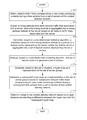
- a statistical measure of the timing attribute dataset is generated based on a pre-determined statistical algorithm.
- the timing attribute dataset may be analyzed using the pre-determined statistical algorithm to generate a statistical distribution, such as a histogram, a percentile diagram, etc.
- the statistical measure is a parameter of the statistical distribution.
- the timing attribute values for the sequence of pre-determined percentiles are included in a feature vector representing the corresponding server.
- the feature vector of the server includes the first timing attribute value, the second timing attribute value, the third timing attribute value, the fourth timing attribute value, the fifth timing attribute value, etc. as the vector components.
- the feature vector is aggregated into a set of feature vectors representing the servers of the CDN.
- each feature vector corresponds to a point in a hyperspace defined based on the cardinality of the feature vector. Accordingly, the set of feature vectors correspond to a large number of points in the hyperspace where each point represents one of the servers.
- the spatial distribution of the set of feature vectors in the hyperspace represents a characteristics of allocating user nodes to the servers in the CDN.
- Steps 212 and 213 are performed using the feature extractor ( 324 ) described in reference to FIG. 1 above.
- a subsequent set of points are determined, based on the pre-determined statistical algorithm and the pre-determined clustering algorithm, to form a subsequent hyper-map in the hyperspace representing the server groups of the CDN for the subsequent time window.
- Step 3 feature selection and data normalization: a feature selection driven by domain knowledge is applied to select the set M of measurements.
- M ⁇ RTT; TTL ⁇ .
- a statistical distribution is generated for each cache x in the snapshot X, and for each measure m in M.
- the feature vector P m (x) (p m,1 (x), p m,2 (x), . . . , p m,k (x)) containing k percentiles of m for cache x.
- Step 4 clustering: The density-based DBSCAN algorithm is used to group together the servers based on their multi-dimensional features. It has been chosen because it (i) is able to handle clusters of arbitrary shapes and sizes; (ii) is relatively resistant to noise and outliers; and (iii) does not require the specification of the number of desired clusters. DBSCAN requires two parameters: ⁇ and the minimum number of points required to form a dense region minPts.
- FIG. 3B shows a statistical diagram of feature vectors extracted from a snapshot (referred to as snapshot i) of network traffic flows captured from the CDN shown in FIG. 3A .
- the snapshot is an example of the snapshot A ( 330 a ) shown in FIG. 1 above.
- the snapshot includes flows associated with a large number of CDN servers.
- the flow group of each server has been analyzed to compile a percentile statistics of the RTT values.
- a feature vector e.g., feature vector ( 111 )
- each server is generated to include 5 elements, namely the RTT values at the 20th, 35th, 50th, 65th, and 90th percentiles in the percentile statistics of the server.
- the servers are clustered based on their feature vectors into five clusters, namely the feature vector cluster A ( 112 a ), feature vector cluster B ( 112 b ), feature vector cluster C ( 112 c ), feature vector cluster D ( 112 d ), and feature vector cluster E ( 112 e ).
- one or more of the feature vector cluster E- 1 ( 112 a ), feature vector cluster E- 2 ( 112 b ), feature vector cluster E- 3 ( 112 c ), feature vector cluster E- 4 ( 112 d ), and feature vector cluster E- 5 ( 112 e ) correspond to one or more of the edge-node 1 ( 104 a ), edge-node 2 ( 104 b ), and edge-node 3 ( 104 c ) shown in FIG. 3A .
- the feature vector cluster E- 1 ( 112 a ), feature vector cluster E- 2 ( 112 b ), and feature vector cluster E- 3 ( 112 c ) may correspond to the edge-node 1 ( 104 a ), edge-node 2 ( 104 b ), and edge-node 3 ( 104 c ), respectively.
- each feature vector is represented as a vertically placed sequence of five dots in the statistical diagram of FIG. 3B
- each feature vector may also be represented as a point in a 5-dimensional hyperspace.
- the collection of points representing the feature vectors of all servers of the CDN form a hyper-map in this 5-dimensional hyperspace, such as the hyper-map A ( 121 a ) shown in FIG. 3C .
- the hyper-map A ( 121 a ) is shown as a collection of points in a 2-dimensional projection of the 5-dimensional hyperspace.
- the hyper-map A ( 121 a ) is schematically represented by three groups of enclosed dots (i.e., points) representing the feature vector cluster E- 1 ( 112 a ), feature vector cluster E- 2 ( 112 b ), and feature vector cluster E- 3 ( 112 c ) shown in FIG. 3B .
- the hyper-map A ( 121 a ) may be converted into the hyper-map B ( 121 b ) (referred to as a constellation map) by using geometric centers or centroids to represent the clusters.
- 3B are represented by three solid blocks ⁇ circumflex over (x) ⁇ 1 , ⁇ circumflex over (x) ⁇ 2 , ⁇ circumflex over (x) ⁇ 3 in the hyper-map B ( 121 b ) that denote the three groups of enclosed dots in the hyper-map A ( 121 a ).
- two clusterings C(i) and C(i+1) are generated from two snapshots X(i) and X(i+1), one subsequent to another.
- X(i) and C(i) correspond to the hyper-map A ( 212 a ) and hyper-map ( 212 b ), respectively, shown in FIG. 3C .
- subsequent hyper-map A ( 122 a ) and subsequent hyper-map B ( 122 b ) are evolved versions of the hyper-map A ( 212 a ) and hyper-map ( 212 b ), respectively, that correspond to a subsequent snapshot (referred to as snapshot i+1) of the network traffic flows captured from the CDN shown in FIG. 3A
- i) points that were present in C(i) may not be present in C(i+1), and vice versa; ii) points clustered into the same cluster in C(i) are now belong to two or more clusters in C(i+1); and iii) the same points that form a cluster in C(i) still form the same cluster, but are placed in another region in the hyperspace in C(i+1).
- this corresponds to, e.g., i) popular caches at snapshot n that are not anymore being used at snapshot i+1, ii) some caches at snapshot i that were part of the noise are instead clustered at snapshot i+1, and iii) the path to caches suddenly changes at snapshot i+1, altering RTT.
- Constellation Distance is used.
- the constellation, astral distance, and constellation distance are mathematically defined below.
- each cluster is mapped into a centroid that summarizes the cluster.
- Each centroid in the hyperspace is analogous to a star in the Universe.
- the centroid, or geometric center, ⁇ circumflex over (x) ⁇ correspond to a feature vector's components ⁇ circumflex over (p) ⁇ m,i :
- the renorm( ) function eventually considers the renormalization of features that can be needed if point in C(i) and C(i+1) went through different standardization processes.
- renorm m ⁇ ( a ) a - Min m Max m - Min m ( 9 )
- the Constellation Distance ( 123 ) is illustrated by superposing the hyper-map B ( 121 b ) and the subsequent hyper-map B ( 122 b ) as shown in FIG. 3C .
- the Constellation Distance ( 123 ) includes the astral distances AD 1 ( 123 a ), AD 2 ( 123 b ), AD 3 ( 123 c ), and AD 4 ( 123 d ).
- the Constellation Distance ( 123 ) is mathematically computed as Eq. (11) below where (C(i), C(i+1)) are shown as ( ⁇ 1, ⁇ 2).
- CD ⁇ ( ?? ⁇ ⁇ 1 , ?? ⁇ ⁇ 2 ) ⁇ x ⁇ ⁇ ?? ⁇ ⁇ 1 ⁇ ⁇ AD ⁇ ( x ⁇ , ?? ⁇ ⁇ 2 ) + ⁇ x ⁇ ⁇ ?? ⁇ ⁇ 2 ⁇ ⁇ AD ⁇ ( x ⁇ , ?? ⁇ ⁇ 1 ) ( 11 )
- the example shown in FIGS. 3B and 3C is based on 5 pre-determined percentiles of the timing attribute RTT, the example may be varied to include different number (more than 5 or less than 5) of pre-determined percentiles of the timing attribute RTT. Further, the example may also be varied to include alternative timing attribute other than RTT, such as TTL or a combination of multiple timing attributes, such as (TTL, RTL), etc.
- a computer system ( 400 ) includes one or more processor(s) ( 402 ), associated memory ( 404 ) (e.g., random document access memory (RAM), cache memory, flash memory, etc.), a storage device ( 406 ) (e.g., a hard disk, an optical drive such as a compact disk drive or digital video disk (DVD) drive, a flash memory stick, etc.), and numerous other elements and functionalities typical of today's computers (not shown).
- the computer ( 400 ) may also include input means, such as a keyboard ( 408 ), a mouse ( 410 ), or a microphone (not shown).
- the computer ( 400 ) may include output means, such as a monitor ( 412 ) (e.g., a liquid crystal display (LCD), a plasma display, or cathode ray tube (CRT) monitor) for example to display various results such as the feature vectors, the principal components, the application space, the signatures, etc.
- the computer system ( 400 ) may be connected to a network ( 414 ) (e.g., a local area network (LAN), a wide area network (WAN) such as the Internet, or any other similar type of network) with wired and/or wireless segments via a network interface connection (not shown).
- LAN local area network
- WAN wide area network
- the Internet or any other similar type of network
- one or more elements of the aforementioned computer system ( 400 ) may be located at a remote location and connected to the other elements over a network.
- embodiments of the invention may be implemented on a distributed system having a plurality of nodes, where each portion of the invention (e.g., various modules of FIG. 1 ) may be located on a different node within the distributed system.
- the node corresponds to a computer system.
- the node may correspond to a processor with associated physical memory.
- the node may alternatively correspond to a processor with shared memory and/or resources.
- software instructions for performing embodiments of the invention may be stored on a computer readable medium such as a compact disc (CD), a diskette, a tape, a file, or any other computer readable storage device.
Landscapes
- Engineering & Computer Science (AREA)
- Computer Networks & Wireless Communication (AREA)
- Signal Processing (AREA)
- Environmental & Geological Engineering (AREA)
- General Physics & Mathematics (AREA)
- Algebra (AREA)
- Physics & Mathematics (AREA)
- Mathematical Analysis (AREA)
- Mathematical Optimization (AREA)
- Mathematical Physics (AREA)
- Probability & Statistics with Applications (AREA)
- Pure & Applied Mathematics (AREA)
- Information Transfer Between Computers (AREA)
Abstract
Description
minm=min(p m,i(x)∀xεX,∀i=1, . . . ,k (1)
maxm=max(p m,i(x)∀xεX,∀i=1, . . . ,k (2)
C={C j}=DBSCAN(
Minm=min(minm (n),minm (n+1)) (7)
Maxm=max(maxm (n),maxm (n+1)) (8)
Claims (20)
Priority Applications (1)
| Application Number | Priority Date | Filing Date | Title |
|---|---|---|---|
| US14/524,566 US9686173B1 (en) | 2014-10-27 | 2014-10-27 | Unsupervised methodology to unveil content delivery network structures |
Applications Claiming Priority (1)
| Application Number | Priority Date | Filing Date | Title |
|---|---|---|---|
| US14/524,566 US9686173B1 (en) | 2014-10-27 | 2014-10-27 | Unsupervised methodology to unveil content delivery network structures |
Publications (1)
| Publication Number | Publication Date |
|---|---|
| US9686173B1 true US9686173B1 (en) | 2017-06-20 |
Family
ID=59034093
Family Applications (1)
| Application Number | Title | Priority Date | Filing Date |
|---|---|---|---|
| US14/524,566 Active 2035-06-26 US9686173B1 (en) | 2014-10-27 | 2014-10-27 | Unsupervised methodology to unveil content delivery network structures |
Country Status (1)
| Country | Link |
|---|---|
| US (1) | US9686173B1 (en) |
Cited By (12)
| Publication number | Priority date | Publication date | Assignee | Title |
|---|---|---|---|---|
| US20170201530A1 (en) * | 2015-08-28 | 2017-07-13 | The Boeing Company | Cumulative trajectory of cyber reconnaissance indicators |
| US9946638B1 (en) * | 2016-03-30 | 2018-04-17 | Open Text Corporation | System and method for end to end performance response time measurement based on graphic recognition |
| CN109067427A (en) * | 2018-08-16 | 2018-12-21 | 北京科技大学 | A kind of frequency hop sequences prediction technique based on Optimization-type wavelet neural network |
| US20190014134A1 (en) * | 2017-07-07 | 2019-01-10 | Cisco Technology, Inc. | Private-learned ids |
| CN111651981A (en) * | 2019-02-19 | 2020-09-11 | 阿里巴巴集团控股有限公司 | Data auditing methods, devices and equipment |
| US11088991B2 (en) * | 2017-12-05 | 2021-08-10 | Cyber Security Cloud, Inc. | Firewall device to automatically select a rule required for each individual web server |
| US11134053B2 (en) | 2019-07-17 | 2021-09-28 | International Business Machines Corporation | Determining cache time to live in an object storage system |
| US11154211B2 (en) * | 2019-01-11 | 2021-10-26 | Nokomis, Inc. | Tissue damage assessment method and system |
| US20220078205A1 (en) * | 2020-09-10 | 2022-03-10 | Arbor Networks, Inc. | Automated selection of ddos countermeasures using statistical analysis |
| US20220329504A1 (en) * | 2020-06-22 | 2022-10-13 | Nanjing University Of Posts And Telecommunications | Network traffic classification method and system based on improved k-means algorithm |
| US20230007024A1 (en) * | 2021-07-05 | 2023-01-05 | Allot Ltd. | System, Device, and Method of Protecting Electronic Devices Against Fraudulent and Malicious Activities |
| US11956513B2 (en) | 2020-12-14 | 2024-04-09 | Exfo Inc. | Automated calibration of QoE assessment between content delivery network (CDN) entities |
-
2014
- 2014-10-27 US US14/524,566 patent/US9686173B1/en active Active
Non-Patent Citations (5)
| Title |
|---|
| Goldberg, M.K., et al., "Measuring similarity between sets of overlapping clusters". IEEE SocialCom 2010. |
| Kalnis, P., et al., "On discovering moving clusters in spatio-temporal data". In Advances in spatial and temporal databases, pp. 364-381, Springer 2005. |
| Munoz, G., et al., "Traffic anomaly detection using k-means clustering". GI/ITG Workshop MMBnet 2007. |
| Torres, R. D., et al., "Inferring undesirable behavior from p2p traffic analysis". ACM SIGMET-RICS 2009. |
| Yan, H., et al., "Argus: End to end service anomaly detection and localization from an isp's point of view". IEEE INFOCOM 2012. |
Cited By (19)
| Publication number | Priority date | Publication date | Assignee | Title |
|---|---|---|---|---|
| US20170201530A1 (en) * | 2015-08-28 | 2017-07-13 | The Boeing Company | Cumulative trajectory of cyber reconnaissance indicators |
| US11848940B2 (en) * | 2015-08-28 | 2023-12-19 | The Boeing Company | Cumulative trajectory of cyber reconnaissance indicators |
| US9946638B1 (en) * | 2016-03-30 | 2018-04-17 | Open Text Corporation | System and method for end to end performance response time measurement based on graphic recognition |
| US10162742B2 (en) | 2016-03-30 | 2018-12-25 | Open Text Corporation | System and method for end to end performance response time measurement based on graphic recognition |
| US20190014134A1 (en) * | 2017-07-07 | 2019-01-10 | Cisco Technology, Inc. | Private-learned ids |
| US10708284B2 (en) * | 2017-07-07 | 2020-07-07 | Cisco Technology, Inc. | Private-learned IDS |
| US11088991B2 (en) * | 2017-12-05 | 2021-08-10 | Cyber Security Cloud, Inc. | Firewall device to automatically select a rule required for each individual web server |
| CN109067427A (en) * | 2018-08-16 | 2018-12-21 | 北京科技大学 | A kind of frequency hop sequences prediction technique based on Optimization-type wavelet neural network |
| US11154211B2 (en) * | 2019-01-11 | 2021-10-26 | Nokomis, Inc. | Tissue damage assessment method and system |
| CN111651981B (en) * | 2019-02-19 | 2023-04-21 | 阿里巴巴集团控股有限公司 | Data auditing method, device and equipment |
| CN111651981A (en) * | 2019-02-19 | 2020-09-11 | 阿里巴巴集团控股有限公司 | Data auditing methods, devices and equipment |
| US11134053B2 (en) | 2019-07-17 | 2021-09-28 | International Business Machines Corporation | Determining cache time to live in an object storage system |
| US11570069B2 (en) * | 2020-06-22 | 2023-01-31 | Nanjing University Of Posts And Telecommunicatins | Network traffic classification method and system based on improved K-means algorithm |
| US20220329504A1 (en) * | 2020-06-22 | 2022-10-13 | Nanjing University Of Posts And Telecommunications | Network traffic classification method and system based on improved k-means algorithm |
| US11770405B2 (en) * | 2020-09-10 | 2023-09-26 | Arbor Networks, Inc. | Automated selection of DDoS countermeasures using statistical analysis |
| US20220078205A1 (en) * | 2020-09-10 | 2022-03-10 | Arbor Networks, Inc. | Automated selection of ddos countermeasures using statistical analysis |
| US11956513B2 (en) | 2020-12-14 | 2024-04-09 | Exfo Inc. | Automated calibration of QoE assessment between content delivery network (CDN) entities |
| US20230007024A1 (en) * | 2021-07-05 | 2023-01-05 | Allot Ltd. | System, Device, and Method of Protecting Electronic Devices Against Fraudulent and Malicious Activities |
| US11943245B2 (en) * | 2021-07-05 | 2024-03-26 | Allot Ltd. | System, device, and method of protecting electronic devices against fraudulent and malicious activities |
Similar Documents
| Publication | Publication Date | Title |
|---|---|---|
| US9088598B1 (en) | Systematic mining of associated server herds for uncovering malware and attack campaigns | |
| US11936764B1 (en) | Generating event streams based on application-layer events captured by remote capture agents | |
| Lima Filho et al. | Smart detection: an online approach for DoS/DDoS attack detection using machine learning | |
| US9473380B1 (en) | Automatic parsing of binary-based application protocols using network traffic | |
| US8676729B1 (en) | Network traffic classification using subspace clustering techniques | |
| USRE49126E1 (en) | Real-time adaptive processing of network data packets for analysis | |
| US10332005B1 (en) | System and method for extracting signatures from controlled execution of applications and using them on traffic traces | |
| Bujlow et al. | A method for classification of network traffic based on C5. 0 Machine Learning Algorithm | |
| US8843627B1 (en) | System and method for extracting signatures from seeded flow groups to classify network traffic | |
| CN115499230B (en) | Network attack detection method and device, equipment and storage medium | |
| US8813236B1 (en) | Detecting malicious endpoints using network connectivity and flow information | |
| US8180916B1 (en) | System and method for identifying network applications based on packet content signatures | |
| US8578024B1 (en) | Network application signatures for binary protocols | |
| US9813310B1 (en) | System and method for discriminating nature of communication traffic transmitted through network based on envelope characteristics | |
| US7623466B2 (en) | Symmetric connection detection | |
| US8694630B1 (en) | Self-learning classifier for internet traffic | |
| US9577898B1 (en) | Identifying IP traffic from multiple hosts behind a network address translation device | |
| CN109766695A (en) | A kind of network security situational awareness method and system based on fusion decision | |
| US9100326B1 (en) | Automatic parsing of text-based application protocols using network traffic data | |
| Manzoor et al. | How HTTP/2 is changing web traffic and how to detect it | |
| Brissaud et al. | Passive monitoring of https service use | |
| Giannakou et al. | Flowzilla: A methodology for detecting data transfer anomalies in research networks | |
| WO2025111648A1 (en) | Video streaming user platform identification | |
| Yoon et al. | Header signature maintenance for Internet traffic identification | |
| Gai et al. | Model and Algorithms for User Identification by Network Traffic |
Legal Events
| Date | Code | Title | Description |
|---|---|---|---|
| AS | Assignment |
Owner name: NARUS, INC., CALIFORNIA Free format text: ASSIGNMENT OF ASSIGNORS INTEREST;ASSIGNORS:GIORDANO, DANILO;TRAVERSO, STEFANO;MELLIA, MARCO;AND OTHERS;SIGNING DATES FROM 20140906 TO 20140912;REEL/FRAME:034049/0147 |
|
| FEPP | Fee payment procedure |
Free format text: PAYOR NUMBER ASSIGNED (ORIGINAL EVENT CODE: ASPN); ENTITY STATUS OF PATENT OWNER: LARGE ENTITY |
|
| STCF | Information on status: patent grant |
Free format text: PATENTED CASE |
|
| AS | Assignment |
Owner name: THE BOEING COMPANY, ILLINOIS Free format text: MERGER;ASSIGNOR:NARUS, INC.;REEL/FRAME:053583/0674 Effective date: 20100707 |
|
| MAFP | Maintenance fee payment |
Free format text: PAYMENT OF MAINTENANCE FEE, 4TH YEAR, LARGE ENTITY (ORIGINAL EVENT CODE: M1551); ENTITY STATUS OF PATENT OWNER: LARGE ENTITY Year of fee payment: 4 |
|
| MAFP | Maintenance fee payment |
Free format text: PAYMENT OF MAINTENANCE FEE, 8TH YEAR, LARGE ENTITY (ORIGINAL EVENT CODE: M1552); ENTITY STATUS OF PATENT OWNER: LARGE ENTITY Year of fee payment: 8 |