US9653803B2 - Radio frequency signal processing method and wireless communication device - Google Patents
Radio frequency signal processing method and wireless communication device Download PDFInfo
- Publication number
- US9653803B2 US9653803B2 US14/303,615 US201414303615A US9653803B2 US 9653803 B2 US9653803 B2 US 9653803B2 US 201414303615 A US201414303615 A US 201414303615A US 9653803 B2 US9653803 B2 US 9653803B2
- Authority
- US
- United States
- Prior art keywords
- signal
- directional antenna
- sending node
- omni
- wireless communication
- Prior art date
- Legal status (The legal status is an assumption and is not a legal conclusion. Google has not performed a legal analysis and makes no representation as to the accuracy of the status listed.)
- Active, expires
Links
Images




Classifications
-
- H—ELECTRICITY
- H01—ELECTRIC ELEMENTS
- H01Q—ANTENNAS, i.e. RADIO AERIALS
- H01Q3/00—Arrangements for changing or varying the orientation or the shape of the directional pattern of the waves radiated from an antenna or antenna system
- H01Q3/24—Arrangements for changing or varying the orientation or the shape of the directional pattern of the waves radiated from an antenna or antenna system varying the orientation by switching energy from one active radiating element to another, e.g. for beam switching
-
- H—ELECTRICITY
- H04—ELECTRIC COMMUNICATION TECHNIQUE
- H04B—TRANSMISSION
- H04B1/00—Details of transmission systems, not covered by a single one of groups H04B3/00 - H04B13/00; Details of transmission systems not characterised by the medium used for transmission
- H04B1/38—Transceivers, i.e. devices in which transmitter and receiver form a structural unit and in which at least one part is used for functions of transmitting and receiving
- H04B1/40—Circuits
-
- H—ELECTRICITY
- H04—ELECTRIC COMMUNICATION TECHNIQUE
- H04B—TRANSMISSION
- H04B7/00—Radio transmission systems, i.e. using radiation field
- H04B7/02—Diversity systems; Multi-antenna system, i.e. transmission or reception using multiple antennas
- H04B7/04—Diversity systems; Multi-antenna system, i.e. transmission or reception using multiple antennas using two or more spaced independent antennas
- H04B7/06—Diversity systems; Multi-antenna system, i.e. transmission or reception using multiple antennas using two or more spaced independent antennas at the transmitting station
- H04B7/0602—Diversity systems; Multi-antenna system, i.e. transmission or reception using multiple antennas using two or more spaced independent antennas at the transmitting station using antenna switching
-
- H—ELECTRICITY
- H04—ELECTRIC COMMUNICATION TECHNIQUE
- H04B—TRANSMISSION
- H04B7/00—Radio transmission systems, i.e. using radiation field
- H04B7/02—Diversity systems; Multi-antenna system, i.e. transmission or reception using multiple antennas
- H04B7/04—Diversity systems; Multi-antenna system, i.e. transmission or reception using multiple antennas using two or more spaced independent antennas
- H04B7/06—Diversity systems; Multi-antenna system, i.e. transmission or reception using multiple antennas using two or more spaced independent antennas at the transmitting station
- H04B7/0602—Diversity systems; Multi-antenna system, i.e. transmission or reception using multiple antennas using two or more spaced independent antennas at the transmitting station using antenna switching
- H04B7/0608—Antenna selection according to transmission parameters
- H04B7/061—Antenna selection according to transmission parameters using feedback from receiving side
-
- H—ELECTRICITY
- H04—ELECTRIC COMMUNICATION TECHNIQUE
- H04B—TRANSMISSION
- H04B7/00—Radio transmission systems, i.e. using radiation field
- H04B7/02—Diversity systems; Multi-antenna system, i.e. transmission or reception using multiple antennas
- H04B7/04—Diversity systems; Multi-antenna system, i.e. transmission or reception using multiple antennas using two or more spaced independent antennas
- H04B7/06—Diversity systems; Multi-antenna system, i.e. transmission or reception using multiple antennas using two or more spaced independent antennas at the transmitting station
- H04B7/0686—Hybrid systems, i.e. switching and simultaneous transmission
- H04B7/0695—Hybrid systems, i.e. switching and simultaneous transmission using beam selection
-
- H—ELECTRICITY
- H04—ELECTRIC COMMUNICATION TECHNIQUE
- H04B—TRANSMISSION
- H04B7/00—Radio transmission systems, i.e. using radiation field
- H04B7/02—Diversity systems; Multi-antenna system, i.e. transmission or reception using multiple antennas
- H04B7/04—Diversity systems; Multi-antenna system, i.e. transmission or reception using multiple antennas using two or more spaced independent antennas
- H04B7/08—Diversity systems; Multi-antenna system, i.e. transmission or reception using multiple antennas using two or more spaced independent antennas at the receiving station
- H04B7/0802—Diversity systems; Multi-antenna system, i.e. transmission or reception using multiple antennas using two or more spaced independent antennas at the receiving station using antenna selection
- H04B7/0805—Diversity systems; Multi-antenna system, i.e. transmission or reception using multiple antennas using two or more spaced independent antennas at the receiving station using antenna selection with single receiver and antenna switching
- H04B7/0814—Diversity systems; Multi-antenna system, i.e. transmission or reception using multiple antennas using two or more spaced independent antennas at the receiving station using antenna selection with single receiver and antenna switching based on current reception conditions, e.g. switching to different antenna when signal level is below threshold
-
- H—ELECTRICITY
- H04—ELECTRIC COMMUNICATION TECHNIQUE
- H04B—TRANSMISSION
- H04B7/00—Radio transmission systems, i.e. using radiation field
- H04B7/02—Diversity systems; Multi-antenna system, i.e. transmission or reception using multiple antennas
- H04B7/04—Diversity systems; Multi-antenna system, i.e. transmission or reception using multiple antennas using two or more spaced independent antennas
- H04B7/08—Diversity systems; Multi-antenna system, i.e. transmission or reception using multiple antennas using two or more spaced independent antennas at the receiving station
- H04B7/0868—Hybrid systems, i.e. switching and combining
- H04B7/088—Hybrid systems, i.e. switching and combining using beam selection
Definitions
- the present invention relates to a radio frequency signal processing method and a wireless communication device, and more particularly, to a radio frequency signal processing method and a wireless communication device that switch between an omni-directional antenna and a directional antenna to improve the quality of reception.
- Electronic products with wireless communication functionalities such as laptops, personal digital assistants (PDAs), wireless base stations, mobile phones, smart meters and USB dongles, utilize antennas to emit and receive radio waves for transmitting or exchanging radio signals, so as to access wireless networks.
- the performance of transmission tends to be affected by ambient variations.
- performance of a transceiver of a wireless communication system may be degraded (e.g. having reduced signal-to-noise ratio (SNR), increased packet error ratio (PER), low transmission rate, phenomenon of packet retransmission) by serious channel effects, by interference induced by other wireless communication systems or electronic devices, by shielding effects induced by surrounding buildings, or by directions or positions of antennas of the wireless communication system. Therefore, it is a common goal in the industry to effectively improve the quality of reception in the wireless communication system.
- An embodiment of the invention provides a radio frequency signal processing method, adapted to a wireless communication device including an omni-directional antenna and a plurality of directional antennas.
- the radio frequency signal processing method includes receiving a request signal from a first sending node with the omni-directional antenna, and sending a confirming signal to the first sending node with the omni-directional antenna, wherein the request signal is utilized to request the wireless communication device to receive a data signal; receiving the data signal from the first ending node with a first directional antenna of the plurality of directional antennas according to the request signal and a result of a training packet process; and transmitting an acknowledge signal to the first sending node with the first directional antenna after the data signal is completely received, and receiving follow-up signals with the omni-directional antenna.
- the radio frequency signal processing method includes receiving a request signal from a first sending node with the omni-directional antenna, and sending a confirming signal to the first sending node with the omni-directional antenna, wherein the request signal is utilized to request the wireless communication device to receive a data signal; receiving the data signal from the first ending node with a first directional antenna of the plurality of directional antennas according to the request signal and a result of a training packet process; and transmitting an acknowledge signal to the first sending node with the first directional antenna after the data signal is completely received, and receiving follow-up signals with the omni-directional antenna.
- FIG. 1 is a schematic diagram illustrating a wireless communication device according to an embodiment of the present invention.
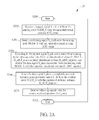
- FIG. 2A is a flow schematic diagram illustrating a radio frequency signal processing method according to an embodiment of the present invention.
- FIG. 2B is a sequence schematic diagram illustrating the radio frequency signal processing method.
- FIG. 3A is a flow schematic diagram illustrating a training packet process according to an embodiment of the present invention.
- FIG. 3B is a sequence schematic diagram illustrating the training packet process.
- FIG. 4A is a flow schematic diagram illustrating a radio frequency signal processing method according to an embodiment of the present invention.
- FIG. 4B is a sequence schematic diagram illustrating the radio frequency signal processing method.
- Omni-directional antennas are designed to send and receive signals in all horizontal directions from the antennas, while a directional antenna is designed to focus signals in a single direction.
- both an omni-directional antenna and directional antennas are disposed in a wireless communication device.
- FIG. 1 is a schematic diagram illustrating a wireless communication device 10 according to an embodiment of the present invention.
- the wireless communication device 10 comprises an omni-directional antenna ANT_omni, directional antennas D_ANT_ 1 -D_ANT_n and a radio signal processing unit 110 .
- the radio signal processing unit 110 selects one from the omni-directional antenna ANT_omni and the directional antennas D_ANT_ 1 -D_ANT_n to receive the data signal S_data according to a result of a training packet process in order to ensure signal quality (or the quality of reception).
- an ordinary directional antennas has many advantages in a corresponding directional radiation pattern, such as higher gain for desired signals, longer transmission distance, better received signal strength indicator (RSSI), lower packet error rate (PER), lower side lobe for interference, lower noise floor, and less power consumption under the same equivalent isotropically radiated power (EIRP) requirements. Therefore, utilizing a suitable directional antenna to receive the data signal S_data can decrease interference and improve signal quality and data rate.
- RSSI received signal strength indicator
- PER packet error rate
- EIRP isotropically radiated power
- FIG. 2A is a flow schematic diagram illustrating a radio frequency signal processing method 20 according to an embodiment of the present invention.
- FIG. 2B is a sequence schematic diagram illustrating the radio frequency signal processing method 20 .
- the radio frequency signal processing method 20 can be executed by the radio signal processing unit 110 , and includes steps as follows.
- Step S 200 Start.
- Step S 202 Receive a request signal S_ask sent from the sending node NODE_S with the omni-directional antenna ANT_omni.
- Step S 204 Send a confirming signal S_confirm to the sending node NODE_S with the omni-directional antenna ANT_omni.
- Step S 206 According to the request signal S_ask and a result of the training packet process, select one from the directional antennas D_ANT_ 1 -D_ANT_n as a superior directional antenna D_ANT_superior, and receive the data signal S_data transmitted from the sending node NODE_S with the superior directional antenna D_ANT_superior.
- Step S 208 When the data signal S_data is completely received, transmit an acknowledge signal S_ACK to the sending node NODE_S with the superior directional antenna D_ANT_superior.
- Step S 210 Receive follow-up signals with the omni-directional antenna ANT_omni.
- Step S 212 End.
- the sending node NODE_S when the sending node NODE_S tries to transmit the data signal S_data to the wireless communication device 10 , the sending node NODE_S first sends the request signal S_ask to request the wireless communication device 10 to receive the data signal S_data. Since the wireless communication device 10 must be able to pick up signals sent from other sending nodes as well, the omni-directional antenna ANT_omni, which covers a broader area, is chosen for this situation, such that wireless signals from all directions are covered equally.
- the radio signal processing unit 110 utilizes the omni-directional antenna ANT_omni to respond to the sending node NODE_S (with the confirming signal S_confirm) in order to instruct the sending node NODE_S to start transmitting the data signal S_data.
- the radio signal processing unit 110 can determine which one of the directional antennas D_ANT_ 1 -D_ANT_n is best suited for the sending node NODE_S and then select the one from the directional antennas D_ANT_ 1 -D_ANT_n as a superior directional antenna D_ANT_superior; accordingly, the data signal S_data transmitted from the sending node NODE_S can be received by the superior directional antenna D_ANT_superior to decrease interference and improve signal quality and data rate.
- the radio signal processing unit 110 transmits the acknowledge signal S_ACK to the sending node NODE_S with the superior directional antenna D_ANT_superior to inform the sending node NODE_S about the end of receiving data. Finally, the radio signal processing unit 110 switches over to the omni-directional antenna ANT_omni again to pick up other signals.
- the radio signal processing unit 110 utilizes a suitable directional antenna to receive the data signal S_data from the sending node NODE_S to ensure signal quality and data rate but decrease interference.
- the wireless communication device 10 unless the wireless communication device 10 is receiving the data signal S_data, the wireless communication device 10 normally switches over to the omni-directional antenna ANT_omni, such that signals from any direction would be caught.
- the data signal S_data may be signals of any type, and the total amount of the data signal S_data is greater than the total amount of the request signal S_ask, the total amount of the confirming signal S_confirm and the total amount of the acknowledge signal S_ACK—that is, the total number of bits of the data signal S_data is larger.
- the data signal S_data may be important data or have priority over other signals—but not limited thereto—and thus transmission quality and data rate of the data signal S_data are more strictly required.
- the radio signal processing unit 110 selects one from the directional antennas D_ANT_ 1 -D_ANT_n as a superior directional antenna D_ANT_superior according to a result of the training packet process, and the training packet process is utilized to determine which of the directional antennas D_ANT_ 1 -D_ANT_n corresponding to the sending node NODE_S has the best efficiency and select it as the superior directional antenna D_ANT_superior.
- the radio signal processing unit 110 may perform the training packet process when the sending node NODE_S and the wireless communication device 10 establish a connection; however, the present invention is not limited to this, and, for example, the radio signal processing unit 110 may perform the training packet process periodically or when a movement of the wireless communication device 10 occurs.
- the training packet process may be implemented in many ways.
- FIG. 3A is a flow schematic diagram illustrating a training packet process 30 according to an embodiment of the present invention.
- FIG. 3B is a sequence schematic diagram illustrating the training packet process 30 .
- the training packet process 30 can be executed by the radio signal processing unit 110 to determine the superior directional antenna D_ANT_superior corresponding to the sending node NODE_S.
- the training packet process 30 includes steps as follows.
- Step S 300 Start.
- Step S 302 Send signals S_detect_ 1 -S_detect_n to the sending node NODE_S respectively with the directional antennas D_ANT_ 1 -D_ANT_n, and receive signals S_quality_ 1 -S_quality_n respectively from the sending node NODE_S.
- Step S 304 Calculate packet error rates PER_ 1 -PER_n and received signal strength indicators RSSI_ 1 -RSSI_n of the directional antennas D_ANT_ 1 -D_ANT_n respectively according to the signals S_quality_ 1 -S_quality_n in order to compare receiving ability of the directional antennas D_ANT_ 1 -D_ANT_n.
- Step S 306 Generate a result RST according to the packet error rates PER_ 1 -PER_n and the received signal strength indicators RSSI_ 1 -RSSI_n in order to select a directional antenna with the best receiving ability corresponding to the sending node NODE_S among the directional antennas D_ANT_ 1 -D_ANT_n as the superior directional antenna D_ANT_superior.
- Step S 308 End.
- the radio signal processing unit 110 sends the signals S_detect_ 1 -S_detect_n to the sending node NODE_S respectively with the directional antennas D_ANT_ 1 -D_ANT_n, and picks up the signals S_quality_ 1 -S_quality_n respectively from the sending node NODE_S.
- the radio signal processing unit 110 measures the packet error rates PER_ 1 -PER_n of the directional antennas D_ANT_ 1 -D_ANT_n and calculates the received signal strength indicators RSSI_ 1 -RSSI_n of the directional antennas D_ANT_ 1 -D_ANT_n respectively according to (the quality of) the signals S_quality_ 1 -S_quality_n so as to compare receiving ability of the directional antennas D_ANT_ 1 -D_ANT_n (i.e., antenna ability of receiving signals).
- the directional antenna D_ANT_ 1 sends the signal S_detect_ 1 to the sending node NODE_S and then receives the signal S_quality_ 1 from the sending node NODES; on the other hand, the radio signal processing unit 110 calculates the packet error rate and the received signal strength indicator of the directional antenna D_ANT_ 1 .
- the directional antenna D_ANT_ 2 sends the signal S_detect_ 2 to the sending node NODE_S and then receives the signal S_quality_ 2 from the sending node NODES; on the other hand, the radio signal processing unit 110 calculates the packet error rate and the received signal strength indicator of the directional antenna D_ANT_ 2 .
- the directional antenna D_ANT_n at last receives the signal S_quality_n from the sending node NODE_S, and the radio signal processing unit 110 calculates the packet error rate and the received signal strength indicator of the directional antenna D_ANT_n. Accordingly, the radio signal processing unit 110 can determine which of the directional antennas D_ANT_ 1 -D_ANT_n corresponding to the sending node NODE_S has the best receiving ability and select it as the superior directional antenna D_ANT_superior. Therefore, the radio signal processing unit 110 can use the superior directional antenna D_ANT_superior to receive the data signal S_data output from the sending node NODE_S to decrease interference and improve signal quality and data rate.
- the radio signal processing unit 110 can select a directional antenna with the best receiving ability corresponding to the sending node NODE_S among the directional antennas D_ANT_ 1 -D_ANT_n as the superior directional antenna D_ANT_superior, and utilize the directional antenna D_ANT_superior to receive the data signal S_data sent from the sending node NODE_S.
- the packet error rate and the received signal strength indicator are not the only way to determine receiving ability, because other approaches may be feasible as well according to different systems and not limited herein.
- the wireless communication device 10 shown in FIG. 1 the radio frequency signal processing method 20 shown in FIG. 2 or the training packet process 30 shown in FIG. 3 are exemplary embodiments of the invention, and those skilled in the art can make alternations and modifications accordingly.
- the radio signal processing unit 110 may comprise a switch or a multiplexer in order to switch between the omni-directional antenna ANT_omni and the directional antennas D_ANT_ 1 -D_ANT_n.
- the radio signal processing unit 110 may use the omni-directional antenna ANT_omni to receive the data signal S_data sent from the sending node NODE_S, which is still within the scope of the present invention.
- FIG. 4A is a flow schematic diagram illustrating a radio frequency signal processing method 40 according to an embodiment of the present invention.
- FIG. 4B is a sequence schematic diagram illustrating the radio frequency signal processing method 40 .
- the radio frequency signal processing method 40 can be executed by the radio signal processing unit 110 , and includes steps as follows.
- Step S 400 Start.
- Step S 402 Receive a request signal S_ask sent from the sending node NODE_S with the omni-directional antenna ANT_omni.
- Step S 404 Send a confirming signal S_confirm to the sending node NODE_S with the omni-directional antenna ANT_omni.
- Step S 406 Transmit an indication signal S_indicate to the sending node NODE_ 1 -NODE_m with the omni-directional antenna ANT_omni respectively in order to instruct the sending node NODE_ 1 -NODE_m not to send signals to the wireless communication device 10 during a period of time.
- Step S 408 According to the request signal S_ask and a result of the training packet process, select one from the directional antennas D_ANT_ 1 -D_ANT_n as a superior directional antenna D_ANT_superior, and receive the data signal S_data transmitted from the sending node NODE_S with the superior directional antenna D_ANT_superior.
- Step S 410 When the data signal S_data is completely received, transmits an acknowledge signal S_ACK to the sending node NODE_S with the superior directional antenna D_ANT_superior.
- Step S 412 Receive follow-up signals with the omni-directional antenna ANT_omni.
- Step S 414 End.
- the radio signal processing unit 110 after catching the request signal S_ask from the sending node NODE_S with the omni-directional antenna ANT_omni, the radio signal processing unit 110 , according to the radio frequency signal processing method 40 , not only sends the confirming signal S_confirm to instruct the sending node NODE_S to start transmitting the data signal S_data, but also respectively transmits (or broadcasts) the indication signal S_indicate to other sending nodes NODE_ 1 -NODE_m in order to prevent the sending nodes NODE_ 1 -NODE_m from sending signals to the wireless communication device 10 , which may cause signal collision, when the radio signal processing unit 110 is receiving the data signal S_data.
- the superior directional antenna D_ANT_superior can be the nearest antenna to the sending node NODE_S.
- a wireless channel may be blocked or obstructed by various obstacles, and the multipath effect arises from reflections and scattering by buildings, hills, leaves and so on.
- the effects of multipath include constructive and destructive interference and phase shifting of the signal, thereby limiting the capacity of such channel.
- the superior directional antenna D_ANT_superior may not have the best received signal strength indicator and the best packet error rate at the same time due to non-ideal factors.
- the radio signal processing unit 110 may determine which of the directional antennas D_ANT_ 1 -D_ANT_n has the best receiving ability according to a weighting W of the received signal strength indicator and the packet error rate so as to choose the superior directional antenna D_ANT_superior.
- relative motion between the sending node NODE_S and the wireless communication device 10 may cause characteristics of the channel to vary with time and thus increase uncertainty of signal quality. Therefore, a movement of the wireless communication device 10 maybe a factor to trigger the training packet process 30 .
- the radio signal processing unit 110 determines which directional antenna has a best efficiency for the sending node NODE_S among the directional antennas D_ANT_ 1 -D_ANT_n and selects it as the superior directional antenna D_ANT_superior.
- the radio signal processing unit 110 may switch over to a new superior directional antenna in order to ensure the quality of reception.
- the training packet process 30 may be triggered periodically (such as every predetermined time interval), so that the radio signal processing unit 110 can determine which of the directional antennas D_ANT_ 1 -D_ANT_n corresponding to the sending node NODE_S has the best receiving ability and select it as the superior directional antenna D_ANT_superior.
- the radio signal processing unit 110 may switch over to a new superior directional antenna in order to ensure the quality of reception.
- the present invention utilizes an omni-directional antenna in order to catch signals from all directions and timely switch over to an appropriate directional antenna so as to receive data signals from a sending node. Accordingly, signal quality is improved, data rate increases and interference rarely occurs.
Landscapes
- Engineering & Computer Science (AREA)
- Computer Networks & Wireless Communication (AREA)
- Signal Processing (AREA)
- Mobile Radio Communication Systems (AREA)
- Radio Transmission System (AREA)
Abstract
Description
Claims (8)
Applications Claiming Priority (3)
| Application Number | Priority Date | Filing Date | Title |
|---|---|---|---|
| TW102148802A | 2013-12-27 | ||
| TW102148802A TWI540851B (en) | 2013-12-27 | 2013-12-27 | RF signal processing method and wireless communication device |
| TW102148802 | 2013-12-27 |
Publications (2)
| Publication Number | Publication Date |
|---|---|
| US20150188596A1 US20150188596A1 (en) | 2015-07-02 |
| US9653803B2 true US9653803B2 (en) | 2017-05-16 |
Family
ID=53483105
Family Applications (1)
| Application Number | Title | Priority Date | Filing Date |
|---|---|---|---|
| US14/303,615 Active 2035-10-17 US9653803B2 (en) | 2013-12-27 | 2014-06-13 | Radio frequency signal processing method and wireless communication device |
Country Status (2)
| Country | Link |
|---|---|
| US (1) | US9653803B2 (en) |
| TW (1) | TWI540851B (en) |
Families Citing this family (1)
| Publication number | Priority date | Publication date | Assignee | Title |
|---|---|---|---|---|
| US10321487B2 (en) | 2016-03-10 | 2019-06-11 | Qualcomm Incorporated | Technique for increasing throughput for channel bonding |
Citations (9)
| Publication number | Priority date | Publication date | Assignee | Title |
|---|---|---|---|---|
| US20040242273A1 (en) * | 2003-05-30 | 2004-12-02 | Corbett Christopher J. | Using directional antennas to enhance throughput in wireless networks |
| US20050037822A1 (en) * | 2003-06-19 | 2005-02-17 | Ipr Licensing, Inc. | Antenna steering method and apparatus for an 802.11 station |
| US20050075141A1 (en) * | 2003-06-19 | 2005-04-07 | Ipr Licensing, Inc. | Antenna steering for an access point based upon probe signals |
| US20050088995A1 (en) * | 2003-10-14 | 2005-04-28 | Intel Corporation | Low bit error rate antenna switch for wireless communications |
| US20050285803A1 (en) * | 2004-06-04 | 2005-12-29 | Interdigital Technology Corporation | Access point operating with a smart antenna in a WLAN and associated methods |
| US20070011554A1 (en) | 2005-06-27 | 2007-01-11 | Intel Corporation | Block acknowledgement request apparatus, systems, and methods |
| US20070147312A1 (en) | 2005-12-27 | 2007-06-28 | Nir Shapira | Device, system and method of uplink/downlink communication in wireless network |
| EP2148536A1 (en) | 2006-06-06 | 2010-01-27 | Qualcomm Incorporated | Apparatus and method for wireless communication using directional and omni-directional antennas |
| TW201212382A (en) | 2010-09-15 | 2012-03-16 | Ralink Technology Corp | Smart antenna system |
-
2013
- 2013-12-27 TW TW102148802A patent/TWI540851B/en active
-
2014
- 2014-06-13 US US14/303,615 patent/US9653803B2/en active Active
Patent Citations (12)
| Publication number | Priority date | Publication date | Assignee | Title |
|---|---|---|---|---|
| US20040242273A1 (en) * | 2003-05-30 | 2004-12-02 | Corbett Christopher J. | Using directional antennas to enhance throughput in wireless networks |
| CN1574698A (en) | 2003-05-30 | 2005-02-02 | 微软公司 | Using directional antennas to enhance throughput in wireless networks |
| US20050037822A1 (en) * | 2003-06-19 | 2005-02-17 | Ipr Licensing, Inc. | Antenna steering method and apparatus for an 802.11 station |
| US20050075141A1 (en) * | 2003-06-19 | 2005-04-07 | Ipr Licensing, Inc. | Antenna steering for an access point based upon probe signals |
| US20050088995A1 (en) * | 2003-10-14 | 2005-04-28 | Intel Corporation | Low bit error rate antenna switch for wireless communications |
| TWI261992B (en) | 2003-10-14 | 2006-09-11 | Intel Corp | A method for use in a wireless communication system, a wireless communication apparatus, and a wireless communication system |
| US20050285803A1 (en) * | 2004-06-04 | 2005-12-29 | Interdigital Technology Corporation | Access point operating with a smart antenna in a WLAN and associated methods |
| US20070011554A1 (en) | 2005-06-27 | 2007-01-11 | Intel Corporation | Block acknowledgement request apparatus, systems, and methods |
| US20070147312A1 (en) | 2005-12-27 | 2007-06-28 | Nir Shapira | Device, system and method of uplink/downlink communication in wireless network |
| EP2148536A1 (en) | 2006-06-06 | 2010-01-27 | Qualcomm Incorporated | Apparatus and method for wireless communication using directional and omni-directional antennas |
| US8175532B2 (en) * | 2006-06-06 | 2012-05-08 | Qualcomm Incorporated | Apparatus and method for wireless communication via at least one of directional and omni-direction antennas |
| TW201212382A (en) | 2010-09-15 | 2012-03-16 | Ralink Technology Corp | Smart antenna system |
Also Published As
| Publication number | Publication date |
|---|---|
| US20150188596A1 (en) | 2015-07-02 |
| TWI540851B (en) | 2016-07-01 |
| TW201526557A (en) | 2015-07-01 |
Similar Documents
| Publication | Publication Date | Title |
|---|---|---|
| US8674878B2 (en) | Smart antenna system | |
| US8116694B2 (en) | System for facilitating beam training | |
| KR102140298B1 (en) | Method and apparatus for transmitting beam information in wireless communication system | |
| CN105577291B (en) | A method and system for idle channel detection in a wireless communication system | |
| US10805948B2 (en) | Method and device for sending and receiving scheduling data in a wireless communication system using beamforming | |
| US20140198681A1 (en) | Method and device for measuring signal in beam forming system | |
| EP3394990B1 (en) | Operating a wireless communication system | |
| US9813131B2 (en) | Method and system for beam alignment on directional wireless links | |
| US10681674B2 (en) | Beam training for a radio transceiver device | |
| TWI572088B (en) | Wireless communication apparatus and controlling method thereof | |
| US20180159607A1 (en) | Rf beamforming control in a communication system | |
| CN104170273B (en) | Method and device for controlling wireless connection in MIMO system using multi-sector directional antenna | |
| EP3533151B1 (en) | Polarization handling of beam-formed signals | |
| US20130265196A1 (en) | Methods and systems useful in connection with multipath | |
| US8886237B2 (en) | Smart antenna with multiple round selection | |
| US20200229003A1 (en) | Access Point Device and Communication Method | |
| US20160099499A1 (en) | Beamforming Method and Apparatus for Directional Signal Transmission | |
| US9653803B2 (en) | Radio frequency signal processing method and wireless communication device | |
| EP2859723B1 (en) | Mimo signal transmission and reception device and system comprising at least one such device | |
| CN104779982B (en) | Radio frequency signal processing method and wireless communication device | |
| CN121312086A (en) | User equipment antenna diversity reporting in lower layer measurements | |
| KR20190094625A (en) | Apparatus and Methods for Pole Switching algorithm in Opportunistic MAC based Full Duplex Radios in Cognitive System According to Location of a User | |
| KR20110067319A (en) | Handoff Device and Method Using Effective Signal-to-Noise Ratio in Mobile Communication System |
Legal Events
| Date | Code | Title | Description |
|---|---|---|---|
| AS | Assignment |
Owner name: WISTRON NEWEB CORPORATION, TAIWAN Free format text: ASSIGNMENT OF ASSIGNORS INTEREST;ASSIGNORS:CHEN, HOREN;WEI, YA-PING;CHENG, CHIEH-WEN;AND OTHERS;REEL/FRAME:033094/0430 Effective date: 20131218 |
|
| STCF | Information on status: patent grant |
Free format text: PATENTED CASE |
|
| MAFP | Maintenance fee payment |
Free format text: PAYMENT OF MAINTENANCE FEE, 4TH YEAR, LARGE ENTITY (ORIGINAL EVENT CODE: M1551); ENTITY STATUS OF PATENT OWNER: LARGE ENTITY Year of fee payment: 4 |
|
| MAFP | Maintenance fee payment |
Free format text: PAYMENT OF MAINTENANCE FEE, 8TH YEAR, LARGE ENTITY (ORIGINAL EVENT CODE: M1552); ENTITY STATUS OF PATENT OWNER: LARGE ENTITY Year of fee payment: 8 |
|
| AS | Assignment |
Owner name: WNC CORPORATION, TAIWAN Free format text: CHANGE OF NAME;ASSIGNOR:WISTRON NEWEB CORPORATION;REEL/FRAME:072255/0226 Effective date: 20250521 |