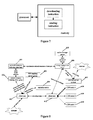
US9648135B2 - Method, device, client end and system for network resource management - Google Patents

Method, device, client end and system for network resource management Download PDF

Info

Publication number
US9648135B2
US9648135B2 US14/621,553 US201514621553A US9648135B2 US 9648135 B2 US9648135 B2 US 9648135B2 US 201514621553 A US201514621553 A US 201514621553A US 9648135 B2 US9648135 B2 US 9648135B2
Authority
US
United States
Prior art keywords
data source
server
data
category
belongs
Prior art date
Legal status (The legal status is an assumption and is not a legal conclusion. Google has not performed a legal analysis and makes no representation as to the accuracy of the status listed.)
Active, expires
Application number
US14/621,553
Other versions
US20150160996A1 (en
Inventor
Gang Liu
Current Assignee (The listed assignees may be inaccurate. Google has not performed a legal analysis and makes no representation or warranty as to the accuracy of the list.)
Tencent Technology Shenzhen Co Ltd
Original Assignee
Tencent Technology Shenzhen Co Ltd
Priority date (The priority date is an assumption and is not a legal conclusion. Google has not performed a legal analysis and makes no representation as to the accuracy of the date listed.)
Filing date
Publication date
Application filed by Tencent Technology Shenzhen Co Ltd filed Critical Tencent Technology Shenzhen Co Ltd
Assigned to TENCENT TECHNOLOGY (SHENZHEN) COMPANY LIMITED reassignment TENCENT TECHNOLOGY (SHENZHEN) COMPANY LIMITED ASSIGNMENT OF ASSIGNORS INTEREST (SEE DOCUMENT FOR DETAILS). Assignors: LIU, GANG
Publication of US20150160996A1 publication Critical patent/US20150160996A1/en
Application granted granted Critical
Publication of US9648135B2 publication Critical patent/US9648135B2/en
Active legal-status Critical Current
Adjusted expiration legal-status Critical

Links

Images

Classifications

    • HELECTRICITY
    • H04ELECTRIC COMMUNICATION TECHNIQUE
    • H04LTRANSMISSION OF DIGITAL INFORMATION, e.g. TELEGRAPHIC COMMUNICATION
    • H04L67/00Network arrangements or protocols for supporting network services or applications
    • H04L67/34Network arrangements or protocols for supporting network services or applications involving the movement of software or configuration parameters 
    • GPHYSICS
    • G06COMPUTING OR CALCULATING; COUNTING
    • G06FELECTRIC DIGITAL DATA PROCESSING
    • G06F11/00Error detection; Error correction; Monitoring
    • G06F11/07Responding to the occurrence of a fault, e.g. fault tolerance
    • G06F11/0703Error or fault processing not based on redundancy, i.e. by taking additional measures to deal with the error or fault not making use of redundancy in operation, in hardware, or in data representation
    • G06F11/0706Error or fault processing not based on redundancy, i.e. by taking additional measures to deal with the error or fault not making use of redundancy in operation, in hardware, or in data representation the processing taking place on a specific hardware platform or in a specific software environment
    • G06F11/0709Error or fault processing not based on redundancy, i.e. by taking additional measures to deal with the error or fault not making use of redundancy in operation, in hardware, or in data representation the processing taking place on a specific hardware platform or in a specific software environment in a distributed system consisting of a plurality of standalone computer nodes, e.g. clusters, client-server systems

Definitions

  • the present invention relates to network technologies, and more particularly, to a method, a device, a client end and a system for network resource management.
  • a technology of peer to server and peer utilizes a third-party server and a data source of a peer-to-peer (P2P) network, so that a download process does not merely rely on a source server of internet service provider (ISP). Data may be transferred either between various terminals in the network or between a terminal and a server. Compared with a traditional download method of peer to server (P2S) or P2P and so on, download stability and download speeds of P2SP has been greatly improved.
  • each data fragment needs to be validated by fragment validation information provided by the source server.
  • client end only selects to perform the download from the source server, and gives up multisource downloading from other nodes.
  • the data source provided by the source server may go wrong.
  • CDN content delivery network
  • the error report includes a data source of a data fragment that does not pass the validation of the client;
  • a first receiving unit configured to receive an error report from a client end, wherein the error report comprises a data source of a data fragment that does not pass the validation of the client;
  • an obtaining unit configured to obtain a category of the data source
  • a first shielding unit configured to shield the data source when the data source belongs to a first category
  • an instructing unit configured to instruct the data source to update network resources to which the data fragment belongs, when the data source belongs to a second category.
  • a downloading unit configured to download a data fragment from a data source instructed by a server end
  • a sending unit configured to send an error report to the server end when the data fragment does not pass the validation, wherein the error report comprises a data source, to enable the server end to obtain a category of the data source according to the data source comprised in the error report, to shield the data source or indicate the data source to perform an update.
  • FIG. 1 is an architecture block diagram of a system for network resource management provided by an embodiment of the present invention
  • FIG. 2 is a realization flowchart of a server end of a method for network resource management provided by an embodiment of the present invention
  • FIG. 3 is a flowchart for realizing step S 204 of a method for network resource management at a server end provided by an embodiment of the present invention
  • FIG. 4 is a realization flowchart of a client end of a method for network resource management provided by an embodiment of the present invention
  • FIG. 5 is a structure diagram of a device for network resource management provided by an embodiment of the present invention.
  • FIG. 6 is a structure diagram of a server provided by an embodiment of the present invention.
  • FIG. 7 is a structure diagram of a client end provided by an embodiment of the present invention.
  • FIG. 8 is a schematic diagram illustrating the principle of a method for network resource management provided by an embodiment of the present invention.
  • a server end by receiving an error report that is reported by a client end during a process of P2SP downloading, a server end determines which category of a data source a data fragment belongs to, whose validation result is an error, to further shield the data source or instruct the data source to perform an update, which avoids the situation that the client end is unable to download a complete file due to an error of original source of network resources, and improves the success rate of downloading.
  • FIG. 1 illustrates an architecture block diagram of a system for network resource management provided by an embodiment of the present invention. For illustrative purposes, only relevant parts of the embodiment are shown.
  • the system includes server end 11 and at least one client end 12 that are communicated via a network, and the server end 11 may be a server system that consists of multiple different function servers.
  • a file is divided into several data fragments with a predetermined size, and the data fragments of the file need not be downloaded in order, so a user may download different data fragments of same network resources from multiple physic nodes at the same time.
  • a uniform resource locator (URL) of the file is obtained from a relevant resource website first; related information, such as multiple data sources of the file and fragment validation information of each data fragment, is obtained from the server end 11 by the URL; and at the beginning, the different data fragments are downloaded from multiple data sources provided by the server end 11 .
  • the client end 1 will share the downloaded fragments with other client end by the server end 11 , so that the other client end may download corresponding data fragments from the client 1 .
  • one of important functions of the server end 11 is network resource management, and an original isolated server, a mirror resource and a P2P resource are effectively combined together, enabling each client end 12 to obtain correct data source information and finish multisource downloading.
  • FIG. 2 illustrates a realization flowchart of a method for network resource management provided by an embodiment of the present invention.
  • an executive body of the flow is the server end 11 shown in FIG. 1 . Details are as below:
  • step S 201 receiving, an error report from a client end, wherein the error report includes a data source of a data fragment that does not pass the validation of the client.
  • the client end downloads network resources in P2SP in accordance with multiple data sources provided by the server, and after each download of a data fragment, the client end will calculate a validation value of the data fragment (such as a hash value), and then compare the calculated validation value with fragment validation information of the data fragment provided by the server end, and determine whether the data fragment is received correctly. When the data fragment is received correctly, data fragment passes the validation.
  • a validation value of the data fragment such as a hash value
  • the client when the data fragment downloaded by the client does not pass the validation, the client will send the error report to the server end, wherein the error report includes a data source of the data fragment, such as an address of the data source, enabling the server end to know the data source which sends the data fragment that has passed the validation. Further, the error report may also include fragment information such as an original source of the data fragment, a size of the data fragment, a validation value, and so on.
  • step S 202 obtaining, a category of the data source.
  • the server end may determine the data source is from an internet service provider (ISP), a third-party server or a P2P network node.
  • ISP internet service provider
  • the server end may determine the data source is from an internet service provider (ISP), a third-party server or a P2P network node.
  • ISP internet service provider
  • the network resources that it can provide needs to be registered in the server end first, related information of the network resources is stored in a data base, and all the data sources of the network resources are counted and managed by the server, so as to provide the download for the client end. Therefore, when the network resources are put in storage, the server end, according to the data source that provides the network resources, determines the category of the data source. After associating the data source with the category, the category of the data source is stored into the data base of the server end.
  • categories of the data source may include a first category and a second category.
  • the first category may be an operation data source, that is, the data source, as an ISP, takes a downloading platform of P2SP as a release channel of digital media content, which initiatively releases network resources including a software, a game installation package, a system patch, a video file, and so on; and the second category may be non-operation data source, including the third-party server providing the network resources which is captured by the server end from internet through a crawler system, or the node having network resource in the P2P network, etc.
  • step S 202 the server end, in accordance with the data source of the error report reported by the client end, may find the category of the data source in the data base where the related information of the network resources is stored.
  • the server end when the server end associates the data source with its corresponding category and stores it into the database, the data source and its corresponding category may be sent to the client end, so that when the client end finds there is a data fragment that does not pass the validation and the data fragment belongs to the first category, the client shields the data source to prevent the client end from downloading the network resources from the data source.
  • step S 203 shielding, the data source when the data source belongs to a first category.
  • the server end when the server end determines that the data source belongs to the first category, namely, the operation data source, the server end shields the data source, and later when a data source of network resources is provided for other client, the data source will not be sent to the client end, so as to prevent the incorrect data source from continuing to provide the client end with an incorrect data fragment, that is, to prevent the client end from downloading the incorrect data fragment from the data source.
  • step S 204 instructing, the data source perform to update network resources to which the data fragment belong, when the data source belongs to a second category.
  • a link that remains constant often exits on the internet, but network resources corresponding to the link changes.
  • the download link has been published, but a bug is found in the software in a prior period of releasing, at this point, the file corresponding to the download link will be replaced directly instead of updating with the download link.
  • the validation value of the downloaded data fragment will be different with the fragment validation previously provided by the server end and the validation is not successful, which leads that an entire file is still unable to be downloaded completely.
  • the server end when the server end determines the data source belongs to the second category, that is, the non-operation data source, the server end emits an instruction, to instruct the data source to update the network resources to which the data fragment belongs.
  • the related information of the network resources in the server end including fragment validation information of the network resources, needs to be synchronously updated.
  • step S 204 specifically is:
  • step S 301 obtaining, a number of error reports being reported.
  • step S 302 instructing, the data source to update the network resources to which the data fragment belongs, when the number of the error reports being reported is more than a preset threshold.
  • the number of the error reports being reported is updated. That is, an increase in the number of the error reports being reported is 1, so as to keep track of the number of the error reports being reported related to some data source.
  • the server end instructs the data source to update its corresponding network resources.
  • the client end will not download without a stable data source because the server end frequently changes the related validation information.
  • the server end by receiving the error report that is reported by the client end during a process of P2SP downloading, the server end determines which category of the data source the data fragment belongs to, whose validation result is an error, to further shield the data source accordingly or perform an update process, which avoids the situation that the client end is unable to download a complete file due to an error of an original source of network resources, and improves the success rate of downloading.
  • FIG. 4 illustrates a realization flowchart of a method for network resource management provided by an embodiment of the present invention.
  • an executive body of the flow is the client end 12 shown in FIG. 1 . Details are as below:
  • step S 401 downloading, by a client end, a data fragment from a data source instructed by a server end.
  • the client end downloads the data fragment of corresponding network resources, validates the data fragment after downloading the data fragment, compares the validated result with the fragment validation information provided by the server end, and determines whether the data fragment passes the validation.
  • step S 402 sending, by the client end, the error report to the server end when the data fragment does not pass the validation, wherein the error report includes a data source of the data fragment that passes the validation, enable the server end to obtain the category of the data source according to the data source included in the error report to shield the data source or instruct the data source to perform an update.
  • the client end receives the data source sent by the server end, to download data from the data source, at the same time, and also receives the category of the data source from the server end.
  • the client end may determine whether the category of the data source belongs to the first category; and when the data source belongs to the first category, the client end shields the data source in its own side, and no longer downloads the network resources from the data source.
  • the method for network resource management described in the embodiment of FIG. 4 of the present invention is based on a same realization principle of that described in the embodiments of FIGS. 2 and 3 of the present invention, and just the former is described by taking the client end as the executive body and the latter is described by taking the server end as the executive body, the embodiments described in FIGS. 2 and 3 may be referred to as the relevant realization principle which will not be described redundantly herein.
  • FIG. 5 illustrates a structure diagram of a device for network resource management provided by an embodiment of the present invention.
  • the device for network resource management runs on the network resource management system shown in FIG. 1 , and is placed on a server end or at least one client end.
  • each device may be placed in a same server, and different units may be distributed on different function servers (such as a resource indexing server, a storage management server, a statistics server or a P2P tracker server), to realize different module functions.
  • function servers such as a resource indexing server, a storage management server, a statistics server or a P2P tracker server
  • the server end it includes:
  • a first receiving unit 51 configured to receive an error report from a client end, wherein the error report includes a data source of a data fragment that does not pass the validation of the client;
  • an obtaining unit 52 configured to obtain a category of the data source
  • a first shielding unit 53 configured to shield the data source when the data source belongs to a first category
  • an instructing unit 54 configured to instruct the data source to update network resources to which the data fragment belongs, when the data source belongs to a second category.
  • the device also includes:
  • a sending unit to send the data source and the category of the data source to the client end, enabling the client end to shield the data source when the client end determines the data source belongs to the first category according to the category.
  • the indicating unit 54 includes:
  • an instructing subunit to instruct the data source to update the network resources to which the data fragment belongs, when the number of error reports being reported is more than a preset threshold.
  • a downloading unit 55 to download a data fragment from a data source instructed by a server end;
  • a sending unit 56 to send an error report to the server end when the data fragment does not pass the validation, wherein the error report includes a data source that does not pass the validation, to enable the server end, according to the data source included in the error report, to obtain a category of the data source, so as to shield the data source or instruct the data source to perform an update.
  • a second receiving unit to receive the data source and the category of the data source sent by the server end;
  • a second shielding unit to shield the data source when the data fragment does not pass the validation and the data source belongs to a first category.
  • FIG. 6 is a structure diagram of a server provided by an embodiment of the present invention.
  • the server at least includes a memory and a processor connected with the memory, wherein instructions included in the memory may be executed by the processor.
  • the memory may stores a first receiving instruction, an obtaining instruction, a first shielding instruction and an instructing instruction shown in FIG. 6 .
  • the server When the first receiving instruction is executed, the server receives an error report of a client end, wherein the error report includes a data source of a data fragment that does not pass the validation of the client.
  • the server obtains a category of the data source.
  • the server shields the data source when the data source belongs to a first category
  • the server instructs the data source to update network resources to which the data fragment belongs, when the data source belongs to a second category.
  • the device also includes a sending instruction.
  • the server When the sending instruction is executed, the server sends the data source and the category of the data source to the client end, enabling the client end to shield the data source when the client end determines the data source belongs to the first category according to the category.
  • the indicating instruction includes an obtaining instruction and a second instructing instruction.
  • the server obtains a number of error reports being reported.
  • the server instructs the data source to update the network resources to which the data fragment belongs, when the number of error reports being reported is more than a preset threshold.
  • FIG. 7 is a structure diagram of a client end provided by an embodiment of the present invention.
  • the client end at least includes a memory and a processor connected with the memory, wherein instructions included in the memory may be executed by the processor.
  • the memory may store a downloading instruction and a sending instruction shown in FIG. 7 .
  • the client end downloads a data fragment from a data source instructed by a server end.
  • the client end When the sending instruction is executed, the client end sends an error report to the server end when the data fragment does not pass the validation, wherein the error report includes a data source that does not pass the validation, to enable the server end, according to the data source included in the error report, to obtain a category of the data source, so as to shield the data source or instruct the data source to perform an update.
  • a second receiving instruction and a second shielding instruction are also included.
  • the client end receives the data source and the category of the data source sent by the server end.
  • the client end shields the data source when the data fragment does not pass the validation and the data source belongs to a first category.
  • FIG. 8 is a diagram illustrating the principle of a method for network resource management provided by an embodiment of the present invention, when each device of FIG. 5 is distributed on different function servers.
  • a network resource management system includes a network resource indexing data base 601 , a network resource indexing server group 602 , a P2P tracking server group 603 , a statistics server 604 , an active storage server 605 , a storage management server 606 , a crawler server system 607 , a CDN node 1 608 , a CDN node 2 609 , a CDN node 3 610 , a client end 611 and a client end 612 .
  • the client end 611 obtains a data source from the network resource indexing server group 602 , and downloads the data from the data source, wherein the data source may be the client end 612 , the CDN node 1 608 , the CDN node 2 609 or the CDN node 3 610 .
  • the client end 611 sends an error report to the network resource indexing server group 602 , wherein the error report includes a data source of a data fragment that does not pass the validation of the client.
  • the network resource indexing server group 602 obtains a category of the data source, and shields the data source or instructs the data source to update the network resources to which the data fragment belongs.
  • the data source where a source error occurred is shield by the server end or the data source is instructed to perform an update by the server, which avoids the situation that the client end is unable to download a complete file due to an error of an original source of network resources, and improves the success rate of downloading.

Landscapes

  • Engineering & Computer Science (AREA)
  • Theoretical Computer Science (AREA)
  • General Engineering & Computer Science (AREA)
  • Computer Networks & Wireless Communication (AREA)
  • Signal Processing (AREA)
  • Quality & Reliability (AREA)
  • Physics & Mathematics (AREA)
  • General Physics & Mathematics (AREA)
  • Computer Hardware Design (AREA)
  • Information Transfer Between Computers (AREA)
  • Information Retrieval, Db Structures And Fs Structures Therefor (AREA)
  • Computer And Data Communications (AREA)

Abstract

The invention is applicable to network technologies and provides a method for network resource management, a server and a client end, which includes: receiving, an error report from a client end, wherein the error report includes a data source of a data fragment that does not pass the validation of the client; obtaining, a category of the data source; shielding, the data source when the data source belongs to a first category; and instructing, the data source to update network resources to which the data fragment belongs, when the data source belongs to a second category. The invention avoids the situation that the client end is unable to download a complete file due to an error of an original source of network resources, and improves the success rate of downloading.

Description

The present application is a continuation of International Application No. PCT/CN2013/082259 filed on Aug. 26, 2013, which claims the benefit of Chinese Patent Application No. 201210315060.3 filed on Aug. 30, 2012. The disclosure of each of the above applications is hereby incorporated in its entirety by reference.
FIELD OF THE DISCLOSURE
The present invention relates to network technologies, and more particularly, to a method, a device, a client end and a system for network resource management.
BACKGROUND
A technology of peer to server and peer (P2SP) utilizes a third-party server and a data source of a peer-to-peer (P2P) network, so that a download process does not merely rely on a source server of internet service provider (ISP). Data may be transferred either between various terminals in the network or between a terminal and a server. Compared with a traditional download method of peer to server (P2S) or P2P and so on, download stability and download speeds of P2SP has been greatly improved.
In the P2SP technology, because the data comes from different data sources, in order to guarantee accuracy of a download result, each data fragment needs to be validated by fragment validation information provided by the source server. When there is an error in the validation result, client end only selects to perform the download from the source server, and gives up multisource downloading from other nodes. However, the data source provided by the source server may go wrong. Take content delivery network (CDN) as an example, it can be the case that content distribution of each node is non-synchronous or cache content is not updated in time. In the above case, even though a user downloads data from the source server, a data fragment cannot be downloaded correctly, which may lead to an issue that an entire file is still unable to be downloaded completely.
SUMMARY
An embodiment of the present invention is implemented by a method for network resource management which includes:
receiving, by a server, an error report from a client end, wherein the error report includes a data source of a data fragment that does not pass the validation of the client;
obtaining, by the server, a category of the data source;
shielding, by the server, the data source when the data source belongs to a first category; and
instructing, by the server, the data source to update network resources to which the data fragment belongs, when the data source belongs to a second category.
Another object of the embodiments of the present invention is to provide a device for network resource management which includes:
a first receiving unit, configured to receive an error report from a client end, wherein the error report comprises a data source of a data fragment that does not pass the validation of the client;
an obtaining unit, configured to obtain a category of the data source;
a first shielding unit, configured to shield the data source when the data source belongs to a first category; and
an instructing unit, configured to instruct the data source to update network resources to which the data fragment belongs, when the data source belongs to a second category.
Another object of the embodiments of the present invention is to provide a client end which includes:
a downloading unit, configured to download a data fragment from a data source instructed by a server end; and
a sending unit, configured to send an error report to the server end when the data fragment does not pass the validation, wherein the error report comprises a data source, to enable the server end to obtain a category of the data source according to the data source comprised in the error report, to shield the data source or indicate the data source to perform an update.
BRIEF DESCRIPTION OF DRAWINGS
FIG. 1 is an architecture block diagram of a system for network resource management provided by an embodiment of the present invention;
FIG. 2 is a realization flowchart of a server end of a method for network resource management provided by an embodiment of the present invention;
FIG. 3 is a flowchart for realizing step S204 of a method for network resource management at a server end provided by an embodiment of the present invention;
FIG. 4 is a realization flowchart of a client end of a method for network resource management provided by an embodiment of the present invention;
FIG. 5 is a structure diagram of a device for network resource management provided by an embodiment of the present invention;
FIG. 6 is a structure diagram of a server provided by an embodiment of the present invention;
FIG. 7 is a structure diagram of a client end provided by an embodiment of the present invention; and
FIG. 8 is a schematic diagram illustrating the principle of a method for network resource management provided by an embodiment of the present invention.
DETAILED DESCRIPTION
In order to make the object and technical solution of the present invention clearer, a detailed description of the present invention is hereinafter given with reference to the attached drawings and embodiments. It should be understood that the embodiments are illustrative and that the invention scope is not so limited.
In the embodiments of the present invention, by receiving an error report that is reported by a client end during a process of P2SP downloading, a server end determines which category of a data source a data fragment belongs to, whose validation result is an error, to further shield the data source or instruct the data source to perform an update, which avoids the situation that the client end is unable to download a complete file due to an error of original source of network resources, and improves the success rate of downloading.
FIG. 1 illustrates an architecture block diagram of a system for network resource management provided by an embodiment of the present invention. For illustrative purposes, only relevant parts of the embodiment are shown.
Referring to FIG. 1, based on the system architecture of the client end and the server end, the system includes server end 11 and at least one client end 12 that are communicated via a network, and the server end 11 may be a server system that consists of multiple different function servers.
In the P2SP technology, a file is divided into several data fragments with a predetermined size, and the data fragments of the file need not be downloaded in order, so a user may download different data fragments of same network resources from multiple physic nodes at the same time. In the embodiment of the present invention, for example, when a client end 1 needs to download a file, a uniform resource locator (URL) of the file is obtained from a relevant resource website first; related information, such as multiple data sources of the file and fragment validation information of each data fragment, is obtained from the server end 11 by the URL; and at the beginning, the different data fragments are downloaded from multiple data sources provided by the server end 11. During the downloading process, the client end 1 will share the downloaded fragments with other client end by the server end 11, so that the other client end may download corresponding data fragments from the client 1. In the above process, one of important functions of the server end 11 is network resource management, and an original isolated server, a mirror resource and a P2P resource are effectively combined together, enabling each client end 12 to obtain correct data source information and finish multisource downloading.
FIG. 2 illustrates a realization flowchart of a method for network resource management provided by an embodiment of the present invention. In the embodiment, an executive body of the flow is the server end 11 shown in FIG. 1. Details are as below:
In step S201, receiving, an error report from a client end, wherein the error report includes a data source of a data fragment that does not pass the validation of the client.
The client end downloads network resources in P2SP in accordance with multiple data sources provided by the server, and after each download of a data fragment, the client end will calculate a validation value of the data fragment (such as a hash value), and then compare the calculated validation value with fragment validation information of the data fragment provided by the server end, and determine whether the data fragment is received correctly. When the data fragment is received correctly, data fragment passes the validation.
In the embodiment, when the data fragment downloaded by the client does not pass the validation, the client will send the error report to the server end, wherein the error report includes a data source of the data fragment, such as an address of the data source, enabling the server end to know the data source which sends the data fragment that has passed the validation. Further, the error report may also include fragment information such as an original source of the data fragment, a size of the data fragment, a validation value, and so on.
In step S202, obtaining, a category of the data source.
As an embodiment of the present invention, the server end, according to the address of the data source, may determine the data source is from an internet service provider (ISP), a third-party server or a P2P network node.
As another embodiment of the present invention, before each data source provides the client end with a download, the network resources that it can provide needs to be registered in the server end first, related information of the network resources is stored in a data base, and all the data sources of the network resources are counted and managed by the server, so as to provide the download for the client end. Therefore, when the network resources are put in storage, the server end, according to the data source that provides the network resources, determines the category of the data source. After associating the data source with the category, the category of the data source is stored into the data base of the server end.
In the embodiment, categories of the data source may include a first category and a second category. The first category may be an operation data source, that is, the data source, as an ISP, takes a downloading platform of P2SP as a release channel of digital media content, which initiatively releases network resources including a software, a game installation package, a system patch, a video file, and so on; and the second category may be non-operation data source, including the third-party server providing the network resources which is captured by the server end from internet through a crawler system, or the node having network resource in the P2P network, etc.
Therefore, in step S202, the server end, in accordance with the data source of the error report reported by the client end, may find the category of the data source in the data base where the related information of the network resources is stored.
As an embodiment of the present invention, when the server end associates the data source with its corresponding category and stores it into the database, the data source and its corresponding category may be sent to the client end, so that when the client end finds there is a data fragment that does not pass the validation and the data fragment belongs to the first category, the client shields the data source to prevent the client end from downloading the network resources from the data source.
In step S203, shielding, the data source when the data source belongs to a first category.
In the embodiment, when the server end determines that the data source belongs to the first category, namely, the operation data source, the server end shields the data source, and later when a data source of network resources is provided for other client, the data source will not be sent to the client end, so as to prevent the incorrect data source from continuing to provide the client end with an incorrect data fragment, that is, to prevent the client end from downloading the incorrect data fragment from the data source.
In step S204, instructing, the data source perform to update network resources to which the data fragment belong, when the data source belongs to a second category.
Usually, as for a data source of the second category, that is, a non-operation data source, a link that remains constant often exits on the internet, but network resources corresponding to the link changes. For example, when software is released, the download link has been published, but a bug is found in the software in a prior period of releasing, at this point, the file corresponding to the download link will be replaced directly instead of updating with the download link. In such a case, when the client end still downloads by adopting the same download link, the validation value of the downloaded data fragment will be different with the fragment validation previously provided by the server end and the validation is not successful, which leads that an entire file is still unable to be downloaded completely.
Therefore, in the embodiment, when the server end determines the data source belongs to the second category, that is, the non-operation data source, the server end emits an instruction, to instruct the data source to update the network resources to which the data fragment belongs. At the same time, after the data source updates the network resources, the related information of the network resources in the server end, including fragment validation information of the network resources, needs to be synchronously updated.
Further, as an embodiment of the present invention, as shown in FIG. 3, step S204 specifically is:
In step S301, obtaining, a number of error reports being reported.
In step S302, instructing, the data source to update the network resources to which the data fragment belongs, when the number of the error reports being reported is more than a preset threshold.
In the embodiment, further, after the error report is received and before the number of the error reports being reported is obtained, the number of the error reports being reported is updated. That is, an increase in the number of the error reports being reported is 1, so as to keep track of the number of the error reports being reported related to some data source. When the number of the error reports being reported that includes the data source reaches a preset threshold, the server end instructs the data source to update its corresponding network resources. Thus, the client end will not download without a stable data source because the server end frequently changes the related validation information.
In the embodiment of the present invention, by receiving the error report that is reported by the client end during a process of P2SP downloading, the server end determines which category of the data source the data fragment belongs to, whose validation result is an error, to further shield the data source accordingly or perform an update process, which avoids the situation that the client end is unable to download a complete file due to an error of an original source of network resources, and improves the success rate of downloading.
FIG. 4 illustrates a realization flowchart of a method for network resource management provided by an embodiment of the present invention. In the embodiment, an executive body of the flow is the client end 12 shown in FIG. 1. Details are as below:
In step S401, downloading, by a client end, a data fragment from a data source instructed by a server end.
In the embodiment, the client end, according to the data source instructed by the server end, downloads the data fragment of corresponding network resources, validates the data fragment after downloading the data fragment, compares the validated result with the fragment validation information provided by the server end, and determines whether the data fragment passes the validation.
In step S402, sending, by the client end, the error report to the server end when the data fragment does not pass the validation, wherein the error report includes a data source of the data fragment that passes the validation, enable the server end to obtain the category of the data source according to the data source included in the error report to shield the data source or instruct the data source to perform an update.
Further, before the step S401, the client end receives the data source sent by the server end, to download data from the data source, at the same time, and also receives the category of the data source from the server end. When the data fragment which is downloaded by the client end from the data source does not pass the validation, the client end may determine whether the category of the data source belongs to the first category; and when the data source belongs to the first category, the client end shields the data source in its own side, and no longer downloads the network resources from the data source.
Because the method for network resource management described in the embodiment of FIG. 4 of the present invention is based on a same realization principle of that described in the embodiments of FIGS. 2 and 3 of the present invention, and just the former is described by taking the client end as the executive body and the latter is described by taking the server end as the executive body, the embodiments described in FIGS. 2 and 3 may be referred to as the relevant realization principle which will not be described redundantly herein.
FIG. 5 illustrates a structure diagram of a device for network resource management provided by an embodiment of the present invention. For illustrative purposes, only relevant parts of the embodiment are shown. As shown in FIG. 5, the device for network resource management runs on the network resource management system shown in FIG. 1, and is placed on a server end or at least one client end. On the server end side, each device may be placed in a same server, and different units may be distributed on different function servers (such as a resource indexing server, a storage management server, a statistics server or a P2P tracker server), to realize different module functions.
In the server end, it includes:
a first receiving unit 51, configured to receive an error report from a client end, wherein the error report includes a data source of a data fragment that does not pass the validation of the client;
an obtaining unit 52, configured to obtain a category of the data source;
a first shielding unit 53, configured to shield the data source when the data source belongs to a first category; and
an instructing unit 54, configured to instruct the data source to update network resources to which the data fragment belongs, when the data source belongs to a second category.
Further, in the server end, the device also includes:
a sending unit, to send the data source and the category of the data source to the client end, enabling the client end to shield the data source when the client end determines the data source belongs to the first category according to the category.
Further, the indicating unit 54 includes:
an obtaining subunit, to obtain a number of error reports being reported; and
an instructing subunit, to instruct the data source to update the network resources to which the data fragment belongs, when the number of error reports being reported is more than a preset threshold.
In the client end, it includes:
a downloading unit 55, to download a data fragment from a data source instructed by a server end; and
a sending unit 56, to send an error report to the server end when the data fragment does not pass the validation, wherein the error report includes a data source that does not pass the validation, to enable the server end, according to the data source included in the error report, to obtain a category of the data source, so as to shield the data source or instruct the data source to perform an update.
Further, it also includes:
a second receiving unit, to receive the data source and the category of the data source sent by the server end; and
a second shielding unit, to shield the data source when the data fragment does not pass the validation and the data source belongs to a first category.
FIG. 6 is a structure diagram of a server provided by an embodiment of the present invention. As shown in FIG. 6, the server at least includes a memory and a processor connected with the memory, wherein instructions included in the memory may be executed by the processor. When the instructions are executed, various functions in the aforementioned embodiments may be realized by the server. In an embodiment, the memory may stores a first receiving instruction, an obtaining instruction, a first shielding instruction and an instructing instruction shown in FIG. 6.
When the first receiving instruction is executed, the server receives an error report of a client end, wherein the error report includes a data source of a data fragment that does not pass the validation of the client.
When the obtaining instruction is executed, the server obtains a category of the data source.
When the first shielding instruction is executed, the server shields the data source when the data source belongs to a first category
When the instructing instruction is executed, the server instructs the data source to update network resources to which the data fragment belongs, when the data source belongs to a second category.
Further, in the sever end, the device also includes a sending instruction.
When the sending instruction is executed, the server sends the data source and the category of the data source to the client end, enabling the client end to shield the data source when the client end determines the data source belongs to the first category according to the category.
Further, the indicating instruction includes an obtaining instruction and a second instructing instruction.
When the indicating instruction is executed, the server obtains a number of error reports being reported.
When the second indicating instruction is executed, the server instructs the data source to update the network resources to which the data fragment belongs, when the number of error reports being reported is more than a preset threshold.
FIG. 7 is a structure diagram of a client end provided by an embodiment of the present invention. As shown in FIG. 7, the client end at least includes a memory and a processor connected with the memory, wherein instructions included in the memory may be executed by the processor. When the instructions are executed, various functions in the aforementioned embodiments may be realized by the client end. In an embodiment, the memory may store a downloading instruction and a sending instruction shown in FIG. 7.
When the downloading instruction is executed, the client end downloads a data fragment from a data source instructed by a server end.
When the sending instruction is executed, the client end sends an error report to the server end when the data fragment does not pass the validation, wherein the error report includes a data source that does not pass the validation, to enable the server end, according to the data source included in the error report, to obtain a category of the data source, so as to shield the data source or instruct the data source to perform an update.
Further, a second receiving instruction and a second shielding instruction are also included.
When the second receiving instruction is executed, the client end receives the data source and the category of the data source sent by the server end.
When the second shielding instruction is executed, the client end shields the data source when the data fragment does not pass the validation and the data source belongs to a first category.
As an implementation example of the present invention, FIG. 8 is a diagram illustrating the principle of a method for network resource management provided by an embodiment of the present invention, when each device of FIG. 5 is distributed on different function servers. As shown in FIG. 8, a network resource management system includes a network resource indexing data base 601, a network resource indexing server group 602, a P2P tracking server group 603, a statistics server 604, an active storage server 605, a storage management server 606, a crawler server system 607, a CDN node 1 608, a CDN node 2 609, a CDN node 3 610, a client end 611 and a client end 612. The client end 611 obtains a data source from the network resource indexing server group 602, and downloads the data from the data source, wherein the data source may be the client end 612, the CDN node 1 608, the CDN node 2 609 or the CDN node 3 610. The client end 611 sends an error report to the network resource indexing server group 602, wherein the error report includes a data source of a data fragment that does not pass the validation of the client. The network resource indexing server group 602 obtains a category of the data source, and shields the data source or instructs the data source to update the network resources to which the data fragment belongs.
It can be easily seen from the FIG. 8 that, in the network resource management method provided by the embodiment of the present invention, the data source where a source error occurred is shield by the server end or the data source is instructed to perform an update by the server, which avoids the situation that the client end is unable to download a complete file due to an error of an original source of network resources, and improves the success rate of downloading.
The above are only preferred embodiments of the present invention, but not to limit the protection scope of the present invention. Where the spirit of the present invention, within the principles of any changes made, variations or equivalent replacements, etc. shall be included in the protection scope of the present invention.

Claims (6)

What is claimed is:
1. A method for network resource management, comprising:
receiving, by a server, an error report from a client end, wherein the error report comprises a data source of a data fragment that does not pass validation of the client end;
obtaining, by the server, a category of the data source;
shielding, by the server, the data source when the data source belongs to a first category; and
instructing, by the server, the data source to update network resources to which the data fragment belongs, when the data source belongs to a second category.
2. The method of claim 1, wherein instructing, by the server, the data source to update network resources to which the data fragment belongs comprises:
obtaining, by the server, a number of error reports being reported; and
instructing, by the server, the data source to update the network resources to which the data fragment belongs, when the number of error reports being reported is more than a preset threshold.
3. A server, comprising a memory and a processor, wherein the memory stores instructions executable for the processor, and the instructions of the memory are stored in a plurality of units comprising:
a first receiving unit, configured to receive an error report from a client end,
wherein the error report comprises a data source of a data fragment that does not pass validation of the client end;
an obtaining unit, configured to obtain a category of the data source;
a first shielding unit, configured to shield the data source when the data source belongs to a first category; and
an instructing unit, configured to instruct the data source to update network resources to which the data fragment belongs, when the data source belongs to a second category.
4. The device of claim 3, wherein the instructing unit comprises:
an obtaining subunit, configured to obtain a number of error reports being reported;
an instructing subunit, configured to instruct the data source to update the network resources to which the data fragment belongs, when the number of error reports being reported is more than a preset threshold.
5. A client end, comprising a memory and a processor, wherein the memory stores instructions executable for the processor, and the instructions of the memory are stored in a plurality of units comprising:
a downloading unit, configured to download a data fragment from a data source instructed by a server end; and
a sending unit, configured to send an error report to the server end when the data fragment does not pass validation, wherein the error report comprises a data source which enables the server end to obtain a category of the data source according to the data source comprised in the error report, the category indicating to shield the data source or to instruct the data source to perform an update.
6. The client end of claim 5, further comprising:
a second receiving unit, configured to receive the category of the data source sent by the server end; and
a second shielding unit, configured to shield the data source when it is determined that the data source belongs to a first category according to the category of the data source obtained from the server end.
US14/621,553 2012-08-30 2015-02-13 Method, device, client end and system for network resource management Active 2034-07-30 US9648135B2 (en)

Applications Claiming Priority (4)

Application Number Priority Date Filing Date Title
CN201210315060.3A CN103684809B (en) 2012-08-30 2012-08-30 A kind of method for managing network resource, device, client and system
CN201210315060.3 2012-08-30
CN201210315060 2012-08-30
PCT/CN2013/082259 WO2014032553A1 (en) 2012-08-30 2013-08-26 Network resource management method and device, client and system

Related Parent Applications (1)

Application Number Title Priority Date Filing Date
PCT/CN2013/082259 Continuation WO2014032553A1 (en) 2012-08-30 2013-08-26 Network resource management method and device, client and system

Publications (2)

Publication Number Publication Date
US20150160996A1 US20150160996A1 (en) 2015-06-11
US9648135B2 true US9648135B2 (en) 2017-05-09

Family

ID=50182497

Family Applications (1)

Application Number Title Priority Date Filing Date
US14/621,553 Active 2034-07-30 US9648135B2 (en) 2012-08-30 2015-02-13 Method, device, client end and system for network resource management

Country Status (3)

Country Link
US (1) US9648135B2 (en)
CN (1) CN103684809B (en)
WO (1) WO2014032553A1 (en)

Families Citing this family (5)

* Cited by examiner, † Cited by third party
Publication number Priority date Publication date Assignee Title
US20150227404A1 (en) * 2014-02-11 2015-08-13 Wipro Limited Systems and methods for smart service management in a media network
CN106993054B (en) * 2017-05-05 2022-06-03 腾讯科技(深圳)有限公司 File distribution method, node and system
US10637846B2 (en) 2017-08-30 2020-04-28 Capital One Services, Llc System and method for cloud-based analytics
CN109151067B (en) * 2018-10-17 2020-11-03 广东广信通信服务有限公司 Method and device for accessing data by combining cache and CDN
CN120872499A (en) * 2020-10-31 2025-10-31 华为技术有限公司 Communication method and device

Citations (5)

* Cited by examiner, † Cited by third party
Publication number Priority date Publication date Assignee Title
US20050203851A1 (en) * 2003-10-25 2005-09-15 Macrovision Corporation Corruption and its deterrence in swarm downloads of protected files in a file sharing network
CN101282366A (en) 2008-05-21 2008-10-08 北京中企开源信息技术有限公司 Data transmission processing method and device in point-to-point network
CN101854278A (en) 2009-04-01 2010-10-06 升东网络科技发展(上海)有限公司 Multi-media transmission system and method in IM (Instant Messaging)
CN101977205A (en) 2010-08-16 2011-02-16 中兴通讯股份有限公司 Fragment completing method and system
WO2011138033A1 (en) * 2010-05-06 2011-11-10 Deutsche Telekom Ag Method and system for controlling data communication within a network

Family Cites Families (1)

* Cited by examiner, † Cited by third party
Publication number Priority date Publication date Assignee Title
US7584226B2 (en) * 2005-05-24 2009-09-01 International Business Machines Corporation System and method for peer-to-peer grid based autonomic and probabilistic on-demand backup and restore

Patent Citations (5)

* Cited by examiner, † Cited by third party
Publication number Priority date Publication date Assignee Title
US20050203851A1 (en) * 2003-10-25 2005-09-15 Macrovision Corporation Corruption and its deterrence in swarm downloads of protected files in a file sharing network
CN101282366A (en) 2008-05-21 2008-10-08 北京中企开源信息技术有限公司 Data transmission processing method and device in point-to-point network
CN101854278A (en) 2009-04-01 2010-10-06 升东网络科技发展(上海)有限公司 Multi-media transmission system and method in IM (Instant Messaging)
WO2011138033A1 (en) * 2010-05-06 2011-11-10 Deutsche Telekom Ag Method and system for controlling data communication within a network
CN101977205A (en) 2010-08-16 2011-02-16 中兴通讯股份有限公司 Fragment completing method and system

Non-Patent Citations (1)

* Cited by examiner, † Cited by third party
Title
Search Report in International Application No. PCT/CN2013/082259 dated Dec. 5, 2013.

Also Published As

Publication number Publication date
WO2014032553A1 (en) 2014-03-06
US20150160996A1 (en) 2015-06-11
CN103684809B (en) 2018-02-27
CN103684809A (en) 2014-03-26

Similar Documents

Publication Publication Date Title
US9648135B2 (en) Method, device, client end and system for network resource management
US10715980B2 (en) Method for sharing application between terminals, and terminal
CN108810111B (en) Method, client and system for downloading data
CN106664592B (en) Method and system for content distribution and corresponding computer readable medium
US11343306B2 (en) Method, device and system for downloading data block of resource file
US9906595B2 (en) Content source discovery
US9277006B2 (en) Peer-to-peer communication of non-common data
US9917916B2 (en) Media delivery service protocol to support large numbers of client with error failover processes
US20170187611A1 (en) Dynamically optimizing content delivery using manifest chunking
CN105812435B (en) Application upgrading data packet processing method and device, electronic equipment and system
AU2016359508A1 (en) Page jumping method and apparatus
US10397369B2 (en) Methods and network nodes for monitoring services in a content delivery network
CN104394182A (en) Method for realizing content delivery network acceleration and source server
CN101883079A (en) Method and device used for accelerating to request multimedia contents in internet
WO2017097181A1 (en) Data pushing method and apparatus
WO2016197691A1 (en) Method and apparatus for downloading streaming media
US9729404B2 (en) Quality of service monitoring device and method of monitoring quality of service
US11165858B2 (en) Server selection apparatus, server selection method and program
US20230044756A1 (en) Resource download in peer-to-peer networks
CN111510429A (en) A method and system for analyzing and detecting traffic hijacking in Android system application promotion
CN111147595A (en) Document downloading method, system, server and client
CN119293798B (en) Security vulnerability patch distribution method, system, computer equipment and storage medium
CN115134618B (en) Live stream life cycle information processing method and device and computing equipment
CN110727554A (en) Data monitoring method, device and system
US20200195746A1 (en) Computing device and method for implementing a micro-caching functionality

Legal Events

Date Code Title Description
AS Assignment

Owner name: TENCENT TECHNOLOGY (SHENZHEN) COMPANY LIMITED, CHI

Free format text: ASSIGNMENT OF ASSIGNORS INTEREST;ASSIGNOR:LIU, GANG;REEL/FRAME:034965/0620

Effective date: 20150213

STCF Information on status: patent grant

Free format text: PATENTED CASE

MAFP Maintenance fee payment

Free format text: PAYMENT OF MAINTENANCE FEE, 4TH YEAR, LARGE ENTITY (ORIGINAL EVENT CODE: M1551); ENTITY STATUS OF PATENT OWNER: LARGE ENTITY

Year of fee payment: 4

MAFP Maintenance fee payment

Free format text: PAYMENT OF MAINTENANCE FEE, 8TH YEAR, LARGE ENTITY (ORIGINAL EVENT CODE: M1552); ENTITY STATUS OF PATENT OWNER: LARGE ENTITY

Year of fee payment: 8