US9598416B2 - Substituted benzothienyl-pyrrolotriazines and uses thereof in the treatment cancer - Google Patents
Substituted benzothienyl-pyrrolotriazines and uses thereof in the treatment cancer Download PDFInfo
- Publication number
- US9598416B2 US9598416B2 US14/365,024 US201214365024A US9598416B2 US 9598416 B2 US9598416 B2 US 9598416B2 US 201214365024 A US201214365024 A US 201214365024A US 9598416 B2 US9598416 B2 US 9598416B2
- Authority
- US
- United States
- Prior art keywords
- formula
- alkyl
- amino
- hydrogen
- hydroxy
- Prior art date
- Legal status (The legal status is an assumption and is not a legal conclusion. Google has not performed a legal analysis and makes no representation as to the accuracy of the status listed.)
- Expired - Fee Related
Links
- 0 [1*]C1=CC2=C(SC(C3=C4C(N)=NC=NN4C=C3C)=C2)C([2*])=C1 Chemical compound [1*]C1=CC2=C(SC(C3=C4C(N)=NC=NN4C=C3C)=C2)C([2*])=C1 0.000 description 41
- APJQWFWXDDEHKZ-UHFFFAOYSA-N NC1=NC=NN2C=C(CO)C(Br)=C12 Chemical compound NC1=NC=NN2C=C(CO)C(Br)=C12 APJQWFWXDDEHKZ-UHFFFAOYSA-N 0.000 description 4
- BXZUXDLMYSCNSN-UHFFFAOYSA-N COC1=CC=CC2=C1OC(C1=C3C(N)=NC=CN3C(C3CCC3)=N1)=C2 Chemical compound COC1=CC=CC2=C1OC(C1=C3C(N)=NC=CN3C(C3CCC3)=N1)=C2 BXZUXDLMYSCNSN-UHFFFAOYSA-N 0.000 description 3
- CGCOISKAJKYNLO-UHFFFAOYSA-N NC1=NC=CN2C(C3CCC3)=NC(C3=CC4=C(S3)C(Cl)=CC=C4)=C12 Chemical compound NC1=NC=CN2C(C3CCC3)=NC(C3=CC4=C(S3)C(Cl)=CC=C4)=C12 CGCOISKAJKYNLO-UHFFFAOYSA-N 0.000 description 3
- RZELIPPLYFODAA-UHFFFAOYSA-N CC1=C(C2=C3C(N)=NC=CN3C(C3CCC3)=N2)SC2=C1C=CC=C2 Chemical compound CC1=C(C2=C3C(N)=NC=CN3C(C3CCC3)=N2)SC2=C1C=CC=C2 RZELIPPLYFODAA-UHFFFAOYSA-N 0.000 description 2
- PJEKXBMIYGCRBL-UHFFFAOYSA-N CC1=CC2=C(C=C1)NC(C1=C3C(N)=NC=CN3C(C3CCC3)=N1)=C2 Chemical compound CC1=CC2=C(C=C1)NC(C1=C3C(N)=NC=CN3C(C3CCC3)=N1)=C2 PJEKXBMIYGCRBL-UHFFFAOYSA-N 0.000 description 2
- SPVHAGRWFNXBCU-UHFFFAOYSA-N CCOC(CSC1=C(OC)C=C(C)C=C1)OCC Chemical compound CCOC(CSC1=C(OC)C=C(C)C=C1)OCC SPVHAGRWFNXBCU-UHFFFAOYSA-N 0.000 description 2
- NGSVSETXKROZFW-UHFFFAOYSA-N COC1=CC(C)=CC2=C1S/C(C1=C3C(N)=NC=NN3C=C1COCC(=O)O)=C\2 Chemical compound COC1=CC(C)=CC2=C1S/C(C1=C3C(N)=NC=NN3C=C1COCC(=O)O)=C\2 NGSVSETXKROZFW-UHFFFAOYSA-N 0.000 description 2
- NSZYKHCVXAXWHM-UHFFFAOYSA-N COC1=CC(C)=CC2=C1S/C(C1=C3C(N)=NC=NN3C=C1COCCN)=C\2 Chemical compound COC1=CC(C)=CC2=C1S/C(C1=C3C(N)=NC=NN3C=C1COCCN)=C\2 NSZYKHCVXAXWHM-UHFFFAOYSA-N 0.000 description 2
- ZZDKMIARNROCNG-LBPRGKRZSA-N COC1=CC(C)=CC2=C1S/C(C1=C3C(N)=NC=NN3C=C1CO[C@@H](C)CO)=C\2 Chemical compound COC1=CC(C)=CC2=C1S/C(C1=C3C(N)=NC=NN3C=C1CO[C@@H](C)CO)=C\2 ZZDKMIARNROCNG-LBPRGKRZSA-N 0.000 description 2
- HYOBLDWQELJNSJ-UHFFFAOYSA-N COC1=CC(C)=CC2=C1SC(C1=C3C(N)=NC=NN3C=C1C(=O)N1CCNC(=O)C1)=C2 Chemical compound COC1=CC(C)=CC2=C1SC(C1=C3C(N)=NC=NN3C=C1C(=O)N1CCNC(=O)C1)=C2 HYOBLDWQELJNSJ-UHFFFAOYSA-N 0.000 description 2
- CVQIAUMEBBKXIR-UHFFFAOYSA-N COC1=CC(C)=CC2=C1SC(C1=C3C(N)=NC=NN3C=C1CN1CCC(C(N)=O)CC1)=C2 Chemical compound COC1=CC(C)=CC2=C1SC(C1=C3C(N)=NC=NN3C=C1CN1CCC(C(N)=O)CC1)=C2 CVQIAUMEBBKXIR-UHFFFAOYSA-N 0.000 description 2
- NAZPUNAVRSJCNM-UHFFFAOYSA-N COC1=CC(C)=CC2=C1SC(C1=C3C(N)=NC=NN3C=C1CN1CCC(OC)CC1)=C2 Chemical compound COC1=CC(C)=CC2=C1SC(C1=C3C(N)=NC=NN3C=C1CN1CCC(OC)CC1)=C2 NAZPUNAVRSJCNM-UHFFFAOYSA-N 0.000 description 2
- QQOOENCAPIWETQ-UHFFFAOYSA-N COC1=CC(C)=CC2=C1SC(C1=C3C(N)=NC=NN3C=C1CN1CCCN(C)CC1)=C2 Chemical compound COC1=CC(C)=CC2=C1SC(C1=C3C(N)=NC=NN3C=C1CN1CCCN(C)CC1)=C2 QQOOENCAPIWETQ-UHFFFAOYSA-N 0.000 description 2
- AKNCKKKGJAAVEH-KRWDZBQOSA-N COC1=CC(C)=CC2=C1SC(C1=C3C(N)=NC=NN3C=C1CN1CC[C@H](N(C)C)C1)=C2 Chemical compound COC1=CC(C)=CC2=C1SC(C1=C3C(N)=NC=NN3C=C1CN1CC[C@H](N(C)C)C1)=C2 AKNCKKKGJAAVEH-KRWDZBQOSA-N 0.000 description 2
- JDYHDFRUNUSUAR-UHFFFAOYSA-N COC1=CC(C)=CC2=C1SC(C1=C3C(N)=NC=NN3C=C1COCC#N)=C2 Chemical compound COC1=CC(C)=CC2=C1SC(C1=C3C(N)=NC=NN3C=C1COCC#N)=C2 JDYHDFRUNUSUAR-UHFFFAOYSA-N 0.000 description 2
- WBZPDKYVRCJFTP-UHFFFAOYSA-N NC1=NC=CN2C(C3CCC3)=NC(C3=CC4=C(C=C3)SC=C4)=C12 Chemical compound NC1=NC=CN2C(C3CCC3)=NC(C3=CC4=C(C=C3)SC=C4)=C12 WBZPDKYVRCJFTP-UHFFFAOYSA-N 0.000 description 2
- LQZZHQUOTKKDLP-UHFFFAOYSA-N NC1=NC=CN2C(C3CCC3)=NC(C3=CC4=C(C=CC=C4)S3)=C12 Chemical compound NC1=NC=CN2C(C3CCC3)=NC(C3=CC4=C(C=CC=C4)S3)=C12 LQZZHQUOTKKDLP-UHFFFAOYSA-N 0.000 description 2
- WEZVQYHRYSJGFK-UHFFFAOYSA-N [H]C(=O)C1=CN2N=CN=C(N)C2=C1Br Chemical compound [H]C(=O)C1=CN2N=CN=C(N)C2=C1Br WEZVQYHRYSJGFK-UHFFFAOYSA-N 0.000 description 2
- AQFNCWOOMATNPA-UHFFFAOYSA-K CC1(C)C(=O)N(Br)C(=O)N1Br.CCO.CCOC(=O)C1=CN2N=CN=C(N)C2=C1.C[V].C[V](I)I.C[V]I.II.N#CC1=CN2N=CN=C(N)C2=C1.NC1=NC=NN2C(Br)=C(CO)C(Br)=C12.NC1=NC=NN2C=C(CO)C(Br)=C12.NC1=NC=NN2C=C(CO)C=C12.[V]CI Chemical compound CC1(C)C(=O)N(Br)C(=O)N1Br.CCO.CCOC(=O)C1=CN2N=CN=C(N)C2=C1.C[V].C[V](I)I.C[V]I.II.N#CC1=CN2N=CN=C(N)C2=C1.NC1=NC=NN2C(Br)=C(CO)C(Br)=C12.NC1=NC=NN2C=C(CO)C(Br)=C12.NC1=NC=NN2C=C(CO)C=C12.[V]CI AQFNCWOOMATNPA-UHFFFAOYSA-K 0.000 description 1
- OSNUJIMJSPFMIR-UHFFFAOYSA-N CC1=CC2=C(C=C1)S/C(C1=C3C(N)=NC=NN3C=C1CN1CCNC(=O)C1)=C\2 Chemical compound CC1=CC2=C(C=C1)S/C(C1=C3C(N)=NC=NN3C=C1CN1CCNC(=O)C1)=C\2 OSNUJIMJSPFMIR-UHFFFAOYSA-N 0.000 description 1
- KRPSAOQJYBSBEM-UHFFFAOYSA-N CCC(=O)CNCC1=CN2N=CN=C(N)C2=C1/C1=C/C2=C(S1)C(OC)=CC(C)=C2 Chemical compound CCC(=O)CNCC1=CN2N=CN=C(N)C2=C1/C1=C/C2=C(S1)C(OC)=CC(C)=C2 KRPSAOQJYBSBEM-UHFFFAOYSA-N 0.000 description 1
- XXQXPANKTHDMPO-UHFFFAOYSA-N CCC(C)NCC1=CN2N=CN=C(N)C2=C1C1=CC2=C(S1)C(OC)=CC(C)=C2 Chemical compound CCC(C)NCC1=CN2N=CN=C(N)C2=C1C1=CC2=C(S1)C(OC)=CC(C)=C2 XXQXPANKTHDMPO-UHFFFAOYSA-N 0.000 description 1
- CVGBMMJZSDJEAR-UHFFFAOYSA-N CCN1CCCC1NCC1=CN2N=CN=C(N)C2=C1C1=CC2=C(S1)C(OC)=CC(C)=C2 Chemical compound CCN1CCCC1NCC1=CN2N=CN=C(N)C2=C1C1=CC2=C(S1)C(OC)=CC(C)=C2 CVGBMMJZSDJEAR-UHFFFAOYSA-N 0.000 description 1
- PLFHZUOGEBYYSW-UHFFFAOYSA-N CCNC(=O)C1=CN2N=CN=C(N)C2=C1/C1=C/C2=C(S1)C(OC)=CC(C)=C2 Chemical compound CCNC(=O)C1=CN2N=CN=C(N)C2=C1/C1=C/C2=C(S1)C(OC)=CC(C)=C2 PLFHZUOGEBYYSW-UHFFFAOYSA-N 0.000 description 1
- KPUWCTNNESDMHH-UHFFFAOYSA-N CCOC(=O)C1=CN2N=CN=C(N)C2=C1 Chemical compound CCOC(=O)C1=CN2N=CN=C(N)C2=C1 KPUWCTNNESDMHH-UHFFFAOYSA-N 0.000 description 1
- UPJSAADNYQHLFB-UHFFFAOYSA-N CCOC(=O)CNCC1=CN2N=CN=C(N)C2=C1/C1=C/C2=C(S1)C(OC)=CC(C)=C2 Chemical compound CCOC(=O)CNCC1=CN2N=CN=C(N)C2=C1/C1=C/C2=C(S1)C(OC)=CC(C)=C2 UPJSAADNYQHLFB-UHFFFAOYSA-N 0.000 description 1
- HPNTTWPWMOSJGM-UHFFFAOYSA-N CCOC(=O)COCC1=CN2N=CN=C(N)C2=C1/C1=C/C2=C(S1)C(OC)=CC(C)=C2 Chemical compound CCOC(=O)COCC1=CN2N=CN=C(N)C2=C1/C1=C/C2=C(S1)C(OC)=CC(C)=C2 HPNTTWPWMOSJGM-UHFFFAOYSA-N 0.000 description 1
- MRCXYHIIUOYLOZ-UHFFFAOYSA-N CCOCC1=CN2N=CN=C(N)C2=C1/C1=C/C2=C(S1)C(OC)=CC(C)=C2 Chemical compound CCOCC1=CN2N=CN=C(N)C2=C1/C1=C/C2=C(S1)C(OC)=CC(C)=C2 MRCXYHIIUOYLOZ-UHFFFAOYSA-N 0.000 description 1
- CJJLEUQMMMLOFI-UHFFFAOYSA-N COC1=C(N)C=CC(C)=C1 Chemical compound COC1=C(N)C=CC(C)=C1 CJJLEUQMMMLOFI-UHFFFAOYSA-N 0.000 description 1
- YBDVVSMQYQJAER-UHFFFAOYSA-N COC1=C(S)C=CC(C)=C1 Chemical compound COC1=C(S)C=CC(C)=C1 YBDVVSMQYQJAER-UHFFFAOYSA-N 0.000 description 1
- QMSRQVNGCIFRAP-UHFFFAOYSA-N COC1=C2SC(B(O)O)=CC2=CC(C)=C1 Chemical compound COC1=C2SC(B(O)O)=CC2=CC(C)=C1 QMSRQVNGCIFRAP-UHFFFAOYSA-N 0.000 description 1
- JKZHLSMPMSRGDR-UHFFFAOYSA-N COC1=C2SC(B3OC(=O)CN(C)CC(=O)O3)=CC2=CC(C)=C1 Chemical compound COC1=C2SC(B3OC(=O)CN(C)CC(=O)O3)=CC2=CC(C)=C1 JKZHLSMPMSRGDR-UHFFFAOYSA-N 0.000 description 1
- KBJGKHZJHDBLEO-UHFFFAOYSA-N COC1=C2SC(B3OC(=O)CN(C)CC(=O)O3)=CC2=CC(Cl)=C1 Chemical compound COC1=C2SC(B3OC(=O)CN(C)CC(=O)O3)=CC2=CC(Cl)=C1 KBJGKHZJHDBLEO-UHFFFAOYSA-N 0.000 description 1
- VKJJMSQMKBRCIC-UHFFFAOYSA-N COC1=CC(C)=CC2=C1S/C(C1=C3C(N)=NC=NN3C=C1C(=O)N(C)C)=C\2 Chemical compound COC1=CC(C)=CC2=C1S/C(C1=C3C(N)=NC=NN3C=C1C(=O)N(C)C)=C\2 VKJJMSQMKBRCIC-UHFFFAOYSA-N 0.000 description 1
- IQPUXPRKTDWOQJ-UHFFFAOYSA-N COC1=CC(C)=CC2=C1S/C(C1=C3C(N)=NC=NN3C=C1C(=O)O)=C\2 Chemical compound COC1=CC(C)=CC2=C1S/C(C1=C3C(N)=NC=NN3C=C1C(=O)O)=C\2 IQPUXPRKTDWOQJ-UHFFFAOYSA-N 0.000 description 1
- VIMTVJSRSOQZAH-UHFFFAOYSA-N COC1=CC(C)=CC2=C1S/C(C1=C3C(N)=NC=NN3C=C1C(N)=O)=C\2 Chemical compound COC1=CC(C)=CC2=C1S/C(C1=C3C(N)=NC=NN3C=C1C(N)=O)=C\2 VIMTVJSRSOQZAH-UHFFFAOYSA-N 0.000 description 1
- CLOFIZLWROQJSJ-UHFFFAOYSA-N COC1=CC(C)=CC2=C1S/C(C1=C3C(N)=NC=NN3C=C1CBr)=C\2 Chemical compound COC1=CC(C)=CC2=C1S/C(C1=C3C(N)=NC=NN3C=C1CBr)=C\2 CLOFIZLWROQJSJ-UHFFFAOYSA-N 0.000 description 1
- FUJRLCGRVNAIMR-UHFFFAOYSA-N COC1=CC(C)=CC2=C1S/C(C1=C3C(N)=NC=NN3C=C1CN(C)CC(N)=O)=C\2 Chemical compound COC1=CC(C)=CC2=C1S/C(C1=C3C(N)=NC=NN3C=C1CN(C)CC(N)=O)=C\2 FUJRLCGRVNAIMR-UHFFFAOYSA-N 0.000 description 1
- IGHUBVIQSUHAEU-UHFFFAOYSA-N COC1=CC(C)=CC2=C1S/C(C1=C3C(N)=NC=NN3C=C1CN1CCC(O)C1)=C\2 Chemical compound COC1=CC(C)=CC2=C1S/C(C1=C3C(N)=NC=NN3C=C1CN1CCC(O)C1)=C\2 IGHUBVIQSUHAEU-UHFFFAOYSA-N 0.000 description 1
- USQZIERMASJKPI-UHFFFAOYSA-N COC1=CC(C)=CC2=C1S/C(C1=C3C(N)=NC=NN3C=C1CN1CCCC1C(N)=O)=C\2 Chemical compound COC1=CC(C)=CC2=C1S/C(C1=C3C(N)=NC=NN3C=C1CN1CCCC1C(N)=O)=C\2 USQZIERMASJKPI-UHFFFAOYSA-N 0.000 description 1
- UWNXTDJNOWTWEI-UHFFFAOYSA-N COC1=CC(C)=CC2=C1S/C(C1=C3C(N)=NC=NN3C=C1CN1CCN(C(=O)OC(C)(C)C)CC1)=C\2 Chemical compound COC1=CC(C)=CC2=C1S/C(C1=C3C(N)=NC=NN3C=C1CN1CCN(C(=O)OC(C)(C)C)CC1)=C\2 UWNXTDJNOWTWEI-UHFFFAOYSA-N 0.000 description 1
- PCJYKSUICAMCKW-UHFFFAOYSA-N COC1=CC(C)=CC2=C1S/C(C1=C3C(N)=NC=NN3C=C1CN1CCN(C(C)=O)CC1)=C\2 Chemical compound COC1=CC(C)=CC2=C1S/C(C1=C3C(N)=NC=NN3C=C1CN1CCN(C(C)=O)CC1)=C\2 PCJYKSUICAMCKW-UHFFFAOYSA-N 0.000 description 1
- VYULPLQTNFKWPI-UHFFFAOYSA-N COC1=CC(C)=CC2=C1S/C(C1=C3C(N)=NC=NN3C=C1CN1CCNC(=O)C1)=C\2 Chemical compound COC1=CC(C)=CC2=C1S/C(C1=C3C(N)=NC=NN3C=C1CN1CCNC(=O)C1)=C\2 VYULPLQTNFKWPI-UHFFFAOYSA-N 0.000 description 1
- CERLJSLIKVDHSK-UHFFFAOYSA-N COC1=CC(C)=CC2=C1S/C(C1=C3C(N)=NC=NN3C=C1CN1CCNCC1)=C\2 Chemical compound COC1=CC(C)=CC2=C1S/C(C1=C3C(N)=NC=NN3C=C1CN1CCNCC1)=C\2 CERLJSLIKVDHSK-UHFFFAOYSA-N 0.000 description 1
- ISNBJDVWEIXUCI-UHFFFAOYSA-N COC1=CC(C)=CC2=C1S/C(C1=C3C(N)=NC=NN3C=C1CN1CCOCC1)=C\2 Chemical compound COC1=CC(C)=CC2=C1S/C(C1=C3C(N)=NC=NN3C=C1CN1CCOCC1)=C\2 ISNBJDVWEIXUCI-UHFFFAOYSA-N 0.000 description 1
- XARLHZVJOKABSS-UHFFFAOYSA-N COC1=CC(C)=CC2=C1S/C(C1=C3C(N)=NC=NN3C=C1CN=[N+]=[N-])=C\2 Chemical compound COC1=CC(C)=CC2=C1S/C(C1=C3C(N)=NC=NN3C=C1CN=[N+]=[N-])=C\2 XARLHZVJOKABSS-UHFFFAOYSA-N 0.000 description 1
- CUUBVEXZVSAYPH-UHFFFAOYSA-N COC1=CC(C)=CC2=C1S/C(C1=C3C(N)=NC=NN3C=C1CNC(C)=O)=C\2 Chemical compound COC1=CC(C)=CC2=C1S/C(C1=C3C(N)=NC=NN3C=C1CNC(C)=O)=C\2 CUUBVEXZVSAYPH-UHFFFAOYSA-N 0.000 description 1
- OCELNYICEJPSIC-UHFFFAOYSA-N COC1=CC(C)=CC2=C1S/C(C1=C3C(N)=NC=NN3C=C1CNC(C)C(N)=O)=C\2 Chemical compound COC1=CC(C)=CC2=C1S/C(C1=C3C(N)=NC=NN3C=C1CNC(C)C(N)=O)=C\2 OCELNYICEJPSIC-UHFFFAOYSA-N 0.000 description 1
- WIAGFLYJODEJMC-UHFFFAOYSA-N COC1=CC(C)=CC2=C1S/C(C1=C3C(N)=NC=NN3C=C1CNCC(C)(C)O)=C\2 Chemical compound COC1=CC(C)=CC2=C1S/C(C1=C3C(N)=NC=NN3C=C1CNCC(C)(C)O)=C\2 WIAGFLYJODEJMC-UHFFFAOYSA-N 0.000 description 1
- MCJDCDKCTQBUDW-UHFFFAOYSA-N COC1=CC(C)=CC2=C1S/C(C1=C3C(N)=NC=NN3C=C1CNCC(C)O)=C\2 Chemical compound COC1=CC(C)=CC2=C1S/C(C1=C3C(N)=NC=NN3C=C1CNCC(C)O)=C\2 MCJDCDKCTQBUDW-UHFFFAOYSA-N 0.000 description 1
- RVPLSKAFRYMLOL-UHFFFAOYSA-N COC1=CC(C)=CC2=C1S/C(C1=C3C(N)=NC=NN3C=C1CNCC(N)=O)=C\2 Chemical compound COC1=CC(C)=CC2=C1S/C(C1=C3C(N)=NC=NN3C=C1CNCC(N)=O)=C\2 RVPLSKAFRYMLOL-UHFFFAOYSA-N 0.000 description 1
- UPJRWPCVRNCXFE-UHFFFAOYSA-N COC1=CC(C)=CC2=C1S/C(C1=C3C(N)=NC=NN3C=C1CNCCCC(C)=O)=C\2 Chemical compound COC1=CC(C)=CC2=C1S/C(C1=C3C(N)=NC=NN3C=C1CNCCCC(C)=O)=C\2 UPJRWPCVRNCXFE-UHFFFAOYSA-N 0.000 description 1
- MSXQBUKENHSECS-UHFFFAOYSA-N COC1=CC(C)=CC2=C1S/C(C1=C3C(N)=NC=NN3C=C1CNCCCO)=C\2 Chemical compound COC1=CC(C)=CC2=C1S/C(C1=C3C(N)=NC=NN3C=C1CNCCCO)=C\2 MSXQBUKENHSECS-UHFFFAOYSA-N 0.000 description 1
- WXRBLSQWDTUDCY-UHFFFAOYSA-N COC1=CC(C)=CC2=C1S/C(C1=C3C(N)=NC=NN3C=C1CNCCO)=C\2 Chemical compound COC1=CC(C)=CC2=C1S/C(C1=C3C(N)=NC=NN3C=C1CNCCO)=C\2 WXRBLSQWDTUDCY-UHFFFAOYSA-N 0.000 description 1
- ZJRVNNZFLXDMBL-AWEZNQCLSA-N COC1=CC(C)=CC2=C1S/C(C1=C3C(N)=NC=NN3C=C1CN[C@H]1CCNC1=O)=C\2 Chemical compound COC1=CC(C)=CC2=C1S/C(C1=C3C(N)=NC=NN3C=C1CN[C@H]1CCNC1=O)=C\2 ZJRVNNZFLXDMBL-AWEZNQCLSA-N 0.000 description 1
- LQEHYBMFMNGCKY-UHFFFAOYSA-N COC1=CC(C)=CC2=C1S/C(C1=C3C(N)=NC=NN3C=C1CO)=C\2 Chemical compound COC1=CC(C)=CC2=C1S/C(C1=C3C(N)=NC=NN3C=C1CO)=C\2 LQEHYBMFMNGCKY-UHFFFAOYSA-N 0.000 description 1
- IANNGBSXAWBFAQ-UHFFFAOYSA-N COC1=CC(C)=CC2=C1S/C(C1=C3C(N)=NC=NN3C=C1COCC(N)=O)=C\2 Chemical compound COC1=CC(C)=CC2=C1S/C(C1=C3C(N)=NC=NN3C=C1COCC(N)=O)=C\2 IANNGBSXAWBFAQ-UHFFFAOYSA-N 0.000 description 1
- DDMLEQDDPOGLFE-UHFFFAOYSA-N COC1=CC(C)=CC2=C1S/C(C1=C3C(N)=NC=NN3C=C1COCCCO)=C\2 Chemical compound COC1=CC(C)=CC2=C1S/C(C1=C3C(N)=NC=NN3C=C1COCCCO)=C\2 DDMLEQDDPOGLFE-UHFFFAOYSA-N 0.000 description 1
- PRFSWQNAXXZPRF-UHFFFAOYSA-N COC1=CC(C)=CC2=C1S/C(C1=C3C(N)=NC=NN3C=C1COCCO)=C\2 Chemical compound COC1=CC(C)=CC2=C1S/C(C1=C3C(N)=NC=NN3C=C1COCCO)=C\2 PRFSWQNAXXZPRF-UHFFFAOYSA-N 0.000 description 1
- AABHAFTYFDHGCT-LBPRGKRZSA-N COC1=CC(C)=CC2=C1S/C(C1=C3C(N)=NC=NN3C=C1COC[C@H](C)O)=C\2 Chemical compound COC1=CC(C)=CC2=C1S/C(C1=C3C(N)=NC=NN3C=C1COC[C@H](C)O)=C\2 AABHAFTYFDHGCT-LBPRGKRZSA-N 0.000 description 1
- LYKBTRUDSKHSRA-UHFFFAOYSA-N COC1=CC(C)=CC2=C1SC(C1=C3C(N)=NC=NN3C(Br)=C1CCl)=C2 Chemical compound COC1=CC(C)=CC2=C1SC(C1=C3C(N)=NC=NN3C(Br)=C1CCl)=C2 LYKBTRUDSKHSRA-UHFFFAOYSA-N 0.000 description 1
- USIOFSQJYYWMSN-UHFFFAOYSA-N COC1=CC(C)=CC2=C1SC(C1=C3C(N)=NC=NN3C=C1C(=O)N1CCN(C)CC1)=C2 Chemical compound COC1=CC(C)=CC2=C1SC(C1=C3C(N)=NC=NN3C=C1C(=O)N1CCN(C)CC1)=C2 USIOFSQJYYWMSN-UHFFFAOYSA-N 0.000 description 1
- KFGHIGPSLAQEPJ-UHFFFAOYSA-N COC1=CC(C)=CC2=C1SC(C1=C3C(N)=NC=NN3C=C1CN(C)C1CCS(=O)(=O)C1)=C2 Chemical compound COC1=CC(C)=CC2=C1SC(C1=C3C(N)=NC=NN3C=C1CN(C)C1CCS(=O)(=O)C1)=C2 KFGHIGPSLAQEPJ-UHFFFAOYSA-N 0.000 description 1
- NEFZUKWATFHFMM-UHFFFAOYSA-N COC1=CC(C)=CC2=C1SC(C1=C3C(N)=NC=NN3C=C1CN(C)CC(C)OC)=C2 Chemical compound COC1=CC(C)=CC2=C1SC(C1=C3C(N)=NC=NN3C=C1CN(C)CC(C)OC)=C2 NEFZUKWATFHFMM-UHFFFAOYSA-N 0.000 description 1
- HVZHKLLIGBYUIP-UHFFFAOYSA-N COC1=CC(C)=CC2=C1SC(C1=C3C(N)=NC=NN3C=C1CN(C)CC(F)(F)F)=C2 Chemical compound COC1=CC(C)=CC2=C1SC(C1=C3C(N)=NC=NN3C=C1CN(C)CC(F)(F)F)=C2 HVZHKLLIGBYUIP-UHFFFAOYSA-N 0.000 description 1
- SGTRNEIPZDPUOK-UHFFFAOYSA-N COC1=CC(C)=CC2=C1SC(C1=C3C(N)=NC=NN3C=C1CN(C)CCC#N)=C2 Chemical compound COC1=CC(C)=CC2=C1SC(C1=C3C(N)=NC=NN3C=C1CN(C)CCC#N)=C2 SGTRNEIPZDPUOK-UHFFFAOYSA-N 0.000 description 1
- BNBYLDDIZKKPGC-UHFFFAOYSA-N COC1=CC(C)=CC2=C1SC(C1=C3C(N)=NC=NN3C=C1CN(C)CCC(C)OC)=C2 Chemical compound COC1=CC(C)=CC2=C1SC(C1=C3C(N)=NC=NN3C=C1CN(C)CCC(C)OC)=C2 BNBYLDDIZKKPGC-UHFFFAOYSA-N 0.000 description 1
- ZLJQHTWYDVRPSG-UHFFFAOYSA-N COC1=CC(C)=CC2=C1SC(C1=C3C(N)=NC=NN3C=C1CN1CC(OC)C1)=C2 Chemical compound COC1=CC(C)=CC2=C1SC(C1=C3C(N)=NC=NN3C=C1CN1CC(OC)C1)=C2 ZLJQHTWYDVRPSG-UHFFFAOYSA-N 0.000 description 1
- PKVLWKNKVDXCGO-UHFFFAOYSA-N COC1=CC(C)=CC2=C1SC(C1=C3C(N)=NC=NN3C=C1CN1CCC(F)(F)C1)=C2 Chemical compound COC1=CC(C)=CC2=C1SC(C1=C3C(N)=NC=NN3C=C1CN1CCC(F)(F)C1)=C2 PKVLWKNKVDXCGO-UHFFFAOYSA-N 0.000 description 1
- GEWSAWDDUPCBQS-UHFFFAOYSA-N COC1=CC(C)=CC2=C1SC(C1=C3C(N)=NC=NN3C=C1CN1CCCC(C(N)=O)C1)=C2 Chemical compound COC1=CC(C)=CC2=C1SC(C1=C3C(N)=NC=NN3C=C1CN1CCCC(C(N)=O)C1)=C2 GEWSAWDDUPCBQS-UHFFFAOYSA-N 0.000 description 1
- QRSKATROTXSCAH-UHFFFAOYSA-N COC1=CC(C)=CC2=C1SC(C1=C3C(N)=NC=NN3C=C1CN1CCCC(N(C)C)C1)=C2 Chemical compound COC1=CC(C)=CC2=C1SC(C1=C3C(N)=NC=NN3C=C1CN1CCCC(N(C)C)C1)=C2 QRSKATROTXSCAH-UHFFFAOYSA-N 0.000 description 1
- BSKSTNRPIFLDMV-UHFFFAOYSA-N COC1=CC(C)=CC2=C1SC(C1=C3C(N)=NC=NN3C=C1CN1CCCC(OC)C1)=C2 Chemical compound COC1=CC(C)=CC2=C1SC(C1=C3C(N)=NC=NN3C=C1CN1CCCC(OC)C1)=C2 BSKSTNRPIFLDMV-UHFFFAOYSA-N 0.000 description 1
- YOMVQFWXFWVVPY-UHFFFAOYSA-N COC1=CC(C)=CC2=C1SC(C1=C3C(N)=NC=NN3C=C1CN1CCCC1)=C2 Chemical compound COC1=CC(C)=CC2=C1SC(C1=C3C(N)=NC=NN3C=C1CN1CCCC1)=C2 YOMVQFWXFWVVPY-UHFFFAOYSA-N 0.000 description 1
- NRTLSZJUKLLLCA-UHFFFAOYSA-N COC1=CC(C)=CC2=C1SC(C1=C3C(N)=NC=NN3C=C1CN1CCCCC1)=C2 Chemical compound COC1=CC(C)=CC2=C1SC(C1=C3C(N)=NC=NN3C=C1CN1CCCCC1)=C2 NRTLSZJUKLLLCA-UHFFFAOYSA-N 0.000 description 1
- BHTIIMSZAXKDLF-UHFFFAOYSA-N COC1=CC(C)=CC2=C1SC(C1=C3C(N)=NC=NN3C=C1CN1CCCOCC1)=C2 Chemical compound COC1=CC(C)=CC2=C1SC(C1=C3C(N)=NC=NN3C=C1CN1CCCOCC1)=C2 BHTIIMSZAXKDLF-UHFFFAOYSA-N 0.000 description 1
- AKXGEYBQTHJGSZ-UHFFFAOYSA-N COC1=CC(C)=CC2=C1SC(C1=C3C(N)=NC=NN3C=C1CN1CCN(C)CC1)=C2 Chemical compound COC1=CC(C)=CC2=C1SC(C1=C3C(N)=NC=NN3C=C1CN1CCN(C)CC1)=C2 AKXGEYBQTHJGSZ-UHFFFAOYSA-N 0.000 description 1
- CZLJJQLJCZMXHQ-UHFFFAOYSA-N COC1=CC(C)=CC2=C1SC(C1=C3C(N)=NC=NN3C=C1CN1CCN(C3CC3)CC1)=C2 Chemical compound COC1=CC(C)=CC2=C1SC(C1=C3C(N)=NC=NN3C=C1CN1CCN(C3CC3)CC1)=C2 CZLJJQLJCZMXHQ-UHFFFAOYSA-N 0.000 description 1
- PZUMGJXNMDBEIT-UHFFFAOYSA-N COC1=CC(C)=CC2=C1SC(C1=C3C(N)=NC=NN3C=C1CN1CCNC(=O)C1C)=C2 Chemical compound COC1=CC(C)=CC2=C1SC(C1=C3C(N)=NC=NN3C=C1CN1CCNC(=O)C1C)=C2 PZUMGJXNMDBEIT-UHFFFAOYSA-N 0.000 description 1
- JJGLWOVGLSSBEB-UHFFFAOYSA-N COC1=CC(C)=CC2=C1SC(C1=C3C(N)=NC=NN3C=C1CN1CCOC(C)(C)C1)=C2 Chemical compound COC1=CC(C)=CC2=C1SC(C1=C3C(N)=NC=NN3C=C1CN1CCOC(C)(C)C1)=C2 JJGLWOVGLSSBEB-UHFFFAOYSA-N 0.000 description 1
- VUJGTCFXUVAEQW-UHFFFAOYSA-N COC1=CC(C)=CC2=C1SC(C1=C3C(N)=NC=NN3C=C1CN1CCOC(C)C1)=C2 Chemical compound COC1=CC(C)=CC2=C1SC(C1=C3C(N)=NC=NN3C=C1CN1CCOC(C)C1)=C2 VUJGTCFXUVAEQW-UHFFFAOYSA-N 0.000 description 1
- UORJDRMHHGKGNL-UHFFFAOYSA-N COC1=CC(C)=CC2=C1SC(C1=C3C(N)=NC=NN3C=C1CN1CCS(=O)(=O)CC1)=C2 Chemical compound COC1=CC(C)=CC2=C1SC(C1=C3C(N)=NC=NN3C=C1CN1CCS(=O)(=O)CC1)=C2 UORJDRMHHGKGNL-UHFFFAOYSA-N 0.000 description 1
- AKNCKKKGJAAVEH-QGZVFWFLSA-N COC1=CC(C)=CC2=C1SC(C1=C3C(N)=NC=NN3C=C1CN1CC[C@@H](N(C)C)C1)=C2 Chemical compound COC1=CC(C)=CC2=C1SC(C1=C3C(N)=NC=NN3C=C1CN1CC[C@@H](N(C)C)C1)=C2 AKNCKKKGJAAVEH-QGZVFWFLSA-N 0.000 description 1
- OAPFSJHTGYLAMA-UHFFFAOYSA-N COC1=CC(C)=CC2=C1SC(C1=C3C(N)=NC=NN3C=C1CN1CNC(=O)C1)=C2 Chemical compound COC1=CC(C)=CC2=C1SC(C1=C3C(N)=NC=NN3C=C1CN1CNC(=O)C1)=C2 OAPFSJHTGYLAMA-UHFFFAOYSA-N 0.000 description 1
- PVFMVTVHNHARHS-UHFFFAOYSA-N COC1=CC(C)=CC2=C1SC(C1=C3C(N)=NC=NN3C=C1CNC1CC1)=C2 Chemical compound COC1=CC(C)=CC2=C1SC(C1=C3C(N)=NC=NN3C=C1CNC1CC1)=C2 PVFMVTVHNHARHS-UHFFFAOYSA-N 0.000 description 1
- JJFTZPWALKRXBH-UHFFFAOYSA-N COC1=CC(C)=CC2=C1SC(C1=C3C(N)=NC=NN3C=C1CNC1CCOC1)=C2 Chemical compound COC1=CC(C)=CC2=C1SC(C1=C3C(N)=NC=NN3C=C1CNC1CCOC1)=C2 JJFTZPWALKRXBH-UHFFFAOYSA-N 0.000 description 1
- ZAMCSIWYKGQIRT-UHFFFAOYSA-N COC1=CC(C)=CC2=C1SC(C1=C3C(N)=NC=NN3C=C1CNC1CCS(=O)(=O)C1)=C2 Chemical compound COC1=CC(C)=CC2=C1SC(C1=C3C(N)=NC=NN3C=C1CNC1CCS(=O)(=O)C1)=C2 ZAMCSIWYKGQIRT-UHFFFAOYSA-N 0.000 description 1
- BXSBOVRCCZZZBB-UHFFFAOYSA-N COC1=CC(C)=CC2=C1SC(C1=C3C(N)=NC=NN3C=C1COCCCC#N)=C2 Chemical compound COC1=CC(C)=CC2=C1SC(C1=C3C(N)=NC=NN3C=C1COCCCC#N)=C2 BXSBOVRCCZZZBB-UHFFFAOYSA-N 0.000 description 1
- DXRQVAOIUOOPRJ-UHFFFAOYSA-N COC1=CC(C)=CC2=C1SC(C1=C3C(N)=NC=NN3C=C1COCCCN(C)C)=C2 Chemical compound COC1=CC(C)=CC2=C1SC(C1=C3C(N)=NC=NN3C=C1COCCCN(C)C)=C2 DXRQVAOIUOOPRJ-UHFFFAOYSA-N 0.000 description 1
- FUFCMUYNVYNQEJ-UHFFFAOYSA-N COC1=CC(C)=CC2=C1SC(C1=C3C(N)=NC=NN3C=C1COCCN1CCCC1)=C2 Chemical compound COC1=CC(C)=CC2=C1SC(C1=C3C(N)=NC=NN3C=C1COCCN1CCCC1)=C2 FUFCMUYNVYNQEJ-UHFFFAOYSA-N 0.000 description 1
- HYDFFUNMRYHEFM-UHFFFAOYSA-N COC1=CC(C)=CC2=C1SC(C1=C3C(N)=NC=NN3C=C1COCCN1CCCCC1)=C2 Chemical compound COC1=CC(C)=CC2=C1SC(C1=C3C(N)=NC=NN3C=C1COCCN1CCCCC1)=C2 HYDFFUNMRYHEFM-UHFFFAOYSA-N 0.000 description 1
- HQEBUKAKHAYDJI-UHFFFAOYSA-N COC1=CC(C)=CC2=C1SC(C1=C3C(N)=NC=NN3C=C1COCCN1CCOCC1)=C2 Chemical compound COC1=CC(C)=CC2=C1SC(C1=C3C(N)=NC=NN3C=C1COCCN1CCOCC1)=C2 HQEBUKAKHAYDJI-UHFFFAOYSA-N 0.000 description 1
- LBKNXKHZVKUMAV-UHFFFAOYSA-N COC1=CC(Cl)=CC2=C1S/C(C1=C3C(N)=NC=NN3C=C1CN1CCNC(=O)C1)=C\2 Chemical compound COC1=CC(Cl)=CC2=C1S/C(C1=C3C(N)=NC=NN3C=C1CN1CCNC(=O)C1)=C\2 LBKNXKHZVKUMAV-UHFFFAOYSA-N 0.000 description 1
- PQBLTKIKXPKVLI-UHFFFAOYSA-N COC1=CC2=C(S/C(C3=C4C(N)=NC=NN4C=C3CN3CCNC(=O)C3)=C\2)C(OC)=C1 Chemical compound COC1=CC2=C(S/C(C3=C4C(N)=NC=NN4C=C3CN3CCNC(=O)C3)=C\2)C(OC)=C1 PQBLTKIKXPKVLI-UHFFFAOYSA-N 0.000 description 1
- YUFHOBZLXKKRQW-UHFFFAOYSA-N COC1=CC2=C(SC(B(O)O)=C2)C(OC)=C1 Chemical compound COC1=CC2=C(SC(B(O)O)=C2)C(OC)=C1 YUFHOBZLXKKRQW-UHFFFAOYSA-N 0.000 description 1
- CJHWGLBDSDKVIH-UHFFFAOYSA-N COC1=CC2=C(SC=C2)C(OC)=C1 Chemical compound COC1=CC2=C(SC=C2)C(OC)=C1 CJHWGLBDSDKVIH-UHFFFAOYSA-N 0.000 description 1
- FVQGKTSSOVEZPA-UHFFFAOYSA-N COC1=CC=CC2=C1S/C(C1=C3C(N)=NC=NN3C=C1CN1CCNC(=O)C1)=C\2 Chemical compound COC1=CC=CC2=C1S/C(C1=C3C(N)=NC=NN3C=C1CN1CCNC(=O)C1)=C\2 FVQGKTSSOVEZPA-UHFFFAOYSA-N 0.000 description 1
- PAULVWQROOUAJE-UHFFFAOYSA-N COCCN(C)CC1=CN2N=CN=C(N)C2=C1C1=CC2=C(S1)C(OC)=CC(C)=C2 Chemical compound COCCN(C)CC1=CN2N=CN=C(N)C2=C1C1=CC2=C(S1)C(OC)=CC(C)=C2 PAULVWQROOUAJE-UHFFFAOYSA-N 0.000 description 1
- FPFMMKKIWUYYJA-UHFFFAOYSA-N COCCN(CC1=CN2N=CN=C(N)C2=C1C1=CC2=C(S1)C(OC)=CC(C)=C2)C(C)C Chemical compound COCCN(CC1=CN2N=CN=C(N)C2=C1C1=CC2=C(S1)C(OC)=CC(C)=C2)C(C)C FPFMMKKIWUYYJA-UHFFFAOYSA-N 0.000 description 1
- NSDFGGPKCWFCSL-UHFFFAOYSA-N NC1=NC=NN2C(Br)=C(CO)C(Br)=C12 Chemical compound NC1=NC=NN2C(Br)=C(CO)C(Br)=C12 NSDFGGPKCWFCSL-UHFFFAOYSA-N 0.000 description 1
- JRIIMZLWSQOIQF-UHFFFAOYSA-N NC1=NC=NN2C=C(CN3CCNC(=O)C3)C(Br)=C12 Chemical compound NC1=NC=NN2C=C(CN3CCNC(=O)C3)C(Br)=C12 JRIIMZLWSQOIQF-UHFFFAOYSA-N 0.000 description 1
- WGFNZFJIZKAQRE-UHFFFAOYSA-N NC1=NC=NN2C=C(CO)C=C12 Chemical compound NC1=NC=NN2C=C(CO)C=C12 WGFNZFJIZKAQRE-UHFFFAOYSA-N 0.000 description 1
- YEPARQQIEZFNIX-UHFFFAOYSA-N [H]C(=O)C1=CN2N=CN=C(N)C2=C1/C1=C/C2=C(S1)C(OC)=CC(C)=C2 Chemical compound [H]C(=O)C1=CN2N=CN=C(N)C2=C1/C1=C/C2=C(S1)C(OC)=CC(C)=C2 YEPARQQIEZFNIX-UHFFFAOYSA-N 0.000 description 1
Classifications
-
- C—CHEMISTRY; METALLURGY
- C07—ORGANIC CHEMISTRY
- C07D—HETEROCYCLIC COMPOUNDS
- C07D487/00—Heterocyclic compounds containing nitrogen atoms as the only ring hetero atoms in the condensed system, not provided for by groups C07D451/00 - C07D477/00
- C07D487/02—Heterocyclic compounds containing nitrogen atoms as the only ring hetero atoms in the condensed system, not provided for by groups C07D451/00 - C07D477/00 in which the condensed system contains two hetero rings
- C07D487/04—Ortho-condensed systems
-
- A—HUMAN NECESSITIES
- A61—MEDICAL OR VETERINARY SCIENCE; HYGIENE
- A61K—PREPARATIONS FOR MEDICAL, DENTAL OR TOILETRY PURPOSES
- A61K31/00—Medicinal preparations containing organic active ingredients
- A61K31/33—Heterocyclic compounds
- A61K31/395—Heterocyclic compounds having nitrogen as a ring hetero atom, e.g. guanethidine or rifamycins
- A61K31/53—Heterocyclic compounds having nitrogen as a ring hetero atom, e.g. guanethidine or rifamycins having six-membered rings with three nitrogens as the only ring hetero atoms, e.g. chlorazanil, melamine
-
- A—HUMAN NECESSITIES
- A61—MEDICAL OR VETERINARY SCIENCE; HYGIENE
- A61K—PREPARATIONS FOR MEDICAL, DENTAL OR TOILETRY PURPOSES
- A61K31/00—Medicinal preparations containing organic active ingredients
- A61K31/33—Heterocyclic compounds
- A61K31/395—Heterocyclic compounds having nitrogen as a ring hetero atom, e.g. guanethidine or rifamycins
- A61K31/535—Heterocyclic compounds having nitrogen as a ring hetero atom, e.g. guanethidine or rifamycins having six-membered rings with at least one nitrogen and one oxygen as the ring hetero atoms, e.g. 1,2-oxazines
- A61K31/5375—1,4-Oxazines, e.g. morpholine
- A61K31/5377—1,4-Oxazines, e.g. morpholine not condensed and containing further heterocyclic rings, e.g. timolol
-
- A—HUMAN NECESSITIES
- A61—MEDICAL OR VETERINARY SCIENCE; HYGIENE
- A61K—PREPARATIONS FOR MEDICAL, DENTAL OR TOILETRY PURPOSES
- A61K31/00—Medicinal preparations containing organic active ingredients
- A61K31/33—Heterocyclic compounds
- A61K31/395—Heterocyclic compounds having nitrogen as a ring hetero atom, e.g. guanethidine or rifamycins
- A61K31/54—Heterocyclic compounds having nitrogen as a ring hetero atom, e.g. guanethidine or rifamycins having six-membered rings with at least one nitrogen and one sulfur as the ring hetero atoms, e.g. sulthiame
- A61K31/541—Non-condensed thiazines containing further heterocyclic rings
-
- A—HUMAN NECESSITIES
- A61—MEDICAL OR VETERINARY SCIENCE; HYGIENE
- A61K—PREPARATIONS FOR MEDICAL, DENTAL OR TOILETRY PURPOSES
- A61K31/00—Medicinal preparations containing organic active ingredients
- A61K31/33—Heterocyclic compounds
- A61K31/395—Heterocyclic compounds having nitrogen as a ring hetero atom, e.g. guanethidine or rifamycins
- A61K31/55—Heterocyclic compounds having nitrogen as a ring hetero atom, e.g. guanethidine or rifamycins having seven-membered rings, e.g. azelastine, pentylenetetrazole
- A61K31/551—Heterocyclic compounds having nitrogen as a ring hetero atom, e.g. guanethidine or rifamycins having seven-membered rings, e.g. azelastine, pentylenetetrazole having two nitrogen atoms, e.g. dilazep
-
- A—HUMAN NECESSITIES
- A61—MEDICAL OR VETERINARY SCIENCE; HYGIENE
- A61K—PREPARATIONS FOR MEDICAL, DENTAL OR TOILETRY PURPOSES
- A61K31/00—Medicinal preparations containing organic active ingredients
- A61K31/33—Heterocyclic compounds
- A61K31/395—Heterocyclic compounds having nitrogen as a ring hetero atom, e.g. guanethidine or rifamycins
- A61K31/55—Heterocyclic compounds having nitrogen as a ring hetero atom, e.g. guanethidine or rifamycins having seven-membered rings, e.g. azelastine, pentylenetetrazole
- A61K31/553—Heterocyclic compounds having nitrogen as a ring hetero atom, e.g. guanethidine or rifamycins having seven-membered rings, e.g. azelastine, pentylenetetrazole having at least one nitrogen and one oxygen as ring hetero atoms, e.g. loxapine, staurosporine
-
- A—HUMAN NECESSITIES
- A61—MEDICAL OR VETERINARY SCIENCE; HYGIENE
- A61P—SPECIFIC THERAPEUTIC ACTIVITY OF CHEMICAL COMPOUNDS OR MEDICINAL PREPARATIONS
- A61P35/00—Antineoplastic agents
-
- C—CHEMISTRY; METALLURGY
- C07—ORGANIC CHEMISTRY
- C07D—HETEROCYCLIC COMPOUNDS
- C07D409/00—Heterocyclic compounds containing two or more hetero rings, at least one ring having sulfur atoms as the only ring hetero atoms
- C07D409/02—Heterocyclic compounds containing two or more hetero rings, at least one ring having sulfur atoms as the only ring hetero atoms containing two hetero rings
- C07D409/04—Heterocyclic compounds containing two or more hetero rings, at least one ring having sulfur atoms as the only ring hetero atoms containing two hetero rings directly linked by a ring-member-to-ring-member bond
-
- C—CHEMISTRY; METALLURGY
- C07—ORGANIC CHEMISTRY
- C07D—HETEROCYCLIC COMPOUNDS
- C07D409/00—Heterocyclic compounds containing two or more hetero rings, at least one ring having sulfur atoms as the only ring hetero atoms
- C07D409/14—Heterocyclic compounds containing two or more hetero rings, at least one ring having sulfur atoms as the only ring hetero atoms containing three or more hetero rings
Definitions
- This invention relates to novel substituted 5-(1-benzothiophen-2-yl)pyrrolo[2,1-f][1,2,4]triazin-4-amine derivatives having protein tyrosine kinase inhibitory activities, to processes for the preparation of such compounds, to pharmaceutical compositions containing such compounds, and to the use of such compounds or compositions for treating proliferative disorders, in particular cancer and tumor diseases.
- Cancer is a leading cause of death worldwide and accounted for 7.6 million deaths (around 13% of all deaths) in 2008. Deaths from cancer are projected to continue to rise worldwide to over 11 million in 2030 (WHO source, Fact Sheet No. 297, February 2011).
- Fibroblast growth factors and their receptors (FGFRs) form part of a unique and diverse signalling system which plays a key role in a variety of biological processes which encompass various aspects of embryonic development and adult pathophysiology [Itoh and Ornitz, J. Biochem. 149 (2), 121-130 (2011)].
- FGFs Fibroblast growth factors
- FGFRs receptors
- FGFs stimulate through FGFR binding a wide range of cellular functions including migration, proliferation, differentiation, and survival.
- the FGF family comprises 18 secreted polypeptidic growth factors that bind to four highly conserved receptor tyrosine kinases (FGFR-1 to -4) expressed at the cell surface.
- FGFR-5 can bind to FGFs but does not have a kinase domain, and therefore is devoid of intracellular signalling.
- the specificity of the ligand/receptor interaction is enhanced by a number of transcriptional and translational processes which give rise to multiple isoforms by alternative transcriptional initiation, alternative splicing, and C-terminal truncations.
- Various heparan sulfate proteoglycans e.g.
- FGFRs are cell surface receptors consisting of three extracellular immunoglobulin-like domains, a single-pass transmembrane domain, and an intracellular dimerized tyrosine kinase domain. Binding of FGF bring the intracellular kinases into close proximity, enabling them to transphosphorylate each other. Seven phosphorylation sites have been identified (e.g., in FGFR-1 Tyr463, Tyr583, Tyr585, Tyr653, Tyr654, Tyr730, and Tyr766).
- phosphotyrosine groups act as docking sites for downstream signalling molecules which themselves may also be directly phosphorylated by FGFR, leading to the activation of multiple signal transduction pathways.
- the MAPK signalling cascade is implicated in cell growth and differentiation, the PI3K/Akt signalling cascade is involved in cell survival and cell fate determination, while the PI3K and PKC signalling cascades have a function in the control of cell polarity.
- Several feedback inhibitors of FGF signalling have now been identified and include members of the Spry (Sprouty) and Sef (similar expression to FGF) families. Additionally, in certain conditions, FGFR is released from pre-Golgi membranes into the cytosol.
- the receptor and its ligand, FGF-2 are co-transported into the nucleus by a mechanism that involves importin, and are engaged in the CREB-binding protein (CBP) complex, a common and essential transcriptional coactivator that acts as a gene activation gating factor.
- CBP CREB-binding protein
- Multiple correlations between the immunohistochemical expression of FGF-2, FGFR-1 and FGFR-2 and their cytoplasmic and nuclear tumor cell localizations have been observed. For instance, in lung adenocarcinomas this association is also found at the nuclear level, emphasizing an active role of the complex at the nucleus [Korc and Friesel, Curr. Cancer Drugs Targets 5, 639-651 (2009)].
- FGFs are widely expressed in both developing and adult tissues and play important roles in a variety of normal and pathological processes, including tissue development, tissue regeneration, angiogenesis, neoplastic transformation, cell migration, cellular differentiation, and cell survival. Additionally, FGFs as pro-angiogenic factors have also been implicated in the emerging phenomenon of resistance to vascular endothelial growth factor receptor-2 (VEGFR-2) inhibition [Bergers and Hanahan, Nat. Rev. Cancer 8, 592-603 (2008)].
- VEGFR-2 vascular endothelial growth factor receptor-2
- the same mutations discovered to be the cause of many developmental disorders are also found in tumor cells (e.g., the mutations found in achondroplasia and thanatophoric dysplasia, which cause dimerization and thus constitutive activation of FGFR-3, are also frequently found in bladder cancer).
- a mutation that promotes dimerization is just one mechanism that can increase ligand-independent signalling from FGFRs.
- Other mutations located inside or outside of the kinase domain of FGFRs can change the conformation of the domain giving rise to permanently active kinases.
- Amplification of the chromosomal region 8p11-12, the genomic location of FGFR-1, is a common focal amplification in breast cancer and occurs in approximately 10% of breast cancers, predominantly in oestrogen receptor-positive cancers.
- FGFR-1 amplifications have also been reported in non-small cell lung squamous carcinoma and are found at a low incidence in ovarian cancer, bladder cancer and rhabdomyosarcoma.
- approximately 10% of gastric cancers show FGFR-2 amplification, which is associated with poor prognosis, diffuse-type cancers.
- SNPs single nucleotide polymorphisms located in FGFR-1 to -4 were found to correlate with an increased risk of developing selective cancers, or were reported to be associated with poor prognosis (e.g., FGFR-4 G388R allele in breast cancer, colon cancer and lung adenocarcinoma). The direct role of these SNPs to promote cancer is still controversial.
- Fused hetero-5,6-bicyclic kinase inhibitors bearing a 9- or a 10-membered bicyclic heteroaryl substituent have been disclosed in WO 2007/061737-A2 and WO 2005/097800-A1, respectively. These compounds were stated to be useful for the treatment of cancer and other diseases owing to their inhibitory action on the mTOR (mammalian target of Rapamycin) and/or IGF-1R (type 1 insulin-like growth factor receptor) kinases. Further hetero-5,6-bicyclic template structures associated with the inhibition of kinases have been described in, inter alia, WO 01/19828-A2, WO 2007/079164-A2 and WO 2010/051043-A1.
- 4-Aminopyrrolo[2,1-f][1,2,4]triazine derivatives with differing inhibition profiles against a number of protein kinases have been disclosed in, inter alia, WO 00/71129-A1, WO 2007/056170-A2, WO 2007/061882-A2, WO 2007/064932-A2, WO 2009/136966-A1, and WO 2010/126960-A1.
- the present invention relates to 6-substituted 5-(1-benzothiophen-2-yl)pyrrolo[2,1-f][1,2,4]triazin-4-amine derivatives of the general formula (I)
- R 1 is hydrogen, chloro, methyl or methoxy
- R 2 is hydrogen or methoxy
- the compounds according to this invention can also be present in the form of their salts, solvates and/or solvates of the salts.
- Compounds according to the invention are the compounds of the formula (I) and their salts, solvates and solvates of the salts, the compounds included in the formula (I) of the formulae (I-A) to (I-G2) mentioned in the following and their salts, solvates and solvates of the salts, and the compounds included in the formula (I) and mentioned in the following as process products and/or embodiment examples and their salts, solvates and solvates of the salts, where the compounds included in the formula (I) and mentioned in the following are not already salts, solvates and solvates of the salts.
- Salts for the purposes of the present invention are preferably pharmaceutically acceptable salts of the compounds according to the invention (for example, see S. M. Berge et al., “Pharmaceutical Salts”, J. Pharm. Sci. 1977, 66, 1-19). Salts which are not themselves suitable for pharmaceutical uses but can be used, for example, for isolation or purification of the compounds according to the invention are also included.
- Pharmaceutically acceptable salts include acid addition salts of mineral acids, carboxylic acids and sulfonic acids, for example salts of hydrochloric acid, hydrobromic acid, sulfuric acid, phosphoric acid, methanesulfonic acid, ethanesulfonic acid, benzenesulfonic acid, toluenesulfonic acid, naphthalenedisulfonic acid, formic acid, acetic acid, trifluoroacetic acid, propionic acid, lactic acid, tartaric acid, malic acid, citric acid, fumaric acid, maleic acid, and benzoic acid.
- Pharmaceutically acceptable salts also include salts of customary bases, such as for example and preferably alkali metal salts (for example sodium and potassium salts), alkaline earth metal salts (for example calcium and magnesium salts), and ammonium salts derived from ammonia or organic amines, such as illustratively and preferably ethylamine, diethylamine, triethylamine, N,N-diisopropylethylamine, monoethanolamine, diethanolamine, triethanolamine, dimethylaminoethanol, diethylaminoethanol, procaine, dicyclohexylamine, dibenzylamine, N-methylmorpholine, N-methylpiperidine, arginine, lysine, and 1,2-ethylenediamine.
- customary bases such as for example and preferably alkali metal salts (for example sodium and potassium salts), alkaline earth metal salts (for example calcium and magnesium salts), and ammonium salts derived from ammonia or organic amines
- Solvates in the context of the invention are designated as those forms of the compounds according to the invention which form a complex in the solid or liquid state by stoichiometric coordination with solvent molecules. Hydrates are a specific form of solvates, in which the coordination takes place with water. Hydrates are preferred solvates in the context of the present invention.
- the compounds of this invention may, either by nature of asymmetric centers or by restricted rotation, be present in the form of isomers (enantiomers, diastereomers). Any isomer may be present in which the asymmetric center is in the (R)-, (S)-, or (R,S)-configuration.
- the present invention also encompasses all suitable isotopic variants of the compounds according to the invention.
- An isotopic variant of a compound according to the invention is understood to mean a compound in which at least one atom within the compound according to the invention has been exchanged for another atom of the same atomic number, but with a different atomic mass than the atomic mass which usually or predominantly occurs in nature.
- isotopes which can be incorporated into a compound according to the invention are those of hydrogen, carbon, nitrogen, oxygen, fluorine, chlorine, bromine and iodine, such as 2 H (deuterium), 3 H (tritium), 13 C, 14 C, 15 N, 17 O, 18 O, 18 F, 36 Cl, 82 Br, 123 I, 124 I, 129 I and 131 I.
- Particular isotopic variants of a compound according to the invention, especially those in which one or more radioactive isotopes have been incorporated, may be beneficial, for example, for the examination of the mechanism of action or of the active compound distribution in the body.
- isotopes for example of deuterium
- isotopes can lead to particular therapeutic benefits as a consequence of greater metabolic stability of the compound, for example an extension of the half-life in the body or a reduction in the active dose required.
- modifications of the compounds according to the invention may therefore in some cases also constitute a preferred embodiment of the present invention.
- Isotopic variants of the compounds according to the invention can be prepared by processes known to those skilled in the art, for example by the methods described below and the methods described in the working examples, by using corresponding isotopic modifications of the particular reagents and/or starting compounds therein.
- (C 1 -C 4 )-Alkyl in the context of the invention represents a straight-chain or branched alkyl radical having 1 to 4 carbon atoms. There may be mentioned by way of example and preferably: methyl, ethyl, n-propyl, isopropyl, n-butyl, iso-butyl, sec-butyl, and tert-butyl.
- (C 1 -C 4 )-Alkoxy in the context of the invention represents a straight-chain or branched alkoxy radical having 1 to 4 carbon atoms. There may be mentioned by way of example and preferably: methoxy, ethoxy, n-propoxy, isopropoxy, n-butoxy, iso-butoxy, sec-butoxy, and tert-butoxy.
- Mono-(C 1 -C 4 )-alkylamino in the context of the invention represents an amino group with a straight-chain or branched alkyl substituent which contains 1 to 4 carbon atoms. There may be mentioned by way of example and preferably: methylamino, ethylamino, n-propylamino, isopropylamino, n-butylamino, and tert-butylamino.
- Di-(C 1 -C 4 )-alkylamino in the context of the invention represents an amino group with two identical or different straight-chain or branched alkyl substituents which each contain 1 to 4 carbon atoms.
- (C 1 -C 4 )-Alkylcarbonyl in the context of the invention represents a straight-chain or branched alkyl radical having 1 to 4 carbon atoms which is bonded to the rest of the molecule via a carbonyl group [—C( ⁇ O)—].
- (C 1 -C 4 )-Alkoxycarbonyl in the context of the invention represents a straight-chain or branched alkoxy radical having 1 to 4 carbon atoms which is bonded to the rest of the molecule via a carbonyl group [—C( ⁇ O)—].
- a carbonyl group [—C( ⁇ O)—].
- Mono-(C 1 -C 4 )-alkylaminocarbonyl in the context of the invention represents an amino group which is bonded to the rest of the molecule via a carbonyl group [—C( ⁇ O)—] and which has a straight-chain or branched alkyl substituent having 1 to 4 carbon atoms.
- a carbonyl group [—C( ⁇ O)—] which has a straight-chain or branched alkyl substituent having 1 to 4 carbon atoms.
- Di-(C 1 -C 4 )-alkylaminocarbonyl in the context of the invention represents an amino group which is bonded to the rest of the molecule via a carbonyl group [—C( ⁇ O)—] and which has two identical or different straight-chain or branched alkyl substituents having in each case 1 to 4 carbon atoms.
- N,N-dimethylaminocarbonyl N,N-diethylaminocarbonyl, N-ethyl-N-methylaminocarbonyl, N-methyl-N-n-propylaminocarbonyl, N-isopropyl-N-methylaminocarbonyl, N,N-diisopropylaminocarbonyl, N-n-butyl-N-methylaminocarbonyl, and N-tert-butyl-N-methylaminocarbonyl.
- (C 1 -C 4 )-Alkylcarbonylamino in the context of the invention represents an amino group with a straight-chain or branched alkylcarbonyl substituent which contains 1 to 4 carbon atoms in the alkyl radical and is linked to the N atom via the carbonyl group.
- alkylcarbonyl substituent which contains 1 to 4 carbon atoms in the alkyl radical and is linked to the N atom via the carbonyl group.
- acetylamino, propionylamino, n-butyrylamino, iso-butyrylamino, n-pentanoylamino, and pivaloylamino there may be mentioned by way of example and preferably: acetylamino, propionylamino, n-butyrylamino, iso-butyrylamino, n-pentanoylamino, and pivaloylamino.
- (C 3 -C 6 )-Cycloalkyl in the context of the invention represents a monocyclic, saturated carbocycle having 3 to 6 ring carbon atoms.
- cyclopropyl, cyclobutyl, cyclopentyl, and cyclohexyl There may be mentioned by way of example: cyclopropyl, cyclobutyl, cyclopentyl, and cyclohexyl.
- 4- to 7-membered heterocycloalkyl and 4- to 6-membered heterocycloalkyl in the context of the invention represent a monocyclic, saturated heterocycle with 4 to 7 or, respectively, 4 to 6 ring atoms in total, which contains one or two identical or different ring heteroatoms from the series N, O, S and S(O) 2 , and which can be bonded via a ring carbon atom or via a ring nitrogen atom (if present).
- 4- to 6-membered heterocycloalkyl containing one ring nitrogen atom and optionally one further ring heteroatom from the series N, O or S(O) 2 is preferred.
- 5- or 6-membered heterocycloalkyl containing one ring nitrogen atom and optionally one further ring heteroatom from the series N or O is particularly preferred.
- azetidinyl pyrrolidinyl, pyrazolidinyl, imidazolidinyl, 1,2-oxazolidinyl, 1,3-oxazolidinyl, piperidinyl, piperazinyl, 1,2-oxazinanyl, morpholinyl, and thiomorpholinyl.
- Particularly preferred are pyrrolidinyl, piperidinyl, piperazinyl, and morpholinyl.
- Pyrrolidino, piperidino and morpholino in the context of the invention specifically refer to an N-bonded pyrrolidin-1-yl, piperidin-1-yl and morpholin-4-yl ring, respectively.
- An oxo substituent in the context of the invention represents an oxygen atom, which is bonded to a carbon atom via a double bond.
- radicals in the compounds according to the invention are substituted, the radicals can be mono- or polysubstituted, unless specified otherwise. Substitution by one or by two or three identical or different substituents is preferred. Substitution by one or by two identical or different substituents is particularly preferred.
- the present invention relates to compounds of general formula (I), wherein
- R 1 is hydrogen, chloro, methyl or methoxy
- R 2 is hydrogen or methoxy
- the present invention relates to compounds of general formula (I), wherein
- R 1 is hydrogen, chloro, methyl or methoxy
- R 2 is methoxy
- G represents the group —CH 2 —OR 3 , —CH 2 —NR 4 R 5 or —C( ⁇ O)—NR 4 R 6 , wherein
- the present invention relates to compounds of general formula (I), wherein
- R 1 is methyl
- R 2 is methoxy
- the present invention relates to compounds of general formula (I), wherein
- G represents the group —CH 2 —OR 3 , wherein
- the present invention relates to compounds of general formula (I), wherein
- G represents the group —CH 2 —NR 4 R 5 , wherein
- the present invention relates to compounds of general formula (I), wherein
- G represents the group —CH 2 —NR 4 R 5 , wherein
- the present invention relates to compounds of general formula (I), wherein
- R 1 is methyl
- R 2 is methoxy
- G represents the group —CH 2 —OR 3 or —CH 2 —NR 4 R 5 , wherein
- residues indicated specifically in the respective combinations or preferred combinations of residues are also replaced as desired by definitions of residues of other combinations, irrespective of the particular combinations indicated for the residues. Combinations of two or more of the abovementioned preferred ranges are particularly preferred.
- the compounds of the general formula (I) can be prepared by various synthetic routes which are primarily governed by the nature of the particular G group chosen (see definitions above).
- the present invention relates to a process for preparing the compounds of the general formula (I), characterized in that a 6-(hydroxymethyl)-substituted 4-amino-5-bromopyrrolo[2,1-f][1,2,4]triazine of formula (II)
- R 1 and R 2 have the meanings described above, and
- R 1 and R 2 have the meanings described above, which optionally is either [A] converted into the corresponding 6-(halomethyl) derivative of formula (IV)
- the compounds of formula (I-C) can also be prepared by first oxidizing the 6-(hydroxymethyl)-substituted 4-amino-5-bromopyrrolo[2,1-f][1,2,4]triazine of formula (II)
- R 1 , R 2 and R 8 have the meanings described above, in the presence of a palladium catalyst and a base to give the target compound of formula (I-C)
- R 1 , R 2 , R 4 and R 5 have the meanings described above.
- R 1 and R 2 have the meanings described above, and R 5B is hydrogen or (C 1 -C 4 )-alkylcarbonyl, can be prepared by treating the 6-(halomethyl) intermediate of formula (IV)
- R 1 and R 2 have the meanings described above, which is then hydrogenated under palladium catalysis to the 6-(aminomethyl) compound of formula (I-G1)
- R 1 and R 2 have the meanings described above, and optionally acylated with a carboxylic acid derivative of formula (XII) or (XIII)
- R 9 is (C 1 -C 4 )-alkyl, to yield the target compound of formula (I-G2)
- R 1 , R 2 and R 9 have the meanings described above.
- the coupling reactions (II)+(III) ⁇ (I-A) and (X)+(III) ⁇ (I-C) [“Suzuki-Miyaura coupling”] are generally carried out in an inert solvent with the aid of a palladium catalyst and an aqueous base.
- Palladium catalysts suitable for this purpose include, for example, palladium(II) acetate, palladium(II) chloride, bis(triphenylphosphine)palladium(II) chloride, bis(acetonitrile)palladium(II) chloride, [1,1′-bis(diphenylphosphino)ferrocene]palladium(II) chloride, tetrakis(triphenylphosphine)palladium(0), bis(dibenzylideneacetone)palladium(0), and tris(dibenzylideneacetone)dipalladium(0), optionally in combination with other phosphine ligands such as, for example, 2-dicyclohexylphosphino-2′,4′,6′-triisopropylbiphenyl (X-Phos), 2-dicyclohexylphosphino-2′,6′-dimethoxybiphenyl (S-Phos
- palladium pre-catalysts from which the catalytically active species is generated under the reaction conditions such as (2′-aminobiphenyl-2-yl)(chloro)palladium-dicyclohexyl(2′,4′,6′-triisopropylbiphenyl-2-yl)phosphine
- 2′-aminobiphenyl-2-yl)(chloro)palladium-dicyclohexyl(2′,4′,6′-triisopropylbiphenyl-2-yl)phosphine can be used [see, for example, S. Kotha et al., Tetrahedron 58, 9633-9695 (2002); T. E. Barder et al., J. Am. Chem. Soc. 127 (13), 4685-4696 (2005); S. L. Buchwald et al., J. Am. Chem. Soc. 132 (40), 14073-14075 (2010)
- Suitable bases for these coupling reactions are in particular alkali carbonates, such as sodium, potassium or caesium carbonate, alkali phosphates, such as sodium or potassium phosphate, or alkali fluorides, such as potassium or caesium fluoride. Usually, these bases are employed as aqueous solutions. The reactions are carried out in organic solvents that are inert under the reaction conditions.
- water-miscible organic solvents such as 1,2-dimethoxyethane, tetrahydrofuran, 1,4-dioxane, acetonitrile, N,N-dimethylformamide (DMF) or dimethylsulfoxide (DMSO), are employed but other inert solvents, such as dichloromethane or toluene, may also be used.
- Bases suitable for the process steps (IV)+(V) ⁇ (I-B) and (IV)+(VII-A) ⁇ (I-C1) are in particular alkali carbonates such as lithium, sodium, potassium or caesium carbonate, alkali acetates such as sodium or potassium acetate, or customary tertiary amine bases such as triethylamine, N-methylmorpholine, N-methylpiperidine, N,N-diisopropylethylamine or pyridine. Preference is given to N,N-diisopropylethylamine (DIPEA).
- DIPEA N,N-diisopropylethylamine
- the reactions are performed in an inert solvent, such as tetrahydrofuran, or without solvent, using an excess of alcohol (V) or amine (VII-A), at a temperature ranging from +20° C. to +200° C., preferably at +50° C. to +150° C.
- these conversions are carried out by means of a microwave reactor device.
- reaction sequences (I-A) ⁇ (IV) ⁇ (I-B), (I-A) ⁇ (IV) ⁇ (I-C1) and (I-A) ⁇ (IV) ⁇ (XI) may each be carried out in two separate steps, i.e. with isolation and purification of the intermediate compound (IV), or they may be performed using a one-pot procedure, i.e. employing the crude intermediate (IV) as obtained in the preparation reaction.
- Oxidizing agents that are capable of converting primary alcohols (I-A) and (II) into aldehydes (VI) and (IX), respectively, under mild conditions include 1,1,1-triacetoxy-1,1-dihydro-1,2-benziodoxol-3(1H)-one (“Dess-Martin periodinane”), 2,2,6,6-tetramethylpiperidin-1-oxyl (TEMPO) in combination with secondary oxidants such as iodosobenzene-I,I-diacetate or sodium hypochlorite, and dimethylsulfoxide (DMSO)-based oxidation systems such as DMSO/trifluoroacetic anhydride or DMSO/N,N′-dicyclohexylcarbodiimide (DCC). Preference is given to 1,1,1-triacetoxy-1,1-dihydro-1,2-benziodoxol-3(1H)-one.
- the oxidation reactions are carried out in an iner
- Reducing agents suitable for the reductive amination reactions (VI)+(VII) ⁇ (I-C) and (IX)+(VII) ⁇ (X) are customary alkali borohydrides, such as lithium borohydride, sodium borohydride, potassium borohydride, sodium cyanoborohydride or sodium triacetoxyborohydride.
- the transformations are generally carried out in the presence of an acid, preferably acetic acid, in an alcohol or ether solvent, such as methanol, ethanol, isopropanol, tetrahydrofuran or 1,4-dioxane, within a temperature range from 0° C. to +80° C., depending on the reactivity of the amine component (VII) and/or the particular borohydride used.
- the preparation of the carboxylic acid (I-D) can be accomplished either by single-step oxidation of the alcohol (I-A) or by further oxidation of the aldehyde intermediate (VI).
- sodium hypochlorite in the presence of 2,2,6,6-tetramethylpiperidin-1-oxyl (TEMPO) radical as catalyst, or stoichiometric sodium chlorite together with catalytic amounts of TEMPO and sodium hypochlorite may favourably be used as oxidant [cf. H. van Bekkum et al., Synthesis, 1153-1174 (1996); M. M. Zhao et al., Org. Synth. 81, 195-203 (2005), and references cited therein].
- TEMPO 2,2,6,6-tetramethylpiperidin-1-oxyl
- Condensing agents suitable for process steps (I-D)+(V) ⁇ (I-E) [ester formation] and (I-D)+(VIII) ⁇ (I-F) [amide formation] include, for example, carbodiimides such as N,N′-diethyl-, N,N′-dipropyl-, N,N′-diisopropyl-, N,N′-dicyclohexylcarbodiimide (DCC) or N-(3-dimethylaminopropyl)-N′-ethylcarbodiimide (EDC), phosgene derivatives such as N,N′-carbonyldiimidazole (CDI) or isobutyl chloroformate, ⁇ -chloroenamines such as 1-chloro-2-methyl-1-dimethylamino-1-propene, phosphorus compounds such as propanephosphonic anhydride, diethyl cyanophosphonate, bis(2-oxo-3
- HATU O-(7-azabenzotriazol-1-yl)-N,N,N′,N′-tetramethyluronium hexafluorophosphate
- TBTU O-(benzotriazol-1-yl)-N,N,N′,N′-tetramethyluronium tetrafluoroborate
- DIPEA N,N-diisopropylethylamine
- HOBt 1-hydroxybenzotriazole
- Inert solvents for process steps (I-D)+(V) ⁇ (I-E) and (I-D)+(VIII) ⁇ (I-F) are, for example, ethers such as diethyl ether, tert-butyl methyl ether, tetrahydrofuran, 1,4-dioxane or 1,2-dimethoxyethane, hydrocarbons such as benzene, toluene, xylene, hexane or cyclohexane, halogenated hydrocarbons such as dichloromethane, trichloromethane, carbon tetrachloride, 1,2-dichloroethane, trichloroethylene or chlorobenzene, or other solvents such as acetone, acetonitrile, ethyl acetate, pyridine, dimethylsulfoxide (DMSO), N,N-dimethylformamide (DMF), N,N′-dimethylpropyleneurea
- a primary or secondary amine moiety forms part of the G group in the target compounds of formula (I)
- conventional temporary amino-protecting groups such as acyl groups (e.g., acetyl or trifluoroacetyl) or carbamate-type protecting groups (e.g., a Boc-, Cbz- or Fmoc-group) may be employed.
- a Boc (tert-butoxycarbonyl) group is preferably used.
- a hydroxy function being part of the G group may temporarily be blocked in precursor compounds and process intermediates, for example as a tetrahydropyranyl (THP) ether or as a silyl ether derivative, such as a trimethylsilyl or tert-butyldimethylsilyl ether.
- THP tetrahydropyranyl
- silyl ether derivative such as a trimethylsilyl or tert-butyldimethylsilyl ether.
- the starting compound 4-amino-5-bromo-6-(hydroxymethyl)pyrrolo[2,1-f][1,2,4]triazine of formula (II) is readily available from 4-amino-6-cyanopyrrolo[2,1-f][1,2,4]triazine (XIV) by acid-mediated alcoholysis to the ester (XV), subsequent reduction to the 6-(hydroxymethyl) derivative (XVI) using lithium triethylborohydride, dibromination with 1,3-dibromo-5,5-dimethylhydantoin, and, finally, selective debromination in 7-position by halogen-metal exchange with n-butyllithium followed by methanol quenching (see Scheme 6 below).
- the benzothiophen-2-yl boronates of formula (III) can conveniently be prepared starting from the substituted thiophenol derivatives of formula (XVIII) (see Scheme 7 below). Alkylation with bromoacetal (XIX) and subsequent polyphosphoric acid-mediated cyclization provides the benzothiophene intermediates of formula (XXI) which are then metalated in 2-position and reacted with a trialkyl borate. Alkaline work-up affords the free (benzothiophen-2-yl)boronic acids of formula (IIIa) which may be transformed, if desired, into cyclic boronates, e.g.
- MIDA boronates of formula (IIIb) by standard procedures known in the art [see, for example, D. M. Knapp et al., J. Am. Chem. Soc. 131 (20), 6961-6963 (2009)].
- the compounds of the present invention have valuable pharmacological properties and can be used for the prevention and treatment of disorders in humans and other mammals.
- the compounds of the present invention are potent inhibitors of the activity or expression of receptor tyrosine kinases, particularly of the FGFR kinases, and most notably of the FGFR-1 and FGFR-3 kinases. Accordingly, in another embodiment, the present invention provides a method of treating disorders relating to or mediated by the activity of FGFR kinases in a patient in need of such treatment, comprising administering to the patient an effective amount of a compound of formula (I) as defined above.
- the disorders relating to the activity of FGFR kinases are proliferative disorders, in particular cancer and tumor diseases.
- treatment includes inhibiting, delaying, relieving, mitigating, arresting, reducing, or causing the regression of a disease, disorder, condition, or state, the development and/or progression thereof, and/or the symptoms thereof.
- prevention includes reducing the risk of having, contracting, or experiencing a disease, disorder, condition, or state, the development and/or progression thereof, and/or the symptoms thereof.
- prevention includes prophylaxis. Treatment or prevention of a disorder, disease, condition, or state may be partial or complete.
- proliferative disorder includes disorders involving the undesired or uncontrolled proliferation of a cell.
- the compounds of the present invention can be utilized to prevent, inhibit, block, reduce, decrease, control, etc., cell proliferation and/or cell division, and/or produce apoptosis.
- This method comprises administering to a subject in need thereof, including a mammal, including a human, an amount of a compound of this invention, or a pharmaceutically acceptable salt, isomer, polymorph, metabolite, hydrate or solvate thereof which is effective to treat or prevent the disorder.
- a method of treating a disease in a patient comprising administering to a patient an effective amount of a compound of formula (I)” is meant to include the simultaneous treatment of more than one disease as well as the administration of more than one compound of formula (I).
- Proliferative disorders that can be treated and/or prevented with the compounds of the present invention particularly include, but are not limited to, the group of cancer and tumor diseases. These are understood as meaning, in particular, the following diseases, but without being limited to them: mammary carcinomas and mammary tumors (ductal and lobular forms, also in situ), tumors of the respiratory tract (small cell and non-small cell lung carcinoma, parvicellular and non-parvicellular carcinoma, bronchial carcinoma, bronchial adenoma, pleuropulmonary blastoma), cerebral tumors (e.g.
- tumors of the brain stem and of the hypothalamus astrocytoma, glioblastoma, medulloblastoma, ependymoma, and neuro-ectodermal and pineal tumors
- tumors of the digestive organs oesophagus, stomach, gall bladder, small intestine, large intestine, rectum, anus
- liver tumors inter alia hepatocellular carcinoma, cholangiocellular carcinoma and mixed hepatocellular and cholangiocellular carcinoma
- tumors of the head and neck region laarynx, hypopharynx, nasopharynx, oropharynx, lips and oral cavity
- skin tumors squamous epithelial carcinoma, Kaposi sarcoma, malignant melanoma, Merkel cell skin cancer and non-melanomatous skin cancer
- tumors of soft tissue inter alia soft tissue sarcomas, osteosarcomas, malignant fibrous histiocytomas
- tumors of the urinary tract tumors of the bladder, penis, kidney, renal pelvis and ureter
- tumors of the reproductive organs tumors of the reproductive organs (carcinomas of the endometrium, cervix, ovary, vagina, vulva and uterus in women, and carcinomas of the prostate and testicles in men), as well as distant metastases thereof.
- proliferative blood diseases in solid form and as circulating blood cells such as lymphomas, leukaemias and myeloproliferative diseases, e.g.
- lymphomas acute myeloid, acute lymphoblastic, chronic lymphocytic, chronic myelogenic and hairy cell leukaemia, and AIDS-related lymphomas, Hodgkin's lymphomas, non-Hodgkin's lymphomas, cutaneous T-cell lymphomas, Burkitt's lymphomas, and lymphomas in the central nervous system.
- the compounds of the present invention are believed to be particularly suitable for the treatment of breast (mammary), lung, stomach (gastric), bladder and ovary cancer and tumor diseases. Furthermore, the compounds of the present invention may be especially suited for the prevention or suppression of tumor metastasis in general.
- proliferative disorders that can be treated and/or prevented with the compounds and methods of the present invention include psoriasis, keloids and other hyperplasias affecting the skin, bullous disorders associated with subepidermal blister formation including bullous pemphigoid, erythema multiforme and dermatitis herpetiformis, fibrotic disorders such as lung fibrosis, atherosclerosis, restenosis and hepatic cirrhosis, renal diseases including mesangial cell proliferative disorders, glomerulopathies, glomerulonephritis, diabetic nephropathy, malignant nephrosclerosis and polycystic kidney disease, benign prostate hyperplasia (BPH), angiogenic or blood vessel proliferative disorders, and thrombotic microangiopathy syndromes.
- psoriasis keloids and other hyperplasias affecting the skin
- bullous disorders associated with subepidermal blister formation including bullous pemphigoid
- the compounds of the present invention are also useful for the treatment and/or prevention of ophthalmological diseases such as, for example, age-related macular degeneration (AMD), dry macular degeneration, ischemic retinal vein occlusion, diabetic macula edema, diabetic retinopathy, retinopathy of prematurity, and other retinopathies.
- AMD age-related macular degeneration
- ischemic retinal vein occlusion ischemic retinal vein occlusion
- diabetic macula edema diabetic macula edema
- diabetic retinopathy retinopathy of prematurity
- other retinopathies such as, for example, age-related macular degeneration (AMD), dry macular degeneration, ischemic retinal vein occlusion, diabetic macula edema, diabetic retinopathy, retinopathy of prematurity, and other retinopathies.
- gynaecological diseases such as endometriosis, myoma and ovarian cysts, metabolic disorders related to adipogenesis, bile metabolism, phosphate metabolism, calcium metabolism and/or bone mineralization, skeletal disorders such as, for example, dwarfism, achondrodysplasia and Pfeiffer syndrome, cartilage diseases such as osteoarthritis and polyarthritis, rheumatoid arthritis, calvities, and transplant rejection.
- gynaecological diseases such as endometriosis, myoma and ovarian cysts
- metabolic disorders related to adipogenesis such as, bile metabolism, phosphate metabolism, calcium metabolism and/or bone mineralization
- skeletal disorders such as, for example, dwarfism, achondrodysplasia and Pfeiffer syndrome
- cartilage diseases such as osteoarthritis and polyarthritis, rheumatoid arthritis, calvities, and transplant rejection.
- the present invention further relates to the use of the compounds according to the invention for the treatment and/or prevention of disorders, especially of the aforementioned disorders.
- the present invention further relates to the use of the compounds according to the invention for preparing a pharmaceutical composition for the treatment and/or prevention of disorders, especially of the aforementioned disorders.
- the present invention further relates to the use of the compounds according to the invention in a method for the treatment and/or prevention of disorders, especially of the aforementioned disorders.
- the present invention further relates to a method for the treatment and/or prevention of disorders, especially of the aforementioned disorders, by using an effective amount of at least one of the compounds according to the invention.
- Compounds of the present invention may be administered as the sole pharmaceutical agent or in combination with one or more additional therapeutic agents as long as this combination does not lead to undesirable and/or unacceptable side effects.
- Such combination therapy includes administration of a single pharmaceutical dosage formulation which contains a compound of formula (I), as defined above, and one or more additional therapeutic agents, as well as administration of a compound of formula (I) and each additional therapeutic agent in its own separate pharmaceutical dosage formulation.
- a compound of formula (I) and a therapeutic agent may be administered to the patient together in a single (fixed) oral dosage composition such as a tablet or capsule, or each agent may be administered in separate dosage formulations.
- the compound of formula (I) and one or more additional therapeutic agents may be administered at essentially the same time (i.e., concurrently) or at separately staggered times (i.e., sequentially).
- the compounds of the present invention may be used in fixed or separate combination with other anti-cancer agents such as alkylating agents, anti-metabolites, plant-derived anti-tumor agents, hormonal therapy agents, topoisomerase inhibitors, tubulin inhibitors, kinase inhibitors, targeted drugs, antibodies, antibody-drug conjugates (ADCs), immunologicals, biological response modifiers, anti-angiogenic compounds, and other anti-proliferative, cytostatic and/or cytotoxic substances.
- anti-cancer agents such as alkylating agents, anti-metabolites, plant-derived anti-tumor agents, hormonal therapy agents, topoisomerase inhibitors, tubulin inhibitors, kinase inhibitors, targeted drugs, antibodies, antibody-drug conjugates (ADCs), immunologicals, biological response modifiers, anti-angiogenic compounds, and other anti-proliferative, cytostatic and/or cytotoxic substances.
- Abarelix abiraterone, aclarubicin, afatinib, aflibercept, aldesleukin, alemtuzumab, alitretinoin, alpharadin, altretamine, aminoglutethimide, amonafide, amrubicin, amsacrine, anastrozole, andromustine, arglabin, asparaginase, axitinib, 5-azacitidine, basiliximab, belotecan, bendamustine, bevacizumab, bexarotene, bicalutamide, bisantrene, bleomycin, bortezomib, bosutinib, brivanib alaninate, buserelin, busulfan, cabazitaxel, CAL-101, calcium folinate, calcium levofolinate, camptothecin, capecitabine, carboplatin, carmofur, carmustine, cat
- the present invention relates to pharmaceutical compositions comprising at least one of the compounds according to the invention and one or more additional therapeutic agents for the treatment and/or prevention of disorders, especially of the aforementioned disorders.
- the compounds of the present invention may also be employed in conjunction with radiation therapy and/or surgical intervention.
- the compounds of formula (I) may be utilized, as such or in compositions, in research and diagnostics, or as analytical reference standards, and the like, which are well known in the art.
- the compounds of the present invention are administered as pharmaceuticals, to humans and other mammals, they can be given per se or as a pharmaceutical composition containing, for example, 0.1% to 99.5% (more preferably, 0.5% to 90%) of active ingredient in combination with one or more pharmaceutically acceptable excipients.
- the present invention relates to pharmaceutical compositions comprising at least one of the compounds according to the invention, conventionally together with one or more inert, non-toxic, pharmaceutically suitable excipients, and to the use thereof for the treatment and/or prevention of disorders, especially of the aforementioned disorders.
- the compounds according to the invention can act systemically and/or locally.
- they can be administered in a suitable way such as, for example, by the oral, parenteral, pulmonary, nasal, lingual, sublingual, buccal, rectal, dermal, transdermal, conjunctival, otic or topical route, or as an implant or stent.
- the compounds of the invention can be administered in suitable application forms.
- Suitable for oral administration are application forms which function according to the prior art and deliver the compounds according to the invention rapidly and/or in modified fashion, and which contain the compounds according to the invention in crystalline, amorphous and/or dissolved form, such as, for example, tablets (uncoated or coated tablets, for example having enteric coatings or coatings which are insoluble or dissolve with a delay and control the release of the compound according to the invention), tablets which disintegrate rapidly in the mouth, or films/wafers, films/lyophilisates, capsules (e.g. hard or soft gelatin capsules), sugar-coated tablets, granules, pellets, powders, emulsions, suspensions, aerosols or solutions.
- tablets uncoated or coated tablets, for example having enteric coatings or coatings which are insoluble or dissolve with a delay and control the release of the compound according to the invention
- tablets which disintegrate rapidly in the mouth or films/wafers, films/lyophilisates
- capsules e.g. hard or soft ge
- Parenteral application can be carried out with avoidance of an absorption step (intravenously, intraarterially, intracardially, intraspinally or intralumbarly) or with inclusion of an absorption (intramuscularly, subcutaneously, intracutaneously, percutaneously or intraperitoneally).
- Useful parenteral application forms include injection and infusion preparations in the form of solutions, suspensions, emulsions, lyophilisates and sterile powders.
- Forms suitable for other application routes include, for example, inhalatory pharmaceutical forms (e.g. powder inhalers, nebulizers), nasal drops, solutions or sprays, tablets or capsules to be administered lingually, sublingually or buccally (e.g. troches, lozenges), suppositories, ear and eye preparations (e.g. drops, ointments), vaginal capsules, aqueous suspensions (lotions, shaking mixtures), lipophilic suspensions, ointments, creams, milks, pastes, foams, dusting powders, transdermal therapeutic systems (e.g. patches), implants and stents.
- inhalatory pharmaceutical forms e.g. powder inhalers, nebulizers
- nasal drops, solutions or sprays e.g. troches, lozenges
- suppositories e.g. drops, ointments
- vaginal capsules e.g. drops, ointments
- the pharmaceutical composition comprising a compound of formula (I) as defined above is provided in a form suitable for oral administration.
- the pharmaceutical composition comprising a compound of formula (I) as defined above is provided in a form suitable for intravenous administration.
- the compounds according to the invention can be converted into the recited application forms in a manner known per se by mixing with inert, non-toxic, pharmaceutically suitable excipients.
- excipients include, inter alia, carriers (e.g. microcrystalline cellulose, lactose, mannitol), solvents (e.g. liquid polyethylene glycols), emulsifiers (e.g. sodium dodecyl sulfate), surfactants (e.g. poly-oxysorbitan oleate), dispersants (e.g. polyvinylpyrrolidone), synthetic and natural polymers (e.g. albumin), stabilizers (e.g. antioxidants such as, for example, ascorbic acid), colorants (e.g. inorganic pigments such as, for example, iron oxides), and taste and/or odour masking agents.
- carriers e.g. microcrystalline cellulose, lactose, mannitol
- solvents e.g. liquid polyethylene
- a preferred dose of the compound of the present invention is the maximum that a patient can tolerate and not develop serious side effects.
- the compound of the present invention may be administered parenterally at a dose of about 0.001 mg/kg to about 1 mg/kg, preferably of about 0.01 mg/kg to about 0.5 mg/kg of body weight.
- an exemplary dose range is about 0.01 to 100 mg/kg, preferably about 0.01 to 20 mg/kg, and more preferably about 0.1 to 10 mg/kg of body weight. Ranges intermediate to the above-recited values are also intended to be part of the invention.
- actual dosage levels and time course of administration of the active ingredients in the pharmaceutical compositions of the invention may be varied so as to obtain an amount of the active ingredient which is effective to achieve the desired therapeutic response for a particular patient, composition and mode of administration, without being toxic to the patient.
- Treatment can be initiated with smaller dosages, which are less than the optimum dose of the compound. Thereafter, the dosage may be increased by small increments until the optimum effect under the circumstances is reached. For convenience, the total daily dosage may be divided and administered in individual portions spread over the day.
- Instrument Micromass Quattro Premier with Waters UPLC Acquity; column: Thermo Hypersil GOLD 1.9 ⁇ , 50 mm ⁇ 1 mm; eluent A: 1 L water+0.5 mL 50% aq. formic acid, eluent B: 1 L acetonitrile+0.5 ml 50% aq. formic acid; gradient: 0.0 min 90% A ⁇ 0.1 min 90% A ⁇ 1.5 min 10% A ⁇ 2.2 min 10% A; temperature: 50° C.; flow rate: 0.33 mL/min; UV detection: 210 nm.
- Instrument Micromass Quattro Premier with Waters UPLC Acquity; column: Thermo Hypersil GOLD 1.9 ⁇ , 50 mm ⁇ 1 mm; eluent A: 1 L water+0.5 mL 50% aq. formic acid, eluent B: 1 L acetonitrile+0.5 ml 50% aq. formic acid; gradient: 0.0 min 97% A ⁇ 0.5 min 97% A ⁇ 3.2 min 5% A ⁇ 4.0 min 5% A; temperature: 50° C.; flow rate: 0.3 mL/min; UV detection: 210 nm.
- Instrument Micromass GCT, GC6890; column: Restek RTX-35, 15 m ⁇ 200 ⁇ m ⁇ 0.33 ⁇ m; constant flow with helium: 0.88 mL/min; oven: 70° C.; inlet: 250° C.; gradient: 70° C., 30° C./min ⁇ 310° C. (maintain for 3 min).
- Instrument MS Waters SQD
- Instrument HPLC Waters UPLC
- eluent A water+0.025% formic acid
- eluent B acetonitrile+0.025% formic acid
- a ⁇ 1.41 min 98% A ⁇ 1.5 min 98% A oven: 40° C.
- flow rate 0.60 mL/min
- UV detection DAD, 210 nm.
- Instrument MS Waters; Instrument HPLC: Waters; column: Waters X-Bridge C18, 18 mm ⁇ 50 mm, 5 ⁇ m; eluent A: water+0.05% triethylamine, eluent B: acetonitrile or methanol+0.05% triethylamine; gradient elution; flow rate: 40 mL/min; UV detection: DAD, 210-400 nm.
- Example 32 A suspension of Example 32 (300 mg, purity 90%, 793 ⁇ mol) in dichloromethane (9 ml) was treated with thionyl chloride (116 ⁇ l, 1.59 mmol) and stirred at rt for 40 min. Then, the volatiles were evaporated under reduced pressure yielding 382 mg of the crude title compound which was used in subsequent steps without further purification.
- Example 32 A suspension of Example 32 (300 mg, 773 ⁇ mol) in dichloromethane (8.7 ml) was treated with thionyl chloride (84 ⁇ l, 1.16 mmol) and stirred at rt for 30 min After evaporation, the residue was dissolved in DMF (8.7 ml) and treated with sodium azide (1.00 g, 15.4 mmol) and sodium iodide (580 mg, 3.8 mmol). The mixture was stirred at 80° C. for 3 h. After dilution with ethyl acetate, the mixture was washed with water and sat. aq. sodium chloride solution, dried over magnesium sulfate and evaporated. Purification by column chromatography over silica gel (cyclohexane/25-100% ethyl acetate gradient) afforded 232 mg (82% of th.) of the title compound.
- Example 32 A solution of Example 32 (350 mg, 902 ⁇ mol) in dichloromethane (19 ml) was treated with Dess-Martin periodinane (1,1,1-triacetoxy-1,1-dihydro-1,2-benziodoxol-3(1H)-one; 497 mg, 1.17 mmol) in portions.
- the reaction mixture was stirred at rt for 10 min and then quenched with a 1:1 mixture of sat. aq. sodium hydrogencarbonate solution and sat. aq. sodium thiosulfate solution.
- the resulting mixture was stirred for 30 min After phase separation, the aqueous layer was extracted three times with dichloromethane. The combined organic phases were dried over magnesium sulfate and evaporated. Purification by column chromatography over silica gel (cyclohexane/0-50% ethyl acetate gradient) afforded 205 mg (65% of th.) of the title compound.
- Example 28 A solution of Example 28 (4 g, 10.9 mmol) in dichloromethane (80 ml) was treated with a 33% solution of hydrogen bromide in acetic acid (5.62 ml, 32.6 mmol) and stirred at rt for 22 h. The volatiles were evaporated under reduced pressure yielding 5.81 g of the crude title compound which was used in subsequent steps without further purification.
- Example 4 The compound from Example 4 (50 mg, purity 75%, 88 ⁇ mol) was stirred in a mixture of THF (3 ml) and 1 M aq. lithium hydroxide solution (3 ml) for 30 min at rt. Then, the mixture was acidified with 1 M aq. TFA to pH 2-3 and concentrated under reduced pressure to a volume of about 2 ml. Acetonitrile was added, and the solution was separated by preparative RP-HPLC (Reprosil C18, gradient 30-50% acetonitrile/0.2% aq. TFA). The product fractions were combined and evaporated to dryness yielding 9 mg (26% of th.) of the title compound.
- the compound from Example 4 (38 mg, 88 ⁇ mol) was dissolved in a 7 M solution of ammonia in methanol (6 ml) and heated to 135° C. for 60 min in a microwave reactor. The volatiles were then removed under reduced pressure, and the residue was purified by preparative RP-HPLC (Reprosil C18, gradient 30-50% acetonitrile/0.2% aq. TFA). The product fractions were combined and evaporated to dryness, and the residue was dissolved in methanol and filtered through an anion exchange cartridge (StratoSpheres SPE, PL-HCO 3 MP-resin). The cartridge was eluted with methanol, and the filtrate was evaporated. The residue was suspended in 1,4-dioxane and finally lyophilized yielding 25 mg (72% of th.) of the title compound.
- preparative RP-HPLC Reprosil C18, gradient 30-50% acetonitrile/0.2% aq. TFA.
- Example 32 A solution of Example 32 (110 mg, 323 ⁇ mol) was treated with thionyl chloride (47 ⁇ l, 646 ⁇ mol) under stirring. The mixture was stirred at rt for further 20 min and then evaporated. The residue was dissolved in ethylene glycol/THF (1:1, 2 ml), treated with DIPEA (281 ⁇ l, 1.6 mmol) and stirred at 100° C. for 3 h. After evaporation, the residue was dissolved in ethyl acetate, and the solution was washed with sat. aq. sodium hydrogencarbonate solution and sat. aq. sodium chloride solution, dried over magnesium sulfate and evaporated.
- thionyl chloride 47 ⁇ l, 646 ⁇ mol
- Example 32 A solution of Example 32 (50 mg, 146 ⁇ mol) in dichloromethane (3 ml) was treated with thionyl chloride (21 ⁇ l, 293 ⁇ mol). The mixture was stirred at rt overnight and then evaporated. The residue was mixed with tert-butyl(2-hydroxyethyl)carbamate (2 ml) and DIPEA (213 ⁇ l, 734 ⁇ mol), and the solution was stirred for 2 h at 80° C., followed by 6 h at 100° C. After evaporation, the residue was dissolved in a 4 N solution of hydrogen chloride in 1,4-dioxane (2 ml) and stirred at rt for 2 h.
- the compound from Example 15 (32 mg, 65 ⁇ mol) was dissolved in a 7 M solution of ammonia in methanol (2 ml), and the solution was stirred for 33 h at 60° C. After this, the reaction mixture was directly separated by preparative RP-HPLC (Reprosil C18, gradient 20-40% acetonitrile/0.2% aq. TFA). The product fractions were combined and evaporated to dryness, and the residue was dissolved in methanol and filtered through an anion exchange cartridge (StratoSpheres SPE, PL-HCO 3 MP-resin). The cartridge was eluted with methanol, and the filtrate was evaporated yielding 4 mg (16% of th.) of the title compound.
- preparative RP-HPLC Reprosil C18, gradient 20-40% acetonitrile/0.2% aq. TFA.
- the product fractions were combined and evaporated to dryness, and the residue was dissolved in methanol and filtered through an anion exchange cartridge (
- Example 22 A suspension of Example 22 (109 mg, 175 ⁇ mol) in 1,4-dioxane (2 ml) was treated with a 4 N solution of hydrogen chloride in 1,4-dioxane (4 ml). After stirring for 2 h, the suspension was evaporated to dryness yielding 98 mg (quant.) of the title compound.
- the resulting mixture was degassed again and stirred under argon at 60° C. for 9 h. After this, the reaction mixture was separated by preparative RP-HPLC (Reprosil C18, gradient 20-40% acetonitrile/0.1% aq. TFA). The product fractions were combined and evaporated to dryness, and the residue was dissolved in methanol and filtered through an anion exchange cartridge (StratoSpheres SPE, PL-HCO 3 MP-resin). The cartridge was eluted with methanol, and the filtrate was evaporated affording 20 mg (31% of th.) of the title compound.
- preparative RP-HPLC Reprosil C18, gradient 20-40% acetonitrile/0.1% aq. TFA.
- the product fractions were combined and evaporated to dryness, and the residue was dissolved in methanol and filtered through an anion exchange cartridge (StratoSpheres SPE, PL-HCO 3 MP-resin). The cartridge was eluted
- Example 34 A stirred solution of Example 34 (90% purity, 55 mg, 140 ⁇ mol) in DMF (3 ml) was treated at rt with TBTU (49 mg, 154 ⁇ mol) and DIPEA (36 ⁇ l, 279 ⁇ mol). After 30 min, a 7 M solution of ammonia in methanol (0.2 ml, 1.4 mmol) was added, and the resulting mixture was stirred at rt for further 30 min. The mixture was then directly separated by preparative RP-HPLC (Reprosil C18, gradient 20-40% acetonitrile/0.2% aq. trifluoroacetic acid). The product fractions were combined and then alkalized by addition of sat. aq. sodium bicarbonate solution. The solution was extracted with ethyl acetate, and the organic phase was washed with brine, dried over magnesium sulfate and evaporated to yield 30 mg of the title compound (61% of th.).
- RP-HPLC Reprosil C18
- Example 34 A stirred solution of Example 34 (90% purity, 58 mg, 148 ⁇ mol) in DMF (3 ml) was treated at rt with TBTU (58 mg, 180 ⁇ mol) and DIPEA (57 ⁇ l, 327 ⁇ mol). After 30 min, a 2 M solution of dimethylamine in THF (16 ⁇ l, 32 ⁇ mol) was added, and the resulting mixture was stirred at rt for 1 h. The mixture was then directly separated by preparative RP-HPLC (Reprosil C18, gradient 30-50% acetonitrile/0.2% aq. trifluoroacetic acid). The product fractions were combined, and acetonitrile was evaporated under reduced pressure.
- TBTU 58 mg, 180 ⁇ mol
- DIPEA 57 ⁇ l, 327 ⁇ mol
- the product crystallized from the remaining aqueous solution over night.
- the crystals were filtered off and dried under high vacuum to yield 10 mg (16% of th.) of the title compound.
- the filtrate was alkalized by addition of sat. aq. sodium bicarbonate solution.
- the solution was extracted with ethyl acetate, and the organic phase was washed with brine, dried over magnesium sulfate and evaporated to yield a second batch of 8.6 mg (15% of th.) of the title compound.
- Example 34 A stirred solution of Example 34 (90% purity, 58 mg, 148 ⁇ mol) in DMF (3 ml) was treated at rt with TBTU (58 mg, 180 ⁇ mol) and DIPEA (57 ⁇ l, 327 ⁇ mol). After 30 min, a 2 M solution of ethylamine in THF (16 ⁇ l, 32 ⁇ mol) was added, and the resulting mixture was stirred at rt for 1 h. The mixture was then directly separated by preparative RP-HPLC (Reprosil C18, gradient 30-50% acetonitrile/0.2% aq. trifluoroacetic acid). The product fractions were combined and then alkalized by addition of sat. aq. sodium bicarbonate solution. The solution was extracted with ethyl acetate, and the organic phase was washed with brine, dried over magnesium sulfate and evaporated to yield 18 mg of the title compound (32% of th.).
- TBTU 58 mg, 180 ⁇
- Example 34 A stirred solution of Example 34 (90% purity, 58 mg, 148 ⁇ mol) in DMF (3 ml) was treated at rt with TBTU (58 mg, 180 ⁇ mol) and DIPEA (57 ⁇ l, 327 ⁇ mol). After 30 min, 1-methylpiperazine (36 ⁇ l, 33 ⁇ mol) was added, and the resulting mixture was stirred at rt for 1 h. The mixture was then directly separated by preparative RP-HPLC (Reprosil C18, gradient 10-30% acetonitrile/0.2% aq. trifluoroacetic acid). The product fractions were combined and then alkalized by addition of sat. aq. sodium bicarbonate solution. The solution was extracted with ethyl acetate, and the organic phase was washed with brine, dried over magnesium sulfate and evaporated to yield 26 mg of the title compound (40% of th.).
- TBTU 58 mg, 180 ⁇ mol
- DIPEA 57
- Example 34 A stirred solution of Example 34 (90% purity, 58 mg, 148 ⁇ mol) in DMF (3 ml) was treated at rt with TBTU (58 mg, 180 ⁇ mol) and DIPEA (57 ⁇ l, 327 ⁇ mol). After 30 min, 2-oxopiperazine (33 mg, 33 ⁇ mol) was added, and the resulting mixture was stirred at rt for 1 h. The mixture was then directly separated by preparative RP-HPLC (Reprosil C18, gradient 20-40% acetonitrile/0.2% aq. trifluoroacetic acid). The product fractions were combined and then alkalized by addition of sat. aq. sodium bicarbonate solution. The solution was extracted with ethyl acetate, and the organic phase was washed with brine, dried over magnesium sulfate and evaporated to yield 22 mg of the title compound (34% of th.).
- Demonstration of the activity of the compounds of the present invention may be accomplished through in vitro, ex vivo, and in vivo assays that are well known in the art. For example, to demonstrate the activity of the compounds of the present invention, the following assays may be used.
- FGFR-1 inhibitory activity at high ATP concentration of the compounds of the present invention after their pre-incubation with FGFR-1 was quantified employing the TR-FRET based FGFR-1 high ATP assay as described in the following paragraphs:
- a recombinant tagged FGFR-1 fusion protein [fusion of glutathione-S-transferase (GST) (N-terminally), His6-tag, thrombin cleavage site, and the intracellular part of human FGFR-1 from amino acids G400 to R800 as in GenBank entry NM_015850], expressed in SF9 insect cells using baculovirus expression system and purified via glutathione-agarose affinity chromatography, was purchased from Proqinase (product no. 0101-0000-1) and used as enzyme.
- GST glutathione-S-transferase
- biotinylated peptide biotin-Ahx-AAEEEYFFLFAKKK (C-terminus in amide form) was used which can be purchased, e.g., from Biosyntan (Berlin-Buch, Germany).
- test compounds were tested on the same microtiter plate at 11 different concentrations in the range of 20 ⁇ M to 0.1 nM (e.g. 20 ⁇ M, 5.9 ⁇ M, 1.7 ⁇ M, 0.51 ⁇ M, 0.15 ⁇ M, 44 nM, 13 nM, 3.8 nM, 1.1 nM, 0.33 nM, and 0.1 nM) in duplicates for each concentration.
- the dilution series was prepared separately prior to the assay as 100-fold concentrated stock solutions in DMSO; exact concentrations could vary depending on the pipettor used.
- aqueous assay buffer [8 mM MOPS pH 7.0, 10 mM magnesium acetate, 1.0 mM dithiothreitol, 0.05% (w/v) bovine serum albumin (BSA), 0.07% (v/v) Tween-20, 0.2 mM EDTA] was added, and the mixture was incubated for 15 min at 22° C. to allow pre-binding of the test compound to the enzyme.
- concentration of FGFR-1 fusion protein was adjusted depending on the activity of the enzyme lot and was chosen appropriately to have the assay in the linear range (typical concentrations were in the range of 0.05 ⁇ g/ml).
- the reaction was stopped by the addition of 5 ⁇ l of a solution of HTRF detection reagents [25 nM streptavidin-XL665 (Cis Biointernational) and 1 nM PT66-Eu-chelate, an europium-chelate labelled anti-phosphotyrosine antibody (Perkin-Elmer; PT66-Tb-cryptate from Cis Biointernational may be used instead), in an aqueous EDTA solution (50 mM EDTA, 0.1% (w/v) BSA in 50 mM HEPES/NaOH pH 7.5)].
- HTRF detection reagents 25 nM streptavidin-XL665 (Cis Biointernational) and 1 nM PT66-Eu-chelate, an europium-chelate labelled anti-phosphotyrosine antibody (Perkin-Elmer; PT66-Tb-cryptate from Cis Biointernational may be used instead
- an aqueous EDTA solution 50 mM EDTA, 0.
- the resulting mixture was incubated for 1 h at 22° C. to allow formation of the complex between the phosphorylated biotinylated peptide and the detection reagents.
- the amount of phosphorylated substrate was evaluated by measurement of the resonance energy transfer from the Eu-chelate to the streptavidin-XL665.
- the fluorescence emissions at 620 nm and 665 nm after excitation at 350 nm were measured in a TR-FRET reader [e.g. Rubystar (BMG Labtechnologies, Offenburg, Germany) or Viewlux (Perkin-Elmer)].
- the ratio of the emissions at 665 nm and at 620 nm was taken as the measure for the amount of phosphorylated substrate.
- IC 50 values specified in Table 1A and 1B demonstrate that the compounds of the present invention are about one to three orders of magnitude more potent in inhibiting FGFR-1 kinase activity than the selected prior art compounds.
- FGFR-3 inhibitory activity of the compounds of the present invention after their pre-incubation with FGFR-3 was quantified employing the TR-FRET based FGFR-3 assay as described in the following paragraphs:
- a recombinant tagged FGFR-3 fusion protein [fusion of glutathione-S-transferase (GST) (N-terminally), His6-tag, thrombin cleavage site, and the intracellular part of human FGFR-3 from amino acids R397 to T806 as in NCBI/Protein entry NP_000133.1], expressed in SF9 insect cells using baculovirus expression system and purified via glutathione-S-transferase affinity chromatography, was purchased from Proqinase (product no. 1068-0000-1) and used as enzyme.
- biotinylated peptide biotin-Ahx-AAEEEYFFLFAKKK (C-terminus in amide form) was used which can be purchased, e.g., from Biosyntan (Berlin-Buch, Germany).
- test compounds were tested on the same microtiter plate at 11 different concentrations in the range of 20 ⁇ M to 0.1 nM (e.g. 20 ⁇ M, 5.9 ⁇ M, 1.7 ⁇ M, 0.51 ⁇ M, 0.15 ⁇ M, 44 nM, 13 nM, 3.8 nM, 1.1 nM, 0.33 nM, and 0.1 nM) in duplicates for each concentration.
- the dilution series was prepared separately prior to the assay as 100-fold concentrated stock solutions in DMSO; exact concentrations could vary depending on the pipettor used.
- aqueous assay buffer [8 mM MOPS pH 7.0, 10 mM magnesium acetate, 1.0 mM dithiothreitol, 0.05% (w/v) bovine serum albumin (BSA), 0.07% (v/v) Tween-20, 0.2 mM EDTA] was added, and the mixture was incubated for 15 min at 22° C. to allow pre-binding of the test compound to the enzyme.
- concentration of FGFR-3 fusion protein was adjusted depending on the activity of the enzyme lot and was chosen appropriately to have the assay in the linear range (typical concentrations were in the range of 0.03 ⁇ g/ml).
- the reaction was stopped by the addition of 5 ⁇ l of a solution of HTRF detection reagents [100 nM streptavidin-XL665 (Cis Biointernational) and 1 nM PT66-Tb-cryptate, a terbium-cryptate labelled anti-phosphotyrosine antibody (Cis Biointernational; PT66-Eu-chelate from Perkin-Elmer may be used instead), in an aqueous EDTA solution (50 mM EDTA, 0.1% (w/v) BSA in 50 mM HEPES/NaOH pH 7.5)].
- HTRF detection reagents 100 nM streptavidin-XL665 (Cis Biointernational) and 1 nM PT66-Tb-cryptate, a terbium-cryptate labelled anti-phosphotyrosine antibody (Cis Biointernational; PT66-Eu-chelate from Perkin-Elmer may be used instead
- the resulting mixture was incubated for 1 h at 22° C. to allow formation of the complex between the phosphorylated biotinylated peptide and the detection reagents.
- the amount of phosphorylated substrate was evaluated by measurement of the resonance energy transfer from the Tb-chelate to the streptavidin-XL665.
- the fluorescence emissions at 620 nm and 665 nm after excitation at 350 nm were measured in a TR-FRET reader [e.g. Rubystar (BMG Labtechnologies, Offenburg, Germany) or Viewlux (Perkin-Elmer)].
- the ratio of the emissions at 665 nm and at 620 nm was taken as the measure for the amount of phosphorylated substrate.
- IC 50 values specified in Table 2A and 2B demonstrate that the compounds of the present invention are about three to a thousand times more potent in inhibiting FGFR-3 kinase activity than the selected prior art compounds.
- FGFR-4 inhibitory activity at high ATP concentration of the compounds of the present invention after their pre-incubation with FGFR-4 was quantified employing the TR-FRET based FGFR-4 high ATP assay as described in the following paragraphs:
- a recombinant tagged FGFR-4 fusion protein [fusion of glutathione-S-transferase (GST) (N-terminally), His6-tag, thrombin cleavage site, and the intracellular part of human FGFR-4 from amino acids R391 to T802 as in GenBank entry NM_002011], expressed in SF9 insect cells using baculovirus expression system and purified via glutathione-agarose affinity chromatography, was purchased from Proqinase (product no. 0127-0000-3) and used as enzyme.
- GST glutathione-S-transferase
- biotinylated peptide biotin-Ahx-AAEEEYFFLFAKKK (C-terminus in amide form) was used which can be purchased, e.g., from Biosyntan (Berlin-Buch, Germany).
- test compounds were tested on the same microtiter plate at 11 different concentrations in the range of 20 ⁇ M to 0.1 nM (e.g. 20 ⁇ M, 5.9 ⁇ M, 1.7 ⁇ M, 0.51 ⁇ M, 0.15 ⁇ M, 44 nM, 13 nM, 3.8 nM, 1.1 nM, 0.33 nM, and 0.1 nM) in duplicates for each concentration.
- the dilution series was prepared separately prior to the assay as 100-fold concentrated stock solutions in DMSO; exact concentrations could vary depending on the pipettor used.
- concentration of FGFR-4 fusion protein was adjusted depending on the activity of the enzyme lot and was chosen appropriately to have the assay in the linear range (typical concentrations were in the range of 0.03 ⁇ g/ml).
- the reaction was stopped by the addition of 5 ⁇ l of a solution of HTRF detection reagents [100 nM streptavidin-XL665 (Cis Biointernational) and 1 nM PT66-Tb-cryptate, a terbium-cryptate labelled anti-phosphotyrosine antibody (Cis Biointernational; PT66-Eu-chelate from Perkin-Elmer may be used instead), in an aqueous EDTA solution (50 mM EDTA, 0.1% (w/v) BSA in 50 mM HEPES/NaOH pH 7.5)].
- HTRF detection reagents 100 nM streptavidin-XL665 (Cis Biointernational) and 1 nM PT66-Tb-cryptate, a terbium-cryptate labelled anti-phosphotyrosine antibody (Cis Biointernational; PT66-Eu-chelate from Perkin-Elmer may be used instead
- the resulting mixture was incubated for 1 h at 22° C. to allow formation of the complex between the phosphorylated biotinylated peptide and the detection reagents.
- the amount of phosphorylated substrate was evaluated by measurement of the resonance energy transfer from the Tb-chelate to the streptavidin-XL665.
- the fluorescence emissions at 620 nm and 665 nm after excitation at 350 nm were measured in a TR-FRET reader [e.g. Rubystar (BMG Labtechnologies, Offenburg, Germany) or Viewlux (Perkin-Elmer)].
- the ratio of the emissions at 665 nm and at 620 nm was taken as the measure for the amount of phosphorylated substrate.
- mTOR inhibitory activity of the compounds of the present invention was quantified employing the TR-FRET based mTOR assay as described in the following paragraphs:
- Recombinant fusion tagged mTOR protein [glutathione-S-transferase (GST) fused to human mTOR amino acids from 1360 to 2549], expressed in insect cells and purified by glutathione-sepharose affinity chromatography, was purchased from Invitrogen (Cat.-No. 4753) and used as enzyme.
- GST glutathione-S-transferase
- As substrate for the kinase reaction a recombinant fusion protein of GFP and 4E-BP1 (purchased from Invitrogen, Cat.-No. PV4759) was used.
- Test compounds were dissolved in DMSO to generate 10 mM stock solutions. These solutions were first 10-fold diluted by 100% DMSO to get 1 mM solutions in 100% DMSO, then 100-fold diluted by 50% DMSO to get 10 ⁇ M solutions in 50% DMSO.
- a 10 ⁇ M solution of the test compound in 50% DMSO was pipetted into a black, low-volume 384-well microtiter plate (Greiner Bio-One, Frickenhausen, Germany).
- 2 ⁇ l of a solution of the above mTOR fusion protein in aqueous assay buffer [50 mM HEPES/NaOH pH 7.5, 5 mM magnesium chloride, 1.0 mM dithiothreitol, 1 mM EGTA, 0.01% (v/v) Triton-X100, 0.01% (w/v) bovine serum albumin (BSA)] was added, and the mixture was incubated for 15 min at 22° C.
- concentration of mTOR fusion protein was chosen appropriately to have the assay in the linear range (a typical final concentration in the 5 ⁇ l assay volume was 1.25 ng/ ⁇ l).
- the resulting mixture was incubated for 1 h at 22° C. to allow formation of the complex between the phosphorylated substrate and the Tb-chelate labelled antibody. Subsequently, the amount of phosphorylated substrate was evaluated by measurement of the resonance energy transfer from the Tb-chelate to the GFP. For this, the fluorescence emissions at 495 nm and 520 nm after excitation at 340 nm was measured in an Envision 2104 multilabel reader (Perkin-Elmer). The ratio of the emissions at 520 nm and at 495 nm was taken as the measure for the amount of phosphorylated substrate.
- Human umbilical vein endothelial cells were obtained from Cellsystems (FC-0003) and grown in Vasculife VEGF complete medium (Cellsystems, LL-1020) containing 2% fetal bovine serum (FBS) at 37° C. and 5% CO 2 . The cells were used for proliferation assays up to passage 7.
- the HUVEC cells were harvested using accutase (PAA, L11-007) and seeded in columns 2 to 12 of 96-well plates (Falcon MICROTEST tissue culture plate 96-well flat bottom, BD 353075, or ⁇ CLEAR-PLATE, black, 96-well, Greiner Bio-One, No. 655090) at a cell density of 2500 cells/well in 100 ⁇ l Vasculife VEGF complete medium with column 1 remaining empty as blank. Cells were allowed to incubate at 37° C. and 5% CO 2 for at least 6 h.
- Vasculife basal medium Cellsystems, LM-0002
- heparin, ascorbate and L-glutamine components of the Vasculife Life Factors Kit, Cellsystems, LL-1020
- test compound in the range of 10 pM to 30 ⁇ M and to 5, 10 or 20 ng/ml hFGF-2 (recombinant human FGF basic, R&D Systems, 233-FB) in 100 ⁇ l starving medium.
- 10 mM stock solutions of test compounds in DMSO were diluted to 200 ⁇ final concentration in DMSO resulting in a final DMSO concentration of 0.5% in all wells.
- Controls consisted of cells grown in starving medium only and of cells grown in hFGF-2 containing starving medium with 0.5% DMSO.
- VEGF-A165 isoform vascular endothelial growth factor
- tumor models have been conducted in order to profile compounds of the present invention in vivo.
- Human, rat or mouse tumor cells were cultivated in vitro and implanted into either immunodeficient or immunocompetent mice, or immunodeficient rats.
- Treatment started after tumor establishment, and tumor-bearing animals were treated with substances via different routes (per os, intravenously, intraperitoneally or subcutaneously). Substances were tested as mono-therapy or in combination therapy with other pharmacological substances. Treatment of the tumor-bearing animals was conducted until the tumors reached an average size of 120 mm 2 . Tumors were measured in two dimensions using a caliper, and tumor volume was calculated according to the formula (length ⁇ width)/2.
- compositions according to the present invention can be illustrated as follows:
- a 5 mg/mL solution of the desired compound of the invention can be made using sterile, injectable water, and the pH is adjusted if necessary.
- the solution is diluted for administration to 1-2 mg/mL with sterile 5% dextrose and is administered as an i.v. infusion over about 60 minutes.
- a sterile preparation can be prepared with (i) 100-1000 mg of the desired compound of the invention as a lyophilized powder, (ii) 32-327 mg/mL sodium citrate, and (iii) 300-3000 mg Dextran 40.
- the formulation is reconstituted with sterile, injectable saline or 5% dextrose to a concentration of 10 to 20 mg/mL, which is further diluted with saline or 5% dextrose to 0.2 to 0.4 mg/mL, and is administered either as i.v. bolus or by i.v. infusion over 15-60 minutes.
- a large number of unit capsules are prepared by filling standard two-piece hard gelatin capsules each with 100 mg of the desired, powdered compound of the invention, 150 mg of lactose, 50 mg of cellulose and 6 mg of magnesium stearate.
- the capsules are washed and dried.
- the desired compound of the invention can be dissolved in a mixture of polyethylene glycol, glycerin and sorbitol to prepare a water-miscible medicine mix.
- a large number of tablets are prepared by conventional procedures so that the dosage unit is 100 mg of the desired compound of the invention, 0.2 mg of colloidal silicon dioxide, 5 mg of magnesium stearate, 275 mg of microcrystalline cellulose, 11 mg of starch, and 98.8 mg of lactose.
- Appropriate aqueous and non-aqueous coatings may be applied to increase palatability, improve elegance and stability, or delay absorption.
- a sterile formulation can be prepared with 100 mg of the desired compound of the invention as a lyophilized powder reconstituted in 5 mL of sterile saline.
- benzalkonium chloride, thimerosal, phenylmercuric nitrate, or the like may be used in a range of about 0.001% to 1% by weight.
Landscapes
- Health & Medical Sciences (AREA)
- Chemical & Material Sciences (AREA)
- Organic Chemistry (AREA)
- Life Sciences & Earth Sciences (AREA)
- Medicinal Chemistry (AREA)
- Pharmacology & Pharmacy (AREA)
- Animal Behavior & Ethology (AREA)
- General Health & Medical Sciences (AREA)
- Public Health (AREA)
- Veterinary Medicine (AREA)
- Epidemiology (AREA)
- Nuclear Medicine, Radiotherapy & Molecular Imaging (AREA)
- General Chemical & Material Sciences (AREA)
- Chemical Kinetics & Catalysis (AREA)
- Pharmaceuticals Containing Other Organic And Inorganic Compounds (AREA)
- Nitrogen Condensed Heterocyclic Rings (AREA)
Abstract

Description

wherein
R1 is hydrogen, chloro, methyl or methoxy,
R2 is hydrogen or methoxy,
-
- with the proviso that at least one of R1 and R2 is other than hydrogen,
and
G represents the group —CH2—OR3, —C(═O)—OR3, —CH2—NR4R5 or —C(═O)—NR4R6, wherein - R3 is hydrogen or (C1-C4)-alkyl optionally substituted with cyano, hydroxy, (C1-C4)alkoxy, hydroxycarbonyl, (C1-C4)-alkoxycarbonyl, amino, mono-(C1-C4)-alkylamino, di-(C1-C4)-alkylamino, pyrrolidino, piperidino, morpholino, aminocarbonyl, mono-(C1-C4)-alkylaminocarbonyl, di-(C1-C4)-alkylaminocarbonyl or up to three fluoro atoms,
- R4 is hydrogen or (C1-C4)-alkyl,
- R5 is hydrogen, (C1-C4)-alkyl, (C1-C4)-alkylcarbonyl, (C3-C6)-cycloalkyl or 4- to 6-membered heterocycloalkyl, wherein
- (i) said (C1-C4)-alkyl is optionally substituted with cyano, hydroxy, (C1-C4)alkoxy, (C1-C4)-alkoxycarbonyl, aminocarbonyl, mono-(C1-C4)-alkylaminocarbonyl, di-(C1-C4)-alkylaminocarbonyl, (C1-C4)-alkylcarbonylamino or up to three fluoro atoms,
- and
- (ii) said (C3-C6)-cycloalkyl is optionally substituted with one or two substituents independently selected from the group consisting of (C1-C4)-alkyl, hydroxy, amino and (C1-C4)-alkylcarbonylamino,
- and
- (iii) said 4- to 6-membered heterocycloalkyl is optionally substituted with one or two substituents independently selected from the group consisting of (C1-C4)alkyl, hydroxy, oxo, amino and (C1-C4)-alkylcarbonylamino,
- R6 is hydrogen, (C1-C4)-alkyl, (C3-C6)-cycloalkyl or 4- to 6-membered heterocycloalkyl, wherein
- (i) said (C1-C4)-alkyl is optionally substituted with hydroxy, (C1-C4)-alkoxy, (C1-C4)-alkoxycarbonyl, amino, aminocarbonyl, mono-(C1-C4)-alkylaminocarbonyl, di-(C1-C4)-alkylaminocarbonyl or (C1-C4)-alkylcarbonylamino,
- and
- (ii) said (C3-C6)-cycloalkyl is optionally substituted with one or two substituents independently selected from the group consisting of (C1-C4)-alkyl, hydroxy, amino and (C1-C4)-alkylcarbonylamino,
- and
- (iii) said 4- to 6-membered heterocycloalkyl is optionally substituted with one or two substituents independently selected from the group consisting of (C1-C4)alkyl, hydroxy, oxo, amino and (C1-C4)-alkylcarbonylamino,
- or
- R4 and R5, or R4 and R6, respectively, are joined and, taken together with the nitrogen atom to which they are attached, form a monocyclic, saturated 4- to 7-membered heterocycloalkyl ring which may contain a second ring heteroatom selected from N(R7), O, S and S(O)2, and which may be substituted on ring carbon atoms with up to three substituents independently selected from the group consisting of fluoro, (C1-C4)alkyl, oxo, hydroxy, (C1-C4)-alkoxy, amino, mono-(C1-C4)-alkylamino, di-(C1-C4)alkylamino and aminocarbonyl, and wherein
- R7 is hydrogen, (C1-C4)-alkyl, cyclopropyl, cyclobutyl, formyl, (C1-C4)-alkyl-carbonyl or (C1-C4)-alkoxycarbonyl.
- with the proviso that at least one of R1 and R2 is other than hydrogen,
-
- with the proviso that at least one of R1 and R2 is other than hydrogen,
and
G represents the group —CH2—OR3, —C(═O)—OR3, —CH2—NR4R5 or —C(═O)—NR4R6, wherein - R3 is hydrogen or (C1-C4)-alkyl optionally substituted with hydroxy, (C1-C4)-alkoxy, hydroxycarbonyl, (C1-C4)-alkoxycarbonyl, amino, aminocarbonyl, mono-(C1-C4)-alkylaminocarbonyl, di-(C1-C4)-alkylaminocarbonyl or up to three fluoro atoms,
- R4 is hydrogen or (C1-C4)-alkyl,
- R5 is hydrogen, (C1-C4)-alkyl, (C1-C4)-alkylcarbonyl, (C3-C6)-cycloalkyl or 4- to 6-membered heterocycloalkyl, wherein
- (i) said (C1-C4)-alkyl is optionally substituted with hydroxy, (C1-C4)-alkoxy, (C1-C4)-alkoxycarbonyl, aminocarbonyl, mono-(C1-C4)-alkylaminocarbonyl, di(C1-C4)-alkylaminocarbonyl or (C1-C4)-alkylcarbonylamino,
- and
- (ii) said (C3-C6)-cycloalkyl is optionally substituted with one or two substituents independently selected from the group consisting of (C1-C4)-alkyl, hydroxy, amino and (C1-C4)-alkylcarbonylamino,
- and
- (iii) said 4- to 6-membered heterocycloalkyl is optionally substituted with one or two substituents independently selected from the group consisting of (C1-C4)alkyl, hydroxy, oxo, amino and (C1-C4)-alkylcarbonylamino,
- R6 is hydrogen, (C1-C4)-alkyl, (C3-C6)-cycloalkyl or 4- to 6-membered heterocycloalkyl, wherein
- (i) said (C1-C4)-alkyl is optionally substituted with hydroxy, (C1-C4)-alkoxy, (C1-C4)-alkoxycarbonyl, amino, aminocarbonyl, mono-(C1-C4)-alkylaminocarbonyl, di-(C1-C4)-alkylaminocarbonyl or (C1-C4)-alkylcarbonylamino,
- and
- (ii) said (C3-C6)-cycloalkyl is optionally substituted with one or two substituents independently selected from the group consisting of (C1-C4)-alkyl, hydroxy, amino and (C1-C4)-alkylcarbonylamino,
- and
- (iii) said 4- to 6-membered heterocycloalkyl is optionally substituted with one or two substituents independently selected from the group consisting of (C1-C4)alkyl, hydroxy, oxo, amino and (C1-C4)-alkylcarbonylamino,
- or
- R4 and R5, or R4 and R6, respectively, are joined and, taken together with the nitrogen atom to which they are attached, form a monocyclic, saturated 4- to 7-membered heterocycloalkyl ring which may contain a second ring heteroatom selected from N(R7) and O, and which may be substituted on ring carbon atoms with up to three substituents independently selected from the group consisting of (C1-C4)-alkyl, oxo, hydroxy, amino and aminocarbonyl, and wherein
- R7 is hydrogen, (C1-C4)-alkyl, formyl, (C1-C4)-alkylcarbonyl or (C1-C4)-alkoxycarbonyl.
- with the proviso that at least one of R1 and R2 is other than hydrogen,
-
- R3 is hydrogen or (C1-C4)-alkyl optionally substituted with hydroxy, (C1-C4)-alkoxycarbonyl, amino or aminocarbonyl,
- R4 is hydrogen or methyl,
- R5 is (C1-C4)-alkyl, (C1-C4)-alkylcarbonyl or 5- or 6-membered heterocycloalkyl, wherein
- (i) said (C1-C4)-alkyl is optionally substituted with hydroxy, (C1-C4)-alkoxycarbonyl, aminocarbonyl, mono-(C1-C4)-alkylaminocarbonyl or (C1-C4)-alkylcarbonylamino,
- and
- (ii) said 5- or 6-membered heterocycloalkyl is optionally substituted with oxo,
- R6 is hydrogen or (C1-C4)-alkyl optionally substituted with hydroxy, amino or aminocarbonyl,
- or
- R4 and R5, or R4 and R6, respectively, are joined and, taken together with the nitrogen atom to which they are attached, form a monocyclic, saturated 4- to 6-membered heterocycloalkyl ring which may contain a second ring heteroatom selected from N(R7) and O, and which may be substituted on ring carbon atoms with one or two substituents independently selected from the group consisting of methyl, oxo, hydroxy, amino and aminocarbonyl, and wherein
- R7 is hydrogen, (C1-C4)-alkyl, (C1-C4)-alkylcarbonyl or (C1-C4)-alkoxycarbonyl.
-
- R3 is hydrogen or (C1-C4)-alkyl optionally substituted with hydroxy, amino or aminocarbonyl.
-
- R4 is hydrogen or methyl,
- and
- R5 is (C1-C4)-alkyl optionally substituted with hydroxy, aminocarbonyl or methylaminocarbonyl, or is acetyl or 2-oxopyrrolidin-3-yl.
-
- R4 and R5 are joined and, taken together with the nitrogen atom to which they are attached, form a monocyclic, saturated 5- or 6-membered heterocycloalkyl ring which may contain a second ring heteroatom selected from N(R7) and O, and which may be substituted on a ring carbon atom with oxo, hydroxy or aminocarbonyl, and wherein
- R7 is hydrogen, methyl, acetyl or tert-butoxycarbonyl.
- R4 and R5 are joined and, taken together with the nitrogen atom to which they are attached, form a monocyclic, saturated 5- or 6-membered heterocycloalkyl ring which may contain a second ring heteroatom selected from N(R7) and O, and which may be substituted on a ring carbon atom with oxo, hydroxy or aminocarbonyl, and wherein
-
- R3 is (C1-C4)-alkyl optionally substituted with hydroxy, amino or aminocarbonyl,
- R4 is hydrogen or methyl,
- R5 is (C1-C4)-alkyl substituted with hydroxy or aminocarbonyl, or is acetyl or 2-oxopyrrolidin-3-yl,
- or
- R4 and R5 are joined and, taken together with the nitrogen atom to which they are attached, form a monocyclic, saturated 5- or 6-membered heterocycloalkyl ring which may contain a second ring heteroatom selected from N(R7) and O, and which may be substituted on a ring carbon atom with oxo, hydroxy or aminocarbonyl, and wherein
- R7 is hydrogen or acetyl.

is coupled with a benzothiophen-2-yl boronate of formula (III)

wherein R1 and R2 have the meanings described above,
and
- R8 represents hydrogen or (C1-C4)-alkyl, or both R8 residues are linked together to form a —(CH2)2—, —C(CH3)2—C(CH3)2—, —(CH2)3—, —CH2—C(CH3)2—CH2— or —C(═O)—CH2—N(CH3)—CH2—C(═O)— bridge,
in the presence of a palladium catalyst and a base to yield the compound of formula (I-A)

wherein R1 and R2 have the meanings described above,
which optionally is either
[A] converted into the corresponding 6-(halomethyl) derivative of formula (IV)

-
- wherein R1 and R2 have the meanings described above,
- and
- X is chloro, bromo or iodo,
- and then reacted in the presence of a base with an alcohol of formula (V) or with an amine of formula (VII-A)

-
- wherein R4 has the meaning described above, and R3A and R5A have the meaning of R3 and R5, respectively, as described above, except for hydrogen,
- to give the target compounds of formula (I-B) and formula (I-C1), respectively,

-
- wherein R1, R2, R3A, R4 and R5A have the meanings described above,
or
[B] oxidized to the aldehyde of formula (VI)
- wherein R1, R2, R3A, R4 and R5A have the meanings described above,

-
- wherein R1 and R2 have the meanings described above,
- and then reacted with an amine of formula (VII)

-
- wherein R4 and R5 have the meanings described above,
- in the presence of an acid and a reducing agent to give the target compound of formula (I-C)

-
- wherein R1, R2, R4 and R5 have the meanings described above,
or
[C] oxidized to the carboxylic acid of formula (I-D)
- wherein R1, R2, R4 and R5 have the meanings described above,

-
- wherein R1 and R2 have the meanings described above,
- and then coupled with an alcohol of formula (V) or with an amine of formula (VIII)

-
- wherein R3A, R4 and R6 have the meanings described above,
- in the presence of a condensing agent to give the target compounds of formula (I-E) and formula (I-F), respectively,

-
- wherein R1, R2, R3A, R4 and R6 have the meanings described above,
optionally followed, where appropriate, by (i) separating the compounds of formula (I) thus obtained into their respective enantiomers and/or diastereomers, preferably using chromatographic methods, and/or (ii) converting the compounds of formula (I) into their respective hydrates, solvates, salts and/or hydrates or solvates of the salts by treatment with the corresponding solvents and/or acids or bases.
- wherein R1, R2, R3A, R4 and R6 have the meanings described above,

to the aldehyde of formula (IX)

and then reacting the latter with an amine of formula (VII)

wherein R4 and R5 have the meanings described above,
in the presence of an acid and a reducing agent to yield the compound of formula (X)

wherein R4 and R5 have the meanings described above,
which is subsequently coupled with a benzothiophen-2-yl boronate of formula (III)

wherein R1, R2 and R8 have the meanings described above,
in the presence of a palladium catalyst and a base to give the target compound of formula (I-C)

wherein R1, R2, R4 and R5 have the meanings described above.

wherein R1 and R2 have the meanings described above,
and
R5B is hydrogen or (C1-C4)-alkylcarbonyl,
can be prepared by treating the 6-(halomethyl) intermediate of formula (IV)

wherein R1, R2 and X have the meanings described above,
with an azide, such as sodium azide, to give the corresponding 6-(azidomethyl) derivative of formula (XI)

wherein R1 and R2 have the meanings described above,
which is then hydrogenated under palladium catalysis to the 6-(aminomethyl) compound of formula (I-G1)

wherein R1 and R2 have the meanings described above,
and optionally acylated with a carboxylic acid derivative of formula (XII) or (XIII)

wherein
R9 is (C1-C4)-alkyl,
to yield the target compound of formula (I-G2)

wherein R1, R2 and R9 have the meanings described above.


[cf. P. A. Plé and L. J. Marnett, J. Heterocyclic Chem. 25 (4), 1271-1272 (1988); A. Venturelli et al., J. Med. Chem. 50 (23), 5644-5654 (2007)].
-
- improved activity in slowing down the growth of a tumor, in reducing its size or even in its complete elimination compared with treatment with a single active compound;
- possibility of employing the chemotherapeutics used in a lower dosage than in monotherapy;
- possibility of a more tolerable therapy with few side effects compared with individual administration;
- possibility of treatment of a broader spectrum of cancer and tumor diseases;
- achievement of a higher rate of response to therapy;
- longer survival time of the patient compared with standard therapy.
- Ac acetyl
- Ac2O acetic anhydride
- AcOH acetic acid
- aq. aqueous (solution)
- Boc tert-butoxycarbonyl
- br. broad (1H-NMR signal)
- cat. catalytic
- conc. concentrated
- d doublet (1H-NMR signal)
- DCI direct chemical ionization (MS)
- DCM dichloromethane
- Dess-Martin periodinane 1,1,1-triacetoxy-1,1-dihydro-1,2-benziodoxol-3(1H)-one
- DIPEA N,N-diisopropylethylamine
- DMF N,N-dimethylformamide
- DMSO dimethylsulfoxide
- EI electron impact ionization (MS)
- eq. equivalent(s)
- ESI electro-spray ionization (MS)
- Et ethyl
- EtOAc ethyl acetate
- EtOH ethanol
- GC-MS gas chromatography-coupled mass spectroscopy
- h hour(s)
- Hal halogen
- 1H-NMR proton nuclear magnetic resonance spectroscopy
- HPLC high performance liquid chromatography
- iPr isopropyl
- LC-MS liquid chromatography-coupled mass spectroscopy
- Me methyl
- MeOH methanol
- min minute(s)
- MS mass spectroscopy
- m/z mass-to-charge ratio (MS)
- n-Bu n-butyl
- of th. of theory (chemical yield)
- Pd/C palladium on charcoal
- Ph phenyl
- PPA polyphosphoric acid
- q quartet (1H-NMR signal)
- quant. quantitative (yield)
- rac racemic
- Rf TLC retention factor
- RP reverse phase (HPLC)
- rt room temperature
- Rt retention time (HPLC)
- s singlet (1H-NMR signal)
- sat. saturated (solution)
- t triplet (1H-NMR signal)
- TBTU N-[(1H-benzotriazol-1-yloxy)(dimethylamino)methylene]-N-methylmethanaminium tetrafluoroborate
- tBu tert-butyl
- tert tertiary
- TFA trifluoroacetic acid
- THF tetrahydrofuran
- TLC thin layer chromatography
LC-MS and GC-MS Methods:
Method 1 (LC-MS):


Method 1:


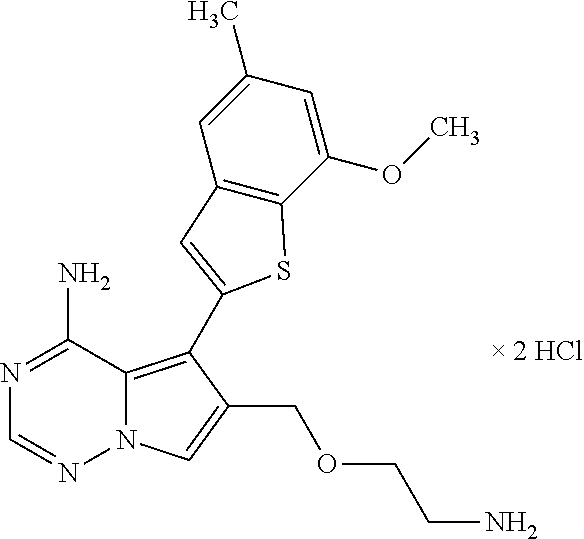


| TABLE I | |||
| Example | Purification | LC-MS data | |
| No. | Structure | method | (method 7) |
| 40 |  | PM2 | Rt = 1.2 min; MS (ESIneg): m/z = 378 (M − H)− |
| 41 |  | PM2 | Rt = 1.23 min; MS (ESIpos): m/z = 408 (M + H)+ |
| 42 |  | PM2 | Rt = 0.82 min; MS (ESIpos): m/z = 454 (M + H)+ |
| 43 |  | PM2 | Rt = 0.79 min; MS (ESIpos): m/z = 438 (M + H)+ |
| 44 |  | PM2 | Rt = 0.81 min; MS (ESIpos): m/z = 452 (M + H)+ |
| 45 |  | PM1 | Rt = 0.76 min; MS (ESIpos): m/z = 426 (M + H)+ |
General Procedure for the Preparation of Examples 46-76 in Table II:
| TABLE II | |||
| Example | Purification | LC-MS data | |
| No. | Structure | method | (method 7) |
| 46 |
 |
PM2 | Rt = 0.82 min; MS (ESIpos): m/z = 406 (M + H)+ |
| 47 |
 |
PM2 | Rt = 0.81 min; MS (ESIpos): m/z = 394 (M + H)+ |
| 48 |
 |
PM2 | Rt = 0.79 min; MS (ESIpos): m/z = 380 (M + H)+ |
| 49 |
 |
PM2 | Rt = 0.85 min; MS (ESIpos): m/z = 440 (M + H)+ |
| 50 |
 |
PM2 | Rt = 0.79 min; MS (ESIpos): m/z = 423 (M + H)+ |
| 51 |
 |
PM2 | Rt = 0.83 min; MS (ESIpos): m/z = 408 (M + H)+ |
| 52 |
 |
PM2 | Rt = 0.85 min; MS (ESIpos): m/z = 438 (M + H)+ |
| 53 |
 |
PM2 | Rt = 1.05 min; MS (ESIpos): m/z = 410 (M + H)+ |
| 54 |
 |
PM2 | Rt = 0.79 min; MS (ESIpos): m/z = 424 (M + H)+ |
| 55 |
 |
PM2 | Rt = 0.90 min; MS (ESIpos): m/z = 437 (M + H)+ |
| 56 |
 |
PM2 | Rt = 1.01 min; MS (ESIpos): m/z = 409 (M + H)+ |
| 57 |
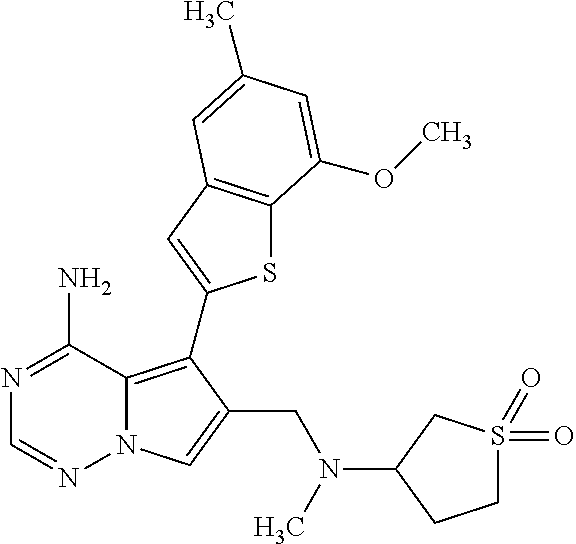 |
PM2 | Rt = 0.92 min; MS (ESIpos): m/z = 472 (M + H)+ |
| 58 |
 |
PM2 | Rt = 0.84 min; MS (ESIpos): m/z = 449 (M + H)+ |
| 59 |
 |
PM2 | Rt = 0.84 min; MS (ESIpos): m/z = 426 (M + H)+ |
| 60 |
 |
PM2 | Rt = 0.82 min; MS (ESIpos): m/z = 438 (M + H)+ |
| 61 |
 |
PM2 | Rt = 1.36 min; MS (ESIpos): m/z = 436 (M + H)+ |
| 62 |
 |
PM2 | Rt = 0.83 min; MS (ESIpos): m/z = 438 (M + H)+ |
| 63 |
 |
PM2 | Rt = 1.03 min; MS (ESIpos): m/z = 430 (M + H)+ |
| 64 |
 |
PM2 | Rt = 0.76 min; MS (ESIpos): m/z = 451 (M + H)+ |
| 65 |
 |
PM2 | Rt = 0.69 min; MS (ESIpos): m/z = 437 (M + H)+ |
| 66 |
 |
PM2 | Rt = 0.69 min; MS (ESIpos): m/z = 437 (M + H)+ |
| 67 |
 |
PM2 | Rt = 0.71 min; MS (ESIpos): m/z = 451 (M + H)+ |
| 68 |
 |
PM2 | Rt = 0.71 min; MS (ESIpos): m/z = 437 (M + H)+ |
| 69 |
 |
PM2 | Rt = 0.77 min; MS (ESIpos): m/z = 451 (M + H)+ |
| 70 |
 |
PM2 | Rt = 0.81 min; MS (ESIpos): m/z = 412 (M + H)+ |
| 71 |
 |
PM2 | Rt = 0.84 min; MS (ESIpos): m/z = 426 (M + H)+ |
| 72 |
 |
PM2 | Rt = 0.80 min; MS (ESIpos): m/z = 458 (M + H)+ |
| 73 |
 |
PM2 | Rt = 0.77 min; MS (ESIpos): m/z = 410 (M + H)+ |
| 74 |
 |
PM2 | Rt = 0.83 min; MS (ESIpos): m/z = 396 (M + H)+ |
| 75 |
 |
PM2 | Rt = 0.70 min; MS (ESIpos): m/z = 451 (M + H)+ |
| 76 |
 |
PM2 | Rt = 0.81 min; MS (ESIpos): m/z = 424 (M + H)+ |
| 77 |
 |
PM2 | Rt = 1.14 min; MS (ESIpos): m/z = 458 (M + H)+ |
- Ahx 6-aminohexanoic acid
- ATP adenosine triphosphate
- BSA bovine serum albumin
- CREB cAMP-response element-binding protein
- DMSO dimethylsulfoxide
- EDTA ethylenediaminetetraacetic acid
- EGTA ethyleneglycol-bis(2-aminoethylether)-N,N,N′,N′-tetraacetic acid
- FBS fetal bovine serum
- FGF fibroblast growth factor
- FGFR fibroblast growth factor receptor
- GFP green fluorescent protein
- GST glutathione S-transferase
- HEPES 4-(2-hydroxyethyl)piperazine-1-ethansulfonic acid
- HRTF homogeneous time-resolved fluorescence
- MOPS 3-(N-morpholino)propanesulfonic acid
- mTOR mammalian target of Rapamycin
- PBS phosphate buffered saline
- PI3K phosphatidylinositol 3-kinase
- RTK receptor tyrosine kinase
- SNP single nucleotide polymorphism
- TR-FRET time-resolved fluorescence resonance energy transfer
- VEGF vascular endothelial growth factor
- VEGFR vascular endothelial growth factor receptor
| TABLE 1A | |||
| FGFR-1 (high ATP) | |||
| Example No. | IC50 [nM] | ||
| 1 | 10.0 | ||
| 2 | 1.3 | ||
| 3 | 1.8 | ||
| 4 | 38.4 | ||
| 5 | 75.1 | ||
| 6 | 4.0 | ||
| 7 | 9.4 | ||
| 8 | 0.2 | ||
| 9 | 0.7 | ||
| 10 | 1.0 | ||
| 11 | 1.1 | ||
| 12 | 40.0 | ||
| 13 | 47.6 | ||
| 14 | 2.2 | ||
| 15 | 50.3 | ||
| 16 | 4.1 | ||
| 17 | 2.0 | ||
| 18 | 1.6 | ||
| 19 | 13.8 | ||
| 20 | 19.9 | ||
| 21 | 7.3 | ||
| 22 | 10.6 | ||
| 23 | 5.6 | ||
| 24 | 11.6 | ||
| 25 | 0.6 | ||
| 26 | 2.0 | ||
| 27 | 0.9 | ||
| 28 | 5.6 | ||
| 29 | 24.3 | ||
| 30 | 5.5 | ||
| 31 | 0.6 | ||
| 32 | 22.2 | ||
| 33 | 2.7 | ||
| 34 | 20.5 | ||
| 35 | 4.8 | ||
| 36 | 37.5 | ||
| 37 | 7.5 | ||
| 38 | 4.4 | ||
| 39 | 51.7 | ||
| 40 | 14.7 | ||
| 41 | 22.1 | ||
| 42 | 40.8 | ||
| 43 | 14.2 | ||
| 44 | 15.1 | ||
| 45 | 29.4 | ||
| 46 | 2.5 | ||
| 47 | 1.7 | ||
| 48 | 6.3 | ||
| 49 | 17.3 | ||
| 50 | 0.3 | ||
| 51 | 1.4 | ||
| 52 | 7.9 | ||
| 53 | 29.0 | ||
| 54 | 4.6 | ||
| 55 | 2.7 | ||
| 56 | 7.8 | ||
| 57 | 4.2 | ||
| 58 | 7.3 | ||
| 59 | 17.9 | ||
| 60 | 32.1 | ||
| 61 | 32.1 | ||
| 62 | 3.9 | ||
| 63 | 6.5 | ||
| 64 | 1.6 | ||
| 65 | 0.7 | ||
| 66 | 1.0 | ||
| 67 | 0.9 | ||
| 68 | 1.5 | ||
| 69 | 5.7 | ||
| 70 | 16.4 | ||
| 71 | 25.0 | ||
| 72 | 14.0 | ||
| 73 | 14.3 | ||
| 74 | 33.8 | ||
| 75 | 14.7 | ||
| 76 | 7.0 | ||
| 77 | 35.1 | ||
| TABLE 1B | ||
| FGFR-1 | ||
| Structure of | Example No. in | (high ATP) |
| comparative compound | WO 2007/061737 | IC50 [nM] |
 |
4 | 12000 |
 |
5 | 500 |
 |
120 | 985 |
 |
205 | 20000 |
 |
210 | 456 |
 |
233 | 4600 |
| TABLE 2A | |||
| Example No. | FGFR-3 IC50 [nM] | ||
| 1 | 18.2 | ||
| 2 | 2.2 | ||
| 3 | 4.2 | ||
| 4 | 49.9 | ||
| 5 | 72.4 | ||
| 6 | 4.4 | ||
| 7 | 5.8 | ||
| 8 | 0.2 | ||
| 9 | 0.2 | ||
| 10 | 1.4 | ||
| 11 | 0.4 | ||
| 12 | 11.6 | ||
| 13 | 15.1 | ||
| 14 | 0.8 | ||
| 15 | 87.1 | ||
| 16 | 2.3 | ||
| 17 | 1.8 | ||
| 18 | 1.3 | ||
| 19 | 11.2 | ||
| 20 | 15.2 | ||
| 21 | 27.9 | ||
| 22 | 10.8 | ||
| 23 | 17.4 | ||
| 24 | 8.7 | ||
| 25 | 0.4 | ||
| 26 | 2.0 | ||
| 27 | 0.5 | ||
| 28 | 14.2 | ||
| 29 | 18.7 | ||
| 30 | 3.1 | ||
| 31 | 0.3 | ||
| 33 | 1.8 | ||
| 40 | 9.1 | ||
| 41 | 12.7 | ||
| 42 | 30.0 | ||
| 43 | 10.7 | ||
| 44 | 9.3 | ||
| 45 | 24.8 | ||
| 46 | 1.2 | ||
| 47 | 1.0 | ||
| 48 | 3.6 | ||
| 49 | 14.2 | ||
| 50 | 0.1 | ||
| 51 | 0.7 | ||
| 52 | 3.8 | ||
| 53 | 15.1 | ||
| 54 | 2.3 | ||
| 55 | 1.4 | ||
| 56 | 3.1 | ||
| 57 | 3.0 | ||
| 58 | 6.2 | ||
| 59 | 4.0 | ||
| 60 | 12.5 | ||
| 61 | 14.6 | ||
| 62 | 2.6 | ||
| 63 | 3.0 | ||
| 64 | 1.1 | ||
| 65 | 0.6 | ||
| 66 | 0.5 | ||
| 67 | 0.6 | ||
| 68 | 0.8 | ||
| 69 | 4.4 | ||
| 70 | 7.4 | ||
| 71 | 2.5 | ||
| 72 | 5.5 | ||
| 73 | 2.3 | ||
| 74 | 5.0 | ||
| 75 | 5.0 | ||
| 76 | 4.9 | ||
| 77 | 15.3 | ||
| TABLE 2B | ||
| Structure of | Example No. in | FGFR-3 |
| comparative compound | WO 2007/061737 | IC50 [nM] |
 |
4 | 2400 |
 |
5 | 250 |
 |
120 | 506 |
 |
205 | 20000 |
 |
210 | 554 |
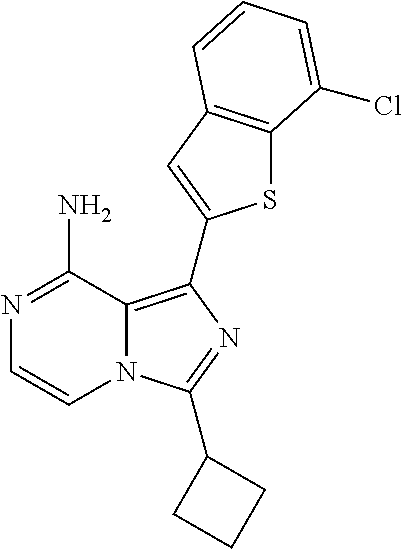 |
233 | 10000 |
| TABLE 3 | |||
| mTOR | |||
| Example No. | % inhibition @ 1 μM | ||
| 1 | 1.9 | ||
| 2 | 6.1 | ||
| 3 | 2.5 | ||
| 4 | 8.4 | ||
| 5 | 2.7 | ||
| 6 | 11.3 | ||
| 7 | 4.7 | ||
| 8 | 4.7 | ||
| 9 | no inhib. effect detect. | ||
| 10 | 10.3 | ||
| 11 | no inhib. effect detect. | ||
| 12 | 7.2 | ||
| 13 | 5.3 | ||
| 14 | 0.3 | ||
| 15 | 4.0 | ||
| 16 | 8.8 | ||
| 17 | no inhib. effect detect. | ||
| 18 | no inhib. effect detect. | ||
| 19 | 1.8 | ||
| 20 | no inhib. effect detect. | ||
| 21 | no inhib. effect detect. | ||
| 22 | 1.6 | ||
| 23 | 2.0 | ||
| 24 | 0.3 | ||
| 25 | no inhib. effect detect. | ||
| 26 | no inhib. effect detect. | ||
| 27 | 5.0 | ||
| 28 | 35.5 | ||
| 29 | 0.6 | ||
| 30 | 1.6 | ||
| 31 | 9.1 | ||
| 32 | no inhib. effect detect. | ||
| (no inhib. effect detect. = no inhibitory effect detectable at 1 μM). | |||
| TABLE 4 | |||
| hFGF-2 mediated HUVEC | |||
| Example No. | proliferation, IC50 [nM] | ||
| 2 | 5.4 | ||
| 6 | 16.1 | ||
| 8 | 6.3 | ||
| 9 | 0.8 | ||
| 10 | 39.0 | ||
| 11 | 1.0 | ||
| 16 | 3.0 | ||
| 17 | 15.0 | ||
| 19 | 0.2 | ||
| 21 | 30.3 | ||
| 23 | 19.1 | ||
| 25 | 0.3 | ||
| 27 | 1.5 | ||
| 28 | 20.0 | ||
| 31 | 0.6 | ||
Claims (7)


Applications Claiming Priority (4)
| Application Number | Priority Date | Filing Date | Title |
|---|---|---|---|
| EP11193839.5 | 2011-12-15 | ||
| EP11193839 | 2011-12-15 | ||
| EP11193839 | 2011-12-15 | ||
| PCT/EP2012/075127 WO2013087647A1 (en) | 2011-12-15 | 2012-12-11 | Substituted benzothienyl - pyrrolotriazines and uses thereof in the treatment cancer |
Publications (2)
| Publication Number | Publication Date |
|---|---|
| US20150080371A1 US20150080371A1 (en) | 2015-03-19 |
| US9598416B2 true US9598416B2 (en) | 2017-03-21 |
Family
ID=47501132
Family Applications (1)
| Application Number | Title | Priority Date | Filing Date |
|---|---|---|---|
| US14/365,024 Expired - Fee Related US9598416B2 (en) | 2011-12-15 | 2012-12-11 | Substituted benzothienyl-pyrrolotriazines and uses thereof in the treatment cancer |
Country Status (7)
| Country | Link |
|---|---|
| US (1) | US9598416B2 (en) |
| EP (1) | EP2791143B1 (en) |
| JP (1) | JP6047582B2 (en) |
| CN (1) | CN104159900B (en) |
| CA (1) | CA2862981C (en) |
| ES (1) | ES2570862T3 (en) |
| WO (1) | WO2013087647A1 (en) |
Families Citing this family (6)
| Publication number | Priority date | Publication date | Assignee | Title |
|---|---|---|---|---|
| CN114456176B (en) | 2016-03-28 | 2024-08-30 | 因赛特公司 | Pyrrolotriazine compounds as TAM inhibitors |
| WO2018083635A2 (en) | 2016-11-04 | 2018-05-11 | Auckland Uniservices Limited | Tricyclic heterocyclic derivatives and uses thereof |
| RU2771311C2 (en) | 2017-08-15 | 2022-04-29 | Сиэсписи Чжунци Фармасьютикал Текнолоджи (Шишцзяжуан) Ко., Лтд. | Fgfr inhibitor and its medical use |
| JOP20200090A1 (en) * | 2017-10-25 | 2020-05-03 | Bayer Pharma AG | Process for preparing benzothiophen-2yl boronate |
| US12398138B2 (en) | 2019-02-15 | 2025-08-26 | Cspc Zhongqi Pharmaceutical Technology (Shijiazhuang) Co., Ltd. | FGFR inhibitor compound in solid form and preparation method therefor |
| CN117186103A (en) * | 2022-06-01 | 2023-12-08 | 安徽诺全药业有限公司 | Deuterated heterocyclic compounds and preparation methods and applications thereof |
Citations (16)
| Publication number | Priority date | Publication date | Assignee | Title |
|---|---|---|---|---|
| WO2000071129A1 (en) | 1999-05-21 | 2000-11-30 | Bristol-Myers Squibb Company | Pyrrolotriazine inhibitors of kinases |
| WO2001019828A2 (en) | 1999-09-17 | 2001-03-22 | Basf Aktiengesellschaft | Kinase inhibitors as therapeutic agents |
| WO2005037836A2 (en) | 2003-10-15 | 2005-04-28 | Osi Pharmaceuticals, Inc. | Imidazo ‘1, 5 - a ! pyrazine tyrosine kinase inhibitors |
| WO2005097800A1 (en) | 2004-04-02 | 2005-10-20 | Osi Pharmaceuticals, Inc. | 6,6-bicyclic ring substituted heterobicyclic protein kinase inhibitors |
| WO2005121147A1 (en) | 2004-06-03 | 2005-12-22 | Bayer Pharmaceuticals Corporation | Pyrrolotriazine derivatives useful for treating hyper-proliferative disorders and diseases associated with angiogenesis |
| WO2007056170A2 (en) | 2005-11-02 | 2007-05-18 | Bayer Healthcare Ag | Pyrrolo[2,1-f] [1,2,4] triazin-4-ylamines igf-1r kinase inhibitors for the treatment of cancer and other hyperproliferative diseases |
| WO2007061737A2 (en) | 2005-11-17 | 2007-05-31 | Osi Pharmaceuticals, Inc. | FUSED BICYCLIC mTOR INHIBITORS |
| WO2007061882A2 (en) | 2005-11-18 | 2007-05-31 | Bristol-Myers Squibb Company | Pyrrolotriazine kinase inhibitors |
| WO2007064931A2 (en) | 2005-12-02 | 2007-06-07 | Bayer Healthcare Llc | Substituted 4-amino-pyrrolotriazine derivatives useful for treating hyper-proliferative disorders and diseases associated with angiogenesis |
| WO2007064932A2 (en) | 2005-12-02 | 2007-06-07 | Bayer Healthcare Llc. | Pyrrolotriazine derivatives useful for treating cancer through inhibition of aurora kinase |
| WO2007064883A2 (en) | 2005-12-02 | 2007-06-07 | Bayer Healthcare Llc. | Substituted 4-amino-pyrrolotriazine derivatives useful for treating hyper-proliferative disorders and diseases associated with angiogenesis |
| WO2007079164A2 (en) | 2005-12-29 | 2007-07-12 | Abbott Laboratories | Protein kinase inhibitors |
| WO2009042543A1 (en) | 2007-09-25 | 2009-04-02 | Bayer Healthcare Llc | Pyrrolotriazine derivatives useful for treating cancer through inhibition of aurora kinase |
| WO2009136966A1 (en) | 2008-05-09 | 2009-11-12 | Abbott Laboratories | Inhibitors of protein kinases |
| WO2010051043A1 (en) | 2008-11-03 | 2010-05-06 | Intellikine, Inc. | Benzoxazole kinase inhibitors and methods of use |
| WO2010126960A1 (en) | 2009-04-29 | 2010-11-04 | Locus Pharmaceuticals, Inc. | Pyrrolotriazine compounds |
Family Cites Families (1)
| Publication number | Priority date | Publication date | Assignee | Title |
|---|---|---|---|---|
| ATE284690T1 (en) | 1995-10-31 | 2005-01-15 | Lilly Co Eli | ANTITHRBOTIC DIAMINE |
-
2012
- 2012-12-11 JP JP2014546466A patent/JP6047582B2/en not_active Expired - Fee Related
- 2012-12-11 WO PCT/EP2012/075127 patent/WO2013087647A1/en not_active Ceased
- 2012-12-11 CA CA2862981A patent/CA2862981C/en active Active
- 2012-12-11 US US14/365,024 patent/US9598416B2/en not_active Expired - Fee Related
- 2012-12-11 CN CN201280061635.1A patent/CN104159900B/en not_active Expired - Fee Related
- 2012-12-11 EP EP12809680.7A patent/EP2791143B1/en not_active Not-in-force
- 2012-12-11 ES ES12809680T patent/ES2570862T3/en active Active
Patent Citations (16)
| Publication number | Priority date | Publication date | Assignee | Title |
|---|---|---|---|---|
| WO2000071129A1 (en) | 1999-05-21 | 2000-11-30 | Bristol-Myers Squibb Company | Pyrrolotriazine inhibitors of kinases |
| WO2001019828A2 (en) | 1999-09-17 | 2001-03-22 | Basf Aktiengesellschaft | Kinase inhibitors as therapeutic agents |
| WO2005037836A2 (en) | 2003-10-15 | 2005-04-28 | Osi Pharmaceuticals, Inc. | Imidazo ‘1, 5 - a ! pyrazine tyrosine kinase inhibitors |
| WO2005097800A1 (en) | 2004-04-02 | 2005-10-20 | Osi Pharmaceuticals, Inc. | 6,6-bicyclic ring substituted heterobicyclic protein kinase inhibitors |
| WO2005121147A1 (en) | 2004-06-03 | 2005-12-22 | Bayer Pharmaceuticals Corporation | Pyrrolotriazine derivatives useful for treating hyper-proliferative disorders and diseases associated with angiogenesis |
| WO2007056170A2 (en) | 2005-11-02 | 2007-05-18 | Bayer Healthcare Ag | Pyrrolo[2,1-f] [1,2,4] triazin-4-ylamines igf-1r kinase inhibitors for the treatment of cancer and other hyperproliferative diseases |
| WO2007061737A2 (en) | 2005-11-17 | 2007-05-31 | Osi Pharmaceuticals, Inc. | FUSED BICYCLIC mTOR INHIBITORS |
| WO2007061882A2 (en) | 2005-11-18 | 2007-05-31 | Bristol-Myers Squibb Company | Pyrrolotriazine kinase inhibitors |
| WO2007064931A2 (en) | 2005-12-02 | 2007-06-07 | Bayer Healthcare Llc | Substituted 4-amino-pyrrolotriazine derivatives useful for treating hyper-proliferative disorders and diseases associated with angiogenesis |
| WO2007064932A2 (en) | 2005-12-02 | 2007-06-07 | Bayer Healthcare Llc. | Pyrrolotriazine derivatives useful for treating cancer through inhibition of aurora kinase |
| WO2007064883A2 (en) | 2005-12-02 | 2007-06-07 | Bayer Healthcare Llc. | Substituted 4-amino-pyrrolotriazine derivatives useful for treating hyper-proliferative disorders and diseases associated with angiogenesis |
| WO2007079164A2 (en) | 2005-12-29 | 2007-07-12 | Abbott Laboratories | Protein kinase inhibitors |
| WO2009042543A1 (en) | 2007-09-25 | 2009-04-02 | Bayer Healthcare Llc | Pyrrolotriazine derivatives useful for treating cancer through inhibition of aurora kinase |
| WO2009136966A1 (en) | 2008-05-09 | 2009-11-12 | Abbott Laboratories | Inhibitors of protein kinases |
| WO2010051043A1 (en) | 2008-11-03 | 2010-05-06 | Intellikine, Inc. | Benzoxazole kinase inhibitors and methods of use |
| WO2010126960A1 (en) | 2009-04-29 | 2010-11-04 | Locus Pharmaceuticals, Inc. | Pyrrolotriazine compounds |
Non-Patent Citations (31)
| Title |
|---|
| "Polanska et al., ""Extracellular Interactome of the FGF Receptor-Ligand System: Complexities and theRelative Simplicity of the Worm,"" Development Dynamics, 2009, 238:277-293". |
| Balkrishna et al, "Oxidation of alpha, beta-Unstaturated Aldehydes," Tetrahedron, 1981, 37:2091-1096. |
| Balkrishna et al, "Oxidation of α, β-Unstaturated Aldehydes," Tetrahedron, 1981, 37:2091-1096. |
| Barder et al., "Catalysts for Suzuki-Miyaura Coupling Processes: Scope and Studies of the Effect of Ligand Structure," 2005, Journal of Am. Chem. Soc., 127:4685-4696. |
| Berge et al., "Pharmaceutical Salts," Journal of Pharm. Sciences, Jan. 1977, 66(1):1-19. |
| Bergers et al., "Modes of resistance to antiangiogenic therapy," Nature Reviews Cancer, Aug. 2008, 8:592-603. |
| Cecil Textbook of Medicine, edited by Bennet, J.C., and Plum F., 20th edition,vol. 1, 1004-101 O, 1996. * |
| Cohen et al., Current Opinion in Chemical Biology, 3,459-465, 1999. * |
| Dermer et al., Bio/Technology, 1994, 12:320. * |
| Freshney et al.,Culture of Animal Cells, A Manual of Basic Technique, Alan R. Liss, Inc., 1983, New York, p. 4. * |
| Golub et al., Science, 286, 531-537, 1999. * |
| Greene et al., Protective Groups in Organic Synthesis, Third Edition, "The Role of Protective Groups in Organic Synthesis," 1999, John Wiley & Sons, Inc., ISBN 0-471-22057-4 (Electronic) 1-16. |
| Greulich et al., "Targeting mutant fibroblast growth factor receptors in cancer," Trends in Molecular Medicine, May 2011, 17(5):283-292. |
| Greulich et al.,Trends Mol Med. May 2011;17(5):283-92. * |
| Haugsten et al., "Roles of Fibroblast Growth Factor Receptors in Carcinogenesis," American Association for Cancer Research, Molecular Cancer Research, 2010, 1439-1452. |
| Heinzle et al., "Targeting fibroblast-growth-factor-receptor-dependent signaling for cancer therapy," Expert Opin. Ther. Targets, 2011, 15(7):830-846. |
| Hynes et al., Cancer Res. Jul. 1, 2010;70(13):5199-202. * |
| Itoh et al., "Fibroblast growth factors: from molecular evolution to roles in development, metabolism and disease," JB Journal of Biochemistry, 2011, 149(2):121-130. |
| Jilek et al., "Potential Metabolites of the Neuroleptic Agent Octoclothepin; Synthesis and Pharmacology of 8-Chloro-6-Hydroxy-10-(4-Methylpiperazino)-10,11-Dihydrodibenzo[b,f]Thiepin and Some Related Compounds," Research Institute for Pharmacy and Biochemistry, 130 00 Prague 3, Collection Czechoslov Chem. Commun., 1978, 43:1747-1759. |
| Kinzel et al., "A New Palladium Precatalyst Allows for the Fast Suzuki-Miyaura Coupling Reactions of Unstable Polyfluorophenyl and 2-Heteroaryl Boronic Acids," Journal Am. Chem. Society, 132:14073-14075. |
| Knapp et al., "A General Solution for Unstable Boronic Acids: Slow-Release Cross-Coupling from Air-Stable MIDA Boronates," Journal Am. Chem. Society, 2009, 131:6961-6963. |
| Korc et al, "The Role of Fibroblast Growth Factors in Tumor Growth," Current Cancer Drug Targets, 2009, 9:639-651. |
| Kotha et al., "Recent applications of the Suzuki-Miyaura cross-coupling reaction in organic synthesis," Tetrahedron, 2002, 58:9633-9695. |
| Nooy et al., "On the Use of Stable Organic Nitroxyl Radicals for the Oxidation of Primary and Secondary Alcohols," Synthesis, Oct. 1996, 1153-1174. |
| Plé et al., "Synthesis of Substituted Benzo[b]thiophenes by Acid-Catalyzed Cyclization of Thiophenylacetals and Ketones," J. Heterocyclic Chem., 1988, 25:1271-1272. |
| Raach et al., "Sodium Chlorite-Hydrogen Peroxide-A Mild and Selective Reagent for the Oxidation of Aldehydes to Carboxylic Acids," Journal Prakt Chem., 2000, 342(6):605-608. |
| Swinney et al., "How were new medicines discovered?," Nature Reviews Drug Discovery, Jul. 2011, 10:507-519. |
| Venturelli et al., "Optimizing Cell Permeation of an Antibiotic Resistance Inhibitor for Improved Efficacy," Journal Med. Chem., 2007, 50:5644-5654. |
| Wesche et al., "Fibroblast growth factors and their receptors in cancer," Biochemical Journal, 2011, 437:199-213. Supplemental Tables S1-S3 and additional references (pp. 1-13 at the end). |
| Worldwide Health Organization, Fact Sheet No. 297, Feb. 2011 updated Feb. 2014. |
| Zhao et al., "Oxidation of Primary Alcohols to Carboxylic Acids with Sodium Chlorite Catalyzed by Tempo and Bleach: 4-Methoxyphenylacetic Acid (Benzeneacetic acid, 4-methoxy-," Organic Syntheses, 2005 81:195-204. |
Also Published As
| Publication number | Publication date |
|---|---|
| CA2862981A1 (en) | 2013-06-20 |
| US20150080371A1 (en) | 2015-03-19 |
| WO2013087647A1 (en) | 2013-06-20 |
| JP6047582B2 (en) | 2016-12-21 |
| HK1203952A1 (en) | 2015-11-06 |
| JP2015500315A (en) | 2015-01-05 |
| CN104159900A (en) | 2014-11-19 |
| CA2862981C (en) | 2020-02-25 |
| EP2791143B1 (en) | 2016-02-24 |
| ES2570862T3 (en) | 2016-05-20 |
| CN104159900B (en) | 2016-08-24 |
| EP2791143A1 (en) | 2014-10-22 |
Similar Documents
| Publication | Publication Date | Title |
|---|---|---|
| US9475815B2 (en) | Substituted benzothienyl-pyrrolotriazines and uses thereof | |
| US9206184B2 (en) | Disubstituted benzothienyl-pyrrolotriazines and uses thereof | |
| USRE50594E1 (en) | Spiro[3H-indole-3,2′-pyrrolidin]-2(1H)-one compounds and derivatives as MDM2-P53 inhibitors | |
| EP2791143B1 (en) | Substituted benzothienyl-pyrrolotriazines and uses thereof in the treatment of cancer | |
| HK1203952B (en) | Substituted benzothienyl - pyrrolotriazines and uses thereof in the treatment cancer | |
| HK1205123B (en) | Disubstituted benzothienyl-pyrrolotriazines and their use as fgfr kinase inhibitors |
Legal Events
| Date | Code | Title | Description |
|---|---|---|---|
| AS | Assignment |
Owner name: BAYER INTELLECTUAL PROPERTY GMBH, GERMANY Free format text: ASSIGNMENT OF ASSIGNORS INTEREST;ASSIGNORS:COLLIN, MARIE-PIERRE, DR.;BROHM, DIRK, DR.;HEROULT, MELANIE, DR.;AND OTHERS;SIGNING DATES FROM 20140424 TO 20140519;REEL/FRAME:033210/0101 |
|
| STCF | Information on status: patent grant |
Free format text: PATENTED CASE |
|
| MAFP | Maintenance fee payment |
Free format text: PAYMENT OF MAINTENANCE FEE, 4TH YEAR, LARGE ENTITY (ORIGINAL EVENT CODE: M1551); ENTITY STATUS OF PATENT OWNER: LARGE ENTITY Year of fee payment: 4 |
|
| AS | Assignment |
Owner name: BAYER INTELLECTUAL PROPERTY GMBH, GERMANY Free format text: CHANGE OF ADDRESS;ASSIGNOR:BAYER INTELLECTUAL PROPERTY GMBH;REEL/FRAME:064021/0344 Effective date: 20220401 |
|
| FEPP | Fee payment procedure |
Free format text: MAINTENANCE FEE REMINDER MAILED (ORIGINAL EVENT CODE: REM.); ENTITY STATUS OF PATENT OWNER: LARGE ENTITY |
|
| LAPS | Lapse for failure to pay maintenance fees |
Free format text: PATENT EXPIRED FOR FAILURE TO PAY MAINTENANCE FEES (ORIGINAL EVENT CODE: EXP.); ENTITY STATUS OF PATENT OWNER: LARGE ENTITY |
|
| STCH | Information on status: patent discontinuation |
Free format text: PATENT EXPIRED DUE TO NONPAYMENT OF MAINTENANCE FEES UNDER 37 CFR 1.362 |
|
| FP | Lapsed due to failure to pay maintenance fee |
Effective date: 20250321 |