US9562010B2 - Cross-linking compositions and related methods of isotope tagging of interacting proteins and analysis of protein interactions - Google Patents
Cross-linking compositions and related methods of isotope tagging of interacting proteins and analysis of protein interactions Download PDFInfo
- Publication number
- US9562010B2 US9562010B2 US14/161,294 US201414161294A US9562010B2 US 9562010 B2 US9562010 B2 US 9562010B2 US 201414161294 A US201414161294 A US 201414161294A US 9562010 B2 US9562010 B2 US 9562010B2
- Authority
- US
- United States
- Prior art keywords
- cross
- linker
- dtssp
- linked
- disulfide bond
- Prior art date
- Legal status (The legal status is an assumption and is not a legal conclusion. Google has not performed a legal analysis and makes no representation as to the accuracy of the status listed.)
- Expired - Fee Related, expires
Links
- QFXNJYUUYRMMBJ-ONGNRFGCSA-N O=S(=O)=O.[2H]C([2H])(SSCCC(=O)ON1C(=O)CC([Na])C1=O)C([2H])([2H])C(=O)ON1C(=O)CC(C)C1=O Chemical compound O=S(=O)=O.[2H]C([2H])(SSCCC(=O)ON1C(=O)CC([Na])C1=O)C([2H])([2H])C(=O)ON1C(=O)CC(C)C1=O QFXNJYUUYRMMBJ-ONGNRFGCSA-N 0.000 description 2
Images




Classifications
-
- C—CHEMISTRY; METALLURGY
- C07—ORGANIC CHEMISTRY
- C07D—HETEROCYCLIC COMPOUNDS
- C07D207/00—Heterocyclic compounds containing five-membered rings not condensed with other rings, with one nitrogen atom as the only ring hetero atom
- C07D207/02—Heterocyclic compounds containing five-membered rings not condensed with other rings, with one nitrogen atom as the only ring hetero atom with only hydrogen or carbon atoms directly attached to the ring nitrogen atom
- C07D207/30—Heterocyclic compounds containing five-membered rings not condensed with other rings, with one nitrogen atom as the only ring hetero atom with only hydrogen or carbon atoms directly attached to the ring nitrogen atom having two double bonds between ring members or between ring members and non-ring members
- C07D207/34—Heterocyclic compounds containing five-membered rings not condensed with other rings, with one nitrogen atom as the only ring hetero atom with only hydrogen or carbon atoms directly attached to the ring nitrogen atom having two double bonds between ring members or between ring members and non-ring members with hetero atoms or with carbon atoms having three bonds to hetero atoms with at the most one bond to halogen, e.g. ester or nitrile radicals, directly attached to ring carbon atoms
- C07D207/36—Oxygen or sulfur atoms
- C07D207/40—2,5-Pyrrolidine-diones
- C07D207/416—2,5-Pyrrolidine-diones with hetero atoms or with carbon atoms having three bonds to hetero atoms with at the most one bond to halogen, e.g. ester or nitrile radicals, directly attached to other ring carbon atoms
-
- G—PHYSICS
- G01—MEASURING; TESTING
- G01N—INVESTIGATING OR ANALYSING MATERIALS BY DETERMINING THEIR CHEMICAL OR PHYSICAL PROPERTIES
- G01N33/00—Investigating or analysing materials by specific methods not covered by groups G01N1/00 - G01N31/00
- G01N33/48—Biological material, e.g. blood, urine; Haemocytometers
- G01N33/50—Chemical analysis of biological material, e.g. blood, urine; Testing involving biospecific ligand binding methods; Immunological testing
- G01N33/68—Chemical analysis of biological material, e.g. blood, urine; Testing involving biospecific ligand binding methods; Immunological testing involving proteins, peptides or amino acids
- G01N33/6803—General methods of protein analysis not limited to specific proteins or families of proteins
- G01N33/6848—Methods of protein analysis involving mass spectrometry
- G01N33/6851—Methods of protein analysis involving laser desorption ionisation mass spectrometry
Definitions
- the presently disclosed subject matter relates to cross-linking compositions for use in isotope tagging of interacting proteins.
- the presently disclosed subject matter also relates to methods of isotope tagging of interacting proteins and analysis of protein interactions using the disclosed cross-linking compositions.
- the presently disclosed subject matter provides isotope labeled amine reactive cross-linkers and a method of synthesizing isotope labeled amine reactive cross-linkers.
- the presently disclosed subject matter provides mass spectrometry processes and methods for characterizing protein interactions and protein-drug interactions.
- FIG. 1 is a schematic illustration of the chemical structure of the asymmetric cross-linker d4-DTSSP;
- FIG. 2 is a schematic illustration of the synthesis of an isotope labeled amine reactive cross-linker, and particularly the asymmetric cross-linker d4-DTSSP;
- FIGS. 3A and 3B are MS spectrum illustrating the spectral differences visible when using a DTSSP cross-linker ( FIG. 3A ) as compared to an asymmetric d4-DTSSP cross-linker as disclosed herein ( FIG. 3B );
- FIGS. 4A to 4D are schematic illustrations of a cross-linking analysis workflow distinguishing stable isotope pairs in MS 1 and stable isotope pairs in MS 2 ;
- FIGS. 5A and 5B are exemplary search engine configurations.
- FIG. 5A is a table of exemplary modifications for a MASCOT search engine
- FIG. 5B is an exemplary SEQUEST configuration editor
- FIG. 6 is a schematic of an exemplary work flow illustrating the filtration and search of ion spectra data using both SEQUEST and MASCOT search engines;
- FIGS. 7A to 7C are schematic illustrations of an extended iTIP workflow incorporating DTSSP and d4-DTSSP.
- FIG. 7A is a typical MS 1 spectrum when medium:light cross-linkers (1:1 mole ratio of DTSSP and asymmetric d4-DTSSP) are used, where the cross-linked peptides are observed in MS 1 (Full-MS high resolution accurate mass spectrum using FT-fourier transform Orbitrap mass analysis) as doublets peaks 1, 2 and peaks 3, 4 with a ⁇ m of 4 Da/z.
- FIGS. 7B and 7C show spectra for peaks 1 and 2, respectively, after dissociation via MS 2 -ET;
- FIGS. 8A to 8D are schematics and spectral illustrations illustrating the ETD-MS/MS results when various combinations of d4-DTSSP cross-linkers are employed.
- FIG. 8A shows the typical inter-linked peptides resulting in two constituent chains that differ in size.
- FIG. 8B shows a possibility of inter-linked peptides that are similar in size and perhaps similar in sequence.
- the peptides generated from multiple cross-links can in some embodiments be more complicated, as shown in FIGS. 8C and 8D ;
- FIGS. 9A to 9B are spectrum from ETD-MS/MS and CID-MS 3 , respectively;
- FIG. 10 is an ETD-MS/MS spectrum of a quadruply charged inter-linked peptide resulting from the cross-linking reaction between holomyoglobin and asymmetric d4-DTSSP;
- FIGS. 11A to 11B are MS 3 -CID spectra of polypeptide pairs ⁇ / ⁇ (hetero dimeric pairs) generated from FIG. 9A .
- FIGS. 12A to 12D are CID-MS 3 spectra of a polypeptide pair ⁇ / ⁇ (hetero dimeric pairs) generated from FIG. 10 .
- the spectrum from CID-MS 3 of ⁇ -L ( FIG. 12A ), ⁇ -H ( FIG. 12B ), ⁇ -L ( FIG. 12C ), and ⁇ -H ( FIG. 12D ) are presented along with the corresponding sequence map of each polypeptide depicting CID fragmentation and location of lysine residues that are cross-linked;
- FIGS. 13A to 13C illustrate the use of disclosed asymmetric cross-linkers in matrix-assisted laser desorption ionization (MALDI) mass spectrometry.
- FIG. 13A is a schematic illustrating a MALDI mass spectrometry method for electron-induced dissociation of d4-DTSSP using a MALDI spotting strategy.
- FIG. 13B is a graphic illustrating a MALDI plate spotted via an LC spotter.
- FIG. 13C is a full MS spectrum of intact peptides in Spot B13 and Full-MS spectrum of dissociated cross-linked peptides derived from Spot B14;
- FIGS. 14A to 14D are schematic illustrations of cross-linker interactions with peptides in horse heart myoglobin
- FIGS. 15A to 15E are schematic illustrations of cross-linker interactions with peptides in horse heart myoglobin after cleavage of the cross-linker disulfide bond;
- FIG. 16 is an exemplary data output from a search engine used to identify proteins based on the ion spectra data.
- FIG. 17 is a schematic illustration of a cross-linker used to define a protein-drug interaction.
- amine reactive cross-linkers that can in some embodiments be selectively fragmented at a specific location while rendering the dissociated cross-linked fragments to be distinguished from other backbone fragments.
- stable isotope labeled d4-DTSSP cross-linkers synthesized via asymmetric deuterium labeling of methylene carbon atoms located on one side of a S—S (disulfide) bond of a 3,3′-dithiobis(sulfosuccinimidyl sulfo propionate) molecule.
- a stable isotope labeled amine reactive cross-linker of the presently disclosed subject matter can comprise from about 4 to about 20 deuterium labels, in some embodiments from about 4 to about 8 deuterium labels.
- the disulfide bond of a disclosed cross-linker can be dissociated or cleaved to form a heavy and light chain marker, wherein the heavy chain is that comprising the deuterium label or labels.
- a cross-linker as disclosed herein can have a spacer length of about 12 Angstroms to about 27.4 Angstroms. Of this, the Sp3-Sp3 C—C bond length in a cross-linker can be about 1.54 Angstroms. This, coupled with the addition of one or more carbons, such as for example with the addition of 10 carbon atoms, to the existing DTSSP length results in the above length of the cross-linker.
- an amine reactive cross-linker as disclosed herein can attach to NH 2 of a lysine residue of a protein or peptide, or a N-terminus of a protein or peptide, during cross-linking between one or more interacting proteins, peptides or amino acids.
- a synthesis method can comprises combining into a mixture disulfide, tetrahydrofuran, water and 2,2′,3,3′-Tetradeuterium-3-mercaptopropanoic acid; stirring the mixture and concentrating the mixture under pressure; isolating the cross-linker by chromatography; mixing the isolated cross-linker with dimethylformamide, N-hydroxysulfosuccinimide sodium salt and dicyclohexylcarbodimide; and isolating a cross-linker by centrifugation.
- combining into a mixture disulfide, tetrahydrofuran, water and 2,2′,3,3′-Tetradeuterium-3-mercaptopropanoic acid comprises mixing about 16.9 mg of disulfide, about 0.4 mL of tetrahydrofuran, about 0.3 mL of water, and about 83 uL of 2,2′,3,3′-Tetradeuterium-3-mercaptopropanoic acid (1 M in D 2 O).
- methods of employing a cross-linker in mass spectrometry for studying protein and/or peptide interactions, characterizing protein and/or peptide structure and/or identifying proteins and/or peptides are provided.
- employing a stable isotope labeled d4-DTSSP cross-linker along with ETD-MS/MS, which can selectively fragment the S—S (disulfide) bonds can provide for a unique asymmetric isotopic-tagging and detection strategy of cross-linked peptides. Due to the asymmetric nature of the cross-linker, doublets of reporter ions can be generated for each inter-linked peptide halves that differ in a mass by, for example 4 Da. The doublets of light and heavy-isotope labeled peptides can therefore be specific for only cleavage products associated with the cross-linker and hence diagnostic of each interacting protein and/or peptide pair.
- employing a disclosed cross-linker in mass spectrometry can also be used to cross-link a protein with a small molecule (e.g. a non-protein molecule), or two non-protein entities, wherein the structure for a cross-linker reaction is the presence of primary amines or NH 2 groups.
- a small molecule e.g. a non-protein molecule
- two non-protein entities wherein the structure for a cross-linker reaction is the presence of primary amines or NH 2 groups.
- the product ions resulting from cross-linker cleavage can be distinguished from other ETD product ions such as peptide backbone products, side-chain losses, and charge reduced species.
- the unique selectivity advantage of distinguishing diagnostic reporter ions can markedly improve the ability of this technique to identify inter-linked proteins and/or peptides as compared to previous methods that require sensitive detection of the cross-linked cleavage products.
- Each of the peptides cleaved at the S—S bond can be structurally interrogated via CID-MS/MS.
- the MS 3 -CID product ion spectra of each peptide half can form the basis for their identification and hence the identification of an interacting protein/peptide.
- the disclosed cross-linking strategy by which specific interacting proteins/peptides are identified can in some embodiments be referred to as isotope tagging of interacting proteins (iTIP).
- the mass spectrometry of the iTIP methods can utilize electron spray ionization (ESI) or matrix-assisted laser desorption ionization (MALDI).
- ESI electron spray ionization
- MALDI matrix-assisted laser desorption ionization
- an MS 3 step can employ CID or High Energy Collision Dissociation (HCD).
- mass spectrometry methods of the presently disclosed subject matter which employ the disclosed stable isotope labeled d4-DTSSP cross-linker can increase the sensitivity of identifying proteins and/or peptides since CID data from both heavy and light pair-wise peptide identifications can be rolled-up to the protein-level that results in an increased confidence in the assignment of peptides to proteins as a result of doubling the number of peptides (data points) used to identify a protein by either searching a database or spectral library.
- the presently disclosed iTIP methods can comprise the use of a disclosed stable isotope labeled d4-DTSSP cross-linker in conjunction with a cross-linker that is not asymmetrically deuterated, to increase the sensitivity of identifying proteins.
- the term “about,” when referring to a value or to an amount of mass, weight, time, volume, concentration or percentage is meant to encompass variations of in some embodiments ⁇ 20%, in some embodiments ⁇ 10%, in some embodiments ⁇ 5%, in some embodiments ⁇ 1%, in some embodiments ⁇ 0.5%, and in some embodiments ⁇ 0.1% from the specified amount, as such variations are appropriate to perform the disclosed method.
- the phrase “A, B, C, and/or D” includes A, B, C, and D individually, but also includes any and all combinations and subcombinations of A, B, C, and D.
- the phrase “consisting of” excludes any element, step, or ingredient not specified in the claim.
- the phrase “consists of” appears in a clause of the body of a claim, rather than immediately following the preamble, it limits only the element set forth in that clause; other elements are not excluded from the claim as a whole.
- signaling or “significant” relates to a statistical analysis of the probability that there is a non-random association between two or more entities. To determine whether or not a relationship is “significant” or has “significance”, statistical manipulations of the data can be performed to calculate a probability, expressed as a “p value”. Those p values that fall below a user-defined cutoff point are regarded as significant. In some embodiments, a p value less than or equal to 0.05, in some embodiments less than 0.01, in some embodiments less than 0.005, and in some embodiments less than 0.001, are regarded as significant. Accordingly, a p value greater than or equal to 0.05 is considered not significant.
- FIG. 1 is a schematic illustration of the chemical structure of an exemplary isotope labeled amine reactive asymmetric cross-linker, and particularly an asymmetric cross-linker d4-DTSSP.
- Asymmetric d4-DTSSP comprises amine reactive sites a, c and cleavable site b.
- cleavable site b is cleavable by ETD, for example.
- an isotope labeled amine reactive cross-linker comprising a 3,3′-dithiobis(sulfosuccinimidyl sulfo propionate) molecule comprising a disulfide bond, and a deuterium label positioned on one side of the disulfide bond of the 3,3′-dithiobis(sulfosuccinimidyl sulfo propionate) molecule, wherein the deuterium label causes the 3,3′-dithiobis(sulfosuccinimidyl sulfo propionate) molecule to be structurally asymmetrical across the disulfide bond.
- the deuterium label is on a methylene carbon of the 3,3′-dithiobis(sulfosuccinimidyl sulfo propionate) molecule. In some embodiments, the deuterium label comprises 1, 2, 3, 4, 5, 6 or 7 deuterium labels. As discussed herein, the deuterium label can cause mass asymmetry in the 3,3′-dithiobis (sulfosuccinimidyl sulfo propionate) molecule.
- the disulfide bond of the cross-linker can be dissociated, such as for example using electron transfer dissociation (ETD), Negative ion collision induced dissociation, high energy collision induced dissociation (HCD), low temperature plasma ionization (LTPI) of ESI generated ions, MALDI with a matrix that dissociates S—S bonds, and reactive desorption electrospray ionization (Reactive DESI).
- ETD electron transfer dissociation
- HCD high energy collision induced dissociation
- LTPI low temperature plasma ionization
- Reactive DESI reactive desorption electrospray ionization
- dissociation of the disulfide bond creates a first and a second cleavage product, wherein one of the first or second cleavage products comprises the deuterium label, wherein the first and a second cleavage products differ in mass.
- the nominal mass of a cleavage products differs by 4 Daltons.
- an amine reactive cross-linker as disclosed herein can bind at both carbonyl carbons with a NH 2 group of a lysine residue or N-terminus within a single protein. In some embodiments, the amine reactive cross-linker can bind at both carbonyl carbons with a NH 2 group of a lysine residue or N-terminus of separate interacting proteins of a complex. In some aspects, the cross-linker can have a length of about 12 Angstroms to about 27.4 Angstroms.
- the cross-linker can be extended by up to 10 additional carbons.
- the deuterium label can comprise 1, 2, 3, 4, 5, 6, 7, 8, 9, 10, 11, 12, 13, 14, 15, 16, 17, 18, 19 or 20 deuterium labels.
- an asymmetric cross-linker can in some embodiments comprise a d4-DTSSP with 4 deuterium atoms incorporated on two methylene carbons located on one side of the disulfide bond giving a ⁇ m of 4 Da, when the cross-linker is cleaved by ETD at position b while attached to two amine residues of the peptide(s) at positions a and c (see FIG. 1 ).
- the stable isotopes are incorporated in DTSSP via asymmetric positioning of four deuterium labels on two of the four methylene carbons, giving rise to a mass asymmetry across the two-fold axis of the S—S bond.
- d4-DTSSP is structurally analogous to DTSSP.
- the bidirectional orientation of the cross-linker facilitates two fragments in the ETD spectrum for each constituent chain by tagging of heavy c-b segments or light a-b segments (see FIG. 1 ) of the cross-linker to an amine group of a N-terminus or lysine residue of a protein and/or peptide via acylation chemistry and the subsequent ETD cleavage of cross-linker at position b of the S—S bond.
- the unique asymmetric isotope tagging signature of the disclosed cross-linkers can be detected via the selective electrons-transfer dissociation of the disulfide bond of the cross-linker.
- the asymmetric nature of the cross-linker can render a doublet of reporter ions with a mass off-set of 4 Da per unit charge for each inter-linked peptide halves due the equal likelihood orienting the light and heavy ends of the cross-linker during the reaction.
- the h4 (four hydrogen atoms) and d4 (four deuterium atoms) doublets (light and heavy-isotope tags attached to the constituent peptides) are therefore specific for only cleavage products associated with the disulfide cross-linker and hence diagnostic of each interacting peptide pair.
- the small mass off-set makes these fragment ions predictable, easy to visualize, and easily distinguishable from other ETD product ions such as peptide backbone products, side-chain losses, and charge reduced species which are single peaks.
- Each of the peptides cleaved at the S—S bond can be structurally interrogated via MS 3 -CID where the product ion spectra of each peptide half can form the basis for their identification and hence the identification of an interacting protein, also referred to as iTIP.
- the disulfide bond of the presently disclosed asymmetric d4-DTSSP (inter-linked to peptides), or any other asymmetric cross-linker disclosed herein, can be subjected to a number of electron or radical mediated dissociation techniques.
- electron capture (ECD) 257 nm UV photo dissociation
- ESI electrospray
- ETD electron transfer dissociation
- disulfide-linked peptides can be efficiently dissociated at the S—S (disulfide) bond via negative ion collision induced dissociation (neg-CID) and gas-phase ion/ion reactions between gold anions [Au(I)Cl 2 ]—.
- neg-CID negative ion collision induced dissociation
- Au(I)Cl 2 gold anions
- Asymmetric cross-linkers as illustrated in FIG. 1 , can in some embodiments be extended to any desired length, using for example, starting materials selected from the group consisting of 6-mercaptohexanoic acid, 8-mercaptooctonoic acid, and/or 4-mercaptobutyric acid. Synthesis (see FIG. 2 as discussed hereinbelow) of asymmetric linkers as disclosed herein of different linker lengths can in some embodiments enable the determination of distances or interaction space between or within a protein.
- the disulfide bond cleavage is quite facile in electron induced dissociation methods such as ECD and ETD of disulfide-linked polypeptides.
- ECD electron induced dissociation methods
- ETD electron induced dissociation methods
- the ETD spectra in particular gives product ions of the constituent polypeptides resulting from disulfide bond dissociation as the major product ions.
- the disclosed cross-linkers can provide for facile disulfide bond cleavage products of inter-linked polypeptides, proteins and/or peptides of cross-linker containing disulfide functionality.
- Disulfide containing cross-linkers such as 3,3′-dithiobis(sulfosuccinimidyl sulfo propionate) (DTSSP) and 3,3′-dithiobis(sulfosuccinimidyl propionate) (DSP) and their isotopic derivatives all have a two-fold symmetry across the disulfide bond.
- DTSSP 3,3′-dithiobis(sulfosuccinimidyl sulfo propionate)
- DSP 3,3′-dithiobis(sulfosuccinimidyl propionate)
- isotopic derivatives all have a two-fold symmetry across the disulfide bond.
- the disclosed cross-linkers are provided with structural features amenable for their detection in MS 2 or MS/MS spectra with a high degree of specificity and improved signal-to-noise.
- Previous disulfide containing cross-linkers are structurally symmetrical across the disulfide bond, with a two-fold symmetry, allowing each constituent chain to result in identical mass-tags in the ETD-MS 2 spectra.
- the cross-linker design strategy disclosed herein is based on a mass off-set or ( ⁇ m) around the S—S bond. The bidirectional orientation of the cross-linker facilitates two fragments for each constituent chain with a mass off-set corresponding to the mass off-set across the disulfide bond.
- a mass difference can be analytically useful as it can serve at least two purposes.
- the specificity can permit cross-linked products to be readily distinguished from other cleavages due to the fact that dissociation results in two distinct fragment ions with a specific mass off-set for each constituent chain (doublet of peaks) in the MS 2 spectrum.
- both variants of a given peptide chain can in some embodiments be structurally interrogated via CID-MS 3 providing an additional degree of confidence in their sequence determination and identification.
- an asymmetric cross-linker can in some embodiments comprise a d4-DTSSP with 4 deuterium atoms incorporated on two methylene carbons located on one side of the disulfide bond giving a ⁇ m of 4 Da, when the cross-linker is cleaved by ETD at position b while attached to two amine residues of the peptide(s) at positions a and c, as illustrated in FIG. 1 .
- the reporters derived from the cross-linker dissociation at the disulfide bond results in a 4 Da/z doublet of reporter ions.
- the reporter ions generated by the disclosed cross-linkers are not distinct masses rather they are observed as a doublet with a distinct ⁇ M (mass-off set).
- the most commonly observed singly charged cross-linker containing product ions have a 4 Da nominal mass difference, while a doubly charged cross-linker product ion can in some embodiments have a 2 Da nominal mass difference in the doublet peaks.
- the m/z separation can be easily distinguishable from ETD spectra with a high degree of specificity.
- the initial diagnosis of the cross-linked pairs via features detection of gas-phase generated isotopic tags reduces the complexity of the data analysis.
- the identification of interacting proteins within the distance constraints of the cross-linker can be carried out by MS 3 -CID of each constituent chain that results in sequence ions of each constituent linear peptide that are easily interpreted via protein sequence databases and search algorithms. As discussed herein, this strategy of identifying and localizing the sites of non-covalent interactions of proteins can be referred to as Isotope Tagging of Interacting Proteins (iTIP).
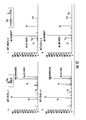
- FIGS. 3A and 3B are MS spectrum illustrating the spectral differences visible when using a DTSSP cross-linker ( FIG. 3A ) as compared to an asymmetric d4-DTSSP cross-linker as disclosed herein ( FIG. 3B ).
- FIG. 3A is an ETD-MS/MS spectrum of inter-linked peptide between the reaction of ubiquitin and DTSSP. The inset shows dissociation of the cross-linker to yield the constituent ⁇ and ⁇ peptides.
- FIG. 3B is an ETD-MS/MS spectrum of the same polypeptide pairs inter-linked via asymmetric d4-DTSSP. The inset shows dissociation of the cross-linker to yield the constituent ⁇ -L and ⁇ -H polypeptide and ⁇ -L and ⁇ -H polypeptide.
- FIG. 3A shows the ETD product ion spectrum of inter-linked polypeptide resulting from a cross-linking reaction of Ubiquitin and DTSSP (asymmetrical cross-linker).
- the product ions consist of mainly ⁇ and ⁇ chains that are single isotope clusters resulting from the direct cleavage of the DTSSP disulfide bond.
- FIG. 3B shows the ETD product ion spectrum of the same constituent polypeptide chains inter-linked with an asymmetric d4-DTSSP as disclosed herein. The product ion spectrum looks quite similar to FIG. 3A .
- cross-linkers with asymmetric labeling can be analytically useful as they encode isotopic tags of cross-linked product ions to be readily distinguished from other cleavages due to dissociation of the cross-linker resulting in two distinct fragment ions for each constituent peptide chain and contain a specific mass signature that is observed as a doublet of peaks in the MS 2 spectrum.
- Asymmetric d4-DTSSP and other asymmetric linkers can in some embodiments be synthesized as illustrated in FIG. 2 and as disclosed herein.
- a disulfide, tetrahydrofuran, water and 2,2′,3,3′-Tetradeuterium-3-mercaptopropanoic acid can be mixed together in some embodiments.
- the resultant compound in dimethylformamide (DMF) can be mixed with N-hydroxysulfosuccinimide (NHSS) sodium salt and dicyclohexylcarbodimide (DDC).
- NHSS N-hydroxysulfosuccinimide
- DDC dicyclohexylcarbodimide
- a cross linker can then be obtained after a series of centrifugations.
- a method of synthesizing an isotope labeled amine reactive cross-linker can in some aspects comprise combining into a mixture disulfide, tetrahydrofuran, water and 2,2′,3,3′-Tetradeuterium-3-mercaptopropanoic acid, stirring the mixture and concentrating the mixture under pressure, isolating the cross-linker by chromatography, mixing the isolated cross-linker with dimethylformamide, N-hydroxysulfosuccinimide sodium salt and dicyclohexylcarbodimide, and isolating the cross-linker by centrifugation.
- 3-mercaptopropanoic acid (C 3 H 6 O 2 S; MW 106.14) A and 1,2-di(pyridine-2-yl)disulfane (C 10 H 8 N 2 S 2 ; MW 220.31) B can be mixed with an acid (such as AcOH) and an alcohol (such as EtOH) at room temperature in step 1 to yield 3-(pyridine-2-yldisulfanyl)propanoic acid (C 8 H 9 NO 2 S 2 ; MW 215.29) C.
- the mixing can in some embodiments take place for about 16 hours (hr).
- 3-(pyridine-2-yldisulfanyl)propanoic acid C can be mixed with 2,2′,3,3′-Tetradeuterium-3-mercaptopropanoic acid D in DMF and H 2 O (1:1) at room temperature to yield 3-((2-carboxyethyl)disulfanyl)propanoic-2,2,3,3-d 4 acid E.
- the mixing can in some embodiments take place for about 1 hr.
- step 3 3-((2-carboxyethyl)disulfanyl)propanoic-2,2,3,3-d 4 acid E can be mixed in DMF with NHSS and DCC at room temperature to yield sodium 1-((3-((3-((2,5-dioxo-3-sulfonatopyrrolidin-1-yl)oxy)-3-oxopropyl)disufanyl)propanoyl-2,2,3,3-d 4 )oxy)-2,5-dioxyopyrrolidine-3-sulfonate F (also referred to as d4-DTSSP).
- the mixing in step 3 can be at room temperature for about 4 hours.
- the disulfide, tetrahydrofuran, water and 2,2′,3,3′-Tetradeuterium-3-mercaptopropanoic acid are combined successively at room temperature (rt).
- combining into a mixture disulfide, tetrahydrofuran, water and 2,2′,3,3′-Tetradeuterium-3-mercaptopropanoic acid can comprise mixing about 16.9 mg of disulfide, about 0.4 mL of tetrahydrofuran, about 0.3 mL of water, and about 83 uL of 2,2′,3,3′-Tetradeuterium-3-mercaptopropanoic acid (1 M in D 2 O).
- mixing the isolated cross-linker with dimethylformamide, N-hydroxysulfosuccinimide sodium salt and dicyclohexylcarbodimide comprises mixing with a solution of the isolated cross-linker (4.3 mg, 20 umol) about 0.3 mL dimethylformamide, about 8.7 mg N-hydroxysulfosuccinimide sodium salt and about 8.3 mg dicyclohexylcarbodimide.
- a method of synthesizing an isotope labeled amine reactive cross-linker can comprise drying a cross-linker precipitate obtained from the centrifugation, wherein the dried cross-linker precipitate forms a solid material.
- the presently disclosed subject matter can comprise a scaled-up method of synthesizing a disclosed cross-linker, wherein the ranges given above can vary by as much as about 25%.
- the ranges of compounds and chemicals described above in a method of synthesizing a disclosed cross-linker, and illustrated in FIG. 2 can vary by as much as about 5%, 10%, 15%, 20%, 25%, or more, without departing from the scope of the instant disclosure.
- the starting materials, temperatures, solvents and corresponding industrial processes can be optimized without departing from the scope of the instant disclosure.
- a method of synthesizing d4-DTSSP can be scaled-up by taking into consideration one or more factors in one or more of the steps.
- the sulfide, solvent(s), temperature and/or scale-up volume can be adjusted without departing from the scope of the instant disclosure.
- the sulfide (compound B in FIG. 2 ) can have chemical groups on one or both sides of the disulfide (S—S) bond that are aromatic and/or alkyl.
- Step 2 of FIG. 2 can be scaled-up and/or optimized as well without departing from the scope of the instant disclosure.
- the sulfide, solvent(s), temperature and/or scale-up volume can be adjusted.
- the sulfide (compound C in FIG. 2 ) can have chemical groups on one or both sides of the disulfide (S—S) bond that are aromatic and/or alkyl (usually to a lesser extent).
- the solvent can comprise polar solvents (THF, DMF, NMP and/or DMSO) with water.
- the temperature can range from 0° C. to reflux.
- step 2 even though some experimental procedures herein use about 41 volumes of solvent to substrate, in scale up situations less volume can be used with external controls of temperature to avoid any possible exotherms.
- the parameters can be scaled-up and/or optimized as well without departing from the scope of the instant disclosure.
- the solvent(s), temperature, protection group and/or scale-up volume can be adjusted.
- the solvent can comprise polar solvents selected from the group comprising THF, DMF, NMP, DMSO and/or DCM.
- the temperature can range from 0° C. to reflux.
- the protecting group could be any type of succinimide with any carbodiimide, and in some embodiment any protecting group with any protecting condition.
- step 3 even though some experimental procedures herein use about 70 volumes of solvent to substrate, in scale up situations less volume can be used with external controls of temperature to avoid any possible exotherms.
- the iTIP procedure can start with cross-linking of whole protein molecules, peptide, or complexes thereof with asymmetric d4-DTSSP, or other asymmetric cross-linkers as disclosed herein.
- An asymmetric cross-linker can be incorporated by acylation chemistry to bridge two primary amines within a single protein or peptide, between two proteins or peptides at positions a, c of d4-DTSSP (see FIG. 1 ), or to form a tethered attachment consisting of a single free-end of the entire cross-linker or it's hydrolyzed product. These reaction outcomes can give rise to intramolecular, intermolecular, or dead-end cross-linked proteins, respectively.
- the proteins can then be proteolytically digested to inter-peptide cross-links that serve as structural surrogates for determining protein-protein interactions or peptide-peptide interactions.
- tryptic peptide mixtures can be directly subjected to LC-MS/MS or fractionated off-line by strong cation exchange (SCX) chromatography and each fraction subjected to LC-MS/MS.
- SCX strong cation exchange
- FIGS. 4A-4D An exemplary LC-MS work flow is shown in FIGS. 4A-4D where inter-peptide cross-linked products are identified via data dependent ETD-MS/MS.
- FIGS. 4A to 4D illustrate a cross-linking analysis workflow distinguishing stable isotope pairs in MS 1 and stable isotope pairs in MS 2 observed in iTIP.
- FIG. 4A is a typical MS 1 spectrum when heavy:light cross-linkers are used in a 1:1 mole ratio, peptides are observed in MS 1 spectrum (Full-MS high resolution accurate mass spectrum using FT-fourier transform Orbitrap mass analysis) as doublets peaks 2, 3 and peaks 6, 7.
- FIG. 4A is a typical MS 1 spectrum when heavy:light cross-linkers are used in a 1:1 mole ratio, peptides are observed in MS 1 spectrum (Full-MS high resolution accurate mass spectrum using FT-fourier transform Orbitrap mass analysis) as doublets peaks 2, 3 and peaks 6, 7.
- FIG. 4B includes spectrum illustrating that for iTIP the cross-linker has a constant isobaric mass in MS 1 (Peak 4) and the isotopes differences are encoded in the peptide halves after dissociation via MS 2 -ETD. Each peptide half is a doublet of ⁇ -chain and doublet of ⁇ -chain as seen in the right spectrum of FIG. 4B .
- a cleavable-cross-linker that is not asymmetric, e.g. DTSSP, is used no doublet is produced as the cross-linker itself is symmetric across the cleavable site as seen in the left spectrum of FIG. 4B .
- FIG. 4C is a schematic illustrating that each chain is subjected to MS 3 -CID and the spectra are processed via a search engine such as MASCOT.
- FIG. 4D is a schematic illustrating that identifications are mapped to a pair of interactions.
- the top 5 most intense precursor ions can be mass selected and first subjected to ETD ( FIGS. 4B and 4C ).
- the diagnostic fragments due to the dissociation of cross-linked products can be identified in the ETD spectra seen as doublets ( FIG. 4C ).
- These doublets peaks can then be structurally interrogated via a second step of MS 3 -CID ( FIG. 4C ) resulting in sequence ions for the doublet ⁇ -chain Light , ⁇ -chain Heavy , and doublet ⁇ -chain Light , ⁇ -chain Heavy that are the constituent peptide chains of the interacting pairs of proteins.
- Each type of chain is distinguishable by their respective isotope spacing encoded in Light-H4 methylene carbons and Heavy-D4 methylene carbons of the cross-linker.
- the sequence ion spectra can then be filtered using scan-filtering procedures and can be searched against a protein sequence data base to identify the peptide ( FIG. 4D ), and localize the cross-linked label within each peptide, which were defined in the search engine configuration for modifications.
- FIG. 5A a configuration of modification is presented FIG. 5A .
- the chemical compositions and masses of the dynamic modifications listed in the configuration table are the disulfide cleavage products of the d4-DTSSP cross-linker.
- the four possible modification masses are specified for N-terminus or lysine residues which are the locations of the cross-linker reactivity.
- the possible modification list can be reconfigured for any cross-linker compositions, including for example the cross-linkers that are of varying lengths.
- the configuration table for modifications ( FIG. 5A ) is an example for a MASCOT search engine. However, modification mass and specificities can be implemented with any available search engine, including for example the SEQUEST search engine.
- An exemplary SEQUEST configuration editor with cross-linker modifications, D4-SH, D4S, H4SH, H4S is illustrated in FIG. 5B .
- Spectrum files 100 can in some embodiments be selected using spectrum selector 200 .
- MS 3 spectra can be filtered using scan event filter 300 (or related scan-filtering procedures), which are only the CID spectra of the associated cross-lined peptide pairs.
- Subsequent searches can be performed using a search engine, such as for example MASCOT 400 or SEQUEST 500 , and compared against a protein sequence data base to identify the peptide.
- identified proteins can be validated using peptide validator 600 .
- the constituent peptide halves when extrapolated to the MS 2 -ETD spectrum can result in the identification of each interacting protein or each interacting lysine residue within a protein.
- the LC-MS work flow shown in FIGS. 4A-4D illustrates the use of a 1:1 mixture of cross-linkers H8-DTSSP and DTSSP where doublets are detected only in MS 1 and compares the resulting spectra with the asymmetric d4-DTSSP used in the iTIP strategy where doublets are detected only in MS 2 .
- another level of specificity can be added to the iTIP workflow if d4-DTSSP is used in conjunction with a non-deuterated and symmetric cross-linker, such as for example D8-DTSSP or DTSSP.
- Peptides cross-linked with a 1:1 mixture of asymmetric d4-DTSSP and D8-DTSSP (or DTSSP) can be seen as doublet in MS 1 with peak spacing of 4 Da per charge-unit (4 Da/z).
- the rationale for this extended strategy is to have additional specificity required to selectively perform ETD-MS/MS based on the observation of cross-linked peptide doublets in the full-MS or MS 1 .
- FIGS. 7A to 7C are schematic illustrations of an extended iTIP workflow incorporating DTSSP and d4-DTSSP.
- FIG. 7A is a typical MS 1 spectrum when medium:light cross-linkers (1:1 mole ratio of DTSSP and asymmetric d4-DTSSP) are used, where the cross-linked peptides are observed in MS 1 (Full-MS high resolution accurate mass spectrum using FT-fourier transform Orbitrap mass analysis) as doublets peaks 1, 2 and peaks 3, 4 with a ⁇ m of 4 Da/z.
- FIGS. 7B and 7C show spectra for peaks 1 and 2, respectively, after dissociation via MS 2 -ET.
- a mass spectrometry process comprising providing a sample to be analyzed, wherein the sample comprises proteins or any molecule that has a primary amine group (NH 2 -group) that can react with a cross-linker, adding an isotope labeled cross-linker to the sample, wherein the isotope labeled cross-linker comprises an asymmetrically deuterated 3,3′-dithiobis(sulfosuccinimidyl sulfo propionate) molecule, digesting the proteins into peptides, and analyzing the sample using mass spectrometry.
- NH 2 -group primary amine group
- the cross-linker can in some embodiments comprise a 3,3′-dithiobis(sulfosuccinimidyl sulfo propionate) molecule comprising a disulfide bond, and a deuterium label positioned on one side of the disulfide bond of the 3,3′-dithiobis(sulfosuccinimidyl sulfo propionate) molecule, wherein the deuterium label causes the 3,3′-dithiobis(sulfosuccinimidyl sulfo propionate) molecule to be structurally asymmetrical across the disulfide bond.
- the cross-linker can comprise the chemical structure illustrated in FIG.
- b is the disulfide bond
- the a-b segment is a protonated light tag that can attach to NH 2 of a lysine residue or protein N-terminus during cross-linking
- the b-c segment is a deuterated heavy tag that can attach to NH 2 of a lysine residue or protein N-terminus during cross-linking.
- a mass spectrometry process as disclosed herein can comprise using a proteolytic enzyme to digest the proteins.
- analyzing a sample in a mass spectrometry process can comprise analyzing the peptides cross-linked by the cross-linker.
- such a process can further comprise ionizing the sample using electron spray ionization or matrix-assisted laser desorption ionization.
- a mass spectrometry process as disclosed herein can further comprise selecting a cross-linked peptide from the mass spectrometry analysis, dissociating the disulfide bond on the cross-linker, and analyzing the peptides using tandem mass spectrometry.
- the dissociation of the disulfide bond comprises the use of electron transfer dissociation.
- the analysis using tandem mass spectrometry provides spectra with doublet peaks, wherein the doublet peaks represent cross-linked peptides. As discussed herein, one of the doublet peaks can be larger than the other due to the asymmetry of the deuterated cross-linker, wherein the larger doublet peak is the heavy chain and the smaller doublet peak is the light chain. The difference in the mass (Delta Mass) of the peaks can correspond to the mass of the deuterium label on the asymmetrical cross-linker.
- a mass spectrometry process as disclosed herein can further comprise analyzing a doublet peak using collision induced dissociation (CID) or high energy collision dissociation (HCD) mass spectrometry, wherein both the heavy chain and light chain are analyzed.
- CID collision induced dissociation
- HCD high energy collision dissociation
- such a process can further comprise utilizing the results of the mass spectrometry to identify a protein by searching a sequence database or spectral library.
- Such methods can in some embodiments comprise providing a sample to be analyzed, wherein the sample comprises a protein, adding an isotope labeled cross-linker to the sample, wherein the isotope labeled cross-linker comprises an asymmetrically deuterated 3,3′-dithiobis(sulfosuccinimidyl sulfo propionate) molecule, digesting the protein into peptides, performing serial or tandem mass spectrometry to analyze the sample, and comparing data from the tandem mass spectrometry to a database or spectral library to identify a protein.
- analyzing the sample comprises analyzing the peptides cross-linked by the cross-linker.
- the tandem mass spectrometry can comprise electro spray ionization mass spectrometry, intact mass analysis (MS), electron transfer dissociation tandem mass spectrometry (MS/MS), and subsequent collision induced dissociation mass spectrometry (MS/MS/MS). That is, in some aspects, the ETD dissociation reactions are taken to an extra CID step.
- FIGS. 8A-8D illustrate the diverse ways in which a d4-DTSSP cross-linker can be observed in polypeptide backbones derived from post-ETD MS/MS spectra. These possibilities include, for example, intermolecular and intra-molecular inter-peptide cross links of various configurations. Additionally, intra-peptide cross-links and dead-end cross-links can also be detected via ETD-based fragmentation. The type of cross-link, and also the configuration of inter-peptides links can be characterized.
- FIG. 8A shows the typical inter-linked peptides resulting in two constituent chains that differ in size. In particular, FIG.
- FIG. 8A illustrates ETD-MS/MS of hetero dimeric d4-DTSSP cross-linked peptides resulting in two constituent ⁇ and ⁇ chains that differ in size.
- the MS/MS spectrum comprised of two distinct doublets of peaks with a characteristic isotopic spacing of 4 Da/z.
- FIG. 8B shows a possibility of inter-linked peptides that are similar in size and perhaps similar in sequence.
- FIG. 8B illustrates ETD-MS/MS of a homo dimeric d4-DTSSP inter-linked peptides that are similar in size and possibly similar in sequence.
- the MS/MS spectrum is comprised of a single doublet of peaks having the characteristic isotope spacing of 4 Da/z.
- FIGS. 8C and 8D illustrate the peptides generated from multiple cross-links.
- FIG. 8C illustrates ETD-MS/MS possibility of a hetero trimeric peptide cross-linked with two d4-DTSSP inter-linkers
- FIG. 8D illustrates a possibility of a hetero quaternary peptide cross-linked with three d4-DTSSP inter-linkers.
- the MS/MS features in these cases generate more complex patterns.
- products ions due the cleavage of all inter-linked cross-linkers are depicted by their characteristic doublet.
- FIGS. 9A to 9B are spectrum from ETD-MS/MS and CID-MS 3 , respectively, which provide results that demonstrate the strategy of MS 2 -ETD and isotope tagging of cross-linked peptides.
- FIG. 9A is an ETD-MS/MS spectrum of polypeptide pairs ⁇ / ⁇ (hetero dimeric pairs) having different masses interlinked via asymmetric d4-DTSSP. The dissociation of the cross-linker yields the constituent ⁇ -L and ⁇ -H polypeptide and ⁇ -L and ⁇ -H polypeptide (see inset).
- FIG. 9A is an ETD-MS/MS spectrum of polypeptide pairs ⁇ / ⁇ (hetero dimeric pairs) having different masses interlinked via asymmetric d4-DTSSP. The dissociation of the cross-linker yields the constituent ⁇ -L and ⁇ -H polypeptide and ⁇ -L and ⁇ -H polypeptide (see inset).
- FIG. 9A is an ETD
- the disulfide cleavage products were the dominant but not the most abundant.
- Product ions spectrum here comprise of a distribution of charge reduced species [M+3H] 3+ , [M+3H] 2+•• , a series of backbone cleavage product ions that gives rise to c- and •z-type ions, and three doublets of fragment ions corresponding to the cleavage of isotope coded disulfide-linked cross-linker.
- the doublet peaks are indicative of interlinked polypeptides with two chains.
- the doublet of peaks of m/z: 685.42, and 689.44 have a nominal mass difference of 4 Da corresponding to the ⁇ M generated by the dissociation across the disulfide of an asymmetric d4-DTSSP cross-linker.
- an isotope spacing of 1 Da indicates they are singly charged fragment ions.
- the doublet of m/z 1750.7, and 1754.7 has a mass difference of 4 Da with each peak having an isotope spacing of 1 Da.
- the isotope spacing indicates that of a singly charged fragment that makes up for the ⁇ M of 4 Da indicative of dissociation across the disulfide bond of an asymmetric d4-DTSSP cross-linker. Both these doublets appear to be complimentary fragments generated via single dissociation of charged reduced radical cations; [M+3H] 2+• at the disulfide bond since cleavage resulted in the conservation of the overall charge the radical cation.
- the constituent peptides chains with their corresponding charge states for doublets pairs are labeled as [ ⁇ -L] + /[ ⁇ -H] + and [ ⁇ -L] 2+ /[ ⁇ -H] 2+ .
- FIG. 9B shows the CID-MS 3 of the charge reduce [M+3H] 2+•• peak m/z 1220.15 Da resulted in the generation of minor amounts of the [ ⁇ -L] + /[ ⁇ -H] + and [ ⁇ -L] + /[ ⁇ -H] + doublet pairs that was indicative that initial ETD step resulted in the facile cleavage of the cross-linker and very minor amount electron transferred yet undissociated cross-linked products exists (ET no D).
- the spectrum is difficult to interpret since it's a mixture or convolution from both hetero dimeric pairs.
- the strategy used here was to sequence each ⁇ and ⁇ components independently via CID.
- FIG. 10 is an ETD-MS/MS spectrum of a quadruply charged inter-linked peptide resulting from the cross-linking reaction between holomyoglobin and asymmetric d4-DTSSP.
- Insets shows show the dissociation products associated with the cross-linker that is seen as an isotope coded mass tag with each constituent chain labeled as ⁇ -L and ⁇ -H doublet and ⁇ -L and ⁇ -H doublet.
- the dissociation of the cross-linker yields the constituent ⁇ -L and ⁇ -H polypeptide and ⁇ -L and ⁇ -H polypeptides.
- the ⁇ -chain is singly charged ([ ⁇ -L] + /[ ⁇ -H] + ) while the ⁇ -chain is doubly charged [ ⁇ -L] +2 /[ ⁇ -H] +2 and singly charged [ ⁇ -L] + /[ ⁇ -H] + as shown in the inset, as discussed further in the Examples.
- FIGS. 11A to 11B are MS 3 -CID spectra of polypeptide pairs ⁇ / ⁇ (hetero dimeric pairs) generated from FIG. 9A .
- FIGS. 9A and FIG. 10 are structurally interrogated via CID-MS 3 and shown in FIGS. 11A-11B and 12A-12D .
- the iTIP strategy also allows MS 3 -CID of both heavy/light chains of each peptide sequence providing additional degree of confidence in their identification as interacting proteins or interaction sites within a protein.
- FIGS. 12A-12D shows the resulting product ions spectra for the ⁇ -chain L , ⁇ -chain H , ⁇ -chain L , and ⁇ -chain H that are the constituent peptide chains of the interacting lysine pair at site of interaction for holomyoglobin.
- Each type of chain is distinguishable by their respective isotope spacing encoded in L-H4 methylene and H-d4 methylene.
- the sequence for each constituent polypeptide ion was identified using a database search against Uniprot database and both sequences were identified as sequence of myoglobin.
- the constituent peptide sequences are referenced back to the MS 2 -ETD spectrum to make a pair-wise interaction map that shows K43 and K48 (see FIGS. 14 and 15 ) of myoglobin was cross-linked by d4-DTSSP and the interaction was within a distance of 12 ⁇ (spacer of the cross-linker).
- the disulfide bond of the presently disclosed asymmetric d4-cross-linker (inter-linked to peptides), or any other asymmetric cross-linker disclosed herein can be subjected to a number of electron or radical mediated dissociation techniques.
- electron capture (ECD) 257 nm UV photo dissociation
- ESI electrospray
- ETD electron transfer dissociation
- disulfide-linked peptides can be efficiently dissociated at the S—S (disulfide) bond via negative ion collision induced dissociation (neg-CID) and gas-phase ion/ion reactions between gold anions [Au(I)Cl2]-.
- neg-CID negative ion collision induced dissociation
- Au(I)Cl2 gold anions
- MALDI can lead to peptide backbone fragments analogous to ECD/ETD during the ionization process.
- the extent of disulfide bond cleavage can be significant.
- cross-linkers disclosed herein can also be subjected to any of the aforementioned ionization and dissociation methods to generate characteristic disulfide bond cleavage products that are easily visualized by a pair of doublet peaks.
- MALDI in addition to ESI as a method of generating ions and ETD as the first dissociation method, MALDI can be used for generating and electron induced dissociation of the S—S bond of an asymmetric cross-linker, e.g. d4-DTSSP, in one step. Then, cross-linked peptides can be readily identified by their characteristic doublets as disclosed herein.
- asymmetric cross-linker e.g. d4-DTSSP
- FIGS. 13A to 13C illustrate the use of disclosed asymmetric cross-linkers in matrix-assisted laser desorption ionization (MALDI) mass spectrometry.
- FIG. 13A is a schematic illustrating a MALDI mass spectrometry method for electron-induced dissociation of d4-DTSSP dead-end cross-linker peptides P1 and P2, using a MALDI spotting strategy that alternates between rows for spotting either sinapinic acid as the matrix in row 1 or 1,5-DAN as the matrix in row 2 (Note that peptides fraction in B13 and B14 are similar.
- FIG. 13B is a graphic illustrating a MALDI plate spotted via an LC spotter.
- FIG. 13C is a full MS spectrum of intact peptides in Spot B13 and Full-MS spectrum of dissociated cross-linked peptides derived from Spot B14.
- an asymmetric cross-linker as disclosed herein can be used to identify and/or characterize protein-drug interactions.
- a disclosed cross-linker can be used for protein-drug interaction studies such as affinity pull-down of protein complexes using small molecule inhibitor drugs.
- the field popularly known as chemical proteomics allows screening for putative specific interactors of the target protein (or bait protein) that also binds with a small molecule drug.
- a cross-linker can be used in the context of chemical proteomics experiments to directly map the interaction site of the bait protein with the small molecule provided that the small molecule drug contains at least a primary amine that can be cross-linked.
- a disclosed cross-linker can also be used to verify off-target binding of a drug using the cross-linker to detect non-bait proteins associated with the small molecule drug.
- a cross-linker 5 can be used to characterize an interaction between a drug 50 , such as for example a DNA intercalating drug, and an interacting protein complex 60 .
- Interacting protein complex 60 can comprise a plurality of proteins 62 and in some aspects a bait protein 64 .
- Cross-linker 5 can interact with the amine groups on drug 50 and bait protein 64 .
- Such an interaction can be analyzed using a mass spectrometry based analysis workflow as disclosed herein to characterize an interaction between a drug and a protein, and/or identify a protein to which a drug interacts, and vice versa.
- a protein-cross-linked drug 70 can then be identified.
- Asymmetric d4-DTSSP illustrated in FIG. 1
- other asymmetric linkers are synthesized as disclosed herein.
- a disulfide, tetrahydrofuran, water and 2,2′,3,3′-Tetradeuterium-3-mercaptopropanoic acid can be mixed, as illustrated in FIG. 2 .
- the resultant compound in dimethylformamide can be mixed with N-hydroxysulfosuccinimide sodium salt and dicyclohexylcarbodimide.
- a cross linker can then be obtained after a series of centrifugations.
- Asymmetric d4-DTSSP as illustrated in FIG. 1 , can comprise amine reactive sites a and c, and an ETD cleavable site b.
- Asymmetric d4-DTSSP can in some embodiments be extended to any desired length, using for example, starting materials selected from the group consisting of 6-mercaptohexanoic acid, 8-mercaptooctonoic acid, and/or 4-mercaptobutyric acid. Synthesis of asymmetric linkers as disclosed herein of different linker lengths can in some embodiments enable the determination of distances or interaction space between or within a protein.
- Protein cross-linking was carried out on ubiquitin and holomyoglobin using a manufacturer's protocol described for DTSSP cross-linkers (Pierce Inc.). The protein solution was buffer exchanged to ABC and trypsinized in a 3M spin-filter device (Millipore inc.). Peptides were desalted using PepClean columns.
- LC-MS/MS Data dependent LC-MS/MS was carried out on a LTQ-Orbitrap mass spectrometer coupled to Eksigent 2D nano ultra LC system (Gunawardena et al., 2011).
- the targeted experiments comprising ETD-MS/MS were followed by at a minimum two CID-MS/MS scans or two high energy collision dissociation (HCD)-MS/MS scans for each polypeptide light/heavy chains.
- Mass spectra were processed by filtering MS 3 -CID or -HCD spectra and peptide identification was performed on filtered spectra by MASCOT (Matrix Science Inc.) against a human-IPI database (V3.63).
- ETD cleavable cross-linkers comprising a disulfide bond
- DTSSP and DSP current disulfide containing cross-linkers
- DSP and DSP and their deuterated analogs are structurally symmetrical across the disulfide bond, with a two-fold symmetry, allowing each constituent peptide chains to result in identical mass-tags in ETD-MS 2 spectra.
- the bidirectional orientation of the cross-linker facilitates two fragments in the ETD spectrum for each constituent chain by tagging of heavy c-b segments or light a-b segments (see FIG. 1 ) of the cross-linker to an amine group of a N-terminus or lysine residue of a peptide via acylation chemistry and the subsequent ETD cleavage of cross-linker at position b of the S—S bond.
- FIG. 3A shows the ETD product ion spectrum of inter-linked polypeptide resulting from a cross-linking reaction of Ubiquitin and DTSSP.
- the product ions consist of mainly ⁇ and ⁇ chains that are single isotope clusters resulting from the direct cleavage of the DTSSP disulfide bond.
- FIG. 3B shows the ETD product ion spectrum of the same constituent polypeptide chains inter-linked with an asymmetric d4-DTSSP as disclosed herein.
- the product ion spectrum looks quite similar to FIG. 3A .
- cross-linkers with asymmetric labeling can be analytically useful as they encode isotopic tags of cross-linked product ions to be readily distinguished from other cleavages due to dissociation of the cross-linker resulting in two distinct fragment ions for each constituent peptide chain and contain a specific mass signature that is observed as a doublet of peaks in the MS 2 spectrum.
- the product ions spectrum here comprise of a distribution of charge reduced species [M+4] 3+• , [M+4] 2+•• , a series of backbone cleavage product ions that gives rise to c- and •z-type ions, and three doublets of fragment ions corresponding to the cleavage of isotope coded disulfide-linked cross-linker.
- the doublet peaks are indicative of interlinked polypeptides with two chains.
- Both these doublets appear to be complimentary fragments generated via single dissociation of charged reduced radical cations; [M+4] 3+• at the disulfide bond since cleavage resulted in the conservation of the overall charge the radical cation.
- the constituent peptides chains with their corresponding charge states for doublets pairs are labeled as [ ⁇ -L] + /[ ⁇ -H] + and [ ⁇ -L] 2+ /[ ⁇ -H] + .
- the doublet of m/z 1750.7 and 1754.7 has a mass difference of 4 Da with each peak having an isotope spacing of 1 Da, again indicating singly charged fragments corresponding to the isotope coded product ions of the cross-linker.
- 3-mercaptopropanoic acid (C 3 H 6 O 2 S; MW 106.14) A and 1,2-di(pyridine-2-yl)disulfane (C 10 H 8 N 2 S 2 ; MW 220.31) B can be mixed with an acid (such as AcOH) and an alcohol (such as EtOH) at room temperature in step 1 to yield 3-(pyridine-2-yldisulfanyl)propanoic acid (C 8 H 9 NO 2 S 2 ; MW 215.29) C.
- the mixing can in some embodiments take place for about 16 hours (hr).
- step 2 3-(pyridine-2-yldisulfanyl)propanoic acid C can be mixed with 2,2′,3,3′-Tetradeuterium-3-mercaptopropanoic acid D in DMF and H 2 O (1:1) at room temperature to yield 3-((2-carboxyethyl)disulfanyl)propanoic-2,2,3,3-d 4 acid E.
- the mixing can in some embodiments take place for about 1 hr.
- step 3 3-((2-carboxyethyl)disulfanyl)propanoic-2,2,3,3-d 4 acid E can be mixed in DMF with NHSS and DCC at room temperature to yield sodium 1-((3-((3-((2,5-dioxo-3-sulfonatopyrrolidin-1-yl)oxy)-3-oxopropyl)disufanyl)propanoyl-2,2,3,3-d 4 )oxy)-2,5-dioxyopyrrolidine-3-sulfonate F (also referred to as d4-DTSSP).
- the mixing in step 3 can be at room temperature for about 4 hours.
- Asymmetric d4-DTSSP F as illustrated in FIGS. 1 and 2 , comprises amine reactive sites a and c ( FIG. 1 ), and an ETD cleavable site b ( FIG. 1 ).
- Asymmetric d4-DTSSP as illustrated in FIG. 1 , can in some embodiments be extended to any desired length.
- Starting materials can be used in conjunction with their completely deuterated forms (via H/D exchange process) to synthesize various linker lengths of asymmetric cross-linkers as described herein.
- such starting materials can comprise 6-mercaptohexanoic acid, 8-mercaptooctonoic acid, and/or 4-mercaptobutyric acid.
- Synthesis of asymmetric linkers as disclosed herein of different linker lengths can in some embodiments enable the determination of distances or interaction space between or within a protein.
- a linker that is longer than asymmetric-d4 DTSSP by two carbon bond lengths can be synthesized using 4-mercaptobutyric acid as a starting material.
- a resulting linker can comprise an asymmetric d6-cross-linker.
- a linker that is longer than DTSSP by six carbon bond lengths can be synthesized using 6-mercaptohexanoic acid as a starting material.
- a resulting linker can comprise an asymmetric dl 0-cross-linker.
- a linker that is longer than DTSSP by ten carbon bond lengths can be synthesized using 8-mercaptohexanoic acid as a starting material.
- a resulting linker can comprise an asymmetric d14-cross-linker.
- FIGS. 8A-8D show the diverse ways in which a d4-DTSSP cross-linker can be observed in polypeptide backbones derived from post-ETD MS/MS spectra. These possibilities include, for example, intermolecular and intra-molecular inter-peptide cross links of various configurations. Additionally, intra-peptide cross-links and dead-end cross-links can also be detected via ETD-based fragmentation. The type of cross-link, and also the configuration of inter-peptides links can be characterized.
- FIG. 8A shows the typical inter-linked peptides resulting in two constituent chains that differ in size.
- the MS/MS spectrum comprised of two distinct doublets of peaks, sometime that are also the most abundant, with a characteristic isotopic spacing of 4 Da/z.
- FIG. 8B shows a possibility of inter-linked peptides that are similar in size and perhaps similar in sequence.
- the MS/MS spectrum is comprised of a single doublet of peaks having the characteristic isotope spacing of 4 Da/z.
- Inter-peptide cross-linked peptides with a single disulfide bond can in some embodiments be structurally most useful since they can in some instances be easier to interpret.
- the peptides generated from multiple cross-links can in some embodiments be more complicated, as shown in FIGS. 8C and 8D , for example.
- products ions due the cleavage of all inter-linked cross-linkers are depicted by their characteristic doublet.
- FIG. 8C may have two more permutations leading to dissociation products [ ⁇ + ⁇ ] and [ ⁇ + ⁇ ] chain.
- peptides in FIG. 8C may have two more permutations leading to dissociation products [ ⁇ + ⁇ ] and [ ⁇ + ⁇ ] chain.
- 8D can in some embodiments have five additional permutations resulting in dissociation products [ ⁇ + ⁇ + ⁇ ], [ ⁇ + ⁇ + ⁇ ], [ ⁇ + ⁇ ], [ ⁇ + ⁇ ], [ ⁇ + ⁇ ] chains.
- the dead-end cross linkers are easier to detect since ETD dissociation of the disulfide bond can lead to a neutral loss of product ions forming yet again a doublet.
- the neutral loss is generally the hydrolyzed cross-linked product.
- the disulfide cleavage products were the dominant but not the most abundant.
- Product ions spectrum here comprise of a distribution of charge reduced species [M+3H] 3+ , [M+3H] 2+•• , a series of backbone cleavage product ions that gives rise to c- and •z-type ions, and three doublets of fragment ions corresponding to the cleavage of isotope coded disulfide-linked cross-linker.
- the doublet peaks are indicative of interlinked polypeptides with two chains.
- the doublet of peaks of m/z: 685.42, and 689.44 have a nominal mass difference of 4 Da corresponding to the ⁇ M generated by the dissociation across the disulfide of an asymmetric d4-DTSSP cross-linker.
- an isotope spacing of 1 Da indicates they are singly charged fragment ions.
- the doublet of m/z 1750.7, and 1754.7 has a mass difference of 4 Da with each peak having an isotope spacing of 1 Da.
- the isotope spacing indicates that of a singly charged fragment that makes up for the ⁇ M of 4 Da indicative of dissociation across the disulfide bond of an asymmetric d4-DTSSP cross-linker. Both these doublets appear to be complimentary fragments generated via single dissociation of charged reduced radical cations; [M+3H] 2+• at the disulfide bond since cleavage resulted in the conservation of the overall charge the radical cation.
- the constituent peptides chains with their corresponding charge states for doublets pairs are labeled as [ ⁇ -L] + /[ ⁇ -H] + and [ ⁇ -L] 2+ /[ ⁇ -H] 2+ .
- FIG. 9B shows the CID-MS 3 of the charge reduce [M+3H] 2+•• peak m/z 120.15 Da resulted in the generation of minor amounts of the [ ⁇ -L] + /[ ⁇ -H] + and [ ⁇ -L] + /[ ⁇ -H] + doublet pairs that was indicative that initial ETD step resulted in the facile cleavage of the cross-linker and very minor amount electron transferred yet undissociated cross-linked products exists (ET no D).
- the spectrum is difficult to interpret since it's a mixture or convolution from both hetero dimeric pairs.
- the strategy used here was to sequence each ⁇ and ⁇ components independently via CID.
- the product ions spectrum here comprise distribution of charge reduced species [M+4] 3+• , [M+4] 2+•• , a series of backbone cleavage product ions that gives rise to c- and •z-type ions, and three doublets of fragment ions corresponding to the cleavage of isotope coded disulfide-linked cross-linker.
- the doublet peaks are indicative of interlinked polypeptides with two chains.
- the doublet of peaks of m/z: 759.4, and 763.4 have a mass difference of 4 Da corresponding to the ⁇ M generated by the dissociation across the disulfide of an asymmetric d4-DTSSP cross-linker. Upon close examination of the isotope clusters of both these peaks, shows an isotope spacing 1 Da indicating they are singly charged fragment ions. Similarly, the doublet of m/z: 875.2, and 877.2 are separated by a mass difference of 2 Da with each peak having an isotope spacing of 0.5 Da.
- the isotope spacing indicates that of a doubly charged fragment that makes up for ⁇ M of 4 Da indicative of dissociation across the disulfide bond of an asymmetric d4-DTSSP cross-linker. Both these doublets are believed to be complimentary fragments generated via single dissociation of charged reduced radical cations; [M+4] 3+• at the disulfide bond since cleavage resulted in the conservation of the overall charge the radical cation.
- the constituent peptides chains with their corresponding charge states for doublets pairs are labeled as [ ⁇ -L] + /[ ⁇ -H] + and [ ⁇ -L] 2+ /[ ⁇ -H] 2+ .
- the doublet of m/z 1750.7 and 1754.7 has a mass difference of 4 Da with each peak having an isotope spacing of 1 Da, again indicate a singly charged fragments corresponding to the isotope coded product ions of the cross-linker.
- the generation of these doublet peaks [ ⁇ -L] + /[ ⁇ -H] + are believed to be due to the sequential charge reduction of doubly charged doublets [ ⁇ -L] 2+ /[ ⁇ -H] 2+ .
- the iTIP approach readily generated diagnostic ions regardless of their abundance. These ions are structurally interrogated to obtain their identities via CID. The selection of these peaks for CID would not be feasible if these ion signatures were absent.
- FIGS. 9A and FIG. 10 are structurally interrogated via CID-MS 3 and shown in FIGS. 11A-11B and 12A-12D .
- the iTIP strategy also allows MS 3 -CID of both heavy/light chains of each peptide sequence providing additional degree of confidence in their identification as interacting proteins or interaction sites within a protein.
- FIGS. 12A-12D shows the resulting product ions spectra for the ⁇ -chain L , ⁇ -chain H , ⁇ -chain L , and ⁇ -chain H that are the constituent peptide chains of the interacting lysine pair at site of interaction for holomyoglobin.
- Each type of chain is distinguishable by their respective isotope spacing encoded in L-H4 methylene and H-d4 methylene.
- the sequence for each constituent polypeptide ion was identified using a database search against Uniprot database and both sequences were identified as sequence of myoglobin.
- the constituent peptide sequences are referenced back to the MS 2 -ETD spectrum to make a pair-wise interaction map that shows K43 and K48 of myoglobin was cross-linked by d4-DTSSP and the interaction was within a distance of 12 ⁇ (spacer of the cross-linker).
- FIGS. 11A to 11B are MS 3 -CID spectra of polypeptide pairs ⁇ / ⁇ (hetero dimeric pairs) generated from FIG. 7A .
- FIGS. 12A to 12D are CID-MS 3 spectra of a polypeptide pair ⁇ / ⁇ (hetero dimeric pairs) generated from FIG. 10 .
- the spectrum from CID-MS 3 of ⁇ -L ( FIG. 12A ), ⁇ -H ( FIG. 12B ), ⁇ -L ( FIG. 12C ), and ⁇ -H ( FIG. 12D ) are presented along with the corresponding sequence map of each polypeptide depicting CID fragmentation and location of lysine residues that are cross-linked.
- the disulfide bond of the presently disclosed asymmetric d4-cross-linker (inter-linked to peptides), or any other asymmetric cross-linker disclosed herein, can be subjected to a number of electron or radical mediated dissociation techniques.
- electron capture (ECD) 257 nm UV photo dissociation
- ESI electrospray
- ETD electron transfer dissociation
- disulfide-linked peptides can be efficiently dissociated at the S—S (disulfide) bond via negative ion collision induced dissociation (neg-CID) and gas-phase ion/ion reactions between gold anions [Au(I)Cl2]-.
- neg-CID negative ion collision induced dissociation
- Au(I)Cl2 gold anions
- MALDI can lead to peptide backbone fragments analogous to ECD/ETD during the ionization process.
- the extent of disulfide bond cleavage can be significant.
- cross-linkers disclosed herein can also be subjected to any of the aforementioned ionization and dissociation methods to generate characteristic disulfide bond cleavage products that are easily visualized by a pair of doublet peaks.
- MALDI in-source electron induced dissociation methods were applied towards the systematic analysis of d4-assymetric cross-linked peptides via a MALDI spotting strategy that uses two-types of matrix molecules that can either: 1) preserve the disulfide linkage during ionization; or 2) selectively dissociate the disulfide linkage during ionization, of cross-linked polypeptides.
- the same LC fractions were introduced to two consecutive rows on the plate that was pre-spotted with 3,5-dimethoxy-4-hydroxycinnamicc acid as the matrix that preserves and 1,5-diaminonaphthalene (1,5-DAN) as the matrix that induces electron induced dissociation during laser irradiation.
- FIGS. 13A to 13C illustrate the use of disclosed asymmetric cross-linkers in matrix-assisted laser desorption ionization (MALDI) mass spectrometry.
- FIG. 13A is a schematic illustrating a MALDI mass spectrometry method for electron-induced dissociation of d4-DTSSP dead-end cross-linker peptides P1 and P2, using a MALDI spotting strategy that alternates between rows for spotting either sinapinic acid as the matrix in row 1 or 1,5-DAN as the matrix in row 2 (Note that peptides fraction in B13 and B14 are similar.
- FIG. 13B is a graphic illustrating a MALDI plate spotted via an LC spotter.
- FIG. 13C is a full MS spectrum of intact peptides in Spot B13 and Full-MS spectrum of dissociated cross-linked peptides derived from Spot B14.
- spot B14 (top spectrum) consists of peptides P1 and P2 dead-end cross-linkers that are identified readily via a dominant doublet peaks ( ⁇ -L, ⁇ -H) and ( ⁇ -L, ⁇ -H).
- ⁇ -L, ⁇ -H dominant doublet peaks
- ⁇ -L, ⁇ -H dominant doublet peaks
- FIG. 13C shows the corresponding intact dead-end cross-linked peptides P1 and P2 of MALDI ions generated at spot B13 (bottom spectrum).
- MALDI can be used for generating and electron induced dissociation of the S—S bond of an asymmetric cross-linker, e.g. d4-DTSSP, in one step. Then, cross-linked peptides can be readily identified by their characteristic doublets as disclosed herein.
- the characteristic doublet peaks can, in some aspects, be further subjected CID-TOF/TOF on a MALDI-TOF/TOF mass spectrometer or Q2-CID (beam-type CID) and Q3-CID (in-trap CID), in a MALDI source implemented on a QTRAP type mass spectrometer that allows for sequence determination.
- Horse heart myoglobin (SEQ ID NO. 1) was exposed to a d4-asymmetric cross-linker as disclosed herein. As depicted in FIGS. 14A-14D at two cross-linking sites. In particular, cross-linker 5 interacted with lysine (K) residues between peptide 10 (SEQ ID NO. 2) and peptide 20 (SEQ ID NO. 3), see FIGS. 14A and 14B , and between peptide 10 (SEQ ID NO. 2) and peptide 30 (SEQ ID NO. 4), see FIGS. 14A and 14C . Cross-linker 5 also linked a heme group 7 to peptide 10 (SEQ ID NO. 2), as depicted in FIG. 14D .
- K lysine
- SEQ ID NO. 1 of FIG. 15A shows lysine residues K43 and K48 that were cross-linked in Myoglobin.
- the constituent peptide sequences are referenced back to the MS 2 -ETD spectrum to make a pair-wise interaction map that shows K43 and K48 of myoglobin was cross-linked by d4-DTSSP and the interaction was within a distance of 12 ⁇ (spacer of the cross-linker). This was derived from the analysis of FIGS. 10 and 12 for one of the interactions and the sequence represents the interaction map ( FIG. 15 ).
- FIGS. 15B-15E Cleavage of cross-linker 5 resulted in ion products depicted in FIGS. 15B-15E .
- FIG. 15B depicts the ⁇ L -chain (peptide 20 ; SEQ ID NO. 3);
- FIG. 15C depicts the ⁇ H -chain (peptide 20 ; SEQ ID NO. 3);
- FIG. 15D depicts the ⁇ L -chain (peptide 10 ; SEQ ID NO. 2);
- FIG. 15E depicts the ⁇ H -chain (peptide 10 ; SEQ ID NO. 2).
- FIG. 14 shows all the other cross-linking possibilities of K43 (SEQ ID NO. 2) that is cross-linked to another remote Lysine (K99) and also the heme group 7 which is a non-peptide entity.
- Proteome analysis can be conducted using a workflow as depicted in FIG. 6A , for example.
- an exemplary search workflow illustrating the filtration and search of ion spectra data using both SEQUEST and MASCOT search engines is illustrated in FIG. 6A .
- Spectrum files 100 can in some embodiments be selected using spectrum selector 200 and filtered using scan event filter 300 and related scan-filtering procedures, and can be searched using MASCOT 400 or SEQUEST 500 search engines and compared against a protein sequence data base to identify the peptide.
- FIG. 16 is an exemplary output from a search using a search engine, which identifies the peptide fragments of FIGS. 15B-15E .
- identified proteins can be validated using peptide validator 600 .
Landscapes
- Life Sciences & Earth Sciences (AREA)
- Health & Medical Sciences (AREA)
- Engineering & Computer Science (AREA)
- Molecular Biology (AREA)
- Chemical & Material Sciences (AREA)
- Physics & Mathematics (AREA)
- Bioinformatics & Cheminformatics (AREA)
- Bioinformatics & Computational Biology (AREA)
- Organic Chemistry (AREA)
- Urology & Nephrology (AREA)
- Spectroscopy & Molecular Physics (AREA)
- Immunology (AREA)
- Hematology (AREA)
- Biomedical Technology (AREA)
- Biotechnology (AREA)
- Medicinal Chemistry (AREA)
- Proteomics, Peptides & Aminoacids (AREA)
- Biophysics (AREA)
- Microbiology (AREA)
- Optics & Photonics (AREA)
- Food Science & Technology (AREA)
- Cell Biology (AREA)
- Analytical Chemistry (AREA)
- Biochemistry (AREA)
- General Health & Medical Sciences (AREA)
- General Physics & Mathematics (AREA)
- Pathology (AREA)
- Other Investigation Or Analysis Of Materials By Electrical Means (AREA)
- Peptides Or Proteins (AREA)
Abstract
Description
- 1. Gunawardena, H. P.; Huang, Y.; Kenjale, R.; Wang, H.; Xie, L.; Chen, X., Unambiguous characterization of site-specific phosphorylation of leucine-rich repeat Fli-I-interacting protein 2 (LRRFIP2) in Toll-like receptor 4 (TLR4)-mediated signaling. J Biol Chem 2011, 286, (13), 10897-910.
- 2. Elias, J. E.; Gygi, S. P., Target-decoy search strategy for increased confidence in large-scale protein identifications by mass spectrometry.
Nat Methods 2007, 4, (3), 207-14. - 3. Weatherly, D. B.; Atwood, J. A., 3rd; Minning, T. A.; Cavola, C.; Tarleton, R. L.; Orlando, R., A Heuristic method for assigning a false-discovery rate for protein identifications from MASCOT database search results.
Mol Cell Proteomics 2005, 4, (6), 762-72.
Claims (4)


Priority Applications (1)
| Application Number | Priority Date | Filing Date | Title |
|---|---|---|---|
| US14/161,294 US9562010B2 (en) | 2013-01-22 | 2014-01-22 | Cross-linking compositions and related methods of isotope tagging of interacting proteins and analysis of protein interactions |
Applications Claiming Priority (2)
| Application Number | Priority Date | Filing Date | Title |
|---|---|---|---|
| US201361755282P | 2013-01-22 | 2013-01-22 | |
| US14/161,294 US9562010B2 (en) | 2013-01-22 | 2014-01-22 | Cross-linking compositions and related methods of isotope tagging of interacting proteins and analysis of protein interactions |
Publications (2)
| Publication Number | Publication Date |
|---|---|
| US20140206091A1 US20140206091A1 (en) | 2014-07-24 |
| US9562010B2 true US9562010B2 (en) | 2017-02-07 |
Family
ID=51207996
Family Applications (1)
| Application Number | Title | Priority Date | Filing Date |
|---|---|---|---|
| US14/161,294 Expired - Fee Related US9562010B2 (en) | 2013-01-22 | 2014-01-22 | Cross-linking compositions and related methods of isotope tagging of interacting proteins and analysis of protein interactions |
Country Status (1)
| Country | Link |
|---|---|
| US (1) | US9562010B2 (en) |
Families Citing this family (5)
| Publication number | Priority date | Publication date | Assignee | Title |
|---|---|---|---|---|
| WO2016200681A1 (en) * | 2015-06-08 | 2016-12-15 | Georgetown University | Predicting drug-target interactions and uses for drug repositioning and repurposing |
| WO2017156480A1 (en) * | 2016-03-10 | 2017-09-14 | Institute For Systems Biology | CROSSLINKERS FOR MASS SPECTROMETRIC lDENTIFICATION AND QUANTITATION OF INTERACTING PEPTIDES |
| CN108459001B (en) * | 2017-02-20 | 2020-10-27 | 中国科学院青岛生物能源与过程研究所 | A method for rapid quantitative evaluation of the effect of different antibacterial drugs |
| WO2021072169A1 (en) * | 2019-10-10 | 2021-04-15 | Janssen Biotech, Inc. | Materials and methods for mass spectrometric protein analysis |
| CN120164529B (en) * | 2025-03-03 | 2025-11-21 | 北京理工大学 | Neural network-based endogenous cross-linked peptide quantification method |
Citations (1)
| Publication number | Priority date | Publication date | Assignee | Title |
|---|---|---|---|---|
| US5652347A (en) * | 1993-11-30 | 1997-07-29 | The Research Foundation Of State University Of New York | Method for making functionalized derivatives of hyaluronic acid |
-
2014
- 2014-01-22 US US14/161,294 patent/US9562010B2/en not_active Expired - Fee Related
Patent Citations (1)
| Publication number | Priority date | Publication date | Assignee | Title |
|---|---|---|---|---|
| US5652347A (en) * | 1993-11-30 | 1997-07-29 | The Research Foundation Of State University Of New York | Method for making functionalized derivatives of hyaluronic acid |
Non-Patent Citations (39)
| Title |
|---|
| Agarwal, A.; Diedrich, J.K.; Julian, R.R., Direct elucidation of disulfide bond partners using ultraviolet photodissociation mass spectrometry. Anal chem 2011, 83, (17), 6455-8. |
| Ahrman, E., Lambert, W., Aquilina, J.A,. Robinson, C.V. & Emanuelsson, C.S Chemical cross-linking of the chloroplast localized small heat-shock protein, Hsp21, and the model substrate citrate synthase. Protein science :a publication of the Protein Society 16, 1464-1478 (2007). |
| Bennett, K.L. et al. Chemical cross-linking with thiol-cleavable reagents combined with differential mass spectrometric peptide mapping-a novel approach to assess intermolecular protein contacts. Protein science :a publication of the Protein Society 9, 1503-1518 (2000). |
| Chrisman, P. A.; Pitteri, S. J.; Hogan, J. M.; McLuckey, S. A., SO2-* electron transfer ion/ion reactions with disulfide linked polypeptide ions. J Am Soc Mass Spectrom 2005, 16, (7), 1020-30. |
| Chrisman, P.A.; McLuckey, S.A., Dissociations of disulfide-linked gaseous polypeptide/protein anions: ion chemistry with implications for protein identification and characterization. J Proteome Res 2002, 1, (6), 549-57. |
| Elias, J. E.; Gygi, S. P., Target-decoy search strategy for increased confidence in large-scale protein identifications by mass spectrometry. Nat Methods 2007, 4, (3), 207-14. |
| Frankevich, V.; Zhang, J.; Dashtiev, M.; Zenobi, R., Production and fragmentation of multiply charged ions in 'electron-free' matrix-assisted laser desorption/ionization. Rapid Common Mass Spectrom 2003, 17, (20), 2343-8. |
| Fukuyama, Y.; Iwamoto, S.; Tanaka, K., Rapid sequencing and disulfide mapping of peptides containing disulfide bonds by using 1,5-diaminoaphthalene as a reductive matrix. J Mass Spectrom 2006, 41, (2), 191-201. |
| Gao, Q. et al. Minimize the detection of false positives by the software program DetectShift for 18O-labeled cross-linked peptide analysis. Eur J Mass Spectrom (Chichester, Eng) 14, 275-280 (2008). |
| Gardner, M. W.; Brodbelt, J. S., Preferential cleavage of N-N hydrazone bonds for sequencing bis-arylhydrazone conjugated peptides by electron transfer dissociation. Anal Chem 2010, 82, (13), 5751-9. |
| Gunawardena, H. P.; He, M.; Chrisman, P. A.; Pitteri, S. J.; Hogan, J. M.; Hodges, B. D.; McLuckey, S. A., Electron transfer versus proton transfer in gas-phase ion/ion reactions of polyprotonated peptides. J Am Chem Soc 2005, 127, (36), 12627-39. |
| Gunawardena, H. P.; Huang, Y.; Kenjale, R.; Wang, H.; Xie, L.; Chen, X., Unambiguous characterization of site-specific phosphorylation of leucine-rich repeat Fli-I-interacting protein 2 (LRRFIP2) in Toll-like receptor 4 (TLR4)-mediated signaling. J Biol Chem 2011, 286, (13), 10897-910. |
| Gunawardena, H.P.; O'Hair, R.A.; McLuckey, S.A., Selective disulfide bond cleavage in gold(I) cationized polypeptide ions formed via gas-phase ion/ion cation switching. J Proteome Res 2006, 5, (9), 2087-92. |
| Hoopmann, M. R.; Weisbrod, C. R.; Bruce, J. E., Improved strategies for rapid identification of chemically cross-linked peptides using protein interaction reporter technology. J Proteome Res 2010, 9, (12), 6323-33. |
| Kalkhof, S. & Sinz, A. Chances and pitfalls of chemical cross-linking with amine-reactive N-hydroxysuccinimide esters. Analytical and bioanalytical chemistry 392, 305-312 (2008). |
| King, G.J et al. Identification of disulfide-containing chemical cross-links in proteins using MALDI-TOF/TOF-mass spectrometry. Analytical chemistry 80, 5036-5043 (2008). |
| Lambert, W. et al. Subunit arrangement in the dodecameric chloroplast small heat shock protein Hsp21. Protein science: a publication of the Protein Society 20, 291-301 (2011). |
| Lambert, W., Soderberg, C.A., Rutsdottir, G., Boelens, W.C. & Emanuelsson, C. Thiol-exchange in DTSSP crosslinked peptides is proportional to cysteine content and precisely controlled in crosslink detection by two-step LC-MALDI MSMS. Protein science: a publication of the Protein Society 20, 1682-1691 (2011). |
| Li, H. & O'Connor, P.B. Electron capture dissociation of disulfide, sulfur-selenium, and diselenide bound peptides. Journal of the American Society for Mass Spectrometry 23, 2001-2010 (2012). |
| Lu, Y.; Tanasova, M.; Borhan, B.; Reid, G. E., Ionic reagent for controlling the gas-phase fragmentation reactions of cross-linked peptides. Anal Chem 2008, 80, (23), 9279-87. |
| Petrotchenko, E. V.; Borchers, C. H., Crosslinking combined with mass spectrometry for structural proteomics. Mass Spectrom Rev 2010, 29, (6), 862-76. |
| Petrotchenko, E. V.; Borchers, C. H., ICC-CLASS: isotopically-coded cleavable crosslinking analysis software suite. BMC Bioinformatics 2010, 11, 64. |
| Petrotchenko, E. V.; Olkhovik, V. K.; Borchers, C. H., Isotopically coded cleavable cross-linker for studying protein-protein interaction and protein complexes. Mol Cell Proteomics 2005, 4, (8), 1167-79. |
| Petrotchenko, E. V.; Serpa, J. J.; Borchers, C. H. Use of a combination of isotopically coded cross-linkers and isotopically coded N-terminal modification reagents for selective identification of inter-peptide crosslinks. Anal Chem 2010, 82, (3), 817-23. |
| Petrotchenko, E. V.; Serpa, J. J.; Borchers, C. H., An isotopically coded CID-cleavable biotinylated cross-linker for structural proteomics. Mol Cell Proteomics 2011, 10, (2), M110 001420. |
| Petrotchenko, E. V.; Xiao, K.; Cable, J.; Chen, Y.; Dokholyan, N. V.; Borchers, C. H., BiPS, a photocleavable, isotopically coded, fluorescent cross-linker for structural proteomics. Mol Cell Proteomics 2009, 8, (2), 273-86. |
| Ross, P.L. et al. Multiplexed protein quantitation in Saccharomyces cerevisiae using amine-reactive isobaric tagging reagents. Molecular & cellular proteomics :MCP 3, 1154-1169 (2004). |
| Schilling, B., Row, R.H., Gibson, B.W., Guo, X. & Young, M.M. MS2Assign, automated assignment and nomenclature of tandem mass spectra of chemically crosslinked peptides. Journal of the American Society for Mass Spectrometry 14, 834-850 (2003). |
| Sojo, L.E, Lum, G. & Chee, P. Internal standard signal suppression by co-eluting analyte in isotope dilution LC-ESI-MS. The Analyst 128, 51-54 (2003). |
| Swaim, C. L.; Smith, J. B.; Smith, D. L., Unexpected products from the reaction of the synthetic cross-linker 3,3′-dithiobis(sulfosuccinimidyl propionate), DTSSP with peptides. J Am Soc Mass Spectrom 2004, 15, (5), 736-49. |
| Swaim, C. L.; Smith, J. B.; Smith, D. L., Unexpected products from the reaction of the synthetic cross-linker 3,3'-dithiobis(sulfosuccinimidyl propionate), DTSSP with peptides. J Am Soc Mass Spectrom 2004, 15, (5), 736-49. |
| Syka, J. E.; Coon, J. J.; Schroeder, M. J.; Shabanowitz, J.; Hunt, D. F., Peptide and protein sequence analysis by electron transfer dissociation mass spectrometry. Proc Natl Acad Sci U S A 2004, 101, (26), 9528-33. |
| Tang, X.; Bruce, J. E., A new cross-linking strategy: protein interaction reporter (PIR) technology for protein-protein interaction studies. Mol Biosyst 2010, 6, (6), 939-47. |
| Thompson, A. et al. Tandem mass tags: a novel quantification strategy for comparative analysis of complex protein mixtures by MS/MS. Analytical chemistry 75, 1895-1904 (2003). |
| Walzthoeni, T. et al. False discovery rate estimation for cross-linked peptides identified by mass spectrometry. Nature methods 9, 901-903 (2012). |
| Weatherly, D. B.; Atwood, J. A., 3rd; Minning, T. A.; Cavola, C.; Tarleton, R. L.; Orlando, R., A Heuristic method for assigning a false-discovery rate for protein identifications from MASCOT database search results, Mol Cell Proteomics 2005, 4 (61), 762-72. |
| Xia, Y.; Cooks, R.G., Plasma induced oxidative cleavage of disulfide bonds in polypeptides during nanoelectrospray ionization. Anal Chem 2010, 82, (7), 2856-64. |
| Xie, H.; Braha, O.; Gu, L. Q.; Cheley, S.; Bayley, H., Single-molecule observation of the catalytic subunit of cAMP-dependent protein kinase binding to an inhibitor peptide. Chem Biol 2005, 12, (1), 109-20. |
| Zubarev, R.A. et al. Electron capture disassociation for structural characterization of multiply charged protein cations. Analytical chemistry 72, 563-573 (2000). |
Also Published As
| Publication number | Publication date |
|---|---|
| US20140206091A1 (en) | 2014-07-24 |
Similar Documents
| Publication | Publication Date | Title |
|---|---|---|
| Leitner et al. | Probing native protein structures by chemical cross-linking, mass spectrometry, and bioinformatics | |
| Kao et al. | Development of a novel cross-linking strategy for fast and accurate identification of cross-linked peptides of protein complexes | |
| Petrotchenko et al. | Use of proteinase K nonspecific digestion for selective and comprehensive identification of interpeptide cross-links: application to prion proteins | |
| Burke et al. | Synthesis of two new enrichable and MS-cleavable cross-linkers to define protein–protein interactions by mass spectrometry | |
| US9562010B2 (en) | Cross-linking compositions and related methods of isotope tagging of interacting proteins and analysis of protein interactions | |
| Barysz et al. | Development of large-scale cross-linking mass spectrometry | |
| BRPI0718407A2 (en) | SET OF LABELING REAGENTS, METHODS FOR SIMULTANEOUSLY ANALYZING THE PRESENCE OF ONE OR MORE POLYPEPTIDES, FOR LABELING A POLYPEPTIDE SAMPLE, AND FOR DETERMINING RELATIVE AMOUNTS OF POLYPEPTIDES OR PEPTIDES, METHOD USE, POLYPEPTIDES OR PEPTIDES MIXTURE, KIT, AND, DEVICE FOR MULTIPLEX MARKING AND ANALYSIS OF PROTEIN SAMPLES. | |
| Zybailov et al. | Large scale chemical cross-linking mass spectrometry perspectives | |
| Trnka et al. | Topographic studies of the GroEL-GroES chaperonin complex by chemical cross-linking using diformyl ethynylbenzene: the power of high resolution electron transfer dissociation for determination of both peptide sequences and their attachment sites | |
| Bąchor et al. | Sensitive detection of charge derivatized peptides at the attomole level using nano-LC-ESI–MRM analysis | |
| KR20100009479A (en) | Property-tuned variable mass labeling reagents and analytical methods for simultaneous peptide sequencing and multiplexed protein quantification using thereof | |
| US20110028330A1 (en) | Compounds and methods for the labelling and affinity-selection of proteins | |
| Leitner et al. | Chemical tagging strategies for mass spectrometry-based phospho-proteomics | |
| Cydzik et al. | Derivatization of peptides as quaternary ammonium salts for sensitive detection by ESI‐MS | |
| Chakrabarty et al. | Evaluating the performance of an ETD-cleavable cross-linking strategy for elucidating protein structures | |
| US20100298153A1 (en) | Methods for analysing protein samples based on the identification of c-terminal peptides | |
| Li et al. | CILAT–a new reagent for quantitative proteomics | |
| CN101535316A (en) | Use of arylboronic acids in protein labelling | |
| US20070015233A1 (en) | Analysis of molecules | |
| Stefanowicz et al. | Derivatization of peptides for improved detection by mass spectrometry | |
| NZ529987A (en) | Characterising polypeptides which includes the use of a lysine selective agent, amine reactive agent and recovering N-terminal peptide fragments | |
| Clavier et al. | Photocross-Linked Peptide–Protein Complexes Analysis: A Comparative Study of CID and ETD Fragmentation Modes | |
| Gunawardena | Asymmetric Chemical Cross-Linking Enables Isotope Tagging of Interacting Proteins (iTIP) | |
| US7368290B2 (en) | Structural determination of intact proteins using mass spectrometry | |
| García-Murria et al. | Simple chemical tools to expand the range of proteomics applications |
Legal Events
| Date | Code | Title | Description |
|---|---|---|---|
| AS | Assignment |
Owner name: THE UNIVERSITY OF NORTH CAROLINA AT CHAPEL HILL, N Free format text: ASSIGNMENT OF ASSIGNORS INTEREST;ASSIGNORS:GUNAWARDENA, HARSHA P.;CHEN, XIAN;REEL/FRAME:032356/0048 Effective date: 20140122 |
|
| AS | Assignment |
Owner name: NATIONAL INSTITUTES OF HEALTH (NIH), U.S. DEPT. OF Free format text: CONFIRMATORY LICENSE;ASSIGNOR:THE UNIVERSITY OF NORTH CAROLINA AT CHAPEL HILL;REEL/FRAME:033206/0886 Effective date: 20140528 |
|
| STCF | Information on status: patent grant |
Free format text: PATENTED CASE |
|
| MAFP | Maintenance fee payment |
Free format text: PAYMENT OF MAINTENANCE FEE, 4TH YR, SMALL ENTITY (ORIGINAL EVENT CODE: M2551); ENTITY STATUS OF PATENT OWNER: SMALL ENTITY Year of fee payment: 4 |
|
| FEPP | Fee payment procedure |
Free format text: MAINTENANCE FEE REMINDER MAILED (ORIGINAL EVENT CODE: REM.); ENTITY STATUS OF PATENT OWNER: SMALL ENTITY |
|
| LAPS | Lapse for failure to pay maintenance fees |
Free format text: PATENT EXPIRED FOR FAILURE TO PAY MAINTENANCE FEES (ORIGINAL EVENT CODE: EXP.); ENTITY STATUS OF PATENT OWNER: SMALL ENTITY |
|
| STCH | Information on status: patent discontinuation |
Free format text: PATENT EXPIRED DUE TO NONPAYMENT OF MAINTENANCE FEES UNDER 37 CFR 1.362 |
|
| FP | Lapsed due to failure to pay maintenance fee |
Effective date: 20250207 |