US9556328B2 - Biodegradable hydrophobic composite materials and process for the preparation thereof - Google Patents
Biodegradable hydrophobic composite materials and process for the preparation thereof Download PDFInfo
- Publication number
- US9556328B2 US9556328B2 US14/435,368 US201314435368A US9556328B2 US 9556328 B2 US9556328 B2 US 9556328B2 US 201314435368 A US201314435368 A US 201314435368A US 9556328 B2 US9556328 B2 US 9556328B2
- Authority
- US
- United States
- Prior art keywords
- composites
- biodegradable
- seaweed
- composite
- prepared
- Prior art date
- Legal status (The legal status is an assumption and is not a legal conclusion. Google has not performed a legal analysis and makes no representation as to the accuracy of the status listed.)
- Active, expires
Links
- 239000002131 composite material Substances 0.000 title claims abstract description 470
- 230000002209 hydrophobic effect Effects 0.000 title claims abstract description 127
- 238000000034 method Methods 0.000 title claims abstract description 41
- 238000002360 preparation method Methods 0.000 title claims abstract description 31
- 241001474374 Blennius Species 0.000 claims abstract description 228
- XTXRWKRVRITETP-UHFFFAOYSA-N Vinyl acetate Chemical compound CC(=O)OC=C XTXRWKRVRITETP-UHFFFAOYSA-N 0.000 claims abstract description 77
- 238000006243 chemical reaction Methods 0.000 claims abstract description 34
- 150000004676 glycans Chemical class 0.000 claims abstract description 28
- 229920001282 polysaccharide Polymers 0.000 claims abstract description 28
- 239000005017 polysaccharide Substances 0.000 claims abstract description 28
- XLYOFNOQVPJJNP-UHFFFAOYSA-N water Chemical compound O XLYOFNOQVPJJNP-UHFFFAOYSA-N 0.000 claims description 148
- PEDCQBHIVMGVHV-UHFFFAOYSA-N glycerol group Chemical group OCC(O)CO PEDCQBHIVMGVHV-UHFFFAOYSA-N 0.000 claims description 117
- 235000019394 potassium persulphate Nutrition 0.000 claims description 102
- 229920000936 Agarose Polymers 0.000 claims description 90
- 229920001817 Agar Polymers 0.000 claims description 79
- 239000008272 agar Substances 0.000 claims description 79
- 235000010419 agar Nutrition 0.000 claims description 79
- 238000003756 stirring Methods 0.000 claims description 71
- FHVDTGUDJYJELY-UHFFFAOYSA-N 6-{[2-carboxy-4,5-dihydroxy-6-(phosphanyloxy)oxan-3-yl]oxy}-4,5-dihydroxy-3-phosphanyloxane-2-carboxylic acid Chemical compound O1C(C(O)=O)C(P)C(O)C(O)C1OC1C(C(O)=O)OC(OP)C(O)C1O FHVDTGUDJYJELY-UHFFFAOYSA-N 0.000 claims description 69
- 229940072056 alginate Drugs 0.000 claims description 69
- 235000010443 alginic acid Nutrition 0.000 claims description 69
- 229920000615 alginic acid Polymers 0.000 claims description 69
- 239000011541 reaction mixture Substances 0.000 claims description 67
- 239000004014 plasticizer Substances 0.000 claims description 44
- 239000000203 mixture Substances 0.000 claims description 43
- 239000003960 organic solvent Substances 0.000 claims description 40
- 239000004159 Potassium persulphate Substances 0.000 claims description 36
- USHAGKDGDHPEEY-UHFFFAOYSA-L potassium persulfate Chemical compound [K+].[K+].[O-]S(=O)(=O)OOS([O-])(=O)=O USHAGKDGDHPEEY-UHFFFAOYSA-L 0.000 claims description 36
- UHVMMEOXYDMDKI-JKYCWFKZSA-L zinc;1-(5-cyanopyridin-2-yl)-3-[(1s,2s)-2-(6-fluoro-2-hydroxy-3-propanoylphenyl)cyclopropyl]urea;diacetate Chemical compound [Zn+2].CC([O-])=O.CC([O-])=O.CCC(=O)C1=CC=C(F)C([C@H]2[C@H](C2)NC(=O)NC=2N=CC(=CC=2)C#N)=C1O UHVMMEOXYDMDKI-JKYCWFKZSA-L 0.000 claims description 35
- 239000012736 aqueous medium Substances 0.000 claims description 34
- 238000010992 reflux Methods 0.000 claims description 34
- 238000007605 air drying Methods 0.000 claims description 33
- 229920001519 homopolymer Polymers 0.000 claims description 33
- 229920001525 carrageenan Polymers 0.000 claims description 27
- 238000010438 heat treatment Methods 0.000 claims description 26
- 235000010418 carrageenan Nutrition 0.000 claims description 25
- 239000000679 carrageenan Substances 0.000 claims description 22
- 229940113118 carrageenan Drugs 0.000 claims description 22
- LYCAIKOWRPUZTN-UHFFFAOYSA-N Ethylene glycol Chemical compound OCCO LYCAIKOWRPUZTN-UHFFFAOYSA-N 0.000 claims description 18
- CSCPPACGZOOCGX-UHFFFAOYSA-N Acetone Chemical compound CC(C)=O CSCPPACGZOOCGX-UHFFFAOYSA-N 0.000 claims description 9
- LFQSCWFLJHTTHZ-UHFFFAOYSA-N Ethanol Chemical compound CCO LFQSCWFLJHTTHZ-UHFFFAOYSA-N 0.000 claims description 9
- XEKOWRVHYACXOJ-UHFFFAOYSA-N Ethyl acetate Chemical compound CCOC(C)=O XEKOWRVHYACXOJ-UHFFFAOYSA-N 0.000 claims description 9
- KFZMGEQAYNKOFK-UHFFFAOYSA-N Isopropanol Chemical compound CC(C)O KFZMGEQAYNKOFK-UHFFFAOYSA-N 0.000 claims description 9
- OKKJLVBELUTLKV-UHFFFAOYSA-N Methanol Chemical compound OC OKKJLVBELUTLKV-UHFFFAOYSA-N 0.000 claims description 9
- WYURNTSHIVDZCO-UHFFFAOYSA-N Tetrahydrofuran Chemical compound C1CCOC1 WYURNTSHIVDZCO-UHFFFAOYSA-N 0.000 claims description 8
- 239000012456 homogeneous solution Substances 0.000 claims description 7
- FBPFZTCFMRRESA-FSIIMWSLSA-N D-Glucitol Natural products OC[C@H](O)[C@H](O)[C@@H](O)[C@H](O)CO FBPFZTCFMRRESA-FSIIMWSLSA-N 0.000 claims description 6
- 239000000600 sorbitol Substances 0.000 claims description 6
- 239000012153 distilled water Substances 0.000 claims description 4
- 229920003023 plastic Polymers 0.000 claims description 4
- 239000004033 plastic Substances 0.000 claims description 4
- YLQBMQCUIZJEEH-UHFFFAOYSA-N tetrahydrofuran Natural products C=1C=COC=1 YLQBMQCUIZJEEH-UHFFFAOYSA-N 0.000 claims description 4
- FBPFZTCFMRRESA-JGWLITMVSA-N D-glucitol Chemical compound OC[C@H](O)[C@@H](O)[C@H](O)[C@H](O)CO FBPFZTCFMRRESA-JGWLITMVSA-N 0.000 claims description 3
- 239000011521 glass Substances 0.000 claims description 3
- 229910000831 Steel Inorganic materials 0.000 claims description 2
- 239000010959 steel Substances 0.000 claims description 2
- 239000002023 wood Substances 0.000 claims description 2
- 238000002474 experimental method Methods 0.000 abstract description 31
- 239000000178 monomer Substances 0.000 abstract description 16
- 239000000463 material Substances 0.000 abstract description 10
- 238000013461 design Methods 0.000 abstract description 9
- 239000002028 Biomass Substances 0.000 abstract description 4
- 230000000694 effects Effects 0.000 description 32
- 229920000642 polymer Polymers 0.000 description 22
- 239000013535 sea water Substances 0.000 description 13
- 229920002689 polyvinyl acetate Polymers 0.000 description 12
- HRPVXLWXLXDGHG-UHFFFAOYSA-N Acrylamide Chemical compound NC(=O)C=C HRPVXLWXLXDGHG-UHFFFAOYSA-N 0.000 description 11
- 229920002451 polyvinyl alcohol Polymers 0.000 description 11
- NLHHRLWOUZZQLW-UHFFFAOYSA-N Acrylonitrile Chemical compound C=CC#N NLHHRLWOUZZQLW-UHFFFAOYSA-N 0.000 description 10
- 230000015572 biosynthetic process Effects 0.000 description 10
- 239000004372 Polyvinyl alcohol Substances 0.000 description 9
- 235000019422 polyvinyl alcohol Nutrition 0.000 description 9
- 241000196324 Embryophyta Species 0.000 description 6
- 229920001577 copolymer Polymers 0.000 description 5
- 239000000835 fiber Substances 0.000 description 5
- 235000013305 food Nutrition 0.000 description 5
- 238000003860 storage Methods 0.000 description 5
- 239000003999 initiator Substances 0.000 description 4
- 238000002386 leaching Methods 0.000 description 4
- -1 poly(vinyl alcohol) Polymers 0.000 description 4
- 239000002689 soil Substances 0.000 description 4
- 239000002904 solvent Substances 0.000 description 4
- 235000013311 vegetables Nutrition 0.000 description 4
- WEVYAHXRMPXWCK-UHFFFAOYSA-N Acetonitrile Chemical compound CC#N WEVYAHXRMPXWCK-UHFFFAOYSA-N 0.000 description 3
- 241001519524 Kappaphycus alvarezii Species 0.000 description 3
- 230000008901 benefit Effects 0.000 description 3
- 239000003153 chemical reaction reagent Substances 0.000 description 3
- 235000013399 edible fruits Nutrition 0.000 description 3
- 102000004169 proteins and genes Human genes 0.000 description 3
- 108090000623 proteins and genes Proteins 0.000 description 3
- OFOBLEOULBTSOW-UHFFFAOYSA-N Malonic acid Chemical compound OC(=O)CC(O)=O OFOBLEOULBTSOW-UHFFFAOYSA-N 0.000 description 2
- 239000004677 Nylon Substances 0.000 description 2
- 229920002472 Starch Polymers 0.000 description 2
- ZNOZWUKQPJXOIG-XSBHQQIPSA-L [(2r,3s,4r,5r,6s)-6-[[(1r,3s,4r,5r,8s)-3,4-dihydroxy-2,6-dioxabicyclo[3.2.1]octan-8-yl]oxy]-4-[[(1r,3r,4r,5r,8s)-8-[(2s,3r,4r,5r,6r)-3,4-dihydroxy-6-(hydroxymethyl)-5-sulfonatooxyoxan-2-yl]oxy-4-hydroxy-2,6-dioxabicyclo[3.2.1]octan-3-yl]oxy]-5-hydroxy-2-( Chemical compound O[C@@H]1[C@@H](O)[C@@H](OS([O-])(=O)=O)[C@@H](CO)O[C@H]1O[C@@H]1[C@@H]2OC[C@H]1O[C@H](O[C@H]1[C@H]([C@@H](CO)O[C@@H](O[C@@H]3[C@@H]4OC[C@H]3O[C@H](O)[C@@H]4O)[C@@H]1O)OS([O-])(=O)=O)[C@@H]2O ZNOZWUKQPJXOIG-XSBHQQIPSA-L 0.000 description 2
- WNLRTRBMVRJNCN-UHFFFAOYSA-N adipic acid Chemical compound OC(=O)CCCCC(O)=O WNLRTRBMVRJNCN-UHFFFAOYSA-N 0.000 description 2
- 235000015895 biscuits Nutrition 0.000 description 2
- 238000001035 drying Methods 0.000 description 2
- 230000007613 environmental effect Effects 0.000 description 2
- 230000012010 growth Effects 0.000 description 2
- 229960004592 isopropanol Drugs 0.000 description 2
- 239000010985 leather Substances 0.000 description 2
- 229920001684 low density polyethylene Polymers 0.000 description 2
- 239000004702 low-density polyethylene Substances 0.000 description 2
- 229920005615 natural polymer Polymers 0.000 description 2
- 231100000989 no adverse effect Toxicity 0.000 description 2
- 229920001778 nylon Polymers 0.000 description 2
- 238000004806 packaging method and process Methods 0.000 description 2
- WLJVNTCWHIRURA-UHFFFAOYSA-N pimelic acid Chemical compound OC(=O)CCCCCC(O)=O WLJVNTCWHIRURA-UHFFFAOYSA-N 0.000 description 2
- 239000004632 polycaprolactone Substances 0.000 description 2
- 229920002959 polymer blend Polymers 0.000 description 2
- 239000008107 starch Substances 0.000 description 2
- 239000000126 substance Substances 0.000 description 2
- 229920001059 synthetic polymer Polymers 0.000 description 2
- 238000012360 testing method Methods 0.000 description 2
- IXPNQXFRVYWDDI-UHFFFAOYSA-N 1-methyl-2,4-dioxo-1,3-diazinane-5-carboximidamide Chemical compound CN1CC(C(N)=N)C(=O)NC1=O IXPNQXFRVYWDDI-UHFFFAOYSA-N 0.000 description 1
- RTBFRGCFXZNCOE-UHFFFAOYSA-N 1-methylsulfonylpiperidin-4-one Chemical compound CS(=O)(=O)N1CCC(=O)CC1 RTBFRGCFXZNCOE-UHFFFAOYSA-N 0.000 description 1
- CEZCCHQBSQPRMU-LLIZZRELSA-L Allura red AC Chemical compound [Na+].[Na+].COC1=CC(S([O-])(=O)=O)=C(C)C=C1\N=N\C1=C(O)C=CC2=CC(S([O-])(=O)=O)=CC=C12 CEZCCHQBSQPRMU-LLIZZRELSA-L 0.000 description 1
- 235000013162 Cocos nucifera Nutrition 0.000 description 1
- 244000060011 Cocos nucifera Species 0.000 description 1
- 206010016322 Feeling abnormal Diseases 0.000 description 1
- 241001519517 Kappaphycus Species 0.000 description 1
- GRYLNZFGIOXLOG-UHFFFAOYSA-N Nitric acid Chemical compound O[N+]([O-])=O GRYLNZFGIOXLOG-UHFFFAOYSA-N 0.000 description 1
- 206010067482 No adverse event Diseases 0.000 description 1
- 239000004743 Polypropylene Substances 0.000 description 1
- KDYFGRWQOYBRFD-UHFFFAOYSA-N Succinic acid Natural products OC(=O)CCC(O)=O KDYFGRWQOYBRFD-UHFFFAOYSA-N 0.000 description 1
- 239000000654 additive Substances 0.000 description 1
- 230000000996 additive effect Effects 0.000 description 1
- 239000001361 adipic acid Substances 0.000 description 1
- 235000011037 adipic acid Nutrition 0.000 description 1
- 230000002411 adverse Effects 0.000 description 1
- 230000000172 allergic effect Effects 0.000 description 1
- 235000012741 allura red AC Nutrition 0.000 description 1
- 239000004191 allura red AC Substances 0.000 description 1
- JFCQEDHGNNZCLN-UHFFFAOYSA-N anhydrous glutaric acid Natural products OC(=O)CCCC(O)=O JFCQEDHGNNZCLN-UHFFFAOYSA-N 0.000 description 1
- 239000003242 anti bacterial agent Substances 0.000 description 1
- 230000000844 anti-bacterial effect Effects 0.000 description 1
- 229940121375 antifungal agent Drugs 0.000 description 1
- 239000003429 antifungal agent Substances 0.000 description 1
- 230000000721 bacterilogical effect Effects 0.000 description 1
- SVPXDRXYRYOSEX-UHFFFAOYSA-N bentoquatam Chemical compound O.O=[Si]=O.O=[Al]O[Al]=O SVPXDRXYRYOSEX-UHFFFAOYSA-N 0.000 description 1
- KDYFGRWQOYBRFD-NUQCWPJISA-N butanedioic acid Chemical compound O[14C](=O)CC[14C](O)=O KDYFGRWQOYBRFD-NUQCWPJISA-N 0.000 description 1
- 238000005266 casting Methods 0.000 description 1
- 230000015556 catabolic process Effects 0.000 description 1
- 238000005034 decoration Methods 0.000 description 1
- 238000006731 degradation reaction Methods 0.000 description 1
- 239000000975 dye Substances 0.000 description 1
- 239000013536 elastomeric material Substances 0.000 description 1
- 230000001747 exhibiting effect Effects 0.000 description 1
- 239000004744 fabric Substances 0.000 description 1
- 239000006260 foam Substances 0.000 description 1
- 239000000499 gel Substances 0.000 description 1
- 230000005484 gravity Effects 0.000 description 1
- 238000003306 harvesting Methods 0.000 description 1
- 239000000383 hazardous chemical Substances 0.000 description 1
- 229920001477 hydrophilic polymer Polymers 0.000 description 1
- 229910052751 metal Inorganic materials 0.000 description 1
- 239000002184 metal Substances 0.000 description 1
- 238000002156 mixing Methods 0.000 description 1
- 239000005445 natural material Substances 0.000 description 1
- 229910017604 nitric acid Inorganic materials 0.000 description 1
- 238000000643 oven drying Methods 0.000 description 1
- 239000002245 particle Substances 0.000 description 1
- 230000008635 plant growth Effects 0.000 description 1
- 229920001610 polycaprolactone Polymers 0.000 description 1
- 229920000728 polyester Polymers 0.000 description 1
- 229920005862 polyol Polymers 0.000 description 1
- 150000003077 polyols Chemical class 0.000 description 1
- 229920001155 polypropylene Polymers 0.000 description 1
- 229920000036 polyvinylpyrrolidone Polymers 0.000 description 1
- 235000013855 polyvinylpyrrolidone Nutrition 0.000 description 1
- 239000001267 polyvinylpyrrolidone Substances 0.000 description 1
- 238000012545 processing Methods 0.000 description 1
- 238000011160 research Methods 0.000 description 1
- 239000000661 sodium alginate Substances 0.000 description 1
- 235000010413 sodium alginate Nutrition 0.000 description 1
- 229940005550 sodium alginate Drugs 0.000 description 1
- 239000002910 solid waste Substances 0.000 description 1
- 239000002195 soluble material Substances 0.000 description 1
- 235000019698 starch Nutrition 0.000 description 1
- 229920002994 synthetic fiber Polymers 0.000 description 1
- 235000012756 tartrazine Nutrition 0.000 description 1
- 239000004149 tartrazine Substances 0.000 description 1
- UJMBCXLDXJUMFB-GLCFPVLVSA-K tartrazine Chemical compound [Na+].[Na+].[Na+].[O-]C(=O)C1=NN(C=2C=CC(=CC=2)S([O-])(=O)=O)C(=O)C1\N=N\C1=CC=C(S([O-])(=O)=O)C=C1 UJMBCXLDXJUMFB-GLCFPVLVSA-K 0.000 description 1
- 229960000943 tartrazine Drugs 0.000 description 1
- 239000002562 thickening agent Substances 0.000 description 1
Images



Classifications
-
- C—CHEMISTRY; METALLURGY
- C08—ORGANIC MACROMOLECULAR COMPOUNDS; THEIR PREPARATION OR CHEMICAL WORKING-UP; COMPOSITIONS BASED THEREON
- C08L—COMPOSITIONS OF MACROMOLECULAR COMPOUNDS
- C08L5/00—Compositions of polysaccharides or of their derivatives not provided for in groups C08L1/00 or C08L3/00
-
- B—PERFORMING OPERATIONS; TRANSPORTING
- B29—WORKING OF PLASTICS; WORKING OF SUBSTANCES IN A PLASTIC STATE IN GENERAL
- B29C—SHAPING OR JOINING OF PLASTICS; SHAPING OF MATERIAL IN A PLASTIC STATE, NOT OTHERWISE PROVIDED FOR; AFTER-TREATMENT OF THE SHAPED PRODUCTS, e.g. REPAIRING
- B29C39/00—Shaping by casting, i.e. introducing the moulding material into a mould or between confining surfaces without significant moulding pressure; Apparatus therefor
- B29C39/003—Shaping by casting, i.e. introducing the moulding material into a mould or between confining surfaces without significant moulding pressure; Apparatus therefor characterised by the choice of material
-
- C—CHEMISTRY; METALLURGY
- C08—ORGANIC MACROMOLECULAR COMPOUNDS; THEIR PREPARATION OR CHEMICAL WORKING-UP; COMPOSITIONS BASED THEREON
- C08B—POLYSACCHARIDES; DERIVATIVES THEREOF
- C08B37/00—Preparation of polysaccharides not provided for in groups C08B1/00 - C08B35/00; Derivatives thereof
- C08B37/0006—Homoglycans, i.e. polysaccharides having a main chain consisting of one single sugar, e.g. colominic acid
- C08B37/0036—Galactans; Derivatives thereof
-
- C—CHEMISTRY; METALLURGY
- C08—ORGANIC MACROMOLECULAR COMPOUNDS; THEIR PREPARATION OR CHEMICAL WORKING-UP; COMPOSITIONS BASED THEREON
- C08B—POLYSACCHARIDES; DERIVATIVES THEREOF
- C08B37/00—Preparation of polysaccharides not provided for in groups C08B1/00 - C08B35/00; Derivatives thereof
- C08B37/0006—Homoglycans, i.e. polysaccharides having a main chain consisting of one single sugar, e.g. colominic acid
- C08B37/0036—Galactans; Derivatives thereof
- C08B37/0039—Agar; Agarose, i.e. D-galactose, 3,6-anhydro-D-galactose, methylated, sulfated, e.g. from the red algae Gelidium and Gracilaria; Agaropectin; Derivatives thereof, e.g. Sepharose, i.e. crosslinked agarose
-
- C—CHEMISTRY; METALLURGY
- C08—ORGANIC MACROMOLECULAR COMPOUNDS; THEIR PREPARATION OR CHEMICAL WORKING-UP; COMPOSITIONS BASED THEREON
- C08B—POLYSACCHARIDES; DERIVATIVES THEREOF
- C08B37/00—Preparation of polysaccharides not provided for in groups C08B1/00 - C08B35/00; Derivatives thereof
- C08B37/0006—Homoglycans, i.e. polysaccharides having a main chain consisting of one single sugar, e.g. colominic acid
- C08B37/0036—Galactans; Derivatives thereof
- C08B37/0042—Carragenan or carragen, i.e. D-galactose and 3,6-anhydro-D-galactose, both partially sulfated, e.g. from red algae Chondrus crispus or Gigantia stellata; kappa-Carragenan; iota-Carragenan; lambda-Carragenan; Derivatives thereof
-
- C—CHEMISTRY; METALLURGY
- C08—ORGANIC MACROMOLECULAR COMPOUNDS; THEIR PREPARATION OR CHEMICAL WORKING-UP; COMPOSITIONS BASED THEREON
- C08B—POLYSACCHARIDES; DERIVATIVES THEREOF
- C08B37/00—Preparation of polysaccharides not provided for in groups C08B1/00 - C08B35/00; Derivatives thereof
- C08B37/006—Heteroglycans, i.e. polysaccharides having more than one sugar residue in the main chain in either alternating or less regular sequence; Gellans; Succinoglycans; Arabinogalactans; Tragacanth or gum tragacanth or traganth from Astragalus; Gum Karaya from Sterculia urens; Gum Ghatti from Anogeissus latifolia; Derivatives thereof
- C08B37/0084—Guluromannuronans, e.g. alginic acid, i.e. D-mannuronic acid and D-guluronic acid units linked with alternating alpha- and beta-1,4-glycosidic bonds; Derivatives thereof, e.g. alginates
-
- C—CHEMISTRY; METALLURGY
- C08—ORGANIC MACROMOLECULAR COMPOUNDS; THEIR PREPARATION OR CHEMICAL WORKING-UP; COMPOSITIONS BASED THEREON
- C08F—MACROMOLECULAR COMPOUNDS OBTAINED BY REACTIONS ONLY INVOLVING CARBON-TO-CARBON UNSATURATED BONDS
- C08F251/00—Macromolecular compounds obtained by polymerising monomers on to polysaccharides or derivatives thereof
-
- C—CHEMISTRY; METALLURGY
- C08—ORGANIC MACROMOLECULAR COMPOUNDS; THEIR PREPARATION OR CHEMICAL WORKING-UP; COMPOSITIONS BASED THEREON
- C08K—Use of inorganic or non-macromolecular organic substances as compounding ingredients
- C08K5/00—Use of organic ingredients
- C08K5/0008—Organic ingredients according to more than one of the "one dot" groups of C08K5/01 - C08K5/59
- C08K5/0016—Plasticisers
-
- C—CHEMISTRY; METALLURGY
- C08—ORGANIC MACROMOLECULAR COMPOUNDS; THEIR PREPARATION OR CHEMICAL WORKING-UP; COMPOSITIONS BASED THEREON
- C08K—Use of inorganic or non-macromolecular organic substances as compounding ingredients
- C08K5/00—Use of organic ingredients
- C08K5/04—Oxygen-containing compounds
- C08K5/05—Alcohols; Metal alcoholates
- C08K5/053—Polyhydroxylic alcohols
-
- C—CHEMISTRY; METALLURGY
- C08—ORGANIC MACROMOLECULAR COMPOUNDS; THEIR PREPARATION OR CHEMICAL WORKING-UP; COMPOSITIONS BASED THEREON
- C08L—COMPOSITIONS OF MACROMOLECULAR COMPOUNDS
- C08L5/00—Compositions of polysaccharides or of their derivatives not provided for in groups C08L1/00 or C08L3/00
- C08L5/04—Alginic acid; Derivatives thereof
-
- C—CHEMISTRY; METALLURGY
- C08—ORGANIC MACROMOLECULAR COMPOUNDS; THEIR PREPARATION OR CHEMICAL WORKING-UP; COMPOSITIONS BASED THEREON
- C08L—COMPOSITIONS OF MACROMOLECULAR COMPOUNDS
- C08L5/00—Compositions of polysaccharides or of their derivatives not provided for in groups C08L1/00 or C08L3/00
- C08L5/12—Agar or agar-agar, i.e. mixture of agarose and agaropectin; Derivatives thereof
-
- B—PERFORMING OPERATIONS; TRANSPORTING
- B29—WORKING OF PLASTICS; WORKING OF SUBSTANCES IN A PLASTIC STATE IN GENERAL
- B29K—INDEXING SCHEME ASSOCIATED WITH SUBCLASSES B29B, B29C OR B29D, RELATING TO MOULDING MATERIALS OR TO MATERIALS FOR MOULDS, REINFORCEMENTS, FILLERS OR PREFORMED PARTS, e.g. INSERTS
- B29K2005/00—Use of polysaccharides or derivatives as moulding material
-
- B—PERFORMING OPERATIONS; TRANSPORTING
- B29—WORKING OF PLASTICS; WORKING OF SUBSTANCES IN A PLASTIC STATE IN GENERAL
- B29L—INDEXING SCHEME ASSOCIATED WITH SUBCLASS B29C, RELATING TO PARTICULAR ARTICLES
- B29L2031/00—Other particular articles
- B29L2031/06—Rods, e.g. connecting rods, rails, stakes
-
- C—CHEMISTRY; METALLURGY
- C08—ORGANIC MACROMOLECULAR COMPOUNDS; THEIR PREPARATION OR CHEMICAL WORKING-UP; COMPOSITIONS BASED THEREON
- C08L—COMPOSITIONS OF MACROMOLECULAR COMPOUNDS
- C08L2201/00—Properties
- C08L2201/06—Biodegradable
Definitions
- the present invention relates to biodegradable hydrophobic composite materials and process for the preparation thereof.
- the present invention relates to a process for the preparation of controlled/completely hydrophobic biodegradable composites that can be used for varied applications including seaweed cultivation in the open sea.
- the prepared composites can be sterilised in water without solubilisation, are flexible and can be used for numerous applications including carry bag handles, bowls, pots, gift items, studs, accessories for ornaments, etc. along with the advantage that they can be safely and easily disposed off in the environment.
- ropes are made out of coconut fibre and other natural materials. Such ropes are widely used in seaweed cultivation, but in general, the durability of the ropes is low in seawater. Ropes are also available which are made up of synthetic/semi-synthetic fibres such as nylon, polyester, etc. Such ropes are routinely used in seaweed cultivation but their low/poor biodegradability is a great concern.
- JP2000-093080 wherein disclosed is the use of polysaccharides like polyvinyl alcohol, polyvinyl pyrrolidone, sodium alginate, etc. in preparation of antibacterial and antifungal agent composition, which is soluble when used. It is pertinent to mention here that the said reference reports the formation of soluble materials and does not describe any composition or process for the preparation of biodegradable hydrophobic composites which are insoluble in water.
- the inventors of the present invention realized that there exists a dire need to solve the issues discussed above and provide a composite through copolymerisation technique, to obtain controlled/completely hydrophobic biodegradable materials. It is evident from the prior art that there are no examples wherein polymers derived from seaweeds are utilised for preparation of hydrophobic composite materials which can be used for varied aqueous applications including seaweed cultivation in the sea water conditions.
- the main object of the present invention is to provide composite materials which are biodegradable as well as water resistant i.e. exhibit hydrophobicity.
- Another object of the present invention is to provide a process for the preparation of such hydrophobic biodegradable composites.
- Still another object of the invention is to provide said hydrophobic composites using hydrophilic natural polymers and synthetic organic monomers.
- Yet another object of the invention is to prepare ropes from the developed composites in a manner such that they are suitable for seaweed cultivation, are durable during use and at the same time, can be made to biodegrade in the soil/sea bottom.
- Still another object of the invention is to provide a process for the preparation of the said composites wherein hydrophobicity is imparted by introducing vinylated monomers through chemical interventions.
- the present invention relates to biodegradable hydrophobic composite materials and process for the preparation thereof.
- the invention further relates to the preparation of hydrophobic biodegradable composites from natural polymers such as the seaweed polysaccharides through grafting reaction with vinylated monomers e.g. vinyl acetate.
- the developed composites can be moulded in the form of ropes, which can be used as a substitute of synthetic ropes for varied applications including seaweed cultivation in the open sea.
- the results of cultivation experiments showed that the prepared ropes are suitable for cultivation of seaweeds in the sea environment, and yield higher biomass as compared to the braiders or nylon ropes.
- These ropes are very flexible and can also be used for making handles for carry bags, small ladies bags, and small school children bags. In addition, they can also be used for the preparation of designs on bowls, pots, jars and gift items like rings and bracelets.
- the present invention provides a process which uses agar, agarose, alginate and carrageenan alone as the seaweed polymers or uses combination of agar, agarose, alginate and carrageenan as the seaweed polymers.
- the present invention provides a process which makes the hydrophilic polymers hydrophobic so as to tolerate seawater conditions.
- the present invention provides a process which imparts such hydrophobicity through grafting of vinylated monomers.
- the present invention provides a process which imparts complete hydrophobicity through grafting of vinyl acetate and other such monomers.
- the present invention provides a process which tests the durability and efficacy of these composites in seawater and dry conditions.
- the present invention provides a process which demonstrates the biodegradability of the composites in soil.
- the ropes are prepared from seaweed polymer in a manner such that they are suitable for the preparation of biodegradable handles for carry bags.
- the ropes are prepared from seaweed polymer in a manner such that they are suitable for the preparation of biodegradable bowls, pots or jars for storage of food and non-food items.
- the ropes are prepared from seaweed polymer in a manner such that they are suitable for the preparation of biodegradable flower pots or jars for decoration.
- the ropes are prepared from seaweed polymer in a manner such that they are suitable for the preparation of designs on traditional items such as belts, bags and other small modern and fashionable items.
- the ropes are prepared from seaweed polymer in a manner such that they are suitable for the preparation of colored biodegradable ropes.
- the biodegradable ropes with controlled/complete hydrophobicity may be obtained from agar, agarose, carrageenans and alginate as well as their hybrid blends and more particularly agar and agarose.
- the microwave/conventional/autoclave heating is carried out at a temperature in the range of 100 to 120 degree Celsius for a period of 10 to 30 minutes to dissolve the seaweed polysaccharides or their blends and more particularly 15 minutes to obtain a homogeneous solution.
- the autoclave treatment is done at a temperature in the range of 100 to 120 degree Celsius to dissolve the seaweed polysaccharides or their blends for 10 to 30 minutes and more particularly 25 minutes to obtain a homogeneous solution.
- the water soluble initiator potassium persulphate (KPS) is added to the polymer mixture in the range of 0.01% to 0.04 wt % for the formation of active sites for grafting and more particularly 0.02 wt %.
- the water soluble initiator potassium persulphate (KPS) is added to the polymer mixture at a temperature in the range of 60 to 90 degree Celsius under stirring.
- the vinylated monomer is added in the polymer and initiator KPS mixture in the range of 2 to 16 wt % and more particularly 6 wt %.
- the vinylated monomer is added in the polymer and initiator KPS mixture in the temperature range of 60 to 85 degree Celsius under stirring for grafting with polymers present in the reaction mixture, more particularly at 80 degree Celsius.
- the biodegradable composites with complete/controlled hydrophobicity is obtained by grafting of agar, agarose, carrageenan and alginate as well as their hybrids with vinylated monomers, preferably vinyl acetate.
- the biodegradable composites with complete hydrophobicity is obtained by grafting of agar or agarose as well as their hybrids with vinyl acetate.
- the additive glycerol is added in the temperature range of 60 to 90 degree Celsius under stirring to inhibit the brittleness of the resulting ropes.
- the resulting molded composites are treated with organic solvents to remove the excess amount of unreacted monomer as well as water under ambient conditions.
- the organic solvent used is selected from the group consisting of acetone, methanol, ethanol, iso-propyl alcohol, ethyl acetate and tetra hydro furan (THF).
- the solvent treated composites are dried in air followed by an optional oven drying at 50 degree Celsius for 2 hours.
- the seaweed polysaccharides are chemically hydrophobised to have the controlled/complete hydrophobicity.
- biodegradable composites prepared from agar or agarose or carrageenans or their blends are suitable for seaweed cultivation in open sea water environment.
- the quality of biodegradable composites is same after recovering from the sea water environment after 45 days or after first harvest of the seaweed.
- biodegradable composites prepared from seaweed polysaccharides or their blends are suitable for the preparation of biodegradable carry bags handles, bowl, pots, designs, ornaments accessories, etc.
- the quality of biodegradable composites in the form of handles, bowl, pots, designs, ornaments accessories, etc. is same after storing in ambient conditions or using longer time up to more than one year.
- the biodegradable composites are easy to dispose off in the open environment.
- the hydrophobic biodegradable composite comprises [a] a seaweed derived polysaccharide in the range of 30 to 80 wt %; [b] a vinylated monomer in the range of 8 to 60 wt %; and [c] a plasticizer in the range of 2 to 15 wt %; wherein, the moisture content of said composites is in the range of 5 to 15 wt %.
- the seaweed derived polysaccharide may be used alone or as a blend or combination of seaweed derived polysaccharides.
- the seaweed derived polysaccharides are selected from the group consisting of agar, agarose, alginate, and carrageenan.
- seaweed derived polysaccharide is agar and/or agarose.
- the vinylated monomer is vinyl acetate.
- the plasticizer is selected from the group consisting of glycerol, ethylene glycol, and sorbitol. In one embodiment, the plasticizer is glycerol
- the present invention provides a process for the preparation of the composites described above.
- the process may comprise [a] dissolving 1 to 8 wt % of seaweed polysaccharides or their blends in distilled water by heating at a temperature in the range of 100 to 120 degrees Celsius for 5 to 30 minutes to obtain a homogeneous solution; [b] adding 0.01 to 0.10 wt % potassium persulphate to the homogeneous solution as obtained in step [a] under stirring followed by addition of 2 to 16 wt % vinylated monomers and heating at a temperature in the range of 60 to 85 degrees Celsius in aqueous medium under reflux conditions for 3 to 7 hours under constant stirring to obtain a reaction mixture; [c] adding 0.5 to 5.0 wt % plasticizers into the reaction mixture as obtained in step [b] and transferring the contents into desired hollow or tubular devices and/or moulds to obtain moulded composites; [d] treating the moulded composites as obtained in step [c] with organic solvent at a temperature in the range
- the hollow or tubular devices and/or moulds are made of glass, plastic, steel, or wood.
- the organic solvent is selected from the group consisting of isopropyl alcohol, acetone, methanol, ethanol, ethyl acetate, and tetra hydro furan
- FIG. 1 illustrates the biodegradable hydrophobic or controlled hydrophobic composites based colored ropes or rods, suitable for making decorative items, coloured handles for carry bags, ornaments accessories, etc.
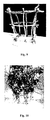
- FIG. 2 illustrates (a) cultivation of Kappaphycus alvarezii on the biodegradable hydrophobic ropes by the raft method, (b) cultivated plant in biodegradable hydrophobic composites based ropes of Examples 15 and 16, and (c) cultivated plant in synthetic ropes. The plant growth was higher in biodegradable ropes compared to synthetic ropes.
- FIG. 3 illustrates (a) flexibility property of biodegradable ropes, (b) empty carry bag with handle of ropes of Examples 14-20, and (c) 5 kg weight in carry bag with handles of ropes of Examples 14-20.
- FIG. 4 illustrates leather belt with beautiful designs made of biodegradable composites ropes of Examples 14-31.
- FIG. 5 illustrates stud caps made of biodegradable composites ropes of Examples 14-31.
- FIG. 6 illustrates bowl/basket made of biodegradable composites rope of Examples 14-31.
- FIG. 7 illustrates storage of vegetables in bowl/basket made of biodegradable composites ropes of Example 38.
- FIG. 8 illustrates storage of bakery items in bowl/basket made of biodegradable composites ropes of Example 38.
- FIG. 9 illustrates decorative pot/jar made of biodegradable composites ropes of Examples 14-31.
- FIG. 10 illustrates flowers in decorative pot/jar made of biodegradable composites ropes of Example 41.
- FIG. 11 illustrates hand belts/bracelet made of biodegradable composites ropes of Examples 14-31.
- FIG. 12 illustrates the drying of cloths on biodegradable composites ropes of Examples 15 and 16.
- the seaweed derived phycocolloids used for the purposes of the present invention are selected from agar bacteriological (product code: 0140132), agarose (product code: 014011) and alginate (product code: 1947295) which were commercially procured from M/s Sisco Research Laboratories (SRL) Pvt. Ltd. Mumbai-400 093, Maharashtra, India, and semi refined carrageenan (product code: Aqua gel 250) which was commercially procured from M/s Aquagri Processing Pvt. Ltd., New Delhi, India.
- the present invention relates to biodegradable composite materials of controlled hydrophobicity exhibiting high mechanical strength and good flexibility.
- the invention also describes a facile, eco-friendly and one-step process for the preparation of the said materials from the seaweed polysaccharides and their blends through chemical reaction with vinylated monomers like vinyl acetate, acrylamide and acetonitrile.
- the said process comprises: dissolving 1 to 10 wt % of seaweed polysaccharides namely agar, carrageenans, alginate, agarose or their blends in distilled water by microwave heating at 100 degree Celsius for 5 to 15 minutes or by autoclaving at 120 degree Celsius for 30 minutes to obtain a homogeneous solution, adding 0.01 to 0.10 wt % of potassium persulphate (KPS) under stirring to said solution followed by addition of 2 to 16 wt % vinylated monomers, heating the reaction mixture in aqueous medium under reflux conditions at 60 to 85 degree Celsius for 3 to 7 hours with constant stirring, adding 0.5 to 2.0 wt % of plasticizers selected from glycerol, sorbitol, ethylene glycol or other polyols into the reaction mixture and transferring the contents to the desired hollow or tubular devices/moulds made of glass or metal to obtain the desired moulded composites in various shapes, treating the resulting moulded composites with organic
- Alginate 4 0.02 0.5 This produced highly water sensitive biodegradable (2) composites named as Alginate/PAAm-composite (Id). It was observed that the prepared composites were not hydrophobic and thus not suitable to be used for applications such as seaweed cultivation.
- Example 1 Experiments of Example 1 were repeated taking seaweed phycocolloid agarose (4 wt %) which was dissolved in water by autoclave heating at 120 degree Celsius for 30 minutes. To this, 0.02 wt % potassium persulphate (KPS) was added under stirring, followed by addition of 8 wt % acrylamide (AAm). The reaction mixture was heated in aqueous medium under reflux conditions at 80 degree Celsius for 5 h with constant stirring. 0.5 wt % glycerol was added into the heated reaction mixture and then transferred into the desired hollow vessels/devices/moulds to obtain the desired shapes. The resulting moulded composites were treated with organic solvent at a temperature of 25 degree Celsius to remove the unreacted homopolymer followed by air drying. This produced water sensitive biodegradable composites named as Agarose/PAAm-composites (IIa). It was observed that the prepared composites were not hydrophobic and thus not suitable to be used for applications such as seaweed cultivation.
- KPS potassium persulph
- Alginate 8 0.02 0.5 This produced highly water sensitive biodegradable (4) composites named as Alginate/PAAm-composite (IId). It was observed that the prepared composites were not hydrophobic and thus not suitable to be used for applications such as seaweed cultivation.
- Example 1 Experiments of Example 1, were repeated taking seaweed phycocolloid agarose (6 wt %) which was dissolved in water by autoclave heating at 120 degree Celsius for 30 minutes. To this 0.02 wt % potassium persulphate (KPS) was added under stirring, followed by addition of 16 wt % acrylamide (AAm). The reaction mixture was heated in aqueous medium under reflux conditions at 80 degree Celsius for 5 h with constant stirring. 0.5 wt % glycerol was added into the heated reaction mixture and then transferred into the desired hollow vessels/devices/moulds to obtain the desired shapes. The resulting moulded composites were treated with organic solvent at a temperature of 25 degree Celsius to remove the unreacted homopolymer followed by air drying. This produced water sensitive biodegradable composites named as Agarose/PAAm-composites (IIIa). It was observed that the prepared composites were not hydrophobic and thus not suitable to be used for applications such as seaweed cultivation.
- KPS potassium persulphate
- Alginate 16 0.02 0.5 This produced highly water sensitive biodegradable (6) composites named as Alginate/PAAm-composite (IIId). It was observed that the prepared composites were not hydrophobic and thus not suitable to be used for applications such as seaweed cultivation.
- Example 1 Experiments of Example 1, were repeated taking seaweed phycocolloid agarose (2 wt %) which was dissolved in water by microwave heating at 100 degree Celsius for 15 minutes. To this 0.02 wt % potassium persulphate (KPS) was added under stirring, followed by the addition of 4 wt % acrylonitrile (ACN). The reaction mixture was heated in aqueous medium under reflux conditions at 80 degree Celsius for 5 h with constant stirring. 0.5 wt % glycerol was added into the heated reaction mixture and then transferred into the desired hollow vessels/devices/moulds to obtain the desired shapes. The resulting moulded composites were treated with organic solvent at a temperature of 25 degree Celsius to remove the unreacted homopolymer followed by air drying. This produced water sensitive biodegradable composites named as Agarose/PACN-composites (IVa). It was observed that the prepared composite was not hydrophobic and thus not suitable to be used for applications such as seaweed cultivation.
- KPS potassium persulphate
- Alginate 4 0.02 0.5 This produced highly water sensitive biodegradable (2) composites named as Alginate/PACN-composite (IVd). It was observed that the prepared composites were not hydrophobic and thus not suitable to be used for applications such as seaweed cultivation.
- Example 2 Experiments of Example 2, were repeated taking seaweed phycocolloid agarose (4 wt %) which was dissolved in water by autoclave heating at 120 degree Celsius for 30 minutes. To this 0.02 wt % potassium persulphate (KPS) was added under stirring, followed by addition of 8 wt % acrylonitrile (ACN). The reaction mixture was heated in aqueous medium under reflux conditions at 80 degree Celsius for 5 h with constant stirring. 0.5 wt % glycerol was added into the heated reaction mixture and then transferred into the desired hollow vessels/devices/moulds to obtain the desired shapes. The resulting moulded composites were treated with organic solvent at a temperature of 25 degree Celsius to remove the unreacted homopolymer followed by air drying. This produced water sensitive biodegradable composites named as Agarose/PACN-composites (Va). It was observed that the prepared composites were not hydrophobic and thus not suitable to be used for applications such as seaweed cultivation.
- KPS potassium persulph
- Alginate 8 0.02 0.5 This produced highly water sensitive biodegradable (4) composites named as Alginate/PACN-composite (Vd). It was observed that the prepared composites were not hydrophobic and thus not suitable to be used for applications such as seaweed cultivation.
- Example 3 Experiments of Example 3, were repeated taking seaweed phycocolloid agarose (6 wt %) which was dissolved in water by autoclave heating at 120 degree Celsius for 30 minutes. To this 0.02 wt % potassium persulphate (KPS) was added under stirring, followed by addition of 16 wt % acrylonitrile (ACN). The reaction mixture was heated in aqueous medium under reflux conditions at 80 degree Celsius for 5 h with constant stirring. 0.5 wt % glycerol was added into the heated reaction mixture and then transferred into the desired hollow vessels/devices/moulds to obtain the desired shapes. The resulting moulded composites were treated with organic solvent at a temperature of 25 degree Celsius to remove the unreacted homopolymer followed by air drying. This produced water sensitive biodegradable composites named as Agarose/PACN-composites (VIa). It was observed that the prepared composites were not hydrophobic and thus not suitable to be used for applications such as seaweed cultivation.
- KPS potassium persulph
- Alginate 16 0.02 0.5 This produced highly water sensitive biodegradable (6) composites named as Alginate/PACN-composite (VId). It was observed that the prepared composites were not hydrophobic and thus not suitable to be used for applications such as seaweed cultivation.
- Example 1 Experiments of Example 1, were repeated taking seaweed phycocolloid agarose (2 wt %) which was dissolved in water by microwave heating at 100 degree Celsius for 15 minutes. To this 0.02 wt % potassium persulphate (KPS) was added under stirring, followed by the addition of 2 wt % polyvinyl alcohol (PVA). The reaction mixture was heated in aqueous medium under reflux conditions at 80 degree Celsius for 5 h with constant stirring. 0.5 wt % glycerol was added into the heated reaction mixture and then transferred into the desired hollow vessels/devices/moulds to obtain the desired shapes. The resulting moulded composites were treated with organic solvent at a temperature of 25 degree Celsius to remove the unreacted homopolymer followed by air drying. This produced water sensitive biodegradable composites named as Agarose/PVA-composites (VIIa). It was observed that the prepared composites were not hydrophobic and thus not suitable to be used for applications such as seaweed cultivation.
- KPS potassium persulph
- Alginate 2 0.02 0.5 This produced highly water sensitive biodegradable (2) composites named as Alginate/PVA-composite (VIId). It was observed that the prepared composites were not hydrophobic and thus not suitable to be used for applications such as seaweed cultivation.
- Example 2 Experiments of Example 2, were repeated taking seaweed phycocolloid agarose (4 wt %) which was dissolved in water by autoclave heating at 120 degree Celsius for 30 minutes. To this 0.02 wt % potassium persulphate (KPS) was added under stirring, followed by addition of 8 wt % PVA. The reaction mixture was heated in aqueous medium under reflux conditions at 80 degree Celsius for 5 h with constant stirring. 0.5 wt % glycerol was added into the heated reaction mixture and then transferred into the desired hollow vessels/devices/moulds to obtain the desired shapes. The resulting moulded composites were treated with organic solvent at a temperature of 25 degree Celsius to remove the unreacted homopolymer followed by air drying. This produced water sensitive biodegradable composites named as Agarose/PVA-composites (VIIIa). It was observed that the prepared composites were not hydrophobic and thus not suitable to be used for applications such as seaweed cultivation.
- KPS potassium persulphate
- Alginate 8 0.02 0.5 This produced highly water sensitive biodegradable (4) composites named as Alginate/PVA-composite (VIIId). It was observed that the prepared composites were not hydrophobic and thus not suitable to be used for applications such as seaweed cultivation.
- Example 3 Experiments of Example 3, were repeated taking seaweed phycocolloid agarose (6 wt %) which was dissolved in water by autoclave heating at 120 degree Celsius for 30 minutes. To this 0.02 wt % potassium persulphate (KPS) was added under stirring, followed by addition of 16 wt % PVA. The reaction mixture was heated in aqueous medium under reflux conditions at 80 degree Celsius for 5 h with constant stirring. 0.5 wt % glycerol was added into the heated reaction mixture and then transferred into the desired hollow vessels/devices/moulds to obtain the desired shapes. The resulting moulded composites were treated with organic solvent at a temperature of 25 degree Celsius to remove the unreacted homopolymer followed by air drying. This produced water sensitive biodegradable composites named as Agarose/PVA-composites (IXa). It was observed that the prepared composites were not hydrophobic and thus not suitable to be used for applications such as seaweed cultivation.
- KPS potassium persulphate
- Alginate 16 0.02 0.5 This produced highly water sensitive biodegradable (6) composites named as Alginate/PVA-composite (IXd). It was observed that the prepared composites were not hydrophobic and thus not suitable to be used for applications such as seaweed cultivation.
- Example 1 Experiments of Example 1, were repeated taking seaweed phycocolloids agarose (2 wt %) which was dissolved in water by microwave heating at 100 degree Celsius for 15 minutes. To this 0.02 wt % potassium persulphate (KPS) was added under stirring, followed by the addition of 2 wt % vinyl acetate (VAc). The reaction mixture was heated in aqueous medium under reflux conditions at 80 degree Celsius for 5 h under constant stirring and then transferred into the desired hollow vessels/devices/moulds to obtain the desired shapes. The resulting moulded composites were treated with organic solvent at a temperature of 25 degree Celsius to remove the unreacted homopolymer followed by air drying. This produced improved hydrophobicity of the composites named as Agarose/PVAc-composites (Xa). It was observed that the prepared composites are very brittle and non-flexible in nature thus not suitable to be used for applications such as seaweed cultivation.
- KPS potassium persulphate
- VAc vinyl acetate
- Example 2 Experiments of Example 2, were repeated taking seaweed phycocolloid agarose (4 wt %) which was dissolved in water by autoclave heating at 120 degree Celsius for 30 minutes. To this 0.02 wt % potassium persulphate (KPS) was added under stirring, followed by addition of 8 wt % VAc. The reaction mixture was heated in aqueous medium under reflux conditions at 80 degree Celsius for 5 h with constant stirring and then transferred into the desired hollow vessels/devices/moulds to obtain the desired shapes. The resulting moulded composites were treated with organic solvent at a temperature of 25 degree Celsius to remove the unreacted homopolymer followed by air drying. This produced water non sensitive biodegradable composites named as Agarose/PVAc-composites (XIa). It was observed that the prepared composites were brittle, non-flexible and were not suitable to be used for applications such as seaweed cultivation.
- KPS potassium persulphate
- Example 3 Experiments of Example 3, were repeated taking seaweed phycocolloid agarose (6 wt %) which was dissolved in water by autoclave heating at 120 degree Celsius for 30 minutes. To this 0.02 wt % potassium persulphate (KPS) was added under stirring, followed by addition of 16 wt % VAc. The reaction mixture was heated in aqueous medium under reflux conditions at 80 degree Celsius for 5 h with constant stirring and then transferred into the desired hollow vessels/devices/moulds to obtain the desired shapes. The resulting moulded composites were treated with organic solvent at a temperature of 25 degree Celsius to remove the unreacted homopolymer followed by air drying. This produced water non sensitive biodegradable composites named as Agarose/PVAc-composites (XIIa). It was observed that the prepared composites were brittle, non-flexible and were not suitable to be used for applications such as seaweed cultivation.
- KPS potassium persulphate
- Examples 1 to 9 demonstrated that vinylated reagents like AAm, ACN, and PVA produced composites (Ia to IXd), which were water sensitive and thus, were not suitable to be used for water applications such as seaweed cultivation and other similar applications.
- Examples 10 to 12 further demonstrated that vinyl acetate used as reagent produced composites (Xa to XIId) with improved hydrophobicity compared to the parent seaweed phycocolloids, which are non-flexible, brittle in nature, and thus not suitable to be used for seaweed cultivation and other potential applications. These findings also revealed that a suitable plasticizer needs to be added to improve the flexibility and smoothness of these composites.
- Example 13 further demonstrated that vinyl acetate alone used as reagent produced hydrophobic PVAc (XIII) polymers, which are highly sensitive to organic solvents, and hence are not suitable to be used for seaweed cultivation and other applications.
- Example 10 Experiments of Example 10, were repeated taking agarose (2 wt %) which was dissolved in water by microwave heating at 100 degree Celsius for 15 minutes. To this 0.02 wt % potassium persulphate (KPS) was added under stirring, followed by addition of 5 wt % vinyl acetate (VAc). The reaction mixture was heated in aqueous medium under reflux conditions at 80 degree Celsius for 5 h with constant stirring. 0.5 wt % glycerol was added into the reaction mixture and then transferred into the desired hollow vessels/devices/moulds to obtain the desired shapes. The resulting moulded composites were treated with organic solvent at a temperature of 25 degree Celsius to remove the unreacted homopolymer followed by air drying.
- KPS potassium persulphate
- VAc vinyl acetate
- Agarose/PVAc-composites This produced water non sensitive biodegradable composites named as Agarose/PVAc-composites (XIVa), which are of low strength and thus not suitable to be used for applications such as seaweed cultivation.
- Example 11 Experiments of Example 11, were repeated taking agarose (4 wt %) which was dissolved in water by microwave heating at 100 degree Celsius for 15 minutes. To this 0.02 wt % potassium persulphate (KPS) was added under stirring, followed by addition of 10 wt % vinyl acetate (VAc). The reaction mixture was heated in aqueous medium under reflux conditions at 80 degree Celsius for 5 h with constant stirring. 0.5 wt % glycerol was added into the reaction mixture and then transferred into the desired hollow vessels/devices/moulds to obtain the desired shapes. The resulting moulded composites were treated with organic solvent at a temperature of 25 degree Celsius to remove the unreacted homopolymer followed by air drying.
- KPS potassium persulphate
- VAc vinyl acetate
- Example 12 Experiments of Example 12, were repeated taking agarose (6 wt %) which was dissolved in water by microwave heating at 100 degree Celsius for 15 minutes. To this 0.02 wt % potassium persulphate (KPS) was added under stirring, followed by addition of 12 wt % vinyl acetate (VAc). The reaction mixture was heated in aqueous medium under reflux conditions at 80 degree Celsius for 5 h with constant stirring. 0.5 wt % glycerol was added into the reaction mixture and then transferred into the desired hollow vessels/devices/moulds to obtain the desired shapes. The resulting moulded composites were treated with organic solvent at a temperature of 25 degree Celsius to remove the unreacted homopolymer followed by air drying.
- KPS potassium persulphate
- VAc vinyl acetate
- Examples 15 and 16 further demonstrated that seaweed phycocolloids namely agarose and agar (4 and 6 wt %) with VAc produced water non sensitive biodegradable composites (XVa,b and XVIa,b). It was observed that the prepared composites (XVa,b and XVIa,b) were hydrophobic biodegradable with high strength and thus suitable to be used for potential applications such as seaweed cultivation.
- Example 15 Experiments of Example 15, were repeated taking hybrid of agarose and semi-refined carrageenans in 1:1 w/w ratio (4 wt %) which was dissolved in water by microwave heating at 100 degree Celsius for 15 minutes. To this 0.02 wt % potassium persulphate (KPS) was added under stirring, followed by addition of 8 wt % vinyl acetate (VAc). The reaction mixture was heated in aqueous medium under reflux conditions at 80 degree Celsius for 5 h with constant stirring. 0.5 wt % glycerol was added into the reaction mixture and then transferred into the desired hollow vessels/devices/moulds to obtain the desired shapes.
- KPS potassium persulphate
- VAc vinyl acetate
- the resulting moulded composites were treated with organic solvent at a temperature of 25 degree Celsius to remove the unreacted homopolymer followed by air drying.
- Example 16 Experiments of Example 16, were repeated taking hybrid of agarose and semi-refined carrageenan (SRC) in 1:1 w/w ratio (6 wt %) which was dissolved in water by microwave heating at 100 degree Celsius for 15 minutes. To this 0.02 wt % potassium persulphate (KPS) was added under stirring, followed by addition of 13 wt % vinyl acetate (VAc). The reaction mixture was heated in aqueous medium under reflux conditions at 80 degree Celsius for 5 h with constant stirring. 0.5 wt % glycerol was added into the reaction mixture and then transferred into the desired hollow vessels/devices/moulds to obtain the desired shapes.
- KPS potassium persulphate
- VAc 13 wt % vinyl acetate
- the resulting moulded composites were treated with organic solvent at a temperature of 25 degree Celsius to remove the unreacted homopolymer followed by air drying.
- Example 15 Experiments of Example 15, were repeated taking hybrid of agar and semi-refined carrageenan (SRC) in 1:1 w/w ratio (4 wt %) which was dissolved in water by microwave heating at 100 degree Celsius for 15 minutes. To this 0.02 wt % potassium persulphate (KPS) was added under stirring, followed by addition of 11 wt % vinyl acetate (VAc). The reaction mixture was heated in aqueous medium under reflux conditions at 80 degree Celsius for 5 h with constant stirring. 0.5 wt % glycerol was added into the reaction mixture and then transferred into the desired hollow vessels/devices/moulds to obtain the desired shapes.
- KPS potassium persulphate
- VAc 11 wt % vinyl acetate
- the resulting moulded composites were treated with organic solvent at a temperature of 25 degree Celsius to remove the unreacted homopolymer followed by air drying.
- Example 16 Experiments of Example 16, were repeated taking hybrid of agar and semi-refined carrageenan (SRC) in 1:1 w/w ratio (6 wt %) which was dissolved in water by microwave heating at 100 degree Celsius for 15 minutes. To this 0.02 wt % potassium persulphate (KPS) was added under stirring, followed by addition of 9 wt % vinyl acetate (VAc). The reaction mixture was heated in aqueous medium under reflux conditions at 80 degree Celsius for 5 h with constant stirring. 0.5 wt % glycerol was added into the reaction mixture and then transferred into the desired hollow vessels/devices/moulds to obtain the desired shapes.
- KPS potassium persulphate
- VAc 9 wt % vinyl acetate
- the resulting moulded composites were treated with organic solvent at a temperature of 25 degree Celsius to remove the unreacted homopolymer followed by air drying.
- Example 20 Effect of different reaction parameters and other variables in Example 20.
- Hybrid Seaweed phycocolloids VAc KPS Plasticizer wt %) (wt %) (wt %) (wt %) (wt %) Remarks/Observations Agar/Alginate 9 0.02 0.5
- hydrophobic biodegradable composites prepared in Examples 14-31 were treated with color reducing food grade dyes namely Brilliant Blue FCF, Allura Red AC, and Tartrazine, etc. to obtain desired colored ropes for making decorative or attractive household items ( FIG. 1 ).
- color reducing food grade dyes namely Brilliant Blue FCF, Allura Red AC, and Tartrazine, etc.
- the hydrophobic biodegradable composites prepared in Examples 15 and 16 were used for seaweed cultivation in seawater environment.
- Kappaphycus alvarezii was collected from south east coast (Thoniturai, 79° 10′29′′E-9° 16′21′′N), Mandapam-623 519, Tamil Nadu, India, and was cultivated at Thoniturai, 79° 10′29′′E-9° 16′21′′N on the biodegradable hydrophobic ropes prepared from the composites of Examples 15 and 16 and fixed with planting rope (8 mm diameter which was Garware polypropylene rope). The plant was allowed to grow in open sea water and periodical observations were made to ensure the acclimatization of the biodegradable rope in marine environment.
- hydrophobic biodegradable composites prepared in Examples 14-20 were used as handles of carry bags, which have capacity to carry 2-5 kg weight ( FIG. 3 ).
- Seaweed polysaccharides based handles offers superior feeling when carrying bags compared to synthetic handles.
- No adverse effects were observed on using handles of ropes prepared in Examples 14-20 up to 3 months. After 3 months there is no considerable effect on the performance and quality of biodegradable ropes. These are eco-friendly and easy to dispose off in the open environment.
- the hydrophobic biodegradable composites prepared as per the procedure of Example 14-31 were used as biodegradable design e.g. in designing belts, bags and other leather or cloth items ( FIG. 4 ). It offers very smooth and soft feeling while wearing belts with biodegradable design compared to synthetic handles. Even after 2 months, there was no considerable change in the performance and quality of these designs.
- the hydrophobic biodegradable composites prepared as per the procedure of Example 14-31 were used as biodegradable cap of studs ( FIG. 5 ). Stud cap of biodegradable ropes offers superior feeling when worn in ear compared to synthetic one. Even after 2 months there was no adverse effect or any allergic effect on the skin of the ear.
- the hydrophobic biodegradable composites prepared as per the procedure of Example 14-31 were used for the preparation of biodegradable bowl, which has capacity to carry 2-5 kg weight ( FIG. 6 ). It was observed that it offer attractive look while in use of keeping vegetables and fruits in biodegradable bowl compared to synthetic. Even after 9 months there was no considerable change in the performance and quality of the biodegradable bowls.
- the bowl prepared as per Example 38 was used as biodegradable bowl for storage of vegetable and fruits items, which has the capacity to carry 2-5 kg weight ( FIG. 7 ). It was observed that it offers attractive look in house when vegetable and fruits were kept in biodegradable bowl as compared to synthetic. Even after 9 months there was no considerable change in the performance and quality of the biodegradable bowls.
- the bowl prepared as per Example 38 was used as biodegradable bowl for storage of biscuits, chips and other food packets, which has the capacity to carry 2-5 kg weight ( FIG. 8 ). It was observed that it offers attractive look in house when biscuit and chips and other food packets were kept in biodegradable bowl as compared to synthetic. Even after 9 months there was no considerable change in the performance and quality of the biodegradable bowls.
- hydrophobic biodegradable composites prepared as per the procedure of Examples 14-20 were used as biodegradable flower pots/jars, which provided good looks and feeling ( FIGS. 9 and 10 ). It was observed that it offers attractive look in house when flowers were kept in biodegradable pots/jars. Even after 11 months there was no considerable change in the performance and quality of the biodegradable flower pots/jars.
- hydrophobic biodegradable composites prepared in Examples 14-31 were used for making biodegradable gift items including hand belts ( FIG. 11 ). It was observed that it offered attractive look in hands. Even after 6 months there was no adverse effect on the skin as well as the performance and quality of the biodegradable hand belts.
- hydrophobic biodegradable composites prepared in Examples 15 and 16 were used for drying of cloths in environmental conditions ( FIG. 12 ). It was observed that it offered attractive look in houses and no rusting was observed even after 3 months of use. After 3 months there was no adverse change on the smoothness as well as on the performance and quality of the hydrophobic biodegradable composites.
- the present invention provides a solution to said problem by providing biodegradable hydrophobic composites which can be moulded in form of ropes that can be well used for seaweed cultivation.
- the prepared biodegradable hydrophobic composites exhibit high thermal stability which allows them to be sterilized at high temperature for wider applications such as in pharmaceutical applications.
- the prepared biodegradable hydrophobic composites exhibit stability in water up to 90 degree Celsius which may be used for wider aqueous applications such as cultivation of seaweeds in open sea water.
Landscapes
- Chemical & Material Sciences (AREA)
- Health & Medical Sciences (AREA)
- Chemical Kinetics & Catalysis (AREA)
- Medicinal Chemistry (AREA)
- Polymers & Plastics (AREA)
- Organic Chemistry (AREA)
- Life Sciences & Earth Sciences (AREA)
- Molecular Biology (AREA)
- General Health & Medical Sciences (AREA)
- Engineering & Computer Science (AREA)
- Biochemistry (AREA)
- Materials Engineering (AREA)
- Graft Or Block Polymers (AREA)
- Compositions Of Macromolecular Compounds (AREA)
- Polysaccharides And Polysaccharide Derivatives (AREA)
- Laminated Bodies (AREA)
- Biological Depolymerization Polymers (AREA)
- Other Resins Obtained By Reactions Not Involving Carbon-To-Carbon Unsaturated Bonds (AREA)
Abstract
The present invention relates to biodegradable hydrophobic composite materials and a process for the preparation of said hydrophobic biodegradable materials from the seaweed polysaccharides through grafting reaction with vinylated monomers e.g. vinyl acetate. The said composites can be used as a substitute for synthetic ropes for varied applications including seaweed cultivation in the open sea. The results of cultivation experiments showed that ropes are suitable for cultivation of seaweeds in the sea environment, and exhibit higher biomass yield as compared to synthetic ropes. The prepared composites are very flexible and can be used for making handles for carry bags and for the preparation of biodegradable designs, bowls, pots, jars, gift items, stud caps and bracelets.
Description
This application is a US 371 of International Application No. PCT/IN2013/000617, filed Oct. 11, 2013, entitled BIODEGRADABLE HYDROPHOBIC COMPOSITE MATERIALS AND PROCESS FOR THE PREPARATION THEREOF, which claims the benefit of IN Application No. 3194/DEL/2012, filed Oct. 12, 2012, entitled BIODEGRADABLE HYDROPHOBIC COMPOSITE MATERIALS AND PROCESS FOR THE PREPARATION THEREOF, the entireties of which are incorporated herein by reference.
The present invention relates to biodegradable hydrophobic composite materials and process for the preparation thereof. In particular, the present invention relates to a process for the preparation of controlled/completely hydrophobic biodegradable composites that can be used for varied applications including seaweed cultivation in the open sea. The prepared composites can be sterilised in water without solubilisation, are flexible and can be used for numerous applications including carry bag handles, bowls, pots, gift items, studs, accessories for ornaments, etc. along with the advantage that they can be safely and easily disposed off in the environment.
Conventionally, ropes are made out of coconut fibre and other natural materials. Such ropes are widely used in seaweed cultivation, but in general, the durability of the ropes is low in seawater. Ropes are also available which are made up of synthetic/semi-synthetic fibres such as nylon, polyester, etc. Such ropes are routinely used in seaweed cultivation but their low/poor biodegradability is a great concern.
Reference may be made to the publication of Ghosh et al. (Polymer International, 53, 339-343; 2004) wherein it has been stated that grafting of vinyl acetate onto the low density polyethylene (LDPE)-starch blend films makes them suitable for printing and packaging applications. They used commercially available blend films made of synthetic polymer and starch under inert atmosphere using hazardous chemicals (e.g. HNO3) during process, and used for printing and packaging applications. It is pertinent to mention here that the said reference does not mention the use of seaweed phycocolloids for making biodegradable hydrophobic composites for aqueous applications including seaweed cultivation.
Reference may be made to U.S. Pat. No. 6,294,202B1, wherein disclosed is a process for making water-insoluble biodegradable composition containing polyanionic polysaccharides and hydrophobic bioabsorbable polymers to prepare film, foam, mesh matte, or to cast on top of any surface. It is pertinent to mention here that the said reference reports the formation of compositions containing polyanionic polysaccharides and hydrophobic bioabsorbable polymers or copolymers. However, there is no report on the formation of biodegradable hydrophobic composites based on seaweed polysaccharides for novel applications including seaweed cultivation in sea water.
Reference may be made to US20040171545A1, wherein synthetic protein copolymers with plastic and elastic properties, and methods producing the copolymers, are disclosed. The process producing synthetic protein copolymer comprising at least one hydrophilic block and at least one hydrophobic block. It is pertinent to mention here that the said reference reports the formation of synthetic protein copolymers with plastic and elastic properties and does not describe any composition or process for the preparation of biodegradable hydrophobic composites based on seaweed phycocolloids for potential applications including seaweed cultivation.
Reference may be made to US20050161857A1, wherein recited is a method of producing a polymeric fibre (poly caprolactone) comprising: dissolving at least one fibre forming polymer in a solvent so as to form a polymer solution, and feeding the polymer solution under gravity through an orifice directly into a non-solvent to cause formation of a polymeric fibre in the non-solvent. It is pertinent to mention here that the said reference reports the formation of polymeric fibres from the synthetic polymer (e.g. poly-caprolactone) and does not describe any composition or process for the preparation of biodegradable hydrophobic composites based on seaweed phycocolloids.
Reference may be made to US20030118692A1, wherein reported is a method for the preparation of biodegradable elastomeric material from glycerol and diacid like malonic acid, succinic acid, adipic acid, glutaric acid, pimelic acid etc. to prepare different shapes of particles, tubes, spheare, strand, coiled strands capillary network, film, fibers, mesh and sheet. It is pertinent to mention here that the said reference reports the formation of biodegradable elastomeric materials using glycerol and diacids and does not describe any composition or process for the preparation of biodegradable hydrophobic composites based on seaweed phycocolloids for novel applications including seaweed cultivations in sea water.
Reference may be made to JP2000-093080, wherein disclosed is the use of polysaccharides like polyvinyl alcohol, polyvinyl pyrrolidone, sodium alginate, etc. in preparation of antibacterial and antifungal agent composition, which is soluble when used. It is pertinent to mention here that the said reference reports the formation of soluble materials and does not describe any composition or process for the preparation of biodegradable hydrophobic composites which are insoluble in water.
Reference may be made to Polymer International. 2001 50: 1103-1108, wherein use of poly(vinyl alcohol) and K-carrageenan in preparation of films based on poly(vinyl alcohol)/K-carrageenan blends and their gelling properties is reported. However, there is no report on the formation of hydrophobic materials including ropes and other materials in this article.
Reference may be made to WO 2006059180 A3, wherein use of inexpensive semi-refined kappa carrageenan as a seaweed polysaccharide in preparation of tough, biodegradable films with improved performance over films obtained from refined kappa carrageenan is disclosed. However, these films are highly moisture sensitive and readily soluble in water and thus cannot be applied in activities such as seaweed cultivation in open sea water environment.
In short, it may be summarized that the hitherto reported prior art shows that the polymeric composites prepared from purely petrochemical substances or entirely natural substance have some inherent drawbacks. Totally synthetic polymeric materials have problems of degradation, while natural polymeric materials are highly moisture sensitive and not suitable for aqueous applications owing to their solubility. For instance, seaweed derived phycocolloids such as agar, carrageenans, agarose, alginate are excellent gel formers and used as thickeners, but are highly moisture sensitive. Further, due to their high solubility in water and hydrophilic nature, these can be used only for the formation of films and are not good for aqueous applications because the hitherto reported composites made from them readily solubilise in water. In order to be eco-friendly as well as suitable for applications in water the composites must be hydrophobic.
Therefore, the inventors of the present invention realized that there exists a dire need to solve the issues discussed above and provide a composite through copolymerisation technique, to obtain controlled/completely hydrophobic biodegradable materials. It is evident from the prior art that there are no examples wherein polymers derived from seaweeds are utilised for preparation of hydrophobic composite materials which can be used for varied aqueous applications including seaweed cultivation in the sea water conditions.
The main object of the present invention is to provide composite materials which are biodegradable as well as water resistant i.e. exhibit hydrophobicity.
Another object of the present invention is to provide a process for the preparation of such hydrophobic biodegradable composites.
Still another object of the invention is to provide said hydrophobic composites using hydrophilic natural polymers and synthetic organic monomers.
Yet another object of the invention is to prepare ropes from the developed composites in a manner such that they are suitable for seaweed cultivation, are durable during use and at the same time, can be made to biodegrade in the soil/sea bottom.
Still another object of the invention is to provide a process for the preparation of the said composites wherein hydrophobicity is imparted by introducing vinylated monomers through chemical interventions.
The present invention relates to biodegradable hydrophobic composite materials and process for the preparation thereof. The invention further relates to the preparation of hydrophobic biodegradable composites from natural polymers such as the seaweed polysaccharides through grafting reaction with vinylated monomers e.g. vinyl acetate. The developed composites can be moulded in the form of ropes, which can be used as a substitute of synthetic ropes for varied applications including seaweed cultivation in the open sea. The results of cultivation experiments showed that the prepared ropes are suitable for cultivation of seaweeds in the sea environment, and yield higher biomass as compared to the braiders or nylon ropes. These ropes are very flexible and can also be used for making handles for carry bags, small ladies bags, and small school children bags. In addition, they can also be used for the preparation of designs on bowls, pots, jars and gift items like rings and bracelets.
In an embodiment, the present invention provides a process which uses agar, agarose, alginate and carrageenan alone as the seaweed polymers or uses combination of agar, agarose, alginate and carrageenan as the seaweed polymers.
In another embodiment, the present invention provides a process which makes the hydrophilic polymers hydrophobic so as to tolerate seawater conditions.
In still another embodiment, the present invention provides a process which imparts such hydrophobicity through grafting of vinylated monomers.
In yet another embodiment, the present invention provides a process which imparts complete hydrophobicity through grafting of vinyl acetate and other such monomers.
In still another embodiment, the present invention provides a process which tests the durability and efficacy of these composites in seawater and dry conditions.
In yet another embodiment, the present invention provides a process which demonstrates the biodegradability of the composites in soil.
In a further embodiment of the present invention, the ropes are prepared from seaweed polymer in a manner such that they are suitable for the preparation of biodegradable handles for carry bags.
In another embodiment of the present invention, the ropes are prepared from seaweed polymer in a manner such that they are suitable for the preparation of biodegradable bowls, pots or jars for storage of food and non-food items.
In still another embodiment of the present invention, the ropes are prepared from seaweed polymer in a manner such that they are suitable for the preparation of biodegradable flower pots or jars for decoration.
In yet another embodiment of the present invention, the ropes are prepared from seaweed polymer in a manner such that they are suitable for the preparation of designs on traditional items such as belts, bags and other small modern and fashionable items.
In still another embodiment of the present invention, the ropes are prepared from seaweed polymer in a manner such that they are suitable for the preparation of colored biodegradable ropes.
In yet another embodiment of the present invention, the biodegradable ropes with controlled/complete hydrophobicity may be obtained from agar, agarose, carrageenans and alginate as well as their hybrid blends and more particularly agar and agarose.
In still another embodiment of the present invention, the microwave/conventional/autoclave heating is carried out at a temperature in the range of 100 to 120 degree Celsius for a period of 10 to 30 minutes to dissolve the seaweed polysaccharides or their blends and more particularly 15 minutes to obtain a homogeneous solution.
In yet another embodiment of the present invention, the autoclave treatment is done at a temperature in the range of 100 to 120 degree Celsius to dissolve the seaweed polysaccharides or their blends for 10 to 30 minutes and more particularly 25 minutes to obtain a homogeneous solution.
In still another embodiment of the present invention, the water soluble initiator potassium persulphate (KPS) is added to the polymer mixture in the range of 0.01% to 0.04 wt % for the formation of active sites for grafting and more particularly 0.02 wt %.
In yet another embodiment of the present invention, the water soluble initiator potassium persulphate (KPS) is added to the polymer mixture at a temperature in the range of 60 to 90 degree Celsius under stirring.
In still another embodiment of the present invention, the vinylated monomer is added in the polymer and initiator KPS mixture in the range of 2 to 16 wt % and more particularly 6 wt %.
In yet another embodiment of the present invention, the vinylated monomer is added in the polymer and initiator KPS mixture in the temperature range of 60 to 85 degree Celsius under stirring for grafting with polymers present in the reaction mixture, more particularly at 80 degree Celsius.
In still another embodiment of the present invention, the biodegradable composites with complete/controlled hydrophobicity is obtained by grafting of agar, agarose, carrageenan and alginate as well as their hybrids with vinylated monomers, preferably vinyl acetate.
In yet another embodiment of the present invention, the biodegradable composites with complete hydrophobicity is obtained by grafting of agar or agarose as well as their hybrids with vinyl acetate.
In still another embodiment of the present invention, the additive glycerol is added in the temperature range of 60 to 90 degree Celsius under stirring to inhibit the brittleness of the resulting ropes.
In yet another embodiment of the present invention, the resulting molded composites are treated with organic solvents to remove the excess amount of unreacted monomer as well as water under ambient conditions.
In still another embodiment of the present invention, the organic solvent used is selected from the group consisting of acetone, methanol, ethanol, iso-propyl alcohol, ethyl acetate and tetra hydro furan (THF).
In yet another embodiment of the present invention, the solvent treated composites are dried in air followed by an optional oven drying at 50 degree Celsius for 2 hours.
In still another embodiment of the present invention, the seaweed polysaccharides are chemically hydrophobised to have the controlled/complete hydrophobicity.
In yet another embodiment of the present invention, the biodegradable composites prepared from agar or agarose or carrageenans or their blends are suitable for seaweed cultivation in open sea water environment.
In still another embodiment of the present invention, the quality of biodegradable composites is same after recovering from the sea water environment after 45 days or after first harvest of the seaweed.
In yet another embodiment of the present invention, the biodegradable composites prepared from seaweed polysaccharides or their blends are suitable for the preparation of biodegradable carry bags handles, bowl, pots, designs, ornaments accessories, etc.
In still another embodiment of the present invention, the quality of biodegradable composites in the form of handles, bowl, pots, designs, ornaments accessories, etc. is same after storing in ambient conditions or using longer time up to more than one year.
In yet another embodiment of the present invention, the biodegradable composites are easy to dispose off in the open environment.
In one embodiment, the hydrophobic biodegradable composite comprises [a] a seaweed derived polysaccharide in the range of 30 to 80 wt %; [b] a vinylated monomer in the range of 8 to 60 wt %; and [c] a plasticizer in the range of 2 to 15 wt %; wherein, the moisture content of said composites is in the range of 5 to 15 wt %. The seaweed derived polysaccharide may be used alone or as a blend or combination of seaweed derived polysaccharides.
In another embodiment, the seaweed derived polysaccharides are selected from the group consisting of agar, agarose, alginate, and carrageenan.
In yet another embodiment, wherein the seaweed derived polysaccharide is agar and/or agarose.
In one embodiment, the vinylated monomer is vinyl acetate.
In another embodiment, the plasticizer is selected from the group consisting of glycerol, ethylene glycol, and sorbitol. In one embodiment, the plasticizer is glycerol
In one embodiment, the present invention provides a process for the preparation of the composites described above. The process may comprise [a] dissolving 1 to 8 wt % of seaweed polysaccharides or their blends in distilled water by heating at a temperature in the range of 100 to 120 degrees Celsius for 5 to 30 minutes to obtain a homogeneous solution; [b] adding 0.01 to 0.10 wt % potassium persulphate to the homogeneous solution as obtained in step [a] under stirring followed by addition of 2 to 16 wt % vinylated monomers and heating at a temperature in the range of 60 to 85 degrees Celsius in aqueous medium under reflux conditions for 3 to 7 hours under constant stirring to obtain a reaction mixture; [c] adding 0.5 to 5.0 wt % plasticizers into the reaction mixture as obtained in step [b] and transferring the contents into desired hollow or tubular devices and/or moulds to obtain moulded composites; [d] treating the moulded composites as obtained in step [c] with organic solvent at a temperature in the range of 20 to 30 degrees Celsius to remove unreacted homopolymer followed by air drying to obtain desired hydrophobic biodegradable composites.
In one embodiment the hollow or tubular devices and/or moulds are made of glass, plastic, steel, or wood.
In yet another embodiment, the organic solvent is selected from the group consisting of isopropyl alcohol, acetone, methanol, ethanol, ethyl acetate, and tetra hydro furan
The seaweed derived phycocolloids used for the purposes of the present invention are selected from agar bacteriological (product code: 0140132), agarose (product code: 014011) and alginate (product code: 1947295) which were commercially procured from M/s Sisco Research Laboratories (SRL) Pvt. Ltd. Mumbai-400 093, Maharashtra, India, and semi refined carrageenan (product code: Aqua gel 250) which was commercially procured from M/s Aquagri Processing Pvt. Ltd., New Delhi, India.
The present invention relates to biodegradable composite materials of controlled hydrophobicity exhibiting high mechanical strength and good flexibility. The invention also describes a facile, eco-friendly and one-step process for the preparation of the said materials from the seaweed polysaccharides and their blends through chemical reaction with vinylated monomers like vinyl acetate, acrylamide and acetonitrile. According to a non-limiting exemplary embodiment, the said process comprises: dissolving 1 to 10 wt % of seaweed polysaccharides namely agar, carrageenans, alginate, agarose or their blends in distilled water by microwave heating at 100 degree Celsius for 5 to 15 minutes or by autoclaving at 120 degree Celsius for 30 minutes to obtain a homogeneous solution, adding 0.01 to 0.10 wt % of potassium persulphate (KPS) under stirring to said solution followed by addition of 2 to 16 wt % vinylated monomers, heating the reaction mixture in aqueous medium under reflux conditions at 60 to 85 degree Celsius for 3 to 7 hours with constant stirring, adding 0.5 to 2.0 wt % of plasticizers selected from glycerol, sorbitol, ethylene glycol or other polyols into the reaction mixture and transferring the contents to the desired hollow or tubular devices/moulds made of glass or metal to obtain the desired moulded composites in various shapes, treating the resulting moulded composites with organic solvent at a temperature in the range of 20 to 30 degree Celsius so as to remove the unreacted homopolymer followed by air drying under ambient conditions to yield the desired biodegradable hydrophobic composites suitable for multifarious applications including seaweed cultivation in the open seawater environment.
The following examples are given by way of illustration and therefore should not be construed to limit the scope of the present invention.
Seaweed phycocolloid (SP) agarose (2 wt %) was dissolved in water by microwave (MW) heating at 100 degree Celsius for 15 minutes. To this, 0.02 wt % potassium persulphate (KPS) was added under stirring, followed by addition of 4 wt % acrylamide (AAm). The reaction mixture was heated in aqueous medium under reflux conditions at 80 degree Celsius for 5 h with constant stirring. 0.5 wt % glycerol was added into the heated reaction mixture and then transferred into the desired hollow vessels/devices/moulds to obtain the desired shapes. The resulting moulded composites were treated with organic solvent at a temperature of 25 degree Celsius to remove the unreacted homopolymer followed by air drying. This produced water sensitive biodegradable composites named as Agarose/PAAm-composite (Ia). It was observed that the prepared composites were not hydrophobic and thus not suitable to be used for applications such as seaweed cultivation.
| TABLE 1 |
| Effect of different reaction parameters and other variables in Example 1. |
| Seaweed | ||||
| phycocolloid | AAm | KPS | Plasticizer | |
| (wt %) | (wt %) | (wt %) | (wt %) | Remarks/Observations |
| Agar | 4 | 0.02 | 0.5 | This produced water sensitive biodegradable composites |
| (2) | named as Agar/PAAm-composite (Ib). It was observed | |||
| that the prepared composites were not hydrophobic and | ||||
| thus not suitable to be used for applications such as | ||||
| seaweed cultivation. | ||||
| Semi- | 4 | 0.02 | 0.5 | This produced water sensitive biodegradable composites |
| refined | named as SRC/PAAm-composite (Ic). It was observed | |||
| carrageenan | that the prepared composites were not hydrophobic and | |||
| (SRC) | thus not suitable to be used for applications such as | |||
| (2) | seaweed cultivation. | |||
| Alginate | 4 | 0.02 | 0.5 | This produced highly water sensitive biodegradable |
| (2) | composites named as Alginate/PAAm-composite (Id). It | |||
| was observed that the prepared composites were not | ||||
| hydrophobic and thus not suitable to be used for | ||||
| applications such as seaweed cultivation. | ||||
Experiments of Example 1 were repeated taking seaweed phycocolloid agarose (4 wt %) which was dissolved in water by autoclave heating at 120 degree Celsius for 30 minutes. To this, 0.02 wt % potassium persulphate (KPS) was added under stirring, followed by addition of 8 wt % acrylamide (AAm). The reaction mixture was heated in aqueous medium under reflux conditions at 80 degree Celsius for 5 h with constant stirring. 0.5 wt % glycerol was added into the heated reaction mixture and then transferred into the desired hollow vessels/devices/moulds to obtain the desired shapes. The resulting moulded composites were treated with organic solvent at a temperature of 25 degree Celsius to remove the unreacted homopolymer followed by air drying. This produced water sensitive biodegradable composites named as Agarose/PAAm-composites (IIa). It was observed that the prepared composites were not hydrophobic and thus not suitable to be used for applications such as seaweed cultivation.
| TABLE 2 |
| Effect of different reaction parameters and other variables in Example 2. |
| Seaweed | ||||
| phycocolloid | AAm | KPS | Plasticizer | |
| (wt %) | (wt %) | (wt %) | (wt %) | Remarks/Observations |
| Agar | 8 | 0.02 | 0.5 | This produced water sensitive biodegradable composites |
| (4) | named as Agar/PAAm-composite (IIb). It was observed that | |||
| the prepared composites were not hydrophobic and thus not | ||||
| suitable to be used for applications such as seaweed | ||||
| cultivation. | ||||
| Semi- | 8 | 0.02 | 0.5 | This produced water sensitive biodegradable composites |
| refined | named as SRC/PAAm-composite (IIc). It was observed that | |||
| carrageenan | the prepared composites were not hydrophobic and thus not | |||
| (SRC) | suitable to be used for applications such as seaweed | |||
| (4) | cultivation. | |||
| Alginate | 8 | 0.02 | 0.5 | This produced highly water sensitive biodegradable |
| (4) | composites named as Alginate/PAAm-composite (IId). It | |||
| was observed that the prepared composites were not | ||||
| hydrophobic and thus not suitable to be used for applications | ||||
| such as seaweed cultivation. | ||||
Experiments of Example 1, were repeated taking seaweed phycocolloid agarose (6 wt %) which was dissolved in water by autoclave heating at 120 degree Celsius for 30 minutes. To this 0.02 wt % potassium persulphate (KPS) was added under stirring, followed by addition of 16 wt % acrylamide (AAm). The reaction mixture was heated in aqueous medium under reflux conditions at 80 degree Celsius for 5 h with constant stirring. 0.5 wt % glycerol was added into the heated reaction mixture and then transferred into the desired hollow vessels/devices/moulds to obtain the desired shapes. The resulting moulded composites were treated with organic solvent at a temperature of 25 degree Celsius to remove the unreacted homopolymer followed by air drying. This produced water sensitive biodegradable composites named as Agarose/PAAm-composites (IIIa). It was observed that the prepared composites were not hydrophobic and thus not suitable to be used for applications such as seaweed cultivation.
| TABLE 3 |
| Effect of different reaction parameters and other variables in Example 3. |
| Seaweed | ||||
| phycocolloid | AAm | KPS | Plasticizer | |
| (wt %) | (wt %) | (wt %) | (wt %) | Remarks/Observations |
| Agar | 16 | 0.02 | 0.5 | This produced water sensitive biodegradable composites |
| (6) | named as Agar/PAAm-composite (IIIb). It was observed that | |||
| the prepared composites were not hydrophobic and thus not | ||||
| suitable to be used for applications such as seaweed | ||||
| cultivation. | ||||
| Semi- | 16 | 0.02 | 0.5 | This produced water sensitive biodegradable composites |
| refined | named as SRC/PAAm-composite (IIIc). It was observed that | |||
| carrageenan | the prepared composites were not hydrophobic and thus not | |||
| (SRC) | suitable to be used for applications such as seaweed | |||
| (6) | cultivation. | |||
| Alginate | 16 | 0.02 | 0.5 | This produced highly water sensitive biodegradable |
| (6) | composites named as Alginate/PAAm-composite (IIId). It was | |||
| observed that the prepared composites were not hydrophobic | ||||
| and thus not suitable to be used for applications such as | ||||
| seaweed cultivation. | ||||
Experiments of Example 1, were repeated taking seaweed phycocolloid agarose (2 wt %) which was dissolved in water by microwave heating at 100 degree Celsius for 15 minutes. To this 0.02 wt % potassium persulphate (KPS) was added under stirring, followed by the addition of 4 wt % acrylonitrile (ACN). The reaction mixture was heated in aqueous medium under reflux conditions at 80 degree Celsius for 5 h with constant stirring. 0.5 wt % glycerol was added into the heated reaction mixture and then transferred into the desired hollow vessels/devices/moulds to obtain the desired shapes. The resulting moulded composites were treated with organic solvent at a temperature of 25 degree Celsius to remove the unreacted homopolymer followed by air drying. This produced water sensitive biodegradable composites named as Agarose/PACN-composites (IVa). It was observed that the prepared composite was not hydrophobic and thus not suitable to be used for applications such as seaweed cultivation.
| TABLE 4 |
| Effect of different reaction parameters and other variables in Example 4. |
| Seaweed | ||||
| phycocolloid | ACN | KPS | Plasticizer | |
| (wt %) | (wt %) | (wt %) | (wt %) | Remarks/Observations |
| Agar | 4 | 0.02 | 0.5 | This produced water sensitive biodegradable |
| (2) | composites named as Agar/PACN-composite (IVb). | |||
| It was observed that the prepared composites were | ||||
| not hydrophobic and thus not suitable to be used for | ||||
| applications such as seaweed cultivation. | ||||
| Semi- | 4 | 0.02 | 0.5 | This produced water sensitive biodegradable |
| refined | composites named as SRC/PACN-composite (IVc). | |||
| carrageenan | It was observed that the prepared composites were | |||
| (SRC) | not hydrophobic and thus not suitable to be used for | |||
| (2) | applications such as seaweed cultivation. | |||
| Alginate | 4 | 0.02 | 0.5 | This produced highly water sensitive biodegradable |
| (2) | composites named as Alginate/PACN-composite | |||
| (IVd). It was observed that the prepared composites | ||||
| were not hydrophobic and thus not suitable to be | ||||
| used for applications such as seaweed cultivation. | ||||
Experiments of Example 2, were repeated taking seaweed phycocolloid agarose (4 wt %) which was dissolved in water by autoclave heating at 120 degree Celsius for 30 minutes. To this 0.02 wt % potassium persulphate (KPS) was added under stirring, followed by addition of 8 wt % acrylonitrile (ACN). The reaction mixture was heated in aqueous medium under reflux conditions at 80 degree Celsius for 5 h with constant stirring. 0.5 wt % glycerol was added into the heated reaction mixture and then transferred into the desired hollow vessels/devices/moulds to obtain the desired shapes. The resulting moulded composites were treated with organic solvent at a temperature of 25 degree Celsius to remove the unreacted homopolymer followed by air drying. This produced water sensitive biodegradable composites named as Agarose/PACN-composites (Va). It was observed that the prepared composites were not hydrophobic and thus not suitable to be used for applications such as seaweed cultivation.
| TABLE 5 |
| Effect of different reaction parameters and other variables in Example 5. |
| Seaweed | ||||
| phycocolloid | ACN | KPS | Plasticizer | |
| (wt %) | (wt %) | (wt %) | (wt %) | Remarks/Observations |
| Agar | 8 | 0.02 | 0.5 | This produced water sensitive biodegradable composites |
| (4) | named as Agar/PACN-composite (Vb). It was observed that | |||
| the prepared composites were not hydrophobic and thus not | ||||
| suitable to be used for applications such as seaweed | ||||
| cultivation. | ||||
| Semi-refined | 8 | 0.02 | 0.5 | This produced water sensitive biodegradable composites |
| carrageenan | named as SRC/PACN-composite (Vc). It was observed that | |||
| (SRC) | the prepared composites were not hydrophobic and thus not | |||
| (4) | suitable to be used for applications such as seaweed | |||
| cultivation. | ||||
| Alginate | 8 | 0.02 | 0.5 | This produced highly water sensitive biodegradable |
| (4) | composites named as Alginate/PACN-composite (Vd). It | |||
| was observed that the prepared composites were not | ||||
| hydrophobic and thus not suitable to be used for applications | ||||
| such as seaweed cultivation. | ||||
Experiments of Example 3, were repeated taking seaweed phycocolloid agarose (6 wt %) which was dissolved in water by autoclave heating at 120 degree Celsius for 30 minutes. To this 0.02 wt % potassium persulphate (KPS) was added under stirring, followed by addition of 16 wt % acrylonitrile (ACN). The reaction mixture was heated in aqueous medium under reflux conditions at 80 degree Celsius for 5 h with constant stirring. 0.5 wt % glycerol was added into the heated reaction mixture and then transferred into the desired hollow vessels/devices/moulds to obtain the desired shapes. The resulting moulded composites were treated with organic solvent at a temperature of 25 degree Celsius to remove the unreacted homopolymer followed by air drying. This produced water sensitive biodegradable composites named as Agarose/PACN-composites (VIa). It was observed that the prepared composites were not hydrophobic and thus not suitable to be used for applications such as seaweed cultivation.
| TABLE 6 |
| Effect of different reaction parameters and other variables in Example 6. |
| Seaweed | ||||
| phycocolloid | ACN | KPS | Plasticizer | |
| (wt %) | (wt %) | (wt %) | (wt %) | Remarks/Observations |
| Agar | 16 | 0.02 | 0.5 | This produced water sensitive biodegradable composites |
| (6) | named as Agar/PACN-composite (VIb). It was observed that | |||
| the prepared composites were not hydrophobic and thus not | ||||
| suitable to be used for applications such as seaweed | ||||
| cultivation. | ||||
| Semi- | 16 | 0.02 | 0.5 | This produced water sensitive biodegradable composites |
| refined | named as SRC/PACN-composite (VIc). It was observed that | |||
| carrageenan | the prepared composites were not hydrophobic and thus not | |||
| (SRC) | suitable to be used for applications such as seaweed | |||
| (6) | cultivation. | |||
| Alginate | 16 | 0.02 | 0.5 | This produced highly water sensitive biodegradable |
| (6) | composites named as Alginate/PACN-composite (VId). It was | |||
| observed that the prepared composites were not hydrophobic | ||||
| and thus not suitable to be used for applications such as | ||||
| seaweed cultivation. | ||||
Experiments of Example 1, were repeated taking seaweed phycocolloid agarose (2 wt %) which was dissolved in water by microwave heating at 100 degree Celsius for 15 minutes. To this 0.02 wt % potassium persulphate (KPS) was added under stirring, followed by the addition of 2 wt % polyvinyl alcohol (PVA). The reaction mixture was heated in aqueous medium under reflux conditions at 80 degree Celsius for 5 h with constant stirring. 0.5 wt % glycerol was added into the heated reaction mixture and then transferred into the desired hollow vessels/devices/moulds to obtain the desired shapes. The resulting moulded composites were treated with organic solvent at a temperature of 25 degree Celsius to remove the unreacted homopolymer followed by air drying. This produced water sensitive biodegradable composites named as Agarose/PVA-composites (VIIa). It was observed that the prepared composites were not hydrophobic and thus not suitable to be used for applications such as seaweed cultivation.
| TABLE 7 |
| Effect of different reaction parameters and other variables in Example 7. |
| Seaweed | ||||
| phycocolloid | PVA | KPS | Plasticizer | |
| (wt %) | (wt %) | (wt %) | (wt %) | Remarks/Observations |
| Agar | 2 | 0.02 | 0.5 | This produced water sensitive biodegradable |
| (2) | composites named as Agar/PVA-composite (VIIb). It | |||
| was observed that the prepared composites were not | ||||
| hydrophobic and thus not suitable to be used for | ||||
| applications such as seaweed cultivation. | ||||
| Semi-refined | 2 | 0.02 | 0.5 | This produced water sensitive biodegradable |
| carrageenan | composites named as SRC/PVA-composite (VIIc). It | |||
| (SRC) | was observed that the prepared composites were not | |||
| (2) | hydrophobic and thus not suitable to be used for | |||
| applications such as seaweed cultivation. | ||||
| Alginate | 2 | 0.02 | 0.5 | This produced highly water sensitive biodegradable |
| (2) | composites named as Alginate/PVA-composite | |||
| (VIId). It was observed that the prepared composites | ||||
| were not hydrophobic and thus not suitable to be used | ||||
| for applications such as seaweed cultivation. | ||||
Experiments of Example 2, were repeated taking seaweed phycocolloid agarose (4 wt %) which was dissolved in water by autoclave heating at 120 degree Celsius for 30 minutes. To this 0.02 wt % potassium persulphate (KPS) was added under stirring, followed by addition of 8 wt % PVA. The reaction mixture was heated in aqueous medium under reflux conditions at 80 degree Celsius for 5 h with constant stirring. 0.5 wt % glycerol was added into the heated reaction mixture and then transferred into the desired hollow vessels/devices/moulds to obtain the desired shapes. The resulting moulded composites were treated with organic solvent at a temperature of 25 degree Celsius to remove the unreacted homopolymer followed by air drying. This produced water sensitive biodegradable composites named as Agarose/PVA-composites (VIIIa). It was observed that the prepared composites were not hydrophobic and thus not suitable to be used for applications such as seaweed cultivation.
| TABLE 8 |
| Effect of different reaction parameters and other variables in Example 8. |
| Seaweed | ||||
| phycocolloid | PVA | KPS | Plasticizer | |
| (wt %) | (wt %) | (wt %) | (wt %) | Remarks/Observations |
| Agar | 8 | 0.02 | 0.5 | This produced water sensitive biodegradable composites |
| (4) | named as Agar/PVA-composite (VIIIb). It was observed | |||
| that the prepared composites were not hydrophobic and thus | ||||
| not suitable to be used for applications such as seaweed | ||||
| cultivation. | ||||
| Semi-refined | 8 | 0.02 | 0.5 | This produced water sensitive biodegradable composites |
| carrageenan | named as SRC/PVA-composite (VIIIc). It was observed that | |||
| (SRC) | the prepared composites were not hydrophobic and thus not | |||
| (4) | suitable to be used for applications such as seaweed | |||
| cultivation. | ||||
| Alginate | 8 | 0.02 | 0.5 | This produced highly water sensitive biodegradable |
| (4) | composites named as Alginate/PVA-composite (VIIId). It | |||
| was observed that the prepared composites were not | ||||
| hydrophobic and thus not suitable to be used for applications | ||||
| such as seaweed cultivation. | ||||
Experiments of Example 3, were repeated taking seaweed phycocolloid agarose (6 wt %) which was dissolved in water by autoclave heating at 120 degree Celsius for 30 minutes. To this 0.02 wt % potassium persulphate (KPS) was added under stirring, followed by addition of 16 wt % PVA. The reaction mixture was heated in aqueous medium under reflux conditions at 80 degree Celsius for 5 h with constant stirring. 0.5 wt % glycerol was added into the heated reaction mixture and then transferred into the desired hollow vessels/devices/moulds to obtain the desired shapes. The resulting moulded composites were treated with organic solvent at a temperature of 25 degree Celsius to remove the unreacted homopolymer followed by air drying. This produced water sensitive biodegradable composites named as Agarose/PVA-composites (IXa). It was observed that the prepared composites were not hydrophobic and thus not suitable to be used for applications such as seaweed cultivation.
| TABLE 9 |
| Effect of different reaction parameters and other variables in Example 9. |
| Seaweed | ||||
| phycocolloid | PVA | KPS | Plasticizer | |
| (wt %) | (wt %) | (wt %) | (wt %) | Remarks/Observations |
| Agar | 16 | 0.02 | 0.5 | This produced water sensitive biodegradable composites |
| (6) | named as Agar/PVA-composite (IXb). It was observed | |||
| that the prepared composites were not hydrophobic and | ||||
| thus not suitable to be used for applications such as | ||||
| seaweed cultivation. | ||||
| Semi-refined | 16 | 0.02 | 0.5 | This produced water sensitive biodegradable composites |
| carrageenan | named as SRC/PVA-composite (IXc). It was observed | |||
| (SRC) | that the prepared composites were not hydrophobic and | |||
| (6) | thus not suitable to be used for applications such as | |||
| seaweed cultivation. | ||||
| Alginate | 16 | 0.02 | 0.5 | This produced highly water sensitive biodegradable |
| (6) | composites named as Alginate/PVA-composite (IXd). It | |||
| was observed that the prepared composites were not | ||||
| hydrophobic and thus not suitable to be used for | ||||
| applications such as seaweed cultivation. | ||||
Experiments of Example 1, were repeated taking seaweed phycocolloids agarose (2 wt %) which was dissolved in water by microwave heating at 100 degree Celsius for 15 minutes. To this 0.02 wt % potassium persulphate (KPS) was added under stirring, followed by the addition of 2 wt % vinyl acetate (VAc). The reaction mixture was heated in aqueous medium under reflux conditions at 80 degree Celsius for 5 h under constant stirring and then transferred into the desired hollow vessels/devices/moulds to obtain the desired shapes. The resulting moulded composites were treated with organic solvent at a temperature of 25 degree Celsius to remove the unreacted homopolymer followed by air drying. This produced improved hydrophobicity of the composites named as Agarose/PVAc-composites (Xa). It was observed that the prepared composites are very brittle and non-flexible in nature thus not suitable to be used for applications such as seaweed cultivation.
| TABLE 10 |
| Effect of different reaction parameters and other variables in Example 10. |
| Seaweed | ||||
| phycocolloid | VAc | KPS | Plasticizer | |
| (wt %) | (wt %) | (wt %) | (wt %) | Remarks/Observations |
| Agar | 2 | 0.02 | NIL | This produced improved hydrophobicity of the |
| (2) | composites named as Agar/PVAc-composites (Xb). It | |||
| was observed that the prepared composites are very | ||||
| brittle and non-flexible in nature thus not suitable to be | ||||
| used for applications such as seaweed cultivation. | ||||
| Semi- | 2 | 0.02 | NIL | This produced improved hydrophobicity of the |
| refined | composites named as SRC/PVAc-composites (Xc). It | |||
| carrageenan | was observed that the prepared composites are very | |||
| (SRC) | brittle and non-flexible in nature thus not suitable to be | |||
| (2) | used for applications such as seaweed cultivation. | |||
| Alginate | 2 | 0.02 | NIL | This produced improved hydrophobicity of the |
| (2) | composites named as Alginate/PVAc-composites (Xd). | |||
| It was observed that the prepared composites are very | ||||
| brittle and non-flexible in nature thus not suitable to be | ||||
| used for applications such as seaweed cultivation. | ||||
Experiments of Example 2, were repeated taking seaweed phycocolloid agarose (4 wt %) which was dissolved in water by autoclave heating at 120 degree Celsius for 30 minutes. To this 0.02 wt % potassium persulphate (KPS) was added under stirring, followed by addition of 8 wt % VAc. The reaction mixture was heated in aqueous medium under reflux conditions at 80 degree Celsius for 5 h with constant stirring and then transferred into the desired hollow vessels/devices/moulds to obtain the desired shapes. The resulting moulded composites were treated with organic solvent at a temperature of 25 degree Celsius to remove the unreacted homopolymer followed by air drying. This produced water non sensitive biodegradable composites named as Agarose/PVAc-composites (XIa). It was observed that the prepared composites were brittle, non-flexible and were not suitable to be used for applications such as seaweed cultivation.
| TABLE 11 |
| Effect of different reaction parameters and other variables in Example 11. |
| Seaweed | ||||
| phycocolloid | VAc | KPS | Plasticizer | |
| (wt %) | (wt %) | (wt %) | (wt %) | Remarks/Observations |
| Agar | 8 | 0.02 | NIL | This produced water non sensitive biodegradable |
| (4) | composites named as Agar/PVAc-composite (XIb). It was | |||
| observed that the prepared composites were brittle, non- | ||||
| flexible and thus not suitable to be used for applications | ||||
| such as seaweed cultivation. | ||||
| Semi-refined | 8 | 0.02 | NIL | This produced water non sensitive biodegradable |
| carrageenan | composites named as SRC/PVAc-composite (XIc). It was | |||
| (SRC) | observed that the prepared composites were brittle, non- | |||
| (4) | flexible and thus not suitable to be used for applications | |||
| such as seaweed cultivation. | ||||
| Alginate | 8 | 0.02 | NIL | This produced highly water non sensitive biodegradable |
| (4) | composites named as Alginate/PVAc-composite (XId). It | |||
| was observed that the prepared composites were brittle, non- | ||||
| flexible and thus not suitable to be used for applications | ||||
| such as seaweed cultivation. | ||||
Experiments of Example 3, were repeated taking seaweed phycocolloid agarose (6 wt %) which was dissolved in water by autoclave heating at 120 degree Celsius for 30 minutes. To this 0.02 wt % potassium persulphate (KPS) was added under stirring, followed by addition of 16 wt % VAc. The reaction mixture was heated in aqueous medium under reflux conditions at 80 degree Celsius for 5 h with constant stirring and then transferred into the desired hollow vessels/devices/moulds to obtain the desired shapes. The resulting moulded composites were treated with organic solvent at a temperature of 25 degree Celsius to remove the unreacted homopolymer followed by air drying. This produced water non sensitive biodegradable composites named as Agarose/PVAc-composites (XIIa). It was observed that the prepared composites were brittle, non-flexible and were not suitable to be used for applications such as seaweed cultivation.
| TABLE 12 |
| Effect of different reaction parameters and other variables in Example 12. |
| Seaweed | ||||
| phycocolloid | VAc | KPS | Plasticizer | |
| (wt %) | (wt %) | (wt %) | (wt %) | Remarks/Observations |
| Agar | 16 | 0.02 | NIL | This produced water non sensitive biodegradable |
| (6) | composites named as Agar/PVAc-composite (XIIb). It was | |||
| observed that the prepared composites were brittle, non- | ||||
| flexible and thus not suitable to be used for applications | ||||
| such as seaweed cultivation. | ||||
| Semi-refined | 16 | 0.02 | NIL | This produced water non sensitive biodegradable |
| carrageenan | composites named as SRC/PVAc-composite (XIIc). It was | |||
| (SRC) | observed that the prepared composites were brittle, non- | |||
| (6) | flexible and thus not suitable to be used for applications | |||
| such as seaweed cultivation. | ||||
| Alginate | 16 | 0.02 | NIL | This produced highly sensitive to water biodegradable |
| (6) | composites named as Alginate/PVAc-composite (XIId). It | |||
| was observed that the prepared composites were brittle, | ||||
| non-flexible and thus not suitable to be used for | ||||
| applications such as seaweed cultivation. | ||||
Vinyl acetate 10 wt % was added in 100 ml distilled water. To this 0.02 wt % potassium persulphate (KPS) was added under stirring. The reaction mixture was heated in aqueous medium under reflux conditions at 80 degree Celsius for 5 h with constant stirring. The reaction mixture was then transferred into the desired hollow vessels/devices/moulds to obtain the desired shapes. The resulting polymers were treated with organic solvent at room temperature. These produced polymers named as PVAc (XIII), which dispersed in water, exhibited low strength, and were highly sensitive to organic solvents.
Findings from Examples 1 to 13
Examples 1 to 9 demonstrated that vinylated reagents like AAm, ACN, and PVA produced composites (Ia to IXd), which were water sensitive and thus, were not suitable to be used for water applications such as seaweed cultivation and other similar applications. In addition, Examples 10 to 12 further demonstrated that vinyl acetate used as reagent produced composites (Xa to XIId) with improved hydrophobicity compared to the parent seaweed phycocolloids, which are non-flexible, brittle in nature, and thus not suitable to be used for seaweed cultivation and other potential applications. These findings also revealed that a suitable plasticizer needs to be added to improve the flexibility and smoothness of these composites. Example 13 further demonstrated that vinyl acetate alone used as reagent produced hydrophobic PVAc (XIII) polymers, which are highly sensitive to organic solvents, and hence are not suitable to be used for seaweed cultivation and other applications.
Experiments of Example 10, were repeated taking agarose (2 wt %) which was dissolved in water by microwave heating at 100 degree Celsius for 15 minutes. To this 0.02 wt % potassium persulphate (KPS) was added under stirring, followed by addition of 5 wt % vinyl acetate (VAc). The reaction mixture was heated in aqueous medium under reflux conditions at 80 degree Celsius for 5 h with constant stirring. 0.5 wt % glycerol was added into the reaction mixture and then transferred into the desired hollow vessels/devices/moulds to obtain the desired shapes. The resulting moulded composites were treated with organic solvent at a temperature of 25 degree Celsius to remove the unreacted homopolymer followed by air drying. This produced water non sensitive biodegradable composites named as Agarose/PVAc-composites (XIVa), which are of low strength and thus not suitable to be used for applications such as seaweed cultivation. Yield of composites: 2.5-5.0 g, containing agarose 40-80 wt %, PVAc 12-45 wt %, glycerol 2-10 wt % and moisture 5-10 wt % [Optimum yield is 5±0.5 g, composition: Seaweed phycocolloids=40±2 wt %, PVAc=45±2 wt %, glycerol 5±1 wt % and moisture 10±1 wt %].
| TABLE 14 |
| Effect of different reaction parameters and other variables in Example 14. |
| Seaweed | ||||
| phycocolloid | VAc | KPS | Plasticizer | |
| (wt %) | (wt %) | (wt %) | (wt %) | Remarks/Observations |
| Agar | 5 | 0.02 | 0.5 | This produced water non sensitive biodegradable |
| (2) | composites named as Agar/PVAc-composite (XIVb). It | |||
| was observed that the prepared composites having | ||||
| improved hydrophobicity and low strength and thus not | ||||
| suitable to be used for applications such as seaweed | ||||
| cultivation. | ||||
| Semi-refined | 5 | 0.02 | 0.5 | This produced water non sensitive biodegradable |
| carrageenan | composites named as SRC/PVAc-composite (XIVc). It | |||
| (SRC) | was observed that the prepared composites having | |||
| (2) | improved hydrophobicity and low strength and thus not | |||
| suitable to be used for applications such as seaweed | ||||
| cultivation. | ||||
| Alginate | 5 | 0.02 | 0.5 | This produced water non sensitive biodegradable |
| (2) | composites named as Alginate/PVAc-composite (XIVd). | |||
| It was observed that the prepared composites having | ||||
| improved hydrophobicity and low strength and thus not | ||||
| suitable to be used for applications such as seaweed | ||||
| cultivation. | ||||
Experiments of Example 11, were repeated taking agarose (4 wt %) which was dissolved in water by microwave heating at 100 degree Celsius for 15 minutes. To this 0.02 wt % potassium persulphate (KPS) was added under stirring, followed by addition of 10 wt % vinyl acetate (VAc). The reaction mixture was heated in aqueous medium under reflux conditions at 80 degree Celsius for 5 h with constant stirring. 0.5 wt % glycerol was added into the reaction mixture and then transferred into the desired hollow vessels/devices/moulds to obtain the desired shapes. The resulting moulded composites were treated with organic solvent at a temperature of 25 degree Celsius to remove the unreacted homopolymer followed by air drying. This produced water non sensitive biodegradable composites named as Agarose/PVAc-composites (XVa). It was observed that the prepared composites were hydrophobic biodegradable with high strength and thus suitable to be used for applications such as seaweed cultivation. Yield of composites: 4.8-11.2 g, containing agarose 35-86 wt %, PVAc 10-61 wt %, glycerol 5-12 wt % and moisture 7-10 wt % [Optimum yield is 11.2±0.5 g, composition: Seaweed phycocolloids=36±2 wt %, PVAc=50±2 wt %, glycerol 5±1 wt % and moisture 8±1 wt %].
| TABLE 15 |
| Effect of different reaction parameters and other variables in Example 15. |
| Seaweed | ||||
| phycocolloid | VAc | KPS | Plasticizer | |
| (wt %) | (wt %) | (wt %) | (wt %) | Remarks/Observations |
| Agar | 10 | 0.02 | 0.5 | This produced water non sensitive biodegradable |
| (4) | composites named as Agar/PVAc-composite (XVb). It | |||
| was observed that the prepared composites were | ||||
| hydrophobic biodegradable with high strength and thus | ||||
| suitable to be used for potential applications such as | ||||
| seaweed cultivation. | ||||
| Semi-refined | 10 | 0.02 | 0.5 | This produced water non sensitive biodegradable |
| carrageenan | composites named as SRC/PVAc-composite (XVc). It | |||
| (SRC) | was observed that the prepared composites having | |||
| (4) | improved hydrophobicity and low strength and thus not | |||
| suitable to be used for applications such as seaweed | ||||
| cultivation. | ||||
| Alginate | 10 | 0.02 | 0.5 | This produced water non sensitive biodegradable |
| (4) | composites named as Alginate/PVAc-composite (XVd). | |||
| It was observed that the prepared composites having | ||||
| improved hydrophobicity and low strength and thus not | ||||
| suitable to be used for applications such as seaweed | ||||
| cultivation. | ||||
Experiments of Example 12, were repeated taking agarose (6 wt %) which was dissolved in water by microwave heating at 100 degree Celsius for 15 minutes. To this 0.02 wt % potassium persulphate (KPS) was added under stirring, followed by addition of 12 wt % vinyl acetate (VAc). The reaction mixture was heated in aqueous medium under reflux conditions at 80 degree Celsius for 5 h with constant stirring. 0.5 wt % glycerol was added into the reaction mixture and then transferred into the desired hollow vessels/devices/moulds to obtain the desired shapes. The resulting moulded composites were treated with organic solvent at a temperature of 25 degree Celsius to remove the unreacted homopolymer followed by air drying. This produced water non sensitive biodegradable composites named as Agarose/PVAc-composites (XVIa). It was observed that the prepared composites were hydrophobic biodegradable with high strength and thus suitable to be used for applications such as seaweed cultivation. Yield of composites: 7.5-14.1 g, containing agarose 42-80 wt %, PVAc 13-40 wt %, glycerol 2-8 wt % and moisture 5-10 wt % [Optimum yield is 14.1±0.5 g, composition: Seaweed phycocolloids=43±2 wt %, PVAc=42±2 wt %, glycerol 7±1 wt % and moisture 8±1 wt %].
| TABLE 16 |
| Effect of different reaction parameters and other variables in Example 16. |
| Seaweed | ||||
| phycocolloid | VAc | KPS | Plasticizer | |
| (wt %) | (wt %) | (wt %) | (wt %) | Remarks/Observations |
| Agar | 12 | 0.02 | 0.5 | This produced water non sensitive biodegradable |
| (6) | composites named as Agar/PVAc-composite (XVIb). It | |||
| was observed that the prepared composites were | ||||
| hydrophobic biodegradable with high strength and thus | ||||
| suitable to be used for potential applications such as | ||||
| seaweed cultivation. | ||||
| Semi-refined | 12 | 0.02 | 0.5 | This produced water non sensitive biodegradable |
| carrageenan | composites named as SRC/PVAc-composite (XVIc). It | |||
| (SRC) | was observed that the prepared composites having | |||
| (6) | improved hydrophobicity and low strength and thus not | |||
| suitable to be used for applications such as seaweed | ||||
| cultivation. | ||||
| Alginate | 12 | 0.02 | 0.5 | This produced water non sensitive biodegradable |
| (6) | composites named as Alginate/PVAc-composite (XVId). | |||
| It was observed that the prepared composites having | ||||
| improved hydrophobicity and low strength and thus not | ||||
| suitable to be used for applications such as seaweed | ||||
| cultivation. | ||||
Examples 15 and 16 further demonstrated that seaweed phycocolloids namely agarose and agar (4 and 6 wt %) with VAc produced water non sensitive biodegradable composites (XVa,b and XVIa,b). It was observed that the prepared composites (XVa,b and XVIa,b) were hydrophobic biodegradable with high strength and thus suitable to be used for potential applications such as seaweed cultivation.
Experiments of Example 15, were repeated taking hybrid of agarose and semi-refined carrageenans in 1:1 w/w ratio (4 wt %) which was dissolved in water by microwave heating at 100 degree Celsius for 15 minutes. To this 0.02 wt % potassium persulphate (KPS) was added under stirring, followed by addition of 8 wt % vinyl acetate (VAc). The reaction mixture was heated in aqueous medium under reflux conditions at 80 degree Celsius for 5 h with constant stirring. 0.5 wt % glycerol was added into the reaction mixture and then transferred into the desired hollow vessels/devices/moulds to obtain the desired shapes. The resulting moulded composites were treated with organic solvent at a temperature of 25 degree Celsius to remove the unreacted homopolymer followed by air drying. This produced water non sensitive biodegradable composites named as Agarose/SRC/PVAc-composites (XVIIa). It was observed that the prepared composites were hydrophobic biodegradable with high strength and thus suitable to be used for applications such as seaweed cultivation. Yields and compositions of the prepared composites are in the range as given in the Example 15.
| TABLE 17 |
| Effect of different reaction parameters and other variables in Example 17. |
| Hybrid | ||||
| Seaweed | ||||
| phycocolloid | VAc | KPS | Plasticizer | |
| (wt %) | (wt %) | (wt %) | (wt %) | Remarks/Observations |
| Agarose/Agar | 8 | 0.02 | 0.5 | This produced water non sensitive biodegradable |
| (4) | composites named as Agarose/Agar/PVAc-composite | |||
| (XVIIb). It was observed that the prepared composites | ||||
| were hydrophobic biodegradable with high strength and | ||||
| thus suitable to be used for potential applications such as | ||||
| seaweed cultivation. | ||||
| Agarose/Alginate | 8 | 0.02 | 0.5 | This produced water non sensitive biodegradable |
| (4) | composites named as Agarose/Alginate/PVAc-composite | |||
| (XVIIc). It was observed that the prepared composites | ||||
| having improved hydrophobicity and low strength and | ||||
| thus not suitable to be used for applications such as | ||||
| seaweed cultivation. | ||||
Experiments of Example 16, were repeated taking hybrid of agarose and semi-refined carrageenan (SRC) in 1:1 w/w ratio (6 wt %) which was dissolved in water by microwave heating at 100 degree Celsius for 15 minutes. To this 0.02 wt % potassium persulphate (KPS) was added under stirring, followed by addition of 13 wt % vinyl acetate (VAc). The reaction mixture was heated in aqueous medium under reflux conditions at 80 degree Celsius for 5 h with constant stirring. 0.5 wt % glycerol was added into the reaction mixture and then transferred into the desired hollow vessels/devices/moulds to obtain the desired shapes. The resulting moulded composites were treated with organic solvent at a temperature of 25 degree Celsius to remove the unreacted homopolymer followed by air drying. This produced water non sensitive biodegradable composites named as Agarose/SRC/PVAc-composites (XVIIIa). It was observed that the prepared composites were hydrophobic biodegradable with high strength and thus suitable to be used for potential applications such as seaweed cultivation. Yields and compositions of the prepared composites are in the range as given in the Example 16.
| TABLE 18 |
| Effect of different reaction parameters and other variables in Example 18. |
| Hybrid | ||||
| Seaweed | ||||
| phycocolloids | VAc | KPS | Plasticizer | |
| (wt %) | (wt %) | (wt %) | (wt %) | Remarks/Observations |
| Agarose/Agar | 13 | 0.02 | 0.5 | This produced water non sensitive biodegradable |
| (6) | composites named as Agarose/Agar/PVAc-composite | |||
| (XVIIIb). It was observed that the prepared | ||||
| composites were hydrophobic biodegradable with high | ||||
| strength and thus suitable to be used for potential | ||||
| applications such as seaweed cultivation. | ||||
| Agarose/Alginate | 13 | 0.02 | 0.5 | This produced water non sensitive biodegradable |
| (6) | composites named as Agarose/Alginate/PVAc- | |||
| composite (XVIIIc). It was observed that the prepared | ||||
| composites having improved hydrophobicity and low | ||||
| strength and thus not suitable to be used for | ||||
| applications such as seaweed cultivation. | ||||
Experiments of Example 15, were repeated taking hybrid of agar and semi-refined carrageenan (SRC) in 1:1 w/w ratio (4 wt %) which was dissolved in water by microwave heating at 100 degree Celsius for 15 minutes. To this 0.02 wt % potassium persulphate (KPS) was added under stirring, followed by addition of 11 wt % vinyl acetate (VAc). The reaction mixture was heated in aqueous medium under reflux conditions at 80 degree Celsius for 5 h with constant stirring. 0.5 wt % glycerol was added into the reaction mixture and then transferred into the desired hollow vessels/devices/moulds to obtain the desired shapes. The resulting moulded composites were treated with organic solvent at a temperature of 25 degree Celsius to remove the unreacted homopolymer followed by air drying. This produced water non sensitive biodegradable composites named as Agar/SRC/PVAc-composites (XIXa). It was observed that the prepared composites were hydrophobic biodegradable with high strength and thus suitable to be used for potential applications such as seaweed cultivation. Yields and compositions of the prepared composites are in the range as given in the Example 15.
| TABLE 19 |
| Effect of different reaction parameters and other variables in Example 19. |
| Hybrid | ||||
| Seaweed | ||||
| phycocolloids | VAc | KPS | Plasticizer | |
| (wt %) | (wt %) | (wt %) | (wt %) | Remarks/Observations |
| Agar/Alginate | 11 | 0.02 | 0.5 | This produced water non sensitive biodegradable |
| (4) | composites named as Agar/Alginate/PVAc-composite | |||
| (XIXb). It was observed that the prepared composites | ||||
| having improved hydrophobicity and low strength and | ||||
| thus not suitable to be used for applications such as | ||||
| seaweed cultivation. | ||||
Experiments of Example 16, were repeated taking hybrid of agar and semi-refined carrageenan (SRC) in 1:1 w/w ratio (6 wt %) which was dissolved in water by microwave heating at 100 degree Celsius for 15 minutes. To this 0.02 wt % potassium persulphate (KPS) was added under stirring, followed by addition of 9 wt % vinyl acetate (VAc). The reaction mixture was heated in aqueous medium under reflux conditions at 80 degree Celsius for 5 h with constant stirring. 0.5 wt % glycerol was added into the reaction mixture and then transferred into the desired hollow vessels/devices/moulds to obtain the desired shapes. The resulting moulded composites were treated with organic solvent at a temperature of 25 degree Celsius to remove the unreacted homopolymer followed by air drying. This produced water non sensitive biodegradable composites named as Agar/SRC/PVAc-composites (XXa). It was observed that the prepared composites were hydrophobic biodegradable with high strength and thus suitable to be used for potential applications such as seaweed cultivation. Yields and compositions of the prepared composites are in the range as given in the Example 16.
| TABLE 20 |
| Effect of different reaction parameters and other variables in Example 20. |
| Hybrid Seaweed | ||||
| phycocolloids | VAc | KPS | Plasticizer | |
| (wt %) | (wt %) | (wt %) | (wt %) | Remarks/Observations |
| Agar/Alginate | 9 | 0.02 | 0.5 | This produced water non sensitive biodegradable |
| (6) | composites named as Agar/Alginate/PVAc-composite | |||
| (XXb). It was observed that the prepared composites | ||||
| having improved hydrophobicity and low strength and | ||||
| thus not suitable to be used for applications such as | ||||
| seaweed cultivation. | ||||
The experiments of Examples 15 and 16 were repeated taking 7 wt % agarose. To this 0.04 wt % potassium persulphate (KPS) was added under stirring, followed by addition of 14 wt % vinyl acetate (VAc). The reaction mixture was heated in aqueous medium under reflux conditions at 80 degree Celsius for 5 h with constant stirring. 0.5 wt % glycerol was added into the reaction mixture and then transferred into the desired hollow vessels/devices/moulds to obtain the desired shapes. The resulting moulded composites were treated with organic solvent at a temperature of 25 degree Celsius to remove the unreacted homopolymer followed by air drying. This produced water non sensitive biodegradable composites named as Agarose/PVAc-composites (XXI a & a′). It was observed that the prepared composites were hydrophobic biodegradable with high strength and thus suitable to be used for applications such as seaweed cultivation. [Optimum yields (11.4±0.2 g) and compositions of composites with 4 wt % agarose: containing agarose=36±2 wt %, PVAc=50±2 wt %, glycerol 5±1 wt % and moisture 8±1 wt %; while optimum yields (14.3±0.2 g) and compositions of composites with 6 wt % agarose is: agarose=40±2 wt %, PVAc=49±2 wt %, glycerol 5±1 wt % and moisture 6±1 wt %].
| TABLE 21 |
| Effect of different reaction parameters and other variables in Example 21. |
| Seaweed | ||||
| phycocolloid | VAc | KPS | Plasticizer | |
| (wt %) | (wt %) | (wt %) | (wt %) | Remarks/Observations |
| Agar | 14 | 0.04 | 0.5 | This produced water non sensitive biodegradable |
| (7) | composites named as Agar/PVAc-composite (XXIb & | |||
| b′). It was observed that the prepared composites were | ||||
| hydrophobic biodegradable with high strength and thus | ||||
| suitable to be used for potential applications such as | ||||
| seaweed cultivation. | ||||
| Semi-refined | 14 | 0.04 | 0.5 | This produced water non sensitive biodegradable |
| carrageenan | composites named as SRC/PVAc-composite (XXIc & | |||
| (SRC) | c′). It was observed that the prepared composites | |||
| (7) | having improved hydrophobicity and low strength and | |||
| thus not suitable to be used for applications such as | ||||
| seaweed cultivation. | ||||
| Alginate | 14 | 0.04 | 0.5 | This produced water non sensitive biodegradable |
| (7) | composites named as Alginate/PVAc-composite (XXI | |||
| d & d′). It was observed that the prepared composites | ||||
| having improved hydrophobicity and low strength and | ||||
| thus not suitable to be used for applications such as | ||||
| seaweed cultivation. | ||||
The experiments of Examples 15 and 16 were repeated taking 5 wt % agarose. To this 0.08 wt % potassium persulphate (KPS) was added under stirring, followed by addition of 5 wt % vinyl acetate (VAc). The reaction mixture was heated in aqueous medium under reflux conditions at 80 degree Celsius for 5 h with constant stirring. 0.5 wt % glycerol was added into the reaction mixture and then transferred into the desired hollow vessels/devices/moulds to obtain the desired shapes. The resulting moulded composites were treated with organic solvent at a temperature of 25 degree Celsius to remove the unreacted homopolymer followed by air drying. This produced water non sensitive biodegradable composites named as Agarose/PVAc-composites (XXIIa & a′). It was observed that the prepared composites were hydrophobic biodegradable with lower strength than the composites (XVa and XVIa) prepared in Examples 15 and 16 and thus not suitable to be used for applications such as seaweed cultivation. [Optimum yields (11.0±0.5 g) and compositions of composites with 4 wt % agarose: containing agarose=35±2 wt %, PVAc=51±2 wt %, glycerol 5±1 wt % and moisture 8±1 wt %; while optimum yields (13.9±0.5 g) and compositions of composites with 6 wt % agarose is: agarose=39±2 wt %, PVAc=50±2 wt %, glycerol 5±1 wt % and moisture 6±1 wt %].
| TABLE 22 |
| Effect of different reaction parameters and other variables in Example 22. |
| Seaweed | ||||
| phycocolloid | VAc | KPS | Plasticizer | |
| (wt %) | (wt %) | (wt %) | (wt %) | Remarks/Observations |
| Agar | 2-16 | 0.08 | 0.5 | This produced water non sensitive biodegradable |
| (5) | composites named as Agar/PVAc-composite (XXIIb & | |||
| b′). It was observed that the prepared composites were | ||||
| hydrophobic biodegradable with lower strength than the | ||||
| composites (XVb and XVIb) prepared in Examples 15 | ||||
| and 16 and thus not suitable to be used for applications | ||||
| such as seaweed cultivation. | ||||
| Semi-refined | 2-16 | 0.08 | 0.5 | This produced water non sensitive biodegradable |
| carrageenan | composites named as SRC/PVAc-composite (XXIIc & | |||
| (SRC) | c′). It was observed that the prepared composites were | |||
| (5) | hydrophobic biodegradable with lower strength than the | |||
| composites (XVc and XVIc) prepared in Examples 15 | ||||
| and 16 and thus not suitable to be used for applications | ||||
| such as seaweed cultivation. | ||||
| Alginate | 2-16 | 0.08 | 0.5 | This produced water non sensitive biodegradable |
| (5) | composites named as Alginate/PVAc-composite (XXIId | |||
| & d′). It was observed that the prepared composites were | ||||
| hydrophobic biodegradable with lower strength than the | ||||
| composites (XV d and XVI d) prepared in Examples 15 | ||||
| and 16 and thus not suitable to be used for applications | ||||
| such as seaweed cultivation. | ||||
The experiments of Examples 15 and 16 were repeated taking 4 wt % agarose. To this 0.02 wt % potassium persulphate (KPS) was added under stirring, followed by addition of 9 wt % vinyl acetate (VAc). The reaction mixture was heated in aqueous medium under reflux conditions at 80 degree Celsius for 5 h with constant stirring. 1.5 wt % glycerol was added into the reaction mixture and then transferred into the desired hollow vessels/devices/moulds to obtain the desired shapes. The resulting moulded composites were treated with organic solvent at a temperature of 25 degree Celsius to remove the unreacted homopolymer followed by air drying. This produced water non sensitive biodegradable composites named as Agarose/PVAc-composites (XXIIIa & a′). It was observed that the prepared composites were hydrophobic biodegradable with high strength and thus suitable to be used for applications such as seaweed cultivation. Yields and compositions are according to the composites prepared in Examples 15 and 16.
| TABLE 23 |
| Effect of different reaction parameters and other variables in Example 23. |
| Seaweed | ||||
| phycocolloid | VAc | KPS | Plasticizer | |
| (wt %) | (wt %) | (wt %) | (wt %) | Remarks/Observations |
| Agar | 9 | 0.02 | 1.5 | This produced water non sensitive biodegradable composites |
| (4) | named as Agar/PVAc-composite (XXIIIb & b′). It was | |||
| observed that the prepared composites were hydrophobic | ||||
| biodegradable with high strength and thus suitable to be used | ||||
| for potential applications such as seaweed cultivation | ||||
| Semi- | 9 | 0.02 | 1.5 | This produced water non sensitive biodegradable composites |
| refined | named as SRC/PVAc-composite (XXIIIc & c′). It was | |||
| carrageenan | observed that the prepared composites having improved | |||
| (SRC) | hydrophobicity and low strength and thus not suitable to be | |||
| (4) | used for applications such as seaweed cultivation. | |||
| Alginate | 9 | 0.02 | 1.5 | This produced water non sensitive biodegradable composites |
| (4) | named as Alginate/PVAc-composite (XXIIId & d′). It was | |||
| observed that the prepared composites having improved | ||||
| hydrophobicity and low strength and thus not suitable to be | ||||
| used for applications such as seaweed cultivation. | ||||
The experiments of Examples 15 and 16 were repeated taking 4 wt % agarose. To this 0.02 wt % potassium persulphate (KPS) was added under stirring, followed by addition of 14 wt % vinyl acetate (VAc). The reaction mixture was heated in aqueous medium under reflux conditions at 80 degree Celsius for 5 h with constant stirring. 3.0 wt % glycerol was added into the reaction mixture and then transferred into the desired hollow vessels/devices/moulds to obtain the desired shapes. The resulting moulded composites were treated with organic solvent at a temperature of 25 degree Celsius to remove the unreacted homopolymer followed by air drying. This produced water non sensitive biodegradable composites named as Agarose/PVAc-composites (XXIVa & a′). It was observed that the prepared composites were hydrophobic biodegradable and slippery thus not suitable to be used for applications such as seaweed cultivation. Yields and compositions are according to the composites prepared in Examples 15 and 16.
| TABLE 24 |
| Effect of different reaction parameters and other variables in Example 24. |
| Seaweed | ||||
| phycocolloid | VAc | KPS | Plasticizer | |
| (wt %) | (wt %) | (wt %) | (wt %) | Remarks/Observations |
| Agar | 14 | 0.02 | 3.0 | This produced water non sensitive biodegradable |
| (4) | composites named as Agar/PVAc-composite (XXIVb & | |||
| b′). It was observed that the prepared composites were | ||||
| hydrophobic biodegradable with high strength and thus | ||||
| suitable to be used for potential applications such as | ||||
| seaweed cultivation | ||||
| Semi-refined | 14 | 0.02 | 3.0 | This produced water non sensitive biodegradable |
| carrageenan | composites named as SRC/PVAc-composite (XXIVc & | |||
| (SRC) | c′). It was observed that the prepared composites having | |||
| (4) | improved hydrophobicity and low strength and thus not | |||
| suitable to be used for applications such as seaweed | ||||
| cultivation. | ||||
| Alginate | 14 | 0.02 | 3.0 | This produced water non sensitive biodegradable |
| (4) | composites named as Alginate/PVAc-composite (XXIVd | |||
| & d′). It was observed that the prepared composites | ||||
| having improved hydrophobicity and low strength and | ||||
| thus not suitable to be used for applications such as | ||||
| seaweed cultivation. | ||||
The experiments of Examples 15 and 16 were repeated taking 6 wt % agarose. To this 0.02 wt % potassium persulphate (KPS) was added under stirring, followed by addition of 12 wt % vinyl acetate (VAc). The reaction mixture was heated in aqueous medium under reflux conditions at 80 degree Celsius for 5 h with constant stirring. 5.0 wt % glycerol was added into the reaction mixture and then transferred into the desired hollow vessels/devices/moulds to obtain the desired shapes. The resulting moulded composites were treated with organic solvent at a temperature of 25 degree Celsius to remove the unreacted homopolymer followed by air drying. This produced water non sensitive biodegradable composites named as Agarose/PVAc-composites (XXVa & a′). It was observed that the prepared composites were hydrophobic biodegradable and leaching of plasticizer make them slippery and weaken thus not suitable to be used for applications such as seaweed cultivation. Yields and compositions are according to the composites prepared in Examples 15 and 16.
| TABLE 25 |
| Effect of different reaction parameters and other variables in Example 25. |
| Seaweed | ||||
| phycocolloid | VAc | KPS | Plasticizer | |
| (wt %) | (wt %) | (wt %) | (wt %) | Remarks/Observations |
| Agar | 12 | 0.02 | 5.0 | This produced water non sensitive biodegradable |
| (6) | composites named as Agar/PVAc-composite (XXVb & | |||
| b′). It was observed that the prepared composites were | ||||
| hydrophobic biodegradable and leaching of plasticizer | ||||
| make them slippery and weaken thus not suitable to be | ||||
| used for applications such as seaweed cultivation. | ||||
| Semi-refined | 12 | 0.02 | 5.0 | This produced water non sensitive biodegradable |
| carrageenan | composites named as SRC/PVAc-composite (XXVc & | |||
| (SRC) | c′). It was observed that the prepared composites were | |||
| (6) | hydrophobic biodegradable and leaching of plasticizer | |||
| make them slippery and weaken thus not suitable to be | ||||
| used for applications such as seaweed cultivation. | ||||
| Alginate | 12 | 0.02 | 5.0 | This produced water non sensitive biodegradable |
| (6) | composites named as Alginate/PVAc-composite (XXVd | |||
| & d′). It was observed that the prepared composites were | ||||
| hydrophobic biodegradable and leaching of plasticizer | ||||
| make them slippery and weaken thus not suitable to be | ||||
| used for applications such as seaweed cultivation. | ||||
The experiments of Examples 15 and 16 were repeated taking 4 wt % agarose. To this 0.02 wt % potassium persulphate (KPS) was added under stirring, followed by addition of 12 wt % vinyl acetate (VAc). The reaction mixture was heated in aqueous medium under reflux conditions at 80 degree Celsius for 5 h with constant stirring. 0.5 wt % sorbitol was added into the reaction mixture and then transferred into the desired hollow vessels/devices/moulds to obtain the desired shapes. The resulting moulded composites were treated with organic solvent at a temperature of 25 degree Celsius to remove the unreacted homopolymer followed by air drying. This produced water non sensitive biodegradable composites named as Agarose/PVAc-composites (XXVIa & a′). It was observed that the prepared composites were hydrophobic biodegradable with high strength and thus suitable to be used for applications such as seaweed cultivation. Yields and compositions are according to the composites prepared in Examples 15 and 16.
| TABLE 26 |
| Effect of different reaction parameters and other variables in Example 26. |
| Seaweed | ||||
| phycocolloid | VAc | KPS | Plasticizer | |
| (wt %) | (wt %) | (wt %) | (wt %) | Remarks/Observations |
| Agar | 12 | 0.02 | 0.5 | This produced water non sensitive biodegradable |
| (4) | composites named as Agar/PVAc-composite (XXVIb & | |||
| b′). It was observed that the prepared composites were | ||||
| hydrophobic biodegradable with high strength and thus | ||||
| suitable to be used for potential applications such as | ||||
| seaweed cultivation | ||||
| Semi-refined | 12 | 0.02 | 0.5 | This produced water non sensitive biodegradable |
| carrageenan | composites named as SRC/PVAc-composite (XXVIc & | |||
| (SRC) | c′). It was observed that the prepared composites | |||
| (4) | having improved hydrophobicity and low strength and | |||
| thus not suitable to be used for applications such as | ||||
| seaweed cultivation. | ||||
| Alginate | 12 | 0.02 | 0.5 | This produced water non sensitive biodegradable |
| (4) | composites named as Alginate/PVAc-composite (XXVI | |||
| d & d′). It was observed that the prepared composites | ||||
| having improved hydrophobicity and low strength and | ||||
| thus not suitable to be used for applications such as | ||||
| seaweed cultivation. | ||||
The experiments of Examples 15 and 16 were repeated taking 6 wt % agarose. To this 0.02 wt % potassium persulphate (KPS) was added under stirring, followed by addition of 14 wt % vinyl acetate (VAc). The reaction mixture was heated in aqueous medium under reflux conditions at 80 degree Celsius for 5 h with constant stirring. 1.5 wt % sorbitol was added into the reaction mixture and then transferred into the desired hollow vessels/devices/moulds to obtain the desired shapes. The resulting moulded composites were treated with organic solvent at a temperature of 25 degree Celsius to remove the unreacted homopolymer followed by air drying. This produced water non sensitive biodegradable composites named as Agarose/PVAc-composites (XXVIIa & a′). It was observed that the prepared composites were hydrophobic biodegradable with high strength and thus suitable to be used for applications such as seaweed cultivation. Yields and compositions are according to the composites prepared in Examples 15 and 16.
| TABLE 27 |
| Effect of different reaction parameters and other variables in Example 27. |
| Seaweed | ||||
| phycocolloid | VAc | KPS | Plasticizer | |
| (wt %) | (wt %) | (wt %) | (wt %) | Remarks/Observations |
| Agar | 14 | 0.02 | 1.5 | This produced water non sensitive biodegradable |
| (6) | composites named as Agar/PVAc-composite (XXVIIb & | |||
| b′). It was observed that the prepared composites were | ||||
| hydrophobic biodegradable with high strength and thus | ||||
| suitable to be used for potential applications such as | ||||
| seaweed cultivation | ||||
| Semi-refined | 14 | 0.02 | 1.5 | This produced water non sensitive biodegradable |
| carrageenan | composites named as SRC/PVAc-composite (XXVIIc & | |||
| (SRC) | c′). It was observed that the prepared composites having | |||
| (6) | improved hydrophobicity and low strength and thus not | |||
| suitable to be used for applications such as seaweed | ||||
| cultivation. | ||||
| Alginate | 14 | 0.02 | 1.5 | This produced water non sensitive biodegradable |
| (6) | composites named as Alginate/PVAc-composite (XXVII | |||
| d & d′). It was observed that the prepared composites | ||||
| having improved hydrophobicity and low strength and | ||||
| thus not suitable to be used for applications such as | ||||
| seaweed cultivation. | ||||
The experiments of Examples 15 and 16 were repeated taking 6 wt % agarose. To this 0.02 wt % potassium persulphate (KPS) was added under stirring, followed by addition of 10 wt % vinyl acetate (VAc). The reaction mixture was heated in aqueous medium under reflux conditions at 80 degree Celsius for 5 h with constant stirring. 3.0 wt % sorbitol was added into the reaction mixture and then transferred into the desired hollow vessels/devices/moulds to obtain the desired shapes. The resulting moulded composites were treated with organic solvent at a temperature of 25 degree Celsius to remove the unreacted homopolymer followed by air drying. This produced water non sensitive biodegradable composites named as Agarose/PVAc-composites (XXVIIIa & a′). It was observed that the prepared composites were hydrophobic biodegradable and slippery thus not suitable to be used for applications such as seaweed cultivation. Yields and compositions are according to the composites prepared in Examples 15 and 16.
| TABLE 28 |
| Effect of different reaction parameters and other variables in Example 28. |
| Seaweed | ||||
| phycocolloid | VAc | KPS | Plasticizer | |
| (wt %) | (wt %) | (wt %) | (wt %) | Remarks/Observations |
| Agar | 10 | 0.02 | 3.0 | This produced water non sensitive biodegradable |
| (6) | composites named as Agar/PVAc-composite (XXVIIIb & | |||
| b′). It was observed that the prepared composites were | ||||
| hydrophobic biodegradable and slippery thus not suitable | ||||
| to be used for applications such as seaweed cultivation. | ||||
| Semi-refined | 10 | 0.02 | 3.0 | This produced water non sensitive biodegradable |
| carrageenan | composites named as SRC/PVAc-composite (XXVIIIc & | |||
| (SRC) | c′). It was observed that the prepared composites were | |||
| (6) | hydrophobic biodegradable and slippery thus not suitable | |||
| to be used for applications such as seaweed cultivation. | ||||
| Alginate | 10 | 0.02 | 3.0 | This produced water non sensitive biodegradable |
| (6) | composites named as Alginate/PVAc-composite (XXVIII | |||
| d & d′). It was observed that the prepared composites | ||||
| were hydrophobic biodegradable and slippery thus not | ||||
| suitable to be used for applications such as seaweed | ||||
| cultivation. | ||||
The experiments of Examples 15 and 16 were repeated taking 4 wt % agarose. To this 0.02 wt % potassium persulphate (KPS) was added under stirring, followed by addition of 8 wt % vinyl acetate (VAc). The reaction mixture was heated in aqueous medium under reflux conditions at 80 degree Celsius for 5 h with constant stirring. 0.5 wt % ethylene glycol was added into the reaction mixture and then transferred into the desired hollow vessels/devices/moulds to obtain the desired shapes. The resulting moulded composites were treated with organic solvent at a temperature of 25 degree Celsius to remove the unreacted homopolymer followed by air drying. This produced water non sensitive biodegradable composites named as Agarose/PVAc-composites (XXIXa & a′). It was observed that the prepared composites were hydrophobic biodegradable with high strength and thus suitable to be used for applications such as seaweed cultivation. Yields and compositions are according to the composites prepared in Examples 15 and 16.
| TABLE 29 |
| Effect of different reaction parameters and other variables in Example 29. |
| Seaweed | ||||
| phycocolloid | VAc | KPS | Plasticizer | |
| (wt %) | (wt %) | (wt %) | (wt %) | Remarks/Observations |
| Agar | 8 | 0.02 | 0.5 | This produced water non sensitive biodegradable |
| (4) | composites named as Agar/PVAc-composite (XXIXb & | |||
| b′). It was observed that the prepared composites were | ||||
| hydrophobic biodegradable with high strength and thus | ||||
| suitable to be used for potential applications such as | ||||
| seaweed cultivation | ||||
| Semi-refined | 8 | 0.02 | 0.5 | This produced water non sensitive biodegradable |
| carrageenan | composites named as SRC/PVAc-composite (XXIXc & | |||
| (SRC) | c′). It was observed that the prepared composites having | |||
| (4) | improved hydrophobicity and low strength and thus not | |||
| suitable to be used for applications such as seaweed | ||||
| cultivation. | ||||
| Alginate | 8 | 0.02 | 0.5 | This produced water non sensitive biodegradable |
| (4) | composites named as Alginate/PVAc-composite (XXIXd & | |||
| d′). It was observed that the prepared composites having | ||||
| improved hydrophobicity and low strength and thus not | ||||
| suitable to be used for applications such as seaweed | ||||
| cultivation. | ||||
The experiments of Examples 15 and 16 were repeated taking 8 wt % agarose. To this 0.02 wt % potassium persulphate (KPS) was added under stirring, followed by addition of 10 wt % vinyl acetate (VAc). The reaction mixture was heated in aqueous medium under reflux conditions at 80 degree Celsius for 5 h with constant stirring. 1.5 wt % ethylene glycol was added into the reaction mixture and then transferred into the desired hollow vessels/devices/moulds to obtain the desired shapes. The resulting moulded composites were treated with organic solvent at a temperature of 25 degree Celsius to remove the unreacted homopolymer followed by air drying. This produced water non sensitive biodegradable composites named as Agarose/PVAc-composites (XXXa & a′). It was observed that the prepared composites were hydrophobic biodegradable with high strength and thus suitable to be used for applications such as seaweed cultivation. Yields and compositions are according to the composites prepared in Examples 15 and 16.
| TABLE 30 |
| Effect of different reaction parameters and other variables in Example 30. |
| Seaweed | ||||
| phycocolloid | VAc | KPS | Plasticizer | |
| (wt %) | (wt %) | (wt %) | (wt %) | Remarks/Observations |
| Agar | 10 | 0.02 | 1.5 | This produced water non sensitive biodegradable |
| (8) | composites named as Agar/PVAc-composite (XXXb & | |||
| b′). It was observed that the prepared composites were | ||||
| hydrophobic biodegradable with high strength and thus | ||||
| suitable to be used for potential applications such as | ||||
| seaweed cultivation | ||||
| Semi-refined | 10 | 0.02 | 1.5 | This produced water non sensitive biodegradable |
| carrageenan | composites named as SRC/PVAc-composite (XXXc & | |||
| (SRC) | c′). It was observed that the prepared composites having | |||
| (8) | improved hydrophobicity and low strength and thus not | |||
| suitable to be used for applications such as seaweed | ||||
| cultivation. | ||||
| Alginate | 10 | 0.02 | 1.5 | This produced water non sensitive biodegradable |
| (8) | composites named as Alginate/PVAc-composite (XXXd | |||
| & d′). It was observed that the prepared composites | ||||
| having improved hydrophobicity and low strength and | ||||
| thus not suitable to be used for applications such as | ||||
| seaweed cultivation. | ||||
The experiments of Examples 15 and 16 were repeated taking 8 wt % agarose. To this 0.02 wt % potassium persulphate (KPS) was added under stirring, followed by addition of 10 wt % vinyl acetate (VAc). The reaction mixture was heated in aqueous medium under reflux conditions at 80 degree Celsius for 5 h with constant stirring. 3.0 wt % ethylene glycol was added into the reaction mixture and then transferred into the desired hollow vessels/devices/moulds to obtain the desired shapes. The resulting moulded composites were treated with organic solvent at a temperature of 25 degree Celsius to remove the unreacted homopolymer followed by air drying. This produced water non sensitive biodegradable composites named as Agarose/PVAc-composites (XXXIa & a′). It was observed that the prepared composites were hydrophobic biodegradable and slippery thus not suitable to be used for applications such as seaweed cultivation. Yields and compositions are according to the composites prepared in Examples 15 and 16.
| TABLE 31 |
| Effect of different reaction parameters and other variables in Example 31. |
| Seaweed | ||||
| phycocolloid | VAc | KPS | Plasticizer | |
| (wt %) | (wt %) | (wt %) | (wt %) | Remarks/Observations |
| Agar | 10 | 0.02 | 3.0 | This produced water non sensitive biodegradable composites |
| (8) | named as Agar/PVAc-composite (XXXIb & b′). It was | |||
| observed that the prepared composites were hydrophobic | ||||
| biodegradable and slippery thus not suitable to be used for | ||||
| applications such as seaweed cultivation. | ||||
| Semi- | 10 | 0.02 | 3.0 | This produced water non sensitive biodegradable composites |
| refined | named as SRC/PVAc-composite (XXXIc & c′). It was observed | |||
| carrageenan | that the prepared composites were hydrophobic biodegradable | |||
| (SRC) | and slippery thus not suitable to be used for applications such as | |||
| (8) | seaweed cultivation. | |||
| Alginate | 10 | 0.02 | 3.0 | This produced water non sensitive biodegradable composites |
| (8) | named as Alginate/PVAc-composite (XXXId & d′). It was | |||
| observed that the prepared composites were hydrophobic | ||||
| biodegradable and slippery thus not suitable to be used for | ||||
| applications such as seaweed cultivation. | ||||
The hydrophobic biodegradable composites prepared in Examples 14-31 were treated with color reducing food grade dyes namely Brilliant Blue FCF, Allura Red AC, and Tartrazine, etc. to obtain desired colored ropes for making decorative or attractive household items (FIG. 1 ).
Reaction mixtures obtained in Examples 14-20 were tested for their biodegradability using moist soil test after casting in the form of films and ropes. The films got degraded within 20-45 days; whiles ropes took longer duration in the range of 90 to 600 day to degrade completely. This Example revealed that materials obtained in the above Examples are biodegradable and eco-friendly.
The hydrophobic biodegradable composites prepared in Examples 15 and 16 were used for seaweed cultivation in seawater environment. For this, Kappaphycus alvarezii was collected from south east coast (Thoniturai, 79° 10′29″E-9° 16′21″N), Mandapam-623 519, Tamil Nadu, India, and was cultivated at Thoniturai, 79° 10′29″E-9° 16′21″N on the biodegradable hydrophobic ropes prepared from the composites of Examples 15 and 16 and fixed with planting rope (8 mm diameter which was Garware polypropylene rope). The plant was allowed to grow in open sea water and periodical observations were made to ensure the acclimatization of the biodegradable rope in marine environment. It was observed that the growth of the plants was normal and was comparable with plants grown by common methods adopted for commercial cultivation of Kappaphycus using 0.5 mm dia braider for tie-tie method. After 35 days the total biomass and daily growth rate (DGR %) were 480 grams and 4.48% respectively in the biodegradable ropes. The same plant was also grown in braider as well as on the combination of braider and biodegradable ropes, and the total biomass was observed to be 390 (DGR 3.88%) and 425.5 (DGR 4.13%), respectively, which was lesser as compared to seaweed phycocolloids based ropes (Table 32 & FIG. 2 ).
| TABLE 32 |
| Performance of hydrophobic ropes during seaweed cultivation |
| (Kappaphycus alvarezii) in the open Sea at Mandapam, Tamil Nadu. |
| Braider & | |||
| Biodegradable | Biodegradable | ||
| Sr. No. | Braider | rope | rope |
| Initial weight (gm) | 100.0 | 100.0 | 100.0 |
| Fresh weight after 35 days | 390.0 | 425.5 | 480.0 |
| DGR %/day | 3.88 | 4.13 | 4.48 |
The hydrophobic biodegradable composites prepared in Examples 14-20 were used as handles of carry bags, which have capacity to carry 2-5 kg weight (FIG. 3 ). Seaweed polysaccharides based handles offers superior feeling when carrying bags compared to synthetic handles. No adverse effects were observed on using handles of ropes prepared in Examples 14-20 up to 3 months. After 3 months there is no considerable effect on the performance and quality of biodegradable ropes. These are eco-friendly and easy to dispose off in the open environment.
The hydrophobic biodegradable composites prepared as per the procedure of Example 14-31 were used as biodegradable design e.g. in designing belts, bags and other leather or cloth items (FIG. 4 ). It offers very smooth and soft feeling while wearing belts with biodegradable design compared to synthetic handles. Even after 2 months, there was no considerable change in the performance and quality of these designs.
The hydrophobic biodegradable composites prepared as per the procedure of Example 14-31 were used as biodegradable cap of studs (FIG. 5 ). Stud cap of biodegradable ropes offers superior feeling when worn in ear compared to synthetic one. Even after 2 months there was no adverse effect or any allergic effect on the skin of the ear.
The hydrophobic biodegradable composites prepared as per the procedure of Example 14-31 were used for the preparation of biodegradable bowl, which has capacity to carry 2-5 kg weight (FIG. 6 ). It was observed that it offer attractive look while in use of keeping vegetables and fruits in biodegradable bowl compared to synthetic. Even after 9 months there was no considerable change in the performance and quality of the biodegradable bowls.
The bowl prepared as per Example 38 was used as biodegradable bowl for storage of vegetable and fruits items, which has the capacity to carry 2-5 kg weight (FIG. 7 ). It was observed that it offers attractive look in house when vegetable and fruits were kept in biodegradable bowl as compared to synthetic. Even after 9 months there was no considerable change in the performance and quality of the biodegradable bowls.
The bowl prepared as per Example 38 was used as biodegradable bowl for storage of biscuits, chips and other food packets, which has the capacity to carry 2-5 kg weight (FIG. 8 ). It was observed that it offers attractive look in house when biscuit and chips and other food packets were kept in biodegradable bowl as compared to synthetic. Even after 9 months there was no considerable change in the performance and quality of the biodegradable bowls.
The hydrophobic biodegradable composites prepared as per the procedure of Examples 14-20 were used as biodegradable flower pots/jars, which provided good looks and feeling (FIGS. 9 and 10 ). It was observed that it offers attractive look in house when flowers were kept in biodegradable pots/jars. Even after 11 months there was no considerable change in the performance and quality of the biodegradable flower pots/jars.
The hydrophobic biodegradable composites prepared in Examples 14-31 were used for making biodegradable gift items including hand belts (FIG. 11 ). It was observed that it offered attractive look in hands. Even after 6 months there was no adverse effect on the skin as well as the performance and quality of the biodegradable hand belts.
The hydrophobic biodegradable composites prepared in Examples 15 and 16 were used for drying of cloths in environmental conditions (FIG. 12 ). It was observed that it offered attractive look in houses and no rusting was observed even after 3 months of use. After 3 months there was no adverse change on the smoothness as well as on the performance and quality of the hydrophobic biodegradable composites.
Recognizing the fact that seaweed cultivation inevitably requires use of ropes and that non-biodegradability of available ropes can pose a serious environmental threat where cultivation is undertaken on a very large scale, leading to massive problem of pollution with the generated solid waste, the present invention provides a solution to said problem by providing biodegradable hydrophobic composites which can be moulded in form of ropes that can be well used for seaweed cultivation.
By blending monomers such as vinyl acetate onto the seaweed polymers it is possible to impart enhanced hydrophobicity to the prepared composites without compromising excessively on their biodegradability, especially in soil.
The prepared biodegradable hydrophobic composites exhibit high thermal stability which allows them to be sterilized at high temperature for wider applications such as in pharmaceutical applications.
The prepared biodegradable hydrophobic composites exhibit stability in water up to 90 degree Celsius which may be used for wider aqueous applications such as cultivation of seaweeds in open sea water.
Claims (8)
1. A hydrophobic biodegradable composite prepared from a seaweed derived polysaccharide through a grafting reaction with vinyl acetate comprising:
[a] seaweed derived polysaccharide in the range of 30 to 80 wt %;
[b] vinyl acetate in the range of 8 to 60 wt %; and
[c] plasticizer in the range of 2 to 15 wt %;
wherein, the plasticizer is selected from the group consisting of glycerol, ethylene glycol, and sorbitol; and
wherein moisture content of said composite is in the range of 5 to 15 wt %.
2. The composite as claimed in claim 1 , wherein the seaweed derived polysaccharide is selected from the group consisting of agar, agarose, alginate, and carrageenan.
3. The composite as claimed in claim 1 , wherein the seaweed derived polysaccharide is either used alone or as a blend of seaweed derived polysaccharides.
4. The composite as claimed in claim 1 , wherein the seaweed derived polysaccharide is agar and/or agarose.
5. The composite as claimed in claim 1 , wherein the plasticizer is glycerol.
6. A process for the preparation of the composites as claimed in claim 1 , the process comprising:
[a] dissolving 1 to 8 wt % of the seaweed derived polysaccharide or a blend of seaweed derived polysaccharides in distilled water by heating at a temperature in the range of 100 to 120 degrees Celsius for 5 to 30 minutes to obtain a homogeneous solution;
[b] adding 0.01 to 0.10 wt % potassium persulphate to the homogeneous solution as obtained in step [a] under stirring followed by addition of 2 to 16 wt % vinyl acetate and heating at a temperature in the range of 60 to 85 degrees Celsius in aqueous medium under reflux conditions for 3 to 7 hours under constant stirring to obtain a reaction mixture;
[c] adding 0.5 to 5.0 wt % plasticizer into the reaction mixture as obtained in step [b] and transferring the contents into a hollow or tubular device or mould to obtain a moulded composite;
[d] treating the moulded composite as obtained in step [c] with an organic solvent at a temperature in the range of 20 to 30 degrees Celsius to remove unreacted homopolymer followed by air drying to obtain the hydrophobic biodegradable composite.
7. The process as claimed in claim 6 , wherein the hollow or tubular device or mould is made of glass, plastic, steel, or wood.
8. The process as claimed in claim 6 , wherein the organic solvent is selected from the group consisting of isopropyl alcohol, acetone, methanol, ethanol, ethyl acetate, and tetra hydro furan.
Applications Claiming Priority (3)
| Application Number | Priority Date | Filing Date | Title |
|---|---|---|---|
| IN3194/DEL/2012 | 2012-10-12 | ||
| IN3194DE2012 | 2012-10-12 | ||
| PCT/IN2013/000617 WO2014057502A1 (en) | 2012-10-12 | 2013-10-11 | Biodegradable hydrophobic composite materials and process for the preparation thereof |
Publications (2)
| Publication Number | Publication Date |
|---|---|
| US20150274942A1 US20150274942A1 (en) | 2015-10-01 |
| US9556328B2 true US9556328B2 (en) | 2017-01-31 |
Family
ID=54189408
Family Applications (1)
| Application Number | Title | Priority Date | Filing Date |
|---|---|---|---|
| US14/435,368 Active 2034-01-25 US9556328B2 (en) | 2012-10-12 | 2013-10-11 | Biodegradable hydrophobic composite materials and process for the preparation thereof |
Country Status (6)
| Country | Link |
|---|---|
| US (1) | US9556328B2 (en) |
| JP (1) | JP6336457B2 (en) |
| AU (1) | AU2013328229B2 (en) |
| BR (1) | BR112015007784A2 (en) |
| PH (1) | PH12015500802A1 (en) |
| WO (1) | WO2014057502A1 (en) |
Cited By (1)
| Publication number | Priority date | Publication date | Assignee | Title |
|---|---|---|---|---|
| WO2021186477A1 (en) | 2020-03-19 | 2021-09-23 | Sea6 Energy Pvt. Ltd. | Composite, process for preparing the composite, and implementation thereof |
Families Citing this family (3)
| Publication number | Priority date | Publication date | Assignee | Title |
|---|---|---|---|---|
| KR20160131226A (en) * | 2015-05-06 | 2016-11-16 | 숭실대학교산학협력단 | Method for preparing of various hydrophobic hydrocolloid range |
| CN116635483A (en) * | 2020-12-25 | 2023-08-22 | 凸版印刷株式会社 | Biodegradable resin composition and molded article |
| GB2627928A (en) * | 2023-03-06 | 2024-09-11 | Flexsea Ltd | Algal-based extrudable formulation, bio-based and compostable material and method of manufacturing thereof |
Citations (6)
| Publication number | Priority date | Publication date | Assignee | Title |
|---|---|---|---|---|
| JP2000093080A (en) | 1998-09-18 | 2000-04-04 | Fuji Chem Ind Co Ltd | Antibacterial and antifungal agent composition soluble when used |
| US6294202B1 (en) | 1994-10-06 | 2001-09-25 | Genzyme Corporation | Compositions containing polyanionic polysaccharides and hydrophobic bioabsorbable polymers |
| US20030118692A1 (en) | 2001-10-22 | 2003-06-26 | Yadong Wang | Biodegradable polymer |
| US20040171545A1 (en) | 2002-11-22 | 2004-09-02 | Emory University | Plastic and elastic protein copolymers |
| US20050161857A1 (en) | 2002-04-11 | 2005-07-28 | Coombes Allan Gerald A. | Polymeric fibre and method for making same |
| WO2006059180A2 (en) | 2004-12-03 | 2006-06-08 | Council Of Scientific And Industrial Research | Process of preparation of biodegradable films from semi refined kappa carrageenan |
Family Cites Families (6)
| Publication number | Priority date | Publication date | Assignee | Title |
|---|---|---|---|---|
| DE4127733A1 (en) * | 1991-08-22 | 1993-02-25 | Basf Ag | Graft polymers of natural substances containing saccharide structures or derivatives thereof and ethylenically unsaturated compounds and their use. |
| JPH0799859A (en) * | 1993-09-30 | 1995-04-18 | Suzuki Motor Corp | Material for artificial fishing reef and artificial fishing reef using the same |
| IT1271316B (en) * | 1994-12-23 | 1997-05-27 | Novamont Spa | COTTON STICKS IN PLASTIC MATERIAL |
| JPH10152569A (en) * | 1996-11-25 | 1998-06-09 | Fuji Xerox Co Ltd | Biodegradable particle and biodegradable composition containing the same |
| JPH1160644A (en) * | 1997-08-21 | 1999-03-02 | Fuji Xerox Co Ltd | Stimulus response-type biodegradable resin composite and its preparation |
| JP4071030B2 (en) * | 2002-04-11 | 2008-04-02 | 花王株式会社 | Surface hydrophobized water-absorbing polymer particles |
-
2013
- 2013-10-11 WO PCT/IN2013/000617 patent/WO2014057502A1/en not_active Ceased
- 2013-10-11 US US14/435,368 patent/US9556328B2/en active Active
- 2013-10-11 JP JP2015536286A patent/JP6336457B2/en not_active Expired - Fee Related
- 2013-10-11 BR BR112015007784A patent/BR112015007784A2/en not_active Application Discontinuation
- 2013-10-11 AU AU2013328229A patent/AU2013328229B2/en not_active Ceased
-
2015
- 2015-04-10 PH PH12015500802A patent/PH12015500802A1/en unknown
Patent Citations (6)
| Publication number | Priority date | Publication date | Assignee | Title |
|---|---|---|---|---|
| US6294202B1 (en) | 1994-10-06 | 2001-09-25 | Genzyme Corporation | Compositions containing polyanionic polysaccharides and hydrophobic bioabsorbable polymers |
| JP2000093080A (en) | 1998-09-18 | 2000-04-04 | Fuji Chem Ind Co Ltd | Antibacterial and antifungal agent composition soluble when used |
| US20030118692A1 (en) | 2001-10-22 | 2003-06-26 | Yadong Wang | Biodegradable polymer |
| US20050161857A1 (en) | 2002-04-11 | 2005-07-28 | Coombes Allan Gerald A. | Polymeric fibre and method for making same |
| US20040171545A1 (en) | 2002-11-22 | 2004-09-02 | Emory University | Plastic and elastic protein copolymers |
| WO2006059180A2 (en) | 2004-12-03 | 2006-06-08 | Council Of Scientific And Industrial Research | Process of preparation of biodegradable films from semi refined kappa carrageenan |
Non-Patent Citations (7)
| Title |
|---|
| Athawale, et al., Free radical graft copolymerization of methacrylamide onto agar, European Polymer Journal, 1999, pp. 1237-1243, vol. 35, Elsevier Science Ltd. |
| Karbowiak, et al., Effect of Plasticizers (Water and Glycerol) on the Diffusion of a Small Molecule in Iota-Carragennan Biopolymer Films for Edible Coating Application, Biomacromolecules, 2006, pp. 2011-2019, vol. 7, American Chemical Society. |
| Mateev, et al., The plasticizing effect of water on proteins, polysaccharides and their mixture. Glassy state of biopolymers, food and seeds, Food Hydrocolloids, 2000, pp. 425-437, vol. 14, Elsevier Science Ltd. |
| Mishra, et al., Synthesis of graft copolymer (k-carrageenan-g-N, N-dimethylacrylamide and studies of metal ion uptake, swelling capacity and flocculation properties, Carbohydrate Polymers, 2008, pp. 524-534, vol. 71, Elsevier Science Ltd. |
| Trivedi, et al., Ceric-induced grafting of acrylonitrile onto sodium salt of partially carboxymethylated guar gum, Carbohydrate Polymers, 2005, pp. 117-125, vol. 60, Elsevier Science Ltd. |
| Xiao et al., "Chemical Modification of the Surface of Calcium Alginate Gel Beads," Chin. J. Polym.Sci., vol. 22, No. 2, 183-186 (2004). * |
| Ying, et al., Stimuli-Responsive Recognition of BSA-Imprinted Poly Vinyl Acetate Grafted Calcium Alginate Core-Shell Hydrogel Microspheres, Journal of Applied Polymer Science, 2013, pp. 3898-3909, Wiley Online Library. |
Cited By (2)
| Publication number | Priority date | Publication date | Assignee | Title |
|---|---|---|---|---|
| WO2021186477A1 (en) | 2020-03-19 | 2021-09-23 | Sea6 Energy Pvt. Ltd. | Composite, process for preparing the composite, and implementation thereof |
| US12297345B2 (en) | 2020-03-19 | 2025-05-13 | Sea6 Energy Pvt. Ltd | Composite, process for preparing the composite, and implementation thereof |
Also Published As
| Publication number | Publication date |
|---|---|
| AU2013328229A1 (en) | 2015-04-30 |
| PH12015500802A1 (en) | 2015-06-08 |
| BR112015007784A2 (en) | 2017-07-04 |
| US20150274942A1 (en) | 2015-10-01 |
| AU2013328229B2 (en) | 2017-11-16 |
| JP2016500721A (en) | 2016-01-14 |
| WO2014057502A1 (en) | 2014-04-17 |
| JP6336457B2 (en) | 2018-06-06 |
Similar Documents
| Publication | Publication Date | Title |
|---|---|---|
| Emam | Antimicrobial cellulosic textiles based on organic compounds | |
| Indumathi et al. | Mahua oil-based polyurethane/chitosan/nano ZnO composite films for biodegradable food packaging applications | |
| AU2013328229B2 (en) | Biodegradable hydrophobic composite materials and process for the preparation thereof | |
| US12325841B2 (en) | Articles of manufacture comprising nanocellulose elements | |
| US8043632B2 (en) | Process for making antimicrobial articles by reacting chitosan with amino-reactive polymer surfaces | |
| US20060177489A1 (en) | Attachment of chitosan to surfaces using rehydration process | |
| Jumaidin et al. | Seaweeds as renewable sources for biopolymers and its composites: a review | |
| US20170360040A1 (en) | Modified polysaccharides for use as anti-microbial agents | |
| JPWO2002006507A1 (en) | Biodegradable articles obtained from enzymatically synthesized amylose | |
| EP4460187A1 (en) | A home-compostable, 100% natural, non-toxic, hydrophobic seaweed polysaccharide based film and process for preparing the same | |
| US20060177490A1 (en) | Chitosan-base antimicrobial thermoplastic polymer blends | |
| TW202440310A (en) | Biobased, biodegradable compositions for injection molding | |
| CN115666274A (en) | Composites, methods of making composites, and implementations thereof | |
| Ragab et al. | Natural polymers and their application in the textile sector | |
| Dzung | 42 Enhancing Crop Production with Chitosan and Its Derivatives | |
| Mitantsoa et al. | Elaboration and characterization of bioplastic films based on bitter cassava starch (Manihot esculenta) reinforced by chitosan extracted from crab (Shylla seratta) shells | |
| Freile-Pelegrín et al. | Biodegradable polymer blends and composites from seaweeds | |
| Majeed et al. | Seaweed selection: exploring best type for bioplastic production | |
| JPH02286013A (en) | Biodegradable pot for transplantation | |
| JP2009293009A (en) | Natural biodegradable material of vegetable origin | |
| JP6606831B2 (en) | Agricultural material manufacturing method | |
| US20230127686A1 (en) | Fatty ammonium salt starch complexes as plant wound protectants and antimicrobials for wound dressings | |
| Mehra et al. | Algae-based composites and their applications | |
| de Carvalho et al. | Quaternized cassava starch-based film reinforced by nanocrystalline cellulose with antimicrobial activity against bacteria and coronavirus | |
| JP7702840B2 (en) | Biodegradable resin composition |
Legal Events
| Date | Code | Title | Description |
|---|---|---|---|
| AS | Assignment |
Owner name: COUNCIL OF SCIENTIFIC & INDUSTRIAL RESEARCH, INDIA Free format text: ASSIGNMENT OF ASSIGNORS INTEREST;ASSIGNORS:MEENA, RAMAVATAR;GHOSH, PUSHPITO KUMAR;CHEJARA, DHARMESH;AND OTHERS;REEL/FRAME:040679/0335 Effective date: 20161105 |
|
| STCF | Information on status: patent grant |
Free format text: PATENTED CASE |
|
| MAFP | Maintenance fee payment |
Free format text: PAYMENT OF MAINTENANCE FEE, 4TH YEAR, LARGE ENTITY (ORIGINAL EVENT CODE: M1551); ENTITY STATUS OF PATENT OWNER: LARGE ENTITY Year of fee payment: 4 |