US9536783B2 - Wafer-level die attach metallization - Google Patents
Wafer-level die attach metallization Download PDFInfo
- Publication number
- US9536783B2 US9536783B2 US14/591,566 US201514591566A US9536783B2 US 9536783 B2 US9536783 B2 US 9536783B2 US 201514591566 A US201514591566 A US 201514591566A US 9536783 B2 US9536783 B2 US 9536783B2
- Authority
- US
- United States
- Prior art keywords
- metallization
- wafer
- semiconductor
- vias
- die attach
- Prior art date
- Legal status (The legal status is an assumption and is not a legal conclusion. Google has not performed a legal analysis and makes no representation as to the accuracy of the status listed.)
- Active
Links
Images




Classifications
-
- H—ELECTRICITY
- H10—SEMICONDUCTOR DEVICES; ELECTRIC SOLID-STATE DEVICES NOT OTHERWISE PROVIDED FOR
- H10W—GENERIC PACKAGES, INTERCONNECTIONS, CONNECTORS OR OTHER CONSTRUCTIONAL DETAILS OF DEVICES COVERED BY CLASS H10
- H10W20/00—Interconnections in chips, wafers or substrates
- H10W20/01—Manufacture or treatment
- H10W20/031—Manufacture or treatment of conductive parts of the interconnections
- H10W20/069—Manufacture or treatment of conductive parts of the interconnections by forming self-aligned vias or self-aligned contact plugs
-
- H01L21/76897—
-
- H01L21/32133—
-
- H01L21/32139—
-
- H01L21/76841—
-
- H01L21/76877—
-
- H01L21/76895—
-
- H01L23/481—
-
- H01L23/488—
-
- H01L23/53247—
-
- H01L23/53252—
-
- H01L24/02—
-
- H01L24/03—
-
- H01L24/27—
-
- H01L24/29—
-
- H01L24/83—
-
- H01L24/94—
-
- H—ELECTRICITY
- H10—SEMICONDUCTOR DEVICES; ELECTRIC SOLID-STATE DEVICES NOT OTHERWISE PROVIDED FOR
- H10P—GENERIC PROCESSES OR APPARATUS FOR THE MANUFACTURE OR TREATMENT OF DEVICES COVERED BY CLASS H10
- H10P50/00—Etching of wafers, substrates or parts of devices
- H10P50/20—Dry etching; Plasma etching; Reactive-ion etching
- H10P50/26—Dry etching; Plasma etching; Reactive-ion etching of conductive or resistive materials
- H10P50/264—Dry etching; Plasma etching; Reactive-ion etching of conductive or resistive materials by chemical means
-
- H—ELECTRICITY
- H10—SEMICONDUCTOR DEVICES; ELECTRIC SOLID-STATE DEVICES NOT OTHERWISE PROVIDED FOR
- H10P—GENERIC PROCESSES OR APPARATUS FOR THE MANUFACTURE OR TREATMENT OF DEVICES COVERED BY CLASS H10
- H10P50/00—Etching of wafers, substrates or parts of devices
- H10P50/71—Etching of wafers, substrates or parts of devices using masks for conductive or resistive materials
-
- H—ELECTRICITY
- H10—SEMICONDUCTOR DEVICES; ELECTRIC SOLID-STATE DEVICES NOT OTHERWISE PROVIDED FOR
- H10W—GENERIC PACKAGES, INTERCONNECTIONS, CONNECTORS OR OTHER CONSTRUCTIONAL DETAILS OF DEVICES COVERED BY CLASS H10
- H10W20/00—Interconnections in chips, wafers or substrates
- H10W20/01—Manufacture or treatment
- H10W20/031—Manufacture or treatment of conductive parts of the interconnections
- H10W20/032—Manufacture or treatment of conductive parts of the interconnections of conductive barrier, adhesion or liner layers
-
- H—ELECTRICITY
- H10—SEMICONDUCTOR DEVICES; ELECTRIC SOLID-STATE DEVICES NOT OTHERWISE PROVIDED FOR
- H10W—GENERIC PACKAGES, INTERCONNECTIONS, CONNECTORS OR OTHER CONSTRUCTIONAL DETAILS OF DEVICES COVERED BY CLASS H10
- H10W20/00—Interconnections in chips, wafers or substrates
- H10W20/01—Manufacture or treatment
- H10W20/031—Manufacture or treatment of conductive parts of the interconnections
- H10W20/056—Manufacture or treatment of conductive parts of the interconnections by filling conductive material into holes, grooves or trenches
-
- H—ELECTRICITY
- H10—SEMICONDUCTOR DEVICES; ELECTRIC SOLID-STATE DEVICES NOT OTHERWISE PROVIDED FOR
- H10W—GENERIC PACKAGES, INTERCONNECTIONS, CONNECTORS OR OTHER CONSTRUCTIONAL DETAILS OF DEVICES COVERED BY CLASS H10
- H10W20/00—Interconnections in chips, wafers or substrates
- H10W20/01—Manufacture or treatment
- H10W20/031—Manufacture or treatment of conductive parts of the interconnections
- H10W20/0698—Local interconnections
-
- H—ELECTRICITY
- H10—SEMICONDUCTOR DEVICES; ELECTRIC SOLID-STATE DEVICES NOT OTHERWISE PROVIDED FOR
- H10W—GENERIC PACKAGES, INTERCONNECTIONS, CONNECTORS OR OTHER CONSTRUCTIONAL DETAILS OF DEVICES COVERED BY CLASS H10
- H10W20/00—Interconnections in chips, wafers or substrates
- H10W20/20—Interconnections within wafers or substrates, e.g. through-silicon vias [TSV]
-
- H—ELECTRICITY
- H10—SEMICONDUCTOR DEVICES; ELECTRIC SOLID-STATE DEVICES NOT OTHERWISE PROVIDED FOR
- H10W—GENERIC PACKAGES, INTERCONNECTIONS, CONNECTORS OR OTHER CONSTRUCTIONAL DETAILS OF DEVICES COVERED BY CLASS H10
- H10W20/00—Interconnections in chips, wafers or substrates
- H10W20/40—Interconnections external to wafers or substrates, e.g. back-end-of-line [BEOL] metallisations or vias connecting to gate electrodes
- H10W20/41—Interconnections external to wafers or substrates, e.g. back-end-of-line [BEOL] metallisations or vias connecting to gate electrodes characterised by their conductive parts
- H10W20/425—Barrier, adhesion or liner layers
-
- H—ELECTRICITY
- H10—SEMICONDUCTOR DEVICES; ELECTRIC SOLID-STATE DEVICES NOT OTHERWISE PROVIDED FOR
- H10W—GENERIC PACKAGES, INTERCONNECTIONS, CONNECTORS OR OTHER CONSTRUCTIONAL DETAILS OF DEVICES COVERED BY CLASS H10
- H10W20/00—Interconnections in chips, wafers or substrates
- H10W20/40—Interconnections external to wafers or substrates, e.g. back-end-of-line [BEOL] metallisations or vias connecting to gate electrodes
- H10W20/41—Interconnections external to wafers or substrates, e.g. back-end-of-line [BEOL] metallisations or vias connecting to gate electrodes characterised by their conductive parts
- H10W20/44—Conductive materials thereof
- H10W20/4403—Conductive materials thereof based on metals, e.g. alloys, metal silicides
- H10W20/4432—Conductive materials thereof based on metals, e.g. alloys, metal silicides the principal metal being a noble metal, e.g. gold
- H10W20/4435—Noble-metal alloys
-
- H—ELECTRICITY
- H10—SEMICONDUCTOR DEVICES; ELECTRIC SOLID-STATE DEVICES NOT OTHERWISE PROVIDED FOR
- H10W—GENERIC PACKAGES, INTERCONNECTIONS, CONNECTORS OR OTHER CONSTRUCTIONAL DETAILS OF DEVICES COVERED BY CLASS H10
- H10W72/00—Interconnections or connectors in packages
- H10W72/20—Bump connectors, e.g. solder bumps or copper pillars; Dummy bumps; Thermal bumps
-
- H01L2224/02313—
-
- H01L2224/0233—
-
- H01L2224/02331—
-
- H01L2224/02371—
-
- H01L2224/0239—
-
- H01L2224/0345—
-
- H01L2224/0346—
-
- H01L2224/0361—
-
- H01L2224/04026—
-
- H01L2224/05548—
-
- H01L2224/0557—
-
- H01L2224/05644—
-
- H01L2224/26145—
-
- H01L2224/27—
-
- H01L2224/27013—
-
- H01L2224/2746—
-
- H01L2224/2747—
-
- H01L2224/2761—
-
- H01L2224/29011—
-
- H01L2224/2908—
-
- H01L2224/29083—
-
- H01L2224/29111—
-
- H01L2224/29144—
-
- H01L2224/32238—
-
- H01L2224/83191—
-
- H01L2224/83201—
-
- H01L2224/83203—
-
- H01L2224/83815—
-
- H01L2224/83897—
-
- H01L2224/94—
-
- H01L24/05—
-
- H01L24/32—
-
- H01L2924/00—
-
- H01L2924/00012—
-
- H01L2924/00014—
-
- H01L2924/01022—
-
- H01L2924/0105—
-
- H01L2924/01079—
-
- H01L2924/01322—
-
- H01L2924/12032—
-
- H01L2924/13064—
-
- H01L2924/13091—
-
- H—ELECTRICITY
- H10—SEMICONDUCTOR DEVICES; ELECTRIC SOLID-STATE DEVICES NOT OTHERWISE PROVIDED FOR
- H10W—GENERIC PACKAGES, INTERCONNECTIONS, CONNECTORS OR OTHER CONSTRUCTIONAL DETAILS OF DEVICES COVERED BY CLASS H10
- H10W70/00—Package substrates; Interposers; Redistribution layers [RDL]
- H10W70/01—Manufacture or treatment
- H10W70/05—Manufacture or treatment of insulating or insulated package substrates, or of interposers, or of redistribution layers
-
- H—ELECTRICITY
- H10—SEMICONDUCTOR DEVICES; ELECTRIC SOLID-STATE DEVICES NOT OTHERWISE PROVIDED FOR
- H10W—GENERIC PACKAGES, INTERCONNECTIONS, CONNECTORS OR OTHER CONSTRUCTIONAL DETAILS OF DEVICES COVERED BY CLASS H10
- H10W70/00—Package substrates; Interposers; Redistribution layers [RDL]
- H10W70/60—Insulating or insulated package substrates; Interposers; Redistribution layers
-
- H—ELECTRICITY
- H10—SEMICONDUCTOR DEVICES; ELECTRIC SOLID-STATE DEVICES NOT OTHERWISE PROVIDED FOR
- H10W—GENERIC PACKAGES, INTERCONNECTIONS, CONNECTORS OR OTHER CONSTRUCTIONAL DETAILS OF DEVICES COVERED BY CLASS H10
- H10W70/00—Package substrates; Interposers; Redistribution layers [RDL]
- H10W70/60—Insulating or insulated package substrates; Interposers; Redistribution layers
- H10W70/62—Insulating or insulated package substrates; Interposers; Redistribution layers characterised by their interconnections
- H10W70/65—Shapes or dispositions of interconnections
-
- H—ELECTRICITY
- H10—SEMICONDUCTOR DEVICES; ELECTRIC SOLID-STATE DEVICES NOT OTHERWISE PROVIDED FOR
- H10W—GENERIC PACKAGES, INTERCONNECTIONS, CONNECTORS OR OTHER CONSTRUCTIONAL DETAILS OF DEVICES COVERED BY CLASS H10
- H10W70/00—Package substrates; Interposers; Redistribution layers [RDL]
- H10W70/60—Insulating or insulated package substrates; Interposers; Redistribution layers
- H10W70/62—Insulating or insulated package substrates; Interposers; Redistribution layers characterised by their interconnections
- H10W70/66—Conductive materials thereof
-
- H—ELECTRICITY
- H10—SEMICONDUCTOR DEVICES; ELECTRIC SOLID-STATE DEVICES NOT OTHERWISE PROVIDED FOR
- H10W—GENERIC PACKAGES, INTERCONNECTIONS, CONNECTORS OR OTHER CONSTRUCTIONAL DETAILS OF DEVICES COVERED BY CLASS H10
- H10W72/00—Interconnections or connectors in packages
- H10W72/01—Manufacture or treatment
- H10W72/013—Manufacture or treatment of die-attach connectors
-
- H—ELECTRICITY
- H10—SEMICONDUCTOR DEVICES; ELECTRIC SOLID-STATE DEVICES NOT OTHERWISE PROVIDED FOR
- H10W—GENERIC PACKAGES, INTERCONNECTIONS, CONNECTORS OR OTHER CONSTRUCTIONAL DETAILS OF DEVICES COVERED BY CLASS H10
- H10W72/00—Interconnections or connectors in packages
- H10W72/01—Manufacture or treatment
- H10W72/013—Manufacture or treatment of die-attach connectors
- H10W72/01331—Manufacture or treatment of die-attach connectors using blanket deposition
- H10W72/01333—Manufacture or treatment of die-attach connectors using blanket deposition in liquid form, e.g. spin coating, spray coating or immersion coating
- H10W72/01335—Manufacture or treatment of die-attach connectors using blanket deposition in liquid form, e.g. spin coating, spray coating or immersion coating by plating, e.g. electroless plating or electroplating
-
- H—ELECTRICITY
- H10—SEMICONDUCTOR DEVICES; ELECTRIC SOLID-STATE DEVICES NOT OTHERWISE PROVIDED FOR
- H10W—GENERIC PACKAGES, INTERCONNECTIONS, CONNECTORS OR OTHER CONSTRUCTIONAL DETAILS OF DEVICES COVERED BY CLASS H10
- H10W72/00—Interconnections or connectors in packages
- H10W72/01—Manufacture or treatment
- H10W72/013—Manufacture or treatment of die-attach connectors
- H10W72/01351—Changing the shapes of die-attach connectors
- H10W72/01353—Changing the shapes of die-attach connectors by etching
-
- H—ELECTRICITY
- H10—SEMICONDUCTOR DEVICES; ELECTRIC SOLID-STATE DEVICES NOT OTHERWISE PROVIDED FOR
- H10W—GENERIC PACKAGES, INTERCONNECTIONS, CONNECTORS OR OTHER CONSTRUCTIONAL DETAILS OF DEVICES COVERED BY CLASS H10
- H10W72/00—Interconnections or connectors in packages
- H10W72/01—Manufacture or treatment
- H10W72/019—Manufacture or treatment of bond pads
- H10W72/01931—Manufacture or treatment of bond pads using blanket deposition
- H10W72/01933—Manufacture or treatment of bond pads using blanket deposition in liquid form, e.g. spin coating, spray coating or immersion coating
- H10W72/01935—Manufacture or treatment of bond pads using blanket deposition in liquid form, e.g. spin coating, spray coating or immersion coating by plating, e.g. electroless plating or electroplating
-
- H—ELECTRICITY
- H10—SEMICONDUCTOR DEVICES; ELECTRIC SOLID-STATE DEVICES NOT OTHERWISE PROVIDED FOR
- H10W—GENERIC PACKAGES, INTERCONNECTIONS, CONNECTORS OR OTHER CONSTRUCTIONAL DETAILS OF DEVICES COVERED BY CLASS H10
- H10W72/00—Interconnections or connectors in packages
- H10W72/01—Manufacture or treatment
- H10W72/019—Manufacture or treatment of bond pads
- H10W72/01931—Manufacture or treatment of bond pads using blanket deposition
- H10W72/01938—Manufacture or treatment of bond pads using blanket deposition in gaseous form, e.g. by CVD or PVD
-
- H—ELECTRICITY
- H10—SEMICONDUCTOR DEVICES; ELECTRIC SOLID-STATE DEVICES NOT OTHERWISE PROVIDED FOR
- H10W—GENERIC PACKAGES, INTERCONNECTIONS, CONNECTORS OR OTHER CONSTRUCTIONAL DETAILS OF DEVICES COVERED BY CLASS H10
- H10W72/00—Interconnections or connectors in packages
- H10W72/01—Manufacture or treatment
- H10W72/019—Manufacture or treatment of bond pads
- H10W72/01951—Changing the shapes of bond pads
- H10W72/01953—Changing the shapes of bond pads by etching
-
- H—ELECTRICITY
- H10—SEMICONDUCTOR DEVICES; ELECTRIC SOLID-STATE DEVICES NOT OTHERWISE PROVIDED FOR
- H10W—GENERIC PACKAGES, INTERCONNECTIONS, CONNECTORS OR OTHER CONSTRUCTIONAL DETAILS OF DEVICES COVERED BY CLASS H10
- H10W72/00—Interconnections or connectors in packages
- H10W72/01—Manufacture or treatment
- H10W72/0198—Manufacture or treatment batch processes
-
- H—ELECTRICITY
- H10—SEMICONDUCTOR DEVICES; ELECTRIC SOLID-STATE DEVICES NOT OTHERWISE PROVIDED FOR
- H10W—GENERIC PACKAGES, INTERCONNECTIONS, CONNECTORS OR OTHER CONSTRUCTIONAL DETAILS OF DEVICES COVERED BY CLASS H10
- H10W72/00—Interconnections or connectors in packages
- H10W72/071—Connecting or disconnecting
- H10W72/073—Connecting or disconnecting of die-attach connectors
-
- H—ELECTRICITY
- H10—SEMICONDUCTOR DEVICES; ELECTRIC SOLID-STATE DEVICES NOT OTHERWISE PROVIDED FOR
- H10W—GENERIC PACKAGES, INTERCONNECTIONS, CONNECTORS OR OTHER CONSTRUCTIONAL DETAILS OF DEVICES COVERED BY CLASS H10
- H10W72/00—Interconnections or connectors in packages
- H10W72/071—Connecting or disconnecting
- H10W72/073—Connecting or disconnecting of die-attach connectors
- H10W72/07331—Connecting techniques
-
- H—ELECTRICITY
- H10—SEMICONDUCTOR DEVICES; ELECTRIC SOLID-STATE DEVICES NOT OTHERWISE PROVIDED FOR
- H10W—GENERIC PACKAGES, INTERCONNECTIONS, CONNECTORS OR OTHER CONSTRUCTIONAL DETAILS OF DEVICES COVERED BY CLASS H10
- H10W72/00—Interconnections or connectors in packages
- H10W72/071—Connecting or disconnecting
- H10W72/073—Connecting or disconnecting of die-attach connectors
- H10W72/07331—Connecting techniques
- H10W72/07332—Compression bonding, e.g. thermocompression bonding
-
- H—ELECTRICITY
- H10—SEMICONDUCTOR DEVICES; ELECTRIC SOLID-STATE DEVICES NOT OTHERWISE PROVIDED FOR
- H10W—GENERIC PACKAGES, INTERCONNECTIONS, CONNECTORS OR OTHER CONSTRUCTIONAL DETAILS OF DEVICES COVERED BY CLASS H10
- H10W72/00—Interconnections or connectors in packages
- H10W72/071—Connecting or disconnecting
- H10W72/073—Connecting or disconnecting of die-attach connectors
- H10W72/07331—Connecting techniques
- H10W72/07336—Soldering or alloying
-
- H—ELECTRICITY
- H10—SEMICONDUCTOR DEVICES; ELECTRIC SOLID-STATE DEVICES NOT OTHERWISE PROVIDED FOR
- H10W—GENERIC PACKAGES, INTERCONNECTIONS, CONNECTORS OR OTHER CONSTRUCTIONAL DETAILS OF DEVICES COVERED BY CLASS H10
- H10W72/00—Interconnections or connectors in packages
- H10W72/30—Die-attach connectors
- H10W72/321—Structures or relative sizes of die-attach connectors
- H10W72/322—Multilayered die-attach connectors, e.g. a coating on a top surface of a core
-
- H—ELECTRICITY
- H10—SEMICONDUCTOR DEVICES; ELECTRIC SOLID-STATE DEVICES NOT OTHERWISE PROVIDED FOR
- H10W—GENERIC PACKAGES, INTERCONNECTIONS, CONNECTORS OR OTHER CONSTRUCTIONAL DETAILS OF DEVICES COVERED BY CLASS H10
- H10W72/00—Interconnections or connectors in packages
- H10W72/30—Die-attach connectors
- H10W72/331—Shapes of die-attach connectors
-
- H—ELECTRICITY
- H10—SEMICONDUCTOR DEVICES; ELECTRIC SOLID-STATE DEVICES NOT OTHERWISE PROVIDED FOR
- H10W—GENERIC PACKAGES, INTERCONNECTIONS, CONNECTORS OR OTHER CONSTRUCTIONAL DETAILS OF DEVICES COVERED BY CLASS H10
- H10W72/00—Interconnections or connectors in packages
- H10W72/30—Die-attach connectors
- H10W72/351—Materials of die-attach connectors
- H10W72/352—Materials of die-attach connectors comprising metals or metalloids, e.g. solders
-
- H—ELECTRICITY
- H10—SEMICONDUCTOR DEVICES; ELECTRIC SOLID-STATE DEVICES NOT OTHERWISE PROVIDED FOR
- H10W—GENERIC PACKAGES, INTERCONNECTIONS, CONNECTORS OR OTHER CONSTRUCTIONAL DETAILS OF DEVICES COVERED BY CLASS H10
- H10W72/00—Interconnections or connectors in packages
- H10W72/30—Die-attach connectors
- H10W72/381—Auxiliary members
- H10W72/387—Flow barriers
-
- H—ELECTRICITY
- H10—SEMICONDUCTOR DEVICES; ELECTRIC SOLID-STATE DEVICES NOT OTHERWISE PROVIDED FOR
- H10W—GENERIC PACKAGES, INTERCONNECTIONS, CONNECTORS OR OTHER CONSTRUCTIONAL DETAILS OF DEVICES COVERED BY CLASS H10
- H10W72/00—Interconnections or connectors in packages
- H10W72/50—Bond wires
- H10W72/59—Bond pads specially adapted therefor
-
- H—ELECTRICITY
- H10—SEMICONDUCTOR DEVICES; ELECTRIC SOLID-STATE DEVICES NOT OTHERWISE PROVIDED FOR
- H10W—GENERIC PACKAGES, INTERCONNECTIONS, CONNECTORS OR OTHER CONSTRUCTIONAL DETAILS OF DEVICES COVERED BY CLASS H10
- H10W72/00—Interconnections or connectors in packages
- H10W72/90—Bond pads, in general
- H10W72/921—Structures or relative sizes of bond pads
- H10W72/922—Bond pads being integral with underlying chip-level interconnections
-
- H—ELECTRICITY
- H10—SEMICONDUCTOR DEVICES; ELECTRIC SOLID-STATE DEVICES NOT OTHERWISE PROVIDED FOR
- H10W—GENERIC PACKAGES, INTERCONNECTIONS, CONNECTORS OR OTHER CONSTRUCTIONAL DETAILS OF DEVICES COVERED BY CLASS H10
- H10W72/00—Interconnections or connectors in packages
- H10W72/90—Bond pads, in general
- H10W72/941—Dispositions of bond pads
- H10W72/942—Dispositions of bond pads relative to underlying supporting features, e.g. bond pads, RDLs or vias
-
- H—ELECTRICITY
- H10—SEMICONDUCTOR DEVICES; ELECTRIC SOLID-STATE DEVICES NOT OTHERWISE PROVIDED FOR
- H10W—GENERIC PACKAGES, INTERCONNECTIONS, CONNECTORS OR OTHER CONSTRUCTIONAL DETAILS OF DEVICES COVERED BY CLASS H10
- H10W72/00—Interconnections or connectors in packages
- H10W72/90—Bond pads, in general
- H10W72/951—Materials of bond pads
- H10W72/952—Materials of bond pads comprising metals or metalloids, e.g. PbSn, Ag or Cu
-
- H—ELECTRICITY
- H10—SEMICONDUCTOR DEVICES; ELECTRIC SOLID-STATE DEVICES NOT OTHERWISE PROVIDED FOR
- H10W—GENERIC PACKAGES, INTERCONNECTIONS, CONNECTORS OR OTHER CONSTRUCTIONAL DETAILS OF DEVICES COVERED BY CLASS H10
- H10W90/00—Package configurations
- H10W90/701—Package configurations characterised by the relative positions of pads or connectors relative to package parts
- H10W90/731—Package configurations characterised by the relative positions of pads or connectors relative to package parts of die-attach connectors
- H10W90/734—Package configurations characterised by the relative positions of pads or connectors relative to package parts of die-attach connectors between a chip and a stacked insulating package substrate, interposer or RDL
Definitions
- the present disclosure relates to wafer-level die attach metallization for a semiconductor wafer.
- lateral semiconductor devices can be radio or microwave frequency devices or power devices.
- HEMTs High Electron Mobility Transistors
- FETs lateral Field Effect Transistors
- MOSFETs Metal-Oxide-Semiconductor Field Effect Transistors
- the HEMT includes a semiconductor structure that, in one particular implementation, includes a substrate (e.g., a Silicon Carbide (SiC), Silicon (Si), or sapphire substrate), a Gallium Nitride (GaN) base layer on the substrate, and an Aluminum Gallium Nitride (AlGaN) barrier layer on the GaN base layer.
- a front-side metallization is on a front-side of the semiconductor structure and includes a source contact pad, a gate contact pad, and a drain contact pad of the HEMT.
- the HEMT may also include a back-side metallization that is electrically and thermally connected to the source contact by a via that extends from a back-side of the semiconductor structure to the front-side metallization on the front-side of the semiconductor structure.
- a semiconductor wafer includes a semiconductor structure and a front-side metallization on a front-side of the semiconductor structure, wherein the front-side metallization includes front-side metallization elements for a number of semiconductor die areas of the semiconductor wafer.
- the semiconductor wafer also includes vias that extend from a back-side of the semiconductor structure to the front-side metallization elements of the front-side metallization on the front-side of the semiconductor structure.
- a back-side metallization is on the back-side of the semiconductor structure and within the vias such that, for each via, a portion of the back-side metallization is within the via and around a periphery of the via.
- the semiconductor wafer includes one or more barrier layers on the portion of the back-side metallization that is within the via and around the periphery of the via.
- the semiconductor wafer further includes wafer-level die attach metallization on the back-side metallization other than the portions of the back-side metallization that are within the vias and around the peripheries of the vias.
- both placement and dimensions of the wafer-level die attach metallization can be carefully controlled to prevent the wafer-level die attach metallization from entering the vias, or at least reduce a risk of the wafer-level die attach metallization entering the vias, during attachment of corresponding semiconductor dies to packages after dicing the semiconductor wafer.
- the semiconductor wafer further includes streets through the wafer-level die attach metallization and, in some embodiments, the back-side metallization to the back-side of the semiconductor structure.
- the streets correspond to cut-lines around peripheries of the semiconductor die regions at which the semiconductor wafer is to be cut during a dicing procedure to thereby provide the corresponding semiconductor dies.
- the one or more barrier layers include one or more diffusion barriers that prevent diffusion of metal from the wafer-level die attach metallization into the portion of the back-side metallization within the via and around the via during attachment of the corresponding semiconductor die to a package after dicing the semiconductor wafer.
- the one or more barrier layers include one or more barrier layers that provide a surface tension that repels the wafer-level die attach metallization away from the via when the wafer-level die attach metallization is in either a liquid state or a combined liquid and solid state during attachment of the corresponding semiconductor die to a package after dicing the semiconductor wafer.
- the wafer-level die attach metallization is a eutectic metal alloy.
- the eutectic metal alloy is Gold-Tin (AuSn) having a mixture of approximately 80% Au and approximately 20% Sn.
- a semiconductor die includes a semiconductor structure, a front-side metallization element on a front-side of the semiconductor structure, a via that extends from a back-side of the semiconductor structure to the front-side metallization element on the front-side of the semiconductor structure, a back-side metallization on the back-side of the semiconductor structure and within the via, one or more barrier layers on a portion of the back-side metallization that is within the via and around a periphery of the via, and a wafer-level die attach metallization on the back-side metallization laterally adjacent to the via.
- the wafer-level die attach metallization thermally and electrically connects the semiconductor die to a mounting substrate of a package.
- a process for manufacturing a semiconductor wafer including a number of semiconductor die areas includes forming vias through a semiconductor structure of the semiconductor wafer from a back-side of the semiconductor structure to corresponding front-side metallization elements of the semiconductor die areas on a front-side of the semiconductor structure and forming a back-side metallization on the back-side of the semiconductor structure and within the vias such that, for each via, a portion of the back-side metallization is within the via and around a periphery of the via.
- the process further includes, for each via, providing one or more barrier layers on the portion of the back-side metallization that is within the via and around the periphery of the via.
- the process then includes forming a wafer-level die attach metallization on the back-side metallization other than the portions of the back-side metallization that are within the vias and around the peripheries of the vias.
- in order to provide the one or more barrier layers for each of the vias includes forming one or more barrier materials on the back-side metallization including the portions of the back-side metallization that are within the vias and around the peripheries of the vias, forming a mask on portions of the one or more barrier materials that are on the portions of the back-side metallization that are within the vias and around the peripheries of the vias, and etching the one or more barrier materials using the mask to thereby provide the one or more barrier layers for each of the vias.
- forming the wafer-level die attach metallization includes forming the wafer-level die attach metallization on a portion of the back-side metallization exposed by the mask after etching the one or more barrier materials.
- the process for manufacturing the semiconductor wafer further includes forming streets through the wafer-level die attach metallization and, in some embodiments, the back-side metallization to the back-side of the semiconductor wafer around peripheries of the semiconductor die areas. In yet another embodiment, the process further includes cutting the semiconductor wafer along the streets to thereby dice the semiconductor wafer to provide a number of semiconductor dies that correspond to the semiconductor die areas of the semiconductor wafer.
- forming the wafer-level die attach metallization includes plating the wafer-level die attach metallization.
- the wafer-level die attach metallization is a low melting point eutectic metal alloy.
- the eutectic metal alloy is AuSn in a mixture of approximately 80% Au and approximately 20% Sn.
- plating the wafer-level die attach metallization includes plating a low melting point eutectic mixture of a desired metal alloy.
- the low melting point eutectic mixture of the desired metal alloy is an approximately 80% Au, 20% Sn mixture of AuSn.
- forming the wafer-level die attach metallization includes forming an alternating series of one or more layers of a first metal in a desired metal alloy and one or more layers of a second metal in the desired metal alloy such that, when heated, the one or more layers of the first metal and the one or more layers of the second metal mix to provide a low melting point eutectic mixture of the desired metal alloy.
- a semiconductor wafer includes a semiconductor structure, a front-side metallization on a front-side of the semiconductor structure, a back-side metallization on a back-side of the semiconductor structure, a wafer-level die attach metallization on the back-side metallization, and streets through the wafer-level die attach metallization and, in some embodiments, the back-side metallization to the back-side of the semiconductor structure.
- the streets correspond to cut-lines at which the semiconductor wafer is to be cut to separate the semiconductor wafer into multiple semiconductor dies.
- a method of manufacturing a semiconductor wafer includes providing a semiconductor structure, forming a front-side metallization on a front-side of the semiconductor structure, forming a back-side metallization on a back-side of the semiconductor structure, and plating a low melting point eutectic mixture of a desired metal alloy on the back-side metallization to thereby provide a wafer-level die attach metallization on the back-side metallization.
- FIG. 1 illustrates a semiconductor wafer that includes multiple semiconductor die areas according to one embodiment of the present disclosure
- FIGS. 2A and 2B illustrate a front-side and a back-side, respectively, of a subset of the semiconductor die areas of the semiconductor wafer of FIG. 1 according to one embodiment of the present disclosure
- FIG. 3 illustrates a cross-section of one of the semiconductor die regions of FIGS. 2A and 2B according to one embodiment of the present disclosure
- FIGS. 4A-4K graphically illustrate a process for fabricating the semiconductor wafer of FIG. 1 to provide the semiconductor die regions of FIGS. 2A, 2B, and 3 according to one embodiment of the present disclosure
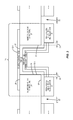
- FIG. 5 illustrates mounting of a semiconductor die obtained from the semiconductor wafer of FIG. 1 after dicing according to one embodiment of the present disclosure
- FIGS. 6A and 6B illustrate a front-side and a back-side, respectively, of a subset of the semiconductor die areas of the semiconductor wafer of FIG. 1 according to another embodiment of the present disclosure
- FIG. 7 illustrates a cross-section of one of the semiconductor die regions of FIGS. 6A and 6B according to one embodiment of the present disclosure
- FIGS. 8A-8F graphically illustrate a process for fabricating the semiconductor wafer of FIG. 1 to provide the semiconductor die regions of FIGS. 6A, 6B, and 7 according to one embodiment of the present disclosure.
- FIG. 9 illustrates mounting of a semiconductor die obtained from the semiconductor wafer of FIG. 1 after dicing according to another embodiment of the present disclosure.
- solder preform is a loose block of a desired solder material. Tolerance ranges for dimensions of the solder preform are very wide.
- the solder preform When soldering the semiconductor die to the mounting substrate, the solder preform is heated such that the solder preform transitions from a solid to either a liquid or a mixture of a liquid and a solid and a downward force is applied to the semiconductor die. As a result of the downward force and the wide tolerances of the dimensions of the solder preform, the solder can enter the via. When in the via, the solder mixes with the back-side metallization, and metal from the solder diffuses through the back-side metallization to the front-side metallization. The metal from the solder that diffuses through the back-side metallization to the front-side metallization degrades the front-side metallization and thus the performance of the semiconductor device.
- the content of the front-side metallization is carefully controlled to provide desired characteristics (e.g., a low resistivity Schottky contact).
- desired characteristics e.g., a low resistivity Schottky contact.
- the diffusion of metal from the solder into the front-side metallization alters the makeup of the front-side metallization and therefore degrades the performance of the semiconductor device.
- FIG. 1 illustrates a semiconductor wafer 10 according to one embodiment of the present disclosure.
- the semiconductor wafer 10 includes multiple semiconductor die areas (D1-D32). While in this example there are thirty-two semiconductor die areas, the semiconductor wafer 10 may include fewer semiconductor die areas or more semiconductor die areas depending on the particular implementation.
- Each of the semiconductor die areas (D1-D32) corresponds to a semiconductor die after dicing the semiconductor wafer 10 .
- the semiconductor wafer 10 includes a wafer-level die attach metallization (not shown) on a back-side of the semiconductor wafer 10 . After dicing, the wafer-level die attach metallization, rather than solder preforms, is utilized to electrically and thermally attach the resulting semiconductor dies to corresponding mounting substrates during packaging.
- FIGS. 2A and 2B illustrate front-side and back-side views, respectively, of the semiconductor die areas D1-D4 of the semiconductor wafer 10 of FIG. 1 according to one embodiment of the present disclosure.
- FIGS. 2A and 2B illustrate only the semiconductor die areas D1-D4 for clarity and ease of discussion, it should be understood that this discussion is equally applicable to the other semiconductor die areas D5-D32 of the semiconductor wafer 10 .
- a lateral transistor is formed in each of the semiconductor die areas D1-D4. More specifically, in this embodiment, a lateral Field Effect Transistor (FET) is formed in each of the semiconductor die areas D1-D4.
- FET Field Effect Transistor
- the lateral FET may be a radio frequency or microwave frequency device (e.g., a High Electron Mobility Transistor (HEMT)) or a power device (e.g., a trench Metal-Oxide Semiconductor FET (MOSFET).
- HEMT High Electron Mobility Transistor
- MOSFET trench Metal-Oxide Semiconductor FET
- source contact pads 12 - 1 through 12 - 4 are formed in the semiconductor die areas D1-D4, respectively.
- gate contact pads 14 - 1 through 14 - 4 are formed on a front-side of the semiconductor wafer 10 in the semiconductor die areas D1-D4, respectively.
- drain contact pads 16 - 1 through 16 - 4 are formed on a front-side of the semiconductor wafer 10 in the semiconductor die areas D1-D4, respectively.
- the source contact pads 12 , the gate contact pads 14 , and the drain contact pads 16 of the semiconductor die areas D1-D32 are referred to herein as a front-side metallization of the semiconductor wafer 10 . Further, each individual source contact pad 12 , gate contact pad 14 , and drain contact pad 16 is referred to herein as a front-side metallization element.
- vias 18 - 1 through 18 - 4 are formed through the back-side of the semiconductor wafer 10 to the source contact pads 12 - 1 through 12 - 4 , respectively.
- a wafer-level die attach metallization 20 is formed on the back-side of the semiconductor wafer 10 but not within the vias 18 - 1 through 18 - 4 .
- wafer-level die attach metallization 20 By forming the wafer-level die attach metallization 20 using wafer-level processing, placement and dimensions of the wafer-level die attach metallization 20 can be carefully and precisely controlled to prevent the wafer-level die attach metallization 20 from entering the vias 18 - 1 through 18 - 4 , or at least substantially reducing a risk of the wafer-level die attach metallization 20 from entering the vias 18 - 1 through 18 - 4 , when attaching corresponding semiconductor dies to mounting substrates after dicing the semiconductor wafer 10 . This is a substantial improvement over using traditional solder preforms.
- streets 22 are provided through the wafer-level die attach metallization 20 and, in some embodiments, an underlying back-side metallization (not shown) to a back-side of a semiconductor structure (not shown) of the semiconductor wafer 10 .
- the streets 22 are formed around peripheries of the semiconductor die areas D1-D4. In other words, the streets 22 are formed along desired cut-lines to be used when dicing the semiconductor wafer 10 to provide the resulting semiconductor die.
- the street pattern i.e., the pattern defined by the streets 22 ) is beneficial because the thickness of the wafer-level die attach metallization 20 is relatively large. Cutting through this material during dicing is difficult and it can result in jagged edges, die cracks, and premature saw wear.
- FIG. 3 is an illustration of a cross-section of the semiconductor die area D1 along the dashed lines illustrated in FIGS. 2A and 2B according to one embodiment of the present disclosure.
- the semiconductor wafer 10 includes a semiconductor structure 24 having a front-side 26 and a back-side 28 .
- the details of the semiconductor structure 24 will vary depending on the particular implementation. In general, the semiconductor structure 24 includes one or more layers of the same semiconductor materials or one or more layers of different semiconductor materials.
- the semiconductor structure 24 includes a substrate (e.g., a Silicon Carbide (SiC) substrate), a base layer (e.g., Gallium Nitride (GaN)) on the substrate, and a barrier layer (e.g., Aluminum Gallium Nitride (AlGaN)) on the base layer.
- a substrate e.g., a Silicon Carbide (SiC) substrate
- a base layer e.g., Gallium Nitride (GaN)
- a barrier layer e.g., Aluminum Gallium Nitride (AlGaN)
- the source contact pad 12 - 1 is on the front-side 26 of the semiconductor structure 24 along with the other front-side metallization elements (not shown).
- the via 18 - 1 extends from the back-side 28 of the semiconductor structure 24 through the semiconductor structure 24 to the source contact pad 12 - 1 .
- a back-side metallization (BSM) 30 is on the back-side 28 of the semiconductor structure 24 and within the via 18 - 1 .
- the back-side metallization 30 covers a terminating end 32 of the via 18 - 1 as well as lateral sidewalls 34 of the via 18 - 1 .
- the back-side metallization 30 includes one or more metal or metal alloy layers.
- the back-side metallization 30 may be Gold (Au) and have a thickness in the range of and including 1 to 10 microns.
- the portion of the back-side metallization 30 within the via 18 - 1 provides both an electrical and a thermal connection between the source contact pad 12 - 1 and the back-side metallization 30 on the back-side 28 of the semiconductor structure 24 .
- a first barrier layer 36 is on a portion of the back-side metallization 30 that is within the via 18 - 1 and on the back-side 28 of the semiconductor structure 24 around a periphery 38 of the via 18 - 1 .
- the periphery 38 of the via 18 - 1 is preferably small such that a large portion of the back-side metallization 30 is exposed (i.e., not covered by the first barrier layer 36 ).
- a second barrier layer 40 is on the first barrier layer 36 over the portion of the back-side metallization 30 that is within the via 18 - 1 and on the back-side 28 of the semiconductor structure 24 around the periphery 38 of the via 18 - 1 .
- the first and, optionally, second barrier layers 36 and 40 provide either: (1) a diffusion barrier that prevents diffusion of metal from the wafer-level die attach metallization 20 into the portion of the back-side metallization 30 that is within the via 18 - 1 and thus prevents diffusion of metal from the wafer-level die attach metallization 20 into the source contact pad 12 - 1 , (2) a surface tension that repels the wafer-level die attach metallization 20 away from the via 18 - 1 when the wafer-level die attach metallization 20 is in a liquid or liquid/solid state during attachment of the corresponding semiconductor die to a mounting substrate after dicing the semiconductor wafer 10 , or (3) both (1) and (2).
- the first and second barrier layers 36 and 40 can be formed of any materials or combination of materials that provide the desired diffusion barrier and/or surface tension.
- the first and second barrier layers 36 and 40 may be formed of one or more dielectric materials, one or more metals or metal alloys, one or more organic or inorganic composite materials, or any combination thereof.
- a thickness of the first and second barrier layers 36 and 40 may vary depending on their functions. For instance, if the first barrier layer 36 is a diffusion barrier, the thickness of the first barrier layer 36 is preferably relatively thick. Conversely, if the second barrier layer 40 provides a desired surface tension, then the thickness of the second barrier layer 40 is not critical but should be thick enough to provide uniform coverage inside the via 18 - 1 .
- the first barrier layer 36 is a solder barrier (i.e., a diffusion barrier layer).
- the thickness of the first barrier layer 36 is in a range of and including 1000 to 5000 Angstroms and is preferably formed by Plasma Enhanced Chemical Vapor Deposition (PECVD), Atomic Layer Deposition (ALD), and/or the like.
- the solder barrier includes one or more oxide layers.
- the solder barrier includes one or more layers of Aluminum (Al), Aluminum Oxide (Al 2 O 3 ), Silicon Dioxide (SiO 2 ), Silicon Nitride (SiN), Hafnium Oxide (HfO 2 ), Titanium (Ti), or Titanium Oxide (TiO 2 ).
- the dielectric solder barrier is, or includes, a layer of SiO 2 deposited using PECVD. In another preferred embodiment, the dielectric solder barrier is, or includes, an Al 2 O 3 layer and a SiO 2 layer on the Al 2 O 3 layer, where the Al 2 O 3 layer is formed using ALD and the SiO 2 layer is formed using PECVD or ALD.
- the semiconductor wafer 10 includes the wafer-level die attach metallization 20 on the back-side metallization 30 other than the portion of the back-side metallization 30 that is within the via 18 - 1 and on the back-side 28 of the semiconductor structure 24 around the periphery 38 of the via 18 - 1 .
- the wafer-level die attach metallization 20 includes one or more layers of the same or different metals or metal alloys that are suitable for attaching the semiconductor dies to mounting substrates during packaging by soldering or frictional force.
- the wafer-level die attach metallization 20 is a low melting point metal alloy and, even more preferably, a low melting point eutectic mixture of a desired metal alloy.
- the wafer-level die attach metallization 20 is low melting point eutectic mixture of Gold-Tin (AuSn), which is an approximately 80% Au and approximately 20% Sn mixture.
- AuSn Gold-Tin
- the mixture is 80% Au and 20% Sn, but the mixture may vary slightly while remaining sufficiently near the eutectic mixture to maintain a suitably low melting point.
- the mixture may have a percentage of Au in a range of and including 75% to 85% and a percentage of Sn in a range of and including 15% to 25%, or more preferably a percentage of Au in the range of and including 78% to 82% and a percentage of Sn in a range of and including 18% to 22%, or even more preferably a percentage of Au in a range of and including 79% to 81% and a percentage of Sn in a range of and including 19% to 21%.
- a thickness of the wafer-level die attach metallization 20 may vary depending on the particular implementation. In general, the thickness of the wafer-level die attach metallization 20 should be thick enough to provide a continuous interface free of voids and account for a roughness of the mounting substrate to which the corresponding semiconductor die is to be mounted while remaining thin enough to keep from spilling over into the via 18 - 1 when melted during attachment of the corresponding semiconductor die to the mounting substrate.
- the thickness of the wafer-level die attach metallization 20 is in a range of and including 10 to 20 micrometers, but may be thicker or thinner depending on factors such as, for instance, the roughness of the mounting substrate, the material used for the wafer-level die attach metallization 20 , and a force applied to the semiconductor die during attachment to the mounting substrate.
- the semiconductor wafer 10 includes the streets 22 .
- the streets 22 are through both the wafer-level die attach metallization 20 and the back-side metallization 30 .
- the streets 22 pass through the wafer-level die attach metallization 20 but not the back-side metallization 30 .
- FIGS. 4A-4K graphically illustrate a process for fabricating the semiconductor wafer 10 as described above with respect to FIGS. 1, 2A, 2B , and 3 according to one embodiment of the present disclosure. Note that while only the cross-section of the semiconductor die area D1 of FIG. 3 is illustrated in FIGS. 4A-4K for clarity, the process is described below in general terms as a process for fabricating the semiconductor wafer 10 .
- the semiconductor wafer 10 including the semiconductor structure 24 and the front-side metallization is provided.
- the front-side metallization includes the source contact pad 12 - 1 for the lateral FET formed in the semiconductor die area D1 as illustrated in FIG.
- a photoresist layer 42 is formed on the back-side 28 of the semiconductor structure 24 and patterned to expose a portion of the back-side 28 of the semiconductor structure 24 where the via 18 - 1 is to be formed. Likewise, the patterning of the photoresist layer 42 exposes portions of the back-side 28 of the semiconductor structure 24 where the other vias 18 are to be formed.
- the semiconductor structure 24 is etched using the photoresist layer 42 as a mask to form the via 18 - 1 , as illustrated in FIG. 4C . Again, while not illustrated, the etching also forms the other vias 18 .
- the vias 18 extend from the back-side 28 of the semiconductor structure 24 to the corresponding source contact pads 12 on the front-side 26 of the semiconductor structure 24 .
- the back-side metallization 30 is formed on the back-side 28 of the semiconductor structure 24 and within the vias 18 as illustrated in FIG. 4D with respect to the via 18 - 1 .
- the back-side metallization 30 may be formed by plating, sputtering, or otherwise forming a desired metal(s) or metal alloy(s) on the back-side 28 of the semiconductor structure 24 and within the vias 18 .
- a seed metal or metal alloy may first be sputtered or otherwise deposited on the back-side 28 of the semiconductor structure 24 and within the via 18 .
- the desired metal(s) or metal alloy(s) can then be plated on the seed metal or metal alloy.
- the back-side metallization 30 creates an electrical and thermal contact to the corresponding source contact pads 12 .
- first barrier material 36 ′ and, optionally, a second barrier material 40 ′ are formed on the back-side metallization 30 as illustrated in FIG. 4E .
- the first barrier material 36 ′ is the material from which the first barrier layer 36 is formed.
- the second barrier material 40 ′ is the material from which the second barrier layer 40 is formed.
- the first barrier material 36 ′ and the second barrier material 40 ′ may each be formed by one or more layers of dielectric materials, one or more layers of metals or metal alloys, and/or one or more layers of organic or inorganic composite materials.
- a photoresist layer 44 is formed on the first and second barrier materials 36 ′ and 40 ′ and patterned to define areas of the first and second barrier materials 36 ′ and 40 ′ to be etched to form the first and second barrier layers 36 and 40 , as illustrated in FIG. 4F .
- the photoresist layer 44 is also patterned to cover desired locations of the streets 22 . As discussed below, the photoresist layer 44 prevents the wafer-level die attach metallization 20 from forming at the desired locations of the streets 22 .
- the first and second barrier materials 36 ′ and 40 ′ are etched using the photoresist layer 44 as a mask to thereby form the first and second barrier layers 36 and 40 .
- the first and second barrier layers 36 and 40 are on the portion of the back-side metallization 30 that is within the vias 18 and around the peripheries 38 of the vias 18 .
- residual portions of the first and second barrier materials 36 ′ and 40 ′ remain under the photoresist layer 44 in the areas of the streets 22 .
- the photoresist layer 44 is again used as a mask for forming the wafer-level die attach metallization 20 as illustrated in FIG. 4H .
- the wafer-level die attach metallization 20 is plated, and the photoresist layer 44 prevents plating of the wafer-level die attach metallization 20 within the vias 18 and around the peripheries 38 of the vias 18 .
- the photoresist layer 44 prevents plating of the wafer-level die attach metallization 20 in the desired locations of the streets 22 .
- the wafer-level die attach metallization 20 is plated as a desired mixture of desired metal alloy.
- the desired mixture is a low melting point eutectic mixture of a desired metal alloy.
- the low melting point eutectic mixture is an approximately 80% Au and approximately 20% Sn AuSn mixture or, more preferably, a 80% Au and 20% Sn AuSn mixture. Note that a 80% Au and 20% Sn AuSn mixture is only one example of a low melting point eutectic mixture. Other low melting point eutectic mixtures may alternatively be used.
- the wafer-level die attach metallization 20 may be formed by plating or otherwise forming an alternating series of a first metal and a second metal.
- the alternating series may include a first layer of Au, a second layer of Sn, and a third layer of Au where thicknesses of the three layers are controlled such that, when heated, the Au and Sn layers intermix to provide a desired mixture of AuSn.
- This mixture is preferably a low melting point eutectic mixture, which for AuSn is a mixture of 80% Au and 20% Sn.
- the three layer structure (Au/Sn/Au) is only an example.
- More layers may be used (e.g., Au/Sn/Au/Sn/Au/Sn/Au/Sn/Au . . . ). Using more layers may provide improved intermixing of the two metals. Again, while Au and Sn are used in the examples above, other metals may be used to provide other desired metal alloys.
- the photoresist layer 44 is then removed and, optionally, a photoresist layer 46 is then formed and patterned as illustrated in FIG. 4I .
- the photoresist layer 46 exposes the desired locations of the streets 22 .
- the residual portions of the first and second barrier materials 36 ′ and 40 ′ as well as the back-side metallization 30 are etched using the photoresist layer 46 as a mask to thereby provide the streets 22 .
- the photoresist layer 46 is removed as illustrated in FIG. 4K .
- the step of etching the residual portions of the first and second barrier materials 36 ′ and 40 ′ and the back-side metallization 30 illustrated in FIG. 4J may be skipped such that the streets 22 pass through the wafer-level die attach metallization 20 but not the residual portions of the first and second barrier materials 36 ′ and 40 ′ and the back-side metallization 30 as illustrated in FIG. 4I .
- FIG. 5 illustrates attachment of a semiconductor die 48 obtained after dicing the semiconductor wafer 10 onto a mounting substrate 50 during packaging of the semiconductor die 48 according to one embodiment of the present disclosure. As illustrated, the semiconductor die 48 is positioned on a package contact 52 on the mounting substrate 50 such that the wafer-level die attach metallization 20 is directly on the package contact 52 .
- the wafer-level die attach metallization 20 is a solder material (e.g., a low melting point eutectic mixture of a desired metal alloy such as AuSn), and the semiconductor die 48 is electrically and thermally attached, or connected, to the mounting substrate 50 by heating the wafer-level die attach metallization 20 and applying a force on the semiconductor die 48 toward the mounting substrate 50 and/or a force on the mounting substrate 50 toward the semiconductor die 48 .
- solder flows into the via 18 - 1 during the attachment process.
- the placement and the dimensions of the wafer-level die attach metallization 20 can be carefully controlled during wafer-level processing such that the wafer-level die attach metallization 20 does not enter the via 18 - 1 or at least the risk of the wafer-level die attach metallization 20 entering the via 18 - 1 is substantially reduced.
- the first and second barrier layers 36 and 40 provide an additional diffusion barrier and/or surface tension barrier with respect to the wafer-level die attach metallization 20 . While in the embodiment discussed above soldering is used to attach the semiconductor die 48 to the mounting substrate 50 , attachment of the semiconductor die 48 to the mounting substrate 50 may be provided by other means such as, for example, force.
- FIGS. 6A-9 illustrate embodiments in which a vertical device (e.g., a vertical MOSFET) is formed in each of the semiconductor die areas (D1-D32). More specifically, FIGS. 6A and 6B illustrate front-side and back-side views, respectively, of the semiconductor die areas D1-D4 of the semiconductor wafer 10 of FIG. 1 according to another embodiment of the present disclosure. Note that while FIGS.
- FIG. 6A and 6B illustrate only the semiconductor die areas D1-D4 for clarity and ease of discussion, it should be understood that this discussion is equally applicable to the other semiconductor die areas D5-D32 of the semiconductor wafer 10 .
- a vertical transistor is formed in each of the semiconductor die areas D1-D4. More specifically, in this embodiment, a vertical FET is formed in each of the semiconductor die areas D1-D4.
- the vertical FET may, in one embodiment, be a power device.
- source contact pads 54 - 1 through 54 - 4 (more generally referred to herein collectively as source contact pads 54 and individually as source contact pad 54 ) and gate contact pads 56 - 1 through 56 - 4 (more generally referred to herein collectively as gate contact pads 56 and individually as gate contact pad 56 ) are formed on a front-side of the semiconductor wafer 10 in the semiconductor die areas D1-D4, respectively.
- the source contact pads 54 and the gate contact pads 56 of the semiconductor die areas D1-D32 are referred to herein as a front-side metallization of the semiconductor wafer 10 .
- each individual source contact pad 54 and gate contact pad 56 is referred to herein as a front-side metallization element.
- a wafer-level die attach metallization 58 is formed on the back-side of the semiconductor wafer 10 .
- the wafer-level die attach metallization 58 and, more specifically, a back-side metallization underlying the wafer-level die attach metallization 58 serves as drains of the vertical FETs.
- streets 60 are formed through, or in, the wafer-level die attach metallization 58 and, in some embodiments, an underlying back-side metallization (not shown) to a back-side of a semiconductor structure (not shown) of the semiconductor wafer 10 .
- the streets 60 are formed around peripheries of the semiconductor die areas D1-D4. In other words, the streets 60 are formed along desired cut-lines to be used when dicing the semiconductor wafer 10 to provide the resulting semiconductor die.
- the street pattern i.e., the pattern defined by the streets 60 ) is beneficial because the thickness of the wafer-level die attach metallization 58 is relatively large. Cutting through this material during dicing is difficult and it can result in jagged edges, die cracks, and premature saw wear.
- FIG. 7 is an illustration of a cross-section of the semiconductor die area D1 along the dashed lines illustrated in FIGS. 6A and 6B according to one embodiment of the present disclosure.
- the semiconductor wafer 10 includes a semiconductor structure 62 having a front-side 64 and a back-side 66 .
- the details of the semiconductor structure 62 will vary depending on the particular implementation.
- the semiconductor structure 62 includes one or more layers of the same semiconductor materials or one or more layers of different semiconductor materials.
- the semiconductor structure 62 includes multiple layers of SiC or other suitable semiconductor material.
- this is just one example. Numerous variations to the makeup of the semiconductor structure 62 will be apparent to one of ordinary skill in the art upon reading this disclosure.
- the source contact pad 54 - 1 is on the front-side 64 of the semiconductor structure 62 along with the other front-side metallization elements (not shown).
- a back-side metallization 68 is on the back-side 66 of the semiconductor structure 62 and serves as the drain of the vertical FET.
- the back-side metallization 68 includes one or more metal or metal alloy layers.
- the back-side metallization 68 may be Au and have a thickness in the range of and including 1 to 10 microns.
- the wafer-level die attach metallization 58 is on the back-side metallization 68 .
- the wafer-level die attach metallization 58 includes one or more layers of the same or different metals or metal alloys that are suitable for attaching the semiconductor dies to mounting substrates during packaging by soldering or frictional force.
- the wafer-level die attach metallization 58 is a low melting point metal alloy and, even more preferably, a low melting point eutectic mixture of a desired metal alloy.
- the wafer-level die attach metallization 58 is low melting point eutectic mixture of AuSn, which is an approximately 80% Au and approximately 20% Sn mixture.
- the mixture is 80% Au and 20% Sn, but the mixture may vary slightly while remaining sufficiently near the eutectic mixture to maintain a suitably low melting point.
- the mixture may have a percentage of Au in a range of and including 75% to 85% and a percentage of Sn in a range of and including 15% to 25%, or more preferably a percentage of Au in the range of and including 78% to 82% and a percentage of Sn in a range of and including 18% to 22%, or even more preferably a percentage of Au in a range of and including 79% to 81% and a percentage of Sn in a range of and including 19% to 21%.
- a thickness of the wafer-level die attach metallization 58 may vary depending on the particular implementation. In general, the thickness of the wafer-level die attach metallization 58 is preferably thick enough to provide a continuous interface free of voids and account for a roughness of the mounting substrate to which the corresponding semiconductor die is to be mounted.
- the semiconductor wafer 10 includes the streets 60 .
- the streets 60 are through both the wafer-level die attach metallization 58 and the back-side metallization 68 .
- the streets 60 pass through the wafer-level die attach metallization 58 but not the back-side metallization 68 .
- FIGS. 8A-8F graphically illustrate a process for fabricating the semiconductor wafer 10 as described above with respect to FIGS. 1, 6A, 6B , and 7 according to one embodiment of the present disclosure. Note that while only the cross-section of the semiconductor die area D1 of FIG. 7 is illustrated in FIGS. 8A-8F for clarity, the process is described below in general terms as a process for fabricating the semiconductor wafer 10 .
- the semiconductor wafer 10 including the semiconductor structure 62 and the front-side metallization is provided.
- the front-side metallization includes the source contact pad 54 - 1 for the vertical FET formed in the semiconductor die area D1 as illustrated in FIG.
- the back-side metallization 68 is formed on the back-side 66 of the semiconductor structure 62 .
- the back-side metallization 68 may be formed by plating, sputtering, or otherwise forming a desired metal(s) or metal alloy(s) on the back-side 66 of the semiconductor structure 62 .
- a seed metal or metal alloy may first be sputtered or otherwise deposited on the back-side 66 of the semiconductor structure 62 .
- the desired metal(s) or metal alloy(s) can then be plated on the seed metal or metal alloy.
- the wafer-level die attach metallization 58 is formed on the back-side metallization 68 as illustrated in FIG. 8C .
- the wafer-level die attach metallization 58 is plated onto the back-side metallization 68 .
- the wafer-level die attach metallization 58 is plated as a desired mixture of desired metal alloy.
- the desired mixture is a low melting point eutectic mixture of a desired metal alloy.
- the low melting point eutectic mixture is an approximately 80% Au and approximately 20% Sn AuSn mixture or, more preferably, a 80% Au and 20% Sn AuSn mixture. Note that a 80% Au and 20% Sn AuSn mixture is only one example of a low melting point eutectic mixture. Other low melting point eutectic mixtures may alternatively be used.
- the wafer-level die attach metallization 58 may be formed by plating or otherwise forming an alternating series of a first metal and a second metal.
- the alternating series may include a first layer of Au, a second layer of Sn, and a third layer of Au where thicknesses of the three layers are controlled such that, when heated, the Au and Sn layers intermix to provide a desired mixture of AuSn.
- This low mixture is preferably a low melting point eutectic mixture, which for AuSn is a mixture of 80% Au and 20% Sn.
- the three layer structure (Au/Sn/Au) is only an example.
- More layers may be used (e.g., Au/Sn/Au/Sn/Au/Sn/Au/Sn/Au . . . ). Using more layers may provide improved intermixing of the two metals. Again, while Au and Sn are used in the examples above, other metals may be used to provide other desired metal alloys.
- a photoresist layer 70 is formed on the wafer-level die attach metallization 58 and patterned to expose the wafer-level die attach metallization 58 at desired locations of the streets 60 , as illustrated in FIG. 8D .
- the wafer-level die attach metallization 58 and the back-side metallization 68 are then etched using the photoresist layer 70 as a mask to thereby form the streets 60 , as illustrated in FIG. 8E .
- the photoresist layer 70 is removed as illustrated in FIG. 8F .
- the streets 60 pass through the wafer-level die attach metallization 58 but not the back-side metallization 68 such that, in FIG. 8F for example, the back-side metallization 68 would extend laterally across the streets 60 .
- a photoresist layer (not shown) is formed on the back-side metallization 68 prior to forming the wafer-level die attach metallization 58 . This photoresist layer is patterned to cover the desired locations of the streets 60 while otherwise exposing the back-side metallization 68 .
- the wafer-level die attach metallization 58 is then formed using the photoresist layer as a mask such that the wafer-level die attach metallization 58 is formed on the back-side metallization 68 other than at the desired locations of the streets 60 .
- the wafer-level die attach metallization 58 may be plated such that the wafer-level die attach metallization 58 is formed on the back-side metallization 68 which acts as a seed layer but is unable to be formed on the photoresist layer over the desired locations for the streets 60 because the photoresist layer is not a suitable seed material for the plating process.
- the wafer-level die attach metallization 58 is formed in such a manner that the streets 60 are provided through the wafer-level die attach metallization 58 to the back-side metallization 68 .
- FIG. 9 illustrates attachment of a semiconductor die 72 obtained by dicing the semiconductor wafer 10 of FIGS. 1 and 6A-7 to a mounting substrate 74 during packaging of the semiconductor die 72 according to one embodiment of the present disclosure.
- the semiconductor die 72 is positioned on a package contact 76 on the mounting substrate 74 such that the wafer-level die attach metallization 58 is directly on the package contact 76 .
- the wafer-level die attach metallization 58 is a solder material (e.g., a low melting point eutectic mixture of a desired metal alloy such as AuSn), and the semiconductor die 72 is electrically and thermally attached, or connected, to the mounting substrate 74 by heating the wafer-level die attach metallization 58 and applying a force on the semiconductor die 72 toward the mounting substrate 74 and/or a force on the mounting substrate 74 toward the semiconductor die 72 . While in the embodiment discussed above soldering is used to attach the semiconductor die 72 to the mounting substrate 74 , attachment of the semiconductor die 72 to the mounting substrate 74 may be provided by other means such as, for example, force.
- solder material e.g., a low melting point eutectic mixture of a desired metal alloy such as AuSn
Landscapes
- Internal Circuitry In Semiconductor Integrated Circuit Devices (AREA)
- Engineering & Computer Science (AREA)
- Manufacturing & Machinery (AREA)
- Chemical & Material Sciences (AREA)
- Chemical Kinetics & Catalysis (AREA)
- General Chemical & Material Sciences (AREA)
Abstract
Description
Claims (8)
Priority Applications (1)
| Application Number | Priority Date | Filing Date | Title |
|---|---|---|---|
| US14/591,566 US9536783B2 (en) | 2013-03-15 | 2015-01-07 | Wafer-level die attach metallization |
Applications Claiming Priority (2)
| Application Number | Priority Date | Filing Date | Title |
|---|---|---|---|
| US13/834,196 US8970010B2 (en) | 2013-03-15 | 2013-03-15 | Wafer-level die attach metallization |
| US14/591,566 US9536783B2 (en) | 2013-03-15 | 2015-01-07 | Wafer-level die attach metallization |
Related Parent Applications (1)
| Application Number | Title | Priority Date | Filing Date |
|---|---|---|---|
| US13/834,196 Division US8970010B2 (en) | 2013-03-15 | 2013-03-15 | Wafer-level die attach metallization |
Publications (2)
| Publication Number | Publication Date |
|---|---|
| US20150140806A1 US20150140806A1 (en) | 2015-05-21 |
| US9536783B2 true US9536783B2 (en) | 2017-01-03 |
Family
ID=51523907
Family Applications (2)
| Application Number | Title | Priority Date | Filing Date |
|---|---|---|---|
| US13/834,196 Active US8970010B2 (en) | 2013-03-15 | 2013-03-15 | Wafer-level die attach metallization |
| US14/591,566 Active US9536783B2 (en) | 2013-03-15 | 2015-01-07 | Wafer-level die attach metallization |
Family Applications Before (1)
| Application Number | Title | Priority Date | Filing Date |
|---|---|---|---|
| US13/834,196 Active US8970010B2 (en) | 2013-03-15 | 2013-03-15 | Wafer-level die attach metallization |
Country Status (1)
| Country | Link |
|---|---|
| US (2) | US8970010B2 (en) |
Cited By (1)
| Publication number | Priority date | Publication date | Assignee | Title |
|---|---|---|---|---|
| US20220059422A1 (en) * | 2016-06-03 | 2022-02-24 | Dai Nippon Printing Co., Ltd. | Through electrode substrate, manufacturing method thereof and mounting substrate |
Families Citing this family (16)
| Publication number | Priority date | Publication date | Assignee | Title |
|---|---|---|---|---|
| US10432168B2 (en) * | 2015-08-31 | 2019-10-01 | General Electric Company | Systems and methods for quartz wafer bonding |
| US9893027B2 (en) | 2016-04-07 | 2018-02-13 | Nxp Usa, Inc. | Pre-plated substrate for die attachment |
| US9755029B1 (en) * | 2016-06-22 | 2017-09-05 | Qualcomm Incorporated | Switch device performance improvement through multisided biased shielding |
| CN107980171B (en) * | 2016-12-23 | 2022-06-24 | 苏州能讯高能半导体有限公司 | Semiconductor chip, semiconductor wafer, and method for manufacturing semiconductor wafer |
| US11114387B2 (en) * | 2017-02-15 | 2021-09-07 | Industrial Technology Research Institute | Electronic packaging structure |
| JP6863574B2 (en) * | 2017-02-22 | 2021-04-21 | 住友電工デバイス・イノベーション株式会社 | Manufacturing method of semiconductor devices |
| US11410918B2 (en) | 2017-11-15 | 2022-08-09 | Taiwan Semiconductor Manufacturing Company, Ltd. | Method of making an integrated circuit package including an integrated circuit die soldered to a bond pad of a carrier |
| DE102018106038A1 (en) | 2017-11-15 | 2019-05-16 | Taiwan Semiconductor Manufacturing Co., Ltd. | INTEGRATED CIRCUIT PACKAGES AND METHOD FOR THE PRODUCTION THEREOF |
| JP2019145546A (en) * | 2018-02-16 | 2019-08-29 | 住友電工デバイス・イノベーション株式会社 | Manufacturing method of semiconductor device |
| JP7168280B2 (en) * | 2018-06-26 | 2022-11-09 | 住友電工デバイス・イノベーション株式会社 | Semiconductor device and semiconductor chip mounting method |
| TWI683370B (en) * | 2019-03-12 | 2020-01-21 | 環球晶圓股份有限公司 | Semiconductor device and manufacturng method thereof |
| US10861792B2 (en) * | 2019-03-25 | 2020-12-08 | Raytheon Company | Patterned wafer solder diffusion barrier |
| US11152325B2 (en) | 2019-08-22 | 2021-10-19 | Cree, Inc. | Contact and die attach metallization for silicon carbide based devices and related methods of sputtering eutectic alloys |
| CN115917735B (en) * | 2020-07-29 | 2026-04-17 | 华为技术有限公司 | A semiconductor structure, an electronic device, and a method for fabricating the semiconductor structure. |
| DE102022100969A1 (en) | 2022-01-17 | 2023-07-20 | Infineon Technologies Ag | SEMICONDUCTOR CHIP, CHIP SYSTEM, METHOD OF MAKING A SEMICONDUCTOR CHIP AND METHOD OF MAKING A CHIP SYSTEM |
| US20230253359A1 (en) * | 2022-02-04 | 2023-08-10 | Wolfspeed, Inc. | Semiconductor die including a metal stack |
Citations (18)
| Publication number | Priority date | Publication date | Assignee | Title |
|---|---|---|---|---|
| US3761782A (en) * | 1971-05-19 | 1973-09-25 | Signetics Corp | Semiconductor structure, assembly and method |
| US5767447A (en) | 1995-12-05 | 1998-06-16 | Lucent Technologies Inc. | Electronic device package enclosed by pliant medium laterally confined by a plastic rim member |
| US6370034B1 (en) | 1997-03-12 | 2002-04-09 | Siemens Aktiengesellschaft | Printed circuit board for electrical devices having RF components, particularly for mobile radio telecommunication devices |
| US20040212034A1 (en) * | 2003-04-23 | 2004-10-28 | Kazuhiro Mochizuki | Semiconductor device, manufacturing method of the same and semiconductor module |
| US6856004B2 (en) | 2001-07-10 | 2005-02-15 | Anadigics, Inc. | Compact layout for a semiconductor device |
| US7265052B2 (en) | 2002-10-09 | 2007-09-04 | Micron Technology, Inc. | Methods of forming conductive through-wafer vias |
| US7282804B2 (en) | 2001-09-17 | 2007-10-16 | Megica Corporation | Structure of high performance combo chip and processing method |
| US7608485B2 (en) | 2004-03-09 | 2009-10-27 | Infineon Technologies Ag | Highly reliable, cost effective and thermally enhanced AuSn die-attach technology |
| US20090302478A1 (en) | 2008-06-04 | 2009-12-10 | Stats Chippac, Ltd. | Semiconductor device and method of forming recessed conductive vias in saw streets |
| US20100109114A1 (en) | 2008-11-05 | 2010-05-06 | Oki Semiconductor Co., Ltd. | Semiconductor device and manufacturing method thereof |
| US20110042803A1 (en) | 2009-08-24 | 2011-02-24 | Chen-Fu Chu | Method For Fabricating A Through Interconnect On A Semiconductor Substrate |
| US8138087B2 (en) | 2006-09-18 | 2012-03-20 | Nxp B.V. | Method of manufacturing an integrated circuit |
| US20120175764A1 (en) | 2009-09-23 | 2012-07-12 | United Monolithic Semiconductors Gmbh | Method for the production of an electronic component and electronic component produced according to this method |
| US20120267773A1 (en) | 2008-11-19 | 2012-10-25 | Silex Microsystems Ab | Functional Capping |
| US20130115730A1 (en) | 2008-03-11 | 2013-05-09 | The Royal Institution For The Advancement Of Learning / Mcgill University | Low-Temperature Wafer Level Processing for MEMS Devices |
| US20130256841A1 (en) | 2012-03-27 | 2013-10-03 | Cree, Inc. | Via plugs |
| US20130277845A1 (en) | 2012-04-18 | 2013-10-24 | Win Semiconductors Corp. | Structure of backside copper metallization for semiconductor devices and a fabrication method thereof |
| US20140054597A1 (en) | 2012-08-24 | 2014-02-27 | Rf Micro Devices, Inc. | Power device and packaging thereof |
-
2013
- 2013-03-15 US US13/834,196 patent/US8970010B2/en active Active
-
2015
- 2015-01-07 US US14/591,566 patent/US9536783B2/en active Active
Patent Citations (18)
| Publication number | Priority date | Publication date | Assignee | Title |
|---|---|---|---|---|
| US3761782A (en) * | 1971-05-19 | 1973-09-25 | Signetics Corp | Semiconductor structure, assembly and method |
| US5767447A (en) | 1995-12-05 | 1998-06-16 | Lucent Technologies Inc. | Electronic device package enclosed by pliant medium laterally confined by a plastic rim member |
| US6370034B1 (en) | 1997-03-12 | 2002-04-09 | Siemens Aktiengesellschaft | Printed circuit board for electrical devices having RF components, particularly for mobile radio telecommunication devices |
| US6856004B2 (en) | 2001-07-10 | 2005-02-15 | Anadigics, Inc. | Compact layout for a semiconductor device |
| US7282804B2 (en) | 2001-09-17 | 2007-10-16 | Megica Corporation | Structure of high performance combo chip and processing method |
| US7265052B2 (en) | 2002-10-09 | 2007-09-04 | Micron Technology, Inc. | Methods of forming conductive through-wafer vias |
| US20040212034A1 (en) * | 2003-04-23 | 2004-10-28 | Kazuhiro Mochizuki | Semiconductor device, manufacturing method of the same and semiconductor module |
| US7608485B2 (en) | 2004-03-09 | 2009-10-27 | Infineon Technologies Ag | Highly reliable, cost effective and thermally enhanced AuSn die-attach technology |
| US8138087B2 (en) | 2006-09-18 | 2012-03-20 | Nxp B.V. | Method of manufacturing an integrated circuit |
| US20130115730A1 (en) | 2008-03-11 | 2013-05-09 | The Royal Institution For The Advancement Of Learning / Mcgill University | Low-Temperature Wafer Level Processing for MEMS Devices |
| US20090302478A1 (en) | 2008-06-04 | 2009-12-10 | Stats Chippac, Ltd. | Semiconductor device and method of forming recessed conductive vias in saw streets |
| US20100109114A1 (en) | 2008-11-05 | 2010-05-06 | Oki Semiconductor Co., Ltd. | Semiconductor device and manufacturing method thereof |
| US20120267773A1 (en) | 2008-11-19 | 2012-10-25 | Silex Microsystems Ab | Functional Capping |
| US20110042803A1 (en) | 2009-08-24 | 2011-02-24 | Chen-Fu Chu | Method For Fabricating A Through Interconnect On A Semiconductor Substrate |
| US20120175764A1 (en) | 2009-09-23 | 2012-07-12 | United Monolithic Semiconductors Gmbh | Method for the production of an electronic component and electronic component produced according to this method |
| US20130256841A1 (en) | 2012-03-27 | 2013-10-03 | Cree, Inc. | Via plugs |
| US20130277845A1 (en) | 2012-04-18 | 2013-10-24 | Win Semiconductors Corp. | Structure of backside copper metallization for semiconductor devices and a fabrication method thereof |
| US20140054597A1 (en) | 2012-08-24 | 2014-02-27 | Rf Micro Devices, Inc. | Power device and packaging thereof |
Non-Patent Citations (4)
| Title |
|---|
| Non-final Office Action for U.S. Appl. No. 13/724,426 mailed Jun. 25, 2014, 8 pages. |
| Non-final Office Action for U.S. Appl. No. 13/834,196 mailed May 27, 2014, 9 pages. |
| Notice of Allowance for U.S. Appl. No. 13/724,426 mailed Feb. 13, 2014, 8 pages. |
| Notice of Allowance for U.S. Appl. No. 13/834,196, mailed Oct. 8, 2014, 9 pages. |
Cited By (2)
| Publication number | Priority date | Publication date | Assignee | Title |
|---|---|---|---|---|
| US20220059422A1 (en) * | 2016-06-03 | 2022-02-24 | Dai Nippon Printing Co., Ltd. | Through electrode substrate, manufacturing method thereof and mounting substrate |
| US12394680B2 (en) * | 2016-06-03 | 2025-08-19 | Dai Nippon Printing Co., Ltd. | Through electrode substrate, manufacturing method thereof and mounting substrate |
Also Published As
| Publication number | Publication date |
|---|---|
| US20150140806A1 (en) | 2015-05-21 |
| US20140264868A1 (en) | 2014-09-18 |
| US8970010B2 (en) | 2015-03-03 |
Similar Documents
| Publication | Publication Date | Title |
|---|---|---|
| US8970010B2 (en) | Wafer-level die attach metallization | |
| US10083921B2 (en) | Power transistor die | |
| US9362366B2 (en) | Semiconductor element, semiconductor element manufacturing method, semiconductor module, semiconductor module manufacturing method, and semiconductor package | |
| JP5750937B2 (en) | Semiconductor device and manufacturing method thereof | |
| EP1739736A1 (en) | Method of manufacturing a semiconductor device | |
| US9368436B2 (en) | Source down semiconductor devices and methods of formation thereof | |
| TW202331974A (en) | Semiconductor device with backmetal and related methods | |
| US8026581B2 (en) | Gallium nitride material devices including diamond regions and methods associated with the same | |
| JP4966348B2 (en) | Manufacturing method of semiconductor device | |
| US8994182B2 (en) | Dielectric solder barrier for semiconductor devices | |
| EP1693891B1 (en) | Method of manufacturing a semiconductor device | |
| US10720752B2 (en) | Submount and semiconductor laser device | |
| US7955969B2 (en) | Ultra thin FET | |
| JP5280611B2 (en) | Semiconductor device manufacturing method and device obtained | |
| TWI692039B (en) | Manufacturing method of semiconductor device | |
| US20200168709A1 (en) | Group III Nitride Device and Method of Fabricating an Ohmic Contact for a Group III Nitride-Based Device | |
| US20130069080A1 (en) | Semiconductor device and method for manufacturing same | |
| KR20120054495A (en) | Wafer level packaged gan power device and the manufacturing method thereof | |
| TWI813100B (en) | Semiconductor structure and manufacturing method of the same | |
| CN111696943B (en) | Semiconductor device having a die pad with a bank-like structure | |
| TW202604287A (en) | Electronic devices and methods of manufacturing electronic devices | |
| CN105702653B (en) | Reliable and robust electrical contact |
Legal Events
| Date | Code | Title | Description |
|---|---|---|---|
| STCF | Information on status: patent grant |
Free format text: PATENTED CASE |
|
| MAFP | Maintenance fee payment |
Free format text: PAYMENT OF MAINTENANCE FEE, 4TH YEAR, LARGE ENTITY (ORIGINAL EVENT CODE: M1551); ENTITY STATUS OF PATENT OWNER: LARGE ENTITY Year of fee payment: 4 |
|
| AS | Assignment |
Owner name: WOLFSPEED, INC., NORTH CAROLINA Free format text: CHANGE OF NAME;ASSIGNOR:CREE, INC.;REEL/FRAME:057891/0880 Effective date: 20211001 |
|
| AS | Assignment |
Owner name: U.S. BANK TRUST COMPANY, NATIONAL ASSOCIATION, NORTH CAROLINA Free format text: SECURITY INTEREST;ASSIGNOR:WOLFSPEED, INC.;REEL/FRAME:064185/0755 Effective date: 20230623 |
|
| AS | Assignment |
Owner name: U.S. BANK TRUST COMPANY, NATIONAL ASSOCIATION, AS COLLATERAL AGENT, TENNESSEE Free format text: NOTICE OF GRANT OF SECURITY INTEREST IN INTELLECTUAL PROPERTY;ASSIGNOR:WOLFSPEED, INC.;REEL/FRAME:072992/0113 Effective date: 20250929 Owner name: U.S. BANK TRUST COMPANY, NATIONAL ASSOCIATION, AS COLLATERAL AGENT, TENNESSEE Free format text: NOTICE OF GRANT OF SECURITY INTEREST IN INTELLECTUAL PROPERTY;ASSIGNOR:WOLFSPEED, INC.;REEL/FRAME:072992/0467 Effective date: 20250929 Owner name: WOLFSPEED, INC., NORTH CAROLINA Free format text: RELEASE OF SECURITY INTEREST IN INTELLECTUAL PROPERTY COLLATERAL AT REEL/FRAME NO. 64185/0755;ASSIGNOR:U.S. BANK TRUST COMPANY, NATIONAL ASSOCIATION, AS COLLATERAL AGENT;REEL/FRAME:072989/0001 Effective date: 20250929 Owner name: U.S. BANK TRUST COMPANY, NATIONAL ASSOCIATION, AS COLLATERAL AGENT, TENNESSEE Free format text: NOTICE OF GRANT OF SECURITY INTEREST IN INTELLECTUAL PROPERTY;ASSIGNOR:WOLFSPEED, INC.;REEL/FRAME:072992/0381 Effective date: 20250929 Owner name: U.S. BANK TRUST COMPANY, NATIONAL ASSOCIATION, AS COLLATERAL AGENT, TENNESSEE Free format text: NOTICE OF GRANT OF SECURITY INTEREST IN INTELLECTUAL PROPERTY;ASSIGNOR:WOLFSPEED, INC.;REEL/FRAME:072992/0588 Effective date: 20250929 |