US9536233B2 - Purchasing a gift using a service provider network - Google Patents
Purchasing a gift using a service provider network Download PDFInfo
- Publication number
- US9536233B2 US9536233B2 US11/941,199 US94119907A US9536233B2 US 9536233 B2 US9536233 B2 US 9536233B2 US 94119907 A US94119907 A US 94119907A US 9536233 B2 US9536233 B2 US 9536233B2
- Authority
- US
- United States
- Prior art keywords
- network
- gift
- user
- deliverable
- asset
- Prior art date
- Legal status (The legal status is an assumption and is not a legal conclusion. Google has not performed a legal analysis and makes no representation as to the accuracy of the status listed.)
- Expired - Fee Related, expires
Links
Images



Classifications
-
- G—PHYSICS
- G06—COMPUTING OR CALCULATING; COUNTING
- G06Q—INFORMATION AND COMMUNICATION TECHNOLOGY [ICT] SPECIALLY ADAPTED FOR ADMINISTRATIVE, COMMERCIAL, FINANCIAL, MANAGERIAL OR SUPERVISORY PURPOSES; SYSTEMS OR METHODS SPECIALLY ADAPTED FOR ADMINISTRATIVE, COMMERCIAL, FINANCIAL, MANAGERIAL OR SUPERVISORY PURPOSES, NOT OTHERWISE PROVIDED FOR
- G06Q20/00—Payment architectures, schemes or protocols
- G06Q20/08—Payment architectures
- G06Q20/12—Payment architectures specially adapted for electronic shopping systems
- G06Q20/123—Shopping for digital content
-
- G—PHYSICS
- G06—COMPUTING OR CALCULATING; COUNTING
- G06Q—INFORMATION AND COMMUNICATION TECHNOLOGY [ICT] SPECIALLY ADAPTED FOR ADMINISTRATIVE, COMMERCIAL, FINANCIAL, MANAGERIAL OR SUPERVISORY PURPOSES; SYSTEMS OR METHODS SPECIALLY ADAPTED FOR ADMINISTRATIVE, COMMERCIAL, FINANCIAL, MANAGERIAL OR SUPERVISORY PURPOSES, NOT OTHERWISE PROVIDED FOR
- G06Q20/00—Payment architectures, schemes or protocols
- G06Q20/08—Payment architectures
- G06Q20/10—Payment architectures specially adapted for electronic funds transfer [EFT] systems; specially adapted for home banking systems
- G06Q20/102—Bill distribution or payments
-
- G—PHYSICS
- G06—COMPUTING OR CALCULATING; COUNTING
- G06Q—INFORMATION AND COMMUNICATION TECHNOLOGY [ICT] SPECIALLY ADAPTED FOR ADMINISTRATIVE, COMMERCIAL, FINANCIAL, MANAGERIAL OR SUPERVISORY PURPOSES; SYSTEMS OR METHODS SPECIALLY ADAPTED FOR ADMINISTRATIVE, COMMERCIAL, FINANCIAL, MANAGERIAL OR SUPERVISORY PURPOSES, NOT OTHERWISE PROVIDED FOR
- G06Q20/00—Payment architectures, schemes or protocols
- G06Q20/30—Payment architectures, schemes or protocols characterised by the use of specific devices or networks
- G06Q20/306—Payment architectures, schemes or protocols characterised by the use of specific devices or networks using TV related infrastructures
-
- G—PHYSICS
- G06—COMPUTING OR CALCULATING; COUNTING
- G06Q—INFORMATION AND COMMUNICATION TECHNOLOGY [ICT] SPECIALLY ADAPTED FOR ADMINISTRATIVE, COMMERCIAL, FINANCIAL, MANAGERIAL OR SUPERVISORY PURPOSES; SYSTEMS OR METHODS SPECIALLY ADAPTED FOR ADMINISTRATIVE, COMMERCIAL, FINANCIAL, MANAGERIAL OR SUPERVISORY PURPOSES, NOT OTHERWISE PROVIDED FOR
- G06Q30/00—Commerce
- G06Q30/06—Buying, selling or leasing transactions
-
- G—PHYSICS
- G06—COMPUTING OR CALCULATING; COUNTING
- G06Q—INFORMATION AND COMMUNICATION TECHNOLOGY [ICT] SPECIALLY ADAPTED FOR ADMINISTRATIVE, COMMERCIAL, FINANCIAL, MANAGERIAL OR SUPERVISORY PURPOSES; SYSTEMS OR METHODS SPECIALLY ADAPTED FOR ADMINISTRATIVE, COMMERCIAL, FINANCIAL, MANAGERIAL OR SUPERVISORY PURPOSES, NOT OTHERWISE PROVIDED FOR
- G06Q30/00—Commerce
- G06Q30/06—Buying, selling or leasing transactions
- G06Q30/0601—Electronic shopping [e-shopping]
Definitions
- the present disclosure generally relates to service provider networks and more particularly to systems and methods for facilitating gift purchases within a service provider network.
- Service provider networks provide multimedia content such as video-on-demand movies and pay-per-view sporting events.
- service provider networks may provide mobile telephone services, text-messaging services, email services, instant messaging services, and the like.
- Service provider networks charge fees for many of these services. Some items accrue charges on a per-item basis. For example, a service provider network may charge a user fee for downloading from a service provider network a ring tone for a mobile telephone.
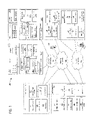
- FIG. 1 illustrates a representative Internet Protocol Television (IPTV) system for implementing disclosed embodiments
- FIG. 2 illustrates a methodology for purchasing an asset using the service provider network from FIG. 1 ;
- FIG. 3 illustrates a methodology for purchasing a pre-paid amount using a service provider network.
- a method for facilitating a first user purchasing a gift for a second user through a service provider network.
- the method comprises receiving a first request to purchase a gift for the second user.
- the method further includes notifying a service delivery platform of the first request to purchase the gift.
- the method includes notifying a second user of the gift and receiving a payment associated with the first user, wherein the payment is for the gift.
- the gift may be an asset such as a ring tone or movie-on-demand.
- the gift may also be a monetary credit applied to a billing account of the gift recipient.
- receiving the payment from the first user for the gift includes accessing a payment module using one or more payment credentials provided by the first user.
- the method may include verifying for payment purposes one or more payment credentials of the first user and requesting compensation from a billing system using the plurality of credentials.
- the method may also include a unified storefront receiving a first request to purchase the gift, wherein the unified storefront notifies the service delivery platform of the first request.
- the method may also include updating a billing account associated with the one or more payment credentials.
- a unified storefront computer program product is disclosed that is stored on computer readable medium.
- the computer program product has instructions operable for receiving a request for a first user to purchase a gift for a second user. Instructions are further operable for conveying the request to a service delivery platform and receiving payment information for the first user.
- the unified storefront computer program may also have instructions for conveying to the service delivery platform payment credentials. Additionally, there may be further instructions operable for processing a request from the first user specifying a type of movie that can be purchased using the gift. In addition, instructions are operable for processing a request from the first user specifying characteristics of music that can be purchased using the gift.
- an application server communicatively coupled to a service provider network wherein the service provider network provides IPTV content and the application server is enabled for executing software code stored on a computer readable medium.
- the software code has instructions for receiving a gift request notification from a first set-top box. There are further instructions for notifying a billing system of a required payment for the gift. Further instructions are operable for receiving a payment notification that the required payment has been secured to result in a secured payment, wherein the secured payment corresponds to the gift request notification. Further instructions are operable for notifying a second set-top box of an available gift corresponding to the gift request notification.
- IPTV Internet Protocol Television
- a user's telephone lines may be used in some combination with a residential gateway (RG), a digital subscriber line (DSL) modem, a set-top box (STB), a display, and other such equipment to receive and convert into usable form the multimedia content provided from a telephone company network, for example.
- RG residential gateway
- DSL digital subscriber line
- STB set-top box
- display and other such equipment to receive and convert into usable form the multimedia content provided from a telephone company network, for example.
- IPTV providers may distribute multimedia content using bidirectional (i.e., two-way) communication between a user's customer premises equipment (CPE) and the service provider's equipment.
- Bidirectional communication allows a service provider to offer advanced features, such as video-on-demand (VOD), pay-per-view, advanced programming information, text-based news, and the like.
- VOD video-on-demand
- VOD pay-per-view
- advanced programming information text-based news, and the like.
- an asset may include multimedia content such as a pay-per-view sporting event, a video-on-demand movie, a pod cast, or the like.
- An asset may also include an album, a song, a music video, and other forms of multimedia content for such networks. If a first user decides to provide a second user with an asset, provisions may be made for determining the compatibility of the asset for the particular user.
- the service provider network includes mobile telephone services and the gifted asset is a ring tone for a mobile telephone
- provisions may be made for automatically choosing a ring tone that is compatible with the second user's mobile telephone device.
- a gifted asset may also include an hour of telephone talk time or a given number of text messages.
- text messages are charged a fee for each message.
- a first user could gift a second user a given number of text messages.
- a first user may attach conditions to a gift.
- a first user may specify that the gifted asset include a given number of text messages that can only be sent to the second user.
- a first user may provide the second user with a way to communicate with the first user without the second user undergoing any expense.
- Such a system would be useful in a business arrangement, where a business wants to cover all costs associated with contacting business assets.
- a parent could provide a child with gifted assets for communicating with the parent.
- a first user may condition the gift of a video-on-demand movie on the second user choosing a movie with family-oriented content, for example.
- a first user may specify a particular title of a movie as the gifted asset.
- first users may condition the gift of monetary value to a second user.
- the first user may provide a gift to the second user in the form of a $20 credit for use with any video-on-demand movie that has a family-oriented rating.
- a first user has many options using disclosed embodiments for providing assets and monetary credits to a second user.
- FIG. 1 illustrates selected aspects of an IPTV system 100 operated as part of a service provider network.
- a hyphenated form of a reference numeral refers to a specific instance of an element and the un-hyphenated form of the reference numeral refers to the element generically or collectively.
- reference numeral 124 - 1 refers to an instance of an element 124 .
- IPTV system 100 includes two set-top boxes (STBs) 124 including set-top box 124 - 1 and set-top box 124 - 2 .
- set-top boxes 124 communicate through access network 166 via modems 122 (i.e., modem 122 - 1 and modem 122 - 2 ).
- IPTV system 100 is configured to provide multimedia content to users of set-top boxes 124 and includes a client facing tier 102 , an application tier 104 , an acquisition tier 106 , and an operations and management tier 108 .
- IPTV system 100 may provide multimedia content to personal computer 168 and mobile device 169 , which may be a mobile telephone.
- Each tier 102 , 104 , 106 and 108 is coupled to a private network 110 , to a public network 112 (e.g., the Internet), or to both the private network 110 and the public network 112 . Any of the various tiers coupled to the various networks may communicate with each other over the networks.
- the client-facing tier 102 may communicate through the private network 110 with the acquisition tier 106 .
- the application tier 104 may communicate through the private network 110 and the public network 112 with the acquisition tier 106 .
- the interconnections between illustrated tiers and networks in FIG. 1 are meant as instructive and not limiting.
- IPTV system 100 distributes multimedia content to users of set-top boxes 124 for viewing on displays 126 and possibly for sending to other components not shown, such as a portable media player.
- IPTV system 100 In order to distribute the multimedia content, IPTV system 100 must first gain access to the multimedia content.
- acquisition tier 106 represents a variety of systems to acquire multimedia content, reformat it when necessary, and prepare it for transmission over private network 110 or public network 112 .
- acquisition tier 106 serves as a “content headend.”
- Acquisition tier 106 may include, for example, systems for capturing analog and/or digital content feeds, either directly from a content provider or from a content aggregation facility.
- Content feeds transmitted via VHF/UHF broadcast signals may be captured by broadcast server 156 .
- live acquisition server 154 may capture satellite signals, high-speed fiber feeds, or programming feeds sent over other suitable transmission means.
- Content feeds to live acquisition server 154 may include broadcasted multimedia content, for example premium audio/video programming (i.e., traditional “cable channels”) widely available but not typically broadcast over airwaves.
- Acquisition tier 106 may further include signal conditioning systems and content preparation systems for encoding content. As shown, acquisition tier 106 includes video on demand (VoD) importer server 158 and may include a digital rights management (DRM) server for encrypting content (not shown).
- VoD video on demand
- DRM digital rights management
- VOD importer server 158 receives content from one or more VOD sources that may be outside the IPTV system 100 , for example discs or transmitted feeds. VOD importer server 158 may temporarily store multimedia content for transmission to a VOD server 136 on client-facing tier 102 . In addition, the VOD content may be stored at one or more servers, such as the VOD server 136 . The stored VOD content may be distributed by multicast (i.e., a single stream sent simultaneously to multiple viewers) or by unicast to individual users in a VOD system.
- IPTV system 100 distributes the content over private network 110 , for example.
- Private network 110 may be referred to as a “core network.”
- private network 110 consists of a fiber backbone (i.e. WAN) and one or more video hub offices (VHOs).
- VHOs video hub offices
- private network 110 transports multimedia content (e.g. video, music, Web pages, channel lineups, and data) from the acquisition tier 106 to set-top boxes 124 through access network 166 (via client-facing tier (CFT) switch 130 ).
- multimedia content e.g. video, music, Web pages, channel lineups, and data
- CFT client-facing tier
- private network 110 serves as the “backbone” for IPTV system 100 .
- private network 110 may represent several smaller networks that each may only transfer content within a subset of the region. Accordingly, private network 110 may provide for the insertion of local content that is relevant only to a subset region. For example, private network 110 may allow for the localized insertion of local advertisements or local emergency alert systems for a particular service area.
- broadcast server 156 acquires broadcast multimedia content and communicates it to live acquisition server 154 .
- Live acquisition server 154 transmits the multimedia content to the AQT (AcQuisition Tier) switch 152 .
- the AQT switch 152 transmits the multimedia content to the CFT switch 130 , for example, via the private network 110 .
- the CFT switch 130 may communicate the multimedia content through modems 122 via the private access network 166 .
- set-top boxes 124 receive the multimedia content via modems 122 and transmit it to displays 126 .
- live acquisition server 154 and VOD importer server 158 take numerous data streams and encode them into a digital video format, such as MPEG-2, or MPEG-4. After encoding, data streams may be encapsulated into IP data streams and transmitted to specific IP destinations (e.g. set-top boxes 124 ) in response to a user's request for a particular channel, for example.
- Video content server 180 , VOD server 136 , or image/data server 132 may act as an intermediary or repository for multimedia content obtained and encoded by acquisition tier 106 .
- multimedia content is transmitted to the video content server 180 , where it is encoded, formatted, stored, or otherwise manipulated and prepared for communication to the set-top box 124 .
- IPTV system 100 includes access network 166 .
- Access network 166 provides a network link from the private network 110 to each consumer's location.
- access network 166 provides a network translation as necessary from a switched network, for example, to the access technology used to transmit data and multimedia content to the consumer's location.
- a service provider that uses twisted-pair telephone lines to deliver multimedia content to consumers may utilize digital subscriber lines within access network 166 .
- the digital subscriber lines may utilize some combination of DSL, DSL2, DSL2+, ADSL, VDSL or other technologies.
- access network 166 may use fiber-to-the-home (FTTH). In such cases, optical fiber may be used all the way to the consumer's location to provide high-bandwidth.
- FTTH fiber-to-the-home
- fiber-to-the-curb (FTTC) deployments are used to deliver multimedia content to consumers.
- a digital subscriber line access multiplexer (DSLAM) may be used within access network 166 to transfer signals containing multimedia content from optical fiber to copper wire for DSL delivery to consumers.
- access network 166 may use RF signals sent over coaxial cables.
- access network 166 may utilize quadrature amplitude modulation (QAM) equipment for downstream traffic.
- QAM quadrature amplitude modulation
- access network 166 may receive upstream traffic from a consumer's location using quadrature phase shift keying (QPSK) modulated RF signals.
- QPSK quadrature phase shift keying
- CMTS cable modem termination system
- CMTS cable modem termination system
- a user requests VOD content via a set-top box 124
- the request may be transmitted over the access network 166 to VOD server 136 , via the CFT switch 130 .
- the VOD server 136 retrieves or accesses the requested VOD content and transmits the content to the set-top box 124 across access network 166 via CFT switch 130 .
- set-top box 124 transmits relevant video portions of the VOD content to the display 126 .
- Set-top box 124 may transmit audio portions of the VOD content to a stereo system (not shown) or may allow (or disallow) sending the VOD content to a recording device (not shown).
- IPTV system 100 includes application tier 104 .
- Application tier 104 communicates with acquisition tier 106 and client-facing tier 102 through private network 110 .
- Application tier 104 may communicate through various communication protocols including hypertext transfer protocol (HTTP).
- HTTP hypertext transfer protocol
- application tier 104 may include notification servers, billing servers, and any of a variety of subscriber application servers employed by an owner or operator (i.e. network service provider) of IPTV system 100 .
- elements of the application tier 104 such as client gateway 150 communicate directly with the client-facing tier 102 .
- the components of client-facing tier 102 may communicate using HTTP, transmission control protocol (TCP) or datagram protocol (UDP), as examples.
- TCP transmission control protocol
- UDP datagram protocol
- the client-facing tier 102 is coupled for communication with user equipment (e.g. modems 122 ) via access network 166 .
- Access network 166 may be referred to as the “last mile” for a service provider or network operator. It provides network connectivity of IPTV services to consumers' locations.
- Client-facing tier 102 may be required to multicast multimedia content to multiple destinations. For example, the same multimedia content may be distributed substantially simultaneously to set-top box 124 - 1 and set-top box 124 - 2 .
- “broadcast” programming or data to all users on a network as a “broadcast” transmission. For example, a TV guide feature for displaying available programming may be broadcast to every user.
- client-facing tier 102 may employ any current or future Internet protocols for providing reliable real-time streaming multimedia content.
- TCP file transfer protocol
- RTP real-time transport protocol
- RTCP real-time control protocol
- RTSP real-time streaming protocol
- client-facing tier 102 sends multimedia content encapsulated into IP packets over access network 166 .
- an MPEG-2 transport stream may be sent, in which the transport stream consists of a series of 188-byte transport packets, for example.
- protocols should be chosen that minimize dropped packets, jitter, delay, data corruption, and other errors.
- the client-facing tier 102 may communicate with a large number of set-top boxes, such as representative set-top boxes 124 , over a wide area, which may be for example, a regional area, a metropolitan area, a viewing area, a designated market area, or any other suitable geographic area, market area, or user group supported by networking the client-facing tier 102 to numerous set-top boxes.
- set-top boxes such as representative set-top boxes 124
- a wide area which may be for example, a regional area, a metropolitan area, a viewing area, a designated market area, or any other suitable geographic area, market area, or user group supported by networking the client-facing tier 102 to numerous set-top boxes.
- the client-facing tier 102 or any portion thereof, may be included at a video headend office (not depicted).
- the client-facing tier 102 may be coupled to modems 122 via fiber optic cables.
- modems 122 may be DSL modems coupled to one or more network nodes via twisted pairs.
- Each set-top box 124 may process data received over the private access network 166 via various IPTV software platforms that are commonly known.
- the client-facing tier 102 includes a CFT switch 130 that manages communication between the client-facing tier 102 and the private access network 166 .
- CFT switch 130 also manages communication between the client-facing tier 102 and the private network 110 and is coupled to an image and data server 132 that may store streaming multimedia content and possibly still images associated with programs of various IPTV channels.
- Image and data server 132 stores data related to various channels, for example, types of data related to the channels and to programs or video content displayed via the channels.
- image and data server 132 may be a cluster of servers, each of which may store streaming multimedia content, still images, channel and program-related data, or any combination thereof.
- CFT switch 130 may also be coupled to terminal server 134 that provides terminal devices with a connection point to the private network 110 . As shown, CFT switch 130 may also be coupled to VOD server 136 that stores or provides VOD content imported by the IPTV system 100 . As shown, the client-facing tier 102 also includes video content server 180 that transmits video content requested by viewers to set-top boxes 124 . In some embodiments, video content server 180 includes one or more multicast servers.
- application tier 104 may communicate with numerous components through private network 110 and public network 112 .
- application tier 104 includes a first application tier (APP) switch 138 and a second APP switch 140 .
- the first APP switch 138 is coupled to the second APP switch 140 and a combination operation-systems-support (OSS) and billing-systems-support (BSS) gateway 144 (i.e., OSS/BSS gateway 144 ).
- OSS/BSS gateway 144 controls access to an OSS/BSS server 164 that stores operations and billing systems data.
- OSS/BSS server 164 communicates with service delivery platform (“SDP”) 203 .
- SDP service delivery platform
- service delivery platform 203 processes requests from unified storefront 201 that are related to gift requests from a user of set-top box 124 - 1 , for example.
- Unified storefront 201 may host a web-based interface accessible by set-top box 124 - 1 for requesting the gift.
- the unified storefront 201 may host a similar interface accessible by mobile device 169 or personal computer 168 .
- unified storefront 201 and service delivery platform 203 assist in the processing of gift requests as well as the billing of required payments associated with the gift requests.
- unified storefront 201 may host an interface accessible by a second user, for example a user of set-top box 124 - 2 , to present the second user with the gift.
- Service delivery platform 203 may notify a payment module and update credit accounts associated with IPTV system 100 or a telephone network that may be in communication with IPTV system 100 .
- application tier 104 includes application server 142 .
- Application server 142 may be any data processing system with associated software that provides information services (i.e. applications) for clients or users.
- Application server 142 may be optimized to provide services including conferencing, voicemail, and unified messaging.
- services include electronic programming guides (EPG), conditional access systems (CAS), digital rights management (DRM) servers, a navigation/middleware server, and IPTV portal, e-mail services, and remote diagnostics.
- EPG electronic programming guides
- CAS conditional access systems
- DRM digital rights management
- application server 142 is associated with, communicates with, or hosts gifting application 143 .
- Gifting application 143 may have software code stored on computer readable medium.
- the software code has instructions for receiving a gift request notification from set-top box 124 - 1 .
- the gift request may be associated with an asset such as a ring tone, pay-per-view sporting event, or movie-on-demand, as examples.
- the gift requests may be associated with a monetary credit, such as by the user of set-top box 124 - 1 specifying that an account associated with set-top box 124 - 2 should be credited with $50, for example.
- the first user of set-top box 124 - 1 may specify that a credit card account corresponding to the first user be billed for the monetary credit provided as a gift to the second user of set-top box 124 - 2 .
- the first user of set-top box 124 - 1 may be required to present payment credentials or security credentials to reduce the likelihood of fraud.
- the gifting application 143 may have further instructions for notifying a billing system of a required payment for the gift.
- OSS/BSS server 164 may be accessed to notify IPTV system 100 that a particular multimedia-related asset or monetary credit has been requested for transfer to a gift recipient.
- OSS/BSS server 164 may coordinate the transfer of the asset or monetary credit with other components of IPTV system 100 .
- the software code for gifting application 143 may also have instructions for receiving a payment notification that a required payment has been secured. Further instructions in the software code may be operable for notifying a second set-top box and of an available gift corresponding to the gift request notification.
- gifting application 143 has instructions for decreasing or for causing to be decreased a spending limit for an account associated with the set-top box 124 - 1 .
- gifting application 143 may have has instructions for prompting verification of a MAC address of the set-top box 124 - 1 upon the request of a gift.
- gifting application 143 may prompt set-top box 124 - 1 to communicate with modem 122 - 1 or other residential gateway to determine whether set-top box 124 - 1 is connected to an assigned residential gateway. This step helps prevent a bad actor from using set-top box 124 - 1 to purchase gifts for another user by removing set-top box 124 - 1 from a household unit associated with a residential gateway such as modem 122 - 1 .
- second APP switch 140 is communicatively coupled to a domain controller 146 that provides web access, for example, to users via the public network 112 .
- the second APP switch 140 is communicatively coupled to a subscriber/system store 148 that includes account information, such as account information that is associated with users who access the IPTV system 100 via the private network 110 or the public network 112 . Therefore, for example, a user may employ a personal computer 168 to receive IPTV account information via the public network 112 . Similarly, a user may employ mobile device 169 or another similar multifunction device over private network 110 or public network 112 to receive information through second APP switch 140 .
- application tier 104 may also include a client gateway 150 that communicates data directly with the client-facing tier 102 .
- the client gateway 150 may be coupled directly to the CFT switch 130 . Accordingly, the client gateway 150 may provide user access to the private network 110 and the tiers coupled thereto.
- set-top box 124 accesses the IPTV system 100 via the private access network 166 , using information received from the client gateway 150 .
- private access network 166 may provide security for the private network 110 . Therefore, user devices may access the client gateway 150 via the private access network 166 , and the client gateway 150 may allow such devices to access the private network 110 once the devices are authenticated or verified. Similarly, the client gateway 150 may prevent unauthorized devices, such as hacker computers or stolen set-top boxes, from accessing the private network 110 , by denying access to these devices beyond the private access network 166 .
- the client gateway 150 verifies user information by communicating with the subscriber/system store 148 via the private network 110 , the first APP switch 138 , and the second APP switch 140 .
- the client gateway 150 verifies billing information and user status by communicating with the OSS/BSS gateway 144 via the private network 110 and the first APP switch 138 .
- the OSS/BSS gateway 144 may transmit a query across the first APP switch 138 , to the second APP switch 140 , and the second APP switch 140 may communicate the query across the public network 112 to the OSS/BSS server 164 .
- the client gateway 150 Upon the client gateway 150 confirming user and/or billing information, the client gateway 150 allows the set-top box 124 access to IPTV content, VOD content, and other services. If the client gateway 150 cannot verify user information for the set-top box 124 , for example, because it is connected to an unauthorized twisted pair or residential gateway, the client gateway 150 may block transmissions to and from the set-top box 124 beyond the private access network 166 .
- Set-top boxes 124 convert digital compressed signals into a format suitable for display.
- Set-top boxes 124 have functionality for recognizing and acting on IP packets, for example UDPs transmitted within IP datagrams.
- Set-top boxes 124 may contain software or firmware coding for sending requests to application server 142 , for example, to receive requested programming or data.
- requests for content e.g. VOD content
- set-top box 124 supports Web browsing on the Internet (e.g., public network 112 ) and may support cycling through guide data, for example, using Web services.
- Each set-top box 124 may be enabled for viewing e-mail, viewing e-mail attachments, and interfacing with various types of home networks.
- each set-top box 124 may be a cable box, a satellite box, or an electronic programming guide box. Further, although shown separately, set-top boxes 124 may be incorporated into any multifunctional device such as, a television, a videocassette recorder, a digital video recorder, a computer, a personal computer media player, or other media device. Generally, set-top boxes 124 each represent a dedicated data processing system (e.g., computer) that provides an interface between a display and a service provider. As shown, set-top boxes 124 are connected to the service provider through modems 122 . Although modems are shown in FIG. 1 , other residential gateways may be employed. Alternatively, set-top boxes 124 may be connected directly to access network 166 .
- modems are shown in FIG. 1 , other residential gateways may be employed.
- Set-top boxes 124 contain software or firmware instructions stored in memories 172 or other storage for receiving and processing input from remote controls 120 .
- set-top boxes 124 are IP based set-top boxes and have capability for outputting resultant multimedia signals (e.g., streaming audio/video) in various formats including S-video, composite video, high definition component video, high definition multimedia interface (HTMI), and video graphics array (VGA) signals.
- the resultant multimedia signals may support displays 126 that have various video modes including analog NTSC, 1080i, 1080p, 480i, 480p, 720p, as examples.
- set-top boxes 124 communicate with modems 122 over local area networks (LANs) connected using CAT5 cables, CAT6 cables, wireless interfaces, or a Home Phoneline Networking Alliance (HPNA) network, as examples.
- LANs local area networks
- HPNA Home Phoneline Networking Alliance
- Each display 126 may include a cathode ray tube (CRT), television, monitor, projected image, LCD screen, holograph, or other graphical equipment.
- CTR cathode ray tube
- displays 126 present gift choices that may include streaming video of available gift assets in an IPTV network.
- remote controls 120 include selection buttons 121 that a user may depress to request an interface for providing preferences associated with the transfer of a gift.
- display 126 shows a mosaic of choices associated with gift giving.
- the mosaic of choices may contain selectable text or selectable icons.
- Remote control 120 may contain directional selection buttons or numerical selection buttons that may be used to navigate to a particular viewport associated with programming or assets that the user desires to provide as a gift.
- Remote control 120 may contain a selection button or enter button to select the particular viewport, which may be highlighted or otherwise emphasized on display 126 .
- Set-top boxes 124 may include wireless transceivers 129 to communicate with wireless transceivers (not shown) of remote controls 120 .
- buttons are used to describe some embodiments herein, other forms of input may be used.
- touch screens associated with remote controls 120 may be used to accept user input.
- remote controls 120 may be used in conjunction with set-top boxes 124 to operate graphical user interfaces (GUIs) displayed on displays 126 .
- GUIs graphical user interfaces
- Set-top boxes 124 may receive multimedia data including video content and audio content from the client-facing tier 102 via the private access network 166 .
- the multimedia content may be associated with a broadcast program that includes streaming multimedia content.
- the multimedia content may include video-on-demand presentations and pay-per-view sporting events.
- the multimedia content may include pod casts, web casts, or audio files used for playing on portable audio devices, as examples.
- set-top box 124 may store the content or may format the content into a resultant multimedia signal for sending to displays 126 and other equipment (not shown) for producing portions of the multimedia content in usable form.
- each set-top box 124 includes an STB processor 170 and an STB memory 172 that is accessible by STB processor 170 .
- An STB computer program (STB CP) 174 is embedded within each STB memory 172 .
- the STB CP 174 may include a client application for calling a gifting application (e.g., gifting application 143 ) that may be associated with application server 142 .
- memories 172 are coupled with databases 186 that each include data 187 .
- Data 187 may include currently available assets or gift choices available for giving.
- data 187 may contain information regarding user preferences (e.g., a wish list) associated with set-top boxes 124 .
- An application server may access a future gift recipient's stored wish list in order to present a gift purchaser with options for assets that may appeal to the gift recipient.
- set-top boxes 124 may contain modules for transport, de-multiplexing, audio/video encoding and decoding, audio digital to analog converting, and radio frequency (RF) modulation. For clarity, such details for these modules are not shown in FIG. 1 . In addition details are not provided for allowing set-top boxes 124 to communicate through access network 166 through modems 122 . However, such communications can be carried out with known protocols and systems for network interfacing such as conventional network interface cards (NICs) used in personal computer platforms.
- NICs network interface cards
- set-top box 124 may use a network interface that implements level 1 (physical) and level 2 (data link) layers of a standard communication protocol stack by enabling access to a twisted pair or other form of physical network medium and supporting low level addressing using media access control (MAC) addressing.
- set-top boxes 124 may each have a network interface including a globally unique 48-bit MAC address stored in a ROM or other persistent storage element.
- each modem 122 (or other RG) may have a network interface (not depicted) with its own globally unique MAC address.
- set-top boxes 124 are depicted with various functions in separate components, these components may be implemented with a system on chip (SoC) device that integrates two or more components.
- SoC system on chip
- set-top boxes 124 may also include a video content storage module, such as a digital video recorder (DVR) 176 .
- DVR digital video recorder
- set-top boxes 124 may communicate commands received from the remote control devices 120 to the client-facing tier 102 via the private access network 166 . Commands received from the remote control devices 120 may be entered via buttons 121 .
- IPTV system 100 includes an operations and management tier 108 that has an operations and management tier (OMT) switch 160 .
- OMT switch 160 conducts communication between the operations and management tier 108 and the public network 112 .
- the OMT switch 160 is coupled to a TV2 server 162 .
- the OMT switch 160 as shown is coupled to an OSS/BSS server 164 and to a simple network management protocol (SNMP) monitor server 178 that monitors network devices within or coupled to the IPTV system 100 .
- SNMP simple network management protocol
- the OMT switch 160 communicates with the AQT switch 152 via the public network 112 .
- the live acquisition server 154 transmits the multimedia content to the AQT switch 152 , and the AQT switch 152 , in turn, transmits the multimedia content to the OMT switch 160 via the public network 112 .
- the OMT switch 160 transmits the multimedia content to the TV2 server 162 for display to users accessing the user interface at the TV2 server 162 .
- a user may access the TV2 server 162 using a personal computer (PC) 168 coupled to the public network 112 .
- PC personal computer
- Embodiments disclosed herein use IPTV system 100 to facilitate a first user providing a second user with a gift that may be a monetary credit or asset.
- the first user may access a unified storefront using a set-top box, a personal computer, or a mobile device, as examples.
- a gifting application may host a frame or template that contains URL calls to gifting options and preferences.
- video content server 180 populates the frame using the URL calls or executable instructions to provide a streaming content over access network 166 to set-top box 124 of available assets that are potential gifts.
- the URLs are part of instructions to retrieve at least one multimedia content stream for each available asset gift.
- FIG. 2 illustrates representative operations of a method 200 for facilitating a first user purchasing an asset for a second user through a service provider network.
- a service provider network may be used that is enabled for providing both mobile telephone services and IPTV content.
- the IPTV system illustrated in FIG. 1 may be used to perform method 200 .
- Operation 215 involves set-top box 124 - 1 requesting to purchase an asset (e.g., video-on-demand movie, pay-per-view movie, or ring tone) by communicating with unified storefront 201 .
- an asset e.g., video-on-demand movie, pay-per-view movie, or ring tone
- the user of set-top box 124 - 1 may initiate a session for requesting an asset by pressing one or more buttons on the remote control 120 - 1 ( FIG.
- a first user of a first set-top box may request the purchase of an asset or monetary credit for the benefit of a second user.
- the second user may be associated with the first set-top box or may be associated with a second set-top box.
- the first user may specify which user is to be the beneficiary of the gift by following menu commands on a display.
- Embodiments may provide a “look up” feature that accesses a database of known users or known user accounts.
- Such a database may be enabled to allow the first user to search and select potential recipients of the gifted asset or monetary credit.
- a first user provides or enters a unique identification number or account number associated with an intended recipient of a gift.
- Embodied systems during a session for a first user requesting an asset, may employ a Tasman browser running on set-top box 124 - 1 and requesting a URL associated with the unified storefront 201 .
- the unified storefront 201 confirms receipt of the request for the purchase of the asset and asks the user of set-top box 124 - 1 for verification that he or she wants to purchase the asset.
- unified storefront 201 sends confirmation to unified storefront 201 that the user wants to order the asset for the second user of set-top box 124 - 2 .
- unified storefront 201 sends a request to service delivery platform 203 for the requested asset or content.
- service delivery platform 203 acknowledges the receipt of the request to unified storefront 201 .
- the unified storefront 201 sends a payment request or other form of invoice.
- operation 227 relates to the user of set-top box 124 - 1 making a payment choice.
- the user of set-top box 124 - 1 may enter credit card payment information or other payment credentials to be used in paying for the asset.
- credit card information or other payment credentials are stored in set-top box 124 - 1 or a network server and accessed automatically or in response to a user command.
- Unified storefront 201 receives the payment choice information in operation 227 and conveys the payment choice information in operation 229 to the service delivery platform 203 .
- the service delivery platform 203 may either send the payment information to payment module 213 or add an entry to a bill payment system associated with the relevant service provider sub-network.
- one bill payment system may be associated with IPTV network 207 and another bill payment system may be associated with mobile phone network 209 .
- the service delivery platform 203 requests a payment from payment module 213 .
- Payment module 213 may be an external credit card payment system that is subscribed to by the service provider network operator.
- Payment credentials received during operation 227 may used in operation 231 to promote security and reduce payment fraud, for example.
- the service delivery platform 203 authorizes the grant of rights to the asset by communicating with OSS/BSS server 205 .
- operation 235 involves OSS/BSS server 205 authorizing IPTV network 207 to grant access to a second user of set-top box 124 - 2 .
- the second user of set-top box 124 - 2 logs into the set-top box or otherwise provides security credentials to allow unified storefront 201 to verify that the person using set-top box 124 - 2 is the appropriate asset recipient.
- Other embodiments may allow access to the asset by any user of set-top box 124 - 2 , without regard to whether a particular user of the set-top box receives the gifted asset or monetary credit.
- service delivery platform 203 grants authorization to telephone network 209 to provide a second user (i.e. asset recipient) with the ring tone.
- service delivery platform 203 notifies unified storefront 201 that the service delivery platform 203 coordinated the grant of the gifted asset with the appropriate network (e.g., IPTV network 207 or telephone network 209 ) and that payment has been requested.
- unified storefront 201 notifies the user of set-top box 124 - 1 of the status of the transaction.
- notification provided in operation 241 includes information that the assets have been granted and payment has been received or billed.
- service delivery platform 203 updates relevant spending limits associated with set-top box 124 - 1 or with an account or user associated with set-top box 124 - 1 .
- Spending limits associated with set-top box 124 - 1 may be for a single account associated with the set-top box, or maybe associated with a particular user of set-top box 124 - 1 in the event that multiple users have corresponding accounts related to the set-top box.
- service delivery platform 203 prompts IPTV network 207 to update credit limits associated with set-top box 124 - 1 or the user of set-top box 124 - 1 .
- Operation 245 occurs if the gifted asset is related to IPTV network 207 , such as if the gifted asset is a video-on-demand movie or a pay-per-view sporting event, as examples.
- service delivery platform 203 prompts telephone network 209 to update credit limits associated with set-top box 124 - 1 or the user of set-top box 124 - 1 .
- the asset may be related to telephone network 209 if it were a ring tone or wallpaper associated with an electronic device of the gift recipient.
- unified storefront 201 presents the gifted asset to the user of set-top box 124 - 2 .
- Presentation of the gifted asset may be, for example, by an e-mail message, text message, or screen image that may be generated by set-top box 124 - 2 .
- the user of set-top box 124 - 2 requests to use or consume the gifted asset.
- the user of set-top box 124 - 2 may navigate a graphical user interface presented on display 126 - 2 using remote control buttons 121 - 2 on remote control 120 - 2 .
- the user may select icons or selectable text associated with a video-on-demand movie or pay-per-view sporting event, as examples.
- the gifted asset may be for a particular video-on-demand movie or pay-per-view sporting event.
- the first user i.e. gift giver
- FIG. 3 illustrates representative operations in method 300 for facilitating a first user purchasing a pre-paid amount gift for a second user through a service provider network. Similar to method 200 ( FIG. 2 ), method 300 may be performed by a service provider network that is enabled for providing mobile telephone services and IPTV content. Operation 315 involves set-top box 124 - 1 requesting the purchase of a pre-paid amount gift to unified storefront 201 . For example, the user of set-top box 124 - 1 may initiate a session for requesting the pre-paid amount gift by pressing one or more selection buttons 121 - 1 ( FIG. 1 ) on remote control 120 - 1 ( FIG. 1 ) resulting in a graphical user interface being presented on display 126 - 1 ( FIG. 1 ).
- the graphical user interface may have selectable icons 127 - 1 ( FIG. 1 ), selectable text, or a menu system for providing gift purchasing requests and preferences.
- the session for requesting a pre-paid amount gift may involve a Tasman browser or other web-based browser running on set-top box 124 - 1 and requesting a URL associated with the unified storefront 201 .
- the unified storefront 201 confirms receipt of the request for the purchase of the pre-paid amount gift and prompts the user of set-top box 124 - 1 for verification that he or she wants to purchase the pre-paid amount gift.
- unified storefront 201 sends confirmation to unified storefront 201 that the user wishes to order the pre-paid amount gift for the user of set-top box 124 - 2 .
- unified storefront 201 sends a request to service delivery platform 203 for the requested content.
- service delivery platform 203 acknowledges the receipt of the request to unified storefront 201 .
- the unified storefront 201 sends a payment request or other form of invoice.
- operation 327 relates to the user of set-top box 124 - 1 making a payment choice.
- the user of set-top box 124 - 1 may enter credit card payment information to be used in paying for the gift.
- credit card credentials are stored in set-top box 124 - 1 and accessed automatically or in response to one or more user commands.
- Unified storefront 201 receives the payment choice information in operation 327 and conveys the payment choice information in operation 329 to the service delivery platform 203 .
- the service delivery platform 203 may either send the payment information to payment module 213 or add an entry to a bill payment system associated with the first user.
- a bill payment system may be associated with IPTV network 207 and another bill payment system may be associated with mobile phone network 209 .
- the service delivery platform 203 requests a payment from payment module 213 .
- Payment module 213 may be an external credit card payment system that is subscribed to by the service provider network operator.
- Payment credentials received during operation 327 may be used in operation 331 to promote security and reduce payment fraud.
- service delivery platform 203 notifies unified storefront 201 that the service delivery platform 203 has authorized the grant of the pre-paid amount gift by the appropriate network (e.g. IPTV network 207 or telephone network 209 ) and that payment has been requested.
- unified storefront 201 notifies the user of set-top box 124 - 1 of the status of the transaction.
- notification provided in operation 341 includes information that the pre-paid amount gift has been granted and payment has been received or billed.
- service delivery platform 203 updates relevant spending limits associated with set-top box 124 - 1 .
- Spending limits associated with set-top box 124 - 1 may be for a single account associated with the set-top box, or may be associated with a particular user of set-top box 124 - 1 in the event that multiple users have corresponding accounts related to the set-top box.
- service delivery platform 203 prompts IPTV network 207 to update credit limits associated with set-top box 124 - 1 or the user of set-top box 124 - 1 . Operation 345 occurs if the pre-paid amount gift is related to IPTV network 207 , such as if the pre-paid amount gift is for $20 to be applied to the gift recipient's IPTV network fees.
- service delivery platform 203 prompts telephone network 209 to update credit limits associated with set-top box 124 - 1 or the user of set-top box 124 - 1 if the pre-paid amount gift is to be applied to the gift recipient's account related to telephone network 209 .
- unified storefront 201 presents or notifies the user of set-top box 124 - 2 of the pre-paid amount gift.
- Presentation of the gifted asset may be, for example, by an e-mail message, text message, or screen image that may be generated by set-top box 124 - 2 .
- the user of set-top box 124 - 2 requests to use or consume the pre-paid amount gift.
- FIG. 2 and FIG. 3 each relate to methods for a first user purchasing a gift for a second user using a service provider network.
- a set-top box is used to communicate with a unified storefront to purchase a gift.
- the use of a set-top box for purchasing the asset is for illustrative purposes and is not meant to limit the claimed subject matter to using a set-top box for accessing the unified storefront.
- Unified storefront 201 also supports using other devices for purchasing the gifts. For example, a mobile telephone device may communicate with unified storefront 201 to present a user with a graphical user interface for requesting the gift.
- a mobile telephone device, a personal digital assistant, or another device may execute software that accesses a URL associated with unified storefront 201 to provide the user of the telephone device with a graphical user interface for ordering the gift.
- the graphical user interface presented to the user of a portable electronic device resembles the graphical user interface presented to the user of a set-top box during access of the unified storefront.
- a user may interact with a personal computer or other data processing system that operates a web browser or other software to access a URL associated with unified storefront 201 .
- the hardware components depicted in block diagram form in FIG. 2 and FIG. 3 are provided for illustrative purposes only and are not meant to be restrictive regarding the hardware components that may be used to accomplish methods 200 and 300 .
Landscapes
- Business, Economics & Management (AREA)
- Accounting & Taxation (AREA)
- Finance (AREA)
- Engineering & Computer Science (AREA)
- Physics & Mathematics (AREA)
- Strategic Management (AREA)
- General Business, Economics & Management (AREA)
- General Physics & Mathematics (AREA)
- Theoretical Computer Science (AREA)
- Economics (AREA)
- Development Economics (AREA)
- Marketing (AREA)
- Computer Networks & Wireless Communication (AREA)
- Two-Way Televisions, Distribution Of Moving Picture Or The Like (AREA)
Abstract
Description
Claims (23)
Priority Applications (1)
| Application Number | Priority Date | Filing Date | Title |
|---|---|---|---|
| US11/941,199 US9536233B2 (en) | 2007-11-16 | 2007-11-16 | Purchasing a gift using a service provider network |
Applications Claiming Priority (1)
| Application Number | Priority Date | Filing Date | Title |
|---|---|---|---|
| US11/941,199 US9536233B2 (en) | 2007-11-16 | 2007-11-16 | Purchasing a gift using a service provider network |
Publications (2)
| Publication Number | Publication Date |
|---|---|
| US20090132383A1 US20090132383A1 (en) | 2009-05-21 |
| US9536233B2 true US9536233B2 (en) | 2017-01-03 |
Family
ID=40642954
Family Applications (1)
| Application Number | Title | Priority Date | Filing Date |
|---|---|---|---|
| US11/941,199 Expired - Fee Related US9536233B2 (en) | 2007-11-16 | 2007-11-16 | Purchasing a gift using a service provider network |
Country Status (1)
| Country | Link |
|---|---|
| US (1) | US9536233B2 (en) |
Cited By (3)
| Publication number | Priority date | Publication date | Assignee | Title |
|---|---|---|---|---|
| US20140074654A1 (en) * | 2008-08-20 | 2014-03-13 | Morris Friedman | System for making financial gifts |
| US10826955B2 (en) | 2018-06-13 | 2020-11-03 | At&T Intellectual Property I, L.P. | Methods, devices, and systems for providing media content from a media service to non-subscribers |
| US11227327B2 (en) * | 2009-09-03 | 2022-01-18 | Opentv, Inc. | System and method to automatically deliver gift media |
Families Citing this family (27)
| Publication number | Priority date | Publication date | Assignee | Title |
|---|---|---|---|---|
| US20090158401A1 (en) * | 2007-12-18 | 2009-06-18 | Heejeong Kim | Downloadable conditional access system and controlling method for the same |
| US9070149B2 (en) * | 2008-09-30 | 2015-06-30 | Apple Inc. | Media gifting devices and methods |
| US8131645B2 (en) * | 2008-09-30 | 2012-03-06 | Apple Inc. | System and method for processing media gifts |
| US8150463B2 (en) | 2008-12-08 | 2012-04-03 | At&T Intellectual Property I, L.P. | Method and apparatus for presenting a user interface |
| US20100162342A1 (en) * | 2008-12-22 | 2010-06-24 | At&T Intellectual Property I, L.P. | Parental controls for multiple devices |
| US9172482B2 (en) | 2009-03-31 | 2015-10-27 | At&T Intellectual Property I, L.P. | Content recommendations based on personal preferences |
| US9154331B2 (en) | 2009-07-21 | 2015-10-06 | At&T Intellectual Property I, L.P. | Managing linear multimedia content delivery |
| US20110041148A1 (en) * | 2009-08-13 | 2011-02-17 | At&T Intellectual Property I, L.P. | Blackouts of pay per view multimedia content |
| US20110041149A1 (en) * | 2009-08-13 | 2011-02-17 | At&T Intellectual Property I, L.P. | Geographically diverse on-screen displays for blackouts |
| US20110041147A1 (en) * | 2009-08-13 | 2011-02-17 | At&T Intellectual Property I, L.P. | Blackouts of video on demand multimedia content |
| US20110055866A1 (en) * | 2009-08-31 | 2011-03-03 | At&T Intellectual Property I, Lp. | Updating electronic programming guides with blackout data |
| US9706257B2 (en) * | 2009-09-14 | 2017-07-11 | At&T Intellectual Property I, L.P. | Viewing control management across multiple access points |
| US20110066652A1 (en) * | 2009-09-14 | 2011-03-17 | At&T Intellectual Property I, L.P. | Conditional access to user-generated multimedia content |
| US9280543B2 (en) | 2009-09-14 | 2016-03-08 | At&T Intellectual Property I, L.P. | Content recommendations based on communal preferences |
| US10068269B2 (en) * | 2009-11-12 | 2018-09-04 | At&T Intellectual Property I, L.P. | Method for controlling electronic storefronts in a multimedia content distribution network |
| US20110119696A1 (en) * | 2009-11-13 | 2011-05-19 | At&T Intellectual Property I, L.P. | Gifting multimedia content using an electronic address book |
| US9325502B2 (en) * | 2009-11-13 | 2016-04-26 | At&T Intellectual Property I, L.P. | Identity management for transactional content |
| US9307272B2 (en) | 2010-04-16 | 2016-04-05 | Lg Electronics Inc. | Purchase transaction method for IPTV product and IPTV receiver thereof |
| US20120166304A1 (en) * | 2010-12-23 | 2012-06-28 | Gyan Prakash | Real-time mobile payment processing system |
| US20130042263A1 (en) | 2011-08-12 | 2013-02-14 | Jennifer Reynolds | Method and apparatus for giving video on demand assets to social network friends |
| US9807438B2 (en) * | 2012-02-10 | 2017-10-31 | Verizon Patent And Licensing Inc. | Video on demand gifting |
| KR101932793B1 (en) | 2012-03-09 | 2018-12-27 | 톰슨 라이센싱 | Distributed control of synchronized content |
| US20130282523A1 (en) * | 2012-04-20 | 2013-10-24 | Howard Pfeffer | Network service provider assisted payment fraud detection and mitigation methods and apparatus |
| US8971274B1 (en) | 2012-11-09 | 2015-03-03 | Google Inc. | Valuation of and marketplace for inter-network links between balloon network and terrestrial network |
| US9826275B2 (en) * | 2013-02-27 | 2017-11-21 | Comcast Cable Communications, Llc | Enhanced content interface |
| EP3011691B1 (en) | 2013-06-20 | 2022-11-30 | InterDigital CE Patent Holdings | System and method to assist synchronization of distributed play out of control |
| US11036767B2 (en) | 2017-06-26 | 2021-06-15 | Jpmorgan Chase Bank, N.A. | System and method for providing database abstraction and data linkage |
Citations (12)
| Publication number | Priority date | Publication date | Assignee | Title |
|---|---|---|---|---|
| US20030050815A1 (en) * | 2001-04-03 | 2003-03-13 | Seigel Ronald E. | System for purchasing geographically distinctive items via a communications network |
| US20040139318A1 (en) * | 2002-11-06 | 2004-07-15 | Digital Interactive Entertainment, Llc | Activation and personalization of downloadable content |
| US20050240588A1 (en) * | 2004-04-26 | 2005-10-27 | Siegel Hilliard B | Method and system for managing access to media files |
| US20050246193A1 (en) * | 2002-08-30 | 2005-11-03 | Navio Systems, Inc. | Methods and apparatus for enabling transaction relating to digital assets |
| US20050261988A1 (en) | 2004-04-26 | 2005-11-24 | Horel Gerald C | Methods and apparatus for gifting over a data network |
| US20060190966A1 (en) * | 1998-08-26 | 2006-08-24 | Mckissick Pamela L | Systems and methods for providing a program as a gift using an interactive application |
| US20070005491A1 (en) | 2002-06-18 | 2007-01-04 | Koho Kati A | Method for depositing a credit on an account associated to a terminal subscribed to a communication network |
| US20070055567A1 (en) | 2005-08-22 | 2007-03-08 | Nokia Corporation | Donation mechanism |
| US20070143189A1 (en) * | 2005-12-19 | 2007-06-21 | Matthew Mitchem | Systems, methods and computer program products for facilitating online gift shopping |
| US20070150411A1 (en) | 2005-12-14 | 2007-06-28 | Addepalli Sateesh K | Universal payment system |
| US20080066114A1 (en) * | 2006-08-17 | 2008-03-13 | Carlson Michael P | Television gift object |
| US7409208B1 (en) * | 2003-07-02 | 2008-08-05 | Cellco Partnership | Self-subscription to catalogs of mobile application software |
Family Cites Families (1)
| Publication number | Priority date | Publication date | Assignee | Title |
|---|---|---|---|---|
| US20070150441A1 (en) * | 2005-12-23 | 2007-06-28 | Morris Robert P | Methods, systems, and computer program products for associating policies with tuples using a pub/sub protocol |
-
2007
- 2007-11-16 US US11/941,199 patent/US9536233B2/en not_active Expired - Fee Related
Patent Citations (12)
| Publication number | Priority date | Publication date | Assignee | Title |
|---|---|---|---|---|
| US20060190966A1 (en) * | 1998-08-26 | 2006-08-24 | Mckissick Pamela L | Systems and methods for providing a program as a gift using an interactive application |
| US20030050815A1 (en) * | 2001-04-03 | 2003-03-13 | Seigel Ronald E. | System for purchasing geographically distinctive items via a communications network |
| US20070005491A1 (en) | 2002-06-18 | 2007-01-04 | Koho Kati A | Method for depositing a credit on an account associated to a terminal subscribed to a communication network |
| US20050246193A1 (en) * | 2002-08-30 | 2005-11-03 | Navio Systems, Inc. | Methods and apparatus for enabling transaction relating to digital assets |
| US20040139318A1 (en) * | 2002-11-06 | 2004-07-15 | Digital Interactive Entertainment, Llc | Activation and personalization of downloadable content |
| US7409208B1 (en) * | 2003-07-02 | 2008-08-05 | Cellco Partnership | Self-subscription to catalogs of mobile application software |
| US20050240588A1 (en) * | 2004-04-26 | 2005-10-27 | Siegel Hilliard B | Method and system for managing access to media files |
| US20050261988A1 (en) | 2004-04-26 | 2005-11-24 | Horel Gerald C | Methods and apparatus for gifting over a data network |
| US20070055567A1 (en) | 2005-08-22 | 2007-03-08 | Nokia Corporation | Donation mechanism |
| US20070150411A1 (en) | 2005-12-14 | 2007-06-28 | Addepalli Sateesh K | Universal payment system |
| US20070143189A1 (en) * | 2005-12-19 | 2007-06-21 | Matthew Mitchem | Systems, methods and computer program products for facilitating online gift shopping |
| US20080066114A1 (en) * | 2006-08-17 | 2008-03-13 | Carlson Michael P | Television gift object |
Non-Patent Citations (2)
| Title |
|---|
| "Holiday Cheer Never Sounded So Good, as At&T Wireless Customers Can Now Send and Receive Ring Tones as Gifts," PR Newswire Nov. 19, 2002, ProQuest Dialog #443694608, 4pgs. * |
| Komando, Kim: "Sites can put zine in cell phone rings," Gannett News Service, Feb. 28, 2005; ProQuest Dialog #450240062, 3pgs. * |
Cited By (5)
| Publication number | Priority date | Publication date | Assignee | Title |
|---|---|---|---|---|
| US20140074654A1 (en) * | 2008-08-20 | 2014-03-13 | Morris Friedman | System for making financial gifts |
| US9659323B2 (en) * | 2008-08-20 | 2017-05-23 | Morris Friedman | System for making financial gifts |
| US11227327B2 (en) * | 2009-09-03 | 2022-01-18 | Opentv, Inc. | System and method to automatically deliver gift media |
| US11741532B2 (en) | 2009-09-03 | 2023-08-29 | Opentv, Inc. | System and method to automatically deliver gift media |
| US10826955B2 (en) | 2018-06-13 | 2020-11-03 | At&T Intellectual Property I, L.P. | Methods, devices, and systems for providing media content from a media service to non-subscribers |
Also Published As
| Publication number | Publication date |
|---|---|
| US20090132383A1 (en) | 2009-05-21 |
Similar Documents
| Publication | Publication Date | Title |
|---|---|---|
| US20090132383A1 (en) | Purchasing a gift using a service provider network | |
| US10951861B2 (en) | Systems and methods to order a content item deliverable via a media service | |
| US8683519B2 (en) | Favorites mosaic | |
| US20090119703A1 (en) | Mosaic of Alternate Programming During a Blackout | |
| US8990355B2 (en) | Providing remote access to multimedia content | |
| US8601503B2 (en) | Detecting distribution of multimedia content | |
| US20090187951A1 (en) | System for preventing duplicate recordings | |
| US9143735B2 (en) | Systems and methods for providing a personal channel via television | |
| US20120233651A1 (en) | Iptv receiver and method for providing content | |
| US20100192183A1 (en) | Mobile Device Access to Multimedia Content Recorded at Customer Premises | |
| US20090210907A1 (en) | Method and system for recommending multimedia content | |
| US8898691B2 (en) | Control of access to multimedia content | |
| US20050246757A1 (en) | Convergence of network file system for sharing multimedia content across several set-top-boxes | |
| US8661147B2 (en) | Monitoring requested content | |
| US20140344849A1 (en) | System and method of managing digital rights | |
| US20100333128A1 (en) | Control and Monitoring of Content by Access Devices | |
| US20090113502A1 (en) | Method, system and apparatus for providing value-added service in internet protocol tv system | |
| US20090328117A1 (en) | Network Based Management of Visual Art | |
| CN101340552A (en) | Integrated Business Navigation System | |
| US20090144764A1 (en) | Billing adjustment system for multimedia content | |
| US10237627B2 (en) | System for providing audio recordings | |
| US20120023519A1 (en) | Services Gateway Video-on-Demand Service | |
| US9420339B2 (en) | Method and system for determining subscriber demand for multimedia content | |
| KR101439318B1 (en) | IPTV remote viewing control system and method using mobile terminal | |
| CN101616283A (en) | Method and system for realizing picture-in-picture in IPTV service |
Legal Events
| Date | Code | Title | Description |
|---|---|---|---|
| AS | Assignment |
Owner name: AT&T KNOWLEDGE VENTURES, L.P., NEVADA Free format text: ASSIGNMENT OF ASSIGNORS INTEREST;ASSIGNORS:PIEPENBRINK, DAVID;CHOW, LEE M.;GOPAL, SUDHA;SIGNING DATES FROM 20071113 TO 20071214;REEL/FRAME:020499/0659 Owner name: AT&T KNOWLEDGE VENTURES, L.P., NEVADA Free format text: ASSIGNMENT OF ASSIGNORS INTEREST;ASSIGNORS:PIEPENBRINK, DAVID;CHOW, LEE M.;GOPAL, SUDHA;REEL/FRAME:020499/0659;SIGNING DATES FROM 20071113 TO 20071214 |
|
| AS | Assignment |
Owner name: AT&T INTELLECTUAL PROPERTY I, L.P., NEVADA Free format text: CHANGE OF NAME;ASSIGNOR:AT&T KNOWLEDGE VENTURES, L.P.;REEL/FRAME:021930/0589 Effective date: 20071001 |
|
| FEPP | Fee payment procedure |
Free format text: PAYOR NUMBER ASSIGNED (ORIGINAL EVENT CODE: ASPN); ENTITY STATUS OF PATENT OWNER: LARGE ENTITY |
|
| STCF | Information on status: patent grant |
Free format text: PATENTED CASE |
|
| MAFP | Maintenance fee payment |
Free format text: PAYMENT OF MAINTENANCE FEE, 4TH YEAR, LARGE ENTITY (ORIGINAL EVENT CODE: M1551); ENTITY STATUS OF PATENT OWNER: LARGE ENTITY Year of fee payment: 4 |
|
| FEPP | Fee payment procedure |
Free format text: MAINTENANCE FEE REMINDER MAILED (ORIGINAL EVENT CODE: REM.); ENTITY STATUS OF PATENT OWNER: LARGE ENTITY |
|
| LAPS | Lapse for failure to pay maintenance fees |
Free format text: PATENT EXPIRED FOR FAILURE TO PAY MAINTENANCE FEES (ORIGINAL EVENT CODE: EXP.); ENTITY STATUS OF PATENT OWNER: LARGE ENTITY |
|
| STCH | Information on status: patent discontinuation |
Free format text: PATENT EXPIRED DUE TO NONPAYMENT OF MAINTENANCE FEES UNDER 37 CFR 1.362 |
|
| FP | Lapsed due to failure to pay maintenance fee |
Effective date: 20250103 |