US9533073B1 - Microvascular stamp for patterning of functional neovessels - Google Patents
Microvascular stamp for patterning of functional neovessels Download PDFInfo
- Publication number
- US9533073B1 US9533073B1 US14/709,726 US201514709726A US9533073B1 US 9533073 B1 US9533073 B1 US 9533073B1 US 201514709726 A US201514709726 A US 201514709726A US 9533073 B1 US9533073 B1 US 9533073B1
- Authority
- US
- United States
- Prior art keywords
- hydrogel
- microvascular
- cells
- microchannels
- pegda
- Prior art date
- Legal status (The legal status is an assumption and is not a legal conclusion. Google has not performed a legal analysis and makes no representation as to the accuracy of the status listed.)
- Active
Links
- 238000000059 patterning Methods 0.000 title description 9
- 238000000034 method Methods 0.000 claims abstract description 47
- 239000000017 hydrogel Substances 0.000 claims description 217
- 230000001023 pro-angiogenic effect Effects 0.000 claims description 47
- -1 poly(ethylene glycol) Polymers 0.000 claims description 37
- 239000003102 growth factor Substances 0.000 claims description 35
- 229920000642 polymer Polymers 0.000 claims description 33
- 108090000623 proteins and genes Proteins 0.000 claims description 22
- 102000004169 proteins and genes Human genes 0.000 claims description 22
- 125000005395 methacrylic acid group Chemical group 0.000 claims description 20
- 210000004204 blood vessel Anatomy 0.000 claims description 19
- 230000012010 growth Effects 0.000 claims description 19
- 229920001223 polyethylene glycol Polymers 0.000 claims description 18
- 230000004907 flux Effects 0.000 claims description 16
- 230000001772 anti-angiogenic effect Effects 0.000 claims description 14
- 230000007547 defect Effects 0.000 claims description 10
- 102000037865 fusion proteins Human genes 0.000 claims description 9
- 108020001507 fusion proteins Proteins 0.000 claims description 9
- 238000001727 in vivo Methods 0.000 claims description 7
- 230000001105 regulatory effect Effects 0.000 claims description 7
- 230000001939 inductive effect Effects 0.000 claims description 4
- 102000005755 Intercellular Signaling Peptides and Proteins Human genes 0.000 claims description 2
- 108010070716 Intercellular Signaling Peptides and Proteins Proteins 0.000 claims description 2
- 239000000203 mixture Substances 0.000 abstract description 21
- 230000008520 organization Effects 0.000 abstract description 7
- 230000000638 stimulation Effects 0.000 abstract description 6
- 210000004027 cell Anatomy 0.000 description 132
- 210000001519 tissue Anatomy 0.000 description 43
- XLYOFNOQVPJJNP-UHFFFAOYSA-N water Substances O XLYOFNOQVPJJNP-UHFFFAOYSA-N 0.000 description 35
- 239000000499 gel Substances 0.000 description 31
- 210000003711 chorioallantoic membrane Anatomy 0.000 description 30
- 108010073929 Vascular Endothelial Growth Factor A Proteins 0.000 description 26
- 102000005789 Vascular Endothelial Growth Factors Human genes 0.000 description 26
- 108010019530 Vascular Endothelial Growth Factors Proteins 0.000 description 26
- 239000000243 solution Substances 0.000 description 21
- 238000002513 implantation Methods 0.000 description 20
- 230000001965 increasing effect Effects 0.000 description 20
- FHVDTGUDJYJELY-UHFFFAOYSA-N 6-{[2-carboxy-4,5-dihydroxy-6-(phosphanyloxy)oxan-3-yl]oxy}-4,5-dihydroxy-3-phosphanyloxane-2-carboxylic acid Chemical compound O1C(C(O)=O)C(P)C(O)C(O)C1OC1C(C(O)=O)OC(OP)C(O)C1O FHVDTGUDJYJELY-UHFFFAOYSA-N 0.000 description 16
- 229940072056 alginate Drugs 0.000 description 16
- 229920000615 alginic acid Polymers 0.000 description 16
- 235000010443 alginic acid Nutrition 0.000 description 16
- 238000009792 diffusion process Methods 0.000 description 14
- 230000014509 gene expression Effects 0.000 description 13
- 238000002595 magnetic resonance imaging Methods 0.000 description 13
- 210000000130 stem cell Anatomy 0.000 description 13
- 230000008961 swelling Effects 0.000 description 13
- 230000015572 biosynthetic process Effects 0.000 description 11
- 210000002950 fibroblast Anatomy 0.000 description 11
- 230000035699 permeability Effects 0.000 description 10
- 230000033115 angiogenesis Effects 0.000 description 9
- 230000001413 cellular effect Effects 0.000 description 9
- 208000037265 diseases, disorders, signs and symptoms Diseases 0.000 description 9
- 239000007943 implant Substances 0.000 description 9
- 238000011534 incubation Methods 0.000 description 9
- 210000004379 membrane Anatomy 0.000 description 9
- 239000012528 membrane Substances 0.000 description 9
- LMDZBCPBFSXMTL-UHFFFAOYSA-N 1-ethyl-3-(3-dimethylaminopropyl)carbodiimide Chemical compound CCN=C=NCCCN(C)C LMDZBCPBFSXMTL-UHFFFAOYSA-N 0.000 description 8
- 238000002835 absorbance Methods 0.000 description 8
- 238000004132 cross linking Methods 0.000 description 8
- 238000005286 illumination Methods 0.000 description 8
- 238000000338 in vitro Methods 0.000 description 8
- 238000010348 incorporation Methods 0.000 description 8
- 238000004519 manufacturing process Methods 0.000 description 8
- 210000002901 mesenchymal stem cell Anatomy 0.000 description 8
- 230000008569 process Effects 0.000 description 8
- 102400000686 Endothelin-1 Human genes 0.000 description 7
- 101800004490 Endothelin-1 Proteins 0.000 description 7
- 206010061218 Inflammation Diseases 0.000 description 7
- CERQOIWHTDAKMF-UHFFFAOYSA-M Methacrylate Chemical compound CC(=C)C([O-])=O CERQOIWHTDAKMF-UHFFFAOYSA-M 0.000 description 7
- 230000004054 inflammatory process Effects 0.000 description 7
- 230000035899 viability Effects 0.000 description 7
- 101710155857 C-C motif chemokine 2 Proteins 0.000 description 6
- 102000000018 Chemokine CCL2 Human genes 0.000 description 6
- 239000006144 Dulbecco’s modified Eagle's medium Substances 0.000 description 6
- ZMANZCXQSJIPKH-UHFFFAOYSA-N Triethylamine Chemical compound CCN(CC)CC ZMANZCXQSJIPKH-UHFFFAOYSA-N 0.000 description 6
- 206010052428 Wound Diseases 0.000 description 6
- 208000027418 Wounds and injury Diseases 0.000 description 6
- 210000001185 bone marrow Anatomy 0.000 description 6
- 238000006243 chemical reaction Methods 0.000 description 6
- 239000003153 chemical reaction reagent Substances 0.000 description 6
- 238000005538 encapsulation Methods 0.000 description 6
- 230000003511 endothelial effect Effects 0.000 description 6
- NOESYZHRGYRDHS-UHFFFAOYSA-N insulin Chemical compound N1C(=O)C(NC(=O)C(CCC(N)=O)NC(=O)C(CCC(O)=O)NC(=O)C(C(C)C)NC(=O)C(NC(=O)CN)C(C)CC)CSSCC(C(NC(CO)C(=O)NC(CC(C)C)C(=O)NC(CC=2C=CC(O)=CC=2)C(=O)NC(CCC(N)=O)C(=O)NC(CC(C)C)C(=O)NC(CCC(O)=O)C(=O)NC(CC(N)=O)C(=O)NC(CC=2C=CC(O)=CC=2)C(=O)NC(CSSCC(NC(=O)C(C(C)C)NC(=O)C(CC(C)C)NC(=O)C(CC=2C=CC(O)=CC=2)NC(=O)C(CC(C)C)NC(=O)C(C)NC(=O)C(CCC(O)=O)NC(=O)C(C(C)C)NC(=O)C(CC(C)C)NC(=O)C(CC=2NC=NC=2)NC(=O)C(CO)NC(=O)CNC2=O)C(=O)NCC(=O)NC(CCC(O)=O)C(=O)NC(CCCNC(N)=N)C(=O)NCC(=O)NC(CC=3C=CC=CC=3)C(=O)NC(CC=3C=CC=CC=3)C(=O)NC(CC=3C=CC(O)=CC=3)C(=O)NC(C(C)O)C(=O)N3C(CCC3)C(=O)NC(CCCCN)C(=O)NC(C)C(O)=O)C(=O)NC(CC(N)=O)C(O)=O)=O)NC(=O)C(C(C)CC)NC(=O)C(CO)NC(=O)C(C(C)O)NC(=O)C1CSSCC2NC(=O)C(CC(C)C)NC(=O)C(NC(=O)C(CCC(N)=O)NC(=O)C(CC(N)=O)NC(=O)C(NC(=O)C(N)CC=1C=CC=CC=1)C(C)C)CC1=CN=CN1 NOESYZHRGYRDHS-UHFFFAOYSA-N 0.000 description 6
- 239000011159 matrix material Substances 0.000 description 6
- 239000002609 medium Substances 0.000 description 6
- 229920002401 polyacrylamide Polymers 0.000 description 6
- 239000000758 substrate Substances 0.000 description 6
- 230000000451 tissue damage Effects 0.000 description 6
- 231100000827 tissue damage Toxicity 0.000 description 6
- 101000693922 Bos taurus Albumin Proteins 0.000 description 5
- 108091003079 Bovine Serum Albumin Proteins 0.000 description 5
- VRGWBRLULZUWAJ-XFFXIZSCSA-N [(2s)-2-[(1r,3z,5s,8z,12z,15s)-5,17-dihydroxy-4,8,12,15-tetramethyl-16-oxo-18-bicyclo[13.3.0]octadeca-3,8,12,17-tetraenyl]propyl] acetate Chemical compound C1\C=C(C)/CC\C=C(C)/CC[C@H](O)\C(C)=C/C[C@@H]2C([C@@H](COC(C)=O)C)=C(O)C(=O)[C@]21C VRGWBRLULZUWAJ-XFFXIZSCSA-N 0.000 description 5
- 238000013459 approach Methods 0.000 description 5
- 238000003556 assay Methods 0.000 description 5
- 238000004113 cell culture Methods 0.000 description 5
- 238000011960 computer-aided design Methods 0.000 description 5
- 230000006378 damage Effects 0.000 description 5
- 125000004386 diacrylate group Chemical group 0.000 description 5
- 208000035475 disorder Diseases 0.000 description 5
- 230000000694 effects Effects 0.000 description 5
- VRGWBRLULZUWAJ-UHFFFAOYSA-N fusaproliferin Natural products C1C=C(C)CCC=C(C)CCC(O)C(C)=CCC2C(C(COC(C)=O)C)=C(O)C(=O)C21C VRGWBRLULZUWAJ-UHFFFAOYSA-N 0.000 description 5
- 239000002953 phosphate buffered saline Substances 0.000 description 5
- 229930185346 proliferin Natural products 0.000 description 5
- WSFSSNUMVMOOMR-UHFFFAOYSA-N Formaldehyde Chemical compound O=C WSFSSNUMVMOOMR-UHFFFAOYSA-N 0.000 description 4
- MWUXSHHQAYIFBG-UHFFFAOYSA-N Nitric oxide Chemical compound O=[N] MWUXSHHQAYIFBG-UHFFFAOYSA-N 0.000 description 4
- 108010022233 Plasminogen Activator Inhibitor 1 Proteins 0.000 description 4
- 102100039418 Plasminogen activator inhibitor 1 Human genes 0.000 description 4
- 230000004913 activation Effects 0.000 description 4
- 230000003833 cell viability Effects 0.000 description 4
- 230000008859 change Effects 0.000 description 4
- 201000010099 disease Diseases 0.000 description 4
- 238000009826 distribution Methods 0.000 description 4
- 235000013601 eggs Nutrition 0.000 description 4
- 239000012091 fetal bovine serum Substances 0.000 description 4
- 238000011065 in-situ storage Methods 0.000 description 4
- 230000004048 modification Effects 0.000 description 4
- 238000012986 modification Methods 0.000 description 4
- 239000000047 product Substances 0.000 description 4
- 230000003248 secreting effect Effects 0.000 description 4
- 230000002459 sustained effect Effects 0.000 description 4
- 230000002792 vascular Effects 0.000 description 4
- 102100025248 C-X-C motif chemokine 10 Human genes 0.000 description 3
- YMWUJEATGCHHMB-UHFFFAOYSA-N Dichloromethane Chemical compound ClCCl YMWUJEATGCHHMB-UHFFFAOYSA-N 0.000 description 3
- 102000004190 Enzymes Human genes 0.000 description 3
- 108090000790 Enzymes Proteins 0.000 description 3
- 241000287828 Gallus gallus Species 0.000 description 3
- 102000004877 Insulin Human genes 0.000 description 3
- 108090001061 Insulin Proteins 0.000 description 3
- 108010015302 Matrix metalloproteinase-9 Proteins 0.000 description 3
- 102100030412 Matrix metalloproteinase-9 Human genes 0.000 description 3
- 101000808007 Mus musculus Vascular endothelial growth factor A Proteins 0.000 description 3
- 206010028980 Neoplasm Diseases 0.000 description 3
- 206010029113 Neovascularisation Diseases 0.000 description 3
- 108010038512 Platelet-Derived Growth Factor Proteins 0.000 description 3
- 102000010780 Platelet-Derived Growth Factor Human genes 0.000 description 3
- HEMHJVSKTPXQMS-UHFFFAOYSA-M Sodium hydroxide Chemical compound [OH-].[Na+] HEMHJVSKTPXQMS-UHFFFAOYSA-M 0.000 description 3
- QVGXLLKOCUKJST-UHFFFAOYSA-N atomic oxygen Chemical compound [O] QVGXLLKOCUKJST-UHFFFAOYSA-N 0.000 description 3
- 239000012620 biological material Substances 0.000 description 3
- 230000017531 blood circulation Effects 0.000 description 3
- 210000004413 cardiac myocyte Anatomy 0.000 description 3
- 238000012512 characterization method Methods 0.000 description 3
- 210000003837 chick embryo Anatomy 0.000 description 3
- 230000001276 controlling effect Effects 0.000 description 3
- 229920001577 copolymer Polymers 0.000 description 3
- 239000006059 cover glass Substances 0.000 description 3
- 230000007850 degeneration Effects 0.000 description 3
- 238000011161 development Methods 0.000 description 3
- 230000018109 developmental process Effects 0.000 description 3
- 239000003814 drug Substances 0.000 description 3
- 210000001671 embryonic stem cell Anatomy 0.000 description 3
- 210000002257 embryonic structure Anatomy 0.000 description 3
- 230000001605 fetal effect Effects 0.000 description 3
- 238000003018 immunoassay Methods 0.000 description 3
- 230000002779 inactivation Effects 0.000 description 3
- 208000014674 injury Diseases 0.000 description 3
- 229940125396 insulin Drugs 0.000 description 3
- 239000000463 material Substances 0.000 description 3
- 230000007935 neutral effect Effects 0.000 description 3
- 239000001301 oxygen Substances 0.000 description 3
- 229910052760 oxygen Inorganic materials 0.000 description 3
- 229920002223 polystyrene Polymers 0.000 description 3
- 230000004853 protein function Effects 0.000 description 3
- 230000001172 regenerating effect Effects 0.000 description 3
- 230000028327 secretion Effects 0.000 description 3
- 239000011550 stock solution Substances 0.000 description 3
- 230000008733 trauma Effects 0.000 description 3
- 238000011282 treatment Methods 0.000 description 3
- UPNUQQDXHCUWSG-UHFFFAOYSA-N 1-[6-(4-azido-2-nitroanilino)hexanoyloxy]-2,5-dioxopyrrolidine-3-sulfonic acid Chemical compound O=C1C(S(=O)(=O)O)CC(=O)N1OC(=O)CCCCCNC1=CC=C(N=[N+]=[N-])C=C1[N+]([O-])=O UPNUQQDXHCUWSG-UHFFFAOYSA-N 0.000 description 2
- 238000005160 1H NMR spectroscopy Methods 0.000 description 2
- QLIBJPGWWSHWBF-UHFFFAOYSA-N 2-aminoethyl methacrylate Chemical compound CC(=C)C(=O)OCCN QLIBJPGWWSHWBF-UHFFFAOYSA-N 0.000 description 2
- AZKSAVLVSZKNRD-UHFFFAOYSA-M 3-(4,5-dimethylthiazol-2-yl)-2,5-diphenyltetrazolium bromide Chemical compound [Br-].S1C(C)=C(C)N=C1[N+]1=NC(C=2C=CC=CC=2)=NN1C1=CC=CC=C1 AZKSAVLVSZKNRD-UHFFFAOYSA-M 0.000 description 2
- 102100029761 Cadherin-5 Human genes 0.000 description 2
- 108010008978 Chemokine CXCL10 Proteins 0.000 description 2
- 102100031621 Cysteine and glycine-rich protein 2 Human genes 0.000 description 2
- RTZKZFJDLAIYFH-UHFFFAOYSA-N Diethyl ether Chemical compound CCOCC RTZKZFJDLAIYFH-UHFFFAOYSA-N 0.000 description 2
- 238000008157 ELISA kit Methods 0.000 description 2
- 102000002322 Egg Proteins Human genes 0.000 description 2
- 108010000912 Egg Proteins Proteins 0.000 description 2
- 102100036646 Glutamyl-tRNA(Gln) amidotransferase subunit A, mitochondrial Human genes 0.000 description 2
- 108010017213 Granulocyte-Macrophage Colony-Stimulating Factor Proteins 0.000 description 2
- 102100039620 Granulocyte-macrophage colony-stimulating factor Human genes 0.000 description 2
- 108090000100 Hepatocyte Growth Factor Proteins 0.000 description 2
- 102100021866 Hepatocyte growth factor Human genes 0.000 description 2
- 101001072655 Homo sapiens Glutamyl-tRNA(Gln) amidotransferase subunit A, mitochondrial Proteins 0.000 description 2
- 101000808011 Homo sapiens Vascular endothelial growth factor A Proteins 0.000 description 2
- 108090000723 Insulin-Like Growth Factor I Proteins 0.000 description 2
- 102100026236 Interleukin-8 Human genes 0.000 description 2
- 108090001007 Interleukin-8 Proteins 0.000 description 2
- 102000002274 Matrix Metalloproteinases Human genes 0.000 description 2
- 108010000684 Matrix Metalloproteinases Proteins 0.000 description 2
- 102000014962 Monocyte Chemoattractant Proteins Human genes 0.000 description 2
- 108010064136 Monocyte Chemoattractant Proteins Proteins 0.000 description 2
- 238000005481 NMR spectroscopy Methods 0.000 description 2
- 208000028389 Nerve injury Diseases 0.000 description 2
- 108010020577 Phototropins Proteins 0.000 description 2
- 102100035194 Placenta growth factor Human genes 0.000 description 2
- 108010069381 Platelet Endothelial Cell Adhesion Molecule-1 Proteins 0.000 description 2
- 102000037602 Platelet Endothelial Cell Adhesion Molecule-1 Human genes 0.000 description 2
- 102000004005 Prostaglandin-endoperoxide synthases Human genes 0.000 description 2
- 108090000459 Prostaglandin-endoperoxide synthases Proteins 0.000 description 2
- 102000013275 Somatomedins Human genes 0.000 description 2
- 108010000134 Vascular Cell Adhesion Molecule-1 Proteins 0.000 description 2
- 108010073925 Vascular Endothelial Growth Factor B Proteins 0.000 description 2
- 102100038217 Vascular endothelial growth factor B Human genes 0.000 description 2
- 150000001252 acrylic acid derivatives Chemical class 0.000 description 2
- HFBMWMNUJJDEQZ-UHFFFAOYSA-N acryloyl chloride Chemical compound ClC(=O)C=C HFBMWMNUJJDEQZ-UHFFFAOYSA-N 0.000 description 2
- 230000003213 activating effect Effects 0.000 description 2
- ROOXNKNUYICQNP-UHFFFAOYSA-N ammonium peroxydisulfate Substances [NH4+].[NH4+].[O-]S(=O)(=O)OOS([O-])(=O)=O ROOXNKNUYICQNP-UHFFFAOYSA-N 0.000 description 2
- 229910001870 ammonium persulfate Inorganic materials 0.000 description 2
- 238000004458 analytical method Methods 0.000 description 2
- 239000002870 angiogenesis inducing agent Substances 0.000 description 2
- 230000009286 beneficial effect Effects 0.000 description 2
- 230000008901 benefit Effects 0.000 description 2
- 210000000988 bone and bone Anatomy 0.000 description 2
- 108010018828 cadherin 5 Proteins 0.000 description 2
- 238000004364 calculation method Methods 0.000 description 2
- 238000011088 calibration curve Methods 0.000 description 2
- 238000007816 calorimetric assay Methods 0.000 description 2
- 230000021615 conjugation Effects 0.000 description 2
- 230000004069 differentiation Effects 0.000 description 2
- 229940079593 drug Drugs 0.000 description 2
- 210000003278 egg shell Anatomy 0.000 description 2
- 210000002889 endothelial cell Anatomy 0.000 description 2
- 238000005516 engineering process Methods 0.000 description 2
- 230000002708 enhancing effect Effects 0.000 description 2
- 238000002474 experimental method Methods 0.000 description 2
- 239000012634 fragment Substances 0.000 description 2
- 102000058223 human VEGFA Human genes 0.000 description 2
- NPZTUJOABDZTLV-UHFFFAOYSA-N hydroxybenzotriazole Substances O=C1C=CC=C2NNN=C12 NPZTUJOABDZTLV-UHFFFAOYSA-N 0.000 description 2
- 230000001976 improved effect Effects 0.000 description 2
- 238000002347 injection Methods 0.000 description 2
- 239000007924 injection Substances 0.000 description 2
- XKTZWUACRZHVAN-VADRZIEHSA-N interleukin-8 Chemical compound C([C@H](NC(=O)[C@H](CC(O)=O)NC(=O)[C@H](CC=1C2=CC=CC=C2NC=1)NC(=O)[C@@H](NC(C)=O)CCSC)C(=O)N[C@@H](CC(O)=O)C(=O)N[C@@H](CC(O)=O)C(=O)N[C@@H](CC(C)C)C(=O)N[C@@H](CC(N)=O)C(=O)N[C@@H](CC=1C=CC=CC=1)C(=O)N[C@@H]([C@@H](C)O)C(=O)NCC(=O)N[C@@H](CCSC)C(=O)N1[C@H](CCC1)C(=O)N1[C@H](CCC1)C(=O)N[C@@H](C)C(=O)N[C@H](CC(O)=O)C(=O)N[C@H](CCC(O)=O)C(=O)N[C@H](CC(O)=O)C(=O)N[C@H](CC=1C=CC(O)=CC=1)C(=O)N[C@H](CO)C(=O)N1[C@H](CCC1)C(N)=O)C1=CC=CC=C1 XKTZWUACRZHVAN-VADRZIEHSA-N 0.000 description 2
- 229940096397 interleukin-8 Drugs 0.000 description 2
- 230000004807 localization Effects 0.000 description 2
- 238000005259 measurement Methods 0.000 description 2
- 230000001404 mediated effect Effects 0.000 description 2
- 230000002503 metabolic effect Effects 0.000 description 2
- 238000012544 monitoring process Methods 0.000 description 2
- 210000000651 myofibroblast Anatomy 0.000 description 2
- 230000008764 nerve damage Effects 0.000 description 2
- 238000001208 nuclear magnetic resonance pulse sequence Methods 0.000 description 2
- 235000015097 nutrients Nutrition 0.000 description 2
- 230000008506 pathogenesis Effects 0.000 description 2
- 244000144977 poultry Species 0.000 description 2
- 239000002243 precursor Substances 0.000 description 2
- 230000026447 protein localization Effects 0.000 description 2
- 238000004445 quantitative analysis Methods 0.000 description 2
- 238000011069 regeneration method Methods 0.000 description 2
- BOLDJAUMGUJJKM-LSDHHAIUSA-N renifolin D Natural products CC(=C)[C@@H]1Cc2c(O)c(O)ccc2[C@H]1CC(=O)c3ccc(O)cc3O BOLDJAUMGUJJKM-LSDHHAIUSA-N 0.000 description 2
- 150000003839 salts Chemical class 0.000 description 2
- 238000007619 statistical method Methods 0.000 description 2
- UCSJYZPVAKXKNQ-HZYVHMACSA-N streptomycin Chemical compound CN[C@H]1[C@H](O)[C@@H](O)[C@H](CO)O[C@H]1O[C@@H]1[C@](C=O)(O)[C@H](C)O[C@H]1O[C@@H]1[C@@H](NC(N)=N)[C@H](O)[C@@H](NC(N)=N)[C@H](O)[C@H]1O UCSJYZPVAKXKNQ-HZYVHMACSA-N 0.000 description 2
- 239000000126 substance Substances 0.000 description 2
- 238000003786 synthesis reaction Methods 0.000 description 2
- 230000002194 synthesizing effect Effects 0.000 description 2
- 238000012360 testing method Methods 0.000 description 2
- 230000017423 tissue regeneration Effects 0.000 description 2
- 230000032258 transport Effects 0.000 description 2
- 238000010200 validation analysis Methods 0.000 description 2
- 239000002699 waste material Substances 0.000 description 2
- 230000029663 wound healing Effects 0.000 description 2
- KIUKXJAPPMFGSW-DNGZLQJQSA-N (2S,3S,4S,5R,6R)-6-[(2S,3R,4R,5S,6R)-3-Acetamido-2-[(2S,3S,4R,5R,6R)-6-[(2R,3R,4R,5S,6R)-3-acetamido-2,5-dihydroxy-6-(hydroxymethyl)oxan-4-yl]oxy-2-carboxy-4,5-dihydroxyoxan-3-yl]oxy-5-hydroxy-6-(hydroxymethyl)oxan-4-yl]oxy-3,4,5-trihydroxyoxane-2-carboxylic acid Chemical compound CC(=O)N[C@H]1[C@H](O)O[C@H](CO)[C@@H](O)[C@@H]1O[C@H]1[C@H](O)[C@@H](O)[C@H](O[C@H]2[C@@H]([C@@H](O[C@H]3[C@@H]([C@@H](O)[C@H](O)[C@H](O3)C(O)=O)O)[C@H](O)[C@@H](CO)O2)NC(C)=O)[C@@H](C(O)=O)O1 KIUKXJAPPMFGSW-DNGZLQJQSA-N 0.000 description 1
- WYTZZXDRDKSJID-UHFFFAOYSA-N (3-aminopropyl)triethoxysilane Chemical compound CCO[Si](OCC)(OCC)CCCN WYTZZXDRDKSJID-UHFFFAOYSA-N 0.000 description 1
- JHPBZFOKBAGZBL-UHFFFAOYSA-N (3-hydroxy-2,2,4-trimethylpentyl) 2-methylprop-2-enoate Chemical group CC(C)C(O)C(C)(C)COC(=O)C(C)=C JHPBZFOKBAGZBL-UHFFFAOYSA-N 0.000 description 1
- ASOKPJOREAFHNY-UHFFFAOYSA-N 1-Hydroxybenzotriazole Chemical compound C1=CC=C2N(O)N=NC2=C1 ASOKPJOREAFHNY-UHFFFAOYSA-N 0.000 description 1
- SXGZJKUKBWWHRA-UHFFFAOYSA-N 2-(N-morpholiniumyl)ethanesulfonate Chemical compound [O-]S(=O)(=O)CC[NH+]1CCOCC1 SXGZJKUKBWWHRA-UHFFFAOYSA-N 0.000 description 1
- GJKGAPPUXSSCFI-UHFFFAOYSA-N 2-Hydroxy-4'-(2-hydroxyethoxy)-2-methylpropiophenone Chemical compound CC(C)(O)C(=O)C1=CC=C(OCCO)C=C1 GJKGAPPUXSSCFI-UHFFFAOYSA-N 0.000 description 1
- 102100021546 60S ribosomal protein L10 Human genes 0.000 description 1
- HRPVXLWXLXDGHG-UHFFFAOYSA-N Acrylamide Chemical compound NC(=O)C=C HRPVXLWXLXDGHG-UHFFFAOYSA-N 0.000 description 1
- 102000007469 Actins Human genes 0.000 description 1
- 108010085238 Actins Proteins 0.000 description 1
- 102100022987 Angiogenin Human genes 0.000 description 1
- 102100034608 Angiopoietin-2 Human genes 0.000 description 1
- 108010009906 Angiopoietins Proteins 0.000 description 1
- 102000009840 Angiopoietins Human genes 0.000 description 1
- 102400000068 Angiostatin Human genes 0.000 description 1
- 108010079709 Angiostatins Proteins 0.000 description 1
- 102100030907 Aryl hydrocarbon receptor nuclear translocator Human genes 0.000 description 1
- 206010005949 Bone cancer Diseases 0.000 description 1
- 208000018084 Bone neoplasm Diseases 0.000 description 1
- 241000283690 Bos taurus Species 0.000 description 1
- 101100208237 Bos taurus THBS2 gene Proteins 0.000 description 1
- 108010064535 CCAAT-Enhancer-Binding Protein-beta Proteins 0.000 description 1
- 108010020650 COUP Transcription Factor II Proteins 0.000 description 1
- 102100028226 COUP transcription factor 2 Human genes 0.000 description 1
- 241000282465 Canis Species 0.000 description 1
- 206010007710 Cartilage injury Diseases 0.000 description 1
- 229920001661 Chitosan Polymers 0.000 description 1
- VEXZGXHMUGYJMC-UHFFFAOYSA-M Chloride anion Chemical compound [Cl-] VEXZGXHMUGYJMC-UHFFFAOYSA-M 0.000 description 1
- 206010061762 Chondropathy Diseases 0.000 description 1
- 102100031186 Chromogranin-A Human genes 0.000 description 1
- 208000035473 Communicable disease Diseases 0.000 description 1
- 101710185482 Cysteine and glycine-rich protein 2 Proteins 0.000 description 1
- 201000003883 Cystic fibrosis Diseases 0.000 description 1
- 241000252212 Danio rerio Species 0.000 description 1
- 206010011985 Decubitus ulcer Diseases 0.000 description 1
- 229920002307 Dextran Polymers 0.000 description 1
- 206010056340 Diabetic ulcer Diseases 0.000 description 1
- 102100037241 Endoglin Human genes 0.000 description 1
- 108010036395 Endoglin Proteins 0.000 description 1
- 102400001047 Endostatin Human genes 0.000 description 1
- 108010079505 Endostatins Proteins 0.000 description 1
- 102000002045 Endothelin Human genes 0.000 description 1
- 108050009340 Endothelin Proteins 0.000 description 1
- 102000006396 Ephrin-B2 Human genes 0.000 description 1
- 108010044090 Ephrin-B2 Proteins 0.000 description 1
- 241000283073 Equus caballus Species 0.000 description 1
- LFQSCWFLJHTTHZ-UHFFFAOYSA-N Ethanol Chemical compound CCO LFQSCWFLJHTTHZ-UHFFFAOYSA-N 0.000 description 1
- 101150031329 Ets1 gene Proteins 0.000 description 1
- 206010015866 Extravasation Diseases 0.000 description 1
- 101150021185 FGF gene Proteins 0.000 description 1
- 241000282324 Felis Species 0.000 description 1
- 102000009123 Fibrin Human genes 0.000 description 1
- 108010073385 Fibrin Proteins 0.000 description 1
- BWGVNKXGVNDBDI-UHFFFAOYSA-N Fibrin monomer Chemical compound CNC(=O)CNC(=O)CN BWGVNKXGVNDBDI-UHFFFAOYSA-N 0.000 description 1
- 102000018233 Fibroblast Growth Factor Human genes 0.000 description 1
- 108050007372 Fibroblast Growth Factor Proteins 0.000 description 1
- 102000003974 Fibroblast growth factor 2 Human genes 0.000 description 1
- 108090000379 Fibroblast growth factor 2 Proteins 0.000 description 1
- SXRSQZLOMIGNAQ-UHFFFAOYSA-N Glutaraldehyde Chemical compound O=CCCCC=O SXRSQZLOMIGNAQ-UHFFFAOYSA-N 0.000 description 1
- 229920002683 Glycosaminoglycan Polymers 0.000 description 1
- 241001272567 Hominoidea Species 0.000 description 1
- 101001108634 Homo sapiens 60S ribosomal protein L10 Proteins 0.000 description 1
- 101000924533 Homo sapiens Angiopoietin-2 Proteins 0.000 description 1
- 101000793115 Homo sapiens Aryl hydrocarbon receptor nuclear translocator Proteins 0.000 description 1
- 101000777555 Homo sapiens CCN family member 3 Proteins 0.000 description 1
- 101001046870 Homo sapiens Hypoxia-inducible factor 1-alpha Proteins 0.000 description 1
- 101001139146 Homo sapiens Krueppel-like factor 2 Proteins 0.000 description 1
- 101100456626 Homo sapiens MEF2A gene Proteins 0.000 description 1
- 101001067189 Homo sapiens Plexin-A1 Proteins 0.000 description 1
- 206010021143 Hypoxia Diseases 0.000 description 1
- 102100022875 Hypoxia-inducible factor 1-alpha Human genes 0.000 description 1
- 208000026350 Inborn Genetic disease Diseases 0.000 description 1
- 102100026720 Interferon beta Human genes 0.000 description 1
- 102100037850 Interferon gamma Human genes 0.000 description 1
- 108010047761 Interferon-alpha Proteins 0.000 description 1
- 102000006992 Interferon-alpha Human genes 0.000 description 1
- 108090000467 Interferon-beta Proteins 0.000 description 1
- 108010074328 Interferon-gamma Proteins 0.000 description 1
- 102000013462 Interleukin-12 Human genes 0.000 description 1
- 108010065805 Interleukin-12 Proteins 0.000 description 1
- 102000003810 Interleukin-18 Human genes 0.000 description 1
- 108090000171 Interleukin-18 Proteins 0.000 description 1
- 108090000978 Interleukin-4 Proteins 0.000 description 1
- 102000004388 Interleukin-4 Human genes 0.000 description 1
- 102100020675 Krueppel-like factor 2 Human genes 0.000 description 1
- 102000010750 Metalloproteins Human genes 0.000 description 1
- 108010063312 Metalloproteins Proteins 0.000 description 1
- 241001529936 Murinae Species 0.000 description 1
- 101000925465 Mus musculus Endothelin-1 Proteins 0.000 description 1
- 101100079042 Mus musculus Myef2 gene Proteins 0.000 description 1
- 102100021148 Myocyte-specific enhancer factor 2A Human genes 0.000 description 1
- KWYHDKDOAIKMQN-UHFFFAOYSA-N N,N,N',N'-tetramethylethylenediamine Chemical compound CN(C)CCN(C)C KWYHDKDOAIKMQN-UHFFFAOYSA-N 0.000 description 1
- 201000009859 Osteochondrosis Diseases 0.000 description 1
- 229930182555 Penicillin Natural products 0.000 description 1
- JGSARLDLIJGVTE-MBNYWOFBSA-N Penicillin G Chemical compound N([C@H]1[C@H]2SC([C@@H](N2C1=O)C(O)=O)(C)C)C(=O)CC1=CC=CC=C1 JGSARLDLIJGVTE-MBNYWOFBSA-N 0.000 description 1
- BELBBZDIHDAJOR-UHFFFAOYSA-N Phenolsulfonephthalein Chemical compound C1=CC(O)=CC=C1C1(C=2C=CC(O)=CC=2)C2=CC=CC=C2S(=O)(=O)O1 BELBBZDIHDAJOR-UHFFFAOYSA-N 0.000 description 1
- OAICVXFJPJFONN-UHFFFAOYSA-N Phosphorus Chemical compound [P] OAICVXFJPJFONN-UHFFFAOYSA-N 0.000 description 1
- 108010082093 Placenta Growth Factor Proteins 0.000 description 1
- 102000004211 Platelet factor 4 Human genes 0.000 description 1
- 108090000778 Platelet factor 4 Proteins 0.000 description 1
- 208000004210 Pressure Ulcer Diseases 0.000 description 1
- 108010057464 Prolactin Proteins 0.000 description 1
- 102000003946 Prolactin Human genes 0.000 description 1
- 102000001708 Protein Isoforms Human genes 0.000 description 1
- 108010029485 Protein Isoforms Proteins 0.000 description 1
- 102000003923 Protein Kinase C Human genes 0.000 description 1
- 108090000315 Protein Kinase C Proteins 0.000 description 1
- 108010026552 Proteome Proteins 0.000 description 1
- 102100027378 Prothrombin Human genes 0.000 description 1
- 108010094028 Prothrombin Proteins 0.000 description 1
- 108010005173 SERPIN-B5 Proteins 0.000 description 1
- 102100030333 Serpin B5 Human genes 0.000 description 1
- 108010000499 Thromboplastin Proteins 0.000 description 1
- 102000002262 Thromboplastin Human genes 0.000 description 1
- 102000007614 Thrombospondin 1 Human genes 0.000 description 1
- 108010046722 Thrombospondin 1 Proteins 0.000 description 1
- 102000003978 Tissue Plasminogen Activator Human genes 0.000 description 1
- 108090000373 Tissue Plasminogen Activator Proteins 0.000 description 1
- 108091023040 Transcription factor Proteins 0.000 description 1
- 102000040945 Transcription factor Human genes 0.000 description 1
- 102000004887 Transforming Growth Factor beta Human genes 0.000 description 1
- 108090001012 Transforming Growth Factor beta Proteins 0.000 description 1
- 108010009583 Transforming Growth Factors Proteins 0.000 description 1
- 102000009618 Transforming Growth Factors Human genes 0.000 description 1
- 101800004564 Transforming growth factor alpha Proteins 0.000 description 1
- 102400001320 Transforming growth factor alpha Human genes 0.000 description 1
- 108010053096 Vascular Endothelial Growth Factor Receptor-1 Proteins 0.000 description 1
- 102100033178 Vascular endothelial growth factor receptor 1 Human genes 0.000 description 1
- 239000002253 acid Substances 0.000 description 1
- 230000002378 acidificating effect Effects 0.000 description 1
- NIXOWILDQLNWCW-UHFFFAOYSA-M acrylate group Chemical group C(C=C)(=O)[O-] NIXOWILDQLNWCW-UHFFFAOYSA-M 0.000 description 1
- NIXOWILDQLNWCW-UHFFFAOYSA-N acrylic acid group Chemical group C(C=C)(=O)O NIXOWILDQLNWCW-UHFFFAOYSA-N 0.000 description 1
- 239000012190 activator Substances 0.000 description 1
- 239000000853 adhesive Substances 0.000 description 1
- 230000001070 adhesive effect Effects 0.000 description 1
- 210000001789 adipocyte Anatomy 0.000 description 1
- 210000004504 adult stem cell Anatomy 0.000 description 1
- 206010064930 age-related macular degeneration Diseases 0.000 description 1
- 230000000735 allogeneic effect Effects 0.000 description 1
- XAGFODPZIPBFFR-UHFFFAOYSA-N aluminium Chemical compound [Al] XAGFODPZIPBFFR-UHFFFAOYSA-N 0.000 description 1
- 229910052782 aluminium Inorganic materials 0.000 description 1
- VAZSKTXWXKYQJF-UHFFFAOYSA-N ammonium persulfate Chemical compound [NH4+].[NH4+].[O-]S(=O)OOS([O-])=O VAZSKTXWXKYQJF-UHFFFAOYSA-N 0.000 description 1
- 230000002491 angiogenic effect Effects 0.000 description 1
- 108010072788 angiogenin Proteins 0.000 description 1
- 230000006907 apoptotic process Effects 0.000 description 1
- FZCSTZYAHCUGEM-UHFFFAOYSA-N aspergillomarasmine B Natural products OC(=O)CNC(C(O)=O)CNC(C(O)=O)CC(O)=O FZCSTZYAHCUGEM-UHFFFAOYSA-N 0.000 description 1
- 238000003149 assay kit Methods 0.000 description 1
- 239000011324 bead Substances 0.000 description 1
- 230000000975 bioactive effect Effects 0.000 description 1
- 239000003462 bioceramic Substances 0.000 description 1
- 210000004369 blood Anatomy 0.000 description 1
- 239000008280 blood Substances 0.000 description 1
- 210000002798 bone marrow cell Anatomy 0.000 description 1
- 229940098773 bovine serum albumin Drugs 0.000 description 1
- 239000000872 buffer Substances 0.000 description 1
- 239000008366 buffered solution Substances 0.000 description 1
- 239000006227 byproduct Substances 0.000 description 1
- 201000011510 cancer Diseases 0.000 description 1
- 210000001043 capillary endothelial cell Anatomy 0.000 description 1
- 150000007942 carboxylates Chemical group 0.000 description 1
- 210000000803 cardiac myoblast Anatomy 0.000 description 1
- 239000006143 cell culture medium Substances 0.000 description 1
- 230000009087 cell motility Effects 0.000 description 1
- 210000003850 cellular structure Anatomy 0.000 description 1
- 210000003169 central nervous system Anatomy 0.000 description 1
- 210000001612 chondrocyte Anatomy 0.000 description 1
- 208000019425 cirrhosis of liver Diseases 0.000 description 1
- 230000001332 colony forming effect Effects 0.000 description 1
- 239000003086 colorant Substances 0.000 description 1
- 210000000795 conjunctiva Anatomy 0.000 description 1
- 230000008602 contraction Effects 0.000 description 1
- 230000007797 corrosion Effects 0.000 description 1
- 238000005260 corrosion Methods 0.000 description 1
- 239000012043 crude product Substances 0.000 description 1
- 230000001086 cytosolic effect Effects 0.000 description 1
- 230000003247 decreasing effect Effects 0.000 description 1
- 238000013461 design Methods 0.000 description 1
- 238000001514 detection method Methods 0.000 description 1
- 239000003599 detergent Substances 0.000 description 1
- 206010012601 diabetes mellitus Diseases 0.000 description 1
- 238000010586 diagram Methods 0.000 description 1
- LOKCTEFSRHRXRJ-UHFFFAOYSA-I dipotassium trisodium dihydrogen phosphate hydrogen phosphate dichloride Chemical compound P(=O)(O)(O)[O-].[K+].P(=O)(O)([O-])[O-].[Na+].[Na+].[Cl-].[K+].[Cl-].[Na+] LOKCTEFSRHRXRJ-UHFFFAOYSA-I 0.000 description 1
- 238000010017 direct printing Methods 0.000 description 1
- 239000012153 distilled water Substances 0.000 description 1
- 231100000673 dose–response relationship Toxicity 0.000 description 1
- 230000002500 effect on skin Effects 0.000 description 1
- 210000002308 embryonic cell Anatomy 0.000 description 1
- ZUBDGKVDJUIMQQ-UBFCDGJISA-N endothelin-1 Chemical compound C([C@@H](C(=O)N[C@@H](CC(C)C)C(=O)N[C@@H](CC(O)=O)C(=O)N[C@@H]([C@@H](C)CC)C(=O)N[C@@H]([C@@H](C)CC)C(=O)N[C@@H](CC=1C2=CC=CC=C2NC=1)C(O)=O)NC(=O)[C@H]1NC(=O)[C@H](CC=2C=CC=CC=2)NC(=O)[C@@H](CC=2C=CC(O)=CC=2)NC(=O)[C@H](C(C)C)NC(=O)[C@H]2CSSC[C@@H](C(N[C@H](CO)C(=O)N[C@@H](CO)C(=O)N[C@H](CC(C)C)C(=O)N[C@@H](CCSC)C(=O)N[C@H](CC(O)=O)C(=O)N[C@@H](CCCCN)C(=O)N[C@@H](CCC(O)=O)C(=O)N2)=O)NC(=O)[C@@H](CO)NC(=O)[C@H](N)CSSC1)C1=CNC=N1 ZUBDGKVDJUIMQQ-UBFCDGJISA-N 0.000 description 1
- 230000007613 environmental effect Effects 0.000 description 1
- 238000006911 enzymatic reaction Methods 0.000 description 1
- 102000012803 ephrin Human genes 0.000 description 1
- 108060002566 ephrin Proteins 0.000 description 1
- 210000002919 epithelial cell Anatomy 0.000 description 1
- 210000003743 erythrocyte Anatomy 0.000 description 1
- 230000036251 extravasation Effects 0.000 description 1
- 210000004700 fetal blood Anatomy 0.000 description 1
- 229950003499 fibrin Drugs 0.000 description 1
- 230000003176 fibrotic effect Effects 0.000 description 1
- 238000009472 formulation Methods 0.000 description 1
- 239000007789 gas Substances 0.000 description 1
- 208000016361 genetic disease Diseases 0.000 description 1
- 239000011521 glass Substances 0.000 description 1
- PCHJSUWPFVWCPO-UHFFFAOYSA-N gold Chemical compound [Au] PCHJSUWPFVWCPO-UHFFFAOYSA-N 0.000 description 1
- 239000010931 gold Substances 0.000 description 1
- 229910052737 gold Inorganic materials 0.000 description 1
- 102000028718 growth factor binding proteins Human genes 0.000 description 1
- 108091009353 growth factor binding proteins Proteins 0.000 description 1
- 239000001963 growth medium Substances 0.000 description 1
- 230000007773 growth pattern Effects 0.000 description 1
- 230000010005 growth-factor like effect Effects 0.000 description 1
- 230000036541 health Effects 0.000 description 1
- 210000003709 heart valve Anatomy 0.000 description 1
- 229920000669 heparin Polymers 0.000 description 1
- 229960002897 heparin Drugs 0.000 description 1
- 230000013632 homeostatic process Effects 0.000 description 1
- 229920002674 hyaluronan Polymers 0.000 description 1
- 229960003160 hyaluronic acid Drugs 0.000 description 1
- 125000002887 hydroxy group Chemical group [H]O* 0.000 description 1
- 230000007954 hypoxia Effects 0.000 description 1
- 238000003384 imaging method Methods 0.000 description 1
- 230000009851 immunogenic response Effects 0.000 description 1
- 208000015181 infectious disease Diseases 0.000 description 1
- 239000003112 inhibitor Substances 0.000 description 1
- 238000007641 inkjet printing Methods 0.000 description 1
- 229940030980 inova Drugs 0.000 description 1
- 230000000968 intestinal effect Effects 0.000 description 1
- 230000001678 irradiating effect Effects 0.000 description 1
- 208000028867 ischemia Diseases 0.000 description 1
- 230000000302 ischemic effect Effects 0.000 description 1
- 230000000366 juvenile effect Effects 0.000 description 1
- 230000003902 lesion Effects 0.000 description 1
- 239000003446 ligand Substances 0.000 description 1
- 210000005228 liver tissue Anatomy 0.000 description 1
- 230000007774 longterm Effects 0.000 description 1
- 229920002521 macromolecule Polymers 0.000 description 1
- 210000002540 macrophage Anatomy 0.000 description 1
- 208000002780 macular degeneration Diseases 0.000 description 1
- 210000001161 mammalian embryo Anatomy 0.000 description 1
- 230000035800 maturation Effects 0.000 description 1
- 101150014102 mef-2 gene Proteins 0.000 description 1
- 230000005499 meniscus Effects 0.000 description 1
- 210000005033 mesothelial cell Anatomy 0.000 description 1
- 150000002734 metacrylic acid derivatives Chemical class 0.000 description 1
- 238000010208 microarray analysis Methods 0.000 description 1
- 238000001000 micrograph Methods 0.000 description 1
- 210000004088 microvessel Anatomy 0.000 description 1
- 230000003278 mimic effect Effects 0.000 description 1
- 238000002156 mixing Methods 0.000 description 1
- 230000009456 molecular mechanism Effects 0.000 description 1
- 210000001616 monocyte Anatomy 0.000 description 1
- 239000000178 monomer Substances 0.000 description 1
- 210000003205 muscle Anatomy 0.000 description 1
- 210000001074 muscle attachment cell Anatomy 0.000 description 1
- 210000003098 myoblast Anatomy 0.000 description 1
- 230000003680 myocardial damage Effects 0.000 description 1
- 230000002107 myocardial effect Effects 0.000 description 1
- 208000010125 myocardial infarction Diseases 0.000 description 1
- ZIUHHBKFKCYYJD-UHFFFAOYSA-N n,n'-methylenebisacrylamide Chemical compound C=CC(=O)NCNC(=O)C=C ZIUHHBKFKCYYJD-UHFFFAOYSA-N 0.000 description 1
- OHDXDNUPVVYWOV-UHFFFAOYSA-N n-methyl-1-(2-naphthalen-1-ylsulfanylphenyl)methanamine Chemical compound CNCC1=CC=CC=C1SC1=CC=CC2=CC=CC=C12 OHDXDNUPVVYWOV-UHFFFAOYSA-N 0.000 description 1
- QNILTEGFHQSKFF-UHFFFAOYSA-N n-propan-2-ylprop-2-enamide Chemical compound CC(C)NC(=O)C=C QNILTEGFHQSKFF-UHFFFAOYSA-N 0.000 description 1
- 210000000056 organ Anatomy 0.000 description 1
- 230000008816 organ damage Effects 0.000 description 1
- 210000000963 osteoblast Anatomy 0.000 description 1
- 210000004923 pancreatic tissue Anatomy 0.000 description 1
- 210000004738 parenchymal cell Anatomy 0.000 description 1
- 239000002245 particle Substances 0.000 description 1
- 230000035515 penetration Effects 0.000 description 1
- 229940049954 penicillin Drugs 0.000 description 1
- 210000000578 peripheral nerve Anatomy 0.000 description 1
- 229960003531 phenolsulfonphthalein Drugs 0.000 description 1
- 210000001778 pluripotent stem cell Anatomy 0.000 description 1
- 229920001983 poloxamer Polymers 0.000 description 1
- 229920000223 polyglycerol Polymers 0.000 description 1
- 238000006116 polymerization reaction Methods 0.000 description 1
- 230000008092 positive effect Effects 0.000 description 1
- 230000035935 pregnancy Effects 0.000 description 1
- 238000002360 preparation method Methods 0.000 description 1
- 108090000765 processed proteins & peptides Proteins 0.000 description 1
- 229940097325 prolactin Drugs 0.000 description 1
- 229940039716 prothrombin Drugs 0.000 description 1
- 230000008929 regeneration Effects 0.000 description 1
- 230000006884 regulation of angiogenesis Effects 0.000 description 1
- 238000011160 research Methods 0.000 description 1
- 230000004044 response Effects 0.000 description 1
- 230000004043 responsiveness Effects 0.000 description 1
- 230000002441 reversible effect Effects 0.000 description 1
- 238000004626 scanning electron microscopy Methods 0.000 description 1
- 230000018448 secretion by cell Effects 0.000 description 1
- 238000004062 sedimentation Methods 0.000 description 1
- 230000011664 signaling Effects 0.000 description 1
- 210000004683 skeletal myoblast Anatomy 0.000 description 1
- 238000001228 spectrum Methods 0.000 description 1
- 210000000278 spinal cord Anatomy 0.000 description 1
- 238000010186 staining Methods 0.000 description 1
- 239000007858 starting material Substances 0.000 description 1
- 230000003068 static effect Effects 0.000 description 1
- 230000004936 stimulating effect Effects 0.000 description 1
- 229960005322 streptomycin Drugs 0.000 description 1
- 210000002437 synoviocyte Anatomy 0.000 description 1
- 210000002435 tendon Anatomy 0.000 description 1
- ZRKFYGHZFMAOKI-QMGMOQQFSA-N tgfbeta Chemical compound C([C@H](NC(=O)[C@H](C(C)C)NC(=O)CNC(=O)[C@H](CCC(O)=O)NC(=O)[C@H](CCCNC(N)=N)NC(=O)[C@H](CC(N)=O)NC(=O)[C@H](CC(C)C)NC(=O)[C@H]([C@@H](C)O)NC(=O)[C@H](CCC(O)=O)NC(=O)[C@H]([C@@H](C)O)NC(=O)[C@H](CC(C)C)NC(=O)CNC(=O)[C@H](C)NC(=O)[C@H](CO)NC(=O)[C@H](CCC(N)=O)NC(=O)[C@@H](NC(=O)[C@H](C)NC(=O)[C@H](C)NC(=O)[C@@H](NC(=O)[C@H](CC(C)C)NC(=O)[C@@H](N)CCSC)C(C)C)[C@@H](C)CC)C(=O)N[C@@H]([C@@H](C)O)C(=O)N[C@@H](C(C)C)C(=O)N[C@@H](CC=1C=CC=CC=1)C(=O)N[C@@H](C)C(=O)N1[C@@H](CCC1)C(=O)N[C@@H]([C@@H](C)O)C(=O)N[C@@H](CC(N)=O)C(=O)N[C@@H](CCC(O)=O)C(=O)N[C@@H](C)C(=O)N[C@@H](CC=1C=CC=CC=1)C(=O)N[C@@H](CCCNC(N)=N)C(=O)N[C@@H](C)C(=O)N[C@@H](CC(C)C)C(=O)N1[C@@H](CCC1)C(=O)N1[C@@H](CCC1)C(=O)N[C@@H](CCCNC(N)=N)C(=O)N[C@@H](CCC(O)=O)C(=O)N[C@@H](CCCNC(N)=N)C(=O)N[C@@H](CO)C(=O)N[C@@H](CCCNC(N)=N)C(=O)N[C@@H](CC(C)C)C(=O)N[C@@H](CC(C)C)C(O)=O)C1=CC=C(O)C=C1 ZRKFYGHZFMAOKI-QMGMOQQFSA-N 0.000 description 1
- 230000025366 tissue development Effects 0.000 description 1
- 229960000187 tissue plasminogen activator Drugs 0.000 description 1
- ILWRPSCZWQJDMK-UHFFFAOYSA-N triethylazanium;chloride Chemical compound Cl.CCN(CC)CC ILWRPSCZWQJDMK-UHFFFAOYSA-N 0.000 description 1
- 238000009827 uniform distribution Methods 0.000 description 1
- 230000004218 vascular function Effects 0.000 description 1
- 210000005166 vasculature Anatomy 0.000 description 1
- 108010060757 vasostatin Proteins 0.000 description 1
- 201000002282 venous insufficiency Diseases 0.000 description 1
- 230000007998 vessel formation Effects 0.000 description 1
- 238000012800 visualization Methods 0.000 description 1
- 238000005406 washing Methods 0.000 description 1
- 238000003466 welding Methods 0.000 description 1
Images


Classifications
-
- A—HUMAN NECESSITIES
- A61—MEDICAL OR VETERINARY SCIENCE; HYGIENE
- A61L—METHODS OR APPARATUS FOR STERILISING MATERIALS OR OBJECTS IN GENERAL; DISINFECTION, STERILISATION OR DEODORISATION OF AIR; CHEMICAL ASPECTS OF BANDAGES, DRESSINGS, ABSORBENT PADS OR SURGICAL ARTICLES; MATERIALS FOR BANDAGES, DRESSINGS, ABSORBENT PADS OR SURGICAL ARTICLES
- A61L27/00—Materials for grafts or prostheses or for coating grafts or prostheses
- A61L27/50—Materials characterised by their function or physical properties, e.g. injectable or lubricating compositions, shape-memory materials, surface modified materials
- A61L27/507—Materials characterised by their function or physical properties, e.g. injectable or lubricating compositions, shape-memory materials, surface modified materials for artificial blood vessels
-
- A—HUMAN NECESSITIES
- A61—MEDICAL OR VETERINARY SCIENCE; HYGIENE
- A61F—FILTERS IMPLANTABLE INTO BLOOD VESSELS; PROSTHESES; DEVICES PROVIDING PATENCY TO, OR PREVENTING COLLAPSING OF, TUBULAR STRUCTURES OF THE BODY, e.g. STENTS; ORTHOPAEDIC, NURSING OR CONTRACEPTIVE DEVICES; FOMENTATION; TREATMENT OR PROTECTION OF EYES OR EARS; BANDAGES, DRESSINGS OR ABSORBENT PADS; FIRST-AID KITS
- A61F2/00—Filters implantable into blood vessels; Prostheses, i.e. artificial substitutes or replacements for parts of the body; Appliances for connecting them with the body; Devices providing patency to, or preventing collapsing of, tubular structures of the body, e.g. stents
- A61F2/02—Prostheses implantable into the body
- A61F2/04—Hollow or tubular parts of organs, e.g. bladders, tracheae, bronchi or bile ducts
- A61F2/06—Blood vessels
- A61F2/062—Apparatus for the production of blood vessels made from natural tissue or with layers of living cells
-
- A—HUMAN NECESSITIES
- A61—MEDICAL OR VETERINARY SCIENCE; HYGIENE
- A61K—PREPARATIONS FOR MEDICAL, DENTAL OR TOILETRY PURPOSES
- A61K35/00—Medicinal preparations containing materials or reaction products thereof with undetermined constitution
- A61K35/12—Materials from mammals; Compositions comprising non-specified tissues or cells; Compositions comprising non-embryonic stem cells; Genetically modified cells
- A61K35/28—Bone marrow; Haematopoietic stem cells; Mesenchymal stem cells of any origin, e.g. adipose-derived stem cells
-
- A—HUMAN NECESSITIES
- A61—MEDICAL OR VETERINARY SCIENCE; HYGIENE
- A61K—PREPARATIONS FOR MEDICAL, DENTAL OR TOILETRY PURPOSES
- A61K35/00—Medicinal preparations containing materials or reaction products thereof with undetermined constitution
- A61K35/12—Materials from mammals; Compositions comprising non-specified tissues or cells; Compositions comprising non-embryonic stem cells; Genetically modified cells
- A61K35/33—Fibroblasts
-
- A—HUMAN NECESSITIES
- A61—MEDICAL OR VETERINARY SCIENCE; HYGIENE
- A61L—METHODS OR APPARATUS FOR STERILISING MATERIALS OR OBJECTS IN GENERAL; DISINFECTION, STERILISATION OR DEODORISATION OF AIR; CHEMICAL ASPECTS OF BANDAGES, DRESSINGS, ABSORBENT PADS OR SURGICAL ARTICLES; MATERIALS FOR BANDAGES, DRESSINGS, ABSORBENT PADS OR SURGICAL ARTICLES
- A61L27/00—Materials for grafts or prostheses or for coating grafts or prostheses
- A61L27/14—Macromolecular materials
- A61L27/18—Macromolecular materials obtained otherwise than by reactions only involving carbon-to-carbon unsaturated bonds
-
- A—HUMAN NECESSITIES
- A61—MEDICAL OR VETERINARY SCIENCE; HYGIENE
- A61L—METHODS OR APPARATUS FOR STERILISING MATERIALS OR OBJECTS IN GENERAL; DISINFECTION, STERILISATION OR DEODORISATION OF AIR; CHEMICAL ASPECTS OF BANDAGES, DRESSINGS, ABSORBENT PADS OR SURGICAL ARTICLES; MATERIALS FOR BANDAGES, DRESSINGS, ABSORBENT PADS OR SURGICAL ARTICLES
- A61L27/00—Materials for grafts or prostheses or for coating grafts or prostheses
- A61L27/14—Macromolecular materials
- A61L27/26—Mixtures of macromolecular compounds
-
- A—HUMAN NECESSITIES
- A61—MEDICAL OR VETERINARY SCIENCE; HYGIENE
- A61L—METHODS OR APPARATUS FOR STERILISING MATERIALS OR OBJECTS IN GENERAL; DISINFECTION, STERILISATION OR DEODORISATION OF AIR; CHEMICAL ASPECTS OF BANDAGES, DRESSINGS, ABSORBENT PADS OR SURGICAL ARTICLES; MATERIALS FOR BANDAGES, DRESSINGS, ABSORBENT PADS OR SURGICAL ARTICLES
- A61L27/00—Materials for grafts or prostheses or for coating grafts or prostheses
- A61L27/36—Materials for grafts or prostheses or for coating grafts or prostheses containing ingredients of undetermined constitution or reaction products thereof, e.g. transplant tissue, natural bone, extracellular matrix
- A61L27/38—Materials for grafts or prostheses or for coating grafts or prostheses containing ingredients of undetermined constitution or reaction products thereof, e.g. transplant tissue, natural bone, extracellular matrix containing added animal cells
- A61L27/3804—Materials for grafts or prostheses or for coating grafts or prostheses containing ingredients of undetermined constitution or reaction products thereof, e.g. transplant tissue, natural bone, extracellular matrix containing added animal cells characterised by specific cells or progenitors thereof, e.g. fibroblasts, connective tissue cells, kidney cells
- A61L27/3834—Cells able to produce different cell types, e.g. hematopoietic stem cells, mesenchymal stem cells, marrow stromal cells, embryonic stem cells
-
- A—HUMAN NECESSITIES
- A61—MEDICAL OR VETERINARY SCIENCE; HYGIENE
- A61L—METHODS OR APPARATUS FOR STERILISING MATERIALS OR OBJECTS IN GENERAL; DISINFECTION, STERILISATION OR DEODORISATION OF AIR; CHEMICAL ASPECTS OF BANDAGES, DRESSINGS, ABSORBENT PADS OR SURGICAL ARTICLES; MATERIALS FOR BANDAGES, DRESSINGS, ABSORBENT PADS OR SURGICAL ARTICLES
- A61L27/00—Materials for grafts or prostheses or for coating grafts or prostheses
- A61L27/50—Materials characterised by their function or physical properties, e.g. injectable or lubricating compositions, shape-memory materials, surface modified materials
- A61L27/52—Hydrogels or hydrocolloids
-
- A—HUMAN NECESSITIES
- A61—MEDICAL OR VETERINARY SCIENCE; HYGIENE
- A61L—METHODS OR APPARATUS FOR STERILISING MATERIALS OR OBJECTS IN GENERAL; DISINFECTION, STERILISATION OR DEODORISATION OF AIR; CHEMICAL ASPECTS OF BANDAGES, DRESSINGS, ABSORBENT PADS OR SURGICAL ARTICLES; MATERIALS FOR BANDAGES, DRESSINGS, ABSORBENT PADS OR SURGICAL ARTICLES
- A61L27/00—Materials for grafts or prostheses or for coating grafts or prostheses
- A61L27/50—Materials characterised by their function or physical properties, e.g. injectable or lubricating compositions, shape-memory materials, surface modified materials
- A61L27/54—Biologically active materials, e.g. therapeutic substances
-
- A—HUMAN NECESSITIES
- A61—MEDICAL OR VETERINARY SCIENCE; HYGIENE
- A61L—METHODS OR APPARATUS FOR STERILISING MATERIALS OR OBJECTS IN GENERAL; DISINFECTION, STERILISATION OR DEODORISATION OF AIR; CHEMICAL ASPECTS OF BANDAGES, DRESSINGS, ABSORBENT PADS OR SURGICAL ARTICLES; MATERIALS FOR BANDAGES, DRESSINGS, ABSORBENT PADS OR SURGICAL ARTICLES
- A61L27/00—Materials for grafts or prostheses or for coating grafts or prostheses
- A61L27/50—Materials characterised by their function or physical properties, e.g. injectable or lubricating compositions, shape-memory materials, surface modified materials
- A61L27/56—Porous materials, e.g. foams or sponges
-
- C—CHEMISTRY; METALLURGY
- C08—ORGANIC MACROMOLECULAR COMPOUNDS; THEIR PREPARATION OR CHEMICAL WORKING-UP; COMPOSITIONS BASED THEREON
- C08G—MACROMOLECULAR COMPOUNDS OBTAINED OTHERWISE THAN BY REACTIONS ONLY INVOLVING UNSATURATED CARBON-TO-CARBON BONDS
- C08G65/00—Macromolecular compounds obtained by reactions forming an ether link in the main chain of the macromolecule
- C08G65/02—Macromolecular compounds obtained by reactions forming an ether link in the main chain of the macromolecule from cyclic ethers by opening of the heterocyclic ring
- C08G65/32—Polymers modified by chemical after-treatment
- C08G65/329—Polymers modified by chemical after-treatment with organic compounds
- C08G65/331—Polymers modified by chemical after-treatment with organic compounds containing oxygen
- C08G65/332—Polymers modified by chemical after-treatment with organic compounds containing oxygen containing carboxyl groups, or halides, or esters thereof
- C08G65/3322—Polymers modified by chemical after-treatment with organic compounds containing oxygen containing carboxyl groups, or halides, or esters thereof acyclic
-
- C—CHEMISTRY; METALLURGY
- C08—ORGANIC MACROMOLECULAR COMPOUNDS; THEIR PREPARATION OR CHEMICAL WORKING-UP; COMPOSITIONS BASED THEREON
- C08L—COMPOSITIONS OF MACROMOLECULAR COMPOUNDS
- C08L71/00—Compositions of polyethers obtained by reactions forming an ether link in the main chain; Compositions of derivatives of such polymers
- C08L71/02—Polyalkylene oxides
-
- C—CHEMISTRY; METALLURGY
- C12—BIOCHEMISTRY; BEER; SPIRITS; WINE; VINEGAR; MICROBIOLOGY; ENZYMOLOGY; MUTATION OR GENETIC ENGINEERING
- C12N—MICROORGANISMS OR ENZYMES; COMPOSITIONS THEREOF; PROPAGATING, PRESERVING, OR MAINTAINING MICROORGANISMS; MUTATION OR GENETIC ENGINEERING; CULTURE MEDIA
- C12N5/00—Undifferentiated human, animal or plant cells, e.g. cell lines; Tissues; Cultivation or maintenance thereof; Culture media therefor
- C12N5/0012—Cell encapsulation
-
- A—HUMAN NECESSITIES
- A61—MEDICAL OR VETERINARY SCIENCE; HYGIENE
- A61L—METHODS OR APPARATUS FOR STERILISING MATERIALS OR OBJECTS IN GENERAL; DISINFECTION, STERILISATION OR DEODORISATION OF AIR; CHEMICAL ASPECTS OF BANDAGES, DRESSINGS, ABSORBENT PADS OR SURGICAL ARTICLES; MATERIALS FOR BANDAGES, DRESSINGS, ABSORBENT PADS OR SURGICAL ARTICLES
- A61L2300/00—Biologically active materials used in bandages, wound dressings, absorbent pads or medical devices
- A61L2300/60—Biologically active materials used in bandages, wound dressings, absorbent pads or medical devices characterised by a special physical form
- A61L2300/64—Animal cells
-
- A—HUMAN NECESSITIES
- A61—MEDICAL OR VETERINARY SCIENCE; HYGIENE
- A61L—METHODS OR APPARATUS FOR STERILISING MATERIALS OR OBJECTS IN GENERAL; DISINFECTION, STERILISATION OR DEODORISATION OF AIR; CHEMICAL ASPECTS OF BANDAGES, DRESSINGS, ABSORBENT PADS OR SURGICAL ARTICLES; MATERIALS FOR BANDAGES, DRESSINGS, ABSORBENT PADS OR SURGICAL ARTICLES
- A61L2430/00—Materials or treatment for tissue regeneration
-
- C—CHEMISTRY; METALLURGY
- C08—ORGANIC MACROMOLECULAR COMPOUNDS; THEIR PREPARATION OR CHEMICAL WORKING-UP; COMPOSITIONS BASED THEREON
- C08G—MACROMOLECULAR COMPOUNDS OBTAINED OTHERWISE THAN BY REACTIONS ONLY INVOLVING UNSATURATED CARBON-TO-CARBON BONDS
- C08G2210/00—Compositions for preparing hydrogels
-
- C—CHEMISTRY; METALLURGY
- C08—ORGANIC MACROMOLECULAR COMPOUNDS; THEIR PREPARATION OR CHEMICAL WORKING-UP; COMPOSITIONS BASED THEREON
- C08L—COMPOSITIONS OF MACROMOLECULAR COMPOUNDS
- C08L2203/00—Applications
- C08L2203/02—Applications for biomedical use
-
- C—CHEMISTRY; METALLURGY
- C12—BIOCHEMISTRY; BEER; SPIRITS; WINE; VINEGAR; MICROBIOLOGY; ENZYMOLOGY; MUTATION OR GENETIC ENGINEERING
- C12N—MICROORGANISMS OR ENZYMES; COMPOSITIONS THEREOF; PROPAGATING, PRESERVING, OR MAINTAINING MICROORGANISMS; MUTATION OR GENETIC ENGINEERING; CULTURE MEDIA
- C12N2533/00—Supports or coatings for cell culture, characterised by material
- C12N2533/30—Synthetic polymers
-
- C—CHEMISTRY; METALLURGY
- C12—BIOCHEMISTRY; BEER; SPIRITS; WINE; VINEGAR; MICROBIOLOGY; ENZYMOLOGY; MUTATION OR GENETIC ENGINEERING
- C12N—MICROORGANISMS OR ENZYMES; COMPOSITIONS THEREOF; PROPAGATING, PRESERVING, OR MAINTAINING MICROORGANISMS; MUTATION OR GENETIC ENGINEERING; CULTURE MEDIA
- C12N2533/00—Supports or coatings for cell culture, characterised by material
- C12N2533/30—Synthetic polymers
- C12N2533/40—Polyhydroxyacids, e.g. polymers of glycolic or lactic acid (PGA, PLA, PLGA); Bioresorbable polymers
-
- C—CHEMISTRY; METALLURGY
- C12—BIOCHEMISTRY; BEER; SPIRITS; WINE; VINEGAR; MICROBIOLOGY; ENZYMOLOGY; MUTATION OR GENETIC ENGINEERING
- C12N—MICROORGANISMS OR ENZYMES; COMPOSITIONS THEREOF; PROPAGATING, PRESERVING, OR MAINTAINING MICROORGANISMS; MUTATION OR GENETIC ENGINEERING; CULTURE MEDIA
- C12N2535/00—Supports or coatings for cell culture characterised by topography
-
- C—CHEMISTRY; METALLURGY
- C12—BIOCHEMISTRY; BEER; SPIRITS; WINE; VINEGAR; MICROBIOLOGY; ENZYMOLOGY; MUTATION OR GENETIC ENGINEERING
- C12N—MICROORGANISMS OR ENZYMES; COMPOSITIONS THEREOF; PROPAGATING, PRESERVING, OR MAINTAINING MICROORGANISMS; MUTATION OR GENETIC ENGINEERING; CULTURE MEDIA
- C12N2537/00—Supports and/or coatings for cell culture characterised by physical or chemical treatment
- C12N2537/10—Cross-linking
Definitions
- Neovessels play a critical role in homeostasis, regeneration, and pathogenesis of tissues and organs 1-2 , and their spatial organization is a major factor to influence the vascular function 3 . It has been proposed that an ability to control growth direction and spacing of neovessels over physiologically relevant lengths ranging from about 100 ⁇ m to about 500 ⁇ m can provide a better understanding and controllability of neovessel formation 3-7 . However, a technology to accomplish this challenging goal is still lacking.
- microvascular stamp comprising one or more types of cells encapsulated in a poly(ethylene glycol) (PEGDA) and methacrylic polymer cross-linked hydrogel, wherein the cross-linked hydrogel comprises microchannels.
- the one or more types of cells can secrete one or more proangiogenic factors, growth factors, or antiangiogenic factors or combinations thereof.
- the microchannels can be about 100 ⁇ m to about 2.5 mm in diameter and the on-center spacing between the microchannels can be about 100 ⁇ m to about 2.5 mm.
- the ratio between the flux of growth factors through the microchannel wall of the stamp (J m ) can be larger than the flux through the bottom of the stamp with the same cross-sectional area as the microchannel (J f ).
- the stamp can be about 100 ⁇ m to about 5 mm thick.
- the stamp can have an elastic modulus of about 10 kPa to about 140 kPa.
- the stamp can be populated with neovessels.
- the one or more types of cells express one or more fusion proteins comprising a growth factor, proangiogenic factor, or antiangiogenic factor fused to a protein light switch.
- Another embodiment of the invention provides a method of making a microvascular stamp.
- the method comprises encapsulating cells in a poly(ethylene glycol) (PEGDA) and methacrylic polymer hydrogel; crosslinking the hydrogel with a stereolithographic apparatus to form a cross-linked hydrogel; and incorporating microchannels into the cross-linked hydrogel with a stereolithographic apparatus.
- PEGDA poly(ethylene glycol)
- methacrylic polymer hydrogel e.g., methacrylic polymer hydrogel
- the microvascular stamp can be contacted with a tissue in vivo or in vitro.
- Still another embodiment of the invention is a method of inducing growth of new blood vessels in a tissue.
- the method comprises contacting one or more of the microvascular stamps with the tissue, wherein the microvascular stamp induces the growth of new blood vessels in the tissue.
- the one or more types of cells can express one or more fusion proteins comprising a growth factor, proangiogenic factor, or antiangiogenic factor fused to a protein light switch.
- the one or more microvascular stamps can be illuminated with light at a wavelength of about 450 nm to about 500 nm.
- the microscale spacing between functional new blood vessels can be regulated by the microchannel diameter and spacing.
- the microscale spacing between the new blood vessels can be about 100 ⁇ m to about 2.5 mm on-center.
- Yet another embodiment of the invention provides a method of treating a tissue defect in a subject in need thereof.
- the method comprises administering one or more microvascular stamps to the subject, thereby treating the tissue defect.
- the one or more types of cells can express one or more fusion proteins comprising a growth factor, proangiogenic factor, or antiangiogenic factor fused to a protein light switch.
- the one or more microvascular stamps can be illuminated with light at a wavelength of about 450 nm to about 500 nm.
- the microvascular stamp can be administered to the subject by injection, implantation, endoscopic delivery, or by catheter.
- Another embodiment of the invention provides a kit comprising a microvascular stamp, wherein the stamp is immersed in a medium that retains viability of the cells.
- the invention provides microvascular stamps that remain stable at the implant or graft site and that support expression of proangiogenic factors such that controlled microspacing of functional neovessels is directed.
- the live cells of the microvascular stamp provide an unexpected advancement in patterning neovessels for proper vascularization because of their intrinsic properties of synthesizing and secreting multiple angiogenic factors in a sustained manner.
- FIG. 1A shows a schematic diagram of stereolithographic assembly of a ‘living’ microvascular stamp.
- the stamp was built by engineering rigidity and permeability of a hydrogel of poly(ethylene glycol) diacrylate (PEGDA) and methacrylic alginate (MA), encapsulating cells that secrete multiple proangiogenic factors into the hydrogel, and further incorporating microchannels with a geometry appropriate to release the cell-secreted proangiogenic factors through the microchannel lumen.
- PEGDA poly(ethylene glycol) diacrylate
- MA methacrylic alginate
- FIG. 2 a - d shows characterization of stiffness and permeability of the PEGDA and PEGDA-MA hydrogels.
- a. Increasing polymer concentration of the pure PEGDA hydrogel resulted in the increase of elastic modulus ( ⁇ ) and the decrease of degree of swelling ( ⁇ ). In contrast, increasing mass fraction of MA in the PEGDA-MA hydrogel while keeping total polymer concentration constant at 20% led to increases of both the elastic modulus ( ⁇ ) and the degree of swelling ( ⁇ ).
- MRI magnetic resonance imaging
- the NIH/3T3 cells encapsulated in the PEGDA-MA hydrogel ( ) (left bar) remained more viable than those encapsulated in the PEGDA hydrogel ( ) (right bar).
- the relative cell viability was quantified by normalizing the absorbance value of samples treated with MTT reagent to that measured at Day 0. d.
- Proangiogenic growth factors including VEGF, VEGF-B, MCP-1, MMP-9, proliferin, NOV, Serpin E1 and Endothelin-1 were secreted from NIH/3T3 fibroblasts encapsulated within a PEGDA-MA hydrogel, (d-1).
- the amount of VEGF secreted by cells for five days was found to be larger with cells encapsulated within the PEGDA-MA hydrogel ( ) (left bar) as compared with those encapsulated within the PEGDA hydrogel ( ) (right bar) (d-2).
- FIG. 3 a - e shows determination of microchannel geometry to direct neovessel growth along circles of the microchannels and introduction of the microchannel into a cell-encapsulating hydrogel using a stereolithographic apparatus (SLA).
- SLA stereolithographic apparatus
- bar (right bar) represents the PEGDA-MA hydrogel without microchannel
- bar (left bar) does the PEGDA-MA hydrogel with microchannels.
- the amount of VEGF secreted by cells was found to be larger with cells encapsulated within the PEGDA-MA hydrogel with microchannels ( ) (right bar) as compared with those encapsulated within the microchannel-free PEGDA-MA hydrogel ( )(left bar) (e-2).
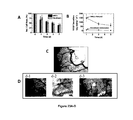
- FIG. 4 a - c shows the fibroblast-encapsulated hydrogels implanted onto chick embryo chorioallantoic membrane (CAM).
- CAM chick embryo chorioallantoic membrane
- the spacing between the circular neovessel was the same as that between microchannels in the cell-hydrogel construct.
- No defined neovessel pattern was found with implantations of the microchannel-free PEGDA hydrogel and the microchannel-free PEGDA-MA hydrogel (b-1 & b-2).
- the implant sites were further magnified in (c) (scale bars represent 500 ⁇ m).
- FIG. 5 a - d shows validation of diffusion-based model by incorporating microchannels inappropriate to derive the neovessel pattern.
- a. The microchannel diameter of the PEGDA-MA hydrogel was increased to 1,000 ⁇ m while keeping the spacing of microchannels constant at 500 ⁇ m.
- b. As predicted by modeling in FIG. 2 , the implantation of the cell-hydrogel construct on CAM did not result in any defined pattern of neovessels. Instead, neovessels grew in a tortuous pattern. The implant site was further magnified in (c) (scale bar represents 500 ⁇ m).
- d. the wall of blood vessel imaged with SEM (d-1) was less compact as compared with the neovessel developed by implanting the hydrogel containing microchannels with a diameter of 500 ⁇ m (d-2).
- FIG. 6 a - b shows synthesis of gel-forming methacrylic alginate (MA) and poly (ethylene glycol) diacrylates (PEGDA).
- FIG. 7 shows a hydrogel formulation scheme
- FIG. 8 shows the calculation of total acrylic groups of the hydrogels. Total number of acrylates in each hydrogel was varied with PEGDA concentration. In contrast, increasing mass fraction of MA while keeping total polymer concentration constant at 20% led to minimally change the total number of acrylates in each hydrogel.
- FIG. 9 shows a quantitative analysis of water diffusion into the hydrogel.
- Increase of water amount within a hydrogel was quantified by dissecting the MRI images in FIGS. 1 c and 2 d and counting the number of pixels colored by red and yellow colors, which represents the water protons bound to a gel matrix.
- the water amount quantified at different time points was normalized to the initial water amount.
- Increase of water content within the PEGDA-MA hydrogel ( ⁇ ) was faster than that within the PEGDA hydrogel (•). Incorporation of microchannels into the PEGDA-MA hydrogel ( ⁇ ) further accelerated the increase of water count.
- FIG. 10 shows the bottoms-up process for cell-encapsulated hydrogel assembly.
- FIG. 11 a - b shows the computer-aided design (CAD)-based hydrogel assembly.
- 3D CAD model was generated using AutoCAD 2009 (Autodesk) and exported to stereolithography format.
- the SLA software 3D lightyear v1.4 (3D Systems) was used to slice the 3D models into a series of 2D layers from a user-specified thickness.
- D p penetration depth
- E c critical exposure energy
- FIG. 12 a - b shows hydrogels assembled to present varied forms of microchannels.
- FIG. 13 a - b shows NIH/3T3 cells cultured for seven days while being encapsulated within hydrogels.
- FIG. 14 shows the cellular secretion level of Endothelin-1 on Days 1, 3, and 5, which was measured using the mouse Endothelin-1 (ET-1) Immunoassay kit (Enzo Life Sciences).
- the value of ET-1 secretion for the PEGDA-MA hydrogel and for the PEGDA-MA hydrogel with microchannels was statistically different, as compared with that for the PEGDA hydrogel (*p ⁇ 0.05).
- FIG. 15 shows proangiogenic growth factors including VEGF, VEGF-B, MCP-1, MMP-9, proliferin, NOV, and Serpin E1, which were secreted from NIH/3T3 fibroblasts adhered to a 2D poly(styrene) substrate.
- FIG. 16 a - c shows an analysis of the role of microchannel geometry of a protein-releasing hydrogel in protein localization around the pattern of microchannels.
- a Schematic of the experimental set-up to examine localization of proteins diffused from the hydrogel with microchannels.
- the microscopic platform was prepared on a cover glass. Following the treatment with 0.1 M sodium hydroxide, the coverslip was siliconized with 3-aminopropyltriethoxy silane (APES; Sigma) followed by modification with 0.5% glutaraldehyde (Sigma) in PBS.
- APES 3-aminopropyltriethoxy silane
- the 1.0 mL of pre-gel solution was prepared with 200 ⁇ L of 40% (w/v) acrylamide (AAm, Aldrich), 132 ⁇ L of 2% (w/v) bis-acrylamide (Bis, Aldrich), 50 ⁇ L of 10% ammonium persulfate (APS, Aldrich) and 2 ⁇ L of N′,N′,N′,N′-tetramethylethylene-diamine (TEMED, Aldrich) in DI water. Then, the pre-gel solution was sandwiched and allowed to polymerize between the modified coverslip and unmodified coverslip of 22 mm diameter for 10 minutes at room temperature.
- PAAm poly(acrylamide) gel-coated cover glass
- the surface of PAAm was functionalized with —NHS (-succinimidyl) groups by activating with N-sulfosuccinimidyl-6-[4′-azido-2′-nitrophenylamino] hexanoate (Sulfo-SANPAH, Pierce) in the presence of UV light. UV with 252 nm wavelength was exposed twice for 7 minutes on the Sulfo-SANPAH solution on PAAm.
- the fluorescent Bovine Serum Albumin (rhodamine-BSA, Aldrich) as a model protein was encapsulated in the PEGDA-MA hydrogel containing microchannels, and the hydrogel was placed on the activated PAAm substrate.
- the BSA diffuse onto the —NHS (-succinimidyl) groups on the PAAm gel surface during incubation overnight.
- BSA reacts with —NHS groups to form covalent bonds, and the fluorescence pattern under the PEGDA-MA hydrogel was examined using the fluorescent microscope.
- the diffused BSAs were localized exclusively along circular cross-section of the microchannels with diameter of 500 ⁇ m (b-2).
- Image (b-1) represents the fluorescent image of the rhodamine-BSA encapsulated hydrogel which was captured before incubation
- image (b-2) represents the BSAs localized around the patterned microchannel.
- c Validation of diffusion-based model by scaling up while keeping the ratio of R/2H(R; diameter of microchannel, H; thickness of an entire gel) as shown in FIG. 3 .
- the model predicted that the diameter of the microchannels should be less than 4.0 mm in order to make J m larger than J f in FIG. 3 b .
- BSA diffused from the hydrogel containing a channel with diameter of 7.0 mm did not result in any localization of proteins along the channel (c-1) while the hydrogel containing microchannels with diameter of 2.0 mm induced the protein localization.
- FIG. 17 a - b shows a schematic representation of in-shell CAM angiogenesis assay.
- a embryonic chicken eggs (Hy-Line W-36) purchased from the Poultry Research Farm at the University of Illinois (Urbana, Ill.) were incubated at 37° C. with 5% CO 2 . On the 9th day of gestation, a small window (1.0 ⁇ 1.0 cm) was created on top of each egg. After one day of additional incubation to stabilize CAM and the embryos, a fibroblast-encapsulated hydrogel disk (5-mm diameter, 200- ⁇ m thickness) was implanted on top of the CAM. The fibroblast density was kept constant at 5 ⁇ 10 6 cells/mL.
- FIG. 18 a - d shows a chick embryo chorioallantoic membrane (CAM) angiogenesis assay.
- Development of capillaries following the implantation of fibroblast-encapsulated hydrogel was monitored by capturing images of CAM with CCD camera on Days 2, 4 and 7.
- Photos in (a) represents a CAM onto which the fibroblast-encapsulated PEGDA1000 hydrogel was implanted
- Photos in (b) represents a CAM onto which the fibroblast-encapsulated PEGDA-MA hydrogel without microchannel.
- Photos in (c) and (d) represent CAM onto which the fibroblast-encapsulated PEGDA-MA hydrogel containing microchannels with diameters of 500 ⁇ m or 1,000 ⁇ m, respectively.
- Diameter and thickness of the hydrogel implant were kept constant at 5 mm and 200 ⁇ m, respectively.
- the density of fibroblasts encapsulated in the hydrogel was kept constant at 5 ⁇ 10 6 cells/ml.
- FIG. 19 a - b shows micro-scale neovessel patterns regulated by the microchannel geometry of the cell-encapsulating hydrogel.
- the neovascular patterns were reproducibly formed equivalent to the pattern engraved into the hydrogel stamp with controlled diameters and spacings (scale bar represents 500 ⁇ m), except the hydrogel containing microchannels with diameter of 1,000 ⁇ m.
- Quantitative analysis of the number ratio of the patterned neovessels to the microchannels was related to the diameter of microchannels, which alters balance between J f and J m in the diffusion-model as shown in FIG. 2 .
- the reproducibility of patterning neovessels was evaluated with the ratio of the number of circular-shaped neovessels to that of microchannels.
- the values of the reproducibility in patterning neovessels for microchannel diameters at 300, 500 and 750 ⁇ m were statistically different from for 1,000 ⁇ m, according to the statistical analysis.
- the values of reproducibility represent averaged values from four different samples/CAM assays for each channel size.
- FIG. 20 a - b shows a histological analysis of neovessels controlled by microchannel geometry.
- a. The images show a cross-section of the CAM stained with antibody to ⁇ -smooth muscle actin ( ⁇ -SMA). The mature neovessels were identified with ⁇ -SMA layer stained.
- b. The implantation of hydrogel containing microchannels with diameter of 500 ⁇ m (a-1) resulted in a significant increase in the number of mature neovessels marked with ⁇ -SMA as compared with the neovessel developed by microchannels with diameter of 1000 ⁇ m (a-2).
- the mature neovessel density for microchannel diameter of 500 ⁇ m was statistically different from that for 1,000 ⁇ m, according to the statistical analysis.
- FIG. 21 a - b shows host inflammation mediated by structural integrity of the fibroblast-encapsulated hydrogel implants.
- Intact hydrogel minimally stimulated host inflammation (a), while fractured hydrogel stimulated inflammation marked by white fibrous tissues around the implant (indicated by an arrow) within two days (b).
- Scale bar represents 500 ⁇ m.
- FIG. 22 a shows that implantation of the PEGDA hydrogel did not generate capillary patterns. Rather, it stimulated the inflammation.
- FIG. 22 b shows the patterning of neovessels was not achieved with the PEGDA-MA containing microchannels encapsulating only VEGF (30 ng/ml), rather than fibroblasts.
- FIG. 23 a - c shows vascularization activity of the stamp laden with human bone marrow-derived mesenchymal stem cells (hMSCs).
- hMSCs human bone marrow-derived mesenchymal stem cells
- the invention provides ‘living’ microvascular stamps that release multiple proangiogenic factors along their predefined micro-sized pattern to engineer the stimulation and spatial organization of neovessels.
- the stamps comprise live cells that secrete certain factors, e.g., proangiogenic factors, engineered hydrogel matrices that promote cellular expression of the factors, and geometry that controls the flux and flow direction of these growth factors.
- the stamps When implanted, the stamps create a desired pattern of neovessels, where the pattern was engraved into the microvascular stamp.
- the microvascular stamps are very powerful tools for studying and directing emergent cellular behavior of the vasculature, and further repairing or regenerating neovessels to treat wounds, traumas, tissue defects and various diseases.
- Microvascular stamps are capable of releasing multiple proangiogenic growth factors along a pattern engraved into the stamps, while maintaining structural integrity at the implant site, such that a desired vascular pattern is generated.
- Cells that endogenously express multiple proangiogenic growth factors are encapsulated into a rigid but permeable hydrogel of poly(ethylene glycol) (PEGDA) and methacrylic polymer, such as methacrylic alginate (MA). In this manner, cells are stimulated to release the soluble factors in a sustained and responsive manner.
- PEGDA poly(ethylene glycol)
- MA methacrylic alginate
- microchannels of appropriate diameter and spacing guided by Fick's law of diffusion can be incorporated into the cell-encapsulating hydrogel, so the flux of growth factors through the walls of the microchannels are much larger than that through other parts of the hydrogel ( FIG. 1 ).
- the hydrogel permeability can be evaluated by monitoring water diffusion into the hydrogel with magnetic resonance imaging (MRI) (see Example 1), and the function of the microvascular stamp to control neovessel formation can be examined by implanting it onto, for example, a chick embryo membrane (CAM) (see Example 4).
- MRI magnetic resonance imaging
- CAM chick embryo membrane
- Hydrogel compositions of the invention comprise poly(ethylene glycol) diacrylate (PEGDA) and methacrylic polymer, (a polymer whose monomer is a methacrylic ester with the general formula H 2 C ⁇ C(CH 3 )COOR), such as methacrylic alginate (MA), hyaluronic acid methacrylate, chitosan methacrylate, polyaspartamide methacrylate, hyperbranched polyglycerol methacrylate, glycosaminoglycan methacrylate, Pluronic methacrylate, heparin methacrylates, dextran methacrylates, and combinations thereof.
- PEGDA poly(ethylene glycol) diacrylate
- methacrylic polymer a polymer whose monomer is a methacrylic ester with the general formula H 2 C ⁇ C(CH 3 )COOR
- MA methacrylic alginate
- hyaluronic acid methacrylate chitosan methacrylate
- the elastic modulus and swelling ratio of the PEGDA-methacrylic polymer hydrogel are tuned to prepare a rigid and permeable hydrogel, so that the cell-encapsulated hydrogel not only remains stable at the implanted site but also supports cellular expression of factors such as proangiogenic factors.
- the elastic modulus of a stamp can be from about 10 kPa to about 140 kPa (or any range or value between about 10 kPa to about 140 kPa), for example from about 20 kPa to about 120 kPa.
- the swelling ratio of a hydrogel can be from about 25 to about 10 (or any range or value between about 25 and 10), for example, from about 20 to about 12.
- the amount of methacrylic polymer in a hydrogel composition of the invention can be about 2.5% (w/w) to about 10.0% (w/w) (or any range or value from about 2.5% to about 10.0%).
- the amount of PEGDA in a hydrogel composition of the invention can be about 12.5% (w/w) to about 17.5% (w/w) (or any range from about 12.5% to about 17.5%).
- the molecular weight of the PEGDA can be about 700 g/mol to about 10,000 g/mol (or any range or value between about 700 g/mol and about 10,000 g/mol).
- the ratio of PEGDA to methacrylic polymer can be about 1:10, 2:10, 3:10, 4:10, 5:10% (w/w) (or any range or value between about 1:10 and about 5:10% (w/w), e.g., about 2.5:10% (w/w)).
- the diffusity of a stamp with no microchannels can be from about 1.0 ⁇ 10 ⁇ 8 cm 2 /s to about 3.0 ⁇ 10 ⁇ 8 cm 2 /s (or any range or value between about 1.0 ⁇ 10 ⁇ 8 cm 2 /s to about 3.0 ⁇ 10 ⁇ 8 cm 2 /s), for example, from about 1.2 ⁇ 10 ⁇ 8 cm 2 /s to about 2.6 ⁇ 10 ⁇ 8 cm 2 /s.
- the diffusity of a stamp with microchannels can be from about 1.0 ⁇ 10 ⁇ 8 cm 2 /s to about 3.5 ⁇ 10 ⁇ 8 cm 2 /s (or any range or value between about 1.0 ⁇ 10 ⁇ 8 cm 2 /s to about 3.5 ⁇ 10 ⁇ 8 cm 2 /s), for example, from about 1.5 ⁇ 10 ⁇ 8 cm 2 /s to about 3.14 ⁇ 10 ⁇ 8 cm 2 /s.
- the thickness of a stamp can be from about 100 ⁇ m to about 5 mm (or any range or value between about 100 ⁇ m to about 5 mm), for example, from about 100 ⁇ m to about 500 ⁇ m.
- the term “about” means that the stated parameter value can vary by 5% or less.
- the microvascular stamps mimic the complex three-dimensional cellular structure of living tissues by providing an adhesive substrate for cells and by acting as a three-dimensional physical, porous support for cells in culture and in vivo.
- a stamp can be in a variety of shapes including sheets, slabs, cylinders, tubes, spheres, or beads.
- a stamp can also be provided in a shape that provides natural contours of a body part, e.g., a nose or nose part, an ear or ear part, a meniscus, etc.
- Cells that are known to endogenously express growth factors, antiangiogenic, proangiogenic factors 15 , or other factors of interest are encapsulated into the PEGDA and PEGDA-methacrylic polymer hydrogels.
- the mixture of cells and pre-gelled methacrylic polymer, PEGDA and a photoinitiator (e.g., Iragacure 2959) solution can be exposed to UV light or a laser (e.g., a laser of a stereolithography fabrication apparatus) to activate in situ photo cross-linking reaction to form a hydrogel 18 ( FIGS. 10 & 11 ) (see Example 1).
- a photoinitiator e.g., Iragacure 2959
- PEGDA-methacrylic polymer hydrogel Cells encapsulated into a PEGDA-methacrylic polymer hydrogel remain more viable than those encapsulated into a PEGDA hydrogel, regardless of the gel stiffness ( FIG. 2 c and FIG. 13 ) (see Example 2).
- the beneficial role of PEGDA-methacrylic polymer hydrogel in enhancing cell viability may be attributed to its increased permeability and subsequently higher water diffusivity ( FIG. 2 b & FIG. 2 c ) (see Example 1).
- Cell density in a hydrogel can be from about 1 ⁇ 10 2 to about 1 ⁇ 10 8 cells/ml (or any range or value between about 1 ⁇ 10 2 to about 1 ⁇ 10 8 cells/ml), for example about 2 ⁇ 10 6 cells/ml.
- the cells are uniformly distributed throughout the hydrogel.
- the cells can be distributed in a gradient. That is, one or more portions of the hydrogel can have a greater cell density than one or more other portions of the hydrogel.
- the different densities can be achieved using a bottoms-up approach of SLA wherein different densities of cells are present in each layer (see Example 2).
- Proangiogenic factors and growth factors include, e.g., vascular endothelial growth factor (VEGF) (A-F), proliferin, serpin E1, endothelin-1, fibroblast growth factors (acidic and basic FGF 1-10), granulocyte-macrophage colony-stimulating factor (GM-CSF), insulin, insulin growth factor or insulin-like growth factor (IGF), insulin growth factor binding protein (IGFBP), placenta growth factor (PIGF), angiopoietin (Angl and Ang2), platelet-derived growth factor (PDGF), hepatocyte growth factor (HGF), transforming growth factor (TGF- ⁇ , TGF- ⁇ , isoforms 1-3), platelet-endothelial cell adhesion molecule-1 (PECAM-1), vascular endothelial growth factor (A-F), proliferin, serpin E1, endothelin-1, fibroblast growth factors (acidic and basic FGF 1-10), granulocyte-macro
- the amount of cell-secreted VEGF was much larger for cells encapsulated within a PEGDA-methacrylic polymer hydrogel as compared with those encapsulated within a PEGDA hydrogel. See Example 2.
- cells can express one or more antiangiogenic factors such as endoglin, fms-like tyrosine kinase 1 (sFlt1), NRP-1, IFN- ⁇ , IFN- ⁇ , IFN- ⁇ , CXCC10, IL-4, IL-12, IL-18, prothrombin, maspin, angiostatin, endostatin, TSP-1, TSP-2, vasostatin, platelet factor 4, or prolactin.
- antiangiogenic factors such as endoglin, fms-like tyrosine kinase 1 (sFlt1), NRP-1, IFN- ⁇ , IFN- ⁇ , CXCC10, IL-4, IL-12, IL-18, prothrombin, maspin, angiostatin, endostatin, TSP-1, TSP-2, vasostatin, platelet factor 4, or prolactin.
- antiangiogenic factors such as endoglin, fms-like
- Cells encapsulated into a hydrogel can be any type of cells such as a stem cell a human embryonic stem cell, a mesenchymal stem cell, a bone marrow-derived mesenchymal stem cell, a human bone marrow-derived mesenchymal stem cells a hematopoetic stem cell, a blood stem cell, an adult stem cell, an embryonic stem cell, a post-natal stem cell, a fetal cardiomyocyte, an endothelial progenitor cell, circulating angiogenic cells, circulating endothelial precursors, endothelial colony-forming cells, early outgrowth endothelial progenitor cells, late outgrowth endothelial progenitor cells, a cord blood stem cell, an autotransplanted expanded cardiomyocyte, a cardiomyocyte, a cardiac myoblast, a myofibroblast, a fibroblast, an adipocyte, a totipotent cell, a pluripotent cell, a multi
- the cells can be human, adult human, infant human, fetal human, juvenile human, mammalian, equine, bovine, murine, feline, canine, porcine or any other type of cells.
- the cells can be stimulated to secrete growth factors or other proangiogenic factors with, for example, stimulation factors such as protein kinase C activators (e.g., TPA), oxygen concentration, external mechanical forces, light, or heat.
- stimulation factors such as protein kinase C activators (e.g., TPA), oxygen concentration, external mechanical forces, light, or heat.
- TPA protein kinase C activators
- the stimulation factors can be added prior to formation of the hydrogel, after formation of the hydrogel, prior to implantation or grafting of the stamp, during implantation or grafting of the stamp, after implantation or grafting of the stamp, or a combination thereof.
- cells release growth factors, proangiogenic factors, or antiangiogenic factors upon specific environmental stimulation such as exposure to a certain wavelength of light, change in temperature, change in oxygen concentration, or change in pressure.
- a protein of interest e.g., one or more growth factors, proangiogenic factors, or antiangiogenic factors or precursors of these factors
- a protein light switch such that illumination of the fusion protein activates or inactivates the protein of interest.
- the activation or inactivation can be reversible, that is, the activation or inactivation is not permanent.
- the activation can be dose dependent that is, increased illumination increases the level of activation or inactivation of the protein of interest.
- the illumination can comprise any wavelength that modulates a protein light switch, for example, light in the range of about 450 to about 500 nm, More than one wavelength of light can be used for illumination.
- a protein light switch can be any protein or peptide that is responsive to illumination such that it that changes structure in response to illumination.
- a protein light switch can be a LOV (light, oxygen or voltage) domain, such as a LOV2 domain, or a portion thereof that retains substantially all of the responsiveness to illumination, See, Toettcher et al., Nature Methods, 8:35 (2011); Strickland et al., Nature Methods, 7:623 (2010). Examples of LOV domains are taught in e.g., Pathak et al., Photochem. Photobiol. 88:107 (2012); Herrou & Crosson, Nat. Rev. Microbiol. 9:713 (2011).
- a protein light switch can further comprise a J ⁇ domain and/or one or more fragments from a phototropin, e.g., phototropin I. See WO2011/002977.
- Cells of the invention can be engineered to express one or more the fusion proteins comprising one or more of the proteins of interest and a protein light switch using methods know to one of skill in the art. See WO2011/002977.
- a LOV domain will sterically block or perturb the protein function in cells.
- the block on protein function is released.
- cells within the microvascular stamp can be controlled via light to express and release growth factors, proangiogenic factors, or antiangiogenic factors at specific times. Removal of the light again blocks the protein function such that the proteins are not expressed and released.
- a microvascular stamp can be illuminated with light while the stamp is in vitro for, e.g., experimental purposes, prior to implantation into a subject, during implantation into a subject, and/or while the stamp is implanted in a subject.
- a stamp can be illuminated constantly, at one time point, or at several time points. Illumination can last for about 0.5, 1, 5, 10, 30 minutes or more at each time point.
- Microchannels can be incorporated into a microvascular stamp through, e.g., in situ cross-linking reactions activated by a sterolithographic assembly (SLA) unit. See e.g., Example 1.
- SLA sterolithographic assembly
- Microchannels with controlled spacing can be introduced into the PEGDA-methacrylic polymer hydrogels with the goal of driving neovessel growth along the microchannel pattern.
- Neovessel growth direction can be controlled by increasing the flux of the cell-secreted proangiogenic factors through the microchannel wall, so that the neovessels localize within the microchannel lumen.
- the ratio between the flux of growth factors through the microchannel wall of the stamp (J m ) should be larger than the flux through the bottom of the stamp with the same cross-sectional area as the microchannel (J f ) (see Example 3).
- the microchannels can be about 100 ⁇ m to about 2.5 mm in diameter (or any range or value from about 100 ⁇ m to about 2.5 mm in diameter), for example about 200 ⁇ m to about 2.0 mm in diameter.
- the on-center spacing between the microchannels can be about 100 ⁇ m to about 2.5 mm (or any range or value from about 100 ⁇ m to about 2.5 mm), for example from about 200 ⁇ m to about 2.0 mm. On-center spacing is the center to center measurement from one microchannel to the next.
- all microchannels in the stamp have the same on-center spacing.
- the on-center spacing can be different between two or more of the microchannels.
- the microchannels can be any shape, for example, the shape can be circles, squares, triangles, random shapes, or a mixture of shapes (see e.g., FIG. 23 d ).
- the microchannels can be arranged randomly or can be in a pattern (e.g., a set of repeating microchannels at predetermined positions).
- a microchannel pattern can regulate the local distribution of proangiogenic factors on an implantation or graft site.
- Microchannels can be fabricated in the hydrogels using a stereolithographic apparatus (SLA) 18 .
- SLA stereolithographic apparatus
- Incorporation of the microchannels into the hydrogel make minimal difference in the elastic modulus and swelling ratio as compared to the microchannel-free hydrogel.
- the diffusivity (D) of water into the PEGDA-methacrylic polymer hydrogel is significantly increased due to the presence of microchannels. Water diffuses into a hydrogel more exclusively through microchannel walls and ultimately leads to a faster increase in the amount of water bound to the gel matrix than the microchannel-free hydrogels.
- Incorporation of the microchannels into the hydrogel also increases the fraction of viable cells due to increased chances of nutrient and waste exchange over time.
- incorporation of the microchannels into PEGDA-methacrylic polymer hydrogels improves sustainability of secreting proangiogenic factors during cell culture.
- a microvascular stamp can be made by a method comprising encapsulating cells in a PEGDA and methacrylic polymer hydrogel; crosslinking the hydrogel with a stereolithographic apparatus (or other suitable composition or method) to form a cross-linked hydrogel; and incorporating microchannels into the cross-linked hydrogel with a stereolithographic apparatus (or other suitable composition or method), such that a microvascular stamp is made.
- the microvascular stamp can then be contacted with a tissue in vivo or in vitro.
- compositions of the invention include a microvascular stamp comprising one or more types of cells encapsulated in a poly(ethylene glycol) (PEGDA) and methacrylic polymer cross-linked hydrogel, wherein the cross-linked hydrogel comprises microchannels.
- a stamp can be populated with neovessels. That, is one or more neovessels are present within the stamp.
- the one or more types of cells express one or more fusion proteins comprising a growth factor, proangiogenic factor, or antiangiogenic factor fused to a protein light switch.
- Microvascular stamps of the invention can be used for tissue regeneration.
- microvascular stamps of the invention can be used for in vitro studies, e.g., to study neovessels, to study cell attachment, gene expression, cell contraction, cell motility, etc.
- a microvascular stamp of the invention can be used without encapsulated cells.
- one or more proangiogenic factors or growth factors e.g., VEGF, FGF, endothelin, proliferlin
- VEGF vascular endothelin
- proliferlin vascular endothelin
- Kits of the invention can include a microvascular stamp in medium suitable for retaining viability of the encapsulated cells.
- a delivery device such as a syringe, catheter or forceps can be included in the kit.
- kits of the invention can comprise one or more of a pre-gel solution of methacrylic polymer and PEGDA, cells, cell stimulator, a photoinitiator or combinations thereof.
- One embodiment of the invention provides a method for stimulating neovessels and controlling spatial organization of neovessels in vitro or in a subject having a disorder characterized by tissue damage or loss comprising implanting or grafting a stamp of the invention in or on the subject.
- the neovessels are functional, that is, blood flows in the neovessels.
- a microvascular stamp of the invention which has one or more cell types encapsulated within it, can be implanted into or grafted onto a subject or tissue culture such that formation of neovessels is induced.
- the neovessels can be about 100 ⁇ m to about 2.5 mm apart from one another and about 10 to about 1,000 ⁇ m long (or any range or value between about 10 to about 1,000 ⁇ m long, such as about 100 to about 500 ⁇ m long).
- a method of inducing growth of new blood vessels in a tissue in vitro or in vivo comprises contacting one or more microvascular stamps of the invention with the tissue, wherein the microvascular stamp induces the growth of new blood vessels.
- the microscale spacing between functional new blood vessels can be controlled by controlling the size or diameter, shape and spacing of the microchannels in the microvascular stamp.
- the microscale spacing between the new blood vessels can be about 100 ⁇ m to about 2.5 mm on-center.
- a method of treating a tissue defect in a subject in need thereof comprises administering one or more of the microvascular stamps of the invention to the subject, thereby treating the tissue defect.
- a microvascular stamp of the invention can be administered to a subject by any suitable method, including, for example, injection, implantation, endoscopic delivery, or by catheter.
- Microvascular stamps of the invention can be used as, e.g., grafts for dermal wounds, pressure sores, venous stasis wounds, diabetic ulcers, and/or reconstructive applications. Microvascular stamps of the invention can also be used to treat a disorder characterized by tissue damage or loss or in need of neovascularization.
- a disorder characterized by tissue damage or loss includes any disorder, disease or condition comprising tissue damage or trauma (e.g., non-functional tissue, cancerous or pre-cancerous tissue, broken tissue, fractured tissue, fibrotic tissue, or ischemic tissue) or a tissue loss (e.g., due to trauma, infectious disease, genetic disease, or other disease) that would benefit from neovessel stimulation and generation.
- disorders or conditions requiring neovascularization include liver cirrhosis, ischemia, diabetes, cystic fibrosis, bone cancer, bone damage, burns and wounds, age related macular degeneration, myocardial infarction, myocardial damage, heart valve damage, CNS lesions, nerve damage, peripheral nerve damage, spinal cord defects, articular cartilage defects, urological organ damage or degeneration, intestinal damage or degeneration, conjunctiva damage, bone and tendon interface damage or degeneration, cartilage damage, pancreatic tissue damage, liver tissue damage, and osteochondral defects.
- the cells can be derived from the treated subject (autologous source), from allogeneic sources such as embryonic stem cells that are not expected to induce an immunogenic reaction, from xenogeneic sources, or combinations thereof.
- the one or more types of cells in the stamp can express one or more fusion proteins comprising a growth factor, proangiogenic factor, or antiangiogenic factor fused to a protein light switch.
- the one or more microvascular stamps can then be illuminated with light at a wavelength of about 450 nm to about 500 nm to cause the expression of the growth factor, proangiogenic factor, or antiangiogenic factor in the fusion protein.
- a therapeutically effective amount of a stamp of the invention is an amount of a microvascular stamp composition in sufficient strength such that the composition has a positive effect on the neovascularization of tissue that is being treated in the subject.
- the amount is therapeutically effective where the composition has an effect on the regenerative or wound healing activity at the site where the composition contacts tissue.
- a therapeutically effective amount can be determined by routine testing in patients with wounds or tissue defects.
- a microvascular stamp can remain at the treatment site until the desired result is achieved (e.g., wound healing). After the desired result is achieved, the stamp can be removed.
- the duration of a microvascular stamp of the invention is the length of time required for the stamp to for example, give the cells or tissues within the stamp time to function to, for example regenerate skin at a wound site.
- the duration of a stamp can be about 1 day, 2 days, 3 days, 4 days, 5 days, 6 days, 7 days, 10 days, 2 weeks, 3 weeks, 4 weeks, 5 weeks, 6 weeks, 7 weeks, 8 weeks, 3 months, 4 months or more.
- a microvascular stamp can be populated or partially populated with neovessels in vitro and then the stamp can be implanted or grafted into a subject as described above.
- the irradiated alginate was dissolved in the 0.1M MES ((2-(N-morpholino) ethanesulfonic acid) buffer (pH 6.4, Sigma-Aldrich) at the concentration of 1.0% (w/v). Then, 1-hydroxybenzotriazole (HOBt, Fluka), 1-ethyl-3-(3-dimethylaminopropyl) carbodiimide (EDC, Thermo Scientific) and 2-aminoethyl methacrylate (AEMA, Sigma Aldrich) were dissolved in the alginate solution and stirred for 18 hours. Both the molar ratio of HOBt to AEMA and the molar ratio of EDC to AEMA were kept constant at 2:1.
- MES 1-hydroxybenzotriazole
- EDC 1-ethyl-3-(3-dimethylaminopropyl) carbodiimide
- AEMA 2-aminoethyl methacrylate
- the mixture was dialyzed extensively against deionized (DI) water for three days, while exchanging the DI water every 12 hours.
- the dialyzed alginate solution was lyophilized, and reconstituted to a 3 wt % stock solution.
- the conjugation of methacrylate groups onto the alginate was confirmed by 1 H-NMR (300 MHz, QE300, General Electric), as previously reported.
- PEGDA was synthesized via chemical reaction between poly(ethylene glycol) (PEG, Sigma Aldrich) and acryloyl chloride (Sigma Aldrich). See FIG. 6 b .
- PEG poly(ethylene glycol)
- acryloyl chloride Sigma Aldrich
- FIG. 6 b PEG was dissolved in dichloromethane at the concentration of 10 wt %.
- acryloryl chloride and triethylamine (Fisher Chemical) were dissolved in the PEG solution and stirred overnight under dry N 2 gas.
- the molar ratio of PEG, acryloyl chloride and triethylamine was 1:4:4.
- the insoluble salt triethylamine-HCl was filtered, and the product was precipitated by adding ice-cold ether.
- the crude product was dissolved into DI water and dialyzed for one day to remove unreacted starting materials and the salt, a byproduct. Then, the product was frozen at ⁇ 20° C. and lyophilized.
- the conjugation of acrylate groups onto PEG was confirmed by 1 H-NMR (300 MHz, QE300, General Electric). In this study, the number of methacrylates linked to a single alginate with molecular weight (M w ) of 50,000 g/mol was kept constant at 60.
- the PEGDA with M w of 1,000 g/mol and MA were dissolved in Dulbecco's modified Eagle's medium (DMEM, Sigma Aldrich) without phenol red as stock solutions. The concentration of PEGDA in the stock solution and that of MA were kept constant at 40° A) w/v and 3.0% w/v, respectively.
- the pre-gelled solution was made by mixing 2.0 mL of the PEGDA solution with varied amounts of MA while keeping the total gel-forming polymer concentrations constant ( FIG. 2 ).
- the mixture of pre-gelled solution was further mixed with 0.2 wt % of the photoinitiator (Irgacure 2959, Ciba).
- the pre-gelled solution was subsequently exposed to UV light or laser of stereolithographic apparatus (SLA) to activate photo cross-linking reaction to form the hydrogel. See FIG. 7 .
- the pre-gelled solution was placed into the dish at the center of the platform in SLA.
- a commercially-available SLA was modified to accommodate for the bottoms-up approach developed in our previous work 19 ( FIG. 10 ). Briefly, the hydrogel with microchannels was fabricated by photo crosslinking the mixture of cell and pre-gelled solution in a layer by layer fashion using a stereolithography apparatus (SLA, Model 250/50, 3D Systems). A commercially-available SLA was modified to accommodate for the bottoms-up approach as describe in our previous work 15 . In the bottoms-up approach, the pre-gelled solution is pipetted into the container one layer at a time from the bottom to the top. Each layer is about 100 to about 200 ⁇ m. This setup was designed to reduce total volume of photopolymer in use and also remove photopolymers used from static conditions.
- the SLA software 3D Lightyear v1.4 (3D system), was used to slice the 3D models into a series of 2D layers from a user-specified thickness.
- the laser was used to selectively crosslink the pre-gelled solution at a precisely calculated energy dose ( FIG. 11 ).
- the elevator controlled by the SLA was lowered by a specified distance, and the part was recoated. The process was repeated until completion of the 3D assembly of the hydrogel.
- the hydrogel was rinsed several times in the phosphate buffered saline (PBS, pH 7.4) to remove uncross-linked polymer, and the gel was further incubated in the medium for 24 hours at 37° C.
- PBS phosphate buffered saline
- the hydrogel stiffness was evaluated with measurement of the elastic modulus of a hydrogel. Following the incubation in the medium for 24 hours, the gel structure was compressed at a rate of 1.0 mm/min using a mechanical testing system (MTS Insight). The elastic modulus was calculated from the slope of a stress (a) vs. strain (A) curve at the first 10% strain.
- the hydrogel swelling ratio at equilibrium was determined by measuring the weight of the hydrated gel after 24 hours in neutral buffered solution at 37° C. and that of the dried gel.
- the degree of swelling (Q), defined as the reciprocal of the volume fraction of a polymer in a hydrogel (v 2 ) was calculated from the following equation,
- Magnetic Resonance Imaging MRI
- MRI magnetic resonance imaging
- NMR Varian Unity/Inova nuclear magnetic resonance
- the repetition time (T R ) of 2.5 s and the echo time (T E ) of 5 ms were used.
- the field of view (FOV) was 1.6 ⁇ 1.6 cm, and the image matrix was 128 ⁇ 64 pixels.
- the resulting water density images were processed to present the density spectrum for comparison using MATLAB (The MathworksTM).
- pseudo-color was added to the images using the ImageJ software (free image analysis software from National Institutes of Health).
- the rectangular gel picture from the image was selected, and the histogram of the image (count vs. color intensity) was taken using the ImageJ software.
- the amount of water in a hydrogel was calculated by integrating the histogram for the color intensity higher than 150.
- the following equation was used to calculate the diffusivity (D) for W t /W ⁇ ⁇ 0.8, where t is the time and L is the initial thickness of the gel 27 .
- the elastic modulus and swelling ratio of the poly(ethylene glycol) diacrylate (PEGDA) hydrogel were tuned to prepare a rigid and permeable hydrogel, so that the cell-encapsulated hydrogel would not only remain stable at the implanted site but also support cellular expression of proangiogenic factors.
- Increasing the total polymer concentration of the PEGDA hydrogel showed an increase in elastic modulus and a decrease in swelling ratio, which is the typical inverse relationship between stiffness and bulk permeability of conventional hydrogel systems ( FIG. 2 a ).
- the hydrogel comprising PEGDA and synthetic methacrylic alginate (MA) which presents multivalent methacrylic groups and hydrophilic hydroxyl groups 16 showed an increase in both elastic modulus and swelling ratio with the mass fraction of MA ( FIG. 2 a ).
- MA synthetic methacrylic alginate
- FIG. 2 a The role of MA in increasing the swelling ratio of the hydrogel was further examined by monitoring the diffusion of water protons into the hydrogel using magnetic resonance imaging (MRI).
- MRI magnetic resonance imaging
- NIH/3T3 cells were expanded and passaged at 37° C. with 5% CO 2 in Dulbecco's modified Eagle's medium (DMEM, ATCC) supplemented by 10% fetal bovine serum (FBS, ATCC), and 1% penicillin/streptomycin (ATCC). All the cells before the passage number of 10 were used in this study. Prior to encapsulation in hydrogels, cells were mixed with the pre-gelled polymer solution. The cell density was kept constant at 2.0 ⁇ 10 6 cells/ml. The mixture of cell and pre-gelled solution was exposed to the laser of SLA to activate hydrogel formation. ( FIG. 13 ). NIH/3T3 cells cultured for seven days while being encapsulated within hydrogels.
- DMEM Dulbecco's modified Eagle's medium
- FBS fetal bovine serum
- ATCC penicillin/streptomycin
- FIG. 13 a The viability of encapsulated cell was evaluated by adding 0.1 mL of a growth medium and 0.01 mL of MTT (3-(4,5-dimethylthiazol-2-yl)-2,5-diphenyltetrazolium bromide) reagent (ATCC) into a well of a 96-well plate which contained each gel structure. Following the addition of MTT reagent, the medium was incubated for four hours at 37° C. with 5% CO 2 while being gently shaken.
- MTT 3-(4,5-dimethylthiazol-2-yl)-2,5-diphenyltetrazolium bromide
- Live cells (stained as dark purple) in the hydrogels were imaged using a CCD camera (Leica D-LUX 3) mounted on an inverted microscope (Leica DMIL). FIG. 13 b .
- the live cell fraction was further quantified by adding 0.1 mL of a MTT detergent solution (ATCC) to each well and further incubating at 37° C. overnight to dissolve the dark purple product.
- the gel structure was removed from each well, and the absorbance of the surrounding medium at 570 nm was measured using a microplate absorbance reader (Synergy HT, Biotek).
- Image (1) (dark purple in live cells) represents cells encapsulated in the PEGDA1000-MA hydrogel containing microchannels with diameter of 500 ⁇ m, image (2) for PEGDA1000-MA hydrogel without microchannels, and image (3) for pure PEGDA1000 hydrogel. Arrow in the image (1) indicates the microchannels. FIG. 13 .
- the cell-hydrogels were incubated in DMEM supplemented by 10% fetal bovine serum (FBS), while changing the media every two days. On Days 0, 1, 3, 5, and 7, viability of cells encapsulated into the hydrogel was quantitatively evaluated using a MTT [(3-(4,5-dimethylthiazol-2-yl)-2,5-diphenyltetrazolium bromide) reagent (ATCC)] assay kit.
- the cell-hydrogel construct was incubated in the media containing MTT reagent for 4 hours, and the absorbance of the sample altered with the positive staining of viable cells was subsequently measured at 570 nm using a microplate absorbance reader (Synergy HT, Biotek). The absorbance was normalized to the absorbance read at day 0 to quantify the relative cell viability (%).
- the encapsulated cells were stimulated to secret growth factors by adding 0.2 mL of DMEM and 100 ng/ml of 12-O-Tetradecanoylphorbol-13-actate (TPA, ATCC) reagent into a well of a 96-well plate which contains each cell-encapsulating gel 17 .
- TPA 12-O-Tetradecanoylphorbol-13-actate
- cells adhered to a poly(styrene) cell culture plate were also exposed to the same does of TPA.
- 100 ⁇ l of cell culture media was mixed with a cocktail of biotinylated detection antibodies, and incubated overnight with the proteome profiler mouse angiogenesis array (R&D Systems).
- the array membrane was washed to remove unbound material and streptavidin-Fluor® (430) conjugates (Invitrogen) and positively stained spots were imaged using a Phosphor Imager (Bio-Rad).
- the amount of VEGF secreted by cells was quantitatively evaluated by the sandwich enzyme immunoassay technique using the mouse VEGF Immunoassay kit (R&D Systems).
- the sample containing VEGF was pipetted into a well where a polyclonal antibody specific for mouse VEGF has been pre-coated, and incubated for 2 hours. After washing away any unbound substances, an enzyme-linked polyclonal antibody specific for mouse VEGF was added to the well.
- the enzyme reaction yielded a blue-colored product, and the color intensity was measured using a microplate absorbance reader (Synergy HT, Biotek). The measured value was converted to the amount of VEGF using a calibration curve. The amount of VEGF was further normalized by the number density of cells initially encapsulated into each hydrogel.
- fibroblasts that are known to endogenously express proangiogenic factors 15 were encapsulated into the PEGDA and PEGDA-MA hydrogels.
- the mixture of cells and pre-gelled solutions were exposed to the laser of the stereolithography fabrication apparatus to activate in-situ photo cross-linking reaction 18 ( FIGS. 10 & 11 ).
- cells encapsulated into the PEGDA-MA hydrogel remained more viable than those encapsulated into the PEGDA hydrogel, regardless of the gel stiffness ( FIG. 2 c and FIG. 13 ).
- the beneficial role of PEGDA-MA hydrogel in enhancing cell viability could be attributed to its increased permeability and subsequently higher water diffusivity ( FIG. 2 b & FIG. 2 c ).
- fibroblasts encapsulated within the PEGDA-MA hydrogel expressed larger amounts of multiple proangiogenic factors, including vascular endothelial growth factor (VEGF), proliferin, matrix metalloprotein (MMP)-9, monocyte chemotactic protein-1 (MCP-1), Serpin E1 and Endothelin-1 ( FIG. 2 d ), as compared with cells adhered to a 2D poly(styrene) substrate ( FIG. 14 ).
- VEGF vascular endothelial growth factor
- MMP matrix metalloprotein
- MCP-1 monocyte chemotactic protein-1
- Serpin E1 and Endothelin-1 FIG. 2 d
- Neovessel growth direction can be controlled by increasing the flux of the cell-secreted proangiogenic factors through the microchannel wall, so that the neovessels localize within the microchannel lumen ( FIG. 3 a ). According to Fick's law of diffusion (Eq.
- the ratio between the flux of growth factors through the microchannel wall of the stamp (J m ) and the flux through the bottom of the stamp with the same cross-sectional area as the microchannel (J f ) is equal to the ratio between the surface area of microchannel wall (S wall ) and the cross-sectional area of the microchannel (S bottom ).
- the diameter of the microchannels should be less than 800 ⁇ m in order to make J m larger than J f .
- microchannels with diameter (d) of 500 ⁇ m were fabricated in the PEGDA and PEGDA-MA hydrogels using the stereolithographic apparatus (SLA) 18 ( FIG. 3 c & FIG. 12 ).
- SLA stereolithographic apparatus
- Incorporation of the microchannels into the hydrogel made minimal difference in the elastic modulus and swelling ratio as compared to the microchannel-free hydrogel. Therefore, the original diameter of the microchannels was minimally altered during the in vivo incubation, regardless of which gel-forming polymers were used ( FIG. 13 ).
- D diffusivity
- microvascular stamp to engineering neovessels pattern was examined by implanting the cell-hydrogel construct onto chicken chorioallontoic membrane (CAM) according to a previously developed method 28 ( FIG. 15 ).
- Fertilized chicken eggs (Hy-Line W-36) were obtained from the University of Illinois Poultry Farm (Urbana, Ill.). The eggs were initially incubated for 7 days, while being placed horizontally inside an incubator at 37° C. and 65% humidity. After the initial incubation period, a small window (1.0 ⁇ 1.0 cm) was created on top of each egg shell by carefully removing shell fragments.
- a gel disk (5-mm diameter, 200- ⁇ m thickness) containing fibroblasts with 5 ⁇ 10 6 cells/ml implanted on top of the CAM of individual embryos.
- CAM Images were captured using a S6E stereomicroscope (Leica) linked with D-Lux E Camera (Leica).
- the membrane was fixed with 10% neutral buffered formalin (NBF) for 20 hours.
- the fixed membrane surrounding the gel structure (10 mm ⁇ 10 mm) was cut out to image the vascular structure using scanning electron microscopy (SEM, JEOL 7000F SEM).
- the fixed CAM was washed in PBS several times and subsequently washed in distilled water. Then, the CAM was sequentially dehydrated with 70%, 90% and absolute ethanol and finally dried in air for 24 hours. Finally, all samples were mounted on aluminum stubs, coated with gold particles in a sputter coater, and the surface morphology was examined with SEM.
- fibroblast-encapsulated hydrogels were implanted onto chorioallantoic membrane (CAM) to validate whether the bulk permeability and microchannel geometry of the hydrogels affected the creation of neovessels formation.
- Implantation of the microchannel-free PEGDA hydrogel onto the CAM stimulated inflammation within two days, most likely because of extravasation of the debris from the dead cells 20 ( FIG. 4 b - 1 & FIG. 16 a ). This result was similar to inflammation stimulated by a fractured hydrogel that physically exposed the encapsulated cells to host tissue ( FIG. 17 ).
- microchannel-free PEGDA-MA hydrogel minimally stimulated host inflammation, most likely because of its ability to increase the viability of encapsulated cells ( FIG. 16 b ).
- FIGS. 4 b - 1 & 4 b - 2 no specific pattern of neovessels was found with the microchannel-free hydrogels.
- implantation of the PEGDA-MA hydrogel containing microchannels with diameter of 500 ⁇ m stimulated the growth of neovessels along its circular pattern.
- the spacing between the circular neovessels was the same as that between the microchannels introduced into hydrogel ( FIG. 4 b - 3 ).
- Such patterning of neovessels was not achieved with the same hydrogel loaded only with VEGF, rather than the fibroblasts ( FIG. 22 b ).
- the diameter of the microchannels in the PEGDA-MA hydrogel was further increased to 1,000 ⁇ m to validate the important role of the microchannel geometry on engineering the patterning of neovessels. Interestingly, none of neovessels replicated the circular pattern of microchannels ( FIG. 5 b & FIG. 12 ). Most of the neovessels were formed along random paths, as confirmed with bright field image ( FIG. 5 c ). Scanning electron microscope images showed the less compact vascular layer together with red blood cells that likely leaked from the vessels ( FIG. 5 d ).
- microvascular stamp comprising live cells expressing multiple proangiogenic factors and an engineered hydrogel with proper rigidity, bulk permeability, and microchannel geometry created mature and functional neovessels with desired patterns in live tissue.
- incorporation of hydrophilic methacrylic alginate significantly increased the elastic modulus of the hydrogel by forming elastic intermolecular networks along with PEGDA.
- the methacrylic alginate further facilitated diffusion-controlled mass flux within the gel, which was imaged with MRI and evaluated using the Fick's law of diffusion.
- the enhanced mass transport greatly increased the number of viable cells as compared with cells encapsulated in the softer and less permeable hydrogel.
- the larger number of cross-links in the PEGDA-MA hydrogel provided cells with a sustainable 3D microenvironment crucial for the elevated expression of proangiogenic factors as compared with cells adhered to the 2D substrate.
- microchannel geometry guided by the Fick's law of diffusion was another key factor in engineering patterned neovessels.
- the surface area of the microchannel introduced into the cell-encapsulated gel mediated the balance between the mass flux through the region of microchannel wall and that through the lower surface of the hydrogel.
- the proangiogenic factors released through the microchannel wall were possibly localized in the periphery of microchannels.
- the MMPs secreted by cells likely eroded the tissue surface following the circular pattern of microchannels and multiple proangiogenic factors including VEGF, MCP-1, and proliferin stimulated the growth of mature and functional neovessels through the engraved routes 21-22 .
- VEGF vascular endothelial growth factor
- Biovascular stamp played a critical role in activating cellular expression of proangiogenic factors and the geometry of the microchannel patterns regulated the local distribution of proangiogenic factors on the implant site. These two material variables were orchestrated to spatially organize neovessels into the predefined pattern of the microvascular stamp.
- the stamp can be readily modified with other cell types such as mesenchymal stem cells which also endogenously express multiple proangiogenic growth factors, so the living stamp can be used in various clinical settings 23 . Controlling the ‘bottoms-up’ emerging behavior of the neovessel formation via ‘directed top-down’ cues using the living microvascular stamp can be a major step forward in tissue engineering.
- microvascular stamps of the invention are a powerful tool enabling the improved understanding of vascularization processes in complex tissue development, regeneration and pathogenesis in subjects.
- Microvascular stamps can be used to improve the control of collateral blood flow in clinical treatments of various diseases and tissue defects.
- design principles established to assemble the microvascular stamp will be useful in designing a broad array of bioimplants and tissue engineering scaffolds to create ‘on demand’ microvascular networks in an organized fashion.
- hMSCs Human bone marrow-derived mesenchymal stem cells
- a stamp of the invention Human bone marrow-derived mesenchymal stem cells
- Vascularization activity of the stamp was observed.
- Viability of the hMSCs encapsulated in the microvascular stamp was evaluated using a calorimetric assay that measures metabolic activity.
- a population of hMSCs survived the stereolithographic process and remained viable within the microvascular stamp for at least 7 days. See FIG. 23 a .
- the cellular VEGF secretion level was determined using a human VEGF ELISA kit.
- the amount of cell-secreted VEGF ( ⁇ ) for five days was 10 times larger than NIH/3T3 cells ( ⁇ ) in the stamp.
- FIG. 23 b The microvascular stamps were implanted on CAM membranes and blood vessels were generated with the same pattern as the microchannels. See FIGS. 23 c and d.
- hMSCs human bone marrow-derived mesenchymal stem cells
Landscapes
- Health & Medical Sciences (AREA)
- Chemical & Material Sciences (AREA)
- Life Sciences & Earth Sciences (AREA)
- Medicinal Chemistry (AREA)
- General Health & Medical Sciences (AREA)
- Animal Behavior & Ethology (AREA)
- Engineering & Computer Science (AREA)
- Veterinary Medicine (AREA)
- Public Health (AREA)
- Epidemiology (AREA)
- Biomedical Technology (AREA)
- Oral & Maxillofacial Surgery (AREA)
- Transplantation (AREA)
- Dermatology (AREA)
- Cell Biology (AREA)
- Zoology (AREA)
- Biotechnology (AREA)
- Organic Chemistry (AREA)
- Developmental Biology & Embryology (AREA)
- Chemical Kinetics & Catalysis (AREA)
- Immunology (AREA)
- Dispersion Chemistry (AREA)
- Wood Science & Technology (AREA)
- Virology (AREA)
- Bioinformatics & Cheminformatics (AREA)
- Genetics & Genomics (AREA)
- Pharmacology & Pharmacy (AREA)
- Vascular Medicine (AREA)
- Polymers & Plastics (AREA)
- Hematology (AREA)
- Microbiology (AREA)
- Biochemistry (AREA)
- General Engineering & Computer Science (AREA)
- General Chemical & Material Sciences (AREA)
- Cardiology (AREA)
- Gastroenterology & Hepatology (AREA)
- Heart & Thoracic Surgery (AREA)
- Pulmonology (AREA)
- Molecular Biology (AREA)
- Urology & Nephrology (AREA)
Abstract
Description


J s =P×S×(C i −C o) (Eq. 1)
where Js is the diffusive flux of a molecule, P is the hydrogel permeability coefficient, Ci and Co are the molecule concentrations in and out of a hydrogel, and S is the surface area of a hydrogel.
where ρS is the density of water, ρP is the density of polymer, and Qm is the mass ratio of swelled gel to the dried gel.
- 1. Dorfleutner et al., Regulation of angiogenesis by tissue factor cytoplasmic domain signaling. Nature Medicine 10, 502-509 (2004)
- 2. Carmeliet, P. & Jain, R. K. Angiogenesis in cancer and other diseases. Nature 407, 249-257 (2000)
- 3. Dor et al., Making vascular networks in the adult: branching morphogenesis without a roadmap. Trends Cell Bio. 13, 131-136 (2003)
- 4. Konerding et al., Evidence for characteristic vascular patterns in solid tumours: quantitative studies using corrosion casts.
Br. J. Cancer 80, 724-732 (1999) - 5. Childs et al., Patterning of angiogenesis in the zebrafish embryo. Development 129, 973-982 (2002)
- 6. Laitakari et al., Size, shape, structure and direction of angiogenesis in laryngeal tumour development. J. Clin Pathol. 57, 394-401 (2004)
- 7. Chen et al., Spatio-temporal VEGF and PDGF delivery patterns blood vessel formation and maturation. Pharm. Res. 24, 258-264 (2007)
- 8. Silva, E. A. & Mooney, D. J. Effects of VEGF temporal and spatial presentation on angiogenesis. Biomaterials 31, 1235-1241 (2010)
- 9. Khademhosseini et al., Microscale technologies for tissue engineering and biology. Proc. Natl. Acad. Sci. 103, 2480-2487 (2005)
- 10. Dike et al., Geometric control of switching between growth, apoptosis, and differentiation during angiogenesis using micropatterned substrates. In Vitro Cell. Dev. Biol. 35, 441-448 (1999)
- 11. Tsuda et al., Cellular control of tissue architectures using a three-dimensional tissue fabrication technique.
Biomaterials 28, 4939-4946 (2007) - 12. Campbell et al., Engineered spatial patterns of FGF-2 immobilized on fibrin direct cell organization. Biomaterials 26, 6762-6770 (2005)
- 13. Gbureck et al., Direct printing of bioceramic implants with spatially localized angiogenic factors. Adv. Mater. 19, 795-800 (2007)
- 14. Du et al., Rapid generation of spatially and temporally controllable long range concentration gradients in a microfluidic device. Lab on
Chip 9, 761-767 (2009) - 15. Barkefors et al., A fluidic device to study directional angiogenesis in complex tissue and organ culture models. Lab on
Chip 9, 529-536 (2009) - 16. Cha et al., Decoupled control of stiffness and permeability of cell-encapsulated poly(ethylene glycol) hydrogel. Biomaterials 31, 4864-4871 (2010)
- 17. Grugel et al., Both v-Ha-Ras and v-Raf stimulate expression of the vascular endothelial growth factor in NIH 3T3 cells. J. Biol. Chem. 270, 25915-25919 (1995)
- 18. Arcaute et al., Stereolithography of three-dimensional bioactive poly(ethylene glycol) constructs with encapsulated cells. Ann Biomed Eng 34, 1429-1441 (2006)
- 19. Chan et al., Three-dimensional photopatterning of hydrogels using stereolithography for long-term cell encapsulation. Lab on Chip 10, 2062-2070 (2010)
- 20. Rock, K. L. & Kono, H. The inflammatory response to cell death. Annu. Rev. Pathol. Mech. Dis. 3, 99-126 (2008)
- 21. Nagase, H. & Woessner, J. F. Matrix metalloproteinases. J. Biol. Chem. 274, 21491-21494 (1999)
- 22. Conway et al., Molecular mechanisms of blood vessel growth. Cardiovasc. Res. 49, 507-521 (2001)
- 23. Kaushal et al., Functional small-diameter neovessels created using endothelial progenitor cells expanded ex vivo.
Nature Medicine 7, 1035-1040 (2001) - 24. Slaughter et al., Hydrogel in regenerative medicine. Adv. Mater. 21, 3307-3329 (2009)
- 25. Choi et al., Microfluidic scaffolds for tissue engineering.
Nature materials 6, 908-915 (2007) - 26. Quijada et al., Swelling monitorization of poly[(N-isopropylacrylamide)-co-(methacrylic acid)] copolymers by magnetic resonance imaging. Macromolecules 38, 7434-7442 (2005)
- 27. Franson, N. M. & Peppas, N. A. Influence of copolymer composition on non-Fickian water transport through glassy copolymers. J. Appl. Polym. Sci. 28, 1299-1310 (1983)
- 28. Staton et al., Angiogenesis Assays: A critical appraisal of current techniques, Wiley, New York (2007), chapter 11.
Claims (12)
Priority Applications (1)
| Application Number | Priority Date | Filing Date | Title |
|---|---|---|---|
| US14/709,726 US9533073B1 (en) | 2012-05-22 | 2015-05-12 | Microvascular stamp for patterning of functional neovessels |
Applications Claiming Priority (3)
| Application Number | Priority Date | Filing Date | Title |
|---|---|---|---|
| US201261650073P | 2012-05-22 | 2012-05-22 | |
| US13/788,023 US9050180B1 (en) | 2012-05-22 | 2013-03-07 | Microvascular stamp for patterning of functional neovessels |
| US14/709,726 US9533073B1 (en) | 2012-05-22 | 2015-05-12 | Microvascular stamp for patterning of functional neovessels |
Related Parent Applications (1)
| Application Number | Title | Priority Date | Filing Date |
|---|---|---|---|
| US13/788,023 Continuation US9050180B1 (en) | 2012-05-22 | 2013-03-07 | Microvascular stamp for patterning of functional neovessels |
Publications (1)
| Publication Number | Publication Date |
|---|---|
| US9533073B1 true US9533073B1 (en) | 2017-01-03 |
Family
ID=53267747
Family Applications (2)
| Application Number | Title | Priority Date | Filing Date |
|---|---|---|---|
| US13/788,023 Active US9050180B1 (en) | 2012-05-22 | 2013-03-07 | Microvascular stamp for patterning of functional neovessels |
| US14/709,726 Active US9533073B1 (en) | 2012-05-22 | 2015-05-12 | Microvascular stamp for patterning of functional neovessels |
Family Applications Before (1)
| Application Number | Title | Priority Date | Filing Date |
|---|---|---|---|
| US13/788,023 Active US9050180B1 (en) | 2012-05-22 | 2013-03-07 | Microvascular stamp for patterning of functional neovessels |
Country Status (1)
| Country | Link |
|---|---|
| US (2) | US9050180B1 (en) |
Cited By (2)
| Publication number | Priority date | Publication date | Assignee | Title |
|---|---|---|---|---|
| US11060064B2 (en) * | 2013-03-15 | 2021-07-13 | The Johns Hopkins University | Early vascular cell population |
| US12201730B2 (en) | 2020-04-02 | 2025-01-21 | The Board Of Trustees Of The University Of Illinois | Catalytic microgelators for decoupled control of gelation rate and rigidity of biological gels |
Families Citing this family (6)
| Publication number | Priority date | Publication date | Assignee | Title |
|---|---|---|---|---|
| CN105985925B (en) * | 2015-03-04 | 2019-08-09 | 刘畅 | A kind of global function artificial organs fitting body and its preparation and cultural method |
| DK3283136T4 (en) | 2015-04-16 | 2025-01-02 | Hollister Inc | HYDROPHILIC COATINGS AND METHODS FOR FORMING THE SAME |
| EP3463196A4 (en) * | 2016-05-27 | 2020-07-29 | Terumo Cardiovascular Systems Corporation | DEVICE FOR PRODUCING A FLAP SAIL FROM A MEMBRANE |
| KR102033331B1 (en) * | 2018-01-30 | 2019-10-17 | 숭실대학교 산학협력단 | Cell-instructed delivery system using tuning the toughness of an alginate microgel |
| JP7511565B2 (en) | 2018-09-14 | 2024-07-05 | バイオセイピエン インコーポレイテッド | Biological vessels for use in tissue engineering. |
| CN119432597B (en) * | 2024-11-04 | 2026-04-17 | 上海交通大学 | Vascularized organoid chips based on microstructure patterning of seals and their fabrication methods |
Citations (2)
| Publication number | Priority date | Publication date | Assignee | Title |
|---|---|---|---|---|
| US4791061A (en) | 1985-06-28 | 1988-12-13 | Hitachi Plant Engineering & Construction Co., Ltd. | Immobilization of microorganisms by entrapment |
| US6621685B1 (en) | 2002-04-03 | 2003-09-16 | Korea Institute Of Science And Technology | Electric double-layered capacitor using UV-curing gel type polymer electrolyte |
-
2013
- 2013-03-07 US US13/788,023 patent/US9050180B1/en active Active
-
2015
- 2015-05-12 US US14/709,726 patent/US9533073B1/en active Active
Patent Citations (2)
| Publication number | Priority date | Publication date | Assignee | Title |
|---|---|---|---|---|
| US4791061A (en) | 1985-06-28 | 1988-12-13 | Hitachi Plant Engineering & Construction Co., Ltd. | Immobilization of microorganisms by entrapment |
| US6621685B1 (en) | 2002-04-03 | 2003-09-16 | Korea Institute Of Science And Technology | Electric double-layered capacitor using UV-curing gel type polymer electrolyte |
Non-Patent Citations (29)
Cited By (2)
| Publication number | Priority date | Publication date | Assignee | Title |
|---|---|---|---|---|
| US11060064B2 (en) * | 2013-03-15 | 2021-07-13 | The Johns Hopkins University | Early vascular cell population |
| US12201730B2 (en) | 2020-04-02 | 2025-01-21 | The Board Of Trustees Of The University Of Illinois | Catalytic microgelators for decoupled control of gelation rate and rigidity of biological gels |
Also Published As
| Publication number | Publication date |
|---|---|
| US9050180B1 (en) | 2015-06-09 |
Similar Documents
| Publication | Publication Date | Title |
|---|---|---|
| US9533073B1 (en) | Microvascular stamp for patterning of functional neovessels | |
| Xu et al. | Bioprinting a skin patch with dual-crosslinked gelatin (GelMA) and silk fibroin (SilMA): an approach to accelerating cutaneous wound healing | |
| Fan et al. | Implantable blood clot loaded with BMP-2 for regulation of osteoimmunology and enhancement of bone repair | |
| Silva et al. | Injectable and tunable hyaluronic acid hydrogels releasing chemotactic and angiogenic growth factors for endodontic regeneration | |
| Cheng et al. | Sustained release of adipose-derived stem cells by thermosensitive chitosan/gelatin hydrogel for therapeutic angiogenesis | |
| Nikkhah et al. | Directed endothelial cell morphogenesis in micropatterned gelatin methacrylate hydrogels | |
| Her et al. | Control of three-dimensional substrate stiffness to manipulate mesenchymal stem cell fate toward neuronal or glial lineages | |
| Loessner et al. | Functionalization, preparation and use of cell-laden gelatin methacryloyl–based hydrogels as modular tissue culture platforms | |
| TWI741980B (en) | Biological brick and its use | |
| KR20110003526A (en) | 3D microfluidic platform and its use | |
| US20240026261A1 (en) | Engineering of organoid culture for enhanced organogenesis in a dish | |
| Pereira et al. | Photopolymerizable hydrogels in regenerative medicine and drug delivery | |
| Deus et al. | Designing highly customizable human based platforms for cell culture using proteins from the amniotic membrane | |
| Wei et al. | Strategy for improving cell-mediated vascularized soft tissue formation in a hydrogen peroxide-triggered chemically-crosslinked hydrogel | |
| KR20230110153A (en) | Human tissues-on-chips with inverted-microweir structures and uses thereof | |
| Kim et al. | Synergistic control of mechanics and microarchitecture of 3D bioactive hydrogel platform to promote the regenerative potential of engineered hepatic tissue | |
| JP2024125426A (en) | Decellularized cardiac tissue-derived scaffold for cardiac organoid culture and transplantation and method for producing same | |
| Hwang et al. | FSTL-1 loaded 3D bioprinted vascular patch regenerates the ischemic heart tissue | |
| US20250250522A1 (en) | Recapitulating Tissue-Native Architectures in Bio-printable Hydrogels | |
| Magariños et al. | The feasibility of encapsulated embryonic medullary reticular cells to grow and differentiate into neurons in functionalized gelatin-based hydrogels | |
| Hsieh et al. | Biological properties of human periodontal ligament cell spheroids cultivated on chitosan and polyvinyl alcohol membranes | |
| Milligan et al. | Tissue engineering to better understand senescence: organotypics come of age | |
| Nuwayhid et al. | Engineering a 3D wounded skin equivalent to study early inflammatory and regenerative responses in vitro | |
| Wright et al. | Engineering functional microvessels in synthetic polyurethane random-pore scaffolds by harnessing perfusion flow | |
| Zanrè et al. | Recent Advancements in Hydrogel Biomedical Research in Italy |
Legal Events
| Date | Code | Title | Description |
|---|---|---|---|
| AS | Assignment |
Owner name: THE BOARD OF TRUSTEES OF THE UNIVERSITY OF ILLINOI Free format text: ASSIGNMENT OF ASSIGNORS INTEREST;ASSIGNORS:KONG, HYUNJOON;BASHIR, RASHID;JEONG, JAEHYUN;AND OTHERS;SIGNING DATES FROM 20130322 TO 20130405;REEL/FRAME:035617/0426 |
|
| STCF | Information on status: patent grant |
Free format text: PATENTED CASE |
|
| CC | Certificate of correction | ||
| MAFP | Maintenance fee payment |
Free format text: PAYMENT OF MAINTENANCE FEE, 4TH YR, SMALL ENTITY (ORIGINAL EVENT CODE: M2551); ENTITY STATUS OF PATENT OWNER: SMALL ENTITY Year of fee payment: 4 |
|
| AS | Assignment |
Owner name: NATIONAL SCIENCE FOUNDATION, VIRGINIA Free format text: CONFIRMATORY LICENSE;ASSIGNOR:UNIVERSITY OF ILLINOIS, URBANA-CHAMPAIGN;REEL/FRAME:053782/0547 Effective date: 20200109 |
|
| FEPP | Fee payment procedure |
Free format text: MAINTENANCE FEE REMINDER MAILED (ORIGINAL EVENT CODE: REM.); ENTITY STATUS OF PATENT OWNER: SMALL ENTITY |
|
| FEPP | Fee payment procedure |
Free format text: 7.5 YR SURCHARGE - LATE PMT W/IN 6 MO, SMALL ENTITY (ORIGINAL EVENT CODE: M2555); ENTITY STATUS OF PATENT OWNER: SMALL ENTITY |
|
| MAFP | Maintenance fee payment |
Free format text: PAYMENT OF MAINTENANCE FEE, 8TH YR, SMALL ENTITY (ORIGINAL EVENT CODE: M2552); ENTITY STATUS OF PATENT OWNER: SMALL ENTITY Year of fee payment: 8 |