US9528139B2 - Biocompatible method of functionalizing substrates with inert surfaces - Google Patents
Biocompatible method of functionalizing substrates with inert surfaces Download PDFInfo
- Publication number
- US9528139B2 US9528139B2 US14/366,889 US201214366889A US9528139B2 US 9528139 B2 US9528139 B2 US 9528139B2 US 201214366889 A US201214366889 A US 201214366889A US 9528139 B2 US9528139 B2 US 9528139B2
- Authority
- US
- United States
- Prior art keywords
- construct
- microspheres
- substrate
- pbs
- functionalised
- Prior art date
- Legal status (The legal status is an assumption and is not a legal conclusion. Google has not performed a legal analysis and makes no representation as to the accuracy of the status listed.)
- Expired - Fee Related
Links
- 0 [1*]OCC(COP(=O)(OC)OCCNSF)O[2*] Chemical compound [1*]OCC(COP(=O)(OC)OCCNSF)O[2*] 0.000 description 6
- OBSDWZHDLXNLGT-UHFFFAOYSA-N CCCC(=O)NCC(=O)N(CC(=O)NCCC(=O)CN(CC(=O)OC)C(=O)CCC(=O)CNC)CC(=O)OC Chemical compound CCCC(=O)NCC(=O)N(CC(=O)NCCC(=O)CN(CC(=O)OC)C(=O)CCC(=O)CNC)CC(=O)OC OBSDWZHDLXNLGT-UHFFFAOYSA-N 0.000 description 2
- IAYJTZKSJQEWEG-UMXRIJSDSA-N CCCCCCCC/C=C/CCCCCCCC(=O)OCC(COP(=O)(O)OCCNC(=O)CCCCC(=O)NCC(=O)NCC(=O)N(CC(=O)O)CC(=O)NCC(=O)NCC(=O)N(CC)CC(=O)O)OC(=O)CCCCCCC/C=C/CCCCCCCC.[H][C@]12NC(=O)N[C@@]1([H])CS[C@H]2CCCCC(=O)NCC(=O)NCC(=O)N(CC(=O)O)CC(=O)NCC(=O)NCC(=O)N(CC(=O)O)CC(=O)NCCNC(C)=O Chemical compound CCCCCCCC/C=C/CCCCCCCC(=O)OCC(COP(=O)(O)OCCNC(=O)CCCCC(=O)NCC(=O)NCC(=O)N(CC(=O)O)CC(=O)NCC(=O)NCC(=O)N(CC)CC(=O)O)OC(=O)CCCCCCC/C=C/CCCCCCCC.[H][C@]12NC(=O)N[C@@]1([H])CS[C@H]2CCCCC(=O)NCC(=O)NCC(=O)N(CC(=O)O)CC(=O)NCC(=O)NCC(=O)N(CC(=O)O)CC(=O)NCCNC(C)=O IAYJTZKSJQEWEG-UMXRIJSDSA-N 0.000 description 2
- PQZOHRITJZMEQK-ONJOQCAESA-N CCCCCCCC/C=C/CCCCCCCC(=O)OCC(COP(=O)(O)OCCNC(=O)CCCCC(=O)NCCCO[C@@H]1OC(CO)[C@H](O)[C@H](O[C@H]2OC(CO)[C@H](O)[C@H](O)C2NC(C)=O)C1O[C@@H]1OC(C)[C@@H](O)[C@H](O)C1O)OC(=O)CCCCCCC/C=C/CCCCCCCC Chemical compound CCCCCCCC/C=C/CCCCCCCC(=O)OCC(COP(=O)(O)OCCNC(=O)CCCCC(=O)NCCCO[C@@H]1OC(CO)[C@H](O)[C@H](O[C@H]2OC(CO)[C@H](O)[C@H](O)C2NC(C)=O)C1O[C@@H]1OC(C)[C@@H](O)[C@H](O)C1O)OC(=O)CCCCCCC/C=C/CCCCCCCC PQZOHRITJZMEQK-ONJOQCAESA-N 0.000 description 2
- HUSBYAJAXLGDDL-VEDVMXKPSA-N CC(=O)CCN1C(=O)CC(SN[C@H](C=O)CS)C1=O Chemical compound CC(=O)CCN1C(=O)CC(SN[C@H](C=O)CS)C1=O HUSBYAJAXLGDDL-VEDVMXKPSA-N 0.000 description 1
- YDBNUXCDKXGSRB-ZCNJLGGPSA-N CC(=O)NC1[C@@H](O[C@@H]2C(O[C@@H]3OC(C)[C@@H](O)[C@H](O)C3O)[C@H](OCCCN)OC(CO)[C@@H]2O)OC(CO)[C@H](O)[C@@H]1O Chemical compound CC(=O)NC1[C@@H](O[C@@H]2C(O[C@@H]3OC(C)[C@@H](O)[C@H](O)C3O)[C@H](OCCCN)OC(CO)[C@@H]2O)OC(CO)[C@H](O)[C@@H]1O YDBNUXCDKXGSRB-ZCNJLGGPSA-N 0.000 description 1
- XNLICIUVMPYHGG-UHFFFAOYSA-N CCCC(C)=O Chemical compound CCCC(C)=O XNLICIUVMPYHGG-UHFFFAOYSA-N 0.000 description 1
- FGCQAAHZJZIYNM-UHFFFAOYSA-N CCCCC(=S)CC Chemical compound CCCCC(=S)CC FGCQAAHZJZIYNM-UHFFFAOYSA-N 0.000 description 1
- NLLMNGPCCKITJA-OUKQBFOZSA-N CCCCCCCC/C=C/CCCCCCCC(=O)OCC(COP(=O)(O)OCCNC(=O)CCCCC(=O)NCCCOC1OC(CO)C(O)C(OC2OC(CO)C(O)C(O)C2NC(C)=O)C1OC1OC(C)C(O)C(O)C1O)OC(C)=O Chemical compound CCCCCCCC/C=C/CCCCCCCC(=O)OCC(COP(=O)(O)OCCNC(=O)CCCCC(=O)NCCCOC1OC(CO)C(O)C(OC2OC(CO)C(O)C(O)C2NC(C)=O)C1OC1OC(C)C(O)C(O)C1O)OC(C)=O NLLMNGPCCKITJA-OUKQBFOZSA-N 0.000 description 1
- AMJTZYPOCMQGNT-HPEVRAMOSA-N CCCCCCCC/C=C/CCCCCCCC(=O)OCC(COP(=O)(O)OCCNC(=O)CCCCC(=O)NCCCO[C@@H]1OC(CO)[C@H](O)[C@H](O[C@H]2OC(CO)[C@H](O)[C@H](O)C2O)C1O[C@@H]1OC(C)[C@@H](O)[C@H](O)C1O)OC(=O)CCCCCCC/C=C/CCCCCCCC Chemical compound CCCCCCCC/C=C/CCCCCCCC(=O)OCC(COP(=O)(O)OCCNC(=O)CCCCC(=O)NCCCO[C@@H]1OC(CO)[C@H](O)[C@H](O[C@H]2OC(CO)[C@H](O)[C@H](O)C2O)C1O[C@@H]1OC(C)[C@@H](O)[C@H](O)C1O)OC(=O)CCCCCCC/C=C/CCCCCCCC AMJTZYPOCMQGNT-HPEVRAMOSA-N 0.000 description 1
- ZTLQGPWZNRFUOB-XCPTVTGMSA-N CCCCCCCCCCCCCCCCCOCCOCC(=O)CCCCO[C@@H]1OC(CO)[C@H](O)[C@H](O[C@H]2OC(CO)[C@H](O)[C@H](O)C2O)C1O[C@@H]1OC(C)[C@@H](O)[C@H](O)C1O Chemical compound CCCCCCCCCCCCCCCCCOCCOCC(=O)CCCCO[C@@H]1OC(CO)[C@H](O)[C@H](O[C@H]2OC(CO)[C@H](O)[C@H](O)C2O)C1O[C@@H]1OC(C)[C@@H](O)[C@H](O)C1O ZTLQGPWZNRFUOB-XCPTVTGMSA-N 0.000 description 1
- YMMJKBGIRQXWLJ-UHFFFAOYSA-N CNCC(=O)CCC(=O)N(CC(=O)CCNC(=O)CN(CC(=O)OC)C(=O)CNC(=O)CCC(=O)CC(C)=O)CC(=O)OC Chemical compound CNCC(=O)CCC(=O)N(CC(=O)CCNC(=O)CN(CC(=O)OC)C(=O)CNC(=O)CCC(=O)CC(C)=O)CC(=O)OC YMMJKBGIRQXWLJ-UHFFFAOYSA-N 0.000 description 1
Images


Classifications
-
- G—PHYSICS
- G01—MEASURING; TESTING
- G01N—INVESTIGATING OR ANALYSING MATERIALS BY DETERMINING THEIR CHEMICAL OR PHYSICAL PROPERTIES
- G01N1/00—Sampling; Preparing specimens for investigation
- G01N1/28—Preparing specimens for investigation including physical details of (bio-)chemical methods covered elsewhere, e.g. G01N33/50, C12Q
- G01N1/40—Concentrating samples
- G01N1/4077—Concentrating samples by other techniques involving separation of suspended solids
-
- C—CHEMISTRY; METALLURGY
- C12—BIOCHEMISTRY; BEER; SPIRITS; WINE; VINEGAR; MICROBIOLOGY; ENZYMOLOGY; MUTATION OR GENETIC ENGINEERING
- C12Q—MEASURING OR TESTING PROCESSES INVOLVING ENZYMES, NUCLEIC ACIDS OR MICROORGANISMS; COMPOSITIONS OR TEST PAPERS THEREFOR; PROCESSES OF PREPARING SUCH COMPOSITIONS; CONDITION-RESPONSIVE CONTROL IN MICROBIOLOGICAL OR ENZYMOLOGICAL PROCESSES
- C12Q1/00—Measuring or testing processes involving enzymes, nucleic acids or microorganisms; Compositions therefor; Processes of preparing such compositions
- C12Q1/02—Measuring or testing processes involving enzymes, nucleic acids or microorganisms; Compositions therefor; Processes of preparing such compositions involving viable microorganisms
-
- B—PERFORMING OPERATIONS; TRANSPORTING
- B01—PHYSICAL OR CHEMICAL PROCESSES OR APPARATUS IN GENERAL
- B01D—SEPARATION
- B01D65/00—Accessories or auxiliary operations, in general, for separation processes or apparatus using semi-permeable membranes
- B01D65/08—Prevention of membrane fouling or of concentration polarisation
-
- C—CHEMISTRY; METALLURGY
- C08—ORGANIC MACROMOLECULAR COMPOUNDS; THEIR PREPARATION OR CHEMICAL WORKING-UP; COMPOSITIONS BASED THEREON
- C08G—MACROMOLECULAR COMPOUNDS OBTAINED OTHERWISE THAN BY REACTIONS ONLY INVOLVING UNSATURATED CARBON-TO-CARBON BONDS
- C08G64/00—Macromolecular compounds obtained by reactions forming a carbonic ester link in the main chain of the macromolecule
- C08G64/42—Chemical after-treatment
-
- C—CHEMISTRY; METALLURGY
- C12—BIOCHEMISTRY; BEER; SPIRITS; WINE; VINEGAR; MICROBIOLOGY; ENZYMOLOGY; MUTATION OR GENETIC ENGINEERING
- C12Q—MEASURING OR TESTING PROCESSES INVOLVING ENZYMES, NUCLEIC ACIDS OR MICROORGANISMS; COMPOSITIONS OR TEST PAPERS THEREFOR; PROCESSES OF PREPARING SUCH COMPOSITIONS; CONDITION-RESPONSIVE CONTROL IN MICROBIOLOGICAL OR ENZYMOLOGICAL PROCESSES
- C12Q1/00—Measuring or testing processes involving enzymes, nucleic acids or microorganisms; Compositions therefor; Processes of preparing such compositions
- C12Q1/02—Measuring or testing processes involving enzymes, nucleic acids or microorganisms; Compositions therefor; Processes of preparing such compositions involving viable microorganisms
- C12Q1/24—Methods of sampling, or inoculating or spreading a sample; Methods of physically isolating an intact microorganisms
-
- G—PHYSICS
- G01—MEASURING; TESTING
- G01N—INVESTIGATING OR ANALYSING MATERIALS BY DETERMINING THEIR CHEMICAL OR PHYSICAL PROPERTIES
- G01N33/00—Investigating or analysing materials by specific methods not covered by groups G01N1/00 - G01N31/00
- G01N33/48—Biological material, e.g. blood, urine; Haemocytometers
- G01N33/50—Chemical analysis of biological material, e.g. blood, urine; Testing involving biospecific ligand binding methods; Immunological testing
- G01N33/53—Immunoassay; Biospecific binding assay; Materials therefor
- G01N33/543—Immunoassay; Biospecific binding assay; Materials therefor with an insoluble carrier for immobilising immunochemicals
- G01N33/54353—Immunoassay; Biospecific binding assay; Materials therefor with an insoluble carrier for immobilising immunochemicals with ligand attached to the carrier via a chemical coupling agent
-
- G—PHYSICS
- G01—MEASURING; TESTING
- G01N—INVESTIGATING OR ANALYSING MATERIALS BY DETERMINING THEIR CHEMICAL OR PHYSICAL PROPERTIES
- G01N33/00—Investigating or analysing materials by specific methods not covered by groups G01N1/00 - G01N31/00
- G01N33/48—Biological material, e.g. blood, urine; Haemocytometers
- G01N33/50—Chemical analysis of biological material, e.g. blood, urine; Testing involving biospecific ligand binding methods; Immunological testing
- G01N33/53—Immunoassay; Biospecific binding assay; Materials therefor
- G01N33/543—Immunoassay; Biospecific binding assay; Materials therefor with an insoluble carrier for immobilising immunochemicals
- G01N33/54393—Improving reaction conditions or stability, e.g. by coating or irradiation of surface, by reduction of non-specific binding, by promotion of specific binding
-
- G—PHYSICS
- G01—MEASURING; TESTING
- G01N—INVESTIGATING OR ANALYSING MATERIALS BY DETERMINING THEIR CHEMICAL OR PHYSICAL PROPERTIES
- G01N1/00—Sampling; Preparing specimens for investigation
- G01N1/28—Preparing specimens for investigation including physical details of (bio-)chemical methods covered elsewhere, e.g. G01N33/50, C12Q
- G01N1/40—Concentrating samples
- G01N1/4077—Concentrating samples by other techniques involving separation of suspended solids
- G01N2001/4088—Concentrating samples by other techniques involving separation of suspended solids filtration
Definitions
- the invention relates to a biocompatible method of functionalising inert surfaces for use in biological applications.
- the invention relates to a biocompatible method of functionalising the inert surface of porous membranes and microspheres or nanospheres.
- Filter membranes are routinely used in the analysis and preparation of biological samples.
- the surface of the substrate used in the manufacture of such membranes is purposefully selected to be antifouling, i.e. resistant to non-specific binding of components of the biological sample, and chemically inert.
- Microbeads and microspheres are used for the isolation and separation of biomolecules from complex mixtures. Reactive molecules are adsorbed or coupled to the surface of the beads or spheres. When the beads or spheres are superparamagnetic biomagnetic separation techniques may be employed.
- Membranes and microbeads or microspheres can be manufactured from various natural and synthetic materials including glass, metal, e.g. gold, and polymers, e.g. polycarbonate, polyethylene and polystyrene.
- Polystyrene is commonly used in biological applications as proteins readily adsorb onto its surface. Glass has limited use because of the limited ability to functionalise its surface. It is an object of the present invention to provide a biocompatible method of localising functional moieties to the inert surface of a substrate or at least to provide the public with a useful choice.
- the invention provides a method of functionalising an inert surface of a substrate comprising the step of contacting the surface of the substrate with an aqueous dispersion of a construct of the structure F-S-L, where F is a functional moiety, S is a spacer selected to provide a construct that is dispersible in water, and L is a diacyl- or dialkyl-glycerophospholipid.
- the method comprises the steps of:
- the inert surface consists of a substance selected from the group consisting of: glass, silver, polyamide, polycarbonate, polypropylene, polyethersulfone, polytetrafluoroethylene and polyvinylidene fluoride. More preferably, the inert surface is other than polystyrene.
- the substrate is a fibre, membrane or microsphere.
- the contacting the surface of the substrate is by immersing the substrate in the aqueous dispersion of the construct.
- the contacting the surface of the substrate by immersing the substrate in the aqueous dispersion of the construct is when the substrate is a fibre or microsphere.
- the contacting the surface of the substrate is by flooding the surface of the substrate with the aqueous dispersion of the construct.
- the contacting the surface of the substrate is by flooding the surface of the substrate with the aqueous dispersion of the construct when the substrate is a membrane.
- the substrate is a membrane comprised of cross-linked, fused or woven fibres. More preferably, the membrane is a filtration membrane. In a second embodiment of the first aspect of the invention the substrate is a microsphere. More preferably, the microsphere is a polycarbonate microsphere.
- the construct is a water dispersible construct of the structure:
- R 1 and R 2 are independently a C 14-20 acyl, alkyl or alkenyl group, preferably a C 16-18 acyl, alkyl or alkenyl group, and S is a spacer selected to provide a construct that is dispersible in water. More preferably, the construct is a water dispersible construct of the structure:
- F-S- is of the structure F-S 1 -S 2 -S 3 - where:
- the construct is a water dispersible construct of the structure F-S-L as described in one or more of the specifications accompanying international application nos. PCT/NZ2005/000052 (publ. no. WO 2005/090368), PCT/NZ2006/000245 (publ. no. WO 2007/035116), PCT/NZ2008/000239 (publ. no. WO 2009/035347), PCT/NZ2008/000266 (publ. no. WO 2009/048343), PCT/NZ2010/000111 (publ. no. WO 2010/143983), PCT/NZ2012/000012 (publ. no. WO 2012/121610), PCT/NZ2012/000029 (publ. no. WO 2012/118388) and PCT/NZ2012/000156 (unpublished).
- L is 1,2-O-dioleoyl-sn-glycero-3-phosphatidylethanolamine (DOPE) and 1,2-O-distearyl-sn-glycero-3-phosphatidylethanolamine (DSPE), most often 1,2-O-dioleoyl-sn-glycero-3-phosphatidylethanolamine (DOPE).
- DOPE 1,2-O-dioleoyl-sn-glycero-3-phosphatidylethanolamine
- DSPE 1,2-O-distearyl-sn-glycero-3-phosphatidylethanolamine
- the invention provides a substrate comprising a construct of the structure F-S-L localised to its surface where the surface is inert, F is a functional moiety, S is a spacer selected to provide a construct that is dispersible in water, and L is a diacyl- or dialkyl-glycerophospholipid.
- the inert surface is polycarbonate.
- the substrate is fibre. In a second embodiment of the second aspect the substrate is membrane. In a third embodiment of the second aspect the substrate is a microsphere.
- the invention provides a filter assembly comprising a membrane functionalised according to the method of the first aspect of the invention.
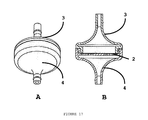
- the filter assembly comprises a membrane functionalised according to the method of the first aspect of the invention and sealed between an inlet housing and an outlet housing.
- Biocompatible means not harmful or toxic to living tissue.
- Comprising means “including”, “containing” or “characterized by” and does not exclude any additional element, ingredient or step.
- Consisting of means excluding any element, ingredient or step not specified except for impurities and other incidentals.
- FSL-Biotin means the water soluble construct of the structure:
- FSL-A tri means the water soluble construct of the structure:
- “Hydrophilic” means having a tendency to mix with, dissolve in, or be wetted by water; “hydrophobic” means tending to repel or fail to mix with water. “Inert” mean non-reactive under biocompatible conditions. “Kodecyte” means a cell modified by incorporation into the cell membrane of a construct of the general structure F-S-L (where F is a functional moiety, S is a spacer selected to provide a water dispersible construct and L is a lipid).
- “Kodevirion” means an enveloped virus particle modified by incorporation into the enveloping membrane of a construct of the general structure F-S-L (where F is a functional moiety, S is a spacer selected to provide a water dispersible construct and L is a lipid). “Localised” means associated with a surface by non-covalent interactions and “localising” and “localisation” have a corresponding meaning. “Non-polyhydric” means the material or molecule that is the substance contains substantially no hydroxyl groups and specifically excludes substances such as cellulose and silica gel. “Non-reactive” means covalent bonds are neither broken nor formed. “PBS” denotes phosphate buffered saline.
- PCV packed cell volume
- Plasma means the colourless fluid part of blood or lymph, in which corpuscles or fat globules are suspended.
- Polyhydric means the material or molecule that is the substance contains a plurality of free hydroxyl groups.
- RBC denotes red blood cell.
- Saline means a solution of one or more salts.
- Sporum means the amber-coloured, protein-rich liquid which separates out when blood coagulates.
- Synthetic means prepared by chemical synthesis.
- Water soluble means, in the context of describing the properties of a construct, that a stable, single phase system is formed in the absence of organic solvents or detergents when an amount of the construct sufficient to provide a final concentration of at least 100 ⁇ g/mL is contacted with water at a temperature of 25° C.
- the terms “dispersible” and “soluble” are used synonymously.
- non-polyhydric as a descriptor of a substance is not intended to exclude substances that are hydrophilic.
- a non-polyhydric substance may be either hydrophilic or hydrophobic according to its chemical composition. Accordingly, a non-polyhydric substance may be either wettable or water repellent according to its chemical composition, but a non-polyhydric polymer will generally be inert under biocompatible conditions.
- concentration or ratio specified is the initial concentration or ratio of the reagents. Where values are expressed to one or more decimal places standard rounding applies. For example, 1.7 encompasses the range 1.650 recurring to 7.499 recurring.
- FIG. 1 Illustration of the hypothetical mechanism by which the water dispersible constructs are localised to the surface of a substrate as either a monolayer (A) or bilayer (B).
- FIG. 2 Illustration of the hypothetical mechanism by which the water dispersible constructs are localised to the surface of a fibre or sphere as either a monolayer (A) or bilayer (B).
- FIG. 3 Appearance of the surface of substrates following printing and immunostaining using a 1 in 5 dilution in BSA of anti-A immunoglobulin (EPICLONETM monoclonal, CSL Limited) according to the method described in Example 1:
- D filter paper 1 (Whatman);
- E polypropylene filter membrane (Gelman Sciences);
- F METRICELTM filter membrane GA-3 1.2 ⁇ m (Gelman Sciences);
- G TEFLONTM filter membrane TF-200 0.2 ⁇ m (Gelman Instrument Company);
- FIG. 4 Appearance of the surface of substrates following printing and immunostaining using a 1 in 2 dilution in BSA of O group serum according to the method described in Example 1:
- G TEFLONTM filter membrane TF-200 0.2 ⁇ m (Gelman Instrument Company);
- FIG. 5 Appearance of the surface of substrates following printing and immunostaining using a 1 in 5 dilution in BSA of anti-B immunoglobulin (EPICLONETM monoclonal, CSL Limited) according to the method described in Example 2:
- D filter paper 1 (Whatman);
- E polypropylene filter membrane (Gelman Sciences);
- F METRICELTM filter membrane GA-3 1.2 ⁇ m (Gelman Sciences);
- G TEFLONTM filter membrane TF-200 0.2 ⁇ m (Gelman Instrument Company);
- FIG. 6 Appearance of fibre glass threads painted with layers of FSL-A and FSL-Biotin following immunostaining according to the method described in Example 3. The left hand end of the thread has not been painted.
- FIG. 7 Photomicrographs of functionalised polycarbonate microspheres (the surface of which has been functionalised using the construct designated FSL-Biotin) following mixing with a solution of avidin conjugated AlexaFlourTM 488 and examined by light (A) and fluorescent (B) microscopy.
- FIG. 8 Photomicrographs of untreated (control) polycarbonate microspheres (cf. FIG. 7 ) following mixing with a solution of avidin conjugated AlexaFlourTM 488 and examined by light (A) and fluorescent (B) microscopy.
- FIG. 9 Photomicrographs of functionalised polycarbonate microspheres (the surface of which has been functionalised using the construct designated FSL-Biotin) following mixing with a solution of streptavidin then FSL-Biotin kodecytes (RBCS) [20 ⁇ magnification (A), 100 ⁇ magnification (B)].
- FSL-Biotin FSL-Biotin kodecytes
- FIG. 10 Photomicrographs of untreated (control) polycarbonate microspheres (cf. FIG. 7 ) following mixing with a solution of streptavidin then FSL-Biotin kodecytes (RBCS) [20 ⁇ magnification (A), 100 ⁇ magnification (B)].
- RBCS FSL-Biotin kodecytes
- FIG. 11 Photomicrographs of functionalised polycarbonate microspheres (the surface of which has been functionalised using the construct designated FSL-A tri ) following mixing with a solution of monoclonal anti-A (Epiclone, CSL Limited) then FSL-A tri kodecytes (RBCs) [10 ⁇ magnification (A), 20 ⁇ magnification (B), 100 ⁇ magnification, first focal plane (C), 100 ⁇ magnification, second focal plane (D)].
- FIG. 12 Photomicrographs of functionalised polycarbonate microspheres (the surface of which has been functionalised using the construct designated FSL-A tri ) following mixing with a solution of monoclonal anti-A (Epiclone, CSL Limited) then O-group RBCs [10 ⁇ magnification (A), 20 ⁇ magnification (B)].
- FIG. 13 Photomicrographs of functionalised polycarbonate microspheres (the surface of which has been functionalised using the construct designated FSL-A tri ) following mixing with FSL-A tri kodecytes (RBCs) in the absence of monoclonal anti-A (Epiclone, CSL Limited) [10 ⁇ magnification (A), 20 ⁇ magnification (B)].
- FIG. 14 Photomicrographs of functionalised polycarbonate microspheres (the surface of which has been functionalised using the construct designated FSL-Biotin) (A) and untreated (control) polycarbonate microspheres (B) following mixing with FSL-A tri bacteria ( Staphylococcus sarophyticus ).
- FIG. 15 Photomicrographs of functionalised polycarbonate microspheres (the surface of which has been functionalised using the construct designated FSL-Biotin) (A) and untreated (control) polycarbonate microspheres (B) following mixing with FSL-A tri bacteria ( Micrococcus luteus ).
- FIG. 16 Perspective (A) and side (B) views of a disassembled filter assembly (1) comprising a functionalised porous membrane (2) prepared according to the method of the first aspect of the invention and sealed between an inlet housing (3) and an outlet housing (4).
- FIG. 17 Perspective (A) and side (B) views of the assembled filter assembly comprising a functionalised porous membrane (2) prepared according to the method of the first aspect of the invention and sealed between an inlet housing (3) and an outlet housing (4).
- a functionalising moiety is localised (as defined) to the surface of a substrate where the surface is inert (as defined).
- the association between the construct F-S-L comprising the functionalising moiety (F) is sufficiently strong under biocompatible (as defined) conditions to permit use in a variety of biological applications including sample analysis and preparation. These biological applications include blocking and washing steps using aqueous solutions that, save for the strength of the association between the construct and the surface of the substrate, would be expected to remove the functionalising moiety.
- biological applications include blocking and washing steps using aqueous solutions that, save for the strength of the association between the construct and the surface of the substrate, would be expected to remove the functionalising moiety.
- Products supplied under the trade name PHENEXTM are examples of polyamide (NYLONTM) filter membranes.
- Products supplied under the trade name GH POLYPROTM (Gelman) and the trade name METRICELTM (Pall Corporation) are examples of polypropylene filter membranes.
- Products supplied under the trade name GELMAN TFTM (Gelman) are examples of filter membranes with a polytetrafluoroethylene (TEFLONTM) surface.
- TEFLONTM polytetrafluoroethylene
- DURAPORTM Micropore
- KYNARTM polyvinylidene fluoride
- the surface of the substrate constituting a filter membrane employed in the analysis and preparation of biological samples, such as plasma and serum, is purposefully selected to be antifouling.
- the antifouling properties prevent, or at least substantially mitigate, non-specific binding of components of the biological samples to the membrane.
- the avoidance of non-specific binding to the filter membrane is desirable to avoid clogging of the membrane and cross-contamination of biological samples with repeated use.
- the antifouling characteristic of the surface of the substrate constituting a filter membrane necessarily limits the ability to introduce functionalities that promote selective binding of minor components of the biological sample to the membrane and consequential concentration in situ or following elution.
- the method of the invention permits the functionalization of a surface that has purposefully been selected to be antifouling.
- the functionalization is achieved by the localisation of the functionalising moiety to the surface under conditions that are biocompatible and do not affect the structural integrity of the substrate.
- Dispersions of the aminopropyl derivative of blood group A trisaccharide (A tri -S 1 ) and the construct A tri -sp-Ad-DOPE (FSL-A) were prepared at a concentration of 0.2 mM in PBS containing 0.01% polyoxyethylene (20) sorbitan monolaureate (TWEENTM 20) and 1% inkjet ink (magenta).
- the dispersions were loaded into separate ink cartridges of an EPSON STYLUSTM T21 piezoelectric inkjet printer.
- the identity of the dispersion and substrate were printed onto samples of the following substrates: glass fibre filter paper GC-50 (Advanetc); glass microfiber filter GF/B (Whatman); nylon membrane filter 0.2 ⁇ m (Phenomenex); filter paper 1 (Whatman); polypropylene filter membrane (Gelman Sciences); METRICELTM filter membrane GA-3 1.2 ⁇ m (Gelman Sciences); TEFLONTM filter membrane TF-200 0.2 ⁇ m (Gelman Instrument Company); glass fibre filter A/E (Pall Life Sciences), nylon 66 filter membrane 0.45 ⁇ m (Schleicher & Schuell) and silk.
- the printed samples of substrate were then immersed in a solution of 2% (w/v) bovine serum albumin (BSA) in PBS for 1 hour prior to being rinsed and the surface of the substrate being flooded with a 1 in 5 dilution in BSA of anti-A immunoglobulin (EPICLONETM monoclonal, CSL Limited) and incubated for 30 minutes, or flooded with a 1 in 2 dilution in BSA of O group serum and incubated for 1 hour.
- the surfaces of the substrates were then washed 6 times with PBS prior to being flooded with a 1:400 dilution of alkaline phosphatase conjugated sheep anti-mouse immunoglobulin (Chemicon) and incubated for 30 minutes.
- substrate buffer 100 mM Tris, 100 mM NaCl, 50 mM MgCl 2 , pH 9.5.
- substrate buffer 100 mM Tris, 100 mM NaCl, 50 mM MgCl 2 , pH 9.5.
- the substrate buffer washed surfaces of the substrates were then flooded with a 1 in 50 dilution in substrate buffer of the chromogenic substrate (18.75 mg/mL nitro blue tetrazolium chloride and 9.4 mg/mL 5-bromo-4-chloro-3-indolyl phosphate, toluidine salt) (NBTC-BCIP) in 67% DMSO (Roche)) for about 10 minutes.
- the chromogenic reaction was stopped by rinsing the surface of each substrate with deionised water.
- FIG. 3 and FIG. 4 The appearance of the surface of each substrate following incubation with the chromogenic substrate is provided in FIG. 3 and FIG. 4 . It will be observed that there was no immunostaining of the surface of the substrate in the region where the aminopropyl derivative of the A trisaccharide (A tri -sp-NH 2 ) was printed. It is assumed that the aminopropyl derivative of the A trisaccharide (A tri -sp-NH 2 ) was washed away during the immunostaining procedure.
- Dispersions of the construct B tri -sp-Ad-DOPE (FSL-B) and its monoacyl counterpart (monoacyl-B) were prepared at a concentration of 0.4 mM in PBS containing 0.01% polyoxyethylene (20) sorbitan monolaureate (TWEENTM 20) and 1% inkjet ink (magenta).
- the dispersions were loaded into separate ink cartridges of an EPSON STYLUSTM T21 piezoelectric inkjet printer.
- the identity of the dispersion and substrate were printed onto samples of the following substrates: glass fibre filter paper GC-50 (Advanetc); glass microfiber filter GF/B (Whatman); nylon membrane filter 0.2 ⁇ m (Phenomenex); filter paper 1 (Whatman); polypropylene filter membrane (Gelman Sciences); METRICELTM filter membrane GA-3 1.2 ⁇ m (Gelman Sciences); TEFLONTM filter membrane TF-200 0.2 ⁇ m (Gelman Instrument Company); glass fibre filter A/E (Pall Life Sciences), nylon 66 filter membrane 0.45 ⁇ m (Schleicher & Schuell) and silk.
- the printed samples of substrate were then immersed in a solution of 2% (w/v) bovine serum albumin (BSA) in PBS for 1 hour prior to being rinsed and the surface of the substrate being flooded with a 1 in 5 dilution in BSA of anti-B immunoglobulin (EPICLONETM monoclonal, CSL Limited) and incubated for 30 minutes.
- BSA bovine serum albumin
- EPICLONETM monoclonal, CSL Limited anti-B immunoglobulin
- the surfaces of the substrates were then washed 6 times with PBS prior to being flooded with a 1:400 dilution of alkaline phosphatase conjugated sheep anti-mouse immunoglobulin (Chemicon) and incubated for 30 minutes.
- substrate buffer 100 mM Tris, 100 mM NaCl, 50 mM MgCl 2 , pH 9.5.
- substrate buffer 100 mM Tris, 100 mM NaCl, 50 mM MgCl 2 , pH 9.5.
- the substrate buffer washed surfaces of the substrates were then flooded with a 1 in 50 dilution in substrate buffer of the chromogenic substrate (18.75 mg/mL nitro blue tetrazolium chloride and 9.4 mg/mL 5-bromo-4-chloro-3-indolyl phosphate, toluidine salt) (NBTC-BCIP) in 67% DMSO (Roche)) for about 10 minutes.
- the chromogenic reaction was stopped by rinsing the surface of each substrate with deionised water.
- FIG. 5 The appearance of the surface of each substrate following incubation with the chromogenic substrate is provided in FIG. 5 . It will be observed that there was no immunostaining of the surface of the substrate in the region where the monoacyl counterpart (monoacyl-B) of the construct B tri -sp-Ad-DOPE (FSL-B) was printed. It is assumed that the monoacyl counterpart was washed away during the immunostaining procedure.
- Dispersions of the constructs FSL-A and FSL-Biotin at a concentration of 0.5 mg/ml (circa 6 mM) in PBS were painted onto glass fibre threads using a brush. The painted thread was allowed to dry between applications of subsequent layers.
- a glass fibre thread painted with 1 to 3 layers of the dispersion of FSL-A was immersed in a solution of 2% (w/v) bovine serum albumin (BSA) in PBS for 1 hour prior to being rinsed and immersed in a 1 in 5 dilution in BSA of anti-B immunoglobulin (EPICLONETM monoclonal, CSL Limited) for 30 minutes.
- BSA bovine serum albumin
- EPICLONETM monoclonal, CSL Limited anti-B immunoglobulin
- the painted glass fibre thread was then washed 6 times with PBS prior to being immersed in a 1:400 dilution of alkaline phosphatase conjugated sheep anti-mouse immunoglobulin (Chemicon) for 30 minutes.
- the thread was then washed 6 times with PBS followed by a washing of substrate buffer (100 mM Tris, 100 mM NaCl, 50 mM MgCl 2 , pH 9.5).
- substrate buffer 100 mM Tris, 100 mM NaCl, 50 mM MgCl 2 , pH 9.5.
- the washed thread was then immersed in a 1 in 50 dilution in substrate buffer of the chromogenic substrate (18.75 mg/mL nitro blue tetrazolium chloride and 9.4 mg/mL 5-bromo-4-chloro-3-indolyl phosphate, toluidine salt) (NBTC-BCIP) in 67% DMSO (Roche)) for about 10 minutes.
- the chromogenic reaction was stopped by immersing the thread in deionised water.
- the appearance of threads coated with 1, 2 or 3 layers of FSL-A following incubation with the chromogenic substrate is provided in FIG. 6A .
- a glass fibre thread painted with 1 to 3 layers of the dispersion of FSL-Biotin was immersed in a solution of 2 ⁇ g/mL streptavidin-alkaline phosphatase conjugate in bovine serum albumin (BSA) in PBS for 1 hour prior to being washed 6 times with PBS followed by a washing of substrate buffer (100 mM Tris, 100 mM NaCl, 50 mM MgCl 2 , pH 9.5).
- BSA bovine serum albumin
- the washed thread was then immersed in a 1 in 50 dilution in substrate buffer of the chromogenic substrate (18.75 mg/mL nitro blue tetrazolium chloride and 9.4 mg/mL 5-bromo-4-chloro-3-indolyl phosphate, toluidine salt) (NBTC-BCIP) in 67% DMSO (Roche)) for about 15 minutes.
- substrate buffer of the chromogenic substrate 18.75 mg/mL nitro blue tetrazolium chloride and 9.4 mg/mL 5-bromo-4-chloro-3-indolyl phosphate, toluidine salt) (NBTC-BCIP) in 67% DMSO (Roche)
- the chromogenic reaction was stopped by immersing the thread in deionised water.
- the appearance of threads coated with 1, 2 or 3 layers of FSL-Biotin following incubation with the chromogenic substrate is provided in FIG. 6B .
- immunosorbent assays may be performed with greater facility using laboratory filter assemblies such as those illustrated in cross section in FIG. 7 . It will be appreciated by those skilled in the art that the separate steps of an immunosorbent assay as described in Examples 1, 2 and 3 could be readily performed in such a filter assembly using the method of the invention.
- a 50 ⁇ L volume of the suspension of functionalised and washed microspheres was mixed with a 50 ⁇ L volume of a 100 ⁇ g/mL solution in PBS of avidin conjugated AlexaFlourTM 488 (Life Technologies).
- a 50 ⁇ L volume of the suspension of untreated (control) polycarbonate microspheres was mixed with a 50 ⁇ L volume of a 100 ⁇ L/mL solution in PBS of avidin conjugated AlexaFlourTM 488 (Life Technologies). Both mixtures were incubated at 37° C. for 30 minutes prior to washing of the microspheres by repeated (three times) centrifugation and resuspension in PBS as before.
- the washed microspheres were resuspended in a volume of PBS sufficient to permit examination by light and fluorescence microscopy. Only the functionalised microspheres were observed to fluoresce (see FIG. 7 and FIG. 7 ).
- Biotin was localised to the surface of O-group RBCs using the construct designated FSL-Biotin.
- a 50 ⁇ L volume of packed RBCs was mixed with a 50 ⁇ L volume of a 200 ⁇ g/mL dispersion of PBS of the construct. The mixture was incubated at 37° C. for 2 hours prior to washing of the cells by repeated (three times) centrifugation and resuspension in PBS. The washed and modified RBCs (kodecytes) were finally resuspended in a volume of PBS at a density of 20% of the PCV.
- a 50 ⁇ L volume of the suspension of the functionalised and washed microspheres was mixed with a 50 ⁇ L volume of a 200 ⁇ g/mL solution in PBS of streptavidin and the mixture incubated at room temperature (circa 22° C.) for 30 minutes. Following incubation the avidinylated functionalised microspheres were washed by repeated (three times) centrifugation and resuspended in PBS.
- a 50 ⁇ L volume of the FSL-Biotin kodecytes suspended in PBS at a density of 20% PCV was mixed with a 20 ⁇ L volume of the suspension of avidinylated functionalised microspheres.
- a 20 ⁇ L volume of O-group RBCs resuspended in PBS at a density of 20% PCV was mixed with a 20 ⁇ L volume of the avidinylated functionalised microspheres as a control. Both mixtures were incubated at 37° C. for 11 ⁇ 2 hours before dilution with 100 ⁇ L PBS to permit viewing by light microscopy.
- FSL-Biotin kodecytes were observed to be localised to the surface of the avidinylated functionalised microspheres only (see FIG. 10 and FIG. 11 ).
- Blood group A-antigen (A tri ) was localised to the surface of O-group RBCs using the construct designated FSL-A tri .
- a 50 ⁇ L volume of the packed RBCs was mixed with a 50 ⁇ L volume of a 200 ⁇ g/mL dispersion in PBS of the construct. The mixture was incubated at 37° C. for 2 hours prior to washing of the cells by repeated (three times) centrifugation and resuspension in PBS. The washed and modified RBCs (kodecytes) were finally resuspended in a volume of PBS at a density of 20% of the PCV.
- a 50 ⁇ L volume of the suspension of the functionalised and washed microspheres was mixed with a 50 ⁇ L volume of undiluted monoclonal anti-A (Epiclone, CSL Limited) and the mixture incubated at room temperature (circa 22° C.) for 60 minutes. Following incubation the antibody bound functionalised microspheres were washed by repeated (three times) centrifugation and resuspended in PBS.
- undiluted monoclonal anti-A Epiclone, CSL Limited
- a 20 ⁇ L volume of the suspension of FSL-A tri kodecytes resuspended in PBS at a density of 20% PCV was mixed with a 20 ⁇ L volume of the antibody bound functionalised microspheres.
- a 20 ⁇ L volume of O-group RBCs resuspended in PBS at a density of 20% PCV was mixed with a 20 ⁇ L volume of the suspension of the antibody bound functionalised microspheres as a first control.
- a 20 ⁇ L volume of the suspension of FSL-A tri kodecytes resuspended in PBS at a density of 20% PCV was mixed with a 20 ⁇ L volume of the functionalised microspheres obtained prior to mixing and incubation with the undiluted monoclonal anti-A (Epiclone, CSL Limited) as a second control. All mixtures were incubated at room temperature (circa 22° C.) for 11 ⁇ 2 hours before dilution by the addition of a 200 ⁇ L volume of PBS to permit viewing by light microscopy.
- RBCs were observed to be localised to the surface of the treated and washed polycarbonate microspheres only where antibody was present (see FIG. 12 , FIG. 13 and FIG. 14 ).
- Biotin was localised to the surface of two species of bacterium ( Staphylococcus sarophyticus and Micrococcus luteus ) using the construct designated FSL-Biotin.
- a 50 ⁇ L volume of a 200 ⁇ g/mL dispersion in PBS of the construct was mixed with a colony of each bacterium.
- Each mixture was incubated at 37° C. for 2 hours prior to washing of the bacterial cells by repeated (three times) centrifugation and resuspension in PBS. The washed and treated bacterial cells were finally resuspended in a 300 ⁇ L volume of PBS.
- a 50 ⁇ L volume of the functionalised microspheres was mixed with a 50 ⁇ L volume of a 2 mg/mL solution in PBS of avidin and the mixture incubated at room temperature (circa 22° C.) for 30 minutes. Following incubation the avidinylated functionalised microspheres were washed by repeated (three times) centrifugation and resuspension in PBS.
- a 50 ⁇ L volume of the suspension of FSL-Biotin modified bacterial cells was mixed with a 50 ⁇ L volume of the avidinylated functionalised microspheres.
- the mixture was incubated at room temperature (circa 22° C.) for 30 minutes before examination by light microscopy. Bacterial cells were observed to be localised to the surface of the avidinylated functionalised microspheres (see FIG. 15 and FIG. 16 ).
Landscapes
- Health & Medical Sciences (AREA)
- Chemical & Material Sciences (AREA)
- Life Sciences & Earth Sciences (AREA)
- Immunology (AREA)
- Engineering & Computer Science (AREA)
- Molecular Biology (AREA)
- Urology & Nephrology (AREA)
- Hematology (AREA)
- Biomedical Technology (AREA)
- Organic Chemistry (AREA)
- Physics & Mathematics (AREA)
- Analytical Chemistry (AREA)
- Biochemistry (AREA)
- General Health & Medical Sciences (AREA)
- Biotechnology (AREA)
- Microbiology (AREA)
- Pathology (AREA)
- Medicinal Chemistry (AREA)
- General Physics & Mathematics (AREA)
- Wood Science & Technology (AREA)
- Zoology (AREA)
- Proteomics, Peptides & Aminoacids (AREA)
- Chemical Kinetics & Catalysis (AREA)
- Food Science & Technology (AREA)
- Cell Biology (AREA)
- Bioinformatics & Cheminformatics (AREA)
- Biophysics (AREA)
- General Engineering & Computer Science (AREA)
- Genetics & Genomics (AREA)
- General Chemical & Material Sciences (AREA)
- Polymers & Plastics (AREA)
- Apparatus Associated With Microorganisms And Enzymes (AREA)
- Immobilizing And Processing Of Enzymes And Microorganisms (AREA)
- Peptides Or Proteins (AREA)
- Chemical Or Physical Treatment Of Fibers (AREA)
Abstract

-
- where F is a functional moiety, M is a monovalent cation, R1 and R2 are independently a C14-20 acyl, alkyl or alkenyl group, and S is a spacer selected to provide a construct that is dispersible in water.
Description
-
- 1. contacting the surface of the substrate with an aqueous dispersion of a construct of the structure F-S-L; and then
- 2. washing the surface of the substrate with an aqueous vehicle to provide the functionalised surface.

where F is a functional moiety, M is a monovalent cation, R1 and R2 are independently a C14-20 acyl, alkyl or alkenyl group, preferably a C16-18 acyl, alkyl or alkenyl group, and S is a spacer selected to provide a construct that is dispersible in water. More preferably, the construct is a water dispersible construct of the structure:

where R1 and R2 are independently a C13-19alkyl or alkenyl group, preferably a C15-17 alkyl or alkenyl group. Yet more preferably, F-S- is of the structure F-S1-S2-S3- where:
-
- S1 is 2-aminoethyl, 3-aminopropyl, 4-aminobutyl, or aminopentyl, S2 is absent or

-
- where g is the
integer integer integer - S1 is
- where g is the

-
- where w is the
integer
- where w is the

-
- where g is the
integer integer - S1 is
- where g is the

-
- where k is the
integer 4, 5 or 6, S2 is absent and S3 is CO(CH2)2CO—, —CO(CH2)3CO—, —CO(CH2)4CO— or —CO(CH2)5CO— when F is a fluorophore of fluorescein or a derivative thereof; or - S1 is
- where k is the

-
- where m is the
integer
- where m is the

-
- where g is the
integer integer
- where g is the

as described in the specification accompanying international application no. PCT/NZ2008/000266 (publ. no. WO 2009/048343). “FSL-Atri” means the water soluble construct of the structure:

as described in the specification accompanying international application no. PCT/NZ2005/000052 (publ. no. WO 2005/090368). “Hydrophilic” means having a tendency to mix with, dissolve in, or be wetted by water; “hydrophobic” means tending to repel or fail to mix with water. “Inert” mean non-reactive under biocompatible conditions. “Kodecyte” means a cell modified by incorporation into the cell membrane of a construct of the general structure F-S-L (where F is a functional moiety, S is a spacer selected to provide a water dispersible construct and L is a lipid). “Kodevirion” means an enveloped virus particle modified by incorporation into the enveloping membrane of a construct of the general structure F-S-L (where F is a functional moiety, S is a spacer selected to provide a water dispersible construct and L is a lipid). “Localised” means associated with a surface by non-covalent interactions and “localising” and “localisation” have a corresponding meaning. “Non-polyhydric” means the material or molecule that is the substance contains substantially no hydroxyl groups and specifically excludes substances such as cellulose and silica gel. “Non-reactive” means covalent bonds are neither broken nor formed. “PBS” denotes phosphate buffered saline. “PCV” denotes packed cell volume. “Plasma” means the colourless fluid part of blood or lymph, in which corpuscles or fat globules are suspended. “Polyhydric” means the material or molecule that is the substance contains a plurality of free hydroxyl groups. “RBC” denotes red blood cell. “Saline” means a solution of one or more salts. “Serum” means the amber-coloured, protein-rich liquid which separates out when blood coagulates. “Synthetic” means prepared by chemical synthesis. “Water soluble” means, in the context of describing the properties of a construct, that a stable, single phase system is formed in the absence of organic solvents or detergents when an amount of the construct sufficient to provide a final concentration of at least 100 μg/mL is contacted with water at a temperature of 25° C. In this context the terms “dispersible” and “soluble” are used synonymously.

- Atri-S1 (as described in the specification accompanying international application no. PCT/NZ2005/000052 (publ. no. WO 2005/090368))
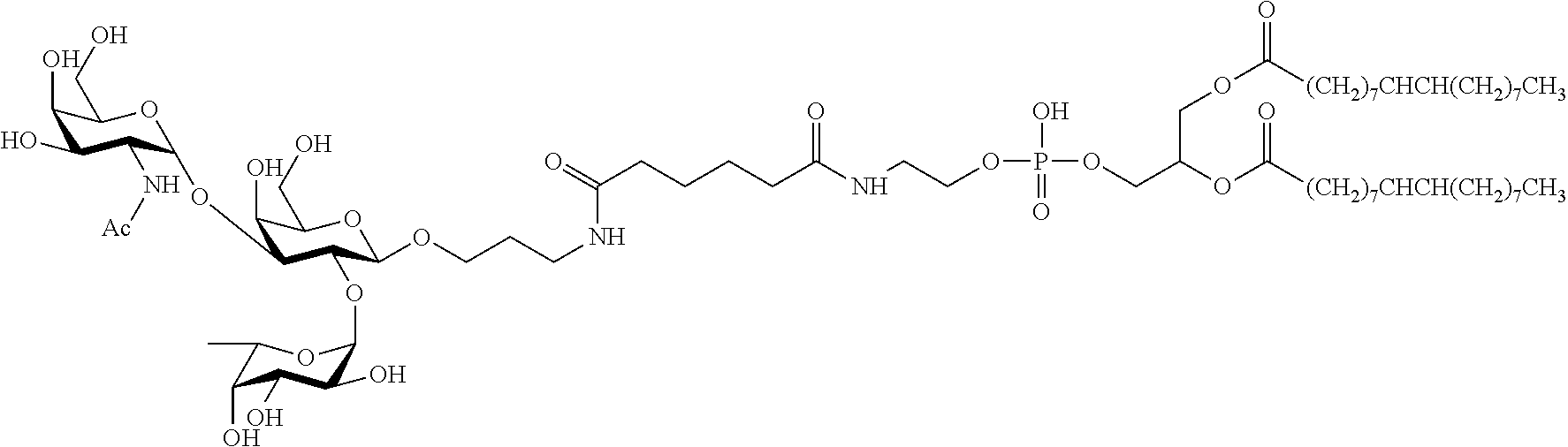
- FSL-A (as described in the specification accompanying international application no. PCT/NZ2005/000052 (publ. no. WO 2005/090368))

- FSL-B (as described in the specification accompanying international application no. PCT/NZ2005/000052 (publ. no. WO 2005/090368))

- Monoacyl-B (as described in the specification accompanying international application no. PCT/NZ2005/000052 (publ. no. WO 2005/090368))

- FSL-Biotin (as described in the specification accompanying international application no. PCT/NZ2008/000266 (publ. no. WO 2009/048343))
Claims (4)


Applications Claiming Priority (5)
| Application Number | Priority Date | Filing Date | Title |
|---|---|---|---|
| NZ597207 | 2011-12-19 | ||
| NZ59720711 | 2011-12-19 | ||
| NZ601745 | 2012-08-09 | ||
| NZ60174512 | 2012-08-09 | ||
| PCT/NZ2012/000242 WO2014007649A1 (en) | 2011-12-19 | 2012-12-19 | Biocompatible method of functionalising substrates with inert surfaces |
Related Parent Applications (2)
| Application Number | Title | Priority Date | Filing Date |
|---|---|---|---|
| PCT/NZ2012/000242 A-371-Of-International WO2014007649A1 (en) | 2011-12-19 | 2012-12-19 | Biocompatible method of functionalising substrates with inert surfaces |
| US15/585,296 Continuation-In-Part US20170231228A1 (en) | 2011-12-19 | 2017-05-03 | Surface treatments |
Related Child Applications (1)
| Application Number | Title | Priority Date | Filing Date |
|---|---|---|---|
| US15/363,250 Continuation US10215672B2 (en) | 2011-12-19 | 2016-11-29 | Biocompatible method of functionalising substrates with inert surfaces |
Publications (2)
| Publication Number | Publication Date |
|---|---|
| US20140370538A1 US20140370538A1 (en) | 2014-12-18 |
| US9528139B2 true US9528139B2 (en) | 2016-12-27 |
Family
ID=48874618
Family Applications (2)
| Application Number | Title | Priority Date | Filing Date |
|---|---|---|---|
| US14/366,889 Expired - Fee Related US9528139B2 (en) | 2011-12-19 | 2012-12-19 | Biocompatible method of functionalizing substrates with inert surfaces |
| US15/363,250 Active US10215672B2 (en) | 2011-12-19 | 2016-11-29 | Biocompatible method of functionalising substrates with inert surfaces |
Family Applications After (1)
| Application Number | Title | Priority Date | Filing Date |
|---|---|---|---|
| US15/363,250 Active US10215672B2 (en) | 2011-12-19 | 2016-11-29 | Biocompatible method of functionalising substrates with inert surfaces |
Country Status (4)
| Country | Link |
|---|---|
| US (2) | US9528139B2 (en) |
| EP (1) | EP2795316B1 (en) |
| SG (1) | SG11201403406PA (en) |
| WO (1) | WO2014007649A1 (en) |
Families Citing this family (3)
| Publication number | Priority date | Publication date | Assignee | Title |
|---|---|---|---|---|
| US11073451B2 (en) | 2011-12-19 | 2021-07-27 | Kode Biotech Limited | Biocompatible method of functionalising substrates with inert surfaces |
| JP2018500144A (en) * | 2014-11-03 | 2018-01-11 | ボヴィン、ニコライ ウラジミロヴィチBOVIN,Nicolai Vladimirovich | Antimicrobial surface treatment |
| WO2019183637A1 (en) | 2018-03-23 | 2019-09-26 | University Of Washington | Immunosuppressive materials and related methods |
Citations (4)
| Publication number | Priority date | Publication date | Assignee | Title |
|---|---|---|---|---|
| WO2009087373A1 (en) | 2008-01-08 | 2009-07-16 | Glysure Ltd | Surface functionalisation of plastic optical fibre |
| WO2011002310A1 (en) | 2009-06-29 | 2011-01-06 | Nicolai Vladimirovich Bovin | Printing of fsl constructs |
| US20110042299A1 (en) | 2009-08-20 | 2011-02-24 | General Electric Company | Composite membrane assemblies and methods of making and using the same |
| WO2012099477A1 (en) | 2011-01-06 | 2012-07-26 | Nicolai Vladimirovich Bovin | Biosurface engineering |
-
2012
- 2012-12-19 US US14/366,889 patent/US9528139B2/en not_active Expired - Fee Related
- 2012-12-19 SG SG11201403406PA patent/SG11201403406PA/en unknown
- 2012-12-19 EP EP12880480.4A patent/EP2795316B1/en not_active Not-in-force
- 2012-12-19 WO PCT/NZ2012/000242 patent/WO2014007649A1/en not_active Ceased
-
2016
- 2016-11-29 US US15/363,250 patent/US10215672B2/en active Active
Patent Citations (4)
| Publication number | Priority date | Publication date | Assignee | Title |
|---|---|---|---|---|
| WO2009087373A1 (en) | 2008-01-08 | 2009-07-16 | Glysure Ltd | Surface functionalisation of plastic optical fibre |
| WO2011002310A1 (en) | 2009-06-29 | 2011-01-06 | Nicolai Vladimirovich Bovin | Printing of fsl constructs |
| US20110042299A1 (en) | 2009-08-20 | 2011-02-24 | General Electric Company | Composite membrane assemblies and methods of making and using the same |
| WO2012099477A1 (en) | 2011-01-06 | 2012-07-26 | Nicolai Vladimirovich Bovin | Biosurface engineering |
Non-Patent Citations (7)
Also Published As
| Publication number | Publication date |
|---|---|
| US20140370538A1 (en) | 2014-12-18 |
| SG11201403406PA (en) | 2014-12-30 |
| EP2795316B1 (en) | 2017-09-06 |
| US20170219467A1 (en) | 2017-08-03 |
| AU2012364662B2 (en) | 2014-09-25 |
| AU2012364662A8 (en) | 2015-01-22 |
| EP2795316A1 (en) | 2014-10-29 |
| AU2012364662A1 (en) | 2013-08-01 |
| US10215672B2 (en) | 2019-02-26 |
| WO2014007649A1 (en) | 2014-01-09 |
| EP2795316A4 (en) | 2015-07-01 |
Similar Documents
| Publication | Publication Date | Title |
|---|---|---|
| Min et al. | Microwells with patterned proteins by a self‐assembly process using honeycomb‐structured porous films | |
| EP0281368B1 (en) | Enzyme immobilization and bioaffinity separations with perfluorocarbon polymer-based supports | |
| US10215672B2 (en) | Biocompatible method of functionalising substrates with inert surfaces | |
| Carmona-Ribeiro | Bilayer vesicles and liposomes as interface agents | |
| EP0965033A1 (en) | Direct colorimetric detection of biocatalysts | |
| WO2012094634A2 (en) | Functionalized carbon membranes | |
| JP7826629B2 (en) | Cartridge, nucleic acid extraction, purification and separation system, and nucleic acid extraction method | |
| Ma et al. | Liposomal glyco-microarray for studying glycolipid–protein interactions | |
| CN115236319A (en) | Immunochromatographic test strip and immunochromatographic method using the same | |
| EP1325334B1 (en) | Method for immobilising lipid layers | |
| Fayolle et al. | Rapid purification of giant lipid vesicles by microfiltration | |
| CA1314813C (en) | Porous solid phases having bioaffinity, a process for preparing porous solid phases having bioaffinity, and their use | |
| AU2012364662B8 (en) | Biocompatible method of functionalising substrates with inert surfaces | |
| Faheem et al. | Metal–organic frameworks as anchors for giant unilamellar vesicle immobilization | |
| WO1998036263A1 (en) | Protein-coupled colorimetric analyte detectors | |
| US11073451B2 (en) | Biocompatible method of functionalising substrates with inert surfaces | |
| US5268456A (en) | Bioaffinity and ion exchange separations with liquid exchange supports | |
| WO2024127139A1 (en) | Reagent matrix comprising cellulose nanofibrils and its use for detecting analytes | |
| WO2003016040A1 (en) | Membrane mimetic architectures on nanoporous materials | |
| Han et al. | 3D artificial cell membranes as versatile platforms for biological applications | |
| JP7046409B1 (en) | Membrane protein analysis substrate, membrane protein analysis substrate manufacturing method, membrane protein analysis method and membrane protein analysis grid | |
| US20260043800A1 (en) | Functionalized porous substrates and their use for detecting analytes | |
| KR101963228B1 (en) | Substrate with immobilized lipid bilayer comprising protein in a pattern and method for manufacturing the same | |
| WO2022092208A1 (en) | Membrane protein analysis substrate, method of producing membrane protein analysis substrate, method of analyzing membrane protein, and membrane protein analysis grid | |
| Kaufmann | Characterisation of supported membrane model systems exposing polymer chains for proteomics and glycomics platforms |
Legal Events
| Date | Code | Title | Description |
|---|---|---|---|
| STCF | Information on status: patent grant |
Free format text: PATENTED CASE |
|
| AS | Assignment |
Owner name: KODE BIOTECH LIMITED, NEW ZEALAND Free format text: ASSIGNMENT OF ASSIGNORS INTEREST;ASSIGNORS:HENRY, STEPHEN MICHEAL;PARKER, STEPHEN ROBERT;REEL/FRAME:042062/0446 Effective date: 20170403 |
|
| FEPP | Fee payment procedure |
Free format text: ENTITY STATUS SET TO SMALL (ORIGINAL EVENT CODE: SMAL); ENTITY STATUS OF PATENT OWNER: SMALL ENTITY |
|
| FEPP | Fee payment procedure |
Free format text: MAINTENANCE FEE REMINDER MAILED (ORIGINAL EVENT CODE: REM.); ENTITY STATUS OF PATENT OWNER: SMALL ENTITY |
|
| FEPP | Fee payment procedure |
Free format text: SURCHARGE FOR LATE PAYMENT, SMALL ENTITY (ORIGINAL EVENT CODE: M2554); ENTITY STATUS OF PATENT OWNER: SMALL ENTITY |
|
| MAFP | Maintenance fee payment |
Free format text: PAYMENT OF MAINTENANCE FEE, 4TH YR, SMALL ENTITY (ORIGINAL EVENT CODE: M2551); ENTITY STATUS OF PATENT OWNER: SMALL ENTITY Year of fee payment: 4 |
|
| FEPP | Fee payment procedure |
Free format text: MAINTENANCE FEE REMINDER MAILED (ORIGINAL EVENT CODE: REM.); ENTITY STATUS OF PATENT OWNER: SMALL ENTITY |
|
| LAPS | Lapse for failure to pay maintenance fees |
Free format text: PATENT EXPIRED FOR FAILURE TO PAY MAINTENANCE FEES (ORIGINAL EVENT CODE: EXP.); ENTITY STATUS OF PATENT OWNER: SMALL ENTITY |
|
| STCH | Information on status: patent discontinuation |
Free format text: PATENT EXPIRED DUE TO NONPAYMENT OF MAINTENANCE FEES UNDER 37 CFR 1.362 |
|
| FP | Lapsed due to failure to pay maintenance fee |
Effective date: 20241227 |