US9512392B2 - Method to increase dissolved oxygen in a culture vessel - Google Patents

Method to increase dissolved oxygen in a culture vessel Download PDF

Info

Publication number
US9512392B2
US9512392B2 US12/303,837 US30383706A US9512392B2 US 9512392 B2 US9512392 B2 US 9512392B2 US 30383706 A US30383706 A US 30383706A US 9512392 B2 US9512392 B2 US 9512392B2
Authority
US
United States
Prior art keywords
vessel
moving
culture
medium
culture medium
Prior art date
Legal status (The legal status is an assumption and is not a legal conclusion. Google has not performed a legal analysis and makes no representation as to the accuracy of the status listed.)
Active, expires
Application number
US12/303,837
Other versions
US20100190245A1 (en
Inventor
Mizhou Hui
Current Assignee (The listed assignees may be inaccurate. Google has not performed a legal analysis and makes no representation or warranty as to the accuracy of the list.)
ZHEJIANG JINYISHENGSHI BIOENGINEERING Co Ltd
Zhejiang Jinyishengshi Bioengineering Co Ltd
Original Assignee
Zhejiang Jinyishengshi Bioengineering Co Ltd
Priority date (The priority date is an assumption and is not a legal conclusion. Google has not performed a legal analysis and makes no representation as to the accuracy of the date listed.)
Filing date
Publication date
Priority claimed from PCT/US2006/022312 external-priority patent/WO2006138143A1/en
Application filed by Zhejiang Jinyishengshi Bioengineering Co Ltd filed Critical Zhejiang Jinyishengshi Bioengineering Co Ltd
Priority to US12/303,837 priority Critical patent/US9512392B2/en
Priority claimed from PCT/US2006/037468 external-priority patent/WO2007142664A1/en
Assigned to AMPROTEIN CORPORATION reassignment AMPROTEIN CORPORATION ASSIGNMENT OF ASSIGNORS INTEREST (SEE DOCUMENT FOR DETAILS). Assignors: HUI, MIZHOU
Publication of US20100190245A1 publication Critical patent/US20100190245A1/en
Assigned to HANGZHOU AMPROTEIN BIOENGINEERING CO., LTD reassignment HANGZHOU AMPROTEIN BIOENGINEERING CO., LTD ASSIGNMENT OF ASSIGNORS INTEREST (SEE DOCUMENT FOR DETAILS). Assignors: AMPROTEIN CORPORATION
Assigned to ZHEJIANG JINYISHENGSHI BIOENGINEERING CO., LTD. reassignment ZHEJIANG JINYISHENGSHI BIOENGINEERING CO., LTD. ASSIGNMENT OF ASSIGNORS INTEREST (SEE DOCUMENT FOR DETAILS). Assignors: HANGZHOU AMPROTEIN BIOENGINEERING CO., LTD.
Application granted granted Critical
Publication of US9512392B2 publication Critical patent/US9512392B2/en
Active legal-status Critical Current
Adjusted expiration legal-status Critical

Links

Images

Classifications

    • CCHEMISTRY; METALLURGY
    • C12BIOCHEMISTRY; BEER; SPIRITS; WINE; VINEGAR; MICROBIOLOGY; ENZYMOLOGY; MUTATION OR GENETIC ENGINEERING
    • C12MAPPARATUS FOR ENZYMOLOGY OR MICROBIOLOGY; APPARATUS FOR CULTURING MICROORGANISMS FOR PRODUCING BIOMASS, FOR GROWING CELLS OR FOR OBTAINING FERMENTATION OR METABOLIC PRODUCTS, i.e. BIOREACTORS OR FERMENTERS
    • C12M23/00Constructional details, e.g. recesses, hinges
    • C12M23/02Form or structure of the vessel
    • CCHEMISTRY; METALLURGY
    • C12BIOCHEMISTRY; BEER; SPIRITS; WINE; VINEGAR; MICROBIOLOGY; ENZYMOLOGY; MUTATION OR GENETIC ENGINEERING
    • C12MAPPARATUS FOR ENZYMOLOGY OR MICROBIOLOGY; APPARATUS FOR CULTURING MICROORGANISMS FOR PRODUCING BIOMASS, FOR GROWING CELLS OR FOR OBTAINING FERMENTATION OR METABOLIC PRODUCTS, i.e. BIOREACTORS OR FERMENTERS
    • C12M27/00Means for mixing, agitating or circulating fluids in the vessel
    • C12M27/10Rotating vessel
    • C12M27/12Roller bottles; Roller tubes
    • CCHEMISTRY; METALLURGY
    • C12BIOCHEMISTRY; BEER; SPIRITS; WINE; VINEGAR; MICROBIOLOGY; ENZYMOLOGY; MUTATION OR GENETIC ENGINEERING
    • C12MAPPARATUS FOR ENZYMOLOGY OR MICROBIOLOGY; APPARATUS FOR CULTURING MICROORGANISMS FOR PRODUCING BIOMASS, FOR GROWING CELLS OR FOR OBTAINING FERMENTATION OR METABOLIC PRODUCTS, i.e. BIOREACTORS OR FERMENTERS
    • C12M27/00Means for mixing, agitating or circulating fluids in the vessel
    • C12M27/16Vibrating; Shaking; Tilting
    • CCHEMISTRY; METALLURGY
    • C12BIOCHEMISTRY; BEER; SPIRITS; WINE; VINEGAR; MICROBIOLOGY; ENZYMOLOGY; MUTATION OR GENETIC ENGINEERING
    • C12MAPPARATUS FOR ENZYMOLOGY OR MICROBIOLOGY; APPARATUS FOR CULTURING MICROORGANISMS FOR PRODUCING BIOMASS, FOR GROWING CELLS OR FOR OBTAINING FERMENTATION OR METABOLIC PRODUCTS, i.e. BIOREACTORS OR FERMENTERS
    • C12M27/00Means for mixing, agitating or circulating fluids in the vessel
    • C12M27/18Flow directing inserts
    • C12M27/20Baffles; Ribs; Ribbons; Auger vanes
    • CCHEMISTRY; METALLURGY
    • C12BIOCHEMISTRY; BEER; SPIRITS; WINE; VINEGAR; MICROBIOLOGY; ENZYMOLOGY; MUTATION OR GENETIC ENGINEERING
    • C12NMICROORGANISMS OR ENZYMES; COMPOSITIONS THEREOF; PROPAGATING, PRESERVING, OR MAINTAINING MICROORGANISMS; MUTATION OR GENETIC ENGINEERING; CULTURE MEDIA
    • C12N2500/00Specific components of cell culture medium
    • C12N2500/02Atmosphere, e.g. low oxygen conditions

Definitions

  • the present invention describes a method to make effective bioreactors.
  • This invention describes mechanism of action of previously described suspension culture vessels with an inversed frusto-conical or inverted frustum bottom (patent application PCT/US06/22312).
  • This invention discloses a method to increase dissolved oxygen (DO) in culture medium, which forms a foundation to design and make effective mammalian cell culture bioreactors.
  • DO dissolved oxygen
  • FIG. 1 A wide-body vessel with inverted frusto-conical bottom for suspension mammalian cell culture.
  • FIG. 2 a Illustration of Flurometrix DO/pH patch sensor detection technology.
  • FIG. 2 b Fluorometrix DO/pH patch sensor detection system.
  • FIG. 3 150 ml work volume culture vessel with inverted frusto-conical bottom on shaker platform.
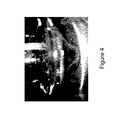
  • FIG. 4 Use of air pump to bubble the culture medium at static status to increase DO level.
  • FIG. 5 a, b, c, d, e Nikon digital camera captured instant medium surface characteristics. At an instant moment, all pictures showed tilted medium surface level mostly on one side of vessel wall (arrows). This characteristic of the medium movement increases DO in the culture medium by repetitively “sweeping” or washing air-exposed smooth vessel surface.
  • FIG. 6 a, b Using rolling motion of titled plastic tubes, the culture medium inside the tube repetitively “sweeps” or washes the air-exposed smooth vessel wall surface. This movement increases DO in the medium rapidly to 100%.
  • FIG. 7 Use of plastic tubes with inverted frusto-conical bottom (diameter 3 cm), suspension cultured CHOK cells easily reached 2.2% pcv in 4-days of culture on adjustable shaker platform with constant DO 100%. This created an effective mini-bioreactor system for cell clone robustness screening.
  • FIG. 8 a A ball-shaped self-rolling bioreactor with back and forth movement for culture medium mixing.
  • FIG. 8 b A ball-shaped self-rolling bioreactor on orbital shaker platform for culture medium mixing.
  • FIG. 8 c A cone-shaped self-rolling bioreactor vessel with inside projected orbital rails.
  • FIG. 9 a 10-liter vessel base with inverted frusto-conical bottom for plastic culture bag.
  • FIG. 9 b 10-liter vessel base with inverted frusto-conical bottom.
  • FIG. 10 a current Flurometrix cell clone robustness screening and process optimization high-throughput mini-bioreactor system.
  • FIG. 10 b Shaker-based multiple wells with frusto-conical bottom for cell line robustness screening.
  • This invention is based, at least in part, on the previous discovery that, without using sophisticated control tower and related DO and pH probes, suspension adapted mammalian cells grew significantly better in culture vessels with an inversed frusto-conical or inverted frustum bottom on a shaker platform with certain motion length than classical Applikon bioreactor as well as flat-bottom shaker bottles ( FIG. 1 ).
  • DO sensor In order to study its mechanism of action, we have employed DO sensor, pH sensor and their detection system (Fluorometrix Corp., Stow, Mass.) ( FIG. 2 a,b ). We have also employed a digital camera (Nikon) to catch and study detailed culture medium movement during shaking motion in the frusto-conical bottom vessels.
  • Dissolved oxygen is found in microscopic bubbles of oxygen that are mixed in the water or culture medium and occur between water molecules.
  • DO Dissolved oxygen
  • Bioreactor vessel bases with inverted frusto-conical bottom and soft plastic bags ( FIG. 9 a, b ) were designed and constructed. These bases and bags were designed to use in shaker platforms with adjustable motion length. The designed frusto-conical bottom together with adjustable shaker platform were intended to make the culture medium climbing as high as possible and as easier as possible (use of minimum shaking energy) to increase DO level in the medium and meet the challenge of high level use of O2 at high cell density culture condition. 3, 10, 20, 40, 100, 500 and 1000-liter size vessel bases and plastic bags have been designed for prototype construction and testing. Our goal is to construct cost-effective shear-force-less single-used mammalian culture bioreactors for R&D and industrial uses.
  • Robustness of a production cell line is important for stability of scale-up process and ultimate expression yield of a give protein drug.
  • the high expression cell lines screened from thousands of cell clones some of them are robust cell lines who meet industrial production cell standard.
  • the selected robust cell lines are able to grow in high density for longer time and thus generate >10 fold higher expression titer than original screened cell clone expression titer.
  • FIG. 10 a Current mini-bioreactor system (Fluorometrix Corp., Stow, Mass.) for cell line robustness screening and process optimization ( FIG. 10 a ) is not optimized for high cell density cell growth and does not have optimal DO level to support of high density cell population. Thus it does not have screening of robust cell clones. Without sufficient medium DO, there is no way to optimize fed-batch process at high cell density.
  • the designed multiple well plate on shaker platform ( FIG. 10 b ) will provide sufficient DO in the medium due to shaking motion and frusto-conical bottom of the culture wells to support high cell density growth, thus being able to screen a given cell line's ultimate capacity to grow in highest density and be distinguished from non-robust cell clones.
  • This system is easy to handle and very cost-effective in addition.
  • FIG. 8 a shows a ball-shaped self-rolling bioreactor vessel by repetitively washing the air exposed vessel inner surface. This rolling movement increases DO in the culture medium to support high cell density growth. While a back and forth movement at ground level makes the culture medium well mixed during rolling movement ( FIG. 8 a ). Together they support optimal suspension cell culture.
  • FIG. 8 b shows an ball-shaped self-rolling bioreactor vessel. This rolling movement increases DO in the culture medium by repetitively washing the air exposed vessel inner surface to support high cell density growth. While an orbital shaker-platform at ground level makes the culture medium well mixed during rolling movement. Together they support optimal suspension cell culture.
  • FIG. 8 c shows a cone-shaped self-rolling bioreactor vessel. This rolling movement increases DO in the culture medium by repetitively washing the air exposed vessel inner surface to support high cell density growth. While inside projected orbital rails make the culture medium move up to upper one end while rolling and fall back to the lower end. This additional movement helps culture medium mixing during rolling movement. Together they support optimal suspension cell culture.

Landscapes

  • Health & Medical Sciences (AREA)
  • Wood Science & Technology (AREA)
  • Life Sciences & Earth Sciences (AREA)
  • Engineering & Computer Science (AREA)
  • Bioinformatics & Cheminformatics (AREA)
  • Organic Chemistry (AREA)
  • Chemical & Material Sciences (AREA)
  • Zoology (AREA)
  • Biomedical Technology (AREA)
  • Sustainable Development (AREA)
  • Microbiology (AREA)
  • Biochemistry (AREA)
  • General Engineering & Computer Science (AREA)
  • General Health & Medical Sciences (AREA)
  • Genetics & Genomics (AREA)
  • Biotechnology (AREA)
  • Clinical Laboratory Science (AREA)
  • Apparatus Associated With Microorganisms And Enzymes (AREA)
  • Micro-Organisms Or Cultivation Processes Thereof (AREA)

Abstract

Basing on study of a previous discovered effective bioreactor system, a method to increase culture medium dissolved oxygen is disclosed. This method together with addition of an optimal mixing forms a theoretical foundation for effective bioreactor design and prototype construction.

Description

CROSS-REFERENCE TO RELATED APPLICATIONS
This application is the National Stage of International Application No. PCT/US2006/037468, filed on Sep. 27, 2006, which claims the priority of International Application No. PCT/US2006/22312, filed on Jun. 8, 2006, the contents of both of the foregoing applications are hereby incorporated by reference in their entirety.
RELATED APPLICATION
This application is the continuation of patent application PCT/US06/22312 entitled “suspension culture vessels,” filed on Jun. 8, 2006.
FIELD OF THE INVENTION
The present invention describes a method to make effective bioreactors.
BACKGROUND OF THE INVENTION
In our previous discovery described in a patent application PCT/US06/22312 entitled “suspension culture vessels,” we had described a wide-body culture vessel with an inverted frusto-conical bottom on orbital shaker platform for suspension mammalian cell culture. Surprisingly, this system was significantly better than classical bioreactor and flat bottom shaker bottles. We had described this system making the culture medium climbing up onto the wall of the vessel easily with less hydro-mechanical stress. This system created a broad thin culture medium layer for extended surface, greater aeration and better mixing.
Interestingly, we did not know exact mechanism of action of this shaker-based frusto-conical bottom vessel system. In this invention, we have discovered the mechanism of action. Basing on the mechanism of action, namely a method to increase dissolved oxygen level in culture medium, we have designed and tested several types of mammalian cell culture bioreactors.
SUMMARY OF INVENTION
This invention describes mechanism of action of previously described suspension culture vessels with an inversed frusto-conical or inverted frustum bottom (patent application PCT/US06/22312). This invention discloses a method to increase dissolved oxygen (DO) in culture medium, which forms a foundation to design and make effective mammalian cell culture bioreactors.
BRIEF DESCRIPTION OF DRAWINGS
FIG. 1 A wide-body vessel with inverted frusto-conical bottom for suspension mammalian cell culture.
FIG. 2a Illustration of Flurometrix DO/pH patch sensor detection technology.
FIG. 2b Fluorometrix DO/pH patch sensor detection system.
FIG. 3 150 ml work volume culture vessel with inverted frusto-conical bottom on shaker platform.
FIG. 4 Use of air pump to bubble the culture medium at static status to increase DO level.
FIG. 5 a, b, c, d, e Nikon digital camera captured instant medium surface characteristics. At an instant moment, all pictures showed tilted medium surface level mostly on one side of vessel wall (arrows). This characteristic of the medium movement increases DO in the culture medium by repetitively “sweeping” or washing air-exposed smooth vessel surface.
FIG. 6a, b Using rolling motion of titled plastic tubes, the culture medium inside the tube repetitively “sweeps” or washes the air-exposed smooth vessel wall surface. This movement increases DO in the medium rapidly to 100%.
FIG. 7 Use of plastic tubes with inverted frusto-conical bottom (diameter 3 cm), suspension cultured CHOK cells easily reached 2.2% pcv in 4-days of culture on adjustable shaker platform with constant DO 100%. This created an effective mini-bioreactor system for cell clone robustness screening.
FIG. 8a A ball-shaped self-rolling bioreactor with back and forth movement for culture medium mixing.
FIG. 8b A ball-shaped self-rolling bioreactor on orbital shaker platform for culture medium mixing.
FIG. 8c A cone-shaped self-rolling bioreactor vessel with inside projected orbital rails.
FIG. 9a 10-liter vessel base with inverted frusto-conical bottom for plastic culture bag.
FIG. 9b 10-liter vessel base with inverted frusto-conical bottom.
FIG. 10a current Flurometrix cell clone robustness screening and process optimization high-throughput mini-bioreactor system.
FIG. 10b Shaker-based multiple wells with frusto-conical bottom for cell line robustness screening.
DETAILED DESCRIPTION OF THE INVENTION
This invention is based, at least in part, on the previous discovery that, without using sophisticated control tower and related DO and pH probes, suspension adapted mammalian cells grew significantly better in culture vessels with an inversed frusto-conical or inverted frustum bottom on a shaker platform with certain motion length than classical Applikon bioreactor as well as flat-bottom shaker bottles (FIG. 1).
In order to study its mechanism of action, we have employed DO sensor, pH sensor and their detection system (Fluorometrix Corp., Stow, Mass.) (FIG. 2a,b ). We have also employed a digital camera (Nikon) to catch and study detailed culture medium movement during shaking motion in the frusto-conical bottom vessels.
First, we measured DO of the culture medium in 150 ml work volume vessel with inverted conical bottom (FIG. 3). We found that DO level easily reached 100% (Table 1). We then used air pump to bubble the culture medium in a same vessel at static status (FIG. 4). Surprising it was not able to reach 100% at a reasonable time period (Table 2). We were very surprised by this phenomenon since we routinely used air bubbling method to calibrate DO probe in 3-liter Applikon bioreactor and assumed that DO reached 100%. There must be a mechanism of action behind this phenomenon.
TABLE 1
Fresh culture medium was added in 150 ml work volume culture
vessel with inverted frusto-conical bottom with shaking at
120 rpm (FIG. 3). Every 30 minutes, DO was measured.
Time (min) 0 30 30 30
DO % 45 75 92 100
TABLE 2
Fresh culture medium was added in 150 ml work volume culture
vessel with inverted frusto-conical bottom without shaking.
Air pump bubbling was used to add DO into the medium (FIG.
4). Every 30 minutes, DO was measured.
Time (min) 0 30 30 30
DO % 45 52 55 75
In search of the answer, we used high-speed camera to capture instant movement of the culture medium in the culture vessels with inverted frusto-conical bottom during the shaking (FIG. 5 a, b, c, d)(FIG. 3). All the pictures clearly showed that at an instant moment, the culture medium is mostly on one side of culture vessels while most of other side is exposed to air contact. Due to the inverted conical bottom, shaking motion easily move the culture medium climbing onto the one side of vessels wall. This creates a circular movement of the medium current, repeatedly “sweeping” or washing the air exposed vessel wall. We hypothesized that this circular movement and its repetitive “sweeping” increased DO in the culture medium.
Dissolved oxygen (DO) is found in microscopic bubbles of oxygen that are mixed in the water or culture medium and occur between water molecules. In our case of the above, it is possible that tiny oxygen bubbles absorbed on the smooth glass or plastic surface and thus formed a microscopic layer of oxygen bubbles during the instant period of exposure to air. We then hypothesized that the instant formed air bubble layer on the smooth surface are so tiny which resembles the microscopic bubble size of DO in the water. This microscopic bubble layer is then “swept” or washed away by circulating medium current, thus making oxygen dissolved into water easily. This circular movement occurs again and again due to the frusto-conical bottom and shaking motion, thus increasing DO level more efficiently than direct air bubbling into the medium including sparging.
To test this hypothesis, we have employed 12 ml plastic tubes (NUNC) with 4 ml culture medium and roller drum at speed of 60 rpm (FIG. 6a, b ). Shortly after 10 minutes of rolling, all the medium samples in the tubes have reached 100% DO. This study showed that culture medium or medium current repeatedly sweeping or contacting the air-exposed smooth surface with certain speed or force increased culture medium DO surprisingly effective.
We then cultured CHOIR-suspension cells in the tubes on the roller drum at speed of 60 and 100 rpm for 4 days. As expected, DO have reached 100% in all the cases during these 4-day of culture. However, the cells did not grow at all. We thus concluded that there must be need for effective mixing besides of sufficient medium DO for optimal suspension cell culture. We then cultured the cells in 50 ml centrifuge tubes (NUNC) with inverted frusto-conical bottom on an adjustable shaker platform for 4 days (FIG. 7). All the cells grew and easily reached 2.2% packed cell volume (pcv). This result indicated that the mixing motion is required besides of sufficient DO for optimal suspension cell culture.
Basing on the above discoveries, we have designed several types of bioreactors for prototype construction. For each type, we have incorporated the method to increase DO in the culture medium by repeatedly using medium current to sweep or contact the air-exposed smooth surface with force together with sufficient medium mixing motion into consideration (FIG. 8 a,b,c). Details are further described in Example-4.
We have also examined details of a batch-culture process by using a CHOK-suspension cell line expressing TNFR2-Fc-IL-1ra in a serum-free suspension culture medium. It was clearly shown that culture vessels with inverted frusto-conical bottom were ideal with optimal DO level, cell density, and yield of the product (Table 3). Details are also described in Example 1.
Example 1 Batch Culture Studying 150 ml Work Volume Vessel with Inverted Frusto-Conical Bottom
Use of small-scale 150 ml work volume shaker vessels for batch culture of CHO production cell line expressing TNFR2-Fc-IL-1ra drug candidates was conducted in serum-free culture medium B001 for 8 days. DO was measured every day by using Flurometrix DO patch sensor detection system (FIG. 2a,b ). Besides use of Flurometrix detection system, pH was also detected by a portable pH meter (FIG. 2b ). Glucose was measured by a one-touch glucose meter (FIG. 2b ). Table 3 clearly showed that culture vessels with inverted frusto-conical bottom were ideal with optimal DO level, cell density, and yield of the product.
TABLE 3
Simultaneously monitoring DO. pH, glucose. Mixing speed and
temperature in a batch culture process in 150 ml work volume
vessel with inverted frusto-conical bottom.
Day
1 2 3 4 5 6 7 8
DO % 100 100 100 100 100 100 100 100
pH 7.5 7.4 7.0 6.8 6.6 6.6 6.7 6.8
Glucose 1.5 1.5 1.2 0.8 0.5 0.3 0.2 0.1
gram/L
Temperature 37 37 37 34 34 34 34 34
Mixing 120 120 120 120 120 120 120 120
speed rpm
Expression 22 55 115 220 415 530 705 750
titer mg/L
Cell density 0.3% 0.7% 1.5% 2.8% 3.2% 3.6% 3.2% 2.8%
pcv %
Example 2 Making Single-Used Plastic Cell Culture Bags on Bioreactor Vessel Bases with Inverted Frusto-Conical Bottom
Bioreactor vessel bases with inverted frusto-conical bottom and soft plastic bags (FIG. 9a, b ) were designed and constructed. These bases and bags were designed to use in shaker platforms with adjustable motion length. The designed frusto-conical bottom together with adjustable shaker platform were intended to make the culture medium climbing as high as possible and as easier as possible (use of minimum shaking energy) to increase DO level in the medium and meet the challenge of high level use of O2 at high cell density culture condition. 3, 10, 20, 40, 100, 500 and 1000-liter size vessel bases and plastic bags have been designed for prototype construction and testing. Our goal is to construct cost-effective shear-force-less single-used mammalian culture bioreactors for R&D and industrial uses.
Example 3 Designing Shaker-Based Multiple Well Plate with Inverted Frusto-Conical Bottom for Production Clone Robustness Screening after High Throughput Protein Expression Titer Screening
Robustness of a production cell line is important for stability of scale-up process and ultimate expression yield of a give protein drug. Among the high expression cell lines screened from thousands of cell clones, some of them are robust cell lines who meet industrial production cell standard. The selected robust cell lines are able to grow in high density for longer time and thus generate >10 fold higher expression titer than original screened cell clone expression titer.
Current mini-bioreactor system (Fluorometrix Corp., Stow, Mass.) for cell line robustness screening and process optimization (FIG. 10a ) is not optimized for high cell density cell growth and does not have optimal DO level to support of high density cell population. Thus it does not have screening of robust cell clones. Without sufficient medium DO, there is no way to optimize fed-batch process at high cell density.
The designed multiple well plate on shaker platform (FIG. 10b ) will provide sufficient DO in the medium due to shaking motion and frusto-conical bottom of the culture wells to support high cell density growth, thus being able to screen a given cell line's ultimate capacity to grow in highest density and be distinguished from non-robust cell clones. This system is easy to handle and very cost-effective in addition.
Example 4 Design of Effective Bioreactors Basing on the Method to Increase DO in Culture Medium Combined with Effective Mixing Motion
Basing on the above conducted roller drum experiments (FIG. 6a, b ), we have discovered a method to increase DO in mammalian cell culture medium. We have then designed rolling bioreactors (FIG. 8 a, b c). FIG. 8a shows a ball-shaped self-rolling bioreactor vessel by repetitively washing the air exposed vessel inner surface. This rolling movement increases DO in the culture medium to support high cell density growth. While a back and forth movement at ground level makes the culture medium well mixed during rolling movement (FIG. 8a ). Together they support optimal suspension cell culture.
FIG. 8b shows an ball-shaped self-rolling bioreactor vessel. This rolling movement increases DO in the culture medium by repetitively washing the air exposed vessel inner surface to support high cell density growth. While an orbital shaker-platform at ground level makes the culture medium well mixed during rolling movement. Together they support optimal suspension cell culture.
FIG. 8c shows a cone-shaped self-rolling bioreactor vessel. This rolling movement increases DO in the culture medium by repetitively washing the air exposed vessel inner surface to support high cell density growth. While inside projected orbital rails make the culture medium move up to upper one end while rolling and fall back to the lower end. This additional movement helps culture medium mixing during rolling movement. Together they support optimal suspension cell culture.

Claims (6)

The invention claimed is:
1. A method for oxygenating a culture medium comprising:
providing a bioreactor system comprising a cell culture vessel, wherein said vessel comprises a cylindrical portion which has a diameter Φ1 and a height H1, and an inverted frusto-conical bottom which has a upper diameter Φ2, a height H2 and a bottom diameter of Φ3; wherein the cylindrical portion and the inverted frusto-conical bottom are connected and Φ12; and wherein the diameters and heights of the vessel have the following relationship:
Φ1/H1=550/120, and Φ2/H23=550/100/100;
introducing a culture medium into said vessel, wherein the vessel is at least partially filled with air; and
moving the vessel by combining a circular movement with a motion selected from shaking, rocking, and back and forth movement, thereby enabling a circular movement of the medium current, repeatedly sweeping or washing the air exposed vessel wall, so that a microscopic layer of oxygen bubbles is formed on the vessel wall during the instant period of exposure to air and is swept or washed away by circulating medium current.
2. The method of claim 1, wherein the step of moving the vessel is conducted so that microscopic bubbles carrying oxygen molecules are generated and swept by the moving medium.
3. The method of claim 1, wherein moving the vessel is conducted repeatedly.
4. The method of claim 1, wherein the bioreactor system further comprises:
a platform selected from: a moveable platform for moving the vessel back and forth, and an orbital shaker platform for moving the vessel in a circular motion; and
a motor coupled to the platform for moving the culture vessel.
5. The method of claim 4, wherein microscopic bubbles carrying oxygen molecules are created in the medium by moving the vessel.
6. The method of claim 1, wherein the cell culture vessel has a volume of at least 3 liters.
US12/303,837 2006-06-08 2006-09-27 Method to increase dissolved oxygen in a culture vessel Active 2030-12-15 US9512392B2 (en)

Priority Applications (1)

Application Number Priority Date Filing Date Title
US12/303,837 US9512392B2 (en) 2006-06-08 2006-09-27 Method to increase dissolved oxygen in a culture vessel

Applications Claiming Priority (5)

Application Number Priority Date Filing Date Title
WOPCT/US2006/022312 2006-06-08
USPCT/US06/22512 2006-06-08
PCT/US2006/022312 WO2006138143A1 (en) 2005-06-15 2006-06-08 Suspension culture vessels
PCT/US2006/037468 WO2007142664A1 (en) 2006-06-08 2006-09-27 A method to increase dissolved oxygen in a culture vessel
US12/303,837 US9512392B2 (en) 2006-06-08 2006-09-27 Method to increase dissolved oxygen in a culture vessel

Publications (2)

Publication Number Publication Date
US20100190245A1 US20100190245A1 (en) 2010-07-29
US9512392B2 true US9512392B2 (en) 2016-12-06

Family

ID=42354464

Family Applications (1)

Application Number Title Priority Date Filing Date
US12/303,837 Active 2030-12-15 US9512392B2 (en) 2006-06-08 2006-09-27 Method to increase dissolved oxygen in a culture vessel

Country Status (1)

Country Link
US (1) US9512392B2 (en)

Cited By (1)

* Cited by examiner, † Cited by third party
Publication number Priority date Publication date Assignee Title
WO2024118424A1 (en) 2022-11-30 2024-06-06 Corning Incorporated Systems and methods for oxygenating culture media in perfusion bioreactors

Families Citing this family (4)

* Cited by examiner, † Cited by third party
Publication number Priority date Publication date Assignee Title
WO2006138143A1 (en) * 2005-06-15 2006-12-28 Amprotein Corporation Suspension culture vessels
US20090233334A1 (en) * 2008-03-11 2009-09-17 Excellgene Sa Cell cultivation and production of recombinant proteins by means of an orbital shake bioreactor system with disposable bags at the 1,500 liter scale
WO2017107837A1 (en) * 2015-12-23 2017-06-29 上海吉凯基因科技有限公司 Fully automated continuous cell culture system
US11136541B2 (en) 2016-12-28 2021-10-05 Zhejiang Jinyishengshi Bioengineering Co., Ltd. Parallel bioreactor system

Citations (15)

* Cited by examiner, † Cited by third party
Publication number Priority date Publication date Assignee Title
US4824787A (en) 1987-12-09 1989-04-25 In Vitro Scientific Products, Inc. Roller bottle for tissue culture growth
US4912048A (en) 1987-12-21 1990-03-27 Difco Laboratories Fluted culture vessel
US5002890A (en) 1988-11-29 1991-03-26 The United States Of America As Represented By The Administrator Of The National Aeronautics And Space Administration Spiral vane bioreactor
US5270207A (en) * 1989-06-26 1993-12-14 Meiji Milk Products Company Limited Circulatory culture equipment
US5330908A (en) 1992-12-23 1994-07-19 The United States Of America As Represented By The Administrator, National Aeronautics And Space Administration High density cell culture system
US5665594A (en) 1993-09-09 1997-09-09 Synthecon, Inc. Gas permeable bioreactor and method of use
US6096544A (en) * 1997-10-31 2000-08-01 Merck & Co., Inc. Method of improved mixing in roller bottles
US6190913B1 (en) * 1997-08-12 2001-02-20 Vijay Singh Method for culturing cells using wave-induced agitation
US20020025547A1 (en) 2000-08-14 2002-02-28 Govind Rao Bioreactor and bioprocessing technique
US6391638B1 (en) 1996-09-26 2002-05-21 Metabogal, Ltd. Cell/tissue culturing device and method
WO2002042409A1 (en) 2000-11-22 2002-05-30 Synthecon, Inc. Improved culture vessel having non-flat surfaces for growing or culturing cells, cellular aggregates, tissues and organoids and methods for using same
US20050101009A1 (en) * 2003-11-10 2005-05-12 Wilson John R. Compartmentalized device for cell culture, cell processing, and sample dialysis
US20050106045A1 (en) 2003-11-18 2005-05-19 Harry Lee Peristaltic mixing and oxygenation system
US6991933B1 (en) 1999-09-24 2006-01-31 Cytomatrix, Llc Cell culture spinner flasks
WO2006138143A1 (en) 2005-06-15 2006-12-28 Amprotein Corporation Suspension culture vessels

Patent Citations (17)

* Cited by examiner, † Cited by third party
Publication number Priority date Publication date Assignee Title
US4824787A (en) 1987-12-09 1989-04-25 In Vitro Scientific Products, Inc. Roller bottle for tissue culture growth
US4824787B1 (en) 1987-12-09 1990-06-12 Vitro Scient Products Inc
US4912048A (en) 1987-12-21 1990-03-27 Difco Laboratories Fluted culture vessel
US5002890A (en) 1988-11-29 1991-03-26 The United States Of America As Represented By The Administrator Of The National Aeronautics And Space Administration Spiral vane bioreactor
US5270207A (en) * 1989-06-26 1993-12-14 Meiji Milk Products Company Limited Circulatory culture equipment
US5330908A (en) 1992-12-23 1994-07-19 The United States Of America As Represented By The Administrator, National Aeronautics And Space Administration High density cell culture system
US5665594A (en) 1993-09-09 1997-09-09 Synthecon, Inc. Gas permeable bioreactor and method of use
US20020110915A1 (en) * 1996-09-26 2002-08-15 Metabogal Ltd. Cell/tissue culturing device and method
US6391638B1 (en) 1996-09-26 2002-05-21 Metabogal, Ltd. Cell/tissue culturing device and method
US6190913B1 (en) * 1997-08-12 2001-02-20 Vijay Singh Method for culturing cells using wave-induced agitation
US6096544A (en) * 1997-10-31 2000-08-01 Merck & Co., Inc. Method of improved mixing in roller bottles
US6991933B1 (en) 1999-09-24 2006-01-31 Cytomatrix, Llc Cell culture spinner flasks
US20020025547A1 (en) 2000-08-14 2002-02-28 Govind Rao Bioreactor and bioprocessing technique
WO2002042409A1 (en) 2000-11-22 2002-05-30 Synthecon, Inc. Improved culture vessel having non-flat surfaces for growing or culturing cells, cellular aggregates, tissues and organoids and methods for using same
US20050101009A1 (en) * 2003-11-10 2005-05-12 Wilson John R. Compartmentalized device for cell culture, cell processing, and sample dialysis
US20050106045A1 (en) 2003-11-18 2005-05-19 Harry Lee Peristaltic mixing and oxygenation system
WO2006138143A1 (en) 2005-06-15 2006-12-28 Amprotein Corporation Suspension culture vessels

Non-Patent Citations (11)

* Cited by examiner, † Cited by third party
Title
De Jesus et al., TubeSpin satellites: a fast track approach for process development with animal cells using shaking technology, Biochemical Engineering Journal, vol. 17, 2004, p. 217-223. *
European Examination Report dated Jul. 3, 2012 issued in European Patent Application No. 06815465.7.
http://www.tpp.ch/page/produkte/13-zentrifugen-roehrchen.php?lang=EN TTP Centrifuge Tube for centrifugation and other applications. *
Jordan et al., A versatile disposable culture system for high throughput screening of process parameters and production cell lines, Animal Cell Technology meets Genomics, Proceeding of the 18th ESACT Meeting, 2003, p. 381-383. *
Kato, Y. et al. "Effects of Liquid Film Formed on Flask Surface on Oxygen Transfer Rate in Shaking Flask and Development of Baffled Shaking Vessel by Optical Method Based on Sulfite Oxidation" Journal of Chemical Engineering of Japan, vol. 38, No. 11, pp. 873-877 (2005).
Mano, T. et al. "Comparison of Oxygen Supply Methods for Cultures of Sheer-Stress Sensitive Organisms Including Animal Cell Culture" Journal of Chemical Technology and Biotechnology, vol. 47, No. 3, pp. 259-271 (1990).
Muller, N. et al. "Orbital Shaker Technology for the Cultivation of Mammalian Cells in Suspension" Biotechnology and Bioengineering, vol. 89, No. 4, pp. 400-408 (2005).
Singh, Vijay. "Disposable bioreactor for cell culture using wave-induced agitation" Cytotechnology, vol. 30, No. 1-3, pp. 149-158 (1999).
Varley, J. et al. "Reactor design for large scale suspension animal cell culture" Cytotechnology, vol. 29, No. 3, pp. 177-205 (1999).
Wurm et al., Disposable orbital shake bioreactor system from ml to 1000 L for cell culture-from concept to reality. *
Zhang, X. et al. "Shaken helical track bioreactors: Providing oxygen to high-density cultures of mammalian cells at volumes up to 1000L by surface aeration with air" New Biotechnology, vol. 25, No. 1, pp. 68-75 (2008).

Cited By (1)

* Cited by examiner, † Cited by third party
Publication number Priority date Publication date Assignee Title
WO2024118424A1 (en) 2022-11-30 2024-06-06 Corning Incorporated Systems and methods for oxygenating culture media in perfusion bioreactors

Also Published As

Publication number Publication date
US20100190245A1 (en) 2010-07-29

Similar Documents

Publication Publication Date Title
EP2021459B1 (en) A method to increase dissolved oxygen in a culture vessel
KR20090035511A (en) How to increase dissolved oxygen in culture vessel
CN102086438B (en) Device and method for biological culture of cell or tissue engineering
US4760028A (en) Bioreactor apparatus with surface aerator screen
US9512392B2 (en) Method to increase dissolved oxygen in a culture vessel
EP1992685A1 (en) Novel cell culture method and methods of producing and collecting cell masses using the same
WO2010070663A1 (en) Disposable bioreactor system
CN100523167C (en) Cell culture system
US20100144022A1 (en) Continuous Flow Bioreactor
WO2007142664A1 (en) A method to increase dissolved oxygen in a culture vessel
US20120322131A1 (en) Method and device for anaerobic fermentation
CN110536959A (en) Defoamers for fermenters and microbial fermenters using defoamers for fermenters
EP1891205B1 (en) Suspension culture vessels
Peng et al. Development of small scale cell culture models for screening poloxamer 188 lot‐to‐lot variation
CN101085980A (en) Cell suspension culture tank
CN114502711A (en) Bioreactors or fermenters for culturing suspension cells or microorganisms on an industrial scale
CN111471593A (en) Polygonal plastic bag cell reactor of four-rocker shaking table
CN102703567B (en) Multi-phase co-culture and detection method and device thereof
CN101469319B (en) Method for producing effective bioreactor
CN204385208U (en) A kind of shake platform for bio-reactor
CN116769832B (en) Transient transfection method of mammalian cells
Jia et al. A bioreactor system based on a novel oxygen transfer method
Routledge et al. Antifoams: the overlooked additive?
CN109022252B (en) High-efficiency large-volume bottom magnetic enrichment device
CN201971840U (en) Peristaltic circulating bioreactor

Legal Events

Date Code Title Description
AS Assignment

Owner name: AMPROTEIN CORPORATION, CALIFORNIA

Free format text: ASSIGNMENT OF ASSIGNORS INTEREST;ASSIGNOR:HUI, MIZHOU;REEL/FRAME:022867/0850

Effective date: 20081208

AS Assignment

Owner name: HANGZHOU AMPROTEIN BIOENGINEERING CO., LTD, CHINA

Free format text: ASSIGNMENT OF ASSIGNORS INTEREST;ASSIGNOR:AMPROTEIN CORPORATION;REEL/FRAME:026684/0335

Effective date: 20110707

AS Assignment

Owner name: ZHEJIANG JINYISHENGSHI BIOENGINEERING CO., LTD., C

Free format text: ASSIGNMENT OF ASSIGNORS INTEREST;ASSIGNOR:HANGZHOU AMPROTEIN BIOENGINEERING CO., LTD.;REEL/FRAME:035515/0093

Effective date: 20140928

STCF Information on status: patent grant

Free format text: PATENTED CASE

MAFP Maintenance fee payment

Free format text: PAYMENT OF MAINTENANCE FEE, 4TH YR, SMALL ENTITY (ORIGINAL EVENT CODE: M2551); ENTITY STATUS OF PATENT OWNER: SMALL ENTITY

Year of fee payment: 4

MAFP Maintenance fee payment

Free format text: PAYMENT OF MAINTENANCE FEE, 8TH YR, SMALL ENTITY (ORIGINAL EVENT CODE: M2552); ENTITY STATUS OF PATENT OWNER: SMALL ENTITY

Year of fee payment: 8