US9508939B2 - Compound and organic electroluminescent element produced using same - Google Patents
Compound and organic electroluminescent element produced using same Download PDFInfo
- Publication number
- US9508939B2 US9508939B2 US14/906,824 US201414906824A US9508939B2 US 9508939 B2 US9508939 B2 US 9508939B2 US 201414906824 A US201414906824 A US 201414906824A US 9508939 B2 US9508939 B2 US 9508939B2
- Authority
- US
- United States
- Prior art keywords
- group
- substituted
- formula
- carbon atoms
- compound
- Prior art date
- Legal status (The legal status is an assumption and is not a legal conclusion. Google has not performed a legal analysis and makes no representation as to the accuracy of the status listed.)
- Active
Links
- 0 CCC.CCC.[1*]C1=C2C=CC=CC2=C2C(=C1[2*])/C([3*])=C([4*])\C([5*])=C/2[6*].[11*]/C1=C([12*])/C([13*])=C(/[14*])C2=C1N([19*])C1=C2C([15*])=C([16*])C([17*])=C1[18*].[21*]C1=C([22*])C([23*])=C([24*])C2=C1N([29*])C1=C2/C([25*])=C([26*])\C([27*])=C/1[28*] Chemical compound CCC.CCC.[1*]C1=C2C=CC=CC2=C2C(=C1[2*])/C([3*])=C([4*])\C([5*])=C/2[6*].[11*]/C1=C([12*])/C([13*])=C(/[14*])C2=C1N([19*])C1=C2C([15*])=C([16*])C([17*])=C1[18*].[21*]C1=C([22*])C([23*])=C([24*])C2=C1N([29*])C1=C2/C([25*])=C([26*])\C([27*])=C/1[28*] 0.000 description 36
- HWOZTJQQNUMHAP-UHFFFAOYSA-N CC.CC.CC1=CC(C)=OC2(O1)C1=C(C=CC=C1)C1=N2C=C2=C(C=CC=C2)C1.CC1=CC(C)=OC2(O1)C1=C(C=CC=C1)C1=N2C=CC2=CC=CC=C21 Chemical compound CC.CC.CC1=CC(C)=OC2(O1)C1=C(C=CC=C1)C1=N2C=C2=C(C=CC=C2)C1.CC1=CC(C)=OC2(O1)C1=C(C=CC=C1)C1=N2C=CC2=CC=CC=C21 HWOZTJQQNUMHAP-UHFFFAOYSA-N 0.000 description 2
- IUESNYAEUMWTHC-HCHOHTKMSA-N BrC1=CC(C2=NC(C3=CC=CC=C3)=NC3=C2C=CC2=C3C=CC=C2)=CC=C1.BrC1=CC(C2=NC(C3=CC=CC=C3)=NC3=C2CCC2=C3C=CC=C2)=CC=C1.C1=CC=C(N2C3=CC=CC=C3C3=CC(C4=CC5=C(C=C4)C4=C(C=CC=C4)N5)=CC=C32)C=C1.N=C(N)C1=CC=CC=C1.O=C1C2=C(C=CC=C2)CC/C1=C\C1=CC=CC(Br)=C1.O=C1CCCC2=C1C=CC=C2.[H]C(=O)C1=CC(Br)=CC=C1.[H]Cl Chemical compound BrC1=CC(C2=NC(C3=CC=CC=C3)=NC3=C2C=CC2=C3C=CC=C2)=CC=C1.BrC1=CC(C2=NC(C3=CC=CC=C3)=NC3=C2CCC2=C3C=CC=C2)=CC=C1.C1=CC=C(N2C3=CC=CC=C3C3=CC(C4=CC5=C(C=C4)C4=C(C=CC=C4)N5)=CC=C32)C=C1.N=C(N)C1=CC=CC=C1.O=C1C2=C(C=CC=C2)CC/C1=C\C1=CC=CC(Br)=C1.O=C1CCCC2=C1C=CC=C2.[H]C(=O)C1=CC(Br)=CC=C1.[H]Cl IUESNYAEUMWTHC-HCHOHTKMSA-N 0.000 description 1
- ISQNYZFOVRQHED-UHFFFAOYSA-N BrC1=CC(C2=NC(C3=CC=CC=C3)=NC3=C2C=CC2=C3C=CC=C2)=CC=C1.C1=CC=C(C2=NC3=C(C=CC4=C3C=CC=C4)C(C3=CC=CC(N4C5=CC=C(C6=CC7=C(C=C6)N(C6=CC=CC=C6)C6=C7C=CC=C6)C=C5C5=C4C=CC=C5)=C3)=N2)C=C1.C1=CC=C(N2C3=CC=C(C4=CC5=C(C=C4)NC4=C5C=CC=C4)C=C3C3=C2C=CC=C3)C=C1 Chemical compound BrC1=CC(C2=NC(C3=CC=CC=C3)=NC3=C2C=CC2=C3C=CC=C2)=CC=C1.C1=CC=C(C2=NC3=C(C=CC4=C3C=CC=C4)C(C3=CC=CC(N4C5=CC=C(C6=CC7=C(C=C6)N(C6=CC=CC=C6)C6=C7C=CC=C6)C=C5C5=C4C=CC=C5)=C3)=N2)C=C1.C1=CC=C(N2C3=CC=C(C4=CC5=C(C=C4)NC4=C5C=CC=C4)C=C3C3=C2C=CC=C3)C=C1 ISQNYZFOVRQHED-UHFFFAOYSA-N 0.000 description 1
- WEMJKWDEIVIDBE-UHFFFAOYSA-N BrC1=CC(C2=NC3=C(C(C4=CC=CC=C4)=N2)C2=C(C=CC=C2)/C=C\3)=CC=C1.C1=CC=C(C2=C3C(=NC(C4=CC=CC(N5C6=CC=C(C7=CC8=C(C=C7)N(C7=CC=CC=C7)C7=C8C=CC=C7)C=C6C6=C5C=CC=C6)=C4)=N2)C=CC2=C3C=CC=C2)C=C1 Chemical compound BrC1=CC(C2=NC3=C(C(C4=CC=CC=C4)=N2)C2=C(C=CC=C2)/C=C\3)=CC=C1.C1=CC=C(C2=C3C(=NC(C4=CC=CC(N5C6=CC=C(C7=CC8=C(C=C7)N(C7=CC=CC=C7)C7=C8C=CC=C7)C=C6C6=C5C=CC=C6)=C4)=N2)C=CC2=C3C=CC=C2)C=C1 WEMJKWDEIVIDBE-UHFFFAOYSA-N 0.000 description 1
- KLQUDEDFJJMMGL-ABZAVWMQSA-N BrC1=CC(C2=NC3=C(C(C4=CC=CC=C4)=N2)C2=C(C=CC=C2)C=C3)=CC=C1.BrC1=CC(C2=NC3=C(C4=C(C=CC=C4)CC3)C(C3=CC=CC=C3)N2)=CC=C1.C1=CC=C(N2C3=C(C=CC=C3)C3=C2C=CC(C2=CC=C4NC5=C(C=CC=C5)C4=C2)=C3)C=C1.N=C(N)C1=CC(Br)=CC=C1.O=C1CCC2=C(C=CC=C2)/C1=C\C1=CC=CC=C1.O=C1CCC2=C(C=CC=C2)C1.[H]C(=O)C1=CC=CC=C1.[H]Cl Chemical compound BrC1=CC(C2=NC3=C(C(C4=CC=CC=C4)=N2)C2=C(C=CC=C2)C=C3)=CC=C1.BrC1=CC(C2=NC3=C(C4=C(C=CC=C4)CC3)C(C3=CC=CC=C3)N2)=CC=C1.C1=CC=C(N2C3=C(C=CC=C3)C3=C2C=CC(C2=CC=C4NC5=C(C=CC=C5)C4=C2)=C3)C=C1.N=C(N)C1=CC(Br)=CC=C1.O=C1CCC2=C(C=CC=C2)/C1=C\C1=CC=CC=C1.O=C1CCC2=C(C=CC=C2)C1.[H]C(=O)C1=CC=CC=C1.[H]Cl KLQUDEDFJJMMGL-ABZAVWMQSA-N 0.000 description 1
- OLGCLSJUUNWWKN-GWWOAOFMSA-N BrC1=CC(C2=NC3=C(C=CC4=C3C=CC=C4)C(C3=CC=CC=C3)=N2)=CC=C1.BrC1=CC(C2=NC3=C(C=CC4=C3C=CC=C4)C(C3=CC=CC=C3)=N2)=CC=C1.BrC1=CC(C2=NC3=C(CCC4=C3C=CC=C4)C(C3=CC=CC=C3)=N2)=CC=C1.C1=CC=C(N2C3=CC=CC=C3C3=CC(C4=CC=C5C(=C4)NC4=C5C=CC=C4)=CC=C32)C=C1.N=C(N)C1=CC(Br)=CC=C1.O=C1C2=C(C=CC=C2)CC/C1=C\C1=CC=CC=C1.O=C1CCCC2=C1C=CC=C2.[H]C(=O)C1=CC=CC=C1.[H]Cl Chemical compound BrC1=CC(C2=NC3=C(C=CC4=C3C=CC=C4)C(C3=CC=CC=C3)=N2)=CC=C1.BrC1=CC(C2=NC3=C(C=CC4=C3C=CC=C4)C(C3=CC=CC=C3)=N2)=CC=C1.BrC1=CC(C2=NC3=C(CCC4=C3C=CC=C4)C(C3=CC=CC=C3)=N2)=CC=C1.C1=CC=C(N2C3=CC=CC=C3C3=CC(C4=CC=C5C(=C4)NC4=C5C=CC=C4)=CC=C32)C=C1.N=C(N)C1=CC(Br)=CC=C1.O=C1C2=C(C=CC=C2)CC/C1=C\C1=CC=CC=C1.O=C1CCCC2=C1C=CC=C2.[H]C(=O)C1=CC=CC=C1.[H]Cl OLGCLSJUUNWWKN-GWWOAOFMSA-N 0.000 description 1
- JNXKZWUHINJCQA-UHFFFAOYSA-N BrC1=CC(C2=NC3=C(C=CC4=C3C=CC=C4)C(C3=CC=CC=C3)=N2)=CC=C1.C1=CC=C(C2=C3C=CC4=C(C=CC=C4)C3=NC(C3=CC=CC(N4C5=CC=C(C6=CC7=C(C=C6)N(C6=CC=CC=C6)C6=C7C=CC=C6)C=C5C5=C4C=CC=C5)=C3)=N2)C=C1.C1=CC=C(N2C3=C(C=CC=C3)C3=C2C=CC(C2=CC=C4NC5=C(C=CC=C5)C4=C2)=C3)C=C1 Chemical compound BrC1=CC(C2=NC3=C(C=CC4=C3C=CC=C4)C(C3=CC=CC=C3)=N2)=CC=C1.C1=CC=C(C2=C3C=CC4=C(C=CC=C4)C3=NC(C3=CC=CC(N4C5=CC=C(C6=CC7=C(C=C6)N(C6=CC=CC=C6)C6=C7C=CC=C6)C=C5C5=C4C=CC=C5)=C3)=N2)C=C1.C1=CC=C(N2C3=C(C=CC=C3)C3=C2C=CC(C2=CC=C4NC5=C(C=CC=C5)C4=C2)=C3)C=C1 JNXKZWUHINJCQA-UHFFFAOYSA-N 0.000 description 1
- KBCYHHOWQZJHCE-DBMSCFRDSA-N BrC1=CC=C(C2=NC(C3=CC(Br)=CC=C3)=NC3=C2C2=C(C=CC=C2)C=C3)C=C1.BrC1=CC=C(C2=NC(C3=CC(Br)=CC=C3)=NC3=C2C2=C(C=CC=C2)C=C3)C=C1.BrC1=CC=C(C2NC(C3=CC(Br)=CC=C3)=NC3=C2C2=C(C=CC=C2)CC3)C=C1.C1=CC=C(N2C3=CC=C(C4=CC5=C(C=C4)NC4=C5C=CC=C4)C=C3C3=C2C=CC=C3)C=C1.C1=CC=C(N2C3=CC=CC=C3C3=CC(C4=CC5=C(C=C4)N(C4=CC=C(C6=NC(C7=CC(N8C9=CC=CC=C9C9=C8C=CC(C8=C/C=C%10C(=C/8)\C8=CC=CC=C8N\%10C8=CC=CC=C8)=C9)=CC=C7)=NC7=C6C6=C(C=CC=C6)C=C7)C=C4)C4=CC=CC=C45)=CC=C32)C=C1.N=C(N)C1=CC(Br)=CC=C1.O=C1CCC2=C(C=CC=C2)/C1=C\C1=CC=C(Br)C=C1.O=C1CCC2=C(C=CC=C2)C1.[H]C(=O)C1=CC=C(Br)C=C1.[H]Cl Chemical compound BrC1=CC=C(C2=NC(C3=CC(Br)=CC=C3)=NC3=C2C2=C(C=CC=C2)C=C3)C=C1.BrC1=CC=C(C2=NC(C3=CC(Br)=CC=C3)=NC3=C2C2=C(C=CC=C2)C=C3)C=C1.BrC1=CC=C(C2NC(C3=CC(Br)=CC=C3)=NC3=C2C2=C(C=CC=C2)CC3)C=C1.C1=CC=C(N2C3=CC=C(C4=CC5=C(C=C4)NC4=C5C=CC=C4)C=C3C3=C2C=CC=C3)C=C1.C1=CC=C(N2C3=CC=CC=C3C3=CC(C4=CC5=C(C=C4)N(C4=CC=C(C6=NC(C7=CC(N8C9=CC=CC=C9C9=C8C=CC(C8=C/C=C%10C(=C/8)\C8=CC=CC=C8N\%10C8=CC=CC=C8)=C9)=CC=C7)=NC7=C6C6=C(C=CC=C6)C=C7)C=C4)C4=CC=CC=C45)=CC=C32)C=C1.N=C(N)C1=CC(Br)=CC=C1.O=C1CCC2=C(C=CC=C2)/C1=C\C1=CC=C(Br)C=C1.O=C1CCC2=C(C=CC=C2)C1.[H]C(=O)C1=CC=C(Br)C=C1.[H]Cl KBCYHHOWQZJHCE-DBMSCFRDSA-N 0.000 description 1
- RZVIECVRKXDDLU-QHHVSXKDSA-N BrC1=CC=C(C2=NC(C3=CC(Br)=CC=C3)=NC3=C2C=CC2=C3C=CC=C2)C=C1.BrC1=CC=C(C2=NC(C3=CC(Br)=CC=C3)=NC3=C2C=CC2=C3C=CC=C2)C=C1.BrC1=CC=C(C2=NC(C3=CC(Br)=CC=C3)=NC3=C2CCC2=C3C=CC=C2)C=C1.C1=CC=C(N2C3=CC=C(C4=CC5=C(C=C4)NC4=C5C=CC=C4)C=C3C3=C2C=CC=C3)C=C1.C1=CC=C(N2C3=CC=CC=C3C3=CC(C4=CC5=C(C=C4)N(C4=CC=C(C6=NC(C7=CC(N8C9=CC=CC=C9C9=C8C=CC(C8=CC=C%10C(=C8)C8=CC=CC=C8N%10C8=CC=CC=C8)=C9)=CC=C7)=NC7=C6C=CC6=C7C=CC=C6)C=C4)C4=CC=CC=C45)=CC=C32)C=C1.N=C(N)C1=CC(Br)=CC=C1.O=C1C2=C(C=CC=C2)CC/C1=C\C1=CC=C(Br)C=C1.O=C1CCCC2=C1C=CC=C2.[H]C(=O)C1=CC=C(Br)C=C1.[H]Cl Chemical compound BrC1=CC=C(C2=NC(C3=CC(Br)=CC=C3)=NC3=C2C=CC2=C3C=CC=C2)C=C1.BrC1=CC=C(C2=NC(C3=CC(Br)=CC=C3)=NC3=C2C=CC2=C3C=CC=C2)C=C1.BrC1=CC=C(C2=NC(C3=CC(Br)=CC=C3)=NC3=C2CCC2=C3C=CC=C2)C=C1.C1=CC=C(N2C3=CC=C(C4=CC5=C(C=C4)NC4=C5C=CC=C4)C=C3C3=C2C=CC=C3)C=C1.C1=CC=C(N2C3=CC=CC=C3C3=CC(C4=CC5=C(C=C4)N(C4=CC=C(C6=NC(C7=CC(N8C9=CC=CC=C9C9=C8C=CC(C8=CC=C%10C(=C8)C8=CC=CC=C8N%10C8=CC=CC=C8)=C9)=CC=C7)=NC7=C6C=CC6=C7C=CC=C6)C=C4)C4=CC=CC=C45)=CC=C32)C=C1.N=C(N)C1=CC(Br)=CC=C1.O=C1C2=C(C=CC=C2)CC/C1=C\C1=CC=C(Br)C=C1.O=C1CCCC2=C1C=CC=C2.[H]C(=O)C1=CC=C(Br)C=C1.[H]Cl RZVIECVRKXDDLU-QHHVSXKDSA-N 0.000 description 1
- JTHMGRICAGLCNC-UHFFFAOYSA-N BrC1=CC=C(C2=NC3=C(/C=C\C4=C3C=CC=C4)C(C3=CC=CC=C3)=N2)C=C1.C1=CC=C(C2=C3C=CC4=C(C=CC=C4)C3=NC(C3=CC=C(N4C5=CC(C6=CC=C7C(=C6)C6=CC=CC=C6N7C6=CC=CC=C6)=CC=C5C5=C4C=CC=C5)C=C3)=N2)C=C1 Chemical compound BrC1=CC=C(C2=NC3=C(/C=C\C4=C3C=CC=C4)C(C3=CC=CC=C3)=N2)C=C1.C1=CC=C(C2=C3C=CC4=C(C=CC=C4)C3=NC(C3=CC=C(N4C5=CC(C6=CC=C7C(=C6)C6=CC=CC=C6N7C6=CC=CC=C6)=CC=C5C5=C4C=CC=C5)C=C3)=N2)C=C1 JTHMGRICAGLCNC-UHFFFAOYSA-N 0.000 description 1
- FZBJMWNESJLVTF-UHFFFAOYSA-N BrC1=CC=C(C2=NC3=C(/C=C\C4=C3C=CC=C4)C(C3=CC=CC=C3)=N2)C=C1.C1=CC=C(C2=C3C=CC4=C(C=CC=C4)C3=NC(C3=CC=C(N4C5=CC=C(C6=CC7=C(C=C6)N(C6=CC=CC=C6)C6=C7C=CC=C6)C=C5C5=C4C=CC=C5)C=C3)=N2)C=C1.C1=CC=C(N2C3=C(C=CC=C3)C3=C2C=CC(C2=CC=C4NC5=C(C=CC=C5)C4=C2)=C3)C=C1 Chemical compound BrC1=CC=C(C2=NC3=C(/C=C\C4=C3C=CC=C4)C(C3=CC=CC=C3)=N2)C=C1.C1=CC=C(C2=C3C=CC4=C(C=CC=C4)C3=NC(C3=CC=C(N4C5=CC=C(C6=CC7=C(C=C6)N(C6=CC=CC=C6)C6=C7C=CC=C6)C=C5C5=C4C=CC=C5)C=C3)=N2)C=C1.C1=CC=C(N2C3=C(C=CC=C3)C3=C2C=CC(C2=CC=C4NC5=C(C=CC=C5)C4=C2)=C3)C=C1 FZBJMWNESJLVTF-UHFFFAOYSA-N 0.000 description 1
- UJPFNQKECTUUCY-UHFFFAOYSA-N BrC1=CC=C(C2=NC3=C(C(C4=CC=CC=C4)=N2)C2=C(C=CC=C2)/C=C\3)C=C1.C1=CC=C(C2=C3C(=NC(C4=CC=C(N5C6=CC=C(C7=CC8=C(C=C7)N(C7=CC=CC=C7)C7=C8C=CC=C7)C=C6C6=C5C=CC=C6)C=C4)=N2)C=CC2=C3C=CC=C2)C=C1 Chemical compound BrC1=CC=C(C2=NC3=C(C(C4=CC=CC=C4)=N2)C2=C(C=CC=C2)/C=C\3)C=C1.C1=CC=C(C2=C3C(=NC(C4=CC=C(N5C6=CC=C(C7=CC8=C(C=C7)N(C7=CC=CC=C7)C7=C8C=CC=C7)C=C6C6=C5C=CC=C6)C=C4)=N2)C=CC2=C3C=CC=C2)C=C1 UJPFNQKECTUUCY-UHFFFAOYSA-N 0.000 description 1
- QOCZKORDMIANAQ-ABZAVWMQSA-N BrC1=CC=C(C2=NC3=C(C(C4=CC=CC=C4)=N2)C2=C(C=CC=C2)C=C3)C=C1.BrC1=CC=C(C2=NC3=C(C4=C(C=CC=C4)CC3)C(C3=CC=CC=C3)N2)C=C1.C1=CC=C(N2C3=C(C=CC=C3)C3=C2C=CC(C2=CC=C4NC5=C(C=CC=C5)C4=C2)=C3)C=C1.N=C(N)C1=CC=C(Br)C=C1.O=C1CCC2=C(C=CC=C2)/C1=C\C1=CC=CC=C1.O=C1CCC2=C(C=CC=C2)C1.[H]C(=O)C1=CC=CC=C1.[H]Cl Chemical compound BrC1=CC=C(C2=NC3=C(C(C4=CC=CC=C4)=N2)C2=C(C=CC=C2)C=C3)C=C1.BrC1=CC=C(C2=NC3=C(C4=C(C=CC=C4)CC3)C(C3=CC=CC=C3)N2)C=C1.C1=CC=C(N2C3=C(C=CC=C3)C3=C2C=CC(C2=CC=C4NC5=C(C=CC=C5)C4=C2)=C3)C=C1.N=C(N)C1=CC=C(Br)C=C1.O=C1CCC2=C(C=CC=C2)/C1=C\C1=CC=CC=C1.O=C1CCC2=C(C=CC=C2)C1.[H]C(=O)C1=CC=CC=C1.[H]Cl QOCZKORDMIANAQ-ABZAVWMQSA-N 0.000 description 1
- KTNFKOVUXMDLQS-FEGNMQSTSA-N BrC1=CC=C(C2=NC3=C(C=CC4=C3C=CC=C4)C(C3=CC=CC=C3)=N2)C=C1.BrC1=CC=C(C2=NC3=C(CCC4=C3C=CC=C4)C(C3=CC=CC=C3)=N2)C=C1.C1=CC=C(N2C3=CC=CC=C3C3=CC(C4=CC=C5C(=C4)NC4=C5C=CC=C4)=CC=C32)C=C1.N=C(N)C1=CC=C(Br)C=C1.O=C1C2=C(C=CC=C2)CC/C1=C\C1=CC=CC=C1.O=C1CCCC2=C1C=CC=C2.[H]C(=O)C1=CC=CC=C1.[H]Cl Chemical compound BrC1=CC=C(C2=NC3=C(C=CC4=C3C=CC=C4)C(C3=CC=CC=C3)=N2)C=C1.BrC1=CC=C(C2=NC3=C(CCC4=C3C=CC=C4)C(C3=CC=CC=C3)=N2)C=C1.C1=CC=C(N2C3=CC=CC=C3C3=CC(C4=CC=C5C(=C4)NC4=C5C=CC=C4)=CC=C32)C=C1.N=C(N)C1=CC=C(Br)C=C1.O=C1C2=C(C=CC=C2)CC/C1=C\C1=CC=CC=C1.O=C1CCCC2=C1C=CC=C2.[H]C(=O)C1=CC=CC=C1.[H]Cl KTNFKOVUXMDLQS-FEGNMQSTSA-N 0.000 description 1
- HFNSZGRTGQNZHA-WSNQFQIASA-N BrC1=CC=CC(C2=NC3=C(C=CC4=C3C=CC=C4)C(C3=CC=CC(Br)=C3)=N2)=C1.BrC1=CC=CC(C2=NC3=C(C=CC4=C3C=CC=C4)C(C3=CC=CC(Br)=C3)=N2)=C1.BrC1=CC=CC(C2=NC3=C(CCC4=C3C=CC=C4)C(C3=CC=CC(Br)=C3)=N2)=C1.C1=CC=C(N2C3=CC=C(C4=CC5=C(C=C4)NC4=C5C=CC=C4)C=C3C3=C2C=CC=C3)C=C1.C1=CC=C(N2C3=CC=CC=C3C3=CC(C4=CC5=C(C=C4)N(C4=CC=CC(C6=NC7=C(C=CC8=C7C=CC=C8)C(C7=CC=CC(N8C9=CC=C(C%10=CC%11=C(C=C%10)N(C%10=CC=CC=C%10)C%10=C%11C=CC=C%10)C=C9C9=C8C=CC=C9)=C7)=N6)=C4)C4=CC=CC=C45)=CC=C32)C=C1.N=C(N)C1=CC(Br)=CC=C1.O=C1C2=C(C=CC=C2)CC/C1=C\C1=CC=CC(Br)=C1.O=C1CCCC2=C1C=CC=C2.[H]C(=O)C1=CC(Br)=CC=C1.[H]Cl Chemical compound BrC1=CC=CC(C2=NC3=C(C=CC4=C3C=CC=C4)C(C3=CC=CC(Br)=C3)=N2)=C1.BrC1=CC=CC(C2=NC3=C(C=CC4=C3C=CC=C4)C(C3=CC=CC(Br)=C3)=N2)=C1.BrC1=CC=CC(C2=NC3=C(CCC4=C3C=CC=C4)C(C3=CC=CC(Br)=C3)=N2)=C1.C1=CC=C(N2C3=CC=C(C4=CC5=C(C=C4)NC4=C5C=CC=C4)C=C3C3=C2C=CC=C3)C=C1.C1=CC=C(N2C3=CC=CC=C3C3=CC(C4=CC5=C(C=C4)N(C4=CC=CC(C6=NC7=C(C=CC8=C7C=CC=C8)C(C7=CC=CC(N8C9=CC=C(C%10=CC%11=C(C=C%10)N(C%10=CC=CC=C%10)C%10=C%11C=CC=C%10)C=C9C9=C8C=CC=C9)=C7)=N6)=C4)C4=CC=CC=C45)=CC=C32)C=C1.N=C(N)C1=CC(Br)=CC=C1.O=C1C2=C(C=CC=C2)CC/C1=C\C1=CC=CC(Br)=C1.O=C1CCCC2=C1C=CC=C2.[H]C(=O)C1=CC(Br)=CC=C1.[H]Cl HFNSZGRTGQNZHA-WSNQFQIASA-N 0.000 description 1
- JXXBNSQZSYGUME-UHFFFAOYSA-N C.C.C1=CC2=CC=C3/N=C\N=C(\N4C5=C(C=CC(N6C7=C(C=CC=C7)C7=C6C=CC=C7)=C5)C5=C4/C=C(N4C6=C(C=CC=C6)C6=C4C=CC=C6)\C=C/5)C3=C2C=C1.C1=CC=C(C2=CC3=C(C=C2)N(C2=NC=NC4=CC=C5C=CC=CC5=C42)C2=C3C=C(C3=C/C=C4C(=C/3)/C3=C(C=CC(C5=CC=CC=C5)=C3)N/4C3=CC=CC=C3)C=C2)C=C1.C1=CC=C(C2=CC=C(C3=NC4=CC=C5C=CC=CC5=C4C(N4C5=C(C=C(C6=CC=CC=C6)C=C5)C5=C4C=CC(C4=C/C=C6C(=C/4)/C4=C(C=CC(C7=CC=CC=C7)=C4)N/6C4=CC=CC=C4)=C5)=N3)C=C2)C=C1.CC1(C)C2=C(C=CC=C2)C2=C1C=C(C1=NC3=CC=C4C=CC=CC4=C3C(C3=CC=C(N4C5=C(C=CC=C5)C5=C4C=CC(C4=C/C=C6C(=C/4)/C4=C(C=CC=C4)N/6C4=CC=CC=C4)=C5)C=C3)=N1)C=C2 Chemical compound C.C.C1=CC2=CC=C3/N=C\N=C(\N4C5=C(C=CC(N6C7=C(C=CC=C7)C7=C6C=CC=C7)=C5)C5=C4/C=C(N4C6=C(C=CC=C6)C6=C4C=CC=C6)\C=C/5)C3=C2C=C1.C1=CC=C(C2=CC3=C(C=C2)N(C2=NC=NC4=CC=C5C=CC=CC5=C42)C2=C3C=C(C3=C/C=C4C(=C/3)/C3=C(C=CC(C5=CC=CC=C5)=C3)N/4C3=CC=CC=C3)C=C2)C=C1.C1=CC=C(C2=CC=C(C3=NC4=CC=C5C=CC=CC5=C4C(N4C5=C(C=C(C6=CC=CC=C6)C=C5)C5=C4C=CC(C4=C/C=C6C(=C/4)/C4=C(C=CC(C7=CC=CC=C7)=C4)N/6C4=CC=CC=C4)=C5)=N3)C=C2)C=C1.CC1(C)C2=C(C=CC=C2)C2=C1C=C(C1=NC3=CC=C4C=CC=CC4=C3C(C3=CC=C(N4C5=C(C=CC=C5)C5=C4C=CC(C4=C/C=C6C(=C/4)/C4=C(C=CC=C4)N/6C4=CC=CC=C4)=C5)C=C3)=N1)C=C2 JXXBNSQZSYGUME-UHFFFAOYSA-N 0.000 description 1
- FIUDKURZIKUBHC-UHFFFAOYSA-N C1=CC(C2=CC=C(C3=N/C4=C5C=CC=CC5=CC=C4/C(N4C5=C(C=CC=C5)C5=C4C=CC(N4C6=C(C=CC=C6)C6=C4C=CC=C6)=C5)=N\3)C=C2)=CC(N2C3=C(C=CC=C3)C3=C2C=CC(N2C4=C(C=CC=C4)C4=C2C=CC=C4)=C3)=C1.C1=CC=C(N2C3=C(C=CC=C3)C3=C2C=CC=C3C2=CC=CC3=C2C2=C(/C=C\C=C/2)N3C2=N/C3=C4C=CC=CC4=CC=C3/C(C3=CC=C(N4C5=C(C=CC=C5)C5=C4C=CC=C5/C4=C/C=C\C5=C4C4=C(C=CC=C4)N5C4=CC=CC=C4)C=C3)=N\2)C=C1.C1=CC=C(N2C3=C(C=CC=C3)C3=C2C=CC=C3C2=CC=CC3=C2C2=C(/C=C\C=C/2)N3C2=N/C3=C4C=CC=CC4=CC=C3C(/C3=C/C4=C(C=C(N5C6=C(C=CC=C6)C6=C5C=CC=C6/C5=C/C=C\C6=C5C5=C(C=CC=C5)N6C5=CC=CC=C5)C=C4)/C=C\3)=N\2)C=C1 Chemical compound C1=CC(C2=CC=C(C3=N/C4=C5C=CC=CC5=CC=C4/C(N4C5=C(C=CC=C5)C5=C4C=CC(N4C6=C(C=CC=C6)C6=C4C=CC=C6)=C5)=N\3)C=C2)=CC(N2C3=C(C=CC=C3)C3=C2C=CC(N2C4=C(C=CC=C4)C4=C2C=CC=C4)=C3)=C1.C1=CC=C(N2C3=C(C=CC=C3)C3=C2C=CC=C3C2=CC=CC3=C2C2=C(/C=C\C=C/2)N3C2=N/C3=C4C=CC=CC4=CC=C3/C(C3=CC=C(N4C5=C(C=CC=C5)C5=C4C=CC=C5/C4=C/C=C\C5=C4C4=C(C=CC=C4)N5C4=CC=CC=C4)C=C3)=N\2)C=C1.C1=CC=C(N2C3=C(C=CC=C3)C3=C2C=CC=C3C2=CC=CC3=C2C2=C(/C=C\C=C/2)N3C2=N/C3=C4C=CC=CC4=CC=C3C(/C3=C/C4=C(C=C(N5C6=C(C=CC=C6)C6=C5C=CC=C6/C5=C/C=C\C6=C5C5=C(C=CC=C5)N6C5=CC=CC=C5)C=C4)/C=C\3)=N\2)C=C1 FIUDKURZIKUBHC-UHFFFAOYSA-N 0.000 description 1
- CPVHXWPWSPAPQS-UHFFFAOYSA-N C1=CC2=C(C=C1)C(C1=NC(C3=CC=C(N4C5=C(C=CC=C5)C5=C4C=C(N4C6=C(C=CC=C6)C6=C4C=CC=C6)C=C5)C=C3)=NC3=CC=C4/C=C\C=C/C4=C31)=CC=C2.C1=CC=C(N2C3=C(C=CC=C3)C3=C/C(C4=CC5=C(C=C4)N(C4=CC=C(C6=NC7=CC=C8/C=C\C=C/C8=C7C(C7=CC=CC8=C7C=CC=C8)=N6)C=C4)C4=C5C=CC=C4)=C\C=C\32)C=C1.C1=CC=C(N2C3=C(C=CC=C3)C3=C/C(C4=CC5=C(C=C4)N(C4=NC=NC6=CC=C7C=CC=CC7=C64)C4=C5C=CC=C4)=C\C=C\32)C=C1.C1=CC=C(N2C3=C(C=CC=C3)C3=C2/C=C\C(C2=CC4=C(C=C2)C2=C(C=CC=C2)N4C2=CC=C(C4=NC5=CC=C6/C=C\C=C/C6=C5C(C5=CC=CC6=C5C=CC=C6)=N4)C=C2)=C/3)C=C1 Chemical compound C1=CC2=C(C=C1)C(C1=NC(C3=CC=C(N4C5=C(C=CC=C5)C5=C4C=C(N4C6=C(C=CC=C6)C6=C4C=CC=C6)C=C5)C=C3)=NC3=CC=C4/C=C\C=C/C4=C31)=CC=C2.C1=CC=C(N2C3=C(C=CC=C3)C3=C/C(C4=CC5=C(C=C4)N(C4=CC=C(C6=NC7=CC=C8/C=C\C=C/C8=C7C(C7=CC=CC8=C7C=CC=C8)=N6)C=C4)C4=C5C=CC=C4)=C\C=C\32)C=C1.C1=CC=C(N2C3=C(C=CC=C3)C3=C/C(C4=CC5=C(C=C4)N(C4=NC=NC6=CC=C7C=CC=CC7=C64)C4=C5C=CC=C4)=C\C=C\32)C=C1.C1=CC=C(N2C3=C(C=CC=C3)C3=C2/C=C\C(C2=CC4=C(C=C2)C2=C(C=CC=C2)N4C2=CC=C(C4=NC5=CC=C6/C=C\C=C/C6=C5C(C5=CC=CC6=C5C=CC=C6)=N4)C=C2)=C/3)C=C1 CPVHXWPWSPAPQS-UHFFFAOYSA-N 0.000 description 1
- LNHQNAAHQVQBPR-UZRIOWSWSA-L C1=CC2=C(C=C1)C1=N(C=C2)[Ir]C2=C1SC=C2.C1=CC=C2C(=C1)C1=N(C=CC=C1)[Ir]21C2=C(C=CC=C2)C2=C3C=CC=CC3=CC=N21.CC1=CC(C)=O[Ir]2(O1)C1=C(C=CN=C1)C1=N2C=CC2=C1C=CC=C2.CC1=CC(C)=O[Ir]2(O1)C1=CC=C3C=CC=CC3=C1C1=CC3=C(C=CC=C3)C=N12 Chemical compound C1=CC2=C(C=C1)C1=N(C=C2)[Ir]C2=C1SC=C2.C1=CC=C2C(=C1)C1=N(C=CC=C1)[Ir]21C2=C(C=CC=C2)C2=C3C=CC=CC3=CC=N21.CC1=CC(C)=O[Ir]2(O1)C1=C(C=CN=C1)C1=N2C=CC2=C1C=CC=C2.CC1=CC(C)=O[Ir]2(O1)C1=CC=C3C=CC=CC3=C1C1=CC3=C(C=CC=C3)C=N12 LNHQNAAHQVQBPR-UZRIOWSWSA-L 0.000 description 1
- SWFWWPTWOWAJRZ-UHFFFAOYSA-N C1=CC2=CC=C(C3=N/C4=C5C=CC=CC5=CC=C4/C(C4=CC=C(N5C6=C(C=CC(N7C8=C(C=CC=C8)C8=C7C=CC=C8)=C6)C6=C5/C=C(N5C7=C(C=CC=C7)C7=C5C=CC=C7)\C=C/6)C=C4)=N\3)C=C2C=C1.C1=CC=C(C2=CC=C(C3=N/C4=C5C=CC=CC5=CC=C4/C(C4=CC=C(N5C6=C(C=C(/C7=C/C=C\C8=C7C7=C(C=CC=C7)N8C7=CC=CC=C7)C=C6)C6=C5/C=C\C=C/6)C=C4)=N\3)C=C2)C=C1.C1=CC=C(C2=N/C3=C4C=CC=CC4=CC=C3/C(C3=CC=C(N4C5=C(C=CC(N6C7=C(C=CC=C7)C7=C6C=CC=C7)=C5)C5=C4/C=C(N4C6=C(C=CC=C6)C6=C4C=CC=C6)\C=C/5)C=C3)=N\2)C=C1.C1=CC=C(C2=N/C3=C4C=CC=CC4=CC=C3/C(N3C4=C(C=CC(N5C6=C(C=CC=C6)C6=C5C=CC=C6)=C4)C4=C3/C=C(N3C5=C(C=CC=C5)C5=C3C=CC=C5)\C=C/4)=N\2)C=C1.C1=CC=C(N2C3=C(C=CC=C3)C3=C2/C=C\C=C/3C2=CC3=C(C=C2)N(C2=CC(C4=N/C5=C6C=CC=CC6=CC=C5/C(C5=CC=CC6=C5C=CC=C6)=N\4)=CC=C2)C2=C3/C=C\C=C/2)C=C1 Chemical compound C1=CC2=CC=C(C3=N/C4=C5C=CC=CC5=CC=C4/C(C4=CC=C(N5C6=C(C=CC(N7C8=C(C=CC=C8)C8=C7C=CC=C8)=C6)C6=C5/C=C(N5C7=C(C=CC=C7)C7=C5C=CC=C7)\C=C/6)C=C4)=N\3)C=C2C=C1.C1=CC=C(C2=CC=C(C3=N/C4=C5C=CC=CC5=CC=C4/C(C4=CC=C(N5C6=C(C=C(/C7=C/C=C\C8=C7C7=C(C=CC=C7)N8C7=CC=CC=C7)C=C6)C6=C5/C=C\C=C/6)C=C4)=N\3)C=C2)C=C1.C1=CC=C(C2=N/C3=C4C=CC=CC4=CC=C3/C(C3=CC=C(N4C5=C(C=CC(N6C7=C(C=CC=C7)C7=C6C=CC=C7)=C5)C5=C4/C=C(N4C6=C(C=CC=C6)C6=C4C=CC=C6)\C=C/5)C=C3)=N\2)C=C1.C1=CC=C(C2=N/C3=C4C=CC=CC4=CC=C3/C(N3C4=C(C=CC(N5C6=C(C=CC=C6)C6=C5C=CC=C6)=C4)C4=C3/C=C(N3C5=C(C=CC=C5)C5=C3C=CC=C5)\C=C/4)=N\2)C=C1.C1=CC=C(N2C3=C(C=CC=C3)C3=C2/C=C\C=C/3C2=CC3=C(C=C2)N(C2=CC(C4=N/C5=C6C=CC=CC6=CC=C5/C(C5=CC=CC6=C5C=CC=C6)=N\4)=CC=C2)C2=C3/C=C\C=C/2)C=C1 SWFWWPTWOWAJRZ-UHFFFAOYSA-N 0.000 description 1
- VVXVEFDLKCMVJQ-UHFFFAOYSA-N C1=CC2=CC=C(C3=N/C4=C5C=CC=CC5=CC=C4/C(N4C5=C(C=C(N6C7=C(C=CC=C7)C7=C6C=CC=C7)C=C5)C5=C4/C=C\C=C/5)=N\3)C=C2C=C1.C1=CC=C(C2=CC(C3=N/C4=C5C=CC=CC5=CC=C4/C(N4C5=C(C=C(N6C7=C(C=CC=C7)C7=C6C=CC=C7)C=C5)C5=C4/C=C\C=C/5)=N\3)=CC=C2)C=C1.C1=CC=C(C2=N/C3=C4C=CC=CC4=CC=C3/C(C3=CC=C(N4C5=C(C=C(N6C7=C(C=CC=C7)C7=C6C=CC=C7)C=C5)C5=C4/C=C\C=C/5)C=C3)=N\2)C=C1.CC1(C)C2=CC=C(C3=N/C4=C5C=CC=CC5=CC=C4/C(C4=CC=C(N5C6=C(C=C(N7C8=C(C=CC=C8)C8=C7C=CC=C8)C=C6)C6=C5/C=C\C=C/6)C=C4)=N\3)C=C2C2=C1C=CC=C2 Chemical compound C1=CC2=CC=C(C3=N/C4=C5C=CC=CC5=CC=C4/C(N4C5=C(C=C(N6C7=C(C=CC=C7)C7=C6C=CC=C7)C=C5)C5=C4/C=C\C=C/5)=N\3)C=C2C=C1.C1=CC=C(C2=CC(C3=N/C4=C5C=CC=CC5=CC=C4/C(N4C5=C(C=C(N6C7=C(C=CC=C7)C7=C6C=CC=C7)C=C5)C5=C4/C=C\C=C/5)=N\3)=CC=C2)C=C1.C1=CC=C(C2=N/C3=C4C=CC=CC4=CC=C3/C(C3=CC=C(N4C5=C(C=C(N6C7=C(C=CC=C7)C7=C6C=CC=C7)C=C5)C5=C4/C=C\C=C/5)C=C3)=N\2)C=C1.CC1(C)C2=CC=C(C3=N/C4=C5C=CC=CC5=CC=C4/C(C4=CC=C(N5C6=C(C=C(N7C8=C(C=CC=C8)C8=C7C=CC=C8)C=C6)C6=C5/C=C\C=C/6)C=C4)=N\3)C=C2C2=C1C=CC=C2 VVXVEFDLKCMVJQ-UHFFFAOYSA-N 0.000 description 1
- PNKAUFIKHUCZTN-UHFFFAOYSA-N C1=CC2=CC=C(C3=N/C4=C5C=CC=CC5=CC=C4/C(N4C5=C(C=CC=C5)C5=C4C=C(N4C6=C(C=CC=C6)C6=C4C=CC=C6)C=C5)=N\3)C=C2C=C1.C1=CC=C(/C2=N/C(C3=CC=CC(N4C5=C(C=CC(N6C7=C(C=CC=C7)C7=C6C=CC=C7)=C5)C5=C4/C=C\C=C/5)=C3)=N\C3=C4C=CC=CC4=CC=C32)C=C1.C1=CC=C(C2=CC(C3=N/C4=C5C=CC=CC5=CC=C4/C(N4C5=C(C=CC(N6C7=C(C=CC=C7)C7=C6C=CC=C7)=C5)C5=C4/C=C\C=C/5)=N\3)=CC=C2)C=C1.C1=CC=C(C2=N/C3=C4C=CC=CC4=CC=C3/C(C3=CC=C(N4C5=C(C=CC=C5)C5=C4C=C(N4C6=C(C=CC=C6)C6=C4C=CC=C6)C=C5)C=C3)=N\2)C=C1.C1=CC=C(N2C3=C(C=CC=C3)C3=C\C=C(C4=CC=CC5=C4C4=C(C=CC=C4)N5C4=CC=C(C5=NC(C6=CC=C7C=CC=CC7=C6)=NC6=C7C=CC=CC7=CC=C56)C=C4)/C=C\32)C=C1 Chemical compound C1=CC2=CC=C(C3=N/C4=C5C=CC=CC5=CC=C4/C(N4C5=C(C=CC=C5)C5=C4C=C(N4C6=C(C=CC=C6)C6=C4C=CC=C6)C=C5)=N\3)C=C2C=C1.C1=CC=C(/C2=N/C(C3=CC=CC(N4C5=C(C=CC(N6C7=C(C=CC=C7)C7=C6C=CC=C7)=C5)C5=C4/C=C\C=C/5)=C3)=N\C3=C4C=CC=CC4=CC=C32)C=C1.C1=CC=C(C2=CC(C3=N/C4=C5C=CC=CC5=CC=C4/C(N4C5=C(C=CC(N6C7=C(C=CC=C7)C7=C6C=CC=C7)=C5)C5=C4/C=C\C=C/5)=N\3)=CC=C2)C=C1.C1=CC=C(C2=N/C3=C4C=CC=CC4=CC=C3/C(C3=CC=C(N4C5=C(C=CC=C5)C5=C4C=C(N4C6=C(C=CC=C6)C6=C4C=CC=C6)C=C5)C=C3)=N\2)C=C1.C1=CC=C(N2C3=C(C=CC=C3)C3=C\C=C(C4=CC=CC5=C4C4=C(C=CC=C4)N5C4=CC=C(C5=NC(C6=CC=C7C=CC=CC7=C6)=NC6=C7C=CC=CC7=CC=C56)C=C4)/C=C\32)C=C1 PNKAUFIKHUCZTN-UHFFFAOYSA-N 0.000 description 1
- WVBZRIFCDRYMOG-UHFFFAOYSA-N C1=CC2=CC=C(C3=NC4=C5C=CC=CC5=CC=C4C(C4=CC=C(N5C6=C(C=CC=C6)C6=C5C=CC(N5C7=C(C=CC=C7)C7=C5C=CC=C7)=C6)C=C4)=N3)C=C2C=C1.C1=CC=C(/C2=N/C(C3=CC=CC(N4C5=C(C=CC=C5)C5=C4C=CC(N4C6=C(C=CC=C6)C6=C4C=CC=C6)=C5)=C3)=N\C3=C4C=CC=CC4=CC=C32)C=C1.C1=CC=C(C2=CC=C(/C3=N/C(C4=CC=CC(N5C6=C(C=CC=C6)C6=C5C=CC(N5C7=C(C=CC=C7)C7=C5C=CC=C7)=C6)=C4)=N\C4=C5C=CC=CC5=CC=C43)C=C2)C=C1.C1=CC=C(C2=NC3=C4C=CC=CC4=CC=C3C(N3C4=C(C=CC=C4)C4=C3C=CC(N3C5=C(C=CC=C5)C5=C3C=CC=C5)=C4)=N2)C=C1.CC1(C)C2=CC(C3=NC4=C5C=CC=CC5=CC=C4C(N4C5=C(C=CC=C5)C5=C4C=CC(N4C6=C(C=CC=C6)C6=C4C=CC=C6)=C5)=N3)=CC=C2C2=C1C=CC=C2 Chemical compound C1=CC2=CC=C(C3=NC4=C5C=CC=CC5=CC=C4C(C4=CC=C(N5C6=C(C=CC=C6)C6=C5C=CC(N5C7=C(C=CC=C7)C7=C5C=CC=C7)=C6)C=C4)=N3)C=C2C=C1.C1=CC=C(/C2=N/C(C3=CC=CC(N4C5=C(C=CC=C5)C5=C4C=CC(N4C6=C(C=CC=C6)C6=C4C=CC=C6)=C5)=C3)=N\C3=C4C=CC=CC4=CC=C32)C=C1.C1=CC=C(C2=CC=C(/C3=N/C(C4=CC=CC(N5C6=C(C=CC=C6)C6=C5C=CC(N5C7=C(C=CC=C7)C7=C5C=CC=C7)=C6)=C4)=N\C4=C5C=CC=CC5=CC=C43)C=C2)C=C1.C1=CC=C(C2=NC3=C4C=CC=CC4=CC=C3C(N3C4=C(C=CC=C4)C4=C3C=CC(N3C5=C(C=CC=C5)C5=C3C=CC=C5)=C4)=N2)C=C1.CC1(C)C2=CC(C3=NC4=C5C=CC=CC5=CC=C4C(N4C5=C(C=CC=C5)C5=C4C=CC(N4C6=C(C=CC=C6)C6=C4C=CC=C6)=C5)=N3)=CC=C2C2=C1C=CC=C2 WVBZRIFCDRYMOG-UHFFFAOYSA-N 0.000 description 1
- NLBFJZLHBBNKSC-UHFFFAOYSA-N C1=CC2=CC=C(C3=NC4=C5C=CC=CC5=CC=C4C(N4C5=C(C=CC(N6C7=C(C=CC=C7)C7=C6C=CC=C7)=C5)C5=C4C=C(N4C6=C(C=CC=C6)C6=C4C=CC=C6)C=C5)=N3)C=C2C=C1.C1=CC=C(C2=CC=C(C3=NC4=C5C=CC=CC5=CC=C4C(C4=CC=C(N5C6=C(C=CC(N7C8=C(C=CC=C8)C8=C7C=CC=C8)=C6)C6=C5C=C(N5C7=C(C=CC=C7)C7=C5C=CC=C7)C=C6)C=C4)=N3)C=C2)C=C1.CC1(C)C2=CC(C3=NC4=C5C=CC=CC5=CC=C4C(N4C5=C(C=CC(N6C7=C(C=CC=C7)C7=C6C=CC=C7)=C5)C5=C4C=C(N4C6=C(C=CC=C6)C6=C4C=CC=C6)C=C5)=N3)=CC=C2C2=C1C=CC=C2.CC1(C)C2=CC=C(/C3=N/C(C4=CC=CC(N5C6=C(C=CC(N7C8=C(C=CC=C8)C8=C7C=CC=C8)=C6)C6=C5C=C(N5C7=C(C=CC=C7)C7=C5C=CC=C7)C=C6)=C4)=N\C4=C5C=CC=CC5=CC=C43)C=C2C2=C1C=CC=C2.CC1(C)C2=CC=C(C3=NC4=C5C=CC=CC5=CC=C4C(C4=CC=C(N5C6=C(C=CC(N7C8=C(C=CC=C8)C8=C7C=CC=C8)=C6)C6=C5C=C(N5C7=C(C=CC=C7)C7=C5C=CC=C7)C=C6)C=C4)=N3)C=C2C2=C1C=CC=C2 Chemical compound C1=CC2=CC=C(C3=NC4=C5C=CC=CC5=CC=C4C(N4C5=C(C=CC(N6C7=C(C=CC=C7)C7=C6C=CC=C7)=C5)C5=C4C=C(N4C6=C(C=CC=C6)C6=C4C=CC=C6)C=C5)=N3)C=C2C=C1.C1=CC=C(C2=CC=C(C3=NC4=C5C=CC=CC5=CC=C4C(C4=CC=C(N5C6=C(C=CC(N7C8=C(C=CC=C8)C8=C7C=CC=C8)=C6)C6=C5C=C(N5C7=C(C=CC=C7)C7=C5C=CC=C7)C=C6)C=C4)=N3)C=C2)C=C1.CC1(C)C2=CC(C3=NC4=C5C=CC=CC5=CC=C4C(N4C5=C(C=CC(N6C7=C(C=CC=C7)C7=C6C=CC=C7)=C5)C5=C4C=C(N4C6=C(C=CC=C6)C6=C4C=CC=C6)C=C5)=N3)=CC=C2C2=C1C=CC=C2.CC1(C)C2=CC=C(/C3=N/C(C4=CC=CC(N5C6=C(C=CC(N7C8=C(C=CC=C8)C8=C7C=CC=C8)=C6)C6=C5C=C(N5C7=C(C=CC=C7)C7=C5C=CC=C7)C=C6)=C4)=N\C4=C5C=CC=CC5=CC=C43)C=C2C2=C1C=CC=C2.CC1(C)C2=CC=C(C3=NC4=C5C=CC=CC5=CC=C4C(C4=CC=C(N5C6=C(C=CC(N7C8=C(C=CC=C8)C8=C7C=CC=C8)=C6)C6=C5C=C(N5C7=C(C=CC=C7)C7=C5C=CC=C7)C=C6)C=C4)=N3)C=C2C2=C1C=CC=C2 NLBFJZLHBBNKSC-UHFFFAOYSA-N 0.000 description 1
- GHUYURQEYPOTJR-UHFFFAOYSA-N C1=CC2=CC=C3/C=N\C(N4C5=C(C=C(N6C7=C(C=CC=C7)C7=C6C=CC=C7)C=C5)C5=C4C=CC(N4C6=C(C=CC=C6)C6=C4C=CC=C6)=C5)=N/C3=C2C=C1.C1=CC=C(C2=CC(/C3=N/C(C4=CC=C(N5C6=C(C=C(N7C8=C(C=CC=C8)C8=C7C=CC=C8)C=C6)C6=C5C=CC(N5C7=C(C=CC=C7)C7=C5C=CC=C7)=C6)C=C4)=N\C4=C5C=CC=CC5=CC=C43)=CC=C2)C=C1.C1=CC=C(C2=CC=C(/C3=N/C(N4C5=C(C=C(N6C7=C(C=CC=C7)C7=C6C=CC=C7)C=C5)C5=C4C=CC(N4C6=C(C=CC=C6)C6=C4C=CC=C6)=C5)=N\C4=C5C=CC=CC5=CC=C43)C=C2)C=C1.CC1(C)C2=CC=C(/C3=N/C(N4C5=C(C=C(N6C7=C(C=CC=C7)C7=C6C=CC=C7)C=C5)C5=C4C=CC(N4C6=C(C=CC=C6)C6=C4C=CC=C6)=C5)=N\C4=C5C=CC=CC5=CC=C43)C=C2C2=C1C=CC=C2 Chemical compound C1=CC2=CC=C3/C=N\C(N4C5=C(C=C(N6C7=C(C=CC=C7)C7=C6C=CC=C7)C=C5)C5=C4C=CC(N4C6=C(C=CC=C6)C6=C4C=CC=C6)=C5)=N/C3=C2C=C1.C1=CC=C(C2=CC(/C3=N/C(C4=CC=C(N5C6=C(C=C(N7C8=C(C=CC=C8)C8=C7C=CC=C8)C=C6)C6=C5C=CC(N5C7=C(C=CC=C7)C7=C5C=CC=C7)=C6)C=C4)=N\C4=C5C=CC=CC5=CC=C43)=CC=C2)C=C1.C1=CC=C(C2=CC=C(/C3=N/C(N4C5=C(C=C(N6C7=C(C=CC=C7)C7=C6C=CC=C7)C=C5)C5=C4C=CC(N4C6=C(C=CC=C6)C6=C4C=CC=C6)=C5)=N\C4=C5C=CC=CC5=CC=C43)C=C2)C=C1.CC1(C)C2=CC=C(/C3=N/C(N4C5=C(C=C(N6C7=C(C=CC=C7)C7=C6C=CC=C7)C=C5)C5=C4C=CC(N4C6=C(C=CC=C6)C6=C4C=CC=C6)=C5)=N\C4=C5C=CC=CC5=CC=C43)C=C2C2=C1C=CC=C2 GHUYURQEYPOTJR-UHFFFAOYSA-N 0.000 description 1
- IPWWOOVBDQPZJU-UHFFFAOYSA-N C1=CC2=CC=C3/N=C(C4=CC5=C(C=CC=C5)C=C4)\N=C(\C4=CC=C(N5C6=C(C=CC(N7C8=C(C=CC=C8)C8=C7C=CC=C8)=C6)C6=C5/C=C(N5C7=C(C=CC=C7)C7=C5C=CC=C7)\C=C/6)C=C4)C3=C2C=C1.C1=CC=C(C2=CC=C(C3=N/C4=CC=C5C=CC=CC5=C4/C(N4C5=C(C=C(C6=CC=C7C(=C6)C6=C(C=CC=C6)N7C6=CC=CC=C6)C=C5)C5=C4/C=C\C=C/5)=N\3)C=C2)C=C1.C1=CC=C(C2=CC=C(C3=N/C4=CC=C5C=CC=CC5=C4/C(N4C5=C(C=CC(C6=C/C7=C(\C=C/6)N(C6=CC=CC=C6)C6=C7C=CC=C6)=C5)C5=C4/C=C\C=C/5)=N\3)C=C2)C=C1.C1=CC=C(N2C3=C(C=CC=C3)C3=C2/C=C\C(C2=CC4=C(C=C2)C2=C(/C=C\C=C/2)N4/C2=N/C=N\C4=CC=C5C=CC=CC5=C42)=C/3)C=C1.C1=CC=C(N2C3=C(C=CC=C3)C3=C2/C=C\C(C2=CC4=C(C=C2)C2=C(/C=C\C=C/2)N4C2=CC=C(/C4=N/C(C5=CC6=C(C=CC=C6)C=C5)=N\C5=CC=C6C=CC=CC6=C54)C=C2)=C/3)C=C1.CC1(C)C2=C(C=CC=C2)C2=C1C=C(C1=N/C3=CC=C4C=CC=CC4=C3/C(C3=CC=C(N4C5=C(C=CC(N6C7=C(C=CC=C7)C7=C6C=CC=C7)=C5)C5=C4/C=C(N4C6=C(C=CC=C6)C6=C4C=CC=C6)\C=C/5)C=C3)=N\1)C=C2 Chemical compound C1=CC2=CC=C3/N=C(C4=CC5=C(C=CC=C5)C=C4)\N=C(\C4=CC=C(N5C6=C(C=CC(N7C8=C(C=CC=C8)C8=C7C=CC=C8)=C6)C6=C5/C=C(N5C7=C(C=CC=C7)C7=C5C=CC=C7)\C=C/6)C=C4)C3=C2C=C1.C1=CC=C(C2=CC=C(C3=N/C4=CC=C5C=CC=CC5=C4/C(N4C5=C(C=C(C6=CC=C7C(=C6)C6=C(C=CC=C6)N7C6=CC=CC=C6)C=C5)C5=C4/C=C\C=C/5)=N\3)C=C2)C=C1.C1=CC=C(C2=CC=C(C3=N/C4=CC=C5C=CC=CC5=C4/C(N4C5=C(C=CC(C6=C/C7=C(\C=C/6)N(C6=CC=CC=C6)C6=C7C=CC=C6)=C5)C5=C4/C=C\C=C/5)=N\3)C=C2)C=C1.C1=CC=C(N2C3=C(C=CC=C3)C3=C2/C=C\C(C2=CC4=C(C=C2)C2=C(/C=C\C=C/2)N4/C2=N/C=N\C4=CC=C5C=CC=CC5=C42)=C/3)C=C1.C1=CC=C(N2C3=C(C=CC=C3)C3=C2/C=C\C(C2=CC4=C(C=C2)C2=C(/C=C\C=C/2)N4C2=CC=C(/C4=N/C(C5=CC6=C(C=CC=C6)C=C5)=N\C5=CC=C6C=CC=CC6=C54)C=C2)=C/3)C=C1.CC1(C)C2=C(C=CC=C2)C2=C1C=C(C1=N/C3=CC=C4C=CC=CC4=C3/C(C3=CC=C(N4C5=C(C=CC(N6C7=C(C=CC=C7)C7=C6C=CC=C7)=C5)C5=C4/C=C(N4C6=C(C=CC=C6)C6=C4C=CC=C6)\C=C/5)C=C3)=N\1)C=C2 IPWWOOVBDQPZJU-UHFFFAOYSA-N 0.000 description 1
- BCPJRYAMZSKZNF-UHFFFAOYSA-N C1=CC2=CC=C3/N=C(N4C5=C(C=CC(N6C7=C(C=CC=C7)C7=C6C=CC=C7)=C5)C5=C4/C=C\C=C/5)\N=C(\C4=CC=CC5=C4C=CC=C5)C3=C2C=C1.C1=CC=C(/C2=N/C(N3C4=C(C(/C5=C/C=C\C6=C5C5=C(C=CC=C5)N6C5=CC=CC=C5)=CC=C4)C4=C3/C=C\C=C/4)=N\C3=CC=C4C=CC=CC4=C32)C=C1.C1=CC=C(N2C3=C(C=CC=C3)C3=C/C(C4=CC5=C(C=C4)N(C4=N/C6=CC=C7C=CC=CC7=C6/C(C6=CC=CC7=C6C=CC=C7)=N\4)C4=C5/C=C\C=C/4)=C\C=C\32)C=C1.C1=CC=C(N2C3=C(C=CC=C3)C3=C2/C=C\C=C/3C2=CC=CC3=C2C2=C(/C=C\C=C/2)N3C2=CC=C(C3=N/C4=CC=C5C=CC=CC5=C4/C(C4=CC=CC5=C4C=CC=C5)=N\3)C=C2)C=C1.C1=CC=C(N2C3=C(C=CC=C3)C3=C2/C=C\C=C/3C2=CC=CC3=C2C2=C(/C=C\C=C/2)N3C2=N/C3=CC=C4C=CC=CC4=C3/C(C3=CC=CC4=C3C=CC=C4)=N\2)C=C1 Chemical compound C1=CC2=CC=C3/N=C(N4C5=C(C=CC(N6C7=C(C=CC=C7)C7=C6C=CC=C7)=C5)C5=C4/C=C\C=C/5)\N=C(\C4=CC=CC5=C4C=CC=C5)C3=C2C=C1.C1=CC=C(/C2=N/C(N3C4=C(C(/C5=C/C=C\C6=C5C5=C(C=CC=C5)N6C5=CC=CC=C5)=CC=C4)C4=C3/C=C\C=C/4)=N\C3=CC=C4C=CC=CC4=C32)C=C1.C1=CC=C(N2C3=C(C=CC=C3)C3=C/C(C4=CC5=C(C=C4)N(C4=N/C6=CC=C7C=CC=CC7=C6/C(C6=CC=CC7=C6C=CC=C7)=N\4)C4=C5/C=C\C=C/4)=C\C=C\32)C=C1.C1=CC=C(N2C3=C(C=CC=C3)C3=C2/C=C\C=C/3C2=CC=CC3=C2C2=C(/C=C\C=C/2)N3C2=CC=C(C3=N/C4=CC=C5C=CC=CC5=C4/C(C4=CC=CC5=C4C=CC=C5)=N\3)C=C2)C=C1.C1=CC=C(N2C3=C(C=CC=C3)C3=C2/C=C\C=C/3C2=CC=CC3=C2C2=C(/C=C\C=C/2)N3C2=N/C3=CC=C4C=CC=CC4=C3/C(C3=CC=CC4=C3C=CC=C4)=N\2)C=C1 BCPJRYAMZSKZNF-UHFFFAOYSA-N 0.000 description 1
- JCKFQNGFSSCUTB-UHFFFAOYSA-N C1=CC2=CC=C3C(=C2C=C1)/N=C(C1=CC=C(N2C4=C(C=C(N5C6=C(C=CC=C6)C6=C5C=CC=C6)C=C4)C4=C2/C=C\C=C/4)C2=C1C=CC=C2)\N=C/3C1=CC=C(N2C3=C(C=CC=C3)C3=C2C=CC(N2C4=C(C=CC=C4)C4=C2C=CC=C4)=C3)C=C1.C1=CC2=CC=C3C(=C2C=C1)/N=C(C1=CC=C2/C=C(N4C5=C(C=CC=C5)C5=C4C=CC(N4C6=C(C=CC=C6)C6=C4C=CC=C6)=C5)\C=C/C2=C1)\N=C/3N1C2=C(C=CC=C2)C2=C1C=CC(N1C3=C(C=CC=C3)C3=C1C=CC=C3)=C2.C1=CC2=CC=C3C(=C2C=C1)/N=C(C1=CC=CC(N2C4=C(C=C(N5C6=C(C=CC=C6)C6=C5C=CC=C6)C=C4)C4=C2/C=C\C=C/4)=C1)\N=C/3C1=CC(N2C3=C(C=CC=C3)C3=C2C=CC(N2C4=C(C=CC=C4)C4=C2C=CC=C4)=C3)=CC=C1 Chemical compound C1=CC2=CC=C3C(=C2C=C1)/N=C(C1=CC=C(N2C4=C(C=C(N5C6=C(C=CC=C6)C6=C5C=CC=C6)C=C4)C4=C2/C=C\C=C/4)C2=C1C=CC=C2)\N=C/3C1=CC=C(N2C3=C(C=CC=C3)C3=C2C=CC(N2C4=C(C=CC=C4)C4=C2C=CC=C4)=C3)C=C1.C1=CC2=CC=C3C(=C2C=C1)/N=C(C1=CC=C2/C=C(N4C5=C(C=CC=C5)C5=C4C=CC(N4C6=C(C=CC=C6)C6=C4C=CC=C6)=C5)\C=C/C2=C1)\N=C/3N1C2=C(C=CC=C2)C2=C1C=CC(N1C3=C(C=CC=C3)C3=C1C=CC=C3)=C2.C1=CC2=CC=C3C(=C2C=C1)/N=C(C1=CC=CC(N2C4=C(C=C(N5C6=C(C=CC=C6)C6=C5C=CC=C6)C=C4)C4=C2/C=C\C=C/4)=C1)\N=C/3C1=CC(N2C3=C(C=CC=C3)C3=C2C=CC(N2C4=C(C=CC=C4)C4=C2C=CC=C4)=C3)=CC=C1 JCKFQNGFSSCUTB-UHFFFAOYSA-N 0.000 description 1
- YQUWIRBDTAUTRZ-UHFFFAOYSA-N C1=CC2=CC=C3C(=C2C=C1)/N=C(C1=CC=C(N2C4=C(C=C(N5C6=C(C=CC=C6)C6=C5C=CC=C6)C=C4)C4=C2/C=C\C=C/4)C=C1)\N=C/3C1=CC=C(N2C3=C(C=CC=C3)C3=C2C=CC(N2C4=C(C=CC=C4)C4=C2C=CC=C4)=C3)C=C1.C1=CC2=CC=C3C(=C2C=C1)/N=C(C1=CC=C(N2C4=C(C=C(N5C6=C(C=CC=C6)C6=C5C=CC=C6)C=C4)C4=C2/C=C\C=C/4)C=C1)\N=C/3C1=CC=C(N2C3=C(C=CC=C3)C3=C2C=CC(N2C4=C(C=CC=C4)C4=C2C=CC=C4)=C3)C=C1.C1=CC2=CC=C3C(=C2C=C1)/N=C(N1C2=C(C=C(N4C5=C(C=CC=C5)C5=C4C=CC=C5)C=C2)C2=C1/C=C\C=C/2)\N=C/3C1=CC=C(N2C3=C(C=CC=C3)C3=C2C=CC(N2C4=C(C=CC=C4)C4=C2C=CC=C4)=C3)C=C1 Chemical compound C1=CC2=CC=C3C(=C2C=C1)/N=C(C1=CC=C(N2C4=C(C=C(N5C6=C(C=CC=C6)C6=C5C=CC=C6)C=C4)C4=C2/C=C\C=C/4)C=C1)\N=C/3C1=CC=C(N2C3=C(C=CC=C3)C3=C2C=CC(N2C4=C(C=CC=C4)C4=C2C=CC=C4)=C3)C=C1.C1=CC2=CC=C3C(=C2C=C1)/N=C(C1=CC=C(N2C4=C(C=C(N5C6=C(C=CC=C6)C6=C5C=CC=C6)C=C4)C4=C2/C=C\C=C/4)C=C1)\N=C/3C1=CC=C(N2C3=C(C=CC=C3)C3=C2C=CC(N2C4=C(C=CC=C4)C4=C2C=CC=C4)=C3)C=C1.C1=CC2=CC=C3C(=C2C=C1)/N=C(N1C2=C(C=C(N4C5=C(C=CC=C5)C5=C4C=CC=C5)C=C2)C2=C1/C=C\C=C/2)\N=C/3C1=CC=C(N2C3=C(C=CC=C3)C3=C2C=CC(N2C4=C(C=CC=C4)C4=C2C=CC=C4)=C3)C=C1 YQUWIRBDTAUTRZ-UHFFFAOYSA-N 0.000 description 1
- KJRVKYUSLJYJLK-UHFFFAOYSA-N C1=CC2=CC=C3C(=C2C=C1)/N=C(C1=CC=C(N2C4=C(C=CC=C4)C4=C2C=CC(N2C5=C(C=CC=C5)C5=C2C=CC=C5)=C4)C=C1)\N=C/3C1=CC=C(N2C3=C(C=C(N4C5=C(C=CC=C5)C5=C4C=CC=C5)C=C3)C3=C2/C=C\C=C/3)C=C1.C1=CC2=CC=C3C(=C2C=C1)/N=C(C1=CC=C(N2C4=C(C=CC=C4)C4=C2C=CC(N2C5=C(C=CC=C5)C5=C2C=CC=C5)=C4)C=C1)\N=C/3N1C2=C(C=C(N3C4=C(C=CC=C4)C4=C3C=CC=C4)C=C2)C2=C1/C=C\C=C/2.C1=CC2=CC=C3C(=C2C=C1)/N=C(N1C2=C(C=C(N4C5=C(C=CC=C5)C5=C4C=CC=C5)C=C2)C2=C1/C=C\C=C/2)\N=C/3C1=CC=C(N2C3=C(C=CC=C3)C3=C2C=CC(N2C4=C(C=CC=C4)C4=C2C=CC=C4)=C3)C=C1 Chemical compound C1=CC2=CC=C3C(=C2C=C1)/N=C(C1=CC=C(N2C4=C(C=CC=C4)C4=C2C=CC(N2C5=C(C=CC=C5)C5=C2C=CC=C5)=C4)C=C1)\N=C/3C1=CC=C(N2C3=C(C=C(N4C5=C(C=CC=C5)C5=C4C=CC=C5)C=C3)C3=C2/C=C\C=C/3)C=C1.C1=CC2=CC=C3C(=C2C=C1)/N=C(C1=CC=C(N2C4=C(C=CC=C4)C4=C2C=CC(N2C5=C(C=CC=C5)C5=C2C=CC=C5)=C4)C=C1)\N=C/3N1C2=C(C=C(N3C4=C(C=CC=C4)C4=C3C=CC=C4)C=C2)C2=C1/C=C\C=C/2.C1=CC2=CC=C3C(=C2C=C1)/N=C(N1C2=C(C=C(N4C5=C(C=CC=C5)C5=C4C=CC=C5)C=C2)C2=C1/C=C\C=C/2)\N=C/3C1=CC=C(N2C3=C(C=CC=C3)C3=C2C=CC(N2C4=C(C=CC=C4)C4=C2C=CC=C4)=C3)C=C1 KJRVKYUSLJYJLK-UHFFFAOYSA-N 0.000 description 1
- YEWJEHPWUSVTBC-UHFFFAOYSA-N C1=CC2=CC=C3C(=C2C=C1)/N=C(C1=CC=C2C=C(N4C5=C(C=CC=C5)C5=C4C=CC(N4C6=C(C=CC=C6)C6=C4C=CC=C6)=C5)C=CC2=C1)\N=C/3C1=CC(N2C3=C(C=C(N4C5=C(C=CC=C5)C5=C4C=CC=C5)C=C3)C3=C2/C=C\C=C/3)=CC=C1.C1=CC2=CC=C3C(=C2C=C1)/N=C(N1C2=C(C=C(N4C5=C(C=CC=C5)C5=C4C=CC=C5)C=C2)C2=C1/C=C\C=C/2)\N=C/3C1=CC2=C(C=C1)C=C(N1C3=C(C=CC=C3)C3=C1C=CC(N1C4=C(C=CC=C4)C4=C1C=CC=C4)=C3)C=C2.C1=CC2=CC=C3C(N4C5=C(C=C(N6C7=C(C=CC=C7)C7=C6C=CC=C7)C=C5)C5=C4/C=C\C=C/5)=NC(C4=CC=C(N5C6=C(C=CC=C6)C6=C5C=CC(N5C7=C(C=CC=C7)C7=C5C=CC=C7)=C6)C=C4)=NC3=C2C=C1 Chemical compound C1=CC2=CC=C3C(=C2C=C1)/N=C(C1=CC=C2C=C(N4C5=C(C=CC=C5)C5=C4C=CC(N4C6=C(C=CC=C6)C6=C4C=CC=C6)=C5)C=CC2=C1)\N=C/3C1=CC(N2C3=C(C=C(N4C5=C(C=CC=C5)C5=C4C=CC=C5)C=C3)C3=C2/C=C\C=C/3)=CC=C1.C1=CC2=CC=C3C(=C2C=C1)/N=C(N1C2=C(C=C(N4C5=C(C=CC=C5)C5=C4C=CC=C5)C=C2)C2=C1/C=C\C=C/2)\N=C/3C1=CC2=C(C=C1)C=C(N1C3=C(C=CC=C3)C3=C1C=CC(N1C4=C(C=CC=C4)C4=C1C=CC=C4)=C3)C=C2.C1=CC2=CC=C3C(N4C5=C(C=C(N6C7=C(C=CC=C7)C7=C6C=CC=C7)C=C5)C5=C4/C=C\C=C/5)=NC(C4=CC=C(N5C6=C(C=CC=C6)C6=C5C=CC(N5C7=C(C=CC=C7)C7=C5C=CC=C7)=C6)C=C4)=NC3=C2C=C1 YEWJEHPWUSVTBC-UHFFFAOYSA-N 0.000 description 1
- BRMCBNOIDKCUFM-UHFFFAOYSA-N C1=CC2=CC=C3C(=C2C=C1)/N=C(C1=CC=CC(N2C4=C(C=C(N5C6=C(C=CC=C6)C6=C5C=CC=C6)C=C4)C4=C2/C=C\C=C/4)=C1)\N=C/3C1=CC=CC2=C1C=CC=C2.C1=CC=C(C2=CC=C(C3=N/C4=C5C=CC=CC5=CC=C4/C(C4=CC=C(N5C6=C(C=C(N7C8=C(C=CC=C8)C8=C7C=CC=C8)C=C6)C6=C5/C=C\C=C/6)C=C4)=N\3)C=C2)C=C1.CC1(C)C2=CC=C(/C3=N/C(C4=CC=CC(N5C6=C(C=C(N7C8=C(C=CC=C8)C8=C7C=CC=C8)C=C6)C6=C5/C=C\C=C/6)=C4)=N\C4=C5C=CC=CC5=CC=C43)C=C2C2=C1C=CC=C2 Chemical compound C1=CC2=CC=C3C(=C2C=C1)/N=C(C1=CC=CC(N2C4=C(C=C(N5C6=C(C=CC=C6)C6=C5C=CC=C6)C=C4)C4=C2/C=C\C=C/4)=C1)\N=C/3C1=CC=CC2=C1C=CC=C2.C1=CC=C(C2=CC=C(C3=N/C4=C5C=CC=CC5=CC=C4/C(C4=CC=C(N5C6=C(C=C(N7C8=C(C=CC=C8)C8=C7C=CC=C8)C=C6)C6=C5/C=C\C=C/6)C=C4)=N\3)C=C2)C=C1.CC1(C)C2=CC=C(/C3=N/C(C4=CC=CC(N5C6=C(C=C(N7C8=C(C=CC=C8)C8=C7C=CC=C8)C=C6)C6=C5/C=C\C=C/6)=C4)=N\C4=C5C=CC=CC5=CC=C43)C=C2C2=C1C=CC=C2 BRMCBNOIDKCUFM-UHFFFAOYSA-N 0.000 description 1
- NCNLSEHKHBCATL-UHFFFAOYSA-N C1=CC2=CC=C3C(=C2C=C1)/N=C(C1=CC=CC(N2C4=C(C=CC(N5C6=C(C=CC=C6)C6=C5C=CC=C6)=C4)C4=C2/C=C\C=C/4)=C1)\N=C/3C1=CC=CC2=C1C=CC=C2.C1=CC=C(C2=CC=C(/C3=N/C(C4=CC=CC(N5C6=C(C=CC(N7C8=C(C=CC=C8)C8=C7C=CC=C8)=C6)C6=C5/C=C\C=C/6)=C4)=N\C4=C5C=CC=CC5=CC=C43)C=C2)C=C1.C1=CC=C(C2=CC=C(C3=N/C4=C5C=CC=CC5=CC=C4/C(C4=CC=C(N5C6=C(C=CC(N7C8=C(C=CC=C8)C8=C7C=CC=C8)=C6)C6=C5/C=C\C=C/6)C=C4)=N\3)C=C2)C=C1.CC1(C)C2=CC(C3=N/C4=C5C=CC=CC5=CC=C4/C(N4C5=C(C=CC(N6C7=C(C=CC=C7)C7=C6C=CC=C7)=C5)C5=C4/C=C\C=C/5)=N\3)=CC=C2C2=C1C=CC=C2.CC1(C)C2=CC=C(/C3=N/C(C4=CC=CC(N5C6=C(C=CC(N7C8=C(C=CC=C8)C8=C7C=CC=C8)=C6)C6=C5/C=C\C=C/6)=C4)=N\C4=C5C=CC=CC5=CC=C43)C=C2C2=C1C=CC=C2.CC1(C)C2=CC=C(C3=N/C4=C5C=CC=CC5=CC=C4/C(C4=CC=C(N5C6=C(C=CC(N7C8=C(C=CC=C8)C8=C7C=CC=C8)=C6)C6=C5/C=C\C=C/6)C=C4)=N\3)C=C2C2=C1C=CC=C2 Chemical compound C1=CC2=CC=C3C(=C2C=C1)/N=C(C1=CC=CC(N2C4=C(C=CC(N5C6=C(C=CC=C6)C6=C5C=CC=C6)=C4)C4=C2/C=C\C=C/4)=C1)\N=C/3C1=CC=CC2=C1C=CC=C2.C1=CC=C(C2=CC=C(/C3=N/C(C4=CC=CC(N5C6=C(C=CC(N7C8=C(C=CC=C8)C8=C7C=CC=C8)=C6)C6=C5/C=C\C=C/6)=C4)=N\C4=C5C=CC=CC5=CC=C43)C=C2)C=C1.C1=CC=C(C2=CC=C(C3=N/C4=C5C=CC=CC5=CC=C4/C(C4=CC=C(N5C6=C(C=CC(N7C8=C(C=CC=C8)C8=C7C=CC=C8)=C6)C6=C5/C=C\C=C/6)C=C4)=N\3)C=C2)C=C1.CC1(C)C2=CC(C3=N/C4=C5C=CC=CC5=CC=C4/C(N4C5=C(C=CC(N6C7=C(C=CC=C7)C7=C6C=CC=C7)=C5)C5=C4/C=C\C=C/5)=N\3)=CC=C2C2=C1C=CC=C2.CC1(C)C2=CC=C(/C3=N/C(C4=CC=CC(N5C6=C(C=CC(N7C8=C(C=CC=C8)C8=C7C=CC=C8)=C6)C6=C5/C=C\C=C/6)=C4)=N\C4=C5C=CC=CC5=CC=C43)C=C2C2=C1C=CC=C2.CC1(C)C2=CC=C(C3=N/C4=C5C=CC=CC5=CC=C4/C(C4=CC=C(N5C6=C(C=CC(N7C8=C(C=CC=C8)C8=C7C=CC=C8)=C6)C6=C5/C=C\C=C/6)C=C4)=N\3)C=C2C2=C1C=CC=C2 NCNLSEHKHBCATL-UHFFFAOYSA-N 0.000 description 1
- VDZCNLWVKSXLPF-UHFFFAOYSA-N C1=CC2=CC=C3C(=C2C=C1)/N=C(C1=CC=CC(N2C4=C(C=CC(N5C6=C(C=CC=C6)C6=C5C=CC=C6)=C4)C4=C2C=C(N2C5=C(C=CC=C5)C5=C2C=CC=C5)C=C4)=C1)\N=C/3C1=CC=CC2=C1C=CC=C2.C1=CC=C(/C2=N/C(C3=C(N4C5=C(C=CC=C5)C5=C4C=CC(C4=CC=C6C(=C4)C4=C(C=CC=C4)N6C4=CC=CC=C4)=C5)C=CC=C3)=N\C3=CC=C4C=CC=CC4=C32)C=C1.C1=CC=C(/C2=N/C(C3=CC(N4C5=C(C=CC=C5)C5=C4C=CC(C4=C/C6=C(\C=C/4)N(C4=CC=CC=C4)C4=C6C=CC=C4)=C5)=CC=C3)=N\C3=CC=C4C=CC=CC4=C32)C=C1.CC1(C)C2=C(C=CC=C2)C2=C1C=CC(/C1=N/C(C3=CC(N4C5=C(C=CC=C5)C5=C4C=CC(C4=C/C=C6C(=C/4)/C4=C(C=CC=C4)N/6C4=CC=CC=C4)=C5)=CC=C3)=N\C3=CC=C4C=CC=CC4=C31)=C2 Chemical compound C1=CC2=CC=C3C(=C2C=C1)/N=C(C1=CC=CC(N2C4=C(C=CC(N5C6=C(C=CC=C6)C6=C5C=CC=C6)=C4)C4=C2C=C(N2C5=C(C=CC=C5)C5=C2C=CC=C5)C=C4)=C1)\N=C/3C1=CC=CC2=C1C=CC=C2.C1=CC=C(/C2=N/C(C3=C(N4C5=C(C=CC=C5)C5=C4C=CC(C4=CC=C6C(=C4)C4=C(C=CC=C4)N6C4=CC=CC=C4)=C5)C=CC=C3)=N\C3=CC=C4C=CC=CC4=C32)C=C1.C1=CC=C(/C2=N/C(C3=CC(N4C5=C(C=CC=C5)C5=C4C=CC(C4=C/C6=C(\C=C/4)N(C4=CC=CC=C4)C4=C6C=CC=C4)=C5)=CC=C3)=N\C3=CC=C4C=CC=CC4=C32)C=C1.CC1(C)C2=C(C=CC=C2)C2=C1C=CC(/C1=N/C(C3=CC(N4C5=C(C=CC=C5)C5=C4C=CC(C4=C/C=C6C(=C/4)/C4=C(C=CC=C4)N/6C4=CC=CC=C4)=C5)=CC=C3)=N\C3=CC=C4C=CC=CC4=C31)=C2 VDZCNLWVKSXLPF-UHFFFAOYSA-N 0.000 description 1
- LNCNJUCMHCLDCD-UHFFFAOYSA-N C1=CC2=CC=C3C(=C2C=C1)/N=C(C1=CC=CC2=C1C=CC=C2)\N=C/3C1=CC(N2C3=C(C=C(N4C5=C(C=CC=C5)C5=C4C=CC=C5)C=C3)C3=C2C=CC(N2C4=C(C=CC=C4)C4=C2C=CC=C4)=C3)=CC=C1.C1=CC=C(C2=CC=C(C3=N/C4=C5C=CC=CC5=CC=C4/C(C4=CC(N5C6=C(C=C(C7=CC=CC=C7)C=C6)C6=C5C=CC(C5=C/C=C7C(=C/5)/C5=C(C=CC(C8=CC=CC=C8)=C5)N/7C5=CC=CC=C5)=C6)=CC=C4)=N\3)C=C2)C=C1.C1=CC=C(C2=NC3=C4C=CC=CC4=CC=C3C(C3=C(N4C5=C(C=C(N6C7=C(C=CC=C7)C7=C6C=CC=C7)C=C5)C5=C4C=CC(N4C6=C(C=CC=C6)C6=C4C=CC=C6)=C5)C=CC=C3)=N2)C=C1.C1=CC=C(C2=NC3=C4C=CC=CC4=CC=C3C(C3=C(N4C5=C(C=CC=C5)C5=C4C=CC(C4=CC=C6C(=C4)C4=C(C=CC=C4)N6C4=CC=CC=C4)=C5)C=CC=C3)=N2)C=C1.C1=CC=C(N2C3=C(C=CC=C3)C3=C2/C=C\C(C2=CC4=C(C=C2)C2=C(C=CC=C2)N4C2=CC=CC(/C4=N/C(C5=CC=CC6=C5C=CC=C6)=N\C5=C6C=CC=CC6=CC=C54)=C2)=C/3)C=C1 Chemical compound C1=CC2=CC=C3C(=C2C=C1)/N=C(C1=CC=CC2=C1C=CC=C2)\N=C/3C1=CC(N2C3=C(C=C(N4C5=C(C=CC=C5)C5=C4C=CC=C5)C=C3)C3=C2C=CC(N2C4=C(C=CC=C4)C4=C2C=CC=C4)=C3)=CC=C1.C1=CC=C(C2=CC=C(C3=N/C4=C5C=CC=CC5=CC=C4/C(C4=CC(N5C6=C(C=C(C7=CC=CC=C7)C=C6)C6=C5C=CC(C5=C/C=C7C(=C/5)/C5=C(C=CC(C8=CC=CC=C8)=C5)N/7C5=CC=CC=C5)=C6)=CC=C4)=N\3)C=C2)C=C1.C1=CC=C(C2=NC3=C4C=CC=CC4=CC=C3C(C3=C(N4C5=C(C=C(N6C7=C(C=CC=C7)C7=C6C=CC=C7)C=C5)C5=C4C=CC(N4C6=C(C=CC=C6)C6=C4C=CC=C6)=C5)C=CC=C3)=N2)C=C1.C1=CC=C(C2=NC3=C4C=CC=CC4=CC=C3C(C3=C(N4C5=C(C=CC=C5)C5=C4C=CC(C4=CC=C6C(=C4)C4=C(C=CC=C4)N6C4=CC=CC=C4)=C5)C=CC=C3)=N2)C=C1.C1=CC=C(N2C3=C(C=CC=C3)C3=C2/C=C\C(C2=CC4=C(C=C2)C2=C(C=CC=C2)N4C2=CC=CC(/C4=N/C(C5=CC=CC6=C5C=CC=C6)=N\C5=C6C=CC=CC6=CC=C54)=C2)=C/3)C=C1 LNCNJUCMHCLDCD-UHFFFAOYSA-N 0.000 description 1
- XKACERQLQXELPC-UHFFFAOYSA-N C1=CC2=CC=C3C(C4=CC5=C(C=CC=C5)C=C4)=NC(C4=CC=C(N5C6=C(C=C(N7C8=C(C=CC=C8)C8=C7C=CC=C8)C=C6)C6=C5C=CC(N5C7=C(C=CC=C7)C7=C5C=CC=C7)=C6)C=C4)=NC3=C2C=C1.C1=CC2=CC=CC(C3=NC(N4C5=C(C=C(N6C7=C(C=CC=C7)C7=C6C=CC=C7)C=C5)C5=C4C=CC(N4C6=C(C=CC=C6)C6=C4C=CC=C6)=C5)=NC4=C5C=CC=CC5=CC=C34)=C2C=C1.C1=CC=C(C2=CC(C3=NC(C4=CC=C(N5C6=C(C=CC=C6)C6=C5C=CC(C5=CC7=C(C=C5)C5=CC=CC=C5N7C5=CC=CC=C5)=C6)C=C4)=NC4=C5C=CC=CC5=CC=C34)=CC=C2)C=C1.C1=CC=C(C2=NC(N3C4=C(C=C(N5C6=C(C=CC=C6)C6=C5C=CC=C6)C=C4)C4=C3C=CC(N3C5=C(C=CC=C5)C5=C3C=CC=C5)=C4)=NC3=C4C=CC=CC4=CC=C23)C=C1 Chemical compound C1=CC2=CC=C3C(C4=CC5=C(C=CC=C5)C=C4)=NC(C4=CC=C(N5C6=C(C=C(N7C8=C(C=CC=C8)C8=C7C=CC=C8)C=C6)C6=C5C=CC(N5C7=C(C=CC=C7)C7=C5C=CC=C7)=C6)C=C4)=NC3=C2C=C1.C1=CC2=CC=CC(C3=NC(N4C5=C(C=C(N6C7=C(C=CC=C7)C7=C6C=CC=C7)C=C5)C5=C4C=CC(N4C6=C(C=CC=C6)C6=C4C=CC=C6)=C5)=NC4=C5C=CC=CC5=CC=C34)=C2C=C1.C1=CC=C(C2=CC(C3=NC(C4=CC=C(N5C6=C(C=CC=C6)C6=C5C=CC(C5=CC7=C(C=C5)C5=CC=CC=C5N7C5=CC=CC=C5)=C6)C=C4)=NC4=C5C=CC=CC5=CC=C34)=CC=C2)C=C1.C1=CC=C(C2=NC(N3C4=C(C=C(N5C6=C(C=CC=C6)C6=C5C=CC=C6)C=C4)C4=C3C=CC(N3C5=C(C=CC=C5)C5=C3C=CC=C5)=C4)=NC3=C4C=CC=CC4=CC=C23)C=C1 XKACERQLQXELPC-UHFFFAOYSA-N 0.000 description 1
- LUTHBFBTBASBTQ-UHFFFAOYSA-N C1=CC2=CC=C3C(C4=CC5=C(C=CC=C5)C=C4)=NC(C4=CC=C(N5C6=C(C=CC=C6)C6=C5C=CC=C6N5C6=C(C=CC=C6)C6=C5C=CC=C6)C=C4)=NC3=C2C=C1.C1=CC=C(C2=CC3=C(C=C2)N(C2=CC=CC=C2)C2=CC=C(C4=CC5=C(C=C4)N(C4=NC6=C7C=CC=CC7=CC=C6C=N4)C4=C5C=C(C5=CC=CC=C5)C=C4)C=C23)C=C1.C1=CC=C(C2=NC(C3=CC=C(N4C5=C(C=CC=C5)C5=C4C=CC=C5N4C5=C(C=CC=C5)C5=C4C=CC=C5)C=C3)=NC3=C4C=CC=CC4=CC=C23)C=C1.CC1(C)C2=CC(C3=NC(C4=CC=C(N5C6=C(C=CC=C6)C6=C5C=CC=C6N5C6=C(C=CC=C6)C6=C5C=CC=C6)C=C4)=NC4=C5C=CC=CC5=CC=C34)=CC=C2C2=C1C=CC=C2 Chemical compound C1=CC2=CC=C3C(C4=CC5=C(C=CC=C5)C=C4)=NC(C4=CC=C(N5C6=C(C=CC=C6)C6=C5C=CC=C6N5C6=C(C=CC=C6)C6=C5C=CC=C6)C=C4)=NC3=C2C=C1.C1=CC=C(C2=CC3=C(C=C2)N(C2=CC=CC=C2)C2=CC=C(C4=CC5=C(C=C4)N(C4=NC6=C7C=CC=CC7=CC=C6C=N4)C4=C5C=C(C5=CC=CC=C5)C=C4)C=C23)C=C1.C1=CC=C(C2=NC(C3=CC=C(N4C5=C(C=CC=C5)C5=C4C=CC=C5N4C5=C(C=CC=C5)C5=C4C=CC=C5)C=C3)=NC3=C4C=CC=CC4=CC=C23)C=C1.CC1(C)C2=CC(C3=NC(C4=CC=C(N5C6=C(C=CC=C6)C6=C5C=CC=C6N5C6=C(C=CC=C6)C6=C5C=CC=C6)C=C4)=NC4=C5C=CC=CC5=CC=C34)=CC=C2C2=C1C=CC=C2 LUTHBFBTBASBTQ-UHFFFAOYSA-N 0.000 description 1
- SLFCSRIJIYUXPN-UHFFFAOYSA-N C1=CC2=CC=C3C=NC(N4C5=C(C(N6C7=C(C=CC=C7)C7=C6C=CC=C7)=CC=C5)C5=C4/C=C\C=C/5)=NC3=C2C=C1.C1=CC=C(C2=CC(C3=NC(C4=CC=C(N5C6=C(C=CC(C7=CC=CC8=C7C7=C(C=CC=C7)N8C7=CC=CC=C7)=C6)C6=C5/C=C\C=C/6)C=C4)=NC4=C5C=CC=CC5=CC=C34)=CC=C2)C=C1.C1=CC=C(C2=CC=C(C3=NC(N4C5=C(C(N6C7=C(C=CC=C7)C7=C6C=CC=C7)=CC=C5)C5=C4/C=C\C=C/5)=NC4=C5C=CC=CC5=CC=C34)C=C2)C=C1.C1=CC=C(C2=CC=C(C3=NC(N4C5=C(C=CC(C6=CC=CC7=C6C6=C(C=CC=C6)N7C6=CC=CC=C6)=C5)C5=C4/C=C\C=C/5)=NC4=C5C=CC=CC5=CC=C34)C=C2)C=C1.C1=CC=C(C2=NC(N3C4=C(C=CC(C5=CC=CC6=C5C5=C(C=CC=C5)N6C5=CC=CC=C5)=C4)C4=C3/C=C\C=C/4)=NC3=C4C=CC=CC4=CC=C23)C=C1.C1=CC=C(N2C3=C(C=CC=C3)C3=C2C=CC=C3C2=CC3=C(C=C2)C2=C(/C=C\C=C/2)N3C2=NC3=C4C=CC=CC4=CC=C3C(C3=C4C=CC=CC4=CC=C3)=N2)C=C1.C1=CC=C(N2C3=C(C=CC=C3)C3=C2C=CC=C3C2=CC3=C(C=C2)C2=C(/C=C\C=C/2)N3C2=NC3=C4C=CC=CC4=CC=C3C=N2)C=C1 Chemical compound C1=CC2=CC=C3C=NC(N4C5=C(C(N6C7=C(C=CC=C7)C7=C6C=CC=C7)=CC=C5)C5=C4/C=C\C=C/5)=NC3=C2C=C1.C1=CC=C(C2=CC(C3=NC(C4=CC=C(N5C6=C(C=CC(C7=CC=CC8=C7C7=C(C=CC=C7)N8C7=CC=CC=C7)=C6)C6=C5/C=C\C=C/6)C=C4)=NC4=C5C=CC=CC5=CC=C34)=CC=C2)C=C1.C1=CC=C(C2=CC=C(C3=NC(N4C5=C(C(N6C7=C(C=CC=C7)C7=C6C=CC=C7)=CC=C5)C5=C4/C=C\C=C/5)=NC4=C5C=CC=CC5=CC=C34)C=C2)C=C1.C1=CC=C(C2=CC=C(C3=NC(N4C5=C(C=CC(C6=CC=CC7=C6C6=C(C=CC=C6)N7C6=CC=CC=C6)=C5)C5=C4/C=C\C=C/5)=NC4=C5C=CC=CC5=CC=C34)C=C2)C=C1.C1=CC=C(C2=NC(N3C4=C(C=CC(C5=CC=CC6=C5C5=C(C=CC=C5)N6C5=CC=CC=C5)=C4)C4=C3/C=C\C=C/4)=NC3=C4C=CC=CC4=CC=C23)C=C1.C1=CC=C(N2C3=C(C=CC=C3)C3=C2C=CC=C3C2=CC3=C(C=C2)C2=C(/C=C\C=C/2)N3C2=NC3=C4C=CC=CC4=CC=C3C(C3=C4C=CC=CC4=CC=C3)=N2)C=C1.C1=CC=C(N2C3=C(C=CC=C3)C3=C2C=CC=C3C2=CC3=C(C=C2)C2=C(/C=C\C=C/2)N3C2=NC3=C4C=CC=CC4=CC=C3C=N2)C=C1 SLFCSRIJIYUXPN-UHFFFAOYSA-N 0.000 description 1
- HQDQLXOILQCGIX-UHFFFAOYSA-N C1=CC2=CC=CC(C3=NC(N4C5=C(C=CC=C5)C5=C4C=CC=C5N4C5=C(C=CC=C5)C5=C4C=CC=C5)=NC4=C5C=CC=CC5=CC=C34)=C2C=C1.C1=CC=C(C2=NC(C3=CC=C(N4C5=C(C=CC(C6=CC=CC7=C6C6=C(C=CC=C6)N7C6=CC=CC=C6)=C5)C5=C4/C=C\C=C/5)C=C3)=NC3=C4C=CC=CC4=CC=C23)C=C1.C1=CC=C(C2=NC(N3C4=C(C=CC=C4)C4=C3C=CC=C4N3C4=C(C=CC=C4)C4=C3C=CC=C4)=NC3=C4C=CC=CC4=CC=C23)C=C1.C1=CC=C(N2C3=C(C=CC=C3)C3=C2C=CC=C3C2=CC3=C(C=C2)C2=C(/C=C\C=C/2)N3C2=CC=C(C3=NC4=C5C=CC=CC5=CC=C4C(C4=CC5=C(C=CC=C5)C=C4)=N3)C=C2)C=C1.CC1(C)C2=CC(C3=NC(C4=CC=C(N5C6=C(C=CC(C7=CC=CC8=C7C7=C(C=CC=C7)N8C7=CC=CC=C7)=C6)C6=C5/C=C\C=C/6)C=C4)=NC4=C5C=CC=CC5=CC=C34)=CC=C2C2=C1C=CC=C2.CC1(C)C2=CC=C(C3=NC(N4C5=C(C=CC(C6=CC=CC7=C6C6=C(C=CC=C6)N7C6=CC=CC=C6)=C5)C5=C4/C=C\C=C/5)=NC4=C5C=CC=CC5=CC=C34)C=C2C2=C1C=CC=C2 Chemical compound C1=CC2=CC=CC(C3=NC(N4C5=C(C=CC=C5)C5=C4C=CC=C5N4C5=C(C=CC=C5)C5=C4C=CC=C5)=NC4=C5C=CC=CC5=CC=C34)=C2C=C1.C1=CC=C(C2=NC(C3=CC=C(N4C5=C(C=CC(C6=CC=CC7=C6C6=C(C=CC=C6)N7C6=CC=CC=C6)=C5)C5=C4/C=C\C=C/5)C=C3)=NC3=C4C=CC=CC4=CC=C23)C=C1.C1=CC=C(C2=NC(N3C4=C(C=CC=C4)C4=C3C=CC=C4N3C4=C(C=CC=C4)C4=C3C=CC=C4)=NC3=C4C=CC=CC4=CC=C23)C=C1.C1=CC=C(N2C3=C(C=CC=C3)C3=C2C=CC=C3C2=CC3=C(C=C2)C2=C(/C=C\C=C/2)N3C2=CC=C(C3=NC4=C5C=CC=CC5=CC=C4C(C4=CC5=C(C=CC=C5)C=C4)=N3)C=C2)C=C1.CC1(C)C2=CC(C3=NC(C4=CC=C(N5C6=C(C=CC(C7=CC=CC8=C7C7=C(C=CC=C7)N8C7=CC=CC=C7)=C6)C6=C5/C=C\C=C/6)C=C4)=NC4=C5C=CC=CC5=CC=C34)=CC=C2C2=C1C=CC=C2.CC1(C)C2=CC=C(C3=NC(N4C5=C(C=CC(C6=CC=CC7=C6C6=C(C=CC=C6)N7C6=CC=CC=C6)=C5)C5=C4/C=C\C=C/5)=NC4=C5C=CC=CC5=CC=C34)C=C2C2=C1C=CC=C2 HQDQLXOILQCGIX-UHFFFAOYSA-N 0.000 description 1
- WBCFNFAZPUPCPK-PMJWHUJKSA-I C1=CC2=CC=N3[Ir]C4=C(/C=C/C=C/4)C3=C2C=C1.CC1=CC(C)=O[Ir]2(O1)C1=C(/C=C/C(C(C)(C)C)=C/1)C1=C3C=CC=CC3=CC=N12.CC1=CC(C)=O[Ir]2(O1)C1=C(/C=C/C=C/1)C1=CC=C3C=CC=CC3=N12.CC1=CC(C)=O[Ir]2(O1)C1=C(/C=C/C=C/1)C1=N2C2=C(C=CC=C2)N=C1C1=CC=CC=C1.CC1=CC(C)=O[Ir]2(O1)C1=C(/C=C/C=C/1)C1=N2C2=C(CCCC2)N=C1C1=CC=CC=C1.CC1=CC(C)=O[Ir]2(O1)C1=C(/C=C/C=C/1)C1=N2C=CN=C1C1=CC=CC=C1 Chemical compound C1=CC2=CC=N3[Ir]C4=C(/C=C/C=C/4)C3=C2C=C1.CC1=CC(C)=O[Ir]2(O1)C1=C(/C=C/C(C(C)(C)C)=C/1)C1=C3C=CC=CC3=CC=N12.CC1=CC(C)=O[Ir]2(O1)C1=C(/C=C/C=C/1)C1=CC=C3C=CC=CC3=N12.CC1=CC(C)=O[Ir]2(O1)C1=C(/C=C/C=C/1)C1=N2C2=C(C=CC=C2)N=C1C1=CC=CC=C1.CC1=CC(C)=O[Ir]2(O1)C1=C(/C=C/C=C/1)C1=N2C2=C(CCCC2)N=C1C1=CC=CC=C1.CC1=CC(C)=O[Ir]2(O1)C1=C(/C=C/C=C/1)C1=N2C=CN=C1C1=CC=CC=C1 WBCFNFAZPUPCPK-PMJWHUJKSA-I 0.000 description 1
- JEVKQQQCIAUPIF-QFLKYYPSSA-N C1=CC2=N(C=C1)[Pt]C1=C\2S/C=C\1.C1=CC=C2C(=C1)C1=N(/C=C\C=C/1)[Ru]21N2=CC=CC=C2C2=N1C=CC=C2.CC1=CC(C)=O[Ir]2(O1)/C1=C(/SC3=C1C=CC=C3)C1=CC=CC=N12.CC1=CC(C)=O[Ir]2(O1)C1=CC=CC=C1/C1=N\2C2=C(C=CC=C2)S1.CC1=CC2=N(C=C1)[Os]([PH](C)(C1=CC=CC=C1)C1=CC=CC=C1)([PH](C)(C1=CC=CC=C1)C1=CC=CC=C1)N1/N=C(C)\N=C\21.CCC1=C(CC)/C2=C/C3=N4/C(=C\C5=C(CC)C(CC)=C6/C=C7/C(CC)=C(CC)C8=N7[Pt]4(N65)N2C1=C8)C(CC)=C3CC Chemical compound C1=CC2=N(C=C1)[Pt]C1=C\2S/C=C\1.C1=CC=C2C(=C1)C1=N(/C=C\C=C/1)[Ru]21N2=CC=CC=C2C2=N1C=CC=C2.CC1=CC(C)=O[Ir]2(O1)/C1=C(/SC3=C1C=CC=C3)C1=CC=CC=N12.CC1=CC(C)=O[Ir]2(O1)C1=CC=CC=C1/C1=N\2C2=C(C=CC=C2)S1.CC1=CC2=N(C=C1)[Os]([PH](C)(C1=CC=CC=C1)C1=CC=CC=C1)([PH](C)(C1=CC=CC=C1)C1=CC=CC=C1)N1/N=C(C)\N=C\21.CCC1=C(CC)/C2=C/C3=N4/C(=C\C5=C(CC)C(CC)=C6/C=C7/C(CC)=C(CC)C8=N7[Pt]4(N65)N2C1=C8)C(CC)=C3CC JEVKQQQCIAUPIF-QFLKYYPSSA-N 0.000 description 1
- CZTDQTCTZBBGHL-UHFFFAOYSA-N C1=CC=C(/C2=N/C(C3=C(N4C5=C(C=C(N6C7=C(C=CC=C7)C7=C6C=CC=C7)C=C5)C5=C4C=CC(N4C6=C(C=CC=C6)C6=C4C=CC=C6)=C5)C=CC=C3)=N\C3=CC=C4C=CC=CC4=C32)C=C1.C1=CC=C(/C2=N/C(C3=C(N4C5=C(C=CC=C5)C5=C4/C=C(C4=CC6=C(C=C4)C4=CC=CC=C4N6C4=CC=CC=C4)\C=C/5)C=CC=C3)=N\C3=CC=C4C=CC=CC4=C32)C=C1.C1=CC=C(C2=CC3=C(C=C2)N(C2=C(C4=N/C5=CC=C6C=CC=CC6=C5/C(C5=CC=CC=C5)=N\4)C=CC=C2)C2=C3/C=C(C3=C/C=C4C(=C/3)\C3=C(C=CC(C5=CC=CC=C5)=C3)N\4C3=CC=CC=C3)\C=C/2)C=C1.CC1(C)C2=C(C=CC=C2)C2=C1C=CC(/C1=N/C(C3=CC(N4C5=C(C=CC=C5)C5=C4C=C(C4=C/C6=C(/C=C/4)C4=CC=CC=C4N6C4=CC=CC=C4)C=C5)=CC=C3)=N\C3=CC=C4C=CC=CC4=C31)=C2 Chemical compound C1=CC=C(/C2=N/C(C3=C(N4C5=C(C=C(N6C7=C(C=CC=C7)C7=C6C=CC=C7)C=C5)C5=C4C=CC(N4C6=C(C=CC=C6)C6=C4C=CC=C6)=C5)C=CC=C3)=N\C3=CC=C4C=CC=CC4=C32)C=C1.C1=CC=C(/C2=N/C(C3=C(N4C5=C(C=CC=C5)C5=C4/C=C(C4=CC6=C(C=C4)C4=CC=CC=C4N6C4=CC=CC=C4)\C=C/5)C=CC=C3)=N\C3=CC=C4C=CC=CC4=C32)C=C1.C1=CC=C(C2=CC3=C(C=C2)N(C2=C(C4=N/C5=CC=C6C=CC=CC6=C5/C(C5=CC=CC=C5)=N\4)C=CC=C2)C2=C3/C=C(C3=C/C=C4C(=C/3)\C3=C(C=CC(C5=CC=CC=C5)=C3)N\4C3=CC=CC=C3)\C=C/2)C=C1.CC1(C)C2=C(C=CC=C2)C2=C1C=CC(/C1=N/C(C3=CC(N4C5=C(C=CC=C5)C5=C4C=C(C4=C/C6=C(/C=C/4)C4=CC=CC=C4N6C4=CC=CC=C4)C=C5)=CC=C3)=N\C3=CC=C4C=CC=CC4=C31)=C2 CZTDQTCTZBBGHL-UHFFFAOYSA-N 0.000 description 1
- ZSTUAAGWEVMTGS-UHFFFAOYSA-N C1=CC=C(/C2=N/C(C3=C(N4C5=C(C=CC=C5)C5=C4/C=C\C=C/5C4=CC=C5C(=C4)N(C4=CC=CC=C4)C4=C5C=CC=C4)C=CC=C3)=N\C3=CC=C4C=CC=CC4=C32)C=C1.C1=CC=C(/C2=N/C(C3=CC(N4C5=C(C=CC=C5)C5=C4C=C(C4=C/C6=C(/C=C/4)C4=CC=CC=C4N6C4=CC=CC=C4)C=C5)=CC=C3)=N\C3=CC=C4C=CC=CC4=C32)C=C1.CC1(C)C2=C(C=CC=C2)C2=C1C=CC(/C1=N/C(C3=CC(N4C5=C(C=C(C6=CC=CC=C6)C=C5)C5=C4C=CC(C4=C/C=C6C(=C/4)/C4=C(C=CC(C7=CC=CC=C7)=C4)N/6C4=CC=CC=C4)=C5)=CC=C3)=N\C3=CC=C4C=CC=CC4=C31)=C2.CC1(C)C2=C(C=CC=C2)C2=C1C=CC(/C1=N/C(C3=CC(N4C5=C(C=CC=C5)C5=C4C=CC=C5C4=C/C=C5\C6=C(C=CC=C6)N(C6=CC=CC=C6)\C5=C\4)=CC=C3)=N\C3=CC=C4C=CC=CC4=C31)=C2 Chemical compound C1=CC=C(/C2=N/C(C3=C(N4C5=C(C=CC=C5)C5=C4/C=C\C=C/5C4=CC=C5C(=C4)N(C4=CC=CC=C4)C4=C5C=CC=C4)C=CC=C3)=N\C3=CC=C4C=CC=CC4=C32)C=C1.C1=CC=C(/C2=N/C(C3=CC(N4C5=C(C=CC=C5)C5=C4C=C(C4=C/C6=C(/C=C/4)C4=CC=CC=C4N6C4=CC=CC=C4)C=C5)=CC=C3)=N\C3=CC=C4C=CC=CC4=C32)C=C1.CC1(C)C2=C(C=CC=C2)C2=C1C=CC(/C1=N/C(C3=CC(N4C5=C(C=C(C6=CC=CC=C6)C=C5)C5=C4C=CC(C4=C/C=C6C(=C/4)/C4=C(C=CC(C7=CC=CC=C7)=C4)N/6C4=CC=CC=C4)=C5)=CC=C3)=N\C3=CC=C4C=CC=CC4=C31)=C2.CC1(C)C2=C(C=CC=C2)C2=C1C=CC(/C1=N/C(C3=CC(N4C5=C(C=CC=C5)C5=C4C=CC=C5C4=C/C=C5\C6=C(C=CC=C6)N(C6=CC=CC=C6)\C5=C\4)=CC=C3)=N\C3=CC=C4C=CC=CC4=C31)=C2 ZSTUAAGWEVMTGS-UHFFFAOYSA-N 0.000 description 1
- MJBBYIQGLZNMHR-UHFFFAOYSA-N C1=CC=C(/C2=N/C(C3=CC(N4C5=C(C=C(N6C7=C(C=CC=C7)C7=C6C=CC=C7)C=C5)C5=C4C=CC(N4C6=C(C=CC=C6)C6=C4C=CC=C6)=C5)=CC=C3)=N\C3=CC=C4C=CC=CC4=C32)C=C1.C1=CC=C(/C2=N/C(C3=CC(N4C5=C(C=CC=C5)C5=C4C=CC=C5C4=C/C=C5\C6=C(C=CC=C6)N(C6=CC=CC=C6)\C5=C\4)=CC=C3)=N\C3=CC=C4C=CC=CC4=C32)C=C1.C1=CC=C(C2=CC3=C(C=C2)N(C2=CC=CC(C4=N/C5=CC=C6C=CC=CC6=C5/C(C5=CC=CC=C5)=N\4)=C2)C2=C3C=C(C3=C/C=C4C(=C/3)/C3=C(C=CC(C5=CC=CC=C5)=C3)N/4C3=CC=CC=C3)C=C2)C=C1.CC1(C)C2=C(C=CC=C2)C2=C1C=CC(/C1=N/C(C3=CC(N4C5=C(C=C(N6C7=C(C=CC=C7)C7=C6C=CC=C7)C=C5)C5=C4C=CC(N4C6=C(C=CC=C6)C6=C4C=CC=C6)=C5)=CC=C3)=N\C3=CC=C4C=CC=CC4=C31)=C2 Chemical compound C1=CC=C(/C2=N/C(C3=CC(N4C5=C(C=C(N6C7=C(C=CC=C7)C7=C6C=CC=C7)C=C5)C5=C4C=CC(N4C6=C(C=CC=C6)C6=C4C=CC=C6)=C5)=CC=C3)=N\C3=CC=C4C=CC=CC4=C32)C=C1.C1=CC=C(/C2=N/C(C3=CC(N4C5=C(C=CC=C5)C5=C4C=CC=C5C4=C/C=C5\C6=C(C=CC=C6)N(C6=CC=CC=C6)\C5=C\4)=CC=C3)=N\C3=CC=C4C=CC=CC4=C32)C=C1.C1=CC=C(C2=CC3=C(C=C2)N(C2=CC=CC(C4=N/C5=CC=C6C=CC=CC6=C5/C(C5=CC=CC=C5)=N\4)=C2)C2=C3C=C(C3=C/C=C4C(=C/3)/C3=C(C=CC(C5=CC=CC=C5)=C3)N/4C3=CC=CC=C3)C=C2)C=C1.CC1(C)C2=C(C=CC=C2)C2=C1C=CC(/C1=N/C(C3=CC(N4C5=C(C=C(N6C7=C(C=CC=C7)C7=C6C=CC=C7)C=C5)C5=C4C=CC(N4C6=C(C=CC=C6)C6=C4C=CC=C6)=C5)=CC=C3)=N\C3=CC=C4C=CC=CC4=C31)=C2 MJBBYIQGLZNMHR-UHFFFAOYSA-N 0.000 description 1
- SWGCQZNPPJULNV-UHFFFAOYSA-N C1=CC=C(/C2=N/C(C3=CC(N4C5=C(C=CC=C5)C5=C4C=CC(C4=C/C=C6C(=C/4)\C4=C(C=CC=C4)N\6C4=CC=CC=C4)=C5)=CC(N4C5=C(C=CC=C5)C5=C4C=CC(C4=C/C=C6C(=C/4)/C4=C(C=CC=C4)N/6C4=CC=CC=C4)=C5)=C3)=N\C3=C4C=CC=CC4=CC=C32)C=C1.C1=CC=C(N2C3=C(C=CC=C3)C3=C/C(C4=CC5=C(C=C4)N(C4=CC(C6=N/C7=C8C=CC=CC8=CC=C7/C=N\6)=CC(N6C7=C(C=CC=C7)C7=C6C=CC(C6=C/C=C8C(=C/6)/C6=C(C=CC=C6)N/8C6=CC=CC=C6)=C7)=C4)C4=C5C=CC=C4)=C\C=C\32)C=C1 Chemical compound C1=CC=C(/C2=N/C(C3=CC(N4C5=C(C=CC=C5)C5=C4C=CC(C4=C/C=C6C(=C/4)\C4=C(C=CC=C4)N\6C4=CC=CC=C4)=C5)=CC(N4C5=C(C=CC=C5)C5=C4C=CC(C4=C/C=C6C(=C/4)/C4=C(C=CC=C4)N/6C4=CC=CC=C4)=C5)=C3)=N\C3=C4C=CC=CC4=CC=C32)C=C1.C1=CC=C(N2C3=C(C=CC=C3)C3=C/C(C4=CC5=C(C=C4)N(C4=CC(C6=N/C7=C8C=CC=CC8=CC=C7/C=N\6)=CC(N6C7=C(C=CC=C7)C7=C6C=CC(C6=C/C=C8C(=C/6)/C6=C(C=CC=C6)N/8C6=CC=CC=C6)=C7)=C4)C4=C5C=CC=C4)=C\C=C\32)C=C1 SWGCQZNPPJULNV-UHFFFAOYSA-N 0.000 description 1
- CHKVWZLJIOHYJH-UHFFFAOYSA-N C1=CC=C(/C2=N/C(C3=CC=C(N4C5=C(C(/C6=C/C=C\C7=C6C6=C(C=CC=C6)N7C6=CC=CC=C6)=CC=C5)C5=C4/C=C\C=C/5)C=C3)=N\C3=CC=C4C=CC=CC4=C32)C=C1.C1=CC=C(/C2=N/C(N3C4=C(C=CC(N5C6=C(C=CC=C6)C6=C5C=CC=C6)=C4)C4=C3/C=C\C=C/4)=N\C3=CC=C4C=CC=CC4=C32)C=C1.C1=CC=C(C2=CC=C(/C3=N/C(C4=CC=C(N5C6=C(C(/C7=C/C=C\C8=C7C7=C(C=CC=C7)N8C7=CC=CC=C7)=CC=C6)C6=C5/C=C\C=C/6)C=C4)=N\C4=CC=C5C=CC=CC5=C43)C=C2)C=C1.C1=CC=C(C2=CC=C(/C3=N/C(C4=CC=C(N5C6=C(C=CC(N7C8=C(C=CC=C8)C8=C7C=CC=C8)=C6)C6=C5/C=C\C=C/6)C=C4)=N\C4=CC=C5C=CC=CC5=C43)C=C2)C=C1 Chemical compound C1=CC=C(/C2=N/C(C3=CC=C(N4C5=C(C(/C6=C/C=C\C7=C6C6=C(C=CC=C6)N7C6=CC=CC=C6)=CC=C5)C5=C4/C=C\C=C/5)C=C3)=N\C3=CC=C4C=CC=CC4=C32)C=C1.C1=CC=C(/C2=N/C(N3C4=C(C=CC(N5C6=C(C=CC=C6)C6=C5C=CC=C6)=C4)C4=C3/C=C\C=C/4)=N\C3=CC=C4C=CC=CC4=C32)C=C1.C1=CC=C(C2=CC=C(/C3=N/C(C4=CC=C(N5C6=C(C(/C7=C/C=C\C8=C7C7=C(C=CC=C7)N8C7=CC=CC=C7)=CC=C6)C6=C5/C=C\C=C/6)C=C4)=N\C4=CC=C5C=CC=CC5=C43)C=C2)C=C1.C1=CC=C(C2=CC=C(/C3=N/C(C4=CC=C(N5C6=C(C=CC(N7C8=C(C=CC=C8)C8=C7C=CC=C8)=C6)C6=C5/C=C\C=C/6)C=C4)=N\C4=CC=C5C=CC=CC5=C43)C=C2)C=C1 CHKVWZLJIOHYJH-UHFFFAOYSA-N 0.000 description 1
- DCIWOOVYQKVDSM-UHFFFAOYSA-N C1=CC=C(/C2=N/C(C3=CC=C(N4C5=C(C=C(C6=C/C=C7C(=C/6)/C6=C(C=CC=C6)N/7C6=CC=CC=C6)C=C5)C5=C4/C=C\C=C/5)C=C3)=N\C3=CC=C4C=CC=CC4=C32)C=C1.C1=CC=C(/C2=N/C(C3=CC=C(N4C5=C(C=CC(N6C7=C(C=CC=C7)C7=C6C=CC=C7)=C5)C5=C4/C=C\C=C/5)C=C3)=N\C3=CC=C4C=CC=CC4=C32)C=C1.C1=CC=C(/C2=N/C(N3C4=C(C=C(C5=C/C=C6C(=C/5)/C5=C(C=CC=C5)N/6C5=CC=CC=C5)C=C4)C4=C3/C=C\C=C/4)=N\C3=CC=C4C=CC=CC4=C32)C=C1.C1=CC=C(/C2=N/C(N3C4=C(C=CC(C5=C/C6=C(\C=C/5)N(C5=CC=CC=C5)C5=C6C=CC=C5)=C4)C4=C3/C=C\C=C/4)=N\C3=CC=C4C=CC=CC4=C32)C=C1.C1=CC=C(N2C3=C(C=CC=C3)C3=C2/C=C\C(C2=CC4=C(C=C2)C2=C(/C=C\C=C/2)N4C2=N/C4=CC=C5C=CC=CC5=C4/C(C4=CC=CC5=C4C=CC=C5)=N\2)=C/3)C=C1 Chemical compound C1=CC=C(/C2=N/C(C3=CC=C(N4C5=C(C=C(C6=C/C=C7C(=C/6)/C6=C(C=CC=C6)N/7C6=CC=CC=C6)C=C5)C5=C4/C=C\C=C/5)C=C3)=N\C3=CC=C4C=CC=CC4=C32)C=C1.C1=CC=C(/C2=N/C(C3=CC=C(N4C5=C(C=CC(N6C7=C(C=CC=C7)C7=C6C=CC=C7)=C5)C5=C4/C=C\C=C/5)C=C3)=N\C3=CC=C4C=CC=CC4=C32)C=C1.C1=CC=C(/C2=N/C(N3C4=C(C=C(C5=C/C=C6C(=C/5)/C5=C(C=CC=C5)N/6C5=CC=CC=C5)C=C4)C4=C3/C=C\C=C/4)=N\C3=CC=C4C=CC=CC4=C32)C=C1.C1=CC=C(/C2=N/C(N3C4=C(C=CC(C5=C/C6=C(\C=C/5)N(C5=CC=CC=C5)C5=C6C=CC=C5)=C4)C4=C3/C=C\C=C/4)=N\C3=CC=C4C=CC=CC4=C32)C=C1.C1=CC=C(N2C3=C(C=CC=C3)C3=C2/C=C\C(C2=CC4=C(C=C2)C2=C(/C=C\C=C/2)N4C2=N/C4=CC=C5C=CC=CC5=C4/C(C4=CC=CC5=C4C=CC=C5)=N\2)=C/3)C=C1 DCIWOOVYQKVDSM-UHFFFAOYSA-N 0.000 description 1
- PIMYRZGHIOMYOI-UHFFFAOYSA-N C1=CC=C(/C2=N/C(C3=CC=C(N4C5=C(C=CC(C6=C/C7=C(\C=C/6)N(C6=CC=CC=C6)C6=C7C=CC=C6)=C5)C5=C4/C=C\C=C/5)C=C3)=N\C3=CC=C4C=CC=CC4=C32)C=C1.C1=CC=C(C2=CC=C(/C3=N/C(C4=CC=C(N5C6=C(C=C(C7=C/C=C8C(=C/7)/C7=C(C=CC=C7)N/8C7=CC=CC=C7)C=C6)C6=C5/C=C\C=C/6)C=C4)=N\C4=CC=C5C=CC=CC5=C43)C=C2)C=C1.C1=CC=C(C2=CC=C(/C3=N/C(C4=CC=C(N5C6=C(C=CC(C7=C/C8=C(\C=C/7)N(C7=CC=CC=C7)C7=C8C=CC=C7)=C6)C6=C5/C=C\C=C/6)C=C4)=N\C4=CC=C5C=CC=CC5=C43)C=C2)C=C1 Chemical compound C1=CC=C(/C2=N/C(C3=CC=C(N4C5=C(C=CC(C6=C/C7=C(\C=C/6)N(C6=CC=CC=C6)C6=C7C=CC=C6)=C5)C5=C4/C=C\C=C/5)C=C3)=N\C3=CC=C4C=CC=CC4=C32)C=C1.C1=CC=C(C2=CC=C(/C3=N/C(C4=CC=C(N5C6=C(C=C(C7=C/C=C8C(=C/7)/C7=C(C=CC=C7)N/8C7=CC=CC=C7)C=C6)C6=C5/C=C\C=C/6)C=C4)=N\C4=CC=C5C=CC=CC5=C43)C=C2)C=C1.C1=CC=C(C2=CC=C(/C3=N/C(C4=CC=C(N5C6=C(C=CC(C7=C/C8=C(\C=C/7)N(C7=CC=CC=C7)C7=C8C=CC=C7)=C6)C6=C5/C=C\C=C/6)C=C4)=N\C4=CC=C5C=CC=CC5=C43)C=C2)C=C1 PIMYRZGHIOMYOI-UHFFFAOYSA-N 0.000 description 1
- XMPUCYUYXSXACW-UHFFFAOYSA-N C1=CC=C(/C2=N/C(C3=CC=C(N4C5=C(C=CC=C5)C5=C4C=C(C4=C/C6=C(\C=C/4)C4=C(C=CC=C4)N6C4=CC=CC=C4)C=C5)C=C3)=N\C3=C4C=CC=CC4=CC=C32)C=C1.C1=CC=C(/C2=N/C(N3C4=C(C=CC=C4)C4=C3C=C(C3=C/C5=C(\C=C/3)C3=CC=CC=C3N5C3=CC=CC=C3)C=C4)=N\C3=C4C=CC=CC4=CC=C32)C=C1.C1=CC=C(C2=CC(/C3=N/C(C4=CC=C(N5C6=C(C=CC=C6)C6=C5C=C(C5=C/C7=C(\C=C/5)C5=CC=CC=C5N7C5=CC=CC=C5)C=C6)C=C4)=N\C4=C5C=CC=CC5=CC=C43)=CC=C2)C=C1.C1=CC=C(C2=CC(/C3=N/C(C4=CC=C(N5C6=C(C=CC=C6)C6=C5C=CC=C6C5=C\C=C6C(=C/5)/C5=C(C=CC=C5)N/6C5=CC=CC=C5)C=C4)=N\C4=C5C=CC=CC5=CC=C43)=CC=C2)C=C1.C1=CC=C(N2C3=C(C=CC=C3)C3=C2/C=C(C2=CC4=C(C=C2)C2=C(C=CC=C2)N4C2=CC=C(C4=N/C5=C6C=CC=CC6=CC=C5/C(C5=CC6=C(C=CC=C6)C=C5)=N\4)C=C2)\C=C/3)C=C1.CC1(C)C2=CC(/C3=N/C(C4=CC=C(N5C6=C(C=CC=C6)C6=C5C=C(C5=C/C7=C(\C=C/5)C5=CC=CC=C5N7C5=CC=CC=C5)C=C6)C=C4)=N\C4=C5C=CC=CC5=CC=C43)=CC=C2C2=C1C=CC=C2 Chemical compound C1=CC=C(/C2=N/C(C3=CC=C(N4C5=C(C=CC=C5)C5=C4C=C(C4=C/C6=C(\C=C/4)C4=C(C=CC=C4)N6C4=CC=CC=C4)C=C5)C=C3)=N\C3=C4C=CC=CC4=CC=C32)C=C1.C1=CC=C(/C2=N/C(N3C4=C(C=CC=C4)C4=C3C=C(C3=C/C5=C(\C=C/3)C3=CC=CC=C3N5C3=CC=CC=C3)C=C4)=N\C3=C4C=CC=CC4=CC=C32)C=C1.C1=CC=C(C2=CC(/C3=N/C(C4=CC=C(N5C6=C(C=CC=C6)C6=C5C=C(C5=C/C7=C(\C=C/5)C5=CC=CC=C5N7C5=CC=CC=C5)C=C6)C=C4)=N\C4=C5C=CC=CC5=CC=C43)=CC=C2)C=C1.C1=CC=C(C2=CC(/C3=N/C(C4=CC=C(N5C6=C(C=CC=C6)C6=C5C=CC=C6C5=C\C=C6C(=C/5)/C5=C(C=CC=C5)N/6C5=CC=CC=C5)C=C4)=N\C4=C5C=CC=CC5=CC=C43)=CC=C2)C=C1.C1=CC=C(N2C3=C(C=CC=C3)C3=C2/C=C(C2=CC4=C(C=C2)C2=C(C=CC=C2)N4C2=CC=C(C4=N/C5=C6C=CC=CC6=CC=C5/C(C5=CC6=C(C=CC=C6)C=C5)=N\4)C=C2)\C=C/3)C=C1.CC1(C)C2=CC(/C3=N/C(C4=CC=C(N5C6=C(C=CC=C6)C6=C5C=C(C5=C/C7=C(\C=C/5)C5=CC=CC=C5N7C5=CC=CC=C5)C=C6)C=C4)=N\C4=C5C=CC=CC5=CC=C43)=CC=C2C2=C1C=CC=C2 XMPUCYUYXSXACW-UHFFFAOYSA-N 0.000 description 1
- AASZNHGOTVLXAM-UHFFFAOYSA-N C1=CC=C(/C2=N/C(C3=CC=C(N4C5=C(C=CC=C5)C5=C4C=CC(C4=CC6=C(C=C4)C4=CC=CC=C4N6C4=CC=CC=C4)=C5)C=C3)=N\C3=C4C=CC=CC4=CC=C32)C=C1.C1=CC=C(N2C3=CC=CC=C3C3=C2C=C(C2=CC4=C(C=C2)N(C2=CC=C(C5=N/C6=C7C=CC=CC7=CC=C6/C(C6=CC7=C(C=CC=C7)C=C6)=N\5)C=C2)C2=C4C=CC=C2)C=C3)C=C1.CC1(C)C2=CC(/C3=N/C(C4=CC=C(N5C6=C(C=CC=C6)C6=C5C=CC(C5=CC7=C(C=C5)C5=CC=CC=C5N7C5=CC=CC=C5)=C6)C=C4)=N\C4=C5C=CC=CC5=CC=C43)=CC=C2C2=C1C=CC=C2 Chemical compound C1=CC=C(/C2=N/C(C3=CC=C(N4C5=C(C=CC=C5)C5=C4C=CC(C4=CC6=C(C=C4)C4=CC=CC=C4N6C4=CC=CC=C4)=C5)C=C3)=N\C3=C4C=CC=CC4=CC=C32)C=C1.C1=CC=C(N2C3=CC=CC=C3C3=C2C=C(C2=CC4=C(C=C2)N(C2=CC=C(C5=N/C6=C7C=CC=CC7=CC=C6/C(C6=CC7=C(C=CC=C7)C=C6)=N\5)C=C2)C2=C4C=CC=C2)C=C3)C=C1.CC1(C)C2=CC(/C3=N/C(C4=CC=C(N5C6=C(C=CC=C6)C6=C5C=CC(C5=CC7=C(C=C5)C5=CC=CC=C5N7C5=CC=CC=C5)=C6)C=C4)=N\C4=C5C=CC=CC5=CC=C43)=CC=C2C2=C1C=CC=C2 AASZNHGOTVLXAM-UHFFFAOYSA-N 0.000 description 1
- DGQCHYNTMBKBTJ-UHFFFAOYSA-N C1=CC=C(/C2=N/C(C3=CC=C(N4C5=C(C=CC=C5)C5=C4C=CC=C5C4=C\C=C5C(=C/4)/C4=C(C=CC=C4)N/5C4=CC=CC=C4)C=C3)=N\C3=C4C=CC=CC4=CC=C32)C=C1.C1=CC=C(/C2=N/C(N3C4=C(C=CC=C4)C4=C3C=CC=C4C3=C\C=C4C(=C/3)/C3=C(C=CC=C3)N/4C3=CC=CC=C3)=N\C3=C4C=CC=CC4=CC=C32)C=C1.C1=CC=C(C2=CC=C(/C3=N/C(N4C5=C(C=CC=C5)C5=C4C=C(C4=C/C6=C(/C=C/4)C4=CC=CC=C4N6C4=CC=CC=C4)C=C5)=N\C4=C5C=CC=CC5=CC=C43)C=C2)C=C1.C1=CC=C(N2C3=C(C=CC=C3)C3=C/C(C4=CC=CC5=C4C4=C(C=CC=C4)N5C4=CC=C(C5=N/C6=C7C=CC=CC7=CC=C6/C(C6=CC7=C(C=CC=C7)C=C6)=N\5)C=C4)=C/C=C\32)C=C1.C1=CC=C(N2C3=C(C=CC=C3)C3=C/C(C4=CC=CC5=C4C4=C(C=CC=C4)N5C4=N/C5=C6C=CC=CC6=CC=C5/C(C5=C6C=CC=CC6=CC=C5)=N\4)=C/C=C\32)C=C1.C1=CC=C(N2C3=CC=CC=C3C3=C2/C=C(C2=CC4=C(C=C2)C2=C(C=CC=C2)N4C2=N/C4=C5C=CC=CC5=CC=C4/C=N\2)\C=C\3)C=C1 Chemical compound C1=CC=C(/C2=N/C(C3=CC=C(N4C5=C(C=CC=C5)C5=C4C=CC=C5C4=C\C=C5C(=C/4)/C4=C(C=CC=C4)N/5C4=CC=CC=C4)C=C3)=N\C3=C4C=CC=CC4=CC=C32)C=C1.C1=CC=C(/C2=N/C(N3C4=C(C=CC=C4)C4=C3C=CC=C4C3=C\C=C4C(=C/3)/C3=C(C=CC=C3)N/4C3=CC=CC=C3)=N\C3=C4C=CC=CC4=CC=C32)C=C1.C1=CC=C(C2=CC=C(/C3=N/C(N4C5=C(C=CC=C5)C5=C4C=C(C4=C/C6=C(/C=C/4)C4=CC=CC=C4N6C4=CC=CC=C4)C=C5)=N\C4=C5C=CC=CC5=CC=C43)C=C2)C=C1.C1=CC=C(N2C3=C(C=CC=C3)C3=C/C(C4=CC=CC5=C4C4=C(C=CC=C4)N5C4=CC=C(C5=N/C6=C7C=CC=CC7=CC=C6/C(C6=CC7=C(C=CC=C7)C=C6)=N\5)C=C4)=C/C=C\32)C=C1.C1=CC=C(N2C3=C(C=CC=C3)C3=C/C(C4=CC=CC5=C4C4=C(C=CC=C4)N5C4=N/C5=C6C=CC=CC6=CC=C5/C(C5=C6C=CC=CC6=CC=C5)=N\4)=C/C=C\32)C=C1.C1=CC=C(N2C3=CC=CC=C3C3=C2/C=C(C2=CC4=C(C=C2)C2=C(C=CC=C2)N4C2=N/C4=C5C=CC=CC5=CC=C4/C=N\2)\C=C\3)C=C1 DGQCHYNTMBKBTJ-UHFFFAOYSA-N 0.000 description 1
- SVQDTIPYYGISGY-UHFFFAOYSA-N C1=CC=C(/C2=N/C(C3=CC=CC(N4C5=C(C(C6=CC=CC7=C6C6=C(C=CC=C6)N7C6=CC=CC=C6)=CC=C5)C5=C4/C=C\C=C/5)=C3)=N\C3=C4C=CC=CC4=CC=C32)C=C1.C1=CC=C(C2=CC=C(/C3=N/C(C4=CC=CC(N5C6=C(C(C7=CC=CC8=C7C7=C(C=CC=C7)N8C7=CC=CC=C7)=CC=C6)C6=C5/C=C\C=C/6)=C4)=N\C4=C5C=CC=CC5=CC=C43)C=C2)C=C1.CC1(C)C2=CC=C(C3=N/C4=C5C=CC=CC5=CC=C4/C(C4=CC=C(N5C6=C(C(C7=CC=CC8=C7C7=C(C=CC=C7)N8C7=CC=CC=C7)=CC=C6)C6=C5/C=C\C=C/6)C=C4)=N\3)C=C2C2=C1C=CC=C2 Chemical compound C1=CC=C(/C2=N/C(C3=CC=CC(N4C5=C(C(C6=CC=CC7=C6C6=C(C=CC=C6)N7C6=CC=CC=C6)=CC=C5)C5=C4/C=C\C=C/5)=C3)=N\C3=C4C=CC=CC4=CC=C32)C=C1.C1=CC=C(C2=CC=C(/C3=N/C(C4=CC=CC(N5C6=C(C(C7=CC=CC8=C7C7=C(C=CC=C7)N8C7=CC=CC=C7)=CC=C6)C6=C5/C=C\C=C/6)=C4)=N\C4=C5C=CC=CC5=CC=C43)C=C2)C=C1.CC1(C)C2=CC=C(C3=N/C4=C5C=CC=CC5=CC=C4/C(C4=CC=C(N5C6=C(C(C7=CC=CC8=C7C7=C(C=CC=C7)N8C7=CC=CC=C7)=CC=C6)C6=C5/C=C\C=C/6)C=C4)=N\3)C=C2C2=C1C=CC=C2 SVQDTIPYYGISGY-UHFFFAOYSA-N 0.000 description 1
- CPOSSANNSICJJT-UHFFFAOYSA-N C1=CC=C(/C2=N/C(C3=CC=CC(N4C5=C(C=CC(N6C7=C(C=CC=C7)C7=C6C=CC=C7)=C5)C5=C4C=C(N4C6=C(C=CC=C6)C6=C4C=CC=C6)C=C5)=C3)=N\C3=C4C=CC=CC4=CC=C32)C=C1.C1=CC=C(/C2=N/C(C3=CC=CC(N4C5=C(C=CC=C5)C5=C4C=CC(/C4=C/C=C\C6=C4C4=C(C=CC=C4)N6C4=CC=CC=C4)=C5)=C3)=N\C3=C4C=CC=CC4=CC=C32)C=C1.C1=CC=C(C2=CC(C3=N/C4=C5C=CC=CC5=CC=C4/C(N4C5=C(C=CC(N6C7=C(C=CC=C7)C7=C6C=CC=C7)=C5)C5=C4/C=C(N4C6=C(C=CC=C6)C6=C4C=CC=C6)\C=C/5)=N\3)=CC=C2)C=C1.C1=CC=C(C2=CC=C(/C3=N/C(C4=CC=CC(N5C6=C(C=CC(N7C8=C(C=CC=C8)C8=C7C=CC=C8)=C6)C6=C5C=C(N5C7=C(C=CC=C7)C7=C5C=CC=C7)C=C6)=C4)=N\C4=C5C=CC=CC5=CC=C43)C=C2)C=C1.C1=CC=C(C2=CC=C(/C3=N/C(C4=CC=CC(N5C6=C(C=CC=C6)C6=C5C=CC(/C5=C/C=C\C7=C5C5=C(C=CC=C5)N7C5=CC=CC=C5)=C6)=C4)=N\C4=C5C=CC=CC5=CC=C43)C=C2)C=C1.CC1(C)C2=CC=C(/C3=N/C(C4=CC=CC(N5C6=C(C=CC=C6)C6=C5C=CC(/C5=C/C=C\C7=C5C5=C(C=CC=C5)N7C5=CC=CC=C5)=C6)=C4)=N\C4=C5C=CC=CC5=CC=C43)C=C2C2=C1C=CC=C2 Chemical compound C1=CC=C(/C2=N/C(C3=CC=CC(N4C5=C(C=CC(N6C7=C(C=CC=C7)C7=C6C=CC=C7)=C5)C5=C4C=C(N4C6=C(C=CC=C6)C6=C4C=CC=C6)C=C5)=C3)=N\C3=C4C=CC=CC4=CC=C32)C=C1.C1=CC=C(/C2=N/C(C3=CC=CC(N4C5=C(C=CC=C5)C5=C4C=CC(/C4=C/C=C\C6=C4C4=C(C=CC=C4)N6C4=CC=CC=C4)=C5)=C3)=N\C3=C4C=CC=CC4=CC=C32)C=C1.C1=CC=C(C2=CC(C3=N/C4=C5C=CC=CC5=CC=C4/C(N4C5=C(C=CC(N6C7=C(C=CC=C7)C7=C6C=CC=C7)=C5)C5=C4/C=C(N4C6=C(C=CC=C6)C6=C4C=CC=C6)\C=C/5)=N\3)=CC=C2)C=C1.C1=CC=C(C2=CC=C(/C3=N/C(C4=CC=CC(N5C6=C(C=CC(N7C8=C(C=CC=C8)C8=C7C=CC=C8)=C6)C6=C5C=C(N5C7=C(C=CC=C7)C7=C5C=CC=C7)C=C6)=C4)=N\C4=C5C=CC=CC5=CC=C43)C=C2)C=C1.C1=CC=C(C2=CC=C(/C3=N/C(C4=CC=CC(N5C6=C(C=CC=C6)C6=C5C=CC(/C5=C/C=C\C7=C5C5=C(C=CC=C5)N7C5=CC=CC=C5)=C6)=C4)=N\C4=C5C=CC=CC5=CC=C43)C=C2)C=C1.CC1(C)C2=CC=C(/C3=N/C(C4=CC=CC(N5C6=C(C=CC=C6)C6=C5C=CC(/C5=C/C=C\C7=C5C5=C(C=CC=C5)N7C5=CC=CC=C5)=C6)=C4)=N\C4=C5C=CC=CC5=CC=C43)C=C2C2=C1C=CC=C2 CPOSSANNSICJJT-UHFFFAOYSA-N 0.000 description 1
- FKLHKEIUZDZULJ-UHFFFAOYSA-N C1=CC=C(/C2=N/C(C3=CC=CC(N4C5=C(C=CC=C5)C5=C4C=CC(C4=C/C=C6C(=C/4)\C4=C(C=CC=C4)N\6C4=CC=CC=C4)=C5)=C3)=N\C3=C4C=CC=CC4=CC=C32)C=C1.C1=CC=C(C2=CC=C(/C3=N/C(C4=CC=CC(N5C6=C(C=CC=C6)C6=C5C=CC(C5=C/C=C7C(=C/5)\C5=C(C=CC=C5)N\7C5=CC=CC=C5)=C6)=C4)=N\C4=C5C=CC=CC5=CC=C43)C=C2)C=C1.C1=CC=C(C2=N/C3=C4C=CC=CC4=CC=C3/C(N3C4=C(C=CC=C4)C4=C3C=CC(/C3=C/C=C\C5=C3C3=C(C=CC=C3)N5C3=CC=CC=C3)=C4)=N\2)C=C1.C1=CC=C(N2C3=C(C=CC=C3)C3=C2/C=C\C=C/3C2=CC3=C(C=C2)N(C2=CC=C(/C4=N/C(C5=CC=C6C=CC=CC6=C5)=N\C5=C6C=CC=CC6=CC=C54)C=C2)C2=C3C=CC=C2)C=C1 Chemical compound C1=CC=C(/C2=N/C(C3=CC=CC(N4C5=C(C=CC=C5)C5=C4C=CC(C4=C/C=C6C(=C/4)\C4=C(C=CC=C4)N\6C4=CC=CC=C4)=C5)=C3)=N\C3=C4C=CC=CC4=CC=C32)C=C1.C1=CC=C(C2=CC=C(/C3=N/C(C4=CC=CC(N5C6=C(C=CC=C6)C6=C5C=CC(C5=C/C=C7C(=C/5)\C5=C(C=CC=C5)N\7C5=CC=CC=C5)=C6)=C4)=N\C4=C5C=CC=CC5=CC=C43)C=C2)C=C1.C1=CC=C(C2=N/C3=C4C=CC=CC4=CC=C3/C(N3C4=C(C=CC=C4)C4=C3C=CC(/C3=C/C=C\C5=C3C3=C(C=CC=C3)N5C3=CC=CC=C3)=C4)=N\2)C=C1.C1=CC=C(N2C3=C(C=CC=C3)C3=C2/C=C\C=C/3C2=CC3=C(C=C2)N(C2=CC=C(/C4=N/C(C5=CC=C6C=CC=CC6=C5)=N\C5=C6C=CC=CC6=CC=C54)C=C2)C2=C3C=CC=C2)C=C1 FKLHKEIUZDZULJ-UHFFFAOYSA-N 0.000 description 1
- CYGZWOAFSWWBHE-UHFFFAOYSA-N C1=CC=C(/C2=N/C(C3=CC=CC(N4C5=C(C=CC=C5)C5=C4C=CC=C5C4=C/C=C5\C6=C(C=CC=C6)N(C6=CC=CC=C6)\C5=C\4)=C3)=N\C3=C4C=CC=CC4=CC=C32)C=C1.C1=CC=C(C2=CC=C(/C3=N/C(C4=CC=CC(N5C6=C(C=CC=C6)C6=C5C=CC=C6C5=C/C=C6\C7=C(C=CC=C7)N(C7=CC=CC=C7)\C6=C\5)=C4)=N\C4=C5C=CC=CC5=CC=C43)C=C2)C=C1.C1=CC=C(N2C3=C(C=CC=C3)C3=C\C=C(C4=CC=CC5=C4C4=C(C=CC=C4)N5C4=CC(C5=N/C6=C7C=CC=CC7=CC=C6/C(C6=CC=CC7=C6C=CC=C7)=N\5)=CC=C4)/C=C\32)C=C1 Chemical compound C1=CC=C(/C2=N/C(C3=CC=CC(N4C5=C(C=CC=C5)C5=C4C=CC=C5C4=C/C=C5\C6=C(C=CC=C6)N(C6=CC=CC=C6)\C5=C\4)=C3)=N\C3=C4C=CC=CC4=CC=C32)C=C1.C1=CC=C(C2=CC=C(/C3=N/C(C4=CC=CC(N5C6=C(C=CC=C6)C6=C5C=CC=C6C5=C/C=C6\C7=C(C=CC=C7)N(C7=CC=CC=C7)\C6=C\5)=C4)=N\C4=C5C=CC=CC5=CC=C43)C=C2)C=C1.C1=CC=C(N2C3=C(C=CC=C3)C3=C\C=C(C4=CC=CC5=C4C4=C(C=CC=C4)N5C4=CC(C5=N/C6=C7C=CC=CC7=CC=C6/C(C6=CC=CC7=C6C=CC=C7)=N\5)=CC=C4)/C=C\32)C=C1 CYGZWOAFSWWBHE-UHFFFAOYSA-N 0.000 description 1
- GNNZKAGFSPVKEV-UOGKZIJRSA-N C1=CC=C(C2=C3C(=NC(C4=CC(N5C6=CC=C(C7=CC8=C(C=C7)N(C7=CC=CC=C7)C7=C8C=CC=C7)C=C6C6=C5C=CC=C6)=CC(N5C6=CC=CC=C6C6=C5C=CC(C5=CC=C7C(=C5)C5=CC=CC=C5N7C5=CC=CC=C5)=C6)=C4)=N2)C=CC2=C3C=CC=C2)C=C1.C1=CC=C(N2C3=CC=C(C4=CC5=C(C=C4)NC4=C5C=CC=C4)C=C3C3=C2C=CC=C3)C=C1.ClC1=CC(Cl)=CC(C2=NC3=C(C(C4=CC=CC=C4)=N2)C2=C(C=CC=C2)C=C3)=C1.ClC1=CC(Cl)=CC(C2=NC3=C(C(C4=CC=CC=C4)=N2)C2=C(C=CC=C2)C=C3)=C1.ClC1=CC(Cl)=CC(C2=NC3=C(C4=C(C=CC=C4)CC3)C(C3=CC=CC=C3)N2)=C1.N=C(N)C1=CC(Cl)=CC(Cl)=C1.O=C1CCC2=C(C=CC=C2)/C1=C\C1=CC=CC=C1.O=C1CCC2=C(C=CC=C2)C1.[H]C(=O)C1=CC=CC=C1.[H]Cl Chemical compound C1=CC=C(C2=C3C(=NC(C4=CC(N5C6=CC=C(C7=CC8=C(C=C7)N(C7=CC=CC=C7)C7=C8C=CC=C7)C=C6C6=C5C=CC=C6)=CC(N5C6=CC=CC=C6C6=C5C=CC(C5=CC=C7C(=C5)C5=CC=CC=C5N7C5=CC=CC=C5)=C6)=C4)=N2)C=CC2=C3C=CC=C2)C=C1.C1=CC=C(N2C3=CC=C(C4=CC5=C(C=C4)NC4=C5C=CC=C4)C=C3C3=C2C=CC=C3)C=C1.ClC1=CC(Cl)=CC(C2=NC3=C(C(C4=CC=CC=C4)=N2)C2=C(C=CC=C2)C=C3)=C1.ClC1=CC(Cl)=CC(C2=NC3=C(C(C4=CC=CC=C4)=N2)C2=C(C=CC=C2)C=C3)=C1.ClC1=CC(Cl)=CC(C2=NC3=C(C4=C(C=CC=C4)CC3)C(C3=CC=CC=C3)N2)=C1.N=C(N)C1=CC(Cl)=CC(Cl)=C1.O=C1CCC2=C(C=CC=C2)/C1=C\C1=CC=CC=C1.O=C1CCC2=C(C=CC=C2)C1.[H]C(=O)C1=CC=CC=C1.[H]Cl GNNZKAGFSPVKEV-UOGKZIJRSA-N 0.000 description 1
- YHVOJCUNXVTDNV-VQXJXDDOSA-N C1=CC=C(C2=C3C=CC4=C(C=CC=C4)C3=NC(C3=CC(N4C5=CC=C(C6=CC7=C(C=C6)N(C6=CC=CC=C6)C6=C7C=CC=C6)C=C5C5=C4C=CC=C5)=CC(N4C5=CC=CC=C5C5=C4C=CC(C4=CC=C6C(=C4)C4=CC=CC=C4N6C4=CC=CC=C4)=C5)=C3)=N2)C=C1.C1=CC=C(N2C3=CC=C(C4=CC5=C(C=C4)NC4=C5C=CC=C4)C=C3C3=C2C=CC=C3)C=C1.ClC1=CC(Cl)=CC(C2=NC3=C(C=CC4=C3C=CC=C4)C(C3=CC=CC=C3)=N2)=C1.ClC1=CC(Cl)=CC(C2=NC3=C(C=CC4=C3C=CC=C4)C(C3=CC=CC=C3)=N2)=C1.ClC1=CC(Cl)=CC(C2=NC3=C(CCC4=C3C=CC=C4)C(C3=CC=CC=C3)=N2)=C1.N=C(N)C1=CC(Cl)=CC(Cl)=C1.O=C1C2=C(C=CC=C2)CC/C1=C\C1=CC=CC=C1.O=C1CCCC2=C1C=CC=C2.[H]C(=O)C1=CC=CC=C1.[H]Cl Chemical compound C1=CC=C(C2=C3C=CC4=C(C=CC=C4)C3=NC(C3=CC(N4C5=CC=C(C6=CC7=C(C=C6)N(C6=CC=CC=C6)C6=C7C=CC=C6)C=C5C5=C4C=CC=C5)=CC(N4C5=CC=CC=C5C5=C4C=CC(C4=CC=C6C(=C4)C4=CC=CC=C4N6C4=CC=CC=C4)=C5)=C3)=N2)C=C1.C1=CC=C(N2C3=CC=C(C4=CC5=C(C=C4)NC4=C5C=CC=C4)C=C3C3=C2C=CC=C3)C=C1.ClC1=CC(Cl)=CC(C2=NC3=C(C=CC4=C3C=CC=C4)C(C3=CC=CC=C3)=N2)=C1.ClC1=CC(Cl)=CC(C2=NC3=C(C=CC4=C3C=CC=C4)C(C3=CC=CC=C3)=N2)=C1.ClC1=CC(Cl)=CC(C2=NC3=C(CCC4=C3C=CC=C4)C(C3=CC=CC=C3)=N2)=C1.N=C(N)C1=CC(Cl)=CC(Cl)=C1.O=C1C2=C(C=CC=C2)CC/C1=C\C1=CC=CC=C1.O=C1CCCC2=C1C=CC=C2.[H]C(=O)C1=CC=CC=C1.[H]Cl YHVOJCUNXVTDNV-VQXJXDDOSA-N 0.000 description 1
- ULOVOHSGZSCRNE-UHFFFAOYSA-N C1=CC=C(C2=C3C=CC4=C(C=CC=C4)C3=NC(C3=CC=CC(N4C5=CC(C6=CC=C7C(=C6)C6=CC=CC=C6N7C6=CC=CC=C6)=CC=C5C5=C4C=CC=C5)=C3)=N2)C=C1 Chemical compound C1=CC=C(C2=C3C=CC4=C(C=CC=C4)C3=NC(C3=CC=CC(N4C5=CC(C6=CC=C7C(=C6)C6=CC=CC=C6N7C6=CC=CC=C6)=CC=C5C5=C4C=CC=C5)=C3)=N2)C=C1 ULOVOHSGZSCRNE-UHFFFAOYSA-N 0.000 description 1
- JBYDASZQIJEFSD-UHFFFAOYSA-N C1=CC=C(C2=CC(C3=N/C4=C5C=CC=CC5=CC=C4/C(N4C5=C(C(C6=CC=CC7=C6C6=C(C=CC=C6)N7C6=CC=CC=C6)=CC=C5)C5=C4/C=C\C=C/5)=N\3)=CC=C2)C=C1.C1=CC=C(C2=N/C3=C4C=CC=CC4=CC=C3/C(C3=CC=C(N4C5=C(C=CC=C5)C5=C4C=CC=C5C4=CC=CC5=C4C4=C(C=CC=C4)N5C4=CC=CC=C4)C=C3)=N\2)C=C1.C1=CC=C(C2=N/C3=C4C=CC=CC4=CC=C3/C(N3C4=C(C(C5=CC=CC6=C5C5=C(C=CC=C5)N6C5=CC=CC=C5)=CC=C4)C4=C3/C=C\C=C/4)=N\2)C=C1.C1=CC=C(N2C3=C(C=CC=C3)C3=C2C=CC=C3C2=CC=CC3=C2C2=C(/C=C\C=C/2)N3/C2=N/C(C3=CC=C4C=CC=CC4=C3)=N\C3=C4C=CC=CC4=CC=C32)C=C1.C1=CC=C(N2C3=C(C=CC=C3)C3=C2C=CC=C3C2=CC=CC3=C2C2=C(C=CC=C2)N3C2=CC=C(/C3=N/C(C4=CC=C5C=CC=CC5=C4)=N\C4=C5C=CC=CC5=CC=C43)C=C2)C=C1 Chemical compound C1=CC=C(C2=CC(C3=N/C4=C5C=CC=CC5=CC=C4/C(N4C5=C(C(C6=CC=CC7=C6C6=C(C=CC=C6)N7C6=CC=CC=C6)=CC=C5)C5=C4/C=C\C=C/5)=N\3)=CC=C2)C=C1.C1=CC=C(C2=N/C3=C4C=CC=CC4=CC=C3/C(C3=CC=C(N4C5=C(C=CC=C5)C5=C4C=CC=C5C4=CC=CC5=C4C4=C(C=CC=C4)N5C4=CC=CC=C4)C=C3)=N\2)C=C1.C1=CC=C(C2=N/C3=C4C=CC=CC4=CC=C3/C(N3C4=C(C(C5=CC=CC6=C5C5=C(C=CC=C5)N6C5=CC=CC=C5)=CC=C4)C4=C3/C=C\C=C/4)=N\2)C=C1.C1=CC=C(N2C3=C(C=CC=C3)C3=C2C=CC=C3C2=CC=CC3=C2C2=C(/C=C\C=C/2)N3/C2=N/C(C3=CC=C4C=CC=CC4=C3)=N\C3=C4C=CC=CC4=CC=C32)C=C1.C1=CC=C(N2C3=C(C=CC=C3)C3=C2C=CC=C3C2=CC=CC3=C2C2=C(C=CC=C2)N3C2=CC=C(/C3=N/C(C4=CC=C5C=CC=CC5=C4)=N\C4=C5C=CC=CC5=CC=C43)C=C2)C=C1 JBYDASZQIJEFSD-UHFFFAOYSA-N 0.000 description 1
- YWFZYHDJMNJSAQ-UHFFFAOYSA-N C1=CC=C(C2=CC(C3=N/C4=C5C=CC=CC5=CC=C4/C(N4C5=C(C=C(/C6=C/C=C\C7=C6C6=C(C=CC=C6)N7C6=CC=CC=C6)C=C5)C5=C4/C=C\C=C/5)=N\3)=CC=C2)C=C1.C1=CC=C(C2=N/C3=C4C=CC=CC4=CC=C3/C(C3=CC=C(N4C5=C(C=C(/C6=C/C=C\C7=C6C6=C(C=CC=C6)N7C6=CC=CC=C6)C=C5)C5=C4/C=C\C=C/5)C=C3)=N\2)C=C1.C1=CC=C(N2C3=C(C=CC=C3)C3=C2/C=C\C=C/3C2=CC3=C(C=C2)N(/C2=N/C(C4=CC=C5C=CC=CC5=C4)=N\C4=C5C=CC=CC5=CC=C42)C2=C3/C=C\C=C/2)C=C1.CC1(C)C2=CC(C3=N/C4=C5C=CC=CC5=CC=C4/C(N4C5=C(C=CC=C5)C5=C4C=CC(/C4=C/C=C\C6=C4C4=C(C=CC=C4)N6C4=CC=CC=C4)=C5)=N\3)=CC=C2C2=C1C=CC=C2.CC1(C)C2=CC=C(C3=N/C4=C5C=CC=CC5=CC=C4/C(C4=CC=C(N5C6=C(C=C(/C7=C/C=C\C8=C7C7=C(C=CC=C7)N8C7=CC=CC=C7)C=C6)C6=C5/C=C\C=C/6)C=C4)=N\3)C=C2C2=C1C=CC=C2 Chemical compound C1=CC=C(C2=CC(C3=N/C4=C5C=CC=CC5=CC=C4/C(N4C5=C(C=C(/C6=C/C=C\C7=C6C6=C(C=CC=C6)N7C6=CC=CC=C6)C=C5)C5=C4/C=C\C=C/5)=N\3)=CC=C2)C=C1.C1=CC=C(C2=N/C3=C4C=CC=CC4=CC=C3/C(C3=CC=C(N4C5=C(C=C(/C6=C/C=C\C7=C6C6=C(C=CC=C6)N7C6=CC=CC=C6)C=C5)C5=C4/C=C\C=C/5)C=C3)=N\2)C=C1.C1=CC=C(N2C3=C(C=CC=C3)C3=C2/C=C\C=C/3C2=CC3=C(C=C2)N(/C2=N/C(C4=CC=C5C=CC=CC5=C4)=N\C4=C5C=CC=CC5=CC=C42)C2=C3/C=C\C=C/2)C=C1.CC1(C)C2=CC(C3=N/C4=C5C=CC=CC5=CC=C4/C(N4C5=C(C=CC=C5)C5=C4C=CC(/C4=C/C=C\C6=C4C4=C(C=CC=C4)N6C4=CC=CC=C4)=C5)=N\3)=CC=C2C2=C1C=CC=C2.CC1(C)C2=CC=C(C3=N/C4=C5C=CC=CC5=CC=C4/C(C4=CC=C(N5C6=C(C=C(/C7=C/C=C\C8=C7C7=C(C=CC=C7)N8C7=CC=CC=C7)C=C6)C6=C5/C=C\C=C/6)C=C4)=N\3)C=C2C2=C1C=CC=C2 YWFZYHDJMNJSAQ-UHFFFAOYSA-N 0.000 description 1
- UNRAKVOESRDZJL-UHFFFAOYSA-N C1=CC=C(C2=CC(C3=NC(C4=CC=C(N5C6=C(C(N7C8=C(C=CC=C8)C8=C7C=CC=C8)=CC=C6)C6=C5/C=C\C=C/6)C=C4)=NC4=C5C=CC=CC5=CC=C34)=CC=C2)C=C1.C1=CC=C(C2=CC3=C(C=C2)N(C2=CC=CC=C2)C2=CC=C(C4=CC5=C(C=C4)N(C4=NC6=C7C=CC=CC7=CC=C6C(C6=C7C=CC=CC7=CC=C6)=N4)C4=C5/C=C(C5=CC=CC=C5)\C=C/4)C=C23)C=C1.C1=CC=C(C2=CC3=C(C=C2)N(C2=CC=CC=C2)C2=CC=C(C4=CC5=C(C=C4)N(C4=NC6=C7C=CC=CC7=CC=C6C(C6=CC=CC=C6)=N4)C4=C5/C=C(C5=CC=CC=C5)\C=C/4)C=C23)C=C1.CC1(C)C2=CC=C(C3=NC(N4C5=C(C(N6C7=C(C=CC=C7)C7=C6C=CC=C7)=CC=C5)C5=C4/C=C\C=C/5)=NC4=C5C=CC=CC5=CC=C34)C=C2C2=C1C=CC=C2 Chemical compound C1=CC=C(C2=CC(C3=NC(C4=CC=C(N5C6=C(C(N7C8=C(C=CC=C8)C8=C7C=CC=C8)=CC=C6)C6=C5/C=C\C=C/6)C=C4)=NC4=C5C=CC=CC5=CC=C34)=CC=C2)C=C1.C1=CC=C(C2=CC3=C(C=C2)N(C2=CC=CC=C2)C2=CC=C(C4=CC5=C(C=C4)N(C4=NC6=C7C=CC=CC7=CC=C6C(C6=C7C=CC=CC7=CC=C6)=N4)C4=C5/C=C(C5=CC=CC=C5)\C=C/4)C=C23)C=C1.C1=CC=C(C2=CC3=C(C=C2)N(C2=CC=CC=C2)C2=CC=C(C4=CC5=C(C=C4)N(C4=NC6=C7C=CC=CC7=CC=C6C(C6=CC=CC=C6)=N4)C4=C5/C=C(C5=CC=CC=C5)\C=C/4)C=C23)C=C1.CC1(C)C2=CC=C(C3=NC(N4C5=C(C(N6C7=C(C=CC=C7)C7=C6C=CC=C7)=CC=C5)C5=C4/C=C\C=C/5)=NC4=C5C=CC=CC5=CC=C34)C=C2C2=C1C=CC=C2 UNRAKVOESRDZJL-UHFFFAOYSA-N 0.000 description 1
- TWDKHPCDHBPPOA-UHFFFAOYSA-N C1=CC=C(C2=CC(C3=NC(C4=CC=C(N5C6=C(C=C(C7=CC=CC=C7)C=C6)C6=C5C=CC(C5=CC=C7C(=C5)C5=C(C=CC(C8=CC=CC=C8)=C5)N7C5=CC=CC=C5)=C6)C=C4)=NC4=C5C=CC=CC5=CC=C34)=CC=C2)C=C1.C1=CC=C(C2=CC=C(C3=NC(N4C5=C(C=C(C6=CC=CC=C6)C=C5)C5=C4C=CC(C4=CC=C6C(=C4)C4=C(C=CC(C7=CC=CC=C7)=C4)N6C4=CC=CC=C4)=C5)=NC4=C5C=CC=CC5=CC=C34)C=C2)C=C1.CC1(C)C2=CC=C(C3=NC(N4C5=C(C=C(C6=CC=CC=C6)C=C5)C5=C4C=CC(C4=CC=C6C(=C4)C4=C(C=CC(C7=CC=CC=C7)=C4)N6C4=CC=CC=C4)=C5)=NC4=C5C=CC=CC5=CC=C34)C=C2C2=C1C=CC=C2 Chemical compound C1=CC=C(C2=CC(C3=NC(C4=CC=C(N5C6=C(C=C(C7=CC=CC=C7)C=C6)C6=C5C=CC(C5=CC=C7C(=C5)C5=C(C=CC(C8=CC=CC=C8)=C5)N7C5=CC=CC=C5)=C6)C=C4)=NC4=C5C=CC=CC5=CC=C34)=CC=C2)C=C1.C1=CC=C(C2=CC=C(C3=NC(N4C5=C(C=C(C6=CC=CC=C6)C=C5)C5=C4C=CC(C4=CC=C6C(=C4)C4=C(C=CC(C7=CC=CC=C7)=C4)N6C4=CC=CC=C4)=C5)=NC4=C5C=CC=CC5=CC=C34)C=C2)C=C1.CC1(C)C2=CC=C(C3=NC(N4C5=C(C=C(C6=CC=CC=C6)C=C5)C5=C4C=CC(C4=CC=C6C(=C4)C4=C(C=CC(C7=CC=CC=C7)=C4)N6C4=CC=CC=C4)=C5)=NC4=C5C=CC=CC5=CC=C34)C=C2C2=C1C=CC=C2 TWDKHPCDHBPPOA-UHFFFAOYSA-N 0.000 description 1
- PMAPQXKFHGOAHK-UHFFFAOYSA-N C1=CC=C(C2=CC(C3=NC4=C5C=CC=CC5=CC=C4C(N4C5=C(C=CC=C5)C5=C4C=CC(C4=C/C=C6C(=C/4)/C4=C(C=CC=C4)N/6C4=CC=CC=C4)=C5)=N3)=CC=C2)C=C1.C1=CC=C(C2=NC3=C4C=CC=CC4=CC=C3C(N3C4=C(C=CC=C4)C4=C3C=CC(C3=C/C=C5C(=C/3)/C3=C(C=CC=C3)N/5C3=CC=CC=C3)=C4)=N2)C=C1.C1=CC=C(N2C3=C(C=CC=C3)C3=C/C(C4=CC5=C(C=C4)N(C4=CC=C(C6=NC(C7=CC=C8C=CC=CC8=C7)=NC7=C8C=CC=CC8=CC=C67)C=C4)C4=C5C=CC=C4)=C\C=C\32)C=C1.CC1(C)C2=CC(C3=NC4=C5C=CC=CC5=CC=C4C(N4C5=C(C=CC=C5)C5=C4C=CC(C4=C/C=C6C(=C/4)\C4=C(C=CC=C4)N\6C4=CC=CC=C4)=C5)=N3)=CC=C2C2=C1C=CC=C2 Chemical compound C1=CC=C(C2=CC(C3=NC4=C5C=CC=CC5=CC=C4C(N4C5=C(C=CC=C5)C5=C4C=CC(C4=C/C=C6C(=C/4)/C4=C(C=CC=C4)N/6C4=CC=CC=C4)=C5)=N3)=CC=C2)C=C1.C1=CC=C(C2=NC3=C4C=CC=CC4=CC=C3C(N3C4=C(C=CC=C4)C4=C3C=CC(C3=C/C=C5C(=C/3)/C3=C(C=CC=C3)N/5C3=CC=CC=C3)=C4)=N2)C=C1.C1=CC=C(N2C3=C(C=CC=C3)C3=C/C(C4=CC5=C(C=C4)N(C4=CC=C(C6=NC(C7=CC=C8C=CC=CC8=C7)=NC7=C8C=CC=CC8=CC=C67)C=C4)C4=C5C=CC=C4)=C\C=C\32)C=C1.CC1(C)C2=CC(C3=NC4=C5C=CC=CC5=CC=C4C(N4C5=C(C=CC=C5)C5=C4C=CC(C4=C/C=C6C(=C/4)\C4=C(C=CC=C4)N\6C4=CC=CC=C4)=C5)=N3)=CC=C2C2=C1C=CC=C2 PMAPQXKFHGOAHK-UHFFFAOYSA-N 0.000 description 1
- AOJNQWWROPXACS-UHFFFAOYSA-N C1=CC=C(C2=CC(C3=NC4=C5C=CC=CC5=CC=C4C(N4C5=C(C=CC=C5)C5=C4C=CC=C5C4=C/C=C5\C6=C(C=CC=C6)N(C6=CC=CC=C6)\C5=C\4)=N3)=CC=C2)C=C1.C1=CC=C(C2=NC3=C4C=CC=CC4=CC=C3C(N3C4=C(C=CC=C4)C4=C3C=CC=C4C3=C/C=C4\C5=C(C=CC=C5)N(C5=CC=CC=C5)\C4=C\3)=N2)C=C1.CC1(C)C2=CC(C3=NC4=C5C=CC=CC5=CC=C4C(N4C5=C(C=CC=C5)C5=C4C=CC=C5C4=C/C=C5\C6=C(C=CC=C6)N(C6=CC=CC=C6)\C5=C\4)=N3)=CC=C2C2=C1C=CC=C2 Chemical compound C1=CC=C(C2=CC(C3=NC4=C5C=CC=CC5=CC=C4C(N4C5=C(C=CC=C5)C5=C4C=CC=C5C4=C/C=C5\C6=C(C=CC=C6)N(C6=CC=CC=C6)\C5=C\4)=N3)=CC=C2)C=C1.C1=CC=C(C2=NC3=C4C=CC=CC4=CC=C3C(N3C4=C(C=CC=C4)C4=C3C=CC=C4C3=C/C=C4\C5=C(C=CC=C5)N(C5=CC=CC=C5)\C4=C\3)=N2)C=C1.CC1(C)C2=CC(C3=NC4=C5C=CC=CC5=CC=C4C(N4C5=C(C=CC=C5)C5=C4C=CC=C5C4=C/C=C5\C6=C(C=CC=C6)N(C6=CC=CC=C6)\C5=C\4)=N3)=CC=C2C2=C1C=CC=C2 AOJNQWWROPXACS-UHFFFAOYSA-N 0.000 description 1
- FJCRFVHRXHQHAH-UHFFFAOYSA-N C1=CC=C(C2=CC3=C(C=C2)N(C2=C(/C4=N/C(C5=CC=CC=C5)=N\C5=C6C=CC=CC6=CC=C54)C=CC=C2)C2=C3C=C(C3=C/C=C4C(=C/3)/C3=C(C=CC(C5=CC=CC=C5)=C3)N/4C3=CC=CC=C3)C=C2)C=C1.C1=CC=C(C2=CC=C(C3=N/C4=C5C=CC=CC5=CC=C4/C(C4=CC(N5C6=C(C=CC=C6)C6=C5C=CC(C5=C/C=C7C(=C/5)/C5=C(C=CC=C5)N/7C5=CC=CC=C5)=C6)=CC=C4)=N\3)C=C2)C=C1.C1=CC=C(C2=N/C3=C4C=CC=CC4=CC=C3/C(C3=C(N4C5=C(C=CC=C5)C5=C4C=C(C4=C/C6=C(\C=C/4)N(C4=CC=CC=C4)C4=C6C=CC=C4)C=C5)C=CC=C3)=N\2)C=C1.C1=CC=C(C2=N/C3=C4C=CC=CC4=CC=C3/C(C3=CC(N4C5=C(C=CC(C6=C/C7=C(\C=C/6)N(C6=CC=CC=C6)C6=C7C=CC=C6)=C5)C5=C4/C=C\C=C/5)=CC=C3)=N\2)C=C1 Chemical compound C1=CC=C(C2=CC3=C(C=C2)N(C2=C(/C4=N/C(C5=CC=CC=C5)=N\C5=C6C=CC=CC6=CC=C54)C=CC=C2)C2=C3C=C(C3=C/C=C4C(=C/3)/C3=C(C=CC(C5=CC=CC=C5)=C3)N/4C3=CC=CC=C3)C=C2)C=C1.C1=CC=C(C2=CC=C(C3=N/C4=C5C=CC=CC5=CC=C4/C(C4=CC(N5C6=C(C=CC=C6)C6=C5C=CC(C5=C/C=C7C(=C/5)/C5=C(C=CC=C5)N/7C5=CC=CC=C5)=C6)=CC=C4)=N\3)C=C2)C=C1.C1=CC=C(C2=N/C3=C4C=CC=CC4=CC=C3/C(C3=C(N4C5=C(C=CC=C5)C5=C4C=C(C4=C/C6=C(\C=C/4)N(C4=CC=CC=C4)C4=C6C=CC=C4)C=C5)C=CC=C3)=N\2)C=C1.C1=CC=C(C2=N/C3=C4C=CC=CC4=CC=C3/C(C3=CC(N4C5=C(C=CC(C6=C/C7=C(\C=C/6)N(C6=CC=CC=C6)C6=C7C=CC=C6)=C5)C5=C4/C=C\C=C/5)=CC=C3)=N\2)C=C1 FJCRFVHRXHQHAH-UHFFFAOYSA-N 0.000 description 1
- HVUMGXXKTHGXTI-UHFFFAOYSA-N C1=CC=C(C2=CC3=C(C=C2)N(C2=CC=C(C4=NC(C5=CC6=C(C=CC=C6)C=C5)=NC5=CC=C6C=CC=CC6=C54)C=C2)C2=C3C=C(C3=C/C=C4C(=C/3)/C3=C(C=CC(C5=CC=CC=C5)=C3)N/4C3=CC=CC=C3)C=C2)C=C1.C1=CC=C(C2=CC=C(C3=NC4=CC=C5C=CC=CC5=C4C(N4C5=C(C=CC(N6C7=C(C=CC=C7)C7=C6C=CC=C7)=C5)C5=C4C=C(N4C6=C(C=CC=C6)C6=C4C=CC=C6)C=C5)=N3)C=C2)C=C1.C1=CC=C(N2C3=C(C=CC=C3)C3=C/C(C4=CC5=C(C=C4)N(C4=CC=C(C6=NC(C7=CC8=C(C=CC=C8)C=C7)=NC7=CC=C8C=CC=CC8=C76)C=C4)C4=C5C=CC=C4)=C\C=C\32)C=C1.CC1(C)C2=C(C=CC=C2)C2=C1C=C(C1=NC3=CC=C4C=CC=CC4=C3C(C3=CC=C(N4C5=C(C=C(C6=CC=CC=C6)C=C5)C5=C4C=CC(C4=C/C=C6C(=C/4)/C4=C(C=CC(C7=CC=CC=C7)=C4)N/6C4=CC=CC=C4)=C5)C=C3)=N1)C=C2 Chemical compound C1=CC=C(C2=CC3=C(C=C2)N(C2=CC=C(C4=NC(C5=CC6=C(C=CC=C6)C=C5)=NC5=CC=C6C=CC=CC6=C54)C=C2)C2=C3C=C(C3=C/C=C4C(=C/3)/C3=C(C=CC(C5=CC=CC=C5)=C3)N/4C3=CC=CC=C3)C=C2)C=C1.C1=CC=C(C2=CC=C(C3=NC4=CC=C5C=CC=CC5=C4C(N4C5=C(C=CC(N6C7=C(C=CC=C7)C7=C6C=CC=C7)=C5)C5=C4C=C(N4C6=C(C=CC=C6)C6=C4C=CC=C6)C=C5)=N3)C=C2)C=C1.C1=CC=C(N2C3=C(C=CC=C3)C3=C/C(C4=CC5=C(C=C4)N(C4=CC=C(C6=NC(C7=CC8=C(C=CC=C8)C=C7)=NC7=CC=C8C=CC=CC8=C76)C=C4)C4=C5C=CC=C4)=C\C=C\32)C=C1.CC1(C)C2=C(C=CC=C2)C2=C1C=C(C1=NC3=CC=C4C=CC=CC4=C3C(C3=CC=C(N4C5=C(C=C(C6=CC=CC=C6)C=C5)C5=C4C=CC(C4=C/C=C6C(=C/4)/C4=C(C=CC(C7=CC=CC=C7)=C4)N/6C4=CC=CC=C4)=C5)C=C3)=N1)C=C2 HVUMGXXKTHGXTI-UHFFFAOYSA-N 0.000 description 1
- NJDIBXSAORQKHE-UHFFFAOYSA-N C1=CC=C(C2=CC3=C(C=C2)N(C2=CC=CC=C2)/C2=C\C=C(C4=CC5=C(C=C4)N(C4=CC=CC(/C6=N/C(C7=CC8=C(C=CC=C8)C=C7)=N\C7=CC=C8C=CC=CC8=C76)=C4)C4=C5/C=C(C5=CC=CC=C5)\C=C/4)/C=C\32)C=C1.C1=CC=C(C2=CC=CC(C3=N/C4=CC=C5C=CC=CC5=C4/C(C4=CC(N5C6=C(C=CC(C7=C/C8=C(\C=C/7)N(C7=CC=CC=C7)C7=C8C=CC=C7)=C6)C6=C5/C=C\C=C/6)=CC=C4)=N\3)=C2)C=C1.C1=CC=C(N2C3=C(C=CC=C3)C3=C2/C=C\C(C2=CC4=C(C=C2)C2=C(/C=C\C=C/2)N4C2=CC=CC(/C4=N/C(C5=CC6=C(C=CC=C6)C=C5)=N\C5=CC=C6C=CC=CC6=C54)=C2)=C/3)C=C1.CC1(C)C2=C(C=CC=C2)C2=C1C=C(C1=N/C3=CC=C4C=CC=CC4=C3/C(C3=CC(N4C5=C(C=CC(C6=C/C7=C(\C=C/6)N(C6=CC=CC=C6)C6=C7C=CC=C6)=C5)C5=C4/C=C\C=C/5)=CC=C3)=N\1)C=C2.CC1(C)C2=C(C=CC=C2)C2=C1C=C(C1=N/C3=CC=C4C=CC=CC4=C3/C(C3=CC=C(N4C5=C(C=CC(C6=C/C7=C(\C=C/6)N(C6=CC=CC=C6)C6=C7C=CC=C6)=C5)C5=C4/C=C\C=C/5)C=C3)=N\1)C=C2 Chemical compound C1=CC=C(C2=CC3=C(C=C2)N(C2=CC=CC=C2)/C2=C\C=C(C4=CC5=C(C=C4)N(C4=CC=CC(/C6=N/C(C7=CC8=C(C=CC=C8)C=C7)=N\C7=CC=C8C=CC=CC8=C76)=C4)C4=C5/C=C(C5=CC=CC=C5)\C=C/4)/C=C\32)C=C1.C1=CC=C(C2=CC=CC(C3=N/C4=CC=C5C=CC=CC5=C4/C(C4=CC(N5C6=C(C=CC(C7=C/C8=C(\C=C/7)N(C7=CC=CC=C7)C7=C8C=CC=C7)=C6)C6=C5/C=C\C=C/6)=CC=C4)=N\3)=C2)C=C1.C1=CC=C(N2C3=C(C=CC=C3)C3=C2/C=C\C(C2=CC4=C(C=C2)C2=C(/C=C\C=C/2)N4C2=CC=CC(/C4=N/C(C5=CC6=C(C=CC=C6)C=C5)=N\C5=CC=C6C=CC=CC6=C54)=C2)=C/3)C=C1.CC1(C)C2=C(C=CC=C2)C2=C1C=C(C1=N/C3=CC=C4C=CC=CC4=C3/C(C3=CC(N4C5=C(C=CC(C6=C/C7=C(\C=C/6)N(C6=CC=CC=C6)C6=C7C=CC=C6)=C5)C5=C4/C=C\C=C/5)=CC=C3)=N\1)C=C2.CC1(C)C2=C(C=CC=C2)C2=C1C=C(C1=N/C3=CC=C4C=CC=CC4=C3/C(C3=CC=C(N4C5=C(C=CC(C6=C/C7=C(\C=C/6)N(C6=CC=CC=C6)C6=C7C=CC=C6)=C5)C5=C4/C=C\C=C/5)C=C3)=N\1)C=C2 NJDIBXSAORQKHE-UHFFFAOYSA-N 0.000 description 1
- BMUWFXQQGNLOQN-UHFFFAOYSA-N C1=CC=C(C2=CC3=C(C=C2)N(C2=CC=CC=C2)/C2=C\C=C(C4=CC5=C(C=C4)N(C4=CC=CC(/C6=N/C(C7=CC=CC8=C7C=CC=C8)=N\C7=C8C=CC=CC8=CC=C76)=C4)C4=C5/C=C(C5=CC=CC=C5)\C=C/4)/C=C\32)C=C1.C1=CC=C(N2C3=C(C=CC=C3)C3=C/C(C4=CC5=C(C=C4)N(C4=CC=CC(/C6=N/C(C7=CC=CC8=C7C=CC=C8)=N\C7=C8C=CC=CC8=CC=C76)=C4)C4=C5/C=C\C=C/4)=C\C=C\32)C=C1 Chemical compound C1=CC=C(C2=CC3=C(C=C2)N(C2=CC=CC=C2)/C2=C\C=C(C4=CC5=C(C=C4)N(C4=CC=CC(/C6=N/C(C7=CC=CC8=C7C=CC=C8)=N\C7=C8C=CC=CC8=CC=C76)=C4)C4=C5/C=C(C5=CC=CC=C5)\C=C/4)/C=C\32)C=C1.C1=CC=C(N2C3=C(C=CC=C3)C3=C/C(C4=CC5=C(C=C4)N(C4=CC=CC(/C6=N/C(C7=CC=CC8=C7C=CC=C8)=N\C7=C8C=CC=CC8=CC=C76)=C4)C4=C5/C=C\C=C/4)=C\C=C\32)C=C1 BMUWFXQQGNLOQN-UHFFFAOYSA-N 0.000 description 1
- AEESMIMXHPZOIC-UHFFFAOYSA-N C1=CC=C(C2=CC3=C(C=C2)N(C2=CC=CC=C2)/C2=C\C=C(C4=CC5=C(C=C4)N(C4=CC=CC(/C6=N/C(C7=CC=CC=C7)=N\C7=C8C=CC=CC8=CC=C76)=C4)C4=C5/C=C(C5=CC=CC=C5)\C=C/4)/C=C\32)C=C1.C1=CC=C(C2=N/C3=C4C=CC=CC4=CC=C3/C(C3=CC(N4C5=C(C=C(C6=C/C=C7C(=C/6)/C6=C(C=CC=C6)N/7C6=CC=CC=C6)C=C5)C5=C4/C=C\C=C/5)=CC=C3)=N\2)C=C1.C1=CC=C(C2=NC3=C4/C=C\C=C/C4=CC=C3C(C3=CC(N4C5=C(C=C(N6C7=C(C=CC=C7)C7=C6C=CC=C7)C=C5)C5=C4C=CC(N4C6=C(C=CC=C6)C6=C4C=CC=C6)=C5)=CC=C3)=N2)C=C1 Chemical compound C1=CC=C(C2=CC3=C(C=C2)N(C2=CC=CC=C2)/C2=C\C=C(C4=CC5=C(C=C4)N(C4=CC=CC(/C6=N/C(C7=CC=CC=C7)=N\C7=C8C=CC=CC8=CC=C76)=C4)C4=C5/C=C(C5=CC=CC=C5)\C=C/4)/C=C\32)C=C1.C1=CC=C(C2=N/C3=C4C=CC=CC4=CC=C3/C(C3=CC(N4C5=C(C=C(C6=C/C=C7C(=C/6)/C6=C(C=CC=C6)N/7C6=CC=CC=C6)C=C5)C5=C4/C=C\C=C/5)=CC=C3)=N\2)C=C1.C1=CC=C(C2=NC3=C4/C=C\C=C/C4=CC=C3C(C3=CC(N4C5=C(C=C(N6C7=C(C=CC=C7)C7=C6C=CC=C7)C=C5)C5=C4C=CC(N4C6=C(C=CC=C6)C6=C4C=CC=C6)=C5)=CC=C3)=N2)C=C1 AEESMIMXHPZOIC-UHFFFAOYSA-N 0.000 description 1
- AKXWDYOSLBOBHT-UHFFFAOYSA-N C1=CC=C(C2=CC3=C(C=C2)N(C2=CC=CC=C2)/C2=C\C=C(C4=CC5=C(C=C4)N(C4=CC=CC(/C6=N/C(C7=CC=CC=C7)=N\C7=CC=C8C=CC=CC8=C76)=C4)C4=C5/C=C(C5=CC=CC=C5)\C=C/4)/C=C\32)C=C1.C1=CC=C(C2=N/C3=CC=C4C=CC=CC4=C3/C(C3=CC(N4C5=C(C=CC(C6=C/C7=C(\C=C/6)N(C6=CC=CC=C6)C6=C7C=CC=C6)=C5)C5=C4/C=C\C=C/5)=CC=C3)=N\2)C=C1.CC1(C)C2=C(C=CC=C2)C2=C1C=C(C1=N/C3=CC=C4C=CC=CC4=C3/C(C3=CC(N4C5=C(C=C(C6=C/C=C7C(=C/6)/C6=C(C=CC=C6)N/7C6=CC=CC=C6)C=C5)C5=C4/C=C\C=C/5)=CC=C3)=N\1)C=C2 Chemical compound C1=CC=C(C2=CC3=C(C=C2)N(C2=CC=CC=C2)/C2=C\C=C(C4=CC5=C(C=C4)N(C4=CC=CC(/C6=N/C(C7=CC=CC=C7)=N\C7=CC=C8C=CC=CC8=C76)=C4)C4=C5/C=C(C5=CC=CC=C5)\C=C/4)/C=C\32)C=C1.C1=CC=C(C2=N/C3=CC=C4C=CC=CC4=C3/C(C3=CC(N4C5=C(C=CC(C6=C/C7=C(\C=C/6)N(C6=CC=CC=C6)C6=C7C=CC=C6)=C5)C5=C4/C=C\C=C/5)=CC=C3)=N\2)C=C1.CC1(C)C2=C(C=CC=C2)C2=C1C=C(C1=N/C3=CC=C4C=CC=CC4=C3/C(C3=CC(N4C5=C(C=C(C6=C/C=C7C(=C/6)/C6=C(C=CC=C6)N/7C6=CC=CC=C6)C=C5)C5=C4/C=C\C=C/5)=CC=C3)=N\1)C=C2 AKXWDYOSLBOBHT-UHFFFAOYSA-N 0.000 description 1
- ZQZJQTBWUJHUAQ-UHFFFAOYSA-N C1=CC=C(C2=CC3=C(C=C2)N(C2=CC=CC=C2)C2=CC=C(C4=CC5=C(C=C4)N(C4=CC=C(C6=NC7=C8C=CC=CC8=CC=C7C(C7=CC8=C(C=CC=C8)C=C7)=N6)C=C4)C4=C5/C=C(C5=CC=CC=C5)\C=C/4)C=C23)C=C1.C1=CC=C(C2=CC3=C(C=C2)N(C2=CC=CC=C2)C2=CC=C(C4=CC5=C(C=C4)N(C4=CC=C(C6=NC7=C8C=CC=CC8=CC=C7C(C7=CC=CC=C7)=N6)C=C4)C4=C5/C=C(C5=CC=CC=C5)\C=C/4)C=C23)C=C1.CC1(C)C2=CC(C3=NC(C4=CC=C(N5C6=C(C=C(C7=CC=C8C(=C7)C7=C(C=CC(C9=CC=CC=C9)=C7)N8C7=CC=CC=C7)C=C6)C6=C5/C=C\C(C5=CC=CC=C5)=C/6)C=C4)=NC4=C5C=CC=CC5=CC=C34)=CC=C2C2=C1C=CC=C2 Chemical compound C1=CC=C(C2=CC3=C(C=C2)N(C2=CC=CC=C2)C2=CC=C(C4=CC5=C(C=C4)N(C4=CC=C(C6=NC7=C8C=CC=CC8=CC=C7C(C7=CC8=C(C=CC=C8)C=C7)=N6)C=C4)C4=C5/C=C(C5=CC=CC=C5)\C=C/4)C=C23)C=C1.C1=CC=C(C2=CC3=C(C=C2)N(C2=CC=CC=C2)C2=CC=C(C4=CC5=C(C=C4)N(C4=CC=C(C6=NC7=C8C=CC=CC8=CC=C7C(C7=CC=CC=C7)=N6)C=C4)C4=C5/C=C(C5=CC=CC=C5)\C=C/4)C=C23)C=C1.CC1(C)C2=CC(C3=NC(C4=CC=C(N5C6=C(C=C(C7=CC=C8C(=C7)C7=C(C=CC(C9=CC=CC=C9)=C7)N8C7=CC=CC=C7)C=C6)C6=C5/C=C\C(C5=CC=CC=C5)=C/6)C=C4)=NC4=C5C=CC=CC5=CC=C34)=CC=C2C2=C1C=CC=C2 ZQZJQTBWUJHUAQ-UHFFFAOYSA-N 0.000 description 1
- OBKAVSBRRAXAHU-UHFFFAOYSA-N C1=CC=C(C2=CC3=C(C=C2)[Ir]N2=CC=CC=C32)C=C1.C1=CC=C2C(=C1)[Pt]N1=C2C=CC=C1.CC1(C)C2=CC3=C(C=C2C2=C1C=CC=C2)[Ir]N1=CC=CN31.CCCCC1=CC2=C(C=C1)C1=N(C=CC=C1)[Ir]2.CN1C2=C(C=CC=C2)N2C3=C(C=CC=C3)[Ir][C@H]12.CN1C=CN2C3=C(C=CC4=C3OC3=C4C=CC=C3)[Ir][C@H]12.FC(F)(F)C1=CC2=C(C=C1)C1=N(C=CC=C1)[Ir]2.FC1=CC2=C(C(F)=C1)C1=CC=CC=N1[Ir]21N2=CC=CN2B(N2C=CC=N2)(N2C=CC=N2)N2C=CC=N21 Chemical compound C1=CC=C(C2=CC3=C(C=C2)[Ir]N2=CC=CC=C32)C=C1.C1=CC=C2C(=C1)[Pt]N1=C2C=CC=C1.CC1(C)C2=CC3=C(C=C2C2=C1C=CC=C2)[Ir]N1=CC=CN31.CCCCC1=CC2=C(C=C1)C1=N(C=CC=C1)[Ir]2.CN1C2=C(C=CC=C2)N2C3=C(C=CC=C3)[Ir][C@H]12.CN1C=CN2C3=C(C=CC4=C3OC3=C4C=CC=C3)[Ir][C@H]12.FC(F)(F)C1=CC2=C(C=C1)C1=N(C=CC=C1)[Ir]2.FC1=CC2=C(C(F)=C1)C1=CC=CC=N1[Ir]21N2=CC=CN2B(N2C=CC=N2)(N2C=CC=N2)N2C=CC=N21 OBKAVSBRRAXAHU-UHFFFAOYSA-N 0.000 description 1
- XODKHZUILPFAHO-UHFFFAOYSA-N C1=CC=C(C2=CC=C(/C3=N/C(C4=CC(N5C6=C(C=CC=C6)C6=C5C=CC(C5=CC=C7C(=C5)C5=C(C=CC=C5)N7C5=CC=CC=C5)=C6)=CC(N5C6=C(C=CC=C6)C6=C5C=CC(C5=C/C=C7C(=C/5)/C5=C(C=CC=C5)N/7C5=CC=CC=C5)=C6)=C4)=N\C4=C5C=CC=CC5=CC=C43)C=C2)C=C1.C1=CC=C(C2=N/C3=C4C=CC=CC4=CC=C3/C(C3=CC(N4C5=C(C=CC=C5)C5=C4C=CC(C4=C/C=C6C(=C/4)/C4=C(C=CC=C4)N/6C4=CC=CC=C4)=C5)=CC(N4C5=C(C=CC=C5)C5=C4C=CC(C4=C\C=C6C(=C/4)/C4=C(C=CC=C4)N/6C4=CC=CC=C4)=C5)=C3)=N\2)C=C1 Chemical compound C1=CC=C(C2=CC=C(/C3=N/C(C4=CC(N5C6=C(C=CC=C6)C6=C5C=CC(C5=CC=C7C(=C5)C5=C(C=CC=C5)N7C5=CC=CC=C5)=C6)=CC(N5C6=C(C=CC=C6)C6=C5C=CC(C5=C/C=C7C(=C/5)/C5=C(C=CC=C5)N/7C5=CC=CC=C5)=C6)=C4)=N\C4=C5C=CC=CC5=CC=C43)C=C2)C=C1.C1=CC=C(C2=N/C3=C4C=CC=CC4=CC=C3/C(C3=CC(N4C5=C(C=CC=C5)C5=C4C=CC(C4=C/C=C6C(=C/4)/C4=C(C=CC=C4)N/6C4=CC=CC=C4)=C5)=CC(N4C5=C(C=CC=C5)C5=C4C=CC(C4=C\C=C6C(=C/4)/C4=C(C=CC=C4)N/6C4=CC=CC=C4)=C5)=C3)=N\2)C=C1 XODKHZUILPFAHO-UHFFFAOYSA-N 0.000 description 1
- KGGHUYLCDWQDTR-UHFFFAOYSA-N C1=CC=C(C2=CC=C(/C3=N/C(N4C5=C(C=CC=C5)C5=C4C=CC=C5C4=C\C=C5C(=C/4)/C4=C(C=CC=C4)N/5C4=CC=CC=C4)=N\C4=C5C=CC=CC5=CC=C43)C=C2)C=C1.C1=CC=C(C2=NC(C3=CC=C(N4C5=C(C=C(N6C7=C(C=CC=C7)C7=C6C=CC=C7)C=C5)C5=C4C=CC(N4C6=C(C=CC=C6)C6=C4C=CC=C6)=C5)C=C3)=NC3=C4C=CC=CC4=CC=C23)C=C1.C1=CC=C(N2C3=C(C=CC=C3)C3=C/C(C4=CC=CC5=C4C4=C(C=CC=C4)N5C4=N/C5=C6C=CC=CC6=CC=C5/C=N\4)=C/C=C\32)C=C1.CC1(C)C2=CC(C3=NC(C4=CC=C(N5C6=C(C=C(N7C8=C(C=CC=C8)C8=C7C=CC=C8)C=C6)C6=C5C=CC(N5C7=C(C=CC=C7)C7=C5C=CC=C7)=C6)C=C4)=NC4=C5C=CC=CC5=CC=C34)=CC=C2C2=C1C=CC=C2 Chemical compound C1=CC=C(C2=CC=C(/C3=N/C(N4C5=C(C=CC=C5)C5=C4C=CC=C5C4=C\C=C5C(=C/4)/C4=C(C=CC=C4)N/5C4=CC=CC=C4)=N\C4=C5C=CC=CC5=CC=C43)C=C2)C=C1.C1=CC=C(C2=NC(C3=CC=C(N4C5=C(C=C(N6C7=C(C=CC=C7)C7=C6C=CC=C7)C=C5)C5=C4C=CC(N4C6=C(C=CC=C6)C6=C4C=CC=C6)=C5)C=C3)=NC3=C4C=CC=CC4=CC=C23)C=C1.C1=CC=C(N2C3=C(C=CC=C3)C3=C/C(C4=CC=CC5=C4C4=C(C=CC=C4)N5C4=N/C5=C6C=CC=CC6=CC=C5/C=N\4)=C/C=C\32)C=C1.CC1(C)C2=CC(C3=NC(C4=CC=C(N5C6=C(C=C(N7C8=C(C=CC=C8)C8=C7C=CC=C8)C=C6)C6=C5C=CC(N5C7=C(C=CC=C7)C7=C5C=CC=C7)=C6)C=C4)=NC4=C5C=CC=CC5=CC=C34)=CC=C2C2=C1C=CC=C2 KGGHUYLCDWQDTR-UHFFFAOYSA-N 0.000 description 1
- AMDAQPZRHQBAQS-UHFFFAOYSA-N C1=CC=C(C2=CC=C(C3=N/C4=C5C=CC=CC5=CC=C4/C(C4=CC(N5C6=C(C=C(N7C8=C(C=CC=C8)C8=C7C=CC=C8)C=C6)C6=C5/C=C\C(N5C7=C(C=CC=C7)C7=C5C=CC=C7)=C/6)=CC=C4)=N\3)C=C2)C=C1.C1=CC=C(C2=CC=C(C3=NC4=C5/C=C\C=C/C5=CC=C4C(C4=CC(N5C6=C(C=CC=C6)C6=C5C=C(C5=C/C7=C(\C=C/5)N(C5=CC=CC=C5)C5=C7C=CC=C5)C=C6)=CC=C4)=N3)C=C2)C=C1.CC1(C)C2=C(C=CC=C2)C2=C1C(C1=N/C3=C4C=CC=CC4=CC=C3/C(C3=CC(N4C5=C(C=CC(C6=C/C7=C(\C=C/6)N(C6=CC=CC=C6)C6=C7C=CC=C6)=C5)C5=C4/C=C\C=C/5)=CC=C3)=N\1)=CC=C2 Chemical compound C1=CC=C(C2=CC=C(C3=N/C4=C5C=CC=CC5=CC=C4/C(C4=CC(N5C6=C(C=C(N7C8=C(C=CC=C8)C8=C7C=CC=C8)C=C6)C6=C5/C=C\C(N5C7=C(C=CC=C7)C7=C5C=CC=C7)=C/6)=CC=C4)=N\3)C=C2)C=C1.C1=CC=C(C2=CC=C(C3=NC4=C5/C=C\C=C/C5=CC=C4C(C4=CC(N5C6=C(C=CC=C6)C6=C5C=C(C5=C/C7=C(\C=C/5)N(C5=CC=CC=C5)C5=C7C=CC=C5)C=C6)=CC=C4)=N3)C=C2)C=C1.CC1(C)C2=C(C=CC=C2)C2=C1C(C1=N/C3=C4C=CC=CC4=CC=C3/C(C3=CC(N4C5=C(C=CC(C6=C/C7=C(\C=C/6)N(C6=CC=CC=C6)C6=C7C=CC=C6)=C5)C5=C4/C=C\C=C/5)=CC=C3)=N\1)=CC=C2 AMDAQPZRHQBAQS-UHFFFAOYSA-N 0.000 description 1
- NAMPDZFFIFRRMH-UHFFFAOYSA-N C1=CC=C(C2=CC=C(C3=N/C4=C5C=CC=CC5=CC=C4/C(C4=CC(N5C6=C(C=CC=C6)C6=C5C=CC(C5=C/C=C7C(=C/5)/C5=C(C=CC=C5)N/7C5=CC=CC=C5)=C6)=CC(N5C6=C(C=CC=C6)C6=C5C=CC(C5=C\C=C7C(=C/5)/C5=C(C=CC=C5)N/7C5=CC=CC=C5)=C6)=C4)=N\3)C=C2)C=C1.C1=CC=C(N2C3=C(C=CC=C3)C3=C/C(C4=CC5=C(C=C4)N(C4=CC(N6C7=C(C=CC=C7)C7=C6C=CC(C6=C\C=C8C(=C/6)/C6=C(C=CC=C6)N/8C6=CC=CC=C6)=C7)=CC(/C6=N/C(C7=CC=C8C=CC=CC8=C7)=N\C7=C8C=CC=CC8=CC=C76)=C4)C4=C5C=CC=C4)=C\C=C\32)C=C1 Chemical compound C1=CC=C(C2=CC=C(C3=N/C4=C5C=CC=CC5=CC=C4/C(C4=CC(N5C6=C(C=CC=C6)C6=C5C=CC(C5=C/C=C7C(=C/5)/C5=C(C=CC=C5)N/7C5=CC=CC=C5)=C6)=CC(N5C6=C(C=CC=C6)C6=C5C=CC(C5=C\C=C7C(=C/5)/C5=C(C=CC=C5)N/7C5=CC=CC=C5)=C6)=C4)=N\3)C=C2)C=C1.C1=CC=C(N2C3=C(C=CC=C3)C3=C/C(C4=CC5=C(C=C4)N(C4=CC(N6C7=C(C=CC=C7)C7=C6C=CC(C6=C\C=C8C(=C/6)/C6=C(C=CC=C6)N/8C6=CC=CC=C6)=C7)=CC(/C6=N/C(C7=CC=C8C=CC=CC8=C7)=N\C7=C8C=CC=CC8=CC=C76)=C4)C4=C5C=CC=C4)=C\C=C\32)C=C1 NAMPDZFFIFRRMH-UHFFFAOYSA-N 0.000 description 1
- SWEQNWANIVHUPZ-UHFFFAOYSA-N C1=CC=C(C2=CC=C(C3=N/C4=C5C=CC=CC5=CC=C4/C(C4=CC=C(N5C6=C(C(C7=C/C=C8\C9=C(C=CC=C9)N(C9=CC=CC=C9)\C8=C\7)=CC=C6)C6=C5/C=C\C=C/6)C=C4)=N\3)C=C2)C=C1.CC1(C)C2=CC(C3=N/C4=C5C=CC=CC5=CC=C4/C(N4C5=C(C(C6=CC=CC7=C6C6=C(C=CC=C6)N7C6=CC=CC=C6)=CC=C5)C5=C4/C=C\C=C/5)=N\3)=CC=C2C2=C1C=CC=C2.CC1(C)C2=CC=C(/C3=N/C(C4=CC=CC(N5C6=C(C(C7=C/C=C8\C9=C(C=CC=C9)N(C9=CC=CC=C9)\C8=C\7)=CC=C6)C6=C5/C=C\C=C/6)=C4)=N\C4=C5C=CC=CC5=CC=C43)C=C2C2=C1C=CC=C2 Chemical compound C1=CC=C(C2=CC=C(C3=N/C4=C5C=CC=CC5=CC=C4/C(C4=CC=C(N5C6=C(C(C7=C/C=C8\C9=C(C=CC=C9)N(C9=CC=CC=C9)\C8=C\7)=CC=C6)C6=C5/C=C\C=C/6)C=C4)=N\3)C=C2)C=C1.CC1(C)C2=CC(C3=N/C4=C5C=CC=CC5=CC=C4/C(N4C5=C(C(C6=CC=CC7=C6C6=C(C=CC=C6)N7C6=CC=CC=C6)=CC=C5)C5=C4/C=C\C=C/5)=N\3)=CC=C2C2=C1C=CC=C2.CC1(C)C2=CC=C(/C3=N/C(C4=CC=CC(N5C6=C(C(C7=C/C=C8\C9=C(C=CC=C9)N(C9=CC=CC=C9)\C8=C\7)=CC=C6)C6=C5/C=C\C=C/6)=C4)=N\C4=C5C=CC=CC5=CC=C43)C=C2C2=C1C=CC=C2 SWEQNWANIVHUPZ-UHFFFAOYSA-N 0.000 description 1
- BJBLVMMCAGNSEV-UHFFFAOYSA-N C1=CC=C(C2=CC=C(C3=N/C4=C5C=CC=CC5=CC=C4/C(C4=CC=C(N5C6=C(C(C7=CC=CC8=C7C7=C(C=CC=C7)N8C7=CC=CC=C7)=CC=C6)C6=C5/C=C\C=C/6)C=C4)=N\3)C=C2)C=C1.C1=CC=C(N2C3=C(C=CC=C3)C3=C2C=CC=C3C2=CC=CC3=C2C2=C(/C=C\C=C/2)N3C2=CC(C3=N/C4=C5C=CC=CC5=CC=C4/C(C4=CC=CC5=C4C=CC=C5)=N\3)=CC=C2)C=C1.CC1(C)C2=CC=C(/C3=N/C(C4=CC=CC(N5C6=C(C(C7=CC=CC8=C7C7=C(C=CC=C7)N8C7=CC=CC=C7)=CC=C6)C6=C5/C=C\C=C/6)=C4)=N\C4=C5C=CC=CC5=CC=C43)C=C2C2=C1C=CC=C2 Chemical compound C1=CC=C(C2=CC=C(C3=N/C4=C5C=CC=CC5=CC=C4/C(C4=CC=C(N5C6=C(C(C7=CC=CC8=C7C7=C(C=CC=C7)N8C7=CC=CC=C7)=CC=C6)C6=C5/C=C\C=C/6)C=C4)=N\3)C=C2)C=C1.C1=CC=C(N2C3=C(C=CC=C3)C3=C2C=CC=C3C2=CC=CC3=C2C2=C(/C=C\C=C/2)N3C2=CC(C3=N/C4=C5C=CC=CC5=CC=C4/C(C4=CC=CC5=C4C=CC=C5)=N\3)=CC=C2)C=C1.CC1(C)C2=CC=C(/C3=N/C(C4=CC=CC(N5C6=C(C(C7=CC=CC8=C7C7=C(C=CC=C7)N8C7=CC=CC=C7)=CC=C6)C6=C5/C=C\C=C/6)=C4)=N\C4=C5C=CC=CC5=CC=C43)C=C2C2=C1C=CC=C2 BJBLVMMCAGNSEV-UHFFFAOYSA-N 0.000 description 1
- ACFNPKYGYWLBKV-UHFFFAOYSA-N C1=CC=C(C2=CC=C(C3=N/C4=C5C=CC=CC5=CC=C4/C(C4=CC=C(N5C6=C(C=C(C7=CC=C8C(=C7)C7=C(C=CC=C7)N8C7=CC=CC=C7)C=C6)C6=C5/C=C\C=C/6)C=C4)=N\3)C=C2)C=C1.C1=CC=C(N2C3=CC=C(C4=CC5=C(C=C4)N(C4=CC(C6=N/C7=C8C=CC=CC8=CC=C7/C(C7=CC=CC8=C7C=CC=C8)=N\6)=CC=C4)C4=C5/C=C\C=C/4)C=C3C3=C2C=CC=C3)C=C1.CC1(C)C2=CC=C(/C3=N/C(C4=CC=CC(N5C6=C(C=C(C7=CC=C8C(=C7)C7=C(C=CC=C7)N8C7=CC=CC=C7)C=C6)C6=C5/C=C\C=C/6)=C4)=N\C4=C5C=CC=CC5=CC=C43)C=C2C2=C1C=CC=C2 Chemical compound C1=CC=C(C2=CC=C(C3=N/C4=C5C=CC=CC5=CC=C4/C(C4=CC=C(N5C6=C(C=C(C7=CC=C8C(=C7)C7=C(C=CC=C7)N8C7=CC=CC=C7)C=C6)C6=C5/C=C\C=C/6)C=C4)=N\3)C=C2)C=C1.C1=CC=C(N2C3=CC=C(C4=CC5=C(C=C4)N(C4=CC(C6=N/C7=C8C=CC=CC8=CC=C7/C(C7=CC=CC8=C7C=CC=C8)=N\6)=CC=C4)C4=C5/C=C\C=C/4)C=C3C3=C2C=CC=C3)C=C1.CC1(C)C2=CC=C(/C3=N/C(C4=CC=CC(N5C6=C(C=C(C7=CC=C8C(=C7)C7=C(C=CC=C7)N8C7=CC=CC=C7)C=C6)C6=C5/C=C\C=C/6)=C4)=N\C4=C5C=CC=CC5=CC=C43)C=C2C2=C1C=CC=C2 ACFNPKYGYWLBKV-UHFFFAOYSA-N 0.000 description 1
- FIMGKLVCXPJOKK-UHFFFAOYSA-N C1=CC=C(C2=CC=C(C3=NC(C4=CC(N5C6=C(C=CC=C6)C6=C5C=C(C5=C/C7=C(\C=C/5)N(C5=CC=CC=C5)C5=C7C=CC=C5)C=C6)=CC(N5C6=C(C=CC=C6)C6=C5C=C(C5=C/C7=C(\C=C/5)N(C5=CC=CC=C5)C5=C7C=CC=C5)C=C6)=C4)=NC4=C5C=CC=CC5=CC=C34)C=C2)C=C1.C1=CC=C(C2=NC(C3=CC(N4C5=C(C=CC(C6=C/C7=C(\C=C/6)N(C6=CC=CC=C6)C6=C7C=CC=C6)=C5)C5=C4/C=C\C=C/5)=CC(N4C5=C(C=CC=C5)C5=C4C=C(C4=C/C6=C(\C=C/4)N(C4=CC=CC=C4)C4=C6C=CC=C4)C=C5)=C3)=NC3=C4C=CC=CC4=CC=C23)C=C1.C1=CC=C(N2C3=C(C=CC=C3)C3=C2/C=C\C(C2=CC4=C(C=C2)C2=C(C=CC=C2)N4C2=CC(C4=NC5=C6C=CC=CC6=CC=C5C(C5=C6C=CC=CC6=CC=C5)=N4)=CC(N4C5=C(C=CC(C6=C/C7=C(\C=C/6)N(C6=CC=CC=C6)C6=C7C=CC=C6)=C5)C5=C4/C=C\C=C/5)=C2)=C/3)C=C1.CC1(C)C2=C(C=CC=C2)C2=C1C(C1=N/C3=C4C=CC=CC4=CC=C3/C(C3=CC(N4C5=C(C=CC=C5)C5=C4C=C(C4=C/C6=C(\C=C/4)N(C4=CC=CC=C4)C4=C6C=CC=C4)C=C5)=CC(N4C5=C(C=CC=C5)C5=C4C=C(C4=C/C6=C(\C=C/4)N(C4=CC=CC=C4)C4=C6C=CC=C4)C=C5)=C3)=N\1)=CC=C2 Chemical compound C1=CC=C(C2=CC=C(C3=NC(C4=CC(N5C6=C(C=CC=C6)C6=C5C=C(C5=C/C7=C(\C=C/5)N(C5=CC=CC=C5)C5=C7C=CC=C5)C=C6)=CC(N5C6=C(C=CC=C6)C6=C5C=C(C5=C/C7=C(\C=C/5)N(C5=CC=CC=C5)C5=C7C=CC=C5)C=C6)=C4)=NC4=C5C=CC=CC5=CC=C34)C=C2)C=C1.C1=CC=C(C2=NC(C3=CC(N4C5=C(C=CC(C6=C/C7=C(\C=C/6)N(C6=CC=CC=C6)C6=C7C=CC=C6)=C5)C5=C4/C=C\C=C/5)=CC(N4C5=C(C=CC=C5)C5=C4C=C(C4=C/C6=C(\C=C/4)N(C4=CC=CC=C4)C4=C6C=CC=C4)C=C5)=C3)=NC3=C4C=CC=CC4=CC=C23)C=C1.C1=CC=C(N2C3=C(C=CC=C3)C3=C2/C=C\C(C2=CC4=C(C=C2)C2=C(C=CC=C2)N4C2=CC(C4=NC5=C6C=CC=CC6=CC=C5C(C5=C6C=CC=CC6=CC=C5)=N4)=CC(N4C5=C(C=CC(C6=C/C7=C(\C=C/6)N(C6=CC=CC=C6)C6=C7C=CC=C6)=C5)C5=C4/C=C\C=C/5)=C2)=C/3)C=C1.CC1(C)C2=C(C=CC=C2)C2=C1C(C1=N/C3=C4C=CC=CC4=CC=C3/C(C3=CC(N4C5=C(C=CC=C5)C5=C4C=C(C4=C/C6=C(\C=C/4)N(C4=CC=CC=C4)C4=C6C=CC=C4)C=C5)=CC(N4C5=C(C=CC=C5)C5=C4C=C(C4=C/C6=C(\C=C/4)N(C4=CC=CC=C4)C4=C6C=CC=C4)C=C5)=C3)=N\1)=CC=C2 FIMGKLVCXPJOKK-UHFFFAOYSA-N 0.000 description 1
- MAEXMVIBQSJBDY-UHFFFAOYSA-N C1=CC=C(C2=CC=C(C3=NC(C4=CC(N5C6=C(C=CC=C6)C6=C5C=CC(C5=C/C=C7C(=C/5)/C5=C(C=CC=C5)N/7C5=CC=CC=C5)=C6)=CC(N5C6=C(C=CC=C6)C6=C5/C=C\C(C5=CC=C7C(=C5)C5=C(C=CC=C5)N7C5=CC=CC=C5)=C/6)=C4)=NC4=CC=C5C=CC=CC5=C43)C=C2)C=C1.CC1(C)C2=C(C=CC=C2)C2=C1C=CC(C1=NC(C3=CC(N4C5=C(C=CC=C5)C5=C4C=CC(C4=C/C=C6C(=C/4)/C4=C(C=CC=C4)N/6C4=CC=CC=C4)=C5)=CC(N4C5=C(C=CC=C5)C5=C4/C=C\C(C4=CC=C6C(=C4)C4=C(C=CC=C4)N6C4=CC=CC=C4)=C/5)=C3)=NC3=CC=C4C=CC=CC4=C31)=C2 Chemical compound C1=CC=C(C2=CC=C(C3=NC(C4=CC(N5C6=C(C=CC=C6)C6=C5C=CC(C5=C/C=C7C(=C/5)/C5=C(C=CC=C5)N/7C5=CC=CC=C5)=C6)=CC(N5C6=C(C=CC=C6)C6=C5/C=C\C(C5=CC=C7C(=C5)C5=C(C=CC=C5)N7C5=CC=CC=C5)=C/6)=C4)=NC4=CC=C5C=CC=CC5=C43)C=C2)C=C1.CC1(C)C2=C(C=CC=C2)C2=C1C=CC(C1=NC(C3=CC(N4C5=C(C=CC=C5)C5=C4C=CC(C4=C/C=C6C(=C/4)/C4=C(C=CC=C4)N/6C4=CC=CC=C4)=C5)=CC(N4C5=C(C=CC=C5)C5=C4/C=C\C(C4=CC=C6C(=C4)C4=C(C=CC=C4)N6C4=CC=CC=C4)=C/5)=C3)=NC3=CC=C4C=CC=CC4=C31)=C2 MAEXMVIBQSJBDY-UHFFFAOYSA-N 0.000 description 1
- IPARIZIPIWRZCA-UHFFFAOYSA-N C1=CC=C(C2=CC=C(C3=NC(C4=CC=CC(N5C6=C(C=CC=C6)C6=C5C=C(C5=CC7=C(C=C5)N(C5=CC=CC=C5)C5=C7C=CC=C5)C=C6)=C4)=NC4=C5/C=C\C=C/C5=CC=C34)C=C2)C=C1.C1=CC=C(C2=CC=C(C3=NC4=C5C=CC=CC5=CC=C4C(C4=CC=C(N5C6=C(C=CC=C6)C6=C5C=C(C5=CC7=C(C=C5)N(C5=CC=CC=C5)C5=C7C=CC=C5)C=C6)C=C4)=N3)C=C2)C=C1.C1=CC=C(N2C3=C(C=CC=C3)C3=C2C=CC(C2=CC4=C(C=C2)C2=C(C=CC=C2)N4C2=CC(C4=N/C5=C6C=CC=CC6=CC=C5/C(C5=CC=CC6=C5C=CC=C6)=N\4)=CC=C2)=C3)C=C1.CC1(C)C2=CC=C(/C3=N/C(C4=CC=CC(N5C6=C(C=CC=C6)C6=C5C=C(C5=CC7=C(C=C5)N(C5=CC=CC=C5)C5=C7C=CC=C5)C=C6)=C4)=N\C4=C5C=CC=CC5=CC=C43)C=C2C2=C1C=CC=C2 Chemical compound C1=CC=C(C2=CC=C(C3=NC(C4=CC=CC(N5C6=C(C=CC=C6)C6=C5C=C(C5=CC7=C(C=C5)N(C5=CC=CC=C5)C5=C7C=CC=C5)C=C6)=C4)=NC4=C5/C=C\C=C/C5=CC=C34)C=C2)C=C1.C1=CC=C(C2=CC=C(C3=NC4=C5C=CC=CC5=CC=C4C(C4=CC=C(N5C6=C(C=CC=C6)C6=C5C=C(C5=CC7=C(C=C5)N(C5=CC=CC=C5)C5=C7C=CC=C5)C=C6)C=C4)=N3)C=C2)C=C1.C1=CC=C(N2C3=C(C=CC=C3)C3=C2C=CC(C2=CC4=C(C=C2)C2=C(C=CC=C2)N4C2=CC(C4=N/C5=C6C=CC=CC6=CC=C5/C(C5=CC=CC6=C5C=CC=C6)=N\4)=CC=C2)=C3)C=C1.CC1(C)C2=CC=C(/C3=N/C(C4=CC=CC(N5C6=C(C=CC=C6)C6=C5C=C(C5=CC7=C(C=C5)N(C5=CC=CC=C5)C5=C7C=CC=C5)C=C6)=C4)=N\C4=C5C=CC=CC5=CC=C43)C=C2C2=C1C=CC=C2 IPARIZIPIWRZCA-UHFFFAOYSA-N 0.000 description 1
- HGGRMOUVIXWEKA-UHFFFAOYSA-N C1=CC=C(C2=CC=C(C3=NC(N4C5=C(C=CC=C5)C5=C4C=CC(C4=CC=C6C7=CC=CC=C7N(C7=CC=CC=C7)C6=C4)=C5)=NC4=C5C=CC=CC5=CC=C34)C=C2)C=C1.C1=CC=C(C2=NC(N3C4=C(C=CC=C4)C4=C3C=CC(C3=CC=C5C6=CC=CC=C6N(C6=CC=CC=C6)C5=C3)=C4)=NC3=C4C=CC=CC4=CC=C23)C=C1.C1=CC=C(N2C3=CC=CC=C3C3=CC=C(C4=CC5=C(C=C4)N(C4=NC6=C7C=CC=CC7=CC=C6C(C6=C7C=CC=CC7=CC=C6)=N4)C4=C5C=CC=C4)C=C32)C=C1.C1=CC=C(N2C3=CC=CC=C3C3=CC=C(C4=CC5=C(C=C4)N(C4=NC6=C7C=CC=CC7=CC=C6C=N4)C4=C5C=CC=C4)C=C32)C=C1.CC1(C)C2=CC=C(C3=NC(N4C5=C(C=CC=C5)C5=C4C=CC(C4=CC6=C(C=C4)C4=CC=CC=C4N6C4=CC=CC=C4)=C5)=NC4=C5C=CC=CC5=CC=C34)C=C2C2=C1C=CC=C2 Chemical compound C1=CC=C(C2=CC=C(C3=NC(N4C5=C(C=CC=C5)C5=C4C=CC(C4=CC=C6C7=CC=CC=C7N(C7=CC=CC=C7)C6=C4)=C5)=NC4=C5C=CC=CC5=CC=C34)C=C2)C=C1.C1=CC=C(C2=NC(N3C4=C(C=CC=C4)C4=C3C=CC(C3=CC=C5C6=CC=CC=C6N(C6=CC=CC=C6)C5=C3)=C4)=NC3=C4C=CC=CC4=CC=C23)C=C1.C1=CC=C(N2C3=CC=CC=C3C3=CC=C(C4=CC5=C(C=C4)N(C4=NC6=C7C=CC=CC7=CC=C6C(C6=C7C=CC=CC7=CC=C6)=N4)C4=C5C=CC=C4)C=C32)C=C1.C1=CC=C(N2C3=CC=CC=C3C3=CC=C(C4=CC5=C(C=C4)N(C4=NC6=C7C=CC=CC7=CC=C6C=N4)C4=C5C=CC=C4)C=C32)C=C1.CC1(C)C2=CC=C(C3=NC(N4C5=C(C=CC=C5)C5=C4C=CC(C4=CC6=C(C=C4)C4=CC=CC=C4N6C4=CC=CC=C4)=C5)=NC4=C5C=CC=CC5=CC=C34)C=C2C2=C1C=CC=C2 HGGRMOUVIXWEKA-UHFFFAOYSA-N 0.000 description 1
- VDBNETHBFPFADV-UHFFFAOYSA-N C1=CC=C(C2=CC=C(C3=NC4=C5/C=C\C=C/C5=CC=C4C(C4=CC(N5C6=C(C=CC=C6)C6=C5C=C(C5=CC7=C(C=C5)N(C5=CC=CC=C5)C5=C7C=CC=C5)C=C6)=CC(N5C6=C(C=CC=C6)C6=C5C=C(C5=C/C7=C(\C=C/5)N(C5=CC=CC=C5)C5=C7C=CC=C5)C=C6)=C4)=N3)C=C2)C=C1.C1=CC=C(N2C3=C(C=CC=C3)C3=C2C=CC(C2=CC4=C(C=C2)C2=C(C=CC=C2)N4C2=CC(N4C5=C(C=CC=C5)C5=C4C=C(C4=C/C6=C(\C=C/4)N(C4=CC=CC=C4)C4=C6C=CC=C4)C=C5)=CC(C4=NC(C5=CC=C6C=CC=CC6=C5)=NC5=C6/C=C\C=C/C6=CC=C45)=C2)=C3)C=C1.CC1(C)C2=C(C=CC=C2)C2=C1C=CC(/C1=N/C(C3=CC(N4C5=C(C=CC=C5)C5=C4C=C(C4=CC6=C(C=C4)N(C4=CC=CC=C4)C4=C6C=CC=C4)C=C5)=CC(N4C5=C(C=CC=C5)C5=C4C=C(C4=CC6=C(C=C4)N(C4=CC=CC=C4)C4=C6C=CC=C4)C=C5)=C3)=N\C3=C4C=CC=CC4=CC=C31)=C2 Chemical compound C1=CC=C(C2=CC=C(C3=NC4=C5/C=C\C=C/C5=CC=C4C(C4=CC(N5C6=C(C=CC=C6)C6=C5C=C(C5=CC7=C(C=C5)N(C5=CC=CC=C5)C5=C7C=CC=C5)C=C6)=CC(N5C6=C(C=CC=C6)C6=C5C=C(C5=C/C7=C(\C=C/5)N(C5=CC=CC=C5)C5=C7C=CC=C5)C=C6)=C4)=N3)C=C2)C=C1.C1=CC=C(N2C3=C(C=CC=C3)C3=C2C=CC(C2=CC4=C(C=C2)C2=C(C=CC=C2)N4C2=CC(N4C5=C(C=CC=C5)C5=C4C=C(C4=C/C6=C(\C=C/4)N(C4=CC=CC=C4)C4=C6C=CC=C4)C=C5)=CC(C4=NC(C5=CC=C6C=CC=CC6=C5)=NC5=C6/C=C\C=C/C6=CC=C45)=C2)=C3)C=C1.CC1(C)C2=C(C=CC=C2)C2=C1C=CC(/C1=N/C(C3=CC(N4C5=C(C=CC=C5)C5=C4C=C(C4=CC6=C(C=C4)N(C4=CC=CC=C4)C4=C6C=CC=C4)C=C5)=CC(N4C5=C(C=CC=C5)C5=C4C=C(C4=CC6=C(C=C4)N(C4=CC=CC=C4)C4=C6C=CC=C4)C=C5)=C3)=N\C3=C4C=CC=CC4=CC=C31)=C2 VDBNETHBFPFADV-UHFFFAOYSA-N 0.000 description 1
- OUPPCJCQXCIIBC-AEMQUSHISA-M C1=CC=C(C2=CC=C(N(C3=CC=C(C4=CC=CC=C4)C=C3)C3=CC=C(C4=CC=C(N(C5=CC=C(C6=CC=CC=C6)C=C5)C5=CC=C(C6=CC=CC=C6)C=C5)C=C4)C=C3)C=C2)C=C1.C1=CC=C(C2=NC3=C(C=CC=C3)N2C2=CC=C(C3=C4C=CC=CC4=C(C4=CC=C5/C=C\C=C/C5=C4)C4=C3C=CC=C4)C=C2)C=C1.CC1(C)C2=CC(N(C3=CC=C(C4=CC=CC=C4)C=C3)C3=CC=C(C4=CC=CC=C4)C=C3)=CC=C2C2=CC=C(N3C4=CC=CC=C4C4=C3C=CC=C4)C=C21.CC1=CC(C)=O[Ir]2(O1)C1=C(C=CC(C(C)(C)C)=C1)/C1=N2/C=C\C2=CC=CC=C21 Chemical compound C1=CC=C(C2=CC=C(N(C3=CC=C(C4=CC=CC=C4)C=C3)C3=CC=C(C4=CC=C(N(C5=CC=C(C6=CC=CC=C6)C=C5)C5=CC=C(C6=CC=CC=C6)C=C5)C=C4)C=C3)C=C2)C=C1.C1=CC=C(C2=NC3=C(C=CC=C3)N2C2=CC=C(C3=C4C=CC=CC4=C(C4=CC=C5/C=C\C=C/C5=C4)C4=C3C=CC=C4)C=C2)C=C1.CC1(C)C2=CC(N(C3=CC=C(C4=CC=CC=C4)C=C3)C3=CC=C(C4=CC=CC=C4)C=C3)=CC=C2C2=CC=C(N3C4=CC=CC=C4C4=C3C=CC=C4)C=C21.CC1=CC(C)=O[Ir]2(O1)C1=C(C=CC(C(C)(C)C)=C1)/C1=N2/C=C\C2=CC=CC=C21 OUPPCJCQXCIIBC-AEMQUSHISA-M 0.000 description 1
- JOMAZSFCGFOLFF-UHFFFAOYSA-N C1=CC=C(C2=CC=CC(C3=N/C4=CC=C5C=CC=CC5=C4/C(C4=CC(N5C6=C(C=C(C7=CC=CC=C7)C=C6)C6=C5/C=C\C(C5=CC=C7C(=C5)C5=C(/C=C\C(C8=CC=CC=C8)=C/5)N7C5=CC=CC=C5)=C/6)=CC=C4)=N\3)=C2)C=C1.C1=CC=C(C2=CC=CC(C3=N/C4=CC=C5C=CC=CC5=C4/C(C4=CC(N5C6=C(C=CC=C6)C6=C5/C=C\C(C5=CC=C7C(=C5)C5=C(/C=C\C=C/5)N7C5=CC=CC=C5)=C/6)=CC=C4)=N\3)=C2)C=C1.CC1(C)C2=C(C=CC=C2)C2=C1C=C(C1=N/C3=CC=C4C=CC=CC4=C3/C(C3=CC(N4C5=C(C=C(C6=CC=CC=C6)C=C5)C5=C4/C=C\C(C4=CC=C6C(=C4)C4=C(/C=C\C(C7=CC=CC=C7)=C/4)N6C4=CC=CC=C4)=C/5)=CC=C3)=N\1)C=C2 Chemical compound C1=CC=C(C2=CC=CC(C3=N/C4=CC=C5C=CC=CC5=C4/C(C4=CC(N5C6=C(C=C(C7=CC=CC=C7)C=C6)C6=C5/C=C\C(C5=CC=C7C(=C5)C5=C(/C=C\C(C8=CC=CC=C8)=C/5)N7C5=CC=CC=C5)=C/6)=CC=C4)=N\3)=C2)C=C1.C1=CC=C(C2=CC=CC(C3=N/C4=CC=C5C=CC=CC5=C4/C(C4=CC(N5C6=C(C=CC=C6)C6=C5/C=C\C(C5=CC=C7C(=C5)C5=C(/C=C\C=C/5)N7C5=CC=CC=C5)=C/6)=CC=C4)=N\3)=C2)C=C1.CC1(C)C2=C(C=CC=C2)C2=C1C=C(C1=N/C3=CC=C4C=CC=CC4=C3/C(C3=CC(N4C5=C(C=C(C6=CC=CC=C6)C=C5)C5=C4/C=C\C(C4=CC=C6C(=C4)C4=C(/C=C\C(C7=CC=CC=C7)=C/4)N6C4=CC=CC=C4)=C/5)=CC=C3)=N\1)C=C2 JOMAZSFCGFOLFF-UHFFFAOYSA-N 0.000 description 1
- UDIZISMDCUPVIW-UHFFFAOYSA-N C1=CC=C(C2=CC=CC(C3=N/C4=CC=C5C=CC=CC5=C4/C(C4=CC(N5C6=C(C=CC=C6)C6=C5C=C(C5=CC7=C(C=C5)N(C5=CC=CC=C5)C5=C7C=CC=C5)C=C6)=CC(N5C6=C(C=CC=C6)C6=C5C=C(C5=C/C7=C(\C=C/5)N(C5=CC=CC=C5)C5=C7C=CC=C5)C=C6)=C4)=N\3)=C2)C=C1.C1=CC=C(C2=N/C3=CC=C4C=CC=CC4=C3/C(C3=CC(N4C5=C(C=CC=C5)C5=C4C=C(C4=C/C6=C(\C=C/4)N(C4=CC=CC=C4)C4=C6C=CC=C4)C=C5)=CC(N4C5=C(C=CC=C5)C5=C4C=C(C4=C/C6=C(\C=C/4)N(C4=CC=CC=C4)C4=C6C=CC=C4)C=C5)=C3)=N\2)C=C1.C1=CC=C(N2C3=C(C=CC=C3)C3=C2C=CC(C2=CC4=C(C=C2)C2=C(C=CC=C2)N4C2=CC(C4=NC5=C6/C=C\C=C/C6=CC=C5C=N4)=CC(N4C5=C(C=CC=C5)C5=C4C=C(C4=CC6=C(C=C4)N(C4=CC=CC=C4)C4=C6C=CC=C4)C=C5)=C2)=C3)C=C1 Chemical compound C1=CC=C(C2=CC=CC(C3=N/C4=CC=C5C=CC=CC5=C4/C(C4=CC(N5C6=C(C=CC=C6)C6=C5C=C(C5=CC7=C(C=C5)N(C5=CC=CC=C5)C5=C7C=CC=C5)C=C6)=CC(N5C6=C(C=CC=C6)C6=C5C=C(C5=C/C7=C(\C=C/5)N(C5=CC=CC=C5)C5=C7C=CC=C5)C=C6)=C4)=N\3)=C2)C=C1.C1=CC=C(C2=N/C3=CC=C4C=CC=CC4=C3/C(C3=CC(N4C5=C(C=CC=C5)C5=C4C=C(C4=C/C6=C(\C=C/4)N(C4=CC=CC=C4)C4=C6C=CC=C4)C=C5)=CC(N4C5=C(C=CC=C5)C5=C4C=C(C4=C/C6=C(\C=C/4)N(C4=CC=CC=C4)C4=C6C=CC=C4)C=C5)=C3)=N\2)C=C1.C1=CC=C(N2C3=C(C=CC=C3)C3=C2C=CC(C2=CC4=C(C=C2)C2=C(C=CC=C2)N4C2=CC(C4=NC5=C6/C=C\C=C/C6=CC=C5C=N4)=CC(N4C5=C(C=CC=C5)C5=C4C=C(C4=CC6=C(C=C4)N(C4=CC=CC=C4)C4=C6C=CC=C4)C=C5)=C2)=C3)C=C1 UDIZISMDCUPVIW-UHFFFAOYSA-N 0.000 description 1
- BPJKPTSPWLTTOM-UHFFFAOYSA-N C1=CC=C(C2=CC=CC(C3=N/C4=CC=C5C=CC=CC5=C4/C(C4=CC(N5C6=C(C=CC=C6)C6=C5C=CC(C5=C/C=C7C(=C/5)/C5=C(C=CC=C5)N/7C5=CC=CC=C5)=C6)=CC(N5C6=C(C=CC=C6)C6=C5C=CC(C5=C/C=C7C(=C/5)/C5=C(C=CC=C5)N/7C5=CC=CC=C5)=C6)=C4)=N\3)=C2)C=C1.CC1(C)C2=C(C=CC=C2)C2=C1C=CC(/C1=N/C(C3=CC(N4C5=C(C=CC=C5)C5=C4C=CC(C4=CC=C6C(=C4)C4=C(C=CC=C4)N6C4=CC=CC=C4)=C5)=CC(N4C5=C(C=CC=C5)C5=C4C=CC(C4=C/C=C6C(=C/4)/C4=C(C=CC=C4)N/6C4=CC=CC=C4)=C5)=C3)=N\C3=C4C=CC=CC4=CC=C31)=C2 Chemical compound C1=CC=C(C2=CC=CC(C3=N/C4=CC=C5C=CC=CC5=C4/C(C4=CC(N5C6=C(C=CC=C6)C6=C5C=CC(C5=C/C=C7C(=C/5)/C5=C(C=CC=C5)N/7C5=CC=CC=C5)=C6)=CC(N5C6=C(C=CC=C6)C6=C5C=CC(C5=C/C=C7C(=C/5)/C5=C(C=CC=C5)N/7C5=CC=CC=C5)=C6)=C4)=N\3)=C2)C=C1.CC1(C)C2=C(C=CC=C2)C2=C1C=CC(/C1=N/C(C3=CC(N4C5=C(C=CC=C5)C5=C4C=CC(C4=CC=C6C(=C4)C4=C(C=CC=C4)N6C4=CC=CC=C4)=C5)=CC(N4C5=C(C=CC=C5)C5=C4C=CC(C4=C/C=C6C(=C/4)/C4=C(C=CC=C4)N/6C4=CC=CC=C4)=C5)=C3)=N\C3=C4C=CC=CC4=CC=C31)=C2 BPJKPTSPWLTTOM-UHFFFAOYSA-N 0.000 description 1
- IMUBMOGCULVOCA-UHFFFAOYSA-N C1=CC=C(C2=CC=CC(C3=NC(C4=CC(N5C6=C(C=CC=C6)C6=C5C=CC(C5=C/C=C7C(=C/5)/C5=C(C=CC=C5)N/7C5=CC=CC=C5)=C6)=CC(N5C6=C(C=CC=C6)C6=C5/C=C\C(C5=CC=C7C(=C5)C5=C(C=CC=C5)N7C5=CC=CC=C5)=C/6)=C4)=NC4=CC=C5C=CC=CC5=C43)=C2)C=C1.C1=CC=C(C2=NC(C3=CC(N4C5=C(C=CC=C5)C5=C4C=CC(C4=C/C=C6C(=C/4)/C4=C(C=CC=C4)N/6C4=CC=CC=C4)=C5)=CC(N4C5=C(C=CC=C5)C5=C4/C=C\C(C4=CC=C6C(=C4)C4=C(C=CC=C4)N6C4=CC=CC=C4)=C/5)=C3)=NC3=CC=C4C=CC=CC4=C32)C=C1 Chemical compound C1=CC=C(C2=CC=CC(C3=NC(C4=CC(N5C6=C(C=CC=C6)C6=C5C=CC(C5=C/C=C7C(=C/5)/C5=C(C=CC=C5)N/7C5=CC=CC=C5)=C6)=CC(N5C6=C(C=CC=C6)C6=C5/C=C\C(C5=CC=C7C(=C5)C5=C(C=CC=C5)N7C5=CC=CC=C5)=C/6)=C4)=NC4=CC=C5C=CC=CC5=C43)=C2)C=C1.C1=CC=C(C2=NC(C3=CC(N4C5=C(C=CC=C5)C5=C4C=CC(C4=C/C=C6C(=C/4)/C4=C(C=CC=C4)N/6C4=CC=CC=C4)=C5)=CC(N4C5=C(C=CC=C5)C5=C4/C=C\C(C4=CC=C6C(=C4)C4=C(C=CC=C4)N6C4=CC=CC=C4)=C/5)=C3)=NC3=CC=C4C=CC=CC4=C32)C=C1 IMUBMOGCULVOCA-UHFFFAOYSA-N 0.000 description 1
- GYJHYGUTIOOWNL-GXIZAMRRSA-J C1=CC=C(C2=CC=CC=C2O[Pt@@]23C4=C(C=CC=C4C4=N2C=CC=C4)C2=CC=CC=N23)C=C1.CC1=C/C2=C(\C=C/1)C1=CC=CC=N1[Ir]2.CC1=C/C2=C(\C=C/1)[Ir]N1=CC=CC=C21.CC1=CC(C)=O[Ir@@]2(O1)C1=C(/C=C\C(F)=C/1)C1=CC(N(C)C)=CC=N12.CC1=CC(C)=O[Ir]2(O1)C1=C(C=CC=C1)C1=C3C=CC=CC3=CC=N12.CC1=CC(C)=O[Ir]2(O1)C1=C(C=CC=C1)C1=CC=CC=N12.CC1=CC=N2[Ir]C3=C(C2=C1)/C(F)=C\C(F)=C/3 Chemical compound C1=CC=C(C2=CC=CC=C2O[Pt@@]23C4=C(C=CC=C4C4=N2C=CC=C4)C2=CC=CC=N23)C=C1.CC1=C/C2=C(\C=C/1)C1=CC=CC=N1[Ir]2.CC1=C/C2=C(\C=C/1)[Ir]N1=CC=CC=C21.CC1=CC(C)=O[Ir@@]2(O1)C1=C(/C=C\C(F)=C/1)C1=CC(N(C)C)=CC=N12.CC1=CC(C)=O[Ir]2(O1)C1=C(C=CC=C1)C1=C3C=CC=CC3=CC=N12.CC1=CC(C)=O[Ir]2(O1)C1=C(C=CC=C1)C1=CC=CC=N12.CC1=CC=N2[Ir]C3=C(C2=C1)/C(F)=C\C(F)=C/3 GYJHYGUTIOOWNL-GXIZAMRRSA-J 0.000 description 1
- JVLZVDIXQOXKIZ-UHFFFAOYSA-N C1=CC=C(C2=N/C3=C4C=CC=CC4=CC=C3/C(C3=CC=C(N4C5=C(C(C6=C/C=C7\C8=C(C=CC=C8)N(C8=CC=CC=C8)\C7=C\6)=CC=C5)C5=C4/C=C\C=C/5)C=C3)=N\2)C=C1.C1=CC=C(N2C3=C(C=CC=C3)C3=C\C=C(C4=CC=CC5=C4C4=C(/C=C\C=C/4)N5/C4=N/C(C5=CC=C6C=CC=CC6=C5)=N\C5=C6C=CC=CC6=CC=C54)/C=C\32)C=C1.CC1(C)C2=CC=C(C3=N/C4=C5C=CC=CC5=CC=C4/C(C4=CC=C(N5C6=C(C(C7=C/C=C8\C9=C(C=CC=C9)N(C9=CC=CC=C9)\C8=C\7)=CC=C6)C6=C5/C=C\C=C/6)C=C4)=N\3)C=C2C2=C1C=CC=C2 Chemical compound C1=CC=C(C2=N/C3=C4C=CC=CC4=CC=C3/C(C3=CC=C(N4C5=C(C(C6=C/C=C7\C8=C(C=CC=C8)N(C8=CC=CC=C8)\C7=C\6)=CC=C5)C5=C4/C=C\C=C/5)C=C3)=N\2)C=C1.C1=CC=C(N2C3=C(C=CC=C3)C3=C\C=C(C4=CC=CC5=C4C4=C(/C=C\C=C/4)N5/C4=N/C(C5=CC=C6C=CC=CC6=C5)=N\C5=C6C=CC=CC6=CC=C54)/C=C\32)C=C1.CC1(C)C2=CC=C(C3=N/C4=C5C=CC=CC5=CC=C4/C(C4=CC=C(N5C6=C(C(C7=C/C=C8\C9=C(C=CC=C9)N(C9=CC=CC=C9)\C8=C\7)=CC=C6)C6=C5/C=C\C=C/6)C=C4)=N\3)C=C2C2=C1C=CC=C2 JVLZVDIXQOXKIZ-UHFFFAOYSA-N 0.000 description 1
- QBFRKKHPDFVZPX-UHFFFAOYSA-N C1=CC=C(C2=N/C3=C4C=CC=CC4=CC=C3/C(C3=CC=C(N4C5=C(C=C(C6=CC=C7C(=C6)C6=C(C=CC=C6)N7C6=CC=CC=C6)C=C5)C5=C4/C=C\C=C/5)C=C3)=N\2)C=C1.C1=CC=C(N2C3=CC=C(C4=CC5=C(C=C4)N(/C4=N/C(C6=CC=C7C=CC=CC7=C6)=N\C6=C7C=CC=CC7=CC=C64)C4=C5/C=C\C=C/4)C=C3C3=C2C=CC=C3)C=C1.CC1(C)C2=CC=C(C3=N/C4=C5C=CC=CC5=CC=C4/C(C4=CC=C(N5C6=C(C=C(C7=CC=C8C(=C7)C7=C(C=CC=C7)N8C7=CC=CC=C7)C=C6)C6=C5/C=C\C=C/6)C=C4)=N\3)C=C2C2=C1C=CC=C2 Chemical compound C1=CC=C(C2=N/C3=C4C=CC=CC4=CC=C3/C(C3=CC=C(N4C5=C(C=C(C6=CC=C7C(=C6)C6=C(C=CC=C6)N7C6=CC=CC=C6)C=C5)C5=C4/C=C\C=C/5)C=C3)=N\2)C=C1.C1=CC=C(N2C3=CC=C(C4=CC5=C(C=C4)N(/C4=N/C(C6=CC=C7C=CC=CC7=C6)=N\C6=C7C=CC=CC7=CC=C64)C4=C5/C=C\C=C/4)C=C3C3=C2C=CC=C3)C=C1.CC1(C)C2=CC=C(C3=N/C4=C5C=CC=CC5=CC=C4/C(C4=CC=C(N5C6=C(C=C(C7=CC=C8C(=C7)C7=C(C=CC=C7)N8C7=CC=CC=C7)C=C6)C6=C5/C=C\C=C/6)C=C4)=N\3)C=C2C2=C1C=CC=C2 QBFRKKHPDFVZPX-UHFFFAOYSA-N 0.000 description 1
- YVUXENQXPFWVQS-UHFFFAOYSA-N C1=CC=C(C2=N/C3=C4C=CC=CC4=CC=C3/C(N3C4=C(C=CC(C5=CC6=C(C=C5)N(C5=CC=CC=C5)C5=C6C=CC=C5)=C4)C4=C3/C=C\C=C/4)=N\2)C=C1.C1=CC=C(N2C3=C(C=CC=C3)C3=C2C=CC(C2=CC4=C(C=C2)C2=C(/C=C\C=C/2)N4C2=CC=C(/C4=N/C(C5=CC=C6C=CC=CC6=C5)=N\C5=C6C=CC=CC6=CC=C54)C=C2)=C3)C=C1.CC1(C)C2=CC(C3=N/C4=C5C=CC=CC5=CC=C4/C(N4C5=C(C=CC(C6=CC7=C(C=C6)N(C6=CC=CC=C6)C6=C7C=CC=C6)=C5)C5=C4/C=C\C=C/5)=N\3)=CC=C2C2=C1C=CC=C2.CC1(C)C2=CC=C(C3=N/C4=C5C=CC=CC5=CC=C4/C(C4=CC=C(N5C6=C(C=CC(C7=CC8=C(C=C7)N(C7=CC=CC=C7)C7=C8C=CC=C7)=C6)C6=C5/C=C\C=C/6)C=C4)=N\3)C=C2C2=C1C=CC=C2 Chemical compound C1=CC=C(C2=N/C3=C4C=CC=CC4=CC=C3/C(N3C4=C(C=CC(C5=CC6=C(C=C5)N(C5=CC=CC=C5)C5=C6C=CC=C5)=C4)C4=C3/C=C\C=C/4)=N\2)C=C1.C1=CC=C(N2C3=C(C=CC=C3)C3=C2C=CC(C2=CC4=C(C=C2)C2=C(/C=C\C=C/2)N4C2=CC=C(/C4=N/C(C5=CC=C6C=CC=CC6=C5)=N\C5=C6C=CC=CC6=CC=C54)C=C2)=C3)C=C1.CC1(C)C2=CC(C3=N/C4=C5C=CC=CC5=CC=C4/C(N4C5=C(C=CC(C6=CC7=C(C=C6)N(C6=CC=CC=C6)C6=C7C=CC=C6)=C5)C5=C4/C=C\C=C/5)=N\3)=CC=C2C2=C1C=CC=C2.CC1(C)C2=CC=C(C3=N/C4=C5C=CC=CC5=CC=C4/C(C4=CC=C(N5C6=C(C=CC(C7=CC8=C(C=C7)N(C7=CC=CC=C7)C7=C8C=CC=C7)=C6)C6=C5/C=C\C=C/6)C=C4)=N\3)C=C2C2=C1C=CC=C2 YVUXENQXPFWVQS-UHFFFAOYSA-N 0.000 description 1
- QPFGLABUAGWYHR-UHFFFAOYSA-N C1=CC=C(C2=N/C3=CC=C4C=CC=CC4=C3/C(C3=CC(N4C5=C(C=CC=C5)C5=C4/C=C\C(C4=CC=C6C(=C4)C4=C(/C=C\C=C/4)N6C4=CC=CC=C4)=C/5)=CC=C3)=N\2)C=C1.C1=CC=C(N2C3=CC=C(C4=C/C5=C(\C=C/4)N(C4=CC=CC(/C6=N/C(C7=CC8=C(C=CC=C8)C=C7)=N\C7=CC=C8C=CC=CC8=C76)=C4)C4=C5C=CC=C4)C=C3C3=C2/C=C\C=C/3)C=C1.C1=CC=C(N2C3=CC=CC=C3C3=C2/C=C(C2=CC4=C(C=C2)C2=C(/C=C\C=C/2)N4C2=C4C=CC=CC4=C(/C4=N/C(N5C6=C(C=CC=C6)C6=C5C=C(C5=C/C7=C(\C=C/5)C5=CC=CC=C5N7C5=CC=CC=C5)C=C6)=N\C5=C6C=CC=CC6=CC=C54)C=C2)\C=C/3)C=C1.C1=CC=C(N2C3=CC=CC=C3C3=C2/C=C(C2=CC4=C(C=C2)C2=C(/C=C\C=C/2)N4C2=CC=CC(/C4=N/C(N5C6=C(C=CC=C6)C6=C5C=C(C5=C/C7=C(\C=C/5)C5=CC=CC=C5N7C5=CC=CC=C5)C=C6)=N\C5=C6C=CC=CC6=CC=C54)=C2)\C=C/3)C=C1 Chemical compound C1=CC=C(C2=N/C3=CC=C4C=CC=CC4=C3/C(C3=CC(N4C5=C(C=CC=C5)C5=C4/C=C\C(C4=CC=C6C(=C4)C4=C(/C=C\C=C/4)N6C4=CC=CC=C4)=C/5)=CC=C3)=N\2)C=C1.C1=CC=C(N2C3=CC=C(C4=C/C5=C(\C=C/4)N(C4=CC=CC(/C6=N/C(C7=CC8=C(C=CC=C8)C=C7)=N\C7=CC=C8C=CC=CC8=C76)=C4)C4=C5C=CC=C4)C=C3C3=C2/C=C\C=C/3)C=C1.C1=CC=C(N2C3=CC=CC=C3C3=C2/C=C(C2=CC4=C(C=C2)C2=C(/C=C\C=C/2)N4C2=C4C=CC=CC4=C(/C4=N/C(N5C6=C(C=CC=C6)C6=C5C=C(C5=C/C7=C(\C=C/5)C5=CC=CC=C5N7C5=CC=CC=C5)C=C6)=N\C5=C6C=CC=CC6=CC=C54)C=C2)\C=C/3)C=C1.C1=CC=C(N2C3=CC=CC=C3C3=C2/C=C(C2=CC4=C(C=C2)C2=C(/C=C\C=C/2)N4C2=CC=CC(/C4=N/C(N5C6=C(C=CC=C6)C6=C5C=C(C5=C/C7=C(\C=C/5)C5=CC=CC=C5N7C5=CC=CC=C5)C=C6)=N\C5=C6C=CC=CC6=CC=C54)=C2)\C=C/3)C=C1 QPFGLABUAGWYHR-UHFFFAOYSA-N 0.000 description 1
- LDQLDYMDPSXAHD-UHFFFAOYSA-N C1=CC=C(C2=N/C3=CC=C4C=CC=CC4=C3/C(C3=CC(N4C5=C(C=CC=C5)C5=C4C=CC(C4=C\C=C6C(=C/4)/C4=C(C=CC=C4)N/6C4=CC=CC=C4)=C5)=CC(N4C5=C(C=CC=C5)C5=C4C=CC(C4=C/C=C6C(=C/4)/C4=C(C=CC=C4)N/6C4=CC=CC=C4)=C5)=C3)=N\2)C=C1 Chemical compound C1=CC=C(C2=N/C3=CC=C4C=CC=CC4=C3/C(C3=CC(N4C5=C(C=CC=C5)C5=C4C=CC(C4=C\C=C6C(=C/4)/C4=C(C=CC=C4)N/6C4=CC=CC=C4)=C5)=CC(N4C5=C(C=CC=C5)C5=C4C=CC(C4=C/C=C6C(=C/4)/C4=C(C=CC=C4)N/6C4=CC=CC=C4)=C5)=C3)=N\2)C=C1 LDQLDYMDPSXAHD-UHFFFAOYSA-N 0.000 description 1
- AVVGMGORDZDVDP-UHFFFAOYSA-N C1=CC=C(C2=NC(C3=CC(N4C5=CC=CC=C5C5=C4C=CC(C4=CC=C6C(=C4)C4=CC=CC=C4N6C4=CC=CC=C4)=C5)=CC=C3)=NC3=C2C=CC=C3)C=C1 Chemical compound C1=CC=C(C2=NC(C3=CC(N4C5=CC=CC=C5C5=C4C=CC(C4=CC=C6C(=C4)C4=CC=CC=C4N6C4=CC=CC=C4)=C5)=CC=C3)=NC3=C2C=CC=C3)C=C1 AVVGMGORDZDVDP-UHFFFAOYSA-N 0.000 description 1
- HCBGUGSQZRYYPM-UHFFFAOYSA-N C1=CC=C(C2=NC(N3C4=CC(C5=CC=C6C(=C5)C5=CC=CC=C5N6C5=CC=CC=C5)=CC=C4C4=C3C=CC=C4)=NC3=C2C=CC2=C3C=CC=C2)C=C1.C1=CC=C(N2C3=CC=CC=C3C3=CC(C4=CC=C5C(=C4)NC4=C5C=CC=C4)=CC=C32)C=C1.CC(=O)O.CC(C)(Br)C(N)=O.ClC1=NC2=C(C=CC3=C2C=CC=C3)C(C2=CC=CC=C2)=N1.ClC1=NC2=C(C=CC3=C2C=CC=C3)C(C2=CC=CC=C2)=N1.NC(N)=O.NC1=C(C(=O)C2=CC=CC=C2)C=CC2=C1C=CC=C2.O=C(C1=CC=CC=C1)C1=C(O)C2=C(C=CC=C2)C=C1.O=C1N=C(C2=CC=CC=C2)C2=C(N1)C1=C(C=CC=C1)C=C2.O=P(Cl)(Cl)Cl Chemical compound C1=CC=C(C2=NC(N3C4=CC(C5=CC=C6C(=C5)C5=CC=CC=C5N6C5=CC=CC=C5)=CC=C4C4=C3C=CC=C4)=NC3=C2C=CC2=C3C=CC=C2)C=C1.C1=CC=C(N2C3=CC=CC=C3C3=CC(C4=CC=C5C(=C4)NC4=C5C=CC=C4)=CC=C32)C=C1.CC(=O)O.CC(C)(Br)C(N)=O.ClC1=NC2=C(C=CC3=C2C=CC=C3)C(C2=CC=CC=C2)=N1.ClC1=NC2=C(C=CC3=C2C=CC=C3)C(C2=CC=CC=C2)=N1.NC(N)=O.NC1=C(C(=O)C2=CC=CC=C2)C=CC2=C1C=CC=C2.O=C(C1=CC=CC=C1)C1=C(O)C2=C(C=CC=C2)C=C1.O=C1N=C(C2=CC=CC=C2)C2=C(N1)C1=C(C=CC=C1)C=C2.O=P(Cl)(Cl)Cl HCBGUGSQZRYYPM-UHFFFAOYSA-N 0.000 description 1
- BGOQZMFSMBEXJM-UHFFFAOYSA-N C1=CC=C(C2=NC(N3C4=CC=C(C5=CC6=C(C=C5)N(C5=CC=CC=C5)C5=C6C=CC=C5)C=C4C4=C3C=CC=C4)=NC3=C2C2=C(C=CC=C2)C=C3)C=C1.ClC1=NC2=C(C(C3=CC=CC=C3)=N1)C1=C(C=CC=C1)C=C2 Chemical compound C1=CC=C(C2=NC(N3C4=CC=C(C5=CC6=C(C=C5)N(C5=CC=CC=C5)C5=C6C=CC=C5)C=C4C4=C3C=CC=C4)=NC3=C2C2=C(C=CC=C2)C=C3)C=C1.ClC1=NC2=C(C(C3=CC=CC=C3)=N1)C1=C(C=CC=C1)C=C2 BGOQZMFSMBEXJM-UHFFFAOYSA-N 0.000 description 1
- YWABLPVBTSXEIO-UHFFFAOYSA-N C1=CC=C(C2=NC3=C(C=CC4=C3C=CC=C4)C(C3=CC=CC(N4C5=CC(C6=CC=C7C(=C6)C6=CC=CC=C6N7C6=CC=CC=C6)=CC=C5C5=C4C=CC=C5)=C3)=N2)C=C1.[BeH]C1=CC(C2=NC(C3=CC=CC=C3)=NC3=C2C=CC2=C3C=CC=C2)=CC=C1 Chemical compound C1=CC=C(C2=NC3=C(C=CC4=C3C=CC=C4)C(C3=CC=CC(N4C5=CC(C6=CC=C7C(=C6)C6=CC=CC=C6N7C6=CC=CC=C6)=CC=C5C5=C4C=CC=C5)=C3)=N2)C=C1.[BeH]C1=CC(C2=NC(C3=CC=CC=C3)=NC3=C2C=CC2=C3C=CC=C2)=CC=C1 YWABLPVBTSXEIO-UHFFFAOYSA-N 0.000 description 1
- DAZKUHJPUKFGPJ-IMKUFDSGSA-I C1=CC=C(C2=NC3=C(C=CC=C3)N3=C2C2=C(/C=C\C=C/2)[Ir]3)C=C1.CC(C)(C)C1=CC2=C(O[Pt]34OC5=C(C(C)(C)C)C=C(C(C)(C)C)C=C5/C=N\3C3=C(C=CC=C3)N4=C2)C(C(C)(C)C)=C1.CC1=CC(C)=O[Ir]2(O1)C1=C(/C=C(C3=CC=CC=C3)/C=C/1)C1=CC=CC=N12.CC1=CC(C)=O[Ir]2(O1)C1=C(/C=C/C=C/1)C1=C3C=CC=CC3=C3C=CC=CC3=N12.CC1=O[Ir@@]2(OC3=C1C(=O)CCC3)C1=C(/C=C/C=C/1)C1=C3C=CC=CC3=CC=N12.FC1(F)C2=CC=CC3=C2C2=C4C(=CC=N2[Ir]3)C=CC=C41.FC1=C/C2=C(\C=C/1)C1=CC=CC=N1[Ir]2 Chemical compound C1=CC=C(C2=NC3=C(C=CC=C3)N3=C2C2=C(/C=C\C=C/2)[Ir]3)C=C1.CC(C)(C)C1=CC2=C(O[Pt]34OC5=C(C(C)(C)C)C=C(C(C)(C)C)C=C5/C=N\3C3=C(C=CC=C3)N4=C2)C(C(C)(C)C)=C1.CC1=CC(C)=O[Ir]2(O1)C1=C(/C=C(C3=CC=CC=C3)/C=C/1)C1=CC=CC=N12.CC1=CC(C)=O[Ir]2(O1)C1=C(/C=C/C=C/1)C1=C3C=CC=CC3=C3C=CC=CC3=N12.CC1=O[Ir@@]2(OC3=C1C(=O)CCC3)C1=C(/C=C/C=C/1)C1=C3C=CC=CC3=CC=N12.FC1(F)C2=CC=CC3=C2C2=C4C(=CC=N2[Ir]3)C=CC=C41.FC1=C/C2=C(\C=C/1)C1=CC=CC=N1[Ir]2 DAZKUHJPUKFGPJ-IMKUFDSGSA-I 0.000 description 1
- ZIYYLDDOGJPOFC-UHFFFAOYSA-N C1=CC=C(C2=NC3=C4/C=C\C=C/C4=CC=C3C(C3=CC(N4C5=C(C=CC=C5)C5=C4C=C(C4=CC6=C(C=C4)N(C4=CC=CC=C4)C4=C6C=CC=C4)C=C5)=CC(N4C5=C(C=CC=C5)C5=C4C=C(C4=C/C6=C(\C=C/4)N(C4=CC=CC=C4)C4=C6C=CC=C4)C=C5)=C3)=N2)C=C1.C1=CC=C(N2C3=C(C=CC=C3)C3=C2C=CC=C3C2=CC=CC3=C2C2=C(C=CC=C2)N3C2=CC=C(C3=N/C4=C5C=CC=CC5=CC=C4/C(C4=CC=C(N5C6=C(C=CC=C6)C6=C5C=CC=C6/C5=C/C=C\C6=C5C5=C(C=CC=C5)N6C5=CC=CC=C5)C=C4)=N\3)C3=C2C=CC=C3)C=C1.C1=CC=C(N2C3=C(C=CC=C3)C3=C2C=CC=C3C2=CC=CC3=C2C2=C(C=CC=C2)N3C2=CC=CC(C3=CC=C(C4=N/C5=C6C=CC=CC6=CC=C5/C(N5C6=C(C=CC=C6)C6=C5C=CC=C6C5=CC=CC6=C5C5=C(C=CC=C5)N6C5=CC=CC=C5)=N\4)C=C3)=C2)C=C1 Chemical compound C1=CC=C(C2=NC3=C4/C=C\C=C/C4=CC=C3C(C3=CC(N4C5=C(C=CC=C5)C5=C4C=C(C4=CC6=C(C=C4)N(C4=CC=CC=C4)C4=C6C=CC=C4)C=C5)=CC(N4C5=C(C=CC=C5)C5=C4C=C(C4=C/C6=C(\C=C/4)N(C4=CC=CC=C4)C4=C6C=CC=C4)C=C5)=C3)=N2)C=C1.C1=CC=C(N2C3=C(C=CC=C3)C3=C2C=CC=C3C2=CC=CC3=C2C2=C(C=CC=C2)N3C2=CC=C(C3=N/C4=C5C=CC=CC5=CC=C4/C(C4=CC=C(N5C6=C(C=CC=C6)C6=C5C=CC=C6/C5=C/C=C\C6=C5C5=C(C=CC=C5)N6C5=CC=CC=C5)C=C4)=N\3)C3=C2C=CC=C3)C=C1.C1=CC=C(N2C3=C(C=CC=C3)C3=C2C=CC=C3C2=CC=CC3=C2C2=C(C=CC=C2)N3C2=CC=CC(C3=CC=C(C4=N/C5=C6C=CC=CC6=CC=C5/C(N5C6=C(C=CC=C6)C6=C5C=CC=C6C5=CC=CC6=C5C5=C(C=CC=C5)N6C5=CC=CC=C5)=N\4)C=C3)=C2)C=C1 ZIYYLDDOGJPOFC-UHFFFAOYSA-N 0.000 description 1
- CWKFTXRZETXPSS-UHFFFAOYSA-N C1=CC=C(N2C3=C(C=CC(C4=CC5=C(C=C4)C4=C(C=CC=C4)N5/C4=N/C(C5=CC=CC(C6=CC=CC(N7C8=C(C=CC=C8)C8=C7C=C(C7=C/C9=C(\C=C/7)C7=CC=CC=C7N9C7=CC=CC=C7)C=C8)=C6)=C5)=N\C5=C6C=CC=CC6=CC=C54)=C3)C3=C2/C=C\C=C/3)C=C1.C1=CC=C(N2C3=CC=CC=C3C3=C2/C=C(C2=CC4=C(C=C2)C2=C(C=CC=C2)N4C2=CC(C4=N/C5=C6C=CC=CC6=CC=C5/C(N5C6=C(C=CC=C6)C6=C5C=C(C5=CC7=C(C=C5)C5=C/C=C/C=C\5N7C5=CC=CC=C5)C=C6)=N\4)=CC=C2)\C=C/3)C=C1.C1=CC=C(N2C3=CC=CC=C3C3=C2/C=C(C2=CC4=C(C=C2)C2=C(C=CC=C2)N4C2=CC=CC(/C4=N/C(C5=CC=C6C=C(N7C8=C(C=CC=C8)C8=C7C=C(C7=C/C9=C(\C=C/7)C7=CC=CC=C7N9C7=CC=CC=C7)C=C8)C=CC6=C5)=N\C5=C6C=CC=CC6=CC=C54)=C2)\C=C/3)C=C1 Chemical compound C1=CC=C(N2C3=C(C=CC(C4=CC5=C(C=C4)C4=C(C=CC=C4)N5/C4=N/C(C5=CC=CC(C6=CC=CC(N7C8=C(C=CC=C8)C8=C7C=C(C7=C/C9=C(\C=C/7)C7=CC=CC=C7N9C7=CC=CC=C7)C=C8)=C6)=C5)=N\C5=C6C=CC=CC6=CC=C54)=C3)C3=C2/C=C\C=C/3)C=C1.C1=CC=C(N2C3=CC=CC=C3C3=C2/C=C(C2=CC4=C(C=C2)C2=C(C=CC=C2)N4C2=CC(C4=N/C5=C6C=CC=CC6=CC=C5/C(N5C6=C(C=CC=C6)C6=C5C=C(C5=CC7=C(C=C5)C5=C/C=C/C=C\5N7C5=CC=CC=C5)C=C6)=N\4)=CC=C2)\C=C/3)C=C1.C1=CC=C(N2C3=CC=CC=C3C3=C2/C=C(C2=CC4=C(C=C2)C2=C(C=CC=C2)N4C2=CC=CC(/C4=N/C(C5=CC=C6C=C(N7C8=C(C=CC=C8)C8=C7C=C(C7=C/C9=C(\C=C/7)C7=CC=CC=C7N9C7=CC=CC=C7)C=C8)C=CC6=C5)=N\C5=C6C=CC=CC6=CC=C54)=C2)\C=C/3)C=C1 CWKFTXRZETXPSS-UHFFFAOYSA-N 0.000 description 1
- DDHPTESJYUVMKR-UHFFFAOYSA-N C1=CC=C(N2C3=C(C=CC=C3)C3=C/C(C4=CC5=C(C=C4)N(C4=CC=CC(/C6=N/C(C7=CC=CC(N8C9=C(C=CC=C9)C9=C8C=CC(C8=C/C=C%10C(=C/8)\C8=C(C=CC=C8)N\%10C8=CC=CC=C8)=C9)=C7)=N\C7=C8C=CC=CC8=CC=C76)=C4)C4=C5C=CC=C4)=C\C=C\32)C=C1.C1=CC=C(N2C3=CC=C(C4=CC5=C(C=C4)N(/C4=C/C=C(C6=N/C7=C8C=CC=CC8=CC=C7\C(C7=CC=C(N8C9=C(C=CC=C9)C9=C8C=CC(C8=C/C=C%10C(=C/8)\C8=C(C=CC=C8)N\%10C8=CC=CC=C8)=C9)C=C7)=N/6)\C6=C4C=CC=C6)C4=C5C=CC=C4)C=C3C3=C2C=CC=C3)C=C1.C1=CC=C(N2C3=CC=C(C4=CC5=C(C=C4)N(/C4=N/C(C6=CC=C(C7=CC=C(N8C9=C(C=CC=C9)C9=C8C=CC(C8=C/C=C%10C(=C/8)\C8=C(C=CC=C8)N\%10C8=CC=CC=C8)=C9)C=C7)C=C6)=N\C6=C7C=CC=CC7=CC=C64)C4=C5C=CC=C4)C=C3C3=C2C=CC=C3)C=C1 Chemical compound C1=CC=C(N2C3=C(C=CC=C3)C3=C/C(C4=CC5=C(C=C4)N(C4=CC=CC(/C6=N/C(C7=CC=CC(N8C9=C(C=CC=C9)C9=C8C=CC(C8=C/C=C%10C(=C/8)\C8=C(C=CC=C8)N\%10C8=CC=CC=C8)=C9)=C7)=N\C7=C8C=CC=CC8=CC=C76)=C4)C4=C5C=CC=C4)=C\C=C\32)C=C1.C1=CC=C(N2C3=CC=C(C4=CC5=C(C=C4)N(/C4=C/C=C(C6=N/C7=C8C=CC=CC8=CC=C7\C(C7=CC=C(N8C9=C(C=CC=C9)C9=C8C=CC(C8=C/C=C%10C(=C/8)\C8=C(C=CC=C8)N\%10C8=CC=CC=C8)=C9)C=C7)=N/6)\C6=C4C=CC=C6)C4=C5C=CC=C4)C=C3C3=C2C=CC=C3)C=C1.C1=CC=C(N2C3=CC=C(C4=CC5=C(C=C4)N(/C4=N/C(C6=CC=C(C7=CC=C(N8C9=C(C=CC=C9)C9=C8C=CC(C8=C/C=C%10C(=C/8)\C8=C(C=CC=C8)N\%10C8=CC=CC=C8)=C9)C=C7)C=C6)=N\C6=C7C=CC=CC7=CC=C64)C4=C5C=CC=C4)C=C3C3=C2C=CC=C3)C=C1 DDHPTESJYUVMKR-UHFFFAOYSA-N 0.000 description 1
- XAUTYDABBYHMNX-UHFFFAOYSA-N C1=CC=C(N2C3=C(C=CC=C3)C3=C2/C=C(C2=CC4=C(C=C2)C2=C(C=CC=C2)N4C2=CC=C(C4=CC=C(C5=N/C6=C7C=CC=CC7=CC=C6/C(N6C7=C(C=CC(C8=C/C9=C(/C=C/8)C8=CC=CC=C8N9C8=CC=CC=C8)=C7)C7=C6/C=C\C=C/7)=N\5)C=C4)C=C2)\C=C/3)C=C1.C1=CC=C(N2C3=C(C=CC=C3)C3=C2/C=C(C2=CC4=C(C=C2)C2=C(C=CC=C2)N4C2=CC=C(C4=N/C5=C6C=CC=CC6=CC=C5/C(N5C6=C(C=CC(C7=C/C8=C(/C=C/7)C7=CC=CC=C7N8C7=CC=CC=C7)=C6)C6=C5/C=C\C=C/6)=N\4)C=C2)\C=C/3)C=C1.C1=CC=C(N2C3=C(C=CC=C3)C3=C2/C=C(C2=CC4=C(C=C2)C2=C(C=CC=C2)N4C2=CC=CC(/C4=N/C(C5=CC=CC(N6C7=C(C=CC=C7)C7=C6/C=C(C6=C\C8=C(\C=C/6)C6=CC=CC=C6N8C6=CC=CC=C6)\C=C/7)=C5)=N\C5=C6C=CC=CC6=CC=C54)=C2)\C=C/3)C=C1.C1=CC=C(N2C3=CC=CC=C3C3=C2C=C(C2=C/C4=C(\C=C/2)C2=C(C=CC=C2)N4C2=CC=CC(/C4=N/C(C5=CC=C(N6C7=C(C=CC=C7)C7=C6C=C(C6=C/C8=C(\C=C/6)C6=CC=CC=C6N8C6=CC=CC=C6)C=C7)C=C5)=N\C5=C6C=CC=CC6=CC=C54)=C2)C=C3)C=C1 Chemical compound C1=CC=C(N2C3=C(C=CC=C3)C3=C2/C=C(C2=CC4=C(C=C2)C2=C(C=CC=C2)N4C2=CC=C(C4=CC=C(C5=N/C6=C7C=CC=CC7=CC=C6/C(N6C7=C(C=CC(C8=C/C9=C(/C=C/8)C8=CC=CC=C8N9C8=CC=CC=C8)=C7)C7=C6/C=C\C=C/7)=N\5)C=C4)C=C2)\C=C/3)C=C1.C1=CC=C(N2C3=C(C=CC=C3)C3=C2/C=C(C2=CC4=C(C=C2)C2=C(C=CC=C2)N4C2=CC=C(C4=N/C5=C6C=CC=CC6=CC=C5/C(N5C6=C(C=CC(C7=C/C8=C(/C=C/7)C7=CC=CC=C7N8C7=CC=CC=C7)=C6)C6=C5/C=C\C=C/6)=N\4)C=C2)\C=C/3)C=C1.C1=CC=C(N2C3=C(C=CC=C3)C3=C2/C=C(C2=CC4=C(C=C2)C2=C(C=CC=C2)N4C2=CC=CC(/C4=N/C(C5=CC=CC(N6C7=C(C=CC=C7)C7=C6/C=C(C6=C\C8=C(\C=C/6)C6=CC=CC=C6N8C6=CC=CC=C6)\C=C/7)=C5)=N\C5=C6C=CC=CC6=CC=C54)=C2)\C=C/3)C=C1.C1=CC=C(N2C3=CC=CC=C3C3=C2C=C(C2=C/C4=C(\C=C/2)C2=C(C=CC=C2)N4C2=CC=CC(/C4=N/C(C5=CC=C(N6C7=C(C=CC=C7)C7=C6C=C(C6=C/C8=C(\C=C/6)C6=CC=CC=C6N8C6=CC=CC=C6)C=C7)C=C5)=N\C5=C6C=CC=CC6=CC=C54)=C2)C=C3)C=C1 XAUTYDABBYHMNX-UHFFFAOYSA-N 0.000 description 1
- WQOJLKIAEOWBGW-UHFFFAOYSA-N C1=CC=C(N2C3=C(C=CC=C3)C3=C2/C=C\C(C2=CC4=C(C=C2)C2=C(C=CC=C2)N4C2=CC4=CC=C(C5=N/C6=C7C=CC=CC7=CC=C6/C(C6=CC(N7C8=C(C=CC(C9=C/C%10=C(\C=C/9)N(C9=CC=CC=C9)C9=C%10C=CC=C9)=C8)C8=C7/C=C\C=C/8)=CC=C6)=N\5)C=C4C=C2)=C/3)C=C1.C1=CC=C(N2C3=C(C=CC=C3)C3=C2/C=C\C(C2=CC4=C(C=C2)C2=C(C=CC=C2)N4C2=CC=CC(/C4=N/C(C5=CC=C(N6C7=C(C=CC(C8=C/C9=C(\C=C/8)N(C8=CC=CC=C8)C8=C9C=CC=C8)=C7)C7=C6/C=C\C=C/7)C=C5)=N\C5=C6C=CC=CC6=CC=C54)=C2)=C/3)C=C1 Chemical compound C1=CC=C(N2C3=C(C=CC=C3)C3=C2/C=C\C(C2=CC4=C(C=C2)C2=C(C=CC=C2)N4C2=CC4=CC=C(C5=N/C6=C7C=CC=CC7=CC=C6/C(C6=CC(N7C8=C(C=CC(C9=C/C%10=C(\C=C/9)N(C9=CC=CC=C9)C9=C%10C=CC=C9)=C8)C8=C7/C=C\C=C/8)=CC=C6)=N\5)C=C4C=C2)=C/3)C=C1.C1=CC=C(N2C3=C(C=CC=C3)C3=C2/C=C\C(C2=CC4=C(C=C2)C2=C(C=CC=C2)N4C2=CC=CC(/C4=N/C(C5=CC=C(N6C7=C(C=CC(C8=C/C9=C(\C=C/8)N(C8=CC=CC=C8)C8=C9C=CC=C8)=C7)C7=C6/C=C\C=C/7)C=C5)=N\C5=C6C=CC=CC6=CC=C54)=C2)=C/3)C=C1 WQOJLKIAEOWBGW-UHFFFAOYSA-N 0.000 description 1
- HBBJQHCBDSLXRV-UHFFFAOYSA-N C1=CC=C(N2C3=C(C=CC=C3)C3=C2/C=C\C(C2=CC4=C(C=C2)C2=C(C=CC=C2)N4C2=CC=C(/C4=N/C(C5=CC=C(N6C7=C(C=CC=C7)C7=C6C=C(C6=C/C8=C(\C=C/6)N(C6=CC=CC=C6)C6=C8C=CC=C6)C=C7)C6=C5C=CC=C6)=N\C5=C6C=CC=CC6=CC=C54)C=C2)=C/3)C=C1.C1=CC=C(N2C3=C(C=CC=C3)C3=C2/C=C\C(C2=CC4=C(C=C2)C2=C(C=CC=C2)N4C2=CC=C(C4=N/C5=C6C=CC=CC6=CC=C5/C(C5=CC=C(N6C7=C(C=CC=C7)C7=C6C=C(C6=C/C8=C(\C=C/6)N(C6=CC=CC=C6)C6=C8C=CC=C6)C=C7)C=C5)=N\4)C=C2)=C/3)C=C1.C1=CC=C(N2C3=C(C=CC=C3)C3=C2/C=C\C(C2=CC4=C(C=C2)C2=C(C=CC=C2)N4C2=CC=CC(C4=CC=C(C5=NC6=C7C=CC=CC7=CC=C6C(N6C7=C(C=CC=C7)C7=C6C=C(C6=C/C8=C(\C=C/6)N(C6=CC=CC=C6)C6=C8C=CC=C6)C=C7)=N5)C=C4)=C2)=C/3)C=C1 Chemical compound C1=CC=C(N2C3=C(C=CC=C3)C3=C2/C=C\C(C2=CC4=C(C=C2)C2=C(C=CC=C2)N4C2=CC=C(/C4=N/C(C5=CC=C(N6C7=C(C=CC=C7)C7=C6C=C(C6=C/C8=C(\C=C/6)N(C6=CC=CC=C6)C6=C8C=CC=C6)C=C7)C6=C5C=CC=C6)=N\C5=C6C=CC=CC6=CC=C54)C=C2)=C/3)C=C1.C1=CC=C(N2C3=C(C=CC=C3)C3=C2/C=C\C(C2=CC4=C(C=C2)C2=C(C=CC=C2)N4C2=CC=C(C4=N/C5=C6C=CC=CC6=CC=C5/C(C5=CC=C(N6C7=C(C=CC=C7)C7=C6C=C(C6=C/C8=C(\C=C/6)N(C6=CC=CC=C6)C6=C8C=CC=C6)C=C7)C=C5)=N\4)C=C2)=C/3)C=C1.C1=CC=C(N2C3=C(C=CC=C3)C3=C2/C=C\C(C2=CC4=C(C=C2)C2=C(C=CC=C2)N4C2=CC=CC(C4=CC=C(C5=NC6=C7C=CC=CC7=CC=C6C(N6C7=C(C=CC=C7)C7=C6C=C(C6=C/C8=C(\C=C/6)N(C6=CC=CC=C6)C6=C8C=CC=C6)C=C7)=N5)C=C4)=C2)=C/3)C=C1 HBBJQHCBDSLXRV-UHFFFAOYSA-N 0.000 description 1
- NNSRIIDQQWZERC-UHFFFAOYSA-N C1=CC=C(N2C3=C(C=CC=C3)C3=C2/C=C\C(C2=CC4=C(C=C2)C2=C(C=CC=C2)N4C2=CC=C(C4=N/C5=C6C=CC=CC6=CC=C5/C(C5=CC=C(N6C7=C(C=CC(C8=C/C9=C(\C=C/8)N(C8=CC=CC=C8)C8=C9C=CC=C8)=C7)C7=C6/C=C\C=C/7)C=C5)=N\4)C=C2)=C/3)C=C1.C1=CC=C(N2C3=C(C=CC=C3)C3=C2/C=C\C(C2=CC4=C(C=C2)C2=C(C=CC=C2)N4C2=CC=C(C4=N/C5=C6C=CC=CC6=CC=C5/C(N5C6=C(C=CC=C6)C6=C5C=C(C5=C/C7=C(\C=C/5)N(C5=CC=CC=C5)C5=C7C=CC=C5)C=C6)=N\4)C=C2)=C/3)C=C1.C1=CC=C(N2C3=C(C=CC=C3)C3=C2C=CC(C2=C/C4=C(\C=C/2)C2=C(C=CC=C2)N4C2=C/C4=CC(C5=N/C6=C7C=CC=CC7=CC=C6/C(N6C7=C(C=CC=C7)C7=C6C=C(C6=C/C8=C(\C=C/6)N(C6=CC=CC=C6)C6=C8C=CC=C6)C=C7)=N\5)=CC=C4/C=C\2)=C3)C=C1.C1=CC=C(N2C3=C(C=CC=C3)C3=C2C=CC(C2=C/C4=C(\C=C/2)C2=C(C=CC=C2)N4C2=CC(C4=N/C5=C6C=CC=CC6=CC=C5/C(C5=CC(N6C7=C(C=CC=C7)C7=C6C=C(C6=C/C8=C(\C=C/6)N(C6=CC=CC=C6)C6=C8C=CC=C6)C=C7)=CC=C5)=N\4)=CC=C2)=C3)C=C1 Chemical compound C1=CC=C(N2C3=C(C=CC=C3)C3=C2/C=C\C(C2=CC4=C(C=C2)C2=C(C=CC=C2)N4C2=CC=C(C4=N/C5=C6C=CC=CC6=CC=C5/C(C5=CC=C(N6C7=C(C=CC(C8=C/C9=C(\C=C/8)N(C8=CC=CC=C8)C8=C9C=CC=C8)=C7)C7=C6/C=C\C=C/7)C=C5)=N\4)C=C2)=C/3)C=C1.C1=CC=C(N2C3=C(C=CC=C3)C3=C2/C=C\C(C2=CC4=C(C=C2)C2=C(C=CC=C2)N4C2=CC=C(C4=N/C5=C6C=CC=CC6=CC=C5/C(N5C6=C(C=CC=C6)C6=C5C=C(C5=C/C7=C(\C=C/5)N(C5=CC=CC=C5)C5=C7C=CC=C5)C=C6)=N\4)C=C2)=C/3)C=C1.C1=CC=C(N2C3=C(C=CC=C3)C3=C2C=CC(C2=C/C4=C(\C=C/2)C2=C(C=CC=C2)N4C2=C/C4=CC(C5=N/C6=C7C=CC=CC7=CC=C6/C(N6C7=C(C=CC=C7)C7=C6C=C(C6=C/C8=C(\C=C/6)N(C6=CC=CC=C6)C6=C8C=CC=C6)C=C7)=N\5)=CC=C4/C=C\2)=C3)C=C1.C1=CC=C(N2C3=C(C=CC=C3)C3=C2C=CC(C2=C/C4=C(\C=C/2)C2=C(C=CC=C2)N4C2=CC(C4=N/C5=C6C=CC=CC6=CC=C5/C(C5=CC(N6C7=C(C=CC=C7)C7=C6C=C(C6=C/C8=C(\C=C/6)N(C6=CC=CC=C6)C6=C8C=CC=C6)C=C7)=CC=C5)=N\4)=CC=C2)=C3)C=C1 NNSRIIDQQWZERC-UHFFFAOYSA-N 0.000 description 1
- DLXKSGGHDMGILM-UHFFFAOYSA-N C1=CC=C(N2C3=C(C=CC=C3)C3=C2/C=C\C(C2=CC4=C(C=C2)C2=C(C=CC=C2)N4C2=CC=C(C4=N/C5=C6C=CC=CC6=CC=C5/C(N5C6=C(C=CC=C6)C6=C5C=C(C5=C/C7=C(\C=C/5)N(C5=CC=CC=C5)C5=C7C=CC=C5)C=C6)=N\4)C=C2)=C/3)C=C1.C1=CC=C(N2C3=C(C=CC=C3)C3=C2/C=C\C(C2=CC4=C(C=C2)C2=C(C=CC=C2)N4C2=CC=C(C4=NC(N5C6=C(C=CC=C6)C6=C5C=C(C5=C/C7=C(\C=C/5)N(C5=CC=CC=C5)C5=C7C=CC=C5)C=C6)=NC5=C6C=CC=CC6=CC=C45)C=C2)=C/3)C=C1.C1=CC=C(N2C3=C(C=CC=C3)C3=C2/C=C\C(C2=CC4=C(C=C2)C2=C(C=CC=C2)N4C2=N/C4=C5C=CC=CC5=CC=C4/C(C4=CC5=C(C=C4)C=C(N4C6=C(C=CC=C6)C6=C4/C=C(C4=C/C7=C(\C=C/4)N(C4=CC=CC=C4)C4=C7C=CC=C4)\C=C/6)C=C5)=N\2)=C/3)C=C1 Chemical compound C1=CC=C(N2C3=C(C=CC=C3)C3=C2/C=C\C(C2=CC4=C(C=C2)C2=C(C=CC=C2)N4C2=CC=C(C4=N/C5=C6C=CC=CC6=CC=C5/C(N5C6=C(C=CC=C6)C6=C5C=C(C5=C/C7=C(\C=C/5)N(C5=CC=CC=C5)C5=C7C=CC=C5)C=C6)=N\4)C=C2)=C/3)C=C1.C1=CC=C(N2C3=C(C=CC=C3)C3=C2/C=C\C(C2=CC4=C(C=C2)C2=C(C=CC=C2)N4C2=CC=C(C4=NC(N5C6=C(C=CC=C6)C6=C5C=C(C5=C/C7=C(\C=C/5)N(C5=CC=CC=C5)C5=C7C=CC=C5)C=C6)=NC5=C6C=CC=CC6=CC=C45)C=C2)=C/3)C=C1.C1=CC=C(N2C3=C(C=CC=C3)C3=C2/C=C\C(C2=CC4=C(C=C2)C2=C(C=CC=C2)N4C2=N/C4=C5C=CC=CC5=CC=C4/C(C4=CC5=C(C=C4)C=C(N4C6=C(C=CC=C6)C6=C4/C=C(C4=C/C7=C(\C=C/4)N(C4=CC=CC=C4)C4=C7C=CC=C4)\C=C/6)C=C5)=N\2)=C/3)C=C1 DLXKSGGHDMGILM-UHFFFAOYSA-N 0.000 description 1
- WOGNWJBIXIGULF-UHFFFAOYSA-N C1=CC=C(N2C3=C(C=CC=C3)C3=C2C=CC(C2=CC4=C(C=C2)C2=C(C=CC=C2)N4C2=CC=CC(/C4=N/C(N5C6=C(C=CC(C7=C/C8=C(\C=C/7)N(C7=CC=CC=C7)C7=C8C=CC=C7)=C6)C6=C5/C=C\C=C/6)=N\C5=C6C=CC=CC6=CC=C54)=C2)=C3)C=C1.C1=CC=C(N2C3=CC=CC=C3C3=C2/C=C(C2=CC4=C(C=C2)C2=C(C=CC=C2)N4C2=CC=C(/C4=N/C(C5=CC=C(N6C7=C(C=CC(C8=C/C9=C(/C=C/8)C8=CC=CC=C8N9C8=CC=CC=C8)=C7)C7=C6/C=C\C=C/7)C=C5)=N\C5=C6C=CC=CC6=CC=C54)C=C2)\C=C/3)C=C1 Chemical compound C1=CC=C(N2C3=C(C=CC=C3)C3=C2C=CC(C2=CC4=C(C=C2)C2=C(C=CC=C2)N4C2=CC=CC(/C4=N/C(N5C6=C(C=CC(C7=C/C8=C(\C=C/7)N(C7=CC=CC=C7)C7=C8C=CC=C7)=C6)C6=C5/C=C\C=C/6)=N\C5=C6C=CC=CC6=CC=C54)=C2)=C3)C=C1.C1=CC=C(N2C3=CC=CC=C3C3=C2/C=C(C2=CC4=C(C=C2)C2=C(C=CC=C2)N4C2=CC=C(/C4=N/C(C5=CC=C(N6C7=C(C=CC(C8=C/C9=C(/C=C/8)C8=CC=CC=C8N9C8=CC=CC=C8)=C7)C7=C6/C=C\C=C/7)C=C5)=N\C5=C6C=CC=CC6=CC=C54)C=C2)\C=C/3)C=C1 WOGNWJBIXIGULF-UHFFFAOYSA-N 0.000 description 1
- YFRQHDGZGRFMDT-UHFFFAOYSA-N C1=CC=C(N2C3=C(C=CC=C3)C3=C2C=CC=C3C2=CC=CC3=C2C2=C(/C=C\C=C/2)N3C2=CC=C(/C3=N/C(C4=CC=C(N5C6=C(C=CC=C6)C6=C5C=CC=C6/C5=C/C=C\C6=C5C5=C(C=CC=C5)N6C5=CC=CC=C5)C=C4)=N\C4=C5C=CC=CC5=CC=C43)C=C2)C=C1.C1=CC=C(N2C3=C(C=CC=C3)C3=C2C=CC=C3C2=CC=CC3=C2C2=C(/C=C\C=C/2)N3C2=CC=C(C3=N/C4=C5C=CC=CC5=CC=C4/C(C4=CC=C(N5C6=C(C=CC=C6)C6=C5C=CC=C6/C5=C/C=C\C6=C5C5=C(C=CC=C5)N6C5=CC=CC=C5)C=C4)=N\3)C=C2)C=C1.C1=CC=C(N2C3=C(C=CC=C3)C3=C2C=CC=C3C2=CC=CC3=C2C2=C(C=CC=C2)N3/C2=N/C(C3=CC=C(N4C5=C(C=CC=C5)C5=C4C=CC=C5/C4=C/C=C\C5=C4C4=C(C=CC=C4)N5C4=CC=CC=C4)C=C3)=N\C3=C4C=CC=CC4=CC=C32)C=C1 Chemical compound C1=CC=C(N2C3=C(C=CC=C3)C3=C2C=CC=C3C2=CC=CC3=C2C2=C(/C=C\C=C/2)N3C2=CC=C(/C3=N/C(C4=CC=C(N5C6=C(C=CC=C6)C6=C5C=CC=C6/C5=C/C=C\C6=C5C5=C(C=CC=C5)N6C5=CC=CC=C5)C=C4)=N\C4=C5C=CC=CC5=CC=C43)C=C2)C=C1.C1=CC=C(N2C3=C(C=CC=C3)C3=C2C=CC=C3C2=CC=CC3=C2C2=C(/C=C\C=C/2)N3C2=CC=C(C3=N/C4=C5C=CC=CC5=CC=C4/C(C4=CC=C(N5C6=C(C=CC=C6)C6=C5C=CC=C6/C5=C/C=C\C6=C5C5=C(C=CC=C5)N6C5=CC=CC=C5)C=C4)=N\3)C=C2)C=C1.C1=CC=C(N2C3=C(C=CC=C3)C3=C2C=CC=C3C2=CC=CC3=C2C2=C(C=CC=C2)N3/C2=N/C(C3=CC=C(N4C5=C(C=CC=C5)C5=C4C=CC=C5/C4=C/C=C\C5=C4C4=C(C=CC=C4)N5C4=CC=CC=C4)C=C3)=N\C3=C4C=CC=CC4=CC=C32)C=C1 YFRQHDGZGRFMDT-UHFFFAOYSA-N 0.000 description 1
- JTBDYESBMWYSDH-UHFFFAOYSA-N C1=CC=C(N2C3=C(C=CC=C3)C3=C2C=CC=C3C2=CC=CC3=C2C2=C(C=CC=C2)N3/C2=N/C(C3=CC=C(N4C5=C(C=CC=C5)C5=C4C=CC=C5/C4=C/C=C\C5=C4C4=C(C=CC=C4)N5C4=CC=CC=C4)C=C3)=N\C3=C4C=CC=CC4=CC=C32)C=C1.C1=CC=C(N2C3=C(C=CC=C3)C3=C2C=CC=C3C2=CC=CC3=C2C2=C(C=CC=C2)N3C2=CC=CC(C3=NC(C4=CC=C5C=C(N6C7=C(C=CC=C7)C7=C6C=CC=C7C6=CC=CC7=C6C6=C(C=CC=C6)N7C6=CC=CC=C6)C=CC5=C4)=NC4=C5/C=C\C=C/C5=CC=C34)=C2)C=C1.C1=CC=C(N2C3=C(C=CC=C3)C3=C2C=CC=C3C2=CC=CC3=C2C2=C(C=CC=C2)N3C2=N/C3=C4C=CC=CC4=CC=C3/C(C3=CC=C(N4C5=C(C=CC=C5)C5=C4C=CC=C5/C4=C/C=C\C5=C4C4=C(C=CC=C4)N5C4=CC=CC=C4)C=C3)=N\2)C=C1 Chemical compound C1=CC=C(N2C3=C(C=CC=C3)C3=C2C=CC=C3C2=CC=CC3=C2C2=C(C=CC=C2)N3/C2=N/C(C3=CC=C(N4C5=C(C=CC=C5)C5=C4C=CC=C5/C4=C/C=C\C5=C4C4=C(C=CC=C4)N5C4=CC=CC=C4)C=C3)=N\C3=C4C=CC=CC4=CC=C32)C=C1.C1=CC=C(N2C3=C(C=CC=C3)C3=C2C=CC=C3C2=CC=CC3=C2C2=C(C=CC=C2)N3C2=CC=CC(C3=NC(C4=CC=C5C=C(N6C7=C(C=CC=C7)C7=C6C=CC=C7C6=CC=CC7=C6C6=C(C=CC=C6)N7C6=CC=CC=C6)C=CC5=C4)=NC4=C5/C=C\C=C/C5=CC=C34)=C2)C=C1.C1=CC=C(N2C3=C(C=CC=C3)C3=C2C=CC=C3C2=CC=CC3=C2C2=C(C=CC=C2)N3C2=N/C3=C4C=CC=CC4=CC=C3/C(C3=CC=C(N4C5=C(C=CC=C5)C5=C4C=CC=C5/C4=C/C=C\C5=C4C4=C(C=CC=C4)N5C4=CC=CC=C4)C=C3)=N\2)C=C1 JTBDYESBMWYSDH-UHFFFAOYSA-N 0.000 description 1
- QNFIOGNJZVHYMN-UHFFFAOYSA-N C1=CC=C(N2C3=C(C=CC=C3)C3=C2C=CC=C3C2=CC=CC3=C2C2=C(C=CC=C2)N3/C2=N/C(C3=CC=C4C=C(N5C6=C(C=CC=C6)C6=C5C=CC=C6/C5=C/C=C\C6=C5C5=C(C=CC=C5)N6C5=CC=CC=C5)C=CC4=C3)=N\C3=C4C=CC=CC4=CC=C32)C=C1.C1=CC=C(N2C3=C(C=CC=C3)C3=C2C=CC=C3C2=CC=CC3=C2C2=C(C=CC=C2)N3C2=CC(C3=N/C4=C5C=CC=CC5=CC=C4/C(C4=CC(N5C6=C(C=CC=C6)C6=C5C=CC=C6/C5=C/C=C\C6=C5C5=C(C=CC=C5)N6C5=CC=CC=C5)=CC=C4)=N\3)=CC=C2)C=C1.C1=CC=C(N2C3=C(C=CC=C3)C3=C2C=CC=C3C2=CC=CC3=C2C2=C(C=CC=C2)N3C2=CC=C(C3=N/C4=C5C=CC=CC5=CC=C4/C(C4=CC=C(N5C6=C(C=CC=C6)C6=C5C=CC=C6/C5=C/C=C\C6=C5C5=C(C=CC=C5)N6C5=CC=CC=C5)C=C4)=N\3)C=C2)C=C1 Chemical compound C1=CC=C(N2C3=C(C=CC=C3)C3=C2C=CC=C3C2=CC=CC3=C2C2=C(C=CC=C2)N3/C2=N/C(C3=CC=C4C=C(N5C6=C(C=CC=C6)C6=C5C=CC=C6/C5=C/C=C\C6=C5C5=C(C=CC=C5)N6C5=CC=CC=C5)C=CC4=C3)=N\C3=C4C=CC=CC4=CC=C32)C=C1.C1=CC=C(N2C3=C(C=CC=C3)C3=C2C=CC=C3C2=CC=CC3=C2C2=C(C=CC=C2)N3C2=CC(C3=N/C4=C5C=CC=CC5=CC=C4/C(C4=CC(N5C6=C(C=CC=C6)C6=C5C=CC=C6/C5=C/C=C\C6=C5C5=C(C=CC=C5)N6C5=CC=CC=C5)=CC=C4)=N\3)=CC=C2)C=C1.C1=CC=C(N2C3=C(C=CC=C3)C3=C2C=CC=C3C2=CC=CC3=C2C2=C(C=CC=C2)N3C2=CC=C(C3=N/C4=C5C=CC=CC5=CC=C4/C(C4=CC=C(N5C6=C(C=CC=C6)C6=C5C=CC=C6/C5=C/C=C\C6=C5C5=C(C=CC=C5)N6C5=CC=CC=C5)C=C4)=N\3)C=C2)C=C1 QNFIOGNJZVHYMN-UHFFFAOYSA-N 0.000 description 1
- DCORJMFQHQZAHG-UHFFFAOYSA-N C1=CC=C(N2C3=C(C=CC=C3)C3=C\C(C4=CC5=C(C=C4)N(C4=CC=CC(C6=CC=CC(/C7=N/C(N8C9=C(C=C(C%10=C/C=C%11C(=C/%10)\C%10=C(C=CC=C%10)N\%11C%10=CC=CC=C%10)C=C9)C9=C8/C=C\C=C/9)=N\C8=C9C=CC=CC9=CC=C87)=C6)=C4)C4=C5C=CC=C4)=C/C=C\32)C=C1.C1=CC=C(N2C3=CC=C(C4=CC5=C(C=C4)N(C4=CC=C(/C6=N/C(C7=CC=C8C=C(N9C%10=C(C=CC=C%10)C%10=C9C=CC(C9=C/C=C%11C(=C/9)\C9=C(C=CC=C9)N\%11C9=CC=CC=C9)=C%10)C=CC8=C7)=N\C7=C8C=CC=CC8=CC=C76)C=C4)C4=C5/C=C\C=C/4)C=C3C3=C2C=CC=C3)C=C1.C1=CC=C(N2C3=CC=C(C4=CC5=C(C=C4)N(C4=N/C6=C7C=CC=CC7=CC=C6/C(C6=CC=C(N7C8=C(C=CC=C8)C8=C7C=CC(C7=C/C=C9C(=C/7)\C7=C(C=CC=C7)N\9C7=CC=CC=C7)=C8)C=C6)=N\4)C4=C5/C=C\C=C/4)C=C3C3=C2C=CC=C3)C=C1 Chemical compound C1=CC=C(N2C3=C(C=CC=C3)C3=C\C(C4=CC5=C(C=C4)N(C4=CC=CC(C6=CC=CC(/C7=N/C(N8C9=C(C=C(C%10=C/C=C%11C(=C/%10)\C%10=C(C=CC=C%10)N\%11C%10=CC=CC=C%10)C=C9)C9=C8/C=C\C=C/9)=N\C8=C9C=CC=CC9=CC=C87)=C6)=C4)C4=C5C=CC=C4)=C/C=C\32)C=C1.C1=CC=C(N2C3=CC=C(C4=CC5=C(C=C4)N(C4=CC=C(/C6=N/C(C7=CC=C8C=C(N9C%10=C(C=CC=C%10)C%10=C9C=CC(C9=C/C=C%11C(=C/9)\C9=C(C=CC=C9)N\%11C9=CC=CC=C9)=C%10)C=CC8=C7)=N\C7=C8C=CC=CC8=CC=C76)C=C4)C4=C5/C=C\C=C/4)C=C3C3=C2C=CC=C3)C=C1.C1=CC=C(N2C3=CC=C(C4=CC5=C(C=C4)N(C4=N/C6=C7C=CC=CC7=CC=C6/C(C6=CC=C(N7C8=C(C=CC=C8)C8=C7C=CC(C7=C/C=C9C(=C/7)\C7=C(C=CC=C7)N\9C7=CC=CC=C7)=C8)C=C6)=N\4)C4=C5/C=C\C=C/4)C=C3C3=C2C=CC=C3)C=C1 DCORJMFQHQZAHG-UHFFFAOYSA-N 0.000 description 1
- HKQDDRMSJORZIO-UHFFFAOYSA-N C1=CC=C(N2C3=CC=C(C4=C/C5=C(\C=C/4)N(C4=CC(C6=NC7=CC=C8C=CC=CC8=C7C(C7=CC=C8C=CC=CC8=C7)=N6)=CC(N6C7=C(C=CC=C7)C7=C6C=CC(C6=C/C=C8C(=C/6)/C6=C(C=CC=C6)N/8C6=CC=CC=C6)=C7)=C4)C4=C5C=CC=C4)C=C3C3=C2C=CC=C3)C=C1.C1=CC=C(N2C3=CC=C(C4=C/C5=C(\C=C/4)N(C4=CC(C6=NC7=CC=C8C=CC=CC8=C7C=N6)=CC(N6C7=C(C=CC=C7)C7=C6C=CC(C6=C/C=C8C(=C/6)/C6=C(C=CC=C6)N/8C6=CC=CC=C6)=C7)=C4)C4=C5C=CC=C4)C=C3C3=C2C=CC=C3)C=C1 Chemical compound C1=CC=C(N2C3=CC=C(C4=C/C5=C(\C=C/4)N(C4=CC(C6=NC7=CC=C8C=CC=CC8=C7C(C7=CC=C8C=CC=CC8=C7)=N6)=CC(N6C7=C(C=CC=C7)C7=C6C=CC(C6=C/C=C8C(=C/6)/C6=C(C=CC=C6)N/8C6=CC=CC=C6)=C7)=C4)C4=C5C=CC=C4)C=C3C3=C2C=CC=C3)C=C1.C1=CC=C(N2C3=CC=C(C4=C/C5=C(\C=C/4)N(C4=CC(C6=NC7=CC=C8C=CC=CC8=C7C=N6)=CC(N6C7=C(C=CC=C7)C7=C6C=CC(C6=C/C=C8C(=C/6)/C6=C(C=CC=C6)N/8C6=CC=CC=C6)=C7)=C4)C4=C5C=CC=C4)C=C3C3=C2C=CC=C3)C=C1 HKQDDRMSJORZIO-UHFFFAOYSA-N 0.000 description 1
- DUMBGZQNRQTGNQ-UHFFFAOYSA-N C1=CC=C(N2C3=CC=C(C4=C/C5=C(\C=C/4)N(C4=CC(C6=NC7=CC=C8C=CC=CC8=C7C(C7=CC=CC8=C7C=CC=C8)=N6)=CC(N6C7=C(C=CC=C7)C7=C6C=CC(C6=C/C=C8C(=C/6)/C6=C(C=CC=C6)N/8C6=CC=CC=C6)=C7)=C4)C4=C5C=CC=C4)C=C3C3=C2C=CC=C3)C=C1.CC1(C)C2=CC(C3=NC(C4=CC(N5C6=C(C=CC=C6)C6=C5C=CC(C5=C/C=C7C(=C/5)/C5=C(C=CC=C5)N/7C5=CC=CC=C5)=C6)=CC(N5C6=C(C=CC=C6)C6=C5/C=C\C(C5=CC=C7C(=C5)C5=C(C=CC=C5)N7C5=CC=CC=C5)=C/6)=C4)=NC4=CC=C5C=CC=CC5=C43)=CC=C2C2=C1C=CC=C2 Chemical compound C1=CC=C(N2C3=CC=C(C4=C/C5=C(\C=C/4)N(C4=CC(C6=NC7=CC=C8C=CC=CC8=C7C(C7=CC=CC8=C7C=CC=C8)=N6)=CC(N6C7=C(C=CC=C7)C7=C6C=CC(C6=C/C=C8C(=C/6)/C6=C(C=CC=C6)N/8C6=CC=CC=C6)=C7)=C4)C4=C5C=CC=C4)C=C3C3=C2C=CC=C3)C=C1.CC1(C)C2=CC(C3=NC(C4=CC(N5C6=C(C=CC=C6)C6=C5C=CC(C5=C/C=C7C(=C/5)/C5=C(C=CC=C5)N/7C5=CC=CC=C5)=C6)=CC(N5C6=C(C=CC=C6)C6=C5/C=C\C(C5=CC=C7C(=C5)C5=C(C=CC=C5)N7C5=CC=CC=C5)=C/6)=C4)=NC4=CC=C5C=CC=CC5=C43)=CC=C2C2=C1C=CC=C2 DUMBGZQNRQTGNQ-UHFFFAOYSA-N 0.000 description 1
- STQQKDZDKLUWDH-UHFFFAOYSA-N C1=CC=C(N2C3=CC=C(C4=C/C5=C(\C=C/4)N(C4=CC(N6C7=C(C=CC=C7)C7=C6C=CC(C6=C/C=C8C(=C/6)/C6=C(C=CC=C6)N/8C6=CC=CC=C6)=C7)=CC(C6=N/C7=C8C=CC=CC8=CC=C7/C(C7=C8C=CC=CC8=CC=C7)=N\6)=C4)C4=C5C=CC=C4)C=C3C3=C2C=CC=C3)C=C1.CC1(C)C2=C(C=CC=C2)C2=C1C(C1=N/C3=C4C=CC=CC4=CC=C3/C(C3=CC(N4C5=C(C=CC=C5)C5=C4C=CC(C4=C/C=C6C(=C/4)/C4=C(C=CC=C4)N/6C4=CC=CC=C4)=C5)=CC(N4C5=C(C=CC=C5)C5=C4C=CC(C4=C/C6=C(\C=C/4)N(C4=CC=CC=C4)C4=C6C=CC=C4)=C5)=C3)=N\1)=CC=C2 Chemical compound C1=CC=C(N2C3=CC=C(C4=C/C5=C(\C=C/4)N(C4=CC(N6C7=C(C=CC=C7)C7=C6C=CC(C6=C/C=C8C(=C/6)/C6=C(C=CC=C6)N/8C6=CC=CC=C6)=C7)=CC(C6=N/C7=C8C=CC=CC8=CC=C7/C(C7=C8C=CC=CC8=CC=C7)=N\6)=C4)C4=C5C=CC=C4)C=C3C3=C2C=CC=C3)C=C1.CC1(C)C2=C(C=CC=C2)C2=C1C(C1=N/C3=C4C=CC=CC4=CC=C3/C(C3=CC(N4C5=C(C=CC=C5)C5=C4C=CC(C4=C/C=C6C(=C/4)/C4=C(C=CC=C4)N/6C4=CC=CC=C4)=C5)=CC(N4C5=C(C=CC=C5)C5=C4C=CC(C4=C/C6=C(\C=C/4)N(C4=CC=CC=C4)C4=C6C=CC=C4)=C5)=C3)=N\1)=CC=C2 STQQKDZDKLUWDH-UHFFFAOYSA-N 0.000 description 1
- JTTDAHCOQXDTJD-UHFFFAOYSA-N C1=CC=C(N2C3=CC=C(C4=CC5=C(C=C4)N(/C4=N/C(C6=C7C=CC=CC7=C(N7C8=C(C=CC=C8)C8=C7C=CC(C7=C/C=C9C(=C/7)\C7=C(C=CC=C7)N\9C7=CC=CC=C7)=C8)C=C6)=N\C6=C7C=CC=CC7=CC=C64)C4=C5C=CC=C4)C=C3C3=C2C=CC=C3)C=C1.C1=CC=C(N2C3=CC=C(C4=CC5=C(C=C4)N(C4=CC=C(C6=N/C7=C8C=CC=CC8=CC=C7/C(C7=CC=C(N8C9=C(C=CC=C9)C9=C8C=CC(C8=C/C=C%10C(=C/8)\C8=C(C=CC=C8)N\%10C8=CC=CC=C8)=C9)C=C7)=N\6)C6=C4C=CC=C6)C4=C5/C=C\C=C/4)C=C3C3=C2C=CC=C3)C=C1.C1=CC=C(N2C3=CC=C(C4=CC5=C(C=C4)N(C4=N/C6=C7C=CC=CC7=CC=C6/C(C6=CC=C(C7=CC=C(N8C9=C(C=CC=C9)C9=C8C=CC(C8=C/C=C%10C(=C/8)\C8=C(C=CC=C8)N\%10C8=CC=CC=C8)=C9)C=C7)C=C6)=N\4)C4=C5/C=C\C=C/4)C=C3C3=C2C=CC=C3)C=C1 Chemical compound C1=CC=C(N2C3=CC=C(C4=CC5=C(C=C4)N(/C4=N/C(C6=C7C=CC=CC7=C(N7C8=C(C=CC=C8)C8=C7C=CC(C7=C/C=C9C(=C/7)\C7=C(C=CC=C7)N\9C7=CC=CC=C7)=C8)C=C6)=N\C6=C7C=CC=CC7=CC=C64)C4=C5C=CC=C4)C=C3C3=C2C=CC=C3)C=C1.C1=CC=C(N2C3=CC=C(C4=CC5=C(C=C4)N(C4=CC=C(C6=N/C7=C8C=CC=CC8=CC=C7/C(C7=CC=C(N8C9=C(C=CC=C9)C9=C8C=CC(C8=C/C=C%10C(=C/8)\C8=C(C=CC=C8)N\%10C8=CC=CC=C8)=C9)C=C7)=N\6)C6=C4C=CC=C6)C4=C5/C=C\C=C/4)C=C3C3=C2C=CC=C3)C=C1.C1=CC=C(N2C3=CC=C(C4=CC5=C(C=C4)N(C4=N/C6=C7C=CC=CC7=CC=C6/C(C6=CC=C(C7=CC=C(N8C9=C(C=CC=C9)C9=C8C=CC(C8=C/C=C%10C(=C/8)\C8=C(C=CC=C8)N\%10C8=CC=CC=C8)=C9)C=C7)C=C6)=N\4)C4=C5/C=C\C=C/4)C=C3C3=C2C=CC=C3)C=C1 JTTDAHCOQXDTJD-UHFFFAOYSA-N 0.000 description 1
- ZJYNHAISKZPFGX-UHFFFAOYSA-N C1=CC=C(N2C3=CC=C(C4=CC5=C(C=C4)N(/C4=N/C(C6=CC=C(C7=CC(N8C9=C(C=CC=C9)C9=C8C=CC(C8=C/C=C%10C(=C/8)\C8=C(C=CC=C8)N\%10C8=CC=CC=C8)=C9)=CC=C7)C=C6)=N\C6=C7C=CC=CC7=CC=C64)C4=C5C=CC=C4)C=C3C3=C2C=CC=C3)C=C1.C1=CC=C(N2C3=CC=C(C4=CC5=C(C=C4)N(/C4=N/C(C6=CC=C7C=C(N8C9=C(C=CC=C9)C9=C8C=CC(C8=C/C=C%10C(=C/8)\C8=C(C=CC=C8)N\%10C8=CC=CC=C8)=C9)C=CC7=C6)=N\C6=C7C=CC=CC7=CC=C64)C4=C5C=CC=C4)C=C3C3=C2C=CC=C3)C=C1 Chemical compound C1=CC=C(N2C3=CC=C(C4=CC5=C(C=C4)N(/C4=N/C(C6=CC=C(C7=CC(N8C9=C(C=CC=C9)C9=C8C=CC(C8=C/C=C%10C(=C/8)\C8=C(C=CC=C8)N\%10C8=CC=CC=C8)=C9)=CC=C7)C=C6)=N\C6=C7C=CC=CC7=CC=C64)C4=C5C=CC=C4)C=C3C3=C2C=CC=C3)C=C1.C1=CC=C(N2C3=CC=C(C4=CC5=C(C=C4)N(/C4=N/C(C6=CC=C7C=C(N8C9=C(C=CC=C9)C9=C8C=CC(C8=C/C=C%10C(=C/8)\C8=C(C=CC=C8)N\%10C8=CC=CC=C8)=C9)C=CC7=C6)=N\C6=C7C=CC=CC7=CC=C64)C4=C5C=CC=C4)C=C3C3=C2C=CC=C3)C=C1 ZJYNHAISKZPFGX-UHFFFAOYSA-N 0.000 description 1
- CHTUBDJYAXZIBY-UHFFFAOYSA-N C1=CC=C(N2C3=CC=C(C4=CC5=C(C=C4)N(/C4=N/C(C6=CC=C7C=C(N8C9=C(C=CC=C9)C9=C8C=CC(C8=C/C=C%10C(=C/8)\C8=C(C=CC=C8)N\%10C8=CC=CC=C8)=C9)C=CC7=C6)=N\C6=C7C=CC=CC7=CC=C64)C4=C5C=CC=C4)C=C3C3=C2C=CC=C3)C=C1.C1=CC=C(N2C3=CC=C(C4=CC5=C(C=C4)N(C4=CC=C(C6=N/C7=C8C=CC=CC8=CC=C7/C(C7=CC=C(N8C9=C(C=CC=C9)C9=C8C=CC(C8=C/C=C%10C(=C/8)\C8=C(C=CC=C8)N\%10C8=CC=CC=C8)=C9)C=C7)=N\6)C=C4)C4=C5/C=C\C=C/4)C=C3C3=C2C=CC=C3)C=C1 Chemical compound C1=CC=C(N2C3=CC=C(C4=CC5=C(C=C4)N(/C4=N/C(C6=CC=C7C=C(N8C9=C(C=CC=C9)C9=C8C=CC(C8=C/C=C%10C(=C/8)\C8=C(C=CC=C8)N\%10C8=CC=CC=C8)=C9)C=CC7=C6)=N\C6=C7C=CC=CC7=CC=C64)C4=C5C=CC=C4)C=C3C3=C2C=CC=C3)C=C1.C1=CC=C(N2C3=CC=C(C4=CC5=C(C=C4)N(C4=CC=C(C6=N/C7=C8C=CC=CC8=CC=C7/C(C7=CC=C(N8C9=C(C=CC=C9)C9=C8C=CC(C8=C/C=C%10C(=C/8)\C8=C(C=CC=C8)N\%10C8=CC=CC=C8)=C9)C=C7)=N\6)C=C4)C4=C5/C=C\C=C/4)C=C3C3=C2C=CC=C3)C=C1 CHTUBDJYAXZIBY-UHFFFAOYSA-N 0.000 description 1
- FHGRVEURTTZDGW-UHFFFAOYSA-N C1=CC=C(N2C3=CC=C(C4=CC5=C(C=C4)N(/C4=N/C(C6=CC=CC(C7=CC=CC(N8C9=C(C=CC=C9)C9=C8C=CC(C8=C/C=C%10C(=C/8)/C8=C(C=CC=C8)N/%10C8=CC=CC=C8)=C9)=C7)=C6)=N\C6=C7C=CC=CC7=CC=C64)C4=C5/C=C\C=C/4)C=C3C3=C2C=CC=C3)C=C1.C1=CC=C(N2C3=CC=C(C4=CC5=C(C=C4)N(C4=N/C6=C7C=CC=CC7=CC=C6/C(C6=C7C=CC=CC7=C(N7C8=C(C=CC=C8)C8=C7C=CC(C7=C/C=C9C(=C/7)\C7=C(C=CC=C7)N\9C7=CC=CC=C7)=C8)C=C6)=N\4)C4=C5/C=C\C=C/4)C=C3C3=C2C=CC=C3)C=C1.C1=CC=C(N2C3=CC=C(C4=CC5=C(C=C4)N(C4=N/C6=C7C=CC=CC7=CC=C6/C(C6=CC(C7=CC=CC(N8C9=C(C=CC=C9)C9=C8C=CC(C8=C/C%10=C(\C=C/8)N(C8=CC=CC=C8)C8=C%10C=CC=C8)=C9)=C7)=CC=C6)=N\4)C4=C5/C=C\C=C/4)C=C3C3=C2C=CC=C3)C=C1 Chemical compound C1=CC=C(N2C3=CC=C(C4=CC5=C(C=C4)N(/C4=N/C(C6=CC=CC(C7=CC=CC(N8C9=C(C=CC=C9)C9=C8C=CC(C8=C/C=C%10C(=C/8)/C8=C(C=CC=C8)N/%10C8=CC=CC=C8)=C9)=C7)=C6)=N\C6=C7C=CC=CC7=CC=C64)C4=C5/C=C\C=C/4)C=C3C3=C2C=CC=C3)C=C1.C1=CC=C(N2C3=CC=C(C4=CC5=C(C=C4)N(C4=N/C6=C7C=CC=CC7=CC=C6/C(C6=C7C=CC=CC7=C(N7C8=C(C=CC=C8)C8=C7C=CC(C7=C/C=C9C(=C/7)\C7=C(C=CC=C7)N\9C7=CC=CC=C7)=C8)C=C6)=N\4)C4=C5/C=C\C=C/4)C=C3C3=C2C=CC=C3)C=C1.C1=CC=C(N2C3=CC=C(C4=CC5=C(C=C4)N(C4=N/C6=C7C=CC=CC7=CC=C6/C(C6=CC(C7=CC=CC(N8C9=C(C=CC=C9)C9=C8C=CC(C8=C/C%10=C(\C=C/8)N(C8=CC=CC=C8)C8=C%10C=CC=C8)=C9)=C7)=CC=C6)=N\4)C4=C5/C=C\C=C/4)C=C3C3=C2C=CC=C3)C=C1 FHGRVEURTTZDGW-UHFFFAOYSA-N 0.000 description 1
- XXQKKZWNRXARKX-UHFFFAOYSA-N C1=CC=C(N2C3=CC=C(C4=CC5=C(C=C4)N(C4=C/C6=CC(C7=N/C8=C9C=CC=CC9=CC=C8/C(C8=C(N9C%10=C(C=CC=C%10)C%10=C9C=CC(C9=C/C=C%11C(=C/9)\C9=C(C=CC=C9)N\%11C9=CC=CC=C9)=C%10)C=CC=C8)=N\7)=CC=C6/C=C\4)C4=C5/C=C\C=C/4)C=C3C3=C2C=CC=C3)C=C1.C1=CC=C(N2C3=CC=C(C4=CC5=C(C=C4)N(C4=CC6=CC=C(C7=N/C8=C9C=CC=CC9=CC=C8/C(C8=CC=CC=C8N8C9=C(C=CC=C9)C9=C8C=CC(C8=CC=C%10C(=C8)C8=C(C=CC=C8)N%10C8=CC=CC=C8)=C9)=N\7)C=C6C=C4)C4=C5C=CC=C4)C=C3C3=C2C=CC=C3)C=C1 Chemical compound C1=CC=C(N2C3=CC=C(C4=CC5=C(C=C4)N(C4=C/C6=CC(C7=N/C8=C9C=CC=CC9=CC=C8/C(C8=C(N9C%10=C(C=CC=C%10)C%10=C9C=CC(C9=C/C=C%11C(=C/9)\C9=C(C=CC=C9)N\%11C9=CC=CC=C9)=C%10)C=CC=C8)=N\7)=CC=C6/C=C\4)C4=C5/C=C\C=C/4)C=C3C3=C2C=CC=C3)C=C1.C1=CC=C(N2C3=CC=C(C4=CC5=C(C=C4)N(C4=CC6=CC=C(C7=N/C8=C9C=CC=CC9=CC=C8/C(C8=CC=CC=C8N8C9=C(C=CC=C9)C9=C8C=CC(C8=CC=C%10C(=C8)C8=C(C=CC=C8)N%10C8=CC=CC=C8)=C9)=N\7)C=C6C=C4)C4=C5C=CC=C4)C=C3C3=C2C=CC=C3)C=C1 XXQKKZWNRXARKX-UHFFFAOYSA-N 0.000 description 1
- SLLOIPJULMMKSO-UHFFFAOYSA-N C1=CC=C(N2C3=CC=C(C4=CC5=C(C=C4)N(C4=CC6=C(C=C4)C=C(/C4=N/C(N7C8=C(C=CC=C8)C8=C7C=CC(C7=CC=C9C(=C7)C7=C(C=CC=C7)N9C7=CC=CC=C7)=C8)=N\C7=C4C=CC4=C7C=CC=C4)C=C6)C4=C5/C=C\C=C/4)C=C3C3=C2C=CC=C3)C=C1.C1=CC=C(N2C3=CC=C(C4=CC5=C(C=C4)N(C4=CC6=C(C=C4)C=C(/C4=N/C(N7C8=C(C=CC=C8)C8=C7C=CC(C7=CC=C9C(=C7)C7=C(C=CC=C7)N9C7=CC=CC=C7)=C8)=N\C7=C8C=CC=CC8=CC=C74)C=C6)C4=C5/C=C\C=C/4)C=C3C3=C2C=CC=C3)C=C1.C1=CC=C(N2C3=CC=CC=C3C3=C2/C=C(C2=CC4=C(C=C2)C2=C(C=CC=C2)N4C2=N/C4=C5C=CC=CC5=CC=C4/C(C4=CC=CC5=C4C=CC=C5)=N\2)\C=C\3)C=C1.CC1(C)C2=CC=C(/C3=N/C(N4C5=C(C=CC=C5)C5=C4C=C(C4=C/C6=C(/C=C/4)C4=CC=CC=C4N6C4=CC=CC=C4)C=C5)=N\C4=C5C=CC=CC5=CC=C43)C=C2C2=C1C=CC=C2 Chemical compound C1=CC=C(N2C3=CC=C(C4=CC5=C(C=C4)N(C4=CC6=C(C=C4)C=C(/C4=N/C(N7C8=C(C=CC=C8)C8=C7C=CC(C7=CC=C9C(=C7)C7=C(C=CC=C7)N9C7=CC=CC=C7)=C8)=N\C7=C4C=CC4=C7C=CC=C4)C=C6)C4=C5/C=C\C=C/4)C=C3C3=C2C=CC=C3)C=C1.C1=CC=C(N2C3=CC=C(C4=CC5=C(C=C4)N(C4=CC6=C(C=C4)C=C(/C4=N/C(N7C8=C(C=CC=C8)C8=C7C=CC(C7=CC=C9C(=C7)C7=C(C=CC=C7)N9C7=CC=CC=C7)=C8)=N\C7=C8C=CC=CC8=CC=C74)C=C6)C4=C5/C=C\C=C/4)C=C3C3=C2C=CC=C3)C=C1.C1=CC=C(N2C3=CC=CC=C3C3=C2/C=C(C2=CC4=C(C=C2)C2=C(C=CC=C2)N4C2=N/C4=C5C=CC=CC5=CC=C4/C(C4=CC=CC5=C4C=CC=C5)=N\2)\C=C\3)C=C1.CC1(C)C2=CC=C(/C3=N/C(N4C5=C(C=CC=C5)C5=C4C=C(C4=C/C6=C(/C=C/4)C4=CC=CC=C4N6C4=CC=CC=C4)C=C5)=N\C4=C5C=CC=CC5=CC=C43)C=C2C2=C1C=CC=C2 SLLOIPJULMMKSO-UHFFFAOYSA-N 0.000 description 1
- PRZOYBKTEXDPTA-UHFFFAOYSA-N C1=CC=C(N2C3=CC=C(C4=CC5=C(C=C4)N(C4=CC=C(/C6=N/C(C7=CC=C(N8C9=C(C=CC=C9)C9=C8C=CC(C8=C/C=C%10C(=C/8)\C8=C(C=CC=C8)N\%10C8=CC=CC=C8)=C9)C=C7)=N\C7=C8C=CC=CC8=CC=C76)C=C4)C4=C5/C=C\C=C/4)C=C3C3=C2C=CC=C3)C=C1.C1=CC=C(N2C3=CC=C(C4=CC5=C(C=C4)N(C4=CC=C(/C6=N/C(C7=CC=C8C=C(N9C%10=C(C=CC=C%10)C%10=C9C=CC(C9=C/C=C%11C(=C/9)\C9=C(C=CC=C9)N\%11C9=CC=CC=C9)=C%10)C=CC8=C7)=N\C7=C8C=CC=CC8=CC=C76)C=C4)C4=C5/C=C\C=C/4)C=C3C3=C2C=CC=C3)C=C1.C1=CC=C(N2C3=CC=C(C4=CC5=C(C=C4)N(C4=CC=C(C6=N/C7=C8C=CC=CC8=CC=C7/C(C7=CC=C(N8C9=C(C=CC=C9)C9=C8C=CC(C8=C/C=C%10C(=C/8)\C8=C(C=CC=C8)N\%10C8=CC=CC=C8)=C9)C=C7)=N\6)C=C4)C4=C5/C=C\C=C/4)C=C3C3=C2C=CC=C3)C=C1 Chemical compound C1=CC=C(N2C3=CC=C(C4=CC5=C(C=C4)N(C4=CC=C(/C6=N/C(C7=CC=C(N8C9=C(C=CC=C9)C9=C8C=CC(C8=C/C=C%10C(=C/8)\C8=C(C=CC=C8)N\%10C8=CC=CC=C8)=C9)C=C7)=N\C7=C8C=CC=CC8=CC=C76)C=C4)C4=C5/C=C\C=C/4)C=C3C3=C2C=CC=C3)C=C1.C1=CC=C(N2C3=CC=C(C4=CC5=C(C=C4)N(C4=CC=C(/C6=N/C(C7=CC=C8C=C(N9C%10=C(C=CC=C%10)C%10=C9C=CC(C9=C/C=C%11C(=C/9)\C9=C(C=CC=C9)N\%11C9=CC=CC=C9)=C%10)C=CC8=C7)=N\C7=C8C=CC=CC8=CC=C76)C=C4)C4=C5/C=C\C=C/4)C=C3C3=C2C=CC=C3)C=C1.C1=CC=C(N2C3=CC=C(C4=CC5=C(C=C4)N(C4=CC=C(C6=N/C7=C8C=CC=CC8=CC=C7/C(C7=CC=C(N8C9=C(C=CC=C9)C9=C8C=CC(C8=C/C=C%10C(=C/8)\C8=C(C=CC=C8)N\%10C8=CC=CC=C8)=C9)C=C7)=N\6)C=C4)C4=C5/C=C\C=C/4)C=C3C3=C2C=CC=C3)C=C1 PRZOYBKTEXDPTA-UHFFFAOYSA-N 0.000 description 1
- XSIAXFWPWPQBOQ-UHFFFAOYSA-N C1=CC=C(N2C3=CC=C(C4=CC5=C(C=C4)N(C4=CC=C(C6=C7C=CC=CC7=NC(C7=CC=C(N8C9=C(C=CC=C9)C9=C8/C=C\C(C8=CC%10=C(C=C8)N(C8=CC=CC=C8)C8=C%10C=CC=C8)=C/9)C=C7)=N6)C=C4)C4=C5C=CC=C4)C=C3C3=C2C=CC=C3)C=C1 Chemical compound C1=CC=C(N2C3=CC=C(C4=CC5=C(C=C4)N(C4=CC=C(C6=C7C=CC=CC7=NC(C7=CC=C(N8C9=C(C=CC=C9)C9=C8/C=C\C(C8=CC%10=C(C=C8)N(C8=CC=CC=C8)C8=C%10C=CC=C8)=C/9)C=C7)=N6)C=C4)C4=C5C=CC=C4)C=C3C3=C2C=CC=C3)C=C1 XSIAXFWPWPQBOQ-UHFFFAOYSA-N 0.000 description 1
- AJZDNMLRJKBHOI-UHFFFAOYSA-N C1=CC=C(N2C3=CC=C(C4=CC5=C(C=C4)N(C4=CC=C(C6=N/C7=C8C=CC=CC8=CC=C7/C(C7=C(N8C9=C(C=CC=C9)C9=C8C=CC(C8=CC=C%10C(=C8)C8=C(C=CC=C8)N%10C8=CC=CC=C8)=C9)C=CC=C7)=N\6)C6=C4C=CC=C6)C4=C5C=CC=C4)C=C3C3=C2C=CC=C3)C=C1.C1=CC=C(N2C3=CC=C(C4=CC5=C(C=C4)N(C4=CC=CC(C6=NC(C7=CC=C8C=C(N9C%10=C(C=CC=C%10)C%10=C9C=CC(C9=CC=C%11C(=C9)C9=C(C=CC=C9)N%11C9=CC=CC=C9)=C%10)C=CC8=C7)=NC7=C8/C=C\C=C/C8=CC=C67)=C4)C4=C5C=CC=C4)C=C3C3=C2C=CC=C3)C=C1.C1=CC=C(N2C3=CC=C(C4=CC5=C(C=C4)N(C4=CC=CC(C6=NC(C7=CC=C8C=CC(N9C%10=C(C=CC=C%10)C%10=C9C=CC(C9=CC=C%11C(=C9)C9=C(C=CC=C9)N%11C9=CC=CC=C9)=C%10)=CC8=C7)=NC7=C8/C=C\C=C/C8=CC=C67)=C4)C4=C5C=CC=C4)C=C3C3=C2C=CC=C3)C=C1 Chemical compound C1=CC=C(N2C3=CC=C(C4=CC5=C(C=C4)N(C4=CC=C(C6=N/C7=C8C=CC=CC8=CC=C7/C(C7=C(N8C9=C(C=CC=C9)C9=C8C=CC(C8=CC=C%10C(=C8)C8=C(C=CC=C8)N%10C8=CC=CC=C8)=C9)C=CC=C7)=N\6)C6=C4C=CC=C6)C4=C5C=CC=C4)C=C3C3=C2C=CC=C3)C=C1.C1=CC=C(N2C3=CC=C(C4=CC5=C(C=C4)N(C4=CC=CC(C6=NC(C7=CC=C8C=C(N9C%10=C(C=CC=C%10)C%10=C9C=CC(C9=CC=C%11C(=C9)C9=C(C=CC=C9)N%11C9=CC=CC=C9)=C%10)C=CC8=C7)=NC7=C8/C=C\C=C/C8=CC=C67)=C4)C4=C5C=CC=C4)C=C3C3=C2C=CC=C3)C=C1.C1=CC=C(N2C3=CC=C(C4=CC5=C(C=C4)N(C4=CC=CC(C6=NC(C7=CC=C8C=CC(N9C%10=C(C=CC=C%10)C%10=C9C=CC(C9=CC=C%11C(=C9)C9=C(C=CC=C9)N%11C9=CC=CC=C9)=C%10)=CC8=C7)=NC7=C8/C=C\C=C/C8=CC=C67)=C4)C4=C5C=CC=C4)C=C3C3=C2C=CC=C3)C=C1 AJZDNMLRJKBHOI-UHFFFAOYSA-N 0.000 description 1
- MIQWRUFWIMFKJB-UHFFFAOYSA-N C1=CC=C(N2C3=CC=C(C4=CC5=C(C=C4)N(C4=CC=CC(C6=CC(C7=NC8=C9C=CC=CC9=CC=C8C(N8C9=C(C=CC=C9)C9=C8C=CC(C8=C/C=C%10C(=C/8)/C8=C(C=CC=C8)N/%10C8=CC=CC=C8)=C9)=N7)=CC=C6)=C4)C4=C5C=CC=C4)C=C3C3=C2C=CC=C3)C=C1.C1=CC=C(N2C3=CC=C(C4=CC5=C(C=C4)N(C4=N/C6=C7C=CC=CC7=CC=C6/C(C6=CC=C(N7C8=C(C=CC=C8)C8=C7C=CC(C7=C/C=C9C(=C/7)\C7=C(C=CC=C7)N\9C7=CC=CC=C7)=C8)C=C6)=N\4)C4=C5/C=C\C=C/4)C=C3C3=C2C=CC=C3)C=C1 Chemical compound C1=CC=C(N2C3=CC=C(C4=CC5=C(C=C4)N(C4=CC=CC(C6=CC(C7=NC8=C9C=CC=CC9=CC=C8C(N8C9=C(C=CC=C9)C9=C8C=CC(C8=C/C=C%10C(=C/8)/C8=C(C=CC=C8)N/%10C8=CC=CC=C8)=C9)=N7)=CC=C6)=C4)C4=C5C=CC=C4)C=C3C3=C2C=CC=C3)C=C1.C1=CC=C(N2C3=CC=C(C4=CC5=C(C=C4)N(C4=N/C6=C7C=CC=CC7=CC=C6/C(C6=CC=C(N7C8=C(C=CC=C8)C8=C7C=CC(C7=C/C=C9C(=C/7)\C7=C(C=CC=C7)N\9C7=CC=CC=C7)=C8)C=C6)=N\4)C4=C5/C=C\C=C/4)C=C3C3=C2C=CC=C3)C=C1 MIQWRUFWIMFKJB-UHFFFAOYSA-N 0.000 description 1
- GZMGISJKMMSIMJ-UHFFFAOYSA-N C1=CC=C(N2C3=CC=C(C4=CC5=C(C=C4)N(C4=N/C6=C7C=CC=CC7=CC=C6/C(N6C7=C(C=C(C8=CC=C9C(=C8)C8=C(C=CC=C8)N9C8=CC=CC=C8)C=C7)C7=C6/C=C\C=C/7)=N\4)C4=C5C=CC=C4)C=C3C3=C2C=CC=C3)C=C1.C1=CC=C(N2C3=CC=C(C4=CC5=C(C=C4)N(C4=NC(C6=CC=C(N7C8=C(C=C(C9=CC=C%10C(=C9)C9=C(C=CC=C9)N%10C9=CC=CC=C9)C=C8)C8=C7/C=C\C=C/8)C=C6)=NC6=C7C=CC=CC7=CC=C46)C4=C5C=CC=C4)C=C3C3=C2C=CC=C3)C=C1 Chemical compound C1=CC=C(N2C3=CC=C(C4=CC5=C(C=C4)N(C4=N/C6=C7C=CC=CC7=CC=C6/C(N6C7=C(C=C(C8=CC=C9C(=C8)C8=C(C=CC=C8)N9C8=CC=CC=C8)C=C7)C7=C6/C=C\C=C/7)=N\4)C4=C5C=CC=C4)C=C3C3=C2C=CC=C3)C=C1.C1=CC=C(N2C3=CC=C(C4=CC5=C(C=C4)N(C4=NC(C6=CC=C(N7C8=C(C=C(C9=CC=C%10C(=C9)C9=C(C=CC=C9)N%10C9=CC=CC=C9)C=C8)C8=C7/C=C\C=C/8)C=C6)=NC6=C7C=CC=CC7=CC=C46)C4=C5C=CC=C4)C=C3C3=C2C=CC=C3)C=C1 GZMGISJKMMSIMJ-UHFFFAOYSA-N 0.000 description 1
- IETOXTLQSHVLIN-UHFFFAOYSA-N C1=CC=C(N2C3=CC=C(C4=CC5=C(C=C4)N(C4=NC(C6=CC=C(N7C8=C(C=C(C9=CC=C%10C(=C9)C9=C(C=CC=C9)N%10C9=CC=CC=C9)C=C8)C8=C7/C=C\C=C/8)C=C6)=NC6=C7C=CC=CC7=CC=C46)C4=C5C=CC=C4)C=C3C3=C2C=CC=C3)C=C1.C1=CC=C(N2C3=CC=C(C4=CC5=C(C=C4)N(C4=NC6=C7C=CC=CC7=CC=C6C(C6=CC=C(C7=CC=C(N8C9=C(C=C(C%10=CC=C%11C(=C%10)C%10=C(C=CC=C%10)N%11C%10=CC=CC=C%10)C=C9)C9=C8/C=C\C=C/9)C=C7)C=C6)=N4)C4=C5C=CC=C4)C=C3C3=C2C=CC=C3)C=C1 Chemical compound C1=CC=C(N2C3=CC=C(C4=CC5=C(C=C4)N(C4=NC(C6=CC=C(N7C8=C(C=C(C9=CC=C%10C(=C9)C9=C(C=CC=C9)N%10C9=CC=CC=C9)C=C8)C8=C7/C=C\C=C/8)C=C6)=NC6=C7C=CC=CC7=CC=C46)C4=C5C=CC=C4)C=C3C3=C2C=CC=C3)C=C1.C1=CC=C(N2C3=CC=C(C4=CC5=C(C=C4)N(C4=NC6=C7C=CC=CC7=CC=C6C(C6=CC=C(C7=CC=C(N8C9=C(C=C(C%10=CC=C%11C(=C%10)C%10=C(C=CC=C%10)N%11C%10=CC=CC=C%10)C=C9)C9=C8/C=C\C=C/9)C=C7)C=C6)=N4)C4=C5C=CC=C4)C=C3C3=C2C=CC=C3)C=C1 IETOXTLQSHVLIN-UHFFFAOYSA-N 0.000 description 1
- UTEODDSRYKQAPM-UHFFFAOYSA-N C1=CC=C(N2C3=CC=C(C4=CC5=C(C=C4)NC4=C5C=CC=C4)C=C3C3=C2C=CC=C3)C=C1.C1=CC=C(N2C3=CC=CC=C3C3=CC(C4=CC5=C(C=C4)N(C4=CC=CC(C6=NC(N7C8=CC=C(C9=CC%10=C(C=C9)N(C9=CC=CC=C9)C9=C%10C=CC=C9)C=C8C8=C7C=CC=C8)=NC7=C6C=CC6=C7C=CC=C6)=C4)C4=CC=CC=C45)=CC=C32)C=C1.CC(=O)O.CC(C)(Br)C(N)=O.ClC1=NC2=C(C=CC3=C2C=CC=C3)C(C2=CC(Br)=CC=C2)=N1.ClC1=NC2=C(C=CC3=C2C=CC=C3)C(C2=CC(Br)=CC=C2)=N1.NC(N)=O.NC1=C(C(=O)C2=CC(Br)=CC=C2)C=CC2=C1C=CC=C2.O=C(C1=CC(Br)=CC=C1)C1=C(O)C2=C(C=CC=C2)C=C1.O=C1N=C(C2=CC(Br)=CC=C2)C2=C(N1)C1=C(C=CC=C1)C=C2.O=P(Cl)(Cl)Cl Chemical compound C1=CC=C(N2C3=CC=C(C4=CC5=C(C=C4)NC4=C5C=CC=C4)C=C3C3=C2C=CC=C3)C=C1.C1=CC=C(N2C3=CC=CC=C3C3=CC(C4=CC5=C(C=C4)N(C4=CC=CC(C6=NC(N7C8=CC=C(C9=CC%10=C(C=C9)N(C9=CC=CC=C9)C9=C%10C=CC=C9)C=C8C8=C7C=CC=C8)=NC7=C6C=CC6=C7C=CC=C6)=C4)C4=CC=CC=C45)=CC=C32)C=C1.CC(=O)O.CC(C)(Br)C(N)=O.ClC1=NC2=C(C=CC3=C2C=CC=C3)C(C2=CC(Br)=CC=C2)=N1.ClC1=NC2=C(C=CC3=C2C=CC=C3)C(C2=CC(Br)=CC=C2)=N1.NC(N)=O.NC1=C(C(=O)C2=CC(Br)=CC=C2)C=CC2=C1C=CC=C2.O=C(C1=CC(Br)=CC=C1)C1=C(O)C2=C(C=CC=C2)C=C1.O=C1N=C(C2=CC(Br)=CC=C2)C2=C(N1)C1=C(C=CC=C1)C=C2.O=P(Cl)(Cl)Cl UTEODDSRYKQAPM-UHFFFAOYSA-N 0.000 description 1
- ACTXOUMLEYSWIK-UHFFFAOYSA-N C1=CC=C(N2C3=CC=C(C4=CC5=C(C=C4)NC4=C5C=CC=C4)C=C3C3=C2C=CC=C3)C=C1.CC(=O)O.CC(C)(Br)C(N)=O.ClC1=NC2=C(C(C3=CC=CC=C3)=N1)C1=C(C=CC=C1)C=C2.NC(N)=O.NC1=C(C(=O)C2=CC=CC=C2)C2=C(C=CC=C2)C=C1.O=C(C1=CC=CC=C1)C1=C(O)C=CC2=C1C=CC=C2.O=C1N=C(C2=CC=CC=C2)C2=C(C=CC3=C2C=CC=C3)N1.O=P(Cl)(Cl)Cl Chemical compound C1=CC=C(N2C3=CC=C(C4=CC5=C(C=C4)NC4=C5C=CC=C4)C=C3C3=C2C=CC=C3)C=C1.CC(=O)O.CC(C)(Br)C(N)=O.ClC1=NC2=C(C(C3=CC=CC=C3)=N1)C1=C(C=CC=C1)C=C2.NC(N)=O.NC1=C(C(=O)C2=CC=CC=C2)C2=C(C=CC=C2)C=C1.O=C(C1=CC=CC=C1)C1=C(O)C=CC2=C1C=CC=C2.O=C1N=C(C2=CC=CC=C2)C2=C(C=CC3=C2C=CC=C3)N1.O=P(Cl)(Cl)Cl ACTXOUMLEYSWIK-UHFFFAOYSA-N 0.000 description 1
- ULEWOQWGMCYPHA-UHFFFAOYSA-N C1=CC=C(N2C3=CC=CC=C3C3=C2/C=C(C2=CC4=C(C=C2)C2=C(C=CC=C2)N4C2=CC=C(/C4=N/C(C5=CC=C6C=CC(N7C8=C(C=CC=C8)C8=C7C=C(C7=C/C9=C(\C=C/7)C7=CC=CC=C7N9C7=CC=CC=C7)C=C8)=CC6=C5)=N\C5=C6C=CC=CC6=CC=C54)C=C2)\C=C/3)C=C1.C1=CC=C(N2C3=CC=CC=C3C3=C2/C=C(C2=CC4=C(C=C2)C2=C(C=CC=C2)N4C2=N/C4=C5C=CC=CC5=CC=C4/C(C4=CC=C(N5C6=C(C=CC=C6)C6=C5/C=C(C5=C/C7=C(\C=C/5)C5=CC=CC=C5N7C5=CC=CC=C5)\C=C/6)C=C4)=N\2)\C=C/3)C=C1.C1=CC=C(N2C3=CC=CC=C3C3=C2C=C(C2=C/C4=C(\C=C/2)C2=C(C=CC=C2)N4C2=CC(C4=N/C5=C6C=CC=CC6=CC=C5/C(C5=CC=C(N6C7=C(C=CC=C7)C7=C6C=C(C6=C/C8=C(\C=C/6)C6=CC=CC=C6N8C6=CC=CC=C6)C=C7)C=C5)=N\4)=CC=C2)C=C3)C=C1 Chemical compound C1=CC=C(N2C3=CC=CC=C3C3=C2/C=C(C2=CC4=C(C=C2)C2=C(C=CC=C2)N4C2=CC=C(/C4=N/C(C5=CC=C6C=CC(N7C8=C(C=CC=C8)C8=C7C=C(C7=C/C9=C(\C=C/7)C7=CC=CC=C7N9C7=CC=CC=C7)C=C8)=CC6=C5)=N\C5=C6C=CC=CC6=CC=C54)C=C2)\C=C/3)C=C1.C1=CC=C(N2C3=CC=CC=C3C3=C2/C=C(C2=CC4=C(C=C2)C2=C(C=CC=C2)N4C2=N/C4=C5C=CC=CC5=CC=C4/C(C4=CC=C(N5C6=C(C=CC=C6)C6=C5/C=C(C5=C/C7=C(\C=C/5)C5=CC=CC=C5N7C5=CC=CC=C5)\C=C/6)C=C4)=N\2)\C=C/3)C=C1.C1=CC=C(N2C3=CC=CC=C3C3=C2C=C(C2=C/C4=C(\C=C/2)C2=C(C=CC=C2)N4C2=CC(C4=N/C5=C6C=CC=CC6=CC=C5/C(C5=CC=C(N6C7=C(C=CC=C7)C7=C6C=C(C6=C/C8=C(\C=C/6)C6=CC=CC=C6N8C6=CC=CC=C6)C=C7)C=C5)=N\4)=CC=C2)C=C3)C=C1 ULEWOQWGMCYPHA-UHFFFAOYSA-N 0.000 description 1
- DEQGVXURVFQOQI-UQBKLCLESA-J C1=CC=N2[Ir]C3=C(C=CC=C3)C2=C1.CC1=CC(C)=O[Ir]2(O1)C1=C(C=CC=C1)C1=C(C3=CC=CC=C3)N=C(C3=CC=CC=C3)C=N12.CC1=CC(C)=O[Ir]2(O1)C1=C(C=CC=C1)C1=CC3=C(C=CC=C3)C=N12.CC1=CC2=C(C(C(F)(F)F)=C1)[Ir]1(OC(=O)C3=CC=CC=N31)N1=CC=CC=C21.FC1=CC2=C(C(F)=C1)C1=CC=CC=N1[Ir]21N2N=C(C(F)(F)F)N=C2C2=CC=CC=N21.O=C1O[Ir]2(C3=C(C(F)=CC(F)=C3)C3=CC=CC=N32)N2=CC=CC=C12 Chemical compound C1=CC=N2[Ir]C3=C(C=CC=C3)C2=C1.CC1=CC(C)=O[Ir]2(O1)C1=C(C=CC=C1)C1=C(C3=CC=CC=C3)N=C(C3=CC=CC=C3)C=N12.CC1=CC(C)=O[Ir]2(O1)C1=C(C=CC=C1)C1=CC3=C(C=CC=C3)C=N12.CC1=CC2=C(C(C(F)(F)F)=C1)[Ir]1(OC(=O)C3=CC=CC=N31)N1=CC=CC=C21.FC1=CC2=C(C(F)=C1)C1=CC=CC=N1[Ir]21N2N=C(C(F)(F)F)N=C2C2=CC=CC=N21.O=C1O[Ir]2(C3=C(C(F)=CC(F)=C3)C3=CC=CC=N32)N2=CC=CC=C12 DEQGVXURVFQOQI-UQBKLCLESA-J 0.000 description 1
- HNQXGDCJKHKMSN-UHFFFAOYSA-N CC(C)(C)C1=CC(C2=N/C3=C4C=CC=CC4=CC=C3/C(C3=CC=C(N4C5=C(C=C(C6=CC=CC=C6)C=C5)C5=C4C=CC(C4=CC=C6C(=C4)C4=C(C=CC(C7=CC=CC=C7)=C4)N6C4=CC=CC=C4)=C5)C=C3)=N\2)=CC=C1.CC(C)(C)C1=CC(C2=N/C3=C4C=CC=CC4=CC=C3/C(C3=CC=C(N4C5=C(C=CC=C5)C5=C4C=CC(C4=CC=C6C(=C4)C4=C(C=CC=C4)N6C4=CC=CC=C4)=C5)C=C3)=N\2)=CC=C1.FC(F)(F)C1=CC2=CC(C3=N/C4=C5C=CC=CC5=CC=C4/C(C4=CC(N5C6=C(C=CC=C6)C6=C5C=CC=C6C5=CC=CC6=C5C5=C(C=CC=C5)N6C5=CC=CC=C5)=CC=C4)=N\3)=CC=C2C=C1 Chemical compound CC(C)(C)C1=CC(C2=N/C3=C4C=CC=CC4=CC=C3/C(C3=CC=C(N4C5=C(C=C(C6=CC=CC=C6)C=C5)C5=C4C=CC(C4=CC=C6C(=C4)C4=C(C=CC(C7=CC=CC=C7)=C4)N6C4=CC=CC=C4)=C5)C=C3)=N\2)=CC=C1.CC(C)(C)C1=CC(C2=N/C3=C4C=CC=CC4=CC=C3/C(C3=CC=C(N4C5=C(C=CC=C5)C5=C4C=CC(C4=CC=C6C(=C4)C4=C(C=CC=C4)N6C4=CC=CC=C4)=C5)C=C3)=N\2)=CC=C1.FC(F)(F)C1=CC2=CC(C3=N/C4=C5C=CC=CC5=CC=C4/C(C4=CC(N5C6=C(C=CC=C6)C6=C5C=CC=C6C5=CC=CC6=C5C5=C(C=CC=C5)N6C5=CC=CC=C5)=CC=C4)=N\3)=CC=C2C=C1 HNQXGDCJKHKMSN-UHFFFAOYSA-N 0.000 description 1
- HXKJQVMOMPGRQP-UHFFFAOYSA-N CC(C)(C)C1=CC(C2=N/C3=C4C=CC=CC4=CC=C3/C(C3=CC=C(N4C5=C(C=CC=C5)C5=C4C=CC(N4C6=C(C=CC=C6)C6=C4C=CC=C6)=C5)C=C3)=N\2)=CC=C1.CC(C)(C)C1=CC(C2=N/C3=C4C=CC=CC4=CC=C3/C(C3=CC=C(N4C5=C(C=CC=C5)C5=C4C=CC=C5C4=CC=CC5=C4C4=C(C=CC=C4)N5C4=CC=CC=C4)C=C3)=N\2)=CC=C1.[C-]#[N+]C1=CC=C(C2=N/C3=C4C=CC=CC4=CC=C3/C(N3C4=C(C=CC=C4)C4=C3C=CC=C4C3=C4C(=CC=C3)N(C3=CC=CC=C3)C3=C4C=CC=C3)=N\2)C2=C1C=CC=C2 Chemical compound CC(C)(C)C1=CC(C2=N/C3=C4C=CC=CC4=CC=C3/C(C3=CC=C(N4C5=C(C=CC=C5)C5=C4C=CC(N4C6=C(C=CC=C6)C6=C4C=CC=C6)=C5)C=C3)=N\2)=CC=C1.CC(C)(C)C1=CC(C2=N/C3=C4C=CC=CC4=CC=C3/C(C3=CC=C(N4C5=C(C=CC=C5)C5=C4C=CC=C5C4=CC=CC5=C4C4=C(C=CC=C4)N5C4=CC=CC=C4)C=C3)=N\2)=CC=C1.[C-]#[N+]C1=CC=C(C2=N/C3=C4C=CC=CC4=CC=C3/C(N3C4=C(C=CC=C4)C4=C3C=CC=C4C3=C4C(=CC=C3)N(C3=CC=CC=C3)C3=C4C=CC=C3)=N\2)C2=C1C=CC=C2 HXKJQVMOMPGRQP-UHFFFAOYSA-N 0.000 description 1
- QDKZADCDKJYJHN-UHFFFAOYSA-N CC(C)(C)C1=CC(C2=NC3=C4C=CC=CC4=CC=C3C(C3=CC=C(N4C5=C(C=CC=C5)C5=C4C=C(C4=CC6=C(C=C4)N(C4=CC=CC=C4)C4=C6C=CC=C4)C=C5)C=C3)=N2)=CC=C1.CC(C)(C)C1=CC(C2=NC3=C4C=CC=CC4=CC=C3C(C3=CC=C(N4C5=C(C=CC=C5)C5=C4C=C(N4C6=C(C=CC=C6)C6=C4C=CC=C6)C=C5)C=C3)=N2)=CC=C1.FC(F)(F)C1=CC2=CC(C3=NC4=C5C=CC=CC5=CC=C4C(C4=CC(N5C6=C(C=CC=C6)C6=C5C=C(C5=CC7=C(C=C5)N(C5=CC=CC=C5)C5=C7C=CC=C5)C=C6)=CC=C4)=N3)=CC=C2C=C1.[C-]#[N+]C1=CC=C(C2=NC3=C4C=CC=CC4=CC=C3C(N3C4=C(C=CC=C4)C4=C3C=C(N3C5=C(C=CC=C5)C5=C3C=CC=C5)C=C4)=N2)C2=C1C=CC=C2 Chemical compound CC(C)(C)C1=CC(C2=NC3=C4C=CC=CC4=CC=C3C(C3=CC=C(N4C5=C(C=CC=C5)C5=C4C=C(C4=CC6=C(C=C4)N(C4=CC=CC=C4)C4=C6C=CC=C4)C=C5)C=C3)=N2)=CC=C1.CC(C)(C)C1=CC(C2=NC3=C4C=CC=CC4=CC=C3C(C3=CC=C(N4C5=C(C=CC=C5)C5=C4C=C(N4C6=C(C=CC=C6)C6=C4C=CC=C6)C=C5)C=C3)=N2)=CC=C1.FC(F)(F)C1=CC2=CC(C3=NC4=C5C=CC=CC5=CC=C4C(C4=CC(N5C6=C(C=CC=C6)C6=C5C=C(C5=CC7=C(C=C5)N(C5=CC=CC=C5)C5=C7C=CC=C5)C=C6)=CC=C4)=N3)=CC=C2C=C1.[C-]#[N+]C1=CC=C(C2=NC3=C4C=CC=CC4=CC=C3C(N3C4=C(C=CC=C4)C4=C3C=C(N3C5=C(C=CC=C5)C5=C3C=CC=C5)C=C4)=N2)C2=C1C=CC=C2 QDKZADCDKJYJHN-UHFFFAOYSA-N 0.000 description 1
- AGULPPSXNWNOKG-UHFFFAOYSA-N CC(C)(C)C1=CC2=C(C=C1)C=C(/C1=N/C(C3=CC(N4C5=C(C=C(C6=CC=CC=C6)C=C5)C5=C4C=CC(C4=CC=C6C(=C4)C4=C(C=CC(C7=CC=CC=C7)=C4)N6C4=CC=CC=C4)=C5)=CC(N4C5=C(C=C(C6=CC=CC=C6)C=C5)C5=C4C=CC(C4=CC=C6C(=C4)C4=C(C=CC(C7=CC=CC=C7)=C4)N6C4=CC=CC=C4)=C5)=C3)=N\C3=C4C=CC=CC4=CC=C31)C=C2.FC1=CC=CC=C1C1=N/C2=C3C=CC=CC3=CC=C2/C(C2=CC(N3C4=C(C=C(C5=CC=CC=C5)C=C4)C4=C3C=CC(C3=CC=C5C(=C3)C3=C(C=CC(C6=CC=CC=C6)=C3)N5C3=CC=CC=C3)=C4)=CC(N3C4=C(C=C(C5=CC=CC=C5)C=C4)C4=C3C=CC(C3=C/C=C5C(=C/3)/C3=C(C=CC(C6=CC=CC=C6)=C3)N/5C3=CC=CC=C3)=C4)=C2)=N\1 Chemical compound CC(C)(C)C1=CC2=C(C=C1)C=C(/C1=N/C(C3=CC(N4C5=C(C=C(C6=CC=CC=C6)C=C5)C5=C4C=CC(C4=CC=C6C(=C4)C4=C(C=CC(C7=CC=CC=C7)=C4)N6C4=CC=CC=C4)=C5)=CC(N4C5=C(C=C(C6=CC=CC=C6)C=C5)C5=C4C=CC(C4=CC=C6C(=C4)C4=C(C=CC(C7=CC=CC=C7)=C4)N6C4=CC=CC=C4)=C5)=C3)=N\C3=C4C=CC=CC4=CC=C31)C=C2.FC1=CC=CC=C1C1=N/C2=C3C=CC=CC3=CC=C2/C(C2=CC(N3C4=C(C=C(C5=CC=CC=C5)C=C4)C4=C3C=CC(C3=CC=C5C(=C3)C3=C(C=CC(C6=CC=CC=C6)=C3)N5C3=CC=CC=C3)=C4)=CC(N3C4=C(C=C(C5=CC=CC=C5)C=C4)C4=C3C=CC(C3=C/C=C5C(=C/3)/C3=C(C=CC(C6=CC=CC=C6)=C3)N/5C3=CC=CC=C3)=C4)=C2)=N\1 AGULPPSXNWNOKG-UHFFFAOYSA-N 0.000 description 1
- BXMMLEGLAACAIV-UHFFFAOYSA-N CC(C)(C)C1=CC2=C(C=C1)C=C(/C1=N/C(C3=CC(N4C5=C(C=CC=C5)C5=C4C=C(N4C6=CC=CC=C6C6=C4C=CC=C6)C=C5)=CC(N4C5=C(C=CC=C5)C5=C4C=C(N4C6=C(C=CC=C6)C6=C4C=CC=C6)C=C5)=C3)=N\C3=C4C=CC=CC4=CC=C31)C=C2.COC1=CC=C(C2=CC(C3=N/C4=C5C=CC=CC5=CC=C4/C(C4=CC(N5C6=C(C=CC=C6)C6=C5C=C(N5C7=C(C=CC=C7)C7=C5C=CC=C7)C=C6)=CC(N5C6=C(C=CC=C6)C6=C5C=C(N5C7=C(C=CC=C7)C7=C5C=CC=C7)C=C6)=C4)=N\3)=CC=C2)C=C1.FC(F)(F)C1=CC=C(C2=CC=C(/C3=N/C(C4=CC(N5C6=C(C=CC=C6)C6=C5C=C(N5C7=C(C=CC=C7)C7=C5C=CC=C7)C=C6)=CC(N5C6=C(C=CC=C6)C6=C5C=C(N5C7=C(C=CC=C7)C7=C5C=CC=C7)C=C6)=C4)=N\C4=C5C=CC=CC5=CC=C43)C=C2)C=C1.FC1=CC=CC=C1C1=N/C2=C3C=CC=CC3=CC=C2/C(C2=CC(N3C4=C(C=CC=C4)C4=C3C=C(N3C5=C(C=CC=C5)C5=C3C=CC=C5)C=C4)=CC(N3C4=C(C=CC=C4)C4=C3C=C(N3C5=C(C=CC=C5)C5=C3C=CC=C5)C=C4)=C2)=N\1 Chemical compound CC(C)(C)C1=CC2=C(C=C1)C=C(/C1=N/C(C3=CC(N4C5=C(C=CC=C5)C5=C4C=C(N4C6=CC=CC=C6C6=C4C=CC=C6)C=C5)=CC(N4C5=C(C=CC=C5)C5=C4C=C(N4C6=C(C=CC=C6)C6=C4C=CC=C6)C=C5)=C3)=N\C3=C4C=CC=CC4=CC=C31)C=C2.COC1=CC=C(C2=CC(C3=N/C4=C5C=CC=CC5=CC=C4/C(C4=CC(N5C6=C(C=CC=C6)C6=C5C=C(N5C7=C(C=CC=C7)C7=C5C=CC=C7)C=C6)=CC(N5C6=C(C=CC=C6)C6=C5C=C(N5C7=C(C=CC=C7)C7=C5C=CC=C7)C=C6)=C4)=N\3)=CC=C2)C=C1.FC(F)(F)C1=CC=C(C2=CC=C(/C3=N/C(C4=CC(N5C6=C(C=CC=C6)C6=C5C=C(N5C7=C(C=CC=C7)C7=C5C=CC=C7)C=C6)=CC(N5C6=C(C=CC=C6)C6=C5C=C(N5C7=C(C=CC=C7)C7=C5C=CC=C7)C=C6)=C4)=N\C4=C5C=CC=CC5=CC=C43)C=C2)C=C1.FC1=CC=CC=C1C1=N/C2=C3C=CC=CC3=CC=C2/C(C2=CC(N3C4=C(C=CC=C4)C4=C3C=C(N3C5=C(C=CC=C5)C5=C3C=CC=C5)C=C4)=CC(N3C4=C(C=CC=C4)C4=C3C=C(N3C5=C(C=CC=C5)C5=C3C=CC=C5)C=C4)=C2)=N\1 BXMMLEGLAACAIV-UHFFFAOYSA-N 0.000 description 1
- XIFWJWQIZKBGRZ-UHFFFAOYSA-N CC(C)(C)C1=CC2=C(C=C1)C=C(/C1=N/C(C3=CC(N4C5=C(C=CC=C5)C5=C4C=CC(C4=CC=C6C(=C4)C4=C(C=CC=C4)N6C4=CC=CC=C4)=C5)=CC(N4C5=C(C=CC=C5)C5=C4C=CC(C4=CC=C6C(=C4)C4=C(C=CC=C4)N6C4=CC=CC=C4)=C5)=C3)=N\C3=C4C=CC=CC4=CC=C31)C=C2.FC(F)(F)C1=CC=C(C2=CC=C(/C3=N/C(C4=CC(N5C6=C(C=CC=C6)C6=C5C=CC(C5=CC=C7C(=C5)C5=C(C=CC=C5)N7C5=CC=CC=C5)=C6)=CC(N5C6=C(C=CC=C6)C6=C5C=CC(C5=CC=C7C(=C5)C5=C(C=CC=C5)N7C5=CC=CC=C5)=C6)=C4)=N\C4=C5C=CC=CC5=CC=C43)C=C2)C=C1 Chemical compound CC(C)(C)C1=CC2=C(C=C1)C=C(/C1=N/C(C3=CC(N4C5=C(C=CC=C5)C5=C4C=CC(C4=CC=C6C(=C4)C4=C(C=CC=C4)N6C4=CC=CC=C4)=C5)=CC(N4C5=C(C=CC=C5)C5=C4C=CC(C4=CC=C6C(=C4)C4=C(C=CC=C4)N6C4=CC=CC=C4)=C5)=C3)=N\C3=C4C=CC=CC4=CC=C31)C=C2.FC(F)(F)C1=CC=C(C2=CC=C(/C3=N/C(C4=CC(N5C6=C(C=CC=C6)C6=C5C=CC(C5=CC=C7C(=C5)C5=C(C=CC=C5)N7C5=CC=CC=C5)=C6)=CC(N5C6=C(C=CC=C6)C6=C5C=CC(C5=CC=C7C(=C5)C5=C(C=CC=C5)N7C5=CC=CC=C5)=C6)=C4)=N\C4=C5C=CC=CC5=CC=C43)C=C2)C=C1 XIFWJWQIZKBGRZ-UHFFFAOYSA-N 0.000 description 1
- QBCSBQMGAFAVRT-UHFFFAOYSA-N CC(C)(C)C1=CC2=C(C=C1)C=C(/C1=N/C(C3=CC(N4C5=C(C=CC=C5)C5=C4C=CC(N4C6=C(C=CC=C6)C6=C4C=CC=C6)=C5)=CC(N4C5=C(C=CC=C5)C5=C4C=CC(N4C6=C(C=CC=C6)C6=C4C=CC=C6)=C5)=C3)=N\C3=C4C=CC=CC4=CC=C31)C=C2.COC1=CC=C(C2=CC(C3=N/C4=C5C=CC=CC5=CC=C4/C(C4=CC(N5C6=C(C=CC=C6)C6=C5C=CC(N5C7=C(C=CC=C7)C7=C5C=CC=C7)=C6)=CC(N5C6=C(C=CC=C6)C6=C5C=CC(N5C7=C(C=CC=C7)C7=C5C=CC=C7)=C6)=C4)=N\3)=CC=C2)C=C1 Chemical compound CC(C)(C)C1=CC2=C(C=C1)C=C(/C1=N/C(C3=CC(N4C5=C(C=CC=C5)C5=C4C=CC(N4C6=C(C=CC=C6)C6=C4C=CC=C6)=C5)=CC(N4C5=C(C=CC=C5)C5=C4C=CC(N4C6=C(C=CC=C6)C6=C4C=CC=C6)=C5)=C3)=N\C3=C4C=CC=CC4=CC=C31)C=C2.COC1=CC=C(C2=CC(C3=N/C4=C5C=CC=CC5=CC=C4/C(C4=CC(N5C6=C(C=CC=C6)C6=C5C=CC(N5C7=C(C=CC=C7)C7=C5C=CC=C7)=C6)=CC(N5C6=C(C=CC=C6)C6=C5C=CC(N5C7=C(C=CC=C7)C7=C5C=CC=C7)=C6)=C4)=N\3)=CC=C2)C=C1 QBCSBQMGAFAVRT-UHFFFAOYSA-N 0.000 description 1
- YXXFTXAWUYQMEI-UHFFFAOYSA-N CC(C)(C)C1=CC2=C(C=C1)C=C(/C1=N/C(C3=CC(N4C5=C(C=CC=C5)C5=C4C=CC=C5C4=CC=CC5=C4C4=C(C=CC=C4)N5C4=CC=CC=C4)=CC(N4C5=C(C=CC=C5)C5=C4C=CC=C5C4=CC=CC5=C4C4=C(C=CC=C4)N5C4=CC=CC=C4)=C3)=N\C3=C4C=CC=CC4=CC=C31)C=C2.FC1=CC=CC=C1C1=N/C2=C3C=CC=CC3=CC=C2/C(C2=CC(N3C4=C(C=CC=C4)C4=C3C=CC=C4C3=CC=CC4=C3C3=C(C=CC=C3)N4C3=CC=CC=C3)=CC(N3C4=C(C=CC=C4)C4=C3C=CC=C4C3=CC=CC4=C3C3=C(C=CC=C3)N4C3=CC=CC=C3)=C2)=N\1 Chemical compound CC(C)(C)C1=CC2=C(C=C1)C=C(/C1=N/C(C3=CC(N4C5=C(C=CC=C5)C5=C4C=CC=C5C4=CC=CC5=C4C4=C(C=CC=C4)N5C4=CC=CC=C4)=CC(N4C5=C(C=CC=C5)C5=C4C=CC=C5C4=CC=CC5=C4C4=C(C=CC=C4)N5C4=CC=CC=C4)=C3)=N\C3=C4C=CC=CC4=CC=C31)C=C2.FC1=CC=CC=C1C1=N/C2=C3C=CC=CC3=CC=C2/C(C2=CC(N3C4=C(C=CC=C4)C4=C3C=CC=C4C3=CC=CC4=C3C3=C(C=CC=C3)N4C3=CC=CC=C3)=CC(N3C4=C(C=CC=C4)C4=C3C=CC=C4C3=CC=CC4=C3C3=C(C=CC=C3)N4C3=CC=CC=C3)=C2)=N\1 YXXFTXAWUYQMEI-UHFFFAOYSA-N 0.000 description 1
- TYBJZEMRKOQVJR-UHFFFAOYSA-N CC(C)(C)C1=CC2=C(C=C1)C=C(C1=NC(C3=CC(N4C5=C(C=CC=C5)C5=C4C=C(C4=C/C6=C(\C=C/4)N(C4=CC=CC=C4)C4=C6C=CC=C4)C=C5)=CC(N4C5=C(C=CC=C5)C5=C4C=C(C4=CC6=C(C=C4)N(C4=CC=CC=C4)C4=C6C=CC=C4)C=C5)=C3)=NC3=C4/C=C\C=C/C4=CC=C13)C=C2.CC1=CC(C2=NC(C3=CC(N4C5=C(C=CC=C5)C5=C4C=C(C4=C/C6=C(\C=C/4)N(C4=CC=CC=C4)C4=C6C=CC=C4)C=C5)=CC(N4C5=C(C=CC=C5)C5=C4C=C(C4=CC6=C(C=C4)N(C4=CC=CC=C4)C4=C6C=CC=C4)C=C5)=C3)=NC3=C4/C=C\C=C/C4=CC=C23)=CC(C(F)(F)F)=C1.FC(F)(F)C1=CC=C(C2=CC=C(C3=NC(C4=CC(N5C6=C(C=CC=C6)C6=C5C=C(C5=C/C7=C(\C=C/5)N(C5=CC=CC=C5)C5=C7C=CC=C5)C=C6)=CC(N5C6=C(C=CC=C6)C6=C5C=C(C5=CC7=C(C=C5)N(C5=CC=CC=C5)C5=C7C=CC=C5)C=C6)=C4)=NC4=C5/C=C\C=C/C5=CC=C34)C=C2)C=C1.FC1=CC=C(C2=NC3=C4C=CC=CC4=CC=C3C(C3=CC(N4C5=C(C=CC=C5)C5=C4C=C(C4=CC6=C(C=C4)N(C4=CC=CC=C4)C4=C6C=CC=C4)C=C5)=CC=C3)=N2)C=C1 Chemical compound CC(C)(C)C1=CC2=C(C=C1)C=C(C1=NC(C3=CC(N4C5=C(C=CC=C5)C5=C4C=C(C4=C/C6=C(\C=C/4)N(C4=CC=CC=C4)C4=C6C=CC=C4)C=C5)=CC(N4C5=C(C=CC=C5)C5=C4C=C(C4=CC6=C(C=C4)N(C4=CC=CC=C4)C4=C6C=CC=C4)C=C5)=C3)=NC3=C4/C=C\C=C/C4=CC=C13)C=C2.CC1=CC(C2=NC(C3=CC(N4C5=C(C=CC=C5)C5=C4C=C(C4=C/C6=C(\C=C/4)N(C4=CC=CC=C4)C4=C6C=CC=C4)C=C5)=CC(N4C5=C(C=CC=C5)C5=C4C=C(C4=CC6=C(C=C4)N(C4=CC=CC=C4)C4=C6C=CC=C4)C=C5)=C3)=NC3=C4/C=C\C=C/C4=CC=C23)=CC(C(F)(F)F)=C1.FC(F)(F)C1=CC=C(C2=CC=C(C3=NC(C4=CC(N5C6=C(C=CC=C6)C6=C5C=C(C5=C/C7=C(\C=C/5)N(C5=CC=CC=C5)C5=C7C=CC=C5)C=C6)=CC(N5C6=C(C=CC=C6)C6=C5C=C(C5=CC7=C(C=C5)N(C5=CC=CC=C5)C5=C7C=CC=C5)C=C6)=C4)=NC4=C5/C=C\C=C/C5=CC=C34)C=C2)C=C1.FC1=CC=C(C2=NC3=C4C=CC=CC4=CC=C3C(C3=CC(N4C5=C(C=CC=C5)C5=C4C=C(C4=CC6=C(C=C4)N(C4=CC=CC=C4)C4=C6C=CC=C4)C=C5)=CC=C3)=N2)C=C1 TYBJZEMRKOQVJR-UHFFFAOYSA-N 0.000 description 1
- QWENFEIFLFJLJI-UHFFFAOYSA-N CC(C)(C)C1=CC2=CC=C(/C3=N/C(C4=CC(N5C6=C(C=CC=C6)C6=C5C=CC(C5=CC=C7C(=C5)C5=C(C=CC=C5)N7C5=CC=CC=C5)=C6)=CC(N5C6=C(C=CC=C6)C6=C5C=CC(C5=CC=C7C(=C5)C5=C(C=CC=C5)N7C5=CC=CC=C5)=C6)=C4)=N\C4=CC=C5C=CC=CC5=C43)C=C2C=C1.CC1=CC(C2=N/C3=CC=C4C=CC=CC4=C3/C(C3=CC(N4C5=C(C=CC=C5)C5=C4C=CC(C4=CC=C6C(=C4)C4=C(C=CC=C4)N6C4=CC=CC=C4)=C5)=CC(N4C5=C(C=CC=C5)C5=C4C=CC(C4=C/C6=C(\C=C/4)N(C4=CC=CC=C4)C4=C6C=CC=C4)=C5)=C3)=N\2)=C(C(F)(F)F)C=C1 Chemical compound CC(C)(C)C1=CC2=CC=C(/C3=N/C(C4=CC(N5C6=C(C=CC=C6)C6=C5C=CC(C5=CC=C7C(=C5)C5=C(C=CC=C5)N7C5=CC=CC=C5)=C6)=CC(N5C6=C(C=CC=C6)C6=C5C=CC(C5=CC=C7C(=C5)C5=C(C=CC=C5)N7C5=CC=CC=C5)=C6)=C4)=N\C4=CC=C5C=CC=CC5=C43)C=C2C=C1.CC1=CC(C2=N/C3=CC=C4C=CC=CC4=C3/C(C3=CC(N4C5=C(C=CC=C5)C5=C4C=CC(C4=CC=C6C(=C4)C4=C(C=CC=C4)N6C4=CC=CC=C4)=C5)=CC(N4C5=C(C=CC=C5)C5=C4C=CC(C4=C/C6=C(\C=C/4)N(C4=CC=CC=C4)C4=C6C=CC=C4)=C5)=C3)=N\2)=C(C(F)(F)F)C=C1 QWENFEIFLFJLJI-UHFFFAOYSA-N 0.000 description 1
- CDVGIFREHKWWQY-UHFFFAOYSA-N CC(C)(C)C1=CC2=CC=C(/C3=N/C(C4=CC(N5C6=C(C=CC=C6)C6=C5C=CC=C6/C5=C/C=C\C6=C5C5=C(C=CC=C5)N6C5=CC=CC=C5)=CC(N5C6=C(C=CC=C6)C6=C5/C=C\C=C/6C5=CC=CC6=C5C5=C(/C=C\C=C/5)N6C5=CC=CC=C5)=C4)=N\C4=CC=C5C=CC=CC5=C43)C=C2C=C1.CC1=CC=C(C2=CC=CC(/C3=N/C(C4=CC(N5C6=C(C=CC=C6)C6=C5C=CC=C6/C5=C/C=C\C6=C5C5=C(C=CC=C5)N6C5=CC=CC=C5)=CC(N5C6=C(C=CC=C6)C6=C5/C=C\C=C/6C5=CC=CC6=C5C5=C(/C=C\C=C/5)N6C5=CC=CC=C5)=C4)=N\C4=CC=C5C=CC=CC5=C43)=C2)C=C1.FC1=CC(C2=CC=CC(C3=N/C4=CC=C5C=CC=CC5=C4/C(C4=CC(N5C6=C(C=CC=C6)C6=C5C=CC=C6/C5=C/C=C\C6=C5C5=C(C=CC=C5)N6C5=CC=CC=C5)=CC(N5C6=C(C=CC=C6)C6=C5C=CC=C6/C5=C/C=C\C6=C5C5=C(C=CC=C5)N6C5=CC=CC=C5)=C4)=N\3)=C2)=CC=C1 Chemical compound CC(C)(C)C1=CC2=CC=C(/C3=N/C(C4=CC(N5C6=C(C=CC=C6)C6=C5C=CC=C6/C5=C/C=C\C6=C5C5=C(C=CC=C5)N6C5=CC=CC=C5)=CC(N5C6=C(C=CC=C6)C6=C5/C=C\C=C/6C5=CC=CC6=C5C5=C(/C=C\C=C/5)N6C5=CC=CC=C5)=C4)=N\C4=CC=C5C=CC=CC5=C43)C=C2C=C1.CC1=CC=C(C2=CC=CC(/C3=N/C(C4=CC(N5C6=C(C=CC=C6)C6=C5C=CC=C6/C5=C/C=C\C6=C5C5=C(C=CC=C5)N6C5=CC=CC=C5)=CC(N5C6=C(C=CC=C6)C6=C5/C=C\C=C/6C5=CC=CC6=C5C5=C(/C=C\C=C/5)N6C5=CC=CC=C5)=C4)=N\C4=CC=C5C=CC=CC5=C43)=C2)C=C1.FC1=CC(C2=CC=CC(C3=N/C4=CC=C5C=CC=CC5=C4/C(C4=CC(N5C6=C(C=CC=C6)C6=C5C=CC=C6/C5=C/C=C\C6=C5C5=C(C=CC=C5)N6C5=CC=CC=C5)=CC(N5C6=C(C=CC=C6)C6=C5C=CC=C6/C5=C/C=C\C6=C5C5=C(C=CC=C5)N6C5=CC=CC=C5)=C4)=N\3)=C2)=CC=C1 CDVGIFREHKWWQY-UHFFFAOYSA-N 0.000 description 1
- KHGWYZMXZOVCGK-UHFFFAOYSA-N CC(C)(C)C1=CC2=CC=C(C3=NC(C4=CC(N5C6=C(C=C(C7=CC=CC=C7)C=C6)C6=C5C=CC(C5=CC=C7C(=C5)C5=C(C=CC(C8=CC=CC=C8)=C5)N7C5=CC=CC=C5)=C6)=CC(N5C6=C(C=C(C7=CC=CC=C7)C=C6)C6=C5C=CC(C5=C\C=C7C(=C/5)/C5=C(C=CC(C8=CC=CC=C8)=C5)N/7C5=CC=CC=C5)=C6)=C4)=NC4=CC=C5C=CC=CC5=C43)C=C2C=C1.COC1=CC=C2C=CC=CC2=C1C1=NC2=CC=C3C=CC=CC3=C2C(C2=CC(N3C4=C(C=C(C5=CC=CC=C5)C=C4)C4=C3C=CC(C3=CC=C5C(=C3)C3=C(C=CC(C6=CC=CC=C6)=C3)N5C3=CC=CC=C3)=C4)=CC(N3C4=C(C=C(C5=CC=CC=C5)C=C4)C4=C3C=CC(C3=C\C=C5C(=C/3)/C3=C(C=CC(C6=CC=CC=C6)=C3)N/5C3=CC=CC=C3)=C4)=C2)=N1 Chemical compound CC(C)(C)C1=CC2=CC=C(C3=NC(C4=CC(N5C6=C(C=C(C7=CC=CC=C7)C=C6)C6=C5C=CC(C5=CC=C7C(=C5)C5=C(C=CC(C8=CC=CC=C8)=C5)N7C5=CC=CC=C5)=C6)=CC(N5C6=C(C=C(C7=CC=CC=C7)C=C6)C6=C5C=CC(C5=C\C=C7C(=C/5)/C5=C(C=CC(C8=CC=CC=C8)=C5)N/7C5=CC=CC=C5)=C6)=C4)=NC4=CC=C5C=CC=CC5=C43)C=C2C=C1.COC1=CC=C2C=CC=CC2=C1C1=NC2=CC=C3C=CC=CC3=C2C(C2=CC(N3C4=C(C=C(C5=CC=CC=C5)C=C4)C4=C3C=CC(C3=CC=C5C(=C3)C3=C(C=CC(C6=CC=CC=C6)=C3)N5C3=CC=CC=C3)=C4)=CC(N3C4=C(C=C(C5=CC=CC=C5)C=C4)C4=C3C=CC(C3=C\C=C5C(=C/3)/C3=C(C=CC(C6=CC=CC=C6)=C3)N/5C3=CC=CC=C3)=C4)=C2)=N1 KHGWYZMXZOVCGK-UHFFFAOYSA-N 0.000 description 1
- JJRPHDCBEIEWSW-UHFFFAOYSA-N CC(C)(C)C1=CC2=CC=C(C3=NC(C4=CC(N5C6=C(C=CC=C6)C6=C5C=C(C5=C/C7=C(\C=C/5)N(C5=CC=CC=C5)C5=C7C=CC=C5)C=C6)=CC(N5C6=C(C=CC=C6)C6=C5C=C(C5=C/C7=C(\C=C/5)N(C5=CC=CC=C5)C5=C7C=CC=C5)C=C6)=C4)=NC4=CC=C5C=CC=CC5=C43)C=C2C=C1.CC1=CC=C(C(F)(F)F)C(C2=N/C3=CC=C4C=CC=CC4=C3/C(C3=CC(N4C5=C(C=CC=C5)C5=C4C=C(C4=C/C6=C(\C=C/4)N(C4=CC=CC=C4)C4=C6C=CC=C4)C=C5)=CC(N4C5=C(C=CC=C5)C5=C4C=C(C4=C/C6=C(\C=C/4)N(C4=CC=CC=C4)C4=C6C=CC=C4)C=C5)=C3)=N\2)=C1.COC1=CC=C2C=CC=CC2=C1C1=N/C2=CC=C3C=CC=CC3=C2/C(C2=CC(N3C4=C(C=CC=C4)C4=C3C=C(C3=C/C5=C(\C=C/3)N(C3=CC=CC=C3)C3=C5C=CC=C3)C=C4)=CC(N3C4=C(C=CC=C4)C4=C3C=C(C3=C/C5=C(\C=C/3)N(C3=CC=CC=C3)C3=C5C=CC=C3)C=C4)=C2)=N\1 Chemical compound CC(C)(C)C1=CC2=CC=C(C3=NC(C4=CC(N5C6=C(C=CC=C6)C6=C5C=C(C5=C/C7=C(\C=C/5)N(C5=CC=CC=C5)C5=C7C=CC=C5)C=C6)=CC(N5C6=C(C=CC=C6)C6=C5C=C(C5=C/C7=C(\C=C/5)N(C5=CC=CC=C5)C5=C7C=CC=C5)C=C6)=C4)=NC4=CC=C5C=CC=CC5=C43)C=C2C=C1.CC1=CC=C(C(F)(F)F)C(C2=N/C3=CC=C4C=CC=CC4=C3/C(C3=CC(N4C5=C(C=CC=C5)C5=C4C=C(C4=C/C6=C(\C=C/4)N(C4=CC=CC=C4)C4=C6C=CC=C4)C=C5)=CC(N4C5=C(C=CC=C5)C5=C4C=C(C4=C/C6=C(\C=C/4)N(C4=CC=CC=C4)C4=C6C=CC=C4)C=C5)=C3)=N\2)=C1.COC1=CC=C2C=CC=CC2=C1C1=N/C2=CC=C3C=CC=CC3=C2/C(C2=CC(N3C4=C(C=CC=C4)C4=C3C=C(C3=C/C5=C(\C=C/3)N(C3=CC=CC=C3)C3=C5C=CC=C3)C=C4)=CC(N3C4=C(C=CC=C4)C4=C3C=C(C3=C/C5=C(\C=C/3)N(C3=CC=CC=C3)C3=C5C=CC=C3)C=C4)=C2)=N\1 JJRPHDCBEIEWSW-UHFFFAOYSA-N 0.000 description 1
- YYCSPKYFOSIAGU-UHFFFAOYSA-N CC(C)(C)C1=CC2=CC=C(C3=NC(C4=CC(N5C6=C(C=CC=C6)C6=C5C=C(N5C7=C(C=CC=C7)C7=C5C=CC=C7)C=C6)=CC(N5C6=C(C=CC=C6)C6=C5C=C(N5C7=C(C=CC=C7)C7=C5C=CC=C7)C=C6)=C4)=NC4=CC=C5C=CC=CC5=C43)C=C2C=C1.CC1=CC(C2=NC3=CC=C4C=CC=CC4=C3C(C3=CC(N4C5=C(C=CC=C5)C5=C4C=C(N4C6=C(C=CC=C6)C6=C4C=CC=C6)C=C5)=CC(N4C5=C(C=CC=C5)C5=C4C=C(N4C6=C(C=CC=C6)C6=C4C=CC=C6)C=C5)=C3)=N2)=C(C(F)(F)F)C=C1.CC1=CC=C(C2=CC=CC(/C3=N/C(C4=CC(N5C6=C(C=CC=C6)C6=C5C=CC(C5=CC=C7C(=C5)C5=C(C=CC=C5)N7C5=CC=CC=C5)=C6)=CC(N5C6=C(C=CC=C6)C6=C5C=CC(C5=CC=C7C(=C5)C5=C(C=CC=C5)N7C5=CC=CC=C5)=C6)=C4)=N\C4=CC=C5C=CC=CC5=C43)=C2)C=C1.FC1=CC(C2=CC=CC(C3=N/C4=CC=C5C=CC=CC5=C4/C(C4=CC(N5C6=C(C=CC=C6)C6=C5C=CC(C5=CC=C7C(=C5)C5=C(C=CC=C5)N7C5=CC=CC=C5)=C6)=CC(N5C6=C(C=CC=C6)C6=C5/C=C\C(C5=CC=C7C(=C5)C5=C(C=CC=C5)N7C5=CC=CC=C5)=C/6)=C4)=N\3)=C2)=CC=C1 Chemical compound CC(C)(C)C1=CC2=CC=C(C3=NC(C4=CC(N5C6=C(C=CC=C6)C6=C5C=C(N5C7=C(C=CC=C7)C7=C5C=CC=C7)C=C6)=CC(N5C6=C(C=CC=C6)C6=C5C=C(N5C7=C(C=CC=C7)C7=C5C=CC=C7)C=C6)=C4)=NC4=CC=C5C=CC=CC5=C43)C=C2C=C1.CC1=CC(C2=NC3=CC=C4C=CC=CC4=C3C(C3=CC(N4C5=C(C=CC=C5)C5=C4C=C(N4C6=C(C=CC=C6)C6=C4C=CC=C6)C=C5)=CC(N4C5=C(C=CC=C5)C5=C4C=C(N4C6=C(C=CC=C6)C6=C4C=CC=C6)C=C5)=C3)=N2)=C(C(F)(F)F)C=C1.CC1=CC=C(C2=CC=CC(/C3=N/C(C4=CC(N5C6=C(C=CC=C6)C6=C5C=CC(C5=CC=C7C(=C5)C5=C(C=CC=C5)N7C5=CC=CC=C5)=C6)=CC(N5C6=C(C=CC=C6)C6=C5C=CC(C5=CC=C7C(=C5)C5=C(C=CC=C5)N7C5=CC=CC=C5)=C6)=C4)=N\C4=CC=C5C=CC=CC5=C43)=C2)C=C1.FC1=CC(C2=CC=CC(C3=N/C4=CC=C5C=CC=CC5=C4/C(C4=CC(N5C6=C(C=CC=C6)C6=C5C=CC(C5=CC=C7C(=C5)C5=C(C=CC=C5)N7C5=CC=CC=C5)=C6)=CC(N5C6=C(C=CC=C6)C6=C5/C=C\C(C5=CC=C7C(=C5)C5=C(C=CC=C5)N7C5=CC=CC=C5)=C/6)=C4)=N\3)=C2)=CC=C1 YYCSPKYFOSIAGU-UHFFFAOYSA-N 0.000 description 1
- WOZGTHJVLSKIFA-UHFFFAOYSA-N CC(C)(C)C1=CC2=CC=C(C3=NC(C4=CC(N5C6=C(C=CC=C6)C6=C5C=CC(N5C7=C(C=CC=C7)C7=C5C=CC=C7)=C6)=CC(N5C6=C(C=CC=C6)C6=C5C=CC(N5C7=C(C=CC=C7)C7=C5C=CC=C7)=C6)=C4)=NC4=CC=C5C=CC=CC5=C43)C=C2C=C1.CC1=CC=C(C2=CC=CC(C3=NC(C4=CC(N5C6=C(C=CC=C6)C6=C5C=CC(N5C7=C(C=CC=C7)C7=C5C=CC=C7)=C6)=CC(N5C6=C(C=CC=C6)C6=C5C=CC(N5C7=C(C=CC=C7)C7=C5C=CC=C7)=C6)=C4)=NC4=CC=C5C=CC=CC5=C43)=C2)C=C1.[C-]#[N+]C1=CC=CC(C2=NC(C3=CC(N4C5=C(C=CC=C5)C5=C4C=CC(N4C6=C(C=CC=C6)C6=C4C=CC=C6)=C5)=CC(N4C5=C(C=CC=C5)C5=C4C=CC(N4C6=C(C=CC=C6)C6=C4C=CC=C6)=C5)=C3)=NC3=CC=C4C=CC=CC4=C32)=C1 Chemical compound CC(C)(C)C1=CC2=CC=C(C3=NC(C4=CC(N5C6=C(C=CC=C6)C6=C5C=CC(N5C7=C(C=CC=C7)C7=C5C=CC=C7)=C6)=CC(N5C6=C(C=CC=C6)C6=C5C=CC(N5C7=C(C=CC=C7)C7=C5C=CC=C7)=C6)=C4)=NC4=CC=C5C=CC=CC5=C43)C=C2C=C1.CC1=CC=C(C2=CC=CC(C3=NC(C4=CC(N5C6=C(C=CC=C6)C6=C5C=CC(N5C7=C(C=CC=C7)C7=C5C=CC=C7)=C6)=CC(N5C6=C(C=CC=C6)C6=C5C=CC(N5C7=C(C=CC=C7)C7=C5C=CC=C7)=C6)=C4)=NC4=CC=C5C=CC=CC5=C43)=C2)C=C1.[C-]#[N+]C1=CC=CC(C2=NC(C3=CC(N4C5=C(C=CC=C5)C5=C4C=CC(N4C6=C(C=CC=C6)C6=C4C=CC=C6)=C5)=CC(N4C5=C(C=CC=C5)C5=C4C=CC(N4C6=C(C=CC=C6)C6=C4C=CC=C6)=C5)=C3)=NC3=CC=C4C=CC=CC4=C32)=C1 WOZGTHJVLSKIFA-UHFFFAOYSA-N 0.000 description 1
- DXMNOTGWKBFOOZ-UHFFFAOYSA-N CC(C)(C)C1=CC=C(C2=CC=C(/C3=N/C(C4=CC=C(N5C6=C(C=C(C7=CC=CC=C7)C=C6)C6=C5C=CC(C5=CC=C7C(=C5)C5=C(C=CC(C8=CC=CC=C8)=C5)N7C5=CC=CC=C5)=C6)C=C4)=N\C4=C5C=CC=CC5=CC=C43)C=C2)C=C1.CC(C)(C)C1=CC=C(C2=CC=C(/C3=N/C(C4=CC=C(N5C6=C(C=CC=C6)C6=C5C=C(C5=CC7=C(C=C5)N(C5=CC=CC=C5)C5=C7C=CC=C5)C=C6)C=C4)=N\C4=C5C=CC=CC5=CC=C43)C=C2)C=C1.CC(C)(C)C1=CC=C(C2=CC=C(/C3=N/C(C4=CC=C(N5C6=C(C=CC=C6)C6=C5C=C(N5C7=C(C=CC=C7)C7=C5C=CC=C7)C=C6)C=C4)=N\C4=C5C=CC=CC5=CC=C43)C=C2)C=C1.CC(C)(C)C1=CC=C(C2=CC=C(/C3=N/C(C4=CC=C(N5C6=C(C=CC=C6)C6=C5C=CC(N5C7=C(C=CC=C7)C7=C5C=CC=C7)=C6)C=C4)=N\C4=C5C=CC=CC5=CC=C43)C=C2)C=C1 Chemical compound CC(C)(C)C1=CC=C(C2=CC=C(/C3=N/C(C4=CC=C(N5C6=C(C=C(C7=CC=CC=C7)C=C6)C6=C5C=CC(C5=CC=C7C(=C5)C5=C(C=CC(C8=CC=CC=C8)=C5)N7C5=CC=CC=C5)=C6)C=C4)=N\C4=C5C=CC=CC5=CC=C43)C=C2)C=C1.CC(C)(C)C1=CC=C(C2=CC=C(/C3=N/C(C4=CC=C(N5C6=C(C=CC=C6)C6=C5C=C(C5=CC7=C(C=C5)N(C5=CC=CC=C5)C5=C7C=CC=C5)C=C6)C=C4)=N\C4=C5C=CC=CC5=CC=C43)C=C2)C=C1.CC(C)(C)C1=CC=C(C2=CC=C(/C3=N/C(C4=CC=C(N5C6=C(C=CC=C6)C6=C5C=C(N5C7=C(C=CC=C7)C7=C5C=CC=C7)C=C6)C=C4)=N\C4=C5C=CC=CC5=CC=C43)C=C2)C=C1.CC(C)(C)C1=CC=C(C2=CC=C(/C3=N/C(C4=CC=C(N5C6=C(C=CC=C6)C6=C5C=CC(N5C7=C(C=CC=C7)C7=C5C=CC=C7)=C6)C=C4)=N\C4=C5C=CC=CC5=CC=C43)C=C2)C=C1 DXMNOTGWKBFOOZ-UHFFFAOYSA-N 0.000 description 1
- OMSJHHRNACJEJE-UHFFFAOYSA-N CC(C)(C)C1=CC=C(C2=CC=C(/C3=N/C(C4=CC=C(N5C6=C(C=CC=C6)C6=C5C=CC(C5=CC=C7C(=C5)C5=C(C=CC=C5)N7C5=CC=CC=C5)=C6)C=C4)=N\C4=C5C=CC=CC5=CC=C43)C=C2)C=C1.COC1=C2/C=C\C=C/C2=C(/C2=N/C(C3=CC=C(N4C5=C(C=C(C6=CC=CC=C6)C=C5)C5=C4C=CC(C4=CC=C6C(=C4)C4=C(C=CC(C7=CC=CC=C7)=C4)N6C4=CC=CC=C4)=C5)C=C3)=N\C3=C4C=CC=CC4=CC=C32)C=C1.COC1=C2/C=C\C=C/C2=C(/C2=N/C(C3=CC=C(N4C5=C(C=CC=C5)C5=C4C=C(C4=CC6=C(C=C4)N(C4=CC=CC=C4)C4=C6C=CC=C4)C=C5)C=C3)=N\C3=C4C=CC=CC4=CC=C32)C=C1.COC1=C2/C=C\C=C/C2=C(/C2=N/C(C3=CC=C(N4C5=C(C=CC=C5)C5=C4C=CC(N4C6=C(C=CC=C6)C6=C4C=CC=C6)=C5)C=C3)=N\C3=C4C=CC=CC4=CC=C32)C=C1 Chemical compound CC(C)(C)C1=CC=C(C2=CC=C(/C3=N/C(C4=CC=C(N5C6=C(C=CC=C6)C6=C5C=CC(C5=CC=C7C(=C5)C5=C(C=CC=C5)N7C5=CC=CC=C5)=C6)C=C4)=N\C4=C5C=CC=CC5=CC=C43)C=C2)C=C1.COC1=C2/C=C\C=C/C2=C(/C2=N/C(C3=CC=C(N4C5=C(C=C(C6=CC=CC=C6)C=C5)C5=C4C=CC(C4=CC=C6C(=C4)C4=C(C=CC(C7=CC=CC=C7)=C4)N6C4=CC=CC=C4)=C5)C=C3)=N\C3=C4C=CC=CC4=CC=C32)C=C1.COC1=C2/C=C\C=C/C2=C(/C2=N/C(C3=CC=C(N4C5=C(C=CC=C5)C5=C4C=C(C4=CC6=C(C=C4)N(C4=CC=CC=C4)C4=C6C=CC=C4)C=C5)C=C3)=N\C3=C4C=CC=CC4=CC=C32)C=C1.COC1=C2/C=C\C=C/C2=C(/C2=N/C(C3=CC=C(N4C5=C(C=CC=C5)C5=C4C=CC(N4C6=C(C=CC=C6)C6=C4C=CC=C6)=C5)C=C3)=N\C3=C4C=CC=CC4=CC=C32)C=C1 OMSJHHRNACJEJE-UHFFFAOYSA-N 0.000 description 1
- SICWKXJJQJVIGQ-UHFFFAOYSA-N CC(C)(C)C1=CC=C(C2=CC=C(/C3=N/C(C4=CC=C(N5C6=C(C=CC=C6)C6=C5C=CC=C6C5=CC=CC6=C5C5=C(C=CC=C5)N6C5=CC=CC=C5)C=C4)=N\C4=C5C=CC=CC5=CC=C43)C=C2)C=C1.COC1=CC=CC(C2=CC=C(C3=NC4=C5C=CC=CC5=CC=C4C(N4C5=C(C=C(C6=CC=CC=C6)C=C5)C5=C4C=CC(C4=CC=C6C(=C4)C4=C(C=CC(C7=CC=CC=C7)=C4)N6C4=CC=CC=C4)=C5)=N3)C=C2)=C1.COC1=CC=CC(C2=CC=C(C3=NC4=C5C=CC=CC5=CC=C4C(N4C5=C(C=CC=C5)C5=C4C=CC(C4=CC=C6C(=C4)C4=C(C=CC=C4)N6C4=CC=CC=C4)=C5)=N3)C=C2)=C1 Chemical compound CC(C)(C)C1=CC=C(C2=CC=C(/C3=N/C(C4=CC=C(N5C6=C(C=CC=C6)C6=C5C=CC=C6C5=CC=CC6=C5C5=C(C=CC=C5)N6C5=CC=CC=C5)C=C4)=N\C4=C5C=CC=CC5=CC=C43)C=C2)C=C1.COC1=CC=CC(C2=CC=C(C3=NC4=C5C=CC=CC5=CC=C4C(N4C5=C(C=C(C6=CC=CC=C6)C=C5)C5=C4C=CC(C4=CC=C6C(=C4)C4=C(C=CC(C7=CC=CC=C7)=C4)N6C4=CC=CC=C4)=C5)=N3)C=C2)=C1.COC1=CC=CC(C2=CC=C(C3=NC4=C5C=CC=CC5=CC=C4C(N4C5=C(C=CC=C5)C5=C4C=CC(C4=CC=C6C(=C4)C4=C(C=CC=C4)N6C4=CC=CC=C4)=C5)=N3)C=C2)=C1 SICWKXJJQJVIGQ-UHFFFAOYSA-N 0.000 description 1
- XFRUAQXJDBFVMI-UHFFFAOYSA-N CC(C)(c1ccccc1-c1ccc2)c1c2-c1nc(c(cccc2)c2cc2)c2c(-c2cccc(-[n]3c(cc(cc4)-c(cc5c6c7cccc6)ccc5[n]7-c5ccccc5)c4c4c3cccc4)c2)n1 Chemical compound CC(C)(c1ccccc1-c1ccc2)c1c2-c1nc(c(cccc2)c2cc2)c2c(-c2cccc(-[n]3c(cc(cc4)-c(cc5c6c7cccc6)ccc5[n]7-c5ccccc5)c4c4c3cccc4)c2)n1 XFRUAQXJDBFVMI-UHFFFAOYSA-N 0.000 description 1
- MKNSMTYGIBMESX-UHFFFAOYSA-N CC1(C)C2=C(C=CC=C2)C2=C1C(C1=N/C3=C4C=CC=CC4=CC=C3/C(C3=CC(N4C5=C(C=C(C6=C/C=C7C(=C/6)/C6=C(C=CC(C8=CC=CC=C8)=C6)N/7C6=CC=CC=C6)C=C5)C5=C4/C=C\C(C4=CC=CC=C4)=C/5)=CC=C3)=N\1)=CC=C2.CC1(C)C2=C(C=CC=C2)C2=C1C(C1=N/C3=C4C=CC=CC4=CC=C3/C(C3=CC(N4C5=C(C=C(C6=C/C=C7C(=C/6)/C6=C(C=CC=C6)N/7C6=CC=CC=C6)C=C5)C5=C4/C=C\C=C/5)=CC=C3)=N\1)=CC=C2.CC1(C)C2=C(C=CC=C2)C2=C1C(C1=N/C3=C4C=CC=CC4=CC=C3/C(C3=CC(N4C5=C(C=C(N6C7=C(C=CC=C7)C7=C6C=CC=C7)C=C5)C5=C4/C=C\C(N4C6=C(C=CC=C6)C6=C4C=CC=C6)=C/5)=CC=C3)=N\1)=CC=C2 Chemical compound CC1(C)C2=C(C=CC=C2)C2=C1C(C1=N/C3=C4C=CC=CC4=CC=C3/C(C3=CC(N4C5=C(C=C(C6=C/C=C7C(=C/6)/C6=C(C=CC(C8=CC=CC=C8)=C6)N/7C6=CC=CC=C6)C=C5)C5=C4/C=C\C(C4=CC=CC=C4)=C/5)=CC=C3)=N\1)=CC=C2.CC1(C)C2=C(C=CC=C2)C2=C1C(C1=N/C3=C4C=CC=CC4=CC=C3/C(C3=CC(N4C5=C(C=C(C6=C/C=C7C(=C/6)/C6=C(C=CC=C6)N/7C6=CC=CC=C6)C=C5)C5=C4/C=C\C=C/5)=CC=C3)=N\1)=CC=C2.CC1(C)C2=C(C=CC=C2)C2=C1C(C1=N/C3=C4C=CC=CC4=CC=C3/C(C3=CC(N4C5=C(C=C(N6C7=C(C=CC=C7)C7=C6C=CC=C7)C=C5)C5=C4/C=C\C(N4C6=C(C=CC=C6)C6=C4C=CC=C6)=C/5)=CC=C3)=N\1)=CC=C2 MKNSMTYGIBMESX-UHFFFAOYSA-N 0.000 description 1
- PDDQFSOCMNHJRJ-UHFFFAOYSA-N CC1(C)C2=CC(/C3=N/C(C4=CC=C(N5C6=C(C=CC=C6)C6=C5C=CC=C6C5=C\C=C6C(=C/5)/C5=C(C=CC=C5)N/6C5=CC=CC=C5)C=C4)=N\C4=C5C=CC=CC5=CC=C43)=CC=C2C2=C1C=CC=C2.CC1(C)C2=CC=C(/C3=N/C(N4C5=C(C=CC=C5)C5=C4C=CC=C5C4=C\C=C5C(=C/4)/C4=C(C=CC=C4)N/5C4=CC=CC=C4)=N\C4=C5C=CC=CC5=CC=C43)C=C2C2=C1C=CC=C2 Chemical compound CC1(C)C2=CC(/C3=N/C(C4=CC=C(N5C6=C(C=CC=C6)C6=C5C=CC=C6C5=C\C=C6C(=C/5)/C5=C(C=CC=C5)N/6C5=CC=CC=C5)C=C4)=N\C4=C5C=CC=CC5=CC=C43)=CC=C2C2=C1C=CC=C2.CC1(C)C2=CC=C(/C3=N/C(N4C5=C(C=CC=C5)C5=C4C=CC=C5C4=C\C=C5C(=C/4)/C4=C(C=CC=C4)N/5C4=CC=CC=C4)=N\C4=C5C=CC=CC5=CC=C43)C=C2C2=C1C=CC=C2 PDDQFSOCMNHJRJ-UHFFFAOYSA-N 0.000 description 1
- UIJYURGJYWIRKM-UHFFFAOYSA-N CC1=C/C2=C(\C=C/1)C1=C(C=CC3=C1C=C[Y]3)C2.CC1=C/C2=C(\C=C/1)C1=C(C=CC3=C1CC[Y]3)C2.CC1=C2C=C[Y]C2=CC2=C1CC1=C2C=CC=C1.CC1=C2[Y]C=CC2=CC2=C1CC1=C2C=CC=C1.CC1=CC2=C(C=C1)CC1=C2C2=C(C=C[Y]2)C=C1.CC1=CC2=C(CC3=C2C=CC=C3)C2=C1[Y]C=C2.CC1=CC=CC2=C1C1=C(C2)C2=C(C=C[Y]2)C=C1 Chemical compound CC1=C/C2=C(\C=C/1)C1=C(C=CC3=C1C=C[Y]3)C2.CC1=C/C2=C(\C=C/1)C1=C(C=CC3=C1CC[Y]3)C2.CC1=C2C=C[Y]C2=CC2=C1CC1=C2C=CC=C1.CC1=C2[Y]C=CC2=CC2=C1CC1=C2C=CC=C1.CC1=CC2=C(C=C1)CC1=C2C2=C(C=C[Y]2)C=C1.CC1=CC2=C(CC3=C2C=CC=C3)C2=C1[Y]C=C2.CC1=CC=CC2=C1C1=C(C2)C2=C(C=C[Y]2)C=C1 UIJYURGJYWIRKM-UHFFFAOYSA-N 0.000 description 1
- INPKZETVFVNQNW-UHFFFAOYSA-N CC1=C/C2=C(\C=C/1)CC1=C2C=CC2=C1C1=C(C=CC=C1)[Y]2.CC1=C2[Y]CCC2=CC2=C1CC1=C2C=CC=C1.CC1=CC2=C(C=C1)CC1=C2C2=C(C=C1)CC[Y]2.CC1=CC2=C(CC3=C2C=CC=C3)C2=C1CC[Y]2.CC1=CC2=C([Y]C3=C2C=CC=C3)C2=C1CC1=C2C=CC=C1.CC1=CC=CC2=C1C1=C(C2)C2=C(C=C1)CC[Y]2.CC1=CC=CC2=C1C1=C(C=C3C(=C1)[Y]C1=C3C=CC=C1)C2.CC1=CC=CC2=C1CC1=C2C2=C(C=C1)[Y]C1=C2C=CC=C1.CC1=CC=CC2=C1CC1=C2C=C2C(=C1)[Y]C1=C2C=CC=C1.CC1C2=C(C=CC=C2)C2=C1C1=C(C=C2)C2=C(C=CC=C2)[Y]1 Chemical compound CC1=C/C2=C(\C=C/1)CC1=C2C=CC2=C1C1=C(C=CC=C1)[Y]2.CC1=C2[Y]CCC2=CC2=C1CC1=C2C=CC=C1.CC1=CC2=C(C=C1)CC1=C2C2=C(C=C1)CC[Y]2.CC1=CC2=C(CC3=C2C=CC=C3)C2=C1CC[Y]2.CC1=CC2=C([Y]C3=C2C=CC=C3)C2=C1CC1=C2C=CC=C1.CC1=CC=CC2=C1C1=C(C2)C2=C(C=C1)CC[Y]2.CC1=CC=CC2=C1C1=C(C=C3C(=C1)[Y]C1=C3C=CC=C1)C2.CC1=CC=CC2=C1CC1=C2C2=C(C=C1)[Y]C1=C2C=CC=C1.CC1=CC=CC2=C1CC1=C2C=C2C(=C1)[Y]C1=C2C=CC=C1.CC1C2=C(C=CC=C2)C2=C1C1=C(C=C2)C2=C(C=CC=C2)[Y]1 INPKZETVFVNQNW-UHFFFAOYSA-N 0.000 description 1
- ZOXQGRPDAMHFLD-UHFFFAOYSA-N CC1=C/C2=C3\C(=C/1)C1=C(C=CC=C1)N3C1=C2C=CC=C1.CC1=C/C=C2/CC3=C(C4=C(C=CC=C4)C=C3)/C2=C\1.CN1C2=C(C3=C(C=CC=C3)C=C2)C2=C/C=C/C=C\21.CN1C2=C(C3=C(C=CC=C3)C=C2)C2=C1/C=C\C1=C2C=CC=C1.CN1C2=C(C=C3C=CC=CC3=C2)C2=C1C1=C(C=CC=C1)/C=C\2 Chemical compound CC1=C/C2=C3\C(=C/1)C1=C(C=CC=C1)N3C1=C2C=CC=C1.CC1=C/C=C2/CC3=C(C4=C(C=CC=C4)C=C3)/C2=C\1.CN1C2=C(C3=C(C=CC=C3)C=C2)C2=C/C=C/C=C\21.CN1C2=C(C3=C(C=CC=C3)C=C2)C2=C1/C=C\C1=C2C=CC=C1.CN1C2=C(C=C3C=CC=CC3=C2)C2=C1C1=C(C=CC=C1)/C=C\2 ZOXQGRPDAMHFLD-UHFFFAOYSA-N 0.000 description 1
- ANUFARYBTGPXBF-UHFFFAOYSA-N CC1=CC(/C2=N/C(C3=CC(N4C5=C(C=C(C6=CC=CC=C6)C=C5)C5=C4C=CC(C4=CC=C6C(=C4)C4=C(C=CC(C7=CC=CC=C7)=C4)N6C4=CC=CC=C4)=C5)=CC(N4C5=C(C=C(C6=CC=CC=C6)C=C5)C5=C4C=CC(C4=CC=C6C(=C4)C4=C(C=CC(C7=CC=CC=C7)=C4)N6C4=CC=CC=C4)=C5)=C3)=N\C3=C4C=CC=CC4=CC=C32)=CC(C(F)(F)F)=C1.COC1=CC=C(C2=CC(C3=N/C4=C5C=CC=CC5=CC=C4/C(C4=CC(N5C6=C(C=C(C7=CC=CC=C7)C=C6)C6=C5C=CC(C5=CC=C7C(=C5)C5=C(C=CC(C8=CC=CC=C8)=C5)N7C5=CC=CC=C5)=C6)=CC(N5C6=C(C=C(C7=CC=CC=C7)C=C6)C6=C5C=CC(C5=C/C=C7C(=C/5)/C5=C(C=CC(C8=CC=CC=C8)=C5)N/7C5=CC=CC=C5)=C6)=C4)=N\3)=CC=C2)C=C1 Chemical compound CC1=CC(/C2=N/C(C3=CC(N4C5=C(C=C(C6=CC=CC=C6)C=C5)C5=C4C=CC(C4=CC=C6C(=C4)C4=C(C=CC(C7=CC=CC=C7)=C4)N6C4=CC=CC=C4)=C5)=CC(N4C5=C(C=C(C6=CC=CC=C6)C=C5)C5=C4C=CC(C4=CC=C6C(=C4)C4=C(C=CC(C7=CC=CC=C7)=C4)N6C4=CC=CC=C4)=C5)=C3)=N\C3=C4C=CC=CC4=CC=C32)=CC(C(F)(F)F)=C1.COC1=CC=C(C2=CC(C3=N/C4=C5C=CC=CC5=CC=C4/C(C4=CC(N5C6=C(C=C(C7=CC=CC=C7)C=C6)C6=C5C=CC(C5=CC=C7C(=C5)C5=C(C=CC(C8=CC=CC=C8)=C5)N7C5=CC=CC=C5)=C6)=CC(N5C6=C(C=C(C7=CC=CC=C7)C=C6)C6=C5C=CC(C5=C/C=C7C(=C/5)/C5=C(C=CC(C8=CC=CC=C8)=C5)N/7C5=CC=CC=C5)=C6)=C4)=N\3)=CC=C2)C=C1 ANUFARYBTGPXBF-UHFFFAOYSA-N 0.000 description 1
- RPWWHYZKPJPBTH-UHFFFAOYSA-N CC1=CC(/C2=N/C(C3=CC(N4C5=C(C=CC=C5)C5=C4C=C(N4C6=C(C=CC=C6)C6=C4C=CC=C6)C=C5)=CC(N4C5=C(C=CC=C5)C5=C4C=C(N4C6=C(C=CC=C6)C6=C4C=CC=C6)C=C5)=C3)=N\C3=C4C=CC=CC4=CC=C32)=CC(C(F)(F)F)=C1.FC1=CC=CC=C1C1=N/C2=C3C=CC=CC3=CC=C2/C(C2=CC(N3C4=C(C=CC(C5=CC6=C(C=C5)N(C5=CC=CC=C5)C5=C6C=CC=C5)=C4)C4=C3/C=C\C=C/4)=CC(N3C4=C(C=CC=C4)C4=C3C=C(C3=C/C5=C(\C=C/3)N(C3=CC=CC=C3)C3=C5C=CC=C3)C=C4)=C2)=N\1.N#CC1=CC=C(C2=N/C3=C4C=CC=CC4=CC=C3/C(C3=CC(N4C5=C(C=CC(N6C7=C(C=CC=C7)C7=C6C=CC=C7)=C5)C5=C4/C=C\C=C/5)=CC(N4C5=C(C=CC=C5)C5=C4C=C(N4C6=C(C=CC=C6)C6=C4C=CC=C6)C=C5)=C3)=N\2)C2=C1C=CC=C2 Chemical compound CC1=CC(/C2=N/C(C3=CC(N4C5=C(C=CC=C5)C5=C4C=C(N4C6=C(C=CC=C6)C6=C4C=CC=C6)C=C5)=CC(N4C5=C(C=CC=C5)C5=C4C=C(N4C6=C(C=CC=C6)C6=C4C=CC=C6)C=C5)=C3)=N\C3=C4C=CC=CC4=CC=C32)=CC(C(F)(F)F)=C1.FC1=CC=CC=C1C1=N/C2=C3C=CC=CC3=CC=C2/C(C2=CC(N3C4=C(C=CC(C5=CC6=C(C=C5)N(C5=CC=CC=C5)C5=C6C=CC=C5)=C4)C4=C3/C=C\C=C/4)=CC(N3C4=C(C=CC=C4)C4=C3C=C(C3=C/C5=C(\C=C/3)N(C3=CC=CC=C3)C3=C5C=CC=C3)C=C4)=C2)=N\1.N#CC1=CC=C(C2=N/C3=C4C=CC=CC4=CC=C3/C(C3=CC(N4C5=C(C=CC(N6C7=C(C=CC=C7)C7=C6C=CC=C7)=C5)C5=C4/C=C\C=C/5)=CC(N4C5=C(C=CC=C5)C5=C4C=C(N4C6=C(C=CC=C6)C6=C4C=CC=C6)C=C5)=C3)=N\2)C2=C1C=CC=C2 RPWWHYZKPJPBTH-UHFFFAOYSA-N 0.000 description 1
- LFHSWPQFNDYAOQ-UHFFFAOYSA-N CC1=CC(/C2=N/C(C3=CC(N4C5=C(C=CC=C5)C5=C4C=CC(C4=CC=C6C(=C4)C4=C(C=CC=C4)N6C4=CC=CC=C4)=C5)=CC(N4C5=C(C=CC=C5)C5=C4C=CC(C4=CC=C6C(=C4)C4=C(C=CC=C4)N6C4=CC=CC=C4)=C5)=C3)=N\C3=C4C=CC=CC4=CC=C32)=CC(C(F)(F)F)=C1.COC1=CC=C(C2=CC(C3=N/C4=C5C=CC=CC5=CC=C4/C(C4=CC(N5C6=C(C=CC=C6)C6=C5C=CC(C5=CC=C7C(=C5)C5=C(C=CC=C5)N7C5=CC=CC=C5)=C6)=CC(N5C6=CC=C(C7=C/C=C8C(=C/7)/C7=C(C=CC=C7)N/8C7=CC=CC=C7)C=C6C6=C5C=CC=C6)=C4)=N\3)=CC=C2)C=C1 Chemical compound CC1=CC(/C2=N/C(C3=CC(N4C5=C(C=CC=C5)C5=C4C=CC(C4=CC=C6C(=C4)C4=C(C=CC=C4)N6C4=CC=CC=C4)=C5)=CC(N4C5=C(C=CC=C5)C5=C4C=CC(C4=CC=C6C(=C4)C4=C(C=CC=C4)N6C4=CC=CC=C4)=C5)=C3)=N\C3=C4C=CC=CC4=CC=C32)=CC(C(F)(F)F)=C1.COC1=CC=C(C2=CC(C3=N/C4=C5C=CC=CC5=CC=C4/C(C4=CC(N5C6=C(C=CC=C6)C6=C5C=CC(C5=CC=C7C(=C5)C5=C(C=CC=C5)N7C5=CC=CC=C5)=C6)=CC(N5C6=CC=C(C7=C/C=C8C(=C/7)/C7=C(C=CC=C7)N/8C7=CC=CC=C7)C=C6C6=C5C=CC=C6)=C4)=N\3)=CC=C2)C=C1 LFHSWPQFNDYAOQ-UHFFFAOYSA-N 0.000 description 1
- LXCANFNBLDMCFA-UHFFFAOYSA-N CC1=CC(/C2=N/C(C3=CC(N4C5=C(C=CC=C5)C5=C4C=CC(N4C6=C(C=CC=C6)C6=C4C=CC=C6)=C5)=CC(N4C5=C(C=CC=C5)C5=C4C=CC(N4C6=C(C=CC=C6)C6=C4C=CC=C6)=C5)=C3)=N\C3=C4C=CC=CC4=CC=C32)=CC(C(F)(F)F)=C1.FC1=CC=CC=C1C1=N/C2=C3C=CC=CC3=CC=C2/C(C2=CC(N3C4=C(C=CC=C4)C4=C3C=CC(N3C5=C(C=CC=C5)C5=C3C=CC=C5)=C4)=CC(N3C4=CC=C(N5C6=C(C=CC=C6)C6=C5C=CC=C6)C=C4C4=C3C=CC=C4)=C2)=N\1 Chemical compound CC1=CC(/C2=N/C(C3=CC(N4C5=C(C=CC=C5)C5=C4C=CC(N4C6=C(C=CC=C6)C6=C4C=CC=C6)=C5)=CC(N4C5=C(C=CC=C5)C5=C4C=CC(N4C6=C(C=CC=C6)C6=C4C=CC=C6)=C5)=C3)=N\C3=C4C=CC=CC4=CC=C32)=CC(C(F)(F)F)=C1.FC1=CC=CC=C1C1=N/C2=C3C=CC=CC3=CC=C2/C(C2=CC(N3C4=C(C=CC=C4)C4=C3C=CC(N3C5=C(C=CC=C5)C5=C3C=CC=C5)=C4)=CC(N3C4=CC=C(N5C6=C(C=CC=C6)C6=C5C=CC=C6)C=C4C4=C3C=CC=C4)=C2)=N\1 LXCANFNBLDMCFA-UHFFFAOYSA-N 0.000 description 1
- VBIHJRCPUHWBPA-UHFFFAOYSA-N CC1=CC(/C2=N/C(C3=CC(N4C5=C(C=CC=C5)C5=C4C=CC=C5C4=CC=CC5=C4C4=C(C=CC=C4)N5C4=CC=CC=C4)=CC(N4C5=C(C=CC=C5)C5=C4C=CC=C5C4=CC=CC5=C4C4=C(C=CC=C4)N5C4=CC=CC=C4)=C3)=N\C3=C4C=CC=CC4=CC=C32)=CC(C(F)(F)F)=C1.COC1=CC=C(C2=CC(C3=N/C4=C5C=CC=CC5=CC=C4/C(C4=CC(N5C6=C(C=CC=C6)C6=C5C=CC=C6C5=CC=CC6=C5C5=C(C=CC=C5)N6C5=CC=CC=C5)=CC(N5C6=C(C=CC=C6)C6=C5C=CC=C6C5=CC=CC6=C5C5=C(C=CC=C5)N6C5=CC=CC=C5)=C4)=N\3)=CC=C2)C=C1 Chemical compound CC1=CC(/C2=N/C(C3=CC(N4C5=C(C=CC=C5)C5=C4C=CC=C5C4=CC=CC5=C4C4=C(C=CC=C4)N5C4=CC=CC=C4)=CC(N4C5=C(C=CC=C5)C5=C4C=CC=C5C4=CC=CC5=C4C4=C(C=CC=C4)N5C4=CC=CC=C4)=C3)=N\C3=C4C=CC=CC4=CC=C32)=CC(C(F)(F)F)=C1.COC1=CC=C(C2=CC(C3=N/C4=C5C=CC=CC5=CC=C4/C(C4=CC(N5C6=C(C=CC=C6)C6=C5C=CC=C6C5=CC=CC6=C5C5=C(C=CC=C5)N6C5=CC=CC=C5)=CC(N5C6=C(C=CC=C6)C6=C5C=CC=C6C5=CC=CC6=C5C5=C(C=CC=C5)N6C5=CC=CC=C5)=C4)=N\3)=CC=C2)C=C1 VBIHJRCPUHWBPA-UHFFFAOYSA-N 0.000 description 1
- XVPDCJWBGTZUQA-UHFFFAOYSA-N CC1=CC(/C2=N/C(C3=CC=C(N4C5=C(C=C(C6=CC=CC=C6)C=C5)C5=C4C=CC(C4=CC=C6C(=C4)C4=C(C=CC(C7=CC=CC=C7)=C4)N6C4=CC=CC=C4)=C5)C=C3)=N\C3=C4C=CC=CC4=CC=C32)=CC(C(F)(F)F)=C1.CC1=CC(/C2=N/C(C3=CC=C(N4C5=C(C=CC=C5)C5=C4C=CC(C4=CC=C6C(=C4)C4=C(C=CC=C4)N6C4=CC=CC=C4)=C5)C=C3)=N\C3=C4C=CC=CC4=CC=C32)=CC(C(F)(F)F)=C1.FC1=CC2=C(C=C1)C=C(/C1=N/C(C3=CC=C(N4C5=C(C=CC=C5)C5=C4C=CC=C5C4=CC=CC5=C4C4=C(C=CC=C4)N5C4=CC=CC=C4)C=C3)=N\C3=C4C=CC=CC4=CC=C31)C=C2 Chemical compound CC1=CC(/C2=N/C(C3=CC=C(N4C5=C(C=C(C6=CC=CC=C6)C=C5)C5=C4C=CC(C4=CC=C6C(=C4)C4=C(C=CC(C7=CC=CC=C7)=C4)N6C4=CC=CC=C4)=C5)C=C3)=N\C3=C4C=CC=CC4=CC=C32)=CC(C(F)(F)F)=C1.CC1=CC(/C2=N/C(C3=CC=C(N4C5=C(C=CC=C5)C5=C4C=CC(C4=CC=C6C(=C4)C4=C(C=CC=C4)N6C4=CC=CC=C4)=C5)C=C3)=N\C3=C4C=CC=CC4=CC=C32)=CC(C(F)(F)F)=C1.FC1=CC2=C(C=C1)C=C(/C1=N/C(C3=CC=C(N4C5=C(C=CC=C5)C5=C4C=CC=C5C4=CC=CC5=C4C4=C(C=CC=C4)N5C4=CC=CC=C4)C=C3)=N\C3=C4C=CC=CC4=CC=C31)C=C2 XVPDCJWBGTZUQA-UHFFFAOYSA-N 0.000 description 1
- MLVQDJRZQSLLCE-UHFFFAOYSA-N CC1=CC(/C2=N/C(C3=CC=C(N4C5=C(C=CC=C5)C5=C4C=C(C4=CC6=C(C=C4)N(C4=CC=CC=C4)C4=C6C=CC=C4)C=C5)C=C3)=N\C3=C4C=CC=CC4=CC=C32)=CC(C(F)(F)F)=C1.CC1=CC(/C2=N/C(C3=CC=C(N4C5=C(C=CC=C5)C5=C4C=CC(N4C6=C(C=CC=C6)C6=C4C=CC=C6)=C5)C=C3)=N\C3=C4C=CC=CC4=CC=C32)=CC(C(F)(F)F)=C1.N#CC1=CC=CC(C2=CC=CC(/C3=N/C(C4=CC=C(N5C6=C(C=CC=C6)C6=C5C=CC(C5=CC=C7C(=C5)C5=C(C=CC=C5)N7C5=CC=CC=C5)=C6)C=C4)=N\C4=C5C=CC=CC5=CC=C43)=C2)=C1 Chemical compound CC1=CC(/C2=N/C(C3=CC=C(N4C5=C(C=CC=C5)C5=C4C=C(C4=CC6=C(C=C4)N(C4=CC=CC=C4)C4=C6C=CC=C4)C=C5)C=C3)=N\C3=C4C=CC=CC4=CC=C32)=CC(C(F)(F)F)=C1.CC1=CC(/C2=N/C(C3=CC=C(N4C5=C(C=CC=C5)C5=C4C=CC(N4C6=C(C=CC=C6)C6=C4C=CC=C6)=C5)C=C3)=N\C3=C4C=CC=CC4=CC=C32)=CC(C(F)(F)F)=C1.N#CC1=CC=CC(C2=CC=CC(/C3=N/C(C4=CC=C(N5C6=C(C=CC=C6)C6=C5C=CC(C5=CC=C7C(=C5)C5=C(C=CC=C5)N7C5=CC=CC=C5)=C6)C=C4)=N\C4=C5C=CC=CC5=CC=C43)=C2)=C1 MLVQDJRZQSLLCE-UHFFFAOYSA-N 0.000 description 1
- NTRXYINISZRFCW-UHFFFAOYSA-N CC1=CC(/C2=N/C(C3=CC=C(N4C5=C(C=CC=C5)C5=C4C=C(N4C6=C(C=CC=C6)C6=C4C=CC=C6)C=C5)C=C3)=N\C3=C4C=CC=CC4=CC=C32)=CC(C(F)(F)F)=C1.CC1=CC(/C2=N/C(C3=CC=C(N4C5=C(C=CC=C5)C5=C4C=CC=C5C4=CC=CC5=C4C4=C(C=CC=C4)N5C4=CC=CC=C4)C=C3)=N\C3=C4C=CC=CC4=CC=C32)=CC(C(F)(F)F)=C1.FC1=CC2=C(C=C1)C=C(/C1=N/C(C3=CC=C(N4C5=C(C=CC=C5)C5=C4C=C(C4=CC6=C(C=C4)N(C4=CC=CC=C4)C4=C6C=CC=C4)C=C5)C=C3)=N\C3=C4C=CC=CC4=CC=C31)C=C2.FC1=CC2=C(C=C1)C=C(/C1=N/C(C3=CC=C(N4C5=C(C=CC=C5)C5=C4C=C(N4C6=C(C=CC=C6)C6=C4C=CC=C6)C=C5)C=C3)=N\C3=C4C=CC=CC4=CC=C31)C=C2 Chemical compound CC1=CC(/C2=N/C(C3=CC=C(N4C5=C(C=CC=C5)C5=C4C=C(N4C6=C(C=CC=C6)C6=C4C=CC=C6)C=C5)C=C3)=N\C3=C4C=CC=CC4=CC=C32)=CC(C(F)(F)F)=C1.CC1=CC(/C2=N/C(C3=CC=C(N4C5=C(C=CC=C5)C5=C4C=CC=C5C4=CC=CC5=C4C4=C(C=CC=C4)N5C4=CC=CC=C4)C=C3)=N\C3=C4C=CC=CC4=CC=C32)=CC(C(F)(F)F)=C1.FC1=CC2=C(C=C1)C=C(/C1=N/C(C3=CC=C(N4C5=C(C=CC=C5)C5=C4C=C(C4=CC6=C(C=C4)N(C4=CC=CC=C4)C4=C6C=CC=C4)C=C5)C=C3)=N\C3=C4C=CC=CC4=CC=C31)C=C2.FC1=CC2=C(C=C1)C=C(/C1=N/C(C3=CC=C(N4C5=C(C=CC=C5)C5=C4C=C(N4C6=C(C=CC=C6)C6=C4C=CC=C6)C=C5)C=C3)=N\C3=C4C=CC=CC4=CC=C31)C=C2 NTRXYINISZRFCW-UHFFFAOYSA-N 0.000 description 1
- QGZMREDITPBSGF-LEMDDYFSSA-M CC1=CC(C)=O[Ir@@]2(O1)C1=C(/C=C\C(F)=C/1)C1=CC=CC=N12.FC1=C/C2=C(C3=CC=CC=N3[Ir]2)/C(F)=C\1.FC1=C/C2=C(\C=C/1)C1=CC(N(C3=CC=CC=C3)C3=CC=CC=C3)=CC=N1[Ir]2.FC1=CC2=C(C(F)=C1)C1=CC=CC=N1[Ir@]21C2=C(/C=C\C(F)=C/2)C2=CC=CC=N21.OCC1=CC=N2[Ir]C3=C(/C=C\C(F)=C/3)C2=C1.OCC1=CC=N2[Ir]C3=C(C2=C1)/C(F)=C\C(F)=C/3 Chemical compound CC1=CC(C)=O[Ir@@]2(O1)C1=C(/C=C\C(F)=C/1)C1=CC=CC=N12.FC1=C/C2=C(C3=CC=CC=N3[Ir]2)/C(F)=C\1.FC1=C/C2=C(\C=C/1)C1=CC(N(C3=CC=CC=C3)C3=CC=CC=C3)=CC=N1[Ir]2.FC1=CC2=C(C(F)=C1)C1=CC=CC=N1[Ir@]21C2=C(/C=C\C(F)=C/2)C2=CC=CC=N21.OCC1=CC=N2[Ir]C3=C(/C=C\C(F)=C/3)C2=C1.OCC1=CC=N2[Ir]C3=C(C2=C1)/C(F)=C\C(F)=C/3 QGZMREDITPBSGF-LEMDDYFSSA-M 0.000 description 1
- QLOSJHGENYUSRY-NJJUSXBSSA-I CC1=CC(C)=O[Ir@@]2(O1)C1=C(C(=O)OC3=C1/C=C\C(N(C)C)=C/3)C1=N2C2=C(C=CC=C2)S1.CC1=CC(C)=O[Ir]2(O1)C1=C(C3=C(C=CC=C3)C=C1)C1=N2C2=C(C=CC=C2)S1.CC1=CC(C)=O[Ir]2(O1)C1=C(C=CC=C1)C1=N2C2=C(C=CC=C2)O1.CC1=CC(C)=O[Ir]2(O1)C1=C(SC=C1)C1=N2C=CC=C1.CC1=CC(C)=O[Ir]2(O1)C1=CC3=C(C=CC=C3)C=C1C1=C3C=CC=CC3=CC=N12 Chemical compound CC1=CC(C)=O[Ir@@]2(O1)C1=C(C(=O)OC3=C1/C=C\C(N(C)C)=C/3)C1=N2C2=C(C=CC=C2)S1.CC1=CC(C)=O[Ir]2(O1)C1=C(C3=C(C=CC=C3)C=C1)C1=N2C2=C(C=CC=C2)S1.CC1=CC(C)=O[Ir]2(O1)C1=C(C=CC=C1)C1=N2C2=C(C=CC=C2)O1.CC1=CC(C)=O[Ir]2(O1)C1=C(SC=C1)C1=N2C=CC=C1.CC1=CC(C)=O[Ir]2(O1)C1=CC3=C(C=CC=C3)C=C1C1=C3C=CC=CC3=CC=N12 QLOSJHGENYUSRY-NJJUSXBSSA-I 0.000 description 1
- UBUUKBHRKAHLPI-UHFFFAOYSA-N CC1=CC(C2=N/C3=CC=C4C=CC=CC4=C3/C(C3=CC(N4C5=C(C=CC=C5)C5=C4C=CC(N4C6=C(C=CC=C6)C6=C4C=CC=C6)=C5)=CC(N4C5=C(C=CC=C5)C5=C4C=CC(N4C6=C(C=CC=C6)C6=C4C=CC=C6)=C5)=C3)=N\2)=C(C(F)(F)F)C=C1.COC1=CC=C2C=CC=CC2=C1C1=N/C2=CC=C3C=CC=CC3=C2/C(C2=CC(N3C4=C(C=CC=C4)C4=C3C=CC(N3C5=C(C=CC=C5)C5=C3C=CC=C5)=C4)=CC(N3C4=C(C=CC=C4)C4=C3C=CC(N3C5=C(C=CC=C5)C5=C3C=CC=C5)=C4)=C2)=N\1.FC1=CC(C2=CC=CC(C3=NC4=CC=C5C=CC=CC5=C4C(C4=CC(N5C6=C(C=CC=C6)C6=C5C=CC(C5=CC=C7C(=C5)C5=C(C=CC=C5)N7C5=CC=CC=C5)=C6)=CC(N5C6=C(C=CC=C6)C6=C5C=CC(N5C7=C(C=CC=C7)C7=C5C=CC=C7)=C6)=C4)=N3)=C2)=CC=C1 Chemical compound CC1=CC(C2=N/C3=CC=C4C=CC=CC4=C3/C(C3=CC(N4C5=C(C=CC=C5)C5=C4C=CC(N4C6=C(C=CC=C6)C6=C4C=CC=C6)=C5)=CC(N4C5=C(C=CC=C5)C5=C4C=CC(N4C6=C(C=CC=C6)C6=C4C=CC=C6)=C5)=C3)=N\2)=C(C(F)(F)F)C=C1.COC1=CC=C2C=CC=CC2=C1C1=N/C2=CC=C3C=CC=CC3=C2/C(C2=CC(N3C4=C(C=CC=C4)C4=C3C=CC(N3C5=C(C=CC=C5)C5=C3C=CC=C5)=C4)=CC(N3C4=C(C=CC=C4)C4=C3C=CC(N3C5=C(C=CC=C5)C5=C3C=CC=C5)=C4)=C2)=N\1.FC1=CC(C2=CC=CC(C3=NC4=CC=C5C=CC=CC5=C4C(C4=CC(N5C6=C(C=CC=C6)C6=C5C=CC(C5=CC=C7C(=C5)C5=C(C=CC=C5)N7C5=CC=CC=C5)=C6)=CC(N5C6=C(C=CC=C6)C6=C5C=CC(N5C7=C(C=CC=C7)C7=C5C=CC=C7)=C6)=C4)=N3)=C2)=CC=C1 UBUUKBHRKAHLPI-UHFFFAOYSA-N 0.000 description 1
- MQYFLTZXUAPENW-UHFFFAOYSA-N CC1=CC(C2=N/C3=CC=C4C=CC=CC4=C3/C(C3=CC(N4C5=C(C=CC=C5)C5=C4C=CC=C5/C4=C/C=C\C5=C4C4=C(C=CC=C4)N5C4=CC=CC=C4)=CC(N4C5=C(C=CC=C5)C5=C4C=CC=C5/C4=C/C=C\C5=C4C4=C(C=CC=C4)N5C4=CC=CC=C4)=C3)=N\2)=C(C(F)(F)F)C=C1.COC1=CC=C2C=CC=CC2=C1C1=N/C2=CC=C3C=CC=CC3=C2/C(C2=CC(N3C4=C(C=CC=C4)C4=C3C=CC=C4/C3=C/C=C\C4=C3C3=C(C=CC=C3)N4C3=CC=CC=C3)=CC(N3C4=C(C=CC=C4)C4=C3C=CC=C4/C3=C/C=C\C4=C3C3=C(C=CC=C3)N4C3=CC=CC=C3)=C2)=N\1.[C-]#[N+]C1=CC=CC(/C2=N/C(C3=CC(N4C5=C(C=CC=C5)C5=C4C=CC=C5/C4=C/C=C\C5=C4C4=C(C=CC=C4)N5C4=CC=CC=C4)=CC(N4C5=C(C=CC=C5)C5=C4/C=C\C=C/5C4=CC=CC5=C4C4=C(/C=C\C=C/4)N5C4=CC=CC=C4)=C3)=N\C3=CC=C4C=CC=CC4=C32)=C1 Chemical compound CC1=CC(C2=N/C3=CC=C4C=CC=CC4=C3/C(C3=CC(N4C5=C(C=CC=C5)C5=C4C=CC=C5/C4=C/C=C\C5=C4C4=C(C=CC=C4)N5C4=CC=CC=C4)=CC(N4C5=C(C=CC=C5)C5=C4C=CC=C5/C4=C/C=C\C5=C4C4=C(C=CC=C4)N5C4=CC=CC=C4)=C3)=N\2)=C(C(F)(F)F)C=C1.COC1=CC=C2C=CC=CC2=C1C1=N/C2=CC=C3C=CC=CC3=C2/C(C2=CC(N3C4=C(C=CC=C4)C4=C3C=CC=C4/C3=C/C=C\C4=C3C3=C(C=CC=C3)N4C3=CC=CC=C3)=CC(N3C4=C(C=CC=C4)C4=C3C=CC=C4/C3=C/C=C\C4=C3C3=C(C=CC=C3)N4C3=CC=CC=C3)=C2)=N\1.[C-]#[N+]C1=CC=CC(/C2=N/C(C3=CC(N4C5=C(C=CC=C5)C5=C4C=CC=C5/C4=C/C=C\C5=C4C4=C(C=CC=C4)N5C4=CC=CC=C4)=CC(N4C5=C(C=CC=C5)C5=C4/C=C\C=C/5C4=CC=CC5=C4C4=C(/C=C\C=C/4)N5C4=CC=CC=C4)=C3)=N\C3=CC=C4C=CC=CC4=C32)=C1 MQYFLTZXUAPENW-UHFFFAOYSA-N 0.000 description 1
- MFFJBBKCBIENDX-UHFFFAOYSA-N CC1=CC(C2=NC3=CC=C4C=CC=CC4=C3C(C3=CC(N4C5=C(C=C(C6=CC=CC=C6)C=C5)C5=C4C=CC(C4=CC=C6C(=C4)C4=C(C=CC(C7=CC=CC=C7)=C4)N6C4=CC=CC=C4)=C5)=CC(N4C5=C(C=C(C6=CC=CC=C6)C=C5)C5=C4C=CC(C4=C\C=C6C(=C/4)/C4=C(C=CC(C7=CC=CC=C7)=C4)N/6C4=CC=CC=C4)=C5)=C3)=N2)=C(C(F)(F)F)C=C1.FC1=CC(C2=CC(C3=NC4=CC=C5C=CC=CC5=C4C(C4=CC(N5C6=C(C=C(C7=CC=CC=C7)C=C6)C6=C5C=CC(C5=CC=C7C(=C5)C5=C(C=CC(C8=CC=CC=C8)=C5)N7C5=CC=CC=C5)=C6)=CC(N5C6=C(C=C(C7=CC=CC=C7)C=C6)C6=C5C=CC(C5=C\C=C7C(=C/5)/C5=C(C=CC(C8=CC=CC=C8)=C5)N/7C5=CC=CC=C5)=C6)=C4)=N3)=CC=C2)=CC=C1 Chemical compound CC1=CC(C2=NC3=CC=C4C=CC=CC4=C3C(C3=CC(N4C5=C(C=C(C6=CC=CC=C6)C=C5)C5=C4C=CC(C4=CC=C6C(=C4)C4=C(C=CC(C7=CC=CC=C7)=C4)N6C4=CC=CC=C4)=C5)=CC(N4C5=C(C=C(C6=CC=CC=C6)C=C5)C5=C4C=CC(C4=C\C=C6C(=C/4)/C4=C(C=CC(C7=CC=CC=C7)=C4)N/6C4=CC=CC=C4)=C5)=C3)=N2)=C(C(F)(F)F)C=C1.FC1=CC(C2=CC(C3=NC4=CC=C5C=CC=CC5=C4C(C4=CC(N5C6=C(C=C(C7=CC=CC=C7)C=C6)C6=C5C=CC(C5=CC=C7C(=C5)C5=C(C=CC(C8=CC=CC=C8)=C5)N7C5=CC=CC=C5)=C6)=CC(N5C6=C(C=C(C7=CC=CC=C7)C=C6)C6=C5C=CC(C5=C\C=C7C(=C/5)/C5=C(C=CC(C8=CC=CC=C8)=C5)N/7C5=CC=CC=C5)=C6)=C4)=N3)=CC=C2)=CC=C1 MFFJBBKCBIENDX-UHFFFAOYSA-N 0.000 description 1
- YIGHLWHYLBJURK-UHFFFAOYSA-N CC1=CC=C(C(F)(F)F)C(C2=N/C3=C4C=CC=CC4=CC=C3/C(N3C4=C(C=C(C5=CC=CC=C5)C=C4)C4=C3C=CC(C3=CC=C5C(=C3)C3=C(C=CC(C6=CC=CC=C6)=C3)N5C3=CC=CC=C3)=C4)=N\2)=C1.CC1=CC=C(C(F)(F)F)C(C2=N/C3=C4C=CC=CC4=CC=C3/C(N3C4=C(C=CC=C4)C4=C3C=CC(N3C5=C(C=CC=C5)C5=C3C=CC=C5)=C4)=N\2)=C1.[C-]#[N+]C1=CC=C(C2=N/C3=C4C=CC=CC4=CC=C3/C(N3C4=C(C=C(C5=CC=CC=C5)C=C4)C4=C3C=CC(C3=CC=C5C(=C3)C3=C(C=CC(C6=CC=CC=C6)=C3)N5C3=CC=CC=C3)=C4)=N\2)C2=C1C=CC=C2.[C-]#[N+]C1=CC=C(C2=N/C3=C4C=CC=CC4=CC=C3/C(N3C4=C(C=CC=C4)C4=C3C=CC(N3C5=C(C=CC=C5)C5=C3C=CC=C5)=C4)=N\2)C2=C1C=CC=C2.[C-]#[N+]C1=CC=C(C2=N/C3=C4C=CC=CC4=CC=C3/C(N3C4=C(C=CC=C4)C4=C3C=CC=C4C3=CC=CC4=C3C3=C(C=CC=C3)N4C3=CC=CC=C3)=N\2)C2=C1C=CC=C2 Chemical compound CC1=CC=C(C(F)(F)F)C(C2=N/C3=C4C=CC=CC4=CC=C3/C(N3C4=C(C=C(C5=CC=CC=C5)C=C4)C4=C3C=CC(C3=CC=C5C(=C3)C3=C(C=CC(C6=CC=CC=C6)=C3)N5C3=CC=CC=C3)=C4)=N\2)=C1.CC1=CC=C(C(F)(F)F)C(C2=N/C3=C4C=CC=CC4=CC=C3/C(N3C4=C(C=CC=C4)C4=C3C=CC(N3C5=C(C=CC=C5)C5=C3C=CC=C5)=C4)=N\2)=C1.[C-]#[N+]C1=CC=C(C2=N/C3=C4C=CC=CC4=CC=C3/C(N3C4=C(C=C(C5=CC=CC=C5)C=C4)C4=C3C=CC(C3=CC=C5C(=C3)C3=C(C=CC(C6=CC=CC=C6)=C3)N5C3=CC=CC=C3)=C4)=N\2)C2=C1C=CC=C2.[C-]#[N+]C1=CC=C(C2=N/C3=C4C=CC=CC4=CC=C3/C(N3C4=C(C=CC=C4)C4=C3C=CC(N3C5=C(C=CC=C5)C5=C3C=CC=C5)=C4)=N\2)C2=C1C=CC=C2.[C-]#[N+]C1=CC=C(C2=N/C3=C4C=CC=CC4=CC=C3/C(N3C4=C(C=CC=C4)C4=C3C=CC=C4C3=CC=CC4=C3C3=C(C=CC=C3)N4C3=CC=CC=C3)=N\2)C2=C1C=CC=C2 YIGHLWHYLBJURK-UHFFFAOYSA-N 0.000 description 1
- CQMUPHYTYJNNOJ-UHFFFAOYSA-N CC1=CC=C(C(F)(F)F)C(C2=N/C3=C4C=CC=CC4=CC=C3/C(N3C4=C(C=CC=C4)C4=C3C=C(N3C5=C(C=CC=C5)C5=C3C=CC=C5)C=C4)=N\2)=C1.CC1=CC=C(C(F)(F)F)C(C2=N/C3=C4C=CC=CC4=CC=C3/C(N3C4=C(C=CC=C4)C4=C3C=CC=C4C3=CC=CC4=C3C3=C(C=CC=C3)N4C3=CC=CC=C3)=N\2)=C1.FC1=CC=C(C2=NC3=C4C=CC=CC4=CC=C3C(C3=CC(N4C5=C(C=C(C6=CC=CC=C6)C=C5)C5=C4C=CC(C4=CC=C6C(=C4)C4=C(C=CC(C7=CC=CC=C7)=C4)N6C4=CC=CC=C4)=C5)=CC=C3)=N2)C=C1.FC1=CC=C(C2=NC3=C4C=CC=CC4=CC=C3C(C3=CC(N4C5=C(C=CC=C5)C5=C4C=CC(N4C6=C(C=CC=C6)C6=C4C=CC=C6)=C5)=CC=C3)=N2)C=C1 Chemical compound CC1=CC=C(C(F)(F)F)C(C2=N/C3=C4C=CC=CC4=CC=C3/C(N3C4=C(C=CC=C4)C4=C3C=C(N3C5=C(C=CC=C5)C5=C3C=CC=C5)C=C4)=N\2)=C1.CC1=CC=C(C(F)(F)F)C(C2=N/C3=C4C=CC=CC4=CC=C3/C(N3C4=C(C=CC=C4)C4=C3C=CC=C4C3=CC=CC4=C3C3=C(C=CC=C3)N4C3=CC=CC=C3)=N\2)=C1.FC1=CC=C(C2=NC3=C4C=CC=CC4=CC=C3C(C3=CC(N4C5=C(C=C(C6=CC=CC=C6)C=C5)C5=C4C=CC(C4=CC=C6C(=C4)C4=C(C=CC(C7=CC=CC=C7)=C4)N6C4=CC=CC=C4)=C5)=CC=C3)=N2)C=C1.FC1=CC=C(C2=NC3=C4C=CC=CC4=CC=C3C(C3=CC(N4C5=C(C=CC=C5)C5=C4C=CC(N4C6=C(C=CC=C6)C6=C4C=CC=C6)=C5)=CC=C3)=N2)C=C1 CQMUPHYTYJNNOJ-UHFFFAOYSA-N 0.000 description 1
- LDVHEGOZSWTVIV-UHFFFAOYSA-N CC1=CC=C(C(F)(F)F)C(C2=NC3=C4C=CC=CC4=CC=C3C(N3C4=C(C=CC=C4)C4=C3C=C(C3=CC5=C(C=C3)N(C3=CC=CC=C3)C3=C5C=CC=C3)C=C4)=N2)=C1.CC1=CC=C(C(F)(F)F)C(C2=NC3=C4C=CC=CC4=CC=C3C(N3C4=C(C=CC=C4)C4=C3C=CC(C3=CC=C5C(=C3)C3=C(C=CC=C3)N5C3=CC=CC=C3)=C4)=N2)=C1.FC1=CC=C(C2=NC3=C4C=CC=CC4=CC=C3C(C3=CC(N4C5=C(C=CC=C5)C5=C4C=CC(C4=CC=C6C(=C4)C4=C(C=CC=C4)N6C4=CC=CC=C4)=C5)=CC=C3)=N2)C=C1.[C-]#[N+]C1=CC=C(C2=NC3=C4C=CC=CC4=CC=C3C(N3C4=C(C=CC=C4)C4=C3C=C(C3=CC5=C(C=C3)N(C3=CC=CC=C3)C3=C5C=CC=C3)C=C4)=N2)C2=C1C=CC=C2 Chemical compound CC1=CC=C(C(F)(F)F)C(C2=NC3=C4C=CC=CC4=CC=C3C(N3C4=C(C=CC=C4)C4=C3C=C(C3=CC5=C(C=C3)N(C3=CC=CC=C3)C3=C5C=CC=C3)C=C4)=N2)=C1.CC1=CC=C(C(F)(F)F)C(C2=NC3=C4C=CC=CC4=CC=C3C(N3C4=C(C=CC=C4)C4=C3C=CC(C3=CC=C5C(=C3)C3=C(C=CC=C3)N5C3=CC=CC=C3)=C4)=N2)=C1.FC1=CC=C(C2=NC3=C4C=CC=CC4=CC=C3C(C3=CC(N4C5=C(C=CC=C5)C5=C4C=CC(C4=CC=C6C(=C4)C4=C(C=CC=C4)N6C4=CC=CC=C4)=C5)=CC=C3)=N2)C=C1.[C-]#[N+]C1=CC=C(C2=NC3=C4C=CC=CC4=CC=C3C(N3C4=C(C=CC=C4)C4=C3C=C(C3=CC5=C(C=C3)N(C3=CC=CC=C3)C3=C5C=CC=C3)C=C4)=N2)C2=C1C=CC=C2 LDVHEGOZSWTVIV-UHFFFAOYSA-N 0.000 description 1
- BIKWNCKFRIKNKT-UHFFFAOYSA-N CC1=CC=C(C2=CC=CC(C3=NC(C4=CC(N5C6=C(C=C(C7=CC=CC=C7)C=C6)C6=C5C=CC(C5=CC=C7C(=C5)C5=C(C=CC(C8=CC=CC=C8)=C5)N7C5=CC=CC=C5)=C6)=CC(N5C6=C(C=C(C7=CC=CC=C7)C=C6)C6=C5C=CC(C5=C\C=C7C(=C/5)/C5=C(C=CC(C8=CC=CC=C8)=C5)N/7C5=CC=CC=C5)=C6)=C4)=NC4=CC=C5C=CC=CC5=C43)=C2)C=C1.[C-]#[N+]C1=CC=CC(C2=NC(C3=CC(N4C5=C(C=C(C6=CC=CC=C6)C=C5)C5=C4C=CC(C4=CC=C6C(=C4)C4=C(C=CC(C7=CC=CC=C7)=C4)N6C4=CC=CC=C4)=C5)=CC(N4C5=C(C=C(C6=CC=CC=C6)C=C5)C5=C4C=CC(C4=C\C=C6C(=C/4)/C4=C(C=CC(C7=CC=CC=C7)=C4)N/6C4=CC=CC=C4)=C5)=C3)=NC3=CC=C4C=CC=CC4=C32)=C1 Chemical compound CC1=CC=C(C2=CC=CC(C3=NC(C4=CC(N5C6=C(C=C(C7=CC=CC=C7)C=C6)C6=C5C=CC(C5=CC=C7C(=C5)C5=C(C=CC(C8=CC=CC=C8)=C5)N7C5=CC=CC=C5)=C6)=CC(N5C6=C(C=C(C7=CC=CC=C7)C=C6)C6=C5C=CC(C5=C\C=C7C(=C/5)/C5=C(C=CC(C8=CC=CC=C8)=C5)N/7C5=CC=CC=C5)=C6)=C4)=NC4=CC=C5C=CC=CC5=C43)=C2)C=C1.[C-]#[N+]C1=CC=CC(C2=NC(C3=CC(N4C5=C(C=C(C6=CC=CC=C6)C=C5)C5=C4C=CC(C4=CC=C6C(=C4)C4=C(C=CC(C7=CC=CC=C7)=C4)N6C4=CC=CC=C4)=C5)=CC(N4C5=C(C=C(C6=CC=CC=C6)C=C5)C5=C4C=CC(C4=C\C=C6C(=C/4)/C4=C(C=CC(C7=CC=CC=C7)=C4)N/6C4=CC=CC=C4)=C5)=C3)=NC3=CC=C4C=CC=CC4=C32)=C1 BIKWNCKFRIKNKT-UHFFFAOYSA-N 0.000 description 1
- HJYALABRQHUJRZ-UHFFFAOYSA-N CC1=CC=C(C2=CC=CC(C3=NC(C4=CC(N5C6=C(C=CC=C6)C6=C5C=C(C5=C/C7=C(\C=C/5)N(C5=CC=CC=C5)C5=C7C=CC=C5)C=C6)=CC(N5C6=C(C=CC=C6)C6=C5C=C(C5=C/C7=C(\C=C/5)N(C5=CC=CC=C5)C5=C7C=CC=C5)C=C6)=C4)=NC4=CC=C5C=CC=CC5=C43)=C2)C=C1.FC1=CC(C2=CC=CC(C3=NC4=CC=C5C=CC=CC5=C4C(C4=CC(N5C6=C(C=CC=C6)C6=C5C=C(C5=C/C7=C(\C=C/5)N(C5=CC=CC=C5)C5=C7C=CC=C5)C=C6)=CC(N5C6=C(C=CC=C6)C6=C5C=C(C5=C/C7=C(\C=C/5)N(C5=CC=CC=C5)C5=C7C=CC=C5)C=C6)=C4)=N3)=C2)=CC=C1.[C-]#[N+]C1=CC=CC(C2=NC(C3=CC(N4C5=C(C=CC=C5)C5=C4C=C(C4=C/C6=C(\C=C/4)N(C4=CC=CC=C4)C4=C6C=CC=C4)C=C5)=CC(N4C5=C(C=CC=C5)C5=C4C=C(C4=C/C6=C(\C=C/4)N(C4=CC=CC=C4)C4=C6C=CC=C4)C=C5)=C3)=NC3=CC=C4C=CC=CC4=C32)=C1 Chemical compound CC1=CC=C(C2=CC=CC(C3=NC(C4=CC(N5C6=C(C=CC=C6)C6=C5C=C(C5=C/C7=C(\C=C/5)N(C5=CC=CC=C5)C5=C7C=CC=C5)C=C6)=CC(N5C6=C(C=CC=C6)C6=C5C=C(C5=C/C7=C(\C=C/5)N(C5=CC=CC=C5)C5=C7C=CC=C5)C=C6)=C4)=NC4=CC=C5C=CC=CC5=C43)=C2)C=C1.FC1=CC(C2=CC=CC(C3=NC4=CC=C5C=CC=CC5=C4C(C4=CC(N5C6=C(C=CC=C6)C6=C5C=C(C5=C/C7=C(\C=C/5)N(C5=CC=CC=C5)C5=C7C=CC=C5)C=C6)=CC(N5C6=C(C=CC=C6)C6=C5C=C(C5=C/C7=C(\C=C/5)N(C5=CC=CC=C5)C5=C7C=CC=C5)C=C6)=C4)=N3)=C2)=CC=C1.[C-]#[N+]C1=CC=CC(C2=NC(C3=CC(N4C5=C(C=CC=C5)C5=C4C=C(C4=C/C6=C(\C=C/4)N(C4=CC=CC=C4)C4=C6C=CC=C4)C=C5)=CC(N4C5=C(C=CC=C5)C5=C4C=C(C4=C/C6=C(\C=C/4)N(C4=CC=CC=C4)C4=C6C=CC=C4)C=C5)=C3)=NC3=CC=C4C=CC=CC4=C32)=C1 HJYALABRQHUJRZ-UHFFFAOYSA-N 0.000 description 1
- WPKKHWJQJIEDND-UHFFFAOYSA-N CC1=CC=C(C2=CC=CC(C3=NC(C4=CC(N5C6=C(C=CC=C6)C6=C5C=C(N5C7=C(C=CC=C7)C7=C5C=CC=C7)C=C6)=CC(N5C6=C(C=CC=C6)C6=C5C=C(N5C7=C(C=CC=C7)C7=C5C=CC=C7)C=C6)=C4)=NC4=CC=C5C=CC=CC5=C43)=C2)C=C1.COC1=CC=C2C=CC=CC2=C1C1=N/C2=CC=C3C=CC=CC3=C2/C(C2=CC(N3C4=C(C=CC=C4)C4=C3C=C(N3C5=C(C=CC=C5)C5=C3C=CC=C5)C=C4)=CC(N3C4=C(C=CC=C4)C4=C3C=C(N3C5=C(C=CC=C5)C5=C3C=CC=C5)C=C4)=C2)=N\1.FC1=CC(C2=CC=CC(C3=NC4=CC=C5C=CC=CC5=C4C(C4=CC(N5C6=C(C=CC=C6)C6=C5C=C(N5C7=C(C=CC=C7)C7=C5C=CC=C7)C=C6)=CC(N5C6=C(C=CC=C6)C6=C5C=C(N5C7=C(C=CC=C7)C7=C5C=CC=C7)C=C6)=C4)=N3)=C2)=CC=C1.[C-]#[N+]C1=CC=CC(C2=NC(C3=CC(N4C5=C(C=CC=C5)C5=C4C=C(N4C6=C(C=CC=C6)C6=C4C=CC=C6)C=C5)=CC(N4C5=C(C=CC=C5)C5=C4C=C(N4C6=C(C=CC=C6)C6=C4C=CC=C6)C=C5)=C3)=NC3=CC=C4C=CC=CC4=C32)=C1 Chemical compound CC1=CC=C(C2=CC=CC(C3=NC(C4=CC(N5C6=C(C=CC=C6)C6=C5C=C(N5C7=C(C=CC=C7)C7=C5C=CC=C7)C=C6)=CC(N5C6=C(C=CC=C6)C6=C5C=C(N5C7=C(C=CC=C7)C7=C5C=CC=C7)C=C6)=C4)=NC4=CC=C5C=CC=CC5=C43)=C2)C=C1.COC1=CC=C2C=CC=CC2=C1C1=N/C2=CC=C3C=CC=CC3=C2/C(C2=CC(N3C4=C(C=CC=C4)C4=C3C=C(N3C5=C(C=CC=C5)C5=C3C=CC=C5)C=C4)=CC(N3C4=C(C=CC=C4)C4=C3C=C(N3C5=C(C=CC=C5)C5=C3C=CC=C5)C=C4)=C2)=N\1.FC1=CC(C2=CC=CC(C3=NC4=CC=C5C=CC=CC5=C4C(C4=CC(N5C6=C(C=CC=C6)C6=C5C=C(N5C7=C(C=CC=C7)C7=C5C=CC=C7)C=C6)=CC(N5C6=C(C=CC=C6)C6=C5C=C(N5C7=C(C=CC=C7)C7=C5C=CC=C7)C=C6)=C4)=N3)=C2)=CC=C1.[C-]#[N+]C1=CC=CC(C2=NC(C3=CC(N4C5=C(C=CC=C5)C5=C4C=C(N4C6=C(C=CC=C6)C6=C4C=CC=C6)C=C5)=CC(N4C5=C(C=CC=C5)C5=C4C=C(N4C6=C(C=CC=C6)C6=C4C=CC=C6)C=C5)=C3)=NC3=CC=C4C=CC=CC4=C32)=C1 WPKKHWJQJIEDND-UHFFFAOYSA-N 0.000 description 1
- NZNUBQGGHUALSQ-UHFFFAOYSA-N COC1=C2/C=C\C=C/C2=C(/C2=N/C(C3=CC=C(N4C5=C(C=CC=C5)C5=C4C=C(N4C6=C(C=CC=C6)C6=C4C=CC=C6)C=C5)C=C3)=N\C3=C4C=CC=CC4=CC=C32)C=C1.COC1=C2/C=C\C=C/C2=C(/C2=N/C(C3=CC=C(N4C5=C(C=CC=C5)C5=C4C=CC=C5C4=CC=CC5=C4C4=C(C=CC=C4)N5C4=CC=CC=C4)C=C3)=N\C3=C4C=CC=CC4=CC=C32)C=C1.N#CC1=CC=CC(C2=CC=CC(/C3=N/C(C4=CC=C(N5C6=C(C=CC=C6)C6=C5C=C(N5C7=C(C=CC=C7)C7=C5C=CC=C7)C=C6)C=C4)=N\C4=C5C=CC=CC5=CC=C43)=C2)=C1.N#CC1=CC=CC(C2=CC=CC(/C3=N/C(C4=CC=C(N5C6=C(C=CC=C6)C6=C5C=CC=C6C5=CC=CC6=C5C5=C(C=CC=C5)N6C5=CC=CC=C5)C=C4)=N\C4=C5C=CC=CC5=CC=C43)=C2)=C1 Chemical compound COC1=C2/C=C\C=C/C2=C(/C2=N/C(C3=CC=C(N4C5=C(C=CC=C5)C5=C4C=C(N4C6=C(C=CC=C6)C6=C4C=CC=C6)C=C5)C=C3)=N\C3=C4C=CC=CC4=CC=C32)C=C1.COC1=C2/C=C\C=C/C2=C(/C2=N/C(C3=CC=C(N4C5=C(C=CC=C5)C5=C4C=CC=C5C4=CC=CC5=C4C4=C(C=CC=C4)N5C4=CC=CC=C4)C=C3)=N\C3=C4C=CC=CC4=CC=C32)C=C1.N#CC1=CC=CC(C2=CC=CC(/C3=N/C(C4=CC=C(N5C6=C(C=CC=C6)C6=C5C=C(N5C7=C(C=CC=C7)C7=C5C=CC=C7)C=C6)C=C4)=N\C4=C5C=CC=CC5=CC=C43)=C2)=C1.N#CC1=CC=CC(C2=CC=CC(/C3=N/C(C4=CC=C(N5C6=C(C=CC=C6)C6=C5C=CC=C6C5=CC=CC6=C5C5=C(C=CC=C5)N6C5=CC=CC=C5)C=C4)=N\C4=C5C=CC=CC5=CC=C43)=C2)=C1 NZNUBQGGHUALSQ-UHFFFAOYSA-N 0.000 description 1
- LQLVUGYWARRTSH-UHFFFAOYSA-N COC1=C2/C=C\C=C/C2=C(/C2=N/C(C3=CC=C(N4C5=C(C=CC=C5)C5=C4C=CC(C4=CC=C6C(=C4)C4=C(C=CC=C4)N6C4=CC=CC=C4)=C5)C=C3)=N\C3=C4C=CC=CC4=CC=C32)C=C1.N#CC1=CC=CC(C2=CC=CC(/C3=N/C(C4=CC=C(N5C6=C(C=C(C7=CC=CC=C7)C=C6)C6=C5C=CC(C5=CC=C7C(=C5)C5=C(C=CC(C8=CC=CC=C8)=C5)N7C5=CC=CC=C5)=C6)C=C4)=N\C4=C5C=CC=CC5=CC=C43)=C2)=C1.N#CC1=CC=CC(C2=CC=CC(/C3=N/C(C4=CC=C(N5C6=C(C=CC=C6)C6=C5C=C(C5=CC7=C(C=C5)N(C5=CC=CC=C5)C5=C7C=CC=C5)C=C6)C=C4)=N\C4=C5C=CC=CC5=CC=C43)=C2)=C1.N#CC1=CC=CC(C2=CC=CC(/C3=N/C(C4=CC=C(N5C6=C(C=CC=C6)C6=C5C=CC(N5C7=C(C=CC=C7)C7=C5C=CC=C7)=C6)C=C4)=N\C4=C5C=CC=CC5=CC=C43)=C2)=C1 Chemical compound COC1=C2/C=C\C=C/C2=C(/C2=N/C(C3=CC=C(N4C5=C(C=CC=C5)C5=C4C=CC(C4=CC=C6C(=C4)C4=C(C=CC=C4)N6C4=CC=CC=C4)=C5)C=C3)=N\C3=C4C=CC=CC4=CC=C32)C=C1.N#CC1=CC=CC(C2=CC=CC(/C3=N/C(C4=CC=C(N5C6=C(C=C(C7=CC=CC=C7)C=C6)C6=C5C=CC(C5=CC=C7C(=C5)C5=C(C=CC(C8=CC=CC=C8)=C5)N7C5=CC=CC=C5)=C6)C=C4)=N\C4=C5C=CC=CC5=CC=C43)=C2)=C1.N#CC1=CC=CC(C2=CC=CC(/C3=N/C(C4=CC=C(N5C6=C(C=CC=C6)C6=C5C=C(C5=CC7=C(C=C5)N(C5=CC=CC=C5)C5=C7C=CC=C5)C=C6)C=C4)=N\C4=C5C=CC=CC5=CC=C43)=C2)=C1.N#CC1=CC=CC(C2=CC=CC(/C3=N/C(C4=CC=C(N5C6=C(C=CC=C6)C6=C5C=CC(N5C7=C(C=CC=C7)C7=C5C=CC=C7)=C6)C=C4)=N\C4=C5C=CC=CC5=CC=C43)=C2)=C1 LQLVUGYWARRTSH-UHFFFAOYSA-N 0.000 description 1
- RREDLGLLWKNFMP-UHFFFAOYSA-N COC1=CC=C(C2=CC(C3=N/C4=C5C=CC=CC5=CC=C4/C(C4=CC(N5C6=C(C=CC(C7=CC8=C(C=C7)N(C7=CC=CC=C7)C7=C8C=CC=C7)=C6)C6=C5/C=C\C=C/6)=CC(N5C6=C(C=CC=C6)C6=C5C=C(C5=C/C7=C(\C=C/5)N(C5=CC=CC=C5)C5=C7C=CC=C5)C=C6)=C4)=N\3)=CC=C2)C=C1.N#CC1=CC=C(C2=N/C3=C4C=CC=CC4=CC=C3/C(C3=CC(N4C5=C(C=CC(C6=CC7=C(C=C6)N(C6=CC=CC=C6)C6=C7C=CC=C6)=C5)C5=C4/C=C\C=C/5)=CC(N4C5=C(C=CC=C5)C5=C4C=C(C4=C/C6=C(\C=C/4)N(C4=CC=CC=C4)C4=C6C=CC=C4)C=C5)=C3)=N\2)C2=C1C=CC=C2 Chemical compound COC1=CC=C(C2=CC(C3=N/C4=C5C=CC=CC5=CC=C4/C(C4=CC(N5C6=C(C=CC(C7=CC8=C(C=C7)N(C7=CC=CC=C7)C7=C8C=CC=C7)=C6)C6=C5/C=C\C=C/6)=CC(N5C6=C(C=CC=C6)C6=C5C=C(C5=C/C7=C(\C=C/5)N(C5=CC=CC=C5)C5=C7C=CC=C5)C=C6)=C4)=N\3)=CC=C2)C=C1.N#CC1=CC=C(C2=N/C3=C4C=CC=CC4=CC=C3/C(C3=CC(N4C5=C(C=CC(C6=CC7=C(C=C6)N(C6=CC=CC=C6)C6=C7C=CC=C6)=C5)C5=C4/C=C\C=C/5)=CC(N4C5=C(C=CC=C5)C5=C4C=C(C4=C/C6=C(\C=C/4)N(C4=CC=CC=C4)C4=C6C=CC=C4)C=C5)=C3)=N\2)C2=C1C=CC=C2 RREDLGLLWKNFMP-UHFFFAOYSA-N 0.000 description 1
- VFLUGFCLAFNWTI-UHFFFAOYSA-N COC1=CC=C2C=CC=CC2=C1C1=N/C2=CC=C3C=CC=CC3=C2/C(C2=CC(N3C4=C(C=CC=C4)C4=C3C=CC(C3=CC=C5C(=C3)C3=C(C=CC=C3)N5C3=CC=CC=C3)=C4)=CC(N3C4=C(C=CC=C4)C4=C3C=CC(C3=C/C5=C(\C=C/3)N(C3=CC=CC=C3)C3=C5C=CC=C3)=C4)=C2)=N\1.[C-]#[N+]C1=CC=CC(/C2=N/C(C3=CC(N4C5=C(C=CC=C5)C5=C4C=CC(C4=CC=C6C(=C4)C4=C(C=CC=C4)N6C4=CC=CC=C4)=C5)=CC(N4C5=CC=C(C6=CC7=C(C=C6)N(C6=CC=CC=C6)C6=C7C=CC=C6)C=C5C5=C4C=CC=C5)=C3)=N\C3=CC=C4C=CC=CC4=C32)=C1 Chemical compound COC1=CC=C2C=CC=CC2=C1C1=N/C2=CC=C3C=CC=CC3=C2/C(C2=CC(N3C4=C(C=CC=C4)C4=C3C=CC(C3=CC=C5C(=C3)C3=C(C=CC=C3)N5C3=CC=CC=C3)=C4)=CC(N3C4=C(C=CC=C4)C4=C3C=CC(C3=C/C5=C(\C=C/3)N(C3=CC=CC=C3)C3=C5C=CC=C3)=C4)=C2)=N\1.[C-]#[N+]C1=CC=CC(/C2=N/C(C3=CC(N4C5=C(C=CC=C5)C5=C4C=CC(C4=CC=C6C(=C4)C4=C(C=CC=C4)N6C4=CC=CC=C4)=C5)=CC(N4C5=CC=C(C6=CC7=C(C=C6)N(C6=CC=CC=C6)C6=C7C=CC=C6)C=C5C5=C4C=CC=C5)=C3)=N\C3=CC=C4C=CC=CC4=C32)=C1 VFLUGFCLAFNWTI-UHFFFAOYSA-N 0.000 description 1
- ZXUVGBNGDPRFGC-UHFFFAOYSA-N COC1=CC=CC(C2=CC=C(C3=NC4=C5C=CC=CC5=CC=C4C(N4C5=C(C=CC=C5)C5=C4C=C(C4=CC6=C(C=C4)N(C4=CC=CC=C4)C4=C6C=CC=C4)C=C5)=N3)C=C2)=C1.COC1=CC=CC(C2=CC=C(C3=NC4=C5C=CC=CC5=CC=C4C(N4C5=C(C=CC=C5)C5=C4C=C(N4C6=C(C=CC=C6)C6=C4C=CC=C6)C=C5)=N3)C=C2)=C1.FC(F)(F)C1=CC2=CC(C3=NC4=C5C=CC=CC5=CC=C4C(C4=CC(N5C6=C(C=CC=C6)C6=C5C=C(N5C7=C(C=CC=C7)C7=C5C=CC=C7)C=C6)=CC=C4)=N3)=CC=C2C=C1.FC1=CC=C(C2=NC3=C4C=CC=CC4=CC=C3C(C3=CC(N4C5=C(C=CC=C5)C5=C4C=C(N4C6=C(C=CC=C6)C6=C4C=CC=C6)C=C5)=CC=C3)=N2)C=C1.FC1=CC=C(C2=NC3=C4C=CC=CC4=CC=C3C(C3=CC(N4C5=C(C=CC=C5)C5=C4C=CC=C5C4=CC=CC5=C4C4=C(C=CC=C4)N5C4=CC=CC=C4)=CC=C3)=N2)C=C1 Chemical compound COC1=CC=CC(C2=CC=C(C3=NC4=C5C=CC=CC5=CC=C4C(N4C5=C(C=CC=C5)C5=C4C=C(C4=CC6=C(C=C4)N(C4=CC=CC=C4)C4=C6C=CC=C4)C=C5)=N3)C=C2)=C1.COC1=CC=CC(C2=CC=C(C3=NC4=C5C=CC=CC5=CC=C4C(N4C5=C(C=CC=C5)C5=C4C=C(N4C6=C(C=CC=C6)C6=C4C=CC=C6)C=C5)=N3)C=C2)=C1.FC(F)(F)C1=CC2=CC(C3=NC4=C5C=CC=CC5=CC=C4C(C4=CC(N5C6=C(C=CC=C6)C6=C5C=C(N5C7=C(C=CC=C7)C7=C5C=CC=C7)C=C6)=CC=C4)=N3)=CC=C2C=C1.FC1=CC=C(C2=NC3=C4C=CC=CC4=CC=C3C(C3=CC(N4C5=C(C=CC=C5)C5=C4C=C(N4C6=C(C=CC=C6)C6=C4C=CC=C6)C=C5)=CC=C3)=N2)C=C1.FC1=CC=C(C2=NC3=C4C=CC=CC4=CC=C3C(C3=CC(N4C5=C(C=CC=C5)C5=C4C=CC=C5C4=CC=CC5=C4C4=C(C=CC=C4)N5C4=CC=CC=C4)=CC=C3)=N2)C=C1 ZXUVGBNGDPRFGC-UHFFFAOYSA-N 0.000 description 1
- HVZOMAHZDVGYPC-UHFFFAOYSA-N COC1=CC=CC(C2=CC=C(C3=NC4=C5C=CC=CC5=CC=C4C(N4C5=C(C=CC=C5)C5=C4C=CC(N4C6=C(C=CC=C6)C6=C4C=CC=C6)=C5)=N3)C=C2)=C1.COC1=CC=CC(C2=CC=C(C3=NC4=C5C=CC=CC5=CC=C4C(N4C5=C(C=CC=C5)C5=C4C=CC=C5C4=CC=CC5=C4C4=C(C=CC=C4)N5C4=CC=CC=C4)=N3)C=C2)=C1.FC(F)(F)C1=CC2=CC(C3=N/C4=C5C=CC=CC5=CC=C4/C(C4=CC(N5C6=C(C=CC=C6)C6=C5C=CC(C5=CC=C7C(=C5)C5=C(C=CC=C5)N7C5=CC=CC=C5)=C6)=CC=C4)=N\3)=CC=C2C=C1 Chemical compound COC1=CC=CC(C2=CC=C(C3=NC4=C5C=CC=CC5=CC=C4C(N4C5=C(C=CC=C5)C5=C4C=CC(N4C6=C(C=CC=C6)C6=C4C=CC=C6)=C5)=N3)C=C2)=C1.COC1=CC=CC(C2=CC=C(C3=NC4=C5C=CC=CC5=CC=C4C(N4C5=C(C=CC=C5)C5=C4C=CC=C5C4=CC=CC5=C4C4=C(C=CC=C4)N5C4=CC=CC=C4)=N3)C=C2)=C1.FC(F)(F)C1=CC2=CC(C3=N/C4=C5C=CC=CC5=CC=C4/C(C4=CC(N5C6=C(C=CC=C6)C6=C5C=CC(C5=CC=C7C(=C5)C5=C(C=CC=C5)N7C5=CC=CC=C5)=C6)=CC=C4)=N\3)=CC=C2C=C1 HVZOMAHZDVGYPC-UHFFFAOYSA-N 0.000 description 1
- LTQTYQGEIVVZJZ-UHFFFAOYSA-N FC(F)(F)C1=CC2=CC(C3=N/C4=C5C=CC=CC5=CC=C4/C(C4=CC(N5C6=C(C=C(C7=CC=CC=C7)C=C6)C6=C5C=CC(C5=CC=C7C(=C5)C5=C(C=CC(C8=CC=CC=C8)=C5)N7C5=CC=CC=C5)=C6)=CC=C4)=N\3)=CC=C2C=C1.FC(F)(F)C1=CC2=CC(C3=N/C4=C5C=CC=CC5=CC=C4/C(C4=CC(N5C6=C(C=CC=C6)C6=C5C=CC(N5C7=C(C=CC=C7)C7=C5C=CC=C7)=C6)=CC=C4)=N\3)=CC=C2C=C1 Chemical compound FC(F)(F)C1=CC2=CC(C3=N/C4=C5C=CC=CC5=CC=C4/C(C4=CC(N5C6=C(C=C(C7=CC=CC=C7)C=C6)C6=C5C=CC(C5=CC=C7C(=C5)C5=C(C=CC(C8=CC=CC=C8)=C5)N7C5=CC=CC=C5)=C6)=CC=C4)=N\3)=CC=C2C=C1.FC(F)(F)C1=CC2=CC(C3=N/C4=C5C=CC=CC5=CC=C4/C(C4=CC(N5C6=C(C=CC=C6)C6=C5C=CC(N5C7=C(C=CC=C7)C7=C5C=CC=C7)=C6)=CC=C4)=N\3)=CC=C2C=C1 LTQTYQGEIVVZJZ-UHFFFAOYSA-N 0.000 description 1
- CSVARVZOLMVNFE-UHFFFAOYSA-N FC(F)(F)C1=CC=C(C2=CC=C(/C3=N/C(C4=CC(N5C6=C(C=C(C7=CC=CC=C7)C=C6)C6=C5C=CC(C5=CC=C7C(=C5)C5=C(C=CC(C8=CC=CC=C8)=C5)N7C5=CC=CC=C5)=C6)=CC(N5C6=C(C=C(C7=CC=CC=C7)C=C6)C6=C5C=CC(C5=C\C=C7C(=C/5)/C5=C(C=CC(C8=CC=CC=C8)=C5)N/7C5=CC=CC=C5)=C6)=C4)=N\C4=C5C=CC=CC5=CC=C43)C=C2)C=C1.N#CC1=CC=C(C2=N/C3=C4C=CC=CC4=CC=C3/C(C3=CC(N4C5=C(C=C(C6=CC=CC=C6)C=C5)C5=C4C=CC(C4=CC=C6C(=C4)C4=C(C=CC(C7=CC=CC=C7)=C4)N6C4=CC=CC=C4)=C5)=CC(N4C5=CC=C(C6=C/C=C7C(=C/6)/C6=C(C=CC(C8=CC=CC=C8)=C6)N/7C6=CC=CC=C6)C=C5C5=C4C=CC(C4=CC=CC=C4)=C5)=C3)=N\2)C2=C1C=CC=C2 Chemical compound FC(F)(F)C1=CC=C(C2=CC=C(/C3=N/C(C4=CC(N5C6=C(C=C(C7=CC=CC=C7)C=C6)C6=C5C=CC(C5=CC=C7C(=C5)C5=C(C=CC(C8=CC=CC=C8)=C5)N7C5=CC=CC=C5)=C6)=CC(N5C6=C(C=C(C7=CC=CC=C7)C=C6)C6=C5C=CC(C5=C\C=C7C(=C/5)/C5=C(C=CC(C8=CC=CC=C8)=C5)N/7C5=CC=CC=C5)=C6)=C4)=N\C4=C5C=CC=CC5=CC=C43)C=C2)C=C1.N#CC1=CC=C(C2=N/C3=C4C=CC=CC4=CC=C3/C(C3=CC(N4C5=C(C=C(C6=CC=CC=C6)C=C5)C5=C4C=CC(C4=CC=C6C(=C4)C4=C(C=CC(C7=CC=CC=C7)=C4)N6C4=CC=CC=C4)=C5)=CC(N4C5=CC=C(C6=C/C=C7C(=C/6)/C6=C(C=CC(C8=CC=CC=C8)=C6)N/7C6=CC=CC=C6)C=C5C5=C4C=CC(C4=CC=CC=C4)=C5)=C3)=N\2)C2=C1C=CC=C2 CSVARVZOLMVNFE-UHFFFAOYSA-N 0.000 description 1
- VUCXEGFZNZXHEC-UHFFFAOYSA-N FC(F)(F)C1=CC=C(C2=CC=C(/C3=N/C(C4=CC(N5C6=C(C=CC=C6)C6=C5C=CC(N5C7=C(C=CC=C7)C7=C5C=CC=C7)=C6)=CC(N5C6=C(C=CC=C6)C6=C5C=CC(N5C7=C(C=CC=C7)C7=C5C=CC=C7)=C6)=C4)=N\C4=C5C=CC=CC5=CC=C43)C=C2)C=C1.N#CC1=CC=C(C2=N/C3=C4C=CC=CC4=CC=C3/C(C3=CC(N4C5=C(C=CC=C5)C5=C4C=CC(N4C6=C(C=CC=C6)C6=C4C=CC=C6)=C5)=CC(N4C5=C(C=CC=C5)C5=C4C=CC(N4C6=C(C=CC=C6)C6=C4C=CC=C6)=C5)=C3)=N\2)C2=C1C=CC=C2 Chemical compound FC(F)(F)C1=CC=C(C2=CC=C(/C3=N/C(C4=CC(N5C6=C(C=CC=C6)C6=C5C=CC(N5C7=C(C=CC=C7)C7=C5C=CC=C7)=C6)=CC(N5C6=C(C=CC=C6)C6=C5C=CC(N5C7=C(C=CC=C7)C7=C5C=CC=C7)=C6)=C4)=N\C4=C5C=CC=CC5=CC=C43)C=C2)C=C1.N#CC1=CC=C(C2=N/C3=C4C=CC=CC4=CC=C3/C(C3=CC(N4C5=C(C=CC=C5)C5=C4C=CC(N4C6=C(C=CC=C6)C6=C4C=CC=C6)=C5)=CC(N4C5=C(C=CC=C5)C5=C4C=CC(N4C6=C(C=CC=C6)C6=C4C=CC=C6)=C5)=C3)=N\2)C2=C1C=CC=C2 VUCXEGFZNZXHEC-UHFFFAOYSA-N 0.000 description 1
- MHJXTMKUXWXZSQ-UHFFFAOYSA-N FC(F)(F)C1=CC=C(C2=CC=C(/C3=N/C(C4=CC(N5C6=C(C=CC=C6)C6=C5C=CC=C6C5=CC=CC6=C5C5=C(C=CC=C5)N6C5=CC=CC=C5)=CC(N5C6=C(C=CC=C6)C6=C5C=CC=C6C5=CC=CC6=C5C5=C(C=CC=C5)N6C5=CC=CC=C5)=C4)=N\C4=C5C=CC=CC5=CC=C43)C=C2)C=C1.N#CC1=CC=C(C2=N/C3=C4C=CC=CC4=CC=C3/C(C3=CC(N4C5=C(C=CC=C5)C5=C4C=CC=C5C4=CC=CC5=C4C4=C(C=CC=C4)N5C4=CC=CC=C4)=CC(N4C5=C(C=CC=C5)C5=C4C=CC=C5C4=CC=CC5=C4C4=C(C=CC=C4)N5C4=CC=CC=C4)=C3)=N\2)C2=C1C=CC=C2 Chemical compound FC(F)(F)C1=CC=C(C2=CC=C(/C3=N/C(C4=CC(N5C6=C(C=CC=C6)C6=C5C=CC=C6C5=CC=CC6=C5C5=C(C=CC=C5)N6C5=CC=CC=C5)=CC(N5C6=C(C=CC=C6)C6=C5C=CC=C6C5=CC=CC6=C5C5=C(C=CC=C5)N6C5=CC=CC=C5)=C4)=N\C4=C5C=CC=CC5=CC=C43)C=C2)C=C1.N#CC1=CC=C(C2=N/C3=C4C=CC=CC4=CC=C3/C(C3=CC(N4C5=C(C=CC=C5)C5=C4C=CC=C5C4=CC=CC5=C4C4=C(C=CC=C4)N5C4=CC=CC=C4)=CC(N4C5=C(C=CC=C5)C5=C4C=CC=C5C4=CC=CC5=C4C4=C(C=CC=C4)N5C4=CC=CC=C4)=C3)=N\2)C2=C1C=CC=C2 MHJXTMKUXWXZSQ-UHFFFAOYSA-N 0.000 description 1
- FXCHXCJUCQDGFH-UHFFFAOYSA-N FC1=CC2=C(C=C1)C=C(/C1=N/C(C3=CC=C(N4C5=C(C=C(C6=CC=CC=C6)C=C5)C5=C4C=CC(C4=CC=C6C(=C4)C4=C(C=CC(C7=CC=CC=C7)=C4)N6C4=CC=CC=C4)=C5)C=C3)=N\C3=C4C=CC=CC4=CC=C31)C=C2.FC1=CC2=C(C=C1)C=C(/C1=N/C(C3=CC=C(N4C5=C(C=CC=C5)C5=C4C=CC(C4=CC=C6C(=C4)C4=C(C=CC=C4)N6C4=CC=CC=C4)=C5)C=C3)=N\C3=C4C=CC=CC4=CC=C31)C=C2.FC1=CC2=C(C=C1)C=C(/C1=N/C(C3=CC=C(N4C5=C(C=CC=C5)C5=C4C=CC(N4C6=C(C=CC=C6)C6=C4C=CC=C6)=C5)C=C3)=N\C3=C4C=CC=CC4=CC=C31)C=C2 Chemical compound FC1=CC2=C(C=C1)C=C(/C1=N/C(C3=CC=C(N4C5=C(C=C(C6=CC=CC=C6)C=C5)C5=C4C=CC(C4=CC=C6C(=C4)C4=C(C=CC(C7=CC=CC=C7)=C4)N6C4=CC=CC=C4)=C5)C=C3)=N\C3=C4C=CC=CC4=CC=C31)C=C2.FC1=CC2=C(C=C1)C=C(/C1=N/C(C3=CC=C(N4C5=C(C=CC=C5)C5=C4C=CC(C4=CC=C6C(=C4)C4=C(C=CC=C4)N6C4=CC=CC=C4)=C5)C=C3)=N\C3=C4C=CC=CC4=CC=C31)C=C2.FC1=CC2=C(C=C1)C=C(/C1=N/C(C3=CC=C(N4C5=C(C=CC=C5)C5=C4C=CC(N4C6=C(C=CC=C6)C6=C4C=CC=C6)=C5)C=C3)=N\C3=C4C=CC=CC4=CC=C31)C=C2 FXCHXCJUCQDGFH-UHFFFAOYSA-N 0.000 description 1
- FTXXEMRZSFZMQH-UHFFFAOYSA-N FC1=CC=CC=C1C1=N/C2=C3C=CC=CC3=CC=C2/C(C2=CC(N3C4=C(C=CC=C4)C4=C3C=CC(C3=CC=C5C(=C3)C3=C(C=CC=C3)N5C3=CC=CC=C3)=C4)=CC(N3C4=C(C=CC=C4)C4=C3C=CC(C3=CC=C5C(=C3)C3=C(C=CC=C3)N5C3=CC=CC=C3)=C4)=C2)=N\1.N#CC1=CC=C(C2=N/C3=C4C=CC=CC4=CC=C3/C(C3=CC(N4C5=C(C=CC=C5)C5=C4C=CC(C4=CC=C6C(=C4)C4=C(C=CC=C4)N6C4=CC=CC=C4)=C5)=CC(N4C5=C(C=CC=C5)C5=C4C=CC(C4=CC=C6C(=C4)C4=C(C=CC=C4)N6C4=CC=CC=C4)=C5)=C3)=N\2)C2=C1C=CC=C2 Chemical compound FC1=CC=CC=C1C1=N/C2=C3C=CC=CC3=CC=C2/C(C2=CC(N3C4=C(C=CC=C4)C4=C3C=CC(C3=CC=C5C(=C3)C3=C(C=CC=C3)N5C3=CC=CC=C3)=C4)=CC(N3C4=C(C=CC=C4)C4=C3C=CC(C3=CC=C5C(=C3)C3=C(C=CC=C3)N5C3=CC=CC=C3)=C4)=C2)=N\1.N#CC1=CC=C(C2=N/C3=C4C=CC=CC4=CC=C3/C(C3=CC(N4C5=C(C=CC=C5)C5=C4C=CC(C4=CC=C6C(=C4)C4=C(C=CC=C4)N6C4=CC=CC=C4)=C5)=CC(N4C5=C(C=CC=C5)C5=C4C=CC(C4=CC=C6C(=C4)C4=C(C=CC=C4)N6C4=CC=CC=C4)=C5)=C3)=N\2)C2=C1C=CC=C2 FTXXEMRZSFZMQH-UHFFFAOYSA-N 0.000 description 1
- MNMDGOPYZIIFRK-UHFFFAOYSA-N c(cc1)ccc1-c(cc1)ccc1-c1nc(c2ccccc2cc2)c2c(-c2cccc(-[n](c(ccc(-[n]3c(cccc4)c4c4c3cccc4)c3)c3c3c4)c3ccc4-[n]3c4ccccc4c4c3cccc4)c2)n1 Chemical compound c(cc1)ccc1-c(cc1)ccc1-c1nc(c2ccccc2cc2)c2c(-c2cccc(-[n](c(ccc(-[n]3c(cccc4)c4c4c3cccc4)c3)c3c3c4)c3ccc4-[n]3c4ccccc4c4c3cccc4)c2)n1 MNMDGOPYZIIFRK-UHFFFAOYSA-N 0.000 description 1
- UPCMJQPJKXWCKD-UHFFFAOYSA-N c(cc1)ccc1-c(cc1)ccc1-c1nc(c2ccccc2cc2)c2c(-c2cccc(-[n]3c(cc(cc4)-c(cc5c6c7cccc6)ccc5[n]7-c5ccccc5)c4c4ccccc34)c2)n1 Chemical compound c(cc1)ccc1-c(cc1)ccc1-c1nc(c2ccccc2cc2)c2c(-c2cccc(-[n]3c(cc(cc4)-c(cc5c6c7cccc6)ccc5[n]7-c5ccccc5)c4c4ccccc34)c2)n1 UPCMJQPJKXWCKD-UHFFFAOYSA-N 0.000 description 1
Images

Classifications
-
- H01L51/0072—
-
- H—ELECTRICITY
- H10—SEMICONDUCTOR DEVICES; ELECTRIC SOLID-STATE DEVICES NOT OTHERWISE PROVIDED FOR
- H10K—ORGANIC ELECTRIC SOLID-STATE DEVICES
- H10K85/00—Organic materials used in the body or electrodes of devices covered by this subclass
- H10K85/60—Organic compounds having low molecular weight
- H10K85/649—Aromatic compounds comprising a hetero atom
- H10K85/657—Polycyclic condensed heteroaromatic hydrocarbons
- H10K85/6572—Polycyclic condensed heteroaromatic hydrocarbons comprising only nitrogen in the heteroaromatic polycondensed ring system, e.g. phenanthroline or carbazole
-
- C—CHEMISTRY; METALLURGY
- C07—ORGANIC CHEMISTRY
- C07D—HETEROCYCLIC COMPOUNDS
- C07D403/00—Heterocyclic compounds containing two or more hetero rings, having nitrogen atoms as the only ring hetero atoms, not provided for by group C07D401/00
- C07D403/14—Heterocyclic compounds containing two or more hetero rings, having nitrogen atoms as the only ring hetero atoms, not provided for by group C07D401/00 containing three or more hetero rings
-
- C—CHEMISTRY; METALLURGY
- C09—DYES; PAINTS; POLISHES; NATURAL RESINS; ADHESIVES; COMPOSITIONS NOT OTHERWISE PROVIDED FOR; APPLICATIONS OF MATERIALS NOT OTHERWISE PROVIDED FOR
- C09K—MATERIALS FOR MISCELLANEOUS APPLICATIONS, NOT PROVIDED FOR ELSEWHERE
- C09K11/00—Luminescent materials, e.g. electroluminescent or chemiluminescent
- C09K11/02—Use of particular materials as binders, particle coatings or suspension media therefor
- C09K11/025—Use of particular materials as binders, particle coatings or suspension media therefor non-luminescent particle coatings or suspension media
-
- C—CHEMISTRY; METALLURGY
- C09—DYES; PAINTS; POLISHES; NATURAL RESINS; ADHESIVES; COMPOSITIONS NOT OTHERWISE PROVIDED FOR; APPLICATIONS OF MATERIALS NOT OTHERWISE PROVIDED FOR
- C09K—MATERIALS FOR MISCELLANEOUS APPLICATIONS, NOT PROVIDED FOR ELSEWHERE
- C09K11/00—Luminescent materials, e.g. electroluminescent or chemiluminescent
- C09K11/06—Luminescent materials, e.g. electroluminescent or chemiluminescent containing organic luminescent materials
-
- C—CHEMISTRY; METALLURGY
- C09—DYES; PAINTS; POLISHES; NATURAL RESINS; ADHESIVES; COMPOSITIONS NOT OTHERWISE PROVIDED FOR; APPLICATIONS OF MATERIALS NOT OTHERWISE PROVIDED FOR
- C09K—MATERIALS FOR MISCELLANEOUS APPLICATIONS, NOT PROVIDED FOR ELSEWHERE
- C09K2211/00—Chemical nature of organic luminescent or tenebrescent compounds
- C09K2211/10—Non-macromolecular compounds
- C09K2211/1003—Carbocyclic compounds
- C09K2211/1011—Condensed systems
-
- C—CHEMISTRY; METALLURGY
- C09—DYES; PAINTS; POLISHES; NATURAL RESINS; ADHESIVES; COMPOSITIONS NOT OTHERWISE PROVIDED FOR; APPLICATIONS OF MATERIALS NOT OTHERWISE PROVIDED FOR
- C09K—MATERIALS FOR MISCELLANEOUS APPLICATIONS, NOT PROVIDED FOR ELSEWHERE
- C09K2211/00—Chemical nature of organic luminescent or tenebrescent compounds
- C09K2211/10—Non-macromolecular compounds
- C09K2211/1018—Heterocyclic compounds
- C09K2211/1025—Heterocyclic compounds characterised by ligands
- C09K2211/1029—Heterocyclic compounds characterised by ligands containing one nitrogen atom as the heteroatom
-
- C—CHEMISTRY; METALLURGY
- C09—DYES; PAINTS; POLISHES; NATURAL RESINS; ADHESIVES; COMPOSITIONS NOT OTHERWISE PROVIDED FOR; APPLICATIONS OF MATERIALS NOT OTHERWISE PROVIDED FOR
- C09K—MATERIALS FOR MISCELLANEOUS APPLICATIONS, NOT PROVIDED FOR ELSEWHERE
- C09K2211/00—Chemical nature of organic luminescent or tenebrescent compounds
- C09K2211/10—Non-macromolecular compounds
- C09K2211/1018—Heterocyclic compounds
- C09K2211/1025—Heterocyclic compounds characterised by ligands
- C09K2211/1029—Heterocyclic compounds characterised by ligands containing one nitrogen atom as the heteroatom
- C09K2211/1037—Heterocyclic compounds characterised by ligands containing one nitrogen atom as the heteroatom with sulfur
-
- C—CHEMISTRY; METALLURGY
- C09—DYES; PAINTS; POLISHES; NATURAL RESINS; ADHESIVES; COMPOSITIONS NOT OTHERWISE PROVIDED FOR; APPLICATIONS OF MATERIALS NOT OTHERWISE PROVIDED FOR
- C09K—MATERIALS FOR MISCELLANEOUS APPLICATIONS, NOT PROVIDED FOR ELSEWHERE
- C09K2211/00—Chemical nature of organic luminescent or tenebrescent compounds
- C09K2211/10—Non-macromolecular compounds
- C09K2211/1018—Heterocyclic compounds
- C09K2211/1025—Heterocyclic compounds characterised by ligands
- C09K2211/1044—Heterocyclic compounds characterised by ligands containing two nitrogen atoms as heteroatoms
-
- C—CHEMISTRY; METALLURGY
- C09—DYES; PAINTS; POLISHES; NATURAL RESINS; ADHESIVES; COMPOSITIONS NOT OTHERWISE PROVIDED FOR; APPLICATIONS OF MATERIALS NOT OTHERWISE PROVIDED FOR
- C09K—MATERIALS FOR MISCELLANEOUS APPLICATIONS, NOT PROVIDED FOR ELSEWHERE
- C09K2211/00—Chemical nature of organic luminescent or tenebrescent compounds
- C09K2211/10—Non-macromolecular compounds
- C09K2211/1018—Heterocyclic compounds
- C09K2211/1025—Heterocyclic compounds characterised by ligands
- C09K2211/1059—Heterocyclic compounds characterised by ligands containing three nitrogen atoms as heteroatoms
-
- C—CHEMISTRY; METALLURGY
- C09—DYES; PAINTS; POLISHES; NATURAL RESINS; ADHESIVES; COMPOSITIONS NOT OTHERWISE PROVIDED FOR; APPLICATIONS OF MATERIALS NOT OTHERWISE PROVIDED FOR
- C09K—MATERIALS FOR MISCELLANEOUS APPLICATIONS, NOT PROVIDED FOR ELSEWHERE
- C09K2211/00—Chemical nature of organic luminescent or tenebrescent compounds
- C09K2211/10—Non-macromolecular compounds
- C09K2211/1018—Heterocyclic compounds
- C09K2211/1025—Heterocyclic compounds characterised by ligands
- C09K2211/1088—Heterocyclic compounds characterised by ligands containing oxygen as the only heteroatom
-
- C—CHEMISTRY; METALLURGY
- C09—DYES; PAINTS; POLISHES; NATURAL RESINS; ADHESIVES; COMPOSITIONS NOT OTHERWISE PROVIDED FOR; APPLICATIONS OF MATERIALS NOT OTHERWISE PROVIDED FOR
- C09K—MATERIALS FOR MISCELLANEOUS APPLICATIONS, NOT PROVIDED FOR ELSEWHERE
- C09K2211/00—Chemical nature of organic luminescent or tenebrescent compounds
- C09K2211/10—Non-macromolecular compounds
- C09K2211/1018—Heterocyclic compounds
- C09K2211/1025—Heterocyclic compounds characterised by ligands
- C09K2211/1092—Heterocyclic compounds characterised by ligands containing sulfur as the only heteroatom
-
- C—CHEMISTRY; METALLURGY
- C09—DYES; PAINTS; POLISHES; NATURAL RESINS; ADHESIVES; COMPOSITIONS NOT OTHERWISE PROVIDED FOR; APPLICATIONS OF MATERIALS NOT OTHERWISE PROVIDED FOR
- C09K—MATERIALS FOR MISCELLANEOUS APPLICATIONS, NOT PROVIDED FOR ELSEWHERE
- C09K2211/00—Chemical nature of organic luminescent or tenebrescent compounds
- C09K2211/18—Metal complexes
- C09K2211/185—Metal complexes of the platinum group, i.e. Os, Ir, Pt, Ru, Rh or Pd
-
- H01L51/0059—
-
- H01L51/0085—
-
- H01L51/5016—
-
- H—ELECTRICITY
- H10—SEMICONDUCTOR DEVICES; ELECTRIC SOLID-STATE DEVICES NOT OTHERWISE PROVIDED FOR
- H10K—ORGANIC ELECTRIC SOLID-STATE DEVICES
- H10K2101/00—Properties of the organic materials covered by group H10K85/00
- H10K2101/10—Triplet emission
-
- H—ELECTRICITY
- H10—SEMICONDUCTOR DEVICES; ELECTRIC SOLID-STATE DEVICES NOT OTHERWISE PROVIDED FOR
- H10K—ORGANIC ELECTRIC SOLID-STATE DEVICES
- H10K50/00—Organic light-emitting devices
- H10K50/10—OLEDs or polymer light-emitting diodes [PLED]
- H10K50/11—OLEDs or polymer light-emitting diodes [PLED] characterised by the electroluminescent [EL] layers
-
- H—ELECTRICITY
- H10—SEMICONDUCTOR DEVICES; ELECTRIC SOLID-STATE DEVICES NOT OTHERWISE PROVIDED FOR
- H10K—ORGANIC ELECTRIC SOLID-STATE DEVICES
- H10K85/00—Organic materials used in the body or electrodes of devices covered by this subclass
- H10K85/30—Coordination compounds
- H10K85/341—Transition metal complexes, e.g. Ru(II)polypyridine complexes
- H10K85/342—Transition metal complexes, e.g. Ru(II)polypyridine complexes comprising iridium
-
- H—ELECTRICITY
- H10—SEMICONDUCTOR DEVICES; ELECTRIC SOLID-STATE DEVICES NOT OTHERWISE PROVIDED FOR
- H10K—ORGANIC ELECTRIC SOLID-STATE DEVICES
- H10K85/00—Organic materials used in the body or electrodes of devices covered by this subclass
- H10K85/60—Organic compounds having low molecular weight
- H10K85/631—Amine compounds having at least two aryl rest on at least one amine-nitrogen atom, e.g. triphenylamine
Definitions
- the invention relates to a novel compound and an organic electroluminescence device obtained by using the same.
- an organic electroluminescence (EL) device comprises an anode, a cathode and one or more organic thin film layers disposed between the anode and the cathode.
- a voltage is applied between the electrodes, electrons and holes are injected from the cathode and the anode, respectively, to an emission region.
- the electrons and the holes injected are recombined in the emitting region to form an exited state, and light is emitted when the excited state is returned to the ground state.
- an organic EL device can provide various emission colors by using various emitting materials in the emitting layer, practical application thereof to a display or the like has been actively studied.
- researches on emitting materials of the three primary colors of red, green and blue are conducted most actively, and extensive studies have been made in order to attain improvement in properties.
- Patent Documents 1 to 5 disclose a compound having a benzoquinazoline structure.
- development of new materials has been required.
- Patent Document 1 Korean Patent Publication No. 10-2012-0117693
- Patent Document 2 JP-A-2009-246097
- Patent Document 3 U.S. Unexamined Patent Application Publication No. 2004/076853
- Patent Document 4 WO2004/039786
- Patent Document 5 WO2006/104118
- An object of the invention is to provide a novel compound that is useful as a material for an organic EL device.
- L 1 is a single bond or a linking group
- A is a group represented by the following formula (A)
- B is a group represented by the following formula (B)
- m is an integer of 1 to 3
- n is an integer of 1 to 4;
- plural Bs may be the same as or different from each other;
- plural L 1 s may be the same as or different from each other, and plural Bs may be the same as or different from each other;
- L 1 when L 1 is a single bond, it means that A and B are directly bonded, and m is 1;
- X 1 to X 4 are independently a nitrogen atom (N) or CRa, and two of X 1 to X 4 are a nitrogen atom;
- Ra and R 1 to R 6 are a single bond that allows a carbon atom in the formula (A) for which they are substituted to be directly bonded to L 1 (or B when L 1 is a single bond);
- Ra and R 1 to R 6 are independently a hydrogen atom or a substituent
- L 11 is a single bond or a linking group
- R 11 to R 19 is a single bond that allows a carbon atom in the formula (B) for which it is substituted to be directly bonded to L 1 (or A when L 1 is a single bond) and the other one of R 11 to R 19 is a single bond that allows a carbon atom in the formula (B) for which it is substituted to be directly bonded to L 11 ;
- R 11 to R 19 are independently a hydrogen atom or a substituent
- R 21 to R 29 is a single bond that allows a carbon atom in the formula (B) for which it is substituted to be directly bonded to L 11 ;
- R 21 to R 29 are independently a hydrogen atom or a substituent
- one of R 11 to R 19 and one of R 21 to R 29 are independently a single bond that allows carbon atoms in the formula (B) for which they are substituted to be directly bonded with each other.
- FIG. 1 is a schematic cross-sectional view showing one example of an organic EL device according to the invention.
- the number of carbon atoms that form a ring means the number of carbon atoms among atoms that constitute a ring itself of a compound having a structure in which atoms or molecules are bonded in a ring form (e.g. monocyclic compounds, fused ring compounds, cross-linked compounds, spiro-ring compounds, carbocyclic compounds, heterocyclic compounds).
- ring carbon atoms When the ring is substituted by a substituent, carbon atoms included in the substituent is not included in the number of the ring carbon atoms. The same is applied to the “ring carbon atoms” mentioned below unless otherwise indicated.
- a benzene ring has 6 ring carbon atoms
- a naphthalene ring has 10 ring carbon atoms
- a pyridinyl group has 5 ring carbon atoms
- a furanyl group has 4 ring carbon atoms.
- a benzene ring or a naphthalene ring is substituted by an alkyl group as a substituent, for example, the number of carbon atoms in the alkyl group is not included in the number of the ring carbon atoms.
- a fluorene ring is bonded, as a substituent, to a fluorene ring, for example (including a spiro-fluorene ring), the number of carbon atoms of a fluorene ring as a substituent is not included in the number of the ring carbon atoms.
- ring atoms means the number of atoms that constitute a ring itself of a compound having a structure in which atoms or molecules are bonded in a ring form (for example, a monocycle, a fused ring, an assembly of rings) (for example, monocyclic compounds, fused ring compounds, cross-linked compounds, spiro-ring compounds, carbocyclic compounds, heterocyclic compounds).
- Atoms that do not constitute a ring for example, a hydrogen atom that terminates an atomic bonding of atoms constituting a ring
- an atom included in a substituent when the ring is substituted by a substituent are not included in the number of the ring atoms.
- the same can be applied to the “ring atoms” mentioned below unless otherwise indicated.
- a pyridine ring has 6 ring atoms
- a quinazoline ring has 10 ring atoms
- a furan ring has 5 ring atoms.
- Hydrogen atoms that are independently bonded to carbon atoms of a pyridine ring or a quinazoline ring or atoms that constitute a substituent are not included in the number of ring atoms.
- a fluorene ring is bonded, as a substituent, to a fluorene ring (including a spirofluorene ring), for example, the number of atoms of a fluorene ring as a substituent is not included in the number of ring atoms.
- a ring is formed by adjacent substituents, a structure is included in which the ring is separated at a point where the number of carbon atoms of one substituent becomes minimum within the above-mentioned range, and the number of carbon atoms of the other substituent falls in the above-mentioned range. The same is applied to the number of carbon atoms of a substituent mentioned below, unless otherwise indicated.
- aromatic hydrocarbon ring means a ring that is formed only of carbon atoms and hydrogen atoms and has aromaticity (including a monocycle, a fused ring and a ring formed by bonding of these plural rings through a single bond).
- heterocyclic aromatic ring means a ring that contains one or more hetero atoms in addition to carbon atoms and hydrogen atoms and have aromaticity (including a monocycle, a fused ring and a ring formed by bonding of these plural rings through a single bond).
- heterocyclic aliphatic ring means a ring that contains one or more hetero atoms in addition to carbon atoms and hydrogen atoms and does not have aromaticity (including a monocycle, a fused ring and a ring formed by bonding of these plural rings through a single bond).
- the “XX to YY carbon atoms” in the “substituted or unsubstituted ZZ group including XX to YY carbon atoms” means the number of carbon atoms in the ZZ group which is unsubstituted, and does not include the number of carbon atoms of a substituent when the ZZ group is substituted.
- the “YY” is larger than “XX” and “XX” and “YY” are independently an integer of 1 or more.
- the “XX to YY atoms” in the “substituted or unsubstituted ZZ group including XX to YY atoms” means the number of atoms in the ZZ group which is unsubstituted, and does not include the number of atoms of a substituent when the ZZ group is substituted.
- the “YY” is larger than “XX”, and “XX” and “YY” are independently an integer of 1 or more.
- the “unsubstituted” in the “substituted or unsubstituted . . . ” means that a group or an atom is not substituted by the above-mentioned substituent and a hydrogen atom is bonded thereto.
- the “hydrogen atom” includes isomers differing in number of neutrons, i.e. protium, deuterium and tritium.
- the compound according to one embodiment of the invention is represented by the following formula (1): (A L 1 B) m ] n (1)
- L 1 is a single bond or a linking group
- A is a group represented by the following formula (A)
- B is a group represented by the following formula (B)
- m is an integer of 1 to 3
- n is an integer of 1 to 4.
- plural Bs may be the same as or different from each other.
- plural L 1 s may be the same as or different from each other, and plural Bs may be the same as or different from each other.
- L 1 is a single bond, it means that A and B are directly bonded, and m is 1.
- X 1 to X 4 are independently a nitrogen atom (N) or CRa, and two of X 1 to X 4 are nitrogen atoms.
- Ra and R 1 to R 6 mean a single bond that allows a carbon atom in the formula (A) for which they are substituted to be directly bonded to L 1 (or B when L 1 is a single bond).
- Ra and R 1 to R 6 are independently a hydrogen atom or a substituent.
- L 11 is a single bond or a linking group.
- R 11 to R 19 means a single bond that allows a carbon atom in the formula (B) for which it is substituted to be directly bonded to L 1 (or A when L 1 is a single bond), and the other one is a single bond that allows a carbon atom in the formula (B) for which it is substituted to be directly bonded to L 11 .
- R 11 to R 19 R 11 to R 19 that are not a single bond are independently a hydrogen atom or a substituent.
- R 21 to R 29 is a single bond that allows a carbon atom in the formula (B) for which it is substituted to be directly bonded to L 11 .
- R 21 to R 29 are independently a hydrogen atom or a substituent.
- one of R 11 to R 19 and one of R 21 to R 29 are independently a single bond that allows carbon atoms in the formula (B) for which they are substituted to be directly bonded to each other.
- the compound represented by the formula (1) has a structure represented by the A mentioned above and the biscarbazole structure represented by the B mentioned above. Due to such structure, the hole-transporting properties of the compound are improved. Therefore, an organic EL device obtained by using this compound can have a low driving voltage.
- Carrier balance is improved by using the above-mentioned compound. Therefore, an organic EL device obtained by using this compound as a host material in the emitting layer has an improved luminous efficiency.
- the above-mentioned compound has high durability. Therefore, an organic EL device obtained by using this compound has a long luminous life.
- R 1 to R 6 , X 1 to X 4 , L 1 , B and m are as defined in the formula (1).
- n is 1 or 2
- “n” of the Ra is (are) a single bond that allows carbon atoms in the formula (2) for which it (they) is (are) substituted to be directly bonded to L 1 (or B if L 1 is a single bond).
- a benzoquinazoline structure represented by the following formula (A1) or (A2) is preferable.
- A1 or (A2) is preferable.
- Ra and R 1 to R 6 are as defined in the formula (A).
- the compound having a group represented by the above formula (A1) is represented by the following formula (A1-1) or (A1-2).
- Ra, R 1 to R 6 , L 1 , B and m are as defined in the formulas (1) and (A1).
- Ra 1 is a substituted or unsubstituted aryl group including 6 to 60 ring carbon atoms or a substituted or unsubstituted heteroaryl group including 5 to 60 ring atoms.
- L 1 , m, Ra, R 1 to R 6 , R 11 to R 18 , R 21 to R 29 and L 11 are as defined in the formula (1).
- the biscarbazole In order to attain hole-transporting properties and electron-transporting properties in combination, as well as to attain excellent carrier balance, in the biscarbazole, it is preferred that two carbazoles be bonded at the 3-positions.
- a compound represented by the following formula (A1-9) or (A1-10) is preferable.
- L 1 , m, Ra, R 1 to R 6 , R 11 to R 16 , R 21 to R 29 and L 11 are as defined in the formula (1).
- the biscarbazole In order to attain hole-transporting properties and electron-transporting properties in combination, as well as to attain excellent carrier balance, in the biscarbazole, it is preferred that two carbazoles be bonded at the 2-position and the 3-position.
- a compound represented by the following formula (A1-11) or (A1-12) is preferable.
- L 1 , m, Ra, R 1 to R 6 , R 11 to R 16 , R 21 to R 29 , and L 11 are as defined in the formula (1).
- a compound having a group represented by the above formula (A2) is represented by the following formula (A2-1) or (A2-2), for example.
- Ra, R 1 to R 6 , L 1 , B and m are as defined in the formulas (1) and (A2).
- L 1 , m, Ra, R 1 to R 6 , R 11 to R 18 , R 21 to R 29 and L 11 are as defined in the formula (1).
- L 1 , m, Ra, R 1 to R 6 , R 11 to R 18 , R 21 to R 29 and L 11 are as defined in the formula (1).
- the group (A) is a group consisting of a substituted or unsubstituted alkyl group including 1 to 50 carbon atoms, a substituted or unsubstituted cycloalkyl group including 3 to 50 ring carbon atoms, a substituted or unsubstituted aryl group including 6 to 60 ring carbon atoms (the same meaning as the “aromatic hydrocarbon group”, the same is applied hereinbelow), a substituted or unsubstituted aralkyl group including 7 to 51 carbon atoms, an amino group, a mono- or di-substituted amino group having a substituent selected from a substituted or unsubstituted alkyl group including 1 to 50 carbon atoms and a substituted or unsubstituted aryl group including 6 to 60 ring carbon atoms, a substituted or unsubstituted alkoxy group including 1 to 50 carbon atoms, a substituted or unsubstituted aryloxy group
- the group (B) is a group consisting of a substituted or unsubstituted alkyl group including 1 to 50 carbon atoms, a substituted or unsubstituted cycloalkyl group including 3 to 50 ring carbon atoms, a substituted or unsubstituted aryl group including 6 to 60 ring carbon atoms, a substituted or unsubstituted aralkyl group including 7 to 51 carbon atoms, an amino group, a mono- or di-substituted amino group having a substituent selected from a substituted or unsubstituted alkyl group including 1 to 50 carbon atoms and a substituted or unsubstituted aryl group including 6 to 60 ring carbon atoms, a substituted or unsubstituted alkoxy group including 1 to 50 carbon atoms, a substituted or unsubstituted aryloxy group including 6 to 50 ring carbon atoms, a mono-, di- or tri-sub
- the group (C) is a group consisting of a substituted or unsubstituted alkyl group including 1 to 50 carbon atoms, a substituted or unsubstituted cycloalkyl group including 3 to 50 ring carbon atoms, a substituted or unsubstituted aryl group including 6 to 60 ring carbon atoms, a substituted or unsubstituted aralkyl group including 7 to 51 carbon atoms, an amino group, a mono- or di-substituted amino group having a substituent selected from a substituted or unsubstituted alkyl group including 1 to 50 carbon atoms and a substituted or unsubstituted aryl group including 6 to 60 ring carbon atoms, a substituted or unsubstituted alkoxy group including 1 to 50 carbon atoms, a substituted or unsubstituted aryloxy group including 6 to 50 ring carbon atoms, a mono-, di- or tri-sub
- alkyl group including 1 to 50 (preferably 1 to 18, more preferably 1 to 8) carbon atoms, a methyl group, an ethyl group, a n-propyl group, an isopropyl group, a n-butyl group, an isobutyl group, a s-butyl group, a t-butyl group, a pentyl group (including isomers), a hexyl group (including isomers), a heptyl group (including isomers), an octyl group (including isomers), a nonyl group (including isomers), a decyl group (including isomers), an undecyl group (including isomers), a dodecyl group (including isomers), a tridecyl group, a tetradecyl group, an octadecyl group, a tetracosanyl group, a tetrac
- a methyl group, an ethyl group, a n-propyl group, an isopropyl group, a n-butyl group, an isobutyl group, a s-butyl group, a t-butyl group, a pentyl group (including isomers), a hexyl group (including isomers), a heptyl group (including isomers), an octyl group (including isomers), a nonyl group (including isomers), a decyl group (including isomers), a undecyl group (including isomers), a dodecyl group (including isomers), a tridecyl group, a tetradecyl group and an octadecyl group are preferable.
- a methyl group, an ethyl group, a n-propyl group, an isopropyl group, a n-butyl group, an isobutyl group, a s-butyl group, a t-butyl group, a pentyl group (including isomers), a hexyl group (including isomers), a heptyl group (including isomers), and octyl group (including isomers) are further preferable.
- cycloalkyl group including 3 to 50 (preferably 3 to 10, more preferably 3 to 8, and further preferably 5 or 6) ring carbon atoms
- a cyclopropyl group, a cyclobutyl group, a cyclopentyl group, a cyclohexyl group, a cycloheptyl group, a cyclooctyl group, an adamantyl group or the like can be given, with a cyclopentyl group and a cyclohexyl group being preferable.
- aryl group including 6 to 60 (preferably 6 to 25, more preferably 6 to 18) ring carbon atoms, a phenyl group, a naphthyl group, a naphthylphenyl group, a biphenylyl group, a terphenylyl group, an acenaphthylenyl group, an anthryl group, a benzoanthryl group, an aceanthryl group, a phenanthryl group, a benzophenanthryl group, a phenalenyl group, a fluorenyl group, a 9,9′-spirobifluorenyl group, a benzofluorenyl group, a dibenzofluorenyl group, a picenyl group, a pentaphenyl group, a pentacenyl group, a pyrenyl group, a chrysenyl group, a benzochrysenyl group, an s-
- an aralkyl group having the above-mentioned aryl group including 6 to 50 (preferably 6 to 25, more preferably 6 to 18) ring carbon atoms can be given.
- the mono- or di-substituted amino group having a substituent selected from a substituted or unsubstituted alkyl group including 1 to 50 (preferably 1 to 18, more preferably 1 to 8) carbon atoms and a substituted or unsubstituted aryl group including 6 to 60 (preferably 6 to 25, more preferably 6 to 18) ring carbon atoms a mono- or di-substituted amino group having a substituent selected from the above-mentioned alkyl group and the above-mentioned aryl group can be given.
- an alkoxy group having the above-mentioned alkyl group including 1 to 50 (preferably 1 to 18, more preferably 1 to 8) carbon atoms can be given.
- an aryloxy group having the above-mentioned aryl group including 6 to 50 (preferably 6 to 25, more preferably 6 to 18) ring carbon atoms can be given.
- a mono-, di- or tri-substituted silyl group having a substituent selected from an alkyl group including 1 to 50 (preferably 1 to 18, more preferably 1 to 8) carbon atoms and a substituted or unsubstituted aryl group including 6 to 50 (preferably 6 to 25, more preferably 6 to 18) ring carbon atoms a mono-, di- or tri-substituted silyl group having a substituent selected from the above-mentioned alkyl group and the above-mentioned aryl group can be given.
- the heteroaryl group including 5 to 60 (preferably 5 to 24, more preferably 5 to 13) ring atoms includes at least one, preferably 1 to 5 (more preferably 1 to 3, further preferably 1 to 2) hetero atoms (for example, a nitrogen atom, a sulfur atom, an oxygen atom, a phosphorus atom).
- a pyridyl group, a pyrimidinyl group, a triazinyl group, a quinazolinyl group, a carbazolyl group, a dibenzothiophenyl group and a dibenzofuranyl group are preferable.
- the “carbazolyl group” mentioned above includes the following structures.
- the heteroaryl group mentioned above includes the following structures.
- X and Y are independently an oxygen atom, a sulfur atom, a nitrogen atom or a —NH— group.
- heteroaryl group including 5 to 60 ring atoms
- a monovalent group obtained by removing one hydrogen atom from any of compounds represented by the following formulas is also preferable.
- A is independently CR 100 or a nitrogen atom and R 100 s are independently a hydrogen atom or a substituent;
- Y is independently a single bond, C(R 101 )(R 102 ), an oxygen atom, a sulfur atom or N(R 103 );
- R 101 , R 102 and R 103 are independently a hydrogen atom or a substituent and ms are independently 0 or 1.
- substituted or unsubstituted haloalkyl group including 1 to 50 (preferably 1 to 18, more preferably 1 to 8) carbon atoms one obtained by substituting one or more hydrogen atoms in the above-mentioned alkyl group by a halogen atom (a fluorine atom, a chlorine atom, a bromine atom, an iodine atom) can be given.
- a halogen atom a fluorine atom, a chlorine atom, a bromine atom, an iodine atom
- sulfonyl group having a substituent selected from a substituted or unsubstituted alkyl group including 1 to 50 (preferably 1 to 18, more preferably 1 to 8) carbon atoms and a substituted or unsubstituted aryl group including 6 to 50 (preferably 6 to 25, more preferably 6 to 18) ring carbon atoms a sulfonyl group having a substituent selected from the above-mentioned alkyl group or the above-mentioned aryl group can be given.
- di-substituted phosphoryl group having a substituent selected from a substituted or unsubstituted alkyl group including 1 to 50 (preferably 1 to 18, more preferably 1 to 8) carbon atoms and a substituted or unsubstituted aryl group including 6 to 50 (preferably 6 to 25, more preferably 6 to 18) ring carbon atoms a di-substituted phosphoryl group having a substituent selected from the above-mentioned alkyl group and the above-mentioned aryl group can be given.
- a substituted or unsubstituted aryl group or a substituted or unsubstituted heteroaryl group is preferable.
- a substituted or unsubstituted aryl group is preferable.
- an aryl group selected from the group consisting of a phenyl group, a naphthyl group, a naphthylphenyl group, a biphenylyl group, a terphenylyl group, an acenaphthylenyl group, an anthryl group, a benzoanthryl group, an aceanthryl group, a phenanthryl group, a benzophenanthryl group, a phenalenyl group, a fluorenyl group, a 9,9′-spirobifluorenyl group, a benzofluorenyl group, a dibenzofluorenyl group, a picenyl group, a pentaphenyl group, a pentacenyl group, a pyrenyl group, a chrysenyl group, a
- a substituted or unsubstituted aromatic hydrocarbon ring is preferable.
- aromatic hydrocarbon ring group a divalent group obtained by removing one hydrogen atom from the aryl group including 6 to 50 ring carbon atoms given above as a substituent represented by R 1 or the like can be given.
- L 1 is preferably a substituted or unsubstituted arylene group including 6 to 30 ring carbon atoms.
- a phenylene group, a biphenylene group or a naphthylene group is preferable.
- phenylene groups m-phenylene is preferable.
- L 11 is preferably a single bond.
- the formula (B) is represented by the following formula (B′).
- R 11 to R 19 and R 21 to R 29 are as defined in the formula (B).
- an arbitrary substituent in the “substituted or unsubstituted” be selected from the group consisting of an alkyl group including 1 to 50 (preferably 1 to 18, more preferably 1 to 8) carbon atoms; a cycloalkyl group including 3 to 50 (preferably 3 to 10, more preferably 3 to 8, and further preferably 5 or 6) ring carbon atoms; an aryl group including 6 to 50 (preferably 6 to 25, more preferably 6 to 18) ring carbon atoms; an aralkyl group that includes 7 to 51 (preferably 7 to 30, more preferably 7 to 20) carbon atoms and has an aryl group including 6 to 50 (preferably 6 to 25, more preferably 6 to 18) ring carbon atoms; an amino group; a mono- or di-substituted amino group having a substituent selected from an alkyl group including 1 to 50 (preferably 1 to 18, more preferably 1 to 8) carbon atoms and an aryl group including 6 to 50 (preferably 6 to 25, more preferably 6 to 18) atom
- substituents may be further substituted by the above-mentioned arbitrary substituents. Further, a plurality of these substituents may be bonded to each other to form a ring.
- the compound represented by the formula (1) is suitable as a material for an organic EL device.
- the content of the compound in a material for an organic EL device is not particularly restricted.
- the content may be 1 mass % or more, preferably be 10 mass % or more, more preferably 50 mass % or more, further preferably 80 mass % or more, and particularly preferably 90 mass % or more.
- the content of the compound may be 100 mass %.
- materials used in an emitting layer, an electron-transporting layer, a hole-transporting layer or the like mentioned later can be given.
- the compound of the invention can be used as a host material and a dopant material in the emitting layer of a fluorescent emitting unit or as a host material in the emitting layer of a phosphorescent emitting unit.
- a fluorescent emitting unit and a phosphorescent emitting unit it can be useful as a material of an anode-side organic thin film layer provided between the anode and the emitting layer of an organic EL device or a material of a cathode-side organic thin film layer provided between the cathode and the emitting layer of an organic EL device; i.e. as materials for a hole-transporting layer, a hole-injecting layer, an electron-transporting layer, an electron-injecting layer, a hole-blocking layer, an electron-blocking layer, or the like.
- the “emitting unit” means the minimum unit that includes one or more organic layers, one of which being an emitting layer, and can emit light by re-combination of holes and electrons injected.
- An organic EL device as another aspect of the invention is characterized in that it has one or more organic thin film layers including an emitting layer between a cathode and an anode, and at least one of the organic thin film layers comprises the compound of the invention mentioned above.
- an anode-side organic thin film layer provided between an anode and an emitting layer (hole-transporting layer, hole-injecting layer, etc.), an emitting layer, a cathode-side organic thin film layer provided between a cathode and an emitting layer (electron-transporting layer, electron-injecting layer, etc.), a spacing layer, a barrier layer, or the like can be given.
- the organic thin film layers are not limited thereto.
- the compound of the invention may be contained in any of the above-mentioned layers.
- it can be used as a host material or a dopant material in the emitting layer of a fluorescent emitting unit, a host material in the emitting layer of a phosphorescent emitting unit, a hole-transporting layer of an emitting unit, an electron-transporting layer or the like.
- the compound of the invention is preferable as a host material in the emitting layer of the phosphorescent emitting unit.
- the organic EL device of the invention may be a fluorescent or phosphorescent monochromatic emitting device or may be a fluorescent/phosprecent hybrid white emitting device. It may be a simple emitting device having a single emitting unit or a tandem emitting device having plural emitting units. Among them, the organic EL device of the invention is preferably a phosprecent emitting device.
- the above-mentioned emitting unit may be a stacked unit having plural phosphorescent emitting layers and/or plural fluorescent emitting layers. In this case, between the emitting layers, a spacing layer may be provided in order to prevent diffusion of excitons formed in the phosphorescent emitting layer to the fluorescent emitting layer.
- the representative layer configurations of the emitting unit are given below.
- the phosphorescent or fluorescent emitting layer mentioned above emits different colors of light from each other.
- a layer configuration of a hole-transporting layer/first phosphorescent emitting layer (red emission)/second phosphorescent emitting layer (green emission)/spacing layer/fluorescent emitting layer (blue emission)/electron-transporting layer, or the like can be given.
- an electron-barrier layer may be provided between each emitting layer and the hole-transporting layer or the spacing layer. Further, between each emitting layer and the electron-transporting layer, a hole-barrier layer may be provided according to need.
- the same emitting unit as the above-mentioned emitting unit can be independently selected, for example.
- the intermediate layer as mentioned above is also referred to as an intermediate electrode, an intermediate conductive layer, a charge-generating layer, an electron-withdrawing layer, a connecting layer or an intermediate insulating layer.
- an intermediate electrode an intermediate conductive layer
- a charge-generating layer an electron-withdrawing layer
- a connecting layer an intermediate insulating layer.
- a known material configuration that supplies electrons to the first emitting unit and supplies holes to the second emitting unit can be used.
- FIG. 1 shows a schematic configuration of one example of the organic EL device according to the invention.
- the organic EL device 1 has a substrate 2 , an anode 3 , a cathode 4 , and an emitting unit 10 provided between the anode 3 and the cathode 4 .
- the emitting unit 10 has an emitting layer 5 that includes at least one phosphorescent emitting layer containing a phosphorescent host material and a phosphorescent dopant.
- a hole-injecting and transporting layer 6 or the like may be formed between the emitting layer 5 and the anode 3
- an electron-injecting and transporting layer 7 or the like may be formed between the emitting layer 5 and the cathode 4 .
- an electron-barrier layer and a hole-barrier layer may respectively be provided on the anode 3 side of the emitting layer 5 and on the cathode 4 side of the emitting layer 5 .
- an electron-barrier layer and a hole-barrier layer may respectively be provided on the anode 3 side of the emitting layer 5 and on the cathode 4 side of the emitting layer 5 .
- a host combined with a fluorescent dopant is called a fluorescent host and a host combined with a phosphorescent dopant is called a phosphorescent host.
- a fluorescent host and a phosphorescent host are not distinguished only by the molecular structure. That is, a phosphorescent host means a material that constitutes a phosphorescent emitting layer that contains a phosphorescent dopant, and does not mean it cannot be used as a material constituting a fluorescent emitting layer. The same can be applied to a fluorescent host.
- the organic EL device of the invention is only required to have layers formed by using the compound of the invention mentioned above. As for other configurations, no specific restrictions are imposed, and known materials or the like can be used. Hereinbelow, a brief explanation will be made on elements constituting the device. Materials used in the organic EL device of the invention are not limited thereto.
- a substrate is used as a supporting body of an emitting device.
- glass, quarts, plastic or the like can be used, for example.
- a flexible substrate may be used.
- a flexible substrate means a substrate that can be bent (flexible), and a plastic substrate formed of polycarbonate or polyvinyl chloride, etc. can be given, for example.
- a metal having a large work function specifically, 4.0 eV or more
- alloys electric conductive compounds, mixtures thereof, or the like.
- ITO Indium Tin Oxide
- indium oxide-tin oxide that contains silicon or silicon oxide indium oxide-zinc oxide, tungsten oxide, indium oxide that contains zinc oxide, graphene or the like
- gold (Au) platinum (Pt), or a nitride of a metal material (titanium nitride, for example) or the like can be given.
- a hole-injecting layer is a layer that contains a substance having high hole-injecting properties.
- a substance having high hole-injecting properties molybdenum oxides, titanium oxides, vanadium oxides, rhenium oxides, ruthenium oxides, chromium oxides, zirconium oxides, hafnium oxides, tantalum oxides, silver oxides, tungsten oxides, manganese oxides, aromatic amine compounds, or polymer compounds (e.g. oligomer, dendrimer, polymer, etc.) can also be used.
- a hole-transporting layer is a layer that contains a substance having high hole-transporting properties.
- an aromatic amine compound such as poly(N-vinylcarbazole) (abbreviation: PVK) or poly(4-vinyltriphenylamine) (abbreviation: PVTPA) can be used.
- PVK poly(N-vinylcarbazole)
- PVTPA poly(4-vinyltriphenylamine)
- a substance other than these can be used as long as it has higher transporting properties of holes rather than electrons.
- a layer that contains a substance having high hole-transporting properties it may be not only a single layer but also a stacked layer of two or more layers formed of the above-mentioned substance.
- An emitting layer is a layer that contains a substance having high luminous properties, and various materials can be used.
- a substance having high luminous properties a fluorescent compound that emits fluorescent light or a phosphorescent compound that emits phosphorescent light can be used.
- a fluorescent compound is a compound that can emit light from the singlet excited state
- a phosphorescent compound is a compound that can emit light from the triplet excited state.
- a blue fluorescent emitting material that can be used in the emitting layer a pyrene derivative, a styrylamine derivative, a chrysene derivative, a fluoranthene derivative, a fluorene derivative, a diamine derivative, a triarylamine derivative or the like can be used.
- a green fluorescent emitting material that can be used in the emitting layer an aromatic amine derivative or the like can be used.
- a red fluorescent emitting material that can be used in the emitting layer a tetracene derivative, a diamine derivative or the like can be used.
- a metal complex such as an iridium complex, an osmium complex and a platinum complex is used.
- a green phosphorescent emitting material that can be used in the emitting layer an iridium complex or the like can be used.
- a red phosphorescent emitting material that can be used in the emitting layer a metal complex such as an iridium complex, a platinum complex, a terbium complex, an europium complex or the like are used.
- the emitting layer contain the compound of the invention as a host material. Further, it is preferred that the emitting layer be formed of a host material and a phosphorescent emitting material and that the host material be the compound of the invention.
- the compound of the invention have a lowest excited triplet energy of 2.2 to 3.2 eV, more preferably 2.5 to 3.2 eV.
- the “triplet energy” means a difference in energy between the lowest excited triplet state and the ground state.
- the phosphorescent emitting material is preferably a compound having iridium (Ir), osmium (Os), ruthenium (Ru) or platinum (Pt).
- a metal complex such as an iridium complex, an osmium complex, a ruthenium complex and a platinum complex, among these an iridium complex and a platinum complex are more preferable, with an ortho-metalated complex of a metal atom sleeted from iridium, osmium (Os) and platinum (Pt) being most preferable.
- a metal complex such as an iridium complex, an osmium complex, a ruthenium complex, a platinum complex or the like are given below.
- Me is a methyl group.
- a complex represented by the following formula (X) or (Y) is preferable.
- R is a hydrogen atom or a substituent
- k is an integer of 1 to 4
- M is Ir, Os or Pt.
- the emitting layer may have a configuration in which the highly luminous substances (guest materials) mentioned above are dispersed in other substances (host materials).
- a substance for dispersing a highly luminous substance various substances can be used. It is preferable to use a substance that has a higher lowest unoccupied molecular orbit (LUMO) level and has a lower highest occupied molecular orbit (HOMO) level as compared with the highly luminous substance.
- LUMO lowest unoccupied molecular orbit
- HOMO highest occupied molecular orbit
- a metal complex such as an aluminum complex, a beryllium complex or a zinc complex
- a heterocyclic compound such as an oxadiazole derivative, a benzimidazole derivative or a phenanthroline derivative
- a fused aromatic compound such as a carbazole derivative, an anthracene derivative, a phenanthrene derivative, a pyrene derivative or a chrysene derivative, or 3) an aromatic amine compound such as a triarylamine derivative or a fused polycyclic aromatic amine derivative
- an aromatic amine compound such as a triarylamine derivative or a fused polycyclic aromatic amine derivative
- An electron-transporting layer is a layer that contains a substance having high electron-transporting properties.
- a metal complex such as an aluminum complex, a beryllium complex and a zinc complex
- a heteroaromatic compound such as an imidazole derivative, a benzimidazole derivative, an azine derivative, a carbazole derivative and a phenanthroline derivative, or 3) a polymer compound can be used.
- An electron-injecting layer is a layer that contains a substance having high electron-injecting properties.
- an alkali metal such as lithium (Li), lithium fluoride (LiF), cesium fluoride (CsF), calcium fluoride (CaF 2 ) and lithium oxide (LiOx) or a compound thereof can be used.
- a metal having a small work function specifically 3.8 eV or less
- an alloy an electric conductive compound, a mixture thereof or the like.
- an element belonging to the group 1 or 2 of the periodic table i.e. an alkali metal such as lithium (Li) and cesium (Cs), an alkaline earth metal such as magnesium (Mg) and an alloy containing these (e.g. MgAg, AlLi) or the like can be given.
- each layer of the organic EL device of the invention can be formed by a conventionally known method such as a vacuum deposition method, a spin coating method or the like.
- the organic thin layer that is used in the organic EL device of the invention and contains the compound of the invention can be formed by a known method such as a vacuum deposition method, a molecular beam epitaxy method (MBE) method, or by a coating method such as a dipping method, a spin coating method, a casting method, a bar coating method, a roll coating method, or the like, in which a solution obtained by dissolving the compound of the invention in a solvent is applied.
- MBE molecular beam epitaxy method
- each organic layer of the organic EL device of the invention is not particularly restricted. In general, if the film thickness is too small, defects such as formation of pinholes are likely to occur. On the other hand, if the film thickness is too large, a high voltage is required to be applied, leading to a poor efficiency. Therefore, normally, the film thickness is preferably in a range of several nm to 1 ⁇ m.
- a method for forming a layer containing the compound of the invention in particular, an emitting layer
- a method is preferable in which a solution containing the compound of the invention and, if need arises, other materials such as a dopant, is formed into a film.
- a known coating method can be effectively utilized.
- a spin coating method, a casting method, a micro gravure coating method, a gravure coating method, a bar coating method, a roll coating method, a slit coating method, a wire bar coating method, a dip coating method, a spray coating method, a screen printing method, a flexographic printing method, an offset printing method, an inkjet method, a nozzle printing method or the like can be given.
- pattern formation it is preferable to use a screen printing method, a flexographic printing method, an offset printing method and an inkjet printing method are preferable. Film formation by these methods can be conducted under conditions that are well known to a person skilled in the art.
- a solution for film formation is only required to contain at least one type of the compound of the invention.
- hole-transporting materials, electron-transporting materials, emitting materials, acceptor materials, a solvent and an additive such as a stabilizer other than those mentioned above can be used.
- a solution for film formation may contain an additive for controlling viscosity and/or surface tension, e.g. a thickening agent (high-molecular weight compound, etc.), a viscosity depressant (low-molecular weight compound, etc.), a surfactant or the like.
- the solution may contain an anti-oxidant that does not affect adversely the performance of an organic EL device, the examples of which include a phenol-based anti-oxidant and a phosphorus-based anti-oxidant.
- the content of the compound of the invention in the above-mentioned solution for film formation is preferably 0.1 to 15 mass %, more preferably 0.5 to 10 mass %, relative to the total of the solution for film formation,
- insulating resins such as polystyrene, polycarbonate, polyarylate, polyester, polyamide, polyurethane, polysulfone, polymethyl methacrylate, polymethyl acrylate and cellulose, a copolymer thereof, photoconductive resins such as poly-N-vinylcarbazole and polysilane and conductive resins such as polythiophene and polypyrrole can be given.
- a chlorine-based solvent such as chloroform, methylene chloride, 1,2-dichloroethane, 1,1,2-trichloroethane, chlorobenzene, o-dichlorobenzene
- an ether-based solvent such as tetrahydrofuran, dioxane, dioxorane and anisole
- an aromatic hydrocarbon-based solvent such as toluene and xylene
- an aliphatic hydrocarbon-based solvent such as cyclohexane, methylcyclohexane, n-pentane, n-hexane, h-heptane, n-octane, n-nonane and n-decane
- a ketone-based solvent such as acetone, methyl ethyl ketone, cyclohexanone, benzophenone and acetophenone
- an ester-based solvent such as ethy
- an aromatic hydrocarbon-based solvent in respect of solubility, homogeneity of film formation, viscosity properties or the like, an aromatic hydrocarbon-based solvent, an ether-based solvent, an aliphatic hydrocarbon-based solvent, an ester-based solvent and a ketone-based solvent are preferable.
- the organic EL device of the invention can be used as an emitting device in a panel module used in various displays.
- the organic EL device of the invention can be used in a display device such as televisions, mobile terminals and personal computers and an electronic apparatus such as lightings.
- ⁇ -tetralone (3,4-dihydro-1(2H)-naphthalenone) (7.62 g, 52 mmol) and benzaldehyde (5.53 g, 52 mmol) were dissolved in ethanol (100 mL), sodium hydroxide (0.20 g, 5.0 mmol) was added, and the mixture was stirred at room temperature for 8 hours.
- the formed powder was collected by filtration, washed with methanol until the color of the liquid disappeared, followed by drying in vacuum, whereby chalcone intermediate C1 was obtained (9.13 g, yield 75%).
- This chalcone intermediate C1 (4.43 g, 18.9 mmol), 3-bromobenzamidine hydrochloride (4.45 g, 18.9 mmol) and sodium hydroxide (0.83 g, 20.8 mmol) were reacted in ethanol (190 mL) under reflux with heating for 8 hours. The formed powder was collected by filtration, washed with methanol, and dried in vacuum. In orthodichlorobenzene (100 mL), to this powder, 2,3-dichloro-5,6-dicyano-p-benzoquinone (DDQ) (4.90 g, 21.6 mmol) was added and the resultant was allowed to react at 120° C. for 5 hours. Then, after cooling to room temperature, purification was conducted with silica gel column chromatography, whereby benzoquinazoline intermediate B1 (5.45 g, yield 70%) was obtained.
- DDQ 2,3-dichloro-5,6-dicyano-p-benzoquinone
- biscarbazolyl intermediate A2 (1.80 g, 4.40 mmol), benzoquinazoline intermediate B2 (0.84 g, 2.10 mmol), tris(dibenzylideneacetone)dipalladium (Pd 2 (dba) 3 ) (39 mg, 0.04 mmol), 4,5′-bis(diphenylphosphino)-9,9′-dimethylxanthene (49 mg, 0.08 mmol), t-butoxy sodium (0.61 g, 6.3 mmol) and xylene anhydride (42 mL) were added in sequence, and the resultant was subjected to reflux with heating for 12 hours.
- ⁇ -tetralone (3,4-dihydro-1(2H)-naphthalenone) (7.50 g, 51.3 mmol), and 3-bromobenzaldehyde (9.49 g, 51.3 mmol) were dissolved in ethanol (100 mL), sodium hydroxide (0.20 g, 5 mmol) was added and the mixture was stirred for 8 hours at room temperature. The formed powder was collected by filtration, washed with methanol until the color of the liquid disappeared, followed by drying in vacuum, whereby chalcone intermediate C2 was obtained (14.10 g, yield 88%).
- the chalcone intermediate C2 (6.26 g, 20.0 mmol), benzamidine hydrochloride (3.13 g, 20.0 mmol) and sodium hydroxide (0.88 g, 22 mmol) were allowed to react in ethanol (100 mL) under reflux with heating for 8 hours. The formed powder was collected by filtration, washed with methanol, and dried in vacuum. In orthodichlorobenzene (100 mL), to this powder, 2,3-dichloro-5,6-dicyano-p-benzoquinone (5.0 g, 22 mmol) was added and the resultant was allowed to react at 120° C. for 5 hours. Then, after cooling to room temperature, purification was conducted with silica gel column chromatography, whereby benzoquinazoline intermediate B3 (5.52 g, yield 67%) was obtained.
- This intermediate C4 (4.69 g, 20 mmol), 3-bromobenzamidine hydrochloride (4.71 g, 20 mmol) and sodium hydroxide (0.88 g, 22 mmol) were reacted under reflux with heating for 8 hours in ethanol (200 mL). The formed powder was collected by filtration, washed with methanol and dried under vacuum. In orthodichlorobenzene (80 mL), to this powder, 2,3-dichloro-5,6-dicyano-p-benzoquinone (DDQ) (9.08 g, 40 mmol) was added and the resultant was allowed to react at 120° C. for 5 hours. Then, after cooling to room temperature, purification was conducted with silica gel column chromatography, whereby benzoquinazoline intermediate B8 (5.14 g, yield 63%) was obtained.
- DDQ 2,3-dichloro-5,6-dicyano-p-benzoquinone
- Example 10 The same procedures as in Example 10 were followed, except that 4-bromobenzamidine hydrochloride was used instead of the 3-bromobenzamidine hydrochloride, whereby benzoquinazoline intermediate B9 was obtained (4.32 g, yield 52%).
- Example 10 The same procedures as in Example 10 were followed, except that 3,5-dichlorobromobenzamidine hydrochloride (4.52 g, 20 mmol) was used instead of 3-bromobenzamidine hydrochloride, whereby benzoquinazoline intermediate B10 (4.10 g, yield 51%) was obtained.
- Example 10 The same procedures as those in Example 10 were followed, except that 4-bromobenzaldehyde (9.25 g, 50 mmol) was used instead of benzaldehyde, whereby intermediate C5 (9.65 g, yield 31%) was obtained.
- intermediate C5 6.26 g, 20 mmol
- 3-bromobenzamidine hydrochloride 4.71 g, 20 mmol
- benzoquinazoline intermediate B11 (6.76 g, yield 69%) was obtained.
- 2-benzoyl-1-naphthol (12.44 g, 50 mmol) and sodium hydroxide (6.0 g, 150 mmol) were dissolved in 75 mL of N,N-dimethylacetamide (DMA), followed by stirring at room temperature for 1 hour. Then, 2-bromoisobutylamide (24.9 g, 150 mmol) was added, and further stirred at room temperature for 5 hours.
- Sodium hydroxide (18.0 g, 450 mmol) was added to the reaction liquid, and the liquid was heated to 50° C. to proceed the reaction for 1 hour. Thereafter, water (75 mL) was added, and the resultant was further heated and subjected to reflux with heating for 1 hour.
- reaction liquid was cooled to room temperature, extracted with ethyl acetate and dried with magnesium sulfate. After distilling off the solvent, purification was conducted by silica gel chromatography, whereby intermediate C6 (11.62 g, yield 94%) was obtained.
- This intermediate C6 (9.89 g, 40 mmol) and urea (4.80 g, 40 mmol) were reacted in acetic acid (20 mL) for 5 hours under reflux with heating. After cooling to 100° C. or less, water (80 mL) was added, and formed powder was collected by filtration, washed with water, and dried under vacuum.
- Example 14 The same procedures as those in Example 14 were followed, except that 1-benzoyl-2-naphthol was used instead of 2-benzoyl-1-naphthol, whereby intermediate C7 (10.75 g, yield 87%) was obtained.
- intermediate C7 9.89 g, 40 mmol
- benzoquinazoline intermediate B13 6.86 g, yield 59%) was obtained.
- Example 14 The same procedures as those in Example 14 were followed, except that 2-(3-bromobenzoyl)-1-naphthol (16.36 g. 50 mmol) was used instead of 2-benzoyl-1-naphthol, whereby intermediate C8 (13.86 g, yield 85%) was obtained.
- intermediate C8 13.05 g, 40 mmol
- benzoquinazoline intermediate B14 9.31 g, yield 63%).
- a glass substrate of 25 mm by 75 mm by 1.1 mm thick with an ITO transparent electrode (manufactured by GEOMATEC Co., Ltd.) was subjected to ultrasonic cleaning with isopropyl alcohol for 5 minutes, and then subjected to UV-ozone cleaning for 30 minutes.
- the cleaned glass substrate with the ITO transparent electrode lines (130 nm) was mounted in a substrate holder of a vacuum vapor deposition apparatus.
- the following compound HT-1 was deposited as a first hole-transporting material so as to cover the transparent electrode, whereby a 45 nm-thick first hole-transporting layer was formed.
- the following compound HT-2 was deposited as a second hole-transporting material, whereby a 10 nm-thick second hole-transporting layer was formed.
- compound 4 obtained in Example 4 and the following compound RD-1 as a phosphorescent emitting material were co-deposited, whereby a 40 nm-thick phosphorescent emitting layer was formed.
- the concentration of the compound RD-1 in the emitting layer was 5.0 mass %.
- This co-deposited film functions as an emitting layer. The all operations for forming the emitting layer were conducted in a glove box in a nitrogen atmosphere.
- this compound ET-1 was formed into a 40 nm-thick film.
- This compound ET-1 film functions as a first electron-transporting layer.
- LiF was formed into a 1 nm-thick film at a speed of 0.1 ⁇ /min as an electron-injecting electrode (cathode).
- Metal Al was deposited on this LiF film, whereby an 80 nm-thick metal cathode was formed.
- sealing was conducted in a glove box in a nitrogen atmosphere by using couterbored glass, whereby an organic EL device was fabricated.
- Example 17 An organic EL device was fabricated in the same manner as in Example 17, except that compound 5 obtained in Example 5 was used as the host material of the emitting layer instead of the compound 4 in Example 17.
- An organic EL device was fabricated in the same manner as in Example 17, except that compounds shown in Table 1 were used as the host material of the emitting layer instead of the compound 4 in Example 17.
- An organic EL device was fabricated in the same manner as in Example 17, except that the following comparative compound 1 was used as the host material of the emitting layer instead of the compound 4 in Example 17.
- a glass substrate of 25 mm by 25 mm by 1.1 mm thick with an ITO transparent electrode (manufactured by GEOMATEC Co., Ltd.) was subjected to ultrasonic cleaning with isopropyl alcohol for 5 minutes, and then subjected to UV-ozone cleaning for 5 minutes.
- CLEVIOUS A14083 manufactured by Heraeus Holding
- a 30 nm-thick hole-transporting layer was formed on the ITO substrate by a spin coating method. After the film formation, an unnecessary part was removed with acetone, and the film was sintered in air on a hot plate of 200° C. for 10 minutes, whereby a base substrate was prepared.
- a 1.6 mass % toluene solution was prepared in a mixing ratio such that the amount ratio of compound 3 and the compound RD-1 became 95:5 in terms of weight ratio.
- This toluene solution was applied to the base substrate by a spin coating method such that a 50 nm-thick film was stacked. After application, an unnecessary part was removed with toluene, and the film was dried by heating on a hot plate of 150° C., whereby a stacked-structure substrate on which an emitting layer was formed was prepared. All operations for forming the emitting layer were conducted in a glove box in a nitrogen atmosphere.
- the stacked substrate was conveyed to a deposition chamber, and, as an electron-transporting material, the compound ET-1 was deposited in a thickness of 50 nm, whereby an electron-transporting layer was formed.
- lithium fluoride and aluminum were stacked by deposition in thicknesses of 1 nm and 80 nm, respectively. After completion of all deposition processes, sealing was conducted in a glove box in a nitrogen atmosphere by using couterbored glass, whereby an organic EL device was fabricated.
- Organic EL devices were fabricated in the same manner as in Example 28, except that the emitting layer was formed by using the compounds shown in Table 2 instead of the compound 3 as the host material.
- An organic EL device was fabricated in the same manner as in Example 28, except that the following comparative compound 2 was used instead of the compound 3 as the host material.
- the compounds of Examples As compared with the comparative compound in which the quinazoline structure is substituted by biscarbazole, the compounds of Examples have improved carrier balance. As a result, an organic EL device obtained by using the compounds of Examples as a host material for the emitting layer had improved luminous efficiency.
Landscapes
- Chemical & Material Sciences (AREA)
- Organic Chemistry (AREA)
- Engineering & Computer Science (AREA)
- Materials Engineering (AREA)
- Physics & Mathematics (AREA)
- Spectroscopy & Molecular Physics (AREA)
- Electroluminescent Light Sources (AREA)
- Plural Heterocyclic Compounds (AREA)
Abstract

Description
(A


(A


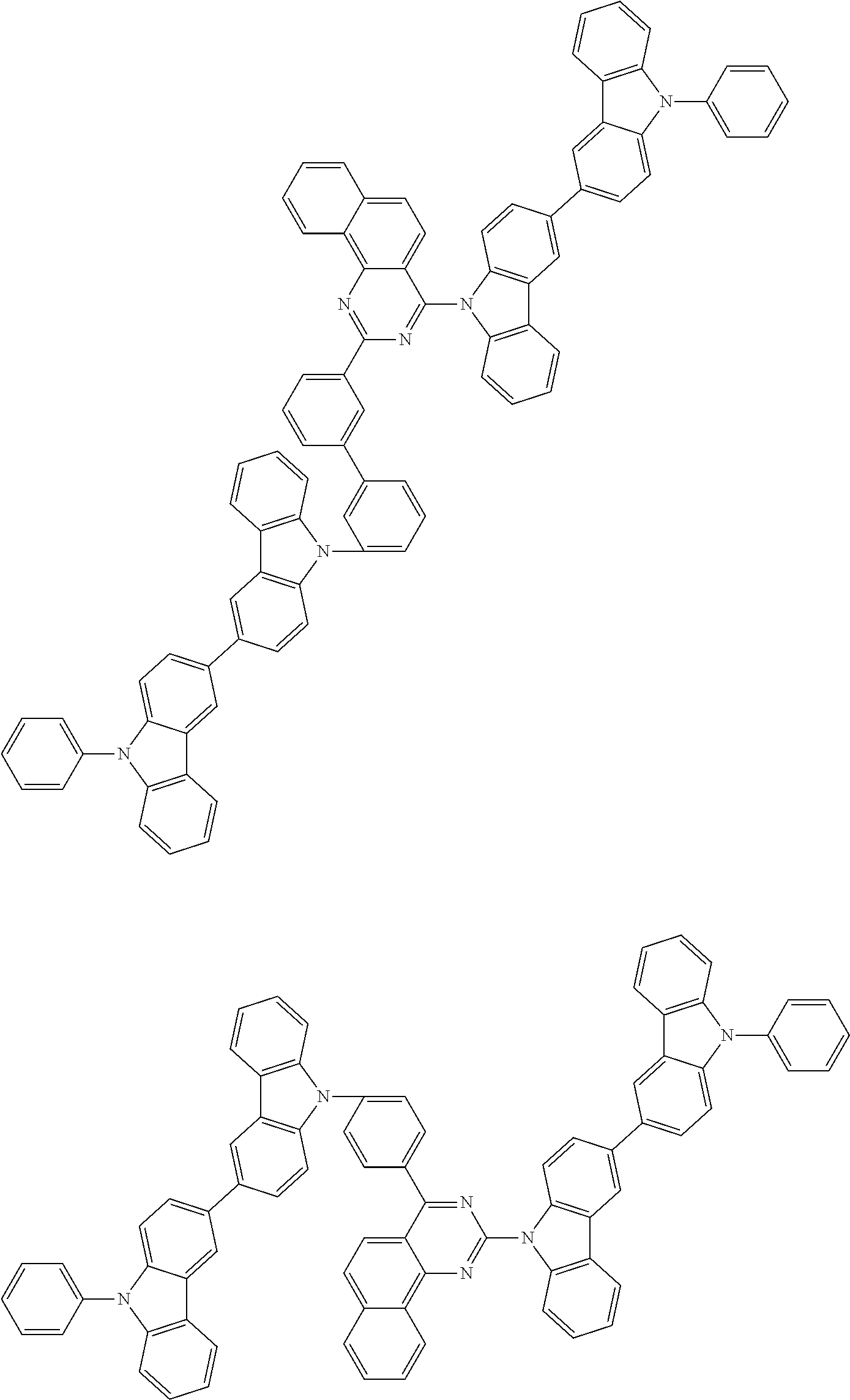


| TABLE 1 | |||
| Host material of | Luminous efficiency | ||
| emitting layer | (EQE) (%) | ||
| Ex. 17 | Compound 4 | 15.9 | ||
| Ex. 18 | |
16.1 | ||
| Ex. 19 | Compound 1 | 15.5 | ||
| Ex. 20 | |
16.4 | ||
| Ex. 21 | |
16.0 | ||
| Ex. 22 | Compound 8 | 16.2 | ||
| Ex. 23 | Compound 9 | 15.9 | ||
| Ex. 24 | |
16.0 | ||
| Ex. 25 | Compound 11 | 15.6 | ||
| Ex. 26 | Compound 14 | 16.1 | ||
| Ex. 27 | Compound 15 | 16.3 | ||
| Comp. Ex. 1 | Comp. Compound 1 | 14.0 | ||
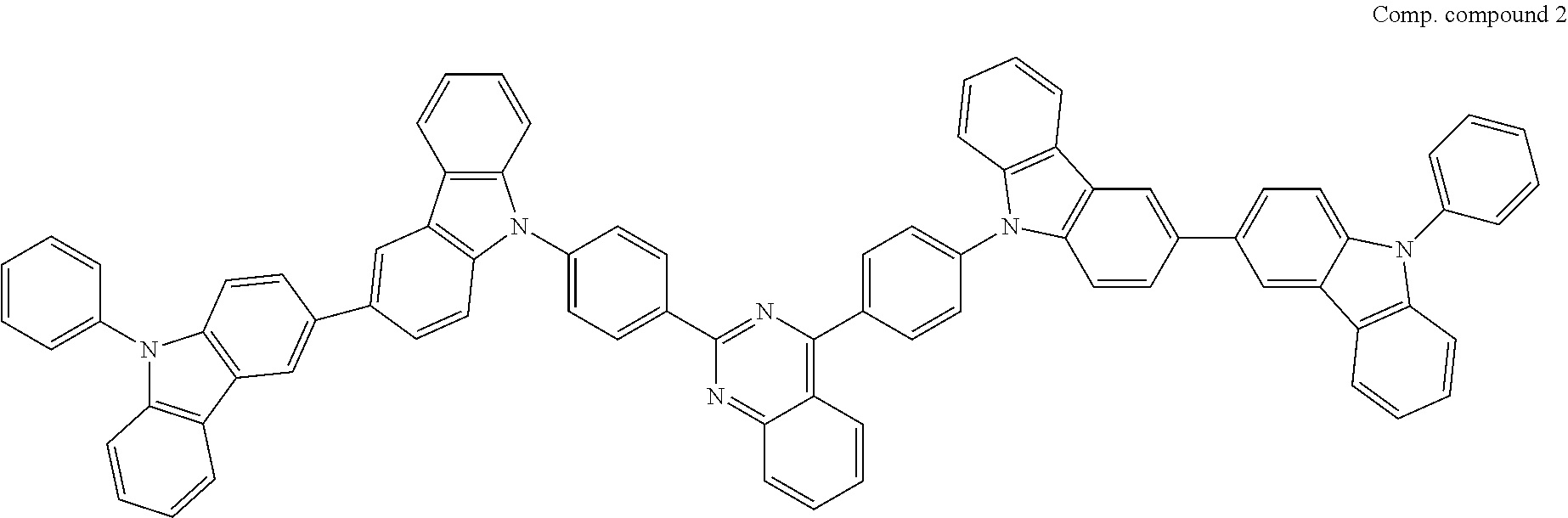
| TABLE 2 | |||
| Host material of | Luminous efficiency | ||
| emitting layer | (EQE) (%) | ||
| Ex. 28 | |
5.1 | ||
| Ex. 29 | |
5.2 | ||
| Ex. 30 | Compound 12 | 4.9 | ||
| Ex. 31 | Compound 13 | 5.6 | ||
| Ex. 32 | Compound 16 | 5.8 | ||
| Comp. Ex. 2 | Comp. |
3.5 | ||
Claims (29)
(A


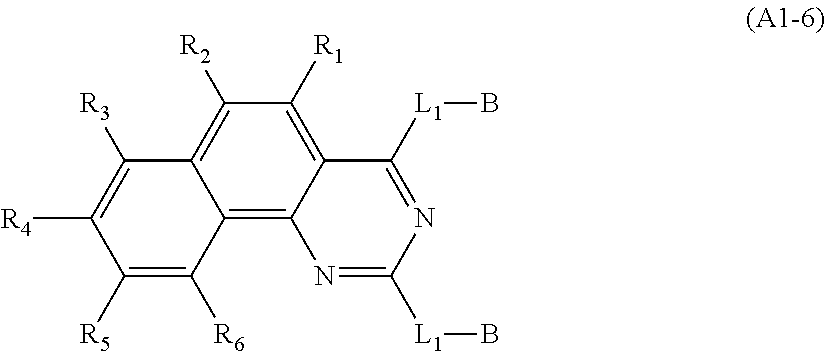


Applications Claiming Priority (3)
| Application Number | Priority Date | Filing Date | Title |
|---|---|---|---|
| JP2013-152753 | 2013-07-23 | ||
| JP2013152753 | 2013-07-23 | ||
| PCT/JP2014/003885 WO2015011924A1 (en) | 2013-07-23 | 2014-07-23 | Novel compound and organic electroluminescent element produced using same |
Publications (2)
| Publication Number | Publication Date |
|---|---|
| US20160172604A1 US20160172604A1 (en) | 2016-06-16 |
| US9508939B2 true US9508939B2 (en) | 2016-11-29 |
Family
ID=52392988
Family Applications (1)
| Application Number | Title | Priority Date | Filing Date |
|---|---|---|---|
| US14/906,824 Active US9508939B2 (en) | 2013-07-23 | 2014-07-23 | Compound and organic electroluminescent element produced using same |
Country Status (5)
| Country | Link |
|---|---|
| US (1) | US9508939B2 (en) |
| JP (1) | JP6263183B2 (en) |
| KR (1) | KR20160033116A (en) |
| CN (1) | CN105339365B (en) |
| WO (1) | WO2015011924A1 (en) |
Cited By (1)
| Publication number | Priority date | Publication date | Assignee | Title |
|---|---|---|---|---|
| US20180037574A1 (en) * | 2015-02-13 | 2018-02-08 | Idemitsu Kosan Co., Ltd. | Compound, composition, organic electroluminescence element, and electronic device |
Families Citing this family (7)
| Publication number | Priority date | Publication date | Assignee | Title |
|---|---|---|---|---|
| KR102140006B1 (en) * | 2013-10-11 | 2020-07-31 | 에스에프씨 주식회사 | An electroluminescent compound and an electroluminescent device comprising the same |
| KR20150042387A (en) | 2013-10-11 | 2015-04-21 | 에스에프씨 주식회사 | An electroluminescent compound and an electroluminescent device comprising the same |
| JP6515684B2 (en) * | 2014-05-29 | 2019-05-22 | 東ソー株式会社 | Benzoquinazoline compound, method for producing the same, and use thereof |
| TW201625557A (en) * | 2014-05-29 | 2016-07-16 | Tosoh Corp | Quinazoline and benzoquinazoline compound, its manufacturing method and use |
| JP6507855B2 (en) * | 2014-06-18 | 2019-05-08 | 東ソー株式会社 | Quinazoline compound, method for producing the same, and use thereof |
| JP6840931B2 (en) * | 2015-03-09 | 2021-03-10 | 東ソー株式会社 | Method for Producing Fused Ring Aromatic Compound |
| CN108033918B (en) * | 2017-12-28 | 2020-12-25 | 西安欧得光电材料有限公司 | Synthesis method of photoelectric material intermediate 2-chloro-4-phenylbenzo [ h ] quinazoline |
Citations (12)
| Publication number | Priority date | Publication date | Assignee | Title |
|---|---|---|---|---|
| US20040076853A1 (en) | 2002-04-24 | 2004-04-22 | Eastman Kodak Company | Organic light-emitting diode devices with improved operational stability |
| WO2004039786A1 (en) | 2002-10-30 | 2004-05-13 | Ciba Specialty Chemicals Holding Inc. | Electroluminescent device |
| WO2006104118A1 (en) | 2005-03-29 | 2006-10-05 | Konica Minolta Holdings, Inc. | Organic electroluminescent device, display and illuminating device |
| CN101270075A (en) | 2007-03-23 | 2008-09-24 | 株式会社半导体能源研究所 | Organic compound, anthracene derivative, and light-emitting element, light-emitting device, and electronic device using the above-mentioned anthracene derivative |
| JP2009246097A (en) | 2008-03-31 | 2009-10-22 | Konica Minolta Holdings Inc | Organic electroluminescence device, display device, and illuminating device |
| WO2012108388A1 (en) | 2011-02-07 | 2012-08-16 | 出光興産株式会社 | Biscarbazole derivative and organic electroluminescent element using same |
| US20120211736A1 (en) | 2009-11-03 | 2012-08-23 | Cheil Industries, Inc. | Compound for organic photoelectric device and organic photoelectric device including the same |
| US20120223295A1 (en) | 2011-02-07 | 2012-09-06 | Idemitsu Kosan Co., Ltd. | Biscarbazole derivatives and organic electroluminescence |
| WO2012121561A1 (en) | 2011-03-08 | 2012-09-13 | Rohm And Haas Electronic Materials Korea Ltd. | Novel organic electroluminescent compounds and organic electroluminescent device using the same |
| KR20120117693A (en) | 2011-04-15 | 2012-10-24 | 에스에프씨 주식회사 | New compounds and organic light-emitting diode including the same |
| WO2013024872A1 (en) | 2011-08-18 | 2013-02-21 | 出光興産株式会社 | Biscarbazole derivative and organic electroluminescence element using same |
| WO2013062075A1 (en) | 2011-10-26 | 2013-05-02 | 出光興産株式会社 | Organic electroluminescence element, and material for organic electroluminescence element |
-
2014
- 2014-07-23 US US14/906,824 patent/US9508939B2/en active Active
- 2014-07-23 KR KR1020167001649A patent/KR20160033116A/en not_active Ceased
- 2014-07-23 WO PCT/JP2014/003885 patent/WO2015011924A1/en not_active Ceased
- 2014-07-23 CN CN201480037395.0A patent/CN105339365B/en not_active Expired - Fee Related
- 2014-07-23 JP JP2015528151A patent/JP6263183B2/en not_active Expired - Fee Related
Patent Citations (32)
| Publication number | Priority date | Publication date | Assignee | Title |
|---|---|---|---|---|
| US20040076853A1 (en) | 2002-04-24 | 2004-04-22 | Eastman Kodak Company | Organic light-emitting diode devices with improved operational stability |
| WO2004039786A1 (en) | 2002-10-30 | 2004-05-13 | Ciba Specialty Chemicals Holding Inc. | Electroluminescent device |
| WO2006104118A1 (en) | 2005-03-29 | 2006-10-05 | Konica Minolta Holdings, Inc. | Organic electroluminescent device, display and illuminating device |
| US8134147B2 (en) | 2007-03-23 | 2012-03-13 | Semiconductor Energy Laboratory Co., Ltd. | Organic compound, anthracene derivative, and light-emitting element, light-emitting device, and electronic device using anthracene derivative |
| US9136479B2 (en) | 2007-03-23 | 2015-09-15 | Semiconductor Energy Laboratory Co., Ltd. | Organic compound, anthracene derivative, and light-emitting element, light-emitting device, and electronic device using the anthracene derivative |
| US20120309984A1 (en) | 2007-03-23 | 2012-12-06 | Semiconductor Energy Laboratory Co., Ltd. | Organic compound, anthracene derivative, and light-emitting element, light-emitting device, and electronic device using anthracene derivative |
| US7723722B2 (en) | 2007-03-23 | 2010-05-25 | Semiconductor Energy Laboratory Co., Ltd. | Organic compound, anthracene derivative, and light-emitting element, light-emitting device, and electronic device using anthracene derivative |
| US20100200847A1 (en) | 2007-03-23 | 2010-08-12 | Semiconductor Energy Laboratory Co., Ltd. | Organic compound, anthracene derivative, and light-emitting element, light-emitting device, and electronic device using anthracene derivative |
| US8530672B2 (en) | 2007-03-23 | 2013-09-10 | Semiconductor Energy Laboratory Co., Ltd. | Organic compound, anthracene derivative, and light-emitting element, light-emitting device, and electronic device using anthracene derivative |
| US20120104379A1 (en) | 2007-03-23 | 2012-05-03 | Semiconductor Energy Laboratory Co., Ltd. | Organic compound, anthracene derivative, and light-emitting element, light-emitting device, and electronic device using anthracene derivative |
| US20080242871A1 (en) | 2007-03-23 | 2008-10-02 | Semiconductor Energy Laboratory Co., Ltd. | Organic compound, anthracene derivative, and light-emitting element, light-emitting device, and electronic device using anthracene derivative |
| US20130323870A1 (en) | 2007-03-23 | 2013-12-05 | Semiconductor Energy Laboratory Co., Ltd. | Organic compound, anthracene derivative, and light-emitting element, light-emitting device, and electronic device using the anthracene derivative |
| US20150004731A1 (en) | 2007-03-23 | 2015-01-01 | Semiconductor Energy Laboratory Co., Ltd. | Organic compound, anthracene derivative, and light-emitting element, light-emitting device, and electronic device using the anthracene derivative |
| US8816098B2 (en) | 2007-03-23 | 2014-08-26 | Semiconductor Energy Laboratory Co., Ltd. | Organic compound, anthracene derivative, and light-emitting element, light-emitting device, and electronic device using the anthracene derivative |
| CN101270075A (en) | 2007-03-23 | 2008-09-24 | 株式会社半导体能源研究所 | Organic compound, anthracene derivative, and light-emitting element, light-emitting device, and electronic device using the above-mentioned anthracene derivative |
| US8278655B2 (en) | 2007-03-23 | 2012-10-02 | Semiconductor Energy Laboratory Co., Ltd. | Organic compound, anthracene derivative, and light-emitting element, light-emitting device, and electronic device using anthracene derivative |
| JP2009246097A (en) | 2008-03-31 | 2009-10-22 | Konica Minolta Holdings Inc | Organic electroluminescence device, display device, and illuminating device |
| US20120211736A1 (en) | 2009-11-03 | 2012-08-23 | Cheil Industries, Inc. | Compound for organic photoelectric device and organic photoelectric device including the same |
| US8803134B2 (en) | 2011-02-07 | 2014-08-12 | Idemitsu Kosan Co., Ltd. | Biscarbazole derivatives and organic electroluminescence |
| US20120223295A1 (en) | 2011-02-07 | 2012-09-06 | Idemitsu Kosan Co., Ltd. | Biscarbazole derivatives and organic electroluminescence |
| US9373802B2 (en) | 2011-02-07 | 2016-06-21 | Idemitsu Kosan Co., Ltd. | Biscarbazole derivatives and organic electroluminescence device employing the same |
| WO2012108388A1 (en) | 2011-02-07 | 2012-08-16 | 出光興産株式会社 | Biscarbazole derivative and organic electroluminescent element using same |
| US20140048784A1 (en) | 2011-02-07 | 2014-02-20 | Idemitsu Kosan Co., Ltd. | Biscarbazole derivative and organic electroluminescent element using same |
| US20150249219A1 (en) | 2011-02-07 | 2015-09-03 | Idemitsu Kosan Co., Ltd. | Biscarbazole derivative and organic electroluminescent element using same |
| TW201237140A (en) | 2011-02-07 | 2012-09-16 | Idemitsu Kosan Co | Biscarbazole derivatives and organic electroluminescence |
| US20140312331A1 (en) | 2011-02-07 | 2014-10-23 | Idemitsu Kosan Co., Ltd. | Biscarbazole derivatives and organic electroluminescence |
| WO2012121561A1 (en) | 2011-03-08 | 2012-09-13 | Rohm And Haas Electronic Materials Korea Ltd. | Novel organic electroluminescent compounds and organic electroluminescent device using the same |
| KR20120117693A (en) | 2011-04-15 | 2012-10-24 | 에스에프씨 주식회사 | New compounds and organic light-emitting diode including the same |
| US20140191225A1 (en) | 2011-08-18 | 2014-07-10 | Idemitsu Kosan Co., Ltd. | Biscarbazole derivative and organic electroluminescence element using same |
| WO2013024872A1 (en) | 2011-08-18 | 2013-02-21 | 出光興産株式会社 | Biscarbazole derivative and organic electroluminescence element using same |
| US20140306207A1 (en) | 2011-10-26 | 2014-10-16 | Idemitsu Kosan Co., Ltd. | Organic electroluminescence element, and material for organic electroluminescence element |
| WO2013062075A1 (en) | 2011-10-26 | 2013-05-02 | 出光興産株式会社 | Organic electroluminescence element, and material for organic electroluminescence element |
Non-Patent Citations (3)
| Title |
|---|
| International Search Report issued in corresponding application No. PCT/JP2014/003885 dated Oct. 21, 2014. |
| Office Action issued in Chinese Patent Application No. 201480037395.0 dated Jul. 25, 2016. |
| Translation of the Written Opinion of the International Searching Authority issued in corresponding application No. PCT/JP2014/003885 dated Feb. 4, 2016. |
Cited By (1)
| Publication number | Priority date | Publication date | Assignee | Title |
|---|---|---|---|---|
| US20180037574A1 (en) * | 2015-02-13 | 2018-02-08 | Idemitsu Kosan Co., Ltd. | Compound, composition, organic electroluminescence element, and electronic device |
Also Published As
| Publication number | Publication date |
|---|---|
| CN105339365B (en) | 2018-01-26 |
| JPWO2015011924A1 (en) | 2017-03-02 |
| JP6263183B2 (en) | 2018-01-17 |
| CN105339365A (en) | 2016-02-17 |
| US20160172604A1 (en) | 2016-06-16 |
| KR20160033116A (en) | 2016-03-25 |
| WO2015011924A1 (en) | 2015-01-29 |
Similar Documents
| Publication | Publication Date | Title |
|---|---|---|
| US20160172604A1 (en) | Novel compound and organic electroluminescent element produced using same | |
| CN109843850B (en) | Fluorene-based compound, organic light emitting device using the same, and method of manufacturing the same | |
| US9705091B2 (en) | Aromatic heterocycle derivative and organic electroluminescent element using same | |
| US10777752B2 (en) | Organic electroluminescence device and electronic apparatus provided with the same | |
| US20200111962A1 (en) | Organic electroluminescence device and electronic apparatus provided with the same | |
| US12410182B2 (en) | Compound, organic electroluminescence device and electronic apparatus | |
| US20260071120A1 (en) | Novel compound, organic electroluminescence device using the same, and electronic apparatus | |
| US10763444B2 (en) | Organic electroluminescence device and electronic apparatus provided with the same | |
| EP3269783B1 (en) | Ink composition for organic light-emitting device, organic light-emitting device including film formed by using the ink composition, and method of manufacturing the organic light-emitting device | |
| US9815997B2 (en) | Organic electroluminescence device and ink composition | |
| KR102282551B1 (en) | Carbazole derivative, material for organic electroluminescent element which comprises same, and organic electroluminescent element and electronic device each manufactured using same | |
| US12156467B2 (en) | Organic electroluminescence device and electronic appliance using the same | |
| CN110088110A (en) | Novel compound and organic light-emitting element including the same | |
| US20210320251A1 (en) | Organic electroluminescence device and electronic appliance | |
| CN110800122A (en) | Organic electroluminescent device | |
| KR20160125342A (en) | Compound, material for organic electroluminescence element, ink composition, organic electroluminescence element, and electronic device | |
| CN114761462A (en) | Polymer and organic light emitting diode using the same | |
| EP4043512A1 (en) | Organic electroluminescence element having organic layer comprising high molecular weight compound | |
| CN110799510B (en) | Compound and organic light-emitting device containing same | |
| US12516066B2 (en) | Compound, organic electroluminescence device and electronic apparatus | |
| US10629821B2 (en) | Compound, material for organic electroluminescent elements using same, and organic electroluminescent element and electronic device each using same | |
| US12433162B2 (en) | Compound, organic electroluminescence device, and electronic apparatus | |
| CN117715953A (en) | Polymer and organic light emitting device using the same | |
| US10538514B2 (en) | Compound, composition, organic electroluminescence element, and electronic device |
Legal Events
| Date | Code | Title | Description |
|---|---|---|---|
| AS | Assignment |
Owner name: IDEMITSU KOSAN CO., LTD., JAPAN Free format text: ASSIGNMENT OF ASSIGNORS INTEREST;ASSIGNORS:IKEDA, KIYOSHI;YOMOGITA, AKINORI;KAWAMURA, MASAHIRO;AND OTHERS;SIGNING DATES FROM 20151130 TO 20151203;REEL/FRAME:037552/0665 |
|
| STCF | Information on status: patent grant |
Free format text: PATENTED CASE |
|
| MAFP | Maintenance fee payment |
Free format text: PAYMENT OF MAINTENANCE FEE, 4TH YEAR, LARGE ENTITY (ORIGINAL EVENT CODE: M1551); ENTITY STATUS OF PATENT OWNER: LARGE ENTITY Year of fee payment: 4 |
|
| MAFP | Maintenance fee payment |
Free format text: PAYMENT OF MAINTENANCE FEE, 8TH YEAR, LARGE ENTITY (ORIGINAL EVENT CODE: M1552); ENTITY STATUS OF PATENT OWNER: LARGE ENTITY Year of fee payment: 8 |