US9508055B1 - Method and system for managing and responding to legal hold notices - Google Patents
Method and system for managing and responding to legal hold notices Download PDFInfo
- Publication number
- US9508055B1 US9508055B1 US13/403,860 US201213403860A US9508055B1 US 9508055 B1 US9508055 B1 US 9508055B1 US 201213403860 A US201213403860 A US 201213403860A US 9508055 B1 US9508055 B1 US 9508055B1
- Authority
- US
- United States
- Prior art keywords
- confirmation
- recipient
- server
- legal hold
- hold notice
- Prior art date
- Legal status (The legal status is an assumption and is not a legal conclusion. Google has not performed a legal analysis and makes no representation as to the accuracy of the status listed.)
- Active, expires
Links
Images



Classifications
-
- G—PHYSICS
- G06—COMPUTING OR CALCULATING; COUNTING
- G06Q—INFORMATION AND COMMUNICATION TECHNOLOGY [ICT] SPECIALLY ADAPTED FOR ADMINISTRATIVE, COMMERCIAL, FINANCIAL, MANAGERIAL OR SUPERVISORY PURPOSES; SYSTEMS OR METHODS SPECIALLY ADAPTED FOR ADMINISTRATIVE, COMMERCIAL, FINANCIAL, MANAGERIAL OR SUPERVISORY PURPOSES, NOT OTHERWISE PROVIDED FOR
- G06Q10/00—Administration; Management
- G06Q10/10—Office automation; Time management
-
- G—PHYSICS
- G06—COMPUTING OR CALCULATING; COUNTING
- G06Q—INFORMATION AND COMMUNICATION TECHNOLOGY [ICT] SPECIALLY ADAPTED FOR ADMINISTRATIVE, COMMERCIAL, FINANCIAL, MANAGERIAL OR SUPERVISORY PURPOSES; SYSTEMS OR METHODS SPECIALLY ADAPTED FOR ADMINISTRATIVE, COMMERCIAL, FINANCIAL, MANAGERIAL OR SUPERVISORY PURPOSES, NOT OTHERWISE PROVIDED FOR
- G06Q30/00—Commerce
- G06Q30/06—Buying, selling or leasing transactions
- G06Q30/0601—Electronic shopping [e-shopping]
- G06Q30/0623—Electronic shopping [e-shopping] by investigating goods or services
- G06Q30/0625—Electronic shopping [e-shopping] by investigating goods or services by formulating product or service queries, e.g. using keywords or predefined options
Definitions
- Embodiments of the present invention relate to data management, and more particularly, to a technique of managing and responding to legal hold notices.
- a legal hold is a process which an organization uses to preserve all forms of relevant information when litigation is reasonably anticipated.
- the legal hold is generally initiated by notice or communication from legal counsel to an organization and causes a suspension of the normal disposition or processing of records.
- An administrator such as an information technology (IT) administrator, may identify custodians and mailboxes to hold in response to a legal hold notice.
- a custodian is a person or entity that owns or controls access to a set of electronic documents.
- a custodian can be any person who has read and write access to electronically stored information (ESI) during the course of normal operational activity.
- EI electronically stored information
- the administrator should notify custodians of the legal hold and disseminate the legal hold notice to the custodians as quickly as possible. In addition, the administrator needs to keep track of the custodians that have responded to the legal hold notice.
- the legal hold notice process should be defensible and auditable.
- an organization In order for the legal hold notice process to be defensible and auditable, an organization should be able to show that it complied with and distributed the legal hold notice to all custodians. If the organization cannot show compliance, legal sanctions can ensure, such as fines or losing the litigation in court.
- the information involved in the legal hold notice process and usually all e-discovery information, generally includes sensitive and/or confidential data. This information must be secured and kept confidential. Therefore, although an organization may be required to show compliance with the legal hold notice, the organization does not want to disseminate any of the sensitive or confidential information involved in the legal hold.
- Another current approach is to use a single system that creates an electronic message, sends it to the appropriate recipients, and tracks their responses.
- this system may not be able track whether the notices were received.
- the use of email receipts can be used, but there is no guarantee that a recipient will send back an email receipt.
- a response beyond a simple acknowledgement is required (e.g., answers to questions regarding the legal hold notice)
- an email receipt will not allow a recipient to provide this type of response.
- Another option is to ask the recipient to respond to the administrator that they received the notice. This is infeasible if the administrator has to keep track of thousands of messages from thousands of recipients.
- Another option is to provide a web server for a recipient to respond to the legal hold notice.
- the web server can allow for tracking of messages and provide real-time updates with the responses of the recipients.
- use of a web server would introduce security issues, as every recipient (e.g., thousands of recipients) would have access to the web server, which contains sensitive or confidential information.
- the web server could be used for other purposes and may not have enough computational resources to handle the legal hold notice process.
- An exemplary system may include a secure administration server including a memory and a processing device that is coupled to a memory.
- the secure administration server sends legal hold information to a confirmation server in response to a delivery request.
- the legal hold information comprises a plurality of recipients required to comply with a legal hold notice.
- the secure administration server generates a unique email for each of the plurality of recipients required to comply with the legal hold notice.
- Each unique email comprises a unique Uniform Resource Locator (URL) to the confirmation server for a corresponding recipient.
- the secure administration server obtains a confirmation of compliance associated with the corresponding recipient from the confirmation server.
- URL Uniform Resource Locator
- the secure administration server is a secure server and the confirmation server is an insecure server.
- the confirmation server stores each confirmation received from one or more recipients in a staging area of the confirmation server.
- the secure administration server obtains the confirmation of compliance by determining whether a confirmation is stored in the staging area of the confirmation server at a predefined time and sending a request to the confirmation server upon determining that the confirmation is stored in the staging area of the confirmation server.
- the secure administration server generates secure information for the legal hold notice based on the obtained confirmation. In one embodiment, the secure administration server generates a release for the legal hold notice, the release comprising a release email for each of the plurality of recipients.
- the unique URL for each recipient comprises a unique message identifier for the recipient and a hold notice identifier.
- the hold notice identifier identifies the legal hold notice associated with the URL.
- the confirmation server displays a webpage associated with the URL in response to receiving a request from a recipient to load the URL, wherein the webpage comprises each legal hold corresponding to the recipient. In one embodiment, the webpage comprises each legal hold corresponding to the recipient.
- a non-transitory computer readable storage medium stores methods for performing the operations of the above described embodiments.
- FIG. 1 illustrates exemplary system architecture, in accordance with various embodiments of the present invention.
- FIG. 2 is a block diagram of a confirmation module and a secure administration module, in accordance with an embodiment.
- FIG. 3 is a flow diagram illustrating an embodiment for a method of managing legal hold notices, in accordance with an embodiment.
- FIG. 4 is a flow diagram illustrating an embodiment for responding to legal hold notices, in accordance with an embodiment.
- FIG. 5 is an exemplary email generated by a secure administration server, according to some embodiments.
- FIG. 6 is an exemplary webpage presenting legal hold information for a recipient, according to some embodiments.
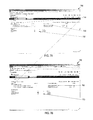
- FIGS. 7A-7B are exemplary visual representations presenting secure information for a legal hold notice, according to some embodiments.
- FIG. 8 is a block diagram of an exemplary computer system that may perform one or more of the operations described herein.
- Embodiments of the invention are directed to a method and system for managing and responding to legal hold notices.
- An administrator in an organization may need to notify custodians, or recipients, of a legal hold that they are required to comply with and disseminate the legal hold notice to the recipients as quickly as possible.
- the recipients may currently be employed by the organization or may not be employed by the organization.
- the administrator may request delivery of the legal hold notice to a list of recipients required to comply with the legal hold notice. For example, the administrator may have a list of ten thousand recipients that are required to comply with the legal hold notice.
- the recipients that have received and responded to the legal hold notice should be tracked in order for the legal hold notice process to be legally defensible and auditable.
- any sensitive and/or confidential information of the organization should be kept sensitive and/or confidential, and cannot be accessible to the recipients.
- Managing and responding to legal hold notices can be implemented through the use of two servers, a secure administration server and a confirmation server.
- the secure administration server may be placed inside of a secure corporate firewall, where any data stored on the secure administration server may be secured from outside attacks and queries.
- the confirmation server can be placed outside of the firewall for external access.
- the secure administration server may be used to send legal hold information, including the list of recipients, to the confirmation server over a secure connection in response to a delivery request by the administrator.
- a unique email may be generated by the secure administration server, and sent to each recipient required to comply with the legal hold notice.
- the unique email may include a Uniform Resource Locator (URL) that, when clicked, takes the recipient to a webpage.
- the webpage may include information about the legal hold notice, as well as questions related to the legal hold notice. For example, the administrator may ask one or more of the recipients “Did you have any contact with the other party prior to Jan. 1, 2012?” Using the webpage, the recipient can answer the included questions, as well as confirm compliance with the legal hold notice.
- the secure administration server can automatically update secure information associated with the legal hold notice, such as which recipients have confirmed compliance with the legal hold notice, and any answers to questions submitted by the recipients.
- FIG. 1 illustrates exemplary system architecture 100 in which embodiments can be implemented.
- the system architecture 100 includes a secure administration server 110 , an administration data repository 130 , a firewall 140 , a confirmation server 150 , and client machines 102 A- 102 N connected to a network 104 .
- Network 104 may be may be a private network (e.g., a local area network (LAN), a wide area network (WAN), intranet, etc.), a corporate network (e.g., a private network for an organization such as a corporation), a broadcast network, a public network (e.g., the Internet), a wired network (e.g., Ethernet network), a wireless network (e.g., an 802.11 network) and/or a cellular network (e.g., a Long Term Evolution (LTE) network).
- LAN local area network
- WAN wide area network
- intranet etc.
- corporate network e.g., a private network for an organization such as a corporation
- a broadcast network e.g., a public network (e.g., the Internet)
- a wired network e.g., Ethernet network
- a wireless network e.g., an 802.11 network
- a cellular network e.g., a Long Term Evolution
- Secure administration server 110 may be a rackmount server, a router computer, a personal computer, a portable digital assistant, a mobile phone, a laptop computer, a tablet computer, a camera, a video camera, a netbook, a desktop computer, a media center, or any combination of the above.
- the secure administration server 110 is deployed as a network appliance (e.g., a network router, hub, or managed switch).
- Administration data repository 130 is a persistent storage that is capable of storing data that is collected from data sources. Examples of data sources can include, and are not limited to, desktop computers, laptop computers, handheld computers, server computers, gateway computers, mobile communications devices, cell phones, smart phones, or similar computing device. In some embodiments, administration data repository 130 might be a network-attached file server, while in other embodiments administration data repository 130 might be some other type of persistent storage such as an object-oriented database, a relational database, and so forth.
- the data in the administration data repository 130 can include data related to one or more legal hold notices.
- data related to one or more legal hold notices can include, and are not limited to, identification information for the legal hold notice (hold identifier), identification information for recipients of the legal hold notice (recipient identifier), email data including URLs and/or websites associated with the recipients of the legal hold notice, compliance information associated with the legal hold notice, questions associated with the legal hold notice, answers to questions associated with the legal hold notice, and any other electronically stored information that can be associated with a legal hold notice, etc.
- Firewall 140 may be a device or set of devices designed to protect the secure administration server 110 and the administration data 130 from being accessed by one or more systems that are outside of the firewall. For example, firewall 140 may prevent the confirmation server 150 and the client machines 102 A- 102 N from accessing the secure administration server 110 and/or the data in administration data 130 .
- Confirmation server 150 may be a rackmount server, a router computer, a personal computer, a portable digital assistant, a mobile phone, a laptop computer, a tablet computer, a camera, a video camera, a netbook, a desktop computer, a media center, or any combination of the above.
- the confirmation server 150 is deployed as a network appliance (e.g., a network router, hub, or managed switch).
- the client machines 102 A- 102 N may be personal computers (PC), laptops, mobile phones, tablet computers, or any other computing devices.
- the client machines 102 A- 102 N may run an operating system (OS) that manages hardware and software of the client machines 102 A- 102 N.
- a browser (not shown) may run on the client machines (e.g., on the OS of the client machines).
- the browser may be a web browser that can access content served by a web server.
- the browser may issue information about a legal hold notice and/or questions related to the legal hold notice to the web server or may browse administration data that has previously been processed (e.g., questions, answers, information related to one or more legal hold notices, etc.).
- the client machines 102 A- 102 N may also upload administration data to the secure administration server 110 for storage and/or classification (e.g., in administration data repository 130 ).
- an administrator uses secure administration server 110 to request delivery of a legal hold notice to a group of recipients.
- the legal hold notice is sent to the recipients, who can access the legal hold notice via client device 102 A- 102 N over network 104 .
- the confirmation server 110 receives communications from the client device 102 A- 102 N, and processes and/or directs these communications accordingly.
- the secure administration server 110 can be a secure server, protected by firewall 140 , such that unauthorized access by the confirmation server 150 and clients 102 A- 102 N to secure administration server 110 and the data stored in administration data repository 130 is prevented.
- secure administration server 110 includes a secure administration module 120 .
- the confirmation server 150 includes a confirmation module 160 and a web server 170 . In alternative embodiments, the confirmation module 160 and the web server 170 run on different machines.
- Secure administration module 120 can manage one or more legal hold notices. Upon receiving a delivery request (e.g., from an administrator of the secure administration server 110 ), the secure administration module 120 can send legal hold information to a confirmation server (e.g., confirmation server 150 ) in order to provide the confirmation server with a list of recipients (e.g., recipient identifiers) that need to be notified of a legal hold notice and contact information (e.g., email addresses) of the recipients. Confirmation module 160 can receive the legal hold information from the secure administration module 120 .
- a confirmation server e.g., confirmation server 150
- recipient identifiers e.g., recipient identifiers
- contact information e.g., email addresses
- the confirmation module 160 sends an acknowledgement to the secure administration server once the legal hold information is received.
- the secure administration module 120 receives an acknowledgement from the confirmation server in response to sending the legal hold information to the confirmation server.
- the secure administration module 120 can generate and send a unique email for each recipient using a mail server (not shown, such as an SMTP server).
- the unique email for each recipient can include a unique URL for accessing a webpage for the recipient served by a web server (e.g., web server 170 ) in confirmation server 150 .
- the confirmation module 160 can provide data to web server 170 to display a webpage in response to receiving a request from a recipient to load a URL.
- the URL is unique to the recipient, and is provided to the recipient by the secure administration module 120 .
- the confirmation module 160 determines whether the URL is valid.
- Web server 170 may serve data from administration data 130 to client machines 102 A- 102 N in response to receiving data from the confirmation module 160 .
- the data served by web server 170 can include hold information for a legal hold notice identified in the URL.
- the data served by web server 170 can be used to generate a webpage by a data server (not shown) or by a web browser on client machines 102 A- 102 N.
- the displayed webpage may be a webpage that is specific to the recipient, and may include survey questions for the recipient.
- Web server 170 may receive data from the recipient using one of client machines 102 A- 102 N, such as a confirmation of compliance for the recipient.
- the data received by web server 170 may further include answers. The answers may be answers submitted by the recipient of the legal hold notice, and may be answers to questions presented on the webpage.
- Web server 170 may provide the data to confirmation module 160 .
- the confirmation module 160 may receive a confirmation of compliance from a recipient of hold information.
- the confirmation module 160 may also receive other information from a recipient, such as answers to questions submitted by the recipient.
- confirmation module 160 can store the confirmation of compliance and other information in a staging area (not shown) of the confirmation server 150 .
- the confirmation module 160 can send the confirmation of compliance and other information to the secure administration server 150 .
- Secure administration module 120 can obtain a confirmation of compliance associated with a recipient from the confirmation server.
- the confirmation of compliance comprises answers to questions submitted by the recipient.
- the secure administration module 120 can generate secure administration data from the confirmation of compliance.
- the secure administration module 120 can store the confirmation of compliance and generated secure administration data in administration data repository 130 .
- FIG. 2 is a block diagram of a secure administration module 200 and a confirmation module 230 , in accordance with one embodiment of the present invention.
- the secure administration module 200 includes a hold notifier 205 , an email generator 210 , a confirmation obtainer 215 , and a secure information generator 220 .
- the confirmation module 230 includes a legal hold receiver 235 , a URL verifier 240 , a confirmation receiver 245 , and a staging area 250 .
- the functionality of one or more of the hold notifier 205 , the email generator 210 , the confirmation obtainer 215 , and the secure information generator 220 may be combined or divided.
- the functionality of one or more of the legal hold receiver 235 , the URL verifier 240 , the confirmation receiver 245 , and the staging area 250 may be combined or divided.
- the hold notifier 205 can send legal hold information to the confirmation module 230 upon receiving a delivery request from an administrator that would like to distribute a legal hold notice.
- the legal hold information can include the minimum amount of information in order to allow a recipient to respond to the legal hold notice.
- the legal hold information can include an identifier of the legal hold notice and an identifier (e.g., email address, name, etc.) for each recipient required to comply with the legal hold notice.
- the hold notifier 205 can obtain the legal hold information from data store 250 .
- the hold notifier 205 obtains identification information 260 to send to the confirmation module 230 .
- Identification information 260 can include a list of recipients that need to be notified of a legal hold notice.
- identification information 260 can further include an identifier of the legal hold notice.
- the hold notifier 205 obtains identification information 260 and email data 265 to send to the confirmation module 230 .
- the email data 265 can include a unique URL for each recipient.
- the hold notifier 205 may receive a confirmation from confirmation module 230 in response to sending the legal hold information.
- the email generator 210 can generate and send (via a mail server, not shown) a unique email to each recipient of the legal hold notice.
- the email generated by the email generator 210 can inform a recipient that the recipient is required to comply with a legal hold notice.
- the email generated by the email generator 210 can inform a recipient that the recipient is released from a legal hold notice.
- the email generator 210 can generate a unique URL for each recipient required to comply with a legal hold notice and store the URL in email data 265 .
- the unique URL generated for a recipient can include an identifier to identify the recipient of the URL (e.g., recipient identifier or a message identifier corresponding to the recipient) and a hold notice identifier to identify the legal hold notice that the recipient is required to comply with.
- the body of text for each unique email is the same, except for a name of the recipient and the unique URL for the recipient.
- An example of the unique email generated by the email generator 210 is described in greater detail below in conjunction with FIG. 5 , according to some embodiments.
- the confirmation obtainer 215 can obtain a confirmation of compliance associated with a recipient from the confirmation module 230 .
- the confirmation of compliance is obtained by automatically receiving the confirmation of compliance from the confirmation module 230 .
- the confirmation obtainer 215 determines whether one or more confirmations of compliance are stored in the staging area 250 in the confirmation module 230 at a predefined time (e.g., every 5 minutes). If the confirmation obtainer 215 determines that one or more confirmations of compliance are stored in the staging area 250 , the confirmation obtainer 215 generates and sends a request (e.g., SOAP request) to the confirmation module 230 requesting the one or more confirmations of compliance in the staging area 250 .
- the confirmation obtainer 215 can store the one or more confirmations of compliance in compliance data 270 .
- the confirmations of compliance may comprise answers to questions submitted by the recipient.
- the secure information generator 220 can generate secure information from one or more confirmations of compliance stored in compliance data 270 .
- the secure information can include the legal hold notices (e.g., identifiers) currently managed by an administrator, a date and/or time indicating when each legal hold notice was sent, a list of recipients that have viewed the legal hold notice, a list of recipients that have replied to the legal hold notice, survey responses, etc.
- the secure information can include visual representations of data, such as histograms of how many recipients responded to a legal hold notice in a particular way. Examples of visual representations and the secure information generated by secure information generator 220 are described in greater detail below in conjunction with FIGS. 7A and 7B , according to some embodiments.
- the legal hold receiver 235 can receive legal hold information from the secure administration module 200 .
- the legal hold receiver 235 can generate and send an acknowledgement to confirm receipt of the legal hold information to the secure administration module 200 .
- the legal hold information can include information (e.g., name, contact information, unique message identifier for each recipient of the legal hold notice, legal hold notice identifier) for recipients required to comply with a legal hold notice.
- the legal hold receiver 235 may store the legal hold information in storage (not shown).
- the URL verifier 240 can verify whether a URL corresponding to a webpage to display is valid. The verification may be performed in response to clicking of a URL by a recipient in an email generated by the secure administration module 200 .
- the URL can include a unique message identifier for the recipient and a hold notice identifier.
- the URL verifier 240 can compare the unique message identifier and the hold notice identifier to the legal hold information received by the legal hold receiver 235 . If the unique message identifier in the URL matches a unique message identifier received by the legal hold receiver 235 and if the hold notice identifier in the URL matches a legal hold identifier received by the legal hold receiver 235 , the URL verifier 240 can determine that the URL is valid.
- the URL verifier 240 can send the URL to a web server (not shown) to display the webpage corresponding to the URL. In an alternate embodiment, if the URL verifier 240 determines that the URL is valid, the URL verifier 240 can display a webpage corresponding to the URL. An example of a webpage corresponding to a unique URL is described in greater detail below in conjunction with FIG. 6 , according to some embodiments.
- the URL verifier 240 can determine that the URL is not valid. In one embodiment, if the URL verifier 240 determines the URL is not valid, the URL verifier 240 may send an error message to a client machine (not shown) corresponding to the recipient that clicked on the URL. In an alternate embodiment, if the URL verifier 240 determines the URL is not valid, the URL verifier 240 may not send an error message, and the URL may not load.
- the confirmation receiver 245 can receive a confirmation of compliance from a recipient that indicates that the recipient is going to comply with a legal hold notice.
- the confirmation receiver 245 may use the legal hold information received by the legal hold receiver 235 to determine whether the confirmation of compliance is valid.
- the confirmation receiver 245 may check that the recipient is a valid recipient by comparing an identification of the recipient received with the confirmation of compliance to identifiers in the legal hold information received by the legal hold receiver 235 .
- the confirmation receiver 245 can store the confirmation of compliance in the staging area 250 . In an alternate embodiment, if the confirmation of compliance is valid, the confirmation receiver 245 can send the confirmation to the secure administration module 200 . In one embodiment, if the confirmation of compliance is not valid, the confirmation receiver 245 sends an error message to a client machine (not shown) from which the confirmation of compliance came. In an alternate embodiment, if the confirmation of compliance is not valid, the confirmation receiver 245 does not store the confirmation of compliance in the staging area 250 .
- FIG. 3 is a flow diagram of an embodiment of a method 300 for managing legal hold notices by a secure administration server.
- the method 300 is performed by processing logic that may comprise hardware (circuitry, dedicated logic, etc.), software (such as is run on a general purpose computer system or a dedicated machine), or a combination of both.
- the method 300 is performed by the secure administration server 110 of FIG. 1 .
- the method 300 may be performed by a secure administration module 120 running on secure administration server 110 or another machine.
- processing logic sends legal hold information to a confirmation server in response to a delivery request.
- the delivery request is made by an administrator that would like to distribute a legal hold notice.
- the legal hold information can include the minimum amount of information in order to allow a recipient to respond to the legal hold notice.
- the legal hold information includes an identifier for each recipient that needs to be notified of a legal hold notice.
- the legal hold information includes an identifier of the legal hold notice (e.g., a name of the legal hold notice, such as “Company A vs. Company B”, a numeric identifier, etc.).
- the legal hold information includes one or more questions and possible answers to present to a recipient on a webpage.
- the legal hold information is sent using a protocol specification protocol (e.g., SOAP, XMLRPC, etc.) that is usable over any transport (e.g., http, https, etc.).
- processing logic receives an acknowledgment that the legal hold information was received by the confirmation server. In an alternate embodiment, no acknowledgement is required or received.
- processing logic generates a unique email for each of a plurality of recipients required to comply with a legal hold notice.
- the email informs each recipient that the recipient is required to comply with a legal hold notice.
- the email informs a recipient that the recipient is released from a legal hold notice and no longer has to comply with the legal hold notice.
- the unique email includes the name of the recipient, a body of text, and a URL that is unique to the recipient.
- the body of text can be the same for each recipient, and may be provided by the administrator of the legal hold notice.
- the unique URL can include a message identifier (e.g., 128 bits) to identify the recipient of the URL and a hold notice identifier to identify the legal hold notice that the recipient is required to comply with.
- the message identifier is the same as an identifier of the recipient.
- the message identifier is different than an identifier of the recipient.
- the message identifier is randomly generated for each recipient using a random number generator.
- the message identifier is created by the administrator of the legal hold notice.
- the hold notice identifier can be a unique identifier for the legal hold notice.
- the hold notice identifier is randomly generated for each legal hold notice using a random number generator.
- the hold notice identifier is created by the administrator of the legal hold notice.
- An example of the unique email is described in greater detail below in conjunction with FIG. 5 , according to some embodiments.
- the unique URL represents a webpage that is specific to the recipient, and can include information for the recipient on how to comply with a legal hold notice or how to be released from a legal hold notice. An example of a webpage corresponding to a unique URL is described in greater detail below in conjunction with FIG. 6 , according to some embodiments.
- processing logic obtains a confirmation of compliance associated with a recipient from the confirmation server.
- the confirmation of compliance is obtained at a predefined time (e.g., every 5 minutes, at midnight every night, etc.)
- the confirmation of compliance is obtained by receiving the confirmation of compliance from the confirmation server automatically.
- the confirmation server sends a confirmation of compliance upon receiving the confirmation of compliance from a recipient.
- the confirmation of compliance is obtained by determining whether one or more confirmations of compliance are stored in a staging area in the confirmation server.
- the processing logic may make this determination by sending a request (e.g., SOAP request) to the confirmation server requesting information about the staging area from the confirmation server. If the confirmation server sends back information indicating that there are one or more confirmations of compliance in the staging area, the processing logic can determine that one or more confirmations of compliance are stored in the staging area. If the processing logic determines that one or more confirmations of compliance are stored in the staging area, the processing logic can send a request (e.g., SOAP request) requesting the one or conformations of compliance from the confirmation server.
- a request e.g., SOAP request
- the processing logic may generate another request (e.g., SOAP request) to the confirmation server in a predefined amount of time (e.g., 5 minutes).
- the confirmation of compliance includes information about the recipient, such as a name of the recipient, an identifier for the recipient, a message identifier for the recipient, or another identifier to identify the recipient.
- the confirmation of compliance includes answers to questions submitted by the recipient.
- processing logic can generate secure information from one or more confirmations of compliance.
- the secure information is generated by parsing the received confirmation of compliance.
- the secure information is generated by processing the received confirmation of compliance.
- An identifier of the recipient can be obtained from the confirmation of compliance by the parsing, and information related to that recipient can be updated. For example, the secure information may have previously indicated that recipient A had been sent the legal hold notice on Jan. 1, 2012 at 12:00 PM EST. Once the confirmation of compliance has been received for recipient A, the secure information is updated (written) to include that the recipient has sent back a confirmation of compliance. A date and time when the confirmation of compliance was sent and/or received may further be stored in the secure information.
- the secure information may indicate that recipient A has sent a confirmation of compliance on Jan. 2, 2012 at 6:00 AM EST.
- the secure information can further be generated to include histograms or other visual representations for an administrator to easily view legal hold notices and information corresponding to each legal hold notice.
- the secure information can include the legal hold notices (e.g., identifiers) currently managed by an administrator, a date and/or time indicating when each legal hold notice was sent to each recipient, a list of recipients that have viewed the legal hold notice, a list of recipients that have replied to the legal hold notice, survey responses, etc. Examples of visual representations and the secure information are described in greater detail below in conjunction with FIGS. 7A and 7B , according to some embodiments.
- FIG. 4 is a flow diagram of an embodiment of a method 400 for managing legal hold notices by a confirmation server.
- the method 400 is performed by processing logic that may comprise hardware (circuitry, dedicated logic, etc.), software (such as is run on a general purpose computer system or a dedicated machine), or a combination of both.
- the method 400 is performed by the confirmation server 150 of FIG. 1 .
- the method 400 may be performed by a confirmation module 160 and web server 170 running on secure administration server 110 or another machine.
- processing logic can generate and send an acknowledgement to confirm receipt of legal hold information received from a secure administration server.
- the legal hold information can include information (e.g., name, contact information, unique message identifier for each recipient of the legal hold notice, legal hold notice identifier) for recipients required to comply with a legal hold notice.
- Processing logic may store the legal hold information received from the secure administration server after sending the acknowledgement.
- processing logic receives a URL of a webpage to display.
- the URL of the webpage can be received from a client machine of a recipient of a legal hold notice when the recipient clicks on the URL in an email.
- processing logic can verify whether the URL corresponding to the webpage to display is valid.
- the URL can include a unique message identifier for the recipient and a hold notice identifier.
- Processing logic can verify the URL by comparing a unique message identifier and a hold notice identifier in the URL to legal hold information received from the secure administration server. If the unique message identifier in the URL does not match a unique message identifier received from the secure administration server or if the hold notice identifier in the URL does not match a legal hold identifier from the secure administration server, the processing logic can determine that the URL is not valid. If the URL is not valid, the method 400 proceeds to block 435 .
- the processing logic can determine that the URL is valid. If the URL is valid, the method 400 proceeds to block 420 .
- processing logic provides the webpage associated with the valid URL to a client device of the recipient.
- the webpage includes information about the legal hold notice that is specific to the recipient of the legal hold notice based on the unique message identifier for the recipient.
- the webpage can include the recipient's name, the name of each legal hold notice that the recipient has been notified of, survey questions for the recipient to answer, and a manner for the user to confirm compliance with the legal hold notice (e.g., a button that the recipient can click to confirm compliance with the legal hold notice).
- An example of a webpage corresponding to a valid URL is described in greater detail below in conjunction with FIG. 7 , according to some embodiments.
- processing logic receives a confirmation of compliance from a recipient that indicates that the recipient is going to comply with a legal hold notice.
- the confirmation of compliance may include an identifier of the recipient, an identifier of the legal hold notice to which the recipient is confirming compliance, as well as answers to survey questions answered by the recipient.
- processing logic determines whether the confirmation of compliance received from the user is valid. To determine whether the confirmation of compliance is valid, processing logic may check that the recipient is a valid recipient by comparing an identification of the recipient received with the confirmation of compliance to identifiers in the legal hold information received from the secure administration server. In one embodiment, if the confirmation of compliance is not valid, the method 400 proceeds to block 440 . In one embodiment, if the confirmation of compliance is valid, the method 400 proceeds to block 435 .
- processing logic can store the confirmation of compliance in a staging area.
- the staging area may be provided by the confirmation server in order to minimize the amount of resources required by the processing logic.
- processing logic does not have to send a confirmation of compliance each time a confirmation of compliance is received. Instead, processing logic can send the confirmations of compliance at a predefined time (e.g., every 5 minutes, at a predefined time of day, etc.) or processing logic in another server (e.g., secure administration server) can request the confirmations of compliance stored in the staging area at a predefined time (e.g., every 5 minutes, at a predefined time, etc.).
- a predefined time e.g., every 5 minutes, at a predefined time of day, etc.
- processing logic in another server e.g., secure administration server
- processing logic can send an error message to a client machine from which the confirmation of compliance was received.
- the error message can include the reason for the error (e.g., “invalid URL,” “invalid recipient,” etc). In an alternate embodiment, the error message does not include the reason for the error.
- FIG. 5 is an exemplary unique email 500 generated for a recipient required to comply with a legal hold notice.
- the unique email 500 includes the name of the recipient 510 .
- the unique email 500 includes a body of text 520 .
- the body of text 520 may include a name of the legal hold notice, such as “Clearwell vs Symantec” in unique email 500 .
- the body of text 520 informs the recipient that the recipient is required to comply with a legal hold notice, and can inform the user of one or more actions that the recipient is required to take.
- the body of text 520 states to “Please ensure that emails and files that may pertain to this legal matter (Clearwell vs Symantec) are preserved and not deleted.”
- the body of text 520 informs the recipient that the recipient is released from a legal hold.
- the body of text 520 can include the name of an administrator of the legal hold notice and contact information for the administrator, such as “Legal Hold Administrator: hold admin, pwebb@clearwellsystems.com.”
- the unique email 500 includes a visual representation of a URL 530 and/or a URL 540 corresponding to a unique webpage for the recipient.
- the unique URL 540 can include a message identifier 550 to identify the recipient of the URL 540 and a hold notice identifier 560 to identify the legal hold notice that the recipient is required to comply with.
- FIG. 6 is an exemplary webpage 600 specific to a recipient that is required to comply with a legal hold notice.
- the webpage 600 is displayed in response to a recipient clicking on a URL in an email specific to the recipient.
- the webpage 600 can include an administrator 610 of the legal hold notice, a date 620 that the recipient was last notified of the hold, the name 630 of the recipient, and a body of text 640 .
- an email program may open a new message such that the recipient can email the administrator 610 .
- the body of text 640 may inform the recipient that the recipient is required to comply with a legal hold notice, and may inform the user of one or more actions that the recipient is required to take.
- the webpage 600 may further include one or more survey questions 650 for the recipient to answer.
- the survey questions may be created by the administrator 610 of the legal hold notice or may be created by another party.
- the webpage 600 may further include one or more answers 660 to each of the survey questions 650 .
- An answer 660 to a survey question 650 may be selected or entered by a recipient via a radio button, option button, check box, drop down list, scroll bar, text box, or any other type of graphical user interface element presented on the webpage 600 .
- the webpage 600 may further include an additional comments text box 670 where a recipient can enter comments for the administrator regarding the legal hold notice.
- the webpage 600 can include a confirm compliance button 680 for the recipient to confirm receipt and compliance with the legal hold notice.
- the confirm compliance button 680 can be any type of graphical user interface element.
- the administrator 610 is informed of the recipient's confirmation of compliance, and secure information is generated for the recipient.
- the webpage 600 is closed once the recipient clicks on the confirm compliance button 680 .
- the webpage 600 can list all active holds 690 that the user has received and/or confirmed compliance with, and can allow the recipient to view each of the legal hold notices associated with the recipient.
- FIGS. 7A and 7B are visual representations 700 and 750 of secure information generated for one or more confirmations of compliance sent to a plurality of recipients.
- the visual representations 700 and 750 can be hosted on a secure administration server inside a firewall, such as secure administration server 110 of FIG. 1 .
- the visual representations 700 and 750 are only available to one or more administrators of a secure administration server.
- Visual representations 700 and 750 can include notice information 710 .
- the notice information 710 can include a list of all hold notices associated with an administrator.
- the notice information 710 can include the name of each legal hold notice sent out by the administrator and the date and/or time the notice was last sent.
- the notice information 710 can also include a visual representation of the number of confirmations of compliance sent and received for a legal hold notice.
- a confirmation of compliance 720 illustrates that 2 notices have been sent out for a legal hold notice, and that no confirmations of compliance have been received.
- the confirmation of compliance 720 illustrates that no confirmations of compliance have been received using a predefined color.
- the confirmation of compliance 760 illustrates that 2 notices have been sent out for a legal hold notice, that one confirmation of compliance has been received, and that one confirmation of compliance has not been received.
- the confirmation of compliance 760 illustrates that one confirmation of compliance has been received by updating the color of a portion of the confirmation of compliance 760 (one half of the color bar is a color representing that a confirmation of compliance has been received and the other half of the color bar is a color representing that a confirmation of compliance has not been received, which is the same color as the color of confirmation of compliance 720 ).
- the visual representations 700 and 750 can further include the email information 730 and 770 , respectively.
- the email information 730 and 760 can present information to an administrator about whether an email has been sent to a recipient of a legal hold notice.
- the email information 730 illustrates that an email for legal hold notice 1 and legal hold notice 2 was last sent to a recipient, Paul Webb, on Nov. 4, 2011 (illustrated by an envelope).
- the email information 770 illustrates that the recipient, Paul Webb, viewed and confirmed compliance with both legal hold notice 1 and legal hold notice 2 (illustrated by a checkmark).
- Visual representations 700 and 750 can further include other visual representations for an administrator to easily view legal hold notices and information corresponding to each legal hold notice for a large number of recipients.
- FIG. 8 illustrates a diagram of a machine in the exemplary form of a computer system 800 within which a set of instructions, for causing the machine to perform any one or more of the methodologies discussed herein, may be executed.
- the machine may be connected (e.g., networked) to other machines in a LAN, an intranet, an extranet, or the Internet.
- the machine may operate in the capacity of a server or a client machine in client-server network environment, or as a peer machine in a peer-to-peer (or distributed) network environment.
- the machine may be a personal computer (PC), a tablet PC, a set-top box (STB), a Personal Digital Assistant (PDA), a cellular telephone, a web appliance, a server, a network router, switch or bridge, or any machine capable of executing a set of instructions (sequential or otherwise) that specify actions to be taken by that machine.
- PC personal computer
- PDA Personal Digital Assistant
- STB set-top box
- WPA Personal Digital Assistant
- a cellular telephone a web appliance
- server a server
- network router switch or bridge
- the exemplary computer system 800 includes a processing device (processor) 802 , a main memory 804 (e.g., read-only memory (ROM), flash memory, dynamic random access memory (DRAM) such as synchronous DRAM (SDRAM), double data rate (DDR SDRAM), or DRAM (RDRAM), etc.), a static memory 806 (e.g., flash memory, static random access memory (SRAM), etc.), and a data storage device 818 , which communicate with each other via a bus 830 .
- a processing device e.g., a main memory 804
- main memory 804 e.g., read-only memory (ROM), flash memory, dynamic random access memory (DRAM) such as synchronous DRAM (SDRAM), double data rate (DDR SDRAM), or DRAM (RDRAM), etc.
- DRAM dynamic random access memory
- SDRAM synchronous DRAM
- DDR SDRAM double data rate
- RDRAM DRAM
- static memory 806 e.g., flash memory, static random access memory
- Processor 802 represents one or more general-purpose processing devices such as a microprocessor, central processing unit, or the like. More particularly, the processor 802 may be a complex instruction set computing (CISC) microprocessor, reduced instruction set computing (RISC) microprocessor, very long instruction word (VLIW) microprocessor, or a processor implementing other instruction sets or processors implementing a combination of instruction sets.
- the processor 802 may also be one or more special-purpose processing devices such as an application specific integrated circuit (ASIC), a field programmable gate array (FPGA), a digital signal processor (DSP), network processor, or the like.
- the processor 802 is configured to execute instructions 822 for performing the operations and steps discussed herein.
- the computer system 800 may further include a network interface device 808 .
- the computer system 800 also may include a video display unit 810 (e.g., a liquid crystal display (LCD) or a cathode ray tube (CRT)), an alphanumeric input device 812 (e.g., a keyboard), a cursor control device 814 (e.g., a mouse), and a signal generation device 816 (e.g., a speaker).
- a video display unit 810 e.g., a liquid crystal display (LCD) or a cathode ray tube (CRT)
- an alphanumeric input device 812 e.g., a keyboard
- a cursor control device 814 e.g., a mouse
- a signal generation device 816 e.g., a speaker
- the data storage device 818 may include a computer-readable storage medium 824 on which is stored one or more sets of instructions 822 (e.g., software) embodying any one or more of the methodologies or functions described herein.
- the instructions 822 may also reside, completely or at least partially, within the main memory 804 and/or within the processor 802 during execution thereof by the computer system 800 , the main memory 804 and the processor 802 also constituting computer-readable storage media.
- the instructions 822 may further be transmitted or received over a network 820 via the network interface device 808 .
- the instructions 822 include instructions for a secure administration module (e.g., secure administration module 200 of FIG. 2 ) and/or a software library containing methods that call a secure administration module.
- the instructions 822 include instructions for a confirmation module (e.g., confirmation module 230 of FIG. 2 ) and/or a software library containing methods that call a confirmation module.
- the computer-readable storage medium 824 (machine-readable storage medium) is shown in an exemplary embodiment to be a single medium, the term “computer-readable storage medium” should be taken to include a single medium or multiple media (e.g., a centralized or distributed database, and/or associated caches and servers) that store the one or more sets of instructions.
- computer-readable storage medium shall also be taken to include any medium that is capable of storing, encoding or carrying a set of instructions for execution by the machine and that cause the machine to perform any one or more of the methodologies of the present invention.
- computer-readable storage medium shall accordingly be taken to include, but not be limited to, solid-state memories, optical media, and magnetic media.
- the present invention also relates to an apparatus for performing the operations herein.
- This apparatus may be constructed for the intended purposes, or it may comprise a general purpose computer selectively activated or reconfigured by a computer program stored in the computer.
- a computer program may be stored in a computer readable storage medium, such as, but not limited to, any type of disk including floppy disks, optical disks, CD-ROMs, and magnetic-optical disks, read-only memories (ROMs), random access memories (RAMs), EPROMs, EEPROMs, magnetic or optical cards, or any type of media suitable for storing electronic instructions.
Landscapes
- Engineering & Computer Science (AREA)
- Business, Economics & Management (AREA)
- Strategic Management (AREA)
- Entrepreneurship & Innovation (AREA)
- Human Resources & Organizations (AREA)
- Operations Research (AREA)
- Economics (AREA)
- Marketing (AREA)
- Data Mining & Analysis (AREA)
- Quality & Reliability (AREA)
- Tourism & Hospitality (AREA)
- Physics & Mathematics (AREA)
- General Business, Economics & Management (AREA)
- General Physics & Mathematics (AREA)
- Theoretical Computer Science (AREA)
- Information Transfer Between Computers (AREA)
Abstract
Description
Claims (17)
Priority Applications (1)
| Application Number | Priority Date | Filing Date | Title |
|---|---|---|---|
| US13/403,860 US9508055B1 (en) | 2012-02-23 | 2012-02-23 | Method and system for managing and responding to legal hold notices |
Applications Claiming Priority (1)
| Application Number | Priority Date | Filing Date | Title |
|---|---|---|---|
| US13/403,860 US9508055B1 (en) | 2012-02-23 | 2012-02-23 | Method and system for managing and responding to legal hold notices |
Publications (1)
| Publication Number | Publication Date |
|---|---|
| US9508055B1 true US9508055B1 (en) | 2016-11-29 |
Family
ID=57352022
Family Applications (1)
| Application Number | Title | Priority Date | Filing Date |
|---|---|---|---|
| US13/403,860 Active 2035-04-05 US9508055B1 (en) | 2012-02-23 | 2012-02-23 | Method and system for managing and responding to legal hold notices |
Country Status (1)
| Country | Link |
|---|---|
| US (1) | US9508055B1 (en) |
Cited By (1)
| Publication number | Priority date | Publication date | Assignee | Title |
|---|---|---|---|---|
| US12177225B2 (en) | 2021-04-06 | 2024-12-24 | International Business Machines Corporation | Shared content privilege modification |
Citations (6)
| Publication number | Priority date | Publication date | Assignee | Title |
|---|---|---|---|---|
| US20050251456A1 (en) * | 1996-10-25 | 2005-11-10 | Ipf, Inc. | Internet-based method of and system for managing and serving consumer product advertisements to consumers in retail stores |
| US20070271517A1 (en) * | 2006-05-19 | 2007-11-22 | Navigant Consulting, Inc. | System and method for providing a web portal for managing litigation activities |
| US20080109306A1 (en) * | 2005-06-15 | 2008-05-08 | Maigret Robert J | Media marketplaces |
| US20090030774A1 (en) * | 2000-01-06 | 2009-01-29 | Anthony Richard Rothschild | System and method for adding an advertisement to a personal communication |
| US20120016943A1 (en) * | 2010-07-13 | 2012-01-19 | Michael Ivan Greenberg | Bargained for exchange, guided discovery and dispute resolution system |
| US20130041942A1 (en) * | 2010-04-12 | 2013-02-14 | Gyu-Bong OH | Method and system of communicating delivery status of an xdm resource in an xdm environment |
-
2012
- 2012-02-23 US US13/403,860 patent/US9508055B1/en active Active
Patent Citations (6)
| Publication number | Priority date | Publication date | Assignee | Title |
|---|---|---|---|---|
| US20050251456A1 (en) * | 1996-10-25 | 2005-11-10 | Ipf, Inc. | Internet-based method of and system for managing and serving consumer product advertisements to consumers in retail stores |
| US20090030774A1 (en) * | 2000-01-06 | 2009-01-29 | Anthony Richard Rothschild | System and method for adding an advertisement to a personal communication |
| US20080109306A1 (en) * | 2005-06-15 | 2008-05-08 | Maigret Robert J | Media marketplaces |
| US20070271517A1 (en) * | 2006-05-19 | 2007-11-22 | Navigant Consulting, Inc. | System and method for providing a web portal for managing litigation activities |
| US20130041942A1 (en) * | 2010-04-12 | 2013-02-14 | Gyu-Bong OH | Method and system of communicating delivery status of an xdm resource in an xdm environment |
| US20120016943A1 (en) * | 2010-07-13 | 2012-01-19 | Michael Ivan Greenberg | Bargained for exchange, guided discovery and dispute resolution system |
Cited By (1)
| Publication number | Priority date | Publication date | Assignee | Title |
|---|---|---|---|---|
| US12177225B2 (en) | 2021-04-06 | 2024-12-24 | International Business Machines Corporation | Shared content privilege modification |
Similar Documents
| Publication | Publication Date | Title |
|---|---|---|
| US9934003B2 (en) | System and method for creating a development and operational platform for mobile applications | |
| US9264418B1 (en) | Client-side spam detection and prevention | |
| US20110320582A1 (en) | Online presence management system | |
| US9882725B2 (en) | Policy-based signature authentication system and method | |
| US10579808B2 (en) | Systems and methods for generating previews of content protected by authentication protocols | |
| US10567388B1 (en) | Automatic account resource and policy decommissioning | |
| US10742586B2 (en) | Assured encrypted delivery | |
| US20140372748A1 (en) | Topic protection policy for publish-subscribe messaging system | |
| US10193882B2 (en) | Provision of cross-device identification | |
| US20240370327A1 (en) | Methods and systems for fast consensus within distributed ledgers | |
| US20170017677A1 (en) | Application event bridge | |
| US9223672B1 (en) | Method and system for providing error repair status data to an application user | |
| US11531716B2 (en) | Resource distribution based upon search signals | |
| US20230224162A1 (en) | Managing standard operating procedures using distributed ledger networks | |
| US8554872B2 (en) | Integration of different mobile device types with a business infrastructure | |
| US20210158301A1 (en) | Systems and methods for message transmission and retrieval using blockchain | |
| US11025570B2 (en) | Dynamic and secure real-time notifications in messages | |
| O'Hanlon | Response to the Washington Post's Afghanistan Reporting | |
| Hewson | Infrastructure and Network Options Evaluation Report | |
| Porter | AusNet Technology Asset Management (TAM) Applications Program Brief FY2024-28 | |
| Byman | The Likelihood of Change in Iraq's Political System | |
| John | DHS Identity and Access Management Engine Overview | |
| Khemani | Why Citizens Oppose Economists' Proposed Reforms | |
| Jobst et al. | Macroprudential Liquidity Stress Testing in Systemically Important Financial Systems: An FSAP Perspective | |
| Shukla et al. | Backup manager—An Android application for storing messages and apps information online |
Legal Events
| Date | Code | Title | Description |
|---|---|---|---|
| AS | Assignment |
Owner name: SYMANTEC CORPORATION, CALIFORNIA Free format text: ASSIGNMENT OF ASSIGNORS INTEREST;ASSIGNORS:WEBB, PAUL ANTHONY;SELVARAJ, PAVITHRA;WEBBER, AARON BAIRD;AND OTHERS;SIGNING DATES FROM 20120221 TO 20120222;REEL/FRAME:027837/0585 |
|
| AS | Assignment |
Owner name: VERITAS US IP HOLDINGS LLC, CALIFORNIA Free format text: ASSIGNMENT OF ASSIGNORS INTEREST;ASSIGNOR:SYMANTEC CORPORATION;REEL/FRAME:037693/0158 Effective date: 20160129 |
|
| AS | Assignment |
Owner name: WILMINGTON TRUST, NATIONAL ASSOCIATION, AS COLLATERAL AGENT, CONNECTICUT Free format text: SECURITY INTEREST;ASSIGNOR:VERITAS US IP HOLDINGS LLC;REEL/FRAME:037891/0726 Effective date: 20160129 Owner name: BANK OF AMERICA, N.A., AS COLLATERAL AGENT, NORTH CAROLINA Free format text: SECURITY INTEREST;ASSIGNOR:VERITAS US IP HOLDINGS LLC;REEL/FRAME:037891/0001 Effective date: 20160129 Owner name: BANK OF AMERICA, N.A., AS COLLATERAL AGENT, NORTH Free format text: SECURITY INTEREST;ASSIGNOR:VERITAS US IP HOLDINGS LLC;REEL/FRAME:037891/0001 Effective date: 20160129 Owner name: WILMINGTON TRUST, NATIONAL ASSOCIATION, AS COLLATE Free format text: SECURITY INTEREST;ASSIGNOR:VERITAS US IP HOLDINGS LLC;REEL/FRAME:037891/0726 Effective date: 20160129 |
|
| AS | Assignment |
Owner name: VERITAS TECHNOLOGIES LLC, CALIFORNIA Free format text: MERGER;ASSIGNOR:VERITAS US IP HOLDINGS LLC;REEL/FRAME:038483/0203 Effective date: 20160329 |
|
| STCF | Information on status: patent grant |
Free format text: PATENTED CASE |
|
| MAFP | Maintenance fee payment |
Free format text: PAYMENT OF MAINTENANCE FEE, 4TH YEAR, LARGE ENTITY (ORIGINAL EVENT CODE: M1551); ENTITY STATUS OF PATENT OWNER: LARGE ENTITY Year of fee payment: 4 |
|
| AS | Assignment |
Owner name: WILMINGTON TRUST, NATIONAL ASSOCIATION, AS NOTES COLLATERAL AGENT, DELAWARE Free format text: SECURITY INTEREST;ASSIGNOR:VERITAS TECHNOLOGIES LLC;REEL/FRAME:054370/0134 Effective date: 20200820 |
|
| AS | Assignment |
Owner name: VERITAS US IP HOLDINGS, LLC, CALIFORNIA Free format text: TERMINATION AND RELEASE OF SECURITY IN PATENTS AT R/F 037891/0726;ASSIGNOR:WILMINGTON TRUST, NATIONAL ASSOCIATION, AS COLLATERAL AGENT;REEL/FRAME:054535/0814 Effective date: 20201127 |
|
| MAFP | Maintenance fee payment |
Free format text: PAYMENT OF MAINTENANCE FEE, 8TH YEAR, LARGE ENTITY (ORIGINAL EVENT CODE: M1552); ENTITY STATUS OF PATENT OWNER: LARGE ENTITY Year of fee payment: 8 |
|
| AS | Assignment |
Owner name: ACQUIOM AGENCY SERVICES LLC, AS ASSIGNEE, COLORADO Free format text: ASSIGNMENT OF SECURITY INTEREST IN PATENT COLLATERAL;ASSIGNOR:BANK OF AMERICA, N.A., AS ASSIGNOR;REEL/FRAME:069440/0084 Effective date: 20241122 |
|
| AS | Assignment |
Owner name: ARCTERA US LLC, CALIFORNIA Free format text: ASSIGNMENT OF ASSIGNORS INTEREST;ASSIGNOR:VERITAS TECHNOLOGIES LLC;REEL/FRAME:069548/0468 Effective date: 20241206 |
|
| AS | Assignment |
Owner name: WILMINGTON TRUST, NATIONAL ASSOCIATION, AS COLLATERAL AGENT, MINNESOTA Free format text: PATENT SECURITY AGREEMENT;ASSIGNOR:ARCTERA US LLC;REEL/FRAME:069585/0150 Effective date: 20241209 Owner name: BANK OF AMERICA, N.A., AS COLLATERAL AGENT, NORTH CAROLINA Free format text: SECURITY INTEREST;ASSIGNOR:ARCTERA US LLC;REEL/FRAME:069563/0243 Effective date: 20241209 |
|
| AS | Assignment |
Owner name: VERITAS TECHNOLOGIES LLC, CALIFORNIA Free format text: RELEASE BY SECURED PARTY;ASSIGNOR:WILMINGTON TRUST, NATIONAL ASSOCIATION, AS NOTES COLLATERAL AGENT;REEL/FRAME:069634/0584 Effective date: 20241209 Owner name: VERITAS TECHNOLOGIES LLC, CALIFORNIA Free format text: RELEASE OF SECURITY INTEREST;ASSIGNOR:WILMINGTON TRUST, NATIONAL ASSOCIATION, AS NOTES COLLATERAL AGENT;REEL/FRAME:069634/0584 Effective date: 20241209 |
|
| AS | Assignment |
Owner name: VERITAS TECHNOLOGIES LLC (F/K/A VERITAS US IP HOLDINGS LLC), CALIFORNIA Free format text: RELEASE BY SECURED PARTY;ASSIGNOR:ACQUIOM AGENCY SERVICES LLC, AS COLLATERAL AGENT;REEL/FRAME:069712/0090 Effective date: 20241209 Owner name: VERITAS TECHNOLOGIES LLC (F/K/A VERITAS US IP HOLDINGS LLC), CALIFORNIA Free format text: RELEASE OF SECURITY INTEREST;ASSIGNOR:ACQUIOM AGENCY SERVICES LLC, AS COLLATERAL AGENT;REEL/FRAME:069712/0090 Effective date: 20241209 |
|
| AS | Assignment |
Owner name: ARCTERA US LLC, CALIFORNIA Free format text: CORRECTIVE ASSIGNMENT TO CORRECT THE CONVEYING PARTY DATA AND CORRECT THE PATENT NUMBERS PREVIOUSLY RECORDED AT REEL: 69548 FRAME: 468. ASSIGNOR(S) HEREBY CONFIRMS THE ASSIGNMENT;ASSIGNOR:VERITAS TECHNOLOGIES LLC;REEL/FRAME:074876/0584 Effective date: 20250813 |