US9505789B2 - Cyclization methods - Google Patents
Cyclization methods Download PDFInfo
- Publication number
- US9505789B2 US9505789B2 US13/756,069 US201313756069A US9505789B2 US 9505789 B2 US9505789 B2 US 9505789B2 US 201313756069 A US201313756069 A US 201313756069A US 9505789 B2 US9505789 B2 US 9505789B2
- Authority
- US
- United States
- Prior art keywords
- ddd
- compound
- nmr
- mhz
- cdcl
- Prior art date
- Legal status (The legal status is an assumption and is not a legal conclusion. Google has not performed a legal analysis and makes no representation as to the accuracy of the status listed.)
- Active, expires
Links
- 0 CCC#CC1=C(CCO[Si](C)(C)C(C)(C)C)C#CC2=C1C(=O)C=C2.CCC#CC1=C2C(=O)C=CC2=C=C=C1CCO[Si](C)(C)C(C)(C)C.CCC#CC1=C2CCOC2=C([Si](C)(C)C(C)(C)C)C2=C1C(=O)C=C2.CCC#CC1=C2CC[O+]([Si](C)(C)C(C)(C)C)C2=[C-]C2=C1C(=O)C=C2.[1*]C([2*])(C#CC#CCO[Si](C)(C)C(C)(C)C)/C=C\C#CC#CCCO[Si](C)(C)C(C)(C)C Chemical compound CCC#CC1=C(CCO[Si](C)(C)C(C)(C)C)C#CC2=C1C(=O)C=C2.CCC#CC1=C2C(=O)C=CC2=C=C=C1CCO[Si](C)(C)C(C)(C)C.CCC#CC1=C2CCOC2=C([Si](C)(C)C(C)(C)C)C2=C1C(=O)C=C2.CCC#CC1=C2CC[O+]([Si](C)(C)C(C)(C)C)C2=[C-]C2=C1C(=O)C=C2.[1*]C([2*])(C#CC#CCO[Si](C)(C)C(C)(C)C)/C=C\C#CC#CCCO[Si](C)(C)C(C)(C)C 0.000 description 12
- NMCWISHFZXUKCL-UHFFFAOYSA-N C[Si](C)(C)C#CC(=O)C1=CC=CC=C1C#CC#CCCCCl.[H]C1=C(I)C(CCCCl)=C([Si](C)(C)C)C2=C1C1=C(C=CC=C1)C2=O Chemical compound C[Si](C)(C)C#CC(=O)C1=CC=CC=C1C#CC#CCCCCl.[H]C1=C(I)C(CCCCl)=C([Si](C)(C)C)C2=C1C1=C(C=CC=C1)C2=O NMCWISHFZXUKCL-UHFFFAOYSA-N 0.000 description 2
- WSFVSCANMJQAGJ-UHFFFAOYSA-N C#C.C#C.C#C.C#C.C#CC#C.C#CC=C.C=C.C=CC=C.C=CC=C.[H]C1=C([H])C([H])([H])C([H])([H])C([H])([H])C1([H])[H].[H]C1=C([H])C([H])([H])C([H])=C([H])C1([H])[H].[H]C1=C([H])C([H])=C([H])C#C1.[H]C1=C([H])C([H])=C([H])C([H])=C1[H].[H]C1=C=C([H])C([H])([H])C([H])=C1[H].[H]C1=C=C=C([H])C([H])=C1[H].[H]c1c#cc([H])c([H])c1[H] Chemical compound C#C.C#C.C#C.C#C.C#CC#C.C#CC=C.C=C.C=CC=C.C=CC=C.[H]C1=C([H])C([H])([H])C([H])([H])C([H])([H])C1([H])[H].[H]C1=C([H])C([H])([H])C([H])=C([H])C1([H])[H].[H]C1=C([H])C([H])=C([H])C#C1.[H]C1=C([H])C([H])=C([H])C([H])=C1[H].[H]C1=C=C([H])C([H])([H])C([H])=C1[H].[H]C1=C=C=C([H])C([H])=C1[H].[H]c1c#cc([H])c([H])c1[H] WSFVSCANMJQAGJ-UHFFFAOYSA-N 0.000 description 1
- KASWRQLUKDCYAF-SPTBBQDESA-N C#CCCC(C)(C)O.C#CC[C@H](O)[C@@H](C)CC.CC(C)(C)CCC1=C([Si](C)(C)C)C2=C(C#C1)COC2=O.CC(C)(O)CCC#CC#CCOC(=O)C#C[Si](C)(C)C.CC1(C)C=CC2=C(/C=C3/COC(=O)/C3=C/2O)O1.CCC.CC[C@](C)(/C1=C2\CCC(C)(C)O\C2=C\C2=C1C(=O)OC2)[Si](C)(C)C.CC[C@](C)(OCC#CBr)C(=O)C#C[Si](C)(C)C.C[C@@H](CO[Si](C)(C)C(C)(C)C)[C@@H](O)CC#CC(=O)NCC#C[Si](C)(C)C.[2HH].[2HH].[2H]C([CaH])C[C@@](C)(NCC#C[Si](C)(C)C)C(=O)C#CBr Chemical compound C#CCCC(C)(C)O.C#CC[C@H](O)[C@@H](C)CC.CC(C)(C)CCC1=C([Si](C)(C)C)C2=C(C#C1)COC2=O.CC(C)(O)CCC#CC#CCOC(=O)C#C[Si](C)(C)C.CC1(C)C=CC2=C(/C=C3/COC(=O)/C3=C/2O)O1.CCC.CC[C@](C)(/C1=C2\CCC(C)(C)O\C2=C\C2=C1C(=O)OC2)[Si](C)(C)C.CC[C@](C)(OCC#CBr)C(=O)C#C[Si](C)(C)C.C[C@@H](CO[Si](C)(C)C(C)(C)C)[C@@H](O)CC#CC(=O)NCC#C[Si](C)(C)C.[2HH].[2HH].[2H]C([CaH])C[C@@](C)(NCC#C[Si](C)(C)C)C(=O)C#CBr KASWRQLUKDCYAF-SPTBBQDESA-N 0.000 description 1
- SCVHSOCSERYFNN-UHFFFAOYSA-N C.CC1=CC(C)=CC(OCC#CC#CC2=CC=CC=C2C(=O)C#C[Si](C)(C)C)=C1.CC1=CC2=C(C(C)=C1)C1=CC3=C(C(=O)C4=C3/C=C\C=C/4)C([Si](C)(C)C)=C1CO2 Chemical compound C.CC1=CC(C)=CC(OCC#CC#CC2=CC=CC=C2C(=O)C#C[Si](C)(C)C)=C1.CC1=CC2=C(C(C)=C1)C1=CC3=C(C(=O)C4=C3/C=C\C=C/4)C([Si](C)(C)C)=C1CO2 SCVHSOCSERYFNN-UHFFFAOYSA-N 0.000 description 1
- CYEQGOIZCPKOAF-UHFFFAOYSA-N C.CC1=CC(O[Si](C)(C)C(C)(C)C)=CC(OCC#CC#CC2=CC=CC=C2C(=O)C#C[Si](C)(C)C)=C1.CC1=CC(O[Si](C)(C)C(C)(C)C)=CC2=C1C1=CC3=C(C(=O)C4=C3/C=C\C=C/4)C([Si](C)(C)C)=C1CO2 Chemical compound C.CC1=CC(O[Si](C)(C)C(C)(C)C)=CC(OCC#CC#CC2=CC=CC=C2C(=O)C#C[Si](C)(C)C)=C1.CC1=CC(O[Si](C)(C)C(C)(C)C)=CC2=C1C1=CC3=C(C(=O)C4=C3/C=C\C=C/4)C([Si](C)(C)C)=C1CO2 CYEQGOIZCPKOAF-UHFFFAOYSA-N 0.000 description 1
- GWUOZWSQSXPFMU-UHFFFAOYSA-N C1#CC=CC=C1.CC.CC1=C(C)C=CC=C1.CC1=C(C)C=CC=C1.CCC Chemical compound C1#CC=CC=C1.CC.CC1=C(C)C=CC=C1.CC1=C(C)C=CC=C1.CCC GWUOZWSQSXPFMU-UHFFFAOYSA-N 0.000 description 1
- SEITZVJYKYLXDV-UHFFFAOYSA-N C1=CC2CCC1C2.CC(=O)OCCCC#CC#CC1=CC=CC=C1C(=O)C#C[Si](C)(C)C.CC(=O)OCCCC1=C([Si](C)(C)C)C2=C(C3=C(/C=C\C=C/3)C2=O)C2=C1C1C3CCC(C3)C21 Chemical compound C1=CC2CCC1C2.CC(=O)OCCCC#CC#CC1=CC=CC=C1C(=O)C#C[Si](C)(C)C.CC(=O)OCCCC1=C([Si](C)(C)C)C2=C(C3=C(/C=C\C=C/3)C2=O)C2=C1C1C3CCC(C3)C21 SEITZVJYKYLXDV-UHFFFAOYSA-N 0.000 description 1
- SEPAYCNDHQNHCA-UHFFFAOYSA-N C=C(C)C1COCC2=C([Si](C)(C)C)C3=C(C=C21)C1=CC=CC=C1C3=O.CC(C)=CCOCC#CC#CC1=CC=CC=C1C(=O)C#C[Si](C)(C)C Chemical compound C=C(C)C1COCC2=C([Si](C)(C)C)C3=C(C=C21)C1=CC=CC=C1C3=O.CC(C)=CCOCC#CC#CC1=CC=CC=C1C(=O)C#C[Si](C)(C)C SEPAYCNDHQNHCA-UHFFFAOYSA-N 0.000 description 1
- WGCIBERZTQHHSY-UHFFFAOYSA-N C=CCOC1=CC2=C(C(=O)C3=C2/C=C\C=C/3)C([Si](C)(C)C)=C1CCCOC(C)=O.CC(=O)OCCCC#CC#CC1=CC=CC=C1C(=O)C#C[Si](C)(C)C Chemical compound C=CCOC1=CC2=C(C(=O)C3=C2/C=C\C=C/3)C([Si](C)(C)C)=C1CCCOC(C)=O.CC(=O)OCCCC#CC#CC1=CC=CC=C1C(=O)C#C[Si](C)(C)C WGCIBERZTQHHSY-UHFFFAOYSA-N 0.000 description 1
- FAOJXBWHHVTPFB-IEQOYWIVSA-N C=CCOCCCC#CC#CC1=CC=CC=C1C(=O)C#C[Si](C)(C)C.[2H]C1=C2OCCCC2=C([Si](C)(C)C)C2=C1C1=C(C=CC=C1)C2=O Chemical compound C=CCOCCCC#CC#CC1=CC=CC=C1C(=O)C#C[Si](C)(C)C.[2H]C1=C2OCCCC2=C([Si](C)(C)C)C2=C1C1=C(C=CC=C1)C2=O FAOJXBWHHVTPFB-IEQOYWIVSA-N 0.000 description 1
- BXSHIEAVXYBKPW-DLRPWRLPSA-N CC#CC#CCCC(=O)N(C#C[Si](C)(C)C)CC1=CC=C(OC)C=C1.CC#CC#CCCCC(=O)C#C[Si](C)(C)C.CC#CC#CC[C@@H]1OC(C)(C)OC1CC#C[Si](C)(C)C.CC(C)(C)N.CC(C)(C)NC[C@H](O)CCC1=CC=CC2=C1CCCC2=O.CC(C)(C)NC[C@H](O)CCC1=CC=CC2=C1C[C@H](O)[C@H](O)C2.COC1=CC=C(CN2C(=O)CCC3=C2C([Si](C)(C)C)=C(C)C#C3)C=C1.COC1=CC=C(CN2C(=O)CCC3=C2C([Si](C)(C)C)=C(C)C=C3CC[C@@H](O)CNC(C)(C)C)C=C1.OC[C@@H]1CO1.[2HH].[HH].[HH].[HH] Chemical compound CC#CC#CCCC(=O)N(C#C[Si](C)(C)C)CC1=CC=C(OC)C=C1.CC#CC#CCCCC(=O)C#C[Si](C)(C)C.CC#CC#CC[C@@H]1OC(C)(C)OC1CC#C[Si](C)(C)C.CC(C)(C)N.CC(C)(C)NC[C@H](O)CCC1=CC=CC2=C1CCCC2=O.CC(C)(C)NC[C@H](O)CCC1=CC=CC2=C1C[C@H](O)[C@H](O)C2.COC1=CC=C(CN2C(=O)CCC3=C2C([Si](C)(C)C)=C(C)C#C3)C=C1.COC1=CC=C(CN2C(=O)CCC3=C2C([Si](C)(C)C)=C(C)C=C3CC[C@@H](O)CNC(C)(C)C)C=C1.OC[C@@H]1CO1.[2HH].[HH].[HH].[HH] BXSHIEAVXYBKPW-DLRPWRLPSA-N 0.000 description 1
- FGGWJSXSJHGGFG-UHFFFAOYSA-N CC(=O)C(C)(C)C.CC(C)(C)C Chemical compound CC(=O)C(C)(C)C.CC(C)(C)C FGGWJSXSJHGGFG-UHFFFAOYSA-N 0.000 description 1
- VZKLUPVIBZMSAX-QZFFOPMOSA-N CC(=O)C1=C2OC3=C(C(=O)C2=CC2=C1C(=O)OC2(C)C)C(O)=CC1=C3C=CC(C)(C)O1.CC(C)(C)NC[C@@H](O)COC1=CC=CC2=C1CCC(=O)N2.CC1=CC2=C(C(O)=C1)C1=C(C(=O)C3=C(O)C=CC(O)=C3C1=O)[C@H](O)C2.C[C@@H](C(=O)O)C1CC2=C(O)C3=C(C=C2O1)C(=O)NC3=O.[H][C@]12CC3=C4C(=C(C(=O)O)C=C3O)CC(=O)[C@]([H])([C@H]1C)[C@@]42[H] Chemical compound CC(=O)C1=C2OC3=C(C(=O)C2=CC2=C1C(=O)OC2(C)C)C(O)=CC1=C3C=CC(C)(C)O1.CC(C)(C)NC[C@@H](O)COC1=CC=CC2=C1CCC(=O)N2.CC1=CC2=C(C(O)=C1)C1=C(C(=O)C3=C(O)C=CC(O)=C3C1=O)[C@H](O)C2.C[C@@H](C(=O)O)C1CC2=C(O)C3=C(C=C2O1)C(=O)NC3=O.[H][C@]12CC3=C4C(=C(C(=O)O)C=C3O)CC(=O)[C@]([H])([C@H]1C)[C@@]42[H] VZKLUPVIBZMSAX-QZFFOPMOSA-N 0.000 description 1
- SHPNSRRNUXOKCI-UHFFFAOYSA-N CC(=O)O.CC(=O)OCCCC#CC#CC1=CC=CC=C1C(=O)C#C[Si](C)(C)C.CC(=O)OCCCC1=C([Si](C)(C)C)C2=C(C=C1OC(C)=O)C1=C(/C=C\C=C/1)C2=O Chemical compound CC(=O)O.CC(=O)OCCCC#CC#CC1=CC=CC=C1C(=O)C#C[Si](C)(C)C.CC(=O)OCCCC1=C([Si](C)(C)C)C2=C(C=C1OC(C)=O)C1=C(/C=C\C=C/1)C2=O SHPNSRRNUXOKCI-UHFFFAOYSA-N 0.000 description 1
- DWWIPMHWXLCDEJ-UHFFFAOYSA-N CC(=O)OCCCC#CC#CC1=CC=CC=C1C(=O)C#C[Si](C)(C)C.CC(=O)OCCCC1=C([Si](C)(C)C)C2=C(C(Br)=C1)C1=C(/C=C\C=C/1)C2=O.CC(=O)OCCCC1=C([Si](C)(C)C)C2=C(C=C1Br)C1=C(/C=C\C=C/1)C2=O Chemical compound CC(=O)OCCCC#CC#CC1=CC=CC=C1C(=O)C#C[Si](C)(C)C.CC(=O)OCCCC1=C([Si](C)(C)C)C2=C(C(Br)=C1)C1=C(/C=C\C=C/1)C2=O.CC(=O)OCCCC1=C([Si](C)(C)C)C2=C(C=C1Br)C1=C(/C=C\C=C/1)C2=O DWWIPMHWXLCDEJ-UHFFFAOYSA-N 0.000 description 1
- ZOVIFHYPDFVCSL-UHFFFAOYSA-N CC(=O)OCCCC#CC#CC1=CC=CC=C1C(=O)C#C[Si](C)(C)C.CC(=O)OCCCC1=C([Si](C)(C)C)C2=C(C=C1)C1=C(/C=C\C=C/1)C2=O Chemical compound CC(=O)OCCCC#CC#CC1=CC=CC=C1C(=O)C#C[Si](C)(C)C.CC(=O)OCCCC1=C([Si](C)(C)C)C2=C(C=C1)C1=C(/C=C\C=C/1)C2=O ZOVIFHYPDFVCSL-UHFFFAOYSA-N 0.000 description 1
- AWMBKPAFAMINDM-UHFFFAOYSA-N CC(=O)OCCCC#CC#CC1=CC=CC=C1C(=O)C#C[Si](C)(C)C.CC(=O)OCCCC1=C([Si](C)(C)C)C2=C(C=C1C1=C(O)C=CC(C)=C1)C1=C(/C=C\C=C/1)C2=O.CC1=CC=C(O)C=C1 Chemical compound CC(=O)OCCCC#CC#CC1=CC=CC=C1C(=O)C#C[Si](C)(C)C.CC(=O)OCCCC1=C([Si](C)(C)C)C2=C(C=C1C1=C(O)C=CC(C)=C1)C1=C(/C=C\C=C/1)C2=O.CC1=CC=C(O)C=C1 AWMBKPAFAMINDM-UHFFFAOYSA-N 0.000 description 1
- ORAMTAOIXYGNQT-UHFFFAOYSA-N CC(=O)OCCCC#CC#CC1=CC=CC=C1C(=O)C#C[Si](C)(C)C.CC(=O)OCCCC1=C([Si](C)(C)C)C2=C(C=C1C1=C(O)C=CC=C1)C1=C(/C=C\C=C/1)C2=O.OC1=CC=CC=C1 Chemical compound CC(=O)OCCCC#CC#CC1=CC=CC=C1C(=O)C#C[Si](C)(C)C.CC(=O)OCCCC1=C([Si](C)(C)C)C2=C(C=C1C1=C(O)C=CC=C1)C1=C(/C=C\C=C/1)C2=O.OC1=CC=CC=C1 ORAMTAOIXYGNQT-UHFFFAOYSA-N 0.000 description 1
- PQMMCCOJPHFTLY-UHFFFAOYSA-N CC(=O)OCCCC#CC#CC1=CC=CC=C1C(=O)C#C[Si](C)(C)C.CC(=O)OCCCC1=C([Si](C)(C)C)C2=C(C=C1Cl)C1=C(/C=C\C=C/1)C2=O.Cl.NO Chemical compound CC(=O)OCCCC#CC#CC1=CC=CC=C1C(=O)C#C[Si](C)(C)C.CC(=O)OCCCC1=C([Si](C)(C)C)C2=C(C=C1Cl)C1=C(/C=C\C=C/1)C2=O.Cl.NO PQMMCCOJPHFTLY-UHFFFAOYSA-N 0.000 description 1
- UPWHINXXRXZPMI-UHFFFAOYSA-N CC(=O)OCCCC#CC#CC1=CC=CC=C1C(=O)C#C[Si](C)(C)C.CC(=O)OCCCC1=C([Si](C)(C)C)C2=C(C=C1O)C1=C(/C=C\C=C/1)C2=O.O=C1CCC(=O)N1O Chemical compound CC(=O)OCCCC#CC#CC1=CC=CC=C1C(=O)C#C[Si](C)(C)C.CC(=O)OCCCC1=C([Si](C)(C)C)C2=C(C=C1O)C1=C(/C=C\C=C/1)C2=O.O=C1CCC(=O)N1O UPWHINXXRXZPMI-UHFFFAOYSA-N 0.000 description 1
- SLDKXTNGJIZEKS-UHFFFAOYSA-N CC(=O)OCCCC#CC#CC1=CC=CC=C1C(=O)C#C[Si](C)(C)C.CC(=O)OCCCC1=C([Si](C)(C)C)C2=C(C=C1OC(C)(C)C)C1=C(/C=C\C=C/1)C2=O.CC(C)(C)O Chemical compound CC(=O)OCCCC#CC#CC1=CC=CC=C1C(=O)C#C[Si](C)(C)C.CC(=O)OCCCC1=C([Si](C)(C)C)C2=C(C=C1OC(C)(C)C)C1=C(/C=C\C=C/1)C2=O.CC(C)(C)O SLDKXTNGJIZEKS-UHFFFAOYSA-N 0.000 description 1
- IQXYJDRYXACTGD-UHFFFAOYSA-N CC(C#C[Si](C)(C)C)C1=C(C#CC#CCCO[Si](C)(C)C(C)(C)C)CCCC1.CC1C2=C(CCCC2)C2=C1C([Si](C)(C)C)=C1CCOC1=C2[Si](C)(C)C(C)(C)C Chemical compound CC(C#C[Si](C)(C)C)C1=C(C#CC#CCCO[Si](C)(C)C(C)(C)C)CCCC1.CC1C2=C(CCCC2)C2=C1C([Si](C)(C)C)=C1CCOC1=C2[Si](C)(C)C(C)(C)C IQXYJDRYXACTGD-UHFFFAOYSA-N 0.000 description 1
- WXGHBHNNTWCCPR-UHFFFAOYSA-N CC(C)(C)C(=O)C1=CC=CC=C1C(C)(C)C Chemical compound CC(C)(C)C(=O)C1=CC=CC=C1C(C)(C)C WXGHBHNNTWCCPR-UHFFFAOYSA-N 0.000 description 1
- LTXAFXPSUQLXIU-UHFFFAOYSA-N CC(C)(C)C.CC(C)(C)C(=O)C1=CC=CC=C1 Chemical compound CC(C)(C)C.CC(C)(C)C(=O)C1=CC=CC=C1 LTXAFXPSUQLXIU-UHFFFAOYSA-N 0.000 description 1
- CYEMCNUNANPVJI-UHFFFAOYSA-N CC(C)(C)O.CC(C)(C)OC1=CC2=C(C=C1[Si](C)(C)C)C(=O)OC2.[H]C#CC(=O)OCC#CC#C[Si](C)(C)C Chemical compound CC(C)(C)O.CC(C)(C)OC1=CC2=C(C=C1[Si](C)(C)C)C(=O)OC2.[H]C#CC(=O)OCC#CC#C[Si](C)(C)C CYEMCNUNANPVJI-UHFFFAOYSA-N 0.000 description 1
- BSYVWNSPJBKLQY-UHFFFAOYSA-N CC(C)(C)OC1=CC2=C(C(=O)C3=CC=CC=C32)C([Si](C)(C)C)=C1[Si](C)(C)C.C[Si](C)(C)C#CC#CC1=CC=CC=C1C(=O)C#C[Si](C)(C)C Chemical compound CC(C)(C)OC1=CC2=C(C(=O)C3=CC=CC=C32)C([Si](C)(C)C)=C1[Si](C)(C)C.C[Si](C)(C)C#CC#CC1=CC=CC=C1C(=O)C#C[Si](C)(C)C BSYVWNSPJBKLQY-UHFFFAOYSA-N 0.000 description 1
- OJPIPXJYCJHHDI-UHFFFAOYSA-N CC(C)(C)[Si](C)(C)C1=C2OCCC2=C([Si](C)(C)C)C2=C1C(=O)C1=C2CCCC1.CC(C)(C)[Si](C)(C)OCCC#CC#CC(=O)C1=C(C#C[Si](C)(C)C)CCCC1 Chemical compound CC(C)(C)[Si](C)(C)C1=C2OCCC2=C([Si](C)(C)C)C2=C1C(=O)C1=C2CCCC1.CC(C)(C)[Si](C)(C)OCCC#CC#CC(=O)C1=C(C#C[Si](C)(C)C)CCCC1 OJPIPXJYCJHHDI-UHFFFAOYSA-N 0.000 description 1
- NHAMPBJGQQPQGJ-UHFFFAOYSA-N CC(C)(C)[Si](C)(C)C1=C2OCCC2=C([Si](C)(C)C)C2=C1C1=C(CCCC1)C2=O.CC(C)(C)[Si](C)(C)OCCC#CC#CC1=C(C(=O)C#C[Si](C)(C)C)CCCC1 Chemical compound CC(C)(C)[Si](C)(C)C1=C2OCCC2=C([Si](C)(C)C)C2=C1C1=C(CCCC1)C2=O.CC(C)(C)[Si](C)(C)OCCC#CC#CC1=C(C(=O)C#C[Si](C)(C)C)CCCC1 NHAMPBJGQQPQGJ-UHFFFAOYSA-N 0.000 description 1
- HTFOVBQIKUIQDB-UHFFFAOYSA-N CC(C)(C)[Si](C)(C)C1=C2OCCC2=C([Si](C)(C)C)C2=C1C1=C(CCCC1)C2=O.CCCC#CC#CC1=C(C(=O)C#C[Si](C)(C)C)CCCC1.CCCC#CC#CC1=C(C=O)CCCC1.O=CC1=C(Br)CCCC1.[H]C#CC#CCCC.[Li]C#CC Chemical compound CC(C)(C)[Si](C)(C)C1=C2OCCC2=C([Si](C)(C)C)C2=C1C1=C(CCCC1)C2=O.CCCC#CC#CC1=C(C(=O)C#C[Si](C)(C)C)CCCC1.CCCC#CC#CC1=C(C=O)CCCC1.O=CC1=C(Br)CCCC1.[H]C#CC#CCCC.[Li]C#CC HTFOVBQIKUIQDB-UHFFFAOYSA-N 0.000 description 1
- RTAFXLSKLCRZGM-UHFFFAOYSA-N CC(C)(C)[Si](C)(C)C1=C2OCCC2=CC2=C1CCC2=O.[H]C#CC(=O)CCC#CC#CCCC Chemical compound CC(C)(C)[Si](C)(C)C1=C2OCCC2=CC2=C1CCC2=O.[H]C#CC(=O)CCC#CC#CCCC RTAFXLSKLCRZGM-UHFFFAOYSA-N 0.000 description 1
- VZUGMMADPRRKSD-UHFFFAOYSA-N CC(C)(C)[Si](C)(C)C1=C2OCCCC2=C([Si](C)(C)C)C2=C1C(=O)C1=C2CCCC1.CC(C)(C)[Si](C)(C)OCCCC#CC#CC(=O)C1=C(C#C[Si](C)(C)C)CCCC1 Chemical compound CC(C)(C)[Si](C)(C)C1=C2OCCCC2=C([Si](C)(C)C)C2=C1C(=O)C1=C2CCCC1.CC(C)(C)[Si](C)(C)OCCCC#CC#CC(=O)C1=C(C#C[Si](C)(C)C)CCCC1 VZUGMMADPRRKSD-UHFFFAOYSA-N 0.000 description 1
- QUMRUZKBUAOPDF-PONDJODZSA-N CC(C)(C)[Si](C)(C)OCC#CC1=C2CCOC2=C([Si](C)(C)C(C)(C)C)C2=C1C(=O)C=C2.CCCC#CC#C/C=C\C(=O)C#CC#CCO[Si](C)(C)C(C)(C)C Chemical compound CC(C)(C)[Si](C)(C)OCC#CC1=C2CCOC2=C([Si](C)(C)C(C)(C)C)C2=C1C(=O)C=C2.CCCC#CC#C/C=C\C(=O)C#CC#CCO[Si](C)(C)C(C)(C)C QUMRUZKBUAOPDF-PONDJODZSA-N 0.000 description 1
- DFLAULLQJCUFCF-UHFFFAOYSA-N CC(C)(C)[Si](C)(C)OCCC#CC#CC(=O)CCC#CC#CCCCO[Si](C)(C)C(C)(C)C.CC(C)(C)[Si](C)(C)OCCC#CC1=C2CCCOC2=C([Si](C)(C)C(C)(C)C)C2=C1CCC2=O.CC(C)(C)[Si](C)(C)OCCCC#CC1=C2CCOC2=C([Si](C)(C)C(C)(C)C)C2=C1C(=O)CC2 Chemical compound CC(C)(C)[Si](C)(C)OCCC#CC#CC(=O)CCC#CC#CCCCO[Si](C)(C)C(C)(C)C.CC(C)(C)[Si](C)(C)OCCC#CC1=C2CCCOC2=C([Si](C)(C)C(C)(C)C)C2=C1CCC2=O.CC(C)(C)[Si](C)(C)OCCCC#CC1=C2CCOC2=C([Si](C)(C)C(C)(C)C)C2=C1C(=O)CC2 DFLAULLQJCUFCF-UHFFFAOYSA-N 0.000 description 1
- RMYYXCAILVJLPH-UHFFFAOYSA-N CC(C)(C)[Si](C)(C)OCCC#CC#CCCC(=O)C#CC#CCCCO[Si](C)(C)C(C)(C)C.CC(C)(C)[Si](C)(C)OCCC#CC1=C2CCCOC2=C([Si](C)(C)C(C)(C)C)C2=C1CCC2=O.CC(C)(C)[Si](C)(C)OCCCC#CC1=C2CCOC2=C([Si](C)(C)C(C)(C)C)C2=C1C(=O)CC2 Chemical compound CC(C)(C)[Si](C)(C)OCCC#CC#CCCC(=O)C#CC#CCCCO[Si](C)(C)C(C)(C)C.CC(C)(C)[Si](C)(C)OCCC#CC1=C2CCCOC2=C([Si](C)(C)C(C)(C)C)C2=C1CCC2=O.CC(C)(C)[Si](C)(C)OCCCC#CC1=C2CCOC2=C([Si](C)(C)C(C)(C)C)C2=C1C(=O)CC2 RMYYXCAILVJLPH-UHFFFAOYSA-N 0.000 description 1
- FLZHJGHCRNBXDF-UHFFFAOYSA-N CC(C)(C)[Si](C)(C)OCCC#CC1=C2CCOC2=C(O[Si](C)(C)C(C)(C)C)C2=C1C(=O)C1=CC=CC=C1C2=O.CCCC#CC#CC(=O)C1=CC=CC=C1C(=O)C#CC#CCCC Chemical compound CC(C)(C)[Si](C)(C)OCCC#CC1=C2CCOC2=C(O[Si](C)(C)C(C)(C)C)C2=C1C(=O)C1=CC=CC=C1C2=O.CCCC#CC#CC(=O)C1=CC=CC=C1C(=O)C#CC#CCCC FLZHJGHCRNBXDF-UHFFFAOYSA-N 0.000 description 1
- YIKRWZALDGSKIJ-UHFFFAOYSA-N CC(C)(C)[Si](C)(C)OCCC#CC1=C2CCOC2=C([Si](C)(C)C(C)(C)C)C2=C1C(=O)CC2.CC(C)(C)[Si](C)(C)OCCC#CC1=C2CCOC2=C([Si](C)(C)C(C)(C)C)C2=C1CCC2=O.CCCC#CC#CCCC(=O)C#CC#CCCC Chemical compound CC(C)(C)[Si](C)(C)OCCC#CC1=C2CCOC2=C([Si](C)(C)C(C)(C)C)C2=C1C(=O)CC2.CC(C)(C)[Si](C)(C)OCCC#CC1=C2CCOC2=C([Si](C)(C)C(C)(C)C)C2=C1CCC2=O.CCCC#CC#CCCC(=O)C#CC#CCCC YIKRWZALDGSKIJ-UHFFFAOYSA-N 0.000 description 1
- VPYRYIWOBJWUBO-UHFFFAOYSA-N CC(C)(C)[Si](C)(C)OCCC#CC1=C2CCOC2=C([Si](C)(C)C(C)(C)C)C2=C1CCC2.CCCC#CC#CCCCC#CC#CCCC Chemical compound CC(C)(C)[Si](C)(C)OCCC#CC1=C2CCOC2=C([Si](C)(C)C(C)(C)C)C2=C1CCC2.CCCC#CC#CCCCC#CC#CCCC VPYRYIWOBJWUBO-UHFFFAOYSA-N 0.000 description 1
- ULYZDUQFICVDHJ-UHFFFAOYSA-N CC(C)(C)[Si](C)(C)OCCC#CC1=C2CCOC2=C([Si](C)(C)C(C)(C)C)C2=C1COC2.CCCC#CC#CCOCC#CC#CCCC Chemical compound CC(C)(C)[Si](C)(C)OCCC#CC1=C2CCOC2=C([Si](C)(C)C(C)(C)C)C2=C1COC2.CCCC#CC#CCOCC#CC#CCCC ULYZDUQFICVDHJ-UHFFFAOYSA-N 0.000 description 1
- POPYJXDRINHFRF-UHFFFAOYSA-N CC(C)(CC#CC#CCCCO)CC#CC#CCCCO.O=C=O.O=C=O.O=C=O.O=C=O.[H]C1=C2OCCCC2=C(C#CCCCO)C2=C1CC(C)(C)C2 Chemical compound CC(C)(CC#CC#CCCCO)CC#CC#CCCCO.O=C=O.O=C=O.O=C=O.O=C=O.[H]C1=C2OCCCC2=C(C#CCCCO)C2=C1CC(C)(C)C2 POPYJXDRINHFRF-UHFFFAOYSA-N 0.000 description 1
- FSOOHCFEKFTGSC-UHFFFAOYSA-N CC(C)(CC#CC#C[Si](C)(C)C)CC#CC#C[Si](C)(C)C.O=C=O.O=C=O.O=C=O.O=C=O.[H]C1=C(OC)C([Si](C)(C)C)=C(C#C[Si](C)(C)C)C2=C1CC(C)(C)C2 Chemical compound CC(C)(CC#CC#C[Si](C)(C)C)CC#CC#C[Si](C)(C)C.O=C=O.O=C=O.O=C=O.O=C=O.[H]C1=C(OC)C([Si](C)(C)C)=C(C#C[Si](C)(C)C)C2=C1CC(C)(C)C2 FSOOHCFEKFTGSC-UHFFFAOYSA-N 0.000 description 1
- SMOFKOGVXCFTGD-UHFFFAOYSA-N CC(C)[Si](OCCC#CC1=C2CCOC2=C([Si](C(C)C)(C(C)C)C(C)C)C2=C1CCC2)(C(C)C)C(C)C.CCCC#CC#CCCCC#CC#CCCC Chemical compound CC(C)[Si](OCCC#CC1=C2CCOC2=C([Si](C(C)C)(C(C)C)C(C)C)C2=C1CCC2)(C(C)C)C(C)C.CCCC#CC#CCCCC#CC#CCCC SMOFKOGVXCFTGD-UHFFFAOYSA-N 0.000 description 1
- BJALRTJVMUWZOH-UHFFFAOYSA-N CC(C1c2cc(-c(cccc3)c3C3=O)c3c([Si](C)(C)C)c2COC1)=C Chemical compound CC(C1c2cc(-c(cccc3)c3C3=O)c3c([Si](C)(C)C)c2COC1)=C BJALRTJVMUWZOH-UHFFFAOYSA-N 0.000 description 1
- CNVOIVZGBFSTFA-UHFFFAOYSA-N CC(OCCCC#Cc1ccccc1C(C#C[Si](C)(C)C)=O)=O Chemical compound CC(OCCCC#Cc1ccccc1C(C#C[Si](C)(C)C)=O)=O CNVOIVZGBFSTFA-UHFFFAOYSA-N 0.000 description 1
- XTILZSRQIGGPKN-UHFFFAOYSA-N CC(OCCCc(c(OC(C)=O)cc(-c1ccccc11)c2C1=O)c2[Si](C)(C)C)=O Chemical compound CC(OCCCc(c(OC(C)=O)cc(-c1ccccc11)c2C1=O)c2[Si](C)(C)C)=O XTILZSRQIGGPKN-UHFFFAOYSA-N 0.000 description 1
- XRYDHCHHAPNIMK-RUDMXATFSA-N CC1=C(C/C=C(\C)CCC(=O)O)C(O)=C2C(=O)OCC2=C1C Chemical compound CC1=C(C/C=C(\C)CCC(=O)O)C(O)=C2C(=O)OCC2=C1C XRYDHCHHAPNIMK-RUDMXATFSA-N 0.000 description 1
- LIAJTYQHCHUFJF-UHFFFAOYSA-N CC1=CC(C)=CC(COCC#CC#CC2=CC=CC=C2C(=O)C#C[Si](C)(C)C)=C1.CC1=CC23C=C(C)C1C1=C2C(=C([Si](C)(C)C)C2=C1C1=C(/C=C\C=C/1)C2=O)COC3 Chemical compound CC1=CC(C)=CC(COCC#CC#CC2=CC=CC=C2C(=O)C#C[Si](C)(C)C)=C1.CC1=CC23C=C(C)C1C1=C2C(=C([Si](C)(C)C)C2=C1C1=C(/C=C\C=C/1)C2=O)COC3 LIAJTYQHCHUFJF-UHFFFAOYSA-N 0.000 description 1
- IZDPPNBTBXQGHV-UHFFFAOYSA-N CC1=CC=CC=C1C.CC1CCCCC1C.[H]C(C)C([H])C Chemical compound CC1=CC=CC=C1C.CC1CCCCC1C.[H]C(C)C([H])C IZDPPNBTBXQGHV-UHFFFAOYSA-N 0.000 description 1
- SQNGCVHTFHPMCP-UHFFFAOYSA-N CCC(=O)C1=C2OCCC2=C([Si](C)(C)C)C2=C1C1=C(C=CC=C1)C2=O.CCOC(=O)CC.C[Si](C)(C)C#CC(=O)C1=CC=CC=C1C#CC#CCCO.[H]C1=C2OCCC2=C([Si](C)(C)C)C2=C1C1=C(C=CC=C1)C2=O Chemical compound CCC(=O)C1=C2OCCC2=C([Si](C)(C)C)C2=C1C1=C(C=CC=C1)C2=O.CCOC(=O)CC.C[Si](C)(C)C#CC(=O)C1=CC=CC=C1C#CC#CCCO.[H]C1=C2OCCC2=C([Si](C)(C)C)C2=C1C1=C(C=CC=C1)C2=O SQNGCVHTFHPMCP-UHFFFAOYSA-N 0.000 description 1
- GWPZEBYGRMVXNH-LWUORMCHSA-N CCC/C=C/C1COCC2=C([Si](C)(C)C)C3=C(C=C21)C1=CC=CC=C1C3=O.CCC/C=C\C1COCC2=C([Si](C)(C)C)C3=C(C=C21)C1=CC=CC=C1C3=O.CCCC/C=C/COCC#CC#CC1=CC=CC=C1C(=O)C#C[Si](C)(C)C Chemical compound CCC/C=C/C1COCC2=C([Si](C)(C)C)C3=C(C=C21)C1=CC=CC=C1C3=O.CCC/C=C\C1COCC2=C([Si](C)(C)C)C3=C(C=C21)C1=CC=CC=C1C3=O.CCCC/C=C/COCC#CC#CC1=CC=CC=C1C(=O)C#C[Si](C)(C)C GWPZEBYGRMVXNH-LWUORMCHSA-N 0.000 description 1
- VXLMNSRQXFXALK-UHFFFAOYSA-N CCCC#CC#CCCCC#CC#CCCC.CCCC#CC1=C2CCOC2=C(C)C2=C1CCC2 Chemical compound CCCC#CC#CCCCC#CC#CCCC.CCCC#CC1=C2CCOC2=C(C)C2=C1CCC2 VXLMNSRQXFXALK-UHFFFAOYSA-N 0.000 description 1
- QUPCCBLMNVKWAY-UHFFFAOYSA-N CCCC#CC#CCOCC#CC(=O)OCC.CCOC(=O)C1=C2CCOC2=C([Si](C)(C)C(C)(C)C)C2=C1COC2 Chemical compound CCCC#CC#CCOCC#CC(=O)OCC.CCOC(=O)C1=C2CCOC2=C([Si](C)(C)C(C)(C)C)C2=C1COC2 QUPCCBLMNVKWAY-UHFFFAOYSA-N 0.000 description 1
- XXBDTYJYWZCVQE-UHFFFAOYSA-N C[Si](C)(C)C#CC#CC(=O)C1=C(C#C[Si](C)(C)C)CCCC1.C[Si](C)(C)C1=C([Si](C)(C)C)C2=C(C3=C1C1=C(CCCC1)C3=O)C1C=CC2C=C1 Chemical compound C[Si](C)(C)C#CC#CC(=O)C1=C(C#C[Si](C)(C)C)CCCC1.C[Si](C)(C)C1=C([Si](C)(C)C)C2=C(C3=C1C1=C(CCCC1)C3=O)C1C=CC2C=C1 XXBDTYJYWZCVQE-UHFFFAOYSA-N 0.000 description 1
- UMMRYBYUDJSRBP-UHFFFAOYSA-N C[Si](C)(C)C#CC#CC(=O)C1=C(C#C[Si](C)(C)C)CCCC1.C[Si](C)(C)C1=C([Si](C)(C)C)C2=C(C3=C1C1=C(CCCC1)C3=O)C1OC2C2C1C1C3OC(C4=C3C3=C(C5=C(CCCC5)C3=O)/C([Si](C)(C)C)=C\4[Si](C)(C)C)C21 Chemical compound C[Si](C)(C)C#CC#CC(=O)C1=C(C#C[Si](C)(C)C)CCCC1.C[Si](C)(C)C1=C([Si](C)(C)C)C2=C(C3=C1C1=C(CCCC1)C3=O)C1OC2C2C1C1C3OC(C4=C3C3=C(C5=C(CCCC5)C3=O)/C([Si](C)(C)C)=C\4[Si](C)(C)C)C21 UMMRYBYUDJSRBP-UHFFFAOYSA-N 0.000 description 1
- QLXDLWRQUNBLJP-UHFFFAOYSA-N C[Si](C)(C)C#CC#CC1=CC=CC=C1C(=O)C#C[Si](C)(C)C.C[Si](C)(C)C1=C([Si](C)(C)C)C2=C(C3=C1C(=O)C1=CC=CC=C13)C1OCCC21 Chemical compound C[Si](C)(C)C#CC#CC1=CC=CC=C1C(=O)C#C[Si](C)(C)C.C[Si](C)(C)C1=C([Si](C)(C)C)C2=C(C3=C1C(=O)C1=CC=CC=C13)C1OCCC21 QLXDLWRQUNBLJP-UHFFFAOYSA-N 0.000 description 1
- OKIUKAVFAZCEAB-UHFFFAOYSA-N C[Si](C)(C)C#CC#CC1=CC=CC=C1C(=O)C#C[Si](C)(C)C.C[Si](C)(C)C1=C([Si](C)(C)C)C2=C(C=C1)C1=CC=CC=C1C2=O Chemical compound C[Si](C)(C)C#CC#CC1=CC=CC=C1C(=O)C#C[Si](C)(C)C.C[Si](C)(C)C1=C([Si](C)(C)C)C2=C(C=C1)C1=CC=CC=C1C2=O OKIUKAVFAZCEAB-UHFFFAOYSA-N 0.000 description 1
- MCNIUCZWBSUBMK-UHFFFAOYSA-N C[Si](C)(C)C#CC#CC1=CC=CC=C1C(=O)C#C[Si](C)(C)C.C[Si](C)(C)C1=C([Si](C)(C)C)C2=C(C=C1C#N)C1=CC=CC=C1C2=O Chemical compound C[Si](C)(C)C#CC#CC1=CC=CC=C1C(=O)C#C[Si](C)(C)C.C[Si](C)(C)C1=C([Si](C)(C)C)C2=C(C=C1C#N)C1=CC=CC=C1C2=O MCNIUCZWBSUBMK-UHFFFAOYSA-N 0.000 description 1
- MHDFSYCOGYRGAE-UHFFFAOYSA-N C[Si](C)(C)C#CC#CC1=CC=CC=C1C(=O)C#C[Si](C)(C)C.C[Si](C)(C)C1=C([Si](C)(C)C)C2=C(C=C1Cl)C1=CC=CC=C1C2=O Chemical compound C[Si](C)(C)C#CC#CC1=CC=CC=C1C(=O)C#C[Si](C)(C)C.C[Si](C)(C)C1=C([Si](C)(C)C)C2=C(C=C1Cl)C1=CC=CC=C1C2=O MHDFSYCOGYRGAE-UHFFFAOYSA-N 0.000 description 1
- JIYVXIVJLLZHDH-JTGUBYKBSA-N C[Si](C)(C)C#CC(=O)C1=CC=CC=C1C#CC#CC1CC1(C1=CC=CC=C1)C1=CC=CC=C1.C[Si](C)(C)C1=C2C3=C(C4=C1C(=O)C1=CC=CC=C14)[C@H]1C=C[C@@]3(C=C1)[C@]1(P)CC21 Chemical compound C[Si](C)(C)C#CC(=O)C1=CC=CC=C1C#CC#CC1CC1(C1=CC=CC=C1)C1=CC=CC=C1.C[Si](C)(C)C1=C2C3=C(C4=C1C(=O)C1=CC=CC=C14)[C@H]1C=C[C@@]3(C=C1)[C@]1(P)CC21 JIYVXIVJLLZHDH-JTGUBYKBSA-N 0.000 description 1
- BKGHDUUEDYWLPC-UHFFFAOYSA-N C[Si](C)(C)C#CC(=O)C1=CC=CC=C1C#CC#CCCCCl.[H]C(=O)C1=C2OCCCC2=C([Si](C)(C)C)C2=C1C1=C(C=CC=C1)C2=O Chemical compound C[Si](C)(C)C#CC(=O)C1=CC=CC=C1C#CC#CCCCCl.[H]C(=O)C1=C2OCCCC2=C([Si](C)(C)C)C2=C1C1=C(C=CC=C1)C2=O BKGHDUUEDYWLPC-UHFFFAOYSA-N 0.000 description 1
- RBMGVYAPKUBBMD-UHFFFAOYSA-N C[Si](C)(C)C#CC(=O)C1=CC=CC=C1C#CC#CCCCCl.[H]C1=C(I)C(CCCCl)=C([Si](C)(C)C)C2=C1C1=C(C=CC=C1)C2=O.[H]C1=C([H])C2=C(C(=O)C3=C2C=CC=C3)C([Si](C)(C)C)=C1CCCCl Chemical compound C[Si](C)(C)C#CC(=O)C1=CC=CC=C1C#CC#CCCCCl.[H]C1=C(I)C(CCCCl)=C([Si](C)(C)C)C2=C1C1=C(C=CC=C1)C2=O.[H]C1=C([H])C2=C(C(=O)C3=C2C=CC=C3)C([Si](C)(C)C)=C1CCCCl RBMGVYAPKUBBMD-UHFFFAOYSA-N 0.000 description 1
- RLGDQGHJSOKICX-UHFFFAOYSA-N C[Si](C)(C)C#CC(=O)C1=CC=CC=C1C#CC#CCCCCl.[H]C1=C([H])C2=C(C(=O)C3=C2C=CC=C3)C([Si](C)(C)C)=C1CCCCl Chemical compound C[Si](C)(C)C#CC(=O)C1=CC=CC=C1C#CC#CCCCCl.[H]C1=C([H])C2=C(C(=O)C3=C2C=CC=C3)C([Si](C)(C)C)=C1CCCCl RLGDQGHJSOKICX-UHFFFAOYSA-N 0.000 description 1
- DUYDKHXHTLYWPJ-UHFFFAOYSA-N C[Si](C)(C)C#CC(=O)C1=CC=CC=C1C#CC#CCCO.[H]C1=C2OCCC2=C([Si](C)(C)C)C2=C1C1=C(C=CC=C1)C2=O Chemical compound C[Si](C)(C)C#CC(=O)C1=CC=CC=C1C#CC#CCCO.[H]C1=C2OCCC2=C([Si](C)(C)C)C2=C1C1=C(C=CC=C1)C2=O DUYDKHXHTLYWPJ-UHFFFAOYSA-N 0.000 description 1
- SKTBCSIRMNJELE-QJMCFGQBSA-N C[Si](C)(C)C#CC(=O)C1=CC=CC=C1C#CC#CCOC/C=C/C1CC1(C1=CC=CC=C1)C1=CC=CC=C1.C[Si](C)(C)C1=C2COCC(/C=C3\CC3(C3=CC=CC=C3)C3=CC=CC=C3)C2=CC2=C1C(=O)C1=CC=CC=C12 Chemical compound C[Si](C)(C)C#CC(=O)C1=CC=CC=C1C#CC#CCOC/C=C/C1CC1(C1=CC=CC=C1)C1=CC=CC=C1.C[Si](C)(C)C1=C2COCC(/C=C3\CC3(C3=CC=CC=C3)C3=CC=CC=C3)C2=CC2=C1C(=O)C1=CC=CC=C12 SKTBCSIRMNJELE-QJMCFGQBSA-N 0.000 description 1
- QTRFDZLLMCXTRV-GMOHPMBGSA-N C[Si](C)(C)C#CC(=O)C1=CC=CC=C1C#CC#CCOC/C=C/C1CC1.C[Si](C)(C)C1=C2COCC(C=C3CC3)C2=CC2=C1C(=O)C1=CC=CC=C12 Chemical compound C[Si](C)(C)C#CC(=O)C1=CC=CC=C1C#CC#CCOC/C=C/C1CC1.C[Si](C)(C)C1=C2COCC(C=C3CC3)C2=CC2=C1C(=O)C1=CC=CC=C12 QTRFDZLLMCXTRV-GMOHPMBGSA-N 0.000 description 1
- QAAWNOVYFCUIDB-BQIMMIFESA-N C[Si](C)(C)C#CC(=O)C1=CC=CC=C1C#CC#CCOC/C=C/CCl.C[Si](C)(C)C1=C2COCC(/C=C/Cl)C2=CC2=C1C(=O)C1=CC=CC=C12.C[Si](C)(C)C1=C2COCC(/C=C\Cl)C2=CC2=C1C(=O)C1=CC=CC=C12 Chemical compound C[Si](C)(C)C#CC(=O)C1=CC=CC=C1C#CC#CCOC/C=C/CCl.C[Si](C)(C)C1=C2COCC(/C=C/Cl)C2=CC2=C1C(=O)C1=CC=CC=C12.C[Si](C)(C)C1=C2COCC(/C=C\Cl)C2=CC2=C1C(=O)C1=CC=CC=C12 QAAWNOVYFCUIDB-BQIMMIFESA-N 0.000 description 1
- HBAAPWNBTRBORY-PRQZKWGPSA-N C[Si](C)(C)C#CC(=O)C1=CC=CC=C1C#CC#CCOC1=C(Br)C=C(Br)C=C1.C[Si](C)(C)C1=C2COC34C=CC(Br)(C=C3Br)C(=C24)C2=C1C(=O)C1=C2/C=C\C=C/1.[2H]C(Cl)(Cl)Cl Chemical compound C[Si](C)(C)C#CC(=O)C1=CC=CC=C1C#CC#CCOC1=C(Br)C=C(Br)C=C1.C[Si](C)(C)C1=C2COC34C=CC(Br)(C=C3Br)C(=C24)C2=C1C(=O)C1=C2/C=C\C=C/1.[2H]C(Cl)(Cl)Cl HBAAPWNBTRBORY-PRQZKWGPSA-N 0.000 description 1
- UAFZOEBJFIEEHE-UHFFFAOYSA-N C[Si](C)(C)c(c1c(cc2Cl)-c3ccccc3C1=O)c2[Si](C)(C)C Chemical compound C[Si](C)(C)c(c1c(cc2Cl)-c3ccccc3C1=O)c2[Si](C)(C)C UAFZOEBJFIEEHE-UHFFFAOYSA-N 0.000 description 1
- ZWFZOVOMMBAIOK-UHFFFAOYSA-N Cc1cc(OCC#CC#Cc2ccccc2C(C#C[Si](C)(C)C)=O)cc(C)c1 Chemical compound Cc1cc(OCC#CC#Cc2ccccc2C(C#C[Si](C)(C)C)=O)cc(C)c1 ZWFZOVOMMBAIOK-UHFFFAOYSA-N 0.000 description 1
- MSFIWVYHDWJJEJ-UHFFFAOYSA-N O=C(NC1=CC=CC=C1)OC(CC#CC#CCCCO)CC#CC#CCCCO.[H]C1=C2OCCCC2=C(C#CCCCO)C2=C1CC(OC(=O)NC1=CC=CC=C1)C2 Chemical compound O=C(NC1=CC=CC=C1)OC(CC#CC#CCCCO)CC#CC#CCCCO.[H]C1=C2OCCCC2=C(C#CCCCO)C2=C1CC(OC(=O)NC1=CC=CC=C1)C2 MSFIWVYHDWJJEJ-UHFFFAOYSA-N 0.000 description 1
- AXTUJUVAKMKGKQ-UHFFFAOYSA-N O=C(c1ccccc1C(C#CC#CCCN=O)=O)C#CC#CCCN=O Chemical compound O=C(c1ccccc1C(C#CC#CCCN=O)=O)C#CC#CCCN=O AXTUJUVAKMKGKQ-UHFFFAOYSA-N 0.000 description 1
- MKBSFKQPJHKUQX-UHFFFAOYSA-N OCCC#CC#CCCCC#CC#CCCO.[H]C1=C2OCCC2=C(C#CCCO)C2=C1CCC2 Chemical compound OCCC#CC#CCCCC#CC#CCCO.[H]C1=C2OCCC2=C(C#CCCO)C2=C1CCC2 MKBSFKQPJHKUQX-UHFFFAOYSA-N 0.000 description 1
Classifications
-
- C—CHEMISTRY; METALLURGY
- C07—ORGANIC CHEMISTRY
- C07F—ACYCLIC, CARBOCYCLIC OR HETEROCYCLIC COMPOUNDS CONTAINING ELEMENTS OTHER THAN CARBON, HYDROGEN, HALOGEN, OXYGEN, NITROGEN, SULFUR, SELENIUM OR TELLURIUM
- C07F7/00—Compounds containing elements of Groups 4 or 14 of the Periodic Table
- C07F7/02—Silicon compounds
- C07F7/08—Compounds having one or more C—Si linkages
- C07F7/0803—Compounds with Si-C or Si-Si linkages
- C07F7/0825—Preparations of compounds not comprising Si-Si or Si-cyano linkages
- C07F7/083—Syntheses without formation of a Si-C bond
-
- C—CHEMISTRY; METALLURGY
- C07—ORGANIC CHEMISTRY
- C07D—HETEROCYCLIC COMPOUNDS
- C07D307/00—Heterocyclic compounds containing five-membered rings having one oxygen atom as the only ring hetero atom
- C07D307/77—Heterocyclic compounds containing five-membered rings having one oxygen atom as the only ring hetero atom ortho- or peri-condensed with carbocyclic rings or ring systems
- C07D307/87—Benzo [c] furans; Hydrogenated benzo [c] furans
- C07D307/88—Benzo [c] furans; Hydrogenated benzo [c] furans with one oxygen atom directly attached in position 1 or 3
-
- C—CHEMISTRY; METALLURGY
- C07—ORGANIC CHEMISTRY
- C07D—HETEROCYCLIC COMPOUNDS
- C07D311/00—Heterocyclic compounds containing six-membered rings having one oxygen atom as the only hetero atom, condensed with other rings
- C07D311/02—Heterocyclic compounds containing six-membered rings having one oxygen atom as the only hetero atom, condensed with other rings ortho- or peri-condensed with carbocyclic rings or ring systems
- C07D311/94—Heterocyclic compounds containing six-membered rings having one oxygen atom as the only hetero atom, condensed with other rings ortho- or peri-condensed with carbocyclic rings or ring systems condensed with rings other than six-membered or with ring systems containing such rings
-
- C—CHEMISTRY; METALLURGY
- C07—ORGANIC CHEMISTRY
- C07D—HETEROCYCLIC COMPOUNDS
- C07D491/00—Heterocyclic compounds containing in the condensed ring system both one or more rings having oxygen atoms as the only ring hetero atoms and one or more rings having nitrogen atoms as the only ring hetero atoms, not provided for by groups C07D451/00 - C07D459/00, C07D463/00, C07D477/00 or C07D489/00
- C07D491/02—Heterocyclic compounds containing in the condensed ring system both one or more rings having oxygen atoms as the only ring hetero atoms and one or more rings having nitrogen atoms as the only ring hetero atoms, not provided for by groups C07D451/00 - C07D459/00, C07D463/00, C07D477/00 or C07D489/00 in which the condensed system contains two hetero rings
- C07D491/04—Ortho-condensed systems
- C07D491/044—Ortho-condensed systems with only one oxygen atom as ring hetero atom in the oxygen-containing ring
- C07D491/048—Ortho-condensed systems with only one oxygen atom as ring hetero atom in the oxygen-containing ring the oxygen-containing ring being five-membered
-
- C—CHEMISTRY; METALLURGY
- C07—ORGANIC CHEMISTRY
- C07D—HETEROCYCLIC COMPOUNDS
- C07D493/00—Heterocyclic compounds containing oxygen atoms as the only ring hetero atoms in the condensed system
- C07D493/02—Heterocyclic compounds containing oxygen atoms as the only ring hetero atoms in the condensed system in which the condensed system contains two hetero rings
- C07D493/04—Ortho-condensed systems
-
- C—CHEMISTRY; METALLURGY
- C07—ORGANIC CHEMISTRY
- C07D—HETEROCYCLIC COMPOUNDS
- C07D493/00—Heterocyclic compounds containing oxygen atoms as the only ring hetero atoms in the condensed system
- C07D493/12—Heterocyclic compounds containing oxygen atoms as the only ring hetero atoms in the condensed system in which the condensed system contains three hetero rings
- C07D493/14—Ortho-condensed systems
-
- C—CHEMISTRY; METALLURGY
- C07—ORGANIC CHEMISTRY
- C07F—ACYCLIC, CARBOCYCLIC OR HETEROCYCLIC COMPOUNDS CONTAINING ELEMENTS OTHER THAN CARBON, HYDROGEN, HALOGEN, OXYGEN, NITROGEN, SULFUR, SELENIUM OR TELLURIUM
- C07F7/00—Compounds containing elements of Groups 4 or 14 of the Periodic Table
- C07F7/02—Silicon compounds
- C07F7/08—Compounds having one or more C—Si linkages
- C07F7/0803—Compounds with Si-C or Si-Si linkages
- C07F7/0825—Preparations of compounds not comprising Si-Si or Si-cyano linkages
- C07F7/0827—Syntheses with formation of a Si-C bond
-
- C—CHEMISTRY; METALLURGY
- C07—ORGANIC CHEMISTRY
- C07F—ACYCLIC, CARBOCYCLIC OR HETEROCYCLIC COMPOUNDS CONTAINING ELEMENTS OTHER THAN CARBON, HYDROGEN, HALOGEN, OXYGEN, NITROGEN, SULFUR, SELENIUM OR TELLURIUM
- C07F7/00—Compounds containing elements of Groups 4 or 14 of the Periodic Table
- C07F7/02—Silicon compounds
- C07F7/08—Compounds having one or more C—Si linkages
- C07F7/18—Compounds having one or more C—Si linkages as well as one or more C—O—Si linkages
- C07F7/1804—Compounds having Si-O-C linkages
- C07F7/1872—Preparation; Treatments not provided for in C07F7/20
- C07F7/1876—Preparation; Treatments not provided for in C07F7/20 by reactions involving the formation of Si-C linkages
-
- C—CHEMISTRY; METALLURGY
- C07—ORGANIC CHEMISTRY
- C07F—ACYCLIC, CARBOCYCLIC OR HETEROCYCLIC COMPOUNDS CONTAINING ELEMENTS OTHER THAN CARBON, HYDROGEN, HALOGEN, OXYGEN, NITROGEN, SULFUR, SELENIUM OR TELLURIUM
- C07F7/00—Compounds containing elements of Groups 4 or 14 of the Periodic Table
- C07F7/02—Silicon compounds
- C07F7/08—Compounds having one or more C—Si linkages
- C07F7/18—Compounds having one or more C—Si linkages as well as one or more C—O—Si linkages
- C07F7/1804—Compounds having Si-O-C linkages
- C07F7/1872—Preparation; Treatments not provided for in C07F7/20
- C07F7/1892—Preparation; Treatments not provided for in C07F7/20 by reactions not provided for in C07F7/1876 - C07F7/1888
Definitions
- Cyclic compounds are useful as dyes, pesticides, pharmaceuticals, and in the electronics industry, inter alia.
- methods that can be carried out under mild conditions Such methods may be particularly useful for preparing complicated cyclic ring systems as well as cyclic ring systems that possess sensitive functionality that may be damaged by the conditions required by many cyclization methods.
- methods that can lead to highly substituted cyclic ring systems are also be used.
- o-Benzyne (or 1,2-didehydrobenzene, 1, Scheme 1) is one of the oldest, most interesting, and most well studied of all reactive intermediates in chemistry.
- Methods for generating benzynes involve the removal of two adjacent atoms or substituents from precursors 2.
- suitable trapping reagents cf. 1 to 3
- the Diels-Alder [4+2] cycloaddition reaction (Scheme 2) is, arguably, the most venerable/revered reaction in all of chemistry.
- the prototypical event involves addition of a 1,3-diene 4 ⁇ -component (5) with an alkenyl dienophile 4 and results in a cyclohexene product 6 at the oxidation state of a tetrahydrobenzene. If an alkyne is used as the dienophile (7), a 1,4-cyclohexadiene (or 1,4-dihydrobenzene, 8 results); this can be viewed as a didehydro-Diels-Alder reaction.
- Another well-known variant involves engagement of a (yet more highly oxidized) 1,3-enyne (9) as the 4 ⁇ -component with an alkyne (7).
- the invention provides a method comprising, cyclizing a tri-yne compound at a temperature below about 300° C. to provide a polycyclic compound.
- the invention provides a method comprising, cyclizing a nonaromatic compound comprising at least three alkyne groups at a temperature below about 300° C. to provide a polycyclic compound.
- the invention provides a method comprising cyclizing a poly-yne compound of formula I: W—X—Y (I) at a temperature below about 300° C. to provide a polycyclic compound, wherein:
- W is an organic group that comprises two or more alkyne groups
- X is selected from a) a linking group that comprises 2-20 carbon atoms and at least one severable group, or b) a non-aromatic linking group that comprises 2-20 carbon atoms;
- Y is an organic group that comprises at least one alkyne group.
- the invention provides a method comprising, cyclizing a first compound that comprises two or more alkyne groups with a second compound that comprises at least one alkyne group at a temperature below about 300° C. to provide a corresponding cyclic compound.
- Applicant has also discovered a mild method that allows for the preparation of cyclic systems by associating a first compound that comprises two or more alkyne groups and a second compound that comprises at least one alkyne group with a template such that the first compound and the second compound are properly aligned to allow for the formation of a cyclic compound from the intermolecular cyclization of at least three alkyne groups from the first compound and the second compound.
- the invention provides a method comprising, associating a first compound that comprises two or more alkyne groups and a second compound that comprises at least one alkyne group with a template such that the first compound and the second compound are properly aligned to allow for the formation of a cyclic compound from the intermolecular cyclization of at least three alkyne groups from the first compound and the second compound.
- the invention provides a method comprising, 1) associating a first compound that comprises two or more alkyne groups and a second compound that comprises at least one alkyne group with a template such that the first compound and the second compound are properly aligned to allow for the formation of a cyclic compound from the intermolecular cyclization of at least three alkyne groups from the first compound and the second compound, and 2) allowing at least two alkyne groups from the first compound and one alkyne of the second compound to cyclize to form a first cyclic compound.
- the invention also provides compounds and materials prepared according to the methods of the invention.
- Cyclization of 21 occurs in chlorinated hydrocarbon solvents (dichloromethane, chloroform, 1,2-dichloroethane, 1,2-dichlorobenzene), acyclic hydrocarbon solvents (heptane, hexane, hexanes, petroleum ether), and aromatic solvents (e.g., toluene or benzene).
- chlorinated hydrocarbon solvents dichloromethane, chloroform, 1,2-dichloroethane, 1,2-dichlorobenzene
- acyclic hydrocarbon solvents heptane, hexane, hexanes, petroleum ether
- aromatic solvents e.g., toluene or benzene
- the cyclization methods of the invention are generally useful for preparing a wide array of cyclic compounds that are useful as dyes, pesticides, pharmaceuticals, and in the electronics industry, inter alia.
- the methods of the invention can be carried out under mild conditions. Accordingly, they may be particularly useful for preparing complicated cyclic ring systems as well as cyclic ring systems that possess sensitive functionality.
- halo is fluoro, chloro, bromo, or iodo.
- Alkyl, alkoxy, etc. denote both straight and branched groups; but reference to an individual radical such as propyl embraces only the straight chain radical, a branched chain isomer such as isopropyl being specifically referred to.
- Aryl denotes a phenyl radical or an ortho-fused bicyclic carbocyclic radical having about nine to ten ring atoms in which at least one ring is aromatic.
- Heteroaryl encompasses a radical of a monocyclic aromatic ring containing five or six ring atoms consisting of carbon and one to four heteroatoms each selected from the group consisting of non-peroxide oxygen, sulfur, and N(X) wherein X is absent or is H, O, (C 1 -C 4 )alkyl, phenyl or benzyl, as well as a radical of an ortho-fused bicyclic heterocycle of about eight to ten ring atoms comprising one to four heteroatoms each selected from the group consisting of non-peroxide oxygen, sulfur, and N(X).
- (C 1 -C 6 )alkyl can be methyl, ethyl, propyl, isopropyl, butyl, iso-butyl, sec-butyl, pentyl, 3-pentyl, hexyl, or iso-hexyl;
- (C 3 -C 6 )cycloalkyl can be cyclopropyl, cyclobutyl, cyclopentyl, or cyclohexyl;
- (C 3 -C 6 )cycloalkyl(C 1 -C 6 )alkyl can be cyclopropylmethyl, cyclobutylmethyl, cyclopentylmethyl, cyclohexylmethyl, 2-cyclopropylethyl, 2-cyclobutylethyl, 2-cyclopentylethyl, or 2-cyclohexylethyl;
- (C 1 -C 6 )alkoxy can be methoxy, ethoxy,
- amino acid comprises the residues of the natural amino acids (e.g. Ala, Arg, Asn, Asp, Cys, Glu, Gln, Gly, His, Hyl, Hyp, Ile, Leu, Lys, Met, Phe, Pro, Ser, Thr, Trp, Tyr, and Val) in D or L form, as well as unnatural amino acids (e.g.
- the term also comprises natural and unnatural amino acids bearing a conventional amino protecting group (e.g.
- acetyl or benzyloxycarbonyl as well as natural and unnatural amino acids protected at the carboxy terminus (e.g. as a (C 1 -C 6 )alkyl, phenyl or benzyl ester or amide; or as an ⁇ -methylbenzyl amide).
- suitable amino and carboxy protecting groups are known to those skilled in the art (See for example, T. W. Greene, Protecting Groups In Organic Synthesis ; Wiley: New York, 1981, and references cited therein).
- An amino acid can be linked to the remainder of a compound of formula I through the carboxy terminus, the amino terminus, or through any other convenient point of attachment, such as, for example, through the sulfur of cysteine.
- saccharide includes monosaccharides, disaccharides, trisaccharides and polysaccharides.
- the term includes glucose, sucrose fructose and ribose, as well as deoxy sugars such as deoxyribose and the like.
- Saccharide derivatives can conveniently be prepared as described in International Patent Applications Publication Numbers WO 96/34005 and 97/03995.
- a saccharide can conveniently be linked to the remainder of a compound through an ether bond.
- peptide describes a sequence of 2 to 25 amino acids (e.g. as defined hereinabove) or peptidyl residues.
- the sequence may be linear or cyclic.
- a cyclic peptide can be prepared or may result from the formation of disulfide bridges between two cysteine residues in a sequence.
- a peptide can be linked to the remainder of a compound of formula I through the carboxy terminus, the amino terminus, or through any other convenient point of attachment, such as, for example, through the sulfur of a cysteine.
- a peptide comprises 3 to 25, or 5 to 21 amino acids.
- Peptide derivatives can be prepared as disclosed in U.S. Pat. Nos. 4,612,302; 4,853,371; and 4,684,620, or as described in the Examples hereinbelow. Peptide sequences specifically recited herein are written with the amino terminus on the left and the carboxy terminus on the right.
- tri-yne includes compounds that have only three alkyne groups.
- the tri-yne can include any other organic functionalities, provided they do not interfere with the cyclization reactions.
- nonaromatic compound means a poly-yne compound that does not include an aromatic group (e.g. an aryl or heteroaryl) in the portion of the compound between the di-yne and the alkyne that cyclize with one another, according to the methods of the invention.
- the nonaromatic compound includes “aromatic-free compounds,” which are poly-ynes that do not comprise any aromatic groups whatsoever.
- cyclic includes both monocyclic and polycyclic systems. In one embodiment of the invention the term cyclic is a monocyclic ring system or compound. In another embodiment of the invention the term cyclic is a polycyclic ring system or compound.
- W comprises 2, 3, 4, or 5 alkyne groups.
- W comprises 2, or 3 alkyne groups.
- X is a linking group that comprises 2-20 carbon atoms and at least one severable group.
- X is a linking group that comprises 2-10 carbon atoms and at least one severable group.
- the severable group is selected from an ester, an amide, a carbonate, a carbamate, an ether, a silylether, an alkene, a urea, a sulfide, a disulfide, a borate ester, a borinate ester, an aluminate ester, a silicate ester, a hydrazine, an azo moiety, a sulfone, a phosphate ester, and a phosphonate ester.
- X is a non-aromatic linking group that comprises 2-20 carbon atoms. It is to be understood that the linking group, in addition to comprising 2-20 carbon atoms, can also optionally comprise one or more heteroatoms (e.g. O, S, N, or P) or one or more carbonyl groups.
- the linking group in addition to comprising 2-20 carbon atoms, can also optionally comprise one or more heteroatoms (e.g. O, S, N, or P) or one or more carbonyl groups.
- X is a non-aromatic linking group that comprises 2-10 carbon atoms. It is to be understood that the linking group, in addition to comprising 2-10 carbon atoms, can also optionally comprise one or more heteroatoms (e.g. O, S, N, or P) or one or more carbonyl groups.
- the linking group in addition to comprising 2-10 carbon atoms, can also optionally comprise one or more heteroatoms (e.g. O, S, N, or P) or one or more carbonyl groups.
- X is a divalent, branched or unbranched, saturated or unsaturated, hydrocarbon chain, having from 1 to 20 carbon atoms, which chain can optionally be substituted on carbon with one or more substituents selected from the group consisting of (C 1 -C 6 )alkoxy, (C 3 -C 6 )cycloalkyl, (C 1 -C 6 )alkanoyl, (C 1 -C 6 )alkanoyloxy, (C 1 -C 6 )alkoxycarbonyl, (C 1 -C 6 )alkylthio, azido, cyano, nitro, halo, hydroxy, oxo, carboxy, aryl, aryloxy, heteroaryl, amino acid, peptide, saccharide, and heteroaryloxy; wherein one or more of the carbon atoms in the chain can optionally be replaced with —O—, -aryl-, heteroaryl, or —N(R)—
- X is a divalent, branched or unbranched, saturated or unsaturated, hydrocarbon chain, having from 1 to 20 carbon atoms, wherein one or more of the carbon atoms is optionally replaced by (—O—) or (—NR—), and wherein the chain is optionally substituted on carbon with one or more oxo substituents.
- X is a divalent, branched or unbranched, saturated or unsaturated, hydrocarbon chain, having from 3 to 15 carbon atoms, wherein one or more of the carbon atoms is optionally replaced by (—O—) or (—NR—), and wherein the chain is optionally substituted on carbon with one or more substituents selected from the group consisting of (C 1 -C 6 )alkoxy, (C 3 -C 6 )cycloalkyl, (C 1 -C 6 )alkanoyl, (C 1 -C 6 )alkanoyloxy, (C 1 -C 6 )alkoxycarbonyl, (C 1 -C 6 )alkylthio, azido, cyano, nitro, halo, hydroxy, oxo, carboxy, aryl, aryloxy, heteroaryl, amino acid, peptide, saccharide, and heteroaryloxy.
- X is a divalent, branched or unbranched, saturated or unsaturated, hydrocarbon chain, having from 3 to 15 carbon atoms, wherein one or more of the carbon atoms is optionally replaced by (—O—) or (—NR—), and wherein the chain is optionally substituted on carbon with one or more oxo substituents.
- X is a divalent, branched or unbranched, saturated or unsaturated, hydrocarbon chain, having from 3 to 15 carbon atoms, wherein the chain is optionally substituted on carbon with one or more oxo substituents.
- X is a divalent, branched or unbranched, hydrocarbon chain, having from 4 to 8 carbon atoms, wherein the chain is optionally substituted on carbon with one or more oxo substituents.
- X is a peptide
- X is an amino acid
- X is a saccharide. In one embodiment of the invention X is a monosaccharide. In one embodiment of the invention X is a disaccharide.
- X comprises a monocyclic or bicyclic aryl or heteroaryl ring.
- X comprises a monocyclic aryl or monocyclic heteroaryl ring.
- X is a comprises a phenyl ring.
- Z is a monocyclic or bicyclic aryl or bicyclic heteroaryl ring.
- Z is a monocyclic aryl or monocyclic heteroaryl ring.
- Y comprises 1, 2, 3, or 4 alkyne groups.
- Y comprises 1 or 2 alkyne groups.
- Y has only 1 or 2 alkyne groups.
- the methods of the invention can also further comprise trapping the benzyne intermediates formed by cyclization with a suitable benzyne trapping reagent.
- This trapping can be used to terminate the cyclization reaction and form the final product, for example, by adding hydrogen to the benzyne intermediate, or this trapping can be used to further elaborate the benzyne intermediate to provide a final product, for example, by incorporating all or a portion of a trapping molecule into the final product.
- a number of benzyne trapping reagents are known in the field of organic chemistry; for example, see T. Kitamura, Aust. J. Chem., 2010, 63, 987-1001. Hoffmann, R. W. Organic Chemistry, A Series of Monographs—Volume 11, Academic Press, New York, 1967.
- the benzyne trapping reagent is an aromatic agent like phenol, furan, 2H-pyrone, benzene, naphthalene, anthracene, phenanthrene, tetracene, pentacene, 6-membered heteroaromatic compounds containing one to four nitrogen atoms (pyridine, pyridazine, pyrazine, pyrimidine, triazines, tetrazines), fused bicyclic heteroaromatic compounds containing 1-4 nitrogen atoms (quinoline, isoquinoline, quinazoline, quinoxaline, cinnoline, indole, isoindole, benzofuran, isobenzofuran) and their substituted derivatives.
- an aromatic agent like phenol, furan, 2H-pyrone, benzene, naphthalene, anthracene, phenanthrene, tetracene, pentacene, 6-membered heteroar
- the benzyne trapping reagent is a formal hydrogen molecule (H 2 ) donor like a cyclic hydrocarbon (e.g., cyclopentane, indane, taxadiene, cyclooctane, or cycloheptane), a cyclic ether (e.g., tetrahydrofuran or p-dioxane), or a cyclic amine (e.g., N-methylpiperidine, quinuclidine, or 1,4-diaza[2.2.2]bicyclooctane).
- H 2 formal hydrogen molecule
- the benzyne trapping reagent is an oxygen-based nucleophile of protic [phenol, alcohol, carboxylic acid, amide, carbamate, hydrogen peroxide, alkyl hydroperoxide, peroxyacid (or their anionic conjugate bases)] or aprotic [ether, dialkyl peroxide, acyl alkyl peroxide, diacylperoxide] nature.
- the benzyne trapping reagent is a sulfur containing nucleophile like a thiol, sulfide, thioester, thioacid, sulfenic acid, sulfinic acid (or their anionic conjugate bases) sulfenic ester, or sulfinic ester; a sulfur containing nucleophile like a thiol, sulfide, thioester, thioacid, sulfenic acid, sulfinic acid (or their anionic conjugate bases) sulfenic ester, sulfinic ester, disulfides, thiosulfonates.
- the benzyne trapping reagent is a selenium-containing reagent like a selenol, selenide, or diselenide.
- the benzyne trapping reagent is a phosphorous-containing nucleophile like a phosphine, a phosphite, a phosphoramide, a phosphoramidate, or a phosphinamide.
- the benzyne trapping reagent is a nitrogen-containing nucleophile like ammonia, a primary amine, a secondary amine, a tertiary amine, an amide, a carbamate, an imide, an imine, a hydrazine, a hydrazide, a hydrazone, an azo compound, an isonitrile, a nitrile, or cyanide ion.
- the benzyne trapping reagent is a halogen source like an ammonium salt of a fluoride, chloride, bromide, or iodide ion.
- the benzyne trapping reagent is a metal halide salt like LiX, NaX, KX, ZnX 2 , MgX 2 , KBF 4 , BX 3 , AlX 3 , CeX 3 , GaX 3 , InX 3 , SiX 4 , SmX 3 , SnX 4 , SnX 2 , XeF 2 , CuX, CuX 2 , NiX 2 , FeX 2 , PdX 2 , CoX 2 , RuX 3 , TiX 4 , TiX 3 , or FeX 3 .
- a metal halide salt like LiX, NaX, KX, ZnX 2 , MgX 2 , KBF 4 , BX 3 , AlX 3 , CeX 3 , GaX 3 , InX 3 , SiX 4 , SmX 3 , SnX 4 , SnX 2 , XeF 2 , CuX, CuX 2 , NiX 2
- the benzyne trapping reagent is a nucleophilic initiator and ⁇ one molar equivalent of an electrophilic partner: e.g., the nucleophile could be a halide, alkoxide, aryloxide, thiolate, carboxylate, amine, amide, cyanide, sulfinate, and the electrophile could be an acid chloride, a carboxylic acid, a Bronsted acid, a carboxylic ester, an acylcyanide, an alkoxycarbonyl an isocyanate, a borate ester, a boronate ester, a borinate ester, an aluminate ester, a silicate ester, a halosilane, a silyltriflate, or an electrophilic halogenating agent like X 2 , an N-halosuccinimide, Selectfluor®, a trihalide ion, 2,4,4,6-tetra
- the benzyne trapping reagent is a hydrogen halide, a halosilane, or an alkyl halide.
- the benzyne trapping reagent is a pi-bond cycloaddend like carbon disulfide (CS 2 ), carbon dioxide (CO 2 ), carbonyl sulfide (CSO), an isocyanate, an isothiocyanate, a carbodiimide, a strained alkene, a strained alkyne, a vinylether, an enamine, an acrylate, an indole, an isoindole, a benzofuran, or a 1,3-dipole reagent (e.g., an alkyl or aryl azide, a nitrone, a nitrile oxide, a pyridine N-oxide, or an azomethine imine).
- CS 2 pi-bond cycloaddend like carbon disulfide
- CO 2 carbon dioxide
- CO 2 carbonyl sulfide
- an isocyanate an isothiocyanate
- carbodiimide e.g.
- the benzyne trapping reagent is a phenol, a furan, cyclooctane, cycloheptane, an alcohol (e.g. a C 1 -C 6 alcohol), or benzene.
- the benzyne trapping reagent is a phenol, a furan, cyclooctane, cycloheptane, or benzene.
- the benzyne trapping reagent is an aromatic agent, a formal hydrogen molecule (H 2 ) donor, an oxygen-based nucleophile of protic or aprotic nature, a sulfur containing nucleophile, a selenium-containing nucleophile, a phosphorous-containing nucleophile, a nitrogen-containing nucleophile, a halogen source, a metal halide salt, a hydrogen halide, an ammonium halide, a halosilane, an alkyl halide, or a pi-bond cycloaddend.
- H 2 formal hydrogen molecule
- the benzyne trapping reagent is an aromatic agent, a formal hydrogen molecule (H 2 ) donor, an oxygen-based nucleophile of protic or aprotic nature, a sulfur containing nucleophile, a selenium-containing nucleophile, a phosphorous-containing nucleophile, a nitrogen-containing nucleophile, a halogen source, a metal halide salt, a hydrogen halide, a halosilane, an alkyl halide, or a pi-bond cycloaddend.
- H 2 formal hydrogen molecule
- the di-yne portion and the mono-yne of the material to be cyclized can be linked by a linking group that includes one or more severable groups. Following cyclization, these several groups can be maintained in the polycyclic product, such that the linking group forms a ring in the polycyclic product, or the severable group can be severed (e.g. hydrolyzed) to open the ring formed by the linking group. Any suitable group can be incorporated into the linking group, provided the group does not interfere with the cyclization reaction.
- the severable group is selected from an ester, an amide, a carbonate, a carbamate, an ether, a silylether, an alkene, a urea, a sulfide, a disulfide, a borate ester, a borinate ester, an aluminate ester, a silicate ester, a hydrazine, an azo moiety, a sulfone, a phosphate ester, and a phosphonate ester.
- the compound that comprises two or more alkyne groups (the first compound) and the compound that comprises at least one alkyne group (the second compound) can be associated with a template that helps align the di-yne and the mono-yne groups and facilitate the intermolecular cyclization reaction.
- the compounds can be associated with the template through any suitable means.
- the first compound and the second compound are associated with the template by dipole-dipole interactions or by van der Waals forces; in another embodiment of the invention, the first compound and the second compound are associated with the template by coordination; in another embodiment of the invention, the first compound and the second compound are associated with the template by hydrogen bonds; in another embodiment of the invention, the first compound and the second compound are each terminally substituted with a group that is capable of associating with the template (e.g. an amino nitrogen, a thiol, an alcohol, or a carboxylic acid).
- a group that is capable of associating with the template e.g. an amino nitrogen, a thiol, an alcohol, or a carboxylic acid.
- the template is a metal, an inorganic molecule, an organic molecule, or a solid support.
- the template is an aluminum atom, a boron atom, a silicon atom, a titanium atom, a phosphorous atom, or a divalent metal atom (e.g. Mg++, Ca++, Zn++, Ni++, or Fe++).
- two alkyne groups of the first compound are aligned within about 2.8 to about 5.2 Angstroms of an alkyne group on the second compound to allow for said alkyne groups to cyclize.
- the starting polyalkynes used in the methods of the invention can be prepared using methods known in the field of organic chemistry, or they can be prepared using methods similar to those described in the following Schemes 5-8, wherein R, R 1 , and R 2 represent any suitable organic group that will not significantly interfere with the cyclization reaction.
- NBS 1.1 equiv
- AgNO 3 0.1 equiv
- acetone 0.2 M
- the flask was wrapped in aluminum foil and stirred for 2 hours. Water was added and the aqueous phase extracted 3 ⁇ with EtOAc. The combined organic extracts were washed with brine, dried over MgSO 4 , and concentrated. Purification by MPLC or flash chromatography gave the 1-bromoalkyne.
- the cyclization reactions can be carried out at any suitable temperature. Typically, the cyclization reactions are carried out at a temperature below about 300° C. In one embodiment of the invention, the cyclization reactions are carried out at a temperature below about 200° C.; in one embodiment of the invention, the cyclization reactions are carried out at a temperature below about 150° C.; in another embodiment of the invention the cyclization reactions are carried out at a temperature below about 100° C.; in another embodiment of the invention the cyclization reactions are carried out at a temperature below about 80° C.; in another embodiment of the invention the cyclization reactions are carried out at a temperature below about 50° C.; and in another embodiment of the invention the cyclization reactions are carried out at a temperature below about 30° C. In one embodiment of the invention the cyclization reactions are carried out at a temperature above about 0° C.; in another embodiment of the invention the cyclization reactions are carried out at a temperature above about 20° C.
- the methods of the invention are carried out in the absence of a transition metal catalyst.
- the phrase “in the absence of a transition metal catalyst” means that the cyclization reaction is not catalyzed to any significant degree by a transition metal.
- the methods of the invention are carried out in the absence of any metals (e.g. transition metals and non-transition metals).
- the cyclization reactions of the invention can be carried out neat, or they can be carried out in the presence of a suitable solvent. Any suitable solvent, or combination of solvents can be used.
- the reactions can be carried out in a suitable organic solvent.
- the reactions are carried out in aprotic solvents, including hydrocarbons, ethers, halocarbons, and aromatic solvents.
- the reactions can also be carried out in the presence of protic solvents, such as water and alcohols (e.g. methanol of tert-butanol).
- the reactions can be carried out in hexanes, heptane, octane, chloroform (including CDCl3), dichloromethane, benzene, furan, toluene, phenol, cyclooctane, cycloheptane, cyclohexane, tetrahydrofuran, N,N-dimethylformamide, methyliodide, methanol, water, or ethyl propanoate, or mixtures thereof.
- the solvent can include a benzyne trapping reagent, such as benzene, furan, toluene, phenol, cyclooctane, cycloheptane, or methyliodide.
- a benzyne trapping reagent such as benzene, furan, toluene, phenol, cyclooctane, cycloheptane, or methyliodide.
- the methods of the invention are useful for preparing a wide variety of cyclic compounds that may find use as dyes, pesticides, or pharmaceuticals, or in the electronics industry, inter alia.
- the methods of the invention could be used to prepare polycyclic intermediates that could be converted to the following natural products (II-A to II-D) or pharmaceuticals (II-E and II-F), as illustrated in Schemes 9-14.
- Salfredins B 11 230
- a 4 (236)
- C 1 II-A
- a cyclization reaction of the invention can be used to prepare such compounds as illustrated in Scheme 9. Cyclization of substrates 227 and 233 (via alcohol trapping within 228 and 234) will give 229 and 235. Precedented oxidations [and N-alkylation (K 2 CO 3 , BrCH 2 CO 2 H) en route to 236] will give the targets 230, 236, and II-A in 2, 4, and 3 steps, respectively.
- Beilschmiedic acid G (II-B) is a member of a family of antibacterial agents reported in 2011. It was isolated in Cameroon from the bark of Beilschmiedia anacardioides , which is known for its ancient use as a treatment for uterine cancer and infection, and is thought to be biogenetically related to the co-existing endiandric acids.
- a cyclization reaction of the invention can be used to prepare such a compound as illustrated in Scheme 10.
- Artonol B (II-C) is cytotoxic against several tumor cell lines.
- a cyclization reaction of the invention can be used to construct the D- and C-rings in II-C via cyclization of 243 and trapping by the C4a-oxygen as illustrated in Scheme 11.
- Oxidation of the reactive benzylic (captodatively activated) methylene groups in 245b (directly from 243b or from acetylation of 245c or 245d) with a Collins or Salmond reagent followed by removal of the MEM will provide artonol B (II-C).
- Landomycinone (II-D) is the aglycone core of the angucyclin antibiotics.
- a cyclization reaction of the invention can be used to prepare such a compound as illustrated in Scheme 12.
- Diyne 246 can be prepared following the protocol of Vollhardt for analogous diynes from 3-hydroxyphthalide.
- Bromoalkyne 247b can be made from known 247a.
- Cross-coupling of the bis-propargylic alcohol 246 with 247 followed by diol oxidation gives the diketone 248.
- the key C—C-bond forming event within the highly electrophilic benzyne 249 is a silylphenol-ene addition.
- Synthesis of II-D can be completed by thermal retro-DA extrusion of CpH, B-ring oxidation in 250, and O-TBS cleavage.
- Successful reduction of this phenolic-ene strategy to practice would represent a non-trivial advance in efficiency vis-à-vis the two existing routes to II-D. It would also pave the way for use of this tactic for other related families of highly oxygenated polycyclic natural products of contemporary biological import (e.g., kibdelones and pradimicin).
- Carteolol (Cartrol®, II-E) and several structurally related aryloxypropanolamines are ⁇ -adrenergic blocking agents that have long played an important role in the management of a wide variety of human cardiovascular ailments.
- a cyclization reaction of the invention can be used to prepare such compounds as illustrated in Scheme 13.
- a cyclization reaction of the invention can also be used to prepare the ketone- and diol-containing ⁇ -blockers Betagan® (255) and Corgard® (257).
- a cyclization reaction of the invention can also be used to prepare CellCept® (II-F) as illustrated in Scheme 14.
- CellCept® (II-F) is an immunosuppressant agent widely used by organ transplant patients. It is currently in multiple clinical trials for a wide variety of additional indications. Worldwide annual sales of CellCept® often exceed $1B.
- GC-MS t r 14.03 min; m/z: 454, 439, 403, 275, 261, 235, 217, 189, 163, and 73.
- GC-MS t r 12.24 min; m/z: 328, 313, 277, 250, 235, 221, 203, 189, 165, 139, and 73.
- the starting polyalkynes used in the above reactions can be prepared using methods known in the field of organic chemistry, or they can be prepared using methods similar to those described in Schemes 5-8 herein.
Landscapes
- Chemical & Material Sciences (AREA)
- Organic Chemistry (AREA)
- Chemical Kinetics & Catalysis (AREA)
- Organic Low-Molecular-Weight Compounds And Preparation Thereof (AREA)
- Heterocyclic Carbon Compounds Containing A Hetero Ring Having Oxygen Or Sulfur (AREA)
Abstract
Description


W—X—Y (I)
at a temperature below about 300° C. to provide a polycyclic compound, wherein:


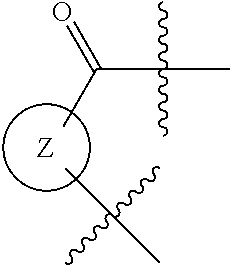
wherein Z is a monocyclic or bicyclic aryl or bicyclic heteroaryl ring. In one embodiment of the invention Z is a monocyclic aryl or monocyclic heteroaryl ring.


Schemes 5-8. Complementary, general strategies for the efficient and convergent synthesis of starting materials.
General Experimental Procedure for Each of the Key Classes of Reactions Used to Prepare the Starting Materials
General Procedure for Cadiot-Chodkiewicz Cross-Coupling of Two Alkynes.


Claims (6)
Priority Applications (1)
| Application Number | Priority Date | Filing Date | Title |
|---|---|---|---|
| US13/756,069 US9505789B2 (en) | 2012-01-31 | 2013-01-31 | Cyclization methods |
Applications Claiming Priority (2)
| Application Number | Priority Date | Filing Date | Title |
|---|---|---|---|
| US201261593127P | 2012-01-31 | 2012-01-31 | |
| US13/756,069 US9505789B2 (en) | 2012-01-31 | 2013-01-31 | Cyclization methods |
Publications (2)
| Publication Number | Publication Date |
|---|---|
| US20130197241A1 US20130197241A1 (en) | 2013-08-01 |
| US9505789B2 true US9505789B2 (en) | 2016-11-29 |
Family
ID=48870782
Family Applications (1)
| Application Number | Title | Priority Date | Filing Date |
|---|---|---|---|
| US13/756,069 Active 2034-06-01 US9505789B2 (en) | 2012-01-31 | 2013-01-31 | Cyclization methods |
Country Status (1)
| Country | Link |
|---|---|
| US (1) | US9505789B2 (en) |
Families Citing this family (1)
| Publication number | Priority date | Publication date | Assignee | Title |
|---|---|---|---|---|
| WO2018014028A1 (en) * | 2016-07-15 | 2018-01-18 | Regents Of The University Of Minnesota | Compounds and devices containing such compounds |
-
2013
- 2013-01-31 US US13/756,069 patent/US9505789B2/en active Active
Non-Patent Citations (42)
Also Published As
| Publication number | Publication date |
|---|---|
| US20130197241A1 (en) | 2013-08-01 |
Similar Documents
| Publication | Publication Date | Title |
|---|---|---|
| US20070037972A1 (en) | Method of acylating maytansinol with chiral amino acids | |
| US8067616B2 (en) | Total synthesis of salinosporamide A and analogs thereof | |
| EP0793497B1 (en) | Novel enediyne quinone imines and methods of preparation and use thereof | |
| Kirschning et al. | The chemistry and biology of the maytansinoid antitumor agents | |
| US20130197241A1 (en) | Cyclization methods | |
| Monleón et al. | Radical cyclisation of epoxynitrile-2-azetidinones mediated by Cp2TiCl | |
| US20080021093A1 (en) | Oxidation process with enhanced safety useful in the manufacture of Moxidectin | |
| US9994508B2 (en) | Versatile and functionalised intermediates for the synthesis of vitamin D and novel vitamin D derivatives | |
| US20050152913A1 (en) | Process for preapring maytansinol | |
| US10155777B2 (en) | Trans-cycloheptenes and hetero-trans-cycloheptenes for bioorthogonal coupling | |
| Hazato et al. | Synthesis of thiaprostaglandin E1 derivatives | |
| US7671219B2 (en) | Method for manufacturing fullerene derivatives | |
| US10995043B2 (en) | Method for producing perfluoroalkylated compound | |
| Maggiotti et al. | Asymmetric synthesis of aldol products derived from unsymmetrical ketones: assignment of the absolute configuration of antibody aldol products | |
| Lister et al. | Total synthesis of a hemiacetal polypropionate from Siphonaria australis | |
| Voute et al. | From one to two quaternary centers: Ester or nitrile α-alkylation applied to bioactive alkaloids | |
| WO2006088071A1 (en) | Process for producing compound with anti-hcv potency and intermediate for use therein | |
| US7485631B2 (en) | Phorboxazole compounds and methods of their preparation | |
| US9309259B2 (en) | Process for ixabepilone, and intermediates thereof | |
| US8030503B2 (en) | Process for the preparation of epothilones | |
| Yadav et al. | Indium-mediated allylation of heteroaryl, benzyl, and cinnamyl thiocyanates: A novel route for 3-(allylsulfanyl)-1 H-indoles | |
| US8410305B2 (en) | Intermediates and methods for the preparation of epothilones | |
| US10696703B2 (en) | Method for producing eushearlilides | |
| Pastor | Synthesis of Nucleoside-Based Antiprotozoan Compounds and Total Synthesis of Cylindricine C and its 2, 13-Di-epi Stereoisomer | |
| US20080281094A1 (en) | Regioselective Functionalisation and Protection of Spirolactams |
Legal Events
| Date | Code | Title | Description |
|---|---|---|---|
| AS | Assignment |
Owner name: REGENTS OF THE UNIVERSITY OF MINNESOTA, MINNESOTA Free format text: ASSIGNMENT OF ASSIGNORS INTEREST;ASSIGNOR:WILLOUGHBY, PATRICK H.;REEL/FRAME:032950/0156 Effective date: 20140514 |
|
| AS | Assignment |
Owner name: REGENTS OF THE UNIVERSITY OF MINNESOTA, MINNESOTA Free format text: ASSIGNMENT OF ASSIGNORS INTEREST;ASSIGNOR:WOODS, BRIAN P.;REEL/FRAME:032999/0875 Effective date: 20140516 |
|
| AS | Assignment |
Owner name: REGENTS OF THE UNIVERSITY OF MINNESOTA, MINNESOTA Free format text: ASSIGNMENT OF ASSIGNORS INTEREST;ASSIGNOR:HOYE, THOMAS R.;REEL/FRAME:033178/0804 Effective date: 20140612 |
|
| AS | Assignment |
Owner name: REGENTS OF THE UNIVERSITY OF MINNESOTA, MINNESOTA Free format text: ASSIGNMENT OF ASSIGNORS INTEREST;ASSIGNOR:NIU, DAWEN;REEL/FRAME:033700/0528 Effective date: 20140813 |
|
| AS | Assignment |
Owner name: NATIONAL INSTITUTES OF HEALTH (NIH), U.S. DEPT. OF Free format text: CONFIRMATORY LICENSE;ASSIGNOR:UNIVERSITY OF MINNESOTA;REEL/FRAME:035389/0856 Effective date: 20130213 |
|
| STCF | Information on status: patent grant |
Free format text: PATENTED CASE |
|
| CC | Certificate of correction | ||
| CC | Certificate of correction | ||
| MAFP | Maintenance fee payment |
Free format text: PAYMENT OF MAINTENANCE FEE, 4TH YR, SMALL ENTITY (ORIGINAL EVENT CODE: M2551); ENTITY STATUS OF PATENT OWNER: SMALL ENTITY Year of fee payment: 4 |
|
| MAFP | Maintenance fee payment |
Free format text: PAYMENT OF MAINTENANCE FEE, 8TH YR, SMALL ENTITY (ORIGINAL EVENT CODE: M2552); ENTITY STATUS OF PATENT OWNER: SMALL ENTITY Year of fee payment: 8 |
|
| AS | Assignment |
Owner name: REGENTS OF THE UNIVERSITY OF MINNESOTA, MINNESOTA Free format text: ASSIGNMENT OF ASSIGNORS INTEREST;ASSIGNOR:BAIRE, BEERAIAH;REEL/FRAME:068531/0395 Effective date: 20240905 |