US9505747B2 - Processes for preparing tubulysin derivatives and conjugates thereof - Google Patents
Processes for preparing tubulysin derivatives and conjugates thereof Download PDFInfo
- Publication number
- US9505747B2 US9505747B2 US14/388,311 US201314388311A US9505747B2 US 9505747 B2 US9505747 B2 US 9505747B2 US 201314388311 A US201314388311 A US 201314388311A US 9505747 B2 US9505747 B2 US 9505747B2
- Authority
- US
- United States
- Prior art keywords
- compound
- optionally substituted
- formula
- alkyl
- group
- Prior art date
- Legal status (The legal status is an assumption and is not a legal conclusion. Google has not performed a legal analysis and makes no representation as to the accuracy of the status listed.)
- Expired - Fee Related
Links
- 238000000034 method Methods 0.000 title claims abstract description 241
- 230000008569 process Effects 0.000 title claims abstract description 218
- DLKUYSQUHXBYPB-NSSHGSRYSA-N (2s,4r)-4-[[2-[(1r,3r)-1-acetyloxy-4-methyl-3-[3-methylbutanoyloxymethyl-[(2s,3s)-3-methyl-2-[[(2r)-1-methylpiperidine-2-carbonyl]amino]pentanoyl]amino]pentyl]-1,3-thiazole-4-carbonyl]amino]-2-methyl-5-(4-methylphenyl)pentanoic acid Chemical class N([C@@H]([C@@H](C)CC)C(=O)N(COC(=O)CC(C)C)[C@H](C[C@@H](OC(C)=O)C=1SC=C(N=1)C(=O)N[C@H](C[C@H](C)C(O)=O)CC=1C=CC(C)=CC=1)C(C)C)C(=O)[C@H]1CCCCN1C DLKUYSQUHXBYPB-NSSHGSRYSA-N 0.000 title abstract description 27
- 150000001875 compounds Chemical class 0.000 claims abstract description 405
- 125000000547 substituted alkyl group Chemical group 0.000 claims abstract description 104
- 125000005346 substituted cycloalkyl group Chemical group 0.000 claims abstract description 67
- RAXXELZNTBOGNW-UHFFFAOYSA-N imidazole Natural products C1=CNC=N1 RAXXELZNTBOGNW-UHFFFAOYSA-N 0.000 claims abstract description 51
- DCFKHNIGBAHNSS-UHFFFAOYSA-N chloro(triethyl)silane Chemical compound CC[Si](Cl)(CC)CC DCFKHNIGBAHNSS-UHFFFAOYSA-N 0.000 claims abstract description 44
- 239000003795 chemical substances by application Substances 0.000 claims abstract description 23
- 239000000010 aprotic solvent Substances 0.000 claims abstract description 22
- 125000000217 alkyl group Chemical group 0.000 claims description 97
- -1 arylheteroalkyl Chemical group 0.000 claims description 83
- 125000003118 aryl group Chemical group 0.000 claims description 56
- 125000003710 aryl alkyl group Chemical group 0.000 claims description 53
- 150000002148 esters Chemical class 0.000 claims description 53
- 125000000753 cycloalkyl group Chemical group 0.000 claims description 50
- 125000001072 heteroaryl group Chemical group 0.000 claims description 42
- 125000002496 methyl group Chemical group [H]C([H])([H])* 0.000 claims description 38
- 125000003342 alkenyl group Chemical group 0.000 claims description 36
- 125000003107 substituted aryl group Chemical group 0.000 claims description 35
- 125000004446 heteroarylalkyl group Chemical group 0.000 claims description 32
- 125000004404 heteroalkyl group Chemical group 0.000 claims description 30
- 229910052739 hydrogen Inorganic materials 0.000 claims description 30
- 125000001424 substituent group Chemical group 0.000 claims description 30
- 239000003153 chemical reaction reagent Substances 0.000 claims description 28
- 239000001257 hydrogen Substances 0.000 claims description 25
- 125000000304 alkynyl group Chemical group 0.000 claims description 23
- 125000000592 heterocycloalkyl group Chemical group 0.000 claims description 18
- 125000002887 hydroxy group Chemical group [H]O* 0.000 claims description 18
- 150000003839 salts Chemical class 0.000 claims description 17
- UFHFLCQGNIYNRP-UHFFFAOYSA-N Hydrogen Chemical compound [H][H] UFHFLCQGNIYNRP-UHFFFAOYSA-N 0.000 claims description 15
- 125000002924 primary amino group Chemical group [H]N([H])* 0.000 claims description 14
- 108090000604 Hydrolases Proteins 0.000 claims description 13
- 102000004157 Hydrolases Human genes 0.000 claims description 13
- 229910052799 carbon Inorganic materials 0.000 claims description 11
- XLYOFNOQVPJJNP-UHFFFAOYSA-M hydroxide Chemical compound [OH-] XLYOFNOQVPJJNP-UHFFFAOYSA-M 0.000 claims description 11
- 125000004108 n-butyl group Chemical group [H]C([H])([H])C([H])([H])C([H])([H])C([H])([H])* 0.000 claims description 11
- 238000004519 manufacturing process Methods 0.000 claims description 10
- 239000012453 solvate Substances 0.000 claims description 10
- 125000001188 haloalkyl group Chemical group 0.000 claims description 9
- KRHYYFGTRYWZRS-UHFFFAOYSA-M Fluoride anion Chemical compound [F-] KRHYYFGTRYWZRS-UHFFFAOYSA-M 0.000 claims description 8
- 150000001735 carboxylic acids Chemical class 0.000 claims description 8
- IQZPDFORWZTSKT-UHFFFAOYSA-N nitrosulphonic acid Chemical class OS(=O)(=O)[N+]([O-])=O IQZPDFORWZTSKT-UHFFFAOYSA-N 0.000 claims description 8
- 125000000446 sulfanediyl group Chemical group *S* 0.000 claims description 8
- 125000002837 carbocyclic group Chemical group 0.000 claims description 7
- 125000004432 carbon atom Chemical group C* 0.000 claims description 7
- 125000004435 hydrogen atom Chemical group [H]* 0.000 claims description 7
- 125000004203 4-hydroxyphenyl group Chemical group [H]OC1=C([H])C([H])=C(*)C([H])=C1[H] 0.000 claims description 6
- 125000001449 isopropyl group Chemical group [H]C([H])([H])C([H])(*)C([H])([H])[H] 0.000 claims description 6
- 125000004423 acyloxy group Chemical group 0.000 claims description 5
- 125000006242 amine protecting group Chemical group 0.000 claims description 3
- 125000001475 halogen functional group Chemical group 0.000 claims 2
- 229930184737 tubulysin Natural products 0.000 abstract description 66
- 239000000543 intermediate Substances 0.000 abstract description 49
- 102000035029 vitamin receptors Human genes 0.000 abstract description 7
- 108091005463 vitamin receptors Proteins 0.000 abstract description 7
- 0 [3*]C(CC(C[Ar])NC(=O)C1=CSC(C(CC([5*])N(C)C(=O)C([6*])CC(=O)C2CCN2[7*])OC([4*])=O)=N1)C(=O)CNC(=O)O*SS[Ar].[Ar] Chemical compound [3*]C(CC(C[Ar])NC(=O)C1=CSC(C(CC([5*])N(C)C(=O)C([6*])CC(=O)C2CCN2[7*])OC([4*])=O)=N1)C(=O)CNC(=O)O*SS[Ar].[Ar] 0.000 description 169
- YMWUJEATGCHHMB-UHFFFAOYSA-N Dichloromethane Chemical compound ClCCl YMWUJEATGCHHMB-UHFFFAOYSA-N 0.000 description 109
- 239000000243 solution Substances 0.000 description 97
- XEKOWRVHYACXOJ-UHFFFAOYSA-N Ethyl acetate Chemical compound CCOC(C)=O XEKOWRVHYACXOJ-UHFFFAOYSA-N 0.000 description 94
- WEVYAHXRMPXWCK-UHFFFAOYSA-N Acetonitrile Chemical compound CC#N WEVYAHXRMPXWCK-UHFFFAOYSA-N 0.000 description 75
- 238000006243 chemical reaction Methods 0.000 description 73
- 239000011541 reaction mixture Substances 0.000 description 73
- XKRFYHLGVUSROY-UHFFFAOYSA-N Argon Chemical compound [Ar] XKRFYHLGVUSROY-UHFFFAOYSA-N 0.000 description 66
- 239000000047 product Substances 0.000 description 60
- 238000004895 liquid chromatography mass spectrometry Methods 0.000 description 55
- OKKJLVBELUTLKV-UHFFFAOYSA-N Methanol Chemical compound OC OKKJLVBELUTLKV-UHFFFAOYSA-N 0.000 description 53
- 230000002829 reductive effect Effects 0.000 description 53
- DTQVDTLACAAQTR-UHFFFAOYSA-N Trifluoroacetic acid Chemical group OC(=O)C(F)(F)F DTQVDTLACAAQTR-UHFFFAOYSA-N 0.000 description 50
- 239000000203 mixture Substances 0.000 description 50
- YXFVVABEGXRONW-UHFFFAOYSA-N Toluene Chemical compound CC1=CC=CC=C1 YXFVVABEGXRONW-UHFFFAOYSA-N 0.000 description 49
- RTZKZFJDLAIYFH-UHFFFAOYSA-N ether Substances CCOCC RTZKZFJDLAIYFH-UHFFFAOYSA-N 0.000 description 49
- VYPSYNLAJGMNEJ-UHFFFAOYSA-N Silicium dioxide Chemical compound O=[Si]=O VYPSYNLAJGMNEJ-UHFFFAOYSA-N 0.000 description 46
- 235000019439 ethyl acetate Nutrition 0.000 description 45
- ZMXDDKWLCZADIW-UHFFFAOYSA-N N,N-Dimethylformamide Chemical compound CN(C)C=O ZMXDDKWLCZADIW-UHFFFAOYSA-N 0.000 description 38
- OKKJLVBELUTLKV-MZCSYVLQSA-N Deuterated methanol Chemical compound [2H]OC([2H])([2H])[2H] OKKJLVBELUTLKV-MZCSYVLQSA-N 0.000 description 34
- 230000015572 biosynthetic process Effects 0.000 description 34
- 239000003054 catalyst Substances 0.000 description 34
- 229910052786 argon Inorganic materials 0.000 description 33
- SECXISVLQFMRJM-UHFFFAOYSA-N N-Methylpyrrolidone Chemical compound CN1CCCC1=O SECXISVLQFMRJM-UHFFFAOYSA-N 0.000 description 32
- HEDRZPFGACZZDS-MICDWDOJSA-N Trichloro(2H)methane Chemical compound [2H]C(Cl)(Cl)Cl HEDRZPFGACZZDS-MICDWDOJSA-N 0.000 description 32
- 238000005809 transesterification reaction Methods 0.000 description 31
- WYURNTSHIVDZCO-UHFFFAOYSA-N Tetrahydrofuran Chemical compound C1CCOC1 WYURNTSHIVDZCO-UHFFFAOYSA-N 0.000 description 30
- IZUPBVBPLAPZRR-UHFFFAOYSA-N pentachloro-phenol Natural products OC1=C(Cl)C(Cl)=C(Cl)C(Cl)=C1Cl IZUPBVBPLAPZRR-UHFFFAOYSA-N 0.000 description 30
- 239000012043 crude product Substances 0.000 description 29
- 239000002904 solvent Substances 0.000 description 29
- 238000003786 synthesis reaction Methods 0.000 description 29
- PMZURENOXWZQFD-UHFFFAOYSA-L Sodium Sulfate Chemical compound [Na+].[Na+].[O-]S([O-])(=O)=O PMZURENOXWZQFD-UHFFFAOYSA-L 0.000 description 27
- XLYOFNOQVPJJNP-UHFFFAOYSA-N water Substances O XLYOFNOQVPJJNP-UHFFFAOYSA-N 0.000 description 27
- XBNGYFFABRKICK-UHFFFAOYSA-N 2,3,4,5,6-pentafluorophenol Chemical compound OC1=C(F)C(F)=C(F)C(F)=C1F XBNGYFFABRKICK-UHFFFAOYSA-N 0.000 description 26
- 239000007832 Na2SO4 Substances 0.000 description 26
- 229910052938 sodium sulfate Inorganic materials 0.000 description 26
- 125000001997 phenyl group Chemical group [H]C1=C([H])C([H])=C(*)C([H])=C1[H] 0.000 description 25
- JGFZNNIVVJXRND-UHFFFAOYSA-N N,N-Diisopropylethylamine (DIPEA) Chemical compound CCN(C(C)C)C(C)C JGFZNNIVVJXRND-UHFFFAOYSA-N 0.000 description 24
- 239000007858 starting material Substances 0.000 description 24
- 229910001868 water Inorganic materials 0.000 description 23
- WFDIJRYMOXRFFG-UHFFFAOYSA-N Acetic anhydride Chemical compound CC(=O)OC(C)=O WFDIJRYMOXRFFG-UHFFFAOYSA-N 0.000 description 22
- 239000012267 brine Substances 0.000 description 22
- HPALAKNZSZLMCH-UHFFFAOYSA-M sodium;chloride;hydrate Chemical compound O.[Na+].[Cl-] HPALAKNZSZLMCH-UHFFFAOYSA-M 0.000 description 22
- 238000005160 1H NMR spectroscopy Methods 0.000 description 21
- 108010016626 Dipeptides Proteins 0.000 description 21
- JUJWROOIHBZHMG-UHFFFAOYSA-N Pyridine Chemical compound C1=CC=NC=C1 JUJWROOIHBZHMG-UHFFFAOYSA-N 0.000 description 21
- 239000002253 acid Substances 0.000 description 19
- FAPWRFPIFSIZLT-UHFFFAOYSA-M Sodium chloride Chemical compound [Na+].[Cl-] FAPWRFPIFSIZLT-UHFFFAOYSA-M 0.000 description 18
- 239000003208 petroleum Substances 0.000 description 18
- 229940002612 prodrug Drugs 0.000 description 18
- 239000000651 prodrug Substances 0.000 description 18
- UIIMBOGNXHQVGW-UHFFFAOYSA-M Sodium bicarbonate Chemical compound [Na+].OC([O-])=O UIIMBOGNXHQVGW-UHFFFAOYSA-M 0.000 description 17
- 238000004458 analytical method Methods 0.000 description 17
- 239000000377 silicon dioxide Substances 0.000 description 17
- IAZDPXIOMUYVGZ-UHFFFAOYSA-N Dimethylsulphoxide Chemical compound CS(C)=O IAZDPXIOMUYVGZ-UHFFFAOYSA-N 0.000 description 16
- 239000000872 buffer Substances 0.000 description 16
- 239000011347 resin Substances 0.000 description 15
- 229920005989 resin Polymers 0.000 description 15
- YLQBMQCUIZJEEH-UHFFFAOYSA-N tetrahydrofuran Natural products C=1C=COC=1 YLQBMQCUIZJEEH-UHFFFAOYSA-N 0.000 description 15
- 125000004169 (C1-C6) alkyl group Chemical group 0.000 description 14
- 238000001644 13C nuclear magnetic resonance spectroscopy Methods 0.000 description 14
- 125000005843 halogen group Chemical group 0.000 description 14
- KDLHZDBZIXYQEI-UHFFFAOYSA-N Palladium Chemical compound [Pd] KDLHZDBZIXYQEI-UHFFFAOYSA-N 0.000 description 13
- 238000002953 preparative HPLC Methods 0.000 description 13
- 238000004128 high performance liquid chromatography Methods 0.000 description 12
- IUBQJLUDMLPAGT-UHFFFAOYSA-N potassium bis(trimethylsilyl)amide Chemical compound C[Si](C)(C)N([K])[Si](C)(C)C IUBQJLUDMLPAGT-UHFFFAOYSA-N 0.000 description 12
- 238000000746 purification Methods 0.000 description 12
- 239000007787 solid Substances 0.000 description 12
- 239000006227 byproduct Substances 0.000 description 11
- 239000000706 filtrate Substances 0.000 description 11
- 239000012044 organic layer Substances 0.000 description 11
- 239000012074 organic phase Substances 0.000 description 11
- UMJSCPRVCHMLSP-UHFFFAOYSA-N pyridine Natural products COC1=CC=CN=C1 UMJSCPRVCHMLSP-UHFFFAOYSA-N 0.000 description 11
- BVKZGUZCCUSVTD-UHFFFAOYSA-L Carbonate Chemical compound [O-]C([O-])=O BVKZGUZCCUSVTD-UHFFFAOYSA-L 0.000 description 10
- LFQSCWFLJHTTHZ-UHFFFAOYSA-N Ethanol Chemical compound CCO LFQSCWFLJHTTHZ-UHFFFAOYSA-N 0.000 description 10
- 229910021626 Tin(II) chloride Inorganic materials 0.000 description 10
- 125000004123 n-propyl group Chemical group [H]C([H])([H])C([H])([H])C([H])([H])* 0.000 description 10
- RYHBNJHYFVUHQT-UHFFFAOYSA-N 1,4-Dioxane Chemical compound C1COCCO1 RYHBNJHYFVUHQT-UHFFFAOYSA-N 0.000 description 9
- KWYUFKZDYYNOTN-UHFFFAOYSA-M Potassium hydroxide Chemical compound [OH-].[K+] KWYUFKZDYYNOTN-UHFFFAOYSA-M 0.000 description 9
- HEMHJVSKTPXQMS-UHFFFAOYSA-M Sodium hydroxide Chemical compound [OH-].[Na+] HEMHJVSKTPXQMS-UHFFFAOYSA-M 0.000 description 9
- ZMANZCXQSJIPKH-UHFFFAOYSA-N Triethylamine Chemical compound CCN(CC)CC ZMANZCXQSJIPKH-UHFFFAOYSA-N 0.000 description 9
- 125000000392 cycloalkenyl group Chemical group 0.000 description 9
- 150000002170 ethers Chemical class 0.000 description 9
- 239000011780 sodium chloride Substances 0.000 description 9
- WMFOQBRAJBCJND-UHFFFAOYSA-M Lithium hydroxide Chemical compound [Li+].[OH-] WMFOQBRAJBCJND-UHFFFAOYSA-M 0.000 description 8
- AMQJEAYHLZJPGS-UHFFFAOYSA-N N-Pentanol Chemical compound CCCCCO AMQJEAYHLZJPGS-UHFFFAOYSA-N 0.000 description 8
- CDBYLPFSWZWCQE-UHFFFAOYSA-L Sodium Carbonate Chemical compound [Na+].[Na+].[O-]C([O-])=O CDBYLPFSWZWCQE-UHFFFAOYSA-L 0.000 description 8
- 238000004587 chromatography analysis Methods 0.000 description 8
- KPUWHANPEXNPJT-UHFFFAOYSA-N disiloxane Chemical compound [SiH3]O[SiH3] KPUWHANPEXNPJT-UHFFFAOYSA-N 0.000 description 8
- 125000001495 ethyl group Chemical group [H]C([H])([H])C([H])([H])* 0.000 description 8
- 238000005984 hydrogenation reaction Methods 0.000 description 8
- 125000000959 isobutyl group Chemical group [H]C([H])([H])C([H])(C([H])([H])[H])C([H])([H])* 0.000 description 8
- 150000004702 methyl esters Chemical class 0.000 description 8
- VLKZOEOYAKHREP-UHFFFAOYSA-N n-Hexane Chemical class CCCCCC VLKZOEOYAKHREP-UHFFFAOYSA-N 0.000 description 8
- 239000000725 suspension Substances 0.000 description 8
- BDNKZNFMNDZQMI-UHFFFAOYSA-N 1,3-diisopropylcarbodiimide Chemical compound CC(C)N=C=NC(C)C BDNKZNFMNDZQMI-UHFFFAOYSA-N 0.000 description 7
- 125000000094 2-phenylethyl group Chemical group [H]C1=C([H])C([H])=C(C([H])=C1[H])C([H])([H])C([H])([H])* 0.000 description 7
- 125000000882 C2-C6 alkenyl group Chemical group 0.000 description 7
- 108090000371 Esterases Proteins 0.000 description 7
- BZLVMXJERCGZMT-UHFFFAOYSA-N Methyl tert-butyl ether Chemical compound COC(C)(C)C BZLVMXJERCGZMT-UHFFFAOYSA-N 0.000 description 7
- 125000001797 benzyl group Chemical group [H]C1=C([H])C([H])=C(C([H])=C1[H])C([H])([H])* 0.000 description 7
- 239000003814 drug Substances 0.000 description 7
- 125000000524 functional group Chemical group 0.000 description 7
- 125000005842 heteroatom Chemical group 0.000 description 7
- 229910052760 oxygen Inorganic materials 0.000 description 7
- 229910000030 sodium bicarbonate Inorganic materials 0.000 description 7
- 108010061146 tubulysin B Proteins 0.000 description 7
- HWCIETDQUHYHGQ-UHFFFAOYSA-N tubulysin B Natural products C1CCCN(C)C1C(=O)NC(C(C)CC)C(=O)N(COC(=O)CCC)C(C(C)C)CC(OC(C)=O)C(SC=1)=NC=1C(=O)NC(CC(C)C(O)=O)CC1=CC=C(O)C=C1 HWCIETDQUHYHGQ-UHFFFAOYSA-N 0.000 description 7
- 125000004178 (C1-C4) alkyl group Chemical group 0.000 description 6
- VHYFNPMBLIVWCW-UHFFFAOYSA-N 4-Dimethylaminopyridine Chemical compound CN(C)C1=CC=NC=C1 VHYFNPMBLIVWCW-UHFFFAOYSA-N 0.000 description 6
- DDMSBJFGJBUTOY-UHFFFAOYSA-N C.CC.CC.CC1=CC=CC=C1.CC1=CC=CC=C1.CCC Chemical compound C.CC.CC.CC1=CC=CC=C1.CC1=CC=CC=C1.CCC DDMSBJFGJBUTOY-UHFFFAOYSA-N 0.000 description 6
- VTYYLEPIZMXCLO-UHFFFAOYSA-L Calcium carbonate Chemical compound [Ca+2].[O-]C([O-])=O VTYYLEPIZMXCLO-UHFFFAOYSA-L 0.000 description 6
- XSQUKJJJFZCRTK-UHFFFAOYSA-N Urea Chemical compound NC(N)=O XSQUKJJJFZCRTK-UHFFFAOYSA-N 0.000 description 6
- BDPZFQLKFUONAG-UHFFFAOYSA-N chloromethyl butanoate Chemical compound CCCC(=O)OCCl BDPZFQLKFUONAG-UHFFFAOYSA-N 0.000 description 6
- 125000004122 cyclic group Chemical group 0.000 description 6
- BGRWYRAHAFMIBJ-UHFFFAOYSA-N diisopropylcarbodiimide Natural products CC(C)NC(=O)NC(C)C BGRWYRAHAFMIBJ-UHFFFAOYSA-N 0.000 description 6
- BWHMMNNQKKPAPP-UHFFFAOYSA-L potassium carbonate Chemical compound [K+].[K+].[O-]C([O-])=O BWHMMNNQKKPAPP-UHFFFAOYSA-L 0.000 description 6
- 125000006239 protecting group Chemical group 0.000 description 6
- 238000003756 stirring Methods 0.000 description 6
- 125000003396 thiol group Chemical group [H]S* 0.000 description 6
- 125000006552 (C3-C8) cycloalkyl group Chemical group 0.000 description 5
- WSLDOOZREJYCGB-UHFFFAOYSA-N 1,2-Dichloroethane Chemical compound ClCCCl WSLDOOZREJYCGB-UHFFFAOYSA-N 0.000 description 5
- QTBSBXVTEAMEQO-UHFFFAOYSA-N Acetic acid Chemical compound CC(O)=O QTBSBXVTEAMEQO-UHFFFAOYSA-N 0.000 description 5
- USFZMSVCRYTOJT-UHFFFAOYSA-N Ammonium acetate Chemical compound N.CC(O)=O USFZMSVCRYTOJT-UHFFFAOYSA-N 0.000 description 5
- 102000004190 Enzymes Human genes 0.000 description 5
- 108090000790 Enzymes Proteins 0.000 description 5
- 101000610640 Homo sapiens U4/U6 small nuclear ribonucleoprotein Prp3 Proteins 0.000 description 5
- LRHPLDYGYMQRHN-UHFFFAOYSA-N N-Butanol Chemical compound CCCCO LRHPLDYGYMQRHN-UHFFFAOYSA-N 0.000 description 5
- 229910019142 PO4 Inorganic materials 0.000 description 5
- 101001110823 Saccharomyces cerevisiae (strain ATCC 204508 / S288c) 60S ribosomal protein L6-A Proteins 0.000 description 5
- 101000712176 Saccharomyces cerevisiae (strain ATCC 204508 / S288c) 60S ribosomal protein L6-B Proteins 0.000 description 5
- 102100040374 U4/U6 small nuclear ribonucleoprotein Prp3 Human genes 0.000 description 5
- TUEIURIZJQRMQE-UHFFFAOYSA-N [2-(tert-butylsulfamoyl)phenyl]boronic acid Chemical compound CC(C)(C)NS(=O)(=O)C1=CC=CC=C1B(O)O TUEIURIZJQRMQE-UHFFFAOYSA-N 0.000 description 5
- 230000003213 activating effect Effects 0.000 description 5
- 150000008064 anhydrides Chemical class 0.000 description 5
- 125000001589 carboacyl group Chemical group 0.000 description 5
- 239000008367 deionised water Substances 0.000 description 5
- 238000010511 deprotection reaction Methods 0.000 description 5
- 229940079593 drug Drugs 0.000 description 5
- 239000002024 ethyl acetate extract Substances 0.000 description 5
- 159000000011 group IA salts Chemical class 0.000 description 5
- 229910052736 halogen Inorganic materials 0.000 description 5
- 150000002431 hydrogen Chemical group 0.000 description 5
- 125000000654 isopropylidene group Chemical group C(C)(C)=* 0.000 description 5
- 229910000000 metal hydroxide Inorganic materials 0.000 description 5
- 150000004692 metal hydroxides Chemical class 0.000 description 5
- NBIIXXVUZAFLBC-UHFFFAOYSA-K phosphate Chemical compound [O-]P([O-])([O-])=O NBIIXXVUZAFLBC-UHFFFAOYSA-K 0.000 description 5
- 239000010452 phosphate Substances 0.000 description 5
- 238000002360 preparation method Methods 0.000 description 5
- 125000002914 sec-butyl group Chemical group [H]C([H])([H])C([H])([H])C([H])(*)C([H])([H])[H] 0.000 description 5
- 230000003595 spectral effect Effects 0.000 description 5
- 150000003573 thiols Chemical class 0.000 description 5
- 125000006656 (C2-C4) alkenyl group Chemical group 0.000 description 4
- KAKOUNRRKSHVJO-UHFFFAOYSA-N *.*.CC.CC1=CC=CC=C1 Chemical compound *.*.CC.CC1=CC=CC=C1 KAKOUNRRKSHVJO-UHFFFAOYSA-N 0.000 description 4
- JDIIGWSSTNUWGK-UHFFFAOYSA-N 1h-imidazol-3-ium;chloride Chemical class [Cl-].[NH2+]1C=CN=C1 JDIIGWSSTNUWGK-UHFFFAOYSA-N 0.000 description 4
- IJGRMHOSHXDMSA-UHFFFAOYSA-N Atomic nitrogen Chemical compound N#N IJGRMHOSHXDMSA-UHFFFAOYSA-N 0.000 description 4
- OKTJSMMVPCPJKN-UHFFFAOYSA-N Carbon Chemical compound [C] OKTJSMMVPCPJKN-UHFFFAOYSA-N 0.000 description 4
- OAKJQQAXSVQMHS-UHFFFAOYSA-N Hydrazine Chemical compound NN OAKJQQAXSVQMHS-UHFFFAOYSA-N 0.000 description 4
- HWCIETDQUHYHGQ-YHVCZDCZSA-N Tubulysin B Chemical compound C([C@@H](C[C@H](C)C(O)=O)NC(=O)C=1N=C(SC=1)[C@H](OC(C)=O)C[C@@H](N(COC(=O)CCC)C(=O)[C@@H](NC(=O)[C@@H]1N(CCCC1)C)[C@@H](C)CC)C(C)C)C1=CC=C(O)C=C1 HWCIETDQUHYHGQ-YHVCZDCZSA-N 0.000 description 4
- 125000002252 acyl group Chemical group 0.000 description 4
- 150000001408 amides Chemical class 0.000 description 4
- 125000004103 aminoalkyl group Chemical group 0.000 description 4
- 239000007864 aqueous solution Substances 0.000 description 4
- OWIUPIRUAQMTTK-UHFFFAOYSA-N carbazic acid Chemical compound NNC(O)=O OWIUPIRUAQMTTK-UHFFFAOYSA-N 0.000 description 4
- 210000004027 cell Anatomy 0.000 description 4
- 238000001704 evaporation Methods 0.000 description 4
- 238000001727 in vivo Methods 0.000 description 4
- 210000004185 liver Anatomy 0.000 description 4
- 229910052751 metal Inorganic materials 0.000 description 4
- 239000002184 metal Substances 0.000 description 4
- 125000000740 n-pentyl group Chemical group [H]C([H])([H])C([H])([H])C([H])([H])C([H])([H])C([H])([H])* 0.000 description 4
- 229910052757 nitrogen Inorganic materials 0.000 description 4
- 239000008363 phosphate buffer Substances 0.000 description 4
- 125000004076 pyridyl group Chemical group 0.000 description 4
- 230000035484 reaction time Effects 0.000 description 4
- 230000008707 rearrangement Effects 0.000 description 4
- 229910000029 sodium carbonate Inorganic materials 0.000 description 4
- MFUGDMCMTPUQPX-KUIZGTAOSA-N (2s)-2-[[4-[(2-amino-4-oxo-1h-pteridin-6-yl)methylamino]benzoyl]amino]-5-[[(2s)-1-[[(2s)-4-carboxy-1-[[(2s)-1-[[(2s)-4-carboxy-1-[[(2s)-1-[[(1r)-1-carboxy-2-sulfanylethyl]amino]-1,5-dioxo-5-[[(2s,3r,4r,5r)-2,3,4,5,6-pentahydroxyhexyl]amino]pentan-2-yl]ami Chemical compound C=1N=C2NC(N)=NC(=O)C2=NC=1CNC1=CC=C(C(=O)N[C@@H](CCC(=O)N[C@@H](CCC(=O)NC[C@H](O)[C@@H](O)[C@H](O)[C@H](O)CO)C(=O)N[C@@H](CCC(O)=O)C(=O)N[C@@H](CCC(=O)NC[C@H](O)[C@@H](O)[C@H](O)[C@H](O)CO)C(=O)N[C@@H](CCC(O)=O)C(=O)N[C@@H](CCC(=O)NC[C@H](O)[C@@H](O)[C@H](O)[C@H](O)CO)C(=O)N[C@@H](CS)C(O)=O)C(O)=O)C=C1 MFUGDMCMTPUQPX-KUIZGTAOSA-N 0.000 description 3
- PCLMSUBZTGCHQT-WCBMZHEXSA-N (2s,4r)-4-amino-5-(4-hydroxyphenyl)-2-methylpentanoic acid Chemical compound OC(=O)[C@@H](C)C[C@@H](N)CC1=CC=C(O)C=C1 PCLMSUBZTGCHQT-WCBMZHEXSA-N 0.000 description 3
- 125000006273 (C1-C3) alkyl group Chemical group 0.000 description 3
- 125000006274 (C1-C3)alkoxy group Chemical group 0.000 description 3
- 125000005913 (C3-C6) cycloalkyl group Chemical group 0.000 description 3
- 125000003088 (fluoren-9-ylmethoxy)carbonyl group Chemical group 0.000 description 3
- 125000004105 2-pyridyl group Chemical group N1=C([*])C([H])=C([H])C([H])=C1[H] 0.000 description 3
- WVDDGKGOMKODPV-UHFFFAOYSA-N Benzyl alcohol Chemical compound OCC1=CC=CC=C1 WVDDGKGOMKODPV-UHFFFAOYSA-N 0.000 description 3
- WSFSSNUMVMOOMR-UHFFFAOYSA-N Formaldehyde Chemical compound O=C WSFSSNUMVMOOMR-UHFFFAOYSA-N 0.000 description 3
- 238000005481 NMR spectroscopy Methods 0.000 description 3
- 125000002777 acetyl group Chemical group [H]C([H])([H])C(*)=O 0.000 description 3
- 125000004442 acylamino group Chemical group 0.000 description 3
- 150000001412 amines Chemical class 0.000 description 3
- 229940024606 amino acid Drugs 0.000 description 3
- 150000001413 amino acids Chemical class 0.000 description 3
- 239000008346 aqueous phase Substances 0.000 description 3
- 125000006615 aromatic heterocyclic group Chemical group 0.000 description 3
- 125000003435 aroyl group Chemical group 0.000 description 3
- QVGXLLKOCUKJST-UHFFFAOYSA-N atomic oxygen Chemical compound [O] QVGXLLKOCUKJST-UHFFFAOYSA-N 0.000 description 3
- 229910000019 calcium carbonate Inorganic materials 0.000 description 3
- AXCZMVOFGPJBDE-UHFFFAOYSA-L calcium dihydroxide Chemical compound [OH-].[OH-].[Ca+2] AXCZMVOFGPJBDE-UHFFFAOYSA-L 0.000 description 3
- 239000000920 calcium hydroxide Substances 0.000 description 3
- 229910001861 calcium hydroxide Inorganic materials 0.000 description 3
- 239000004202 carbamide Substances 0.000 description 3
- 150000001718 carbodiimides Chemical class 0.000 description 3
- 150000001721 carbon Chemical group 0.000 description 3
- 230000003197 catalytic effect Effects 0.000 description 3
- 150000001768 cations Chemical class 0.000 description 3
- 238000011097 chromatography purification Methods 0.000 description 3
- 238000003776 cleavage reaction Methods 0.000 description 3
- 230000008878 coupling Effects 0.000 description 3
- 238000010168 coupling process Methods 0.000 description 3
- 238000005859 coupling reaction Methods 0.000 description 3
- 125000004093 cyano group Chemical group *C#N 0.000 description 3
- 125000000000 cycloalkoxy group Chemical group 0.000 description 3
- 125000001559 cyclopropyl group Chemical group [H]C1([H])C([H])([H])C1([H])* 0.000 description 3
- 238000006345 epimerization reaction Methods 0.000 description 3
- 125000001033 ether group Chemical group 0.000 description 3
- 238000001914 filtration Methods 0.000 description 3
- 239000011521 glass Substances 0.000 description 3
- PCHJSUWPFVWCPO-UHFFFAOYSA-N gold Chemical compound [Au] PCHJSUWPFVWCPO-UHFFFAOYSA-N 0.000 description 3
- 239000010931 gold Substances 0.000 description 3
- 229910052737 gold Inorganic materials 0.000 description 3
- 150000004677 hydrates Chemical class 0.000 description 3
- XGZVUEUWXADBQD-UHFFFAOYSA-L lithium carbonate Chemical compound [Li+].[Li+].[O-]C([O-])=O XGZVUEUWXADBQD-UHFFFAOYSA-L 0.000 description 3
- 229910052808 lithium carbonate Inorganic materials 0.000 description 3
- 239000001095 magnesium carbonate Substances 0.000 description 3
- ZLNQQNXFFQJAID-UHFFFAOYSA-L magnesium carbonate Chemical compound [Mg+2].[O-]C([O-])=O ZLNQQNXFFQJAID-UHFFFAOYSA-L 0.000 description 3
- 229910000021 magnesium carbonate Inorganic materials 0.000 description 3
- VTHJTEIRLNZDEV-UHFFFAOYSA-L magnesium dihydroxide Chemical compound [OH-].[OH-].[Mg+2] VTHJTEIRLNZDEV-UHFFFAOYSA-L 0.000 description 3
- 239000000347 magnesium hydroxide Substances 0.000 description 3
- 229910001862 magnesium hydroxide Inorganic materials 0.000 description 3
- 230000000877 morphologic effect Effects 0.000 description 3
- 239000003960 organic solvent Substances 0.000 description 3
- 239000001301 oxygen Substances 0.000 description 3
- 229910000027 potassium carbonate Inorganic materials 0.000 description 3
- 230000003389 potentiating effect Effects 0.000 description 3
- 239000002244 precipitate Substances 0.000 description 3
- 230000002441 reversible effect Effects 0.000 description 3
- 230000007017 scission Effects 0.000 description 3
- 239000012064 sodium phosphate buffer Substances 0.000 description 3
- 239000000126 substance Substances 0.000 description 3
- 229910052717 sulfur Inorganic materials 0.000 description 3
- DGVVWUTYPXICAM-UHFFFAOYSA-N β‐Mercaptoethanol Chemical compound OCCS DGVVWUTYPXICAM-UHFFFAOYSA-N 0.000 description 3
- QEWLAXQBHYLUSH-VGMNWLOBSA-N (2s)-1-[(2s,4r)-1-(2-aminoacetyl)-4-hydroxypyrrolidine-2-carbonyl]pyrrolidine-2-carboxylic acid Chemical compound NCC(=O)N1C[C@H](O)C[C@H]1C(=O)N1[C@H](C(O)=O)CCC1 QEWLAXQBHYLUSH-VGMNWLOBSA-N 0.000 description 2
- OTKXCALUHMPIGM-FQEVSTJZSA-N (2s)-2-(9h-fluoren-9-ylmethoxycarbonylamino)-5-[(2-methylpropan-2-yl)oxy]-5-oxopentanoic acid Chemical compound C1=CC=C2C(COC(=O)N[C@@H](CCC(=O)OC(C)(C)C)C(O)=O)C3=CC=CC=C3C2=C1 OTKXCALUHMPIGM-FQEVSTJZSA-N 0.000 description 2
- LJIOTBMDLVHTBO-CUYJMHBOSA-N (2s)-2-amino-n-[(1r,2r)-1-cyano-2-[4-[4-(4-methylpiperazin-1-yl)sulfonylphenyl]phenyl]cyclopropyl]butanamide Chemical group CC[C@H](N)C(=O)N[C@]1(C#N)C[C@@H]1C1=CC=C(C=2C=CC(=CC=2)S(=O)(=O)N2CCN(C)CC2)C=C1 LJIOTBMDLVHTBO-CUYJMHBOSA-N 0.000 description 2
- NXLNNXIXOYSCMB-UHFFFAOYSA-N (4-nitrophenyl) carbonochloridate Chemical compound [O-][N+](=O)C1=CC=C(OC(Cl)=O)C=C1 NXLNNXIXOYSCMB-UHFFFAOYSA-N 0.000 description 2
- VUDZSIYXZUYWSC-DBRKOABJSA-N (4r)-1-[(2r,4r,5r)-3,3-difluoro-4-hydroxy-5-(hydroxymethyl)oxolan-2-yl]-4-hydroxy-1,3-diazinan-2-one Chemical compound FC1(F)[C@H](O)[C@@H](CO)O[C@H]1N1C(=O)N[C@H](O)CC1 VUDZSIYXZUYWSC-DBRKOABJSA-N 0.000 description 2
- TVHNWAKCVXFPNB-HCCKASOXSA-N (4r)-4-amino-2-methyl-5-phenylpentanoic acid Chemical group OC(=O)C(C)C[C@@H](N)CC1=CC=CC=C1 TVHNWAKCVXFPNB-HCCKASOXSA-N 0.000 description 2
- 125000004209 (C1-C8) alkyl group Chemical group 0.000 description 2
- OXMIDRBAFOEOQT-UHFFFAOYSA-N 2,5-dimethyloxolane Chemical compound CC1CCC(C)O1 OXMIDRBAFOEOQT-UHFFFAOYSA-N 0.000 description 2
- OISVCGZHLKNMSJ-UHFFFAOYSA-N 2,6-dimethylpyridine Chemical compound CC1=CC=CC(C)=N1 OISVCGZHLKNMSJ-UHFFFAOYSA-N 0.000 description 2
- 125000003903 2-propenyl group Chemical group [H]C([*])([H])C([H])=C([H])[H] 0.000 description 2
- 229960000549 4-dimethylaminophenol Drugs 0.000 description 2
- ATRRKUHOCOJYRX-UHFFFAOYSA-N Ammonium bicarbonate Chemical compound [NH4+].OC([O-])=O ATRRKUHOCOJYRX-UHFFFAOYSA-N 0.000 description 2
- 229910000013 Ammonium bicarbonate Inorganic materials 0.000 description 2
- LSNNMFCWUKXFEE-UHFFFAOYSA-M Bisulfite Chemical compound OS([O-])=O LSNNMFCWUKXFEE-UHFFFAOYSA-M 0.000 description 2
- VQSWBLBGEIRZAM-VFMKGFAKSA-N C=CCOCN(C(=O)[C@@H](NC(=O)[C@H]1CCCCN1C)[C@@H](C)CC)[C@H](C[C@@H](O)C1=NC(C(=O)O)=CS1)C(C)C Chemical compound C=CCOCN(C(=O)[C@@H](NC(=O)[C@H]1CCCCN1C)[C@@H](C)CC)[C@H](C[C@@H](O)C1=NC(C(=O)O)=CS1)C(C)C VQSWBLBGEIRZAM-VFMKGFAKSA-N 0.000 description 2
- RCGWSJRDRDOHGD-VFDWWEJVSA-N C=CCOCN(C(=O)[C@@H](NC(=O)[C@H]1CCCCN1C)[C@@H](C)CC)[C@H](C[C@@H](OC(C)=O)C1=NC(C(=O)O)=CS1)C(C)C Chemical compound C=CCOCN(C(=O)[C@@H](NC(=O)[C@H]1CCCCN1C)[C@@H](C)CC)[C@H](C[C@@H](OC(C)=O)C1=NC(C(=O)O)=CS1)C(C)C RCGWSJRDRDOHGD-VFDWWEJVSA-N 0.000 description 2
- XHEUMRMUHQBLHM-RMVRORSKSA-N CCCC(=O)OCN(C(=O)[C@@H](CC(=O)C1CCCCN1C)[C@@H](C)CC)[C@H](C[C@@H](C)C1=NC(C(=O)O)=CS1)C(C)C.CCCC(=O)OCN(C(=O)[C@@H](CC(=O)C1CCCCN1C)[C@@H](C)CC)[C@H](C[C@@H](C)C1=NC(C(=O)OC)=CS1)C(C)C Chemical compound CCCC(=O)OCN(C(=O)[C@@H](CC(=O)C1CCCCN1C)[C@@H](C)CC)[C@H](C[C@@H](C)C1=NC(C(=O)O)=CS1)C(C)C.CCCC(=O)OCN(C(=O)[C@@H](CC(=O)C1CCCCN1C)[C@@H](C)CC)[C@H](C[C@@H](C)C1=NC(C(=O)OC)=CS1)C(C)C XHEUMRMUHQBLHM-RMVRORSKSA-N 0.000 description 2
- GQESFXKLCRAIIO-RWTNRPQFSA-N CCCC(=O)OCN(C(=O)[C@@H](CC(=O)C1CCCCN1C)[C@@H](C)CC)[C@H](C[C@@H](C)C1=NC(C(=O)O)=CS1)C(C)C.CCCC(=O)OCN(C(=O)[C@@H](CC(=O)C1CCCCN1C)[C@@H](C)CC)[C@H](C[C@@H](OC(C)=O)C1=NC(C(=O)N[C@@H](CC2=CC=C(O)C=C2)C[C@H](C)C(=O)O)=CS1)C(C)C.CCCC(=O)OCN(C(=O)[C@@H](CC(=O)C1CCCCN1C)[C@@H](C)CC)[C@H](C[C@@H](OC(C)=O)C1=NC(C(=O)O)=CS1)C(C)C Chemical compound CCCC(=O)OCN(C(=O)[C@@H](CC(=O)C1CCCCN1C)[C@@H](C)CC)[C@H](C[C@@H](C)C1=NC(C(=O)O)=CS1)C(C)C.CCCC(=O)OCN(C(=O)[C@@H](CC(=O)C1CCCCN1C)[C@@H](C)CC)[C@H](C[C@@H](OC(C)=O)C1=NC(C(=O)N[C@@H](CC2=CC=C(O)C=C2)C[C@H](C)C(=O)O)=CS1)C(C)C.CCCC(=O)OCN(C(=O)[C@@H](CC(=O)C1CCCCN1C)[C@@H](C)CC)[C@H](C[C@@H](OC(C)=O)C1=NC(C(=O)O)=CS1)C(C)C GQESFXKLCRAIIO-RWTNRPQFSA-N 0.000 description 2
- ZJYQLMMBAHQEHS-FVKOZYGLSA-N CCCC(=O)OCN(C(=O)[C@@H](CC(=O)C1CCCCN1C)[C@@H](C)CC)[C@H](C[C@@H](C)C1=NC(C(=O)OC)=CS1)C(C)C.CCCC(=O)OCN(C(=O)[C@@H](N=[N+]=[N-])[C@@H](C)CC)[C@H](C[C@@H](C)C1=NC(C(=O)OC)=CS1)C(C)C Chemical compound CCCC(=O)OCN(C(=O)[C@@H](CC(=O)C1CCCCN1C)[C@@H](C)CC)[C@H](C[C@@H](C)C1=NC(C(=O)OC)=CS1)C(C)C.CCCC(=O)OCN(C(=O)[C@@H](N=[N+]=[N-])[C@@H](C)CC)[C@H](C[C@@H](C)C1=NC(C(=O)OC)=CS1)C(C)C ZJYQLMMBAHQEHS-FVKOZYGLSA-N 0.000 description 2
- LOZKJEHKKVQWGR-JBDIRNMKSA-N CCCC(=O)OCN(C(=O)[C@@H](N=[N+]=[N-])[C@@H](C)CC)[C@H](C[C@@H](C)C1=NC(C(=O)OC)=CS1)C(C)C.CC[C@H](C)[C@H](N=[N+]=[N-])C(=O)N[C@H](C[C@@H](C)C1=NC(C(=O)OC)=CS1)C(C)C.CC[C@H](C)[C@H](N=[N+]=[N-])C(=O)N[C@H](C[C@@H](O)C1=NC(C(=O)OC)=CS1)C(C)C Chemical compound CCCC(=O)OCN(C(=O)[C@@H](N=[N+]=[N-])[C@@H](C)CC)[C@H](C[C@@H](C)C1=NC(C(=O)OC)=CS1)C(C)C.CC[C@H](C)[C@H](N=[N+]=[N-])C(=O)N[C@H](C[C@@H](C)C1=NC(C(=O)OC)=CS1)C(C)C.CC[C@H](C)[C@H](N=[N+]=[N-])C(=O)N[C@H](C[C@@H](O)C1=NC(C(=O)OC)=CS1)C(C)C LOZKJEHKKVQWGR-JBDIRNMKSA-N 0.000 description 2
- KXDHJXZQYSOELW-UHFFFAOYSA-M Carbamate Chemical compound NC([O-])=O KXDHJXZQYSOELW-UHFFFAOYSA-M 0.000 description 2
- IAZDPXIOMUYVGZ-WFGJKAKNSA-N Dimethyl sulfoxide Chemical compound [2H]C([2H])([2H])S(=O)C([2H])([2H])[2H] IAZDPXIOMUYVGZ-WFGJKAKNSA-N 0.000 description 2
- 108010002704 EC0531 Proteins 0.000 description 2
- 239000005909 Kieselgur Substances 0.000 description 2
- AGPKZVBTJJNPAG-WHFBIAKZSA-N L-isoleucine Chemical compound CC[C@H](C)[C@H](N)C(O)=O AGPKZVBTJJNPAG-WHFBIAKZSA-N 0.000 description 2
- BPSLZWSRHTULGU-UHFFFAOYSA-N Methylpipecolic acid Chemical compound CN1CCCCC1C(O)=O BPSLZWSRHTULGU-UHFFFAOYSA-N 0.000 description 2
- ABLZXFCXXLZCGV-UHFFFAOYSA-N Phosphorous acid Chemical group OP(O)=O ABLZXFCXXLZCGV-UHFFFAOYSA-N 0.000 description 2
- OAICVXFJPJFONN-UHFFFAOYSA-N Phosphorus Chemical compound [P] OAICVXFJPJFONN-UHFFFAOYSA-N 0.000 description 2
- NQRYJNQNLNOLGT-UHFFFAOYSA-N Piperidine Chemical compound C1CCNCC1 NQRYJNQNLNOLGT-UHFFFAOYSA-N 0.000 description 2
- 239000004793 Polystyrene Substances 0.000 description 2
- BUGBHKTXTAQXES-UHFFFAOYSA-N Selenium Chemical compound [Se] BUGBHKTXTAQXES-UHFFFAOYSA-N 0.000 description 2
- NINIDFKCEFEMDL-UHFFFAOYSA-N Sulfur Chemical compound [S] NINIDFKCEFEMDL-UHFFFAOYSA-N 0.000 description 2
- 125000005041 acyloxyalkyl group Chemical group 0.000 description 2
- 125000003545 alkoxy group Chemical group 0.000 description 2
- 125000005205 alkoxycarbonyloxyalkyl group Chemical group 0.000 description 2
- 125000000278 alkyl amino alkyl group Chemical group 0.000 description 2
- 125000003282 alkyl amino group Chemical group 0.000 description 2
- 125000005094 alkyl carbonyl amino alkyl group Chemical group 0.000 description 2
- 125000003806 alkyl carbonyl amino group Chemical group 0.000 description 2
- XXROGKLTLUQVRX-UHFFFAOYSA-N allyl alcohol Chemical compound OCC=C XXROGKLTLUQVRX-UHFFFAOYSA-N 0.000 description 2
- 125000003277 amino group Chemical group 0.000 description 2
- 235000012538 ammonium bicarbonate Nutrition 0.000 description 2
- 239000001099 ammonium carbonate Substances 0.000 description 2
- 239000002246 antineoplastic agent Substances 0.000 description 2
- 125000004429 atom Chemical group 0.000 description 2
- IYYIVELXUANFED-UHFFFAOYSA-N bromo(trimethyl)silane Chemical compound C[Si](C)(C)Br IYYIVELXUANFED-UHFFFAOYSA-N 0.000 description 2
- 230000005587 bubbling Effects 0.000 description 2
- 239000008366 buffered solution Substances 0.000 description 2
- 125000003178 carboxy group Chemical group [H]OC(*)=O 0.000 description 2
- 239000007795 chemical reaction product Substances 0.000 description 2
- 238000013375 chromatographic separation Methods 0.000 description 2
- 229940125782 compound 2 Drugs 0.000 description 2
- 229940125898 compound 5 Drugs 0.000 description 2
- 229910021641 deionized water Inorganic materials 0.000 description 2
- 125000004663 dialkyl amino group Chemical group 0.000 description 2
- 239000003480 eluent Substances 0.000 description 2
- 239000000284 extract Substances 0.000 description 2
- 239000012634 fragment Substances 0.000 description 2
- 125000006769 halocycloalkoxy group Chemical group 0.000 description 2
- 125000005347 halocycloalkyl group Chemical group 0.000 description 2
- 150000002374 hemiaminals Chemical class 0.000 description 2
- 125000000623 heterocyclic group Chemical group 0.000 description 2
- 230000007062 hydrolysis Effects 0.000 description 2
- 238000006460 hydrolysis reaction Methods 0.000 description 2
- 239000004615 ingredient Substances 0.000 description 2
- GLXDVVHUTZTUQK-UHFFFAOYSA-M lithium;hydroxide;hydrate Chemical compound [Li+].O.[OH-] GLXDVVHUTZTUQK-UHFFFAOYSA-M 0.000 description 2
- 239000000463 material Substances 0.000 description 2
- 230000002503 metabolic effect Effects 0.000 description 2
- BDAGIHXWWSANSR-UHFFFAOYSA-N methanoic acid Natural products OC=O BDAGIHXWWSANSR-UHFFFAOYSA-N 0.000 description 2
- PBMIETCUUSQZCG-UHFFFAOYSA-N n'-cyclohexylmethanediimine Chemical compound N=C=NC1CCCCC1 PBMIETCUUSQZCG-UHFFFAOYSA-N 0.000 description 2
- PSHKMPUSSFXUIA-UHFFFAOYSA-N n,n-dimethylpyridin-2-amine Chemical compound CN(C)C1=CC=CC=N1 PSHKMPUSSFXUIA-UHFFFAOYSA-N 0.000 description 2
- 238000010647 peptide synthesis reaction Methods 0.000 description 2
- 239000012071 phase Substances 0.000 description 2
- 229910052698 phosphorus Inorganic materials 0.000 description 2
- 239000011574 phosphorus Substances 0.000 description 2
- 125000003367 polycyclic group Chemical group 0.000 description 2
- 229920002223 polystyrene Polymers 0.000 description 2
- XAEFZNCEHLXOMS-UHFFFAOYSA-M potassium benzoate Chemical compound [K+].[O-]C(=O)C1=CC=CC=C1 XAEFZNCEHLXOMS-UHFFFAOYSA-M 0.000 description 2
- 150000003254 radicals Chemical class 0.000 description 2
- 239000012429 reaction media Substances 0.000 description 2
- 239000012070 reactive reagent Substances 0.000 description 2
- 238000011084 recovery Methods 0.000 description 2
- 230000009467 reduction Effects 0.000 description 2
- 229910052711 selenium Inorganic materials 0.000 description 2
- 239000011669 selenium Substances 0.000 description 2
- 239000000741 silica gel Substances 0.000 description 2
- 229910002027 silica gel Inorganic materials 0.000 description 2
- 230000002269 spontaneous effect Effects 0.000 description 2
- 108010004034 stable plasma protein solution Proteins 0.000 description 2
- 125000000472 sulfonyl group Chemical group *S(*)(=O)=O 0.000 description 2
- 239000011593 sulfur Substances 0.000 description 2
- 150000003512 tertiary amines Chemical class 0.000 description 2
- 230000001225 therapeutic effect Effects 0.000 description 2
- 231100000419 toxicity Toxicity 0.000 description 2
- 230000001988 toxicity Effects 0.000 description 2
- 238000004704 ultra performance liquid chromatography Methods 0.000 description 2
- GLGNXYJARSMNGJ-VKTIVEEGSA-N (1s,2s,3r,4r)-3-[[5-chloro-2-[(1-ethyl-6-methoxy-2-oxo-4,5-dihydro-3h-1-benzazepin-7-yl)amino]pyrimidin-4-yl]amino]bicyclo[2.2.1]hept-5-ene-2-carboxamide Chemical compound CCN1C(=O)CCCC2=C(OC)C(NC=3N=C(C(=CN=3)Cl)N[C@H]3[C@H]([C@@]4([H])C[C@@]3(C=C4)[H])C(N)=O)=CC=C21 GLGNXYJARSMNGJ-VKTIVEEGSA-N 0.000 description 1
- BPSLZWSRHTULGU-ZCFIWIBFSA-N (2r)-1-methylpiperidin-1-ium-2-carboxylate Chemical compound CN1CCCC[C@@H]1C(O)=O BPSLZWSRHTULGU-ZCFIWIBFSA-N 0.000 description 1
- FRJJJAKBRKABFA-TYFAACHXSA-N (4r,6s)-6-[(e)-2-[6-chloro-4-(4-fluorophenyl)-2-propan-2-ylquinolin-3-yl]ethenyl]-4-hydroxyoxan-2-one Chemical compound C(\[C@H]1OC(=O)C[C@H](O)C1)=C/C=1C(C(C)C)=NC2=CC=C(Cl)C=C2C=1C1=CC=C(F)C=C1 FRJJJAKBRKABFA-TYFAACHXSA-N 0.000 description 1
- GOPWHXPXSPIIQZ-FQEVSTJZSA-N (4s)-4-(9h-fluoren-9-ylmethoxycarbonylamino)-5-[(2-methylpropan-2-yl)oxy]-5-oxopentanoic acid Chemical compound C1=CC=C2C(COC(=O)N[C@@H](CCC(O)=O)C(=O)OC(C)(C)C)C3=CC=CC=C3C2=C1 GOPWHXPXSPIIQZ-FQEVSTJZSA-N 0.000 description 1
- 125000004191 (C1-C6) alkoxy group Chemical group 0.000 description 1
- 125000004890 (C1-C6) alkylamino group Chemical group 0.000 description 1
- 125000004737 (C1-C6) haloalkoxy group Chemical group 0.000 description 1
- 125000000171 (C1-C6) haloalkyl group Chemical group 0.000 description 1
- DHBXNPKRAUYBTH-UHFFFAOYSA-N 1,1-ethanedithiol Chemical compound CC(S)S DHBXNPKRAUYBTH-UHFFFAOYSA-N 0.000 description 1
- PGOBMGIPBNSHKV-UHFFFAOYSA-N 1-(bromomethoxy)pentane Chemical compound CCCCCOCBr PGOBMGIPBNSHKV-UHFFFAOYSA-N 0.000 description 1
- ASOKPJOREAFHNY-UHFFFAOYSA-N 1-Hydroxybenzotriazole Chemical class C1=CC=C2N(O)N=NC2=C1 ASOKPJOREAFHNY-UHFFFAOYSA-N 0.000 description 1
- FPIRBHDGWMWJEP-UHFFFAOYSA-N 1-hydroxy-7-azabenzotriazole Chemical class C1=CN=C2N(O)N=NC2=C1 FPIRBHDGWMWJEP-UHFFFAOYSA-N 0.000 description 1
- MQLACMBJVPINKE-UHFFFAOYSA-N 10-[(3-hydroxy-4-methoxyphenyl)methylidene]anthracen-9-one Chemical compound C1=C(O)C(OC)=CC=C1C=C1C2=CC=CC=C2C(=O)C2=CC=CC=C21 MQLACMBJVPINKE-UHFFFAOYSA-N 0.000 description 1
- WUEPMEXUMQVEGN-UHFFFAOYSA-N 2,2,2-trifluoroacetic acid;2,2,2-trifluoro-n-[2-[2-[(2,2,2-trifluoroacetyl)amino]ethylamino]ethyl]acetamide Chemical compound OC(=O)C(F)(F)F.FC(F)(F)C(=O)NCCNCCNC(=O)C(F)(F)F WUEPMEXUMQVEGN-UHFFFAOYSA-N 0.000 description 1
- AHDSRXYHVZECER-UHFFFAOYSA-N 2,4,6-tris[(dimethylamino)methyl]phenol Chemical compound CN(C)CC1=CC(CN(C)C)=C(O)C(CN(C)C)=C1 AHDSRXYHVZECER-UHFFFAOYSA-N 0.000 description 1
- JOWLUSOHLVWCFW-FUHWJXTLSA-N 2-[(3-nitropyridin-2-yl)disulfanyl]ethyl n-[[(2s,4r)-5-(4-hydroxyphenyl)-2-methyl-4-[(2-methylpropan-2-yl)oxycarbonylamino]pentanoyl]amino]carbamate Chemical compound C([C@@H](C[C@H](C)C(=O)NNC(=O)OCCSSC=1C(=CC=CN=1)[N+]([O-])=O)NC(=O)OC(C)(C)C)C1=CC=C(O)C=C1 JOWLUSOHLVWCFW-FUHWJXTLSA-N 0.000 description 1
- CFMZSMGAMPBRBE-UHFFFAOYSA-N 2-hydroxyisoindole-1,3-dione Chemical group C1=CC=C2C(=O)N(O)C(=O)C2=C1 CFMZSMGAMPBRBE-UHFFFAOYSA-N 0.000 description 1
- JWUJQDFVADABEY-UHFFFAOYSA-N 2-methyltetrahydrofuran Chemical compound CC1CCCO1 JWUJQDFVADABEY-UHFFFAOYSA-N 0.000 description 1
- OSWFIVFLDKOXQC-UHFFFAOYSA-N 4-(3-methoxyphenyl)aniline Chemical compound COC1=CC=CC(C=2C=CC(N)=CC=2)=C1 OSWFIVFLDKOXQC-UHFFFAOYSA-N 0.000 description 1
- QCQCHGYLTSGIGX-GHXANHINSA-N 4-[[(3ar,5ar,5br,7ar,9s,11ar,11br,13as)-5a,5b,8,8,11a-pentamethyl-3a-[(5-methylpyridine-3-carbonyl)amino]-2-oxo-1-propan-2-yl-4,5,6,7,7a,9,10,11,11b,12,13,13a-dodecahydro-3h-cyclopenta[a]chrysen-9-yl]oxy]-2,2-dimethyl-4-oxobutanoic acid Chemical compound N([C@@]12CC[C@@]3(C)[C@]4(C)CC[C@H]5C(C)(C)[C@@H](OC(=O)CC(C)(C)C(O)=O)CC[C@]5(C)[C@H]4CC[C@@H]3C1=C(C(C2)=O)C(C)C)C(=O)C1=CN=CC(C)=C1 QCQCHGYLTSGIGX-GHXANHINSA-N 0.000 description 1
- BTJIUGUIPKRLHP-UHFFFAOYSA-N 4-nitrophenol Chemical compound OC1=CC=C([N+]([O-])=O)C=C1 BTJIUGUIPKRLHP-UHFFFAOYSA-N 0.000 description 1
- JOAQINSXLLMRCV-UHFFFAOYSA-N 4-{[(2-amino-4-hydroxypteridin-6-yl)methyl]amino}benzoic acid Chemical compound C1=NC2=NC(N)=NC(O)=C2N=C1CNC1=CC=C(C(O)=O)C=C1 JOAQINSXLLMRCV-UHFFFAOYSA-N 0.000 description 1
- HBAQYPYDRFILMT-UHFFFAOYSA-N 8-[3-(1-cyclopropylpyrazol-4-yl)-1H-pyrazolo[4,3-d]pyrimidin-5-yl]-3-methyl-3,8-diazabicyclo[3.2.1]octan-2-one Chemical class C1(CC1)N1N=CC(=C1)C1=NNC2=C1N=C(N=C2)N1C2C(N(CC1CC2)C)=O HBAQYPYDRFILMT-UHFFFAOYSA-N 0.000 description 1
- 108090000531 Amidohydrolases Proteins 0.000 description 1
- 102000004092 Amidohydrolases Human genes 0.000 description 1
- NLXLAEXVIDQMFP-UHFFFAOYSA-N Ammonia chloride Chemical compound [NH4+].[Cl-] NLXLAEXVIDQMFP-UHFFFAOYSA-N 0.000 description 1
- 239000005695 Ammonium acetate Substances 0.000 description 1
- FERIUCNNQQJTOY-UHFFFAOYSA-N Butyric acid Chemical group CCCC(O)=O FERIUCNNQQJTOY-UHFFFAOYSA-N 0.000 description 1
- ZGTVBLIIHUISMT-SDGUGDLYSA-M C.C.C.CCC(C)[C@H](N=[N+]=[N-])C(=O)C[C@H](C[C@@H](O[Si](CC)(CC)CC)C1=NC(C(=O)OC)=CS1)C(C)C.CCCCCO.CCCCCOCBr.CCCCCOCN(C(=O)[C@@H](N=[N+]=[N-])C(C)CC)[C@H](C[C@@H](O[Si](CC)(CC)CC)C1=NC(C(=O)OC)=CS1)C(C)C.CCCCCOCN(C(=O)[C@@H](NC(=O)C1CCCCN1C)C(C)CC)[C@H](C[C@@H](O[Si](CC)(CC)CC)C1=NC(C(=O)OC)=CS1)C(C)C.CN1CCCCC1C(=O)OC1=C(F)C(F)=C(F)C(F)=C1F.C[Si](C)(C)Br.[Li]O Chemical compound C.C.C.CCC(C)[C@H](N=[N+]=[N-])C(=O)C[C@H](C[C@@H](O[Si](CC)(CC)CC)C1=NC(C(=O)OC)=CS1)C(C)C.CCCCCO.CCCCCOCBr.CCCCCOCN(C(=O)[C@@H](N=[N+]=[N-])C(C)CC)[C@H](C[C@@H](O[Si](CC)(CC)CC)C1=NC(C(=O)OC)=CS1)C(C)C.CCCCCOCN(C(=O)[C@@H](NC(=O)C1CCCCN1C)C(C)CC)[C@H](C[C@@H](O[Si](CC)(CC)CC)C1=NC(C(=O)OC)=CS1)C(C)C.CN1CCCCC1C(=O)OC1=C(F)C(F)=C(F)C(F)=C1F.C[Si](C)(C)Br.[Li]O ZGTVBLIIHUISMT-SDGUGDLYSA-M 0.000 description 1
- CRHLAPUKJPTUNM-QMENIIESSA-M C.C.C.CCCC(=O)OCN(C(=O)[C@H](CC(=O)C1CCCCN1C)[C@@H](C)CC)[C@H](C[C@@H](C)C1=NC(C(=O)O)=CS1)C(C)C.CCCC(=O)OCN(C(=O)[C@H](CC(=O)C1CCCCN1C)[C@@H](C)CC)[C@H](C[C@@H](C)C1=NC(C(=O)OC)=CS1)C(C)C.CCCC(=O)OCN(C(=O)[C@H](CC(=O)C1CCCCN1C)[C@@H](C)CC)[C@H](C[C@@H](OC(C)=O)C1=NC(C(=O)O)=CS1)C(C)C.C[Sn](C)(C)O Chemical compound C.C.C.CCCC(=O)OCN(C(=O)[C@H](CC(=O)C1CCCCN1C)[C@@H](C)CC)[C@H](C[C@@H](C)C1=NC(C(=O)O)=CS1)C(C)C.CCCC(=O)OCN(C(=O)[C@H](CC(=O)C1CCCCN1C)[C@@H](C)CC)[C@H](C[C@@H](C)C1=NC(C(=O)OC)=CS1)C(C)C.CCCC(=O)OCN(C(=O)[C@H](CC(=O)C1CCCCN1C)[C@@H](C)CC)[C@H](C[C@@H](OC(C)=O)C1=NC(C(=O)O)=CS1)C(C)C.C[Sn](C)(C)O CRHLAPUKJPTUNM-QMENIIESSA-M 0.000 description 1
- LVGRXIRZLRRTOR-JFOHIWCRSA-N C.C.CCCC(=O)OCN(C(=O)[C@@H](CC(=O)C1CCCCN1C)[C@@H](C)CC)[C@H](C[C@@H](C)C1=NC(C(=O)O)=CS1)C(C)C.CCCC(=O)OCN(C(=O)[C@@H](CC(=O)C1CCCCN1C)[C@@H](C)CC)[C@H](C[C@@H](C)C1=NC(C(=O)OC)=CS1)C(C)C Chemical compound C.C.CCCC(=O)OCN(C(=O)[C@@H](CC(=O)C1CCCCN1C)[C@@H](C)CC)[C@H](C[C@@H](C)C1=NC(C(=O)O)=CS1)C(C)C.CCCC(=O)OCN(C(=O)[C@@H](CC(=O)C1CCCCN1C)[C@@H](C)CC)[C@H](C[C@@H](C)C1=NC(C(=O)OC)=CS1)C(C)C LVGRXIRZLRRTOR-JFOHIWCRSA-N 0.000 description 1
- IBNKLFMLLZMAEG-WBMQWVJDSA-N C1CCOC1.C[C@@H](C[C@@H](CC(=O)OC(C)(C)C)CC1=CC=C(O)C=C1)C(=O)NCC(=O)OCCSSC1=C([N+](=O)[O-])C=CC=N1.C[C@@H](C[C@@H](CC(=O)OC(C)(C)C)CC1=CC=C(O)C=C1)C(=O)NN.C[C@@H](C[C@@H](CC(=O)OC(C)(C)C)CC1=CC=C(O)C=C1)C(=O)O Chemical compound C1CCOC1.C[C@@H](C[C@@H](CC(=O)OC(C)(C)C)CC1=CC=C(O)C=C1)C(=O)NCC(=O)OCCSSC1=C([N+](=O)[O-])C=CC=N1.C[C@@H](C[C@@H](CC(=O)OC(C)(C)C)CC1=CC=C(O)C=C1)C(=O)NN.C[C@@H](C[C@@H](CC(=O)OC(C)(C)C)CC1=CC=C(O)C=C1)C(=O)O IBNKLFMLLZMAEG-WBMQWVJDSA-N 0.000 description 1
- LYBCNQGEABNUCC-WZFSAWNRSA-N C1CCOC1.C[C@@H](C[C@@H](CC(=O)OC(C)(C)C)CC1=CC=C(O)C=C1)C(=O)NCC(=O)OCCSSC1=C([N+](=O)[O-])C=CC=N1.C[C@@H](C[C@@H](CC(=O)OC(C)(C)C)CC1=CC=C(O)C=C1)C(=O)NN.C[C@@H](C[C@@H](CC(=O)OC(C)(C)C)CC1=CC=C(O)C=C1)C(=O)O.O=C(Cl)OC1=CC=C([N+](=O)[O-])C=C1.O=C(OCCSSC1=NC=CC=C1[N+](=O)[O-])OC1=CC=C([N+](=O)[O-])C=C1.O=[N+]([O-])C1=CC=CN=C1SSCCO Chemical compound C1CCOC1.C[C@@H](C[C@@H](CC(=O)OC(C)(C)C)CC1=CC=C(O)C=C1)C(=O)NCC(=O)OCCSSC1=C([N+](=O)[O-])C=CC=N1.C[C@@H](C[C@@H](CC(=O)OC(C)(C)C)CC1=CC=C(O)C=C1)C(=O)NN.C[C@@H](C[C@@H](CC(=O)OC(C)(C)C)CC1=CC=C(O)C=C1)C(=O)O.O=C(Cl)OC1=CC=C([N+](=O)[O-])C=C1.O=C(OCCSSC1=NC=CC=C1[N+](=O)[O-])OC1=CC=C([N+](=O)[O-])C=C1.O=[N+]([O-])C1=CC=CN=C1SSCCO LYBCNQGEABNUCC-WZFSAWNRSA-N 0.000 description 1
- 125000003601 C2-C6 alkynyl group Chemical group 0.000 description 1
- JMBYRHFUYPQHBZ-IHWCIXIPSA-N C=CCOCN(C(=O)[C@@H](CC(=O)[C@H]1CCCCN1C)[C@@H](C)CC)[C@H](C[C@@H](O[Si](CC)(CC)CC)C1=NC(C(=O)OCC=C)=CS1)C(C)C Chemical compound C=CCOCN(C(=O)[C@@H](CC(=O)[C@H]1CCCCN1C)[C@@H](C)CC)[C@H](C[C@@H](O[Si](CC)(CC)CC)C1=NC(C(=O)OCC=C)=CS1)C(C)C JMBYRHFUYPQHBZ-IHWCIXIPSA-N 0.000 description 1
- BHXXLNDZHCUYPU-MYMVVCDRSA-N C=CCOCN(C(=O)[C@@H](NC(=O)[C@H]1CCCCN1C)[C@@H](C)CC)[C@H](C[C@@H](OC(C)=O)C1=NC(C(=O)N[C@@H](CC2=CC=C(O)C=C2)C[C@H](C)C(=O)NNC(=O)OCCSSC2=NC=CC=C2[N+](=O)[O-])=CS1)C(C)C Chemical compound C=CCOCN(C(=O)[C@@H](NC(=O)[C@H]1CCCCN1C)[C@@H](C)CC)[C@H](C[C@@H](OC(C)=O)C1=NC(C(=O)N[C@@H](CC2=CC=C(O)C=C2)C[C@H](C)C(=O)NNC(=O)OCCSSC2=NC=CC=C2[N+](=O)[O-])=CS1)C(C)C BHXXLNDZHCUYPU-MYMVVCDRSA-N 0.000 description 1
- JVLGAISMQSTRPR-XEXNZUFDSA-N C=CCOCN(C(=O)[C@@H](NC(=O)[C@H]1CCCCN1C)[C@@H](C)CC)[C@H](C[C@@H](OC(C)=O)C1=NC(C(=O)N[C@@H](CC2=CC=C(O)C=C2)C[C@H](C)C(=O)O)=CS1)C(C)C Chemical compound C=CCOCN(C(=O)[C@@H](NC(=O)[C@H]1CCCCN1C)[C@@H](C)CC)[C@H](C[C@@H](OC(C)=O)C1=NC(C(=O)N[C@@H](CC2=CC=C(O)C=C2)C[C@H](C)C(=O)O)=CS1)C(C)C JVLGAISMQSTRPR-XEXNZUFDSA-N 0.000 description 1
- BUAYVDIZIZJOKB-FFCXJCDKSA-N CC(=O)OC(C)=O.CCCCCOCN(C(=O)[C@@H](NC(=O)C1CCCCN1C)C(C)CC)[C@H](C[C@@H](O)C1=NC(C(=O)O)=CS1)C(C)C.CCCCCOCN(C(=O)[C@@H](NC(=O)C1CCCCN1C)C(C)CC)[C@H](C[C@@H](OC(C)=O)C1=NC(C(=O)O)=CS1)C(C)C Chemical compound CC(=O)OC(C)=O.CCCCCOCN(C(=O)[C@@H](NC(=O)C1CCCCN1C)C(C)CC)[C@H](C[C@@H](O)C1=NC(C(=O)O)=CS1)C(C)C.CCCCCOCN(C(=O)[C@@H](NC(=O)C1CCCCN1C)C(C)CC)[C@H](C[C@@H](OC(C)=O)C1=NC(C(=O)O)=CS1)C(C)C BUAYVDIZIZJOKB-FFCXJCDKSA-N 0.000 description 1
- QMFJIJFIHIDENY-UHFFFAOYSA-N CC1=CC=CCC1 Chemical compound CC1=CC=CCC1 QMFJIJFIHIDENY-UHFFFAOYSA-N 0.000 description 1
- ZJJJXLBGBUZHNS-BKEDVCJKSA-N CCC(=O)[C@H](CCC(=O)O)NC(=O)[C@H](CCC(=O)NC[C@H](O)[C@@H](O)[C@H](O)[C@H](O)CO)CC(=O)[C@H](CCC(=O)O)NC(=O)[C@H](CCC(=O)NC[C@H](O)[C@@H](O)[C@H](O)[C@H](O)CO)CC(=O)CC[C@H](NC(=O)C1=CC=C(NCC2=NC3=C(N=C2)N=C(N)NC3=O)C=C1)C(=O)O.CCCC(=O)OCN(C(=O)[C@@H](CC(=O)[C@H]1CCCCN1C)C(C)CC)[C@H](C[C@@H](OC(C)=O)C1=NC(C(=O)N[C@@H](CC2=CC=C(O)C=C2)C[C@H](C)C(=O)NNC(=O)OCCSSC[C@H](NC(=O)[C@@H](C)CCC(=O)NC[C@H](O)[C@@H](O)[C@H](O)[C@H](O)CO)C(=O)O)=CS1)C(C)C Chemical compound CCC(=O)[C@H](CCC(=O)O)NC(=O)[C@H](CCC(=O)NC[C@H](O)[C@@H](O)[C@H](O)[C@H](O)CO)CC(=O)[C@H](CCC(=O)O)NC(=O)[C@H](CCC(=O)NC[C@H](O)[C@@H](O)[C@H](O)[C@H](O)CO)CC(=O)CC[C@H](NC(=O)C1=CC=C(NCC2=NC3=C(N=C2)N=C(N)NC3=O)C=C1)C(=O)O.CCCC(=O)OCN(C(=O)[C@@H](CC(=O)[C@H]1CCCCN1C)C(C)CC)[C@H](C[C@@H](OC(C)=O)C1=NC(C(=O)N[C@@H](CC2=CC=C(O)C=C2)C[C@H](C)C(=O)NNC(=O)OCCSSC[C@H](NC(=O)[C@@H](C)CCC(=O)NC[C@H](O)[C@@H](O)[C@H](O)[C@H](O)CO)C(=O)O)=CS1)C(C)C ZJJJXLBGBUZHNS-BKEDVCJKSA-N 0.000 description 1
- JZKGEXRXKXAJPQ-XYFXNCEISA-N CCC(C)[C@H](N=[N+]=[N-])C(=O)C[C@H](C[C@@H](C)C1=NC(C(=O)OC)=CS1)C(C)C.CCC(C)[C@H](N=[N+]=[N-])C(=O)C[C@H](C[C@@H](O)C1=NC(C(=O)OC)=CS1)C(C)C.CCCC(=O)OCN(C(=O)[C@@H](N=[N+]=[N-])C(C)CC)[C@H](C[C@@H](C)C1=NC(C(=O)OC)=CS1)C(C)C Chemical compound CCC(C)[C@H](N=[N+]=[N-])C(=O)C[C@H](C[C@@H](C)C1=NC(C(=O)OC)=CS1)C(C)C.CCC(C)[C@H](N=[N+]=[N-])C(=O)C[C@H](C[C@@H](O)C1=NC(C(=O)OC)=CS1)C(C)C.CCCC(=O)OCN(C(=O)[C@@H](N=[N+]=[N-])C(C)CC)[C@H](C[C@@H](C)C1=NC(C(=O)OC)=CS1)C(C)C JZKGEXRXKXAJPQ-XYFXNCEISA-N 0.000 description 1
- MPXWJYZXUKBYMK-WCLQIMNJSA-N CCC.CCCC(=O)OCN(C(=O)[C@@H](NC(=O)[C@H]1CCCCN1C)C(C)CC)[C@H](C[C@@H](OC(C)=O)C1=NC(C(=O)C[C@@H](CC2=CC=C(O)C=C2)C[C@H](C)C(=O)NCC(=O)OCCSSC2=C([N+](=O)[O-])C=CC=N2)=CS1)C(C)C.CCCC(=O)OCN(C(=O)[C@@H](NC(=O)[C@H]1CCCCN1C)C(C)CC)[C@H](C[C@@H](OC(C)=O)C1=NC(C(=O)O)=CS1)C(C)C.CCCC(=O)OCN(C(=O)[C@@H](NC(=O)[C@H]1CCCCN1C)C(C)CC)[C@H](C[C@@H](OC(C)=O)C1=NC(C(=O)OC2=C(F)C(F)=C(F)C(F)=C2F)=CS1)C(C)C.C[C@@H](C[C@@H](C)CC1=CC=C(O)C=C1)C(=O)NCC(=O)OCCSSC1=C([N+](=O)[O-])C=CC=N1.C[C@@H](C[C@@H](CC(=O)OC(C)(C)C)CC1=CC=C(O)C=C1)C(=O)NCC(=O)OCCSSC1=C([N+](=O)[O-])C=CC=N1 Chemical compound CCC.CCCC(=O)OCN(C(=O)[C@@H](NC(=O)[C@H]1CCCCN1C)C(C)CC)[C@H](C[C@@H](OC(C)=O)C1=NC(C(=O)C[C@@H](CC2=CC=C(O)C=C2)C[C@H](C)C(=O)NCC(=O)OCCSSC2=C([N+](=O)[O-])C=CC=N2)=CS1)C(C)C.CCCC(=O)OCN(C(=O)[C@@H](NC(=O)[C@H]1CCCCN1C)C(C)CC)[C@H](C[C@@H](OC(C)=O)C1=NC(C(=O)O)=CS1)C(C)C.CCCC(=O)OCN(C(=O)[C@@H](NC(=O)[C@H]1CCCCN1C)C(C)CC)[C@H](C[C@@H](OC(C)=O)C1=NC(C(=O)OC2=C(F)C(F)=C(F)C(F)=C2F)=CS1)C(C)C.C[C@@H](C[C@@H](C)CC1=CC=C(O)C=C1)C(=O)NCC(=O)OCCSSC1=C([N+](=O)[O-])C=CC=N1.C[C@@H](C[C@@H](CC(=O)OC(C)(C)C)CC1=CC=C(O)C=C1)C(=O)NCC(=O)OCCSSC1=C([N+](=O)[O-])C=CC=N1 MPXWJYZXUKBYMK-WCLQIMNJSA-N 0.000 description 1
- SHXFVLZBHIIFFK-WZNZSAMKSA-N CCCC(=O)C[C@H](C(=O)N(CO)[C@H](C[C@@H](C)C1=NC(C(=O)OC)=CS1)C(C)C)[C@@H](C)CC.CCCC(=O)OCN(C(=O)[C@@H](CC(=O)C1CCCCN1C)[C@@H](C)CC)[C@H](C[C@@H](C)C1=NC(C(=O)OC)=CS1)C(C)C.CCCC(=O)OCN(C(=O)[C@@H](CC(=O)[C@@H]1CCCCN1C)[C@@H](C)CC)[C@H](C[C@@H](C)C1=NC(C(=O)OC)=CS1)C(C)C Chemical compound CCCC(=O)C[C@H](C(=O)N(CO)[C@H](C[C@@H](C)C1=NC(C(=O)OC)=CS1)C(C)C)[C@@H](C)CC.CCCC(=O)OCN(C(=O)[C@@H](CC(=O)C1CCCCN1C)[C@@H](C)CC)[C@H](C[C@@H](C)C1=NC(C(=O)OC)=CS1)C(C)C.CCCC(=O)OCN(C(=O)[C@@H](CC(=O)[C@@H]1CCCCN1C)[C@@H](C)CC)[C@H](C[C@@H](C)C1=NC(C(=O)OC)=CS1)C(C)C SHXFVLZBHIIFFK-WZNZSAMKSA-N 0.000 description 1
- JFGGCLTUCAJGSO-QBRWORLQSA-N CCCC(=O)OCN(C(=O)[C@@H](CC(=O)C1CCCCN1C)[C@@H](C)CC)[C@H](C[C@@H](C)C1=NC(C(=O)O)=CS1)C(C)C Chemical compound CCCC(=O)OCN(C(=O)[C@@H](CC(=O)C1CCCCN1C)[C@@H](C)CC)[C@H](C[C@@H](C)C1=NC(C(=O)O)=CS1)C(C)C JFGGCLTUCAJGSO-QBRWORLQSA-N 0.000 description 1
- HHCDQALQRQXCLC-DNSODOGCSA-N CCCC(=O)OCN(C(=O)[C@@H](CC(=O)C1CCCCN1C)[C@@H](C)CC)[C@H](C[C@@H](C)C1=NC(C(=O)OC)=CS1)C(C)C.CCCC(=O)OCN(C(=O)[C@@H](CC(=O)C1CCCCN1C)[C@@H](C)CC)[C@H](C[C@@H](O)C1=NC(C(=O)OC)=CS1)C(C)C.CC[C@H](C)[C@H](CC(=O)C1CCCCN1C)C(=O)N1CO[C@@H](C2=NC(C(=O)OC)=CS2)C[C@@H]1C(C)C Chemical compound CCCC(=O)OCN(C(=O)[C@@H](CC(=O)C1CCCCN1C)[C@@H](C)CC)[C@H](C[C@@H](C)C1=NC(C(=O)OC)=CS1)C(C)C.CCCC(=O)OCN(C(=O)[C@@H](CC(=O)C1CCCCN1C)[C@@H](C)CC)[C@H](C[C@@H](O)C1=NC(C(=O)OC)=CS1)C(C)C.CC[C@H](C)[C@H](CC(=O)C1CCCCN1C)C(=O)N1CO[C@@H](C2=NC(C(=O)OC)=CS2)C[C@@H]1C(C)C HHCDQALQRQXCLC-DNSODOGCSA-N 0.000 description 1
- FLEUBYKPESJZJN-UFVUEHLKSA-N CCCC(=O)OCN(C(=O)[C@@H](CC(=O)C1CCCCN1C)[C@@H](C)CC)[C@H](C[C@@H](O)C1=NC(C(=O)O)=CS1)C(C)C.CCCC(=O)OCN(C(=O)[C@@H](CC(=O)C1CCCCN1C)[C@@H](C)CC)[C@H](C[C@@H](OC(C)=O)C1=NC(C(=O)O)=CS1)C(C)C.CC[C@H](C)[C@H](CC(=O)C1CCCCN1C)C(=O)N(COC(C)=O)[C@H](C[C@@H](OC(C)=O)C1=NC(C(=O)O)=CS1)C(C)C Chemical compound CCCC(=O)OCN(C(=O)[C@@H](CC(=O)C1CCCCN1C)[C@@H](C)CC)[C@H](C[C@@H](O)C1=NC(C(=O)O)=CS1)C(C)C.CCCC(=O)OCN(C(=O)[C@@H](CC(=O)C1CCCCN1C)[C@@H](C)CC)[C@H](C[C@@H](OC(C)=O)C1=NC(C(=O)O)=CS1)C(C)C.CC[C@H](C)[C@H](CC(=O)C1CCCCN1C)C(=O)N(COC(C)=O)[C@H](C[C@@H](OC(C)=O)C1=NC(C(=O)O)=CS1)C(C)C FLEUBYKPESJZJN-UFVUEHLKSA-N 0.000 description 1
- YEZKAFGAYOMQCT-CDBSNLEZSA-N CCCC(=O)OCN(C(=O)[C@@H](CC(=O)C1CCCCN1C)[C@@H](C)CC)[C@H](C[C@@H](O)C1=NC(C(=O)O)=CS1)C(C)C.CCCC(=O)O[C@H](C[C@H](C(C)C)N(CO)C(=O)[C@@H](CC(=O)C1CCCCN1C)[C@@H](C)CC)C1=NC(C(=O)O)=CS1 Chemical compound CCCC(=O)OCN(C(=O)[C@@H](CC(=O)C1CCCCN1C)[C@@H](C)CC)[C@H](C[C@@H](O)C1=NC(C(=O)O)=CS1)C(C)C.CCCC(=O)O[C@H](C[C@H](C(C)C)N(CO)C(=O)[C@@H](CC(=O)C1CCCCN1C)[C@@H](C)CC)C1=NC(C(=O)O)=CS1 YEZKAFGAYOMQCT-CDBSNLEZSA-N 0.000 description 1
- YFHJCUCUVOUMCQ-DZISMOHWSA-N CCCC(=O)OCN(C(=O)[C@@H](CC(=O)C1CCCCN1C)[C@@H](C)CC)[C@H](C[C@@H](OC(C)=O)C1=NC(C(=O)O)=CS1)C(C)C.CCCC(=O)O[C@H](C[C@H](C(C)C)N(COC(C)=O)C(=O)[C@@H](CC(=O)C1CCCCN1C)[C@@H](C)CC)C1=NC(C(=O)O)=CS1 Chemical compound CCCC(=O)OCN(C(=O)[C@@H](CC(=O)C1CCCCN1C)[C@@H](C)CC)[C@H](C[C@@H](OC(C)=O)C1=NC(C(=O)O)=CS1)C(C)C.CCCC(=O)O[C@H](C[C@H](C(C)C)N(COC(C)=O)C(=O)[C@@H](CC(=O)C1CCCCN1C)[C@@H](C)CC)C1=NC(C(=O)O)=CS1 YFHJCUCUVOUMCQ-DZISMOHWSA-N 0.000 description 1
- YCKVFFVUZUFKLV-DVQINVONSA-N CCCC(=O)OCN(C(=O)[C@@H](CC(=O)C1CCCCN1C)[C@@H](C)CC)[C@H](C[C@@H](OC(C)=O)C1=NC(C(=O)O)=CS1)C(C)C.CC[C@H](C)[C@H](CC(=O)C1CCCCN1C)C(=O)N(COC(C)=O)[C@H](C[C@@H](OC(C)=O)C1=NC(C(=O)O)=CS1)C(C)C Chemical compound CCCC(=O)OCN(C(=O)[C@@H](CC(=O)C1CCCCN1C)[C@@H](C)CC)[C@H](C[C@@H](OC(C)=O)C1=NC(C(=O)O)=CS1)C(C)C.CC[C@H](C)[C@H](CC(=O)C1CCCCN1C)C(=O)N(COC(C)=O)[C@H](C[C@@H](OC(C)=O)C1=NC(C(=O)O)=CS1)C(C)C YCKVFFVUZUFKLV-DVQINVONSA-N 0.000 description 1
- VRVULIIWFHHVBT-ASLVUUBOSA-N CCCC(=O)OCN(C(=O)[C@@H](CC(=O)[C@H]1CCCCN1C)[C@@H](C)CC)[C@H](C[C@@H](O[Si](CC)(CC)CC)C1=NC(C(=O)OC)=CS1)C(C)C Chemical compound CCCC(=O)OCN(C(=O)[C@@H](CC(=O)[C@H]1CCCCN1C)[C@@H](C)CC)[C@H](C[C@@H](O[Si](CC)(CC)CC)C1=NC(C(=O)OC)=CS1)C(C)C VRVULIIWFHHVBT-ASLVUUBOSA-N 0.000 description 1
- ZZPKIQRCCNQKLC-AZKZAEOVSA-N CCCC(=O)OCN(C(=O)[C@@H](N=[N+]=[N-])C(C)CC)[C@H](C[C@@H](C)C1=NC(C(=O)OC)=CS1)C(C)C.CCCC(=O)OCN(C(=O)[C@@H](NC(=O)C1CCCCN1C)C(C)CC)[C@H](C[C@@H](C)C1=NC(C(=O)OC)=CS1)C(C)C.CN1CCCCC1C(=O)O.OPPF Chemical compound CCCC(=O)OCN(C(=O)[C@@H](N=[N+]=[N-])C(C)CC)[C@H](C[C@@H](C)C1=NC(C(=O)OC)=CS1)C(C)C.CCCC(=O)OCN(C(=O)[C@@H](NC(=O)C1CCCCN1C)C(C)CC)[C@H](C[C@@H](C)C1=NC(C(=O)OC)=CS1)C(C)C.CN1CCCCC1C(=O)O.OPPF ZZPKIQRCCNQKLC-AZKZAEOVSA-N 0.000 description 1
- BGONVQFKUBZMSQ-QFNZCONUSA-N CCCC(=O)OCN(C(=O)[C@@H](N=[N+]=[N-])[C@@H](C)CC)[C@H](C[C@@H](C)C1=NC(C(=O)OC)=CS1)C(C)C.CC[C@H](C)[C@H](N=[N+]=[N-])C(=O)N[C@H](C[C@@H](C)C1=NC(C(=O)OC)=CS1)C(C)C Chemical compound CCCC(=O)OCN(C(=O)[C@@H](N=[N+]=[N-])[C@@H](C)CC)[C@H](C[C@@H](C)C1=NC(C(=O)OC)=CS1)C(C)C.CC[C@H](C)[C@H](N=[N+]=[N-])C(=O)N[C@H](C[C@@H](C)C1=NC(C(=O)OC)=CS1)C(C)C BGONVQFKUBZMSQ-QFNZCONUSA-N 0.000 description 1
- BKCIBWMYMCPZFO-QSHYMPABSA-N CCCC(=O)OCN(C(=O)[C@@H](N=[N+]=[N-])[C@@H](C)CC)[C@H](C[C@@H](O[Si](CC)(CC)CC)C1=NC(C(=O)OC)=CS1)C(C)C Chemical compound CCCC(=O)OCN(C(=O)[C@@H](N=[N+]=[N-])[C@@H](C)CC)[C@H](C[C@@H](O[Si](CC)(CC)CC)C1=NC(C(=O)OC)=CS1)C(C)C BKCIBWMYMCPZFO-QSHYMPABSA-N 0.000 description 1
- HFGXHRRSNXGJCB-YKHAVDHNSA-N CCCC(=O)OCN(C(=O)[C@@H](N=[N+]=[N-])[C@@H](C)CC)[C@H](C[C@@H](O[Si](CC)(CC)CC)C1=NC(C(=O)OCC2=CC=CC=C2)=CS1)C(C)C Chemical compound CCCC(=O)OCN(C(=O)[C@@H](N=[N+]=[N-])[C@@H](C)CC)[C@H](C[C@@H](O[Si](CC)(CC)CC)C1=NC(C(=O)OCC2=CC=CC=C2)=CS1)C(C)C HFGXHRRSNXGJCB-YKHAVDHNSA-N 0.000 description 1
- ZUWSMCCYDDHMFM-LTIGOUTESA-N CCCC(=O)OCN(C(=O)[C@@H](N=[N+]=[N-])[C@@H](C)CC)[C@H](C[C@@H](O[Si](CC)(CC)CC)C1=NC(C(=O)OCC2=CC=CC=C2)=CS1)C(C)C.CCCC(=O)OCN(C(=O)[C@@H](NC(=O)[C@H]1CCCCN1C)[C@@H](C)CC)[C@H](C[C@@H](O)C1=NC(C(=O)OCC2=CC=CC=C2)=CS1)C(C)C.CCCC[Sn](=O)CCCC.CC[C@H](C)[C@H](N=[N+]=[N-])C(=O)C[C@H](C[C@@H](O)C1=NC(C(=O)OC)=CS1)C(C)C.CC[C@H](C)[C@H](N=[N+]=[N-])C(=O)C[C@H](C[C@@H](O)C1=NC(C(=O)OCC2=CC=CC=C2)=CS1)C(C)C.CC[C@H](C)[C@H](N=[N+]=[N-])C(=O)C[C@H](C[C@@H](O)C1=NC(C(=O)OCC2=CC=CC=C2)=CS1)C(C)C.CC[C@H](C)[C@H](N=[N+]=[N-])C(=O)C[C@H](C[C@@H](O[Si](CC)(CC)CC)C1=NC(C(=O)OCC2=CC=CC=C2)=CS1)C(C)C.CN1CCCC[C@@H]1C(=O)O.OCC1=CC=CC=C1 Chemical compound CCCC(=O)OCN(C(=O)[C@@H](N=[N+]=[N-])[C@@H](C)CC)[C@H](C[C@@H](O[Si](CC)(CC)CC)C1=NC(C(=O)OCC2=CC=CC=C2)=CS1)C(C)C.CCCC(=O)OCN(C(=O)[C@@H](NC(=O)[C@H]1CCCCN1C)[C@@H](C)CC)[C@H](C[C@@H](O)C1=NC(C(=O)OCC2=CC=CC=C2)=CS1)C(C)C.CCCC[Sn](=O)CCCC.CC[C@H](C)[C@H](N=[N+]=[N-])C(=O)C[C@H](C[C@@H](O)C1=NC(C(=O)OC)=CS1)C(C)C.CC[C@H](C)[C@H](N=[N+]=[N-])C(=O)C[C@H](C[C@@H](O)C1=NC(C(=O)OCC2=CC=CC=C2)=CS1)C(C)C.CC[C@H](C)[C@H](N=[N+]=[N-])C(=O)C[C@H](C[C@@H](O)C1=NC(C(=O)OCC2=CC=CC=C2)=CS1)C(C)C.CC[C@H](C)[C@H](N=[N+]=[N-])C(=O)C[C@H](C[C@@H](O[Si](CC)(CC)CC)C1=NC(C(=O)OCC2=CC=CC=C2)=CS1)C(C)C.CN1CCCC[C@@H]1C(=O)O.OCC1=CC=CC=C1 ZUWSMCCYDDHMFM-LTIGOUTESA-N 0.000 description 1
- MJKHQJODNUPEMF-MZKDIXFZSA-N CCCC(=O)OCN(C(=O)[C@@H](NC(=O)[C@H]1CCCCN1C)C(C)CC)[C@H](C[C@@H](O)C1=NC(C(=O)O)=CS1)C(C)C.CCCC(=O)OCN(C(=O)[C@@H](NC(=O)[C@H]1CCCCN1C)C(C)CC)[C@H](C[C@@H](OC(C)=O)C1=NC(C(=O)O)=CS1)C(C)C.CCCC(=O)OCN(C(=O)[C@@H](NC(=O)[C@H]1CCCCN1C)C(C)CC)[C@H](C[C@@H](O[Si](CC)(CC)CC)C1=NC(C(=O)O)=CS1)C(C)C Chemical compound CCCC(=O)OCN(C(=O)[C@@H](NC(=O)[C@H]1CCCCN1C)C(C)CC)[C@H](C[C@@H](O)C1=NC(C(=O)O)=CS1)C(C)C.CCCC(=O)OCN(C(=O)[C@@H](NC(=O)[C@H]1CCCCN1C)C(C)CC)[C@H](C[C@@H](OC(C)=O)C1=NC(C(=O)O)=CS1)C(C)C.CCCC(=O)OCN(C(=O)[C@@H](NC(=O)[C@H]1CCCCN1C)C(C)CC)[C@H](C[C@@H](O[Si](CC)(CC)CC)C1=NC(C(=O)O)=CS1)C(C)C MJKHQJODNUPEMF-MZKDIXFZSA-N 0.000 description 1
- YECWOVZTYVTGFD-HQWBILFCSA-N CCCC(=O)OCN(C(=O)[C@@H](NC(=O)[C@H]1CCCCN1C)C(C)CC)[C@H](C[C@@H](OC(C)=O)C1=NC(C(=O)C[C@@H](CC2=CC=C(O)C=C2)C[C@H](C)C(=O)NCC(=O)OCCSSC2=C([N+](=O)[O-])C=CC=N2)=CS1)C(C)C.CCCC(=O)OCN(C(=O)[C@@H](NC(=O)[C@H]1CCCCN1C)C(C)CC)[C@H](C[C@@H](OC(C)=O)C1=NC(C(=O)O)=CS1)C(C)C.CCCC(=O)OCN(C(=O)[C@@H](NC(=O)[C@H]1CCCCN1C)C(C)CC)[C@H](C[C@@H](OC(C)=O)C1=NC(C(=O)OC2=C(F)C(F)=C(F)C(F)=C2F)=CS1)C(C)C.C[C@@H](C[C@@H](C)CC1=CC=C(O)C=C1)C(=O)NCC(=O)OCCSSC1=C([N+](=O)[O-])C=CC=N1.C[C@@H](C[C@@H](CC(=O)OC(C)(C)C)CC1=CC=C(O)C=C1)C(=O)NCC(=O)OCCSSC1=C([N+](=O)[O-])C=CC=N1 Chemical compound CCCC(=O)OCN(C(=O)[C@@H](NC(=O)[C@H]1CCCCN1C)C(C)CC)[C@H](C[C@@H](OC(C)=O)C1=NC(C(=O)C[C@@H](CC2=CC=C(O)C=C2)C[C@H](C)C(=O)NCC(=O)OCCSSC2=C([N+](=O)[O-])C=CC=N2)=CS1)C(C)C.CCCC(=O)OCN(C(=O)[C@@H](NC(=O)[C@H]1CCCCN1C)C(C)CC)[C@H](C[C@@H](OC(C)=O)C1=NC(C(=O)O)=CS1)C(C)C.CCCC(=O)OCN(C(=O)[C@@H](NC(=O)[C@H]1CCCCN1C)C(C)CC)[C@H](C[C@@H](OC(C)=O)C1=NC(C(=O)OC2=C(F)C(F)=C(F)C(F)=C2F)=CS1)C(C)C.C[C@@H](C[C@@H](C)CC1=CC=C(O)C=C1)C(=O)NCC(=O)OCCSSC1=C([N+](=O)[O-])C=CC=N1.C[C@@H](C[C@@H](CC(=O)OC(C)(C)C)CC1=CC=C(O)C=C1)C(=O)NCC(=O)OCCSSC1=C([N+](=O)[O-])C=CC=N1 YECWOVZTYVTGFD-HQWBILFCSA-N 0.000 description 1
- RSPMWAPLAVJIHI-QJEJDILGSA-M CCCC(=O)OCN(C(=O)[C@@H](NC(=O)[C@H]1CCCCN1C)C(C)CC)[C@H](C[C@@H](O[Si](CC)(CC)CC)C1=NC(C(=O)O)=CS1)C(C)C.CCCC(=O)OCN(C(=O)[C@@H](NC(=O)[C@H]1CCCCN1C)C(C)CC)[C@H](C[C@@H](O[Si](CC)(CC)CC)C1=NC(C(=O)OC)=CS1)C(C)C.C[Sn](C)(C)O Chemical compound CCCC(=O)OCN(C(=O)[C@@H](NC(=O)[C@H]1CCCCN1C)C(C)CC)[C@H](C[C@@H](O[Si](CC)(CC)CC)C1=NC(C(=O)O)=CS1)C(C)C.CCCC(=O)OCN(C(=O)[C@@H](NC(=O)[C@H]1CCCCN1C)C(C)CC)[C@H](C[C@@H](O[Si](CC)(CC)CC)C1=NC(C(=O)OC)=CS1)C(C)C.C[Sn](C)(C)O RSPMWAPLAVJIHI-QJEJDILGSA-M 0.000 description 1
- UFIFSLLBWFXHLL-ISCUMLGMSA-N CCCC(=O)OCN(C(=O)[C@@H](NC(=O)[C@H]1CCCCN1C)[C@@H](C)CC)[C@H](C[C@@H](OC(C)=O)C1=NC(C(=O)N[C@@H](CC2=CC=C(O)C=C2)C[C@H](C)C(N)=O)=CS1)C(C)C.CCCCCOCN(C(=O)[C@@H](NC(=O)[C@H]1CCCCN1C)[C@@H](C)CC)[C@H](C[C@@H](OC(C)=O)C1=NC(C(=O)N[C@@H](CC2=CC=C(O)C=C2)C[C@H](C)C(N)=O)=CS1)C(C)C.NC(=O)OCCSSC1=NC=CC=C1[N+](=O)[O-].NC(=O)OCCSSC1=NC=CC=C1[N+](=O)[O-] Chemical compound CCCC(=O)OCN(C(=O)[C@@H](NC(=O)[C@H]1CCCCN1C)[C@@H](C)CC)[C@H](C[C@@H](OC(C)=O)C1=NC(C(=O)N[C@@H](CC2=CC=C(O)C=C2)C[C@H](C)C(N)=O)=CS1)C(C)C.CCCCCOCN(C(=O)[C@@H](NC(=O)[C@H]1CCCCN1C)[C@@H](C)CC)[C@H](C[C@@H](OC(C)=O)C1=NC(C(=O)N[C@@H](CC2=CC=C(O)C=C2)C[C@H](C)C(N)=O)=CS1)C(C)C.NC(=O)OCCSSC1=NC=CC=C1[N+](=O)[O-].NC(=O)OCCSSC1=NC=CC=C1[N+](=O)[O-] UFIFSLLBWFXHLL-ISCUMLGMSA-N 0.000 description 1
- WCEPEPXTPNUZFH-ORELOFIESA-N CCCC(=O)OCN(C(=O)[C@@H](NC(=O)[C@H]1CCCCN1C)[C@@H](C)CC)[C@H](C[C@@H](OC(C)=O)C1=NC(C(=O)N[C@@H](CC2=CC=C(O)C=C2)C[C@H](C)C(N)=O)=CS1)C(C)C.CCCCOCN(C(=O)[C@@H](NC(=O)[C@H]1CCCCN1C)[C@@H](C)CC)[C@H](C[C@@H](OC(C)=O)C1=NC(C(=O)N[C@@H](CC2=CC=C(O)C=C2)C[C@H](C)C(N)=O)=CS1)C(C)C.NC(=O)OCCSSC1=NC=CC=C1[N+](=O)[O-].NC(=O)OCCSSC1=NC=CC=C1[N+](=O)[O-] Chemical compound CCCC(=O)OCN(C(=O)[C@@H](NC(=O)[C@H]1CCCCN1C)[C@@H](C)CC)[C@H](C[C@@H](OC(C)=O)C1=NC(C(=O)N[C@@H](CC2=CC=C(O)C=C2)C[C@H](C)C(N)=O)=CS1)C(C)C.CCCCOCN(C(=O)[C@@H](NC(=O)[C@H]1CCCCN1C)[C@@H](C)CC)[C@H](C[C@@H](OC(C)=O)C1=NC(C(=O)N[C@@H](CC2=CC=C(O)C=C2)C[C@H](C)C(N)=O)=CS1)C(C)C.NC(=O)OCCSSC1=NC=CC=C1[N+](=O)[O-].NC(=O)OCCSSC1=NC=CC=C1[N+](=O)[O-] WCEPEPXTPNUZFH-ORELOFIESA-N 0.000 description 1
- GBOYCSSTYBXAGG-QYWJBBIVSA-N CCCC(=O)OCN(C(=O)[C@@H](NC(=O)[C@H]1CCCCN1C)[C@@H](C)CC)[C@H](C[C@@H](O[Si](CC)(CC)CC)C1=NC(C(=O)OCC2=CC=CC=C2)=CS1)C(C)C Chemical compound CCCC(=O)OCN(C(=O)[C@@H](NC(=O)[C@H]1CCCCN1C)[C@@H](C)CC)[C@H](C[C@@H](O[Si](CC)(CC)CC)C1=NC(C(=O)OCC2=CC=CC=C2)=CS1)C(C)C GBOYCSSTYBXAGG-QYWJBBIVSA-N 0.000 description 1
- JICKKUHORPZGMR-XHJLZPBLSA-N CCCC(OCN([C@H](C[C@H](c1nc(C(OC)=O)c[s]1)O)C(C)C)C(C([C@@H](C)CC)NC([C@@H]1N(C)CCCC1)=O)=O)=O Chemical compound CCCC(OCN([C@H](C[C@H](c1nc(C(OC)=O)c[s]1)O)C(C)C)C(C([C@@H](C)CC)NC([C@@H]1N(C)CCCC1)=O)=O)=O JICKKUHORPZGMR-XHJLZPBLSA-N 0.000 description 1
- MMGOWUNLKWOTRV-OGKWWZDYSA-N CCCCCOCN(C(=O)[C@@H](CC(=O)[C@H]1CCCCN1C)[C@@H](C)CC)[C@H](C[C@@H](O[Si](CC)(CC)CC)C1=NC(C(=O)OCCCCC)=CS1)C(C)C Chemical compound CCCCCOCN(C(=O)[C@@H](CC(=O)[C@H]1CCCCN1C)[C@@H](C)CC)[C@H](C[C@@H](O[Si](CC)(CC)CC)C1=NC(C(=O)OCCCCC)=CS1)C(C)C MMGOWUNLKWOTRV-OGKWWZDYSA-N 0.000 description 1
- PJQOKIKHMLQXJI-PFDHNPLJSA-N CCCCCOCN(C(=O)[C@@H](NC(=O)[C@H]1CCCCN1C)[C@@H](C)CC)[C@H](C[C@@H](O)C1=NC(C(=O)O)=CS1)C(C)C Chemical compound CCCCCOCN(C(=O)[C@@H](NC(=O)[C@H]1CCCCN1C)[C@@H](C)CC)[C@H](C[C@@H](O)C1=NC(C(=O)O)=CS1)C(C)C PJQOKIKHMLQXJI-PFDHNPLJSA-N 0.000 description 1
- BPAWAFPMTGORBA-BBZLHXJPSA-N CCCCCOCN(C(=O)[C@@H](NC(=O)[C@H]1CCCCN1C)[C@@H](C)CC)[C@H](C[C@@H](OC(C)=O)C1=NC(C(=O)N[C@@H](CC2=CC=C(O)C=C2)C[C@H](C)C(=O)O)=CS1)C(C)C Chemical compound CCCCCOCN(C(=O)[C@@H](NC(=O)[C@H]1CCCCN1C)[C@@H](C)CC)[C@H](C[C@@H](OC(C)=O)C1=NC(C(=O)N[C@@H](CC2=CC=C(O)C=C2)C[C@H](C)C(=O)O)=CS1)C(C)C BPAWAFPMTGORBA-BBZLHXJPSA-N 0.000 description 1
- WNYQBWLWKGZPKW-CEISPFGFSA-N CCCCCOCN(C(=O)[C@@H](NC(=O)[C@H]1CCCCN1C)[C@@H](C)CC)[C@H](C[C@@H](OC(C)=O)C1=NC(C(=O)O)=CS1)C(C)C Chemical compound CCCCCOCN(C(=O)[C@@H](NC(=O)[C@H]1CCCCN1C)[C@@H](C)CC)[C@H](C[C@@H](OC(C)=O)C1=NC(C(=O)O)=CS1)C(C)C WNYQBWLWKGZPKW-CEISPFGFSA-N 0.000 description 1
- BQAUWNASJHDCTG-YCPFZXOQSA-N CCCCOCN(C(=O)[C@@H](CC(=O)[C@H]1CCCCN1C)C(C)CC)[C@H](C[C@@H](C)C1=NC(C(=O)N[C@@H](CC2=CC=C(O)C=C2)C[C@H](C)C(=O)CNC(=O)OCCSC)=CS1)C(C)C.CSC[C@@H](NC(=O)[C@H](CCC(=O)NC[C@H](O)[C@@H](O)[C@H](O)[C@H](O)CO)CC(=O)[C@@H](CCC(=O)O)NC(=O)[C@H](CCC(=O)NC[C@H](O)[C@@H](O)[C@H](O)[C@H](O)CO)CC(=O)[C@@H](CCC(=O)O)NC(=O)[C@H](CCC(=O)NC[C@H](O)[C@@H](O)[C@H](O)[C@H](O)CO)CC(=O)CC[C@@H](NC(=O)C1=CC=C(NCC2=NC3=C(C=C(N)NC3=O)N=C2)C=C1)C(=O)O)C(=O)O.NC1=CC2=C(N=C(CNC3=CC=C(C(=O)N[C@H](CCC(=O)C[C@@H](CCC(=O)NC[C@H](O)[C@@H](O)[C@H](O)[C@H](O)CO)C(=O)N[C@H](CCC(=O)O)C(=O)C[C@@H](CCC(=O)NC[C@H](O)[C@@H](O)[C@H](O)[C@H](O)CO)C(=O)N[C@H](CCC(=O)O)C(=O)C[C@@H](CCC(=O)NC[C@H](O)[C@@H](O)[C@H](O)[C@H](O)CO)C(=O)N[C@H](CS)C(=O)O)C(=O)O)C=C3)C=N2)C(=O)N1 Chemical compound CCCCOCN(C(=O)[C@@H](CC(=O)[C@H]1CCCCN1C)C(C)CC)[C@H](C[C@@H](C)C1=NC(C(=O)N[C@@H](CC2=CC=C(O)C=C2)C[C@H](C)C(=O)CNC(=O)OCCSC)=CS1)C(C)C.CSC[C@@H](NC(=O)[C@H](CCC(=O)NC[C@H](O)[C@@H](O)[C@H](O)[C@H](O)CO)CC(=O)[C@@H](CCC(=O)O)NC(=O)[C@H](CCC(=O)NC[C@H](O)[C@@H](O)[C@H](O)[C@H](O)CO)CC(=O)[C@@H](CCC(=O)O)NC(=O)[C@H](CCC(=O)NC[C@H](O)[C@@H](O)[C@H](O)[C@H](O)CO)CC(=O)CC[C@@H](NC(=O)C1=CC=C(NCC2=NC3=C(C=C(N)NC3=O)N=C2)C=C1)C(=O)O)C(=O)O.NC1=CC2=C(N=C(CNC3=CC=C(C(=O)N[C@H](CCC(=O)C[C@@H](CCC(=O)NC[C@H](O)[C@@H](O)[C@H](O)[C@H](O)CO)C(=O)N[C@H](CCC(=O)O)C(=O)C[C@@H](CCC(=O)NC[C@H](O)[C@@H](O)[C@H](O)[C@H](O)CO)C(=O)N[C@H](CCC(=O)O)C(=O)C[C@@H](CCC(=O)NC[C@H](O)[C@@H](O)[C@H](O)[C@H](O)CO)C(=O)N[C@H](CS)C(=O)O)C(=O)O)C=C3)C=N2)C(=O)N1 BQAUWNASJHDCTG-YCPFZXOQSA-N 0.000 description 1
- GXECTUBYYASLCV-GIFTUVKOSA-N CCCCOCN(C(=O)[C@@H](CC(=O)[C@H]1CCCCN1C)[C@@H](C)CC)[C@H](C[C@@H](O[Si](CC)(CC)CC)C1=NC(C(=O)OCCCC)=CS1)C(C)C Chemical compound CCCCOCN(C(=O)[C@@H](CC(=O)[C@H]1CCCCN1C)[C@@H](C)CC)[C@H](C[C@@H](O[Si](CC)(CC)CC)C1=NC(C(=O)OCCCC)=CS1)C(C)C GXECTUBYYASLCV-GIFTUVKOSA-N 0.000 description 1
- QBKDGXAXHPYGQZ-ISQZKQDNSA-N CCCCOCN(C(=O)[C@@H](NC(=O)[C@H]1CCCCN1C)[C@@H](C)CC)[C@H](C[C@@H](O)C1=NC(C(=O)O)=CS1)C(C)C Chemical compound CCCCOCN(C(=O)[C@@H](NC(=O)[C@H]1CCCCN1C)[C@@H](C)CC)[C@H](C[C@@H](O)C1=NC(C(=O)O)=CS1)C(C)C QBKDGXAXHPYGQZ-ISQZKQDNSA-N 0.000 description 1
- OZUQVRWLHWNWBA-NATMNVMQSA-N CCCCOCN(C(=O)[C@@H](NC(=O)[C@H]1CCCCN1C)[C@@H](C)CC)[C@H](C[C@@H](OC(C)=O)C1=NC(C(=O)C[C@@H](CC2=CC=C(O)C=C2)C[C@H](C)C(=O)O)=CS1)C(C)C Chemical compound CCCCOCN(C(=O)[C@@H](NC(=O)[C@H]1CCCCN1C)[C@@H](C)CC)[C@H](C[C@@H](OC(C)=O)C1=NC(C(=O)C[C@@H](CC2=CC=C(O)C=C2)C[C@H](C)C(=O)O)=CS1)C(C)C OZUQVRWLHWNWBA-NATMNVMQSA-N 0.000 description 1
- YAXBGWXDAYRPCP-CZKMGZLKSA-N CCCCOCN(C(=O)[C@@H](NC(=O)[C@H]1CCCCN1C)[C@@H](C)CC)[C@H](C[C@@H](OC(C)=O)C1=NC(C(=O)O)=CS1)C(C)C Chemical compound CCCCOCN(C(=O)[C@@H](NC(=O)[C@H]1CCCCN1C)[C@@H](C)CC)[C@H](C[C@@H](OC(C)=O)C1=NC(C(=O)O)=CS1)C(C)C YAXBGWXDAYRPCP-CZKMGZLKSA-N 0.000 description 1
- UHNRLQRZRNKOKU-UHFFFAOYSA-N CCN(CC1=NC2=C(N1)C1=CC=C(C=C1N=C2N)C1=NNC=C1)C(C)=O Chemical compound CCN(CC1=NC2=C(N1)C1=CC=C(C=C1N=C2N)C1=NNC=C1)C(C)=O UHNRLQRZRNKOKU-UHFFFAOYSA-N 0.000 description 1
- IAATXUKLCCGHNU-QJGCUMMJSA-N CC[C@H](C)[C@H](N=[N+]=[N-])C(=O)C[C@H](C[C@@H](O[Si](CC)(CC)CC)C1=NC(C(=O)OCC2=CC=CC=C2)=CS1)C(C)C Chemical compound CC[C@H](C)[C@H](N=[N+]=[N-])C(=O)C[C@H](C[C@@H](O[Si](CC)(CC)CC)C1=NC(C(=O)OCC2=CC=CC=C2)=CS1)C(C)C IAATXUKLCCGHNU-QJGCUMMJSA-N 0.000 description 1
- ODWKBMYQPREDFY-VWXWBSRRSA-N CC[C@H](C)[C@H](N=[N+]=[N-])C(=O)N[C@H](C[C@@H](C)C1=NC(C(=O)OC)=CS1)C(C)C.CC[C@H](C)[C@H](N=[N+]=[N-])C(=O)N[C@H](C[C@@H](O)C1=NC(C(=O)OC)=CS1)C(C)C Chemical compound CC[C@H](C)[C@H](N=[N+]=[N-])C(=O)N[C@H](C[C@@H](C)C1=NC(C(=O)OC)=CS1)C(C)C.CC[C@H](C)[C@H](N=[N+]=[N-])C(=O)N[C@H](C[C@@H](O)C1=NC(C(=O)OC)=CS1)C(C)C ODWKBMYQPREDFY-VWXWBSRRSA-N 0.000 description 1
- WPZATTOTJSWHDM-CUDHKJQZSA-N CC[C@H](C)[C@H](N=[N+]=[N-])C(=O)N[C@H](C[C@@H](O[Si](CC)(CC)CC)C1=NC(C(=O)OC)=CS1)C(C)C Chemical compound CC[C@H](C)[C@H](N=[N+]=[N-])C(=O)N[C@H](C[C@@H](O[Si](CC)(CC)CC)C1=NC(C(=O)OC)=CS1)C(C)C WPZATTOTJSWHDM-CUDHKJQZSA-N 0.000 description 1
- DTXSEOXRRNDPRX-FPNQZHMSSA-N COC(=O)C1=CSC([C@H](O)C[C@@H](N)C(C)C)=N1.C[C@@H](C[C@@H](N)CC1=CC=C(O)C=C1)C(=O)O.C[C@@H](C[C@@H](N)CC1=CC=CC=C1)C(=O)O Chemical compound COC(=O)C1=CSC([C@H](O)C[C@@H](N)C(C)C)=N1.C[C@@H](C[C@@H](N)CC1=CC=C(O)C=C1)C(=O)O.C[C@@H](C[C@@H](N)CC1=CC=CC=C1)C(=O)O DTXSEOXRRNDPRX-FPNQZHMSSA-N 0.000 description 1
- BWGNESOTFCXPMA-UHFFFAOYSA-N Dihydrogen disulfide Chemical compound SS BWGNESOTFCXPMA-UHFFFAOYSA-N 0.000 description 1
- 206010013911 Dysgeusia Diseases 0.000 description 1
- HXEACLLIILLPRG-YFKPBYRVSA-N L-pipecolic acid Chemical compound [O-]C(=O)[C@@H]1CCCC[NH2+]1 HXEACLLIILLPRG-YFKPBYRVSA-N 0.000 description 1
- NQTADLQHYWFPDB-UHFFFAOYSA-N N-Hydroxysuccinimide Chemical group ON1C(=O)CCC1=O NQTADLQHYWFPDB-UHFFFAOYSA-N 0.000 description 1
- MSBFGTCOSXTWDY-SMCTZVFCSA-N NC1=NC2=C(N=C(CNC3=CC=C(C(=O)N[C@@H](CCC(=O)C[C@@H](CCC(=O)NC[C@H](O)[C@@H](O)[C@H](O)[C@H](O)CO)C(=O)N[C@@H](CCC(=O)O)C(=O)C[C@@H](CCC(=O)NC[C@H](O)[C@@H](O)[C@H](O)[C@H](O)CO)C(=O)N[C@@H](CCC(=O)O)C(=O)C[C@@H](CCC(=O)NC[C@H](O)[C@@H](O)[C@H](O)[C@H](O)CO)C(=O)N[C@@H](CS)C(=O)O)C(=O)O)C=C3)C=N2)C(=O)N1 Chemical compound NC1=NC2=C(N=C(CNC3=CC=C(C(=O)N[C@@H](CCC(=O)C[C@@H](CCC(=O)NC[C@H](O)[C@@H](O)[C@H](O)[C@H](O)CO)C(=O)N[C@@H](CCC(=O)O)C(=O)C[C@@H](CCC(=O)NC[C@H](O)[C@@H](O)[C@H](O)[C@H](O)CO)C(=O)N[C@@H](CCC(=O)O)C(=O)C[C@@H](CCC(=O)NC[C@H](O)[C@@H](O)[C@H](O)[C@H](O)CO)C(=O)N[C@@H](CS)C(=O)O)C(=O)O)C=C3)C=N2)C(=O)N1 MSBFGTCOSXTWDY-SMCTZVFCSA-N 0.000 description 1
- IJEVWHDPLPRRPV-XHXHYKGESA-N NC1=NC2=C(N=C(CNC3=CC=C(C(=O)N[C@@H](CCC(=O)C[C@@H](CCC(=O)NC[C@H](O)[C@@H](O)[C@H](O)[C@H](O)CO)C(=O)N[C@H](CCC(=O)O)C(=O)C[C@@H](CCC(=O)NC[C@H](O)[C@@H](O)[C@H](O)[C@H](O)CO)C(=O)N[C@H](CCC(=O)O)C(=O)C[C@@H](CCC(=O)NC[C@H](O)[C@@H](O)[C@H](O)[C@H](O)CO)C(=O)N[C@H](CS)C(=O)O)C(=O)O)C=C3)C=N2)C(=O)N1.NC1=NC2=C(N=C(CNC3=CC=C(C(=O)N[C@H](CCC(=O)C[C@@H](CCC(=O)NC[C@H](O)[C@@H](O)[C@H](O)[C@H](O)CO)C(=O)N[C@H](CCC(=O)O)C(=O)C[C@@H](CCC(=O)NC[C@H](O)[C@@H](O)[C@H](O)[C@H](O)CO)C(=O)N[C@H](CCC(=O)O)C(=O)C[C@@H](CCC(=O)NC[C@H](O)[C@@H](O)[C@H](O)[C@H](O)CO)C(=O)N[C@H](CS)C(=O)O)C(=O)O)C=C3)C=N2)C(=O)N1 Chemical compound NC1=NC2=C(N=C(CNC3=CC=C(C(=O)N[C@@H](CCC(=O)C[C@@H](CCC(=O)NC[C@H](O)[C@@H](O)[C@H](O)[C@H](O)CO)C(=O)N[C@H](CCC(=O)O)C(=O)C[C@@H](CCC(=O)NC[C@H](O)[C@@H](O)[C@H](O)[C@H](O)CO)C(=O)N[C@H](CCC(=O)O)C(=O)C[C@@H](CCC(=O)NC[C@H](O)[C@@H](O)[C@H](O)[C@H](O)CO)C(=O)N[C@H](CS)C(=O)O)C(=O)O)C=C3)C=N2)C(=O)N1.NC1=NC2=C(N=C(CNC3=CC=C(C(=O)N[C@H](CCC(=O)C[C@@H](CCC(=O)NC[C@H](O)[C@@H](O)[C@H](O)[C@H](O)CO)C(=O)N[C@H](CCC(=O)O)C(=O)C[C@@H](CCC(=O)NC[C@H](O)[C@@H](O)[C@H](O)[C@H](O)CO)C(=O)N[C@H](CCC(=O)O)C(=O)C[C@@H](CCC(=O)NC[C@H](O)[C@@H](O)[C@H](O)[C@H](O)CO)C(=O)N[C@H](CS)C(=O)O)C(=O)O)C=C3)C=N2)C(=O)N1 IJEVWHDPLPRRPV-XHXHYKGESA-N 0.000 description 1
- 206010028980 Neoplasm Diseases 0.000 description 1
- HYGCUANWAIZVBC-UHFFFAOYSA-N O=C(Cl)OC1=CC=C([N+](=O)[O-])C=C1.O=C(OCCSSC1=NC=CC=C1[N+](=O)[O-])OC1=CC=C([N+](=O)[O-])C=C1.O=[N+]([O-])C1=CC=CN=C1SSCCO Chemical compound O=C(Cl)OC1=CC=C([N+](=O)[O-])C=C1.O=C(OCCSSC1=NC=CC=C1[N+](=O)[O-])OC1=CC=C([N+](=O)[O-])C=C1.O=[N+]([O-])C1=CC=CN=C1SSCCO HYGCUANWAIZVBC-UHFFFAOYSA-N 0.000 description 1
- QHNRHDBPIGCGRB-UHFFFAOYSA-N O=[N+]([O-])C1=CC=CN=C1SCl.O=[N+]([O-])C1=CC=CN=C1SSCCO Chemical compound O=[N+]([O-])C1=CC=CN=C1SCl.O=[N+]([O-])C1=CC=CN=C1SSCCO QHNRHDBPIGCGRB-UHFFFAOYSA-N 0.000 description 1
- 229910004749 OS(O)2 Inorganic materials 0.000 description 1
- 229910018828 PO3H2 Inorganic materials 0.000 description 1
- 229930012538 Paclitaxel Natural products 0.000 description 1
- 229930040373 Paraformaldehyde Natural products 0.000 description 1
- 108700019535 Phosphoprotein Phosphatases Proteins 0.000 description 1
- 102000045595 Phosphoprotein Phosphatases Human genes 0.000 description 1
- QAOWNCQODCNURD-UHFFFAOYSA-L Sulfate Chemical compound [O-]S([O-])(=O)=O QAOWNCQODCNURD-UHFFFAOYSA-L 0.000 description 1
- DHXVGJBLRPWPCS-UHFFFAOYSA-N Tetrahydropyran Chemical compound C1CCOCC1 DHXVGJBLRPWPCS-UHFFFAOYSA-N 0.000 description 1
- GNVMUORYQLCPJZ-UHFFFAOYSA-M Thiocarbamate Chemical compound NC([S-])=O GNVMUORYQLCPJZ-UHFFFAOYSA-M 0.000 description 1
- YZCKVEUIGOORGS-NJFSPNSNSA-N Tritium Chemical compound [3H] YZCKVEUIGOORGS-NJFSPNSNSA-N 0.000 description 1
- SAJNCFZAPSBQTQ-HZZFHOQESA-N Tubulysin D Chemical compound N([C@@H]([C@@H](C)CC)C(=O)N(COC(=O)CC(C)C)[C@H](C[C@@H](OC(C)=O)C=1SC=C(N=1)C(=O)N[C@H](C[C@H](C)C(O)=O)CC=1C=CC=CC=1)C(C)C)C(=O)[C@H]1CCCCN1C SAJNCFZAPSBQTQ-HZZFHOQESA-N 0.000 description 1
- JXLYSJRDGCGARV-WWYNWVTFSA-N Vinblastine Natural products O=C(O[C@H]1[C@](O)(C(=O)OC)[C@@H]2N(C)c3c(cc(c(OC)c3)[C@]3(C(=O)OC)c4[nH]c5c(c4CCN4C[C@](O)(CC)C[C@H](C3)C4)cccc5)[C@@]32[C@H]2[C@@]1(CC)C=CCN2CC3)C JXLYSJRDGCGARV-WWYNWVTFSA-N 0.000 description 1
- MZVQCMJNVPIDEA-UHFFFAOYSA-N [CH2]CN(CC)CC Chemical group [CH2]CN(CC)CC MZVQCMJNVPIDEA-UHFFFAOYSA-N 0.000 description 1
- FYJKEHKQUPSJDH-UHFFFAOYSA-N [dimethyl-(trimethylsilylamino)silyl]methane;potassium Chemical compound [K].C[Si](C)(C)N[Si](C)(C)C FYJKEHKQUPSJDH-UHFFFAOYSA-N 0.000 description 1
- 238000010521 absorption reaction Methods 0.000 description 1
- 230000021736 acetylation Effects 0.000 description 1
- 238000006640 acetylation reaction Methods 0.000 description 1
- 230000009471 action Effects 0.000 description 1
- 230000004913 activation Effects 0.000 description 1
- 230000010933 acylation Effects 0.000 description 1
- 238000005917 acylation reaction Methods 0.000 description 1
- 125000005042 acyloxymethyl group Chemical group 0.000 description 1
- 125000005035 acylthio group Chemical group 0.000 description 1
- 125000005073 adamantyl group Chemical group C12(CC3CC(CC(C1)C3)C2)* 0.000 description 1
- 150000001298 alcohols Chemical class 0.000 description 1
- 125000006323 alkenyl amino group Chemical group 0.000 description 1
- 125000005090 alkenylcarbonyl group Chemical group 0.000 description 1
- 125000003302 alkenyloxy group Chemical group 0.000 description 1
- 125000005137 alkenylsulfonyl group Chemical group 0.000 description 1
- 125000005108 alkenylthio group Chemical group 0.000 description 1
- 125000004453 alkoxycarbonyl group Chemical group 0.000 description 1
- 125000004448 alkyl carbonyl group Chemical group 0.000 description 1
- 125000004390 alkyl sulfonyl group Chemical group 0.000 description 1
- 125000004414 alkyl thio group Chemical group 0.000 description 1
- 125000006319 alkynyl amino group Chemical group 0.000 description 1
- 125000005087 alkynylcarbonyl group Chemical group 0.000 description 1
- 125000005133 alkynyloxy group Chemical group 0.000 description 1
- 125000005139 alkynylsulfonyl group Chemical group 0.000 description 1
- 125000005109 alkynylthio group Chemical group 0.000 description 1
- MDFFNEOEWAXZRQ-UHFFFAOYSA-N aminyl Chemical compound [NH2] MDFFNEOEWAXZRQ-UHFFFAOYSA-N 0.000 description 1
- 235000019257 ammonium acetate Nutrition 0.000 description 1
- 229940043376 ammonium acetate Drugs 0.000 description 1
- 230000006907 apoptotic process Effects 0.000 description 1
- 239000007900 aqueous suspension Substances 0.000 description 1
- 125000005140 aralkylsulfonyl group Chemical group 0.000 description 1
- 125000005333 aroyloxy group Chemical group 0.000 description 1
- 125000001691 aryl alkyl amino group Chemical group 0.000 description 1
- 125000005099 aryl alkyl carbonyl group Chemical group 0.000 description 1
- 125000004659 aryl alkyl thio group Chemical group 0.000 description 1
- 125000002102 aryl alkyloxo group Chemical group 0.000 description 1
- 125000001769 aryl amino group Chemical group 0.000 description 1
- 125000005129 aryl carbonyl group Chemical group 0.000 description 1
- 150000005840 aryl radicals Chemical class 0.000 description 1
- 125000004391 aryl sulfonyl group Chemical group 0.000 description 1
- 125000005110 aryl thio group Chemical group 0.000 description 1
- 125000004104 aryloxy group Chemical group 0.000 description 1
- NTKJHYLYLOVFOO-UHFFFAOYSA-N azido 2-methylbutanoate Chemical compound CCC(C)C(=O)ON=[N+]=[N-] NTKJHYLYLOVFOO-UHFFFAOYSA-N 0.000 description 1
- 230000004888 barrier function Effects 0.000 description 1
- 230000008901 benefit Effects 0.000 description 1
- 125000003785 benzimidazolyl group Chemical group N1=C(NC2=C1C=CC=C2)* 0.000 description 1
- 125000004604 benzisothiazolyl group Chemical group S1N=C(C2=C1C=CC=C2)* 0.000 description 1
- 125000004603 benzisoxazolyl group Chemical group O1N=C(C2=C1C=CC=C2)* 0.000 description 1
- 125000001164 benzothiazolyl group Chemical group S1C(=NC2=C1C=CC=C2)* 0.000 description 1
- 125000004541 benzoxazolyl group Chemical group O1C(=NC2=C1C=CC=C2)* 0.000 description 1
- 235000019445 benzyl alcohol Nutrition 0.000 description 1
- 125000001584 benzyloxycarbonyl group Chemical group C(=O)(OCC1=CC=CC=C1)* 0.000 description 1
- 230000004071 biological effect Effects 0.000 description 1
- 125000001246 bromo group Chemical group Br* 0.000 description 1
- 230000003139 buffering effect Effects 0.000 description 1
- 125000004063 butyryl group Chemical group O=C([*])C([H])([H])C([H])([H])C([H])([H])[H] 0.000 description 1
- 210000004899 c-terminal region Anatomy 0.000 description 1
- 201000011510 cancer Diseases 0.000 description 1
- 125000003917 carbamoyl group Chemical group [H]N([H])C(*)=O 0.000 description 1
- 229960005286 carbaryl Drugs 0.000 description 1
- CVXBEEMKQHEXEN-UHFFFAOYSA-N carbaryl Chemical compound C1=CC=C2C(OC(=O)NC)=CC=CC2=C1 CVXBEEMKQHEXEN-UHFFFAOYSA-N 0.000 description 1
- 125000002915 carbonyl group Chemical group [*:2]C([*:1])=O 0.000 description 1
- 150000007942 carboxylates Chemical class 0.000 description 1
- 150000001732 carboxylic acid derivatives Chemical class 0.000 description 1
- 239000000969 carrier Substances 0.000 description 1
- 230000025084 cell cycle arrest Effects 0.000 description 1
- 230000010261 cell growth Effects 0.000 description 1
- 239000007810 chemical reaction solvent Substances 0.000 description 1
- 238000011210 chromatographic step Methods 0.000 description 1
- 229940121657 clinical drug Drugs 0.000 description 1
- 229940125904 compound 1 Drugs 0.000 description 1
- 229940125758 compound 15 Drugs 0.000 description 1
- 229940126214 compound 3 Drugs 0.000 description 1
- 239000012141 concentrate Substances 0.000 description 1
- 238000009833 condensation Methods 0.000 description 1
- 230000005494 condensation Effects 0.000 description 1
- 230000021615 conjugation Effects 0.000 description 1
- 238000001816 cooling Methods 0.000 description 1
- 239000013058 crude material Substances 0.000 description 1
- 125000004465 cycloalkenyloxy group Chemical group 0.000 description 1
- 125000001316 cycloalkyl alkyl group Chemical group 0.000 description 1
- 125000006310 cycloalkyl amino group Chemical group 0.000 description 1
- 125000006254 cycloalkyl carbonyl group Chemical group 0.000 description 1
- 125000005356 cycloalkylalkenyl group Chemical group 0.000 description 1
- 125000005144 cycloalkylsulfonyl group Chemical group 0.000 description 1
- 125000005366 cycloalkylthio group Chemical group 0.000 description 1
- 125000000113 cyclohexyl group Chemical group [H]C1([H])C([H])([H])C([H])([H])C([H])(*)C([H])([H])C1([H])[H] 0.000 description 1
- 125000002433 cyclopentenyl group Chemical group C1(=CCCC1)* 0.000 description 1
- 125000001511 cyclopentyl group Chemical group [H]C1([H])C([H])([H])C([H])([H])C([H])(*)C1([H])[H] 0.000 description 1
- 210000004292 cytoskeleton Anatomy 0.000 description 1
- 231100000433 cytotoxic Toxicity 0.000 description 1
- 230000001472 cytotoxic effect Effects 0.000 description 1
- 231100000135 cytotoxicity Toxicity 0.000 description 1
- 230000003013 cytotoxicity Effects 0.000 description 1
- 125000004985 dialkyl amino alkyl group Chemical group 0.000 description 1
- JGFBRKRYDCGYKD-UHFFFAOYSA-N dibutyl(oxo)tin Chemical compound CCCC[Sn](=O)CCCC JGFBRKRYDCGYKD-UHFFFAOYSA-N 0.000 description 1
- 125000006264 diethylaminomethyl group Chemical group [H]C([H])([H])C([H])([H])N(C([H])([H])*)C([H])([H])C([H])([H])[H] 0.000 description 1
- 239000003085 diluting agent Substances 0.000 description 1
- 125000006222 dimethylaminomethyl group Chemical group [H]C([H])([H])N(C([H])([H])[H])C([H])([H])* 0.000 description 1
- HPYNZHMRTTWQTB-UHFFFAOYSA-N dimethylpyridine Natural products CC1=CC=CN=C1C HPYNZHMRTTWQTB-UHFFFAOYSA-N 0.000 description 1
- 201000010099 disease Diseases 0.000 description 1
- 208000037265 diseases, disorders, signs and symptoms Diseases 0.000 description 1
- 239000002552 dosage form Substances 0.000 description 1
- 238000012377 drug delivery Methods 0.000 description 1
- 230000000694 effects Effects 0.000 description 1
- 125000006575 electron-withdrawing group Chemical group 0.000 description 1
- 230000008030 elimination Effects 0.000 description 1
- 238000003379 elimination reaction Methods 0.000 description 1
- 229930013356 epothilone Natural products 0.000 description 1
- HESCAJZNRMSMJG-KKQRBIROSA-N epothilone A Chemical class C/C([C@@H]1C[C@@H]2O[C@@H]2CCC[C@@H]([C@@H]([C@@H](C)C(=O)C(C)(C)[C@@H](O)CC(=O)O1)O)C)=C\C1=CSC(C)=N1 HESCAJZNRMSMJG-KKQRBIROSA-N 0.000 description 1
- 125000004185 ester group Chemical group 0.000 description 1
- DVNDPZAHXPVRAI-UHFFFAOYSA-N ethanol;4-nitro-2-[(4-nitropyridin-2-yl)disulfanyl]pyridine Chemical compound CCO.[O-][N+](=O)C1=CC=NC(SSC=2N=CC=C(C=2)[N+]([O-])=O)=C1 DVNDPZAHXPVRAI-UHFFFAOYSA-N 0.000 description 1
- DNJIEGIFACGWOD-UHFFFAOYSA-N ethyl mercaptane Natural products CCS DNJIEGIFACGWOD-UHFFFAOYSA-N 0.000 description 1
- 238000000605 extraction Methods 0.000 description 1
- 239000012065 filter cake Substances 0.000 description 1
- 238000003818 flash chromatography Methods 0.000 description 1
- 229940014144 folate Drugs 0.000 description 1
- OVBPIULPVIDEAO-LBPRGKRZSA-N folic acid Chemical compound C=1N=C2NC(N)=NC(=O)C2=NC=1CNC1=CC=C(C(=O)N[C@@H](CCC(O)=O)C(O)=O)C=C1 OVBPIULPVIDEAO-LBPRGKRZSA-N 0.000 description 1
- 235000019152 folic acid Nutrition 0.000 description 1
- 239000011724 folic acid Substances 0.000 description 1
- 235000019253 formic acid Nutrition 0.000 description 1
- 238000009472 formulation Methods 0.000 description 1
- 125000002485 formyl group Chemical group [H]C(*)=O 0.000 description 1
- LTYRAPJYLUPLCI-UHFFFAOYSA-N glycolonitrile Chemical compound OCC#N LTYRAPJYLUPLCI-UHFFFAOYSA-N 0.000 description 1
- 125000004438 haloalkoxy group Chemical group 0.000 description 1
- 125000003187 heptyl group Chemical group [H]C([*])([H])C([H])([H])C([H])([H])C([H])([H])C([H])([H])C([H])([H])C([H])([H])[H] 0.000 description 1
- 125000005143 heteroarylsulfonyl group Chemical group 0.000 description 1
- 125000004051 hexyl group Chemical group [H]C([H])([H])C([H])([H])C([H])([H])C([H])([H])C([H])([H])C([H])([H])* 0.000 description 1
- IKGLACJFEHSFNN-UHFFFAOYSA-N hydron;triethylazanium;trifluoride Chemical compound F.F.F.CCN(CC)CC IKGLACJFEHSFNN-UHFFFAOYSA-N 0.000 description 1
- 230000002209 hydrophobic effect Effects 0.000 description 1
- CBOIHMRHGLHBPB-UHFFFAOYSA-N hydroxymethyl Chemical group O[CH2] CBOIHMRHGLHBPB-UHFFFAOYSA-N 0.000 description 1
- 125000004464 hydroxyphenyl group Chemical group 0.000 description 1
- 125000002883 imidazolyl group Chemical group 0.000 description 1
- 239000012535 impurity Substances 0.000 description 1
- 125000004129 indan-1-yl group Chemical group [H]C1=C([H])C([H])=C2C(=C1[H])C([H])([H])C([H])([H])C2([H])* 0.000 description 1
- 230000005764 inhibitory process Effects 0.000 description 1
- 238000002347 injection Methods 0.000 description 1
- 239000007924 injection Substances 0.000 description 1
- 125000002346 iodo group Chemical group I* 0.000 description 1
- 229960000310 isoleucine Drugs 0.000 description 1
- AGPKZVBTJJNPAG-UHFFFAOYSA-N isoleucine Natural products CCC(C)C(N)C(O)=O AGPKZVBTJJNPAG-UHFFFAOYSA-N 0.000 description 1
- 125000001786 isothiazolyl group Chemical group 0.000 description 1
- 150000002542 isoureas Chemical class 0.000 description 1
- 125000000842 isoxazolyl group Chemical group 0.000 description 1
- HXEACLLIILLPRG-RXMQYKEDSA-N l-pipecolic acid Natural products OC(=O)[C@H]1CCCCN1 HXEACLLIILLPRG-RXMQYKEDSA-N 0.000 description 1
- 125000000686 lactone group Chemical group 0.000 description 1
- 239000010410 layer Substances 0.000 description 1
- 238000011068 loading method Methods 0.000 description 1
- 230000000394 mitotic effect Effects 0.000 description 1
- 230000004048 modification Effects 0.000 description 1
- 238000012986 modification Methods 0.000 description 1
- 125000002950 monocyclic group Chemical group 0.000 description 1
- 125000002757 morpholinyl group Chemical group 0.000 description 1
- 125000001624 naphthyl group Chemical group 0.000 description 1
- 229930014626 natural product Natural products 0.000 description 1
- 125000001971 neopentyl group Chemical group [H]C([*])([H])C(C([H])([H])[H])(C([H])([H])[H])C([H])([H])[H] 0.000 description 1
- 230000007935 neutral effect Effects 0.000 description 1
- 125000000449 nitro group Chemical group [O-][N+](*)=O 0.000 description 1
- 125000002347 octyl group Chemical group [H]C([*])([H])C([H])([H])C([H])([H])C([H])([H])C([H])([H])C([H])([H])C([H])([H])C([H])([H])[H] 0.000 description 1
- 238000005457 optimization Methods 0.000 description 1
- 229940126701 oral medication Drugs 0.000 description 1
- 125000001715 oxadiazolyl group Chemical group 0.000 description 1
- 125000002971 oxazolyl group Chemical group 0.000 description 1
- 229960001592 paclitaxel Drugs 0.000 description 1
- 229920002866 paraformaldehyde Polymers 0.000 description 1
- 125000003538 pentan-3-yl group Chemical group [H]C([H])([H])C([H])([H])C([H])(*)C([H])([H])C([H])([H])[H] 0.000 description 1
- 125000001147 pentyl group Chemical group C(CCCC)* 0.000 description 1
- 239000008194 pharmaceutical composition Substances 0.000 description 1
- 239000000546 pharmaceutical excipient Substances 0.000 description 1
- 230000003285 pharmacodynamic effect Effects 0.000 description 1
- 230000000144 pharmacologic effect Effects 0.000 description 1
- 150000002989 phenols Chemical group 0.000 description 1
- UYWQUFXKFGHYNT-UHFFFAOYSA-N phenylmethyl ester of formic acid Natural products O=COCC1=CC=CC=C1 UYWQUFXKFGHYNT-UHFFFAOYSA-N 0.000 description 1
- 125000002743 phosphorus functional group Chemical group 0.000 description 1
- 125000005633 phthalidyl group Chemical group 0.000 description 1
- 125000004193 piperazinyl group Chemical group 0.000 description 1
- 125000003386 piperidinyl group Chemical group 0.000 description 1
- 239000002574 poison Substances 0.000 description 1
- 231100000614 poison Toxicity 0.000 description 1
- 239000000843 powder Substances 0.000 description 1
- 238000001556 precipitation Methods 0.000 description 1
- 239000002243 precursor Substances 0.000 description 1
- 125000003373 pyrazinyl group Chemical group 0.000 description 1
- 125000003226 pyrazolyl group Chemical group 0.000 description 1
- UBQKCCHYAOITMY-UHFFFAOYSA-N pyridin-2-ol Chemical class OC1=CC=CC=N1 UBQKCCHYAOITMY-UHFFFAOYSA-N 0.000 description 1
- 125000000714 pyrimidinyl group Chemical group 0.000 description 1
- 125000000719 pyrrolidinyl group Chemical group 0.000 description 1
- 125000002294 quinazolinyl group Chemical group N1=C(N=CC2=CC=CC=C12)* 0.000 description 1
- 125000002943 quinolinyl group Chemical group N1=C(C=CC2=CC=CC=C12)* 0.000 description 1
- 125000001567 quinoxalinyl group Chemical group N1=C(C=NC2=CC=CC=C12)* 0.000 description 1
- 125000004621 quinuclidinyl group Chemical group N12C(CC(CC1)CC2)* 0.000 description 1
- 239000002516 radical scavenger Substances 0.000 description 1
- 230000009257 reactivity Effects 0.000 description 1
- 238000006462 rearrangement reaction Methods 0.000 description 1
- 238000010992 reflux Methods 0.000 description 1
- 238000004904 shortening Methods 0.000 description 1
- 239000011734 sodium Substances 0.000 description 1
- 230000008685 targeting Effects 0.000 description 1
- RCINICONZNJXQF-MZXODVADSA-N taxol Chemical compound O([C@@H]1[C@@]2(C[C@@H](C(C)=C(C2(C)C)[C@H](C([C@]2(C)[C@@H](O)C[C@H]3OC[C@]3([C@H]21)OC(C)=O)=O)OC(=O)C)OC(=O)[C@H](O)[C@@H](NC(=O)C=1C=CC=CC=1)C=1C=CC=CC=1)O)C(=O)C1=CC=CC=C1 RCINICONZNJXQF-MZXODVADSA-N 0.000 description 1
- 125000000999 tert-butyl group Chemical group [H]C([H])([H])C(*)(C([H])([H])[H])C([H])([H])[H] 0.000 description 1
- 125000003718 tetrahydrofuranyl group Chemical group 0.000 description 1
- 125000001412 tetrahydropyranyl group Chemical group 0.000 description 1
- 125000005247 tetrazinyl group Chemical group N1=NN=NC(=C1)* 0.000 description 1
- 125000001113 thiadiazolyl group Chemical group 0.000 description 1
- 125000000335 thiazolyl group Chemical group 0.000 description 1
- 125000001544 thienyl group Chemical group 0.000 description 1
- 238000006257 total synthesis reaction Methods 0.000 description 1
- 231100000331 toxic Toxicity 0.000 description 1
- 230000002588 toxic effect Effects 0.000 description 1
- ZGYICYBLPGRURT-UHFFFAOYSA-N tri(propan-2-yl)silicon Chemical compound CC(C)[Si](C(C)C)C(C)C ZGYICYBLPGRURT-UHFFFAOYSA-N 0.000 description 1
- 125000004306 triazinyl group Chemical group 0.000 description 1
- 125000001425 triazolyl group Chemical group 0.000 description 1
- 229940086542 triethylamine Drugs 0.000 description 1
- STMPXDBGVJZCEX-UHFFFAOYSA-N triethylsilyl trifluoromethanesulfonate Chemical compound CC[Si](CC)(CC)OS(=O)(=O)C(F)(F)F STMPXDBGVJZCEX-UHFFFAOYSA-N 0.000 description 1
- 108010061212 tubulysin D Proteins 0.000 description 1
- SAJNCFZAPSBQTQ-UHFFFAOYSA-N tubulysin D Natural products N=1C(C(=O)NC(CC(C)C(O)=O)CC=2C=CC=CC=2)=CSC=1C(OC(C)=O)CC(C(C)C)N(COC(=O)CC(C)C)C(=O)C(C(C)CC)NC(=O)C1CCCCN1C SAJNCFZAPSBQTQ-UHFFFAOYSA-N 0.000 description 1
- 238000005292 vacuum distillation Methods 0.000 description 1
- 229960003048 vinblastine Drugs 0.000 description 1
- JXLYSJRDGCGARV-XQKSVPLYSA-N vincaleukoblastine Chemical compound C([C@@H](C[C@]1(C(=O)OC)C=2C(=CC3=C([C@]45[C@H]([C@@]([C@H](OC(C)=O)[C@]6(CC)C=CCN([C@H]56)CC4)(O)C(=O)OC)N3C)C=2)OC)C[C@@](C2)(O)CC)N2CCC2=C1NC1=CC=CC=C21 JXLYSJRDGCGARV-XQKSVPLYSA-N 0.000 description 1
- 239000003643 water by type Substances 0.000 description 1
Classifications
-
- C—CHEMISTRY; METALLURGY
- C07—ORGANIC CHEMISTRY
- C07D—HETEROCYCLIC COMPOUNDS
- C07D417/00—Heterocyclic compounds containing two or more hetero rings, at least one ring having nitrogen and sulfur atoms as the only ring hetero atoms, not provided for by group C07D415/00
- C07D417/14—Heterocyclic compounds containing two or more hetero rings, at least one ring having nitrogen and sulfur atoms as the only ring hetero atoms, not provided for by group C07D415/00 containing three or more hetero rings
-
- C—CHEMISTRY; METALLURGY
- C07—ORGANIC CHEMISTRY
- C07C—ACYCLIC OR CARBOCYCLIC COMPOUNDS
- C07C241/00—Preparation of compounds containing chains of nitrogen atoms singly-bound to each other, e.g. hydrazines, triazanes
- C07C241/02—Preparation of hydrazines
-
- C—CHEMISTRY; METALLURGY
- C07—ORGANIC CHEMISTRY
- C07D—HETEROCYCLIC COMPOUNDS
- C07D213/00—Heterocyclic compounds containing six-membered rings, not condensed with other rings, with one nitrogen atom as the only ring hetero atom and three or more double bonds between ring members or between ring members and non-ring members
- C07D213/02—Heterocyclic compounds containing six-membered rings, not condensed with other rings, with one nitrogen atom as the only ring hetero atom and three or more double bonds between ring members or between ring members and non-ring members having three double bonds between ring members or between ring members and non-ring members
- C07D213/04—Heterocyclic compounds containing six-membered rings, not condensed with other rings, with one nitrogen atom as the only ring hetero atom and three or more double bonds between ring members or between ring members and non-ring members having three double bonds between ring members or between ring members and non-ring members having no bond between the ring nitrogen atom and a non-ring member or having only hydrogen or carbon atoms directly attached to the ring nitrogen atom
- C07D213/60—Heterocyclic compounds containing six-membered rings, not condensed with other rings, with one nitrogen atom as the only ring hetero atom and three or more double bonds between ring members or between ring members and non-ring members having three double bonds between ring members or between ring members and non-ring members having no bond between the ring nitrogen atom and a non-ring member or having only hydrogen or carbon atoms directly attached to the ring nitrogen atom with hetero atoms or with carbon atoms having three bonds to hetero atoms with at the most one bond to halogen, e.g. ester or nitrile radicals, directly attached to ring carbon atoms
- C07D213/62—Oxygen or sulfur atoms
- C07D213/70—Sulfur atoms
- C07D213/71—Sulfur atoms to which a second hetero atom is attached
-
- C—CHEMISTRY; METALLURGY
- C07—ORGANIC CHEMISTRY
- C07D—HETEROCYCLIC COMPOUNDS
- C07D213/00—Heterocyclic compounds containing six-membered rings, not condensed with other rings, with one nitrogen atom as the only ring hetero atom and three or more double bonds between ring members or between ring members and non-ring members
- C07D213/02—Heterocyclic compounds containing six-membered rings, not condensed with other rings, with one nitrogen atom as the only ring hetero atom and three or more double bonds between ring members or between ring members and non-ring members having three double bonds between ring members or between ring members and non-ring members
- C07D213/04—Heterocyclic compounds containing six-membered rings, not condensed with other rings, with one nitrogen atom as the only ring hetero atom and three or more double bonds between ring members or between ring members and non-ring members having three double bonds between ring members or between ring members and non-ring members having no bond between the ring nitrogen atom and a non-ring member or having only hydrogen or carbon atoms directly attached to the ring nitrogen atom
- C07D213/60—Heterocyclic compounds containing six-membered rings, not condensed with other rings, with one nitrogen atom as the only ring hetero atom and three or more double bonds between ring members or between ring members and non-ring members having three double bonds between ring members or between ring members and non-ring members having no bond between the ring nitrogen atom and a non-ring member or having only hydrogen or carbon atoms directly attached to the ring nitrogen atom with hetero atoms or with carbon atoms having three bonds to hetero atoms with at the most one bond to halogen, e.g. ester or nitrile radicals, directly attached to ring carbon atoms
- C07D213/72—Nitrogen atoms
- C07D213/76—Nitrogen atoms to which a second hetero atom is attached
-
- C—CHEMISTRY; METALLURGY
- C07—ORGANIC CHEMISTRY
- C07D—HETEROCYCLIC COMPOUNDS
- C07D277/00—Heterocyclic compounds containing 1,3-thiazole or hydrogenated 1,3-thiazole rings
- C07D277/02—Heterocyclic compounds containing 1,3-thiazole or hydrogenated 1,3-thiazole rings not condensed with other rings
- C07D277/20—Heterocyclic compounds containing 1,3-thiazole or hydrogenated 1,3-thiazole rings not condensed with other rings having two or three double bonds between ring members or between ring members and non-ring members
- C07D277/32—Heterocyclic compounds containing 1,3-thiazole or hydrogenated 1,3-thiazole rings not condensed with other rings having two or three double bonds between ring members or between ring members and non-ring members with hetero atoms or with carbon atoms having three bonds to hetero atoms with at the most one bond to halogen, e.g. ester or nitrile radicals, directly attached to ring carbon atoms
- C07D277/56—Carbon atoms having three bonds to hetero atoms with at the most one bond to halogen
-
- C—CHEMISTRY; METALLURGY
- C07—ORGANIC CHEMISTRY
- C07D—HETEROCYCLIC COMPOUNDS
- C07D417/00—Heterocyclic compounds containing two or more hetero rings, at least one ring having nitrogen and sulfur atoms as the only ring hetero atoms, not provided for by group C07D415/00
- C07D417/02—Heterocyclic compounds containing two or more hetero rings, at least one ring having nitrogen and sulfur atoms as the only ring hetero atoms, not provided for by group C07D415/00 containing two hetero rings
- C07D417/12—Heterocyclic compounds containing two or more hetero rings, at least one ring having nitrogen and sulfur atoms as the only ring hetero atoms, not provided for by group C07D415/00 containing two hetero rings linked by a chain containing hetero atoms as chain links
-
- C—CHEMISTRY; METALLURGY
- C07—ORGANIC CHEMISTRY
- C07F—ACYCLIC, CARBOCYCLIC OR HETEROCYCLIC COMPOUNDS CONTAINING ELEMENTS OTHER THAN CARBON, HYDROGEN, HALOGEN, OXYGEN, NITROGEN, SULFUR, SELENIUM OR TELLURIUM
- C07F7/00—Compounds containing elements of Groups 4 or 14 of the Periodic Table
- C07F7/02—Silicon compounds
- C07F7/08—Compounds having one or more C—Si linkages
- C07F7/18—Compounds having one or more C—Si linkages as well as one or more C—O—Si linkages
- C07F7/1804—Compounds having Si-O-C linkages
- C07F7/1872—Preparation; Treatments not provided for in C07F7/20
- C07F7/188—Preparation; Treatments not provided for in C07F7/20 by reactions involving the formation of Si-O linkages
-
- C—CHEMISTRY; METALLURGY
- C07—ORGANIC CHEMISTRY
- C07F—ACYCLIC, CARBOCYCLIC OR HETEROCYCLIC COMPOUNDS CONTAINING ELEMENTS OTHER THAN CARBON, HYDROGEN, HALOGEN, OXYGEN, NITROGEN, SULFUR, SELENIUM OR TELLURIUM
- C07F7/00—Compounds containing elements of Groups 4 or 14 of the Periodic Table
- C07F7/02—Silicon compounds
- C07F7/08—Compounds having one or more C—Si linkages
- C07F7/18—Compounds having one or more C—Si linkages as well as one or more C—O—Si linkages
- C07F7/1804—Compounds having Si-O-C linkages
- C07F7/1872—Preparation; Treatments not provided for in C07F7/20
- C07F7/1892—Preparation; Treatments not provided for in C07F7/20 by reactions not provided for in C07F7/1876 - C07F7/1888
-
- C—CHEMISTRY; METALLURGY
- C07—ORGANIC CHEMISTRY
- C07K—PEPTIDES
- C07K5/00—Peptides containing up to four amino acids in a fully defined sequence; Derivatives thereof
- C07K5/02—Peptides containing up to four amino acids in a fully defined sequence; Derivatives thereof containing at least one abnormal peptide link
-
- C—CHEMISTRY; METALLURGY
- C07—ORGANIC CHEMISTRY
- C07K—PEPTIDES
- C07K7/00—Peptides having 5 to 20 amino acids in a fully defined sequence; Derivatives thereof
- C07K7/02—Linear peptides containing at least one abnormal peptide link
Definitions
- the invention described herein pertains to processes for preparing tubulysin derivatives, conjugates of tubulysins, and intermediates therefore.
- the tubulysins are members of a new class of natural products isolated from myxobacterial species (F. Sasse, et al., J. Antibiot. 2000, 53, 879-885). As cytoskeleton interacting agents, the tubulysins are mitotic poisons that inhibit tubulin polymerization and lead to cell cycle arrest and apoptosis (H. Steinmetz, et al., Chem. Int. Ed. 2004, 43, 4888-4892; M. Khalil, et al., ChemBioChem. 2006, 7, 678-683; G. Kaur, et al., Biochem. J. 2006, 396, 235-242).
- Tubulysins are extremely potent cytotoxic molecules, and exceed the cell growth inhibition of many other clinically relevant traditional chemotherapeutics, including epothilones, paclitaxel, and vinblastine. Furthermore, they are potent against multidrug resistant cell lines (A. Domling, et al., Mol. Diversity 2005, 9, 141-147). These compounds show high cytotoxicity tested against a panel of cancer cell lines with IC 50 values in the low picomolar range; thus, they are of interest as potential anticancer therapeutics. However, tubulysins have been reported to exhibit a narrow, or in some cases nonexistent, therapeutic window such that disease treatment with tubulysins is hampered by toxicity and other unwanted side effects.
- tubulysins have been conjugated with targeting agents to improve their therapeutic window.
- a total synthesis of tubulysin D possessing C-terminal tubuphenylalanine (R A ⁇ H) H. Peltier, et al., J. Am. Chem. Soc. 2006, 128, 16018-16019
- R A ⁇ H C-terminal tubuphenylalanine
- Recently, a modified synthetic protocol toward the synthesis of tubulysin B (R A ⁇ OH) O. Pando, et al., Org. Lett. 2009, 11, 5567-5569
- tubulysin derivatives tubulysin analogs, and other tubulysin conjugate intermediates that are useful for preparing such targeted conjugates.
- tubulysin linker derivatives useful for preparing vitamin receptor binding tubulysin conjugates (also referred to herein as tubulysin linker derivatives) are described herein.
- tubulysin linker derivatives include linear tetrapeptoid backbones, including illustrative compounds having the following formula
- Ar 1 is optionally substituted aryl or optionally substituted heteroaryl
- Ar 2 is optionally substituted aryl or optionally substituted heteroaryl
- L is selected from the group consisting of
- p is an integer from about 1 to about 3
- m is an integer from about 1 to about 4, and * indicates the points of attachment;
- R a , R b , and R are each independently selected in each instance from the group consisting of hydrogen and alkyl; or any two of R a , R b , and R are taken together with the attached carbon atom(s) to form a carbocyclic ring;
- R Ar represents hydrogen, or 1 to 4 substituents each independently selected from the group consisting of amino or derivatives thereof, hydroxy or derivatives thereof, halo, thio or derivatives thereof, nitro, sulfonic acids and derivatives thereof, carboxylic acids and derivatives thereof, and alkyl, heteroalkyl, aryl, arylalkyl, arylheteroalkyl, heteroaryl, heteroarylalkyl, and heteroarylheteroalkyl, each of which is optionally substituted;
- X is hydrogen; or X is alkyl or alkenyl, each of which is optionally substituted; or X is R 16 C(O)CH(R 17 )CH 2 ; where R 17 is C(O)R 16 , C(O)OR 16 , or CN; where R 16 is independently in each instance alkyl, alkenyl, cycloalkyl, cycloalkenyl, heteroaryl, arylalkyl, or heteroarylalkyl, each of which is optionally substituted; or X is CH 2 QR 18 ; where Q is N, O, or S; and R 18 is alkyl, alkenyl, cycloalkyl, cycloalkenyl, aryl, arylalkyl, heteroaryl, or heteroarylalkyl, each of which is optionally substituted, or R 18 is acyl, sulfonyl, or phosphonic acid or a derivative thereof;
- R 4 is optionally substituted alkyl or optionally substituted cycloalkyl
- R 3 is optionally substituted alkyl
- R 5 and R 6 are each independently selected from the group consisting of optionally substituted alkyl and optionally substituted cycloalkyl;
- R 7 is optionally substituted alkyl
- R Ar represents hydrogen, or 1 to 4 substituents each independently selected from the group consisting of amino or derivatives thereof, hydroxy or derivatives thereof, halo, thio or derivatives thereof, nitro, sulfonic acids and derivatives thereof, carboxylic acids and derivatives thereof, and alkyl, haloalkyl, heteroalkyl, aryl, arylalkyl, arylheteroalkyl, heteroaryl, heteroarylalkyl, and heteroarylheteroalkyl; and n is 1, 2, 3, or 4.
- X is Y—CH 2 , where Y is R 2 C(O)O or R 12 O; R 2 is selected from the group consisting of optionally substituted alkyl and optionally substituted cycloalkyl; and R 12 is alkyl, alkenyl, alkynyl, heteroalkyl, cycloalkyl, heterocycloalkyl, aryl, arylalkyl or heteroarylalkyl, each of which is optionally substituted.
- tubulysin linker derivative has formula T1
- tubulysin linker derivative has formula T2
- Ar 2 is optionally substituted aryl.
- Ar 2 is optionally substituted heteroaryl.
- tubulysins described herein are more particularly comprised of one or more non-naturally occurring or hydrophobic amino acid segments, such as N-methyl pipecolic acid (Mep), isoleucine (Ile),
- tubuvaline includes compounds of the following formula,
- R 3 and Ar 1 are as described in any of the embodiment described herein.
- a common feature in the molecular architecture of potent natural occurring tubulysins is the acid and/or base sensitive N-acyloxymethyl substituent (or a N,O-acetal of formaldehyde) represented by R 2 CO 2 CH 2 in the formula (T1).
- the compounds described herein are NHNH—C(O)O-L-SS—Ar 2 derivatives of naturally occurring tubulysins.
- An illustrative group of tubulysin derivatives described herein are those having formula 1.
- tubulysins conjugated to vitamin receptor binding moieties for targeted and/or selective delivery to cell populations expressing, overexpressing or selectively expressing cell surface vitamin receptors necessitates further modification of the highly toxic tubulysins.
- Described herein are improved processes for making natural tubulysins analogs or derivatives, which are useful for preparing vitamin receptor binding tubulysin conjugates including compounds of formula (T) and formula (I).
- Vitamin receptor binding conjugates of tubulysins are described in U.S. Patent Publication 2010/0048490, the disclosure of which is incorporated herein by reference in its entirety.
- processes for derivatives or analogs of natural tubulysins including compounds of formula (T).
- vitamin receptor binding conjugates of tubulysins are described. The processes include one or more steps described herein.
- a process for preparing a compound of formula B, wherein R 5 and R 6 are as described in the various embodiments herein, such as each being independently selected from optionally substituted alkyl or optionally substituted cycloalkyl; and R 8 is C1-C6 n-alkyl; wherein the process comprises the step of treating a compound of formula A with a silylating agent, such as triethylsilyl chloride, and a base, such as imidazole in an aprotic solvent.
- a silylating agent such as triethylsilyl chloride
- R 5 and R 6 may each include conventional protection groups on the optional substituents.
- a process for preparing a compound of formula C, wherein R 5 and R 6 are as described in the various embodiments herein, such as each being independently selected from optionally substituted alkyl or optionally substituted cycloalkyl; R 8 is C1-C6 n-alkyl; and R 2 is as described in the various embodiments herein, such as being selected from optionally substituted alkyl or optionally substituted cycloalkyl; wherein the process comprises the step of treating a compound of formula B with a base and a compound of the formula ClCH 2 OC(O)R 2 in an aprotic solvent at a temperature below ambient temperature, such as in the range from about ⁇ 78° C. to about 0° C.; wherein the molar ratio of the compound of the formula ClCH 2 C(O)R 2 to the compound of formula B is from about 1 to about 1.5.
- R 2 , R 5 and R 6 may each include conventional protection groups on the optional substituents.
- a process for preparing a compound of formula D, wherein R 5 and R 6 are as described in the various embodiments herein, such as being selected from optionally substituted alkyl or optionally substituted cycloalkyl; R 8 is C1-C6 n-alkyl; R 2 is as described in the various embodiments herein, such as being selected from optionally substituted alkyl or optionally substituted cycloalkyl; and R 7 is optionally substituted alkyl; wherein the process comprises the steps of
- R 2 , R 5 , R 6 , and R 7 may each include conventional protection groups on the optional substituents.
- a process for preparing a compound of formula F, wherein R 5 and R 6 are as described in the various embodiments herein, such as being selected from optionally substituted alkyl or optionally substituted cycloalkyl; R 2 is as described in the various embodiments herein, such as being selected from optionally substituted alkyl or optionally substituted cycloalkyl; and R 7 is optionally substituted alkyl; wherein the process comprises the step of treating compound D with a hydrolase enzyme.
- a process for preparing a compound of formula F, wherein R 5 and R 6 are as described in the various embodiments herein, such as being selected from optionally substituted alkyl or optionally substituted cycloalkyl; R 2 is as described in the various embodiments herein, such as being selected from optionally substituted alkyl or optionally substituted cycloalkyl; and R 7 is optionally substituted alkyl; wherein the process comprises the step of treating compound D with a trialkyltin hydroxide (e.g. trimethyltin hydroxide).
- R 2 , R 5 , R 6 , and R 7 may each include conventional protection groups on the optional substituents.
- a process for preparing a compound of formula AF, wherein R 5 and R 6 are as described in the various embodiments herein, such as being selected from optionally substituted alkyl or optionally substituted cycloalkyl; R 2 is as described in the various embodiments herein, such as being selected from optionally substituted alkyl or optionally substituted cycloalkyl; and R 7 is optionally substituted alkyl; wherein the process comprises the step of contacting compound D with an alcohol, R 12 OH, where R 12 is alkyl, alkenyl, alkynyl, heteroalkyl, cycloalkyl, heterocycloalkyl, aryl, arylalkyl or heteroarylalkyl, each of which is optionally substituted; and a transesterification catalyst.
- the transesterification catalyst is trifluoroacetic acid (TFA).
- the transesterification catalyst is selected from the group consisting of (R 13 ) 8 Sn 4 O 2 (NCS) 4 , (R 13 ) 2 Sn(OAc) 2 , (R 13 ) 2 SnO, (R 13 ) 2 SnCl 2 , (R 13 ) 2 SnS, (R 13 ) 3 SnOH, and (R 13 ) 3 SnOSn(R 13 ) 3 , where R 13 is independently selected from alkyl, arylalkyl, aryl, or cycloalkyl, each of which is optionally substituted.
- the transesterification catalyst is (R 13 ) 2 SnO.
- R 13 include methyl, n-butyl. n-octyl, phenyl, o-MeO-phenyl, p-MeO phenyl, phenethyl, and benzyl.
- R 5 , R 6 , R 12 , and R 7 may each include conventional protection groups on the optional substituents.
- a process for preparing a transesterification product of each of the compounds of formula A and/or B, wherein R 5 , R 6 , and R 8 are as described in the various embodiments herein, and where R 12 is different from R 9 ; wherein the process comprises the step of contacting compound B with an alcohol, R 12 OH, where R 12 is alkyl, alkenyl, alkynyl, heteroalkyl, cycloalkyl, heterocycloalkyl, aryl, arylalkyl or heteroarylalkyl, each of which is optionally substituted; and a transesterification catalyst.
- the transesterification catalyst is selected from the group consisting of (R 13 ) 8 Sn 4 O 2 (NCS) 4 , (R 13 ) 2 Sn(OAc) 2 , (R 13 ) 2 SnO, (R 13 ) 2 SnCl 2 , (R 13 ) 2 SnS, (R 13 ) 3 SnOH, and (R 13 ) 3 SnOSn(R 13 ) 3 , where R 13 is independently selected from alkyl, arylalkyl, aryl, or cycloalkyl, each of which is optionally substituted.
- the transesterification catalyst is (R 13 ) 2 SnO.
- R 13 examples include methyl, n-butyl. n-octyl, phenyl, o-MeO-phenyl, p-MeO phenyl, phenethyl, and benzyl.
- R 5 , R 6 , and R 12 may each include conventional protection groups on the optional substituents.
- a process for preparing a compound of formula G, wherein R 5 and R 6 are as described in the various embodiments herein, such as being selected from optionally substituted alkyl or optionally substituted cycloalkyl; R 2 is as described in the various embodiments herein, such as being selected from optionally substituted alkyl or optionally substituted cycloalkyl; and R 7 is optionally substituted alkyl; wherein the process comprises the step of treating the silyl ether of compound F with a non-basic fluoride containing reagent.
- R 2 , R 5 , R 6 , and R 7 may each include conventional protection groups on the optional substituents.
- a process for preparing a compound of formula AG, wherein R 5 and R 6 are as described in the various embodiments herein, such as being selected from optionally substituted alkyl or optionally substituted cycloalkyl; R 2 is as described in the various embodiments herein, such as being selected from optionally substituted alkyl or optionally substituted cycloalkyl; and R 7 is optionally substituted alkyl; wherein the process comprises the step of contacting compound F with an alcohol, R 12 OH, where R 12 is alkyl, alkenyl, alkynyl, heteroalkyl, cycloalkyl, heterocycloalkyl, aryl, arylalkyl or heteroarylalkyl, each of which is optionally substituted; and a transesterification catalyst.
- the transesterification catalyst is trifluoroacetic acid (TFA).
- the transesterification catalyst is selected from the group consisting of (R 13 ) 8 Sn 4 O 2 (NCS) 4 , (R 13 ) 2 Sn(OAc) 2 , (R 13 ) 2 SnO, (R 13 ) 2 SnCl 2 , (R 13 ) 2 SnS, (R 13 ) 3 SnOH, and (R 13 ) 3 SnOSn(R 13 ) 3 , where R 13 is independently selected from alkyl, arylalkyl, aryl, or cycloalkyl, each of which is optionally substituted.
- the transesterification catalyst is (R 13 ) 2 SnO.
- R 13 is methyl, n-butyl. n-octyl, phenyl, o-MeO-phenyl, p-MeO phenyl, phenethyl, and benzyl.
- R 2 , R 5 , R 6 , R 7 , and R 12 may each include conventional protection groups on the optional substituents.
- a process for preparing a compound of formula BG, wherein R 5 and R 6 are as described in the various embodiments herein, such as being selected from optionally substituted alkyl or optionally substituted cycloalkyl; R 2 is as described in the various embodiments herein, such as being selected from optionally substituted alkyl or optionally substituted cycloalkyl; R 12 is as described in the various embodiments herein, such as being selected from alkyl, alkenyl, alkynyl, heteroalkyl, cycloalkyl, heterocycloalkyl, aryl, arylalkyl or heteroarylalkyl, each of which is optionally substituted; and R 7 is optionally substituted alkyl; wherein the process comprises the step of contacting compound AF with a metal hydroxide or carbonate.
- Illustrative examples of a metal hydroxide or carbonate include LiOH, Li 2 CO 3 , NaOH, Na 2 CO 3 , KOH, K 2 CO 3 , Ca(OH) 2 , CaCO 3 , Mg(OH) 2 , MgCO 3 , and the like.
- R 5 , R 6 , R 7 , and R 12 may each include conventional protection groups on the optional substituents.
- a process for preparing a compound of formula H, wherein R 5 and R 6 are as described in the various embodiments herein, such as being selected from optionally substituted alkyl or optionally substituted cycloalkyl; R 2 and R 4 are as described in the various embodiments herein, such as being selected from optionally substituted alkyl or optionally substituted cycloalkyl; and R 7 is optionally substituted alkyl; wherein the process comprises the step of treating a compound of formula G with an acylating agent of formula R 4 C(O)X 2 , where X 2 is a leaving group.
- R 2 , R 4 , R 5 , R 6 , and R 7 may each include conventional protection groups on the optional substituents.
- a process for preparing a compound of formula AH, wherein R 5 and R 6 are as described in the various embodiments herein, such as being selected from optionally substituted alkyl or optionally substituted cycloalkyl; R 2 and R 4 are as described in the various embodiments herein, such as being selected from optionally substituted alkyl or optionally substituted cycloalkyl; R 12 is as described in the various embodiments herein, such as being selected from alkyl, alkenyl, alkynyl, heteroalkyl, cycloalkyl, heterocycloalkyl, aryl, arylalkyl or heteroarylalkyl, each of which is optionally substituted; and R 7 is optionally substituted alkyl; wherein the process comprises the step of treating a compound of formula BG with an acylating agent of formula R 4 C(O)X 2 , where X 2 is a leaving group.
- R 4 , R 5 , R 6 , and R 7 may each include conventional protection groups on the optional substituents.
- a process for preparing a tubulysin linker derivative of formula (T1), wherein Ar 1 is optionally substituted aryl; Ar 2 is optionally substituted aryl or optionally substituted heteroaryl; L is selected from the group consisting of
- p is an integer from about 1 to about 3
- m is an integer from about 1 to about 4, and * indicates the points of attachment;
- R a , R b , and R are each independently selected in each instance from the group consisting of hydrogen and alkyl; or any two of R a , R b , and R are taken together with the attached carbon atom(s) to form a carbocyclic ring;
- R Ar represents 0 to 4 substituents selected from the group consisting of amino, or derivatives thereof, hydroxy or derivatives thereof, halo, thio or derivatives thereof, alkyl, haloalkyl, heteroalkyl, aryl, arylalkyl, arylheteroalkyl, heteroaryl, heteroarylalkyl, heteroarylheteroalkyl, nitro, sulfonic acids and derivatives thereof, carboxylic acids and derivatives thereof;
- R 1 is hydrogen, optionally substituted alkyl, optionally substituted arylalkyl or a pro-drug forming group;
- R 5 and R 6 are as described in the various embodiments herein, such as being selected from optionally substituted alkyl or optionally substituted cycloalkyl;
- R 3 is optionally substituted alkyl;
- R 2 and R 4 are as described in the various embodiments herein, such as being selected from optionally substituted alkyl or optionally substituted cycloal
- the process comprises the step of forming an active ester intermediate from a compound of formula H; and reacting the active ester intermediate with a compound of the formula I to give a compound of the formula T.
- Ar 1 , Ar 2 , R 1 , R 2 , R 4 , R 5 , R 6 , and R 7 may each include conventional protection groups on the optional substituents.
- a process for preparing a tubulysin linker derivative of formula (T2), wherein Ar 1 is optionally substituted aryl; Ar 2 is optionally substituted aryl or optionally substituted heteroaryl; L is selected from the group consisting of
- p is an integer from about 1 to about 3
- m is an integer from about 1 to about 4, and * indicates the points of attachment;
- R a , R b , and R are each independently selected in each instance from the group consisting of hydrogen and alkyl; or any two of R a , R b , and R are taken together with the attached carbon atom(s) to form a carbocyclic ring;
- R Ar represents 0 to 4 substituents selected from the group consisting of amino, or derivatives thereof, hydroxy or derivatives thereof, halo, thio or derivatives thereof, alkyl, haloalkyl, heteroalkyl, aryl, arylalkyl, arylheteroalkyl, heteroaryl, heteroarylalkyl, heteroarylheteroalkyl, nitro, sulfonic acids and derivatives thereof, carboxylic acids and derivatives thereof;
- R 1 is hydrogen, optionally substituted alkyl, optionally substituted arylalkyl or a pro-drug forming group;
- R 5 and R 6 are as described in the various embodiments herein, such as being selected from optionally substituted alkyl or optionally substituted cycloalkyl;
- R 3 is optionally substituted alkyl;
- R 2 and R 4 are as described in the various embodiments herein, such as being selected from optionally substituted alkyl or optionally substituted cycloalkyl; and
- R 7 is optionally substituted alkyl;
- the process comprises the step of contacting compound T, with an alcohol, R 12 OH, where R 12 is alkyl, alkenyl, alkynyl, heteroalkyl, cycloalkyl, heterocycloalkyl, aryl, arylalkyl or heteroarylalkyl, each of which is optionally substituted; and a transesterification catalyst.
- the transesterification catalyst is trifluoroacetic acid (TFA).
- the transesterification catalyst is selected from the group consisting of (R 13 ) 8 Sn 4 O 2 (NCS) 4 , (R 13 ) 2 Sn(OAc) 2 , (R 13 ) 2 SnO, (R 13 ) 2 SnCl 2 , (R 13 ) 2 SnS, (R 13 ) 3 SnOH, and (R 13 ) 3 SnOSn(R 13 ) 3 , where R 13 is independently selected from alkyl, arylalkyl, aryl, or cycloalkyl, each of which is optionally substituted.
- the transesterification catalyst is (R 13 ) 2 SnO.
- R 13 are methyl, n-butyl. n-octyl, phenyl, o-MeO-phenyl, p-MeO phenyl, phenethyl, and benzyl.
- Ar 1 , Ar 2 , R 1 , R 2 , R 4 , R 5 , R 6 , R 7 , and R 12 may each include conventional protection groups on the optional substituents.
- a process for preparing a tubulysin linker derivative of formula (T2), wherein Ar 1 is optionally substituted aryl; Ar 2 is optionally substituted aryl or optionally substituted heteroaryl; L is selected from the group consisting of
- p is an integer from about 1 to about 3
- m is an integer from about 1 to about 4, and * indicates the points of attachment;
- R a , R b , and R are each independently selected in each instance from the group consisting of hydrogen and alkyl; or any two of R a , R b , and R are taken together with the attached carbon atom(s) to form a carbocyclic ring;
- R Ar represents 0 to 4 substituents selected from the group consisting of amino, or derivatives thereof, hydroxy or derivatives thereof, halo, thio or derivatives thereof, alkyl, haloalkyl, heteroalkyl, aryl, arylalkyl, arylheteroalkyl, heteroaryl, heteroarylalkyl, heteroarylheteroalkyl, nitro, sulfonic acids and derivatives thereof, carboxylic acids and derivatives thereof;
- R 1 is hydrogen, optionally substituted alkyl, optionally substituted arylalkyl or a pro-drug forming group;
- R 5 and R 6 are as described in the various embodiments herein, such as being selected from optionally substituted alkyl or optionally substituted cycloalkyl;
- R 3 is optionally substituted alkyl;
- R 2 and R 4 are as described in the various embodiments herein, such as being selected from optionally substituted alkyl or optionally substituted cycloalkyl; and
- R 7 is optionally substituted alkyl;
- the process comprises the step of forming an active ester intermediate from a compound of formula AH; and reacting the active ester intermediate with a compound of the formula I to give a compound of the formula T2.
- Ar 1 , Ar 2 , R 1 , R 12 , R 3 , R 4 , R 5 , R 6 , and R 7 may each include conventional protection groups on the optional substituents.
- acyloxymethyl group (R 2 —C(O)—CH 2 ) present on any of compounds C, D, F, G, H, and T1 may be converted into the corresponding ether group (R 12 —O—CH 2 ), or other group (X or Y—CH 2 ) using the process of contacting the compound with trifluoroacetic acid (TFA), as described herein, and also as described in WO 2009/055562, the disclosure of which is incorporated herein by reference. Accordingly, the following compounds are also described herein
- each of XC, XD, XF, XG, and XH can be used in the processes described herein in place of each of C, D, F, G, and H, respectively, to prepare the corresponding compound having an ether group (R 12 —O—CH 2 ), or other group (X).
- each of YC, YD, YF, YG, and YH can be used in the processes described herein in place of each of C, D, F, G, and H, respectively, to prepare the corresponding compound having an ether group (R 12 —O—CH 2 ), or other group (Y—CH 2 ).
- a process for preparing a compound of formula B, wherein R 5 and R 6 are as described in the various embodiments herein, such as being selected from optionally substituted alkyl or optionally substituted cycloalkyl; and R 8 is C1-C6 n-alkyl; wherein the process comprises the step of treating a compound of formula A with triethylsilyl chloride and imidazole in an aprotic solvent.
- the use of the less reactive TESCl may also be advantageous when the process is performed on larger scales, where higher reactivity reagents may represent a safety issue. It has also been discovered that the use of TESCl in nearly stoichiometric amounts renders the chromatographic purification step unnecessary.
- the process is performed without subsequent purification.
- R 5 is isopropyl.
- R 6 is sec-butyl.
- R 8 is methyl.
- the silyl ether is TES.
- the compound 4 is not purified by chromatography.
- a process for preparing a compound of formula C, wherein R 5 and R 6 are each independently selected from the group consisting of optionally substituted alkyl and optionally substituted cycloalkyl; R 8 is C1-C6 n-alkyl; and R 2 is selected from the group consisting of optionally substituted alkyl and optionally substituted cycloalkyl; wherein the process comprises the step of treating a compound of formula B with from about 1 equivalent to about 1.5 equivalent of base and from about 1 equivalent to about 1.5 equivalent of a compound of the formula ClCH 2 C(O)R 2 in an aprotic solvent at a temperature from about ⁇ 78° C. to about 0° C.
- the ether analog of C′ can be used to prepare the tubulysins, the tubulysin conjugates, and the tubulysin linker compounds described herein.
- the process of any one of the preceding embodiments is described wherein about 1 equivalent to about 1.3 equivalent of a compound of the formula ClCH 2 C(O)R 2 is used. In another illustrative example, the process of any one of the preceding embodiments is described, wherein about 1.2 equivalent of a compound of the formula ClCH 2 C(O)R 2 is used. In another illustrative example, the process of any one of the preceding embodiments is described wherein R 2 is n-propyl. In another alternative of the foregoing embodiments, and each additional embodiment described herein, R 2 is CH 2 CH(CH 3 ) 2 , CH 2 CH 2 CH 3 , CH 2 CH 3 , CH—C(CH 3 ) 2 , or CH 3 .
- N,O-acetal 5 a process for preparing the N,O-acetal 5 is described.
- compound 2 is treated with 1.1 equivalent of potassium hexamethyldisilazane (KHMDS) and 1.2 equivalent of chloromethyl butanoate in a nonprotic solvent at about ⁇ 45° C.
- KHMDS potassium hexamethyldisilazane
- chloromethyl butanoate in a nonprotic solvent at about ⁇ 45° C.
- the product formed by any of the preceding examples may be used without chromatographic purification.
- the ether analogs of compound 5 can also be used to prepare the tubulysins, tubulysin linker compounds
- a process for preparing a compound of formula D, wherein R 5 and R 6 are each independently selected from the group consisting of optionally substituted alkyl and cycloalkyl; R 8 is C1-C6 n-alkyl; R 2 is selected from the group consisting of optionally substituted alkyl and cycloalkyl; and R 7 is optionally substituted alkyl; wherein the process comprises the steps of
- a mixture of compound 5 and the pentafluorophenyl ester of D-N-methyl-pipecolic acid is reduced using H 2 and a palladium-on-charcoal catalyst (Pd/C) to yield compound 6.
- Pd/C palladium-on-charcoal catalyst
- n is 3.
- R 7 is methyl.
- the ether analogs of 5 and 6 can be used to prepare the tubulysins, tubulysin conjugates, and tubulysin linker compounds described herein. It has been previously reported that removal of the protecting group from the secondary hydroxyl group leads to an inseparable mixture of the desired product 5a and a cyclic O,N-acetal side-product, 5b, as shown in the following scheme.
- iso-7a results from rearrangement of the butyrate group from the N-hydroxymethyl group to the secondary hydroxyl group, as shown below.
- a process for preparing a compound of formula AF, wherein R 5 and R 6 are as described in the various embodiments herein, such as being selected from optionally substituted alkyl or optionally substituted cycloalkyl; R 2 is as described in the various embodiments herein, such as being selected from optionally substituted alkyl or optionally substituted cycloalkyl; and R 7 is optionally substituted alkyl; wherein the process comprises the step of contacting compound D with an alcohol, R 12 OH, where R 12 is alkyl, alkenyl, alkynyl, heteroalkyl, cycloalkyl, heterocycloalkyl, aryl, arylalkyl or heteroarylalkyl, each of which is optionally substituted; and a transesterification catalyst.
- the transesterification catalyst is trifluoroacetic acid (TFA).
- the transesterification catalyst is selected from the group consisting of (R 13 ) 8 Sn 4 O 2 (NCS) 4 , (R 13 ) 2 Sn(OAc) 2 , (R 13 ) 2 SnO, (R 13 ) 2 SnCl 2 , (R 13 ) 2 SnS, (R 13 ) 3 SnOH, and (R 13 ) 3 SnOSn(R 13 ) 3 , where R 13 is independently selected from alkyl, arylalkyl, aryl, or cycloalkyl, each of which is optionally substituted.
- the catalyst is (R 13 ) 2 SnO.
- R 13 is methyl, n-butyl, n-octyl, phenyl, o-MeO-phenyl, p-MeO phenyl, phenethyl, and benzyl.
- R 5 , R 6 , R 12 , and R 7 may each include conventional protection groups on the optional substituents.
- a process for preparing a compound of formula F, wherein R 5 and R 6 are each independently selected from the group consisting of optionally substituted alkyl and optionally substituted cycloalkyl; R 2 is selected from the group consisting of optionally substituted alkyl and optionally substituted cycloalkyl; and R 7 is optionally substituted alkyl; wherein the process comprises the step of treating compound D with a hydrolase enzyme.
- the preceding process wherein the treating step comprises adding a solution of compound D in a water miscible solvent to a buffered solution containing the hydrolase enzyme at a rate which minimizes precipitation of the ester.
- the ester is added over a period of from about 24 hours to about 100 hours.
- the ester is added over a period of from about 48 hours to about 100 hours.
- R 8 is methyl.
- the embodiment of any one of the preceding embodiments wherein the hydrolase enzyme is an esterase is described.
- the embodiment of any of the preceding embodiments wherein the esterase is a pig liver esterase is described.
- a process for preparing a compound of formula F, wherein R 5 and R 6 are each independently selected from the group consisting of optionally substituted alkyl and optionally substituted cycloalkyl; R 2 is selected from the group consisting of optionally substituted alkyl and optionally substituted cycloalkyl; and R 7 is optionally substituted alkyl; wherein the process comprises the step of treating compound D with a trialkyltin hydroxide.
- the trialkyltin hydroxide is trimethyltin hydroxide.
- a solution of compound 4 in dimethyl sulfoxide (DMSO) is added over a period of 90 hours, to a buffered solution of pig liver esterase.
- the buffer is a phosphate buffer.
- the solution of the enzyme has a pH of 6.5 to 8.5.
- the solution of the enzyme has a pH of 7.4 to 7.8. It is appreciated that the buffering material used can be any buffer compatible with the hydrolase enzyme used to remove the ester.
- Tripeptide methyl ester 6 (reported in an earlier patent application [1]) was treated with trimethyltin hydroxide to yield corresponding acid 7.
- the triethylsilyl group was removed by treatment with hydrogen fluoride-triethyl amine complex, and acetylated, resulting in acetyl-tripeptide acid 8.
- a process for preparing a compound of formula G, wherein R 5 and R 6 are each independently selected from the group consisting of optionally substituted alkyl and optionally substituted cycloalkyl; R 2 is selected from the group consisting of optionally substituted alkyl and optionally substituted cycloalkyl; and R 7 is optionally substituted alkyl; wherein the process comprises the step of treating the silyl ether of compound F with a non-basic fluoride reagent. It has been discovered herein that use of basic conditions can lead to the production of a by-product arising from the rearrangement of the ester group to give compound G′.
- compound 7 is treated with Et 3 N.3HF to cleave the TES-ether in the preparation of the corresponding alcohol 6′.
- Et 3 N.3HF a non-basic fluoride reagent to cleave the silyl ether of compounds F
- other non-basic fluoride reagents to cleave the silyl ether of compounds F may be used in the methods and processes described herein, including but not limited to pyridine.HF, and the like to cleave the TES-ether.
- a process for preparing a compound of formula AG, wherein R 5 and R 6 are as described in the various embodiments herein, such as being selected from optionally substituted alkyl or optionally substituted cycloalkyl; R 2 is as described in the various embodiments herein, such as being selected from optionally substituted alkyl or optionally substituted cycloalkyl; and R 7 is optionally substituted alkyl; wherein the process comprises the step of contacting compound F with an alcohol, R 12 OH, where R 12 is alkyl, alkenyl, alkynyl, heteroalkyl, cycloalkyl, heterocycloalkyl, aryl, arylalkyl or heteroarylalkyl, each of which is optionally substituted; and a transesterification catalyst.
- the transesterification catalyst is trifluoroacetic acid (TFA).
- the transesterification catalyst is selected from the group consisting of (R 13 ) 8 Sn 4 O 2 (NCS) 4 , (R 13 ) 2 Sn(OAc) 2 , (R 13 ) 2 SnO, (R 13 ) 2 SnCl 2 , (R 13 ) 2 SnS, (R 13 ) 3 SnOH, and (R 13 ) 3 SnOSn(R 13 ) 3 , where R 13 is independently selected from alkyl, arylalkyl, aryl, or cycloalkyl, each of which is optionally substituted.
- the catalyst is (R 13 ) 2 SnO.
- R 13 is methyl, n-butyl. n-octyl, phenyl, o-MeO-phenyl, p-MeO phenyl, phenethyl, and benzyl.
- R 2 , R 5 , R 6 , R 7 , and R 12 may each include conventional protection groups on the optional substituents.
- a process for preparing a compound of formula BG, wherein R 5 and R 6 are as described in the various embodiments herein, such as being selected from optionally substituted alkyl or optionally substituted cycloalkyl; R 2 is as described in the various embodiments herein, such as being selected from optionally substituted alkyl or optionally substituted cycloalkyl; R 12 is as described in the various embodiments herein, such as being selected from alkyl, alkenyl, alkynyl, heteroalkyl, cycloalkyl, heterocycloalkyl, aryl, arylalkyl or heteroarylalkyl, each of which is optionally substituted; and R 7 is optionally substituted alkyl; wherein the process comprises the step of contacting compound AF with a metal hydroxide or carbonate.
- Illustrative examples of a metal hydroxide or carbonate include LiOH, Li 2 CO 3 , NaOH, Na 2 CO 3 , KOH, K 2 CO 3 , Ca(OH) 2 , CaCO 3 , Mg(OH) 2 , MgCO 3 , and the like.
- R 5 , R 6 , R 7 , and R 12 may each include conventional protection groups on the optional substituents.
- a process for preparing a compound of formula H, wherein R 5 and R 6 are each independently selected from the group consisting of optionally substituted alkyl and optionally substituted cycloalkyl; R 2 and R 4 are independently selected from the group consisting of optionally substituted alkyl and optionally substituted cycloalkyl; and R 7 is optionally substituted alkyl; wherein the process comprises the step of treating a compound of formula G with an acylating agent of formula R 4 C(O)X 2 , where X 2 is a leaving group. It is appreciated that the resulting product may contain varying amounts of the mixed anhydride of compound H and R 4 CO 2 H.
- the process described in the preceding embodiment further comprises the step of treating the reaction product with water to prepare H, free of or substantially free of anhydride.
- the process of the preceding embodiments wherein X 2 is R 4 CO 2 is described.
- the process of any one of the preceding embodiments wherein R 4 is C1-C4 alkyl is described.
- R 4 is methyl.
- the process of any one of the preceding embodiments wherein R 6 is sec-butyl is described.
- the process of any one of the preceding embodiments wherein R 7 is methyl is described.
- the process of any one of the preceding embodiments wherein R 5 is iso-propyl is described.
- compound 6′ is treated with acetic anhydride in pyridine. It has been discovered herein that shortening the time for this step of the process improves the yield of compound H by limiting the amount of the previously undescribed alternative acylation side products, such as formula 7a that are formed. It is appreciated that the resulting product may contain varying amounts of the mixed anhydride of 8 and acetic acid.
- treatment of the reaction product resulting from the preceding step with water in dioxane yields compound 8, free of or substantially free of anhydride. It is to be understood that other solvents can be substituted for dioxane in the hydrolysis of the intermediate mixed anhydride. Alternatively, the step may be performed without solvent.
- a process for preparing a compound of formula AH, wherein R 5 and R 6 are as described in the various embodiments herein, such as being selected from optionally substituted alkyl or optionally substituted cycloalkyl; R 2 and R 4 are as described in the various embodiments herein, such as being selected from optionally substituted alkyl or optionally substituted cycloalkyl; R 12 is as described in the various embodiments herein, such as being selected from alkyl, alkenyl, alkynyl, heteroalkyl, cycloalkyl, heterocycloalkyl, aryl, arylalkyl or heteroarylalkyl, each of which is optionally substituted; and R 7 is optionally substituted alkyl; wherein the process comprises the step of treating a compound of formula BG with an acylating agent of formula R 4 C(O)X 2 , where X 2 is a leaving group.
- R 4 , R 5 , R 6 , and R 7 may each include conventional protection groups on the optional substituents.
- mixed carbonate 11 was prepared from 4-nitropyridyldisulfide ethanol 12 and 4-nitrophenyl chloroformate as shown.
- Boc-Tut-hydrazide 13 was prepared from corresponding acid 10 and coupled with mixed carbonate 11 to yield activated Boc-Tut fragment 14.
- p is an integer from about 1 to about 3
- m is an integer from about 1 to about 4, and * indicates the points of attachment;
- R a , R b , and R are each independently selected in each instance from the group consisting of hydrogen and alkyl; or any two of R a , R b , and R are taken together with the attached carbon atom(s) to form a carbocyclic ring;
- R Ar represents 0 to 4 substituents selected from the group consisting of amino, or derivatives thereof, hydroxy or derivatives thereof, halo, thio or derivatives thereof, alkyl, haloalkyl, heteroalkyl, aryl, arylalkyl, arylheteroalkyl, heteroaryl, heteroarylalkyl, heteroarylheteroalkyl, nitro, sulfonic acids and derivatives thereof, carboxylic acids and derivatives thereof;
- R 5 and R 6 are each independently selected from the group consisting of optionally substituted alkyl and optionally substituted cycloalkyl;
- R 3 is optionally substituted alkyl;
- R 2 and R 4 are independently selected from the group consisting of optionally substituted alkyl and optionally substituted cycloalkyl; and
- R 7 is optionally substituted alkyl;
- compound H is treated with an excess amount of active ester forming agent and pentafluorophenol to form the pentafluorophenol ester of compound H, followed by removal of the excess active ester forming agent prior to the addition of compound I.
- Ar 1 is phenyl.
- Ar 1 is substituted phenyl.
- Ar 1 is 4-substituted phenyl.
- Ar 1 is R A -substituted phenyl.
- Ar 1 is 4-hydroxyphenyl, or a hydroxyl protected form thereof.
- Ar 2 is substituted pyridyl.
- Ar 2 is substituted 2-pyridyl.
- Ar 2 is 3-nitro-2-pyridyl.
- R 3 is methyl.
- compound 8 is treated with an excess amount of a polymeric version of a carbodiimide and pentafluorophenol to form the pentafluorophenyl ester of 8, the polymeric carbodiimide is removed by filtration; and compound 9 is added to the solution to yield tubulysin B linker derivative 2.
- the process of any one of the preceding embodiments wherein the polymeric carbodiimide is polystyrene-CH 2 —N ⁇ C ⁇ N-cyclohexane (PS-DCC) is described.
- the ether analog of compound 8 can be converted to the ether analog of compound 2, via the ether analog of compound 15, where R is allyl, or CH 2 (CH 2 ) n CH 3 , and n is 1, 2, 3, 4, 5, or 6.
- a process for preparing a tubulysin linker derivative of formula (T2), wherein Ar 1 is optionally substituted aryl; Ar 2 is optionally substituted aryl or optionally substituted heteroaryl; L is selected from the group consisting of
- p is an integer from about 1 to about 3
- m is an integer from about 1 to about 4, and * indicates the points of attachment;
- Ra, Rb, and R are each independently selected in each instance from the group consisting of hydrogen and alkyl; or any two of R a , R b , and R are taken together with the attached carbon atom(s) to form a carbocyclic ring;
- R Ar represents 0 to 4 substituents selected from the group consisting of amino, or derivatives thereof, hydroxy or derivatives thereof, halo, thio or derivatives thereof, alkyl, haloalkyl, heteroalkyl, aryl, arylalkyl, arylheteroalkyl, heteroaryl, heteroarylalkyl, heteroarylheteroalkyl, nitro, sulfonic acids and derivatives thereof, carboxylic acids and derivatives thereof;
- R 1 is hydrogen, optionally substituted alkyl, optionally substituted arylalkyl or a pro-drug forming group;
- R 5 and R 6 are as described in the various embodiments herein, such as being selected from optionally substituted alkyl or optionally substituted cycloalkyl;
- R 3 is optionally substituted alkyl;
- R 2 and R 4 are as described in the various embodiments herein, such as being selected from optionally substituted alkyl or optionally substituted cycloalkyl; and
- R 7 is optionally substituted alkyl;
- the process comprises the step of contacting compound T, with an alcohol, R 12 OH, where R 12 is alkyl, alkenyl, alkynyl, heteroalkyl, cycloalkyl, heterocycloalkyl, aryl, arylalkyl or heteroarylalkyl, each of which is optionally substituted; and a transesterification catalyst.
- the transesterification catalyst is trifluoroacetic acid (TFA).
- the transesterification catalyst is selected from the group consisting of (R 13 ) 8 Sn 4 O 2 (NCS) 4 , (R 13 ) 2 Sn(OAc) 2 , (R 13 ) 2 SnO, (R 13 ) 2 SnCl 2 , (R 13 ) 2 SnS, (R 13 ) 3 SnOH, and (R 13 ) 3 SnOSn(R 13 ) 3 , where R 13 is independently selected from alkyl, arylalkyl, aryl, or cycloalkyl, each of which is optionally substituted.
- the catalyst is (R 13 ) 2 SnO.
- R 13 are methyl, n-butyl, n-octyl, phenyl, o-MeO-phenyl, p-MeO-phenyl, phenethyl, and benzyl. It is to be understood that Ar 1 , Ar 2 , R 1 , R 2 , R 4 , R 5 , R 6 , R 7 , and R 12 may each include conventional protection groups on the optional substituents.
- a process for preparing a tubulysin linker derivative of formula (T2), wherein Ar 1 is optionally substituted aryl; Ar 2 is optionally substituted heteroaryl; L is selected from the group consisting of
- p is an integer from about 1 to about 3
- m is an integer from about 1 to about 4, and * indicates the points of attachment;
- Ra, Rb, and R are each independently selected in each instance from the group consisting of hydrogen and alkyl; or any two of R a , R b , and R are taken together with the attached carbon atom(s) to form a carbocyclic ring;
- R Ar represents 0 to 4 substituents selected from the group consisting of amino, or derivatives thereof, hydroxy or derivatives thereof, halo, thio or derivatives thereof, alkyl, haloalkyl, heteroalkyl, aryl, arylalkyl, arylheteroalkyl, heteroaryl, heteroarylalkyl, heteroarylheteroalkyl, nitro, sulfonic acids and derivatives thereof, carboxylic acids and derivatives thereof;
- R 1 is hydrogen, optionally substituted alkyl, optionally substituted arylalkyl or a pro-drug forming group;
- R 5 and R 6 are as described in the various embodiments herein, such as being selected from optionally substituted alkyl or optionally substituted cycloalkyl;
- R 3 is optionally substituted alkyl;
- R 2 and R 4 are as described in the various embodiments herein, such as being selected from optionally substituted alkyl or optionally substituted cycloalkyl; and
- R 7 is optionally substituted alkyl;
- the process comprises the step of forming an active ester intermediate from a compound of formula AH; and reacting the active ester intermediate with a compound of the formula I to give a compound of the formula T2.
- Ar 1 , Ar 2 , R 1 , R 12 , R 3 , R 4 , R 5 , R 6 , and R 7 may each include conventional protection groups on the optional substituents.
- a compound having formula D wherein the compound is free of or substantially free of a compound having formula C-1 is described, where in R 2 , R 5 , R 6 , R 7 , and R 8 are as described in any of the embodiments described herein. Without being bound by theory, it is believed herein that compounds C-1 are formed from the corresponding compounds C via an acyl transfer.
- compound 4 free of or substantially free of compound 8a and/or compound iso-6 is described.
- an optically pure form of compound 6 is formed.
- a compound G where the compound is free of or substantially free of a compound G′ is described, wherein R 2 , R 5 , R 6 , and R 7 are as described in any of the embodiments described herein.
- compound 6′ is described, wherein compound 6′ is free of or substantially free of the isomer of G′ shown below
- compound 8 is described, wherein compound 8 is free of or substantially free of compound 8b is described
- L is —(C(R) 2 ) p CR a R b —; where p is an integer from about 1 to about 3, m is an integer from about 1 to about 4, ** indicates the attachment point to the carbonyl group, and * indicates the point of attachment to SAr 2 ; R a , R b , and R are each independently selected from the group consisting of hydrogen and alkyl; or any two of R a , R b , and R are taken together with the attached carbon atom(s) to form a carbocyclic ring.
- R a and R b are hydrogen.
- R a and R b are hydrogen.
- R p is 1.
- R a and R b are hydrogen and p is 1.
- a compound H is described wherein R 4 is Me and R 2 , R 5 , R 6 , and R 7 are as described in any of the embodiments described herein; and the compound H is free of or substantially free of the compound H wherein R 4 and R 2 are both Me.
- R 5 is isopropyl
- R 6 is sec-butyl
- R 8 is methyl
- R 2 is CH 2 CH(CH 3 ) 2 , CH 2 CH 2 CH 3 , CH 2 CH 3 , CH ⁇ C(CH 3 ) 2 , or CH 3 .
- n 3.
- R 7 is methyl
- R 8 is methyl
- R 4 is methyl
- Ar 1 is phenyl. In another alternative of the foregoing embodiments, and each additional embodiment described herein, Ar 1 is substituted phenyl. In another alternative of the foregoing embodiments, and each additional embodiment described herein, Ar 1 is 4-substituted phenyl. In another alternative of the foregoing embodiments, and each additional embodiment described herein, Ar 1 is R A -substituted phenyl. In another alternative of the foregoing embodiments, and each additional embodiment described herein, Ar 1 is 4-hydroxyphenyl, or a hydroxyl protected form thereof.
- R 3 is methyl
- Ar 1 is optionally substituted aryl or optionally substituted heteroaryl
- Ar 2 is optionally substituted aryl or optionally substituted heteroaryl
- L is selected from the group consisting of
- p is an integer from about 1 to about 3
- m is an integer from about 1 to about 4, and * indicates the points of attachment;
- R a , R b , and R are each independently selected in each instance from the group consisting of hydrogen and alkyl; or any two of R a , R b , and R are taken together with the attached carbon atom(s) to form a carbocyclic ring;
- R Ar represents 0 to 4 substituents selected from the group consisting of amino, or derivatives thereof, hydroxy or derivatives thereof, halo, thio or derivatives thereof, alkyl, haloalkyl, heteroalkyl, aryl, arylalkyl, arylheteroalkyl, heteroaryl, heteroarylalkyl, heteroarylheteroalkyl, nitro, sulfonic acids and derivatives thereof, carboxylic acids and derivatives thereof;
- X is hydrogen; or X is alkyl or alkenyl, each of which is optionally substituted; or X is R 16 C(O)CH(R 17 )CH 2 ; where R 17 is C(O)R 16 , C(O)OR 16 , or CN; where R 16 is independently in each instance alkyl, alkenyl, cycloalkyl, cycloalkenyl, heteroaryl, arylalkyl, or heteroarylalkyl, each of which is optionally substituted; or X is CH 2 QR 18 ; where Q is N, O, or S; and R 18 is alkyl, alkenyl, cycloalkyl, cycloalkenyl, aryl, arylalkyl, heteroaryl, or heteroarylalkyl, each of which is optionally substituted, or R 18 is acyl, sulfonyl, or phosphonic acid or a derivative thereof;
- R 3 is optionally substituted alkyl
- R 4 is optionally substituted alkyl or optionally substituted cycloalkyl
- R 5 and R 6 are each independently selected from the group consisting of optionally substituted alkyl and optionally substituted cycloalkyl;
- R 7 is optionally substituted alkyl
- R 12 is alkyl, alkenyl, alkynyl, heteroalkyl, cycloalkyl, heterocycloalkyl, aryl, arylalkyl or heteroarylalkyl, each of which is optionally substituted;
- n 1, 2, 3, or 4;
- Ar 1 is optionally substituted aryl or optionally substituted heteroaryl
- Ar 2 is optionally substituted aryl or optionally substituted heteroaryl
- L is selected from the group consisting of
- p is an integer from about 1 to about 3
- m is an integer from about 1 to about 4, and * indicates the points of attachment;
- R a , R b , and R are each independently selected in each instance from the group consisting of hydrogen and alkyl; or any two of R a , R b , and R are taken together with the attached carbon atom(s) to form a carbocyclic ring;
- R Ar represents 0 to 4 substituents selected from the group consisting of amino, or derivatives thereof, hydroxy or derivatives thereof, halo, thio or derivatives thereof, alkyl, haloalkyl, heteroalkyl, aryl, arylalkyl, arylheteroalkyl, heteroaryl, heteroarylalkyl, heteroarylheteroalkyl, nitro, sulfonic acids and derivatives thereof, carboxylic acids and derivatives thereof;
- Y is acyloxy or R 12 O
- R 3 is optionally substituted alkyl
- R 4 is optionally substituted alkyl or optionally substituted cycloalkyl
- R 5 and R 6 are each independently selected from the group consisting of optionally substituted alkyl and optionally substituted cycloalkyl;
- R 7 is optionally substituted alkyl
- R 12 is alkyl, alkenyl, alkynyl, heteroalkyl, cycloalkyl, heterocycloalkyl, aryl, arylalkyl or heteroarylalkyl, each of which is optionally substituted;
- n 1, 2, 3, or 4;
- Ar 1 is optionally substituted aryl or optionally substituted heteroaryl
- Ar 2 is optionally substituted aryl or optionally substituted heteroaryl
- L is selected from the group consisting of
- p is an integer from about 1 to about 3
- m is an integer from about 1 to about 4, and * indicates the points of attachment;
- R a , R b , and R are each independently selected in each instance from the group consisting of hydrogen and alkyl; or any two of R a , R b , and R are taken together with the attached carbon atom(s) to form a carbocyclic ring;
- R Ar represents 0 to 4 substituents selected from the group consisting of amino, or derivatives thereof, hydroxy or derivatives thereof, halo, thio or derivatives thereof, alkyl, haloalkyl, heteroalkyl, aryl, arylalkyl, arylheteroalkyl, heteroaryl, heteroarylalkyl, heteroarylheteroalkyl, nitro, sulfonic acids and derivatives thereof, carboxylic acids and derivatives thereof;
- R 2 is selected from the group consisting of optionally substituted alkyl and optionally substituted cycloalkyl;
- R 3 is optionally substituted alkyl
- R 4 is optionally substituted alkyl or optionally substituted cycloalkyl
- R 5 and R 6 are each independently selected from the group consisting of optionally substituted alkyl and optionally substituted cycloalkyl;
- R 7 is optionally substituted alkyl
- n 1, 2, 3, or 4;
- Ar 1 is optionally substituted aryl
- Ar 2 is optionally substituted aryl or optionally substituted heteroaryl
- L is selected from the group consisting of
- p is an integer from about 1 to about 3
- m is an integer from about 1 to about 4, and * indicates the points of attachment;
- R a , R b , and R are each independently selected in each instance from the group consisting of hydrogen and alkyl; or any two of R a , R b , and R are taken together with the attached carbon atom(s) to form a carbocyclic ring;
- R Ar represents 0 to 4 substituents selected from the group consisting of amino, or derivatives thereof, hydroxy or derivatives thereof, halo, thio or derivatives thereof, alkyl, haloalkyl, heteroalkyl, aryl, arylalkyl, arylheteroalkyl, heteroaryl, heteroarylalkyl, heteroarylheteroalkyl, nitro, sulfonic acids and derivatives thereof, carboxylic acids and derivatives thereof;
- R 2 is selected from the group consisting of optionally substituted alkyl and optionally substituted cycloalkyl;
- R 12 is alkyl, alkenyl, alkynyl, heteroalkyl, cycloalkyl, heterocycloalkyl, aryl, arylalkyl or heteroarylalkyl, each of which is optionally substituted;
- R 3 is optionally substituted alkyl
- R 4 is optionally substituted alkyl or optionally substituted cycloalkyl
- R 5 and R 6 are each independently selected from the group consisting of optionally substituted alkyl and optionally substituted cycloalkyl;
- R 7 is optionally substituted alkyl
- n 1, 2, 3, or 4;
- transesterification reagent selected from TFA or (R 13 ) 8 Sn 4 O 2 (NCS) 4 , (R 13 ) 2 Sn(OAc) 2 , (R 13 ) 2 SnO, (R 13 ) 2 SnCl 2 , (R 13 ) 2 SnS, (R 13 ) 3 SnOH, or (R 13 ) 3 SnOSn(R 13 ) 3 , where R 13 is independently selected from alkyl, arylalkyl, aryl, or cycloalkyl, each of which is optionally substituted or
- Ar 1 is optionally substituted aryl or optionally substituted heteroaryl
- Ar 2 is optionally substituted aryl or optionally substituted heteroaryl
- L is selected from the group consisting of
- p is an integer from about 1 to about 3
- m is an integer from about 1 to about 4, and * indicates the points of attachment;
- R a , R b , and R are each independently selected in each instance from the group consisting of hydrogen and alkyl; or any two of R a , R b , and R are taken together with the attached carbon atom(s) to form a carbocyclic ring;
- R Ar represents 0 to 4 substituents selected from the group consisting of amino, or derivatives thereof, hydroxy or derivatives thereof, halo, thio or derivatives thereof, alkyl, haloalkyl, heteroalkyl, aryl, arylalkyl, arylheteroalkyl, heteroaryl, heteroarylalkyl, heteroarylheteroalkyl, nitro, sulfonic acids and derivatives thereof, carboxylic acids and derivatives thereof;
- R 3 is optionally substituted alkyl
- R 9 is hydrogen or an amine protecting group.
- Ar 1 is optionally substituted aryl or optionally substituted heteroaryl
- Ar 2 is optionally substituted aryl or optionally substituted heteroaryl
- L is selected from the group consisting of
- p is an integer from about 1 to about 3
- m is an integer from about 1 to about 4, and * indicates the points of attachment;
- R a , R b , and R are each independently selected in each instance from the group consisting of hydrogen and alkyl; or any two of R a , R b , and R are taken together with the attached carbon atom(s) to form a carbocyclic ring;
- R Ar represents hydrogen, or 1 to 4 substituents each independently selected from the group consisting of amino or derivatives thereof, hydroxy or derivatives thereof, halo, thio or derivatives thereof, nitro, sulfonic acids and derivatives thereof, carboxylic acids and derivatives thereof, and alkyl, heteroalkyl, aryl, arylalkyl, arylheteroalkyl, heteroaryl, heteroarylalkyl, and heteroarylheteroalkyl, each of which is optionally substituted;
- Y is R 2 C(O)O or R 12 O;
- R 2 is selected from the group consisting of optionally substituted alkyl and optionally substituted cycloalkyl;
- R 4 is optionally substituted alkyl or optionally substituted cycloalkyl
- R 3 is optionally substituted alkyl
- R 5 and R 6 are each independently selected from the group consisting of optionally substituted alkyl and optionally substituted cycloalkyl;
- R 7 is optionally substituted alkyl
- R 12 is alkyl, alkenyl, alkynyl, heteroalkyl, cycloalkyl, heterocycloalkyl, aryl, arylalkyl or heteroarylalkyl, each of which is optionally substituted;
- R Ar represents hydrogen, or 1 to 4 substituents each independently selected from the group consisting of amino or derivatives thereof, hydroxy or derivatives thereof, halo, thio or derivatives thereof, nitro, sulfonic acids and derivatives thereof, carboxylic acids and derivatives thereof, and alkyl, haloalkyl, heteroalkyl, aryl, arylalkyl, arylheteroalkyl, heteroaryl, heteroarylalkyl, and heteroarylheteroalkyl; and n is 1, 2, 3, or 4.
- R 2 is CH 2 CH(CH 3 ) 2 , CH 2 CH 2 CH 3 , CH 2 CH 3 , CH ⁇ C(CH 3 ) 2 , or CH 3 .
- transesterification catalyst is selected from (R 13 ) 8 Sn 4 O 2 (NCS) 4 , (R 13 ) 2 Sn(OAc) 2 , (R 13 ) 2 SnO, (R 13 ) 2 SnCl 2 , (R 13 ) 2 SnS, (R 13 ) 3 SnOH, and (R 13 ) 3 SnOSn(R 13 ) 3 , where R 13 is independently selected from alkyl, arylalkyl, aryl, or cycloalkyl, each of which is optionally substituted.
- the alkaline salt is selected from LiOH, Li 2 CO 3 , NaOH, Na 2 CO 3 , KOH, K 2 CO 3 , Ca(OH) 2 , CaCO 3 , Mg(OH) 2 , or MgCO 3 .
- R 2 is CH 2 CH(CH 3 ) 2 , CH 2 CH 2 CH 3 , CH 2 CH 3 , CH ⁇ C(CH 3 ) 2 , or CH 3 .
- R 2 is CH 2 CH(CH 3 ) 2 , CH 2 CH 2 CH 3 , CH 2 CH 3 , CH ⁇ C(CH 3 ) 2 , or CH 3 .
- Ar 1 is optionally substituted aryl
- Ar 2 is optionally substituted aryl or optionally substituted heteroaryl
- L is selected from the group consisting of
- p is an integer from about 1 to about 3
- m is an integer from about 1 to about 4, and * indicates the points of attachment;
- R a , R b , and R are each independently selected in each instance from the group consisting of hydrogen and alkyl; or any two of R a , R b , and R are taken together with the attached carbon atom(s) to form a carbocyclic ring;
- R Ar represents 0 to 4 substituents selected from the group consisting of amino, or derivatives thereof, hydroxy or derivatives thereof, halo, thio or derivatives thereof, alkyl, haloalkyl, heteroalkyl, aryl, arylalkyl, arylheteroalkyl, heteroaryl, heteroarylalkyl, heteroarylheteroalkyl, nitro, sulfonic acids and derivatives thereof, carboxylic acids and derivatives thereof;
- X is hydrogen or alkyl, including C 1-6 alkyl and C 1-4 alkyl, alkenyl, including C 2-6 alkenyl and C 2-4 alkenyl, cycloalkyl, aryl, heteroaryl, arylalkyl, or heteroarylalkyl, each of which is optionally substituted; or CH 2 QR 9 ; where Q is NH, O, or S; or; and R 9 is alkyl, including C 1-6 alkyl and C 1-4 alkyl, alkenyl, including C 2-6 alkenyl and C 2-4 alkenyl, cycloalkyl, aryl, heteroaryl, arylalkyl, or heteroarylalkyl, each of which is optionally substituted; or R 9 is hydrogen or C(O)R 10 , where R 10 is C 1-6 alkyl, C 2-6 alkenyl, aryl, heteroaryl, arylalkyl, or heteroarylalkyl, each of which is optionally substituted;
- R 3 is optionally substituted alkyl
- R 4 is optionally substituted alkyl or optionally substituted cycloalkyl
- R 5 and R 6 are each independently selected from the group consisting of optionally substituted alkyl and optionally substituted cycloalkyl;
- R 7 is optionally substituted alkyl
- n 1, 2, 3, or 4;
- X is CH 2 QR 9A ; where Q is NH, O, or S; and R 9A is alkyl, including C 1-6 alkyl and C 1-4 alkyl, alkenyl, including C 2-6 alkenyl and C 2-4 alkenyl, cycloalkyl, aryl, heteroaryl, arylalkyl, or heteroarylalkyl, each of which is optionally substituted; or R 9A is H or C(O)R 10 , where R 10 is C 1-6 alkyl, C 2-6 alkenyl, aryl, heteroaryl, arylalkyl, or heteroarylalkyl, each of which is optionally substituted.
- one or more of the following intermediates can be used to prepare a tubulysin, tubulysin conjugate, and/or a tubulysin linker compound.
- processes for preparing tubulysin conjugates are described herein.
- the processes include the step of reacting compounds (2) and the corresponding tubulysins described herein that include a 3-nitropyridin-2-ylthio activating group (Ar 2 ), such as compounds of the formulae
- the processes include acetonitrile as a reaction solvent.
- the processes include aqueous phosphate as a reaction medium buffer. Without being bound by theory, it is believed herein that the use of acetonitrile as a solvent leads to a more rapid homogenous reaction solution. In addition, though without being bound by theory, it is believed herein that a more rapidly formed homogenous reaction medium may improve the yield and rate at which tubulysin conjugates described herein are formed.
- the use of 3-nitropyridin-2-ylthio activating groups may lead to faster reaction times.
- the use of 3-nitropyridin-2-ylthio activating groups may provide better chromatographic separation between the product tubulysin conjugates and the by-product 3-nitropyridin-2-ylthiol compared to conventional pyridin-2-ylthio activating groups.
- such better chromatographic separation may allow the use of alternative purification methods.
- the tubulysin conjugates described herein may be purified by rapid pass-through chromatography methods, such as flash C 18 chromatography, BiotageTM C 18 chromatography systems, and the like.
- tubulysin refers both collectively and individually to the naturally occurring tubulysins, and the analogs and derivatives of tubulysins. Illustrative examples of a tubulysin are shown in Table 1.
- tubulysin linker derivatives generally refers to the compounds described herein and analogs and derivatives thereof. It is also to be understood that in each of the foregoing, any corresponding pharmaceutically acceptable salt is also included in the illustrative embodiments described herein.
- derivatives may include prodrugs of the compounds described herein, compounds described herein that include one or more protection or protecting groups, including compounds that are used in the preparation of other compounds described herein.
- tubulysin linker derivatives also refers to prodrug derivatives of the compounds described herein, and including prodrugs of the various analogs and derivatives thereof.
- tubulysin linker derivatives refers to both the amorphous as well as any and all morphological forms of each of the compounds described herein.
- tubulysin linker derivatives refers to any and all hydrates, or other solvates, of the compounds described herein.
- the compounds described herein may contain one or more chiral centers, or may otherwise be capable of existing as multiple stereoisomers. It is to be understood that in one embodiment, the invention described herein is not limited to any particular stereochemical requirement, and that the compounds, and compositions, methods, uses, and medicaments that include them may be optically pure, or may be any of a variety of stereoisomeric mixtures, including racemic and other mixtures of enantiomers, other mixtures of diastereomers, and the like. It is also to be understood that such mixtures of stereoisomers may include a single stereochemical configuration at one or more chiral centers, while including mixtures of stereochemical configuration at one or more other chiral centers.
- the compounds described herein may include geometric centers, such as cis, trans, (E)-, and (Z)-double bonds. It is to be understood that in another embodiment, the invention described herein is not limited to any particular geometric isomer requirement, and that the compounds, and compositions, methods, uses, and medicaments that include them may be pure, or may be any of a variety of geometric isomer mixtures. It is also to be understood that such mixtures of geometric isomers may include a single configuration at one or more double bonds, while including mixtures of geometry at one or more other double bonds.
- aprotic solvent refers to a solvent which does not yield a proton to the solute(s) under reaction conditions.
- nonprotic solvents are tetrahydrofuran (THF), 2,5-dimethyl-tetrahydrofuran, 2-methyl-tetrahydrofuran, tetrahydropyran, diethyl ether, t-butyl methyl ether, dimethyl formamide, N-methylpyrrolidinone (NMP), and the like. It is appreciated that mixtures of these solvents may also be used in the processes described herein.
- an equivalent amount of a reagent refers to the theoretical amount of the reagent necessary to transform a starting material into a desired product, i.e. if 1 mole of reagent is theoretically required to transform 1 mole of the starting material into 1 mole of product, then 1 equivalent of the reagent represents 1 mole of the reagent; if X moles of reagent are theoretically required to convert 1 mole of the starting material into 1 mole of product, then 1 equivalent of reagent represents X moles of reagent.
- active ester forming agent generally refers to any reagent or combinations of reagents that may be used to convert a carboxylic acid into an active ester.
- active ester generally refers to a carboxylic acid ester compound wherein the divalent oxygen portion of the ester is a leaving group resulting in an ester that is activated for reacting with compounds containing functional groups, such as amines, alcohols or sulfhydryl groups.
- active ester-forming compounds are N-hydroxysuccinimide, N-hydroxyphthalimide, phenols substituted with electron withdrawing groups, such as but not limited to 4-nitrophenol, pentafluorophenol, N,N′-disubstituted isoureas, substituted hydroxyheteroaryls, such as but not limited to 2-pyridinols, 1-hydroxybenzotriazoles, 1-hydroxy-7-aza-benzotriazoles, cyanomethanol, and the like.
- the reaction conditions for displacing the active ester with a compound having an amino, hydroxy or thiol group are mild.
- reaction conditions for displacing the active ester with a compound having an amino, hydroxy or thiol group are performed at ambient or below ambient temperatures.
- the reaction conditions for displacing the active ester with a compound having an amino, hydroxy or thiol group are performed without the addition of a strong base.
- the reaction conditions for displacing the active ester with a compound having an amino, hydroxy or thiol group are performed with the addition of a tertiary amine base, such as a tertiary amine base having a conjugate acid pKa of about 11 or less, about 10.5 or less, and the like.
- alkyl includes a chain of carbon atoms, which is optionally branched.
- alkenyl and alkynyl includes a chain of carbon atoms, which is optionally branched, and includes at least one double bond or triple bond, respectively. It is to be understood that alkynyl may also include one or more double bonds. It is to be further understood that in certain embodiments, alkyl is advantageously of limited length, including C 1 -C 24 , C 1 -C 12 , C 1 -C 8 , C 1 -C 6 , and C 1 -C 4 .
- alkenyl and/or alkynyl may each be advantageously of limited length, including C 2 -C 24 , C 2 -C 12 , C 2 -C 8 , C 2 -C 6 , and C 2 -C 4 . It is appreciated herein that shorter alkyl, alkenyl, and/or alkynyl groups may add less lipophilicity to the compound and accordingly will have different pharmacokinetic behavior.
- Illustrative alkyl groups are, but not limited to, methyl, ethyl, n-propyl, isopropyl, n-butyl, isobutyl, sec-butyl, tert-butyl, pentyl, 2-pentyl, 3-pentyl, neopentyl, hexyl, heptyl, octyl and the like.
- cycloalkyl includes a chain of carbon atoms, which is optionally branched, where at least a portion of the chain in cyclic. It is to be understood that cycloalkylalkyl is a subset of cycloalkyl. It is to be understood that cycloalkyl may be polycyclic. Illustrative cycloalkyl include, but are not limited to, cyclopropyl, cyclopentyl, cyclohexyl, 2-methylcyclopropyl, cyclopentyleth-2-yl, adamantyl, and the like.
- cycloalkenyl includes a chain of carbon atoms, which is optionally branched, and includes at least one double bond, where at least a portion of the chain in cyclic. It is to be understood that the one or more double bonds may be in the cyclic portion of cycloalkenyl and/or the non-cyclic portion of cycloalkenyl. It is to be understood that cycloalkenylalkyl and cycloalkylalkenyl are each subsets of cycloalkenyl. It is to be understood that cycloalkyl may be polycyclic.
- Illustrative cycloalkenyl include, but are not limited to, cyclopentenyl, cyclohexylethen-2-yl, cycloheptenylpropenyl, and the like. It is to be further understood that chain forming cycloalkyl and/or cycloalkenyl is advantageously of limited length, including C 3 -C 24 , C 3 -C 12 , C 3 -C 8 , C 3 -C 6 , and C 5 -C 6 . It is appreciated herein that shorter alkyl and/or alkenyl chains forming cycloalkyl and/or cycloalkenyl, respectively, may add less lipophilicity to the compound and accordingly will have different pharmacokinetic behavior.
- heteroalkyl includes a chain of atoms that includes both carbon and at least one heteroatom, and is optionally branched.
- Illustrative heteroatoms include nitrogen, oxygen, and sulfur. In certain variations, illustrative heteroatoms also include phosphorus, and selenium.
- cycloheteroalkyl including heterocyclyl and heterocycle, includes a chain of atoms that includes both carbon and at least one heteroatom, such as heteroalkyl, and is optionally branched, where at least a portion of the chain is cyclic.
- Illustrative heteroatoms include nitrogen, oxygen, and sulfur. In certain variations, illustrative heteroatoms also include phosphorus, and selenium.
- Illustrative cycloheteroalkyl include, but are not limited to, tetrahydrofuryl, pyrrolidinyl, tetrahydropyranyl, piperidinyl, morpholinyl, piperazinyl, homopiperazinyl, quinuclidinyl, and the like.
- aryl includes monocyclic and polycyclic aromatic groups, including aromatic carbocyclic and aromatic heterocyclic groups, each of which may be optionally substituted.
- carbocyclic and aromatic heterocyclic groups each of which may be optionally substituted.
- carbocyclic groups each of which may be optionally substituted.
- Illustrative aromatic carbocyclic groups described herein include, but are not limited to, phenyl, naphthyl, and the like.
- heteroaryl includes aromatic heterocyclic groups, each of which may be optionally substituted.
- Illustrative aromatic heterocyclic groups include, but are not limited to, pyridinyl, pyrimidinyl, pyrazinyl, triazinyl, tetrazinyl, quinolinyl, quinazolinyl, quinoxalinyl, thienyl, pyrazolyl, imidazolyl, oxazolyl, thiazolyl, isoxazolyl, isothiazolyl, oxadiazolyl, thiadiazolyl, triazolyl, benzimidazolyl, benzoxazolyl, benzthiazolyl, benzisoxazolyl, benzisothiazolyl, and the like.
- amino includes the group NH 2 , alkylamino, and dialkylamino, where the two alkyl groups in dialkylamino may be the same or different, i.e. alkylalkylamino.
- amino includes methylamino, ethylamino, dimethylamino, methylethylamino, and the like.
- amino modifies or is modified by another term, such as aminoalkyl, or acylamino the above variations of the term amino are included therein.
- aminoalkyl includes H 2 N-alkyl, methylaminoalkyl, ethylaminoalkyl, dimethylaminoalkyl, methylethylaminoalkyl, and the like.
- acylamino includes acylmethylamino, acylethylamino, and the like.
- amino and derivatives thereof includes amino as described herein, and alkylamino, alkenylamino, alkynylamino, heteroalkylamino, heteroalkenylamino, heteroalkynylamino, cycloalkylamino, cycloalkenylamino, cycloheteroalkylamino, cycloheteroalkenylamino, arylamino, arylalkylamino, arylalkenylamino, arylalkynylamino, acylamino, and the like, each of which is optionally substituted.
- amino derivative also includes urea, carbamate, and the like.
- hydroxy and derivatives thereof includes OH, and alkyloxy, alkenyloxy, alkynyloxy, heteroalkyloxy, heteroalkenyloxy, heteroalkynyloxy, cycloalkyloxy, cycloalkenyloxy, cycloheteroalkyloxy, cycloheteroalkenyloxy, aryloxy, arylalkyloxy, arylalkenyloxy, arylalkynyloxy, acyloxy, and the like, each of which is optionally substituted.
- hydroxy derivative also includes carbamate, and the like.
- thio and derivatives thereof includes SH, and alkylthio, alkenylthio, alkynylthio, heteroalkylthio, heteroalkenylthio, heteroalkynylthio, cycloalkylthio, cycloalkenylthio, cycloheteroalkylthio, cycloheteroalkenylthio, arylthio, arylalkylthio, arylalkenylthio, arylalkynylthio, acylthio, and the like, each of which is optionally substituted.
- thio derivative also includes thiocarbamate, and the like.
- acyl includes formyl, and alkylcarbonyl, alkenylcarbonyl, alkynylcarbonyl, heteroalkylcarbonyl, heteroalkenylcarbonyl, heteroalkynylcarbonyl, cycloalkylcarbonyl, cycloalkenylcarbonyl, cycloheteroalkylcarbonyl, cycloheteroalkenylcarbonyl, arylcarbonyl, arylalkylcarbonyl, arylalkenylcarbonyl, arylalkynylcarbonyl, acylcarbonyl, and the like, each of which is optionally substituted.
- sulfonyl includes alkylsulfonyl, alkenylsulfonyl, alkynylsulfonyl, heteroalkylsulfonyl, heteroalkenylsulfonyl, heteroalkynylsulfonyl, cycloalkylsulfonyl, cycloalkenylsulfonyl, cycloheteroalkylsulfonyl, cycloheteroalkenylsulfonyl, arylsulfonyl, arylalkylsulfonyl, arylalkenylsulfonyl, arylalkynylsulfonyl, heteroarylsulfonyl, heteroarylalkylsulfonyl, heteroarylalkenylsulfonyl, heteroarylalkynylsulfonyl, acylsulf
- phosphonic acid or a derivative thereof includes PO 3 H 2 and salts thereof, and esters and amides thereof.
- carboxylate and derivatives thereof includes the group CO 2 H and salts thereof, and esters and amides thereof, and CN.
- optionally substituted includes the replacement of hydrogen atoms with other functional groups on the radical that is optionally substituted.
- Such other functional groups illustratively include, but are not limited to, amino, hydroxyl, halo, thiol, alkyl, haloalkyl, heteroalkyl, aryl, arylalkyl, arylheteroalkyl, nitro, sulfonic acids and derivatives thereof, carboxylic acids and derivatives thereof, and the like.
- any of amino, hydroxyl, thiol, alkyl, haloalkyl, heteroalkyl, aryl, arylalkyl, arylheteroalkyl, and/or sulfonic acid is optionally substituted.
- the term “optionally substituted aryl” includes the replacement of hydrogen atoms with other functional groups on the aryl that is optionally substituted.
- Such other functional groups illustratively include, but are not limited to, amino, hydroxyl, halo, thiol, alkyl, haloalkyl, heteroalkyl, aryl, arylalkyl, arylheteroalkyl, nitro, sulfonic acids and derivatives thereof, carboxylic acids and derivatives thereof, and the like.
- any of amino, hydroxyl, thiol, alkyl, haloalkyl, heteroalkyl, aryl, arylalkyl, arylheteroalkyl, and/or sulfonic acid is optionally substituted.
- Illustrative substituents include, but are not limited to, a radical —(CH 2 ) x Z X , where x is an integer from 0-6 and Z X is selected from halogen, hydroxy, alkanoyloxy, including C 1 -C 6 alkanoyloxy, optionally substituted aroyloxy, alkyl, including C 1 -C 6 alkyl, alkoxy, including C 1 -C 6 alkoxy, cycloalkyl, including C 3 -C 8 cycloalkyl, cycloalkoxy, including C 3 -C 8 cycloalkoxy, alkenyl, including C 2 -C 6 alkenyl, alkynyl, including C 2 -C 6 alkynyl, haloalkyl, including C 1 -C 6 haloalkyl, haloalkoxy, including C 1 -C 6 haloalkoxy, halocycloalkyl, including C 3 -C 8
- protecting group generally refers to chemical functional groups that can be selectively appended to and removed from functionality, such as amine groups, present in a chemical compound to render such functionality inert to chemical reaction conditions to which the compound is exposed. See. e.g., Greene and Wuts, Protective Groups in Organic Synthesis, 2d edition, John Wiley & Sons, New York, 1991. Numerous amine protecting groups are known in the art. Illustrative examples include the benzyloxycarbonyl (CBz), chlorobenzyloxycarbonyl, t-butyloxycarbonyl (Boc), fluorenylmethoxycarbonyl (Fmoc), isonicotinyloxycarbonyl (i-Noc) groups.
- prodrug generally refers to any compound that when administered to a biological system generates a biologically active compound as a result of one or more spontaneous chemical reaction(s), enzyme-catalyzed chemical reaction(s), and/or metabolic chemical reaction(s), or a combination thereof.
- the prodrug is typically acted upon by an enzyme (such as esterases, amidases, phosphatases, and the like), simple biological chemistry, or other process in vivo to liberate or regenerate the more pharmacologically active drug. This activation may occur through the action of an endogenous host enzyme or a non-endogenous enzyme that is administered to the host preceding, following, or during administration of the prodrug.
- prodrug use is described in U.S. Pat. No. 5,627,165; and Pathalk et al., Enzymic protecting group techniques in organic synthesis, Stereosel. Biocatal. 775-797 (2000). It is appreciated that the prodrug is advantageously converted to the original drug as soon as the goal, such as targeted delivery, safety, stability, and the like is achieved, followed by the subsequent rapid elimination of the released remains of the group forming the prodrug.
- Prodrugs may be prepared from the compounds described herein by attaching groups that ultimately cleave in vivo to one or more functional groups present on the compound, such as —OH—, —SH, —CO 2 H, —N(R) 2 .
- Illustrative prodrugs include but are not limited to carboxylate esters where the group is alkyl, aryl, aralkyl, acyloxyalkyl, alkoxycarbonyloxyalkyl as well as esters of hydroxyl, thiol and amines where the group attached is an acyl group, an alkoxycarbonyl, aminocarbonyl, phosphate or sulfate.
- esters also referred to as active esters, include but are not limited to 1-indanyl, N-oxysuccinimide; acyloxyalkyl groups such as acetoxymethyl, pivaloyloxymethyl, ⁇ -acetoxyethyl, ⁇ -pivaloyloxyethyl, 1-(cyclohexylcarbonyloxy)prop-1-yl, (1-aminoethyl)carbonyloxymethyl, and the like; alkoxycarbonyloxyalkyl groups, such as ethoxycarbonyloxymethyl, ⁇ -ethoxycarbonyloxyethyl, ⁇ -ethoxycarbonyloxyethyl, and the like; dialkylaminoalkyl groups, including di-lower alkylamino alkyl groups, such as dimethylaminomethyl, dimethylaminoethyl, diethylaminomethyl, diethylaminoethyl, and the like; 2-(alk
- Further illustrative prodrugs contain a chemical moiety, such as an amide or phosphorus group functioning to increase solubility and/or stability of the compounds described herein.
- Further illustrative prodrugs for amino groups include, but are not limited to, (C 3 -C 20 )alkanoyl; halo-(C 3 -C 20 )alkanoyl; (C 3 -C 20 )alkenoyl; (C 4 -C 7 )cycloalkanoyl; (C 3 -C 6 )-cycloalkyl(C 2 -C 16 )alkanoyl; optionally substituted aroyl, such as unsubstituted aroyl or aroyl substituted by 1 to 3 substituents selected from the group consisting of halogen, cyano, trifluoromethanesulphonyloxy, (C 1 -C 3 )alkyl and (C 1 -C 3 )alkoxy, each of which is
- prodrugs themselves may not possess significant biological activity, but instead undergo one or more spontaneous chemical reaction(s), enzyme-catalyzed chemical reaction(s), and/or metabolic chemical reaction(s), or a combination thereof after administration in vivo to produce the compound described herein that is biologically active or is a precursor of the biologically active compound.
- the prodrug is biologically active.
- prodrugs may often serves to improve drug efficacy or safety through improved oral bioavailability, pharmacodynamic half-life, and the like.
- Prodrugs also refer to derivatives of the compounds described herein that include groups that simply mask undesirable drug properties or improve drug delivery.
- one or more compounds described herein may exhibit an undesirable property that is advantageously blocked or minimized may become pharmacological, pharmaceutical, or pharmacokinetic barriers in clinical drug application, such as low oral drug absorption, lack of site specificity, chemical instability, toxicity, and poor patient acceptance (bad taste, odor, pain at injection site, and the like), and others. It is appreciated herein that a prodrug, or other strategy using reversible derivatives, can be useful in the optimization of the clinical application of a drug.
- the term “treating”, “contacting” or “reacting” when referring to a chemical reaction means to add or mix two or more reagents under appropriate conditions to produce the indicated and/or the desired product. It should be appreciated that the reaction which produces the indicated and/or the desired product may not necessarily result directly from the combination of two reagents which were initially added, i.e., there may be one or more intermediates which are produced in the mixture which ultimately leads to the formation of the indicated and/or the desired product.
- composition generally refers to any product comprising the specified ingredients in the specified amounts, as well as any product which results, directly or indirectly, from combinations of the specified ingredients in the specified amounts. It is to be understood that the compositions described herein may be prepared from isolated compounds described herein or from salts, solutions, hydrates, solvates, and other forms of the compounds described herein. It is also to be understood that the compositions may be prepared from various amorphous, non-amorphous, partially crystalline, crystalline, and/or other morphological forms of the compounds described herein. It is also to be understood that the compositions may be prepared from various hydrates and/or solvates of the compounds described herein.
- compositions that recite compounds described herein are to be understood to include each of, or any combination of, the various morphological forms and/or solvate or hydrate forms of the compounds described herein.
- compositions may include one or more carriers, diluents, and/or excipients.
- the compounds described herein, or compositions containing them, may be formulated in a therapeutically effective amount in any conventional dosage forms appropriate for the methods described herein.
- compositions containing them may be administered by a wide variety of conventional routes for the methods described herein, and in a wide variety of dosage formats, utilizing known procedures (see generally, Remington: The Science and Practice of Pharmacy, (21 st ed., 2005)).
- reaction was filtered to remove the imidazole HCl salt, extracted with de-ionized water, and the aqueous phase was back-washed with dichloromethane, the combined organic phase was washed with brine, dried over Na 2 SO 4 , filtered to remove the Na 2 SO 4 , concentrated under reduced pressure, co-evaporated with toluene and dried under high-vacuum overnight to give 6.4 g of crude product 4 (vs 5.9 g of theoretical yield).
- TES protected dipeptide was dissolved in 38 mL THF (anhydrous, inhibitor-free) and cooled to ⁇ 45° C. and stirred for 15 minutes before adding KHMDS (0.5 M in toluene, 25.5 mL, 12.8 mmol, 1.1 equiv) drop-wise. After the addition of KHMDS was complete, the reaction mixture was stirred at ⁇ 45° C. for 15 minutes, and chloromethyl butyrate (1.8 mL, 1.2 equiv, 14 mmol) was added. The reaction mixture changed from light yellow to a bluish color.
- the flask was shaken under hydrogen (30-35 psi) for 5 hours.
- the reaction mixture was analyzed by HPLC. The starting material was found to be less than 3%.
- the mixture was filtered through diatomaceous earth.
- the diatomaceous earth was extracted with 200 mL ethyl acetate.
- the filtrate and the ethyl acetate extract were combined and transferred to a separatory funnel and washed with 1% NaHCO 3 /10% NaCl solution (200 mL ⁇ 4).
- the organic layer was isolated and evaporated on a rotary evaporator under reduced pressure.
- the crude product was dissolved in 40 mL of MeOH/H 2 O (3:1).
- Tripeptide 8 (229 mg, 0.367 mmol) was dissolved in EtOAc (anhydrous), 134.9 mg (0.733 mmol, 2.0 equiv) of pentafluorophenol was added, followed by 970 mg (1.84 mmol, 5.0 equiv) of DCC on the resin. The resulting reaction mixture was stirred at room temperature for 16 hours. LC-MS analysis indicated >96% conversion. The reaction mixture was filtered and concentrated to dryness, dried under high vacuum for 5 minutes.
- reaction was filtered to remove the imidazole HCl salt, extracted with de-ionized water, and the aqueous phase was back-washed with dichloromethane, the combined organic phase was washed with brine, dried over Na 2 SO 4 , filtered to remove the Na 2 SO 4 , concentrated under reduced pressure, co-evaporated with toluene and dried under high-vacuum overnight to give 12.2 g of product 4.
- TES protected dipeptide was dissolved in 80 mL THF (anhydrous, inhibitor-free) and cooled to ⁇ 45° C. and stirred for 15 minutes before adding KHMDS (0.5 M in toluene, 50 mL, 25.0 mmol, 1.05 equiv) drop-wise. After the addition of KHMDS was complete, the reaction mixture was stirred at ⁇ 45° C. for 15 minutes, and chloromethyl butyrate (3.6 mL, 1.2 equiv, 28.3 mmol) was added. The reaction mixture changed from light yellow to a bluish color.
- reaction mixture was drained from the reactor in 1 L portions and extracted with 94% EtOAc-6% MeOH (vol./vol.) solution (3 ⁇ 1 L). The combined extracts were washed with brine, dried over Na 2 SO 4 and concentrated under reduced pressure. 2.8 g of product 6 was recovered (95%). The product appeared to be clean by UPLC analysis, except for pentafluorophenol carried over from the previous reaction.
- EXAMPLE Synthesis of azido methylbutyrate dipeptide 5. 10.83 g of dipeptide 3 (27.25 mmol) was dissolved in 100 mL dichloromethane and imidazole (2.05 g, 1.1 eq.) was added. The reaction mixture was stirred at room temperature to dissolve all solids and cooled in the ice bath for 10 min. TESCl (4.8 mL, 1.05 eqiv.) was added drop-wise at 0° C., stirred under argon, and warmed to room temperature over 1.5 h. TLC (3:1 hexanes/EtOAc) showed complete conversion. The reaction was filtered to remove the imidazole HCl salt.
- TES protected dipeptide was dissolved in 100 mL THF (anhydrous, inhibitor-free), cooled to ⁇ 45° C., and stirred at ⁇ 45° C. for 15 minutes before adding KHMDS (0.5 M in toluene, 61 mL, 1.05 equiv.), drop-wise. After the addition of KHMDS was finished, the reaction was stirred at ⁇ 45° C. for 20 minutes, and chloromethyl butyrate (4.4 mL, 1.1 equiv.) was added. The reaction mixture was stirred at ⁇ 45° C. for another 20 minutes. The reaction was quenched with 25 mL MeOH and warmed to room temperature.
- KHMDS 0.5 M in toluene, 61 mL, 1.05 equiv.
- TFA was removed under reduced pressure, co-evaporated with CH 2 Cl 2 (3 ⁇ 30 mL) and activated Tut-derivative 9 was dried under high vacuum for 18 h.
- the tripeptide acid 8 (2.51 g, 4.02 mmol) was dissolved in 70 mL CH 2 Cl 2 (anhydrous) and 1.48 g (8.04 mmol, 2.0 equiv) of pentafluorophenol in 5 mL of CH 2 Cl 2 was added, followed by 8.74 g (20.1 mmol, 5.0 equiv) of DCC-resin. The resulting reaction mixture was stirred at room temperature for 20 hours.
- EXAMPLE General Synthesis of Disulfide Containing Tubulysin Conjugates.
- a binding ligand-linker intermediate containing a thiol group is taken in deionized water (ca. 20 mg/mL, bubbled with argon for 10 minutes prior to use) and the pH of the suspension was adjusted with aqueous phosphate (bubbled with argon for 10 minutes prior to use) to a pH of about 7.0 (the suspension may become a solution when the pH increased).
- Additional deionized water is added (ca. 20-25%) to the solution as needed, and to the aqueous solution is added immediately a solution of compound (2) in acetonitrile (ca. 20 mg/mL). The reaction mixture becomes homogenous quickly.
- the reaction mixture is diluted with 2.0 mM sodium phosphate buffer (pH 7.0, ca 150 volume percent) and the acetonitrile is removed under vacuum. The resulting suspension is filtered and the filtrate may be purified by preparative HPLC. Fractions are lyophilized to isolate the conjugates.
- the foregoing method is equally applicable for preparing other tubulysin conjugates by the appropriate selection of the tubulysin starting compound, including tubulysin starting compounds having a 3-nitropyridin-2-ylthio activating group.
- This binding ligand-linker intermediate was prepared by SPPS according to the general peptide synthesis procedure described herein starting from H-Cys(4-methoxytrityl)-2-chlorotrityl-Resin, and the following SPPS reagents:
- Coupling steps In a peptide synthesis vessel add the resin, add the amino acid solution, DIPEA, and PyBOP. Bubble argon for 1 hr. and wash 3 ⁇ with DMF and IPA. Use 20% piperidine in DMF for Fmoc deprotection, 3 ⁇ (10 min), before each amino acid coupling. Continue to complete all 9 coupling steps. At the end treat the resin with 2% hydrazine in DMF 3 ⁇ (5 min) to cleave TFA protecting group on Pteroic acid, wash the resin with DMF (3 ⁇ ), IPA (3 ⁇ ), MeOH (3 ⁇ ), and bubble the resin with argon for 30 min.
- Cleavage step Reagent: 92.5% TFA, 2.5% H 2 O, 2.5% triisopropylsilane, 2.5% ethanedithiol.
- EC0531 is prepared according to the processes described herein from compound (2) and EC0488 in 73% yield.
- the ether analog of compound 103 can also be prepared. Reductive condensation of that ether analog with MEP yields 105 directly.
- EXAMPLE Compound 102. 4.9 g of dipeptide 101 (11.6 mmol) was dissolved in dichloromethane (60 mL) and imidazole (0.87 g, 12.7 mmol) was added to the resulting solution at 0° C. The reaction mixture was warmed slightly to dissolve all the solids and cooled back to 0° C. Triethylsilyl chloride (TESCl) (2.02 mL, 12.1 mmol) was added drop-wise at 0° C., stirred under argon, and warmed to room temperature over 2 h. TLC (3:1 hexanes/EtOAc) showed complete conversion.
- TLC (3:1 hexanes/EtOAc
- reaction was filtered to remove the imidazole HCl salt, extracted with de-ionized water, and the aqueous phase was back-washed with dichloromethane. The combined organic phase was washed with brine, dried over Na 2 SO 4 , filtered, and concentrated under reduced pressure. The resulting residue was co-evaporated with toluene and dried over high-vacuum overnight to give 6.4 g of crude product 102 (5.9 g theoretical yield).
- the crude product solution was loaded onto a Biotage C18 column (Flash 65i, 350 g, 450 mL, 65 ⁇ 200 mm) and eluted with buffer A [10 mM NH 4 OAc/ACN (1:1)] and B (ACN). The fractions were collected and organic solvent was removed under reduced pressure. A 10% NaCl solution (100 mL) and methyl t-buyl ether (MTBE) (100 mL) were added to the flask and the mixture was transferred to a separatory funnel. The organic layer was isolated and dried over anhydrous Na 2 SO 4 , filtered, and concentrated under reduced pressure. 2.5 g of tripeptide intermediate 104 was obtained (yield 50%).
- reaction mixture was filtered and concentrated under reduced pressure, and the residue was dissolved in a solution of N,N-dimethylformamide (2 mL) and N,N-diisopropylethylamine (8 ⁇ L, 0.046 mmol).
- PFP ester intermediate (6.0 mg, 0.023 mmol) was added and the reaction mixture was stirred at room temperature for 2 h under argon.
- LCMS (10-100% ACN, 50 mM NH 4 HCO 3 pH7) indicated all of the activated intermediate had been consumed and product had been formed.
- the reaction mixture was purified by preparative HPLC (10-100% ACN, 50 mM NH 4 HCO 3 pH7) to yield 108b (4.7 mg, 37%).
- reaction mixture was filtered and concentrated under reduced pressure, and the residue was dissolved in a solution of N,N-dimethylformamide (2 mL) and N,N-diisopropylethylamine (4 ⁇ L, 0.023 mmol).
- PFP ester intermediate (3.0 mg, 0.012 mmol) was added and the reaction mixture was stirred at room temperature for 2 h under Argon.
- LC-MS (10-100% ACN, 50 mM NH 4 HCO 3 pH7) indicated all of the activated intermediate had been consumed and product had been formed.
- the reaction mixture was purified by preparative HPLC (10-100% ACN, 50 mM NH 4 HCO 3 pH7) to yield 108c (1.1 mg, 17%).
- EXAMPLE Synthesis of EC1759.
- Paraformaldehyde (1.5 g, 1.25 eq) was added to 16 mL of TMSBr.
- the resulted suspension was cooled to 0° C., and 1-pentanol (4.36 mL, 40 mmole, 1 equiv.) was added dropwise.
- the reaction was stirred at 0° C. and warmed up to room temperature. After overnight, TMSBr was evaporated under reduced pressure. Vacuum distillation of the residue was carried out at 7 mm Hg pressure, the fraction came out at 56° C. was the desired product EC1759 (4.3 g, 59%).
- EXAMPLE Synthesis of EC1760. 1.58 g (3.09 mmole) TES-dipeptide EC0997 was dissolved in 12 mL THF (anhydrous, inhibitor-free). The resulted solution was cooled to ⁇ 45° C. To the solution, 6.5 mL of 0.5 M KHMDS in toluene (3.25 mmole, 1.05 equiv.) was added dropwise. After finishing the addition, the reaction mixture was stirred at ⁇ 45° C. for 15 minutes. 600 ⁇ L of bromomethyl pentyl ether EC1759 (4.1 mmole, 1.33 equiv.) was added dropwise. The reaction mixture was warmed from ⁇ 45° C.
- EXAMPLE Synthesis of EC1761. 0.38 g of MEP (2.65 mmole, 1.4 equiv.) was suspended in 1.2 mL NMP, 0.53 g of PFP (2.88 mmole, 1.5 equiv.) and 0.55 g of EDC (2.87 mmole, 1.5 equiv.) were added. The reaction mixture was stirred overnight in a hydrogenation vessel.
- EXAMPLE Synthesis of EC1633. 0.80 g (1.37 mmole) of tripeptide acid EC1602 was dissolved in 6.4 mL of pyridine, the solution was cooled to 0° C. 6.0 mg (0.049 mmole, 0.035 equiv) DMAP was added and then 2 mL of acetic anhydride (21.2 mmole, 15.5 equiv) was added, the reaction mixture was warmed up to room temperature in 5 hours and stored in ⁇ 20° C. for 2 days. 20 mL dioxane/20 mL H2O was added to the reaction mixture at 0° C. and stirred for 1 hour. The solvent was evaporated under reduced pressure.
- Step 2 EC1426 (114 mg) was dissolved in anhydrous DCM (1.5 mL) and to which was added TFA (0.50 mL). The resulting solution was stirred at ambient temperature under argon for 70 minutes and concentrated under reduced pressure to give a residue, which was co-evaporated with anhydrous DCM (2.0 mL ⁇ 3) and vacuumed at ambient temperature for 9 hours prior to use in Step 3.
- Step 3 The residue from Step 1 was dissolved in anhydrous DCM (1.5 mL) and to this solution was added DIPEA (0.50 mL) followed by a solution of the residue from Step 2 dissolved in anhydrous dimethylformamide (DMF, 1.5 mL). The resulting solution was stirred at ambient temperature under argon for 1 hour, diluted with ethyl acetate (EtOAc, 60 mL), and washed with brine (20 mL ⁇ 3).
- EtOAc ethyl acetate
- the ether analogs of compounds 111 and 112 can be used to prepare the tubulysin intermediates described herein.
Landscapes
- Chemical & Material Sciences (AREA)
- Organic Chemistry (AREA)
- Genetics & Genomics (AREA)
- Medicinal Chemistry (AREA)
- Life Sciences & Earth Sciences (AREA)
- Biochemistry (AREA)
- Biophysics (AREA)
- General Health & Medical Sciences (AREA)
- Proteomics, Peptides & Aminoacids (AREA)
- Health & Medical Sciences (AREA)
- Molecular Biology (AREA)
- Chemical Kinetics & Catalysis (AREA)
- Pharmaceuticals Containing Other Organic And Inorganic Compounds (AREA)
- Organic Low-Molecular-Weight Compounds And Preparation Thereof (AREA)
- Pyridine Compounds (AREA)
- Peptides Or Proteins (AREA)
Abstract
Description

and salts thereof, wherein

where p is an integer from about 1 to about 3, m is an integer from about 1 to about 4, and * indicates the points of attachment;

and salts thereof, are described. In another embodiment, the tubulysin linker derivative has formula T1

or a salt thereof. In another embodiment, the tubulysin linker derivative has formula T2

or a salt thereof.

and analogs and derivative of each of the foregoing. Derivatives and analogs of tubuvaline include compounds of the following formula,

wherein R4, R5 and R6 are as described in any of the embodiments described herein. Derivatives and analogs of tubutyrosine or tubuphenylalanine include compounds having formula,

wherein R3 and Ar1 are as described in any of the embodiment described herein. A common feature in the molecular architecture of potent natural occurring tubulysins is the acid and/or base sensitive N-acyloxymethyl substituent (or a N,O-acetal of formaldehyde) represented by R2CO2CH2 in the formula (T1).
 |
| Formula 1, Structures of several tubulysin derivatives |
| Tubulysin | RA | R2 |
| A | OH | CH2CH(CH3)2 |
| B | OH | CH2CH2CH3 |
| C | OH | CH2CH3 |
| D | H | CH2CH(CH3)2 |
| E | H | CH2CH2CH3 |
| F | H | CH2CH3 |
| G | OH | CH═C(CH3)2 |
| H | H | CH3 |
| I | OH | CH3 |

It is to be understood that R5 and R6 may each include conventional protection groups on the optional substituents.

It is to be understood that R2, R5 and R6 may each include conventional protection groups on the optional substituents.

It is to be understood that R2, R5, R6, and R7 may each include conventional protection groups on the optional substituents.


It is to be understood that R5, R6, R12, and R7 may each include conventional protection groups on the optional substituents.

It is to be understood that R5, R6, and R12 may each include conventional protection groups on the optional substituents.

It is to be understood that R2, R5, R6, and R7 may each include conventional protection groups on the optional substituents.

It is to be understood that R2, R5, R6, R7, and R12 may each include conventional protection groups on the optional substituents.

It is to be understood that R5, R6, R7, and R12 may each include conventional protection groups on the optional substituents.

It is to be understood that R2, R4, R5, R6, and R7 may each include conventional protection groups on the optional substituents.

It is to be understood that R4, R5, R6, and R7 may each include conventional protection groups on the optional substituents.

where

It is to be understood that Ar1, Ar2, R1, R2, R4, R5, R6, and R7 may each include conventional protection groups on the optional substituents.

where


where

It is to be understood that Ar1, Ar2, R1, R12, R3, R4, R5, R6, and R7 may each include conventional protection groups on the optional substituents.


In one alternative of the foregoing example, the compound 4 is not purified by chromatography.


Further, upon repeating the reported process, it has been discovered herein that removal of the methyl ester using basic conditions, followed by acetylation of the hydroxyl group leads to an additional previously unreported side-product, iso-7a. That additional side-product is difficult to detect and difficult to separate from the desired compound 7a. Without being bound by theory, it is believed herein that iso-7a results from rearrangement of the butyrate group from the N-hydroxymethyl group to the secondary hydroxyl group, as shown below.


It is to be understood that R5, R6, R12, and R7 may each include conventional protection groups on the optional substituents.

In another embodiment, the preceding process wherein the treating step comprises adding a solution of compound D in a water miscible solvent to a buffered solution containing the hydrolase enzyme at a rate which minimizes precipitation of the ester. In another embodiment the ester is added over a period of from about 24 hours to about 100 hours. In another embodiment the ester is added over a period of from about 48 hours to about 100 hours. In another alternative of the foregoing embodiments, and each additional embodiment described herein, R8 is methyl. In another embodiment, the embodiment of any one of the preceding embodiments wherein the hydrolase enzyme is an esterase is described. In another embodiment, the embodiment of any of the preceding embodiments wherein the esterase is a pig liver esterase is described.


It is to be understood that R2, R5, R6, R7, and R12 may each include conventional protection groups on the optional substituents.

It is to be understood that R5, R6, R7, and R12 may each include conventional protection groups on the optional substituents.


It is to be understood that R4, R5, R6, and R7 may each include conventional protection groups on the optional substituents.

where PG is a protecting group, LG is a leaving group, and Ar1, Ar2, L, and R3 are as described in any of the embodiments described herein.


where p is an integer from about 1 to about 3, m is an integer from about 1 to about 4, and * indicates the points of attachment;


where


where

It is to be understood that Ar1, Ar2, R1, R12, R3, R4, R5, R6, and R7 may each include conventional protection groups on the optional substituents.


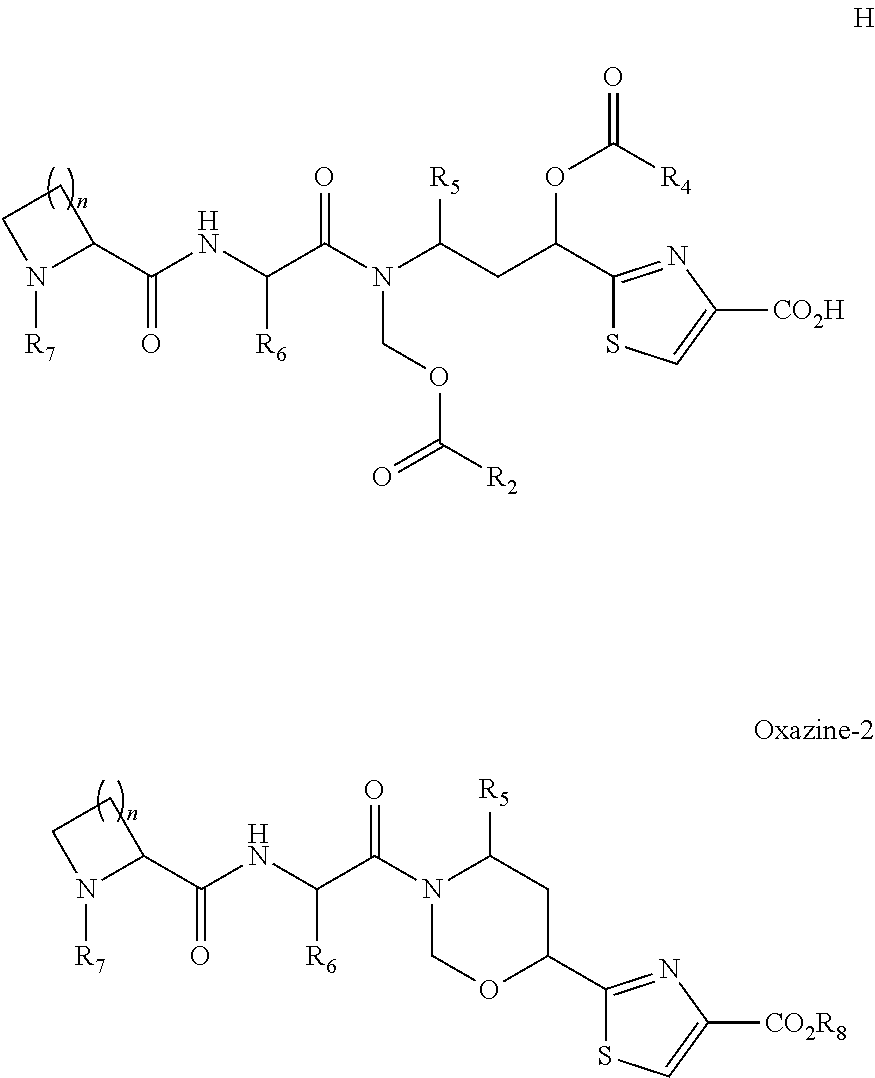


—(C(R)2)pCRaRb—;
where p is an integer from about 1 to about 3, m is an integer from about 1 to about 4, ** indicates the attachment point to the carbonyl group, and * indicates the point of attachment to SAr2; Ra, Rb, and R are each independently selected from the group consisting of hydrogen and alkyl; or any two of Ra, Rb, and R are taken together with the attached carbon atom(s) to form a carbocyclic ring. In another embodiment of each of the embodiments described herein, Ra and Rb are hydrogen. In another embodiment of each of the embodiments described p is 1. In another embodiment of the foregoing embodiments and each additional embodiment described herein Ra and Rb are hydrogen and p is 1.


or a salt or solvate thereof; wherein

where p is an integer from about 1 to about 3, m is an integer from about 1 to about 4, and * indicates the points of attachment;

or

or

and

or

or

or

or

and

or combinations thereof.

or a salt or solvate thereof; wherein

where p is an integer from about 1 to about 3, m is an integer from about 1 to about 4, and * indicates the points of attachment;

or

or

and

or

or

or

or

and

or combinations thereof.

or a salt thereof, wherein

where p is an integer from about 1 to about 3, m is an integer from about 1 to about 4, and * indicates the points of attachment;

or
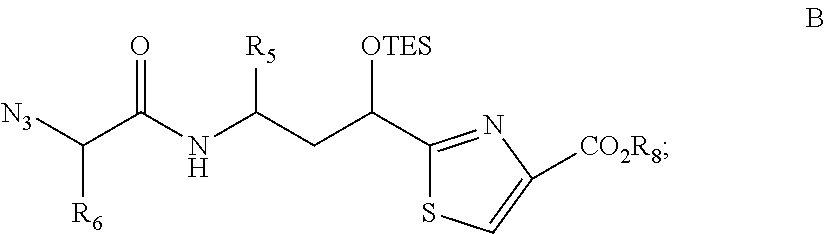
or

and

or

or

or

or

and

or combinations thereof.

or a salt thereof, wherein

where p is an integer from about 1 to about 3, m is an integer from about 1 to about 4, and * indicates the points of attachment;

or

or

and

or

or

or

or

and

or combinations thereof.


where p is an integer from about 1 to about 3, m is an integer from about 1 to about 4, and * indicates the points of attachment;

or a salt thereof, wherein

where p is an integer from about 1 to about 3, m is an integer from about 1 to about 4, and * indicates the points of attachment;


and


and


and


and


wherein

where p is an integer from about 1 to about 3, m is an integer from about 1 to about 4, and * indicates the points of attachment;

or

or

and

or

or

or

or

and

or combinations thereof.


where R′ is Me or R, and R is allyl, or CH2(CH2)2CH3, where n=1, 2, 3, 4, 5, or 6 and Ar2 is as described in various embodiments described herein.

or salt and/or solvates thereof, as described herein, with a binding ligand-linker intermediate, such as are described in WO 2008/112873, the disclosure of which is incorporated herein by reference. In another aspect, the processes include acetonitrile as a reaction solvent. In another aspect, the processes include aqueous phosphate as a reaction medium buffer. Without being bound by theory, it is believed herein that the use of acetonitrile as a solvent leads to a more rapid homogenous reaction solution. In addition, though without being bound by theory, it is believed herein that a more rapidly formed homogenous reaction medium may improve the yield and rate at which tubulysin conjugates described herein are formed. In addition, though without being bound by theory, it is believed herein that the use of 3-nitropyridin-2-ylthio activating groups may lead to faster reaction times. In addition, though without being bound by theory, it is believed herein that the use of 3-nitropyridin-2-ylthio activating groups may provide better chromatographic separation between the product tubulysin conjugates and the by-product 3-nitropyridin-2-ylthiol compared to conventional pyridin-2-ylthio activating groups. In addition, such better chromatographic separation may allow the use of alternative purification methods. For example, in addition to preparative HPLC, the tubulysin conjugates described herein may be purified by rapid pass-through chromatography methods, such as flash C18 chromatography, Biotage™ C18 chromatography systems, and the like.


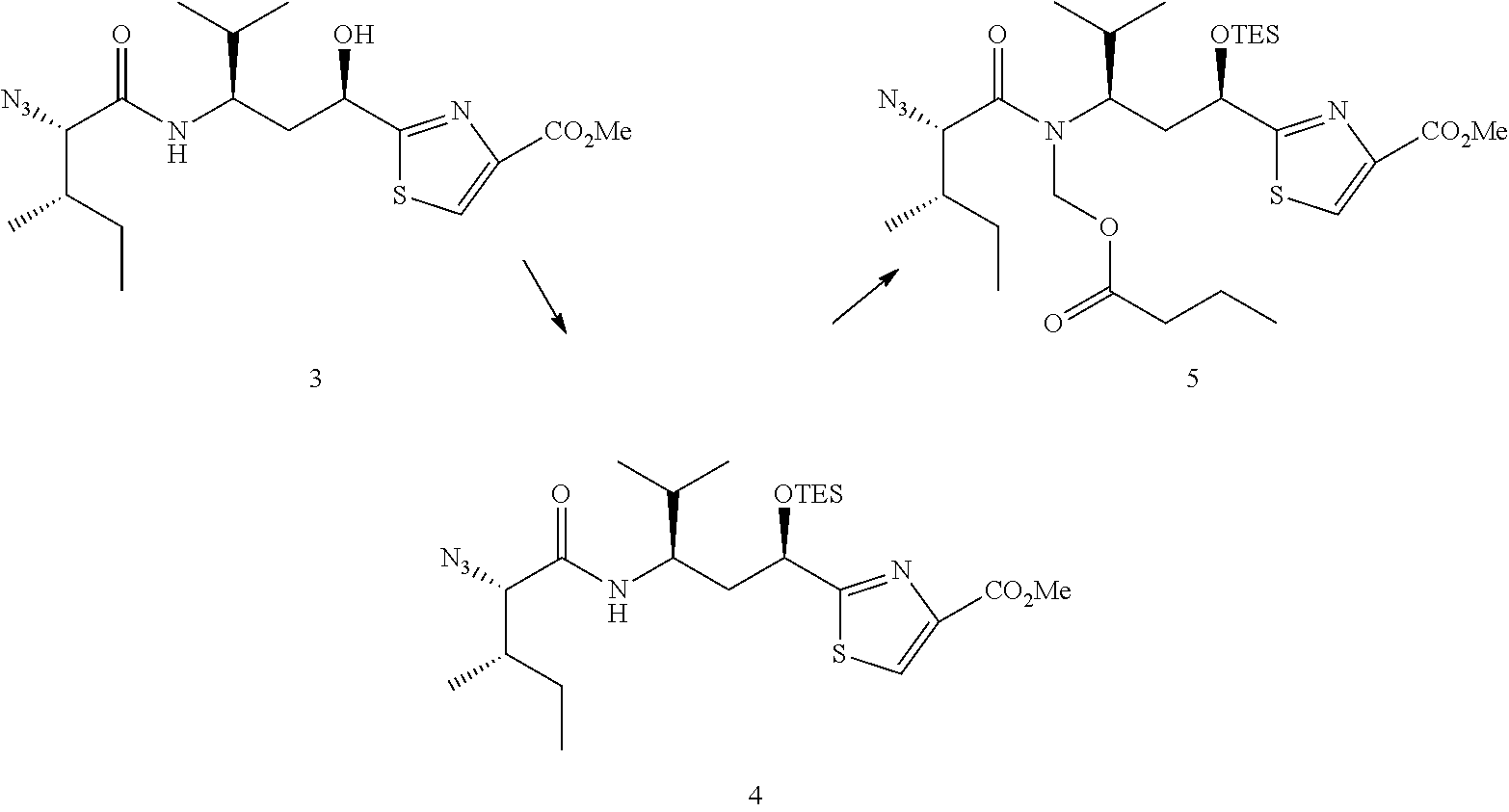


| Reagents | mmol | equivalent | MW | amount |
| H-Cys(4-methoxytrityl)-2- | 0.10 | 0.17 g | ||
| chlorotrityl-Resin | ||||
| (loading 0.6 mmol/g) | ||||
| EC0475 | 0.13 | 1.3 | 612.67 | 0.082 g |
| Fmoc-Glu(OtBu)—OH | 0.19 | 1.9 | 425.47 | 0.080 g |
| EC0475 | 0.13 | 1.3 | 612.67 | 0.082 g |
| Fmoc-Glu(OtBu)—OH | 0.19 | 1.9 | 425.47 | 0.080 g |
| EC0475 | 0.13 | 1.3 | 612.67 | 0.082 g |
| Fmoc-Glu-OtBu | 0.19 | 1.9 | 425.47 | 0.080 g |
| N10TFA-Pteroic Acid | 0.16 | 1.6 | 408.29 | 0.066 g |
| (dissolve in 10 ml DMSO) | ||||
| DIPEA | 2.0 eq of AA | |||
| PyBOP | 1.0 eq of AA | |||


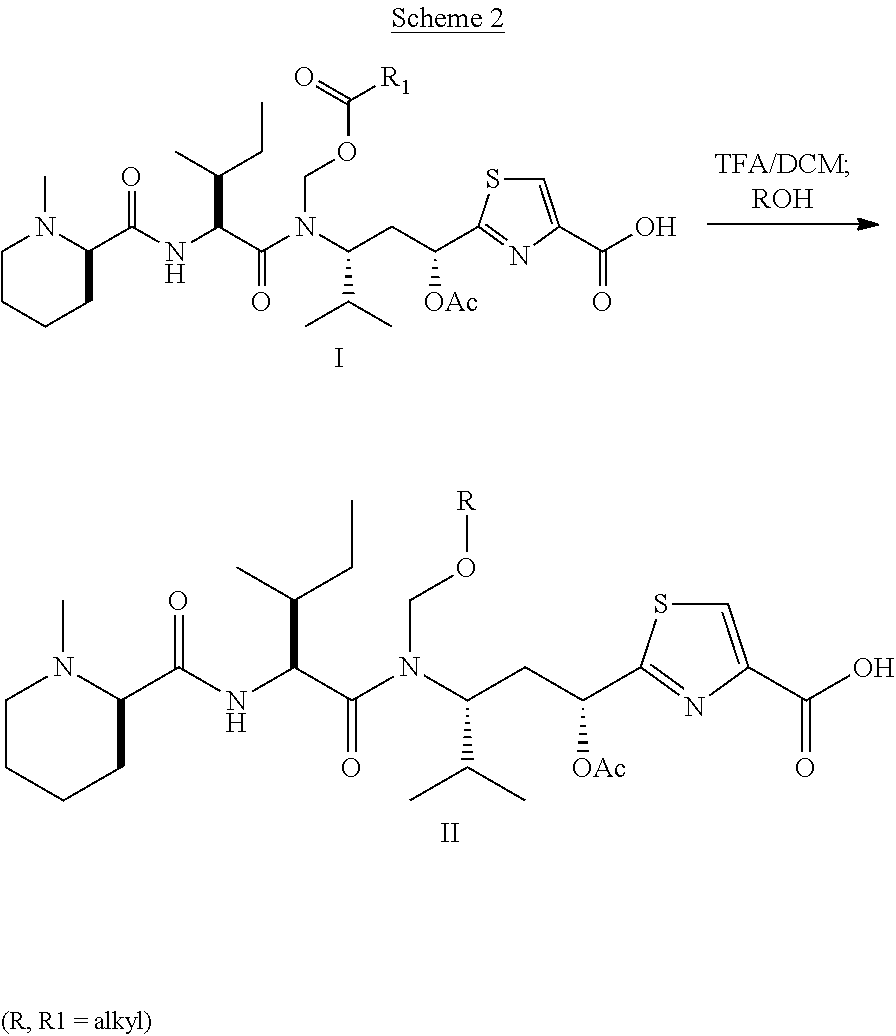


Claims (20)


Priority Applications (1)
| Application Number | Priority Date | Filing Date | Title |
|---|---|---|---|
| US14/388,311 US9505747B2 (en) | 2012-03-29 | 2013-03-29 | Processes for preparing tubulysin derivatives and conjugates thereof |
Applications Claiming Priority (6)
| Application Number | Priority Date | Filing Date | Title |
|---|---|---|---|
| US201261617386P | 2012-03-29 | 2012-03-29 | |
| US201261684450P | 2012-08-17 | 2012-08-17 | |
| US201361771451P | 2013-03-01 | 2013-03-01 | |
| US201361794720P | 2013-03-15 | 2013-03-15 | |
| US14/388,311 US9505747B2 (en) | 2012-03-29 | 2013-03-29 | Processes for preparing tubulysin derivatives and conjugates thereof |
| PCT/US2013/034672 WO2013149185A1 (en) | 2012-03-29 | 2013-03-29 | Processes for preparing tubulysin derivatives and conjugates thereof |
Publications (2)
| Publication Number | Publication Date |
|---|---|
| US20150051399A1 US20150051399A1 (en) | 2015-02-19 |
| US9505747B2 true US9505747B2 (en) | 2016-11-29 |
Family
ID=49261307
Family Applications (2)
| Application Number | Title | Priority Date | Filing Date |
|---|---|---|---|
| US13/841,349 Abandoned US20140080175A1 (en) | 2012-03-29 | 2013-03-15 | Processes for preparing tubulysin derivatives and conjugates thereof |
| US14/388,311 Expired - Fee Related US9505747B2 (en) | 2012-03-29 | 2013-03-29 | Processes for preparing tubulysin derivatives and conjugates thereof |
Family Applications Before (1)
| Application Number | Title | Priority Date | Filing Date |
|---|---|---|---|
| US13/841,349 Abandoned US20140080175A1 (en) | 2012-03-29 | 2013-03-15 | Processes for preparing tubulysin derivatives and conjugates thereof |
Country Status (5)
| Country | Link |
|---|---|
| US (2) | US20140080175A1 (en) |
| EP (1) | EP2831059B1 (en) |
| JP (1) | JP2015518473A (en) |
| CA (1) | CA2868494A1 (en) |
| WO (1) | WO2013149185A1 (en) |
Cited By (1)
| Publication number | Priority date | Publication date | Assignee | Title |
|---|---|---|---|---|
| US20160016993A1 (en) * | 2013-03-01 | 2016-01-21 | Endocyte, Inc. | Process for preparing tubulysins |
Families Citing this family (17)
| Publication number | Priority date | Publication date | Assignee | Title |
|---|---|---|---|---|
| CN101098854B (en) | 2004-07-23 | 2012-12-05 | 恩多塞特公司 | Bivalent linkers and conjugates thereof |
| AU2008224988A1 (en) | 2007-03-14 | 2008-09-18 | Endocyte, Inc. | Binding ligand linked drug delivery conjugates of tubulysins |
| US9877965B2 (en) | 2007-06-25 | 2018-01-30 | Endocyte, Inc. | Vitamin receptor drug delivery conjugates for treating inflammation |
| CN101784565B (en) | 2007-06-25 | 2014-12-10 | 恩多塞特公司 | Conjugates containing a hydrophilic spacer linker |
| US10080805B2 (en) | 2012-02-24 | 2018-09-25 | Purdue Research Foundation | Cholecystokinin B receptor targeting for imaging and therapy |
| US20140080175A1 (en) | 2012-03-29 | 2014-03-20 | Endocyte, Inc. | Processes for preparing tubulysin derivatives and conjugates thereof |
| BR112015008365A2 (en) | 2012-10-16 | 2017-07-04 | Endocyte Inc | compound of the formula bl (d) x, or a pharmaceutically acceptable salt thereof, pharmaceutical composition, use of a compound, unit dosage form or unit dose composition, composition for treating a cancer in a patient, and method for treating a cancer in a patient |
| EA201590783A1 (en) | 2012-11-15 | 2015-11-30 | Эндосайт, Инк. | CONJUGATES FOR DELIVERY OF MEDICINES AND METHODS OF TREATMENT OF DISEASES CAUSED BY CELLS EXPRESSING PSMA |
| WO2015113760A1 (en) * | 2014-01-28 | 2015-08-06 | Tube Pharmaceuticals Gmbh | Cytotoxic tubulysin compounds for conjugation |
| WO2015160833A1 (en) * | 2014-04-14 | 2015-10-22 | Endocyte, Inc. | Drug delivery conjugates for treating resistant cancer and for use in combination therapy |
| CN107073136A (en) * | 2014-09-17 | 2017-08-18 | 健泰科生物技术公司 | Pyrrolobenzodiazepines Zhuo and its antibody disulphide conjugate |
| US10808007B2 (en) * | 2015-02-25 | 2020-10-20 | William Marsh Rice University | Desacetoxytubulysin H and analogs thereof |
| WO2017031209A1 (en) * | 2015-08-18 | 2017-02-23 | Endocyte, Inc. | Tubulysin analogs and methods |
| KR20180090290A (en) | 2015-12-04 | 2018-08-10 | 시애틀 지네틱스, 인크. | Conjugates of Quaternized Tubular Compounds |
| US11793880B2 (en) | 2015-12-04 | 2023-10-24 | Seagen Inc. | Conjugates of quaternized tubulysin compounds |
| WO2019108685A1 (en) | 2017-11-29 | 2019-06-06 | William March Rice University | Tubulysin analogues as anticancer agents and payloads for antibody-drug conjugates and methods of treatment therewith |
| JP7590328B2 (en) * | 2018-12-21 | 2024-11-26 | レゲネロン ファーマシューティカルス,インコーポレーテッド | Tubulysin and Protein-Tubulysin Conjugates |
Citations (205)
| Publication number | Priority date | Publication date | Assignee | Title |
|---|---|---|---|---|
| US2515483A (en) | 1946-08-10 | 1950-07-18 | Merck & Co Inc | Diacylated pteroic acid and process for preparing same |
| US2816110A (en) | 1956-11-23 | 1957-12-10 | Merck & Co Inc | Methods for the production of substituted pteridines |
| US3387001A (en) | 1964-10-19 | 1968-06-04 | Lilly Co Eli | Novel aminoacyl esters of desacetyl vincaleukoblastine |
| US3392173A (en) | 1964-03-09 | 1968-07-09 | Lilly Co Eli | Novel acyl derivatives of desacetyl-vincaleukoblastine and processes for their preparation |
| US4166810A (en) | 1978-04-20 | 1979-09-04 | Eli Lilly And Company | Derivatives of 4-desacetyl VLB C-3 carboxyhydrazide |
| US4203898A (en) | 1977-08-29 | 1980-05-20 | Eli Lilly And Company | Amide derivatives of VLB, leurosidine, leurocristine and related dimeric alkaloids |
| US4316885A (en) | 1980-08-25 | 1982-02-23 | Ayerst, Mckenna And Harrison, Inc. | Acyl derivatives of rapamycin |
| US4337339A (en) | 1979-04-30 | 1982-06-29 | Baker Instruments Corp. | Process for preparation of folic acid derivatives |
| EP0116208A1 (en) | 1982-12-07 | 1984-08-22 | Kyowa Hakko Kogyo Co., Ltd. | Mitomycin analogues |
| JPS59175493U (en) | 1983-05-12 | 1984-11-22 | 株式会社小松製作所 | Laser processing equipment |
| EP0163550A2 (en) | 1984-06-01 | 1985-12-04 | Kyowa Hakko Kogyo Kabushiki Kaisha | Mitomycin derivatives, preparation thereof and pharmaceutical compositions containing them |
| WO1985005554A1 (en) | 1984-05-31 | 1985-12-19 | Amersham International Plc | Nmr contrast agents |
| US4639456A (en) | 1980-06-10 | 1987-01-27 | Omnichem S.A. | Vinblastin-23-oyl amino acid derivatives |
| US4650803A (en) | 1985-12-06 | 1987-03-17 | University Of Kansas | Prodrugs of rapamycin |
| US4713249A (en) | 1981-11-12 | 1987-12-15 | Schroeder Ulf | Crystallized carbohydrate matrix for biologically active substances, a process of preparing said matrix, and the use thereof |
| WO1988001622A1 (en) | 1986-08-29 | 1988-03-10 | Kyowa Hakko Kogyo Kabusiki Kaisha | Mitomycin derivatives |
| US4801688A (en) | 1986-05-27 | 1989-01-31 | Eli Lilly And Company | Hydrazone immunoglobulin conjugates |
| EP0247792A3 (en) | 1986-05-27 | 1989-07-12 | Eli Lilly And Company | Immunoglobulin conjugates |
| US4866180A (en) | 1984-02-24 | 1989-09-12 | Bristol-Myers Company | Amino disulfide thiol exchange products |
| US4870162A (en) | 1983-04-29 | 1989-09-26 | Omnichem | Conjugates of vinblastine, a process for their preparation and their use in therapy |
| WO1990012096A1 (en) | 1989-04-03 | 1990-10-18 | Purdue Research Foundation | Method for enhancing transmembrane transport of exogenous molecules |
| US5006652A (en) | 1988-08-08 | 1991-04-09 | Eli Lilly And Company | Intermediates for antibody-vinca drug conjugates |
| WO1991007418A1 (en) | 1989-11-13 | 1991-05-30 | Xoma Corporation | Chimeric mouse-human a10 antibody with specificity to a human tumor cell antigen |
| US5094849A (en) | 1988-08-08 | 1992-03-10 | Eli Lilly And Company | Cytotoxic antibody conjugates of hydrazide derivatized vinca analogs via simple organic linkers |
| US5100883A (en) | 1991-04-08 | 1992-03-31 | American Home Products Corporation | Fluorinated esters of rapamycin |
| US5118677A (en) | 1991-05-20 | 1992-06-02 | American Home Products Corporation | Amide esters of rapamycin |
| US5118678A (en) | 1991-04-17 | 1992-06-02 | American Home Products Corporation | Carbamates of rapamycin |
| US5120842A (en) | 1991-04-01 | 1992-06-09 | American Home Products Corporation | Silyl ethers of rapamycin |
| US5130307A (en) | 1990-09-28 | 1992-07-14 | American Home Products Corporation | Aminoesters of rapamycin |
| US5138051A (en) | 1991-08-07 | 1992-08-11 | American Home Products Corporation | Rapamycin analogs as immunosuppressants and antifungals |
| US5140104A (en) | 1982-03-09 | 1992-08-18 | Cytogen Corporation | Amine derivatives of folic acid analogs |
| US5151413A (en) | 1991-11-06 | 1992-09-29 | American Home Products Corporation | Rapamycin acetals as immunosuppressant and antifungal agents |
| US5169851A (en) | 1991-08-07 | 1992-12-08 | American Home Products Corporation | Rapamycin analog as immunosuppressants and antifungals |
| US5194447A (en) | 1992-02-18 | 1993-03-16 | American Home Products Corporation | Sulfonylcarbamates of rapamycin |
| US5221670A (en) | 1990-09-19 | 1993-06-22 | American Home Products Corporation | Rapamycin esters |
| US5233036A (en) | 1990-10-16 | 1993-08-03 | American Home Products Corporation | Rapamycin alkoxyesters |
| US5258389A (en) | 1992-11-09 | 1993-11-02 | Merck & Co., Inc. | O-aryl, O-alkyl, O-alkenyl and O-alkynylrapamycin derivatives |
| US5260300A (en) | 1992-11-19 | 1993-11-09 | American Home Products Corporation | Rapamycin carbonate esters as immuno-suppressant agents |
| US5266333A (en) | 1985-03-06 | 1993-11-30 | American Cyanamid Company | Water dispersible and water soluble carbohydrate polymer compositions for parenteral administration of growth hormone |
| US5302584A (en) | 1992-10-13 | 1994-04-12 | American Home Products Corporation | Carbamates of rapamycin |
| US5362718A (en) | 1994-04-18 | 1994-11-08 | American Home Products Corporation | Rapamycin hydroxyesters |
| US5378696A (en) | 1990-09-19 | 1995-01-03 | American Home Products Corporation | Rapamycin esters |
| US5385910A (en) | 1993-11-22 | 1995-01-31 | American Home Products Corporation | Gem-distributed esters of rapamycin |
| US5385908A (en) | 1993-11-22 | 1995-01-31 | American Home Products Corporation | Hindered esters of rapamycin |
| US5385909A (en) | 1993-11-22 | 1995-01-31 | American Home Products Corporation | Heterocyclic esters of rapamycin |
| US5389639A (en) | 1993-12-29 | 1995-02-14 | American Home Products Company | Amino alkanoic esters of rapamycin |
| US5391730A (en) | 1993-10-08 | 1995-02-21 | American Home Products Corporation | Phosphorylcarbamates of rapamycin and oxime derivatives thereof |
| US5417982A (en) | 1994-02-17 | 1995-05-23 | Modi; Pankaj | Controlled release of drugs or hormones in biodegradable polymer microspheres |
| WO1995015335A3 (en) | 1993-11-22 | 1995-07-20 | Neorx Corp | Pretargeting methods and compounds |
| US5463048A (en) | 1994-06-14 | 1995-10-31 | American Home Products Corporation | Rapamycin amidino carbamates |
| US5491231A (en) | 1994-11-28 | 1996-02-13 | American Home Products Corporation | Hindered N-oxide esters of rapamycin |
| US5547668A (en) | 1995-05-05 | 1996-08-20 | The Board Of Trustees Of The University Of Illinois | Conjugates of folate anti-effector cell antibodies |
| US5552545A (en) | 1991-12-20 | 1996-09-03 | Eli Lilly And Company | 5-deaza-10-oxo-and 5-deaza-10-thio-5,6,7,8-tetrahydrofolic acids |
| US5562907A (en) | 1993-05-14 | 1996-10-08 | Arnon; Stephen S. | Method to prevent side-effects and insensitivity to the therapeutic uses of toxins |
| WO1996036367A1 (en) | 1995-05-16 | 1996-11-21 | Purdue Research Foundation | Composition and method for tumor imaging |
| US5583020A (en) | 1992-11-24 | 1996-12-10 | Ribozyme Pharmaceuticals, Inc. | Permeability enhancers for negatively charged polynucleotides |
| US5627165A (en) | 1990-06-13 | 1997-05-06 | Drug Innovation & Design, Inc. | Phosphorous prodrugs and therapeutic delivery systems using same |
| US5672486A (en) | 1990-08-29 | 1997-09-30 | Centre Hospitalier Regional De Nantes | Protein polyligands joined to a stable protein core |
| WO1998008859A1 (en) | 1996-08-27 | 1998-03-05 | University Of Utah Research Foundation | Bioconjugates and delivery of bioactive agents |
| WO1998010651A1 (en) | 1996-09-12 | 1998-03-19 | Merck & Co., Inc. | Conjugates useful in the treatment of prostate cancer |
| WO1999020626A1 (en) | 1997-10-17 | 1999-04-29 | Purdue Research Foundation | Folic acid derivatives |
| WO1999061055A1 (en) | 1998-05-22 | 1999-12-02 | The Board Of Trustees Of The Leland Stanford Junior University | Bifunctional molecules and therapies based thereon |
| US5998603A (en) | 1994-09-29 | 1999-12-07 | Isis Pharmaceuticals, Inc. | 4'-desmethyl nucleoside analogs, and oligomers thereof |
| US6004555A (en) | 1992-03-05 | 1999-12-21 | Board Of Regents, The University Of Texas System | Methods for the specific coagulation of vasculature |
| US6030941A (en) | 1996-05-01 | 2000-02-29 | Avi Biopharma, Inc. | Polymer composition for delivering substances in living organisms |
| US6056973A (en) | 1996-10-11 | 2000-05-02 | Sequus Pharmaceuticals, Inc. | Therapeutic liposome composition and method of preparation |
| US6077499A (en) | 1996-05-03 | 2000-06-20 | Immunomedics, Inc. | Targeted combination immunotherapy of cancer |
| US6093382A (en) | 1998-05-16 | 2000-07-25 | Bracco Research Usa Inc. | Metal complexes derivatized with folate for use in diagnostic and therapeutic applications |
| WO2000035477A3 (en) | 1998-12-15 | 2000-10-26 | Connaught Lab | Multi-component vaccine comprising at least two antigens from haemophilus influenzae |
| CA2372841A1 (en) | 1999-05-04 | 2000-11-09 | Gregory John Russell-Jones | Amplification of folate-mediated targeting to tumor cells using polymers |
| WO2000074721A1 (en) | 1999-06-02 | 2000-12-14 | Biotech Australia Pty Limited | Vitamin directed dual targeting therapy |
| US6171859B1 (en) | 1994-03-30 | 2001-01-09 | Mitokor | Method of targeting conjugate molecules to mitochondria |
| US6171614B1 (en) | 1996-10-15 | 2001-01-09 | Emory University | Synthesis of glycophospholipid and peptide-phospholipid conjugates and uses thereof |
| US6177404B1 (en) | 1996-10-15 | 2001-01-23 | Merck & Co., Inc. | Conjugates useful in the treatment of benign prostatic hyperplasia |
| US6184042B1 (en) | 1996-05-24 | 2001-02-06 | Boehringer Mannheim Gmbh | Method for reducing hook effect in an immunoassay |
| US6207157B1 (en) | 1996-04-23 | 2001-03-27 | The United States Of America As Represented By The Department Of Health And Human Services | Conjugate vaccine for nontypeable Haemophilus influenzae |
| WO2001028592A1 (en) | 1999-10-15 | 2001-04-26 | Mayo Foundation For Medical Education And Research | Cobalamin conjugates useful as imaging agents and as antitumor agents |
| US6290929B1 (en) | 2000-07-28 | 2001-09-18 | The Procter & Gamble Company | Cancer treatment |
| US6291684B1 (en) | 1999-03-29 | 2001-09-18 | Bristol-Myers Squibb Company | Process for the preparation of aziridinyl epothilones from oxiranyl epothilones |
| WO2001013957A3 (en) | 1999-08-24 | 2001-10-04 | Cellgate Inc | Enhancing drug delivery across and into epithelial tissues using oligo arginine moieties |
| WO2001074187A1 (en) | 2000-04-04 | 2001-10-11 | Morgan Samuels Limited | Trouser waist adjuster |
| US20010031252A1 (en) | 2000-03-31 | 2001-10-18 | Low Philip Stewart | Method of treatment using ligand-immunogen conjugates |
| US6335434B1 (en) | 1998-06-16 | 2002-01-01 | Isis Pharmaceuticals, Inc., | Nucleosidic and non-nucleosidic folate conjugates |
| US6340701B1 (en) | 1999-11-24 | 2002-01-22 | Immunogen Inc | Cytotoxic agents comprising taxanes and their therapeutic use |
| US6342244B1 (en) | 1999-04-23 | 2002-01-29 | Alza Corporation | Releasable linkage and compositions containing same |
| US6399638B1 (en) | 1998-04-21 | 2002-06-04 | Bristol-Myers Squibb Company | 12,13-modified epothilone derivatives |
| US6399625B1 (en) | 2000-09-27 | 2002-06-04 | Wyeth | 1-oxorapamycins |
| US6399626B1 (en) | 2000-10-02 | 2002-06-04 | Wyeth | Hydroxyesters of 7-desmethylrapamycin |
| US6432973B1 (en) | 2000-09-19 | 2002-08-13 | Wyeth | Water soluble rapamycin esters |
| US6440991B1 (en) | 2000-10-02 | 2002-08-27 | Wyeth | Ethers of 7-desmethlrapamycin |
| US20020151088A1 (en) | 1993-04-23 | 2002-10-17 | Molnar-Kimber Katherine L. | Rapamycin conjugates |
| WO2002085908A1 (en) | 2001-04-24 | 2002-10-31 | Purdue Research Foundation | Folate mimetics and folate-receptor binding conjugates thereof |
| WO2002098868A1 (en) | 2001-06-01 | 2002-12-12 | Bristol-Myers Squibb Company | Epothilone derivatives |
| US6511986B2 (en) | 2000-08-11 | 2003-01-28 | Wyeth | Method of treating estrogen receptor positive carcinoma |
| WO2002059272A3 (en) | 2001-01-24 | 2003-02-20 | Univ Columbia | Covalent chemical inducers of protein dimerization and their uses in high throughput binding screens |
| WO2002087424A3 (en) | 2001-05-02 | 2003-03-20 | Philip Stewart Low | Treatment and diagnosis of macrophage mediated disease |
| US6541612B2 (en) | 1993-04-23 | 2003-04-01 | Wyeth | Monoclonal antibodies obtained using rapamycin position 27 conjugates as an immunogen |
| US6548505B1 (en) | 1995-07-28 | 2003-04-15 | Peter Maccallum Cancer Institute | Radioprotectors |
| US20030086900A1 (en) | 2001-09-28 | 2003-05-08 | Low Philip S. | Method of treatment using ligand-immunogen conjugates |
| US6596757B1 (en) | 2002-05-14 | 2003-07-22 | Immunogen Inc. | Cytotoxic agents comprising polyethylene glycol-containing taxanes and their therapeutic use |
| US20030162234A1 (en) | 2002-02-07 | 2003-08-28 | Jallad Karim N. | Folate targeted enhanced tumor and folate receptor positive tissue optical imaging technology |
| US6617333B2 (en) | 2001-08-07 | 2003-09-09 | Wyeth | Antineoplastic combinations comprising |
| US20030194409A1 (en) | 2002-01-17 | 2003-10-16 | Rothman James E. | Conjugate heat shock protein-binding peptides |
| WO2003092742A1 (en) | 2002-05-06 | 2003-11-13 | Endocyte, Inc. | Vitamin-targeted imaging agents |
| WO2003097647A1 (en) | 2002-05-15 | 2003-11-27 | Endocyte, Inc. | Vitamin-mitomycin conjugates |
| US6670355B2 (en) | 2000-06-16 | 2003-12-30 | Wyeth | Method of treating cardiovascular disease |
| US6677357B2 (en) | 2001-08-22 | 2004-01-13 | Wyeth | Rapamycin 29-enols |
| WO2004005327A1 (en) | 2002-07-09 | 2004-01-15 | Morphochem Ag Komb Chemie | Novel tubulysin analogues |
| US6680330B2 (en) | 2001-08-22 | 2004-01-20 | Wyeth | Rapamycin dialdehydes |
| US20040018203A1 (en) | 2001-06-08 | 2004-01-29 | Ira Pastan | Pegylation of linkers improves antitumor activity and reduces toxicity of immunoconjugates |
| WO2004005326A3 (en) | 2002-07-09 | 2004-02-19 | Morphochem Aktiengellschaft Fu | Tubulysin conjugates |
| US20040047917A1 (en) | 2002-09-06 | 2004-03-11 | Stephen Wilson | Drug delivery and targeting with vitamin B12 conjugates |
| US6713607B2 (en) | 1994-03-08 | 2004-03-30 | Wyeth | Effector proteins of Rapamycin |
| WO2004012735A3 (en) | 2002-07-31 | 2004-05-27 | Schering Ag | New effector conjugates, process for their production and their pharmaceutical use |
| WO2004046170A3 (en) | 2002-11-21 | 2004-07-01 | Biotechnolog Forschung Gmbh | Tubulysins, method for producing the same and tubulysin preparations |
| WO2004054622A1 (en) | 2002-12-13 | 2004-07-01 | Immunomedics, Inc. | Immunoconjugates with an intracellularly-cleavable linkage |
| WO2004037210A3 (en) | 2002-10-24 | 2004-07-08 | Res Corp Technologies Inc | Functional mri agents for cancer imaging |
| WO2004022099A3 (en) | 2002-09-06 | 2004-10-28 | Insert Therapeutics Inc | Cyclodextrin-based polymers for delivering the therapeutic agents covalently bound thereto |
| US6821731B2 (en) | 2000-11-28 | 2004-11-23 | Wyeth | Expression analysis of FKBP nucleic acids and polypeptides useful in the diagnosis of prostate cancer |
| US20050026068A1 (en) | 2001-11-01 | 2005-02-03 | Evangelos Gogolides | Polycarbocyclic derivatives for modification of resist, optical and etch resistance properties |
| WO2003050295A3 (en) | 2001-12-12 | 2005-02-10 | Conforma Therapeutics Corp | Assays and implements for determining and modulating hsp90 binding activity |
| US20050107325A1 (en) | 2003-04-17 | 2005-05-19 | Muthiah Manoharan | Modified iRNA agents |
| WO2004069159A3 (en) | 2003-01-27 | 2005-06-16 | Endocyte Inc | Vitamin receptor binding drug delivery conjugates |
| US6915855B2 (en) | 2002-05-02 | 2005-07-12 | Halliburton Energy Services, Inc. | Wellbore junction drifting apparatus and associated method |
| US6958153B1 (en) | 1997-11-07 | 2005-10-25 | Wyeth | Skin penetration enhancing components |
| US20050239739A1 (en) | 2001-05-18 | 2005-10-27 | Sirna Therapeutics, Inc. | Conjugates and compositions for cellular delivery |
| WO2005115912A1 (en) | 2004-05-25 | 2005-12-08 | Matsushita Electric Industrial Co., Ltd. | Hydrogen production apparatus and fuel cell system using the same |
| US20060019911A1 (en) | 1999-08-09 | 2006-01-26 | The General Hospital Corporation | Drug-carrier complexes and methods of use thereof |
| WO2006012527A8 (en) | 2004-07-23 | 2006-03-09 | Endocyte Inc | Bivalent linkers and conjugates thereof |
| US20060058266A1 (en) | 2004-08-10 | 2006-03-16 | Muthiah Manoharan | Chemically modified oligonucleotides |
| US7019014B2 (en) | 2003-05-12 | 2006-03-28 | Wyeth Holdings Corporation | Process for producing anticancer agent LL-D45042 |
| WO2005074901A3 (en) | 2004-01-30 | 2006-03-30 | Schering Ag | New effector conjugates, process for their production and their pharmaceutical use |
| US7029674B2 (en) | 2001-04-02 | 2006-04-18 | Wyeth | Methods for downmodulating immune cells using an antibody to PD-1 |
| WO2006042146A2 (en) | 2004-10-07 | 2006-04-20 | Emory University | Multifunctional nanoparticles conjugates and their use |
| US20060105975A1 (en) | 2004-04-19 | 2006-05-18 | Shannon Pendergrast | Aptamer-mediated intracellular delivery of therapeutic oligonucleotides |
| US7060797B2 (en) | 2002-11-21 | 2006-06-13 | Wyeth | Composition and method for treating lupus nephritis |
| US7060709B2 (en) | 2003-02-06 | 2006-06-13 | Wyeth | Method of treating hepatic fibrosis |
| US7067111B1 (en) | 1999-10-25 | 2006-06-27 | Board Of Regents, University Of Texas System | Ethylenedicysteine (EC)-drug conjugates, compositions and methods for tissue specific disease imaging |
| US7074804B2 (en) | 2003-07-16 | 2006-07-11 | Wyeth | CCI-779 Isomer C |
| US7105328B2 (en) | 2001-04-02 | 2006-09-12 | Dana-Farber Cancer Institute | Methods for screening for compounds that modulate pd-1 signaling |
| US20060217360A1 (en) | 2002-09-05 | 2006-09-28 | Gerhard Hoefle | Tubulysin biosynthesis gene |
| WO2006105141A1 (en) | 2005-03-30 | 2006-10-05 | Purdue Research Foundation | Method for cancer prognosis using cellular folate vitamin receptor quantification |
| US20060222653A1 (en) | 2004-11-12 | 2006-10-05 | Xencor, Inc. | Antibodies operably linked to selected chemoattractants |
| US7122361B2 (en) | 2002-10-10 | 2006-10-17 | Wyeth | Compositions employing a novel human kinase |
| WO2005112919A8 (en) | 2004-05-19 | 2006-12-07 | Medarex Inc | Self-immolative linkers and drug conjugates |
| US7153957B2 (en) | 2003-08-07 | 2006-12-26 | Wyeth | Regioselective synthesis of CCI-779 |
| US20070009434A1 (en) | 2005-07-05 | 2007-01-11 | Low Philip S | Imaging and therapeutic method using monocytes |
| WO2006089007A3 (en) | 2005-02-16 | 2007-02-22 | Insert Therapeutics Inc | Cyclodextrin-based polymers containing photocleavable linkers for drug delivery |
| WO2006101845A3 (en) | 2005-03-16 | 2007-03-29 | Endocyte Inc | Synthesis and purification of pteroic acid and conjugates thereof |
| US20070134332A1 (en) | 2005-11-21 | 2007-06-14 | Medivas, Llc | Polymer particles for delivery of macromolecules and methods of use |
| WO2007002222A3 (en) | 2005-06-20 | 2007-08-09 | Psma Dev Company Llc | Psma antibody-drug conjugates |
| WO2007022494A3 (en) | 2005-08-19 | 2007-09-07 | Endocyte Inc | Multi-drug ligand conjugates |
| WO2007022512A3 (en) | 2005-08-19 | 2007-10-04 | Neose Technologies Inc | Glycopegylated factor vii and factor viia |
| US20070275904A1 (en) | 2006-05-25 | 2007-11-29 | Bristol-Myers Squibb Company | Conjugates of aziridinyl-epothilone analogs and pharmaceutical compositions comprising same |
| WO2007022493A3 (en) | 2005-08-19 | 2008-01-24 | Endocyte Inc | Ligand conjugates of vinca alkaloids, analogs, and derivatives |
| US20080096893A1 (en) | 2005-03-11 | 2008-04-24 | Syntrix Biosystems, Inc. | Aminopterin dosage forms |
| WO2008057437A2 (en) | 2006-11-03 | 2008-05-15 | Purdue Research Foundation | Ex vivo flow cytometry method and device |
| WO2008112873A2 (en) | 2007-03-14 | 2008-09-18 | Endocyte, Inc. | Binding ligand linked drug delivery conjugates of tubulysins |
| WO2008101231A3 (en) | 2007-02-16 | 2008-10-30 | Endocyte Inc | Methods and compositions for treating and diagnosing kidney disease |
| WO2009002993A1 (en) | 2007-06-25 | 2008-12-31 | Endocyte, Inc. | Conjugates containing hydrophilic spacer linkers |
| WO2009055562A1 (en) | 2007-10-25 | 2009-04-30 | Endocyte, Inc. | Tubulysins and processes for preparing |
| US20090247614A1 (en) | 2007-12-04 | 2009-10-01 | Alnylam Pharmaceuticals, Inc. | Folate Conjugates |
| US20100040669A1 (en) | 2008-08-12 | 2010-02-18 | Higuchi John W | Non-Invasive Ocular Delivery of Rapamycin |
| US20100074863A1 (en) | 2008-09-17 | 2010-03-25 | Yat Sun Or | Anti-infective pyrrolidine derivatives and analogs |
| WO2010033733A1 (en) | 2008-09-17 | 2010-03-25 | Endocyte, Inc. | Folate receptor binding conjugates of antifolates |
| US20100129314A1 (en) | 2008-04-30 | 2010-05-27 | Immunogen Inc. | Potent conjugates and hydrophilic linkers |
| WO2010045598A3 (en) | 2008-10-17 | 2010-08-19 | Purdue Research Foundation | Psma binding ligand-linker conjugates and methods for using |
| US20110027274A1 (en) | 2009-08-03 | 2011-02-03 | Medarex, Inc. | Antiproliferative compounds, conjugates thereof, methods therefor, and uses thereof |
| WO2011069116A1 (en) | 2009-12-04 | 2011-06-09 | Endocyte, Inc. | Binding ligand linked drug delivery conjugates of tubulysins |
| US20110166319A1 (en) | 2005-02-11 | 2011-07-07 | Immunogen, Inc. | Process for preparing purified drug conjugates |
| WO2011106639A1 (en) | 2010-02-25 | 2011-09-01 | Purdue Research Foundation | Psma binding ligand-linker conjugates and methods for using |
| US20110245295A1 (en) | 2008-09-25 | 2011-10-06 | Universitat Des Saarlandes | Bioactive pre-tubulysins and use thereof |
| WO2011130598A1 (en) | 2010-04-15 | 2011-10-20 | Spirogen Limited | Pyrrolobenzodiazepines and conjugates thereof |
| US20120022245A1 (en) | 2008-10-17 | 2012-01-26 | Purdue Research Foundation | Folate targeting of nucleotides |
| WO2012019123A1 (en) | 2010-08-06 | 2012-02-09 | Endocyte, Inc. | Processes for preparing tubulysins |
| WO2012047525A2 (en) | 2010-09-27 | 2012-04-12 | Endocyte, Inc. | Folate conjugates for treating inflammation of the eye |
| US20120129779A1 (en) | 2007-05-10 | 2012-05-24 | R&D-Biopharmaceuticals Gmbh | Tubulysine derivatives |
| US20120252738A1 (en) | 2009-11-12 | 2012-10-04 | R & D Biopharmaceuticals Gmbh | Tubulin Inhibitors |
| US20120252739A1 (en) | 2009-11-12 | 2012-10-04 | R&D Biopharmaceuticals Gmbh | Tubulin Inhibitors |
| US20120258905A1 (en) | 2009-12-23 | 2012-10-11 | Endocyte, Inc. | Vitamin receptor drug delivery conjugates for treating inflammation |
| US20120259100A1 (en) | 2011-03-29 | 2012-10-11 | Immunogen, Inc. | Process for manufacturing conjugates of improved homogeneity |
| US20130029900A1 (en) | 2011-06-21 | 2013-01-31 | Immunogen, Inc. | Novel maytansinoid derivatives with peptide linker and conjugates thereof |
| US8383122B2 (en) | 2005-08-24 | 2013-02-26 | Immunogen, Inc. | Process for preparing purified drug conjugates |
| US8476451B2 (en) | 2007-07-20 | 2013-07-02 | The Regents Of The University Of California | Tubulysin D analogues |
| US8497365B2 (en) | 2007-01-24 | 2013-07-30 | Mark E. Davis | Cyclodextrin-based polymers for therapeutics delivery |
| US20130217638A1 (en) | 2010-07-19 | 2013-08-22 | Leibniz-Institut fur Pflanzenbiochemie | Tubulysin Analogues |
| WO2013126797A1 (en) | 2012-02-24 | 2013-08-29 | Purdue Research Foundation | Cholecystokinin b receptor targeting for imaging and therapy |
| US20130224228A1 (en) | 2011-12-05 | 2013-08-29 | Igenica, Inc. | Antibody-Drug Conjugates and Related Compounds, Compositions, and Methods |
| WO2013130776A1 (en) | 2012-02-29 | 2013-09-06 | Purdue Research Foundation | Folate receptor alpha binding ligands |
| WO2013149185A1 (en) | 2012-03-29 | 2013-10-03 | Endocyte, Inc. | Processes for preparing tubulysin derivatives and conjugates thereof |
| US8580820B2 (en) | 2009-07-22 | 2013-11-12 | Kemtech S.R.L. | Tubulysin compounds with high cytotoxicity, pharmaceutical compositions thereof, and method of use thereof |
| WO2013170272A2 (en) | 2012-05-11 | 2013-11-14 | Alexander Krantz | Site-specific labeling and targeted delivery of proteins for the treatment of cancer |
| WO2013173393A1 (en) | 2012-05-15 | 2013-11-21 | Concortis Biosystems, Corp | Drug-conjugates, conjugation methods, and uses thereof |
| WO2014009774A1 (en) | 2012-07-12 | 2014-01-16 | Hangzhou Dac Biotech Co., Ltd | Conjugates of cell binding molecules with cytotoxic agents |
| US20140073763A1 (en) | 2007-08-17 | 2014-03-13 | Purdue Research Foundation | Psma binding ligand-linker conjugates and methods for using |
| WO2014040752A1 (en) | 2012-09-17 | 2014-03-20 | Ontochem Gmbh | Receptor ligand linked cytotoxic molecules |
| US20140107316A1 (en) | 2012-10-16 | 2014-04-17 | Endocyte, Inc. | Drug delivery conjugates containing unnatural amino acids and methods for using |
| WO2014078484A1 (en) | 2012-11-15 | 2014-05-22 | Endocyte, Inc. | Conjugates for treating diseases caused by psma expressing cells |
| WO2014080251A1 (en) | 2012-11-24 | 2014-05-30 | Hangzhou Dac Biotech Co., Ltd. | Hydrophilic linkers and their uses for conjugation of drugs to cell binding molecules |
| WO2014062697A3 (en) | 2012-10-16 | 2014-06-26 | Endocyte, Inc. | Drug delivery conjugates containing unnatural amino acids and methods for using |
| US20140193437A1 (en) | 2012-12-21 | 2014-07-10 | Bioalliance C.V. | Hydrophilic self-immolative linkers and conjugates thereof |
| US20140227295A1 (en) | 2013-02-14 | 2014-08-14 | Bristol-Myers Squibb Company | Tubulysin compounds, methods of making and use |
| US20140249315A1 (en) | 2013-03-01 | 2014-09-04 | Endocyte, Inc. | Processes for preparing tubulysins |
| US20140309406A1 (en) | 2011-03-29 | 2014-10-16 | Immunogen, Inc. | Preparation of maytansinoid antibody conjugates by a one-step process |
| WO2015106599A1 (en) | 2014-01-20 | 2015-07-23 | Brightgene Bio-Medical Technology Co., Ltd. | Conjugates and compositions for drug delivery |
-
2013
- 2013-03-15 US US13/841,349 patent/US20140080175A1/en not_active Abandoned
- 2013-03-29 JP JP2015503659A patent/JP2015518473A/en active Pending
- 2013-03-29 US US14/388,311 patent/US9505747B2/en not_active Expired - Fee Related
- 2013-03-29 CA CA2868494A patent/CA2868494A1/en not_active Abandoned
- 2013-03-29 WO PCT/US2013/034672 patent/WO2013149185A1/en not_active Ceased
- 2013-03-29 EP EP13770372.4A patent/EP2831059B1/en not_active Not-in-force
Patent Citations (271)
| Publication number | Priority date | Publication date | Assignee | Title |
|---|---|---|---|---|
| US2515483A (en) | 1946-08-10 | 1950-07-18 | Merck & Co Inc | Diacylated pteroic acid and process for preparing same |
| US2816110A (en) | 1956-11-23 | 1957-12-10 | Merck & Co Inc | Methods for the production of substituted pteridines |
| US3392173A (en) | 1964-03-09 | 1968-07-09 | Lilly Co Eli | Novel acyl derivatives of desacetyl-vincaleukoblastine and processes for their preparation |
| US3387001A (en) | 1964-10-19 | 1968-06-04 | Lilly Co Eli | Novel aminoacyl esters of desacetyl vincaleukoblastine |
| US4203898A (en) | 1977-08-29 | 1980-05-20 | Eli Lilly And Company | Amide derivatives of VLB, leurosidine, leurocristine and related dimeric alkaloids |
| US4166810A (en) | 1978-04-20 | 1979-09-04 | Eli Lilly And Company | Derivatives of 4-desacetyl VLB C-3 carboxyhydrazide |
| US4337339A (en) | 1979-04-30 | 1982-06-29 | Baker Instruments Corp. | Process for preparation of folic acid derivatives |
| US4639456A (en) | 1980-06-10 | 1987-01-27 | Omnichem S.A. | Vinblastin-23-oyl amino acid derivatives |
| US4316885A (en) | 1980-08-25 | 1982-02-23 | Ayerst, Mckenna And Harrison, Inc. | Acyl derivatives of rapamycin |
| US4713249A (en) | 1981-11-12 | 1987-12-15 | Schroeder Ulf | Crystallized carbohydrate matrix for biologically active substances, a process of preparing said matrix, and the use thereof |
| US5140104A (en) | 1982-03-09 | 1992-08-18 | Cytogen Corporation | Amine derivatives of folic acid analogs |
| EP0116208A1 (en) | 1982-12-07 | 1984-08-22 | Kyowa Hakko Kogyo Co., Ltd. | Mitomycin analogues |
| US4870162A (en) | 1983-04-29 | 1989-09-26 | Omnichem | Conjugates of vinblastine, a process for their preparation and their use in therapy |
| JPS59175493U (en) | 1983-05-12 | 1984-11-22 | 株式会社小松製作所 | Laser processing equipment |
| US4866180A (en) | 1984-02-24 | 1989-09-12 | Bristol-Myers Company | Amino disulfide thiol exchange products |
| WO1985005554A1 (en) | 1984-05-31 | 1985-12-19 | Amersham International Plc | Nmr contrast agents |
| EP0163550A2 (en) | 1984-06-01 | 1985-12-04 | Kyowa Hakko Kogyo Kabushiki Kaisha | Mitomycin derivatives, preparation thereof and pharmaceutical compositions containing them |
| US4691024A (en) | 1984-06-01 | 1987-09-01 | Kyowa Hakko Kogyo Kabushiki Kaisha | New mitomycin derivatives, preparation thereof and pharmaceutical compositions containing them |
| JPS60255789A (en) | 1984-06-01 | 1985-12-17 | Kyowa Hakko Kogyo Co Ltd | Mitomycin derivative, its preparation, and antitumor agent |
| US5266333A (en) | 1985-03-06 | 1993-11-30 | American Cyanamid Company | Water dispersible and water soluble carbohydrate polymer compositions for parenteral administration of growth hormone |
| US4650803A (en) | 1985-12-06 | 1987-03-17 | University Of Kansas | Prodrugs of rapamycin |
| US4801688A (en) | 1986-05-27 | 1989-01-31 | Eli Lilly And Company | Hydrazone immunoglobulin conjugates |
| EP0247792A3 (en) | 1986-05-27 | 1989-07-12 | Eli Lilly And Company | Immunoglobulin conjugates |
| EP0280741A1 (en) | 1986-08-29 | 1988-09-07 | Kyowa Hakko Kogyo Kabushiki Kaisha | Mitomycin derivatives |
| WO1988001622A1 (en) | 1986-08-29 | 1988-03-10 | Kyowa Hakko Kogyo Kabusiki Kaisha | Mitomycin derivatives |
| US5006652A (en) | 1988-08-08 | 1991-04-09 | Eli Lilly And Company | Intermediates for antibody-vinca drug conjugates |
| EP0354728A3 (en) | 1988-08-08 | 1991-04-10 | Eli Lilly And Company | Cytotoxic drug conjugates |
| US5094849A (en) | 1988-08-08 | 1992-03-10 | Eli Lilly And Company | Cytotoxic antibody conjugates of hydrazide derivatized vinca analogs via simple organic linkers |
| WO1990012096A1 (en) | 1989-04-03 | 1990-10-18 | Purdue Research Foundation | Method for enhancing transmembrane transport of exogenous molecules |
| US5108921A (en) | 1989-04-03 | 1992-04-28 | Purdue Research Foundation | Method for enhanced transmembrane transport of exogenous molecules |
| US5635382A (en) | 1989-04-03 | 1997-06-03 | Purdue Research Foundation | Method for enhancing transmembrane transport of exogenous molecules |
| US5688488A (en) | 1989-04-03 | 1997-11-18 | Purdue Research Foundation | Composition and method for tumor imaging |
| US5416016A (en) | 1989-04-03 | 1995-05-16 | Purdue Research Foundation | Method for enhancing transmembrane transport of exogenous molecules |
| WO1991007418A1 (en) | 1989-11-13 | 1991-05-30 | Xoma Corporation | Chimeric mouse-human a10 antibody with specificity to a human tumor cell antigen |
| US5627165A (en) | 1990-06-13 | 1997-05-06 | Drug Innovation & Design, Inc. | Phosphorous prodrugs and therapeutic delivery systems using same |
| US5672486A (en) | 1990-08-29 | 1997-09-30 | Centre Hospitalier Regional De Nantes | Protein polyligands joined to a stable protein core |
| US5221670A (en) | 1990-09-19 | 1993-06-22 | American Home Products Corporation | Rapamycin esters |
| US5378696A (en) | 1990-09-19 | 1995-01-03 | American Home Products Corporation | Rapamycin esters |
| US5130307A (en) | 1990-09-28 | 1992-07-14 | American Home Products Corporation | Aminoesters of rapamycin |
| US5233036A (en) | 1990-10-16 | 1993-08-03 | American Home Products Corporation | Rapamycin alkoxyesters |
| US5120842B1 (en) | 1991-04-01 | 1993-07-06 | A Failli Amedeo | |
| US5120842A (en) | 1991-04-01 | 1992-06-09 | American Home Products Corporation | Silyl ethers of rapamycin |
| US5100883A (en) | 1991-04-08 | 1992-03-31 | American Home Products Corporation | Fluorinated esters of rapamycin |
| US5118678A (en) | 1991-04-17 | 1992-06-02 | American Home Products Corporation | Carbamates of rapamycin |
| US5118677A (en) | 1991-05-20 | 1992-06-02 | American Home Products Corporation | Amide esters of rapamycin |
| US5138051A (en) | 1991-08-07 | 1992-08-11 | American Home Products Corporation | Rapamycin analogs as immunosuppressants and antifungals |
| US5169851A (en) | 1991-08-07 | 1992-12-08 | American Home Products Corporation | Rapamycin analog as immunosuppressants and antifungals |
| US5151413A (en) | 1991-11-06 | 1992-09-29 | American Home Products Corporation | Rapamycin acetals as immunosuppressant and antifungal agents |
| US5552545A (en) | 1991-12-20 | 1996-09-03 | Eli Lilly And Company | 5-deaza-10-oxo-and 5-deaza-10-thio-5,6,7,8-tetrahydrofolic acids |
| US5194447A (en) | 1992-02-18 | 1993-03-16 | American Home Products Corporation | Sulfonylcarbamates of rapamycin |
| US6004555A (en) | 1992-03-05 | 1999-12-21 | Board Of Regents, The University Of Texas System | Methods for the specific coagulation of vasculature |
| US5302584A (en) | 1992-10-13 | 1994-04-12 | American Home Products Corporation | Carbamates of rapamycin |
| US5258389A (en) | 1992-11-09 | 1993-11-02 | Merck & Co., Inc. | O-aryl, O-alkyl, O-alkenyl and O-alkynylrapamycin derivatives |
| US5260300A (en) | 1992-11-19 | 1993-11-09 | American Home Products Corporation | Rapamycin carbonate esters as immuno-suppressant agents |
| US5583020A (en) | 1992-11-24 | 1996-12-10 | Ribozyme Pharmaceuticals, Inc. | Permeability enhancers for negatively charged polynucleotides |
| US7279562B2 (en) | 1993-04-23 | 2007-10-09 | Wyeth | Rapamycin conjugates |
| US20020151088A1 (en) | 1993-04-23 | 2002-10-17 | Molnar-Kimber Katherine L. | Rapamycin conjugates |
| US6541612B2 (en) | 1993-04-23 | 2003-04-01 | Wyeth | Monoclonal antibodies obtained using rapamycin position 27 conjugates as an immunogen |
| US5562907A (en) | 1993-05-14 | 1996-10-08 | Arnon; Stephen S. | Method to prevent side-effects and insensitivity to the therapeutic uses of toxins |
| US5391730A (en) | 1993-10-08 | 1995-02-21 | American Home Products Corporation | Phosphorylcarbamates of rapamycin and oxime derivatives thereof |
| US5385910A (en) | 1993-11-22 | 1995-01-31 | American Home Products Corporation | Gem-distributed esters of rapamycin |
| WO1995015335A3 (en) | 1993-11-22 | 1995-07-20 | Neorx Corp | Pretargeting methods and compounds |
| US5385909A (en) | 1993-11-22 | 1995-01-31 | American Home Products Corporation | Heterocyclic esters of rapamycin |
| US5385908A (en) | 1993-11-22 | 1995-01-31 | American Home Products Corporation | Hindered esters of rapamycin |
| US5389639A (en) | 1993-12-29 | 1995-02-14 | American Home Products Company | Amino alkanoic esters of rapamycin |
| US5417982A (en) | 1994-02-17 | 1995-05-23 | Modi; Pankaj | Controlled release of drugs or hormones in biodegradable polymer microspheres |
| US6713607B2 (en) | 1994-03-08 | 2004-03-30 | Wyeth | Effector proteins of Rapamycin |
| US6171859B1 (en) | 1994-03-30 | 2001-01-09 | Mitokor | Method of targeting conjugate molecules to mitochondria |
| US5362718A (en) | 1994-04-18 | 1994-11-08 | American Home Products Corporation | Rapamycin hydroxyesters |
| US5463048A (en) | 1994-06-14 | 1995-10-31 | American Home Products Corporation | Rapamycin amidino carbamates |
| US5998603A (en) | 1994-09-29 | 1999-12-07 | Isis Pharmaceuticals, Inc. | 4'-desmethyl nucleoside analogs, and oligomers thereof |
| US5491231A (en) | 1994-11-28 | 1996-02-13 | American Home Products Corporation | Hindered N-oxide esters of rapamycin |
| US5547668A (en) | 1995-05-05 | 1996-08-20 | The Board Of Trustees Of The University Of Illinois | Conjugates of folate anti-effector cell antibodies |
| WO1996036367A1 (en) | 1995-05-16 | 1996-11-21 | Purdue Research Foundation | Composition and method for tumor imaging |
| US6548505B1 (en) | 1995-07-28 | 2003-04-15 | Peter Maccallum Cancer Institute | Radioprotectors |
| US6207157B1 (en) | 1996-04-23 | 2001-03-27 | The United States Of America As Represented By The Department Of Health And Human Services | Conjugate vaccine for nontypeable Haemophilus influenzae |
| US6030941A (en) | 1996-05-01 | 2000-02-29 | Avi Biopharma, Inc. | Polymer composition for delivering substances in living organisms |
| US6077499A (en) | 1996-05-03 | 2000-06-20 | Immunomedics, Inc. | Targeted combination immunotherapy of cancer |
| US6184042B1 (en) | 1996-05-24 | 2001-02-06 | Boehringer Mannheim Gmbh | Method for reducing hook effect in an immunoassay |
| WO1998008859A1 (en) | 1996-08-27 | 1998-03-05 | University Of Utah Research Foundation | Bioconjugates and delivery of bioactive agents |
| US6315978B1 (en) | 1996-08-27 | 2001-11-13 | University Of Utah, Research Foundation | Bioconjugates and delivery of bioactive agents |
| WO1998010651A1 (en) | 1996-09-12 | 1998-03-19 | Merck & Co., Inc. | Conjugates useful in the treatment of prostate cancer |
| US6056973A (en) | 1996-10-11 | 2000-05-02 | Sequus Pharmaceuticals, Inc. | Therapeutic liposome composition and method of preparation |
| US6171614B1 (en) | 1996-10-15 | 2001-01-09 | Emory University | Synthesis of glycophospholipid and peptide-phospholipid conjugates and uses thereof |
| US6177404B1 (en) | 1996-10-15 | 2001-01-23 | Merck & Co., Inc. | Conjugates useful in the treatment of benign prostatic hyperplasia |
| US6291673B1 (en) | 1997-10-17 | 2001-09-18 | Purdue Research Foundation | Folic acid derivatives |
| WO1999020626A1 (en) | 1997-10-17 | 1999-04-29 | Purdue Research Foundation | Folic acid derivatives |
| US6958153B1 (en) | 1997-11-07 | 2005-10-25 | Wyeth | Skin penetration enhancing components |
| US6399638B1 (en) | 1998-04-21 | 2002-06-04 | Bristol-Myers Squibb Company | 12,13-modified epothilone derivatives |
| US6093382A (en) | 1998-05-16 | 2000-07-25 | Bracco Research Usa Inc. | Metal complexes derivatized with folate for use in diagnostic and therapeutic applications |
| WO1999061055A1 (en) | 1998-05-22 | 1999-12-02 | The Board Of Trustees Of The Leland Stanford Junior University | Bifunctional molecules and therapies based thereon |
| US6335434B1 (en) | 1998-06-16 | 2002-01-01 | Isis Pharmaceuticals, Inc., | Nucleosidic and non-nucleosidic folate conjugates |
| WO2000035477A3 (en) | 1998-12-15 | 2000-10-26 | Connaught Lab | Multi-component vaccine comprising at least two antigens from haemophilus influenzae |
| US6291684B1 (en) | 1999-03-29 | 2001-09-18 | Bristol-Myers Squibb Company | Process for the preparation of aziridinyl epothilones from oxiranyl epothilones |
| US6365179B1 (en) | 1999-04-23 | 2002-04-02 | Alza Corporation | Conjugate having a cleavable linkage for use in a liposome |
| US6342244B1 (en) | 1999-04-23 | 2002-01-29 | Alza Corporation | Releasable linkage and compositions containing same |
| WO2000066091A1 (en) | 1999-05-04 | 2000-11-09 | Biotech Australia Pty Limited | Amplification of folate-mediated targeting to tumor cells using polymers |
| CA2372841A1 (en) | 1999-05-04 | 2000-11-09 | Gregory John Russell-Jones | Amplification of folate-mediated targeting to tumor cells using polymers |
| WO2000074721A1 (en) | 1999-06-02 | 2000-12-14 | Biotech Australia Pty Limited | Vitamin directed dual targeting therapy |
| CA2376175A1 (en) | 1999-06-02 | 2000-12-14 | Biotech Australia Pty Limited | Vitamin directed dual targeting therapy |
| US20060019911A1 (en) | 1999-08-09 | 2006-01-26 | The General Hospital Corporation | Drug-carrier complexes and methods of use thereof |
| WO2001013957A3 (en) | 1999-08-24 | 2001-10-04 | Cellgate Inc | Enhancing drug delivery across and into epithelial tissues using oligo arginine moieties |
| US20050004010A1 (en) | 1999-10-15 | 2005-01-06 | Mayo Foundation For Medical Education | Cobalamin conjugates useful as imaging agents and as antitumor agents |
| WO2001028592A1 (en) | 1999-10-15 | 2001-04-26 | Mayo Foundation For Medical Education And Research | Cobalamin conjugates useful as imaging agents and as antitumor agents |
| US7067111B1 (en) | 1999-10-25 | 2006-06-27 | Board Of Regents, University Of Texas System | Ethylenedicysteine (EC)-drug conjugates, compositions and methods for tissue specific disease imaging |
| US6340701B1 (en) | 1999-11-24 | 2002-01-22 | Immunogen Inc | Cytotoxic agents comprising taxanes and their therapeutic use |
| US20010031252A1 (en) | 2000-03-31 | 2001-10-18 | Low Philip Stewart | Method of treatment using ligand-immunogen conjugates |
| US7033594B2 (en) | 2000-03-31 | 2006-04-25 | Purdue Research Foundation | Method of treatment using ligand-immunogen conjugates |
| WO2001074187A1 (en) | 2000-04-04 | 2001-10-11 | Morgan Samuels Limited | Trouser waist adjuster |
| US6670355B2 (en) | 2000-06-16 | 2003-12-30 | Wyeth | Method of treating cardiovascular disease |
| US6290929B1 (en) | 2000-07-28 | 2001-09-18 | The Procter & Gamble Company | Cancer treatment |
| US6511986B2 (en) | 2000-08-11 | 2003-01-28 | Wyeth | Method of treating estrogen receptor positive carcinoma |
| US6432973B1 (en) | 2000-09-19 | 2002-08-13 | Wyeth | Water soluble rapamycin esters |
| US6399625B1 (en) | 2000-09-27 | 2002-06-04 | Wyeth | 1-oxorapamycins |
| US6440991B1 (en) | 2000-10-02 | 2002-08-27 | Wyeth | Ethers of 7-desmethlrapamycin |
| US6399626B1 (en) | 2000-10-02 | 2002-06-04 | Wyeth | Hydroxyesters of 7-desmethylrapamycin |
| US6821731B2 (en) | 2000-11-28 | 2004-11-23 | Wyeth | Expression analysis of FKBP nucleic acids and polypeptides useful in the diagnosis of prostate cancer |
| WO2002059272A3 (en) | 2001-01-24 | 2003-02-20 | Univ Columbia | Covalent chemical inducers of protein dimerization and their uses in high throughput binding screens |
| US7029674B2 (en) | 2001-04-02 | 2006-04-18 | Wyeth | Methods for downmodulating immune cells using an antibody to PD-1 |
| US7105328B2 (en) | 2001-04-02 | 2006-09-12 | Dana-Farber Cancer Institute | Methods for screening for compounds that modulate pd-1 signaling |
| US20050227985A9 (en) | 2001-04-24 | 2005-10-13 | Green Mark A | Folate mimetics and folate-receptor binding conjugates thereof |
| WO2002085908A1 (en) | 2001-04-24 | 2002-10-31 | Purdue Research Foundation | Folate mimetics and folate-receptor binding conjugates thereof |
| US7875612B2 (en) | 2001-04-24 | 2011-01-25 | Purdue Research Foundation | Folate mimetics and folate-receptor binding conjugates thereof |
| US8470822B2 (en) | 2001-04-24 | 2013-06-25 | Purdue Research Foundation | Folate mimetics and folate-receptor binding conjugates thereof |
| WO2002087424A3 (en) | 2001-05-02 | 2003-03-20 | Philip Stewart Low | Treatment and diagnosis of macrophage mediated disease |
| US20050239739A1 (en) | 2001-05-18 | 2005-10-27 | Sirna Therapeutics, Inc. | Conjugates and compositions for cellular delivery |
| WO2002098868A1 (en) | 2001-06-01 | 2002-12-12 | Bristol-Myers Squibb Company | Epothilone derivatives |
| US6800653B2 (en) | 2001-06-01 | 2004-10-05 | Bristol-Myers Squibb Compnay | Epothilone derivatives |
| US20040018203A1 (en) | 2001-06-08 | 2004-01-29 | Ira Pastan | Pegylation of linkers improves antitumor activity and reduces toxicity of immunoconjugates |
| US6617333B2 (en) | 2001-08-07 | 2003-09-09 | Wyeth | Antineoplastic combinations comprising |
| US6680330B2 (en) | 2001-08-22 | 2004-01-20 | Wyeth | Rapamycin dialdehydes |
| US6677357B2 (en) | 2001-08-22 | 2004-01-13 | Wyeth | Rapamycin 29-enols |
| US20030086900A1 (en) | 2001-09-28 | 2003-05-08 | Low Philip S. | Method of treatment using ligand-immunogen conjugates |
| US20050026068A1 (en) | 2001-11-01 | 2005-02-03 | Evangelos Gogolides | Polycarbocyclic derivatives for modification of resist, optical and etch resistance properties |
| WO2003050295A3 (en) | 2001-12-12 | 2005-02-10 | Conforma Therapeutics Corp | Assays and implements for determining and modulating hsp90 binding activity |
| US20030194409A1 (en) | 2002-01-17 | 2003-10-16 | Rothman James E. | Conjugate heat shock protein-binding peptides |
| US20030162234A1 (en) | 2002-02-07 | 2003-08-28 | Jallad Karim N. | Folate targeted enhanced tumor and folate receptor positive tissue optical imaging technology |
| US6915855B2 (en) | 2002-05-02 | 2005-07-12 | Halliburton Energy Services, Inc. | Wellbore junction drifting apparatus and associated method |
| WO2003092742A1 (en) | 2002-05-06 | 2003-11-13 | Endocyte, Inc. | Vitamin-targeted imaging agents |
| US7128893B2 (en) | 2002-05-06 | 2006-10-31 | Endocyte, Inc. | Vitamin-targeted imaging agents |
| US20040033195A1 (en) | 2002-05-06 | 2004-02-19 | Leamon Christopher P. | Vitamin-targeted imaging agents |
| US6596757B1 (en) | 2002-05-14 | 2003-07-22 | Immunogen Inc. | Cytotoxic agents comprising polyethylene glycol-containing taxanes and their therapeutic use |
| US7910594B2 (en) | 2002-05-15 | 2011-03-22 | Endocyte, Inc. | Vitamin-mitomycin conjugates |
| WO2003097647A1 (en) | 2002-05-15 | 2003-11-27 | Endocyte, Inc. | Vitamin-mitomycin conjugates |
| US20050249740A1 (en) | 2002-07-09 | 2005-11-10 | R & D Biopharmaceuticals Gmbh | Tubulysin conjugates |
| WO2004005326A3 (en) | 2002-07-09 | 2004-02-19 | Morphochem Aktiengellschaft Fu | Tubulysin conjugates |
| WO2004005327A1 (en) | 2002-07-09 | 2004-01-15 | Morphochem Ag Komb Chemie | Novel tubulysin analogues |
| US7776814B2 (en) | 2002-07-09 | 2010-08-17 | R&D-Biopharmaceuticals Gmbh | Tubulysin conjugates |
| US7816377B2 (en) | 2002-07-09 | 2010-10-19 | R&D-Biopharmaceuticals Gmbh | Tubulysin analogues |
| US20050239713A1 (en) | 2002-07-09 | 2005-10-27 | R&D-Biopharmaceuticals Am | Novel tubulysin analogues |
| WO2004012735A3 (en) | 2002-07-31 | 2004-05-27 | Schering Ag | New effector conjugates, process for their production and their pharmaceutical use |
| US20060217360A1 (en) | 2002-09-05 | 2006-09-28 | Gerhard Hoefle | Tubulysin biosynthesis gene |
| US20040047917A1 (en) | 2002-09-06 | 2004-03-11 | Stephen Wilson | Drug delivery and targeting with vitamin B12 conjugates |
| WO2004022099A3 (en) | 2002-09-06 | 2004-10-28 | Insert Therapeutics Inc | Cyclodextrin-based polymers for delivering the therapeutic agents covalently bound thereto |
| US7122361B2 (en) | 2002-10-10 | 2006-10-17 | Wyeth | Compositions employing a novel human kinase |
| WO2004037210A3 (en) | 2002-10-24 | 2004-07-08 | Res Corp Technologies Inc | Functional mri agents for cancer imaging |
| US7754885B2 (en) | 2002-11-21 | 2010-07-13 | Helmholtz-Zentrum Fuer Infektionsforschung Gmbh | Tubulysins, method for producing the same and tubulysin preparations |
| WO2004046170A3 (en) | 2002-11-21 | 2004-07-01 | Biotechnolog Forschung Gmbh | Tubulysins, method for producing the same and tubulysin preparations |
| US20060128754A1 (en) | 2002-11-21 | 2006-06-15 | Gerhard Hoefle | Tubulysins, method for producing the same and tubulysin preparations |
| US7060797B2 (en) | 2002-11-21 | 2006-06-13 | Wyeth | Composition and method for treating lupus nephritis |
| WO2004054622A1 (en) | 2002-12-13 | 2004-07-01 | Immunomedics, Inc. | Immunoconjugates with an intracellularly-cleavable linkage |
| WO2004069159A3 (en) | 2003-01-27 | 2005-06-16 | Endocyte Inc | Vitamin receptor binding drug delivery conjugates |
| US20140058063A1 (en) | 2003-01-27 | 2014-02-27 | Endocyte, Inc. | Vitamin receptor binding drug delivery conjugates |
| US8105568B2 (en) | 2003-01-27 | 2012-01-31 | Endocyte, Inc. | Vitamin receptor binding drug delivery conjugates |
| US7601332B2 (en) | 2003-01-27 | 2009-10-13 | Endocyte, Inc. | Vitamin receptor binding drug delivery conjugates |
| US20120065149A1 (en) | 2003-01-27 | 2012-03-15 | Vlahov Iontcho R | Vitamin receptor binding drug delivery conjugates |
| US20100004276A1 (en) | 2003-01-27 | 2010-01-07 | Vlahov Iontcho R | Vitamin receptor binding drug delivery conjugates |
| US7060709B2 (en) | 2003-02-06 | 2006-06-13 | Wyeth | Method of treating hepatic fibrosis |
| US20050107325A1 (en) | 2003-04-17 | 2005-05-19 | Muthiah Manoharan | Modified iRNA agents |
| US7019014B2 (en) | 2003-05-12 | 2006-03-28 | Wyeth Holdings Corporation | Process for producing anticancer agent LL-D45042 |
| US7074804B2 (en) | 2003-07-16 | 2006-07-11 | Wyeth | CCI-779 Isomer C |
| US7153957B2 (en) | 2003-08-07 | 2006-12-26 | Wyeth | Regioselective synthesis of CCI-779 |
| WO2005074901A3 (en) | 2004-01-30 | 2006-03-30 | Schering Ag | New effector conjugates, process for their production and their pharmaceutical use |
| US20060105975A1 (en) | 2004-04-19 | 2006-05-18 | Shannon Pendergrast | Aptamer-mediated intracellular delivery of therapeutic oligonucleotides |
| WO2005112919A8 (en) | 2004-05-19 | 2006-12-07 | Medarex Inc | Self-immolative linkers and drug conjugates |
| WO2005115912A1 (en) | 2004-05-25 | 2005-12-08 | Matsushita Electric Industrial Co., Ltd. | Hydrogen production apparatus and fuel cell system using the same |
| US9090563B2 (en) | 2004-07-23 | 2015-07-28 | Endocyte, Inc. | Bivalent linkers and conjugates thereof |
| WO2006012527A8 (en) | 2004-07-23 | 2006-03-09 | Endocyte Inc | Bivalent linkers and conjugates thereof |
| US8288557B2 (en) | 2004-07-23 | 2012-10-16 | Endocyte, Inc. | Bivalent linkers and conjugates thereof |
| US20060058266A1 (en) | 2004-08-10 | 2006-03-16 | Muthiah Manoharan | Chemically modified oligonucleotides |
| US7582744B2 (en) | 2004-08-10 | 2009-09-01 | Alnylam Pharmaceuticals, Inc. | Chemically modified oligonucleotides |
| WO2006042146A2 (en) | 2004-10-07 | 2006-04-20 | Emory University | Multifunctional nanoparticles conjugates and their use |
| US20060222653A1 (en) | 2004-11-12 | 2006-10-05 | Xencor, Inc. | Antibodies operably linked to selected chemoattractants |
| US20110166319A1 (en) | 2005-02-11 | 2011-07-07 | Immunogen, Inc. | Process for preparing purified drug conjugates |
| WO2006089007A3 (en) | 2005-02-16 | 2007-02-22 | Insert Therapeutics Inc | Cyclodextrin-based polymers containing photocleavable linkers for drug delivery |
| US20080096893A1 (en) | 2005-03-11 | 2008-04-24 | Syntrix Biosystems, Inc. | Aminopterin dosage forms |
| US8044200B2 (en) | 2005-03-16 | 2011-10-25 | Endocyte, Inc. | Synthesis and purification of pteroic acid and conjugates thereof |
| WO2006101845A3 (en) | 2005-03-16 | 2007-03-29 | Endocyte Inc | Synthesis and purification of pteroic acid and conjugates thereof |
| WO2006105141A1 (en) | 2005-03-30 | 2006-10-05 | Purdue Research Foundation | Method for cancer prognosis using cellular folate vitamin receptor quantification |
| WO2007002222A3 (en) | 2005-06-20 | 2007-08-09 | Psma Dev Company Llc | Psma antibody-drug conjugates |
| US20070009434A1 (en) | 2005-07-05 | 2007-01-11 | Low Philip S | Imaging and therapeutic method using monocytes |
| US8465724B2 (en) | 2005-08-19 | 2013-06-18 | Endocyte, Inc. | Multi-drug ligand conjugates |
| US20080280937A1 (en) | 2005-08-19 | 2008-11-13 | Christopher Paul Leamon | Ligand Conjugates of Vinca Alkaloids, Analogs, and Derivatives |
| WO2007022494A3 (en) | 2005-08-19 | 2007-09-07 | Endocyte Inc | Multi-drug ligand conjugates |
| US20140058064A1 (en) | 2005-08-19 | 2014-02-27 | Endocyte, Inc. | Multi-drug ligand conjugates |
| US20130184435A1 (en) | 2005-08-19 | 2013-07-18 | Endocyte, Inc. | Multi-drug ligand conjugates |
| WO2007022512A3 (en) | 2005-08-19 | 2007-10-04 | Neose Technologies Inc | Glycopegylated factor vii and factor viia |
| WO2007022493A3 (en) | 2005-08-19 | 2008-01-24 | Endocyte Inc | Ligand conjugates of vinca alkaloids, analogs, and derivatives |
| US20130281678A1 (en) | 2005-08-24 | 2013-10-24 | Immunogen, Inc. | Process for preparing purified drug conjugates |
| US8383122B2 (en) | 2005-08-24 | 2013-02-26 | Immunogen, Inc. | Process for preparing purified drug conjugates |
| US20070134332A1 (en) | 2005-11-21 | 2007-06-14 | Medivas, Llc | Polymer particles for delivery of macromolecules and methods of use |
| US20070275904A1 (en) | 2006-05-25 | 2007-11-29 | Bristol-Myers Squibb Company | Conjugates of aziridinyl-epothilone analogs and pharmaceutical compositions comprising same |
| WO2007140298A1 (en) | 2006-05-25 | 2007-12-06 | Bristol-Myers Squibb Company | Conjugates of aziridinyl-epothilone analogs and pharmaceutical compositions comprising same |
| WO2008057437A2 (en) | 2006-11-03 | 2008-05-15 | Purdue Research Foundation | Ex vivo flow cytometry method and device |
| US8497365B2 (en) | 2007-01-24 | 2013-07-30 | Mark E. Davis | Cyclodextrin-based polymers for therapeutics delivery |
| US8765096B2 (en) | 2007-02-16 | 2014-07-01 | Endocyte, Inc | Methods and compositions for treating and diagnosing kidney disease |
| WO2008101231A3 (en) | 2007-02-16 | 2008-10-30 | Endocyte Inc | Methods and compositions for treating and diagnosing kidney disease |
| US20100104626A1 (en) | 2007-02-16 | 2010-04-29 | Endocyte, Inc. | Methods and compositions for treating and diagnosing kidney disease |
| US20140066594A1 (en) | 2007-03-14 | 2014-03-06 | Endocyte, Inc. | Binding ligand linked drug delivery conjugates of tubulysins |
| WO2008112873A2 (en) | 2007-03-14 | 2008-09-18 | Endocyte, Inc. | Binding ligand linked drug delivery conjugates of tubulysins |
| US20100048490A1 (en) | 2007-03-14 | 2010-02-25 | Iontcho Radoslavov Vlahov | Binding ligand linked drug delivery conjugates of tubulysins |
| US20120129779A1 (en) | 2007-05-10 | 2012-05-24 | R&D-Biopharmaceuticals Gmbh | Tubulysine derivatives |
| WO2009002993A1 (en) | 2007-06-25 | 2008-12-31 | Endocyte, Inc. | Conjugates containing hydrophilic spacer linkers |
| US20100323973A1 (en) | 2007-06-25 | 2010-12-23 | Endoctye, Inc. | Conjugates containing hydrophilic spacer linkers |
| US20140073761A1 (en) | 2007-06-25 | 2014-03-13 | Endocyte, Inc. | Conjugates containing hydrophilic spacer linkers |
| US8476451B2 (en) | 2007-07-20 | 2013-07-02 | The Regents Of The University Of California | Tubulysin D analogues |
| US20140073763A1 (en) | 2007-08-17 | 2014-03-13 | Purdue Research Foundation | Psma binding ligand-linker conjugates and methods for using |
| US20100240701A1 (en) | 2007-10-25 | 2010-09-23 | Endocyte, Inc. | Tubulysins and processes for preparing |
| WO2009055562A1 (en) | 2007-10-25 | 2009-04-30 | Endocyte, Inc. | Tubulysins and processes for preparing |
| US20090247614A1 (en) | 2007-12-04 | 2009-10-01 | Alnylam Pharmaceuticals, Inc. | Folate Conjugates |
| US20100129314A1 (en) | 2008-04-30 | 2010-05-27 | Immunogen Inc. | Potent conjugates and hydrophilic linkers |
| US20100040669A1 (en) | 2008-08-12 | 2010-02-18 | Higuchi John W | Non-Invasive Ocular Delivery of Rapamycin |
| US20100074863A1 (en) | 2008-09-17 | 2010-03-25 | Yat Sun Or | Anti-infective pyrrolidine derivatives and analogs |
| US8546425B2 (en) | 2008-09-17 | 2013-10-01 | Purdue Research Foundation | Folate receptor binding conjugates of antifolates |
| WO2010033733A1 (en) | 2008-09-17 | 2010-03-25 | Endocyte, Inc. | Folate receptor binding conjugates of antifolates |
| US20110172254A1 (en) | 2008-09-17 | 2011-07-14 | Endocyte, Inc. | Folate receptor binding conjugates of antifolates |
| US20110245295A1 (en) | 2008-09-25 | 2011-10-06 | Universitat Des Saarlandes | Bioactive pre-tubulysins and use thereof |
| US20120022245A1 (en) | 2008-10-17 | 2012-01-26 | Purdue Research Foundation | Folate targeting of nucleotides |
| WO2010045598A3 (en) | 2008-10-17 | 2010-08-19 | Purdue Research Foundation | Psma binding ligand-linker conjugates and methods for using |
| US8580820B2 (en) | 2009-07-22 | 2013-11-12 | Kemtech S.R.L. | Tubulysin compounds with high cytotoxicity, pharmaceutical compositions thereof, and method of use thereof |
| US8802632B2 (en) | 2009-08-03 | 2014-08-12 | Medarex, L.L.C. | Antiproliferative compounds, conjugates thereof, methods therefor, and uses thereof |
| US8394922B2 (en) | 2009-08-03 | 2013-03-12 | Medarex, Inc. | Antiproliferative compounds, conjugates thereof, methods therefor, and uses thereof |
| US20140323690A1 (en) | 2009-08-03 | 2014-10-30 | Medarex, L.L.C. | Antiproliferative compounds, conjugates thereof, methods therefor, and uses thereof |
| US20110027274A1 (en) | 2009-08-03 | 2011-02-03 | Medarex, Inc. | Antiproliferative compounds, conjugates thereof, methods therefor, and uses thereof |
| US20120252739A1 (en) | 2009-11-12 | 2012-10-04 | R&D Biopharmaceuticals Gmbh | Tubulin Inhibitors |
| US20120252738A1 (en) | 2009-11-12 | 2012-10-04 | R & D Biopharmaceuticals Gmbh | Tubulin Inhibitors |
| WO2011069116A1 (en) | 2009-12-04 | 2011-06-09 | Endocyte, Inc. | Binding ligand linked drug delivery conjugates of tubulysins |
| US20130116195A1 (en) | 2009-12-04 | 2013-05-09 | Christopher Paul Leamon | Binding ligand linked drug delivery conjugates of tubulysins |
| US20120258905A1 (en) | 2009-12-23 | 2012-10-11 | Endocyte, Inc. | Vitamin receptor drug delivery conjugates for treating inflammation |
| US20120322741A1 (en) | 2010-02-25 | 2012-12-20 | Purdue Research Foundation | Psma binding ligand-linker conjugates and methods for using |
| WO2011106639A1 (en) | 2010-02-25 | 2011-09-01 | Purdue Research Foundation | Psma binding ligand-linker conjugates and methods for using |
| WO2011130598A1 (en) | 2010-04-15 | 2011-10-20 | Spirogen Limited | Pyrrolobenzodiazepines and conjugates thereof |
| US20130217638A1 (en) | 2010-07-19 | 2013-08-22 | Leibniz-Institut fur Pflanzenbiochemie | Tubulysin Analogues |
| WO2012019123A1 (en) | 2010-08-06 | 2012-02-09 | Endocyte, Inc. | Processes for preparing tubulysins |
| US8889880B2 (en) | 2010-08-06 | 2014-11-18 | Endocyte, Inc. | Processes for preparing tubulysins |
| US20130137139A1 (en) | 2010-08-06 | 2013-05-30 | Endocyte, Inc. | Processes for preparing tubulysins |
| US20130203680A1 (en) | 2010-09-27 | 2013-08-08 | Endocyte, Inc. | Folate conjugates for treating inflammation of the eye |
| WO2012047525A2 (en) | 2010-09-27 | 2012-04-12 | Endocyte, Inc. | Folate conjugates for treating inflammation of the eye |
| US20120259100A1 (en) | 2011-03-29 | 2012-10-11 | Immunogen, Inc. | Process for manufacturing conjugates of improved homogeneity |
| US20140309406A1 (en) | 2011-03-29 | 2014-10-16 | Immunogen, Inc. | Preparation of maytansinoid antibody conjugates by a one-step process |
| US20130029900A1 (en) | 2011-06-21 | 2013-01-31 | Immunogen, Inc. | Novel maytansinoid derivatives with peptide linker and conjugates thereof |
| US20130224228A1 (en) | 2011-12-05 | 2013-08-29 | Igenica, Inc. | Antibody-Drug Conjugates and Related Compounds, Compositions, and Methods |
| WO2013126797A1 (en) | 2012-02-24 | 2013-08-29 | Purdue Research Foundation | Cholecystokinin b receptor targeting for imaging and therapy |
| WO2013130776A1 (en) | 2012-02-29 | 2013-09-06 | Purdue Research Foundation | Folate receptor alpha binding ligands |
| WO2013149185A1 (en) | 2012-03-29 | 2013-10-03 | Endocyte, Inc. | Processes for preparing tubulysin derivatives and conjugates thereof |
| US20140080175A1 (en) | 2012-03-29 | 2014-03-20 | Endocyte, Inc. | Processes for preparing tubulysin derivatives and conjugates thereof |
| WO2013170272A2 (en) | 2012-05-11 | 2013-11-14 | Alexander Krantz | Site-specific labeling and targeted delivery of proteins for the treatment of cancer |
| WO2013173393A1 (en) | 2012-05-15 | 2013-11-21 | Concortis Biosystems, Corp | Drug-conjugates, conjugation methods, and uses thereof |
| WO2013173392A1 (en) | 2012-05-15 | 2013-11-21 | Concortis Biosystems, Corp | Drug-conjugates, conjugation methods, and uses thereof |
| WO2014009774A1 (en) | 2012-07-12 | 2014-01-16 | Hangzhou Dac Biotech Co., Ltd | Conjugates of cell binding molecules with cytotoxic agents |
| WO2014040752A1 (en) | 2012-09-17 | 2014-03-20 | Ontochem Gmbh | Receptor ligand linked cytotoxic molecules |
| WO2014062697A3 (en) | 2012-10-16 | 2014-06-26 | Endocyte, Inc. | Drug delivery conjugates containing unnatural amino acids and methods for using |
| US20140107316A1 (en) | 2012-10-16 | 2014-04-17 | Endocyte, Inc. | Drug delivery conjugates containing unnatural amino acids and methods for using |
| WO2014078484A1 (en) | 2012-11-15 | 2014-05-22 | Endocyte, Inc. | Conjugates for treating diseases caused by psma expressing cells |
| WO2014080251A1 (en) | 2012-11-24 | 2014-05-30 | Hangzhou Dac Biotech Co., Ltd. | Hydrophilic linkers and their uses for conjugation of drugs to cell binding molecules |
| US20140193437A1 (en) | 2012-12-21 | 2014-07-10 | Bioalliance C.V. | Hydrophilic self-immolative linkers and conjugates thereof |
| US20140227295A1 (en) | 2013-02-14 | 2014-08-14 | Bristol-Myers Squibb Company | Tubulysin compounds, methods of making and use |
| US20140227298A1 (en) | 2013-02-14 | 2014-08-14 | Bristol-Myers Squibb Company | Tubulysin compounds, methods of making and use |
| US20140249315A1 (en) | 2013-03-01 | 2014-09-04 | Endocyte, Inc. | Processes for preparing tubulysins |
| WO2014134543A1 (en) | 2013-03-01 | 2014-09-04 | Endocyte, Inc. | Processes for preparing tubulysins |
| WO2015106599A1 (en) | 2014-01-20 | 2015-07-23 | Brightgene Bio-Medical Technology Co., Ltd. | Conjugates and compositions for drug delivery |
Non-Patent Citations (385)
Cited By (2)
| Publication number | Priority date | Publication date | Assignee | Title |
|---|---|---|---|---|
| US20160016993A1 (en) * | 2013-03-01 | 2016-01-21 | Endocyte, Inc. | Process for preparing tubulysins |
| US9771391B2 (en) * | 2013-03-01 | 2017-09-26 | Endocyte, Inc. | Process for preparing tubulysins |
Also Published As
| Publication number | Publication date |
|---|---|
| EP2831059B1 (en) | 2017-11-29 |
| WO2013149185A1 (en) | 2013-10-03 |
| EP2831059A4 (en) | 2015-09-02 |
| US20140080175A1 (en) | 2014-03-20 |
| US20150051399A1 (en) | 2015-02-19 |
| EP2831059A1 (en) | 2015-02-04 |
| CA2868494A1 (en) | 2013-10-03 |
| JP2015518473A (en) | 2015-07-02 |
Similar Documents
| Publication | Publication Date | Title |
|---|---|---|
| US9505747B2 (en) | Processes for preparing tubulysin derivatives and conjugates thereof | |
| US9771391B2 (en) | Process for preparing tubulysins | |
| US9499849B2 (en) | Processes for preparing tubulysins | |
| AU2022200353A1 (en) | Targeted therapeutics | |
| DE69130408T2 (en) | Endothelin antagonistic peptide derivatives | |
| US20240269305A1 (en) | Sting agonist suitable as payload of antibody drug conjugate | |
| AU3449999A (en) | Heterocyclic glycyl beta-alanine derivatives as vitronectin antagonists | |
| HU211558A9 (en) | Peptides having tachykinin antagonist activity, a process for preparation thereof and pharmaceutical compositions comprising the same | |
| CA3113956A1 (en) | Galactoside inhibitor of galectins | |
| CA3217317A1 (en) | Compounds | |
| DE69610145T2 (en) | Benzo-condensed azepinone and piperidinone compounds, useful as ACE and NEP inhibitors | |
| EP1165601A2 (en) | Prodrugs of thrombin inhibitors | |
| SK17112002A3 (en) | Pyridine-2-yl-aminoalkyl carbonyl glycyl-beta-alanine and derivatives thereof | |
| AU2006205877B2 (en) | 3,4,(5)-substituted tetrahydropyridines | |
| CN110325527B (en) | Sulfonamides as inhibitors of extracellular citrate uptake | |
| US6642253B2 (en) | Thrombin inhibitors comprising an aminoisoquinoline group | |
| AU2013203491A1 (en) | Processes for preparing tubulysins | |
| TW202325273A (en) | Fap-targeted neutron capture agents, and uses and formulations related thereto | |
| HK1185558B (en) | Processes for preparing tubulysins |
Legal Events
| Date | Code | Title | Description |
|---|---|---|---|
| AS | Assignment |
Owner name: ENDOCYTE, INC., INDIANA Free format text: ASSIGNMENT OF ASSIGNORS INTEREST;ASSIGNORS:VLAHOV, IONTCHO RADOSLAVOV;SANTHAPURAM, HARI KRISHNA R.;KLEINDL, PAUL JOSEPH;AND OTHERS;SIGNING DATES FROM 20130808 TO 20130812;REEL/FRAME:031200/0455 |
|
| STCF | Information on status: patent grant |
Free format text: PATENTED CASE |
|
| FEPP | Fee payment procedure |
Free format text: ENTITY STATUS SET TO UNDISCOUNTED (ORIGINAL EVENT CODE: BIG.); ENTITY STATUS OF PATENT OWNER: LARGE ENTITY |
|
| MAFP | Maintenance fee payment |
Free format text: PAYMENT OF MAINTENANCE FEE, 4TH YEAR, LARGE ENTITY (ORIGINAL EVENT CODE: M1551); ENTITY STATUS OF PATENT OWNER: LARGE ENTITY Year of fee payment: 4 |
|
| FEPP | Fee payment procedure |
Free format text: MAINTENANCE FEE REMINDER MAILED (ORIGINAL EVENT CODE: REM.); ENTITY STATUS OF PATENT OWNER: LARGE ENTITY |
|
| LAPS | Lapse for failure to pay maintenance fees |
Free format text: PATENT EXPIRED FOR FAILURE TO PAY MAINTENANCE FEES (ORIGINAL EVENT CODE: EXP.); ENTITY STATUS OF PATENT OWNER: LARGE ENTITY |
|
| STCH | Information on status: patent discontinuation |
Free format text: PATENT EXPIRED DUE TO NONPAYMENT OF MAINTENANCE FEES UNDER 37 CFR 1.362 |
|
| FP | Lapsed due to failure to pay maintenance fee |
Effective date: 20241129 |