US9503601B2 - Printing apparatus having plurality of power states and control method therefor - Google Patents

Printing apparatus having plurality of power states and control method therefor Download PDF

Info

Publication number
US9503601B2
US9503601B2 US14/867,113 US201514867113A US9503601B2 US 9503601 B2 US9503601 B2 US 9503601B2 US 201514867113 A US201514867113 A US 201514867113A US 9503601 B2 US9503601 B2 US 9503601B2
Authority
US
United States
Prior art keywords
power
saving state
printing apparatus
returning
setting
Prior art date
Legal status (The legal status is an assumption and is not a legal conclusion. Google has not performed a legal analysis and makes no representation as to the accuracy of the status listed.)
Active
Application number
US14/867,113
Other versions
US20160100073A1 (en
Inventor
Tamotsu Takatani
Current Assignee (The listed assignees may be inaccurate. Google has not performed a legal analysis and makes no representation or warranty as to the accuracy of the list.)
Canon Inc
Original Assignee
Canon Inc
Priority date (The priority date is an assumption and is not a legal conclusion. Google has not performed a legal analysis and makes no representation as to the accuracy of the date listed.)
Filing date
Publication date
Application filed by Canon Inc filed Critical Canon Inc
Assigned to CANON KABUSHIKI KAISHA reassignment CANON KABUSHIKI KAISHA ASSIGNMENT OF ASSIGNORS INTEREST (SEE DOCUMENT FOR DETAILS). Assignors: TAKATANI, TAMOTSU
Publication of US20160100073A1 publication Critical patent/US20160100073A1/en
Priority to US15/297,233 priority Critical patent/US10033895B2/en
Application granted granted Critical
Publication of US9503601B2 publication Critical patent/US9503601B2/en
Active legal-status Critical Current
Anticipated expiration legal-status Critical

Links

Images

Classifications

    • HELECTRICITY
    • H04ELECTRIC COMMUNICATION TECHNIQUE
    • H04NPICTORIAL COMMUNICATION, e.g. TELEVISION
    • H04N1/00Scanning, transmission or reproduction of documents or the like, e.g. facsimile transmission; Details thereof
    • H04N1/00885Power supply means, e.g. arrangements for the control of power supply to the apparatus or components thereof
    • H04N1/00888Control thereof
    • H04N1/00896Control thereof using a low-power mode, e.g. standby
    • HELECTRICITY
    • H04ELECTRIC COMMUNICATION TECHNIQUE
    • H04NPICTORIAL COMMUNICATION, e.g. TELEVISION
    • H04N1/00Scanning, transmission or reproduction of documents or the like, e.g. facsimile transmission; Details thereof
    • H04N1/0035User-machine interface; Control console
    • H04N1/00405Output means
    • H04N1/00477Indicating status, e.g. of a job
    • HELECTRICITY
    • H04ELECTRIC COMMUNICATION TECHNIQUE
    • H04NPICTORIAL COMMUNICATION, e.g. TELEVISION
    • H04N1/00Scanning, transmission or reproduction of documents or the like, e.g. facsimile transmission; Details thereof
    • H04N1/00885Power supply means, e.g. arrangements for the control of power supply to the apparatus or components thereof
    • HELECTRICITY
    • H04ELECTRIC COMMUNICATION TECHNIQUE
    • H04NPICTORIAL COMMUNICATION, e.g. TELEVISION
    • H04N1/00Scanning, transmission or reproduction of documents or the like, e.g. facsimile transmission; Details thereof
    • H04N1/00885Power supply means, e.g. arrangements for the control of power supply to the apparatus or components thereof
    • H04N1/00888Control thereof
    • H04N1/00891Switching on or off, e.g. for saving power when not in use
    • HELECTRICITY
    • H04ELECTRIC COMMUNICATION TECHNIQUE
    • H04NPICTORIAL COMMUNICATION, e.g. TELEVISION
    • H04N1/00Scanning, transmission or reproduction of documents or the like, e.g. facsimile transmission; Details thereof
    • H04N1/00912Arrangements for controlling a still picture apparatus or components thereof not otherwise provided for
    • H04N1/00928Initialisation or control of normal start-up or shut-down, i.e. non failure or error related
    • HELECTRICITY
    • H04ELECTRIC COMMUNICATION TECHNIQUE
    • H04NPICTORIAL COMMUNICATION, e.g. TELEVISION
    • H04N2201/00Indexing scheme relating to scanning, transmission or reproduction of documents or the like, and to details thereof
    • H04N2201/0077Types of the still picture apparatus
    • H04N2201/0094Multifunctional device, i.e. a device capable of all of reading, reproducing, copying, facsimile transception, file transception

Definitions

  • the present invention relates to a printing apparatus and a control method therefor, and in particular to a power control technique for a printing apparatus having a plurality of power states.
  • image forming apparatuses have a power state called a “low-power (power-saving) state” different from a job executing state and a job executable state so as to reduce power consumption while they are not operating.
  • a low-power (power-saving) state different from a job executing state and a job executable state so as to reduce power consumption while they are not operating.
  • initialization of each device is required, but it takes long to initialize some devices.
  • an image forming apparatus which has some different low-power states and sets a state suitable for a processing time period required to initialize devices.
  • the power to devices of which initialization takes a long time is not turned off, and only the power to devices that can be quickly returned to the job executable state turned off. This speeds up the return to the job executable state although a greater amount of power is consumed than in a normal low-power state. As a result, a user is allowed to quickly obtain an output result of printing or the like from the image forming apparatus in the low-power state.
  • Japanese Laid-Open Patent Publication (Kokai) No. 2001-201986 describes a technique to turn off the power to devices even in the job executable state so as to reduce power consumption. In this case, when a user issues an instruction to execute a job, the power to a device required for the job is turned on.
  • Japanese Laid-Open Patent Publication (Kokai) No. 2001-201986 a device is initialized when a job is to be executed, and hence it takes a long time before execution of the job. Namely, according to Japanese Laid-Open Patent Publication (Kokai) No. 2001-201986, greater importance is placed on saving of power in the job executable state than on shortening of the time period that elapses before execution of a job.
  • the above described technique by which the power to devices of which initialization takes a long time is kept on, and the power to devices that can be initialized within a short time is turned off in the low-power state places greater importance on shortening of the time period before execution of a job than on saving of power in the low-power state.
  • the present invention provides a printing apparatus and a control method therefor, which are capable of selecting power states that suit user's intention for a low-power state and a job executable state.
  • the present invention provides a printing apparatus, comprising a first setting unit configured to set a first power-saving state or a second power-saving state in which a smaller amount of power is consumed than in the first power-saving state as a power-saving state to which the printing apparatus is shifted when a shifting factor that causes the printing apparatus to shift to the power-saving state is detected, a second setting unit configured to set, as a returning method for returning the printing apparatus from the power-saving state, a first returning method for returning the printing apparatus from the power-saving state when a returning factor that causes the printing apparatus to return from the power-saving state is detected, or a second returning method for returning the printing apparatus from the power-saving state when a function to be used is selected on a function selecting screen displayed in response to detecting the returning factor, and a control unit configured to perform control so that the second setting unit sets the first returning method when the first setting unit sets the first power-saving state.
  • the printing apparatus in a case where the first power-saving state between the first power-saving state and the second power-saving state in which a smaller amount of power is consumed than in the first power-saving state is set and the returning factor is detected, the printing apparatus returns from the power-saving state.
  • power states that suit user's intention can be selected for the low-power state and the job executable state.
  • FIG. 1 is a block diagram showing an image forming apparatus as a printing apparatus according to an embodiment of the present invention.
  • FIGS. 2A to 2D are views showing exemplary power mode setting screens.
  • FIG. 3A is a block diagram showing an energized state in a sleep mode
  • FIG. 3B is a block diagram showing an energized state in a power-saving mode.
  • FIG. 4 is a view showing an exemplary function selection screen in an eco-return ON mode.
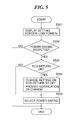
  • FIG. 5 is a flowchart showing a power mode changing process in a low power state.
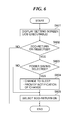
  • FIG. 6 is a flowchart showing a power mode changing process in a job executable state.
  • FIGS. 7A and 7B are views showing exemplary screens which provide notification about changing of modes.
  • FIG. 1 is a block diagram showing an image forming apparatus as a printing apparatus according to an embodiment of the present invention.
  • This image forming apparatus 1000 is configured as, for example, a multifunctional peripheral having a scanner function, a printer function, and a facsimile function.
  • the image forming apparatus 1000 has a controller 1 which is a module, and the controller 1 is comprised of a main board 100 and a sub board 120 .
  • the main board 100 is what is called a universal CPU system.
  • the main board 100 has a CPU 101 which controls the entire board, a LAN controller 102 which carries out communication with external equipment via a network, and a memory 103 which is used as a work memory by the CPU 101 .
  • the main board 100 also has a bus controller 104 which acts as a bridge to an external bus, a nonvolatile memory 105 from which stored data is not erased even when the power is shut down, and an RTC 110 which is able to continue keeping time using a battery even when the power is shut down.
  • the main board 100 also has a disk controller 106 which controls a storage device, a flash disk 107 which is a storage device such as an SSD with a relatively small capacity which is comprised of a semiconductor device, a USB controller 108 which controls a USB memory 9 , a power control unit 109 , and so forth.
  • a disk controller 106 which controls a storage device
  • a flash disk 107 which is a storage device such as an SSD with a relatively small capacity which is comprised of a semiconductor device
  • a USB controller 108 which controls a USB memory 9
  • a power control unit 109 a power control unit
  • the USB memory 9 an operating unit 5 , a power switch 10 , and a hard disk device 6 are connected to the main board 100 .
  • a storage device other than the hard disk device 6 may be adopted insofar as it is a nonvolatile device.
  • the operating unit 5 receives various operations from a user and includes a low-power shift return button 5 a .
  • the operating unit 5 also includes a display unit which produces screen displays.
  • a sub board 120 is comprised of a relatively small universal CPU system and image processing hardware.
  • the sub board 120 has a CPU 121 which controls the entire board, a memory 123 which is used as a work memory by the CPU 121 , a bus controller 124 which acts as a bridge to an external bus, and a watchdog timer 125 .
  • the sub board 120 also has an image processor 127 which performs real-time digital image processing, device controllers 126 A and 126 B, and a power control unit 128 .
  • a printer device 4 and a scanner device 2 send and receive digital image data to and from the image processor 127 via the device controllers 126 A and 126 B.
  • a FAX device 7 is directly controlled by the CPU 121 .
  • Power to the main board 100 and the sub board 120 is supplied from a power supply device 8 .
  • the power control units 109 and 128 manage supply of power to components of the main board 100 and the sub board 120 for which power is required.
  • the power switch 10 receives power on/off operations from a user, and when the power switch 10 is operated, an interrupt signal is sent to the CPU 101 . Upon detecting the interrupt signal, the CPU 101 controls the power control unit 109 in accordance with a condition at that time.
  • the CPU 121 also detects operation on the power switch 10 via the bus controllers 104 and 124 and controls the power control unit 128 .
  • FIG. 1 is a simplified one since it is a block diagram.
  • the CPU 101 , the CPU 121 , and so on include a number of pieces of CPU-peripheral hardware such as a chipset, a bus bridge, and a clock generator, but they are not shown in the figure, and this block configuration should not restrict the present invention.
  • the controller 1 operates by taking copying of an image to a sheet device as an example.
  • the CPU 101 sends an image reading instruction to the scanner device 2 via the CPU 121 .
  • the scanner device 2 optically scans a sheet original, converts an image obtained by scanning to digital image data, and inputs the digital image data to the image processor 127 via the device controller 126 B.
  • the image processor 127 carries out DMA transfer to the memory 123 via the CPU 121 to temporarily store the digital image data.
  • the CPU 101 Upon ascertaining that a predetermined amount or all of digital image data has been stored in the memory 123 , the CPU 101 issues an image output instruction to the printer device 4 via the CPU 121 .
  • the CPU 121 informs the image processor 127 of a position of the image data on the memory 123 .
  • the image data on the memory 123 is sent to the printer device 4 via the image processor 127 and the device controller 126 A, and the digital image data is printed on a sheet device by the printer device 4 .
  • the CPU 101 stores image data on the memory 123 in the hard disk 6 , and hence for the second and subsequent copies, an image is allowed to be sent to the printer device 4 without receiving image data from the scanner device 2 .
  • FIGS. 2A to 2D are views showing exemplary power mode setting screens which are displayed on the operating unit 5 .
  • a plurality of power modes is allowed to be set for the image forming apparatus 100 .
  • power modes are allowed to be set for each of a job executable state and a low-power state. In the low-power state, a smaller amount of power is consumed than in the job executable state.
  • the power modes in the low-power state include a power-saving mode (first mode) and a sleep mode (second mode).
  • the power modes in the low-power state include an eco-return ON mode (third mode) and an eco-return OFF mode (fourth mode).
  • the “low-power state” is in principle a state in which processing of a job cannot be started without undergoing initialization of devices.
  • the power-saving mode is provided in addition to the sleep mode so as to reduce the time that elapses before starting of a job.
  • the speed at which a job such as printing is processed is given higher priority than in the sleep mode.
  • the power to predetermined devices is kept off in the sleep mode, but is kept on in the power-saving mode. Therefore, operation of the predetermined devices is allowed to be started without performing initialization thereof.
  • the “predetermined devices” are the printer device, 4 , the scanner device 2 , and the fax device 7 , but this is not limitative.
  • the “job executable state” is in principle a state in which processing of a job is allowed to be started immediately after a job executing instruction is received, and in general, synonymous with a standby state.
  • the eco-return ON mode is provided in addition to the eco-return OFF mode so as to save power and reduce noise.
  • the power to the predetermined devices is kept off in the eco-return OFF mode, whereas in the eco-return ON mode, when a job to be executed is determined with the power off, the power to a device suitable for the job is turned on.
  • the eco-return ON mode the power to a necessary device is turned on at the time a job to be executed is determined, that is, at the time a function to be used is determined.
  • the power-saving mode and the eco-return ON mode are mutually contradictory in terms of purposes, and hence if they are selected at the same time, this is likely to be against user's intention. Accordingly, the controller 1 selects one of the following combinations of power modes: a combination of the power-saving mode and the eco-return OFF mode and a combination of the sleep mode and the eco-return ON mode. How to provide control therefor will be described later with reference to FIGS. 5 to 7 .
  • the image forming apparatus 1000 shifts from the job executable state into the low power state.
  • the low-power shift return button 5 a (returning factor) is depressed in the low-power state, the image forming apparatus 1000 shifts from the low-power state to the job executable state.
  • the power mode setting screen in FIG. 2A or 2B for the low-power state is displayed on the display of the operating unit 5 .
  • a state in which the sleep mode is selected as a power mode for the low-power state and a state in which the power-saving mode is selected as a power mode for the job executable state are shown in FIGS. 2A and 2B , respectively.
  • the power mode setting screen in FIG. 2C or 2D for the job executable state is displayed on the display of the operating unit 5 .
  • a state in which the eco-return ON mode is selected and a state in which the eco-return OFF mode is selected are shown in FIGS. 2C and 2D , respectively.
  • By depressing an ON or OFF button a setting is allowed to be changed, and when an OK button is depressed, the setting is accepted.
  • the CPU 101 and the operating unit 5 correspond to a setting unit of the present invention.
  • FIGS. 3A and 3B are block diagrams showing energized states in the sleep mode and the power-saving mode, respectively. Power is supplied to at least blocks that are not hatched in FIGS. 3A and 3B .
  • the low-power shift return button 5 a of the operating unit 5 and the LAN controller 102 are energized because they are minimum hardware required to return from the low-power state.
  • the printer device 4 , the scanner device 2 , and the FAX device 7 which are the predetermined devices described above, as well as the low-power shift return button 5 a of the operating unit 5 and the LAN controller 102 are energized, because it takes a long time to initialize these devices.
  • FIG. 4 is a view showing an exemplary function selection screen which is displayed on the operating unit 5 in the eco-return ON mode.
  • the function selection screen in FIG. 4 is displayed.
  • a user selects a function to be used on the function selection screen, power is supplied to a device for the selected function. Determination of a function to be used means determination of a job to be executed.
  • the controller 1 turns on the power to the printer device 4 and the scanner device 2 .
  • a Scan and Send button 402 it is necessary to perform the original reading function so as to carry out a scanning process. Accordingly, the controller 1 turns on the power to the scanner device 2 .
  • a FAX button 403 it is necessary to perform the original reading function and a faxing function so as to carry out a faxing process. Accordingly, the controller 1 turns on the power to the scanner device 2 and the FAX device 7 .
  • Use a Saved File button 404 it is necessary to perform the printing function. Accordingly, the controller 1 turns on the power to the printer device 4 .
  • the power to devices that need not to be operated for a selected function is kept off. It should be noted that when the eco-return OFF mode is set for the image forming apparatus 1000 , the power to all the devices is on, and hence power supply control based on a selected function is not provided.
  • FIG. 5 is a flowchart showing a power mode changing process for the low-power state. This process is started when the image forming apparatus 1000 has shifted into the low-power state in response to the low-power shift return button 5 a being depressed in the job executable state, and is carried out by the CPU 101 of the main board 100 .
  • step S 501 the CPU 101 displays the power mode setting screen ( FIG. 2A or 2B ) for the low-power state on the operating unit 5 .
  • step S 502 the CPU 101 determines whether or not the power-saving mode has been selected between the sleep mode and the power-saving mode on the power mode setting screen. As a result of the determination in the step S 502 , when the sleep mode has been selected, the CPU 101 terminates the process in FIG. 5 without changing any settings.
  • step S 503 the CPU 101 in turn determines whether or not the eco-return ON mode has been selected as a power mode for the job executable state between the eco-return ON mode and the eco-return OFF mode.
  • step S 504 in which the CPU 101 in turn forcibly changes the power mode for the job executable state to the eco-return OFF mode and provides a notification ( FIG. 7A ), to be described later.
  • FIG. 7A is a view showing an exemplary screen which provides notification that the power mode changes from the eco-return ON mode to the eco-return OFF mode when the power mode changes from the sleep mode to the power-saving mode.
  • different power mode setting screens are displayed in the low-power state ( FIGS. 2A and 2B ) and the job executable state ( FIGS. 2C and 2D ), and a setting is changed in a form like a background process. For this reason, the user may not be aware of this change. Accordingly, by displaying a popup 701 , the CPU 101 informs the user that the power mode changes to the eco-return OFF mode.
  • step S 505 the CPU 101 changes the power mode for the low-power state from the sleep mode to the power-saving mode.
  • the notification in FIG. 7A is provided at the time the setting on the power mode is changed. The process in FIG. 5 is then terminated.
  • the CPU 101 executes the step S 505 while maintaining the eco-return OFF mode.
  • FIG. 6 is a flowchart showing a power mode changing process in the job executable state. This process is started when the image forming apparatus 1000 has shifted into the job executable state in response to the low power shift return button 5 a being depressed in the low power state, and is carried out by the CPU 101 of the main board 100 .
  • step S 601 the CPU 101 displays the power mode setting screen ( FIG. 2C or 2D ) for the job executable state on the operating unit 5 .
  • step S 602 the CPU 101 determines whether or not the eco-return ON mode has been selected between the eco-return ON mode and the eco-return OFF mode on the power mode setting screen. As a result of the determination in the step S 602 , when the eco-return OFF mode has been selected, the CPU 101 terminates the process in FIG. 6 without changing any settings.
  • the process proceeds to S 603 , in which the CPU 101 in turn determines whether or not the power-saving mode has been selected as a power mode for the low-power state between the sleep mode and the power-saving mode.
  • step S 604 in which the CPU 101 in turn forcibly changes the power mode for the low-power state to the sleep mode and provides a notification ( FIG. 7B ), to be described later.
  • FIG. 7B is a view showing an exemplary screen which provides notification that the power mode changes from the power-saving mode to the sleep mode when the power mode changes from the eco-return OFF mode to the eco-return ON mode.
  • different power mode setting screens are displayed in the low-power state and the job executable state, and hence the user may not be aware of this change. For this reason, as shown in FIG. 7B , by displaying a popup 702 , the CPU 101 informs the user that the power mode changes to the sleep mode.
  • step S 605 the CPU 101 changes the power mode for the job executable state from the eco-return OFF mode to the eco-return ON mode.
  • the notification in FIG. 7B is provided at the time the setting on the power mode is changed.
  • the process in FIG. 6 is terminated.
  • the CPU 101 executes the step S 605 while maintaining the sleep mode.
  • the CPU 101 when changing the power mode for the low-power state from the sleep mode to the power-saving mode, the CPU 101 also changes the power mode for the job executable state from the eco-return ON mode to the eco-return OFF mode. Also, when changing the power mode for the job executable state from the eco-return OFF mode to the eco-return ON mode, the CPU 101 also changes the power mode for the low-power state from the power-saving mode to the sleep mode.
  • one of the following combinations of power modes is selected: a combination of the power-saving mode and the eco-return OFF mode, and a combination of the sleep mode and the eco-return ON mode.
  • power states intended by a user are allowed to be selected for the low-power state and the job executable state.
  • the CPU 101 changes the power mode from the sleep mode to the power-saving mode, it provides notification that the power mode changes from the eco-return ON mode to the eco-return OFF mode. Further, at the time the CPU 101 changes the power mode from the eco-return OFF mode to the eco-return ON mode, it provides notification that the power mode changes from the power-saving mode to the sleep mode. This clearly informs a user of modes that change in response to instructions from the user.
  • a popup display is illustrated by example, this is not limitative. For example, changing of modes may be indicated on an additional display, or notification may be provided by voice.
  • the present invention may be applied to any image forming apparatuses insofar as they have a plurality of devices which operate to execute a job, and the devices should not be limited to those having functions of a printer, a scanner, and facsimile.
  • Embodiment(s) of the present invention can also be realized by a computer of a system or apparatus that reads out and executes computer executable instructions (e.g., one or more programs) recorded on a storage medium (which may also be referred to more fully as a ‘non-transitory computer-readable storage medium’) to perform the functions of one or more of the above-described embodiment(s) and/or that includes one or more circuits (e.g., application specific integrated circuit (ASIC)) for performing the functions of one or more of the above-described embodiment(s), and by a method performed by the computer of the system or apparatus by, for example, reading out and executing the computer executable instructions from the storage medium to perform the functions of one or more of the above-described embodiment(s) and/or controlling the one or more circuits to perform the functions of one or more of the above-described embodiment(s).
  • computer executable instructions e.g., one or more programs
  • a storage medium which may also be referred to more fully as a
  • the computer may comprise one or more processors (e.g., central processing unit (CPU), micro processing unit (MPU)) and may include a network of separate computers or separate processors to read out and execute the computer executable instructions.
  • the computer executable instructions may be provided to the computer, for example, from a network or the storage medium.
  • the storage medium may include, for example, one or more of a hard disk, a random-access memory (RAM), a read only memory (ROM), a storage of distributed computing systems, an optical disk (such as a compact disc (CD), digital versatile disc (DVD), or Blu-ray Disc (BD)TM), a flash memory device, a memory card, and the like.

Landscapes

  • Engineering & Computer Science (AREA)
  • Multimedia (AREA)
  • Signal Processing (AREA)
  • Accessory Devices And Overall Control Thereof (AREA)
  • Facsimiles In General (AREA)
  • Control Or Security For Electrophotography (AREA)
  • Power Sources (AREA)

Abstract

An image forming apparatus which is capable of selecting power states that suit user's intention for a low-power state and a job executable state. A first power-saving state or a second power-saving state in which a smaller amount of power is consumed than in the first power-saving state is set as a power-saving state to which the printing apparatus is shifted when a shifting factor is detected. A first returning method for returning the printing apparatus from the power-saving state when a returning factor that causes the printing apparatus to return from the power-saving state is detected, or a second returning method for returning the printing apparatus from the power-saving state when a function to be used is selected on a function selecting screen displayed in response to detecting the returning factor is set. When the first power-saving state has been set, the first returning method is set.

Description

BACKGROUND OF THE INVENTION
Field of the Invention
The present invention relates to a printing apparatus and a control method therefor, and in particular to a power control technique for a printing apparatus having a plurality of power states.
Description of the Related Art
Conventionally, image forming apparatuses have a power state called a “low-power (power-saving) state” different from a job executing state and a job executable state so as to reduce power consumption while they are not operating. To return from the low-power state to the job executable state, initialization of each device is required, but it takes long to initialize some devices. For this reason, there is conventionally known an image forming apparatus which has some different low-power states and sets a state suitable for a processing time period required to initialize devices.
Specifically, in the low-power state, the power to devices of which initialization takes a long time is not turned off, and only the power to devices that can be quickly returned to the job executable state turned off. This speeds up the return to the job executable state although a greater amount of power is consumed than in a normal low-power state. As a result, a user is allowed to quickly obtain an output result of printing or the like from the image forming apparatus in the low-power state.
Japanese Laid-Open Patent Publication (Kokai) No. 2001-201986 describes a technique to turn off the power to devices even in the job executable state so as to reduce power consumption. In this case, when a user issues an instruction to execute a job, the power to a device required for the job is turned on.
However, according to Japanese Laid-Open Patent Publication (Kokai) No. 2001-201986, a device is initialized when a job is to be executed, and hence it takes a long time before execution of the job. Namely, according to Japanese Laid-Open Patent Publication (Kokai) No. 2001-201986, greater importance is placed on saving of power in the job executable state than on shortening of the time period that elapses before execution of a job. On the other hand, the above described technique by which the power to devices of which initialization takes a long time is kept on, and the power to devices that can be initialized within a short time is turned off in the low-power state places greater importance on shortening of the time period before execution of a job than on saving of power in the low-power state.
Therefore, using both of these techniques for an image forming apparatus will bring about a situation in which two purposes, i.e. shortening of the time period before execution of a job in the low-power state and saving of power in the job executable state are mutually contradictory, and power may not be controlled in an appropriate manner as intended by a user.
SUMMARY OF THE INVENTION
The present invention provides a printing apparatus and a control method therefor, which are capable of selecting power states that suit user's intention for a low-power state and a job executable state.
Accordingly, the present invention provides a printing apparatus, comprising a first setting unit configured to set a first power-saving state or a second power-saving state in which a smaller amount of power is consumed than in the first power-saving state as a power-saving state to which the printing apparatus is shifted when a shifting factor that causes the printing apparatus to shift to the power-saving state is detected, a second setting unit configured to set, as a returning method for returning the printing apparatus from the power-saving state, a first returning method for returning the printing apparatus from the power-saving state when a returning factor that causes the printing apparatus to return from the power-saving state is detected, or a second returning method for returning the printing apparatus from the power-saving state when a function to be used is selected on a function selecting screen displayed in response to detecting the returning factor, and a control unit configured to perform control so that the second setting unit sets the first returning method when the first setting unit sets the first power-saving state.
According to the present invention, in a case where the first power-saving state between the first power-saving state and the second power-saving state in which a smaller amount of power is consumed than in the first power-saving state is set and the returning factor is detected, the printing apparatus returns from the power-saving state. As a result, power states that suit user's intention can be selected for the low-power state and the job executable state.
Further features of the present invention will become apparent from the following description of exemplary embodiments (with reference to the attached drawings).
BRIEF DESCRIPTION OF THE DRAWINGS
FIG. 1 is a block diagram showing an image forming apparatus as a printing apparatus according to an embodiment of the present invention.
FIGS. 2A to 2D are views showing exemplary power mode setting screens.
FIG. 3A is a block diagram showing an energized state in a sleep mode, and FIG. 3B is a block diagram showing an energized state in a power-saving mode.
FIG. 4 is a view showing an exemplary function selection screen in an eco-return ON mode.
FIG. 5 is a flowchart showing a power mode changing process in a low power state.
FIG. 6 is a flowchart showing a power mode changing process in a job executable state.
FIGS. 7A and 7B are views showing exemplary screens which provide notification about changing of modes.
DESCRIPTION OF THE EMBODIMENTS
The present invention will now be described with reference to the drawings showing an embodiment thereof.
FIG. 1 is a block diagram showing an image forming apparatus as a printing apparatus according to an embodiment of the present invention. This image forming apparatus 1000 is configured as, for example, a multifunctional peripheral having a scanner function, a printer function, and a facsimile function. The image forming apparatus 1000 has a controller 1 which is a module, and the controller 1 is comprised of a main board 100 and a sub board 120.
The main board 100 is what is called a universal CPU system. The main board 100 has a CPU 101 which controls the entire board, a LAN controller 102 which carries out communication with external equipment via a network, and a memory 103 which is used as a work memory by the CPU 101. The main board 100 also has a bus controller 104 which acts as a bridge to an external bus, a nonvolatile memory 105 from which stored data is not erased even when the power is shut down, and an RTC 110 which is able to continue keeping time using a battery even when the power is shut down. The main board 100 also has a disk controller 106 which controls a storage device, a flash disk 107 which is a storage device such as an SSD with a relatively small capacity which is comprised of a semiconductor device, a USB controller 108 which controls a USB memory 9, a power control unit 109, and so forth.
The USB memory 9, an operating unit 5, a power switch 10, and a hard disk device 6 are connected to the main board 100. A storage device other than the hard disk device 6 may be adopted insofar as it is a nonvolatile device. The operating unit 5 receives various operations from a user and includes a low-power shift return button 5 a. The operating unit 5 also includes a display unit which produces screen displays.
A sub board 120 is comprised of a relatively small universal CPU system and image processing hardware. The sub board 120 has a CPU 121 which controls the entire board, a memory 123 which is used as a work memory by the CPU 121, a bus controller 124 which acts as a bridge to an external bus, and a watchdog timer 125. The sub board 120 also has an image processor 127 which performs real-time digital image processing, device controllers 126A and 126B, and a power control unit 128. A printer device 4 and a scanner device 2 send and receive digital image data to and from the image processor 127 via the device controllers 126A and 126B. A FAX device 7 is directly controlled by the CPU 121.
Power to the main board 100 and the sub board 120 is supplied from a power supply device 8. The power control units 109 and 128 manage supply of power to components of the main board 100 and the sub board 120 for which power is required. The power switch 10 receives power on/off operations from a user, and when the power switch 10 is operated, an interrupt signal is sent to the CPU 101. Upon detecting the interrupt signal, the CPU 101 controls the power control unit 109 in accordance with a condition at that time. The CPU 121 also detects operation on the power switch 10 via the bus controllers 104 and 124 and controls the power control unit 128.
It should be noted that FIG. 1 is a simplified one since it is a block diagram. For example, the CPU 101, the CPU 121, and so on include a number of pieces of CPU-peripheral hardware such as a chipset, a bus bridge, and a clock generator, but they are not shown in the figure, and this block configuration should not restrict the present invention.
A description will now be given of how the controller 1 operates by taking copying of an image to a sheet device as an example. When a user issues a copying instruction to the operating unit 5, the CPU 101 sends an image reading instruction to the scanner device 2 via the CPU 121. The scanner device 2 optically scans a sheet original, converts an image obtained by scanning to digital image data, and inputs the digital image data to the image processor 127 via the device controller 126B. The image processor 127 carries out DMA transfer to the memory 123 via the CPU 121 to temporarily store the digital image data.
Upon ascertaining that a predetermined amount or all of digital image data has been stored in the memory 123, the CPU 101 issues an image output instruction to the printer device 4 via the CPU 121. The CPU 121 informs the image processor 127 of a position of the image data on the memory 123. In accordance with a synchronization signal from the printer device 4, the image data on the memory 123 is sent to the printer device 4 via the image processor 127 and the device controller 126A, and the digital image data is printed on a sheet device by the printer device 4.
To print a plurality of copies, the CPU 101 stores image data on the memory 123 in the hard disk 6, and hence for the second and subsequent copies, an image is allowed to be sent to the printer device 4 without receiving image data from the scanner device 2.
FIGS. 2A to 2D are views showing exemplary power mode setting screens which are displayed on the operating unit 5. In the present embodiment, a plurality of power modes is allowed to be set for the image forming apparatus 100. In particular, power modes are allowed to be set for each of a job executable state and a low-power state. In the low-power state, a smaller amount of power is consumed than in the job executable state. The power modes in the low-power state include a power-saving mode (first mode) and a sleep mode (second mode). The power modes in the low-power state include an eco-return ON mode (third mode) and an eco-return OFF mode (fourth mode).
The “low-power state” is in principle a state in which processing of a job cannot be started without undergoing initialization of devices. However, even for the low power state, the power-saving mode is provided in addition to the sleep mode so as to reduce the time that elapses before starting of a job. In the power-saving mode, the speed at which a job such as printing is processed is given higher priority than in the sleep mode. The power to predetermined devices is kept off in the sleep mode, but is kept on in the power-saving mode. Therefore, operation of the predetermined devices is allowed to be started without performing initialization thereof. It is assumed here that in the present embodiment, the “predetermined devices” are the printer device, 4, the scanner device 2, and the fax device 7, but this is not limitative.
The “job executable state” is in principle a state in which processing of a job is allowed to be started immediately after a job executing instruction is received, and in general, synonymous with a standby state. However, even for the job executable state, the eco-return ON mode is provided in addition to the eco-return OFF mode so as to save power and reduce noise. The power to the predetermined devices is kept off in the eco-return OFF mode, whereas in the eco-return ON mode, when a job to be executed is determined with the power off, the power to a device suitable for the job is turned on. Thus, in the eco-return ON mode, the power to a necessary device is turned on at the time a job to be executed is determined, that is, at the time a function to be used is determined.
The power-saving mode and the eco-return ON mode are mutually contradictory in terms of purposes, and hence if they are selected at the same time, this is likely to be against user's intention. Accordingly, the controller 1 selects one of the following combinations of power modes: a combination of the power-saving mode and the eco-return OFF mode and a combination of the sleep mode and the eco-return ON mode. How to provide control therefor will be described later with reference to FIGS. 5 to 7.
When the low-power shift return button 5 a (shifting factor) is depressed in the job executable state, the image forming apparatus 1000 shifts from the job executable state into the low power state. When the low-power shift return button 5 a (returning factor) is depressed in the low-power state, the image forming apparatus 1000 shifts from the low-power state to the job executable state.
When the image forming apparatus 1000 has shifted from the job executable state to the low-power state, the power mode setting screen in FIG. 2A or 2B for the low-power state is displayed on the display of the operating unit 5. A state in which the sleep mode is selected as a power mode for the low-power state and a state in which the power-saving mode is selected as a power mode for the job executable state are shown in FIGS. 2A and 2B, respectively. By a user depressing a sleep or power-saving button, a setting is allowed to be changed, and when an OK button is depressed, the setting is accepted.
When the image forming apparatus 1000 has shifted from the low-power state to the job executable state, the power mode setting screen in FIG. 2C or 2D for the job executable state is displayed on the display of the operating unit 5. A state in which the eco-return ON mode is selected and a state in which the eco-return OFF mode is selected are shown in FIGS. 2C and 2D, respectively. By depressing an ON or OFF button, a setting is allowed to be changed, and when an OK button is depressed, the setting is accepted. The CPU 101 and the operating unit 5 correspond to a setting unit of the present invention.
FIGS. 3A and 3B are block diagrams showing energized states in the sleep mode and the power-saving mode, respectively. Power is supplied to at least blocks that are not hatched in FIGS. 3A and 3B.
In the sleep mode (FIG. 3A), the low-power shift return button 5 a of the operating unit 5 and the LAN controller 102 are energized because they are minimum hardware required to return from the low-power state. On the other hand, in the power-saving mode (FIG. 3B), the printer device 4, the scanner device 2, and the FAX device 7, which are the predetermined devices described above, as well as the low-power shift return button 5 a of the operating unit 5 and the LAN controller 102 are energized, because it takes a long time to initialize these devices.
FIG. 4 is a view showing an exemplary function selection screen which is displayed on the operating unit 5 in the eco-return ON mode.
When the image forming apparatus 1000 has shifted into the eco-return ON mode, the function selection screen in FIG. 4 is displayed. When a user selects a function to be used on the function selection screen, power is supplied to a device for the selected function. Determination of a function to be used means determination of a job to be executed.
For example, when a Copy button 401 is selected, it is necessary to perform an original reading function and a printing function so as to carry out a copying process. Accordingly, the controller 1 turns on the power to the printer device 4 and the scanner device 2. When a Scan and Send button 402 is selected, it is necessary to perform the original reading function so as to carry out a scanning process. Accordingly, the controller 1 turns on the power to the scanner device 2. When a FAX button 403 is selected, it is necessary to perform the original reading function and a faxing function so as to carry out a faxing process. Accordingly, the controller 1 turns on the power to the scanner device 2 and the FAX device 7. When Use a Saved File button 404 is selected, it is necessary to perform the printing function. Accordingly, the controller 1 turns on the power to the printer device 4.
The power to devices that need not to be operated for a selected function is kept off. It should be noted that when the eco-return OFF mode is set for the image forming apparatus 1000, the power to all the devices is on, and hence power supply control based on a selected function is not provided.
FIG. 5 is a flowchart showing a power mode changing process for the low-power state. This process is started when the image forming apparatus 1000 has shifted into the low-power state in response to the low-power shift return button 5 a being depressed in the job executable state, and is carried out by the CPU 101 of the main board 100.
First, in step S501, the CPU 101 displays the power mode setting screen (FIG. 2A or 2B) for the low-power state on the operating unit 5. In step S502, the CPU 101 determines whether or not the power-saving mode has been selected between the sleep mode and the power-saving mode on the power mode setting screen. As a result of the determination in the step S502, when the sleep mode has been selected, the CPU 101 terminates the process in FIG. 5 without changing any settings. On the other hand, when the power-saving mode has been selected, the process proceeds to step S503, in which the CPU 101 in turn determines whether or not the eco-return ON mode has been selected as a power mode for the job executable state between the eco-return ON mode and the eco-return OFF mode.
As a result of the determination in the step S503, when the eco-return ON mode has been selected, the process proceeds to step S504, in which the CPU 101 in turn forcibly changes the power mode for the job executable state to the eco-return OFF mode and provides a notification (FIG. 7A), to be described later.
FIG. 7A is a view showing an exemplary screen which provides notification that the power mode changes from the eco-return ON mode to the eco-return OFF mode when the power mode changes from the sleep mode to the power-saving mode. When the power mode changes from the sleep mode to the power-saving mode, different power mode setting screens are displayed in the low-power state (FIGS. 2A and 2B) and the job executable state (FIGS. 2C and 2D), and a setting is changed in a form like a background process. For this reason, the user may not be aware of this change. Accordingly, by displaying a popup 701, the CPU 101 informs the user that the power mode changes to the eco-return OFF mode.
After that, in step S505, the CPU 101 changes the power mode for the low-power state from the sleep mode to the power-saving mode. Thus, the notification in FIG. 7A is provided at the time the setting on the power mode is changed. The process in FIG. 5 is then terminated.
On the other hand, as a result of the determination in the step S503, when the eco-return OFF mode is selected, the CPU 101 executes the step S505 while maintaining the eco-return OFF mode.
FIG. 6 is a flowchart showing a power mode changing process in the job executable state. This process is started when the image forming apparatus 1000 has shifted into the job executable state in response to the low power shift return button 5 a being depressed in the low power state, and is carried out by the CPU 101 of the main board 100.
First, in step S601, the CPU 101 displays the power mode setting screen (FIG. 2C or 2D) for the job executable state on the operating unit 5. In step S602, the CPU 101 determines whether or not the eco-return ON mode has been selected between the eco-return ON mode and the eco-return OFF mode on the power mode setting screen. As a result of the determination in the step S602, when the eco-return OFF mode has been selected, the CPU 101 terminates the process in FIG. 6 without changing any settings. On the other hand, when the eco-return ON mode has been selected, the process proceeds to S603, in which the CPU 101 in turn determines whether or not the power-saving mode has been selected as a power mode for the low-power state between the sleep mode and the power-saving mode.
As a result of the determination in the step S603, when the power-saving mode has been selected, the process proceeds to step S604, in which the CPU 101 in turn forcibly changes the power mode for the low-power state to the sleep mode and provides a notification (FIG. 7B), to be described later.
FIG. 7B is a view showing an exemplary screen which provides notification that the power mode changes from the power-saving mode to the sleep mode when the power mode changes from the eco-return OFF mode to the eco-return ON mode. A described above, different power mode setting screens are displayed in the low-power state and the job executable state, and hence the user may not be aware of this change. For this reason, as shown in FIG. 7B, by displaying a popup 702, the CPU 101 informs the user that the power mode changes to the sleep mode.
After that, in step S605, the CPU 101 changes the power mode for the job executable state from the eco-return OFF mode to the eco-return ON mode. Thus, the notification in FIG. 7B is provided at the time the setting on the power mode is changed. After that, the process in FIG. 6 is terminated. On the other hand, as a result of the determination in the step S603, when the sleep mode has been selected, the CPU 101 executes the step S605 while maintaining the sleep mode.
According to the present embodiment, when changing the power mode for the low-power state from the sleep mode to the power-saving mode, the CPU 101 also changes the power mode for the job executable state from the eco-return ON mode to the eco-return OFF mode. Also, when changing the power mode for the job executable state from the eco-return OFF mode to the eco-return ON mode, the CPU 101 also changes the power mode for the low-power state from the power-saving mode to the sleep mode.
As a result, one of the following combinations of power modes is selected: a combination of the power-saving mode and the eco-return OFF mode, and a combination of the sleep mode and the eco-return ON mode. This prevents a combination of modes which are mutually contradictory in terms of purposes from being selected and achieves a balance between saving of power and shortening of the time that elapses before execution of a job. As a result, power states intended by a user are allowed to be selected for the low-power state and the job executable state.
Moreover, at the time the CPU 101 changes the power mode from the sleep mode to the power-saving mode, it provides notification that the power mode changes from the eco-return ON mode to the eco-return OFF mode. Further, at the time the CPU 101 changes the power mode from the eco-return OFF mode to the eco-return ON mode, it provides notification that the power mode changes from the power-saving mode to the sleep mode. This clearly informs a user of modes that change in response to instructions from the user.
It should be noted that although as a way of providing notification about changing of modes, a popup display is illustrated by example, this is not limitative. For example, changing of modes may be indicated on an additional display, or notification may be provided by voice.
It should be noted that the present invention may be applied to any image forming apparatuses insofar as they have a plurality of devices which operate to execute a job, and the devices should not be limited to those having functions of a printer, a scanner, and facsimile.
Other Embodiments
Embodiment(s) of the present invention can also be realized by a computer of a system or apparatus that reads out and executes computer executable instructions (e.g., one or more programs) recorded on a storage medium (which may also be referred to more fully as a ‘non-transitory computer-readable storage medium’) to perform the functions of one or more of the above-described embodiment(s) and/or that includes one or more circuits (e.g., application specific integrated circuit (ASIC)) for performing the functions of one or more of the above-described embodiment(s), and by a method performed by the computer of the system or apparatus by, for example, reading out and executing the computer executable instructions from the storage medium to perform the functions of one or more of the above-described embodiment(s) and/or controlling the one or more circuits to perform the functions of one or more of the above-described embodiment(s). The computer may comprise one or more processors (e.g., central processing unit (CPU), micro processing unit (MPU)) and may include a network of separate computers or separate processors to read out and execute the computer executable instructions. The computer executable instructions may be provided to the computer, for example, from a network or the storage medium. The storage medium may include, for example, one or more of a hard disk, a random-access memory (RAM), a read only memory (ROM), a storage of distributed computing systems, an optical disk (such as a compact disc (CD), digital versatile disc (DVD), or Blu-ray Disc (BD)™), a flash memory device, a memory card, and the like.
While the present invention has been described with reference to exemplary embodiments, it is to be understood that the invention is not limited to the disclosed exemplary embodiments. The scope of the following claims is to be accorded the broadest interpretation so as to encompass all such modifications and equivalent structures and functions.
This application claims the benefit of Japanese Patent Application No. 2014-203058, filed Oct. 1, 2014, which is hereby incorporated by reference herein in its entirety.

Claims (20)

What is claimed is:
1. A printing apparatus, comprising:
a processor; and
a memory storing instructions which, when executed by the processor, cause the processor to provide:
a first setting unit configured to set a first power-saving state and a second power-saving state in which a smaller amount of power is consumed than in the first power-saving state as a power-saving state to which the printing apparatus is shifted when a shifting factor that causes the printing apparatus to shift to the power-saving state is detected;
a second setting unit configured to set, as a returning method for returning the printing apparatus from the power-saving state, a first returning method for returning the printing apparatus from the power-saving state when a returning factor that causes the printing apparatus to return from the power-saving state is detected, and a second returning method for returning the printing apparatus from the power-saving state when a function to be used is selected on a function selecting screen displayed in accordance with detecting the returning factor; and
a control unit configured to perform control so that said second setting unit sets the first returning method based on said first setting unit setting the first power-saving state.
2. The printing apparatus according to claim 1, wherein the instructions further cause the printing apparatus to function as a notification unit configured to notify a user that said second setting unit sets the first returning method.
3. The printing apparatus according to claim 1, wherein the instructions further cause the printing apparatus to function as a display unit configured to display a screen for causing a user to select the first power-saving state and the second power-saving state as the power-saving state to which the printing apparatus is shifted when the shifting factor is detected,
wherein said first setting unit sets the first power-saving state or the second power-saving state selected via the screen displayed on said display unit as the power-saving state to which the printing apparatus is shifted on detecting the shifting factor.
4. The printing apparatus according to claim 3,
wherein when the first power-saving state is selected via the screen displayed on said display unit, said control unit performs control so that said second setting unit sets the first returning method.
5. The printing apparatus according to claim 1, wherein the instructions further cause the printing apparatus to function as a printing unit configured to print an image on a sheet,
wherein power is supplied to a part of said printing unit in the first power-saving state, and power is not supplied to the part of said printing unit in the second power-saving state.
6. The printing apparatus according to claim 1, wherein the instructions further cause the printing apparatus to function as a reading unit configured to read an image of an original,
wherein power is supplied to a part of said reading unit in the first power-saving state, and power is not supplied to the part of said reading unit in the second power-saving state.
7. The printing apparatus according to claim 1, wherein the instructions further cause the printing apparatus to function as a facsimile unit configured to send or receive facsimile data,
wherein power is supplied to a part of said facsimile unit in the first power-saving state, and power is not supplied to the part of said facsimile unit in the second power-saving state.
8. A control method for a printing apparatus, comprising:
a first setting step of setting a first power-saving state and a second power-saving state in which a smaller amount of power is consumed than in the first power-saving state as a power-saving state to which the printing apparatus is shifted when a shifting factor that causes the printing apparatus to shift into the power-saving state is detected;
a second setting step of, as a returning method for returning the printing apparatus from the power-saving state, setting a first returning method for returning the printing apparatus from the power-saving state when a returning factor that causes the printing apparatus to return from the power-saving state is detected, and a second returning method for returning the printing apparatus from the power-saving state when a function to be used is selected on a function selecting screen displayed in accordance with detecting the returning factor; and
a control step of performing control so that the first returning method is set in said second setting step based on the first power-saving state being set in said first setting step.
9. The control method according to claim 8, further comprising a notification step of notifying a user that the first returning method is set in said second setting step when the first power-saving state is set in said first setting step.
10. The control method according to claim 8,
wherein the printing apparatus comprises a printing unit configured to print an image on a sheet, and
wherein power is supplied to the printing unit in the first power-saving state, and power is not supplied to the printing unit in the second power-saving state.
11. A printing apparatus, comprising:
a processor; and
a memory storing instructions which, executed by the processor, cause the printing apparatus to function as:
a first setting unit configured to set a first power-saving state and a second power-saving state in which a smaller amount of power is consumed than in the first power-saving state as a power-saving state to which the printing apparatus is shifted when a shifting factor that causes the printing apparatus to shift to the power-saving state is detected;
a second setting unit configured to set, as a returning method for returning the printing apparatus from the power-saving state, a first returning method for returning the printing apparatus from the power-saving state when a returning factor that causes the printing apparatus to return from the power-saving state is detected, and a second returning method for returning the printing apparatus from the power-saving state when a function to be used is selected on a function selecting screen displayed in accordance with detecting the returning factor; and
a control unit configured to perform control so that said first setting unit sets the second power-saving state based on said second setting unit setting the second returning method.
12. The printing apparatus according to claim 11, wherein the instructions further cause the printing apparatus to function as a notification unit configured to notify a user that said first setting unit sets the second power-saving state.
13. The printing apparatus according to claim 11, wherein the instructions further cause the printing apparatus to function as a display unit configured to display a screen for causing a user to select the first returning method and the second returning method as the returning method,
wherein said second setting unit sets the first returning method or the second returning method selected via the screen displayed on said display unit as the returning method.
14. The printing apparatus according to claim 13,
wherein when the second returning method is selected via the screen displayed on said display unit, said control unit performs control so that said first setting unit sets the second power-saving state.
15. The printing apparatus according to claim 11, wherein the instructions further cause the printing apparatus to function as a printing unit configured to print an image on a sheet,
wherein power is supplied to a part of said printing unit in the first power-saving state, and power is not supplied to the part of said printing unit in the second power-saving state.
16. The printing apparatus according to claim 11, wherein the instructions further cause the printing apparatus to function as a reading unit configured to read an image of an original,
wherein power is supplied to a part of said reading unit in the first power-saving state, and power is not supplied to the part of said reading unit in the second power-saving state.
17. The printing apparatus according to claim 11, wherein the instructions further cause the printing apparatus to function as a facsimile unit configured to send or receive facsimile data,
wherein power is supplied to a part of said facsimile unit in the first power-saving state, and power is not supplied to the part of said facsimile unit in the second power-saving state.
18. A control method for a printing apparatus, comprising:
a first setting step of setting a first power-saving state and a second power-saving state in which a smaller amount of power is consumed than in the first power-saving state as a power-saving state to which the printing apparatus is shifted when a shifting factor that causes the printing apparatus to shift into the power-saving state is detected;
a second setting step of, as a returning method for returning the printing apparatus from the power-saving state, setting a first returning method for returning the printing apparatus from the power-saving state when a returning factor that causes the printing apparatus to return from the power-saving state is detected, and a second returning method for returning the printing apparatus from the power-saving state when a function to be used is selected on a function selecting screen displayed in accordance with detecting the returning factor; and
a control step of performing control so that the second power-saving state is set in said first setting step based on the second returning method being set in said second setting step.
19. The control method according to claim 18, further comprising a notification step of notifying a user that the first returning method is set in said second setting step when the first power-saving state is set in said first setting step.
20. The control method according to claim 18,
wherein the printing apparatus comprises a printing unit configured to print an image on a sheet, and
wherein power is supplied to the printing unit in the first power-saving state, and power is not supplied to the printing unit in the second power-saving state.
US14/867,113 2014-10-01 2015-09-28 Printing apparatus having plurality of power states and control method therefor Active US9503601B2 (en)

Priority Applications (1)

Application Number Priority Date Filing Date Title
US15/297,233 US10033895B2 (en) 2014-10-01 2016-10-19 Printing apparatus having plurality of power states and control method therefor

Applications Claiming Priority (2)

Application Number Priority Date Filing Date Title
JP2014203058A JP2016068521A (en) 2014-10-01 2014-10-01 Image forming apparatus, control method thereof, and program
JP2014-203058 2014-10-01

Related Child Applications (1)

Application Number Title Priority Date Filing Date
US15/297,233 Continuation US10033895B2 (en) 2014-10-01 2016-10-19 Printing apparatus having plurality of power states and control method therefor

Publications (2)

Publication Number Publication Date
US20160100073A1 US20160100073A1 (en) 2016-04-07
US9503601B2 true US9503601B2 (en) 2016-11-22

Family

ID=55633706

Family Applications (2)

Application Number Title Priority Date Filing Date
US14/867,113 Active US9503601B2 (en) 2014-10-01 2015-09-28 Printing apparatus having plurality of power states and control method therefor
US15/297,233 Active US10033895B2 (en) 2014-10-01 2016-10-19 Printing apparatus having plurality of power states and control method therefor

Family Applications After (1)

Application Number Title Priority Date Filing Date
US15/297,233 Active US10033895B2 (en) 2014-10-01 2016-10-19 Printing apparatus having plurality of power states and control method therefor

Country Status (3)

Country Link
US (2) US9503601B2 (en)
JP (1) JP2016068521A (en)
CN (1) CN105491261B (en)

Families Citing this family (4)

* Cited by examiner, † Cited by third party
Publication number Priority date Publication date Assignee Title
JP6727798B2 (en) * 2015-12-07 2020-07-22 キヤノン株式会社 Information processing apparatus, control method thereof, and program
JP6885790B2 (en) * 2017-06-01 2021-06-16 シャープ株式会社 Image forming device, its state control method and image forming system
CN109885343B (en) * 2019-02-25 2022-03-29 深圳忆联信息系统有限公司 Controller low-power-consumption starting method and device, computer equipment and storage medium
JP2024135218A (en) * 2023-03-22 2024-10-04 キヤノン株式会社 Information processing device, method and program

Citations (16)

* Cited by examiner, † Cited by third party
Publication number Priority date Publication date Assignee Title
JP2001201986A (en) 2000-01-21 2001-07-27 Ricoh Co Ltd Image forming apparatus and power saving mode control method for image forming apparatus
US6753973B2 (en) * 1994-04-14 2004-06-22 Canon Kabushiki Kaisha Image recording apparatus with controller for selectively executing an energy saving mode
US20090207423A1 (en) * 2008-02-19 2009-08-20 Canon Kabushiki Kaisha Information processing apparatus and information processing method
US7633636B2 (en) * 2005-04-28 2009-12-15 Fuji Xerox Co., Ltd. Image forming apparatus and screen transition control method
US20110051166A1 (en) * 2009-08-31 2011-03-03 Brother Kogyo Kabushiki Kaisha Image processing device having plurality of control units
US20110273742A1 (en) * 2010-05-07 2011-11-10 Takiguchi Akira Electronic apparatus, image forming apparatus, and computer program product
US20120002236A1 (en) * 2010-06-30 2012-01-05 Oki Data Corporation Image formation apparatus
US8171312B2 (en) * 2006-07-05 2012-05-01 Canon Kabushiki Kaisha Recording apparatus and method for controlling the recording apparatus
US20120162692A1 (en) * 2010-12-28 2012-06-28 Riso Kagaku Corporation Image forming apparatus
US8248629B2 (en) * 2007-06-21 2012-08-21 Kyocera Mita Corporation Image forming apparatus with a power mode control section for allocating a printout for a reserved low-key print setting job
US20120257247A1 (en) * 2011-04-06 2012-10-11 Canon Kabushiki Kaisha Image forming apparatus, and control method thereof
US20130050727A1 (en) * 2011-03-01 2013-02-28 Murata Machinery, Ltd. Image processing apparatus and power-saving method of image processing apparatus
US20130194602A1 (en) * 2012-01-31 2013-08-01 Brother Kogyo Kabushiki Kaisha Image Processing Device and Image Processing Unit
US20140218757A1 (en) * 2013-02-01 2014-08-07 Canon Kabushiki Kaisha Image forming apparatus, image forming apparatus control method, and program
US8924757B2 (en) * 2010-07-30 2014-12-30 Kyocera Mita Corporation Electrical apparatus and power supply control method
US9152359B2 (en) * 2013-12-27 2015-10-06 Kyocera Document Solutions Inc. Image forming apparatus that selects appropriate power saving mode for each time slot

Family Cites Families (18)

* Cited by examiner, † Cited by third party
Publication number Priority date Publication date Assignee Title
JP2001053942A (en) * 1999-08-17 2001-02-23 Ricoh Co Ltd Image processing device
JP3777171B2 (en) * 2003-06-02 2006-05-24 インターナショナル・ビジネス・マシーンズ・コーポレーション Information processing apparatus, erroneous input transition prevention method, program, and recording medium
JP2005117518A (en) * 2003-10-10 2005-04-28 Murata Mach Ltd Image processor
JP4857878B2 (en) * 2006-04-11 2012-01-18 富士ゼロックス株式会社 Image forming apparatus, control apparatus, and control method
JP2008114571A (en) * 2006-11-08 2008-05-22 Fuji Xerox Co Ltd Controller and data processor
JP2009297926A (en) * 2008-06-10 2009-12-24 Konica Minolta Business Technologies Inc Image formation device and control method thereof
JP5058091B2 (en) * 2008-07-23 2012-10-24 京セラドキュメントソリューションズ株式会社 Image forming apparatus and image forming system
JP5171466B2 (en) * 2008-08-05 2013-03-27 キヤノン株式会社 Image processing apparatus, method executed by image processing apparatus, program, and recording medium
US20100202018A1 (en) * 2009-02-09 2010-08-12 Kabushiki Kaisha Toshiba Image forming apparatus, power-saving control method, and computer-readable recording medium having recorded therein power-saving control program
JP4702467B2 (en) * 2009-03-13 2011-06-15 コニカミノルタビジネステクノロジーズ株式会社 Operation display device and image forming apparatus provided with the same
US8451471B2 (en) * 2009-04-07 2013-05-28 Kabushiki Kaisha Toshiba Image forming apparatus, power saving control method, and computer-readable recording medium having recorded therein power saving control program
JP5736120B2 (en) * 2009-07-03 2015-06-17 株式会社リコー ELECTRIC DEVICE, IMAGE FORMING APPARATUS, ELECTRIC DEVICE CONTROL METHOD, AND PROGRAM
JP5852320B2 (en) * 2011-04-13 2016-02-03 キヤノン株式会社 Image forming apparatus and control method thereof
JP2012226493A (en) * 2011-04-18 2012-11-15 Fuji Xerox Co Ltd Image processor and its control program
JP6029350B2 (en) * 2012-06-27 2016-11-24 キヤノン株式会社 Information processing apparatus, information processing apparatus control method, and program
JP5988780B2 (en) * 2012-08-31 2016-09-07 キヤノン株式会社 Image forming system and information processing apparatus
JP2014082714A (en) * 2012-10-18 2014-05-08 Canon Inc Image forming apparatus, control method of the same, and program
JP6769765B2 (en) * 2016-07-19 2020-10-14 シャープ株式会社 Image forming device, control program and control method

Patent Citations (16)

* Cited by examiner, † Cited by third party
Publication number Priority date Publication date Assignee Title
US6753973B2 (en) * 1994-04-14 2004-06-22 Canon Kabushiki Kaisha Image recording apparatus with controller for selectively executing an energy saving mode
JP2001201986A (en) 2000-01-21 2001-07-27 Ricoh Co Ltd Image forming apparatus and power saving mode control method for image forming apparatus
US7633636B2 (en) * 2005-04-28 2009-12-15 Fuji Xerox Co., Ltd. Image forming apparatus and screen transition control method
US8171312B2 (en) * 2006-07-05 2012-05-01 Canon Kabushiki Kaisha Recording apparatus and method for controlling the recording apparatus
US8248629B2 (en) * 2007-06-21 2012-08-21 Kyocera Mita Corporation Image forming apparatus with a power mode control section for allocating a printout for a reserved low-key print setting job
US20090207423A1 (en) * 2008-02-19 2009-08-20 Canon Kabushiki Kaisha Information processing apparatus and information processing method
US20110051166A1 (en) * 2009-08-31 2011-03-03 Brother Kogyo Kabushiki Kaisha Image processing device having plurality of control units
US20110273742A1 (en) * 2010-05-07 2011-11-10 Takiguchi Akira Electronic apparatus, image forming apparatus, and computer program product
US20120002236A1 (en) * 2010-06-30 2012-01-05 Oki Data Corporation Image formation apparatus
US8924757B2 (en) * 2010-07-30 2014-12-30 Kyocera Mita Corporation Electrical apparatus and power supply control method
US20120162692A1 (en) * 2010-12-28 2012-06-28 Riso Kagaku Corporation Image forming apparatus
US20130050727A1 (en) * 2011-03-01 2013-02-28 Murata Machinery, Ltd. Image processing apparatus and power-saving method of image processing apparatus
US20120257247A1 (en) * 2011-04-06 2012-10-11 Canon Kabushiki Kaisha Image forming apparatus, and control method thereof
US20130194602A1 (en) * 2012-01-31 2013-08-01 Brother Kogyo Kabushiki Kaisha Image Processing Device and Image Processing Unit
US20140218757A1 (en) * 2013-02-01 2014-08-07 Canon Kabushiki Kaisha Image forming apparatus, image forming apparatus control method, and program
US9152359B2 (en) * 2013-12-27 2015-10-06 Kyocera Document Solutions Inc. Image forming apparatus that selects appropriate power saving mode for each time slot

Also Published As

Publication number Publication date
US20160100073A1 (en) 2016-04-07
JP2016068521A (en) 2016-05-09
US20170041482A1 (en) 2017-02-09
CN105491261B (en) 2018-10-09
US10033895B2 (en) 2018-07-24
CN105491261A (en) 2016-04-13

Similar Documents

Publication Publication Date Title
US12124313B2 (en) Information processing apparatus, control method therefor, and storage medium
US9513853B2 (en) Data processing apparatus capable of controlling power supply, control method therefor, and storage medium
CN103917924B (en) Image forming apparatus and control method thereof
US10536600B2 (en) Printing apparatus capable of holding received print job and control method of printing apparatus
US20150199154A1 (en) Information processing apparatus that suppresses power consumption and method for controlling the same, and storage medium
US10033895B2 (en) Printing apparatus having plurality of power states and control method therefor
US9906661B2 (en) Apparatus having power-saving mode, control method of the apparatus, and storage medium
KR101945707B1 (en) Information processing apparatus, control method for information processing apparatus, and storage medium
GB2574290A (en) Information processing apparatus and information processing method
US11006013B2 (en) Image processing apparatus, having second processor to verify boot program has been altered, method of controlling the same, and storage medium
US11153455B2 (en) Information processing apparatus, control method thereof, and storage medium
US9348295B2 (en) Printing apparatus, method for controlling printing apparatus, and storage medium
US11064084B2 (en) Image forming apparatus capable of reducing time of shift to low-power consumption operation mode, method of controlling same, and storage medium
US11520495B2 (en) Information processing apparatus and control method for information processing apparatus
US10782769B2 (en) Communication device, communication controlling method, and non-transitory recording medium
JP2015114882A (en) Image forming apparatus, control method thereof, and program
US20160231938A1 (en) Storage control device and control method in storage control device
JP2013233809A (en) Information processing device and method and program for controlling the same

Legal Events

Date Code Title Description
AS Assignment

Owner name: CANON KABUSHIKI KAISHA, JAPAN

Free format text: ASSIGNMENT OF ASSIGNORS INTEREST;ASSIGNOR:TAKATANI, TAMOTSU;REEL/FRAME:037360/0488

Effective date: 20150910

STCF Information on status: patent grant

Free format text: PATENTED CASE

MAFP Maintenance fee payment

Free format text: PAYMENT OF MAINTENANCE FEE, 4TH YEAR, LARGE ENTITY (ORIGINAL EVENT CODE: M1551); ENTITY STATUS OF PATENT OWNER: LARGE ENTITY

Year of fee payment: 4

MAFP Maintenance fee payment

Free format text: PAYMENT OF MAINTENANCE FEE, 8TH YEAR, LARGE ENTITY (ORIGINAL EVENT CODE: M1552); ENTITY STATUS OF PATENT OWNER: LARGE ENTITY

Year of fee payment: 8