US9503159B2 - Storing and retrieving electronic device information - Google Patents
Storing and retrieving electronic device information Download PDFInfo
- Publication number
- US9503159B2 US9503159B2 US13/875,115 US201313875115A US9503159B2 US 9503159 B2 US9503159 B2 US 9503159B2 US 201313875115 A US201313875115 A US 201313875115A US 9503159 B2 US9503159 B2 US 9503159B2
- Authority
- US
- United States
- Prior art keywords
- short
- range radio
- electronic device
- nfc
- radio communication
- Prior art date
- Legal status (The legal status is an assumption and is not a legal conclusion. Google has not performed a legal analysis and makes no representation as to the accuracy of the status listed.)
- Expired - Fee Related, expires
Links
Images



Classifications
-
- H—ELECTRICITY
- H04—ELECTRIC COMMUNICATION TECHNIQUE
- H04B—TRANSMISSION
- H04B5/00—Near-field transmission systems, e.g. inductive or capacitive transmission systems
- H04B5/70—Near-field transmission systems, e.g. inductive or capacitive transmission systems specially adapted for specific purposes
- H04B5/77—Near-field transmission systems, e.g. inductive or capacitive transmission systems specially adapted for specific purposes for interrogation
-
- H—ELECTRICITY
- H04—ELECTRIC COMMUNICATION TECHNIQUE
- H04B—TRANSMISSION
- H04B5/00—Near-field transmission systems, e.g. inductive or capacitive transmission systems
- H04B5/70—Near-field transmission systems, e.g. inductive or capacitive transmission systems specially adapted for specific purposes
- H04B5/79—Near-field transmission systems, e.g. inductive or capacitive transmission systems specially adapted for specific purposes for data transfer in combination with power transfer
-
- H04B5/0056—
-
- H04B5/0037—
-
- H—ELECTRICITY
- H04—ELECTRIC COMMUNICATION TECHNIQUE
- H04B—TRANSMISSION
- H04B5/00—Near-field transmission systems, e.g. inductive or capacitive transmission systems
- H04B5/20—Near-field transmission systems, e.g. inductive or capacitive transmission systems characterised by the transmission technique; characterised by the transmission medium
-
- H04B5/0031—
-
- H04B5/0062—
-
- H04B5/02—
-
- H—ELECTRICITY
- H04—ELECTRIC COMMUNICATION TECHNIQUE
- H04B—TRANSMISSION
- H04B5/00—Near-field transmission systems, e.g. inductive or capacitive transmission systems
- H04B5/40—Near-field transmission systems, e.g. inductive or capacitive transmission systems characterised by components specially adapted for near-field transmission
- H04B5/48—Transceivers
Definitions
- a device identifier (e.g., a unique serial number assigned to an electronic device) was placed on a tag in a battery compartment of the electronic device.
- the battery compartment could also include a sticker that indicated (e.g., by changing its color) that the device was water damaged.
- the device identifier and the water damage information are important in troubleshooting an electronic device (e.g., when a customer attempts to return the electronic device or request repairs) and determining whether the electronic device is covered by the manufacturer's or service provider's warranty.
- the electronic device may not be capable of being powered on when the electronic device is in need of troubleshooting.
- the electronic device may not be capable of being powered on when the electronic device is malfunctioning and in need of troubleshooting.
- the information stored in the software memory may not be useful.
- a new approach for storing device identification and water damage information may be desirable.
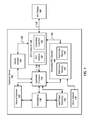
- FIG. 1 is a data flow diagram of an example electronic device configured to store and retrieve information.
- FIG. 2 is an electric power flow diagram of the example electronic device configured to store and retrieve information.
- FIG. 3 is a flow chart of an example process for routing short-range radio communications in an electronic device.
- FIG. 4 is a simplified functional block diagram of an example computer that may be configured to function as the electronic device in the system of FIGS. 1-2 .
- FIG. 5 is a simplified functional block diagram of an example personal computer or other work station or terminal device.
- identification information e.g., a serial number
- water damage information of the mobile device.
- the subject technology in some implementations, is directed to storing information about an electronic device in a form that is accessible when the electronic device is powered off.
- Examples of information that can be stored include a device identifier, a battery identifier, device certification information, device quality information, or device usage history information (e.g., whether the device was exposed to water or extreme temperatures).
- the electronic device 100 can correspond to any electronic device, for example, a laptop computer, a desktop computer, a mobile phone, a tablet computer, a personal digital assistant (PDA), a digital music player, a television with one or more processors embedded therein or coupled thereto, etc.
- the electronic device 100 can be a mobile device.
- the electronic device 100 includes a network interface 102 , input/output element(s) 104 , an application processor 110 , a secure element 120 , a near field communication (NFC) controller 130 , an embedded NFC element 140 , application(s) 150 , and a water detector 170 .
- the electronic device 100 is configured to communicate with a NFC reader 160 external to the electronic device 100 .
- the network interface 102 is configured to allow the electronic device to transmit and receive data via one or more networks, for example, the Internet, a wired network, a wireless network, a local area network (LAN), a wide area network (WAN), a cellular network, a WiFi network, etc.
- the network interface 102 may include one or more network interface cards (NICs).
- NICs network interface cards
- the network interface 102 includes a wireless transceiver configured to enable wireless data communication via the one or more networks.
- the input/output element(s) 104 are configured to allow a user of the electronic device 100 to interface with the electronic device 100 .
- the input/output element(s) may include one or more of a keyboard, a mouse, a touch screen, a non-touch display device, a telephone dial pad, a television remote control, etc.
- the input/output element(s) 104 can be internal to the electronic device 100 (e.g., a touch screen can be a component of a mobile phone) or external to the electronic device 100 (e.g., a laptop computer can be connected to an external mouse via a universal serial bus (USB) port or a Bluetooth® radio connection).
- USB universal serial bus
- the application processor 110 is configured to control operation of the electronic device 100 or to execute application(s) 150 stored at the electronic device 100 . While a single application processor 110 is illustrated, the application processor 110 can be replaced with some other processing hardware, for example, one or more of a central processing unit (CPU) including one or multiple processors, a graphics processing unit (GPU) including one or multiple processors, a video processing unit including one or multiple processors, or any other processing unit(s).
- the application processor 110 can be a host processor.
- the application(s) 150 include applications stored in a memory of the electronic device 100 .
- the application(s) 150 can include any software application(s), for example, a web browser, a word processing application, a mobile payment application, a NFC code reader application for viewing webpage(s) or other information associated with a NFC code, etc.
- the application(s) 150 can include mobile phone, digital music player, or tablet computer application(s).
- the application(s) 150 can be stored in a memory of the electronic device 100 .
- the memory can correspond to a cache unit, a storage unit, a long-term memory, a short-term memory, etc.
- the embedded NFC element 140 stores the information that is accessible when the electronic device 100 is powered off.
- the embedded NFC element 140 may require relatively little power (e.g., a passive tag that is able to draw enough radiated power from a remote source) and/or may have its own power source independent of the primary battery of the electronic device 100 .
- the embedded NFC element 140 can be implemented as any short-range radio communication tag or embedded short-range radio communication element.
- the embedded NFC element 140 is implemented as a secure element or as a component of the secure element 120 .
- the embedded NFC element 140 is a secure element or a part of a secure element, the embedded NFC element 140 can be powered through a NFC chip or a dedicated NFC battery, rather than the default power source (e.g., primary battery) for the electronic device 100 .
- the embedded NFC element 140 can be separate and distinct from the secure element 120 .
- the phrase “embedded NFC element” encompasses its plain and ordinary meaning including, but not limited to, an element embedded in an electronic device that is configured to store information about the electronic device that is readable by an external NFC reader.
- the phrase “embedded element” encompasses its plain and ordinary meaning including, but not limited to, an element embedded in an electronic device that is configured to store information about the electronic device that is readable by an external reader.
- the external reader can be an external short-range radio reader, for example an external NFC reader, or any other reader.
- the phrase “short-range radio,” includes any radio for communication at distances below a threshold distance.
- the threshold distance can be, for example, 5 meters, 1 meter, 10 centimeters, 5 centimeters, 2 centimeters, 1 centimeter, 5 millimeters, etc.
- the embedded NFC element 140 includes write-once memory 142 and read-write memory 144 .
- the write-once memory 142 can store, for example, a device identification number for the electronic device 100 , a battery identification number for the primary battery of the electronic device 100 , or an identification of network or radio access capabilities (e.g., WiFi, Bluetooth®, 3G, etc.) of the electronic device 100 .
- the read-write memory 144 can include a usage log of the electronic device 100 so that a reason for failure of the electronic device 100 can be determined in the event of a failure.
- the embedded NFC element 140 includes a water damage indicator.
- the water damage indicator can be in the write-once memory 142 .
- the water damage indicator could initially be set to 0, FALSE, or BLANK, and permanently reset to 1, TRUE, or NON-BLANK in an event that a water detector 170 in the electronic device 100 detects water at a specified physical position in the electronic device 100 (e.g., the first time the water sensor detects water).
- the only item that is written in the write-once memory 142 in an event that water is detected by the water detector 170 , is the water damage indicator.
- the water damage indicator may be only written a single time when the water detector 170 detects water in the specified physical position in the electronic device 100 .
- the water detector 170 can be configured to detect a presence of water in a position in the electronic device 100 , for example, adjacent to the primary battery of the electronic device 100 in the primary battery compartment.
- the water detector 170 can be connected to the water damage indicator and configured to write to the water damage indicator using any logic or electronic circuitry, for example a wire.
- the network interface 102 and the application processor 110 are still functioning after the water detector 170 detects the water at the specified physical location, the network interface 102 can transmit, via the network, an indication that the electronic device 100 is water damaged, for example, to the manufacturer or the service provider for the electronic device 100 .
- the manufacturer or service provider can void the warranty on the electronic device 100 or refuse to allow repairs of the electronic device 100 under the warranty.
- the indication of water damage may be stored in the water damage indicator and not transmitted to the manufacturer or service provider.
- the manufacturer or service provider may use a short-range radio reader (e.g., a NFC reader) to determine that the water damage indicator indicates water damage to the electronic device 100 .
- the electronic device 100 can have multiple water detectors 170 at different positions of the electronic device 100 , and different information can be stored locally at the electronic device 100 and/or transmitted via the network to the manufacturer or the service provider based on which of the multiple water detectors detect water.
- the electronic device 100 operates according to a sequence upon detecting water by the water detector 170 .
- the electronic device 100 may attempt to transmit the indication of water damage over the network, and then the electronic device 100 may store the indication of water damage locally.
- the electronic device 100 may store the indication of water damage locally at the electronic device 100 if the transmission over the network of the indication of water damage is unsuccessful, for example.
- the information transmitted over the network to indicate water damage includes a device identifier (e.g., an International Mobile Station Equipment Identity (IMEI) number) of the electronic device.
- the information transmitted over the network to indicate water damage can also include the content of the water damage indicator of the electronic device 100 and/or information about user activity (e.g., running software programs) on the electronic device 100 at the time the water detector 170 detected the water to guard against inadvertent transmission of the indication of the water damage.
- IMEI International Mobile Station Equipment Identity
- different message(s) can be transmitted over the network depending on the severity of the water damage.
- a first message can be transmitted over the network and a diagnostic test can be conducted on the electronic device 100 .
- a second message can be transmitted over the network based on the result of the diagnostic test and/or information regarding the result of the diagnostic test can be stored locally at the electronic device 100 .
- the severity of the water damage can be determined by the water detector 170 , for example, based on an amount of water or water vapor present at the water detector. In some examples, the severity of the water damage can be determined based on an amount of pressure to which the mobile device is exposed, as measured for example, by a pressure meter within the water detector, as pressure increases when a device is submerged in water.
- the manufacturer or service provider can void the warranty on the electronic device 100 or refuse to allow repairs of the electronic device 100 under the warranty.
- the warranty void may be reversed. For example, if a network transmission indicates that the electronic device 100 is water damaged on Jan. 1, 2012, and the electronic device 100 is brought to the manufacturer or service providers for warranty repairs on an unrelated issue on Jul. 1, 2012, the warranty on the electronic device 100 can be reinstated as the unrelated issue occurring on Jul. 1, 2012, is not likely to have been caused by the water damage event of Jan. 1, 2012.
- the embedded NFC element 140 can store one or more of the following data items:
- the NFC controller 130 can include or be coupled with a NFC antenna 131 for transmitting and/or receiving NFC communication(s).
- the NFC antenna 131 operates via a contactless front end 133 that handles communications between the NFC controller and NFC reader(s) external to the electronic device 100 .
- the NFC controller 130 links to connections 132 , 134 , 136 , and 138 .
- Connection 132 links the NFC controller 130 to the external NFC reader 160 .
- Connection 134 links the NFC controller 130 to the embedded NFC element 140 .
- Connection 136 links the NFC controller 130 to the application processor 110 .
- Connection 138 links the NFC controller 130 to the secure element 120 .
- the NFC controller 130 is configured to route NFC communications through the internal connections 134 , 136 , or 138 according to a technology being used. For example, if the electronic device 100 is being used to implement a security function, for example, to process a payment (e.g., to a merchant who may require credit card information to process the payment) via a payment terminal, the NFC controller 130 may route the NFC communications to the secure element 120 via the connection 138 . If the electronic device 100 is being used to access an application that does not require a security function, for example, an application for viewing a publically accessible webpage associated with a passive NFC tag external to the electronic device 100 , the NFC controller 130 may route the NFC communications to the application processor 110 via the connection 136 .
- a security function for example, to process a payment (e.g., to a merchant who may require credit card information to process the payment) via a payment terminal
- the NFC controller 130 may route the NFC communications to the secure element 120 via the connection 138 .
- the NFC controller 130 may route the communication to the embedded NFC element 140 via the connection 134 .
- the type of application e.g., security, no security, or specialized NFC reader
- the NFC controller 130 includes logic to become transparent upon detecting the NFC reader 160 or upon losing power from a primary battery of the electronic device 100 (e.g., when the electronic device 100 is powered off or unable to power on due to damage).
- the NFC reader 160 can still access the embedded NFC element 140 through the NFC controller 130 and the complex operations of the NFC controller (e.g., determining whether to route a communication to the secure element 120 , the application processor 110 , or the embedded NFC element 120 ) are not required.
- the NFC controller 130 becomes transparent, the NFC reader 160 can read and process data from the embedded NFC element 140 .
- the embedded NFC element 140 includes authenticated or encrypted data that in one implementation can only be decrypted by the specialized NFC reader 160 .
- the specialized NFC reader may be a NFC reader of a service provider located at a store of the service provider for use by employees of the service provider.
- the privacy of the user of the electronic device 100 is protected and data stored in the embedded NFC element 140 is only accessible to authorized people having access to the NFC reader 160 (e.g., technicians who service the electronic device 100 and/or are employees of the manufacturer or service provider of the electronic device 100 ).
- authorized people e.g., technicians who service the electronic device 100 and/or are employees of the manufacturer or service provider of the electronic device 100 .
- only authorized people can read information stored in the write-once memory 142 and/or the read-write memory 144 of the embedded NFC element 140 .
- information stored in the memory unit(s) 142 and 144 of the embedded NFC element 140 can be transmitted to the manufacturer or the service provider of the electronic device 100 via the network, allowing the manufacturer or the service provider to have the information accessible to themselves if the user telephones the manufacturer or service provider to remotely troubleshoot the electronic device 100 .
- the NFC controller 130 has a wired connection to the embedded NFC reader 140 or the NFC controller 130 and the embedded NFC reader 140 reside on the same circuit board.
- the embedded NFC reader 140 includes its own antenna and is wirelessly connected to the NFC controller 130 .
- the NFC reader 160 resides externally to the electronic device 100 and communicates with the electronic device via NFC.
- the NFC reader 160 may have a cryptographic key and may authenticate the NFC controller 130 or the embedded NFC element 140 using the cryptographic key. Alternatively, any other authentication technique can be used.
- the NFC reader 160 provides a command to the NFC controller 130 informing the NFC controller 130 that communication from the NFC reader 160 should be routed directly to the embedded NFC element 140 , rather than to the secure element 120 or the application processor 110 .
- NFC radio technology can be replaced with one or more of: Bluetooth® radio technology, radio frequency identifier (RFID) technology, WiFi technology, microwave technology, etc.
- RFID radio frequency identifier
- FIG. 2 is an electric power flow diagram of the example electronic device 100 configured to store and retrieve information.
- the electronic device 100 includes the network interface 102 , the input/output element(s) 104 , the application processor 110 , the secure element 120 , the NFC controller 130 , and the embedded NFC element 140 described in conjunction with FIG. 1 .
- the application(s) 150 reside within a memory 230 .
- the memory 230 can include one or more of a cache unit, a storage unit, an internal memory, an external memory, a long-term memory, or a short-term memory.
- the electronic device 100 also includes a primary battery 210 and a NFC battery 220 .
- the primary battery 210 can correspond to a battery primarily responsible for powering the electronic device 100 , for example, when the electronic device 100 is in an “on” state.
- the primary battery 210 can reside in a battery compartment of the electronic device 100 , for example, at the bottom of a laptop computer or at the back of a mobile phone or tablet computer. In some implementations, for instance, in a desktop computer, the primary battery 210 may be replaced with a primary power source that plugs into a wall power outlet.
- the primary battery 210 powers the network interface 102 , the input/output element(s) 104 , the application processor 110 , the secure element 120 , the memory 230 , and the NFC controller 130 .
- the NFC battery 220 can reside on a NFC chip or in another location.
- the NFC chip can also include the NFC controller 130 and/or the embedded NFC element 140 .
- the NFC battery 220 can be smaller than the primary battery 210 , but can have a longer battery life, as the NFC battery 220 may, in some examples, provide a relatively small amount of power to the embedded NFC element 140 and the NFC controller 130 .
- the NFC battery 220 can be replaced with other batteries.
- the NFC battery 220 can be more damage-resistant than the primary battery 210 .
- the NFC battery 220 may be water-resistant or able to withstand extreme temperature conditions.
- the NFC battery 220 is protected by a shield that insulates the NFC battery from water or extreme temperature conditions. In some examples, the NFC battery 220 is built into the NFC chip and is not removable from the electronic device 100 . In some examples, the NFC battery is removable from the electronic device 100 .
- the NFC controller 130 is powered by both the primary battery 210 and the NFC battery 220 .
- the NFC controller 130 can be powered by the primary battery 210 and function to transmit NFC communication(s) from the NFC reader 160 to any of the secure element 120 , the application processor 110 , or the embedded NFC element 140 depending on the type of NFC communication(s) from the NFC reader 160 .
- the NFC controller 130 is wired to receive power from both the primary battery 210 and the NFC battery 220 .
- the NFC controller includes logic to determine whether the primary battery 210 is providing power. If so, the NFC controller includes logic to receive power from the primary battery 210 . If not, the NFC controller includes logic to receive power from the NFC battery 220 .
- the NFC controller 130 when the electronic device 100 is turned “off,” or the primary battery 210 is disabled, e.g., due to damage of the primary battery 210 , the NFC controller 130 is powered by the NFC battery 220 and not by the primary battery 210 .
- the NFC controller 130 can function as a pass-through device that routes all NFC communication(s) received (e.g., from the NFC reader 160 ) at the NFC controller 130 to the embedded NFC element 140 , which is also powered by the NFC battery 220 .
- the NFC controller 130 When powered by the NFC battery 220 and not by the primary battery 210 , the NFC controller 130 may require less power as the NFC controller 130 is functioning as a pass-through device and does not need to implement logic to route communication(s) based on the type of communication(s).
- the NFC controller 130 includes logic that determines the battery source (e.g., the primary battery 210 or the NFC battery 220 ) and changes the functionality of the NFC controller 130 accordingly, as set forth above.
- FIG. 3 is a flow chart of an example process 300 for routing short-range radio communications in an electronic device.
- the process 300 begins at step 310 , where a short-range radio controller of the electronic device (e.g., electronic device 100 ) receives a short-range radio communication.
- the short-range radio controller may include the NFC controller 130 or a controller for a short-range radio implementing another technology, for example, Bluetooth® radio technology, radio frequency identifier (RFID) technology, WiFi technology, microwave technology.
- RFID radio frequency identifier
- the short-range radio communication may include NFC communication from the NFC reader 160 .
- the short-range radio controller determines whether the short-range radio communication is for accessing an embedded element (e.g., embedded NFC element 140 ) of the electronic device.
- the embedded element stores information regarding the electronic device.
- the embedded element is configured to be readable by a reader (e.g., NFC reader 160 ) external to the electronic device.
- the short-range radio controller can determine whether the short-range radio communication is for accessing the embedded element based on one or more of: an identifier of the source of the short-range radio communication, information requested by the short-range radio communication, or a code (e.g., a password) within the short-range radio communication.
- the short-range radio controller can store identifier(s) of source(s) of short-range radio communications that are for accessing the embedded element locally at the short-range radio controller or within a memory unit accessible to the short-range radio controller.
- the identifiers are hard-wired in the short-range radio controller.
- step 320 is executed upon a requirement (e.g., the short-range radio controller being connected to a power source which also powers a processor of the electronic device) being met. If the requirement is not met, the short-range radio communication is routed directly to the embedded element, as set forth in step 330 , described below.
- step 330 If the short-range radio communication is for accessing the embedded element, the process 300 continues to step 330 . If the short-range radio communication is not for accessing the embedded element, the process 300 continues to step 340 .
- the short-range radio controller routes the short-range radio communication to the embedded element.
- the short-range radio controller can route the short-range radio communication to the embedded element via a wired connection.
- the embedded element can include an antenna and the short-range radio controller can route the short-range radio communication to the embedded element via a wireless connection.
- the short-range radio controller determines whether the short-range radio communication is for an application (e.g., a software application on the electronic device) requiring a security function.
- the short-range radio controller can determine whether the short-range radio communication is for the application requiring the security function based on information within a message transmitted through the short-range radio controller in the radio communication. The information within the message can reside within the header or the payload of the message. For example, a payment application, which may require the transfer of credit card or other financial or personal information, may require a security function. An application that displays a publically accessible webpage may not require a security function. If the short-range radio application is for an application requiring a security function, the process 300 continues to step 350 . If the short-range radio application is not for an application requiring a security function, the process 300 continues to step 360 .
- the short-range radio controller routes the short-range radio communication to a secure element (e.g., secure element 120 ) of the electronic device.
- the short-range radio communication can be routed to the secure element using a wired or wireless connection.
- the secure element is configured to securely communicate with processing hardware (e.g., application processor 110 ) of the electronic device.
- the processing hardware is configured to control operation of the electronic device and to execute software application(s) on the electronic device.
- step 360 the short-range radio controller routes the short-range radio communication to the processing hardware of the electronic device.
- the short-range radio communication can be routed to the processing hardware using a wired or wireless connection.
- the processing hardware then processes the short-range radio communication.
- the short-range radio communication can be processed based on instructions in a software application.
- steps 310 - 360 of the process 300 can be performed in any order.
- steps 320 and 340 and the steps dependent there from, can be swapped in position.
- the steps 310 - 360 are carried out in series.
- two or more of the steps 310 - 360 can be carried out in parallel.
- the subject technology in some implementations, relates to storing and retrieving electronic device information. For example, identification information (e.g., a serial number) or water damage information of the mobile device.
- identification information e.g., a serial number
- the subject technology is directed to storing information about an electronic device in a form that is accessible when the electronic device is powered off or when the primary battery of the electronic device is disabled. Examples of information that can be stored include a device identifier, a battery identifier, device certification information, device quality information, or device usage history information (e.g., whether the device was exposed to water or extreme temperatures, as well as a time and geographic location (e.g., determined based on global positioning system information), if available, where the exposure took place).
- information about user interaction with the device e.g., which software program(s) were running
- when the damage occurred can be stored.
- functions relating to storing and retrieving electronic device information may be implemented on computers connected for data communication via the components of a packet data network.
- special purpose devices may be used, such devices also may be implemented using one or more hardware platforms intended to represent a general class of data processing device commonly used to run programming so as to implement the functions discussed above.
- a general-purpose computer typically comprises a central processor or other processing device, an internal communication bus, various types of memory or storage media (RAM, ROM, EEPROM, cache memory, disk drives etc.) for code and data storage, and one or more network interface cards or ports for communication purposes.
- the software functionalities involve programming, including executable code as well as associated stored data, e.g., files used for the content media editing.
- the software code is executable by the general-purpose computer that functions as the electronic device 110 . In operation, the code is stored within the general-purpose computer platform. At other times, however, the software may be stored at other locations and/or transported for loading into the appropriate general-purpose computer system. Execution of such code by a processor of the computer platform enables the platform to implement the methodology for allowing the user to edit media content to an acceptable size for successful transmission over the network, in essentially the manner performed in the implementations discussed and illustrated herein.
- FIGS. 4 and 5 provide functional block diagram illustrations of general purpose computer hardware platforms.
- FIG. 4 illustrates a network or host computer platform, as may typically be used to implement a server.
- FIG. 5 depicts a computer with user interface elements, as may be used to implement a personal computer or other type of work station or terminal device, although the computer of FIG. 5 may also act as a server if appropriately programmed. It is believed that the general structure and general operation of such equipment as shown in FIGS. 4 and 5 should be self-explanatory from the high-level illustrations.
- a server for example, includes a data communication interface for packet data communication.
- the server also includes a central processing unit (CPU), in the form of one or more processors, for executing program instructions.
- the server platform typically includes an internal communication bus, program storage and data storage for various data files to be processed and/or communicated by the server, although the server often receives programming and data via network communications.
- the hardware elements, operating systems and programming languages of such servers are conventional in nature.
- the server functions may be implemented in a distributed fashion on a number of similar platforms, to distribute the processing load.
- a computer type user terminal device such as a PC or tablet computer, similarly includes a data communication interface CPU, main memory and one or more mass storage devices for storing user data and the various executable programs (see FIG. 5 ).
- a mobile device type user terminal may include similar elements, but will typically use smaller components that also require less power, to facilitate implementation in a portable form factor.
- the various types of user terminal devices will also include various user input and output elements.
- a computer may include a keyboard and a cursor control/selection device such as a mouse, trackball, joystick or touchpad; and a display for visual outputs.
- a microphone and speaker enable audio input and output.
- Some smartphones include similar but smaller input and output elements. Tablets and other types of smartphones utilize touch sensitive display screens, instead of separate keyboard and cursor control elements.
- the hardware elements, operating systems and programming languages of such user terminal devices also are conventional in nature.
- examples of the methods of routing short-range radio communications outlined above may be embodied in programming.
- Program aspects of the technology may be thought of as “products” or “articles of manufacture” typically in the form of executable code and/or associated data that is carried on or embodied in a type of machine readable medium.
- “Storage” type media include any or all of the tangible memory of the computers, processors or the like, or associated modules thereof, such as various semiconductor memories, tape drives, disk drives and the like, which may provide non-transitory storage at any time for the software programming. All or portions of the software may at times be communicated through the Internet or various other telecommunication networks. Such communications, for example, may enable loading of the software from one computer or processor into another.
- another type of media that may bear the software elements includes optical, electrical and electromagnetic waves, such as used across physical interfaces between local devices, through wired and optical landline networks and over various air-links.
- the physical elements that carry such waves, such as wired or wireless links, optical links or the like, also may be considered as media bearing the software.
- terms such as computer or machine “readable medium” refer to any medium that participates in providing instructions to a processor for execution.
- Non-volatile storage media include, for example, optical or magnetic disks, such as any of the storage devices in any computer(s) or the like, such as may be used to implement the application(s) 150 , etc. shown in the drawings.
- Volatile storage media include dynamic memory, such as main memory of such a computer platform.
- Tangible transmission media include coaxial cables; copper wire and fiber optics, including the wires that comprise a bus within a computer system.
- Carrier-wave transmission media can take the form of electric or electromagnetic signals, or acoustic or light waves such as those generated during radio frequency (RF) and infrared (IR) data communications.
- Computer-readable media therefore include for example: a floppy disk, a flexible disk, hard disk, magnetic tape, any other magnetic medium, a CD-ROM, DVD or DVD-ROM, any other optical medium, punch cards paper tape, any other physical storage medium with patterns of holes, a RAM, a PROM and EPROM, a FLASH-EPROM, any other memory chip or cartridge, a carrier wave transporting data or instructions, cables or links transporting such a carrier wave, or any other medium from which a computer can read programming code and/or data. Many of these forms of computer readable media may be involved in carrying one or more sequences of one or more instructions to a processor for execution.
Landscapes
- Engineering & Computer Science (AREA)
- Computer Networks & Wireless Communication (AREA)
- Signal Processing (AREA)
- Telephone Function (AREA)
Abstract
Description
- Device Specific Identification Information such as, for example, International Mobile Station Equipment Identity (IMEI), Stock-keeping unit (SKU), S/N Serial Number, P/N Part Number, Federal Communications Commission Identifier (FCC ID), Manufacture Location, Device Model number, Hardware version number, Software version number, Device radio frequency (RF) technology/capability information, Device chipset information (application/modem processor), and/or Device WIFI/Bluetooth® media access control (MAC) address;
- Battery Specific Information such as, for example, Battery Cell model number, Battery Pack model number, Battery Cell Manufacture and location, Battery Pack Manufacture and location, Battery Pack Serial Number, Battery Norminal Voltage, Battery Typical Capacity, Battery Minimal Capacity, and/or Battery Chemistry information and Recycle Method;
- Device Certification Information (e.g., certification icons typically on a label) such as, for example, Conformité Européenne (CE), Underwriters Laboratories® (UL), WIFI, Bluetooth® (BT), and/or Global Certification Forum® (GCF); and/or
- Device Quality Information such as, for example, Device Panic/Failure statistic information, Device Over Temperature Statistic information, Device Network Signal Statistic information, Liquid Damage information (LDI), Device Energy Usage information, and/or Battery Cycle Life information.
Claims (19)
Priority Applications (1)
| Application Number | Priority Date | Filing Date | Title |
|---|---|---|---|
| US13/875,115 US9503159B2 (en) | 2013-05-01 | 2013-05-01 | Storing and retrieving electronic device information |
Applications Claiming Priority (1)
| Application Number | Priority Date | Filing Date | Title |
|---|---|---|---|
| US13/875,115 US9503159B2 (en) | 2013-05-01 | 2013-05-01 | Storing and retrieving electronic device information |
Publications (2)
| Publication Number | Publication Date |
|---|---|
| US20140327523A1 US20140327523A1 (en) | 2014-11-06 |
| US9503159B2 true US9503159B2 (en) | 2016-11-22 |
Family
ID=51841157
Family Applications (1)
| Application Number | Title | Priority Date | Filing Date |
|---|---|---|---|
| US13/875,115 Expired - Fee Related US9503159B2 (en) | 2013-05-01 | 2013-05-01 | Storing and retrieving electronic device information |
Country Status (1)
| Country | Link |
|---|---|
| US (1) | US9503159B2 (en) |
Cited By (1)
| Publication number | Priority date | Publication date | Assignee | Title |
|---|---|---|---|---|
| US20200226083A1 (en) * | 2015-08-31 | 2020-07-16 | Huawei Technologies Co., Ltd. | Method and device for obtaining identifier of terminal |
Families Citing this family (4)
| Publication number | Priority date | Publication date | Assignee | Title |
|---|---|---|---|---|
| FR3029324B1 (en) * | 2014-11-28 | 2017-12-15 | Proton World Int Nv | ACCESSING DATA IN AN NFC MOBILE DEVICE |
| US10355747B2 (en) | 2015-12-18 | 2019-07-16 | Whirlpool Corporation | Apparatus and method for diagnosing and repairing an appliance |
| CN110278322B (en) * | 2018-03-14 | 2022-05-17 | 富泰华工业(深圳)有限公司 | Failure testing device for electronic device |
| FR3087307A1 (en) * | 2018-10-15 | 2020-04-17 | Proton World International N.V. | TRANSACTION MANAGEMENT IN AN NFC DEVICE |
Citations (24)
| Publication number | Priority date | Publication date | Assignee | Title |
|---|---|---|---|---|
| US6567004B1 (en) * | 1999-12-28 | 2003-05-20 | Briartek, Inc. | Apparatus for automatically reporting an event to a remote location |
| US20080121687A1 (en) | 2006-11-28 | 2008-05-29 | Motorola, Inc. | Method and system for detecting an end of transaction for contactless transactions on a mobile device |
| US20090023476A1 (en) * | 2007-07-16 | 2009-01-22 | Nokia Corporation | Apparatuses and methods for facilitating communication of devices |
| US20100037322A1 (en) * | 2008-08-05 | 2010-02-11 | Inside Contactless | Method for securing a transaction performed with a programmable portable device |
| US20100178868A1 (en) * | 2007-09-27 | 2010-07-15 | Inside Contactless | Method and Device for Managing Application Data in an NFC System |
| US20100210300A1 (en) * | 2009-02-13 | 2010-08-19 | Stmicroelectronics (Rousset) Sas | Communication device comprising a battery and a near-field communication module |
| US20110170456A1 (en) * | 2008-06-27 | 2011-07-14 | Francois-Xavier Marseille | System and method of extending smart card capability via a coupling with a portable electronic device |
| US20120178366A1 (en) * | 2011-01-06 | 2012-07-12 | Koby Levy | Multiple NFC Card Applications in Multiple Execution Environments |
| US20120297204A1 (en) | 2011-05-16 | 2012-11-22 | Broadcom Corporation | Security Architecture For Using Host Memory in the Design of A Secure Element |
| US20120315843A1 (en) * | 2011-06-10 | 2012-12-13 | Broadcom Corporation | Communications Device for Intelligently Routing Information Among Multiple User Interfaces |
| US20120315972A1 (en) * | 2011-06-12 | 2012-12-13 | Discovery Bay Games, Inc. | Gaming accessory and interface apparatus for multifunctional gaming platform |
| US20120317628A1 (en) * | 2011-06-09 | 2012-12-13 | Yeager C Douglas | Systems and methods for authorizing a transaction |
| US20130040566A1 (en) * | 2010-05-27 | 2013-02-14 | GemaltoSA | Method of managing communications with a nfc controller |
| US20130059568A1 (en) * | 2010-03-09 | 2013-03-07 | Proton World International N.V. | Protection of a security module in a telecommunication device coupled to an nfc circuit |
| US20130124349A1 (en) | 2011-11-03 | 2013-05-16 | Mastercard International Incorporated | Methods, systems, and computer readable media for provisioning and utilizing an aggregated soft card on a mobile device |
| US8532295B2 (en) * | 2007-03-07 | 2013-09-10 | Inside Secure | Method for the secure loading in a NFC chipset of data allowing access to a service |
| US20130331029A1 (en) * | 2012-06-08 | 2013-12-12 | Broadcom Corporation | Near Field Communication Application Identification Routing In Card Emulation |
| US20140058953A1 (en) * | 2009-05-03 | 2014-02-27 | Logomotion S.R.O. | Pos payment terminal and a method of direct debit payment transaction using a mobile communication device, such as a mobile phone |
| US20140057559A1 (en) * | 2012-08-27 | 2014-02-27 | Broadcom Corporation | Wireless Power Transfer - Near Field Communication Enabled Communication Device |
| US20140218177A1 (en) * | 2013-02-05 | 2014-08-07 | Motorola Mobility Llc | Rfid communication circuit for an electronic device and corresponding methods |
| US20140256251A1 (en) * | 2013-03-11 | 2014-09-11 | Cellco Partnership D/B/A Verizon Wireless | Secure nfc data authentication |
| US20140370804A1 (en) * | 2013-06-14 | 2014-12-18 | Broadcom Corporation | Nfc communications with multiple nfc antennas |
| US20150089586A1 (en) * | 2013-09-24 | 2015-03-26 | Miguel Ballesteros | Systems and methods for nfc access control in a secure element centric nfc architecture |
| US9209866B2 (en) | 2010-08-31 | 2015-12-08 | Proton World International N.V. | Securing of a telecommunication device equipped with a near-field communication module |
-
2013
- 2013-05-01 US US13/875,115 patent/US9503159B2/en not_active Expired - Fee Related
Patent Citations (24)
| Publication number | Priority date | Publication date | Assignee | Title |
|---|---|---|---|---|
| US6567004B1 (en) * | 1999-12-28 | 2003-05-20 | Briartek, Inc. | Apparatus for automatically reporting an event to a remote location |
| US20080121687A1 (en) | 2006-11-28 | 2008-05-29 | Motorola, Inc. | Method and system for detecting an end of transaction for contactless transactions on a mobile device |
| US8532295B2 (en) * | 2007-03-07 | 2013-09-10 | Inside Secure | Method for the secure loading in a NFC chipset of data allowing access to a service |
| US20090023476A1 (en) * | 2007-07-16 | 2009-01-22 | Nokia Corporation | Apparatuses and methods for facilitating communication of devices |
| US20100178868A1 (en) * | 2007-09-27 | 2010-07-15 | Inside Contactless | Method and Device for Managing Application Data in an NFC System |
| US20110170456A1 (en) * | 2008-06-27 | 2011-07-14 | Francois-Xavier Marseille | System and method of extending smart card capability via a coupling with a portable electronic device |
| US20100037322A1 (en) * | 2008-08-05 | 2010-02-11 | Inside Contactless | Method for securing a transaction performed with a programmable portable device |
| US20100210300A1 (en) * | 2009-02-13 | 2010-08-19 | Stmicroelectronics (Rousset) Sas | Communication device comprising a battery and a near-field communication module |
| US20140058953A1 (en) * | 2009-05-03 | 2014-02-27 | Logomotion S.R.O. | Pos payment terminal and a method of direct debit payment transaction using a mobile communication device, such as a mobile phone |
| US20130059568A1 (en) * | 2010-03-09 | 2013-03-07 | Proton World International N.V. | Protection of a security module in a telecommunication device coupled to an nfc circuit |
| US20130040566A1 (en) * | 2010-05-27 | 2013-02-14 | GemaltoSA | Method of managing communications with a nfc controller |
| US9209866B2 (en) | 2010-08-31 | 2015-12-08 | Proton World International N.V. | Securing of a telecommunication device equipped with a near-field communication module |
| US20120178366A1 (en) * | 2011-01-06 | 2012-07-12 | Koby Levy | Multiple NFC Card Applications in Multiple Execution Environments |
| US20120297204A1 (en) | 2011-05-16 | 2012-11-22 | Broadcom Corporation | Security Architecture For Using Host Memory in the Design of A Secure Element |
| US20120317628A1 (en) * | 2011-06-09 | 2012-12-13 | Yeager C Douglas | Systems and methods for authorizing a transaction |
| US20120315843A1 (en) * | 2011-06-10 | 2012-12-13 | Broadcom Corporation | Communications Device for Intelligently Routing Information Among Multiple User Interfaces |
| US20120315972A1 (en) * | 2011-06-12 | 2012-12-13 | Discovery Bay Games, Inc. | Gaming accessory and interface apparatus for multifunctional gaming platform |
| US20130124349A1 (en) | 2011-11-03 | 2013-05-16 | Mastercard International Incorporated | Methods, systems, and computer readable media for provisioning and utilizing an aggregated soft card on a mobile device |
| US20130331029A1 (en) * | 2012-06-08 | 2013-12-12 | Broadcom Corporation | Near Field Communication Application Identification Routing In Card Emulation |
| US20140057559A1 (en) * | 2012-08-27 | 2014-02-27 | Broadcom Corporation | Wireless Power Transfer - Near Field Communication Enabled Communication Device |
| US20140218177A1 (en) * | 2013-02-05 | 2014-08-07 | Motorola Mobility Llc | Rfid communication circuit for an electronic device and corresponding methods |
| US20140256251A1 (en) * | 2013-03-11 | 2014-09-11 | Cellco Partnership D/B/A Verizon Wireless | Secure nfc data authentication |
| US20140370804A1 (en) * | 2013-06-14 | 2014-12-18 | Broadcom Corporation | Nfc communications with multiple nfc antennas |
| US20150089586A1 (en) * | 2013-09-24 | 2015-03-26 | Miguel Ballesteros | Systems and methods for nfc access control in a secure element centric nfc architecture |
Cited By (1)
| Publication number | Priority date | Publication date | Assignee | Title |
|---|---|---|---|---|
| US20200226083A1 (en) * | 2015-08-31 | 2020-07-16 | Huawei Technologies Co., Ltd. | Method and device for obtaining identifier of terminal |
Also Published As
| Publication number | Publication date |
|---|---|
| US20140327523A1 (en) | 2014-11-06 |
Similar Documents
| Publication | Publication Date | Title |
|---|---|---|
| US9038894B2 (en) | Payment or other transaction through mobile device using NFC to access a contactless transaction card | |
| US20150179037A1 (en) | Using data fusion to electronically detect liquid in mobile devices | |
| US9064247B2 (en) | User-configurable activation of card applets | |
| US20140145823A1 (en) | Access control system | |
| EP2689614B1 (en) | Method and apparatus for battery with secure element | |
| EP2974220B1 (en) | Proof of presence via tag interactions | |
| US11120424B2 (en) | Systems and methods for providing near field communications | |
| US20130009756A1 (en) | Verification using near field communications | |
| US10038607B2 (en) | System for aggregated machine-initiated resource distribution | |
| WO2014206203A1 (en) | System and method for detecting unauthorized login webpage | |
| US10318854B2 (en) | Systems and methods for protecting sensitive information stored on a mobile device | |
| US20140302819A1 (en) | Techniques for selecting a proximity card of a mobile device for access | |
| US20140327523A1 (en) | Storing and retrieving electronic device information | |
| CN102103765A (en) | Access control and information display system, method and terminal | |
| KR20160145962A (en) | User equipment for reverse NFC payment, NFC payment terminal, system comprising the same, control method thereof and computer readable medium having computer program recorded therefor | |
| CN203191973U (en) | Electronic device with dual systems | |
| KR20150069237A (en) | Payment method and system using dynamic NFC tag | |
| CN103793816A (en) | NFC equipment payment method and NFC equipment | |
| KR20150059636A (en) | Method, apparatus, and terminal device for transmitting nfc data | |
| CN110675548B (en) | Method and apparatus for handing over smart cash cassettes | |
| US20230325808A1 (en) | Dynamically displaying contextual information on a smart card | |
| JP2014052897A (en) | Portable radio device, radio communication system, and radio communication method | |
| KR20150030448A (en) | Method and server for unmanned parcel service | |
| KR101659294B1 (en) | An apparatus for secure usb memory using beacon signals and the operating method thereof | |
| KR101996258B1 (en) | Remote information processing system for user apparatus in stroage |
Legal Events
| Date | Code | Title | Description |
|---|---|---|---|
| AS | Assignment |
Owner name: CELLCO PARTNERSHIP D/B/A VERIZON WIRELESS, NEW JER Free format text: ASSIGNMENT OF ASSIGNORS INTEREST;ASSIGNORS:DANIEL, TOM;LI, YUK LUN;QIAN, NANJUN;AND OTHERS;SIGNING DATES FROM 20130426 TO 20130430;REEL/FRAME:030330/0356 |
|
| ZAAA | Notice of allowance and fees due |
Free format text: ORIGINAL CODE: NOA |
|
| ZAAB | Notice of allowance mailed |
Free format text: ORIGINAL CODE: MN/=. |
|
| ZAAA | Notice of allowance and fees due |
Free format text: ORIGINAL CODE: NOA |
|
| ZAAB | Notice of allowance mailed |
Free format text: ORIGINAL CODE: MN/=. |
|
| STCF | Information on status: patent grant |
Free format text: PATENTED CASE |
|
| MAFP | Maintenance fee payment |
Free format text: PAYMENT OF MAINTENANCE FEE, 4TH YEAR, LARGE ENTITY (ORIGINAL EVENT CODE: M1551); ENTITY STATUS OF PATENT OWNER: LARGE ENTITY Year of fee payment: 4 |
|
| FEPP | Fee payment procedure |
Free format text: MAINTENANCE FEE REMINDER MAILED (ORIGINAL EVENT CODE: REM.); ENTITY STATUS OF PATENT OWNER: LARGE ENTITY |
|
| LAPS | Lapse for failure to pay maintenance fees |
Free format text: PATENT EXPIRED FOR FAILURE TO PAY MAINTENANCE FEES (ORIGINAL EVENT CODE: EXP.); ENTITY STATUS OF PATENT OWNER: LARGE ENTITY |
|
| STCH | Information on status: patent discontinuation |
Free format text: PATENT EXPIRED DUE TO NONPAYMENT OF MAINTENANCE FEES UNDER 37 CFR 1.362 |
|
| FP | Lapsed due to failure to pay maintenance fee |
Effective date: 20241122 |