US9499479B2 - Molecules that selectively inhibit histone deacetylase 6 relative to histone deacetylase 1 - Google Patents
Molecules that selectively inhibit histone deacetylase 6 relative to histone deacetylase 1 Download PDFInfo
- Publication number
- US9499479B2 US9499479B2 US14/349,291 US201214349291A US9499479B2 US 9499479 B2 US9499479 B2 US 9499479B2 US 201214349291 A US201214349291 A US 201214349291A US 9499479 B2 US9499479 B2 US 9499479B2
- Authority
- US
- United States
- Prior art keywords
- compound
- heteroaryl
- pharmaceutically acceptable
- aryl
- alkyl
- Prior art date
- Legal status (The legal status is an assumption and is not a legal conclusion. Google has not performed a legal analysis and makes no representation as to the accuracy of the status listed.)
- Expired - Fee Related
Links
- 0 [1*]CCC([4*])=O Chemical compound [1*]CCC([4*])=O 0.000 description 17
- DPXIUAUGZBZNED-UHFFFAOYSA-N CC(C)CC(O)CO.CC(C)CCCO.CC(C)CCN(C)C.CC(C)CCN1CCCC1.CC(C)CCN1CCCCC1.CC(C)CCO.COCCC(C)C Chemical compound CC(C)CC(O)CO.CC(C)CCCO.CC(C)CCN(C)C.CC(C)CCN1CCCC1.CC(C)CCN1CCCCC1.CC(C)CCO.COCCC(C)C DPXIUAUGZBZNED-UHFFFAOYSA-N 0.000 description 4
- BJOCYJMNAOLPTQ-UHFFFAOYSA-N CC.CC(C)C1=CC(C(C)C)=NO1.CC(C)C1=CC(N)C(C(C)C)=N1.CC(C)C1=CC=C(C(C)C)C=C1.CC(C)C1=CC=C(C(C)C)C=C1.CC(C)C1=CC=C(C(C)C)N=C1.CC(C)C1=CC=C(C(C)C)N=C1.CC(C)C1=CN(C(C)C)N=N1.CC(C)C1=CSC(C(C)C)=C1 Chemical compound CC.CC(C)C1=CC(C(C)C)=NO1.CC(C)C1=CC(N)C(C(C)C)=N1.CC(C)C1=CC=C(C(C)C)C=C1.CC(C)C1=CC=C(C(C)C)C=C1.CC(C)C1=CC=C(C(C)C)N=C1.CC(C)C1=CC=C(C(C)C)N=C1.CC(C)C1=CN(C(C)C)N=N1.CC(C)C1=CSC(C(C)C)=C1 BJOCYJMNAOLPTQ-UHFFFAOYSA-N 0.000 description 4
- IQOXKYVSICXLMO-UHFFFAOYSA-N CC(C)C(=O)CC1=C2/N=C\C=C/C2=CC=C1.CC(C)C(=O)CC1=CC=C(C(C)(C)C)C=C1.CC(C)C(=O)CC1=CC=CC=C1.CC(C)C(=O)NCC1=CC=C(C(C)(C)C)C=C1 Chemical compound CC(C)C(=O)CC1=C2/N=C\C=C/C2=CC=C1.CC(C)C(=O)CC1=CC=C(C(C)(C)C)C=C1.CC(C)C(=O)CC1=CC=CC=C1.CC(C)C(=O)NCC1=CC=C(C(C)(C)C)C=C1 IQOXKYVSICXLMO-UHFFFAOYSA-N 0.000 description 2
- CHKABVYZQWLUBR-UHFFFAOYSA-N CC(C)C1=C2N=CC=CC2=CC=C1.CC(C)C1=CC=CC=C1 Chemical compound CC(C)C1=C2N=CC=CC2=CC=C1.CC(C)C1=CC=CC=C1 CHKABVYZQWLUBR-UHFFFAOYSA-N 0.000 description 2
- AMCJBUARGJXKOB-UHFFFAOYSA-N CC(C)CC(=O)CC1=CC=C(C(C)(C)C)C=C1.CC(C)NC(=O)C1=C2/N=C\C=C/C2=CC=C1.CC(C)NC(=O)C1=CC=C(C(C)(C)C)C=C1.CC(C)NC(=O)C1=CC=CC=C1 Chemical compound CC(C)CC(=O)CC1=CC=C(C(C)(C)C)C=C1.CC(C)NC(=O)C1=C2/N=C\C=C/C2=CC=C1.CC(C)NC(=O)C1=CC=C(C(C)(C)C)C=C1.CC(C)NC(=O)C1=CC=CC=C1 AMCJBUARGJXKOB-UHFFFAOYSA-N 0.000 description 2
- PHTQWCKDNZKARW-UHFFFAOYSA-N CC(C)CCO Chemical compound CC(C)CCO PHTQWCKDNZKARW-UHFFFAOYSA-N 0.000 description 2
- LRYHPTYERWPFFE-UHFFFAOYSA-N CC.CC(C)C1=CC=CC(C(C)C)=C1.CC(C)C1=CC=CC(C(C)C)=C1 Chemical compound CC.CC(C)C1=CC=CC(C(C)C)=C1.CC(C)C1=CC=CC(C(C)C)=C1 LRYHPTYERWPFFE-UHFFFAOYSA-N 0.000 description 2
- HBXYUXAOENXOAA-UHFFFAOYSA-N C.CC(C)(C)[Si](C)(C)OCCNC1=CC=CC=C1.CCCN(C(=O)CCl)C1=CC=CC=C1.CCCN(C(=O)CN1C=C(C(=O)NO)C2=C1C=CC=C2)C1=CC=CC=C1.CCCN(C(=O)CN1C=C(C(=O)OC)C2=C1C=CC=C2)C1=CC=CC=C1.CCN(CC)CC.NO.O=C(CO)C1=CC=CC2=C1C=CN2.O=C(Cl)CCl.O=C(NO)C1=CN(CC(=O)N(CCO)C2=CC=CC=C2)C2=C1C=CC=C2 Chemical compound C.CC(C)(C)[Si](C)(C)OCCNC1=CC=CC=C1.CCCN(C(=O)CCl)C1=CC=CC=C1.CCCN(C(=O)CN1C=C(C(=O)NO)C2=C1C=CC=C2)C1=CC=CC=C1.CCCN(C(=O)CN1C=C(C(=O)OC)C2=C1C=CC=C2)C1=CC=CC=C1.CCN(CC)CC.NO.O=C(CO)C1=CC=CC2=C1C=CN2.O=C(Cl)CCl.O=C(NO)C1=CN(CC(=O)N(CCO)C2=CC=CC=C2)C2=C1C=CC=C2 HBXYUXAOENXOAA-UHFFFAOYSA-N 0.000 description 1
- BTVZJSUTLFCHMF-UHFFFAOYSA-N C.CC(C)(C)[Si](C)(C)OCCNC1=CC=CC=C1.CCCN(C(=O)CCl)C1=CC=CC=C1.CCCN(C(=O)CN1C=CC2=C1C=CC=C2C(=O)NO)C1=CC=CC=C1.CCCN(C(=O)CN1C=CC2=C1C=CC=C2C(=O)OC)C1=CC=CC=C1.CCN(CC)CC.NO.O=C(CO)C1=CC=CC2=C1C=CN2.O=C(Cl)CCl.O=C(NO)C1=CC=CC2=C1C=CN2CC(=O)N(CCO)C1=CC=CC=C1 Chemical compound C.CC(C)(C)[Si](C)(C)OCCNC1=CC=CC=C1.CCCN(C(=O)CCl)C1=CC=CC=C1.CCCN(C(=O)CN1C=CC2=C1C=CC=C2C(=O)NO)C1=CC=CC=C1.CCCN(C(=O)CN1C=CC2=C1C=CC=C2C(=O)OC)C1=CC=CC=C1.CCN(CC)CC.NO.O=C(CO)C1=CC=CC2=C1C=CN2.O=C(Cl)CCl.O=C(NO)C1=CC=CC2=C1C=CN2CC(=O)N(CCO)C1=CC=CC=C1 BTVZJSUTLFCHMF-UHFFFAOYSA-N 0.000 description 1
- FJCZAMQVJCSGFL-UHFFFAOYSA-N C=C(CC1=CC=C(C(=O)N(CCO)C2=CC=CC=C2)C=C1)NO.CC(=O)C1=CN(CC(=O)N(CCO)C2=CC=CC=C2)C2=C1C=CC=C2.CCC(=O)CCC1=CC=C(C(=O)N(CCO)C2=CC=CC=C2)C=C1.CCCN(C(=O)CN1C=CC2=C(C(=O)NO)C=CC=C21)C1=CC=CC=C1.CNC(=O)CCC1=CC=C(CC(=O)N(CCO)C2=CC=CC=C2)C=C1.O=C(CO)C1=CC=C(NCC(=O)N(CCO)C2=CC=CC=C2)C2=C1CCCC2 Chemical compound C=C(CC1=CC=C(C(=O)N(CCO)C2=CC=CC=C2)C=C1)NO.CC(=O)C1=CN(CC(=O)N(CCO)C2=CC=CC=C2)C2=C1C=CC=C2.CCC(=O)CCC1=CC=C(C(=O)N(CCO)C2=CC=CC=C2)C=C1.CCCN(C(=O)CN1C=CC2=C(C(=O)NO)C=CC=C21)C1=CC=CC=C1.CNC(=O)CCC1=CC=C(CC(=O)N(CCO)C2=CC=CC=C2)C=C1.O=C(CO)C1=CC=C(NCC(=O)N(CCO)C2=CC=CC=C2)C2=C1CCCC2 FJCZAMQVJCSGFL-UHFFFAOYSA-N 0.000 description 1
- DVZKJEUSQLLHJP-UHFFFAOYSA-N C=C(CC1=CN(CC(=O)N(CCO)C2=CC=CC=C2)C2=C1C=CC=C2)NO.CNC(=O)C1=C2N=CN(CC(=O)N(CCO)C3=CC=CC=C3)C2=CC=C1.CNC(=O)CCC1=CN(CC(=O)N(CCO)C2=CC=CC=C2)C2=C1C=CC=C2.O=C(CO)CCC1=CC=CC2=C1C=CN2CC(=O)N(CCO)C1=CC=CC=C1 Chemical compound C=C(CC1=CN(CC(=O)N(CCO)C2=CC=CC=C2)C2=C1C=CC=C2)NO.CNC(=O)C1=C2N=CN(CC(=O)N(CCO)C3=CC=CC=C3)C2=CC=C1.CNC(=O)CCC1=CN(CC(=O)N(CCO)C2=CC=CC=C2)C2=C1C=CC=C2.O=C(CO)CCC1=CC=CC2=C1C=CN2CC(=O)N(CCO)C1=CC=CC=C1 DVZKJEUSQLLHJP-UHFFFAOYSA-N 0.000 description 1
- ZLLRICHXAMPQJF-VDPWBDOFSA-N CC(=O)/C=C/C(=O)CC1=CC=C(CC(=O)N(CCO)C2=C3N=CC=CC3=CC=C2)C=C1.CC(=O)/C=C/C(=O)CC1=CC=C(CC(=O)N(CCO)C2=CC=CC=C2)C=C1.CC(=O)CC1=CC=C(CN(CCO)C(=O)C2=C3N=CC=CC3=CC=C2)C=C1.CC(=O)CC1=CC=C(CN(CCO)C(=O)C2=CC=CC=C2)C=C1.CCC(=O)CC1=CC=C(CC(=O)N(CCO)C2=C3N=CC=CC3=CC=C2)C=C1.CCC(=O)CC1=CC=C(CC(=O)N(CCO)C2=CC=CC=C2)C=C1 Chemical compound CC(=O)/C=C/C(=O)CC1=CC=C(CC(=O)N(CCO)C2=C3N=CC=CC3=CC=C2)C=C1.CC(=O)/C=C/C(=O)CC1=CC=C(CC(=O)N(CCO)C2=CC=CC=C2)C=C1.CC(=O)CC1=CC=C(CN(CCO)C(=O)C2=C3N=CC=CC3=CC=C2)C=C1.CC(=O)CC1=CC=C(CN(CCO)C(=O)C2=CC=CC=C2)C=C1.CCC(=O)CC1=CC=C(CC(=O)N(CCO)C2=C3N=CC=CC3=CC=C2)C=C1.CCC(=O)CC1=CC=C(CC(=O)N(CCO)C2=CC=CC=C2)C=C1 ZLLRICHXAMPQJF-VDPWBDOFSA-N 0.000 description 1
- SSLXSFXCVXCFSB-ALGJYDSRSA-N CC(=O)/C=C/C(=O)CC1=CC=C(CN(CCO)C(=O)C2=C3N=CC=CC3=CC=C2)C=C1.CC(=O)C(=O)CC1=CC=C(CN(CCO)C(=O)C2=C3N=CC=CC3=CC=C2)C=C1.CC(=O)C(=O)CC1=CC=C(CN(CCO)C(=O)C2=CC=CC=C2)C=C1.CC(=O)NCC(=O)CC1=CC=C(CN(CCO)C(=O)C2=C3N=CC=CC3=CC=C2)C=C1.CC(=O)NCC(=O)CC1=CC=C(CN(CCO)C(=O)C2=CC=CC=C2)C=C1.CCC(=O)CC1=CC=C(CN(CCO)C(=O)C2=C3N=CC=CC3=CC=C2)C=C1 Chemical compound CC(=O)/C=C/C(=O)CC1=CC=C(CN(CCO)C(=O)C2=C3N=CC=CC3=CC=C2)C=C1.CC(=O)C(=O)CC1=CC=C(CN(CCO)C(=O)C2=C3N=CC=CC3=CC=C2)C=C1.CC(=O)C(=O)CC1=CC=C(CN(CCO)C(=O)C2=CC=CC=C2)C=C1.CC(=O)NCC(=O)CC1=CC=C(CN(CCO)C(=O)C2=C3N=CC=CC3=CC=C2)C=C1.CC(=O)NCC(=O)CC1=CC=C(CN(CCO)C(=O)C2=CC=CC=C2)C=C1.CCC(=O)CC1=CC=C(CN(CCO)C(=O)C2=C3N=CC=CC3=CC=C2)C=C1 SSLXSFXCVXCFSB-ALGJYDSRSA-N 0.000 description 1
- DBEJGGQZVMSCGH-RRAJOLSVSA-N CC(=O)/C=C/C(=O)CC1=CC=C(CN(CCO)C(=O)C2=CC=CC=C2)C=C1.O=C(CO)CC1=CC=C(CN(CCO)C(=O)C2=CC=CC=C2)C=C1 Chemical compound CC(=O)/C=C/C(=O)CC1=CC=C(CN(CCO)C(=O)C2=CC=CC=C2)C=C1.O=C(CO)CC1=CC=C(CN(CCO)C(=O)C2=CC=CC=C2)C=C1 DBEJGGQZVMSCGH-RRAJOLSVSA-N 0.000 description 1
- MOCBHHRXDGHURU-UHFFFAOYSA-N CC(=O)C(=O)CC1=CC=C(CC(=O)N(CCO)C2=C3N=CC=CC3=CC=C2)C=C1.CC(=O)C(=O)CC1=CC=C(CC(=O)N(CCO)C2=CC=CC=C2)C=C1.CC(=O)NCC(=O)CC1=CC=C(CC(=O)N(CCO)C2=C3N=CC=CC3=CC=C2)C=C1.CC(=O)NCC(=O)CC1=CC=C(CC(=O)N(CCO)C2=CC=CC=C2)C=C1.CNC(=O)C1=CC=C(CC(=O)N(CCO)C2=CC=CC3=C2N=CC=C3)C=C1.CNC(=O)C1=CC=C(CC(=O)N(CCO)C2=CC=CC=C2)C=C1 Chemical compound CC(=O)C(=O)CC1=CC=C(CC(=O)N(CCO)C2=C3N=CC=CC3=CC=C2)C=C1.CC(=O)C(=O)CC1=CC=C(CC(=O)N(CCO)C2=CC=CC=C2)C=C1.CC(=O)NCC(=O)CC1=CC=C(CC(=O)N(CCO)C2=C3N=CC=CC3=CC=C2)C=C1.CC(=O)NCC(=O)CC1=CC=C(CC(=O)N(CCO)C2=CC=CC=C2)C=C1.CNC(=O)C1=CC=C(CC(=O)N(CCO)C2=CC=CC3=C2N=CC=C3)C=C1.CNC(=O)C1=CC=C(CC(=O)N(CCO)C2=CC=CC=C2)C=C1 MOCBHHRXDGHURU-UHFFFAOYSA-N 0.000 description 1
- ZLXCTEFKUGFRCI-UHFFFAOYSA-N CC(=O)N(O)C1=CC=C(CC(=O)N(CCO)C2=CC=CC=C2)C=C1.CC(C)C(=O)N(O)C1=CC=C(CC(=O)N(CCO)C2=CC=CC=C2)C=C1.CCC(=O)CC(=O)CC1=CC=C(CC(=O)N(CCO)C2=CC=CC=C2)C=C1.CNC(=O)C1=CC=C(C(=O)N(CCO)C2=CC=CC=C2)C=C1.CNC(=O)C1=CC=C(CC(=O)CN(CCO)C2=CC=CC=C2)C=C1.CNC(=O)C1=CC=C(NCC(=O)N(CCO)C2=CC=CC=C2)C=C1.CNC(=O)C1=CC=C(OCC(=O)N(CCO)C2=CC=CC=C2)C=C1 Chemical compound CC(=O)N(O)C1=CC=C(CC(=O)N(CCO)C2=CC=CC=C2)C=C1.CC(C)C(=O)N(O)C1=CC=C(CC(=O)N(CCO)C2=CC=CC=C2)C=C1.CCC(=O)CC(=O)CC1=CC=C(CC(=O)N(CCO)C2=CC=CC=C2)C=C1.CNC(=O)C1=CC=C(C(=O)N(CCO)C2=CC=CC=C2)C=C1.CNC(=O)C1=CC=C(CC(=O)CN(CCO)C2=CC=CC=C2)C=C1.CNC(=O)C1=CC=C(NCC(=O)N(CCO)C2=CC=CC=C2)C=C1.CNC(=O)C1=CC=C(OCC(=O)N(CCO)C2=CC=CC=C2)C=C1 ZLXCTEFKUGFRCI-UHFFFAOYSA-N 0.000 description 1
- XKRITPVDWNLPLC-UHFFFAOYSA-N CC(C)(C)[Si](C)(C)OCCNC1=CC=CC2=C1N=CC=C2.CCCN(C(=O)CC1=CC=C(C(=O)NO)C=C1)C1=CC=CC2=C1N=CC=C2.CCCN(C(=O)CC1=CC=C(C(=O)OC)C=C1)C1=CC=CC2=C1N=CC=C2.NC1=CC=CC2=C1N=CC=C2.O=C(NO)C1=CC=C(CC(=O)N(CCO)C2=CC=CC3=C2N=CC=C3)C=C1.OCCNC1=CC=CC2=C1N=CC=C2 Chemical compound CC(C)(C)[Si](C)(C)OCCNC1=CC=CC2=C1N=CC=C2.CCCN(C(=O)CC1=CC=C(C(=O)NO)C=C1)C1=CC=CC2=C1N=CC=C2.CCCN(C(=O)CC1=CC=C(C(=O)OC)C=C1)C1=CC=CC2=C1N=CC=C2.NC1=CC=CC2=C1N=CC=C2.O=C(NO)C1=CC=C(CC(=O)N(CCO)C2=CC=CC3=C2N=CC=C3)C=C1.OCCNC1=CC=CC2=C1N=CC=C2 XKRITPVDWNLPLC-UHFFFAOYSA-N 0.000 description 1
- YBGXARJCOOJYCT-UHFFFAOYSA-N CC(C)(C)[Si](C)(C)OCCNC1=CC=CC=C1.CCCN(C(=O)C1=CC=C(C(=O)NO)C=C1)C1=CC=CC=C1.CCCN(C(=O)C1=CC=C(C(=O)OC)C=C1)C1=CC=CC=C1.COC(=O)C1=CC=C(C(=O)O)C=C1.NO.O=C(NO)C1=CC=C(C(=O)N(CCO)C2=CC=CC=C2)C=C1 Chemical compound CC(C)(C)[Si](C)(C)OCCNC1=CC=CC=C1.CCCN(C(=O)C1=CC=C(C(=O)NO)C=C1)C1=CC=CC=C1.CCCN(C(=O)C1=CC=C(C(=O)OC)C=C1)C1=CC=CC=C1.COC(=O)C1=CC=C(C(=O)O)C=C1.NO.O=C(NO)C1=CC=C(C(=O)N(CCO)C2=CC=CC=C2)C=C1 YBGXARJCOOJYCT-UHFFFAOYSA-N 0.000 description 1
- CQPWTDCHSWAKAZ-UHFFFAOYSA-N CC(C)(C)[Si](C)(C)OCCNC1=CC=CC=C1.CCCN(C(=O)C1=CC=C(CC(=O)NO)C=C1)C1=CC=CC=C1.CCCN(C(=O)C1=CC=C(CC(=O)OC)C=C1)C1=CC=CC=C1.NO.O=C(CC1=CC=C(C(=O)N(CCO)C2=CC=CC=C2)C=C1)NO.O=C(CO)CC1=CC=C(C(=O)O)C=C1 Chemical compound CC(C)(C)[Si](C)(C)OCCNC1=CC=CC=C1.CCCN(C(=O)C1=CC=C(CC(=O)NO)C=C1)C1=CC=CC=C1.CCCN(C(=O)C1=CC=C(CC(=O)OC)C=C1)C1=CC=CC=C1.NO.O=C(CC1=CC=C(C(=O)N(CCO)C2=CC=CC=C2)C=C1)NO.O=C(CO)CC1=CC=C(C(=O)O)C=C1 CQPWTDCHSWAKAZ-UHFFFAOYSA-N 0.000 description 1
- SOSUJQZHXNQQBE-UHFFFAOYSA-N CC(C)(C)[Si](C)(C)OCCNC1=CC=CC=C1.CCCN(C(=O)C1=CC=C(CCC(=O)NO)C=C1)C1=CC=CC=C1.CCCN(C(=O)C1=CC=C(CCC(=O)OC)C=C1)C1=CC=CC=C1.COC(=O)CCC1=CC=C(C(=O)O)C=C1.NO.O=C(CCC1=CC=C(C(=O)N(CCO)C2=CC=CC=C2)C=C1)NO Chemical compound CC(C)(C)[Si](C)(C)OCCNC1=CC=CC=C1.CCCN(C(=O)C1=CC=C(CCC(=O)NO)C=C1)C1=CC=CC=C1.CCCN(C(=O)C1=CC=C(CCC(=O)OC)C=C1)C1=CC=CC=C1.COC(=O)CCC1=CC=C(C(=O)O)C=C1.NO.O=C(CCC1=CC=C(C(=O)N(CCO)C2=CC=CC=C2)C=C1)NO SOSUJQZHXNQQBE-UHFFFAOYSA-N 0.000 description 1
- DXCDAVBEXJTGNO-UHFFFAOYSA-N CC(C)(C)[Si](C)(C)OCCNC1=CC=CC=C1.CCCN(C(=O)CC1=CC=C(C(=O)NO)C=C1)C1=CC=CC=C1.CCCN(C(=O)CC1=CC=C(C(=O)OC)C=C1)C1=CC=CC=C1.NC1=CC=CC=C1.O=C(NO)C1=CC=C(CC(=O)N(CCO)C2=CC=CC=C2)C=C1.OCCNC1=CC=CC=C1 Chemical compound CC(C)(C)[Si](C)(C)OCCNC1=CC=CC=C1.CCCN(C(=O)CC1=CC=C(C(=O)NO)C=C1)C1=CC=CC=C1.CCCN(C(=O)CC1=CC=C(C(=O)OC)C=C1)C1=CC=CC=C1.NC1=CC=CC=C1.O=C(NO)C1=CC=C(CC(=O)N(CCO)C2=CC=CC=C2)C=C1.OCCNC1=CC=CC=C1 DXCDAVBEXJTGNO-UHFFFAOYSA-N 0.000 description 1
- OZNWWWPGHVZFAP-UHFFFAOYSA-N CC(C)(C)[Si](C)(C)OCCNC1=CC=CC=C1.CCCN(C(=O)CC1=CC=C(CCC(=O)NO)C=C1)C1=CC=CC=C1.CCCN(C(=O)CC1=CC=C(CCC(=O)OC)C=C1)C1=CC=CC=C1.NO.O=C(CCC1=CC=C(CC(=O)N(CCO)C2=CC=CC=C2)C=C1)NO.O=C(O)CC1=CC=C(CCC(=O)CO)C=C1 Chemical compound CC(C)(C)[Si](C)(C)OCCNC1=CC=CC=C1.CCCN(C(=O)CC1=CC=C(CCC(=O)NO)C=C1)C1=CC=CC=C1.CCCN(C(=O)CC1=CC=C(CCC(=O)OC)C=C1)C1=CC=CC=C1.NO.O=C(CCC1=CC=C(CC(=O)N(CCO)C2=CC=CC=C2)C=C1)NO.O=C(O)CC1=CC=C(CCC(=O)CO)C=C1 OZNWWWPGHVZFAP-UHFFFAOYSA-N 0.000 description 1
- XSHXDKJOLMZXNZ-MEHJRKPQSA-N CC(C)(C)[Si](C)(C)OCCNC1=CC=CC=C1.CCCN(C(=O)CC1=CC=C(NC(=O)/C=C/C(=O)NO)C=C1)C1=CC=CC=C1.CCCN(C(=O)CC1=CC=C(NC(=O)/C=C/C(=O)OC)C=C1)C1=CC=CC=C1.CCN(CC)CC.COC(=O)/C=C/C(=O)Cl.COC(=O)/C=C/C(=O)NC1=CC=C(CC(=O)O)C=C1.NC1=CC=C(CC(=O)O)C=C1.NO.O=C(/C=C/C(=O)NC1=CC=C(CC(=O)N(CCO)C2=CC=CC=C2)C=C1)NO Chemical compound CC(C)(C)[Si](C)(C)OCCNC1=CC=CC=C1.CCCN(C(=O)CC1=CC=C(NC(=O)/C=C/C(=O)NO)C=C1)C1=CC=CC=C1.CCCN(C(=O)CC1=CC=C(NC(=O)/C=C/C(=O)OC)C=C1)C1=CC=CC=C1.CCN(CC)CC.COC(=O)/C=C/C(=O)Cl.COC(=O)/C=C/C(=O)NC1=CC=C(CC(=O)O)C=C1.NC1=CC=C(CC(=O)O)C=C1.NO.O=C(/C=C/C(=O)NC1=CC=C(CC(=O)N(CCO)C2=CC=CC=C2)C=C1)NO XSHXDKJOLMZXNZ-MEHJRKPQSA-N 0.000 description 1
- JGWZCYXUDSEFDL-UHFFFAOYSA-N CC(C)(C)[Si](C)(C)OCCNC1=CC=CC=C1.CCCN(C(=O)CC1=CC=C(NC(=O)C(=O)NO)C=C1)C1=CC=CC=C1.CCCN(C(=O)CC1=CC=C(NC(=O)C(=O)OC)C=C1)C1=CC=CC=C1.CCN(CC)CC.COC(=O)C(=O)Cl.COC(=O)C(=O)NC1=CC=C(CC(=O)O)C=C1.NC1=CC=C(CC(=O)O)C=C1.NO.O=C(NO)C(=O)NC1=CC=C(CC(=O)N(CCO)C2=CC=CC=C2)C=C1 Chemical compound CC(C)(C)[Si](C)(C)OCCNC1=CC=CC=C1.CCCN(C(=O)CC1=CC=C(NC(=O)C(=O)NO)C=C1)C1=CC=CC=C1.CCCN(C(=O)CC1=CC=C(NC(=O)C(=O)OC)C=C1)C1=CC=CC=C1.CCN(CC)CC.COC(=O)C(=O)Cl.COC(=O)C(=O)NC1=CC=C(CC(=O)O)C=C1.NC1=CC=C(CC(=O)O)C=C1.NO.O=C(NO)C(=O)NC1=CC=C(CC(=O)N(CCO)C2=CC=CC=C2)C=C1 JGWZCYXUDSEFDL-UHFFFAOYSA-N 0.000 description 1
- PZRACZBQANXNNZ-UHFFFAOYSA-N CC(C)(C)[Si](C)(C)OCCNC1=CC=CC=C1.CCCN(C(=O)CC1=CC=C(NC(=O)CC(=O)CO)C=C1)C1=CC=CC=C1.CCCN(C(=O)CC1=CC=C(NC(=O)CC(=O)ON)C=C1)C1=CC=CC=C1.CCN(CC)CC.NC1=CC=C(CC(=O)O)C=C1.NO.NOC(=O)CC(=O)NC1=CC=C(CC(=O)N(CCO)C2=CC=CC=C2)C=C1.O=C(Cl)CC(=O)CO.O=C(O)CC1=CC=C(NC(=O)CC(=O)CO)C=C1 Chemical compound CC(C)(C)[Si](C)(C)OCCNC1=CC=CC=C1.CCCN(C(=O)CC1=CC=C(NC(=O)CC(=O)CO)C=C1)C1=CC=CC=C1.CCCN(C(=O)CC1=CC=C(NC(=O)CC(=O)ON)C=C1)C1=CC=CC=C1.CCN(CC)CC.NC1=CC=C(CC(=O)O)C=C1.NO.NOC(=O)CC(=O)NC1=CC=C(CC(=O)N(CCO)C2=CC=CC=C2)C=C1.O=C(Cl)CC(=O)CO.O=C(O)CC1=CC=C(NC(=O)CC(=O)CO)C=C1 PZRACZBQANXNNZ-UHFFFAOYSA-N 0.000 description 1
- LVBUYWMXYNHYDW-RLGPSGOWSA-N CC(C)(C)[Si](C)(C)OCCNC1=CC=CC=C1.CCCN(C(=O)CC1=CC=C(NC(=O)CC2=CC=CC=C2)C=C1)C1=CC=CC=C1.N=O.N=O.NC1=CC=C(CC(=O)O)C=C1.NOC(=O)NC1=CC=C(CC(=O)N(CCO)C2=CC=CC=C2)C=C1.O=C(O)CC1=CC=C(NC(=O)CC2=CC=CC=C2)C=C1.[2H]CI Chemical compound CC(C)(C)[Si](C)(C)OCCNC1=CC=CC=C1.CCCN(C(=O)CC1=CC=C(NC(=O)CC2=CC=CC=C2)C=C1)C1=CC=CC=C1.N=O.N=O.NC1=CC=C(CC(=O)O)C=C1.NOC(=O)NC1=CC=C(CC(=O)N(CCO)C2=CC=CC=C2)C=C1.O=C(O)CC1=CC=C(NC(=O)CC2=CC=CC=C2)C=C1.[2H]CI LVBUYWMXYNHYDW-RLGPSGOWSA-N 0.000 description 1
- DVSSECDYWGMWGY-UHFFFAOYSA-N CC(C)(C)[Si](C)(C)OCCNC1=CC=CC=C1.CCCN(C(=O)CCC1=C2CCCCC2=C(C(=O)NO)C=C1)C1=CC=CC=C1.CCCN(C(=O)CCC1=C2CCCCC2=C(C(=O)OC)C=C1)C1=CC=CC=C1.CCCN(C(=O)CCl)C1=CC=CC=C1.CCN(CC)CC.NC1=CC=C(C(=O)CO)C2=C1CCCC2.NO.O=C(Cl)CCl.O=C(NO)C1=C2CCCCC2=C(CCC(=O)N(CCO)C2=CC=CC=C2)C=C1 Chemical compound CC(C)(C)[Si](C)(C)OCCNC1=CC=CC=C1.CCCN(C(=O)CCC1=C2CCCCC2=C(C(=O)NO)C=C1)C1=CC=CC=C1.CCCN(C(=O)CCC1=C2CCCCC2=C(C(=O)OC)C=C1)C1=CC=CC=C1.CCCN(C(=O)CCl)C1=CC=CC=C1.CCN(CC)CC.NC1=CC=C(C(=O)CO)C2=C1CCCC2.NO.O=C(Cl)CCl.O=C(NO)C1=C2CCCCC2=C(CCC(=O)N(CCO)C2=CC=CC=C2)C=C1 DVSSECDYWGMWGY-UHFFFAOYSA-N 0.000 description 1
- AIBXEYUWAAJOKA-UHFFFAOYSA-N CC(C)(C)[Si](C)(C)OCCNC1=CC=CC=C1.CCCN(C(=O)CCl)C1=CC=CC=C1.CCCN(C(=O)CN1C=C(CC(=O)NO)C2=C1C=CC=C2)C1=CC=CC=C1.CCCN(C(=O)CN1C=C(CC(=O)OC)C2=C1C=CC=C2)C1=CC=CC=C1.CCN(CC)CC.NO.O=C(CC1=CN(CC(=O)N(CCO)C2=CC=CC=C2)C2=C1C=CC=C2)NO.O=C(CO)CC1=CNC2=C1C=CC=C2.O=C(Cl)CCl Chemical compound CC(C)(C)[Si](C)(C)OCCNC1=CC=CC=C1.CCCN(C(=O)CCl)C1=CC=CC=C1.CCCN(C(=O)CN1C=C(CC(=O)NO)C2=C1C=CC=C2)C1=CC=CC=C1.CCCN(C(=O)CN1C=C(CC(=O)OC)C2=C1C=CC=C2)C1=CC=CC=C1.CCN(CC)CC.NO.O=C(CC1=CN(CC(=O)N(CCO)C2=CC=CC=C2)C2=C1C=CC=C2)NO.O=C(CO)CC1=CNC2=C1C=CC=C2.O=C(Cl)CCl AIBXEYUWAAJOKA-UHFFFAOYSA-N 0.000 description 1
- KFJNSDZUOURXQU-UHFFFAOYSA-N CC(C)(C)[Si](C)(C)OCCNC1=CC=CC=C1.CCCN(C(=O)CCl)C1=CC=CC=C1.CCCN(C(=O)CN1C=CC2=C1C=CC=C2CC(=O)NO)C1=CC=CC=C1.CCCN(C(=O)CN1C=CC2=C1C=CC=C2CC(=O)OC)C1=CC=CC=C1.CCN(CC)CC.COC(=O)CC1=CC=CC2=C1C=CN2.NO.O=C(CC1=CC=CC2=C1C=CN2CC(=O)N(CCO)C1=CC=CC=C1)NO.O=C(Cl)CCl Chemical compound CC(C)(C)[Si](C)(C)OCCNC1=CC=CC=C1.CCCN(C(=O)CCl)C1=CC=CC=C1.CCCN(C(=O)CN1C=CC2=C1C=CC=C2CC(=O)NO)C1=CC=CC=C1.CCCN(C(=O)CN1C=CC2=C1C=CC=C2CC(=O)OC)C1=CC=CC=C1.CCN(CC)CC.COC(=O)CC1=CC=CC2=C1C=CN2.NO.O=C(CC1=CC=CC2=C1C=CN2CC(=O)N(CCO)C1=CC=CC=C1)NO.O=C(Cl)CCl KFJNSDZUOURXQU-UHFFFAOYSA-N 0.000 description 1
- HUCQOHPPSPBEFK-UHFFFAOYSA-N CC(C)(C)[Si](C)(C)OCCNC1=CC=CC=C1.CCCN(C(=O)CCl)C1=CC=CC=C1.CCCN(C(=O)CN1C=NC2=C1C=CC=C2C(=O)NO)C1=CC=CC=C1.CCCN(C(=O)CN1C=NC2=C1C=CC=C2C(=O)OC)C1=CC=CC=C1.CCN(CC)CC.NO.O=C(CO)C1=CC=CC2=C1N=CN2.O=C(Cl)CCl.O=C(NO)C1=CC=CC2=C1N=CN2CC(=O)N(CCO)C1=CC=CC=C1 Chemical compound CC(C)(C)[Si](C)(C)OCCNC1=CC=CC=C1.CCCN(C(=O)CCl)C1=CC=CC=C1.CCCN(C(=O)CN1C=NC2=C1C=CC=C2C(=O)NO)C1=CC=CC=C1.CCCN(C(=O)CN1C=NC2=C1C=CC=C2C(=O)OC)C1=CC=CC=C1.CCN(CC)CC.NO.O=C(CO)C1=CC=CC2=C1N=CN2.O=C(Cl)CCl.O=C(NO)C1=CC=CC2=C1N=CN2CC(=O)N(CCO)C1=CC=CC=C1 HUCQOHPPSPBEFK-UHFFFAOYSA-N 0.000 description 1
- NXCWFXHBUXJBOX-UHFFFAOYSA-N CC(C)(C)[Si](C)(C)OCCNC1=CC=CC=C1.CCCN(C(=O)CCl)C1=CC=CC=C1.CCCN(C(=O)CNC1=CC=C(C(=O)NO)C=C1)C1=CC=CC=C1.CCCN(C(=O)CNC1=CC=C(C(=O)OC)C=C1)C1=CC=CC=C1.CCN(CC)CC.NC1=CC=C(C(=O)CO)C=C1.NO.O=C(Cl)CCl.O=C(NO)C1=CC=C(NCC(=O)N(CCO)C2=CC=CC=C2)C=C1 Chemical compound CC(C)(C)[Si](C)(C)OCCNC1=CC=CC=C1.CCCN(C(=O)CCl)C1=CC=CC=C1.CCCN(C(=O)CNC1=CC=C(C(=O)NO)C=C1)C1=CC=CC=C1.CCCN(C(=O)CNC1=CC=C(C(=O)OC)C=C1)C1=CC=CC=C1.CCN(CC)CC.NC1=CC=C(C(=O)CO)C=C1.NO.O=C(Cl)CCl.O=C(NO)C1=CC=C(NCC(=O)N(CCO)C2=CC=CC=C2)C=C1 NXCWFXHBUXJBOX-UHFFFAOYSA-N 0.000 description 1
- VEYQXJPRQBKGKE-UHFFFAOYSA-N CC(C)(C)[Si](C)(C)OCCNC1=CC=CC=C1.CCCN(CC(=O)CC1=CC=C(C(=O)OC)C=C1)C1=CC=CC=C1.CCN(CC)CC.COC(=O)C1=CC=C(CC(=O)CCl)C=C1.COC(=O)C1=CC=C(N)C=C1.NO.O=C(CC1=CC=C(C(=O)NO)C=C1)CN(CCO)C1=CC=CC=C1.O=C(CC1=CC=C(C(=O)NO)C=C1)CN(CCO)C1=CC=CC=C1.O=C(Cl)CCl Chemical compound CC(C)(C)[Si](C)(C)OCCNC1=CC=CC=C1.CCCN(CC(=O)CC1=CC=C(C(=O)OC)C=C1)C1=CC=CC=C1.CCN(CC)CC.COC(=O)C1=CC=C(CC(=O)CCl)C=C1.COC(=O)C1=CC=C(N)C=C1.NO.O=C(CC1=CC=C(C(=O)NO)C=C1)CN(CCO)C1=CC=CC=C1.O=C(CC1=CC=C(C(=O)NO)C=C1)CN(CCO)C1=CC=CC=C1.O=C(Cl)CCl VEYQXJPRQBKGKE-UHFFFAOYSA-N 0.000 description 1
- JUOXLKZPTYDDOQ-UHFFFAOYSA-N CC(C)(C)[Si](C)(C)OCCNC1=CC=CC=C1.CCCN(CC(=O)OC1=CC=C(C(=O)OC)C=C1)C1=CC=CC=C1.CCN(CC)CC.COC(=O)C1=CC=C(O)C=C1.COC(=O)C1=CC=C(OC(=O)CCl)C=C1.NO.O=C(CN(CCO)C1=CC=CC=C1)OC1=CC=C(C(=O)NO)C=C1.O=C(CN(CCO)C1=CC=CC=C1)OC1=CC=C(C(=O)NO)C=C1.O=C(Cl)CCl Chemical compound CC(C)(C)[Si](C)(C)OCCNC1=CC=CC=C1.CCCN(CC(=O)OC1=CC=C(C(=O)OC)C=C1)C1=CC=CC=C1.CCN(CC)CC.COC(=O)C1=CC=C(O)C=C1.COC(=O)C1=CC=C(OC(=O)CCl)C=C1.NO.O=C(CN(CCO)C1=CC=CC=C1)OC1=CC=C(C(=O)NO)C=C1.O=C(CN(CCO)C1=CC=CC=C1)OC1=CC=C(C(=O)NO)C=C1.O=C(Cl)CCl JUOXLKZPTYDDOQ-UHFFFAOYSA-N 0.000 description 1
- WYCKOCGCKIYPAU-UHFFFAOYSA-N CC(C)C(=O)CC1=C2/N=C\C=C/C2=CC=C1.CC(C)C(=O)CC1=CC=C(C(C)(C)C)C=C1.CC(C)C(=O)CC1=CC=CC=C1.CC(C)C(=O)NCC1=CC=C(C(C)(C)C)C=C1.CC(C)C1=CC=C(CC(=O)OC(C)(C)C)C=C1.CC(C)CC(=O)CC1=CC=C(C(C)(C)C)C=C1.CC(C)NC(=O)C1=C2/N=C\C=C/C2=CC=C1.CC(C)NC(=O)C1=CC=C(C(C)(C)C)C=C1.CC(C)NC(=O)C1=CC=CC=C1 Chemical compound CC(C)C(=O)CC1=C2/N=C\C=C/C2=CC=C1.CC(C)C(=O)CC1=CC=C(C(C)(C)C)C=C1.CC(C)C(=O)CC1=CC=CC=C1.CC(C)C(=O)NCC1=CC=C(C(C)(C)C)C=C1.CC(C)C1=CC=C(CC(=O)OC(C)(C)C)C=C1.CC(C)CC(=O)CC1=CC=C(C(C)(C)C)C=C1.CC(C)NC(=O)C1=C2/N=C\C=C/C2=CC=C1.CC(C)NC(=O)C1=CC=C(C(C)(C)C)C=C1.CC(C)NC(=O)C1=CC=CC=C1 WYCKOCGCKIYPAU-UHFFFAOYSA-N 0.000 description 1
- ITCRMBMZCQWUIE-UHFFFAOYSA-N CCCN(C(=O)CC1=CC(C(=O)NO)=CC=C1)C1=CC=CC=C1 Chemical compound CCCN(C(=O)CC1=CC(C(=O)NO)=CC=C1)C1=CC=CC=C1 ITCRMBMZCQWUIE-UHFFFAOYSA-N 0.000 description 1
- UBNJKCCZZBSSEC-UHFFFAOYSA-N CCCN(C(=O)CC1=CC=C(CC(=O)CNC(=O)OC)C=C1)C1=CC=CC=C1.CCCN(C(=O)CC1=CC=C(N)C=C1)C1=CC=CC=C1.COC(=O)NCC(=O)O.NC1=CC=C(CC(=O)O)C=C1.O=C(CNC(=O)NO)CC1=CC=C(CC(=O)N(CCO)C2=CC=CC=C2)C=C1 Chemical compound CCCN(C(=O)CC1=CC=C(CC(=O)CNC(=O)OC)C=C1)C1=CC=CC=C1.CCCN(C(=O)CC1=CC=C(N)C=C1)C1=CC=CC=C1.COC(=O)NCC(=O)O.NC1=CC=C(CC(=O)O)C=C1.O=C(CNC(=O)NO)CC1=CC=C(CC(=O)N(CCO)C2=CC=CC=C2)C=C1 UBNJKCCZZBSSEC-UHFFFAOYSA-N 0.000 description 1
- XETPAKBFAKFUMK-UHFFFAOYSA-N CCCN(C(=O)CC1=CC=C(CC(=O)COCC2=CC=CC=C2)C=C1)C1=CC=CC=C1.CCCN(C(=O)CC1=CC=C(N)C=C1)C1=CC=CC=C1.NC1=CC=C(CC(=O)O)C=C1.O=C(CO)CC1=CC=C(CC(=O)N(CCO)C2=CC=CC=C2)C=C1.O=C(Cl)COCC1=CC=CC=C1 Chemical compound CCCN(C(=O)CC1=CC=C(CC(=O)COCC2=CC=CC=C2)C=C1)C1=CC=CC=C1.CCCN(C(=O)CC1=CC=C(N)C=C1)C1=CC=CC=C1.NC1=CC=C(CC(=O)O)C=C1.O=C(CO)CC1=CC=C(CC(=O)N(CCO)C2=CC=CC=C2)C=C1.O=C(Cl)COCC1=CC=CC=C1 XETPAKBFAKFUMK-UHFFFAOYSA-N 0.000 description 1
- OCCDCNOYMFJRHY-UHFFFAOYSA-N CNC(=O)C1=CC=C(C(=O)N(CCO)C2=CC=CC=C2)C=C1 Chemical compound CNC(=O)C1=CC=C(C(=O)N(CCO)C2=CC=CC=C2)C=C1 OCCDCNOYMFJRHY-UHFFFAOYSA-N 0.000 description 1
- MWTLGBXQNSKYOT-UHFFFAOYSA-N CNC(=O)C1=CC=C(CC(=O)N(CCO)C2=CC=CC3=C2N=CC=C3)C=C1 Chemical compound CNC(=O)C1=CC=C(CC(=O)N(CCO)C2=CC=CC3=C2N=CC=C3)C=C1 MWTLGBXQNSKYOT-UHFFFAOYSA-N 0.000 description 1
- ZYNQJSDYVBFRBP-UHFFFAOYSA-N CNC(=O)C1=CC=C(CC(=O)N(CCO)C2=CC=CC3=C2N=CC=C3)C=C1.O=C(NO)C1=CC=C(CC(=O)N(CCO)C2=CC=CC=C2)C=C1 Chemical compound CNC(=O)C1=CC=C(CC(=O)N(CCO)C2=CC=CC3=C2N=CC=C3)C=C1.O=C(NO)C1=CC=C(CC(=O)N(CCO)C2=CC=CC=C2)C=C1 ZYNQJSDYVBFRBP-UHFFFAOYSA-N 0.000 description 1
- AMEVVQXEMLDOFW-UHFFFAOYSA-N CNC(=O)C1=CC=C(CC(=O)N(CCO)C2=CC=CC=C2)C=C1 Chemical compound CNC(=O)C1=CC=C(CC(=O)N(CCO)C2=CC=CC=C2)C=C1 AMEVVQXEMLDOFW-UHFFFAOYSA-N 0.000 description 1
- RGHXFKKPWXIYEZ-VETMHRRDSA-N COC(=O)/C=C/C(=O)O.O=C(/C=C/C(=O)NO)CC1=CC=C(CC(=O)N(CCO)C2=CC=CC=C2)C=C1 Chemical compound COC(=O)/C=C/C(=O)O.O=C(/C=C/C(=O)NO)CC1=CC=C(CC(=O)N(CCO)C2=CC=CC=C2)C=C1 RGHXFKKPWXIYEZ-VETMHRRDSA-N 0.000 description 1
- LOIUHHSYEYBKCM-UHFFFAOYSA-N COC(=O)C(=O)Cl.O=C(CC1=CC=C(CC(=O)N(CCO)C2=CC=CC=C2)C=C1)C(=O)NO Chemical compound COC(=O)C(=O)Cl.O=C(CC1=CC=C(CC(=O)N(CCO)C2=CC=CC=C2)C=C1)C(=O)NO LOIUHHSYEYBKCM-UHFFFAOYSA-N 0.000 description 1
- MRCOTRNOMYIVGY-UHFFFAOYSA-N COC(=O)C1=CC=C(CC(=O)O)C=C1.O=C(O)CC1=CC=C(CO)C=C1 Chemical compound COC(=O)C1=CC=C(CC(=O)O)C=C1.O=C(O)CC1=CC=C(CO)C=C1 MRCOTRNOMYIVGY-UHFFFAOYSA-N 0.000 description 1
- LKOFJAFGJYNVGZ-UHFFFAOYSA-N COC(=O)C1=CC=CC(CC(=O)N(CCO[Si](C)(C)C(C)(C)C)C2=CC=CC=C2)=C1.O=C(NO)C1=CC=CC(CC(=O)N(CCO)C2=CC=CC=C2)=C1 Chemical compound COC(=O)C1=CC=CC(CC(=O)N(CCO[Si](C)(C)C(C)(C)C)C2=CC=CC=C2)=C1.O=C(NO)C1=CC=CC(CC(=O)N(CCO)C2=CC=CC=C2)=C1 LKOFJAFGJYNVGZ-UHFFFAOYSA-N 0.000 description 1
- QPKOYKKLISFCJF-UHFFFAOYSA-N COC(=O)C1=CC=CC(CC(=O)O)=C1.COC(=O)CC1=CC(Br)=CC=C1.COC(=O)CC1=CC(C#N)=CC=C1.COC(=O)CC1=CC(C(=O)OC)=CC=C1.N#C[Cu].O=C(O)CC1=CC(Br)=CC=C1.O=C(O)CC1=CC(C(=O)O)=CC=C1 Chemical compound COC(=O)C1=CC=CC(CC(=O)O)=C1.COC(=O)CC1=CC(Br)=CC=C1.COC(=O)CC1=CC(C#N)=CC=C1.COC(=O)CC1=CC(C(=O)OC)=CC=C1.N#C[Cu].O=C(O)CC1=CC(Br)=CC=C1.O=C(O)CC1=CC(C(=O)O)=CC=C1 QPKOYKKLISFCJF-UHFFFAOYSA-N 0.000 description 1
- JMAVYNWVNIVVNV-ZHACJKMWSA-N OCCN(C(Cc(cc1)ccc1NC(/C=C/C(NO)=O)=O)=O)c1ccccc1 Chemical compound OCCN(C(Cc(cc1)ccc1NC(/C=C/C(NO)=O)=O)=O)c1ccccc1 JMAVYNWVNIVVNV-ZHACJKMWSA-N 0.000 description 1
Images


Classifications
-
- C—CHEMISTRY; METALLURGY
- C07—ORGANIC CHEMISTRY
- C07C—ACYCLIC OR CARBOCYCLIC COMPOUNDS
- C07C259/00—Compounds containing carboxyl groups, an oxygen atom of a carboxyl group being replaced by a nitrogen atom, this nitrogen atom being further bound to an oxygen atom and not being part of nitro or nitroso groups
- C07C259/04—Compounds containing carboxyl groups, an oxygen atom of a carboxyl group being replaced by a nitrogen atom, this nitrogen atom being further bound to an oxygen atom and not being part of nitro or nitroso groups without replacement of the other oxygen atom of the carboxyl group, e.g. hydroxamic acids
- C07C259/10—Compounds containing carboxyl groups, an oxygen atom of a carboxyl group being replaced by a nitrogen atom, this nitrogen atom being further bound to an oxygen atom and not being part of nitro or nitroso groups without replacement of the other oxygen atom of the carboxyl group, e.g. hydroxamic acids having carbon atoms of hydroxamic groups bound to carbon atoms of six-membered aromatic rings
-
- A—HUMAN NECESSITIES
- A61—MEDICAL OR VETERINARY SCIENCE; HYGIENE
- A61P—SPECIFIC THERAPEUTIC ACTIVITY OF CHEMICAL COMPOUNDS OR MEDICINAL PREPARATIONS
- A61P25/00—Drugs for disorders of the nervous system
- A61P25/28—Drugs for disorders of the nervous system for treating neurodegenerative disorders of the central nervous system, e.g. nootropic agents, cognition enhancers, drugs for treating Alzheimer's disease or other forms of dementia
-
- C—CHEMISTRY; METALLURGY
- C07—ORGANIC CHEMISTRY
- C07C—ACYCLIC OR CARBOCYCLIC COMPOUNDS
- C07C259/00—Compounds containing carboxyl groups, an oxygen atom of a carboxyl group being replaced by a nitrogen atom, this nitrogen atom being further bound to an oxygen atom and not being part of nitro or nitroso groups
- C07C259/04—Compounds containing carboxyl groups, an oxygen atom of a carboxyl group being replaced by a nitrogen atom, this nitrogen atom being further bound to an oxygen atom and not being part of nitro or nitroso groups without replacement of the other oxygen atom of the carboxyl group, e.g. hydroxamic acids
- C07C259/06—Compounds containing carboxyl groups, an oxygen atom of a carboxyl group being replaced by a nitrogen atom, this nitrogen atom being further bound to an oxygen atom and not being part of nitro or nitroso groups without replacement of the other oxygen atom of the carboxyl group, e.g. hydroxamic acids having carbon atoms of hydroxamic groups bound to hydrogen atoms or to acyclic carbon atoms
-
- C—CHEMISTRY; METALLURGY
- C07—ORGANIC CHEMISTRY
- C07C—ACYCLIC OR CARBOCYCLIC COMPOUNDS
- C07C275/00—Derivatives of urea, i.e. compounds containing any of the groups, the nitrogen atoms not being part of nitro or nitroso groups
- C07C275/64—Derivatives of urea, i.e. compounds containing any of the groups, the nitrogen atoms not being part of nitro or nitroso groups having nitrogen atoms of urea groups singly-bound to oxygen atoms
-
- C—CHEMISTRY; METALLURGY
- C07—ORGANIC CHEMISTRY
- C07D—HETEROCYCLIC COMPOUNDS
- C07D209/00—Heterocyclic compounds containing five-membered rings, condensed with other rings, with one nitrogen atom as the only ring hetero atom
- C07D209/02—Heterocyclic compounds containing five-membered rings, condensed with other rings, with one nitrogen atom as the only ring hetero atom condensed with one carbocyclic ring
- C07D209/04—Indoles; Hydrogenated indoles
- C07D209/08—Indoles; Hydrogenated indoles with only hydrogen atoms or radicals containing only hydrogen and carbon atoms, directly attached to carbon atoms of the hetero ring
-
- C—CHEMISTRY; METALLURGY
- C07—ORGANIC CHEMISTRY
- C07D—HETEROCYCLIC COMPOUNDS
- C07D209/00—Heterocyclic compounds containing five-membered rings, condensed with other rings, with one nitrogen atom as the only ring hetero atom
- C07D209/02—Heterocyclic compounds containing five-membered rings, condensed with other rings, with one nitrogen atom as the only ring hetero atom condensed with one carbocyclic ring
- C07D209/04—Indoles; Hydrogenated indoles
- C07D209/10—Indoles; Hydrogenated indoles with substituted hydrocarbon radicals attached to carbon atoms of the hetero ring
- C07D209/18—Radicals substituted by carbon atoms having three bonds to hetero atoms with at the most one bond to halogen, e.g. ester or nitrile radicals
-
- C—CHEMISTRY; METALLURGY
- C07—ORGANIC CHEMISTRY
- C07D—HETEROCYCLIC COMPOUNDS
- C07D209/00—Heterocyclic compounds containing five-membered rings, condensed with other rings, with one nitrogen atom as the only ring hetero atom
- C07D209/02—Heterocyclic compounds containing five-membered rings, condensed with other rings, with one nitrogen atom as the only ring hetero atom condensed with one carbocyclic ring
- C07D209/04—Indoles; Hydrogenated indoles
- C07D209/10—Indoles; Hydrogenated indoles with substituted hydrocarbon radicals attached to carbon atoms of the hetero ring
- C07D209/18—Radicals substituted by carbon atoms having three bonds to hetero atoms with at the most one bond to halogen, e.g. ester or nitrile radicals
- C07D209/24—Radicals substituted by carbon atoms having three bonds to hetero atoms with at the most one bond to halogen, e.g. ester or nitrile radicals with an alkyl or cycloalkyl radical attached to the ring nitrogen atom
-
- C—CHEMISTRY; METALLURGY
- C07—ORGANIC CHEMISTRY
- C07D—HETEROCYCLIC COMPOUNDS
- C07D209/00—Heterocyclic compounds containing five-membered rings, condensed with other rings, with one nitrogen atom as the only ring hetero atom
- C07D209/02—Heterocyclic compounds containing five-membered rings, condensed with other rings, with one nitrogen atom as the only ring hetero atom condensed with one carbocyclic ring
- C07D209/04—Indoles; Hydrogenated indoles
- C07D209/30—Indoles; Hydrogenated indoles with hetero atoms or with carbon atoms having three bonds to hetero atoms with at the most one bond to halogen, directly attached to carbon atoms of the hetero ring
- C07D209/42—Carbon atoms having three bonds to hetero atoms with at the most one bond to halogen, e.g. ester or nitrile radicals
-
- C—CHEMISTRY; METALLURGY
- C07—ORGANIC CHEMISTRY
- C07D—HETEROCYCLIC COMPOUNDS
- C07D215/00—Heterocyclic compounds containing quinoline or hydrogenated quinoline ring systems
- C07D215/02—Heterocyclic compounds containing quinoline or hydrogenated quinoline ring systems having no bond between the ring nitrogen atom and a non-ring member or having only hydrogen atoms or carbon atoms directly attached to the ring nitrogen atom
- C07D215/04—Heterocyclic compounds containing quinoline or hydrogenated quinoline ring systems having no bond between the ring nitrogen atom and a non-ring member or having only hydrogen atoms or carbon atoms directly attached to the ring nitrogen atom with only hydrogen atoms or radicals containing only hydrogen and carbon atoms, directly attached to the ring carbon atoms
- C07D215/06—Heterocyclic compounds containing quinoline or hydrogenated quinoline ring systems having no bond between the ring nitrogen atom and a non-ring member or having only hydrogen atoms or carbon atoms directly attached to the ring nitrogen atom with only hydrogen atoms or radicals containing only hydrogen and carbon atoms, directly attached to the ring carbon atoms having only hydrogen atoms, hydrocarbon or substituted hydrocarbon radicals, attached to the ring nitrogen atom
-
- C—CHEMISTRY; METALLURGY
- C07—ORGANIC CHEMISTRY
- C07D—HETEROCYCLIC COMPOUNDS
- C07D215/00—Heterocyclic compounds containing quinoline or hydrogenated quinoline ring systems
- C07D215/02—Heterocyclic compounds containing quinoline or hydrogenated quinoline ring systems having no bond between the ring nitrogen atom and a non-ring member or having only hydrogen atoms or carbon atoms directly attached to the ring nitrogen atom
- C07D215/16—Heterocyclic compounds containing quinoline or hydrogenated quinoline ring systems having no bond between the ring nitrogen atom and a non-ring member or having only hydrogen atoms or carbon atoms directly attached to the ring nitrogen atom with hetero atoms or with carbon atoms having three bonds to hetero atoms with at the most one bond to halogen, e.g. ester or nitrile radicals, directly attached to ring carbon atoms
- C07D215/38—Nitrogen atoms
- C07D215/40—Nitrogen atoms attached in position 8
-
- C—CHEMISTRY; METALLURGY
- C07—ORGANIC CHEMISTRY
- C07D—HETEROCYCLIC COMPOUNDS
- C07D235/00—Heterocyclic compounds containing 1,3-diazole or hydrogenated 1,3-diazole rings, condensed with other rings
- C07D235/02—Heterocyclic compounds containing 1,3-diazole or hydrogenated 1,3-diazole rings, condensed with other rings condensed with carbocyclic rings or ring systems
- C07D235/04—Benzimidazoles; Hydrogenated benzimidazoles
- C07D235/06—Benzimidazoles; Hydrogenated benzimidazoles with only hydrogen atoms, hydrocarbon or substituted hydrocarbon radicals, directly attached in position 2
-
- C07C2102/10—
-
- C—CHEMISTRY; METALLURGY
- C07—ORGANIC CHEMISTRY
- C07C—ACYCLIC OR CARBOCYCLIC COMPOUNDS
- C07C2602/00—Systems containing two condensed rings
- C07C2602/02—Systems containing two condensed rings the rings having only two atoms in common
- C07C2602/04—One of the condensed rings being a six-membered aromatic ring
- C07C2602/10—One of the condensed rings being a six-membered aromatic ring the other ring being six-membered, e.g. tetraline
Definitions
- HDACs histone deacetylases
- HDACs are associated with deacetylation of histones in the context of gene expression and chromatin remodeling, there is abundant evidence indicating that not all functions of HDACs are dedicated to deacetylation of histones. Rather, some HDACs have been shown to exert deacetylase activity on proteins other than histones.
- HDAC6 a cytoplasmic, microtubule-associated deacetylase, which has been found to regulate microtubule acetylation and chemotactic cell motility (3).
- HDAC6 is predominantly a cytoplasmic, microtubule-associated member of the class IIB family of histone deacetylases. HDAC6 possesses two catalytic domains, a ubiquitin-binding domain and a C-terminal zinc finger domain (4). HDAC6 catalyzes deacetylation of cytoplasmic protein substrates, such as ⁇ -tubulin, Hsp90, peroxiredoxins, and cortactin (4). HDAC6 has also been demonstrated to direct misfolded protein aggregates into aggresomes, which are major repositories formed to manage excessive levels of misfolded and aggregated protein for eventual elimination. Aggresomes are of clinical interest as they are similar to cytoplasmic inclusion bodies commonly observed in neurodegenerative diseases (5).
- Haggarty et al. (6) have shown that the C-terminal catalytic domain of HDAC6, the domain responsible for ⁇ -tubulin deacetylation, can be inhibited by the small-molecule inhibitor, tubacin.
- Haggarty et al found that the inhibition of HDAC6 with tubacin did not affect the stability of microtubules, but decreased cell motility. Given the dependence of metastasis and angiogenesis on cell movement, increasing the acetylation level of ⁇ -tubulin may be an important component to the antimetastatic and antiangiogenic activities of HDAC inhibitors (6).
- Heat shock protein 90 (Hsp90) is an important chaperone protein involved in protein folding and is overexpressed in many cancer cell types (2, 7). The disruption of the folding and chaperoning functions of Hsp90 causes its client proteins to be destabilized and eventually degraded. HDAC6 is an attractive target for cancer treatment because acetylated Hsp90 has a reduced ability to perform its chaperoning function (2, 7), with consequent activation of the intrinsic pathway of apoptosis.
- HDAC inhibitor treatment In general, for diseases caused by aberrant gene transcription, the most effective treatment would involve targeting only the genes relevant to the disease (2). In the context of HDAC inhibitor treatment, this would involve inhibiting only those HDAC isoforms relevant to the disease state, thereby minimizing changes not related to the disease, and possibly reducing side effects and toxicity. While SAHA combines efficacy with minimum toxicity, its inhibitory activity is not selective among the known human HDACs.
- HDAC inhibitor voronistat as an anti-cancer drug. HDAC inhibitors have also been identified as a correction for cholesterol and sphingolipid transport defects in human Niemann-Pick type C disease (10).
- This invention provides a compound having the structure:
- FIG. 1 Schematic representation of HDAC6.
- FIG. 2 Blot showing accumulation of acetylated alpha-tubulin and acetylated histone H3 in LNCaP cells cultured with compound 6. GADPH used as loading control.
- FIG. 3 Cell growth assay data in LNCaP cells with compound 6.
- FIG. 4 Cell viability assay data in LNCaP cells with compound 6.
- This invention provides a compound having the structure:
- This invention provides a compound having the structure:
- the compound wherein Z is —NH—, —NHC( ⁇ O), —NHC( ⁇ O)CH 2 NH— or —NHC( ⁇ O)CH ⁇ CH—,
- the compound wherein R 1 is —C( ⁇ O)—NR 5 R 6 or —NR 5 —C( ⁇ O)—R 6 ,
- the compound is N-(2-aminoethyl)-2-aminoethyl-N-(2-aminoethyl)-2-aminoethyl-N-(2-aminoethyl)-2-aminoethyl-N-(2-aminoethyl)-2-aminoethyl-N
- the compound is N-(2-aminoethyl)-2-aminoethyl-N-(2-aminoethyl)-2-aminoethyl-N-(2-aminoethyl)-2-aminoethyl-N-(2-aminoethyl)-2-aminoethyl-N
- the compound wherein R 6 is —NH—OR 11 or —OR 11 , wherein R 11 is H or CH 3 ,
- the compound wherein Z is absent is absent
- the compound is N-(2-aminoethyl)-2-aminoethyl-N-(2-aminoethyl)-2-aminoethyl-N-(2-aminoethyl)-2-aminoethyl-N-(2-aminoethyl)-2-aminoethyl-N
- the compound is N-(2-aminoethyl)-2-aminoethyl-N-(2-aminoethyl)-2-aminoethyl-N-(2-aminoethyl)-2-aminoethyl-N-(2-aminoethyl)-2-aminoethyl-N
- the compound is N-(2-aminoethyl)-2-aminoethyl-N-(2-aminoethyl)-2-aminoethyl-N-(2-aminoethyl)-2-aminoethyl-N-(2-aminoethyl)-2-aminoethyl-N
- the compound is N-(2-aminoethyl)-2-aminoethyl-N-(2-aminoethyl)-2-aminoethyl-N-(2-aminoethyl)-2-aminoethyl-N-(2-aminoethyl)-2-aminoethyl-N
- the compound is N-(2-aminoethyl)-2-aminoethyl-N-(2-aminoethyl)-2-aminoethyl-N-(2-aminoethyl)-2-aminoethyl-N-(2-aminoethyl)-2-aminoethyl-N
- the compound is N-(2-aminoethyl)-2-aminoethyl-N-(2-aminoethyl)-2-aminoethyl-N-(2-aminoethyl)-2-aminoethyl-N-(2-aminoethyl)-2-aminoethyl-N
- the compound having the structure is:
- the compound having the structure is:
- the compound having the structure is:
- n 1; R 1 ⁇ H, CH 3 , OH, NH 2 or F; and R 2 and
- n 0;
- n 1; R 1 ⁇ H;
- R 3 ⁇ CH 3 , OH, NH 2 or F.
- n 1; R 1 ⁇ H, CH 3 , OH, NH 2 or F; and R 2 and
- n 1; R 1 ⁇ H;
- R 3 ⁇ CH 3 , OH, NH 2 or F.
- a pharmaceutical composition comprising any one, or more, of the instant compounds and a pharmaceutically acceptable carrier.
- the compound having the structure is:
- the compound having the structure having the structure
- the compound having the structure is:
- a pharmaceutical composition comprising the compound of the present invention and a pharmaceutically acceptable carrier.
- a method of inhibiting the activity of a histone deactylase in a cell comprising contacting the histone deacetylase with the compound or composition of any one of the compounds of the present invention so as to inhibit the activity of the histone deacetylase.
- a method of inhibiting the activity of a histone deactylase wherein the histone deacetylase is HDAC6 is HDAC6.
- a method of inhibiting the activity of a histone deacetylase 6 (HDAC6) in a cell comprising contacting the histone deacetylase 6 with the compound or composition of the present invention so as to inhibit the activity of the histone deacetylase 6 in the cell.
- HDAC6 histone deacetylase 6
- a method of increasing accumulation of acetylated alpha tubulin in a cell comprising contacting the cell with any one of the compound or composition of the present invention so as to increase the accumulation of acetylated alpha-tubulin in the cell.
- a method of treating a neurodegenerative disease in a subject comprising administering an effective amount of the compound or composition of the present invention to the subject so as to treat the neurodegenerative disease in the subject.
- a method of treating a neurodegenerative disease wherein the neurodegenerative disease is Parkinson's disease, Alzheimer's disease, Huntington's disease or Niemann-Pick type C disease.
- a method of treating a disease associated with defective lipid transport in a subject comprising administering an effective amount of the compound or composition of the present invention to the subject so as to treat the disease in the subject.
- a method of treating a disease associated with defective lipid transport wherein the disease associated with defective lipid transport is Stargardt macular degeneration, Harlequin ichthyosis or Tangier disease.
- a method of inhibiting the activity of a histone deactylase in a cell comprising contacting the histone deacetylase with any one, or more, of the instant compounds so as to inhibit the activity of the histone deacetylase.
- histone deacetylase is HDAC6
- a method of inhibiting the activity of a histone deacetylase 6 (HDAC6) in a cell comprising contacting the histone deacetylase 6 with any one, or more, of the instant compounds so as to inhibit the activity of the histone deacetylase 6 in the cell.
- HDAC6 histone deacetylase 6
- a method of increasing accumulation of acetylated alpha tubulin in a cell comprising contacting the cell with any one, or more, of the instant compounds so as to increase the accumulation of acetylated alpha-tubulin in the cell.
- This invention also provides isotopic variants of the compounds disclosed herein, including wherein the isotopic atom is 2 H and/or wherein the isotopic atom 13 C. Accordingly, in the compounds provided herein hydrogen can be enriched in the deuterium isotope. It is to be understood that the invention encompasses all such isotopic forms which inhibit HDAC, including those which inhibit HDAC6 selectively over HDAC1.
- a method of treating a neurodegenerative disease in a subject comprising administering an effective amount of any one, or more, of the instant compounds to the subject so as to treat the neurodegenerative disease in the subject.
- the neurodegenerative disease is Parkinson's disease, Alzheimer's disease, and Huntington's disease or Niemann-Pick type C disease.
- a method of treating a disease associated with defective lipid transport in a subject comprising administering an effective amount of any one, or more, of the instant compounds to the subject so as to treat the disease in the subject.
- the disease associated with defective lipid transport is Stargardt macular degeneration, Harlequin ichthyosis or Tangier disease.
- the compounds of the instant invention for use in the treatment of cancer.
- the compounds of the instant invention for use in the treatment of a neurodegenerative disease.
- the compounds of the instant invention for use in the treatment of a disease associated with defective lipid transport.
- the compounds of the instant invention for use in inhibiting the activity of a histone deactylase in a cell.
- the compounds of the instant invention for use in inhibiting the activity of histone deactylase 6 in a cell.
- the compounds of the instant invention for use in increasing accumulation of acetylated alpha tubulin in a cell.
- the term “activity” refers to the activation, production, expression, synthesis, intercellular effect, and/or pathological or aberrant effect of the referenced molecule, either inside and/or outside of a cell.
- Such molecules include, but are not limited to, cytokines, enzymes, growth factors, pro-growth factors, active growth factors, and pro-enzymes. Molecules such as cytokines, enzymes, growth factors, pro-growth factors, active growth factors, and pro-enzymes may be produced, expressed, or synthesized within a cell where they may exert an effect. Such molecules may also be transported outside of the cell to the extracellular matrix where they may induce an effect on the extracellular matrix or on a neighboring cell.
- inactive cytokines activation of inactive cytokines, enzymes and pro-enzymes may occur inside and/or outside of a cell and that both inactive and active forms may be present at any point inside and/or outside of a cell. It is also understood that cells may possess basal levels of such molecules for normal function and that abnormally high or low levels of such active molecules may lead to pathological or aberrant effects that may be corrected by pharmacological intervention.
- histone deacetylase or “HDAC” refers to any member of the classes of enzymes capable of cleaving an acetyl group (—C( ⁇ O)CH 3 ) from proteins, which include, but are not limited to, histones and microtubules.
- a histone deacetylase may be zinc-dependent.
- HDACs include, but are not limited to, HDAC1, HDAC2, HDAC3, HDAC4, HDAC5, HDAC6, HDAC7, HDAC8, HDAC9, HDAC10, and HDAC11.
- a compound of this invention includes an asymmetric carbon atom, it is understood that the compound occurs as a racemate, racemic mixture, and isolated single enantiomer. All such isomeric forms of these compounds are expressly included in this invention. Except where otherwise specified, each stereogenic carbon may be of the R or S configuration. It is to be understood accordingly that the isomers arising from such asymmetry (e.g., all enantiomers and diastereomers) are included within the scope of this invention, unless indicated otherwise. Such isomers can be obtained in substantially pure form by classical separation techniques and by stereochemically controlled synthesis, such as those described in “Enantiomers, Racemates and Resolutions” by J. Jacques, A. Collet and S. Wilen, Pub. John Wiley & Sons, NY, 1981. For example, the resolution may be carried out by preparative chromatography on a chiral column.
- the subject invention is also intended to include all isotopes of atoms occurring on the compounds disclosed herein.
- Isotopes include those atoms having the same atomic number but different mass numbers.
- isotopes of hydrogen include tritium and deuterium.
- isotopes of carbon include C-13 and C-14.
- any notation of a carbon in structures throughout this application when used without further notation, are intended to represent all isotopes of carbon, such as 12 C, 13 C, or 14 C.
- any compounds containing 13 C or 14 C may specifically have the structure of any of the compounds disclosed herein.
- any notation of a hydrogen in structures throughout this application when used without further notation, are intended to represent all isotopes of hydrogen, such as 1 H, 2 H, or 3 H.
- any compounds containing 2 H or 3 H may specifically have the structure of any of the compounds disclosed herein.
- Isotopically-labeled compounds can generally be prepared by conventional techniques known to those skilled in the art using appropriate isotopically-labeled reagents in place of the non-labeled reagents employed.
- the substituents may be substituted or unsubstituted, unless specifically defined otherwise.
- alkyl, heteroalkyl, monocycle, bicycle, aryl, heteroaryl and heterocycle groups can be further substituted by replacing one or more hydrogen atoms with alternative non-hydrogen groups.
- non-hydrogen groups include, but are not limited to, halo, hydroxy, mercapto, amino, carboxy, cyano and carbamoyl.
- substituents and substitution patterns on the compounds used in the method of the present invention can be selected by one of ordinary skill in the art to provide compounds that are chemically stable and that can be readily synthesized by techniques known in the art from readily available starting materials. If a substituent is itself substituted with more than one group, it is understood that these multiple groups may be on the same carbon or on different carbons, so long as a stable structure results.
- alkyl includes both branched and straight-chain saturated aliphatic hydrocarbon groups having the specified number of carbon atoms and may be unsubstituted or substituted.
- C 1 -C n as in “C 1 -C n alkyl” is defined to include groups having 1, 2, . . . , n ⁇ 1 or n carbons in a linear or branched arrangement.
- C 1 -C 6 as in “C 1 -C 6 alkyl” is defined to include groups having 1, 2, 3, 4, 5, or 6 carbons in a linear or branched arrangement, and specifically includes methyl, ethyl, n-propyl, isopropyl, n-butyl, t-butyl, pentyl, hexyl, and octyl.
- alkenyl refers to a non-aromatic hydrocarbon radical, straight or branched, containing at least 1 carbon to carbon double bond, and up to the maximum possible number of non-aromatic carbon-carbon double bonds may be present, and may be unsubstituted or substituted.
- C 2 -C 6 alkenyl means an alkenyl radical having 2, 3, 4, 5, or 6 carbon atoms, and up to 1, 2, 3, 4, or 5 carbon-carbon double bonds respectively.
- Alkenyl groups include ethenyl, propenyl, butenyl and cyclohexenyl.
- alkynyl refers to a hydrocarbon radical straight or branched, containing at least 1 carbon to carbon triple bond, and up to the maximum possible number of non-aromatic carbon-carbon triple bonds may be present, and may be unsubstituted or substituted.
- C 2 -C 6 alkynyl means an alkynyl radical having 2 or 3 carbon atoms and 1 carbon-carbon triple bond, or having 4 or 5 carbon atoms and up to 2 carbon-carbon triple bonds, or having 6 carbon atoms and up to 3 carbon-carbon triple bonds.
- Alkynyl groups include ethynyl, propynyl and butynyl.
- Alkylene alkenylene and alkynylene shall mean, respectively, a divalent alkane, alkene and alkyne radical, respectively. It is understood that an alkylene, alkenylene, and alkynylene may be straight or branched. An alkylene, alkenylene, and alkynylene may be unsubstituted or substituted.
- aryl is intended to mean any stable monocyclic, bicyclic or polycyclic carbon ring of up to 10 atoms in each ring, wherein at least one ring is aromatic, and may be unsubstituted or substituted.
- aryl elements include phenyl, p-toluenyl (4-methylphenyl), naphthyl, tetrahydro-naphthyl, indanyl, biphenyl, phenanthryl, anthryl or acenaphthyl.
- the aryl substituent is bicyclic and one ring is non-aromatic, it is understood that attachment is via the aromatic ring.
- polycyclic refers to unsaturated or partially unsaturated multiple fused ring structures, which may be unsubstituted or substituted.
- arylalkyl refers to alkyl groups as described above wherein one or more bonds to hydrogen contained therein are replaced by a bond to an aryl group as described above. It is understood that an “arylalkyl” group is connected to a core molecule through a bond from the alkyl group and that the aryl group acts as a substituent on the alkyl group. Examples of arylalkyl moieties include, but are not limited to, benzyl (phenylmethyl), p-trifluoromethylbenzyl (4-trifluoromethylphenylmethyl), 1-phenylethyl, 2-phenylethyl, 3-phenylpropyl, 2-phenylpropyl and the like.
- heteroaryl represents a stable monocyclic, bicyclic or polycyclic ring of up to 10 atoms in each ring, wherein at least one ring is aromatic and contains from 1 to 4 heteroatoms selected from the group consisting of O, N and S.
- Bicyclic aromatic heteroaryl groups include phenyl, pyridine, pyrimidine or pyridizine rings that are (a) fused to a 6-membered aromatic (unsaturated) heterocyclic ring having one nitrogen atom; (b) fused to a 5- or 6-membered aromatic (unsaturated) heterocyclic ring having two nitrogen atoms; (c) fused to a 5-membered aromatic (unsaturated) heterocyclic ring having one nitrogen atom together with either one oxygen or one sulfur atom; or (d) fused to a 5-membered aromatic (unsaturated) heterocyclic ring having one heteroatom selected from O, N or S.
- Heteroaryl groups within the scope of this definition include but are not limited to: benzoimidazolyl, benzofuranyl, benzofurazanyl, benzopyrazolyl, benzotriazolyl, benzothiophenyl, benzoxazolyl, carbazolyl, carbolinyl, cinnolinyl, furanyl, indolinyl, indolyl, indolazinyl, indazolyl, isobenzofuranyl, isoindolyl, isoquinolyl, isothiazolyl, isoxazolyl, naphthpyridinyl, oxadiazolyl, oxazolyl, oxazoline, isoxazoline, oxetanyl, pyranyl, pyrazinyl, pyrazolyl, pyridazinyl, pyridopyridinyl, pyridazinyl, pyridyl, pyr
- heteroaryl substituent is bicyclic and one ring is non-aromatic or contains no heteroatoms, it is understood that attachment is via the aromatic ring or via the heteroatom containing ring, respectively. If the heteroaryl contains nitrogen atoms, it is understood that the corresponding N-oxides thereof are also encompassed by this definition.
- heterocycle refers to a mono- or poly-cyclic ring system which can be saturated or contains one or more degrees of unsaturation and contains one or more heteroatoms.
- Preferred heteroatoms include N, O, and/or S, including N-oxides, sulfur oxides, and dioxides.
- the ring is three to ten-membered and is either saturated or has one or more degrees of unsaturation.
- the heterocycle may be unsubstituted or substituted, with multiple degrees of substitution being allowed.
- Such rings may be optionally fused to one or more of another “heterocyclic” ring(s), heteroaryl ring(s), aryl ring(s), or cycloalkyl ring(s).
- heterocycles include, but are not limited to, tetrahydrofuran, pyran, 1,4-dioxane, 1,3-dioxane, piperidine, piperazine, pyrrolidine, morpholine, thiomorpholine, tetrahydrothiopyran, tetrahydrothiophene, 1,3-oxathiolane, and the like.
- alkyl, alkenyl, alkynyl, aryl, heteroaryl and heterocyclyl substituents may be substituted or unsubstituted, unless specifically defined otherwise.
- alkyl, alkenyl, alkynyl, aryl, heterocyclyl and heteroaryl groups can be further substituted by replacing one or more hydrogen atoms with alternative non-hydrogen groups.
- alternative non-hydrogen groups include, but are not limited to, halo, hydroxy, mercapto, amino, carboxy, cyano and carbamoyl.
- halogen refers to F, Cl, Br, and I.
- heteroalkyl includes both branched and straight-chain saturated aliphatic hydrocarbon groups having the specified number of carbon atoms and at least 1 heteroatom within the chain or branch.
- “monocycle” includes any stable polyatomic carbon ring of up to 10 atoms and may be unsubstituted or substituted.
- non-aromatic monocycle elements include but are not limited to: cyclobutyl, cyclopentyl, cyclohexyl, and cycloheptyl.
- aromatic monocycle elements include but are not limited to: phenyl.
- bicycle includes any stable polyatomic carbon ring of up to 10 atoms that is fused to a polyatomic carbon ring of up to 10 atoms with each ring being independently unsubstituted or substituted.
- non-aromatic bicycle elements include but are not limited to: decahydronaphthalene.
- aromatic bicycle elements include but are not limited to: naphthalene.
- esters is intended to a mean an organic compound containing the R—O—CO—R′ group.
- amide is intended to a mean an organic compound containing the R—CO—NH—R′ or R—CO—N—R′R′′ group.
- phenyl is intended to mean an aromatic six membered ring containing six carbons.
- biphenyl is intended to mean an aryl comprising two benzene rings linked together, and any substituted derivative thereof.
- pyrrole is intended to mean a heteroaryl having a five-membered ring containing four carbon atoms and one nitrogen atom.
- furan is intended to mean a heteroaryl having a five-membered ring containing four carbon atoms and one oxygen atom.
- thiophene is intended to mean a heteroaryl having a five-membered ring containing four carbon atoms and one sulfur atom.
- quinoline is intended to mean a fully aromatic heteroaryl having a six-membered ring fused to a six-membered ring containing nine carbon atoms and one nitrogen atom.
- carbazole is intended to mean a fully aromatic heteroaryl having two six-membered benzene rings fused both sides of a five-membered nitrogen-containing ring.
- tetrahydrocarboline “tetrahydro- ⁇ -carboline” and “tetrahydro- ⁇ -carboline” are intended to mean an aryl having a six-membered ring fused to a five membered ring which in turn is fused to a piperidine ring with a total of 11 carbon atoms and 2 nitrogen atoms with the five-membered ring containing 1 nitrogen atom and the piperidine ring containing 1 nitrogen atom and any substituted derivative thereof.
- benzimidazole is intended to mean a heteroaryl having a five-membered ring fused to a phenyl ring with the five-membered ring containing 2 nitrogen atoms directly attached to the phenyl ring.
- indole is intended to mean a heteroaryl having a five-membered ring fused to a phenyl ring with the five-membered ring containing 1 nitrogen atom directly attached to the phenyl ring.
- tetralin is intended to mean a bicycle wherein an aromatic phenyl ring is fused to a non-aromatic cyclohexyl ring.
- substitution refers to a functional group as described above in which one or more bonds to a hydrogen atom contained therein are replaced by a bond to non-hydrogen or non-carbon atoms, provided that normal valencies are maintained and that the substitution results in a stable compound.
- Substituted groups also include groups in which one or more bonds to a carbon(s) or hydrogen(s) atom are replaced by one or more bonds, including double or triple bonds, to a heteroatom.
- substituent groups include the functional groups described above, and halogens (i.e., F, Cl, Br, and I); alkyl groups, such as methyl, ethyl, n-propyl, isopropyl, n-butyl, tert-butyl, and trifluoromethyl; hydroxyl; alkoxy groups, such as methoxy, ethoxy, n-propoxy, and isopropoxy; aryloxy groups, such as phenoxy; arylalkyloxy, such as benzyloxy (phenylmethoxy) and p-trifluoromethylbenzyloxy (4-trifluoromethylphenylmethoxy); heteroaryloxy groups; sulfonyl groups, such as trifluoromethanesulfonyl, methanesulfonyl, and p-toluenesulfonyl; nitro, nitrosyl; mercapto; sulfanyl groups,
- substituted compound can be independently substituted by one or more of the disclosed or claimed substituent moieties, singly or plurally.
- independently substituted it is meant that the (two or more) substituents can be the same or different.
- substituents and substitution patterns on the compounds of the instant invention can be selected by one of ordinary skill in the art to provide compounds that are chemically stable and that can be readily synthesized by techniques known in the art, as well as those methods set forth below, from readily available starting materials. If a substituent is itself substituted with more than one group, it is understood that these multiple groups may be on the same carbon or on different carbons, so long as a stable structure results.
- the compounds used in the method of the present invention may be prepared by techniques well know in organic synthesis and familiar to a practitioner ordinarily skilled in the art. However, these may not be the only means by which to synthesize or obtain the desired compounds.
- the compounds used in the method of the present invention may be prepared by techniques described in Vogel's Textbook of Practical Organic Chemistry, A. I. Vogel, A. R. Tatchell, B. S. Furnis, A. J. Hannaford, P. W. G. Smith, (Prentice Hall) 5 th Edition (1996), March's Advanced Organic Chemistry: Reactions, Mechanisms, and Structure, Michael B. Smith, Jerry March, (Wiley-Interscience) 5 th Edition (2007), and references therein, which are incorporated by reference herein. However, these may not be the only means by which to synthesize or obtain the desired compounds.
- Another aspect of the invention comprises a compound used in the method of the present invention as a pharmaceutical composition.
- pharmaceutically active agent means any substance or compound suitable for administration to a subject and furnishes biological activity or other direct effect in the treatment, cure, mitigation, diagnosis, or prevention of disease, or affects the structure or any function of the subject.
- Pharmaceutically active agents include, but are not limited to, substances and compounds described in the Physicians' Desk Reference (PDR Network, LLC; 64th edition; Nov. 15, 2009) and “Approved Drug Products with Therapeutic Equivalence Evaluations” (U.S. Department Of Health And Human Services, 30 th edition, 2010), which are hereby incorporated by reference.
- Pharmaceutically active agents which have pendant carboxylic acid groups may be modified in accordance with the present invention using standard esterification reactions and methods readily available and known to those having ordinary skill in the art of chemical synthesis.
- a pharmaceutically active agent does not possess a carboxylic acid group
- the ordinarily skilled artisan will be able to design and incorporate a carboxylic acid group into the pharmaceutically active agent where esterification may subsequently be carried out so long as the modification does not interfere with the pharmaceutically active agent's biological activity or effect.
- the compounds used in the method of the present invention may be in a salt form.
- a “salt” is a salt of the instant compounds which has been modified by making acid or base salts of the compounds.
- the salt is pharmaceutically acceptable.
- pharmaceutically acceptable salts include, but are not limited to, mineral or organic acid salts of basic residues such as amines; alkali or organic salts of acidic residues such as phenols.
- the salts can be made using an organic or inorganic acid.
- Such acid salts are chlorides, bromides, sulfates, nitrates, phosphates, sulfonates, formates, tartrates, maleates, malates, citrates, benzoates, salicylates, ascorbates, and the like.
- Phenolate salts are the alkaline earth metal salts, sodium, potassium or lithium.
- pharmaceutically acceptable salt in this respect, refers to the relatively non-toxic, inorganic and organic acid or base addition salts of compounds of the present invention.
- salts can be prepared in situ during the final isolation and purification of the compounds of the invention, or by separately reacting a purified compound of the invention in its free base or free acid form with a suitable organic or inorganic acid or base, and isolating the salt thus formed.
- Representative salts include the hydrobromide, hydrochloride, sulfate, bisulfate, phosphate, nitrate, acetate, valerate, oleate, palmitate, stearate, laurate, benzoate, lactate, phosphate, tosylate, citrate, maleate, fumarate, succinate, tartrate, napthylate, mesylate, glucoheptonate, lactobionate, and laurylsulphonate salts and the like. (See, e.g., Berge et al. (1977) “Pharmaceutical Salts”, J. Pharm. Sci. 66:1-19).
- treating means preventing, slowing, halting, or reversing the progression of a disease or infection. Treating may also mean improving one or more symptoms of a disease or infection.
- the compounds used in the method of the present invention may be administered in various forms, including those detailed herein.
- the treatment with the compound may be a component of a combination therapy or an adjunct therapy, i.e. the subject or patient in need of the drug is treated or given another drug for the disease in conjunction with one or more of the instant compounds.
- This combination therapy can be sequential therapy where the patient is treated first with one drug and then the other or the two drugs are given simultaneously.
- These can be administered independently by the same route or by two or more different routes of administration depending on the dosage forms employed.
- a “pharmaceutically acceptable carrier” is a pharmaceutically acceptable solvent, suspending agent or vehicle, for delivering the instant compounds to the animal or human.
- the carrier may be liquid or solid and is selected with the planned manner of administration in mind.
- Liposomes are also a pharmaceutically acceptable carrier.
- the dosage of the compounds administered in treatment will vary depending upon factors such as the pharmacodynamic characteristics of a specific chemotherapeutic agent and its mode and route of administration; the age, sex, metabolic rate, absorptive efficiency, health and weight of the recipient; the nature and extent of the symptoms; the kind of concurrent treatment being administered; the frequency of treatment with; and the desired therapeutic effect.
- a dosage unit of the compounds used in the method of the present invention may comprise a single compound or mixtures thereof with additional antibacterial agents.
- the compounds can be administered in oral dosage forms as tablets, capsules, pills, powders, granules, elixirs, tinctures, suspensions, syrups, and emulsions.
- the compounds may also be administered in intravenous (bolus or infusion), intraperitoneal, subcutaneous, or intramuscular form, or introduced directly, e.g. by injection, topical application, or other methods, into or onto a site of infection, all using dosage forms well known to those of ordinary skill in the pharmaceutical arts.
- the compounds used in the method of the present invention can be administered in admixture with suitable pharmaceutical diluents, extenders, excipients, or carriers (collectively referred to herein as a pharmaceutically acceptable carrier) suitably selected with respect to the intended form of administration and as consistent with conventional pharmaceutical practices.
- a pharmaceutically acceptable carrier suitably selected with respect to the intended form of administration and as consistent with conventional pharmaceutical practices.
- the unit will be in a form suitable for oral, rectal, topical, intravenous or direct injection or parenteral administration.
- the compounds can be administered alone or mixed with a pharmaceutically acceptable carrier.
- This carrier can be a solid or liquid, and the type of carrier is generally chosen based on the type of administration being used.
- the active agent can be co-administered in the form of a tablet or capsule, liposome, as an agglomerated powder or in a liquid form.
- suitable solid carriers include lactose, sucrose, gelatin and agar.
- Capsule or tablets can be easily formulated and can be made easy to swallow or chew; other solid forms include granules, and bulk powders. Tablets may contain suitable binders, lubricants, diluents, disintegrating agents, coloring agents, flavoring agents, flow-inducing agents, and melting agents.
- suitable liquid dosage forms include solutions or suspensions in water, pharmaceutically acceptable fats and oils, alcohols or other organic solvents, including esters, emulsions, syrups or elixirs, suspensions, solutions and/or suspensions reconstituted from non-effervescent granules and effervescent preparations reconstituted from effervescent granules.
- Such liquid dosage forms may contain, for example, suitable solvents, preservatives, emulsifying agents, suspending agents, diluents, sweeteners, thickeners, and melting agents.
- Oral dosage forms optionally contain flavorants and coloring agents.
- Parenteral and intravenous forms may also include minerals and other materials to make them compatible with the type of injection or delivery system chosen.
- Tablets may contain suitable binders, lubricants, disintegrating agents, coloring agents, flavoring agents, flow-inducing agents, and melting agents.
- the active drug component can be combined with an oral, non-toxic, pharmaceutically acceptable, inert carrier such as lactose, gelatin, agar, starch, sucrose, glucose, methyl cellulose, magnesium stearate, dicalcium phosphate, calcium sulfate, mannitol, sorbitol and the like.
- Suitable binders include starch, gelatin, natural sugars such as glucose or beta-lactose, corn sweeteners, natural and synthetic gums such as acacia, tragacanth, or sodium alginate, carboxymethylcellulose, polyethylene glycol, waxes, and the like.
- Lubricants used in these dosage forms include sodium oleate, sodium stearate, magnesium stearate, sodium benzoate, sodium acetate, sodium chloride, and the like.
- Disintegrators include, without limitation, starch, methyl cellulose, agar, bentonite, xanthan gum, and the like.
- the compounds used in the method of the present invention may also be administered in the form of liposome delivery systems, such as small unilamellar vesicles, large unilamallar vesicles, and multilamellar vesicles.
- Liposomes can be formed from a variety of phospholipids, such as cholesterol, stearylamine, or phosphatidylcholines.
- the compounds may be administered as components of tissue-targeted emulsions.
- the compounds used in the method of the present invention may also be coupled to soluble polymers as targetable drug carriers or as a prodrug.
- soluble polymers include polyvinylpyrrolidone, pyran copolymer, polyhydroxylpropylmethacrylamide-phenol, polyhydroxyethylasparta-midephenol, or polyethyleneoxide-polylysine substituted with palmitoyl residues.
- the compounds may be coupled to a class of biodegradable polymers useful in achieving controlled release of a drug, for example, polylactic acid, polyglycolic acid, copolymers of polylactic and polyglycolic acid, polyepsilon caprolactone, polyhydroxy butyric acid, polyorthoesters, polyacetals, polydihydropyrans, polycyanoacylates, and crosslinked or amphipathic block copolymers of hydrogels.
- a class of biodegradable polymers useful in achieving controlled release of a drug
- a drug for example, polylactic acid, polyglycolic acid, copolymers of polylactic and polyglycolic acid, polyepsilon caprolactone, polyhydroxy butyric acid, polyorthoesters, polyacetals, polydihydropyrans, polycyanoacylates, and crosslinked or amphipathic block copolymers of hydrogels.
- Gelatin capsules may contain the active ingredient compounds and powdered carriers, such as lactose, starch, cellulose derivatives, magnesium stearate, stearic acid, and the like. Similar diluents can be used to make compressed tablets. Both tablets and capsules can be manufactured as immediate release products or as sustained release products to provide for continuous release of medication over a period of hours. Compressed tablets can be sugar coated or film coated to mask any unpleasant taste and protect the tablet from the atmosphere, or enteric coated for selective disintegration in the gastrointestinal tract.
- powdered carriers such as lactose, starch, cellulose derivatives, magnesium stearate, stearic acid, and the like. Similar diluents can be used to make compressed tablets. Both tablets and capsules can be manufactured as immediate release products or as sustained release products to provide for continuous release of medication over a period of hours. Compressed tablets can be sugar coated or film coated to mask any unpleasant taste and protect the tablet from the atmosphere, or enteric coated for selective disintegration in the gastrointestinal tract.
- liquid dosage form For oral administration in liquid dosage form, the oral drug components are combined with any oral, non-toxic, pharmaceutically acceptable inert carrier such as ethanol, glycerol, water, and the like.
- suitable liquid dosage forms include solutions or suspensions in water, pharmaceutically acceptable fats and oils, alcohols or other organic solvents, including esters, emulsions, syrups or elixirs, suspensions, solutions and/or suspensions reconstituted from non-effervescent granules and effervescent preparations reconstituted from effervescent granules.
- Such liquid dosage forms may contain, for example, suitable solvents, preservatives, emulsifying agents, suspending agents, diluents, sweeteners, thickeners, and melting agents.
- Liquid dosage forms for oral administration can contain coloring and flavoring to increase patient acceptance.
- water a suitable oil, saline, aqueous dextrose (glucose), and related sugar solutions and glycols such as propylene glycol or polyethylene glycols are suitable carriers for parenteral solutions.
- Solutions for parenteral administration preferably contain a water soluble salt of the active ingredient, suitable stabilizing agents, and if necessary, buffer substances.
- Antioxidizing agents such as sodium bisulfite, sodium sulfite, or ascorbic acid, either alone or combined, are suitable stabilizing agents.
- citric acid and its salts and sodium EDTA are also used.
- parenteral solutions can contain preservatives, such as benzalkonium chloride, methyl- or propyl-paraben, and chlorobutanol.
- preservatives such as benzalkonium chloride, methyl- or propyl-paraben, and chlorobutanol.
- Suitable pharmaceutical carriers are described in Remington's Pharmaceutical Sciences, Mack Publishing Company, a standard reference text in this field.
- the compounds used in the method of the present invention may also be administered in intranasal form via use of suitable intranasal vehicles, or via transdermal routes, using those forms of transdermal skin patches well known to those of ordinary skill in that art.
- the dosage administration will generally be continuous rather than intermittent throughout the dosage regimen.
- Parenteral and intravenous forms may also include minerals and other materials to make them compatible with the type of injection or delivery system chosen.
- the compounds and compositions of the present invention can be administered in oral dosage forms as tablets, capsules, pills, powders, granules, elixirs, tinctures, suspensions, syrups, and emulsions.
- the compounds may also be administered in intravenous (bolus or infusion), intraperitoneal, subcutaneous, or intramuscular form, or introduced directly, e.g. by topical administration, injection or other methods, to the afflicted area, such as a wound, including ulcers of the skin, all using dosage forms well known to those of ordinary skill in the pharmaceutical arts.
- prodrug refers to any compound that when administered to a biological system generates the compound of the invention, as a result of spontaneous chemical reaction(s), enzyme catalyzed chemical reaction(s), photolysis, and/or metabolic chemical reaction(s).
- a prodrug is thus a covalently modified analog or latent form of a compound of the invention.
- the active ingredient can be administered orally in solid dosage forms, such as capsules, tablets, powders, and chewing gum; or in liquid dosage forms, such as elixirs, syrups, and suspensions, including, but not limited to, mouthwash and toothpaste. It can also be administered parentally, in sterile liquid dosage forms.
- Solid dosage forms such as capsules and tablets, may be enteric coated to prevent release of the active ingredient compounds before they reach the small intestine.
- Materials that may be used as enteric coatings include, but are not limited to, sugars, fatty acids, waxes, shellac, cellulose acetate phthalate (CAP), methyl acrylate-methacrylic acid copolymers, cellulose acetate succinate, hydroxy propyl methyl cellulose phthalate, hydroxy propyl methyl cellulose acetate succinate (hypromellose acetate succinate), polyvinyl acetate phthalate (PVAP), and methyl methacrylate-methacrylic acid copolymers.
- CAP cellulose acetate phthalate
- PVAP polyvinyl acetate phthalate
- the compounds and compositions of the invention can be coated onto stents for temporary or permanent implantation into the cardiovascular system of a subject.
- HDAC inhibitor 6 was accessed according to the protocols shown in Scheme 1.
- Alcohol 2 was prepared by treatment of aniline 1 with glycolaldehyde followed by addition of sodium triacetoxyborohydride.
- the alcohol 2 was then protected with TBDMSCl followed by EDC coupling with acid 8 (Scheme 2).
- the methyl ester 4 was converted directly, using a catalytic amount of KCN, to the corresponding hydroxamic acid 5, which was deprotected with TFA to afford compound 6.
- HDAC inhibitor 14 was accessed according to the protocols shown in Scheme 3.
- Alcohol 10 was prepared by treatment of amine 9 with glycolaldehyde followed by addition of sodium triacetoxyborohydride.
- the alcohol 10 was then protected with TBDMSCl followed by EDC coupling with acid 8 (Scheme 2).
- the methyl ester 12 was converted directly, using a catalytic amount of KCN, to the corresponding hydroxamic acid 13, which was deprotected with TFA to afford compound 14.
- HDAC inhibitor 19 is accessed according to the protocols shown in Scheme 4.
- 4-Aminophenylacetic acid 15 is converted to aniline 16 using methods similar to those described in Scheme 1.
- Aniline 16 is coupled to acid 17 using EDC.
- the resulting methyl carbamate derivative 18 is converted directly, using a catalytic amount of KCN, to the corresponding hydroxamic acid, which is deprotected with TFA to afford compound 19.
- Alternative coupling partner, carboxylic acid 20, is also used to synthesize compound 21 (Scheme 5).
- HDAC inhibitor 24 is accessed according to the protocols shown in Scheme 6.
- 4-Aminophenylacetic acid 15 is converted to aniline 16 using methods similar to those described in Scheme 1.
- Aniline 16 is coupled to carbamic chloride derivative 22 under basic conditions.
- the resulting urea-type derivative 23 is converted to the corresponding N-hydroxy urea under hydrogenation conditions, which is deprotected with TFA to afford compound 24.
- Alternative coupling partner, monomethyl oxalyl chloride 25 is also used to synthesize compound 26 (Scheme 7).
- HDAC inhibitor 26 was accessed according to the protocols shown in Scheme 8. 4-Aminophenylacetic acid 15 was converted to acid 27. Acid was coupled to substituted aniline 3. The resulting amide derivative 28 was converted to HDAC inhibitor 26 using methods previously described in Scheme 1.
- HDAC inhibitor 24 was accessed according to the protocols shown in Scheme 9. 4-Aminophenylacetic acid 15 was converted to acid 30 using CDI in the presence of O-benzylhydroxylamine. Acid 30 was coupled to substituted aniline 3. The resulting amide derivative 31 was converted to the N-hydroxy urea under hydrogenation conditions, which was deprotected with TFA to afford HDAC inhibitor 24.
- HDAC inhibitor 21 was accessed according to the protocols shown in Scheme 10. 4-Aminophenylacetic acid 15 was acylated with the acid chloride of methylfumurate to form acid 32. Acid 32 was coupled to substituted aniline 3. The resulting amide derivative 33 was converted to HDAC inhibitor 21 using methods previously described in Scheme 1.
- HDAC inhibitor 27 was accessed according to the protocols shown in Scheme 11. Substituted aniline 3 was treated with chloroacetyl chloride to form amide 35, which was substituted with methyl 4-aminobenzoate to form compound 36. Methyl ester derivative 36 was converted to HDAC inhibitor 27 using methods previously described in Scheme 1.
- HDAC inhibitors 28 and 29 were accessed according, to the protocols shown in Scheme 12. Hydroxylamine 38 was N-acylated with the corresponding acid chloride to form N-hydroxyamide 39, which was coupled to aniline 3 followed by deprotection to form HDAC inhibitors 28 and 29.
- HDAC inhibitor 30 was accessed according to the protocols shown in Scheme 13. Methyl 4-aminobenzoate was acylated with chloroacetyl chloride to form amide 40, which was coupled with aniline 3. The methyl ester derivative 41 was converted to HDAC inhibitor 30 using methods previously described in Scheme 1. Methyl 4-hydroxybenzoate was converted to HDAC inhibitor 32 using a similar sequence (Scheme 14).
- HDAC inhibitor 31 was accessed according to the protocols shown in Scheme 15. 4-Aminophenylacetic acid 15 was acylated with methyl malonyl chloride to form acid 43. Acid 43 was coupled to substituted aniline 3. The resulting amide derivative 44 was converted to HDAC inhibitor 31 using methods previously described in Scheme 1.
- HDAC inhibitor 33 was accessed according to the protocols shown in Scheme 16. 4-(Methoxycarbonyl)benzoic acid was coupled to substituted aniline 3. The resulting amide derivative 49 was converted to HDAC inhibitor 33 using methods previously described in Scheme 1.
- HDAC inhibitor 34 was accessed according to the protocols shown in Scheme 17. 4-(2-Methoxy-2-oxoethyl)benzoic acid was coupled to substituted aniline 3. The resulting amide derivative 51 was converted to HDAC inhibitor 34 using methods previously described in Scheme 1. 4-(3-Methoxy-3-oxopropyl)benzoic acid and 2-(4-(3-methoxy-3-oxopropyl)phenyl) acetic acid were converted to HDAC inhibitors 35 and 36, respectively, using a similar sequence (Schemes 18 and 19).
- HDAC inhibitors with various Ar 1 groups were synthesized according to the protocols shown in Schemes 20-25.
- Anline 3 was acylated with chloroacetyl chloride to form alkyl chloride 35.
- Chloride 35 was substituted with the corresponding aniline-type derivative to form methyl esters 59, 62, 64, 66, 68 and 70, which were then converted to the HDAC inhibitors 37, 38, 39, 40, 41, 42 and 43 using methods previously described in Scheme 1
- HDAC inhibitor 79 was accessed according to the protocols shown in Scheme 25. 2-(3-(methoxycarbonyl)phenyl)acetic acid 77 was coupled to substituted aniline 3. The resulting amide derivative 78 was converted to HDAC inhibitor 79 using methods previously described in Scheme 1 (Scheme 25).
- Recombinant HDAC1 and HDAC6 are used to evaluate the selective inhibitory potency of each compound.
- Cell based assays Normal cells (Human Foreskin Fibroblast cells), LNCaP (human prostate cancer cells), MCF-7 (human breast cancer cells, A549 (human adenocarcinoma of lung cells) and ARP-1 (human multiple myeloma cells) are used in these assays. Cells were cultured for up to 72 hr without and with the potential HDAC6-selective inhibitor. SAHA was used as a control. Cell number and cell viability were determined by enumeration. Proteins were extracted from cells and assayed for accumulation of acetylated tubulin and acetylated histones.
- HDAC6 inhibitor compounds are further assayed by administration to mice for up to 5 days with daily injections. Animals are sacrificed and tissues are analyzed for accumulation of acetylated tubulin and acetylated histones.
- HDAC6-selective inhibitors were identified on the basis of accumulation of acetylated tubulin without accumulation of acetylated histones. Compound 6 and 14 were identified as HDAC6-selective inhibitors. As show in FIG. 2 , significant levels of tubulin acylation were present without induction of H3 acetylation. The levels of tubulin acetylation that can be reached with compound 6 in the absence of histone acetylation were greater than selective levels with tubacin.
- An additional aspect of the invention provides synthetic methods and chemical intermediates that may be used to synthesize additional HDAC inhibitors. Additional compounds, which are synthesized according to Schemes 4-7 or according to methods known in the art, are expected to function analogously to compound 6. Compounds with a variety of “Z” linkers are expected to function analogously to compound 6. The left hand portion of the compound (R 1 , R 2 and R 3 ) is also varied in order to improve solubility and drug-like properties and is expected to function analogously to compound 6.
- the compounds of the present invention are HDAC6 selective inhibitors.
- Compounds 6, 14 and 79 were HDAC inhibitors selective for HDAC6 relative to HDAC1.
- Compounds 21, 24, 26, 27, 28, 29, 30, 31, 32, 33, 34, 35, 36, 37, 38, 39, 40, 41, 42, and 43 are HDAC inhibitors selective for HDAC6 relative to HDAC1.
Landscapes
- Organic Chemistry (AREA)
- Chemical & Material Sciences (AREA)
- Health & Medical Sciences (AREA)
- Neurosurgery (AREA)
- Engineering & Computer Science (AREA)
- Bioinformatics & Cheminformatics (AREA)
- Biomedical Technology (AREA)
- Neurology (AREA)
- Chemical Kinetics & Catalysis (AREA)
- Psychiatry (AREA)
- Hospice & Palliative Care (AREA)
- General Chemical & Material Sciences (AREA)
- Medicinal Chemistry (AREA)
- Nuclear Medicine, Radiotherapy & Molecular Imaging (AREA)
- Pharmacology & Pharmacy (AREA)
- Life Sciences & Earth Sciences (AREA)
- Animal Behavior & Ethology (AREA)
- General Health & Medical Sciences (AREA)
- Public Health (AREA)
- Veterinary Medicine (AREA)
- Pharmaceuticals Containing Other Organic And Inorganic Compounds (AREA)
Abstract

-
- wherein
- R1 is H, halogen, —NR5R6, —NR5—C(═O)—R6, —NH—C(═O)—OR7, —OR7, —NO2, —CN, —SR7, —SO2R7, —CO2R7, CF3, —SOR7, —POR7, —C(═S)R7, —C(═O)—NR5R6, —CH2—C(═O)—NR5R6, —C(═NR5)R6, —P(═O)(OR5)(OR6), —P(OR5)(OR6), —C(═S)R7, C1-5 alkyl, C2-5 alkenyl, C2-5 alkynyl, aryl, heteroaryl, or heterocyclyl,
- wherein R5, R6, and R7 and are each, independently, H, C1-5 alkyl, C2-5 alkenyl, C2-5 alkynyl, heteroalkyl, cycloalkyl, heterocycloalkyl, aryl, or heteroaryl;
- m is an integer from 0 to 2;
- R2 and R3 are each, independently, H, halogen, —NH2, —CX3, —C(═O)OR8, C(═O)R8, —C(═O)NR9R10, C1-10 alkyl, C2-10 alkenyl, C2-10 alkynyl, heteroalkyl, aryl, heteroaryl, or heterocyclyl;
- wherein
- X is Cl, Br, or F;
- R8, R9 and R10 are each, independently, H, C1-5 alkyl, C2-5 alkenyl, C2-5 alkynyl, heteroalkyl, cycloalkyl, heterocycloalkyl, aryl, or heteroaryl;
- Q is —Ar1—Z— or —Z—Ar1—Z—,
- wherein Ar1 is aryl or heteroaryl; and
- each occurrence of Z is independently present or absent, and when present is —O—, —S—, —CH2—, —C(O)—
- —NH—, —NH—NH—, —NHC(═O)—, —C(═O)NH—, —NHC(═O)CH2NH—,
- —NHC(═O)CH2C(═O)—, —N(OH)—, —CH2CH2— or
- —NHC(═O)CH═CH—; and
- R4 is alkyl, —OR11 or —NH—OR11,
- wherein R11 is H, C1-10 alkyl, C2-10 alkenyl, C2-10 alkynyl, aryl, heteroaryl, or heterocyclyl, and
- when Q is —Ar1—Z—, Z is absent, Ar1 is phenyl, R2 and R3 are H, n=1, and R4 is —NHOH, then R1 is other than carbazole, tetrahydro-β-carboline, tetrahydro-γ-carboline, —C(═O)—NR5R6 and —NR5—C(═O)—R6, wherein one of R5 or R6 is quinoline and the other of R5 or R6 is H;
or a pharmaceutically acceptable salt thereof.
Description

-
- wherein
- R1 is H, halogen, —NR5R6, —NR5—C(═O)—R6, —NH—C(═O)—OR7, —OR7, —NO2, —CN, —SR7, —SO2R7, —CO2R7, CF3, —SOR7, —POR7, —C(═S)R7, —C(═O)—NR5R6, —CH2—C(═O)—NR5R6, —C(═NR5)R6, —P(═O)(OR5)(OR6), —P(OR5)(OR6), —C(═S)R7, C1-5 alkyl, C2-5 alkenyl, C2-5 alkynyl, aryl, heteroaryl, or heterocyclyl,
- wherein R5, R6, and R7 and are each, independently, H, C1-5 alkyl, C2-5 alkenyl, C2-5 alkynyl, heteroalkyl, cycloalkyl, heterocycloalkyl, aryl, or heteroaryl;
- m is an integer from 0 to 2;
- R2 and R3 are each, independently, H, halogen, —NH2, —CX3, —C(═O)OR8, C(═O)R8, —C(═O)NR9R10, C1-10 alkyl, C2-10 alkenyl, C2-10 alkynyl, heteroalkyl, aryl, heteroaryl, or heterocyclyl;
- wherein
- X is Cl, Br, or F;
- R8, R9 and R10 are each, independently, H, C1-5 alkyl, C2-5 alkenyl, C2-5 alkynyl, heteroalkyl, cycloalkyl, heterocycloalkyl, aryl, or heteroaryl;
- Q is —Ar1—Z— or —Z—Ar1—Z—,
- wherein Ar1 is aryl or heteroaryl; and
- each occurrence of Z is independently present or absent, and when present is —O—, —S—, —CH2—, —C(O)—,
- —NH—, —NH—NH—, —NHC(═O)—, —C(═O)NH—, —NHC(═O)CH2NH—,
- —NHC(═O)CH2C(═O)—, —N(OH)—, —CH2CH2— or
- —NHC(═O)CH═CH—; and
- R4 is alkyl, —OR11 or —NH—OR11,
- wherein R11 is H, C1-10 alkyl, C2-10 alkenyl, C2-10 alkynyl, aryl, heteroaryl, or heterocyclyl, and
- when Q is —Ar1—Z—, Z is absent, Ar1 is phenyl, R2 and R3 are H, n=1, and R4 is —NHOH, then R1 is other than carbazole, tetrahydro-β-carboline, tetrahydro-γ-carboline, —C(═O)—NR5R6 and —NR5—C(═O)—R6, wherein one of R5 or R6 is quinoline and the other of R5 or R6 is H;
or a pharmaceutically acceptable salt thereof.

-
- wherein
- R1 is H, halogen, —NR5R6, —NR5—C(═O)—R6, —NH—C(═O)—OR7, —OR7, —NO2, —CN, —SR7, —SO2R7, —CO2R7, CF3, —SOR7, —POR7, —C(═S)R7, —C(═O)—NR5R6, —CH2—C(═O)—NR5R6, —C(═NR5)R6, —P(═O)(OR5)(OR6), —P(OR5)(OR6), —C(═S)R7, C1-5 alkyl, C2-5 alkenyl, C2-5 alkynyl, aryl, heteroaryl, or heterocyclyl,
- wherein R5, R6, and R7 and are each, independently, H, C1-5 alkyl, C2-5 alkenyl, C2-5 alkynyl, heteroalkyl, cycloalkyl, heterocycloalkyl, aryl, or heteroaryl;
- m is an integer from 0 to 2;
- R2 and R3 are each, independently, H, halogen, —NH2, —CX3, —C(═O)OR8, C(═O)R8, —C(═O)NR9R10, C1-10 alkyl, C2-10 alkenyl, C2-10 alkynyl, heteroalkyl, aryl, heteroaryl, or heterocyclyl;
- wherein
- X is Cl, Br, or F;
- R8, R9 and R10 are each, independently, H, C1-5 alkyl, C2-5 alkenyl, C2-5 alkynyl, heteroalkyl, cycloalkyl, heterocycloalkyl, aryl, or heteroaryl;
- Q is —Ar1—Z— or —Z—Ar1—Z—,
- wherein Ar1 is aryl or heteroaryl; and
- each occurrence of Z is independently present or absent, and when present is —O—, —S—, —CH2—, —C(O)—
- —NH—, —NH—NH—, —NHC(═O)—, —C(═O)NH—, —NHC(═O)CH2NH—,
- —NHC(═O)CH2C(═O)—, —N(OH)—, —CH2CH2— or
- —NHC(═O)CH═CH—; and
- R4 is alkyl, —OR11 or —NH—OR11,
- wherein R11 is H, C1-10 alkyl, C2-10 alkenyl, C2-10 alkynyl, aryl, heteroaryl, or heterocyclyl, and
- when Q is —Ar1—Z—, Z is absent, Ar1 is phenyl, R2 and R3 are H, n=1, and R4 is —NHOH, then R1 is other than carbazole, tetrahydro-β-carboline, tetrahydro-γ-carboline, —C(═O)—NR5R6 and —NR5—C(═O)—R6, wherein one of R5 or R6 is quinoline and the other of R5 or R6 is H;
or a pharmaceutically acceptable salt thereof.
-
- wherein Q is —Ar1—Z—, —Z—Ar1— or —Z—Ar1—Z—
or a pharmaceutically acceptable salt thereof.
- wherein Q is —Ar1—Z—, —Z—Ar1— or —Z—Ar1—Z—

-
- wherein
- R1 is H, halogen, —NR5R6, —NR5—C(═O)—R6, —NH—C(═O)—OR7, —OR7, —NO2, —CN, —SR7, —SO2R7, —CO2R7, CF3, —SOR7, —POR7, —C(═S)R7, —C(═O)—NR5R6, —CH2—C(═O)—NR5R6, —C(═NR5)R6, —P(═O)(OR5)(OR6), —P(OR5)(OR6), —C(═S)R7, C1-5 alkyl, C2-5 alkenyl, C2-5 alkynyl, aryl, heteroaryl, or heterocyclyl,
- wherein R5, R6, and R7 and are each, independently, H, C1-5 alkyl, C2-5 alkenyl, C2-5 alkynyl, heteroalkyl, cycloalkyl, heterocycloalkyl, aryl, or heteroaryl;
- m is an integer from 0 to 2;
- R2 and R3 are each, independently, H, halogen, —NH2, —CX3, —C(═O) OR8, C(═O)R8, —C(═O) NR9R10, C1-10 alkyl, C2-10 alkenyl, C2-10 alkynyl, heteroalkyl, aryl, heteroaryl, or heterocyclyl;
- wherein
- X is Cl, Br, or F;
- R8, R9 and R10 are each, independently, H, C1-5 alkyl, C2-5 alkenyl, C2-5 alkynyl, heteroalkyl, cycloalkyl, heterocycloalkyl, aryl, or heteroaryl;
- Ar1 is aryl or heteroaryl;
- Z is present or absent, and when present is —O—, —S—, —CH2—, —C(O)—, —NH—, —NH—NH—, —NHC(═O)—, —C(═O)NH—, —NHC(═O) CH2NH— or —NHC(═O)CH═CH—; and
- R4 is —OR11 or —NH—OR11,
- wherein R11 is H, C1-10 alkyl, C2-10 alkenyl, C2-10 alkynyl, aryl, heteroaryl, or heterocyclyl, and
- when Z is absent, Ar1 is phenyl, R2 and R3 are H, n=1, and R4 is —NHOH, then R1 is other than carbazole, tetrahydro-β-carboline, tetrahydro-γ-carboline, —C(═O)—NR5R6 and —NR5—C(═O)—R6, wherein one of R5 or R6 is quinoline and the other of R5 or R6 is H;
or a pharmaceutically acceptable salt thereof.
-
- Ar1 is

-
-
- wherein X is a Cl, Br, or F,
or a pharmaceutically acceptable salt thereof.
- wherein X is a Cl, Br, or F,
-
-
- Ar1 is

-
-
- wherein X is Cl, Br, or F,
or a pharmaceutically acceptable salt thereof.
- wherein X is Cl, Br, or F,
-
-
- wherein
- R5 is alkyl, heteroalkyl, cycloalkyl, aryl or heteroaryl; and
- R6 is alkyl, heteroalkyl, cycloalkyl, aryl or heteroaryl,
or a pharmaceutically acceptable salt thereof.
-
- wherein R5 is

-
-
- wherein
- X is a Cl, Br, or F;
- R12 is H, C1-5 alkyl, C2-5 alkenyl, C2-5 alkynyl, heteroalkyl, cycloalkyl, heterocycloalkyl, aryl, or heteroaryl; and
- R6 is H,
-

or a pharmaceutically acceptable salt thereof.
-
- wherein
- m=1;
- R2 is H or CH3; and
- R3 is H, CH3, Cl, Br, F, or CF3;
or a pharmaceutically acceptable salt thereof.

-
- wherein X is a Cl, Br, or F,
or a pharmaceutically acceptable salt thereof.
- wherein X is a Cl, Br, or F,
-
- Ar1 is

-
-
- wherein X is Cl, Br, or F,
or a pharmaceutically acceptable salt thereof.
- wherein X is Cl, Br, or F,
-
-
- wherein R1 is —C(═O)—NR5R6 or —NR5—C(═O)—R6,
- wherein
- R5 is alkyl, heteroalkyl cycloalkyl, aryl or heteroaryl; and
- R6 is alkyl, heteroalkyl, cycloalkyl, aryl or heteroaryl,
or a pharmaceutically acceptable salt thereof.
- wherein R1 is —C(═O)—NR5R6 or —NR5—C(═O)—R6,
-
- wherein R1 is —C(═O)—NR5R6,
- wherein
- R5 is
- wherein R1 is —C(═O)—NR5R6,

-
-
-
- wherein
- X is a Cl, Br, or F;
- R12 is H, C1-5 alkyl, C2-5 alkenyl, C2-5 alkynyl, heteroalkyl, cycloalkyl, heterocycloalkyl, aryl, or heteroaryl; and
- R6 is H,
-
-
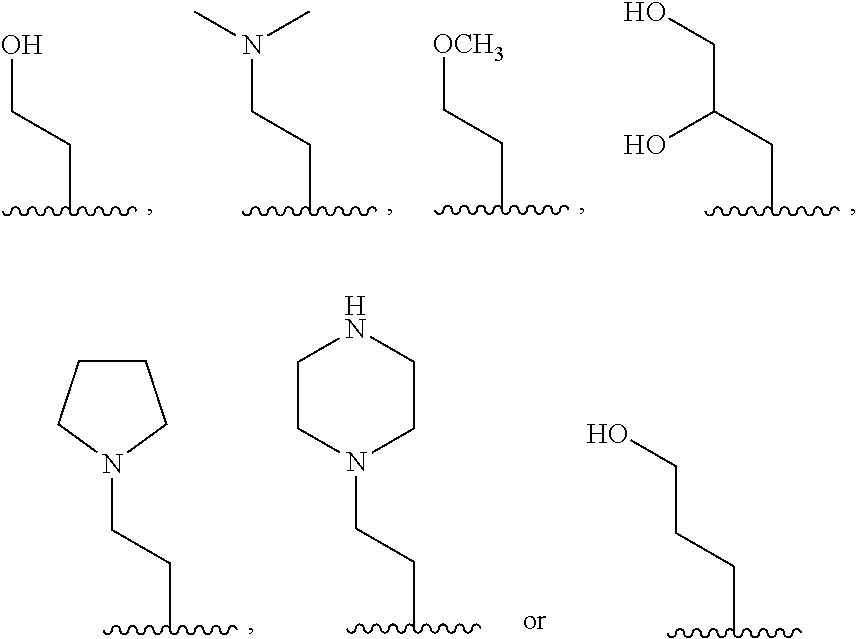
or a pharmaceutically acceptable salt thereof.
-
- wherein m=1;
- R2 is H or CH3; and
- R3 is H, CH3, Cl, Br, F, or CF3;
or a pharmaceutically acceptable salt thereof.
-
- wherein R6 is —NH—OR11 or —OR11,
- wherein R11 is H or CH3,
or a pharmaceutically acceptable salt thereof.
- wherein R11 is H or CH3,
- wherein R6 is —NH—OR11 or —OR11,
-
- wherein R1 is —C(═O)—NR5R6,
- wherein R5 and R6 heteroalkyl, aryl, or heteroaryl;
- m is 1;
- R2 and R3 are H;
- Ar1 is phenyl;
- Z is absent;
- R4 is —NH—OR11,
- wherein R11 is H,
or a pharmaceutically acceptable salt thereof.
- wherein R11 is H,
- wherein R1 is —C(═O)—NR5R6,


or a pharmaceutically acceptable salt thereof.

or a pharmaceutically acceptable salt thereof.

or a pharmaceutically acceptable salt thereof.


and R3═CH3, OH, NH2 or F.


and R3═CH3, OH, NH2 or F.


-
- wherein Z is present or absent, and when present is —O—, —S—, —CH2—, —NH—, —NH—NH—, —NHC(═O)—C(═O)NH—, —NHC(═O)CH2NH— or —NHC(═O)CH═CH—; and
- R4 is —OR11 or —NH—OR11,
- wherein R11 is H, C1-10 alkyl, C2-10 alkenyl, C2-10 alkynyl, aryl, heteroaryl, or heterocyclyl,
or a pharmaceutically acceptable salt thereof.
- wherein R11 is H, C1-10 alkyl, C2-10 alkenyl, C2-10 alkynyl, aryl, heteroaryl, or heterocyclyl,

-
- wherein Z is present or absent, and when present is —O—, —S—, —CH2—, —NH—, —NH—NH—, —NHC(═O)—, —C(═O)NH—, —NHC(═O)CH2NH— or —NHC(═O)CH═CH—; and
- R4 is —OR11 or —NH—OR11,
- wherein R11 is H, C1-10 alkyl, C2-10 alkenyl, C2-10 alkynyl, aryl, heteroaryl, or heterocyclyl,
or a pharmaceutically acceptable salt thereof.
- wherein R11 is H, C1-10 alkyl, C2-10 alkenyl, C2-10 alkynyl, aryl, heteroaryl, or heterocyclyl,
-
- Ar1 is indole, benzimidazole, or tetralin,
or a pharmaceutically acceptable salt thereof.
- Ar1 is indole, benzimidazole, or tetralin,


or a pharmaceutically acceptable salt thereof.


- 1. R. B. Parmigiani, W. S. Xu, G. Yenta-Perez, H. Erdjument-Bromage, M. Yaneva, P. Tempst, and P. A. Marks. “HDAC6 is a specific deacetylase of peroxiredoxins and is involved in redox regulation” Proc. Nat. Acad. Sci. USA (2008), 105, 9633-9638.
- 2. K. V. Butler and A. P. Kozikowski “Chemical Origins of Isoform Selectivity in Histone Deacetylase Inhibitors” Curr. Pharma. Design (2008), 14, 505-528.
- 3. Y. Kawaguchi; J. J. Kovacs; A. McLaurin; J. M. Vance; A. Ito; T.-P. Yao “The Deacetylase HDAC6 Regulates Aggresome Formation and Cell Viability in Response to Misfolded Protein Stress” Cell (2003), 115, 727-738.
- 4. P. Bali; M. Pranpat; J. Bradner; M. Balasis; W. Fiskus; F. Guo; K. Rocha; S. Kumaraswamy; S. Boyapalle; P. Atadja; E. Seto; K. Bhalla. “Inhibition of
Histone Deacetylase 6 Acetylates and Disrupts the Chaperone Function of Heat Shock Protein 90” J. Biol. Chem. (2005), 280, 26729-26734. - 5. Y.-S. Gao; C. C. Hubbert; T.-P. Yao. “The Microtubule-associated Histone Deacetylase 6 (HDAC6) Regulates Epidermal Growth Factor Receptor (EGFR) Endocytic Trafficking and Degradation” J. Biol. Chem. (2010), 285, 11219-11226.
- 6. S. J. Haggarty; K. M. Koeller; J. C. Wong; C. M. Grozinger; S. L. Schreiber. “Domain-selective small-molecule inhibitor of histone deacetylase 6 (HDAC6)-mediated tubulin deacetylation” Proc. Nat. Sci. Acad. USA (2003), 100, 4389-4394.
- 7. J. J. Kovacs; P. J. M. Murphy; S. Gaillard; X. Zhao; T. Wu; C. V. Nicchitta; M. Yoshida; D. O. Toft; W. B. Pratt; T.-P. Yao. “HDAC6 Regulates Hsp90 Acetylation and Chaperone-Dependent Activation of Glucocorticoid Receptor” Molecular Cell (2005) 18, 601-607.
- 8. Marks, P. S., Breslow, R. Dimethyl sulfoxide to vorinostat: development of this histone deacetylase inhibitor as an anti-cancer drug. Nat. Biotech. (2007) 25, 84-90.
- 9. Marks, P. A. Histone Deacetylase Inhibitors: A chemical genetics approach to understanding cellular functions, Biochimica et. Biophysicia Acta (2010) 1799 (10-12), 717-725.
- 10. Munkacsi, Andrew B. et al., “An “exacerbate-reverse” strategy in yeast identifies histone deacetylase inhibition as a correction for cholesterol and sphingolipid transport defects in human niemann-pick type C disease”, J. Biol. Chem. (2011) 286, 23842-23851.
Claims (19)


Priority Applications (1)
| Application Number | Priority Date | Filing Date | Title |
|---|---|---|---|
| US14/349,291 US9499479B2 (en) | 2011-10-03 | 2012-10-03 | Molecules that selectively inhibit histone deacetylase 6 relative to histone deacetylase 1 |
Applications Claiming Priority (4)
| Application Number | Priority Date | Filing Date | Title |
|---|---|---|---|
| US201161542598P | 2011-10-03 | 2011-10-03 | |
| US201261620783P | 2012-04-05 | 2012-04-05 | |
| US14/349,291 US9499479B2 (en) | 2011-10-03 | 2012-10-03 | Molecules that selectively inhibit histone deacetylase 6 relative to histone deacetylase 1 |
| PCT/US2012/000459 WO2013052110A1 (en) | 2011-10-03 | 2012-10-03 | Novel molecules that selectively inhibit histone deacetylase 6 relative to histone deacetylase 1 |
Related Parent Applications (1)
| Application Number | Title | Priority Date | Filing Date |
|---|---|---|---|
| PCT/US2012/000459 A-371-Of-International WO2013052110A1 (en) | 2011-10-03 | 2012-10-03 | Novel molecules that selectively inhibit histone deacetylase 6 relative to histone deacetylase 1 |
Related Child Applications (1)
| Application Number | Title | Priority Date | Filing Date |
|---|---|---|---|
| US15/355,959 Continuation US20170066712A1 (en) | 2011-10-03 | 2016-11-18 | Novel molecules that selectively inhibit histone deacetylase 6 relative to histone deacetylase |
Publications (2)
| Publication Number | Publication Date |
|---|---|
| US20140288119A1 US20140288119A1 (en) | 2014-09-25 |
| US9499479B2 true US9499479B2 (en) | 2016-11-22 |
Family
ID=48044052
Family Applications (2)
| Application Number | Title | Priority Date | Filing Date |
|---|---|---|---|
| US14/349,291 Expired - Fee Related US9499479B2 (en) | 2011-10-03 | 2012-10-03 | Molecules that selectively inhibit histone deacetylase 6 relative to histone deacetylase 1 |
| US15/355,959 Abandoned US20170066712A1 (en) | 2011-10-03 | 2016-11-18 | Novel molecules that selectively inhibit histone deacetylase 6 relative to histone deacetylase |
Family Applications After (1)
| Application Number | Title | Priority Date | Filing Date |
|---|---|---|---|
| US15/355,959 Abandoned US20170066712A1 (en) | 2011-10-03 | 2016-11-18 | Novel molecules that selectively inhibit histone deacetylase 6 relative to histone deacetylase |
Country Status (5)
| Country | Link |
|---|---|
| US (2) | US9499479B2 (en) |
| EP (1) | EP2763531A4 (en) |
| AU (1) | AU2012319188B2 (en) |
| CA (1) | CA2850757A1 (en) |
| WO (1) | WO2013052110A1 (en) |
Cited By (2)
| Publication number | Priority date | Publication date | Assignee | Title |
|---|---|---|---|---|
| US9890136B2 (en) | 2013-12-23 | 2018-02-13 | The Trustees Of Columbia University In The City Of New York Memorial Sloan-Kettering Cancer Center | Selective HDAC6 inhibitors |
| US11028232B2 (en) * | 2017-12-19 | 2021-06-08 | Wacker Chemie Ag | Process for preparing siloxanes containing oxamido ester groups |
Families Citing this family (36)
| Publication number | Priority date | Publication date | Assignee | Title |
|---|---|---|---|---|
| CN105669540A (en) | 2009-01-28 | 2016-06-15 | 卡鲁斯治疗有限公司 | Scriptaid isosteres and their use in therapy |
| GB201106817D0 (en) | 2011-04-21 | 2011-06-01 | Astex Therapeutics Ltd | New compound |
| CA2850757A1 (en) | 2011-10-03 | 2013-04-11 | The Trustees Of Columbia University In The City Of New York | Novel molecules that selectively inhibit histone deacetylase 6 relative to histone deacetylase 1 |
| GB201218862D0 (en) | 2012-10-19 | 2012-12-05 | Astex Therapeutics Ltd | Bicyclic heterocycle compounds and their uses in therapy |
| GB201218864D0 (en) | 2012-10-19 | 2012-12-05 | Astex Therapeutics Ltd | Bicyclic heterocycle compounds and their uses in therapy |
| US9980973B2 (en) | 2012-10-19 | 2018-05-29 | Astex Therapeutics Limited | Bicyclic heterocycle compounds and their uses in therapy |
| GB201218850D0 (en) | 2012-10-19 | 2012-12-05 | Astex Therapeutics Ltd | Bicyclic heterocycle compounds and their uses in therapy |
| IN2015DN03235A (en) | 2012-11-07 | 2015-10-02 | Karus Therapeutics Ltd | |
| HUE041881T2 (en) * | 2013-04-29 | 2019-06-28 | Chong Kun Dang Pharmaceutical Corp | New compounds as selective histone deacetylase inhibitors and pharmaceutical compositions containing them |
| ES2688815T3 (en) | 2013-05-10 | 2018-11-07 | Karus Therapeutics Limited | Novel histone deacetylase inhibitors |
| EP3080125B1 (en) * | 2013-12-12 | 2018-10-10 | Chong Kun Dang Pharmaceutical Corp. | Novel azaindole derivatives as selective histone deacetylase (hdac) inhibitors and pharmaceutical compositions comprising the same |
| US9365204B2 (en) * | 2013-12-12 | 2016-06-14 | GM Global Technology Operations LLC | Method and apparatus for torque arbitration and shaping in a multi-mode powertrain system |
| WO2015092420A1 (en) | 2013-12-20 | 2015-06-25 | Astex Therapeutics Limited | Bicyclic heterocycle compounds and their uses in therapy |
| MX2016011833A (en) | 2014-03-12 | 2017-03-29 | Chong Kun Dang Pharmaceutical Corp | Novel compounds as histone deacetylase 6 inhibitors and pharmaceutical compositions comprising the same. |
| GB201419264D0 (en) | 2014-10-29 | 2014-12-10 | Karus Therapeutics Ltd | Compounds |
| GB201419228D0 (en) | 2014-10-29 | 2014-12-10 | Karus Therapeutics Ltd | Compounds |
| WO2016126726A1 (en) | 2015-02-02 | 2016-08-11 | Forma Therapeutics, Inc. | Bicyclic [4,6,0] hydroxamic acids as hdac6 inhibitors |
| WO2016126721A1 (en) | 2015-02-02 | 2016-08-11 | Forma Therapeutics, Inc. | 3-aryl-bicyclic [4,5,0] hydroxamic acids as hdac inhibitors |
| EP3932914A1 (en) | 2015-03-13 | 2022-01-05 | Valo Health, Inc. | Alpha-cinnamide compounds and compositions as hdac8 inhibitors |
| US10865184B2 (en) | 2015-04-21 | 2020-12-15 | University Of Tennessee Research Foundation | Selective androgen receptor degrader (SARD) ligands and methods of use thereof |
| US10654809B2 (en) | 2016-06-10 | 2020-05-19 | University Of Tennessee Research Foundation | Selective androgen receptor degrader (SARD) ligands and methods of use thereof |
| RU2695227C9 (en) | 2015-07-27 | 2020-03-04 | Чонг Кун Данг Фармасьютикал Корп. | 1,3,4-oxadiazole sulphamide derivatives as histone deacetylase 6 inhibitor and pharmaceutical composition containing them |
| NZ739211A (en) | 2015-07-27 | 2019-05-31 | Chong Kun Dang Pharmaceutical Corp | 1,3,4-oxadiazole amide derivative compound as histone deacetylase 6 inhibitor, and pharmaceutical composition containing same |
| PL3328843T3 (en) | 2015-07-27 | 2023-02-27 | Chong Kun Dang Pharmaceutical Corp. | 1,3,4-oxadiazole sulfonamide derivative compounds as histone deacetylase 6 inhibitor, and the pharmaceutical composition comprising the same |
| PT3331864T (en) | 2015-08-04 | 2022-01-18 | Chong Kun Dang Pharmaceutical Corp | 1,3,4-oxadiazole derivative compounds as histone deacetylase 6 inhibitor, and the pharmaceutical composition comprising the same |
| EP3472131B1 (en) | 2016-06-17 | 2020-02-19 | Forma Therapeutics, Inc. | 2-spiro-5- and 6-hydroxamic acid indanes as hdac inhibitors |
| WO2018089651A1 (en) * | 2016-11-10 | 2018-05-17 | Acetylon Pharmaceuticals, Inc. | Phenyl and pyridinyl hydroxamic acids |
| WO2019204550A1 (en) * | 2018-04-20 | 2019-10-24 | Forma Therapeutics, Inc. | Isoindolines as hdac inhibitors |
| KR102316234B1 (en) | 2018-07-26 | 2021-10-22 | 주식회사 종근당 | 1,3,4-Oxadiazole Derivative Compounds as Histone Deacetylase 6 Inhibitor, and the Pharmaceutical Composition Comprising the same |
| MY207444A (en) | 2019-05-31 | 2025-02-27 | Chong Kun Dang Pharmaceutical Corp | 1,3,4-oxadiazole homophthalimide derivative compounds as histone deacetylase 6 inhibitor, and the pharmaceutical composition comprising the same |
| WO2021013163A1 (en) * | 2019-07-23 | 2021-01-28 | Taipei Medical University | Histone deacetylase 6 inhibitors and method for treating neuropathic pain |
| WO2021173721A1 (en) * | 2020-02-25 | 2021-09-02 | University Of Tennessee Research Foundation | Selective androgen receptor degrader (sard) ligands and methods of use thereof |
| KR102537615B1 (en) | 2020-02-25 | 2023-05-30 | 주식회사 종근당 | 1,3,4-Oxadiazol Derivative Compounds as Histone Deacetylase 6 Inhibitor, and the Pharmaceutical Composition Comprising the same |
| KR102537616B1 (en) | 2020-02-25 | 2023-05-26 | 주식회사 종근당 | 1,3,4-Oxadiazole Derivative Compounds as Histone Deacetylase 6 Inhibitor, and the Pharmaceutical Composition Comprising the same |
| KR102685058B1 (en) | 2020-09-02 | 2024-07-15 | 주식회사 종근당 | Novel Compounds as Histone Deacetylase 6 Inhibitor, and the Pharmaceutical Composition Comprising the same |
| WO2024180464A1 (en) | 2023-02-28 | 2024-09-06 | Chong Kun Dang Pharmaceutical Corp. | Oxadiazole derivative compounds, and the pharmaceutical composition comprising the same |
Citations (29)
| Publication number | Priority date | Publication date | Assignee | Title |
|---|---|---|---|---|
| US4309212A (en) | 1977-10-26 | 1982-01-05 | Sumitomo Chemical Company, Limited | Herbicidal compositions and methods employing urea derivatives |
| EP0434074A2 (en) | 1989-12-22 | 1991-06-26 | Mitsui Petrochemical Industries, Ltd. | Process for the production of 1-lower alkoxy-1-lower alkyl-3-substituted phenylurea, and intermediate thereof and process for the production of the intermediate |
| US5369108A (en) | 1991-10-04 | 1994-11-29 | Sloan-Kettering Institute For Cancer Research | Potent inducers of terminal differentiation and methods of use thereof |
| WO2002026696A1 (en) | 2000-09-29 | 2002-04-04 | Prolifix Limited | Carbamic acid compounds comprising an amide linkage as hdac inhibitors |
| US20040087631A1 (en) | 2002-03-04 | 2004-05-06 | Bacopoulos Nicholas G. | Methods of treating cancer with HDAC inhibitors |
| US20040122079A1 (en) | 2002-12-16 | 2004-06-24 | Adelbert Grossmann | Thiophene hydroxamic acid derivatives |
| US20050119305A1 (en) | 2001-03-21 | 2005-06-02 | Masao Naka | Il-6 production inhibitors |
| WO2005055928A2 (en) | 2003-12-02 | 2005-06-23 | The Ohio State University Research Foundation | Zn2+ -chelating motif-tethered short -chain fatty acids as a novel class of histone deacetylase inhibitors |
| WO2005080367A1 (en) | 2004-02-12 | 2005-09-01 | Pharmagene Laboratories Limited | Ep2 receptor agonists |
| WO2006101454A1 (en) | 2005-03-21 | 2006-09-28 | S*Bio Pte Ltd | Benzothiophene derivatives: preparation and pharmaceutical applications |
| US20060241129A1 (en) | 1999-09-08 | 2006-10-26 | Ronald Breslow | Novel class of cytodifferentiating agents and histone deacetylase inhibitors, and methods of use thereof |
| US20060252834A1 (en) | 2003-08-26 | 2006-11-09 | Amorepacific Corporation | Hydroxamic acid derivatives and the method for preparing thereof |
| WO2006117548A1 (en) | 2005-05-05 | 2006-11-09 | Chroma Therapeutics Ltd | Hydroxamic acid dervicatives as inhibitors of hdac enzymatic activity |
| EP1736465A1 (en) | 2004-03-31 | 2006-12-27 | Ajinomoto Co., Inc. | Aniline derivatives |
| US20070213392A1 (en) | 2003-10-09 | 2007-09-13 | Miller Thomas A | Thiophene and Benzothiophene Hydroxamic Acid Derivatives |
| WO2007124435A2 (en) | 2006-04-21 | 2007-11-01 | Board Of Regents, The University Of Texas System | Detection of histone deacetylase inhibition |
| US20080015190A1 (en) * | 2004-07-12 | 2008-01-17 | Chakravarty Prasun K | Inhibitors of Histone Deacetylase |
| WO2008055068A2 (en) | 2006-10-28 | 2008-05-08 | Methylgene Inc. | Inhibitors of histone deacetylase |
| US20080139673A1 (en) | 2006-08-11 | 2008-06-12 | Methylgene Inc. | Potentiation of antifungal compounds |
| US20080200489A1 (en) | 2005-08-11 | 2008-08-21 | Peter Wisdom Atadja | Combination of Organic Compounds |
| US20080248506A1 (en) | 2004-10-07 | 2008-10-09 | Pharmacyclics, Inc. | Method of Monitoring Anti-Tumor Activity of an Hdac Inhibitor |
| US20090023786A1 (en) | 2004-04-05 | 2009-01-22 | Alton Pharma, Inc. | Histone Deacetylase Inhibitor Prodrugs |
| EP2045239A1 (en) | 2006-07-07 | 2009-04-08 | Universidad De Granada | Novel derivatives of phthalimide as histone deacetylase inhibitors |
| US20100022514A1 (en) | 2006-12-15 | 2010-01-28 | Norvartis Ag | Heterocycle Compounds and Methods of Use Thereof |
| US20110212943A1 (en) | 2008-10-15 | 2011-09-01 | Orchid Research Laboratories Limited | Novel bridged cyclic compounds as histone deacetylase inhibitors |
| WO2011146855A1 (en) | 2010-05-21 | 2011-11-24 | The Trustees Of Columbia University In The City Of New York | Selective hdac inhibitors |
| WO2013052110A1 (en) | 2011-10-03 | 2013-04-11 | The Trustees Of Columbia University In The City Of New York | Novel molecules that selectively inhibit histone deacetylase 6 relative to histone deacetylase 1 |
| US20130261130A1 (en) * | 2010-11-01 | 2013-10-03 | Shaheen Ahmed | Neurotrypsin inhibitors |
| WO2015100363A1 (en) | 2013-12-23 | 2015-07-02 | The Trustees Of Columbia University In The City Of New York | Selective hdac6 inhibitors |
Family Cites Families (3)
| Publication number | Priority date | Publication date | Assignee | Title |
|---|---|---|---|---|
| TW200418835A (en) * | 2003-01-24 | 2004-10-01 | Tanabe Seiyaku Co | A pyrazolopyrimidine compound and a process for preparing the same |
| US8431538B2 (en) * | 2009-07-22 | 2013-04-30 | The Board Of Trustees Of The University Of Illinois | HDAC inhibitors and therapeutic methods of using same |
| WO2013041407A1 (en) * | 2011-09-19 | 2013-03-28 | Cellzome Ag | Hydroxamic acids as hdac6 inhibitors |
-
2012
- 2012-10-03 CA CA2850757A patent/CA2850757A1/en not_active Abandoned
- 2012-10-03 AU AU2012319188A patent/AU2012319188B2/en not_active Ceased
- 2012-10-03 WO PCT/US2012/000459 patent/WO2013052110A1/en not_active Ceased
- 2012-10-03 EP EP12838935.0A patent/EP2763531A4/en not_active Withdrawn
- 2012-10-03 US US14/349,291 patent/US9499479B2/en not_active Expired - Fee Related
-
2016
- 2016-11-18 US US15/355,959 patent/US20170066712A1/en not_active Abandoned
Patent Citations (35)
| Publication number | Priority date | Publication date | Assignee | Title |
|---|---|---|---|---|
| US4309212A (en) | 1977-10-26 | 1982-01-05 | Sumitomo Chemical Company, Limited | Herbicidal compositions and methods employing urea derivatives |
| EP0434074A2 (en) | 1989-12-22 | 1991-06-26 | Mitsui Petrochemical Industries, Ltd. | Process for the production of 1-lower alkoxy-1-lower alkyl-3-substituted phenylurea, and intermediate thereof and process for the production of the intermediate |
| US5369108A (en) | 1991-10-04 | 1994-11-29 | Sloan-Kettering Institute For Cancer Research | Potent inducers of terminal differentiation and methods of use thereof |
| US5932616A (en) | 1991-10-04 | 1999-08-03 | Sloan-Kettering Institute For Cancer Research | Potent inducers of terminal differentiation and methods of use thereof |
| US6087367A (en) * | 1991-10-04 | 2000-07-11 | Sloan-Kettering Institute For Cancer Research | Potent inducers of terminal differentiation and methods of use thereof |
| US20060241129A1 (en) | 1999-09-08 | 2006-10-26 | Ronald Breslow | Novel class of cytodifferentiating agents and histone deacetylase inhibitors, and methods of use thereof |
| US7345174B2 (en) | 1999-09-08 | 2008-03-18 | Sloan-Kettering Institute For Cancer Research | Cytodifferentiating agents and histone deacetylase inhibitors, and methods of use thereof |
| US20070010669A1 (en) | 1999-09-08 | 2007-01-11 | Ronald Breslow | Novel class of cytodifferentiating agents and histone deacetylase inhibitors, and methods of use thereof |
| WO2002026696A1 (en) | 2000-09-29 | 2002-04-04 | Prolifix Limited | Carbamic acid compounds comprising an amide linkage as hdac inhibitors |
| US20050119305A1 (en) | 2001-03-21 | 2005-06-02 | Masao Naka | Il-6 production inhibitors |
| US20040087631A1 (en) | 2002-03-04 | 2004-05-06 | Bacopoulos Nicholas G. | Methods of treating cancer with HDAC inhibitors |
| US20040122079A1 (en) | 2002-12-16 | 2004-06-24 | Adelbert Grossmann | Thiophene hydroxamic acid derivatives |
| US20060252834A1 (en) | 2003-08-26 | 2006-11-09 | Amorepacific Corporation | Hydroxamic acid derivatives and the method for preparing thereof |
| US7282522B2 (en) | 2003-08-26 | 2007-10-16 | Amorepacific Corporation | Hydroxamic acid derivatives and the method for preparing thereof |
| US20070213392A1 (en) | 2003-10-09 | 2007-09-13 | Miller Thomas A | Thiophene and Benzothiophene Hydroxamic Acid Derivatives |
| WO2005055928A2 (en) | 2003-12-02 | 2005-06-23 | The Ohio State University Research Foundation | Zn2+ -chelating motif-tethered short -chain fatty acids as a novel class of histone deacetylase inhibitors |
| WO2005080367A1 (en) | 2004-02-12 | 2005-09-01 | Pharmagene Laboratories Limited | Ep2 receptor agonists |
| EP1736465A1 (en) | 2004-03-31 | 2006-12-27 | Ajinomoto Co., Inc. | Aniline derivatives |
| US20090023786A1 (en) | 2004-04-05 | 2009-01-22 | Alton Pharma, Inc. | Histone Deacetylase Inhibitor Prodrugs |
| US20080015190A1 (en) * | 2004-07-12 | 2008-01-17 | Chakravarty Prasun K | Inhibitors of Histone Deacetylase |
| US20080248506A1 (en) | 2004-10-07 | 2008-10-09 | Pharmacyclics, Inc. | Method of Monitoring Anti-Tumor Activity of an Hdac Inhibitor |
| WO2006101454A1 (en) | 2005-03-21 | 2006-09-28 | S*Bio Pte Ltd | Benzothiophene derivatives: preparation and pharmaceutical applications |
| WO2006117548A1 (en) | 2005-05-05 | 2006-11-09 | Chroma Therapeutics Ltd | Hydroxamic acid dervicatives as inhibitors of hdac enzymatic activity |
| US20080200489A1 (en) | 2005-08-11 | 2008-08-21 | Peter Wisdom Atadja | Combination of Organic Compounds |
| WO2007124435A2 (en) | 2006-04-21 | 2007-11-01 | Board Of Regents, The University Of Texas System | Detection of histone deacetylase inhibition |
| EP2045239A1 (en) | 2006-07-07 | 2009-04-08 | Universidad De Granada | Novel derivatives of phthalimide as histone deacetylase inhibitors |
| US20080139673A1 (en) | 2006-08-11 | 2008-06-12 | Methylgene Inc. | Potentiation of antifungal compounds |
| WO2008055068A2 (en) | 2006-10-28 | 2008-05-08 | Methylgene Inc. | Inhibitors of histone deacetylase |
| US20100022514A1 (en) | 2006-12-15 | 2010-01-28 | Norvartis Ag | Heterocycle Compounds and Methods of Use Thereof |
| US20110212943A1 (en) | 2008-10-15 | 2011-09-01 | Orchid Research Laboratories Limited | Novel bridged cyclic compounds as histone deacetylase inhibitors |
| WO2011146855A1 (en) | 2010-05-21 | 2011-11-24 | The Trustees Of Columbia University In The City Of New York | Selective hdac inhibitors |
| US20140031368A1 (en) | 2010-05-21 | 2014-01-30 | The Trustees Of Columbia University In The City Of New York | Selective hdac inhibitors |
| US20130261130A1 (en) * | 2010-11-01 | 2013-10-03 | Shaheen Ahmed | Neurotrypsin inhibitors |
| WO2013052110A1 (en) | 2011-10-03 | 2013-04-11 | The Trustees Of Columbia University In The City Of New York | Novel molecules that selectively inhibit histone deacetylase 6 relative to histone deacetylase 1 |
| WO2015100363A1 (en) | 2013-12-23 | 2015-07-02 | The Trustees Of Columbia University In The City Of New York | Selective hdac6 inhibitors |
Non-Patent Citations (42)
| Title |
|---|
| Bali, P. et al. nhibition of Histone Deacetylase 6 Acetylates and Disrupts the Chaperone Function of Heat Shock Protein 90. Journal of Biological Chemistry. (2005), 280, pp. 26729-26734. |
| Belvedere, S. et al. Aminosuberoyl hydroxamic acids (ASHAs): a potent new class of HDAC inhibitors. Bioorg Med Chem Lett. (2007), 17(14), 3969-71. |
| Bieliauskas, A.V. and Pflum, M.K. Isoform-selective histone deacetylase inhibitors. Chem Soc Rev. (2008), 37(7), pp. 1402-1413. |
| Butler et al. Rational Design and Simple Chemistry Yield a Superior, Neuroprotective HDAC6 Inhibitor, Tubastatin A. J. Am. Chem. Soc. (2010) 132, 10842-10846. |
| Butler, K.V. et al. Chemical Origins of Isoform Selectivity in Histone Deacetylase Inhibitors. Current Pharmaceutical Design. (2008) 14, pp 505-528. |
| CAS Abstract for Canonica & Tedechi, 13 Farmaco, Edizione Scientiifca (1958), 286-93. |
| CAS Abstract for JP 510014124, published Apr. 18, 1974 (Harita et al.). |
| Communication Pursuant to 94(3) EPC issued Aug. 5, 2015 in connection with European Application No. 11784333.4. |
| Estiu et al. Structural origin of selectivity in class II-selective histone deacetylase inhibitors. J Med Chem. (2008), 51(10), pp. 2898-2906. |
| Extended European Search Report issued Oct. 20, 2016 in connection with European Application No. 12838935.0. |
| Final Office Action issued Jan. 28, 2015 in connection with U.S. Appl. No. 13/937,128. |
| Gao et al. The Microtubule-associated Histone Deacetylase 6 (HDAC6) Regulates Epidermal Growth Factor Receptor (EGFR) Endocytic Trafficking and Degradation. Journal of Biological Chemistry. (2010), 285, pp. 11219-11226. |
| Griffith, D. A novel anti-cancer bifunctional platinum drug candidate with dual DNA binding and histone deacetylase inhibitory activity. Chem Commun (Camb). (2009) 28, 44, 6735-7. |
| Haggarty, S.J. et al. Domain-selective small-molecule inhibitor of histone deacetylase 6 (HDAC6)-mediated tubulin deacetvlation. PNAS (2003), 100, pp. 4389-4394. |
| Hong, J. et al. A New Approach to Tubacin. Letters in Organic Chemistry. (2010) 7, 50-53. |
| International Preliminary Report on Patentability Chapter I in connection with PCT International Application No. PCT/US2011/037372 issued Nov. 27, 2012. |
| International Preliminary Report on Patentability Chapter I in connection with PCT International Application No. PCT/US2012/000459 issued Apr. 17, 2014. |
| International Search Report in connection with PCT International Application No. PCT/US2011/037372 issued Aug. 17, 2011. |
| International Search Report in connection with PCT International application No. PCT/US2012/000459 issued Dec. 11, 2012. |
| International Search Report in connection with PCT International Application No. PCT/US2014/072234, issued Mar. 18, 2015. |
| Invitation Pursuant to Rule 63(1) EPC issued Jun. 26, 2015 in connection with European Application No. 12838935.0. |
| Kawaguchi, Y. et al. "The Deacetylase HDAC6 Regulates Aggresome Formation and Cell Viability in Response to Misfolded Protein Stress" (2003) Cell, vol. 115, 727-738. |
| Kovacs, J.J. et al. HDAC6 Regulates Hsp90 Acetylation Short Article and Chaperone-Dependent Activation of Glucocorticoid Receptor. Molecular Cell. (2005), 18, pp. 601-607. |
| Kozikowski, A.P. et al. Use of the nitrile oxide cycloaddition (NOC) reaction for molecular probe generation: a new class of enzyme selective histone deacetylase inhibitors (HDACIs) showing picomolar activity at HDAC6. J. Med. Chem. (2008) 51, 4370-7373. |
| Lee, J. et al. Development of a histone deacetylase 6 inhibitor and its biological effects PNAS (2013) 110, 15704-15709. |
| Maeda, T. et al. Potent histone deacetylase inhibitors: N-hydroxybenzamides with antitumor activities. Bioorg. Med. Chem. (2004) 12, 4351-4360. |
| Marastoni, E. et al. Benzofused hydroxamic acids: Useful fragments for the preparation of histone deacetylase inhibitors. Part 1: Hit identification. Bioorg. Med. Chem. Lett. (2013) 23, 4091-4095. |
| Notification of Transmittal of the International Search Report and the Written Opinion of the International Searching Authority, or the Declaration, including an International Search Report and Written Opinion of the International Searching Authority, mailed Dec. 11, 2012 in connection with PCT International Application No. PCT/US2012/000459, filed Oct. 3, 2012. |
| Office Action issued Aug. 21, 2015 in connection with U.S. Appl. No. 13/937,128. |
| Office Action issued Aug. 7, 2014 in connection with U.S. Appl. No. 13/937,128. |
| Office Action issued Mar. 18, 2014 in connection with U.S. Appl. No. 13/937,128. |
| Office Action issued Nov. 13, 2015 in connection with Australian Patent Application No. 2012319188. |
| Office Action issued Sep. 4, 2015 in connection with Australian Patent Application No. 2011255281. |
| Patent Examination Report No. 2 issued Jul. 15, 2016 in connection with Australian Patent Application No. 2012319188. |
| R.B. Parmigiani et al. HDAC6 is a specific deacetylase of peroxiredoxins and is involved in redox regulation. PNAS (2008), 105(28), pp. 9633-9638. |
| Siliphaivanh, P, et al. Design of novel histone deacetylase inhibitors. Bioorg Med Chem Lett. (2007), 17(16), pp. 4619-4624. |
| Smil, D.V. et al. Novel HDAC6 isoform selective chiral small molecule histone deacetylase inhibitors. Bioorg. Med. Chem. Lett. (2009) 19, 688-692. |
| Supplementary European Search Report issued Aug. 20, 2014 in connection with European Application No. 11784333.4. |
| Uesato, S. et al. Novel histone deacetylase inhibitors: N-hydroxycarboxamides possessing a terminal bicyclic aryl group. Bioorg. Med. Chem. Lett. (2002) 12, 1347-1349. |
| Written Opinion of the International Search Authority in connection with PCT International Application No. PCT/US2011/037372 issued Aug. 17, 2011. |
| Written Opinion of the International Search Authority in connection with PCT International Application No. PCT/US2012/000459 issued Dec. 11, 2012. |
| Written Opinion of the International Search Authority in connection with PCT International Application No. PCT/US2014/072234, issued Mar. 18, 2015. |
Cited By (3)
| Publication number | Priority date | Publication date | Assignee | Title |
|---|---|---|---|---|
| US9890136B2 (en) | 2013-12-23 | 2018-02-13 | The Trustees Of Columbia University In The City Of New York Memorial Sloan-Kettering Cancer Center | Selective HDAC6 inhibitors |
| US10626100B2 (en) | 2013-12-23 | 2020-04-21 | The Trustees Of Columbia University In The City Of New York | Selective HDAC6 inhibitors |
| US11028232B2 (en) * | 2017-12-19 | 2021-06-08 | Wacker Chemie Ag | Process for preparing siloxanes containing oxamido ester groups |
Also Published As
| Publication number | Publication date |
|---|---|
| EP2763531A4 (en) | 2015-11-18 |
| CA2850757A1 (en) | 2013-04-11 |
| US20140288119A1 (en) | 2014-09-25 |
| AU2012319188A1 (en) | 2014-05-22 |
| US20170066712A1 (en) | 2017-03-09 |
| EP2763531A1 (en) | 2014-08-13 |
| AU2012319188B2 (en) | 2016-11-24 |
| WO2013052110A1 (en) | 2013-04-11 |
Similar Documents
| Publication | Publication Date | Title |
|---|---|---|
| US20170066712A1 (en) | Novel molecules that selectively inhibit histone deacetylase 6 relative to histone deacetylase | |
| US10626100B2 (en) | Selective HDAC6 inhibitors | |
| US20140031368A1 (en) | Selective hdac inhibitors | |
| NL1028947C2 (en) | Substituted methylaryl or heteroarylamide compounds. | |
| US9096549B2 (en) | Selective HDAC3 inhibitors | |
| CA2552279C (en) | Zn2+-chelating motif-tethered short -chain fatty acids as a novel class of histone deacetylase inhibitors | |
| US8394807B2 (en) | Quinazoline inhibitors of BACE 1 and methods of using | |
| US11026910B2 (en) | α- and γ-truxillic acid derivatives and pharmaceutical compositions thereof | |
| TW201443001A (en) | Bicyclic analgesic compound | |
| US9303027B2 (en) | Kappa opioid receptor agonists | |
| US20220401564A1 (en) | Selective histone deacetylase (hdac) degraders and methods of use thereof | |
| US9409858B2 (en) | Selective histone deactylase 6 inhibitors | |
| US20250387491A1 (en) | Selective histone deacetylase 8 (hdac8) degraders and methods of use thereof | |
| US8859590B2 (en) | Inhibitors of BACE1 and methods for treating Alzheimer's disease | |
| CN108409608A (en) | Aryl nitrogen mustard histone deacetylases inhibitor and its preparation method and application | |
| US20120035251A1 (en) | Thiophene inhibitors of ikk-b serine-threonine protein kinase | |
| US12600705B2 (en) | Heat shock protein modulators and anti-Huntington disease therapeutic agents | |
| CN108794358B (en) | Substituted benzenesulfonyl compounds and their use in preparing medicines |
Legal Events
| Date | Code | Title | Description |
|---|---|---|---|
| AS | Assignment |
Owner name: THE TRUSTEES OF COLUMBIA UNIVERSITY IN THE CITY OF Free format text: ASSIGNMENT OF ASSIGNORS INTEREST;ASSIGNOR:BRESLOW, RONALD;REEL/FRAME:032476/0456 Effective date: 20140207 Owner name: SLOAN-KETTERING INSTITUTE FOR CANCER RESEARCH, NEW Free format text: ASSIGNMENT OF ASSIGNORS INTEREST;ASSIGNOR:MARKS, PAUL A.;REEL/FRAME:032476/0568 Effective date: 20140208 |
|
| AS | Assignment |
Owner name: THE TRUSTEES OF COLUMBIA UNIVERSITY IN THE CITY OF Free format text: ASSIGNMENT OF ASSIGNORS INTEREST;ASSIGNOR:BRESLOW, RONALD;REEL/FRAME:033671/0466 Effective date: 20140417 Owner name: SLOAN-KETTERING INSTITUTE FOR CANCER RESEARCH, NEW Free format text: ASSIGNMENT OF ASSIGNORS INTEREST;ASSIGNOR:MARKS, PAUL A.;REEL/FRAME:033671/0614 Effective date: 20140422 |
|
| ZAAA | Notice of allowance and fees due |
Free format text: ORIGINAL CODE: NOA |
|
| ZAAB | Notice of allowance mailed |
Free format text: ORIGINAL CODE: MN/=. |
|
| ZAAA | Notice of allowance and fees due |
Free format text: ORIGINAL CODE: NOA |
|
| ZAAA | Notice of allowance and fees due |
Free format text: ORIGINAL CODE: NOA |
|
| STCF | Information on status: patent grant |
Free format text: PATENTED CASE |
|
| FEPP | Fee payment procedure |
Free format text: MAINTENANCE FEE REMINDER MAILED (ORIGINAL EVENT CODE: REM.); ENTITY STATUS OF PATENT OWNER: SMALL ENTITY |
|
| FEPP | Fee payment procedure |
Free format text: SURCHARGE FOR LATE PAYMENT, SMALL ENTITY (ORIGINAL EVENT CODE: M2554); ENTITY STATUS OF PATENT OWNER: SMALL ENTITY |
|
| MAFP | Maintenance fee payment |
Free format text: PAYMENT OF MAINTENANCE FEE, 4TH YR, SMALL ENTITY (ORIGINAL EVENT CODE: M2551); ENTITY STATUS OF PATENT OWNER: SMALL ENTITY Year of fee payment: 4 |
|
| FEPP | Fee payment procedure |
Free format text: MAINTENANCE FEE REMINDER MAILED (ORIGINAL EVENT CODE: REM.); ENTITY STATUS OF PATENT OWNER: SMALL ENTITY |
|
| LAPS | Lapse for failure to pay maintenance fees |
Free format text: PATENT EXPIRED FOR FAILURE TO PAY MAINTENANCE FEES (ORIGINAL EVENT CODE: EXP.); ENTITY STATUS OF PATENT OWNER: SMALL ENTITY |
|
| STCH | Information on status: patent discontinuation |
Free format text: PATENT EXPIRED DUE TO NONPAYMENT OF MAINTENANCE FEES UNDER 37 CFR 1.362 |
|
| FP | Lapsed due to failure to pay maintenance fee |
Effective date: 20241122 |