US9483609B2 - Pharmacogenic therapies targeting the metal-ion transcriptional regulation machinery in bacteria - Google Patents
Pharmacogenic therapies targeting the metal-ion transcriptional regulation machinery in bacteria Download PDFInfo
- Publication number
- US9483609B2 US9483609B2 US14/769,587 US201414769587A US9483609B2 US 9483609 B2 US9483609 B2 US 9483609B2 US 201414769587 A US201414769587 A US 201414769587A US 9483609 B2 US9483609 B2 US 9483609B2
- Authority
- US
- United States
- Prior art keywords
- compound
- protein
- metal ion
- binding
- bound
- Prior art date
- Legal status (The legal status is an assumption and is not a legal conclusion. Google has not performed a legal analysis and makes no representation as to the accuracy of the status listed.)
- Expired - Fee Related
Links
Images




Classifications
-
- G—PHYSICS
- G16—INFORMATION AND COMMUNICATION TECHNOLOGY [ICT] SPECIALLY ADAPTED FOR SPECIFIC APPLICATION FIELDS
- G16B—BIOINFORMATICS, i.e. INFORMATION AND COMMUNICATION TECHNOLOGY [ICT] SPECIALLY ADAPTED FOR GENETIC OR PROTEIN-RELATED DATA PROCESSING IN COMPUTATIONAL MOLECULAR BIOLOGY
- G16B15/00—ICT specially adapted for analysing two-dimensional [2D] or three-dimensional [3D] molecular structures, e.g. structural or functional relations or structure alignment
-
- G06F19/12—
-
- A—HUMAN NECESSITIES
- A61—MEDICAL OR VETERINARY SCIENCE; HYGIENE
- A61K—PREPARATIONS FOR MEDICAL, DENTAL OR TOILETRY PURPOSES
- A61K31/00—Medicinal preparations containing organic active ingredients
- A61K31/33—Heterocyclic compounds
- A61K31/395—Heterocyclic compounds having nitrogen as a ring hetero atom, e.g. guanethidine or rifamycins
- A61K31/495—Heterocyclic compounds having nitrogen as a ring hetero atom, e.g. guanethidine or rifamycins having six-membered rings with two or more nitrogen atoms as the only ring heteroatoms, e.g. piperazine or tetrazines
- A61K31/505—Pyrimidines; Hydrogenated pyrimidines, e.g. trimethoprim
- A61K31/519—Pyrimidines; Hydrogenated pyrimidines, e.g. trimethoprim ortho- or peri-condensed with heterocyclic rings
-
- G—PHYSICS
- G01—MEASURING; TESTING
- G01N—INVESTIGATING OR ANALYSING MATERIALS BY DETERMINING THEIR CHEMICAL OR PHYSICAL PROPERTIES
- G01N33/00—Investigating or analysing materials by specific methods not covered by groups G01N1/00 - G01N31/00
- G01N33/48—Biological material, e.g. blood, urine; Haemocytometers
- G01N33/50—Chemical analysis of biological material, e.g. blood, urine; Testing involving biospecific ligand binding methods; Immunological testing
- G01N33/68—Chemical analysis of biological material, e.g. blood, urine; Testing involving biospecific ligand binding methods; Immunological testing involving proteins, peptides or amino acids
- G01N33/6875—Nucleoproteins
-
- G06F19/706—
-
- G—PHYSICS
- G16—INFORMATION AND COMMUNICATION TECHNOLOGY [ICT] SPECIALLY ADAPTED FOR SPECIFIC APPLICATION FIELDS
- G16B—BIOINFORMATICS, i.e. INFORMATION AND COMMUNICATION TECHNOLOGY [ICT] SPECIALLY ADAPTED FOR GENETIC OR PROTEIN-RELATED DATA PROCESSING IN COMPUTATIONAL MOLECULAR BIOLOGY
- G16B5/00—ICT specially adapted for modelling or simulations in systems biology, e.g. gene-regulatory networks, protein interaction networks or metabolic networks
-
- G—PHYSICS
- G16—INFORMATION AND COMMUNICATION TECHNOLOGY [ICT] SPECIALLY ADAPTED FOR SPECIFIC APPLICATION FIELDS
- G16C—COMPUTATIONAL CHEMISTRY; CHEMOINFORMATICS; COMPUTATIONAL MATERIALS SCIENCE
- G16C20/00—Chemoinformatics, i.e. ICT specially adapted for the handling of physicochemical or structural data of chemical particles, elements, compounds or mixtures
- G16C20/50—Molecular design, e.g. of drugs
-
- Y—GENERAL TAGGING OF NEW TECHNOLOGICAL DEVELOPMENTS; GENERAL TAGGING OF CROSS-SECTIONAL TECHNOLOGIES SPANNING OVER SEVERAL SECTIONS OF THE IPC; TECHNICAL SUBJECTS COVERED BY FORMER USPC CROSS-REFERENCE ART COLLECTIONS [XRACs] AND DIGESTS
- Y02—TECHNOLOGIES OR APPLICATIONS FOR MITIGATION OR ADAPTATION AGAINST CLIMATE CHANGE
- Y02A—TECHNOLOGIES FOR ADAPTATION TO CLIMATE CHANGE
- Y02A50/00—TECHNOLOGIES FOR ADAPTATION TO CLIMATE CHANGE in human health protection, e.g. against extreme weather
- Y02A50/30—Against vector-borne diseases, e.g. mosquito-borne, fly-borne, tick-borne or waterborne diseases whose impact is exacerbated by climate change
Definitions
- Metal ions are essential for their diverse roles in biological processes but are lethal at high concentrations. 1,2
- the complex machinery of metal ion homeostasis (MH) maintains optimal cellular concentrations of metal ions and is critical for the survival of living organisms. 2
- the MH machinery confers antibiotic resistance, making it imperative to understand its mode of action.
- Metal ion sensing transcriptional regulators play the crucial role of controlling the expression of proteins that are involved in the uptake, transfer and efflux of metal ions in MH.
- the ArsR/SmtB family of metal ion sensing transcriptional repressor proteins provides heavy metal resistance in pathogenic prokaryotic organisms like Staphylococcus aureus, Mycobacterium tuberculosis, Listeria monocytogenes and Escherichia coli.
- 2-4 These proteins have evolved from a common ancestry and are characterized by a helix-turn-helix fold. They function as transcriptional regulators by a mechanism of allosteric inhibition in which metal-ion binding or, alternatively, the formation of Cys-Cys disulfinde linkages triggers a conformational change that modulates their DNA-binding affinity.
- the invention concerns the energetics underlying the mechanism of allosteric regulation in the metal ion sensing and redox sensing proteins belonging to the ArsR/SmtB regulatory protein family. 4,6,7 The invention also concerns exploiting the allosteric mechanism to impair the allosteric mechanism of regulation operating in proteins belonging to the ArsR/SmtB family of transcription factors.
- the invention further provides novel compounds that bind to the proteins of the ArsR/SmtB family and impair their allosteric mechanism where the binding of the compound to a protein of the ArsR/SmtB family increases the propensity of the protein to remain in a conformationally locked form such as the metal ion bound form or di-sulfide linkage form, the DNA bound form, or the apo-form.
- the invention provides in silico methods for identifying compounds that will bind to the proteins of the ArsR/SmtB family and impair their regulatory mechanism by increasing the propensity of the protein to remain in the conformationally locked form such as the metal ion bound form or di-sulfide linkage form, the DNA bound form, or the apo-form.
- the invention provides bioassays for identifying compounds that will bind to the proteins of the ArsR/SmtB family and impair their metalloregulatory properties by increasing the propensity of the protein to remain in the metal ion bound form, the DNA bound form, or the apo-form.
- FIG. 1 Cartoon representation of Zn(II)-bound CzrA showing major secondary structural features (PDB code: 1R1V). Zinc ions are represented as silver spheres, and its ligating residues are shown in green. The H97-H67 hydrogen bonds are shown with dotted black lines. The residues involved in the hydrogen-bonding pathway are shown in blue licorice depiction.
- FIGS. 2 a -2 i Cartoon representation of nine structurally characterized ArsR/SmtB family proteins. These proteins include (a) BigR, (b) CadC, (c) CmtR, (d) HlyU, (e) HypR, (f) NmtR, (g) PagR, (h) SmtB and (i) CzrA.
- FIG. 3 Inter-subunit interaction energies for apo-, DNA bound, and zinc bound allosteric forms of CzrA. DNA binding weakens the inter-subunit interaction energies, while zinc binding strengthens them.
- Top panel is a grey-scale version of the bottom panel provided in color.
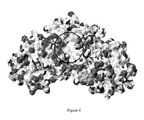
- FIG. 4 Solvent accessible surface of CzrA in the DNA-bound allosteric form (pdb code: 2KJB). The drug docking pocket is shown using a black circle.
- FIGS. 5A-5B A cartoon representation of CzrA showing two drug binding sites. The volume elements described by the residues in red form the drug binding site.
- the pocket is described by residues 16 to 25, 66 to 70 and 82 to 100 of both protomers.
- the drug binding pocket is described by residues 42 to 79 of each protomer.
- FIG. 6 Bioinformatics analysis of 3000 ArsR/SmtB family repressors. Residue-specific conservation plotted as relative entropy of residue positions 15-35, 41-87, 89-90 and 92-98 which correspond to CzrA residue positions. Gaps correspond to gaps in the multiple sequence alignment. Residues in the binding pockets shown in FIGS. 4 and 5 remain largely conserved across the family.
- FIGS. 7A-7B Images from 10 ns MD simulations of MZD in CzrA. The residues neighboring MZD are indicated in image (a). The molecule causes CzrA to remain in its closed conformation in our simulations.
- FIG. 8 Snapshot from MD trajectory of ZDI bound to the DNA binding interface of CzrA.
- FIG. 9 The popular drug sildenafil docked into ⁇ 5 binding pocket of CzrA.
- FIG. 10 Inter-protomer ⁇ R- ⁇ R′ distances (S54-S54′), bend angle (S54-S65-S54′ and S54′-565′-554) and ⁇ -wing to ⁇ -wing distance (G75-G75′). All distances and angles are measured based on the backbone alpha carbon distances.
- FIGS. 11A-11B Impact of binding KMC drug-like molecule to CzrA.
- the metal-ion sensing members of the ArsR/SmtB family of transcriptional repressor proteins provide heavy metal resistance in pathogenic prokaryotic organisms. 8 Members of the ArsR/SmtB proteins bind metals at positions including the ⁇ 5 and ⁇ 3 binding sites that trigger an allosteric response in these proteins. An allosteric response would include a change in the structure or conformational dynamics of the protein, or both.
- CzrA FIG. 1
- CzrA exists in an “open” conformation in the apo-form and metal ion bound form, while adopting a “closed” conformation that increases its DNA binding affinity.
- 7,9,10 Other ArsR/SmtB proteins behave similarly to CzrA and are able to sample multiple conformational ensembles in the apo-allosteric form but prefer the open conformation. 7 Binding to a metal ion or forming a di-sulfide linkage quenches the conformational dynamics of these proteins, forcing them to remain in a conformationally and energetically locked open conformation.
- the proteins of the ArsR/SmtB family sample form limited conformational ensembles and are electrostatically less favorable for DNA binding.
- metal ion sensing transcriptional repressor proteins in the ArsR/SmtB family include Staphylococcus aureus CzrA, Staphylococcus aureus pI258 CadC, Mycobacterium tuberculosis NmtR and Synechococcus spp. SmtB ( FIG. 2 ).
- Xylella fastidiosa BigR is an example of a non-metal binding ArsR/SmtB protein that forms a conformationally trapped di-sulfide linkage form.
- the proteins share a helix-turn-helix fold that is common to the family.
- Steptococcus pneumonia AdcR of the MarR family of transcriptional regulators and Mycobacterium tuberculosis CsoR are other transcriptional factors involve a similar mechanism of action.
- HBP hydrogen bonding pathway
- a critical hydrogen bond that extends from the metal binding residue of the protein to the backbone carbonyl group of a histidine residue in the ⁇ R helix of the protein starts this pathway, and may only exist in metal bound forms or conformationally trapped disulfide linked allosteric forms of these proteins. Similar pathways have been found to be important in other metal ion sensing transcriptional repressors. For example, an HBP connecting the metal ion binding site to the DNA binding interface in the Cu(I) binding protein M. tuberculosis CsoR has been shown to be crucial for its allosteric function. 11 Similar hydrogen-binding pathways have been identified in the crystal structures of other Zn(II) bound forms S.
- Drug molecules that disrupt the conformational dynamics of these proteins of the ArsR/SmtB family can be used to disrupt the allosteric mechanism of regulation operating within these proteins.
- Drug molecules have recently been shown to have similar effects on the HIF-2a transcription factor. 16,17 These drugs can stabilize or de-stabilize an allosteric form of these proteins, throwing the transcriptional machinery off-balance and creating a surplus or paucity of metal ions in the organism.
- the metalloregulatory proteins of the ArsR/SmtB family may be locked into a closed conformation in their metal-bound and apo-state on the introduction of these drugs, thus inhibiting the allosteric mechanism.
- Such drugs would provide a new class of antibiotics that could specifically target the transcriptional machinery in these organisms.
- These drugs can furthermore be designed to exploit the specific interactions that take place at the dimeric interface in these proteins of the ArsR/SmtB family.
- Impairment of the MH machinery by impairing the function of the metalloregulatory proteins may involve decreasing or increasing the binding affinity of these proteins to metal ions.
- computer modeling is used to identify compounds that bind to a novel pocket in proteins of the ArsR/SmtB family and increase the propensity of the proteins to remain in the conformationally locked metal ion bound form or di-sulfide linkaged form, the DNA bound form, or the apo-form.
- the pocket lies in the region between the metal-binding region and the operator-binding region of proteins of the ArsR/SmtB family ( FIG. 4 ).
- This pocket may be described as a channel lying at the inter-sub-unit interface. This channel will be wider and more open in an allosteric form of the protein, but smaller and narrower in other allosteric forms. Drug molecules bound to this channel will disrupt interactions at these interfaces, finally effecting the allosteric mechanism.
- this pocket may be described as the channel between the ⁇ 5 metal binding sites and the tips of the ⁇ R helices as shown in FIG. 4 . This channel runs across the distance between the two metal binding sites and includes peripheral residues.
- this pocket is described as the channel whose boundaries are described by residues 16 to 25, 66 to 70 and 82 to 100 of both protomers ( FIG. 5 ( a ) ).
- Conservation of such pockets based on sequence similarity across the 3000 ArsR/SmtB family of proteins is depicted in FIG. 6 .
- a second pocket may be described between residues 42 to 79 as shown in FIG. 5( b ) .
- Computer modeling typically uses a docking program.
- a docking program is computer software which positions a small molecule ligand into a binding site on a protein molecule. Based on the positioning of the small molecule ligand into a binding site of the protein, the docking program can predict whether the small molecule ligand would bind to the binding site on the target protein according to the conventional binding characteristics of protein-ligand interactions.
- binding pocket may be used interchangeably and refer to the region described previously in the text. Examples of drug-like molecules bound to the drug pocket are shown in FIGS. 7, 8 and 9 .
- Glide computer software by Schrodinger LLC is used to identify the compounds which would bind to and regulate metalloregulatory activity of the proteins of the ArsR/SmtB family by binding to the novel pocket.
- the Glide software program is described in U.S. Pat. No. 8,145,430, entitled “Predictive Scoring Function for Estimating Binding Affinity,” which is hereby incorporated by reference in its entirety.
- the software programs which may be used in the current invention include but are not limited to:
- MC SS Ludi
- QUANTA macromolecular X-ray crystallography software
- Insight II biological compound modeling and simulation software
- Cerius 2 modeling and simulation software
- CHARMm software for simulation of biological macromolecules
- Modeler from Accelrys, Inc. (San Diego, Calif.); AMBER and AmberTools suite of programs (Case et al., University of California, San Francisco); CHIMERA molecular modeling software (University of California, San Francisco), VIVID (visualization software); Gaussian 09 (electronic structure program); GAMESS (electronic structure program); SYBYL (molecular modeling software); Unity, FleXX, and LEAPFROG from TRIPOS, Inc. (St.
- Structural information of a compound is provided as input to a docking program in order to screen the compound's ability to bind to a binding site (the binding pocket disclosed herein). Based on a pre-determined set of rules and instructions about binding interactions between a small molecule compound and the target binding site, the docking software program predicts the probability of the compound binding to the protein. This is followed by extensive molecular dynamics simulations using the AMBER program that investigate the ability of the drug molecule to regulate the activity and allosteric mechanism of the target protein. Commonly used binding interactions between a small molecule compound and a target binding site include, but are not limited to, hydrophilic interactions, hydrophobic interactions, van der Waals interactions, and hydrogen bonds.
- protein structures obtained using restrained MD NMR refinement methods are used to supplement previously determined crystallographic and NMR structures of the protein in its various allosteric forms.
- the NMR-derived structure of the protein is refined using extensive MD simulations that are restrained used NMR-derived data.
- Such an approach utilizes a state-of-the-art electrostatics representation (particle mesh Ewald) to treat long-range electrostatics along with an explicit solvation model.
- a restrained QM/MM MD-based approach is utilized. Such an approach facilitates the calculation and provides an ensemble of structures that provide an accurate depiction of the protein structure in the solution phase.
- the structural information about a binding pocket of a protein of the ArsR/SmtB family is provided as input to a docking program.
- the structural information about the ⁇ 5 metal ion binding site or the DNA binding site of a protein of the ArsR/SmtB family may also be provided to a docking program.
- a set of rules and instructions are also provided to the docking program about binding interactions between a small molecule compound and the binding pocket of a protein of the ArsR/SmtB family. Based on the structural information and the instructions, the docking program predicts the binding affinity of a particular small molecule compound for a binding pocket of a protein of the ArsR/SmtB family.
- a long molecular dynamics run on the docked drug structure predicts whether the propensity of the protein to remain in the metal ion bound open conformation, the DNA bound closed conformation, or the apo-form is higher when bound to the compound than the propensity of the protein to remain in the metal ion bound conformation, the DNA bound conformation, or the apo-conformation when not bound to the compound.
- a further aspect of the invention involves selecting the compound if the propensity of the protein of the ArsR/SmtB family to remain in the metal ion bound form, the DNA bound form, or the apo-form is higher when bound to the compound than the propensity of that protein to remain in the metal ion bound form, the DNA bound form, or the apo-form when not bound to the compound.
- the docking program provides a “binding score” which indicates the strength of the binding between a compound and the binding pocket on a protein of the ArsR/SmtB family. Binding score can be calculated so that a higher binding score indicates stronger binding affinity. Binding score can also be calculated so that a higher binding score indicates weaker binding affinity. In an embodiment of the invention, only those compounds from the compound library are selected which have binding scores higher or lower than a pre-determined level.
- the complexed protein structure (protein and docked compound) is simulated using a classical MD approach.
- This approach may be utilized using any number of MD programs that are not limited to the AMBER suite of programs, CHARMM, GROMOS, GROMACS, TINKER, Desmond, DLPOLY, DLPROTEIN and LLAMPS.
- the complexed protein structure was maintained in its biologically active dimer state and was immersed in a periodically replicated rectangular box of SPCE water molecules allowing for an 8 ⁇ solvation shell around every protein atom (Jorgensen 2005). Force field parameters for the drug molecule were created using the GAFF approach.
- the solvated protein was gradually heated to 300K over 200 ns of MD for a canonical ensemble (NVT) (Allen and Tildesley 1987).
- NPT canonical ensemble
- the protein was further equilibrated for an isobaric and isothermal ensemble (NPT) for 1 ns at 1 atm pressure (Allen and Tildesley 1987).
- NPT isobaric and isothermal ensemble
- an MD simulation was propagated at 300K for hundreds of nanoseconds using a Langevin thermostat. A time step of 2 fs was employed during this simulation and frames were collected once for every 1000 steps of MD.
- PME particle mesh Ewald method
- the system temperature was maintained using Langevin Dynamics (Allen and Tildesley 1987).
- the SHAKE algorithm was utilized to maintain heavy atom-hydrogen bond lengths and the translational center-of-mass motion was removed every 100 steps (Allen and Tildesley 1987). Such an approach can be modified based on the MD program and available options.
- the suitability of the compound is identified by measuring the inter-protomer ⁇ R- ⁇ R′ and ⁇ -wing to ⁇ ′-wing distances. For CzrA, the ⁇ R- ⁇ R′ distances are measured between the two Ser54 protein backbone Ca atoms and the ⁇ -wing to ⁇ ′-wing distances are measured between the Gly 75 residues ( FIG. 10 ).
- the protein's bend angle defined by the average of the angles described by the S54-S65-S54′ and S54′-S65′-S54 backbone alpha carbon is used as another metric of the efficacy of the drug molecule in restricting the ability of the protein to sample multiple conformations. For example, 100 ns MD simulations show that the KMC drug-like molecule forces CzrA to sample the closed conformation of the protein, while the uncomplexed apo protein samples the open conformation. While this molecule does not achieve a high score by the docking program, the extended MD simulation clarifies its effect on the allosteric mechanism in CzrA.
- a number of metal ions may bind to allosterically functional metal ion binding sites in ArsR/SmtB sensor proteins.
- the metal ion may be a heavy metal.
- the heavy metal ion can be one or more heavy metal ions selected from the group consisting of iron, cadmium, zinc, iron, copper, nickel, cobalt, mercury, arsenic, gold and silver.
- a compound is designed based on the structure of a binding pocket of a protein of the ArsR/SmtB family.
- the docking program or the investigator suggests modifications to a compound, wherein the modifications enhance the binding affinity between the compound and the corresponding binding pocket on a protein of the ArsR/SmtB family. Such modifications can be used to increase the binding affinity of a candidate compound which has been previously identified to bind to a binding pocket of a protein of the ArsR/SmtB family.
- the modifications to the compound change the compound so that the propensity of the protein to remain in the metal ion bound form, the DNA bound form, or the apo-form is higher when bound to the modified compound than the propensity of the protein to remain in the metal ion bound form, the DNA bound form, or the apo-form when bound to the compound.
- modifications include, but are not limited to, changing a side chain, a ring structure, a functional group, the stereoisomeric conformation, and/or the ionic charge of a compound.
- a compound library is screened in silico to identify candidate compounds that bind to a binding pocket on a protein of the ArsR/SmtB family.
- the activity of candidate compounds identified as binding to the binding pocket of a protein of the ArsR/SmtB family can then tested using a bioassay.
- a bioassay of the current invention may involve in vivo or in vitro testing of the ability of a compound to bind to and modulate the activity of the proteins of the ArsR/SmtB family.
- the bioassay of the current invention can be designed to check the effect of the binding of the compound on the metalloregulatory and allosteric properties of the proteins of the ArsR/SmtB family.
- the bioassay may also assess the ability of the candidate compound(s) to affect the viability of a microorganism containing proteins of the ArsR/SmtB family.
- the binding affinity of a compound to a binding pocket of a protein of the ArsR/SmtB family is estimated by co-crystallizing the compound with the protein, checking whether the compound binds to the binding site on the protein based on the crystal structure of the co-crystallized protein, and estimating whether the propensity of the protein to remain in the metal ion bound conformation, the DNA bound conformation, or the apo-conformation is higher when bound to the compound than the propensity of the protein to remain in the metal ion bound conformation, the DNA bound conformation, or the apo-conformation when not bound to the compound.
- the binding affinity of a candidate compound to a binding pocket of the protein of the ArsR/SmtB family is estimated based on the inhibitory effect of the candidate compound on the metalloregulatory ability of bacteria that use a protein of the ArsR/SmtB family for metalloregulation.
- the bioassay may be carried out by growing a bacterial culture in the presence or absence of a compound, comparing the growth rates of the bacterial culture in the presence or absence of the compound, and selecting the compound if the growth rate of the bacterial culture is substantially reduced in the presence of the compound.
- the growth rate of the bacterial culture is substantially reduced if the growth rate is reduced by at least about 10%.
- the slower growth of the bacterial culture in the presence of the compound compared to the growth of the bacterial culture in the absence of the compound indicates that the candidate compound may have therapeutic benefit for the treatment of diseases caused by the bacterial cell.
- the rate of influx or efflux of isotopic heavy metal ions can be compared between microorganisms treated with a candidate compound and untreated microorganisms.
- the bioassay of the invention is an in vitro binding assay where the binding affinity of a protein of the ArsR/SmtB family for a metal or a target DNA molecule is estimated in the presence and the absence of a candidate compound.
- the bioassay may be carried out by mixing a metal ion binding protein of the ArsR/SmtB family with the metal or target DNA molecule in the presence or absence of the candidate compound and estimating the extent of binding of the metal ion binding protein with the metal or the target DNA molecule in the presence or absence of the compound.
- the binding of the metal ion binding protein with the metal or the target DNA is substantially reduced if the binding is reduced by at least about 10%.
- the lower extent of binding of the protein to the target DNA molecule in the presence of the compound compared to the binding of the protein to the target DNA molecule in the absence of the compound indicates that the propensity of the protein to remain in the metal ion bound form is higher when bound to the compound than the propensity of the protein to remain in the metal ion bound form when not bound to the compound.
- the lower extent of binding of the protein to the metal in the presence of the compound compared to the binding of the protein to the metal in the absence of the compound indicates that the propensity of the protein to remain in the DNA bound form is higher when bound to the compound than the propensity of the protein to remain in the DNA bound form when not bound to the compound.
- Another aspect of the invention pertains to inhibiting bacterial growth by contacting the bacteria with a compound that binds to a metal ion binding protein of the ArsR/SmtB family and increases its propensity to remain in the metal ion bound form, the DNA bound form, or the apo-form.
- Various embodiments of the invention provide pharmaceutical compositions comprising the compounds that bind to a metal ion binding protein of the ArsR/SmtB family and increase its propensity to remain in the metal ion bound form, the DNA bound form, or the apo-form.
- An aspect of the invention also provides a method of treating a bacterial infection by administering to a subject suffering from the bacterial infection a pharmaceutically effective amount of the compound that binds to a metal ion binding protein of the ArsR/SmtB family and increase its propensity to remain in the metal ion bound form, the DNA bound form, or the apo-form.
- the computer program predicts whether the binding of the compound to the transcriptional regulator protein increases its propensity to remain in the metal ion bound form, the DNA bound form, or the apo-form, and
- the compound if the propensity of the protein to remain in the metal ion bound conformation, the DNA bound conformation, or the apo-conformation is higher when bound to the compound than the propensity of the protein to remain in the metal ion bound conformation, the DNA bound conformation, or the apo-conformation when not bound to the compound.
- metal ion is selected from the group consisting of Zn, Cu, Mn, Ru, Au, Hg, Au, Hg, Ag, Ni, Fe, Cd, As, and Co.
- the metal ion binding protein of the ArsR/SmtB family is selected from the group consisting of Staphylococcus aureus CzrA, Staphylococcus aureus p1258 CadC, Mycobacterium tuberculosis CsoR, Mycobacterium tuberculosis NmtR, and Synechococcus spp. SmtB.
- the method of embodiment 1 includes metal ion transcriptional factors having similar allosteric mechanisms such as Steptococcus pneumonia AdcR of the MarR family of proteins, Escherichia coli CsoR and Helicobacter pylori NikR of the NikR-like family of proteins.
- the method further comprising modifying the selected compound wherein the propensity of the transcriptional regulator protein to remain in the metal ion bound conformation, the DNA bound conformation, or the apo-conformation is higher when bound to the modified compound than the propensity of the regulatory protein to remain in the metal ion bound conformation, the DNA bound conformation, or the apo-conformation when bound to the compound.
- modifications comprise one or more of the following: changing a side chain, a ring structure, a functional group, the stereoisomeric conformation, and/or the ionic charge of a compound.
- a composition comprising the compound of embodiment 12 and pharmaceutically acceptable excipients.
- a method of treating a bacterial infection by administering a pharmaceutically effective amount of the compound of embodiment 12 to a subject suffering from the bacterial infection.
Landscapes
- Health & Medical Sciences (AREA)
- Life Sciences & Earth Sciences (AREA)
- Engineering & Computer Science (AREA)
- Chemical & Material Sciences (AREA)
- Physics & Mathematics (AREA)
- General Health & Medical Sciences (AREA)
- Bioinformatics & Cheminformatics (AREA)
- Spectroscopy & Molecular Physics (AREA)
- Medicinal Chemistry (AREA)
- Molecular Biology (AREA)
- Biotechnology (AREA)
- Bioinformatics & Computational Biology (AREA)
- Theoretical Computer Science (AREA)
- Biomedical Technology (AREA)
- Urology & Nephrology (AREA)
- Pharmacology & Pharmacy (AREA)
- Hematology (AREA)
- Immunology (AREA)
- Evolutionary Biology (AREA)
- Crystallography & Structural Chemistry (AREA)
- Medical Informatics (AREA)
- Biophysics (AREA)
- Animal Behavior & Ethology (AREA)
- Epidemiology (AREA)
- Veterinary Medicine (AREA)
- Public Health (AREA)
- Biochemistry (AREA)
- Microbiology (AREA)
- General Physics & Mathematics (AREA)
- Pathology (AREA)
- Analytical Chemistry (AREA)
- Proteomics, Peptides & Aminoacids (AREA)
- Cell Biology (AREA)
- Food Science & Technology (AREA)
- Physiology (AREA)
- Computing Systems (AREA)
- Peptides Or Proteins (AREA)
- Medicines That Contain Protein Lipid Enzymes And Other Medicines (AREA)
- Measuring Or Testing Involving Enzymes Or Micro-Organisms (AREA)
Abstract
Description
- (1) Hood, M. I.; Skaar, E. P. Nature Reviews Microbiology 2012, 10, 525-37.
- (2) Ma, Z.; Jacobsen, F. E.; Giedroc, D. P. Chemical Reviews 2009, 109, 4644-81.
- (3) Guerra, A. J.; Giedroc, D. P. Archives of biochemistry and biophysics 2012, 519, 210-22.
- (4) Lee, C. W.; Chakravorty, D. K.; Chang, F. M.; Reyes-Caballero, H.; Ye, Y.; Merz, K. M., Jr.; Giedroc, D. P.
Biochemistry 2012, 51, 2619-29. - (5) Hood, M. I.; Mortensen, B. L.; Moore, J. L.; Zhang, Y. F.; Kehl-Fie, T. E.; Sugitani, N.; Chazin, W. J.; Caprioli, R. M.; Skaar, E. P. Plos Pathogens 2012, 8, e1003068, 1-17.
- (6) Chakravorty, D. K.; Parker, T. M.; Guerra, A. J.; Sherrill, C. D.; Giedroc, D. P.; Merz, K. M., Jr. Journal of the American Chemical Society 2012, ASAP article.
- (7) Chakravorty, D. K.; Wang, B.; Lee, C. W.; Giedroc, D. P.; Merz, K. M., Jr. Journal of the American Chemical Society 2012, 134, 3367-76.
- (8) Giedroc, D. P.; Arunkumar, A. I. Dalton Transactions 2007, 3107-20.
- (9) Arunkumar, A. I.; Campanello, G. C.; Giedroc, D. P. Proceedings of the National Academy of Sciences of the U.S. Pat. No. 2,009,106, 18177-82.
- (10) Grossoehme, N. E.; Giedroc, D. P. Journal of the American Chemical Society 2009, 131, 17860-70.
- (11) Ma, Z.; Cowart, D. M.; Ward, B. P.; Arnold, R. J.; DiMarchi, R. D.; Zhang, L. M.; George, G. N.; Scott, R. A.; Giedroc, D. P. Journal of the American Chemical Society 2009, 131, 18044-18045.
- (12) Eicken, C.; Pennella, M. A.; Chen, X. H.; Koshlap, K. M.; VanZile, M. L.; Sacchettini, J. C.; Giedroc, D. P. Journal of Molecular Biology 2003, 333, 683-95.
- (13) Pennella, M. A.; Shokes, J. E.; Cosper, N. J.; Scott, R. A.; Giedroc, D. P. Proceedings of the National Academy of Sciences of the U.S. Pat. No. 2,003,100, 3713-8.
- (14) Guerra, A. J.; Dann, C. E.; Giedroc, D. P. Journal of the American Chemical Society 2011, 133, 19614-7.
- (15) Reyes-Caballero, H.; Campanello, G. C.; Giedroc, D. P. Biophysical chemistry 2011, 156, 103-14.
- (16) Scheuermann, T. H.; Li, Q.; Ma, H. W.; Key, J.; Zhang, L.; Chen, R.; Garcia, J. A.; Naidoo, J.; Longgood, J.; Frantz, D. E.; Tambar, U. K.; Gardner, K. H.; Bruick, R. K. Nature chemical biology 2013, 271-276.
- (17) Rogers, J. L.; Bayeh, L.; Scheuermann, T. H.; Longgood, J.; Key, J.; Naidoo, J.; Melito, L.; Shokri, C.; Frantz, D. E.; Bruick, R. K.; Gardner, K. H.; Macmillan, J. B.; Tambar, U. K. Journal of Medicinal Chemistry 2013, 1739-1747.
Claims (14)
Priority Applications (1)
| Application Number | Priority Date | Filing Date | Title |
|---|---|---|---|
| US14/769,587 US9483609B2 (en) | 2013-03-14 | 2014-03-11 | Pharmacogenic therapies targeting the metal-ion transcriptional regulation machinery in bacteria |
Applications Claiming Priority (3)
| Application Number | Priority Date | Filing Date | Title |
|---|---|---|---|
| US201361784409P | 2013-03-14 | 2013-03-14 | |
| PCT/US2014/022921 WO2014159308A1 (en) | 2013-03-14 | 2014-03-11 | Pharmacogenic therapies targeting the metal-ion transcriptional regulation machinery in bacteria |
| US14/769,587 US9483609B2 (en) | 2013-03-14 | 2014-03-11 | Pharmacogenic therapies targeting the metal-ion transcriptional regulation machinery in bacteria |
Publications (2)
| Publication Number | Publication Date |
|---|---|
| US20160004812A1 US20160004812A1 (en) | 2016-01-07 |
| US9483609B2 true US9483609B2 (en) | 2016-11-01 |
Family
ID=51625142
Family Applications (1)
| Application Number | Title | Priority Date | Filing Date |
|---|---|---|---|
| US14/769,587 Expired - Fee Related US9483609B2 (en) | 2013-03-14 | 2014-03-11 | Pharmacogenic therapies targeting the metal-ion transcriptional regulation machinery in bacteria |
Country Status (2)
| Country | Link |
|---|---|
| US (1) | US9483609B2 (en) |
| WO (1) | WO2014159308A1 (en) |
Families Citing this family (1)
| Publication number | Priority date | Publication date | Assignee | Title |
|---|---|---|---|---|
| CN106778059B (en) * | 2016-12-19 | 2019-07-30 | 浙江工业大学 | A kind of group's Advances in protein structure prediction based on Rosetta local enhancement |
Citations (1)
| Publication number | Priority date | Publication date | Assignee | Title |
|---|---|---|---|---|
| WO2004102159A2 (en) | 2003-05-13 | 2004-11-25 | The Penn State Research Foundation | Quantum mechanics based method for scoring protein-ligand interactions |
-
2014
- 2014-03-11 WO PCT/US2014/022921 patent/WO2014159308A1/en not_active Ceased
- 2014-03-11 US US14/769,587 patent/US9483609B2/en not_active Expired - Fee Related
Patent Citations (1)
| Publication number | Priority date | Publication date | Assignee | Title |
|---|---|---|---|---|
| WO2004102159A2 (en) | 2003-05-13 | 2004-11-25 | The Penn State Research Foundation | Quantum mechanics based method for scoring protein-ligand interactions |
Non-Patent Citations (21)
| Title |
|---|
| Arunkumar, A.I., et al., "Solution structure of a paradigm ArsR family zinc sensor in the DNA-bound state," Proceedings of the National Academy of Sciences USA, Oct. 27, 2009, vol. 106, No. 43, pp. 18177-18182. |
| Chakravorty, D.K., et al., "Energetics of Zinc-Mediated Interactions in the Allosteric Pathways of Metal Sensor Proteins," Journal of the American Chemical Society, 2013, vol. 135, pp. 30-33. |
| Chakravorty, D.K., et al., "Simulations of Allosteric Motions in the Zinc Sensor CzrA," Journal of the American Chemical Society, 2012, vol. 134, pp. 3367-3376. |
| Eicken, C., et al., "A Metal-Ligand-mediated Intersubunit Allosteric Switch in Related SmtB/ArsR Zinc Sensor Proteins," Journal of Molecular Biology, 2003, vol. 333, pp. 683-695. |
| Giedroc, D.P., et al., "Metal sensor proteins: nature's metalloregulated allosteric switches," Dalton Transactions, 2007, pp. 3107-3120. |
| Grossoehme, N.E., et al., "Energetics of Allosteric Negative Coupling in the Zinc Sensor S. aureus CzrA," Journal of the American Chemical Society, 2009, vol. 131, pp. 17860-17870. |
| Guerra, A.J., et al., "Crystal Structure of the Zinc-Dependent MarR Family Transcriptional Regulator AdcR in the Zn(II)-Bound State," Journal of the American Chemical Society, 2011, vol. 133, pp. 19614-19617. |
| Guerra, A.J., et al., "Metal site occupancy and allosteric switching in bacterial metal sensor proteins," Archives of Biochemistry and Biophysics, 2012, vol. 519, pp. 210-222. |
| Harvie, D.R., et al., "Predicting metals sensed by ArsR-SmtB repressors: allosteric interference by a non-effector metal," Molecular Microbiology, 2006, vol. 59, No. 4, pp. 1341-1356. |
| Hood, M.I., et al., "Identification of an Acinetobacter baumannii Zinc Acquisition System that Facilitates Resistance to Calprotectin-mediated Zinc Sequestration," PLOS Pathogens, Dec. 2012, vol. 8, No. 12, Article No. e1003068, pp. 1-17. |
| Hood, M.I., et al., "Nutritional immunity: transition metals at the pathogen-host interface," Nature Reviews Microbiology, Aug. 2012, vol. 10, pp. 525-537. |
| Lee, C.W., et al., "Solution Structure of Mycobacterium tuberculosis NmtR in the Apo State: Insights into Ni(II)-Mediated Allostery," Biochemistry, 2012, vol. 51, pp. 2619-2629. |
| Ma, Z., et al., "Coordination Chemistry of Bacterial Metal Transport and Sensing," Chemical Reviews, 2009, vol. 109, pp. 4644-4681. |
| Ma, Z., et al., "Unnatural Amino Acid Substitution as a Probe of the Allosteric Coupling Pathway in a Mycobacterial Cu(I) Sensor," Journal of the American Chemical Society, 2009, vol. 131, pp. 18044-18045. |
| Osman, D., et al., "Bacterial metal-sensing proteins exemplified by ArsR-SmtB family repressors," Natural Product Reports, 2010, vol. 27, pp. 668-680. |
| Pennella, M.A., et al., "Structural elements of metal selectivity in metal sensor proteins," Proceedings of the National Academy of Sciences USA, Apr. 1, 2003, vol. 100, No. 7, pp. 3713-3718. |
| Reyes-Caballero, H., et al., "Metalloregulatory proteins: Metal selectivity and allosteric switching," Biophysical Chemistry, 2011, vol. 156, pp. 103-114. |
| Rogers, J.L., et al., "Development of Inhibitors of the PAS-B Domain of the HIF-2alpha Transcription Factor," Journal of Medicinal Chemistry, 2013, vol. 56, pp. 1739-1747. |
| Rogers, J.L., et al., "Development of Inhibitors of the PAS-B Domain of the HIF-2α Transcription Factor," Journal of Medicinal Chemistry, 2013, vol. 56, pp. 1739-1747. |
| Scheuermann, T.H., et al., "Allosteric inhibition of hypoxia inducible factor-2 with small molecules," Nature Chemical Biology, Apr. 2013, vol. 9, pp. 271-278. |
| Written Opinion in International Application No. PCT/US2014/022921, Jul. 3, 2014, pp. 1-6. |
Also Published As
| Publication number | Publication date |
|---|---|
| US20160004812A1 (en) | 2016-01-07 |
| WO2014159308A1 (en) | 2014-10-02 |
Similar Documents
| Publication | Publication Date | Title |
|---|---|---|
| Elrod-Erickson et al. | High-resolution structures of variant Zif268–DNA complexes: implications for understanding zinc finger–DNA recognition | |
| US7751988B2 (en) | Lead molecule cross-reaction prediction and optimization system | |
| Faller et al. | Site Identification by Ligand Competitive Saturation (SILCS) simulations for fragment-based drug design | |
| Dudev et al. | How Pb2+ binds and modulates properties of Ca2+-signaling proteins | |
| Bertini et al. | Structural basis of serine/threonine phosphatase inhibition by the archetypal small molecules cantharidin and norcantharidin | |
| Kovalevsky et al. | " To Be or Not to Be" Protonated: Atomic Details of Human Carbonic Anhydrase-Clinical Drug Complexes by Neutron Crystallography and Simulation | |
| Davies et al. | The crystal structure of ribosomal protein L14 reveals an important organizational component of the translational apparatus | |
| Pérard et al. | Structural and functional studies of the metalloregulator Fur identify a promoter-binding mechanism and its role in Francisella tularensis virulence | |
| Do et al. | Binding of disordered peptides to kelch: Insights from enhanced sampling simulations | |
| Zeytuni et al. | Bacterial magnetosome biomineralization-a novel platform to study molecular mechanisms of human CDF-related Type-II diabetes | |
| Lara et al. | Mycobacterium tuberculosis FasR senses long fatty acyl-CoA through a tunnel and a hydrophobic transmission spine | |
| Ganesan et al. | Investigation of structural stability and functionality of homodimeric gramicidin towards peptide‐based drug: a molecular simulation approach | |
| Zhou et al. | Structural insights into the inhibition of bacterial RecA by naphthalene polysulfonated compounds | |
| Taj et al. | In silico prediction and molecular simulation of antimicrobial peptide variants from lactobacillus sp. against Porphyromonas gingivalis and Fusobacterium nucleatum in oral squamous cell carcinoma | |
| US10684287B1 (en) | Methods related to a structure of high-affinity human PD-1/PD-L2 complex | |
| Nemchinova et al. | Exploring the ligand binding and conformational dynamics of the substrate-binding domain 1 of the ABC transporter GlnPQ | |
| Verma et al. | Structural basis of Bacillus anthracis MoxXT disruption and the modulation of MoxT ribonuclease activity by rationally designed peptides | |
| US9483609B2 (en) | Pharmacogenic therapies targeting the metal-ion transcriptional regulation machinery in bacteria | |
| John Marshal et al. | Mechanistic insights into the role of vitamin D and computational identification of potential lead compounds for Parkinson's disease | |
| Singh et al. | Targeting histidinol-phosphate aminotransferase in Acinetobacter baumannii with salvianolic acid B: a structure-based approach to novel antibacterial strategies | |
| Ma et al. | Inhibition of CYP2C8 by metallofullerenol Gd@ C82 (OH) 22 through blocking substrate channels and substrate recognition sites | |
| Samanta et al. | Dynamic interplay of loop motions governs the molecular level regulatory dynamics in spleen tyrosine kinase: Insights from molecular dynamics simulations | |
| Kellogg et al. | Tools for building a comprehensive modeling system for virtual screening under real biological conditions: The Computational Titration algorithm | |
| Battistel et al. | Solution structure and functional characterization of human plasminogen kringle 5 | |
| Cappel et al. | Probing the dynamic nature of water molecules and their influences on ligand binding in a model binding site |
Legal Events
| Date | Code | Title | Description |
|---|---|---|---|
| AS | Assignment |
Owner name: NATIONAL INSTITUTES OF HEALTH (NIH), U.S. DEPT. OF Free format text: CONFIRMATORY LICENSE;ASSIGNOR:UNIVERSITY OF FLORIDA;REEL/FRAME:036528/0719 Effective date: 20130831 |
|
| AS | Assignment |
Owner name: UNIVERSITY OF FLORIDA RESEARCH FOUNDATION, INCORPO Free format text: ASSIGNMENT OF ASSIGNORS INTEREST;ASSIGNORS:MERZ, KENNETH M., JR.;CHAKRAVORTY, DHRUVA;SIGNING DATES FROM 20140331 TO 20160804;REEL/FRAME:039353/0247 |
|
| FEPP | Fee payment procedure |
Free format text: PETITION RELATED TO MAINTENANCE FEES GRANTED (ORIGINAL EVENT CODE: PTGR) |
|
| STCF | Information on status: patent grant |
Free format text: PATENTED CASE |
|
| CC | Certificate of correction | ||
| MAFP | Maintenance fee payment |
Free format text: PAYMENT OF MAINTENANCE FEE, 4TH YR, SMALL ENTITY (ORIGINAL EVENT CODE: M2551); ENTITY STATUS OF PATENT OWNER: SMALL ENTITY Year of fee payment: 4 |
|
| FEPP | Fee payment procedure |
Free format text: MAINTENANCE FEE REMINDER MAILED (ORIGINAL EVENT CODE: REM.); ENTITY STATUS OF PATENT OWNER: SMALL ENTITY |
|
| LAPS | Lapse for failure to pay maintenance fees |
Free format text: PATENT EXPIRED FOR FAILURE TO PAY MAINTENANCE FEES (ORIGINAL EVENT CODE: EXP.); ENTITY STATUS OF PATENT OWNER: SMALL ENTITY |
|
| STCH | Information on status: patent discontinuation |
Free format text: PATENT EXPIRED DUE TO NONPAYMENT OF MAINTENANCE FEES UNDER 37 CFR 1.362 |
|
| FP | Lapsed due to failure to pay maintenance fee |
Effective date: 20241101 |