US9479727B1 - Call recording with screen and audio correlation - Google Patents
Call recording with screen and audio correlation Download PDFInfo
- Publication number
- US9479727B1 US9479727B1 US14/799,695 US201514799695A US9479727B1 US 9479727 B1 US9479727 B1 US 9479727B1 US 201514799695 A US201514799695 A US 201514799695A US 9479727 B1 US9479727 B1 US 9479727B1
- Authority
- US
- United States
- Prior art keywords
- session
- agent screen
- recorder
- agent
- audio
- Prior art date
- Legal status (The legal status is an assumption and is not a legal conclusion. Google has not performed a legal analysis and makes no representation as to the accuracy of the status listed.)
- Active
Links
- 238000000034 method Methods 0.000 claims abstract description 31
- 230000010354 integration Effects 0.000 claims abstract description 6
- 230000000977 initiatory effect Effects 0.000 claims description 18
- 230000002596 correlated effect Effects 0.000 claims description 4
- 238000013507 mapping Methods 0.000 claims 4
- 230000003993 interaction Effects 0.000 description 12
- 238000010586 diagram Methods 0.000 description 11
- 230000008859 change Effects 0.000 description 6
- 238000004891 communication Methods 0.000 description 4
- 230000000875 corresponding effect Effects 0.000 description 4
- 230000006870 function Effects 0.000 description 4
- 230000000694 effects Effects 0.000 description 3
- 230000007246 mechanism Effects 0.000 description 2
- 229920004880 RTP PEK Polymers 0.000 description 1
- 230000009471 action Effects 0.000 description 1
- 230000001413 cellular effect Effects 0.000 description 1
- 238000010276 construction Methods 0.000 description 1
- 238000011161 development Methods 0.000 description 1
- 230000018109 developmental process Effects 0.000 description 1
- 238000011156 evaluation Methods 0.000 description 1
- 238000012986 modification Methods 0.000 description 1
- 230000004048 modification Effects 0.000 description 1
- 238000012545 processing Methods 0.000 description 1
- 230000011664 signaling Effects 0.000 description 1
- 238000012360 testing method Methods 0.000 description 1
Images


Classifications
-
- H—ELECTRICITY
- H04—ELECTRIC COMMUNICATION TECHNIQUE
- H04L—TRANSMISSION OF DIGITAL INFORMATION, e.g. TELEGRAPHIC COMMUNICATION
- H04L12/00—Data switching networks
- H04L12/02—Details
- H04L12/16—Arrangements for providing special services to substations
- H04L12/18—Arrangements for providing special services to substations for broadcast or conference, e.g. multicast
- H04L12/1813—Arrangements for providing special services to substations for broadcast or conference, e.g. multicast for computer conferences, e.g. chat rooms
- H04L12/1831—Tracking arrangements for later retrieval, e.g. recording contents, participants activities or behavior, network status
-
- H—ELECTRICITY
- H04—ELECTRIC COMMUNICATION TECHNIQUE
- H04N—PICTORIAL COMMUNICATION, e.g. TELEVISION
- H04N7/00—Television systems
- H04N7/14—Systems for two-way working
- H04N7/141—Systems for two-way working between two video terminals, e.g. videophone
- H04N7/147—Communication arrangements, e.g. identifying the communication as a video-communication, intermediate storage of the signals
-
- H—ELECTRICITY
- H04—ELECTRIC COMMUNICATION TECHNIQUE
- H04M—TELEPHONIC COMMUNICATION
- H04M3/00—Automatic or semi-automatic exchanges
- H04M3/42—Systems providing special services or facilities to subscribers
- H04M3/50—Centralised arrangements for answering calls; Centralised arrangements for recording messages for absent or busy subscribers ; Centralised arrangements for recording messages
- H04M3/51—Centralised call answering arrangements requiring operator intervention, e.g. call or contact centers for telemarketing
- H04M3/5175—Call or contact centers supervision arrangements
-
- H—ELECTRICITY
- H04—ELECTRIC COMMUNICATION TECHNIQUE
- H04M—TELEPHONIC COMMUNICATION
- H04M3/00—Automatic or semi-automatic exchanges
- H04M3/42—Systems providing special services or facilities to subscribers
- H04M3/50—Centralised arrangements for answering calls; Centralised arrangements for recording messages for absent or busy subscribers ; Centralised arrangements for recording messages
- H04M3/51—Centralised call answering arrangements requiring operator intervention, e.g. call or contact centers for telemarketing
- H04M3/5183—Call or contact centers with computer-telephony arrangements
-
- H—ELECTRICITY
- H04—ELECTRIC COMMUNICATION TECHNIQUE
- H04N—PICTORIAL COMMUNICATION, e.g. TELEVISION
- H04N5/00—Details of television systems
- H04N5/76—Television signal recording
-
- H—ELECTRICITY
- H04—ELECTRIC COMMUNICATION TECHNIQUE
- H04N—PICTORIAL COMMUNICATION, e.g. TELEVISION
- H04N7/00—Television systems
- H04N7/14—Systems for two-way working
- H04N7/141—Systems for two-way working between two video terminals, e.g. videophone
- H04N7/148—Interfacing a video terminal to a particular transmission medium, e.g. ISDN
-
- H—ELECTRICITY
- H04—ELECTRIC COMMUNICATION TECHNIQUE
- H04N—PICTORIAL COMMUNICATION, e.g. TELEVISION
- H04N9/00—Details of colour television systems
- H04N9/79—Processing of colour television signals in connection with recording
- H04N9/80—Transformation of the television signal for recording, e.g. modulation, frequency changing; Inverse transformation for playback
- H04N9/82—Transformation of the television signal for recording, e.g. modulation, frequency changing; Inverse transformation for playback the individual colour picture signal components being recorded simultaneously only
- H04N9/8205—Transformation of the television signal for recording, e.g. modulation, frequency changing; Inverse transformation for playback the individual colour picture signal components being recorded simultaneously only involving the multiplexing of an additional signal and the colour video signal
- H04N9/8211—Transformation of the television signal for recording, e.g. modulation, frequency changing; Inverse transformation for playback the individual colour picture signal components being recorded simultaneously only involving the multiplexing of an additional signal and the colour video signal the additional signal being a sound signal
-
- H—ELECTRICITY
- H04—ELECTRIC COMMUNICATION TECHNIQUE
- H04M—TELEPHONIC COMMUNICATION
- H04M2201/00—Electronic components, circuits, software, systems or apparatus used in telephone systems
- H04M2201/14—Delay circuits; Timers
-
- H—ELECTRICITY
- H04—ELECTRIC COMMUNICATION TECHNIQUE
- H04M—TELEPHONIC COMMUNICATION
- H04M3/00—Automatic or semi-automatic exchanges
- H04M3/42—Systems providing special services or facilities to subscribers
- H04M3/42221—Conversation recording systems
Definitions
- the present invention relates generally to the recording of information transmitted over a network.
- embodiments of the invention relate to recording and correlating agent screen information and audio information from a call such as may be received in a call center.
- CTI Computer Telephony Integration
- Screen recording requires significant amounts of storage and ongoing synchronization between the agent screen recorded activity and audio data from the interactions.
- a significant challenge in this context is determining when to initiate and stop the recording.
- the only ability to detect screen activity and to record and correlate the screen activity with audio data is based on external controller availability. This may involve a dedicated service that translates the computer telephony integration (CTI) events received from the call exchange (PBX) and converts them to screen recording commands to start and stop recording.
- CTI computer telephony integration
- an object of the invention is to facilitate the efficient starting and stopping of agent screen data recording and to correlate screen and audio data without involving CTI.
- a method for recording both audio data and agent screen data from a call received in a call center comprises receiving audio data in a recorder; initiating an audio data record session in an audio recording component of the recorder; building a correlation object correlating the audio data with agent screen data in a capture control module; initiating an agent screen data record session with the capture control module based on the audio data received in the recorder; stopping the audio data record session; and stopping the agent screen data record session after a predetermined wrap-up time; and storing correlated audio data and agent screen data.
- a system may include: an audio recorder; an agent screen recorder; and a processor running or executing a capture control module configured to initiate and stop audio data recorder sessions and agent screen data recorder sessions responsive to received audio data without computer telephony integration (CTI) control of the agent screen recorder.
- CTI computer telephony integration
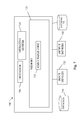
- FIG. 1 is a block diagram illustrating the triggering of audio and screen recording from the capture control module according to one embodiment
- FIG. 2 is a block diagram depicting different modes for starting and stopping audio and screen recording according to embodiments of the invention
- FIG. 4 is a flow chart showing a sequence to start screen recording when a new audio recording session is received in the capture control module according to an embodiment of the invention
- FIG. 6 is a flow chart showing a sequence to close a screen recording session after a period of silence according to an embodiment of the invention.
- FIG. 7 is a block diagram showing a computing device according to an embodiment of the invention.
- agent may be identified to the system in advance by a unique device identifier (UDI) or directory number (DN), and is able, using agent login information to access an “agent screen” on which “agent screen data” is displayed.
- the agent screen data may be correlated to audio data for the same call.
- agent screen data and “screen data” are used interchangeably to refer to the screen session viewed by an agent during a call.
- a “call” as used herein may be any communication between a customer and one or more agents, over a communication network, for example conventional or cellular telephone, voice communication via computer, voice chat, or other methods.
- the routing of a call may be controlled by a call exchange such as such as a Private Branch Exchange (PBX).
- PBX Private Branch Exchange
- a “call” may be for example a voice call, e.g., voice over internet protocol (VoIP).
- VoIP voice over internet protocol
- a “call” may include a flow of real time protocol (RTP) packets from a user endpoint to the recorder, or a “call” may be a two-way (bi-directional) or multi-path interaction between two or more parties where there is a multi-path “conversation” or flow of RTP packets from each of the multiple user endpoints to the recorder.
- RTP real time protocol
- Embodiments of the invention are particularly concerned with a call having related agent screen data in addition to audio data, although agent screen data generally is not transmitted between parties to a call.
- Data relating to a call as used herein may include “content data” and “metadata”.
- the content data may include for example the data that is exchanged between parties to a call, such as but not limited to audio data, and related agent screen data.
- “Metadata” may be for example information other than content data which relates to the call and/or content such as but not limited to start time, stop time, identities of parties, route of call, file name and filepath of location of content data, IP addresses, and more, as will be described by reference to specific examples.
- the term “session” is used to describe a data file created by a recorder based on data (e.g. RTP packets received by the recorder in the case of audio data).
- the recorder stores a session, or data file, relating to each call. It is possible for more than one session to be associated with a call, in which case each session comprises a subset of the content data sent to or from an endpoint during a call. It is possible to create separate sessions, one for the transmit stream and one for the receive stream, for example. Audio and screen data from the same call may be recorded in separate sessions.
- aspects of the invention are applicable to a communication system include at least one endpoint configured to initiate or terminate a call (or both), and a recording system configured to record call content data from multiple endpoints.
- a customer and an agent of the call center may be respective “endpoints”. Recording of content data may be initiated automatically at the recording system upon receipt of content data from the endpoint. This is particularly useful when the recording system is configured for total recording of content data sent to and from the endpoint.
- the recording system need not wait for a signal from a controller to initiate recording. Instead the receipt of call content, e.g. a data packet with call content, triggers the recording of call content by the recording system.
- recorder 25 includes audio recorder 21 and agent screen recorder 22 .
- Agent screen recorder 22 is adapted to record the data of a screen viewed by an agent during a call; the agent screen data is not exchanged between parties to a call, but is viewable by the agent.
- RTP packet(s) 11 received in audio recorder 21 are also received in capture control module 23 , which initiates an audio record session.
- FIG. 7 shows a high level block diagram of an exemplary computing device according to embodiments of the present invention, such as may be used to implement CCM 23 , Audio Recorder 21 , Screen Recorder 22 and other modules.
- Each such computing device 700 may include a computer processor 705 that may be, for example, a central processing unit processor (CPU), a chip or any suitable computing or computational device, an operating system 715 , a memory 720 , storage 730 , and databases 732 , as well as a related input device(s) 735 and output device(s) 740 .
- storage 730 refers to a device that stores data, such as calls, movies, big data, etc.
- database 732 refers to a device that stores metadata.
- controller 24 and recorder 25 use an external database to store metadata.
- Capture control module 23 includes a computing device 700 as described above running software adapted to execute instructions, to initiate and stop an agent screen data record session based on the RTP packets 11 received in recorder 21 , without requiring input from controller 24 as described below.
- a screen data record session may include text and images provided to the agent screen and viewed by the agent during a call.
- a period of silence 16 received in the audio recorder 21 and capture control module 23 may trigger capture control module (CCM) 23 to initiate and terminate agent screen recording sessions in screen recorder 22 .
- Controller 24 may be or include one or more computer controllers or processors 705 . Controller 24 and other units herein (e.g.
- control module 23 may be configured to carry out all or part of the methods disclosed herein by for example including circuitry configured to perform certain operations and/or by being connected to a non-transitory storage medium, memory or storage device including instructions or software which when executed carry out methods according to embodiments of the invention. While certain modules and controllers are described herein as performing certain tasks, in other embodiments, other controllers and other modules can perform different tasks of aspects of those tasks.
- FIG. 2 depicts the primary modes for initiating and stopping one or more audio record session(s) and agent screen data record session(s) according to one embodiment.
- an audio record session and an agent screen record session may be initiated simultaneously or concurrently in step 110 upon receipt of first time RTP 11 in CCM 23 from the PBX or another telecommunications system.
- the CCM may terminate audio and screen record sessions at step 131 and immediately start new sessions at 132 .
- FIG. 3 depicts steps for building a correlation object 330 correlating screen data and audio data sources according to an embodiment of the invention.
- Unique source attributes for audio data and screen data are identified at 300 .
- an agent logging in to the system by telephone will be identified to the system by unique device identifier (UDI) or directory number (DN) at 32 or by the agent himself or herself during a login step 310 using agent identification (ID) 31 .
- UDI unique device identifier
- DN directory number
- ID agent identification
- These UDI, DN or Agent ID identification credentials are known to the system in advance, and may be associated with a system user ID 33 , and these credentials, for example may be used to map an audio recording to a CTI call. Whether the system user ID is obtained from the UDI or DN depends on how the agent logs in.
- Screen data media source identification occurs where an agent logs into the system at a workstation IP address 37 or from operating system login 38 .
- the system finds relevant User ID 39 and this information is used to build correlation table or object 330 , such as Table 1 below, which maps the audio information from the call, identified by DN/UDI to the agent screen IP, specifying for example whether the session is active and specifying the predetermined wrap-up time to terminate the screen session after the audio session is ended.
- An example correlation object template is provided in Table 1.
- the CCM may retains correlation table information.
- Content data relating to different calls to and from an endpoint may be separately recorded.
- Content data relating to a call may be divided into “sessions”. There may be more than one session relating to a call. For example, multiple sessions relating to a call may be separated by periods of silence.
- the recording system may initiate a new session automatically upon a change of identification data, such as a synchronization source “SSRC” identifier in the received call content data.
- SSRC synchronization source
- a new session may be initiated when content data is received after a predetermined period of not receiving call content data (a silent period of minimum length), e.g. by receiving no data packets or packets with no content.
- the recording system may hold a separate file relating to each session.
- Metadata relating to calls for which content is recorded may also be stored at the recording system.
- the metadata may be stored in a database structure.
- At least some of the metadata may be supplied to the recording system from a controller which in turn may have received it from a separate, possibly third party source or device over a network e.g. from a call exchange such as a private branch exchange “PBX” which controls the establishment of calls between endpoints.
- This metadata may be in the form of CTI messages.
- the content of a call may be divided, for example by a period of silence or a change in identification data, e.g. RTP packet identification data. Therefore there may be more than one recording session associated with a call.
- a recording may be created for each call and preferably for each session.
- the recording may comprise interaction and recording metadata relating to each session, and no content.
- the interaction metadata may be reported to the controller by the call exchange without any content data, the content data being routed directly to the recording system by the endpoint. In this instance, content data is not routed to the controller at all.
- Each recording may comprise additional metadata related to each session which is not stored at the recording system.
- the controller of a system may be configured to receive from a call exchange at least some of the metadata relating to calls to and from the endpoint, receive notifications relating to call content from the recording system, and match the metadata to the notifications.
- FIG. 4 depicts sequences of events for call recording according to embodiments of the invention
- FIG. 5 depicts sequences of events for call recording according to embodiments of the invention
- FIG. 6 depicts sequences of events for call recording according to embodiments of the invention.
- the particulars shown are for the purpose of example and solely for discussing the preferred embodiments of the present invention, and are presented in the cause of providing what is believed to be the most useful and readily understood description of the principles and conceptual aspects of the invention.
- the description taken with the drawings makes apparent to those skilled in the art how the several forms of the invention may be embodied in practice.
- the particular structure described herein need not be used; other sets of controllers, modules, etc. may be used and the functionality described herein divided in different ways in other embodiments.
- agent screen data and audio data where the agent is in a call center and the customer is a customer of the call center.
- the screen data is exclusively agent screen data.
- a customer screen may also be identified to the system, and customer screen data may also be included in a call. Therefore, the invention may be construed to encompass correlation of audio data with screen data, including customer screen data and/or agent screen data.
- a controller may be used to translate signalling CTI events into recording requests to start and stop recording.
- the capture control module starts and stops screen recording based only on RTP packets.
- Recorder 25 receives RTP packet(s) 11 and creates a data file for each session between an agent and a customer which is stored along with interaction metadata in storage 730 and/or database 732 .
- the interaction metadata may be stored in a database that is linked to the file structure.
- the controller 24 typically receives information relating to a call from the PBX.
- Controller 24 may include an associated database that stores only interaction metadata. This database in some embodiments does not store content of the RTP packets, e.g. audio information. More specifically, the database stores only full interaction metadata, i.e. without the content of RTP packets, for future application usage (evaluation, different queries etc.).
- Database 732 may be used also for storing part of the metadata allowing playback and archiving.
- One of the purposes of storing interaction metadata in a database is to facilitate the searching of content data stored in files in the recorder 25 .
- FIG. 4 depicts an embodiment wherein CCM 23 receives an audio recording request ( 410 ), including screen IP and DN/UDI information, from the controller and maintains or stores the same in a correlation table.
- CCM determines if a relevant request for screen recording session exists corresponding to that DN/UDI information ( 420 ). If yes ( 422 ), the CCM initiates screen recording and updates the status of Current.Screen.Recording.Active to equal “TRUE” ( 430 ). Screen recording is initiated and screen session metadata is transmitted to the controller if available ( 440 ). If a corresponding screen request is not found, then a screen session is not initiated.
- Another mode of starting and stopping the screen data recorder is based on a change in SSRC identifier.
- each RTP packet has inserted into its header a list of synchronization source “SSRC” identifiers of the sources that contributed to the generation of that packet.
- SSRC synchronization source
- the recorder creates audio and screen session files based on SSRC changes. This method may operate according to for example the following rules:
- FIG. 6 shows an alternative sequence for closing audio and screen files upon silence, allowing a predetermined wrap-up time or period after closing an audio file to close the screen recorder.
- “Silence” means the absence of an RTP packet in a stream in the audio recorder, or RTPs having null values.
- CCM closes an audio recording session ( 620 ) based on silence and CCM searches for a relevant screen recording based on UDI/DN ( 620 ). Thereafter:
- the recorder operates according to a deterministic algorithm for creating files based on SSRC data only, or silence, without the controller intervening. It should be noted that the session files (data files) can be closed in other circumstances than those given above such as when failures occur.
- Embodiments of the invention may be further understood with reference to a non-limiting example in which an audio record session and screen record session are initiated and terminated without involvement of CTI.
- a directory number DN is used to identify audio data source.
- CurentScreenRecording Structure that holds information about screenrecording request and status.
- ScreenRecordingCollection.Add Describes an action of adding a new “CurentScreenRecording” request to the collection.
- ScreenRecordingCollection Collection that holds all “CurentScreenRecording” requests.
- CurentScreenRecording.ScreenIP Specific CurentScreenRecording data member The IP of the screen device that needs to be recorded.
- CurentScreenRecording.Active Specific CurentScreenRecording data member Indication whether session recorded or not. WrapUpTime Specific CurentScreenRecording data member: holds the number of seconds for required wrap up time for this screen recording call.
- the CCM obtains a recording request for screen recording from the Controller (CurentScreenRecording) and builds a correlation table, for example as set forth in Table 3:
- time period can be varied (configured) according to the implementation of the method or system.
- the actual time periods chosen may depend on customer site conditions for example.
- the recorder sends notifications, also known as update messages to the controller without being requested to do so by the controller.
- the recorder may have its own internal management mechanism for the sending of such updates such as silence and SSRC events, which the controller can match with information it holds.
- aspects of the present invention may be embodied as a system, method or an apparatus. Accordingly, aspects of the present invention may take the form of an entirely hardware embodiment, an entirely software embodiment (including firmware, resident software, micro-code, etc.) or an embodiment combining software and hardware aspects that may all generally be referred to herein as a “circuit,” “module” or “system”. Thus an embodiment of the invention may take the form of one or more computer readable media comprising instructions which when executed on one or more processors in a computing system cause the system to implement any of the methods described above.
- each block in the flowchart or block diagrams may represent a module, segment, or portion of code, which comprises one or more executable instructions for implementing the specified logical function(s).
- the functions noted in the block may occur out of the order noted in the figures. For example, two blocks shown in succession may, in fact, be executed substantially concurrently, or the blocks may sometimes be executed in the reverse order, depending upon the functionality involved.
- method may refer to manners, means, techniques and procedures for accomplishing a given task including, but not limited to, those manners, means, techniques and procedures either known to, or readily developed from known manners, means, techniques and procedures by practitioners of the art to which the invention belongs.
- the present invention may be implemented in the testing or practice with methods and materials equivalent or similar to those described herein.
Landscapes
- Engineering & Computer Science (AREA)
- Signal Processing (AREA)
- Multimedia (AREA)
- Business, Economics & Management (AREA)
- Marketing (AREA)
- Computer Networks & Wireless Communication (AREA)
- General Engineering & Computer Science (AREA)
- Telephonic Communication Services (AREA)
Abstract
Description
| TABLE 1 | |||
| Name | Data Type | ||
| RequestID | Long Integral | ||
| Media Type | Short Integral | ||
| UDI | String | ||
| DN | String | ||
| Active | Boolean | ||
| ScreenIP | String | ||
| WrapUpTime | Date/Time | ||
-
- when RTP SSRC is changed (500) and
CCM 23 closes and opens an audio session (510) in audio recorder,CCM 23 looks for a related screen recording according to UDI/DN (520) in for example variable ScreenRecordingCollection; - if a relevant record is found (i.e., CurrentScreen Recording.DN equals NULL and CurrentScreenRecording.Active equals TRUE (530)), the
CCM 23 instructsscreen recorder 22 to stop recording and report to controller 24 (540); - if a relevant record is not found a new screen recording session is initiated (550); a closed recording session (560) is reported to a database in the
CCM 23 or to thecontroller 24.
- when RTP SSRC is changed (500) and
-
- If a screen recording is found (!=null) (640) and Current Screen Recording.WrapUpTime is greater than zero (646), the system runs or executes a wrap-up timer (642) and the screen recording session is terminated and reported to the controller (650).
| TABLE 2 | |
| Variable Name | Description |
| CurentScreenRecording | Structure that holds information |
| about screenrecording request and | |
| status. | |
| ScreenRecordingCollection.Add | Describes an action of adding a new |
| “CurentScreenRecording” request to | |
| the collection. | |
| ScreenRecordingCollection | Collection that holds all |
| “CurentScreenRecording” requests. | |
| CurentScreenRecording.ScreenIP | Specific CurentScreenRecording data |
| member: The IP of the screen device | |
| that needs to be recorded. | |
| CurentScreenRecording.DN | Specific CurentScreenRecording data |
| member: The resolved Directory | |
| Number (DN) of the agent associated | |
| with an agent screen recording and | |
| voice recording. | |
| CurentScreenRecording.Active | Specific CurentScreenRecording data |
| member: Indication whether session | |
| recorded or not. | |
| WrapUpTime | Specific CurentScreenRecording data |
| member: holds the number of seconds | |
| for required wrap up time | |
| for this screen recording call. | |
| TABLE 3 | |||
| RequestID | 1 | ||
| Media Type | Screen | ||
| DN | 1 | ||
| Active | False | ||
| ScreenIP | 201.202.203.204 | ||
| WrapUpTime | 30 sec | ||
-
- The CCM saves the data in ScreenRecordingCollection (ScreenRecordingCollection.Add (CurentScreenRecording));
- On SSRC change for voice recording of user 1, CCM looks for ScreenRecordingCollection (where DN=1);
- CCM sends request to Screen Recording module (IP=CurentScreenRecording.ScreenIP=201.202.203.204);
- Screen recording module starts recording and sends recorded session ID to the CCM and to the controller.
-
- CCM stops voice recording of DN 1 after a predetermined period of silence;
- CCM searches ScreenRecordingCollection for the active screen recording (CurentScreenRecording.DN=1 and CurentScreenRecording.Active=true);
- Once CCM finds an active screen recording session it checks CurrentScreenRecording. WrapUpTime >0 (for example, 30 seconds)
- Thereafter, CCM runs or operates the timer (e.g., counts the time elapsed). And after (for example) 30 seconds, the timer function sends Stop record request to Screen Capturing module, it stops screen recording and sends notification to CCM and the controller.
- Active flag is set to false, i.e., CurentScreenRecording.Active=false
Claims (14)
Priority Applications (1)
| Application Number | Priority Date | Filing Date | Title |
|---|---|---|---|
| US14/799,695 US9479727B1 (en) | 2015-07-15 | 2015-07-15 | Call recording with screen and audio correlation |
Applications Claiming Priority (1)
| Application Number | Priority Date | Filing Date | Title |
|---|---|---|---|
| US14/799,695 US9479727B1 (en) | 2015-07-15 | 2015-07-15 | Call recording with screen and audio correlation |
Publications (1)
| Publication Number | Publication Date |
|---|---|
| US9479727B1 true US9479727B1 (en) | 2016-10-25 |
Family
ID=57136456
Family Applications (1)
| Application Number | Title | Priority Date | Filing Date |
|---|---|---|---|
| US14/799,695 Active US9479727B1 (en) | 2015-07-15 | 2015-07-15 | Call recording with screen and audio correlation |
Country Status (1)
| Country | Link |
|---|---|
| US (1) | US9479727B1 (en) |
Cited By (8)
| Publication number | Priority date | Publication date | Assignee | Title |
|---|---|---|---|---|
| CN106997319A (en) * | 2017-03-21 | 2017-08-01 | 北京航天自动控制研究所 | display interface monitoring method and device |
| US20170242991A1 (en) * | 2016-02-22 | 2017-08-24 | Nice-Systems Ltd. | System and method for resolving user identification |
| US10003688B1 (en) | 2018-02-08 | 2018-06-19 | Capital One Services, Llc | Systems and methods for cluster-based voice verification |
| US10616662B2 (en) * | 2016-02-10 | 2020-04-07 | Disney Enterprises, Inc. | Systems and methods to provide video and control signals over an internet protocol communications network |
| CN111402933A (en) * | 2020-03-04 | 2020-07-10 | Oppo广东移动通信有限公司 | Audio recording method, apparatus, storage medium and related equipment |
| US10788966B2 (en) | 2016-02-10 | 2020-09-29 | Disney Enterprises, Inc. | Systems and methods for interacting with a virtual interface |
| US11343346B1 (en) * | 2021-03-21 | 2022-05-24 | Nice Ltd. | System and method for providing real-time lockless parallel screen recording compliance enforcement to omni channel cloud systems |
| US11792325B2 (en) * | 2021-12-08 | 2023-10-17 | Nice Ltd. | Predictive screen recording |
Citations (8)
| Publication number | Priority date | Publication date | Assignee | Title |
|---|---|---|---|---|
| US6542602B1 (en) | 2000-02-14 | 2003-04-01 | Nice Systems Ltd. | Telephone call monitoring system |
| US20090157746A1 (en) * | 2007-12-13 | 2009-06-18 | Osmose Utilities Services, Inc. | Method For Capturing Utility Equipment Data |
| US20100064215A1 (en) | 2008-09-10 | 2010-03-11 | Leon Portman | System and method for screen recording |
| US20100174992A1 (en) | 2009-01-04 | 2010-07-08 | Leon Portman | System and method for screen recording |
| US20140149488A1 (en) | 2012-11-26 | 2014-05-29 | Nice-Systems Ltd. | System and method for engaging a mobile device |
| US20140280431A1 (en) | 2013-03-13 | 2014-09-18 | Nice-Systems Ltd. | System and method for interoperability between flex applications and .net applications |
| US20140341528A1 (en) * | 2013-05-15 | 2014-11-20 | Abb Research Ltd. | Recording and providing for display images of events associated with power equipment |
| US20150189078A1 (en) | 2013-12-31 | 2015-07-02 | Nice-Systems Ltd. | Call recording with interaction metadata correlation |
-
2015
- 2015-07-15 US US14/799,695 patent/US9479727B1/en active Active
Patent Citations (9)
| Publication number | Priority date | Publication date | Assignee | Title |
|---|---|---|---|---|
| US6542602B1 (en) | 2000-02-14 | 2003-04-01 | Nice Systems Ltd. | Telephone call monitoring system |
| US6959079B2 (en) | 2000-02-14 | 2005-10-25 | Nice Systems Ltd. | Telephone call monitoring system |
| US20090157746A1 (en) * | 2007-12-13 | 2009-06-18 | Osmose Utilities Services, Inc. | Method For Capturing Utility Equipment Data |
| US20100064215A1 (en) | 2008-09-10 | 2010-03-11 | Leon Portman | System and method for screen recording |
| US20100174992A1 (en) | 2009-01-04 | 2010-07-08 | Leon Portman | System and method for screen recording |
| US20140149488A1 (en) | 2012-11-26 | 2014-05-29 | Nice-Systems Ltd. | System and method for engaging a mobile device |
| US20140280431A1 (en) | 2013-03-13 | 2014-09-18 | Nice-Systems Ltd. | System and method for interoperability between flex applications and .net applications |
| US20140341528A1 (en) * | 2013-05-15 | 2014-11-20 | Abb Research Ltd. | Recording and providing for display images of events associated with power equipment |
| US20150189078A1 (en) | 2013-12-31 | 2015-07-02 | Nice-Systems Ltd. | Call recording with interaction metadata correlation |
Cited By (15)
| Publication number | Priority date | Publication date | Assignee | Title |
|---|---|---|---|---|
| US10788966B2 (en) | 2016-02-10 | 2020-09-29 | Disney Enterprises, Inc. | Systems and methods for interacting with a virtual interface |
| US10616662B2 (en) * | 2016-02-10 | 2020-04-07 | Disney Enterprises, Inc. | Systems and methods to provide video and control signals over an internet protocol communications network |
| US10409970B2 (en) * | 2016-02-22 | 2019-09-10 | Nice Ltd. | System and method for resolving user identification |
| US20170242991A1 (en) * | 2016-02-22 | 2017-08-24 | Nice-Systems Ltd. | System and method for resolving user identification |
| CN106997319A (en) * | 2017-03-21 | 2017-08-01 | 北京航天自动控制研究所 | display interface monitoring method and device |
| US10091352B1 (en) | 2018-02-08 | 2018-10-02 | Capital One Services, Llc | Systems and methods for cluster-based voice verification |
| US10205823B1 (en) | 2018-02-08 | 2019-02-12 | Capital One Services, Llc | Systems and methods for cluster-based voice verification |
| US10003688B1 (en) | 2018-02-08 | 2018-06-19 | Capital One Services, Llc | Systems and methods for cluster-based voice verification |
| CN111402933A (en) * | 2020-03-04 | 2020-07-10 | Oppo广东移动通信有限公司 | Audio recording method, apparatus, storage medium and related equipment |
| CN111402933B (en) * | 2020-03-04 | 2022-01-21 | Oppo广东移动通信有限公司 | Audio recording method, device, storage medium and related equipment |
| US11343346B1 (en) * | 2021-03-21 | 2022-05-24 | Nice Ltd. | System and method for providing real-time lockless parallel screen recording compliance enforcement to omni channel cloud systems |
| US20220303359A1 (en) * | 2021-03-21 | 2022-09-22 | Nice Ltd. | System and method for providing real-time lockless parallel screen recording compliance enforcement to omni channel cloud systems |
| US11616857B2 (en) * | 2021-03-21 | 2023-03-28 | Nice Ltd. | System and method for providing real-time lockless parallel screen recording compliance enforcement to omni channel cloud systems |
| US11647098B2 (en) * | 2021-03-21 | 2023-05-09 | Nice Ltd. | System and method for providing real-time lockless parallel screen recording compliance enforcement to omni channel cloud systems |
| US11792325B2 (en) * | 2021-12-08 | 2023-10-17 | Nice Ltd. | Predictive screen recording |
Similar Documents
| Publication | Publication Date | Title |
|---|---|---|
| US9479727B1 (en) | Call recording with screen and audio correlation | |
| US9197744B2 (en) | Call recording with interaction metadata correlation | |
| US9531782B2 (en) | Dynamic management of collaboration sessions using real-time text analytics | |
| KR101827072B1 (en) | System and method for encrypting and recording media for a contact center | |
| US20160285726A1 (en) | Load balancing in a central conferencing routing server | |
| US20080199000A1 (en) | System and method for monitoring agents' performance in a call center | |
| US10320971B2 (en) | Call log management for multiple communication devices using the same address of record | |
| US20100183001A1 (en) | Intercept system, route changing device and recording medium | |
| US9413880B1 (en) | Automatic failover for phone recordings | |
| WO2016177056A1 (en) | Data transmission method, device and system for video conference | |
| EP3068106A1 (en) | Government enterprise network communication device and communication method, and computer storage medium | |
| KR101825794B1 (en) | Hybrid cloud architecture with optimized local delivery | |
| US10979562B2 (en) | Call recording system, call recording method, and call recording program | |
| US11483427B1 (en) | Call recording authentication | |
| CN104756447B (en) | A kind of method and Video Record Processor for recording session information | |
| US10334101B2 (en) | System and method for generating metadata for a recorded session | |
| JP2009218775A (en) | Call center system | |
| JP5937796B2 (en) | Call recording system and method in call center system | |
| US20240396996A1 (en) | Locally Recorded Media Inclusion In A Recording Of A Multi-Participant Communication | |
| CN105306755A (en) | Quality detection method and device for contact centre | |
| WO2017181344A1 (en) | Communication method, apparatus and system | |
| EP2119136A1 (en) | System and method for monitoring agents' performance in a call center | |
| US20140146126A1 (en) | Multiparty Service Establishment Based On Priority Rules For Routing | |
| US10469538B2 (en) | Call preservation for multiple legs of a call when a primary session manager fails | |
| JP4343189B2 (en) | Server device |
Legal Events
| Date | Code | Title | Description |
|---|---|---|---|
| AS | Assignment |
Owner name: NICE-SYSTEMS LTD., ISRAEL Free format text: ASSIGNMENT OF ASSIGNORS INTEREST;ASSIGNORS:KOLODIZNER, EFIM;ZUR, TAL;REEL/FRAME:036930/0684 Effective date: 20150721 |
|
| FEPP | Fee payment procedure |
Free format text: PAYOR NUMBER ASSIGNED (ORIGINAL EVENT CODE: ASPN); ENTITY STATUS OF PATENT OWNER: LARGE ENTITY |
|
| STCF | Information on status: patent grant |
Free format text: PATENTED CASE |
|
| AS | Assignment |
Owner name: NICE LTD., ISRAEL Free format text: CHANGE OF NAME;ASSIGNOR:NICE-SYSTEMS LTD.;REEL/FRAME:040387/0527 Effective date: 20160606 |
|
| AS | Assignment |
Owner name: JPMORGAN CHASE BANK, N.A., AS ADMINISTRATIVE AGENT, ILLINOIS Free format text: PATENT SECURITY AGREEMENT;ASSIGNORS:NICE LTD.;NICE SYSTEMS INC.;AC2 SOLUTIONS, INC.;AND OTHERS;REEL/FRAME:040821/0818 Effective date: 20161114 Owner name: JPMORGAN CHASE BANK, N.A., AS ADMINISTRATIVE AGENT Free format text: PATENT SECURITY AGREEMENT;ASSIGNORS:NICE LTD.;NICE SYSTEMS INC.;AC2 SOLUTIONS, INC.;AND OTHERS;REEL/FRAME:040821/0818 Effective date: 20161114 |
|
| MAFP | Maintenance fee payment |
Free format text: PAYMENT OF MAINTENANCE FEE, 4TH YEAR, LARGE ENTITY (ORIGINAL EVENT CODE: M1551); ENTITY STATUS OF PATENT OWNER: LARGE ENTITY Year of fee payment: 4 |
|
| MAFP | Maintenance fee payment |
Free format text: PAYMENT OF MAINTENANCE FEE, 8TH YEAR, LARGE ENTITY (ORIGINAL EVENT CODE: M1552); ENTITY STATUS OF PATENT OWNER: LARGE ENTITY Year of fee payment: 8 |