US9462377B2 - Systems and methods for optimizing an audio communication system - Google Patents

Systems and methods for optimizing an audio communication system Download PDF

Info

Publication number
US9462377B2
US9462377B2 US14/493,535 US201414493535A US9462377B2 US 9462377 B2 US9462377 B2 US 9462377B2 US 201414493535 A US201414493535 A US 201414493535A US 9462377 B2 US9462377 B2 US 9462377B2
Authority
US
United States
Prior art keywords
noise
communication system
states
audio communication
related conditions
Prior art date
Legal status (The legal status is an assumption and is not a legal conclusion. Google has not performed a legal analysis and makes no representation as to the accuracy of the status listed.)
Active
Application number
US14/493,535
Other versions
US20150010162A1 (en
Inventor
Jonathan Michael Lasch
Edward Srenger
David L. Barron
Current Assignee (The listed assignees may be inaccurate. Google has not performed a legal analysis and makes no representation or warranty as to the accuracy of the list.)
Continental Automotive Systems Inc
Original Assignee
Continental Automotive Systems Inc
Priority date (The priority date is an assumption and is not a legal conclusion. Google has not performed a legal analysis and makes no representation as to the accuracy of the date listed.)
Filing date
Publication date
Application filed by Continental Automotive Systems Inc filed Critical Continental Automotive Systems Inc
Priority to US14/493,535 priority Critical patent/US9462377B2/en
Assigned to TEMIC AUTOMOTIVE OF NORTH AMERICA, INC. reassignment TEMIC AUTOMOTIVE OF NORTH AMERICA, INC. ASSIGNMENT OF ASSIGNORS INTEREST (SEE DOCUMENT FOR DETAILS). Assignors: LASCH, JONATHAN, SRENGER, EDWARD, BARRON, DAVID L.
Assigned to CONTINENTAL AUTOMOTIVE SYSTEMS, INC. reassignment CONTINENTAL AUTOMOTIVE SYSTEMS, INC. MERGER (SEE DOCUMENT FOR DETAILS). Assignors: CONTINENTAL TEVES, INC., TEMIC AUTOMOTIVE OF NORTH AMERICA, INC.
Publication of US20150010162A1 publication Critical patent/US20150010162A1/en
Application granted granted Critical
Publication of US9462377B2 publication Critical patent/US9462377B2/en
Active legal-status Critical Current
Anticipated expiration legal-status Critical

Links

Images

Classifications

    • HELECTRICITY
    • H04ELECTRIC COMMUNICATION TECHNIQUE
    • H04RLOUDSPEAKERS, MICROPHONES, GRAMOPHONE PICK-UPS OR LIKE ACOUSTIC ELECTROMECHANICAL TRANSDUCERS; DEAF-AID SETS; PUBLIC ADDRESS SYSTEMS
    • H04R3/00Circuits for transducers, loudspeakers or microphones
    • H04R3/002Damping circuit arrangements for transducers, e.g. motional feedback circuits
    • GPHYSICS
    • G10MUSICAL INSTRUMENTS; ACOUSTICS
    • G10LSPEECH ANALYSIS TECHNIQUES OR SPEECH SYNTHESIS; SPEECH RECOGNITION; SPEECH OR VOICE PROCESSING TECHNIQUES; SPEECH OR AUDIO CODING OR DECODING
    • G10L21/00Speech or voice signal processing techniques to produce another audible or non-audible signal, e.g. visual or tactile, in order to modify its quality or its intelligibility
    • G10L21/02Speech enhancement, e.g. noise reduction or echo cancellation
    • G10L21/0208Noise filtering
    • HELECTRICITY
    • H03ELECTRONIC CIRCUITRY
    • H03GCONTROL OF AMPLIFICATION
    • H03G3/00Gain control in amplifiers or frequency changers
    • H03G3/20Automatic control
    • H03G3/22Automatic control in amplifiers having discharge tubes
    • H03G3/24Control dependent upon ambient noise level or sound level
    • HELECTRICITY
    • H03ELECTRONIC CIRCUITRY
    • H03GCONTROL OF AMPLIFICATION
    • H03G3/00Gain control in amplifiers or frequency changers
    • H03G3/20Automatic control
    • H03G3/30Automatic control in amplifiers having semiconductor devices
    • H03G3/32Automatic control in amplifiers having semiconductor devices the control being dependent upon ambient noise level or sound level
    • HELECTRICITY
    • H03ELECTRONIC CIRCUITRY
    • H03GCONTROL OF AMPLIFICATION
    • H03G3/00Gain control in amplifiers or frequency changers
    • H03G3/02Manually-operated control
    • HELECTRICITY
    • H04ELECTRIC COMMUNICATION TECHNIQUE
    • H04RLOUDSPEAKERS, MICROPHONES, GRAMOPHONE PICK-UPS OR LIKE ACOUSTIC ELECTROMECHANICAL TRANSDUCERS; DEAF-AID SETS; PUBLIC ADDRESS SYSTEMS
    • H04R2499/00Aspects covered by H04R or H04S not otherwise provided for in their subgroups
    • H04R2499/10General applications
    • H04R2499/13Acoustic transducers and sound field adaptation in vehicles

Definitions

  • the invention relates generally to the field of optimizing the performance of audio communication systems against noise interference.
  • a method for optimizing an audio communication system comprising: detecting a surrounding noise profile; determining one or more states of one or more noise-related conditions corresponding to the surrounding noise profile; and associating the one or more states of the one or more noise-related conditions to the surrounding noise profile.
  • a system for optimizing an audio communication system comprising: one or more processors; one or more memory units coupled to the one or more processors; one or more microphones coupled to the one or more processors and memory; and one or more sensors coupled to the one or more processors and memory, the microphones being configured to detect a surrounding noise profile, the sensors being configured to determine one or more states of one or more noise-related conditions corresponding to the surrounding noise profile; and the system being configured to associate the one or more states of the one or more noise-related conditions to the surrounding noise profile.
  • a computer program product stored on a computer operable medium, the computer program product comprising software code being effective to optimize an audio communication system by being effective to: cause detection of a surrounding noise profile; determine one or more states of one or more noise-related conditions corresponding to the surrounding noise profile; and associate the one or more states of the one or more noise-related conditions to the surrounding noise profile.
  • FIG. 1 is a block diagram illustrating a system for optimizing the performance of an audio communication system, in accordance with some embodiments.
  • FIG. 2 is a block diagram illustrating an alternative system for optimizing the performance of an audio communication system, in accordance with some embodiments.
  • FIG. 3 is a block diagram illustrating a system for optimizing the performance of an audio communication system as the system may be used in an automobile, in accordance with some embodiments.
  • FIG. 4 is a flow diagram illustrating a method for optimizing the performance of an audio communication system, in accordance with some embodiments.
  • FIG. 5 is a flow diagram illustrating an alternative method for optimizing the performance of an audio communication system, in accordance with some embodiments.
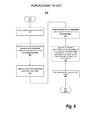
  • FIG. 6 is a flow diagram illustrating a method for optimizing the performance of an audio communication system for transmitting a sound, in accordance with some embodiments.
  • a surrounding noise profile may be determined by monitoring surrounding noise.
  • one or more microphones coupled to an analog-to-digital converter may be used to capture the noise profile.
  • the noise profile may be stored as samples of energy values over time, for example. Other methods of storing the noise profile may also be used.
  • a set of states of one or more noise-related conditions corresponding to the surrounding noise profile may be determined.
  • the states of the noise-related conditions may be monitored substantially concurrently to the detection of the corresponding surrounding noise profile.
  • Noise-related conditions may be any conditions that contribute to noise generation.
  • noise-related conditions and the states of these conditions may include: location of the vehicle, date and time, position of each window in the car, position of the top in convertible cars, position of the sunroof, speed of the vehicle, engine RPMs, volume of the in-car radio, surrounding traffic, etc.
  • the surrounding noise profile may be stored with the corresponding noise-related conditions to create a database of surrounding noise profiles and corresponding noise-related conditions.
  • audio communication system parameters corresponding to the surrounding noise profiles may be computed.
  • the audio communication system parameters may be stored in the database and associated with the corresponding surrounding noise profile and corresponding states of noise-related conditions.
  • the audio communication system parameters may be stored in the database in addition to the surrounding noise profile or instead of the surrounding noise profile being stored in the database.
  • Audio communication system parameters may include parameters for optimizing acoustic echo cancellers, equalizers, voice activity detectors, noise suppression, automatic gain control, etc. It should be noted that these parameters may be applied to optimize the performance of communication quality of an audio communication system, or the one or more speakers of an audio communication system, or both. It should also be noted that the optimization parameters may also be applied to communication systems that include only microphones or only speakers. For example, the optimization parameters may be applied to a radio system to optimize the performance of the radio's speakers or the optimization parameters may be applied to a note recording device to optimize the performance of the recording device's sound quality.
  • the database may be used at a later time to increase the speed with which audio optimization is performed.
  • audio communication system parameters from the database may be used as initial audio communication system parameters.
  • the initial audio communication system parameters used may be chosen in response to determining the states of the noise-related conditions. As stated above, if the system is being utilized in a vehicle, noise-related conditions may include the location of the vehicle, date and time, position of each window in the car, position of the top in convertible cars, position of the sunroof, speed of the vehicle, engine RPMs, intensity of the in-car radio, etc.
  • interpolation/extrapolation, etc. techniques may be used to obtain the best estimate for the audio communication system parameters that match the current states of the noise-related conditions.
  • FIG. 1 is a block diagram illustrating a system for optimizing the performance of an audio communication system, in accordance with some embodiments.
  • optimization device 110 comprises one or more processors 115 coupled to one or more memory units 120 .
  • Processors 110 and memory units 120 are configured to process/store instructions and data in order to effect the optimization function of optimization device 110 .
  • Analog-to-digital converter 125 is configured to couple one or more microphones 130 to memory units 120 and processors 115 . Additional devices, such as amplifiers, may be used to enable the functionality of microphones 130 .
  • microphones 130 are configured to detect a surrounding noise profile created by noise sources 135 .
  • Noise sources 135 may be any source of noise.
  • noise sources may include road noise, tire noise, engine noise, general wind noise, wind noise from windows being open, wind noise from a convertible top being open, radio volume level, etc.
  • noise sources may include appliances, stereo equipment, etc.
  • Sensors 145 which are also coupled to processors 115 and memory units 120 , are configured to detect the states of one or more noise-related conditions substantially concurrently with microphones 130 detecting a surrounding noise profile.
  • the states of noise-related conditions may include location of the vehicle, time and date, windows' positions, convertible top position, speed of the vehicle, engine RPMs, radio volume, etc.
  • sensors 145 may include GPS or other positioning devices, clock devices, door and windows sensors, engine sensors for speed and RPM information, stereo sensors for volume information, etc.
  • the states of noise-related conditions may include stereo volume, dryer state, washer state, microwave state, location of device relative to the noise sources, etc.
  • the detected surrounding sound profile and corresponding noise-related conditions may be stored in memory for later use.
  • audio communication system parameters corresponding to the surrounding noise profiles may be also be computed and stored.
  • the audio communication system parameters may be stored in a database and correlated with the corresponding states of the noise-related conditions.
  • the database may be created in memory units 220 .
  • the audio communication system parameters and corresponding states of noise-related conditions may be stored instead of the surrounding noise profile in the database.
  • both the surrounding noise profile and the audio communication system parameters along with the corresponding states of the noise-related conditions may be stored in the database.
  • corresponding audio communication system parameters may be computed and added to the database at a later time.
  • FIG. 2 is a block diagram illustrating an alternative system for optimizing the performance of an audio communication system, in accordance with some embodiments.
  • audio communication device 210 comprises one or more processors 215 coupled to one or more memory units 220 .
  • Processors 215 and memory units 220 are configured to process/store instructions and data in order to effect the functionality of audio communication device 210 .
  • Analog-to-digital converter 225 is configured to couple one or more microphones 240 to memory units 220 and processors 215 .
  • Digital-to-analog converter 230 is configured to couple one or more speakers 245 to memory units 220 and processors 215 . Additional coupling devices, such as amplifiers, may be used to couple microphones 240 and speakers 245 .
  • transceiver 235 is configured to transmit and receive audio signals from/to microphones 240 and speakers 245 to/from corresponding microphones and speakers in other similar communication devices.
  • the communication may occur over a variety of media such the cellular network, the internet, radio waves, sound waves, etc.
  • audio communication device 210 is configured to optimize the performance of audio communication device 210 as it may be affected by noise sources 250 .
  • noise sources 250 may include, for example, road noise, tire noise, engine noise, general wind noise, wind noise from windows being open, wind noise from a convertible top being open, radio volume level, etc.
  • noise sources may include appliances, stereo equipment, etc.
  • audio communication system parameters may be used to reduce or subtract noise that is introduced into microphones 240 by noise sources such as noise sources 250 .
  • Audio communication system parameters may include parameters for optimizing acoustic echo cancellers, equalizers, voice activity detectors, noise suppression, automatic gain control, etc.
  • Audio communication system parameters may be computed based on a profile of noise detected by microphones such as microphones 240 .
  • a database of stored, pre-computed audio communication system parameters may be used to enhance the optimization process.
  • the stored audio communication systems parameters may be stored, for example, in memory units 220 .
  • an appropriate set of stored audio communication system parameters from the database may be used as an initial set of audio communication system parameters for the audio communication device.
  • the initial audio communication system parameters may be subsequently tweaked further using current noise profiles detected in real time for better optimization.
  • the audio communication system parameters may be stored in correlation with associated states of the noise-related conditions.
  • the current states of noise-related conditions may be determined by monitoring sensors 265 . Once the current states of noise-related conditions are determined, a search may be then performed through the database of stored states of noise-related conditions to determine a set of stored states of noise-related conditions substantially close to the current set of states. The audio communication system parameters corresponding to the stored states of noise-related conditions may then be retrieved and, in some embodiments, used as the initial audio communication system parameters for optimization.
  • interpolation/extrapolation techniques may be used to determine a set of audio communication system parameters substantially corresponding to the current states of the noise-related conditions.
  • FIG. 3 is a block diagram illustrating a system for optimizing the performance of an audio communication system as the system may be used in an automobile, in accordance with some embodiments.
  • optimization device 335 may be implemented in an automobile such as automobile 310 . In some embodiments, optimization device 335 may be similar in functionality to audio communication system device 110 .
  • noise sources can exist in an automobile environment. Examples of such sources may be traffic giving rise to traffic noise 320 , rolling tires giving rise to tire noise 325 , open windows giving rise to window wind noise 330 , engine giving rise to engine noise 315 , etc.
  • FIG. 4 is a flow diagram illustrating a method for optimizing the performance of an audio communication system, in accordance with some embodiments.
  • the methods described here may be implemented by a device such as the one described in FIG. 1 .
  • a surrounding noise profile is determined.
  • the surrounding noise profile in some embodiments, is a result of multiple noise sources.
  • audio communication system parameters according to an audio communication system and corresponding to the detected noise profile may be computed.
  • one or more states of one or more noise-related conditions corresponding to the surrounding noise profile are determined.
  • the states of noise-related conditions could be anything that causes or contributes to the generation of noise such as the speed of a car, the position of the window in a car, whether an appliance is switched on in a home, etc.
  • the one or more states of the one or more noise-related conditions are associated to the corresponding surrounding noise profile.
  • the one or more states of the one or more noise-related conditions are also associated to the corresponding surrounding noise profile.
  • a database may be created of states of the noise-related conditions and the corresponding surrounding noise profile and/or the corresponding audio communication system parameters.
  • FIG. 5 is a flow diagram illustrating an alternative method for optimizing the performance of an audio communication system, in accordance with some embodiments.
  • the methods described here may be implemented by a device such as the one described in FIG. 1 .
  • the surrounding noise profile in some embodiments, is a result of multiple noise sources.
  • microphones and corresponding hardware may be used to detect the noise profile, and an ADC may be used to convert the noise profile from analog to digital.
  • one or more states of one or more noise-related conditions corresponding to the surrounding noise profile are determined.
  • the states of the noise related conditions may be anything that causes or contributes to noise, such as the speed of a vehicle, the position of a window in a vehicle, whether a home appliance is switched on, etc.
  • the one or more states of the one or more noise-related conditions are associated to the corresponding surrounding noise profile.
  • audio communication system parameters corresponding to the surrounding noise profile are determined. In some embodiments, the audio communication system parameters may be computed according to a particular optimization method.
  • the audio communication system parameters are also associated to the one or more states of the one or more states of the one or more noise-related conditions.
  • the audio communication system parameters and the associated one or more states of the one or more noise-related conditions are stored.
  • the surrounding noise profile may also be stored.
  • FIG. 6 is a flow diagram illustrating a method for optimizing the performance of an audio communication system for transmitting a sound, in accordance with some embodiments.
  • the methods described here may be implemented by a device such as the one described in FIG. 2 .
  • a sound such as, for example, first sound 270
  • the sound to be transmitted may be detected using one or more microphones and appropriate hardware.
  • the detected sound may also be converted from analog to digital using an ADC converter.
  • one or more current states of the one or more noise-related conditions corresponding to the current surrounding noise profile are determined.
  • the states may be determined, for example, by monitoring one or more sensors configured to detect the states of the one or more noise-related conditions.
  • stored states substantially equal to the current states are determined.
  • a search in a database may be performed to determine stored states that are substantially equal to the current set of states.
  • the stored audio communication system parameters corresponding to the stored states are determined. In some embodiments, if stored states substantially equal to the current states are not found in the database, interpolation/extrapolation techniques may be used to determine the audio communication system parameters that would be a good correspondence to the current surrounding noise profile.
  • stored audio communication system parameters are applied as initial audio communication system parameters to, among other things, reduce the current surrounding noise profile from the sound to provide a second, noise-reduced sound, such as, for example, second noise-reduced sound 275 .
  • the stored and/or computed audio communication system parameters may be used initially and may be followed by audio communication system parameters that are calculated later using current surrounding noise profiles.
  • the sound such as, for example, the second, noise-reduced sound
  • Processing ends at 699 .

Landscapes

  • Engineering & Computer Science (AREA)
  • Signal Processing (AREA)
  • Physics & Mathematics (AREA)
  • Acoustics & Sound (AREA)
  • Computational Linguistics (AREA)
  • Quality & Reliability (AREA)
  • Health & Medical Sciences (AREA)
  • Audiology, Speech & Language Pathology (AREA)
  • Human Computer Interaction (AREA)
  • Multimedia (AREA)
  • Circuit For Audible Band Transducer (AREA)
  • Telephone Function (AREA)

Abstract

Methods and systems for optimizing and audio communication system, including detecting a surrounding noise profile, determining one or more states of one or more noise-related conditions corresponding to the surrounding noise profile, and associating the one or more states of the one or more noise-related conditions to the surrounding noise profile.

Description

I. BACKGROUND
The invention relates generally to the field of optimizing the performance of audio communication systems against noise interference.
II. SUMMARY
In one respect, disclosed is a method for optimizing an audio communication system, the method comprising: detecting a surrounding noise profile; determining one or more states of one or more noise-related conditions corresponding to the surrounding noise profile; and associating the one or more states of the one or more noise-related conditions to the surrounding noise profile.
In another respect, disclosed is a system for optimizing an audio communication system, the system comprising: one or more processors; one or more memory units coupled to the one or more processors; one or more microphones coupled to the one or more processors and memory; and one or more sensors coupled to the one or more processors and memory, the microphones being configured to detect a surrounding noise profile, the sensors being configured to determine one or more states of one or more noise-related conditions corresponding to the surrounding noise profile; and the system being configured to associate the one or more states of the one or more noise-related conditions to the surrounding noise profile.
In yet another respect, disclosed is a computer program product stored on a computer operable medium, the computer program product comprising software code being effective to optimize an audio communication system by being effective to: cause detection of a surrounding noise profile; determine one or more states of one or more noise-related conditions corresponding to the surrounding noise profile; and associate the one or more states of the one or more noise-related conditions to the surrounding noise profile.
Numerous additional embodiments are also possible.
III. BRIEF DESCRIPTION OF THE DRAWINGS
Other objects and advantages of the invention may become apparent upon reading the detailed description and upon reference to the accompanying drawings.
FIG. 1 is a block diagram illustrating a system for optimizing the performance of an audio communication system, in accordance with some embodiments.
FIG. 2 is a block diagram illustrating an alternative system for optimizing the performance of an audio communication system, in accordance with some embodiments.
FIG. 3 is a block diagram illustrating a system for optimizing the performance of an audio communication system as the system may be used in an automobile, in accordance with some embodiments.
FIG. 4 is a flow diagram illustrating a method for optimizing the performance of an audio communication system, in accordance with some embodiments.
FIG. 5 is a flow diagram illustrating an alternative method for optimizing the performance of an audio communication system, in accordance with some embodiments.
FIG. 6 is a flow diagram illustrating a method for optimizing the performance of an audio communication system for transmitting a sound, in accordance with some embodiments.
While the invention is subject to various modifications and alternative forms, specific embodiments thereof are shown by way of example in the drawings and the accompanying detailed description. It should be understood, however, that the drawings and detailed description are not intended to limit the invention to the particular embodiments. This disclosure is instead intended to cover all modifications, equivalents, and alternatives falling within the scope of the present invention as defined by the appended claims.
IV. DETAILED DESCRIPTION
One or more embodiments of the invention are described below. It should be noted that these and any other embodiments are exemplary and are intended to be illustrative of the invention rather than limiting. While the invention is widely applicable to different types of systems, it is impossible to include all of the possible embodiments and contexts of the invention in this disclosure. Upon reading this disclosure, many alternative embodiments of the present invention will be apparent to persons of ordinary skill in the art.
In some embodiments, systems and methods for optimizing the performance of an audio communication system are disclosed. A surrounding noise profile may be determined by monitoring surrounding noise. In one embodiment, one or more microphones coupled to an analog-to-digital converter, for example, may be used to capture the noise profile. In some embodiments, the noise profile may be stored as samples of energy values over time, for example. Other methods of storing the noise profile may also be used.
In some embodiments, a set of states of one or more noise-related conditions corresponding to the surrounding noise profile may be determined. In some embodiments, the states of the noise-related conditions may be monitored substantially concurrently to the detection of the corresponding surrounding noise profile. Noise-related conditions may be any conditions that contribute to noise generation. In embodiments where the audio performance is implemented in an automobile, for example, noise-related conditions and the states of these conditions may include: location of the vehicle, date and time, position of each window in the car, position of the top in convertible cars, position of the sunroof, speed of the vehicle, engine RPMs, volume of the in-car radio, surrounding traffic, etc. In some embodiments, the surrounding noise profile may be stored with the corresponding noise-related conditions to create a database of surrounding noise profiles and corresponding noise-related conditions.
In some embodiments, either in real time or at a later time, audio communication system parameters corresponding to the surrounding noise profiles may be computed. In some embodiments, the audio communication system parameters may be stored in the database and associated with the corresponding surrounding noise profile and corresponding states of noise-related conditions. In some embodiments, the audio communication system parameters may be stored in the database in addition to the surrounding noise profile or instead of the surrounding noise profile being stored in the database.
Audio communication system parameters may include parameters for optimizing acoustic echo cancellers, equalizers, voice activity detectors, noise suppression, automatic gain control, etc. It should be noted that these parameters may be applied to optimize the performance of communication quality of an audio communication system, or the one or more speakers of an audio communication system, or both. It should also be noted that the optimization parameters may also be applied to communication systems that include only microphones or only speakers. For example, the optimization parameters may be applied to a radio system to optimize the performance of the radio's speakers or the optimization parameters may be applied to a note recording device to optimize the performance of the recording device's sound quality.
In some embodiments, the database may be used at a later time to increase the speed with which audio optimization is performed. In some embodiments, audio communication system parameters from the database may be used as initial audio communication system parameters. The initial audio communication system parameters used may be chosen in response to determining the states of the noise-related conditions. As stated above, if the system is being utilized in a vehicle, noise-related conditions may include the location of the vehicle, date and time, position of each window in the car, position of the top in convertible cars, position of the sunroof, speed of the vehicle, engine RPMs, intensity of the in-car radio, etc.
In some embodiments, if the database does not contain a match or a near match for the states of the noise-related conditions interpolation/extrapolation, etc. techniques may be used to obtain the best estimate for the audio communication system parameters that match the current states of the noise-related conditions.
FIG. 1 is a block diagram illustrating a system for optimizing the performance of an audio communication system, in accordance with some embodiments.
In some embodiments, optimization device 110 comprises one or more processors 115 coupled to one or more memory units 120. Processors 110 and memory units 120 are configured to process/store instructions and data in order to effect the optimization function of optimization device 110. Analog-to-digital converter 125 is configured to couple one or more microphones 130 to memory units 120 and processors 115. Additional devices, such as amplifiers, may be used to enable the functionality of microphones 130.
In some embodiments, microphones 130 are configured to detect a surrounding noise profile created by noise sources 135. Noise sources 135 may be any source of noise. In an embodiment where the audio communication system device is implemented in an automobile, for example, noise sources may include road noise, tire noise, engine noise, general wind noise, wind noise from windows being open, wind noise from a convertible top being open, radio volume level, etc. In an embodiment where the audio communication system device is implemented in a house, for example, noise sources may include appliances, stereo equipment, etc.
Sensors 145, which are also coupled to processors 115 and memory units 120, are configured to detect the states of one or more noise-related conditions substantially concurrently with microphones 130 detecting a surrounding noise profile. In an embodiment where the device is implemented in a vehicle, for example, the states of noise-related conditions may include location of the vehicle, time and date, windows' positions, convertible top position, speed of the vehicle, engine RPMs, radio volume, etc. Thus, sensors 145 may include GPS or other positioning devices, clock devices, door and windows sensors, engine sensors for speed and RPM information, stereo sensors for volume information, etc. In an embodiment where the device is implemented in a house, for example, the states of noise-related conditions may include stereo volume, dryer state, washer state, microwave state, location of device relative to the noise sources, etc.
In some embodiments, the detected surrounding sound profile and corresponding noise-related conditions may be stored in memory for later use. In alternative embodiments, audio communication system parameters corresponding to the surrounding noise profiles may be also be computed and stored. In some embodiments, the audio communication system parameters may be stored in a database and correlated with the corresponding states of the noise-related conditions. In some embodiments, the database may be created in memory units 220. In some embodiments, the audio communication system parameters and corresponding states of noise-related conditions may be stored instead of the surrounding noise profile in the database. In other embodiments, both the surrounding noise profile and the audio communication system parameters along with the corresponding states of the noise-related conditions may be stored in the database. In other embodiments, corresponding audio communication system parameters may be computed and added to the database at a later time.
FIG. 2 is a block diagram illustrating an alternative system for optimizing the performance of an audio communication system, in accordance with some embodiments.
In some embodiments, audio communication device 210 comprises one or more processors 215 coupled to one or more memory units 220. Processors 215 and memory units 220 are configured to process/store instructions and data in order to effect the functionality of audio communication device 210. Analog-to-digital converter 225 is configured to couple one or more microphones 240 to memory units 220 and processors 215. Digital-to-analog converter 230 is configured to couple one or more speakers 245 to memory units 220 and processors 215. Additional coupling devices, such as amplifiers, may be used to couple microphones 240 and speakers 245.
In some embodiments, transceiver 235 is configured to transmit and receive audio signals from/to microphones 240 and speakers 245 to/from corresponding microphones and speakers in other similar communication devices. The communication may occur over a variety of media such the cellular network, the internet, radio waves, sound waves, etc.
In some embodiments, audio communication device 210 is configured to optimize the performance of audio communication device 210 as it may be affected by noise sources 250. In an embodiment where audio communication device 210 is implemented in a vehicle, noise sources 250 may include, for example, road noise, tire noise, engine noise, general wind noise, wind noise from windows being open, wind noise from a convertible top being open, radio volume level, etc. In an embodiment where audio communication device 210 is implemented in a house, for example, noise sources may include appliances, stereo equipment, etc.
In some embodiments, audio communication system parameters may be used to reduce or subtract noise that is introduced into microphones 240 by noise sources such as noise sources 250. Audio communication system parameters may include parameters for optimizing acoustic echo cancellers, equalizers, voice activity detectors, noise suppression, automatic gain control, etc.
Audio communication system parameters may be computed based on a profile of noise detected by microphones such as microphones 240. In some embodiments, a database of stored, pre-computed audio communication system parameters may be used to enhance the optimization process. The stored audio communication systems parameters may be stored, for example, in memory units 220. In some embodiments, an appropriate set of stored audio communication system parameters from the database may be used as an initial set of audio communication system parameters for the audio communication device. In some embodiments, the initial audio communication system parameters may be subsequently tweaked further using current noise profiles detected in real time for better optimization.
In some embodiments, the audio communication system parameters may be stored in correlation with associated states of the noise-related conditions. In some embodiments, the current states of noise-related conditions may be determined by monitoring sensors 265. Once the current states of noise-related conditions are determined, a search may be then performed through the database of stored states of noise-related conditions to determine a set of stored states of noise-related conditions substantially close to the current set of states. The audio communication system parameters corresponding to the stored states of noise-related conditions may then be retrieved and, in some embodiments, used as the initial audio communication system parameters for optimization.
In some embodiments, if a substantial match for the current states of the noise-related conditions is not found in the database, interpolation/extrapolation techniques may be used to determine a set of audio communication system parameters substantially corresponding to the current states of the noise-related conditions.
FIG. 3 is a block diagram illustrating a system for optimizing the performance of an audio communication system as the system may be used in an automobile, in accordance with some embodiments.
In some embodiments, optimization device 335 may be implemented in an automobile such as automobile 310. In some embodiments, optimization device 335 may be similar in functionality to audio communication system device 110.
Various noise sources can exist in an automobile environment. Examples of such sources may be traffic giving rise to traffic noise 320, rolling tires giving rise to tire noise 325, open windows giving rise to window wind noise 330, engine giving rise to engine noise 315, etc.
FIG. 4 is a flow diagram illustrating a method for optimizing the performance of an audio communication system, in accordance with some embodiments. In some embodiments, the methods described here may be implemented by a device such as the one described in FIG. 1.
Processing begins at 400 whereupon, at block 410, a surrounding noise profile is determined. The surrounding noise profile, in some embodiments, is a result of multiple noise sources. In some embodiments, audio communication system parameters according to an audio communication system and corresponding to the detected noise profile may be computed.
At block 415, one or more states of one or more noise-related conditions corresponding to the surrounding noise profile are determined. The states of noise-related conditions could be anything that causes or contributes to the generation of noise such as the speed of a car, the position of the window in a car, whether an appliance is switched on in a home, etc.
At block 420, the one or more states of the one or more noise-related conditions are associated to the corresponding surrounding noise profile. In some embodiment, the one or more states of the one or more noise-related conditions are also associated to the corresponding surrounding noise profile. In some embodiments, a database may be created of states of the noise-related conditions and the corresponding surrounding noise profile and/or the corresponding audio communication system parameters.
FIG. 5 is a flow diagram illustrating an alternative method for optimizing the performance of an audio communication system, in accordance with some embodiments. In some embodiments, the methods described here may be implemented by a device such as the one described in FIG. 1.
Processing begins at 500 whereupon, at block 510, a surrounding noise profile is detected. The surrounding noise profile, in some embodiments, is a result of multiple noise sources. In some embodiments, microphones and corresponding hardware may be used to detect the noise profile, and an ADC may be used to convert the noise profile from analog to digital.
At block 515, one or more states of one or more noise-related conditions corresponding to the surrounding noise profile are determined. In some embodiments, the states of the noise related conditions may be anything that causes or contributes to noise, such as the speed of a vehicle, the position of a window in a vehicle, whether a home appliance is switched on, etc.
At block 520, the one or more states of the one or more noise-related conditions are associated to the corresponding surrounding noise profile. At block 525, audio communication system parameters corresponding to the surrounding noise profile are determined. In some embodiments, the audio communication system parameters may be computed according to a particular optimization method. At block 530, the audio communication system parameters are also associated to the one or more states of the one or more states of the one or more noise-related conditions.
At block 535, the audio communication system parameters and the associated one or more states of the one or more noise-related conditions are stored. In other embodiments, in addition to storing the audio communication system parameters, the surrounding noise profile may also be stored.
Processing subsequently ends at 599.
FIG. 6 is a flow diagram illustrating a method for optimizing the performance of an audio communication system for transmitting a sound, in accordance with some embodiments. In some embodiments, the methods described here may be implemented by a device such as the one described in FIG. 2.
Processing begins at 600 whereupon, at block 610, a sound, such as, for example, first sound 270, to be transmitted is detected. In some embodiments, the sound to be transmitted may be detected using one or more microphones and appropriate hardware. The detected sound may also be converted from analog to digital using an ADC converter.
At block 615, one or more current states of the one or more noise-related conditions corresponding to the current surrounding noise profile are determined. The states may be determined, for example, by monitoring one or more sensors configured to detect the states of the one or more noise-related conditions.
At block 620, stored states substantially equal to the current states are determined. In some embodiments, a search in a database may be performed to determine stored states that are substantially equal to the current set of states.
At block 630, the stored audio communication system parameters corresponding to the stored states are determined. In some embodiments, if stored states substantially equal to the current states are not found in the database, interpolation/extrapolation techniques may be used to determine the audio communication system parameters that would be a good correspondence to the current surrounding noise profile.
At block 635, stored audio communication system parameters are applied as initial audio communication system parameters to, among other things, reduce the current surrounding noise profile from the sound to provide a second, noise-reduced sound, such as, for example, second noise-reduced sound 275. In some embodiments, the stored and/or computed audio communication system parameters may be used initially and may be followed by audio communication system parameters that are calculated later using current surrounding noise profiles.
At block 640, the sound, such as, for example, the second, noise-reduced sound, is transmitted. Processing ends at 699.
Those of skill will appreciate that the various illustrative logical blocks, modules, circuits, and algorithm steps described in connection with the embodiments disclosed herein may be implemented as electronic hardware, computer software, or combinations of both. To clearly illustrate this interchangeability of hardware and software, various illustrative components, blocks, modules, circuits, and steps have been described above generally in terms of their functionality. Whether such functionality is implemented as hardware or software depends upon the particular application and design constraints imposed on the overall system. Those of skill in the art may implement the described functionality in varying ways for each particular application, but such implementation decisions should not be interpreted as causing a departure from the scope of the present invention.
The previous description of the disclosed embodiments is provided to enable any person skilled in the art to make or use the present invention. Various modifications to these embodiments will be readily apparent to those skilled in the art, and the generic principles defined herein may be applied to other embodiments without departing from the spirit or scope of the invention. Thus, the present invention is not intended to be limited to the embodiments shown herein but is to be accorded the widest scope consistent with the principles and novel features disclosed herein.
The benefits and advantages that may be provided by the present invention have been described above with regard to specific embodiments. These benefits and advantages, and any elements or limitations that may cause them to occur or to become more pronounced are not to be construed as critical, required, or essential features of any or all of the claims. As used herein, the terms “comprises,” “comprising,” or any other variations thereof, are intended to be interpreted as non-exclusively including the elements or limitations which follow those terms. Accordingly, a system, method, or other embodiment that comprises a set of elements is not limited to only those elements, and may include other elements not expressly listed or inherent to the claimed embodiment.
While the present invention has been described with reference to particular embodiments, it should be understood that the embodiments are illustrative and that the scope of the invention is not limited to these embodiments. Many variations, modifications, additions and improvements to the embodiments described above are possible. It is contemplated that these variations, modifications, additions and improvements fall within the scope of the invention as detailed within the following claims.

Claims (9)

What is claimed is:
1. A method for optimizing a motor vehicle communication system, the method comprising:
detecting a first sound in the vehicle;
determining current states of a plurality of noise-related conditions of the motor vehicle;
searching a database of noise-related condition states and locating a noise-related condition state in the database that is at least substantially equal to the current states of the plurality of noise-related conditions;
obtaining from the database, audio communication system operating parameters that correspond to the noise-related condition state, and that are at least substantially equal to said current states of the plurality of noise-related conditions;
applying the audio communication system operating parameters that were obtained from the database to the audio communication system as initial audio communication system parameters, which thereby reduce noise from the first sound and to thereby provide a second, noise-reduced sound to be transmitted; and
transmitting the second, noise-reduced sound from the motor vehicle communication system;
wherein the steps of the method are performed without measuring, determining or estimating noise in the motor vehicle;
wherein the step of obtaining from the database, audio communication system operating parameters that correspond to the noise-related condition state that is at least substantially equal to said current states of the plurality of noise-related conditions, comprises: using interpolation/extrapolation techniques to determine audio communication system parameters that substantially correspond to current states of noise-related conditions.
2. The method of claim 1, wherein the step of transmitting noise-reduced detected sound comprises transmitting the second, noise-reduced sound from a transceiver using radio waves.
3. The method of claim 1, wherein determining current states of a plurality of noise-related conditions comprises monitoring sensors configured to detect at least one of: a position of a motor vehicle's window; the speed of the motor vehicle's engine; the motor vehicle's location; and the motor vehicle's speed.
4. The method of claim 1, wherein the step of detecting sound comprises detecting sound using a microphone coupled to the audio communication system and wherein the step of applying the audio communication system parameters obtained from the database comprises subtracting noise signals introduced into the microphone.
5. The method of claim 1, wherein the step of obtaining from the database, audio communication system operating parameters that correspond to the noise-related condition state that is at least substantially equal to said current states of the plurality of noise-related conditions comprises: searching a database containing a plurality of stored states of noise-related conditions and which contains stored audio communication system parameters associated with the stored states of noise-related conditions.
6. An apparatus for optimizing a motor vehicle communication system, the apparatus comprising:
a microphone configured to detect a first sound;
a plurality of sensors, each sensor configured to determine a current state of a noise-related condition of the motor vehicle;
a memory unit configured to store a database of noise-related condition states and store audio communication system operating parameters which correspond to the stored, noise-related condition states;
a transceiver configured to transmit and receive audio signals over radio waves; and
a processor, which is coupled to: the memory unit, the sensors, the microphone, and the transceiver; the processor being configured to:
detect the first sound from the microphone;
determine from the plurality of sensors, current states of a plurality of noise-related conditions of the motor vehicle;
determine noise-related condition states stored in the database that are at least substantially equal to the current states of the noise-related conditions;
determine audio communication system operating parameters that are stored in the memory unit and which correspond to the noise-related condition states in the database that are substantially equal to the current states of the noise-related conditions; and
apply the audio communication system parameters obtained from the database to the audio communication system as initial communication system parameters, to reduce noise from the detected first sound and thereby provide a second, noise-reduced sound to be transmitted; and
cause the transmission of the second, noise-reduced sound from the transceiver;
said apparatus being configured such that it does not measure, determine or estimate noise in the motor vehicle,
wherein the apparatus is configured to interpolate stored communication parameters to current states of noise-related conditions and extrapolate, stored communication parameters, to current states of noise-related conditions.
7. The apparatus of claim 6, wherein noise-related condition states are at least one of: a window position, a vehicle speed, an engine speed and a vehicle location.
8. The apparatus of claim 6, wherein the processor is configured to subtract noise introduced into the microphone, the subtracted noise being determined from current states of noise-related conditions.
9. The apparatus of claim 6, wherein the processor is configured to search a database stored in the memory unit, the database containing a plurality of stored states of noise-related conditions and corresponding audio communication system parameters associated with each noise-related condition states.
US14/493,535 2009-03-17 2014-09-23 Systems and methods for optimizing an audio communication system Active US9462377B2 (en)

Priority Applications (1)

Application Number Priority Date Filing Date Title
US14/493,535 US9462377B2 (en) 2009-03-17 2014-09-23 Systems and methods for optimizing an audio communication system

Applications Claiming Priority (2)

Application Number Priority Date Filing Date Title
US12/405,245 US20100239110A1 (en) 2009-03-17 2009-03-17 Systems and Methods for Optimizing an Audio Communication System
US14/493,535 US9462377B2 (en) 2009-03-17 2014-09-23 Systems and methods for optimizing an audio communication system

Related Parent Applications (1)

Application Number Title Priority Date Filing Date
US12/405,245 Division US20100239110A1 (en) 2009-03-17 2009-03-17 Systems and Methods for Optimizing an Audio Communication System

Publications (2)

Publication Number Publication Date
US20150010162A1 US20150010162A1 (en) 2015-01-08
US9462377B2 true US9462377B2 (en) 2016-10-04

Family

ID=42124303

Family Applications (2)

Application Number Title Priority Date Filing Date
US12/405,245 Abandoned US20100239110A1 (en) 2009-03-17 2009-03-17 Systems and Methods for Optimizing an Audio Communication System
US14/493,535 Active US9462377B2 (en) 2009-03-17 2014-09-23 Systems and methods for optimizing an audio communication system

Family Applications Before (1)

Application Number Title Priority Date Filing Date
US12/405,245 Abandoned US20100239110A1 (en) 2009-03-17 2009-03-17 Systems and Methods for Optimizing an Audio Communication System

Country Status (2)

Country Link
US (2) US20100239110A1 (en)
WO (1) WO2010107729A1 (en)

Cited By (2)

* Cited by examiner, † Cited by third party
Publication number Priority date Publication date Assignee Title
US20190324709A1 (en) * 2018-04-23 2019-10-24 International Business Machines Corporation Filtering sound based on desirability
US11089205B2 (en) * 2019-08-16 2021-08-10 Toyota Motor Engineering & Manufacturing North America, Inc. Window position monitoring system

Families Citing this family (8)

* Cited by examiner, † Cited by third party
Publication number Priority date Publication date Assignee Title
US8494172B2 (en) * 2011-02-04 2013-07-23 Cardo Systems, Inc. System and method for adjusting audio input and output settings
DE102011076484A1 (en) * 2011-05-25 2012-11-29 Fraunhofer-Gesellschaft zur Förderung der angewandten Forschung e.V. SOUND PLAYING DEVICE WITH HORIZONTAL SIMULATION
US9053710B1 (en) * 2012-09-10 2015-06-09 Amazon Technologies, Inc. Audio content presentation using a presentation profile in a content header
US9237399B2 (en) * 2013-08-09 2016-01-12 GM Global Technology Operations LLC Masking vehicle noise
BE1021652B1 (en) * 2013-12-20 2015-12-22 Televic Rail Nv METHOD FOR ESTIMATING ENVIRONMENTAL NOISE
JP6439174B2 (en) * 2015-06-17 2018-12-19 本田技研工業株式会社 Speech enhancement device and speech enhancement method
CN110706679B (en) * 2019-09-30 2022-03-29 维沃移动通信有限公司 Audio processing method and electronic equipment
KR20220109845A (en) * 2021-01-29 2022-08-05 현대자동차주식회사 Apparatus and method for outputting sound of vehicle

Citations (7)

* Cited by examiner, † Cited by third party
Publication number Priority date Publication date Assignee Title
US5907622A (en) 1995-09-21 1999-05-25 Dougherty; A. Michael Automatic noise compensation system for audio reproduction equipment
US6175602B1 (en) * 1998-05-27 2001-01-16 Telefonaktiebolaget Lm Ericsson (Publ) Signal noise reduction by spectral subtraction using linear convolution and casual filtering
WO2002091798A2 (en) 2001-05-07 2002-11-14 Harman International Industries, Incorporated Data-driven software architecture for digital sound processing and equalization
US20050015252A1 (en) 2003-06-12 2005-01-20 Toru Marumoto Speech correction apparatus
EP1575163A2 (en) 2004-03-10 2005-09-14 Yamaha Corporation Automobile audio system and signal processing method therefor
US20090063143A1 (en) * 2007-08-31 2009-03-05 Gerhard Uwe Schmidt System for speech signal enhancement in a noisy environment through corrective adjustment of spectral noise power density estimations
US20100304704A1 (en) * 2004-12-06 2010-12-02 Hamid Najafi Wireless Phone with Lanyard Antenna

Family Cites Families (12)

* Cited by examiner, † Cited by third party
Publication number Priority date Publication date Assignee Title
US5717772A (en) * 1995-08-07 1998-02-10 Motorola, Inc. Method and apparatus for suppressing acoustic feedback in an audio system
GB0023207D0 (en) * 2000-09-21 2000-11-01 Royal College Of Art Apparatus for acoustically improving an environment
US6940982B1 (en) * 2001-03-28 2005-09-06 Lsi Logic Corporation Adaptive noise cancellation (ANC) for DVD systems
US6732241B2 (en) * 2001-09-07 2004-05-04 Hewlett-Packard Development Company, L.P. Technique for migrating data between storage devices for reduced power consumption
US6897781B2 (en) * 2003-03-26 2005-05-24 Bed-Check Corporation Electronic patient monitor and white noise source
US7333618B2 (en) * 2003-09-24 2008-02-19 Harman International Industries, Incorporated Ambient noise sound level compensation
US7634095B2 (en) * 2004-02-23 2009-12-15 General Motors Company Dynamic tuning of hands-free algorithm for noise and driving conditions
US7813771B2 (en) * 2005-01-06 2010-10-12 Qnx Software Systems Co. Vehicle-state based parameter adjustment system
US7881939B2 (en) * 2005-05-31 2011-02-01 Honeywell International Inc. Monitoring system with speech recognition
US20070132773A1 (en) * 2005-12-08 2007-06-14 Smartdrive Systems Inc Multi-stage memory buffer and automatic transfers in vehicle event recording systems
JP2008122729A (en) * 2006-11-14 2008-05-29 Sony Corp Noise reduction device, noise reduction method, noise reduction program, and noise reduction voice output device
US20080153537A1 (en) * 2006-12-21 2008-06-26 Charbel Khawand Dynamically learning a user's response via user-preferred audio settings in response to different noise environments

Patent Citations (9)

* Cited by examiner, † Cited by third party
Publication number Priority date Publication date Assignee Title
US5907622A (en) 1995-09-21 1999-05-25 Dougherty; A. Michael Automatic noise compensation system for audio reproduction equipment
US6175602B1 (en) * 1998-05-27 2001-01-16 Telefonaktiebolaget Lm Ericsson (Publ) Signal noise reduction by spectral subtraction using linear convolution and casual filtering
WO2002091798A2 (en) 2001-05-07 2002-11-14 Harman International Industries, Incorporated Data-driven software architecture for digital sound processing and equalization
US20060088175A1 (en) 2001-05-07 2006-04-27 Harman International Industries, Incorporated Sound processing system using spatial imaging techniques
US20050015252A1 (en) 2003-06-12 2005-01-20 Toru Marumoto Speech correction apparatus
EP1575163A2 (en) 2004-03-10 2005-09-14 Yamaha Corporation Automobile audio system and signal processing method therefor
US20050213776A1 (en) * 2004-03-10 2005-09-29 Yamaha Corporation Automobile audio system and signal processing method therefor
US20100304704A1 (en) * 2004-12-06 2010-12-02 Hamid Najafi Wireless Phone with Lanyard Antenna
US20090063143A1 (en) * 2007-08-31 2009-03-05 Gerhard Uwe Schmidt System for speech signal enhancement in a noisy environment through corrective adjustment of spectral noise power density estimations

Non-Patent Citations (1)

* Cited by examiner, † Cited by third party
Title
International Search Report for the PCT/US2010/027388 dated May 6, 2010.

Cited By (3)

* Cited by examiner, † Cited by third party
Publication number Priority date Publication date Assignee Title
US20190324709A1 (en) * 2018-04-23 2019-10-24 International Business Machines Corporation Filtering sound based on desirability
US10754611B2 (en) * 2018-04-23 2020-08-25 International Business Machines Corporation Filtering sound based on desirability
US11089205B2 (en) * 2019-08-16 2021-08-10 Toyota Motor Engineering & Manufacturing North America, Inc. Window position monitoring system

Also Published As

Publication number Publication date
US20150010162A1 (en) 2015-01-08
WO2010107729A1 (en) 2010-09-23
US20100239110A1 (en) 2010-09-23

Similar Documents

Publication Publication Date Title
US9462377B2 (en) Systems and methods for optimizing an audio communication system
EP3703052B1 (en) Echo cancellation method and apparatus based on time delay estimation
US8195246B2 (en) Optimized method of filtering non-steady noise picked up by a multi-microphone audio device, in particular a “hands-free” telephone device for a motor vehicle
JP4283212B2 (en) Noise removal apparatus, noise removal program, and noise removal method
CN1120473C (en) Noise suppressor circuit and associated method for suppressing periodic interference component portions of communication signal
US8370140B2 (en) Method of filtering non-steady lateral noise for a multi-microphone audio device, in particular a “hands-free” telephone device for a motor vehicle
JP4225430B2 (en) Sound source separation device, voice recognition device, mobile phone, sound source separation method, and program
CN102273222B (en) Method, system and apparatus for selectively switching between multiple microphones
KR102487160B1 (en) Audio signal quality enhancement based on quantitative signal-to-noise ratio analysis and adaptive wiener filtering
JP5049629B2 (en) Echo reduction in time-varying loudspeaker-room-microphone systems
US10156637B2 (en) Apparatus and method for controlling noise in vehicle
CN102044253B (en) Echo signal processing method, system and television
EP1879180A1 (en) Reduction of background noise in hands-free systems
KR101610161B1 (en) System and method for speech recognition
US20080152169A1 (en) Audio output apparatus, audio output method, audio output system, and program for audio output processing
JP2011515897A (en) Speech enhancement using multiple microphones on multiple devices
CN111418003B (en) Active noise control method and system
CN102056068B (en) A method for monitoring the influence of ambient noise on stochastic gradient algorithms during identification of linear time-invariant systems
CN102855880A (en) Denoising method for multi-microphone audio equipment
JP2003500936A (en) Improving near-end audio signals in echo suppression systems
CN117912440A (en) Active noise reduction method and system for automobile and storable medium
US9875755B2 (en) Voice enhancement device and voice enhancement method
CN119763526A (en) Active noise reduction method, system, device, medium and vehicle
CN118742957A (en) Voice activity detection
CN118890579B (en) Multi-sensor-based active noise reduction method for automobile

Legal Events

Date Code Title Description
AS Assignment

Owner name: TEMIC AUTOMOTIVE OF NORTH AMERICA, INC., ILLINOIS

Free format text: ASSIGNMENT OF ASSIGNORS INTEREST;ASSIGNORS:LASCH, JONATHAN;SRENGER, EDWARD;BARRON, DAVID L.;SIGNING DATES FROM 20090727 TO 20090728;REEL/FRAME:033796/0151

Owner name: CONTINENTAL AUTOMOTIVE SYSTEMS, INC., MICHIGAN

Free format text: MERGER;ASSIGNORS:CONTINENTAL TEVES, INC.;TEMIC AUTOMOTIVE OF NORTH AMERICA, INC.;REEL/FRAME:033796/0217

Effective date: 20091210

FEPP Fee payment procedure

Free format text: PAYOR NUMBER ASSIGNED (ORIGINAL EVENT CODE: ASPN); ENTITY STATUS OF PATENT OWNER: LARGE ENTITY

STCF Information on status: patent grant

Free format text: PATENTED CASE

MAFP Maintenance fee payment

Free format text: PAYMENT OF MAINTENANCE FEE, 4TH YEAR, LARGE ENTITY (ORIGINAL EVENT CODE: M1551); ENTITY STATUS OF PATENT OWNER: LARGE ENTITY

Year of fee payment: 4

MAFP Maintenance fee payment

Free format text: PAYMENT OF MAINTENANCE FEE, 8TH YEAR, LARGE ENTITY (ORIGINAL EVENT CODE: M1552); ENTITY STATUS OF PATENT OWNER: LARGE ENTITY

Year of fee payment: 8