US9460128B1 - Sliding window view group constructs in relational database query language - Google Patents
Sliding window view group constructs in relational database query language Download PDFInfo
- Publication number
- US9460128B1 US9460128B1 US13/905,684 US201313905684A US9460128B1 US 9460128 B1 US9460128 B1 US 9460128B1 US 201313905684 A US201313905684 A US 201313905684A US 9460128 B1 US9460128 B1 US 9460128B1
- Authority
- US
- United States
- Prior art keywords
- interval
- view
- sliding window
- views
- rows
- Prior art date
- Legal status (The legal status is an assumption and is not a legal conclusion. Google has not performed a legal analysis and makes no representation as to the accuracy of the status listed.)
- Expired - Fee Related, expires
Links
Images


Classifications
-
- G—PHYSICS
- G06—COMPUTING OR CALCULATING; COUNTING
- G06F—ELECTRIC DIGITAL DATA PROCESSING
- G06F16/00—Information retrieval; Database structures therefor; File system structures therefor
- G06F16/20—Information retrieval; Database structures therefor; File system structures therefor of structured data, e.g. relational data
- G06F16/24—Querying
- G06F16/242—Query formulation
- G06F16/2433—Query languages
- G06F16/2445—Data retrieval commands; View definitions
-
- G06F17/30292—
Definitions
- This disclosure relates to optimized view creation language that is operable to generate aggregated sliding window views based upon relationships among two or more individual sliding window views in a group.
- Relational database query language can provide a user with a means for gathering and manipulating data that is stored in one or more databases.
- enterprise application developers are faced with the challenge of processing growing amounts of data efficiently and presenting the data in real-time in such a manner so as to meet complex operational and strategic requirements.
- application developers rely on RDQL to organize large amounts of data into summary tables presented in a live dashboard (e.g., a table displayed and updated in real time).
- the live dashboard can contain aggregated data associated with some period of time.
- materialized view constructs in RDQL can save pre-calculated query results in a temporary table, but the history of previous view results is lost.
- materialized views are unable to address naturally with aggregate functions. For example, existing materialized views are unable to allow aggregated data to be viewed in a sliding window where the aggregations are based on fixed time slices inside that window timeframe. As another example, existing materialized views are unable to allow data to be retained in a view only falling into a period. A need exists for an extension of the materialized view constructs in RDQL.
- FIG. 1 is a block diagram illustrating an example system operable to facilitate generating an aggregated sliding window view group based upon a relationship between two or more individual sliding window views.
- FIG. 2 is a flowchart illustrating an example process operable to generate an aggregated sliding window view group based upon a relationship between two or more individual sliding window views.
- FIG. 3 is a flowchart illustrating an example process operable to purge one or more views from an aggregated sliding window view group based upon the difference between the number of rows in a sliding window view inside the aggregated sliding window view group and a predetermined number of retention rows for that sliding window view.
- FIG. 4 is an example illustration of multiple sliding window views in an aggregated sliding window view group, wherein the highest level sliding window view can be populated from the lower level sliding window views due to the existence of an aggregated view relationship between the multiple sliding window views.
- FIG. 5 is a block diagram illustrating an example hardware configuration operable to facilitate generating an aggregated sliding window view group based upon a relationship between two or more individual sliding window views.
- systems and methods can operate to extend materialized view constructs in RDQL.
- Novel syntax can create a new type of materialized view, which can be referred to as a sliding window view.
- the sliding window view can store one or more previous view results and each row in the sliding window view can correspond to a fixed time slice.
- the sliding window view can provide a user with a convenient and efficient means for displaying data summary tables corresponding to a period of time.
- multiple sliding window views can exist in a group, and an optimization is needed to populate the multiple sliding window views simultaneously.
- novel syntax in RDQL can create a sliding window view such that an existing sliding window view can be altered or dropped. Further, as an example, the novel syntax can save pre-calculated query results in a temporary table and save the history of previous view results in a temporary table such that the previous results can be based on a fixed time slice in a sliding window.
- a single sliding window view can be limited in use, but a family of sliding window views can provide a smooth and efficient transition from lower-level views to higher-level views.
- the high-level sliding window views can be derived from the low-level sliding window views.
- statements incorporating structured query language (SQL) dialect can operate to create a family of sliding window views.
- FIG. 1 is a block diagram illustrating an example system operable to facilitate generating an aggregated sliding window view group based upon a relationship between two or more individual sliding window views.
- a sliding window view group can be defined in a creation statement and can hold and/or display manipulated data from one or more sources.
- a sliding window view group can comprise multiple sliding window views over a perpetual or predetermined period of time, and each sliding window view within the sliding window view group can comprise data associated with an interval of time (e.g., predetermined period of time corresponding to the data held in the sliding window view).
- a sliding window view group can include a constant and predetermined number of sliding window views.
- the system 100 can include a user input interface 110 , view group populating logic 120 , a sliding window view data store 130 , a source data store 140 , and an output interface 150 .
- the user input interface 110 can be used to provide an interface between a user and the system 100 .
- the system 100 can receive data and instructions for operating on the data through the user input interface 110 .
- user input can be organized into one or more queues. For example, data associated with a specific interval (e.g., status or identification data associated with a minute, hour, day, week, month, etc.) can be held in a queue and, in some implementations, can be ordered based on chronologic, status or identification information/data associated with the specific interval.
- a specific interval e.g., status or identification data associated with a minute, hour, day, week, month, etc.
- the view group populating logic 120 can identify incoming data as source data and can aggregate source data to sliding window view data storage (e.g., sliding window view data store 130 ). For example, where view group populating logic 120 identifies incoming data as source data, view group populating logic can aggregate the data to be stored in a sliding window view data store 130 .
- incoming data can be identified as source data where information/data associated with the incoming data matches predetermined criteria. For example, incoming data can be identified as source data where the data is associated with a predetermined interval type (e.g., minute, hour, day, month, etc.).
- the view group populating logic 120 can also be operable to generate sliding window views (e.g., views that contain results of past and present queries). For example, view group populating logic 120 can execute operations on data (e.g., incoming data, source data, etc.) in response to a user query. In various implementations, view group populating logic 120 can direct past and present query results into sliding window views and can further direct sliding window views into storage (e.g., sliding window view data store 130 ). For example, a sliding window view data store 130 can be operable to store one or more sliding window views comprising user query results.
- sliding window views e.g., views that contain results of past and present queries.
- view group populating logic 120 can execute operations on data (e.g., incoming data, source data, etc.) in response to a user query.
- view group populating logic 120 can direct past and present query results into sliding window views and can further direct sliding window views into storage (e.g., sliding window view data store 130 ).
- the view group populating logic 120 can also be operable to populate a sliding window view from one or more existing sliding window views. For example, based on a requested query, view group populating logic 120 can identify incoming source data and/or one or more sliding window views stored in the sliding window view data store 130 to use in the population of a sliding window view. In various implementations, view group populating logic 120 can be operable to identify the interval associated with a sliding window view (e.g., the specific minute, hour, day, month, etc. associated with the sliding window view) and to calculate the start time for the sliding window view based upon the identified interval.
- the interval associated with a sliding window view e.g., the specific minute, hour, day, month, etc. associated with the sliding window view
- the view group populating logic 120 can also be operable to purge rows from a sliding window view in an aggregated sliding window view group.
- view group populating logic 120 can remove a number of rows from a sliding window view based upon an identification of the number of retention rows associated with the sliding window view. For example, view group populating logic 120 can calculate the difference between the number of rows in the sliding window view and the number of retention rows associated with the sliding window view, and can remove a number of rows equal to this difference from the sliding window view.
- an aggregated view relationship can exist between a sliding window view and one or more lower-level views.
- an aggregated view relationship can exist where data held in a lower-level view can be used to populate a higher-level view within the sliding window view group. For example, a sliding window view associated with a one hour period of time beginning at 10:00:00 can have an aggregated view relationship with a lower-level view associated with a one minute period of time between 10:00:00 and 10:59:00.
- the view group populating logic 120 can also be operable to populate a sliding window view from one or more lower-level views sharing an aggregated view relationship with the sliding window view. For example, view group populating logic 120 can determine whether a sliding window view has an aggregated view relationship with one or more lower-level views (e.g., views can be stored in the sliding window view data store 130 , the source data store 140 , or elsewhere). Where the sliding window view does have an aggregated view relationship with one or more lower-level views, view group populating logic 120 can populate the sliding window view from the one or more lower-level views. For example, view group populating logic can use and/or aggregate existing query results to populate the sliding window view.
- view group populating logic can use and/or aggregate existing query results to populate the sliding window view.
- view group populating logic 120 can populate the sliding window view from one or more data sources.
- view group populating logic can use source data stored in the source data store 140 to populate the sliding window view.
- two or more sliding window views can be related such that the two or more views form a view family.
- Two or more sliding window views can form a view family where each of the two or more sliding window views share at least one defining subquery, or common data category (e.g., operation status measured over some period of time), with the other sliding window views.
- two or more sliding window views within a view family can form a hierarchy based on the relationship between the two or more sliding window views (e.g., if the interval of a first sliding window view in the family is a multiple of the interval of a second sliding window view in the family, then the first sliding window view can be considered higher in the hierarchy than the second sliding window view).
- sliding window views with logical timeframes can also form a hierarchy (e.g., a year is a multiple of a month, thus a first view having an interval of a year would be higher in a hierarchy than a second view having an interval of a month).
- the sliding window view data store 130 can be operable to store one or more rows associated with one or more sliding window views.
- the sliding window view data store 130 can store data associated with one or more sliding window views and/or the one or more rows within the sliding window views.
- rows can be organized into their associated sliding window views.
- data associated with a sliding window view can be held in storage external to the system 100 .
- the output interface 150 can be operable to provide an interface between the system 100 and a user or output device (not shown).
- the output interface 150 can be used to transmit data associated with one or more sliding window views to a display device.
- an aggregated view group can be created when multiple sliding window views are in the same view family and each of the multiple sliding window views shares one or more aggregated view relationships with other sliding window views in the family.
- an aggregated view group can be created using the following:
- each sliding window view in the aggregated sliding window view group can comprise a table to store data associated with the view.
- the statement “INTERVAL timeframe” can define a period of time over which one or more operations (e.g., one or more defining subqueries) can be executed for a sliding window view in an aggregated sliding window view group, hereinafter referred to as a “view interval.”
- the statement “INTERVAL timeframe” can appear multiple times, and each statement can refer to a distinct sliding window view.
- the view interval can be either a fixed timeframe (e.g., a fixed number of seconds, minutes, hours, etc.) or a logical timeframe (e.g., one or more months).
- a logical timeframe can be a member of a set of timeframe literals as follows: ⁇ “millisecond”, “second”, “minute”, “hour”, “day”, “week”, “month”, “quarter”, “year”, “decade”, “century”, “millennium” ⁇ . It should be understood that views with logical timeframes, like fixed timeframes, can also form a hierarchy (e.g., a year is a multiple of a month, thus a first view having an interval of a year would be higher in a hierarchy than a second view having an interval of a month).
- a single aggregated sliding window view group can have multiple intervals such that the one or more timeframes associated with views inside the aggregated sliding window view group will be of different lengths.
- the statement “RETENTION rows” can define a number of rows to be held or stored in a view inside the aggregated sliding window view group at any given moment in time.
- the statement “RETENTION rows” can appear multiple times, and each statement can refer to a distinct sliding window view.
- each row in the sliding window view can be held or stored in perpetuity or until the view is dropped.
- PURGETIMER period can define a frequency in which views are purged from an aggregated sliding window view group.
- a timer can count down from a predetermined period of time (e.g., the value of “period”), and when the timer expires, a process of purging one or more views from the aggregated sliding window view group can begin.
- the timer can reset to the same or a different predetermined period of time.
- the shared statement “POPULATETIMER period” can define a frequency in which one or more views within an aggregated sliding window view group is populated.
- a timer can count down from a predetermined period of time (e.g., the value of “period”), and when the timer expires, a process of populating views within the aggregated sliding window view group can begin.
- the timer can reset to the same or a different predetermined period of time.
- a single view populating timer can exist in an aggregated sliding window view group creation statement.
- a previously created aggregated view group can be altered.
- a previously created aggregated view group can be altered using the following syntax:
- the statement “ALTER AGGREGATED SLIDINGWINDOW VIEW” can indicate that a previously created aggregated sliding window view group is to be altered.
- the statement can further identify the previously created aggregated sliding window view group that is to be altered.
- a number of retention rows and/or a period of time associated with a purging timer can be altered for a previously created sliding window view inside an aggregated sliding window view group.
- a shared populating timer period associated with one or more views in a view group can be altered.
- the statement “RETENTION rows” indicates that the number of rows kept in a view inside the identified aggregated sliding window view group is altered.
- the statement “PURGETIMER period” indicates that the view purging timer for a view inside the aggregated sliding window view group is altered.
- the statement “POPULATETIMER period” indicates that the shared view populating timer period associated with a view group is altered.
- a previously created view inside an aggregated sliding window view group can be dropped.
- a previously created view inside an aggregated sliding window view group can be dropped using the following syntax:
- the statement “DROP AGGREGATED SLIDINGWINDOW VIEW” indicates that one or more views in a previously created aggregated sliding window view group are to be dropped and that the contents of the one or more dropped views will no longer exist in the database.
- the previously created aggregated sliding window view group can still exist if less than all of the views in the sliding window view group are dropped.
- FIG. 2 is a flowchart illustrating an example process operable to generate an aggregated sliding window view group based upon a relationship between two or more individual sliding window views.
- the process 200 can start at stage 205 when a shared recurring populating timer expires.
- a shared recurring populating timer can be predetermined and set for a particular view group.
- expiration of a shared recurring populating timer can trigger population of one or more target views in a queue.
- the shared recurring populating timer can reset and start over after it expires.
- target views can be sorted and stored in a queue.
- Target views can be sorted and stored in a queue, for example, by logic within a database system (e.g., view group populating logic 120 of FIG. 1 ).
- the target views can be sorted from smallest interval to largest interval. For example, a target view with an interval of a minute can be placed earlier in the queue than a target view with an interval of an hour, and a target view with an interval of an hour can be placed earlier in the queue than a target view with an interval of a day, etc.
- stage 215 a determination can be made whether the queue is empty. A determination whether the queue is empty can be made, for example, by logic within a database system (e.g., view group populating logic 120 of FIG. 1 ). If a determination is made that the queue is empty, the process 200 can end at stage 220 .
- a target view can be identified and/or removed from the head of the queue.
- a target view can be identified and/or removed from the queue, for example, by logic within a database system (e.g., view group populating logic 120 of FIG. 1 ).
- the target view that is positioned first in the queue can be identified and removed from the queue.
- a start time associated with the identified target view can be calculated.
- a start time associated with the identified target view can be calculated, for example, by logic within a database system (e.g., view group populating logic 120 of FIG. 1 ). In some implementations, the start time can be calculated based upon the interval associated with the target view and a current timestamp.
- view group populating logic 120 can identify the interval associated with the identified target view and the corresponding start time associated with the target view can be the interval preceding the current time (e.g., where the interval is a minute and the current timestamp is 10:01:29 (hour:minute:second), the start time can be 10:01:00).
- a target view can include a row for each start time within a predetermined period of time.
- stage 235 a determination can be made whether the target view is already populated for the calculated start time (e.g., the start time calculated at stage 230 ).
- a determination whether the target view is already populated for the calculated start time can be made, for example, by logic within a database system (e.g., view group populating logic 120 of FIG. 1 ). For example, view group populating logic 120 can check the target view for a row associated with the calculated start time. If a determination is made that the target view is already populated for the calculated start time, the process 200 can return to stage 215 .
- one or more direct aggregate-able source views can be one or more existing sliding window views, wherein the target view is higher than the one or more existing sliding window views in a view family. For example, where the target view has an interval of an hour with a start time of 10:00:00, each source view with an interval of a minute and start times between 10:00:00 and 10:59:00 can be direct aggregate-able source views associated with the target view.
- a determination whether the target view has a direct aggregate-able source view can be made, for example, by logic within a database system (e.g., view group populating logic 120 of FIG. 1 ).
- view group populating logic 120 can check existing sliding window views (e.g., aggregated views such as minute, hour, day, month, etc.) for direct aggregate-able source views associated with the target view.
- aggregated views can be stored (e.g., stored in the sliding window view data store 130 ) and view group populating logic 120 can check the stored aggregated views for direct aggregate-able source views associated with the target view.
- the process 200 can proceed to stage 245 .
- the target view can be populated based upon the one or more aggregate-able source views.
- the target view can be populated, for example, by logic within a database system (e.g., view group populating logic 120 of FIG. 1 ).
- view group populating logic 120 can retrieve and/or manipulate previously aggregated views (e.g., sliding window views can be stored in and retrieved from a sliding window view data store 130 of FIG. 1 ).
- view group populating logic 120 can populate the target view by retrieving and aggregating each view stored in the sliding window view data store 130 with an interval of a minute and start times between 10:00:00 and 10:59:00.
- the target view can be populated from previously generated views more efficiently than it could be populated from source data because the view group populating logic can take advantage of the previously calculated minute views.
- rows resulting from the creation of a sliding window view can be stored in a sliding window view data store 130 . After the target view is populated based upon the one or more aggregate-able source views, the process 200 can return to stage 215 .
- the process 200 can proceed to stage 250 .
- the target view can be populated from one or more data sources.
- the target view can be populated, for example, by logic within a database system (e.g., view group populating logic 120 of FIG. 1 ).
- view group populating logic 120 can retrieve and/or manipulate data from one or more data sources (e.g., data stored in the source data store 140 of FIG. 1 ) and can generate one or more rows in the target view from the retrieved/manipulated data.
- rows resulting from the creation of a sliding window view can be stored in a sliding window view data store 130 .
- the process 200 can return to stage 215 .
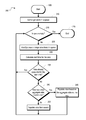
- FIG. 3 is a flowchart illustrating an example process 300 operable to purge one or more views from an aggregated sliding window view group based upon the difference between the number of rows in a sliding window view inside the aggregated sliding window view group and a predetermined number of retention rows for the sliding window view.
- the process 300 can start at stage 305 when a recurring purging timer associated with the aggregated sliding window view expires.
- a recurring purging timer can be predetermined and set for a particular sliding window view inside the aggregated sliding window view group.
- expiration of a recurring purging timer can trigger a view purging process.
- the recurring purging timer can reset and start over after it expires.
- the process 300 can proceed to stage 310 .
- the number of retention rows e.g., a defined number of rows an aggregated sliding window view may hold
- the number of retention rows associated with the aggregated sliding window view can be identified, for example, by logic within a database system (e.g., view group populating logic 120 of FIG. 1 ).
- a number of retention rows associated with the aggregated sliding window view group can be identified from a user's sliding window view group creation query associated with the sliding window view.
- the number of retention rows associated with the aggregated sliding window view can be predetermined and set for a particular sliding window view inside the aggregated sliding window view group.
- the process 300 can proceed to stage 315 .
- the size of the aggregated sliding window view can be calculated.
- the size of the aggregated sliding window view can be calculated, for example, by logic within a database system (e.g., view group populating logic 120 of FIG. 1 ).
- the size of the aggregated sliding window view can be based upon a calculation of the number of rows in the sliding window view.
- the process 300 can proceed to stage 320 .
- a determination can be made whether the number of retention rows associated with the aggregated sliding window view is larger than the calculated size of the sliding window view. The determination can be made, for example, by logic within a database system (e.g., view group populating logic 120 of FIG. 1 ). In some implementations, the determination can be based on a comparison between the number of retention rows identified at stage 310 and the number of rows in the aggregated sliding window view as calculated at stage 315 . If a determination is made that the retention rows associated with the aggregated sliding window view are not larger in number than the calculated size of the sliding window view, the process 300 can proceed to stage 325 .
- the difference between the number of retention rows and the number of rows in the aggregated sliding window view can be calculated.
- the difference between the number of retention rows and the number of rows in the sliding window view can be calculated, for example, by logic within a database system (e.g., view group populating logic 120 of FIG. 1 ).
- the difference between the number of retention rows and the number of rows in the aggregated sliding window view can be calculated by subtracting the number of retention rows (e.g., the number identified at stage 310 ) from the number of rows in the sliding window view (e.g., the number calculated at stage 315 ).
- the process 300 can proceed to stage 330 .
- the oldest rows in the aggregated sliding window view can be removed from the sliding window view until the number of rows in the sliding window view is equal to or less than the number of retention rows associated with the sliding window view.
- the oldest rows in the aggregated sliding window view can be removed, for example, by logic within a database system (e.g., view group populating logic 120 of FIG. 1 ).
- the number of rows removed from the aggregated sliding window view can be equal to the difference between the number of retention rows and the number of rows in the sliding window view (e.g., the number calculated at stage 325 ).
- the process 300 can end at stage 335 .
- stage 320 if a determination is made that the retention rows associated with the aggregated sliding window view are not larger in number than the calculated size of the sliding window view, the process 300 can end at stage 335 .
- the process 300 can start over from stage 305 when the recurring purging timer associated with the aggregated sliding window view next expires.
- FIG. 4 is an example illustration of multiple sliding window views, wherein the highest level sliding window view can be populated from the lower level sliding window views due to the existence of an aggregated view relationship between the multiple sliding window views.
- a sliding window view can store and display results of a query for operational status tests of a network.
- the daily sliding window view 400 displays results (e.g., “Error Count”) of an operation in intervals of one day (e.g., each row of the daily sliding window view represents one day).
- results displayed in a sliding window view e.g., “Error Count” can include a count of the number of operational status checks of a system (e.g., whether the operation status is successful, whether a warning exists, whether an error occurred, etc.).
- the hourly sliding window view 410 displays results of an operation in intervals of one hour.
- the minute sliding window view 420 displays results of an operation in intervals of one minute.
- the daily sliding window view 400 can be an aggregated sliding window view that is populated from the results held in the hourly sliding window view 410 .
- the daily sliding window view 400 can be populated more efficiently by using the results from the hourly sliding window view 410 rather than the more complex minute sliding window view 420 .
- data held in the hourly sliding window view 410 can be aggregated to populate views in the daily sliding window view 400
- an aggregated view relationship exists between the hourly sliding view 410 and the daily sliding window view 400 .
- the Jan. 1, 2008 row in the daily sliding window view 400 can be populated by aggregating the “Error Count” measurements held in the hourly sliding window view 410 and which are associated with the Jan. 1, 2008 rows (e.g., each of the twenty-four (24) rows (00:00-23:00) associated with the date Jan. 1, 2008).
- the sliding window views 400 , 410 , and 420 share a common data category (e.g., “Error Count” measured over some period of time with base units of seconds)
- the sliding window views can form a family hierarchy. For example, the minute sliding window view 420 (the view with the smallest intervals) is lower in the family hierarchy than the hourly sliding window view 410 , and the hourly sliding window view 410 is lower in the family hierarchy than the daily sliding window view 400 (the view with the largest intervals).
- FIG. 5 is a block diagram illustrating an example hardware configuration 500 operable to facilitate generating an aggregated sliding window view group based upon a relationship between two or more individual sliding window views.
- the hardware configuration 500 can include a processor 510 , a memory 520 , a storage device 530 , and an input/output device 540 .
- Each of the components 510 , 520 , 530 , and 540 can, for example, be interconnected using a system bus 550 .
- the processor 510 can be capable of processing instructions for execution within the hardware configuration 500 .
- the processor 510 can be a single-threaded processor.
- the processor 510 can be a multi-threaded processor.
- the processor 510 can be capable of processing instructions stored in the memory 520 or on the storage device 530 .
- the memory 520 can store information within the hardware configuration 500 .
- the memory 520 can be a computer-readable medium.
- the memory 520 can be a volatile memory unit.
- the memory 520 can be a non-volatile memory unit.
- the storage device 530 can be capable of providing mass storage for the hardware configuration 500 .
- the storage device 530 can be a computer-readable medium.
- the storage device 530 can, for example, include a hard disk device, an optical disk device, flash memory or some other large capacity storage device.
- the storage device 530 can be a device external to the hardware configuration 500 .
- the storage device 530 can store data in one or more data stores (e.g., sliding window view data store 130 and/or source data store 140 ).
- the input/output device 540 provides input/output operations for the hardware configuration 500 .
- the input/output device 540 can include one or more of a network interface device (e.g., an Ethernet card), a serial communication device (e.g., an RS-232 port), one or more universal serial bus (USB) interfaces (e.g., a USB 2.0 port) and/or a wireless interface device (e.g., an 802.11 card).
- the input/output device can include driver devices configured to receive input data and send output data to other input/output devices, such as one or more display devices (e.g., television screen, computer monitor, etc.).
- the input/output device can include driver devices configured to receive input data from one or more user input devices (e.g., keyboard, pointer device, etc.).
- Such instructions can, for example, comprise interpreted instructions, such as script instructions, e.g., JavaScript or ECMAScript instructions, or executable code, or other instructions stored in a computer readable medium.
- Implementations of the subject matter and the functional operations described in this specification can be provided in digital electronic circuitry, or in computer software, firmware, or hardware, including the structures disclosed in this specification and their structural equivalents, or in combinations of one or more of them.
- Embodiments of the subject matter described in this specification can be implemented as one or more computer program products, i.e., one or more modules of computer program instructions encoded on a tangible program carrier for execution by, or to control the operation of, data processing apparatus.
- the tangible program carrier can be a propagated signal or a computer readable medium.
- the propagated signal is an artificially generated signal (e.g., a machine generated electrical, optical, or electromagnetic signal) that is generated to encode information for transmission to suitable receiver apparatus for execution by a computer.
- the computer readable medium can be a machine readable storage device, a machine readable storage substrate, a memory device, a composition of matter effecting a machine readable propagated signal, or a combination of one or more of them.
- system processor encompasses all apparatus, devices, and machines for processing data, including by way of example a programmable processor, a computer, or multiple processors or computers.
- the system processor can include, in addition to hardware, code that creates an execution environment for the computer program in question, e.g., code that constitutes processor firmware, a protocol stack, a database management system, an operating system, or a combination of one or more of them.
- a computer program (also known as a program, software, software application, script, or code) can be written in any form of programming language, including compiled or interpreted languages, or declarative or procedural languages, and it can be deployed in any form, including as a stand-alone program or as a module, component, subroutine, or other unit suitable for use in a computing environment.
- a computer program does not necessarily correspond to a file in a file system.
- a program can be stored in a portion of a file that holds other programs or data (e.g., one or more scripts stored in a markup language document), in a single file dedicated to the program in question, or in multiple coordinated files (e.g., files that store one or more modules, sub programs, or portions of code).
- a computer program can be deployed to be executed on one computer or on multiple computers that are located at one site or distributed across multiple sites and interconnected by a communication network.
- the processes and logic flows described in this specification are performed by one or more programmable processors executing one or more computer programs to perform functions by operating on input data and generating output thereby tying the process to a particular machine (e.g., a machine programmed to perform the processes described herein).
- the processes and logic flows can also be performed by, and apparatus can also be implemented as, special purpose logic circuitry, e.g., an FPGA (field programmable gate array) or an ASIC (application specific integrated circuit).
- processors suitable for the execution of a computer program include, by way of example, both general and special purpose microprocessors, and any one or more processors of any kind of digital computer.
- a processor will receive instructions and data from a read only memory or a random access memory or both.
- the elements of a computer typically include a processor for performing instructions and one or more memory devices for storing instructions and data.
- a computer will also include, or be operatively coupled to receive data from or transfer data to, or both, one or more mass storage devices for storing data, e.g., magnetic, magneto optical disks, or optical disks.
- mass storage devices for storing data, e.g., magnetic, magneto optical disks, or optical disks.
- a computer need not have such devices.
- a computer can be embedded in another device, e.g., a mobile communications device, a telephone, a cable modem, a set-top box, a mobile audio or video player, or a game console, to name just a few
- Computer readable media suitable for storing computer program instructions and data include all forms of non-volatile memory, media and memory devices, including by way of example semiconductor memory devices (e.g., EPROM, EEPROM, and flash memory devices); magnetic disks (e.g., internal hard disks or removable disks); magneto optical disks; and CD ROM and DVD ROM disks.
- semiconductor memory devices e.g., EPROM, EEPROM, and flash memory devices
- magnetic disks e.g., internal hard disks or removable disks
- magneto optical disks e.g., CD ROM and DVD ROM disks.
- the processor and the memory can be supplemented by, or incorporated in, special purpose logic circuitry.
- embodiments of the subject matter described in this specification can be operable to interface with a computing device having a display (e.g., a CRT (cathode ray tube) or LCD (liquid crystal display) monitor) for displaying information to the user and a keyboard and a pointing device, e.g., a mouse or a trackball, by which the user can provide input to the computer.
- a display e.g., a CRT (cathode ray tube) or LCD (liquid crystal display) monitor
- keyboard and a pointing device e.g., a mouse or a trackball
- Other kinds of devices can be used to provide for interaction with a user as well; for example, feedback provided to the user can be any form of sensory feedback (e.g., visual feedback, auditory feedback, or tactile feedback); and input from the user can be received in any form, including acoustic, speech, or tactile input.
- feedback provided to the user can be any form of sensory feedback (e.g., visual feedback, auditory
Landscapes
- Engineering & Computer Science (AREA)
- Physics & Mathematics (AREA)
- Theoretical Computer Science (AREA)
- Mathematical Physics (AREA)
- Computational Linguistics (AREA)
- Data Mining & Analysis (AREA)
- Databases & Information Systems (AREA)
- General Engineering & Computer Science (AREA)
- General Physics & Mathematics (AREA)
- Information Retrieval, Db Structures And Fs Structures Therefor (AREA)
Abstract
Description
| TABLE 1 |
| CREATE AGGREGATED SLIDINGWINDOW VIEW |
| [schema.]name | ||||
| INTERVAL timeframe | ||||
| [RETENTION rows | ||||
| PURGETIMER period] | ||||
| [,[schema.]name | ||||
| INTERVAL timeframe | ||||
| [RETENTION rows | ||||
| PURGETIMER period]]... | ||||
| POPULATETIMER period | ||||
| AS | ||||
| subquery | ||||
| TABLE 2 |
| ALTER AGGREGATED SLIDINGWINDOW VIEW |
| [schema.]name | ||||
| {RETENTION rows | PURGETIMER period} | ||||
| [,[schema.]name | ||||
| {RETENTION rows | PURGETIMER period}]]... | ||||
| [POPULATETIMER period] | ||||
| TABLE 3 |
| DROP AGGREGATED SLIDINGWINDOW VIEW |
| [schema.]name | ||||
| [,[schema.]name]... | ||||
Claims (20)
Priority Applications (1)
| Application Number | Priority Date | Filing Date | Title |
|---|---|---|---|
| US13/905,684 US9460128B1 (en) | 2013-03-14 | 2013-05-30 | Sliding window view group constructs in relational database query language |
Applications Claiming Priority (2)
| Application Number | Priority Date | Filing Date | Title |
|---|---|---|---|
| US201361783899P | 2013-03-14 | 2013-03-14 | |
| US13/905,684 US9460128B1 (en) | 2013-03-14 | 2013-05-30 | Sliding window view group constructs in relational database query language |
Publications (1)
| Publication Number | Publication Date |
|---|---|
| US9460128B1 true US9460128B1 (en) | 2016-10-04 |
Family
ID=56995282
Family Applications (1)
| Application Number | Title | Priority Date | Filing Date |
|---|---|---|---|
| US13/905,684 Expired - Fee Related US9460128B1 (en) | 2013-03-14 | 2013-05-30 | Sliding window view group constructs in relational database query language |
Country Status (1)
| Country | Link |
|---|---|
| US (1) | US9460128B1 (en) |
Cited By (1)
| Publication number | Priority date | Publication date | Assignee | Title |
|---|---|---|---|---|
| US10732928B1 (en) * | 2014-11-03 | 2020-08-04 | Google Llc | Data flow windowing and triggering |
Citations (6)
| Publication number | Priority date | Publication date | Assignee | Title |
|---|---|---|---|---|
| US20040122844A1 (en) * | 2002-12-18 | 2004-06-24 | International Business Machines Corporation | Method, system, and program for use of metadata to create multidimensional cubes in a relational database |
| US20090182779A1 (en) * | 2008-01-15 | 2009-07-16 | At&T Services, Inc. | Complex dependencies for efficient data warehouse updates |
| US7822712B1 (en) * | 2007-10-18 | 2010-10-26 | Google Inc. | Incremental data warehouse updating |
| US20130007069A1 (en) * | 2011-06-30 | 2013-01-03 | Microsoft Corporation | Data Change Tracking and Event Notification |
| US20140046975A1 (en) * | 2012-08-10 | 2014-02-13 | Arris Enterprises, Inc. | Aggregate data streams in relational database systems |
| US20150089409A1 (en) * | 2011-08-15 | 2015-03-26 | Equal Media Limited | System and method for managing opinion networks with interactive opinion flows |
-
2013
- 2013-05-30 US US13/905,684 patent/US9460128B1/en not_active Expired - Fee Related
Patent Citations (6)
| Publication number | Priority date | Publication date | Assignee | Title |
|---|---|---|---|---|
| US20040122844A1 (en) * | 2002-12-18 | 2004-06-24 | International Business Machines Corporation | Method, system, and program for use of metadata to create multidimensional cubes in a relational database |
| US7822712B1 (en) * | 2007-10-18 | 2010-10-26 | Google Inc. | Incremental data warehouse updating |
| US20090182779A1 (en) * | 2008-01-15 | 2009-07-16 | At&T Services, Inc. | Complex dependencies for efficient data warehouse updates |
| US20130007069A1 (en) * | 2011-06-30 | 2013-01-03 | Microsoft Corporation | Data Change Tracking and Event Notification |
| US20150089409A1 (en) * | 2011-08-15 | 2015-03-26 | Equal Media Limited | System and method for managing opinion networks with interactive opinion flows |
| US20140046975A1 (en) * | 2012-08-10 | 2014-02-13 | Arris Enterprises, Inc. | Aggregate data streams in relational database systems |
Cited By (1)
| Publication number | Priority date | Publication date | Assignee | Title |
|---|---|---|---|---|
| US10732928B1 (en) * | 2014-11-03 | 2020-08-04 | Google Llc | Data flow windowing and triggering |
Similar Documents
| Publication | Publication Date | Title |
|---|---|---|
| JP6850722B2 (en) | Enriching events with dynamically typed big data for event processing | |
| US10140358B2 (en) | Progressive query computation using streaming architectures | |
| US8620928B1 (en) | Automatically generating a log parser given a sample log | |
| US20180081916A1 (en) | Automatic table cleanup for relational databases | |
| US8495056B2 (en) | System and method for caching database reports | |
| US20250061123A1 (en) | Cloud inference system | |
| US20110298804A1 (en) | Visual display of data from a plurality of data sources | |
| Cai et al. | Optimal stochastic scheduling | |
| US10325219B2 (en) | Parallel retrieval of training data from multiple producers for machine learning systems | |
| US10108669B1 (en) | Partitioning data stores using tenant specific partitioning strategies | |
| US11003574B2 (en) | Optimized testing system | |
| US9460151B2 (en) | System and methods to configure a query language using an operator dictionary | |
| US20150169722A1 (en) | Generatring n-gram clusters associated with events | |
| US10169411B2 (en) | Forecasting query access plan obsolescence | |
| US10552454B2 (en) | Efficient partitioning of related database tables | |
| CN110941608B (en) | Method, device and equipment for generating buried point analysis and funnel analysis report | |
| US9424300B2 (en) | Data allocation containers in a partitioned table of a computer database system for holding data based on usage | |
| US10176231B2 (en) | Estimating most frequent values for a data set | |
| US9799048B2 (en) | Intelligent tool to support manual scheduling of ads | |
| US9460128B1 (en) | Sliding window view group constructs in relational database query language | |
| US20070174256A1 (en) | Method for aging and resampling optimizer statistics | |
| US9477722B1 (en) | Sliding window view constructs in relational database query language | |
| US20190258642A1 (en) | Database and data stream query | |
| US11016951B1 (en) | Microbatch loading | |
| US9830368B1 (en) | Asynchronous parallel processing of log data |
Legal Events
| Date | Code | Title | Description |
|---|---|---|---|
| AS | Assignment |
Owner name: ARRIS SOLUTIONS, INC., GEORGIA Free format text: ASSIGNMENT OF ASSIGNORS INTEREST;ASSIGNOR:WANG, TONG A/K/A TONY;REEL/FRAME:030604/0545 Effective date: 20130610 |
|
| AS | Assignment |
Owner name: BANK OF AMERICA, N.A., AS ADMINISTRATIVE AGENT, NORTH CAROLINA Free format text: SECURITY INTEREST;ASSIGNORS:ARRIS GROUP, INC.;ARRIS ENTERPRISES, INC.;ARRIS INTERNATIONAL LIMITED;AND OTHERS;REEL/FRAME:036020/0789 Effective date: 20150618 Owner name: BANK OF AMERICA, N.A., AS ADMINISTRATIVE AGENT, NO Free format text: SECURITY INTEREST;ASSIGNORS:ARRIS GROUP, INC.;ARRIS ENTERPRISES, INC.;ARRIS INTERNATIONAL LIMITED;AND OTHERS;REEL/FRAME:036020/0789 Effective date: 20150618 |
|
| AS | Assignment |
Owner name: ARRIS ENTERPRISES, INC., GEORGIA Free format text: ASSIGNMENT OF ASSIGNORS INTEREST;ASSIGNOR:ARRIS SOLUTIONS, INC.;REEL/FRAME:036601/0162 Effective date: 20150914 |
|
| STCF | Information on status: patent grant |
Free format text: PATENTED CASE |
|
| AS | Assignment |
Owner name: ARRIS ENTERPRISES LLC, PENNSYLVANIA Free format text: CHANGE OF NAME;ASSIGNOR:ARRIS ENTERPRISES INC;REEL/FRAME:041995/0031 Effective date: 20151231 |
|
| AS | Assignment |
Owner name: ARRIS GLOBAL SERVICES, INC., PENNSYLVANIA Free format text: TERMINATION AND RELEASE OF SECURITY INTEREST IN PATENTS;ASSIGNOR:BANK OF AMERICA, N.A., AS ADMINISTRATIVE AGENT;REEL/FRAME:050721/0401 Effective date: 20190404 Owner name: ARCHIE U.S. MERGER LLC, PENNSYLVANIA Free format text: TERMINATION AND RELEASE OF SECURITY INTEREST IN PATENTS;ASSIGNOR:BANK OF AMERICA, N.A., AS ADMINISTRATIVE AGENT;REEL/FRAME:050721/0401 Effective date: 20190404 Owner name: POWER GUARD, INC., PENNSYLVANIA Free format text: TERMINATION AND RELEASE OF SECURITY INTEREST IN PATENTS;ASSIGNOR:BANK OF AMERICA, N.A., AS ADMINISTRATIVE AGENT;REEL/FRAME:050721/0401 Effective date: 20190404 Owner name: ARRIS INTERNATIONAL LIMITED, PENNSYLVANIA Free format text: TERMINATION AND RELEASE OF SECURITY INTEREST IN PATENTS;ASSIGNOR:BANK OF AMERICA, N.A., AS ADMINISTRATIVE AGENT;REEL/FRAME:050721/0401 Effective date: 20190404 Owner name: ARRIS SOLUTIONS, INC., PENNSYLVANIA Free format text: TERMINATION AND RELEASE OF SECURITY INTEREST IN PATENTS;ASSIGNOR:BANK OF AMERICA, N.A., AS ADMINISTRATIVE AGENT;REEL/FRAME:050721/0401 Effective date: 20190404 Owner name: NEXTLEVEL SYSTEMS (PUERTO RICO), INC., PENNSYLVANI Free format text: TERMINATION AND RELEASE OF SECURITY INTEREST IN PATENTS;ASSIGNOR:BANK OF AMERICA, N.A., AS ADMINISTRATIVE AGENT;REEL/FRAME:050721/0401 Effective date: 20190404 Owner name: ARCHIE U.S. HOLDINGS LLC, PENNSYLVANIA Free format text: TERMINATION AND RELEASE OF SECURITY INTEREST IN PATENTS;ASSIGNOR:BANK OF AMERICA, N.A., AS ADMINISTRATIVE AGENT;REEL/FRAME:050721/0401 Effective date: 20190404 Owner name: GIC INTERNATIONAL CAPITAL LLC, PENNSYLVANIA Free format text: TERMINATION AND RELEASE OF SECURITY INTEREST IN PATENTS;ASSIGNOR:BANK OF AMERICA, N.A., AS ADMINISTRATIVE AGENT;REEL/FRAME:050721/0401 Effective date: 20190404 Owner name: TEXSCAN CORPORATION, PENNSYLVANIA Free format text: TERMINATION AND RELEASE OF SECURITY INTEREST IN PATENTS;ASSIGNOR:BANK OF AMERICA, N.A., AS ADMINISTRATIVE AGENT;REEL/FRAME:050721/0401 Effective date: 20190404 Owner name: GIC INTERNATIONAL HOLDCO LLC, PENNSYLVANIA Free format text: TERMINATION AND RELEASE OF SECURITY INTEREST IN PATENTS;ASSIGNOR:BANK OF AMERICA, N.A., AS ADMINISTRATIVE AGENT;REEL/FRAME:050721/0401 Effective date: 20190404 Owner name: JERROLD DC RADIO, INC., PENNSYLVANIA Free format text: TERMINATION AND RELEASE OF SECURITY INTEREST IN PATENTS;ASSIGNOR:BANK OF AMERICA, N.A., AS ADMINISTRATIVE AGENT;REEL/FRAME:050721/0401 Effective date: 20190404 Owner name: ARRIS ENTERPRISES, INC., PENNSYLVANIA Free format text: TERMINATION AND RELEASE OF SECURITY INTEREST IN PATENTS;ASSIGNOR:BANK OF AMERICA, N.A., AS ADMINISTRATIVE AGENT;REEL/FRAME:050721/0401 Effective date: 20190404 Owner name: ARRIS TECHNOLOGY, INC., PENNSYLVANIA Free format text: TERMINATION AND RELEASE OF SECURITY INTEREST IN PATENTS;ASSIGNOR:BANK OF AMERICA, N.A., AS ADMINISTRATIVE AGENT;REEL/FRAME:050721/0401 Effective date: 20190404 Owner name: ARRIS HOLDINGS CORP. OF ILLINOIS, INC., PENNSYLVAN Free format text: TERMINATION AND RELEASE OF SECURITY INTEREST IN PATENTS;ASSIGNOR:BANK OF AMERICA, N.A., AS ADMINISTRATIVE AGENT;REEL/FRAME:050721/0401 Effective date: 20190404 Owner name: ARRIS GROUP, INC., PENNSYLVANIA Free format text: TERMINATION AND RELEASE OF SECURITY INTEREST IN PATENTS;ASSIGNOR:BANK OF AMERICA, N.A., AS ADMINISTRATIVE AGENT;REEL/FRAME:050721/0401 Effective date: 20190404 Owner name: BIG BAND NETWORKS, INC., PENNSYLVANIA Free format text: TERMINATION AND RELEASE OF SECURITY INTEREST IN PATENTS;ASSIGNOR:BANK OF AMERICA, N.A., AS ADMINISTRATIVE AGENT;REEL/FRAME:050721/0401 Effective date: 20190404 Owner name: ARRIS HOLDINGS CORP. OF ILLINOIS, INC., PENNSYLVANIA Free format text: TERMINATION AND RELEASE OF SECURITY INTEREST IN PATENTS;ASSIGNOR:BANK OF AMERICA, N.A., AS ADMINISTRATIVE AGENT;REEL/FRAME:050721/0401 Effective date: 20190404 Owner name: NEXTLEVEL SYSTEMS (PUERTO RICO), INC., PENNSYLVANIA Free format text: TERMINATION AND RELEASE OF SECURITY INTEREST IN PATENTS;ASSIGNOR:BANK OF AMERICA, N.A., AS ADMINISTRATIVE AGENT;REEL/FRAME:050721/0401 Effective date: 20190404 |
|
| AS | Assignment |
Owner name: ARRIS ENTERPRISES LLC, GEORGIA Free format text: CHANGE OF NAME;ASSIGNOR:ARRIS ENTERPRISES, INC.;REEL/FRAME:049586/0470 Effective date: 20151231 |
|
| AS | Assignment |
Owner name: WILMINGTON TRUST, NATIONAL ASSOCIATION, AS COLLATE Free format text: PATENT SECURITY AGREEMENT;ASSIGNOR:ARRIS ENTERPRISES LLC;REEL/FRAME:049820/0495 Effective date: 20190404 Owner name: JPMORGAN CHASE BANK, N.A., NEW YORK Free format text: ABL SECURITY AGREEMENT;ASSIGNORS:COMMSCOPE, INC. OF NORTH CAROLINA;COMMSCOPE TECHNOLOGIES LLC;ARRIS ENTERPRISES LLC;AND OTHERS;REEL/FRAME:049892/0396 Effective date: 20190404 Owner name: JPMORGAN CHASE BANK, N.A., NEW YORK Free format text: TERM LOAN SECURITY AGREEMENT;ASSIGNORS:COMMSCOPE, INC. OF NORTH CAROLINA;COMMSCOPE TECHNOLOGIES LLC;ARRIS ENTERPRISES LLC;AND OTHERS;REEL/FRAME:049905/0504 Effective date: 20190404 Owner name: WILMINGTON TRUST, NATIONAL ASSOCIATION, AS COLLATERAL AGENT, CONNECTICUT Free format text: PATENT SECURITY AGREEMENT;ASSIGNOR:ARRIS ENTERPRISES LLC;REEL/FRAME:049820/0495 Effective date: 20190404 |
|
| MAFP | Maintenance fee payment |
Free format text: PAYMENT OF MAINTENANCE FEE, 4TH YEAR, LARGE ENTITY (ORIGINAL EVENT CODE: M1551); ENTITY STATUS OF PATENT OWNER: LARGE ENTITY Year of fee payment: 4 |
|
| AS | Assignment |
Owner name: WILMINGTON TRUST, DELAWARE Free format text: SECURITY INTEREST;ASSIGNORS:ARRIS SOLUTIONS, INC.;ARRIS ENTERPRISES LLC;COMMSCOPE TECHNOLOGIES LLC;AND OTHERS;REEL/FRAME:060752/0001 Effective date: 20211115 |
|
| FEPP | Fee payment procedure |
Free format text: MAINTENANCE FEE REMINDER MAILED (ORIGINAL EVENT CODE: REM.); ENTITY STATUS OF PATENT OWNER: LARGE ENTITY |
|
| LAPS | Lapse for failure to pay maintenance fees |
Free format text: PATENT EXPIRED FOR FAILURE TO PAY MAINTENANCE FEES (ORIGINAL EVENT CODE: EXP.); ENTITY STATUS OF PATENT OWNER: LARGE ENTITY |
|
| STCH | Information on status: patent discontinuation |
Free format text: PATENT EXPIRED DUE TO NONPAYMENT OF MAINTENANCE FEES UNDER 37 CFR 1.362 |
|
| FP | Lapsed due to failure to pay maintenance fee |
Effective date: 20241004 |
|
| AS | Assignment |
Owner name: RUCKUS WIRELESS, LLC (F/K/A RUCKUS WIRELESS, INC.), NORTH CAROLINA Free format text: RELEASE OF SECURITY INTEREST AT REEL/FRAME 049905/0504;ASSIGNOR:JPMORGAN CHASE BANK, N.A., AS COLLATERAL AGENT;REEL/FRAME:071477/0255 Effective date: 20241217 Owner name: COMMSCOPE TECHNOLOGIES LLC, NORTH CAROLINA Free format text: RELEASE OF SECURITY INTEREST AT REEL/FRAME 049905/0504;ASSIGNOR:JPMORGAN CHASE BANK, N.A., AS COLLATERAL AGENT;REEL/FRAME:071477/0255 Effective date: 20241217 Owner name: COMMSCOPE, INC. OF NORTH CAROLINA, NORTH CAROLINA Free format text: RELEASE OF SECURITY INTEREST AT REEL/FRAME 049905/0504;ASSIGNOR:JPMORGAN CHASE BANK, N.A., AS COLLATERAL AGENT;REEL/FRAME:071477/0255 Effective date: 20241217 Owner name: ARRIS SOLUTIONS, INC., NORTH CAROLINA Free format text: RELEASE OF SECURITY INTEREST AT REEL/FRAME 049905/0504;ASSIGNOR:JPMORGAN CHASE BANK, N.A., AS COLLATERAL AGENT;REEL/FRAME:071477/0255 Effective date: 20241217 Owner name: ARRIS TECHNOLOGY, INC., NORTH CAROLINA Free format text: RELEASE OF SECURITY INTEREST AT REEL/FRAME 049905/0504;ASSIGNOR:JPMORGAN CHASE BANK, N.A., AS COLLATERAL AGENT;REEL/FRAME:071477/0255 Effective date: 20241217 Owner name: ARRIS ENTERPRISES LLC (F/K/A ARRIS ENTERPRISES, INC.), NORTH CAROLINA Free format text: RELEASE OF SECURITY INTEREST AT REEL/FRAME 049905/0504;ASSIGNOR:JPMORGAN CHASE BANK, N.A., AS COLLATERAL AGENT;REEL/FRAME:071477/0255 Effective date: 20241217 |