US9445338B2 - Reconfiguration control channel resource mapping collision avoidance - Google Patents
Reconfiguration control channel resource mapping collision avoidance Download PDFInfo
- Publication number
- US9445338B2 US9445338B2 US14/141,876 US201314141876A US9445338B2 US 9445338 B2 US9445338 B2 US 9445338B2 US 201314141876 A US201314141876 A US 201314141876A US 9445338 B2 US9445338 B2 US 9445338B2
- Authority
- US
- United States
- Prior art keywords
- pucch
- type
- subframe
- subframes
- transmission
- Prior art date
- Legal status (The legal status is an assumption and is not a legal conclusion. Google has not performed a legal analysis and makes no representation as to the accuracy of the status listed.)
- Active, expires
Links
- 238000013507 mapping Methods 0.000 title claims abstract description 59
- 230000005540 biological transmission Effects 0.000 claims abstract description 148
- 238000012545 processing Methods 0.000 claims abstract description 37
- 238000000034 method Methods 0.000 claims description 44
- 230000011664 signaling Effects 0.000 claims description 10
- 230000002776 aggregation Effects 0.000 claims description 7
- 238000004220 aggregation Methods 0.000 claims description 7
- 230000002085 persistent effect Effects 0.000 claims description 5
- 101150096310 SIB1 gene Proteins 0.000 claims 3
- 239000010410 layer Substances 0.000 description 32
- 238000004891 communication Methods 0.000 description 30
- 238000010586 diagram Methods 0.000 description 6
- 238000001228 spectrum Methods 0.000 description 4
- 230000006978 adaptation Effects 0.000 description 3
- 238000001514 detection method Methods 0.000 description 3
- 230000006870 function Effects 0.000 description 3
- 230000007774 longterm Effects 0.000 description 3
- 239000013256 coordination polymer Substances 0.000 description 2
- 230000007246 mechanism Effects 0.000 description 2
- 230000005404 monopole Effects 0.000 description 2
- 230000003287 optical effect Effects 0.000 description 2
- 230000008569 process Effects 0.000 description 2
- 230000004044 response Effects 0.000 description 2
- 239000002356 single layer Substances 0.000 description 2
- 101000741965 Homo sapiens Inactive tyrosine-protein kinase PRAG1 Proteins 0.000 description 1
- 102100038659 Inactive tyrosine-protein kinase PRAG1 Human genes 0.000 description 1
- 101150071746 Pbsn gene Proteins 0.000 description 1
- 238000013459 approach Methods 0.000 description 1
- 230000008901 benefit Effects 0.000 description 1
- 230000036772 blood pressure Effects 0.000 description 1
- 239000000969 carrier Substances 0.000 description 1
- 125000004122 cyclic group Chemical group 0.000 description 1
- 239000002355 dual-layer Substances 0.000 description 1
- 238000005259 measurement Methods 0.000 description 1
- 238000012986 modification Methods 0.000 description 1
- 230000004048 modification Effects 0.000 description 1
- 230000006855 networking Effects 0.000 description 1
- 238000010397 one-hybrid screening Methods 0.000 description 1
- 230000008054 signal transmission Effects 0.000 description 1
- 230000008685 targeting Effects 0.000 description 1
Images




Classifications
-
- H—ELECTRICITY
- H04—ELECTRIC COMMUNICATION TECHNIQUE
- H04W—WIRELESS COMMUNICATION NETWORKS
- H04W36/00—Hand-off or reselection arrangements
- H04W36/24—Reselection being triggered by specific parameters
- H04W36/30—Reselection being triggered by specific parameters by measured or perceived connection quality data
-
- H—ELECTRICITY
- H04—ELECTRIC COMMUNICATION TECHNIQUE
- H04L—TRANSMISSION OF DIGITAL INFORMATION, e.g. TELEGRAPHIC COMMUNICATION
- H04L5/00—Arrangements affording multiple use of the transmission path
- H04L5/0091—Signalling for the administration of the divided path, e.g. signalling of configuration information
- H04L5/0094—Indication of how sub-channels of the path are allocated
-
- H—ELECTRICITY
- H04—ELECTRIC COMMUNICATION TECHNIQUE
- H04W—WIRELESS COMMUNICATION NETWORKS
- H04W72/00—Local resource management
- H04W72/20—Control channels or signalling for resource management
- H04W72/21—Control channels or signalling for resource management in the uplink direction of a wireless link, i.e. towards the network
-
- H—ELECTRICITY
- H04—ELECTRIC COMMUNICATION TECHNIQUE
- H04B—TRANSMISSION
- H04B1/00—Details of transmission systems, not covered by a single one of groups H04B3/00 - H04B13/00; Details of transmission systems not characterised by the medium used for transmission
- H04B1/38—Transceivers, i.e. devices in which transmitter and receiver form a structural unit and in which at least one part is used for functions of transmitting and receiving
-
- H—ELECTRICITY
- H04—ELECTRIC COMMUNICATION TECHNIQUE
- H04B—TRANSMISSION
- H04B7/00—Radio transmission systems, i.e. using radiation field
- H04B7/02—Diversity systems; Multi-antenna system, i.e. transmission or reception using multiple antennas
- H04B7/022—Site diversity; Macro-diversity
- H04B7/024—Co-operative use of antennas of several sites, e.g. in co-ordinated multipoint or co-operative multiple-input multiple-output [MIMO] systems
-
- H—ELECTRICITY
- H04—ELECTRIC COMMUNICATION TECHNIQUE
- H04L—TRANSMISSION OF DIGITAL INFORMATION, e.g. TELEGRAPHIC COMMUNICATION
- H04L1/00—Arrangements for detecting or preventing errors in the information received
- H04L1/12—Arrangements for detecting or preventing errors in the information received by using return channel
- H04L1/16—Arrangements for detecting or preventing errors in the information received by using return channel in which the return channel carries supervisory signals, e.g. repetition request signals
- H04L1/18—Automatic repetition systems, e.g. Van Duuren systems
- H04L1/1829—Arrangements specially adapted for the receiver end
- H04L1/1854—Scheduling and prioritising arrangements
-
- H—ELECTRICITY
- H04—ELECTRIC COMMUNICATION TECHNIQUE
- H04L—TRANSMISSION OF DIGITAL INFORMATION, e.g. TELEGRAPHIC COMMUNICATION
- H04L12/00—Data switching networks
- H04L12/02—Details
- H04L12/16—Arrangements for providing special services to substations
- H04L12/18—Arrangements for providing special services to substations for broadcast or conference, e.g. multicast
-
- H—ELECTRICITY
- H04—ELECTRIC COMMUNICATION TECHNIQUE
- H04L—TRANSMISSION OF DIGITAL INFORMATION, e.g. TELEGRAPHIC COMMUNICATION
- H04L43/00—Arrangements for monitoring or testing data switching networks
- H04L43/08—Monitoring or testing based on specific metrics, e.g. QoS, energy consumption or environmental parameters
- H04L43/0823—Errors, e.g. transmission errors
-
- H—ELECTRICITY
- H04—ELECTRIC COMMUNICATION TECHNIQUE
- H04L—TRANSMISSION OF DIGITAL INFORMATION, e.g. TELEGRAPHIC COMMUNICATION
- H04L5/00—Arrangements affording multiple use of the transmission path
- H04L5/003—Arrangements for allocating sub-channels of the transmission path
- H04L5/0053—Allocation of signalling, i.e. of overhead other than pilot signals
-
- H—ELECTRICITY
- H04—ELECTRIC COMMUNICATION TECHNIQUE
- H04L—TRANSMISSION OF DIGITAL INFORMATION, e.g. TELEGRAPHIC COMMUNICATION
- H04L5/00—Arrangements affording multiple use of the transmission path
- H04L5/003—Arrangements for allocating sub-channels of the transmission path
- H04L5/0053—Allocation of signalling, i.e. of overhead other than pilot signals
- H04L5/0055—Physical resource allocation for ACK/NACK
-
- H—ELECTRICITY
- H04—ELECTRIC COMMUNICATION TECHNIQUE
- H04L—TRANSMISSION OF DIGITAL INFORMATION, e.g. TELEGRAPHIC COMMUNICATION
- H04L5/00—Arrangements affording multiple use of the transmission path
- H04L5/14—Two-way operation using the same type of signal, i.e. duplex
-
- H04L65/1006—
-
- H—ELECTRICITY
- H04—ELECTRIC COMMUNICATION TECHNIQUE
- H04L—TRANSMISSION OF DIGITAL INFORMATION, e.g. TELEGRAPHIC COMMUNICATION
- H04L65/00—Network arrangements, protocols or services for supporting real-time applications in data packet communication
- H04L65/10—Architectures or entities
- H04L65/1016—IP multimedia subsystem [IMS]
-
- H04L65/4076—
-
- H04L65/4092—
-
- H—ELECTRICITY
- H04—ELECTRIC COMMUNICATION TECHNIQUE
- H04L—TRANSMISSION OF DIGITAL INFORMATION, e.g. TELEGRAPHIC COMMUNICATION
- H04L65/00—Network arrangements, protocols or services for supporting real-time applications in data packet communication
- H04L65/60—Network streaming of media packets
- H04L65/61—Network streaming of media packets for supporting one-way streaming services, e.g. Internet radio
- H04L65/611—Network streaming of media packets for supporting one-way streaming services, e.g. Internet radio for multicast or broadcast
-
- H—ELECTRICITY
- H04—ELECTRIC COMMUNICATION TECHNIQUE
- H04L—TRANSMISSION OF DIGITAL INFORMATION, e.g. TELEGRAPHIC COMMUNICATION
- H04L65/00—Network arrangements, protocols or services for supporting real-time applications in data packet communication
- H04L65/60—Network streaming of media packets
- H04L65/61—Network streaming of media packets for supporting one-way streaming services, e.g. Internet radio
- H04L65/613—Network streaming of media packets for supporting one-way streaming services, e.g. Internet radio for the control of the source by the destination
-
- H—ELECTRICITY
- H04—ELECTRIC COMMUNICATION TECHNIQUE
- H04L—TRANSMISSION OF DIGITAL INFORMATION, e.g. TELEGRAPHIC COMMUNICATION
- H04L67/00—Network arrangements or protocols for supporting network services or applications
- H04L67/01—Protocols
- H04L67/02—Protocols based on web technology, e.g. hypertext transfer protocol [HTTP]
-
- H—ELECTRICITY
- H04—ELECTRIC COMMUNICATION TECHNIQUE
- H04L—TRANSMISSION OF DIGITAL INFORMATION, e.g. TELEGRAPHIC COMMUNICATION
- H04L67/00—Network arrangements or protocols for supporting network services or applications
- H04L67/01—Protocols
- H04L67/10—Protocols in which an application is distributed across nodes in the network
- H04L67/104—Peer-to-peer [P2P] networks
- H04L67/1074—Peer-to-peer [P2P] networks for supporting data block transmission mechanisms
- H04L67/1076—Resource dissemination mechanisms or network resource keeping policies for optimal resource availability in the overlay network
-
- H—ELECTRICITY
- H04—ELECTRIC COMMUNICATION TECHNIQUE
- H04W—WIRELESS COMMUNICATION NETWORKS
- H04W24/00—Supervisory, monitoring or testing arrangements
- H04W24/02—Arrangements for optimising operational condition
-
- H—ELECTRICITY
- H04—ELECTRIC COMMUNICATION TECHNIQUE
- H04W—WIRELESS COMMUNICATION NETWORKS
- H04W24/00—Supervisory, monitoring or testing arrangements
- H04W24/08—Testing, supervising or monitoring using real traffic
-
- H—ELECTRICITY
- H04—ELECTRIC COMMUNICATION TECHNIQUE
- H04W—WIRELESS COMMUNICATION NETWORKS
- H04W36/00—Hand-off or reselection arrangements
- H04W36/0005—Control or signalling for completing the hand-off
- H04W36/0083—Determination of parameters used for hand-off, e.g. generation or modification of neighbour cell lists
- H04W36/0085—Hand-off measurements
- H04W36/0088—Scheduling hand-off measurements
-
- H—ELECTRICITY
- H04—ELECTRIC COMMUNICATION TECHNIQUE
- H04W—WIRELESS COMMUNICATION NETWORKS
- H04W36/00—Hand-off or reselection arrangements
- H04W36/0005—Control or signalling for completing the hand-off
- H04W36/0083—Determination of parameters used for hand-off, e.g. generation or modification of neighbour cell lists
- H04W36/0085—Hand-off measurements
- H04W36/0094—Definition of hand-off measurement parameters
-
- H04W4/005—
-
- H—ELECTRICITY
- H04—ELECTRIC COMMUNICATION TECHNIQUE
- H04W—WIRELESS COMMUNICATION NETWORKS
- H04W4/00—Services specially adapted for wireless communication networks; Facilities therefor
- H04W4/70—Services for machine-to-machine communication [M2M] or machine type communication [MTC]
-
- H—ELECTRICITY
- H04—ELECTRIC COMMUNICATION TECHNIQUE
- H04W—WIRELESS COMMUNICATION NETWORKS
- H04W56/00—Synchronisation arrangements
- H04W56/001—Synchronization between nodes
-
- H—ELECTRICITY
- H04—ELECTRIC COMMUNICATION TECHNIQUE
- H04W—WIRELESS COMMUNICATION NETWORKS
- H04W68/00—User notification, e.g. alerting and paging, for incoming communication, change of service or the like
- H04W68/02—Arrangements for increasing efficiency of notification or paging channel
-
- H04W72/042—
-
- H—ELECTRICITY
- H04—ELECTRIC COMMUNICATION TECHNIQUE
- H04W—WIRELESS COMMUNICATION NETWORKS
- H04W72/00—Local resource management
- H04W72/04—Wireless resource allocation
- H04W72/044—Wireless resource allocation based on the type of the allocated resource
- H04W72/0446—Resources in time domain, e.g. slots or frames
-
- H04W72/0486—
-
- H—ELECTRICITY
- H04—ELECTRIC COMMUNICATION TECHNIQUE
- H04W—WIRELESS COMMUNICATION NETWORKS
- H04W72/00—Local resource management
- H04W72/12—Wireless traffic scheduling
- H04W72/1215—Wireless traffic scheduling for collaboration of different radio technologies
-
- H—ELECTRICITY
- H04—ELECTRIC COMMUNICATION TECHNIQUE
- H04W—WIRELESS COMMUNICATION NETWORKS
- H04W72/00—Local resource management
- H04W72/12—Wireless traffic scheduling
- H04W72/1263—Mapping of traffic onto schedule, e.g. scheduled allocation or multiplexing of flows
-
- H—ELECTRICITY
- H04—ELECTRIC COMMUNICATION TECHNIQUE
- H04W—WIRELESS COMMUNICATION NETWORKS
- H04W72/00—Local resource management
- H04W72/20—Control channels or signalling for resource management
- H04W72/23—Control channels or signalling for resource management in the downlink direction of a wireless link, i.e. towards a terminal
-
- H—ELECTRICITY
- H04—ELECTRIC COMMUNICATION TECHNIQUE
- H04W—WIRELESS COMMUNICATION NETWORKS
- H04W72/00—Local resource management
- H04W72/50—Allocation or scheduling criteria for wireless resources
- H04W72/51—Allocation or scheduling criteria for wireless resources based on terminal or device properties
-
- H—ELECTRICITY
- H04—ELECTRIC COMMUNICATION TECHNIQUE
- H04W—WIRELESS COMMUNICATION NETWORKS
- H04W72/00—Local resource management
- H04W72/50—Allocation or scheduling criteria for wireless resources
- H04W72/52—Allocation or scheduling criteria for wireless resources based on load
-
- H—ELECTRICITY
- H04—ELECTRIC COMMUNICATION TECHNIQUE
- H04W—WIRELESS COMMUNICATION NETWORKS
- H04W74/00—Wireless channel access
- H04W74/08—Non-scheduled access, e.g. ALOHA
- H04W74/0808—Non-scheduled access, e.g. ALOHA using carrier sensing, e.g. carrier sense multiple access [CSMA]
-
- H—ELECTRICITY
- H04—ELECTRIC COMMUNICATION TECHNIQUE
- H04W—WIRELESS COMMUNICATION NETWORKS
- H04W76/00—Connection management
-
- H04W76/022—
-
- H04W76/025—
-
- H04W76/04—
-
- H04W76/046—
-
- H04W76/048—
-
- H04W76/06—
-
- H—ELECTRICITY
- H04—ELECTRIC COMMUNICATION TECHNIQUE
- H04W—WIRELESS COMMUNICATION NETWORKS
- H04W76/00—Connection management
- H04W76/10—Connection setup
-
- H—ELECTRICITY
- H04—ELECTRIC COMMUNICATION TECHNIQUE
- H04W—WIRELESS COMMUNICATION NETWORKS
- H04W76/00—Connection management
- H04W76/10—Connection setup
- H04W76/11—Allocation or use of connection identifiers
-
- H—ELECTRICITY
- H04—ELECTRIC COMMUNICATION TECHNIQUE
- H04W—WIRELESS COMMUNICATION NETWORKS
- H04W76/00—Connection management
- H04W76/10—Connection setup
- H04W76/12—Setup of transport tunnels
-
- H—ELECTRICITY
- H04—ELECTRIC COMMUNICATION TECHNIQUE
- H04W—WIRELESS COMMUNICATION NETWORKS
- H04W76/00—Connection management
- H04W76/10—Connection setup
- H04W76/15—Setup of multiple wireless link connections
-
- H—ELECTRICITY
- H04—ELECTRIC COMMUNICATION TECHNIQUE
- H04W—WIRELESS COMMUNICATION NETWORKS
- H04W76/00—Connection management
- H04W76/20—Manipulation of established connections
- H04W76/27—Transitions between radio resource control [RRC] states
-
- H—ELECTRICITY
- H04—ELECTRIC COMMUNICATION TECHNIQUE
- H04W—WIRELESS COMMUNICATION NETWORKS
- H04W76/00—Connection management
- H04W76/20—Manipulation of established connections
- H04W76/28—Discontinuous transmission [DTX]; Discontinuous reception [DRX]
-
- H—ELECTRICITY
- H04—ELECTRIC COMMUNICATION TECHNIQUE
- H04W—WIRELESS COMMUNICATION NETWORKS
- H04W76/00—Connection management
- H04W76/30—Connection release
- H04W76/38—Connection release triggered by timers
-
- H—ELECTRICITY
- H04—ELECTRIC COMMUNICATION TECHNIQUE
- H04W—WIRELESS COMMUNICATION NETWORKS
- H04W8/00—Network data management
- H04W8/005—Discovery of network devices, e.g. terminals
-
- H—ELECTRICITY
- H04—ELECTRIC COMMUNICATION TECHNIQUE
- H04B—TRANSMISSION
- H04B7/00—Radio transmission systems, i.e. using radiation field
- H04B7/02—Diversity systems; Multi-antenna system, i.e. transmission or reception using multiple antennas
- H04B7/04—Diversity systems; Multi-antenna system, i.e. transmission or reception using multiple antennas using two or more spaced independent antennas
- H04B7/0413—MIMO systems
- H04B7/0456—Selection of precoding matrices or codebooks, e.g. using matrices antenna weighting
-
- H—ELECTRICITY
- H04—ELECTRIC COMMUNICATION TECHNIQUE
- H04B—TRANSMISSION
- H04B7/00—Radio transmission systems, i.e. using radiation field
- H04B7/02—Diversity systems; Multi-antenna system, i.e. transmission or reception using multiple antennas
- H04B7/04—Diversity systems; Multi-antenna system, i.e. transmission or reception using multiple antennas using two or more spaced independent antennas
- H04B7/06—Diversity systems; Multi-antenna system, i.e. transmission or reception using multiple antennas using two or more spaced independent antennas at the transmitting station
- H04B7/0613—Diversity systems; Multi-antenna system, i.e. transmission or reception using multiple antennas using two or more spaced independent antennas at the transmitting station using simultaneous transmission
- H04B7/0615—Diversity systems; Multi-antenna system, i.e. transmission or reception using multiple antennas using two or more spaced independent antennas at the transmitting station using simultaneous transmission of weighted versions of same signal
- H04B7/0619—Diversity systems; Multi-antenna system, i.e. transmission or reception using multiple antennas using two or more spaced independent antennas at the transmitting station using simultaneous transmission of weighted versions of same signal using feedback from receiving side
- H04B7/0636—Feedback format
- H04B7/0639—Using selective indices, e.g. of a codebook, e.g. pre-distortion matrix index [PMI] or for beam selection
-
- H—ELECTRICITY
- H04—ELECTRIC COMMUNICATION TECHNIQUE
- H04L—TRANSMISSION OF DIGITAL INFORMATION, e.g. TELEGRAPHIC COMMUNICATION
- H04L5/00—Arrangements affording multiple use of the transmission path
- H04L5/0001—Arrangements for dividing the transmission path
- H04L5/0003—Two-dimensional division
- H04L5/0005—Time-frequency
- H04L5/0007—Time-frequency the frequencies being orthogonal, e.g. OFDM(A) or DMT
-
- H—ELECTRICITY
- H04—ELECTRIC COMMUNICATION TECHNIQUE
- H04L—TRANSMISSION OF DIGITAL INFORMATION, e.g. TELEGRAPHIC COMMUNICATION
- H04L65/00—Network arrangements, protocols or services for supporting real-time applications in data packet communication
- H04L65/10—Architectures or entities
- H04L65/1045—Proxies, e.g. for session initiation protocol [SIP]
-
- H—ELECTRICITY
- H04—ELECTRIC COMMUNICATION TECHNIQUE
- H04L—TRANSMISSION OF DIGITAL INFORMATION, e.g. TELEGRAPHIC COMMUNICATION
- H04L65/00—Network arrangements, protocols or services for supporting real-time applications in data packet communication
- H04L65/1066—Session management
- H04L65/1101—Session protocols
- H04L65/1104—Session initiation protocol [SIP]
-
- H—ELECTRICITY
- H04—ELECTRIC COMMUNICATION TECHNIQUE
- H04W—WIRELESS COMMUNICATION NETWORKS
- H04W36/00—Hand-off or reselection arrangements
- H04W36/14—Reselecting a network or an air interface
-
- H—ELECTRICITY
- H04—ELECTRIC COMMUNICATION TECHNIQUE
- H04W—WIRELESS COMMUNICATION NETWORKS
- H04W36/00—Hand-off or reselection arrangements
- H04W36/24—Reselection being triggered by specific parameters
- H04W36/30—Reselection being triggered by specific parameters by measured or perceived connection quality data
- H04W36/302—Reselection being triggered by specific parameters by measured or perceived connection quality data due to low signal strength
-
- H—ELECTRICITY
- H04—ELECTRIC COMMUNICATION TECHNIQUE
- H04W—WIRELESS COMMUNICATION NETWORKS
- H04W36/00—Hand-off or reselection arrangements
- H04W36/34—Reselection control
- H04W36/38—Reselection control by fixed network equipment
-
- H04W76/041—
-
- H04W76/068—
-
- H—ELECTRICITY
- H04—ELECTRIC COMMUNICATION TECHNIQUE
- H04W—WIRELESS COMMUNICATION NETWORKS
- H04W76/00—Connection management
- H04W76/20—Manipulation of established connections
-
- H—ELECTRICITY
- H04—ELECTRIC COMMUNICATION TECHNIQUE
- H04W—WIRELESS COMMUNICATION NETWORKS
- H04W76/00—Connection management
- H04W76/20—Manipulation of established connections
- H04W76/22—Manipulation of transport tunnels
-
- H—ELECTRICITY
- H04—ELECTRIC COMMUNICATION TECHNIQUE
- H04W—WIRELESS COMMUNICATION NETWORKS
- H04W76/00—Connection management
- H04W76/30—Connection release
-
- H—ELECTRICITY
- H04—ELECTRIC COMMUNICATION TECHNIQUE
- H04W—WIRELESS COMMUNICATION NETWORKS
- H04W84/00—Network topologies
- H04W84/02—Hierarchically pre-organised networks, e.g. paging networks, cellular networks, WLAN [Wireless Local Area Network] or WLL [Wireless Local Loop]
- H04W84/04—Large scale networks; Deep hierarchical networks
- H04W84/042—Public Land Mobile systems, e.g. cellular systems
- H04W84/045—Public Land Mobile systems, e.g. cellular systems using private Base Stations, e.g. femto Base Stations, home Node B
-
- H—ELECTRICITY
- H04—ELECTRIC COMMUNICATION TECHNIQUE
- H04W—WIRELESS COMMUNICATION NETWORKS
- H04W84/00—Network topologies
- H04W84/02—Hierarchically pre-organised networks, e.g. paging networks, cellular networks, WLAN [Wireless Local Area Network] or WLL [Wireless Local Loop]
- H04W84/10—Small scale networks; Flat hierarchical networks
- H04W84/12—WLAN [Wireless Local Area Networks]
-
- H—ELECTRICITY
- H04—ELECTRIC COMMUNICATION TECHNIQUE
- H04W—WIRELESS COMMUNICATION NETWORKS
- H04W88/00—Devices specially adapted for wireless communication networks, e.g. terminals, base stations or access point devices
- H04W88/02—Terminal devices
-
- H—ELECTRICITY
- H04—ELECTRIC COMMUNICATION TECHNIQUE
- H04W—WIRELESS COMMUNICATION NETWORKS
- H04W88/00—Devices specially adapted for wireless communication networks, e.g. terminals, base stations or access point devices
- H04W88/02—Terminal devices
- H04W88/06—Terminal devices adapted for operation in multiple networks or having at least two operational modes, e.g. multi-mode terminals
-
- H—ELECTRICITY
- H04—ELECTRIC COMMUNICATION TECHNIQUE
- H04W—WIRELESS COMMUNICATION NETWORKS
- H04W88/00—Devices specially adapted for wireless communication networks, e.g. terminals, base stations or access point devices
- H04W88/08—Access point devices
-
- H—ELECTRICITY
- H04—ELECTRIC COMMUNICATION TECHNIQUE
- H04W—WIRELESS COMMUNICATION NETWORKS
- H04W92/00—Interfaces specially adapted for wireless communication networks
- H04W92/16—Interfaces between hierarchically similar devices
- H04W92/20—Interfaces between hierarchically similar devices between access points
-
- Y—GENERAL TAGGING OF NEW TECHNOLOGICAL DEVELOPMENTS; GENERAL TAGGING OF CROSS-SECTIONAL TECHNOLOGIES SPANNING OVER SEVERAL SECTIONS OF THE IPC; TECHNICAL SUBJECTS COVERED BY FORMER USPC CROSS-REFERENCE ART COLLECTIONS [XRACs] AND DIGESTS
- Y02—TECHNOLOGIES OR APPLICATIONS FOR MITIGATION OR ADAPTATION AGAINST CLIMATE CHANGE
- Y02D—CLIMATE CHANGE MITIGATION TECHNOLOGIES IN INFORMATION AND COMMUNICATION TECHNOLOGIES [ICT], I.E. INFORMATION AND COMMUNICATION TECHNOLOGIES AIMING AT THE REDUCTION OF THEIR OWN ENERGY USE
- Y02D30/00—Reducing energy consumption in communication networks
- Y02D30/70—Reducing energy consumption in communication networks in wireless communication networks
Definitions
- LTE long term evolution
- UE user equipment
- FIG. 1 is an illustration of an example configuration of a communication network architecture according to an example embodiment.
- FIG. 2 is a timing diagram illustrating a physical uplink control channel (PUCCH) resource collision issue according to an example embodiment.
- PUCCH physical uplink control channel
- FIG. 3 is a timing diagram illustrating a UL/DL configuration 2 achieved by flexibly changing the transmission direction of subframes #3 and #8 from UL to DL to meet instant traffic conditions according to an example embodiment.
- FIG. 4 is a table identifying a downlink association set index K for TDD according to the DL-reference UL/DL configuration Table 10.1.3.1-1 in 3GPP Rel. 11 according to an example embodiment.
- FIG. 5 is a table identifying j and l values for DL subframe within set K that associated with subframe 7 for HARQ-ACK feedback according to an example embodiment.
- FIG. 6 is a table identifying a HARQ-ACK resource offset field in the DCI format of the corresponding EPDCCH according to an example embodiment.
- FIG. 7 is a timing diagram illustrating PUCCH mapping according to an example embodiment.
- FIG. 8 is a table utilized to determine the value of n PUCCH,i (1) according to higher layer configuration for a PDSCH transmission where there is not a corresponding PDCCH/EPDCCH detected in subframe n ⁇ k i according to an example embodiment.
- FIG. 9 is a table utilized to determine the value of n PUCCH (3, ⁇ tilde over (p) ⁇ ) according to higher layer configuration according to an example embodiment.
- FIG. 10 is a flowchart illustrating a method of physical uplink control channel (PUCCH) resources mapping according to an example embodiment.
- PUCCH physical uplink control channel
- FIG. 11 is a flowchart illustrating a method of classifying DL subframe Types according to an example embodiment.
- FIG. 12 is a flowchart illustrating a method of determining the offset for Type 1 DL subframes according to an example embodiment.
- FIG. 13 is flowchart illustrating a method of determining the offset for Type 2 DL subframe according to an example embodiment.
- FIG. 14 is a block diagram of electronic circuitry for performing one or more methods according to example embodiments.
- FIG. 1 is an illustration of an example configuration of a communication network architecture 100 , in accordance with some embodiments.
- a carrier-based network such as an IEEE 802.11 compatible wireless access point or a LTE/LTE-A cell network operating according to a standard from a 3GPP standards family is established by network equipment 102 .
- the network equipment 102 may include a wireless access point, a Wi-Fi hotspot, or an enhanced or evolved node B (eNodeB) communicating with communication devices 104 A, 104 B, 104 C (e.g., a user equipment (UE) or a communication station (STA)).
- eNodeB enhanced or evolved node B
- the carrier-based network includes wireless network connections 106 A, 106 B, and 106 C with the communication devices 104 A, 104 B, and 104 C, respectively.
- the communication devices 104 A, 104 B, 104 C are illustrated as conforming to a variety of form factors, including a smartphone, a mobile phone handset, and a personal computer having an integrated or external wireless network communication device.
- the network equipment 102 is illustrated in FIG. 1 as being connected via a network connection 114 to network servers 118 in a cloud network 116 .
- the servers 118 may operate to provide various types of information to, or receive information from, communication devices 104 A, 104 B, 104 C, including device location, user profiles, user information, web sites, e-mail, and the like.
- the techniques described herein enable the determination of the location of the various communication devices 104 A, 104 B, 104 C, with respect to the network equipment 102 .
- Communication devices 104 A, 104 B, 104 C may communicate with the network equipment 102 when in range or otherwise in proximity for wireless communications.
- the connection 106 A may be established between the mobile device 104 A (e.g., a smartphone) and the network equipment 102 ;
- the connection 106 B may be established between the mobile device 104 B (e.g., a mobile phone) and the network equipment 102 ;
- the connection 106 C may be established between the mobile device 104 C (e.g., a personal computer) and the network equipment 102 .
- the wireless communications 106 A, 106 B, 106 C between devices 104 A, 104 B, 104 C may utilize a Wi-Fi or IEEE 802.11 standard protocol, or a protocol such as the current 3rd Generation Partnership Project (3GPP) long term evolution (LTE) time division duplex (TDD)-Advanced systems.
- the communications network 116 and network equipment 102 comprises an evolved universal terrestrial radio access network (EUTRAN) using the 3rd Generation Partnership Project (3GPP) long term evolution (LTE) standard and operating in time division duplexing (TDD) mode.
- EUTRAN evolved universal terrestrial radio access network
- 3GPP 3rd Generation Partnership Project
- LTE long term evolution
- TDD time division duplexing
- the devices 104 A, 104 B, 104 C may include one or more antennas, receivers, transmitters, or transceivers that are configured to utilize a Wi-Fi or IEEE 802.11 standard protocol, or a protocol such as 3GPP, LTE, or LTE TDD-Advanced or any combination of these or other communications standards.
- Antennas in or on devices 104 A, 104 B, 104 C may comprise one or more directional or omnidirectional antennas, including, for example, dipole antennas, monopole antennas, patch antennas, loop antennas, microstrip antennas or other types of antennas suitable for transmission of RF signals.
- a single antenna with multiple apertures may be used instead of two or more antennas.
- each aperture may be considered a separate antenna.
- antennas may be effectively separated to utilize spatial diversity and the different channel characteristics that may result between each of the antennas and the antennas of a transmitting station.
- antennas may be separated by up to 1/10 of a wavelength or more.
- the mobile device 104 A may include one or more of a keyboard, a display, a non-volatile memory port, multiple antennas, a graphics processor, an application processor, speakers, and other mobile device elements.
- the display may be an LCD screen including a touch screen.
- the mobile device 104 B may be similar to mobile device 104 A, but does not need to be identical.
- the mobile device 104 C may include some or all of the features, components, or functionality described with respect to mobile device 104 A.
- a base station such as an enhanced or evolved node B (eNodeB) may provide wireless communication services to communication devices, such as device 104 A.
- eNodeB enhanced or evolved node B
- the exemplary communication system 100 of FIG. 1 depicts only three devices users 104 A, 104 B, 104 C any combination of multiple users, devices, servers and the like may be coupled to network equipment 102 in various embodiments.
- three or more users located in a venue such as a building, campus, mall area, or other area, and may utilize any number of mobile wireless-enabled computing devices to independently communicate with network equipment 102 .
- communication system 100 may include more than one network equipment 102 .
- a plurality of access points or base stations may form an overlapping coverage area where devices may communicate with at least two instances of network equipment 102 .
- communication system 100 is illustrated as having several separate functional elements, one or more of the functional elements may be combined and may be implemented by combinations of software-configured elements, such as processing elements including digital signal processors (DSPs), and/or other hardware elements.
- processing elements including digital signal processors (DSPs), and/or other hardware elements.
- DSPs digital signal processors
- some elements may comprise one or more microprocessors, DSPs, application specific integrated circuits (ASICs), radio-frequency integrated circuits (RFICs) and combinations of various hardware and logic circuitry for performing at least the functions described herein.
- the functional elements of system 100 may refer to one or more processes operating on one or more processing elements.
- Embodiments may be implemented in one or a combination of hardware, firmware and software. Embodiments may also be implemented as instructions stored on a computer-readable storage device, which may be read and executed by at least one processor to perform the operations described herein.
- a computer-readable storage device may include any non-transitory mechanism for storing information in a form readable by a machine (e.g., a computer).
- a computer-readable storage device may include read-only memory (ROM), random-access memory (RAM), magnetic disk storage media, optical storage media, flash-memory devices, and other storage devices and media.
- system 100 may include one or more processors and may be configured with instructions stored on a computer-readable storage device.
- a new Rel ⁇ 12 LTE WID on “Further Enhancements to LTE TDD for uplink/downlink (UL/DL) Interference Management and Traffic Adaptation” was recently agreed upon.
- the main objective is to enable TDD UL/DL reconfiguration for traffic adaptation for TD-LTE system, including clustered small cells deployment.
- a legacy (e.g. Rel-8) eNB with semi-static UL/DL configuration the duplex direction of flexible subframes in a cell supporting Rel ⁇ 12 eIMTA feature can be changed dynamically.
- a number of signaling options have been extensively discussed during the eIMTA SI phase, including system information block (SIB), paging, radio resource control (RRC), medium access layer (MAC) and Physical layer signaling, characteristic with supporting different traffic adaptation time scales.
- SIB system information block
- RRC radio resource control
- MAC medium access layer
- Physical layer signaling characteristic with supporting different traffic adaptation time scales.
- TDD UL/DL configuration 1 is assumed to be indicated in SystemInformationBlockType1 (SIB1), but the actual TDD UL-DL configuration, is UL/DL configuration 2 as indicated at 210 , which is achieved by flexibly changing the transmission direction of subframes #3 and #8 from UL to DL to meet instant traffic conditions and consequently maximize the radio spectrum efficiency as seen in FIG. 3 at 310 and 315 respectively.
- SIB1 SystemInformationBlockType1
- the DL-reference UL/DL configuration is known by Rel ⁇ 12 UL/DL reconfiguration capable UE so that UE can utilize the flexible subframe resources.
- UE can properly determine the hybrid automatic repeat request-acknowledgement (HARQ-ACK) timeline for physical dedicated shared channel (PDSCH) transmission according to DL-reference UL/DL configuration.
- HARQ-ACK hybrid automatic repeat request-acknowledgement
- PDSCH physical dedicated shared channel
- DL-reference UL/DL configuration is assumed to be TDD UL/DL configuration 2.
- the PUCCH resources associated with the two PDCCHs—PDCCH 1 in subframe #9 at 215 within radio frame n ⁇ 1 for UE1 and PDCCH 2 in subframe #0 at 220 within radio frame n for UE2 are collided in the same PUCCH 1a/1b resource at the UL subframe #7 at 225 in radio frame n.
- CCE first control channel element
- n PUCCH,i (1) ( M ⁇ m ⁇ 1) ⁇ N c +m ⁇ N c+1 +n CCE,m +N PUCCH (1)
- n CCE,m is the number of the first CCE used for transmission of the corresponding PDCCH in subframe. This is a common PUCCH resource collision issue for all TDD UL/DL re-configuration signaling methods. Two solutions are proposed to address it.
- the PDSCH subframes are firstly classified into two types—Type 1 and Type 2. After classification of the subframes, PUCCH resource mapping is performed based on DL subframe types. Additionally, to avoid excessive control overhead, the ARO (i.e. HARQ-ACK resource offset field) may be used to compress the PUCCH region.
- ARO i.e. HARQ-ACK resource offset field
- the downlink subframes associated with an uplink subframe for HARQ-ACK feedback are classified into two types (i.e. Type 1 and Type 2) according to the TDD UL/DL configuration contained in SIB1 message and the DL-reference UL/DL configuration indicated by higher layer signaling as below:
- Type 1 subframes are DL subframes that associated with a UL subframe n for HARQ-ACK feedback according to the SIB1 TDD UL/DL configuration.
- Type 2 subframes are the DL subframes that are constructed with a two-step approach:
- Step-1 Type 2 subframes are DL subframes associated with the UL subframe n for HARQ-ACK feedback according to a higher layer configured DL-reference UL/DL configuration.
- This configuration can be either implicitly determined based on TDD UL/DL configurations of two consecutive radio frames as documented in previous IDF [1] or explicitly indicated by higher-layer signaling.
- Step-2 if the Type 1 subframes are overlapped with the Type 2 subframes that have been constructed in Step-1, the overlapping subframes will be further removed from Type 2 subframes.
- Type 1 subframes include subframe #1 at 305 and #0 at 310 in radio frame n.
- Type 2 subframes comprise of subframe #3 at 320 in radio frame n and subframe #9 at 325 in radio frame n ⁇ 1.
- Solution 1 PUCCH format 1b with Channel Selection (CS).
- CS Channel Selection
- M the number of elements in the set K defined in Table 10.1.3.1-1 in 3GPP Rel. 11 as shown at 400 in FIG. 4 identifying a downlink association set index K for TDD according to the DL-reference UL/DL configuration.
- the Set K is further divided into two sets: K 1 and K 2 , each of which is comprised of a number of subframes in set K.
- the set K 1 includes all Type 1 subframe and set K 2 includes all Type 2 subframe.
- M M 1 +M 2 , where M 1 and M 2 denotes the number of DL subframes in set K 1 and K 2 respectively.
- n CCH,j denote the PUCCH resource derived from sub-frame n ⁇ k i and HARQ-ACK(i) as the ACK/NACK/DTX response from sub-frame n ⁇ k i according to DL-reference UL/DL configuration, where k i ⁇ K, and 0 ⁇ i ⁇ M ⁇ 1.
- N PUCCH (1) is PUCCH resource offset associated with legacy PDCCH that is configured by higher layers for PUCCH resource mapping.
- This PUCCH Format 1a/1b resource for an HARQ-ACK signal transmission in response to legacy PDCCH-scheduled PDSCH can be further optimized by introducing 2-bits ARO (i.e. HARQ-ACK resource offset field) to avoid excessive control overhead, and considering the fact that dynamic PUCCH format 1a/1b resource space is often underutilized.
- 2-bits ARO i.e. HARQ-ACK resource offset field
- an explicit 2-bit ARO indication field is always present for all the DL DCI formats that are carried by UE specific search space on legacy PDCCH across all DL subframes, regardless of subframe type.
- the equation (1-0), (2-0), (3-0) and (4-0) can be straightforwardly extended to (1-1), (2-1), (3-1) and (4-1) by using 2-bits ARO as:
- N PUCCH (1) N PUCCH (2) to ensure PUCCH always available and no eNB scheduler constrains incurs.
- EPDCCH-PRB-set q For a PDSCH transmission indicated by the detection of corresponding EPDCCH or a EPDCCH indicating downlink SPS release in sub-frame n ⁇ k i where k i ⁇ K, the UE shall use if EPDCCH-PRB-set q is configured for distributed transmission:
- N PUCCH,q (e1) for EPDCCH-PRB-set q is configured by the higher layer parameter pucch-ResourceStartOffset-r11
- N RB ECCE,q for EPDCCH-PRB-set q in subframe n ⁇ k i is given in section 6.8A.1 in 3GPP TS 36.211 V. 11.2.0
- n′ is determined from the antenna port used for EPDCCH transmission in subframe n ⁇ k, which is described in section 6.8A.5 in 3GPP TS 36.211 V. 11.2.0.
- ⁇ ARO is determined from the HARQ-ACK resource offset field in the DCI format of the corresponding EPDCCH as given in Table 10.1.2.1-1. If i>0, ⁇ ARO is determined from the HARQ-ACK resource offset field in the DCI format of the corresponding EPDCCH as given in Table 10.1.3.1-2, where the variable m in the table is substituted with i. If the UE is configured to monitor EPDCCH in subframe n ⁇ k i1 , N ECCE,q,n ⁇ k i1 is equal to the number of ECCEs in EPDCCH-PRB-set q configured for that UE in subframe n ⁇ k i1 .
- N ECCE,q,n ⁇ k i1 is equal to the number of ECCEs computed assuming EPDCCH-PRB-set q is configured for that UE in subframe n ⁇ k i1 .
- N ECCE,q,n ⁇ k i1 is equal to 0.
- subframe n ⁇ k i is a special subframe with special subframe configuration 0 or 4 or 7
- N ECCE,q,n ⁇ k i1 is equal to 0.
- solution 2 the PUCCH format 3 is used for HARQ-ACK feedback.
- a different potential solution is that one (e.g. for one antenna port case) or two (e.g. for two antenna ports case) PUCCH format 1a/1b resource(s) are configured by higher layer for UL/DL reconfiguration capable of UE, and PUCCH format 3 is required to be configured for HARQ-ACK transmission after UL/DL reconfiguration is activated for one UE.
- the UE shall use the PUCCH format 1a/1b and the higher-layer configured PUCCH format 1a/1b resource for HARQ-ACK feedback.
- UE For a single PDSCH transmission where there is not a corresponding PDCCH/EPDCCH detected within subframe(s) n ⁇ k, where k ⁇ K, and no PDCCH/EPDCCH indicating downlink SPS release within subframe(s) n ⁇ k, where k ⁇ K, UE shall determine the PUCCH resources according to higher layer configuration and Table 9.2-2.
- UE shall use PUCCH format 3 and PUCCH resource n PUCCH (3, ⁇ tilde over (p) ⁇ ) where the value of n PUCCH (3, ⁇ tilde over (p) ⁇ ) is determined according to higher layer configuration and Table 10.1.2.2.2-1 shown at 900 in FIG. 9 . If DAI value greater than ‘1’ is indicated in PDCCH, the TPC field in a PDCCH assignment with DAI value greater than ‘1’ shall be used to determine the PUCCH resource value from one of the four PUCCH resource values configured by higher layers, with the mapping defined in Table 10.1.2.2.2-1.
- the HARQ-ACK resource offset field in the DCI format of the corresponding EPDCCH assignment with DAI value greater than ‘1’ shall be used to determine the PUCCH resource value from one of the four PUCCH resource values configured by higher layers, with the mapping defined in Table 10.1.2.2.2-1.
- FIG. 10 is a flowchart illustrating a method 1000 beginning with UE receiving a physical downlink shared channel (PDSCH) transmission at 1010 from a base station.
- Processing circuitry is used to classify downlink (DL) subframe types at 1020 for a set of DL subframes associated with a first uplink (UL) subframe for transmission of a hybrid automatic report request acknowledgment (HARQ-ACK).
- the processing circuitry further performs physical uplink control channel (PUCCH) resources mapping at 1030 based on the classified DL subframe Types for an acknowledgement transmission associated with PDSCH transmission reception.
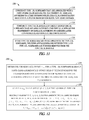
- PUCCH physical uplink control channel
- FIG. 11 is a flowchart illustrating a method 1100 of classifying the DL subframe Types.
- Type 1 DL subframes that are constructed by DL subframes that are associated with a first uplink (UL) subframe for transmission of HARQ-ACK according to a time division duplex (TDD) UL/DL configuration indicated in a system information block Type 1 (SIB1) message.
- Type 2 DL subframes are constructed at 1120 by firstly identifying DL subframes that are associated with the first UL subframe for transmission of HARQ-ACK according to a higher layer configured DL-reference UL/DL configuration. If the Type 1 DL subframes are overlapped with the Type 2 DL subframes, the overlapping subframes between Type 1 and Type 2 DL subframes are further removed from the Type 2 DL subframes at 1130 .
- FIG. 12 is a flowchart illustrating a method 1200 of determining the offset for Type 1 DL subframes.
- processing circuitry determines the HARQ-ACK offset ⁇ ARO for a Type 1 DL subframe based on 2-bits HARQ-ACK resource offset field in the DCI format of the corresponding PDCCH depends on the number of Type 1 DL subframes associated with the first UL subframe for HARQ-ACK transmission.
- processing circuitry begins by selecting a ⁇ ARO value out of ⁇ 0, ⁇ 1, ⁇ 2, 2 ⁇ if the number of Type 1 DL subframes is one.
- FIG. 13 is a flowchart illustrating a method 1300 of determining the offset for Type 2 DL subframe.
- processing circuitry is used to determine the HARQ-ACK offset for a Type 2 DL subframe based on 2-bits HARQ-ACK resource offset field in the DCI format of the corresponding PDCCH depending on the number of Type 2 DL subframes associated with the first UL subframe for HARQ-ACK transmission.
- the method 1300 processed to select a ⁇ ARO value out of ⁇ 0, ⁇ 1, ⁇ 2, 2 ⁇ at 1310 if the number of Type 2 DL subframes is one.
- the processing circuitry selects a ⁇ ARO value out of ⁇ 0, ⁇ 1 ⁇ 1, ⁇ 2 ⁇ 2, 2 ⁇ if the number of Type 2 DL subframes is more than one, where ⁇ 1 or ⁇ 2 could be one value of ⁇ 0, ⁇ (M 2 ⁇ l ⁇ 1) ⁇ N c ⁇ l ⁇ N c+1 , ⁇ M 2 ⁇ (N c ⁇ N c ⁇ 1 ), ⁇ l ⁇ (N c+1 ⁇ N c ), ⁇ (N c+1 ⁇ N c ), ⁇ M 2 ⁇ N c ,
- FIG. 14 is a block diagram of a specifically programmed computer system to act as one or more different types of UE, cell stations, including small cell stations and macro stations.
- the system may be used to implement one or more methods according to the examples described.
- a hardware and operating environment is provided to enable the computer system to execute one or more methods and functions that are described herein.
- the system may be a small cell station, macro cell station, smart phone, tablet, or other networked device that can provide access and wireless networking capabilities to one or more devices. Such devices need not have all the components included in FIG. 14 .
- FIG. 14 illustrates a functional block diagram of a cell station 1400 in accordance with some embodiments.
- Cell station 1400 may be suitable for use as a small cell station, macro cell station, or user equipment, such as a wireless cell phone, tablet or other computer.
- the cell station 1400 may include physical layer circuitry 1402 for transmitting and receiving signals to and from eNBs using one or more antennas 1401 .
- Cell station 1400 may also include processing circuitry 1404 that may include, among other things a channel estimator.
- Cell station 1400 may also include memory 1406 .
- the processing circuitry may be configured to determine several different feedback values discussed below for transmission to the eNB.
- the processing circuitry may also include a media access control (MAC) layer.
- MAC media access control
- the one or more antennas 1401 utilized by the cell station 1400 may comprise one or more directional or omnidirectional antennas, including, for example, dipole antennas, monopole antennas, patch antennas, loop antennas, microstrip antennas or other types of antennas suitable for transmission of RF signals.
- a single antenna with multiple apertures may be used instead of two or more antennas.
- each aperture may be considered a separate antenna.
- MIMO multiple-input multiple-output
- the antennas may be effectively separated to take advantage of spatial diversity and the different channel characteristics that may result between each of antennas and the antennas of a transmitting station.
- the antennas may be separated by up to 1/10 of a wavelength or more.
- the cell station 1400 is illustrated as having several separate functional elements, one or more of the functional elements may be combined and may be implemented by combinations of software-configured elements, such as processing elements including digital signal processors (DSPs), and/or other hardware elements.
- DSPs digital signal processors
- some elements may comprise one or more microprocessors, DSPs, application specific integrated circuits (ASICs), radio-frequency integrated circuits (RFICs) and combinations of various hardware and logic circuitry for performing at least the functions described herein.
- the functional elements may refer to one or more processes operating on one or more processing elements.
- Embodiments may be implemented in one or a combination of hardware, firmware and software. Embodiments may also be implemented as instructions stored on a computer-readable storage medium, which may be read and executed by at least one processor to perform the operations described herein.
- a computer-readable storage medium may include any non-transitory mechanism for storing information in a form readable by a machine (e.g., a computer).
- a computer-readable storage medium may include read-only memory (ROM), random-access memory (RAM), magnetic disk storage media, optical storage media, flash-memory devices, and other storage devices and media.
- ROM read-only memory
- RAM random-access memory
- magnetic disk storage media e.g., magnetic disks, optical storage media, flash-memory devices, and other storage devices and media.
- one or more processors of the cell station 1400 may be configured with the instructions to perform the operations described herein.
- the cell station 1400 and the eNBs may be configured to communicate in accordance with an orthogonal frequency division multiple access (OFDMA) technique.
- OFDMA orthogonal frequency division multiple access
- the UTRAN LTE standards include the 3rd Generation Partnership Project (3GPP) standards for UTRAN-LTE, release 8, March 2008, and release 10, December 2010, including variations and evolutions thereof.
- the basic unit of the wireless resource is the Physical Resource Block (PRB).
- the PRB may comprise 12 sub-carriers in the frequency domain and N consecutive symbols corresponding to 0.5 ms in the time domain depends on the cyclic prefix length configured by the higher layer parameter.
- the PRB may comprise a plurality of resource elements (REs).
- a RE is uniquely defined by the index pair (k, 1) in a slot where k is index in frequency domain and 1 is the index in the time domain.
- Two types of reference signals may be transmitted by an eNB including demodulation reference signals (DM-RS), a common reference signal (CRS) and/or channel state information reference signals (CSI-RS).
- DM-RS demodulation reference signals
- CRS common reference signal
- CSI-RS channel state information reference signals
- the DM-RS may be used by the UE for data demodulation.
- the reference signals may be transmitted in predetermined PRBs.
- the OFDMA technique may be either a frequency domain duplexing (FDD) technique that uses different uplink and downlink spectrum or a time-domain duplexing (TDD) technique that uses the same spectrum for uplink and downlink.
- FDD frequency domain duplexing
- TDD time-domain duplexing
- the cell station 1400 and the eNBs may be configured to communicate signals that were transmitted using one or more other modulation techniques such as spread spectrum modulation (e.g., direct sequence code division multiple access (DS-CDMA) and/or frequency hopping code division multiple access (FH-CDMA)), time-division multiplexing (TDM) modulation, and/or frequency-division multiplexing (FDM) modulation, although the scope of the embodiments is not limited in this respect.
- spread spectrum modulation e.g., direct sequence code division multiple access (DS-CDMA) and/or frequency hopping code division multiple access (FH-CDMA)
- TDM time-division multiplexing
- FDM frequency-division multiplexing
- the cell station 1400 may be part of a portable wireless communication device, such as a personal digital assistant (PDA), a laptop or portable computer with wireless communication capability, a web tablet, a wireless telephone, a wireless headset, a pager, an instant messaging device, a digital camera, an access point, a television, a medical device (e.g., a heart rate monitor, a blood pressure monitor, etc.), or other device that may receive and/or transmit information wirelessly.
- PDA personal digital assistant
- a laptop or portable computer with wireless communication capability such as a personal digital assistant (PDA), a laptop or portable computer with wireless communication capability, a web tablet, a wireless telephone, a wireless headset, a pager, an instant messaging device, a digital camera, an access point, a television, a medical device (e.g., a heart rate monitor, a blood pressure monitor, etc.), or other device that may receive and/or transmit information wirelessly.
- a portable wireless communication device such as a personal digital assistant (PDA), a
- the cell station may be configured in one of 8 “transmission modes” for PDSCH reception: Mode 1: Single antenna port, port 0; Mode 2: Transmit diversity; Mode 3: Large-delay CDD; Mode 4: Closed-loop spatial multiplexing; Mode 5: MU-MIMO; Mode 6: Closed-loop spatial multiplexing, single layer; Mode 7: Single antenna port, cell station-specific RS (port 5); Mode 8 (new in Rel-9): Single or dual-layer transmission with cell station-specific RS (ports 7 and/or 8).
- the CSI-RS are used by the cell station for channel estimates (i.e., CQI measurements).
- the CSI-RS are transmitted periodically in particular antenna ports (up to eight transmit antenna ports) at different subcarrier frequencies (assigned to the cell station) for use in estimating a MIMO channel.
- a cell station-specific demodulation reference signal e.g., a DM-RS
- a device comprising:
- a transceiver to receive, from a base station, a physical downlink shared channel (PDSCH) transmission;
- processing circuitry to:
- Type 1 DL subframes that are constructed by DL subframes that are associated with a first uplink (UL) subframe for transmission of HARQ-ACK according to a time division duplex (TDD) UL/DL configuration indicated in a system information block Type 1(SIB1) message; and
- Type 2 DL subframes that are constructed by:
- n PUCCH,j (1) ( M 1 ⁇ j ⁇ 1) ⁇ N c +j ⁇ N c+1 +n CCE,j +N PUCCH (1)
- N PUCCH (1) is a PUCCH resource offset associated with legacy PDCCH that is configured by higher layer for PUCCH resource mapping of Type 1 DL subframes
- N RB DL refers to Downlink bandwidth configuration
- N sc RB refers to resource block size in the frequency domain that is expressed as a number of subcarriers
- n CCE,j is the number of
- n PUCCH,j (1) ( M 1 ⁇ j ⁇ 1) ⁇ N c +j ⁇ N c+1 +n CCE,j +N PUCCH (1) + ⁇ ARO
- j(0 ⁇ j ⁇ M 1 ) is the index of the Type 1 DL subframe
- ⁇ ARO refers to HARQ-ACK resource offset value that is selected from predefined values based on 2-bits HARQ-ACK resource offset field in a downlink control information (DCI) format depending on the number of Type 1 DL subframes associated with the first UL subframe for HARQ-ACK transmission.
- DCI downlink control information
- processing circuitry further performs determining the HARQ-ACK offset ⁇ ARO for a Type 1 DL subframe based on 2-bits HARQ-ACK resource offset field in the DCI format of the corresponding PDCCH depending on the number of Type 1 DL subframes associated with the first UL subframe for HARQ-ACK transmission:
- processing circuitry further performs PUCCH resource mapping for PDSCH transmission indicated via Physical Downlink Control Channel (PDCCH) on a Type 2 DL subframe based on higher-layer signaling or based on:
- PUCCH Physical Downlink Control Channel
- n CCE,l is the number of the first channel control element (CCE) used for transmission of the corresponding PDCCH in Type 2 DL subframe l
- CCE channel control element
- l(0 ⁇ l ⁇ M 2 ) is the index of a Type 2 DL subframe and M 2 is the number of Type 2 DL subframes
- N CFI,c is detected Control Formal Indicator (CFI) value carried on Physical Control Format Indicator Channel (PCFICH) channel in Type 2 subframe c.
- CFI Control Formal Indicator
- N PUCCH (2) M 1 ⁇ N 4
- M 1 is a number of Type 1 DL subframes associated with the first UL subframe for HARQ-ACK transmission
- l(0 ⁇ 1 ⁇ M 2 ) is the index of the Type 2 DL subframe
- ⁇ ARO refers to HARQ-ACK resource offset value that is selected based on 2-bits HARQ-ACK resource offset field in a downlink control information (DCI) format depending on the number of Type 2
- processing circuitry further performs determining the HARQ-ACK offset for a Type 2 DL subframe based on 2-bits HARQ-ACK resource offset field in the DCI format of the corresponding PDCCH depending on the number of Type 2 DL subframes associated with the first UL subframe for HARQ-ACK transmission:
- the processing circuitry further performs PUCCH resource mapping for PDSCH transmission indicated via enhanced physical downlink control channel (EPDCCH) or a EPDCCH indicating downlink semi persistent scheduling (SPS) release in a Type 1 or Type 2 sub-frame, the user equipment (UE) shall use:
- EPDCCH enhanced physical downlink control channel
- SPS downlink semi persistent scheduling
- N PUCCH,q (e1) for EPDCCH-PRB-set q is configured by the higher layer parameter pucch-ResourceStartOffset-r11, N RB ECCE,q for EPDCCH-PRB-set q in subframe n ⁇ k i is given, and n′ is determined from the antenna port used for EPDCCH transmission in subframe n ⁇ k i , and ⁇ ARO is the HARQ-ACK resource offset.
- the processing circuitry further performs PUCCH resource mapping for PDSCH transmission indicated via EPDCCH or EPDCCH indicating downlink SPS release in a Type 1 or Type 2 sub-frame, the user equipment (UE) shall use:
- a method comprising:
- PDSCH physical downlink shared channel
- DL subframe types for a set of DL subframes associated with a first uplink (UL) subframe for transmission of a hybrid automatic report request acknowledgment (HARQ-ACK);
- PUCCH physical uplink control channel
- Type 1 DL subframes that are constructed by DL subframes that are associated with a first uplink (UL) subframe for transmission of HARQ-ACK according to a time division duplex (TDD) UL/DL configuration indicated in a system information block Type 1 (SIB1) message; and
- Type 2 DL subframes that are constructed by:
- n PUCCH,j (1) ( M 1 ⁇ j ⁇ 1) ⁇ N c +j ⁇ N c+1 +n CCE,j +N PUCCH (1)
- N PUCCH (1) is a PUCCH resource offset associated with legacy PDCCH that is configured by higher layer for PUCCH resource mapping of Type 1 DL subframes
- N RB DL refers to downlink bandwidth configuration
- N sc RB refers to resource block size in the frequency domain that is expressed as a number of subcarriers
- n CCE,j is the number of the first control channel element
- n PUCCH,j (1) ( M 1 ⁇ j ⁇ 1) ⁇ N c +j ⁇ N c+1 +n CCE,j +N PUCCH (1) + ⁇ ARO
- j(0 ⁇ j ⁇ M 1 ) is the index of the Type 1 DL subframe
- ⁇ ARO refers to HARQ-ACK resource offset value that is selected from predefined values based on 2-bits HARQ-ACK resource offset field in a downlink control information (DCI) format depending on the number of Type 1 DL subframes associated with the first UL subframe for HARQ-ACK transmission.
- DCI downlink control information
- n CCE,l is the number of the first channel control element (CCE) used for transmission of the corresponding PDCCH in Type 2 DL subframe l
- CCE channel control element
- l(0 ⁇ l ⁇ M 2 ) is the index of a Type 2 DL subframe and M 2 is the number of Type 2 DL subframes
- N CFI,c is detected Control Formal Indicator (CFI) value carried on Physical Control Format Indicator Channel (PCFICH) channel in Type 2 subframe c.
- CFI Control Formal Indicator
- N PUCCH (2) M 1 ⁇ N 4
- M 1 is a number of Type 1 DL subframes associated with the first UL subframe for HARQ-ACK transmission
- l(0 ⁇ l ⁇ M 2 ) is the index of the Type 2 DL subframe
- ⁇ ARO refers to HARQ-ACK resource offset value that is selected based on 2-bits HARQ-ACK resource offset field in a downlink control information (DCI) format depending on the number of Type 2
- ⁇ 1 or ⁇ 2 could be one value of ⁇ 0, ⁇ (M 2 ⁇ l ⁇ 1) ⁇ N c ⁇ l ⁇ N c+1 , ⁇ M 2 ⁇ (N c ⁇ N c ⁇ 1 ), ⁇ l ⁇ (N c+1 ⁇ N c ), ⁇ (N c+1 ⁇ N c ), ⁇ M 2 ⁇ N c ,
- N PUCCH,q (e1) for EPDCCH-PRB-set q is configured by the higher layer parameter pucch-ResourceStartOffset-r11, N RB ECCE,q for EPDCCH-PRB-set q in subframe n ⁇ k i is given, and n′ is determined from the antenna port used for EPDCCH transmission in subframe n ⁇ k i , and ⁇ ARO is the HARQ-ACK resource offset.
- a machine readable storage device having instructions to cause a machine to:
- PDSCH physical downlink shared channel
- DL subframe types for a set of DL subframes associated with a first uplink (UL) subframe for transmission of a hybrid automatic report request acknowledgment (HARQ-ACK);
- PUCCH physical uplink control channel
- Type 1 DL subframes that are constructed by DL subframes that are associated with a first uplink (UL) subframe for transmission of HARQ-ACK according to a time division duplex (TDD) UL/DL configuration indicated in a system information block Type 1(SIB1) message; and
- Type 2 DL subframes that are constructed by:
Landscapes
- Engineering & Computer Science (AREA)
- Signal Processing (AREA)
- Computer Networks & Wireless Communication (AREA)
- Multimedia (AREA)
- Databases & Information Systems (AREA)
- Environmental & Geological Engineering (AREA)
- Mobile Radio Communication Systems (AREA)
Abstract
Description
n PUCCH,i (1)=(M−m−1)·N c +m·N c+1 +n CCE,m +N PUCCH (1)
n PUCCH,j (1)=(M 1 −j−1)·N c +j·N c+1 +n CCE,j +N PUCCH (1) (1-0)
If it corresponds to
Where c is selected from {0, 1, 2, 3} such that Nc≦nCCE,j<Nc+1, N≦nCCE,l<Nc+1, Nc=max{0,└[NRB DL·(Nsc RB·c−4)]/36┘}, NCFI,c is detected Control Formal Indicator (CFI) value carried on Physical Control Format Indicator Channel (PCFICH) channel in subframe c, nCCE,j and nCCE,l is the number of the first CCE used for transmission of the corresponding PDCCH in subframe j and l respectively. Index j is the index of
N PUCCH (2) =M 1 ·N 4 (5-0)
-
- Alt 2-0: −(M1−j−1)·Nc−j·Nc+1
- Alt 2-1: −M1·(Nc−Nc−1)
- Alt 2-2: −j·(Nc+1−Nc)
- Alt 2-3: −(Nc+1−Nc)
- Alt 2-4: −M1·Nc
If EPDCCH-PRB-set q is configured for localised transmission
where nECCE,q is the number of the first ECCE (i.e. lowest ECCE index used to construct the EPDCCH) used for transmission of the corresponding DCI assignment in EPDCCH-PRB-set q in subframe n−ki, NPUCCH,q (e1) for EPDCCH-PRB-set q is configured by the higher layer parameter pucch-ResourceStartOffset-r11, NRB ECCE,q for EPDCCH-PRB-set q in subframe n−ki is given in section 6.8A.1 in 3GPP TS 36.211 V. 11.2.0, n′ is determined from the antenna port used for EPDCCH transmission in subframe n−k, which is described in section 6.8A.5 in 3GPP TS 36.211 V. 11.2.0. If i=0, ΔARO is determined from the HARQ-ACK resource offset field in the DCI format of the corresponding EPDCCH as given in Table 10.1.2.1-1. If i>0, ΔARO is determined from the HARQ-ACK resource offset field in the DCI format of the corresponding EPDCCH as given in Table 10.1.3.1-2, where the variable m in the table is substituted with i. If the UE is configured to monitor EPDCCH in subframe n−ki1, NECCE,q,n−k
Where Li denotes the minimum supportable aggregation level in subframe i.
and l(0≦l<M2) is the index of the
-
- classify downlink (DL) subframe types for a set of DL subframes associated with a first uplink (UL) subframe for transmission of a hybrid automatic report request acknowledgment (HARQ-ACK); and
- perform physical uplink control channel (PUCCH) resources mapping based on the classified DL subframe Types for an acknowledgement transmission associated with PDSCH transmission reception.
-
- firstly identifying DL subframes that are associated with the first UL subframe for transmission of HARQ-ACK according to a higher layer configured DL-reference UL/DL configuration; and
- if the
Type 1 DL subframes are overlapped with theType 2 DL subframes, the overlapping subframes betweenType 1 andType 2 DL subframes are further removed from theType 2 DL subframes.
n PUCCH,j (1)=(M 1 −j−1)·N c +j·N c+1 +n CCE,j +N PUCCH (1)
where NPUCCH (1) is a PUCCH resource offset associated with legacy PDCCH that is configured by higher layer for PUCCH resource mapping of
n PUCCH,j (1)=(M 1 −j−1)·N c +j·N c+1 +n CCE,j +N PUCCH (1)+ΔARO
Where j(0≦j≦M1) is the index of the
where NPUCCH (2) is PUCCH resource offset associated with PDSCH on
N PUCCH (2) =M 1 ·N 4
where M1 is a number of
where l(0≦1<M2) is the index of the
and l(0≦l<M2) is the index of the
if EPDCCH-physical resource block(PRB)-set q is configured for distributed transmission, or
if EPDCCH-PRB-set q is configured for localised transmission where nECCE,q is the number of the first ECCE (i.e. lowest ECCE index used to construct the EPDCCH) used for transmission of a corresponding downlink control information (DCI) assignment in EPDCCH-PRB-set q in subframe n−ki, NPUCCH,q (e1) for EPDCCH-PRB-set q is configured by the higher layer parameter pucch-ResourceStartOffset-r11, NRB ECCE,q for EPDCCH-PRB-set q in subframe n−ki is given, and n′ is determined from the antenna port used for EPDCCH transmission in subframe n−ki, and ΔARO is the HARQ-ACK resource offset.
where Li denotes the minimum supportable aggregation level in subframe i.
-
- firstly identifying DL subframes that are associated with the first UL subframe for transmission of HARQ-ACK according to a higher layer configured DL-reference UL/DL configuration; and
- if the
Type 1 DL subframes are overlapped with theType 2 DL subframes, the overlapping subframes betweenType 1 andType 2 DL subframes are further removed from theType 2 DL subframes.
n PUCCH,j (1)=(M 1 −j−1)·N c +j·N c+1 +n CCE,j +N PUCCH (1)
where NPUCCH (1) is a PUCCH resource offset associated with legacy PDCCH that is configured by higher layer for PUCCH resource mapping of
n PUCCH,j (1)=(M 1 −j−1)·N c +j·N c+1 +n CCE,j +N PUCCH (1)+ΔARO
where j(0≦j≦M1) is the index of the
where NPUCCH (2) is PUCCH resource offset associated with PDSCH on
N PUCCH (2) =M 1 ·N 4
where M1 is a number of
where l(0≦l<M2) is the index of the
and l(0≦l<M2) is the index of the
if EPDCCH-physical resource block(PRB)-set q is configured for distributed transmission, or
if EPDCCH-PRB-set q is configured for localised transmission
where nECCE,q is the number of the first ECCE (i.e. lowest ECCE index used to construct the EPDCCH) used for transmission of a corresponding downlink control information (DCI) assignment in EPDCCH-PRB-set q in subframe n−ki, NPUCCH,q (e1) for EPDCCH-PRB-set q is configured by the higher layer parameter pucch-ResourceStartOffset-r11, NRB ECCE,q for EPDCCH-PRB-set q in subframe n−ki is given, and n′ is determined from the antenna port used for EPDCCH transmission in subframe n−ki, and ΔARO is the HARQ-ACK resource offset.
where Li denotes the minimum supportable aggregation level in subframe i.
-
- firstly identifying DL subframes that are associated with the first UL subframe for transmission of HARQ-ACK according to a higher layer configured DL-reference UL/DL configuration; and
- if the
Type 1 DL subframes are overlapped with theType 2 DL subframes, the overlapping subframes betweenType 1 andType 2 DL subframes are further removed from theType 2 DL subframes.
Claims (22)
n PUCCH,j (1)=(M 1 −j−1)·N c +j·N c+1 +n CCE,j +N PUCCH (1)
n PUCCH,j (1)=(M 1 −j−1)·N c +j·N c+1 +n CCE,j +N PUCCH (1)+ΔARO
N PUCCH (2) =M 1 ·N 4
n PUCCH,j (1)=(M 1 −j−1)·N c +j·N c+1 +n CCE,j +N PUCCH (1)
n PUCCH,j (1)=(M 1 −j−1)·N c +j·N c+1 +n CCE,j +N PUCCH (1)+ΔARO
N PUCCH (2) =M 1 ·N 4
Priority Applications (7)
| Application Number | Priority Date | Filing Date | Title |
|---|---|---|---|
| US14/141,876 US9445338B2 (en) | 2013-04-04 | 2013-12-27 | Reconfiguration control channel resource mapping collision avoidance |
| PCT/US2014/032532 WO2014165517A1 (en) | 2013-04-04 | 2014-04-01 | Reconfiguration control channel resource mapping collision avoidance |
| HK16105511.1A HK1217580A1 (en) | 2013-04-04 | 2014-04-01 | Reconfiguration control channel resource mapping collision avoidance |
| KR1020157024073A KR101784760B1 (en) | 2013-04-04 | 2014-04-01 | Reconfiguration control channel resource mapping collision avoidance |
| EP14779090.1A EP2982059A4 (en) | 2013-04-04 | 2014-04-01 | RECONFIGURATION OF CONTROL CHANNEL RESOURCE MAPPING TO AVOID COLLISION |
| CN201480011167.6A CN105122673B (en) | 2013-04-04 | 2014-04-01 | Reconfigure control channel resource impact conflict avoidance |
| US15/262,348 US20170064696A1 (en) | 2013-04-04 | 2016-09-12 | Reconfiguration control channel resource mapping collision avoidance |
Applications Claiming Priority (2)
| Application Number | Priority Date | Filing Date | Title |
|---|---|---|---|
| US201361808597P | 2013-04-04 | 2013-04-04 | |
| US14/141,876 US9445338B2 (en) | 2013-04-04 | 2013-12-27 | Reconfiguration control channel resource mapping collision avoidance |
Related Child Applications (1)
| Application Number | Title | Priority Date | Filing Date |
|---|---|---|---|
| US15/262,348 Continuation US20170064696A1 (en) | 2013-04-04 | 2016-09-12 | Reconfiguration control channel resource mapping collision avoidance |
Publications (2)
| Publication Number | Publication Date |
|---|---|
| US20140301290A1 US20140301290A1 (en) | 2014-10-09 |
| US9445338B2 true US9445338B2 (en) | 2016-09-13 |
Family
ID=94380297
Family Applications (2)
| Application Number | Title | Priority Date | Filing Date |
|---|---|---|---|
| US14/141,876 Active 2034-04-15 US9445338B2 (en) | 2013-04-04 | 2013-12-27 | Reconfiguration control channel resource mapping collision avoidance |
| US15/262,348 Abandoned US20170064696A1 (en) | 2013-04-04 | 2016-09-12 | Reconfiguration control channel resource mapping collision avoidance |
Family Applications After (1)
| Application Number | Title | Priority Date | Filing Date |
|---|---|---|---|
| US15/262,348 Abandoned US20170064696A1 (en) | 2013-04-04 | 2016-09-12 | Reconfiguration control channel resource mapping collision avoidance |
Country Status (1)
| Country | Link |
|---|---|
| US (2) | US9445338B2 (en) |
Cited By (9)
| Publication number | Priority date | Publication date | Assignee | Title |
|---|---|---|---|---|
| US20170171841A1 (en) * | 2015-12-09 | 2017-06-15 | Mediatek Inc. | Control-less Data Transmission for Narrow Band Internet of Things |
| US9794876B2 (en) | 2013-03-29 | 2017-10-17 | Intel IP Corporation | Extended paging discontinuous reception (DRX) cycles in wireless communication networks |
| US9930647B2 (en) | 2013-04-04 | 2018-03-27 | Intel IP Corporation | Enhanced node B and method for RRC connection establishment for small data transfers |
| US10015002B2 (en) * | 2011-06-29 | 2018-07-03 | Lg Electronics Inc. | Method and apparatus for transmitting control information in wireless communication system |
| US10306509B2 (en) * | 2013-09-17 | 2019-05-28 | Intel IP Corporation | DRX operation for UL/DL reconfiguration |
| TWI686094B (en) * | 2016-12-07 | 2020-02-21 | 聯發科技股份有限公司 | Control-less data transmission |
| US10587389B2 (en) | 2013-01-03 | 2020-03-10 | Apple Inc. | Apparatus and method for single-tone device discovery in wireless communication networks |
| US10659990B2 (en) * | 2016-02-02 | 2020-05-19 | Sony Corporation | Base station equipment, communication terminal, communication system, program, frame transmitting method, and data structure |
| US10965786B2 (en) | 2018-10-31 | 2021-03-30 | At&T Intellectual Property I, L.P. | Adaptive fixed point mapping for uplink and downlink fronthaul |
Families Citing this family (19)
| Publication number | Priority date | Publication date | Assignee | Title |
|---|---|---|---|---|
| WO2014109797A1 (en) * | 2013-01-14 | 2014-07-17 | Intel IP Corporation | Energy-harvesting devices in wireless networks |
| KR102214071B1 (en) | 2013-01-31 | 2021-02-09 | 엘지전자 주식회사 | Method and apparatus for transmitting receipt acknowledgement in wireless communication system |
| US9160515B2 (en) | 2013-04-04 | 2015-10-13 | Intel IP Corporation | User equipment and methods for handover enhancement using scaled time-to-trigger and time-of-stay |
| EP3605916B1 (en) * | 2013-08-09 | 2021-03-03 | Sun Patent Trust | Tdd uplink/downlink re-configuration mechanism |
| EP2897318B1 (en) * | 2014-01-21 | 2017-09-06 | Panasonic Intellectual Property Corporation of America | TDD uplink/downlink configuration enhancements |
| CN106031071B (en) * | 2014-02-14 | 2019-08-06 | Lg电子株式会社 | Method and device for transmitting HARQ-ACK in wireless communication system |
| WO2015137747A1 (en) * | 2014-03-12 | 2015-09-17 | 엘지전자 주식회사 | Method for transmitting uplink control channel in wireless communication system that supports use change of radio resources, and apparatus therefor |
| US9408158B2 (en) | 2014-03-14 | 2016-08-02 | Sharp Laboratories Of America, Inc. | Systems and methods for feedback reporting |
| US10110365B2 (en) * | 2014-03-25 | 2018-10-23 | Lg Electronics Inc. | Method and apparatus for transmitting control information in wireless communication system |
| HUE070598T2 (en) | 2016-01-07 | 2025-06-28 | Nokia Solutions & Networks Oy | Method and apparatus for allocating acknowledgement resources |
| CN116633511A (en) * | 2016-02-04 | 2023-08-22 | 株式会社Kt | Method and device for user equipment to send and receive uplink signals |
| US10477520B2 (en) | 2016-03-14 | 2019-11-12 | Qualcomm Incorporated | Feedback resource allocation for multiple carriers |
| CN107453852B (en) * | 2016-05-31 | 2020-05-15 | 电信科学技术研究院 | Subframe type notification and determination method and device |
| CN108282881B (en) * | 2017-01-06 | 2020-12-15 | 华为技术有限公司 | A resource allocation method and device |
| CN108306720B (en) * | 2017-01-13 | 2022-06-21 | 北京三星通信技术研究有限公司 | Method and equipment for transmitting UCI information |
| WO2018142264A1 (en) * | 2017-02-01 | 2018-08-09 | Telefonaktiebolaget Lm Ericsson (Publ) | Methods and nodes for activation or deactivation of a carrier in a communication network supporting carrier aggregation |
| US10644765B2 (en) * | 2017-10-24 | 2020-05-05 | Intel Corporation | Enhanced acknowledgment and power saving for wireless communications |
| SG11202101246PA (en) * | 2018-08-06 | 2021-03-30 | Beijing Xiaomi Mobile Software Co Ltd | Uplink message transmission method and device, and storage medium |
| CN110830173B (en) * | 2018-08-08 | 2020-09-15 | 展讯通信(上海)有限公司 | Indication method, base station and readable medium of time difference between PUCCH and PDSCH |
Citations (59)
| Publication number | Priority date | Publication date | Assignee | Title |
|---|---|---|---|---|
| US6445917B1 (en) | 1999-05-19 | 2002-09-03 | Telefonaktiebolaget Lm Ericsson (Publ) | Mobile station measurements with event-based reporting |
| US20020163933A1 (en) | 2000-11-03 | 2002-11-07 | Mathilde Benveniste | Tiered contention multiple access (TCMA): a method for priority-based shared channel access |
| WO2008112126A1 (en) | 2007-03-09 | 2008-09-18 | Interdigital Technology Corporation | Method and apparatus for adjusting a reselection timer and cell ranking criteria, and reporting degraded signal measurement of a serving cell |
| US20090040955A1 (en) | 2005-12-10 | 2009-02-12 | Soo-Jung Jung | Method for Adaptive Discontinuous Reception Based On Extented Paging Indicator for Improvement of Power Effective Performance at Mobile Terminal on WCDMA |
| US20090059871A1 (en) | 2007-09-04 | 2009-03-05 | Telefonaktiebolaget L M Ericsson (Publ) | Time-to-Trigger Handling Methods and Apparatus |
| US20090124261A1 (en) | 2006-07-14 | 2009-05-14 | Fujitsu Limited | Mobile communication system and base station |
| US20090245182A1 (en) | 2008-03-25 | 2009-10-01 | Qualcomm Incorporated | Adaptively reacting to resource utilization messages including channel gain indication |
| US20090323638A1 (en) | 2008-06-30 | 2009-12-31 | Qualcomm Incorporated | Method and apparatus for automatic handover optimization |
| US20100113008A1 (en) | 2008-09-22 | 2010-05-06 | Interdigital Patent Holdings, Inc. | Method and apparatus for lte radio link failure determination in drx mode |
| US20100130237A1 (en) | 2008-11-18 | 2010-05-27 | Qualcomm Incorporated | Method and apparatus for determining drx cycle used for paging |
| WO2010133043A1 (en) | 2009-05-22 | 2010-11-25 | 华为技术有限公司 | Method for dispatching multi sub-frames and the system, the terminal and the base station thereof |
| US20110007673A1 (en) | 2008-03-16 | 2011-01-13 | Joon Kui Ahn | Method and Apparatus for Acquiring Resource Allocation of Control Channel |
| US20110019776A1 (en) | 2009-07-24 | 2011-01-27 | Interdigital Patent Holdings, Inc. | Method and apparatus for obtaining port index information |
| WO2011020062A2 (en) | 2009-08-14 | 2011-02-17 | Research In Motion Limited | Frame structure and control signaling for downlink coordinated multi-point (comp) transmission |
| WO2011119680A2 (en) | 2010-03-23 | 2011-09-29 | Interdigital Patent Holdings, Inc. | Efficient signaling for machine type communication |
| WO2011119750A1 (en) | 2010-03-23 | 2011-09-29 | Interdigital Patent Holdings, Inc. | Method, apparatus and system for enabling resource coordination in cellular networks |
| US20110235602A1 (en) * | 2010-03-25 | 2011-09-29 | Qualcomm Incorporated | Subframe dependent physical uplink control channel (pucch) region design |
| US20110243039A1 (en) * | 2010-03-31 | 2011-10-06 | Samsung Electronics Co., Ltd. | Indexing resources for transmission of acknowledgement signals in multi-cell tdd communication systems |
| US20110256861A1 (en) | 2010-04-16 | 2011-10-20 | Qualcomm Incorporated | Radio link monitoring (rlm) and reference signal received power (rsrp) measurement for heterogeneous networks |
| US20110263262A1 (en) | 2010-04-27 | 2011-10-27 | Samsung Electronics Co. Ltd. | Apparatus and method for providing handover support inforamtion in mobile communication system |
| US20110261729A1 (en) * | 2008-03-16 | 2011-10-27 | Joon Kui Ahn | Method of performing hybrid automatic repeat request (harq) in wireless communication system |
| TW201141288A (en) | 2010-01-08 | 2011-11-16 | Sharp Kk | Mobile communication method and system for sounding reference signal transmission, and base station, user equipment and integrated circuit therein |
| WO2011156967A1 (en) | 2010-06-18 | 2011-12-22 | Nokia Corporation | Enhanced physical uplink control channel format resource allocation for time division duplex mode |
| US20120120908A1 (en) | 2009-07-26 | 2012-05-17 | Joon Kui Ahn | Method and apparatus for receiving reception acknowledgement in wireless communication system |
| US20120163296A1 (en) | 2010-12-23 | 2012-06-28 | Electronics And Telecommunications Research Institute | Method of transmitting small amount of uplink data and method of receiving small amount of uplink data |
| WO2012111993A2 (en) | 2011-02-16 | 2012-08-23 | Pantech Co., Ltd. | Method and apparatus for rrc connection establishment in mtc |
| CN102754496A (en) | 2010-02-12 | 2012-10-24 | 交互数字专利控股公司 | Method and apparatus for enhancing cell edge user performance and signaling radio link failures via downlink coordinated component carrier signaling |
| US20120275365A1 (en) | 2011-04-29 | 2012-11-01 | Nicholas William Anderson | Receiving messages in connection with lte wakeup |
| WO2012148195A2 (en) | 2011-04-27 | 2012-11-01 | Pantech Co., Ltd. | Apparatus and method for reporting radio link failure |
| WO2012149898A1 (en) | 2011-05-03 | 2012-11-08 | Mediatek Inc. | Scell radio link monitoring and radio link failure handling |
| US20120300738A1 (en) | 2009-06-04 | 2012-11-29 | Qualcomm Incorporated | Data Trnasmission with Cross-Subframe Control in a Wireless Network |
| EP2533589A1 (en) | 2010-02-05 | 2012-12-12 | China Mobile Communications Corporation | Mehod, device and system for indicating terminal specific demodulation reference signal |
| US20120327821A1 (en) | 2011-06-21 | 2012-12-27 | Mediatek, Inc, | Systems and Methods for Different TDD Configurations in Carrier Aggregation |
| US20130010769A1 (en) | 2011-07-05 | 2013-01-10 | Seoul National University R&Db Foundation | Method and apparatus for reserving data channel in a wireless access system |
| US20130028235A1 (en) | 2011-07-29 | 2013-01-31 | Intellectual Ventures Holding 81 Llc | Mobile communications network, infrastructure equipment and method |
| US20130044652A1 (en) | 2011-08-15 | 2013-02-21 | Yiping Wang | Notifying a ul/dl configuration in lte tdd systems |
| US20130051338A1 (en) | 2011-08-24 | 2013-02-28 | Ki Seon Ryu | Method and apparatus for transmitting uplink data associated with mtc device trigger function |
| US20130051214A1 (en) | 2009-09-25 | 2013-02-28 | Mo-Han Fong | Methods for radio link failure recovery, and user equipment |
| EP2568758A1 (en) | 2010-08-30 | 2013-03-13 | China Academy of Telecommunications Technology | Method and device for processing data transmission of machine-type communication device |
| US20130196664A1 (en) | 2012-01-27 | 2013-08-01 | Candy Yiu | User equipment and method for adaptive selection of handover parameters in wireless-access networks |
| US20130272148A1 (en) | 2012-04-13 | 2013-10-17 | Mo-Han Fong | Small data communications in a wireless communication network |
| US20130279372A1 (en) | 2011-11-04 | 2013-10-24 | Puneet K. Jain | Small data techniques and configurations in a wireless communication network |
| US20130303231A1 (en) | 2012-05-11 | 2013-11-14 | Candy Yiu | User equipment and methods for handover enhancement using reference signal received quality (rsrq) |
| US20130324174A1 (en) | 2012-05-31 | 2013-12-05 | Intel Mobile Communications GmbH | Communication network device, communication device, method for managing communication resource allocation and method for communication resource allocation |
| US8619654B2 (en) | 2010-08-13 | 2013-12-31 | Intel Corporation | Base station selection method for heterogeneous overlay networks |
| WO2014158268A1 (en) | 2013-03-29 | 2014-10-02 | Intel IP Corporation | Extended paging discontinuous reception (drx) cycles in wireless communication networks |
| US20140302887A1 (en) | 2013-04-04 | 2014-10-09 | Shafi Bashar | Pattern indicator signal for new dmrs pattern |
| WO2014163690A1 (en) | 2013-04-04 | 2014-10-09 | Intel IP Corporation | Dual connectivity for terminals supporting one uplink carrier |
| US20140302851A1 (en) | 2013-04-04 | 2014-10-09 | Candy Yiu | User equipment and methods for handover enhancement using scaled time-to-trigger and time-of-stay |
| WO2014165690A1 (en) | 2013-04-04 | 2014-10-09 | Intel IP Corporation | Virtual carrier sensing mechanism for long term evolution (lte) |
| WO2014165656A1 (en) | 2013-04-04 | 2014-10-09 | Bashar Shafi | Pattern indicator signal for new dmrs pattern |
| WO2014165603A1 (en) | 2013-04-04 | 2014-10-09 | Intel IP Corporation | User equipment and methods for handover enhancement using scaled time-to-trigger and time-of-stay |
| US20140301288A1 (en) | 2013-04-04 | 2014-10-09 | Ali Koc | Enhanced node b and method for rrc connection establishment for small data transfers |
| WO2014163686A1 (en) | 2013-04-04 | 2014-10-09 | Intel IP Corporation | Radio link monitoring for epdcch |
| WO2014165517A1 (en) | 2013-04-04 | 2014-10-09 | Intel IP Corporation | Reconfiguration control channel resource mapping collision avoidance |
| WO2014165657A1 (en) | 2013-04-04 | 2014-10-09 | Intel IP Corporation | Enhanced node b and method for rrc connection establishment for small data transfers |
| US20150078335A1 (en) | 2013-09-17 | 2015-03-19 | Kathiravetpillai Sivanesan | User equipment and methods for fast handover failure recovery in 3gpp lte network |
| US20150111581A1 (en) | 2013-10-21 | 2015-04-23 | Candy Yiu | Mobility information reporting |
| US20150189658A1 (en) * | 2012-08-03 | 2015-07-02 | Li Zhang | Method and Apparatus |
Family Cites Families (3)
| Publication number | Priority date | Publication date | Assignee | Title |
|---|---|---|---|---|
| US6312054B1 (en) * | 1998-10-26 | 2001-11-06 | Texas Recreation Corporation | Buoyant pool chair with adjustable angle of recline |
| EP2810665B1 (en) * | 2012-02-03 | 2020-10-14 | Saga University | Bioimplant |
| EP4697839A2 (en) * | 2012-08-02 | 2026-02-18 | BlackBerry Limited | Uplink control channel resource allocation for an enhanced downlink control channel of a mobile communication system |
-
2013
- 2013-12-27 US US14/141,876 patent/US9445338B2/en active Active
-
2016
- 2016-09-12 US US15/262,348 patent/US20170064696A1/en not_active Abandoned
Patent Citations (69)
| Publication number | Priority date | Publication date | Assignee | Title |
|---|---|---|---|---|
| US6445917B1 (en) | 1999-05-19 | 2002-09-03 | Telefonaktiebolaget Lm Ericsson (Publ) | Mobile station measurements with event-based reporting |
| US20020163933A1 (en) | 2000-11-03 | 2002-11-07 | Mathilde Benveniste | Tiered contention multiple access (TCMA): a method for priority-based shared channel access |
| US20090040955A1 (en) | 2005-12-10 | 2009-02-12 | Soo-Jung Jung | Method for Adaptive Discontinuous Reception Based On Extented Paging Indicator for Improvement of Power Effective Performance at Mobile Terminal on WCDMA |
| US20090124261A1 (en) | 2006-07-14 | 2009-05-14 | Fujitsu Limited | Mobile communication system and base station |
| WO2008112126A1 (en) | 2007-03-09 | 2008-09-18 | Interdigital Technology Corporation | Method and apparatus for adjusting a reselection timer and cell ranking criteria, and reporting degraded signal measurement of a serving cell |
| US20090059871A1 (en) | 2007-09-04 | 2009-03-05 | Telefonaktiebolaget L M Ericsson (Publ) | Time-to-Trigger Handling Methods and Apparatus |
| US20110007673A1 (en) | 2008-03-16 | 2011-01-13 | Joon Kui Ahn | Method and Apparatus for Acquiring Resource Allocation of Control Channel |
| US20110261729A1 (en) * | 2008-03-16 | 2011-10-27 | Joon Kui Ahn | Method of performing hybrid automatic repeat request (harq) in wireless communication system |
| US20090245182A1 (en) | 2008-03-25 | 2009-10-01 | Qualcomm Incorporated | Adaptively reacting to resource utilization messages including channel gain indication |
| US20090323638A1 (en) | 2008-06-30 | 2009-12-31 | Qualcomm Incorporated | Method and apparatus for automatic handover optimization |
| US20100113008A1 (en) | 2008-09-22 | 2010-05-06 | Interdigital Patent Holdings, Inc. | Method and apparatus for lte radio link failure determination in drx mode |
| US20100130237A1 (en) | 2008-11-18 | 2010-05-27 | Qualcomm Incorporated | Method and apparatus for determining drx cycle used for paging |
| WO2010133043A1 (en) | 2009-05-22 | 2010-11-25 | 华为技术有限公司 | Method for dispatching multi sub-frames and the system, the terminal and the base station thereof |
| US20120127938A1 (en) | 2009-05-22 | 2012-05-24 | Huawei Technologies Co., Ltd. | Multi-Subframe Scheduling Method, Multi-Subframe Scheduling System, Terminal, and Base Station |
| CN101971681A (en) | 2009-05-22 | 2011-02-09 | 华为技术有限公司 | Multi-subframe scheduling method, system, terminal, and base station |
| EP2434818A1 (en) | 2009-05-22 | 2012-03-28 | Huawei Technologies Co., Ltd. | Method for dispatching multi sub-frames and the system, the terminal and the base station thereof |
| US20120300738A1 (en) | 2009-06-04 | 2012-11-29 | Qualcomm Incorporated | Data Trnasmission with Cross-Subframe Control in a Wireless Network |
| US20110019776A1 (en) | 2009-07-24 | 2011-01-27 | Interdigital Patent Holdings, Inc. | Method and apparatus for obtaining port index information |
| US20120120908A1 (en) | 2009-07-26 | 2012-05-17 | Joon Kui Ahn | Method and apparatus for receiving reception acknowledgement in wireless communication system |
| WO2011020062A2 (en) | 2009-08-14 | 2011-02-17 | Research In Motion Limited | Frame structure and control signaling for downlink coordinated multi-point (comp) transmission |
| US20130051214A1 (en) | 2009-09-25 | 2013-02-28 | Mo-Han Fong | Methods for radio link failure recovery, and user equipment |
| TW201141288A (en) | 2010-01-08 | 2011-11-16 | Sharp Kk | Mobile communication method and system for sounding reference signal transmission, and base station, user equipment and integrated circuit therein |
| EP2533589A1 (en) | 2010-02-05 | 2012-12-12 | China Mobile Communications Corporation | Mehod, device and system for indicating terminal specific demodulation reference signal |
| CN102754496A (en) | 2010-02-12 | 2012-10-24 | 交互数字专利控股公司 | Method and apparatus for enhancing cell edge user performance and signaling radio link failures via downlink coordinated component carrier signaling |
| US20130100895A1 (en) | 2010-03-23 | 2013-04-25 | Interdigital Patent Holdings, Inc. | Efficient signaling for machine type communication |
| WO2011119750A1 (en) | 2010-03-23 | 2011-09-29 | Interdigital Patent Holdings, Inc. | Method, apparatus and system for enabling resource coordination in cellular networks |
| WO2011119680A2 (en) | 2010-03-23 | 2011-09-29 | Interdigital Patent Holdings, Inc. | Efficient signaling for machine type communication |
| US20110235602A1 (en) * | 2010-03-25 | 2011-09-29 | Qualcomm Incorporated | Subframe dependent physical uplink control channel (pucch) region design |
| US20110243039A1 (en) * | 2010-03-31 | 2011-10-06 | Samsung Electronics Co., Ltd. | Indexing resources for transmission of acknowledgement signals in multi-cell tdd communication systems |
| US20110256861A1 (en) | 2010-04-16 | 2011-10-20 | Qualcomm Incorporated | Radio link monitoring (rlm) and reference signal received power (rsrp) measurement for heterogeneous networks |
| US20110263262A1 (en) | 2010-04-27 | 2011-10-27 | Samsung Electronics Co. Ltd. | Apparatus and method for providing handover support inforamtion in mobile communication system |
| WO2011156967A1 (en) | 2010-06-18 | 2011-12-22 | Nokia Corporation | Enhanced physical uplink control channel format resource allocation for time division duplex mode |
| US8619654B2 (en) | 2010-08-13 | 2013-12-31 | Intel Corporation | Base station selection method for heterogeneous overlay networks |
| EP2568758A1 (en) | 2010-08-30 | 2013-03-13 | China Academy of Telecommunications Technology | Method and device for processing data transmission of machine-type communication device |
| US20120163296A1 (en) | 2010-12-23 | 2012-06-28 | Electronics And Telecommunications Research Institute | Method of transmitting small amount of uplink data and method of receiving small amount of uplink data |
| WO2012111993A2 (en) | 2011-02-16 | 2012-08-23 | Pantech Co., Ltd. | Method and apparatus for rrc connection establishment in mtc |
| WO2012148195A2 (en) | 2011-04-27 | 2012-11-01 | Pantech Co., Ltd. | Apparatus and method for reporting radio link failure |
| US20120275365A1 (en) | 2011-04-29 | 2012-11-01 | Nicholas William Anderson | Receiving messages in connection with lte wakeup |
| WO2012149898A1 (en) | 2011-05-03 | 2012-11-08 | Mediatek Inc. | Scell radio link monitoring and radio link failure handling |
| US20120327821A1 (en) | 2011-06-21 | 2012-12-27 | Mediatek, Inc, | Systems and Methods for Different TDD Configurations in Carrier Aggregation |
| US20130010769A1 (en) | 2011-07-05 | 2013-01-10 | Seoul National University R&Db Foundation | Method and apparatus for reserving data channel in a wireless access system |
| US20130028235A1 (en) | 2011-07-29 | 2013-01-31 | Intellectual Ventures Holding 81 Llc | Mobile communications network, infrastructure equipment and method |
| US20130044652A1 (en) | 2011-08-15 | 2013-02-21 | Yiping Wang | Notifying a ul/dl configuration in lte tdd systems |
| US20130051338A1 (en) | 2011-08-24 | 2013-02-28 | Ki Seon Ryu | Method and apparatus for transmitting uplink data associated with mtc device trigger function |
| US20130279372A1 (en) | 2011-11-04 | 2013-10-24 | Puneet K. Jain | Small data techniques and configurations in a wireless communication network |
| US20130196664A1 (en) | 2012-01-27 | 2013-08-01 | Candy Yiu | User equipment and method for adaptive selection of handover parameters in wireless-access networks |
| US8818376B2 (en) | 2012-01-27 | 2014-08-26 | Intel Corporation | User equipment and method for adaptive selection of handover parameters in wireless-access networks |
| US20130272148A1 (en) | 2012-04-13 | 2013-10-17 | Mo-Han Fong | Small data communications in a wireless communication network |
| US20130303231A1 (en) | 2012-05-11 | 2013-11-14 | Candy Yiu | User equipment and methods for handover enhancement using reference signal received quality (rsrq) |
| US20130324174A1 (en) | 2012-05-31 | 2013-12-05 | Intel Mobile Communications GmbH | Communication network device, communication device, method for managing communication resource allocation and method for communication resource allocation |
| US20150189658A1 (en) * | 2012-08-03 | 2015-07-02 | Li Zhang | Method and Apparatus |
| WO2014158268A1 (en) | 2013-03-29 | 2014-10-02 | Intel IP Corporation | Extended paging discontinuous reception (drx) cycles in wireless communication networks |
| WO2014165690A1 (en) | 2013-04-04 | 2014-10-09 | Intel IP Corporation | Virtual carrier sensing mechanism for long term evolution (lte) |
| WO2014165657A1 (en) | 2013-04-04 | 2014-10-09 | Intel IP Corporation | Enhanced node b and method for rrc connection establishment for small data transfers |
| US20140302851A1 (en) | 2013-04-04 | 2014-10-09 | Candy Yiu | User equipment and methods for handover enhancement using scaled time-to-trigger and time-of-stay |
| US20140301354A1 (en) | 2013-04-04 | 2014-10-09 | Alexei Davydov | Virtual carrier sensing mechanism for long term evolution (lte) |
| WO2014165656A1 (en) | 2013-04-04 | 2014-10-09 | Bashar Shafi | Pattern indicator signal for new dmrs pattern |
| WO2014165603A1 (en) | 2013-04-04 | 2014-10-09 | Intel IP Corporation | User equipment and methods for handover enhancement using scaled time-to-trigger and time-of-stay |
| US20140301288A1 (en) | 2013-04-04 | 2014-10-09 | Ali Koc | Enhanced node b and method for rrc connection establishment for small data transfers |
| WO2014163686A1 (en) | 2013-04-04 | 2014-10-09 | Intel IP Corporation | Radio link monitoring for epdcch |
| WO2014165517A1 (en) | 2013-04-04 | 2014-10-09 | Intel IP Corporation | Reconfiguration control channel resource mapping collision avoidance |
| WO2014163690A1 (en) | 2013-04-04 | 2014-10-09 | Intel IP Corporation | Dual connectivity for terminals supporting one uplink carrier |
| TW201446056A (en) | 2013-04-04 | 2014-12-01 | Intel Ip Corp | Enhanced Node B and method for establishing Radio Resource Control (RRC) connection for small data transmission |
| TW201445961A (en) | 2013-04-04 | 2014-12-01 | Intel Ip Corp | Dual connectivity technology for terminals supporting a single uplink carrier |
| US9191178B2 (en) | 2013-04-04 | 2015-11-17 | Intel IP Corporation | Enhanced node B and method for RRC connection establishment for small data transfers |
| US9160515B2 (en) | 2013-04-04 | 2015-10-13 | Intel IP Corporation | User equipment and methods for handover enhancement using scaled time-to-trigger and time-of-stay |
| US20140302887A1 (en) | 2013-04-04 | 2014-10-09 | Shafi Bashar | Pattern indicator signal for new dmrs pattern |
| US20150078335A1 (en) | 2013-09-17 | 2015-03-19 | Kathiravetpillai Sivanesan | User equipment and methods for fast handover failure recovery in 3gpp lte network |
| US20150111581A1 (en) | 2013-10-21 | 2015-04-23 | Candy Yiu | Mobility information reporting |
Non-Patent Citations (57)
Cited By (13)
| Publication number | Priority date | Publication date | Assignee | Title |
|---|---|---|---|---|
| US10644860B2 (en) | 2011-06-29 | 2020-05-05 | Lg Electronics Inc. | Method and apparatus for transmitting control information in wireless communication system |
| US10015002B2 (en) * | 2011-06-29 | 2018-07-03 | Lg Electronics Inc. | Method and apparatus for transmitting control information in wireless communication system |
| US10587389B2 (en) | 2013-01-03 | 2020-03-10 | Apple Inc. | Apparatus and method for single-tone device discovery in wireless communication networks |
| US9794876B2 (en) | 2013-03-29 | 2017-10-17 | Intel IP Corporation | Extended paging discontinuous reception (DRX) cycles in wireless communication networks |
| US9930647B2 (en) | 2013-04-04 | 2018-03-27 | Intel IP Corporation | Enhanced node B and method for RRC connection establishment for small data transfers |
| US10306509B2 (en) * | 2013-09-17 | 2019-05-28 | Intel IP Corporation | DRX operation for UL/DL reconfiguration |
| US10306615B2 (en) * | 2015-12-09 | 2019-05-28 | Mediatek Inc. | Control-less data transmission for narrow band internet of things |
| US20170171841A1 (en) * | 2015-12-09 | 2017-06-15 | Mediatek Inc. | Control-less Data Transmission for Narrow Band Internet of Things |
| US10659990B2 (en) * | 2016-02-02 | 2020-05-19 | Sony Corporation | Base station equipment, communication terminal, communication system, program, frame transmitting method, and data structure |
| US11463907B2 (en) * | 2016-02-02 | 2022-10-04 | Sony Corporation | Base station equipment, communication terminal, communication system, program, frame transmitting method, and data structure |
| TWI686094B (en) * | 2016-12-07 | 2020-02-21 | 聯發科技股份有限公司 | Control-less data transmission |
| US10965786B2 (en) | 2018-10-31 | 2021-03-30 | At&T Intellectual Property I, L.P. | Adaptive fixed point mapping for uplink and downlink fronthaul |
| US11588923B2 (en) | 2018-10-31 | 2023-02-21 | At&T Intellectual Property I, L.P. | Adaptive fixed point mapping for uplink and downlink fronthaul |
Also Published As
| Publication number | Publication date |
|---|---|
| US20170064696A1 (en) | 2017-03-02 |
| US20140301290A1 (en) | 2014-10-09 |
Similar Documents
| Publication | Publication Date | Title |
|---|---|---|
| US9445338B2 (en) | Reconfiguration control channel resource mapping collision avoidance | |
| EP3925124B1 (en) | Harq ack for multi-pdcch scheduled pdsch transmission over multiple transmission reception points | |
| KR101784760B1 (en) | Reconfiguration control channel resource mapping collision avoidance | |
| US11611412B2 (en) | Base station and radio communication method | |
| CN107113137B (en) | PUCCH transmission method through MTC device | |
| CN107113045B (en) | Method and apparatus for reporting channel status in wireless communication system | |
| US9258104B2 (en) | Pattern indicator signal for new DMRS pattern | |
| US11457469B2 (en) | Pre-indication of sidelink transmission intention | |
| US20200169373A1 (en) | Method and apparatus for transmitting uplink control information (uci) in wireless communication system | |
| CN111656714A (en) | Method and apparatus for transmitting and receiving channel state information in a wireless communication system | |
| US20190014560A1 (en) | User terminal, radio base station and radio communication method | |
| CN107438973A (en) | Receive PDSCH method and wireless device | |
| CN107926062A (en) | User terminal, wireless base station, and wireless communication method | |
| JP7665031B2 (en) | Type 2 HARQ Codebook Determination in the Presence of PDCCH Repetitions | |
| US20220070913A1 (en) | Terminal, radio base station, radio communication system, and radio communication method | |
| CN107996022A (en) | Wireless device and method for receiving downlink control channel | |
| US20150098370A1 (en) | Method of Handling HARQ Resource for FDD Carrier and Related Communication Device | |
| US20180167169A1 (en) | User terminal, radio base station and radio communication method | |
| CN119096478A (en) | Beam selection method using hybrid artificial intelligence (AI)-based and non-AI-based techniques | |
| CN110089066B (en) | Collision avoidance between downlink control channel and aperiodic channel state information-reference signal | |
| US11677521B2 (en) | User terminal, radio base station and radio communication method | |
| US10880053B2 (en) | Wireless device, a network node and methods therein for handling transmissions in a wireless communications network | |
| JP2025065009A (en) | METHOD AND COMMUNICATION DEVICE FOR HANDLING COMMUNICATION WITH A SERVING CELL - Patent application |
Legal Events
| Date | Code | Title | Description |
|---|---|---|---|
| AS | Assignment |
Owner name: INTEL IP CORPORATION, CALIFORNIA Free format text: ASSIGNMENT OF ASSIGNORS INTEREST;ASSIGNORS:HE, HONG;HAN, SEUNGHEE;FWU, JONG-KAE;AND OTHERS;SIGNING DATES FROM 20140114 TO 20140313;REEL/FRAME:032427/0057 |
|
| FEPP | Fee payment procedure |
Free format text: PAYOR NUMBER ASSIGNED (ORIGINAL EVENT CODE: ASPN); ENTITY STATUS OF PATENT OWNER: LARGE ENTITY |
|
| STCF | Information on status: patent grant |
Free format text: PATENTED CASE |
|
| MAFP | Maintenance fee payment |
Free format text: PAYMENT OF MAINTENANCE FEE, 4TH YEAR, LARGE ENTITY (ORIGINAL EVENT CODE: M1551); ENTITY STATUS OF PATENT OWNER: LARGE ENTITY Year of fee payment: 4 |
|
| AS | Assignment |
Owner name: INTEL CORPORATION, CALIFORNIA Free format text: CONFIRMATORY ASSIGNMENT;ASSIGNOR:INTEL IP CORPORATION;REEL/FRAME:053066/0388 Effective date: 20200529 |
|
| AS | Assignment |
Owner name: APPLE INC., CALIFORNIA Free format text: ASSIGNMENT OF ASSIGNORS INTEREST;ASSIGNOR:INTEL CORPORATION;REEL/FRAME:053062/0703 Effective date: 20191130 |
|
| MAFP | Maintenance fee payment |
Free format text: PAYMENT OF MAINTENANCE FEE, 8TH YEAR, LARGE ENTITY (ORIGINAL EVENT CODE: M1552); ENTITY STATUS OF PATENT OWNER: LARGE ENTITY Year of fee payment: 8 |