US9444096B2 - Organometallic-inorganic hybrid electrodes for lithium-ion batteries - Google Patents
Organometallic-inorganic hybrid electrodes for lithium-ion batteries Download PDFInfo
- Publication number
- US9444096B2 US9444096B2 US14/167,944 US201414167944A US9444096B2 US 9444096 B2 US9444096 B2 US 9444096B2 US 201414167944 A US201414167944 A US 201414167944A US 9444096 B2 US9444096 B2 US 9444096B2
- Authority
- US
- United States
- Prior art keywords
- cathode
- active material
- inorganic
- organometallic
- electrode
- Prior art date
- Legal status (The legal status is an assumption and is not a legal conclusion. Google has not performed a legal analysis and makes no representation as to the accuracy of the status listed.)
- Expired - Fee Related, expires
Links
Images



Classifications
-
- H—ELECTRICITY
- H01—ELECTRIC ELEMENTS
- H01M—PROCESSES OR MEANS, e.g. BATTERIES, FOR THE DIRECT CONVERSION OF CHEMICAL ENERGY INTO ELECTRICAL ENERGY
- H01M4/00—Electrodes
- H01M4/02—Electrodes composed of, or comprising, active material
- H01M4/36—Selection of substances as active materials, active masses, active liquids
- H01M4/362—Composites
- H01M4/364—Composites as mixtures
-
- H—ELECTRICITY
- H01—ELECTRIC ELEMENTS
- H01M—PROCESSES OR MEANS, e.g. BATTERIES, FOR THE DIRECT CONVERSION OF CHEMICAL ENERGY INTO ELECTRICAL ENERGY
- H01M4/00—Electrodes
- H01M4/02—Electrodes composed of, or comprising, active material
- H01M4/13—Electrodes for accumulators with non-aqueous electrolyte, e.g. for lithium-accumulators; Processes of manufacture thereof
- H01M4/137—Electrodes based on electro-active polymers
-
- H—ELECTRICITY
- H01—ELECTRIC ELEMENTS
- H01M—PROCESSES OR MEANS, e.g. BATTERIES, FOR THE DIRECT CONVERSION OF CHEMICAL ENERGY INTO ELECTRICAL ENERGY
- H01M4/00—Electrodes
- H01M4/02—Electrodes composed of, or comprising, active material
- H01M4/36—Selection of substances as active materials, active masses, active liquids
- H01M4/58—Selection of substances as active materials, active masses, active liquids of inorganic compounds other than oxides or hydroxides, e.g. sulfides, selenides, tellurides, halogenides or LiCoFy; of polyanionic structures, e.g. phosphates, silicates or borates
- H01M4/5825—Oxygenated metallic salts or polyanionic structures, e.g. borates, phosphates, silicates, olivines
-
- H—ELECTRICITY
- H01—ELECTRIC ELEMENTS
- H01M—PROCESSES OR MEANS, e.g. BATTERIES, FOR THE DIRECT CONVERSION OF CHEMICAL ENERGY INTO ELECTRICAL ENERGY
- H01M4/00—Electrodes
- H01M4/02—Electrodes composed of, or comprising, active material
- H01M4/36—Selection of substances as active materials, active masses, active liquids
- H01M4/60—Selection of substances as active materials, active masses, active liquids of organic compounds
- H01M4/602—Polymers
- H01M4/604—Polymers containing aliphatic main chain polymers
-
- H—ELECTRICITY
- H01—ELECTRIC ELEMENTS
- H01M—PROCESSES OR MEANS, e.g. BATTERIES, FOR THE DIRECT CONVERSION OF CHEMICAL ENERGY INTO ELECTRICAL ENERGY
- H01M10/00—Secondary cells; Manufacture thereof
- H01M10/05—Accumulators with non-aqueous electrolyte
- H01M10/052—Li-accumulators
- H01M10/0525—Rocking-chair batteries, i.e. batteries with lithium insertion or intercalation in both electrodes; Lithium-ion batteries
-
- Y—GENERAL TAGGING OF NEW TECHNOLOGICAL DEVELOPMENTS; GENERAL TAGGING OF CROSS-SECTIONAL TECHNOLOGIES SPANNING OVER SEVERAL SECTIONS OF THE IPC; TECHNICAL SUBJECTS COVERED BY FORMER USPC CROSS-REFERENCE ART COLLECTIONS [XRACs] AND DIGESTS
- Y02—TECHNOLOGIES OR APPLICATIONS FOR MITIGATION OR ADAPTATION AGAINST CLIMATE CHANGE
- Y02E—REDUCTION OF GREENHOUSE GAS [GHG] EMISSIONS, RELATED TO ENERGY GENERATION, TRANSMISSION OR DISTRIBUTION
- Y02E60/00—Enabling technologies; Technologies with a potential or indirect contribution to GHG emissions mitigation
- Y02E60/10—Energy storage using batteries
-
- Y02E60/122—
-
- Y—GENERAL TAGGING OF NEW TECHNOLOGICAL DEVELOPMENTS; GENERAL TAGGING OF CROSS-SECTIONAL TECHNOLOGIES SPANNING OVER SEVERAL SECTIONS OF THE IPC; TECHNICAL SUBJECTS COVERED BY FORMER USPC CROSS-REFERENCE ART COLLECTIONS [XRACs] AND DIGESTS
- Y02—TECHNOLOGIES OR APPLICATIONS FOR MITIGATION OR ADAPTATION AGAINST CLIMATE CHANGE
- Y02P—CLIMATE CHANGE MITIGATION TECHNOLOGIES IN THE PRODUCTION OR PROCESSING OF GOODS
- Y02P70/00—Climate change mitigation technologies in the production process for final industrial or consumer products
- Y02P70/50—Manufacturing or production processes characterised by the final manufactured product
-
- Y02P70/54—
Definitions
- organometallic electrode material materials for an organometallic electrode material, organometallic-inorganic hybrid electrode materials and particularly materials for organometallic-inorganic hybrid cathodes for lithium-ion batteries, and electrodes made therefrom.
- Electrode active materials and composites of electrode active materials, electric conductivity-imparting agents, and electrodes made thereof, which composites and electrodes have high-energy densities, high efficiency and/or long cycle life are also disclosed. Also disclosed are methods for producing the materials, composites, and electrodes. More specifically, disclosed are embodiments of active materials for organometallic or organometallic-inorganic hybrid electrode active materials, and electrodes made of such materials. In certain embodiments, the electrode active materials form electrodes, and in certain embodiments, cathodes for lithium-ion batteries.
- a cathode comprises an active material comprising a ferrocene polymer satisfying formula (2):
- the cathode comprises a ferrocene polymer that satisfies formula (1):
- the ferrocene polymer comprises poly(2-ferrocenylmethyl methacrylate) (PFMMA) with a molecular weight of from 1,000 to 1,000,000.
- the cathode further comprises or consists essentially of an inorganic active material and a conductive agent and optionally, a binder.
- the cathode further comprises or consists essentially of inorganic active material, a first conductive material and a second conductive material and optionally, a binder.
- the cathode includes a weight ratio of the ferrocene polymer to inorganic active material of 1:100 to 100:1.
- the weight ratio of the ferrocene polymer to the first conductive agent is from 1:20 to 5:1. In other embodiments the weight ratio of the ferrocene polymer to the first conductive agent is 1:10 to 3:1. In yet other embodiments the weight ratio of the inorganic active material to the second conductive agent is from 1:10 to 50:1. Further embodiments have the weight ratio of the inorganic active material to the second conductive agent is 2:1 to 50:1.
- the first conductive material is different from the second conductive material.
- the inorganic active material comprises LiMO 2 , Li x M 2 O 4 wherein 0 ⁇ x ⁇ 2, and M is Ni, Co, Mn, Fe, Al, and/or Cr, MnO 2 , Li y V 2 O 5 wherein 0 ⁇ y ⁇ 2, LiN 0.5 Mn 1.5-z Ti 3 O 4 wherein 0 ⁇ z ⁇ 1.5, xLi 2 MnO 3 .(1-x)LiMO 2 wherein 0 ⁇ x ⁇ 1 and M is Fe, Mn, Co, Ni, Al, and/or Cr, MoS 2 , Li 2 S, SeS x , MF 3 wherein M is Ti, V, Fe, Mn, and/or Co, LiAMF 6 wherein A is Mg, Ca, Sr, Ba, Ni, Cu, Zn, and/or Cd and wherein M is Ti, V, Cr, Mn, Fe,
- lithium ion batteries comprising a cathode active material comprising a ferrocene polymer satisfying formula (1):
- an inorganic active material a conductive agent and an anode.
- cathode comprising, consisting essentially of or consisting of a ferrocene polymer satisfying formula (1)
- a cathode comprising, consisting essentially of or consisting of an active material comprising a ferrocene polymer satisfying formula (1):
- this cathode has a weight ratio of the ferrocene polymer to the first conductive agent of from 1:20 to 5:1. In other embodiments this cathode has a weight ratio of the inorganic active material to the second conductive agent of from 1:10 to 50:1. In certain embodiments of this cathode the first conductive material is different from the second conductive material. In certain embodiments of this cathode the inorganic active material comprises LiFePO 4 .
- a method for making a lithium-ion cathode composition comprising mixing poly(2-ferrocenylmethyl methacrylate) (PFMMA) with a first conductive agent to form an organometallic active material composition, then mixing the organometallic active material composition with an inorganic active agent and a second conductive agent to form a hybrid cathode composition.
- PFMMA poly(2-ferrocenylmethyl methacrylate)
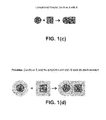
- FIGS. 1( a )-1( d ) illustrate method of making effects of embodiments of the disclosed organometallic-inorganic hybrid electrode active materials, and with respect to FIG. 1( c ) the effect on the components when made by a conventional method.
- FIG. 2 are graphs of charge-discharge profile data obtained from prior art various pure ferrocene compounds.
- FIG. 3 is a graph of cyclic voltammetry data obtained from an embodiment of the cathode material consisting of poly(2-ferrocenylmethyl methacrylate) (PFMMA).
- PFMMA poly(2-ferrocenylmethyl methacrylate)
- FIG. 4 is a graph of a charge-discharge profile data obtained from an embodiment of the cathode material consisting of PFMMA.
- FIG. 5 is a graph of rate performance data obtained from an embodiment of the cathode material consisting of PFMMA (electrode thickness: 0.15 mm).
- FIG. 6 is a graph of voltammetry data obtained from embodiments of an electrode material consisting substantially or completely of inorganic (LiFePO 4 ) electrode material (“Inorganic”), an electrode material consisting substantially or completely of the disclosed PFMMA electrode material (“OM”), and a hybrid electrode material (“Hybrid”) consisting of the disclosed PFMMA polymer and LiFePO 4 , as listed in Table 2.
- inorganic LiFePO 4
- OM electrode material
- Hybrid hybrid electrode material
- FIG. 7 is a graph of rate performance data obtained from embodiments of an electrode material consisting substantially or completely of inorganic (LiFePO 4 ) electrode material (“Inorganic”), an electrode material consisting substantially or completely of PFMMA electrode material (“OM”), and a hybrid electrode material (“Hybrid”) consisting of PFMMA and LiFePO 4 (electrode thickness: 0.15 mm).
- FIG. 8 is a graph of electrochemical analysis data of an embodiment of the disclosed PFMMA-LiFePO 4 organometallic-inorganic hybrid electrode material as compared to an embodiment of an organic radical-inorganic hybrid electrode material comprising poly(2,2,6,6-tetramethylpiperidinyloxy-4-yl methacrylate (PTMA).
- PTMA poly(2,2,6,6-tetramethylpiperidinyloxy-4-yl methacrylate
- FIG. 9 is a graph of volumetric energy capacity (VEC) vs. cycle number in a high rate pulse discharge (HRPD) protocol data obtained from embodiments of an electrode material consisting substantially or completely of inorganic (LiFePO 4 ) electrode material (“Inorganic”), an electrode material consisting substantially or completely of the disclosed PFMMA electrode material (“OM”), and a hybrid electrode material (“Hybrid”) consisting of the disclosed PFMMA polymer and LiFePO 4 (electrode thickness: 0.15 mm).
- VEC volumetric energy capacity
- HRPD high rate pulse discharge
- FIG. 10 is a graph of voltage vs. volumetric energy capacity (VEC) in a high rate pulse discharge (HRPD) protocol for the 5 th (solid line), 15 th (dash line), and 25 th (dot line) cycles data obtained from embodiments of an electrode material consisting substantially or completely of inorganic (LiFePO 4 ) electrode material (“Inorganic”), an electrode material consisting substantially or completely of the disclosed PFMMA electrode material (“OM”), and a hybrid electrode material (“Hybrid”) consisting of the disclosed PFMMA polymer and LiFePO 4 (electrode thickness: 0.15 mm).
- VEC voltage vs. volumetric energy capacity
- FIG. 11 is a 1 H NMR spectrum from the analysis of the PFMMA synthesis product.
- Electrode active materials and composites of electrode active materials, electric conductivity-imparting agents, and electrodes made thereof, which composites and electrodes have high-energy densities, high efficiency and/or long cycle life are also disclosed. Also disclosed are methods for producing the materials, composites, and electrodes. More specifically, disclosed are embodiments of active materials for organometallic or organometallic-inorganic hybrid electrode active materials, and electrodes made of such materials. In certain embodiments, the electrode active materials form electrodes, and in certain embodiments, cathodes for lithium-ion batteries.
- An active material of an electrode as used herein refers to a material contributing directly to the electrode reaction including the charging reaction and the discharging reaction, and performs a major function of a battery system.
- An anode as used herein refers to an electrode through which electric charge flows into a polarized electrical device. From an electrochemical point of view, negatively-charged anions move toward the anode and/or positively-charged cations move away from it to balance the electrons arriving from external circuitry. In a discharging battery, such as the disclosed lithium/air batteries or a galvanic cell, the anode is the negative terminal where electrons flow out. If the anode is composed of a metal, electrons that it gives up to the external circuit are accompanied by metal cations moving away from the electrode and into the electrolyte.
- Capacity as used herein refers to the amount of electrical charge a battery can deliver.
- the capacity is typically expressed in units of mAh, or Ah, and indicates the maximum constant current a battery can produce over a period of one hour.
- a battery with a capacity of 100 mAh can deliver a current of 100 mA for one hour or a current of 5 mA for 20 hours.
- Conductive (or conductivity) agents are included in particular embodiments herein as agents to enhance the electron conductivity of the electrode other than through the active material.
- a cathode as used herein refers to an electrode through which electric charge flows out of a polarized electrical device. From an electrochemical point of view, positively charged cations invariably move toward the cathode and/or negatively charged anions move away from it to balance the electrons arriving from external circuitry.
- the cathode In a discharging battery, such as the disclosed lithium-ion batteries or a galvanic cell, the cathode is the positive terminal, toward the direction of conventional current. This outward charge is carried internally by positive ions moving from the electrolyte to the positive cathode.
- Intercalation is a term referring to the insertion of a material (e.g., an ion or molecule) into the microstructure of another material.
- a material e.g., an ion or molecule
- lithium ions can insert, or intercalate, into graphite (C) to form lithiated graphite (LiC 6 ).
- KETJENBLACK® carbon is an electroconductive carbon powder and is available from Akzo Nobel Polymer Chemicals, Chicago, Ill. In particular, EC-600JD has been found to be useful.
- Lower alkyl refers an aliphatic group that is a branched or unbranched saturated hydrocarbon group of 1 to 10 carbon atoms, such as methyl, ethyl, n-propyl, isopropyl, n-butyl, isobutyl, t-butyl, pentyl, hexyl, heptyl, octyl, and the like.
- Specific capacity refers to capacity per unit of mass. Specific capacity may be expressed in units of mAh/g, and often is expressed as mAh/g carbon when referring to a carbon-based electrode in Li/air batteries.
- Specific energy as used herein refers to energy per unit of mass. Specific energy is commonly expressed in units of Wh/kg or J/kg. With respect to a metal/air battery, the mass typically refers to the mass of the entire battery and does not include the mass of oxygen absorbed from the atmosphere.
- Specific power as used herein refers to power per unit of mass, volume, or area. For example, specific power may be expressed in units of W/kg. With respect to a metal ion battery cathode, the mass typically refers to the mass of the entire electrode.
- Lithium ion batteries typically comprise two components that participate in electrochemical reactions to produce energy: an anode and a cathode. Lithium ion batteries produce energy through electrochemical reactions occurring between the anode and cathode. Typically both the anode and cathode are made of active materials that operate by lithium ions intercalating and de-intercalating or by reversible redox electrochemical reactions. In the intercalation mechanism mode, during battery discharge, lithium ions de-intercalate from the anode material and migrate to the cathode into which they insert. During a charging cycle, the opposite reaction occurs, i.e., lithium ions are extracted from the cathode material and migrate back to the anode where they reinsert.
- a conventional lithium ion battery typically has a graphite anode.
- Other conventional anode materials include lithium alloys, metal oxides, silicon, tin, and others.
- Common electrolytes include lithium salts (e.g., LiPF 6 , LiBF 4 , LiClO 4 ) dissolved in organic solvents (e.g., ethylene carbonate, propylene carbonate, dimethyl carbonate, ethyl methyl carbonate, and combinations thereof).
- Lithium ion battery cathodes formed of inorganic material operate to charge and discharge by de-insertion or insertion of Li + .
- Inorganic cathodes tend to provide high energy but are low power and have safety, toxicity and resource availability issues.
- Known organic active material cathodes operate to charge and discharge by reversible redox electrochemical reactions.
- Some available lithium ion battery organic cathodes provide high power and are environmentally friendly.
- conventional organic cathodes typically have a low volumetric energy density.
- the described invention discloses superior organometallic polymer electrode and inorganic electrode active materials and discloses superior organometallic/inorganic hybrid electrodes comprised of the disclosed organometallic polymer(s) and inorganic compounds, with one or more conductive agents, to achieve high power performance from the organic moiety while maintaining the high volumetric energy density from the inorganic component(s).
- Embodiments of the resulting cathodes have superior, high-capacity density, energy density, and power density.
- Aspects of the superior electrical performances of embodiments of the disclosed hybrid cathodes are believed to be attributed at least in part to a synergistic effect between the disclosed organometallic polymer and the inorganic components of the hybrid electrode. The superior results due to the synergistic effects are realized, however, only when the electrode compositions are made in a particular manner. As such, also disclosed are methods of making such hybrid electrodes.
- hybrid electrodes using conventional forming methods provide poor electrical properties performance and the functional electrical properties from the organic polymer (and/or the inorganic) components were significantly blocked in such hybrid cathode systems.
- PFMMA poly(2-ferrocenylmethyl methacrylate)
- the disclosed organometallic-inorganic hybrid electrodes not only combine the advantages of each type of cathode, due to the manner of manufacture as discussed below, there is a resulting synergistic effect between the organic and the inorganic active materials of the composite hybrid electrodes, resulting in hybrid electrodes having significantly higher power (from the organometallic component), higher energy (from the inorganic component) and/or a long, sustainable life. More specifically, certain embodiments of the disclosed organometallic-inorganic hybrid electrodes provide superior electric properties based on the developed synergistic effect between the two types of active materials in the electrode, due (at least in part) to the disclosed method providing coating of the organometallic active material with conductive agent prior to mixing with the inorganic active agent.
- the high-energy inorganic component of the hybrid electrode can recharge the organometallic component after high pulse discharge.
- the power and energy properties of the disclosed organometallic-inorganic hybrid electrodes are also tunable by controlling the ratio of the organometallic component to the inorganic component in the hybrid electrodes.
- Embodiments of the organometallic electrode active material comprise, or consist essentially of, or consist of poly(2-ferrocenylmethyl methacrylate) (PFMMA) having a structure represented by the following general formula (1):
- the organometallic electrode active material comprises, or consists essentially of, or consists of, a ferrocene polymer compound having a structure represented by formula (1) and a conductive agent. In other embodiments, the organometallic electrode active material comprises, or consists essentially of, or consists of, a ferrocene polymer compound having a structure represented by formula (1), a conductive agent and a binder.
- Embodiments of active materials for organometallic-inorganic hybrid electrodes comprise, or consist essentially of, or consist of, a ferrocene polymer compound having a structure represented by formula (1) (that is, PFMMA) and an inorganic active material.
- the organometallic-inorganic hybrid electrode materials comprise, or consist essentially of, or consist of, PFMMA, an inorganic active material and one or more conductive agents. Certain of these embodiments further include a binder.
- the organometallic compound particularly poly(2-ferrocenylmethyl methacrylate) (PFMMA)
- PFMMA poly(2-ferrocenylmethyl methacrylate)
- the electrode to be used as an electrode active material is not limited to one of the cathode and the anode.
- the disclosed ferrocene polymer compound having a structure represented by the general formula (1) i.e. PFMMA
- the battery according to an exemplary embodiment is preferably a lithium battery, particularly a lithium ion battery.
- the cathode active material composition and cathodes disclosed may also be suitable for use in this cathode can also be used in other batteries such as sodium battery and magnesium battery.
- organometallic electrode active material may comprise a ferrocene polymer compound having a structure represented by the following general formula (1), i.e. poly(2-ferrocenylmethyl methacrylate) (PFMMA):
- PFMMA poly(2-ferrocenylmethyl methacrylate)
- organometallic active materials may comprise compounds having a structure represented by the following general formula (2):
- PFMMA and/or the polymer compounds according to formula (2) have a number-average molecular weight of preferably from 1,000 to 100,000, or not less than 100, or not less than 500, or not less than 750, or not less than 1000, or not less than 1500. In some embodiments the polymer may have an average molecular weight of greater than 100,000.
- the ferrocene polymer shape may be any of being linear, branched, and/or networked. Further, the ferrocene polymer compound may have a structure of being crosslinked with a crosslinking agent.
- the upper limit of the number-average molecular weight is not especially limited but on the convenience of the synthesis, the poly(2-ferrocenylmethyl methacrylate) can suitably be used which has a number-average molecular weight of not more than 1,000,000, more preferably not more than 500,000, still more preferably not more than 250,000.
- the above-mentioned number-average molecular weight is determined by GPC (gel permeation chromatography) or LLS (Laser Light Scattering) measurement.
- the poly(2-ferrocenylmethyl methacrylate) can be synthesized as follows:
- the poly(2-ferrocenylmethyl methacrylate) was in one instance synthesized by charging a two-neck round bottom flask affixed with a reflux condenser, with 2-(ferrocenylmethyl)methacrylate (0.50 g, 1.76 mmol, 1 eq) and 20 mL of anhydrous toluene. The mixture was stirred until it became a homogeneous greenish solution, then radical initiator AIBN (azobisisobutyronitrile) was added (29 mg, 0.176 mmol, 0.1 eq) followed by heating to about 60° C. The reaction mixture was stirred at 60° C. for 2 days, during which time it turned from greenish yellow, to reddish-brown, to dark brown.
- AIBN azobisisobutyronitrile
- AIBN was recrystallized twice from methanol, prior to use. At the end of two days the mixture was quenched by the addition of 2-3 drops of MeOH. The reaction mixture was diluted with 100 mL of toluene, and 50 mL of methylene chloride, and the dark insoluble solid was removed by filtration. The filtrate was concentrated to a residue, dissolved in 3-5 mL of toluene and the product was precipitated with addition of hexanes (30 mL). The beige solid was isolated by filtration, and the process was repeated twice on the filtrate, to recover as much product as possible. The final product was isolated as a beige solid (0.2 g) in 40% yield. As can be seen in FIG.
- Ferrocene polymers satisfying formula (2) can be made in the same basic manner as disclosed above for PFMMA.
- the ferrocene polymer may be a homopolymer that has only a partial structure represented by the general formula (1) (or formula (2)) as a repeating unit structure, or may be a copolymer which further has another partial structure as a repeating unit structure.
- structures of potential copolymers satisfy (1a), 1(b), (1c), or mixtures thereof, as follows:
- structures of potential homopolymers satisfy 1(d) (as with formula (2) above) as follows:
- the partial structure represented by the general formula 1(d) may be in the mol % range of 0-100% with respect to the total of the polymeric compound.
- copolymers can be synthesized following the below basic synthesis process (see, Yang, Y.; Xie, Z.; Wu, C. Macromolecules 2002, 35, 3426): poly[(2-ferrocenylmethyl)Methacrylate-co-acrylate]: A tetrahydrofuran (THF) solution of 2-ferrocenemethyl)methacrylate (1 equivalent), a desired polymerizable acrylate and azobisisobutyronitrile (AIBN) (0.05 to 0.3 equivalents) is heated to 60° C. for 24 hours. The flask is then cooled in an ice bath and the reaction quenched with methanol to terminate the reaction.
- THF tetrahydrofuran
- AIBN azobisisobutyronitrile
- the polymer is isolated by precipitation in hexane, followed by drying under vacuum. The yields of the reaction vary according to the monomers used and their purities. The polymer is then characterized by 1 HNMR, IR and its molecular weight determined by GPC (gel permeation chromatography) or LLS (Laser Light Scattering) techniques.
- the acrylate monomers are esters that contain vinyl groups, such that two carbons are double bonded to each other, and directly attached to the carbonyl group.
- the amount of the second monomer is determined by those skilled in the art and depends on the desired physical properties of the final polymer, such as physical state (powder, amorphous, tacky, paste) or solubility.
- the resulting co-polymer can be further functionalized if so desired.
- the amount of AIBN can also be adjusted by those skilled in the art to achieve a desired molecular weight of the polymers. The lower the amount of AIBN or other initiator, the higher the molecular weight of the resulting polymer will be.
- Embodiments of the disclosed hybrid organometallic cathodes and cathode materials include an inorganic active material.
- the inorganic active material may comprise one or more of the following: metal oxides, sulfides, fluorides, and polyanions compounds.
- the metal oxide include a layered and a spinel structure, such as LiMO 2 and Li x M 2 O 4 (0 ⁇ x ⁇ 2, M: one or more than one kind of elements among Ni, Co, Mn, Fe, Al, Cr), MnO 2 , and Li y V 2 O 5 (0 ⁇ y ⁇ 2), and LiN 0.5 Mn 1.5-z Ti z O 4 (0 ⁇ z ⁇ 1.5), which are each a material obtained by substituting another transition metal for a part of Mn in a spinel structure, or mixtures thereof, lithium-rich mixed-metal oxides, xLi 2 MnO 3 .(1-x)LiMO 2 (0 ⁇ x ⁇ 1, M: Fe, Mn, Co, Ni, Al, Cr), and mixtures thereof.
- LiMO 2 and Li x M 2 O 4 (0 ⁇ x ⁇ 2, M: one or more than one kind of elements among Ni, Co, Mn, Fe, Al, Cr), MnO 2 , and Li y V 2 O 5 (0 ⁇ y ⁇ 2), and LiN 0.5 Mn
- suitable sulfides include MoS 2 , Li 2 S, SeS x , and mixtures thereof.
- polyanions include phosphates, such as LiMPO 4 (M: Fe, Mn, Co and Ni), borate such as LiMBO 3 (M: Fe, Mn, Co and Ni), silicate such as Li 2 MSiO 4 (M: Fe, Mn, Co and Ni), and mixtures thereof.
- the conductive agent may comprise an electroconductive material, such as electroconductive carbon, preferably an electroconductive carbon having a high surface area.
- the conductive agent may comprise KETJENBLACK® carbon, graphene, carbon black, graphite, acetylene black, carbon materials of carbon fibers such as vapor frown carbon fibers (VGCF), carbon nanotubes, and an activated or a non-activated carbon, conductive polymers, or mixtures thereof.
- VGCF vapor frown carbon fibers
- Binders may also be included, such as polytetrafluoroethylene (PTFE), polyvinylidene fluoride, (or polyvinylidene difluoride) (PVDF).
- PTFE polytetrafluoroethylene
- PVDF polyvinylidene difluoride
- solvent is used to dissolve the binder, but the solvent is vaporized during the process and is not present in the final electrode.
- the active materials and amounts are discussed as active material A and active material B as follows.
- Certain embodiments comprise, or consist essentially of, or consist of, an organometallic polymer electrode as active material (A), an inorganic compound as active material (B), and a conductive agent.
- the organometallic active material may comprise poly(2-ferrocenylmethyl methacrylate)
- the inorganic active material may comprise LiFePO 4
- the conductive agent may comprise KETJENBLACK® carbon (or a different conductive agent or mixes of conductive agents), and in some embodiments, a binder, such as PTFE or PVDF.
- organometallic/inorganic hybrid electrodes have superior electrochemical performances by first mixing or coating the organometallic active agent (ferrocene polymer in certain embodiments) with the conductive agent then mixing it with the inorganic active agent and conductive agents in certain embodiments. In this manner, the organometallic active agent (A) and the inorganic active agent (B) each maintain its own electrical environments (see FIG. 1( d ) ).
- the charge transfer environments for the organometallic active agent, particularly PFMMA active agent (A) differs from that of the inorganic active agent (B). That is, the local environments from each active material may influence each other in the hybrid electrode, i.e., the electrode environment surrounding one active material may be shared by the other. This leads to a synergistic effect associated with the environment interactions between the ferrocene polymer and the inorganic active agent, and such interaction promotes the charge transfer mechanism in the disclosed hybrid electrode system, thereby providing superior electrochemical performances of the disclosed hybrid electrodes.
- Components A, B and the conductive agent may be present in the composition in various weight ratios.
- the electrode or electrode active material may comprise poly(2-ferrocenylmethyl methacrylate) active material in amount a, pre-mixed with conductive agent in amount x, at a weight ratio range of from 1:20 to 10:1 for a:x (the weight ratio of active material A (a) to its conductive carbon (x)), preferably from 1:20 to 5:1, more preferably from 1:10 to 3:1 to form a poly(2-ferrocenylmethyl methacrylate)/conductive agent mixture.
- the poly(2-ferrocenylmethyl methacrylate)/conductive agent mixture is then combined with the inorganic/conductive agent mixture, which comprises inorganic active material in amount b and the conductive agent in amount y, with a weight ratio range of from 1:10 to 50:1 for b:y, preferably from 1:1 to 50:1, and more preferably from 2:1 to 50:1 to form the disclosed poly(2-ferrocenylmethyl methacrylate)/inorganic hybrid electrode by homogeneous mixing or interfacial contact as shown in FIGS. 1( a ) and 1( b ) , respectively.
- the weight ratios disclosed here are that of the active material to its conductive carbon while the weight percents in Table 2 below are that of the entire electrode.
- the ferrocene polymer/conductive agent electrode mixture contains a significantly higher loading of conductive carbon than the inorganic electrode. This is attributed to the ferrocene polymer's highly electrical insulating characteristics that require a considerable amount of conductive carbon in the electrode to be electrochemically active. Both the mixing order with carbon and the weight ratios are factors affecting the electrode performance, with each adding to a synergistic effect.
- the weight ratio of organometallic to inorganic material in the electrode material or the electrode is from 1:100 to 100:1. In certain embodiments the weight ratio of organometallic to inorganic material in the electrode material or the electrode is from 1:50 to 50:1. In certain embodiments the weight ratio of organometallic to inorganic material in the electrode material or the electrode is from 1:30 to 10:1.
- the compositions of entire PFMMA electrode (16.67% PFMMA, 73.33% KB, and 10% PTFE) and the entire LiFePO 4 electrode (80% LiFePO 4 , 10% KB, and 10% PTFE) with a weight ratio of 50/50 in the hybrid electrode.
- the weight ratio of 50/50 is the weight ratio of the entire PFMMA electrode to the entire LiFePO 4 electrode.
- the entire PFMMA electrode contains 16.67% PFMMA, 73.33% KB, and 10% PTFE and the entire LiFePO 4 electrode contains 80% LiFePO 4 , 10% KB, and 10% PTFE.
- the weight ratios vary, such as 25/75, 50/50, and 75/25 of the entire PFMMA electrode to the entire LiFePO 4 electrode.
- the inorganic may be added first and then the second conductive agent component or the two may be mixed together and then added to the organometallic composition or both may simply be added at once to the organometallic composition.
- the mixture is further milled at 400 rpm for 2 hours.
- a binder PTFE (0.06 g) is added to the mixture and the mixture is further milled at 400 rpm for 1 hour.
- the milled composite powder including active material PFMMA (a)/conductive agent (x)/active material LiFePO 4 (b)/conductive agent (y)/binder with a final weight ratio of 8.33/36.67/40/5/10, is rolled into a paper electrode using isopropanol (IPA) as a softener.
- IPA isopropanol
- a binder PTFE (0.03 g) is added to the PFMMA/conductive agent mixture, and the mixture is further milled at 400 rpm for 1 hour.
- the milled composite powder, active material PFMMA (a)/conductive agent (x)/binder with a final weight ratio of 16.67/73.33/10, is rolled into a paper electrode using isopropanol (IPA) as a softener.
- IPA isopropanol
- IPA isopropanol
- Working electrodes with a surface area of 1.6 cm 2 and thicknesses of 0.15-0.20 mm, were assembled into a half-cell configuration (2325 coin-type) in a dry glove box by using Li metal as an anode, 1M LiPF 6 in ethyl carbonate/dimethyl carbonate (1:1) as an electrolyte, and Celgard 3501 membrane as a separator.
- the cells were electrochemically cycled using an Arbin BT-2000 Battery Tester at room temperature.
- the high rate pulse discharge (HRPD) protocol followed the procedures: charging galvanostatically at the 1 C rate with the cutoff potentials of 4.2 V vs.
- Li/Li + Li/Li + ; and discharging at the 1 C rate for 100 s followed by 10 C (high rate pulse) for 10 s, repeating 1 C and 10 C with the cutoff potentials of 2.0 V vs. Li/Li + where the cell was then recharged.
- the C rate is based on the theoretical capacity of 280 mAh g ⁇ 1 for PFMMA, and 168 mAh g ⁇ 1 for LiFePO 4 as active material respectively.
- the cyclic voltammetry (CV) of the cells were carried out using a Solartron workstation. The CV measurement was performed with the low scan rate of 0.1 mV s ⁇ 1 and the potential range of 4.2-2.0 V vs. Li/Li + for five cycles.
- cathodes formed of poly(vinylferrocene), poly(ethynylferrocene), and poly(ferrocene) polymers had stable and reversible redox reaction properties and fair rate capability but low specific capacity for use as cathode materials for lithium-ion batteries (see also, FIG. 2 showing data from K. Tamura, N. Akutagawa, M. Satoh, J. Wada, T. Masuda, Macromol. Rapid Commun. 2008, 29, 1944). As such, these materials were found to be insufficient for cathode materials and especially for hybrid cathodes for the preferred applications in lithium-ion batteries.
- FIG. 3 shows the CV curve of a PFMMA electrode in a half-cell of Li/PFMMA.
- a PFMMA electrode was used as working electrode, and Li metal was used as both counter and reference electrodes.
- FIG. 3 shows the CV curve of a PFMMA electrode at a scan rate of 0.1 mV s ⁇ 1 between 4.2 and 2.0 V vs. Li/Li + for the first and fifth cycles. The curve shows a stable and reversible redox reaction.
- a charge-discharge profile was determined as shown in FIG.
- the rate performance of the electrode made solely of PFMMA was determined for a 0.15 mm electrode thickness to be 140 mAh/g at 10 C. At 1 C the rate performance is near 300 mAh/g where conventional cathodes have a rate performance closer to about 150 mAh/g at 1 C.
- Embodiments of the disclosed organometallic/organic hybrid electrodes were also examined. As shown in Table 2, the PFMMA is identified as Active Material A and LiFePO 4 is identified as Active Material B. Conductive Material x and y is KETJENBLACK and the binder comprises PTFE. The testing experiment specifics for each of the electrochemical analysis tests performed to obtain the data in the graphs of FIGS. 6-10 are set forth above.
- electrochemical performance of the example electrodes (Table 2), including the embodiment of the disclosed PFMMA/LiFePO 4 (Hybrid in FIG. 6 ) as compared to an electrode made solely of PFMMA (OM in FIG. 6 ) and an electrode made solely of LiFePO 4 (Inorganic in FIG. 6 ) was investigated by cyclic voltammetry (CV). Further, the rate performance of the same examples was also determined.
- the PFMMA/LiFePO 4 hybrid cathode achieves improvements in the rate and reversibility of redox couples as compared to the Baseline 1 and 2 electrode examples (see Table 2), namely an electrode made solely of PFMMA and a LiFePO 4 cathode, respectively.
- FIG. 8 shows electrochemical analysis of the disclosed organometallic/inorganic hybrid cathode (PFMMA/LiFePO 4 ) versus an organic radical polymer/inorganic cathode (poly(2,2,6,6-tetramethylpiperidinyloxy-4-yl methacrylate) (PTMA)/LiFePO 4 ).
- PFMMA/LiFePO 4 achieves a better rate and reversibility of redox couples as compared to the PTMA/LiFePO 4 hybrid cathode.
- the PFMMA/LiFePO 4 cathode produces much bigger redox peaks and a smaller gap between the redox peak potentials indicating this hybrid will have better performance in rate and reversibility.
- the electrochemical characterizations as discussed above demonstrate the capabilities of high (pulse) power and stability for the disclosed hybrid electrodes.
- HRPD high-rate pulse discharge
- VEC volumetric energy capacity
- the HRPD protocol and VEC measurement were targeted for the practical applications of hybrid electrodes in transportation or other high pulse power applications with limitations on volume.
- the protocol involves an initial charge at 1 C rate to 4.2 V followed by discharge at 1 C rate for 100 s followed by high rate (10 C pulse) for 10 s and repeated until 2.0V.
- FIG. 9 shows the VEC for the 50 cycles of HRPD protocol.
- the disclosed PFMMA/LiFePO 4 hybrid cathode Hybrid in FIG.
- FIG. 10 further illustrates the benefits of the disclosed organometallic polymer/inorganic hybrid electrode through a high-power performance detailed process testing (HRPD).
- HRPD high-power performance detailed process testing
- the inventors' original hypothesis was that the organometallic component of the hybrid cathode would recharge the inorganic component of the cathode and thus, the capacity of the hybrid system should be completely or substantially completely from the organometallic component of the hybrid cathode but what was surprisingly found was that the disclosed hybrid cathode shows a higher capacity than either the pure organometallic cathode (ferrocene polymer) or the pure inorganic cathode (LiFePO 4 ) alone.
- the organometallic/inorganic hybrid cathode components act as more than an additive effect of the components but in fact provide a synergistic effect if made in the proper manner.
- Such synergistic effect providing the higher capacity with the disclosed the organometallic/inorganic hybrid cathode, is especially pronounced at the higher power (pulse) performance range.
Landscapes
- Chemical & Material Sciences (AREA)
- Chemical Kinetics & Catalysis (AREA)
- Electrochemistry (AREA)
- General Chemical & Material Sciences (AREA)
- Composite Materials (AREA)
- Engineering & Computer Science (AREA)
- Materials Engineering (AREA)
- Crystallography & Structural Chemistry (AREA)
- Inorganic Chemistry (AREA)
- Battery Electrode And Active Subsutance (AREA)
Abstract
Description

wherein R1 is —(CH2)—m, m=1-10, preferably m=1-5, and R2═H or a methyl group. In certain embodiments the cathode comprises a ferrocene polymer that satisfies formula (1):

wherein n>0. In some embodiments the ferrocene polymer comprises poly(2-ferrocenylmethyl methacrylate) (PFMMA) with a molecular weight of from 1,000 to 1,000,000. In certain embodiments the cathode further comprises or consists essentially of an inorganic active material and a conductive agent and optionally, a binder. In other embodiments the cathode further comprises or consists essentially of inorganic active material, a first conductive material and a second conductive material and optionally, a binder. In further embodiments the cathode includes a weight ratio of the ferrocene polymer to inorganic active material of 1:100 to 100:1. In other embodiments the weight ratio of the ferrocene polymer to the first conductive agent is from 1:20 to 5:1. In other embodiments the weight ratio of the ferrocene polymer to the first conductive agent is 1:10 to 3:1. In yet other embodiments the weight ratio of the inorganic active material to the second conductive agent is from 1:10 to 50:1. Further embodiments have the weight ratio of the inorganic active material to the second conductive agent is 2:1 to 50:1.

an inorganic active material, a conductive agent and an anode.

an inorganic active material, a conductive agent, and a binder. Further disclosed is a cathode comprising, consisting essentially of or consisting of an active material comprising a ferrocene polymer satisfying formula (1):
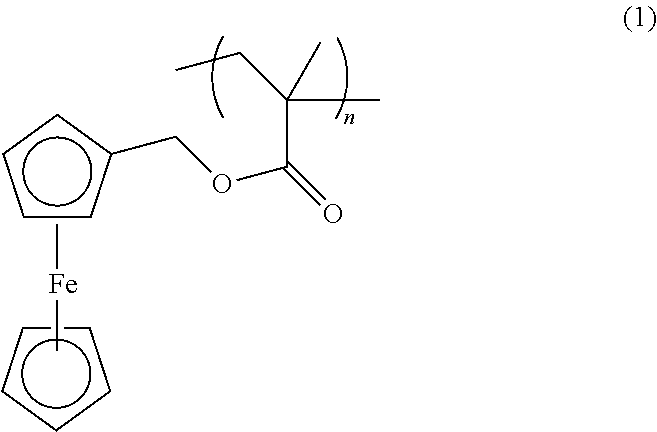
wherein n>0, an inorganic active material, a first conductive material, a second conductive material, and a binder. In certain embodiments this cathode has a weight ratio of the ferrocene polymer to the first conductive agent of from 1:20 to 5:1. In other embodiments this cathode has a weight ratio of the inorganic active material to the second conductive agent of from 1:10 to 50:1. In certain embodiments of this cathode the first conductive material is different from the second conductive material. In certain embodiments of this cathode the inorganic active material comprises LiFePO4.

wherein n>0.

alternative organometallic active materials may comprise compounds having a structure represented by the following general formula (2):

wherein R1 is a lower alkyl as defined herein, or R1═—(CH2)—m, m=1-10, preferably m=1-5, and R2═H or a methyl group.

The poly(2-ferrocenylmethyl methacrylate) was in one instance synthesized by charging a two-neck round bottom flask affixed with a reflux condenser, with 2-(ferrocenylmethyl)methacrylate (0.50 g, 1.76 mmol, 1 eq) and 20 mL of anhydrous toluene. The mixture was stirred until it became a homogeneous greenish solution, then radical initiator AIBN (azobisisobutyronitrile) was added (29 mg, 0.176 mmol, 0.1 eq) followed by heating to about 60° C. The reaction mixture was stirred at 60° C. for 2 days, during which time it turned from greenish yellow, to reddish-brown, to dark brown. AIBN was recrystallized twice from methanol, prior to use. At the end of two days the mixture was quenched by the addition of 2-3 drops of MeOH. The reaction mixture was diluted with 100 mL of toluene, and 50 mL of methylene chloride, and the dark insoluble solid was removed by filtration. The filtrate was concentrated to a residue, dissolved in 3-5 mL of toluene and the product was precipitated with addition of hexanes (30 mL). The beige solid was isolated by filtration, and the process was repeated twice on the filtrate, to recover as much product as possible. The final product was isolated as a beige solid (0.2 g) in 40% yield. As can be seen in

In certain embodiments structures of potential homopolymers satisfy 1(d) (as with formula (2) above) as follows:

For structures 1(a), 1(b), 1(c) and 1(d), the polymers (copolymers and homopolymer) include but are not limited to the following specific examples: R1 and R1′ can, independently, be hydrogen or methyl; p=1-10, and preferably is 1, 2, 3, 4 or 5; n, m are the number of repeating units and depend on the feed ratio (i.e. original amount of each monomer used in the reaction); and R2 is hydrogen, methyl, ethyl, propyl, isopropyl, butyl, a substituted methyl, phenyl, a substituted phenyl ring, or a ring containing a heteroatom. For the copolymers, the partial structure represented by the general formula 1(d) may be in the mol % range of 0-100% with respect to the total of the polymeric compound.
| TABLE 1 | ||||
| Obsd. | ||||
| capacity/ | ||||
| Theor. | ||||
| Theor. capacity | Obsd. capacity | capacity | ||
| Polymer | m/e | A · h · kg−1 | A · h · kg−1 | % |
| poly | 212.7 | 126.0 | 105 | 83 |
| (vinylferrocene) | ||||
| poly | 210.1 | 127.6 | 105 | 82 |
| (ethynylferrocene) | ||||
| poly(ferrocene) | 184.0 | 145.6 | 95 | 65 |
| (See, K. Tamura, N. Akutagawa, M. Satoh, J. Wada, T. Masuda, Macromol. Rapid Commun. 2008, 29, 1944.) | ||||
| TABLE 2 | |||||
| Active | Conductive | Active | Conductive | ||
| Material A | Material x | Material B | Material y | Binder | |
| Example | (%) | (%) | (%) | (%) | (%) |
| Hybrid Example | 8.333 | 36.667 | 40 | 5 | 10 |
| (50% A-50% B) | |||||
| Baseline-1 | 16.67 | 73.33 | — | — | 10 |
| (100% A) | |||||
| Baseline-2 | — | — | 80 | 10 | 10 |
| (100% B) | |||||
Claims (23)


Priority Applications (2)
| Application Number | Priority Date | Filing Date | Title |
|---|---|---|---|
| US14/167,944 US9444096B2 (en) | 2013-01-30 | 2014-01-29 | Organometallic-inorganic hybrid electrodes for lithium-ion batteries |
| PCT/US2014/013935 WO2014120970A1 (en) | 2013-01-30 | 2014-01-30 | Organometallic-inorganic hybrid electrodes for lithium-ion batteries |
Applications Claiming Priority (2)
| Application Number | Priority Date | Filing Date | Title |
|---|---|---|---|
| US201361758675P | 2013-01-30 | 2013-01-30 | |
| US14/167,944 US9444096B2 (en) | 2013-01-30 | 2014-01-29 | Organometallic-inorganic hybrid electrodes for lithium-ion batteries |
Publications (2)
| Publication Number | Publication Date |
|---|---|
| US20140212753A1 US20140212753A1 (en) | 2014-07-31 |
| US9444096B2 true US9444096B2 (en) | 2016-09-13 |
Family
ID=51223273
Family Applications (1)
| Application Number | Title | Priority Date | Filing Date |
|---|---|---|---|
| US14/167,944 Expired - Fee Related US9444096B2 (en) | 2013-01-30 | 2014-01-29 | Organometallic-inorganic hybrid electrodes for lithium-ion batteries |
Country Status (2)
| Country | Link |
|---|---|
| US (1) | US9444096B2 (en) |
| WO (1) | WO2014120970A1 (en) |
Families Citing this family (7)
| Publication number | Priority date | Publication date | Assignee | Title |
|---|---|---|---|---|
| WO2017151647A1 (en) | 2016-02-29 | 2017-09-08 | Alliance For Sustainable Energy, Llc | Materials for flow battery energy storage and methods of using |
| JP6745504B2 (en) * | 2016-04-05 | 2020-08-26 | 住友ゴム工業株式会社 | Positive electrode active material for lithium-ion secondary battery, positive electrode and lithium-ion secondary battery |
| US10297829B2 (en) * | 2016-08-24 | 2019-05-21 | Uchicago Argonne, Llc | Polyanthraquinone-based organic cathode for high-performance rechargeable magnesium-ion batteries |
| KR101865384B1 (en) * | 2016-09-26 | 2018-06-07 | 울산과학기술원 | Three-dimensional porous-structured electrode, and electrochemical device having the electrode |
| CN109560265B (en) * | 2018-11-02 | 2020-10-13 | 中国电力科学研究院有限公司 | A coating method for effectively inhibiting oxygen loss of lithium-rich manganese-based cathode materials |
| CN112331837A (en) * | 2020-11-24 | 2021-02-05 | 中国科学院物理研究所 | Organic-inorganic composite electrode material and preparation method and application thereof |
| CN117525661B (en) * | 2023-12-25 | 2024-10-11 | 武汉大学 | A ferrocene-mediated direct repair and regeneration method for waste lithium iron phosphate positive electrode and its application |
Citations (13)
| Publication number | Priority date | Publication date | Assignee | Title |
|---|---|---|---|---|
| JPS60177197A (en) * | 1984-02-22 | 1985-09-11 | Daicel Chem Ind Ltd | Electrochemical doping method of polymer having ferrocene nucleus |
| US4547439A (en) | 1982-09-01 | 1985-10-15 | Commissariat A L'energie Atomique | Electrochemical generator |
| US4781443A (en) * | 1985-07-12 | 1988-11-01 | The Secretary Of State For Defence In Her Britannic Majesty's Government Of The United Kingdom Of Great Britain And Northern Ireland | Electrically conducting polymers |
| JP2002175800A (en) | 2000-12-05 | 2002-06-21 | Sanyo Electric Co Ltd | Non-aqueous electrolyte battery |
| US20020136898A1 (en) | 1998-12-14 | 2002-09-26 | Nippon Mitsubishi Oil Corporation | Electrochromic device |
| JP2003332601A (en) * | 2002-05-08 | 2003-11-21 | Chisso Corp | Photoelectric conversion element |
| US20070082267A1 (en) | 2005-06-01 | 2007-04-12 | Board Of Regents, The University Of Texas System | Cathodes for rechargeable lithium-ion batteries |
| US20080187838A1 (en) * | 2007-02-06 | 2008-08-07 | 3M Innovative Properties Company | Electrodes including polyacrylate binders and methods of making and using the same |
| JP2009238945A (en) | 2008-03-26 | 2009-10-15 | Kaneka Corp | Energy storage device |
| US20100009256A1 (en) | 2007-01-25 | 2010-01-14 | Nec Corporation | Polyradical compound-conductive material composite, method for producing the same, and battery using the same |
| US7887970B1 (en) | 2005-08-02 | 2011-02-15 | The United States Of America As Represented By The United States Department Of Energy | Aluminum oxyhydroxide based separator/electrolyte and battery system, and a method of making the same |
| US20110052952A1 (en) * | 2009-09-02 | 2011-03-03 | Sae-Weon Roh | Electrode assembly and rechargeable battery having an electrode assembly |
| CN102347476A (en) | 2010-08-02 | 2012-02-08 | 中国科学院宁波材料技术与工程研究所 | Lithium iron phosphate/carbon composite anode material prepared by catalytic graphitization method, and preparation method thereof |
-
2014
- 2014-01-29 US US14/167,944 patent/US9444096B2/en not_active Expired - Fee Related
- 2014-01-30 WO PCT/US2014/013935 patent/WO2014120970A1/en not_active Ceased
Patent Citations (13)
| Publication number | Priority date | Publication date | Assignee | Title |
|---|---|---|---|---|
| US4547439A (en) | 1982-09-01 | 1985-10-15 | Commissariat A L'energie Atomique | Electrochemical generator |
| JPS60177197A (en) * | 1984-02-22 | 1985-09-11 | Daicel Chem Ind Ltd | Electrochemical doping method of polymer having ferrocene nucleus |
| US4781443A (en) * | 1985-07-12 | 1988-11-01 | The Secretary Of State For Defence In Her Britannic Majesty's Government Of The United Kingdom Of Great Britain And Northern Ireland | Electrically conducting polymers |
| US20020136898A1 (en) | 1998-12-14 | 2002-09-26 | Nippon Mitsubishi Oil Corporation | Electrochromic device |
| JP2002175800A (en) | 2000-12-05 | 2002-06-21 | Sanyo Electric Co Ltd | Non-aqueous electrolyte battery |
| JP2003332601A (en) * | 2002-05-08 | 2003-11-21 | Chisso Corp | Photoelectric conversion element |
| US20070082267A1 (en) | 2005-06-01 | 2007-04-12 | Board Of Regents, The University Of Texas System | Cathodes for rechargeable lithium-ion batteries |
| US7887970B1 (en) | 2005-08-02 | 2011-02-15 | The United States Of America As Represented By The United States Department Of Energy | Aluminum oxyhydroxide based separator/electrolyte and battery system, and a method of making the same |
| US20100009256A1 (en) | 2007-01-25 | 2010-01-14 | Nec Corporation | Polyradical compound-conductive material composite, method for producing the same, and battery using the same |
| US20080187838A1 (en) * | 2007-02-06 | 2008-08-07 | 3M Innovative Properties Company | Electrodes including polyacrylate binders and methods of making and using the same |
| JP2009238945A (en) | 2008-03-26 | 2009-10-15 | Kaneka Corp | Energy storage device |
| US20110052952A1 (en) * | 2009-09-02 | 2011-03-03 | Sae-Weon Roh | Electrode assembly and rechargeable battery having an electrode assembly |
| CN102347476A (en) | 2010-08-02 | 2012-02-08 | 中国科学院宁波材料技术与工程研究所 | Lithium iron phosphate/carbon composite anode material prepared by catalytic graphitization method, and preparation method thereof |
Non-Patent Citations (17)
| Title |
|---|
| Doeff, Marca M. et al., "Optimization of Carbon Coatings on LiFePO4," Lawrence Berkeley National Laboratory (Jul. 2005). |
| Hou, Chao et al., "Integrated Solid-Nanoporous Copper/Oxide Hybrid Bulk Electrodes for High-performance Lithium-Ion Batteries," Scientific Reports, vol. 3, Article No. 2878, 7 pages (Oct. 2013). |
| Huang, Qian et al., "Composite organic radical-inorganic hybrid cathode for lithium-ion batteries," Journal of Power Sources, vol. 233, pp. 69-73 (Jul. 2013). |
| Huang, Qian et al., "Organometallic-Inorganic Hybrid Cathode," Materials Research Society Symposium for Advanced Materials 2013 Spring Meeting & Exhibit in San Francisco, California, 13 pages (Apr. 2013). |
| International Search Report and Written Opinion for PCT/US2014/013935 (mailed May 23, 2014). |
| Kim, Jae-Kwang et al., "Towards flexible secondary lithium batteries: polypyrrole-LiFePO4 thin electrodes with polymer electrolytes," J. Mater. Chem., vol. 22, pp. 15045-15049 (Jun. 2012). |
| Kim, Jae-Kwang, "Advanced Materials for Rechargeable Lithium Batteries," Thesis for the Degree of Doctor of Philosophy (2013). |
| Lemmon, John P. et al., "Composite Organic Radical-Inorganic Hybrid Cathode," p. 1 and 3 (Apr. 2012). |
| Machine translation of JP 2002-175800, published on Jun. 21, 2002. * |
| Machine translation of JP 2003-332601, published on Nov. 21, 2003. * |
| Muldoon, John et al., "Electrolyte roadblocks to a magnesium rechargeable battery," Energy Environ. Sci., vol. 5, pp. 5941-5950 (Jan. 2012). |
| Rahimi, Azam, "Inorganic and Organometallic Polymers: A Review," Iranian Polymer Journal, vol. 13, No. 2, pp. 149-164 (Apr. 2004). |
| Sigma Aldrich's "Matterial Matters TM", 2009, vol. 4, No. 2, p. 31. * |
| Song, Zhiping et al., "Towards sustainable and versatile energy storage devices: an overview of organic electrode materials," Energy Environ. Sci., vol. 6, pp. 2280-2301 (May 2013). |
| Tamura, Kosaku et al., "Charge/Discharge Properties of Organometallic Batteries Fabricated with Ferrocene-Containing Polymers," Macromol. Rapid Commun., vol. 29, pp. 1944-1949. (Dec. 2008). |
| Translation of JP 60-177197, published on Sep. 11, 1985. * |
| Yang, Yali et al., "Novel Synthesis and Characterization of Side-Chain Ferrocene-Containing Polymers," Macromolecules, vol. 35, pp. 3426-3432 (Mar. 2002). |
Also Published As
| Publication number | Publication date |
|---|---|
| US20140212753A1 (en) | 2014-07-31 |
| WO2014120970A1 (en) | 2014-08-07 |
Similar Documents
| Publication | Publication Date | Title |
|---|---|---|
| US12438144B2 (en) | Anode active material for lithium secondary battery, method for preparing same, and lithium secondary battery comprising same | |
| US9583756B2 (en) | Anode for lithium secondary battery and lithium secondary battery including the same | |
| Wang et al. | Impacts of different polymer binders on electrochemical properties of LiFePO4 cathode | |
| EP3723169B1 (en) | Negative electrode for lithium metal battery and lithium metal battery comprising same | |
| US20140212753A1 (en) | Organometallic - inorganic hybrid electrodes for lithium-ion batteries | |
| EP3493304B1 (en) | Conductive resin composition for electrodes, electrode composition, electrode using same and lithium ion battery | |
| US20200136145A1 (en) | Binder composition for non-aqueous electrolyte batteries, and binder aqueous solution for non-aqueous electrolyte batteries, slurry composition for non-aqueous electrolyte batteries, electrode for nonaqueous electrolyte batteries and non-aqueous electrolyte battery each utilizing same | |
| KR20200013933A (en) | A method of uniformly forming a conductive polymer coating layer on the surface of an electrode active material of a secondary battery | |
| JP2019212619A (en) | Manufacturing method of electrode active material layer, manufacturing method of electrode for lithium ion battery, and manufacturing method for lithium ion battery | |
| EP3719892A1 (en) | Conductive material paste for electrochemical elements, slurry composition for electrochemical element positive electrodes and method for producing same, positive electrode for electrochemical elements, and electrochemical element | |
| JPWO2017209233A1 (en) | SOLID ELECTROLYTE COMPOSITION, SOLID ELECTROLYTE-CONTAINING SHEET, ELECTRODE SHEET FOR ALL-SOLID SECONDARY BATTERY AND ALL-SOLID SECONDARY BATTERY AND SOLID ELECTROLYTE-CONTAINING SHEET | |
| KR101312265B1 (en) | Cathod slurry composition, cathode prepared from the slurry, and lithium battery comprising the cathode | |
| CN111934020B (en) | A high-voltage resistant all-solid-state lithium battery interface layer and its in-situ preparation method and application | |
| CN111065658A (en) | Polymers comprising imidazole derivatives and their use in electrochemical cells | |
| CN106104875B (en) | Binder composition for secondary battery electrode, slurry for secondary battery electrode composition, electrode for secondary battery and secondary cell | |
| KR102419750B1 (en) | Conductive polymer binder for novel silicon/graphene anodes in lithium-ion batteries | |
| JP2013506938A (en) | Manganese phosphate and related electrode active materials | |
| KR20160066498A (en) | Binder for Secondary Battery And Secondary Battery Comprising The Same | |
| CN110383556A (en) | Electrolyte composition and its purposes in Li-ion batteries piles | |
| CN101595580B (en) | Polyradical compound-conductive material composite body, method for producing the same, and battery using the same | |
| US20130252096A1 (en) | Nonaqueous Electrolyte Rechargeable Battery Having Electrode Containing Conductive Polymer | |
| JP5298767B2 (en) | Secondary battery electrode, manufacturing method thereof, and secondary battery employing the electrode | |
| CN103053050B (en) | Negative electrode material, lithium secondary battery, and method for producing negative electrode material | |
| JPWO2019065288A1 (en) | Non-aqueous electrolyte for lithium ion secondary battery and lithium ion secondary battery using the same | |
| Huang et al. | Composite organic radical–inorganic hybrid cathode for lithium-ion batteries |
Legal Events
| Date | Code | Title | Description |
|---|---|---|---|
| AS | Assignment |
Owner name: BATTELLE MEMORIAL INSTITUTE, WASHINGTON Free format text: ASSIGNMENT OF ASSIGNORS INTEREST;ASSIGNORS:HUANG, QIAN;LEMMON, JOHN P.;CHOI, DAIWON;AND OTHERS;SIGNING DATES FROM 20140204 TO 20140326;REEL/FRAME:032619/0837 |
|
| AS | Assignment |
Owner name: U.S. DEPARTMENT OF ENERGY, DISTRICT OF COLUMBIA Free format text: CONFIRMATORY LICENSE;ASSIGNOR:BATTELLE MEMORIAL INSTITUTE, PACIFIC NORTHWEST DIVISION;REEL/FRAME:033719/0254 Effective date: 20140812 |
|
| STCF | Information on status: patent grant |
Free format text: PATENTED CASE |
|
| CC | Certificate of correction | ||
| MAFP | Maintenance fee payment |
Free format text: PAYMENT OF MAINTENANCE FEE, 4TH YR, SMALL ENTITY (ORIGINAL EVENT CODE: M2551); ENTITY STATUS OF PATENT OWNER: SMALL ENTITY Year of fee payment: 4 |
|
| FEPP | Fee payment procedure |
Free format text: MAINTENANCE FEE REMINDER MAILED (ORIGINAL EVENT CODE: REM.); ENTITY STATUS OF PATENT OWNER: SMALL ENTITY |
|
| LAPS | Lapse for failure to pay maintenance fees |
Free format text: PATENT EXPIRED FOR FAILURE TO PAY MAINTENANCE FEES (ORIGINAL EVENT CODE: EXP.); ENTITY STATUS OF PATENT OWNER: SMALL ENTITY |
|
| STCH | Information on status: patent discontinuation |
Free format text: PATENT EXPIRED DUE TO NONPAYMENT OF MAINTENANCE FEES UNDER 37 CFR 1.362 |
|
| FP | Lapsed due to failure to pay maintenance fee |
Effective date: 20240913 |