US9438880B2 - Image processing apparatus, image processing method, and program - Google Patents
Image processing apparatus, image processing method, and program Download PDFInfo
- Publication number
- US9438880B2 US9438880B2 US14/591,046 US201514591046A US9438880B2 US 9438880 B2 US9438880 B2 US 9438880B2 US 201514591046 A US201514591046 A US 201514591046A US 9438880 B2 US9438880 B2 US 9438880B2
- Authority
- US
- United States
- Prior art keywords
- adjustment
- amount
- depth
- image
- color
- Prior art date
- Legal status (The legal status is an assumption and is not a legal conclusion. Google has not performed a legal analysis and makes no representation as to the accuracy of the status listed.)
- Expired - Fee Related, expires
Links
Images




Classifications
-
- H—ELECTRICITY
- H04—ELECTRIC COMMUNICATION TECHNIQUE
- H04N—PICTORIAL COMMUNICATION, e.g. TELEVISION
- H04N13/00—Stereoscopic video systems; Multi-view video systems; Details thereof
- H04N13/10—Processing, recording or transmission of stereoscopic or multi-view image signals
- H04N13/106—Processing image signals
- H04N13/15—Processing image signals for colour aspects of image signals
-
- H04N13/0037—
-
- H04N13/0022—
-
- H—ELECTRICITY
- H04—ELECTRIC COMMUNICATION TECHNIQUE
- H04N—PICTORIAL COMMUNICATION, e.g. TELEVISION
- H04N13/00—Stereoscopic video systems; Multi-view video systems; Details thereof
- H04N13/10—Processing, recording or transmission of stereoscopic or multi-view image signals
- H04N13/106—Processing image signals
- H04N13/128—Adjusting depth or disparity
-
- H04N13/0018—
-
- H—ELECTRICITY
- H04—ELECTRIC COMMUNICATION TECHNIQUE
- H04N—PICTORIAL COMMUNICATION, e.g. TELEVISION
- H04N13/00—Stereoscopic video systems; Multi-view video systems; Details thereof
- H04N13/10—Processing, recording or transmission of stereoscopic or multi-view image signals
- H04N13/106—Processing image signals
- H04N13/122—Improving the three-dimensional [3D] impression of stereoscopic images by modifying image signal contents, e.g. by filtering or adding monoscopic depth cues
Definitions
- the present disclosure relates to image processing apparatuses, image processing methods, and programs and, more specifically, to an image processing apparatus, an image processing method, and a program that produce the effect of depth control without degrading the image quality.
- information for use includes binocular stereo information with two eyes and monocular stereo information with one eye. People use both the binocular and monocular stereo information to perceive the 3D form and the depth of an object and of a space.
- the binocular stereo information includes binocular parallax, horizontal convergence, and others
- the monocular stereo information includes shading, contrast, color, spatial frequency, shielding status, and others.
- the image may be displayed with a larger binocular parallax being the binocular stereo information, for example.
- Japanese Patent Application Laid-Open No. 2001-238231 proposes to enhance the depth of an object by changing how the object looks depending on the depth position of the object in an image, e.g., changing shading, shielding status, and a degree of blurring.
- Japanese Patent Application Laid-Open Nos. 2011-113363 and 2012-247891 specifically describes the technology of quantifying the relationship between the contrast and the depth perception, and controlling the 3D form and the depth of an object by contrast adjustment using the quantitative relationship.
- Japanese Patent Application Laid-Open No. 2012-247891 specifically describes the technology of quantifying the relationship between the contrast/spatial frequency and the depth perception, and controlling the depth of an object by contrast adjustment on a spatial frequency basis using the quantitative relationship.
- an image processing apparatus including a depth-adjustment-amount determination section, an evaluation function storage section, an input-value-adjustment-amount determination section, an adjustment gain calculation section, and a gain superimposition section.
- the depth-adjustment-amount determination section is configured to determine a depth adjustment amount of an input image.
- the evaluation function storage section is configured to store an evaluation function, the evaluation function representing a relationship of a subjective depth amount of the image to a color-saturation component thereof, the subjective depth amount being a depth amount subjectively felt by a user.
- the input-value-adjustment-amount determination section is configured to determine an input-value adjustment amount based on the evaluation function, the input-value adjustment amount representing a retina's response to the color-saturation component corresponding to the determined depth adjustment amount.
- the adjustment gain calculation section is configured to calculate each spatial-frequency-component adjustment gain based on the determined input-value adjustment amount.
- the gain superimposition section is configured to superimpose each of the spatial-frequency-component adjustment gains on the color-saturation component of the input image, the adjustment gain being calculated by the adjustment gain calculation section.
- an image processing method including, by an image processing apparatus configured to process an input image, determining a depth adjustment amount of the input image, determining an input-value adjustment amount based on an evaluation function, the evaluation function representing a relationship of a subjective depth amount to a color-saturation component of the image, the subjective depth amount being a depth amount subjectively felt by a user, the input-value adjustment amount representing a retina's response to the color-saturation component corresponding to the determined depth adjustment amount, calculating each spatial-frequency-component adjustment gain based on the determined input-value adjustment amount, and superimposing each of the calculated spatial-frequency-component adjustment gains on the color-saturation component of the input image.
- a program causing a computer to function as a depth-adjustment-amount determination section, an input-value-adjustment-amount determination section, an adjustment gain calculation section, and a gain superimposition section.
- the depth-adjustment-amount determination section is configured to determine a depth adjustment amount of an input image.
- the input-value-adjustment-amount determination section is configured to determine an input-value adjustment amount based on the evaluation function, the evaluation function representing a relationship of a subjective depth amount to a color-saturation component of the image, the subjective depth amount being a depth amount subjectively felt by a user, the input-value adjustment amount representing a retina's response to the color-saturation component corresponding to the determined depth adjustment amount.
- the adjustment gain calculation section is configured to calculate each spatial-frequency-component adjustment gain based on the determined input-value adjustment amount.
- the gain superimposition section is configured to superimpose each of the calculated spatial-frequency-component adjustment gains on the color-saturation component of the input image.
- a depth adjustment amount of an input image is determined.
- An input-value adjustment amount is determined based on the evaluation function, the input-value adjustment amount representing a retina's response to the color-saturation component corresponding to the determined depth adjustment amount.
- An adjustment gain at each spatial frequency component is calculated based on the determined input-value adjustment amount. The adjustment gain is superimposed on the color-saturation component of the input image, the adjustment gain being calculated at each of the spatial frequency components calculated by the adjustment gain calculation section.
- the program may be provided by transmission via a transmission medium, or by being recorded on a recording medium.
- the image processing apparatus may be an independent apparatus, or may be an internal block configuring an apparatus.
- the effect of depth control is produced without degrading the image quality.
- FIG. 1 is a diagram showing the quantitative relationship between luminance contrast/color saturation in an image and depth perception
- FIG. 2 is a diagram showing depth efficiency E lum ( ⁇ ) with luminance contrast
- FIG. 3 is a diagram showing depth efficiency E col ( ⁇ ) with color saturation
- FIG. 4 is a block diagram showing an exemplary configuration of an image processing apparatus in a first embodiment with the application of the present disclosure
- FIG. 5 is a diagram showing an exemplary function of defining a depth adjustment amount
- FIG. 6 is a diagram illustrating a lookup of a point on an evaluation function
- FIG. 7 is a diagram showing setting examples of a weighting function f( ⁇ );
- FIG. 8 is a diagram showing other setting examples of the weighting function f( ⁇ );
- FIG. 9 is a diagram showing still other setting examples of the weighting function f( ⁇ ).
- FIG. 10 is a flowchart of a depth control process
- FIGS. 11A to 11C are each a diagram illustrating an exemplary result of image processing
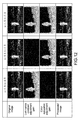
- FIG. 12 is a diagram illustrating an exemplary result of image processing
- FIG. 13 is a diagram illustrating an exemplary processing other than Fourier transform
- FIG. 14 is a diagram illustrating another exemplary processing other than Fourier transform
- FIG. 15 is a diagram illustrating another exemplary evaluation function
- FIG. 16 is a block diagram showing an exemplary configuration of an image processing apparatus in a second embodiment with the application of the present disclosure
- FIG. 17 is a diagram illustrating an exemplary evaluation function in the second embodiment
- FIG. 18 is a diagram illustrating a process to be performed by an I-value-adjustment-amount determination section
- FIG. 19 is a block diagram showing a detailed exemplary configuration of a color-saturation gain superimposition section
- FIG. 20 is a diagram illustrating block matching
- FIG. 21 is another diagram illustrating the block matching.
- FIG. 22 is a block diagram showing an exemplary configuration of a computer according to an embodiment of the present disclosure.
- First Embodiment (exemplary configuration for depth control by adjusting luminance contrast and color saturation of an image)
- Second Embodiment (exemplary configuration for depth control by adjusting only color saturation of an image)
- an image is adjusted in luminance contrast and color saturation to adjustably change the user's depth perception when he/she views the image.
- Described first is the quantitative relationship between the luminance contrast/color saturation in an image and the depth perception.
- FIG. 1 is a diagram showing the quantitative relationship between the luminance contrast/color saturation in an image and the depth perception obtained by visual tests.
- the X axis indicates a retina's response I lum to luminance contrast
- the Y axis indicates a retina's response I col to color saturation.
- the XY plane of FIG. 1 is mapped in grayscale with a subjective depth amount D(I lum , I col ) at coordinates of (I lum , I col ).
- the subjective depth amount D(I lum , I col ) indicates that the lighter grayscale makes the user feel that the object is positioned more toward the front.
- FIG. 1 shows that the higher luminance contrast or the higher color saturation obtains lighter shades of gray. That is, an object is perceived as being toward the front when the luminance contrast or the color saturation is high.
- the retina's response I lum to luminance contrast
- the retina's response I col to color saturation.
- the retina's response I lum to luminance contrast on the X axis is defined by Equation 1 below.
- Equation 1 ⁇ denotes a spatial frequency (cpd (cycle per degree), ⁇ denotes a set of spatial frequencies (including no direct current (DC) component) in a local area, e.g., rectangular area of M ⁇ N pixels, E lum ( ⁇ ) denotes depth efficiency with luminance contrast at the spatial frequency ⁇ , and S lum ( ⁇ ) denotes the luminance contrast at the spatial frequency ⁇ , i.e., each spatial frequency spectrum in luminance components.
- the luminance contrast S lum ( ⁇ ) at the spatial frequency ⁇ is obtained by Fourier transform on the local area.
- Equation 1 indicates that the retina's response I lum to luminance contrast is able to be represented by a combination of contrast at a plurality of weighted spatial frequencies.
- Equation 2 The depth efficiency E lum ( ⁇ ) with luminance contrast is represented by Equation 2 below.
- FIG. 2 is a graph of the depth efficiency E lum ( ⁇ ) with the luminance contrast in Equation 2.
- the retina's response I col to color saturation is represented by Equation 3 below.
- Equation 3 ⁇ denotes a spatial frequency (cpd), ⁇ ′ denotes a set of spatial frequencies (including DC components) in a local area, E col ( ⁇ ) denotes depth efficiency with color saturation at the spatial frequency ⁇ , and S col ( ⁇ ) denotes the color saturation at the spatial frequency W, i.e., each spatial frequency spectrum in color-saturation components.
- the color saturation S col ( ⁇ ) at the spatial frequency ⁇ is obtained by Fourier transform on the local area.
- Equation 3 indicates that the retina's response I col to color saturation is able to be represented by a combination of color saturation at a plurality of weighted spatial frequencies.
- Equation 4 The depth efficiency E col ( ⁇ ) with color saturation is represented by Equation 4 below.
- FIG. 3 is a graph of the depth efficiency E col ( ⁇ ) with the color saturation in Equation 4.
- Equation 4 is different from Equation 3 for the depth efficiency E lum ( ⁇ ) with the luminance contrast.
- the depth efficiency E lum ( ⁇ ) with luminance contrast and the depth efficiency E col ( ⁇ ) with color saturation are represented by the exponential functions as above, but any other functions may be used for the representation.
- polynomial approximation may be used for the representation by domain segmentation into three, for example.
- piecewise linear approximation is also a possibility.
- Equation 6 a subjective depth amount D lum to be perceived only with luminance contrast is represented by Equation 6 below.
- Equation 7 a subjective depth amount D col to be perceived only with color saturation is represented by Equation 7 below.
- a subjective depth amount D(I lum , I col ) to be perceived by a combination of the subjective depth amount D lum with luminance contrast and the subjective depth amount D col with color saturation is represented by Equation 8 below.
- Equation 8 shows that when the subjective depth amount D lum with luminance contrast is larger than the subjective depth amount D col with color saturation, the subjective depth amount D(I lum , I col ) is perceived more by the subjective depth amount D lum with luminance contrast.
- Equation 8 shows that the subjective depth amount D(I lum , I col ) is perceived more by the subjective depth amount D col with color saturation.
- Equations 6 and 7 function approximation is realized with high accuracy by data fitting with a logarithmic function, i.e., the data obtained by visual tests.
- the subjective depth amounts D lum and D col may be each represented also by Naka-Rushton equation utilized as to visual response.
- wavelet transform may be performed on a luminance-component image and a color-saturation-component image, or a band-pass filter such as Gabor filter may be used thereon.
- An image processing apparatus that will be described below adjusts the perceived depth amount in an image using the quantitative relationship of FIG. 1 as an evaluation function, i.e., the quantitative relationship obtained by visual tests between the luminance contrast/color saturation of the image and the depth perception.
- FIG. 4 is a block diagram showing an exemplary configuration of an image processing apparatus in a first embodiment with the application of the present disclosure.
- An image processing apparatus 1 controls the luminance contrast and the color saturation of an input 3D image to adjust the depth perception therewith.
- the 3D image herein means an image to let a viewer perceive that the image is 3D.
- a 3D image (hereinafter, referred also to as original image) input to the image processing apparatus 1 is supplied to a color conversion section 11 .
- the 3D image from the outside is in various data formats, and the data format is not restrictive, e.g., a first data format for a stereo image including a right-eye image (R image) and a left-eye image (L image), a second data format for a multi-view image including three or more images viewed from three or more positions, and a third data format being a combination of a 2D image with depth information thereabout.
- the data of an incoming 3D image is in the first data format, and the image processing apparatus 1 processes both right- and left-eye images.
- the color conversion section 11 decomposes the provided original image, i.e., the right- and left-eye images, into luminance and color-saturation components, e.g., the color system of the original image is converted into CIE L*a*b* to obtain a luminance component of L* ( ⁇ luminance component Y) and color-saturation components of a* and b*.
- luminance component of L* ⁇ luminance component Y
- the color conversion section 11 supplies the luminance component Y of the original image (original image Y) obtained by Equation 10 to both a depth estimation section 12 and a luminance I-value estimation section 15 .
- the color conversion section 11 also supplies the color-saturation components a* and b* of the original image (original images a* and b*) respectively obtained by Equations 13 and 14 to a color-saturation I-value estimation section 16 .
- the luminance component for use may be L* obtained by Equation 12.
- the depth estimation section 12 estimates depth information (disparity) about each pixel in the original image provided by the color conversion section 11 . To be specific, the depth estimation section 12 calculates displacement of pixels being points horizontally corresponding to each other in a pair of stereo images, i.e., calculates so-called binocular parallax. Using the resulting binocular parallax as a basis, the depth estimation section 12 approximately calculates the depth information.
- the binocular parallax may be calculated by block matching or by the gradient method of estimating a displacement amount between points corresponding to each other utilizing correlation, i.e., spatial correlation in terms of in-plane luminance gradient, and correlation between R and L images.
- the depth estimation section 12 uses any two corresponding images among three or more others in a multi-view image to calculate binocular parallax therebetween, and using the resulting binocular parallax, approximately calculates the depth information.
- the depth estimation section 12 uses the depth information included in the image.
- the depth information estimated by the depth estimation section 12 is supplied to a depth-adjustment-amount determination section 14 .
- a depth-adjustment-amount defining function storage section 13 stores a depth-adjustment-amount defining function for supply to the depth-adjustment-amount determination section 14 .
- the depth-adjustment-amount defining function defines a depth adjustment amount with respect to (the value of) the depth information.
- FIG. 5 shows an exemplary depth-adjustment-amount defining function to be stored in the depth-adjustment-amount defining function storage section 13 .
- the lateral axis of FIG. 5 indicates depth information (unit: pixel) to be detected in an input 3D image, and the vertical axis indicates a depth adjustment amount (unit: arcmin).
- the depth information is a disparity with which a user perceives an object image as being toward the back when the disparity is positive, and the user perceives the object as being toward the front when the disparity is negative.
- the depth adjustment amount is a value with which the object image is adjusted to be toward the front when the value is positive, and the object image is adjusted to be toward the back when the value is negative.
- the dynamic range of an image is increased in terms of 3D form and depth, i.e., in an input 3D image, any object at the back is moved to be more toward the back, and any object in the front is moved to be more toward the front.
- the depth-adjustment-amount determination section 14 of FIG. 4 determines a depth adjustment amount for each pixel in an original image.
- the depth-adjustment-amount determination section 14 uses the depth-adjustment-amount defining function of FIG. 5 , the depth-adjustment-amount determination section 14 determines a depth adjustment amount ⁇ D for each pixel in an original image, i.e., depth information d, for example.
- the resulting depth adjustment amount ⁇ is supplied to an I-value-adjustment-amount determination section 18 .
- the luminance-I-value estimation section 15 analyzes a local area (M ⁇ N pixels) around a target pixel to calculate a luminance-contract model input value I lum for the target pixel using Equations 1 and 2 described above.
- the target pixel herein is each pixel in the original image.
- the luminance I-value estimation section 15 supplies the resulting luminance-contrast model input value I lum to the I-value-adjustment-amount determination section 18 together with the luminance component Y of each pixel in the original image.
- the color-saturation I-value estimation section 16 analyzes a local area (M ⁇ N pixels) around a target pixel to calculate a color-saturation model input value I col for the target pixel using Equations 3 and 4 described above.
- the target pixel herein is each pixel in the original image.
- the color-saturation I-value estimation section 16 supplies the resulting color-saturation model input value I col to the I-value-adjustment-amount determination section 18 together with the color-saturation components a* and b* of each pixel in the original image.
- An evaluation function storage section 17 stores the evaluation function of FIG. 1 . That is, the evaluation function storage section 17 stores the evaluation function of quantizing the relationship obtained by visual tests between the luminance contrast/color saturation of an image and the depth perception.
- the I-value-adjustment-amount determination section 18 determines an adjustment amount ⁇ I for a model input value I corresponding to the depth adjustment amount ⁇ D determined by the depth-adjustment-amount determination section 14 . That is, the I-value-adjustment-amount determination section 18 determines an adjustment amount ⁇ I lum for the luminance-contrast model input value I lum , and an adjustment amount ⁇ I col for the color-saturation model input value I col .
- a subjective depth amount D 0 is known first.
- This subjective depth amount D 0 is perceived with luminance contrast and color saturation in the original image.
- the I-value-adjustment-amount determination section 18 searches the evaluation function space to find a point at which the depth adjustment amount takes a value of ⁇ D as that provided by the depth-adjustment-amount determination section 14 .
- the I-value-adjustment-amount determination section 18 looks up the evaluation function starting from the model input vector I of the original image to find a point at which the subjective depth amount is D 0 + ⁇ D. At this time, the lookup direction from the starting point for the I-value-adjustment-amount determination section 18 is defined by an adjustment vector n.
- the adjustment vector n is a user-setting parameter to set the adjustment balance between the luminance contrast and the color saturation based on the lookup direction, and is defined by Equation 15 below.
- n ( a ⁇ I lum ,b ⁇ I col ) (15)
- a and b are respectively parameters to adjust the balance between a luminance-contrast adjustment gain and a color-saturation adjustment gain.
- the numerical relation (ratio) between these parameters a and b is used as a basis to adjust the balance of gain between the luminance-contrast adjustment gain and the color-saturation adjustment gain.
- the luminance-contrast adjustment gain is adjusted to be larger than the color-saturation adjustment gain.
- the luminance-contrast adjustment gain is adjusted to be smaller than the color-saturation adjustment gain.
- the luminance-contrast adjustment gain is adjusted to be equal to the color-saturation adjustment gain.
- the model input value is a value obtained by the luminance contrast and the color saturation in the original image done with a depth control process (hereinafter, referred to as “processed image”).
- Equation 16 shows that defining the adjustment vector n by Equation 15 obtains a ratio of (1+ ⁇ a):(1+ ⁇ b) between the luminance-contrast adjustment gain and the color-saturation adjustment gain. This tells that the parameters a and b are able to adjust the balance between the luminance-contrast adjustment gain and the color-saturation adjustment gain.
- ⁇ denotes a normalization coefficient to obtain the depth adjustment amount of ⁇ D.
- Equations 17 and 18 respectively obtain an adjustment amount ⁇ I lum for the luminance-contrast model input value I lum , and an adjustment amount ⁇ I col for the color-saturation model input value I col .
- the calculation result i.e., the adjustment amount ⁇ I lum for the luminance-contrast model input value I lum and the adjustment amount ⁇ I col for the color-saturation model input value I col , is supplied to an adjustment gain calculation section 19 together with the luminance component Y and the color-saturation components a* and b* of the original image.
- the adjustment gain calculation section 19 calculates both a luminance-contrast adjustment gain g lum ( ⁇ ) and a color-saturation adjustment gain g col ( ⁇ )
- f lum ( ⁇ ) denotes a weighting function for the luminance-contrast adjustment gain at the spatial frequency ⁇ (hereinafter, referred to as luminance-contrast weighting function), and f col ( ⁇ ) denotes a weighting function for the color-saturation adjustment gain at the spatial frequency ⁇ (hereinafter, referred to as color-saturation weighting function).
- luminance-contrast weighting function a weighting function for the luminance-contrast adjustment gain at the spatial frequency ⁇
- f col ( ⁇ ) denotes a weighting function for the color-saturation adjustment gain at the spatial frequency ⁇ (hereinafter, referred to as color-saturation weighting function).
- the luminance-contrast weighting function f lum ( ⁇ ) and the color-saturation weighting function f col ( ⁇ ) are each a user-setting parameter, and are provided by a spatial frequency weight setting section 20 .
- the user may set the parameters, i.e., the luminance-contrast weighting function f lum ( ⁇ ) and the color-saturation weighting function f col ( ⁇ ), considering only the weight of an adjustment gain for each spatial frequency.
- the adjustment amount for the luminance contrast and that for the color saturation are respectively normalized to be ⁇ I lum and ⁇ I col by Equations 19 and 20.
- the spatial frequency weight setting section 20 stores both the luminance-contrast weighting function f lum ( ⁇ ) and the color-saturation weighting function f col ( ⁇ ), which are set by the user's operation.
- the spatial frequency weight setting section 20 supplies the luminance-contrast weighting function f lum ( ⁇ ) and the color-saturation weighting function f col ( ⁇ ) to the adjustment gain calculation section 19 .
- the luminance-contrast weighting function f lum ( ⁇ ) and the color-saturation weighting function f col ( ⁇ ) stored in the spatial frequency weight setting section 20 vary in characteristics, e.g., enhance the low-frequency side, enhance the high-frequency side, or enhance the entire frequency range.
- weighting function f( ⁇ ) When no specific distinction is expected between the luminance-contrast weighting function f lum ( ⁇ ) and the color-saturation weighting function f col ( ⁇ ), these weighting functions are simply referred to as “weighting function f( ⁇ )”. Also as to the adjustment amounts ⁇ I lum and ⁇ I col , when no specific distinction is expected therebetween, these adjustment amounts are simply referred to as “adjustment amount ⁇ I”.
- FIGS. 7 to 9 each show a setting example of the weighting function f( ⁇ ) to be stored in the spatial frequency weight setting section 20 .
- FIG. 7 shows a setting example of the weighting function f( ⁇ ) when an object image is adjusted to be more toward the front, i.e., when the depth adjustment amount ⁇ D and the adjustment amount ⁇ I for the model input value I are both positive ( ⁇ D>0 ⁇ I>0).
- FIG. 7 shows three setting examples of the weighting function f( ⁇ ), i.e., A shows a setting example for uniform enhancement of the entire spatial frequency range to be n-times higher, B shows a setting example for enhancement of the low spatial frequency range, and C shows a setting example for enhancement of the high spatial frequency range.
- the Michelson contrast is also enhanced to be n-times higher.
- the Michelson contrast is defined by Equation 21 below.
- L max denotes the largest luminance value in a processing unit area of the original image
- L min denotes the smallest luminance value in the processing unit area of the original image.
- the processing unit area is optimally defined in size as appropriate considering the relationship between the visual angle and the number of pixels.
- the original image is subjected to shadow enhancement to preserve edges, and thus the resulting image may look less crisp.
- the original image is subjected to edge enhancement to preserve shadows, and thus noise may be enhanced in a monotonous image area in which the luminance of pixels is of the same level.
- FIG. 8 shows a setting example of the weighting function f( ⁇ ) when an object image is adjusted to be more toward the back, i.e., when the depth adjustment amount ⁇ D and the adjustment amount ⁇ I for the model input value I are both negative ( ⁇ D ⁇ 0 ⁇ I ⁇ 0).
- FIG. 8 shows three setting examples of the weighting function f( ⁇ ), i.e., A shows a setting example for reduction of the entire spatial frequency range to be n-times lower, B shows a setting example for reduction of the low spatial frequency range, and C shows a setting example for reduction of the high spatial frequency range.
- the Michelson contrast is reduced to be n-times lower.
- the original image is subjected to edge preservation to reduce shadows.
- this may cause the impression that the texture looks different.
- the original image is subjected to shadow preservation to reduce edges, and thus the resulting image may give an impression as being blurred compared with the image after reduction of the entire spatial frequency range as A in FIG. 8 .
- the domain of the function is positive or negative at all times.
- the domain of the weighting function f( ⁇ ) is not expected to be positive or negative at all times.
- FIG. 9 shows other setting examples of the weighting function f( ⁇ ) when an object image is adjusted to be more toward the front.
- the weighting function f( ⁇ ) may also be so set as shown in FIG. 9 as long as the weighting function f( ⁇ ) satisfies constraint conditions of Equation 22 below.
- FIG. 9 shows setting examples of the weighting function f( ⁇ ), i.e., A shows a setting example for enhancement of the low spatial frequency band but reduction of the high spatial frequency band, and B shows a setting example for enhancement mainly of any specific spatial frequency range.
- the original image is subjected to edge enhancement to reduce shadows.
- the process of B in FIG. 9 i.e., the enhancement mainly of any specific spatial frequency band, is performed when a spatial frequency band is selected for adjusting an image object in accordance with the characteristic amount thereof.
- the weighting function f( ⁇ ) may also be so set as shown in FIG. 9 as long as the weighting function f( ⁇ ) satisfies constraint conditions of Equation 23 below. That is, although not shown, the weighting function f( ⁇ ) may be so set as to reduce the low spatial frequency band but to enhance the high spatial frequency band, or to mainly reduce any specific spatial frequency band.
- the adjustment gain calculation section 19 is able to determine gains varying with spatial frequency ⁇ to adjust the luminance contrast and the color saturation.
- the luminance-contrast adjustment gain g lum ( ⁇ ) calculated by Equation 19 is supplied to a luminance gain superimposition section 21 together with the original image Y, and the color-saturation adjustment gain g col ( ⁇ ) calculated by Equation 20 is supplied to a color-saturation gain superimposition section 22 together with the color-saturation components a* and b*.
- the luminance gain superimposition section 21 calculates a processed image Y′ by superimposing, on the original image Y, the luminance-contrast adjustment gain glum( ⁇ ) provided by the adjustment gain calculation section 19 .
- the resulting processed image Y′ is supplied to a color conversion section 23 .
- the luminance gain superimposition section 21 converts the original image Y into a spatial frequency domain by Fourier transform.
- Fourier transform on the original image Y is represented by Equation 24 below.
- Equation 25 the luminance gain superimposition section 21 superimposes, on a Fourier coefficient f(u, v), the luminance-contrast adjustment gain g lum ( ⁇ ) calculated by the adjustment gain calculation section 19 .
- the luminance gain superimposition section 21 performs convolution integral between the luminance-contrast adjustment gain g lum ( ⁇ ) and a luminance contrast S lum ( ⁇ ), which is obtained as a spectrum of each spatial frequency domain after conversion by Fourier transform.
- the luminance gain superimposition section 21 performs inverse Fourier transform of Equation 26 to convert, back into the image domain, the spectra obtained by superimposition of the luminance-contrast adjustment gain g lum ( ⁇ ). This obtains the processed image Y′.
- the luminance gain superimposition section 21 supplies the luminance component Y′ of the processed image, i.e., processed image Y′, obtained by the process as above to the color conversion section 23 .
- the color-saturation gain superimposition section 22 calculates color-saturation components a*′ and b*′ of the processed mage (processed images a*′ and b*′) in the manner similar to the luminance gain superimposition section 21 .
- the calculation result is supplied to the color conversion section 23 .
- the color conversion section 23 performs conversion inversely to the conversion performed by the color conversion section 11 . That is, the color conversion section 23 converts the processed image represented by the CIE L*a*b* color system to be represented by the RGB color system. The processed image is thus converted back to be in the color system same as the original image, and then is output.
- a depth control process to be performed by the image processing apparatus 1 for depth adjustment through control over the luminance contrast and the color saturation of an original image. This process is started when the image processing apparatus 1 is provided with an original image from the outside, for example.
- step S 1 the color conversion section 11 performs color conversion to convert the color system of the original image from RGB to CIE L*a*b*. This decomposes each of a right-eye image (R image) and a left-eye image (L image) into luminance and color-saturation components, for example.
- RGB image right-eye image
- L image left-eye image
- step S 2 the depth estimation section 12 estimates depth information (disparity) for each pixel in the original image provided by the color conversion section 11 .
- step S 3 using the depth-adjustment-amount defining function stored in the depth-adjustment-amount defining function storage section 13 , the depth-adjustment-amount determination section 14 determines a depth adjustment amount ⁇ D based on the estimated depth information.
- the luminance I-value estimation section 15 calculates a luminance-contrast model input value I lum of the original image.
- step S 5 using Equations 3 and 4 described above, the color-saturation I-value estimation section 16 calculates a color-saturation model input value I col of the original image.
- steps S 4 and S 5 may be performed in the reverse order or at the same time.
- step S 6 based on the evaluation function stored in the evaluation function storage section 17 , the I-value-adjustment-amount determination section 18 determines an adjustment amount ⁇ I for the model input value I corresponding to the depth adjustment amount ⁇ D determined by the process in step S 3 . That is, the I-value-adjustment-amount determination section 18 determines an adjustment amount ⁇ I lum for the luminance-contrast model input value I lum , and an adjustment amount ⁇ I col for the color-saturation adjustment amount I col .
- step S 7 by Equations 19 and 20, the adjustment gain calculation section 19 calculates both a luminance-contrast adjustment gain g lum ( ⁇ ) and a color-saturation adjustment gain g col ( ⁇ ).
- step S 8 the luminance gain superimposition section 21 superimposes, on the original image Y, the luminance-contrast adjustment gain g lum ( ⁇ ) obtained by the process in step S 7 , thereby calculating the luminance component Y of the processed image.
- step S 8 the luminance component Y of the original image is converted into a spatial frequency domain by Fourier transform. Thereafter, convolution integral is performed between the luminance-contrast adjustment gain g lum ( ⁇ ) and the luminance contrast S lum ( ⁇ ) obtained as a spectrum, and the result of convolution integral is converted back into the image domain, thereby calculating the luminance component Y′ of the processed image.
- step S 9 the color-saturation gain superimposition section 22 superimposes the color-saturation adjustment gain g col ( ⁇ ) obtained by the process in step S 7 , thereby calculating color-saturation components a*′ and b*′ of the processed image.
- the color-saturation components a* and b* of the original image is converted into a spatial frequency domain by Fourier transform. Thereafter, convolution integral is performed between the color-saturation adjustment gain g col ( ⁇ ) and the color saturation S col ( ⁇ ) obtained as a spectrum, and the result of convolution integral is converted back into the image domain, thereby calculating the color-saturation components a*′ and b*′ of the processed image.
- steps S 8 and S 9 may be performed in the reverse order or at the same time.
- step S 10 the color conversion section 23 performs color conversion to convert the processed image represented by the CIE L*a*b* color system to be represented again by the RGB color system.
- the color-converted processed image is then output from the image processing apparatus 1 , and this is the end of the process.
- FIGS. 11A to 12 described are the results of image processing examples.
- FIGS. 11A to 11C each show a parameter used to obtain the image processing results of FIG. 12 .
- FIG. 11A shows a depth-adjustment-amount defining function, which is the used parameter.
- the depth-adjustment-amount function with which the depth adjustment amount ⁇ D is set to be in a range from 0.0 to 7.5 (arcmin) depending on the depth information.
- the depth information in use is a horizontal disparity, which is obtained by calculating a displacement amount between corresponding points in a right-eye image (R image) and a left-eye image (L image).
- the forefront area is adjusted by the amount of +7.5 (arcmin), the rear area is not adjusted, and the remaining area is linearly adjusted in depth, thereby increasing the dynamic range of the image in terms of the subjective depth amount D.
- the depth-adjustment-amount defining function may be piecewise linear or nonlinear.
- FIG. 11B shows a luminance-contrast weighting function f lum ( ⁇ ), which is the used parameter.
- FIG. 11C shows a color-saturation weighting function f col ( ⁇ ), which is the used parameter.
- the color-saturation weighting function f col ( ⁇ ) with which the entire spatial frequency range (including DC components) is enhanced with a uniform weight. This enhances the color-saturation components in the image so that the sharpness is accordingly improved at the same time with depth control.
- the values of gains i.e., the luminance-contrast adjustment gain g lum ( ⁇ ) and the color-saturation adjustment gain g col ( ⁇ ), are visualized by image representation with which a gray-scale value is increased with a larger gain value.
- the depth control process by the image processing apparatus 1 determines the adjustment amount ⁇ lum for the luminance-contrast model input value I lum , and the adjustment amount ⁇ col for the color-saturation model input value I col , which are those corresponding to the depth adjustment amount ⁇ D determined based on the depth-adjustment-amount defining function for each pixel in an input image.
- the luminance-contrast adjustment gain g lum ( ⁇ ) and the color-saturation adjustment gain g col ( ⁇ ) are then determined so as to respectively satisfy the adjustment amounts ⁇ I lum and ⁇ I col .
- the adjustment amount ⁇ I for the model input value I corresponding to the depth adjustment amount ⁇ D is determined based on the evaluation function, which indicates the quantitative relationship obtained by visual tests between the luminance contrast and the color saturation of the image and the depth perception.
- control is executed over the image in terms of depth and 3D form to be perceived therein, thereby being able to produce the effect of depth control without degrading the image quality.
- This eliminates having to control the parallax to control the 3D form and the depth so that the user may not feel something is wrong or not feel much discomfort with the resulting 3D image.
- the present disclosure offers very realistic visual experience for the user with a high-definition and wide-color-range display.
- the adjustment vector n determines the lookup direction on the evaluation function space so that the luminance-contrast adjustment gain and the color-saturation adjustment gain are adjusted with desired balance.
- the image may be characterized as the user prefers, e.g., the low-frequency side is enhanced, the high-frequency side is enhanced, the entire spatial frequency range is enhanced.
- adjusting the luminance contrast and the color saturation by calculating the luminance-contrast adjustment gain g lum ( ⁇ ) and the color-saturation adjustment gain g col ( ⁇ ) using Fourier transform.
- approximately adjusting the luminance contrast and the color saturation may be also possible by wavelet transform on a luminance-component image and a saturation-component image, or by using a band-pass filter such as Gabor filter thereon.
- Described now is an example of adjusting the luminance contrast of an original image by a process other than Fourier transform.
- an average value Y ave (s, t) of luminance is calculated, where (x, y) being the position of an original image is represented as below. s ⁇ dx ⁇ x ⁇ s+dx,t ⁇ dy ⁇ y ⁇ t+dy
- the average value Y ave (s, t) of luminance may be calculated by simple addition averaging or Gaussian mean.
- the g-times contrast-adjusted luminance value Y′(s, t) is obtained.
- Y ′( s,t ) G ( s,t )( Y ( s,t ) ⁇ Y ave ( s,t )+ Y ave ( s,t )
- FIG. 13 is a conceptual diagram of the above-mentioned image processing example.
- the spatial frequency distribution is subjected to quick and easy analysis using a plurality of band-pass linear filters, e.g., LOG filters or Gabor filters, where (x, y) being the position of an original image is represented as below.
- a plurality of band-pass linear filters e.g., LOG filters or Gabor filters
- (x, y) being the position of an original image is represented as below.
- the contrast-adjusted luminance value Y′(s, t) is calculated by Equation 27 so that the luminance value Y′(s, t) is obtained with the enhanced high spatial frequency range.
- FIG. 14 shows the spatial frequency characteristics of the image sharpening filter K(x, y).
- the high spatial frequency range may be enhanced not by Fourier transform but by using an image sharpening filter, i.e., a desired gain multiple of ⁇ in a spatial frequency domain is stored as a table, and the image sharping filter is used for adaptive filtering based on the analysis result of the spatial frequency distribution in the rectangular area.
- the shape of the image sharpening filter K(x, y) is not restricted to this example.
- Equation 8 represents the evaluation function of the subjective depth amount D(I lum , I col ), which is perceived in combination of the luminance-contrast subjective depth amount D lum , and the color-saturation subjective depth amount D col .
- the evaluation function is not restricted thereto.
- Equation 28 shows another example for the evaluation function of the subjective depth amount D(I lum , I col ).
- Equation 28 A lum , A col , and B are each a given constant.
- the evaluation function of Equation 28 is the model represented by the sum of the luminance-contrast subjective depth amount D lum to the n-th power, and the color-saturation subjective depth amount D col to the n-th power.
- FIG. 15 is a mapping diagram of the evaluation function represented by the model of Equation 28, i.e., the sum of the amounts to the n-th power. Similarly to FIG. 1 , FIG. 15 shows that an object is perceived as being more toward the front when the luminance contrast or the color saturation is high, but the contour lines form a shape rounder than those with Equation 8.
- FIG. 16 is a block diagram showing an exemplary configuration of an image processing apparatus in a second embodiment with the application of the present disclosure.
- any component corresponding to that in the first embodiment of FIG. 4 is provided with the same reference numeral, and is not described again.
- the components not provided are the luminance I-value estimation section 15 and the luminance gain superimposition section 21 .
- the components i.e., the evaluation function storage section 17 , the I-value adjustment amount determination section 18 , the adjustment gain calculation section 19 , the spatial frequency weight setting section 20 , and the color-saturation gain superimposition section 22
- other components are provided, i.e., an evaluation function storage section 41 , an I-value-adjustment-amount determination section 42 , an adjustment gain calculation section 43 , a spatial frequency weight setting section 44 , and a color-saturation gain superimposition section 45 .
- the evaluation function storage section 41 stores an evaluation function of quantizing the relationship obtained by visual tests between the color saturation of an image and the depth perception.
- FIG. 17 shows an exemplary evaluation function to be stored in the evaluation function storage section 41 .
- Equation 29 The evaluation function of FIG. 17 is represented by Equation 29 below.
- Equation 29 A col and B col are each a given constant, and in FIG. 17 , A col is 10.3, and B col is ⁇ 11.5.
- the I-value-adjustment-amount determination section 42 looks up the evaluation function to find a model input value I′ col at which a subjective depth amount is D 0 + ⁇ D.
- Equation 18 After the model input vector of I′ col with which the subjective depth amount is D 0 + ⁇ D is obtained, an adjustment amount ⁇ I col for the color-saturation model input value I col is obtained by Equation 18.
- the adjustment gain calculation section 43 calculates a color-saturation adjustment gain g col ( ⁇ ) by Equation 20 described above.
- the spatial frequency weight setting section 44 stores various color-saturation weighting functions f col ( ⁇ ), which are set by the user's operation. That is, unlike the spatial frequency weight setting section 20 in the first embodiment, the spatial frequency weight setting section 44 does not store the luminance-contrast weight function f lum ( ⁇ ).
- the color-saturation gain superimposition section 45 calculates color-saturation components a*′ and b*′ of the processed image (processed images a*′ and b*′). The calculation result is supplied to the color conversion section 23 .
- FIG. 19 is a block diagram showing an exemplary detailed configuration of the color-saturation gain superimposition section 45 .
- the color-saturation gain superimposition section 45 includes Fourier transform sections 61 A and 61 B, gain convolution sections 62 A and 62 B, and inverse Fourier transform sections 63 A and 63 B.
- the components i.e., the Fourier transform section 61 A, the gain convolution section 62 A, and the inverse Fourier transform section 63 A, perform a process of superimposing the color-saturation adjustment gain g col ( ⁇ ) on the color-saturation component a* of the original image.
- the components i.e., the Fourier transform section 61 B, the gain convolution section 62 B, and the inverse Fourier transform section 63 B, perform a process of superimposing the color-saturation adjustment gain g col ( ⁇ ) on the color saturation b* of the original image.
- the Fourier transform section 61 A converts the color-saturation component a* of the original image into a spatial frequency domain by Fourier transform of Equation 24 described above.
- the gain convolution section 62 A superimposes, on a Fourier coefficient f(u, v), the color-saturation adjustment gain g col ( ⁇ ) calculated by the adjustment gain calculation section 43 . This obtains color-saturation component a*′ of the processed image adjusted in gain in the spatial frequency domain.
- the inverse Fourier transform section 63 A performs inverse Fourier transform of Equation 26 described above to convert, back into the image domain, the spectrum obtained by superimposition of the color-saturation adjustment gain g col ( ⁇ ). This obtains the color-saturation component a*′ of the processed image on the image domain.
- the processes performed by the components are similar to those performed by the components, i.e., the Fourier transform section 61 A, the gain convolution section 62 A, and the inverse Fourier transform section 63 B, are similar to those performed by the components, i.e., the Fourier transform section 61 A, the gain convolution section 62 A, and the inverse Fourier transform section 63 A except that the operation target is not the color-saturation component a* of the original image but the color-saturation component b* thereof. The processes are thus not described again.
- the depth control process by the image processing apparatus 1 in the second embodiment is performed similarly to that in the first embodiment described by referring to FIG. 10 except that the luminance component Y′ is not processed.
- depth control is performed by adjusting only the color saturation of an original image. This allows adjustment of the image sharpness, and realizes depth control without degrading the image quality.
- the image processing apparatus 1 may be configured as both in the first and second embodiments described above, and may selectively adjust the depth amount based only on the color saturation of an original image or based both on the color saturation and the luminance contrast of the original image.
- Equations 24 to 26 above are respectively represented by Equations 30 to 32 below.
- an input image is a 3D image to let a viewer perceive that the image is 3D.
- the present disclosure is applicable not only to such a 3D image but also to an ordinary 2D image. Therefore, described below is an example of adjusting a depth amount by controlling a 2D image in terms of luminance and color-saturation components (or only a color-saturation component).
- the depth amount of a 2D image For adjusting the depth amount of a 2D image, if the depth amount is analyzable for each pixel in the 2D image, the data format thereof becomes equivalent to the third data format of a 3D image, i.e., a combination of a 2D image with depth information thereabout. The depth amount of the 2D image becomes thus available for adjustment.
- the depth estimation section 12 detects the frame-to-frame motion of a 2D object image using a predetermined technique for motion detection such as block matching.
- FIGS. 20 and 21 are each a diagram for illustrating the block matching.
- a predetermined block around a target pixel e.g., a block with 3 ⁇ 3 pixels, is defined as a reference block.
- the target pixel is each pixel in an N-th frame.
- a predetermined search area around a pixel in the (N+1)-th frame corresponding to the target pixel is searched to find a corresponding block being most analogous to the reference block.
- the cost function Cost SAD is represented by the sum of absolute differences of any two corresponding pixels in the reference block in the N-th frame and a comparison block in the search area in the (N+1)-th frame. As shown in FIG. 21 , the cost function Cost SAD is reduced with a higher degree of analogousness between the blocks. Accordingly, among a plurality of comparison blocks in the search area, the comparison block with which the cost function Cost SAD takes the smallest value may be detected to find a block corresponding to the reference block, thereby being able to detect the motion of an object.
- the block matching is not the only option, and any other techniques are also possible, e.g., gradient method, or Structure From Motion.
- the depth estimation section 12 may detect the depth amount for each pixel in the 2D image based on the detected motion of the object. This detection is performed under the rules that “an object positioned toward the front looks like moving at a faster speed”, and “an object moved a longer distance exists closer to the front”.
- motion detection is not the only option for use as a basis to calculate the depth amount in a 2D image.
- an image may be subjected to structural analysis by segmentation to determine the 3D shape thereof, and based on the result, the depth amount may be calculated.
- the series of processes described above may be performed by hardware or software.
- a program in the software is installed on a computer.
- the computer includes a computer in a hardware specifically designed therefor, or a general-purpose personal computer that may perform various functions by installation of various programs, for example.
- FIG. 22 is a block diagram showing an exemplary hardware configuration of a computer that performs the series of processes described above by running a program.
- a bus 104 connects together a CPU (Central Processing Unit) 101 , a ROM (Read Only Memory) 102 , and a RAM (Random Access Memory) 103 .
- CPU Central Processing Unit
- ROM Read Only Memory
- RAM Random Access Memory
- the bus 104 is also connected with an input/output interface 105 .
- the input/output interface 105 is connected with an input section 106 , an output section 107 , a storage section 108 , a communication unit 109 , and a drive 110 .
- the input section 106 includes a keyboard, a mouse, a microphone, or others
- the output section 107 includes a display, a speaker, or others.
- the storage section 108 is a hard disk, or a nonvolatile memory, for example.
- the communication unit 109 is a network interface, for example.
- the drive 110 drives a removable medium 111 exemplified by a magnetic disk, an optical disk, a magneto-optical disk, a semiconductor memory, or others.
- the program to be run by the computer may be installed on the storage section 108 via the input/output interface 105 by mounting the removable recording medium 111 to the drive 110 .
- the program may be installed on the storage section 108 by being received by the communication unit 109 via a wired or wireless transmission medium including a local area network, the Internet, digital satellite broadcasting, or others.
- the program may be also installed in advance on the ROM 102 or the storage section 108 .
- the embodiments described above may be entirely or partially combined together for use.
- the present disclosure is applicable to cloud computing with which a plurality of apparatuses are connected through a network for processing by sharing and collaboration of a function.
- the steps in the flowchart described above may be performed by one apparatus or by a plurality of apparatuses by sharing.
- one step includes various types of processes
- the various types of processes in the step may be performed by one apparatus or by a plurality of apparatuses by sharing.
- the present disclosure may be also in the following structures.
- An image processing apparatus including:
- a depth-adjustment-amount determination section configured to determine a depth adjustment amount of an input image
- an evaluation function storage section configured to store an evaluation function, the evaluation function representing a relationship of a subjective depth amount of the image to a color-saturation component thereof, the subjective depth amount being a depth amount subjectively felt by a user;
- an input-value-adjustment-amount determination section configured to determine an input-value adjustment amount based on the evaluation function, the input-value adjustment amount representing a retina's response to the color-saturation component corresponding to the determined depth adjustment amount;
- an adjustment gain calculation section configured to calculate each spatial-frequency-component adjustment gain based on the determined input-value adjustment amount
- a gain superimposition section configured to superimpose each of the spatial-frequency-component adjustment gains on the color-saturation component of the input image, the spatial-frequency-component adjustment gains being calculated by the adjustment gain calculation section.
- the evaluation function storage section stores the evaluation function, the evaluation function representing not only the relationship of the subjective depth amount to the color-saturation component but also to a luminance-contrast component of the image,
- the input-value-adjustment-amount determination section determines another input-value adjustment amount based on the evaluation function, the input-value-adjustment amount representing a retina's response to a luminance-contrast component corresponding to the determined depth adjustment amount,
- the adjustment gain calculation section calculates each of the spatial-frequency-component adjustment gains based on the input-value adjustment amounts
- the gain superimposition section superimposes each of the spatial-frequency-component adjustment gains on the input image, the spatial-frequency-component adjustment gains being calculated by the adjustment gain calculation section.
- the input-value-adjustment-amount determination section includes a parameter for setting an adjustment balance between the luminance-contrast component and the color-saturation component, and with the adjustment balance set by the parameter, determines the input-value adjustment amounts representing the retina's response to the luminance-contrast component and to the color-saturation component.
- the evaluation function representing the relationship of the subjective depth amount to the color-saturation component and to the luminance-contrast component satisfies
- the input image is a three-dimensional (3D) image.
- the 3D image is input as a stereo image including a right-eye image and a left-eye image.
- the 3D image is input as a multi-view image including three or more images viewed from three or more positions.
- the 3D image is input in a data format being a combination of a two-dimensional (2D) image and depth information thereabout.
- the input image is a 2D image.
- a color conversion section configured to convert a color system of the input image from RGB to CIE L*a*b*.
- a depth information estimation section configured to estimate depth information from the input image
- a depth-adjustment-amount defining function storage section configured to store a depth-adjustment-amount defining function defining a depth adjustment amount with respect to the depth information
- the depth-adjustment-amount determination section determines the depth adjustment amount using the estimated depth information based on the depth-adjustment-amount defining function.
- the depth information estimation section estimates the depth information based on an analysis result of the 2D image.
- a spatial frequency weight setting section configured to set a function of a weight of each of the spatial-frequency-component adjustment gains
- the adjustment gain calculation section calculates the adjustment gains by multiplying the input-value adjustment amount by the function.
- the gain superimposition section converts the input image into a frequency domain, and converts a result of convolution integral back into an image domain, the result of convolution integral being obtained by performing the convolution integral between the frequency-domain image and each of the spatial-frequency-component adjustment gains.
- the gain superimposition section converts the input image into the frequency domain by Fourier transform, and converts the frequency-domain image back into the image domain by inverse Fourier transform.
- the input-value adjustment amount determined by the input-value-adjustment-amount determination section is also positive, and when the depth adjustment amount is negative, the input-value adjustment amount determined by the input-value-adjustment-amount determination section is also negative.
- An image processing method including:
- an image processing apparatus configured to process an input image
- a depth-adjustment-amount determination section configured to determine a depth adjustment amount of an input image
- an input-value-adjustment-amount determination section configured to determine an input-value adjustment amount based on the evaluation function, the evaluation function representing a relationship of a subjective depth amount to a color-saturation component of the image, the subjective depth amount being a depth amount subjectively felt by a user, the input-value adjustment amount representing a retina's response to the color-saturation component corresponding to the determined depth adjustment amount;
- an adjustment gain calculation section configured to calculate each spatial-frequency-component adjustment gain based on the determined input-value adjustment amount
- a gain superimposition section configured to superimpose each of the calculated spatial-frequency-component adjustment gains on the color-saturation component of the input image.
Landscapes
- Engineering & Computer Science (AREA)
- Multimedia (AREA)
- Signal Processing (AREA)
- Image Processing (AREA)
- Processing Or Creating Images (AREA)
- Testing, Inspecting, Measuring Of Stereoscopic Televisions And Televisions (AREA)
Abstract
Description
I lum=∫ωεΩ E lum(ω)S lum(ω)dω (1)
E lum(ω)=exp(−ω2/51.84) (2)
I col=∫ωεΩ′ E col(ω)S col(ω)dω (3)
E col(ω)=exp(−ω2/56.85) (4)
D lum =A lum log10 I lum (6)
D col =A col log10 I col (7)
X=0.4125R+0.35760+0.1804B (9)
Y=0.2126R+0.71520+0.0722B (10)
Z=0.0193R+0.11920+0.9502B (11)
L*=116(Y/Y n)1/3−16 (12)
a*=500((X/X n)1/3−(Y/Y n)1/3) (13)
b*=200((Y/Y n)1/3−(Z/Z n)1/3) (14)
n=(a×I lum ,b×I col) (15)
ΔI lum =I′ lum −I lum (17)
ΔI col =I′ col −I col (18)
g lum(ω) =1+f lum(ω)·|ΔI lum|/|∫ωεΩ E lum(ω)S lum(ω)f lum(ω)dω| (19)
g col(ω) =1+f col(ω)·|ΔI col|/|∫ωεΩ′ E col(ω)S col(ω)f col(ω)dω| (20)

∫(E(ω)S(ω)f(ω))dω>0 (22)
∫(E(ω)S(ω)f(ω))dω<0 (23)
f′(u,v)=f(u,v)·g(u,v) (25)
s−dx<x<s+dx,t−dy<y<t+dy
The average value Yave(s, t) of luminance may be calculated by simple addition averaging or Gaussian mean. Next, by calculating the contrast-adjusted luminance value Y′(s, t) using a mapping function of Equation below, the g-times contrast-adjusted luminance value Y′(s, t) is obtained.
Y′(s,t)=G(s,t)(Y(s,t)−Y ave(s,t)+Y ave(s,t)
s−dx<x<s+dx,t−dy<y<t+dy
Thereafter, using an image sharpening filter K(x, y), the contrast-adjusted luminance value Y′(s, t) is calculated by Equation 27 so that the luminance value Y′(s, t) is obtained with the enhanced high spatial frequency range.
D(I lum ,I col)=((A lum log10 I lum)n+(A col log10 I col)n)1/n +B (28)
D col =A col log10 I col +B col (29)
[3. Third Embodiment]
[Exemplary Depth Control with Respect to 2D Image]
where Icol denotes the color-saturation component, Ilum denotes the luminance-contrast component, Dc01 denotes the subjective depth amount for the color-saturation component, Dlum denotes the subjective depth amount for the luminance-contrast component, and D(Ilum, Icol) denotes the subjective depth amount in combination of the color-saturation component and the luminance-contrast component (Alum, Acol, and B are each a given constant).
(5) The image processing apparatus according to (2) or (3), in which
D(I lum ,I col)=((A lum log10 I lum)n+(A col log10 I col)n)1/n +B [Math. 26]
where Icol denotes the color-saturation component, Ilum denotes the luminance-contrast component, and D(Ilum, Icol) denotes the subjective depth amount in combination of the color-saturation component and the luminance-contrast component (Alum, Acol, and B are each a given constant).
(6) The image processing apparatus according to (1), in which
D col =A col log10 I col +B col
where Icol denotes the color-saturation component, and Dcol denotes the subjective depth amount (Acol and Bcol are each a given constant).
(7) The image processing apparatus according to any one of (1) to (6), in which
-
- determining a depth adjustment amount of an input image;
- determining an input-value adjustment amount based on the evaluation function, the evaluation function representing a relationship of a subjective depth amount to a color-saturation component of the image, the subjective depth amount being a depth amount subjectively felt by a user, the input-value adjustment amount representing a retina's response to the color-saturation component corresponding to the determined depth adjustment amount;
- calculating each spatial-frequency-component adjustment gain based on the determined input-value adjustment amount; and
- superimposing each of the calculated spatial-frequency-component adjustment gains on the color-saturation component of the input image.
(20) A program causing a computer to function as:
Claims (20)
Dlum=Alum log10Ilum, Dcol=Acol log10Icol
D(Ilum, Icol)=((Alum log10Ilum)n+(Acol log10Icol)n)1/n+B
D col =A col log10 I col +B col
Applications Claiming Priority (2)
| Application Number | Priority Date | Filing Date | Title |
|---|---|---|---|
| JP2014004260A JP2015132995A (en) | 2014-01-14 | 2014-01-14 | Image processing device, image processing method, and program |
| JP2014-004260 | 2014-01-14 |
Publications (2)
| Publication Number | Publication Date |
|---|---|
| US20150201185A1 US20150201185A1 (en) | 2015-07-16 |
| US9438880B2 true US9438880B2 (en) | 2016-09-06 |
Family
ID=53522473
Family Applications (1)
| Application Number | Title | Priority Date | Filing Date |
|---|---|---|---|
| US14/591,046 Expired - Fee Related US9438880B2 (en) | 2014-01-14 | 2015-01-07 | Image processing apparatus, image processing method, and program |
Country Status (3)
| Country | Link |
|---|---|
| US (1) | US9438880B2 (en) |
| JP (1) | JP2015132995A (en) |
| CN (1) | CN104780354B (en) |
Cited By (3)
| Publication number | Priority date | Publication date | Assignee | Title |
|---|---|---|---|---|
| US9813698B2 (en) | 2013-11-12 | 2017-11-07 | Sony Corporation | Image processing device, image processing method, and electronic apparatus |
| US9838664B2 (en) | 2014-02-10 | 2017-12-05 | Sony Corporation | Image processing method, image processing device, and electronic apparatus |
| US9934575B2 (en) | 2009-11-27 | 2018-04-03 | Sony Corporation | Image processing apparatus, method and computer program to adjust 3D information based on human visual characteristics |
Families Citing this family (7)
| Publication number | Priority date | Publication date | Assignee | Title |
|---|---|---|---|---|
| JP6993100B2 (en) * | 2017-04-27 | 2022-01-13 | オリンパス株式会社 | Observation device and observation method |
| CN108876841B (en) * | 2017-07-25 | 2023-04-28 | 成都通甲优博科技有限责任公司 | Interpolation method and system in parallax refinement of parallax map |
| FR3085519B1 (en) * | 2018-09-04 | 2023-01-13 | Centre Nat Rech Scient | METHOD FOR MEASURING A COLOR SPACE SPECIFIC TO AN INDIVIDUAL AND METHOD FOR CORRECTING DIGITAL IMAGES AS A FUNCTION OF THE COLOR SPACE SPECIFIC TO THE INDIVIDUAL |
| CN109151432B (en) * | 2018-09-12 | 2019-10-25 | 宁波大学 | A Color and Depth Editing Method for Stereoscopic Image |
| CN116665615B (en) * | 2023-07-27 | 2023-11-14 | 深圳市安立信电子有限公司 | Medical display control method, system, equipment and storage medium thereof |
| CN118018792A (en) * | 2023-12-29 | 2024-05-10 | 上海洛塔信息技术有限公司 | Image color enhancement method, device and equipment based on color evaluation |
| CN120050426B (en) * | 2025-04-25 | 2025-08-12 | 深圳华强电子网集团股份有限公司 | High-precision CMOS image sensor data storage optimization method, device, medium and equipment based on self-adaptive compression algorithm |
Citations (4)
| Publication number | Priority date | Publication date | Assignee | Title |
|---|---|---|---|---|
| JP2001238231A (en) | 2000-02-24 | 2001-08-31 | Sharp Corp | Apparatus and method for adding stereoscopic visual effects |
| JP2011113363A (en) | 2009-11-27 | 2011-06-09 | Sony Corp | Image processor, image processing method, and program |
| US8243089B2 (en) * | 2006-05-04 | 2012-08-14 | Sony Computer Entertainment Inc. | Implementing lighting control of a user environment |
| JP2012247891A (en) | 2011-05-26 | 2012-12-13 | Sony Corp | Image processing device, image processing method, and program |
Family Cites Families (1)
| Publication number | Priority date | Publication date | Assignee | Title |
|---|---|---|---|---|
| JP2013090129A (en) * | 2011-10-18 | 2013-05-13 | Sony Corp | Image processing apparatus, image processing method and program |
-
2014
- 2014-01-14 JP JP2014004260A patent/JP2015132995A/en active Pending
-
2015
- 2015-01-07 US US14/591,046 patent/US9438880B2/en not_active Expired - Fee Related
- 2015-01-07 CN CN201510008077.8A patent/CN104780354B/en not_active Expired - Fee Related
Patent Citations (4)
| Publication number | Priority date | Publication date | Assignee | Title |
|---|---|---|---|---|
| JP2001238231A (en) | 2000-02-24 | 2001-08-31 | Sharp Corp | Apparatus and method for adding stereoscopic visual effects |
| US8243089B2 (en) * | 2006-05-04 | 2012-08-14 | Sony Computer Entertainment Inc. | Implementing lighting control of a user environment |
| JP2011113363A (en) | 2009-11-27 | 2011-06-09 | Sony Corp | Image processor, image processing method, and program |
| JP2012247891A (en) | 2011-05-26 | 2012-12-13 | Sony Corp | Image processing device, image processing method, and program |
Cited By (3)
| Publication number | Priority date | Publication date | Assignee | Title |
|---|---|---|---|---|
| US9934575B2 (en) | 2009-11-27 | 2018-04-03 | Sony Corporation | Image processing apparatus, method and computer program to adjust 3D information based on human visual characteristics |
| US9813698B2 (en) | 2013-11-12 | 2017-11-07 | Sony Corporation | Image processing device, image processing method, and electronic apparatus |
| US9838664B2 (en) | 2014-02-10 | 2017-12-05 | Sony Corporation | Image processing method, image processing device, and electronic apparatus |
Also Published As
| Publication number | Publication date |
|---|---|
| JP2015132995A (en) | 2015-07-23 |
| US20150201185A1 (en) | 2015-07-16 |
| CN104780354B (en) | 2018-06-05 |
| CN104780354A (en) | 2015-07-15 |
Similar Documents
| Publication | Publication Date | Title |
|---|---|---|
| US20150201185A1 (en) | Image processing apparatus, image processing method, and program | |
| JP5397190B2 (en) | Image processing apparatus, image processing method, and program | |
| JP2012247891A (en) | Image processing device, image processing method, and program | |
| US9384535B2 (en) | Methods and systems for reducing or eliminating perceived ghosting in displayed stereoscopic images | |
| US9591282B2 (en) | Image processing method, image processing device, and electronic apparatus | |
| KR101960844B1 (en) | Image processing apparatus and method | |
| EP2268047A2 (en) | Conversion device and method converting a two dimensional image to a three dimensional image | |
| JP5673032B2 (en) | Image processing apparatus, display apparatus, image processing method, and program | |
| KR101956353B1 (en) | Image processing Appratus and method for generating 3D image thereof | |
| JP2013172190A (en) | Image processing device and image processing method and program | |
| JP2012208671A (en) | Image processing apparatus, method, and program | |
| US20120301012A1 (en) | Image signal processing device and image signal processing method | |
| KR101364860B1 (en) | Method for transforming stereoscopic images for improvement of stereoscopic images and medium recording the same | |
| US20120113093A1 (en) | Modification of perceived depth by stereo image synthesis | |
| JP2015154101A (en) | Image processing method, image processor and electronic apparatus | |
| WO2022036338A2 (en) | System and methods for depth-aware video processing and depth perception enhancement | |
| US20140192156A1 (en) | Stereo-image processing apparatus, stereo-image processing method, and recording medium | |
| JP6754759B2 (en) | Processing of parallax in 3D images | |
| JP2015056013A (en) | Image processing device | |
| Smirnov et al. | Methods for depth-map filtering in view-plus-depth 3D video representation | |
| CN104469355B (en) | Based on the prediction of notable adaptive euphoropsia and the euphoropsia Enhancement Method of nonlinear mapping | |
| JP2015095779A (en) | Image processing apparatus, image processing method, and electronic apparatus | |
| JP2013172214A (en) | Image processing device and image processing method and program | |
| EP4418201A1 (en) | System and method for fusing two or more source images into a target image | |
| Xue et al. | Disparity-based just-noticeable-difference model for perceptual stereoscopic video coding using depth of focus blur effect |
Legal Events
| Date | Code | Title | Description |
|---|---|---|---|
| AS | Assignment |
Owner name: SONY CORPORATION, JAPAN Free format text: ASSIGNMENT OF ASSIGNORS INTEREST;ASSIGNORS:HYODO, YASUHIDE;TAKAHASHI, SHUICHI;SHIOIRI, SATOSHI;SIGNING DATES FROM 20141205 TO 20150212;REEL/FRAME:035091/0275 |
|
| FEPP | Fee payment procedure |
Free format text: PAYOR NUMBER ASSIGNED (ORIGINAL EVENT CODE: ASPN); ENTITY STATUS OF PATENT OWNER: LARGE ENTITY |
|
| ZAAA | Notice of allowance and fees due |
Free format text: ORIGINAL CODE: NOA |
|
| ZAAB | Notice of allowance mailed |
Free format text: ORIGINAL CODE: MN/=. |
|
| STCF | Information on status: patent grant |
Free format text: PATENTED CASE |
|
| MAFP | Maintenance fee payment |
Free format text: PAYMENT OF MAINTENANCE FEE, 4TH YEAR, LARGE ENTITY (ORIGINAL EVENT CODE: M1551); ENTITY STATUS OF PATENT OWNER: LARGE ENTITY Year of fee payment: 4 |
|
| FEPP | Fee payment procedure |
Free format text: MAINTENANCE FEE REMINDER MAILED (ORIGINAL EVENT CODE: REM.); ENTITY STATUS OF PATENT OWNER: LARGE ENTITY |
|
| LAPS | Lapse for failure to pay maintenance fees |
Free format text: PATENT EXPIRED FOR FAILURE TO PAY MAINTENANCE FEES (ORIGINAL EVENT CODE: EXP.); ENTITY STATUS OF PATENT OWNER: LARGE ENTITY |
|
| STCH | Information on status: patent discontinuation |
Free format text: PATENT EXPIRED DUE TO NONPAYMENT OF MAINTENANCE FEES UNDER 37 CFR 1.362 |
|
| FP | Lapsed due to failure to pay maintenance fee |
Effective date: 20240906 |