US9413440B2 - Method of enhancing system performance and related wireless module - Google Patents
Method of enhancing system performance and related wireless module Download PDFInfo
- Publication number
- US9413440B2 US9413440B2 US14/692,752 US201514692752A US9413440B2 US 9413440 B2 US9413440 B2 US 9413440B2 US 201514692752 A US201514692752 A US 201514692752A US 9413440 B2 US9413440 B2 US 9413440B2
- Authority
- US
- United States
- Prior art keywords
- sub
- packets
- data stream
- transmission
- mimo
- Prior art date
- Legal status (The legal status is an assumption and is not a legal conclusion. Google has not performed a legal analysis and makes no representation as to the accuracy of the status listed.)
- Active
Links
Images




Classifications
-
- H—ELECTRICITY
- H04—ELECTRIC COMMUNICATION TECHNIQUE
- H04B—TRANSMISSION
- H04B7/00—Radio transmission systems, i.e. using radiation field
- H04B7/02—Diversity systems; Multi-antenna system, i.e. transmission or reception using multiple antennas
- H04B7/04—Diversity systems; Multi-antenna system, i.e. transmission or reception using multiple antennas using two or more spaced independent antennas
- H04B7/0413—MIMO systems
- H04B7/0452—Multi-user MIMO systems
-
- H—ELECTRICITY
- H04—ELECTRIC COMMUNICATION TECHNIQUE
- H04B—TRANSMISSION
- H04B7/00—Radio transmission systems, i.e. using radiation field
- H04B7/02—Diversity systems; Multi-antenna system, i.e. transmission or reception using multiple antennas
- H04B7/04—Diversity systems; Multi-antenna system, i.e. transmission or reception using multiple antennas using two or more spaced independent antennas
- H04B7/06—Diversity systems; Multi-antenna system, i.e. transmission or reception using multiple antennas using two or more spaced independent antennas at the transmitting station
- H04B7/0613—Diversity systems; Multi-antenna system, i.e. transmission or reception using multiple antennas using two or more spaced independent antennas at the transmitting station using simultaneous transmission
- H04B7/0615—Diversity systems; Multi-antenna system, i.e. transmission or reception using multiple antennas using two or more spaced independent antennas at the transmitting station using simultaneous transmission of weighted versions of same signal
- H04B7/0617—Diversity systems; Multi-antenna system, i.e. transmission or reception using multiple antennas using two or more spaced independent antennas at the transmitting station using simultaneous transmission of weighted versions of same signal for beam forming
-
- H—ELECTRICITY
- H04—ELECTRIC COMMUNICATION TECHNIQUE
- H04B—TRANSMISSION
- H04B7/00—Radio transmission systems, i.e. using radiation field
- H04B7/02—Diversity systems; Multi-antenna system, i.e. transmission or reception using multiple antennas
- H04B7/04—Diversity systems; Multi-antenna system, i.e. transmission or reception using multiple antennas using two or more spaced independent antennas
- H04B7/06—Diversity systems; Multi-antenna system, i.e. transmission or reception using multiple antennas using two or more spaced independent antennas at the transmitting station
- H04B7/0613—Diversity systems; Multi-antenna system, i.e. transmission or reception using multiple antennas using two or more spaced independent antennas at the transmitting station using simultaneous transmission
- H04B7/0667—Diversity systems; Multi-antenna system, i.e. transmission or reception using multiple antennas using two or more spaced independent antennas at the transmitting station using simultaneous transmission of delayed versions of same signal
- H04B7/0669—Diversity systems; Multi-antenna system, i.e. transmission or reception using multiple antennas using two or more spaced independent antennas at the transmitting station using simultaneous transmission of delayed versions of same signal using different channel coding between antennas
-
- H—ELECTRICITY
- H04—ELECTRIC COMMUNICATION TECHNIQUE
- H04B—TRANSMISSION
- H04B7/00—Radio transmission systems, i.e. using radiation field
- H04B7/02—Diversity systems; Multi-antenna system, i.e. transmission or reception using multiple antennas
- H04B7/04—Diversity systems; Multi-antenna system, i.e. transmission or reception using multiple antennas using two or more spaced independent antennas
- H04B7/06—Diversity systems; Multi-antenna system, i.e. transmission or reception using multiple antennas using two or more spaced independent antennas at the transmitting station
- H04B7/0686—Hybrid systems, i.e. switching and simultaneous transmission
- H04B7/0689—Hybrid systems, i.e. switching and simultaneous transmission using different transmission schemes, at least one of them being a diversity transmission scheme
-
- H—ELECTRICITY
- H04—ELECTRIC COMMUNICATION TECHNIQUE
- H04L—TRANSMISSION OF DIGITAL INFORMATION, e.g. TELEGRAPHIC COMMUNICATION
- H04L1/00—Arrangements for detecting or preventing errors in the information received
- H04L1/0001—Systems modifying transmission characteristics according to link quality, e.g. power backoff
- H04L1/0009—Systems modifying transmission characteristics according to link quality, e.g. power backoff by adapting the channel coding
-
- H—ELECTRICITY
- H04—ELECTRIC COMMUNICATION TECHNIQUE
- H04L—TRANSMISSION OF DIGITAL INFORMATION, e.g. TELEGRAPHIC COMMUNICATION
- H04L1/00—Arrangements for detecting or preventing errors in the information received
- H04L1/02—Arrangements for detecting or preventing errors in the information received by diversity reception
- H04L1/06—Arrangements for detecting or preventing errors in the information received by diversity reception using space diversity
- H04L1/0618—Space-time coding
- H04L1/0625—Transmitter arrangements
-
- H—ELECTRICITY
- H04—ELECTRIC COMMUNICATION TECHNIQUE
- H04L—TRANSMISSION OF DIGITAL INFORMATION, e.g. TELEGRAPHIC COMMUNICATION
- H04L27/00—Modulated-carrier systems
- H04L27/26—Systems using multi-frequency codes
-
- H—ELECTRICITY
- H04—ELECTRIC COMMUNICATION TECHNIQUE
- H04L—TRANSMISSION OF DIGITAL INFORMATION, e.g. TELEGRAPHIC COMMUNICATION
- H04L27/00—Modulated-carrier systems
- H04L27/26—Systems using multi-frequency codes
- H04L27/2601—Multicarrier modulation systems
- H04L27/2647—Arrangements specific to the receiver only
-
- H—ELECTRICITY
- H04—ELECTRIC COMMUNICATION TECHNIQUE
- H04B—TRANSMISSION
- H04B3/00—Line transmission systems
- H04B3/02—Details
- H04B3/32—Reducing cross-talk, e.g. by compensating
-
- H—ELECTRICITY
- H04—ELECTRIC COMMUNICATION TECHNIQUE
- H04L—TRANSMISSION OF DIGITAL INFORMATION, e.g. TELEGRAPHIC COMMUNICATION
- H04L1/00—Arrangements for detecting or preventing errors in the information received
- H04L1/0001—Systems modifying transmission characteristics according to link quality, e.g. power backoff
- H04L1/0002—Systems modifying transmission characteristics according to link quality, e.g. power backoff by adapting the transmission rate
- H04L1/0003—Systems modifying transmission characteristics according to link quality, e.g. power backoff by adapting the transmission rate by switching between different modulation schemes
-
- H—ELECTRICITY
- H04—ELECTRIC COMMUNICATION TECHNIQUE
- H04L—TRANSMISSION OF DIGITAL INFORMATION, e.g. TELEGRAPHIC COMMUNICATION
- H04L1/00—Arrangements for detecting or preventing errors in the information received
- H04L1/004—Arrangements for detecting or preventing errors in the information received by using forward error control
- H04L1/0056—Systems characterized by the type of code used
- H04L1/0071—Use of interleaving
-
- H—ELECTRICITY
- H04—ELECTRIC COMMUNICATION TECHNIQUE
- H04L—TRANSMISSION OF DIGITAL INFORMATION, e.g. TELEGRAPHIC COMMUNICATION
- H04L1/00—Arrangements for detecting or preventing errors in the information received
- H04L1/02—Arrangements for detecting or preventing errors in the information received by diversity reception
- H04L1/06—Arrangements for detecting or preventing errors in the information received by diversity reception using space diversity
-
- H—ELECTRICITY
- H04—ELECTRIC COMMUNICATION TECHNIQUE
- H04L—TRANSMISSION OF DIGITAL INFORMATION, e.g. TELEGRAPHIC COMMUNICATION
- H04L1/00—Arrangements for detecting or preventing errors in the information received
- H04L1/02—Arrangements for detecting or preventing errors in the information received by diversity reception
- H04L1/06—Arrangements for detecting or preventing errors in the information received by diversity reception using space diversity
- H04L1/0618—Space-time coding
-
- H—ELECTRICITY
- H04—ELECTRIC COMMUNICATION TECHNIQUE
- H04L—TRANSMISSION OF DIGITAL INFORMATION, e.g. TELEGRAPHIC COMMUNICATION
- H04L25/00—Baseband systems
- H04L25/02—Details ; arrangements for supplying electrical power along data transmission lines
- H04L25/03—Shaping networks in transmitter or receiver, e.g. adaptive shaping networks
- H04L25/03006—Arrangements for removing intersymbol interference
- H04L25/03343—Arrangements at the transmitter end
-
- H—ELECTRICITY
- H04—ELECTRIC COMMUNICATION TECHNIQUE
- H04L—TRANSMISSION OF DIGITAL INFORMATION, e.g. TELEGRAPHIC COMMUNICATION
- H04L5/00—Arrangements affording multiple use of the transmission path
- H04L5/0001—Arrangements for dividing the transmission path
- H04L5/0003—Two-dimensional division
- H04L5/0005—Time-frequency
- H04L5/0007—Time-frequency the frequencies being orthogonal, e.g. OFDM(A) or DMT
-
- H—ELECTRICITY
- H04—ELECTRIC COMMUNICATION TECHNIQUE
- H04W—WIRELESS COMMUNICATION NETWORKS
- H04W52/00—Power management, e.g. Transmission Power Control [TPC] or power classes
- H04W52/04—Transmission power control [TPC]
- H04W52/38—TPC being performed in particular situations
- H04W52/42—TPC being performed in particular situations in systems with time, space, frequency or polarisation diversity
Definitions
- the present invention relates to a method of enhancing performance and related wireless module, and more particularly, to a method of enhancing performance and related wireless module applied to a multi-user multiple input multiple output (MU-MIMO) system.
- MU-MIMO multi-user multiple input multiple output
- Wi-Fi has a new capability, which is multi-user multiple input multiple output (MU-MIMO) communication. That is, under a multi-user scenario, different data streams may be simultaneously transmitted to multiple wireless subscribers, and each wireless subscriber receives at most four data streams simultaneously.
- MU-MIMO multi-user multiple input multiple output
- allowable combinations of simultaneously transmission wireless subscribers are: a 4 ⁇ 4 wireless subscriber, a 3 ⁇ 3 wireless subscriber plus a 1 ⁇ 1 wireless subscriber, a 2 ⁇ 2 wireless subscriber plus two 1 ⁇ 1 wireless subscribers, or two 2 ⁇ 2 wireless subscribers.
- Two, three or four 4 ⁇ 4 wireless subscribers are not allowed to perform transmission simultaneously given 4 data streams are provided, which is a current limitation.
- MIMO multiple input multiple output
- the present invention discloses a method of enhancing performance for a multi-user multiple input multiple output (MU-MIMO) system, the method comprising determining whether a connection node of a data stream matches when a transmission packet is waiting for transmission in the data stream, wherein the data stream is dedicated to serve a wireless subscriber; collecting a plurality of radio-frequency parameters and a MIMO information of the connection node when the connection node matches; using a time-division multiple access (TDMA) mechanism to divide the transmission packet into a plurality of sub-packets according to the MIMO information; applying a space-time block code (STBC) to the plurality of sub-packets; and transmitting the plurality of encoded sub-packets in the data stream at different time instants.
- TDMA time-division multiple access
- the present invention further discloses a wireless module, for a multi-user multiple input multiple output (MU-MIMO) system, the wireless module comprising at least a connection node, for forming a data stream, wherein the data stream is dedicated to serve a wireless subscriber; a database, for collecting a plurality of radio-frequency parameters and a MIMO information; a transmission processing unit, coupled to the database, for using a time-division multiple access (TDMA) mechanism to divide the transmission packet into a plurality of sub-packets according to the MIMO information, the transmission processing unit comprising: a determination unit, for determining numbers of the plurality of sub-packets and defining sizes of the plurality of sub-packets according to the MIMO information when dividing the transmission packet is not completed; and a time dividing unit, for dividing the transmission packet into the plurality of sub-packets according to the numbers of the plurality of sub-packets and the sizes of the plurality of sub-packets and attaching
- FIG. 1 is a schematic diagram of a performance enhancement process according to an embodiment of the present invention.
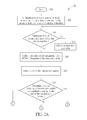
- FIGS. 2A and 2B are schematic diagrams of a first part and a second part of a performance enhancement process according to an embodiment of the present invention.
- FIG. 3 is a schematic diagram of a multi-user MIMO system according to an embodiment of the present invention.
- FIG. 4 is a schematic diagram of a wireless module according to an embodiment of the present invention.
- FIG. 1 is a schematic diagram of a performance enhancement process 10 according to an embodiment of the present invention.
- the performance enhancement process 10 is applied for a multi-user multiple-input-multiple-output (MU-MIMO) system, and utilized for maximizing the MU-MIMO system and optimizing transmission capacity.
- MU-MIMO system may support different data streams transmitted to multiple wireless subscribers.
- the performance enhancement process 10 comprises following steps:
- Step 100 Start.
- Step 102 Determine whether a connection node of a data stream matches when a transmission packet is waiting for transmission in the data stream, wherein the data stream is dedicated to serve a wireless subscriber.
- Step 104 Collect a plurality of radio-frequency parameters and a MIMO information of the connection node when the connection node matches.
- Step 106 Use a time-division multiple access (TDMA) mechanism to divide the transmission packet into a plurality of sub-packets according to the MIMO information.
- TDMA time-division multiple access
- Step 108 Apply a space-time block code (STBC) to the plurality of sub-packets.
- STBC space-time block code
- Step 110 Transmit the plurality of encoded sub-packets in the data stream at different time instants.
- Step 112 End.
- the MU-MIMO system initially collects the plurality of radio-frequency (RF) parameters and the MIMO information of the connection node by a self-training mechanism, and establishes a database of the connection node according to the plurality of RF parameters and the MIMO information.
- the self-training mechanism is standardized in Wi-Fi standard, which is not narrated herein for brevity.
- the MU-MIMO system determines numbers of dividing sub-packets and defines sizes of the sub-packets according to the MIMO information.
- the MIMO information is a MIMO configuration of the subscriber (e.g., 1 ⁇ 1, 2 ⁇ 2, 3 ⁇ 3, 4 ⁇ 4).
- the plurality of RF parameters comprises at least one of a transmission power, a packet error rate, an information rate and a received signal strength indication (RSSI).
- RSSI received signal strength indication
- the MU-MIMO system uses a time-division multiple access (TDMA) mechanism to divide the transmission packet into a plurality of sub-packets according to the MIMO information, and applies a space-time block code (STBC) to the plurality of sub-packets.
- TDMA mechanism and STBC are known by those skilled in the art, and not narrated herein for brevity.
- the MU-MIMO system transmits the plurality of encoded sub-packets in the data stream at different time instants.
- the performance enhancement process 10 may virtualize the MU-MIMO system transmitting data packet in a physical single data stream, to achieve a purpose of self-planning on data stream. Furthermore, the MU-MIMO system may service multiple subscribers through different data streams at the same time, wherein each data stream is dedicated for a wireless subscriber, and not limited to the MIMO configurations of the wireless subscribers (i.e., not limited to the wireless subscribers being 2 ⁇ 2, 3 ⁇ 3 or 4 ⁇ 4). In other words, multiple wireless subscribers may perform data transmission at the same time through different single data streams.
- the performance enhancement process 10 may be applied to a single-input-single-output system.
- the data stream is formed by a single beam or multiple beams, and not limited herein.
- FIG. 1 is a schematic diagram of an embodiment of the present invention.
- FIGS. 2A and 2B are schematic diagrams of a first part and a second part of a performance enhancement process 20 according to an embodiment of the present invention.
- the performance enhancement process 20 is a variation of the performance enhancement process 10 .
- the performance enhancement process 20 comprises following steps:
- Step 200 Start.
- Step 202 A transmission packet is waiting for being transmitted in a data stream, wherein the data stream is dedicated to serve a wireless subscriber.
- Step 204 Determine whether a connection node of the data stream matches. If yes, go to Step 206 ; if not, go to Step 208 .
- Step 206 Collect a plurality of RF parameters and a MIMO information of the connection node, and go to Step 210 .
- Step 208 Refer to a connection node table, and go to Step 204 .
- Step 210 Obtain a size of the transmission packet.
- Step 212 Determine whether dividing the transmission packet is completed according to the size of the transmission packet. If yes, go to Step 222 ; if not, go to Step 214 .
- Step 214 Determine numbers of the plurality of sub-packets according to the MIMO information.
- Step 216 Define sizes of the plurality of sub-packets.
- Step 218 Divide the transmission packet into the plurality of sub-packets according to the numbers of the plurality of sub-packets and the sizes of the plurality of sub-packets.
- Step 220 Attach a time tag on each sub-packet of the plurality of sub-packets.
- Step 222 Obtain a data stream information of the connection node.
- Step 224 Replace the transmission packet by the plurality of sub-packets for waiting for being transmitted in the data stream.
- Step 226 Apply STBC to the plurality of sub-packets.
- Step 228 Transmit the plurality of encoded sub-packets in the data stream sequentially according to the time tags on each sub-packet.
- Step 230 End.
- Step 210 -Step 220 is utilized for implementing Step 106 in the performance enhancement process 10 .
- the MU-MIMO system determines whether dividing the transmission packet is completed according to the size of the transmission packet.
- the MU-MIMO system determines the numbers of the plurality of sub-packets and defines the sizes of the plurality of sub-packets according to the MIMO information when dividing the transmission packet is not completed.
- the MU-MIMO system divides the transmission packet into the plurality of sub-packets according to the numbers of the plurality of sub-packets and the sizes of the plurality of sub-packets, and attaches a time tag on each sub-packet of the plurality of sub-packets.
- the MU-MIMO system applies STBC to the plurality of sub-packets, and transmits the encoded sub-packets in the data stream sequentially according to the time tags on each sub-packet.
- transmission of two adjacent sub-packets has a delay time t.
- the delay time t may be further adjusted according to a media access control (MAC) period.
- MAC media access control
- the performance enhancement process 10 may virtualize the MU-MIMO system transmitting data packet in a physical single data stream, to achieve a purpose of self-planning on data stream. Furthermore, the MU-MIMO system may service multiple subscribers through different data streams at the same time, wherein each data stream is dedicated for a wireless subscriber, and not limited to the MIMO configurations of the wireless subscribers.
- the performance enhancement process 10 and the performance enhancement process 20 utilize the time-division multiple access (TDMA) mechanism to divide the transmission packet into the plurality of sub-packets according to the MIMO information, and transmit the plurality of encoded sub-packets in the data stream at different time instants.
- TDMA time-division multiple access
- multiple wireless subscribers may perform data transmission at the same time through different data streams.
- the multiple wireless subscribers also retain transmission qualities of dedicated beams at the same time.
- performance of the MU-MIMO system is improved and transmission capacity is optimized (e.g., increase number of serving wireless subscribers). For example, if the MU-MIMO system provides 4 data streams, at most four 4 ⁇ 4 wireless subscribers are served at the same time.
- FIG. 3 is a schematic diagram of a MU-MIMO system according to an embodiment of the present invention.
- the MU-MIMO system 30 comprises a wireless module 300 and multiple wireless subscribers A 1 , A 2 , A 3 and A 4 .
- the wireless module 300 comprises four connection nodes N 1 , N 2 , N 3 and N 4 .
- the connection nodes N 1 , N 2 , N 3 and N 4 form four data streams B 1 , B 2 , B 3 and B 4 , to serve the wireless subscribers A 1 , A 2 , A 3 and A 4 , respectively.
- the wireless subscriber A 1 is a 4 ⁇ 4 wireless subscriber; the wireless subscriber A 2 is a 3 ⁇ 3 wireless subscriber; the wireless subscriber A 3 is a 2 ⁇ 2 wireless subscriber; the wireless subscriber A 4 is a 1 ⁇ 1 wireless subscriber.
- the wireless module 300 uses TDMA to divide the transmission packet into multiple sub-packets according to the MIMO information (i.e., MIMO configuration of wireless subscribers). For example, for the 2 ⁇ 2 wireless subscriber (e.g., the wireless subscriber A 3 ), the wireless module 300 divides the transmission packet into 2 parts. For the 3 ⁇ 3 wireless subscriber (e.g., the wireless subscriber A 2 ), the wireless module 300 divides the transmission packet into 3 parts.
- the wireless module 300 divides the transmission packet into 4 parts. Next, the wireless module 300 attaches the time tags on the divided sub-packets, and applies STBC to the sub-packets. The wireless module 300 transmits the encoded sub-packets in the data stream sequentially according to the time tags on each sub-packet.
- the subscriber capacity of the MU-MIMO system 30 is increased, such that the MU-MIMO system 30 serves four subscribers at the same time. Interference in between may also be reduced.
- the wireless module 300 performs management on the connection nodes N 1 , N 2 , N 3 and N 4 by virtualizing as single data streams, such that the four data streams serve four wireless subscribers independently at the same time.
- FIG. 4 is a schematic diagram of a wireless module 40 according to an embodiment of the present invention.
- the wireless module 40 may be utilized for realizing the wireless module 300 in FIG. 3 .
- the wireless module 40 preferably, may be an access point (AP).
- the wireless module 40 comprises at least a connection node 400 , a database 410 , a transmission processing unit 420 , an encoding unit 430 and an RF module 440 .
- the at least a connection node 400 is utilized for forming a data stream, wherein the data stream is dedicated to serve a wireless subscriber.
- the database 410 is utilized for collecting a plurality of radio-frequency parameters and a MIMO information.
- the transmission processing unit 420 is coupled to the database 410 , for using the TDMA mechanism to divide the transmission packet into a plurality of sub-packets according to the MIMO information.
- the transmission processing unit 420 comprises a determination unit 421 and a time dividing unit 422 .
- the determination unit 421 is utilized for determining numbers of the plurality of sub-packets and defining sizes of the plurality of sub-packets according to the MIMO information when dividing the transmission packet is not completed.
- the time dividing unit 422 is utilized for dividing the transmission packet into the plurality of sub-packets according to the numbers of the plurality of sub-packets and the sizes of the plurality of sub-packets, and for attaching a time tag on each sub-packet of the plurality of sub-packets.
- the time dividing unit 422 may be a TDMA module, for performing the TDMA mechanism.
- the encoding unit 430 is utilized for applying an STBC to the plurality of sub-packets.
- the RF module 440 is utilized for transmitting the plurality of encoded sub-packets at different time instants.
- the detail operations of the wireless module 40 may be referred to the performance enhancement process 10 and the performance enhancement process 20 stated in the above, which are not narrated for brevity.
- the embodiments of the present invention determine the numbers of the sub-packets, process the TDMA mechanism, attach the time tags on the divided sub-packets, and transmit the encoded sub-packets sequentially according to the time tags in the single data stream.
- the data streams of the multiple wireless subscribers may serve dedicated wireless subscribers at the same time.
- the multiple wireless subscribers also retain dedicated transmission qualities, such that performance of the MU-MIMO system is improved and transmission capacity is increased.
Landscapes
- Engineering & Computer Science (AREA)
- Computer Networks & Wireless Communication (AREA)
- Signal Processing (AREA)
- Quality & Reliability (AREA)
- Radio Transmission System (AREA)
- Mobile Radio Communication Systems (AREA)
Abstract
Description
Claims (18)
Applications Claiming Priority (3)
| Application Number | Priority Date | Filing Date | Title |
|---|---|---|---|
| TW103122299A | 2014-06-27 | ||
| TW103122299A TWI540856B (en) | 2014-06-27 | 2014-06-27 | Method of enhancing system performance and related mu-mimo system |
| TW103122299 | 2014-06-27 |
Publications (2)
| Publication Number | Publication Date |
|---|---|
| US20150381245A1 US20150381245A1 (en) | 2015-12-31 |
| US9413440B2 true US9413440B2 (en) | 2016-08-09 |
Family
ID=54931660
Family Applications (1)
| Application Number | Title | Priority Date | Filing Date |
|---|---|---|---|
| US14/692,752 Active US9413440B2 (en) | 2014-06-27 | 2015-04-22 | Method of enhancing system performance and related wireless module |
Country Status (2)
| Country | Link |
|---|---|
| US (1) | US9413440B2 (en) |
| TW (1) | TWI540856B (en) |
Citations (5)
| Publication number | Priority date | Publication date | Assignee | Title |
|---|---|---|---|---|
| US20050130664A1 (en) | 2003-12-10 | 2005-06-16 | Nec Laboratories America, Inc. | Scheduling method with tunable throughput maximization and fairness guarantees in resource allocation |
| US20070127586A1 (en) * | 2005-12-07 | 2007-06-07 | Telefonaktiebolaget Lm Ericsson (Publ) | Multiple stream co-phasing for multiple-input-multiple-output (mimo) systems |
| US20110194475A1 (en) * | 2010-02-10 | 2011-08-11 | Broadcom Corporation | Preamble and header bit allocation for power savings within multiple user, multiple access, and/or MIMO wireless communications |
| US20120315938A1 (en) * | 2011-06-08 | 2012-12-13 | Qualcomm Incorporated | Communication devices for multiple group communications |
| EP2597804A1 (en) | 2011-06-24 | 2013-05-29 | Panasonic Corporation | Transmission device, transmission method, receiving device and receiving method |
-
2014
- 2014-06-27 TW TW103122299A patent/TWI540856B/en active
-
2015
- 2015-04-22 US US14/692,752 patent/US9413440B2/en active Active
Patent Citations (5)
| Publication number | Priority date | Publication date | Assignee | Title |
|---|---|---|---|---|
| US20050130664A1 (en) | 2003-12-10 | 2005-06-16 | Nec Laboratories America, Inc. | Scheduling method with tunable throughput maximization and fairness guarantees in resource allocation |
| US20070127586A1 (en) * | 2005-12-07 | 2007-06-07 | Telefonaktiebolaget Lm Ericsson (Publ) | Multiple stream co-phasing for multiple-input-multiple-output (mimo) systems |
| US20110194475A1 (en) * | 2010-02-10 | 2011-08-11 | Broadcom Corporation | Preamble and header bit allocation for power savings within multiple user, multiple access, and/or MIMO wireless communications |
| US20120315938A1 (en) * | 2011-06-08 | 2012-12-13 | Qualcomm Incorporated | Communication devices for multiple group communications |
| EP2597804A1 (en) | 2011-06-24 | 2013-05-29 | Panasonic Corporation | Transmission device, transmission method, receiving device and receiving method |
Also Published As
| Publication number | Publication date |
|---|---|
| US20150381245A1 (en) | 2015-12-31 |
| TW201601483A (en) | 2016-01-01 |
| TWI540856B (en) | 2016-07-01 |
Similar Documents
| Publication | Publication Date | Title |
|---|---|---|
| US10143003B2 (en) | Methods and apparatus for beamforming feedback in wireless systems | |
| CN103369688B (en) | A kind of resource allocation methods for MU-MIMO user pairing | |
| US11075677B2 (en) | Method and device for sending beam refinement protocol packet | |
| US8824402B2 (en) | Apparatus and method for transmitting/receiving data in communication system | |
| CN103391631B (en) | The sending method and device of CSI-RS | |
| US9258099B2 (en) | System and method for user cooperation protocol for interference alignment in wireless networks | |
| US20220272682A1 (en) | Method and apparatus for transmission and reception of sidelink control information in communication system | |
| US20230094010A1 (en) | Control signaling for uplink frequency selective precoding | |
| US20160344531A1 (en) | Systems and methods for frequency multiplexing mu-mimo | |
| US20200195332A1 (en) | Method of performing beam reporting and user equipment | |
| CN119605097A (en) | CSI report based on ML technology | |
| WO2015184918A1 (en) | Method for sending and receiving reference signal, and communication node | |
| CN103001744B (en) | A kind of channel measurement information feedback method and STA | |
| US20200195406A1 (en) | Method, device and system for configuring radio transmission and reception parameters | |
| CN106922033A (en) | A kind of method and apparatus for carrying out uplink random access in a base station | |
| WO2021024435A9 (en) | Terminal and wireless communication method | |
| US9680621B2 (en) | MU-MIMO acknowledgement protocol efficiency | |
| WO2018228235A1 (en) | Signalling receiving method and related device | |
| US20160014811A1 (en) | Methods for Providing Concurrent Communications among Multiple Wireless Communications Devices | |
| US9413440B2 (en) | Method of enhancing system performance and related wireless module | |
| WO2025148743A1 (en) | Communication method and device, and system | |
| CN102594519B (en) | For the method for multi-user's multiple-input and multiple-output downlink transfer | |
| WO2024016979A1 (en) | Communication method and apparatus | |
| CN105812034B (en) | A kind of antenna port configuration device, base station and its method | |
| KR101512731B1 (en) | Communication apparatus and method, and access point employing the same |
Legal Events
| Date | Code | Title | Description |
|---|---|---|---|
| AS | Assignment |
Owner name: WISTRON NEWEB CORPORATION, TAIWAN Free format text: ASSIGNMENT OF ASSIGNORS INTEREST;ASSIGNOR:HO, YUNG-FA;REEL/FRAME:035463/0161 Effective date: 20140620 |
|
| STCF | Information on status: patent grant |
Free format text: PATENTED CASE |
|
| MAFP | Maintenance fee payment |
Free format text: PAYMENT OF MAINTENANCE FEE, 4TH YEAR, LARGE ENTITY (ORIGINAL EVENT CODE: M1551); ENTITY STATUS OF PATENT OWNER: LARGE ENTITY Year of fee payment: 4 |
|
| MAFP | Maintenance fee payment |
Free format text: PAYMENT OF MAINTENANCE FEE, 8TH YEAR, LARGE ENTITY (ORIGINAL EVENT CODE: M1552); ENTITY STATUS OF PATENT OWNER: LARGE ENTITY Year of fee payment: 8 |
|
| AS | Assignment |
Owner name: WNC CORPORATION, TAIWAN Free format text: CHANGE OF NAME;ASSIGNOR:WISTRON NEWEB CORPORATION;REEL/FRAME:072255/0226 Effective date: 20250521 |