US9406350B2 - Portable storage device that can check memory free space - Google Patents
Portable storage device that can check memory free space Download PDFInfo
- Publication number
- US9406350B2 US9406350B2 US14/872,023 US201514872023A US9406350B2 US 9406350 B2 US9406350 B2 US 9406350B2 US 201514872023 A US201514872023 A US 201514872023A US 9406350 B2 US9406350 B2 US 9406350B2
- Authority
- US
- United States
- Prior art keywords
- free space
- sound
- vibration
- controller
- memory
- Prior art date
- Legal status (The legal status is an assumption and is not a legal conclusion. Google has not performed a legal analysis and makes no representation as to the accuracy of the status listed.)
- Expired - Fee Related
Links
- 238000001514 detection method Methods 0.000 claims abstract description 9
- 230000005611 electricity Effects 0.000 claims description 15
- 238000012790 confirmation Methods 0.000 description 3
- XEEYBQQBJWHFJM-UHFFFAOYSA-N Iron Chemical compound [Fe] XEEYBQQBJWHFJM-UHFFFAOYSA-N 0.000 description 2
- 230000001133 acceleration Effects 0.000 description 1
- 239000003086 colorant Substances 0.000 description 1
- 230000007423 decrease Effects 0.000 description 1
- 230000003203 everyday effect Effects 0.000 description 1
- 238000010348 incorporation Methods 0.000 description 1
- 229910052742 iron Inorganic materials 0.000 description 1
- 230000035945 sensitivity Effects 0.000 description 1
- 239000007921 spray Substances 0.000 description 1
- 230000006641 stabilisation Effects 0.000 description 1
- 238000011105 stabilization Methods 0.000 description 1
Images



Classifications
-
- G—PHYSICS
- G11—INFORMATION STORAGE
- G11C—STATIC STORES
- G11C7/00—Arrangements for writing information into, or reading information out from, a digital store
-
- G—PHYSICS
- G11—INFORMATION STORAGE
- G11C—STATIC STORES
- G11C5/00—Details of stores covered by group G11C11/00
- G11C5/14—Power supply arrangements, e.g. power down, chip selection or deselection, layout of wirings or power grids, or multiple supply levels
- G11C5/147—Voltage reference generators, voltage or current regulators; Internally lowered supply levels; Compensation for voltage drops
Definitions
- the present disclosure is related with a portable storage device suitable for confirming a memory free space.
- a free space decreases as storing data. Therefore, checking of a free space is required, occasionally. Checking of the free space is carried out by connecting with data processing apparatus, such as PC (personal computer). In this case, a free space is displayed on the data processing apparatus side, and it is very inconvenient.
- data processing apparatus such as PC (personal computer).
- the external small recording medium contains a micro speaker and a power supply part.
- a residual quantity button is arranged on a surface of the external small recording medium. Also, a buzzer sound is informed from a micro speaker as corresponded to an operation of the residual quantity button.
- a portable storage device includes: a memory part that has an area to stores data; a free space detecting part that has a circuit to detect a free space of the memory part; a vibration detecting part that has a circuit to detect vibration; a reporting part that has a circuit to inform the free space; and a controller that has a circuit that performs a writing and reading of data to the memory part; wherein the controller, when vibration is detected by the vibration detection part, causes the reporting part to inform corresponding to a detection result of the free space of the memory part by the free space detecting part.
- FIG. 1 illustrates an embodiment at the time of applying a portable storage device of the present disclosure to a USB memory
- FIG. 2 illustrates a configuration in the state where a USB memory in FIG. 1 is inserted to a USB port in data processing apparatus
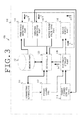
- FIG. 3 illustrates a configuration in the state where the USB memory in FIG. 1 is pulled out from the USB port in data processing apparatus
- FIG. 4 illustrates a step of operation about reporting a free space of the USB memory shown in FIG. 1 .
- a portable storage device of the present disclosure is explained as refer to FIG. 1 - FIG. 4 .
- a portable storage device in the following explanation, for example, it is a USB (Universal Serial Bus) memory.
- USB Universal Serial Bus
- USB memory 100 includes memory body 110 , connecting terminal part 111 , and cap 130 .
- Connecting terminal part 111 is inserted to a USB port of after-mentioned data processing apparatus 200 .
- Cap 130 is put on connecting terminal part 111 in order to protect connecting terminal part 111 .
- FIG. 2 shows a case where USB memory 100 is connected with data processing apparatus 200 , such as PC (Personal Computer,) via connecting terminal part 111 .
- FIG. 3 shows a case where USB memory 100 is not connected with data processing apparatus 200 .
- a solid line arrow shows a flow of data, a control signal, or the like.
- a dotted line arrow shows a flow of electric supply.
- solid line arrows a and b attached to a dotted line arrow shows electric supply in a case where USB memory 100 is connected with data processing apparatus 200 and in a case where USB memory 100 is not connected with data processing apparatus 200 , respectively.
- memory body 110 in USB memory 100 in addition to connecting terminal part 111 as mentioned above, memory part 112 , free space detecting part 113 , vibration detecting part 114 , notice sound preserving part 115 , sound making part 116 , power feeding part 117 , power feeding control part 118 , electricity storage part 119 , and controller 120 are included.
- Connecting terminal part 111 is inserted in a USB port of data processing apparatus 200 , such as PC (personal computer).
- Memory part 112 is a storage module that has an area to store various data.
- Free space detecting part 113 is a sensor that has a circuit to detect a free space, which indicates empty capacity, of memory part 112 . When detecting the free space by free space detecting part 113 , an exact free space may be detected, or an approximate free space may be detected.
- free space detecting part 113 in the present embodiment for example, detects about an approximate percent unit of free space. About this, it assumes for a scene desiring to know the free space of USB memory 100 . Then, it is because a case to know a needed free space accurately is not so frequent. Thus, most of the case are sufficient to be able to grasp the approximate free space.
- Vibration detecting part 114 is configured with an acceleration sensor, or the like. Vibration detecting part 114 has a circuit that detects vibration of USB memory 100 . That is, vibration of USB memory 100 happens because a user shakes USB memory 100 . This is an action for checking a free space of USB memory 100 by a user. This action takes in an operation to shake an object in everyday life. Incidentally, it is the operation for getting to know residual quantity of the object that cannot view contents as like a spray can.
- vibration detecting part 114 detects vibration at the time of carrying USB memory 100 . Then, although there is no action for checking of a free space, sound is made from sound making part 116 . Accordingly, vibration detecting part 114 is provided with a threshold that can certainly detect vibration in case of USB memory 100 being shaken. Shaking USB memory 100 is an action that checks a free space. This threshold is equivalent to sensitivity of vibration detecting part 114 . Vibration detecting part 114 is detected as vibration when a degree of vibration is greater than or equal to the threshold. In addition, the threshold may be provided in the controller 120 side other than vibration detecting part 114 side. In this case, it becomes possible to determine presence or absence of an action for checking a free space in the controller 120 side.
- Notice sound preserving part 115 is a storage module having an area where a plurality of notice sound correspond to a free space of USB memory 100 is stored as data.
- notice sound may be a different pitch (frequency of sound), volume, a melody, or sound patterns, corresponding to a free space, respectively.
- notice sound may be a sound to read aloud the free space. In any case, the notice sound is for just identifying the free space of memory part 112 .
- notice sound may have a pattern “clattering” that is emitted when putting an iron ball into a container and shaking it.
- the sound pattern can be used as a pattern corresponding to the free space of USB memory 100 .
- it can be a pattern that, if a free space of USB memory 100 is about 90 percent, sound is made 4 times, for example. In this case, if it is about 60 percent, sound is made 3 times. If it is 30 percent, sound is made twice. If it is less than 30 percent, sound is made once.
- USB memory 100 it is also possible to have a pattern that, if the free space of USB memory 100 is about 90 percent, sound is made once, for example. In this case, if it is about 60 percent, sound is made twice. If it is about 30 percent, sound is made 3 times. If it is less than 30 percent, sound is made 4 times.
- USB memory 100 can be a pattern that, if a free space of USB memory 100 is about 90 percent, sound is made continuously about 4 seconds, for example. In this case, if it is about 60 percent, sound is made continuously about 3 seconds. If it is about 30 percent, sound is made continuously about 2 seconds. If it is less than 30 percent, sound is made continuously about 1 second. Also, it is also possible to adopt a pattern that, if a free space of USB memory 100 is about 90 percent, sound is made continuously about 1 second, for example. In this case, if it is about 60 percent, sound is made continuously about 2 seconds. If it is about 30 percent, sound is made continuously about 3 seconds. If it is less than 30 percent, sound is made continuously about 4 seconds.
- the free space is about 90 percent means that the free space is 90 percent or more.
- the free space is about 60 percent means that the free space is 60 percent or more to less than 90 percent.
- the free space is about 30 percent means that the free space is 30 percent or more to less than 60 percent.
- the free space is less than 30 percent means that the free space is less than 30 percent to no free space.
- Sound making part 116 is configured of a small speaker, or the like. Sound making part 116 has a circuit that makes sound by controlling of controller 120 when vibration of USB memory 100 is detected by vibration detecting part 114 .
- sound making part 116 may continue to make the notice sound while vibration detecting part 114 is detecting vibration. Thereby, the notice sound is made according to a user shaking USB memory 100 . Accordingly, the free space can be recognized, sensuously.
- Power feeding part 117 when connecting terminal part 111 is inserted in the USB port of data processing apparatus 200 , has a circuit that supplies electric power to electricity storage part 119 and controller 120 in the electric power from the data processing apparatus 200 side as shown in solid line arrow a.
- Power feeding control part 118 when USB memory 100 is not connected to data processing apparatus 200 , has a circuit that makes electric supply to free space detecting part 113 , vibration detecting part 114 , sound making part 116 , and controller 120 for electricity storage part 119 as shown in solid line arrow b of FIG. 3 .
- electric supply from electricity storage part 119 when USB memory 100 is not connected to data processing apparatus 200 may be performed only for controller 120 and vibration detecting part 114 .
- this electric supply, when vibration is detected by vibration detecting part 114 may be performed for free space detecting part 113 and sound making part 116 .
- power consumption of electricity storage part 119 can be reduced.
- Electricity storage part 119 is a rechargeable battery that has a member to store electricity as for electric power.
- Controller 120 accepts the read request from the data processing apparatus 200 side connected via connecting terminal part 111 , reads the data of memory part 112 , and transmits the data to the data processing apparatus 200 side. Also, controller 120 accepts the write request from the data processing apparatus 200 side connected via connecting terminal part 111 and writes the data to memory part 112 .
- controller 120 has a circuit that, when not connecting to data processing apparatus 200 and detecting vibration of USB memory 100 by vibration detecting part 114 , reads notice sound from notice sound preserving part 115 as corresponded to the detection result of the free space of memory part 112 by free space detecting part 113 . Then, controller 120 has a circuit to causes sound making part 116 to make notice sound that is read.
- the notice sound stored in notice sound preserving part 115 is sound patterns. Sound patterns in this case are patterns that sound is made 4 times if the free space of USB memory 100 is about 90 percent, sound is made 3 times if it is about 60 percent, sound is made twice if it is about 30 percent, and sound is made once if it is less than 30 percent.
- power feeding control part 118 determines whether or not connecting terminal part 111 is connected to data processing apparatus 200 (Step S 10 ). If connecting terminal part 111 is connected to data processing apparatus 200 (Step S 10 : Yes), power feeding control part 118 becomes the decision waiting whether connecting terminal part 111 is connected to data processing apparatus 200 . On the other hand, power feeding control part 118 , if it determines that connecting terminal part 111 is not connected to data processing apparatus 200 (Step S 10 : No), causes electricity storage part 119 to perform the electric supply to controller 120 and vibration detecting part 114 (Step S 11 ).
- power feeding control part 118 and controller 120 determine whether or not vibration is detected by vibration detecting part 114 (Step S 12 ). If vibration is not detected by vibration detecting part 114 (Step S 10 : No), power feeding control part 118 and controller 120 becomes the decision waiting whether or not vibration is detected by vibration detecting part 114 . Here, if it determines that vibration was detected by vibration detecting part 114 (Step S 10 : Yes), power feeding control part 118 causes electricity storage part 119 to perform electric supply to free space detecting part 113 and sound making part 116 (Step S 13 ).
- controller 120 determines that vibration is detected by vibration detecting part 114 (Step S 12 : Yes)
- controller 120 causes free space detecting part 113 drive to detect the free space of memory part 112 and check the free space (Step S 14 ).
- controller 120 determines whether or not the free space is about 90 percent (Step S 15 ). If controller 120 determines that the free space is about 90 percent (Step S 15 : Yes), controller 120 reads the sound pattern corresponding to the free space of USB memory 100 from notice sound preserving part 115 (Step S 16 ). Then, controller 120 causes sound making part 116 to make sound corresponding to read sound patterns (Step S 17 ).
- controller 120 determines whether or not the free space is about 60 percent (Step S 18 ). If controller 120 determines that the free space is about 60 percent (Step S 18 : Yes), controller 120 reads the sound pattern corresponding to the free space of USB memory 100 from notice sound preserving part 115 (Step S 16 ). Then, controller 120 causes sound making part 116 to make sound corresponding to read sound patterns (Step S 17 ).
- controller 120 determines whether or not the free space is about 30 percent (Step S 19 ). If controller 120 determines that the free space is about 30 percent (Step S 19 : Yes), controller 120 reads the sound pattern corresponding to the free space of USB memory 100 from notice sound preserving part 115 (Step S 16 ). Then, controller 120 causes sound making part 116 to make sound corresponding to read sound patterns (Step S 17 ).
- controller 120 determines that the free space is not about 30 percent (Step S 19 : No)
- controller 120 reads the sound pattern corresponding to the free space of USB memory 100 from notice sound preserving part 115 (Step S 16 ). Then, controller 120 causes sound making part 116 to make sound corresponding to read sound patterns (Step S 17 ).
- vibration detecting part 114 if vibration is detected by vibration detecting part 114 , reporting to a reporting part by controlling of controller 120 is performed.
- This report is based on a detection result of the free space of memory part 112 by free space detecting part 113 .
- the reporting part is notice sound preserving part 115 and sound making part 116 .
- the external storage of the typical case as mentioned above is, for example, when there is a lot of free space, a buzzer sound is informed for a long time, and when there are little free spaces, the buzzer sound is informed for a short time. Therefore, stand-alone checking of the free space for an external storage is easy.
- the residual quantity button is arranged on a surface of the external small recording medium. Accordingly, a problem is predicted that the residual quantity button is pressed, accidentally, when the external storage is put on PC, or the like.
- checking of the free space performed by pressing a residual quantity button is based on a general action. Therefore, there is also a problem of not being unique.
- a free space of a memory part can be checked by shaking a portable storage device. Accordingly, accidentally-pressing the residual quantity button can be prevented.
- unique confirmation operation that checks the free space can be performed by shaking the portable storage device.
- the present embodiment is explained in the case where the portable storage device is applied to USB memory 100 .
- the portable storage device is not limited to this example. That is, it is applicable to other portable storage devices, such as an SD memory card.
- the notice sound corresponding to the free space of USB memory 100 is made from sound making part 116 .
- a level meter corresponding to a free space of USB memory 100 may be displayed on memory body 110 of USB memory 100 .
- color corresponding to the free space of USB memory 100 may be displayed on memory body 110 of USB memory 100 .
- small LED Light Emitting Diode
- small LED that emits various kinds of colors, for example, is embedded in memory body 110 of USB memory 100 . Then, it can make LED emit light corresponding to the free space of USB memory 100 .
Landscapes
- Engineering & Computer Science (AREA)
- Power Engineering (AREA)
- Power Sources (AREA)
- Debugging And Monitoring (AREA)
Abstract
Description
Claims (6)
Applications Claiming Priority (2)
| Application Number | Priority Date | Filing Date | Title |
|---|---|---|---|
| JP2014-201613 | 2014-09-30 | ||
| JP2014201613A JP6269422B2 (en) | 2014-09-30 | 2014-09-30 | Portable storage device |
Publications (2)
| Publication Number | Publication Date |
|---|---|
| US20160093342A1 US20160093342A1 (en) | 2016-03-31 |
| US9406350B2 true US9406350B2 (en) | 2016-08-02 |
Family
ID=55585168
Family Applications (1)
| Application Number | Title | Priority Date | Filing Date |
|---|---|---|---|
| US14/872,023 Expired - Fee Related US9406350B2 (en) | 2014-09-30 | 2015-09-30 | Portable storage device that can check memory free space |
Country Status (2)
| Country | Link |
|---|---|
| US (1) | US9406350B2 (en) |
| JP (1) | JP6269422B2 (en) |
Citations (4)
| Publication number | Priority date | Publication date | Assignee | Title |
|---|---|---|---|---|
| JP2001147783A (en) | 1999-11-18 | 2001-05-29 | Hitachi Ltd | External storage medium and information recording / reproducing apparatus using the same |
| US6438086B1 (en) * | 1998-07-13 | 2002-08-20 | Sony Corporation | Recording apparatus and method, reproducing apparatus and method, and recording medium |
| US20120079174A1 (en) * | 2010-09-28 | 2012-03-29 | Fusion-Io, Inc. | Apparatus, system, and method for a direct interface between a memory controller and non-volatile memory using a command protocol |
| US20140208044A1 (en) * | 2013-01-22 | 2014-07-24 | SK Hynix Inc. | Semiconductor device and method of operating the same |
Family Cites Families (6)
| Publication number | Priority date | Publication date | Assignee | Title |
|---|---|---|---|---|
| JPH0819032A (en) * | 1994-06-30 | 1996-01-19 | Fujitsu Ltd | Portable voice recorder with voice recording and battery pack charger for portable radio with voice recording |
| JP2003331237A (en) * | 2002-05-10 | 2003-11-21 | Sharp Corp | Data recording medium |
| EP1890290B1 (en) * | 2006-08-17 | 2012-06-27 | Sony Corporation | Content storage apparatus for differentially storing and dubbing Copy-Once data and corresponding content storage method, storage medium and program |
| JP5628022B2 (en) * | 2009-12-28 | 2014-11-19 | パナソニック株式会社 | Electronic device and power supply control method |
| JP2011172033A (en) * | 2010-02-19 | 2011-09-01 | Olympus Imaging Corp | Status parameter notification apparatus for portable device |
| JP2014179867A (en) * | 2013-03-15 | 2014-09-25 | Sharp Corp | Communication device, telephone communication system, and telephone communication method |
-
2014
- 2014-09-30 JP JP2014201613A patent/JP6269422B2/en not_active Expired - Fee Related
-
2015
- 2015-09-30 US US14/872,023 patent/US9406350B2/en not_active Expired - Fee Related
Patent Citations (4)
| Publication number | Priority date | Publication date | Assignee | Title |
|---|---|---|---|---|
| US6438086B1 (en) * | 1998-07-13 | 2002-08-20 | Sony Corporation | Recording apparatus and method, reproducing apparatus and method, and recording medium |
| JP2001147783A (en) | 1999-11-18 | 2001-05-29 | Hitachi Ltd | External storage medium and information recording / reproducing apparatus using the same |
| US20120079174A1 (en) * | 2010-09-28 | 2012-03-29 | Fusion-Io, Inc. | Apparatus, system, and method for a direct interface between a memory controller and non-volatile memory using a command protocol |
| US20140208044A1 (en) * | 2013-01-22 | 2014-07-24 | SK Hynix Inc. | Semiconductor device and method of operating the same |
Also Published As
| Publication number | Publication date |
|---|---|
| JP2016071706A (en) | 2016-05-09 |
| US20160093342A1 (en) | 2016-03-31 |
| JP6269422B2 (en) | 2018-01-31 |
Similar Documents
| Publication | Publication Date | Title |
|---|---|---|
| JP5022417B2 (en) | Movement telemetry using RFID | |
| KR102477853B1 (en) | Electronic device and method displaying affordance for providing charge of battery of external device through display | |
| ES2886253T3 (en) | Logic circuits | |
| JP5206506B2 (en) | Mounting device, substrate, and method for changing liquid information | |
| EP3688654B1 (en) | Logic circuitry package | |
| JP2017128326A5 (en) | ||
| KR102475781B1 (en) | Digital pen for charging battery and method for operating thefeof | |
| JP6186888B2 (en) | Mobile device | |
| US8629680B2 (en) | Central processing unit test system | |
| CN104134465B (en) | Storage device and storage management method | |
| US9406350B2 (en) | Portable storage device that can check memory free space | |
| KR100654811B1 (en) | Electric device and control method thereof | |
| KR102745896B1 (en) | Universal flash storage, electronic device capable of connecting to a plurality type of memory devices and method thereof | |
| WO2009113728A1 (en) | Liquid container, baseboard, and method of changing liquid information | |
| KR20120087031A (en) | Method for monitoring condition of display device and apparatus for monitoring condition of display device | |
| KR20200053251A (en) | Electronic device performing operation based on a type of identified covers and method for operating thereof | |
| US10514280B2 (en) | Triggering a process in a measuring unit using a movement pattern | |
| US20200090016A1 (en) | Electronic labels | |
| JP5146365B2 (en) | How to change liquid container, substrate, liquid information | |
| CN114931434A (en) | Electronic device and laser control system | |
| JP7400475B2 (en) | Mobile device | |
| EP1347409B1 (en) | Electronic tag | |
| CN104057698B (en) | Control sound production prompt chip, printed material container and tape deck | |
| US9427713B2 (en) | Mixing, stirring or dispersing apparatus and method using a container with a diaphragm wall part with a drive switched off condition based on a diaphragm loading capacity | |
| KR20130095057A (en) | Management apparatus for transportation handling information of commercial vehicle operation system |
Legal Events
| Date | Code | Title | Description |
|---|---|---|---|
| AS | Assignment |
Owner name: KYOCERA DOCUMENT SOLUTIONS INC., JAPAN Free format text: ASSIGNMENT OF ASSIGNORS INTEREST;ASSIGNORS:ENDO, WATARU;YUKI, AKIRA;TANBA, MASATO;AND OTHERS;REEL/FRAME:039126/0514 Effective date: 20150911 |
|
| STCF | Information on status: patent grant |
Free format text: PATENTED CASE |
|
| MAFP | Maintenance fee payment |
Free format text: PAYMENT OF MAINTENANCE FEE, 4TH YEAR, LARGE ENTITY (ORIGINAL EVENT CODE: M1551); ENTITY STATUS OF PATENT OWNER: LARGE ENTITY Year of fee payment: 4 |
|
| FEPP | Fee payment procedure |
Free format text: MAINTENANCE FEE REMINDER MAILED (ORIGINAL EVENT CODE: REM.); ENTITY STATUS OF PATENT OWNER: LARGE ENTITY |
|
| LAPS | Lapse for failure to pay maintenance fees |
Free format text: PATENT EXPIRED FOR FAILURE TO PAY MAINTENANCE FEES (ORIGINAL EVENT CODE: EXP.); ENTITY STATUS OF PATENT OWNER: LARGE ENTITY |
|
| STCH | Information on status: patent discontinuation |
Free format text: PATENT EXPIRED DUE TO NONPAYMENT OF MAINTENANCE FEES UNDER 37 CFR 1.362 |
|
| FP | Lapsed due to failure to pay maintenance fee |
Effective date: 20240802 |