US9403763B2 - CD4-mimetic inhibitors of HIV-1 entry and methods of use thereof - Google Patents
CD4-mimetic inhibitors of HIV-1 entry and methods of use thereof Download PDFInfo
- Publication number
- US9403763B2 US9403763B2 US14/365,389 US201214365389A US9403763B2 US 9403763 B2 US9403763 B2 US 9403763B2 US 201214365389 A US201214365389 A US 201214365389A US 9403763 B2 US9403763 B2 US 9403763B2
- Authority
- US
- United States
- Prior art keywords
- optionally substituted
- compound
- hiv
- aws
- mmol
- Prior art date
- Legal status (The legal status is an assumption and is not a legal conclusion. Google has not performed a legal analysis and makes no representation as to the accuracy of the status listed.)
- Active
Links
- 0 [1*]C1CC2=C(C([2*])=C([3*])C([4*])=C2[5*])C1NC(=O)C(=O)CC1=CC=C(Cl)C(F)=C1 Chemical compound [1*]C1CC2=C(C([2*])=C([3*])C([4*])=C2[5*])C1NC(=O)C(=O)CC1=CC=C(Cl)C(F)=C1 0.000 description 27
- IIAWNWGXUGWEEY-UHFFFAOYSA-N CC(=N)NCC(C)C Chemical compound CC(=N)NCC(C)C IIAWNWGXUGWEEY-UHFFFAOYSA-N 0.000 description 9
- ZKFJIXCPXUQXGP-KTUKQVCZSA-N C/C(=C\[N+](=O)[O-])NCC(C)C.C/C(=N\C#N)NCC(C)C.CC(=N)NCNCC(C)C.CC(=O)NCC(C)C.CC(=S)NCC(C)C.CC(C)CNC1=C(N)C(=O)C1=O.CC(C)CNC1=CS(=O)(=O)C=C1N.CC(C)CNC1=NC=CC2=C1C=CC=C2.CC(C)CNC1=NC=NC2=C1C=CC2.CC(C)CNC1=NC=NC2=C1C=CC2.CC(C)CNC1=NC=NC2=C1C=CC=C2.CC(C)CNC1=NCC2=C1C=CC=C2.CC(C)CNC1=NOC2=C1C=CC=C2.CCNCC(C)C Chemical compound C/C(=C\[N+](=O)[O-])NCC(C)C.C/C(=N\C#N)NCC(C)C.CC(=N)NCNCC(C)C.CC(=O)NCC(C)C.CC(=S)NCC(C)C.CC(C)CNC1=C(N)C(=O)C1=O.CC(C)CNC1=CS(=O)(=O)C=C1N.CC(C)CNC1=NC=CC2=C1C=CC=C2.CC(C)CNC1=NC=NC2=C1C=CC2.CC(C)CNC1=NC=NC2=C1C=CC2.CC(C)CNC1=NC=NC2=C1C=CC=C2.CC(C)CNC1=NCC2=C1C=CC=C2.CC(C)CNC1=NOC2=C1C=CC=C2.CCNCC(C)C ZKFJIXCPXUQXGP-KTUKQVCZSA-N 0.000 description 4
- QFFGOAGKSQWLPG-UHFFFAOYSA-U CC(=N)CCC(=O)NCC(C)C.CC(=N)NCC(C)C.CC(=N)NCC1=CN(CC(C)C)N=N1.CC(C)CNC1=[NH+]C=CC=C1.CC(C)CNC1=[NH+]C=CC=N1.CC(C)CNC1=[NH+]C=CN1.CC(C)CNC1=[NH+]CCCN1.CC(C)CNC1=[NH+]CCN1.CC(C)CNC1=[NH+]N=CC=C1.CC1=[NH+]C=C(NCC(C)C)N1.CCC(=O)NCC(C)C.CCC(C)C.CCC(C)C.CCC(C)C.CCC1=CN(CC(C)C)N=N1 Chemical compound CC(=N)CCC(=O)NCC(C)C.CC(=N)NCC(C)C.CC(=N)NCC1=CN(CC(C)C)N=N1.CC(C)CNC1=[NH+]C=CC=C1.CC(C)CNC1=[NH+]C=CC=N1.CC(C)CNC1=[NH+]C=CN1.CC(C)CNC1=[NH+]CCCN1.CC(C)CNC1=[NH+]CCN1.CC(C)CNC1=[NH+]N=CC=C1.CC1=[NH+]C=C(NCC(C)C)N1.CCC(=O)NCC(C)C.CCC(C)C.CCC(C)C.CCC(C)C.CCC1=CN(CC(C)C)N=N1 QFFGOAGKSQWLPG-UHFFFAOYSA-U 0.000 description 4
- HHNVOAYJRITKPT-UHFFFAOYSA-N CC(C)CN/C1=N/C2=C(C=CC=C2)S1.CC(C)CN1C=CC2=C1N=CC=C2.CC(C)CN1C=NC2=C1C=CC=C2.CC(C)CN1N=CC2=C1C=CC=C2.CC(C)CN1N=NC2=C1C=CC=C2.CC(C)CNC1=C(N)C(=O)C1=O.CC(C)CNC1=NC2=C(C=CC=C2)C=C1.CC(C)CNC1=NC=CC2=C1C=CC=C2.CC(C)CNC1=NC=NC2=C1C=CN2.CC(C)CNC1=NC=NC2=C1C=CS2.CC(C)CNC1=NCC2=C1C=CC=C2.CC(C)CNC1=NCC=C1.CC(C)CNC1=NOC2=C1C=CC=C2.CC(C)CNC1=NOC=C1 Chemical compound CC(C)CN/C1=N/C2=C(C=CC=C2)S1.CC(C)CN1C=CC2=C1N=CC=C2.CC(C)CN1C=NC2=C1C=CC=C2.CC(C)CN1N=CC2=C1C=CC=C2.CC(C)CN1N=NC2=C1C=CC=C2.CC(C)CNC1=C(N)C(=O)C1=O.CC(C)CNC1=NC2=C(C=CC=C2)C=C1.CC(C)CNC1=NC=CC2=C1C=CC=C2.CC(C)CNC1=NC=NC2=C1C=CN2.CC(C)CNC1=NC=NC2=C1C=CS2.CC(C)CNC1=NCC2=C1C=CC=C2.CC(C)CNC1=NCC=C1.CC(C)CNC1=NOC2=C1C=CC=C2.CC(C)CNC1=NOC=C1 HHNVOAYJRITKPT-UHFFFAOYSA-N 0.000 description 4
- MHPNEOHHCXIQLC-DZYAXFCLSA-N N=C(N)NC[C@H]1CC2=C(C=CC=C2)[C@@H]1NC(=O)C(=O)CC1=CC=C(Cl)C(F)=C1.N=C(N)N[C@H]1CC2=C(C=CC=C2)[C@@H]1NC(=O)C(=O)CC1=CC=C(Cl)C(F)=C1 Chemical compound N=C(N)NC[C@H]1CC2=C(C=CC=C2)[C@@H]1NC(=O)C(=O)CC1=CC=C(Cl)C(F)=C1.N=C(N)N[C@H]1CC2=C(C=CC=C2)[C@@H]1NC(=O)C(=O)CC1=CC=C(Cl)C(F)=C1 MHPNEOHHCXIQLC-DZYAXFCLSA-N 0.000 description 4
- FOXCQDUJXYBIHS-UHFFFAOYSA-N CC(C)CN/C1=N/C2=C(C=CC=C2)S1.CC(C)CN1C=CC2=C1N=CC=C2.CC(C)CN1C=NC2=C1C=CC=C2.CC(C)CN1N=CC2=C1C=CC=C2.CC(C)CN1N=NC2=C1C=CC=C2.CC(C)CNC1=NC2=C(C=CC=C2)C=C1.CC(C)CNC1=NCC=C1.CC(C)CNC1=NOC=C1 Chemical compound CC(C)CN/C1=N/C2=C(C=CC=C2)S1.CC(C)CN1C=CC2=C1N=CC=C2.CC(C)CN1C=NC2=C1C=CC=C2.CC(C)CN1N=CC2=C1C=CC=C2.CC(C)CN1N=NC2=C1C=CC=C2.CC(C)CNC1=NC2=C(C=CC=C2)C=C1.CC(C)CNC1=NCC=C1.CC(C)CNC1=NOC=C1 FOXCQDUJXYBIHS-UHFFFAOYSA-N 0.000 description 3
- XMSROZUDBZKRTD-JQWIXIFHSA-O *.CCC(=O)C(=O)N[C@H]1C2=C(/C=C\C=C/2)C[C@@H]1NC(N)=[NH2+] Chemical compound *.CCC(=O)C(=O)N[C@H]1C2=C(/C=C\C=C/2)C[C@@H]1NC(N)=[NH2+] XMSROZUDBZKRTD-JQWIXIFHSA-O 0.000 description 2
- OWCKEINZHQJTDK-FOTGMUQLSA-N CC(C)Br.CC(C)C1=CC=CC=C1.CC(C)C1=CC=CC=N1.CC(C)C1=CC=CN=C1.CC(C)C1=CC=NC=C1.CC(C)C1=CN=CN1.CC(C)C1=NC=CN1.CC(C)N(C)C.CC(C)N1C=CN=C1.CC(C)N1CCCC1=O.CC(C)N1CCN(C(=O)C2=CC=CC=C2)CC1.CC(C)N1CCN(C(=O)C2=CC=CC=C2)C[C@H]1C.CC(C)N1CCNC1=O.CC(C)N1CCNCC1.CC(C)N1CCOC1=O.CC(C)N1CCOCC1.CC(C)O.CC(C)S.CC(C)S(=O)(=O)NC1CC1 Chemical compound CC(C)Br.CC(C)C1=CC=CC=C1.CC(C)C1=CC=CC=N1.CC(C)C1=CC=CN=C1.CC(C)C1=CC=NC=C1.CC(C)C1=CN=CN1.CC(C)C1=NC=CN1.CC(C)N(C)C.CC(C)N1C=CN=C1.CC(C)N1CCCC1=O.CC(C)N1CCN(C(=O)C2=CC=CC=C2)CC1.CC(C)N1CCN(C(=O)C2=CC=CC=C2)C[C@H]1C.CC(C)N1CCNC1=O.CC(C)N1CCNCC1.CC(C)N1CCOC1=O.CC(C)N1CCOCC1.CC(C)O.CC(C)S.CC(C)S(=O)(=O)NC1CC1 OWCKEINZHQJTDK-FOTGMUQLSA-N 0.000 description 2
- XFVXAUZEENQZIJ-YINGVSQRSA-V CC(C)C1=CC=C(CNC(N)=[NH2+])C=C1.CC(C)CN.CC(C)CN/C(N)=C/[N+](=O)[O-].CC(C)CN/C(N)=N/C#N.CC(C)CN1C=C(CN)N=N1.CC(C)CN1C=C(CNC(=N)N)N=N1.CC(C)CN=[N+]=[N-].CC(C)CNC(=N)N.CC(C)CNC(=O)CCC(=N)N.CC(C)CNC(=O)CN.CC(C)CNC(N)=O.CC(C)CNC(N)=S.CC(C)CNC1=CS(=O)(=O)C=C1N.CC(C)CNC1=C[NH+]=C(N)N1.CC(C)CNC1=NC=NC2=C1C=CC=C2.CC(C)CNC1=[NH+]C=CC=C1.CC(C)CNC1=[NH+]C=CC=N1.CC(C)CNC1=[NH+]C=CN1.CC(C)CNC1=[NH+]CCCN1.CC(C)CNC1=[NH+]CCN1.CC(C)CNC1=[NH+]N=CC=C1.CC(C)CNCN.CC(C)CNCNC(=N)N.CC(C)CO Chemical compound CC(C)C1=CC=C(CNC(N)=[NH2+])C=C1.CC(C)CN.CC(C)CN/C(N)=C/[N+](=O)[O-].CC(C)CN/C(N)=N/C#N.CC(C)CN1C=C(CN)N=N1.CC(C)CN1C=C(CNC(=N)N)N=N1.CC(C)CN=[N+]=[N-].CC(C)CNC(=N)N.CC(C)CNC(=O)CCC(=N)N.CC(C)CNC(=O)CN.CC(C)CNC(N)=O.CC(C)CNC(N)=S.CC(C)CNC1=CS(=O)(=O)C=C1N.CC(C)CNC1=C[NH+]=C(N)N1.CC(C)CNC1=NC=NC2=C1C=CC=C2.CC(C)CNC1=[NH+]C=CC=C1.CC(C)CNC1=[NH+]C=CC=N1.CC(C)CNC1=[NH+]C=CN1.CC(C)CNC1=[NH+]CCCN1.CC(C)CNC1=[NH+]CCN1.CC(C)CNC1=[NH+]N=CC=C1.CC(C)CNCN.CC(C)CNCNC(=N)N.CC(C)CO XFVXAUZEENQZIJ-YINGVSQRSA-V 0.000 description 2
- BUHBTZWSOCJZTA-TYHSQFTDSA-U CC(C)CN.CC(C)CN/C(N)=C/[N+](=O)[O-].CC(C)CN/C(N)=N/C#N.CC(C)CN1C=C(CN)N=N1.CC(C)CN1C=C(CNC(=N)N)N=N1.CC(C)CN=[N+]=[N-].CC(C)CNC(=N)N.CC(C)CNC(=O)CCC(=N)N.CC(C)CNC(=O)CN.CC(C)CNC(N)=O.CC(C)CNC(N)=S.CC(C)CNC1=CS(=O)(=O)C=C1N.CC(C)CNC1=C[NH+]=C(N)N1.CC(C)CNC1=NC=NC2=C1C=CC=C2.CC(C)CNC1=[NH+]C=CC=C1.CC(C)CNC1=[NH+]C=CC=N1.CC(C)CNC1=[NH+]C=CN1.CC(C)CNC1=[NH+]CCCN1.CC(C)CNC1=[NH+]CCN1.CC(C)CNC1=[NH+]N=CC=C1.CC(C)CNCN.CC(C)CNCNC(=N)N.CC(C)CO Chemical compound CC(C)CN.CC(C)CN/C(N)=C/[N+](=O)[O-].CC(C)CN/C(N)=N/C#N.CC(C)CN1C=C(CN)N=N1.CC(C)CN1C=C(CNC(=N)N)N=N1.CC(C)CN=[N+]=[N-].CC(C)CNC(=N)N.CC(C)CNC(=O)CCC(=N)N.CC(C)CNC(=O)CN.CC(C)CNC(N)=O.CC(C)CNC(N)=S.CC(C)CNC1=CS(=O)(=O)C=C1N.CC(C)CNC1=C[NH+]=C(N)N1.CC(C)CNC1=NC=NC2=C1C=CC=C2.CC(C)CNC1=[NH+]C=CC=C1.CC(C)CNC1=[NH+]C=CC=N1.CC(C)CNC1=[NH+]C=CN1.CC(C)CNC1=[NH+]CCCN1.CC(C)CNC1=[NH+]CCN1.CC(C)CNC1=[NH+]N=CC=C1.CC(C)CNCN.CC(C)CNCNC(=N)N.CC(C)CO BUHBTZWSOCJZTA-TYHSQFTDSA-U 0.000 description 2
- FKZFYKUBDILTIZ-UHFFFAOYSA-N CNC(=O)C(NC(=O)C(=O)CC1=CC=C(Cl)C(F)=C1)C1=CC=CC=C1 Chemical compound CNC(=O)C(NC(=O)C(=O)CC1=CC=C(Cl)C(F)=C1)C1=CC=CC=C1 FKZFYKUBDILTIZ-UHFFFAOYSA-N 0.000 description 2
- JDFFXBFDEWBZST-FPQMLURLSA-N Cl.N=C(N)N1C=CC=N1.NC(=[NH2+])NC[C@H]1CC2=C(/C=C\C=C/2)[C@@H]1NC(=O)C(=O)CC1=CC=C(Cl)C(F)=C1.NC[C@H]1CC2=C(/C=C\C=C/2)[C@@H]1NC(=O)C(=O)CC1=CC=C(Cl)C(F)=C1.[H]C(=O)[O-] Chemical compound Cl.N=C(N)N1C=CC=N1.NC(=[NH2+])NC[C@H]1CC2=C(/C=C\C=C/2)[C@@H]1NC(=O)C(=O)CC1=CC=C(Cl)C(F)=C1.NC[C@H]1CC2=C(/C=C\C=C/2)[C@@H]1NC(=O)C(=O)CC1=CC=C(Cl)C(F)=C1.[H]C(=O)[O-] JDFFXBFDEWBZST-FPQMLURLSA-N 0.000 description 2
- JWPRPUWVNKSJCV-UHFFFAOYSA-N BrCC1=CC=C(Br)C=C1.[N-]=[N+]=NCC1=CC=C(Br)C=C1 Chemical compound BrCC1=CC=C(Br)C=C1.[N-]=[N+]=NCC1=CC=C(Br)C=C1 JWPRPUWVNKSJCV-UHFFFAOYSA-N 0.000 description 1
- YLRBJYMANQKEAW-UHFFFAOYSA-N BrCc(cc1)ccc1Br Chemical compound BrCc(cc1)ccc1Br YLRBJYMANQKEAW-UHFFFAOYSA-N 0.000 description 1
- MWCCQGUOYJAHCH-JNEOCXGKSA-P C.C=C(NC)C(NC(=O)C(=O)CC1=CC=C(Cl)C(F)=C1)C1=CC=CC=C1.CC(=[NH2+])NCC1=CC=C([C@H]2CC3=C(C=CC=C3)[C@@H]2NC(=O)C(=O)CC2=CC=C(Cl)C(F)=C2)C=C1.CC(=[NH2+])NC[C@H]1CC2=C(C=CC=C2)[C@@H]1NC(=O)C(=O)CC1=CC=C(Cl)C(F)=C1 Chemical compound C.C=C(NC)C(NC(=O)C(=O)CC1=CC=C(Cl)C(F)=C1)C1=CC=CC=C1.CC(=[NH2+])NCC1=CC=C([C@H]2CC3=C(C=CC=C3)[C@@H]2NC(=O)C(=O)CC2=CC=C(Cl)C(F)=C2)C=C1.CC(=[NH2+])NC[C@H]1CC2=C(C=CC=C2)[C@@H]1NC(=O)C(=O)CC1=CC=C(Cl)C(F)=C1 MWCCQGUOYJAHCH-JNEOCXGKSA-P 0.000 description 1
- XZZLKQSRVQUTPV-XTAUJNGJSA-N C/C(=N\C(=O)OC(C)(C)C)NC(=O)OC(C)(C)C.CC(C)(C)OC(=O)/N=C(\CCC[C@H]1CC2=C(C=CC=C2)[C@@H]1NC(=O)C(=O)CC1=CC=C(Cl)C(F)=C1)NC(=O)OC(C)(C)C.O=C(CC1=CC=C(Cl)C(F)=C1)C(=O)N[C@H]1C2=C(C=CC=C2)C[C@@H]1CCO Chemical compound C/C(=N\C(=O)OC(C)(C)C)NC(=O)OC(C)(C)C.CC(C)(C)OC(=O)/N=C(\CCC[C@H]1CC2=C(C=CC=C2)[C@@H]1NC(=O)C(=O)CC1=CC=C(Cl)C(F)=C1)NC(=O)OC(C)(C)C.O=C(CC1=CC=C(Cl)C(F)=C1)C(=O)N[C@H]1C2=C(C=CC=C2)C[C@@H]1CCO XZZLKQSRVQUTPV-XTAUJNGJSA-N 0.000 description 1
- DNIHCVBDROOVOV-RJUBDTSPSA-N C1=CC=C2CC=CC2=C1.O=C1N[C@H]2C3=CC=CC=C3C[C@@H]12 Chemical compound C1=CC=C2CC=CC2=C1.O=C1N[C@H]2C3=CC=CC=C3C[C@@H]12 DNIHCVBDROOVOV-RJUBDTSPSA-N 0.000 description 1
- UEXCTNCYJQBTGP-UHFFFAOYSA-N C=C(N)NCC(C)(NC(=O)C(=O)CC1=CC=C(Cl)C(F)=C1)C1=CC=C(C)C=C1.CC1=CC=C(C(C)(CN)NC(=O)C(=O)CC2=CC=C(Cl)C(F)=C2)C=C1.CC1=CC=C(C(C)(CO)NC(=O)C(=O)CC2=CC=C(Cl)C(F)=C2)C=C1.CCCC(NC(=O)C(=O)CC1=CC=C(Cl)C(F)=C1)C1=C(Cl)C=C(Cl)C=C1.CCCC(NC(=O)C(=O)CC1=CC=C(Cl)C(F)=C1)C1=C(Cl)C=C(Cl)C=C1 Chemical compound C=C(N)NCC(C)(NC(=O)C(=O)CC1=CC=C(Cl)C(F)=C1)C1=CC=C(C)C=C1.CC1=CC=C(C(C)(CN)NC(=O)C(=O)CC2=CC=C(Cl)C(F)=C2)C=C1.CC1=CC=C(C(C)(CO)NC(=O)C(=O)CC2=CC=C(Cl)C(F)=C2)C=C1.CCCC(NC(=O)C(=O)CC1=CC=C(Cl)C(F)=C1)C1=C(Cl)C=C(Cl)C=C1.CCCC(NC(=O)C(=O)CC1=CC=C(Cl)C(F)=C1)C1=C(Cl)C=C(Cl)C=C1 UEXCTNCYJQBTGP-UHFFFAOYSA-N 0.000 description 1
- SKAXHNQXAHJMBP-UHFFFAOYSA-N C=C(N)NCCC1=C(CNC(=O)C(=O)CC2=CC=C(Cl)C(F)=C2)C=CC=C1.C=C(N)NCCC1=C(CNC(=O)C(=O)CC2=CC=C(Cl)C(F)=C2)C=CN1.C=C(N)NCCC1=C(CNC(=O)C(=O)CC2=CC=C(Cl)C(F)=C2)C=CO1.C=C(N)NCCC1=C(CNC(=O)C(=O)CC2=CC=C(Cl)C(F)=C2)NC=C1.C=C(N)NCCC1=C(CNC(=O)C(=O)CC2=CC=C(Cl)C(F)=C2)OC=C1 Chemical compound C=C(N)NCCC1=C(CNC(=O)C(=O)CC2=CC=C(Cl)C(F)=C2)C=CC=C1.C=C(N)NCCC1=C(CNC(=O)C(=O)CC2=CC=C(Cl)C(F)=C2)C=CN1.C=C(N)NCCC1=C(CNC(=O)C(=O)CC2=CC=C(Cl)C(F)=C2)C=CO1.C=C(N)NCCC1=C(CNC(=O)C(=O)CC2=CC=C(Cl)C(F)=C2)NC=C1.C=C(N)NCCC1=C(CNC(=O)C(=O)CC2=CC=C(Cl)C(F)=C2)OC=C1 SKAXHNQXAHJMBP-UHFFFAOYSA-N 0.000 description 1
- YVRGNPGKYMWNLU-NUSXVOMESA-N C=C(N)N[C@H]1CC2=C(C3=C(C=CC=C3)N2)[C@@H]1NC(=O)C(=O)CC1=CC=C(Cl)C(F)=C1.C=C(N)N[C@H]1CC2=C(N=CN2)[C@@H]1NC(=O)C(=O)CC1=CC=C(Cl)C(F)=C1.C=C(N)N[C@H]1CC2=C(NC3=C2C=CC=C3)[C@@H]1NC(=O)C(=O)CC1=CC=C(Cl)C(F)=C1.C=C(N)N[C@H]1CC2=C(NC=N2)[C@@H]1NC(=O)C(=O)CC1=CC=C(Cl)C(F)=C1.C=C(N)N[C@H]1CCC[C@@H]1NC(=O)C(=O)CC1=CC=C(Cl)C(F)=C1 Chemical compound C=C(N)N[C@H]1CC2=C(C3=C(C=CC=C3)N2)[C@@H]1NC(=O)C(=O)CC1=CC=C(Cl)C(F)=C1.C=C(N)N[C@H]1CC2=C(N=CN2)[C@@H]1NC(=O)C(=O)CC1=CC=C(Cl)C(F)=C1.C=C(N)N[C@H]1CC2=C(NC3=C2C=CC=C3)[C@@H]1NC(=O)C(=O)CC1=CC=C(Cl)C(F)=C1.C=C(N)N[C@H]1CC2=C(NC=N2)[C@@H]1NC(=O)C(=O)CC1=CC=C(Cl)C(F)=C1.C=C(N)N[C@H]1CCC[C@@H]1NC(=O)C(=O)CC1=CC=C(Cl)C(F)=C1 YVRGNPGKYMWNLU-NUSXVOMESA-N 0.000 description 1
- GNNKTMRJCWFKDD-UHFFFAOYSA-N CC(=N)NCC1C2=C(CC1NC(=O)C(=O)CC1=CC=C(Cl)C(F)=C1)C(Cl)=CC=C2.NCC1C2=C(CC1NC(=O)C(=O)CC1=CC=C(Cl)C(F)=C1)C(Cl)=CC=C2.O=C(CC1=CC=C(Cl)C(F)=C1)C(=O)NC1CC2=C(C=CC=C2Cl)C1CO Chemical compound CC(=N)NCC1C2=C(CC1NC(=O)C(=O)CC1=CC=C(Cl)C(F)=C1)C(Cl)=CC=C2.NCC1C2=C(CC1NC(=O)C(=O)CC1=CC=C(Cl)C(F)=C1)C(Cl)=CC=C2.O=C(CC1=CC=C(Cl)C(F)=C1)C(=O)NC1CC2=C(C=CC=C2Cl)C1CO GNNKTMRJCWFKDD-UHFFFAOYSA-N 0.000 description 1
- HPYWDWHZTRPMDN-UHFFFAOYSA-N CC(=N)NCC1CCCCC1NC(=O)C(=O)CC1=CC=C(Cl)C(F)=C1.CCC1CCCCC1NC(=O)C(=O)CC1=CC=C(Cl)C(F)=C1.CCC1CCCCC1NC(=O)C(=O)CC1=CC=C(Cl)C(F)=C1.N=C(N)NCC1CC(C2=CC=CC=C2)CCC1NC(=O)C(=O)CC1=CC=C(Cl)C(F)=C1.NCC1CC(C2=CC=CC=C2)CCC1NC(=O)C(=O)CC1=CC=C(Cl)C(F)=C1.O=C(CC1=CC=C(Cl)C(F)=C1)C(=O)NC1CCC(C2=CC=CC=C2)CC1CO Chemical compound CC(=N)NCC1CCCCC1NC(=O)C(=O)CC1=CC=C(Cl)C(F)=C1.CCC1CCCCC1NC(=O)C(=O)CC1=CC=C(Cl)C(F)=C1.CCC1CCCCC1NC(=O)C(=O)CC1=CC=C(Cl)C(F)=C1.N=C(N)NCC1CC(C2=CC=CC=C2)CCC1NC(=O)C(=O)CC1=CC=C(Cl)C(F)=C1.NCC1CC(C2=CC=CC=C2)CCC1NC(=O)C(=O)CC1=CC=C(Cl)C(F)=C1.O=C(CC1=CC=C(Cl)C(F)=C1)C(=O)NC1CCC(C2=CC=CC=C2)CC1CO HPYWDWHZTRPMDN-UHFFFAOYSA-N 0.000 description 1
- QQURUCBRXOEWFP-UHFFFAOYSA-N CC(=N)NCCC(NC(=O)C(=O)CC1=CC=C(Cl)C(F)=C1)C1=C(Cl)C=C(Cl)C=C1.CC(=N)NCCC(NC(=O)C(=O)CC1=CC=C(Cl)C(F)=C1)C1=CC=C2OCOC2=C1.CCCC(NC(=O)C(=O)CC1=CC=C(Cl)C(F)=C1)C1=CC=C2OCOC2=C1.CCCC(NC(=O)C(=O)CC1=CC=C(Cl)C(F)=C1)C1=CC=C2OCOC2=C1 Chemical compound CC(=N)NCCC(NC(=O)C(=O)CC1=CC=C(Cl)C(F)=C1)C1=C(Cl)C=C(Cl)C=C1.CC(=N)NCCC(NC(=O)C(=O)CC1=CC=C(Cl)C(F)=C1)C1=CC=C2OCOC2=C1.CCCC(NC(=O)C(=O)CC1=CC=C(Cl)C(F)=C1)C1=CC=C2OCOC2=C1.CCCC(NC(=O)C(=O)CC1=CC=C(Cl)C(F)=C1)C1=CC=C2OCOC2=C1 QQURUCBRXOEWFP-UHFFFAOYSA-N 0.000 description 1
- YTWLLSPDFLIQAI-XTAUJNGJSA-N CC(C)(C)OC(=O)/N=C(\CCC[C@H]1CC2=C(C=CC=C2)[C@@H]1NC(=O)C(=O)CC1=CC=C(Cl)C(F)=C1)NC(=O)OC(C)(C)C.NC(=[NH2+])NCC[C@H]1CC2=C(C=CC=C2)[C@@H]1NC(=O)C(=O)CC1=CC=C(Cl)C(F)=C1.[H]C(=O)[O-] Chemical compound CC(C)(C)OC(=O)/N=C(\CCC[C@H]1CC2=C(C=CC=C2)[C@@H]1NC(=O)C(=O)CC1=CC=C(Cl)C(F)=C1)NC(=O)OC(C)(C)C.NC(=[NH2+])NCC[C@H]1CC2=C(C=CC=C2)[C@@H]1NC(=O)C(=O)CC1=CC=C(Cl)C(F)=C1.[H]C(=O)[O-] YTWLLSPDFLIQAI-XTAUJNGJSA-N 0.000 description 1
- MOJIKZZKMKDVPM-KVNMFQCYSA-N CC(C)(C)OC(=O)N1C(=O)[C@@H]2CC3=CC=CC=C3[C@@H]21.CC(C)(C)OC(=O)N[C@H]1C2=CC=CC=C2C[C@H]1CO Chemical compound CC(C)(C)OC(=O)N1C(=O)[C@@H]2CC3=CC=CC=C3[C@@H]21.CC(C)(C)OC(=O)N[C@H]1C2=CC=CC=C2C[C@H]1CO MOJIKZZKMKDVPM-KVNMFQCYSA-N 0.000 description 1
- GZCWOXOMJRIKCQ-AJCKVBDHSA-N CC(C)(C)OC(=O)N1C(=O)[C@@H]2CC3=CC=CC=C3[C@@H]21.O=C1N[C@H]2C3=CC=CC=C3C[C@@H]12 Chemical compound CC(C)(C)OC(=O)N1C(=O)[C@@H]2CC3=CC=CC=C3[C@@H]21.O=C1N[C@H]2C3=CC=CC=C3C[C@@H]12 GZCWOXOMJRIKCQ-AJCKVBDHSA-N 0.000 description 1
- DWBMRQVGFMMJNL-UHFFFAOYSA-N CC(C)(C)OC(=O)NCC1=CC=C(Br)C=C1.[N-]=[N+]=NCC1=CC=C(Br)C=C1 Chemical compound CC(C)(C)OC(=O)NCC1=CC=C(Br)C=C1.[N-]=[N+]=NCC1=CC=C(Br)C=C1 DWBMRQVGFMMJNL-UHFFFAOYSA-N 0.000 description 1
- LCYICQPAOLTYSI-NIGUETCLSA-N CC(C)(C)OC(=O)NCC1=CC=C(C2CC3=C(C=CC=C3)[C@@H]2NC(=O)C(=O)CC2=CC=C(Cl)C(F)=C2)C=C1.CC(C)(C)OC(=O)NCC1=CC=C([C@H]2CC3=CC=CC=C3[C@@H]2N)C=C1.O=C(O)C(=O)CC1=CC=C(Cl)C(F)=C1 Chemical compound CC(C)(C)OC(=O)NCC1=CC=C(C2CC3=C(C=CC=C3)[C@@H]2NC(=O)C(=O)CC2=CC=C(Cl)C(F)=C2)C=C1.CC(C)(C)OC(=O)NCC1=CC=C([C@H]2CC3=CC=CC=C3[C@@H]2N)C=C1.O=C(O)C(=O)CC1=CC=C(Cl)C(F)=C1 LCYICQPAOLTYSI-NIGUETCLSA-N 0.000 description 1
- OKSVVZXNYYKZHP-STYNFMPRSA-N CC(C)(C)OC(=O)NCC1=CC=C(C2CC3=CC=CC=C3C2=O)C=C1.CC(C)(C)OC(=O)NCC1=CC=C([C@H]2CC3=CC=CC=C3[C@H]2O)C=C1 Chemical compound CC(C)(C)OC(=O)NCC1=CC=C(C2CC3=CC=CC=C3C2=O)C=C1.CC(C)(C)OC(=O)NCC1=CC=C([C@H]2CC3=CC=CC=C3[C@H]2O)C=C1 OKSVVZXNYYKZHP-STYNFMPRSA-N 0.000 description 1
- IYJWCWVNURVUNF-DZODXDDTSA-N CC(C)(C)OC(=O)NCC1=CC=C([C@H]2CC3=C(C=CC=C3)[C@@H]2NC(=O)C(=O)CC2=CC=C(Cl)C(F)=C2)C=C1.Cl.N=C(N)N1C=CC=N1.NC(=[NH2+])NCC1=CC=C([C@H]2CC3=C(C=CC=C3)[C@@H]2NC(=O)C(=O)CC2=CC=C(Cl)C(F)=C2)C=C1.[H]C(=O)[O-] Chemical compound CC(C)(C)OC(=O)NCC1=CC=C([C@H]2CC3=C(C=CC=C3)[C@@H]2NC(=O)C(=O)CC2=CC=C(Cl)C(F)=C2)C=C1.Cl.N=C(N)N1C=CC=N1.NC(=[NH2+])NCC1=CC=C([C@H]2CC3=C(C=CC=C3)[C@@H]2NC(=O)C(=O)CC2=CC=C(Cl)C(F)=C2)C=C1.[H]C(=O)[O-] IYJWCWVNURVUNF-DZODXDDTSA-N 0.000 description 1
- GYPZTPDNPYWKMG-PWUNVBNASA-N CC(C)(C)OC(=O)NCC1=CC=C([C@H]2CC3=CC=CC=C3[C@@H]2N)C=C1.CC(C)(C)OC(=O)NCC1=CC=C([C@H]2CC3=CC=CC=C3[C@@H]2N=[N+]=[N-])C=C1.C[Pd] Chemical compound CC(C)(C)OC(=O)NCC1=CC=C([C@H]2CC3=CC=CC=C3[C@@H]2N)C=C1.CC(C)(C)OC(=O)NCC1=CC=C([C@H]2CC3=CC=CC=C3[C@@H]2N=[N+]=[N-])C=C1.C[Pd] GYPZTPDNPYWKMG-PWUNVBNASA-N 0.000 description 1
- YQQUXFATZMRCPO-MHPDFVICSA-N CC(C)(C)OC(=O)NCC1=CC=C([C@H]2CC3=CC=CC=C3[C@@H]2N=[N+]=[N-])C=C1.CC(C)(C)OC(=O)NCC1=CC=C([C@H]2CC3=CC=CC=C3[C@H]2O)C=C1 Chemical compound CC(C)(C)OC(=O)NCC1=CC=C([C@H]2CC3=CC=CC=C3[C@@H]2N=[N+]=[N-])C=C1.CC(C)(C)OC(=O)NCC1=CC=C([C@H]2CC3=CC=CC=C3[C@H]2O)C=C1 YQQUXFATZMRCPO-MHPDFVICSA-N 0.000 description 1
- DJNCXSGGAMADNN-UHFFFAOYSA-N CC(C)(C)OC(NCc(cc1)ccc1Br)=O Chemical compound CC(C)(C)OC(NCc(cc1)ccc1Br)=O DJNCXSGGAMADNN-UHFFFAOYSA-N 0.000 description 1
- ARNHNTTVIFNHMK-UHFFFAOYSA-N CC(C)(C)OC(NCc1ccc(C(Cc2ccccc22)C2=O)cc1)=O Chemical compound CC(C)(C)OC(NCc1ccc(C(Cc2ccccc22)C2=O)cc1)=O ARNHNTTVIFNHMK-UHFFFAOYSA-N 0.000 description 1
- GQYAHUBGTZYDNP-FBMQFLDKSA-N CC(C)(C)[Si](OCC[C@H]1CC2=CC=CC=C2[C@@H]1N=[N+]=[N-])(C1=CC=CC=C1)C1=CC=CC=C1.CC(C)(C)[Si](OCC[C@H]1CC2=CC=CC=C2[C@H]1O)(C1=CC=CC=C1)C1=CC=CC=C1 Chemical compound CC(C)(C)[Si](OCC[C@H]1CC2=CC=CC=C2[C@@H]1N=[N+]=[N-])(C1=CC=CC=C1)C1=CC=CC=C1.CC(C)(C)[Si](OCC[C@H]1CC2=CC=CC=C2[C@H]1O)(C1=CC=CC=C1)C1=CC=CC=C1 GQYAHUBGTZYDNP-FBMQFLDKSA-N 0.000 description 1
- LMKVPOKJBGXMHP-QNXOLZMGSA-N CC(C)(C)[Si](OCC[C@H]1CC2=CC=CC=C2[C@@H]1N=[N+]=[N-])(C1=CC=CC=C1)C1=CC=CC=C1.N[C@H]1C2=CC=CC=C2C[C@@H]1CCO Chemical compound CC(C)(C)[Si](OCC[C@H]1CC2=CC=CC=C2[C@@H]1N=[N+]=[N-])(C1=CC=CC=C1)C1=CC=CC=C1.N[C@H]1C2=CC=CC=C2C[C@@H]1CCO LMKVPOKJBGXMHP-QNXOLZMGSA-N 0.000 description 1
- UOSLFPSDDQVNJM-ZKPQJSBESA-N CC(C)(C)[Si](OCC[C@H]1CC2=CC=CC=C2[C@H]1O)(C1=CC=CC=C1)C1=CC=CC=C1.O=C1C[C@H]2CC3=CC=CC=C3[C@H]2O1 Chemical compound CC(C)(C)[Si](OCC[C@H]1CC2=CC=CC=C2[C@H]1O)(C1=CC=CC=C1)C1=CC=CC=C1.O=C1C[C@H]2CC3=CC=CC=C3[C@H]2O1 UOSLFPSDDQVNJM-ZKPQJSBESA-N 0.000 description 1
- YUSCSWSGYIPUJR-UHFFFAOYSA-N CC(C)C.CC(C)C(=O)CCN.CC(C)C(=O)CCO.CC(C)C(=O)CN.CC(C)C(=O)CO.CC(C)CC(=O)NC1CC1.CC(C)CC(=O)O.CC(C)CC(N)=O.CC(C)CC1=CC=CC=C1.CC(C)CC1=CC=CC=N1.CC(C)CC1=CC=CN=C1.CC(C)CC1=CC=NC=C1.CC(C)CC1=CC=NC=N1.CC(C)CC1=CN=CN=C1.CC(C)CC1=NC=NC=N1.CC(C)CCN.CC(C)CCO.CC(C)S(=O)(=O)C1CC1.CCC(C)C.CCS(=O)(=O)C(C)C.[H]C(C)C Chemical compound CC(C)C.CC(C)C(=O)CCN.CC(C)C(=O)CCO.CC(C)C(=O)CN.CC(C)C(=O)CO.CC(C)CC(=O)NC1CC1.CC(C)CC(=O)O.CC(C)CC(N)=O.CC(C)CC1=CC=CC=C1.CC(C)CC1=CC=CC=N1.CC(C)CC1=CC=CN=C1.CC(C)CC1=CC=NC=C1.CC(C)CC1=CC=NC=N1.CC(C)CC1=CN=CN=C1.CC(C)CC1=NC=NC=N1.CC(C)CCN.CC(C)CCO.CC(C)S(=O)(=O)C1CC1.CCC(C)C.CCS(=O)(=O)C(C)C.[H]C(C)C YUSCSWSGYIPUJR-UHFFFAOYSA-N 0.000 description 1
- HDHUCFXBPQZCSX-ZDYBPADNSA-N CC(C)C1=CC=CC=C1.CC(C)C1=CC=CC=N1.CC(C)C1=CC=CN=C1.CC(C)C1=CC=NC=C1.CC(C)C1=CN=CN1.CC(C)C1=NC=CN1.CC(C)N1C=CN=C1.CC(C)N1CCN(C(=O)C2=CC=CC=C2)CC1.CC(C)N1CCN(C(=O)C2=CC=CC=C2)C[C@H]1C.CC(C)N1CCNCC1.CC(C)N1CCOCC1 Chemical compound CC(C)C1=CC=CC=C1.CC(C)C1=CC=CC=N1.CC(C)C1=CC=CN=C1.CC(C)C1=CC=NC=C1.CC(C)C1=CN=CN1.CC(C)C1=NC=CN1.CC(C)N1C=CN=C1.CC(C)N1CCN(C(=O)C2=CC=CC=C2)CC1.CC(C)N1CCN(C(=O)C2=CC=CC=C2)C[C@H]1C.CC(C)N1CCNCC1.CC(C)N1CCOCC1 HDHUCFXBPQZCSX-ZDYBPADNSA-N 0.000 description 1
- ZMCOJRRPDZMFQZ-UHFFFAOYSA-N CC(C)CN/C1=N/C2=C(C=CC=C2)S1.CC(C)CN1C=CC2=C1N=CC=C2.CC(C)CN1C=NC2=C1C=CC=C2.CC(C)CN1N=CC2=C1C=CC=C2.CC(C)CN1N=NC2=C1C=CC=C2.CC(C)CNC1=COC=C1.CC(C)CNC1=NC2=C(C=CC=C2)C=C1.CC(C)CNC1=NCC=C1 Chemical compound CC(C)CN/C1=N/C2=C(C=CC=C2)S1.CC(C)CN1C=CC2=C1N=CC=C2.CC(C)CN1C=NC2=C1C=CC=C2.CC(C)CN1N=CC2=C1C=CC=C2.CC(C)CN1N=NC2=C1C=CC=C2.CC(C)CNC1=COC=C1.CC(C)CNC1=NC2=C(C=CC=C2)C=C1.CC(C)CNC1=NCC=C1 ZMCOJRRPDZMFQZ-UHFFFAOYSA-N 0.000 description 1
- RTVWGDFKBBSDIE-BPQXKJMRSA-N CC1=CC=C(S(=O)(=O)O[C@@H]2CC3=C(C=CC=C3)[C@@H]2NC(=O)C(=O)CC2=CC=C(Cl)C(F)=C2)C=C1.N[C@H]1CC2=C(C=CC=C2)[C@@H]1NC(=O)C(=O)CC1=CC=C(Cl)C(F)=C1.O=C(CC1=CC=C(Cl)C(F)=C1)C(=O)N[C@H]1C2=C(C=CC=C2)C[C@H]1O.[N-]=[N+]=N[C@H]1CC2=C(C=CC=C2)[C@@H]1NC(=O)C(=O)CC1=CC=C(Cl)C(F)=C1 Chemical compound CC1=CC=C(S(=O)(=O)O[C@@H]2CC3=C(C=CC=C3)[C@@H]2NC(=O)C(=O)CC2=CC=C(Cl)C(F)=C2)C=C1.N[C@H]1CC2=C(C=CC=C2)[C@@H]1NC(=O)C(=O)CC1=CC=C(Cl)C(F)=C1.O=C(CC1=CC=C(Cl)C(F)=C1)C(=O)N[C@H]1C2=C(C=CC=C2)C[C@H]1O.[N-]=[N+]=N[C@H]1CC2=C(C=CC=C2)[C@@H]1NC(=O)C(=O)CC1=CC=C(Cl)C(F)=C1 RTVWGDFKBBSDIE-BPQXKJMRSA-N 0.000 description 1
- IFBVWZOVCXVFQD-VNBUGJHSSA-N CC1=CC=C(S(=O)(=O)O[C@H]2CC3=C(C=CC=C3)[C@H]2NC(=O)C(=O)CC2=CC=C(Cl)C(F)=C2)C=C1.O=C(CC1=CC=C(Cl)C(F)=C1)C(=O)N[C@@H]1C2=C(C=CC=C2)C[C@@H]1O Chemical compound CC1=CC=C(S(=O)(=O)O[C@H]2CC3=C(C=CC=C3)[C@H]2NC(=O)C(=O)CC2=CC=C(Cl)C(F)=C2)C=C1.O=C(CC1=CC=C(Cl)C(F)=C1)C(=O)N[C@@H]1C2=C(C=CC=C2)C[C@@H]1O IFBVWZOVCXVFQD-VNBUGJHSSA-N 0.000 description 1
- AOTNCVQDURROEF-BJZQKQAZSA-N CC1=CC=C(S(=O)(=O)O[C@H]2CC3=C(C=CC=C3)[C@H]2NC(=O)C(=O)CC2=CC=C(Cl)C(F)=C2)C=C1.[N-]=[N+]=N[C@@H]1CC2=C(C=CC=C2)[C@H]1NC(=O)C(=O)CC1=CC=C(Cl)C(F)=C1 Chemical compound CC1=CC=C(S(=O)(=O)O[C@H]2CC3=C(C=CC=C3)[C@H]2NC(=O)C(=O)CC2=CC=C(Cl)C(F)=C2)C=C1.[N-]=[N+]=N[C@@H]1CC2=C(C=CC=C2)[C@H]1NC(=O)C(=O)CC1=CC=C(Cl)C(F)=C1 AOTNCVQDURROEF-BJZQKQAZSA-N 0.000 description 1
- YMKYTXNGACRHCX-UHFFFAOYSA-N CCOC(=O)C(=O)CC1=CC=C(Cl)C(F)=C1.CNC(=O)C(N)C1=CC=CC=C1.CNC(=O)C(NC(=O)C(=O)CC1=CC=C(Cl)C(F)=C1)C1=CC=CC=C1 Chemical compound CCOC(=O)C(=O)CC1=CC=C(Cl)C(F)=C1.CNC(=O)C(N)C1=CC=CC=C1.CNC(=O)C(NC(=O)C(=O)CC1=CC=C(Cl)C(F)=C1)C1=CC=CC=C1 YMKYTXNGACRHCX-UHFFFAOYSA-N 0.000 description 1
- OQELPJYWMOSUBY-DBJMTXHPSA-N CCOC(=O)C(=O)CC1=CC=C(Cl)C(F)=C1.C[C@H]1C2=C(/C=C\C=C/2)C[C@H]1CO.N[C@H]1C2=C(/C=C\C=C/2)C[C@H]1CO.O=C(CC1=CC=C(Cl)C(F)=C1)C(=O)N[C@H]1C2=C(/C=C\C=C/2)C[C@H]1CO Chemical compound CCOC(=O)C(=O)CC1=CC=C(Cl)C(F)=C1.C[C@H]1C2=C(/C=C\C=C/2)C[C@H]1CO.N[C@H]1C2=C(/C=C\C=C/2)C[C@H]1CO.O=C(CC1=CC=C(Cl)C(F)=C1)C(=O)N[C@H]1C2=C(/C=C\C=C/2)C[C@H]1CO OQELPJYWMOSUBY-DBJMTXHPSA-N 0.000 description 1
- DZNPWYCXXHPFPD-MVRMSXLBSA-N CCOC(=O)C(=O)CC1=CC=C(Cl)C(F)=C1.N[C@@H]1C2=C(C=CC=C2)C[C@@H]1O.O=C(CC1=CC=C(Cl)C(F)=C1)C(=O)N[C@@H]1C2=C(C=CC=C2)C[C@@H]1O Chemical compound CCOC(=O)C(=O)CC1=CC=C(Cl)C(F)=C1.N[C@@H]1C2=C(C=CC=C2)C[C@@H]1O.O=C(CC1=CC=C(Cl)C(F)=C1)C(=O)N[C@@H]1C2=C(C=CC=C2)C[C@@H]1O DZNPWYCXXHPFPD-MVRMSXLBSA-N 0.000 description 1
- ZUSDAMOBNTUICD-XIZRUAIZSA-N CCOC(=O)C(=O)CC1=CC=C(Cl)C(F)=C1.N[C@H]1C2=C(/C=C\C=C/2)C[C@H]1CO.O=C(CC1=CC=C(Cl)C(F)=C1)C(=O)N[C@H]1C2=C(C=CC=C2)C[C@H]1CO Chemical compound CCOC(=O)C(=O)CC1=CC=C(Cl)C(F)=C1.N[C@H]1C2=C(/C=C\C=C/2)C[C@H]1CO.O=C(CC1=CC=C(Cl)C(F)=C1)C(=O)N[C@H]1C2=C(C=CC=C2)C[C@H]1CO ZUSDAMOBNTUICD-XIZRUAIZSA-N 0.000 description 1
- APYZTFATASGXFL-WNWLCSOWSA-N CCOC(=O)C(=O)CC1=CC=C(Cl)C(F)=C1.N[C@H]1C2=CC=CC=C2C[C@@H]1CCO.O=C(CC1=CC=C(Cl)C(F)=C1)C(=O)N[C@H]1C2=C(C=CC=C2)C[C@@H]1CCO Chemical compound CCOC(=O)C(=O)CC1=CC=C(Cl)C(F)=C1.N[C@H]1C2=CC=CC=C2C[C@@H]1CCO.O=C(CC1=CC=C(Cl)C(F)=C1)C(=O)N[C@H]1C2=C(C=CC=C2)C[C@@H]1CCO APYZTFATASGXFL-WNWLCSOWSA-N 0.000 description 1
- RSBFAZBKOCQVTM-CQDYBFTKSA-N CS(=O)(=O)OC[C@H]1CC2=C(C=CC=C2)[C@@H]1NC(=O)C(=O)CC1=CC=C(Cl)C(F)=C1.O=C(CC1=CC=C(Cl)C(F)=C1)C(=O)N[C@H]1C2=C(C=CC=C2)C[C@@H]1CO Chemical compound CS(=O)(=O)OC[C@H]1CC2=C(C=CC=C2)[C@@H]1NC(=O)C(=O)CC1=CC=C(Cl)C(F)=C1.O=C(CC1=CC=C(Cl)C(F)=C1)C(=O)N[C@H]1C2=C(C=CC=C2)C[C@@H]1CO RSBFAZBKOCQVTM-CQDYBFTKSA-N 0.000 description 1
- KBORAFDIHORKQZ-CQDYBFTKSA-N CS(=O)(=O)OC[C@H]1CC2=C(C=CC=C2)[C@@H]1NC(=O)C(=O)CC1=CC=C(Cl)C(F)=C1.[N-]=[N+]=NC[C@H]1CC2=C(C=CC=C2)[C@@H]1NC(=O)C(=O)CC1=CC=C(Cl)C(F)=C1 Chemical compound CS(=O)(=O)OC[C@H]1CC2=C(C=CC=C2)[C@@H]1NC(=O)C(=O)CC1=CC=C(Cl)C(F)=C1.[N-]=[N+]=NC[C@H]1CC2=C(C=CC=C2)[C@@H]1NC(=O)C(=O)CC1=CC=C(Cl)C(F)=C1 KBORAFDIHORKQZ-CQDYBFTKSA-N 0.000 description 1
- CWCMGNQMHIKQFX-OKBLDNKXSA-N Cl.N=C(N)N1C=CC=N1.NC(=[NH2+])N[C@@H]1CC2=C(C=CC=C2)[C@H]1NC(=O)C(=O)CC1=CC=C(Cl)C(F)=C1.N[C@@H]1CC2=C(C=CC=C2)[C@H]1NC(=O)C(=O)CC1=CC=C(Cl)C(F)=C1.[H]C(=O)[O-] Chemical compound Cl.N=C(N)N1C=CC=N1.NC(=[NH2+])N[C@@H]1CC2=C(C=CC=C2)[C@H]1NC(=O)C(=O)CC1=CC=C(Cl)C(F)=C1.N[C@@H]1CC2=C(C=CC=C2)[C@H]1NC(=O)C(=O)CC1=CC=C(Cl)C(F)=C1.[H]C(=O)[O-] CWCMGNQMHIKQFX-OKBLDNKXSA-N 0.000 description 1
- SPURVFYHNJNOSZ-NBLXOJGSSA-N NC(=[NH2+])N[C@H]1CC2=C(C=CC=C2)[C@@H]1NC(=O)C(=O)CC1=CC=C(Cl)C(F)=C1.[H]C(=O)[O-] Chemical compound NC(=[NH2+])N[C@H]1CC2=C(C=CC=C2)[C@@H]1NC(=O)C(=O)CC1=CC=C(Cl)C(F)=C1.[H]C(=O)[O-] SPURVFYHNJNOSZ-NBLXOJGSSA-N 0.000 description 1
- ICNIHLCRBSFIFO-HUUCEWRRSA-N NC(N[C@H](Cc1c2cccc1)[C@@H]2NC(C(Nc(cc1)cc(F)c1Cl)=O)=O)=N Chemical compound NC(N[C@H](Cc1c2cccc1)[C@@H]2NC(C(Nc(cc1)cc(F)c1Cl)=O)=O)=N ICNIHLCRBSFIFO-HUUCEWRRSA-N 0.000 description 1
- GNTYOYZTCLISRU-CSQNZEKBSA-N NC[C@H]1CC2=C(/C=C\C=C/2)[C@@H]1NC(=O)C(=O)CC1=CC=C(Cl)C(F)=C1.O=C[C@@H]1CC2=C(/C=C\C=C/2)[C@@H]1NC(=O)C(=O)CC1=CC=C(Cl)C(F)=C1 Chemical compound NC[C@H]1CC2=C(/C=C\C=C/2)[C@@H]1NC(=O)C(=O)CC1=CC=C(Cl)C(F)=C1.O=C[C@@H]1CC2=C(/C=C\C=C/2)[C@@H]1NC(=O)C(=O)CC1=CC=C(Cl)C(F)=C1 GNTYOYZTCLISRU-CSQNZEKBSA-N 0.000 description 1
- JRWCKYZLDCQKAG-QNFAURAWSA-N NC[C@H]1CC2=C(C=CC=C2)[C@@H]1NC(=O)C(=O)CC1=CC=C(Cl)C(F)=C1.[N-]=[N+]=NC[C@H]1CC2=C(C=CC=C2)[C@@H]1NC(=O)C(=O)CC1=CC=C(Cl)C(F)=C1 Chemical compound NC[C@H]1CC2=C(C=CC=C2)[C@@H]1NC(=O)C(=O)CC1=CC=C(Cl)C(F)=C1.[N-]=[N+]=NC[C@H]1CC2=C(C=CC=C2)[C@@H]1NC(=O)C(=O)CC1=CC=C(Cl)C(F)=C1 JRWCKYZLDCQKAG-QNFAURAWSA-N 0.000 description 1
- VSRUTOIWBPRZPT-PFWLPICSSA-N N[C@@H]1CC2=C(C=CC=C2)[C@H]1NC(=O)C(=O)CC1=CC=C(Cl)C(F)=C1.[N-]=[N+]=N[C@@H]1CC2=C(C=CC=C2)[C@H]1NC(=O)C(=O)CC1=CC=C(Cl)C(F)=C1 Chemical compound N[C@@H]1CC2=C(C=CC=C2)[C@H]1NC(=O)C(=O)CC1=CC=C(Cl)C(F)=C1.[N-]=[N+]=N[C@@H]1CC2=C(C=CC=C2)[C@H]1NC(=O)C(=O)CC1=CC=C(Cl)C(F)=C1 VSRUTOIWBPRZPT-PFWLPICSSA-N 0.000 description 1
- SCJMJOCYIDGAMT-HUUCEWRRSA-N N[C@H](Cc1c2cccc1)[C@@H]2NC(C(Nc(cc1)cc(F)c1Cl)=O)=O Chemical compound N[C@H](Cc1c2cccc1)[C@@H]2NC(C(Nc(cc1)cc(F)c1Cl)=O)=O SCJMJOCYIDGAMT-HUUCEWRRSA-N 0.000 description 1
- PJMLWJOLQKBEED-XSQZAJMNSA-N N[C@H]1C2=C(/C=C\C=C/2)C[C@H]1C(=O)O.N[C@H]1C2=C(/C=C\C=C/2)C[C@H]1CO Chemical compound N[C@H]1C2=C(/C=C\C=C/2)C[C@H]1C(=O)O.N[C@H]1C2=C(/C=C\C=C/2)C[C@H]1CO PJMLWJOLQKBEED-XSQZAJMNSA-N 0.000 description 1
- LECPIOJZRJQYCT-CWKGTJPSSA-N N[C@H]1C2=CC=CC=C2C[C@H]1C(=O)O.O=C1N[C@@H]2C3=CC=CC=C3C[C@H]12.O=C1N[C@H]2C3=CC=CC=C3C[C@@H]12 Chemical compound N[C@H]1C2=CC=CC=C2C[C@H]1C(=O)O.O=C1N[C@@H]2C3=CC=CC=C3C[C@H]12.O=C1N[C@H]2C3=CC=CC=C3C[C@@H]12 LECPIOJZRJQYCT-CWKGTJPSSA-N 0.000 description 1
- WNTQDSNKQDJLEV-HZVBRFLTSA-N O=C(CC1=CC=C(Cl)C(F)=C1)C(=O)N[C@H]1C2=C(/C=C\C=C/2)C[C@H]1CO.O=C[C@@H]1CC2=C(/C=C\C=C/2)[C@@H]1NC(=O)C(=O)CC1=CC=C(Cl)C(F)=C1 Chemical compound O=C(CC1=CC=C(Cl)C(F)=C1)C(=O)N[C@H]1C2=C(/C=C\C=C/2)C[C@H]1CO.O=C[C@@H]1CC2=C(/C=C\C=C/2)[C@@H]1NC(=O)C(=O)CC1=CC=C(Cl)C(F)=C1 WNTQDSNKQDJLEV-HZVBRFLTSA-N 0.000 description 1
- COFJMLPMRMGUAR-KKWQPWBBSA-N O=C(CC1=CC=C(Cl)C(F)=C1)C(=O)N[C@H]1C2=C(C=CC=C2)C[C@@H]1CO.O=C(CC1=CC=C(Cl)C(F)=C1)C(=O)N[C@H]1C2=C(C=CC=C2)C[C@H]1CO Chemical compound O=C(CC1=CC=C(Cl)C(F)=C1)C(=O)N[C@H]1C2=C(C=CC=C2)C[C@@H]1CO.O=C(CC1=CC=C(Cl)C(F)=C1)C(=O)N[C@H]1C2=C(C=CC=C2)C[C@H]1CO COFJMLPMRMGUAR-KKWQPWBBSA-N 0.000 description 1
- QNXSIUBBGPHDDE-UHFFFAOYSA-N O=C1c2ccccc2CC1 Chemical compound O=C1c2ccccc2CC1 QNXSIUBBGPHDDE-UHFFFAOYSA-N 0.000 description 1
Images


Classifications
-
- C—CHEMISTRY; METALLURGY
- C07—ORGANIC CHEMISTRY
- C07C—ACYCLIC OR CARBOCYCLIC COMPOUNDS
- C07C279/00—Derivatives of guanidine, i.e. compounds containing the group, the singly-bound nitrogen atoms not being part of nitro or nitroso groups
- C07C279/16—Derivatives of guanidine, i.e. compounds containing the group, the singly-bound nitrogen atoms not being part of nitro or nitroso groups having nitrogen atoms of guanidine groups bound to carbon atoms of rings other than six-membered aromatic rings
-
- C—CHEMISTRY; METALLURGY
- C07—ORGANIC CHEMISTRY
- C07C—ACYCLIC OR CARBOCYCLIC COMPOUNDS
- C07C233/00—Carboxylic acid amides
- C07C233/01—Carboxylic acid amides having carbon atoms of carboxamide groups bound to hydrogen atoms or to acyclic carbon atoms
- C07C233/56—Carboxylic acid amides having carbon atoms of carboxamide groups bound to hydrogen atoms or to acyclic carbon atoms having carbon atoms of carboxamide groups bound to carbon atoms of carboxyl groups, e.g. oxamides
-
- C—CHEMISTRY; METALLURGY
- C07—ORGANIC CHEMISTRY
- C07C—ACYCLIC OR CARBOCYCLIC COMPOUNDS
- C07C237/00—Carboxylic acid amides, the carbon skeleton of the acid part being further substituted by amino groups
- C07C237/02—Carboxylic acid amides, the carbon skeleton of the acid part being further substituted by amino groups having the carbon atoms of the carboxamide groups bound to acyclic carbon atoms of the carbon skeleton
- C07C237/04—Carboxylic acid amides, the carbon skeleton of the acid part being further substituted by amino groups having the carbon atoms of the carboxamide groups bound to acyclic carbon atoms of the carbon skeleton the carbon skeleton being acyclic and saturated
- C07C237/06—Carboxylic acid amides, the carbon skeleton of the acid part being further substituted by amino groups having the carbon atoms of the carboxamide groups bound to acyclic carbon atoms of the carbon skeleton the carbon skeleton being acyclic and saturated having the nitrogen atoms of the carboxamide groups bound to hydrogen atoms or to acyclic carbon atoms
-
- C—CHEMISTRY; METALLURGY
- C07—ORGANIC CHEMISTRY
- C07C—ACYCLIC OR CARBOCYCLIC COMPOUNDS
- C07C237/00—Carboxylic acid amides, the carbon skeleton of the acid part being further substituted by amino groups
- C07C237/02—Carboxylic acid amides, the carbon skeleton of the acid part being further substituted by amino groups having the carbon atoms of the carboxamide groups bound to acyclic carbon atoms of the carbon skeleton
- C07C237/22—Carboxylic acid amides, the carbon skeleton of the acid part being further substituted by amino groups having the carbon atoms of the carboxamide groups bound to acyclic carbon atoms of the carbon skeleton having nitrogen atoms of amino groups bound to the carbon skeleton of the acid part, further acylated
-
- C—CHEMISTRY; METALLURGY
- C07—ORGANIC CHEMISTRY
- C07C—ACYCLIC OR CARBOCYCLIC COMPOUNDS
- C07C279/00—Derivatives of guanidine, i.e. compounds containing the group, the singly-bound nitrogen atoms not being part of nitro or nitroso groups
- C07C279/04—Derivatives of guanidine, i.e. compounds containing the group, the singly-bound nitrogen atoms not being part of nitro or nitroso groups having nitrogen atoms of guanidine groups bound to acyclic carbon atoms of a carbon skeleton
- C07C279/12—Derivatives of guanidine, i.e. compounds containing the group, the singly-bound nitrogen atoms not being part of nitro or nitroso groups having nitrogen atoms of guanidine groups bound to acyclic carbon atoms of a carbon skeleton being further substituted by nitrogen atoms not being part of nitro or nitroso groups
-
- C—CHEMISTRY; METALLURGY
- C07—ORGANIC CHEMISTRY
- C07D—HETEROCYCLIC COMPOUNDS
- C07D207/00—Heterocyclic compounds containing five-membered rings not condensed with other rings, with one nitrogen atom as the only ring hetero atom
- C07D207/02—Heterocyclic compounds containing five-membered rings not condensed with other rings, with one nitrogen atom as the only ring hetero atom with only hydrogen or carbon atoms directly attached to the ring nitrogen atom
- C07D207/30—Heterocyclic compounds containing five-membered rings not condensed with other rings, with one nitrogen atom as the only ring hetero atom with only hydrogen or carbon atoms directly attached to the ring nitrogen atom having two double bonds between ring members or between ring members and non-ring members
- C07D207/32—Heterocyclic compounds containing five-membered rings not condensed with other rings, with one nitrogen atom as the only ring hetero atom with only hydrogen or carbon atoms directly attached to the ring nitrogen atom having two double bonds between ring members or between ring members and non-ring members with only hydrogen atoms, hydrocarbon or substituted hydrocarbon radicals, directly attached to ring carbon atoms
- C07D207/33—Heterocyclic compounds containing five-membered rings not condensed with other rings, with one nitrogen atom as the only ring hetero atom with only hydrogen or carbon atoms directly attached to the ring nitrogen atom having two double bonds between ring members or between ring members and non-ring members with only hydrogen atoms, hydrocarbon or substituted hydrocarbon radicals, directly attached to ring carbon atoms with substituted hydrocarbon radicals, directly attached to ring carbon atoms
- C07D207/335—Radicals substituted by nitrogen atoms not forming part of a nitro radical
-
- C—CHEMISTRY; METALLURGY
- C07—ORGANIC CHEMISTRY
- C07D—HETEROCYCLIC COMPOUNDS
- C07D207/00—Heterocyclic compounds containing five-membered rings not condensed with other rings, with one nitrogen atom as the only ring hetero atom
- C07D207/02—Heterocyclic compounds containing five-membered rings not condensed with other rings, with one nitrogen atom as the only ring hetero atom with only hydrogen or carbon atoms directly attached to the ring nitrogen atom
- C07D207/30—Heterocyclic compounds containing five-membered rings not condensed with other rings, with one nitrogen atom as the only ring hetero atom with only hydrogen or carbon atoms directly attached to the ring nitrogen atom having two double bonds between ring members or between ring members and non-ring members
- C07D207/34—Heterocyclic compounds containing five-membered rings not condensed with other rings, with one nitrogen atom as the only ring hetero atom with only hydrogen or carbon atoms directly attached to the ring nitrogen atom having two double bonds between ring members or between ring members and non-ring members with hetero atoms or with carbon atoms having three bonds to hetero atoms with at the most one bond to halogen, e.g. ester or nitrile radicals, directly attached to ring carbon atoms
-
- C—CHEMISTRY; METALLURGY
- C07—ORGANIC CHEMISTRY
- C07D—HETEROCYCLIC COMPOUNDS
- C07D209/00—Heterocyclic compounds containing five-membered rings, condensed with other rings, with one nitrogen atom as the only ring hetero atom
- C07D209/56—Ring systems containing three or more rings
- C07D209/80—[b, c]- or [b, d]-condensed
- C07D209/82—Carbazoles; Hydrogenated carbazoles
- C07D209/88—Carbazoles; Hydrogenated carbazoles with hetero atoms or with carbon atoms having three bonds to hetero atoms with at the most one bond to halogen, e.g. ester or nitrile radicals, directly attached to carbon atoms of the ring system
-
- C—CHEMISTRY; METALLURGY
- C07—ORGANIC CHEMISTRY
- C07D—HETEROCYCLIC COMPOUNDS
- C07D209/00—Heterocyclic compounds containing five-membered rings, condensed with other rings, with one nitrogen atom as the only ring hetero atom
- C07D209/56—Ring systems containing three or more rings
- C07D209/80—[b, c]- or [b, d]-condensed
- C07D209/94—[b, c]- or [b, d]-condensed containing carbocyclic rings other than six-membered
-
- C—CHEMISTRY; METALLURGY
- C07—ORGANIC CHEMISTRY
- C07D—HETEROCYCLIC COMPOUNDS
- C07D233/00—Heterocyclic compounds containing 1,3-diazole or hydrogenated 1,3-diazole rings, not condensed with other rings
- C07D233/54—Heterocyclic compounds containing 1,3-diazole or hydrogenated 1,3-diazole rings, not condensed with other rings having two double bonds between ring members or between ring members and non-ring members
- C07D233/66—Heterocyclic compounds containing 1,3-diazole or hydrogenated 1,3-diazole rings, not condensed with other rings having two double bonds between ring members or between ring members and non-ring members with hetero atoms or with carbon atoms having three bonds to hetero atoms with at the most one bond to halogen, e.g. ester or nitrile radicals, directly attached to ring carbon atoms
- C07D233/88—Nitrogen atoms, e.g. allantoin
-
- C—CHEMISTRY; METALLURGY
- C07—ORGANIC CHEMISTRY
- C07D—HETEROCYCLIC COMPOUNDS
- C07D235/00—Heterocyclic compounds containing 1,3-diazole or hydrogenated 1,3-diazole rings, condensed with other rings
- C07D235/02—Heterocyclic compounds containing 1,3-diazole or hydrogenated 1,3-diazole rings, condensed with other rings condensed with carbocyclic rings or ring systems
-
- C—CHEMISTRY; METALLURGY
- C07—ORGANIC CHEMISTRY
- C07D—HETEROCYCLIC COMPOUNDS
- C07D235/00—Heterocyclic compounds containing 1,3-diazole or hydrogenated 1,3-diazole rings, condensed with other rings
- C07D235/02—Heterocyclic compounds containing 1,3-diazole or hydrogenated 1,3-diazole rings, condensed with other rings condensed with carbocyclic rings or ring systems
- C07D235/04—Benzimidazoles; Hydrogenated benzimidazoles
- C07D235/06—Benzimidazoles; Hydrogenated benzimidazoles with only hydrogen atoms, hydrocarbon or substituted hydrocarbon radicals, directly attached in position 2
-
- C—CHEMISTRY; METALLURGY
- C07—ORGANIC CHEMISTRY
- C07D—HETEROCYCLIC COMPOUNDS
- C07D271/00—Heterocyclic compounds containing five-membered rings having two nitrogen atoms and one oxygen atom as the only ring hetero atoms
- C07D271/02—Heterocyclic compounds containing five-membered rings having two nitrogen atoms and one oxygen atom as the only ring hetero atoms not condensed with other rings
- C07D271/06—1,2,4-Oxadiazoles; Hydrogenated 1,2,4-oxadiazoles
- C07D271/07—1,2,4-Oxadiazoles; Hydrogenated 1,2,4-oxadiazoles with oxygen, sulfur or nitrogen atoms, directly attached to ring carbon atoms, the nitrogen atoms not forming part of a nitro radical
-
- C—CHEMISTRY; METALLURGY
- C07—ORGANIC CHEMISTRY
- C07D—HETEROCYCLIC COMPOUNDS
- C07D307/00—Heterocyclic compounds containing five-membered rings having one oxygen atom as the only ring hetero atom
- C07D307/02—Heterocyclic compounds containing five-membered rings having one oxygen atom as the only ring hetero atom not condensed with other rings
- C07D307/34—Heterocyclic compounds containing five-membered rings having one oxygen atom as the only ring hetero atom not condensed with other rings having two or three double bonds between ring members or between ring members and non-ring members
- C07D307/38—Heterocyclic compounds containing five-membered rings having one oxygen atom as the only ring hetero atom not condensed with other rings having two or three double bonds between ring members or between ring members and non-ring members with substituted hydrocarbon radicals attached to ring carbon atoms
- C07D307/52—Radicals substituted by nitrogen atoms not forming part of a nitro radical
-
- A—HUMAN NECESSITIES
- A61—MEDICAL OR VETERINARY SCIENCE; HYGIENE
- A61K—PREPARATIONS FOR MEDICAL, DENTAL OR TOILETRY PURPOSES
- A61K31/00—Medicinal preparations containing organic active ingredients
- A61K31/16—Amides, e.g. hydroxamic acids
- A61K31/165—Amides, e.g. hydroxamic acids having aromatic rings, e.g. colchicine, atenolol, progabide
- A61K31/167—Amides, e.g. hydroxamic acids having aromatic rings, e.g. colchicine, atenolol, progabide having the nitrogen of a carboxamide group directly attached to the aromatic ring, e.g. lidocaine, paracetamol
-
- A—HUMAN NECESSITIES
- A61—MEDICAL OR VETERINARY SCIENCE; HYGIENE
- A61K—PREPARATIONS FOR MEDICAL, DENTAL OR TOILETRY PURPOSES
- A61K31/00—Medicinal preparations containing organic active ingredients
- A61K31/185—Acids; Anhydrides, halides or salts thereof, e.g. sulfur acids, imidic, hydrazonic or hydroximic acids
-
- C07C2101/14—
-
- C07C2102/08—
-
- C—CHEMISTRY; METALLURGY
- C07—ORGANIC CHEMISTRY
- C07C—ACYCLIC OR CARBOCYCLIC COMPOUNDS
- C07C2601/00—Systems containing only non-condensed rings
- C07C2601/12—Systems containing only non-condensed rings with a six-membered ring
- C07C2601/14—The ring being saturated
-
- C—CHEMISTRY; METALLURGY
- C07—ORGANIC CHEMISTRY
- C07C—ACYCLIC OR CARBOCYCLIC COMPOUNDS
- C07C2602/00—Systems containing two condensed rings
- C07C2602/02—Systems containing two condensed rings the rings having only two atoms in common
- C07C2602/04—One of the condensed rings being a six-membered aromatic ring
- C07C2602/08—One of the condensed rings being a six-membered aromatic ring the other ring being five-membered, e.g. indane
Definitions
- HIV-1 entry involves a series of events that include attachment to the host cell and fusion of the viral and target cell membranes. HIV-1 entry is mediated by the viral spike, which is composed of three gp120 envelope glycoproteins and three gp41 transmembrane molecules.
- HIV-1 infection begins with two consecutive gp120 binding events, each associated with major conformational changes in the gp120 structure. The first involves gp120 binding to the host CD4 receptor. CD4 binding results in a major gp120 conformational change, thus exposing a site for binding to the chemokine receptor (either CCR5 or CXCR4).
- Chemokine receptor binding is accompanied by gp41 rearrangement and the insertion of the gp41 fusion peptide into the host cell membrane, permitting fusion and viral entry.
- the highly conserved gp120-CD4 interface has been revealed by a number of X-ray crystal structures of the gp120 core domain, complexed to the D1D2 fragment of CD4 and a Fab of a human neutralizing antibody 17b, the latter serving as a surrogate for the co-receptors.
- CD4 binding induces the formation of a large internal cavity at the interface of the three gp120 domains, the inner domain, the outer domain, and the bridging sheet domain.
- Residue Phe43 CD4 is located on the CD4 CDR2-like loop and binds at the vestibule of the large cavity formed upon the CD4-induced gp120 conformational change; Arg59 CD4 is located on a neighboring ⁇ -strand and forms an electrostatic interaction with Asp368 gp120 at the cavity vestibule.
- SIV simian immunodeficiency virus
- the thermodynamic signature of the CD4-induced gp120 conformational change exhibits a highly favorable binding enthalpy balanced with a highly unfavorable entropy associated with molecular ordering.
- NBD-556 and NBD-557 Two N-phenyl-N′-(2,2,6,6,-tetramethyl-piperidin-4-yl)-oxalamide compounds, NBD-556 and NBD-557 ( FIG. 7 ), were identified via screening a drug-like small-molecule library for inhibition of gp120-CD4 binding. Zhao, Q. et al. Virology 339, 213-25 (2005).
- the NBD chemotype is defined by three pharmacophores: Region I, a para-halogen substituted phenyl ring; Region II, an oxalamide linker, and Region III, a substituted piperidine ring ( FIG. 7 ).
- Mimicry of CD4 was further demonstrated by the similarity of the NBD and CD4 thermodynamic signatures, both exhibiting a large unfavorable entropy change, ⁇ T ⁇ S, to Gibbs energy (17.1 kcal/mol and 24.1 kcal/mol for NBD-556 and CD4, respectively) compensated by a large favorable enthalpy change ( ⁇ 24.5 kcal/mol and ⁇ 34.5 kcal/mol for NBD-556 and CD4, respectively).
- these results provided a rationale for further optimization of NBD analogues as inhibitors of HIV-1 viral entry by focusing on both Phe43 cavity and Asp368 gp120 hotspots.
- CD4-mimetic compounds exhibit improved thermodynamic and antiviral properties.
- the invention relates to a compound of Formula VII
- R 1 is selected from the group consisting of optionally substituted amino
- R 2 is —H, optionally substituted alkyl, optionally substituted alkenyl, optionally substituted alkynyl, optionally substituted aryl, optionally substituted heteroaryl, hydroxy, optionally substituted alkoxy, optionally substituted amino, or halo;
- R 3 is —H, optionally substituted alkyl, optionally substituted alkenyl, optionally substituted alkynyl, optionally substituted aryl, optionally substituted heteroaryl, hydroxy, optionally substituted alkoxy, optionally substituted amino, or halo;
- R 4 is —H, optionally substituted alkyl, optionally substituted alkenyl, optionally substituted alkynyl, optionally substituted aryl, optionally substituted heteroaryl, hydroxy, optionally substituted alkoxy, optionally substituted amino, or halo;
- R 5 is —H, optionally substituted alkyl, optionally substituted alkenyl, optionally substituted alkynyl, optionally substituted aryl, optionally substituted heteroaryl, hydroxy, optionally substituted alkoxy, optionally substituted amino, or halo;
- n 0, 1, 2, 3, 4, or 5.
- the invention relates to a compound of Formula I
- R 1 is selected from the group consisting of optionally substituted amino
- R 7 is —H, optionally substituted alkyl, optionally substituted alkenyl, optionally substituted alkynyl, optionally substituted aryl, optionally substituted heteroaryl, hydroxy, optionally substituted alkoxy, optionally substituted amino, or halo;
- R 8 is —H, optionally substituted alkyl, optionally substituted alkenyl, optionally substituted alkynyl, optionally substituted aryl, optionally substituted heteroaryl, hydroxy, optionally substituted alkoxy, optionally substituted amino, or halo;
- R 7 and R 8 taken together, form an optionally substituted five-membered heteroaryl ring or an optionally substituted six-membered aryl or heteroaryl ring;
- n 1, 2, 3, or 4;
- R is —H, optionally substituted alkyl, hydroxy, optionally substituted alkoxy, optionally substituted amino, or halo;
- n 0, 1, 2, 3, 4, or 5.
- the invention relates to a compound of Formula II
- n 1, 2, 3, or 4.
- the invention relates to a compound of Formula III
- R 1 is selected from the group consisting of optionally substituted amino
- R 2 is —H, optionally substituted alkyl, optionally substituted alkenyl, optionally substituted alkynyl, optionally substituted aryl, optionally substituted heteroaryl, hydroxy, optionally substituted alkoxy, optionally substituted amino, or halo;
- R 3 is —H, optionally substituted alkyl, optionally substituted alkenyl, optionally substituted alkynyl, optionally substituted aryl, optionally substituted heteroaryl, hydroxy, optionally substituted alkoxy, optionally substituted amino, or halo;
- R 4 is —H, optionally substituted alkyl, optionally substituted alkenyl, optionally substituted alkynyl, optionally substituted aryl, optionally substituted heteroaryl, hydroxy, optionally substituted alkoxy, optionally substituted amino, or halo;
- R 5 is —H, optionally substituted alkyl, optionally substituted alkenyl, optionally substituted alkynyl, optionally substituted aryl, optionally substituted heteroaryl, hydroxy, optionally substituted alkoxy, optionally substituted amino, or halo;
- n 0, 1, 2, 3, 4, or 5.
- the invention relates to a compound of Formula IV
- R 4 is selected from the group consisting of halo, hydroxy, thio, optionally substituted alkylsulfonamido, optionally substituted cycloalkylsulfonamido, optionally substituted amino, optionally substituted amido, optionally substituted heterocyclyl, optionally substituted heteroaryl, and optionally substituted aryl; and
- n 1, 2, 3, or 4.
- the invention relates to a compound of Formula V
- R 5 is selected from the group consisting of halo, hydroxy, thio, optionally substituted alkylsulfonamido, optionally substituted cycloalkylsulfonamido, optionally substituted amino, optionally substituted amido, optionally substituted heterocyclyl, optionally substituted heteroaryl, and optionally substituted aryl; and
- n 1, 2, 3, or 4.
- the invention relates to a compound of Formula VI
- R 1 is selected from the group consisting of optionally substituted amino
- n 1, 2, 3, or 4;
- n 0, 1, 2, 3, 4, or 5.
- the invention relates to a compound of Formula VIII
- R 10 is optionally substituted aryl, optionally substituted heteroaryl, optionally substituted cycloalkyl, optionally substituted heterocycloalkyl, optionally substituted alkyl, or optionally substituted alkenyl;
- R 11 is —H, optionally substituted alkyl, optionally substituted alkenyl, optionally substituted alkynyl, optionally substituted aryl, or optionally substituted heteroaryl;
- R 12 is optionally substituted alkyl, optionally substituted alkenyl, optionally substituted alkynyl, optionally substituted aryl, or optionally substituted heteroaryl.
- the invention relates to a compound, or a pharmaceutically acceptable salt thereof, selected from the group consisting of:
- the invention relates to a method of activating HIV exterior envelope glycoprotein gp120 comprising the step of: contacting HIV with an effective amount of any one of the aforementioned compounds. In certain embodiments, the invention relates to a method of activating HIV exterior envelope glycoprotein gp120 comprising the step of: contacting HIV with an effective amount of a compound according to any one of Formulae I-VIII.
- the invention relates to a method of inhibiting transmission of HIV to a cell comprising the step of: contacting HIV with an effective amount of any one of the aforementioned compounds, thereby inhibiting transmission of HIV to said cell.
- the invention relates to a method of inhibiting transmission of HIV to a cell comprising the step of: contacting HIV with an effective amount of a compound according to any one of one of Formulae I-VIII, thereby inhibiting transmission of HIV to said cell.
- the invention relates to a method of inhibiting the progression of HIV infection in a cell comprising the step of: contacting HIV with an effective amount of any one of the aforementioned compounds, thereby inhibiting progression of HIV in the cell.
- the invention relates to a method of inhibiting the progression of HIV infection in a cell comprising the step of: contacting HIV with an effective amount of a compound according to any one of Formulae I-VIII, thereby inhibiting progression of HIV in the cell.
- the invention relates to a method of inhibiting the transmission or progression of HIV to a cell comprising the steps of:
- the invention relates to a method of inhibiting the transmission or progression of HIV to a cell comprising the steps of:
- FIG. 1 depicts the structure-based design strategy.
- FIG. 3 depicts the viral and thermodynamic characterization of analogues AWS-I-169 (9) and DMJ-I-228 (10).
- AWS-I-169 (9) and DMJ-I-228 (10) The effect of AWS-I-169 (9) and DMJ-I-228 (10) on the infection of Cf2Th-CD4-CXCR4 cells by recombinant luciferase-expressing HIV-1 envelope glycoproteins of the HXBc2, or KB9 strain of HIV-1 or the amphotropic murine leukemia virus (AMLV) is shown.
- the changes in heat capacity, calculated from linear regression of the slopes, are ⁇ 738 ⁇ 36 cal/(K ⁇ mol) for TS-II-224 (solid line), ⁇ 817 ⁇ 15 cal/(K ⁇ mol) for AWS-I-169 (short dashed line), and ⁇ 398 ⁇ 5 cal/(K ⁇ mol) for DMJ-I-228 (dashed line).
- FIG. 4 tabulates the data collection and refinement statistics (values in parentheses are for highest-resolution shell).
- FIG. 5 depicts the structures of TS-II-224 (2), AWS-I-50 (8), AWS-I-169 (9), or DMJ-I-228 (10) bound gp120 core e (H375S) and comparisons with the CD4-bound structure.
- AWS-I-50 (8) AWS-I-50 (8).
- FIG. 6 depicts ligand-gp120 interaction maps: (a) TS-II-224 (2), (b) AWS-I-50 (8), (c) AWS-I-169 (9), and (d) DMJ-I-228 (10). (e) Atom numbering for DMJ-I-228. (f) Legend for protein-ligand interactions calculated and rendered with MOE ligand interaction utility.
- FIG. 7 tabulates various indane analogs of the invention.
- a Each compound was assayed in triplicate and is reported as a mean for one experiment. For multiple experiments the means and standard deviations are reported. The number of times independent experiments were performed is indicated by n.
- b The compound concentrations that inhibited 50% of virus infection (IC 50 ) was determined by infecting Cf2Th-CD4/CCR5 cells with 10,000 RT units of wild-type HIV-1 YU2 virus expressing luciferase with increasing concentrations of the compound.
- c The compound concentrations that inhibited 50% of virus infection (IC 50 ) when assayed against viruses with the ampotrophic murine leukemia virus (A-MLV) envelop glycoproteins.
- A-MLV ampotrophic murine leukemia virus
- Activation of viral infectivity was determined by infecting Cf2Th-CCR5 cells with recombinant HIV-1 YU2 in the presence of NBD analogues.
- the luciferase activity in the target cells incubated with each compound was divided by that in the cells incubated with TS-II-224 (2) to obtain the relative activation of infectivity.
- the dissociation constant (K d ) and the change in enthalpy ( ⁇ H) were determined at 25° C. by isothermal titration calorimetry using a high-precision VP-ITC titration calorimetric system from MicroCal/GE Healthcare (Northampton, Mass., USA).
- the calorimetric cell (approximately 1.4 mL), containing gp120 from the YU2 strain dissolved in PBS (Roche Diagnostics GmbH, Mannheim, Germany), pH 7.4 with 2% DMSO, was titrated with the different inhibitors dissolved in the same buffer.
- the concentration of gp120 was approximately 2 ⁇ M, and inhibitor at a concentration of 80-130 ⁇ M was added in aliquots of 10 ⁇ L until saturation was reached (usually in 20-30 injections).
- FIG. 8 tabulates the results from various assays for YA-II-37 (racemic) and DMJ-II-121 (racemic), as compared with DMJ-I-228 (10) and TS-II-224 (2).
- the top table tabulates IC 50 values for the compounds tested with HIV-1 YU2 and the negative control virus AMLV on cells co-expressing CCR5 and CD4.
- the bottom table tabulates the enhancement of viral entry for the compounds normalized to TS-II-224 (2).
- FIG. 9 tabulates inhibition of viral entry among diverse HIV-1 strains.
- a Each compound was assayed in triplicate and is reported as a mean for one experiment. For multiple experiments the means and standard deviations are reported. The number of times independent experiments were performed is indicated in parenthesis.
- the compound concentrations that inhibited 50% of virus infection (IC 50 ) was determined by infecting Cf2Th-CD4/CCR5 cells with 10,000 RT units of wild-type HIV-1 YU2 virus expressing luciferase with increasing concentrations of the compound.
- c The compound concentrations that inhibited 50% of virus infection (IC 50 ) when assayed against viruses with the ampotrophic murine leukemia virus (A-MLV) envelop glycoproteins.
- A-MLV ampotrophic murine leukemia virus
- FIG. 10 tabulates the neutralization profiles of CD4-Ig, DMJ-I-228 (10), AWS-I-169 (9), and NBD-556 (1) against Glade B and C reference viruses.
- FIG. 11 depicts a synthetic scheme for two compounds of the invention. See Example 21.
- FIG. 12 depicts the X-ray crystal structure of a compound of the invention in gp120 Glade A/E 93TH057 .
- FIG. 13 tabulates inhibition of viral entry and CD4-gp120 binding and thermodynamic signatures for optimized antagonists.
- a IC 50 values were determined by infecting Cf2Th-CD4/CCR5 cells with wild-type HIV-1 YU2 virus expressing luciferase with increasing concentrations of the compounds.
- b The compound concentrations that inhibited 50% of virus infection (IC 50 ) of amphotropic murine leukemia virus (A-MLV).
- the relative activation of viral infectivity was determined by infecting CD4 negative Cf2Th-CCR5 cells with HIV-1YU2 virus in the presence of the compounds normalized to that of N 1 -(4-chlorophenyl)-N 2 -(2,2,6,6-tetramethylpiperidin-4-yl)oxalamide.
- the dissociation constant (K d ) and the thermodynamic parameters were determined by isothermal titration calorimetry at 25° C.
- FIG. 14 depicts isothermal titration calorimetry (ITC) calorimetric titrations of gp120 with the (A) (+)-4 and (B) ( ⁇ )-4 (from FIG. 13 ) at 25° C.
- ITC isothermal titration calorimetry
- FIG. 15 depicts a synthetic scheme to single enantiomer (+)-4 (from FIG. 13 ).
- FIG. 16 depicts the structure of (+)-3.
- FIG. 17 depicts a comparison of (+)-3- and (+)-4:gp120 crystal structures.
- FIG. 18 depicts a synthesis of ( ⁇ )-4 from Example 18.
- FIG. 19 depicts an enantioselective synthesis of (+)-4 from Example 19.
- FIG. 20 depicts a synthesis of (+)-5 and separation of enantiomers from Example 20.
- the 120-CD4 interface is characterized by two hotspots located on gp120, the large hydrophobic Phe43 cavity and Asp368 gp120 residing on adjacent ⁇ -helix 3.
- the invention relates to a modified ROCS “scaffold hopping” strategy, where instead of employing an existing lead compound, a prototype small molecule encompassing the_desired features was used in virtual screening of chemical space for new moieties that meet chemotype and spatial requirements.
- the invention relates to the use of this ROCS screening strategy, followed by molecular design and synthesis, to identify two analogues of TS-II-224 (2) (which was previously described in WO2010/053583; this patent application is hereby incorporated by reference in its entirety), namely AWS-I-169 (9) and DMJ-I-228 (10), that employ a trans-1,2-disubstituted indane scaffold to direct a guanidinium group towards the Asp368 gp120 hotspot.
- the crystal structures described herein represent the highest resolution structure (1.8 ⁇ ) of small molecule-gp120 complexes to date.
- the guanidinium group of these indane analogs forms specific electrostatic interactions with Asp368 gp120 .
- these interactions do not precisely mimic the Asp368 gp120 -Arg59 CD4 salt-bridge observed in the gp120-CD4 complex.
- the crystal structures reveal two different water mediated hydrogen bonding networks between guanidinium group and Asp368 gp120 .
- the network In the AWS-I-169 (9) complex, the network only exists between Asp368 120 and gp120 backbone atoms in the outer domain, while in the DMJ-I-228 (10) complex, the network spans both the bridging sheet domain and outer domain.
- the invention relates to a method of inhibiting viral entry by AWS-I-169 (9) and DMJ-I-228 (10).
- the methods described herein are more efficient than any previously reported compound of the NBD class.
- AWS-I-169 (9) and DMJ-I-228 (10) have improved binding affinity and viral inhibition that neutralizes HIV-1 viruses from two major clades (clade B and C).
- both AWS-I-169 (9) and DMJ-I-228 (10) induce binding of both monomeric and full-length gp120 to the CCR5 surrogate 17b, in certain embodiments, neither compound enhances viral infectivity of CCR5-expressing cells that lack the CD4 receptor.
- thermodynamic signature of AWS-I-169 (9) resembles that of TS-II-224 (2), whereas the binding of DMJ-I-228 (10) is characterized by smaller unfavorable entropy and negative heat capacity changes.
- the smaller—T ⁇ S term for DMJ-I-228 may, in some embodiments, make this congener a more suitable candidate for continued development.
- the four high-resolution structures of inhibitors of the gp120-CD4 interface which include the Asp368 gp120 hotspot, hold the promise of a novel structural paradigm for continued cycles of design, synthesis and biological evaluation to develop further this class of small molecule gp120-CD4, HIV-1 entry inhibitors.
- an element means one element or more than one element.
- a reference to “A and/or B”, when used in conjunction with open-ended language such as “comprising” can refer, in one embodiment, to A only (optionally including elements other than B); in another embodiment, to B only (optionally including elements other than A); in yet another embodiment, to both A and B (optionally including other elements); etc.
- the phrase “at least one,” in reference to a list of one or more elements, should be understood to mean at least one element selected from any one or more of the elements in the list of elements, but not necessarily including at least one of each and every element specifically listed within the list of elements and not excluding any combinations of elements in the list of elements.
- This definition also allows that elements may optionally be present other than the elements specifically identified within the list of elements to which the phrase “at least one” refers, whether related or unrelated to those elements specifically identified.
- “at least one of A and B” can refer, in one embodiment, to at least one, optionally including more than one, A, with no B present (and optionally including elements other than B); in another embodiment, to at least one, optionally including more than one, B, with no A present (and optionally including elements other than A); in yet another embodiment, to at least one, optionally including more than one, A, and at least one, optionally including more than one, B (and optionally including other elements); etc.
- each expression e.g., alkyl, m, n, and the like, when it occurs more than once in any structure, is intended to be independent of its definition elsewhere in the same structure.
- substitution or “substituted with” includes the implicit proviso that such substitution is in accordance with permitted valence of the substituted atom and the substituent, and that the substitution results in a stable compound, e.g., a compound which does not spontaneously undergo transformation such as by rearrangement, cyclization, elimination, or other reaction.
- substituted is also contemplated to include all permissible substituents of organic compounds.
- the permissible substituents include acyclic and cyclic, branched and unbranched, carbocyclic and heterocyclic, aromatic and nonaromatic substituents of organic compounds.
- Illustrative substituents include, for example, those described herein below.
- the permissible substituents may be one or more and the same or different for appropriate organic compounds.
- the heteroatoms such as nitrogen may have hydrogen substituents and/or any permissible substituents of organic compounds described herein which satisfy the valences of the heteroatoms. This invention is not intended to be limited in any manner by the permissible substituents of organic compounds.
- lower when appended to any of the groups listed below indicates that the group contains less than seven carbons (i.e. six carbons or less).
- lower alkyl refers to an alkyl group containing 1-6 carbons
- lower alkenyl refers to an alkenyl group containing 2-6 carbons.
- saturated refers to compounds and/or groups which do not have any carbon-carbon double bonds or carbon-carbon triple bonds.
- unsaturated refers to compounds and/or groups which have at least one carbon-carbon double bond or carbon-carbon triple bond.
- aliphatic refers to compounds and/or groups which are linear or branched, but not cyclic (also known as “acyclic” or “open-chain” groups).
- cyclic refers to compounds and/or groups which have one ring, or two or more rings (e.g., spiro, fused, bridged).
- aromatic refers to a planar or polycyclic structure characterized by a cyclically conjugated molecular moiety containing 4n+2 electrons, wherein n is the absolute value of an integer.
- Aromatic molecules containing fused, or joined, rings also are referred to as bicyclic aromatic rings.
- bicyclic aromatic rings containing heteroatoms in a hydrocarbon ring structure are referred to as bicyclic heteroaryl rings.
- hydrocarbon refers to an organic compound consisting entirely of hydrogen and carbon.
- heteroatom refers to an atom of any element other than carbon or hydrogen.
- Illustrative heteroatoms include boron, nitrogen, oxygen, phosphorus, sulfur and selenium.
- alkyl means an aliphatic or cyclic hydrocarbon radical containing from 1 to 12 carbon atoms.
- Representative examples of alkyl include, but are not limited to, methyl, ethyl, n-propyl, iso-propyl, n-butyl, sec-butyl, iso-butyl, tert-butyl, n-pentyl, isopentyl, neopentyl, n-hexyl, 2-methylcyclopentyl, and 1-cyclohexylethyl.
- substituted alkyl means an aliphatic or cyclic hydrocarbon radical containing from 1 to 12 carbon atoms, substituted with 1, 2, 3, 4, or 5 substituents independently selected from the group consisting of alkyl, alkenyl, alkynyl, halo, haloalkyl, fluoroalkyl, hydroxy, alkoxy, alkenyloxy, alkynyloxy, carbocyclyloxy, heterocyclyloxy, haloalkoxy, fluoroalkyloxy, sulfhydryl, alkylthio, haloalkylthio, fluoroalkylthio, alkenylthio, alkynylthio, sulfonic acid, alkylsulfonyl, haloalkylsulfonyl, fluoroalkylsulfonyl, alkenylsulfonyl, alkynylsulfonyl, alkoxysul
- carbocyclyl as used herein means monocyclic or multicyclic (e.g., bicyclic, tricyclic, etc.) hydrocarbons containing from 3 to 12 carbon atoms that is completely saturated or has one or more unsaturated bonds, and for the avoidance of doubt, the degree of unsaturation does not result in an aromatic ring system (e.g. phenyl).
- carbocyclyl groups include 1-cyclopropyl, 1-cyclobutyl, 2-cyclopentyl, 1-cyclopentenyl, 3-cyclohexyl, 1-cyclohexenyl and 2-cyclopentenylmethyl.
- heterocyclyl include non-aromatic, ring systems, including, but not limited to, monocyclic, bicyclic (e.g. fused and spirocyclic) and tricyclic rings, which can be completely saturated or which can contain one or more units of unsaturation, for the avoidance of doubt, the degree of unsaturation does not result in an aromatic ring system, and have 3 to 12 atoms including at least one heteroatom, such as nitrogen, oxygen, or sulfur.
- heterocyclic rings azepines, azetidinyl, morpholinyl, oxopiperidinyl, oxopyrrolidinyl, piperazinyl, piperidinyl, pyrrolidinyl, quinicludinyl, thiomorpholinyl, tetrahydropyranyl and tetrahydrofuranyl.
- heterocyclyl groups of the invention are substituted with 0, 1, 2, 3, 4 or 5 substituents independently selected from the group consisting of alkyl, alkenyl, alkynyl, halo, haloalkyl, fluoroalkyl, hydroxy, alkoxy, alkenyloxy, alkynyloxy, carbocyclyloxy, heterocyclyloxy, haloalkoxy, fluoroalkyloxy, sulfhydryl, alkylthio, haloalkylthio, fluoroalkylthio, alkenylthio, alkynylthio, sulfonic acid, alkylsulfonyl, haloalkylsulfonyl, fluoroalkylsulfonyl, alkenylsulfonyl, alkynylsulfonyl, alkoxysulfonyl, haloalkoxysulfonyl, fluoroalkoxys
- N-heterocyclyl as used herein is a subset of heterocyclyl, as defined herein, which have at least one nitrogen atom through which the N-heterocyclyl moiety is bound to the parent moiety.
- Representative examples include pyrrolidin-1-yl, piperidin-1-yl, piperazin-1-yl, hexahydropyrimidin-1-yl, morpholin-1-yl, 1,3-oxazinan-3-yl and 6-azaspiro[2.5]oct-6-yl.
- the N-heterocyclyl groups of the invention are substituted with 0, 1, 2, 3, 4 or 5 substituents independently selected from the group consisting of alkyl, alkenyl, alkynyl, halo, haloalkyl, fluoroalkyl, hydroxy, alkoxy, alkenyloxy, alkynyloxy, carbocyclyloxy, heterocyclyloxy, haloalkoxy, fluoroalkyloxy, sulfhydryl, alkylthio, haloalkylthio, fluoroalkylthio, alkenylthio, alkynylthio, sulfonic acid, alkylsulfonyl, haloalkylsulfonyl, fluoroalkylsulfonyl, alkenylsulfonyl, alkynylsulfonyl, alkoxysulfonyl, haloalkoxys
- aryl means a phenyl group, naphthyl or anthracenyl group.
- the aryl groups of the present invention can be optionally substituted with 1, 2, 3, 4 or 5 substituents independently selected from the group consisting of alkyl, alkenyl, alkynyl, halo, haloalkyl, fluoroalkyl, hydroxy, alkoxy, alkenyloxy, alkynyloxy, carbocyclyloxy, heterocyclyloxy, haloalkoxy, fluoroalkyloxy, sulfhydryl, alkylthio, haloalkylthio, fluoroalkylthio, alkenylthio, alkynylthio, sulfonic acid, alkylsulfonyl, haloalkylsulfonyl, fluoroalkylsulfonyl, alkenylsulfonyl, alkynylsul
- arylene is art-recognized, and as used herein pertains to a bidentate moiety obtained by removing two hydrogen atoms of an aryl ring, as defined above.
- arylalkyl or “aralkyl” as used herein means an aryl group, as defined herein, appended to the parent molecular moiety through an alkyl group, as defined herein.
- Representative examples of aralkyl include, but are not limited to, benzyl, 2-phenylethyl, 3-phenylpropyl, and 2-naphth-2-ylethyl.
- heteroaryl as used herein include aromatic ring systems, including, but not limited to, monocyclic, bicyclic and tricyclic rings, and have 3 to 12 atoms including at least one heteroatom, such as nitrogen, oxygen, or sulfur.
- heteroatom such as nitrogen, oxygen, or sulfur.
- azaindolyl benzo(b)thienyl, benzimidazolyl, benzofuranyl, benzoxazolyl, benzothiazolyl, benzothiadiazolyl, benzotriazolyl, benzoxadiazolyl, furanyl, imidazolyl, imidazopyridinyl, indolyl, indolinyl, indazolyl, isoindolinyl, isoxazolyl, isothiazolyl, isoquinolinyl, oxadiazolyl, oxazolyl, purinyl, pyranyl, pyrazinyl,
- heteroaryl groups of the invention are substituted with 0, 1, 2, 3, 4 or 5 substituents independently selected from the group consisting of alkyl, alkenyl, alkynyl, halo, haloalkyl, fluoroalkyl, hydroxy, alkoxy, alkenyloxy, alkynyloxy, carbocyclyloxy, heterocyclyloxy, haloalkoxy, fluoroalkyloxy, sulfhydryl, alkylthio, haloalkylthio, fluoroalkylthio, alkenylthio, alkynylthio, sulfonic acid, alkylsulfonyl, haloalkylsulfonyl, fluoroalkylsulfonyl, alkenylsulfonyl, alkynylsulfonyl, alkoxysulfonyl, haloalkoxysulfonyl, fluoroalkoxysul
- heteroarylene is art-recognized, and as used herein pertains to a bidentate moiety obtained by removing two hydrogen atoms of a heteroaryl ring, as defined above.
- heteroarylalkyl or “heteroaralkyl” as used herein means a heteroaryl, as defined herein, appended to the parent molecular moiety through an alkyl group, as defined herein.
- Representative examples of heteroarylalkyl include, but are not limited to, pyridin-3-ylmethyl and 2-(thien-2-yl)ethyl.
- halo or halogen means —Cl, —Br, —I or —F.
- haloalkyl means an alkyl group, as defined herein, wherein at least one hydrogen is replaced with a halogen, as defined herein.
- Representative examples of haloalkyl include, but are not limited to, chloromethyl, 2-fluoroethyl, trifluoromethyl, pentafluoroethyl, and 2-chloro-3-fluoropentyl.
- fluoroalkyl means an alkyl group, as defined herein, wherein all the hydrogens are replaced with fluorines.
- hydroxy as used herein means an —OH group.
- alkoxy as used herein means an alkyl group, as defined herein, appended to the parent molecular moiety through an oxygen atom.
- Representative examples of alkoxy include, but are not limited to, methoxy, ethoxy, propoxy, 2-propoxy, butoxy, tert-butoxy, pentyloxy, and hexyloxy.
- alkenyloxy “alkynyloxy”, “carbocyclyloxy”, and “heterocyclyloxy” are likewise defined.
- haloalkoxy as used herein means an alkoxy group, as defined herein, wherein at least one hydrogen is replaced with a halogen, as defined herein.
- Representative examples of haloalkoxy include, but are not limited to, chloromethoxy, 2-fluoroethoxy, trifluoromethoxy, and pentafluoroethoxy.
- fluoroalkyloxy is likewise defined.
- aryloxy as used herein means an aryl group, as defined herein, appended to the parent molecular moiety through an oxygen.
- heteroaryloxy as used herein means a heteroaryl group, as defined herein, appended to the parent molecular moiety through an oxygen.
- heteroaryloxy is likewise defined.
- arylalkoxy or “arylalkyloxy” as used herein means an arylalkyl group, as defined herein, appended to the parent molecular moiety through an oxygen.
- heteroarylalkoxy is likewise defined. Representative examples of aryloxy and heteroarylalkoxy include, but are not limited to, 2-chlorophenylmethoxy, 3-trifluoromethyl-phenylethoxy, and 2,3-dimethylpyridinylmethoxy.
- triflyl, tosyl, mesyl, and nonaflyl are art-recognized and refer to trifluoromethanesulfonyl, p-toluenesulfonyl, methanesulfonyl, and nonafluorobutanesulfonyl groups, respectively.
- triflate, tosylate, mesylate, and nonaflate are art-recognized and refer to trifluoromethanesulfonate ester, p-toluenesulfonate ester, methanesulfonate ester, and nonafluorobutanesulfonate ester functional groups and molecules that contain said groups, respectively.
- oxy refers to a —O— group.
- carbonyl as used herein means a —C( ⁇ O)— group.
- alkylcarbonyl as used herein means an alkyl group, as defined herein, appended to the parent molecular moiety through a carbonyl group, as defined herein.
- Representative examples of alkylcarbonyl include, but are not limited to, acetyl, 1-oxopropyl, 2,2-dimethyl-1-oxopropyl, 1-oxobutyl, and 1-oxopentyl.
- haloalkylcarbonyl “fluoroalkylcarbonyl”, “alkenylcarbonyl”, “alkynylcarbonyl”, “carbocyclylcarbonyl”, “heterocyclylcarbonyl”, “arylcarbonyl”, “aralkylcarbonyl”, “heteroarylcarbonyl”, and “heteroaralkylcarbonyl” are likewise defined.
- alkoxycarbonyl as used herein means an alkoxy group, as defined herein, appended to the parent molecular moiety through a carbonyl group, as defined herein.
- Representative examples of alkoxycarbonyl include, but are not limited to, methoxycarbonyl, ethoxycarbonyl, and tert-butoxycarbonyl.
- haloalkoxycarbonyl “fluoroalkoxycarbonyl”, “alkenyloxycarbonyl”, “alkynyloxycarbonyl”, “carbocyclyloxycarbonyl”, “heterocyclyloxycarbonyl”, “aryloxycarbonyl”, “aralkyloxycarbonyl”, “heteroaryloxycarbonyl”, and “heteroaralkyloxycarbonyl” are likewise defined.
- alkylcarbonyloxy as used herein means an alkylcarbonyl group, as defined herein, appended to the parent molecular moiety through an oxygen atom.
- Representative examples of alkylcarbonyloxy include, but are not limited to, acetyloxy, ethylcarbonyloxy, and tert-butylcarbonyloxy.
- haloalkylcarbonyloxy “fluoroalkylcarbonyloxy”, “alkenylcarbonyloxy”, “alkynylcarbonyloxy”, “carbocyclylcarbonyloxy”, “heterocyclylcarbonyloxy”, “arylcarbonyloxy”, “aralkylcarbonyloxy”, “heteroarylcarbonyloxy”, and “heteroaralkylcarbonyloxy” are likewise defined.
- amino refers to —NH 2 and substituted derivatives thereof wherein one or both of the hydrogens are independently replaced with substituents selected from the group consisting of alkyl, haloalkyl, fluoroalkyl, alkenyl, alkynyl, carbocyclyl, heterocyclyl, aryl, aralkyl, heteroaryl, heteroaralkyl, alkylcarbonyl, haloalkylcarbonyl, fluoroalkylcarbonyl, alkenylcarbonyl, alkynylcarbonyl, carbocyclylcarbonyl, heterocyclylcarbonyl, arylcarbonyl, aralkylcarbonyl, heteroarylcarnbonyl, heteroaralkylcarbonyl and the sulfonyl and sulfinyl groups defined above; or when both hydrogens together are replaced with an alkylene group (to form a ring which contains the nitrogen).
- substituents selected from the group consisting of alkyl,
- amino as used herein means an amino group, as defined herein, appended to the parent molecular moiety through a carbonyl.
- cyano as used herein means a —C ⁇ N group.
- nitro as used herein means a —NO 2 group.
- Me, Et, Ph, Tf, Nf, Ts, and Ms represent methyl, ethyl, phenyl, trifluoromethanesulfonyl, nonafluorobutanesulfonyl, p-toluenesulfonyl and methanesulfonyl, respectively.
- a more comprehensive list of the abbreviations utilized by organic chemists of ordinary skill in the art appears in the first issue of each volume of the Journal of Organic Chemistry ; this list is typically presented in a table entitled Standard List of Abbreviations.
- administering means providing a pharmaceutical agent or composition to a subject, and includes, but is not limited to, administering by a medical professional and self-administering.
- the phrase “pharmaceutically acceptable” refers to those agents, compounds, materials, compositions, and/or dosage forms which are, within the scope of sound medical judgment, suitable for use in contact with the tissues of human beings and animals without excessive toxicity, irritation, allergic response, or other problem or complication, commensurate with a reasonable benefit/risk ratio.
- the phrase “pharmaceutically-acceptable carrier” means a pharmaceutically-acceptable material, composition or vehicle, such as a liquid or solid filler, diluent, excipient, or solvent encapsulating material, involved in carrying or transporting an agent from one organ, or portion of the body, to another organ, or portion of the body.
- a pharmaceutically-acceptable material such as a liquid or solid filler, diluent, excipient, or solvent encapsulating material, involved in carrying or transporting an agent from one organ, or portion of the body, to another organ, or portion of the body.
- Each carrier must be “acceptable” in the sense of being compatible with the other ingredients of the formulation and not injurious to the patient.
- materials which can serve as pharmaceutically-acceptable carriers include: (1) sugars, such as lactose, glucose and sucrose; (2) starches, such as corn starch and potato starch; (3) cellulose, and its derivatives, such as sodium carboxymethyl cellulose, ethyl cellulose and cellulose acetate; (4) powdered tragacanth; (5) malt; (6) gelatin; (7) talc; (8) excipients, such as cocoa butter and suppository waxes; (9) oils, such as peanut oil, cottonseed oil, safflower oil, sesame oil, olive oil, corn oil and soybean oil; (10) glycols, such as propylene glycol; (11) polyols, such as glycerin, sorbitol, mannitol and polyethylene glycol; (12) esters, such as ethyl oleate and ethyl laurate; (13) agar; (14) buffering agents, such as magnesium hydroxide and aluminum hydrox
- pharmaceutically-acceptable salts refers to the relatively non-toxic, inorganic and organic salts of compounds.
- the term “subject” means a human or non-human animal selected for treatment or therapy.
- the phrase “subject suspected of having” means a subject exhibiting one or more clinical indicators of a disease or condition.
- the phrase “therapeutic effect” refers to a local or systemic effect in animals, particularly mammals, and more particularly humans, caused by an agent.
- the phrases “therapeutically-effective amount” and “effective amount” mean the amount of an agent that produces some desired effect in at least a sub-population of cells.
- a therapeutically effective amount includes an amount of an agent that produces some desired local or systemic effect at a reasonable benefit/risk ratio applicable to any treatment.
- certain agents used in the methods of the present invention may be administered in a sufficient amount to produce a reasonable benefit/risk ratio applicable to such treatment.
- treating a disease in a subject or “treating” a subject having or suspected of having a disease refers to subjecting the subject to a pharmaceutical treatment, e.g., the administration of an agent, such that at least one symptom of the disease is decreased or prevented from worsening.
- HIV refers to any virus that can infect a host cell of a subject through activation of the gp120 envelope glycoproteins (Env gps). “HIV” encompasses all strains of HIV-1 and HIV-2. Compounds of the present invention, however, are also useful to treat other immunodeficiency viruses expressing gp120 such as some strains of simian immunodeficiency virus SIV.
- gp120 refers to the gp120 envelope glycoprotein
- Env gps refers to the complete envelope glycoprotein complex which is a trimer of three gp120s and three gp41s.
- the term “activating” when referring to gp120 envelope glycoprotein means the association of a natural or non-natural ligand with the conserved domain of gp 120 that induces a conformational change that activates binding to the chemokine receptors CCR5 or CXCR4.
- natural ligands include CD4 and sCD4.
- non-natural ligands include compounds of the present invention as well as NBD-556 and NBD-557.
- activated intermediate refers to the gp120 envelope glycoprotein in bound form with CD4, sCD4, or compounds of the present invention.
- the term “contacting” when used in the context of compounds of the present invention and gp120 refers to the process of supplying compounds of the present invention to the HIV envelope glycoprotein either in vitro or in vivo in order effect the selective binding of the compounds of the present invention to the conserved Phe43 binding pocket of gp120.
- this can entail simply adding an amount of a stock solution of one or more compounds of the present invention to a solution preparation of gp120.
- “selective binding” involves making compounds of the present invention available to interact with gp120 in a host organism, wherein the compounds of the invention exhibit a selectivity for the conserved domain of gp120 that define the Phe43 cavity. Making the compounds available to interact with gp120 in the host organism can be achieved by oral administration, intravenously, peritoneally, mucosally, intramuscularly, and other methods familiar to one of ordinary skill in the art.
- inhibiting when referring to transmission means reducing the rate of or blocking the process that allows fusion of the viral glycoprotein gp120 to a host cell and introduction of the viral core into the host cell.
- inhibiting transmission includes prophylactic measures to prevent viral spread from one host organism to another.
- “inhibiting” refers to the treatment of an already infected organism and preventing further viral invasion within the same organism by blocking the process that allows fusion of the viral glycoprotein gp120 and introduction of viral core into additional host cells of the organism.
- the invention relates to a compound of Formula VII
- R 1 is selected from the group consisting of optionally substituted amino
- R 2 is —H, optionally substituted alkyl, optionally substituted alkenyl, optionally substituted alkynyl, optionally substituted aryl, optionally substituted heteroaryl, hydroxy, optionally substituted alkoxy, optionally substituted amino, or halo;
- R 3 is —H, optionally substituted alkyl, optionally substituted alkenyl, optionally substituted alkynyl, optionally substituted aryl, optionally substituted heteroaryl, hydroxy, optionally substituted alkoxy, optionally substituted amino, or halo;
- R 4 is —H, optionally substituted alkyl, optionally substituted alkenyl, optionally substituted alkynyl, optionally substituted aryl, optionally substituted heteroaryl, hydroxy, optionally substituted alkoxy, optionally substituted amino, or halo;
- R 5 is —H, optionally substituted alkyl, optionally substituted alkenyl, optionally substituted alkynyl, optionally substituted aryl, optionally substituted heteroaryl, hydroxy, optionally substituted alkoxy, optionally substituted amino, or halo;
- n 0, 1, 2, 3, 4, or 5.
- the invention relates to a compound of Formula I
- R 1 is selected from the group consisting of optionally substituted amino
- R 7 is —H, optionally substituted alkyl, optionally substituted alkenyl, optionally substituted alkynyl, optionally substituted aryl, optionally substituted heteroaryl, hydroxy, optionally substituted alkoxy, optionally substituted amino, or halo;
- R 8 is —H, optionally substituted alkyl, optionally substituted alkenyl, optionally substituted alkynyl, optionally substituted aryl, optionally substituted heteroaryl, hydroxy, optionally substituted alkoxy, optionally substituted amino, or halo;
- R 7 and R 8 taken together, form an optionally substituted five-membered heteroaryl ring or an optionally substituted six-membered aryl or heteroaryl ring;
- n 1, 2, 3, or 4;
- R is —H, optionally substituted alkyl, hydroxy, optionally substituted alkoxy, optionally substituted amino, or halo;
- n 0, 1, 2, 3, 4, or 5.
- the invention relates to a compound of Formula II
- n 1, 2, 3, or 4.
- the invention relates to a compound selected from the group consisting of
- R 6 is selected from the group consisting of —H, optionally substituted alkyl, optionally substituted aralkyl, optionally substituted heteroaralkyl, optionally substituted alkylcarbonyl, optionally substituted cycloalkylsulfonyl, and optionally substituted alkylsulfonyl; and
- n 1, 2, 3, or 4.
- the invention relates to any one of the aforementioned compounds, wherein R 6 is selected from the group consisting of
- the invention relates to any one of the aforementioned compounds, wherein m is 1 or 2.
- the invention relates to any one of the aforementioned compounds, wherein m is 1.
- the invention relates to a compound of Formula III
- R 1 is selected from the group consisting of optionally substituted amino
- R 2 is —H, optionally substituted alkyl, optionally substituted alkenyl, optionally substituted alkynyl, optionally substituted aryl, optionally substituted heteroaryl, hydroxy, optionally substituted alkoxy, optionally substituted amino, or halo;
- R 3 is —H, optionally substituted alkyl, optionally substituted alkenyl, optionally substituted alkynyl, optionally substituted aryl, optionally substituted heteroaryl, hydroxy, optionally substituted alkoxy, optionally substituted amino, or halo;
- R 4 is —H, optionally substituted alkyl, optionally substituted alkenyl, optionally substituted alkynyl, optionally substituted aryl, optionally substituted heteroaryl, hydroxy, optionally substituted alkoxy, optionally substituted amino, or halo;
- R 5 is —H, optionally substituted alkyl, optionally substituted alkenyl, optionally substituted alkynyl, optionally substituted aryl, optionally substituted heteroaryl, hydroxy, optionally substituted alkoxy, optionally substituted amino, or halo;
- n 0, 1, 2, 3, 4, or 5.
- the invention relates to a compound of Formula IV
- R 4 is selected from the group consisting of halo, hydroxy, thio, optionally substituted alkylsulfonamido, optionally substituted cycloalkylsulfonamido, optionally substituted amino, optionally substituted amido, optionally substituted heterocyclyl, optionally substituted heteroaryl, and optionally substituted aryl; and
- n 1, 2, 3, or 4.
- the invention relates to any one of the aforementioned compounds, wherein R 4 is selected from the group consisting of
- the invention relates to any one of the aforementioned compounds, wherein m is 1 or 2.
- the invention relates to any one of the aforementioned compounds, wherein m is 1.
- the invention relates to a compound of Formula V
- R 5 is selected from the group consisting of halo, hydroxy, thio, optionally substituted alkylsulfonamido, optionally substituted cycloalkylsulfonamido, optionally substituted amino, optionally substituted amido, optionally substituted heterocyclyl, optionally substituted heteroaryl, and optionally substituted aryl; and
- n 1, 2, 3, or 4.
- the invention relates to any one of the aforementioned compounds, wherein R 5 is selected from the group consisting of
- the invention relates to any one of the aforementioned compounds, wherein m is 1 or 2.
- the invention relates to any one of the aforementioned compounds, wherein m is 1.
- the invention relates to a compound selected from the group consisting of
- m 1, 2, 3, or 4.
- the invention relates to any one of the aforementioned compounds, wherein m is 1 or 2.
- the invention relates to any one of the aforementioned compounds, wherein m is 1.
- the invention relates to a compound of Formula VI
- R 1 is selected from the group consisting of optionally substituted amino
- n 1, 2, 3, or 4;
- n 0, 1, 2, 3, 4, or 5.
- the invention relates to any one of the aforementioned compounds, wherein m is 1 or 2.
- the invention relates to any one of the aforementioned compounds, wherein m is 1.
- the invention relates to any one of the aforementioned compounds, wherein n is 0, 1, or 2.
- the invention relates to any one of the aforementioned compounds, wherein n is 1.
- the invention relates to a compound of Formula VIII
- R 10 is optionally substituted aryl, optionally substituted heteroaryl, optionally substituted cycloalkyl, optionally substituted heterocycloalkyl, optionally substituted alkyl, or optionally substituted alkenyl;
- R 11 is —H, optionally substituted alkyl, optionally substituted alkenyl, optionally substituted alkynyl, optionally substituted aryl, or optionally substituted heteroaryl;
- R 12 is optionally substituted alkyl, optionally substituted alkenyl, optionally substituted alkynyl, optionally substituted aryl, or optionally substituted heteroaryl.
- the invention relates to any one of the aforementioned compounds, wherein R 10 is selected from the group consisting of:
- the invention relates to any one of the aforementioned compounds, wherein R 11 is —H or optionally substituted alkyl.
- the invention relates to any one of the aforementioned compounds, wherein R 12 is optionally substituted alkyl.
- the invention relates to any one of the aforementioned compounds, wherein the compound has the following structure:
- the invention relates to a compound selected from the group consisting of
- n 0, 1, 2, 3, 4, or 5.
- the invention relates to any one of the aforementioned compounds, wherein n is 0, 1, or 2.
- the invention relates to any one of the aforementioned compounds, wherein n is 1.
- the invention relates to any one of the aforementioned compounds, wherein the compound is a single enantiomer.
- the invention relates to a method of activating HIV exterior envelope glycoprotein gp120 comprising the step of: contacting HIV with an effective amount of any one of the aforementioned compounds. In certain embodiments, the invention relates to a method of activating HIV exterior envelope glycoprotein gp120 comprising the step of: contacting HIV with an effective amount of a compound according to any one of Formulae I-VIII.
- the invention relates to a method of inhibiting transmission of HIV to a cell comprising the step of: contacting HIV with an effective amount of any one of the aforementioned compounds, thereby inhibiting transmission of HIV to said cell.
- the invention relates to a method of inhibiting transmission of HIV to a cell comprising the step of: contacting HIV with an effective amount of a compound according to any one of one of Formulae I-VIII, thereby inhibiting transmission of HIV to said cell.
- the invention relates to a method of inhibiting the progression of HIV infection in a cell comprising the step of: contacting HIV with an effective amount of any one of the aforementioned compounds, thereby inhibiting progression of HIV in the cell.
- the invention relates to a method of inhibiting the progression of HIV infection in a cell comprising the step of: contacting HIV with an effective amount of a compound according to any one of Formulae I-VIII, thereby inhibiting progression of HIV in the cell.
- the invention relates to a method of inhibiting the transmission or progression of HIV to a cell comprising the steps of:
- the invention relates to a method of inhibiting the transmission or progression of HIV to a cell comprising the steps of:
- the invention relates to any one of the aforementioned methods, wherein the compound binds to the HIV exterior envelope glycoprotein gp120.
- the invention relates to any one of the aforementioned methods, wherein said chemokine receptor is selected from CCR5 and CXCR4.
- the invention relates to any one of the aforementioned methods, wherein the HIV is HIV-1 or HIV-2.
- the invention relates to any one of the aforementioned methods, wherein the compound interacts with gp120 Phe43. In certain embodiments, the invention relates to any one of the aforementioned methods, wherein the compound interacts with gp120 Asp368. In certain embodiments, the invention relates to any one of the aforementioned methods, wherein the compound interacts with gp120 Phe43 and gp120 Asp368.
- the invention relates to any one of the aforementioned methods, wherein the cell is CD4-negative and CCR5-positive; and the compound does not efficiently activate HIV infection of the cell.
- the present invention provides a pharmaceutical formulation comprising a compound or a pharmaceutically acceptable salt, prodrug or solvate thereof, together with one or more pharmaceutically acceptable carriers thereof and optionally one or more other therapeutic ingredients.
- the carrier(s) must be “acceptable” in the sense of being compatible with the other ingredients of the formulation and not deleterious to the recipient thereof. Proper formulation is dependent upon the route of administration chosen. Any of the well-known techniques, carriers, and excipients can be used as suitable and as understood in the art; e.g., in Remington's Pharmaceutical Sciences.
- compositions of the present invention can be manufactured in a manner that is itself known, e.g., by means of conventional mixing, dissolving, granulating, dragee-making, levigating, emulsifying, encapsulating, entrapping or compression processes, for example.
- the formulations include those suitable for oral, parenteral (including subcutaneous, intradermal, intramuscular, intravenous, intraarticular, and intramedullary), intraperitoneal, transmucosal, transdermal, rectal and topical (including dermal, buccal, sublingual and intraocular) administration although the most suitable route depends upon for example the condition and disorder of the recipient.
- the formulations can conveniently be presented in unit dosage form and can be prepared by any of the methods well known in the art. All methods include the step of bringing into association a compound of the present invention or a pharmaceutically acceptable salt, prodrug or solvate thereof (“active ingredient”) with the carrier which constitutes one or more accessory ingredients.
- active ingredient a pharmaceutically acceptable salt, prodrug or solvate thereof
- the formulations are prepared by uniformly and intimately bringing into association the active ingredient with liquid carriers or finely divided solid carriers or both and then, if necessary, shaping the product into the desired formulation.
- Formulations of the present invention suitable for oral administration can be presented as discrete units such as capsules, cachets or tablets each containing a predetermined amount of the active ingredient; as a powder or granules; as a solution or a suspension in an aqueous liquid or a non-aqueous liquid; or as an oil-in-water liquid emulsion or a water-in-oil liquid emulsion.
- the active ingredient can also be presented as a bolus, electuary or paste.
- compositions which can be used orally include tablets, push-fit capsules made of gelatin, as well as soft, sealed capsules made of gelatin and a plasticizer, such as glycerol or sorbitol. Tablets can be made by compression or molding, optionally with one or more accessory ingredients.
- Compressed tablets can be prepared by compressing in a suitable machine the active ingredient in a free-flowing form such as a powder or granules, optionally mixed with binders, inert diluents, or lubricating, surfaceactive or dispersing agents. Molded tablets can be made by molding in a suitable machine a mixture of the powdered compound moistened with an inert liquid diluent.
- the tablets can optionally be coated or scored and can be formulated so as to provide slow or controlled release of the active ingredient therein. All formulations for oral administration should be in dosages suitable for such administration.
- the push-fit capsules can contain the active ingredients in admixture with filler such as lactose, binders such as starches, and/or lubricants such as talc or magnesium stearate and, optionally, stabilizers.
- the active compounds can be dissolved or suspended in suitable liquids, such as fatty oils, liquid paraffin, or liquid polyethylene glycols.
- stabilizers can be added. Dragee cores are provided with suitable coatings.
- concentrated sugar solutions can be used, which can optionally contain gum arabic, talc, polyvinyl pyrrolidone, carbopol gel, polyethylene glycol, and/or titanium dioxide, lacquer solutions, and suitable organic solvents or solvent mixtures.
- Dyestuffs or pigments can be added to the tablets or dragee coatings for identification or to characterize different combinations of active compound doses.
- the compounds can be formulated for parenteral administration by injection, e.g., by bolus injection or continuous infusion.
- Formulations for injection can be presented in unit dosage form, e.g., in ampoules or in multi-dose containers, with an added preservative.
- the compositions can take such forms as suspensions, solutions or emulsions in oily or aqueous vehicles, and can contain formulatory agents such as suspending, stabilizing and/or dispersing agents.
- the formulations can be presented in unit-dose or multi-dose containers, for example sealed ampoules and vials, and can be stored in powder form or in a freeze-dried (lyophilized) condition requiring only the addition of the sterile liquid carrier, for example, saline or sterile pyrogen-free water, immediately prior to use.
- sterile liquid carrier for example, saline or sterile pyrogen-free water
- Extemporaneous injection solutions and suspensions can be prepared from sterile powders, granules and tablets of the kind previously described.
- Formulations for parenteral administration include aqueous and non-aqueous (oily) sterile injection solutions of the active compounds which can contain antioxidants, buffers, bacteriostats and solutes which render the formulation isotonic with the blood of the intended recipient; and aqueous and non-aqueous sterile suspensions which can include suspending agents and thickening agents.
- Suitable lipophilic solvents or vehicles include fatty oils such as sesame oil, or synthetic fatty acid esters, such as ethyl oleate or triglycerides, or liposomes.
- Aqueous injection suspensions can contain substances which increase the viscosity of the suspension, such as sodium carboxymethyl cellulose, sorbitol, or dextran.
- the suspension can also contain suitable stabilizers or agents which increase the solubility of the compounds to allow for the preparation of highly concentrated solutions.
- the compounds of the present invention can also be formulated as a depot preparation.
- Such long acting formulations can be administered by implantation (for example subcutaneously or intramuscularly) or by intramuscular injection.
- the compounds can be formulated with suitable polymeric or hydrophobic materials (for example as an emulsion in an acceptable oil) or ion exchange resins, or as sparingly soluble derivatives, for example, as a sparingly soluble salt.
- the compounds can also be formulated in rectal compositions such as suppositories or retention enemas, e.g., containing conventional suppository bases such as cocoa butter, polyethylene glycol, or other glycerides.
- rectal compositions such as suppositories or retention enemas
- the compounds can also be formulated in vaginal compositions as gels, suppositories, or as dendrimers conjugates.
- Compounds of the present invention can be administered topically, that is by non-systemic administration.
- Formulations suitable for topical administration include liquid or semi-liquid preparations suitable for penetration through the skin such as gels, liniments, lotions, creams, ointments or pastes.
- Gels for topical or transdermal administration of compounds of the present invention can include a mixture of volatile solvents, nonvolatile solvents, and water.
- the volatile solvent component of the buffered solvent system can include lower (C1-C6) alkyl alcohols, lower alkyl glycols and lower glycol polymers.
- the volatile solvent is ethanol.
- the volatile solvent component is thought to act as a penetration enhancer, while also producing a cooling effect on the skin as it evaporates.
- the nonvolatile solvent portion of the buffered solvent system is selected from lower alkylene glycols and lower glycol polymers. In certain embodiments, propylene glycol is used.
- the nonvolatile solvent slows the evaporation of the volatile solvent and reduces the vapor pressure of the buffered solvent system.
- the amount of this nonvolatile solvent component, as with the volatile solvent, is determined by the pharmaceutical compound or drug being used. When too little of the nonvolatile solvent is in the system, the pharmaceutical compound can crystallize due to evaporation of volatile solvent, while an excess will result in a lack of bioavailability due to poor release of drug from solvent mixture.
- the buffer component of the buffered solvent system can be selected from any buffer commonly used in the art; in certain embodiments, water is used.
- Lotions or liniments for application to the skin can also include an agent to hasten drying and to cool the skin, such as an alcohol or acetone, and/or a moisturizer such as glycerol or an oil such as castor oil or arachis oil.
- an agent to hasten drying and to cool the skin such as an alcohol or acetone
- a moisturizer such as glycerol or an oil such as castor oil or arachis oil.
- Creams, ointments or pastes according to the present invention are semi-solid formulations of the active ingredient for external application. They can be made by mixing the active ingredient in finely-divided or powdered form, alone or in solution or suspension in an aqueous or non-aqueous fluid, with the aid of suitable machinery, with a greasy or non-greasy base.
- the base can comprise hydrocarbons such as hard, soft or liquid paraffin, glycerol, beeswax, a metallic soap; a mucilage; an oil of natural origin such as almond, corn, arachis, castor or olive oil; wool fat or its derivatives or a fatty acid such as steric or oleic acid together with an alcohol such as propylene glycol or a macrogel.
- the formulation can incorporate any suitable surface active agent such as an anionic, cationic or non-ionic surfactant such as a sorbitan ester or a polyoxyethylene derivative thereof.
- Suspending agents such as natural gums, cellulose derivatives or inorganic materials such as silicaceous silicas, and other ingredients such as lanolin, can also be included.
- the amine prototype was employed to search the Zinc Database of commercially available compounds.
- a scaffold with good shape and chemotype similarity to the query prototype proved to be 7-amino-8-bicyclo[4.3.0]nonanol ( FIG. 1 b ).
- the related 1-amino-2-indanols were also identified as attractive starting points for SAR studies, as modular synthetic methods are available to access all possible stereoisomers.
- GOLD docking was employed to assess the suitability of the four stereoisomers of 1,2-diaminoindane as Region III replacements.
- the trans-1,2-diaminoindane isomers were predicted to form weak polar interactions with Asp368 gp120 and were thus selected for synthesis.
- indanes analogues (3-10) and TS-II-224 (2) were first tested in mono-tropic (isolates that infect cells expressing CD4/CCR5 or CD4/CXCR4) and dual-tropic (isolates that infect cells expressing CD4/CCR5 and CD4/CXCR4) HIV-1 strains in single-round infection of recombinant HIV-1 encoding firefly luciferase.
- the recombinant viruses employed were pseudotyped with HIV-1 envelope glycoproteins derived from either an X4, laboratory-adapted HXBc2 isolate, or the R5, primary YU2 isolate.
- the viruses were pseudotyped with the envelope glycoproteins of the amphotropic murine leukemia virus (A-MLV), an unrelated retrovirus.
- A-MLV amphotropic murine leukemia virus
- HXBc2 mono-tropic
- HXBc2 dual tropic
- KB9 dual tropic
- AWS-I-169 (9) and DMJ-I-228 (10) inhibited entry on cells co-expressing CD4 and CXCR4 ( FIG. 9 and FIG. 10 ) with the IC 50 ranging from 6 to 30 ⁇ M.
- AWS-I-169 (9) and DMJ-I-228 (10) also inhibited the entry of the YU2 and ADA viruses into DC4- and CCR5-expressing cells ( FIG. 3 , FIG. 9 , and FIG.
- AWS-I-169 (9) and DMJ-I-228 (10) to neutralize a panel of diverse strains of HIV-1 demonstrated 100% breadth in Glade B and C compared to the weaker neutralization of NBD-556 ( FIG. 9 and FIG. 10 ).
- the YU2 S375W virus was completely resistant to AWS-I-169 (9) and DMJ-I-228 (10) ( FIG. 9 and FIG. 10 ). These results indicate that AWS-I-169 (9) and DMJ-II-228 (10) inhibit HIV-1 viral entry specifically at low ⁇ M affinity against diverse strains of Glade B and C by binding within the gp120 Phe43 cavity and to a gp120 conformation recognized by the 17b antibody.
- Analogue binding to full-length gp120 from the YU2 strain was next characterized by isothermal titration calorimetry to assess the enthalpic and entropic contributions to binding affinity ( FIG. 7 and FIG. 3 c ).
- Analogue TS-II-224 (2) binds to gp120 with a K d of 0.33 ⁇ M at 25° C., FIG. 7 .
- the 1,2-diaminoindane analogues [AWS-I-45 (7) and AWS-I-50 (8)] exhibit a three-fold loss in affinity, both AWS-I-169 (9) and DMJ-I-228 (10) bind with comparable affinity to TS-II-224 (2).
- NBD-556 (1) binds to gp120 with a favorable enthalpy ( ⁇ 24.5 kcal/mol) balanced by a large unfavorable to entropy contribution (17.1 kcal/mol) to Gibbs energy ( FIG. 7 ) a property previously reported to be related to the enhancement of infection of CD4 negative cells (an unwanted effect). Schön, A. et al. Chem Biol Drug Des: 77, 161-165 (2011).
- the parental compound TS-II-224 (2) with a ten-fold enhancement in binding affinity also binds with a favorable enthalpy change ( ⁇ 19.7 kcal/mol) that is opposed by an unfavorable entropy change ( ⁇ S) of ⁇ 37 cal/(K ⁇ mol).
- the 1R, 2R enantiomers [AWS-I-45 (7)] to AWS-I-169 (9)] have a distinct thermodynamic signature form the 1S, 2S enantiomers [AWS-I-50 (8) and DMJ-I-228 (10)].
- thermodynamic profile of DMJ-I-228 (10) suggests it is more suitable for further optimization than AWS-I-169 (9) as DMJ-1-228 (10) exhibits a lower entropic penalty upon binding to gp120.
- the change in heat capacity for DMJ-I-228 (10) [ca. ⁇ 400 cal/(K ⁇ mol)] approaches the expected value for the burial of a small hydrophobic molecule.
- TS-II-224 (2) binds in a manner similar to that observed in the 3.0 ⁇ structure of NBD-556 complexed to Glade C gp120. Kwon, Y. D. et al. Submitted to PNAS (2011).
- the Region I, m-F, p-Cl phenyl group is bound deep within the Phe43 cavity forming aromatic stacking interactions with Phe382 gp120 and Trp427 gp120 and hydrophobic contacts with Val255 gp120 and Ile424 gp120 .
- the 2-amino group in AWS-I-50 (8) substitutes for one of the gem-dimethyl groups on the opposing face of the vestibule; thus, this 2-amino group contacts the bridging sheet but is 6.0 ⁇ from Asp368 gp120 .
- Superposition of the AWS-I-50 (8) and DMJ-I-228 (10) coordinates with those of the CD4-bound gp120 crystal structure (1G9M) 19 indicates that the indane rings effectively mimic the CD4 ⁇ -turn spanning the interface of the outer domain and bridging sheet ( FIG. 5 i ).
- the indane arene ring overlaps with CD4 main-chain atoms of Asn40 CD4 and Gly40 CD4 , while the five-membered ring overlaps with Ser42 CD4 and Phe43 CD4 CD4 main-chain atoms ( FIG. 5 i ).
- the guanidinium moiety of DMJ-I-228 (10) does not form a salt bridge with Asp368 gp120 . Instead, the guanidinium group of DMJ-I-228 (10) forms an ionic interaction and hydrogen bonds with Asp368 gp120 in the gp120 complex ( FIG. 6 f and FIG. 6 c ).
- the hydrogen bonding is essentially electrostatic in nature, especially at distances observed here, 3.2-4.0 ⁇ ; these are classified as weak hydrogen bonds).
- N ⁇ 1 (N25) and N11 (N43) atoms could contribute to hydrogen bonding, while the N ⁇ 1 (N25) interactions with Asp368 gp120 would be predominately electrostatic in nature (See FIG. 6 e for atom numbering).
- the first hydrogen bond is an intra-molecular bond between N ⁇ 1 (N25) and oxalamide ketone (032) of DMJ-I-228 (10); the second is between N ⁇ 1 (N25) and the Asp368 side-chain carboxylate oxygen (O ⁇ 1); a third exists between N ⁇ (N43) and crystallographic water, Wat501.
- Asp368 gp120 carboxylate oxygen participates in hydrogen bonding, to both the guanidinium N ⁇ 1 (N25) and Wat501.
- Wat501 is located above the Asp368 gp120 carboxylate in a position equivalent to that observed for Arg59 CD4 -guanidinium in the gp120-CD4 complex ( FIG.
- Wat501 is at the center of a hydrogen bonding network that bridges DMJ-I-228 (10) with the outer domain and the bridging sheet.
- Wat505 forms hydrogen bonds between the main-chain carbonyl of Trp427 gp120 in the bridging sheet and main-chain amine of Ile475 gp120 in the outer domain ( FIG. 5 f and FIG. 5 g ).
- Wat501 hydrogen bonding extends from Wat503 to Wat504 and then to the main-chain carbonyl of Met426 gp120 residing on the bridging sheet. Only one of these water molecules, Wat504, is observed in the TS-II-224-gp120 complex.
- a network of ordered water molecules also surrounds the guanidinium group, Wat601, Wat602, Wat603, and Wat604, forming a bridging hydrogen-bonding network between the Gly472 gp120 main-chain carbonyl and Asp368 gp120 amide nitrogen in the outer-domain. Only one of these waters, Wat601, is observed in any of the other complexes, DMJ-I-228 (10), suggesting that the pattern of ordered water molecules is dependent on the position of the guanidinium group.
- thermodynamic signatures of the 1S, 2S versus the 1R, 2R indane enantiomers is consistent with the distinct binding modes revealed in the crystal structures of AWS-I-169 (9) and DMJ-I-228 (10).
- GOLD version 4.0.1 (Jones et al., 1997; Verdonk et al., 2003).
- the binding site was defined by using the crystallographic position of NBD-557. Docking calculations were performed with crystallographic water molecules, 41 and 142 in the cavity vestibule.
- Analytical HPLC was performed with a Waters HPLC-MS system, consisting of a 515 pump and Sunfire C18 reverse phase column (20 ⁇ L injection volume, 5 ⁇ m packing material, 4.5 ⁇ 50 mm column dimensions) with detection accomplished by a Micromass ZQ mass spectrometer and 2996 PDA detector.
- Preparative scale HPLC was preformed with a Gilson 333/334 preparative pump system equipped with a 5 mL injection loop, Sunfire C18 OBD column (5 ⁇ m packing material, 19 ⁇ 100 mm column dimensions) equipped with a UV-Vis dual wavelength (210 and 254 nm) detector and 215 liquid handling module.
- Solvent systems employed were based on the following buffers: Buffer A: H 2 O containing 0.05% formic acid; Buffer B: MeCN containing 0.05% formic acid. The purity of new compounds was judged by NMR and LCMS (>95%).
- TK-II-103 (0.98 g, 2.82 mmol) in a mixture of dichloroethane (25 mL) and THF (5 mL) was added p-toluene sulfonyl chloride (1.61 g, 8.46 mmol), followed by NEt 3 (1.18 mL, 8.46 mmol), DMAP (0.3446 g, 2.82 mmol), and a stir bar.
- a reflux condenser was attached and the solution was heated to 60° C. and stirred for 2 hours. After cooling, the reaction mixture was quenched with 50 mL of saturated NH 4 Cl solution and then extracted with EtOAc (3 ⁇ 100 mL).
- TK-II-105 208 mg, 0.42 mmol
- 4 mL DMSO 4 mL DMSO
- NaN 3 135 mg, 2.08 mmol
- the solution was heated to 50° C. and stirred for 2 hours. After cooling to room temperature, the solution was quenched with H 2 O (20 mL) and then extracted with EtOAc (3 ⁇ 50 mL). The combined organic fractions were washed with brine (3 ⁇ 50 mL), dried over Na 2 SO 4 , and then filtered. The organic layer was concentrated in vacuo and the crude product was then purified by silica gel chromatography (Hexanes/EtOAc/NEt 3 5/1/0.01 to 3/1/0.01).
- TK-II-103, TK-II-105, AWS-I-43, AWS-I-45, and AWS-I-169 were generated in a similar fashion and have identical spectra as the referenced spectra vide supra.
- the observed optical rotations for these enantiomers are:
- DMSO dimethyl sulfoxide
- sCD4 Soluble CD4
- ATCC Human 293T embryonic kidney and canine Cf2Th thymocytes
- Cf2Th cells stably expressing human CD4 and either CCR5 or CXCR4 were grown in medium supplemented with 0.4 mg/mL of G418 (Invitrogen) and 0.20 mg/mL of hygromycin B (Roche Diagnostics).
- 293T human embryonic kidney cells were cotransfected with plasmids expressing the pCMV ⁇ P1 ⁇ envpA HIV-1 Gag-Pol packaging construct, the wild-type or mutant HIV-1 YU2 envelope glycoproteins or the envelope glycoproteins of the control amphotropic murine leukemia virus (A-MLV), and the firefly luciferase-expressing vector at a DNA ratio of 1:1:3 ⁇ g.
- A-MLV amphotropic murine leukemia virus
- a rev-expressing plasmid was added for the production of viruses pseudotyped with the A-MLV glycoprotein.
- the single-round, replication-defective viruses in the supernatants were harvested 24-30 hours after transfection, filtered (0.45 ⁇ m), aliquoted, and frozen at ⁇ 80° C. until further use.
- the reverse transcriptase (RT) activities of all viruses were measured as described previously (Rho et al., 1981).
- Cf2Th/CD4-CCR5 or Cf2Th/CD4-CXCR4 target cells were seeded at a density of 6 ⁇ 10 3 cells/well in 96-well luminometer-compatible tissue culture plates (Perkin Elmer) 24 h before infection.
- (1 to 100 ⁇ M) was added to recombinant viruses (10,000 reverse transcriptase units) in a final volume of 50 ⁇ L and incubated at 37° C. for 30 minutes.
- the medium was removed from the target cells, which were then incubated with the virus-drug mixture for 2-4 hours at 37° C. At the end of this time point, complete medium was added to a final volume of 150 ⁇ L and incubated for 48 hours at 37° C.
- the medium was removed from each well, and the cells were lysed with 30 ⁇ L of passive lysis buffer (Promega) by three freeze-thaw cycles.
- An EG&G Berthold Microplate Luminometer LB 96V was used to measure luciferase activity in each well after the addition of 100 ⁇ L of luciferin buffer (15 mM MgSO 4 , 15 mM KPO 4 [pH 7.8], 1 mM ATP, 1 mM dithiothreitol) and 50 ⁇ L of 1 mM D-luciferin potassium salt) (BD Pharmingen).
- the heat evolved upon injection of compound was obtained from the integral of the calorimetric signal.
- the heat associated with the binding reaction was obtained by subtracting the heat of dilution from the heat of reaction.
- a point mutation was introduced to pVRC8400-HIV-1 Glade A/E 93TH057 ⁇ V123 expression vector to generate Glade A/E 93TH057 gp120 core, (H375S)-expressing plasmid.
- the plasmid construct was verified by DNA sequencing.
- Clade A/E 93TH057 gp120 core e (H375S) was purified as described (manuscript submitted). Small molecules in 100% DMSO were incorporated in the purified gp120 to make a final concentration of 100 ⁇ M. Then, the gp120: small molecule complexes were set up for crystallization using vapor diffusion at 20° C. Crystals grew in a mixture of 0.5 ⁇ L protein-small molecule complex and 0.5 ⁇ L of reservoir solution containing 8-10% (v/v) PEG 8000, 5% iso-propanol, 0.1 M HEPES (pH 7.5).
- Crystals were soaked in cryo-protection solution containing 30% ethylene glycol, 12% PEG 8000, and 0.1 M HEPES (pH 7.5), and were flash frozen in liquid nitrogen. Data were collected at beamline SERCAT ID-22 at the Advanced Photon Source, and processed with HKL2000 (Otwinowski and Minor, 1977). The structure was solved by molecular replacement with PHENIX (Adams et al., 2004) using the coordinates of unliganded Glade A/E 93TH057 gp120 core e (PDB ID 3TGT).
- the initial Fo-Fc map generated after a rigid body refinement clearly indicated the electron densities of AWS-I-169 (9) and DMJ-I-228 (10) and allowed us to place them into the densities manually using COOT (Emsley and Cowtan, 2004).
- the initial densities of TS-II-224 and AWS-I-50 were not as clear as those found in AWS-I-169 (9) and DMJ-I-228 (10), specifically in the Region III.
- PHENIX Adams et al., 2004
- the R and values converged to 18.1-20.3% and 20.4-23.7%, respectively.
- the geometry of the refined model was checked with Molprobity (Davis et al., 2007).
- FIGS. 1 and 5 were generated by PyMOL.
- HIV-1 Env-pseudoviruses were prepared by transfecting 293T cells with 10 ⁇ g of rev/env expression plasmid and 30 ⁇ g of an env-deficient HIV-1 backbone vector (pSG3 ⁇ env), using Fugene 6 transfection reagents (Invitrogen). Pseudovirus-containing culture supernatants were harvested two days after transfection, filtered (0.45 ⁇ m), and stored at ⁇ 80° C. or in the vapor phase of liquid nitrogen.
- Neutralization was measured using HIV-1 Env-pseudoviruses to infect TZM-b1 cells as described previously (Li et al., 2005; Li et al., 2006; Seaman et al., 2010; Wu et al., 2009) with minor modifications. Briefly, the test reagent (DMJ-I-228, NBD556, or CD4-Ig) were diluted in complete media containing 10% DMSO. Then 40 ⁇ L of virus was added to 10 ⁇ L of serial diluted test reagent in duplicate wells of a 96-well flat bottom culture plate, and the virus-reagent mix was incubated for 30 min at 37° C.
- test reagent DMJ-I-228, NBD556, or CD4-Ig
- sham media containing 10% DMSO was used in place of test reagent in specified control wells.
- the virus input was set at a multiplicity of infection of approximately 0.01-0.1, which generally results in 100,000 to 400,000 relative light units (RLU) in a luciferase assay (Promega, Madison, Wis.).
- RLU relative light units
- the test reagent concentrations were defined at the point of incubation with virus supernatant. Neutralization curves were fit by nonlinear regression using a 5-parameter hill slope equation as previously described (Seaman et al., 2010).
- the 50% or 80% inhibitory concentrations (IC50 or IC80) were reported as the reagent concentrations required to inhibit infection by 50% or 80%.
- the HIV-1 gp160 protein sequences of isolates used in the neutralization assays were aligned using MUSCLE, for multiple sequence comparison by log-expectation (Edgar, 2004a, b).
- the protein distance matrix was calculated by “protdist” using the Jones-Taylor-Thornton model (Jones et al., 1992), and the dendrogram was constructed using the neighbor-joining method (Kuhner and Felsenstein, 1994) by “Neighbor”.
- the analysis was performed at the NIAID Biocluster (https://niaid-biocluster.niaid.nih.gov/).
- the trees were displayed with Dendroscope (Huson et al., 2007).
- IC 50 37.9 ⁇ 22.7 ⁇ M
- (+)-4 neutralized Glade B viruses better than Glade C viruses, with 100% breadth and an IC 50 GMT of 1.7 ⁇ M against Glade B viruses, compared to 59% breadth and an IC 50 GMT of 14.0 ⁇ M against the sensitive Glade C viruses.
- (+)-4 demonstrated a 60% improvement over (+)-3 based on IC 50 titers in Glade B viruses and a 1.5-folder improvement based on IC 80 titers.
- (+)-4 when compared to (+)-3 and ( ⁇ )-3, demonstrates that (+)-4 exhibits the best sub-micromolar binding affinity observed thus far for a small molecule-gp120 complex.
- the enthalpic and entropic contributions of the three (+) antipodes i.e., (+)-3, (+)-4 and (+)-5] exhibited the preferred thermodynamic signature of having smaller entropic penalties as compared with the (S,S)-counterparts.
- Analytical HPLC was preformed with a Waters HPLC-MS system, consisting of a 515 pump and Sunfire C18 reverse phase column (20 ⁇ L injection volume, 5 ⁇ m packing material, 4.5 ⁇ 50 mm column dimensions) with detection accomplished by a Micromass ZQ mass spectrometer and 2996 PDA detector.
- Preparative scale HPLC was preformed with a Gilson 333/334 preparative pump system equipped with a 5 mL injection loop, Sunfire C18 OBD column (5 ⁇ m packing material, 19 ⁇ 100 mm column dimensions) equipped with a UV-Vis dual wavelength (210 and 254 nm) detector and 215 liquid handling module.
- Solvent systems employed were based on the following buffers: Buffer A: H 2 O containing 0.05% formic acid; Buffer B: MeCN containing 0.05% formic acid. Microwave reactions were run on a Biotage Initiator Microwave Synthesizer.
- Racemic ⁇ -lactam ( ⁇ )-8 (530 mg, 3.32 mmol) was suspended in i-Pr 2 O (50 mL). After addition of lipase (1.0 g, lipase B from Candida antarctica on styrene) and H 2 O (60 ⁇ L, 3.32 mmol), the mixture was shaken in a water bath at 60° C.
- the reaction mixture was filtered to collect enzyme and amino acid and washed by MeOH several times. The filtrate was evaporated under reduced pressure, and the residue was recrystallized from MeOH/EtOAc to afford ⁇ -lactam (+)-8 (250 mg, 47%, 99% ee).
- the diol (460 mg, 2.58 mmol) was dissolved in CH 2 Cl 2 (20 mL) and the solution was cooled to 0° C. To this solution were added imidazole (193 mg, 2.83 mmol) and t-butyldiphenylsilyl chloride (0.73 mL, 2.85 mmol). The reaction mixture was then warmed to room temperature and stirred for 6 h. After the solution was concentrated, the residue was diluted with EtOAc, and washed with H 2 O and brine. The organic layer was dried over anhydrous Na 2 SO 4 , concentrated under reduced pressure, and the residue was purified by silica gel column chromatography using EtOAc/hexanes (2% to 10%) to give ( ⁇ )-S.I.
- the formate counterion was not observed under the HRMS conditions.
- the enantiomers were separated by semi-preparative chiral SFC (Chiralpak AD-H (10 ⁇ 250 mm, 5 ⁇ m), 30% (0.5% NEt 3 /MeOH)/CO 2 , 254 nm, 4 mL/min, 12 MPa).
- the enantiomers were separated by semi-preparative chiral SFC (Chiralpak AD-H (10 ⁇ 250 mm, 5 ⁇ m), 40% (0.5% NEt 3 /MeOH)/CO 2 , 254 nm, 4 mL/min, 12 MPa).
Landscapes
- Chemical & Material Sciences (AREA)
- Organic Chemistry (AREA)
- Medicines That Contain Protein Lipid Enzymes And Other Medicines (AREA)
- Pharmaceuticals Containing Other Organic And Inorganic Compounds (AREA)
Abstract
Description

or a pharmaceutically acceptable salt or solvate thereof,
wherein, independently for each occurrence,


or a pharmaceutically acceptable salt or solvate thereof,
wherein, independently for each occurrence,

is optionally substituted aryl or heteroaryl;


or a pharmaceutically acceptable salt or solvate thereof,
wherein, independently for each occurrence,


or a pharmaceutically acceptable salt or solvate thereof,
wherein, independently for each occurrence,


or a pharmaceutically acceptable salt or solvate thereof,
wherein, independently for each occurrence,

or a pharmaceutically acceptable salt or solvate thereof,
wherein, independently for each occurrence,

or a pharmaceutically acceptable salt or solvate thereof,
wherein, independently for each occurrence,


or a pharmaceutically acceptable salt or solvate thereof,
wherein, independently for each occurrence,
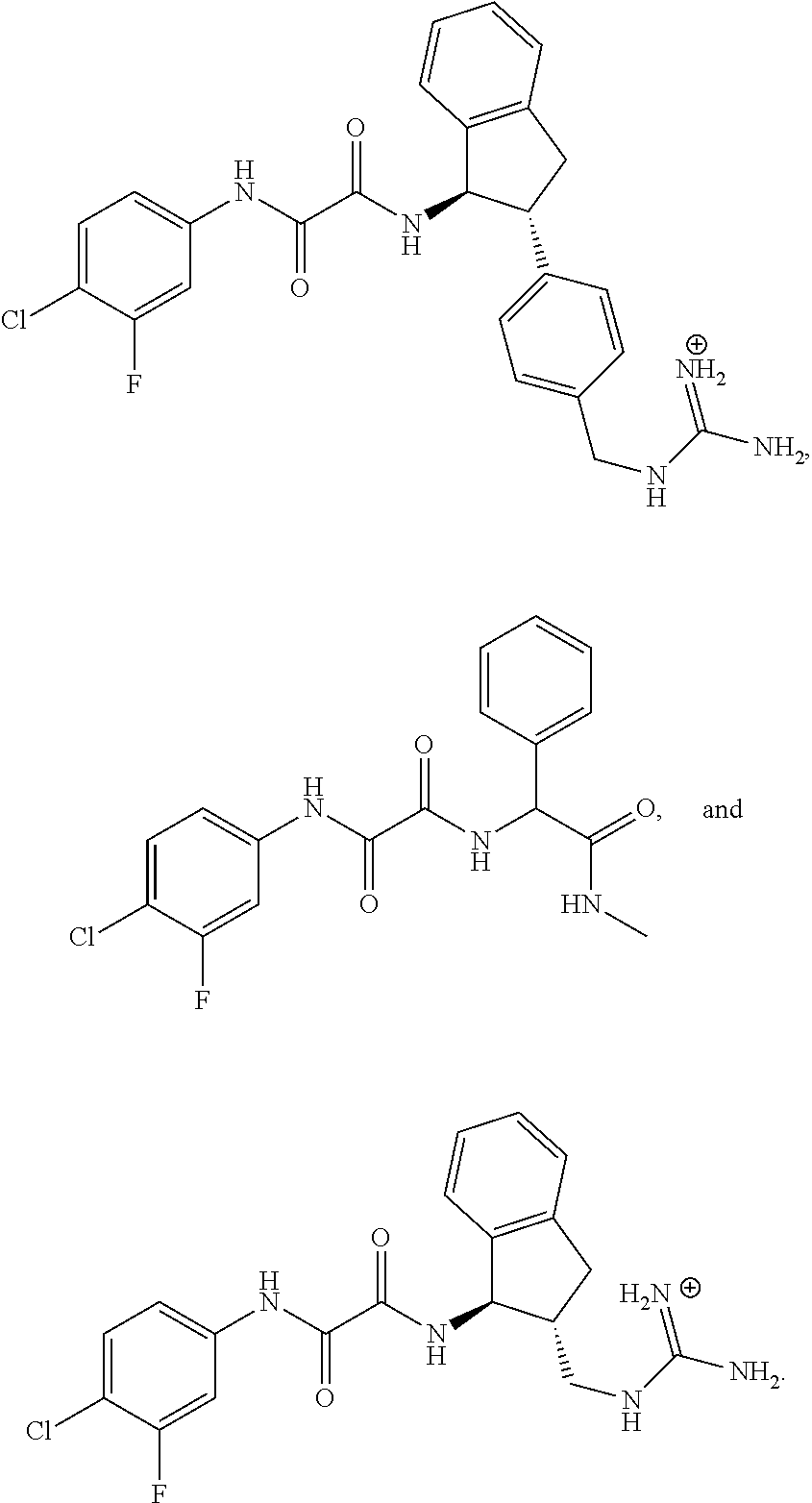

or a pharmaceutically acceptable salt or solvate thereof,
wherein, independently for each occurrence,


or a pharmaceutically acceptable salt or solvate thereof,
wherein, independently for each occurrence,

is optionally substituted aryl or heteroaryl;


or a pharmaceutically acceptable salt or solvate thereof,
wherein, independently for each occurrence,

is optionally substituted aryl or optionally substituted heteroaryl; and

wherein,


or a pharmaceutically acceptable salt or solvate thereof,
wherein, independently for each occurrence,


or a pharmaceutically acceptable salt or solvate thereof,
wherein, independently for each occurrence,


or a pharmaceutically acceptable salt or solvate thereof,
wherein, independently for each occurrence,


wherein m is 1, 2, 3, or 4.

or a pharmaceutically acceptable salt or solvate thereof,
wherein, independently for each occurrence,


or a pharmaceutically acceptable salt or solvate thereof,
wherein, independently for each occurrence,


wherein n is 0, 1, 2, 3, 4, or 5.


and (+)-5:
The absolute stereochemistry of 12 was assigned based on analogy to previously determined compounds.

 |
||
| Kd (μM) | 2.5 | ||
| ΔG (kcal/mol) | −7.6 | ||
| ΔH (kcal/mol) | −9.2 | ||
| −TΔS (kcal/mol) | +1.6 | ||
| Enhancement of | 0.00 | ||
| viral infection | |||
| of CD4− cells | |||
| IC50 of HIV-1 | 70.0 | ||
| on CD4+ cells | |||
| (μM) | |||
| IC50 of A-MLV | 91.7 | ||
| on CD4+ cells | |||
| (μM) | |||
Claims (21)


Priority Applications (1)
| Application Number | Priority Date | Filing Date | Title |
|---|---|---|---|
| US14/365,389 US9403763B2 (en) | 2011-12-14 | 2012-12-14 | CD4-mimetic inhibitors of HIV-1 entry and methods of use thereof |
Applications Claiming Priority (3)
| Application Number | Priority Date | Filing Date | Title |
|---|---|---|---|
| US201161570536P | 2011-12-14 | 2011-12-14 | |
| PCT/US2012/069708 WO2013090696A1 (en) | 2011-12-14 | 2012-12-14 | Cd4-mimetic inhibitors of hiv-1 entry and methods of use thereof |
| US14/365,389 US9403763B2 (en) | 2011-12-14 | 2012-12-14 | CD4-mimetic inhibitors of HIV-1 entry and methods of use thereof |
Publications (2)
| Publication Number | Publication Date |
|---|---|
| US20140350113A1 US20140350113A1 (en) | 2014-11-27 |
| US9403763B2 true US9403763B2 (en) | 2016-08-02 |
Family
ID=48613205
Family Applications (1)
| Application Number | Title | Priority Date | Filing Date |
|---|---|---|---|
| US14/365,389 Active US9403763B2 (en) | 2011-12-14 | 2012-12-14 | CD4-mimetic inhibitors of HIV-1 entry and methods of use thereof |
Country Status (2)
| Country | Link |
|---|---|
| US (1) | US9403763B2 (en) |
| WO (1) | WO2013090696A1 (en) |
Cited By (3)
| Publication number | Priority date | Publication date | Assignee | Title |
|---|---|---|---|---|
| US9776963B2 (en) | 2008-11-10 | 2017-10-03 | The Trustees Of The University Of Pennsylvania | Small molecule CD4 mimetics and uses thereof |
| US9975848B2 (en) | 2014-08-13 | 2018-05-22 | The Trustees Of The University Of Pennsylvania | Inhibitors of HIV-1 entry and methods of use thereof |
| US12083118B2 (en) | 2018-03-29 | 2024-09-10 | Arbutus Biopharma Corporation | Substituted 1,1′-biphenyl compounds, analogues thereof, and methods using same |
Families Citing this family (6)
| Publication number | Priority date | Publication date | Assignee | Title |
|---|---|---|---|---|
| WO2015120440A2 (en) * | 2014-02-10 | 2015-08-13 | Dana-Farber Cancer Institute, Inc. | Cd4-mimetic small molecules sensitize human immunodeficiency virus to vaccine-elicited antibodies |
| JP6710376B2 (en) * | 2015-05-25 | 2020-06-17 | 国立大学法人 東京医科歯科大学 | HIV infection inhibitor |
| CN106316785A (en) * | 2016-08-19 | 2017-01-11 | 苏州开元民生科技股份有限公司 | Synthesis method of (1S,4R)-cis-4-amino-2-cyclopentene-1-methanol hydrochloride |
| CN111995622B (en) * | 2020-08-20 | 2022-04-15 | 复旦大学 | Compound and use thereof |
| CN113480445B (en) * | 2021-07-29 | 2022-10-14 | 上海应用技术大学 | Oxamide neuraminidase inhibitor as well as preparation method and application thereof |
| CN116535384A (en) * | 2023-04-17 | 2023-08-04 | 重庆普佑生物医药有限公司 | The preparation method of ticagrelor intermediate |
Citations (12)
| Publication number | Priority date | Publication date | Assignee | Title |
|---|---|---|---|---|
| WO1994022826A1 (en) | 1993-04-07 | 1994-10-13 | Otsuka Pharmaceutical Co., Ltd. | Peripheral vasodilating agent containing n-acylated 4-amino piperidine derivatives as active ingredients |
| WO1997002027A1 (en) | 1995-07-05 | 1997-01-23 | Teva Pharmaceutical Industries, Ltd. | Polyamine derivatives of 1-aminoindan |
| WO1998028268A2 (en) | 1996-12-23 | 1998-07-02 | Elan Pharmaceuticals, Inc. | CYCLOALKYL, LACTAM, LACTONE AND RELATED COMPOUNDS AS β-AMYLOID PEPTIDE RELEASE INHIBITORS |
| WO1998055447A1 (en) | 1997-06-05 | 1998-12-10 | Venantius Limited | 3-aminoindane derivatives, process for their preparation and pharmaceutical compositions containing them |
| WO1999024065A1 (en) | 1997-11-10 | 1999-05-20 | The Trustees Of Columbia University In The City Of New York | COMPOUNDS INHIBITING CD4-gp120 INTERACTION AND USES THEREOF |
| WO2004082687A1 (en) | 2003-03-18 | 2004-09-30 | Bristol-Myers Squibb Company | Lactam-containing cyclic diamines and derivatives as factor xa inhibitors |
| WO2005032490A2 (en) | 2003-10-08 | 2005-04-14 | Bristol-Myers Squibb Company | Cyclic diamines and derivatives as factor xa inhibitors |
| WO2006020070A2 (en) | 2004-07-16 | 2006-02-23 | Teva Pharmaceutical Industries, Ltd. | Indanylamino uracils and their use as antioxidants and neuroprotectants |
| US20070021450A1 (en) | 2004-07-16 | 2007-01-25 | Benjamin Sklarz | Indanylamino uracils and their use as antioxidants and neuroprotectants |
| WO2010053583A2 (en) | 2008-11-10 | 2010-05-14 | Dana Farber Cancer Institute | Small molecule cd4 mimetics and uses thereof |
| WO2011109237A2 (en) | 2010-03-02 | 2011-09-09 | Emory University | Uses of noscapine and derivatives in subjects diagnosed with fap |
| US20140377219A1 (en) | 2011-09-06 | 2014-12-25 | New York Blood Center, Inc. | Hiv inhibitors |
-
2012
- 2012-12-14 US US14/365,389 patent/US9403763B2/en active Active
- 2012-12-14 WO PCT/US2012/069708 patent/WO2013090696A1/en not_active Ceased
Patent Citations (13)
| Publication number | Priority date | Publication date | Assignee | Title |
|---|---|---|---|---|
| WO1994022826A1 (en) | 1993-04-07 | 1994-10-13 | Otsuka Pharmaceutical Co., Ltd. | Peripheral vasodilating agent containing n-acylated 4-amino piperidine derivatives as active ingredients |
| WO1997002027A1 (en) | 1995-07-05 | 1997-01-23 | Teva Pharmaceutical Industries, Ltd. | Polyamine derivatives of 1-aminoindan |
| WO1998028268A2 (en) | 1996-12-23 | 1998-07-02 | Elan Pharmaceuticals, Inc. | CYCLOALKYL, LACTAM, LACTONE AND RELATED COMPOUNDS AS β-AMYLOID PEPTIDE RELEASE INHIBITORS |
| WO1998055447A1 (en) | 1997-06-05 | 1998-12-10 | Venantius Limited | 3-aminoindane derivatives, process for their preparation and pharmaceutical compositions containing them |
| WO1999024065A1 (en) | 1997-11-10 | 1999-05-20 | The Trustees Of Columbia University In The City Of New York | COMPOUNDS INHIBITING CD4-gp120 INTERACTION AND USES THEREOF |
| WO2004082687A1 (en) | 2003-03-18 | 2004-09-30 | Bristol-Myers Squibb Company | Lactam-containing cyclic diamines and derivatives as factor xa inhibitors |
| WO2005032490A2 (en) | 2003-10-08 | 2005-04-14 | Bristol-Myers Squibb Company | Cyclic diamines and derivatives as factor xa inhibitors |
| WO2006020070A2 (en) | 2004-07-16 | 2006-02-23 | Teva Pharmaceutical Industries, Ltd. | Indanylamino uracils and their use as antioxidants and neuroprotectants |
| US20070021450A1 (en) | 2004-07-16 | 2007-01-25 | Benjamin Sklarz | Indanylamino uracils and their use as antioxidants and neuroprotectants |
| WO2010053583A2 (en) | 2008-11-10 | 2010-05-14 | Dana Farber Cancer Institute | Small molecule cd4 mimetics and uses thereof |
| US20120122834A1 (en) | 2008-11-10 | 2012-05-17 | Dana-Farber Cancer Institute, Inc. | Small molecule cd4 mimetics and uses thereof |
| WO2011109237A2 (en) | 2010-03-02 | 2011-09-09 | Emory University | Uses of noscapine and derivatives in subjects diagnosed with fap |
| US20140377219A1 (en) | 2011-09-06 | 2014-12-25 | New York Blood Center, Inc. | Hiv inhibitors |
Non-Patent Citations (13)
Cited By (3)
| Publication number | Priority date | Publication date | Assignee | Title |
|---|---|---|---|---|
| US9776963B2 (en) | 2008-11-10 | 2017-10-03 | The Trustees Of The University Of Pennsylvania | Small molecule CD4 mimetics and uses thereof |
| US9975848B2 (en) | 2014-08-13 | 2018-05-22 | The Trustees Of The University Of Pennsylvania | Inhibitors of HIV-1 entry and methods of use thereof |
| US12083118B2 (en) | 2018-03-29 | 2024-09-10 | Arbutus Biopharma Corporation | Substituted 1,1′-biphenyl compounds, analogues thereof, and methods using same |
Also Published As
| Publication number | Publication date |
|---|---|
| WO2013090696A1 (en) | 2013-06-20 |
| US20140350113A1 (en) | 2014-11-27 |
Similar Documents
| Publication | Publication Date | Title |
|---|---|---|
| US20140350113A1 (en) | Cd4-mimetic inhibitors of hiv-1 entry and methods of use thereof | |
| KR102751751B1 (en) | Benzamide compounds | |
| US11247987B2 (en) | Inhibiting ubiquitin specific peptidase 30 | |
| RU2764523C2 (en) | Aminopyrazolopyrimidine compound used as inhibitor of tyrosine kinase receptor of neurotrophic factor | |
| KR20210107046A (en) | Macrocyclic compounds and their use in the treatment of diseases | |
| BRPI0110955B1 (en) | tropane derivatives pharmaceutical composition, use thereof in the manufacture of a medicament as well as a process for the preparation thereof. | |
| CA3111649A1 (en) | Tricyclic compounds acting on crbn proteins | |
| BRPI9917007B1 (en) | azabicycloalkanes as modulators of ccr5, pharmaceutical composition containing them, as well as their use | |
| CN101702908A (en) | hiv-1 protease inhibitors | |
| ES3062200T3 (en) | Rxfp1 agonists | |
| BR112015017963A2 (en) | deuterated phenyl amino pyrimidine compound, method for preparing the pharmaceutical composition, pharmaceutical composition and use of the compound | |
| US12398097B2 (en) | WDR5-MYC inhibitors | |
| EP3148963A1 (en) | 1 -(cyclopent-2-en-1 -yl)-3-(2-hydroxy-3-(arylsulfonyl)phenyl)urea derivatives as cxcr2 inhibitors | |
| US20250236593A1 (en) | Small molecules that sensitize hiv-1 infected cells to antibody dependent cellular cytotoxicity | |
| US20250221966A1 (en) | Rxfp1 agonists | |
| US9975848B2 (en) | Inhibitors of HIV-1 entry and methods of use thereof | |
| JP7531479B2 (en) | BRD4 inhibitors and their preparation and use | |
| TW202134213A (en) | Compound having lysophosphatidic acid receptor agonistic activity and pharmaceutical use of said compound | |
| CN115210237B (en) | A kind of dihydropyrimidine compound, its preparation method and its application | |
| JP2021512898A (en) | Heterocyclic P2Y14 receptor antagonist | |
| CN101309911A (en) | HIV-1 protease inhibitor and its preparation method and use method | |
| US12508251B2 (en) | CD4 mimic compound with anti-HIV activity | |
| US20220332708A1 (en) | Sulfonamide compounds as cardiac sarcomere activators | |
| US20260069604A1 (en) | Novel equilibrative nucleoside transporter inhibitors and methods of making and using same | |
| WO2012173214A1 (en) | Azepane compound |
Legal Events
| Date | Code | Title | Description |
|---|---|---|---|
| AS | Assignment |
Owner name: DANA-FARBER CANCER INSTITUTE, INC., MASSACHUSETTS Free format text: ASSIGNMENT OF ASSIGNORS INTEREST;ASSIGNORS:SODROSKI, JOSEPH;PRINCIOTTO, AMY M.;MADANI, NAVID;SIGNING DATES FROM 20150504 TO 20150511;REEL/FRAME:035676/0093 |
|
| AS | Assignment |
Owner name: DANA-FARBER CANCER INSTITUTE, INC., MASSACHUSETTS Free format text: ASSIGNMENT OF ASSIGNORS INTEREST;ASSIGNORS:SODROSKI, JOSEPH;PRINCIOTTO, AMY M.;MADANI, NAVID;SIGNING DATES FROM 20150504 TO 20150511;REEL/FRAME:035717/0562 |
|
| AS | Assignment |
Owner name: THE TRUSTEES OF THE UNIVERSITY OF PENNSYLVANIA, PE Free format text: ASSIGNMENT OF ASSIGNORS INTEREST;ASSIGNOR:PARK, JONGWOO;REEL/FRAME:037834/0990 Effective date: 20160226 |
|
| AS | Assignment |
Owner name: THE TRUSTEES OF COLUMBIA UNIVERSITY IN THE CITY OF Free format text: ASSIGNMENT OF ASSIGNORS INTEREST;ASSIGNORS:HENDRICKSON, WAYNE A.;LE-KHAC, MATTHEW;SIGNING DATES FROM 20160510 TO 20160614;REEL/FRAME:038946/0608 |
|
| STCF | Information on status: patent grant |
Free format text: PATENTED CASE |
|
| AS | Assignment |
Owner name: NATIONAL INSTITUTES OF HEALTH (NIH), U.S. DEPT. OF Free format text: CONFIRMATORY LICENSE;ASSIGNOR:DANA-FARBER CANCER INST;REEL/FRAME:040807/0177 Effective date: 20161202 |
|
| CC | Certificate of correction | ||
| MAFP | Maintenance fee payment |
Free format text: PAYMENT OF MAINTENANCE FEE, 4TH YR, SMALL ENTITY (ORIGINAL EVENT CODE: M2551); ENTITY STATUS OF PATENT OWNER: SMALL ENTITY Year of fee payment: 4 |
|
| MAFP | Maintenance fee payment |
Free format text: PAYMENT OF MAINTENANCE FEE, 8TH YR, SMALL ENTITY (ORIGINAL EVENT CODE: M2552); ENTITY STATUS OF PATENT OWNER: SMALL ENTITY Year of fee payment: 8 |