US9296716B2 - Androgen receptor ligands - Google Patents
Androgen receptor ligands Download PDFInfo
- Publication number
- US9296716B2 US9296716B2 US14/360,081 US201214360081A US9296716B2 US 9296716 B2 US9296716 B2 US 9296716B2 US 201214360081 A US201214360081 A US 201214360081A US 9296716 B2 US9296716 B2 US 9296716B2
- Authority
- US
- United States
- Prior art keywords
- hal
- hydroxy
- group
- nhr
- cooh
- Prior art date
- Legal status (The legal status is an assumption and is not a legal conclusion. Google has not performed a legal analysis and makes no representation as to the accuracy of the status listed.)
- Active - Reinstated
Links
- 0 *.C.[4*]/C(C)=N\NC(C)=O Chemical compound *.C.[4*]/C(C)=N\NC(C)=O 0.000 description 32
- FQCPJGZIZAMOBP-UHFFFAOYSA-N CC(C)C1=CC2=C(/C=C\C3=C2C=CC=C3)C1.CC(C)C1=CC2=C(C=CC=C2)C=C1[Y] Chemical compound CC(C)C1=CC2=C(/C=C\C3=C2C=CC=C3)C1.CC(C)C1=CC2=C(C=CC=C2)C=C1[Y] FQCPJGZIZAMOBP-UHFFFAOYSA-N 0.000 description 6
- KGZSRNYPBYPYQD-UHFFFAOYSA-N C1=CC2=C(C=C1)C1=C(C=C2)CC=C1.C1=CC2=C(C=C1)C1=C(C=C2)CCC1.C1=CC2=C(C=C1)C1=C(C=C2)NC=C1.C1=CC2=C(C=C1)C1=C(C=C2)NCC1.C1=CC2=C(C=C1)C1=C(C=C2)OC=C1.C1=CC2=C(C=C1)C1=C(C=C2)OCC1.C1=CC2=C(C=C1)C1=C(C=C2)SC=C1.C1=CC2=C(C=C1)C1=C(C=C2)SCC1.C1=CC2=C(C=C1)C1=C(C=CC=C1)C=C2.C1=CC=CC=C1.N=C1CC(=N)C2=CC=CC=C12.O=C1CC(=O)C2=CC=CC=C12.[Y]C1=CC2=C(C=CC=C2)C=C1 Chemical compound C1=CC2=C(C=C1)C1=C(C=C2)CC=C1.C1=CC2=C(C=C1)C1=C(C=C2)CCC1.C1=CC2=C(C=C1)C1=C(C=C2)NC=C1.C1=CC2=C(C=C1)C1=C(C=C2)NCC1.C1=CC2=C(C=C1)C1=C(C=C2)OC=C1.C1=CC2=C(C=C1)C1=C(C=C2)OCC1.C1=CC2=C(C=C1)C1=C(C=C2)SC=C1.C1=CC2=C(C=C1)C1=C(C=C2)SCC1.C1=CC2=C(C=C1)C1=C(C=CC=C1)C=C2.C1=CC=CC=C1.N=C1CC(=N)C2=CC=CC=C12.O=C1CC(=O)C2=CC=CC=C12.[Y]C1=CC2=C(C=CC=C2)C=C1 KGZSRNYPBYPYQD-UHFFFAOYSA-N 0.000 description 3
- FUHGIURYCUMTDL-UHFFFAOYSA-N C1=CC2=C(C=C1)C1=C(C=C2)CC=C1.C1=CC2=C(C=C1)C1=C(C=C2)CCC1.C1=CC2=C(C=C1)C1=C(C=C2)NC=C1.C1=CC2=C(C=C1)C1=C(C=C2)NCC1.C1=CC2=C(C=C1)C1=C(C=C2)OC=C1.C1=CC2=C(C=C1)C1=C(C=C2)OCC1.C1=CC2=C(C=C1)C1=C(C=C2)SC=C1.C1=CC2=C(C=C1)C1=C(C=C2)SCC1.C1=CC2=C(C=C1)C1=C(C=CC=C1)C=C2.N=C1CC(=N)C2=C1C=CC=C2.O=C1CC(=O)C2=C1C=CC=C2.[Y]C1=CC2=C(C=CC=C2)C=C1 Chemical compound C1=CC2=C(C=C1)C1=C(C=C2)CC=C1.C1=CC2=C(C=C1)C1=C(C=C2)CCC1.C1=CC2=C(C=C1)C1=C(C=C2)NC=C1.C1=CC2=C(C=C1)C1=C(C=C2)NCC1.C1=CC2=C(C=C1)C1=C(C=C2)OC=C1.C1=CC2=C(C=C1)C1=C(C=C2)OCC1.C1=CC2=C(C=C1)C1=C(C=C2)SC=C1.C1=CC2=C(C=C1)C1=C(C=C2)SCC1.C1=CC2=C(C=C1)C1=C(C=CC=C1)C=C2.N=C1CC(=N)C2=C1C=CC=C2.O=C1CC(=O)C2=C1C=CC=C2.[Y]C1=CC2=C(C=CC=C2)C=C1 FUHGIURYCUMTDL-UHFFFAOYSA-N 0.000 description 3
- SRBCUUUDQCRNMT-UHFFFAOYSA-N CC(C)C1=CC2=C(C=CC=C2)C=C1[Y] Chemical compound CC(C)C1=CC2=C(C=CC=C2)C=C1[Y] SRBCUUUDQCRNMT-UHFFFAOYSA-N 0.000 description 3
- ZBKOAGOPSNNFTQ-PTHVSLSWSA-N [H]/C(=N\N([H])C(=O)C1=CC2=C(C=CC=C2)C=C1O)C1=CC(C(=O)O)=CC=C1O.[H]/C(=N\N([H])C(=O)C1=CC2=C(C=CC=C2)C=C1O)C1=CC(C(=O)OC)=CC=C1O.[H]/C(=N\N([H])C(=O)C1=CC2=C(C=CC=C2)C=C1O)C1=CC(O)=CC=C1O.[H]/C(=N\N([H])C(=O)C1=CC2=C(C=CC=C2)C=C1O)C1=CC=CC(C)=C1O Chemical compound [H]/C(=N\N([H])C(=O)C1=CC2=C(C=CC=C2)C=C1O)C1=CC(C(=O)O)=CC=C1O.[H]/C(=N\N([H])C(=O)C1=CC2=C(C=CC=C2)C=C1O)C1=CC(C(=O)OC)=CC=C1O.[H]/C(=N\N([H])C(=O)C1=CC2=C(C=CC=C2)C=C1O)C1=CC(O)=CC=C1O.[H]/C(=N\N([H])C(=O)C1=CC2=C(C=CC=C2)C=C1O)C1=CC=CC(C)=C1O ZBKOAGOPSNNFTQ-PTHVSLSWSA-N 0.000 description 3
- BMKYERXUIPBFME-UHFFFAOYSA-N C1=CC2=C(C=C1)C1=C(C=C2)CC=C1.C1=CC2=C(C=C1)C1=C(C=C2)CCC1.C1=CC2=C(C=C1)C1=C(C=C2)NC=C1.C1=CC2=C(C=C1)C1=C(C=C2)NCC1.C1=CC2=C(C=C1)C1=C(C=C2)OC=C1.C1=CC2=C(C=C1)C1=C(C=C2)OCC1.C1=CC2=C(C=C1)C1=C(C=C2)SC=C1.C1=CC2=C(C=C1)C1=C(C=C2)SCC1.C1=CC2=C(C=C1)C1=C(C=CC=C1)C=C2.[Y]C1=CC2=C(C=CC=C2)C=C1 Chemical compound C1=CC2=C(C=C1)C1=C(C=C2)CC=C1.C1=CC2=C(C=C1)C1=C(C=C2)CCC1.C1=CC2=C(C=C1)C1=C(C=C2)NC=C1.C1=CC2=C(C=C1)C1=C(C=C2)NCC1.C1=CC2=C(C=C1)C1=C(C=C2)OC=C1.C1=CC2=C(C=C1)C1=C(C=C2)OCC1.C1=CC2=C(C=C1)C1=C(C=C2)SC=C1.C1=CC2=C(C=C1)C1=C(C=C2)SCC1.C1=CC2=C(C=C1)C1=C(C=CC=C1)C=C2.[Y]C1=CC2=C(C=CC=C2)C=C1 BMKYERXUIPBFME-UHFFFAOYSA-N 0.000 description 2
- AASOYLIRKMISJJ-UHFFFAOYSA-N C1=CC2=C(C=C1)C1=C(C=C2)CC=C1.C1=CC2=C(C=C1)C1=C(C=C2)NC=C1.C1=CC2=C(C=C1)C1=C(C=C2)OC=C1.C1=CC2=C(C=C1)C1=C(C=C2)SC=C1.[Y]C1=CC2=C(C=CC=C2)C=C1 Chemical compound C1=CC2=C(C=C1)C1=C(C=C2)CC=C1.C1=CC2=C(C=C1)C1=C(C=C2)NC=C1.C1=CC2=C(C=C1)C1=C(C=C2)OC=C1.C1=CC2=C(C=C1)C1=C(C=C2)SC=C1.[Y]C1=CC2=C(C=CC=C2)C=C1 AASOYLIRKMISJJ-UHFFFAOYSA-N 0.000 description 2
- MXPZPQBFMGRGPJ-UHFFFAOYSA-N C1=CC=CC=C1.N=C1CC(=N)C2=CC=CC=C12.O=C1CC(=O)C2=CC=CC=C12.O=C1NC(=O)C2=CC=CC=C12.[Y]C1=CC2=C(C=CC=C2)C=C1 Chemical compound C1=CC=CC=C1.N=C1CC(=N)C2=CC=CC=C12.O=C1CC(=O)C2=CC=CC=C12.O=C1NC(=O)C2=CC=CC=C12.[Y]C1=CC2=C(C=CC=C2)C=C1 MXPZPQBFMGRGPJ-UHFFFAOYSA-N 0.000 description 2
- RDSNQXJUEHJDMW-UHFFFAOYSA-N CC(C)C1=CC(Br)=CC=C1O.CC(C)C1=CC(C(=O)O)=CC=C1O.CC(C)C1=CC(Cl)=CC=C1.CC(C)C1=CC(Cl)=CC=C1O.CC(C)C1=CC(O)=CC=C1O.CC(C)C1=CC([N+](=O)[O-])=CC=C1O.CC(C)C1=CC2=C(C=CC=C2)C=C1O.CC(C)C1=CC=CC(O)=C1O.CC(C)C1=CC=CC=C1O.CC(C)C1C(=O)C2=C(C=CC=C2)C1=O.CC1=C(O)C(C(C)C)=CC=C1.CCCOC1=CC=C(C(C)C)C=C1.COC(=O)C1=CC=C(O)C(C(C)C)=C1.COC1=C(O)C(C(C)C)=CC=C1.COC1=CC(C(C)C)=CC(I)=C1O.COC1=CC(C(C)C)=CC(OC)=C1O.COC1=CC=C(O)C(C(C)C)=C1 Chemical compound CC(C)C1=CC(Br)=CC=C1O.CC(C)C1=CC(C(=O)O)=CC=C1O.CC(C)C1=CC(Cl)=CC=C1.CC(C)C1=CC(Cl)=CC=C1O.CC(C)C1=CC(O)=CC=C1O.CC(C)C1=CC([N+](=O)[O-])=CC=C1O.CC(C)C1=CC2=C(C=CC=C2)C=C1O.CC(C)C1=CC=CC(O)=C1O.CC(C)C1=CC=CC=C1O.CC(C)C1C(=O)C2=C(C=CC=C2)C1=O.CC1=C(O)C(C(C)C)=CC=C1.CCCOC1=CC=C(C(C)C)C=C1.COC(=O)C1=CC=C(O)C(C(C)C)=C1.COC1=C(O)C(C(C)C)=CC=C1.COC1=CC(C(C)C)=CC(I)=C1O.COC1=CC(C(C)C)=CC(OC)=C1O.COC1=CC=C(O)C(C(C)C)=C1 RDSNQXJUEHJDMW-UHFFFAOYSA-N 0.000 description 2
- VIZYZSHPWGUIMS-UHFFFAOYSA-N CC(C)C1=CC2=C(/C=C\C3=C2C=CC=C3)O1.CC(C)C1=CC2=C(C=CC=C2)C=C1O Chemical compound CC(C)C1=CC2=C(/C=C\C3=C2C=CC=C3)O1.CC(C)C1=CC2=C(C=CC=C2)C=C1O VIZYZSHPWGUIMS-UHFFFAOYSA-N 0.000 description 2
- DBFOOCBXWGLGIV-NYBQMHLFSA-N [H]/C(=N\N([H])C(=O)C1=CC2=C(C=CC3=C2C=CC=C3)O1)C1=CC(I)=C(O)C(OC)=C1.[H]/C(=N\N([H])C(=O)C1=CC2=C(C=CC=C2)C=C1O)C1=CC(C(=O)O)=CC=C1O.[H]/C(=N\N([H])C(=O)C1=CC2=C(C=CC=C2)C=C1O)C1=CC(Cl)=CC=C1.[H]/C(=N\N([H])C(=O)C1=CC2=C(C=CC=C2)C=C1O)C1=CC=CC(O)=C1O Chemical compound [H]/C(=N\N([H])C(=O)C1=CC2=C(C=CC3=C2C=CC=C3)O1)C1=CC(I)=C(O)C(OC)=C1.[H]/C(=N\N([H])C(=O)C1=CC2=C(C=CC=C2)C=C1O)C1=CC(C(=O)O)=CC=C1O.[H]/C(=N\N([H])C(=O)C1=CC2=C(C=CC=C2)C=C1O)C1=CC(Cl)=CC=C1.[H]/C(=N\N([H])C(=O)C1=CC2=C(C=CC=C2)C=C1O)C1=CC=CC(O)=C1O DBFOOCBXWGLGIV-NYBQMHLFSA-N 0.000 description 2
- XQJMTHVJWRCXDX-CCPJAOGHSA-N [H]/C(=N\N([H])C(=O)C1=CC2=C(C=CC=C2)C=C1O)C1=CC(C(=O)OC)=CC=C1O.[H]/C(=N\N([H])C(=O)C1=CC2=C(C=CC=C2)C=C1O)C1=CC(O)=CC=C1O.[H]/C(=N\N([H])C(=O)C1=CC2=C(C=CC=C2)C=C1O)C1=CC2=C(C=CC=C2)C=C1O.[H]N(/N=C(\C)C1C(=O)C2=C(C=CC=C2)C1=O)C(=O)C1=CC2=C(C=CC=C2)C=C1O Chemical compound [H]/C(=N\N([H])C(=O)C1=CC2=C(C=CC=C2)C=C1O)C1=CC(C(=O)OC)=CC=C1O.[H]/C(=N\N([H])C(=O)C1=CC2=C(C=CC=C2)C=C1O)C1=CC(O)=CC=C1O.[H]/C(=N\N([H])C(=O)C1=CC2=C(C=CC=C2)C=C1O)C1=CC2=C(C=CC=C2)C=C1O.[H]N(/N=C(\C)C1C(=O)C2=C(C=CC=C2)C1=O)C(=O)C1=CC2=C(C=CC=C2)C=C1O XQJMTHVJWRCXDX-CCPJAOGHSA-N 0.000 description 2
- ZHIZUBFMDWPDIW-RGVLZGJSSA-N [H]/C(=N\N([H])C(=O)C1=CC2=C(C=CC=C2)C=C1O)C1=CC(C)=CC=C1O Chemical compound [H]/C(=N\N([H])C(=O)C1=CC2=C(C=CC=C2)C=C1O)C1=CC(C)=CC=C1O ZHIZUBFMDWPDIW-RGVLZGJSSA-N 0.000 description 2
- OKFCYCJDKWKCJI-KEBDBYFISA-N [H]/C(=N\N([H])C(=O)C1=CC2=C(C=CC=C2)C=C1O)C1=CC(Cl)=CC=C1O Chemical compound [H]/C(=N\N([H])C(=O)C1=CC2=C(C=CC=C2)C=C1O)C1=CC(Cl)=CC=C1O OKFCYCJDKWKCJI-KEBDBYFISA-N 0.000 description 2
- QQXFEYNGFHOSCY-DOIOTCRSSA-N [H]/C(=N\N([H])C(=O)C1=CC2=C(C=CC=C2)C=C1O)C1=CC(Cl)=CC=C1O.[H]/C(=N\N([H])C(=O)C1=CC2=C(C=CC=C2)C=C1O)C1=CC([N+](=O)[O-])=CC=C1O.[H]/C(=N\N([H])C(=O)C1=CC2=C(C=CC=C2)C=C1O)C1=CC=CC(C)=C1O.[H]/C(=N\N([H])C(=O)C1=CC2=C(C=CC=C2)C=C1O)C1=CC=CC(OC)=C1O.[H]/C(=N\N([H])C(=O)C1=CC2=C(C=CC=C2)C=C1O)C1=CC=CC=C1O Chemical compound [H]/C(=N\N([H])C(=O)C1=CC2=C(C=CC=C2)C=C1O)C1=CC(Cl)=CC=C1O.[H]/C(=N\N([H])C(=O)C1=CC2=C(C=CC=C2)C=C1O)C1=CC([N+](=O)[O-])=CC=C1O.[H]/C(=N\N([H])C(=O)C1=CC2=C(C=CC=C2)C=C1O)C1=CC=CC(C)=C1O.[H]/C(=N\N([H])C(=O)C1=CC2=C(C=CC=C2)C=C1O)C1=CC=CC(OC)=C1O.[H]/C(=N\N([H])C(=O)C1=CC2=C(C=CC=C2)C=C1O)C1=CC=CC=C1O QQXFEYNGFHOSCY-DOIOTCRSSA-N 0.000 description 2
- RNOFWEHZUIEICQ-RGVLZGJSSA-N [H]/C(=N\N([H])C(=O)C1=CC2=C(C=CC=C2)C=C1O)C1=CC(OC)=CC=C1O Chemical compound [H]/C(=N\N([H])C(=O)C1=CC2=C(C=CC=C2)C=C1O)C1=CC(OC)=CC=C1O RNOFWEHZUIEICQ-RGVLZGJSSA-N 0.000 description 2
- RCKISPHVTIJBQW-UBRNISKNSA-N [H]/C(=N\N([H])C(=O)C1=CC2=C(C=CC=C2)C=C1O)C1=CC([N+](=O)[O-])=CC=C1O.[H]N(/N=C(\C)C1C(=O)C2=C(C=CC=C2)C1=O)C(=O)C1=CC2=C(C=CC=C2)C=C1O Chemical compound [H]/C(=N\N([H])C(=O)C1=CC2=C(C=CC=C2)C=C1O)C1=CC([N+](=O)[O-])=CC=C1O.[H]N(/N=C(\C)C1C(=O)C2=C(C=CC=C2)C1=O)C(=O)C1=CC2=C(C=CC=C2)C=C1O RCKISPHVTIJBQW-UBRNISKNSA-N 0.000 description 2
- NGQQUJDEAANSKS-UDWIEESQSA-N [H]/C(=N\N([H])C(=O)C1=CC2=C(C=CC=C2)C=C1O)C1=CC=CC=C1C Chemical compound [H]/C(=N\N([H])C(=O)C1=CC2=C(C=CC=C2)C=C1O)C1=CC=CC=C1C NGQQUJDEAANSKS-UDWIEESQSA-N 0.000 description 2
- FHWSLVNLYIFACD-SRZZPIQSSA-N [H]/C(=N\N([H])C(=O)C1=CC2=C(C=CC=C2)O1)C1=CC(OCC)=C(OC)C(I)=C1 Chemical compound [H]/C(=N\N([H])C(=O)C1=CC2=C(C=CC=C2)O1)C1=CC(OCC)=C(OC)C(I)=C1 FHWSLVNLYIFACD-SRZZPIQSSA-N 0.000 description 2
- HNIBEIAYOQBGMF-UHFFFAOYSA-N C.C1=CC2=C(C=C1)C1=C(C=C2)CC=C1.C1=CC2=C(C=C1)C1=C(C=C2)CC=C1.C1=CC2=C(C=C1)C1=C(C=C2)CC=C1.C1=CC2=C(C=C1)C1=C(C=C2)CC=C1.C1=CC2=C(C=C1)C1=C(C=C2)CCC1.C1=CC2=C(C=C1)C1=C(C=C2)CCC1.C1=CC2=C(C=C1)C1=C(C=C2)CCC1.C1=CC2=C(C=C1)C1=C(C=C2)CCC1.C1=CC2=C(C=C1)C1=C(C=CC=C1)C=C2.C1=CC2=C(C=C1)C=CC=C2.C1=CC=CC=C1.O=C1CC(=O)C2=C1C=CC=C2.O=C1CC(=O)C2=C1C=CC=C2 Chemical compound C.C1=CC2=C(C=C1)C1=C(C=C2)CC=C1.C1=CC2=C(C=C1)C1=C(C=C2)CC=C1.C1=CC2=C(C=C1)C1=C(C=C2)CC=C1.C1=CC2=C(C=C1)C1=C(C=C2)CC=C1.C1=CC2=C(C=C1)C1=C(C=C2)CCC1.C1=CC2=C(C=C1)C1=C(C=C2)CCC1.C1=CC2=C(C=C1)C1=C(C=C2)CCC1.C1=CC2=C(C=C1)C1=C(C=C2)CCC1.C1=CC2=C(C=C1)C1=C(C=CC=C1)C=C2.C1=CC2=C(C=C1)C=CC=C2.C1=CC=CC=C1.O=C1CC(=O)C2=C1C=CC=C2.O=C1CC(=O)C2=C1C=CC=C2 HNIBEIAYOQBGMF-UHFFFAOYSA-N 0.000 description 1
- BXANWIDTPSWCRM-UHFFFAOYSA-N CC(C)C1=CC2=C(/C=C\C3=C2C=CC=C3)C1 Chemical compound CC(C)C1=CC2=C(/C=C\C3=C2C=CC=C3)C1 BXANWIDTPSWCRM-UHFFFAOYSA-N 0.000 description 1
- HIAGGVKHVXLHDY-UHFFFAOYSA-N CC(C)C1=CC2=C(C=CC=C2)C=C1O.CC(C)C1=CC=CC=C1O.CC(C)C1C(=O)C2=C(C=CC=C2)C1=O Chemical compound CC(C)C1=CC2=C(C=CC=C2)C=C1O.CC(C)C1=CC=CC=C1O.CC(C)C1C(=O)C2=C(C=CC=C2)C1=O HIAGGVKHVXLHDY-UHFFFAOYSA-N 0.000 description 1
- FQYFESBJAZNJSS-UHFFFAOYSA-N CC(C)C1=CC2=C(C=CC=C2)C=C1[Y].CC(C)C1=CC=CC([Y])=C1[Y].CC(C)C1C(=O)C2=C(C=CC=C2)C1=O.CC1=CC=C([Y])C(C(C)C)=C1.CC1=CC=CC(C(C)C)=C1 Chemical compound CC(C)C1=CC2=C(C=CC=C2)C=C1[Y].CC(C)C1=CC=CC([Y])=C1[Y].CC(C)C1C(=O)C2=C(C=CC=C2)C1=O.CC1=CC=C([Y])C(C(C)C)=C1.CC1=CC=CC(C(C)C)=C1 FQYFESBJAZNJSS-UHFFFAOYSA-N 0.000 description 1
- QOVBWPRCHFVBOI-UHFFFAOYSA-N N=C(C1c(cc2)cc(C(N3)=O)c2C3=O)c(cccc2)c2C1=N Chemical compound N=C(C1c(cc2)cc(C(N3)=O)c2C3=O)c(cccc2)c2C1=N QOVBWPRCHFVBOI-UHFFFAOYSA-N 0.000 description 1
- GDJMEMFYBBOSQP-FOKLQQMPSA-N [H]/C(=N\N([H])C(=O)C1=CC2=C(C=CC3=C2C=CC=C3)O1)C1=C(Br)C=C(O)C(OC)=C1 Chemical compound [H]/C(=N\N([H])C(=O)C1=CC2=C(C=CC3=C2C=CC=C3)O1)C1=C(Br)C=C(O)C(OC)=C1 GDJMEMFYBBOSQP-FOKLQQMPSA-N 0.000 description 1
- YWCFOXHTOYJSAX-SSDVNMTOSA-N [H]/C(=N\N([H])C(=O)C1=CC2=C(C=CC3=C2C=CC=C3)O1)C1=CC(Br)=C(O)C=C1 Chemical compound [H]/C(=N\N([H])C(=O)C1=CC2=C(C=CC3=C2C=CC=C3)O1)C1=CC(Br)=C(O)C=C1 YWCFOXHTOYJSAX-SSDVNMTOSA-N 0.000 description 1
- OVXHJLJGXQSFQW-FOKLQQMPSA-N [H]/C(=N\N([H])C(=O)C1=CC2=C(C=CC3=C2C=CC=C3)O1)C1=CC(Br)=CC(OC)=C1O Chemical compound [H]/C(=N\N([H])C(=O)C1=CC2=C(C=CC3=C2C=CC=C3)O1)C1=CC(Br)=CC(OC)=C1O OVXHJLJGXQSFQW-FOKLQQMPSA-N 0.000 description 1
- KDWDDRGCCGGZPN-YDZHTSKRSA-N [H]/C(=N\N([H])C(=O)C1=CC2=C(C=CC3=C2C=CC=C3)O1)C1=CC(C)=C(OC)C=C1 Chemical compound [H]/C(=N\N([H])C(=O)C1=CC2=C(C=CC3=C2C=CC=C3)O1)C1=CC(C)=C(OC)C=C1 KDWDDRGCCGGZPN-YDZHTSKRSA-N 0.000 description 1
- ZXDYBPNBTGEEIQ-BHGWPJFGSA-N [H]/C(=N\N([H])C(=O)C1=CC2=C(C=CC3=C2C=CC=C3)O1)C1=CC(Cl)=C(OC)C(Cl)=C1 Chemical compound [H]/C(=N\N([H])C(=O)C1=CC2=C(C=CC3=C2C=CC=C3)O1)C1=CC(Cl)=C(OC)C(Cl)=C1 ZXDYBPNBTGEEIQ-BHGWPJFGSA-N 0.000 description 1
- RLIBDSPRVAYZNT-BRJLIKDPSA-N [H]/C(=N\N([H])C(=O)C1=CC2=C(C=CC3=C2C=CC=C3)O1)C1=CC(Cl)=C(OCC)C(Cl)=C1 Chemical compound [H]/C(=N\N([H])C(=O)C1=CC2=C(C=CC3=C2C=CC=C3)O1)C1=CC(Cl)=C(OCC)C(Cl)=C1 RLIBDSPRVAYZNT-BRJLIKDPSA-N 0.000 description 1
- XVOHMANLUDWDRJ-OKCVXOCRSA-N [H]/C(=N\N([H])C(=O)C1=CC2=C(C=CC3=C2C=CC=C3)O1)C1=CC(Cl)=C(OCC2=CC=CC=C2)C(OC)=C1 Chemical compound [H]/C(=N\N([H])C(=O)C1=CC2=C(C=CC3=C2C=CC=C3)O1)C1=CC(Cl)=C(OCC2=CC=CC=C2)C(OC)=C1 XVOHMANLUDWDRJ-OKCVXOCRSA-N 0.000 description 1
- OICLJUTXIIVEMT-FOKLQQMPSA-N [H]/C(=N\N([H])C(=O)C1=CC2=C(C=CC3=C2C=CC=C3)O1)C1=CC(I)=C(O)C(OC)=C1 Chemical compound [H]/C(=N\N([H])C(=O)C1=CC2=C(C=CC3=C2C=CC=C3)O1)C1=CC(I)=C(O)C(OC)=C1 OICLJUTXIIVEMT-FOKLQQMPSA-N 0.000 description 1
- HZAMZWJJUBTENB-WMOSTSKSSA-N [H]/C(=N\N([H])C(=O)C1=CC2=C(C=CC3=C2C=CC=C3)O1)C1=CC(I)=C(O)C(OC)=C1.[H]/C(=N\N([H])C(=O)C1=CC2=C(C=CC3=C2C=CC=C3)O1)C1=CC(OC)=C(O)C(OC)=C1.[H]/C(=N\N([H])C(=O)C1=CC2=C(C=CC3=C2C=CC=C3)O1)C1=CC=C(OCCC)C=C1 Chemical compound [H]/C(=N\N([H])C(=O)C1=CC2=C(C=CC3=C2C=CC=C3)O1)C1=CC(I)=C(O)C(OC)=C1.[H]/C(=N\N([H])C(=O)C1=CC2=C(C=CC3=C2C=CC=C3)O1)C1=CC(OC)=C(O)C(OC)=C1.[H]/C(=N\N([H])C(=O)C1=CC2=C(C=CC3=C2C=CC=C3)O1)C1=CC=C(OCCC)C=C1 HZAMZWJJUBTENB-WMOSTSKSSA-N 0.000 description 1
- LXDDKAXBPVNSAM-VRNLZIAVSA-N [H]/C(=N\N([H])C(=O)C1=CC2=C(C=CC3=C2C=CC=C3)O1)C1=CC(I)=C(O)C(OC)=C1.[H]/C(=N\N([H])C(=O)C1=CC2=CC=CC=C2C=C1O)C1=CC(Br)=CC=C1O.[H]/C(=N\N([H])C(=O)C1=CC2=CC=CC=C2C=C1O)C1=CC2=C(C=CC=C2)C=C1O.[H]/C(=N\N([H])C(=O)C1=CC2=CC=CC=C2C=C1O)C1=CC=CC(O)=C1O Chemical compound [H]/C(=N\N([H])C(=O)C1=CC2=C(C=CC3=C2C=CC=C3)O1)C1=CC(I)=C(O)C(OC)=C1.[H]/C(=N\N([H])C(=O)C1=CC2=CC=CC=C2C=C1O)C1=CC(Br)=CC=C1O.[H]/C(=N\N([H])C(=O)C1=CC2=CC=CC=C2C=C1O)C1=CC2=C(C=CC=C2)C=C1O.[H]/C(=N\N([H])C(=O)C1=CC2=CC=CC=C2C=C1O)C1=CC=CC(O)=C1O LXDDKAXBPVNSAM-VRNLZIAVSA-N 0.000 description 1
- LLCTYHPKUHJJFN-WSDLNYQXSA-N [H]/C(=N\N([H])C(=O)C1=CC2=C(C=CC3=C2C=CC=C3)O1)C1=CC(O)=C(OC)C=C1 Chemical compound [H]/C(=N\N([H])C(=O)C1=CC2=C(C=CC3=C2C=CC=C3)O1)C1=CC(O)=C(OC)C=C1 LLCTYHPKUHJJFN-WSDLNYQXSA-N 0.000 description 1
- ICEFORRNJVZCHJ-FSJBWODESA-N [H]/C(=N\N([H])C(=O)C1=CC2=C(C=CC3=C2C=CC=C3)O1)C1=CC(OC)=C(O)C(OC)=C1 Chemical compound [H]/C(=N\N([H])C(=O)C1=CC2=C(C=CC3=C2C=CC=C3)O1)C1=CC(OC)=C(O)C(OC)=C1 ICEFORRNJVZCHJ-FSJBWODESA-N 0.000 description 1
- USDASMRFUBCAIE-YROCPGFSSA-N [H]/C(=N\N([H])C(=O)C1=CC2=C(C=CC3=C2C=CC=C3)O1)C1=CC(OC)=C(O)C(OC)=C1.[H]/C(=N\N([H])C(=O)C1=CC2=C(C=CC3=C2C=CC=C3)O1)C1=CC=C(OCCC)C=C1.[H]/C(=N\N([H])C(=O)C1=CC2=C(C=CC=C2)C=C1O)C1=CC(Br)=CC=C1O Chemical compound [H]/C(=N\N([H])C(=O)C1=CC2=C(C=CC3=C2C=CC=C3)O1)C1=CC(OC)=C(O)C(OC)=C1.[H]/C(=N\N([H])C(=O)C1=CC2=C(C=CC3=C2C=CC=C3)O1)C1=CC=C(OCCC)C=C1.[H]/C(=N\N([H])C(=O)C1=CC2=C(C=CC=C2)C=C1O)C1=CC(Br)=CC=C1O USDASMRFUBCAIE-YROCPGFSSA-N 0.000 description 1
- SUYFUMCKMGKCHN-BAQXCJNCSA-N [H]/C(=N\N([H])C(=O)C1=CC2=C(C=CC3=C2C=CC=C3)O1)C1=CC(OC)=C(O)C(OC)=C1.[H]/C(=N\N([H])C(=O)C1=CC2=C(C=CC3=C2C=CC=C3)O1)C1=CC=C(OCCC)C=C1.[H]/C(=N\N([H])C(=O)C1=CC2=C(C=CC=C2)C=C1O)C1=CC(Br)=CC=C1O.[H]/C(=N\N([H])C(=O)C1=CC2=C(C=CC=C2)C=C1O)C1=CC(C(=O)OC)=CC=C1O Chemical compound [H]/C(=N\N([H])C(=O)C1=CC2=C(C=CC3=C2C=CC=C3)O1)C1=CC(OC)=C(O)C(OC)=C1.[H]/C(=N\N([H])C(=O)C1=CC2=C(C=CC3=C2C=CC=C3)O1)C1=CC=C(OCCC)C=C1.[H]/C(=N\N([H])C(=O)C1=CC2=C(C=CC=C2)C=C1O)C1=CC(Br)=CC=C1O.[H]/C(=N\N([H])C(=O)C1=CC2=C(C=CC=C2)C=C1O)C1=CC(C(=O)OC)=CC=C1O SUYFUMCKMGKCHN-BAQXCJNCSA-N 0.000 description 1
- NXVMIQVOWBCAFI-DBYOPDITSA-N [H]/C(=N\N([H])C(=O)C1=CC2=C(C=CC3=C2C=CC=C3)O1)C1=CC(OC)=C(O)C(OC)=C1.[H]/C(=N\N([H])C(=O)C1=CC2=C(C=CC3=C2C=CC=C3)O1)C1=CC=C(OCCC)C=C1.[H]/C(=N\N([H])C(=O)C1=CC2=CC=CC=C2C=C1O)C1=CC(Cl)=CC=C1.[H]N(/N=C(\C)C1C(=O)C2=C(C=CC=C2)C1=O)C(=O)C1=CC2=CC=CC=C2C=C1O Chemical compound [H]/C(=N\N([H])C(=O)C1=CC2=C(C=CC3=C2C=CC=C3)O1)C1=CC(OC)=C(O)C(OC)=C1.[H]/C(=N\N([H])C(=O)C1=CC2=C(C=CC3=C2C=CC=C3)O1)C1=CC=C(OCCC)C=C1.[H]/C(=N\N([H])C(=O)C1=CC2=CC=CC=C2C=C1O)C1=CC(Cl)=CC=C1.[H]N(/N=C(\C)C1C(=O)C2=C(C=CC=C2)C1=O)C(=O)C1=CC2=CC=CC=C2C=C1O NXVMIQVOWBCAFI-DBYOPDITSA-N 0.000 description 1
- AQSIJQGPXZJTKL-ZMOGYAJESA-N [H]/C(=N\N([H])C(=O)C1=CC2=C(C=CC3=C2C=CC=C3)O1)C1=CC(OC)=C(OC)C(OC)=C1 Chemical compound [H]/C(=N\N([H])C(=O)C1=CC2=C(C=CC3=C2C=CC=C3)O1)C1=CC(OC)=C(OC)C(OC)=C1 AQSIJQGPXZJTKL-ZMOGYAJESA-N 0.000 description 1
- LZDKSOHIHTXTGQ-MFKUBSTISA-N [H]/C(=N\N([H])C(=O)C1=CC2=C(C=CC3=C2C=CC=C3)O1)C1=CC(OC)=C(OCCC)C=C1 Chemical compound [H]/C(=N\N([H])C(=O)C1=CC2=C(C=CC3=C2C=CC=C3)O1)C1=CC(OC)=C(OCCC)C=C1 LZDKSOHIHTXTGQ-MFKUBSTISA-N 0.000 description 1
- VMUHEHOEJBIYEY-LPYMAVHISA-N [H]/C(=N\N([H])C(=O)C1=CC2=C(C=CC3=C2C=CC=C3)O1)C1=CC(OC)=CC=C1 Chemical compound [H]/C(=N\N([H])C(=O)C1=CC2=C(C=CC3=C2C=CC=C3)O1)C1=CC(OC)=CC=C1 VMUHEHOEJBIYEY-LPYMAVHISA-N 0.000 description 1
- DJUPKBVLJGCPHX-WGOQTCKBSA-N [H]/C(=N\N([H])C(=O)C1=CC2=C(C=CC3=C2C=CC=C3)O1)C1=CC(OCC)=C(OCCC)C=C1 Chemical compound [H]/C(=N\N([H])C(=O)C1=CC2=C(C=CC3=C2C=CC=C3)O1)C1=CC(OCC)=C(OCCC)C=C1 DJUPKBVLJGCPHX-WGOQTCKBSA-N 0.000 description 1
- HGJSTHZOHUZDNN-ZVHZXABRSA-N [H]/C(=N\N([H])C(=O)C1=CC2=C(C=CC3=C2C=CC=C3)O1)C1=CC=C(OC(C)C)C=C1 Chemical compound [H]/C(=N\N([H])C(=O)C1=CC2=C(C=CC3=C2C=CC=C3)O1)C1=CC=C(OC(C)C)C=C1 HGJSTHZOHUZDNN-ZVHZXABRSA-N 0.000 description 1
- DWNBDISXIVXEEC-CVKSISIWSA-N [H]/C(=N\N([H])C(=O)C1=CC2=C(C=CC3=C2C=CC=C3)O1)C1=CC=C(OC)C2=C1C=CC=C2 Chemical compound [H]/C(=N\N([H])C(=O)C1=CC2=C(C=CC3=C2C=CC=C3)O1)C1=CC=C(OC)C2=C1C=CC=C2 DWNBDISXIVXEEC-CVKSISIWSA-N 0.000 description 1
- IZQIBGVBQLUFGG-OEAKJJBVSA-N [H]/C(=N\N([H])C(=O)C1=CC2=C(C=CC3=C2C=CC=C3)O1)C1=CC=C(OCC)C=C1 Chemical compound [H]/C(=N\N([H])C(=O)C1=CC2=C(C=CC3=C2C=CC=C3)O1)C1=CC=C(OCC)C=C1 IZQIBGVBQLUFGG-OEAKJJBVSA-N 0.000 description 1
- NKEGGTFFODCAQO-OGLMXYFKSA-N [H]/C(=N\N([H])C(=O)C1=CC2=C(C=CC3=C2C=CC=C3)O1)C1=CC=C(OCC2=CC=CC=C2)C=C1 Chemical compound [H]/C(=N\N([H])C(=O)C1=CC2=C(C=CC3=C2C=CC=C3)O1)C1=CC=C(OCC2=CC=CC=C2)C=C1 NKEGGTFFODCAQO-OGLMXYFKSA-N 0.000 description 1
- PFWPEICVADQUKT-BUVRLJJBSA-N [H]/C(=N\N([H])C(=O)C1=CC2=C(C=CC3=C2C=CC=C3)O1)C1=CC=C(OCCC)C=C1 Chemical compound [H]/C(=N\N([H])C(=O)C1=CC2=C(C=CC3=C2C=CC=C3)O1)C1=CC=C(OCCC)C=C1 PFWPEICVADQUKT-BUVRLJJBSA-N 0.000 description 1
- IYXMJJAMMMUQSL-RGVLZGJSSA-N [H]/C(=N\N([H])C(=O)C1=CC2=C(C=CC=C2)C=C1)C1=CC(Cl)=CC=C1O Chemical compound [H]/C(=N\N([H])C(=O)C1=CC2=C(C=CC=C2)C=C1)C1=CC(Cl)=CC=C1O IYXMJJAMMMUQSL-RGVLZGJSSA-N 0.000 description 1
- GIQVVXNRKXJJRV-UFFVCSGVSA-N [H]/C(=N\N([H])C(=O)C1=CC2=C(C=CC=C2)C=C1O)C1=C(Cl)C(Cl)=CC=C1 Chemical compound [H]/C(=N\N([H])C(=O)C1=CC2=C(C=CC=C2)C=C1O)C1=C(Cl)C(Cl)=CC=C1 GIQVVXNRKXJJRV-UFFVCSGVSA-N 0.000 description 1
- XTFYZTFVHVNUEN-KEBDBYFISA-N [H]/C(=N\N([H])C(=O)C1=CC2=C(C=CC=C2)C=C1O)C1=CC(Br)=CC=C1O Chemical compound [H]/C(=N\N([H])C(=O)C1=CC2=C(C=CC=C2)C=C1O)C1=CC(Br)=CC=C1O XTFYZTFVHVNUEN-KEBDBYFISA-N 0.000 description 1
- PMPKCYCUFSGPOC-SRZZPIQSSA-N [H]/C(=N\N([H])C(=O)C1=CC2=C(C=CC=C2)C=C1O)C1=CC(Br)=CC=C1OC Chemical compound [H]/C(=N\N([H])C(=O)C1=CC2=C(C=CC=C2)C=C1O)C1=CC(Br)=CC=C1OC PMPKCYCUFSGPOC-SRZZPIQSSA-N 0.000 description 1
- FPPMONDTKUTRBJ-KEBDBYFISA-N [H]/C(=N\N([H])C(=O)C1=CC2=C(C=CC=C2)C=C1O)C1=CC(C(=O)O)=CC=C1O Chemical compound [H]/C(=N\N([H])C(=O)C1=CC2=C(C=CC=C2)C=C1O)C1=CC(C(=O)O)=CC=C1O FPPMONDTKUTRBJ-KEBDBYFISA-N 0.000 description 1
- FMYPXXQFURXICM-SRZZPIQSSA-N [H]/C(=N\N([H])C(=O)C1=CC2=C(C=CC=C2)C=C1O)C1=CC(C(=O)OC)=CC=C1O Chemical compound [H]/C(=N\N([H])C(=O)C1=CC2=C(C=CC=C2)C=C1O)C1=CC(C(=O)OC)=CC=C1O FMYPXXQFURXICM-SRZZPIQSSA-N 0.000 description 1
- CHEKVCNJNWNWKA-YDZHTSKRSA-N [H]/C(=N\N([H])C(=O)C1=CC2=C(C=CC=C2)C=C1O)C1=CC(C(C)(C)C)=CC=C1O Chemical compound [H]/C(=N\N([H])C(=O)C1=CC2=C(C=CC=C2)C=C1O)C1=CC(C(C)(C)C)=CC=C1O CHEKVCNJNWNWKA-YDZHTSKRSA-N 0.000 description 1
- WHFXRRGKISSTQI-UFFVCSGVSA-N [H]/C(=N\N([H])C(=O)C1=CC2=C(C=CC=C2)C=C1O)C1=CC(Cl)=CC(OC)=C1O Chemical compound [H]/C(=N\N([H])C(=O)C1=CC2=C(C=CC=C2)C=C1O)C1=CC(Cl)=CC(OC)=C1O WHFXRRGKISSTQI-UFFVCSGVSA-N 0.000 description 1
- NFVSRKADBOWDDV-RGVLZGJSSA-N [H]/C(=N\N([H])C(=O)C1=CC2=C(C=CC=C2)C=C1O)C1=CC(Cl)=CC=C1 Chemical compound [H]/C(=N\N([H])C(=O)C1=CC2=C(C=CC=C2)C=C1O)C1=CC(Cl)=CC=C1 NFVSRKADBOWDDV-RGVLZGJSSA-N 0.000 description 1
- UXOPFSPBCYGRKW-KEBDBYFISA-N [H]/C(=N\N([H])C(=O)C1=CC2=C(C=CC=C2)C=C1O)C1=CC(Cl)=CC=C1[N+](=O)[O-] Chemical compound [H]/C(=N\N([H])C(=O)C1=CC2=C(C=CC=C2)C=C1O)C1=CC(Cl)=CC=C1[N+](=O)[O-] UXOPFSPBCYGRKW-KEBDBYFISA-N 0.000 description 1
- ZXBONRJKMPVEPO-KEBDBYFISA-N [H]/C(=N\N([H])C(=O)C1=CC2=C(C=CC=C2)C=C1O)C1=CC(I)=CC=C1O Chemical compound [H]/C(=N\N([H])C(=O)C1=CC2=C(C=CC=C2)C=C1O)C1=CC(I)=CC=C1O ZXBONRJKMPVEPO-KEBDBYFISA-N 0.000 description 1
- BRHPSHAWGWGPIY-VXLYETTFSA-N [H]/C(=N\N([H])C(=O)C1=CC2=C(C=CC=C2)C=C1O)C1=CC(O)=CC=C1O Chemical compound [H]/C(=N\N([H])C(=O)C1=CC2=C(C=CC=C2)C=C1O)C1=CC(O)=CC=C1O BRHPSHAWGWGPIY-VXLYETTFSA-N 0.000 description 1
- OGVCUYOPQRFLAY-WGOQTCKBSA-N [H]/C(=N\N([H])C(=O)C1=CC2=C(C=CC=C2)C=C1O)C1=CC(OCC2=CC=CC=C2)=CC=C1 Chemical compound [H]/C(=N\N([H])C(=O)C1=CC2=C(C=CC=C2)C=C1O)C1=CC(OCC2=CC=CC=C2)=CC=C1 OGVCUYOPQRFLAY-WGOQTCKBSA-N 0.000 description 1
- FRWLDBUDJHPONC-KEBDBYFISA-N [H]/C(=N\N([H])C(=O)C1=CC2=C(C=CC=C2)C=C1O)C1=CC([N+](=O)[O-])=C(Cl)C=C1 Chemical compound [H]/C(=N\N([H])C(=O)C1=CC2=C(C=CC=C2)C=C1O)C1=CC([N+](=O)[O-])=C(Cl)C=C1 FRWLDBUDJHPONC-KEBDBYFISA-N 0.000 description 1
- YMIGQHVYPHQACE-VXLYETTFSA-N [H]/C(=N\N([H])C(=O)C1=CC2=C(C=CC=C2)C=C1O)C1=CC([N+](=O)[O-])=CC=C1O Chemical compound [H]/C(=N\N([H])C(=O)C1=CC2=C(C=CC=C2)C=C1O)C1=CC([N+](=O)[O-])=CC=C1O YMIGQHVYPHQACE-VXLYETTFSA-N 0.000 description 1
- ORZNNGLVFJGBJH-OEAKJJBVSA-N [H]/C(=N\N([H])C(=O)C1=CC2=C(C=CC=C2)C=C1O)C1=CC2=C(C=CC=C2)C=C1 Chemical compound [H]/C(=N\N([H])C(=O)C1=CC2=C(C=CC=C2)C=C1O)C1=CC2=C(C=CC=C2)C=C1 ORZNNGLVFJGBJH-OEAKJJBVSA-N 0.000 description 1
- VELVWXVAMXOEHT-YDZHTSKRSA-N [H]/C(=N\N([H])C(=O)C1=CC2=C(C=CC=C2)C=C1O)C1=CC2=C(C=CC=C2)C=C1O Chemical compound [H]/C(=N\N([H])C(=O)C1=CC2=C(C=CC=C2)C=C1O)C1=CC2=C(C=CC=C2)C=C1O VELVWXVAMXOEHT-YDZHTSKRSA-N 0.000 description 1
- WFOKZRZBRNDJTI-HZHRSRAPSA-N [H]/C(=N\N([H])C(=O)C1=CC2=C(C=CC=C2)C=C1O)C1=CC=C(N(CC)CC)C=C1 Chemical compound [H]/C(=N\N([H])C(=O)C1=CC2=C(C=CC=C2)C=C1O)C1=CC=C(N(CC)CC)C=C1 WFOKZRZBRNDJTI-HZHRSRAPSA-N 0.000 description 1
- XTQYVNDDGXRMSC-YDZHTSKRSA-N [H]/C(=N\N([H])C(=O)C1=CC2=C(C=CC=C2)C=C1O)C1=CC=C2C=CC=CC2=C1O Chemical compound [H]/C(=N\N([H])C(=O)C1=CC2=C(C=CC=C2)C=C1O)C1=CC=C2C=CC=CC2=C1O XTQYVNDDGXRMSC-YDZHTSKRSA-N 0.000 description 1
- IJQJPPVQFKWAPJ-UDWIEESQSA-N [H]/C(=N\N([H])C(=O)C1=CC2=C(C=CC=C2)C=C1O)C1=CC=CC(C)=C1 Chemical compound [H]/C(=N\N([H])C(=O)C1=CC2=C(C=CC=C2)C=C1O)C1=CC=CC(C)=C1 IJQJPPVQFKWAPJ-UDWIEESQSA-N 0.000 description 1
- VSHXPCSTLLEWOZ-RGVLZGJSSA-N [H]/C(=N\N([H])C(=O)C1=CC2=C(C=CC=C2)C=C1O)C1=CC=CC(C)=C1O Chemical compound [H]/C(=N\N([H])C(=O)C1=CC2=C(C=CC=C2)C=C1O)C1=CC=CC(C)=C1O VSHXPCSTLLEWOZ-RGVLZGJSSA-N 0.000 description 1
- ZGCISAICRCGDSF-KEBDBYFISA-N [H]/C(=N\N([H])C(=O)C1=CC2=C(C=CC=C2)C=C1O)C1=CC=CC(Cl)=C1O Chemical compound [H]/C(=N\N([H])C(=O)C1=CC2=C(C=CC=C2)C=C1O)C1=CC=CC(Cl)=C1O ZGCISAICRCGDSF-KEBDBYFISA-N 0.000 description 1
- QVJBIOZPWYCWDI-VXLYETTFSA-N [H]/C(=N\N([H])C(=O)C1=CC2=C(C=CC=C2)C=C1O)C1=CC=CC(O)=C1O Chemical compound [H]/C(=N\N([H])C(=O)C1=CC2=C(C=CC=C2)C=C1O)C1=CC=CC(O)=C1O QVJBIOZPWYCWDI-VXLYETTFSA-N 0.000 description 1
- ZBOZQLLNEQZSAP-RGVLZGJSSA-N [H]/C(=N\N([H])C(=O)C1=CC2=C(C=CC=C2)C=C1O)C1=CC=CC(OC)=C1O Chemical compound [H]/C(=N\N([H])C(=O)C1=CC2=C(C=CC=C2)C=C1O)C1=CC=CC(OC)=C1O ZBOZQLLNEQZSAP-RGVLZGJSSA-N 0.000 description 1
- CWCQMJNJIVDKKV-OEAKJJBVSA-N [H]/C(=N\N([H])C(=O)C1=CC2=C(C=CC=C2)C=C1O)C1=CC=CC2=C1C=CC=C2 Chemical compound [H]/C(=N\N([H])C(=O)C1=CC2=C(C=CC=C2)C=C1O)C1=CC=CC2=C1C=CC=C2 CWCQMJNJIVDKKV-OEAKJJBVSA-N 0.000 description 1
- BQTYCKJHLIHXHX-XDHOZWIPSA-N [H]/C(=N\N([H])C(=O)C1=CC2=C(C=CC=C2)C=C1O)C1=CC=CC=C1 Chemical compound [H]/C(=N\N([H])C(=O)C1=CC2=C(C=CC=C2)C=C1O)C1=CC=CC=C1 BQTYCKJHLIHXHX-XDHOZWIPSA-N 0.000 description 1
- RFBWMDDDYWHPDU-RGVLZGJSSA-N [H]/C(=N\N([H])C(=O)C1=CC2=C(C=CC=C2)C=C1O)C1=CC=CC=C1C(=O)O Chemical compound [H]/C(=N\N([H])C(=O)C1=CC2=C(C=CC=C2)C=C1O)C1=CC=CC=C1C(=O)O RFBWMDDDYWHPDU-RGVLZGJSSA-N 0.000 description 1
- PTHUFRDUQRNQTC-RGVLZGJSSA-N [H]/C(=N\N([H])C(=O)C1=CC2=C(C=CC=C2)C=C1O)C1=CC=CC=C1N Chemical compound [H]/C(=N\N([H])C(=O)C1=CC2=C(C=CC=C2)C=C1O)C1=CC=CC=C1N PTHUFRDUQRNQTC-RGVLZGJSSA-N 0.000 description 1
- XTQAGBABCDSRSN-YBFXNURJSA-N [H]/C(=N\N([H])C(=O)C1=CC2=C(C=CC=C2)C=C1O)C1=CC=CC=C1O Chemical compound [H]/C(=N\N([H])C(=O)C1=CC2=C(C=CC=C2)C=C1O)C1=CC=CC=C1O XTQAGBABCDSRSN-YBFXNURJSA-N 0.000 description 1
- CGKWNQONZWPJGY-UDWIEESQSA-N [H]/C(=N\N([H])C(=O)C1=CC2=C(C=CC=C2)C=C1O)C1=CC=CC=C1OC Chemical compound [H]/C(=N\N([H])C(=O)C1=CC2=C(C=CC=C2)C=C1O)C1=CC=CC=C1OC CGKWNQONZWPJGY-UDWIEESQSA-N 0.000 description 1
- LYOAQKWVHZVHAI-YBFXNURJSA-N [H]/C(=N\N([H])C(=O)C1=CC2=C(C=CC=C2)C=C1O)C1=CC=CC=C1[N+](=O)[O-] Chemical compound [H]/C(=N\N([H])C(=O)C1=CC2=C(C=CC=C2)C=C1O)C1=CC=CC=C1[N+](=O)[O-] LYOAQKWVHZVHAI-YBFXNURJSA-N 0.000 description 1
- LUGYAYWAJPEZCO-YBFXNURJSA-N [H]/C(=N\N([H])C(=O)C1=CC2=C(C=CC=C2)C=C1O)C1=CN=CC=C1 Chemical compound [H]/C(=N\N([H])C(=O)C1=CC2=C(C=CC=C2)C=C1O)C1=CN=CC=C1 LUGYAYWAJPEZCO-YBFXNURJSA-N 0.000 description 1
- UDTGIRNLZHWXFJ-UDWIEESQSA-N [H]/C(=N\N([H])C(=O)C1=CC2=C(C=CC=C2)C=C1OC)C1=CC=CC=C1O Chemical compound [H]/C(=N\N([H])C(=O)C1=CC2=C(C=CC=C2)C=C1OC)C1=CC=CC=C1O UDTGIRNLZHWXFJ-UDWIEESQSA-N 0.000 description 1
- JLUFECTVCFQJDZ-QHVOENNSSA-N [H]/C(=N\N([H])C(=O)C1=CC2=CC=CC=C2C=C1O)C1=CC(Br)=CC=C1O.[H]/C(=N\N([H])C(=O)C1=CC2=CC=CC=C2C=C1O)C1=CC(Cl)=CC=C1O.[H]/C(=N\N([H])C(=O)C1=CC2=CC=CC=C2C=C1O)C1=CC(O)=CC=C1O.[H]/C(=N\N([H])C(=O)C1=CC2=CC=CC=C2C=C1O)C1=CC([N+](=O)[O-])=CC=C1O.[H]/C(=N\N([H])C(=O)C1=CC2=CC=CC=C2C=C1O)C1=CC=CC=C1O Chemical compound [H]/C(=N\N([H])C(=O)C1=CC2=CC=CC=C2C=C1O)C1=CC(Br)=CC=C1O.[H]/C(=N\N([H])C(=O)C1=CC2=CC=CC=C2C=C1O)C1=CC(Cl)=CC=C1O.[H]/C(=N\N([H])C(=O)C1=CC2=CC=CC=C2C=C1O)C1=CC(O)=CC=C1O.[H]/C(=N\N([H])C(=O)C1=CC2=CC=CC=C2C=C1O)C1=CC([N+](=O)[O-])=CC=C1O.[H]/C(=N\N([H])C(=O)C1=CC2=CC=CC=C2C=C1O)C1=CC=CC=C1O JLUFECTVCFQJDZ-QHVOENNSSA-N 0.000 description 1
- BZLMZINWTNSZGC-KLMIVPGUSA-N [H]/C(=N\N([H])C(=O)C1=CC2=CC=CC=C2C=C1O)C1=CC(C(=O)O)=CC=C1O.[H]/C(=N\N([H])C(=O)C1=CC2=CC=CC=C2C=C1O)C1=CC(C(=O)OC)=CC=C1O.[H]/C(=N\N([H])C(=O)C1=CC2=CC=CC=C2C=C1O)C1=CC(OC)=CC=C1O.[H]/C(=N\N([H])C(=O)C1=CC2=CC=CC=C2C=C1O)C1=CC=CC(O)=C1O.[H]/C(=N\N([H])C(=O)C1=CC2=CC=CC=C2C=C1O)C1=CC=CC(OC)=C1O Chemical compound [H]/C(=N\N([H])C(=O)C1=CC2=CC=CC=C2C=C1O)C1=CC(C(=O)O)=CC=C1O.[H]/C(=N\N([H])C(=O)C1=CC2=CC=CC=C2C=C1O)C1=CC(C(=O)OC)=CC=C1O.[H]/C(=N\N([H])C(=O)C1=CC2=CC=CC=C2C=C1O)C1=CC(OC)=CC=C1O.[H]/C(=N\N([H])C(=O)C1=CC2=CC=CC=C2C=C1O)C1=CC=CC(O)=C1O.[H]/C(=N\N([H])C(=O)C1=CC2=CC=CC=C2C=C1O)C1=CC=CC(OC)=C1O BZLMZINWTNSZGC-KLMIVPGUSA-N 0.000 description 1
- YZAUENOIQOYDFH-KLMIVPGUSA-N [H]/C(=N\N([H])C(=O)C1=CC2=CC=CC=C2C=C1O)C1=CC(C(=O)O)=CC=C1O.[H]/C(=N\N([H])C(=O)C1=CC2=CC=CC=C2C=C1O)C1=CC(C(=O)OC)=CC=C1O.[H]/C(=N\N([H])C(=O)C1=CC2=CC=CC=C2C=C1O)C1=CC([N+](=O)[O-])=CC=C1O.[H]/C(=N\N([H])C(=O)C1=CC2=CC=CC=C2C=C1O)C1=CC=CC(C)=C1O.[H]/C(=N\N([H])C(=O)C1=CC2=CC=CC=C2C=C1O)C1=CC=CC(OC)=C1O Chemical compound [H]/C(=N\N([H])C(=O)C1=CC2=CC=CC=C2C=C1O)C1=CC(C(=O)O)=CC=C1O.[H]/C(=N\N([H])C(=O)C1=CC2=CC=CC=C2C=C1O)C1=CC(C(=O)OC)=CC=C1O.[H]/C(=N\N([H])C(=O)C1=CC2=CC=CC=C2C=C1O)C1=CC([N+](=O)[O-])=CC=C1O.[H]/C(=N\N([H])C(=O)C1=CC2=CC=CC=C2C=C1O)C1=CC=CC(C)=C1O.[H]/C(=N\N([H])C(=O)C1=CC2=CC=CC=C2C=C1O)C1=CC=CC(OC)=C1O YZAUENOIQOYDFH-KLMIVPGUSA-N 0.000 description 1
- ZDIDOELSNFHFRF-AJELMSOISA-N [H]/C(=N\N([H])C(=O)C1=CC2=CC=CC=C2C=C1O)C1=CC(Cl)=CC=C1.[H]/C(=N\N([H])C(=O)C1=CC2=CC=CC=C2C=C1O)C1=CC2=C(C=CC=C2)C=C1O.[H]/C(=N\N([H])C(=O)C1=CC2=CC=CC=C2C=C1O)C1=CC=CC(C)=C1O.[H]/C(=N\N([H])C(=O)C1=CC2=CC=CC=C2C=C1O)C1C(=O)C2=C(C=CC=C2)C1=O Chemical compound [H]/C(=N\N([H])C(=O)C1=CC2=CC=CC=C2C=C1O)C1=CC(Cl)=CC=C1.[H]/C(=N\N([H])C(=O)C1=CC2=CC=CC=C2C=C1O)C1=CC2=C(C=CC=C2)C=C1O.[H]/C(=N\N([H])C(=O)C1=CC2=CC=CC=C2C=C1O)C1=CC=CC(C)=C1O.[H]/C(=N\N([H])C(=O)C1=CC2=CC=CC=C2C=C1O)C1C(=O)C2=C(C=CC=C2)C1=O ZDIDOELSNFHFRF-AJELMSOISA-N 0.000 description 1
- ORRMYPHATQPFRG-DADLBRGLSA-N [H]/C(=N\N([H])C(=O)C1=CC2=CC=CC=C2C=C1O)C1=CC(Cl)=CC=C1O.[H]/C(=N\N([H])C(=O)C1=CC2=CC=CC=C2C=C1O)C1=CC(O)=CC=C1O.[H]/C(=N\N([H])C(=O)C1=CC2=CC=CC=C2C=C1O)C1=CC(OC)=CC=C1O.[H]/C(=N\N([H])C(=O)C1=CC2=CC=CC=C2C=C1O)C1=CC=CC=C1O Chemical compound [H]/C(=N\N([H])C(=O)C1=CC2=CC=CC=C2C=C1O)C1=CC(Cl)=CC=C1O.[H]/C(=N\N([H])C(=O)C1=CC2=CC=CC=C2C=C1O)C1=CC(O)=CC=C1O.[H]/C(=N\N([H])C(=O)C1=CC2=CC=CC=C2C=C1O)C1=CC(OC)=CC=C1O.[H]/C(=N\N([H])C(=O)C1=CC2=CC=CC=C2C=C1O)C1=CC=CC=C1O ORRMYPHATQPFRG-DADLBRGLSA-N 0.000 description 1
- IPSRBFWBZYRUNL-SRZZPIQSSA-N [H]/C(=N\N([H])C(=O)C1=CC2=CC=CC=C2C=C1O)C1=CC(OC)=C(O)C(OC)=C1 Chemical compound [H]/C(=N\N([H])C(=O)C1=CC2=CC=CC=C2C=C1O)C1=CC(OC)=C(O)C(OC)=C1 IPSRBFWBZYRUNL-SRZZPIQSSA-N 0.000 description 1
- BNDPJCZVGNMZPA-CIAFOILYSA-N [H]/C(=N\N([H])C(=O)C1=CC2=CC=CC=C2C=C1O)C1=CC(OCC)=C(O)C=C1 Chemical compound [H]/C(=N\N([H])C(=O)C1=CC2=CC=CC=C2C=C1O)C1=CC(OCC)=C(O)C=C1 BNDPJCZVGNMZPA-CIAFOILYSA-N 0.000 description 1
- WOIMNRLXNFHPCG-RGVLZGJSSA-N [H]/C(=N\N([H])C(=O)C1=CC2=CC=CC=C2C=C1O)C1=CC=C(OC)C(O)=C1 Chemical compound [H]/C(=N\N([H])C(=O)C1=CC2=CC=CC=C2C=C1O)C1=CC=C(OC)C(O)=C1 WOIMNRLXNFHPCG-RGVLZGJSSA-N 0.000 description 1
- CLNSGTGLPCYCSS-CIAFOILYSA-N [H]/C(=N\N([H])C(=O)C1=CC2=CC=CC=C2C=C1O)C1=CC=C(OCC)C(O)=C1 Chemical compound [H]/C(=N\N([H])C(=O)C1=CC2=CC=CC=C2C=C1O)C1=CC=C(OCC)C(O)=C1 CLNSGTGLPCYCSS-CIAFOILYSA-N 0.000 description 1
- SMOFHWZHNCXUOJ-LTTYKRRRSA-N [H]/C(=N\N([H])C(=O)C1=CC=C(C(=O)N([H])/N=C(\[H])C2=CC3=C(C=CC=C3)C=C2O)C=C1)C1=CC2=CC=CC=C2C=C1O Chemical compound [H]/C(=N\N([H])C(=O)C1=CC=C(C(=O)N([H])/N=C(\[H])C2=CC3=C(C=CC=C3)C=C2O)C=C1)C1=CC2=CC=CC=C2C=C1O SMOFHWZHNCXUOJ-LTTYKRRRSA-N 0.000 description 1
- JNCCGVNDKRTEDO-UDWIEESQSA-N [H]/C(=N\N([H])C(=O)C1=CC=C2C=CC=CC2=C1O)C1=C(OC)C=CC=C1 Chemical compound [H]/C(=N\N([H])C(=O)C1=CC=C2C=CC=CC2=C1O)C1=C(OC)C=CC=C1 JNCCGVNDKRTEDO-UDWIEESQSA-N 0.000 description 1
- JZHNRNFHZBZDJV-OQLLNIDSSA-N [H]/C(=N\N([H])C(=O)C1=CC=CC=C1)C1=CC=CC(O)=C1O Chemical compound [H]/C(=N\N([H])C(=O)C1=CC=CC=C1)C1=CC=CC(O)=C1O JZHNRNFHZBZDJV-OQLLNIDSSA-N 0.000 description 1
- JSZPKHUEXGMRFH-XDHOZWIPSA-N [H]/C(=N\N([H])C(=O)C1=CC=CC=C1O)C1=CC2=C(C=CC=C2)C=C1 Chemical compound [H]/C(=N\N([H])C(=O)C1=CC=CC=C1O)C1=CC2=C(C=CC=C2)C=C1 JSZPKHUEXGMRFH-XDHOZWIPSA-N 0.000 description 1
- GZBFTEUFUFKVOD-OVCLIPMQSA-N [H]/C(=N\N([H])C(=O)C1=CC=CC=C1O)C1=CC=CC(O)=C1O Chemical compound [H]/C(=N\N([H])C(=O)C1=CC=CC=C1O)C1=CC=CC(O)=C1O GZBFTEUFUFKVOD-OVCLIPMQSA-N 0.000 description 1
- AMAYMDCKUCZMMB-XOBNHNQQSA-N [H]C(=N\N([H])C(=O)C1=CC=CC=C1O)/N=C(\[H])C([H])C(=O)C1=CC=CC=C1O Chemical compound [H]C(=N\N([H])C(=O)C1=CC=CC=C1O)/N=C(\[H])C([H])C(=O)C1=CC=CC=C1O AMAYMDCKUCZMMB-XOBNHNQQSA-N 0.000 description 1
- IMFKYXUMVFIFCL-SRZZPIQSSA-N [H]N(/N=C(\C)C1=CC(Cl)=CC=C1O)C(=O)C1=CC2=C(C=CC=C2)C=C1O Chemical compound [H]N(/N=C(\C)C1=CC(Cl)=CC=C1O)C(=O)C1=CC2=C(C=CC=C2)C=C1O IMFKYXUMVFIFCL-SRZZPIQSSA-N 0.000 description 1
- BQKMWIRDJFJAJX-BUVRLJJBSA-N [H]N(/N=C(\C)C1=CC2=C(C=CC=C2)C=C1)C(=O)C1=CC2=C(C=CC=C2)C=C1O Chemical compound [H]N(/N=C(\C)C1=CC2=C(C=CC=C2)C=C1)C(=O)C1=CC2=C(C=CC=C2)C=C1O BQKMWIRDJFJAJX-BUVRLJJBSA-N 0.000 description 1
- ZAECCYCIFIWLGL-WOJGMQOQSA-N [H]N(/N=C(\C)C1=CC=CO1)C(=O)C1=CC2=C(C=CC=C2)C=C1O Chemical compound [H]N(/N=C(\C)C1=CC=CO1)C(=O)C1=CC2=C(C=CC=C2)C=C1O ZAECCYCIFIWLGL-WOJGMQOQSA-N 0.000 description 1
- GRNOUCSASKXWNP-FSJBWODESA-N [H]N(/N=C(\C)C1C(=O)C2=C(C=CC=C2)C1=O)C(=O)C1=CC2=C(C=CC=C2)C=C1O Chemical compound [H]N(/N=C(\C)C1C(=O)C2=C(C=CC=C2)C1=O)C(=O)C1=CC2=C(C=CC=C2)C=C1O GRNOUCSASKXWNP-FSJBWODESA-N 0.000 description 1
- YISUWAMOCVXDRA-ORIPQNMZSA-N [H]N(/N=C(\C1=CC=CC=C1)C1=CC2=C(C=CC=C2)C=C1)C(=O)C1=CC2=C(C=CC=C2)C=C1O Chemical compound [H]N(/N=C(\C1=CC=CC=C1)C1=CC2=C(C=CC=C2)C=C1)C(=O)C1=CC2=C(C=CC=C2)C=C1O YISUWAMOCVXDRA-ORIPQNMZSA-N 0.000 description 1
- YZUIHHHZXFRZTK-UHFFFAOYSA-N [H]N(C(=O)C1=CC=C(OC)C=C1)N([H])C(=O)C1=CC2=C(C=CC=C2)C=C1O Chemical compound [H]N(C(=O)C1=CC=C(OC)C=C1)N([H])C(=O)C1=CC2=C(C=CC=C2)C=C1O YZUIHHHZXFRZTK-UHFFFAOYSA-N 0.000 description 1
Images



Classifications
-
- C—CHEMISTRY; METALLURGY
- C07—ORGANIC CHEMISTRY
- C07D—HETEROCYCLIC COMPOUNDS
- C07D307/00—Heterocyclic compounds containing five-membered rings having one oxygen atom as the only ring hetero atom
- C07D307/77—Heterocyclic compounds containing five-membered rings having one oxygen atom as the only ring hetero atom ortho- or peri-condensed with carbocyclic rings or ring systems
- C07D307/92—Naphthofurans; Hydrogenated naphthofurans
-
- A—HUMAN NECESSITIES
- A61—MEDICAL OR VETERINARY SCIENCE; HYGIENE
- A61K—PREPARATIONS FOR MEDICAL, DENTAL OR TOILETRY PURPOSES
- A61K31/00—Medicinal preparations containing organic active ingredients
- A61K31/16—Amides, e.g. hydroxamic acids
- A61K31/165—Amides, e.g. hydroxamic acids having aromatic rings, e.g. colchicine, atenolol, progabide
- A61K31/166—Amides, e.g. hydroxamic acids having aromatic rings, e.g. colchicine, atenolol, progabide having the carbon of a carboxamide group directly attached to the aromatic ring, e.g. procainamide, procarbazine, metoclopramide, labetalol
-
- A—HUMAN NECESSITIES
- A61—MEDICAL OR VETERINARY SCIENCE; HYGIENE
- A61K—PREPARATIONS FOR MEDICAL, DENTAL OR TOILETRY PURPOSES
- A61K31/00—Medicinal preparations containing organic active ingredients
- A61K31/16—Amides, e.g. hydroxamic acids
- A61K31/17—Amides, e.g. hydroxamic acids having the group >N—C(O)—N< or >N—C(S)—N<, e.g. urea, thiourea, carmustine
- A61K31/175—Amides, e.g. hydroxamic acids having the group >N—C(O)—N< or >N—C(S)—N<, e.g. urea, thiourea, carmustine having the group, >N—C(O)—N=N— or, e.g. carbonohydrazides, carbazones, semicarbazides, semicarbazones; Thioanalogues thereof
-
- A—HUMAN NECESSITIES
- A61—MEDICAL OR VETERINARY SCIENCE; HYGIENE
- A61K—PREPARATIONS FOR MEDICAL, DENTAL OR TOILETRY PURPOSES
- A61K31/00—Medicinal preparations containing organic active ingredients
- A61K31/33—Heterocyclic compounds
- A61K31/335—Heterocyclic compounds having oxygen as the only ring hetero atom, e.g. fungichromin
- A61K31/34—Heterocyclic compounds having oxygen as the only ring hetero atom, e.g. fungichromin having five-membered rings with one oxygen as the only ring hetero atom, e.g. isosorbide
- A61K31/343—Heterocyclic compounds having oxygen as the only ring hetero atom, e.g. fungichromin having five-membered rings with one oxygen as the only ring hetero atom, e.g. isosorbide condensed with a carbocyclic ring, e.g. coumaran, bufuralol, befunolol, clobenfurol, amiodarone
-
- A—HUMAN NECESSITIES
- A61—MEDICAL OR VETERINARY SCIENCE; HYGIENE
- A61P—SPECIFIC THERAPEUTIC ACTIVITY OF CHEMICAL COMPOUNDS OR MEDICINAL PREPARATIONS
- A61P15/00—Drugs for genital or sexual disorders; Contraceptives
-
- A—HUMAN NECESSITIES
- A61—MEDICAL OR VETERINARY SCIENCE; HYGIENE
- A61P—SPECIFIC THERAPEUTIC ACTIVITY OF CHEMICAL COMPOUNDS OR MEDICINAL PREPARATIONS
- A61P17/00—Drugs for dermatological disorders
- A61P17/10—Anti-acne agents
-
- A—HUMAN NECESSITIES
- A61—MEDICAL OR VETERINARY SCIENCE; HYGIENE
- A61P—SPECIFIC THERAPEUTIC ACTIVITY OF CHEMICAL COMPOUNDS OR MEDICINAL PREPARATIONS
- A61P35/00—Antineoplastic agents
-
- C—CHEMISTRY; METALLURGY
- C07—ORGANIC CHEMISTRY
- C07C—ACYCLIC OR CARBOCYCLIC COMPOUNDS
- C07C251/00—Compounds containing nitrogen atoms doubly-bound to a carbon skeleton
- C07C251/72—Hydrazones
- C07C251/86—Hydrazones having doubly-bound carbon atoms of hydrazone groups bound to carbon atoms of six-membered aromatic rings
-
- C—CHEMISTRY; METALLURGY
- C07—ORGANIC CHEMISTRY
- C07D—HETEROCYCLIC COMPOUNDS
- C07D213/00—Heterocyclic compounds containing six-membered rings, not condensed with other rings, with one nitrogen atom as the only ring hetero atom and three or more double bonds between ring members or between ring members and non-ring members
- C07D213/02—Heterocyclic compounds containing six-membered rings, not condensed with other rings, with one nitrogen atom as the only ring hetero atom and three or more double bonds between ring members or between ring members and non-ring members having three double bonds between ring members or between ring members and non-ring members
- C07D213/04—Heterocyclic compounds containing six-membered rings, not condensed with other rings, with one nitrogen atom as the only ring hetero atom and three or more double bonds between ring members or between ring members and non-ring members having three double bonds between ring members or between ring members and non-ring members having no bond between the ring nitrogen atom and a non-ring member or having only hydrogen or carbon atoms directly attached to the ring nitrogen atom
- C07D213/24—Heterocyclic compounds containing six-membered rings, not condensed with other rings, with one nitrogen atom as the only ring hetero atom and three or more double bonds between ring members or between ring members and non-ring members having three double bonds between ring members or between ring members and non-ring members having no bond between the ring nitrogen atom and a non-ring member or having only hydrogen or carbon atoms directly attached to the ring nitrogen atom with substituted hydrocarbon radicals attached to ring carbon atoms
- C07D213/54—Radicals substituted by carbon atoms having three bonds to hetero atoms with at the most one bond to halogen, e.g. ester or nitrile radicals
- C07D213/56—Amides
-
- C—CHEMISTRY; METALLURGY
- C07—ORGANIC CHEMISTRY
- C07D—HETEROCYCLIC COMPOUNDS
- C07D307/00—Heterocyclic compounds containing five-membered rings having one oxygen atom as the only ring hetero atom
- C07D307/02—Heterocyclic compounds containing five-membered rings having one oxygen atom as the only ring hetero atom not condensed with other rings
- C07D307/34—Heterocyclic compounds containing five-membered rings having one oxygen atom as the only ring hetero atom not condensed with other rings having two or three double bonds between ring members or between ring members and non-ring members
- C07D307/38—Heterocyclic compounds containing five-membered rings having one oxygen atom as the only ring hetero atom not condensed with other rings having two or three double bonds between ring members or between ring members and non-ring members with substituted hydrocarbon radicals attached to ring carbon atoms
- C07D307/54—Radicals substituted by carbon atoms having three bonds to hetero atoms with at the most one bond to halogen, e.g. ester or nitrile radicals
Definitions
- the present invention provides for a novel class of nuclear receptor, small molecule ligands.
- the molecules may find applicability as antagonists of the androgen receptor, and in particular non ligand binding pocket (non-LBP) antagonists of the androgen receptor.
- the molecules may find utility in the treatment of conditions mediated by malfunction of the androgen receptor, for example prostate cancer, and in particular Castration Resistant Prostate Cancer (CRPC).
- CRPC Castration Resistant Prostate Cancer
- the invention further relates to in silico methods for identifying ligands of the androgen receptor.
- Nuclear receptors represent the largest family of ligand-dependent eukaryotic transcription factors transforming extra- and intracellular signals into cellular responses by triggering the transcription of target genes.
- the androgen receptor (AR) is a member of the NR family and its role is to modulate the biological effects of the endogenous androgens, testosterone (tes) and dihydrotestosterone (DHT).
- the AR plays many roles during male foetal and pubertal development as well as secondary sexual characteristics such as muscle and bone mass, strength, fat distribution and spermatogenesis. Androgen-dependent cells are dependent on activation of the androgen receptor (AR) for cell growth.
- Androgens are required for the maintenance of normal sexual activity in adulthood and for enhancing muscle growth and lean body mass in adolescents and adults.
- Androgen receptor (AR) ligands with tissue selectivity have potential for treating muscle wasting, hypogonadism of aging, osteoporosis, female sexual dysfunction, and other indications.
- excessive androgen concentrations can lead to a number of clinical pathologies.
- hirsutism is characterised by excessive coarse terminal hairs in a male-like pattern and is due to increased androgen production or increased sensitivity of androgen receptors.
- PCOS Polycystic ovary syndrome
- Synthetic androgens and anti-androgens have therapeutic value in the treatment of various androgen dependent conditions, from regulation of male fertility to prostate cancer (PCa).
- PCa prostate cancer
- the traditional ligand focussed treatment regime for PCa is reliant on the blockage of tes and DHT by AR LBP antagonists binding and thereby not allowing the activation of AR.
- Anti-androgens traditionally act by two primary mechanisms: inhibition of hormone (androgens) binding to the androgen receptor, so-called androgen ablation therapy (AAT), and inhibition of androgen-independent activation of the receptor.
- AAT androgen ablation therapy
- the latter mechanism occurs via several pathways, including inhibiting nuclear co-activators, activating co-suppressors, and inhibiting transcription of a variety of androgen regulated genes.
- LBP anti-androgens have been demonstrated clinically as an effective therapy for the treatment of prostate cancer, including cyproterone acetate, flutamide and bicalutamide. These compounds compete with tes and its powerful metabolite, dihydrotestosterone (DHT) for binding to androgen receptors in the prostate gland. By doing so, it prevents them from stimulating the prostate cancer cells to grow.
- DHT dihydrotestosterone
- Flutamide is an anti-androgen drug which was primarily used to treat prostate cancer. Flutamide may also be used to treat excess androgen levels in women.
- Bicalutamide is an oral non-steroid al anti-androgen for prostate cancer, which has largely replaced flutamide due to a better side-effect profile.
- Nilutamide is an antiandrogen medication used in the treatment of advanced stage prostate cancer. Nilutamide blocks the AR preventing its interaction with testosterone. Because most prostate cancer cells rely on the stimulation of the androgen receptor for growth and survival, nilutamide can prolong life in men with prostate cancer.
- NR-1 variable amino-terminal activation function domain
- DBD highly conserved DNA-binding domain
- LBD conserved C-terminal ligand-binding domain
- AF-2 second activation function domain
- NRs nuclear receptors
- binding function 3 (BF-3) has been reported on the surface of the AR that could also play a relevant role in the allosteric modulation of the AF-2 (Estebanez-Perpina E, Arnold L A, Nguyen P, Rodrigues E D, Mar E, et al. (2007) A surface on the androgen receptor that allosterically regulates coactivator binding. Proc. Natl. Acad. Sci. USA 104:16074-16079).
- Alternative AR targeting through this regulatory interfaces (AF-2 and BF-3) has gained a great deal of attention over the past decade. The need of such approaches arises by the limitation of the currently marketed LBP-acting antiandrogens regarding their applications, especially in. for example, castrate resistant prostate cancer.
- the compounds Disclosed herein are a class of non-steroidal, small molecule AR antagonists which inhibit the transcriptional activity of the AR by alternative non LBP-mediated modulation.
- the compounds have the potential to act in a tissue-selective manner with reduced side effects, whilst at the same time exhibiting no partial agonist behaviour.
- the compounds of the present invention may be pure AR antagonists or true non ligand binding pocket anti-androgens.
- the present invention provides for a compound of the general formula (I), a tautomer thereof, a pharmaceutically acceptable salt thereof, or a solvate thereof for use in the treatment of a condition responsive to antagonism of the androgen receptor:
- a and A′ are the same or different and may be independently selected from the group consisting of C 5 -C 20 aryl, C 3 -C 20 heteroaryl, C 5 -C 20 aryl fused with C 3 -C 20 cycloaliphatic or C 2 -C 20 heterocycloaliphatic, C 3 -C 20 heteroaryl fused with C 3 -C 20 cycloaliphatic or C 2 -C 20 heterocycloaliphatic, and combinations thereof, optionally substituted one or more times with at least one of C 1 -C 10 alkyl, C( ⁇ O)H, C( ⁇ O)OH, C( ⁇ O)OR 1 , C( ⁇ O)NH 2 , C( ⁇ O)NHR 1 , C( ⁇ O)NR 1 R 2 , C( ⁇ O)R 1 , CH 2 F, CHF 2 , CF 3 , C ⁇ N, OH, OR 1 , OC( ⁇ O)R 1 , OC( ⁇ O)OR 1 , OC( ⁇
- L is an unsaturated moiety selected from the group consisting of C 5 -C 20 aryl, C 3 -C 20 heteroaryl, C 3 -C 20 unsaturated aliphatic, C 3 -C 20 unsaturated cycloaliphatic, C 3 -C 20 unsaturated heteroaliphatic, C 3 -C 20 unsaturated heterocycloaliphatic, optionally substituted one or more times with at least one of C 1 -C 10 alkyl, C( ⁇ O)H, C( ⁇ O)OH, C( ⁇ O)OR 1 , C( ⁇ O)NH 2 , C( ⁇ O)NHR 1 , C( ⁇ O)NR 1 R 2 , C( ⁇ O)R 1 , CH 2 F, CHF 2 , CF 3 , C ⁇ N, OH, OR 1 , OC( ⁇ O)R 1 , OC( ⁇ O)OR 1 , OC( ⁇ O)NH 2 , OC( ⁇ O)NHR 1 , OC( ⁇ O)NR 1
- R 1 , R 2 and R 3 are the same or different and may be independently selected from the group consisting of C 1 -C 20 aliphatic, C 3 -C 20 cycloaliphatic and combinations thereof.
- the compounds of the present invention may be found or isolated in the form of prodrugs, tautomers, esters, salts, hydrates or solvates—all of which are embraced by the present invention.
- L may comprise a moiety selected from the group consisting of hydrazidyl, oxadiazolyl, furyl, thienyl, pyrrolyl, pyridinyl, pyrazinyl, 1,4-dihydropyrazinyl, 1,2,3,4-tetrahydropyrazinyl, pyrimidinyl, pyridazinyl, 1,3-benzodioxolyl, 1,4-benzodioxanyl, 3,4-dihydro-2H-1,5-benzodioxepinyl, 2,3-dihydrobenzofuranyl, 2,3-dihydrobenzofuranyl, benzofuranyl, benzothiophenyl, benzothiophen-3-yl group, benzothiophen-4-yl group, benzothiophenyl, quinoxalinyl, indolyl, isoindolyl, iso
- the unsaturated moiety L may form a conjugated system with A and A′.
- a conjugated system refers to a series of connected atomic p-orbitals with delocalized electrons.
- L preferably comprises a hydrazidyl moiety.
- the compound of the present invention may be of the general formula (II), wherein L comprises a hydrazidyl moiety:
- a and A′ are the same or different and may be independently selected from the group consisting of C 5 -C 20 aryl, C 3 -C 20 heteroaryl, C 5 -C 20 aryl fused with C 3 -C 20 cycloaliphatic or C 2 -C 20 heterocycloaliphatic, C 3 -C 20 heteroaryl fused with C 3 -C 20 cycloaliphatic or C 2 -C 20 heterocycloaliphatic, and combinations thereof, optionally substituted one or more times with at least one of C 1 -C 10 alkyl, C( ⁇ O)H, C( ⁇ O)OH, C( ⁇ O)OR 1 , C( ⁇ O)NH 2 , C( ⁇ O)NHR 1 , C( ⁇ O)NR 1 R 2 , C( ⁇ O)R 1 , CH 2 F, CHF 2 , CF 3 , C ⁇ N, OH, OR 1 , OC( ⁇ O)R 1 , OC( ⁇ O)OR 1 ,
- R 4 is C 1 -C 5 alkyl, for example methyl (Me).
- A′ is 1,3-indandionyl or phthalimidyl.
- a preferred compound has general formula (I), or is a tautomer thereof, a pharmaceutically acceptable salt thereof, or a solvate thereof,
- A is selected from the group consisting of:
- A′ is selected from the group consisting of:
- a or A′ is optionally substituted one or more times with at least one of C 1 -C 10 alkyl, C( ⁇ O)H, C( ⁇ O)OH, C( ⁇ O)OR 1 , C( ⁇ O)NH 2 , C( ⁇ O)NHR 1 , C( ⁇ O)NR 1 R 2 , C( ⁇ O)R 1 , CH 2 F, CHF 2 , CF 3 , C ⁇ N, OH, OR 1 , OC( ⁇ O)R 1 , OC( ⁇ O)OR 1 , OC( ⁇ O)NH 2 , OC( ⁇ O)NHR 1 , OC( ⁇ O)NR 1 R 2 , NH 2 , NHR 1 , NR 1 R 2 , N(H)C( ⁇ O)R 1 , N(R 1 )C( ⁇ O)R 2 , N(H)C( ⁇ O)OR 1 , N(R 1 )C( ⁇ O)OR 2 , N(H)C( ⁇ O)OR 2 ,
- the following compounds are excluded in from use in treatment of certain conditions 3-hydroxy-N′-(4-hydroxy-3,5-dimethoxybenzylidene)-2-naphthohydrazide (MDG489), N′-(3-methoxybenzylidene)naphtho[2,1-b]furan-2-carbohydrazide (MDG505), 3-hydroxy-N′-(2-hydroxy-3-chlorobenzylidene)-2-naphthohydrazide (MDG618), 3-hydroxy-N′-[(1E)-1-(2-hydroxy-5-chlorophenyl)ethylidene]-2-naphthohydrazide (MDG621) and 3-hydroxy-N′-benzylidene-2-naphthohydrazide (MDG628).
- variables A and A′ may be the same or different and may be independently selected from the group consisting of C 5 -C 20 aryl, C 3 -C 20 heteroaryl, and combinations thereof, optionally substituted one or more times with at least one of C 1 -C 10 alkyl, C( ⁇ O)H, C( ⁇ O)OH, C( ⁇ O)OR 1 , C( ⁇ O)NH 2 , C( ⁇ O)NHR 1 , C( ⁇ O)NR 1 R 2 , C( ⁇ O)R 1 , CH 2 F, CHF 2 , CF 3 , C ⁇ N, OH, OR 1 , OC( ⁇ O)R 1 , OC( ⁇ O)OR 1 , OC( ⁇ O)NH 2 , OC( ⁇ O)NHR 1 , OC( ⁇ O)NR 1 R 2 , NH 2 , NHR 1 , NR 1 R 2 ,
- variables A and A′ may be the same or different and may be independently selected from the group consisting of:
- C 1 -C 10 alkyl optionally substituted one or more times with at least one of C 1 -C 10 alkyl, C( ⁇ O)H, C( ⁇ O)OH, C( ⁇ O)OR 1 , C( ⁇ O)NH 2 , C( ⁇ O)NHR 1 , C( ⁇ O)NR 1 R 2 , C( ⁇ O)R 1 , CH 2 F, CHF 2 , CF 3 , C ⁇ N, OH, OR 1 , OC( ⁇ O)R 1 , OC( ⁇ O)OR 1 , OC( ⁇ O)NH 2 , OC( ⁇ O)NHR 1 , OC( ⁇ O)NR 1 R 2 , NH 2 , NHR 1 , NR 1 R 2 , N(H)C( ⁇ O)R 1 , N(R 1 )C( ⁇ O)R 2 , N(H)C( ⁇ O)OR 1 , N(R 1 )C( ⁇ O)OR 2 , N(H)C( ⁇ O)
- preferred compounds comprise A which is selected from the group consisting of:
- A is optionally substituted one or more times with at least one of C 1 -C 10 alkyl, C( ⁇ O)H, C( ⁇ O)OH, C( ⁇ O)OR 1 , C( ⁇ O)NH 2 , C( ⁇ O)NHR 1 , C( ⁇ O)NR 1 R 2 , C( ⁇ O)R 1 , OH, OR 1 , OC( ⁇ O)R 1 , OC( ⁇ O)OR 1 , OC( ⁇ O)NH 2 , OC( ⁇ O)NHR 1 , OC( ⁇ O)NR 1 R 2 , NH 2 , NHR 1 , NR 1 R 2 , N(H)C( ⁇ O)R 1 , N(R 1 )C( ⁇ O)R 2 , N(H)C( ⁇ O)OR 1 , N(R 1 )C( ⁇ O)OR 2 , N(H)C( ⁇ O)NH 2 , N(R 1 )C( ⁇ O)NH 2 , N(H)C(
- the use comprises compounds wherein A is selected from the group consisting of:
- A is optionally substituted one or more times with at least one of C 1 -C 6 alkyl, C( ⁇ O)OH, C( ⁇ O)OR 1 , C( ⁇ O)R 1 , OH, OR 1 , OC( ⁇ O)OR 1 , NH 2 , NHR 1 , NR 1 R 2 , NO 2 , SH, SR 1 , S( ⁇ O)R 1 , S( ⁇ O) 2 R 1 , H, Hal, CH 2 Hal; CH 2 OH, CH 2 SH, CH 2 NH 2 , CH 2 NH 2 , CH 2 COOH, CH 2 COOR 1 , NHC(NH)NH 2 , wherein Hal is Cl, Br, F, and I, wherein R 1 and R 2 are the same or different and are independently selected from C 1 -C 6 aliphatic and combinations thereof.
- Y is —OH, —SH or —NH 2
- E is O, S or NH.
- Particularly preferred compounds for the use of the invention comprise A which is selected from the group consisting of:
- Other compounds used comprise A′ that is optionally substituted one or more times with at least one of C 1 -C 6 alkyl, C( ⁇ O)OH, C( ⁇ O)OR 1 , C( ⁇ O)R 1 , OH, OR 1 , OC( ⁇ O)OR 1 , NH 2 , NHR 1 , NR 1 R 2 , NO 2 , SH, SR 1 , S( ⁇ O)R 1 , S( ⁇ O) 2 R 1 , H, Hal, CH 2 Hal; CH 2 OH, CH 2 SH, CH 2 NH 2 , CH 2 NH 2 , CH 2 COOH, CH 2 COOR 1 , NHC(NH)NH 2 , wherein Hal is Cl, Br, F, and I, wherein R 1 and R 2 are the same or different and are independently selected from C 1 -C 6 aliphatic and combinations thereof.
- Other compounds still comprise A′ that is optionally substituted one or more times with at least one of C 1 -C 6 alkyl, C( ⁇ O)OH, C( ⁇ O)OR 1 , C( ⁇ O)R 1 , OH, OR 1 , OC( ⁇ O)OR 1 , NH 2 , NHR 1 , NR 1 R 2 , NO 2 , SH, SR 1 , S( ⁇ O)R 1 , S( ⁇ O) 2 R 1 , H.
- Hal CH 2 Hal; CH 2 OH, CH 2 SH, CH 2 NH 2 , CH 2 NH 2 , CH 2 COOH, CH 2 COOR 1 , NHC(NH)NH 2 , wherein Hal is Cl, Br, F, and I, wherein R 1 and R 2 are the same or different and are independently selected from C 1 -C 6 aliphatic and combinations thereof.
- A′ is selected from the group consisting of:
- A′ is optionally substituted one or more times with at least one of C 1 -C 10 alkyl, C( ⁇ O)OH, C( ⁇ O)OR 1 , C( ⁇ O)R 1 , OH, OR 1 , OC( ⁇ O)OR 1 , NH 2 , NHR 1 , NR 1 R 2 , NO 2 , SH, SR 1 , S( ⁇ O)R 1 , S( ⁇ O) 2 R 1 , SO 3 H, H, Hal, CH 2 Hal; CH 2 OH, CH 2 SH, CH 2 NH 2 , CH 2 NH 2 , CH 2 COOH, CH 2 COOR 1 , NHC(NH)NH 2 , wherein Hal is Cl, Br, F, and I, wherein R 1 and R 2 are the same or different and are independently selected from the group consisting of C 1 -C 10 aliphatic, C 3 -C 15 cycloaliphatic and combinations thereof.
- C 1 -C 10 aliphatic is a C 1 -C6 aliphatic, more particularly a C 1 -C 3 aliphatic.
- A′ is selected from the group consisting of:
- A′ is selected from the group consisting of:
- A′ is optionally substituted one or more times with at least one of methyl, C( ⁇ O)OH, C( ⁇ O)OMe, OH, OMe, NO 2 , Cl, Br, and I.
- a particular group of compounds for use of the invention comprise A which selected from the group consisting of:
- Y is OH, —SH or —NH 2
- E is O, S or NH
- A′ is selected from the group consisting of:
- the bond broken by the squiggle line is utilised to indicate attachment of A (or whatever other variable is in question) to the linker L.
- the carbons next to Y and E are bonded to the linker L.
- A may be selected from the group consisting of:
- Preferred A′ groups in the compounds for use according to the invention are is selected from the group consisting of:
- Hal is Cl, Br, I or F
- R5 is re the same or different and are C 1 -C 5 alkyl
- R 7 is C 3 -C 5 straight chain alkyl.
- A′ may be selected from the group consisting of:
- active compounds can be selected from the group consisting of:
- At least one compound of the invention can be used in the prevention and/or treatment of a condition responsive to antagonism of the androgen receptor, which may be selected from the group consisting of: prostate cancer (prostatic carcinoma), acne, hirsutism, male-pattern baldness, and prostatic hyperplasia.
- a condition responsive to antagonism of the androgen receptor which may be selected from the group consisting of: prostate cancer (prostatic carcinoma), acne, hirsutism, male-pattern baldness, and prostatic hyperplasia.
- prostate cancer prostatic carcinoma
- hirsutism male-pattern baldness
- prostatic hyperplasia is preferred condition that is castration resistance prostate cancer.
- A is:
- Y is selected from OH.
- SH, and NH 2 each of R1-R6 are the same or different and are selected from the group consisting of C 1 -C 6 alkyl, SH, NH 2 , NR 2 , COOH, COOR, CH 2 Hal, H, Hal, CH 2 Hal; CH 2 OH, CH 2 SH, CH 2 NH 2 , CH 2 NH 2 , CH 2 COOH, CH 2 COOR 1 , NHC(NH)NH 2 , wherein Hal is Cl, Br, F, and I; and
- A′ is selected from the group consisting of:
- the following compounds are excluded from the compounds per se of the invention: 2-Naphthalenecarboxylic acid, 3-hydroxy-, 2-[(2,4-dihydroxyphenyl)methylene]hydrazide; 2-Naphthalenecarboxylic acid, 3-hydroxy-, 2-[(2,3-d hydroxyphenyl)methylene]hydrazide; 2-Naphthalenecarboxylic acid, 3-hydroxy-, 2-[(2,4,6-tri hydroxyphenyl)methylene]hydrazide; 2-Naphthalenecarboxylic acid, 3-hydroxy-, 2-[(2,3,4-tri hydroxyphenyl)methylene]hydrazide; 2-Naphthalenecarboxylic acid, 3-hydroxy-, 2-[[4-(diethylamino)-2-hydroxyphenyl]methylene]hydrazide; 2-Naphthalenecarboxylic acid, 3-hydroxy-, 2-[(5-bromo-2-hydroxy-3-iodophenyl)methylene]hydrazide; 2-
- the compound per se of the invention comprises A selected from:
- each of R 1 -R 6 are the same or different and are selected from the group consisting of C 1 -C 6 alkyl, SH, NH 2 , NR 2 , COOH, COOR, CH 2 Hal, H, Hal, CH 2 Hal; CH 2 OH, CH 2 SH, CH 2 NH 2 , CH 2 NH 2 , CH 2 COOH, CH 2 COOR 1 , NHC(NH)NH 2 , wherein Hal is Cl, Br, F, and I; and
- A′ is selected from the group consisting of:
- More preferred compound per se of the invention has general formula:
- A is:
- Y is selected from OH. SH, and NH 2 ; and wherein A′ is selected from the group consisting of:
- R is C 1 -C 3 alkyl.
- Y is OH.
- X is OH. COOH or COOCH 3 .
- X being Cl, I or Br is preferred.
- X being NO 2 is also desirable.
- R is methyl, ethyl, propyl or butyl.
- R is methyl or ethyl.
- Y of A is OH; Y of A′ is —OH; and X is OH, COOH or COOCH 3 ; and R is CH 3 .
- Most preferred compound per se may be selected from:
- the compounds (per se) of the invention may be used as a medicament.
- the medicament is for the treatment and/or prevention of the above-mentioned conditions.
- a pharmaceutical composition comprising a compound according to the invention, a tautomer thereof, a pharmaceutically acceptable salt thereof, or a solvate thereof, and optionally a pharmaceutically acceptable excipient.
- the condition responsive to antagonism of the androgen receptor may be selected from the group consisting of prostate cancer (prostatic carcinoma), acne, hirsutism, male-pattern baldness, and prostatic hyperplasia.
- prostate cancer prostatic carcinoma
- the condition responsive to antagonism of the androgen receptor may be prostate cancer.
- the condition may be castration resistance prostate cancer.
- the compounds of the invention may be used in the manufacture of medicaments for at least one of Prostate Cancer Therapy, Acne Therapy, Hirsutism Therapy, Hair Growth Stimulants, Chemopreventive Agents, Treatment of Male sexual Dysfunction, Oncolytic Drugs, Ophthalmic Drugs, Premalignant Conditions Therapy, Benign Prostatic Hyperplasia Therapy, Breast Cancer Therapy, Gynecological Disorders, Cervical Cancer Therapy, and/or Immunostimulants.
- the present invention further provides for a method of treating a condition responsive to antagonism of the androgen receptor in a patient in need thereof, comprising administering to the patient a pharmaceutically effective amount of a compound (for use in the treatment of a condition responsive to antagonism of the androgen receptor) according to the present invention, a tautomer thereof, a pharmaceutically acceptable salt thereof, or a solvate thereof.
- the condition responsive to antagonism of the androgen receptor may be selected from the group consisting of prostate cancer (prostatic carcinoma), acne, hirsutism, male-pattern baldness, and prostatic hyperplasia.
- the present invention also provides for a pharmaceutical composition
- a pharmaceutical composition comprising the compound (per se) of the present invention, a tautomer thereof, a pharmaceutically acceptable salt thereof, or a solvate thereof and a pharmaceutically acceptable excipient.
- one or more of the compounds of the invention may be used in a combination product for the treatment of a disease or conditions as recited herein.
- the active is selected from the group consisting of: Calcitriol; Topitriol, Chlormadinone acetate, Cyproterone acetate, Aminoglutethimide, Eflornithine hydrochloride (BAN; Rec INNM; USAN); alpha-Difluoromethylornithine hydrochloride Goserelin (BAN; Rec INN; USAN), Triptorelin (BAN; Rec INN; USAN), Itraconazole (BAN; Rec INN; USAN), Flutamide (BAN; Rec INN; USAN) Estramustine phosphate sodium (BAN; Rec INNM; USAN) 5-Azacytidine; Azacitidine (Prop INN; USAN); Azacytidine; Ladakamycin (formerly) Mitoxantron
- the present invention provides for an antagonist of the androgen receptor for use in the treatment of at least one of prostate cancer, acne, hirsutism, male-pattern baldness, and prostatic hyperplasia, wherein the antagonist exhibits no partial agonist activity at the androgen receptor.
- the antagonist may be an allosteric modulator of the androgen receptor.
- the antagonist is an allosteric modulator of the androgen receptor.
- the condition is not acne. The most preferred condition is castration resistance prostate cancer.
- a method of identifying an allosteric modulator of the androgen receptor comprising:
- the step of generating a screening pharmacophore may comprise using structural data of the AF-2 region of the androgen receptor and the peptide sequence FxxLF, where x is any amino acid.
- the step of screening a virtual compound database for compounds possessing the pharmacophore generated in step i) may comprise screening a plurality of virtual compound databases.
- the step of assessing the ability of the compounds identified in step ii) to fit in the AF-2 region of a crystal structure of the androgen receptor may comprise screening the compounds on a plurality of androgen receptor crystal structures and considering those compounds that exhibit good binding on all said plurality of androgen receptor crystal structures.
- C x -C y aliphatic refers to linear, branched, saturated and unsaturated hydrocarbon chains comprising C x -C y carbon atoms (and includes C x -C y alkyl, C x -C y alkenyl and C x -C y alkynyl).
- references to C x -C y alkyl, C x -C y alkenyl and C x -C y alkynyl include linear and branched C x -C y alkyl, C x -C y alkenyl and C x -C y alkynyl
- C x -C y cycloaliphatic refers to unfused, fused, spirocyclic, polycyclic, saturated and unsaturated hydrocarbon rings comprising C x -C y carbon atoms (and includes C x -C y cycloalkyl, C x -C y cycloalkenyl and C x -C y cycloalkynyl).
- heteroaliphatic and heterocycloaliphatic embrace compounds of the above definitions, but where the carbon atoms of the hydrocarbon chains and hydrocarbon rings, respectively, are interspaced one or more times with at least one O, N or S.
- aryl/aromatic refers to an aromatic carbocyclic structure which is monocyclic or polycyclic, and which is unfused or fused.
- heterocycle refers to cyclic compounds having as ring members atoms of at least two different elements. The cyclic compounds may be monocyclic or polycyclic and unfused or fused.
- heteroaromatic/heteroaryl refers to an aromatic heterocyclic structure having as ring members atoms of at least two different elements. The heterocycle may be monocyclic or polycyclic and unfused or fused.
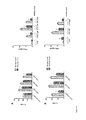
- FIG. 1 illustrates the ability of Diarylhydrazides of the present invention to inhibit the AR recruitment of a D11-FxxLF peptide.
- Diarylhydrazides are full AR antagonist when compared to a classical antagonist like CPA.
- A A direct comparison between MDG292 and CPA in AR TR FRET antagonist mode.
- B MDG292 in both agonist and antagonist mode, showing full AR antagonism and
- C CPA in both agonist and antagonist mode, showing partial AR antagonism.
- FIG. 2 illustrates the ability of Diarylhydrazides of the present invention to inhibit the AR recruitment of a D11-FxxLF peptide.
- FIG. 3 illustrates fluorescence interference/aggregation assays.
- MDG483 is a false negative at 50 ⁇ M but returns to the inhibition range at 1 ⁇ M. MDG483 appears to have solubility issues in the chosen assay buffer at high concentration. MDG483 is therefore a true negative at 1 ⁇ M where the inhibition of the LBD-F complex is around 0%. CPA 50 ⁇ M was used as a true positive control.
- FIG. 4 illustrates the ability of Diarylhydrazides of the present invention to inhibit the AR recruitment of a D11-FxxLF peptide.
- FIG. 5 illustrates the selectivity of Diarylhydrazides of the present invention amongst the steroid receptor subfamily (Glucocorticoid Receptor, GR).
- GR glucocorticoid Receptor
- MDG292, MDG483, MDG506 & MDG508 do not affect SRC1-4 recruitment by GR LBD.
- Mifepristone a known GR antagonist, was included at a single point concentration of 100 ⁇ M. Data points represent the mean of two independent experiments performed in triplicate.
- FIG. 6 illustrates the selectivity of Diarylhydrazides of the present invention amongst the steroid receptor subfamily (Progesterone Receptor, PR).
- A Diarylhydrazides MDG292, MDG483, MDG506 & MDG508 partially inhibit the PR recruitment of a fluorescent labelled SRC1-4.
- FIG. 7 illustrates the selectivity of Diarylhydrazides of the present invention amongst the steroid receptor subfamily (Progesterone Receptor, PR).
- A Diarylhydrazides MDG419, MDG605, MDG608, MDG611, MDG612, MDG614, MDG616, MDG617, MDG629 & MDG630 evaluated in the SAR study inhibit the PR LBD recruitment of a fluorescent labelled SRC1-4 coactivator.
- FIG. 8 illustrates the selectivity of Diarylhydrazides of the present invention amongst the steroid receptor subfamily (Estrogen Receptor Alpha and Beta, ER ⁇ & ER ⁇ ).
- A Diarylhydrazides MDG292, MDG483, MDG506 & MDG508 partially inhibit the ER ⁇ recruitment of a fluorescent labelled PGC1- ⁇ .
- (B) Diarylhydrazides MDG292, MDG483, MDG506 & MDG508 partially inhibit the ER ⁇ recruitment of a fluorescent labelled PGC1- ⁇ . Compounds were tested in a TR-FRET assay across a concentration range from 100 ⁇ M to 45 nM where applicable in presence of a concentration of Estradiol EC 80 . Data points represent the mean of two independent experiments performed in triplicate. Data was fitted using Log antagonist concentration vs response (variable slope).
- FIG. 9 illustrates the selectivity of Diarylhydrazides of the present invention amongst the steroid receptor subfamily (Estrogen Receptor Alpha and Beta, ER ⁇ & ER ⁇ ).
- A Diarylhydrazides MDG491, MDG605, MDG608, MDG611, MDG612, MDG614, MDG616, MDG617, MDG629 & MDG630 evaluated in the SAR study inhibit the ER ⁇ LBD (A1) and ER ⁇ (B1) LBD recruitment of a fluorescent labelled PGC1- ⁇ coactivator.
- FIG. 10 illustrates the effect of Diarylhydrazides of the present invention on Cell Viability in LNCaP, PC-3, PWR-1E, 22Rv1 and HEK-293 cell lines.
- CPA Cyproterone Acetate
- FIG. 11 illustrates the effect of Diarylhydrazides of the present invention on Cell Viability in LNCaP, PC-3, PWR-1E, 22Rv1 and HEK-293 cell lines.
- CPA Cyproterone Acetate
- FIG. 12 illustrates the variance of DHT dependent cell proliferation and PSA expression in LNCaP cell lines.
- A DHT effect on LNCaP cell proliferation. Cells were seeded at 2*10 4 /ml and treated for five consecutive days after 48 hrs of equilibration in androgen deprived media. Media and treatment were replaced every second day or third day. DHT has a Gaussian type effect reaching a maximum of 2-fold increase at a concentration of 10 ⁇ 10 M in 0.1% DMSO in steroid depleted conditions. Data plotted represent mean ⁇ SEM for at least three independent experiments where each well was performed in triplicate.
- B DHT effect on LNCaP cell proliferation is optimal after 5 days of treatment.
- FIG. 13 illustrates the effect of Diarylhydrazides of the present invention on Cell Viability in LNCaP.
- Diarylhydrazides effect effect (MDG292, MDG483 & MDG506) on DHT stimulated LNCaP cell proliferation.
- Cells were seeded at 2*10 4 /ml in 24-well plates and treated for five consecutive days. Media and treatment were replaced every second day or third day. Data plotted represent mean ⁇ SEM for at least three independent experiments where each well was performed in triplicate;
- FIG. 14 illustrates the effect of Diarylhydrazides of the present invention on DHT stimulated 22Rv1 cell proliferation.
- 22Rv1 cells were exposed to a concentration of DHT equal to 10 ⁇ 10 M and viability was measured after five days of treatment in androgen deprived condition. Data plotted represent mean ⁇ SEM for at least three independent experiments where each well was performed in triplicate;
- FIG. 15 illustrates the effect of Diarylhydrazides of the present invention on reduction of DHT dependent cell proliferation and PSA expression in LNCaP and 22Rv1 cell lines.
- A MDG506 dose dependent effect on DHT stimulated PSA secretion in LNCaP cells. Data plotted represent mean ⁇ SEM for at least three independent experiments where each well was performed in triplicate.
- B MDG506 dose dependent effect on DHT stimulated PSA secretion in 22Rv1 cells. Data plotted represent mean ⁇ SEM for at least three independent experiments where each well was performed in triplicate;
- FIG. 16 illustrates the effect of Diarylhydrazides of the present invention on reduction of CPA stimulated PSA expression in LNCaP.
- A MDG506 10 ⁇ M dose dependent effect on CPA stimulated PSA secretion in LNCaP cells. CPA effect on LNCaP PSA secretion is bell-shaped, reaching a maximal stimulatory concentration at 1 ⁇ M. MDG506 significantly (P ⁇ 0.001) reduces CPA induction of PSA secretion. Data plotted represent mean ⁇ SEM for at least three independent experiments where each well was performed in triplicate.
- B MDG506 20 ⁇ M dose dependent effect on CPA stimulated PSA secretion in LNCaP cells. Data plotted represent mean ⁇ SEM for at least three independent experiments where each well was performed in triplicate;
- FIG. 17 illustrates the effect of Diarylhydrazides of the present invention on reduction of CPA stimulated PSA expression in 22rv1 cells.
- Data plotted represent mean ⁇ SEM for at least three independent experiments where each well was performed in triplicate.
- a virtual screen was designed to select compounds mapping onto the peptide binding surface (AF2) of the AR receptor, based on an ensemble of documented X-ray crystal structures: 1T73, 1T74, 1T76, 1T79, 1T7F, 1T7M, 1T7R &1T7T [Hur E, Pfaff S J, Payne E S, Gron H, Buehrer B M, et al. (2004) Recognition and accommodation at the androgen receptor coactivator binding interface. PLoS Biol 2:E274. Molecular Operating Environment (MOE) software was employed to preprocess the proteins and removal of the coactivator peptides from the complexes.
- MOE Molecular Operating Environment
- a second site-derived pharmacophore model was advanced based on the specific characteristics of the androgen receptor AF-2 region, which included two additional hydrophobic/aromatic features to represent the Phe side chains present in the FxxLF coactivator motif (1T7R), so as to increase the selectivity for AR over other families of nuclear receptor.
- These pharmacophore models were then applied for in silico screens of small-molecule commercial libraries to identify compounds that resemble the “active principle” of the starting peptides.
- a number of vendor databases were selected for screening of ligands, including Amsterdam (5,389 compounds), Peakdale (8,188), Asinex—Platinum collection (75,258), Specs (175,800), Maybridge (56,870) and Zinc (4.6 million) compounds.
- a Bayesian analysis was performed on the peptide structures to estimate parameters of an underlying distribution based on the observed distribution.
- the above databases were then filtered for those compounds with properties similar to the peptides, thus focusing the search on the AR ligand chemical space. Any salts or duplicates were removed. All molecules were standardised for stereochemistry and charges and ionised at a pH of 7.4 and all calculable tautomers were enumerated. At this stage the conformational flexibility of the screening compounds were explored using the Omega software (OpenEye Scientific package). A maximum of 50 conformations were generated for each molecule in the dataset.
- the virtual molecules were overlaid on and compared to the generated pharmacophore of the active ligands and those molecules that compared favourably were advanced for additional virtual screening and scoring.
- the Fast Rigid Exhaustive Docking (FRED) software as implemented in OpenEye Scientific's package was used to exhaustively examine all possible poses within the protein site, filtering for shape complementarity and scoring.
- the smaller databases (Amsterdam and Peakdale) were screened on all 13 crystal structures and only ligands scoring well on more than one crystal structure were considered.
- the larger databases SPECS, ASINEX, Maybridge and Zinc were screened on the 1T7R crystal structure.
- This initial screen identified two small molecules (MDG15 and MDG173), both Diarylhydrazides, as possible non-LBP AR antagonists.
- Non LBP modulatory activity was experimentally evidenced by demonstration of an IC 50 in the range of 50-100 ⁇ M in AR TR-FRET coactivator displacement assay and their inability to displace bound fluorescently-labelled ligand from the LBP through an FP assay.
- These first round ‘hit’ molecules mapped only partially to the screening pharmacophore. Accordingly, an optimization round of screening was initiated to explore the utility of the scaffold for more effective disruption of AR:coactivator interaction.
- Diarylhydrazides are Full AR Non-LBP Antagonists of the Androgen Receptor
- Diarylhydrazides obtained through Virtual Screening and SAR processes showed activity as inhibitors of the recruitment of the fluorescent labelled (fl) D11-FXXLF coactivator peptide in the presence of an agonist (DHT) concentration equal to EC 80 using time-resolved FRET assays.
- D11-FXXLF is a peptide developed from random phage display technology that resembles the SRC family of coactivator proteins in its flanking sequence but that also has an AR N-terminal interaction domain of the type FXXLF44. Thus, it is a biological mimic of the N-terminal and the SRC coactivator interactions with the AR LBD.
- a full 12 point dose-response curve was determined for those compounds which exhibited a dose-responsive behaviour in inhibiting the coactivator recruitment to AR, as shown by a reduction in the measured TR-FRET signal as 520 nm/495 nm emission ratio from the Fluorescein and Terbium respectively.
- Diarylhidrazides MDG15, MDG173, MDG292, MDG483, MDG491, MDG506, MDG508, MDG603, MDG605, MDG608, MDG611, MDG612, MDG614, MDG616, MDG617, MDG629 and MDG630 were identified as full AR antagonists ( FIGS. 2A & 4A ).
- the maximal activity value in presence of a saturating concentration of DHT was calculated as per established methods [Gunther J R, Du Y, Rhoden E, Lewis I, Revennaugh B, et al. (2009)].
- One of the ‘classical’ antiandrogens drawbacks is their intrinsic partial agonistic activity, which limits their utility in CRPC.
- advances in LBP targeted therapy have yielded a second generation of antiandrogens, such as MDV3100 and ARN-509, characterized as full AR antagonists, and currently in clinical trials (phase III and phase II respectively) for their potential treatment of CRPC.
- Differentiation of Diarylhidrazides action mechanism of antagonism compared to ‘classical’ partial antiandrogens like CPA was proved by running the TR-FRET assay in both antagonist and agonist mode.
- Diarylhydrazides are full AR antagonist when compared to a classical antagonist like CPA ( FIG. 1 ).
- Diarylhydrazides Inhibit FXXLF Recruitment by AR Through a Non-LBP Mediated Mechanism
- the TR-FRET assay cannot differentiate between direct coactivator antagonists acting on the LBD surface and ‘classical’ AR antagonists which also functionally disrupt coactivator recruitment by displacing DHT from the ligand binding pocket.
- compounds were tested for their ability to displace a potent fluorescent ligand (fluorophore) from the AR LBP through a fluorescence polarization (FP) assay at a single point concentration (50 ⁇ M), using Cyproterone Acetate (CPA) at the same concentration as a reference, a known AR LBP-mediated antagonist.
- FP fluorescence polarization
- CPA Cyproterone Acetate
- Diarylhydrazides showed inhibition of the AR-LBD and fluorophore complex, indicating a non-LBP mediated mechanism of AR inhibition ( FIGS. 1C & 4B ).
- Fluorescence polarization assays are susceptible by fluorescence interference/aggregation and light scattering issues by compounds present in the wells. This could lead to false positive or false negative hits. This problem is addressed in and the presence of false ‘hits’ can be determined by plotting the total fluorescence intensity of the assay versus the anisotropy for each compound.
- Diarylhydrazides are AR Potential Selective Coactivator Interaction Disruptors
- Diarylhydrazides were found to partially displace progesterone bound PR recruitment of the fluorescently labelled SCR1-4 coactivator in a TR-FRET assay ( FIGS. 6 & 7 )
- MDG506 Reduces DHT Dependent Cell Proliferation and PSA Expression in LNCaP
- MDG506 Since we found that CPA stimulates cell proliferation in absence of endogenous androgens, we evaluated if MDG506 at different concentrations could block this effect. We performed a cell proliferation assay and a PSA ELISA assay in presence of MDG506 at 10 or 20 ⁇ M ( FIGS. 16A and 16B ). MDG506 reduces CPA induced cell proliferation and PSA expression. In contrast with CPA'S behaviour, MDG506 does not induce cell proliferation or PSA expression in absence of androgens, lacking intrinsic agonistic activity.
- Lanthascreen TR-FRET AR Coactivator Assay kit (Invitrogen, cat no. PV4381) was used to screen for potential coactivator disruptors.
- Black low volume 384-wells assay plates (Corning, N.Y., cat no. 3676) were used to perform the assay (total volume 20 ⁇ l) and TR FRET signal measured with PHERAstar equipment (BMG LabTech) using a Lanthascreen optic module excitation 335 nm, emission 520 nm-channel A and 495 nm-channel B.
- TR FRET values were calculated at 10 flashes per well, using a delay time of 100 ⁇ s and integration time 200 ⁇ s as recommended by the Invitrogen assay guidelines. The ratio 520 nm/495 nm was then calculated and plotted against the concentration.
- a serial dilution of compounds was firstly prepared in 100 ⁇ DMSO (Sigma-Aldrich) starting from the maximum desired concentration to achieve a 12 point range concentration using 96-well polypropylene plates (Nalgene Nunc, Rochester, N.Y.). Each 100 ⁇ solution was diluted to 2 ⁇ concentration with TR-FRET co-regulator buffer A (Invitrogen proprietary buffer), yielding a final concentration of 1% DMSO in each well.
- DHT dihydrotestosterone
- cyproterone acetate cat no. C3412, Sigma
- a control with no AR-LBD present was included to account for diffusion enhanced FRET or ligand-independent coactivator recruitment.
- a negative control with 2 ⁇ DMSO was present to account for any solvent vehicle effects.
- the assay was adapted to exclude possible non-specific aggregation mechanism of inhibition by adding very low concentration of detergent Triton X-100 (0.001%) to the assay buffer following the Shoichet review guidelines [Shoichet BK (2006) Screening in a spirit haunted world. Drug Discov Today 11:607-615].
- test compound solutions in DMSO were diluted in AR green buffer (Invitrogen) to achieve 2 ⁇ concentrations and placed in a 384 well plate (Corning, cat no. 3576) with 40 ⁇ l volume capacity.
- AR-LBD was supplemented with 5 mM DTT to prevent protein degradation.
- AR-LBD and Fluormone (2 ⁇ ) mix are prepared separately and then added to each compound dilution to achieve a final concentration LBD-fluormone of 50 nM and 2 nM respectively. Plates were incubated protected from light for at least 4 hours. Controls included a maximum mP positive control, which consists of the AR-LBD and fluormone mix (2 ⁇ ), and a minimum mP control, containing only Fluormone (2 ⁇ ).
- a vehicle control was added to account for DMSO effect, and a blank control containing buffer only. Fluorescence polarization was measured with PHERAstar equipment (BMG LabTech) using an optic module with excitation at 485 nm and emission at 530 nm.
- LNCaP cells androgen-dependent
- PC-3 androgen-independent
- PWR-1E normal prostatic epithelia
- RPMI-1640 Glutamax Invitrogen
- F12K Invitrogen
- K-SFM media Invitrogen.
- the first two were supplemented with 10% Fetal Bovine Serum (FBS), penicillin (100 units/ml), steptomyicin (100 ⁇ g/ml).
- K-SFM was supplemented with 5 ng/ml Epidermal Growth Factor (EGF) and 0.05 mg/ml Bovine Pituitary Extract (BPE). Cells were propagated at 1:3 or 1:6 dilutions at 37° C. in 5% CO 2 .
- EGF Epidermal Growth Factor
- BPE Bovine Pituitary Extract
- LNCaP, PC-3 and PWR-1E cells were seeded at 2.5*10 4 /ml density in 200 ⁇ l volume of a 96-well plate in triplicate and incubated for 24 hours prior testing. Test compounds were included at different concentrations to achieve a final concentration of 0.5% DMSO in each well. Effect of 0.5% DMSO on cell-viability was also evaluated. Cell viability was assessed after 24 hours of treatment using 10% Alamar Blue reagent (Invitrogen) for each well. Cell viability was monitored by the reduction of resazurin, a blue, cell-permeable and non-toxic compound, to resorufin, a red and highly fluorescent product.
- Viable cells continuously convert resazurin to resorufin, increasing the overall colour and fluorescence of the media surrounding cells. Fluorescence intensity can be quantitatively determined with a fluorescence microplate reader at excitation/emission 544 nm/590 nm (Spectramax Gemini).
- Spectramax Gemini For hormone dependent cell proliferation assays in androgen deprived LNCaP cells, cells were seeded at 2*10 4 cells/ml in a 24-well plate in triplicate. Cells were plated in phenol red free RPMI Glutamax (Invitrogen) supplemented with 10% charcoal-stripped FBS to deplete endogenous steroids 48 hours prior the assay as described in previous reports.
- Optimal condition for the treatment was found to be 5 days and the concentration of DHT included to stimulate the cells was 0.1 nM.
- Cells were treated with different concentrations of test compounds with or without 0.1 nM DHT to achieve a final concentration of 0.1% DMSO in each well.
- a control for the vehicle was included to ensure no effect on viability could be detected.
- Media and treatments were replaced every second day, after washing the cells twice with 1 ⁇ PBS.
- Supernatants were collected after five days for secreted PSA levels evaluation and cell proliferation was assessed for the same plate using Alamar Blue in order to exclude non-specific effects due to toxicity issues.
- PSA Prostate Specific Antigen
Landscapes
- Chemical & Material Sciences (AREA)
- Organic Chemistry (AREA)
- Health & Medical Sciences (AREA)
- Public Health (AREA)
- Veterinary Medicine (AREA)
- Medicinal Chemistry (AREA)
- Pharmacology & Pharmacy (AREA)
- Life Sciences & Earth Sciences (AREA)
- Animal Behavior & Ethology (AREA)
- General Health & Medical Sciences (AREA)
- Epidemiology (AREA)
- Nuclear Medicine, Radiotherapy & Molecular Imaging (AREA)
- General Chemical & Material Sciences (AREA)
- Chemical Kinetics & Catalysis (AREA)
- Engineering & Computer Science (AREA)
- Bioinformatics & Cheminformatics (AREA)
- Dermatology (AREA)
- Endocrinology (AREA)
- Reproductive Health (AREA)
- Pharmaceuticals Containing Other Organic And Inorganic Compounds (AREA)
Abstract

Description


wherein:

and
wherein: A and A′ are the same or different and may be independently selected from the group consisting of C5-C20 aryl, C3-C20 heteroaryl, C5-C20 aryl fused with C3-C20 cycloaliphatic or C2-C20 heterocycloaliphatic, C3-C20 heteroaryl fused with C3-C20 cycloaliphatic or C2-C20 heterocycloaliphatic, and combinations thereof, optionally substituted one or more times with at least one of C1-C10 alkyl, C(═O)H, C(═O)OH, C(═O)OR1, C(═O)NH2, C(═O)NHR1, C(═O)NR1R2, C(═O)R1, CH2F, CHF2, CF3, C≡N, OH, OR1, OC(═O)R1, OC(═O)OR1, OC(═O)NH2, OC(═O)NHR1, OC(═O)NR1R2, NH2, NHR1, NR1R2, N(H)C(═O)R1, N(R1)C(═O)R2, N(H)C(═O)OR1, N(R1)C(═O)OR2, N(H)C(═O)NH2, N(R1)C(═O)NH2, N(H)C(═O)NHR1, N(R1)C(═O)NHR2, N(H)C(═O)NR1R2, N(R1)C(═O)NR2R3, NO2, SH, SR1, S(═O)R1, S(═O)2R1, SO3H, OP(O)(OH)(OH), OP(O)(OH)(OR1), OP(O)(OR1)(OR2), Cl, Br, F, and I; wherein
R1, R2 and R3 are the same or different and may be independently selected from the group consisting of C1-C20 aliphatic, C3-C20 cycloaliphatic and combinations thereof; and
R4 is selected from the group consisting of —H, C1-C5 alkyl, C3-C6 cycloalkyl, C5-C10 aryl, and C3-C10 heteroaryl.


wherein at least one of A or A′ is optionally substituted one or more times with at least one of C1-C10 alkyl, C(═O)H, C(═O)OH, C(═O)OR1, C(═O)NH2, C(═O)NHR1, C(═O)NR1R2, C(═O)R1, CH2F, CHF2, CF3, C≡N, OH, OR1, OC(═O)R1, OC(═O)OR1, OC(═O)NH2, OC(═O)NHR1, OC(═O)NR1R2, NH2, NHR1, NR1R2, N(H)C(═O)R1, N(R1)C(═O)R2, N(H)C(═O)OR1, N(R1)C(═O)OR2, N(H)C(═O)NH2, N(R1)C(═O)NH2, N(H)C(═O)NHR1, N(R1)C(═O)NHR2, N(H)C(═O)NR1R2, N(R1)C(═O)NR2R3, NO2, SH, SR1, S(═O)R1, S(═O)2R1, SO3H, OP(O)(OH)(OH), OP(O)(OH)(OR1), OP(O)(OR1)(OR2), H, Hal, CH2Hal; CH2OH, CH2SH, CH2NH2, CH2NH2, CH2COOH, CH2COOR1, NHC(NH)NH2, wherein Hal is Cl, Br, F, and I, and wherein R1, R2 and R3 are the same or different and are independently selected from the group consisting of C1-C20 aliphatic, C3-C20 cycloaliphatic and combinations thereof; wherein Y is OH, SH or NH2; and R4 is H. Accordingly, the compounds of the invention, comprising a hydrazide linker, are provided for use in the treatment or prevention of a condition responsive to antagonism of the androgen receptor.

optionally substituted one or more times with at least one of C1-C10 alkyl, C(═O)H, C(═O)OH, C(═O)OR1, C(═O)NH2, C(═O)NHR1, C(═O)NR1R2, C(═O)R1, CH2F, CHF2, CF3, C≡N, OH, OR1, OC(═O)R1, OC(═O)OR1, OC(═O)NH2, OC(═O)NHR1, OC(═O)NR1R2, NH2, NHR1, NR1R2, N(H)C(═O)R1, N(R1)C(═O)R2, N(H)C(═O)OR1, N(R1)C(═O)OR2, N(H)C(═O)NH2, N(R1)C(═O)NH2, N(H)C(═O)NHR1, N(R1)C(═O)NHR2, N(H)C(═O)NR1R2, N(R1)C(═O)NR2R3, NO2, SH, SR1, S(═O)R1, S(═O)2R1, SO3H, OP(O)(OH)(OH), OP(O)(OH)(OR1), OP(O)(OR1)(OR2), Cl, Br, F, and I, wherein
R1, R2 and R3 are the same or different and may be independently selected from the group consisting of C1-C20 aliphatic, C3-C20 cycloaliphatic and combinations thereof.

wherein A is optionally substituted one or more times with at least one of C1-C10 alkyl, C(═O)H, C(═O)OH, C(═O)OR1, C(═O)NH2, C(═O)NHR1, C(═O)NR1R2, C(═O)R1, OH, OR1, OC(═O)R1, OC(═O)OR1, OC(═O)NH2, OC(═O)NHR1, OC(═O)NR1R2, NH2, NHR1, NR1R2, N(H)C(═O)R1, N(R1)C(═O)R2, N(H)C(═O)OR1, N(R1)C(═O)OR2, N(H)C(═O)NH2, N(R1)C(═O)NH2, N(H)C(═O)NHR1, N(R1)C(═O)NHR2, N(H)C(═O)NR1R2, N(R1)C(═O)NR2R3, NO2, SH, SR1, S(═O)R1, S(═O)2R1, SO3H, H, Hal, CH2Hal; CH2OH, CH2SH, CH2NH2, CH2NH2, CH2COOH, CH2COOR1, NHC(NH)NH2, wherein Hal is Cl, Br, F, and I, wherein R1, R2 and R3 are the same or different and are independently selected from the group consisting of C1-C20 aliphatic, C3-C20 cycloaliphatic and combinations thereof.


wherein Y is —OH, —SH or —NH2, E is O, S or NH.


wherein A′ is optionally substituted one or more times with at least one of C1-C10 alkyl, C(═O)OH, C(═O)OR1, C(═O)R1, OH, OR1, OC(═O)OR1, NH2, NHR1, NR1R2, NO2, SH, SR1, S(═O)R1, S(═O)2R1, SO3H, H, Hal, CH2Hal; CH2OH, CH2SH, CH2NH2, CH2NH2, CH2COOH, CH2COOR1, NHC(NH)NH2, wherein Hal is Cl, Br, F, and I, wherein R1 and R2 are the same or different and are independently selected from the group consisting of C1-C10 aliphatic, C3-C15 cycloaliphatic and combinations thereof.

-
- Y is selected from OH. SH, and NH2;
- X is selected from OH, OCH3, COOH, COOCH3, NO2, Cl, Br, I and F;
- Z is selected from CH and N;
- E is selected from O, S, and NH;
- R5 and R6 are the same or different and are C1-C5 alkyl; and
- R7 is C3-C5 straight chain alkyl.

wherein A′ is optionally substituted one or more times with at least one of methyl, C(═O)OH, C(═O)OMe, OH, OMe, NO2, Cl, Br, and I.


-
- Y is selected from OH, SH, and NH2;
- X is selected from OH, OCH3, COOH, COOCH3, NO2, Cl, Br, I and F;
- Z is selected from CH and N;
- E is selected from O, S, and NH;
- R5 and R6 are the same or different and are C1-C5 alkyl; and
- R7 is C3-C5 straight chain alkyl.

wherein
-
- Y is OH; and
- E is O.

wherein
-
- Y is selected from OH, SH, and NH2; and
- E is selected from O, S, and NH.
- A′ is selected from:

wherein
-
- Y is selected from OH, SH, and NH2;
- X is selected from OH, OCH3, COOH, COOCH3, NO2, Cl, Br, I and F;
- Z is selected from CH and N;
- E is selected from O, S, and NH;
- R5 and R6 are the same or different and are C1-C5 alkyl; and
- R7 is C3-C5 straight chain alkyl.

wherein
-
- E is selected from O, S, and NH;
- A′ is selected from the group consisting of:

wherein
-
- Y is selected from OH, SH, and NH2;
- X is selected from Cl, Br, I and F;
- E is selected from O, S, and NH;
- R5 and R6 are the same or different and are C1-C5 alkyl; and
- R7 is C3-C5 straight chain alkyl.

wherein
-
- Y is selected from OH, SH, and NH2;
- A′ is selected from the group consisting of:

wherein
-
- Y is selected from OH, SH, and NH2;
- X is selected from OH, OCH3, COOH, COOCH3, NO2, Cl, Br, I and F;
- Z is selected from CH and N.

wherein Hal is Cl, Br, I or F; R5 is re the same or different and are C1-C5 alkyl; and R7 is C3-C5 straight chain alkyl.


wherein
-
- Y is selected from H, OH, SH, and NH2;
- X is selected from H. Hal, OH, OCH3, COOCH3, COOH, COOR, NO2, wherein Hal is selected from Cl, I and F; and
- R is selected from H. OH, C1-C6 alkyl, SH, NH2, NR2, COOH, COOR, CH2Hal, Hal, CH2Hal; CH2OH, CH2SH, CH2NH2, CH2NH2, CH2COOH, CH2COOR1, NHC(NH)NH2, wherein Hal is Cl, Br, F, and I.


-
- X is selected from H, Hal, OH, OCH3, COOCH3, COOH, COOR, NO2, wherein Hal is selected from Cl, I and F; and
- R is selected from H, OH, C1-C6 alkyl, SH, NH2, NR2, COOH, COOR, CH2Hal, Hal, CH2Hal; CH2OH, CH2SH, CH2NH2, CH2NH2, CH2COOH, CH2COOR1, NHC(NH)NH2,
- wherein Hal is Cl, Br, F, and I,

wherein A is:

wherein Y is selected from OH. SH, and NH2; and
wherein A′ is selected from the group consisting of:

-
- Y is selected from OH, SH, and NH2;
- X is selected from OH, COOH, COOR, NO2, Cl, I and F; and
- R is C1-C6alkyl.

-
- i) generating a screening pharmacophore using structural data of the AF-2 region of the androgen receptor and at least one peptide sequence selected from the group consisting of FxxLF, LxxLL, and FxxLW, where x is any amino acid;
- ii) screening a virtual compound database for compounds possessing the pharmacophore generated in step i); and
assessing the ability of the compounds identified in step to fit in the AF-2 region of a crystal structure of the androgen receptor.


| Compounds | AR (wt) | AR T877A | ||
| MDG483 | 15.9 ± 3.2 μM | 11.1 ± 3.2 μM | ||
| MDG292 | 13.3 ± 3.1 μM | 12.4 ± 2.2 μM | ||
| MDG506 | 26.3 ± 3.8 μM | 33.2 ± 5.9 μM | ||
| MDG508 | 17.9 ± 6.9 μM | 28.1 ± 6.7 μM | ||


Diarylhydrazides are AR Potential Selective Coactivator Interaction Disruptors
| TABLE 2 |
| Data are presented as averages of at least two independent |
| experiments. IC50 values are shown as ± SEM (n = 6). |
| NA = not active at 100 μM. |
| NR LBDs IC50 (μM) |
| Compounds | GR | PR | ER-α | ER-β |
| MDG483 | >100 | 8.4 ± 1.4 | 10.2 ± 3 | 12 ± 0.4 |
| MDG292 | >100 | 22.5 ± 5.4 | >100 | >100 |
| MDG506 | >100 | 27.7 ± 7.3 | >100 | >100 |
| MDG508 | >100 | 5.9* | 4 ± 1.4 | 2.9* |
| MDG608 | >100 | >100 | >100 | nd |
| MDG611 | >100 | nd** | nd | nd |
| MDG612 | >100 | 50-100** | nd | nd |
| MDG614 | >100 | nd** | >100 | >100 |
| MDG616 | >100 | nd** | nd | nd |
| MDG617 | >100 | nd** | nd | nd |
| MDG629 | >100 | nd | nd | nd |
| MDG630 | >100 | nd | nd | nd |
| MDG605 | >100 | nd | 50-100 | 50-100 |
| MDG491 | >100 | 50-100 | >100 | >100 |
| COM- | Activity (AR | |||
| POUND | Supplier | Supplier_ID | Structure | wt TR-FRET) |
| MDG15 | SPECS | AN- 988/40680570 |  | 43.2 μM |
| MDG173 | SPECS | AK- 968/11482603 |  | 40.8 ± 2.5 μM |
| MDG292 | SPECS | AE- 848/34517025 |  | 13.3 ± 3.1 μM |
| MDG481 | SPECS | AG- 205/06971039 |  | >100 μM |
| MDG482 | SPECS | AG- 205/32388043 |  | >100 μM |
| MDG483 | SPECS | AG- 690/11156274 |  | 15.9 ± 3.2 μM |
| MDG484 | SPECS | AG- 690/11191237 |  | >100 μM |
| MDG485 | SPECS | AG- 690/11450109 |  | >100 μM |
| MDG486 | SPECS | AG- 690/11450119 |  | >100 μM |
| MDG487 | SPECS | AK- 968/40052375 |  | >100 μM |
| MDG488 | SPECS | AK- 968/40225178 |  | >100 μM |
| MDG489 | SPECS | AK- 968/40320181 |  | >100 μM |
| MDG490 | SPECS | AK- 968/40660142 |  | >100 μM |
| MDG491 | SPECS | AN- 329/10500005 |  | 42.7 ± 3.5 μM |
| MDG492 | SPECS | AN- 329/11481807 |  | >100 μM |
| MDG493 | SPECS | AN- 329/11481810 |  | >100 μM |
| MDG494 | SPECS | AN- 329/11481813 |  | >100 μM |
| MDG495 | SPECS | AN- 329/11481815 |  | >100 μM |
| MDG496 | SPECS | AN- 329/11482595 |  | >100 μM |
| MDG497 | SPECS | AN- 329/11482596 |  | >100 μM |
| MDG499 | SPECS | AN- 988/40679770 |  | >100 μM |
| MDG500 | SPECS | AN- 988/40679802 |  | >100 μM |
| MDG501 | SPECS | AN- 988/40679809 |  | >100 μM |
| MDG502 | SPECS | AN- 988/40679916 |  | >100 μM |
| MDG503 | SPECS | AN- 988/40679917 |  | >100 μM |
| MDG504 | SPECS | AN- 988/40679919 |  | >100 μM |
| MDG505 | SPECS | AN- 988/40679923 |  | >100 μM |
| MDG506 | SPECS | AN- 988/40679931 |  | 26.3 ± 3.8 μM |
| MDG507 | SPECS | AN- 988/40680452 |  | >100 μM |
| MDG508 | SPECS | AN- 988/40680498 |  | 17.9 ± 6.9 μM |
| MDG509 | SPECS | AN- 988/40680500 |  | >100 μM |
| MDG510 | SPECS | AN- 988/40680503 |  | >100 μM |
| MDG511 | SPECS | AN- 988/40680531 |  | >100 μM |
| MDG512 | SPECS | AN- 988/40680532 |  | >100 μM |
| MDG513 | SPECS | AN- 988/40680546 |  | >100 μM |
| MDG514 | SPECS | AN- 988/40680547 |  | >100 μM |
| MDG515 | SPECS | AN- 988/40680562 |  | >100 μM |
| MDG516 | SPECS | AN- 988/40680571 |  | >100 μM |
| MDG598 | SPECS | AN- 648/41220887 |  | >100 μM |
| MDG599 | Chembridge | 8806676 |  | >100 μM |
| MDG600 | Chembridge | 5113192 |  | >100 μM |
| MDG601 | Chembridge | 5238483 |  | >100 μM |
| MDG602 | Chembridge | 5331730 |  | >100 μM |
| MDG603 | Chembridge | 5660431 |  | 11.3 ± 2.6 μM |
| MDG604 | Chembridge | 5653834 |  | >100 μM |
| MDG605 | Chembridge | 5367002 |  | 10.3 ± 1.4 μM |
| MDG607 | Chembridge | 5327458 |  | >100 μM |
| MDG608 | MDG Laboratory | MDG608 |  | 55.2 ± 19.2 μM |
| MDG609 | MDG Laboratory | MDG609 |  | >100 μM |
| MDG610 | MDG Laboratory | MDG610 |  | >100 μM |
| MDG611 | MDG Laboratory | MDG611 |  | 39.9 ± 16.9 μM |
| MDG612 | MDG Laboratory | MDG612 |  | 52.9 ± 13.5 μM |
| MDG613 | MDG Laboratory | MDG613 |  | >100 μM |
| MDG614 | MDG Laboratory | MDG614 |  | 33.4 ± 4.7 μM |
| MDG615 | MDG Laboratory | MDG615 |  | >100 μM |
| MDG616 | MDG Laboratory | MDG616 |  | 13.2 ± 2.8 μM |
| MDG617 | MDG Laboratory | MDG617 |  | 12.2 ± 0.5 μM |
| MDG618 | MDG Laboratory | MDG618 |  | >200 μM |
| MDG619 | MDG Laboratory | MDG619 |  | >100 μM |
| MDG620 | MDG Laboratory | MDG620 |  | >100 μM |
| MDG621 | MDG Laboratory | MDG621 |  | >100 μM |
| MDG622 | MDG Laboratory | MDG622 |  | >100 μM |
| MDG623 | SPECS | AN- 329/11482602 |  | >100 μM |
| MDG624 | MDG Laboratory | MDG624 |  | >100 μM |
| MDG625 | MDG Laboratory | MDG625 |  | >100 μM |
| MDG626 | MDG Laboratory | MDG626 |  | >100 μM |
| MDG627 | MDG Laboratory | MDG627 |  | >100 μM |
| MDG628 | MDG Laboratory | MDG628 |  | >100 μM |
| MDG629 | MDG Laboratory | MDG629 |  | 60.76 μM |
| MDG630 | MDG Laboratory | MDG630 |  | 43.5 ± 3.7 μM |
| MDG631 | MDG Laboratory | MDG631 |  | >100 μM |
| MDG632 | MDG Laboratory | MDG632 |  | >100 μM |
| MDG633 | MDG Laboratory | MDG633 |  | >100 μM |
Materials and Methods
Time-Resolved Fluorescence Resonance Energy Transfer (TR-FRET) Assay
EC 80=10^((log EC 50)+((1/Hill Slope)×log(80/(100−80)))
Y=Bottom+(Top-Bottom)/(1+10^((Log IC 50 −X)*HillSlope))
Claims (18)


Applications Claiming Priority (4)
| Application Number | Priority Date | Filing Date | Title |
|---|---|---|---|
| EP11190354 | 2011-11-23 | ||
| EP11190354.8 | 2011-11-23 | ||
| EP11190354 | 2011-11-23 | ||
| PCT/EP2012/073525 WO2013076275A1 (en) | 2011-11-23 | 2012-11-23 | Androgen receptor ligands |
Publications (2)
| Publication Number | Publication Date |
|---|---|
| US20140357682A1 US20140357682A1 (en) | 2014-12-04 |
| US9296716B2 true US9296716B2 (en) | 2016-03-29 |
Family
ID=47278801
Family Applications (1)
| Application Number | Title | Priority Date | Filing Date |
|---|---|---|---|
| US14/360,081 Active - Reinstated US9296716B2 (en) | 2011-11-23 | 2012-11-23 | Androgen receptor ligands |
Country Status (3)
| Country | Link |
|---|---|
| US (1) | US9296716B2 (en) |
| EP (1) | EP2782643A1 (en) |
| WO (1) | WO2013076275A1 (en) |
Families Citing this family (10)
| Publication number | Priority date | Publication date | Assignee | Title |
|---|---|---|---|---|
| KR101565430B1 (en) * | 2012-09-07 | 2015-11-03 | 한국생명공학연구원 | Composition for prevention or treatment of cancer comprising N-methylenenaphtho[2,1-b]furan-2-carbohydrazide derivatives as an active ingredient |
| JP2017518312A (en) * | 2014-06-05 | 2017-07-06 | ユニバーシティ・オブ・カンザス | Malmelin analogs and methods of use in cancer treatment |
| US20180360782A1 (en) * | 2015-12-09 | 2018-12-20 | Case Western Reserve University | Method of modulating ribonucleotide reductase |
| JP6917634B2 (en) * | 2016-02-19 | 2021-08-11 | コリア リサーチ インスティチュート オブ バイオサイエンス アンド バイオテクノロジー | Novel indole derivative and anti-cancer composition containing it |
| CN109793730B (en) * | 2017-03-01 | 2021-03-05 | 浙江大学 | Benzopyran ring-closed chalcone structure type androgen receptor antagonist and application thereof |
| CN109180621B (en) * | 2018-08-01 | 2022-04-05 | 河南省锐达医药科技有限公司 | Preparation of Schiff base compounds and application of Schiff base compounds in cancer treatment |
| WO2021010731A1 (en) * | 2019-07-15 | 2021-01-21 | 한국생명공학연구원 | Benzofuran-based n-acylhydrazone derivative and pharmaceutical composition comprising same |
| CZ309818B6 (en) * | 2020-09-22 | 2023-11-08 | Univerzita Karlova | Azulene hydrazido-hydrazones and their use for the treatment of oncological diseases |
| US12479805B2 (en) | 2021-02-10 | 2025-11-25 | Beijing Baheal Chengchuang Pharmaceutical Research And Development Co., Ltd. | Indazole hydrazide compound and application thereof |
| CN117756666B (en) * | 2023-12-15 | 2025-09-30 | 西华大学 | A fluorescent probe for detecting trace water in organic solvents and its preparation and application |
Family Cites Families (9)
| Publication number | Priority date | Publication date | Assignee | Title |
|---|---|---|---|---|
| JPS5988449A (en) * | 1982-11-12 | 1984-05-22 | Ricoh Co Ltd | Novel naphthol derivative compound and method for producing the same |
| JPS59162541A (en) * | 1983-03-07 | 1984-09-13 | Ricoh Co Ltd | Heat development type diazo copying material |
| PT752813E (en) * | 1992-09-11 | 2003-04-30 | Univ California | METABOAL PARASITE PROTEASE INHIBITORS |
| WO2002070464A2 (en) * | 2001-01-22 | 2002-09-12 | Arpida Ag | Hydrazones and their therapeutic use |
| US6790979B2 (en) * | 2002-04-17 | 2004-09-14 | University Of North Carolina At Chapel Hill | Curcumin analogues and uses thereof |
| DE10348022A1 (en) * | 2003-10-15 | 2005-05-25 | Imtm Gmbh | New dipeptidyl peptidase IV inhibitors for the functional influence of different cells and for the treatment of immunological, inflammatory, neuronal and other diseases |
| US20110098309A1 (en) * | 2007-07-12 | 2011-04-28 | Acumen Pharmaceuticals, Inc. | Methods of inhibiting the formation of amyloid-beta diffusable ligands using acylhydrazide compounds |
| WO2009114921A1 (en) * | 2008-03-17 | 2009-09-24 | Dmitrienko Gary I | INHIBITORS OF CLASS B AND CLASS D β-LACTAMASES |
| JP2012527407A (en) * | 2009-05-21 | 2012-11-08 | チルドレンズ メディカル リサーチ インスティテュート | Use of Dynamin Ring Stabilizer |
-
2012
- 2012-11-23 EP EP12794928.7A patent/EP2782643A1/en not_active Withdrawn
- 2012-11-23 WO PCT/EP2012/073525 patent/WO2013076275A1/en not_active Ceased
- 2012-11-23 US US14/360,081 patent/US9296716B2/en active Active - Reinstated
Non-Patent Citations (1)
| Title |
|---|
| Cabone et al J. Med. Chem. vol. 55 No. 4 pp. 1635-1644 (2012). * |
Also Published As
| Publication number | Publication date |
|---|---|
| EP2782643A1 (en) | 2014-10-01 |
| US20140357682A1 (en) | 2014-12-04 |
| WO2013076275A1 (en) | 2013-05-30 |
Similar Documents
| Publication | Publication Date | Title |
|---|---|---|
| US20140357682A1 (en) | Androgen receptor ligands | |
| EP2739153B1 (en) | Treatment of breast cancer | |
| AU2016256470B2 (en) | Methods of treating cancer | |
| US7960435B2 (en) | Anti-cancer agents and androgen inhibition activity compound | |
| JP2019172700A (en) | Treatment of metastatic prostate cancer | |
| US20230022487A1 (en) | Cannabidiol-type cannabinoid compound | |
| Dong et al. | A novel HDAC6 inhibitor exerts an anti-cancer effect by triggering cell cycle arrest and apoptosis in gastric cancer | |
| Shi et al. | Novel anti-prostate cancer curcumin analogues that enhance androgen receptor degradation activity | |
| HUP0104693A2 (en) | Treatment of arthritis with mek inhibitors | |
| KR20070089151A (en) | New uses of cannabinoids | |
| JP7197370B2 (en) | Compounds, compositions and methods for cancer prevention and/or treatment | |
| KR20120028400A (en) | New use for cannabinoid | |
| Yuan et al. | Paeonol protects against acute pancreatitis by inhibiting M1 macrophage polarization via the NLRP3 inflammasomes pathway | |
| Hahm et al. | Honokiol inhibits androgen receptor activity in prostate cancer cells | |
| KR20200061310A (en) | Pharmaceutical composition comprising histone deacetylase 6 inhibitors | |
| US20250032470A1 (en) | Electrophilic Androgen Receptor (AR) Antagonists for AR Downregulation and Ferroptosis Induction in Cancer Cells | |
| EP3866786B1 (en) | Compositions and methods for suppressing and/or treating metabolic diseases and/or a clinical condition thereof | |
| Bao et al. | 17Beta-estradiol differentially protects cortical pericontusional zone from programmed cell death after traumatic cerebral contusion at distinct stages via non-genomic and genomic pathways | |
| RU2378250C2 (en) | Nonsteroid modulators of androgen receptor, method of production, pharmeceutical composition thereof and use | |
| Gomez et al. | Stereospecific Effects of Benzimidazolonepiperidine Compounds on T-Type Ca2+ Channels and Pain | |
| Yogeeswari et al. | Discovery of molecules for the treatment of neuropathic pain: Synthesis, antiallodynic and antihyperalgesic activities of 5-(4-nitrophenyl) furoic-2-acid hydrazones | |
| US20230141863A1 (en) | Small Molecule Inhibitors Targeting the Sodium Channel Tamoxifen Receptor and Uses Thereof | |
| US20070105940A1 (en) | Method for treating pain | |
| Janjic et al. | New antiestrogens from a library screen of homoallylic amides, allylic amides, and C-cyclopropylalkylamides | |
| Xiao et al. | Design and synthesis of 4-[3, 5-dioxo-11-oxa-4, 9-diazatricyclo [5.3. 1.02, 6] undec-4-yl]-2-trifluoromethyl-benzonitriles as androgen receptor antagonists |
Legal Events
| Date | Code | Title | Description |
|---|---|---|---|
| AS | Assignment |
Owner name: THE PROVOST, FELLOWS, FOUNDATION SCHOLARS, & THE O Free format text: ASSIGNMENT OF ASSIGNORS INTEREST;ASSIGNORS:LLOYD, DAVID GEORGE;CARR, MIRIAM;KINSELLA, GEMMA KARENA;AND OTHERS;REEL/FRAME:033024/0477 Effective date: 20111121 |
|
| AS | Assignment |
Owner name: THE PROVOST, FELLOWS, FOUNDATION SCHOLARS, AND THE Free format text: ASSIGNMENT OF ASSIGNORS INTEREST;ASSIGNOR:WILLIAMS, D. CLIVE;REEL/FRAME:036161/0059 Effective date: 20111121 |
|
| STCF | Information on status: patent grant |
Free format text: PATENTED CASE |
|
| FEPP | Fee payment procedure |
Free format text: MAINTENANCE FEE REMINDER MAILED (ORIGINAL EVENT CODE: REM.); ENTITY STATUS OF PATENT OWNER: SMALL ENTITY |
|
| LAPS | Lapse for failure to pay maintenance fees |
Free format text: PATENT EXPIRED FOR FAILURE TO PAY MAINTENANCE FEES (ORIGINAL EVENT CODE: EXP.); ENTITY STATUS OF PATENT OWNER: SMALL ENTITY |
|
| STCH | Information on status: patent discontinuation |
Free format text: PATENT EXPIRED DUE TO NONPAYMENT OF MAINTENANCE FEES UNDER 37 CFR 1.362 |
|
| PRDP | Patent reinstated due to the acceptance of a late maintenance fee |
Effective date: 20220215 |
|
| FEPP | Fee payment procedure |
Free format text: PETITION RELATED TO MAINTENANCE FEES FILED (ORIGINAL EVENT CODE: PMFP); ENTITY STATUS OF PATENT OWNER: SMALL ENTITY Free format text: PETITION RELATED TO MAINTENANCE FEES GRANTED (ORIGINAL EVENT CODE: PMFG); ENTITY STATUS OF PATENT OWNER: SMALL ENTITY Free format text: SURCHARGE, PETITION TO ACCEPT PYMT AFTER EXP, UNINTENTIONAL. (ORIGINAL EVENT CODE: M2558); ENTITY STATUS OF PATENT OWNER: SMALL ENTITY |
|
| MAFP | Maintenance fee payment |
Free format text: PAYMENT OF MAINTENANCE FEE, 4TH YR, SMALL ENTITY (ORIGINAL EVENT CODE: M2551); ENTITY STATUS OF PATENT OWNER: SMALL ENTITY Year of fee payment: 4 |
|
| STCF | Information on status: patent grant |
Free format text: PATENTED CASE |
|
| MAFP | Maintenance fee payment |
Free format text: PAYMENT OF MAINTENANCE FEE, 8TH YR, SMALL ENTITY (ORIGINAL EVENT CODE: M2552); ENTITY STATUS OF PATENT OWNER: SMALL ENTITY Year of fee payment: 8 |